Jayson Gillham and Alexander Shelley with the RPO at Cadogan Hall
Jayson Gillham at Cadogan Hall in Chopin F minor concerto with the RPO under Alexander Shelley.
Some magnificent playing from Jayson Gillham much appreciated by Noretta Conci-Leech who had come with me to applaud “Sunny “Jayson who she has supported since his student days.
Wonderful to see the son of Howard Shelley contemporary of mine whose Chopin Preludes at his Wigmore debut 45 years ago are still talked about.
Jayson Gillham with Noretta Conci Leech
I had heard great things about Alexander Shelley from Filippo Juvarra of the Amici della Musica di Padua all amply confirmed tonight .
A very robust unsentimental Chopin with a Maestoso rather on the fast side soon to be calmed by the soothing balm of Chopin’s filigree figurations on the piano so beautifully spun by Jayson.
No sentimentality but with heartfelt sentiment and even some robust passion as befits a young man on the crest a wave as was Chopin and is proving Jayson.
“The Angel” op 1 n.1 by Medtner was the thank you from Jayson for the ovation he received
I have heard Jayson over many years ,he even gave a memorable recital in my theatre in Rome for the Keyboard Trust as he did his extraordinary recital debut in the Wigmore Hall a few years ago.
Prevailed on by Leslie Howard to learn the original version of Rachmaninov’s Fourth Piano Concerto for the KCT series in collaboration with the Amici della Musica di Ancona of the complete works for piano and orchestra .
He performed it superbly three times in Ancona.Fabriano and the famous Teatro Rossini in Pesaro.
Since then he has gone on to win the Montreal International Piano Competition and his playing has matured and deepened to reveal not only a real thinking musician but a profound artistic personality
Signing his new CD’s of the Medtner Ist Piano Concerto and Rachmaninoff 2nd with the Melborne Symphony Orchestra ( which includes tonights encore and also Rachmaninoff Prelude in D op 23 n.4) and Beethoven 4th Piano Concerto with Vladimir Ashkenazy and the Sydney Symphony Orchestra .Noretta’s “Sunny” Jayson has certainly come a long way since he was spotted by the founder of the KCT .
Victor Maslov at St Mary’s The Eileen Rowe Musical Award Holder
Victor Maslov at Perivale
Dr Mather with Victor Maslov
Some beautiful words from our host of ceremonies Dr Hugh Mather to present this twenty one year old russian pianist to his faithful public at St Mary’s for the second time. He is the recipient of many distinguished awards but the most significant one is that he is supported in his studies with Dmitri Alexeev by the Eileen Rowe Musical Trust.
That Queen of Piano Teachers in Ealing for over 60 years who left her worldly goods to set up this Trust that helps talented young pianists to continue their training.
I was reminded to look back to my thoughts a year ago when I heard this young man play Brahms and Rachmaninov.
It was also nice to hear Victor Maslov talk with such affection and thanks to the people of Ealing who are supporting him in his long journey to become a professional musician.
His teacher Dmitri Alexeev, since winning the 1966 Leeds Piano Competition has been a long time resident in Ealing.
Some very astute comments of presentation too.
He pointed out that the two works in programme: Beethoven Sonata op 109 and Schubert Sonata in C minor D958 were both written at the end of the composers lives and were the first of their last trilogy of Sonatas for piano.
Already his performances of the Russian virtuoso repertoire are much appreciated and he was chosen at the age of only 19 to play with the RCM Philharmonic the Tchaikowsky Concerto n.1 as winner of their prestigeous concerto competition.
So today was it was interesting to see him venturing into the world of the German classics.
It is only in this enlightened series devised by Dr Hugh Mather and his faithful followers that we are able to chart and appreciate week after week the progress and talent of some of the most remarkable young musicians who have come to London to perfect their skills.
Concerts four times a week divided between St Mary’s and St Barnabas in Ealing give the opportunity to these young musicians not only to share their music with a discerning audience but also to receive a well needed fee to keep the wolves from the door whilst preparing for their first ventures into the vast professional world that awaits.
Dr Hugh Mather is not content with just these already established series but at the end of each year on these beautiful balmy nights he devises a weekend series which incorporates all the sonatas of Beethoven or this year all the major works of Chopin.
The Festival from 15-17 June will hear 21 pianists,many of whom have already appeared in the normal series ,playing over 12 hours of music over 5 sessions.
The remarkable Dr Mather may be a retired physician but as he shows there is no such thing as retirement for a musician .
Explaining that his children too were taught by the remarkable Eileen Rowe whereas whilst training to become a distinguished physician he was being coached by the distinguished pianist James Gibb.
With all this activity in helping young musicians he even has time to play Chamber music and will include a recital at St Barnabas on Friday 18th May with Yume Fujise in a difficult programme that includes the Brahms D minor Sonata and Ravel’s strepitoso Tzigane !
Some fine playing from Victor Maskov even considering that this was an entirely new programme of a new world that he is exploring of the great German classics.
Beethoven op 109 is together with its partners op 110 and op 111 a monument of the piano repertoire.
I had just come from a morning Masterclass at the RAM by the distinguished pianist Richard Goode in which he had been explaining and demonstrating this very sonata to another fine pianist Inna Montesclaros.
A stimulating exchange of ideas that made it even more refreshing to now hear a complete performance of this masterpiece.
Some beautiful playing especially good in the busier parts of the sonatas.
An exhilarating performance of great clarity and rhythmic propulsion of the Prestissimo.
Also the scintillating third variation of the theme and variations that makes up the last movement.
A beautifully shaped theme especially in the almost whispered repeat.
Beethoven’s magical trills that are so much part of his last trilogy were very well performed but could have had more magic as they descend into the final moving statement.
In fact this was a young man’s Beethoven where the underlying propulsion was not deeply enough felt in his effort to shape the individual melodic lines.
Forgetting that this is above all symphonic music that must have a definite structure. Like a Greek Temple where the base and columns are absolutely fundamental even though the freeze and individual ornaments may be of sublime beauty.
They are of a classical beauty .
Not that of the great romantic works where feelings and atmospheres are paramount and sometimes the actual structure is of secondary importance.
The first movement of the Beethoven suffered from this lack of overall architectural shape and became a series of sometimes exquisite episodes interrupted by Beethoven’s explosive temperament.
Richard Goode Masterclass on op 109
It was Richard Goode that showed us the way of producing a sound that would amalgamate this seemingly episodical first movement and make it even more astonishingly into one overall shape.
Strangely enough it was to eliminate the individual bar lines and to feel the energy and growth in big lines and phrases.
That one chain would link to another as Moura Lympany used to say.
The great Schubert C minor was felt so well.
The dramatic opening giving way to the meltingly beautiful second subject but again loosing on the way the inner propulsion that would have given more power and shape to the whole.
The Allegro last movement was beautifully shaped as a real dance instead of the usually dramatic tarantella.
The sublime middle section again divorced from its surroundings.
These are just some pointers to this very talented young musician who is venturing into new territory.
They were nevertheless very professional performances much appreciated by the audience that instead of the promised Etudes Tableaux op 39 by Rachmaninov had been treated to one of the great monuments of the German piano literature.
A little piece from Visions Fugitives – N.10 was strangely played at half tempo but it worked so well and was made to talk directly to this enthusiastic audience.
It is more fun like that exclaimed Victor who was now ready to let his hair down and return to home territory!
Victor is supported by another remarkable lady Canan Maxton who has created Talent Unlimited that helps very talented young musicians to give concerts and study in London.
Christopher Axworthy with Hugh Mather taken by Roger Nellist
The beautiful surrounds of St Mary’s in Ealing Golf Course
Every time I return to Manchester there is always something exciting and vibrant to discover.
Thanks to the adventurous programming of the Manchester Camerata every concert in their series “Up Close – The Next generation” in collaboration with the Keyboard Charitable Trust, we discover a new venue.
This close collaboration now in its second year was welded with great passion by Geoffrey Shindler with the wish to share the expertise of one of the finest Chamber Orchestras in Europe of which he is Honorary Chairman with the young musicians of the Keyboard Charitable Trust whose aim is to help the very finest young pianists to bridge that gap between completing their early studies and embarking on a major career in the music profession.
The artists presented so far have included : Alexander Ullman at the award winning Whitworth Art Gallery;Emanuel Rimoldi at “Home” a new exciting arts and meeting venue built where once there was a leather factory;Iyad I. Sughayer in Manchester Cathedral, so cruelly bombed during the war but reborn magnificently thanks to the resilience of these hardy warmhearted folk from the North;Ilya Kondratiev in the newly opened Stoller Hall ,part of the famous Chethams Music School in the centre of Manchester.
Now it was the turn of Mark Viner in the Anthony Burgess Foundation in the old industrial part of the city.
Follow that big red chimney I was told by one of the very friendly locals here.
And there it was just a stones throw from the centre in what was formerly one of the oldest mills in the country.
A rubber warehouse opposite that still displays the sign of Dunlop. Another sign proudly displays “The Burgess Foundation.”
Created by his widow Liana Burgess in 2003, ten years after the death of her husband, to celebrate the man who is most famously remembered for “A clockwork orange”.
John Anthony Burgess Wilson was born into a poor working class family in Manchester in 1917 and studied at The Victoria University. Simplifying his name to Anthony Burgess on the publication of his first book in 1956 “Time for a Tiger “.
The Foundation contains much of the furniture that was in his house in Bracciano near Rome in Italy and also houses his archive of writings as well as his 250 compositions.
For he considered himself a composer rather than a writer and I remember discussions with Anthony Burgess and Mario Maranzana one of the most important actors in our theatre company at the Ghione Theatre in Rome, about performing a musical of his.
Small world …..having just flown in myself from Rome to Manchester’s superb international airport.
The flight incidentally from Rome to Manchester was much cheaper than the return train fare would have been from London to Manchester!
Importantly the foundation houses his two pianos :one a Steinway K and the other a magnificent Bosendorfer that was used for the concert tonight.
Mark Viner recently made his Wigmore Hall debut as prize winner of the KCT and whose recording of Alkan Studies has been greeted with five star reviews from the press.
Hardly surprising for the programme to include some rarely if ever performed works by Charles – Valentin Alkan,that elusive french contemporary of Chopin and Liszt who became a recluse and is rumoured to have been killed when the bookcase fell on him whilst reaching for the Talmud that he was translating.
His son Elie – Miriam Delaborde taught the daughter of an America General:Lucy Hickenlooper who under the name of Olga Samaroff (wife of Leonard Stokes alias Leopold Stokowski)was the teacher of many distinguished pianists that included William Kapell,Alexis Weisenberg,Rosalyn Tureck and more interestingly Raymond Lewenthal.
It was he who was the first pianist in modern times to champion Alkan’s music.
Taking the concert world by storm as indeed Mark Viner is on the verge of doing now.
Mark Viner with Geoffrey Shindler
Still under thirty he is rapidly becoming a world expert on Alkan and that period and is already Chairman of the Alkan Society in England.
It was thanks to him that Manchester was treated to the first performance in modern times of the Andante avec Sourdines op 13 n.3 for solo piano and strings as it was originally conceived as the central movement of The Deuxieme Concerto da Camera op 10.
Eva Thorarinsdottir,violin and Dan Storer,double bass joined forces with Catherine Pether,Kay Stephen and Hannah Roberts in the evocative performances of these long forgotten works.
Originally performed in Paris with Alkan himself ,there were reports in the press of the day of a magical piece with string accompaniment.
The piece had remained as a solo piano work since that period as the parts had mysteriously disappeared only to be found a few years ago in a music cellar in the Netherlands.
It was this performance that we were treated to today.
Together with the Concerto op 10 with the slow movement that “Field of Bath” had premiered in 1834 on Alkan’s first visit to England. The concerto is dedicated to the English virtuoso of the day Henry Ibbot Field.
Fascinating stories that Mark Viner is happy to recount to the audience before embarking on some memorable performances.
Music speaks louder than words but the few very succinct words of introduction certainly added to the atmosphere that was created in this intimate space .
Some wonderfully atmospheric playing of great beauty.
The sound of Burgess’s own Bosendorfer was the ideal instrument that blended in so well with the string players who in turn were visibly entranced by the sounds that were resounding around this space as the daylight gently turned to dusk and the gentle candle like lighting allowed the players just enough light to maintain the spell that had been created.
Mark Viner talking about Alkan
There is nothing so beautiful as the magical sounds of the piano with gentle string accompaniment as Chopin in his Krakoviak or even mighty Beethoven in the slow movement of the Emperor had long realised.
Here tonight we were treated to a lesson in chamber music with the musicians listening intently to each other.
Caroline Pether visibly transported as the hawk like eyes of Hannah Roberts sought out the nooks and crannies that could be filled by her passionate cello playing.
Some amazing feats of dexterity from Mark Viner in sounds that sounded almost like soft glissandi but infact was the same most transcendentally delicate virtuosity that made Alkan so much admired in his day by Chopin and Liszt.
The short Chamber Concerto that followed allowed the string players more scope to add their own stamp on the proceedings in what is truly a concerto for piano and string orchestra.
All the drama fully realised by Hannah Roberts with the low opening vibrations that open the concerto leading to a passionate tutti where all the players were totally convinced by this until now unknown composer.
Great octave flourishes from Mark Viner always blended in with the string sounds in what was very much a “chamber” concerto.
The concert had opened with a piece that the eighteen year old Schubert had written three years before the Trout Quintet that made up the second half of this evening of real music making.
The Adagio and Rondo Concertante in F major D.487 was the ideal opening piece that immediately set the seal for the entire evening.
The Mendelssohnian type writing that the young Schubert had penned completely integrated into the overall sound created.
I would think that in the repeat performance that will take place in Adbaston tomorrow the musicians will be able to have even more fun in their assurance now that each player is listening intently to each other and ready to change direction and inflection in the true spirit for which this music was conceived
A fascinating musical conversation between equals.
The piano part not as pianistically well written as with Alkan and falls somewhat awkwardly under the hand. We were never made aware of that in Mark’s expert hands and the notes just seemed to cascade so easily from his fingers as did the passionate sounds from Caroline Pether,Kay Stephen and Hannah Roberts.
Greeted now with glee by Geoffrey Shindler who admitted that like Neville Cardus he had spent the afternoon at “Old Trafford” and in the evening in the company of “real” music.
Geoffrey who has for so many years been a pioneer of culture in his adored city.Happy to see that yet another of his projects was bringing such lustre to his city. He recounted that Neville Cardus had once written a marvellous piece in the Guardian about a cricket match in which he had poetically talked about the beauty of the surroundings and also of a cricket match that he was alarmed to realise too late had never actually taken place. When confronted by one of his readers in his typical Mancunian down to earth manner merely answered that if the match had actually taken place that is exactly what would have happened!
After the interval a much loved work written when Schubert was only twenty two for the wealthy music patron and amateur cellist Sylvester Paumgartner.
He had specifically asked that it should include variations on the lied ” Die Forelle”.
In fact it is the “Trout” that makes up the fourth movement :Andantino,Allegretto and where the cello is given such an important part to play.
Some really stylish playing from Hannah Roberts where she made the music bubble over with just the joy that is so much part of the original song.The sounds from the other instruments answering her in turn.The high ornaments from Caroline and Kay exactly depicting the bubbling brook that this lucky trout was allowed to wallow in.
The piano and double bass bringing us back to earth with the same warmth and beauty of sound that had been the hallmark of the evenings music making.
An Allegro vivace of great rhythmic drive and interplay between the instruments where the opening flourish of the piano was beautifully answered by the stillness of the strings.
The Andante played with all the poetic cantabile that had been so apparent in the Alkan slow movements.
Great sense of energy in the Scherzo made for a fine contrast with the sublime opening statement of “The Trout” from Caroline Pether visibly moved by this performance.
The Allegro giusto played with a subtle charm by Mark Viner that was answered by some passionate playing from Hannah Roberts and the mellifluous double bass of Dan Storer.
Alkan in rehearsal
What a memorable evening thanks to teamwork not only of the musicians but of their young enthusiastic organisers James Thomas.Jo Ponsillo and the indispensable Emma Wigley.
Future projects voiced between the General Manager Bob Riley and the KCT insures that this is only the beginning of a fruitful relationship as hoped for by Geoffrey Shindler.
The next concert on 22nd June in a Hungarian Festival in which Vitaly Pisarenko will perform the “Ghost ” trio with members of the Camerata .
Many more projects in view for the autumn that makes for a very exciting prospect for all concerned.
Much has been said about this remarkable musician but there is a lot more to say after his magnificent recital for the Centenary of the death of Claude Debussy at the Festival in Tuscany organised by Diego Benocci and Gala Chistiakova helped by baby Leonardo whose godfather is Vitaly Pisarenko.
What a line up for the beautiful unspoilt village of Magliano in Toscana so cruelly ravaged by the second world war.
Just a glance at the programme is enough to know that we have a real thinking musician in our midst: Ballade,Reverie,Nocturne rarely heard in concert were programmed together with the 2 Arabesques,Suite Bergamasque and significant Preludes from Book 1.
As he flies off to Japan this morning I shall continue this personal observation as I roam around the paradise that is Tuscany in the spring.
This beautiful little village near Grosseto in one of the oldest churches in Italy that was completely restored after it was bombed during the second world war.
A little village in one of the most beautiful parts of Tuscany had become in fact a German stronghold.
Now dedicated to art and artists it is an important venue for the festival created by Diego and Gala now celebrating its 5th edition.
A church full to the rafters for this recital by Andre Gallo marking the first collaboration of the festival with the Keyboard Trust of London.In fact Andre will make his New York debut for the Keyboard Trust on the 22nd May.
It was no coincidence then that this concert should be on the 93rd birthday of the Trust’s founder John Leech.
The second of a series of eight concerts beginning in Grosseto with a duo recital with Enrico Pace and Igor Roma that will finish on 24th June in the Church of San Francesco in Grosseto with Diego Benocci playing Brahms Concerto in D minor op 15.
The next concert is in the historic theatre in Grosseto on the 4th May and will include both Gala Chistiakova and Diego Benocci in Saint- Saens Carnival of the Animals.
A zoological fantasy for two pianos,orchestra and very interestingly with reciter Erica Banchi.Not the usual verses of Ogden Nash but some specially written for this occasion.
A collaboration between Italy and Russia is indeed being whelded .With a project of exchange between great numbers of young musicians who will descend on Grosseto from the 1st to the 12 June.
Extraordinarily talented young musicians between 5 and 20 years old from the Tchaikowsky Conservatory in Moscow and the famous Gnessin Academy giving concerts in many of the beautiful locations in and around this much blessed paradise of Tuscany. An extraordinary event where music can bring people together where words are not enough and in fact seem to do the exact opposite these days!
Gala Chistiakova with Andre Gallo
Daniel Barenboim and Edward Said have put this very much into practise with the West Divan Orchestra.
Antonio Abreu too with “El sistema” that has got thousands of poor children off the streets and playing in orchestras and groups in Venezuela instead of creating gang warfare that is becoming such a problem these days.
No point in waiting for the politicians it is enough that every person does his bit as indeed some of the greatest artists have been doing in Tuscany for centuries.
Mr Benocci with grandson Leonardo
Whilst the politicians are fighting in Rome over who will gain power, here in Grosseto the link founded by Diego and Gala, both students of the renowned school in Imola, has brought about this great cultural collaboration between Russia and Italy.
For this is a real exchange helped and organised by the mother of Gala in Moscow forging this important link between young talented people of both countries.
Diego’s mother and father and the whole community are very much involved too as will be eight month old Leonardo rapidly learning both languages!
Refreshing too the programme dedicated to Debussy including three early works very rarely heard in the concert hall.
Opening with the very well known Arabesques,Andre Gallo immediately established a link with this large gathering.Drawing them into this very special sound world with the ravishing colours that he was miraculously able to find on this Kwai grand.
I have written many times about his very individual approach to the keyboard as has Bryce Morrison when Andre made his London debut for the Trust a few years ago.
It is like watching a great sculptor moulding the sounds with his body where all the physical movements are so flexible and elastic exactly seeming to epitomise the sounds that are being created.
So often one hears magnificent piano playing that can be so ugly to watch.
Rarely the two arts are joined as with for example with Giulini or Rubinstein.
The human body is not made to sit at a box of strings and hammers and can seem even in the most remarkable hands very angular and unnatural.
So it is very refreshing to see how Andre has found a way of shaping the music in this extremely natural way.
An astonishingly large sound palate from the most subtle quite ravishing sounds to the full grandiose sounds of a really ” grand ” piano.
It is a joy to watch him almost pulling the sounds out of the piano and also flicking his fingers into the keys to give a very clean clear “pichiettando” when needed.
Even on this fine but rather unyielding Kwai we were treated to all the sounds and colours of an orchestra.
The first Arabesque rather slow and languid but with such subtle colouring it became a little tone poem on its own and established a rapport with the audience that was to last until the tiny magical piece by Mompou that was offered as a second encore.
The second Arabesque played with a clarity and playful rubato that was a complete contrast to its companion.
Great sense of line in the Ballade that brought it to life and made one realise the similarity to the sound world of the Suite Bergamasque that was to follow.
The Reverie and Nocturne played with such ravishing sounds and the echo effect of the opening flourishes in the Nocturne showed an extraordinary control and dexterity.
The sounds in Claire de lune were of such a refined subtlety that the audience had to almost strain to overhear the intimate caressing of each note as it seemed to get ever more ravishingly whispered into our ears.
Stephen Hough recently had started his Festival Hall recital with Clair de lune to create just the same intimate atmosphere that was necessary for what was to follow. The glorious almost passionate declaration in the Prelude took the audience by surprise at how much real almost romantic emotion there is in this early Debussy.
It is the passion of a young man that was to be pared off in his later years as his sound world became ever more revolutionary.
An extraordinary range in the Cathedrale engloutie from the whispered opening to the glorious apparition of quite overwhelming power.
Gradually dying away to a whisper on a shimmer of sound from deep down in the piano where even the distant bells could still be discerned.
A truly transcendental feat of piano playing that I have only recently heard from Kissin but on a magnificent concert Steinway not on todays much smaller Kwai.
La danse de Puck was thrown off with great impish humour and Ce qu’a vu le vent d’Ouest that brought the concert to a tumultuous ending spread Debussy’s vision of the west wind over the entire range of the keyboard but with a command that never allowed us for a second to think of just notes but rather mists of sound.
Christopher Axworthy with Andre Gallo
A toccata by Poulenc was thrown off with quite astonishing ease followed by a few words of thanks to the citizens and organisers that had allowed him to share his vision of Debussy with them.
Cancion y danza n.6 of great nostalgia by Mompou was Andres way of saying a heartfelt goodbye.
An extraordinary Nikolai Lugansky in Rome with Rhapsody on a theme of Paganini in an all Russian programme with the Orchestra dell`Accademia di Santa Cecilia under Alexander Sladkovsky.
Gramophone review of Harriet Smith
Nice to be reminded of our much loved Tatyana Nikolaeva who lives on in Lugansky tonight.
Wonderfully played encore of Rachmaninov’s Prelude in G sharp minor op 32 n.12.
Not the melancholy and nostalgic half lights of Horowitz but a young man’s view simply and beautifully played.
“Strength and delicacy” as the Gramophone this month so rightly describes his new CD of the complete Preludes.
The Rachmaninov Rhapsody does not leave much space to a solist to ravish and seduce as in the four concertos but it is a trial of ensemble playing with the soloist injecting just that much of energy at moments when Rachmaninov’s later ramblings could seem to loose their way.
In fact Rachmaninov’s first idea was for Symphonic Variations and only later decided on the title of Rhapsody.
I have only heard one truly memorable performance in public and that was from Byron Janis who had the “Horowitz” sound that seemed to add such lustre and animal excitement to parts that can seem merely rhythmic without any chance to show the true personality of the solist.
However Lugansky with his crystalline touch and passionately forceful temperament brought just the injection to sustain a performance that was truly memorable.
The piano shook from the very first chords and we knew that we were in the presence of a very forceful personality indeed .
The tongue in cheek statement of the theme with one finger so reminiscent of Dohnanyi’s Rhapsody on a Nursery Theme playfully showing us that we had a true artist at the helm.
Some very deft and clear interweaving with the orchestra and almost improvisations with the harp disappearing into nothing like a wisp of dust on the keys.
The solemnity of the choral 7th variation was interrupted by a terrific surge of energy and great emotive involvement that kept Sladkovsky and the orchestra on their toes.
The great central cadenza shared with the harp in a duo that was to lead to all the charm and warmth of the tempo di Menuetto.
Some beautiful shading from a pianist who is not only a virtuoso but above all a musician of style with a great sense of architecture and overall shape of a work that can sometimes seem very fragmented.
The solo “piu vivo” variation with an unusual insistence on the staccato quavers was amazingly assured and never allowing for a second the tempo to waver as it so easily can in lesser hands.
The famous 18th variation simply and beautifully played and taken up with great passion by a conductor who up until this moment had seem strangely uninvolved .
Greatly to admire was the enormous power that Lugansky could get from this magnificent but rather brilliant Steinway.
The massive octaves that abound from here until the end were played with a real full clean sound never harsh or forced.
Claudio Arrau that absolute master could get an even more full sound but tonight this was one of the nearest we have had since Arrau’s memorable Brahms performances.
Nice to note in the programme that Lugansky had won the Bach Competition di Lipsia as had his teacher Nikolaeva years before.
In fact it was Shostakovich on the jury when she won that inspired him to write his 24 Preludes and Fugues dedicated to her
Tatyana Nikolaeva with Ileana Ghione in Rome Teatro Ghione
A box inscribed to my wife and I was a treasured gift from that adorable very simple lady who we met at the airport and although not having any language in common she managed to convey a warmth and friendship which were the hallmark of her many performances for us over the years.
The Goldberg Variations; The Art of Fugue and surprisingly the Tchaikowsky Grand Sonata and Mussorgsky Pictures at an Exhibition.
Her performance of the little Bach Siloti prelude was the first time I had heard such a magical piece and her own transcription of the D minor Organ Prelude and Fugue was yet another present dedicated to her new found family in Rome.
She had been invited to Rome years earlier by Guido Agosti who had heard her in Moscow but was sadly neglected in the west only to find herself celebrated world wide in her later years.
Guido and Lydia Agosti with Ileana Ghione
A favourite at the Wigmore Hall where she would think nothing of playing the Bach ’48 or 32 Beethoven Sonatas and one would often find Cherkassky in the Green Room afterwards talking affectionately in Russian together like brother and sister.
She died after having a stroke on stage in San Francisco.
She was on her way to us when we were told the unexpected news.
Another great friend Gyorgy Sandor came to celebrate our dear friend with us.
Lugansky is fast making a name for himself with Rachmaninov where he brings the same musicianship and sense of colour that he no doubt does in Bach.
Rachmaninov’s own performances were indeed much more classical than one would expect .The passion and seductive charm are within the notes without any need of too much external emotion.
It was Perlemuter that told me that Rachmaninov came on stage as though he had just swallowed a knife but the romantic sounds that he could draw from the piano were the most unique he had ever heard.
It was sad to note that Temirkanov was ill as the Russian programme had very much his imprint.
In fact the Rimsky Korsakov Legend of the invisible city of Kitez I have only ever heard from his magical hands.
Very solidly conducted by Alexander Sladkovsky who had valiantly come to the rescue but slightly missed that absolute magical conviction of Temirkanov .
Just as the Lollipops of Beecham he made very much his own.
However gradually gaining involvement with Lugansky in the Rachmaninov he went on to give a very fine account of Tchaikowsky’s 3rd Suite in G op 55
The four suites are not as often heard in the concert hall these days compared to the Symphonies and here the very Russian idiom was perfectly captured by the superb players of this magnificent orchestra .
The conductor managed to convey the very russian spirit that is so much part of this suite allowing Andrea Oliva’s flute to shine through as did the solo violin of Carlo Maria Parazzoli and the superb oboe of Paolo Pollastri.
An orchestra that listens to itself is a great orchestra indeed and under the guidance of making music together with Sir Antonio Pappano they have all learnt to put their remarkable individual artistry to service of creating music together.
It was obvious from the programme last night that we were in for an evening of subtle poetry ,half lights and mysterious poetry.
One could almost smell the perfume twisting in the air as Stephen Hough drew us into his magical world with a hypnotic performance of Debussy Claire de lune.
It was Bryce Morrison that had told me that it would be the most magical way to open a concert under the sensitive fingers of this pianist so admired by that supreme magician Shura Cherkassky.
A very large gathering for a programme that included the Schumann Fantasie and Beethoven Appassionata but little did they expect to be drawn in to the secret world of whispered secrets by this true magician.
A Yamaha piano seated so proudly but so alone in the vast space of the Royal Festival Hall.
Only one other person have I known do the same in this very hall and that was Sviatoslav Richter.
Where with the Debussy Preludes we marvelled at how quietly and what poignant meaning he could draw the sounds of our dreams- and probably Debussy’s too- out of this great Japanese box of hammers and wires.
We dreamt together drawn into a magic world as we were tonight under the gaze of a full moon.
Debussy’s moon as Stephen Hough so eloquently says in the programme “…the imaginative soul can discern a lunar glow shining on the lovers in the third movement of the Fantasie ,but Beethoven shaking his mighty fist from Mars.”
As he says he was trying for a complete contrast between the Debussy triptychs – The Images Book 1 and 2- which are his piano sonatas even if their descriptive entitled movements stand alone as ” sensual paintings with mystical suggestions.”
To contrast with the two German Sonatas – The Fantasie in all but name a Sonata and was conceived as a tribute to Beethoven dedicated to Franz Liszt and the Appassionata.
Having set the scene with Clair de lune there followed in its shadow the Images Book 2.N.B not Book 1 and there was a reason.
“Cloches a’ travers les feuilles ” with bells appearing and disappearing like magic into the rarified air that surrounded this magic circle .
The control of sound and the absolute perfection of nuance at a barely audible level was indeed a tour de force of a great virtuoso.
One so often associates virtuosity with speed and volume but the real virtuoso is he who can also control and project sound at the other end of the spectrum.
As Gilels famously said when he took the west by storm:”If you think I am good just wait until you hear who follows me ” meaning Richter of course.
Volodos is just such a virtuoso and hearing his amazingly tantalising encores played with phenomenal subtlety I could well imagine the public in Paris on the appearance of the young Horowitz exclaiming “the greatest pianist alive or dead”.
Stephen Hough has also recorded live all the concertos of Rachmaninov and Saint Saens and much else besides but his encores including a little waltz of Delibes reminds us of the Golden Era of Levitzski and Godowsky.
But our pianist tonight is also a thinking musician and socially aware writing very learnedly on many different subjects of concern in the Daily Telegraph.
He is what one might call a true”Romantic Man” who has an urgent need to communicate and express himself in so many different ways.
He also holds what he calls a “surgery” at the Royal Academy of Music where he shares his wisdom and knowledge of the keyboard with his younger colleagues.
Yes colleagues for that is how he treats them and aims to hear what problems they might have and how he might be able to help them.
Not the usual grand masterclass which can so often be at the expense of humilitaling rather than helping great young talents flocked to play to their idols.
And the chill that descended in the second of Images “Et la lune descend sur le temple qui fut” was immediately dispelled by the antics of Debussy’s” Poissons d’or.” Thrown off with an ease and charm and slightly raising the temperature for the greatest outpouring of love that Schumann offered to his beloved Clara.
Agosti used to underline the two notes in the sublime last movement that signified Cla….ra.
The passionate outpouring was contained in this world that had been created and only dispelled for a moment when Stephen swept across the keyboard with his right hand to the bass at the most significant point of maximum passion.
Having seen so well the overall architectural shape but never forsaking the quiet emotion in the heartfelt melodic passages that intervene.
Even playing with what one would term old fashioned rubato from the pianists of the Golden era of the romantic tradition. But it was always in such good taste and just added to the poignancy of this great lament. It could have so easily in lesser hands become pure imitation of a bygone age but here we were totally convinced by his immersion in a style that kept this vast audience totally mesmerised as if in some intimate salotto.
The quotation from “An die ferne Geliebte” – to the distant beloved-played with just such a rubato but in Stephen’s hands tonight it just added to the intimacy that had been created.
Dispelled slightly by the March “Massig .Durchaus energisch.”
Great rhythmic energy from these dotted rhythms that in lesser hand can be so tiresome in Schumann.
An unrelenting forward movement only dispelled for a second in the magical central interlude.
The famous leaps in the treacherous finale of this movement was even for this virtuoso not an easy hurdle to negotiate in the slumbering mood that he had created.
But Dr Hough had thought of that too.
The sublime slow movement was of course perfection in this poets hands.
The final pages where the melody passes from the treble to the bass before a gentle climax dissolving into nothing was pregnant with meaning and such a sumptuous sound created that the silence before the final three chords was achingly beautiful.
The piano tuner in the interval checking a piano that had been so caressed by its lover that he very unusually had very little or nothing to correct .
Again opening also the second half in the light of the moon with “La Terrasse des audiences du clair de lune.”
The streams of light cascading gently to the awaiting magical chords paved the way for the Images Book 1.
Much less ethereal than the second book and thus leading the way to Beethoven’s Appassionata where he ” throws down the gauntlet not only to pianists but also to the instruments of his time”.
“Reflets dans l’eau” has rarely sounded so fine as tonight .
The extreme technical demands became a wash of colour and the final chords spread over the whole piano suddenly made sense as never before.
I would have preferred a more aristocratic sound for the urbane melodic line of Hommage a Rameau.
It is a very particular french sound that Poulenc personifies and which Artur Rubinstein was the absolute master.
But Stephen had chosen this sound for his mood tonight and we were held captivated by his conviction and absolute authority.
Bavouzet recently said that the only fortissimo indication in the whole of Debussy’s piano music was in this piece .
Benedetto Lupo,playing the same programme in Washington on the same day was not convinced .
I would be very interested to know the validity of such a statement from such a distinguished player who recently celebrated the centenary day of Debussy with us at the Barbican.
(All informed views would be gratefully received).
The wash of sound in “Movement” was a remarkable feat not only at the beginning and end but with the incredible washes of pure sound in the middle section spread over the whole keyboard.
So often treated like an etude the scarbo type disappearance of this plasma of sound was just like a magician disappearing into dust.
So the scene was now set for the Appassionata.
Great rhythmical control and at last in the coda of the first movement the pianist could let himself go with a fervour that brought a flush to his face such was the exertion obviously deeply felt.
The great contrast with the menacing opening motif and the great abrupt interruptions broke the spell and brought us into the realm of a true revolutionary spirit.
The extreme control of the left hand triplets made the fragments spread over the keyboard so clear for the first time.
The military semiquaver passages played with a drive and precision of a true brigade of cavalry.
He had no difficulty in spreading the vast arpeggios between the hands to achieve clarity and precision as the true” doctor” would, but it did not modify the feeling of struggle and outbursts of rage that they signify.
The slow movement played at a real “con moto” as Beethoven requests.
A funeral procession as Agosti would say.
There was certainly no sentimentalising Beethoven in this pianists hands.
It was obvious from the definite decision he had taken in the first variation.
I have never heard the right hand chords so clipped but it was for the unflinching reason of allowing the melodic line to sing in the left as never before.
Total control in the last movement and Allegro ” ma non troppo” made the accelerando to the final Presto coda even more exciting.
Almost rearing out of control in the final page as the exhilaration and exertion had reached the just fever pitch that Beethoven intended.
I would have followed Beethoven’s final pedal over the last nine bars but such was the excitement generated I bow to the spur of the moment almost improvised rage that was so magnificently communicated.
The subtle poetry of Schumann’s 5th of his posth Symphonic Studies brought us back into the realm of dreams .
Such sublime sounds drawn from the instrument came as a relief after the enormous tension generated.
Chopin’s famous Nocturne in E flat op 9 played in the true old romantic style with such subtle colouring to almost be beyond belief that in the 21st century we could look back with such poignancy and relief to an age when time seemed to stand still and leave us time to look around and admire the beauty that surrounds us.
It is still there and thanks to such a magician for reminding us today.
I was very interested to see the name of a pianist who had arrived in Rome last year to play the Saint Saens 2nd Piano Concerto.
Who was he?
Where did he come from ?
He played a very crisp, clear concerto obviously a young pianist from the so called french school – I was thinking Pierre Sancan or Yvonne Loriot like Pierre Laurent Aimard.
So it came as a pleasant surprise to see his name at last in London with an extraordinary programme of the complete Transcendental Studies of Liszt together with arrangements by Liszt of Chopin,Schumann and Wagner.
Presented by the renowned agents Harrison and Parrott there was actually no mention on his biography of where or with whom he had studied but quite rightly his future engagements with some of the worlds greatest orchestras and appearances in many important Festivals.
It was on his CD of the complete works of Ravel that the secret was revealed and he is in fact from the school of Vlado Perlemuter having studied with Jean-Francois Heisser at the Paris Conservatoire.
Heisser,Moura Lympany had told me about some years ago and last year he gave a recital dedicated to Perlemuter in Padua where together with Rome Perlemuter gave some of his last concerts.
Early studies at the Toulouse Conservatoire with Claudine Willoth and he would every summer frequent the Ravel Academy directed by Heisser in Saint- Jean -de- Luz.
It was in many ways a remarkable London debut not as well attended as one would have thought but that I am sure will change now that he has presented his quite exceptional visiting card.
Starting with the Six Polish Songs op 74 by Chopin arranged by Liszt.
The Maiden’s Wish (n.1) and The Enchantress (n.5) are well known from the recordings of Rachmaninov and Rosenthal but the others I think this is the first time I have heard them played together in recital.
The Maiden’s Wish(n.1) immediately established his credentials as a pianist of extraordinary subtle virtuosity as well as having very fine musical taste. The filigree work in the variations played with a jeux perle that was of another era .
Similar to the Soiree de Vienne that Horowitz could beguile us with in his final performances.
The Enchantress(n.5) was just played so simply too and with such a beautiful liquid cantabile that seemed to dissolve into thin air at the end.
Spring (n.2) was allowed to unfold so naturally with a great sense of style and very subtle rubato.
The infectious mazuka rhythm of the Ring (n.3)leading without a break into n.4 the rousing Drinking Song with its great stamping rhythms superbly marked and a glissando that slid so easily from this pianists hands.
The Wigmore audience at this point had lost count in a work that is almost never performed as a complete set.
So after the extremely dramatic and technically brilliant , Alkan like n.6 -The Bridegroom – After the most passionate outbursts the piece dissolves into a murmur and there was complete silence- we were still at n.5!
Looking slightly surprised after such a successful performance the pianist plunged into the better known Fruhlingsnacht and Widmung by Schumann jumping up at the end to signify that the Schumann group was over!
He need not have worried because the Wigmore Hall audience has been spoilt by Graham Johnson and his illustrious colleagues over the years in memorable performances of these songs in their original versions.
It was here that we were made aware of the fact that although these were quite remarkable performances, not only technically impeccable but also musically very assured, once the pianist got over forte the wonderful colours and the sumptuous piano sound seemed to vanish and the continual full but never hard sound became rather monotonous .
Whilst we could marvel at the amazing virtuosity on a par with that of Lazar Berman the sense of colour and overall architectural shape was blurred by a superhuman capacity to surmount the most extraordinarily difficult hurdles that Liszt puts in his way at the expense of what the human ear can receive.
It is a conjuring trick that only the greatest musicians can solve satisfactorily .It is all a question of balance and a finely tuned ear.
The long legato melody in Widmung was most beautifully shaped only to be lost in the funambular extrovert elaborations that Liszt wove around one of Schumann’s most sublime creations.
A very impressive performance of the rarely heard Transformation scene from Parsifal – Feierlicher Marsch zum heiligen Gral.
Impressive for the enormous sonorities helped by the use of the pedal that created an overwhelming impression.
Followed by a superb performance of the Liebestod from Tristan.
Liszt’s famous account of the final scene of Tristan played with a clarity where each of the elaborate strands was made so clear to follow with a subtle sense of colour leading to the seemingly tumultuous climax only to die away to nothing.
Missing the sumptuous rich sound of a really “grand” piano it was nevertheless in many ways the highlight of a remarkable recital.
I remember hearing all the Transcendental Studies in the hands of Lazar Berman at the Festival Hall many years ago and having the same sensation that the overpowering sonorities and superhuman stamina and technical accomplishment was too much for the human ear to absorb in a live performance.
The piano these days can take it the human ear cannot.
In the recording studio things can be toned down and the microphone adjusted where a live performance is very different.
The impression of forte or fortissimo should only be an impression and not taken quite so literally.
It was not only Lazar Berman ( known in the profession I believe as Lazarbeam because of his superhuman pianistic capacity).
I heard him many years later give an exquisite performance of all the Chopin Polonaises as was befitting a disciple of Goldenweiser.
Sokolov too I had heard exaggerate in the same way in Rome with the Schumann Humoresque only to hear the next season one of the most remarkable performances of the Hammerklavier.
And so it was today not wishing in any way to denigrate the amazing performance we heard today that I just found too much of a good thing.
Paysage and Ricordanza in particular were memorable.
As was the amazing performance of Feux Follets – only ever heard similar in public from the young russian pianist Dinara Klinton.
Mazeppa was just about held in control at breakneck speed an amazing feat indeed.
The octaves in the Eroica study were truly phenomenal and the technical precision in the F minor remarkable.
But for all these superhuman feats there was missing the sumptuous sound that the piano should be making and a level of sound that became in the end monotonous.
Whilst we were able to admire and be astonished we were not seduced and taken into the realm of the Golden era of the true Romantic tradition.
However I very much look forward to hearing again this remarkable young pianist in a different repertoire and look forward to listening to his complete Ravel so inspired by my old teacher Vlado Perlemuter.
Like father like son as they say and it could not be more true than in the case of Callum McLachlan who gave a recital in the the very successful Tuesday Afternoon Series of exceptional pianists at St Mary’s Perivale.
Callum is only one of the many musical offspring of Murray McLachlan and now at 18 is following in his father footsteps.
Like his father before him he is studying at Chetham’s School of Music having initiated with lessons from his father is now a student of the renowned Russian pedagogue and pianist Dina Parakhina.
Murray McLachlan ,father,studied at Chethams before going on to study at the Royal Northern College with Ryszard Bakst and Norma Fisher also studying with Ronald Stevenson and Peter Katin.
Having made his debut at only 21 under the baton of Sir Alexander Gibson he is now head of Keyboard at Chethams and is Founder and Artistic Director of the renowned International piano school and Festival for pianists ,Europe’s largest summer school devoted only to the piano.
Also chairman of EPTA UK a post held for many years by Sidney Harrison ( the teacher of both Norma Fisher and I)at its creation by that indomitable force that was Carola Grindea.
The McLachlan family is a force to be reckoned with indeed.
The father away giving masterclasses in China was unable to attend his sons recital today but at 18 Callum is quite independent with already a force very much of his own.
This was obvious from the serious programme that was offered – as our Master of Ceremonies declared ” no 20th century music today so plenty of tunes!”
Mozart Sonata in B flat K.570,Beethoven Sonata op 7 ,Liszt Funerailles and Chopin Scherzo n.4 Op.54
Mozart showed immediately a great sense of style and a very delicate palate .
Never forcing the tone but allowing the music to unfold so naturally .
The opening Allegro I felt was a little to fast to allow the semiquaver passages to sing and breathe without sounding slightly in a rush.
This was obviously nervous tension which was soon dispelled and lead to an Adagio played with a beautiful sense of balance that allowed one of Mozart’s most beautiful creations to sing in a very touching way.
Always allowing the music to flow and speak for itself made the magical middle section even more poignant.
Now fully in control it allowed him to give a final movement full of wit and charm with a delicate and unobtrusive control of the instrument .
Callum presenting the programme
Beethoven’s much neglected Sonata op 7 showed a very inquisitive musical mind.
This Sonata given only its rightful place by few.
Michelangeli and Glenn Gould in particular who had discovered this treasure trove amongst the early Sonatas of Beethoven.
A slow movement of such intensity only to be found again in op 10 n.3.
Here Callum found all the dramatic contrasts.
The sforzandi were particularly telling in the first movement giving a forward impetus to the persistent 6/8 rhythm before the melodic almost Brahmsian second subject leading to some very difficult technical hurdles surmounted with ease and great musicality. Exactly the right depth of sound in the Largo con gran espressione it’s recurring sigh so poignant and like a string quartet every note so important from the bass up which gives such strength to the disarmingly simple motif.
A scherzo of great elan contrasting so well with the Trio minore lead to the pastoral simplicity of the Rondo.
The question and answer between the hands beautifully realised as was the sudden eruption in the middle section played with great rhythmic impetus demanding not a little technical skill.
The same motif that dissolves into nothing just as this extraordinary movement had begun.
A very fine performance with a great sense of the overall architecture never allowing the tension to flag.
A young man’s view of early Beethoven that in time will grow in stature and depth but hopefully will not loose the innocence and sense of discovery that we were treated to today.
Funerailles by Liszt was given a very vivid performance showing great technical command and authority.
The famous left hand octaves thrown off with an ease and the great final climax held back in a very impressive way.
The great left hand gongs at the beginning could have been a little more persistent but the overall sense of colour and the enormous range of sounds was quite mesmerising The beauty of the middle section was the perfect contrast to the enormous sonorities of the great funeral march.
The finest performance was kept to the last.
Chopin’s elusive fourth Scherzo played with an extraordinary command of the keyboard and a delicacy in the cantabile middle section that could have been from the hands of a Cherkassky or Bolet.
Such subtlety and refined sense of colour .
The multifaceted fastfire changes in the Scherzo thrown of with an ease and sense of style that might make his father want to rush to the keyboard to try and keep up with his young son’s pianistic and musical prowess.
What better way to spend Easter Monday than in the company of Schubert with the extraordinary Hugh Mather together with Yume Fujise and Jamal Aliyev at St Mary`s.
Some wonderfully relaxed music making this time with our host Hugh Mather at the helm.
Dr Mather is a retired Consultant Physician who can now dedicate himself so unselfishly to his true passion that is so obviously music .
Having created a haven for all true music lovers in Ealing with over 1300 concerts organised at St Mary’s and St Barnabas.
With such a dedicated following he is also able to offer not only a platform to some of the most talented young musicians of our time but also a small fee that goes to help towards their struggle to pursue their quest to reach wherever their exceptional talent may lead them.
Dr Mather has never abandoned his own music making and is both a distinguished pianist and organist as we were able to appreciate today.
I have heard him perform with Jamal Aliyev before at St Barnabas .
Jamal has told me of how much he enjoys making music together at St Mary’s away from the limelight of being one of the most sought after cellists of his generation.
Yume Fulise like Jamal is from the Menuhin School and now at only 21 a scholarship student at the Royal College of music and joined forces for this Bank Holiday afternoon Schubertiade
It was refreshing to see St Mary’s full to the rafters ready to be rewarded by an afternoon of sublime music.
A cup of tea and biscuits at the end were the traditional way to end such a rewarding afternoon whilst the Easter Monday weather was still in wintery mood outside.
Two sublime solo duos to begin .
The Duo in A D.574 beautifully and stylishly played by Yume Fujise.
Followed by Jamal Aliyev with the “Arpeggione” Sonata D 821.
Jamal’s interpretation is well known but today in this friendly family atmosphere one was able to savour the real almost improvised music making that made the whole afternoon so enjoyable.
All beautifully and most professionally played by Hugh Mather a true kappellmeister of times of yore.
I missed Hugh’s usual performance on the bells to call people in from an interval stroll in the graveyard.
Maybe it was because of the blizzard that was waging outside!
After the interval all three together in an intimate and touching performance amongst friends, just as Schubert had undoubtedly intended, of the Trio in B flat D.898.
Mention should be made of the superb page turner who was Hugh’s daughter especially on a visit from Dorset.
His grandchildren were seen not only helping themselves to the biscuits but like their grandfather with his music helping above all others .
I doubt there could have been a better way of spending a rainy Easter Monday than ours en famille with the Mathers
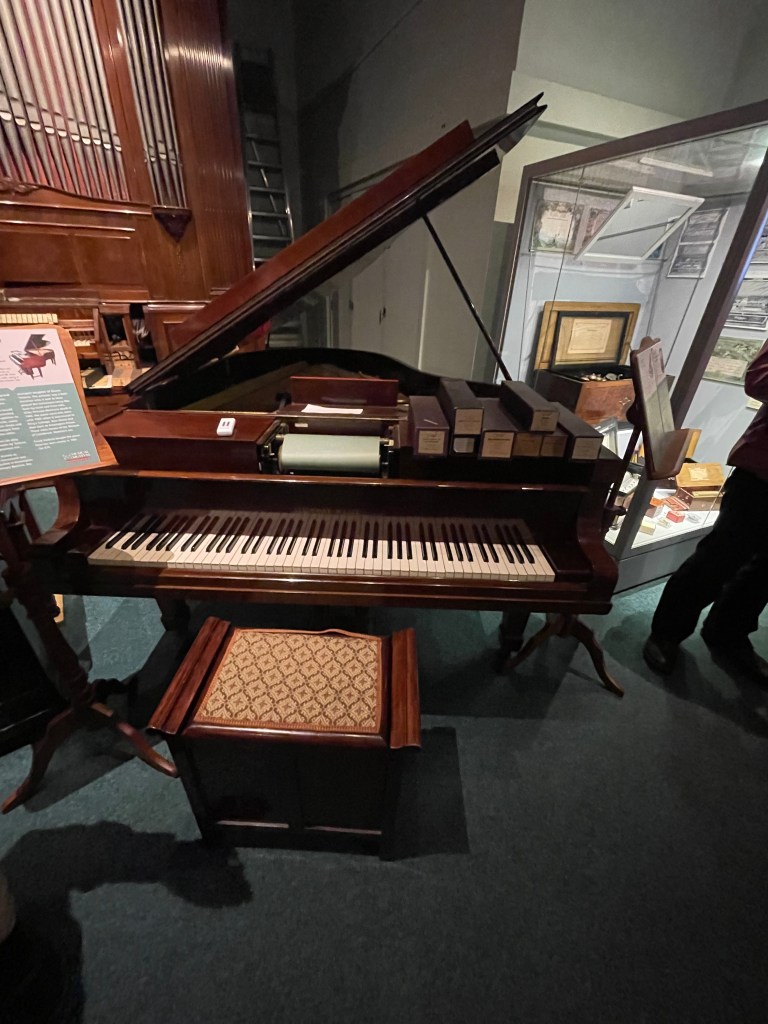
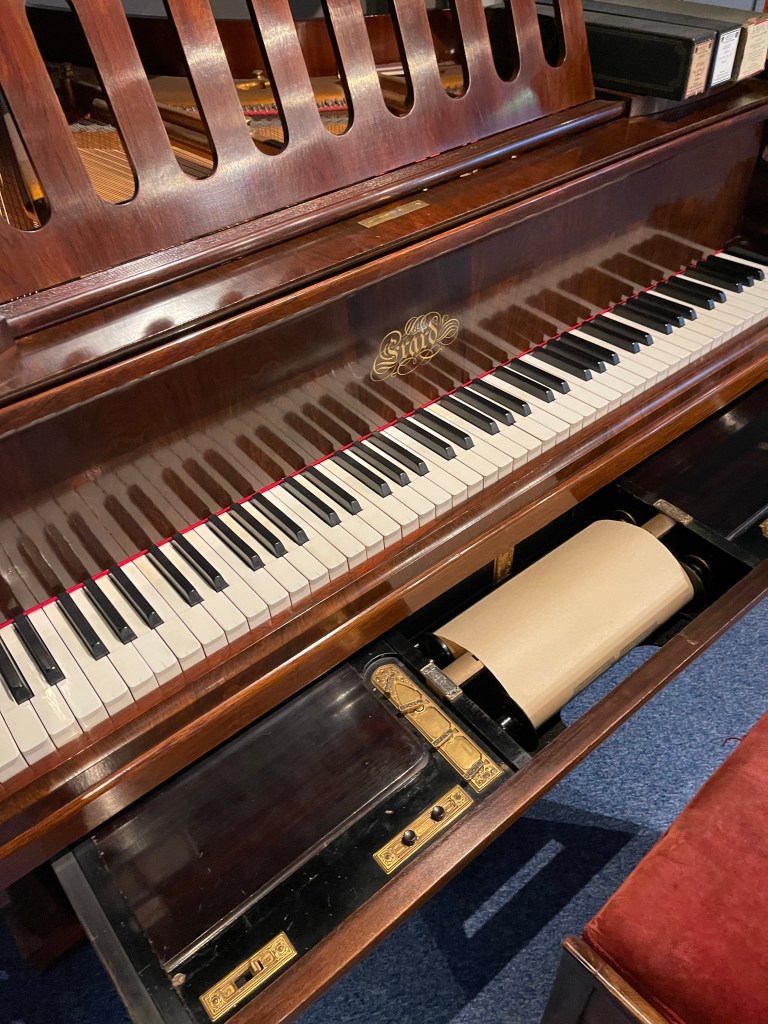
How many times I visited as a student with Sidney Harrison to play concertos through on the numerous grand pianos that not only you could play but they also played themselves.
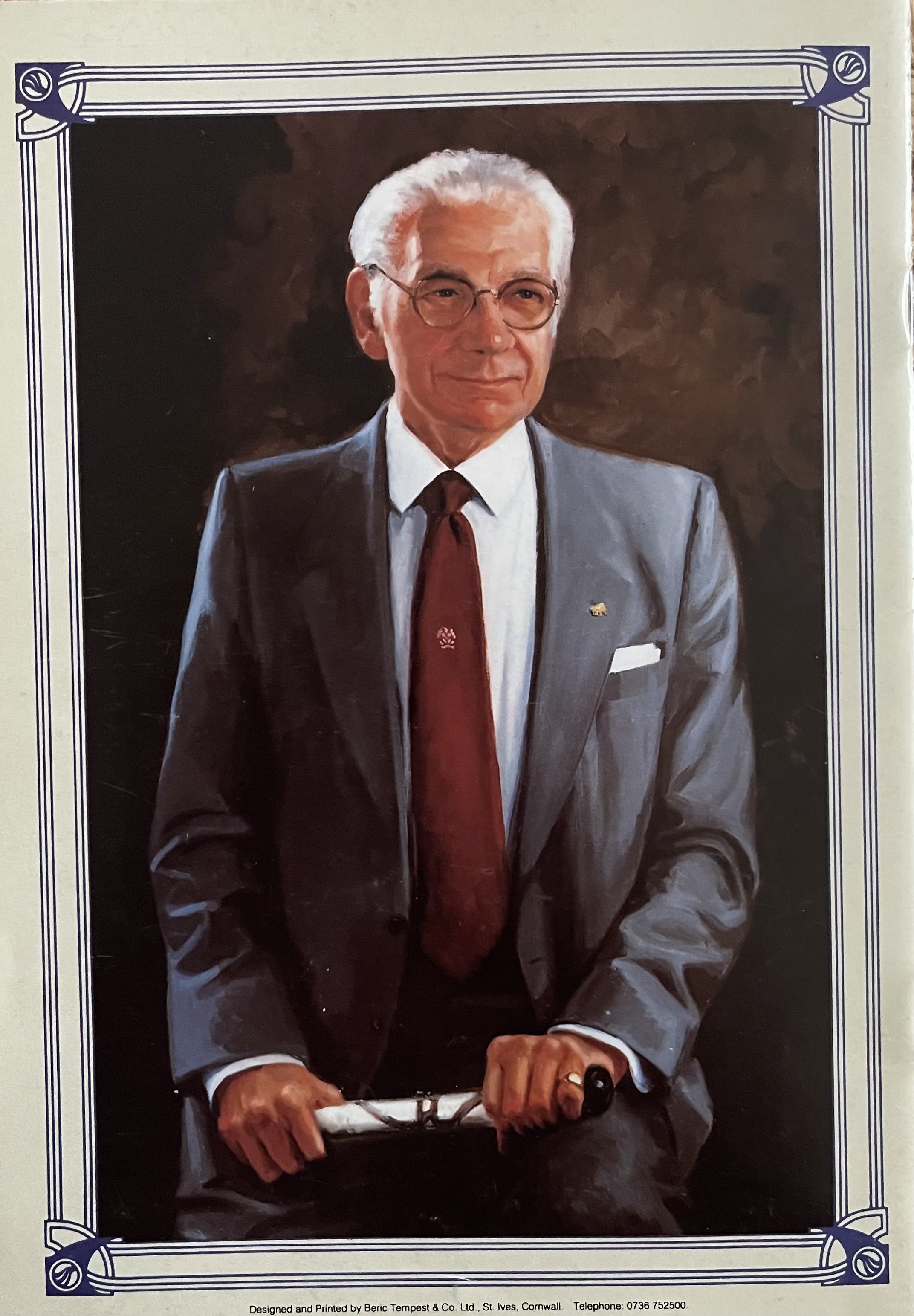
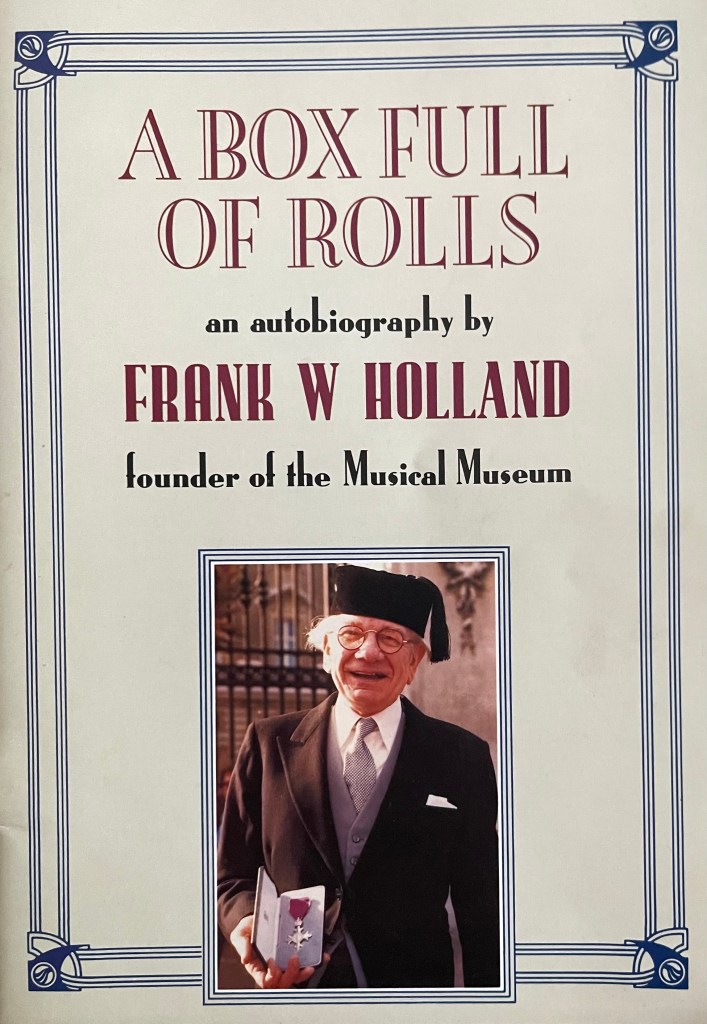
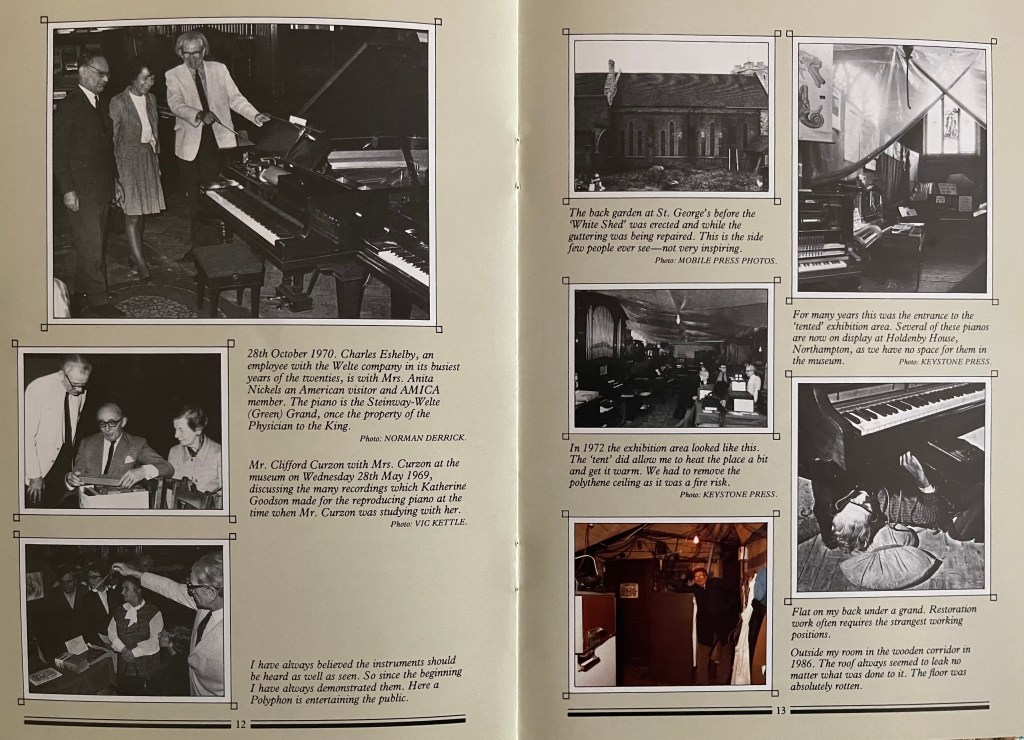
Saved from decay by Frank Holland who housed them in his garage until he found this deconsecrated church on the river in Brentford.They were his children that he jealously guarded.
Sidney Harrison was President of the piano museum and his wife,also Sydney,would often organise evenings to create funds for Liver Cancer research.On one occasion we played Czerny Semiramide transcription for 16 pianists on 8 pianos in a reduced version though.
Sidney and me,Eric Harrison,Graham Johnson,Linn Hendry and Sidneys doctors` wife that very fine pianist, Irene Kohler. Sidney had picked up only half the scores not realising that they were the ones with the accompaniment only.The ones with the tune were left behind in the RAM library! I got the orchestral score and filled them in with one finger much to the disgust of all concerned who just thought I should have played them before!
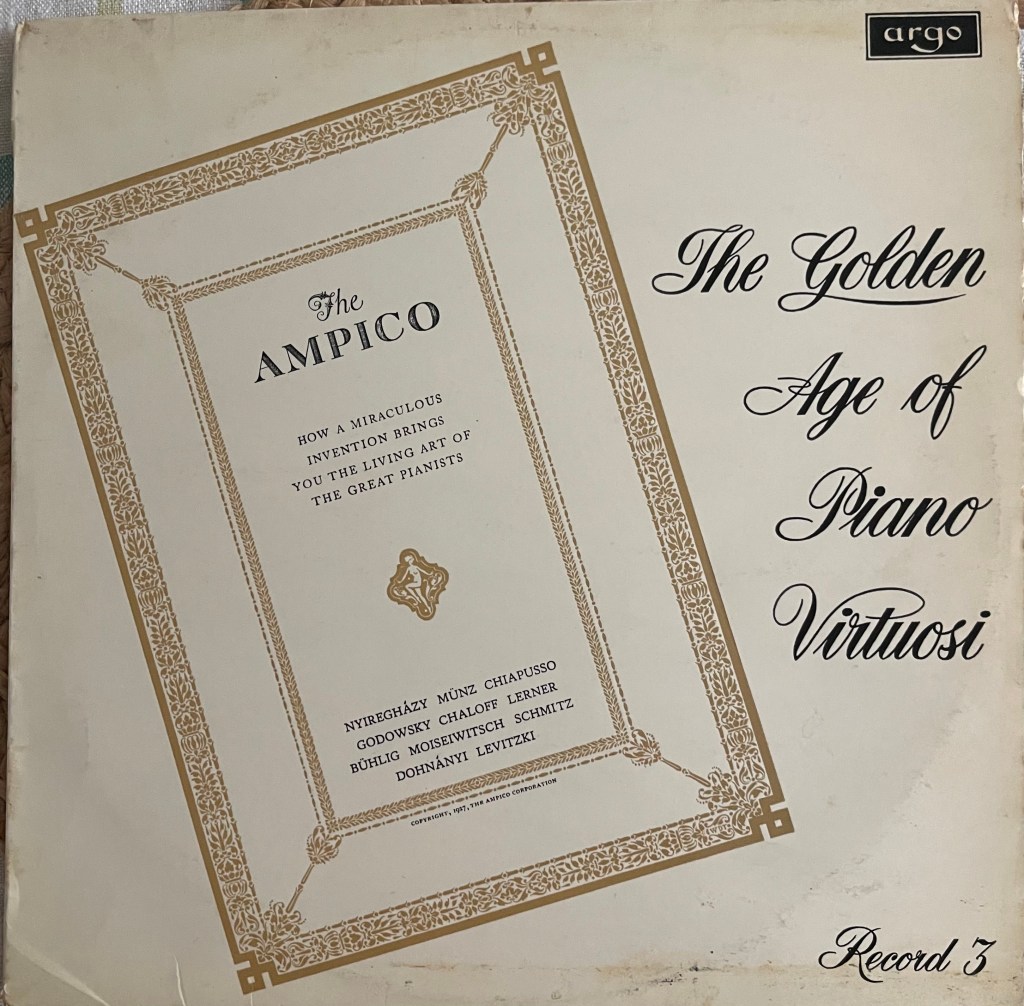
Sidney Harrison was President of the Piano Museum and soon got the BBC interested in the historic performances on piano rolls that Frank Holland had collected over the years.There were late night programmes on the ‘Third’ programme where I would listen mesmerised by performances of Godowsky, Rosenthal, Levitski and Lehvinne .There was talk of giving Franks collection of instruments to the Victoria and Albert Museum to be housed in less leaky circumstances.
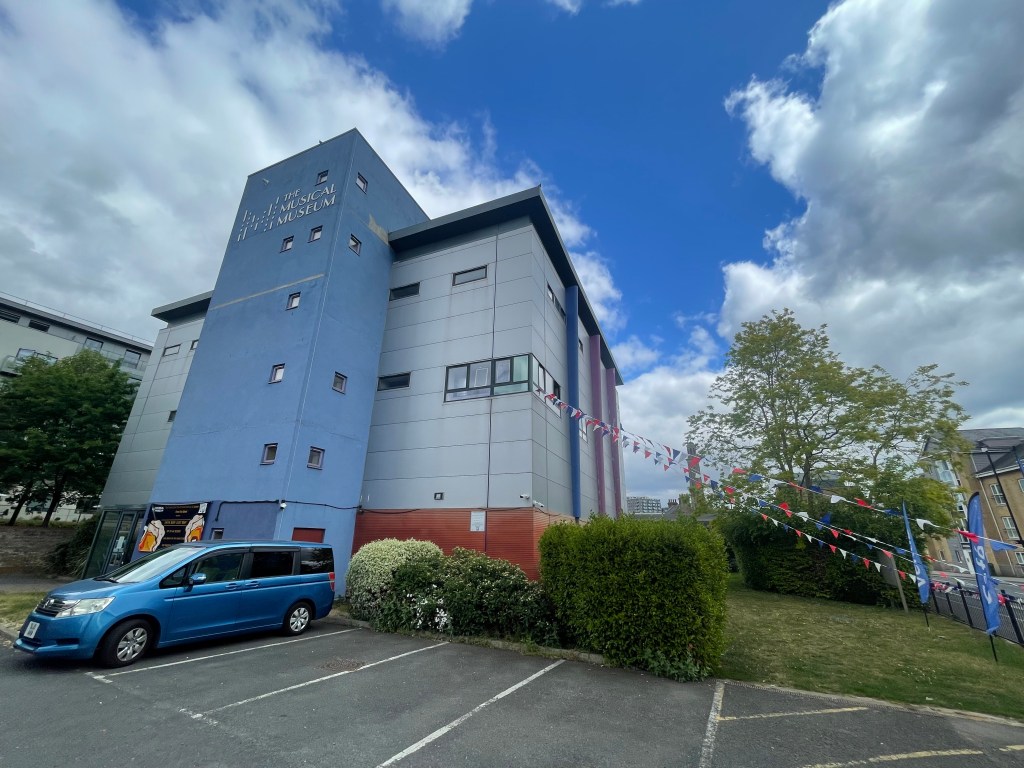
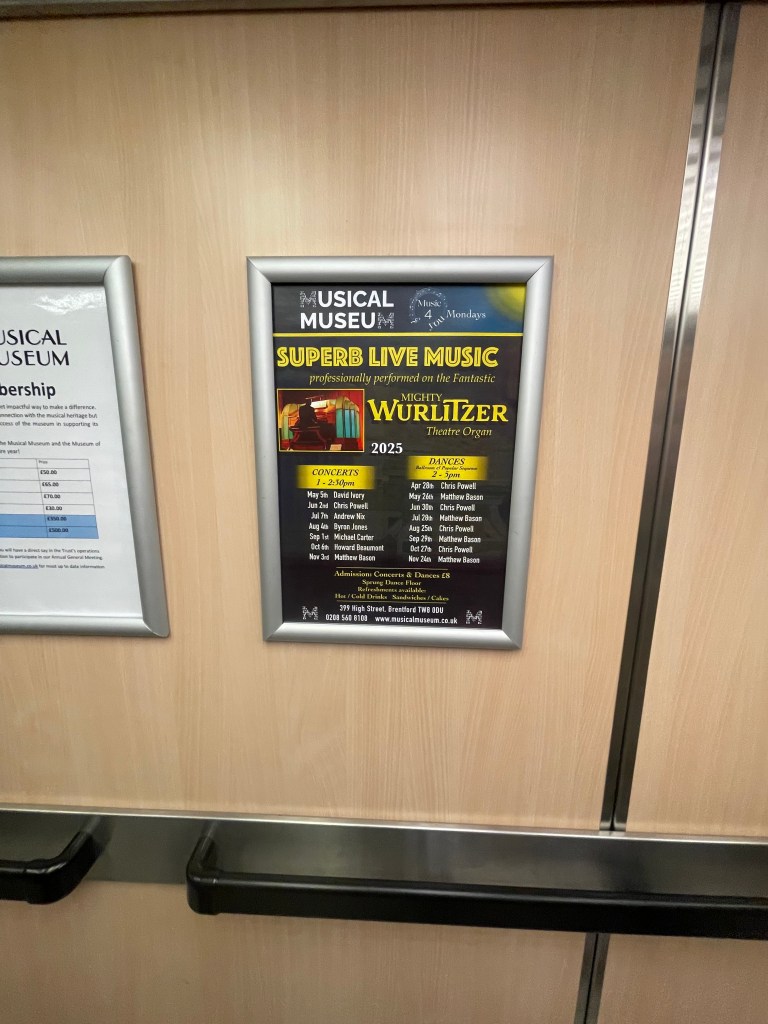
Frank did not want to relinquish control of his babies so he stayed in the leaky church until his death. Many years later this new building was constructed just down the road from the church on the river overlooking Kew Gardens. Obviously the funds from the sale of the converted flats in the church must have more than subsidised this new building where the pianos are safely looked after by ex BBC experts happy to preserve this monument for posterity to wonder at .
Like most churches this too has not been spared from conversion into luxury flats. The piano museum has moved down the road a few hundred yards into an specially contructed edifice. A long way from Franks leaky garage.














 ChristopherAxworthy-MusicCommentary