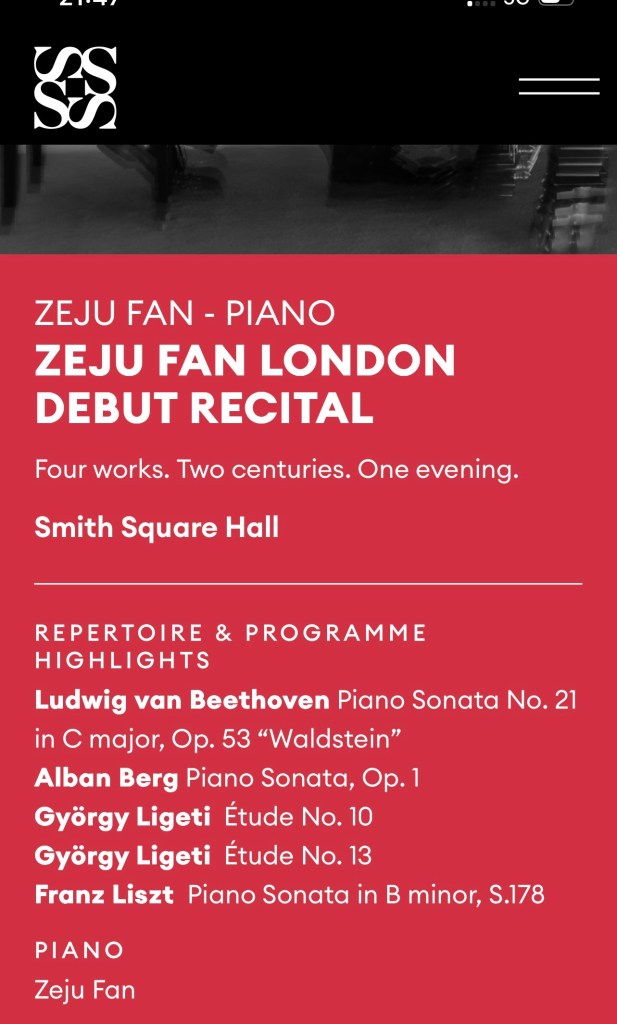
A full house for Zeju Fan on one of the hottest days of the year. The debut recital of this 23 year old Chinese pianist who for the past six years has been perfecting his studies with William Fong at the Purcell School and now graduating this summer from the Royal Academy. Having received his early training from the Beijing Academy for young musicians Zeju Fan was able to cope with the quite considerable difficulties of Beethoven’s ‘Waldstein’ Sonata which Delius was to dismiss as all scales and arpeggios !
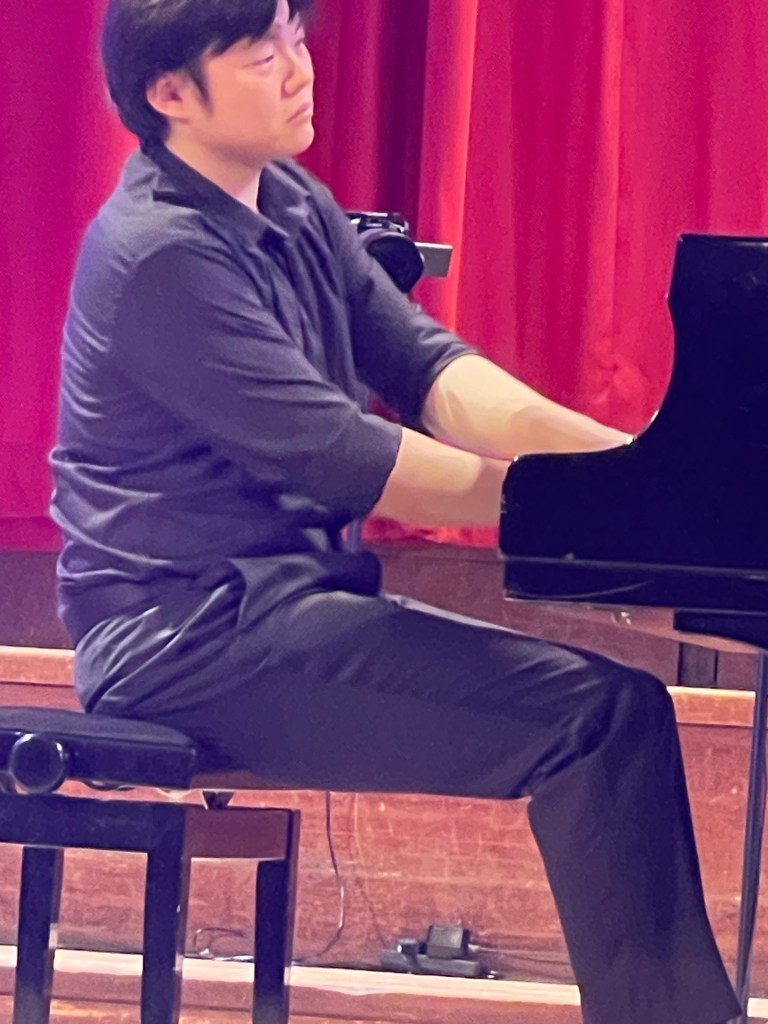
There was much more to Zeju Fan’s performance as his architectural understanding and palette of colours imbued this work with the driving intensity and the genial invention of a composer who in his midlife had taken the simple form of his mentor Haydn and transformed it into a work of symphonic proportions .
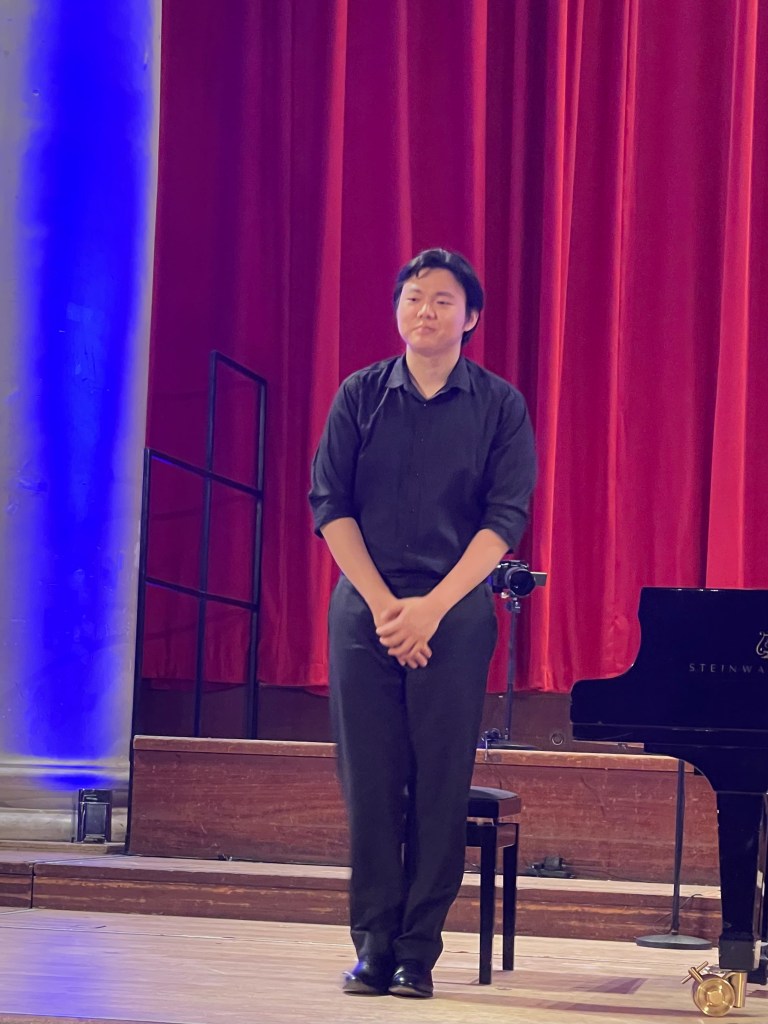
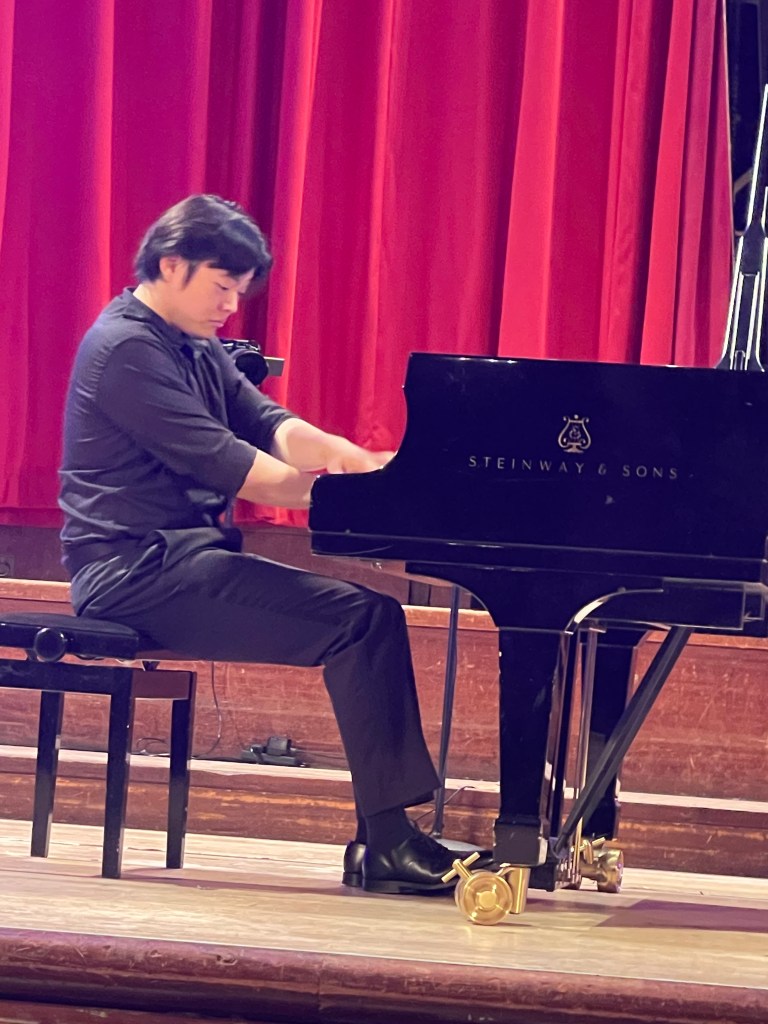
From the very first notes there was a whispered driving energy but above all a tempo ‘con brio’ that could encompass the entire movement without any variation in tempo. Contrasts in dynamics where in the development leaning on the bass harmonies gave much more impact to the impatient outbursts of the composer . The introduction, Adagio molto, to the final rondo was played with timeless wonder where his orchestral sense of colour was used to poignant effect. The final ‘g’ allowed to resonate as it became the first note of a beautiful bell like rondo melody on an undulating whispered bass. Contrasting episodes became ever more intense and technically profuse with Zeju Fan playing with fearless clarity and brilliance. The final coda erupted with music box vitality, Zeju Fan playing the glissandi with masterly ease as he allowed the melodic line to float on a wave of trills that were to become so significant as the composer reached his final years. Not just trills but waves of vibrating sounds that in the next century would signify the ‘star’ for Scriabin.
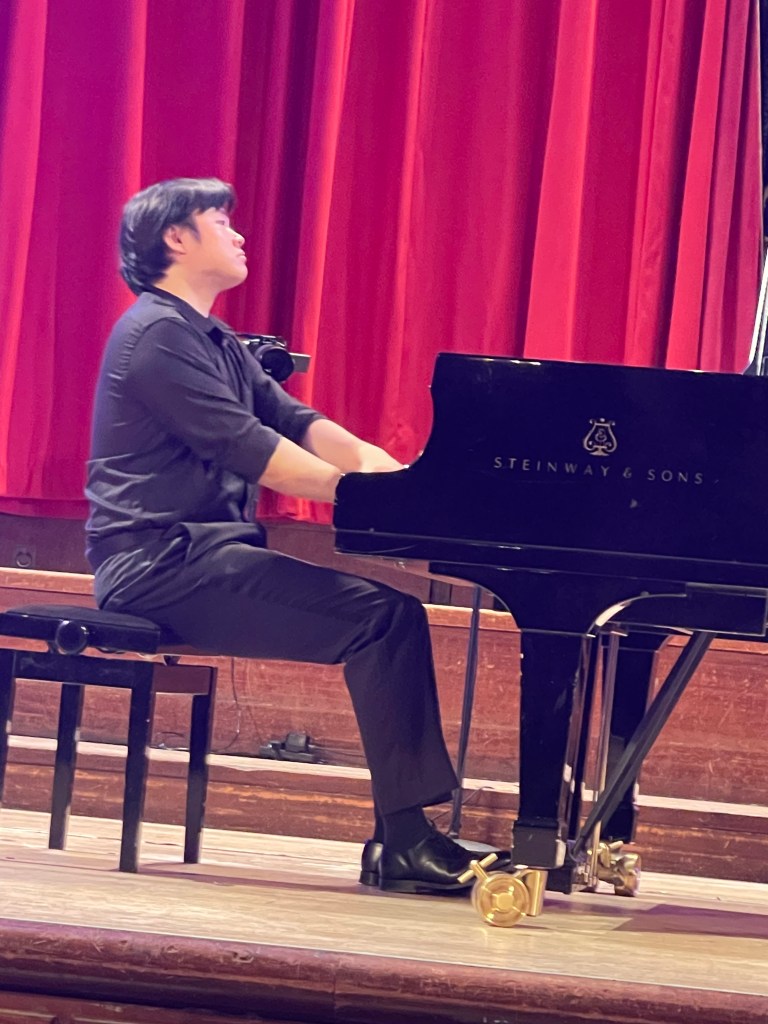
Even more remarkable was the Sonata op.1 by Berg
I had first heard this sonata as a student in this very hall from the magical hands of Shura Cherkassky. It is a masterwork of knotty twine but also with a very concise construction needing a chameleonic sense of colour. Passionate outbursts are the culmination of these strands that are woven together with seeming random, but are in fact a very tightly constructed masterpiece. Zeju Fan managed to imbue this work with extraordinary sensibility and passionate intensity with an architectural understanding that gave great strength to a work that in lesser hands can seem to be a work in progress.
It was the same understanding and technical mastery that he brought to two of Ligeti’s intricate studies . From the insistent repetition of notes of the tenth with its perpetuum mobile of Reich like insistence that Zeju Fan played with extraordinary mastery and a concentrated intensity of burning conviction . To ‘Musica’ n 7 with the remarkable continuous bass outpouring of whispered insistence with a beautifully glowing melody above, revealing Zeju Fan’s technical control and masterly use of the pedal.
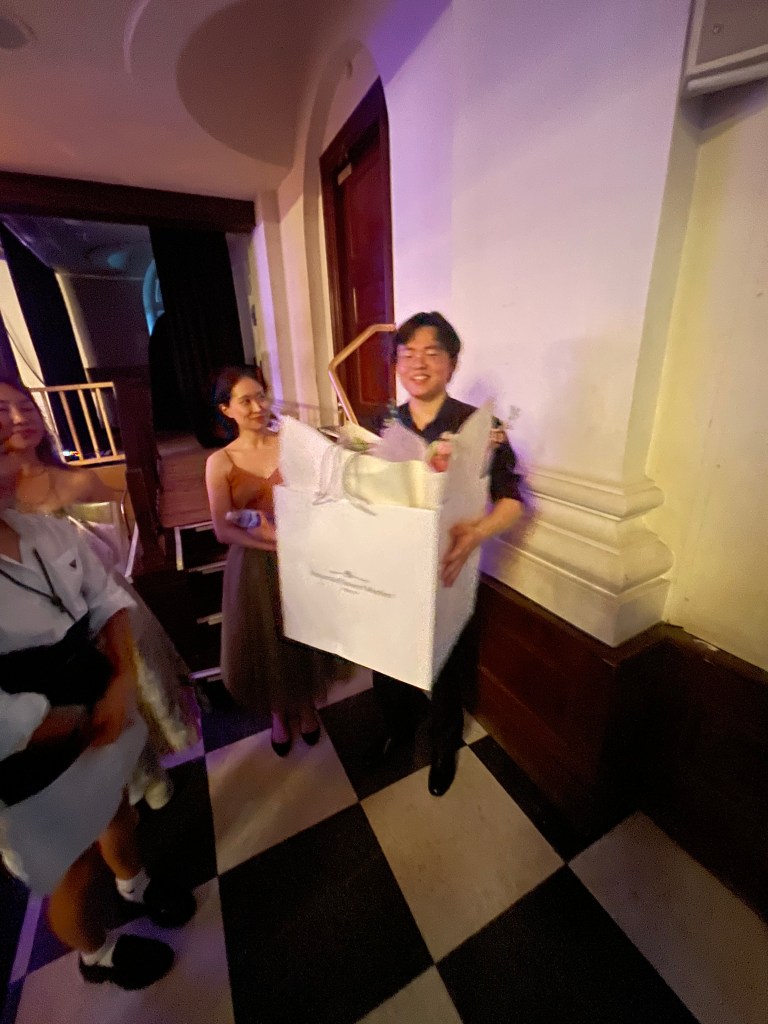

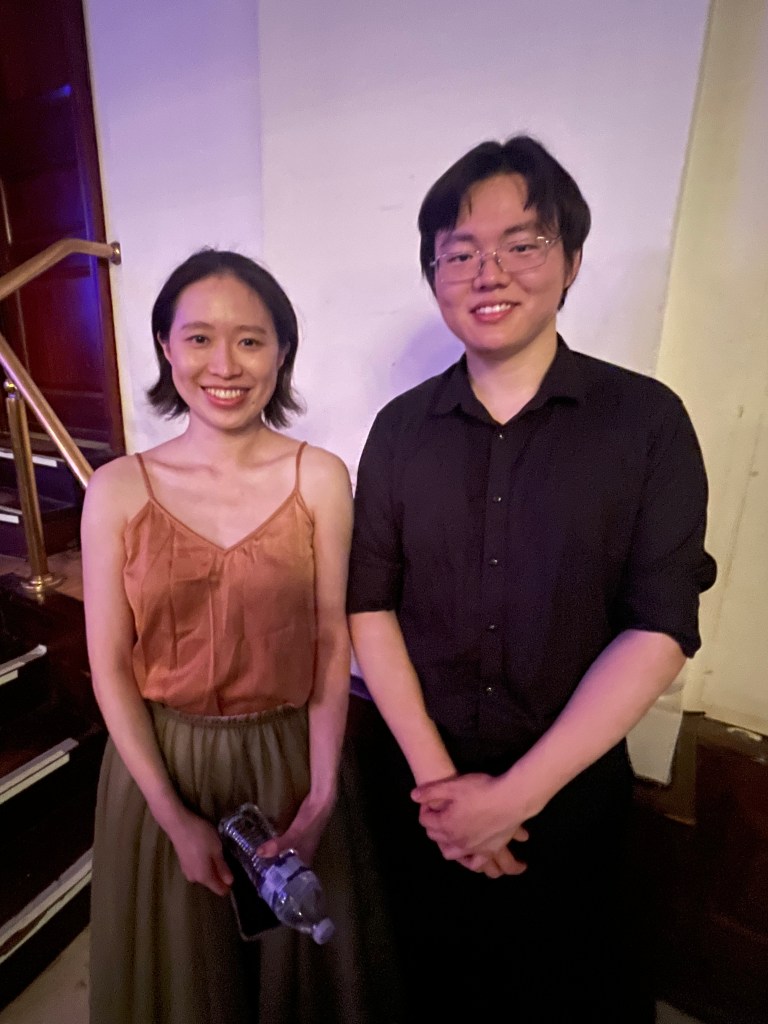
Zeju Fan is a very passionate young man and the Sonata by Liszt is like giving a red rag to a bull . It was here that from the extraordinary whispered opening he seemed to switch off all the remarkable intelligence and masterly control of the two ‘B’s’ and was wallowing in the romantic outpourings and virtuosity of the Liszt Sonata . There were many beautiful things and some fearless passionate outbursts but it was Liszt himself who had scratched out his first ending of the sonata that finished in a blaze of glory. He substituted it with one of the most extraordinarily prophetic pages in all the Romantic repertoire. It is of a completely original form using the opening three themes as the leit motif throughout the Sonata, transforming the conventional Sonata Form into a container for the Romantic outpouring of operatic characters. A form that Schubert had found for his Wanderer Fantasy that had inspired Liszt and was in turn to inspire Liszt’ s son in law Richard Wagner.
However even if it was not the same maturity as his Beethoven or Berg it was the passionate outpouring of a young artist who loves music and is transmitting that love to the public with quite considerable mastery.
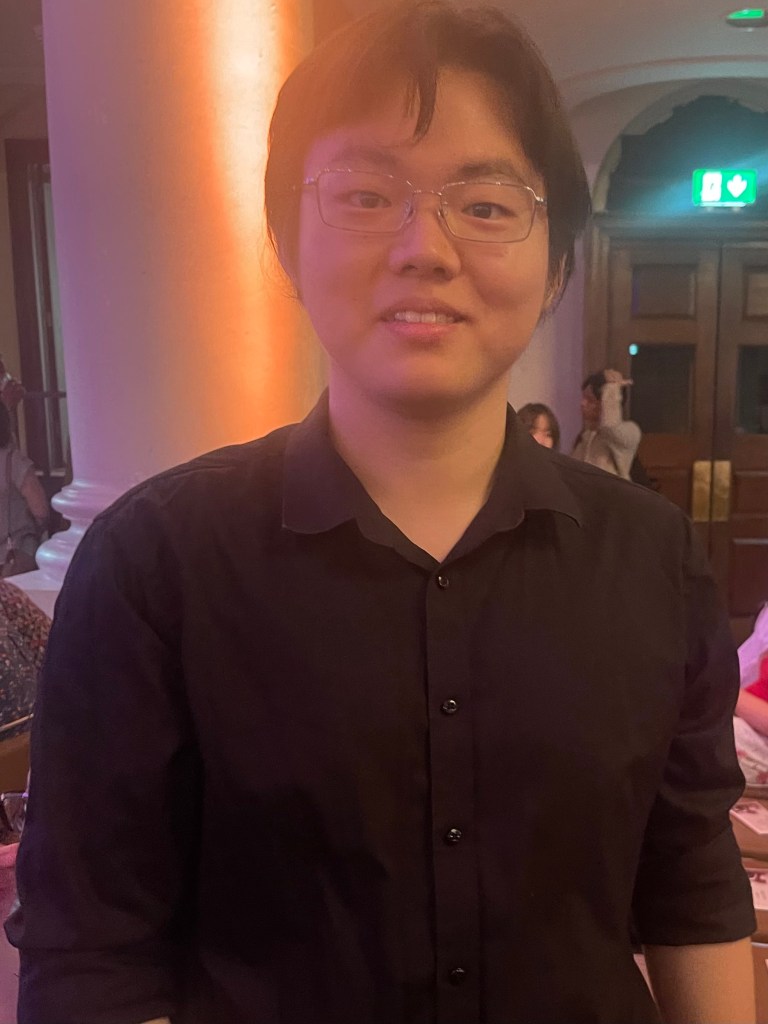
Zeju Fan is a London-based pianist whose recital programmes are conceived as carefully structured artistic arguments.
Trained at the Central Conservatory of Music in Beijing and the Purcell School, he studied with William Fong on full scholarship at the Royal Academy of Music, where he continues as a postgraduate artist from September 2026. Under Fong’s direction, he has developed a discipline of clarity and control, pursuing the expressive potential of each phrase through detailed, structural work rather than surface effect.
His programming reflects a sustained engagement with musical form and its transformation. He is drawn to programmes that trace a continuous arc: from the structural certainty of late Classicism, through the dissolution of post-Romantic language and the fragmentation of Modernism, to the large-scale expressive architecture of Liszt. Each work in such a sequence reshapes the listener’s perception of what precedes it.
Alongside his solo work, Fan is an active chamber musician, with a particular commitment to the cello–piano duo and piano quintet repertoire. He is a member of Talent Unlimited, a London-based organisation supporting emerging professional musicians.