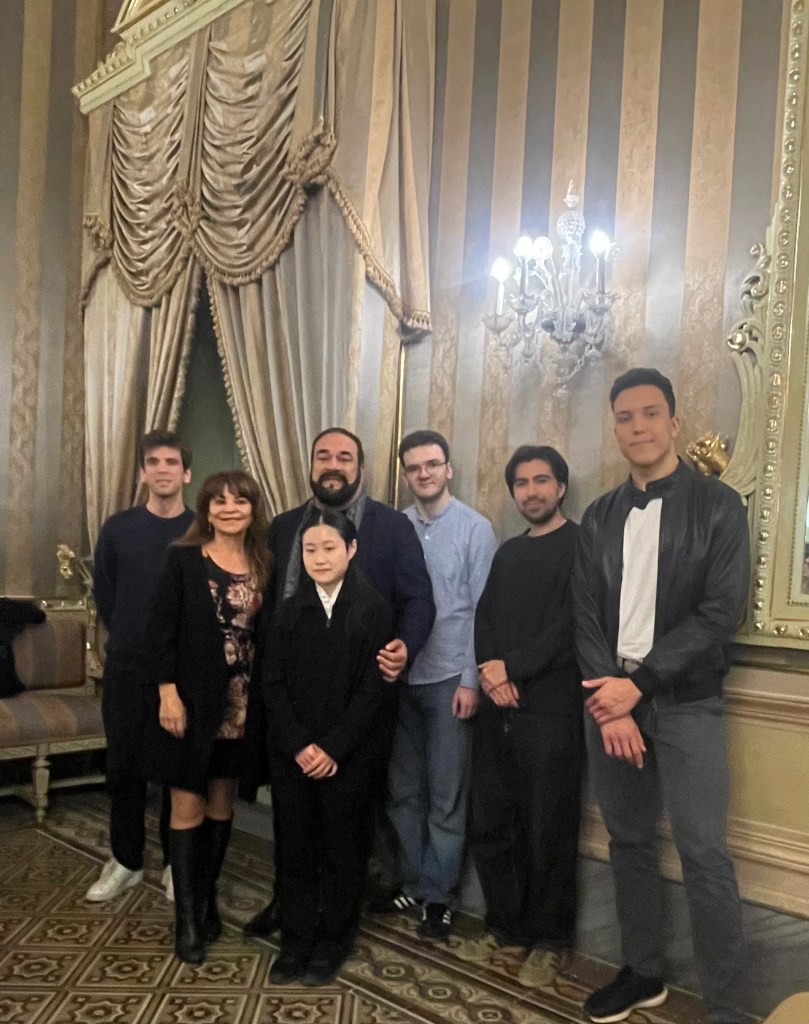
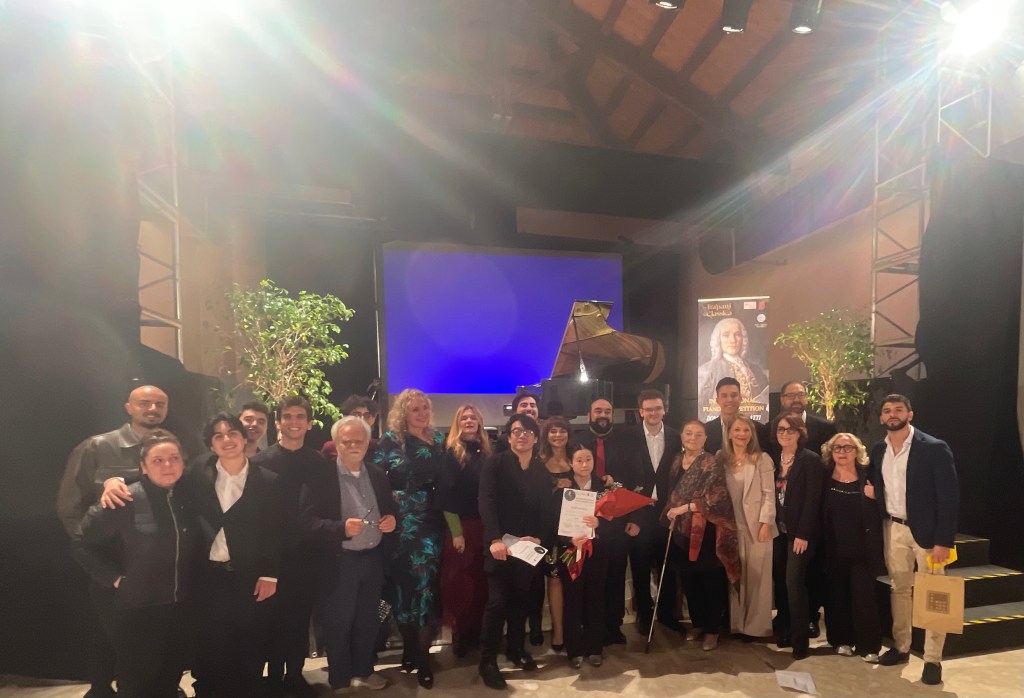
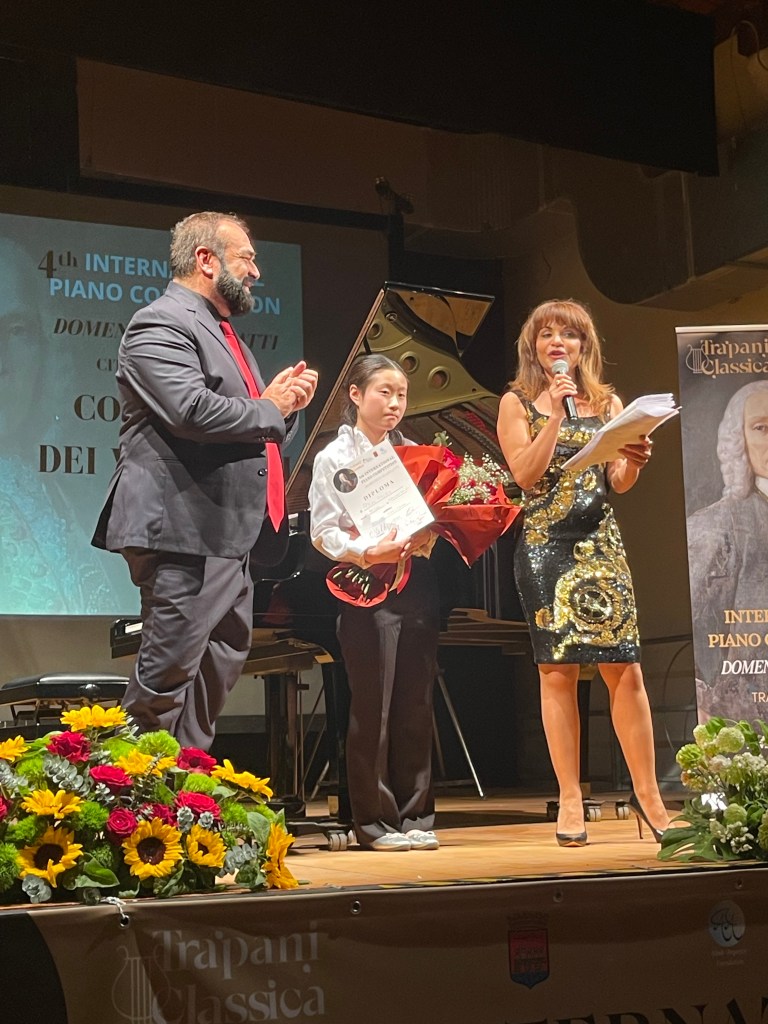
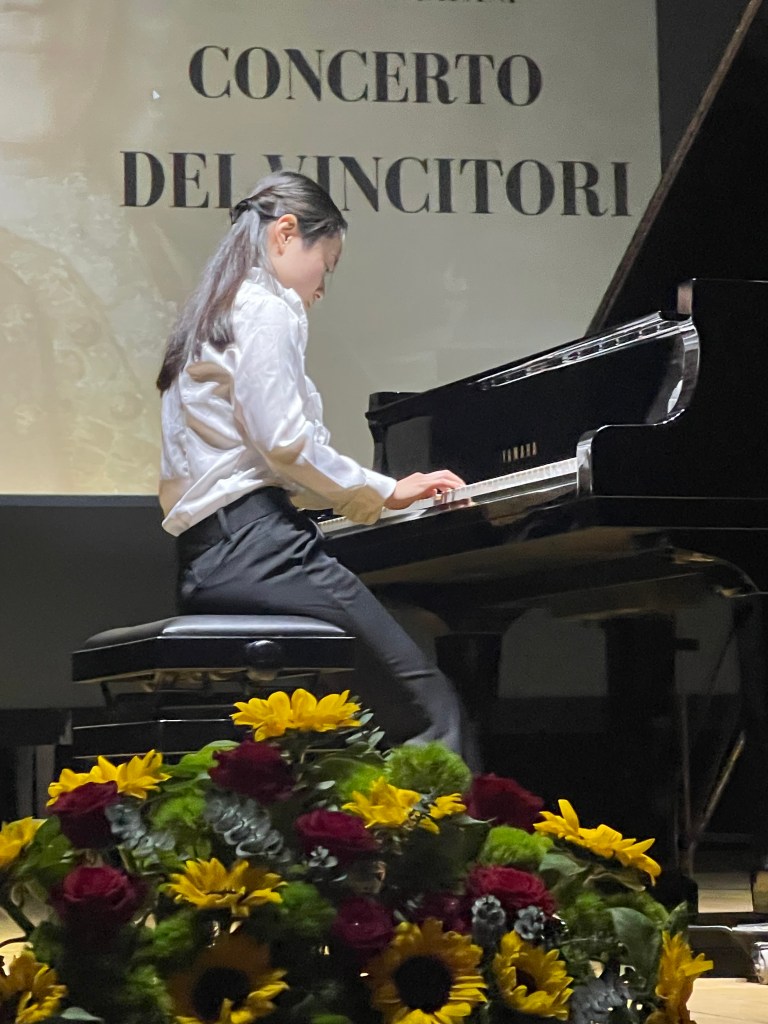
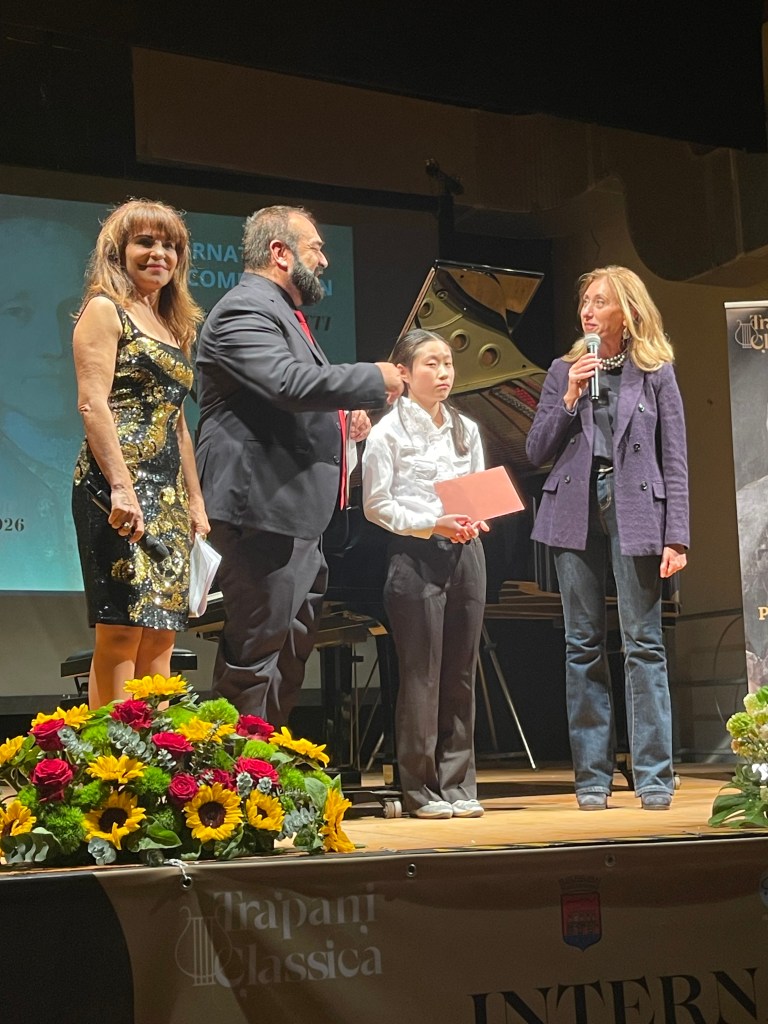
First prize Maruyama Nagino aged 26 from Japan.A miniscule young artist with an enormous talent ! From the very first notes she revealed a sensibility and perfect legato with the rhythmic drive of a musician who knows where she is going and gets straight to the point, like Serkin. Scrupulous attention to the composers indications and a sense of stylistic fantasy where, as in Scarlatti, decisions are left to the performer. Preferring to play Chopin’s double thirds study rather than Liszt ‘Campanella’ ( which she seduced us with at the final concert ) and Brahms Paganini Variations instead of Chopin Fourth Ballade. Chopin’s notoriously difficult study was played with a legato where her tiny hands have been moulded from birth to the shape of the keys as she was able to effortlessly extract sounds from the streams of notes with a seamless legato that I have only heard from recordings of legendendary artist from the Golden Age like Moritz Rosenthal. Brahms Paganini not only meeting all the technical challenges which passed unnoticed, as it was her sense of style and range of colour that turned a work often played as an exercise into a sumptuous outpouring of romantic ardour.
I was not looking forward to hearing the ‘Appassionata’ followed by Brahms Haendel, but from the very first notes I was riveted to the sounds that she could produce and the depth with which she had delved into these much abused scores. Beethoven where the rest after then opening trill becomes even more menacing than the notes. Waves of sounds played as Beethoven shows us in the score, not divided between the hands to make life easier.This is not play safe music and if you are not ready or aware of the challenge that Beethoven demands it is better not to enter the haven of a universal genius. The ‘Andante’ I have never heard played so quietly but where each note was of the fundamental importance of a string quartet. The dynamic drive and Beethovenian explosions of impatience in the final movement were breathtaking in their audacity and authenticity, keeping reserves of energy for the coda that Beethoven marks from Allegro non troppo to Presto with a long held final pedal too.
Brahms Haendel Variations opened with the same crystalline clarity that she brought to Scarlatti but this was built in tension and beauty by an artists who could see the architectural whole and where everything she played was with this in mind. The culmination after the glorious triumphant declamation of Haendel’s innocuous theme was followed by the burning energy and transcendental mastery of the Fugue.
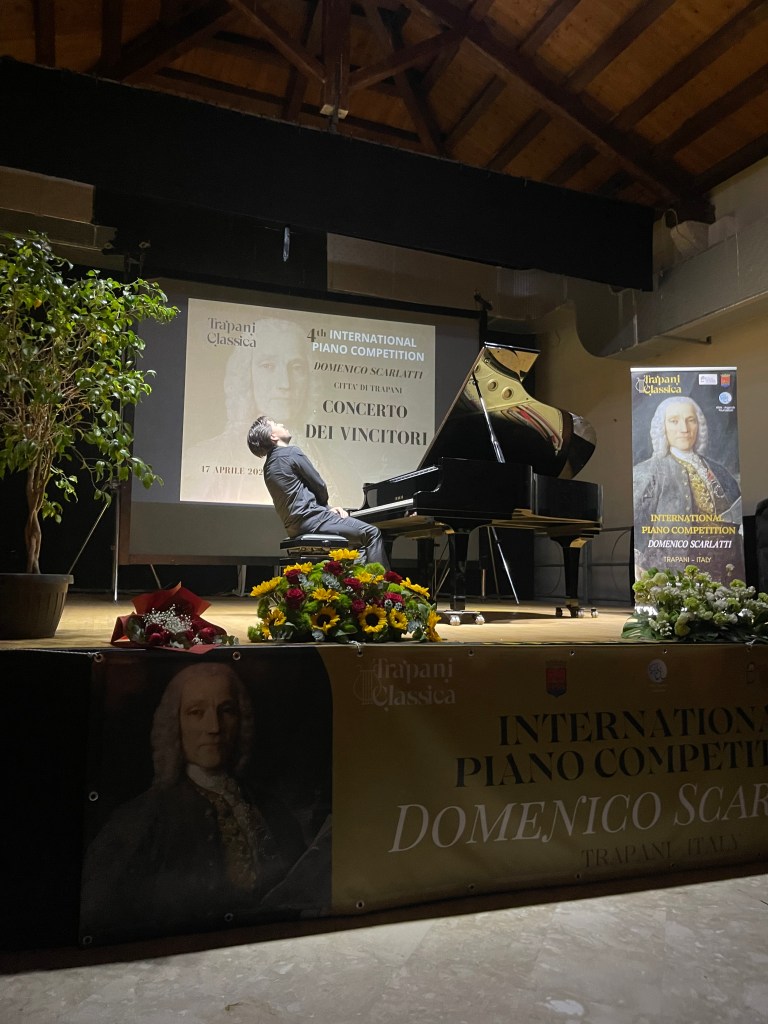
In the final round she chose, obviously because of time ,to play only two of the three movements that make up Ravel’s Gaspard de la Nuit. ‘Ondine’ where with her refined artistry notes became streams of sound out of which emerged the beauty of the water nymph’s song. ‘Scarbo’, where Ravel intentionally penned a work of more transcendental difficulty than Balakirevs Islamey, but filled this fleetingly devilish piece with very precise indications. Maruyama, with her extraordinary mastery, followed Ravel’s indications, producing sounds that I have never heard before in this work. The ending in particular was where she brought poignant poetic meaning to this extraordinarily impish farewell . She played always with restrained brilliance and masterly control of sound. Debussy’s ‘L’Isle Joyeuse’ was full of the sultry colours of the composer’s vision of Jersey, but there was also a passionate involvement and a kaleidoscope of colours. Prokofiev 7th Sonata, the second of his War Sonatas and full of violent conflicting emotions . From the opening dynamic drive and pounding rhythms to the desolation and desperation that is always present, however distant. A beautiful outpouring of the Andante caloroso turning up the heat of quite another order, as our pianist could allow the music to erupt before dying away to the same desolate landscape as Le Gibet ,that hopefully we will hear on another occasion! The last movement was breathtaking in its fearless and relentless insistence. Playing of masterly control but always of a musician who could bring drive and meaning to notes too often played with brute force instead of poetic intensity.
At the prizewinners concert she chose to play ‘La Campanella’ and Chopin’s Polonaise ‘Héroique.’ Her crystalline clarity and masterly brilliance illuminated Liszt’s ‘Campanella’ but the Polonaise was not only heroic but with sumptuous full sounds that belied her physical stature . Here she proved yet again that on stage she is in reality a Giant.
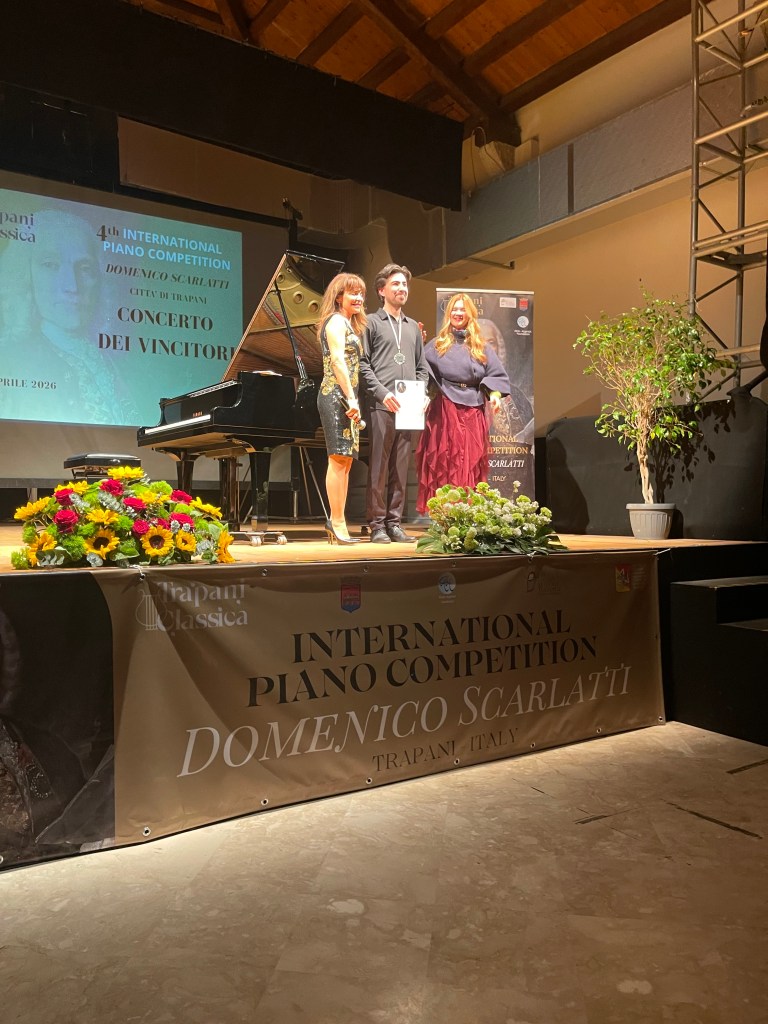
Tied second prize Arsen Dalibaltayan, aged 23 from Croatia. Arsen’s father is a well know teacher in Zagreb and was the teacher of a young pianist, Ivan Krpan who at 20 had won the Busoni competition not by astonishing the jury but by his mature musicianship and technical command at the service of the composer. A first round that showed with short works by Scarlatti, Scriabin and Rachmaninov his quasi orchestral sense of colouring with poetic sounds of luminosity and a beauty of timeless freedom. I had already eyed his second round programme that would include Beethoven’s ‘Hammerklavier’ Sonata, prefacing it with Chopin’s most poignant late Nocturne, where he was able to show us the contrast between works written quite close to each other, but revealing a world of mature aristocratic genius as opposed to a world of turbulence and violent emotions. Allowing the Chopin to unfold with the natural beauty and simplicity of a Bruno Walter whereas Beethoven needs the strong no nonsense command of a Toscanini.To play op 106 in competition conditions is a ‘tour de force’ in itself and there were many memorable moments in a performance of passionate intensity. But the rhythmic perfection and minute detail that fills the score needed more careful attention and less accommodating compliance. It was this scrupulous attention to detail that marked Maruyama’s Beethoven and made it so riveting with the burning intensity that actually is written in the score. It was in the final round that Arsen came into his own as he entered a world of fantasy and intensity. A ‘Dante’ Sonata that was one of the finest I have ever heard, where Arsen’s scrupulous attention to the composers indications allied to an extraordinary palette of sounds was breathtaking, with it’s passionate intensity and sublime whispered beauty. Scriabin’s 7th Sonata was of such mastery that we were all left hanging on to every note that came steaming out of the piano, as Arsen played with burning conviction and a complete understanding of this strange world of mystery and colour. As I wrote to Ivan immediately after his performance ‘ Fantastic Dante and Scriabin 7th out of this world’. I am glad the jury thought so too!
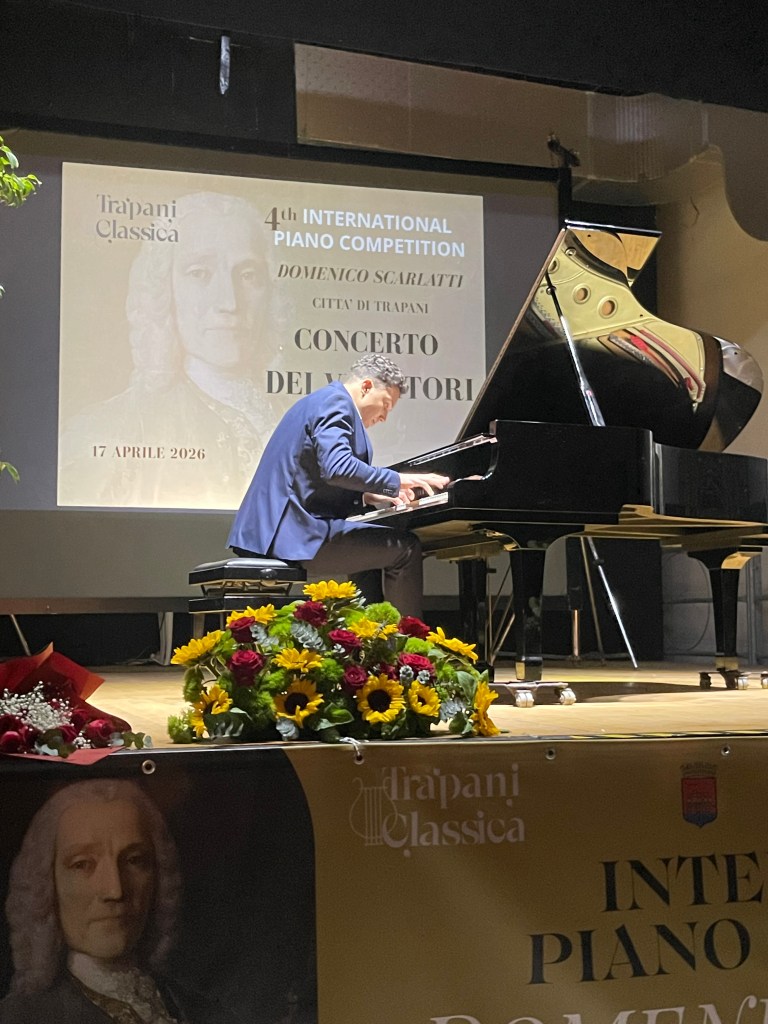
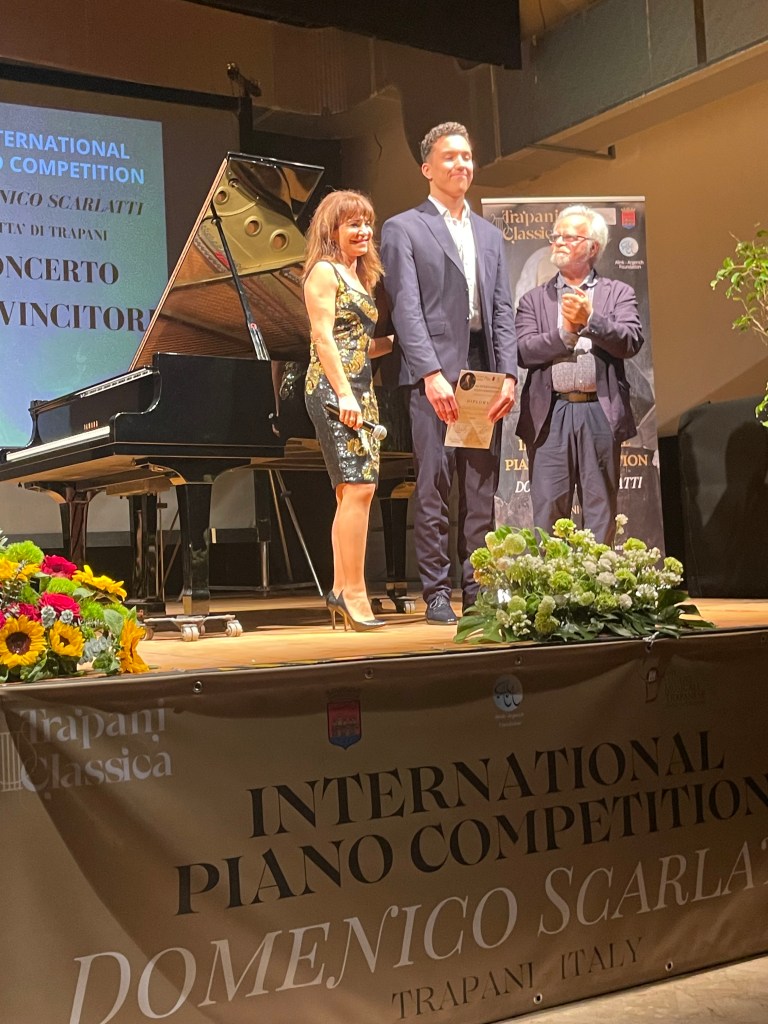
Tied second prize Bohdan Terleskyy aged 20 from Ukraine. Masterly performances from this young artist, almost twice the size of Maruyama Nagino, and with a directness of sound that at times I found rather overpowering.Too full of light and energy but missing refined subtly and sense of colour. Bach Siloti that seemed too present and not with the magic sounds that Siloti has added to Bach’s simple prelude. Beethoven’s ‘Appassionata’ was played with mastery and brilliance. An intelligence but not always a scrupulous attention to the composers very particular pedal markings or subtle changes of mood. This was masterly playing though even if rather black and white. The choice of Liszt’s beautiful ‘Cloches de Genève’ revealed a true thinking musician. ‘Dante’ of course he played magnificently but missed the drama and contrasts that can bring this work to life and reveal the masterpiece it truly is.
It was in the final round that the true artistry of this young man was revealed to the full. ‘Jeux d’Eau’ by Ravel showed the refined subtle palette of sounds that had been missing up until now with a performance of ravishing beauty and mastery. Prokofiev’s 8th Sonata was the crowning glory of his performances with a work that is a song of deliverance bringing Prokofiev’s Trilogy to a heartrending conclusion and which Bohdan played with a maturity way beyond his twenty years. This was a world where mastery and poetic beauty combined in one of the finest performances I have ever heard.
Strangely enough the first movement of the Ginastera Sonata that he played at the Prize Winners concert revealed a different pianist from the one I had heard in the rounds. Here was a sense of shape and colour that was of overwhelming impact. Maybe it was the sense of space that this giant needed to allow his larger than life playing to resound around this vast auditorium .
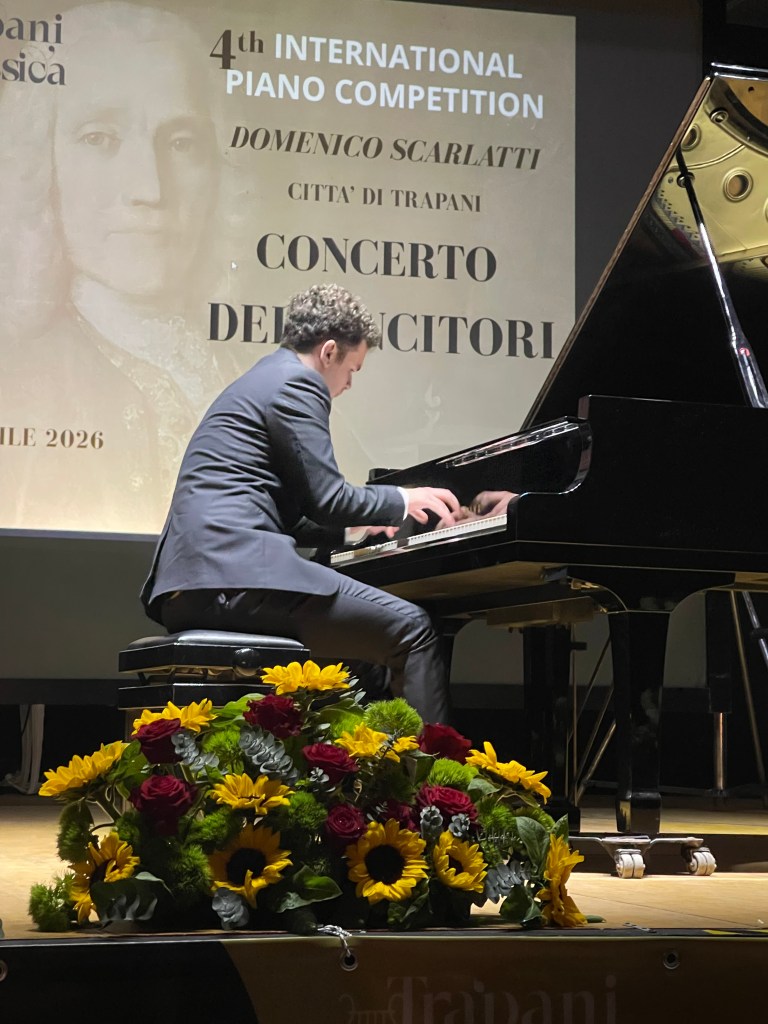
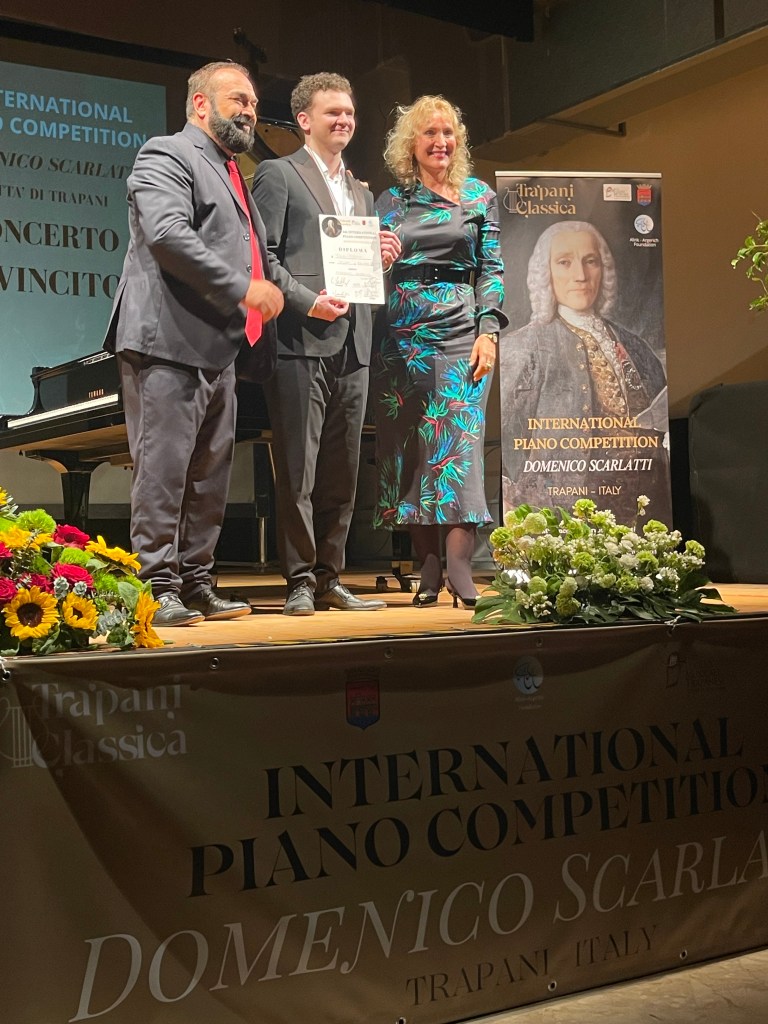
Third prize Mohammed Alshaikh aged 23 from Palestine. A young man who managed to overcome all the problems of travelling from a war torn country and quite simply arrived just in time to close the first round. Some masterly playing from the first notes of a Scarlatti Sonata that he played with brilliance but above all with a musicianship that could shape the notes into the beguiling jewel like precision of a magician. Chopin’s notoriously difficult study op 10 n,2 was played with a seamless legato shaping the phrases with undulating beauty as the left hand provided a simple anchor for a study that uses the weakest fingers of the hand. Saint- Saens ‘Dance Macabre’ showed his remarkable mastery and sense of fantasy and colour, as Horowitzian additions added extraordinary embellishments of breathtaking brilliance. His playing of Chopin’s Sonata op 35 revealed a musician of intelligence and mastery. Repeating the exposition back to the ‘Doppio Movimento’ rather than the introduction, just as he had also done with Beethoven’s ‘Pathétique’. Both works that were additions to his original programme and were played with refreshing simplicity and dynamic drive. The Trio of the Funeral March in Chopin was played with understated beauty as he had done with the Beethoven Adagio. It was the mastery he showed with Ravel and Barber that was astonishing. The complete ‘Gaspard’ played with the same mastery as Maruyama Nagino with a superhuman control of sound where notes became streams of poetic outpourings. But for me Misha played with more soul and dept of emotion. It was the difference between Michelangeli or Sokolov, a duel between giants indeed. Misha’s Barber Sonata, dedicated to Horowitz who gave the first performance, is a ‘tour de force’ of emotions and scintillating virtuosity. A fugue that was played with remarkable clarity and sense of line and which he quite happily repeated at the Prize winners concert with even more assurance than in the Circus arena.
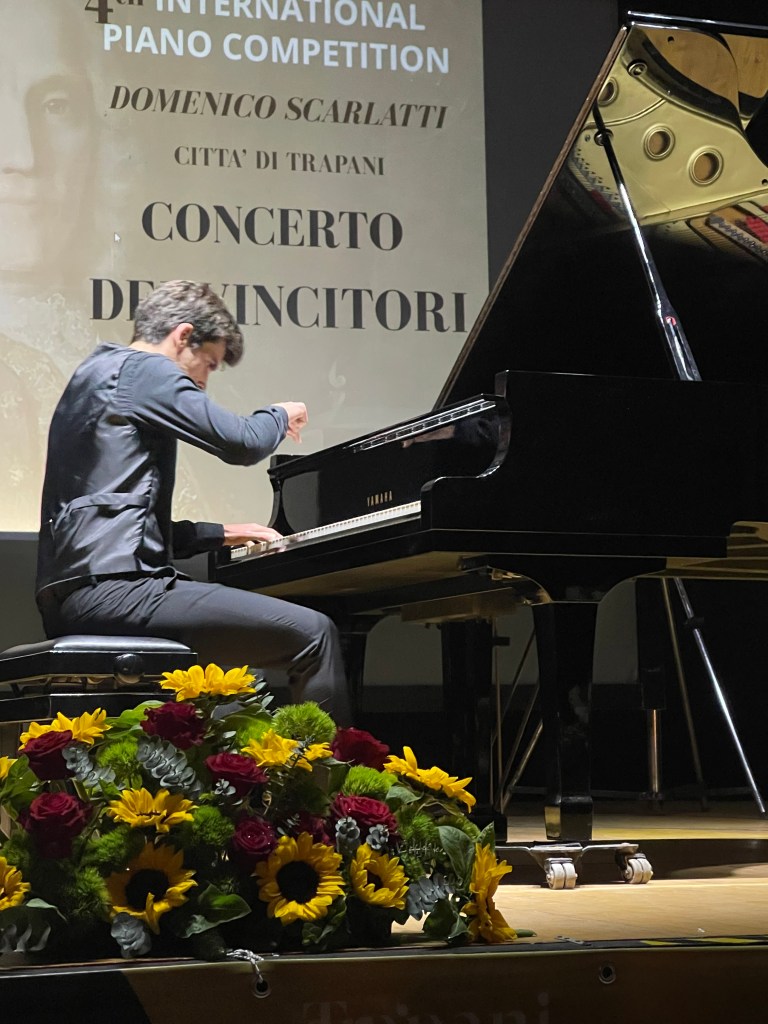
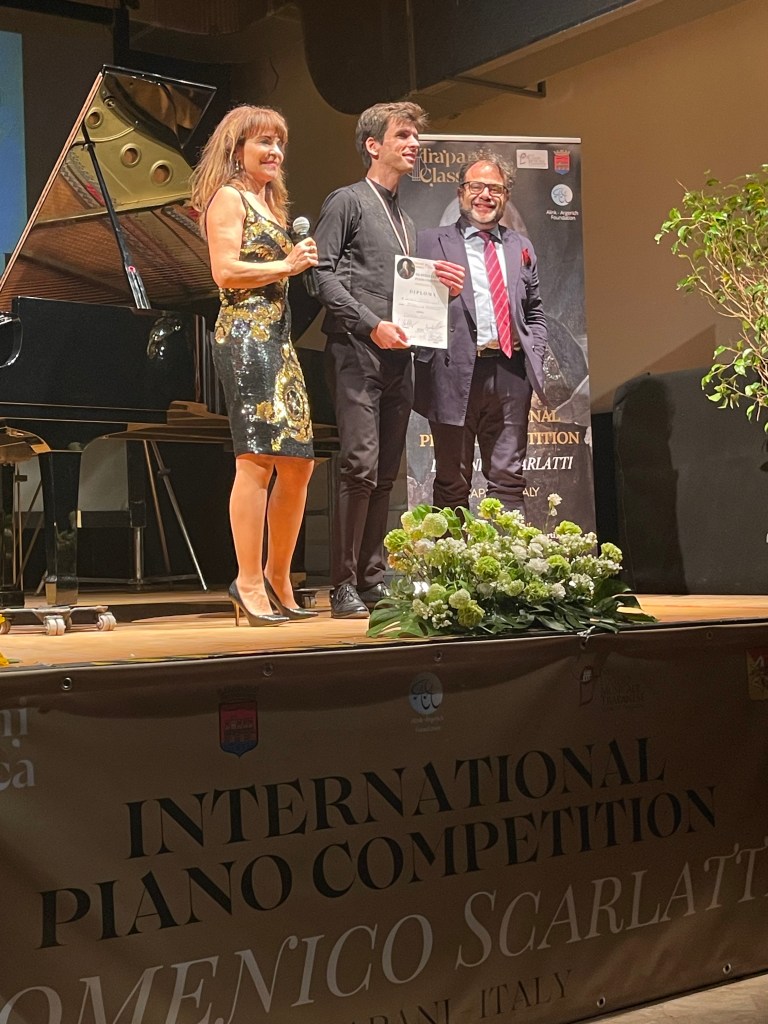
Fourth prize Edoardo Mancini aged 25 from Italy. Some very sensitive playing from a young man who has a palette of subtle sounds in his fingers and is an artist of great humility and intelligence. His performance of Chopin’s first study op 10 showed a remarkable technical preparation and his daring to play Boulez 12 Notations showed a musician who has something to say and the means to say it. An intelligent combination to mix the magical sound world of Mompou followed by Boulez and then the more earthy world of Albeniz. His Scriabin second sonata revealed a sensitive artist of musical fantasy with some playing of beautiful timeless style and colour. It was the slow movement of the Brahms F minor Sonata where he reached moments of sublime inspiration allowing the music to unfold with simplicity and a palette of colours of ravishing beauty. Scrupulous attention to the composers indications showed a musician of rare sensibility. The Brahms Sonatas, Schumann called ‘veiled symphonies’ and it was here that Edoardo lacked the weight of sound and solidity that is needed in the outer movements. There are not so many notes in the third sonata compared to Liszt or Chopin but they need to be played with a precision and rock like orchestral solidity that Edoardo lacked. The weight of a Gilels or Gelber where the fingers dig deep into the keys with limpet like adhesion rather than just remaining on the surface. Edoardo is a remarkable artist as he showed at the Prize winners concert where distance and space helped conceal this fundamental lack of technical perfection in a performance of the first movement of the Brahms Sonata that was far more assured and solid than in the circus arena!
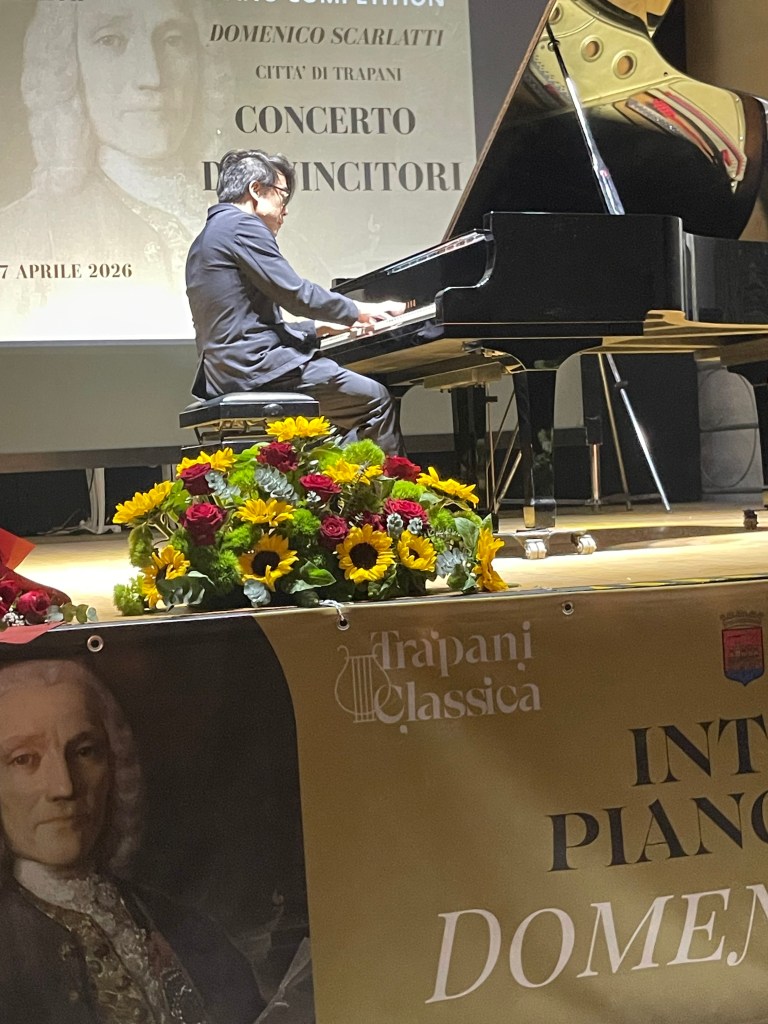
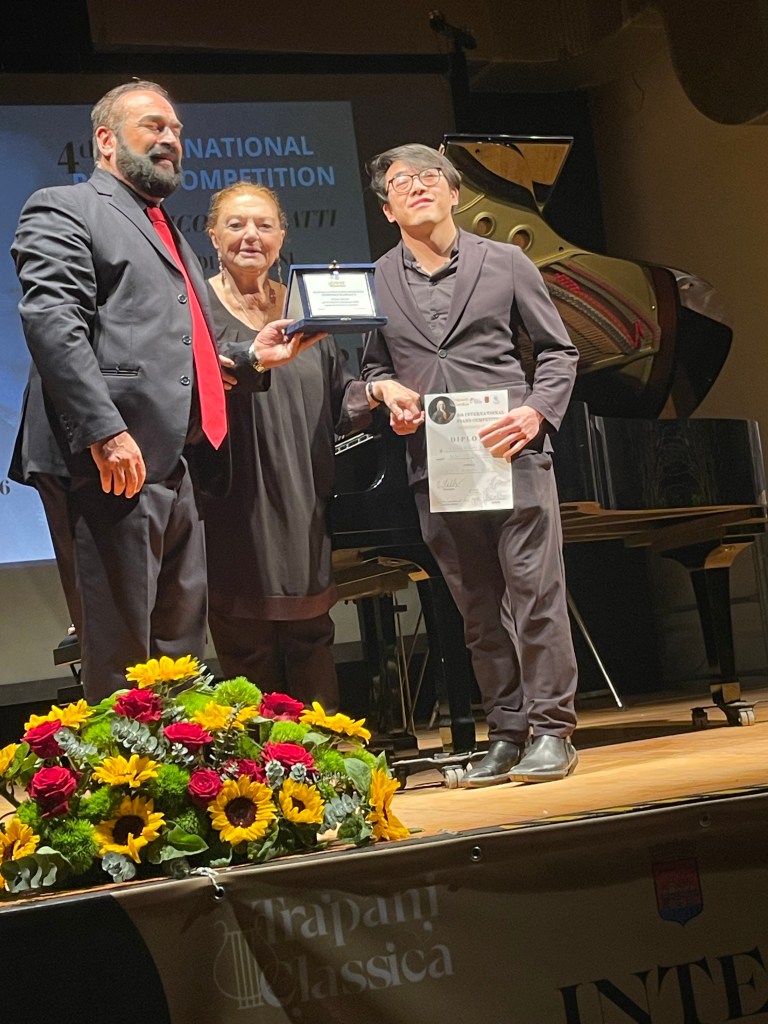
Special Scarlatti Sonata Prize to Hou Kevin Gordon aged 37 from America. Some extraordinary playing from this unique artist who seems to have strayed into the circus arena of the concert hall when his outrageous talent demands he should be astounding the audiences at Ronnie Scott’s. A range of colour and breathtaking daring that belong more to Oscar Petersen than Glenn Gould. There is something about jazz improvisation that is a God given talent these days where it was actually the norm in Bach or Mozart’s day. Court musicians were required to improvise with a facility that was considered an absolute necessity. Robert Levin has managed to recreate this world, which illuminates his playing, as he adds ornamentation and improvised cadenzas with historic scholarship and style There are pianists, mostly from the East, who have not had access to performance practices and who take the notes of the great composers and try to find the expressive meaning behind the notes, not taking much attention of the composers instruction as to how their works should be ordered. As Karl Ulrich Schnabel exclaimed to one of his students :’ so you are a composer, taking the notes of others and making your own composition…’, in exasperation he went on to say that he did not know how to teach someone who thought more of himself than the composer!’ The student in question had been trained from birth to play the piano and it was that transcendental mastery that gave him a career which many serious musicians would consider as an entertainer rather than an interpreter! Horowitz ,who knew the scores of the composers better than almost any of his comtemporaries would flock to the jazz clubs to hear and admire Art Tatum. Kevin being brought up in Hollywood of course, is a master improviser and he brought a certain freshness to many of the works he played but his random freedom with other composers notes became rather exasperating. His complete relaxation allowed him to throw his hands onto the keys and astonish us with Kapustin’s devilish jazz etudes. His obsession with Volodos or Feinberg transcriptions belie the fact that Volodos may be the greatest pianist alive or dead, but he is also a musician, who, with humility and simplicity delves deeply in the scores of Schubert, Brahms or Schumann. Preferring to be an interpreter rather than just a juggler of notes.
https://christopheraxworthymusiccommentary.com/2024/03/20/christopher-axworthy-dip-ram-aram/

