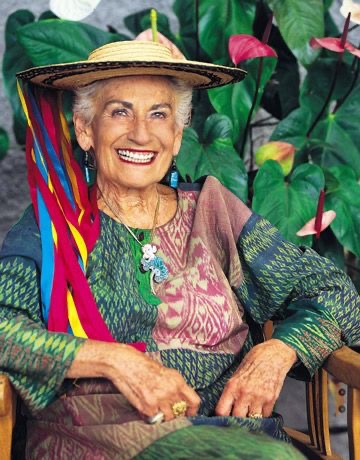
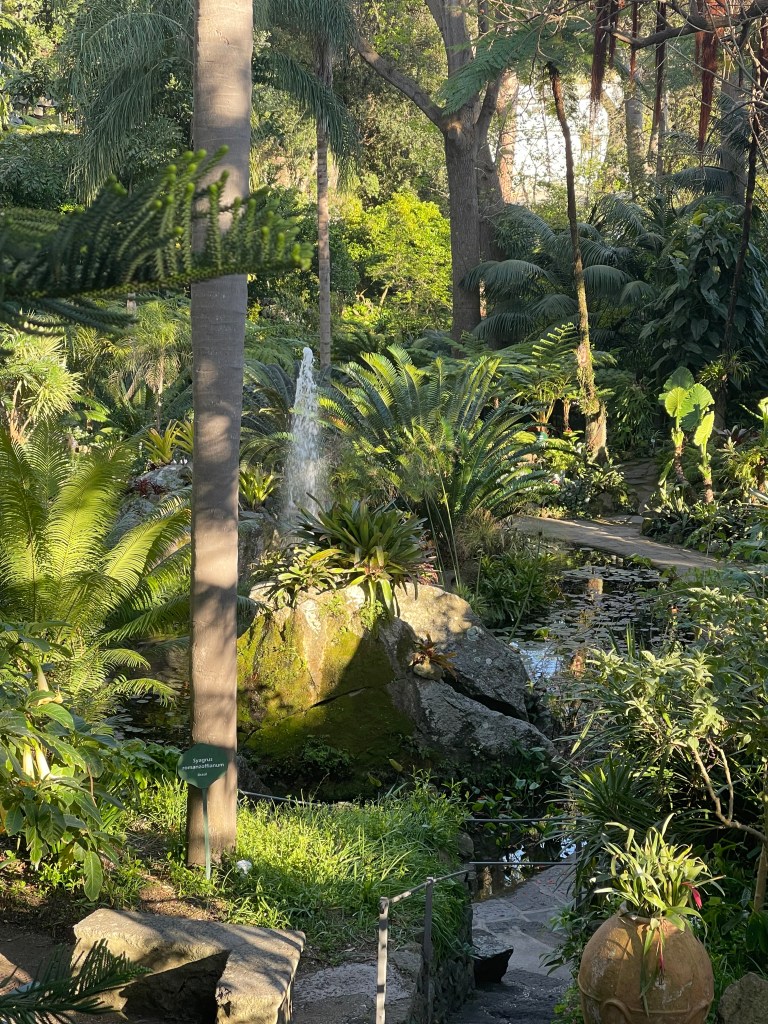
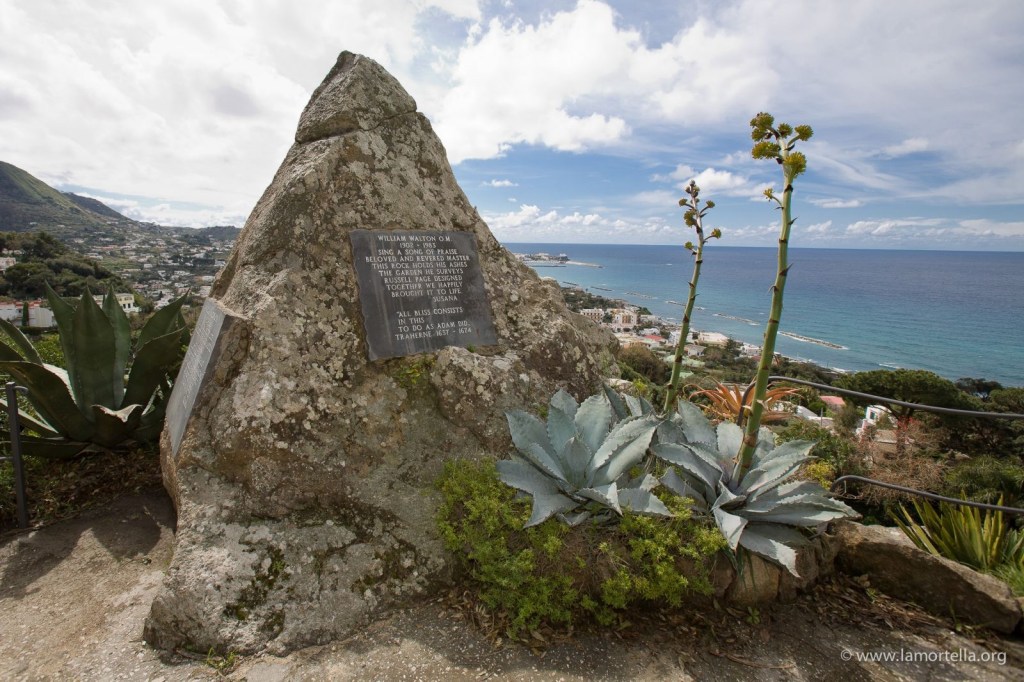
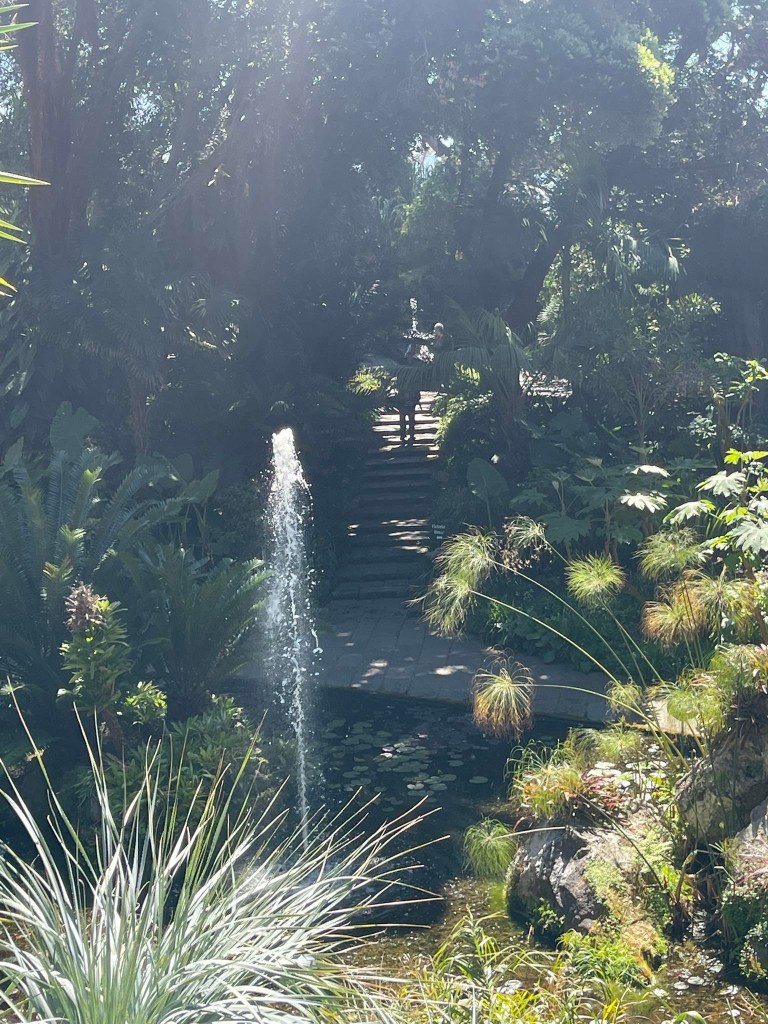
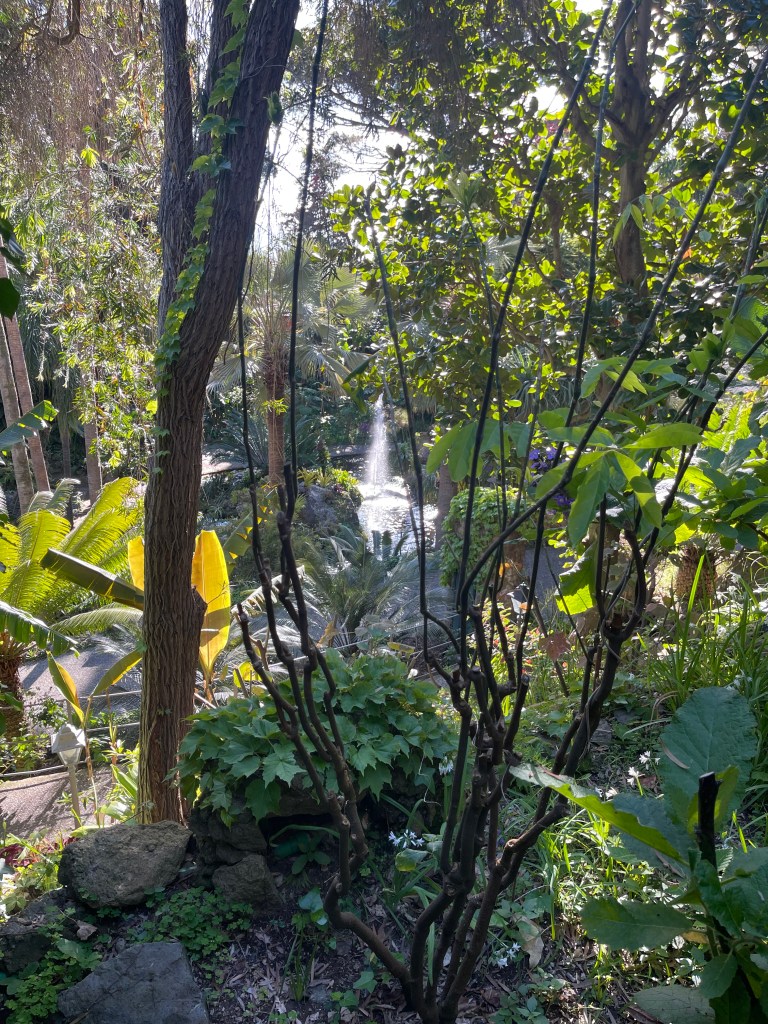
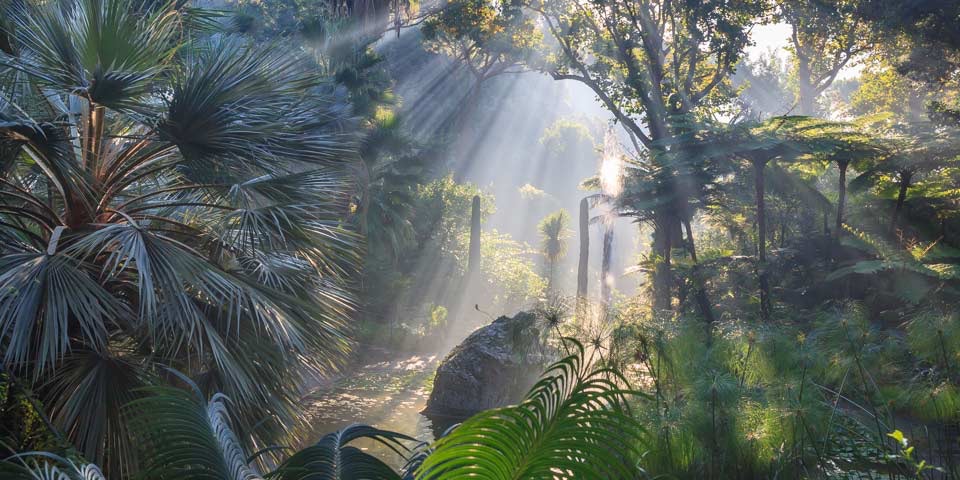
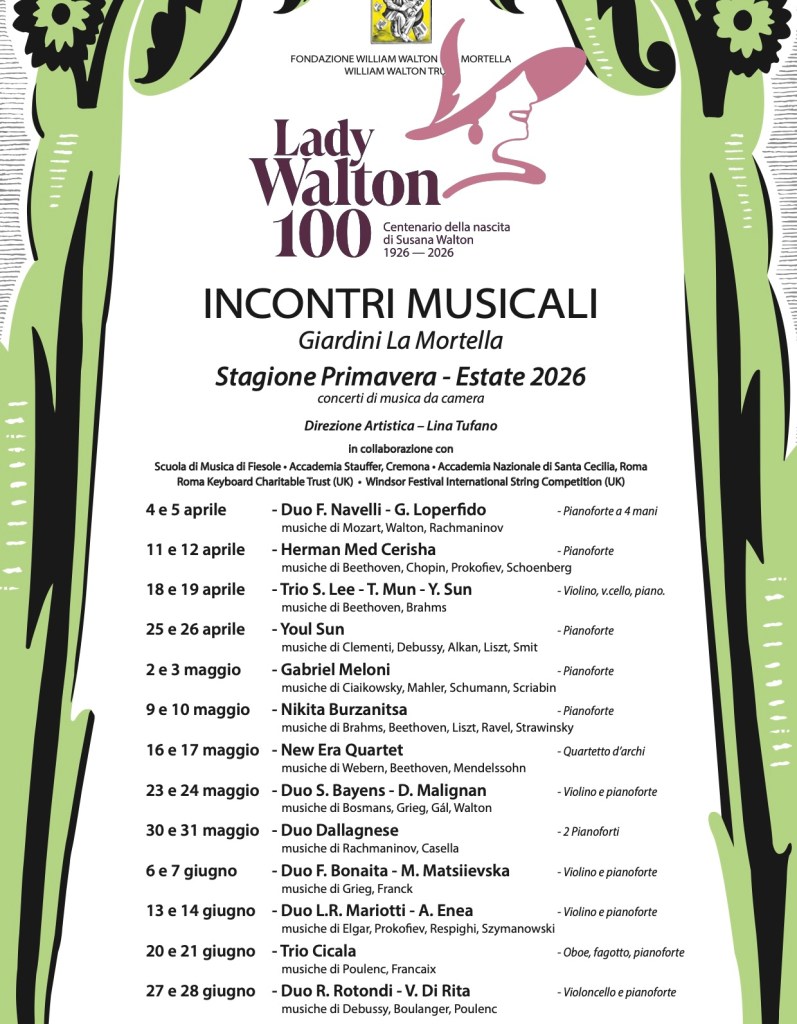
2026 is the centenary of the birth of Lady Susana Walton, a woman of extraordinary charisma, patron, creative soul and guardian of one of the most enchanted places in the Mediterranean: the La Mortella Gardens of Forio. Born in Argentina in 1926, Susana Gil Passo met and married the English composer William Walton in 1948. Together, they chose Ischia as their refuge and home of life. Here, with the help of the famous landscape architect Russel Page, Susana started a project that would occupy her all her life: creating a wonderful garden, a source of inspiration for the composer, in which to pour out his creativity, his love for plants and his artistic sensitivity. After her husband’s death, Lady Walton devoted all her energy to the care and enhancement of La Mortella, transforming it into a place not only of extraordinary beauty, but also into a lively cultural centre with music as its beating heart. Today the William Walton and La Mortella Foundation, which she strongly wanted, continues to protect its spirit, welcoming over 90,000 visitors a year and hosting concerts, masterclasses, conferences and botanical initiatives that keep her vision alive.
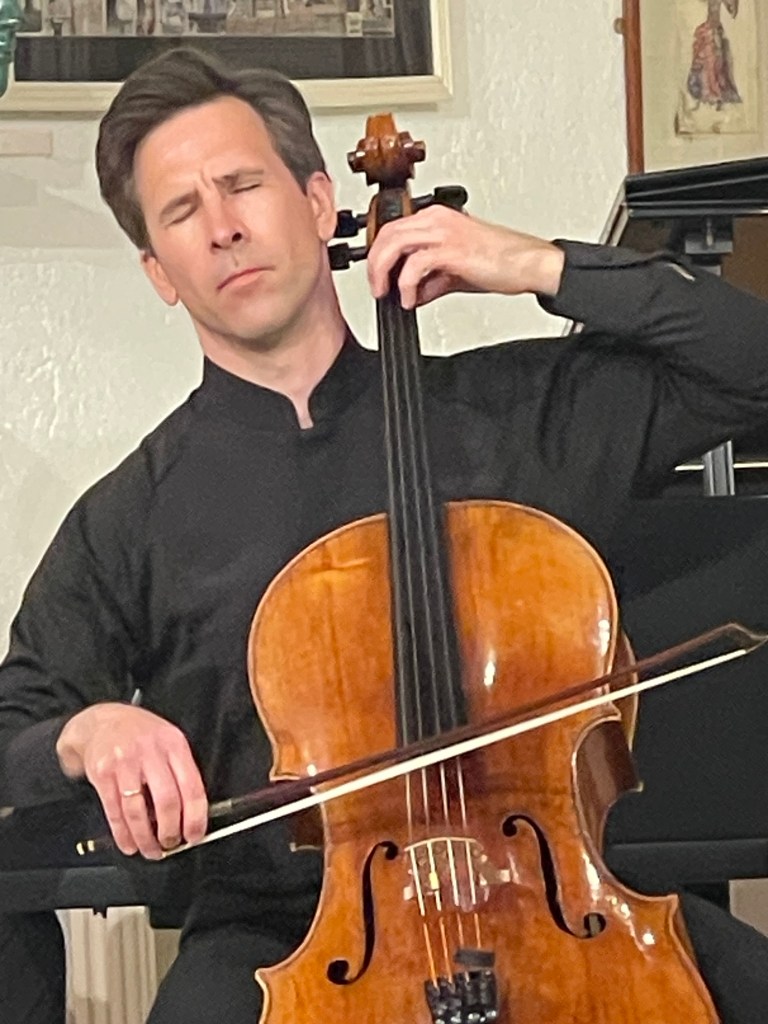
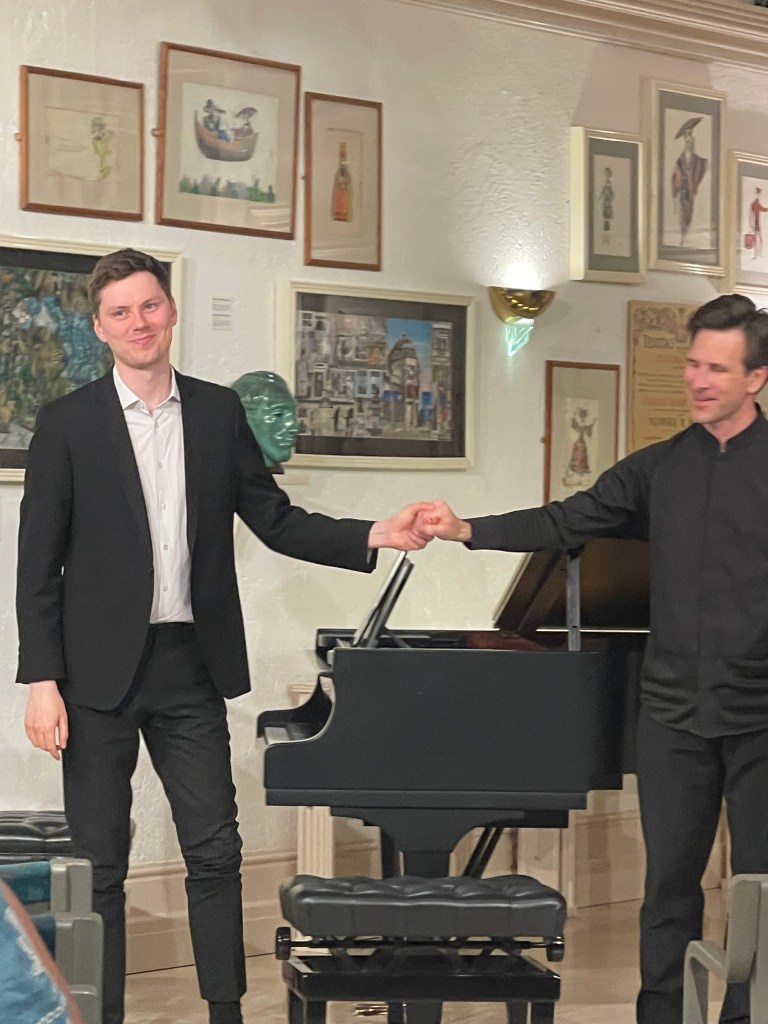
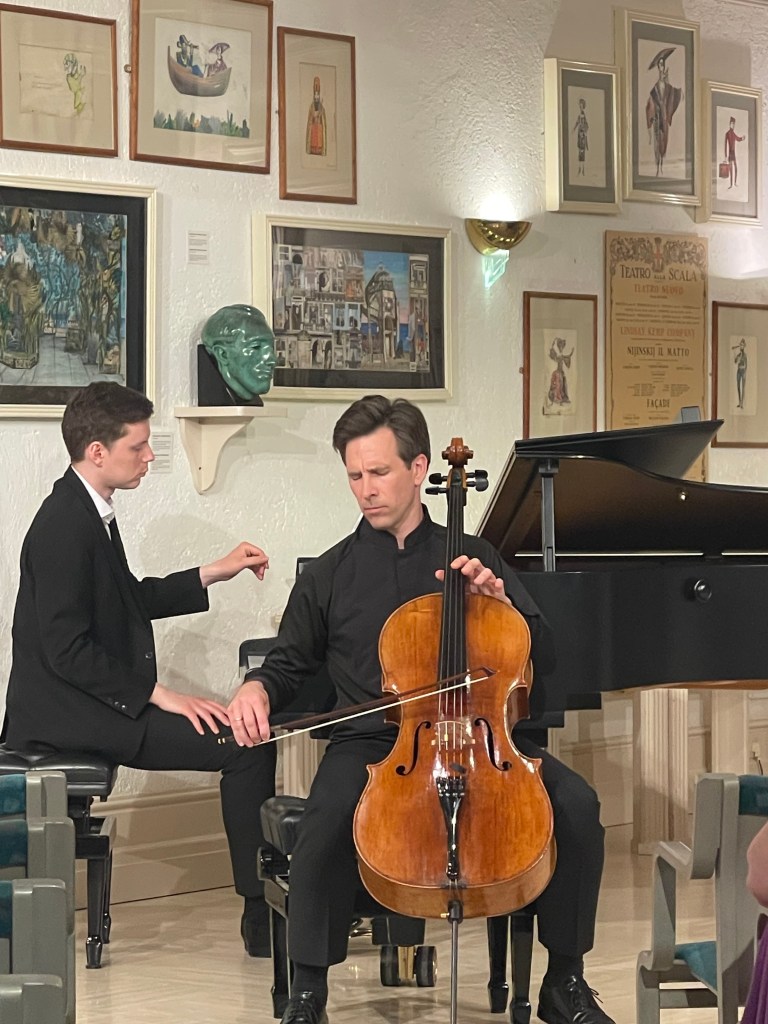
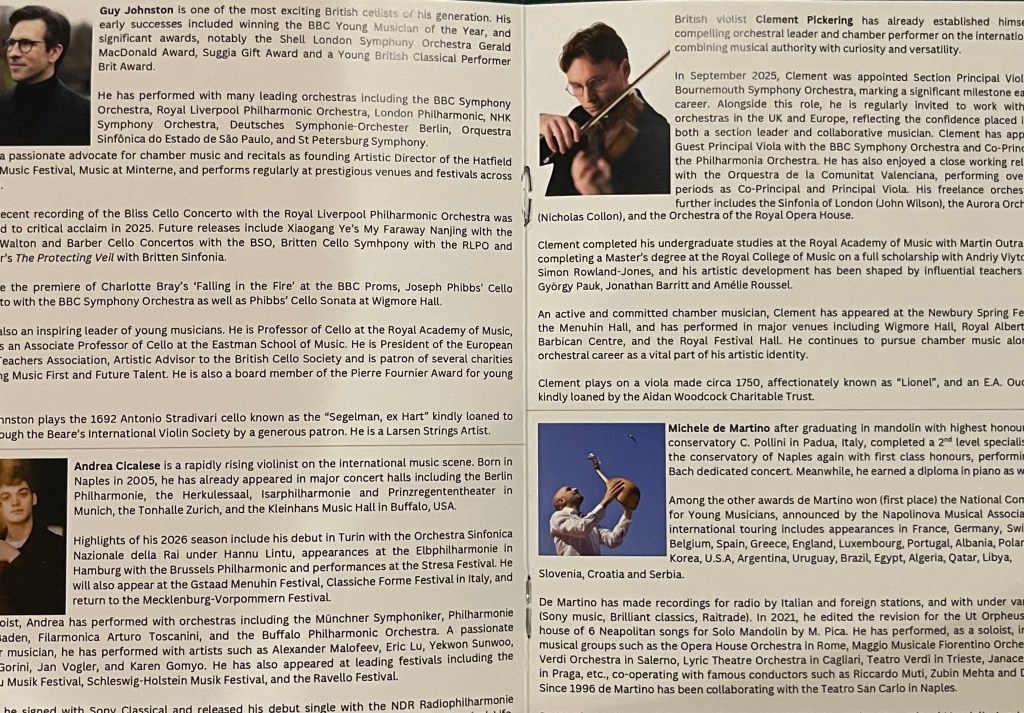
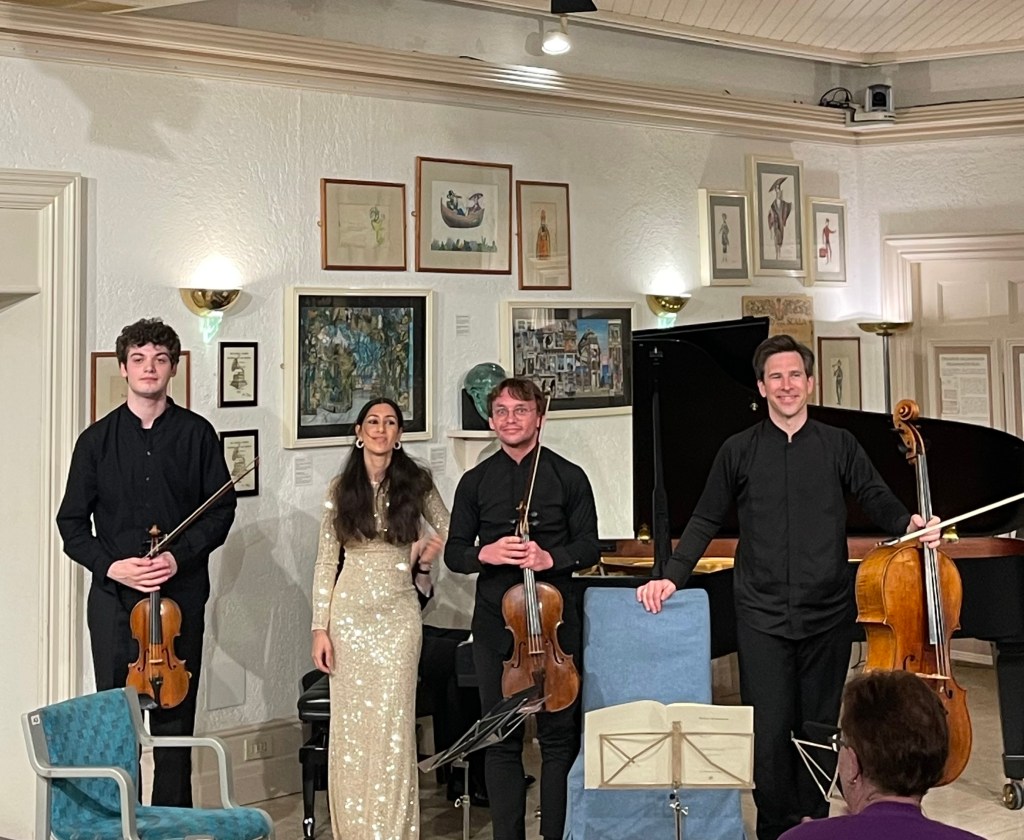
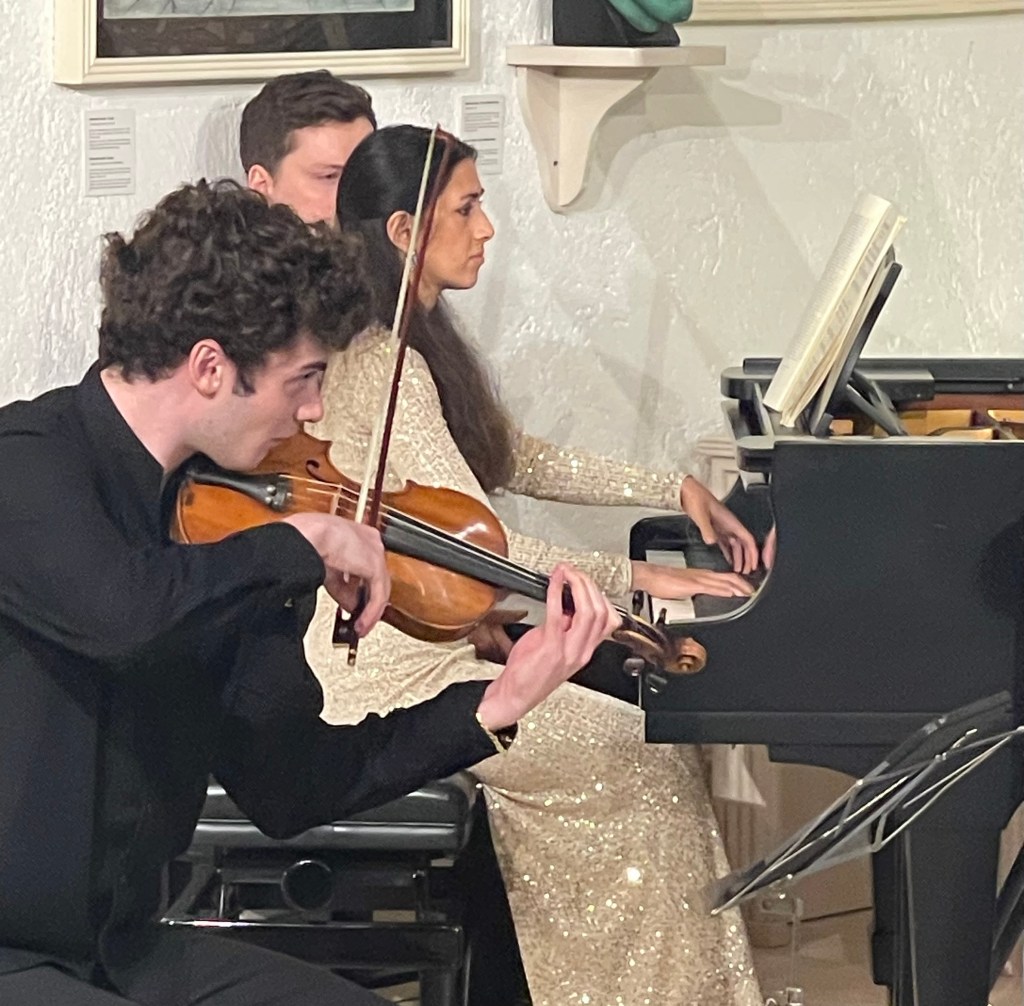
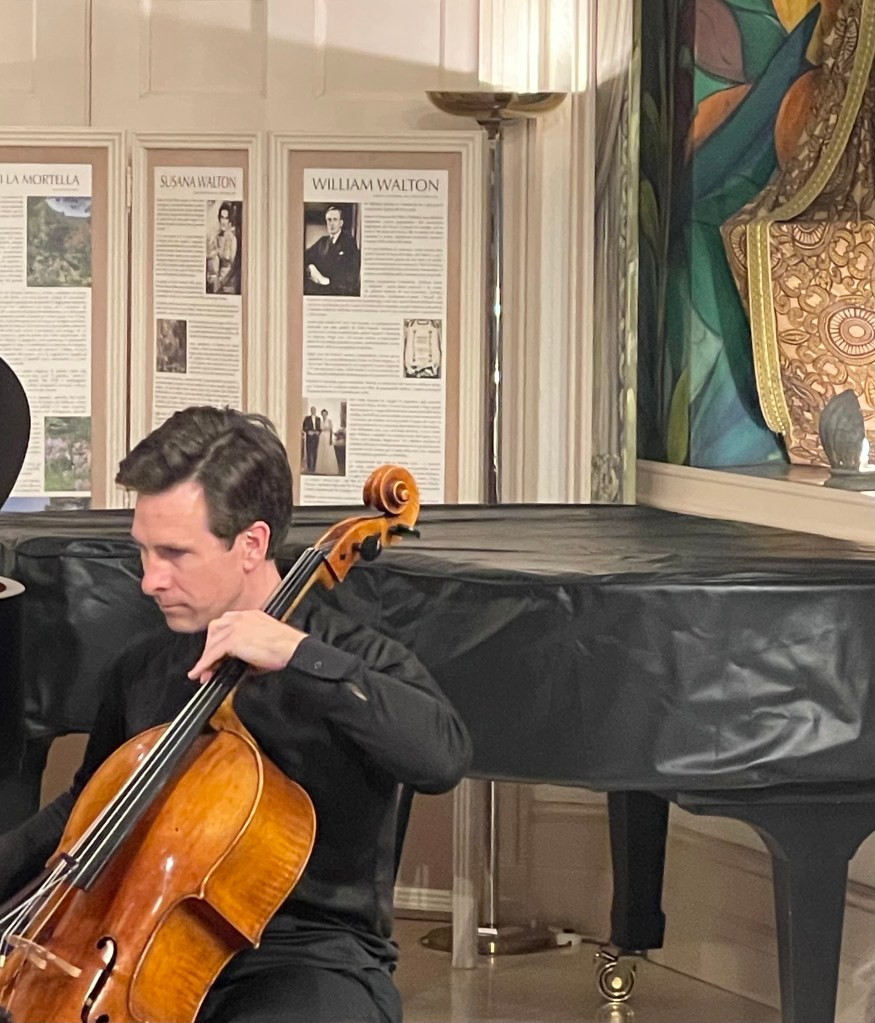
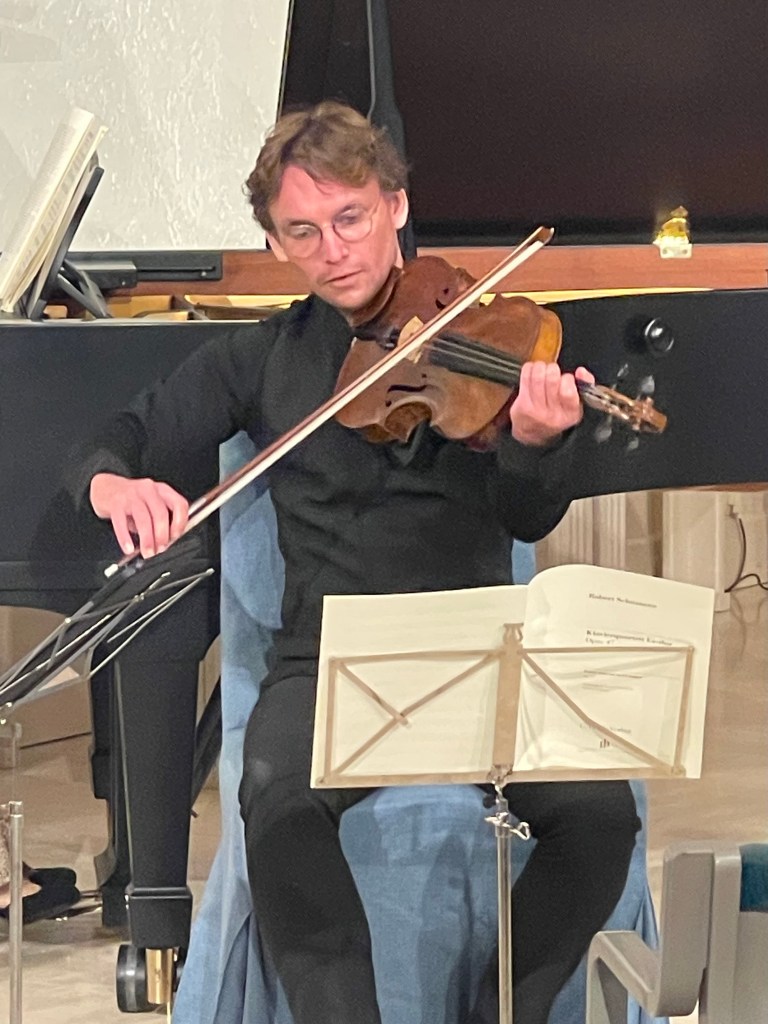
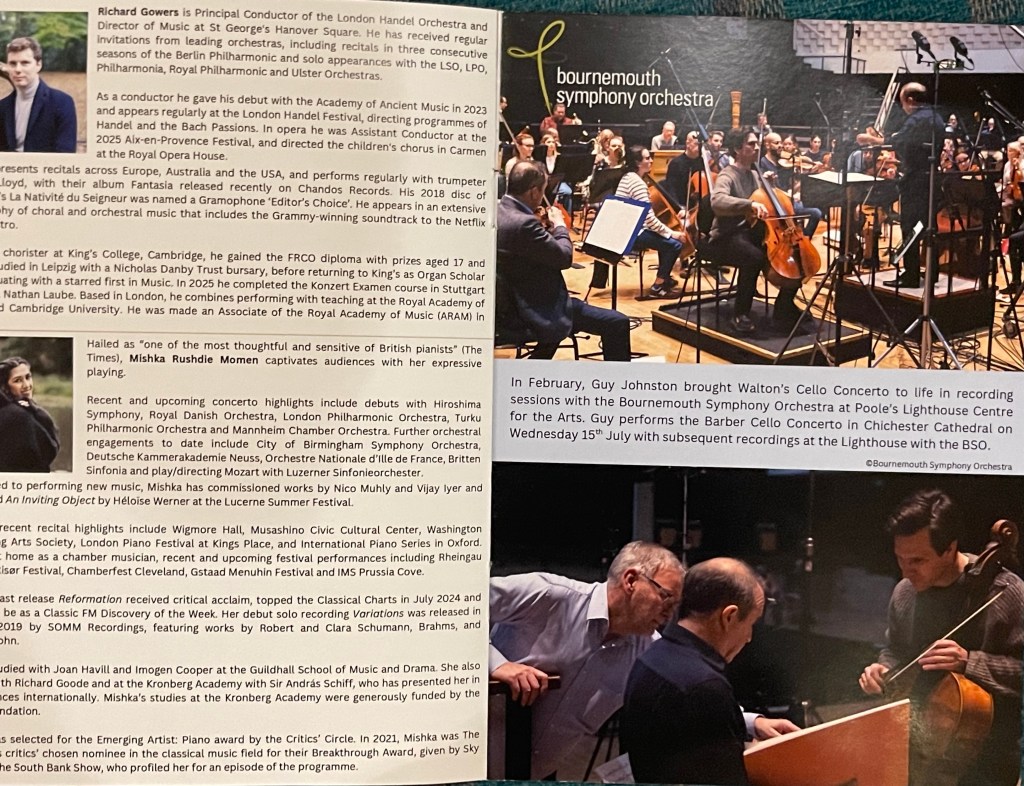
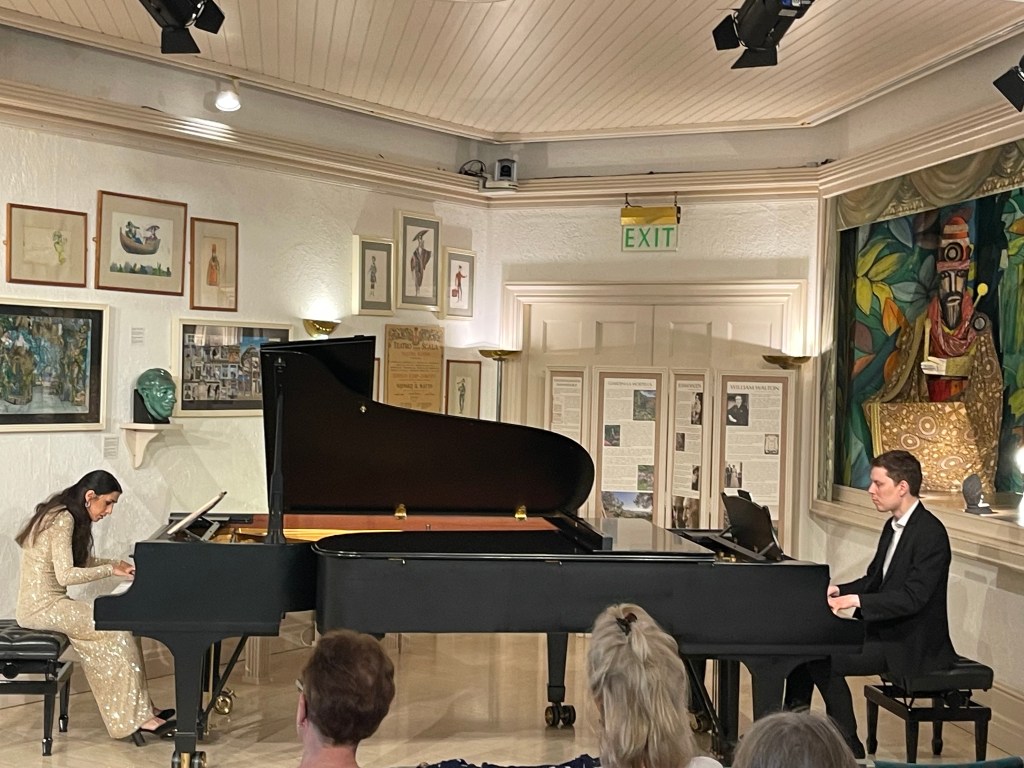
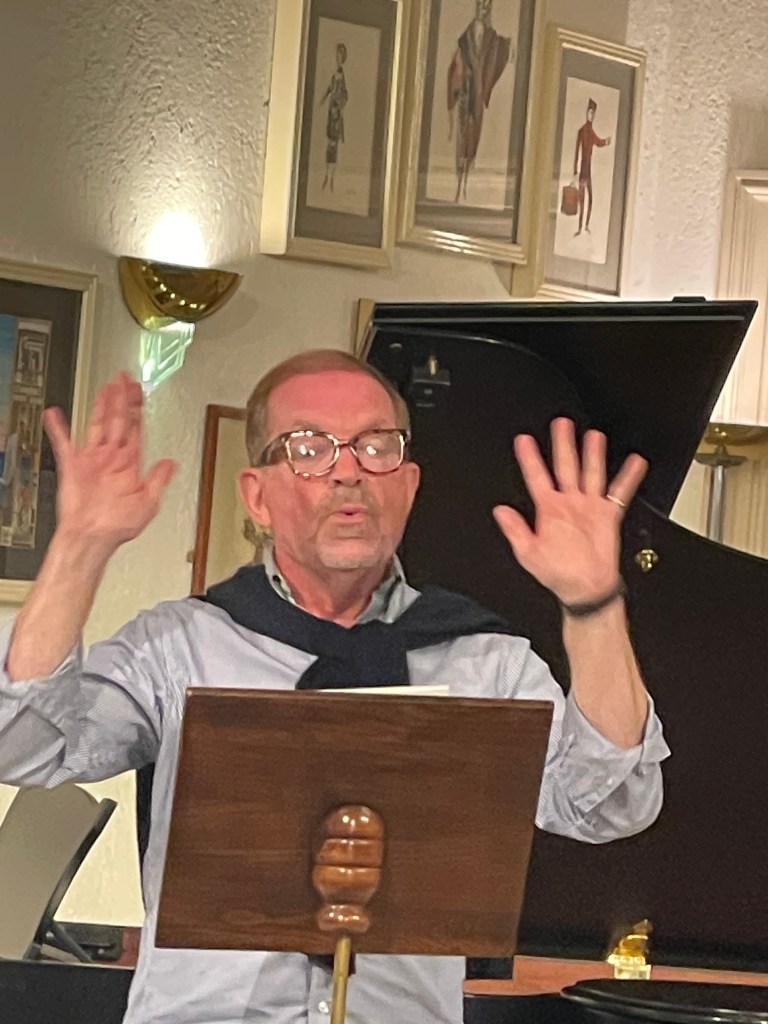
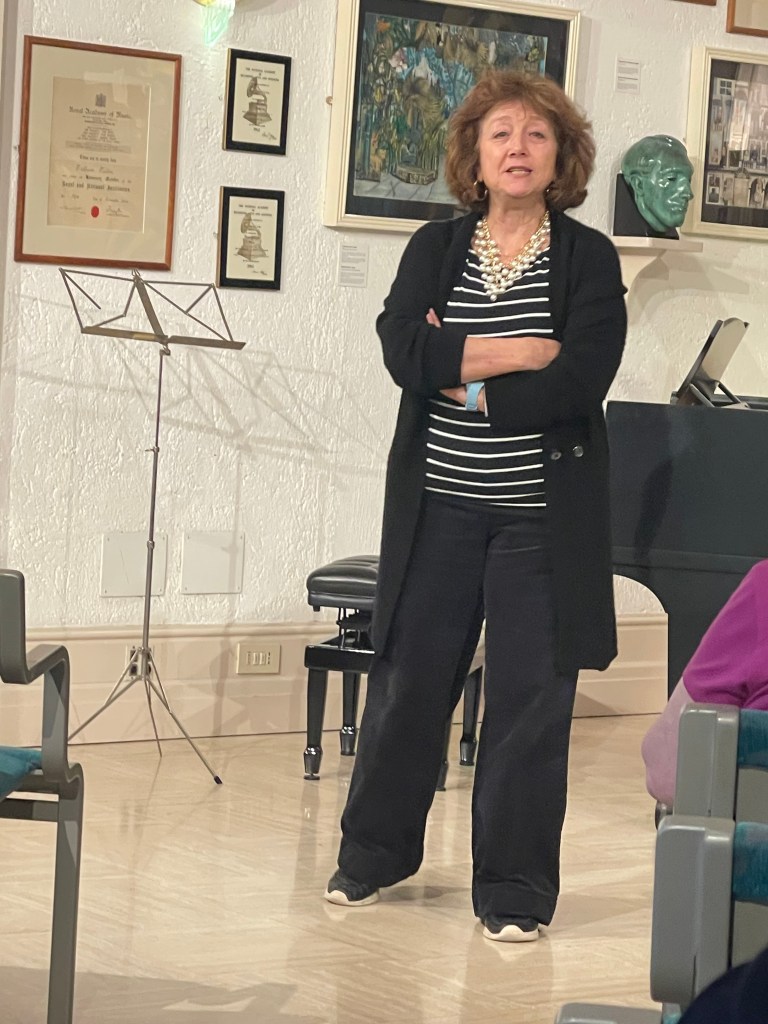
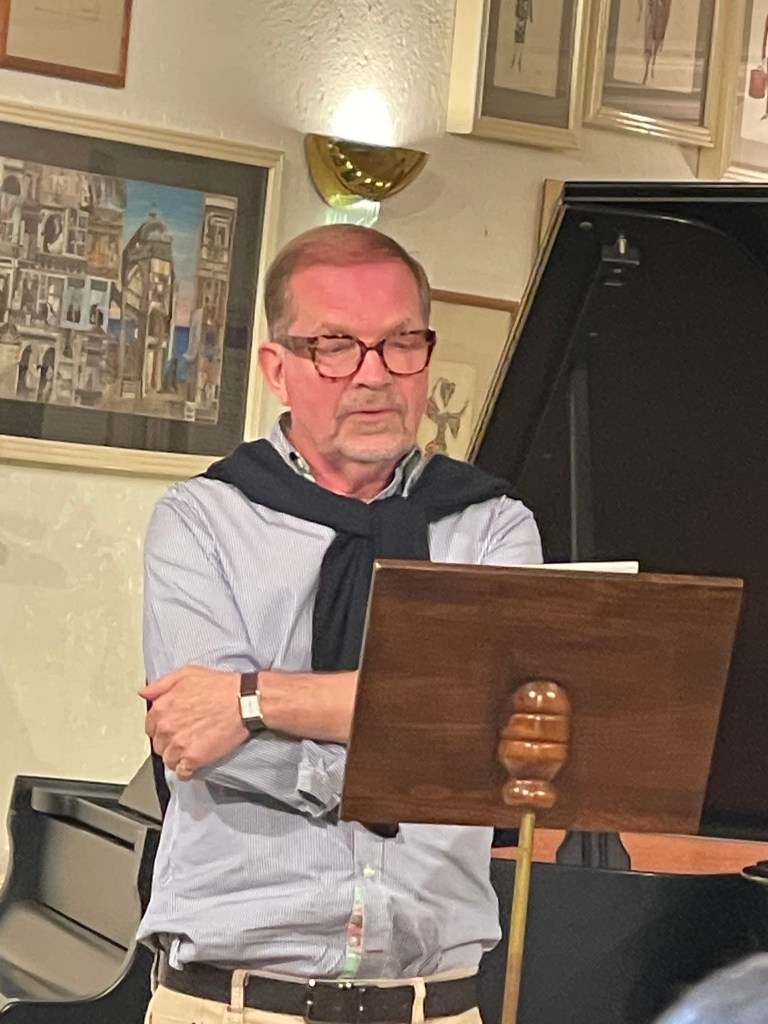
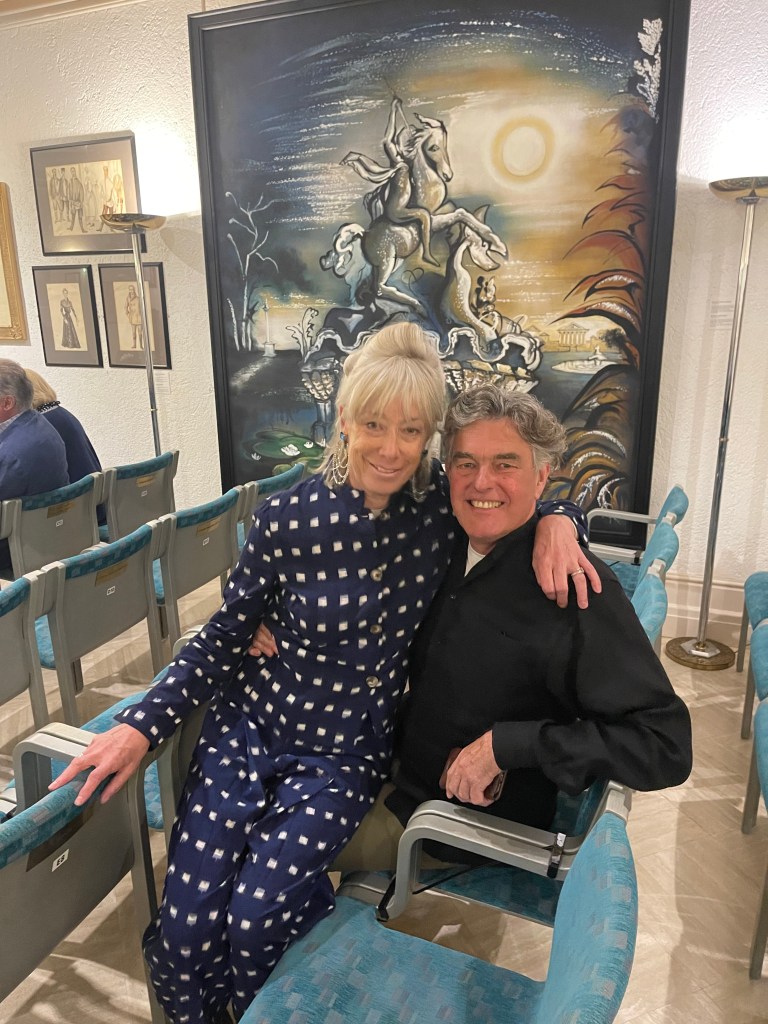
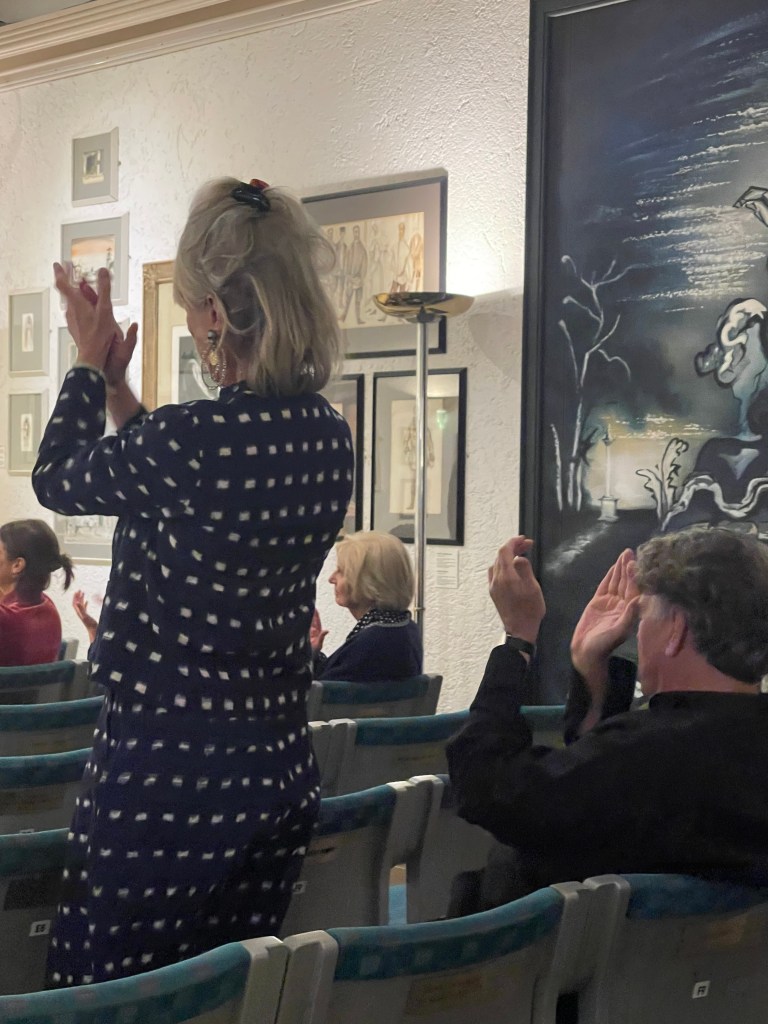
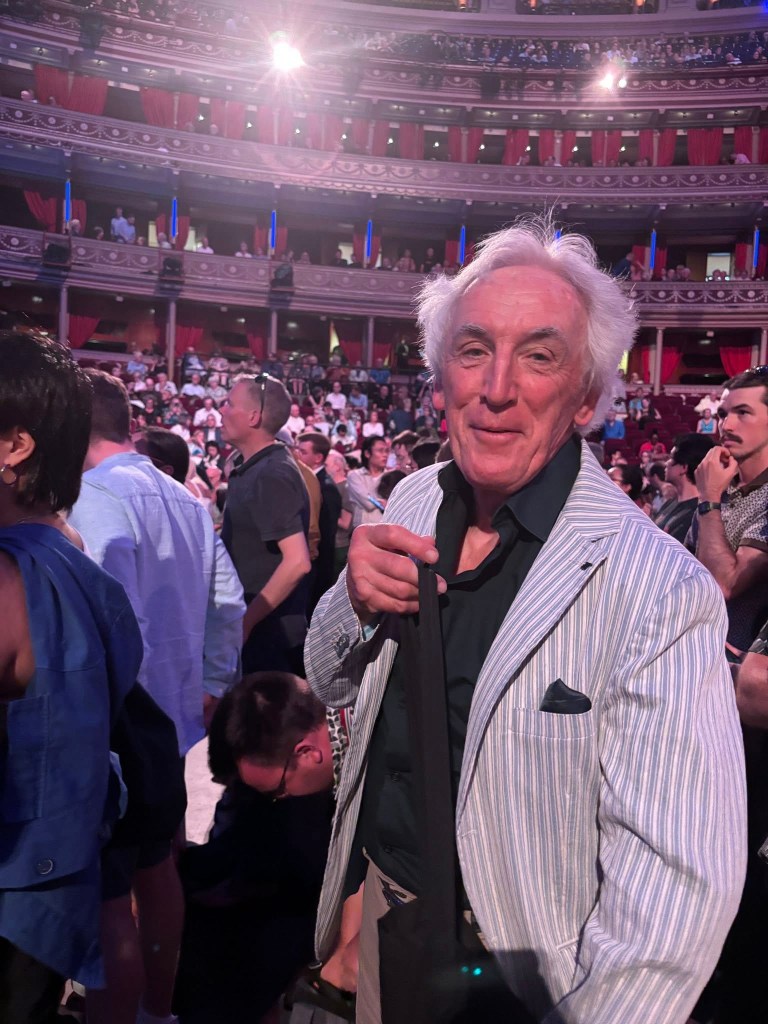
Georgie Booth ( niece of the remarkable Joan Booth see below ) and husband
- Sostenuto assai – Allegro ma non troppo
- Scherzo: Molto vivace – Trio I – Trio II
- Andante cantabile
- Finale: Vivace
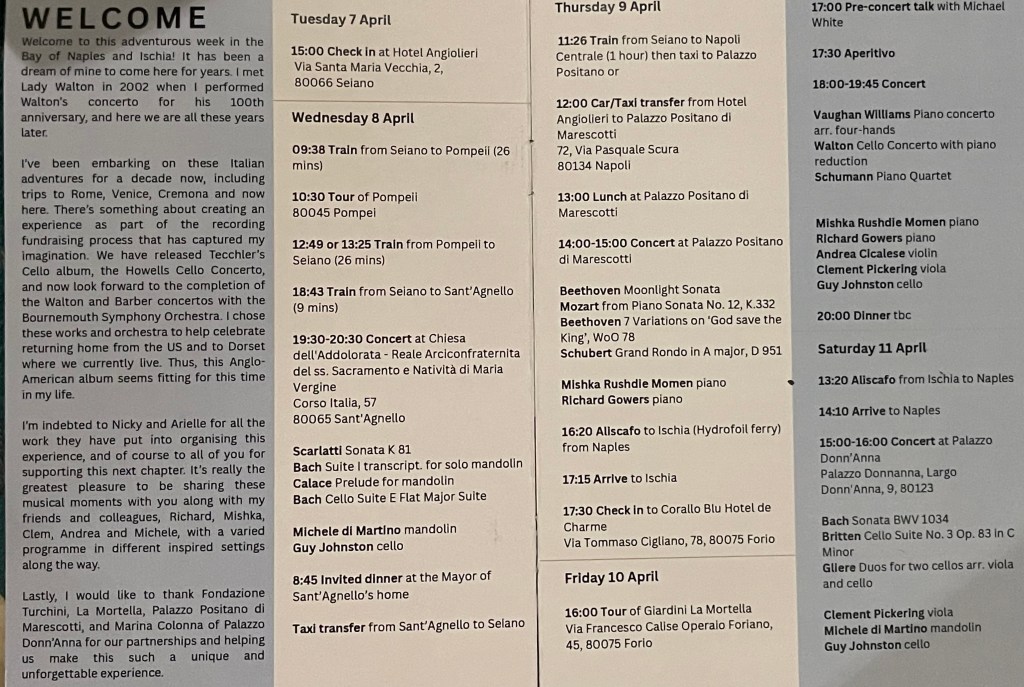
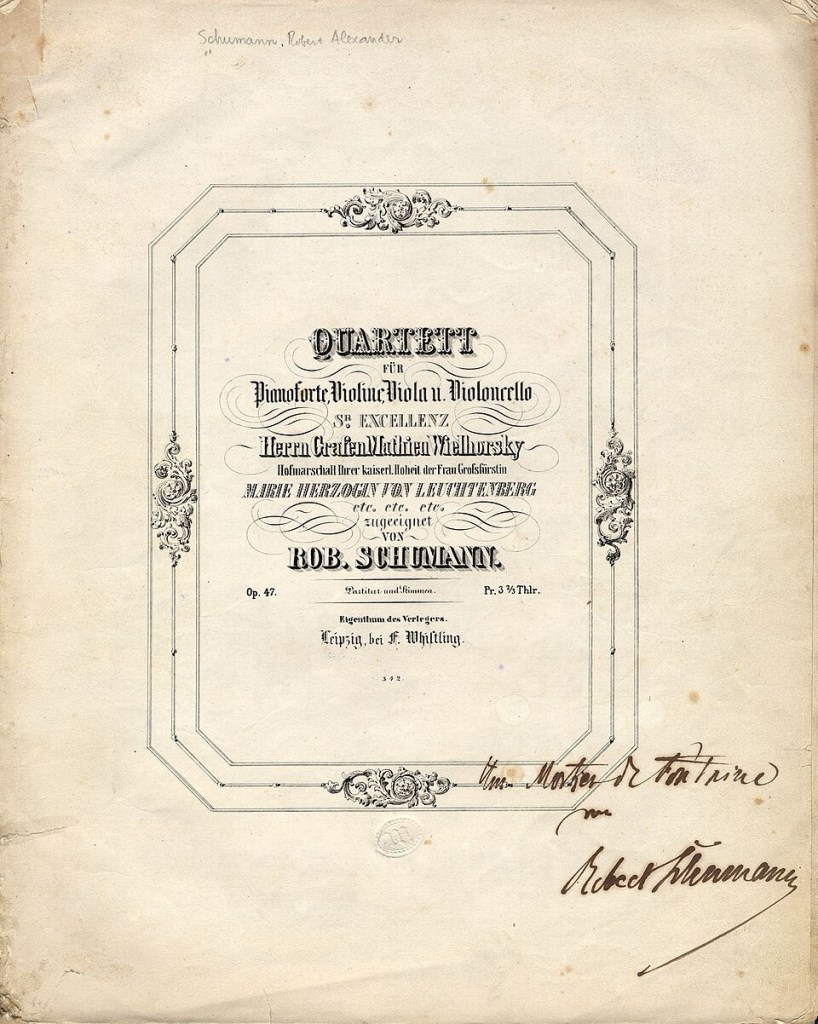
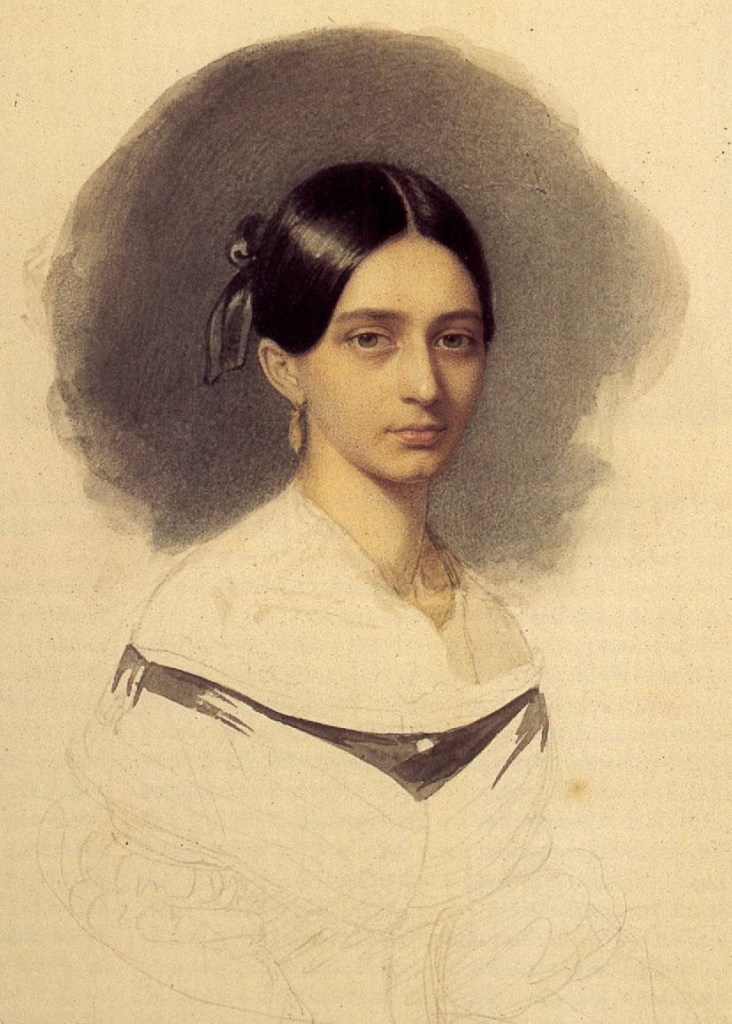
The Piano Quartet in E♭ major, op 47, was composed in 1842 for piano, violin, viola and cello. Written during a productive period in which he produced several large-scale chamber music works, it has been described as the “creative double” of his Piano Quintet finished weeks earlier. Though dedicated to the Russian cellist Mathieu Wielhorsky, it was written with Schumann’s wife Clara in mind, who would be the pianist at the premiere on 8 December 1844 in Leipzig.
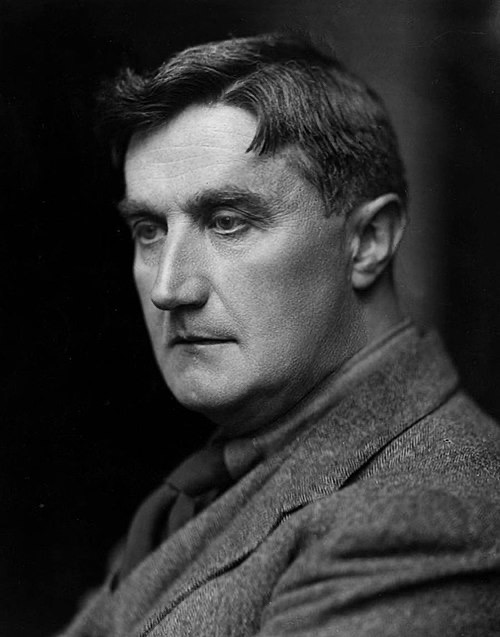
The Piano Concerto in C is a concertante work by Ralph Vaughan Williams written in 1926 (movements 1 and 2) and 1930–31 (movement 3). During the intervening years, the composer completed Job:A Masque for Dancing and began work on his Fourth Symphony. The concerto shares some thematic characteristics with these works, as well as some of their drama and turbulence.The work was premiered on 1 February 1933 by Harriet Cohen , with the BBC Symphony Orchestra directed by Sir Adrian Boult . The Finale was edited shortly thereafter and the work was published in 1936. The concerto was not well received at first, being considered unrewarding to the soloist. Though the piece provides ample opportunity for virtuosity in all movements, Vaughan Williams treated the piano as a percussion instrument as did Béla Bartók and Paul Hindemith during this period, with the texture at times impenetrably thick.
While the concerto was rated highly by some—Bartók, for one, was extremely impressed—Vaughan Williams took the advice of well-meaning friends and colleagues and reworked the piece into a Concerto for Two Pianos and Orchestra , adding more texture to the piano parts with the assistance of Joseph Cooper in 1946
The concerto has three movements :
- Toccata : Allegro moderato – Largamente – Cadenza
- Romanza: Lento
- Fuga chromatica con Finale alla Tedesca
The concerto begins with driving, energetic music from the soloist set against a threatening, rising theme in the orchestra. A faster, more scherzo-like idea, shared out equally between piano and orchestra, soon contrasts against the opening music. These two blocks of music alternate, forming the basis of the entire movement. It is as though the traditional dialogue between soloist and orchestra has been supplanted by a more generalised dialogue of musical types. At the movement’s climax, a brief and thunderous piano solo is joined by the full orchestra. However, the orchestra suddenly cuts off to leave the piano musing alone in a short lyrical cadenza. This leads without a break into the slow movement
The romanza is more delicate, providing the listener with hints of Vaughan Williams’s previous studies with Maurice Ravel. Vaughan Williams here quoted the theme from the Epilogue of the third movement of Arnold Bax’s Symphony n. 3
Again without a pause from the previous music, the closing movement begins with a fugue that is linked to a waltz finale by flights of virtuosity from the piano soloist. It closes with the ensemble repeating themes from the first two movements, and then abruptly closes
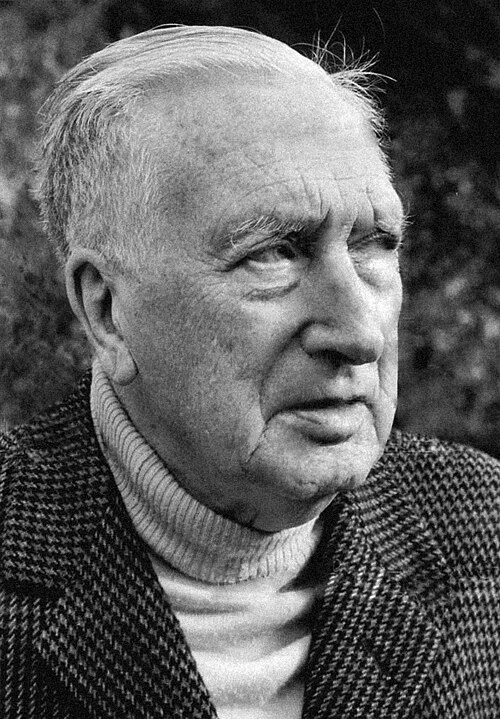
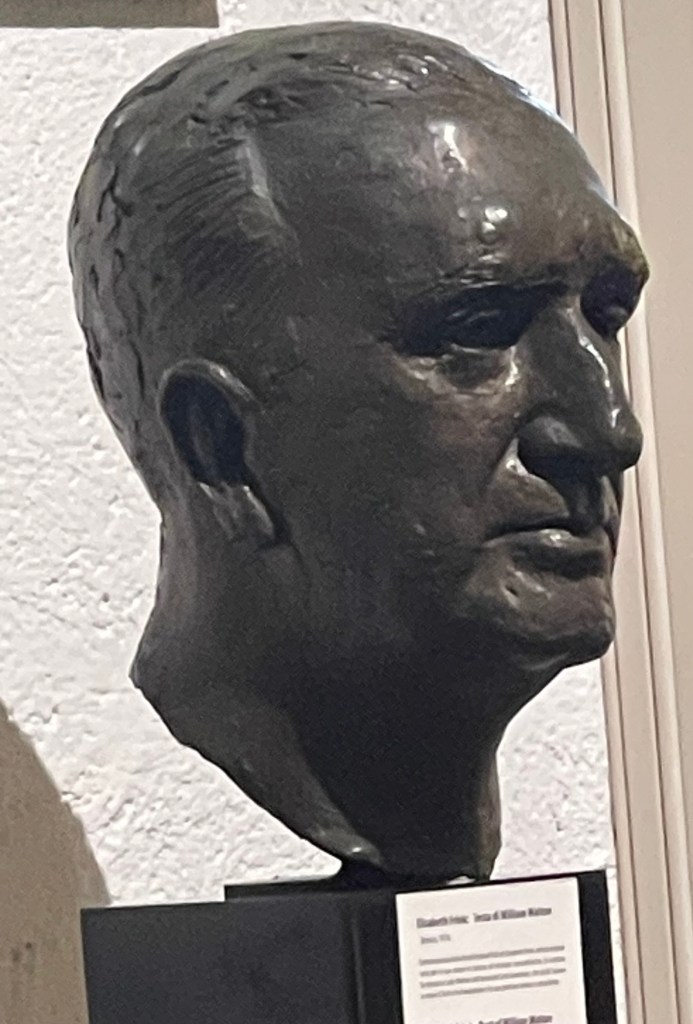
William Walton’s Cello Concerto (1957) is the third and last of the composer’s concertos for string instruments, following his Viola Concerto (1929) and Violin Concerto (1939). It was written between February and October 1956, commissioned by and dedicated to the cellist Gregor Piatigorsky, the soloist at the premiere in Boston on 25 January 1957.
Initial responses to the work were mixed. Some reviewers thought the work old-fashioned, and others called it a masterpiece. Piatigorsky predicted that it would enter the international concert repertoire, and his recording has been followed by numerous others by soloists from four continentsWalton had been regarded as avant garde in his youth, but by 1957, when he was in his mid-fifties, he was seen as a composer in the romantic tradition, and some thought him old-fashioned by comparison with his younger English contemporary Benjamin Britten . After his only full-length opera, Troilus and Cressida (1954), Covent Garden announced that his next major work would be a ballet score for the 1955–1956 season. The ballet, a version of Macbeth, fell through, because Margot Fonteyn, for whom it was intended, did not warm to the idea of playing Lady Macbeth. By the time an alternative subject was agreed, Walton was committed to writing a cello concerto and his ballet score never materialised.The commission for the concerto was $3,000 – a substantial sum at the time. Walton commented that as a professional composer he would write anything for anybody, but “I write much better if they pay me in dollars”.
The concerto, commissioned by the cellist Gregor Piatigorsky followed the conventional concerto form to the extent of having three contrasting movements. As with his earlier Violin Concerto, written for Jasha Heifetz , Walton worked in close collaboration with the soloist while composing the work, mostly by correspondence between the composer from his home on Ischia and the cellist, touring internationally. Piatigorsky remarked that the world in the 20th century got its cello concertos from England – those of Elgar and Delius and then Walton.The premiere was postponed from December 1956 because Piatigorsky was ill. It took place at Symphony Hall, Boston , with the Boston Symphony Orchestra conducted by Charles Munch . It received its first British performance within weeks, on 13 February 1957, again with Piatigorsky, this time with the BBC Symphony Orchestra under Sir Malcom Sargent at the Royal Festival Hall The work was first recorded shortly after the premiere, with the original forces.
The concerto is in three movements, but does not follow the conventional concerto form of a brisk opening movement followed by a slow movement: like Walton’s earlier concertos for viola and violin, the Cello Concerto has a moderately paced opening movement followed by a much quicker central scherzo. The three movements are: Moderato – Allegro appassionato- Tema ed improvvisazioni (Theme and improvisations).The third improvisation is a brilliant orchestral toccata; The fourth, for unaccompanied cello, is marked “rhapsodically” (rapsodicamente), and has wide fluctuations of speed; it ends with high trills, which merge into the coda.
The coda refers back to themes from the first movement, first an upward-striving figure from its central section and then the opening melody, before the theme of the finale returns in compressed from, leading the movement towards a quiet, luminous ending, and a bottom C from the cello, but during the composition Piatigorsky hankered after a more bravura ending. Walton composed two alternative ones, but the original quiet conclusion was played at the premiere and has remained the standard version.
In 1974 the composer reconsidered the ending and wondered if Piatigorsky (and Heifetz, who shared the cellist’s view) might have been right. Walton composed a third ending and sent it to Piatigorsky, but by then the cellist was mortally ill and he never performed it.The original ending has remained the standard one.
 ChristopherAxworthy-MusicCommentary