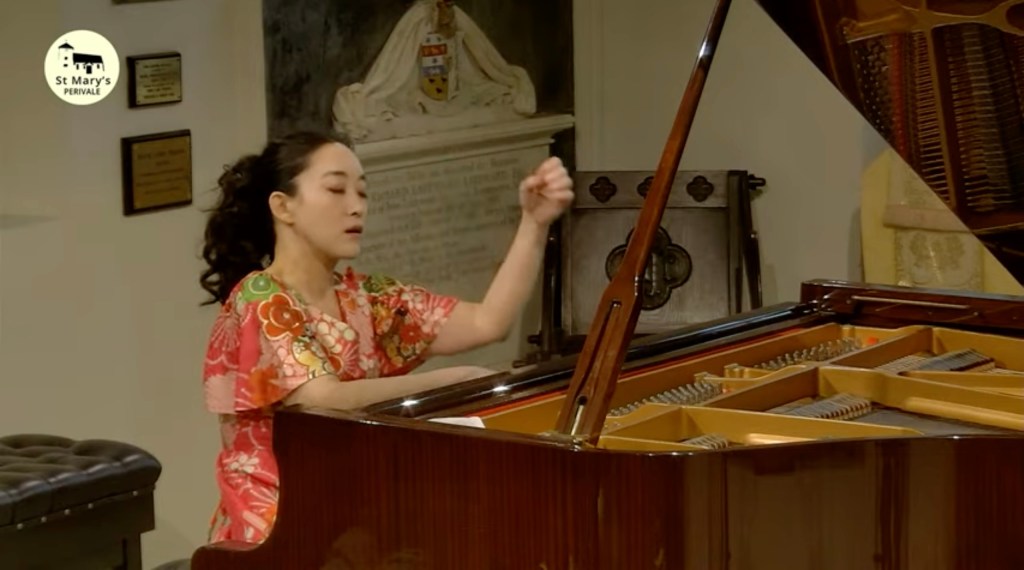
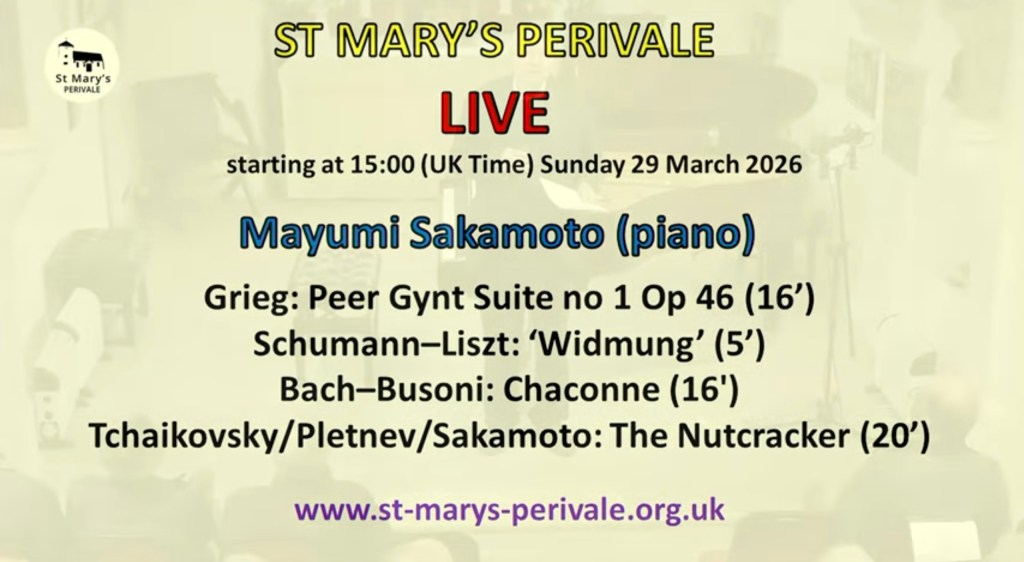
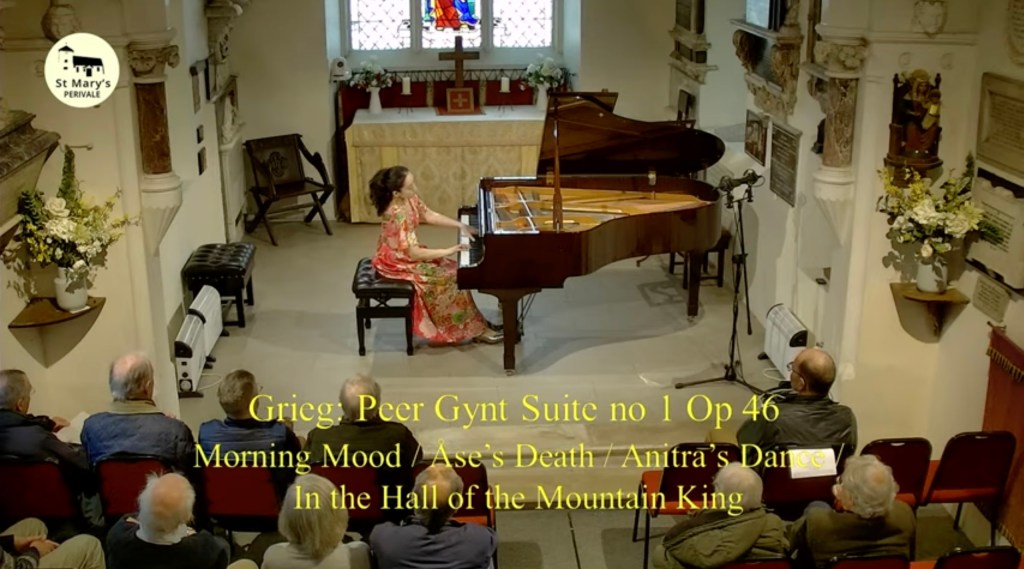
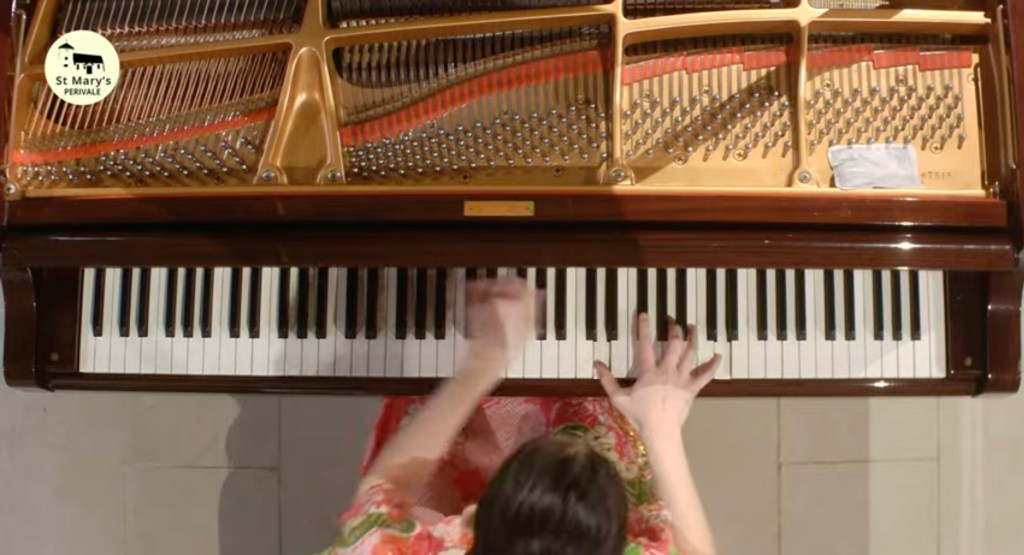
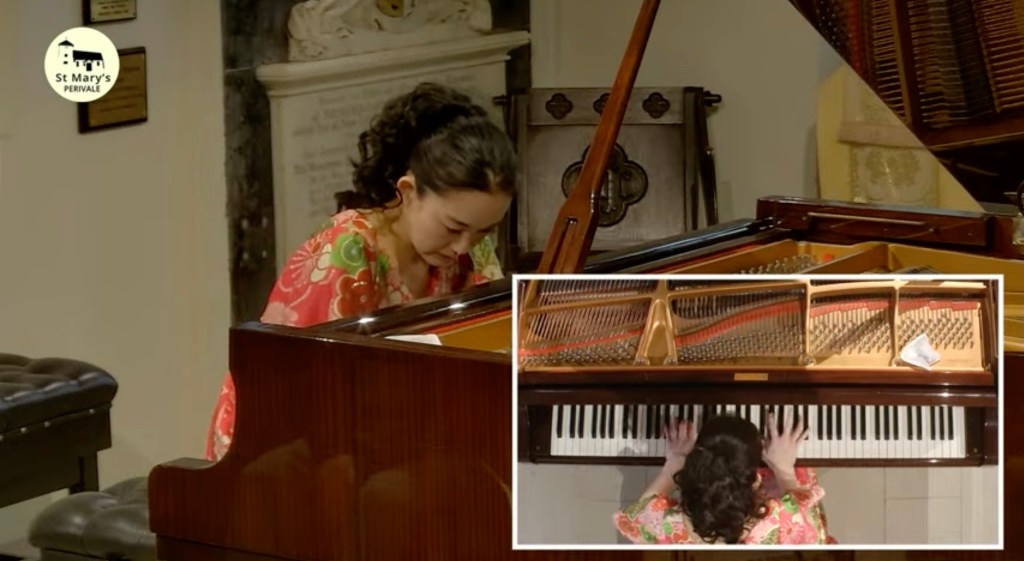
Some extraordinary playing from Mayumi Sakamoto showing once again her pianistic class, with performances of radiance and beauty, but also of intelligence and authority. She had played Grieg once before in Perivale and shown her complete understanding of the style and poetic meaning of Grieg’s Norwegian roots. Playing of great freedom creating an atmosphere of pastoral beauty with the radiant purity of sounds of glowing beauty. Rarely have the bird songs been allowed to ring out with such glistening freedom. There was a noble beauty to ‘Ase’s Death’ full of rich sounds played always with natural flowing movements. Her beautiful dress of Japanese fabric just adding to the vision of beauty that she was depicting in sound. ‘Anitra’s Dance’ was played with beguiling rubato with its teasing ending before the ‘Mountain King’ was heard deep in the bass. She brought great character to the opening melody deep in the bass that she gradually allowed to grow in intensity with masterly control and scintillating excitement.
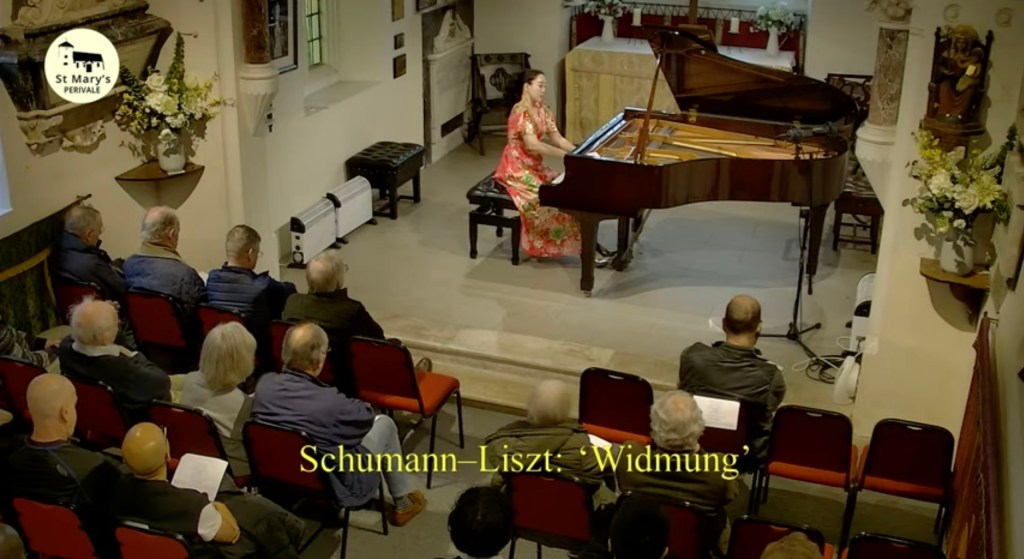
I have rarely heard Schumann’s ‘Widmung’ played with such poetic beauty. There was an expressive shape to her playing never loosing sight of the architectural line but filling it with delicacy and a sumptuous palette of sounds. A momentary prayer was played with simplicity and radiance as passion and rhythmic drive gradually spread over the entire keyboard with an outpouring of poetic mastery.
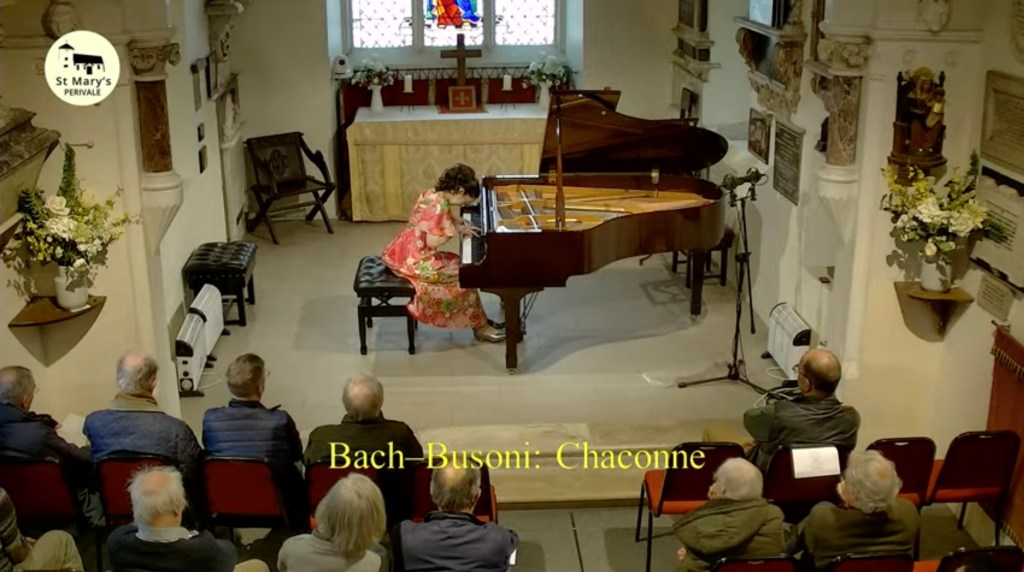
There was a very bold opening to the Bach Chaconne with playing of glowing nobility and it was here that she showed her masterly musicianship, maintaining a rhythmic drive through all the contrasting episodes of sumptuous rich sounds contrasted with crystalline brilliance. An extraordinary range of sounds and colours but never loosing sight of the architectural line of one of the greatest works ever written for the violin. Busoni has added a more orchestral sound than could be obtained on the solo violin creating a masterpiece for the piano, where Bach and Busoni go hand in hand with masterly construction and creation. Mayumi brought her extraordinary mastery to this work with astonishing brilliance as from the deeply expressive chorale and the whispered sounds of the solo violin she could build up the sound with masterly control without ever allowing the sound to harden. The ending was played with excitement and exhilaration as she brought a glowing nobility to this masterwork.
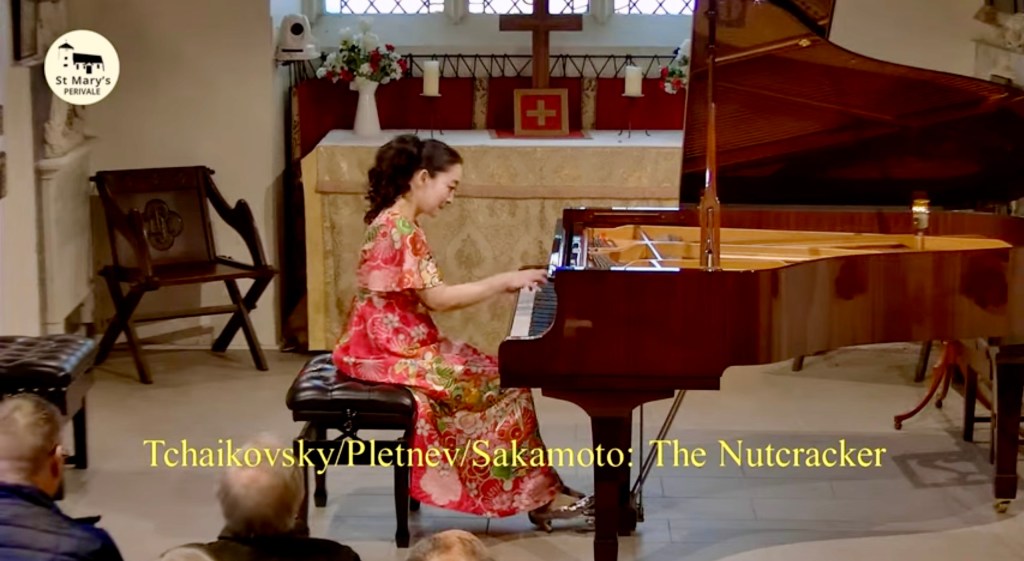
It was in Tchaikowsky that she brought all her orchestral colours to play with astonishing brilliance and if the transcriptions of Liszt and Thalberg were described as for three handed pianists this was indeed for four or five. Not content with Pletnev’s genial transcription she added things of her own to these four pieces that she had chosen from Tchaikovsky’s Ballet. She brought a languid beauty and a rhythmic drive to the middle two movements and the final was played with astonishing embellishments that seemed to streak across the keys with extraordinary technical mastery.
I have never seen the audience in Perivale so enthusiastic as they had been witness to playing of rare intelligence and beauty. Little could they have imagined that Mayumi would offer two encores of showpieces for the piano that were ,as Dr Mather said, only for super fearless virtuosi such as Arcadi Volodos or Yuja Wang.
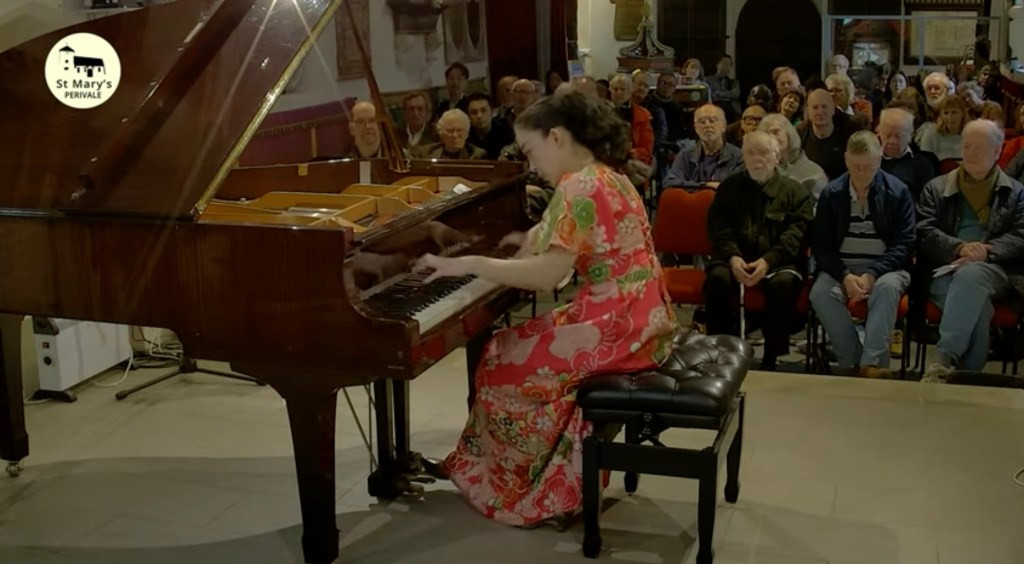
Liszt’s ‘La Campanella’ was played with a glowing brilliance and a sense of style of the pianists of the Golden Age of piano playing. Jeux perlé seamless runs were contrasted with passion and dynamic drive but always under the perfect control of a master.
Mozart’s Turkish March, in the diabolical elaborations of Arcadi Volodos, was played with old style virtuosity and Horowitzian wizardry that was truly breathtaking.
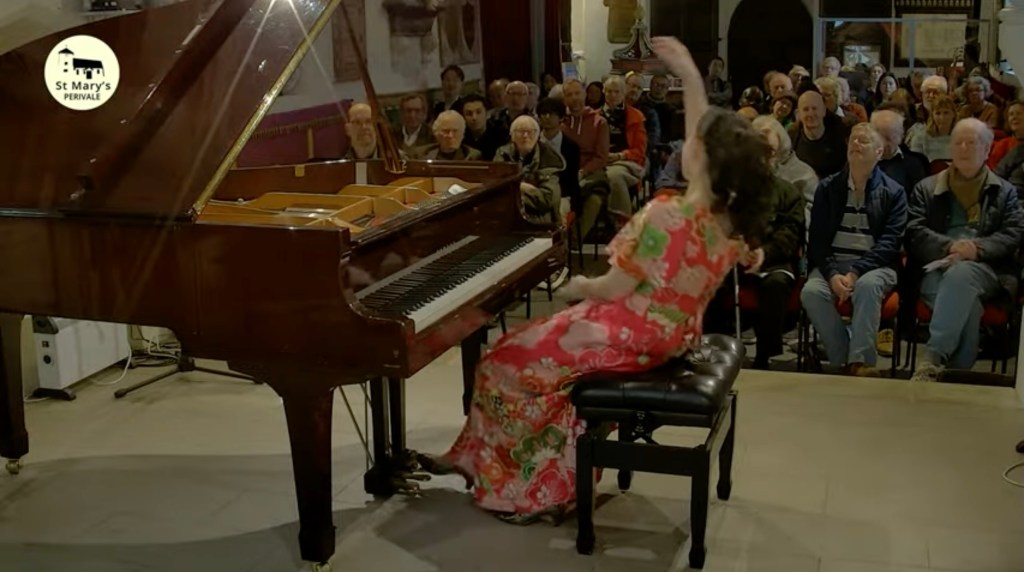
It brought this remarkable recital of mastery and poetic beauty to a scintillating end introducing us once again to this charming master pianist of intelligence and class.
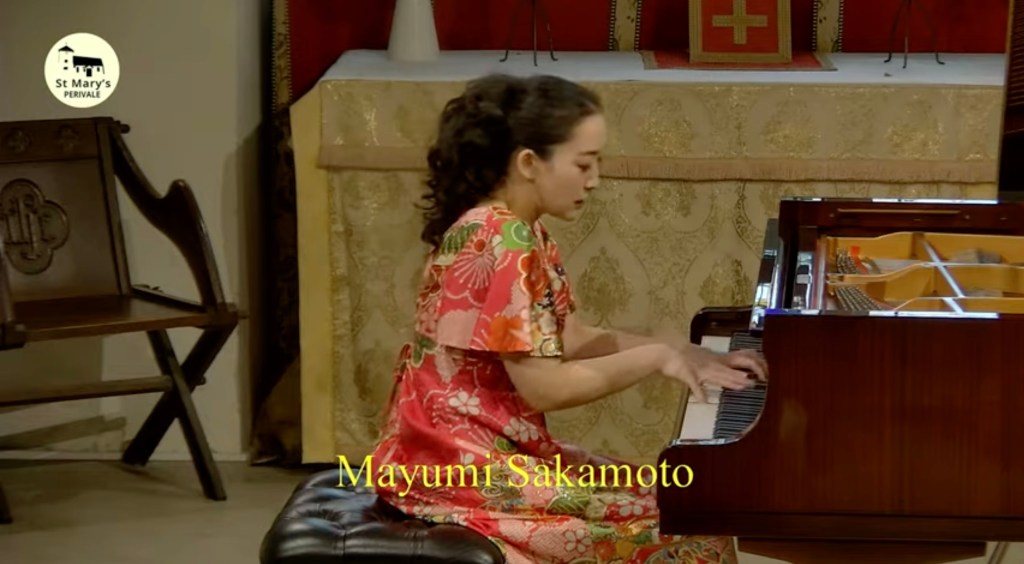
Born in Japan, Mayumi Sakamoto made her orchestral debut with her hometown orchestra at the age of eleven. At eighteen, she became a semi-finalist at the International Tchaikovsky Competition in Moscow. She graduated from Tokyo University of the Arts, receiving the Douseikai Prize and the Yomiuri Prize in 2006. From 2005, she studied at the Hochschule für Musik und Theater Hannover in Germany as a scholarship student of the Rohm Music Foundation. She obtained the K.A. degree (Diploma in Artistic Training in Music) in 2007 and completed the Soloist Diploma Course with the Orchestra Prize in 2013. She was later invited to give master classes at the same institution and worked as an instructor of chamber music as well as an assistant to Professor Einar Steen-Nøkleberg.
She won First Prize at the International Music Competition in Cologne in 2011, also receiving the Prize of the WDR Rundfunkorchester Köln and the Special Prize from the Music Students. She also won First Prize and the Prix d’Oslo at the International Edvard Grieg Piano Competition in Norway, and the Highest Prize and Best Performance Prize for a work by Scarlatti at the Pausilypon International Piano Competition in Italy. She has received prizes at numerous international competitions, including the Top of the World International Piano Competition, the Andorra International Piano Competition, the Leeds International Pianoforte Competition, and the Scottish International Piano Competition, and was a diploma recipient at the Van Cliburn International Piano Competition.
Deeply committed to education, she served as a lecturer at Tokyo University of the Arts from 2016 to 2021. She is currently a lecturer at Kyoto City University of Arts and a visiting researcher at the Graduate School of Medicine, Kyoto University. She has recorded Mozart’s piano concertos with the WDR Rundfunkorchester Köln and Grieg’s Piano Concerto with the Göttingen Symphony Orchestra. She has performed widely in Europe, the United States, and Japan, and her performances are praised for their bold yet delicate expression and rich tonal colours.