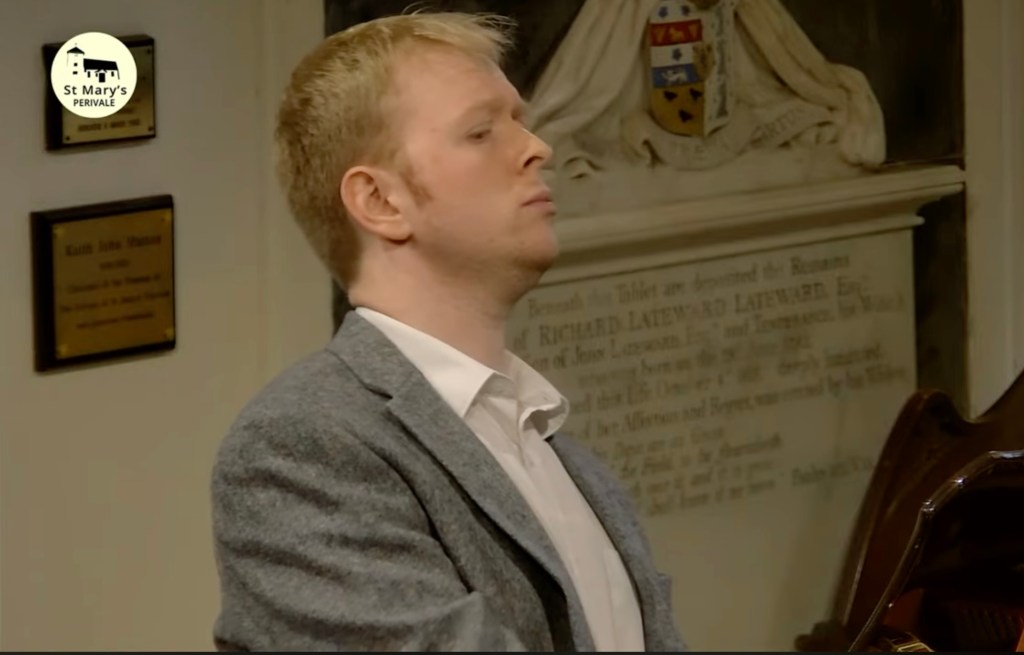
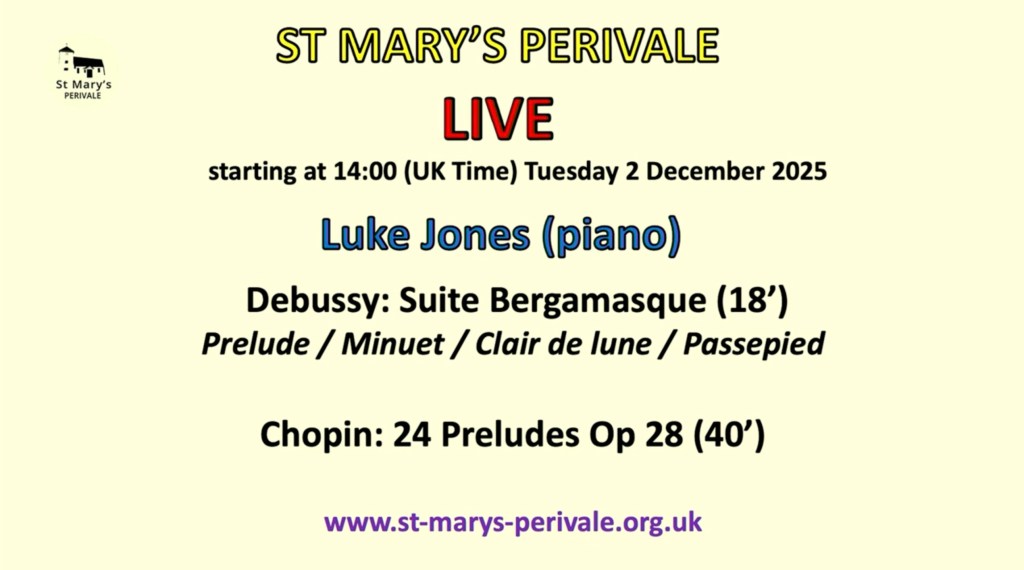
I have known Luke’s playing for many years and heard all about him from Carlo Grante when he travelled to Italy as a teenager to study with him in Calabria .By chance I was even at his graduation recital and will never forget the brilliance, allied to a musical understanding of the notoriously complex Brahms Paganini Variations https://christopheraxworthymusiccommentary.com/2018/06/24/luke-jones-at-the-rncm-manchester/
Returning to St Mary’s to try out some new repertoire ,to have a recording of the performance which can be an invaluable help to delve even deeper into the mysteries hidden on the printed page. Luke is now a mature artist and already with many demands on his time in Warrington where he now resides, and is a much sought after teacher. Struggling with British Rail he only managed to arrive in Perivale ten minutes before the concert for a first public performance of what Fou Ts’ong used to call Chopin’s preludes – 24 problems.
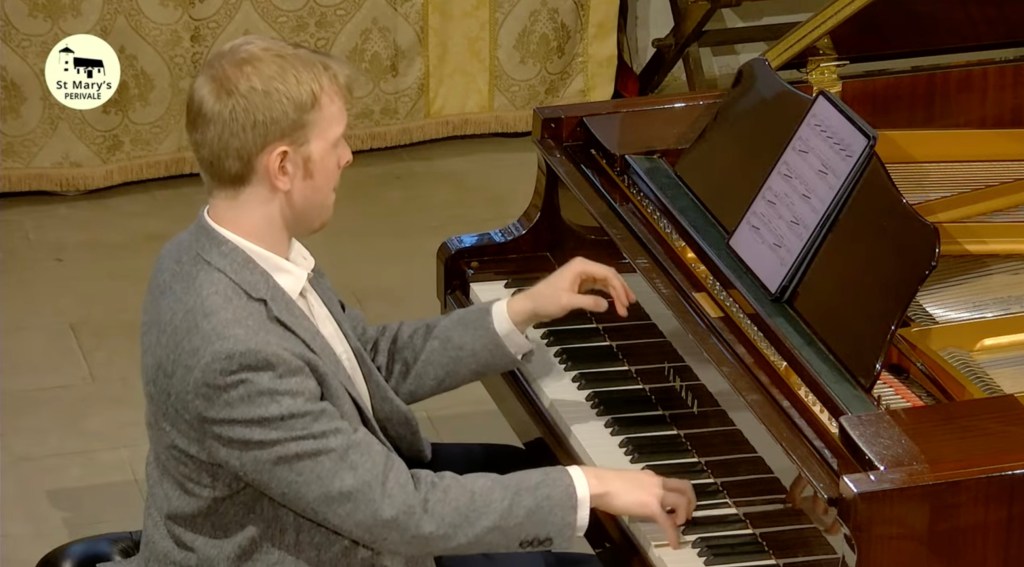
True artistic pedigree will always shine through even in the most trying of circumstances, knowing that the moment you actually reach the instrument any other difficulties melt into insignificance. A voyage of discovery as the hands touch the keys and delve deeply to find secrets, that may have taken hours and months of preparation, but that shared with an audience take on another meaning as one listens with even more intensity ready to take paths that in the lonely studio were not always evident.
And so after a voyage of unexpected delays and difficulties from Warrington to London, Luke arrived at his more personal voyage of discovery in Perivale with two master works by Debussy and Chopin. Debussy was very much influenced by Chopin especially in his early works and even edited Chopin’s works which he would have known quite intimately.
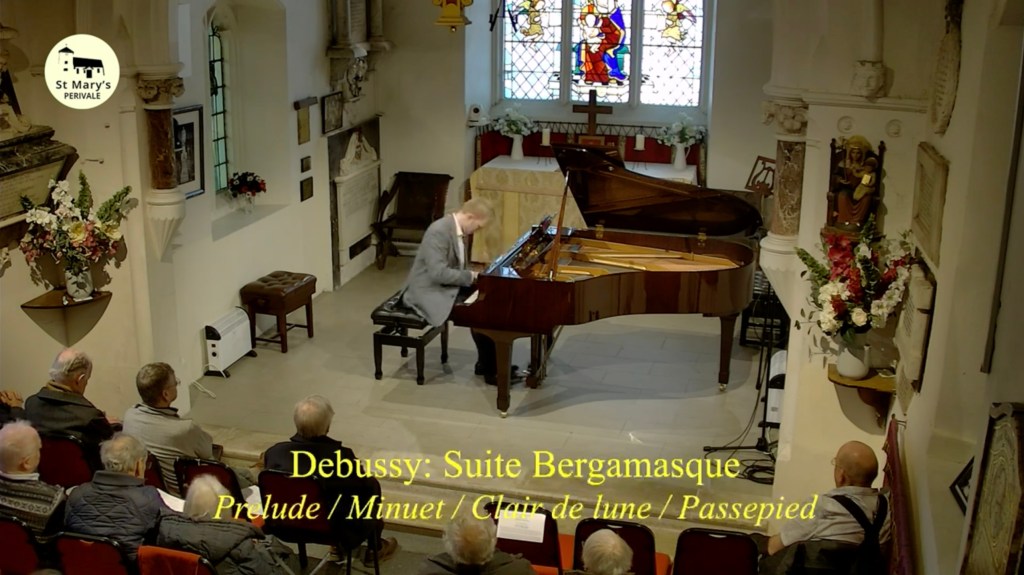
The ‘Suite Bergamasque’ is an early work from which ‘Clair de lune’ has become one of those pieces that used to sit on the piano stand, together with ‘Liebestraum’ and the ‘Moonlight’ Sonata, when the piano stood proudly in every parlour, before being ousted by the TV! A ‘Prelude’ that immediately showed Luke’s beautiful sense of balance with a capacious sense of style of glowing crystalline clarity. Scales that were transformed into streams of sounds of great purity seeming like magical glissandi – that he was to offer with impish glee at the end of the ‘Minuet’ as the ‘Prelude’ was finished in aristocratic grandeur. The ‘Minuet’ was ready to enter with beguiling subtle phrasing of tantalising insinuation that was gently transformed into a sumptuous melodic outpouring. It was played with refined good taste with the impish final glissando played pianissimo with a single farewell note barely suggested deep in the bass with nonchalant saviour faire. ‘Clair de lune’ was given a very refined palette of colours and a phrasing created by the very natural arm movements especially in the flowing central episode ( often not included in the popular simplified editions just as the ‘Moonlight’ Sonata would appear as a single movement !). It was in this flowing central episode where Luke’s playing was of radiance and purity never clouded by the pedal. The final appearance of the opening on gentle streams of sounds created a magic where any thoughts of world weary travels were completely forgotten as a wondrous world of whispered sounds was created together with the unknowing complicity of the live audience, and the hidden one like me listening to such marvels in Rome. ‘Passepied’ was played with great delicacy and luminosity always with his crystalline touch of great beauty and a sense of balance that allowed the left hand to accompany the marvels being carved out in the right.
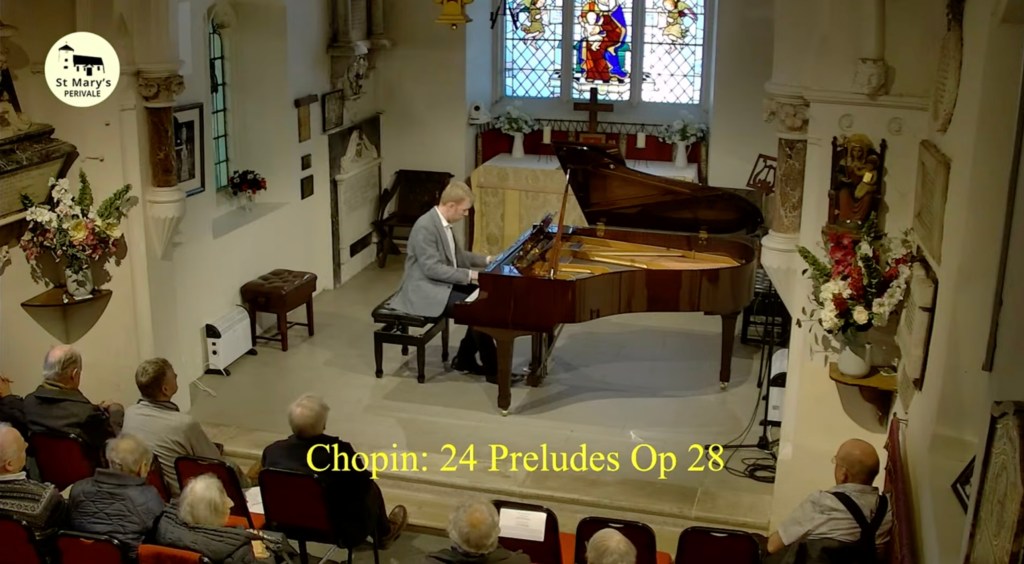
We were now ready for the Chopin Preludes which are a monument of the romantic piano repertoire. Chopin too carved out many of these Preludes in the most trying of circumstances whilst passing a ‘mild’ winter in a wind swept monastery in Valdemossa on the Island of Majorca.The citizens trying to get rid of a guest with tuberculosis before he infected the whole island. These were truly trying circumstances that put into perspective the inconveniences that Luke had suffered today! The improvised opening was played with simplicity and clarity leading into the brooding second with its long phrases shaped with poignant beauty. There was a remarkable clarity to the streams of notes of the third that accompanied a melodic line of legato notes shaped with knowing beauty. The heart beating left hand of the fourth accompanied the piercing cantabile as it soared overhead, greeted by pauses pregnant with meaning as the fifth entered with a gently meandering of undulating sounds. Luke carved the long lines of the bass in the sixth with gentle sighs accompanying from above. There was a glowing simplicity to the shortest of all the Preludes as the passionate outpouring of streams of notes of the eighth filled the keyboard with aristocratic control and refined brilliance.I have rarely heard the ninth played with such simplicity , from the very first note a sumptuous cantabile and a remarkable sense of line reaching a passionate climax of rich full sounds. There was scintillating jeux perlé and teasing brilliance to the tenth passing through the eleventh to the demonic tempestuous undulations ending of the twelfth finding an unexpectedly beautiful legato before the final two strident chords. The thirteenth is one of Chopin’s most beautiful bel canto creations, and Luke’s superb sense of balance allowed the melodic line to sing with the same glowing beauty as the human voice to which he added a wonderfully atmospheric ending. The whispered menace of the fourteenth prepared us for the radiant beauty of the ‘Raindrop’ prelude that Luke played with heartrending beauty, bringing a clarity of line to the brooding central episode that made the return of the’Raindrops’ even more significant.
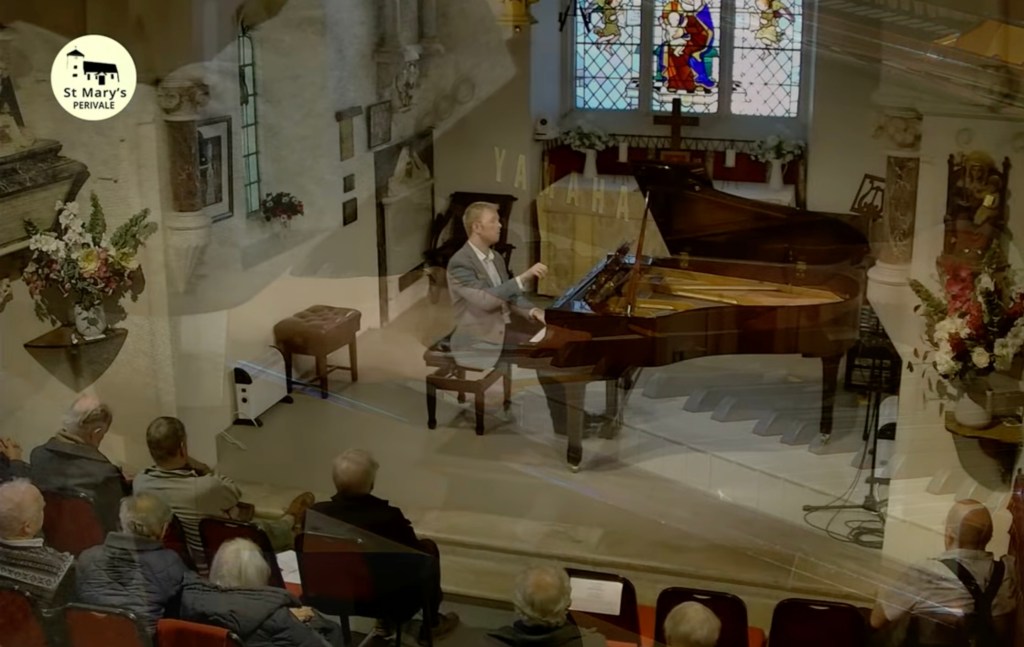
The sixteenth is a ‘tour de force’ for any pianist, which Luke threw himself into with masterly control. Even a momentary hiccup in the left hand was totally ignored and of no significance as his breathtaking bravura and mastery was quite overwhelming. Not even a glance at this ‘aide memoire’ was possible, as my old teacher Perlemuter showed us when the lights blew ( it was the intransigent Heath period of strikes) as he was playing it at the Royal Academy for us students. Luke brought a flowing beauty to the seventeenth with its long lines that he floated with glowing beauty on the deep bass A flats that were the anchor on which it sailed. The cadenza of the eigteenth slipped in almost unnoticed until it built up in passion and brilliance to a virtuosistic ending. Luke’s large hands conquered the hidden difficulties of one of most difficult of all the preludes, and make it sound as simple as an Aeolian Harp which it most certainly is not! A perfect sense of balance and control to the famous C minor Prelude ,used as the theme for variations by Rachmaninov and Mompou, allowing it to unfold in layers of ever more whispered majesty. The next one just flowed out of the final chord with a flowing poignant beauty leading to the mellifluous brilliance of the left hand octaves of the twenty second. The twenty third was played with the same crystalline beauty and simplicity with which Luke had opened these preludes except the final questioning ‘blue’ note lead us into the tempestuous final Prelude – almost Revolutionary style – with which Luke brought these twenty four problems to a brilliant and passionate conclusion on the final three ‘D’s’ deep in the depths of the piano.
No encore was expected or offered after such a ‘tour de force’. I expect Luke was now getting back to the real world mode , and the battle with British Rail about to recommence, after this oasis of beauty and mastery that he had share with us today.
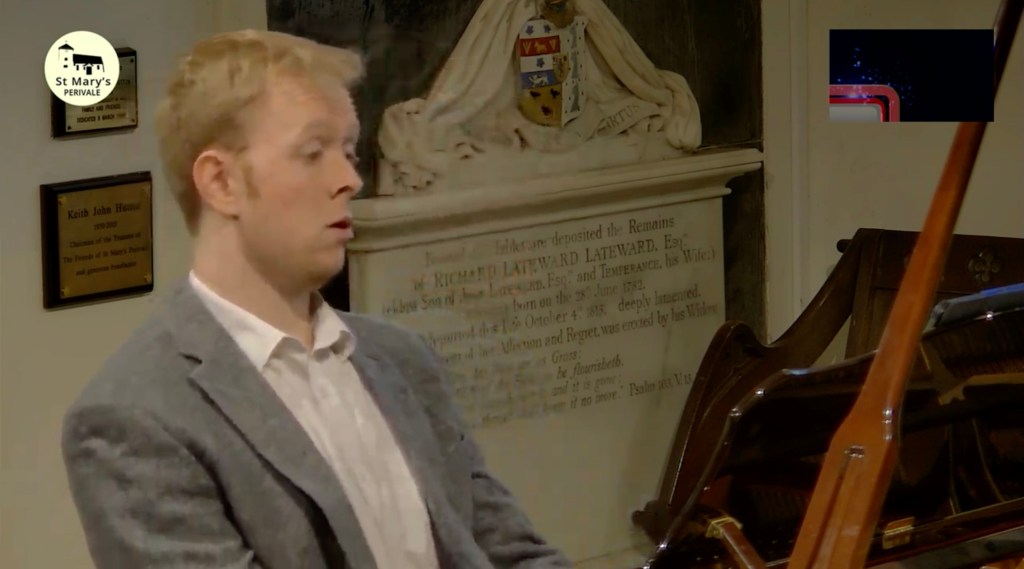
Luke Jones is a Welsh pianist from Wrexham, North Wales. He began playing the piano at the age of five and gave his first public recital at Oriel Wrecsam at the age of ten. Since then, Luke has performed across the UK in venues such as Bridgewater Hall (Manchester), St. David’s Hall (Cardiff), Symphony Hall (Birmingham), and internationally in France, Italy, Luxembourg, Austria, Japan and Spain.

Luke has been awarded prizes in several prominent piano competitions, including the 2 nd Prize and Mompou Prize at the Maria Canals International Piano Competition and 1st Prize at the Bromsgrove International Musicians Competition. He also received the RNCM Gold Medal, the highest award for performance at the Royal Northern College of Music. His performances have been featured on BBC Wales Radio, S4C Television, and Radio Vaticana.
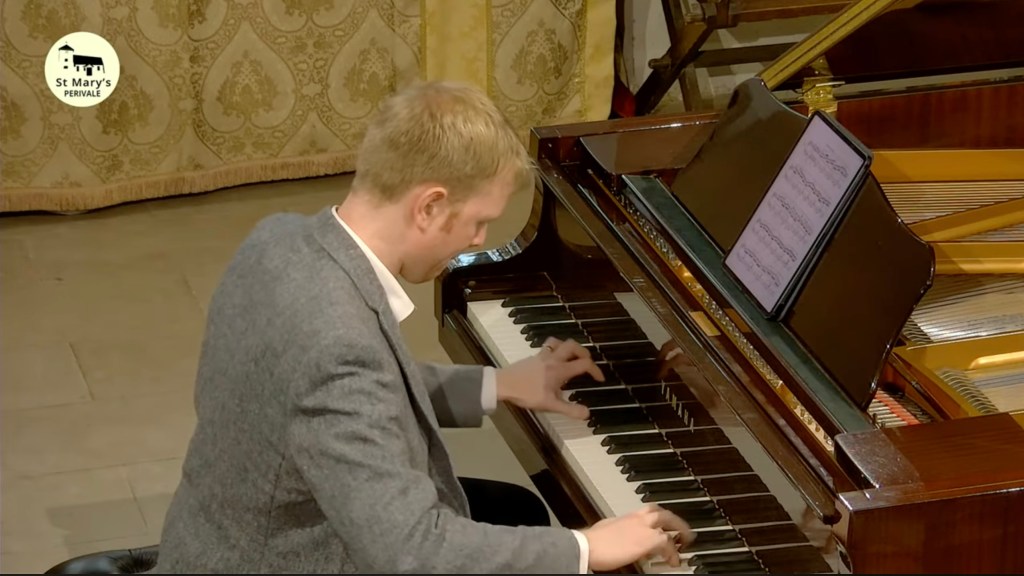
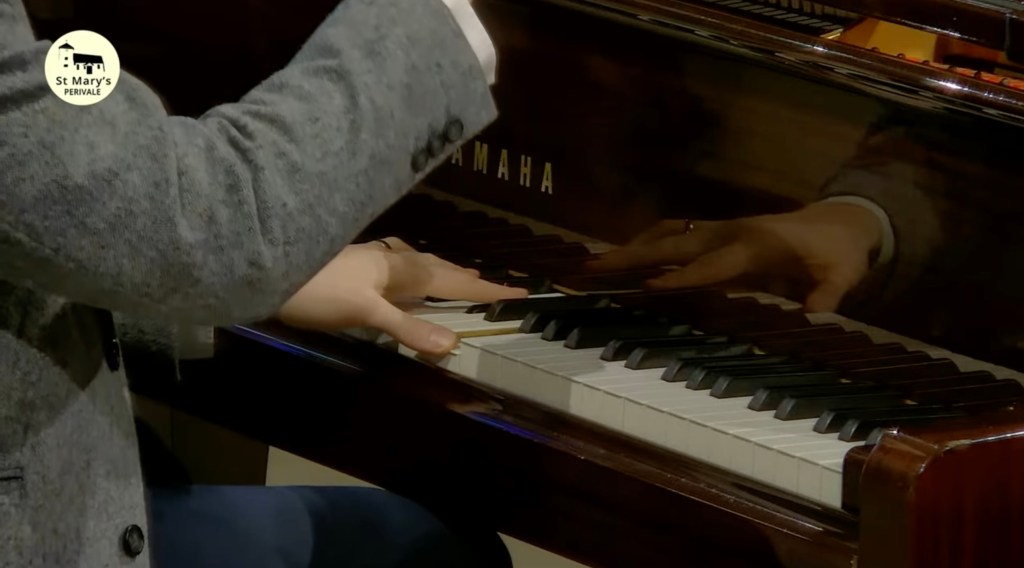
Luke has performed as a soloist with orchestras such as the BBC National Orchestra of Wales, the City of Birmingham Symphony Orchestra, and Manchester Camerata. His early education included studies with Eva Warren and Andrew Wilde, before he attended Chetham’s School of Music, where he studied under Murray McLachlan. He later continued his training with Carlo Grante in Italy and Dina Parakhina at the RNCM, where he earned a First Class Bachelor’s degree and a Master’s degree with Distinction. In addition to performing, Luke is passionate about education. He teaches at St. Ambrose Catholic College and Rossall School, and also runs a thriving private teaching practice. Luke is a Kawai Artist and an honorary ambassador for the Bromsgrove International Musicians Competition.

 ChristopherAxworthy-MusicCommentary