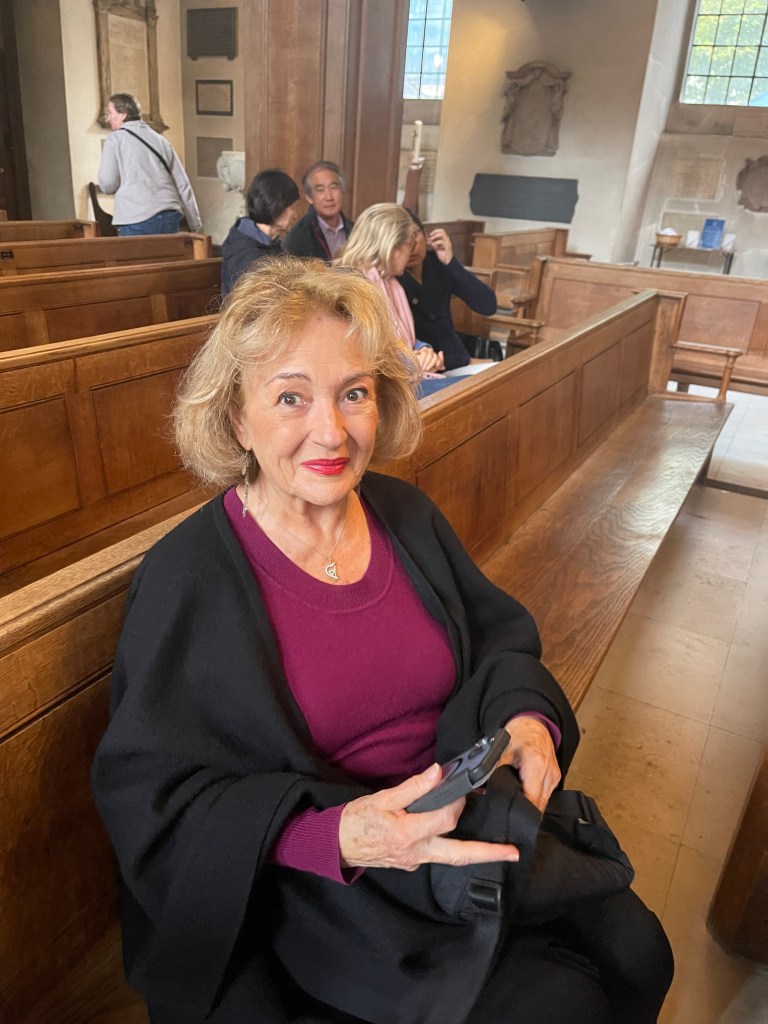
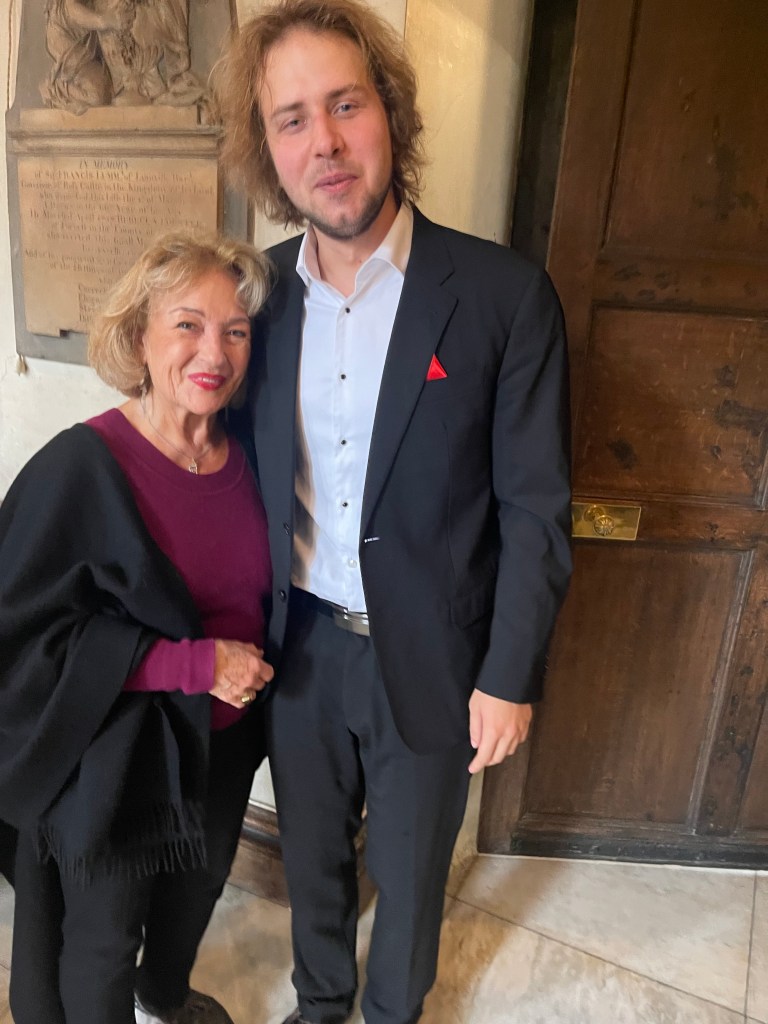
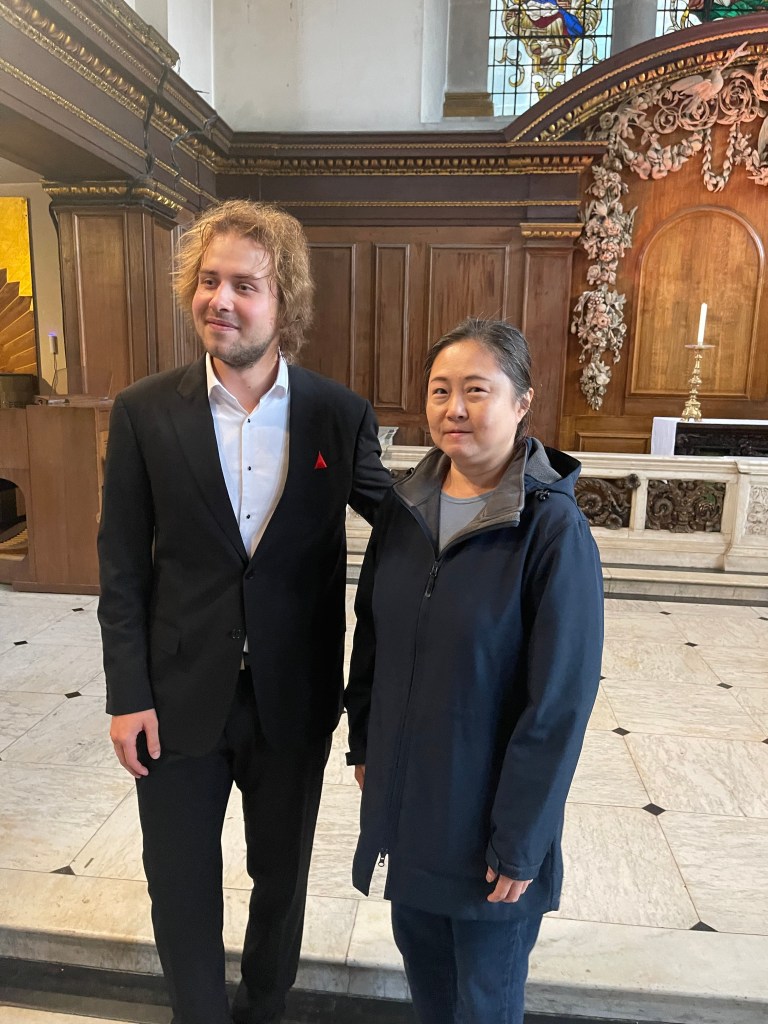
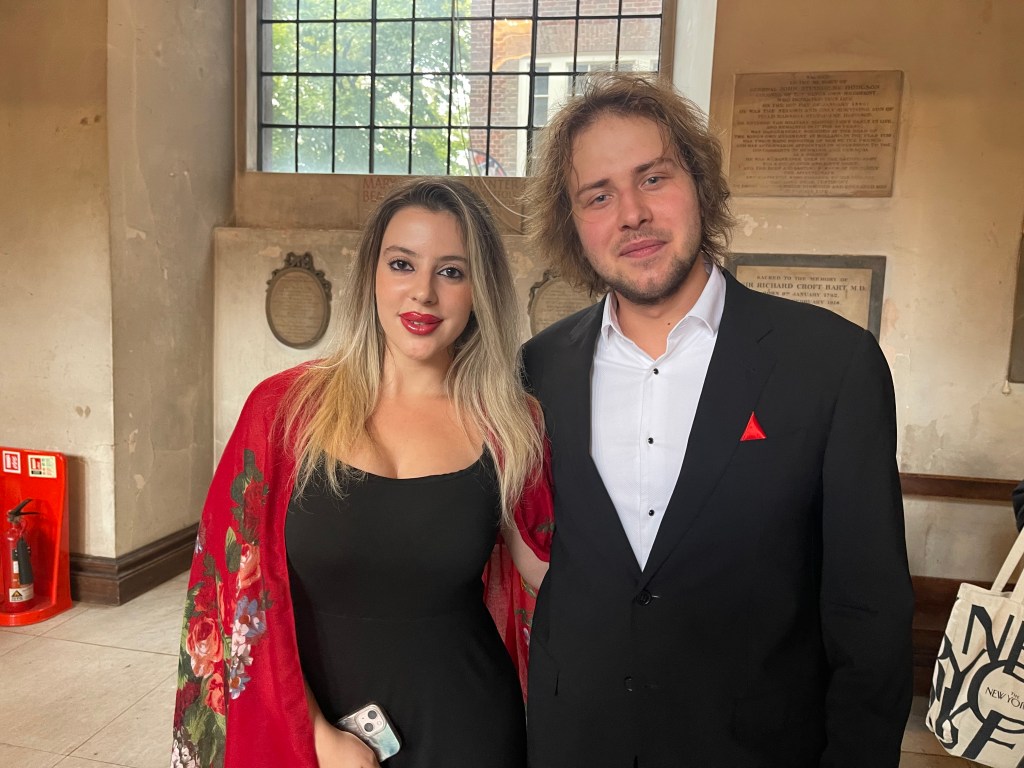
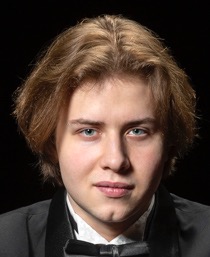
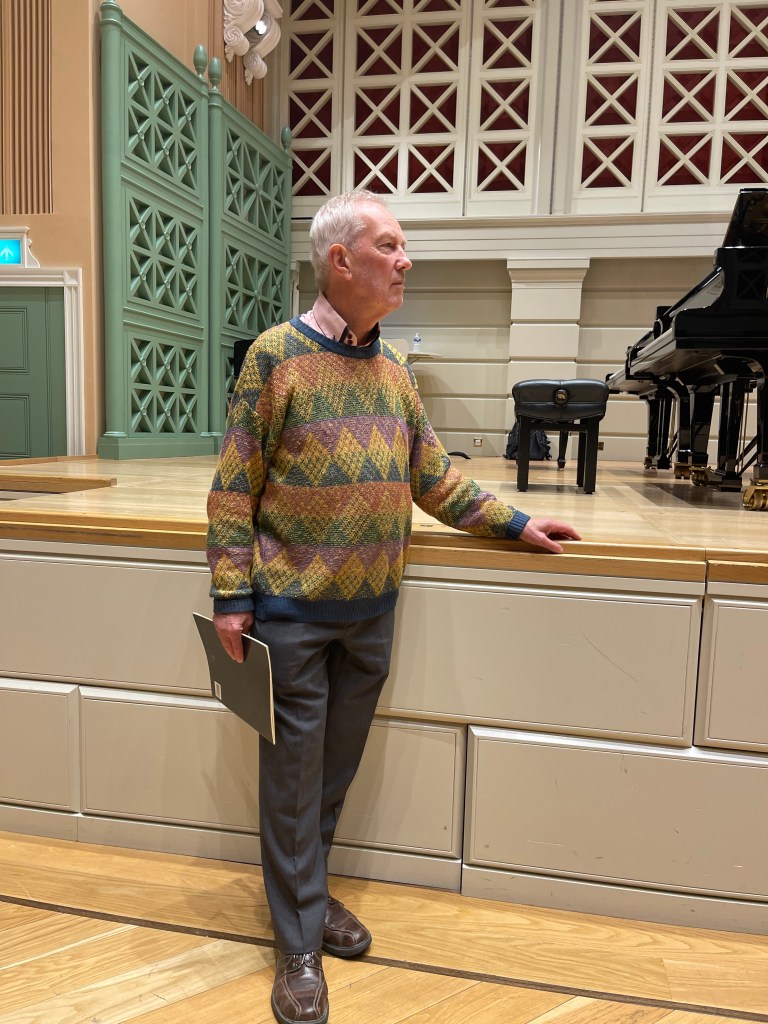
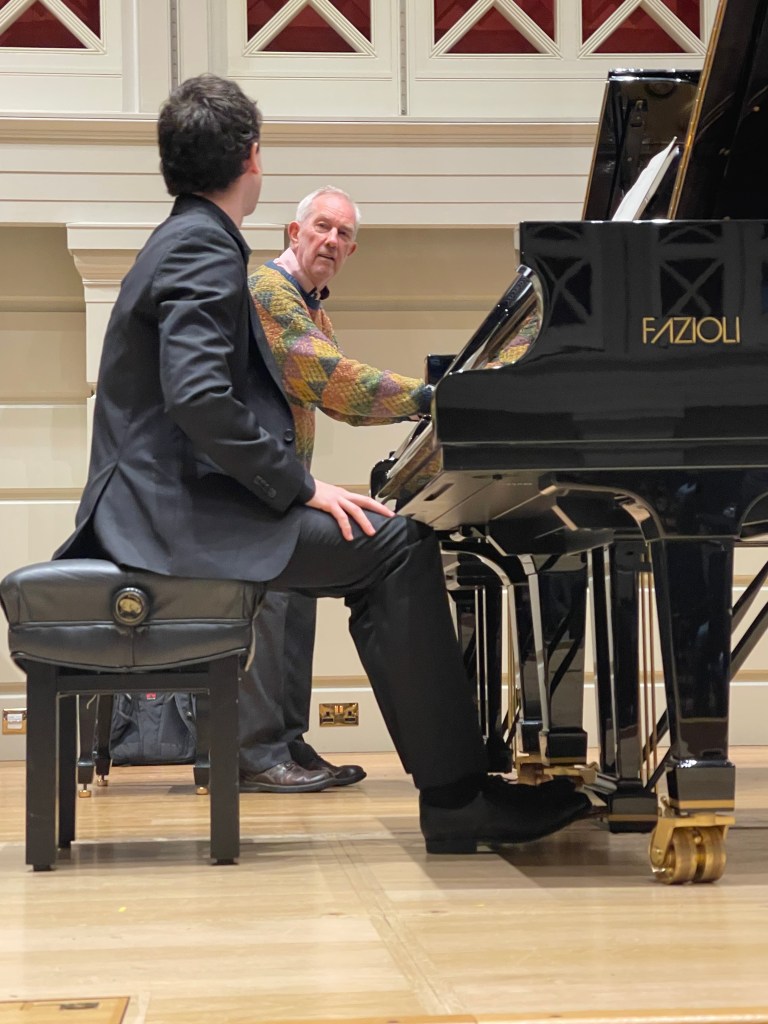
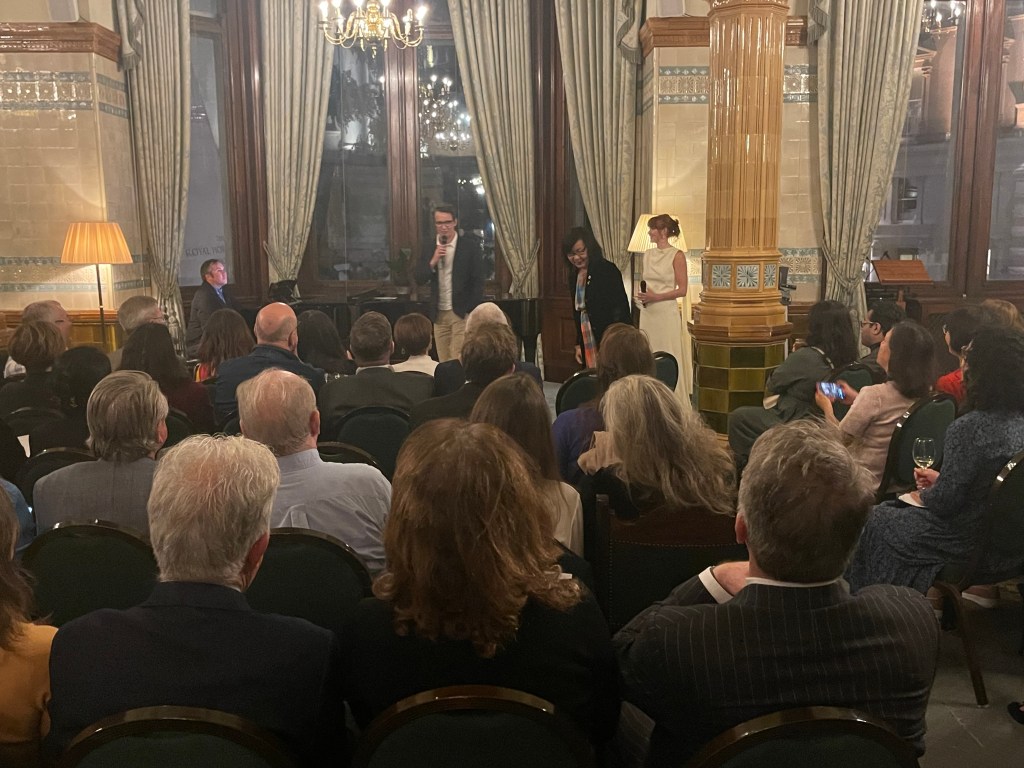
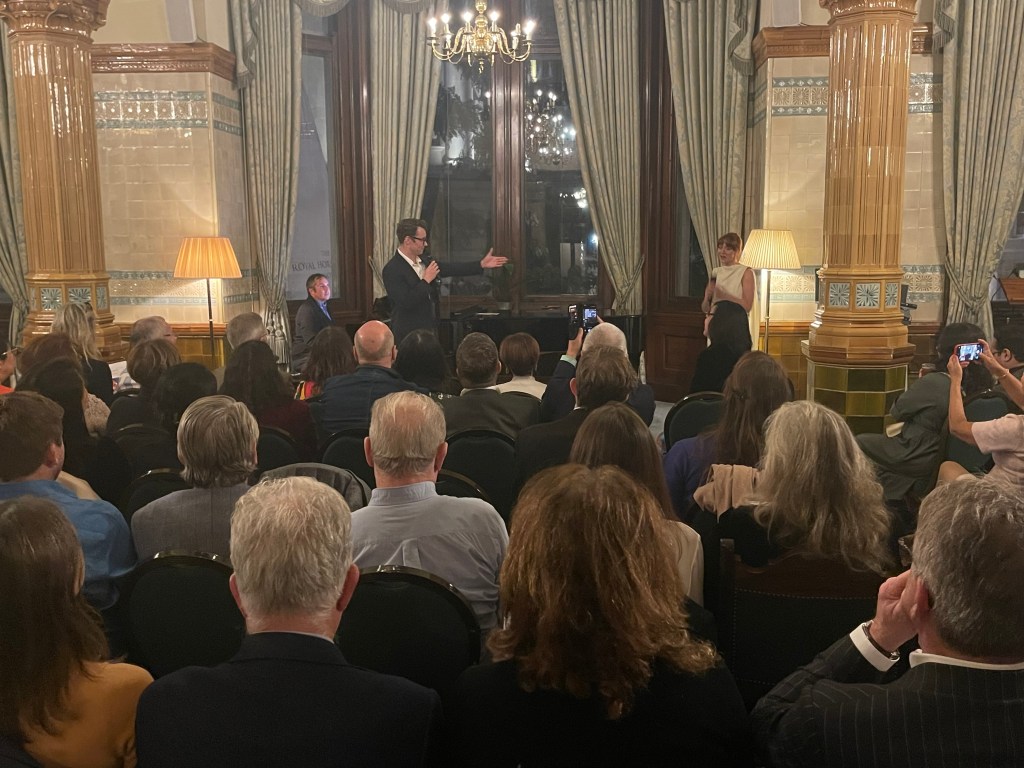
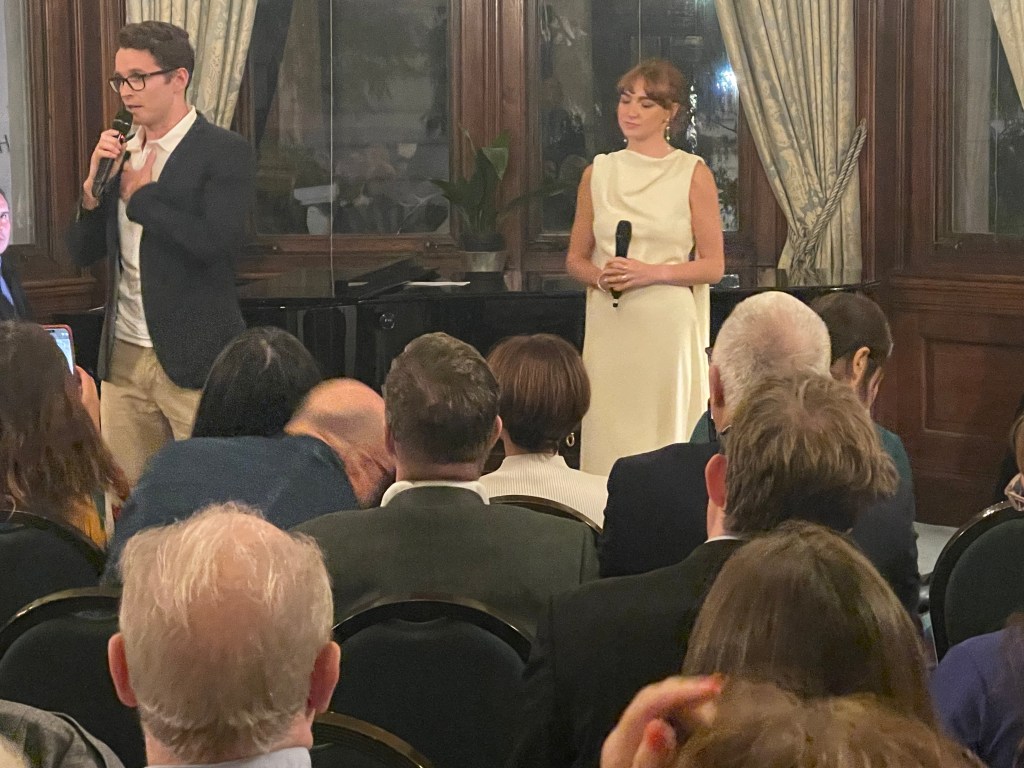
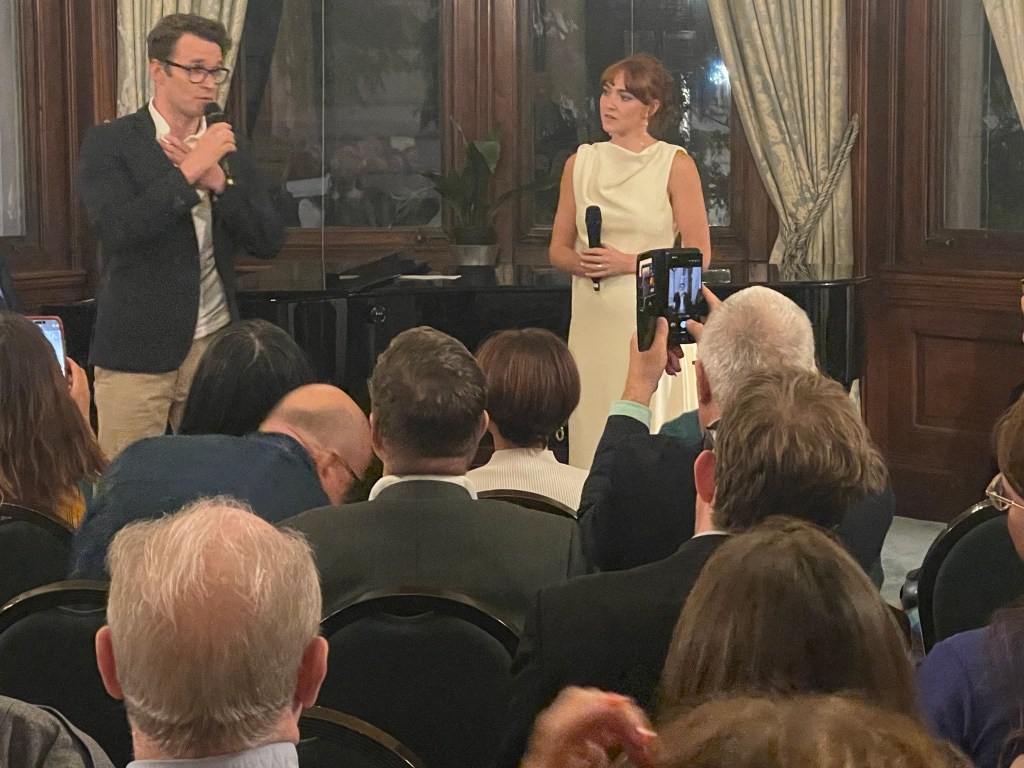
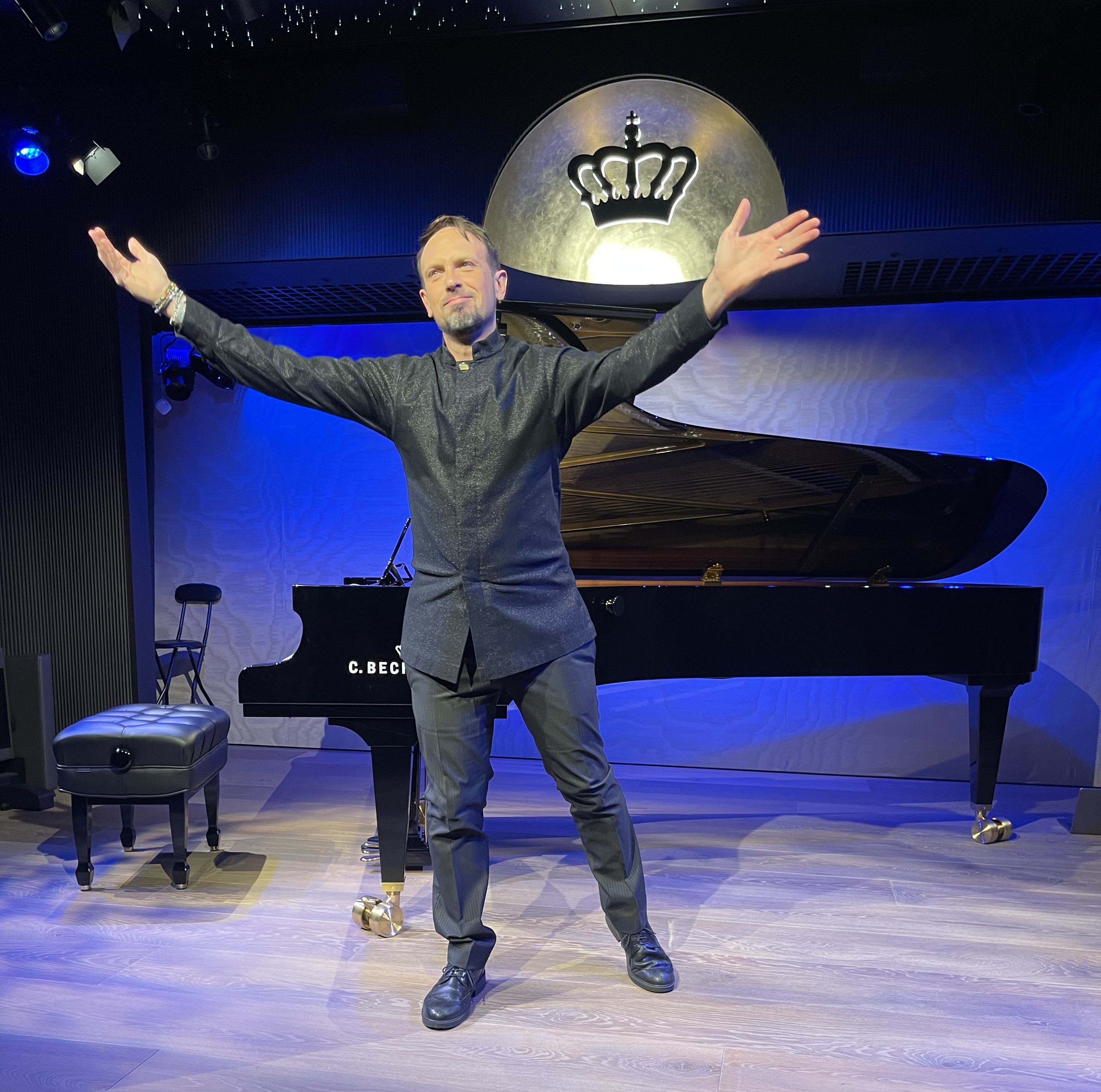
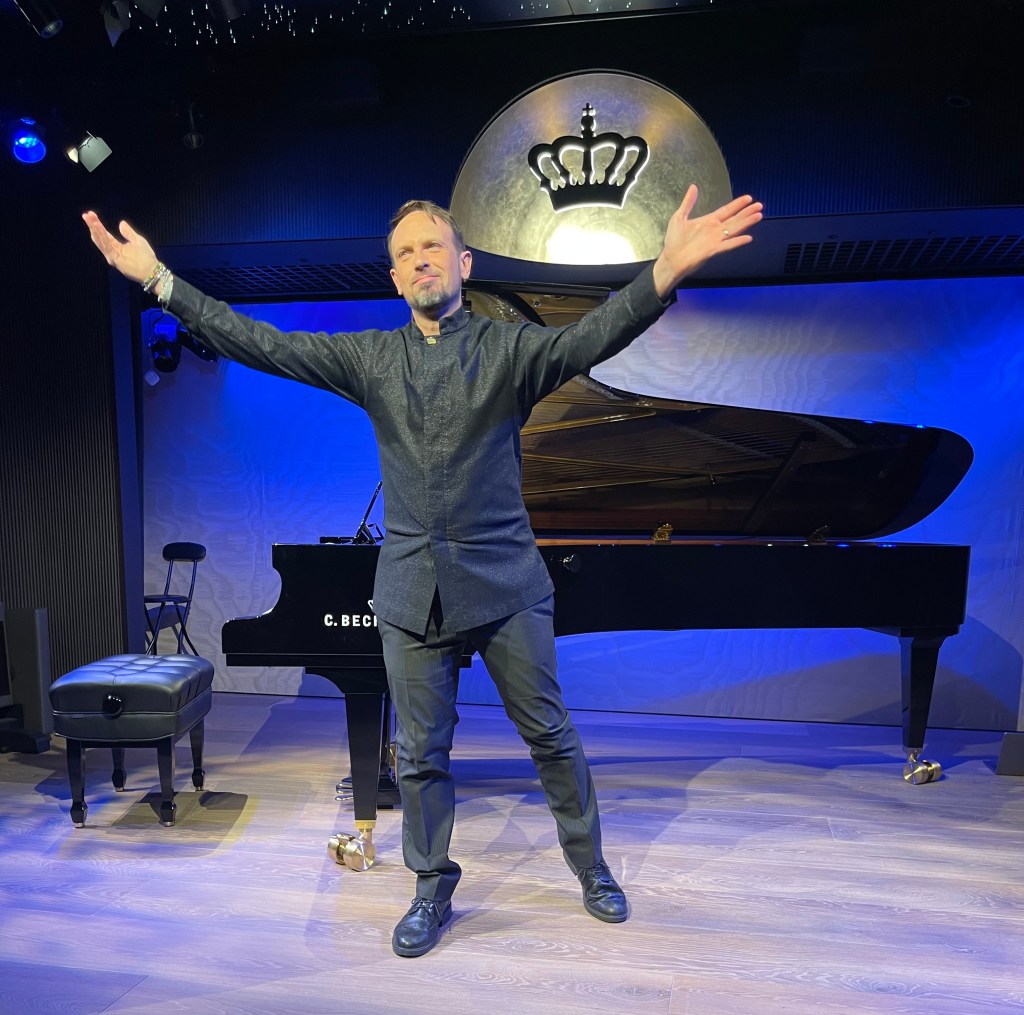
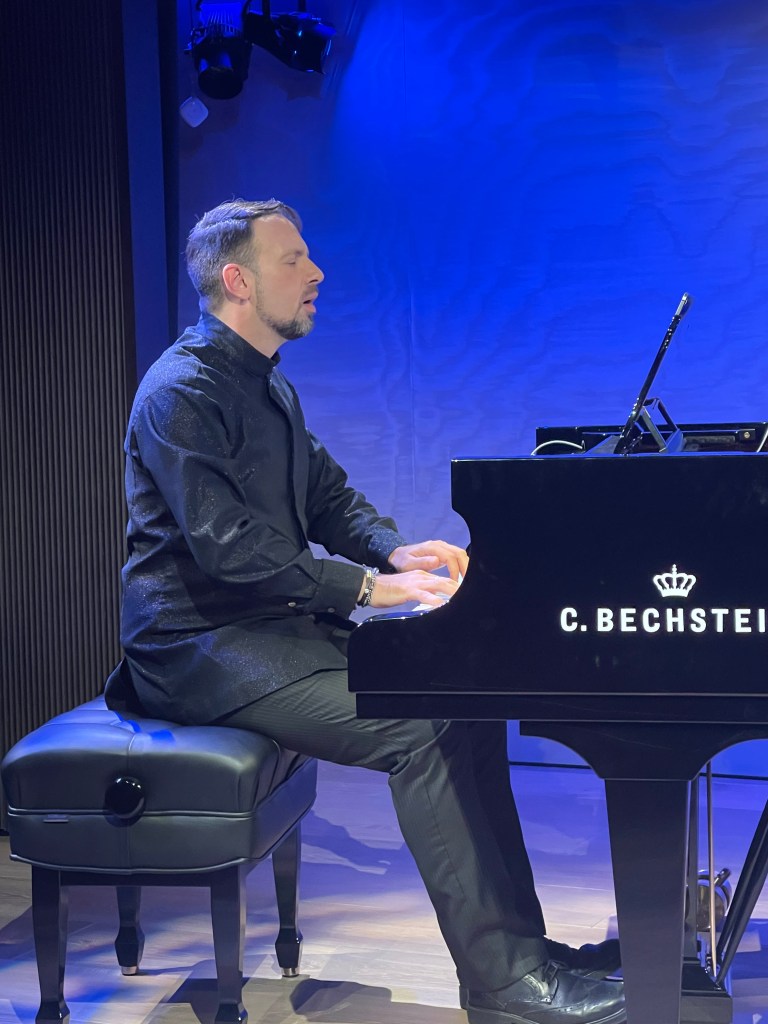
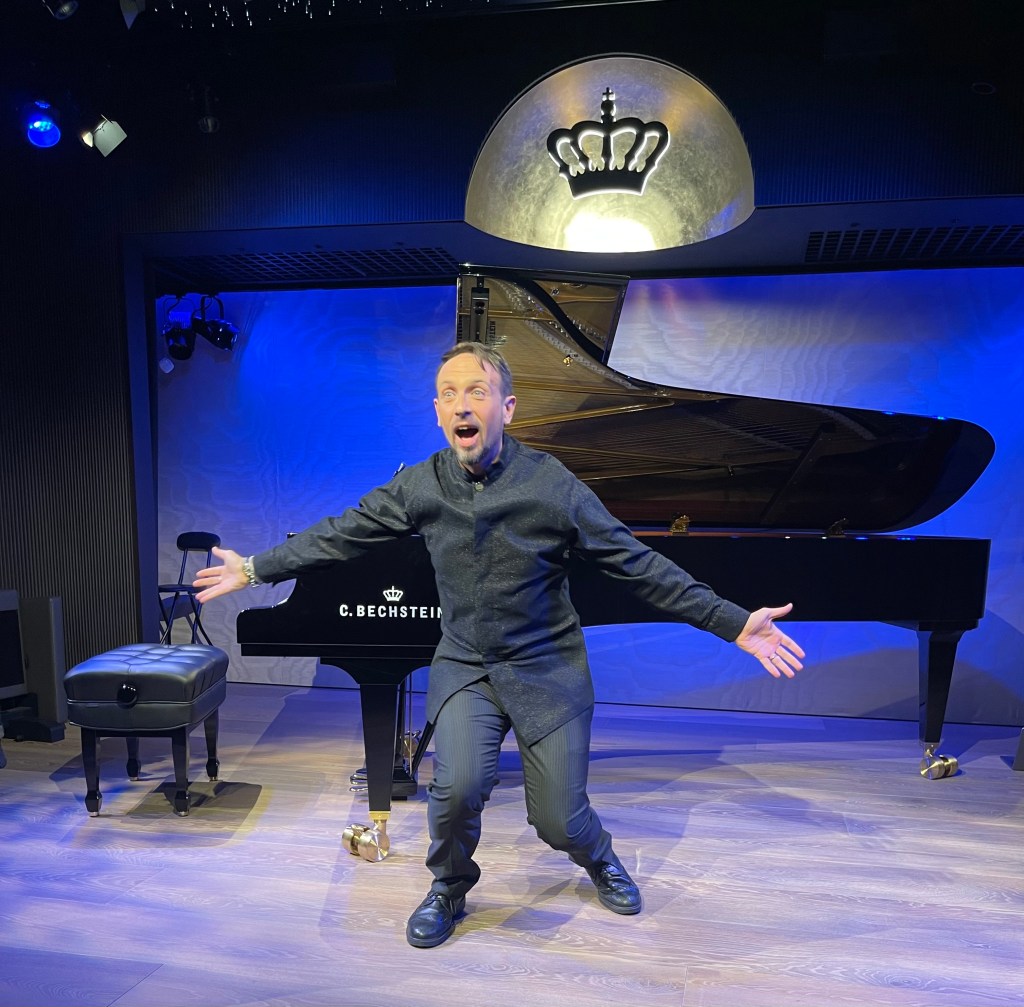
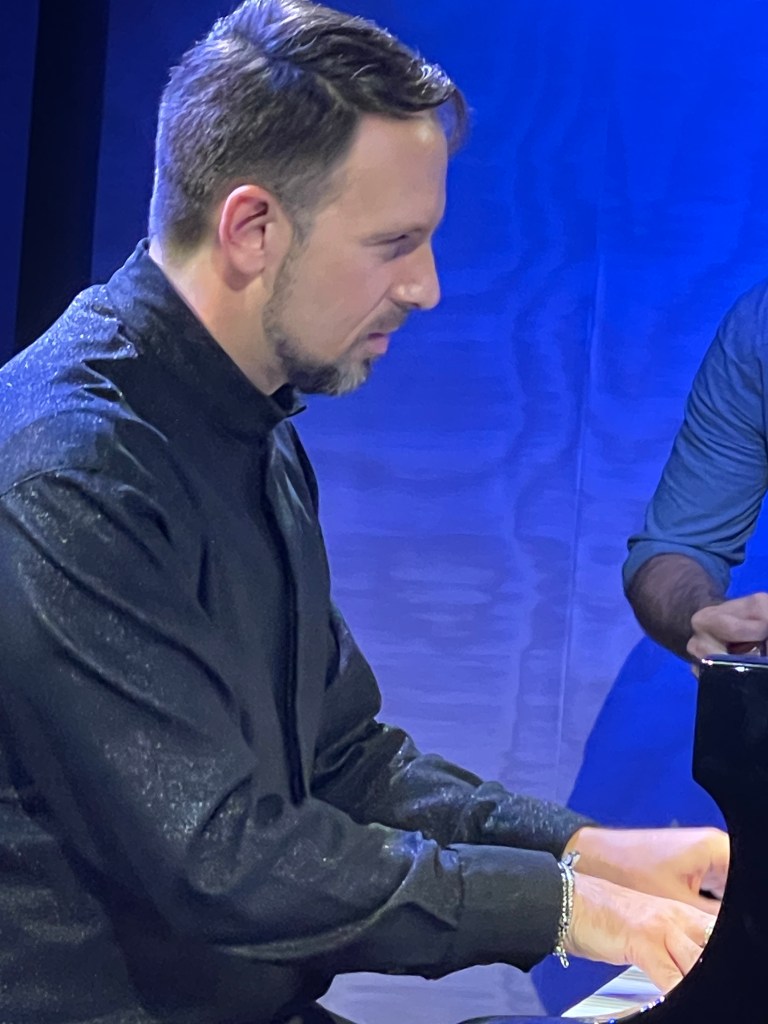
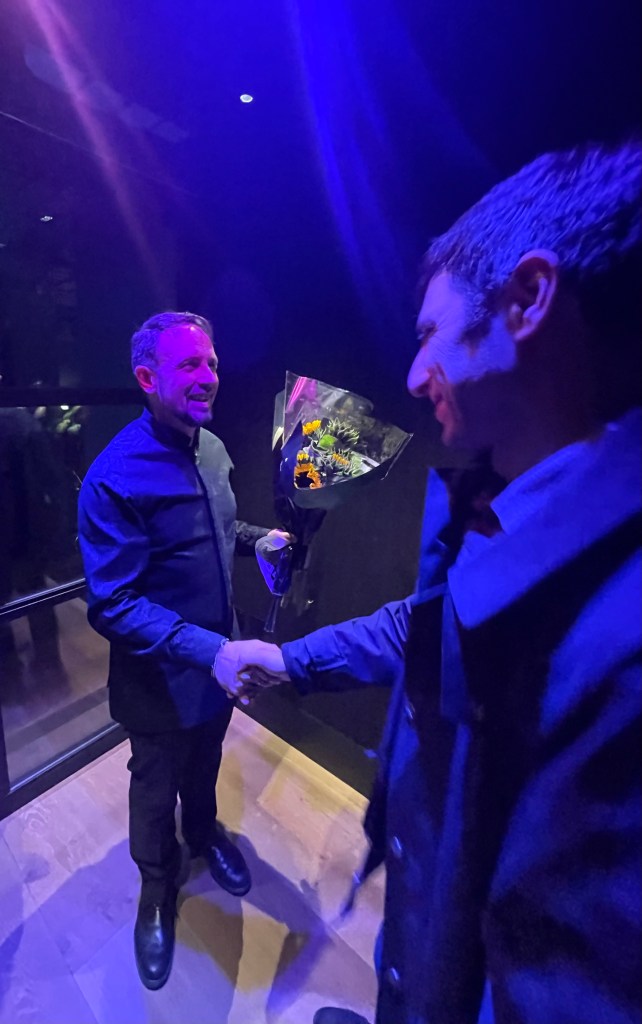
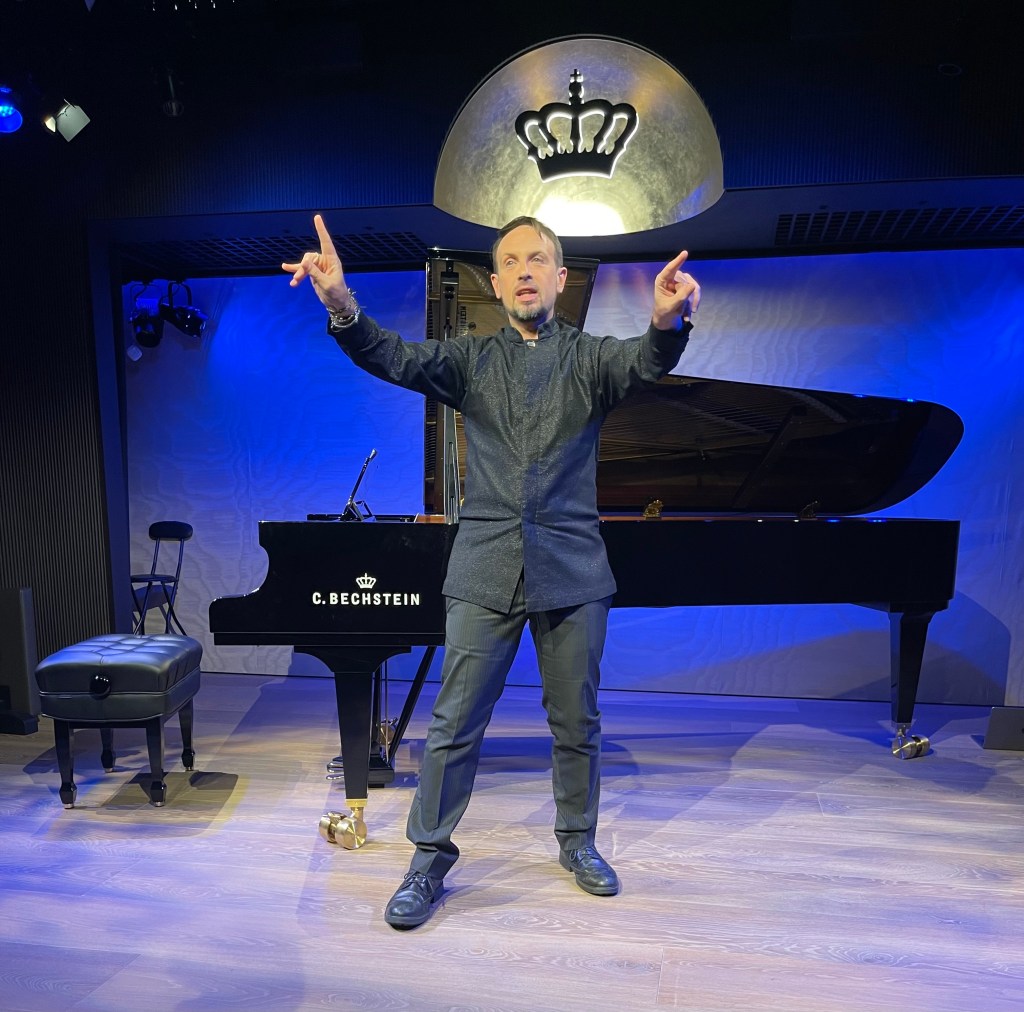
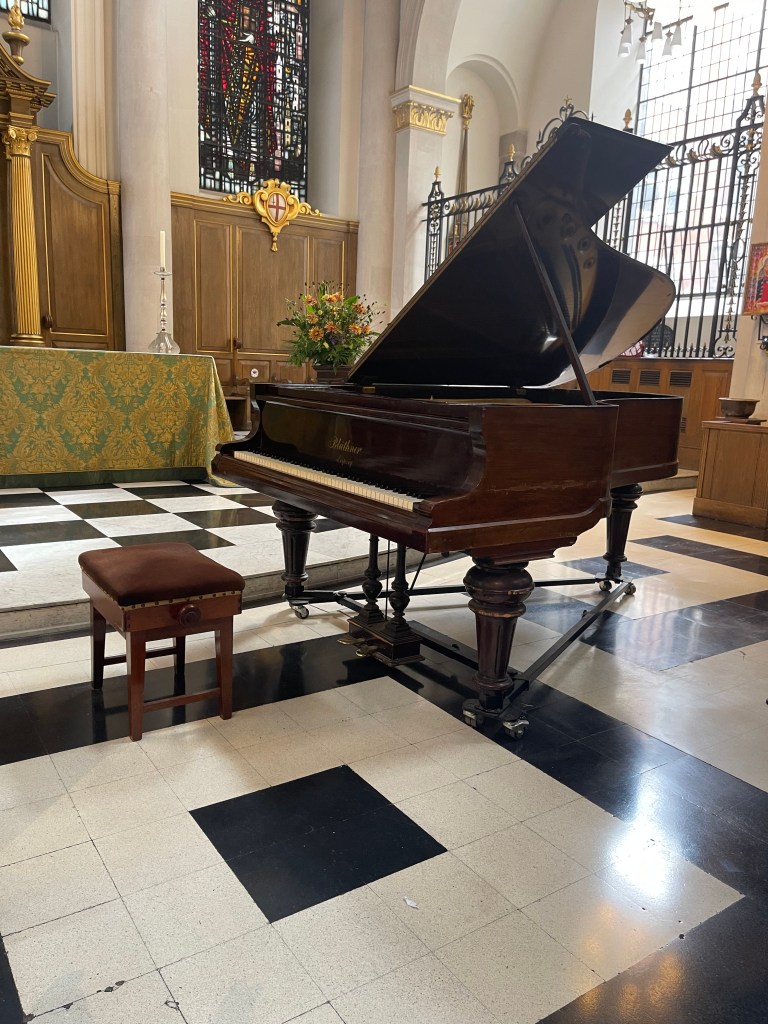
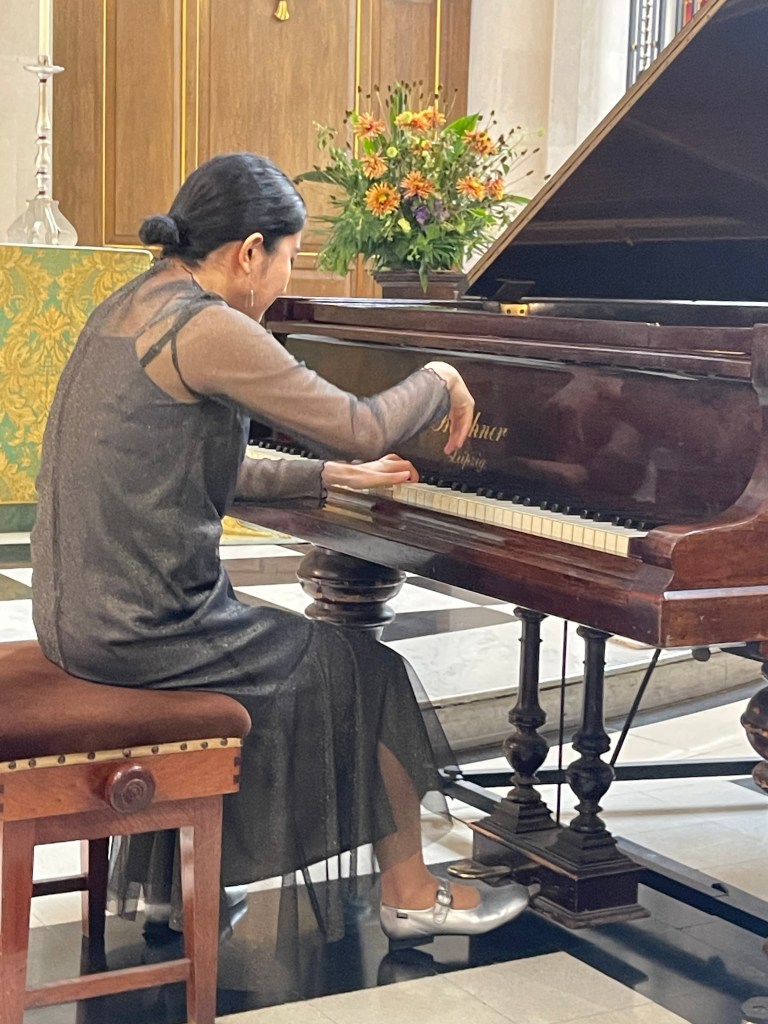
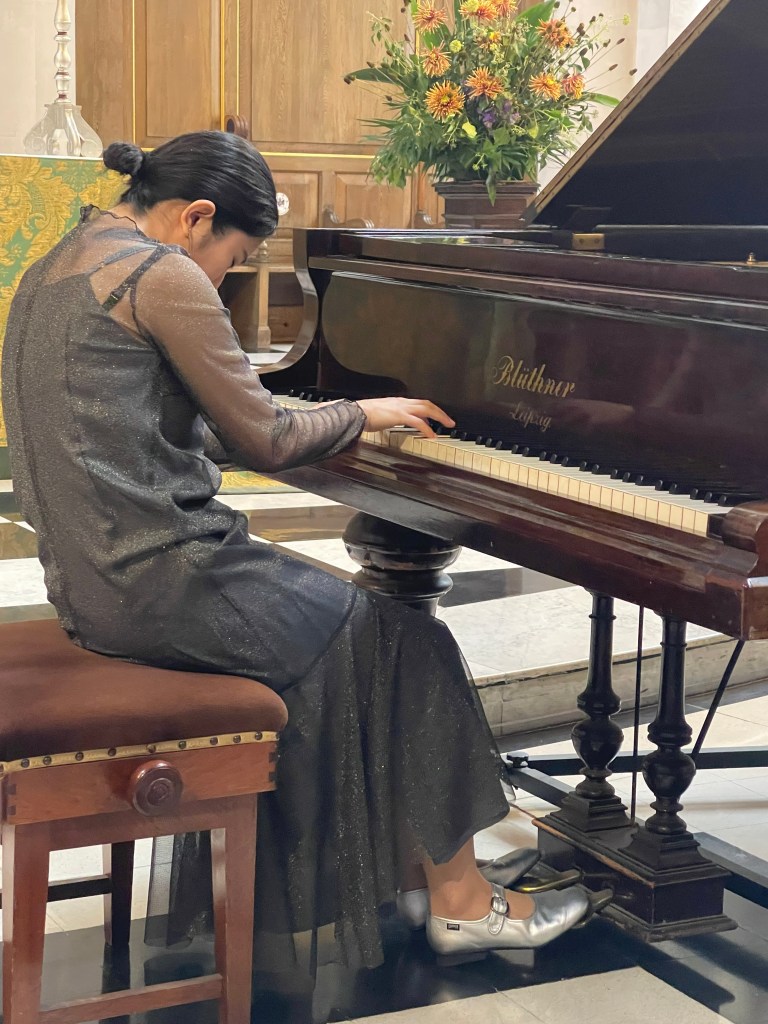
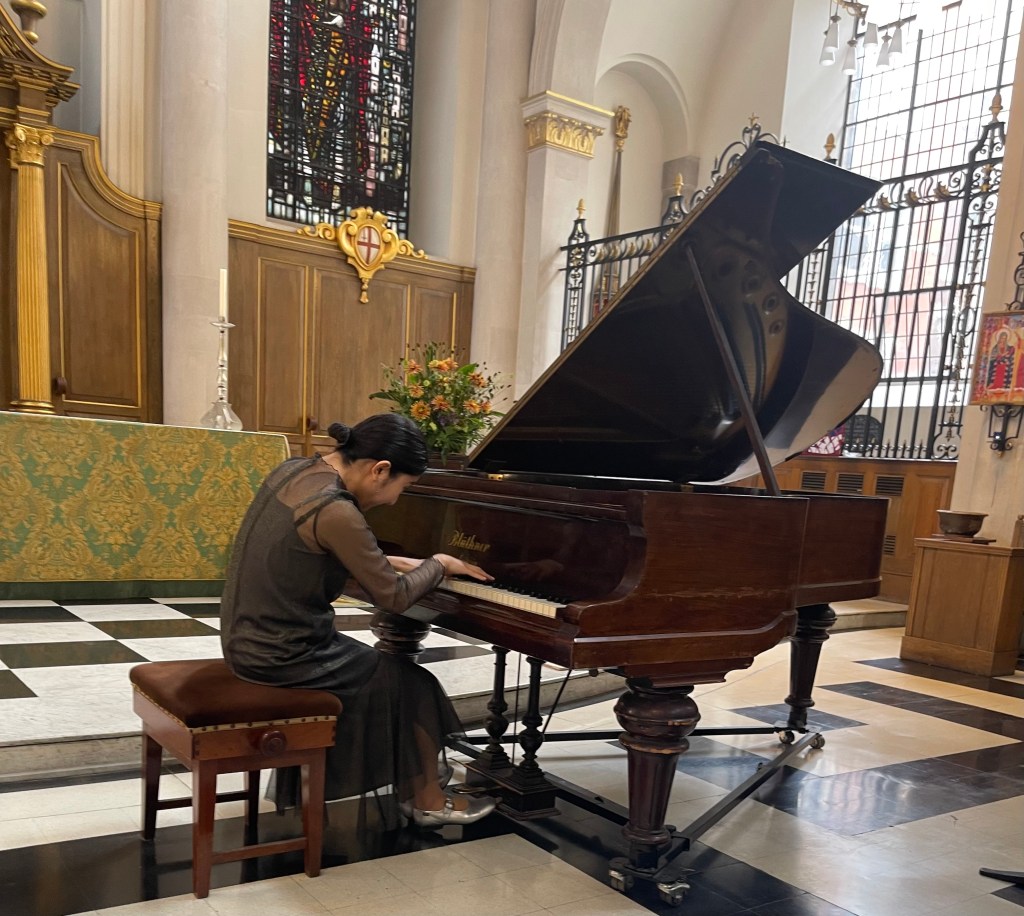
Nikita Lukinov at St James’s ‘Invitation to dance with the Prince of Pianists’

https://www.youtube.com/live/6O1snOPQ-vo?si=rfCKtvBYJjuTWsy2

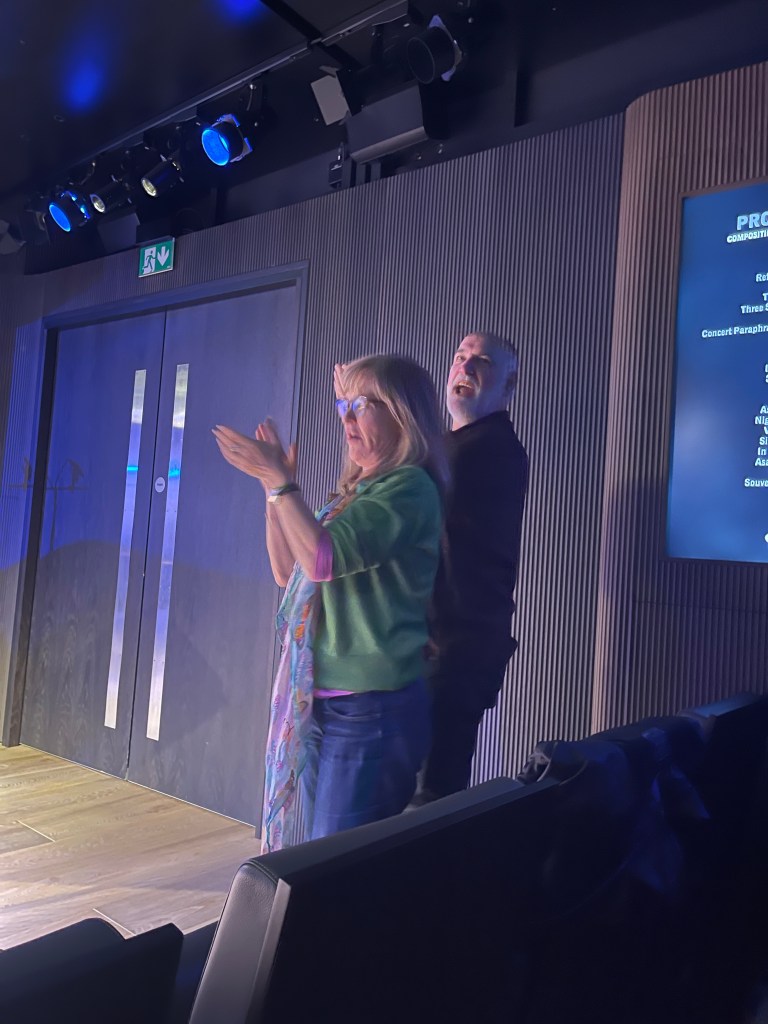
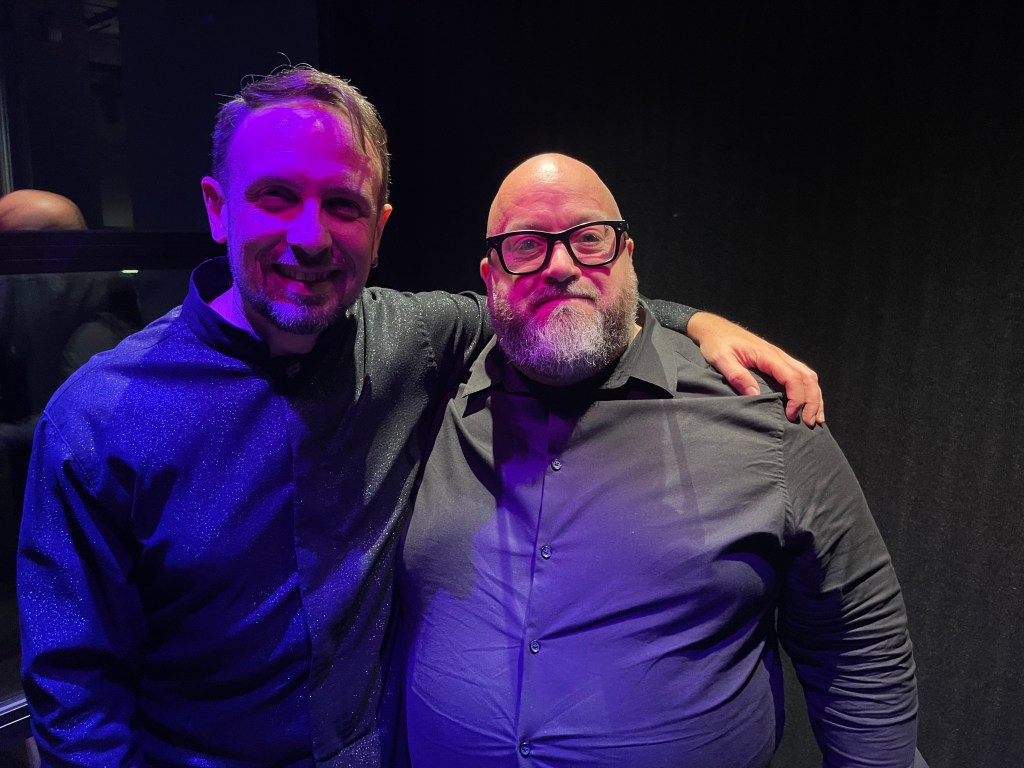
And we could have danced all night judging from the enthusiastic audience and the friends that came back stage after a concert of such scintillating playing . Sumptuous sounds and a characterisation that he gave to each of these well known pieces. There was also a sense of occasion like entering a great opera house where the curtain would rise and magic would exude from the stage .

It was the same magic that this dashing young prince with a golden mane could extract from this great black beast seated in front of the altar in this most beautiful of London churches.

A candle lit for our loved ones is always a must in this church

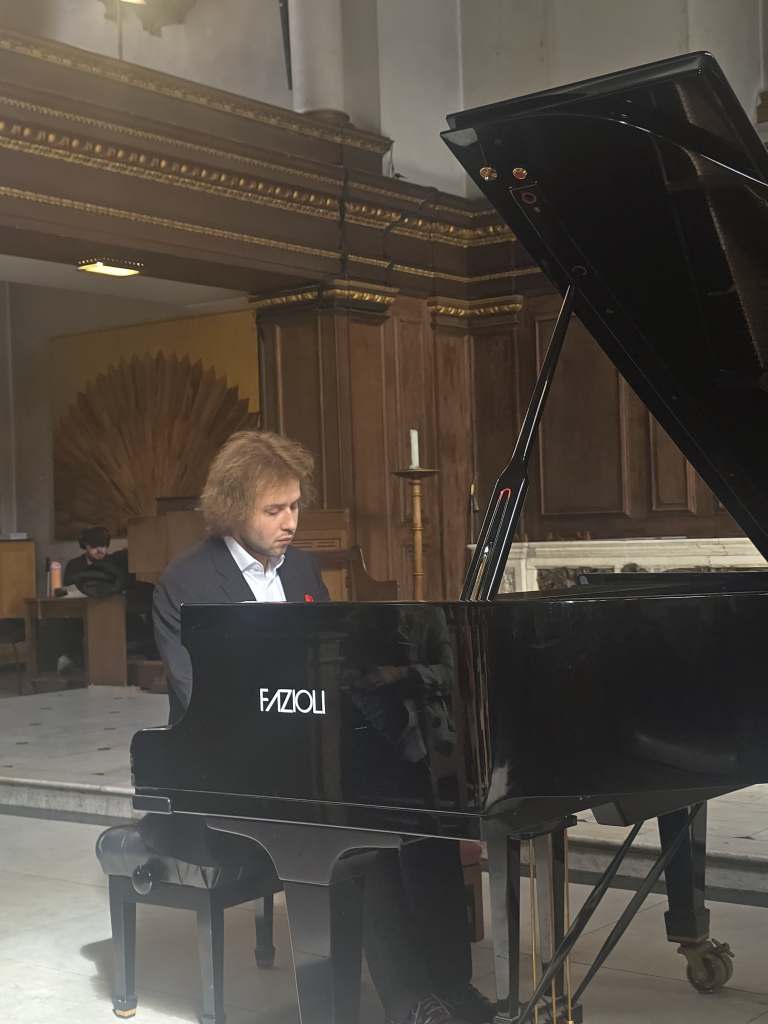
And it was fitting that it should be in front of the altar because the theatre is, too, a sacred place where dreams can become reality. An imposing beginning with the March from the ‘Nutcracker’ in Pletnev’s wonderful transcription for solo piano written by a great pianist who knows how to extract the secrets from the piano with breathtaking daring and heartrending beauty. Has the ‘Sugar Plum Fairy’ ever sounded so glowingly luminous just like a porcelain doll of perfect proportions! Nikita’s knowing chiselled playing of great delicacy was a wonder to behold. The ending of Tchaikowsky’s own ‘Sleeping Beauty’ was quite overwhelming for the sweep and sumptuous sounds that wafter around this very resonant edifice from fingers that flew up and down the keys with such aristocratic mastery.
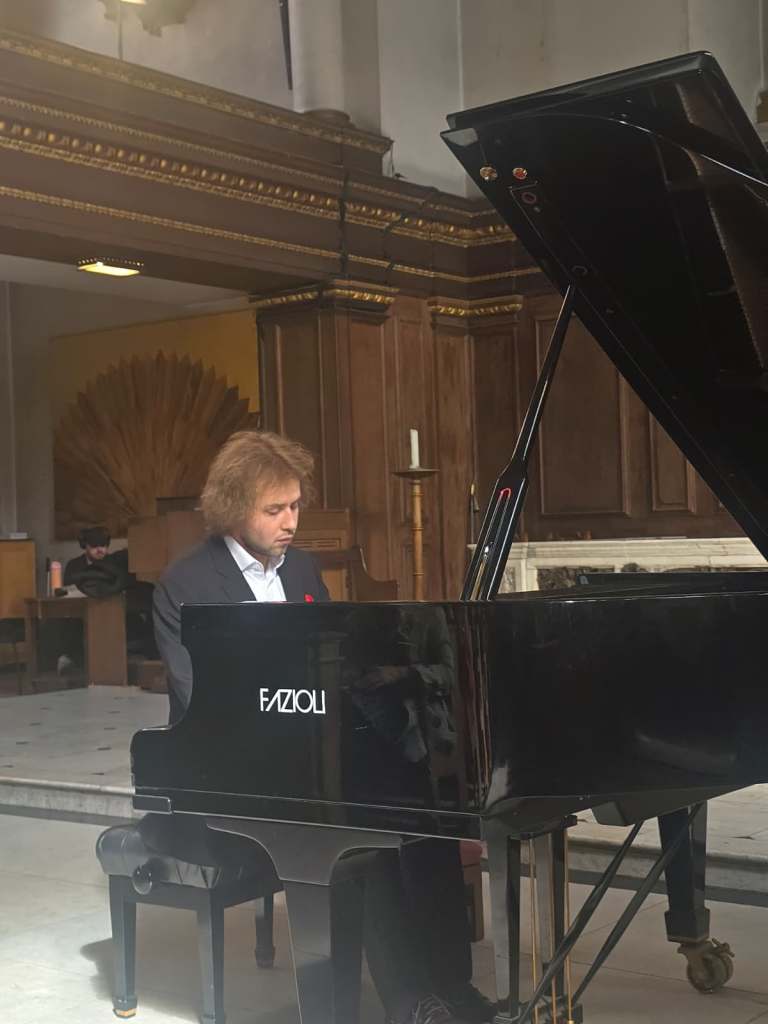
The six character pieces from Prokofiev’s Cinderella were played with pungent humour and insinuating pulsation. The voice of Prokofiev every bit as overwhelming and exciting as Tchaikowsky. Masterly performances from a pianist who has recently completed a 30 concert tour in Scotland bringing music to places where it has never been before. In November he will go on a similar tour of China with concerts and masterclasses where this Prince in Shining Armour will seduce and excite his audiences with his music making as he has today.
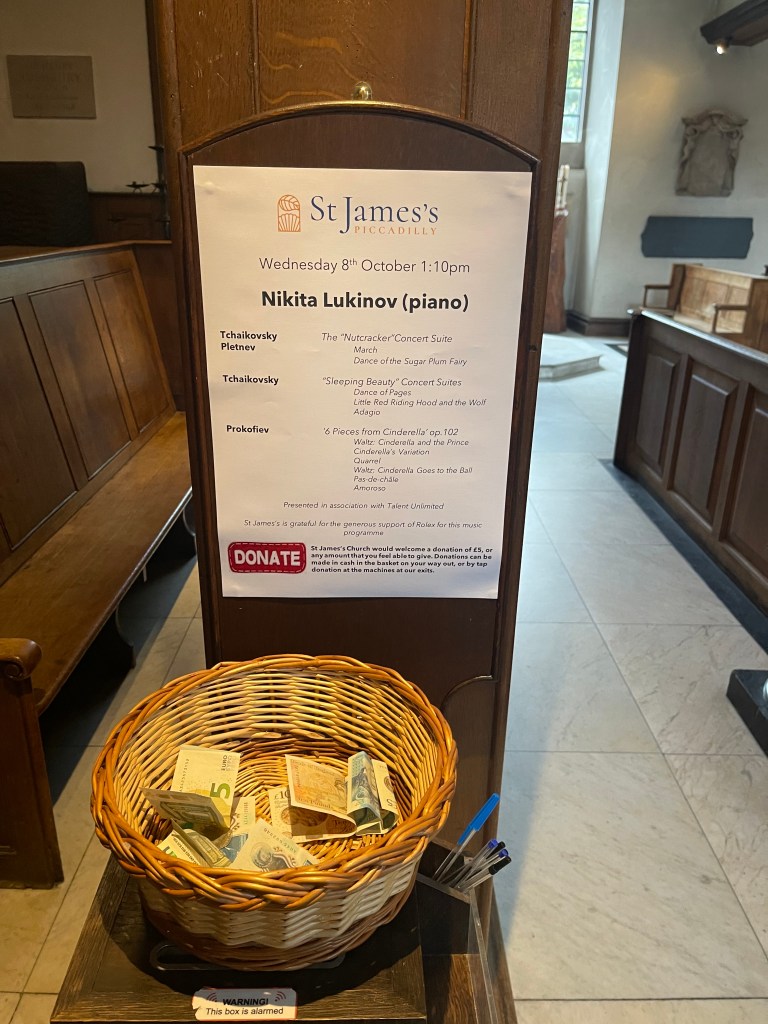
Tchaikovsky-Pletnev – excerpts from the “Nutcracker” Concert Suite
March
Dance of the Sugar Plum Fairy

Tchaikovsky and “Sleeping Beauty” Concert Suites
Dance of Pages
Puss in Boots and the White Cat
Little Red Riding Hood and the Wolf
Adagio


Prokofiev – ‘6 Pieces from Cinderella’ op.102
Waltz: Cinderella and the Prince
Cinderella’s Variation
Quarrel
Waltz: Cinderella Goes to the Ball
Pas-de-châle
Amoros

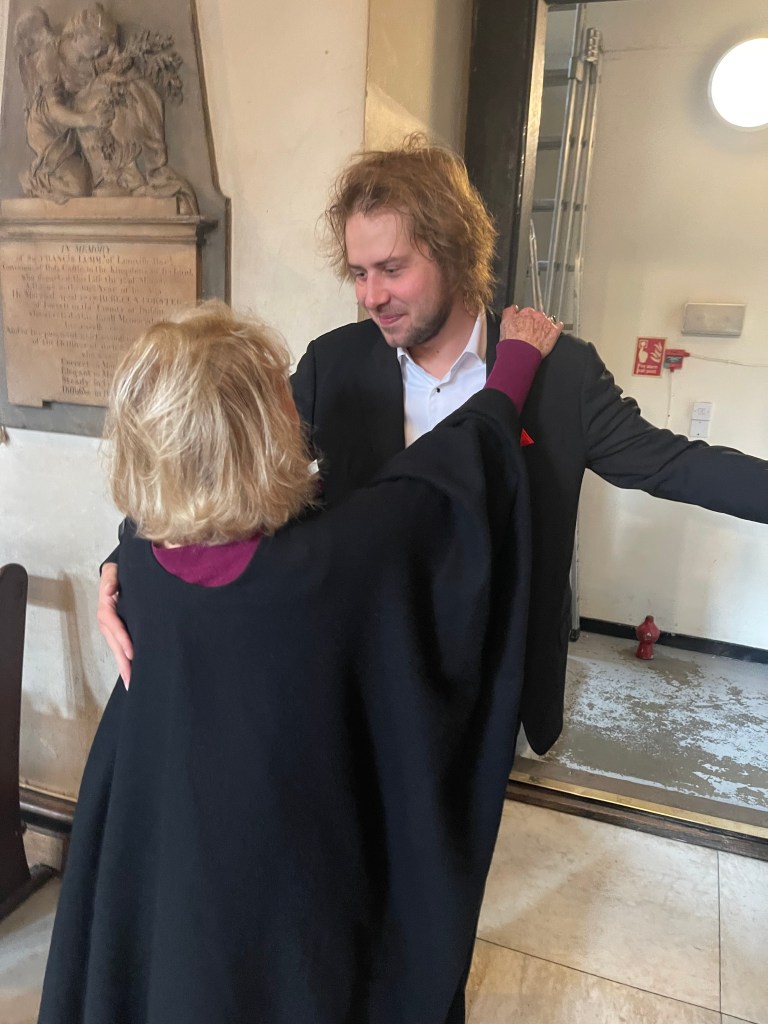
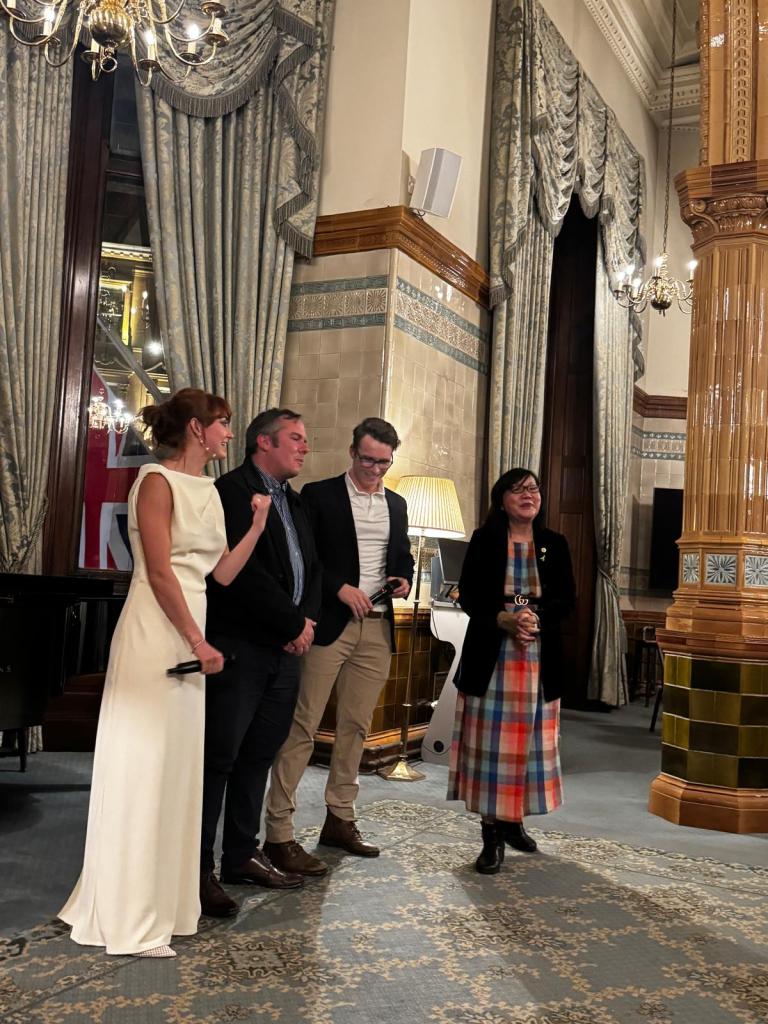
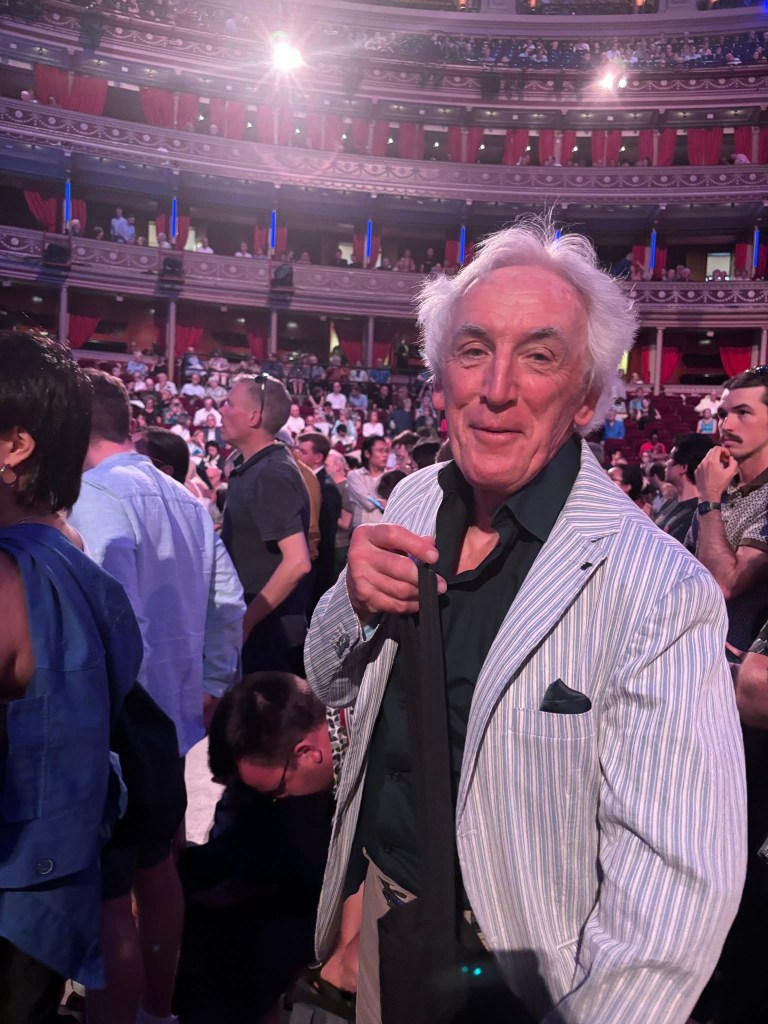
Julian Jacobson Canan Maxton. Nikita Yisha Xue

Nikita has been a Talent Unlimited musician since 2019z In October 2022, Nikita became the youngest senior staff member at the Royal Conservatoire of Scotland and across all UK conservatoires. Nikita is a dedicated member of the Live Music Now Scotland scheme, passionately committed to providing live music of an international standard to socially disadvantaged communities. For the 2024/25 season, Nikita embarks on a tour of 35 recitals and outreach events in Scotland, spanning from the Scottish Borders to Orkney Islands and from Aberdeen to the Isle of Skye. This tour is in close collaboration with the Live Music Now Scotland, and alongside piano recitals in concert halls and music clubs, Nikita will deliver outreach events in local care homes and schools in the area of his recitals. He says: “It is an unbelievable feeling when people’s eyes sparkle so joyfully and sincerely after the performances, and I know I contributed something truly valuable.”

Other 2024/25 season highlights include recitals at the London Armourers’ Hall, London Bechstein Hall, Perth Concert Hall and St Magnus Festival.
A disciple of the Russian Piano School, Nikita Lukinov started his musical education at the age of six in Voronezh, Russia. At the age of 10, he gave his debut performance as a soloist with a symphonic orchestra and at 14, he won a full scholarship to study at the Purcell School in London. Nikita was awarded full scholarships to pursue a Bachelor’s Degree in 2017, a Master’s Degree in 2021, and an Artist Diploma Degree in 2023 at the Royal Conservatoire of Scotland (RCS) at the class of Prof. Petras Geniušas.

Presented in association with Talent Unlimited.

photo credit Dinara Klinton https://christopheraxworthymusiccommentary.com/2024/03/20/christopher-axworthy-dip-ram-aram/

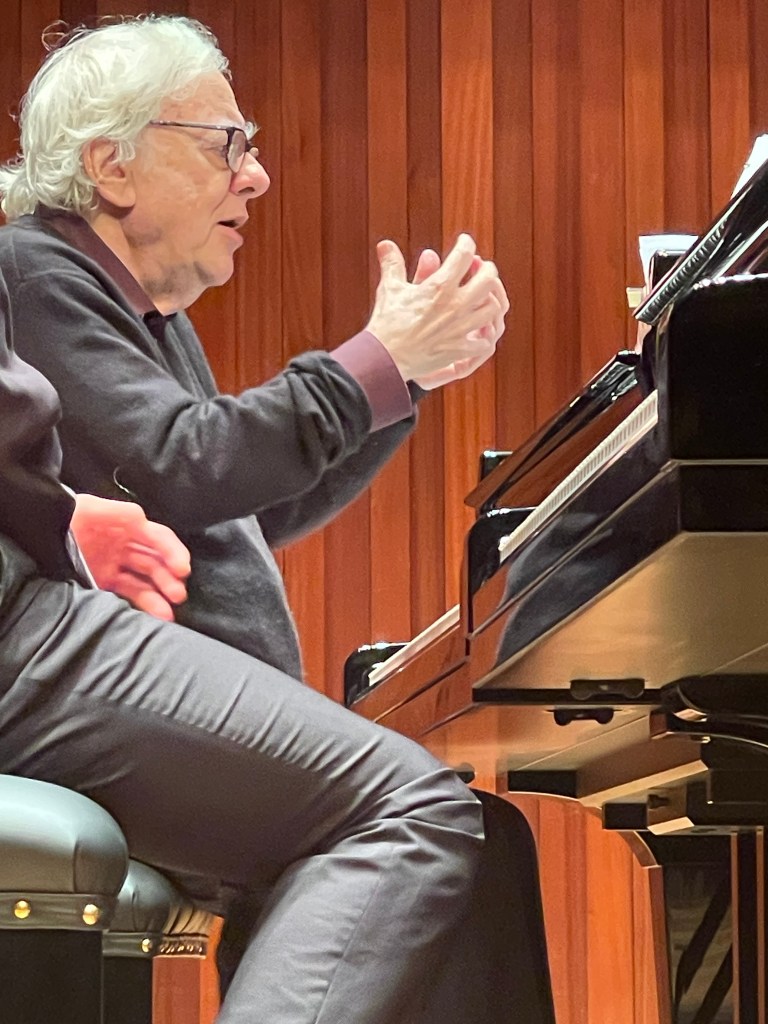
Roy Howat with French Music revealed and unravelled at the RCM

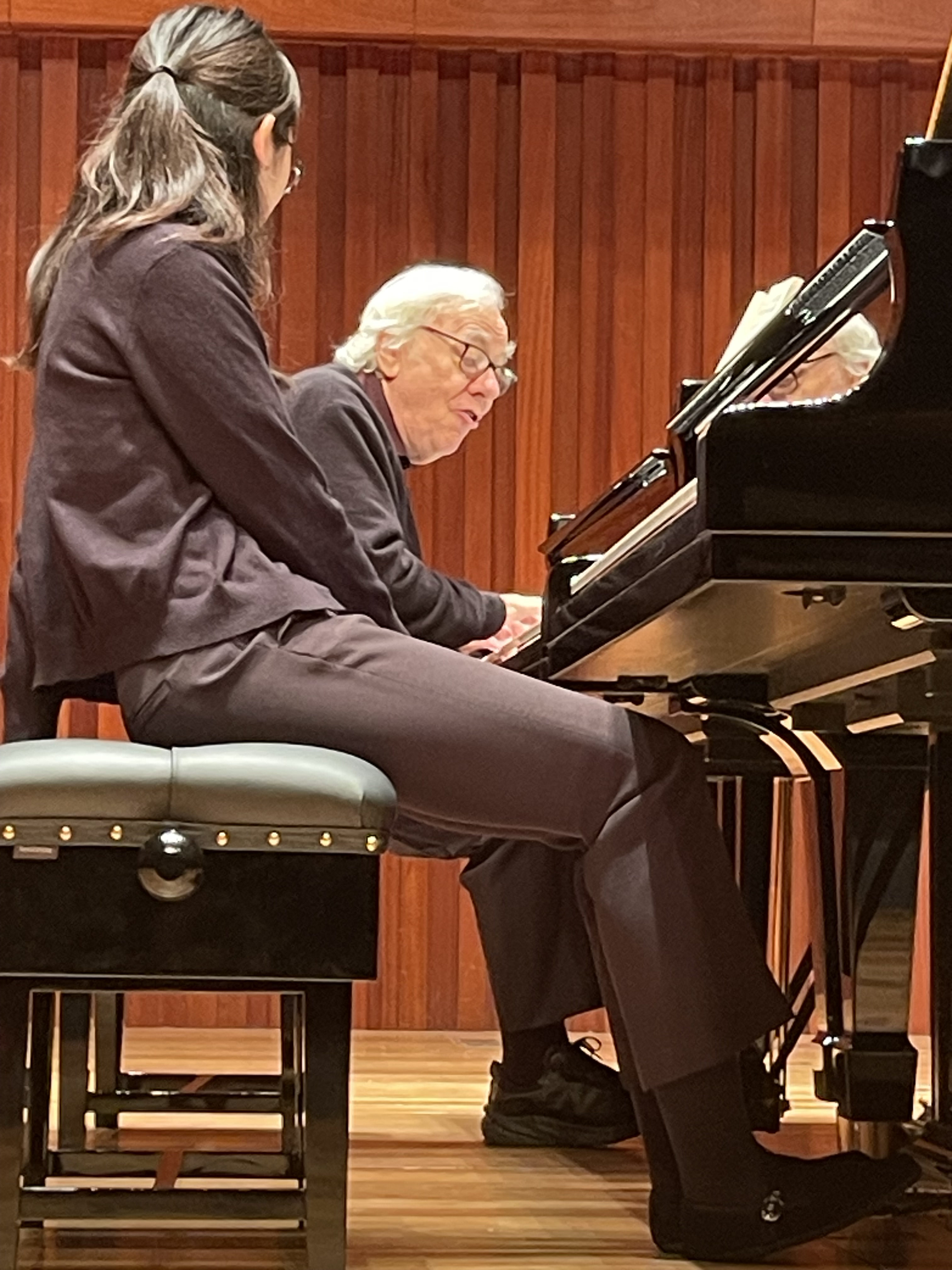
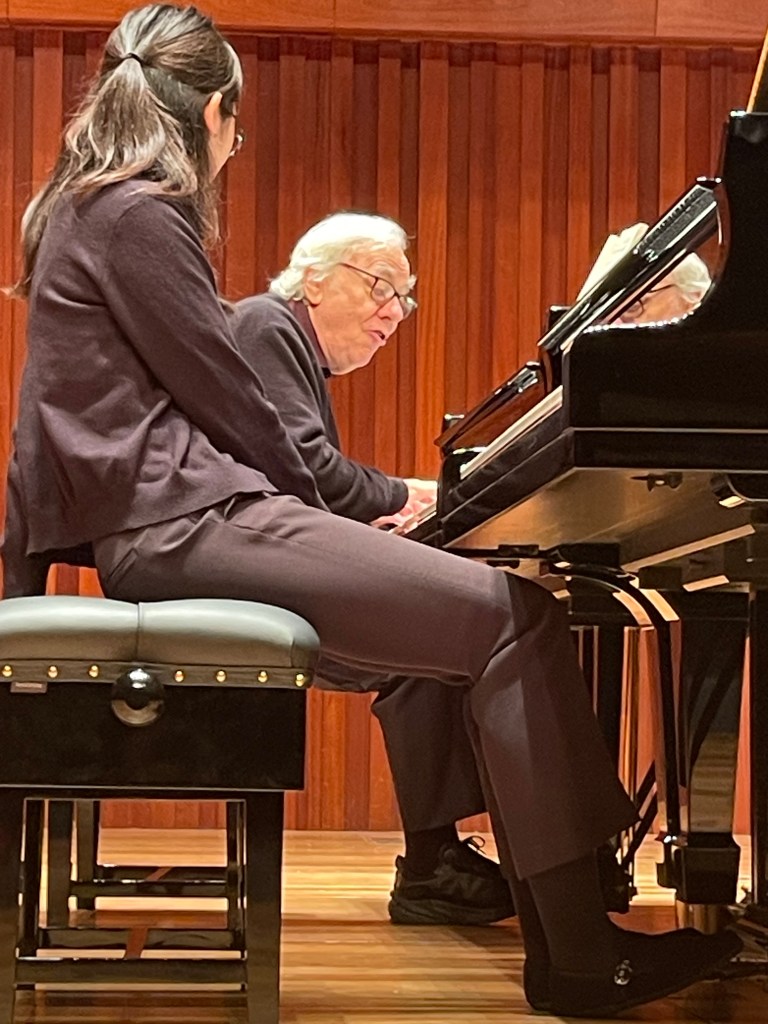
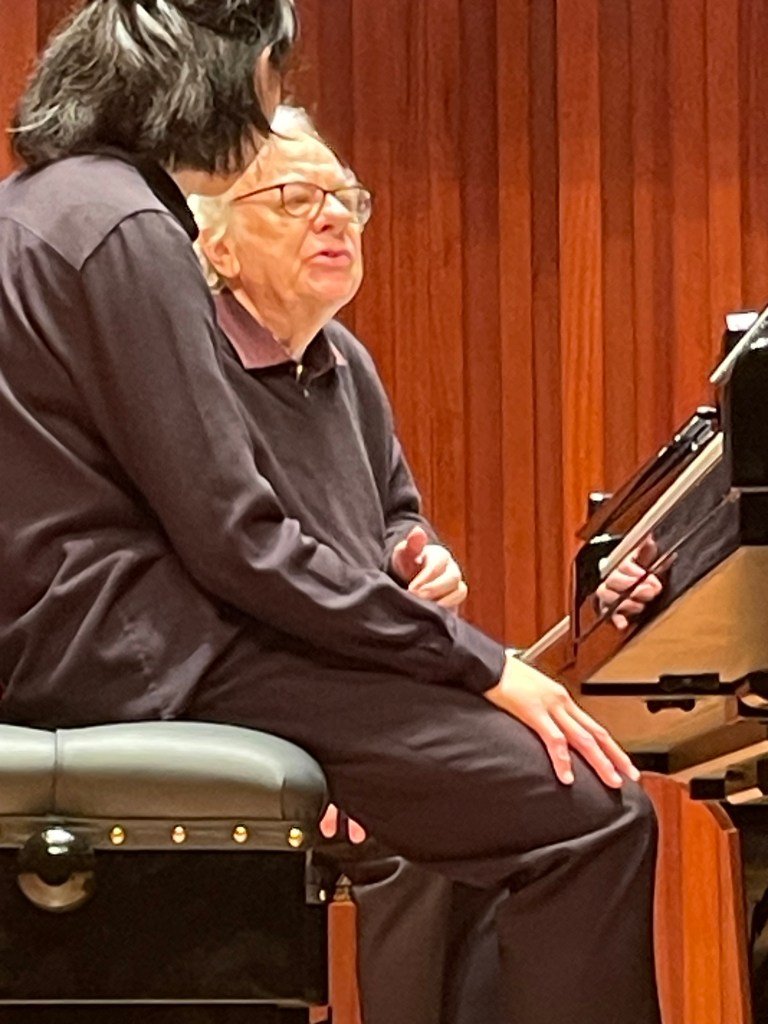
Roy Howat sharing his intimate knowledge of French music bequeathed to him by Jacques Février and Vlado Perlemuter . He is one of the founding editors, with Pierre Boulez, François Lesure and others, of the Paris-based Complete Debussy Edition (Œuvres Complètes de Claude Debussy), for which he has edited much of the piano music. His other publications include the books, Debussy in Proportion and The Art of French piano music, Author of many important books on French Music for which he was recently made Chevalier de l’Ordre des Arts et Lettres by the French government.

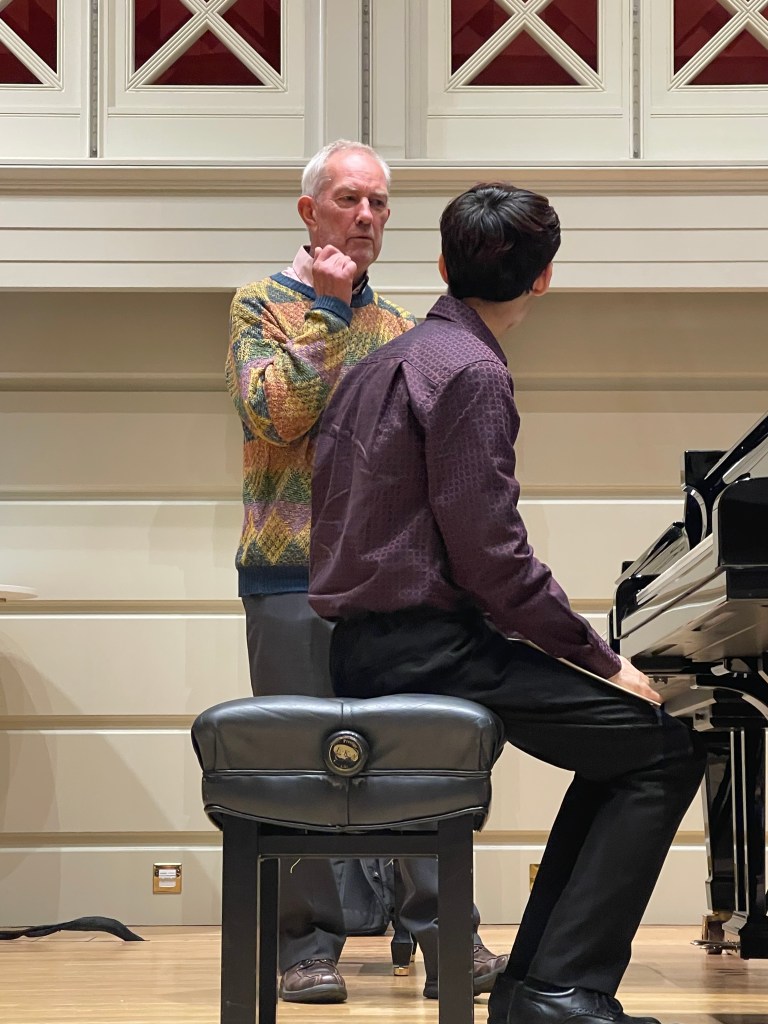
He was able to give inspiration and practical help to four very fine students.

Debussy Images is standard repertoire and Book two was sensitively played by Rebekah Yinou Tan but the Fantaisie for piano and orchestra and the Ballade are rarities in the concert hall.

Howat was able to explain the origin, varying editions and the evolution of the works .

The early Fantaisie brilliantly played by Imogen Edwards was abandoned by Debussy and only published long after his death .

It was composed between October 1889 and April 1890, but only received its first public performance in 1919, a year after Debussy’s death. The work is dedicated to the pianist René Chansarel, who had been scheduled to play the solo part for the cancelled premiere in 1890 . The first public performance of the work, scheduled in 1890, was cancelled when Vincent d’Indy, who was chosen as conductor, claimed that he did not have enough time for rehearsals and proposed to perform only the first movement, which Debussy declined.Over the next few years the very self-critical Debussy made numerous revisions, but eventually gave up on the work and declared that the Fantaisie would never be published or performed during his lifetime.It received its first public performance posthumously on November 20, 1919,in London by the Royal Philharmonic Orchestra with Alfred Cortot as soloist.It was published first in a two-piano version (2nd piano is a reduction of the orchestra score) made by Gustave Samazeuilh in 1919, with the full score in 1920, both by Eugène Fromont, one of Debussy’s early publishers.

I only ever remember that eclectic young prize winner of the first Leeds Jean Rodolphe Kars play it in public and he has since become a Catholic priest in the Emmanuel Community ! Martha Argerich subsequently made a recording of it with Daniel Barenboim conducting .

The Ballade is an early work and a true rarity and was played with ravishing sounds by a young Italian student Franco Barzelatto who managed to tame a not easy Fazioli piano .

The first thing Howat asked was if he knew the origin of the piece . Which he certainly did !

Debussy composed a “Ballade slave” in 1890, and in 1903 he revised and republished it simply as Ballade. Coloured both with exuberance and melancholy, it shares kinship with the far more popular Arabesques written shortly thereafter.

In a letter to his publisher, Debussy wrote of “the art of turning the pedal into a kind of breathing which I observed in Liszt when I had the fortune to hear him in Rome.” That he was referring to an event which had taken place decades earlier confirms the lasting impression the master made on the younger composer. Debussy was 21 when he won the prestigious Prix de Rome in 1884. The scholarship granted a three-year stay at the French Academy in Rome, where on three occasions in January of 1886, Liszt and Debussy met.

Upon returning to Paris, Debussy began to achieve a broader recognition and the publication of solo piano pieces soon followed, among them a “Ballade slave” in 1890. Though Debussy had indeed spent three months in Russia during his late teens, there is little about this enchanting piece that sounds remotely Russian or Slavic, and in 1903 he would revise and republish it simply as Ballade. Coloured both with exuberance and melancholy, it shares kinship with the far more popular Arabesques written shortly thereafter. Its neglect is inexplicable and it is a concert rarity.

I did not know that a Roy Howat had also studied with Jacques Février, the companion of Poulenc whose rarely heard Trois Pièces were given a scintillating performance by Leo Little . He was able to pass on inside information about Poulenc’s pedalling and to recommend listening to the historic performance of Poulenc and Février playing the two piano concerto.

In thanking Roy Howat Ian Jones mentioned the most complete edition for Peters of Chopin’s Studies that are in the process of being published. Roy Howat was a disciple of Vlado Perlemuter who was a protégé of Cortot and together with his authoritative scholarship it should make for an exciting return to the RCM in the future.

I had first met Roy Howat at the funeral ,in Ewelme eight years ago, of Vlado Perlemuter’s life long companion Joan Flockhart Booth https://christopheraxworthymusiccommentary.com/2017/12/19/in-praise-of-joan-2/

photo credit Dinara Klinton https://christopheraxworthymusiccommentary.com/2024/03/20/christopher-axworthy-dip-ram-aram/

Yisha Xue brings Broadway to the NLC ‘We could have danced all night!’

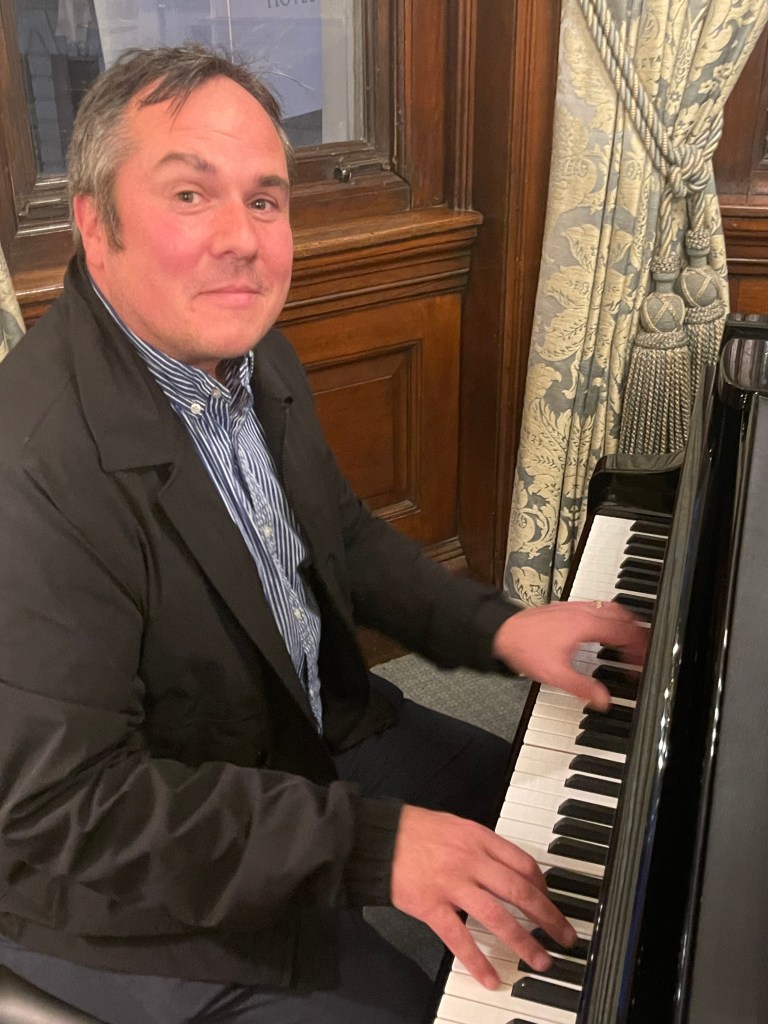
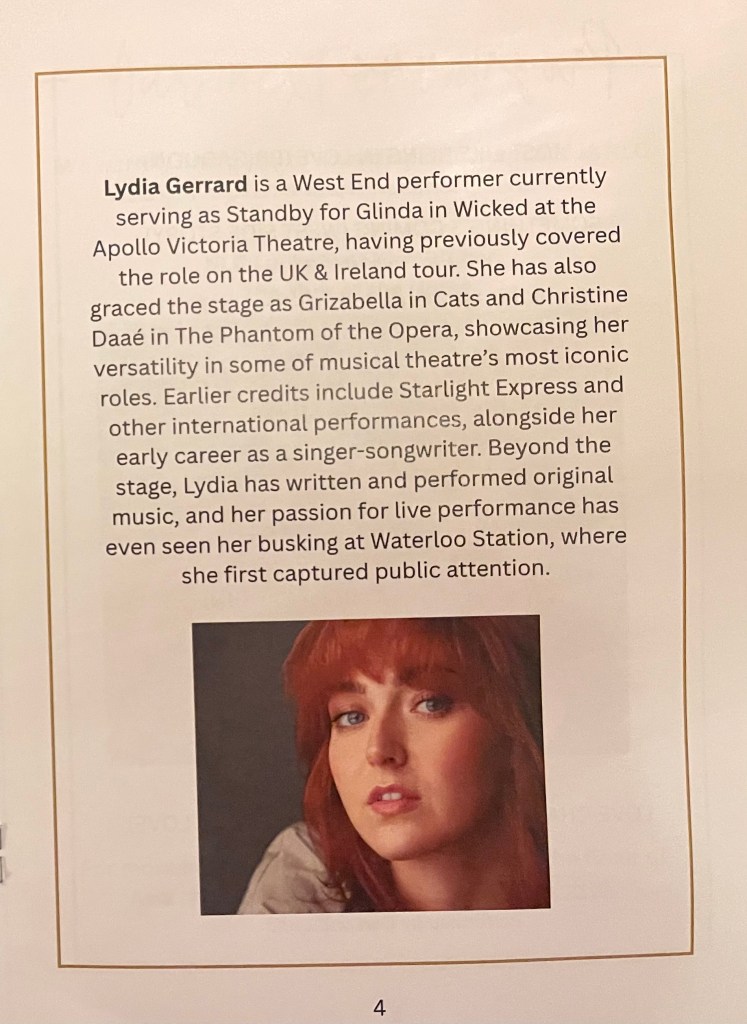
Michael Colbourne and Lydia Gerrard with a West End Musical Evening at the National Liberal Club…….

Yisha Xue has come up trumps again with her Asia Circle with a sold out house for an exhilarating evening of songs from the shows . Michael standing in at the last minute for an indisposed Carl Man

…..but you never would have known it because he took over with dynamic drive and hypnotic personality as he joined a superb Lydia Gerrard in solos and duets . Performances that brought them a standing ovation with calls for more after their sensational rendering of ‘Tonight’

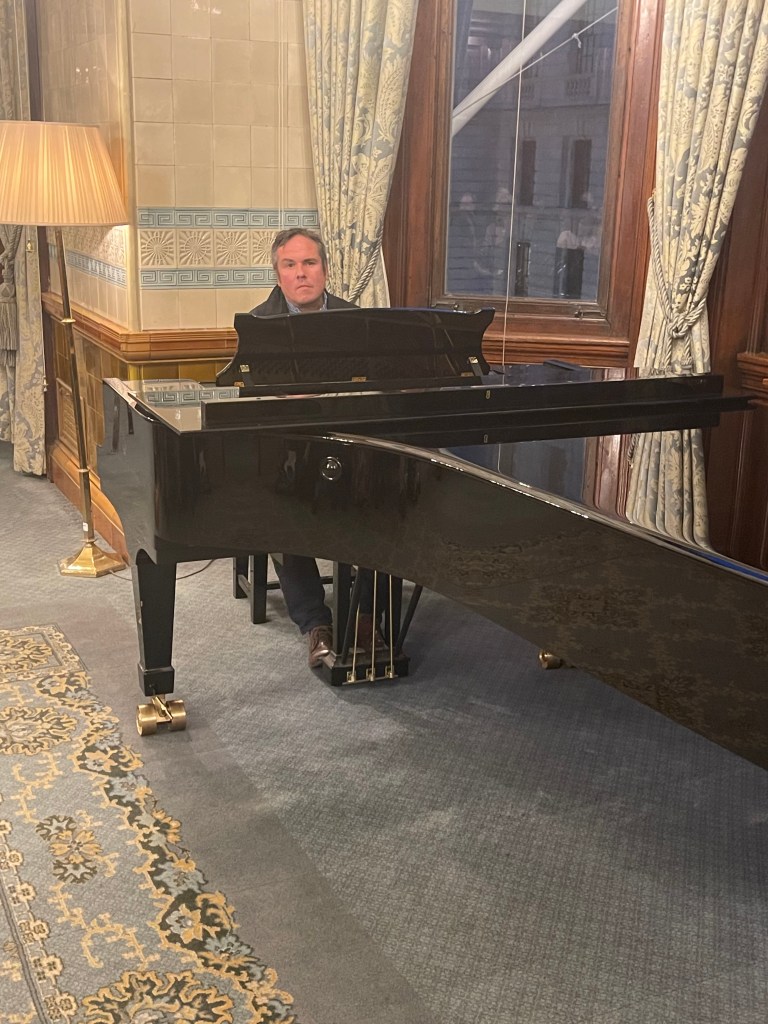
The hero of the evening was the superb orchestra that Peter Woollard ( ex RAM ,my Alma Mater) provided on the magnificent Steinway that stands in this hall, where Rachmaninov gave his last performance in 1938 before being forced to flee to America where he died five years later.

A scrap of paper with names of songs scribbled on it was all that was needed to ignite this extraordinary evening of Broadway that now comes to the Liberal Club.

Mikey Colbourne – Mikey is no stranger to the West End and the musical theatre industry. With over 10 years in the business he’s performed in shows such as Les Miserables, Wicked, Company, Joseph and has recently finished playing Roaul and understudying The Phantom in The Phantom Of The Opera. He is thrilled to singing this evening.
Peter Woollard currently the Assistant Musical Director of Wicked. He has been lucky enough to conduct a variety of shows including: Miss Saigon, Cats, We Will Rock You, Annie Get Your Gun and Acorn Antiques. Pete is also a composer and is proudly supportive of new work.
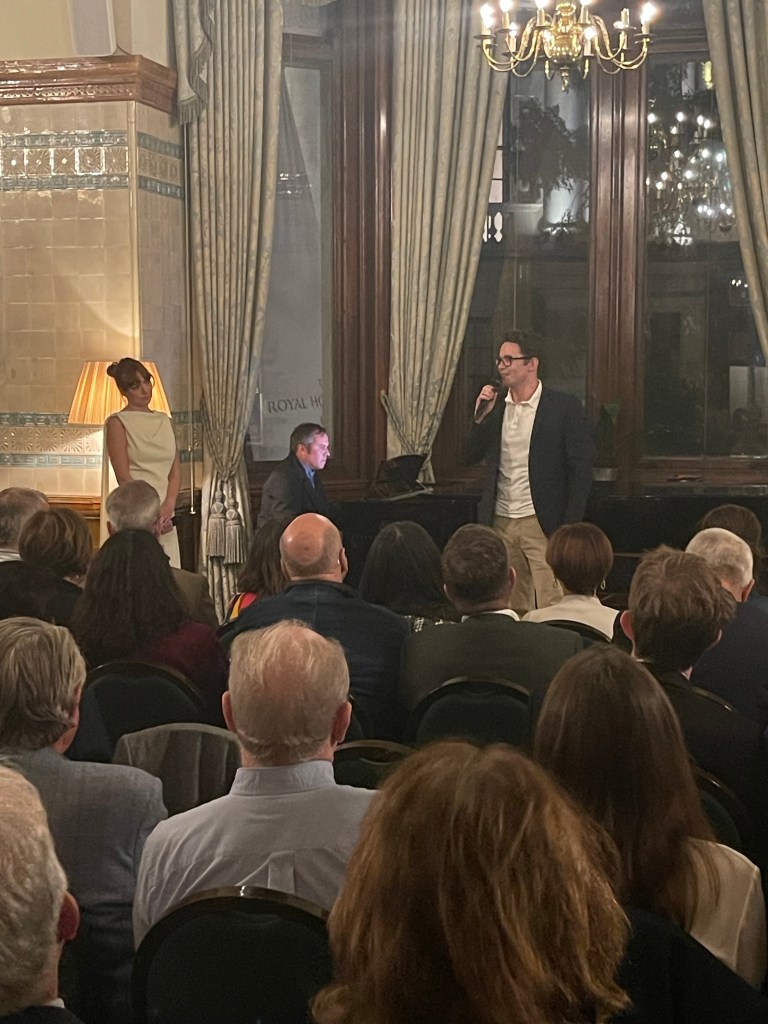
photo credit Dinara Klinton https://christopheraxworthymusiccommentary.com/2024/03/20/christopher-axworthy-dip-ram-aram/

Gabriele Baldocci at Bechstein Hall with mastery and visionary artistry ‘Perchance to dream’

We could have danced all night with Gabriele Baldocci .

A kaleidoscope of emotions in words but above all in music in one of those unforgettable evenings that make one happy to know there are still people around who can touch us so profoundly with such simplicity, humour and extraordinary mastery. A love song dedicated to his wife Nagore opened the concert after a brief introductory improvisation. Immediately we were immersed into this magic world where Gabriele could transform his childhood experiences into music. And what music ! Playing of the beauty and mastery that I remember when he came to play at the Teatro Ghione in Rome as part of a series of the star students of the International Piano Academy in Lake Como founded by William Naboré. A rave review from Dino Villatico of La Repubblica for a twenty year old pianist, established this young man as one of the most versatile and eclectic musicians of his generation . A sensitivity that belies appearances ( forgive me Gabriele) with a series of beautiful youthful experiences told in words but even more vividly in music. The President of the Academy is Martha Argerich who has become a friend and mentor to Gabriele and his family and it was fitting that the final piece in the programme should be inspired and dedicated to her.

Every piece had a story and was evoked with playing of intensity and beauty. An improvised freedom that brought his music alive with fervent conviction and heartrending sensitivity. A series of emotions that rarely one experiences in concert . Told by this young man, we became part of this world and were embraced by the same experiences of his upbringing as a child in Livorno. ‘In their arms’ dedicated to the childhood love of his grandparents and remembering the feeling of warmth and love that a child could feel . It was moving to hear such radiant beauty but also at the end to see Gabriele with a gesture of embracing his loved ones.

‘Ashen firefly ‘ was a memory of his father coming to say good night and as he turned the light off he could see the glow of his cigarette like a firefly. ‘Valldemossa’ was a harrowing picture in sound of the impression of the damp cell where Chopin spent a fateful winter on Majorca .’Origami’ was the impression as a child who loved turning a blank piece of paper into many shapes ,but then discovering that it was always only a blank piece of paper.

Gabriele even asked one of the audience to join him so he could paint an improvised portrait of him in sound.

‘Verde Luce’ was the green light that shone in the dark of a hospital room as he spent months in hospital with an illness that had been hard to diagnose. ‘Silent watch’ was a portrait of his mother who would stay with him and reassure a frightened young child during the night.

Here are Gabriele’s own words that are much more poignant than any I could add:

‘I was seven, I fought sleep every night, afraid I might never wake up.

I was in the hospital with an auto immune condition, too young to fully understand my illness, but old enough to feel the weight of mortality. Sleep felt dangerous, so I resisted it the only way I could, by staring at the small green light above the door. That glow became my companion, my anchor, my way of holding on.

Verde Luce is the music of those nights. It is also the first piece in my Trilogy of ‘Becoming’, which I will unveil step by step in the coming weeks.

I hope it brings you the same fragile beauty it once brought me

Do you remember the little things you whispered to your parents before falling asleep? Your fears, your secrets, your dreams. Those fragile words inspired my new piece, Night Whispers, dedicated to my son Alessandro.

Alessandro and Nagore

It is music about vulnerability and comfort, the quiet dialogue between child and parent that only happens when the world finally slows down.

Some have described it as “the lost Kinderszenen”, as if Schumann had written one more miniature, hidden away for a night like this. That thought makes me smile, and it captures perfectly the spirit of this piece.

I hope it brings you a moment of stillness and tenderness…”

A standing ovation greeted this evening of such emotions and masterly music making.

In the green room afterwards many friends and admirers came back stage , some had even travelled from Livorno to be present on such a poignant occasion.

Gabriele Baldocci (born May 10, 1980 in Livorno ,Italy) is an Italian pianist  and composer  naturalised British .

Baldocci is known worldwide for performing with the legendary Argentinean pianist Martha Argerich

After studying with Ilio Barontini, Franco Scala ,William Grant Naboré and Sergio Perticaroli  and having studied with or having been coached by Alicia De Larrocha,Leon Fleisher and Dmitri Bashkirov  at the International Piano Foundation “Theo and Petra Lieven ” in Cadenabbia, Baldocci began an intense solo career performing in important venues worldwide (Tonhalle in Zurich , Teatro Colón in Buenos Aires , Sala Verdi in Milan ). His large repertoire ranges from Bach to contemporary music and is especially focused on the composers of the Romantic Period such as Fryderyk Chopin  (of whom he has recorded the complete Ballades and Impromptus),Franz Liszt , and Robert Schumann. In 2012 he began recording and performing the complete Beethoven Symphonies transcribed by Liszt for piano solo

Very active as a chamber musician, he has performed with Ivry gitlis,Marco Fornaciari,Mark Drobinsky, and other great names of the international music scene. Baldocci has toured extensively in duo with Martha Argerich , his good friend and mentor.

Since 2008, he has formed a stable piano duo with the Argentinean pianist Daniel Rivera; they have performed at important music Festivals around the world.

Since 2010, he has been artistic director and Ambassador of the Martha Argerich Presents Project (MAPp), an ambitious project launched by Argerich to encourage cooperation between famous artists and young talented musicians in order to create a worldwide circuit of performances and pedagogy.

More recently, Gabriele Baldocci has advanced his career as a conductor, collaborating with important orchestras in Europe and America, and he cultivates his interest for cinema producing and directing short and feature movies.

In 2016, he played keyboard in the Progressive Rock band The Gift, publishing the album “Why the Sea Is Salt” for Bad Elephant Music.

Baldocci is a Piano Professor at Trinity Laban Conservatoire of Music and Dance after spending six years at the Potenza  Conservatory of Music  and he is the Director of the London Piano Centre and of the Milton Keynes Music Academy.

photo credit Dinara Klinton https://christopheraxworthymusiccommentary.com/2024/03/20/christopher-axworthy-dip-ram-aram/

Gabriele Baldocci at Bechstein Hall with mastery and visionary artistry ‘Perchance to dream’

We could have danced all night with Gabriele Baldocci .

A kaleidoscope of emotions in words but above all in music in one of those unforgettable evenings that make one happy to know there are still people around who can touch us so profoundly with such simplicity, humour and extraordinary mastery. A love song dedicated to his wife Nagore opened the concert after a brief introductory improvisation. Immediately we were immersed into this magic world where Gabriele could transform his childhood experiences into music. And what music ! Playing of the beauty and mastery that I remember when he came to play at the Teatro Ghione in Rome as part of a series of the star students of the International Piano Academy in Lake Como founded by William Naboré. A rave review from Dino Villatico of La Repubblica for a twenty year old pianist, established this young man as one of the most versatile and eclectic musicians of his generation . A sensitivity that belies appearances ( forgive me Gabriele) with a series of beautiful youthful experiences told in words but even more vividly in music. The President of the Academy is Martha Argerich who has become a friend and mentor to Gabriele and his family and it was fitting that the final piece in the programme should be inspired and dedicated to her.

Every piece had a story and was evoked with playing of intensity and beauty. An improvised freedom that brought his music alive with fervent conviction and heartrending sensitivity. A series of emotions that rarely one experiences in concert . Told by this young man, we became part of this world and were embraced by the same experiences of his upbringing as a child in Livorno. ‘In their arms’ dedicated to the childhood love of his grandparents and remembering the feeling of warmth and love that a child could feel . It was moving to hear such radiant beauty but also at the end to see Gabriele with a gesture of embracing his loved ones.

‘Ashen firefly ‘ was a memory of his father coming to say good night and as he turned the light off he could see the glow of his cigarette like a firefly. ‘Valldemossa’ was a harrowing picture in sound of the impression of the damp cell where Chopin spent a fateful winter on Majorca .’Origami’ was the impression as a child who loved turning a blank piece of paper into many shapes ,but then discovering that it was always only a blank piece of paper.

Gabriele even asked one of the audience to join him so he could paint an improvised portrait of him in sound.

‘Verde Luce’ was the green light that shone in the dark of a hospital room as he spent months in hospital with an illness that had been hard to diagnose. ‘Silent watch’ was a portrait of his mother who would stay with him and reassure a frightened young child during the night.

Here are Gabriele’s own words that are much more poignant than any I could add:

‘I was seven, I fought sleep every night, afraid I might never wake up.

I was in the hospital with an auto immune condition, too young to fully understand my illness, but old enough to feel the weight of mortality. Sleep felt dangerous, so I resisted it the only way I could, by staring at the small green light above the door. That glow became my companion, my anchor, my way of holding on.

Verde Luce is the music of those nights. It is also the first piece in my Trilogy of ‘Becoming’, which I will unveil step by step in the coming weeks.

I hope it brings you the same fragile beauty it once brought me

Do you remember the little things you whispered to your parents before falling asleep? Your fears, your secrets, your dreams. Those fragile words inspired my new piece, Night Whispers, dedicated to my son Alessandro.

Alessandro and Nagore

It is music about vulnerability and comfort, the quiet dialogue between child and parent that only happens when the world finally slows down.

Some have described it as “the lost Kinderszenen”, as if Schumann had written one more miniature, hidden away for a night like this. That thought makes me smile, and it captures perfectly the spirit of this piece.

I hope it brings you a moment of stillness and tenderness…”

A standing ovation greeted this evening of such emotions and masterly music making.

In the green room afterwards many friends and admirers came back stage , some had even travelled from Livorno to be present on such a poignant occasion.

Gabriele Baldocci (born May 10, 1980 in Livorno ,Italy) is an Italian pianist  and composer  naturalised British .

Baldocci is known worldwide for performing with the legendary Argentinean pianist Martha Argerich

After studying with Ilio Barontini, Franco Scala ,William Grant Naboré and Sergio Perticaroli  and having studied with or having been coached by Alicia De Larrocha,Leon Fleisher and Dmitri Bashkirov  at the International Piano Foundation “Theo and Petra Lieven ” in Cadenabbia, Baldocci began an intense solo career performing in important venues worldwide (Tonhalle in Zurich , Teatro Colón in Buenos Aires , Sala Verdi in Milan ). His large repertoire ranges from Bach to contemporary music and is especially focused on the composers of the Romantic Period such as Fryderyk Chopin  (of whom he has recorded the complete Ballades and Impromptus),Franz Liszt , and Robert Schumann. In 2012 he began recording and performing the complete Beethoven Symphonies transcribed by Liszt for piano solo

Very active as a chamber musician, he has performed with Ivry gitlis,Marco Fornaciari,Mark Drobinsky, and other great names of the international music scene. Baldocci has toured extensively in duo with Martha Argerich , his good friend and mentor.

Since 2008, he has formed a stable piano duo with the Argentinean pianist Daniel Rivera; they have performed at important music Festivals around the world.

Since 2010, he has been artistic director and Ambassador of the Martha Argerich Presents Project (MAPp), an ambitious project launched by Argerich to encourage cooperation between famous artists and young talented musicians in order to create a worldwide circuit of performances and pedagogy.

More recently, Gabriele Baldocci has advanced his career as a conductor, collaborating with important orchestras in Europe and America, and he cultivates his interest for cinema producing and directing short and feature movies.

In 2016, he played keyboard in the Progressive Rock band The Gift, publishing the album “Why the Sea Is Salt” for Bad Elephant Music.

Baldocci is a Piano Professor at Trinity Laban Conservatoire of Music and Dance after spending six years at the Potenza  Conservatory of Music  and he is the Director of the London Piano Centre and of the Milton Keynes Music Academy.

photo credit Dinara Klinton https://christopheraxworthymusiccommentary.com/2024/03/20/christopher-axworthy-dip-ram-aram/

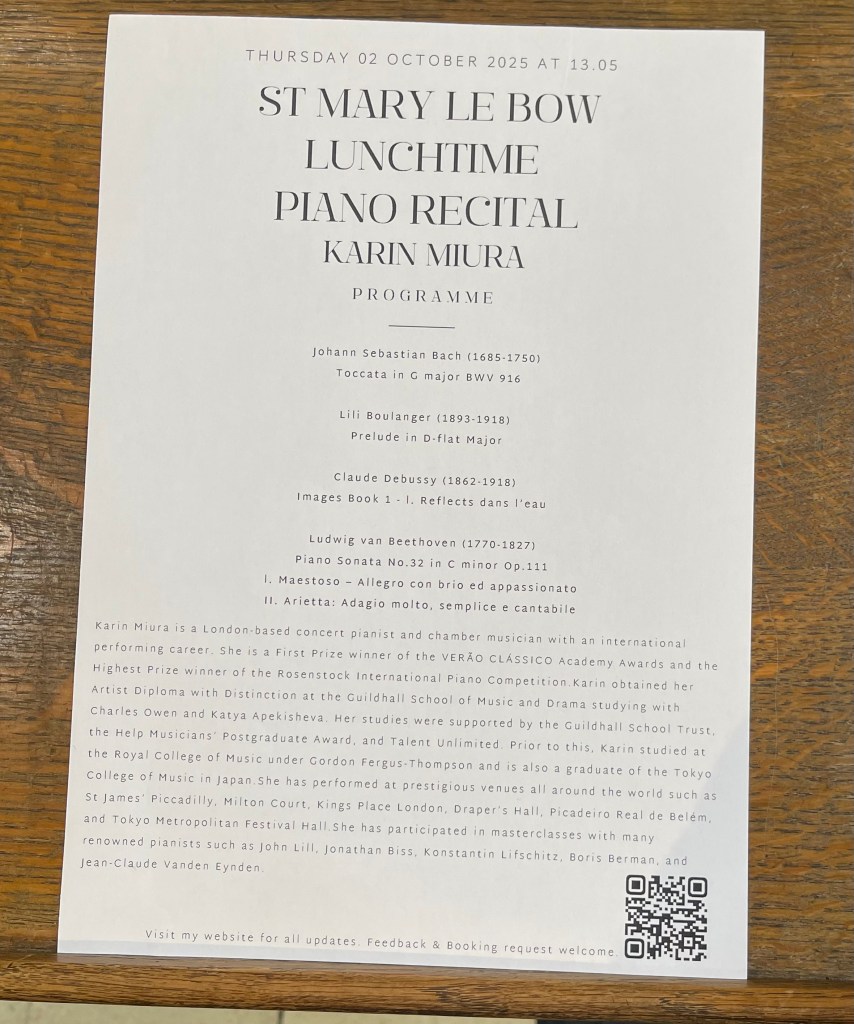
Karin Miura with a ‘casserole’ fit for a King at St Mary Le Bow

An old Blüthner and very resonant acoustic could not diminish a masterly performance of Beethoven’s last Sonata from this former student of Charles Owen, Katya Apekisheva and Gordon Fergus -Thompson. A magnificent pedigree that shone through all she played today despite not having the ideal tools for her trade.

Perlemuter often used to describe rather worn out instruments as ‘casseroles’ and opening with Bach’s G major Toccata I thought we were going to be in for a tough ride.

Her very classical approach to Bach allowed her to play with clarity, rhythmic drive and precision but the lack of colour and real sense of the ‘song and dance’ made this youthful Toccata rather monumental and earthbound, instead of being a voyage of improvised fantasy and discovery.

It was in the French music that followed, that Karin persuaded our old friend to surrender the secrets that were hidden in an instrument of obvious noble pedigree.

There followed a remarkably modern sounding piece by the nineteen year old Lili Boulanger, destined to die only six years later at the end of the First World War, in 1918. Full of strange colours of great originality it contrasted so well with Debussy’s mellifluous ‘Reflets dans l’eau’. Boulanger and Debussy were destined to die in the same year but one aged 56 and the other cruelly at only 25.

I studied with her sister Nadia Boulanger who was always talking of the remarkable genius of her sister who was to be taken from us before realising her enormous potential.

The Debussy was bathed in pedal but always very clearly articulated which allowed Karin to maintain the musical line with such clarity, surrounded by washes of sound that wafted around this noble edifice. Some very refined phrasing of delicacy and ravishing beauty as Karin had now persuaded this ‘casserole’ to give up the secrets that were hidden within .

The scene was now set for the main dish of this lunchtime feast of music, and Karen opened the Sonata op 111 with nobility and fearless attention to Beethoven’s indications. After this arresting introduction the ‘Allegro con brio ed appassionato’ took flight with some very solid playing of great conviction and towering authority. Respecting the composers wishes with scrupulous attention to detail, without ever loosing the rhythmic drive. Even the repeat of the exposition had more drive to it as it lead into a development of orchestral proportions. No slowing at the end either, so the arrival of C major set the scene for the quartet texture that she found for the ‘Arietta’.

Simplicity and an aristocratic melodic outpouring that Karin played with a sense of harmonic meaning, allowing the variations to flower so naturally. Infact it was the bass that sustained the variations and an undercurrent that brought us with ever more agitation to the explosion of the third variation that Karin played with remarkable authority.The sudden dynamic contrasts that Beethoven indicates brought great drama to this agitation before dissolving to the celestial paradise that the composer was to inhabit in these final works. Fragments of the ‘Arietta’ just floated on a vibrating bass before reaching miraculous heights with filigree sounds out of which we could hear in the distance the ‘Arietta’ and which Karin played with disarming simplicity and radiant beauty .Gradually building to a climax and exultation that was played with masterly control and weight, allowing the music to dissolve into vibrations that were discreetly played trills, out of which the ‘Arietta’ was heard one last time with glowing beauty. A performance of great maturity and technical mastery that allowed her to exult this Blüthner piano as I am sure it has rarely been dominated before

photo credit Dinara Klinton https://christopheraxworthymusiccommentary.com/2024/03/20/christopher-axworthy-dip-ram-aram/

Piano Masterclass with Richard Goode-playing with fire

Nice to be reminded that the piano can sing

Inspirational music making with Richard Goode sharing his love for the radiance and beauty that this black box with hammers and strings is capable of in the hands of a true artist on a continual voyage of discovery

Three very fine young artists on this voyage of discovery together with this musical genius

Myunghan Kim. Schubert Sonata in A minor D537 Beautifully played and well prepared but now needs more orchestral colouring and allowed to sing without any brittle edges to the sound. The opening like with Mozart so important to phrase and shape.

Elisabeth Tsai. Mozart Fantasia in C minor K 475. A really beautiful, sensitive performance but there was even more to discover as Richard Goode showed her the way with dynamic contrasts where even the opening flourish needs to be given more shape.

Ryan Sheng Beethoven Sonata op 101 Again beautifully played but too earthbound for Richard Goode who conceives this opening movement as improvised where nothing is to be given as certain. A sense of discovery and wonder suggested to this brilliant young pianist.

Richard Goode has been hailed for music-making of tremendous emotional power, depth and expressiveness, and has been acknowledged worldwide as one of today’s leading interpreters of Classical and Romantic music. In regular performances with the major orchestras, recitals in the world’s music capitals, masterclasses in person or online, and through his extensive and acclaimed Nonesuch recordings, he has won a large and devoted following.

An exclusive Nonesuch recording artist, Goode has made more than two dozen recordings over the years, ranging from solo and chamber works to lieder and concertos. His 10-CD set of the complete Beethoven sonatas cycle, the first-ever by an American-born pianist, was nominated for a Grammy and has been ranked among the most distinguished recordings of this repertoire. Other recording highlights include Mozart piano concerti with Orpheus, with whom he launched the 2021 season at New York’s 92nd St Y.

A native of New York, Richard Goode studied at the Mannes College of Music and the Curtis Institute. His numerous prizes over the years include the Young Concert Artists Award, First Prize in the Clara Haskil Competition, the Avery Fisher Prize, and a Grammy award for the Brahms Sonatas recorded with clarinetist Richard Stoltzman.

Mr. Goode served, together with Mitsuko Uchida, as co-Artistic Director of the Marlboro Music School and Festival in Marlboro, Vermont from 1999 through 2013. Participating initially at the age of 14, at what the New Yorker magazine recently described as “the classical world’s most coveted retreat”, he made a notable contribution to this unique community over the 28 summers he spent there. In Fall 2021, Mr. Goode joined the Peabody Conservatory as Distinguished Artist Faculty. For the 2025/26 season, Mr. Goode joins The Saint Paul Chamber Orchestra as its newest Artistic Partner.

He is married to the violinist Marcia Weinfeld, and, when the Goodes are not on tour, they and their collection of some 5,000 volumes live in New York City.

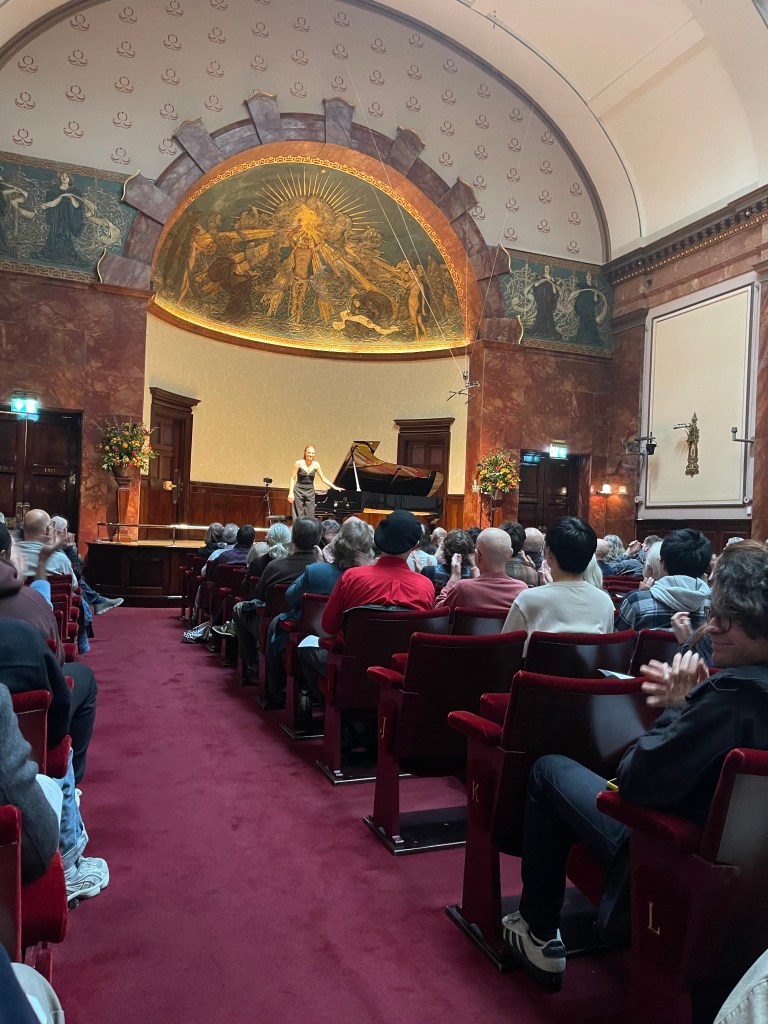
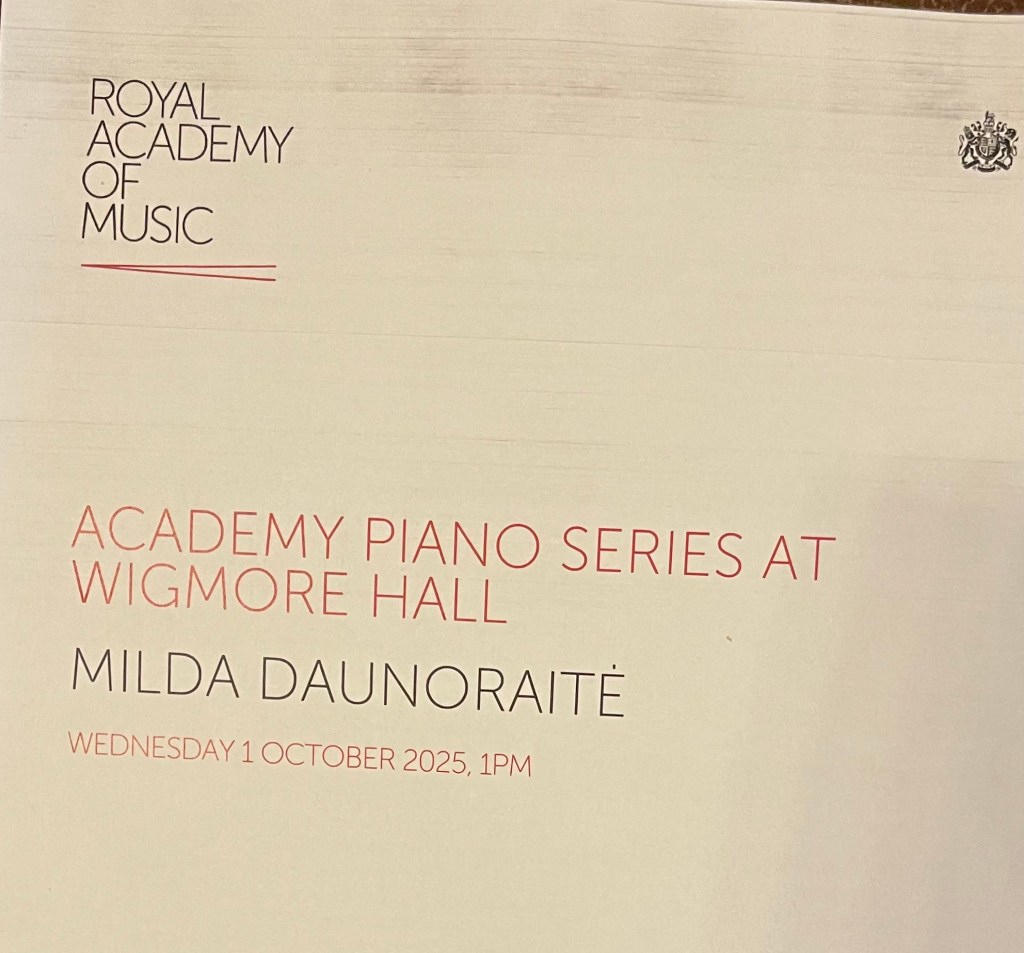
Dazzling Milda Daunoraité takes the Wigmore Hall by storm

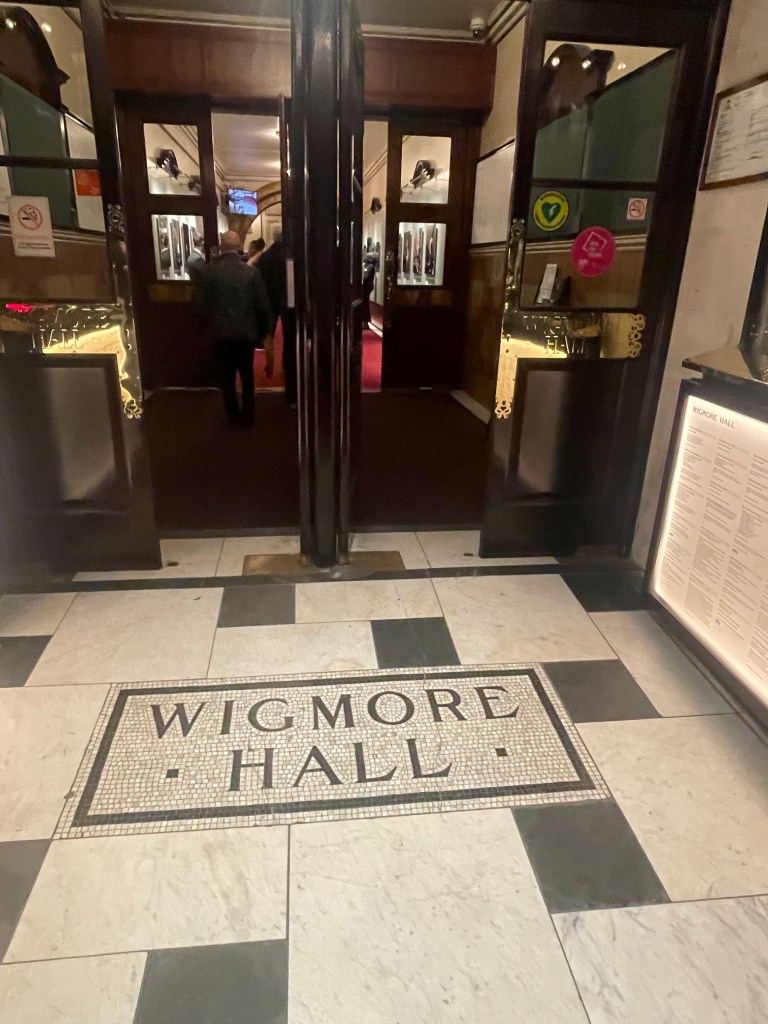
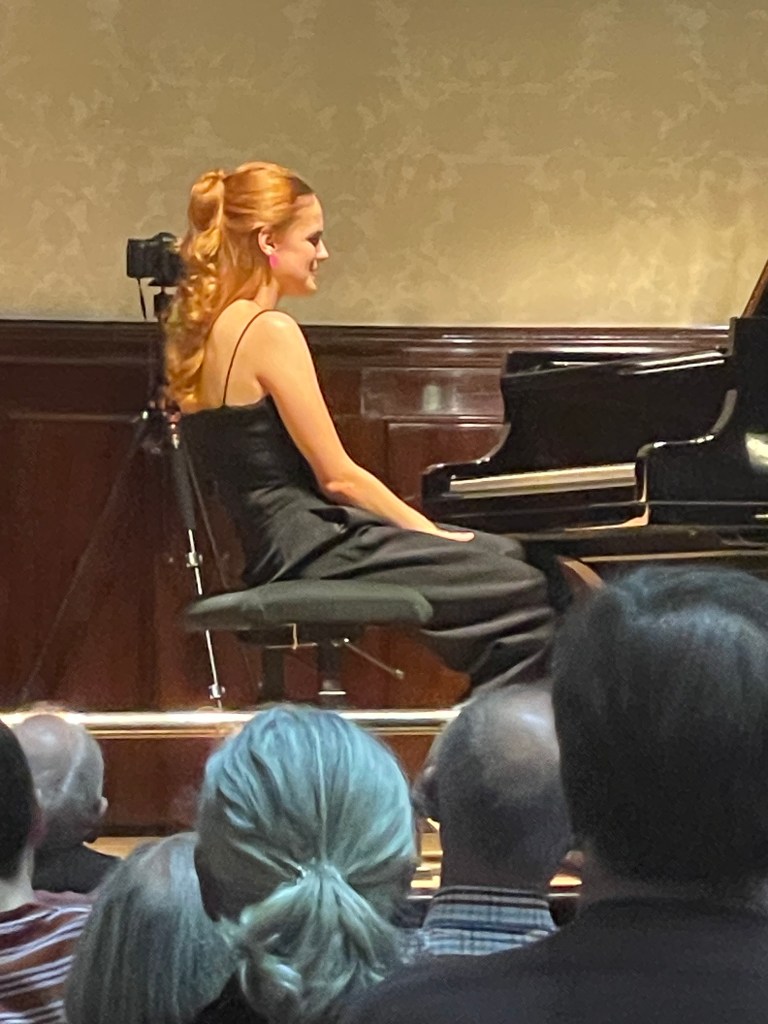
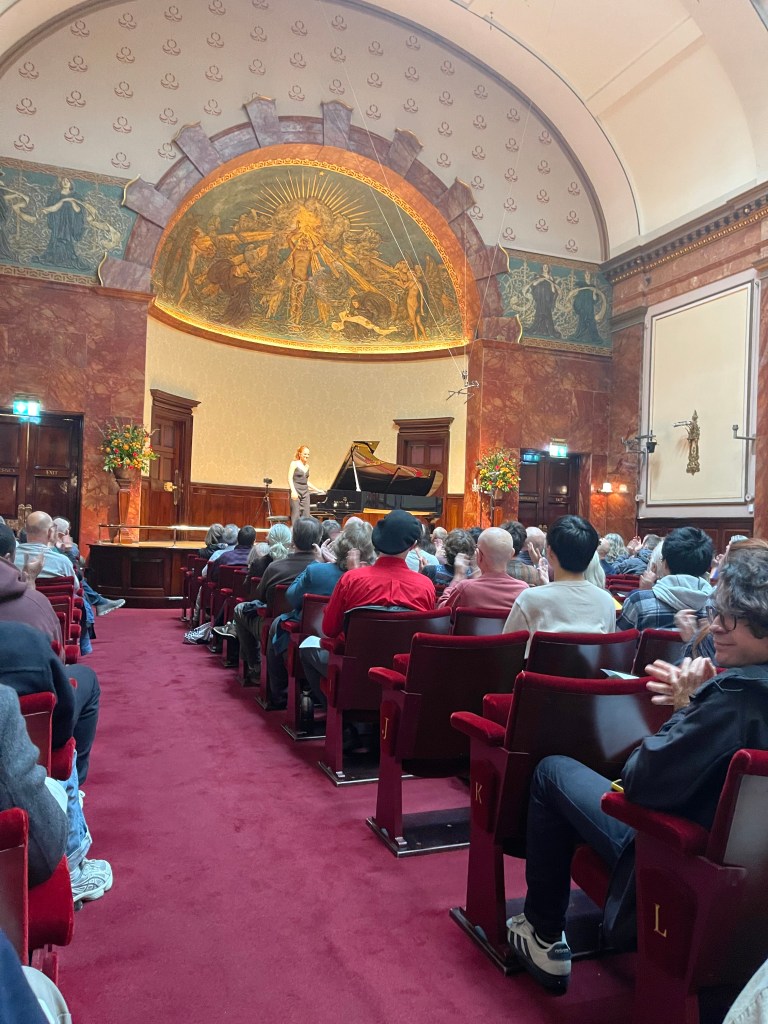
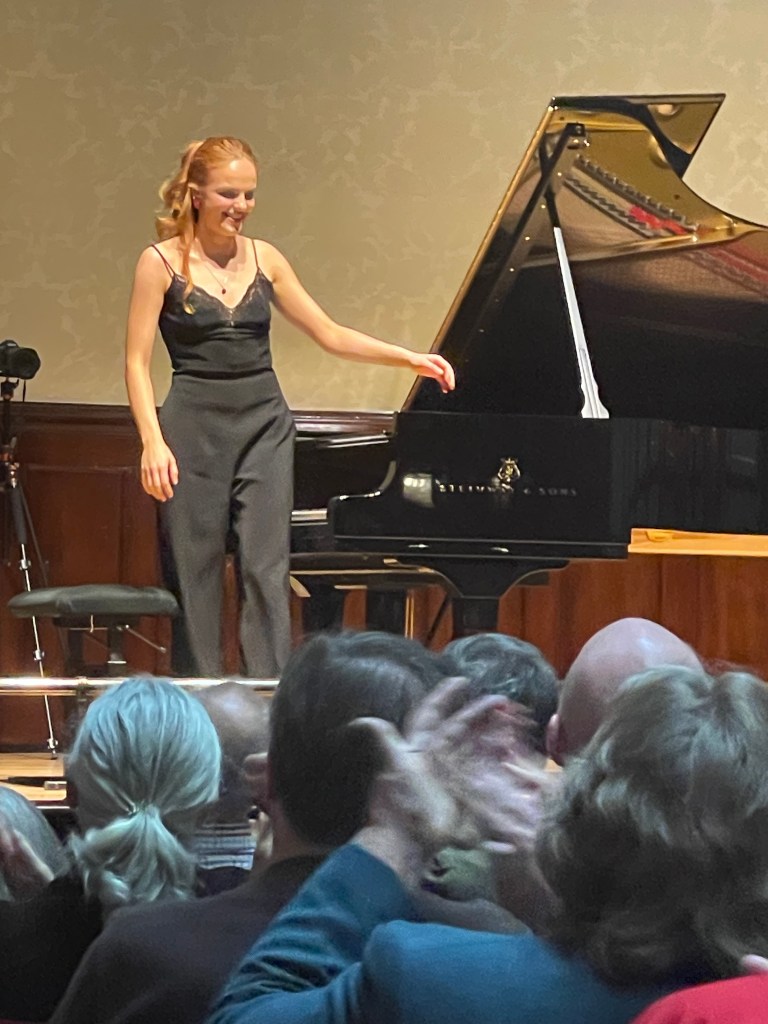
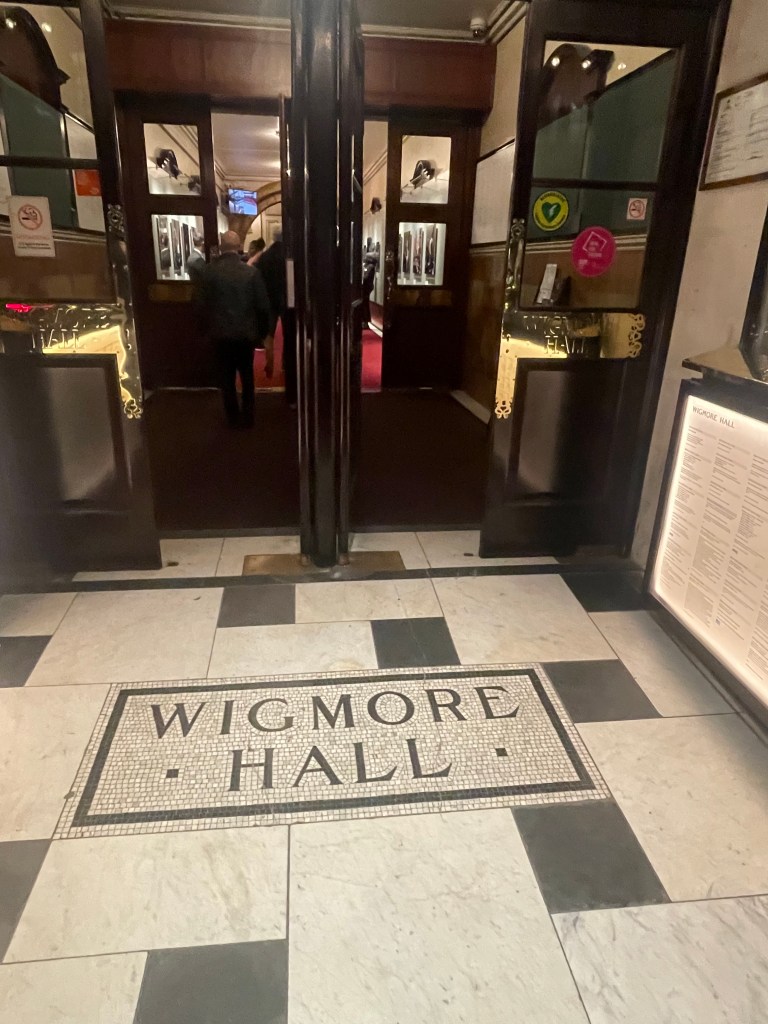
Dazzling is the only way to describe Milda Daunoraite’s long awaited London debut at the Wigmore Hall.

Radiance, vitality, ravishing beauty combined with an irresistible ‘joie de vivre’ was the hallmark of an artist with a mission to share her undying love and passion for music with others.

An immediate sense of communication holds her audience spellbound following every move of her hypnotic mastery …….

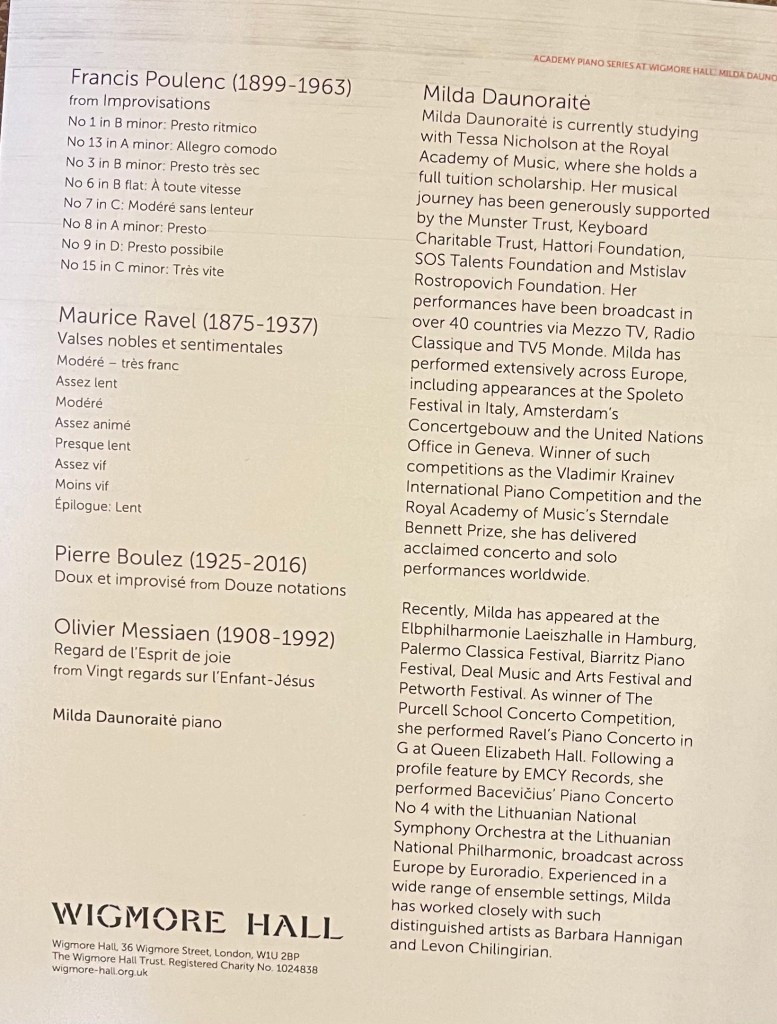
An all French programme with a refreshing difference. Poulenc, Boulez , Ravel and Messiaen all different musical languages each made to speak with immediacy and eloquence by a true poet of the keyboard.

Milda chose eight of the fifteen Improvisations by Poulenc to open her short lunchtime recital. Immediately imbuing the ‘Presto ritmico’ with startling, arresting character that took us by surprise.There followed the 13th of improvised beauty with subtle colouring of sumptuous decadence; there was the impish fun of n.3 and Poulenc’s humorous bustling call to attention of n. 6. Followed by the gentle radiance to n. 7 in C major of purity and rich golden harmonies with its barely suggested blues note ending. The 8th was a Parisian free for all of ‘Baba’ proportions and the 9th was thrown off with masterly ease as the chattering unmistakable voice of Poulenc shone through. The 15th a ‘Homage to Piaf ‘ is the best known of these improvisations and was played with a masterly sense of colour and sophisticated elegance.

Poulenc was followed by Boulez, with the same sense of character but of a different musical language .Bursting into furious activity with a sound world that glowed of radiance and crystal clarity .

As Rubinstein famously said you should only play music that convinces you and speaks directly to your heart.

https://youtu.be/gex0sOR7XZ0?si=JzzvzSKfUpNShBzq

It is this that came to mind as Milda was convinced and convincing with a frantic fugato dissolving into whispered oblivion. A kaleidoscope of colours and sounds with a masterly use of the pedals.This was like a breath of fresh air in a sumptuous somewhat decadent feast of music making.

It was Rubinstein who gave the first performance of Ravel’s ‘Valses nobles’ in Spain .It was received with such a clamorous rejection that he famously decided to play it all over again as an encore! Today it is considered one of the most beautiful works of Ravel, far removed from his transcription of ‘La Valse’. However the seduction and perfumed brilliance of these Waltzes in this work are of refined elegance and radiant beauty. After the brilliance of the opening there was the ravishing fluidity of the ‘assez lent’ followed by the whispered delicacy of the ‘moderé’ ready to burst into mellifluous flights of fancy . A featherlight cascade of notes in the ‘assez animé’ led to the purity and poignant beauty of the ‘presque lent’. Crawling around the keys with insinuating ridiculousness before bursting into an unashamed Viennese waltz and the passionate climax of the final ‘moins vif’ .The Épilogue is one of Ravel’s most poignant creations and Milda played it with magical sonorities. A radiant misty cloud out of which Ravel could recall what we had just experienced, with poignant nostalgia. A memorable performance that Milda played with subtle refined elegance and tonal mastery.

‘Regard de l’Esprit de joie’ has long been a pianistic show piece and is part of the ‘Vingt regards sur l’Enfant- Jésus’ of which the most poignant is ‘Le baiser.’ I remember my impression of astonishment and breathless wonder when a young French boy played it at the first Leeds Competition. Jean- Rodolfe Kars I believe became a Trappist monk instead of becoming a concert pianist.The intensity and purity of his playing gave some idea that here was a true believer, as was the composer. I am quite sure that Milda will not become part of a ‘Clausura’ but she played Regard de Joie with the same burning intensity and fearless mastery of a true believer. Messiaen’s chorale was played with terrifying commitment like broken glass showered with burning conviction from the roof tops. Milda has a small hand but that did not stop her from mastering this work and delivering it to us with breathtaking mastery. An enormous palette of sounds and a dynamic drive that held us on the edge of our seats. Plunging down to the bottom of the keyboard where she stayed for quite some minutes as we marvelled at what we had just witnessed.

Awakened from her trance she offered as a thank you, one of Chopin’s most beautiful Mazurkas, op 63 n. 2 in F minor. Played with all the subtle beauty and beguiling rubato of the passionately committed musician we had encountered today.

Francis Poulenc  (1899–1963), whose Piano Concerto had been dismissed as too trivial by the press at its European premiere at the Festival d’Aix. Rostand described Poulenc as “le moine et le voyou” – half monk, half rascal – a description that encapsulates opposing sides of his complex personality. “It’s true, alas,” Poulenc shrugged, but it’s exactly these very different sides to his personality that make his music so engaging and full of surprises. “Poulenc’s personality was much more complex than what met the eye,” said Nadia Boulanger. “He was entirely paradoxical. You could meet him as easily in fashionable Parisian circles… or at Mass.”During the Roaring Twenties, Poulenc was something of a frivolous Parisian playboy. His musical style was often witty and urbane. He developed close friendships with the baritone Pierre Bernac, for whom he composed many songs, and later, the soprano Denise Duval, who performed leading roles in all three of Poulenc’s operas. During the Second World War, he participated in the French resistance movement, voiced through his cantata Figure humaine (1945), the score to which was printed secretly during the Nazi occupation.

The fifteen Improvisations were composed at intervals between 1932 and 1959. All are brief: the longest lasts a little more than three minutes. They vary from swift and balletic to tender lyricism, old-fashioned march,perpetuum mobile, waltz  and a poignant musical portrait of the singer Édith Piaf.

Pierre Louis Joseph Boulez 26 marzo 1925, Montbrison France  5 gennaio 2016, Baden-Baden Germany

Douze Notations pour piano have a special place in the musical output of Pierre Boulez (1925-2016). For one thing, ever since their belated publication in 1985 these short piano pieces have headed the work list of this extremely self-critical composer. For another, Boulez frequently drew on these fledgling compositions in his later music. Finally, this collection of 1945 offers fascinating insights into the compositional workshop of the then 20-year-old composer.”Douze Notations”  consists of 12 short piano pieces that explore the early development of his musical language. “Doux et improvisé” (Soft and improvisational) is the title of the fifth piece in this collection. The pieces were published in 1985 and Boulez frequently drew on them for later orchestral versions, which he continued to develop throughout his career, creating a “spiral” of constant evolution of his own work. The 12 pieces were premiered on 12 February 1946, in Paris (concerts du Triptyque), by Yvette Grimaud.:

1. Fantasque. Modéré 2. Très vif 3. Assez lent 4. Rythmique 5. Doux et improvisé 6. Rapide 7. Hiératique 8. Modéré jusqu’à très vif 9. Lointain. Calme 10. Mécanique et très sec 11. Scintillant 12. Lent. Puissant et âpre

photo credit Dinara Klinton https://christopheraxworthymusiccommentary.com/2024/03/20/christopher-axworthy-dip-ram-aram/

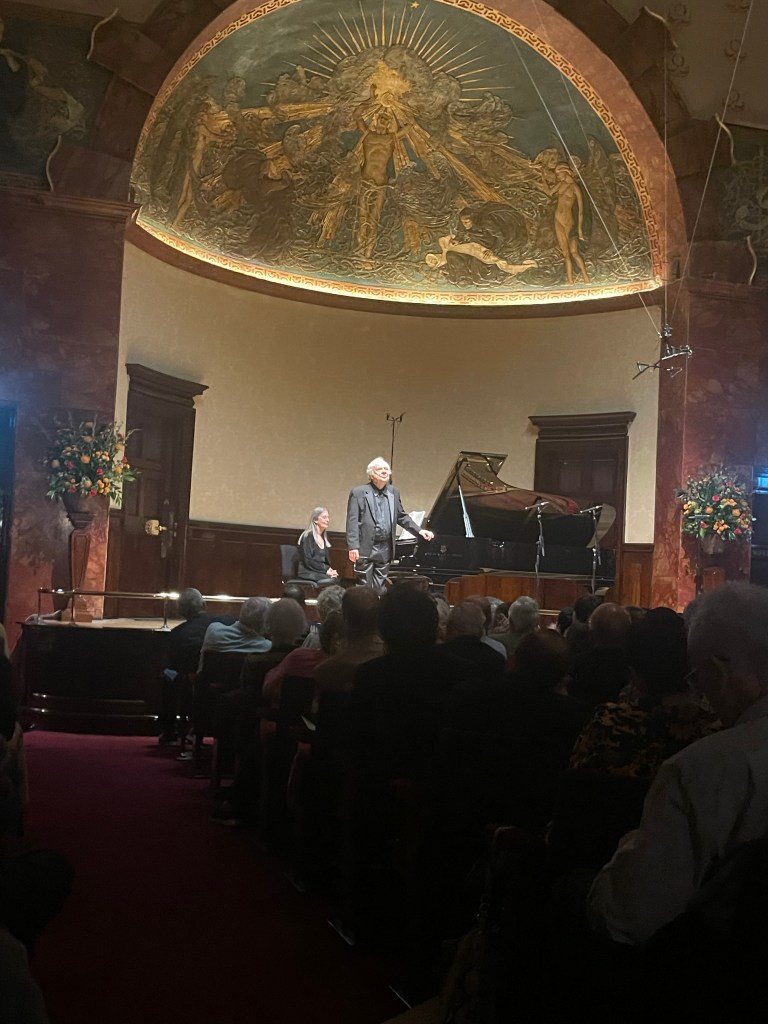
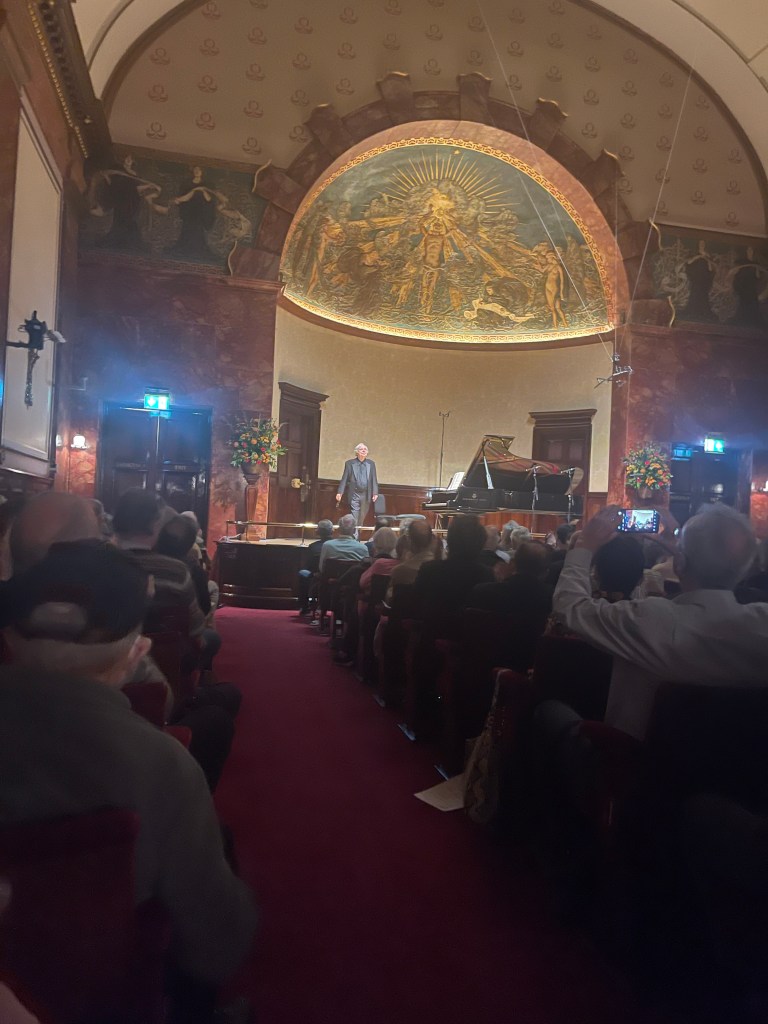
Richard Goode at the Wigmore Hall ‘Music making next to Godliness’

After the wonders of Cremona in these past days a gift from the Gods indeed with the recreation of music by Richard Goode.

https://christopheraxworthymusiccommentary.com/2025/09/30/cremona-music-3-the-day-of-reckoning-our-elders-point-the-way/

Beethoven Bagatelles may be trifles but they spoke tonight with a voice I have never heard before . A scrupulous attention to the composers wishes with the score in front of him as he thinks more of the music than any outward appearances.

Sounds I have never imagined wafted around the hall with breathtaking magic of disarming simplicity and beauty.

The two Sonatas op 90 and 101, where the beauty of the end of one was continued with the opening of the other. A range of sound that was orchestral but that never shouted at us but was always with beautiful fluidity where energy and surprise abounded but within the very notes themselves. We were under the cloud of a sound world where everything was so perfectly balanced and phrased that there was no need to shout and scream as there was much more power allowing Beethoven to speak for himself.

Schumann Davidsbündler seemed much shorter than usual because such was the intense concentration and kaleidoscope of colours and character, that time stood still as we were immersed in a wondrous land of magical sounds and passionate effusions. Florestan and Eusebius had such fun bickering that they hardly noticed that they had been transported to a land of dreams and as the clock struck twelve with a twinkle in their eye and nostalgia in their heart this marvel came to a close.

Cremona may be the city where dreams become reality but today in London I have never experienced a dream like this before ……….

In the meantime time comments are flooding in from great musicians far and wide :

‘A very great artist’. Craig Shepherd

Christopher Axworthy replying : ‘sweat and tears, an endless struggle to find the real meaning behind the notes . The circus element of concertising just does not enter into the equation…. We are allowed to eavesdrop on his work in progress ……reminds me of Pressler or Horszowski …..a voyage of discovery not of ego but as a humble servant .If only they would take note in Warsaw !!!!

‘Christopher, I agree with all of the above. You have named three of my favorite artists. It can take many years for young pianists to leave behind the circus of the competition circuit and concentrate on becoming artists. By the way (and this might interest you), the greatest revelations I’ve had from Richard have not been in the German composers, but rather some years back when he performed the second book of Debussy Preludes. I’ve never heard such extraordinary Debussy from anyone. He and I had a correspondence about that subsequently.’ Craig Shepherd

‘I couldn’t agree more! I was also in heaven from start to finish and very much in Menahem’s vein! Of course when you look at the pedigree and you see Claude Franck and Horszowski … and the sound, the voicing, the control, the miraculous left hand! Of course he was playing on the Old Lady, I knew it and checked with him! Then the way he listens to himself and shares the love of the music, so much like Menahem! I haven’t heard playing like that since Menahem ! To my mind these young students are not hearing the greats enough, they are so busy practising and working so hard!’ Annabelle Weidenfeld

‘What an exquisite concert… he stole my heart with those Bagatelles, one of the finest performance I’ve heard at the Wigmore. Schumann so beautifully layered, unusual, not as we’re used to hearing it. But he always made us listen to details, whilst his ideas invariably always made sense – beautiful sounds and cohesive discourse. Remember the final bass note of Schumann? Never knew that a lower bass note can be made to sound so optimistic, full of love: just like Schumann’s heart for Clara’. Cristian Sandrin

A luminosity and extraordinary range of dynamics with an impeccable sense of balance. A sound created within a roof of noble musicianship and sense of architectural shape .Orchestral colouring where individual phrasing added to the amalgam of music making that spoke so eloquently . The question and answer of the opening of op. 90 was of pastoral beauty until the rest! Whispered octaves of glowing beauty were uttered so surprisingly until suddenly there was a Beethovenian eruption of dynamic drive and fervent conviction. A momentary passionate cry before the agitation of the left hand where the deep bass notes had an independent line as the searing soprano melody just swooped over it . A ray of sunlight appeared of radiance and beguiling beauty as Beethoven’s miraculous Schubertian outpouring was embellished with a golden jeux perlé of breathtaking beauty. The meandering seemingly lost entry to the recapitulation was played with such character that it brought a smile to my face as I am sure it did Beethoven’s. The coda was played with even more orchestral colours and the final notes just allowed to dissolve into oblivion without any ritardando or false emotion. The mellifluous beauty of the second movement was exactly that which opened the following Sonata op 101. The contrasting character of a question and answer played with absolute dynamic mastery as it burst into song with a Schubertian outpouring that seemed unstoppable. What subtle beauty Richard Goode brought to the appearance of the melody in the tenor register, not projecting the sound but allowing it to emerge with touching nostalgia. Beethoven’s magic web of final sounds and his own built in rubato sounded so natural just as a singer would utter the final phrase with nonchalant ease and marvellous breath control!

One was aware in the opening of op 101 of delicacy but also what weight and sense of line there truly was. Radiant beauty from the pianissimo right hand chords as the left hand just hinted at the melody with haunting suggestion. A beautiful pastoral feel even to the most energetic passages with Beethoven’s phrasing just giving that extra lift to this lazy atmosphere.Disappearing to a whisper as the Scherzo entered with dynamic drive but never loosing that radiant fluidity where all the dotted rhythms, so reminiscent of Schumann, were given a sense of direction and beauty instead of the more rumbustious treatment from less attentive interpreters. Played with an extraordinary sense of legato and masterly pedalling even the mellifluous Trio became part of a whole of a marvellous song without words. An extraordinary change of instrumentation for the ‘Langsam’ gave such weight and poignant meaning to this one page introduction (like op 53 ) with a silvery cadenza leading to the genial return of the opening theme before bursting into the Presto. Notoriously difficult, but Richard Goode made it sound so easy, like a bubbling brook in this most pastoral of Beethoven’s late works. Beethoven’s stop and questioning ‘where do we go now’ was so masterly it could have come from a Mozart opera until bursting into a whispered fugato where those seemingly pointless trills became merely vibrations of teasing Scarlattian insinuation (K.1 ) . Building to massive breathtaking sounds as the whole hall seemed to erupt from such masterly hands until the return of the chattering fugato. Absolute mastery of a coda over a vibrating pedal note gradually disintegrating before Beethoven’s irascible slamming of the door.

The real jewels in the crown were kept to the end of the first half of the programme, with one of the last works that Beethoven was to pen for the piano, just three years before his death. Beethoven had come to terms with his turbulent life and was looking to a place far better than we could ever imagine. He could not only imagine it but could describe it in sound in these very pieces. ‘Trifles’ he called them as titles and words have no place here, call them what you will. A sound world of infinite emotions and radiant wondrous beauty. Goode played them with the Godliness with which they were penned.The serene beauty of the first with its silvery cadenza and its gradual slowing down written into the actual fabric with no need of additional help! The rumbustious second with sudden quiet interludes all played with masterly control of sound bursting into a beautiful cantabile. Leading to the tempestuous rhythmic drive where the sforzandi became cries for help as time and tide waited for no one on a journey of burning intensity. Radiant beauty to the third with its cadenza that sounded, from Goodes magic hands, like some wondrous aeolian harp, before the intricate elaborations of chiselled delicacy. Beethoven’s pedalling in the final five bars created a magic which I am sure the composer could have imagined but is rarely recreated in performance. Goode showed us the way with sublime etherial sounds with no rallentando but just a hovering cloud to the final whispered chord.The Presto of the fourth was played under a roof of controlled sound with the opening just forte (not fortissimo) with a full robust but not hard sound, which made so much architectural sense in contrast with the long pedal note on which the melodic line eventually floats. In this way the contrast between dynamic drive and floating beauty became part of a whole of driving forward movement.Radiance and simplicity were the key to the fifth Bagatelle.The opening and closing flourishes to the last were just the frame in which Beethoven’s poetic imagination could mesmerise us with its gasping fragmented beauty.

After the interval Schumann’s Davidsbündler kept us transfixed with eighteen scenes of beguiling beauty and passionate effusions. Goode’s attention to detail was remarkable and had me racing to look again at the score. The difference between dynamics all clearly written by Schumann was scrupulously observed with poetic beauty, nowhere more than in the opening scene where even Schumann’s precise pedalling gave such a lift to the insinuating musical line. Ravishing purity of the second where Eusebius is allowed to wallow in a beautiful reverie before being interrupted with the rumbustious hi jinx of Florestan. Goode’s way of underlining the bass in the final few bars gave a remarkable sense of diminishing closure without ever slowing down.The sixth scene I have never heard the bass played with such mastery that sounded like a gentle vibration on which the syncopated melodic line floated.The final D, allowed to resonate as the seventh grew out of the final reverberations. What fun he had with the eight,with the sparkling difference between staccato and legato. A sense of harmonic grandeur to the tenth of Brahmsian richness as Florestan passed on to Eusebius the eleventh with it’s tender simplicity where the tenor melody was barely whispered but so poignantly felt.The twelfth was thrown of with masterly ease and crystal clear articulation, the dangerous skips negotiated without a glance at the score. Florestan and Eusebius were now united with burning intensity and sumptuous chorale like majesty. The fourteenth is one of the most beautiful melodies that Schumann ever wrote and was played with a radiance and touching simplicity always moving inexorably forward. The fifteenth sprang for Goodes fingers with sprightly nobility only to be interrupted buy a wave of sumptuous harmonies over which a long melodic line was allowed to unfold. The friendly bickering of the sixteenth was gradually interrupted by a vision of loveliness that Richard Goode played with a subtle refined radiance and purity . Building to the exhilarating ending that drifted off to the final languid nostalgic waltz played with extraordinary dynamic control and touching beauty.

After such wonders just one encore was offered to a public that had listened with baited breath to such beauty. Chopin’s Nocturne op 62 n. 2 was played with the aristocratic beauty and radiance that we had enjoyed all evening .

photo credit Dinara Klinton https://christopheraxworthymusiccommentary.com/2024/03/20/christopher-axworthy-dip-ram-aram/