An evening dedicated to pure music making with the final concert of the course of Giovanni Gnocchi .
Eight cellists filling this magnificent twelfth century deconsecrated church with sumptuous music making and spirited introductions from a Giovanni Gnocchi who seems to get younger as the years pass.
His knowledge and playing of course display his mastery and mature musicianship with his generosity in sharing his unbounded love for music with his younger colleagues.
Two performances of the Dvorák concerto, both completely different, but both displaying the genius of a composer and his unbounded love for the lady in his life who had passed away .
Enea Fava Gerardo Scavone
Enea Fava playing with a wide range of sounds etched in sand with youthful sensitivity . Gerardo Scavone playing with more nobility and monumental sounds etched in stone. In both, their musicianship and discipline shone through, helped by an orchestra always ready to support and rejoice with them.
Leonardo SanchezMariano Fusco
It was interesting to hear the two youngest students from the class duetting with one of the many works written for Baryton by Haydn. Mariano Fusco contrasted with Leonardo Sanchez,a real Florestan and Eusebius duo , with the charm of Leonardo and the more down to earth reply of Mariano.
Always interesting to learn about instruments that inspired composers to such heights but are now obsolete.
Would we have ever had Schubert ‘s inspired ‘Arpeggione’ Sonata without an instrument that was just a whistle in the wind? It was a complete performance of this genial outpouring that closed the concert. Joël Geniet,a very youthful looking cellist, who I had noted playing Trios with the masters the other day.
He was here given full reign to show his remarkable sensitivity and artistry with playing of real give and take with his superb partner Alexandra Dicariu.
Beauty and sensitivity from Alexandra Dicariu
Ravishingly sensitive piano sounds just inspired this young man to greater poetic heights .
Alina Holender
But before this we had heard a remarkably profound performance of the Moderato from Shostakovich’s first concerto .Written for Rostropovich who was probably the same age as Alina Holender today, who played it with great weight and searing authority. It is amazing to think that the dedicatee after just one play through, with the ink still wet in the page, could play it from memory with the composer the following day. A very complex sound world that Alina played with conviction and extraordinary concentration
Allegra Britton
This was after Allegra Britton gave a beautiful account of Schumann’s Adagio and Allegro . Initially conceived for horn, but has long become part of the standard cello repertoire.
The long lines of the Adagio were played with poetic beauty and there was remarkable technical finesse to the knotty twine of the Allegro.
Francesco Barosi
The final work on the programme was dedicated to two movements of the most famous work of César Franck . The Sonata in A was a wedding present for Ysaÿe and one that has been shared with the cello ever since.
Francesco Barosi with Alexandra Dicariu Tiziana Cherubini on the prowl ……as always the Deus ex Macchina of the Campus
Francesco Barosi played it with passion and weight with a deeply felt intensity and a real interplay between the piano and cello. Nowhere more than in the notorious second movement with its whirlwind of notes shared between the instruments with dynamic drive and transcendental mastery.
Another exhilarating evening of music making played with mastery and the ‘joie di vivre’ that Maestro Gnocchi injects into his infectious music making with unbounded love and generosity.
Of course pride of place goes to the ‘cello placed here by Joël on the rooftops of the magical town of Sermoneta under the eagle eye of the President Elisa Cerocchi and superb pianist Alexandra Dicariu
Twelve superb musicians each one with his own personality but stamped with the integrity and musicianship of the light that guides them.
Concerto finale dei pianisti del corso di Andrea Lucchesini
The great tradition continues in Sermoneta with the class of Andrea Lucchesini .
From the dynamic drive and searing authority of Alessio Ciprietti who opened this final concert with five Rachmaninov Preludes from op 32
Alessio CipriettiLaura Licinio
to the final breathtaking virtuosity and stylish playing of Liszt’s Tarantella from Laura Licinio , not only brava but also bella , che non guasta as they say over here !
Federica LucciVera Cecino
An incredible clarity and drive to Federica Lucci’s Bach second partita was only matched by Vera Cecino’s magical account of Ravel’s Sonatine.
Federico Pische
A hair raising account of Mendelssohn variations from a simpatico but above all masterly Federico Pische.
Andrea CannataAntonio Cicala
Musicianly playing of great authority and aristocratic poise of two master works by Beethoven (op 109) and Schumann (op 11) was by Antonio Cicala and Andrea Cannata .
Giorgio BolognesiDavide Mancini
Matched by an equally impressive account of the scales and arpeggios of Beethoven’s op 53 ( to quote Delius) played with great intelligence by Giorgio Bolognesi. Irene De Filippo showed off the same poetic artistry as in her Clara Schumann Trio but this time with Debussy Estampes . Davide Mancini brought poetic justice to the most pastoral of Chopin’s four Ballades bringing this third one to a noble and sumptuous climax.
Eleonora LauroIrene De Filippo
Eleonora Lauro was our ‘red riding hood’ with Rachmaninov’s tone poem of op 39 n 6 played with diabolical characterisation and technical mastery .
Davide Conte
But it was Davide Conte who stole the show with a breathtaking ,all or nothing performance,of Liszt’s Wilde Jagd .
Davide Conte
This nineteen year old pianist looked as though he was born at the keyboard such was the total conviction of a remarkable performance that looked and sounded so right.
All the pianists dressed impeccably for this gala concert and each one presenting their performance with exemplary professionality .
Maestro Lucchesini with President Elisa Cerrochi
Under the eagle eye of a great pianist who had known how to unite this happy band into a unified group of dedicated artists of humility and mastery .
Maintaining a tradition that was started with Kempff and continued through the years with amongst others Charles Rosen,Fou Ts’ong and Eliso Virsaladze
Distributing the certificates after the triumphant final concert
Serghei Rachmaninov Preludes op. 32 nn. 1 3 6 7 8 . Playing of great authority with sumptuous sounds and and exhilarating dynamic drive. Beautiful hand position with long spindly fingers that play with delicacy and precision. He brought a subtle beauty and radiance to the slow meditative n 7 in F major after the dark transcendental difficulties of n. 6 in F minor.Ending with quite extraordinary clarity and mastery and a brilliant sense of characterisation of n. 8 in A minor Alessio Ciprietti
Ludwig van Beethoven, first movement of the Sonata in C major op. 53 ( Waldstein -Aurora ), Allegro con brio. Played with precision and rhythmic drive and a sense of architectural shaping that allowed him to maintain the same tempo throughout and gave such strength to this the first of the great sonatas of the composers so called middle period.The second subject flowed well but could have been connected to the opening where more bodily participation would have helped with the natural flow of the music that is in fact made up of scales and arpeggios ( like the ‘Emperor’ concerto ).These are but elements of a master craftsman and was played with respect and intelligence where the joints could have been more well oiled. A very fine performance and a pity there was no time to hear the last movement with its radiant genial introduction. GiorgioBolognesi
Claude Debussy from Estampes La soirée dans Grenade, Jardins sous la pluie. Irene,as with her Clara Schumann Trio, likes to bathe her sounds in sumptuous long pedals that can blur the images but give access to a kaleidoscope of colours. It was the same in her sumptuously atmospheric performance of ‘La soirée dans Grenade’, where her reliance on the pedal seemed to exclude a true finger legato and sense of weight. What a revelation her ‘Jardins’ was, where she allowed the music to flow without blurring the edges and it made for a clarity with the chiselled melodic line allowed to sing out with the simplicity and purity of the two nursery rhymes that Debussy incorporates with such mastery into this evocative score . Irene De Filippo
Frederick Chopin Ballade n. 3 in A flat major op. 47 Beautifully shaped with subtle delicate phrasing for one of Chopin’s most mellifluous Ballades. A continual flow that Davide allowed to grow so naturally, with beautiful subtle decorations played with strength and beauty with the ‘fiortiori’ played on the beat as the music lead inexorably to the final noble climax, played with sumptuous full sounds. The final cascade from the top to the bottom of the keyboard was played like a painter with one stroke on the canvas ( too often divided between the hands for technical reasons ) with the imperious final chords played with aristocratic authority. Davide Mancini
Serghei Rachmaninov Étude-Tableau op. 39 n. 6 . A tour de force of brilliantly characterised playing. The terrifying outbursts of the ‘Red Riding Hood’ Study were played with fearless abandon and masterly control with a dynamic drive of hypnotic persuasion. Eleonora Lauro
Franz Liszt from the Études d’exécution transcendante : n. 8 in C minor, ‘Der Wilde Jagd’ . A young man who truly belongs to the keyboard with playing of mastery and control, producing playing of breathtaking abandon. Ravishing beauty with the minimum of pedal that allowed for such clarity and with beautiful inner voices that just added to the sumptuous Romantic outpouring of overwhelming emotional impact. Davide Conte
J. S. Bach from the Partita n. 2 in C minor BWV 826 Sinfonia e Capriccio. This was really quite masterly Bach playing of extraordinary clarity and a flowing radiance that just made one aware that Bach’s music is based on the song and the dance. A purity and radiance to the melodic line played almost without pedal but with a remarkable finger legato. A ‘fingerfertigkeit’ that created an almost hypnotic rhythmic drive with the energy coming from within the very notes themselves. This is one performance that I would have loved to have heard complete, not just two movements. A musician with a burning fire from within allied to a masterly control of the keyboard Federica Lucci
Maurice Ravel’s Sonatine : Modéré – Mouvement de menuet – Animé This was a pure outpouring of sumptuous music making. Colours that were born from a need to create beauty and ravishment. A range of colours but above all a sound world that created a remarkable musical picture where there was no note out of place. Beauty, passion and intelligence combined in a masterly performance of Ravel’s elusive Sonatine ,where Schnabels famous dictum referring to Mozart is so apposite also here: ‘Too easy for children but too difficult for adults’ Vera risked all because her talent and vision demanded it, and coming from the magnificent school of Maddalena De Facci, who like her brother Elia cannot do any less than allow her talent to flower and speak for itself. As Rubinstein says you cannot teach talent…….but I would add that you can ruin it ! https://youtu.be/gex0sOR7XZ0?si=JPhXDBIy0x5DFnjn
Vera Cecino
Ludwig van Beethoven from the Sonata in E major op. 109 Tema e variazioni .This is the very heart of Beethoven’s last thoughts expressed with simplicity and beauty, only to be equalled by the Arietta and variations of his final sonata op 111. It was played with bold string quartet texture where every note had a role to play as the variations gradually evolved with mellifluous beauty and unusual delicacy. A more horizontal approach would have allowed for even more fluidity but Andrea’s technical and musical mastery was never in doubt. Eliminating a sometimes hard vertical edge to the sound could have made the etherial voyage into paradise of the last variation even more magical. An enviable technical command and intellectual understanding that now needs to be tampered with the poetic inner meaning behind the notes. Andrea Cannata
Felix Mendelssohn-Bartholdy Variations sérieuses op. 54. A tour de force of playing with the refined poetic opening tempered by the ravishing jeux perlé of the variations. An architectural shape to a work of great effect where in lesser hands Mendelssohn’s seemingly endless musical and pianistic invention can seem superficial and just facile note spinning. Federico imbued all he did with masterly musicianship and a humility that defied the exhilaration and excitement that Mendelssohn’s cascade of notes can produce.This was a tone poem of poetic enticement and ravishment from a young man who was obviously listening attentively to the sounds that were pouring from his well oiled fingers and intent of turning what so often can seem like a bauble into a gleaming gem. Federico Pische
Robert Schumann from the Sonata in F sharp minor op. 11 Quasi adagio – Allegro vivace . This is one of the hardest works of Schumann to give an overall architectural shape to. This young pianist opened with the great passionate outpouring of the ‘Quasi adagio’ that he played with almost operatic abandon and freedom . A deeply moving opening statement played with great authority and poetic understanding that burst into the ‘Allegro vivace’ that bubbled over with rhythmic drive alternating with unexpected bursts of melodic beauty. Played with a continual flowing drive and a technical mastery that swept all before it and created a first movement that is quite unique in the Romantic piano repertoire. Antonio Cicala
Franz Liszt from Venezia e Napoli :Tarantella. Liszt asks specifically that the Tarantella should be linked to the aria that preceeds it in the Suite Venezia e Napoli ( the pedal indications make this quite clear). However it is often played by great virtuosi on its own, as it was today (I remember taking Cherkassky to the Amici della Music of Florence, of which Maestro Lucchesini is now artistic director, where he too played it as a solo piece together with Brahms Sonata op 5,Scriabin 4th Sonata and Chopin Ballade op 23 ) It is a piece of great effect and when played as today, with extraordinary clarity and mastery, it can be a breathtaking ending to a recital.The beautiful song of the central episode was played with ravishing beauty and the embellishments played with absolute mastery never allowing the tempo to sag.The final pages were overwhelming and breathtaking and this beautiful young lady reminded me of Martha Argerich who I also remember playing Liszt at La Pergola in Florence and I remember the entire audience cheering this extraordinary young lady as we should have done today! Laura Licinio
diploma time after a triumphant final concert A preconcert pep talk between il Maestro and his young colleagues the cats are happy when it is festival month
The Strand Rising Stars Series – Sebastian-Benedict Flore
July 24 @ 6:00 pm – 7:00 As part of the exciting new Strand Rising Stars Series, in Association with The Keyboard Trust, an exceptional piano recital at the beautiful candlelit venue of St Mary le Strand. A unique opportunity to hear new some of the brightest new stars of the piano world.
Sebastian-Benedict Flore (piano)
Programme
F. Chopin – Scherzo No.3 in C-sharp minor, Op.39
F. Chopin – Berceuse in D-flat major, Op.57
A. Scriabin – Sonata No.1 in F minor, Op.6
J.S. Bach – Ich ruf zu dir, Herr Jesu Christ BWV 639 (transcribed by W. Kempff)
F. Liszt – Zweite Elegie S.197
F. Chopin – Ballade No.3 in A-flat major, Op.47
Sebastian-Benedict Flore, born in Rome, began his piano studies at the age of five. He studied for five years at the Centre for Young Musicians with Francis Reneau and is currently in his final year of study at the Guildhall School of Music and Drama in the studio of Katya Apekisheva. He has won various prizes, including the third prize in the Beethoven Piano Society of Europe’s Junior Intercollegiate Piano Competition and, most recently, first prize in the Liszt Society’s International Piano Competition. In demand as a solo and chamber musician, he has also performed in some of London’s most prestigious venues, including Milton Court, the Barbican Hall and Queen Elizabeth Hall.
This seasons series finishes with Sebastian- Benedict Flore, the winner of the Liszt Society’s International Piano Competition
The eternal triangle was revealed of Brahms and the Schumann’s in the historic Cardinal’s hall in the Castle at Sermoneta. Three distinguished artists joined forces with six talented young musicians to make music together.
Youthful enthusiasm joining forces with the weight and nobility that has been acquired in important careers of professional music making. Brahms late trio in C minor op 101, was paired with Schumann’s trio in G minor op 110, written towards the end of his tragic life. Ending this ‘tris’ with his wife Clara’s early G minor Trio op 17, written before she bore Robert’s 8 children !
Mauro Buccitti master piano technician
A Steinway of 1890 that has sat in this regal hall for as long as I have been frequenting it ( over 40 years ) and now recently restored to it’s antique splendour with the magic wand and considerable expert knowledge of Mauro Buccitti .
An instrument with a mellow sound like an old photo, brown at the edges but that exudes a rounded beauty, just like a great vintage wine that if stored well gains in nobility revealing the veiled beauty that has been locked within it’s very body.
Andrea Lucchesini with Federico Pische
Instead of transporting pianos up and down very well worn steps to the stables, or hoisting it onto a temporary stage in the middle of the courtyard, thanks to Elisa Cerocchi, the heir to the precious festival her father founded 61 years ago, we have a piano that truly belongs to it’s surroundings. It can be enjoyed by a public that once arrived in the mighty inner most sanctuary does not have to risk life and limb any more, as the horses had to in times of yore!
What will the ladies of the Festival Pontino dream up for the 62nd Season? Elisa Cerocchi (seated as befits a President), Tiziana Cherubini ( centre ) Deus ex machine alias secretary
It was with this mellow nobility that Andrea Lucchesini opened the concert. With his absolute precision and dedication to the text, garnered from the school of Maria Tipo, he could temper the youthful passion of Andrea Scapola’s sumptuous violin and Joël Geniet’s passionate cello playing.
Joël GenietAndrea Scapola
Lucchesini winner, at the same age as his youthful companions today, of the Dino Ciani International Piano Competition, and was indeed the star student of the much missed Maria Tipo. He was also taken under the wing, at an early age, by Luciano Berio,whose musicianship like Boulez required artists of exceptional calibre to do justice to their complicated, musically innovative, imagination. Allied to his early masterly discipline I have heard Lucchesini play Chopin Preludes in this very festival that exuded the same poetic mastery as Cortot ( who probably would not have had the same bravura with the mosquitos as Andrea did in Ninfa ) . Pianists like good wine together with pianos of a certain vintage mature and grow in stature with age.
Passion and rhythmic energy ignited this Brahms from the first notes. The beguiling ‘Presto-non assai’ ,second movement, was gracefully played with an amalgam of sounds, as they played ‘cat and mouse’ together, but never forsaking the long architectural lines that mark Brahms as a great master and just heir to Beethoven.There was a radiant beauty to the solo violin and cello of the ‘Andante grazioso’ before the piano entered in an exchange of rare beauty of golden sounds. The dance is never far from Brahms’works and it was the ‘Allegro molto’ of the final movement, that sprang to life with searing intensity and noble regality.
Late Schumann is never easy to master, as his mind was so full of fantasy and intimate contrapuntal weavings that the sense of line can easily be suffocated.
Not with Giovanni Gnocchi at the helm, who looked at each of his partners like a cat about to pounce, whilst facially enacting the picture that was so clear in his mind . Federico Pische is a refined, dedicated artist who I have admired in recital before, and here he showed his musicianship as he listened to his colleagues, never overpowering them, but joining them in an amalgam of sounds all shielded by the wide open piano lid that acted as a sound board for his colleagues too.
David Martinez Gonzales
Beauty and discretion from the young Spanish violinist David Martinez Gonzales, whose sixteen year old sister was to astonish us, in the Trio by Robert’s adored Clara, later. There was a gentle mellifluous flow to the second movement with a beautiful meandering web of sounds from the piano on which the cello and violin could converse with eloquence, disappearing to a mere whisper before the quixotic ‘Scherzo’. An interplay of mystery and capriciousness, with Schumann’s knotty twine played with knowing mastery .
Giovanni Gnocchi
‘Mit humor ‘ Schumann marks the last movement, and it was this great characterisation that all three brought to this movement with the unmistakable voice of Schumann shining through the enormous traumas that were effecting his all too short life.
The Cardinal’s Hall full to the rafters Tiziana Cherubini always on the prowl never missing a trick.
Last but certainly not least there was the Trio of the woman that they both loved.
Clara who gave Robert eight children, and Brahms who admired her from afar and was by her side when her husband was put in an asylum. Both shared a disliking for their colleague Franz Liszt, and it was Brahms who famously fell asleep when Liszt played his Sonata to Wagner. Liszt dedicated it to Schumann as Schumann had dedicated his Fantasy op 17 to Liszt . Robert was in an asylum when the manuscript with dedication arrived at his house. Clara thought it was an unbearable noise and refused ever to play it !
Her own Trio ( by coincidence op 17) is an early work showing very much the influence of Mendelssohn and the taste of their age. It is what made Mendelssohn a favourite at the court of Queen Victoria with his stylish mellifluous outpourings that did not disturb the decorum of an age! Both were undoubtedly master craftsmen but stylishly conventional.
With Marco Rizzi at the helm there was an authority and stylish mastery that he shared with Irene De Filippo’s caring and careful musicianship and Ana Martinez Gonzales’s at times astonishing youthful audacity.
A well constructed work , of course, missing the genius of her husband’s sometimes uneven or misunderstood late works . There was a passionate mellifluous outpouring to the opening ‘Allegro moderato’ contrasting with the flexible charm and style of the ‘Scherzo’. An ‘Andante’ of Mendelssohnian charm with the piano (as in his D minor Trio ) setting the scene of a ‘song without words’. It was beautifully shaped under the eagle eye and great artistry of Marco Rizzi, encouraging his young colleagues to caress and shape with loving care such an eloquent outpouring.
The ‘Allegretto’ too ( reminiscent of the pastoral beauty of the last movement of Franck’s violin sonata ) with it beautiful flowing lines and virtuosistic moments of glory that brought this trio by the adored Clara to a magnificent ending .
A hall full to overflowing, and it was Maestro Rizzi who with great authority and generosity insisted that all this evening’s artists – all creatures great and small as the song goes – should share in this well deserved ovation, before struggling down the cobbled steps and the clock struck midnight, when who knows where we might end up! ( Butterly’s abounding as Schumann’s op 2 made perfectly clear )
Niccolò (Tiziana’s son ) on the box office
Marco Rizzi Premiato nei 3 concorsi più prestigiosi per violin: il Čaikovskij di Mosca, il Queen Elizabeth di Bruxelles e l’Indianapolis Violin Competition. Marco Rizzi è particolarmente oggi apprezzato per la qualità, la forza e la profondità delle sue interpretazioni. Nel 1991 gli viene conferito su indicazione di C. Abbado l’”Europäischen Musikförderpreis” come uno dei più interessanti violinisti della nuova generazione. È in Italia considerato uno dei musicisti più apprezzati del paese, la sua attività artistica lo ha portato ad essere regolarmente ospite di sale quali la Scala di Milano, la Salle Gaveau e la Salle Pleyel a Parigi, il Lincoln Center di New York, la Sala Grande del Conservatorio di Mosca, la Musikhalle di Amburgo, il Tivoli di Copenhagen, il Concertgebouw di Amsterdam, la Konzerthaus di Berlino. Ha suonato con direttori quali R. Chailly, H. Vonk, A. Ceccato, G. Noseda, V. Jurowski, P. Eötvös, S. Denéve, G. Neuhold e con rinomate orchestre quali la Staatskapelle Dresden, la Indianapolis Symphony Orchestra, la Royal Liverpool Philharmonic, l’Orchestre de Concerts Lamoreux, la Hong Kong Philharmonic, la Rotterdam Philharmonisch, l’Orquesta RTVE di Madrid, la BBC Scottish, la Nederlands Philharmonic, e numerose altre. In collaborazione con artisti quali A. Lucchesini, M. Brunello, E. Dindo, L. Zylberstein, G. Hoffman, N. Imai, M. Fischer-Dieskau, D. Poppen, Marco Rizzi affianca all’attività solistica una dimensione cameristica vissuta con passione. È dedicatario inoltre di brani composti da importanti autori contemporanei quali A. Corghi, L. Francesconi, F. Vacchi, C. Galante, U. Leyendecker. Marco Rizzi ha inciso per Deutsche Grammophon, Amadeus, Nuova Era, Dynamic, Warehouse, etc. In Germania ha insegnato dal 1999 alla Hochschule für Musik a Detmold ed è stato chiamato nell’ ottobre 2008 alla Hochschule für Musik a Mannheim. Inoltre dal Settembre 2007 è professore titolare alla prestigiosa Escuela Superior de Musica Reina Sofia di Madrid. Marco Rizzi è giurato di importanti concorsi internazionali come il Concorso J. Joachim di Hannover, il Concorso Queen Elisabeth di Bruxelles oppure il Concorso Paganini di Genova, e vari suoi allievi sono stati premiati in rinomati concorsi internazionali. Marco Rizzi attualmente suona un violino P. Guarneri del 1743, messo a disposizione dalla Fondazione Pro Canale.
Giovanni Gnocchi Ha debuttato giovanissimo come solista in concerto per 2 violoncelli e orchestra assieme a Yo-Yo Ma, che disse: “Giovane meravigliosamente pieno di talento, darà un grande contributo alla musica ovunque egli vada”. É stato solista in contesti prestigiosi, sotto la direzione di Gustavo Dudamel, Christopher Hogwood, Carlo Rizzi, Daniel Cohen, Enrico Bronzi, Michele Spotti, Daniele Giorgi, da Hong Kong alla Wiener Konzerthaus, alle grandi sale di Stuttgart, Manheim, Wiesbaden, Bonn e Salzburg, con la “Zagreb Philharmonic Orchestra“, “Camerata Salzburg“, “Orchestra della Toscana“, la “Filarmonica della Fenice” di Venezia, “Orchestra da Camera di Mantova“. Nella passata stagione, ha debuttato nella Sinfonia Concertante op. 125 di Prokofiev, si è esibito nel Concerto op.129 di Schumann diretto da Daniele Agiman, protagonista con Haydn al “Festival Stradivari” di Cremona con “l’OTO-Orchestra” del “Teatro Olimpico” di Vicenza diretta da Alexander Lonquich, solista e concertatore con “l’Orchestra da Camera” di Mantova e agli “Amici della Musica” di Firenze ha suonato il Concerto di Gulda come solista e direttore dell’OGI (Orchestra Giovanile Italiana). Vincitore del 1° Premio al Concorso “F. J. Haydn” di Vienna, del Borletti-Buitoni Trust Fellowship di Londra (entrambi con il David Trio), si è, inoltre, laureato ai Concorsi violoncellistici Primavera di Praga, A. Janigro di Zagabria, e in duo con Mariangela Vacatello al Parkhouse Award alla “Wigmore Hall” di Londra. Si è esibito in progetti cameristici con Leonidas Kavakos, i membri del Quartetto Hagen, Elizabeth Leonskaja, Pekka Kuusisto, Alena Baeva, Roman Simovic, Alexandra Conunova, Vadym Kholodenko, Cristian Budu, Jens-Peter Maintz, Wolfram Christ, Diemut Poppen, Herbert Schuch. In duo e trio con Alexander Lonquich e Ilya Gringolts, al Lucerne Festival in trio con Olli Mustonen e Alessandro Carbonare, in Giappone inaugurando la “Ark-Nova Concert Hall“. È stato poi invitato nei festival internazionali come: “Ljubljana Cello Fest” in Slovenia, “Ilumina Festival” in Brasile, “Järna Music Festival” in Svezia, “Delft Music Festival” in Olanda, “KotorArt Festival” in Montenegro, “Festival Musikdorf Ernen” in Svizzera. Recentemente, ha tenuto concerti cameristici a Singapore alla “Esplanade” e un recital solistico alla “Hong Kong City Hall” per la Hong Kong International Cello Association. I prossimi impegni lo vedono impegnato in duo con Andrea Lucchesini e Alasdair Beatson, nella partecipazione solistica e cameristica al “Festival Résonances” in Belgio (con Liza Ferschtman, Aleksander Madzar, Esther Hoppe), il Concerto di Elgar a Bari e a Matera, “Gulda” a Perugia con Enrico Bronzi e al “Viotti Festival” con la Camerata Ducale, di nuovo la “Sinfonia Concertante di Prokofiev” in Colombia con “l’Orchestra Sinfonica di Stato” a Bogotá e alcuni impegni cameristici in Messico e in Cile. Solo-Cellist della “Camerata Salzburg” per 8 anni (2002-2010), è stato, inoltre, Guest Principal Cellist alla “Royal Philharmonic Orchestra” di Londra con Daniele Gatti (2011-2012), Guest Principal nei “Münchner Philharmoniker“, “Mahler Chamber Orchestra” con Daniel Harding, “Philharmonia Orchestra” di Londra, “Orchestra Mozart“, co-principal cellist alla “London Symphony” con Valery Gergiev, e dal 2008 membro della “Lucerne Festival Orchestra” sotto la direzione di Claudio Abbado. Dal 2012, Docente di Violoncello all’Universität Mozarteum di Salisburgo.
Andrea Lucchesini Andrea Lucchesini è docente del Biennio di pianoforte per il Diploma AFAM di II livello e di corsi di perfezionamento e masterclass presso la Scuola di Musica di Fiesole. Si impone all’attenzione internazionale vincendo nel 1983, a soli diciotto anni, il Concorso Internazionale Dino Ciani del Teatro alla Scala di Milano e la sua vittoria segna l’inizio dell’attività internazionale e della produzione discografica con EMI International, che in pochi anni pubblica quattro dischi solistici con opere di Liszt, Chopin e Beethoven. Figlio d’arte, Andrea Lucchesini era stato accolto a soli sei anni nella classe della celebre pianista Maria Tipo al Conservatorio di Firenze, ricevendo una severa formazione musicale grazie al magistero della grande artista napoletana. La collaborazione con importanti orchestre di tutto il mondo è costante negli anni e così Lucchesini suona con alcuni tra i più celebri direttori del nostro tempo: Claudio Abbado, Semyon Bychkov, Daniele Gatti, Riccardo Chailly, Yurij Temirkanov, Gianandrea Gavazzeni, Dennis Russell Davies, Charles Dutoit, Zubin Mehta, Gianluigi Gelmetti, Yehudi Menhuin, Giuseppe Sinopoli e Theodor Guschlbauer. La sua attività pianistica è ampia e festeggiata, ed è contrassegnata dal desiderio di esplorare la musica senza limitazioni: per questo riceve il riconoscimento dei musicologi europei, che nel 1994 gli assegnano – unico musicista italiano accanto ad artisti quali Gidon Kremer, Evgenij Kissin e Tabea Zimmermann – il Premio Internazionale Accademia Chigiana. Dal 1990 Andrea Lucchesini si dedica anche alla musica da camera, a partire dalla stretta collaborazione col violoncellista Mario Brunello; la passione cameristica di Lucchesini si espande ad esplorare con partner illustri le più svariate aree del repertorio d’insieme. All’inizio degli anni ’90 data anche l’incontro con Luciano Berio, che offre a Lucchesini il debutto ai PROMS di Londra con il suo Concerto II Echoing curves per pianoforte e due gruppi strumentali, con la BBC Symphony Orchestra. Seguono concerti nei principali teatri del mondo ed infine la registrazione per BMG con la London Symphony Orchestra e Luciano Berio sul podio. La collaborazione con il compositore prosegue fino alla morte di Berio (2003): accanto a lui Lucchesini vede nascere Sonata, l’ultima, grandiosa opera pianistica, e la esegue in prima mondiale nel 2001 alla Tonhalle di Zurigo ed in prima italiana all’Accademia Chigiana di Siena. L’omaggio alla memoria del grande compositore è l’incisione integrale delle opere pianistiche di Berio per AVIE Records, divenuta ben presto edizione di riferimento. Grato per i doni musicali ricevuti – il talento paterno e una grande scuola pianistica per crescere – Andrea Lucchesini li restituisce fin da giovanissimo attraverso l’insegnamento. Raccoglie l’eredità del corso di perfezionamento di Maria Tipo presso la Scuola di Musica di Fiesole e onora i numerosi inviti per tenere masterclass in tutto il mondo, dal Mozarteum di Salisburgo all’International Keyboard Festival di New York. Accoglie inoltre gli inviti del Festival di Moritzburg, del Rome Music Chamber Festival, del Krzyżowa-Music e dell’European Chamber Music Academy a Shanghai, dove la gioia di suonare insieme aumenta nell’incontro tra generazioni. Accademico di Santa Cecilia dal 2008, Lucchesini assume nello stesso anno la direzione artistica della Scuola di Musica di Fiesole, su invito del fondatore Piero Farulli. Dal 2018 dirige l’Accademia Filarmonica Romana e ne cura con passione le stagioni fino al 2021, ricevendo nel 2023 la nomina ad Accademico Filarmonico. Dal 2022 è direttore artistico degli Amici della Musica di Firenze: a 40 anni dal suo debutto fiorentino, Andrea Lucchesini dà il suo contributo di idee alla vita culturale della città dove ha scelto di vivere dal 1991. L’attività concertistica prosegue in recital, concerti cameristici e solistici con prestigiose orchestre, dall’America Latina al Giappone, dagli Stati Uniti alla Cina, insieme a direttori quali Vladimir Jurowski, Daniel Harding, Manfred Honeck, Gianandrea Noseda, John Axelrod, Nicola Luisotti, Lorenzo Viotti. Negli ultimi anni Lucchesini si immerge con grande entusiasmo nella produzione di Franz Schubert registrando le ultime, grandiose Sonate per AUDITE. Così scrive Crescendo Magazine dopo la pubblicazione del secondo volume: “Andrea Lucchesini signe ici un superbe CD; il vient se placer parmi les plus éloquents témoignages schubertiens de notre temps. Le troisième volume est attendu avec une patiente impatience.”
Luigi Piovano swept away on a wave of inspired inspiration taking the Roma 3 Orchestra on a journey that will long be remembered.
Schumann’s cello concerto conducted from the cello, where Luigi’s passionate music making ignited this youthful orchestra and inspired them to heights that surprised even them .
As Piovano said at the end it is only possible to play without the ‘policeman’ because this orchestra listens to themselves. Like a true chamber ensemble they are ready to take on a voyage of discovery where every twist and turn is eagerly anticipated and enriches their music making with vibrant subtlety and ravishing beauty.
I remember Rostropovich in London, when he played thirty concertos in a festival of six concerts dedicated to his astonishing mastery. His enthusiasm and inspiration was such that some of the lesser known concertos such as by Mayakovsky or Saint Saens, he seemed to play even before he sat down. It was like a hurricane overwhelming all that stood between him and his music making.
Today it was that same wind of sublime inspiration that blew through the beautiful open air venue that INPS so generously shares with the genial Valerio Vicari and Roberto Pujia. A quest to offer a stepping stone to some of the most talented young musicians of their generation and allow them the possibility to gain valuable experience playing together, as Menuhin was to described it : with ‘ mutual anticipation’
Luigi with passion and mastery offered a continuous outpouring of sublime music making. A fluidity of movement that allowed the music to float on the air of a wave of beauty with a natural outpouring of poetic commitment. Creating a wonderful dialogue between the musicians in a musical conversation usually only possible with smaller more intimate chamber ensembles .
As Andras Schiff stated when he was asked why he played without a conductor, he very spiritedly replied that one is sometimes freer to play without a policeman leading the way.
As Piovano rightly added this is only possible when you have masterly musicians ready to listen and risk all, like a tightrope walker climbing onto the high wire with all the exhilaration and breathtaking panoramas that can be experienced but is only for those that dare to risk all.
Piovano is a master celllist but above all an inspired musician who lives every moment with vibrant anticipation. A cat on the prowl ready to pounce! A moment of creation so immediate, and a two way journey with the audience sharing in the voyage, and inspiring him to heights that he could never reach without the stimulation of live performance.
Playing the cello ,as he later conducted, is like swimming in a sumptuous sea of sounds in which the horizontal beauty of his whole body allowed us all to be submerged by a constant wave of sounds . Even jumping up from his cello , just as I remember Rostropovich would do , in moments when he was not physically required to produce sounds and where even his bow became a magic wand on this voyage of discovery.
It was later when he was conducting that his arms and whole body were swaying and persuading his players to join this great wave of mutual anticipation and where Piovano was merely the bridge coordinating the traffic with the shared vision of the paradise and rewards that awaited them all .
Luigi even had time to offer a short encore after the concerto but almost without a break returning to share in words his vision of Schumann’s Rhenish Symphony. His undying passion was as hypnotic as the music making he drew from this valiant band of youthful players.
Piovano like his great friend and partner in crime Antonio Pappano have a passion and sense of communication that is rare indeed . And the twenty years that Pappano spent on a voyage of discovery together with Piovano and his colleagues turned a fine orchestra into a great one.
It just proved Barenboim’s prediction when he took a young accompanist under his wing having heard the young Pappano accompanying an aspiring singer in an audition . ‘I’ll take the pianist you keep the singer !’
I would add that it cannot be taught but it can so easily be ruined or dampened.
It was Luigi who showed us today that with encouragement and freedom the sky is the limit for the inspired music making that we were treated to today in the Eternal City.
It just proves that music truly is a marvellous thing !
Giovedì 24 luglio 2025 / Venerdì 25 luglio 2025 ore 20.30, Convitto Vittorio Locchi, via Carlo Spinola 11
La musica è una cosa meravigliosa: Robert Schumann
Robert Schumann: Concerto per violoncello e orchestra in la minore op. 129; Sinfonia n. 3 “Renana”
Roma Tre Orchestra
Luigi Piovano, direttore e solista
Robert Schumann (1810–1856) è una delle figure più affascinanti del romanticismo musicale tedesco. Compositore, critico musicale e intellettuale raffinato, Schumann ha saputo esprimere come pochi altri l’intimità, le inquietudini e i sogni della sensibilità romantica.
La sua musica, che spazia dai capolavori pianistici (come i Carnaval, le Kinderszenen, la Kreisleriana) ai Lieder, dalle sinfonie alla musica da camera, è segnata da una forte tensione espressiva e da una profonda introspezione psicologica. Celebre è anche la sua attività di critico e fondatore della Neue Zeitschrift für Musik, con cui promosse giovani talenti come Chopin e Brahms.
La sua vita fu segnata da alti slanci creativi e da una fragilità emotiva crescente, fino alla tragica fine in un ospedale psichiatrico. Accanto a lui, sempre, l’amata moglie Clara Wieck, straordinaria pianista e compositrice, che fu per lui musa, interprete e sostegno umano.
Valerio dedicating his book to me this evening Prof Roberto Pujia ,President of Roma Tre Orchestra Valerio Vicari ,Artistic Director of Roma Tre Orchestra with our host the director of INPS Born 8 June 1810 Zwickau, Saxony 29 July 1856 (aged 46) Bonn, Rhine Province, Prussia
The Cello Concerto in A minor, op 129, by Robert Schumann was completed in a period of only two weeks, between 10 October and 24 October 1850, shortly after Schumann became the music director at Düsseldorf.
The concerto was never played in Schumann’s lifetime. It was premiered on 23 April 1860, four years after his death, in Oldenburg , with Ludwig Ebert as soloist. Written late in his short life, the concerto is considered one of Schumann’s more enigmatic works due to its structure, the length of the exposition , and the transcendental quality of the opening as well as the intense lyricism of the second movement.On the autograph score , Schumann gave the title Konzertstück rather than Konzert , which suggested he intended to depart from the traditional conventions of a concerto from the beginning.
Sublime beauty in a unique setting with Rome at our feet with the Angel just pointing the way to paradise.
And it was Daniele Cipriani who could provide a miracle of these songs without words from Apulia ,Sardinia , Sicily , Andalusia and Macedonia where the human body alone could express the radiance and beauty that is in the sultry air of the Eternal City.
An ever changing panorama as we climbed the ramparts together, of the ‘Pope’s’ castle that dominates the sky line of one of the most beautiful cities in the world .
And awaiting for us on the first suggestive stop in the Angel’s courtyard was the Arcangelo di Raffaello di Montelupo, brought to life by the great artistry of the dancer and choreographer Sergio Bernal, whose beautiful limpid body movements seemed inspired by Rodin’s ‘The Thinker.’
Ever present in the distance was the aristocratic refined figure of the Madonna della Farfalla.
It was only when we had scaled the heights to the great terrace and the Angel that overlooks the Eternal City – a guardian angel indeed – that the radiant beauty and imperious presence of the Butterfly was revealed. Tosca eat your heart out !
Georgie Rose , an English rose if ever there was one , and truly a star shining brightly of refined elegance with the ravishing wings that Robert Capucci had endowed her with .
Opening her fan like plumes to reveal a face and eternal beauty that was illuminated by the radiance of the sunset that I am sure the director Luis Ernesto Doñas had timed to perfection.
La Madonna della farfalla è un lavoro giovanile, un dipinto eseguito a olio su tavola, risalente agli anni 1510-1515 e al clima stilistico dell’esperienza che Giovan Francesco Caroto ebbe al fianco di Mantegna e a contatto con la cultura mantovana e leonardesca. Non ne conosciamo la destinazione originaria: l’opera è nota solo dall’inizio del Novecento, quando si trovava nella collezione viennese del barone Heinrich von Tucher. Dopo la morte del proprietario vagò a lungo tra collezioni private per ricomparire poi a New York e infine, negli anni Novanta, tornare di nuovo in Italia, nella collezione Martello di Fiesole. Le sue traversie tuttavia non erano finite: trasferita nuovamente negli Stati Uniti, sembrava dispersa per sempre. Nelle ricerche effettuate per la mostra è stata finalmente rintracciata presso un collezionista privato che gentilmente ha accolto la proposta di presentarla al Museo di Castelvecchio in anticipo sulla mostra in Gran Guardia, a partire dal 4 marzo 2022, per poi esporla alla mostra.
Of course it was the inspiration of the painting of 1510 by Giovanni Francesco Caroto , with the magic wand of Daniele Cipriani who was overseeing the birth of his offspring from a discreet distance, that was casting its magic spell tonight
A butterfly that appears in the painting of the Madonna and Child which is a simbol of change, rebirth and freedom.
Room with a view. La Sala Paolina
A jewel that Daniele had unveiled for those lucky enough to be part of this itinerant entourage of enchantment that is the exultation of the undisputed spirituality of the female presence.
photo Damiano Mongelli
And tonight the whole cast were at the feet of Roberto Capucci , master of masters, who well into his nineties had conquered the path to paradise to salute the cast who had exulted his fantasy world with such refined elegance and beauty
Roberto Capucci with the entire cast – There was magic in the air tonight .
photo Damiano Mongelli
A thing of beauty is a joy for ever and all those present tonight will carry in their soul the magic of these radiant jewels, wherever they may be on the mysterious journey that life holds for them .
photo Damiano Mongelli
The ‘Master of Masters’ Roberto Capucci with Georgie Rose , Sergio Bernal and Daniele Cipriani
Simonetta Allder, press agent for Daniele Cipriani ,enjoying the atmosphere after the first performance
A celebration of Bel Canto in the imposing great hall of yet another Caetani Palace , this time in Fondi
The American – Ukraine pianist Angelina Gadeliya opened the second Festival Riviera di Ulisse, created by the pianist Luigi Carrroccia with his wife Natalie Gabrielli from nearby Terracina.
Maestro Carroccia and musicologist wife Natalie Gabrielli , founders of the Festival
An eclectic programme of many works rarely heard in the concert hall might have struck terror into an audience in holiday mood. But this was a well thought out programme from Angelina Gadeliya, who is head of keyboard at one of America’s most prestigious universities.
an introduction from a learned musicologist ,part go the Riviera di Ulisse team
Three pieces from Silvestrov’s ‘Kitsch – Musik’ of 1977 were unusually mellifluous, with a sense of balance and a kaleidoscope of ravishing colours very much in the bel canto style of Chopin. In fact one could almost discern the prelude in A major in the midst of this unexpectedly beautiful music. This is the later Silvestrov, when the composer was more concerned with colour and atmosphere than his earlier style of militaristic intellect. It was Boris Berman, in this very hall who was to give a masterclass demonstrating the music of his friend Silvestrov, whose works he has been championing, long before the composer was forced to flee his homeland, after the senseless invasion of his country. Angelina played with robust beauty of nobility and strength, with a mastery that could allow her to shape the music with an architectural shape whilst filled with poetic fantasy.
It was the same beauty that she brought to the enticing nocturne of Maria Szymanowska ( not to be confused with Karol Symanowski) Beautiful simple bel canto with scintillating ornaments of great beauty.
She coupled this with the beguiling insinuation of Chopin’s nocturne in B op 9 n 3. Radiance and beauty, with the same palette of colours that I remember from Lhevine’s famous piano roll recording, that bewitched me as a teenager, listening to it for the first time. Now Angelina could put the score to one side as she played two Chopin Mazurkas and the monumental Fourth Ballade, obviously part of her standard repertoire.
The Chopin Mazukas sprang to life with a rhythmic drive and imposing sense of dance. These, more than any other works by Chopin, show in 52 stops the nostalgia for his homeland that he was never to see again after his teens. ‘ Canons covered in flowers’ were how Robert Schumann was to describe these miniature tone poems, full of nostalgia and robust noble sentiment which Angelina played with knowing mastery. It was the same mastery allied to an extraordinary architectural clarity that she brought to one of the pinnacles of the pianistic repertoire, which is Chopin’s Fourth and last Ballade. Inspired by the poetry of Mickiewicz, who after some detective work on tonight’s interesting programme I discover had married Maria Szymanowska’s daughter! Small world indeed. This great ballade was played with poetry and nobility and a technical mastery that could allow the music to flow forward as the variations became ever more passionate and virtuosistic. A coda that was played with masterly control and musical vibrancy that was indeed the highlight of this short but enlightened window on composers physically far from their homeland but with hearts full of nostalgia and longing. Three Lisztian influenced pieces from Bortkiewicz’s ‘Crimean Sketches’ op 8 were played with scintillating pianistic brilliance, with the final flourish of ‘Capricci del mare’ thrown off with the same masterly ease with which it had given the title to this recital! There was a quixotic character to the dances of ‘Idillio Orientale’ played with a sense of colour and fantasy that was indeed full of the sounds of the east. Before bursting into the breathtaking arabesques of ‘Caos’. A strange title for a piece of such ravishment and scintillating beauty but which brought this hour of enlightenment to a brilliant end.
Another short piece from her ‘secret’ repertoire was her way of thanking such an attentive audience in what was the temperature of a Turkish bath.
Natalie Gabrielli on the opening day of the festival, founded in the homeland by her and her husband the distinguished pianist Luigi Carroccia
Luigi and Natalie had thoughtfully provided the public with fans that helped keep the temperature bearable but looking like feux follets flitting around this august chamber of Palazzo Caetani.
Angelina Gadeliya , Professor in Residence of Piano, Coordinator of Keyboard Studies Praised for her “rich and resonant sound” (The New York Sun) and her ability to “make music speak” (The Colorado Springs Gazette), Ukrainian-American pianist Angelina Gadeliya leads a rich musical life as a soloist, chamber musician, new music expert, and educator. Her work with the NYC-based Decoda ensemble has frequently brought her to the stages of Carnegie Hall and the Juilliard School, as well as to Germany, South Korea, Abu Dhabi, Princeton University, Vassar College, the Trinity Wall Street series, and various New York locales. Ms. Gadeliya’s recent performances also include solo and chamber music recitals in such venues as New York’s Alice Tully Hall, Carnegie’s Weill and Zankel Halls, the Beijing National Center for the Performing Arts, the Curtis Institute of Music, and in prestigious concert halls of Canada, Israel, Mexico, Spain, Italy, Poland, and Ukraine. Her festival affiliations include her new summer piano program in Croatia- Dubrovnik Piano Sessions, the Amalfi Coast Music and Arts Festival, the Beijing International Music Festival and Academy, Music Fest Perugia, and she has also appeared at the Philadelphia Chamber Music Society, the Dakota Sky International Piano Festival, the Beethoven Master Course in Positano, Italy, the Bach Festival of Philadelphia, the Reynosa International Piano Festival in Mexico, the Metropolitan Museum of Art lecture series, and the 2007 Emerson String Quartet’s Beethoven Project at Carnegie Hall. Ms. Gadeliya has appeared with orchestras across the US and has collaborated with such artists as Lucy Shelton, Anton Miller, Mihai Tetel, Jean-Michel Fonteneau, James Conlon, David Stern, Andrew Manze, David Bowlin, principal players of the New York Philharmonic, and the internationally acclaimed Mark Morris Dance Group. Last season she was featured as soloist with the Hartford Symphony Orchestra in Kenneth Fuchs’ new piano concerto, “Spiritualist.” Ms. Gadeliya serves as Artistic Director of the Fryderyk Chopin Society of Connecticut and is the Assistant Professor in Residence of Piano and Director of Keyboard Studies at the University of Connecticut in Storrs.A passionate advocate of new music, Ms. Gadeliya has given numerous premiers of new works and has worked closely with composers Frederic Rzewski, Sarah Kirkland Snider, Richard Danielpour, Richard Wilson, John Adams, Thomas Adès, Steve Reich, Steven Mackey, Daniel Bjarnason, and John Harbison, among others. She has two upcoming new album releases in 2025- Piano Music of Richard Danielpour as well as an album of solo and chamber works by Chopin and Szymanowska. She holds degrees from the Oberlin Conservatory, the Juilliard School, Mannes College, and has a doctorate from Stony Brook University. Her principal mentors include Angela Cheng, Pavlina Dokovska, and Gilbert Kalish. Ms. Gadeliya currently resides in Glastonbury, CT with her husband Misha and their three children, Felix, Anastasia, and Luke. For more information, please go to www.angelinagadeliya.com.
Sergei Bortkiewicz born: 28 February 1877 died: 25 October 1952
Sergei Eduardovich Bortkiewicz was born in the Ukrainian city of Kharkov on 28 February 1877. His background and musical training mirrors that of many of his contemporaries. His mother was an accomplished pianist (a situation so common with composers of the time that it now seems almost a cliché) and co-founder of the Kharkov Music School, affiliated to the Imperial Russian Music Society where Bortkiewicz was to have his early training. He studied piano there with Albert Bensch and early influences included Anton Rubinstein and Tchaikovsky, both of whom visited the school and took part in concerts there.In 1896 Bortkiewicz enrolled at the St Petersburg Conservatory. As before in Kharkov he concentrated on his studies as a pianist, studying with Karl van Ark (a pupil of Leschetizky), but also joined the theory class of Anatol Liadov. He enrolled at the Leipzig Conservatory in the Autumn of 1900, studying composition with Salomon Jadassohn and piano with Alfred Reisenauer. Reisenauer was a pupil of Liszt and a celebrated virtuoso. Bortkiewicz had first heard him play at the Kharkov Music School and soon became a devoted disciple. Bortkiewicz himself never became the ‘great pianist’ he had hoped to be and in his memoirs he notes, with some regret: ‘Reisenauer was a pianistic genius. He did not need to practise much, it came to him by itself … he thought and spoke very little about technical problems. Although I must thank my master very much as regards music, I had to realize later that I would have done much better if I had gone to Vienna in order to cure myself under Theodor Leschetizky of certain technical limitations, which I tried to overcome only instinctively and with a great waste of time.’ In July 1902 Bortkiewicz completed his studies at the Leipzig Conservatory and, during a brief stay with his parents on their country estate, became engaged to his sister’s school friend Elisabeth Geraklitova. He was to marry her in July 1904. In his memoirs Bortkiewicz remarks: ‘Now I was married. A new period of my life began.’ This new period was marked by his turning seriously to composition for the first time. Although his Op 1 (whatever it was) appears to be lost and his Op 2 set of songs remained unpublished, in 1906 his Quatre Morceaux for piano, Op 3, were published by the Leipzig firm of Daniel Rahter. From 1904 until the outbreak of the First World War Bortkiewicz lived in Berlin (spending his summers with his wife in Russia). He taught briefly at the Klindworth-Scharwenka Conservatory and continued to give concerts (not only in Germany but also in Vienna, Budapest, Paris, Italy and Russia)—although he increasingly played only his own compositions. When hostilities began in 1914 Bortkiewicz was placed under house arrest and finally deported back to Russia via Sweden and Finland. It was a crushing blow for him. He loved Germany and had made his home there for so many years—but worse was to follow. Initially, settled back in Kharkov, things seemed promising. He started teaching again, drawing around him a number of promising students who had studied in Moscow and St Petersburg during peacetime and who now remained in southern Russia as the war continued. He finally met Scriabin and Taneyev in Moscow and, confident that the war would end soon, Bortkiewicz set about rebuilding his career. On 25 March 1918 the Germans finally occupied Kharkov. The Bortkiewicz family estate at Artiomovka was completely plundered and finally in the autumn of 1919 Bortkiewicz and his wife fled to Sevastopol in the Crimea. There they waited in rented rooms overlooking Yalta harbour, desperate for a ship that would take them away from Russia and back to freedom. Finally they were able to push themselves on board a merchant steamer, the Konstantin, bound for Constantinople. When they arrived they were penniless.A chance introduction to Ilen Ilegey, court pianist to the Sultan, saved the situation. The Turkish pianist was impressed by Bortkiewicz’s compositions and helped by recommending him to important dignitaries in the city. Before long, Bortkiewicz was giving piano lessons to the daughter of the Court Conductor, the daughter of the Belgian Ambassador and the wife of the Yugoslavian Ambassador. He found himself a guest at all the large receptions in the magnificent embassies. Although he now had plenty of work, he missed the music and culture of Europe—in Constantinople there were no concerts, theatre or intellectual interests. Finally, Bortkiewicz managed to re-establish his old business contacts with the publishing firm Rahter. He decided to move to Vienna and on 22 July 1922 he and his wife arrived at the Austrian capital.The move to Vienna was to be his final one. He became an Austrian citizen in 1926 and taught piano at the Vienna Conservatory. Bortkiewicz’s memoirs, although written in 1936, cover his life only until his arrival in Vienna in 1922. We know little about his subsequent life and career, except that he seems to have been held in high esteem in his new home. On 10 April 1947, in his seventieth year, the Bortkiewicz Society in Vienna was formed. It proved to be short-lived and Bortkiewicz himself died in Vienna on 25 October 1952. A substantial proportion of his published works was lost in the destruction of the Second World War and, with his remaining works increasingly difficult to obtain, his memory soon faded. In 1977, twenty-five years after his death, the Viennese civic authorities levelled his grave in the city cemetery. In October 1936 Bortkiewicz had finished his memoirs with these words: ‘The one, who lives along with a crescendo of culture, should be praised as being happy! Woe to him who has gone down with the wheel of history! Vae victis!—And the present? Where are we headed: up—or down?—Oh, if it would soon go up!’As one would expect, Bortkiewicz’s output contains many works for his own instrument, the piano. He wrote two piano sonatas, many sets of pieces for piano and three piano concertos (the second for the left hand). He also completed a violin concerto and a cello concerto as well as an opera, Akrobaten, two symphonies, songs and chamber music. It is sad that so many of his works are lost and it can only be hoped that in time some surviving copies of his missing opus numbers may come to light.Bortkiewicz described himself as a romantic and a melodist, and he had an emphatic aversion for what he called modern, atonal and cacophonous music. Bortkiewicz’s work reflects little innovation compared to many of his contemporary composers. He covered no new ground, but built on the structures and sounds of Chopin and Liszt, with the unmistakable influences of early Scriabin and Rachmaninov. Like Medtner, the essential characteristics of his style were already present in his earliest compositions, from around 1906, although his later music is more personal, poetic and nostalgic. Melody, harmony and structure were essential building blocks for his musical creations. His training with van Ark, Liadov, Jadassohn, Piutti and Reisenauer ingrained a rigorous professionalism. His colourful and delicate imagination, his idiomatic piano-writing and sensitivity to his musical ideas, combined with his undisputed gift for melody, result in a style that is instantly recognizable, attractive and appealing to many listener. .During his life, Bortkiewicz was oppressed and persecuted by both Soviet and Nazi regimes. A brilliant pianist and composer, he was also a refugee and a survivor of two world wars and a civil war. The style of Bortkiewicz’s music derives from the great Romantic composers of the 19th century. He adopted Liszt’s rich and brilliant piano writing, Chopin’s lyricism and humanness, imagery of Schumann’s character pieces, Wagner’s imaginative harmony. The trademark of Bortkiewicz’s music is his captivating poetic melodies.
His Esquisses de Crimée (Crimean sketches) are powerfully descriptive of the area around the small town of Alupka, 10 miles west of Yalta and with their whiff of the orient are charming. The last of them subtitled Chaos brings Liszt immediately to mind. Les Rochers d’Outche-Coche; Caprices de la Mer; Idylle Orientale ; Chaos
While it is easy to come to the conclusion that this composer is a musical ‘clone’ of other well-known ‘romantic’ composers, it would be both unfair and inaccurate, such is the inventive nature that Bortkiewicz demonstrates in every bar.
Maria Szymanowska born Marianna Agata Wołowska; Warsaw, 14 December 1789 – 25 July 1831, St Petersburg , Russia was a Polish composer and one of the first professional virtuoso pianists of the 19th century. She toured extensively throughout Europe , especially in the 1820s, before settling permanently in St Petersburg . In the Russian imperial capital, she composed for the court, gave concerts, taught music, and ran an influential salon. Her compositions —largely piano pieces, songs, and other small chamber works, as well as the first piano concert etudes and nocturnes in Poland—typify the stile brillant of the era preceding Chopin . She was the mother of Celina Szymanowska , who married the Polish Romantic poet Adam Mickiewicz.
Her professional piano career began in 1815, with performances in England in 1818, a tour of Western Europe 1823–1826, including both public and private performances in Germany, France, England (on multiple occasions), Italy, Belgium and Holland. A number of these performances were given in private for royalty; in England alone during 1824, her performance schedule included concerts at the Royal Philharmonic Society (18 May 1824), Hanover Square (11 June 1824, with members of the royal family present) and other performances for several English dukes. From 1822 – 1823, Szymanowska toured in many cities in the 19th century Russian territories, including Moscow, Kiev, Riga and, St Petersburg. There she performed at the Imperial Court and received the title of First Pianist. In St Petersburg, Maria met Hummel and performed with him. Her playing was very well received by critics and audiences alike, garnering her a reputation for a delicate tone, lyrical sense of virtuosity and operatic freedom. She was one of the first professional piano virtuosos in 19th-century Europe and one of the first pianists to perform memorized repertoire in public, a decade ahead of Franz Liszt and Clara Schumann. After years of touring, she returned to Warsaw for some time before relocating in early 1828, first to Moscow and then to St. Petersburg, where she served as the court pianist to the Empress of Russia Alexandra Feodorovna.
Szymanowska composed around 100 piano pieces. Like many women composers of her time, she wrote music predominantly for instrumentation she had access to, including many solo piano pieces and miniatures, songs, and some chamber works.Her Etudes and Preludes show innovative keyboard writing; the Nocturne in B flat is her most mature piano composition; Szymanowska’s Mazurkas represent one of the first attempts at stylization of the dance; Fantasy and Caprice contain an impressive vocabulary of pianistic technique; her polonaises follow the tradition of polonaise-writing created by Michal Kleofas Ogiński. Szymanowska’s musical style is parallel to the compositional starting point of Frédéric Chopin; many of her compositions had an obvious impact on Chopin’s mature musical language.
Valentyn Vasylyovych Silvestrov was born on 30 September 1937 in Kyiv,Ukrainian SSR, then part of the Soviet Union . Silvestrov began private music lessons when he was 15. After first teaching himself, he studied piano at the Kyiv Evening Music School from 1955 to 1958 whilst at the same time training to become a civil engineer . He attended the Kyiv Conservatory from 1958 to 1964, where he was taught musical composition by Borys Lyatoshynsky, and harmony and counterpoint by Levko Revutsky . He then taught at a music studio in Kyiv Silvestrov was a freelance composer in Kyiv from 1970 to 2022, when he fled from Ukraine following the Russian invasion in February. He lives in Berlin.
The piano cycle Kitsch-Music (1977) is one of the most impressive examples of his “metaphorical style” (V. Silvestrov). Although they come from various creative periods, the works all demonstrate his unique way of thinking and composing. This becomes apparent in the way he notates even the most minute nuances in the areas of duration, dynamics, and tempo. Particular attention must be paid to his use of the pedal: the composer is of the opinion that it plays a role as a separate overtone voice. In this edition the works composed in the 1960s have been revised. Performance marks which occur in Silvestrov’s later works (such as “leggiero” and “dolce”) have been added, as have a number of tempo, dynamic and pedal marks.
“The author gives the description ‘kitsch’ an elegiac and not an ironic sense.” — Silvestrov.
Kitsch — which the Oxford English Dictionary defines as “art characterized by worthless pretentiousness” — is despised, when it is despised, for intolerably lying. It says it is the most natural thing in the world when it isn’t; it says the world is fine when isn’t; it says it is a friend, our intimate companion, when in fact, no one has any idea who it is. But people often buy kitsch because it lies well enough; it works seductively, insidiously, and gets under the skin or into the back of the mind, inserts its forged signature into consciousness like a long-dormant memory. In this sense, Silvestrov’s Kitsch Music could be admitted into the category. Discussing this collection of five short piano pieces from 1977, the composer seems to imagine some of the most essential tattoos of kitsch: He works in the world of the copy — these pieces feel like fake Schumann, fake Schubert , fake Chopin, so full of the generic formulae of nineteenth century salon music. He expresses a desire for evoking the perfume along with the product: “It is to be played very softly (pp) and extremely softly (ppp), as if from a distance…” More importantly, he aspires the music to trick the listener, to “lie” much like kitsch seems to “lie”: “It is to be played very tenderly, in a tone buried deep inside, as if one was carefully jogging the listener’s memory with the music, so that the music would sound an inner awareness, as if the listener’s memory itself was singing this music.” But don’t let that fool you: This isn’t quite kitsch. Yes, the music is cheesy, even perhaps needlingly discomfiting in its sweetness. But unlike kitsch, Silvestrov’s score doesn’t repress its lie; its tragedy and its deathliness are written into it — “elegy” not “irony.” And so rather than fake Chopin, it is something like the misted-over recollection of Chopin, or perhaps the ghost of Chopin; kitsch, the deadly stink of the generic copy, is transcended by the whiff of an actual specter, not at all an intentioned copy but an unintentional visitation, as specters are wont to impose (and here, no line is drawn between the involuntary activities of the undead and those of forgotten and now-resurrected memories). The ensuing pieces, performed ideally, are not sentimental but haunted by sentiment, just as they are haunted by tones, gestures, and feelings that they make no presumption to actually incarnate. The ambient presentiment, the perfume of presence, is not backed by actual presence; it is kept aloft, it wafts and fades, without ever settling on a solid. This is, then, not music, not really even “kitsch-music” in the literal sense: It’s more an air vibrating with “semantic overtones,” an amnesia acoustically undone. And kitsch, as the predigested “synthetic” art Clement Greenberg once defined, is limned with a self-consciousness antithetical to the synthetic. Or, maybe more to the point: Silvestrov’s little piano pieces are renditions of synthetic, spied with the unsynthetic ear.
More superb music making from the class of Roberto Prosseda, born in Latina although brought up in the shadow of the Ghione theatre in Rome, with the Cafaro’s next door, and the genial inspiration of Fou Ts’ong there too, and later in the International Piano Academy, Lake Como. Now arrived at his half century he is an established, much respected musician on the world stage, with his own class at the Rovigo Conservatory, and his own school and recording studio ‘happily’ (sic) established with his wife and three children in Prato.
His roots though have never left him, and unknown to many he had discovered this wondrous Caetani Palace in a small town next to Latina.
A town that has suffered as it lay in the malerial swamps around Rome that Mussolini drained and turned into the most arable land around the Eternal City. Until war struck and this area saw the landings of the troops as the war came to it’s tragic end.
Not only had Roberto Prosseda found it but he has a mission to dedicate a series of concerts to launch superb but unjustly neglected Italian music, played and video recorded by his very accomplished master students.
He even managed to find an antique 1890 Collard and Collard piano that had lain in disuse in the Savoy Hotel in London until an extravagant story brought it to Rome. It is now in the hands of experts passionately able to restore this and an antique Erard back to its former glory.
Prof Valeriano Bottini and his trusted piano technician with Adriano Murgia ( far left)
Today was the turn of the Sardinian pianist Adriano Murgia who dedicated an unexpected Sunday morning concert to Castelnuovo -Tedesco. By a cruel turn of fate Castelnuovo -Tedesco had fled Italy with the beginning of Fascism and was helped by Toscanini and Heifetz to flee persecution. He was invited like so many refugee musicians to Hollywood where his scores like those of Rota and others became an integral part of the glory that was Hollywood.
The concert was supposed to be Saturday evening but the town hall had give two permits for public performances on the same day. One in the antique Palace on a period instrument and the other in the square under the window of the concert hall. A celebration of Cinema amplified as only the locals know how to ruin the atmosphere of their historic heritage and the eardrums of their inhabitants.
A blissfully peaceful Sunday morning with cars jammed bumper to bumper on the roads nearby that lead to the wonderful beaches, but the road to cultural enlightenment was completely empty !
A programme of original piano music by Castelnuovo – Tedesco from his early period spanning from 1919 to 1925.
Played with remarkable authority but also a musicianship that could give an architectural shape and sense of line to all he played. The 7 pieces that make up ‘Le Danze del Re David’ were given a vivid characterisation from the opening dynamic drive and declamation, dissolving to a bass melody with gently accompanying arabesques stretched over the upper part of the keyboard. Very expressive with the voice of a complete believer coming through with a poignant clarity. There was a luminosity and resonance on this very subdued Collard and Collard, with a very particular voice, almost like looking at a faded postcard. A melodic line doubled at the octave with poignant innocence was very moving. Soon awoken with a rhythmic dance of violent interruptions, played with commanding authority almost Bartókian in its vehemence, dissolving into a whispered deeply felt mellifluous outpouring. There followed a march of sublime indifference, where Prokofiev springs to mind, before the bold chordal ending played with commanding energy and drive.
‘Alghe’ and ‘Naviganti’ were two short works of a mellifluous outpouring of luminosity and were simple fantasy pieces of a somewhat difficult musical personality which on first hearing can seem more intellectual than instantly communicative.
The Seasons too with its open intervals was interrupted by an enticing perpetuum mobile and bells tolling, with a gentle duet between tenor and soprano voices that Adriano played with bold sentiment and searing intensity.
Of course the ‘Piedigrotta Rhapsody’ burst onto the scene with all the exhilaration and excitement of Naples. A chiselled melodic line floated above a gently flowing accompaniment . Enticing gaiety to a ‘Dolls dance’ of great character and with the bells tolling outside at midday adding to the Neapolitan folk flavour that Adriano was describing so well.
A Chopin Mazurka just highlighted Castelnuovo-Tedesco’s refusal in this period to adhere to Bel Canto, preferring to search for his own musical language as many in that period were struggling to do. Of course the commissions from Heifetz, Piatigorsky and Segovia in a later period were to crown Castelnuovo -Tedesco as one of the finest composers of his day.
After his move to the USA he became known as the ‘Maestro dei Maestri’ , such was the success of his students who included : Henry Mancini, André Previn, Nelson Riddle, John Williams etc etc.
Adriano Murgia was born in Alghero in 1996. He began his piano studies under the guidance of Maria Giovanna Piras, and then continued his training with Genny Basso, assistant to Aldo Ciccolini. In 2022 he graduated with highest honors and honorable mention in piano at the “L. Canepa” Conservatory of Music in Sassari, studying with Maestro Andrea Ivaldi. Today he attends the “Academia Internacional de Musica Aquiles Delle Vigne” in Coimbra, Portugal.In 2023 he completed a second level master’s degree at Rovigo Conservatory, under the guidance of Maestro Roberto Prosseda.He has participated in piano masterclasses with internationally renowned artists such as G. Basso, A. Ciccolini, M. Baglini, E. Stellini, A. Ivaldi, M. Baek, M. Araujo, R. Andres S. Coombs, P. Iannone, A. Pizarro, B. Petrushansky, J. Rink, W.G Naboré, B. Berman and R. Prosseda.In the 2020/2021 academic year he was accepted into the Hochschule fur Musik “Carl Maria von Weber” in Dresden, Germany. He has performed concerts both as a soloist and with chamber ensembles in various Italian and European cities, including Alghero, Sassari, Cagliari, Chianciano, Funchal (PT), Nuoro, Dresden (DE), Rovigo, Asolo, Sardoal (PT), Coimbra (PT), Dulken (DE), Madrid (ES), Vienna (AT), New York (USA), Castanheira de Pêra (PT), Vila Nova de Gaia (PT) and Lisbon (PT). In 2019 he performed Franz Liszt’s Totentanz as a soloist with the symphony orchestra of the Sassari Conservatory, first at the Teatro Comunale in Sassari and then at the Teatro Eliseo in Nuoro. In 2024 he opened the concert season of the Sardoal International Piano Meeting in Portugal, performing J.S. Bach’s BWV 1060 with the professional orchestra Filarmonica das Beiras. In 2025 he performed the Concerto for Piano and Orchestra by A. Salieri with the Filarmonica das Beiras Orchestra in Coimbra in the Sala S. Tomás. He has distinguished himself in various national and international competitions, obtaining a second prize in the “Monte Acuto” regional competition, the third prize in the “Prime note” competition, the third prize in the Vittorio Nannarelli international competition and the first prize in the 10th edition of the Villa Las Tronas competition. In 2024 he won the award as Best Resident Artist and third Absolute Prize at the “Sardoal International Piano Competition”, the third prize at the “Coimbra World Piano Competition” and the first Prize in the “Prof. Dichler” competition at the Wiener Musikseminar of the University of Vienna. Between 2022 and 2025, he held the position of head of the piano department at the “Imbas International School of Music & Arts” in Cascais, Portugal. He recorded an episode about Italian piano music for “Dentro le note,” a series by Roberto Prosseda on the Italian national television channel Rai 5. He is involved in the Lux Fidelis project, which promotes Portuguese music worldwide. After completing his Master’s in Piano Performance at the Venezze Conservatory of Rovigo with Roberto Prosseda, Adriano is currently beginning his PhD program at the Venezze Conservatory, focusing on the piano music of Mario Castelnuovo-Tedesco. His first CD, dedicated to Castelnuovo-Tedesco, will be released by Piano-Classics in 2025 and has already been presented in New York at Barge Music on November 3, 2024.
Mario Castelnuovo-Tedesco (3 April 1895 – 16 March 1968)
Born in Florence , he was descended from a prominent banking family that had lived in Tuscany, specifically in Siena, until the latter half of the 19th century. His father was Amedeo and his elder brothers Ugo (born in 1890, lawyer) and Guido (born in 1891, engineer). Castelnuovo-Tedesco was first introduced to the piano by his mother, Noemi Senigaglia, and he composed his first pieces when he was just nine years old. After completing a degree in piano in 1914 under Edgardo Del Valle de Paz (1861-1820), well-known composer and pianist pupil of Beniamino Cesi, he began studying composition under renowned Italian composer Ildebrando Pizzetti , and received a diploma in composition in 1918. He soon came to the attention of composer and pianist Alfredo Casella , who included the young Castelnuovo-Tedesco’s work in his repertoire. Casella also ensured that Castelnuovo’s works would be included in the repertoires of the Società Italiana di Musica Modern (later the Corporazione delle Nuove Musiche ), granting him exposure throughout Europe as one of Italy’s up-and-coming young composers. Works by him were included in the first festival of the International Society of Contemporary Music , held in Salzburg,Austria , in 1922. In 1926, Castelnuovo-Tedesco premiered his first opera La Mandragola, based on a play by Niccolò Machiavelli . It was the first of his many works inspired by great literature. Another major source of inspiration for him was his Jewish heritage, most notably the Bible and Jewish liturgy. His Violin Concerto No. 2 (1931), written at the request of Jascha Heifetz, was also an expression of his pride in his Jewish origins, or as he described it, the “splendor of past days”, in the face of rising anti-Semitism that was sweeping across much of Europe. At the 1932 festival of the International Society of Contemporary Music, held in Venice, Castelnuovo-Tedesco first met the Spanish guitarist Andrés Segovia. The meeting inspired Castelnuovo-Tedesco to write for the guitar, beginning with his Variazioni attraverso i secoli (Variations à travers les siècles)(Variations through the ages), Op. 71 (1932), and later his Guitar Concerto No. 1 (1939). All in all, he wrote almost one hundred compositions for this instrument, which earned him a reputation as one of the foremost composers for the guitar in the twentieth century. Some of them were written and dedicated to Segovia, who was an enthusiast of his style (Segovia called him an “incorruptible servant of artistic truth”). Even before the Italian government promulgated the Italian racial laws in late 1938, Castelnuovo-Tedesco was banned from the radio and performances of his work were cancelled. The new racial laws, however, convinced him that he should leave Italy. He wrote to Arturo Toscanini , the former musical director of La Scala , and violinist Jascha Heifetz, explaining his plight, and both responded with support. As an American citizen, Heifetz began paperwork to sponsor Castelnuovo-Tedesco as an immigrant in the United States . Castelnuovo-Tedesco left Italy in 1939, shortly before the outbreak of World War II, and settled in Larchmont ,Westchester County,New York (state). He wrote his Cello Concerto in G minor, Op. 72, for Gregor Piatigorsky . It was premiered with the dedicatee under Arturo Toscanini in New York in 1935. For Piatigorsky he also wrote a Toccata (1935), and a piece called Greeting Card, Op. 170/3, based on the spelling of Piatigorsky’s name. Like many artists who fled fascism, Castelnuovo-Tedesco ended up in Hollywood , where, with the help of Jascha Heifetz, he landed a contract with Metro- Goldwyn- Meyer as a film composer. Over the next fifteen years, he worked on scores for some 200 films there and at the other major film studios. Rita Hayworth hired him to write the music for The Loves of Carmen (1948), produced by Hayworth for her Beckworth Productions and released by Columbia Pictures . As a teacher, Castelnuovo-Tedesco had a significant influence on other major film composers, including Henry Mancini ,Nelson Riddle,Herman Stein and André Previn. Jerry Goldsmith,Marty Paich, and John Williams were all his pupils, as was Scott Bradley, who studied privately with him while both were on staff at MGM. He also maintained close contact with composer Robert Strassburg. His relationship to Hollywood was ambiguous: later in life he downplayed the influence that it had on his own work, but he also believed that it was an essentially American artform, much as opera was European. In 1946 he became a U.S. citizen, but he remained very close to Italy, which he frequently visited. In 1958 he won the Concorso Campari with the opera The Merchant of Venice, which was first performed in 1961 at the Maggio Musicale Fiorentino under the baton of Gianandrea Gavazzeni. In 1962 he wrote Les Guitares bien tempérées (“The Well-Tempered Guitars”) for two guitars, a set of 24 preludes and fugues in all 24 major and minor keys, for the duo-guitarists Alexandre Lagoya and Ida Presti . This was inspired by The Well – Tempered Clavier by Johann Sebastian Bach , a composer Castelnuovo-Tedesco revered. In the United States, Castelnuovo-Tedesco also composed new operas and works based on American poetry, Jewish liturgy, and the Bible. He died in Beverley Hills,California , in 1968 at the age of 72. He is buried at Westwood Village Memorial Park Cemetery. The Library of Congress in Washington, DC, hosts the Mario Castelnuovo-Tedesco Collection, a collection of the composer’s manuscripts donated by his family in 2000. The catalogue is accessible online. His oldest son was the psychiatrist Pietro Castelnuovo-m Tedesco. His younger son was the architect Lorenzo Castelnuovo-Tedesco of Los Angeles.
Works for Piano
Cielo di Settembre, Op. 1 (1910)
Questo fu il carro della morte, Op. 2 (1913)
Il raggio verde, Op. 9 (1916)
Alghe, Op. 12 (1919)
I Naviganti, Op. 13 (1919)
Cipressi, Op. 17 (1920)
La sirenetta e il pesce turchino. Fiaba marina, Op. 18 (1920), also for two pianos (1935)
Cantico (per una statuetta di San Bernardino di Niccolò dell’Arca), Op. 19 (1920)
Vitalba e Biancospino, Fiaba Silvana, Op. 21 (1921)
Epigrafe (per la tomba di Madonna Ilaria del Carretto, scolpita da Jacopo della Quercia, che è in Lucca), Op. 25 (1922)
Alt Wien. Rapsodia Viennese, Op. 30 (1923), also for two pianos (1923)
Piedigrotta 1924: Rapsodia napoletana, Op. 32 (1924), also for two pianos (1940)
Le Stagioni, Op. 33 (1924)
Le danze del Re David: Rapsodia ebraica su temi tradizionali, Op. 37 (1925)
Tre Corali su melodie ebraiche, Op. 43 (1926)
Tre poemi campestri, Op. 44 (1926)
Piano Sonata, Op. 51 (1928)
Passatempi, Op. 54 (1928)
B-A-BA: Variazioni sopra un tema infantile, Op. 57 (1929)
Crinoline, Op. 59 (1929)
Fantasia e Fuga sul nome di Ildebrando Pizzetti, Op. 63 (1930)
Media difficoltà: Quattro pezzi, Op. 65 (1931)
2 Film Studies, Op. 67 (1931)
Tre preludi alpestri, Op.. 84 (1935)
Onde: 2 studi, Op. 86 (1935)
Stars, 4 sketches, Op. 104 (1940)
Candide: Six Illustrations from the Novel by Voltaire, Op. 123 (1944)
Suite nello stile italiano, Op. 138 (1947)
Evangèlion: The story of Jesus, narrated to the children in 28 little piano pieces, Op. 141 (1949)
Six Canons, Op. 142 (1950)
Six Pieces in Form of Canons, Op. 156 (1952)
El encanto. Three California Sketches, Op. 165 (1953)
English Suite for harpsichord or piano. Homage to Dr. Thomas Augustine Arne(1710-1778) (1909)
Calma (a Giramonte) (1910)
Primavera fiorentina: Le nozze di Lisa Ricasoli e di Bocaccio Adimari (da un cassone muriale custodito nel Museo dell’Accademia); Scene musicali (1911)
6 Novellette (1913)
Lucertolina (1916) – became third movement of Sonatina zoologica (Op. 187)
Mi-La (1931)
Preludio su L’Annunciazione di Andrea della Robbia , che è alla Verna (1934)
Terrazze (1936)
Nocturne in Hollywood (1941)
Homage to Paderewski (1941)
Toccata (based on a theme by Harold Gelman) (1941)
Prelude (1948) (also as “Preludio e Fanfara: 2 études in 12-tone”)
Ninna-Nanna del dopoguerra, sul nome di Guglielmo Sangiorgi (1952)
Transcriptions for piano
“La Pisanella” di Ildebrando Pizzetti : 4 trascrizioni da concerto (1916–17) for piano
Valse, from “Serenade for Strings, Op. 48”, by Tchaikowsky (1943) for one piano, four hands
Works for Two Pianos
La sirenetta e il pesce turchino. Fiaba marina Op. 18 (1920), arranged for two pianos(1935)
Alt Wien. Rapsodia viennese, Op. 30 (1923) for two pianos
Notturno e tarantella da Piedigrotta 1924: Rapsodia napoletana, Op. 32a (1940) for two pianos
From the set of Greeting Cards, Op. 170
Duo-Pianism:impromptu for two pianos on the names of Hans and Rosaleen Moldenhauer, Op170/19 (1959)
2 Balladen von Schiller. Melodrama für einen Sprecher, zwei Klaviere und Schlagzeug, Op. 193 (1961)
The Importance of Being Earnest . Three Acts after the comedy of Oscar Wilde , Op. 198 (1962), Chamber opera for 8 soloists: 2 soprano, mezzo, contralto, 2 tenor, baritone, bass, two pianos, percussion
Works for two pianos without Opus
Napolitana on the theme of the song “Funiculi, Funicula” (1945) for two pianos
Transcriptions
Valse, from “Serenade for Strings, Op. 48”, by Tchaikovsky (1943) for two pianos
“Pavane pour une Infanta défunte” by Ravel (1944) for two pianos
“Minuet”, from L’Arlesienne suite by Bizet (1944) for two pianos
“Waltz”, from Masquerade Suite by Khachaturian (1950) for two pianos
“Cinderella’s Waltz”, from “Cinderella” (Op. 87) by Prokofiev for two pianos
Yuanfan Yang takes Lyddington by storm with superb playing of Chopin, but also improvisations on Summertime ,Twinkle Twinkle Little Star in the style of Beethoven , Satie and even Boogie Woogie.
An audience that after such superb playing of some of the most famous masterworks of Chopin, from the Polonaise Fantaisie op 61 , Polonaise ‘Tragic’ op 44, Barcarolle op 60 and the Mazurkas op 33 ,Preludes 13/18 op 28 , and even the Nocturne op 37 n. 1 and Waltz op 42. Not quite sure why Debussy crept in except that Debussy adored and was much influenced by Chopin.He even edited all his piano works . Finishing with the youthful variations on ‘La ci darem la mano.’ Op 2 which was Chopin’s visiting card on his arrival as a teenager in Paris. It was Schumann on listening to this pianistic genius declared ‘ Hats off, Gentlmen, a Genius !’ And to quote the comments after Yuanfan’s astonishing performance it can still have the same effect in the hands of a master. Just some of the comments heard resounding around this magnificent edifice : …. ‘Just brilliant’, ‘Absolutely astonishing’, ‘The best concert I have ever been to’, ‘Genius’, ‘How does he do it?’ ‘ Wow’, ‘Amazing’, ‘Quite extraordinary’… etc etc.
This was followed by some improvisations from a ‘kapellmeister’ who could demonstrate a lost art in this era of the printed page, and not when composers were also great virtuosi like Beethoven or his pupil Czerny or his pupil Franz Liszt. It reminded us that Yuanfan is not only a wonderful pianist ( has the Chopin Prelude in B flat minor ever been played in public with such extraordinary assurance ) but he is also a quite considerable composer with five piano Concertos already to his name. As John Humphrey’s says ‘ A very fine pianist….absolutely! And composer it seems – went to Moscow after Russia’s illegal invasion of the Ukraine and won first prize for composition at the Rachmaninov Competition. Quite an achievement.’
Yuanfan , at this point asked his enthusiastic public to suggest what they would like him to play and in what style too !
A party atmosphere as rarely seen In the hallowed beauty of this church , as the audience delighted in composing with Yuanfan their own, do it yourself,musical choices.
the Polish film engineer, Marek, and our charming hostess Hilary Williams
I doubt Lyddington will ever forget the ‘goings on’ today in the usually peaceful atmosphere of their magnificent church, seated in the unique English countryside .
Yuanfan with his charming hosts Hilary Williams (right) sister of Simon Gammell director of the British Institute in Florence with Cecile Wignall (left)Yuanfan with Sarah Biggs CEO of the Keyboard Trust,the Polish recording engineer,Marek, and the parents of Yuanfan. His father is a lecturer at Leeds University. Star students from Bejing University were on a brain exchange in the Thatcher period between the Universities in China and the UK . Yuanfan’s parents met each other in Edinburgh in that period, and were married and had a son born in Scotland .They decide not to return to China ( an expensive decision) and have made their home in the uK ever since.
Yuanfan YangBorn in Edinburgh and based in Leeds, Yuanfan Yang is establishing himself as one of today’s most interesting and distinctive voices, as an award-winning multi-faceted pianist, composer, and improviser. His interpretations of Schumann and Liszt ‘rivalled those of the young Ashkenazy’ (International Piano Magazine), and his own compositions have been praised for their ‘soulful poignancy’ in The Observer.Yuanfan’s diverse repertoire reflects his interest in a broad range of musical styles, which simultaneously reflect through his signature improvisations and his own original music. Alongside instrumental and vocal music (not limited to classical), Yuanfan has composed four full-scale piano concertos which have been performed throughout China, France, Russia and the UK.Highlights from the past seasons include concerto debuts with the BBC Philharmonic (Ye’s Concerto of Life – recorded for BBC Radio 3), Armenian State Symphony Orchestra (Rachmaninoff Piano Concerto No. 3 – live-streamed on Medici.tv), and the Orchestra of Opera North, the latter of which he appeared as concerto soloist for the premiere of his own Piano Concerto No. 4 ‘Ode to the Jing River’. He also performed his concerto with Manchester Camerata at Manchester’s Stoller Hall in October 2024. The previous season saw Yuanfan make debuts at Sydney Opera House, Brighton Festival, Beaminster Festival, St George’s Bristol, and Milano Auditorium.Yuanfan’s improvisational craft features regularly as concert encores, where audiences are invited to suggest any theme/tune (e.g., famous film/tv themes, folk songs, pop, opera or other classical themes) and a style (e.g., Beethoven, jazz, musical, rock, waltz) and Yuanfan would create an original piece of music on the spot based on those suggestions. 2025 saw the debut of his first ever fully improvised concert in London, featuring an hour of improvisations, was livestreamed on YouTube.Yuanfan’s numerous accolades in performance include 1st Prize and Audience Prize of the Casagrande International Piano Competition in Italy (September 2022), 2nd Prize plus Special Prizes for Best Classical Sonata, Best Romantic Work and Best Work by Chopin in the First Ljubljana Festival International Piano Competition in Slovenia (March 2023) and 1st Prize at the UK International Piano Open Competition (June 2023). In July 2023, Yuanfan became the first British laureate of the Sydney International Piano Competition in more than 40 years since David Owen Norris and Martin Roscoe in 1981.As a composer, Yuanfan draws inspiration from his fascination with allegories and cultures, thus his music is often narratively driven, portraying imagery to varying degrees of vividness. His work has been broadcast on BBC 2, BBC 4 and BBC Radio 3. Earlier works were winners in the BBC Proms Young Composers’ Competition, the Golden Key International Composition Competition, the EPTA UK Composers Competition, the National Centre for Early Music Composers’ Award 2013, and the Royal Academy’s Alan Bush Composition Competition 2016. Yuanfan’s Piano Concerto No. 1 ‘The Wilderness’, written for piano and full orchestra at 17 years old, premiered in Qianjiang, China. A musical depiction of the synonymously titled stage drama by the renowned Chinese dramatist Cao Yu, this concerto was chosen for substantial funding in 2017 by the China National Arts Fund, enabling eight public performances with the China National Orchestra of Theatre & Dance throughout several Chinese cities between 2017-2019. In 2022, his ‘Piano Concerto No. 3 in Five Movements’ won 1st Prize & Gold Medal in the composition category of the Rachmaninoff International Music Competition, and was premiered with the State Symphony Orchestra ‘Novaya Rossiya’ at the Philharmonia-2 in Rachmaninoff Concert Hall and the Great Hall of Tchaikovsky Conservatory.Yuanfan’s debut album Watercolour featuring an eclectic range of piano music alongside own compositions was released on Orchid Classics to critical acclaim, including 4* from International Piano Magazine. Recently awarded the International Artist Diploma from the Royal Northern College of Music, Yuanfan previously graduated first-class from London’s Royal College of Music, and Royal Academy of Music.
The final of the 5th International Artepiano competition in the magical town of Castelnuovo di Farfa
Six pianists invited to perform, who had been chosen from over fifty who had submitted videos. They had been selected by a distinguished jury headed by the founder and artistic director Niel du Preez.
Pianists from Spain,Korea,Poland,China and Italy invited to Farfa to give twenty five minute recitals each.
the return of the Jury for the final ceremony waiting the result of the jury
Some fine playing on a superb Fazioli concert grand but there was no doubt about the finest performance, which was infact the last of the evening.
26 year old Alessandro Villalva from Italy took us all by storm ( there was actually a storm in progress outside too). An all or nothing Scriabin Fifth Sonata of overwhelming physicality with a kaleidoscope of colours and a dynamic drive that was breathtaking .
The second prize was awarded to 26 year old Hyunsu Hwang , with an extraordinarily dramatic Dante Sonata played with fearless abandon, but also masterly control.
The third prize ,and audience prize, went to 27 year old Juan Elvira -Márquez, from Spain , who was able to unravel Berg’s knotty twine with extraordinary intelligence and sense of line but the same sense of balance just eluded him on Ravel’s magical Boat ride or trying to swat his mischievous Moths .
There were some fine performances from the other three finalists too .
29 year old WooJung Yoon had substituted Chopin for Mozart which she played with an extraordinary sense of style and self identification . The same that she brought to three dances Sz77 by Bartók.
Mikolaj Plak ,at 21, the youngest contestant gave some youthfully exhilarating performances of Romantic abandon . A remarkable talent but missed the control and schooling of his older and wiser colleagues. .
Chenxi Wang only 23 , gave a very mature account of Beethoven’s penultimate Sonata. Just missing the solidity and weight which will surely come to her as she gains more experience . Her Parallel Movements by Ohana already showed signs of mastery and extraordinary musical intelligence.
All this and an art exhibition by Guillaume Rossignol based on Book one of Debussy’s Preludes.
This is fresh from live performances ,too, of the ‘Goldberg’ on antique instruments with projections of images inspired by the greatest variations ever written.
A museum where old and new are mixed with Gold .The Oil that is to be found not underground but on the trees.Important works of art in evidence in the Oil Museum The extraordinary museum of Oil not entirely uncontaminated by Music or Art
Pianos everywhere Claudia and Massimiliano are in charge of this mine of activity .Keeping calm, order and good cheer.
Just an hour from Rome , in the most beautiful unspoilt countryside of the Sabine hills .
This is an area untouched by the ‘Chiantishires’ of nearby neighbours and is an oasis of cultural activity.Like it’s nearby neighbour, Spoleto, but much smaller in dimension, and as yet uncontaminated by marketing and mass tourism. It is quality not quantity that sits most comfortably in Castelnuovo di Farfa.
What a discovery ……., but please keep it under your hat, it is too good to be true !
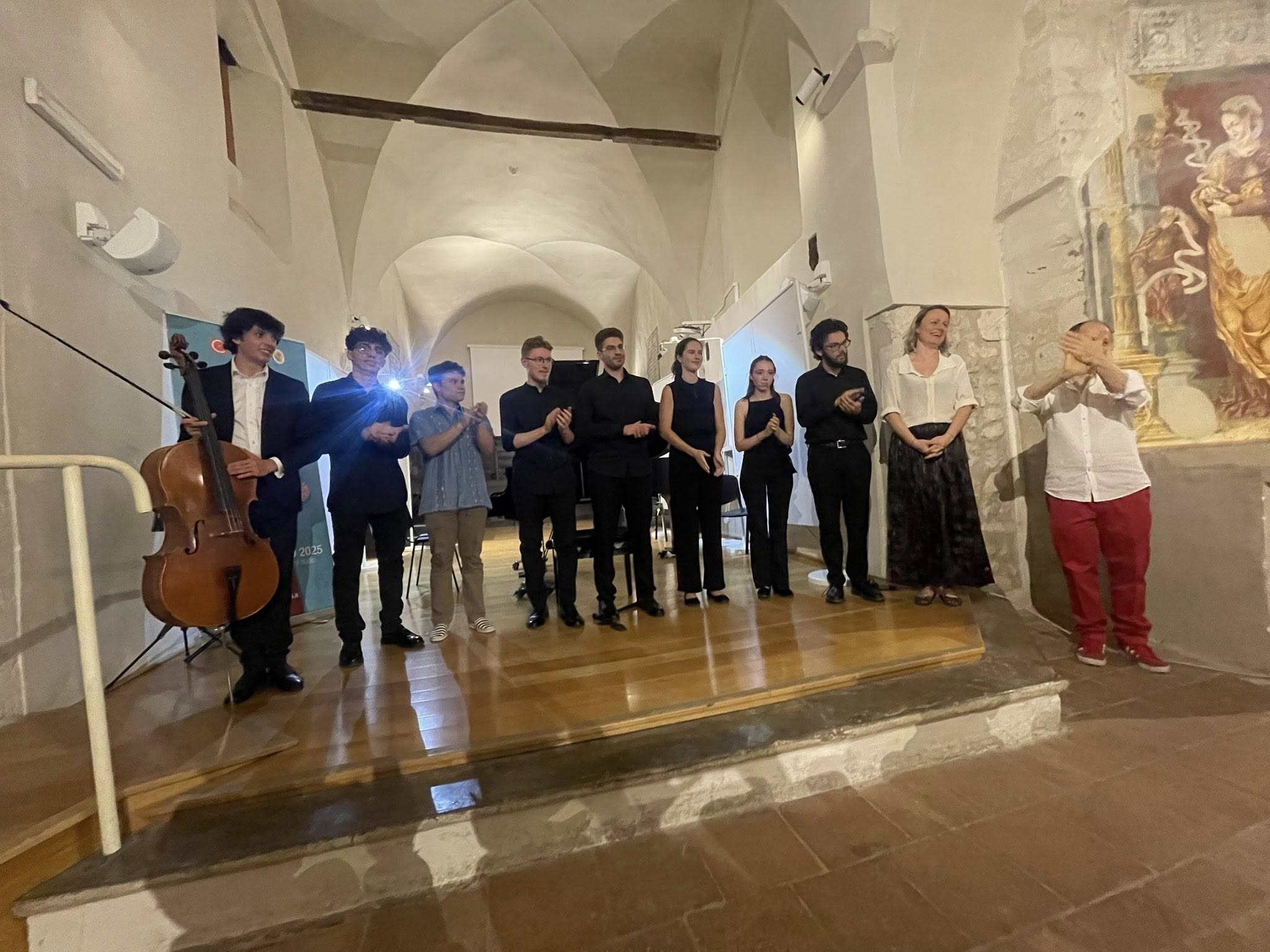
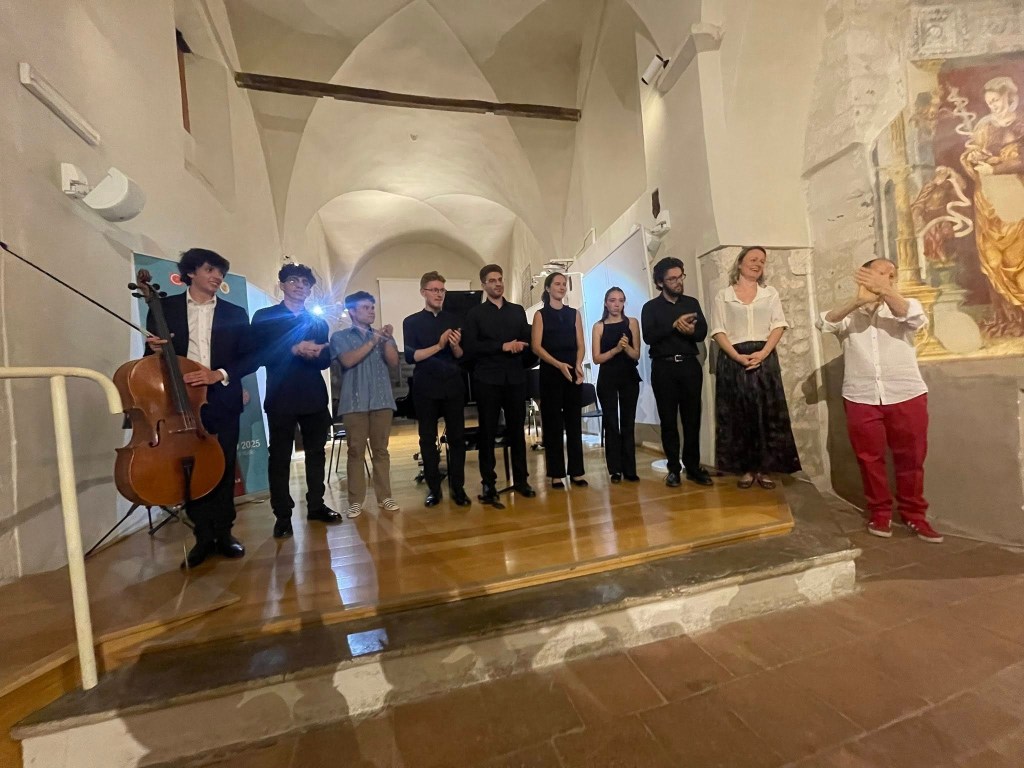
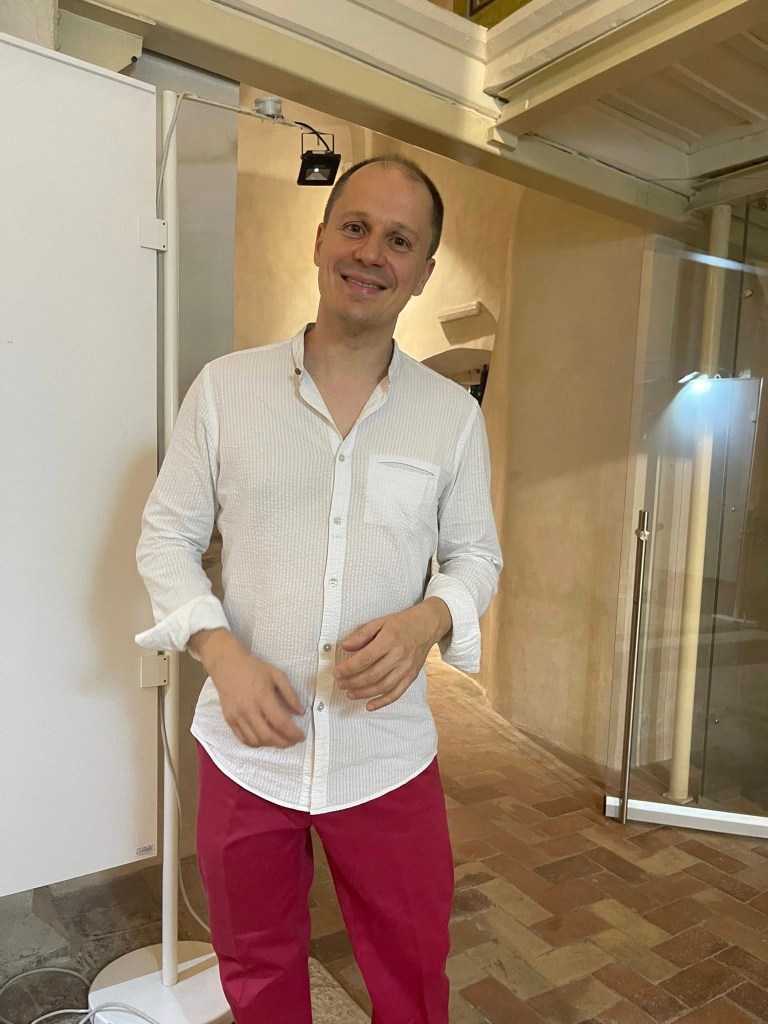
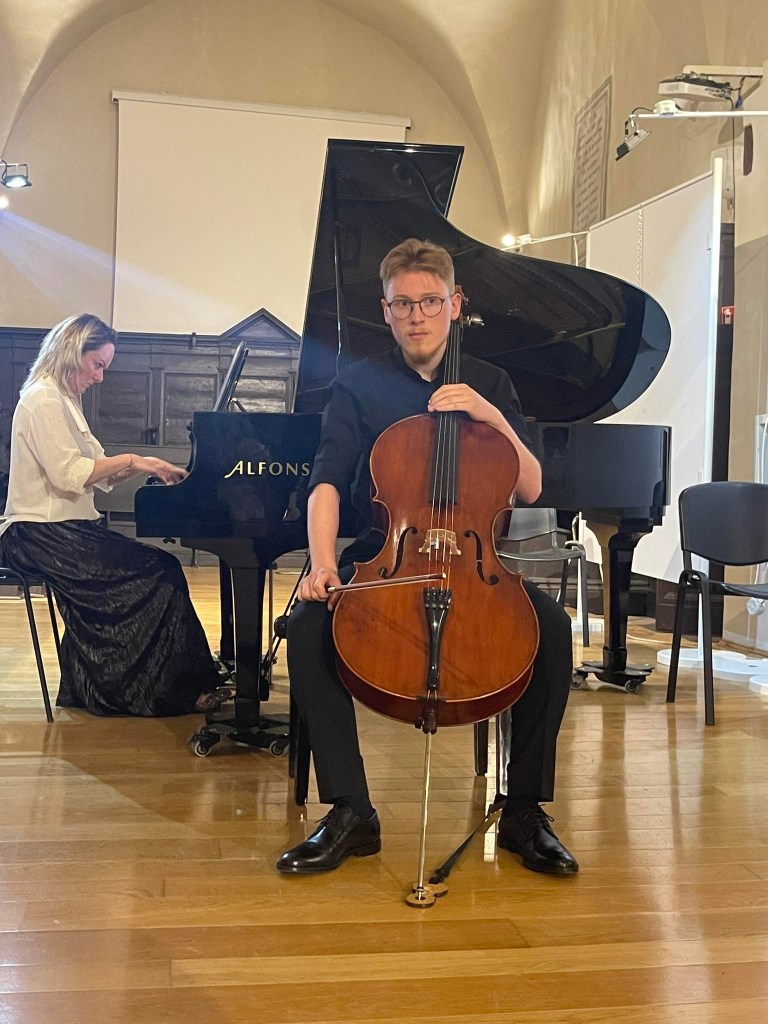
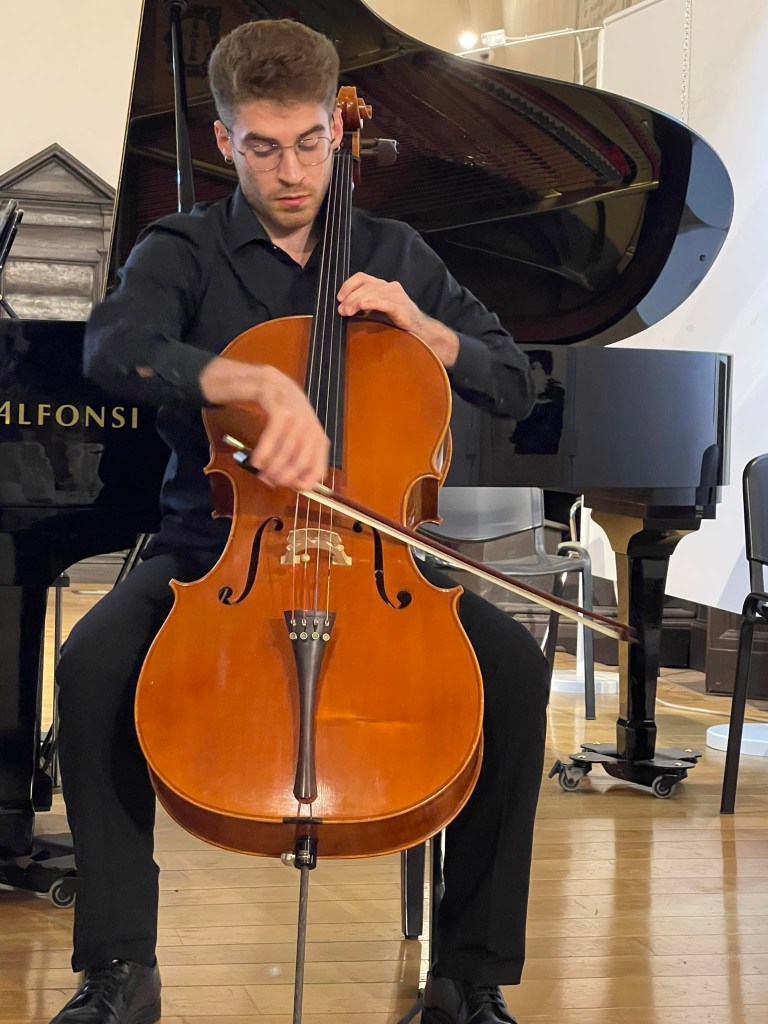
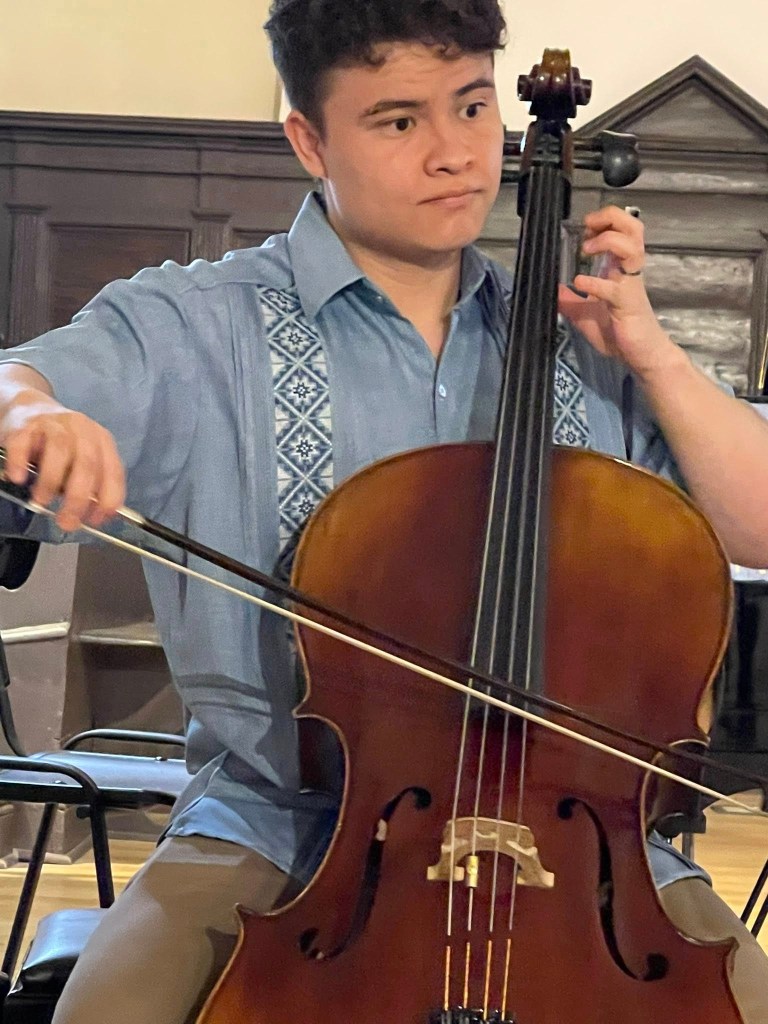
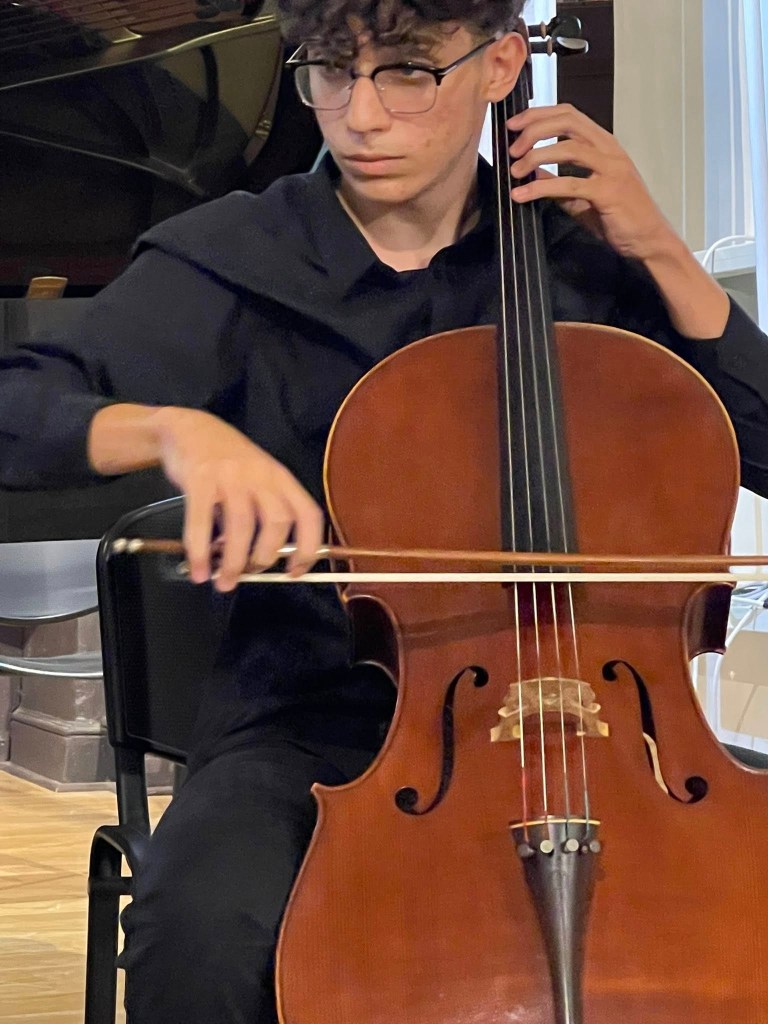
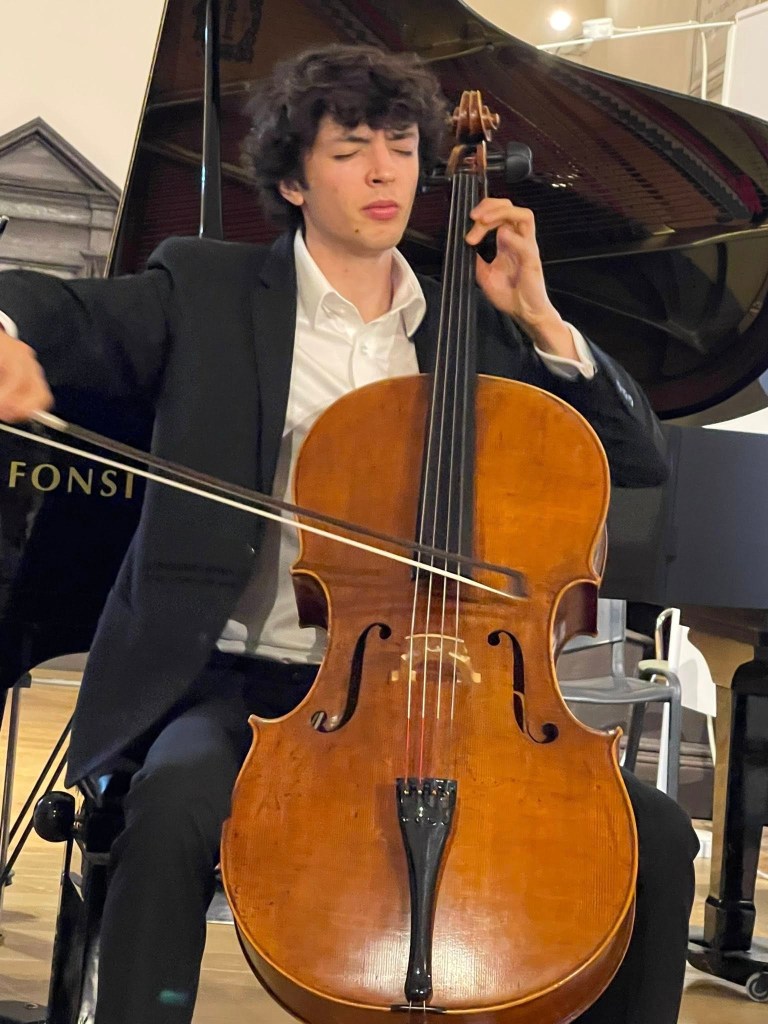
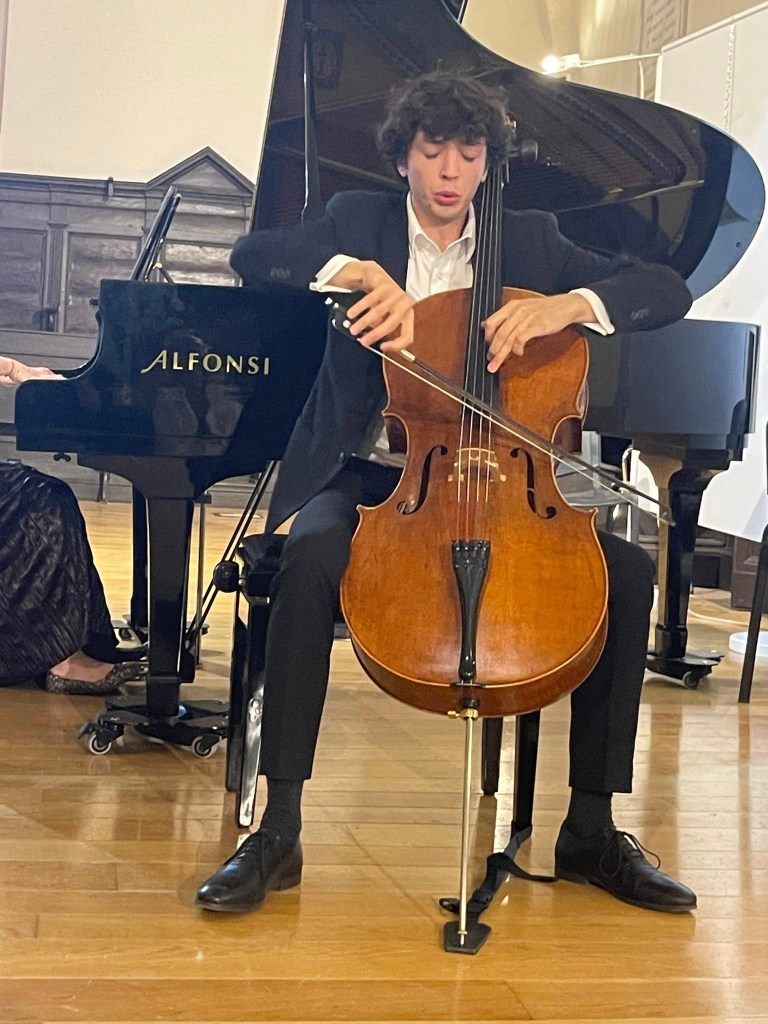
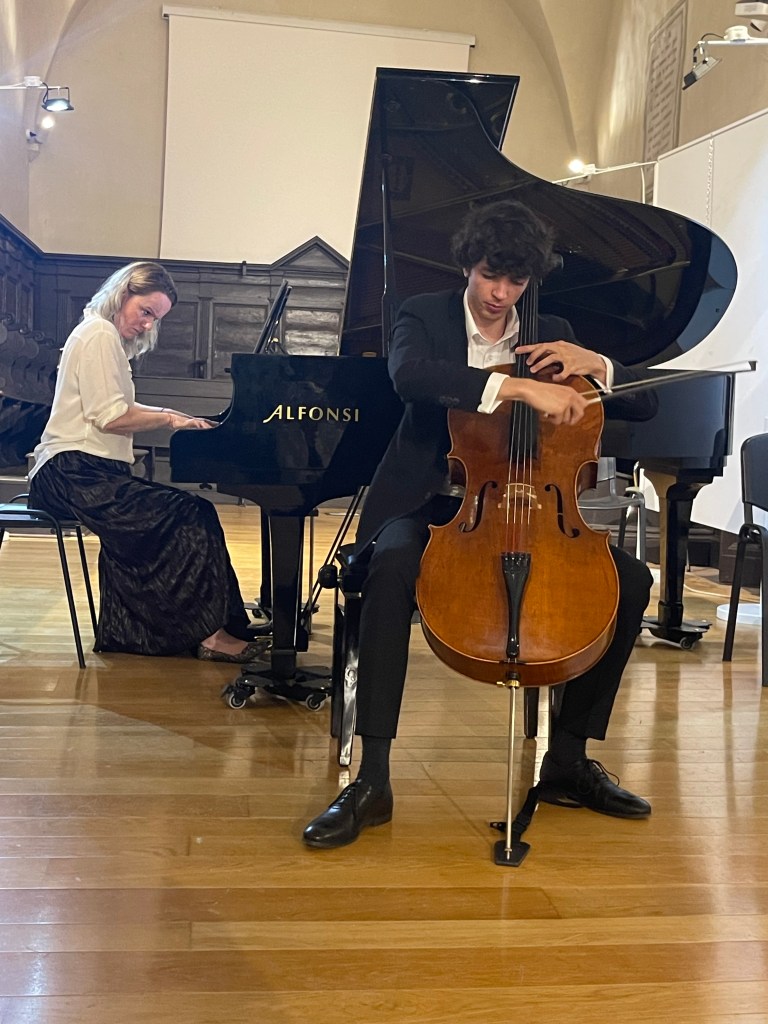
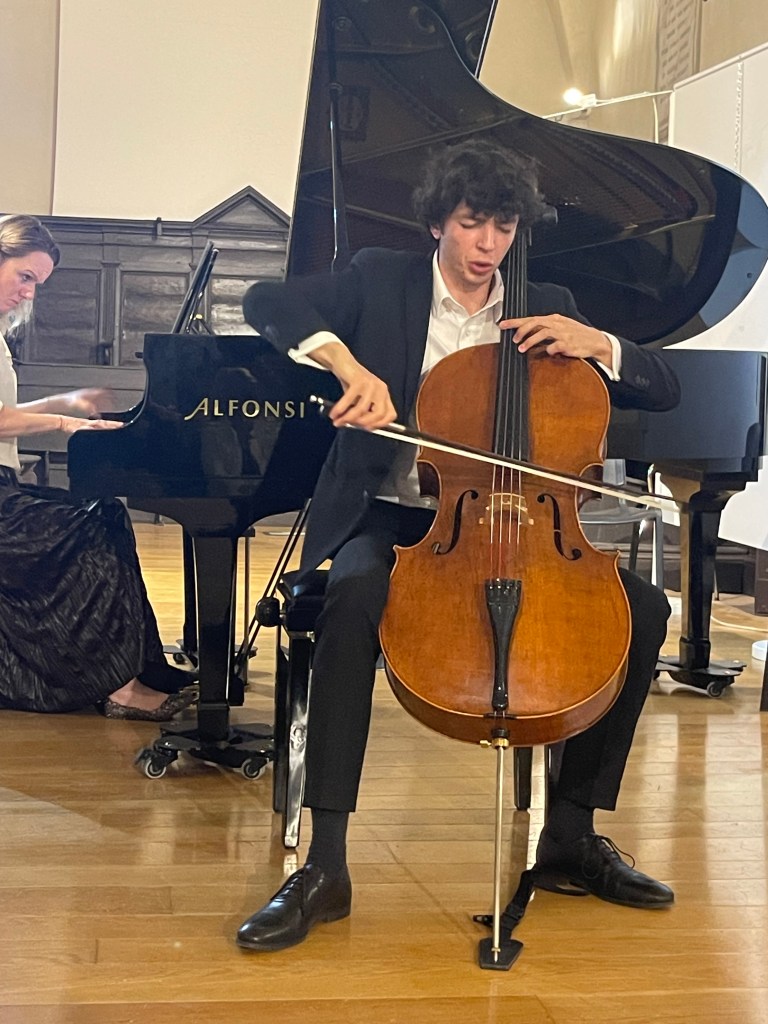
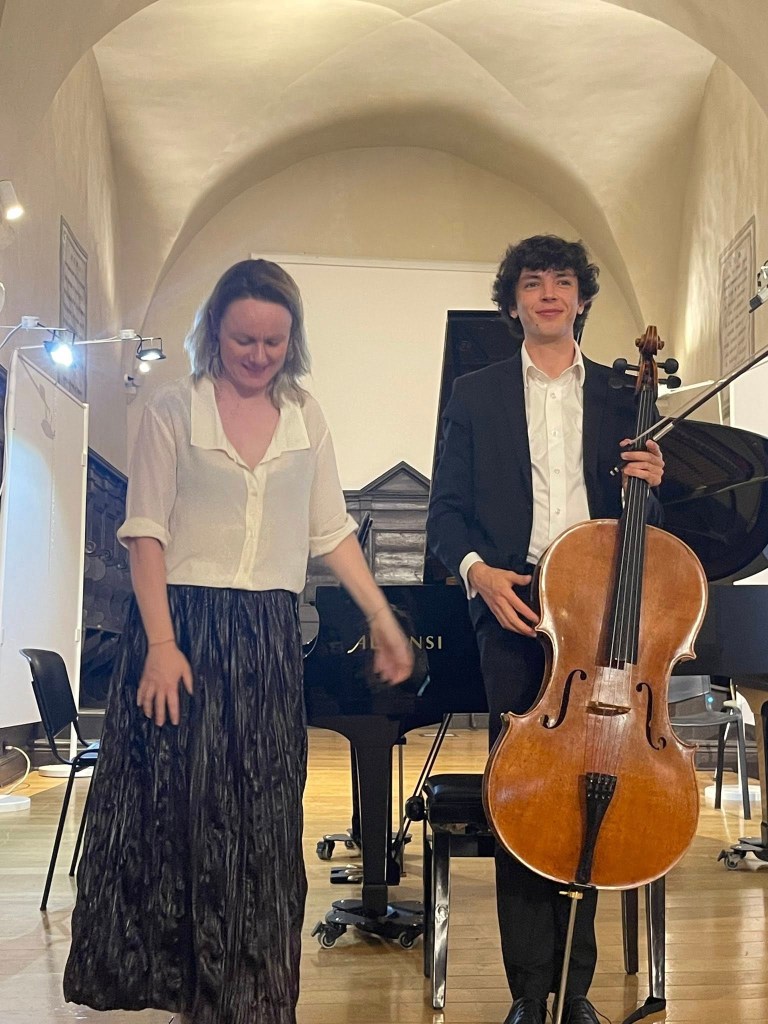
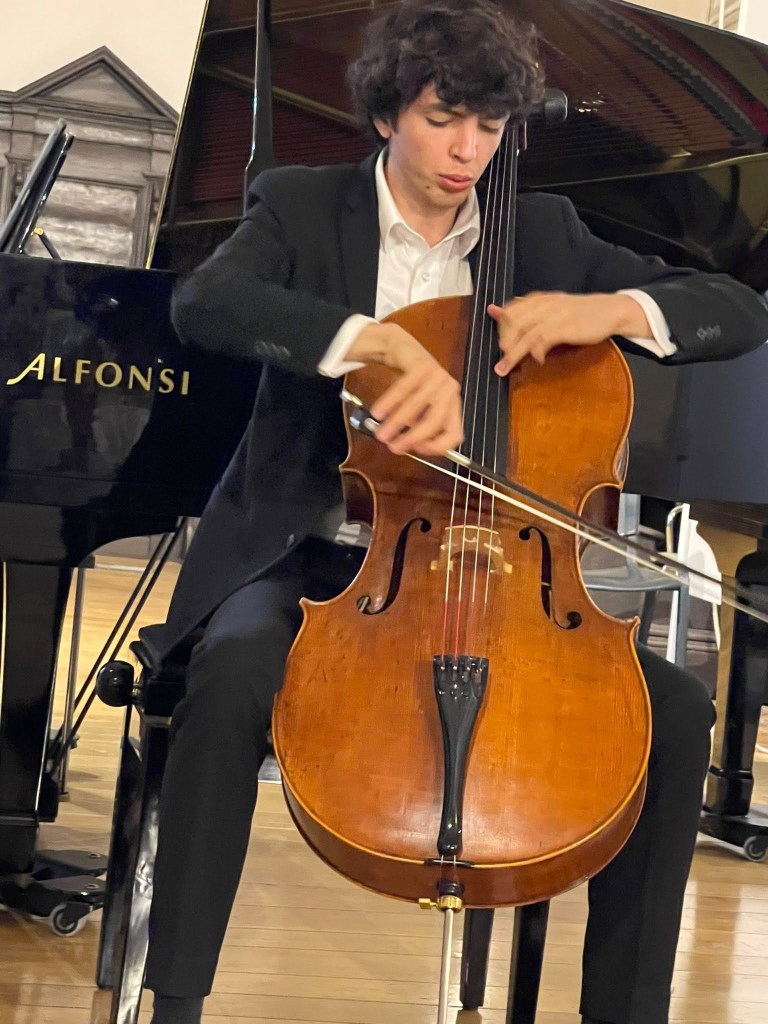
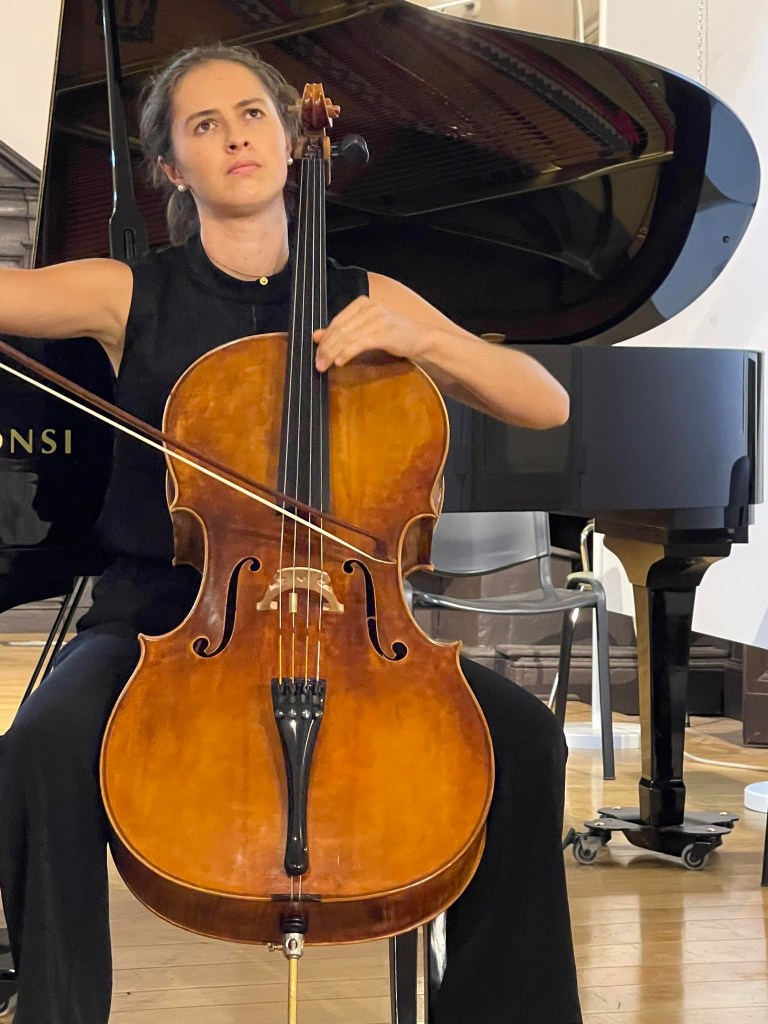
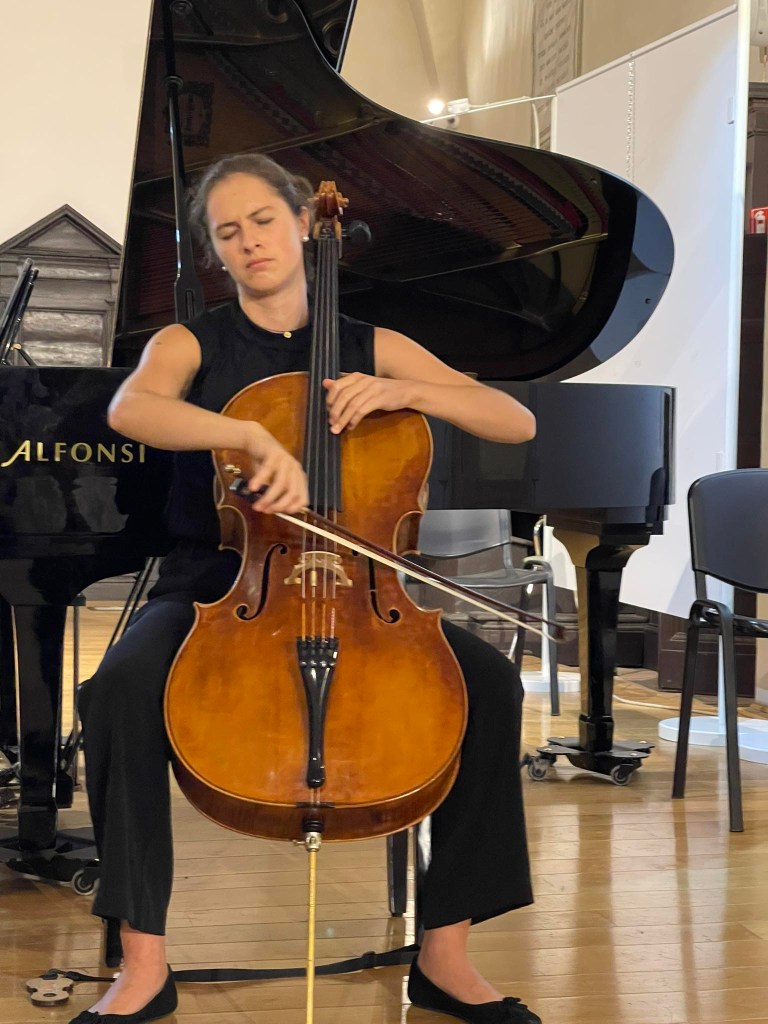
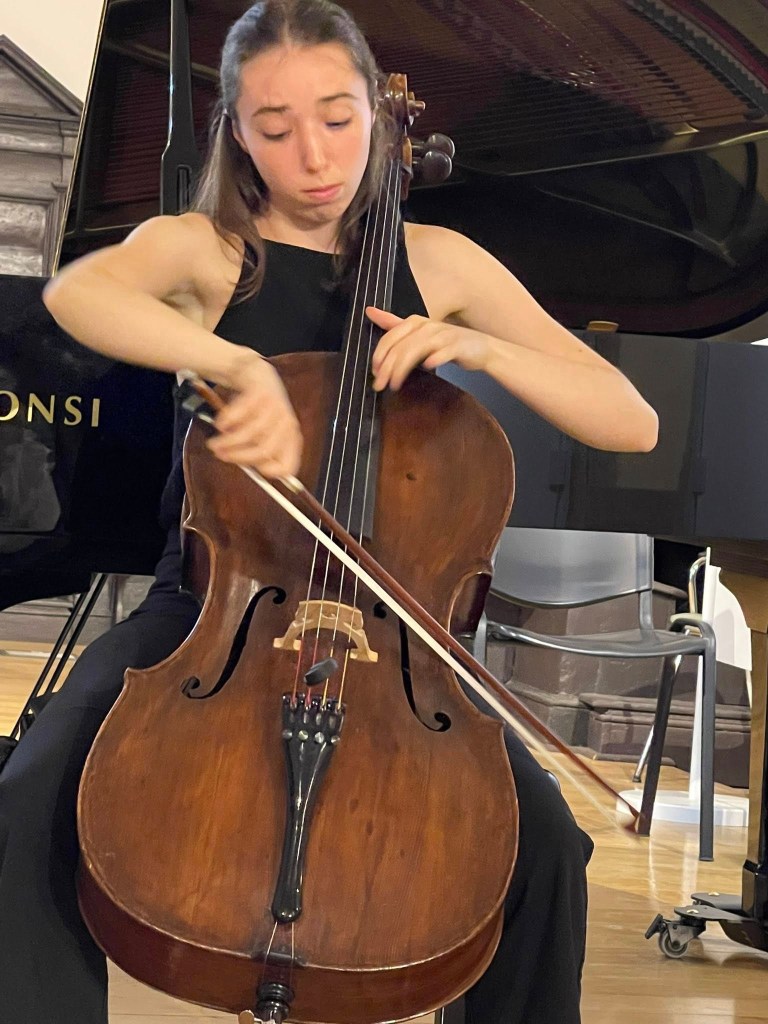
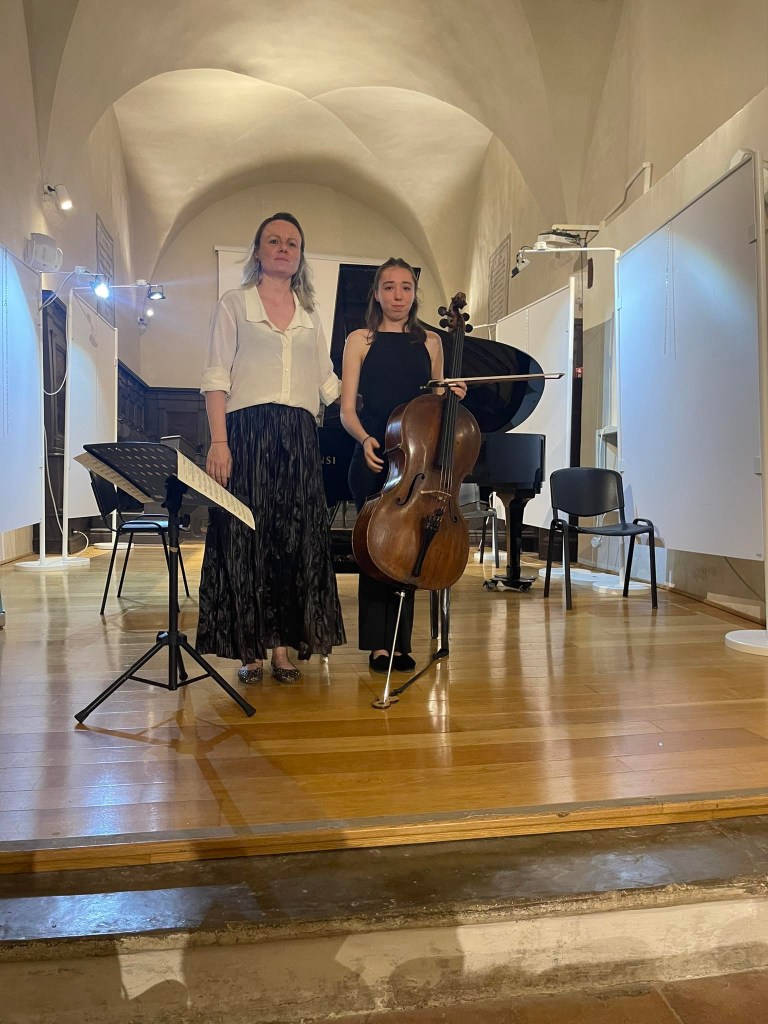
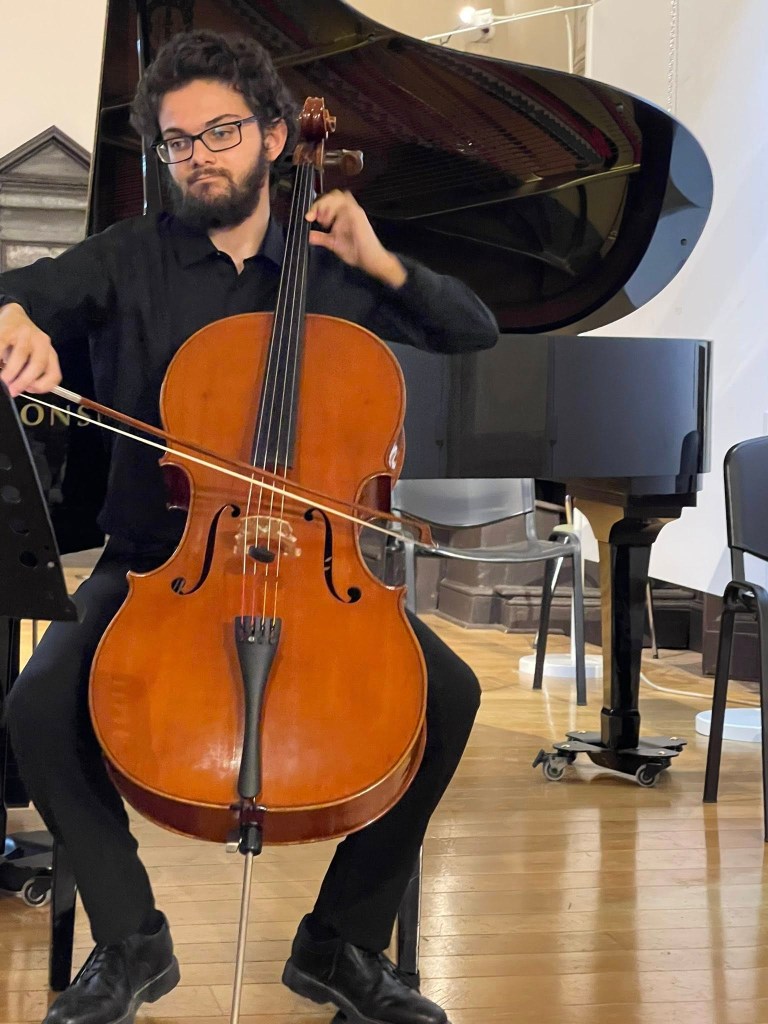
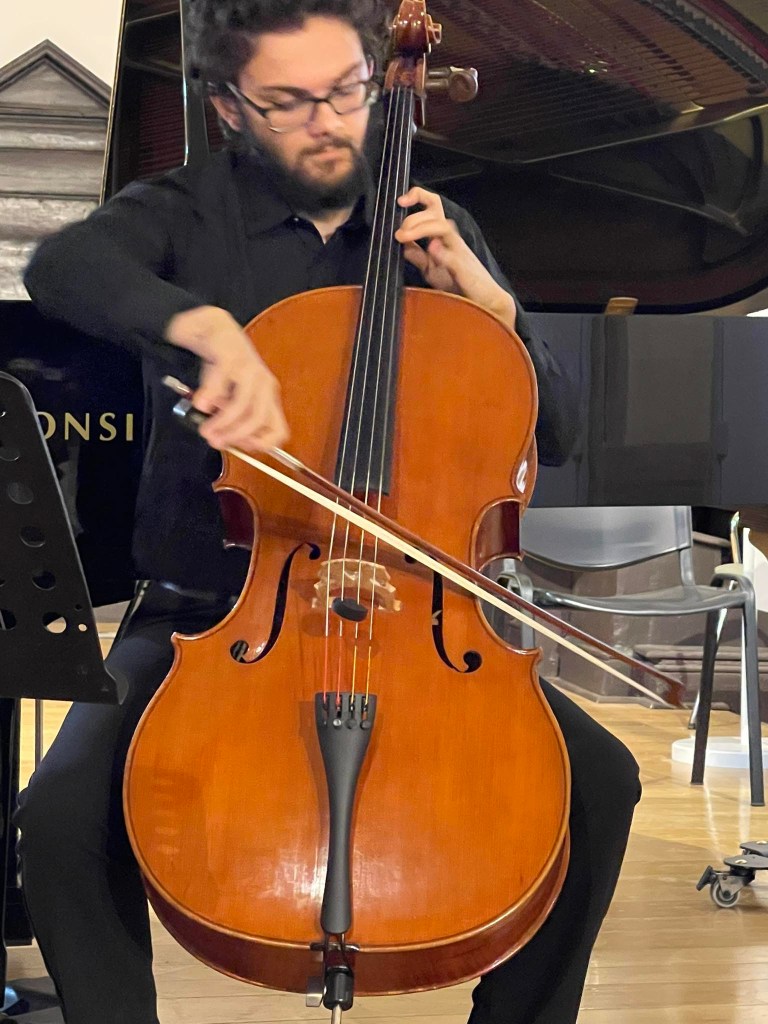
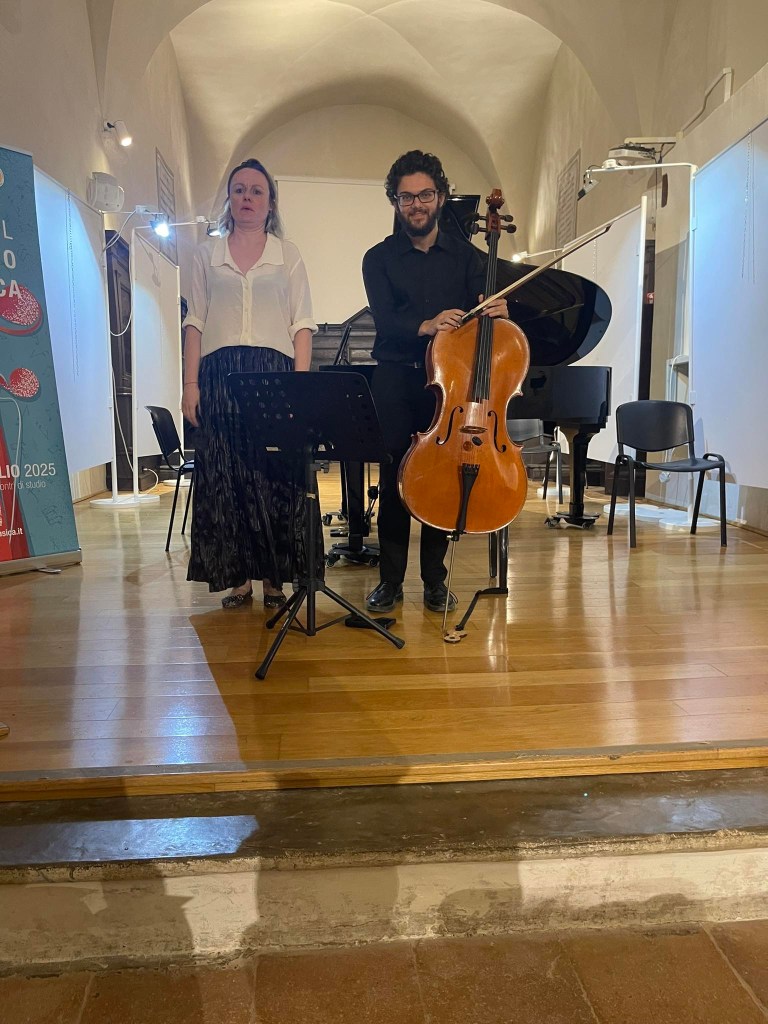
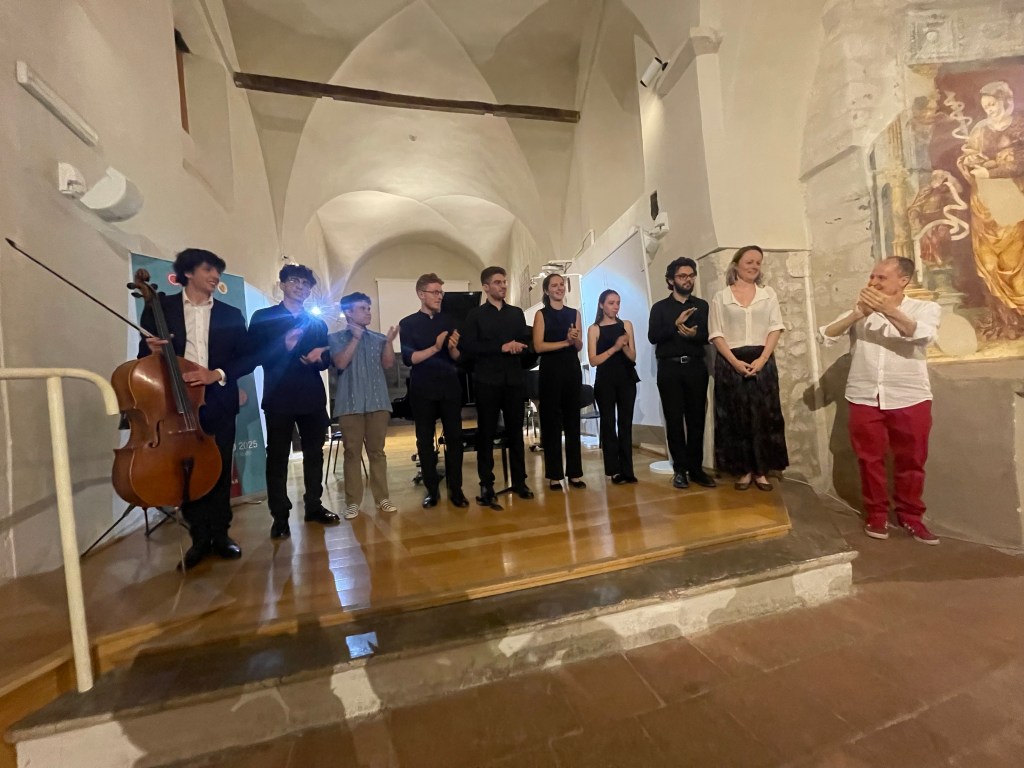
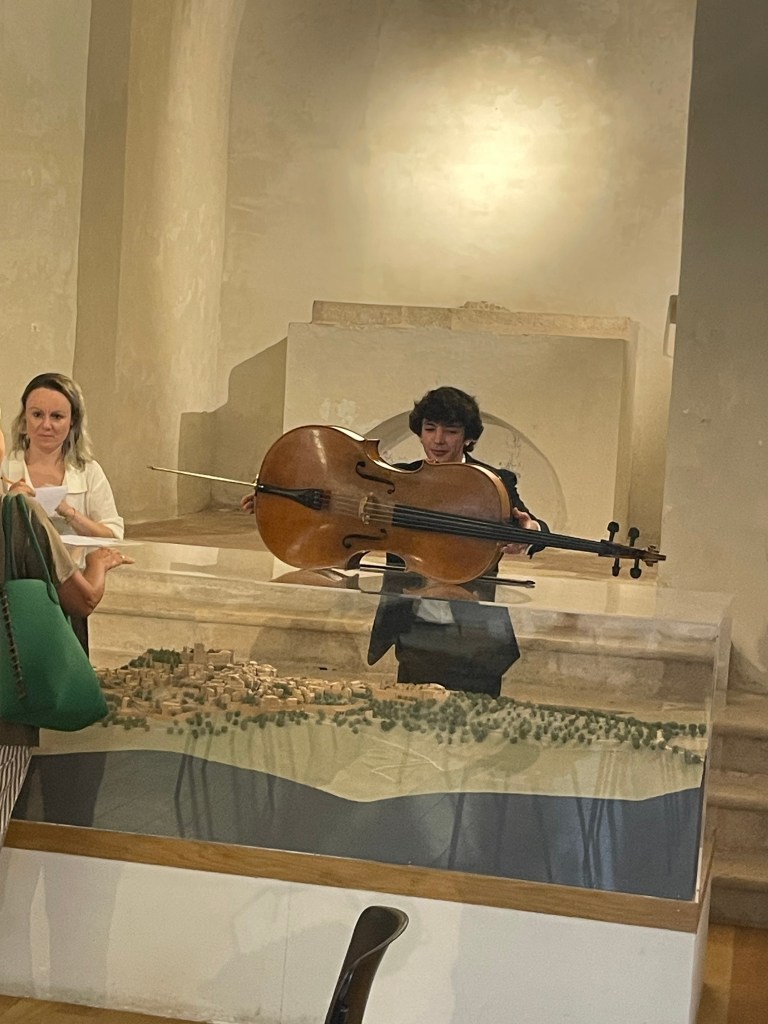
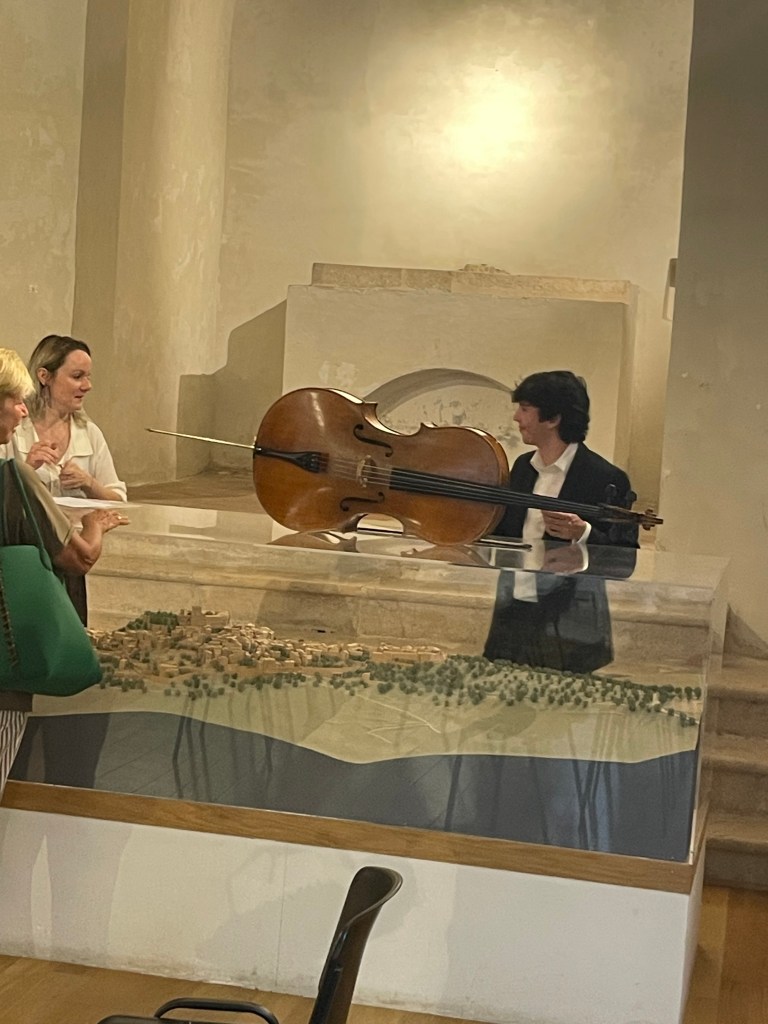
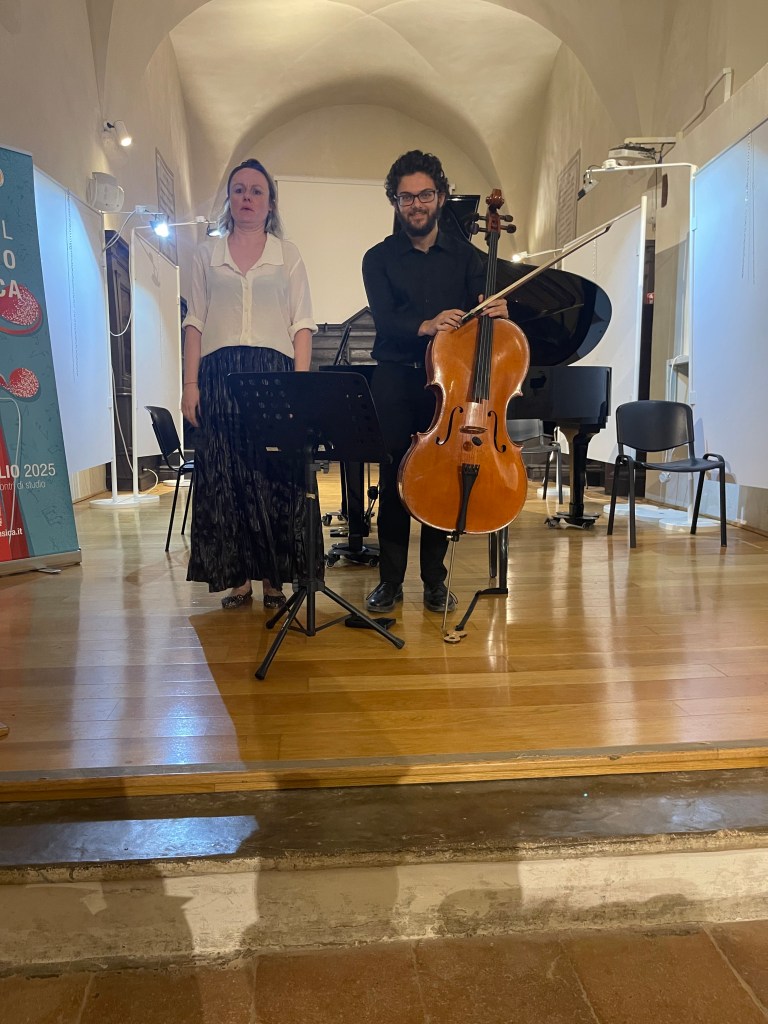
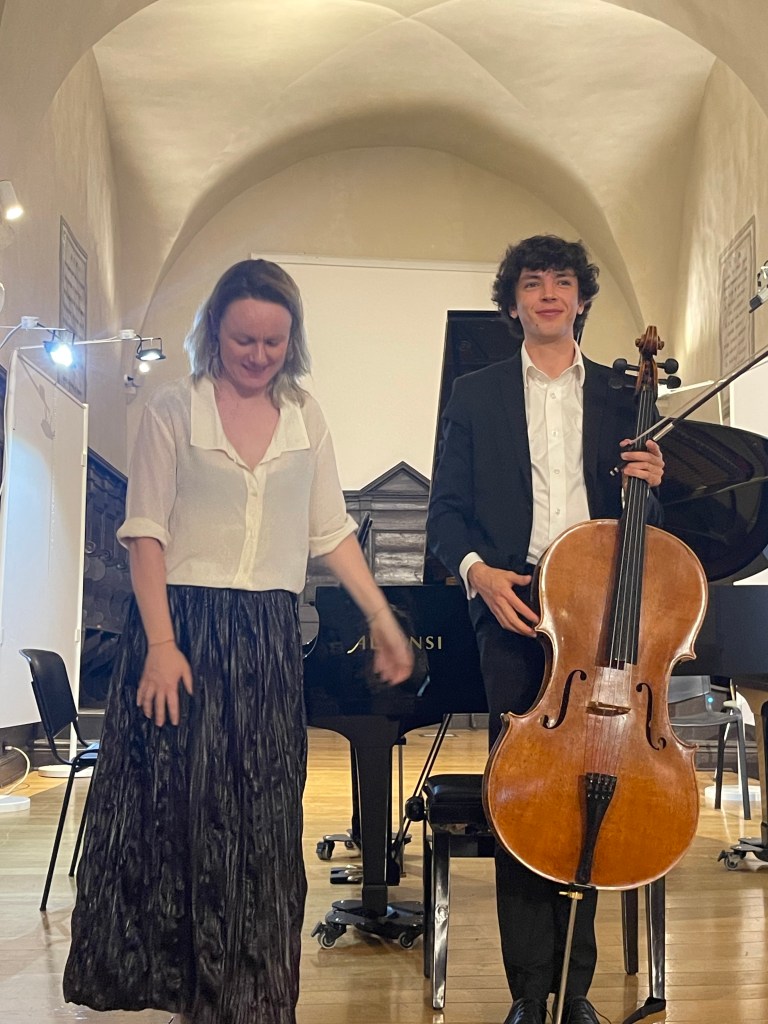
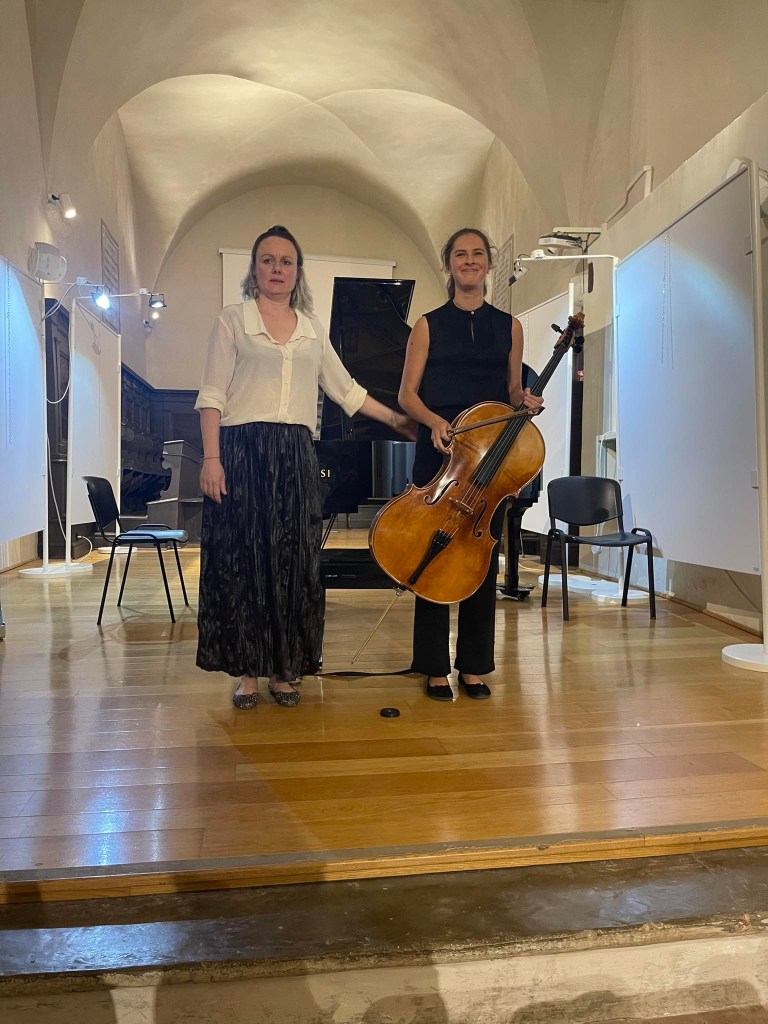
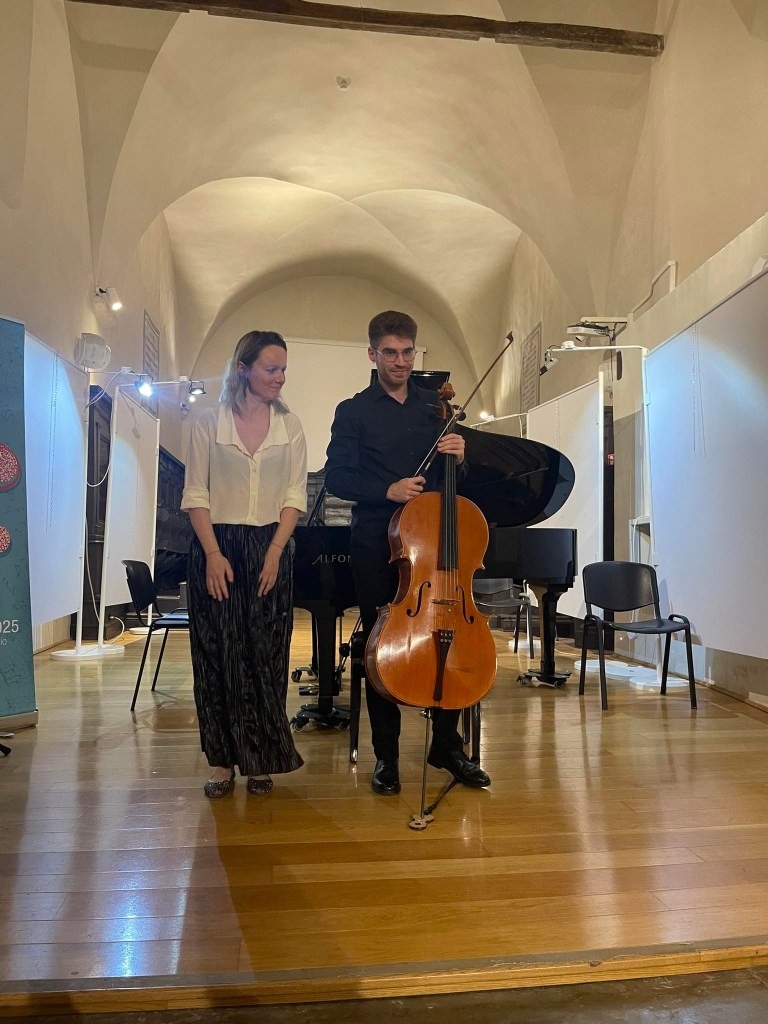
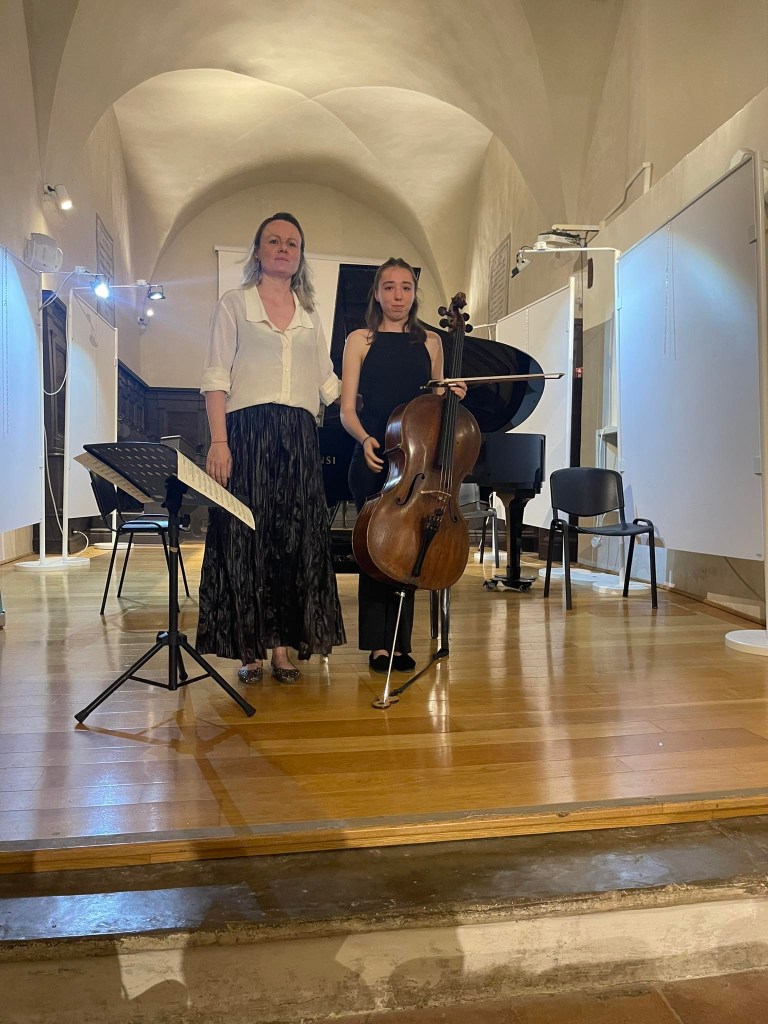
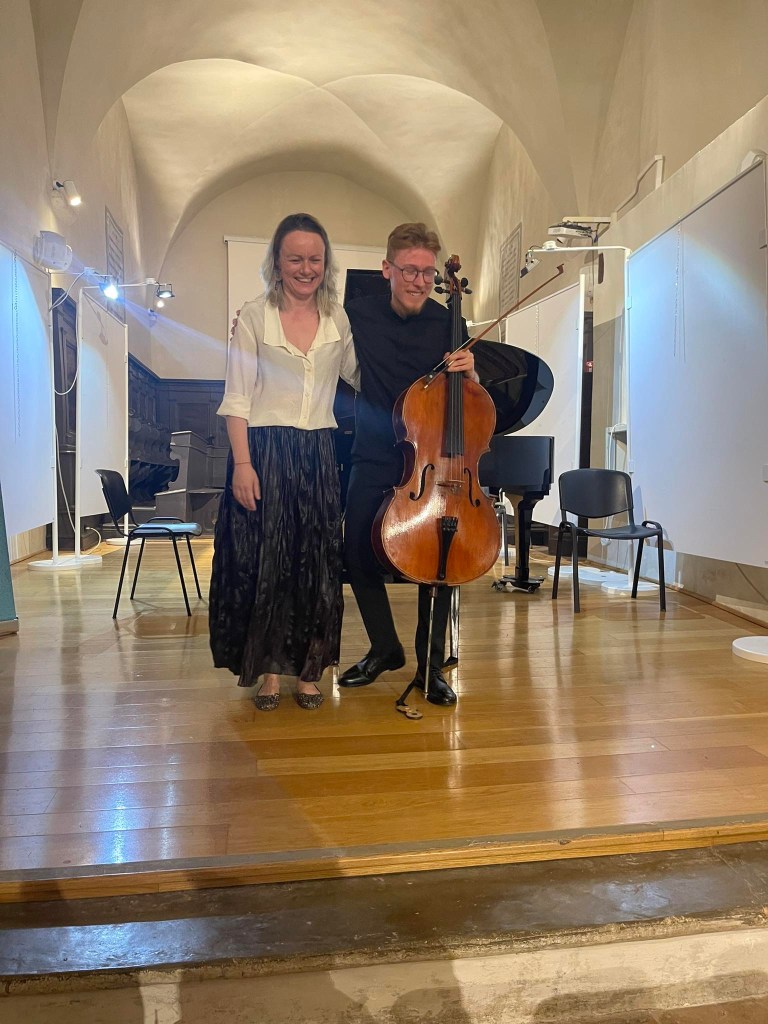
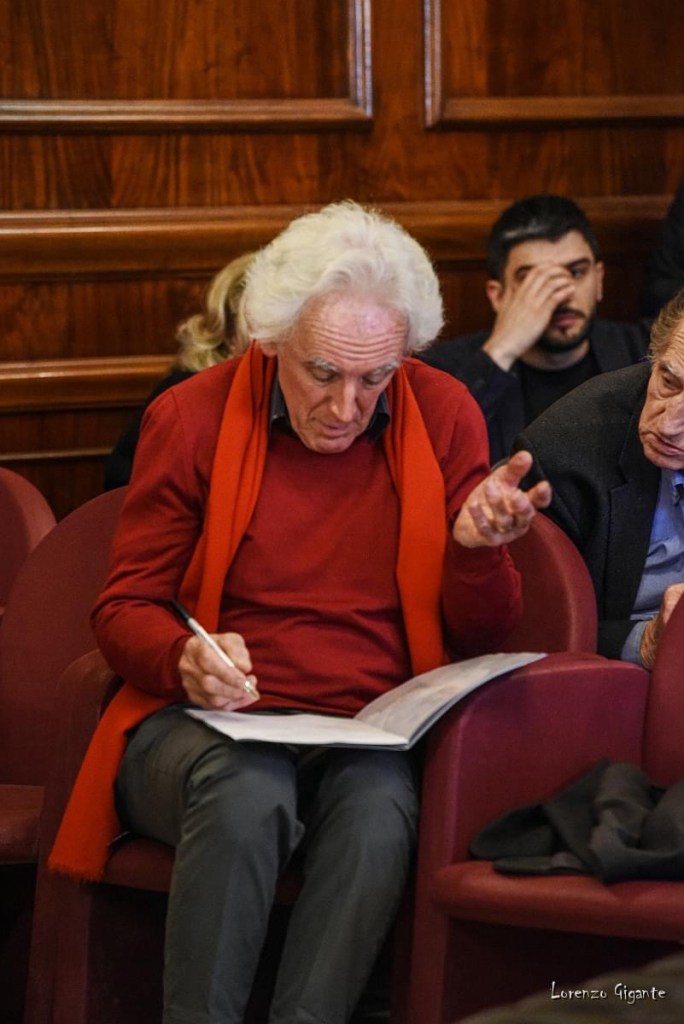
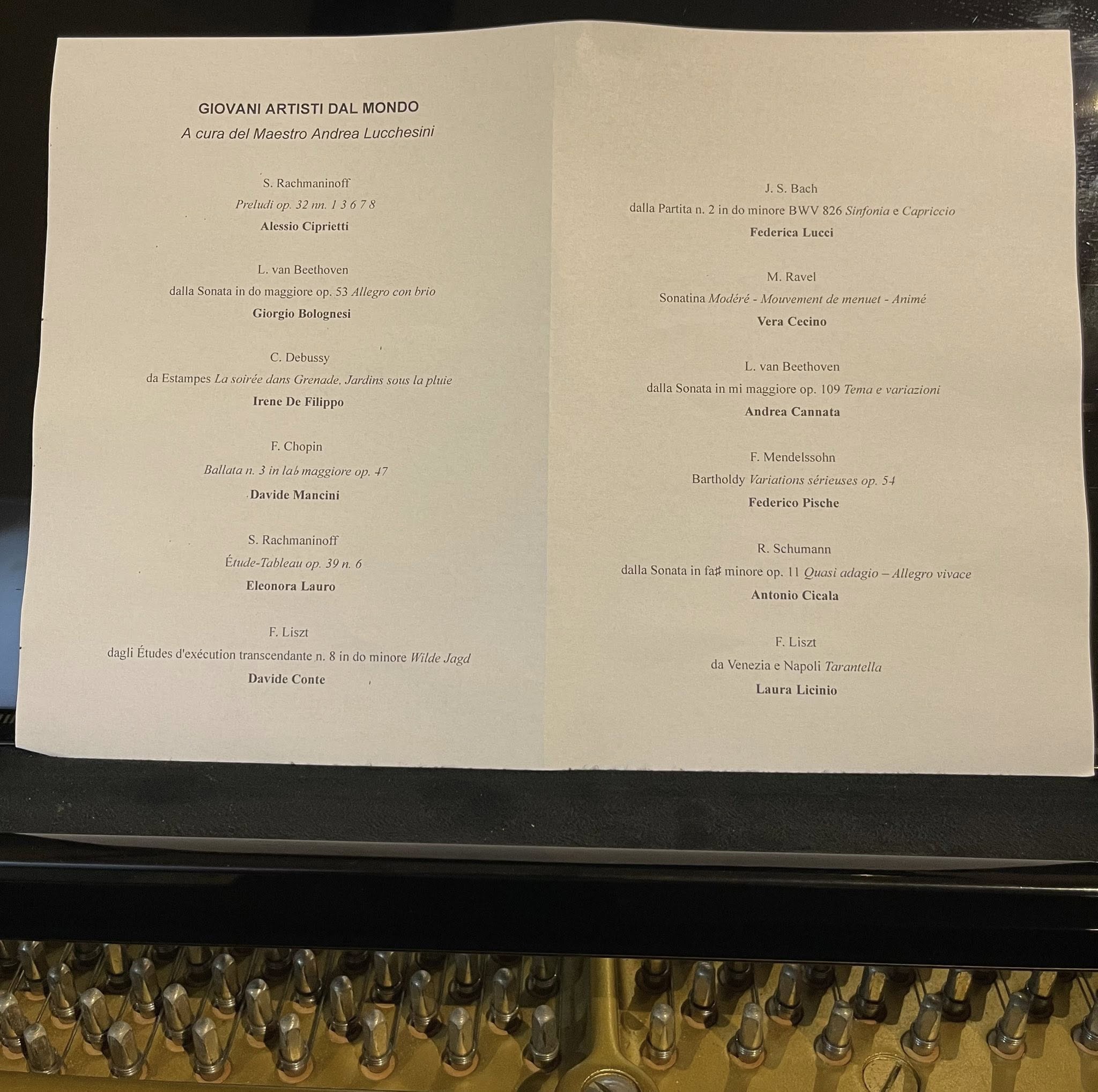
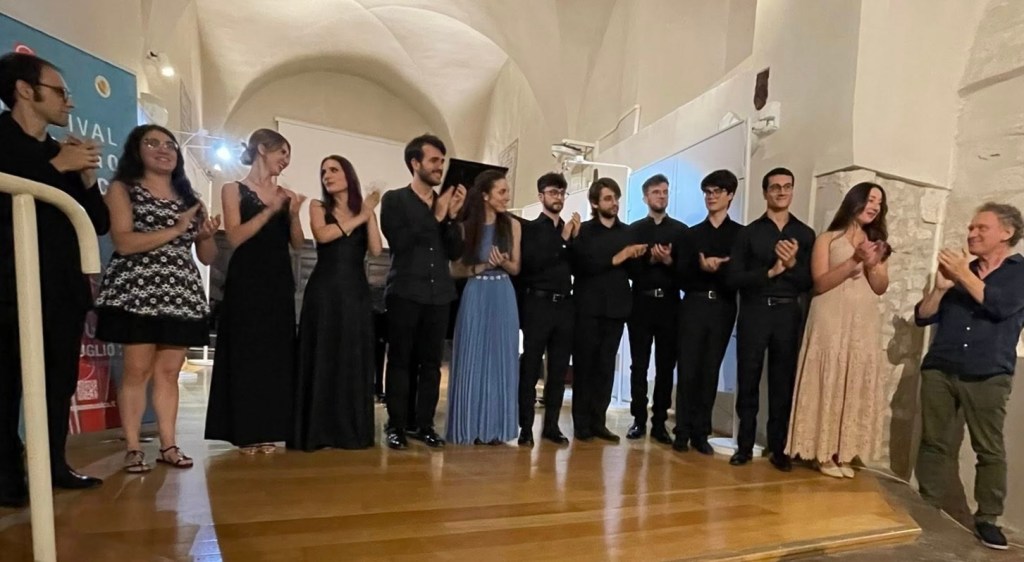
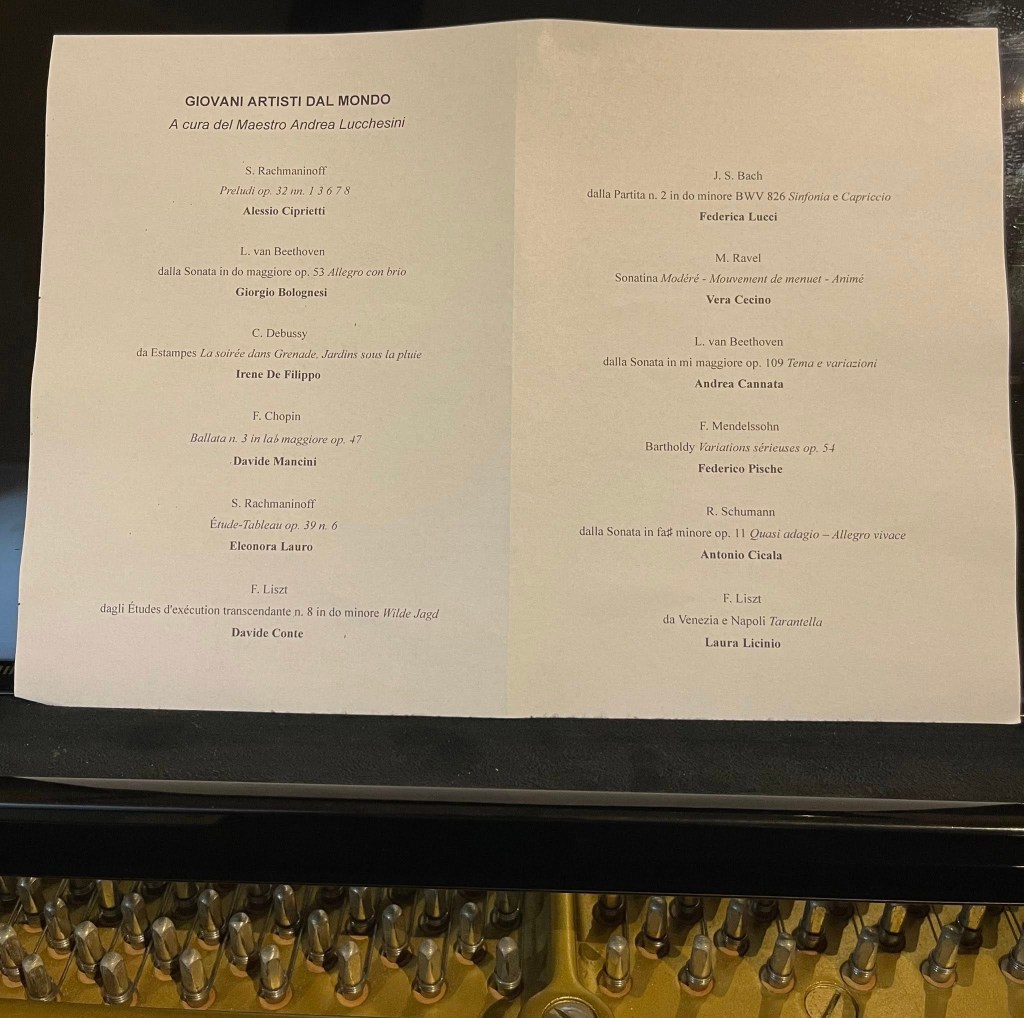
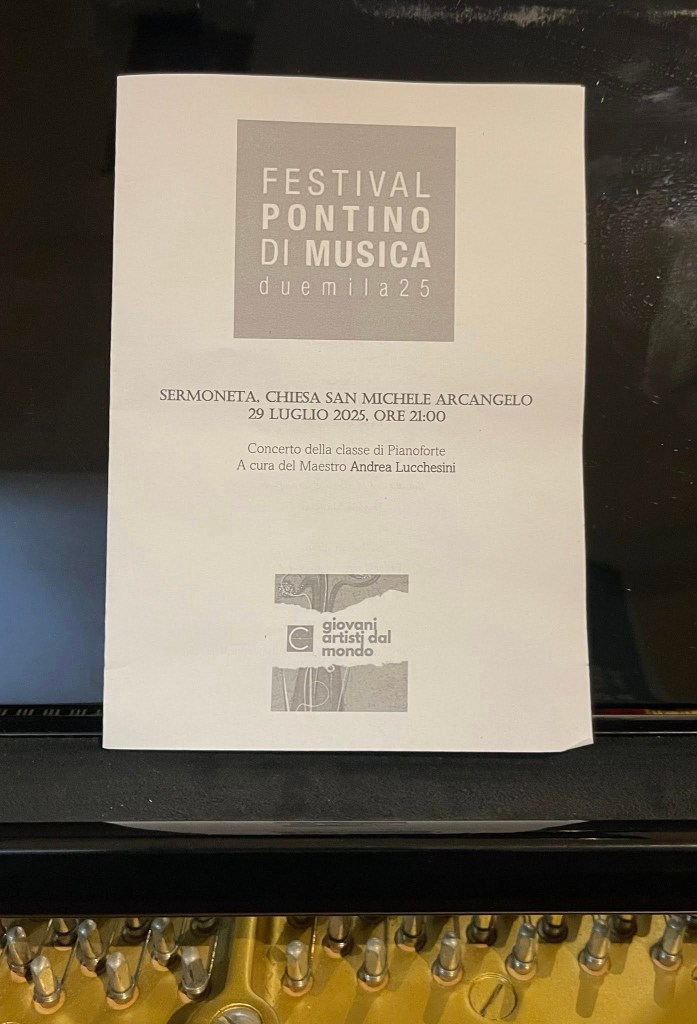
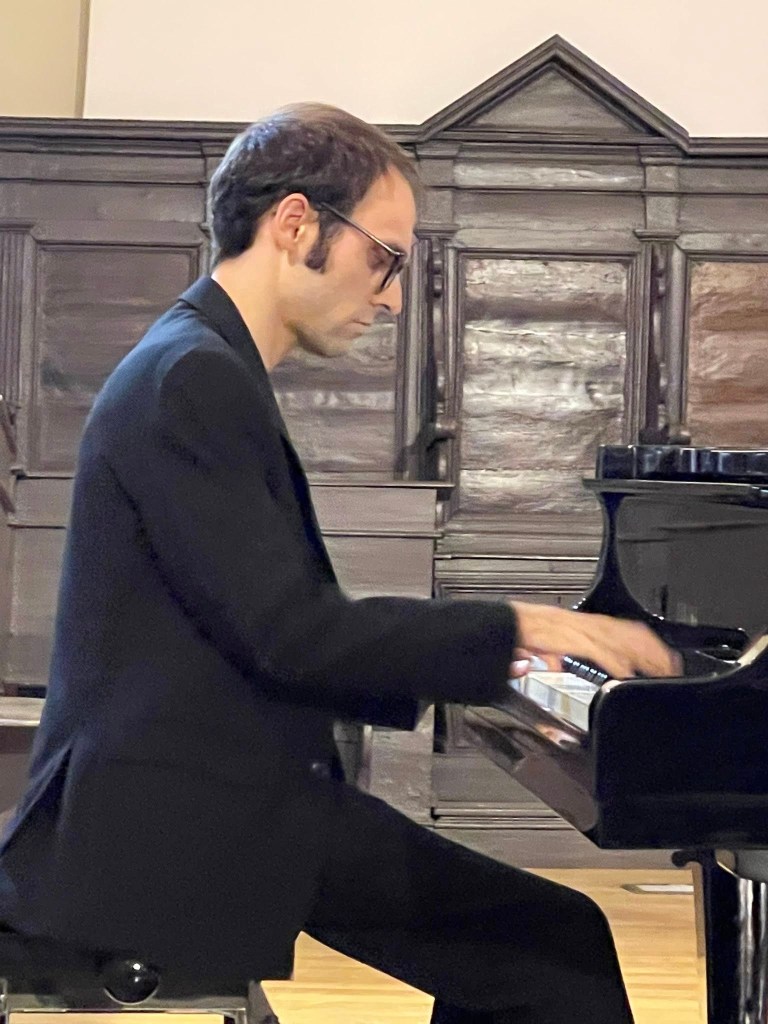
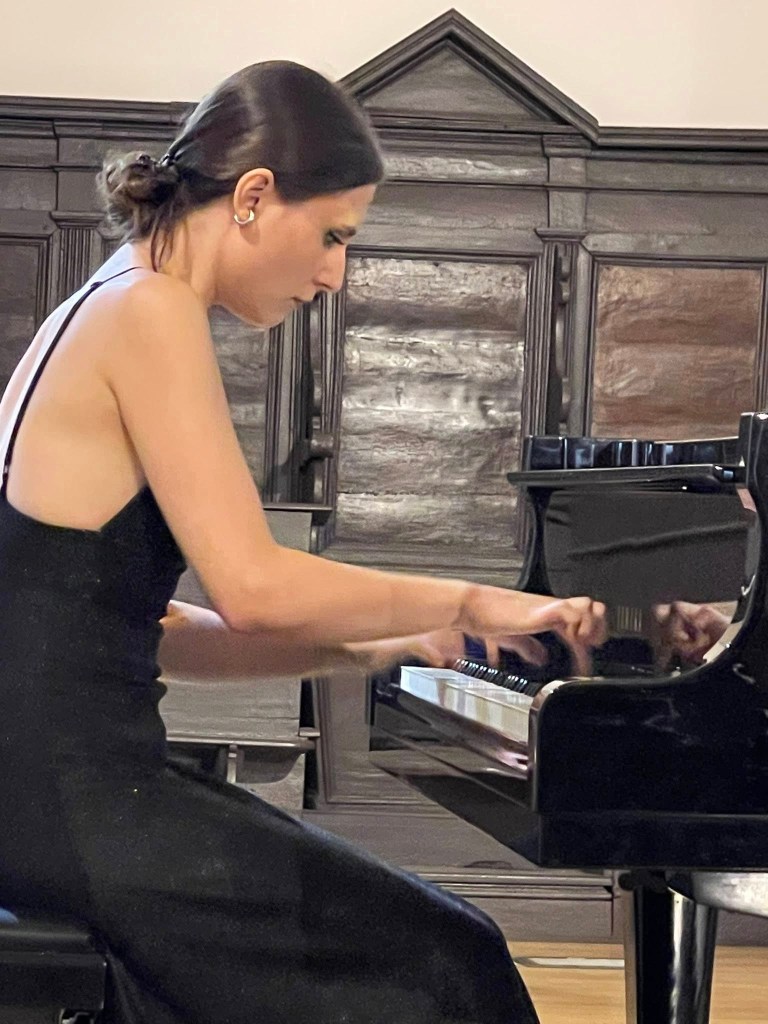
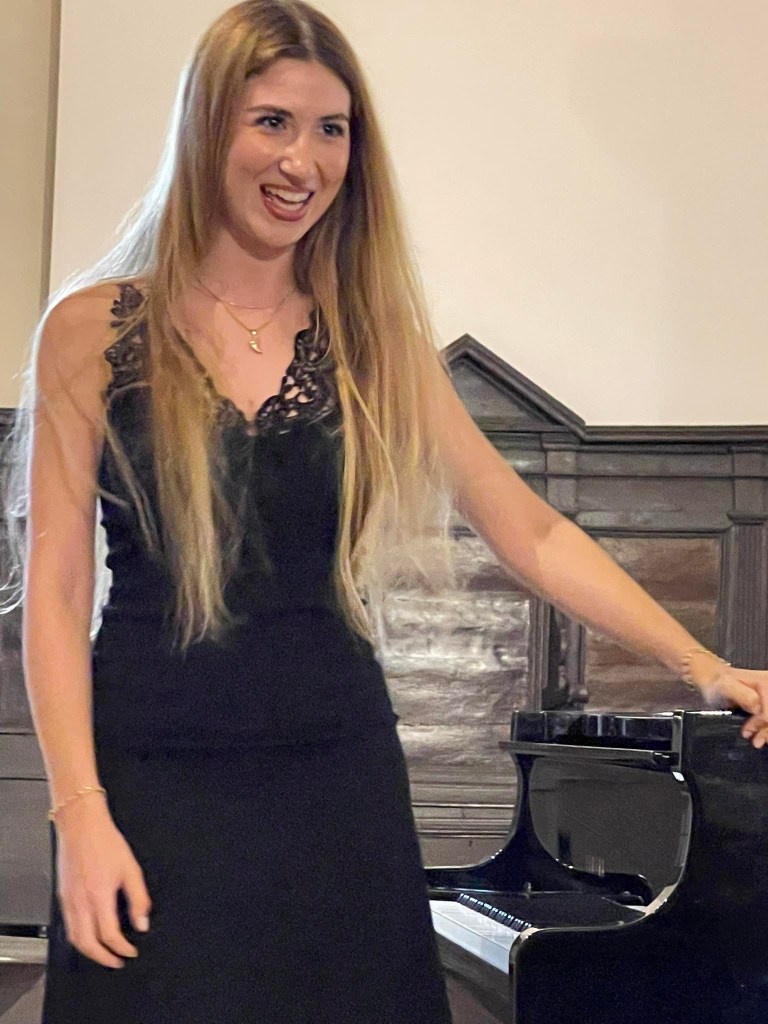
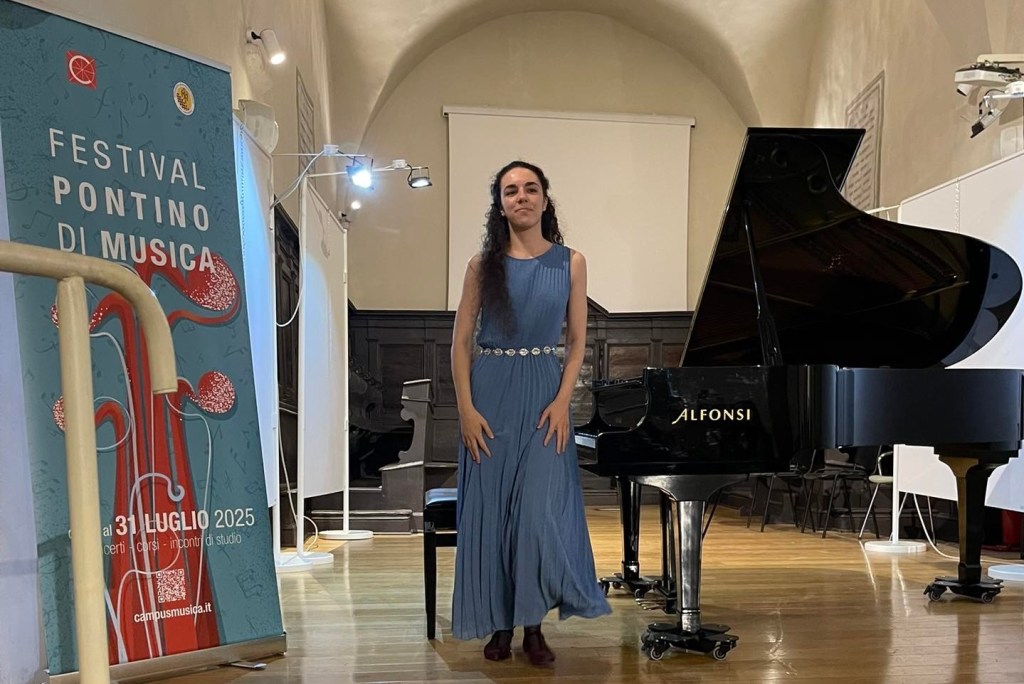
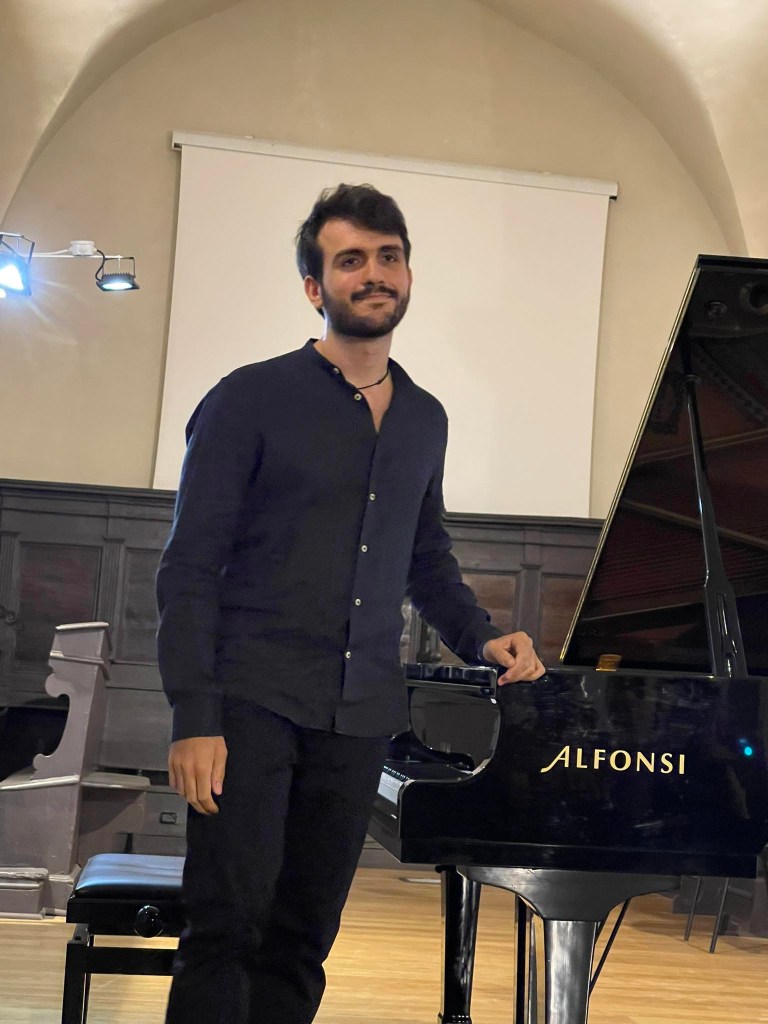
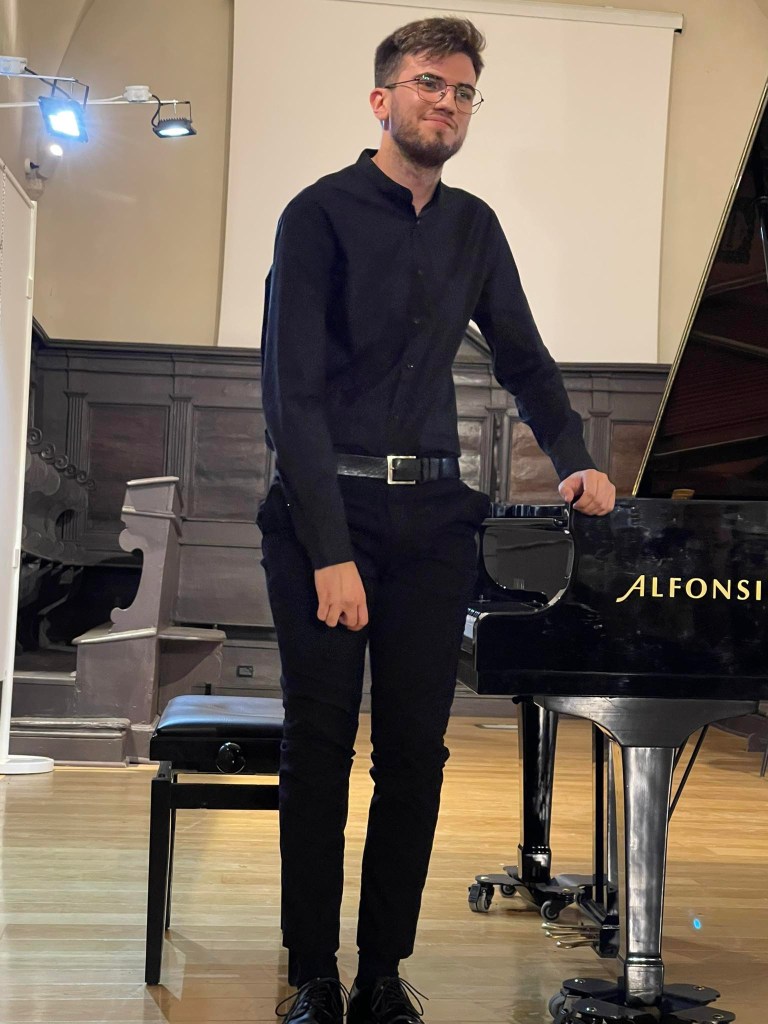
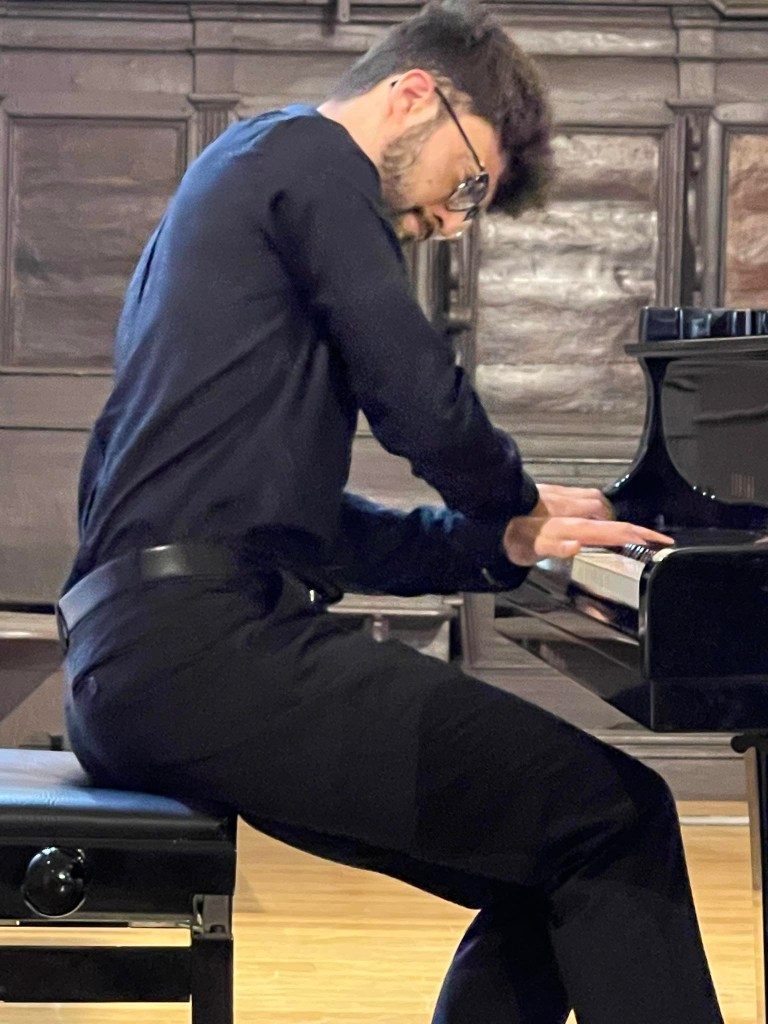
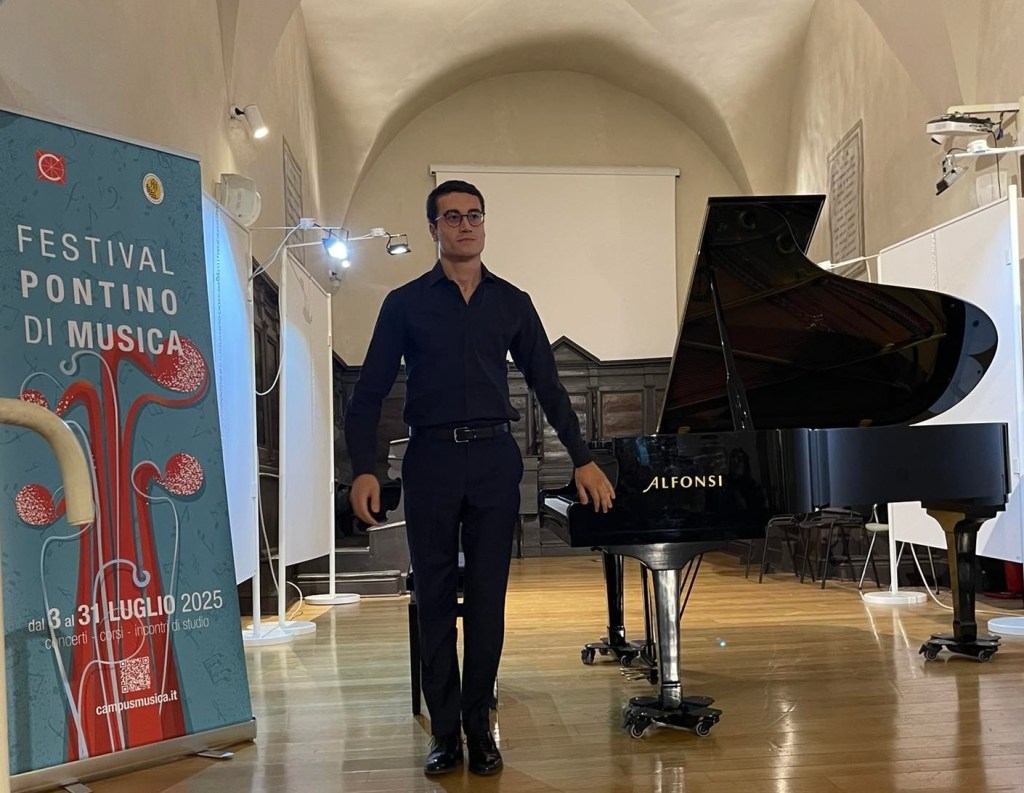
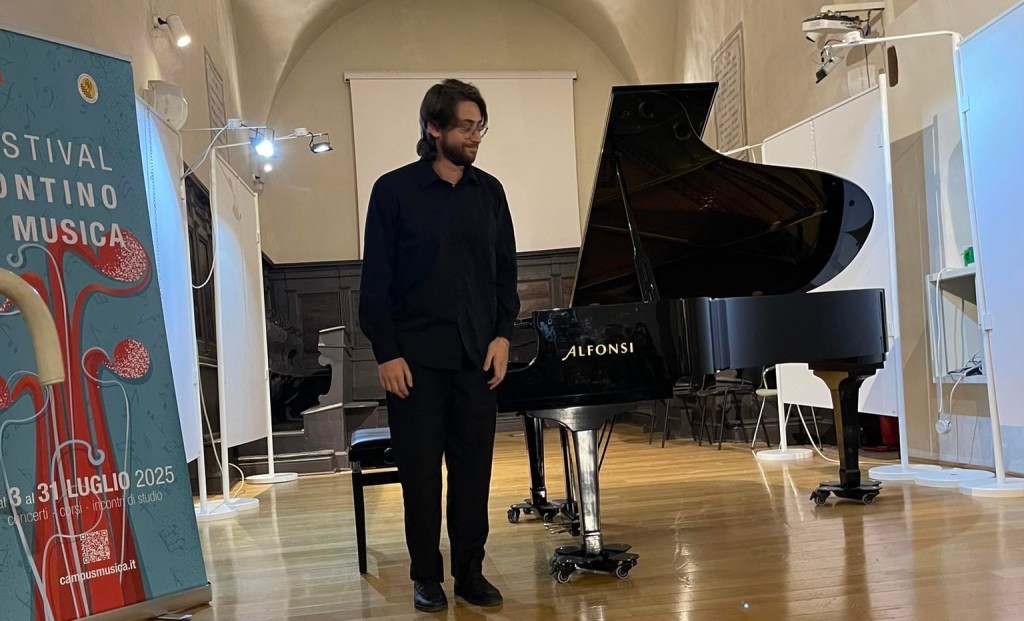
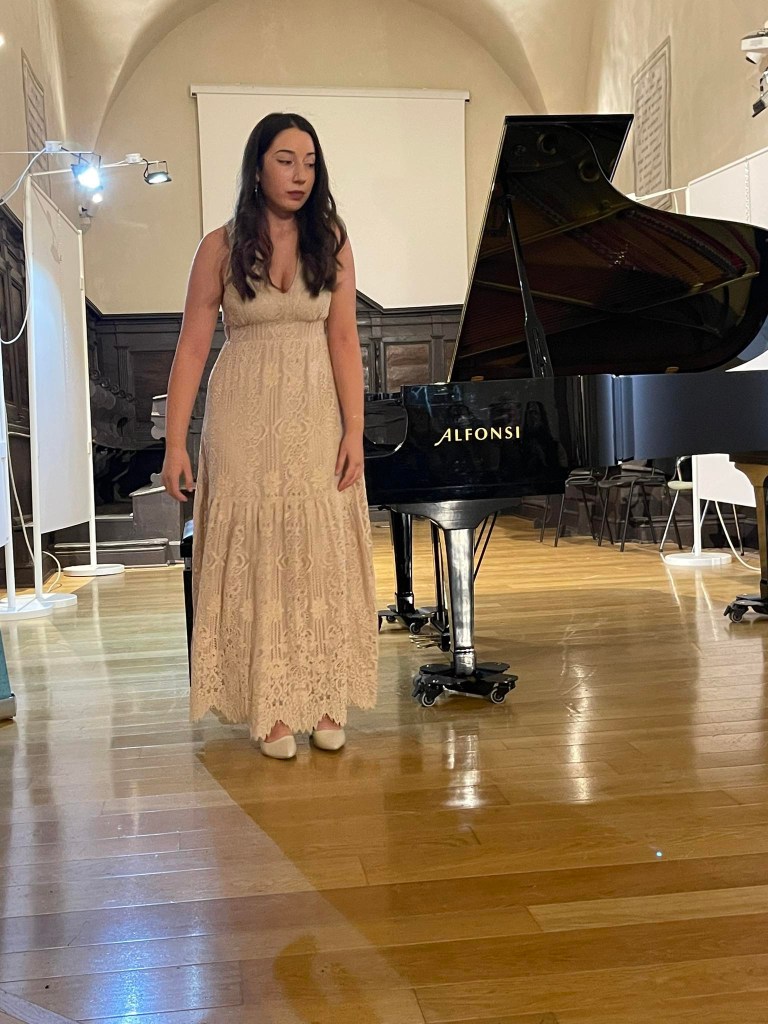
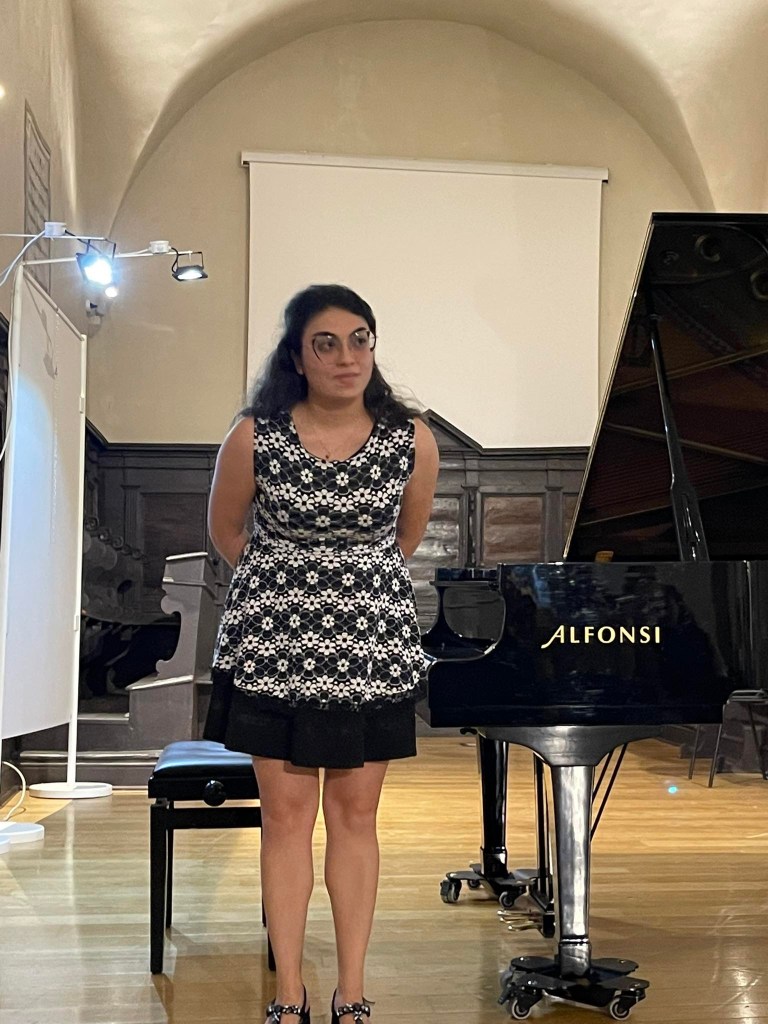
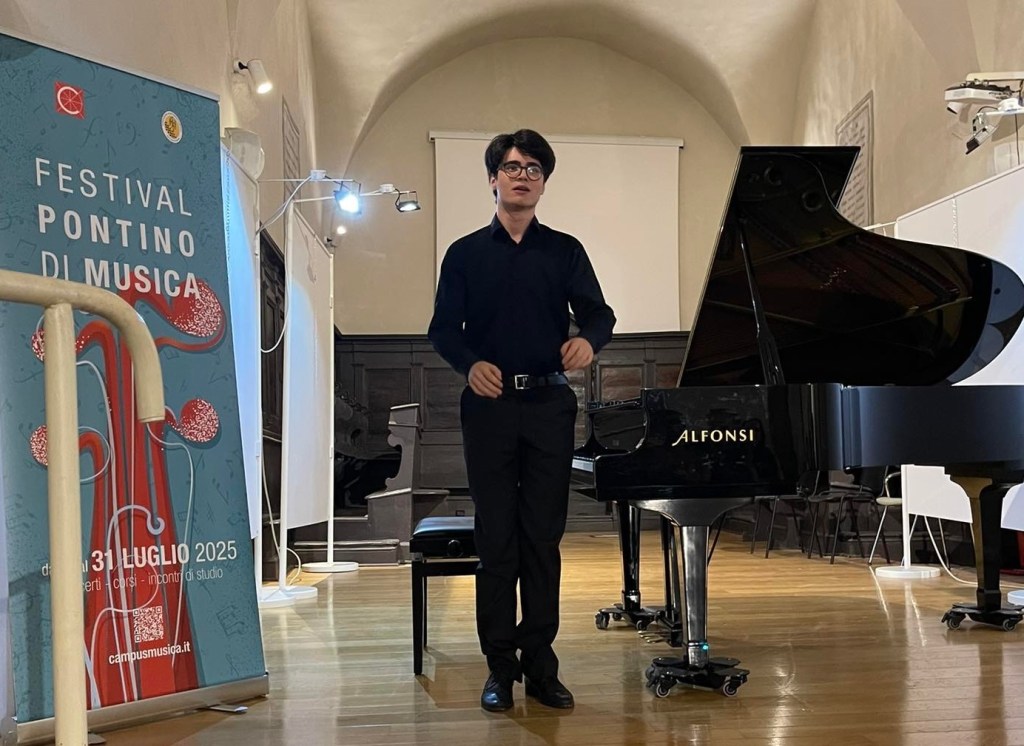
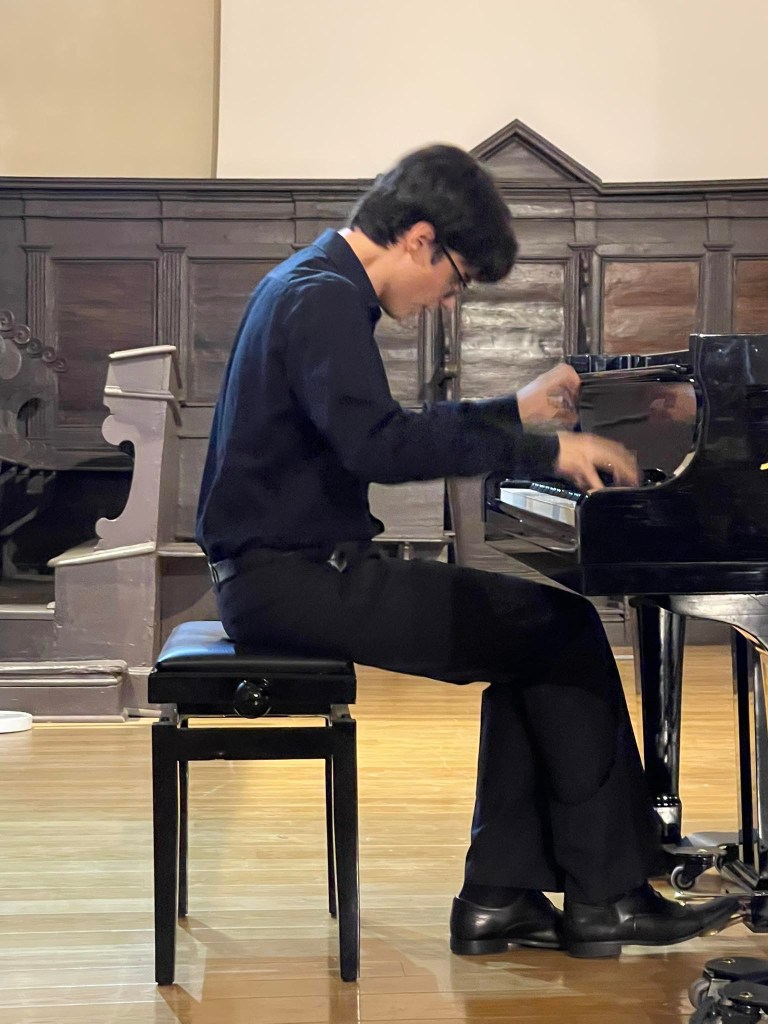
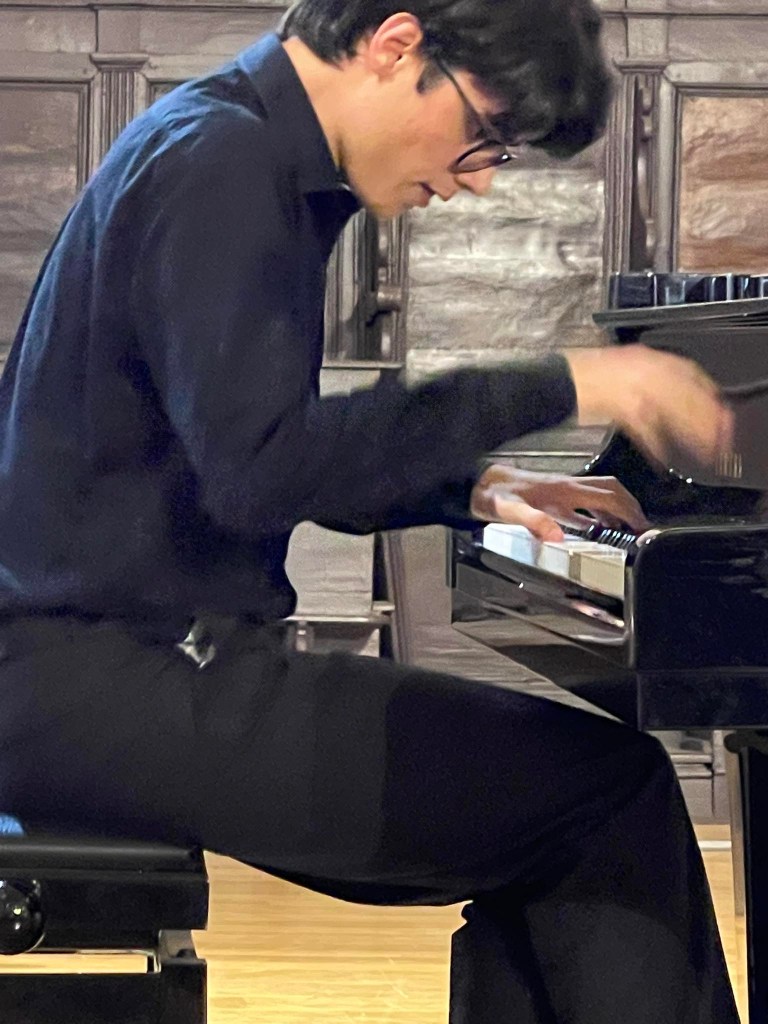
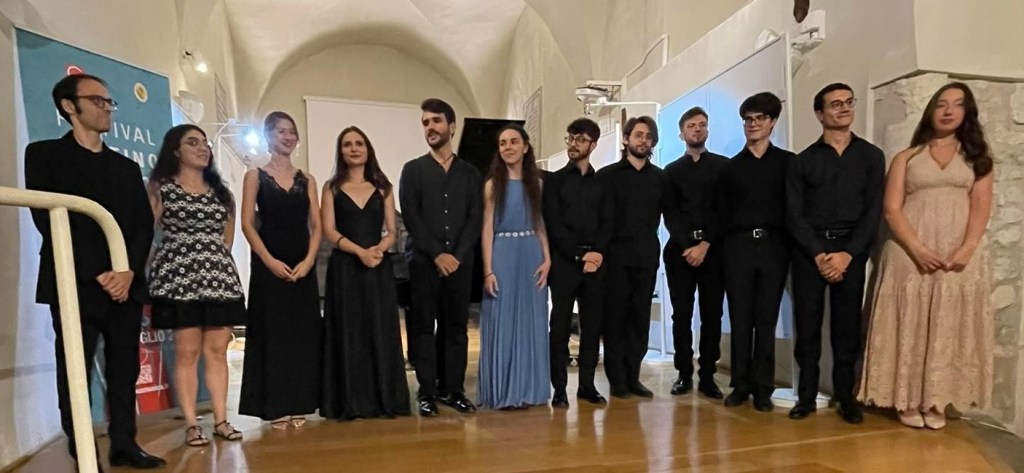
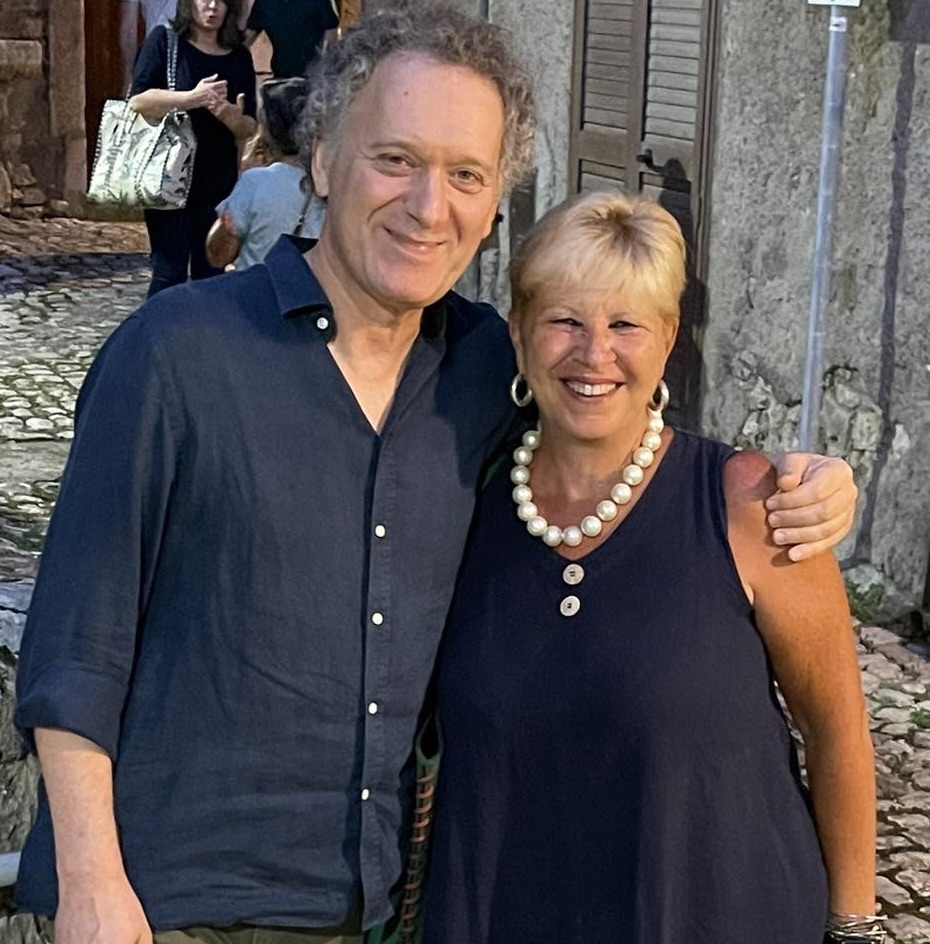
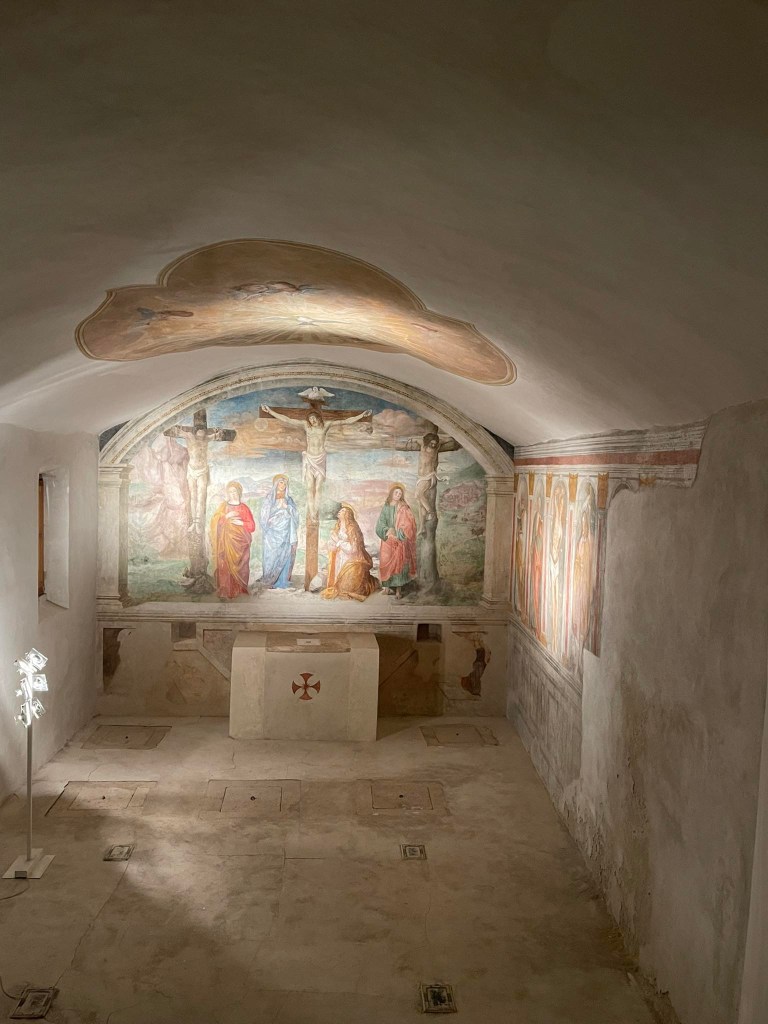
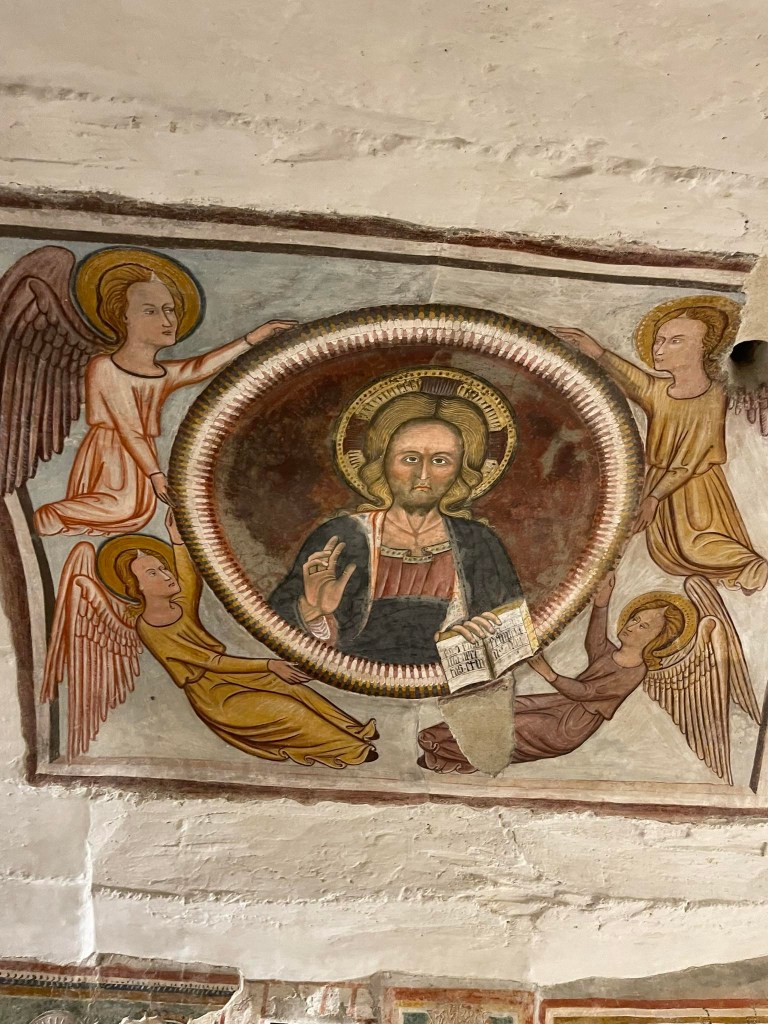
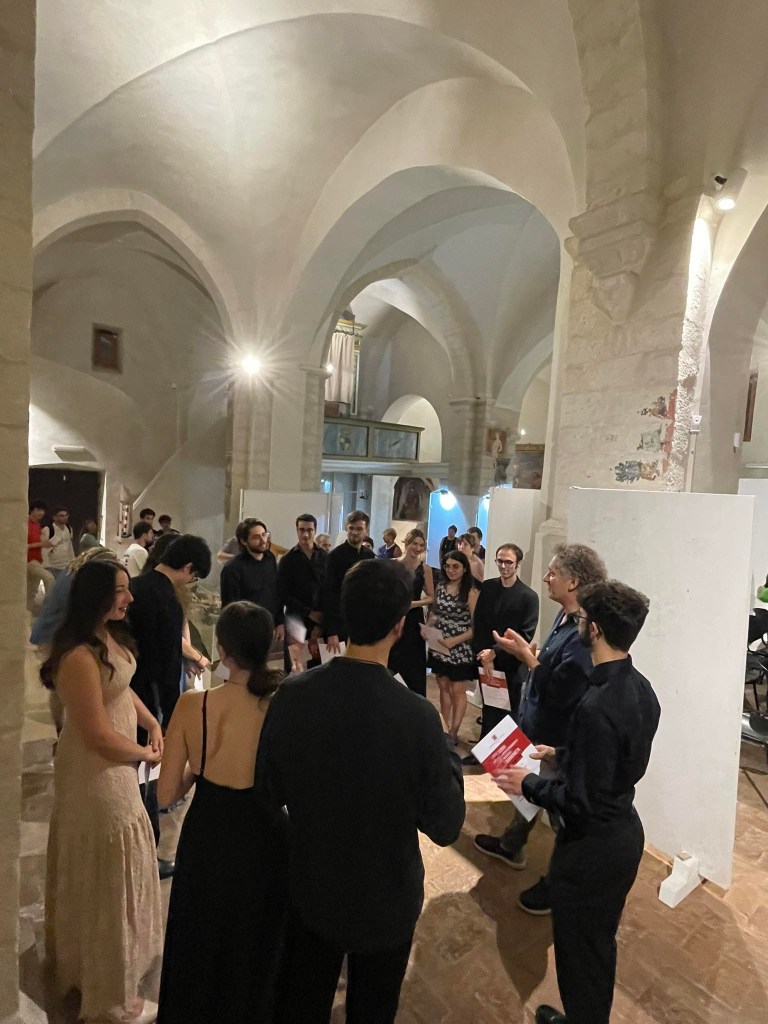
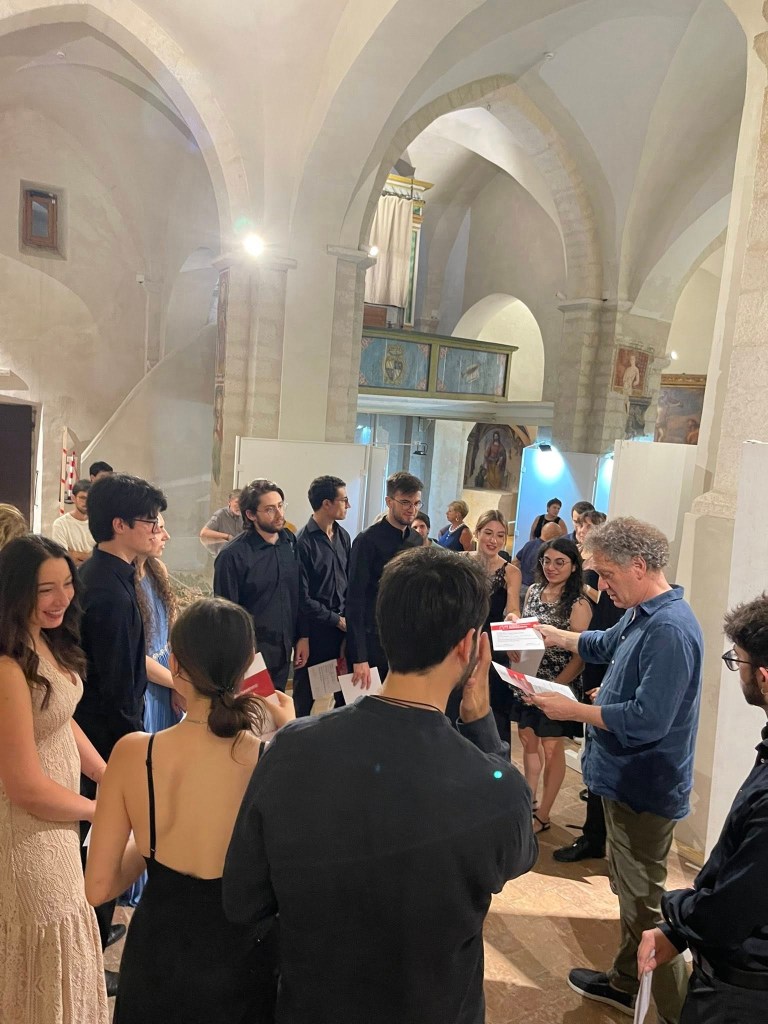
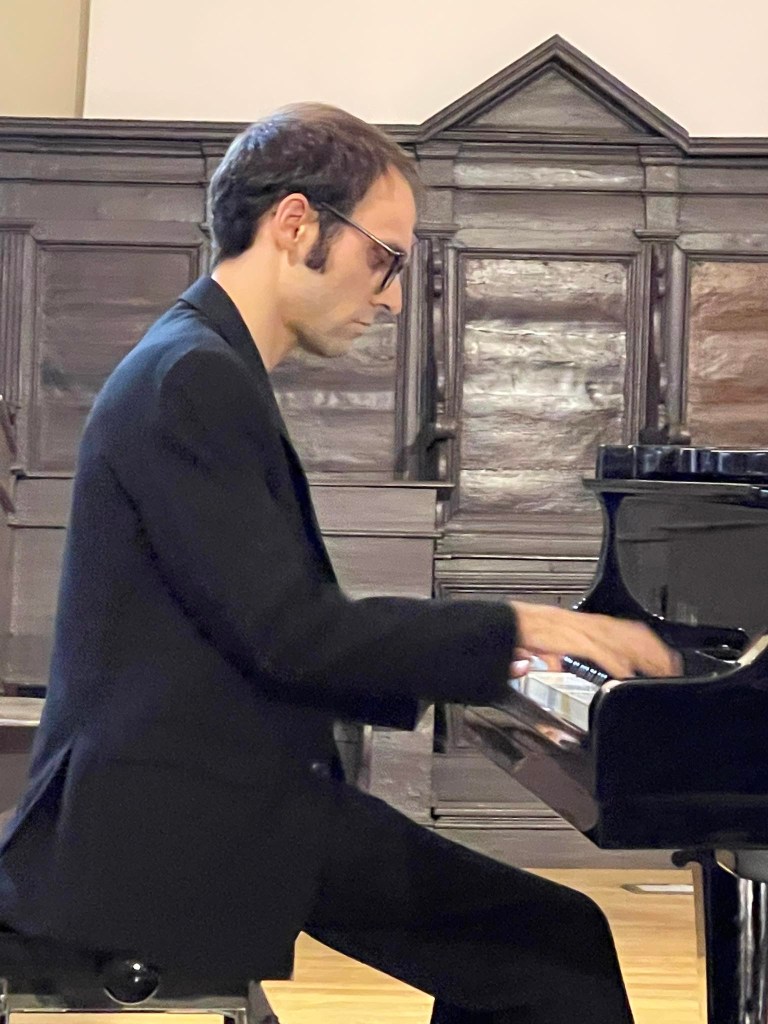
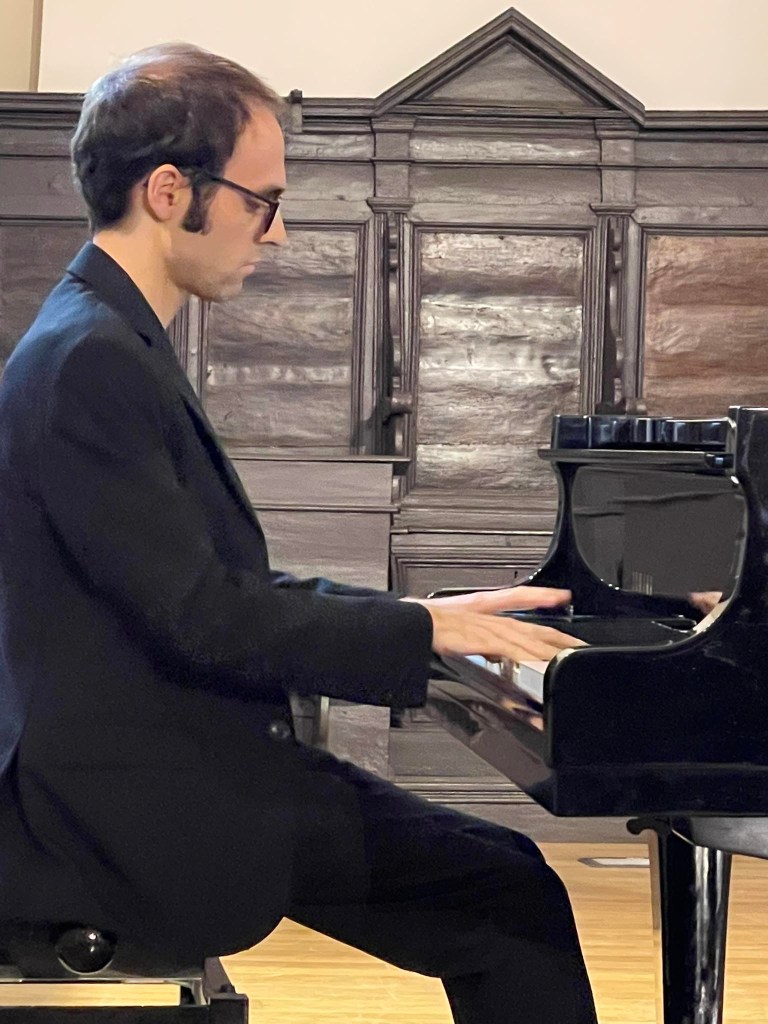
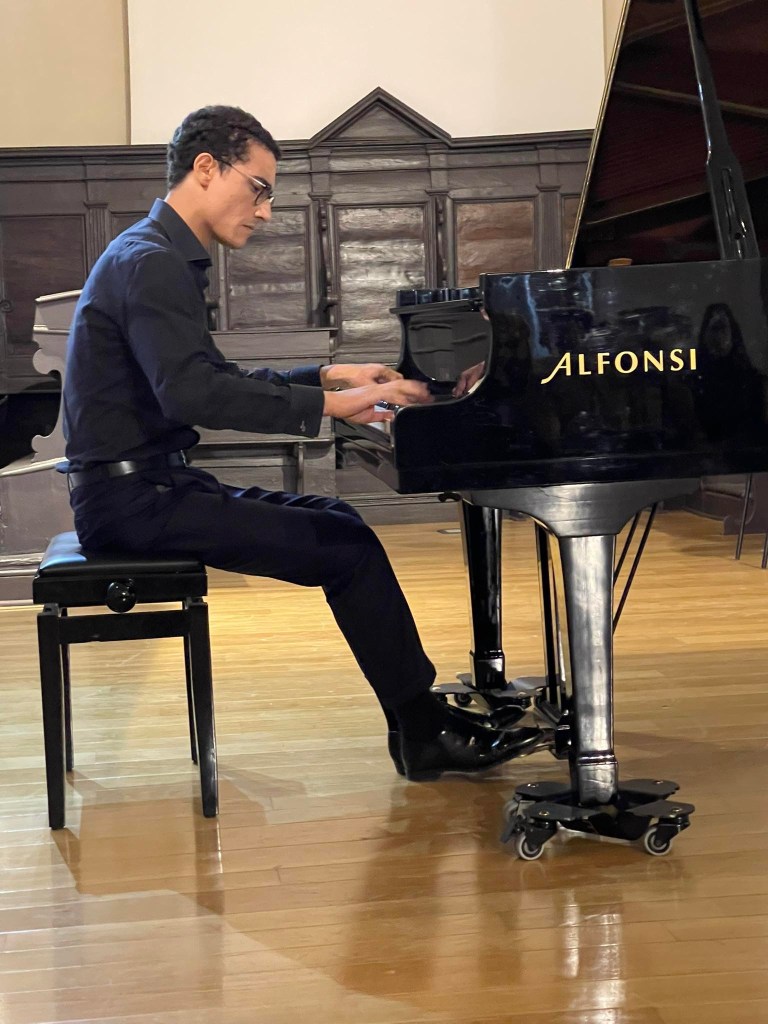
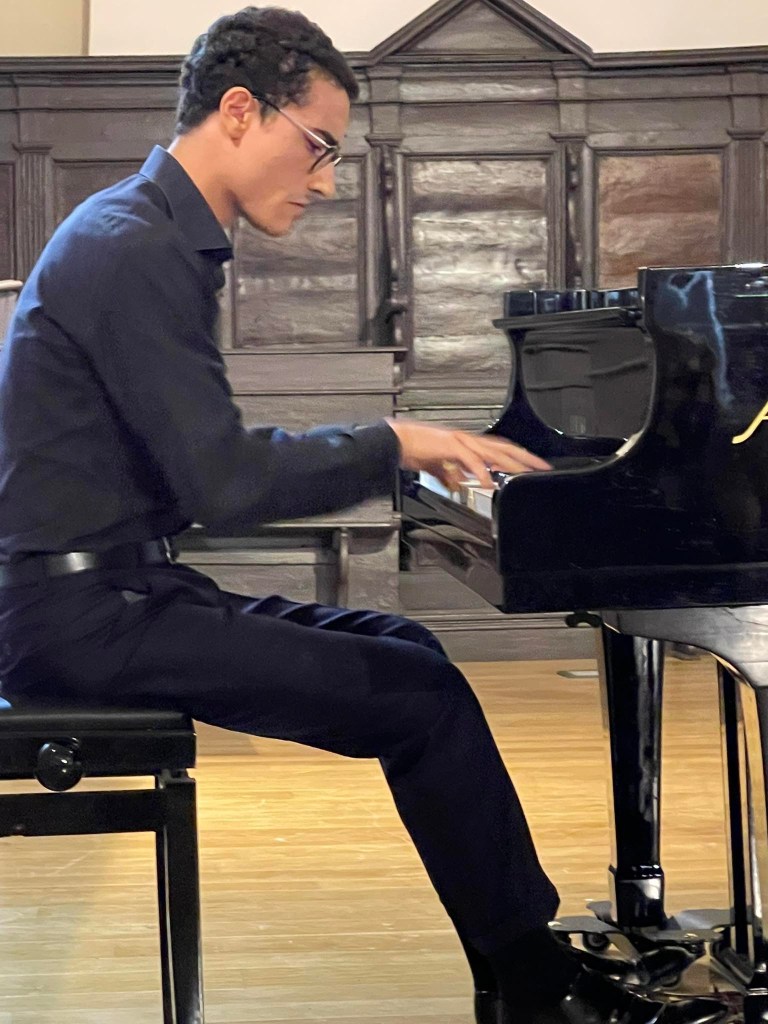
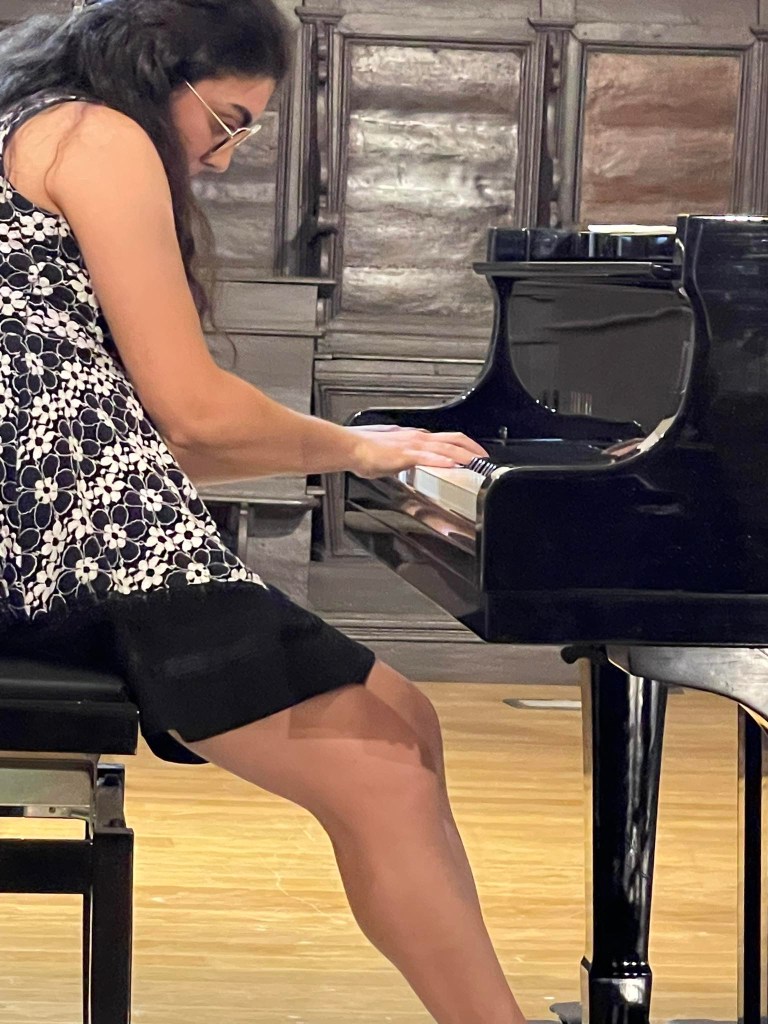
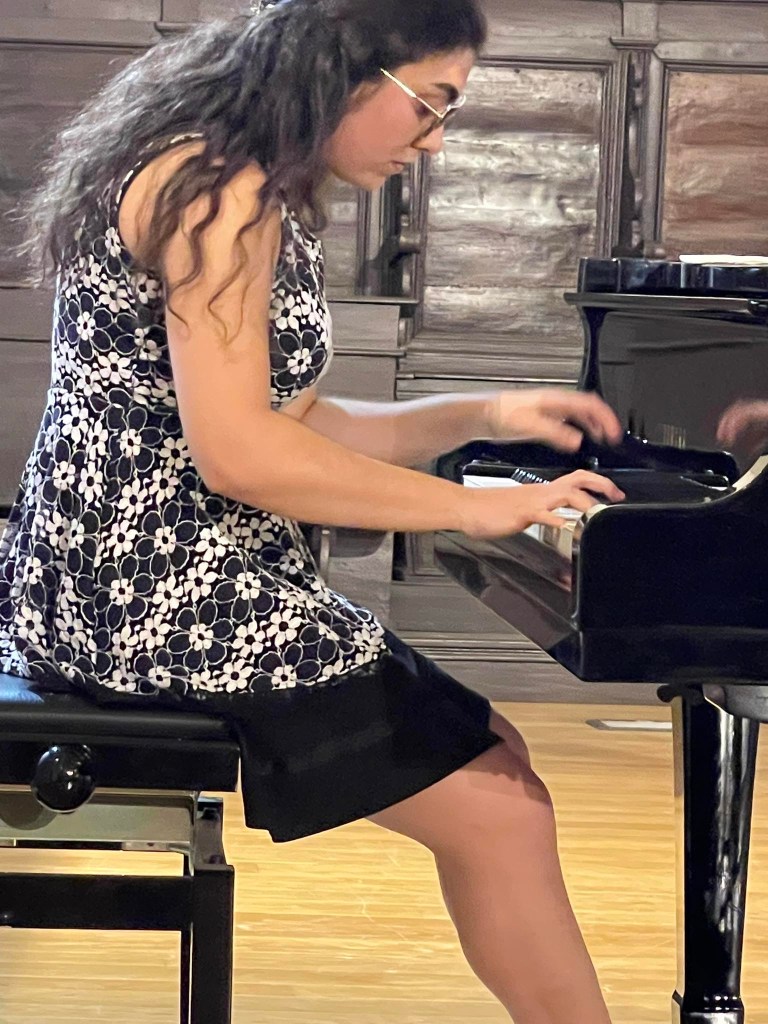
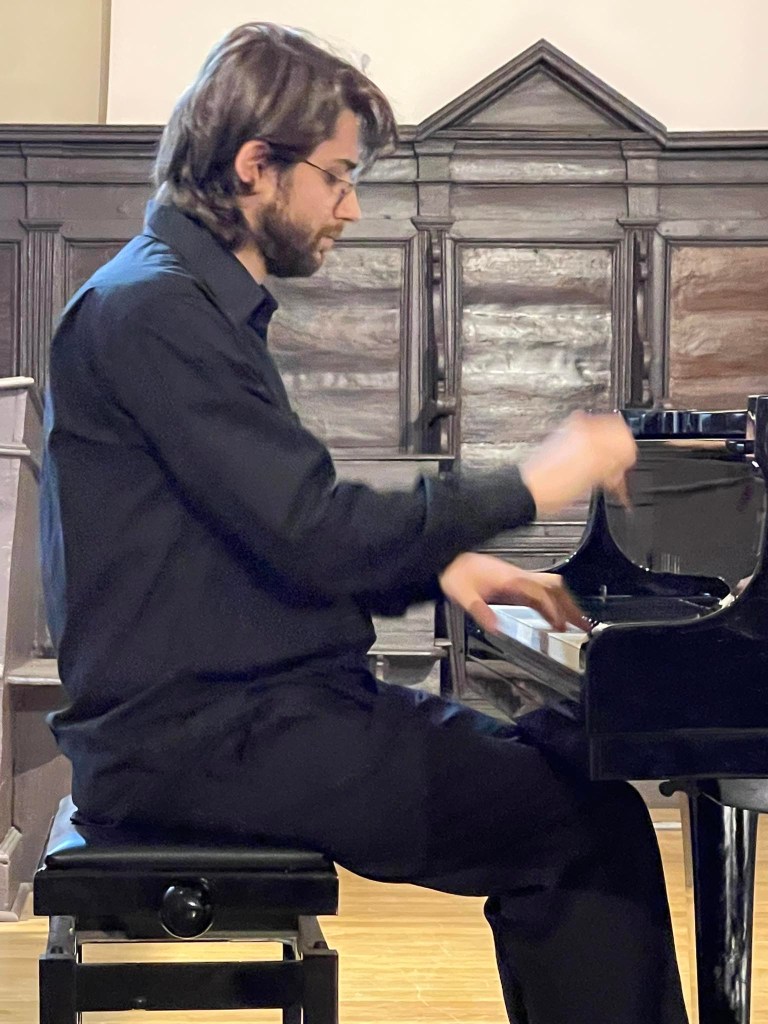
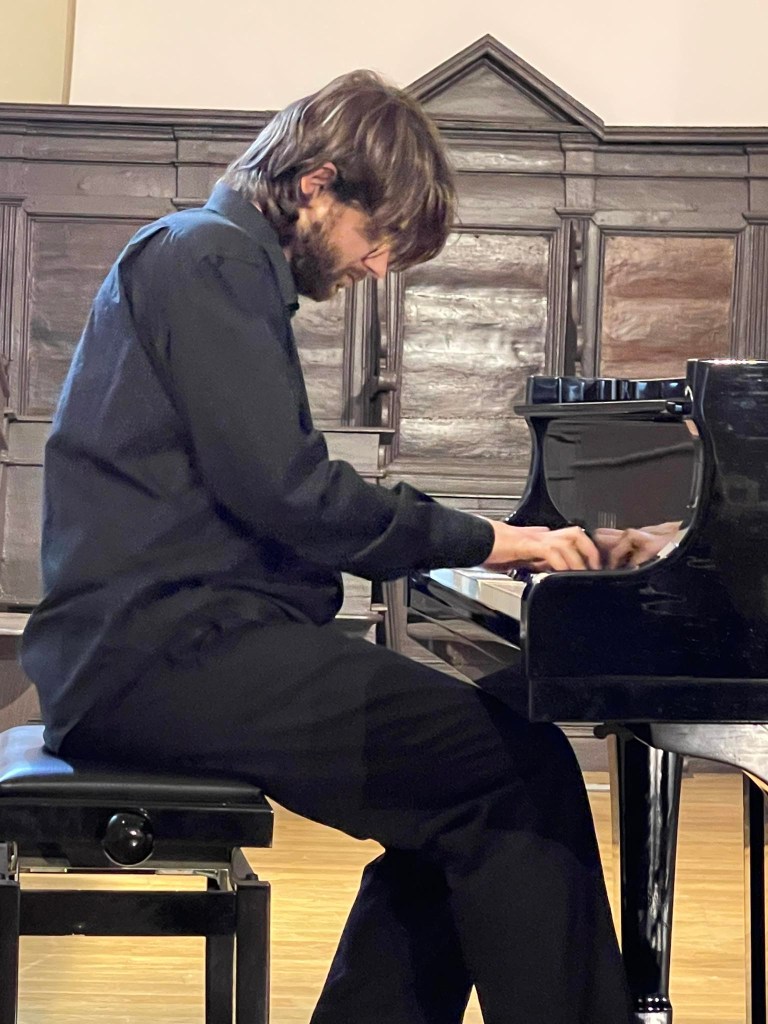
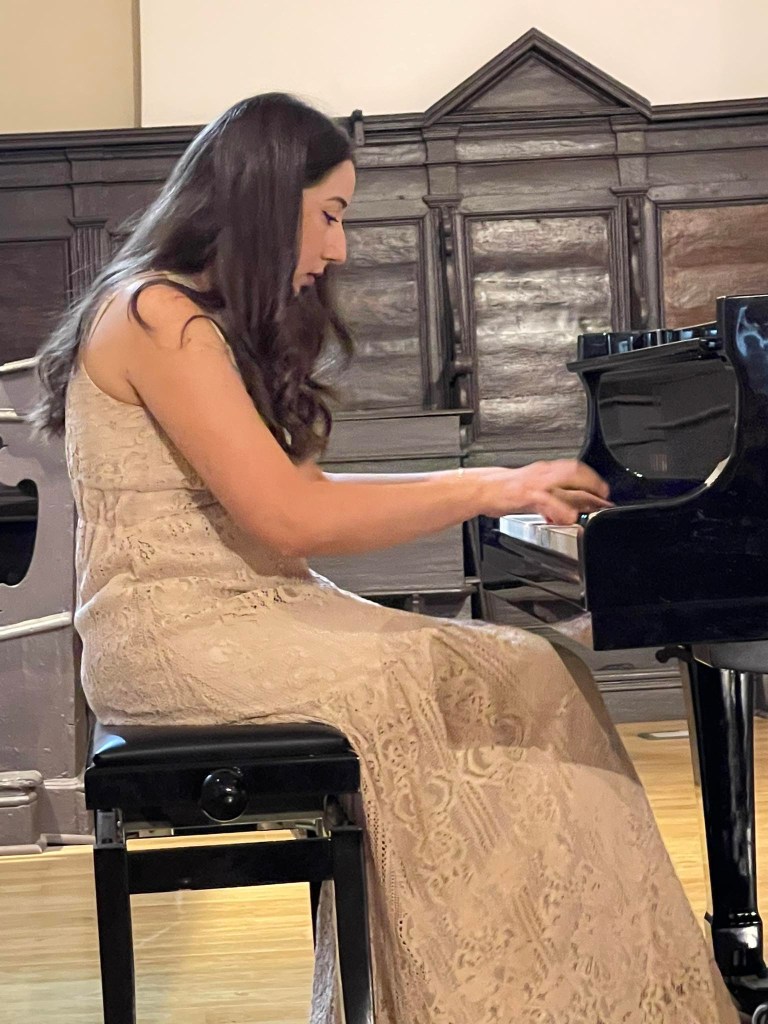
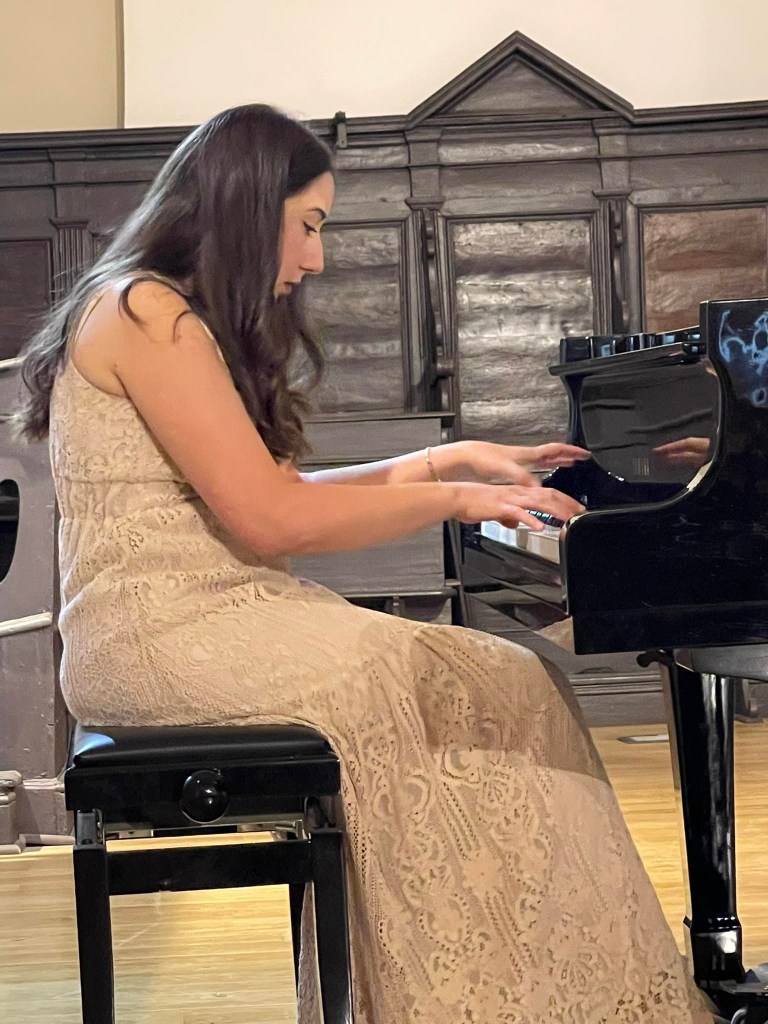
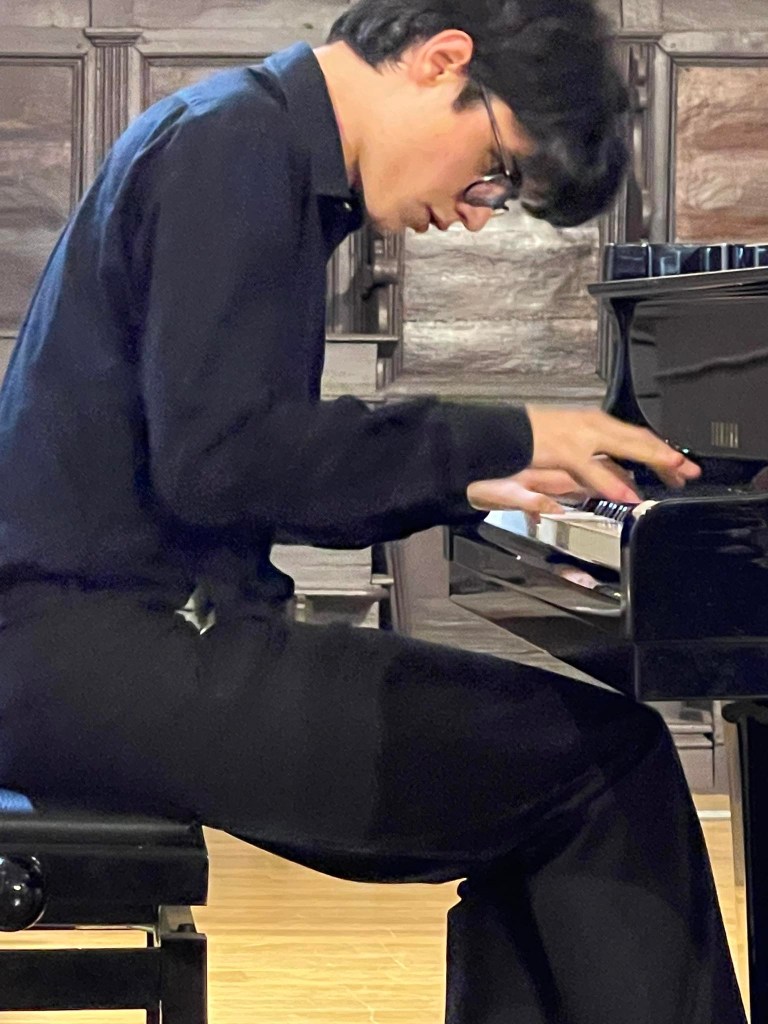
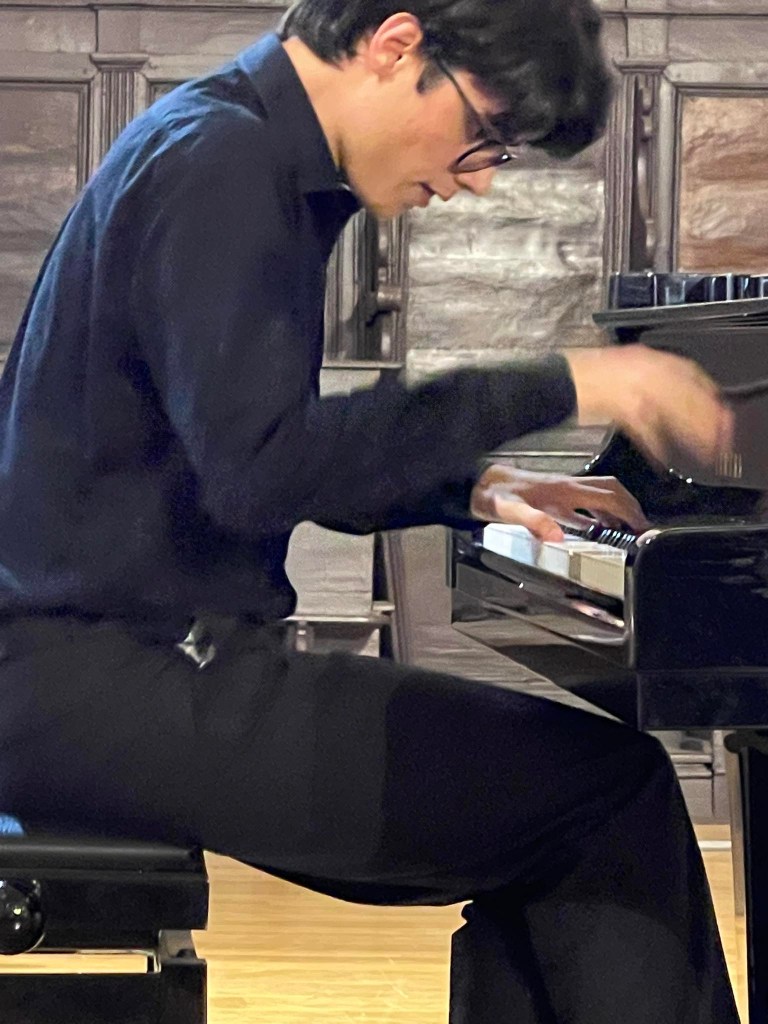
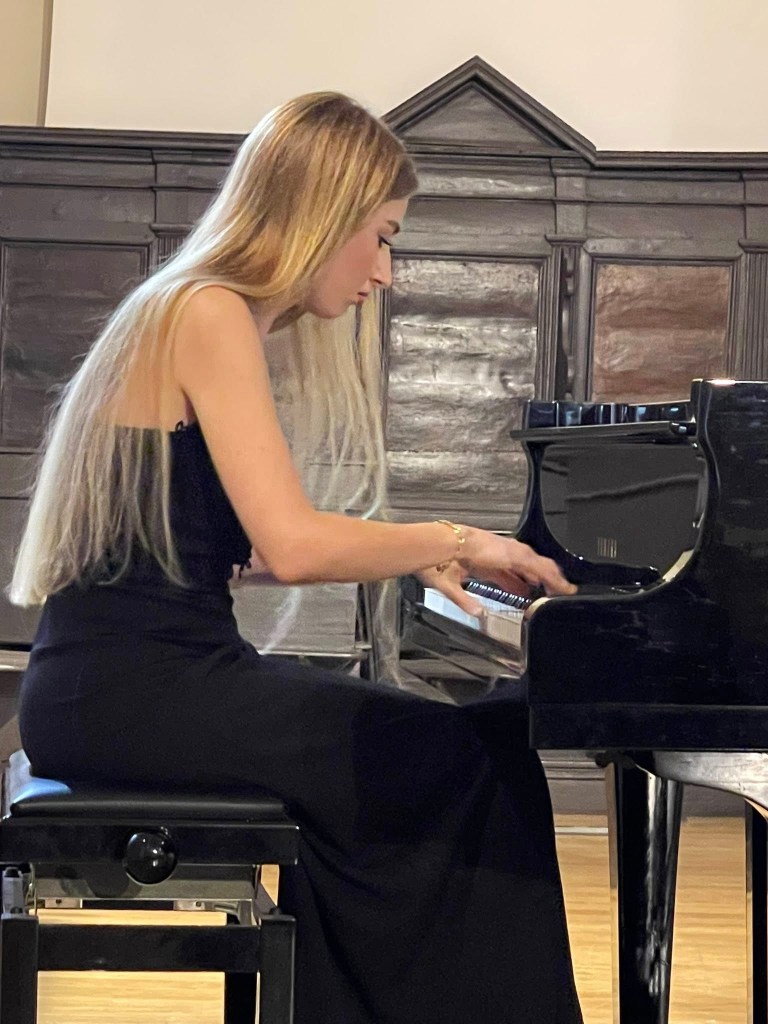
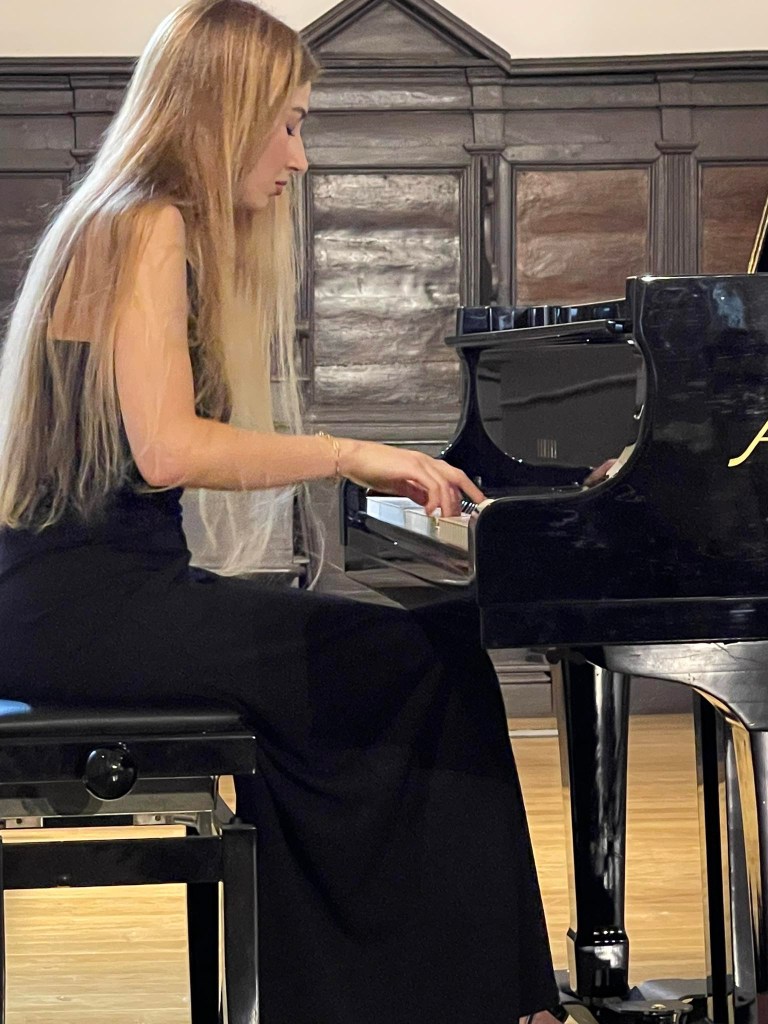
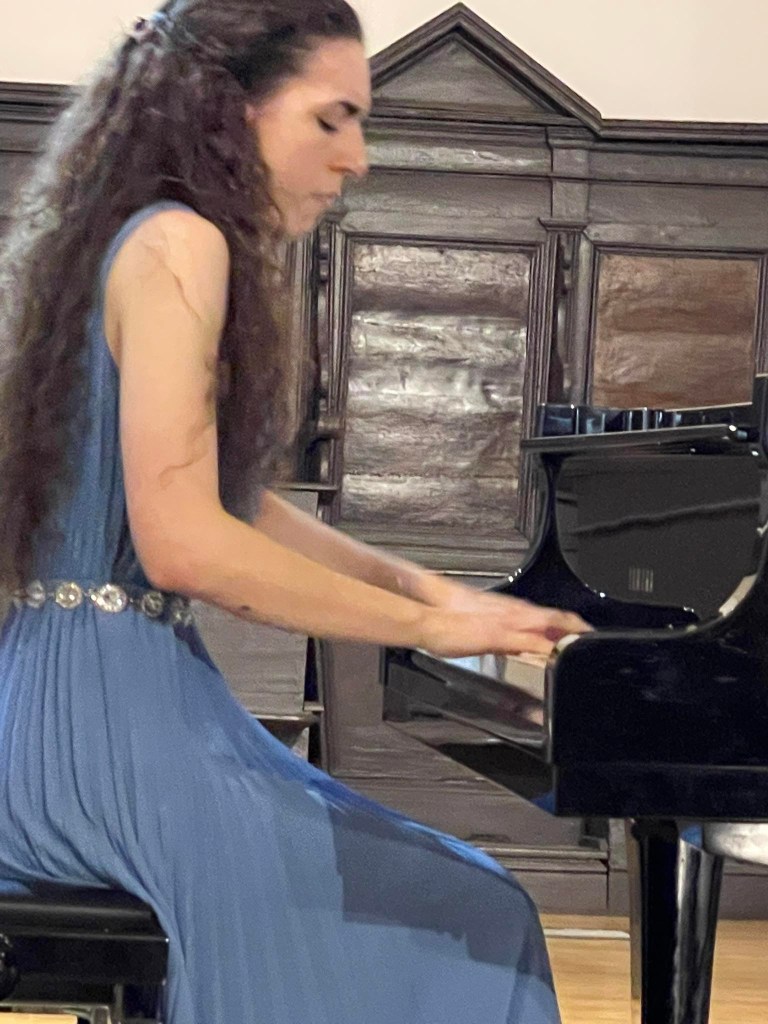
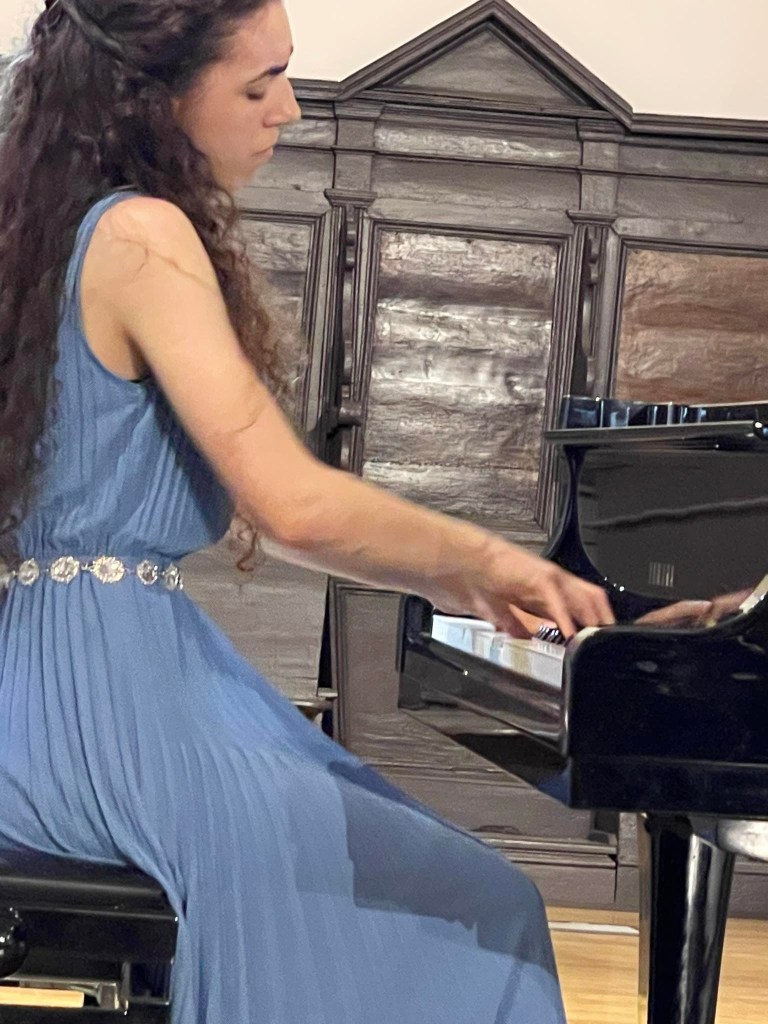
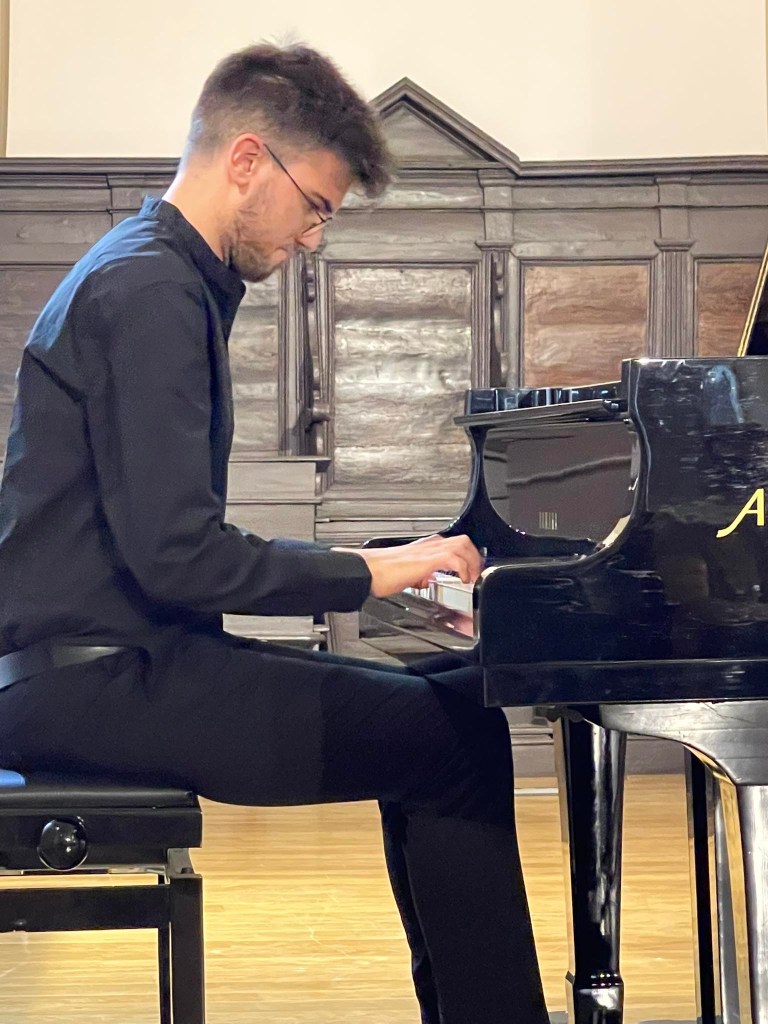
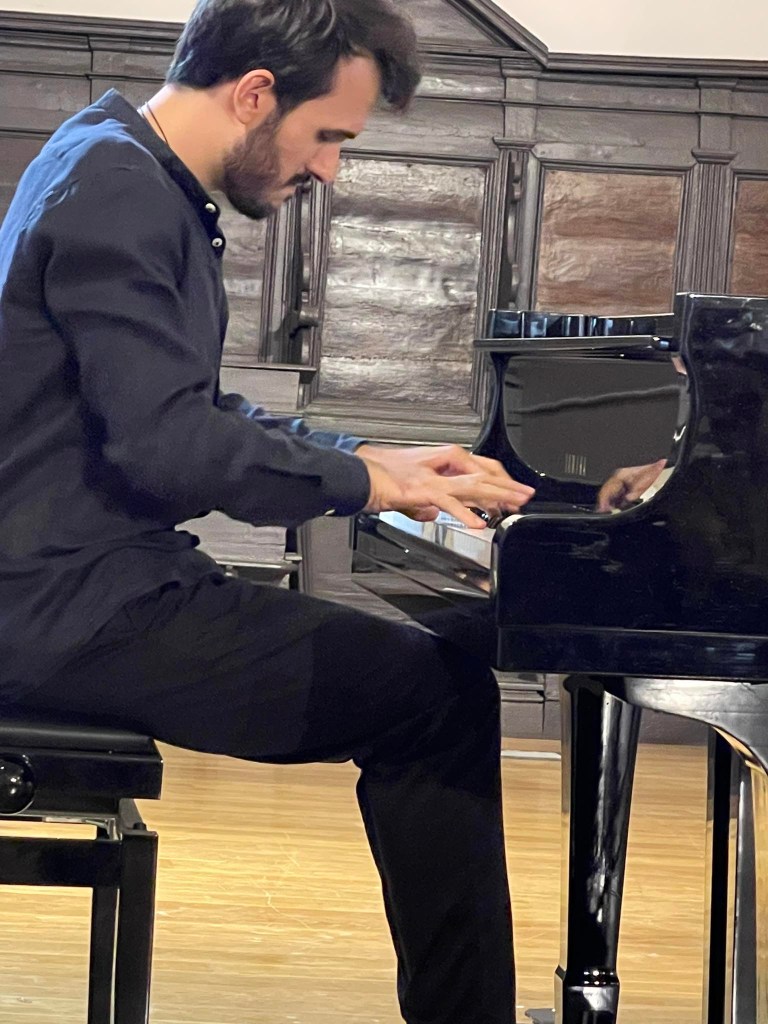
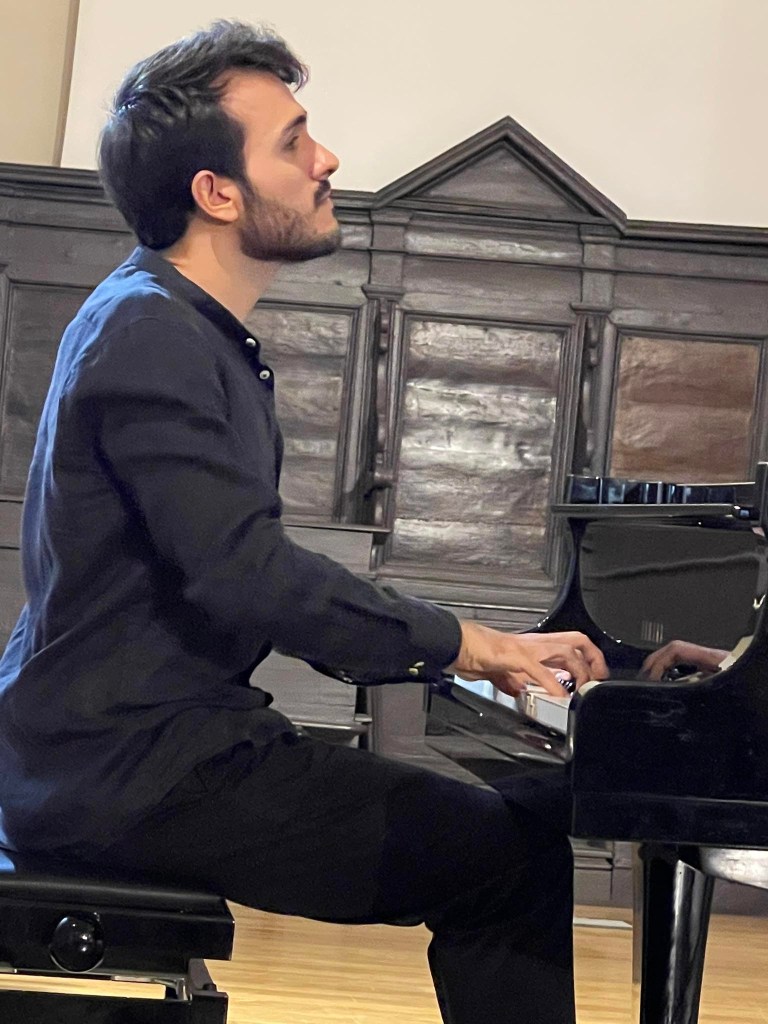
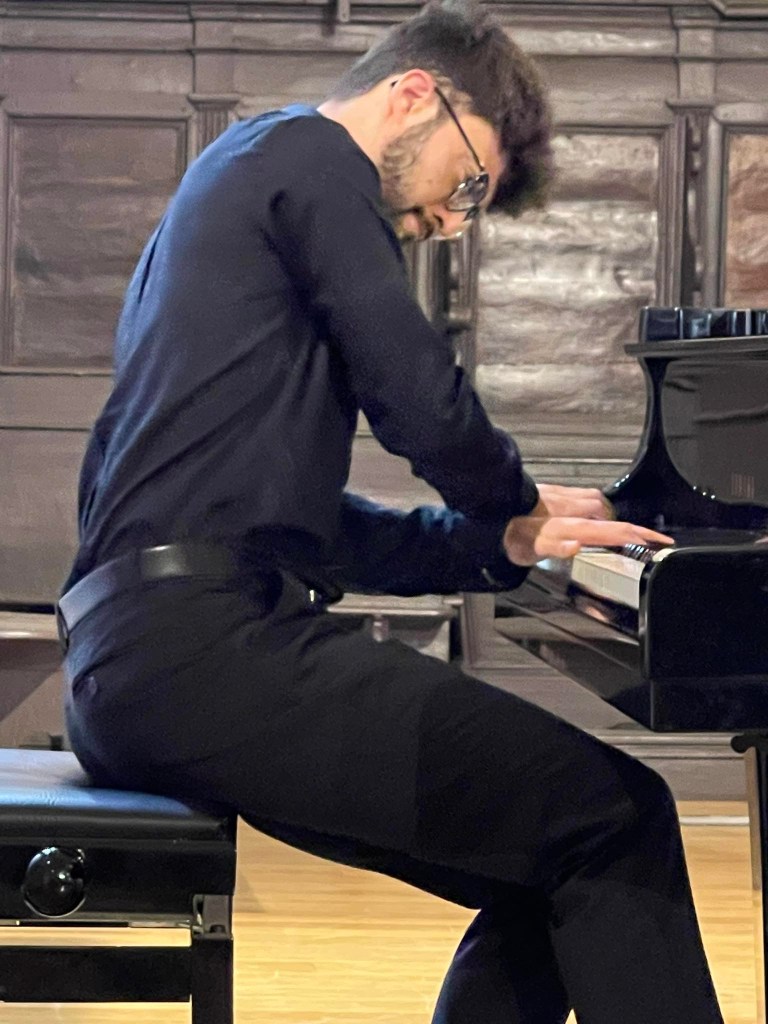
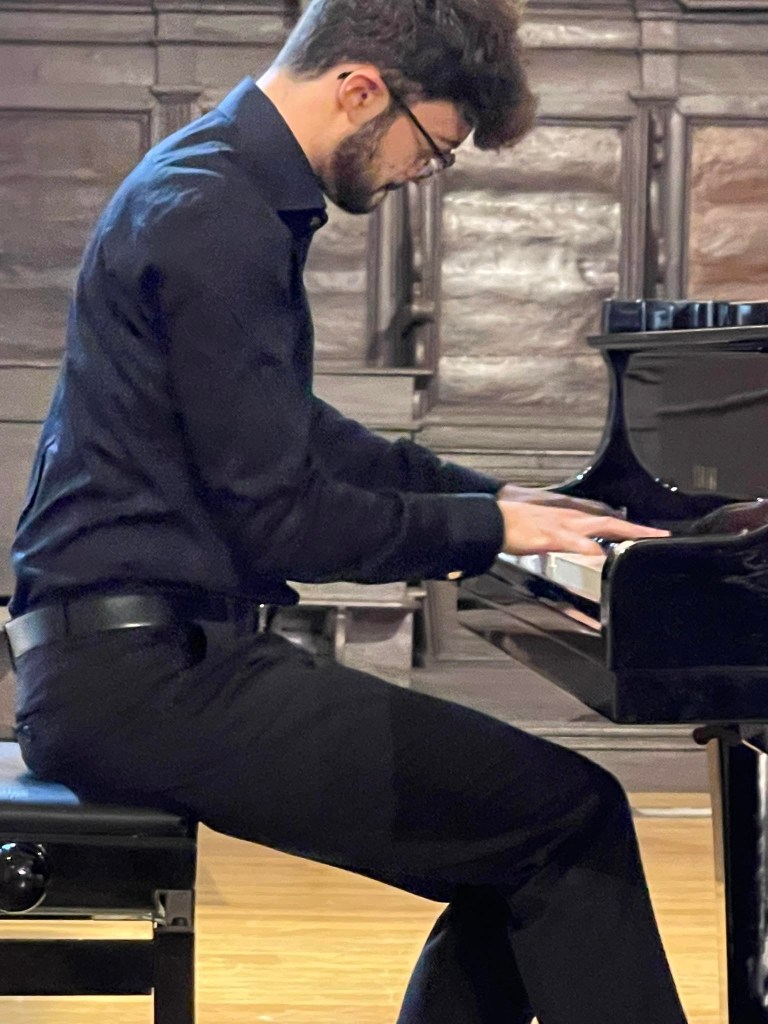
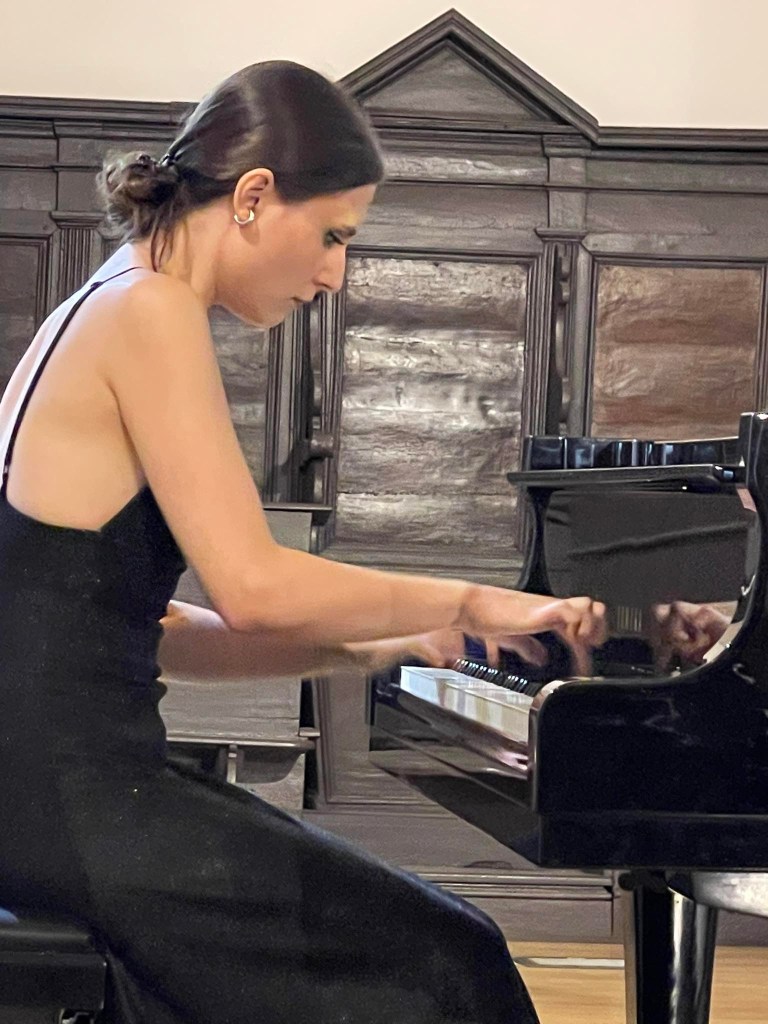
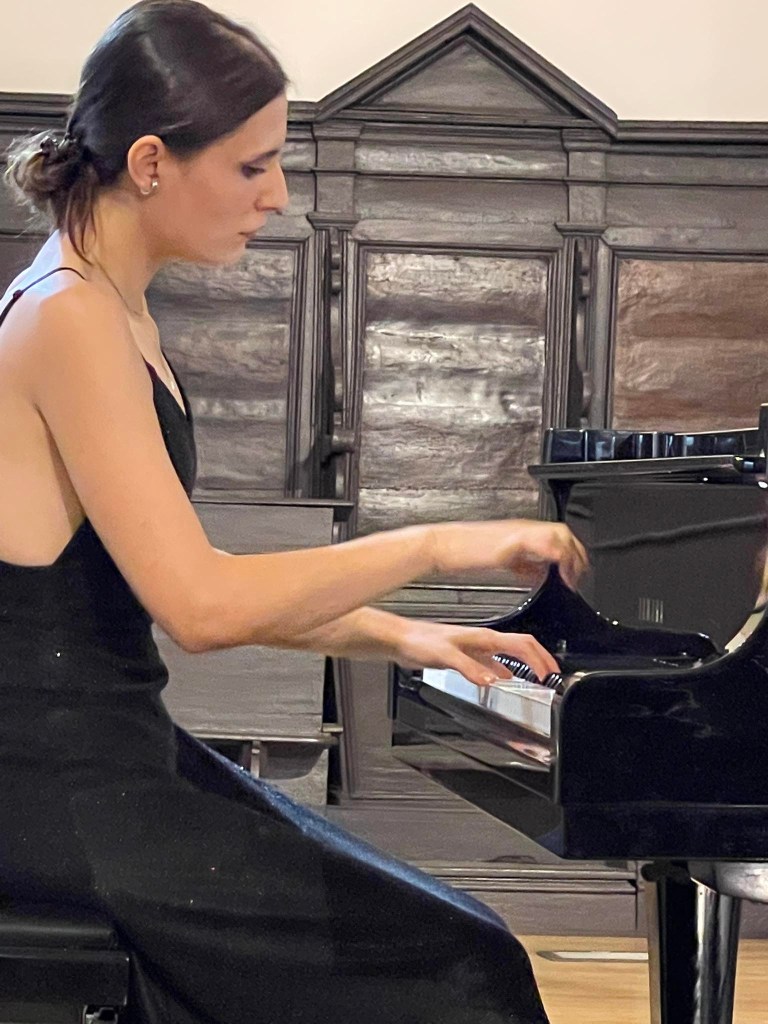
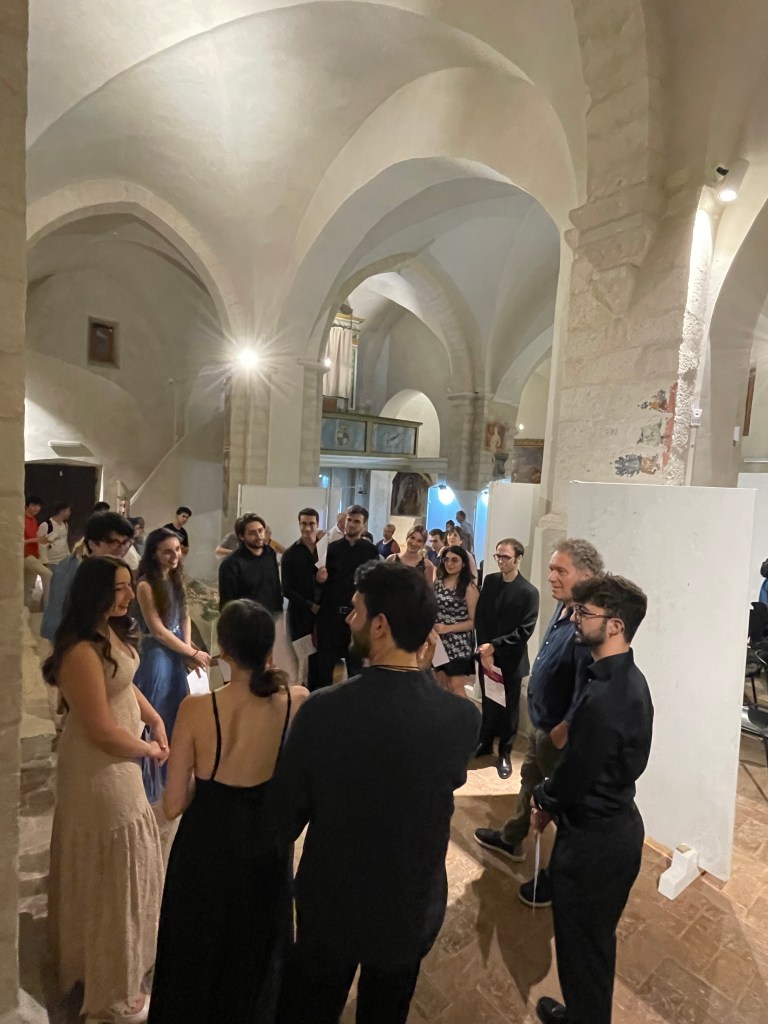
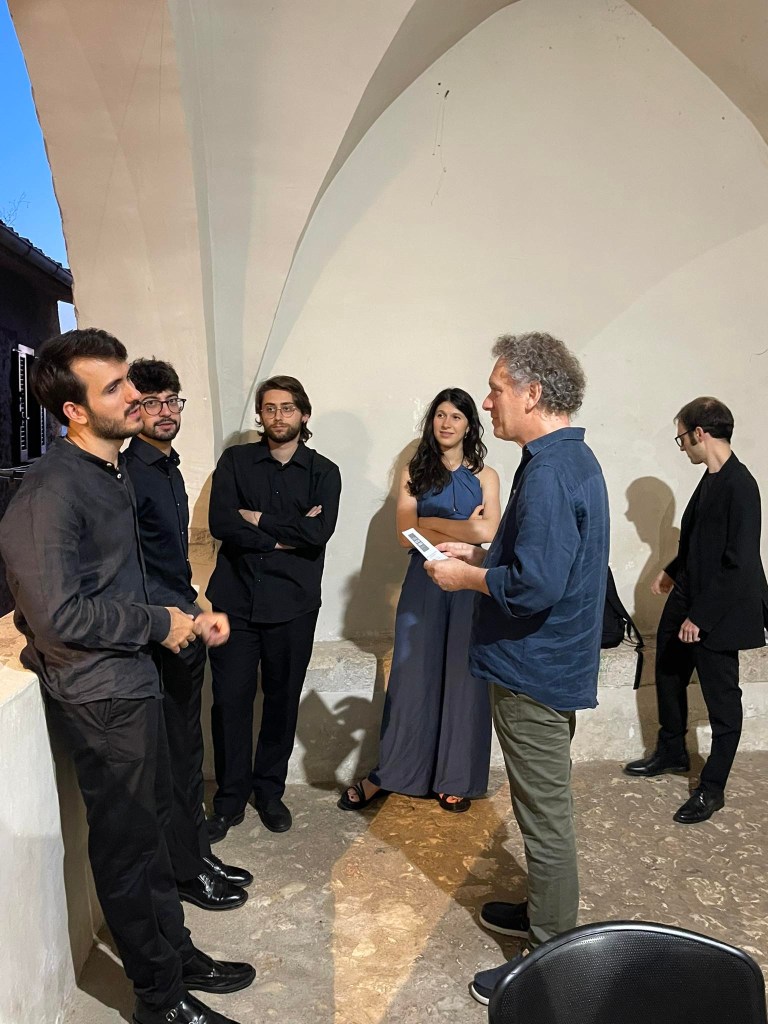
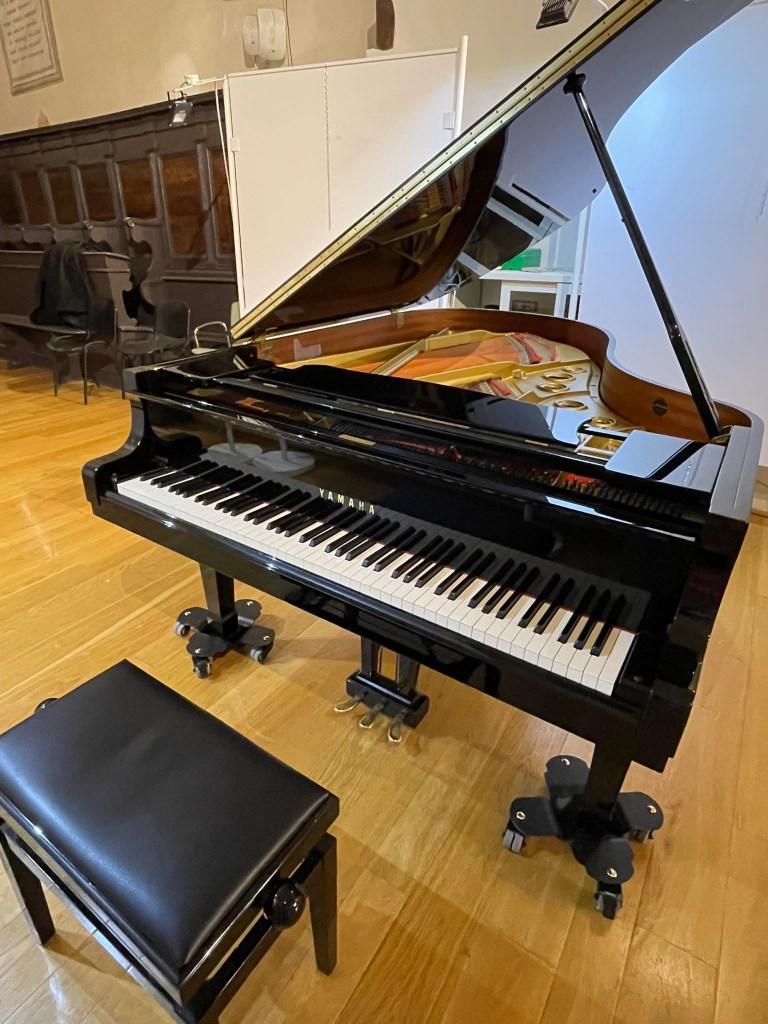
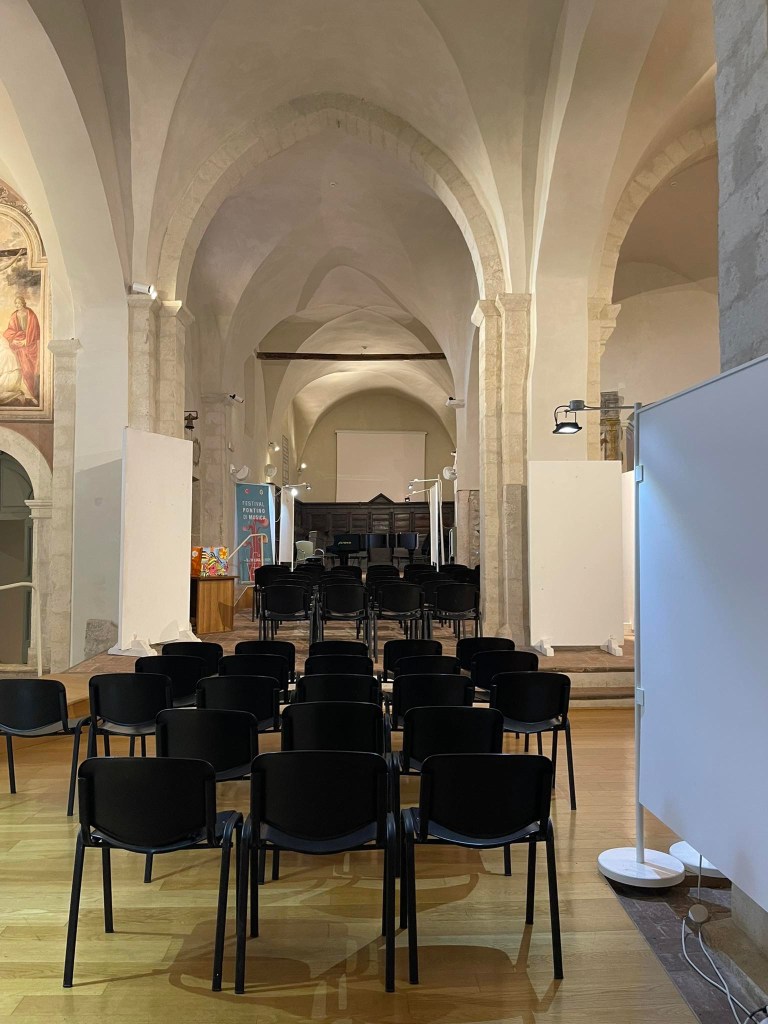
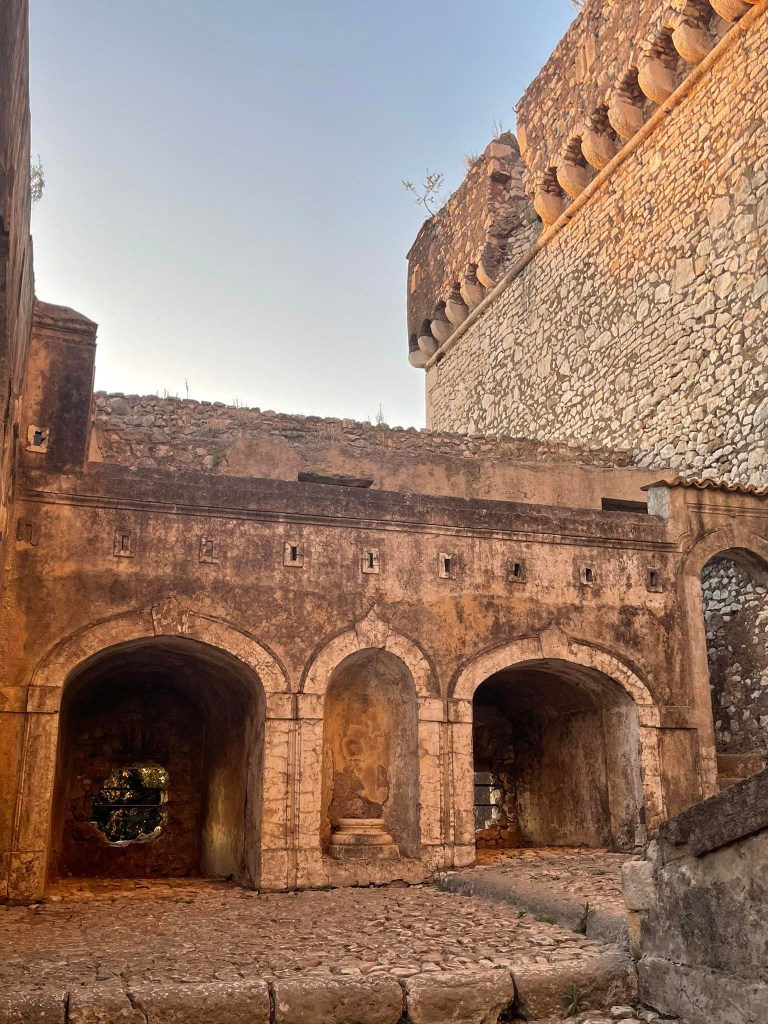
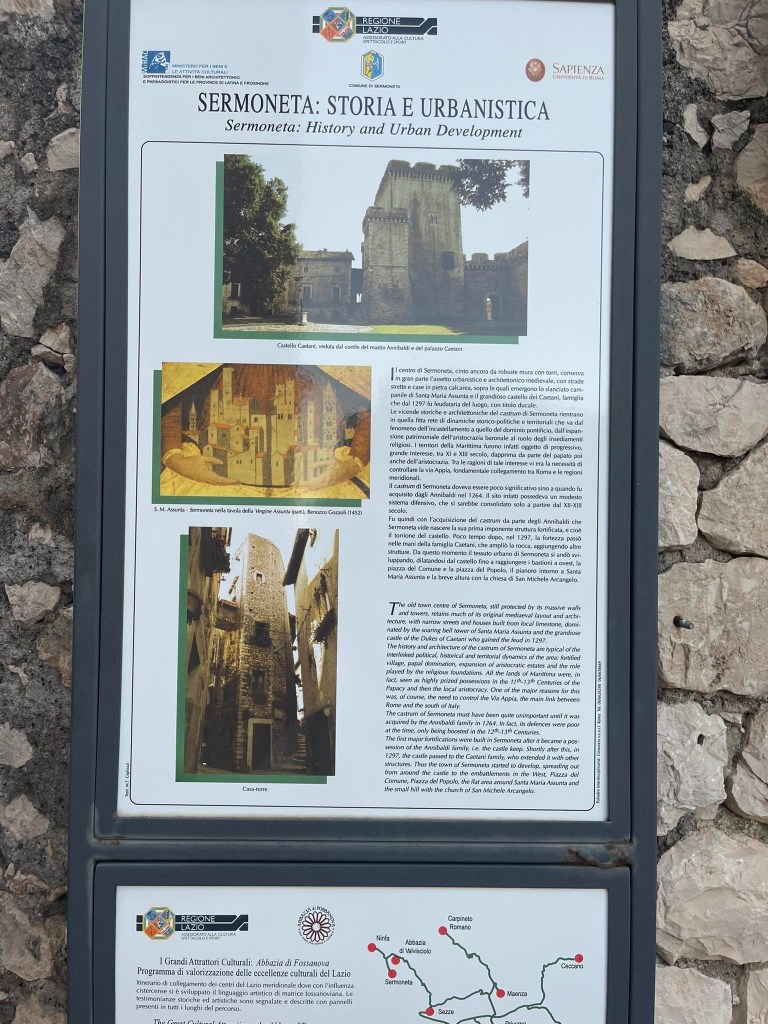
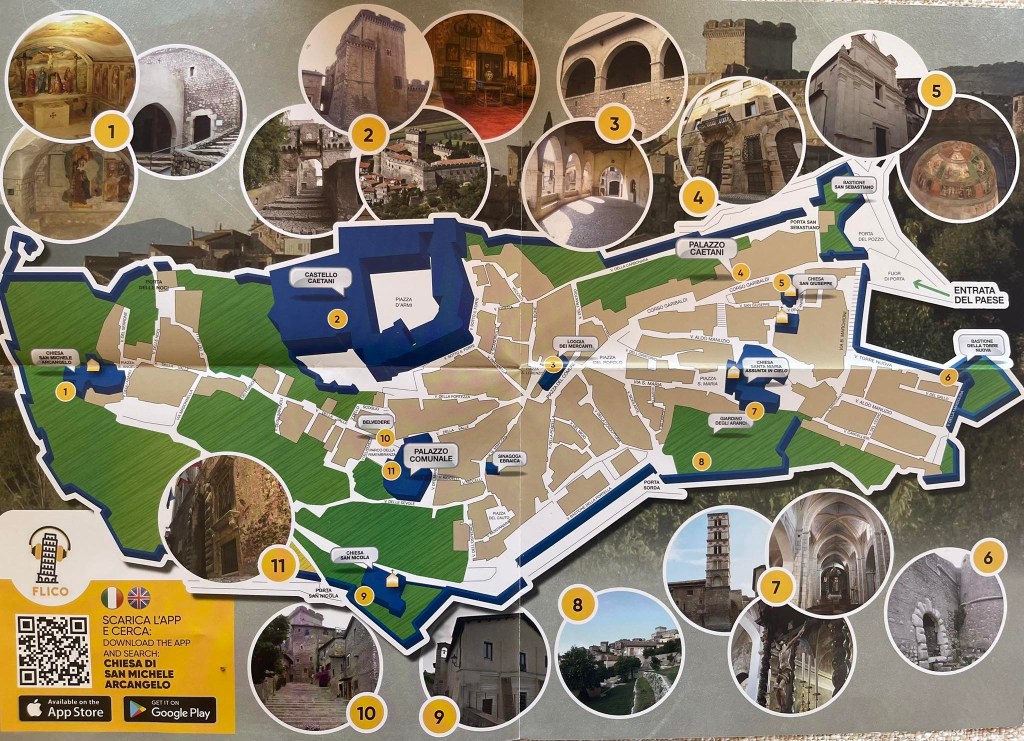
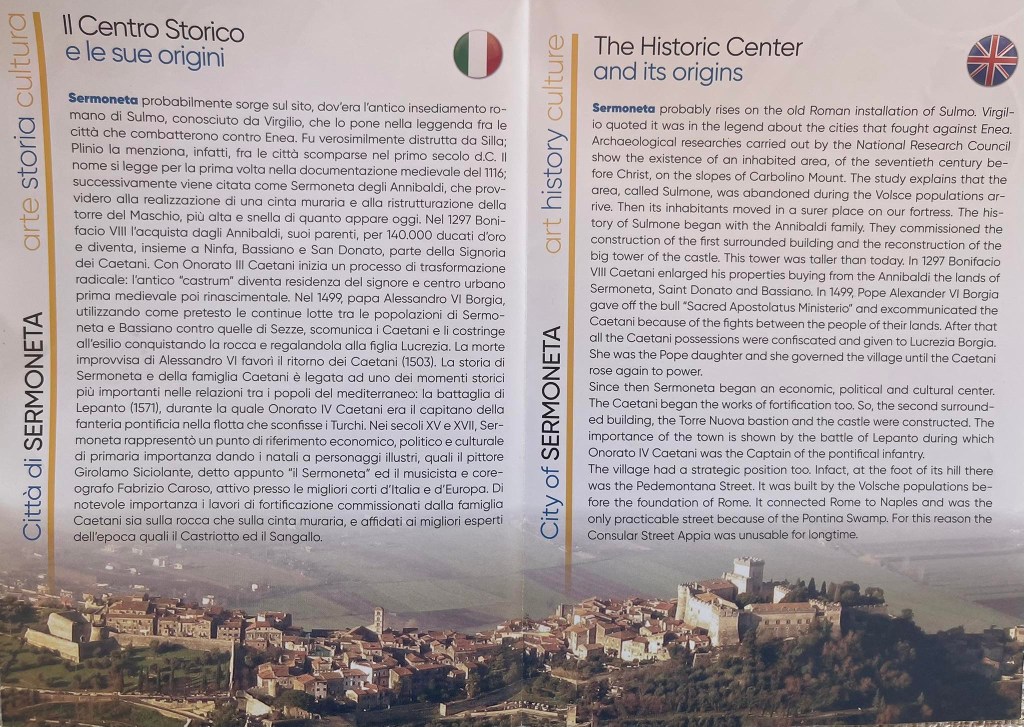
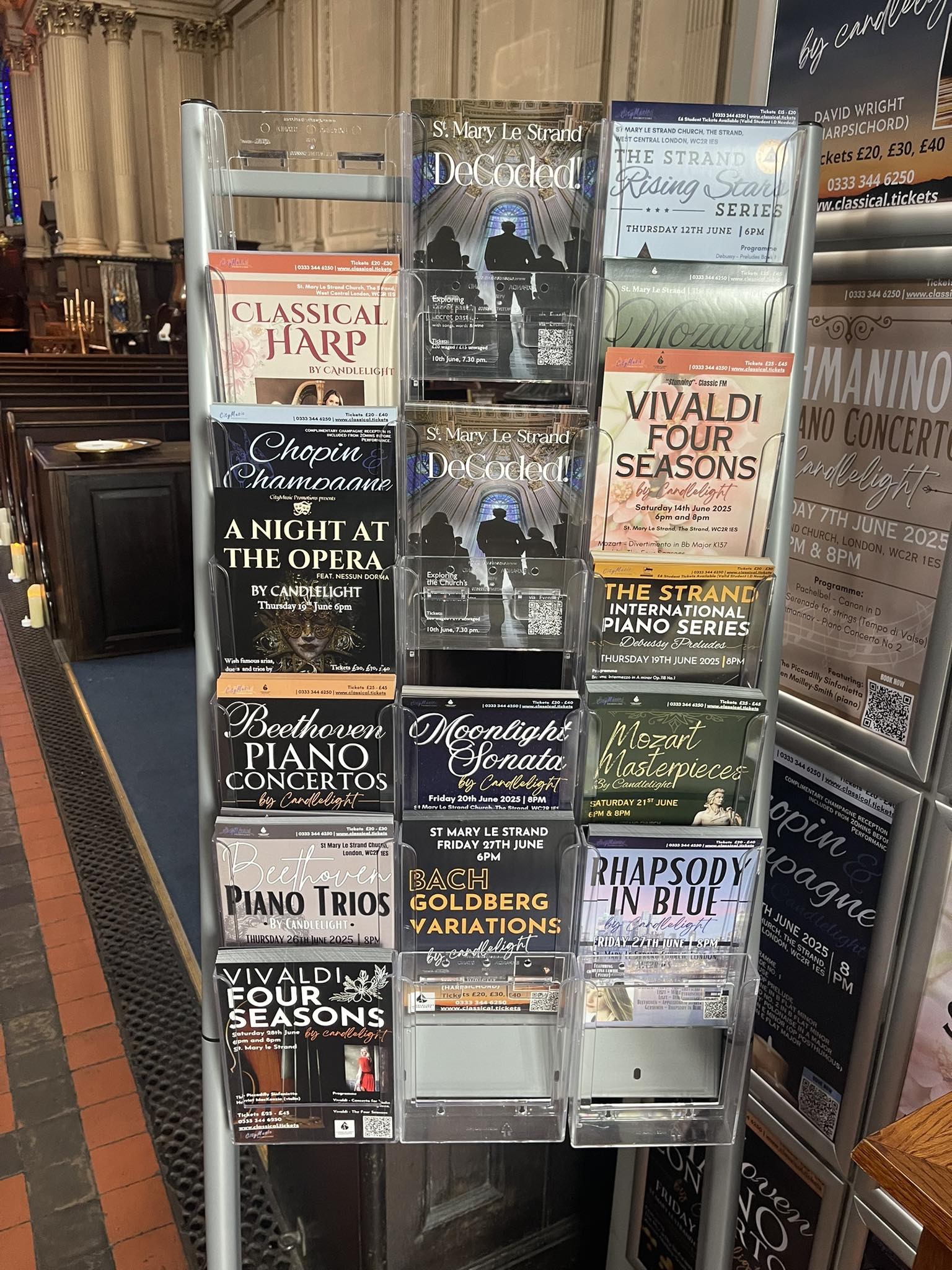
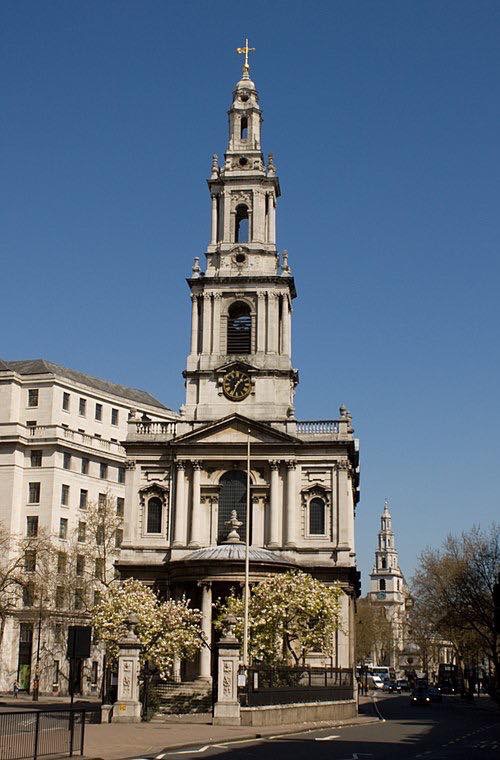
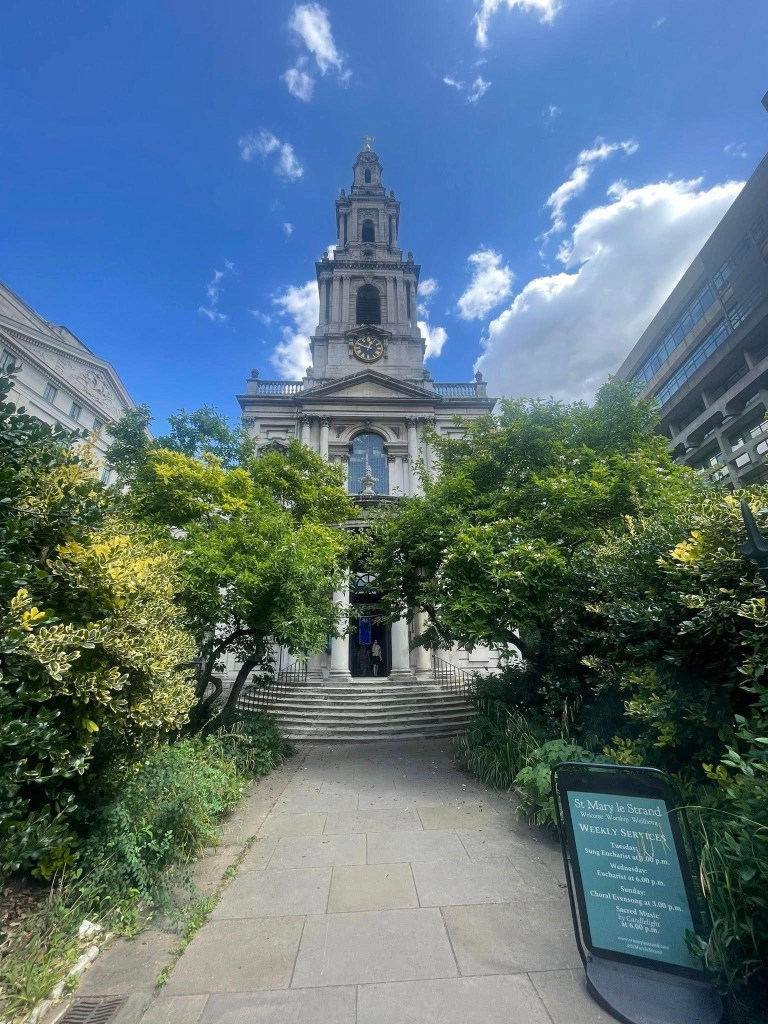
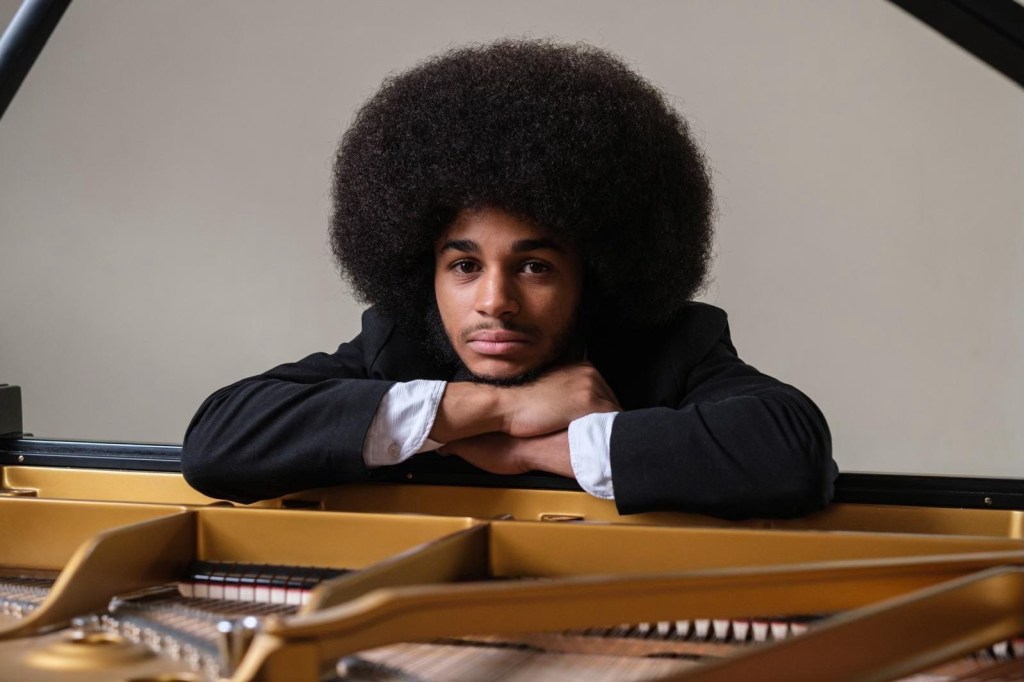
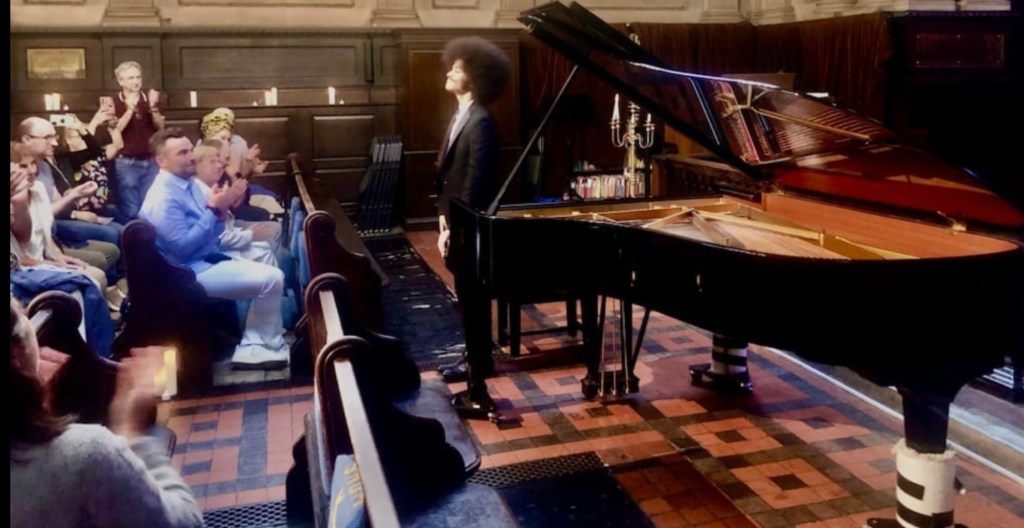
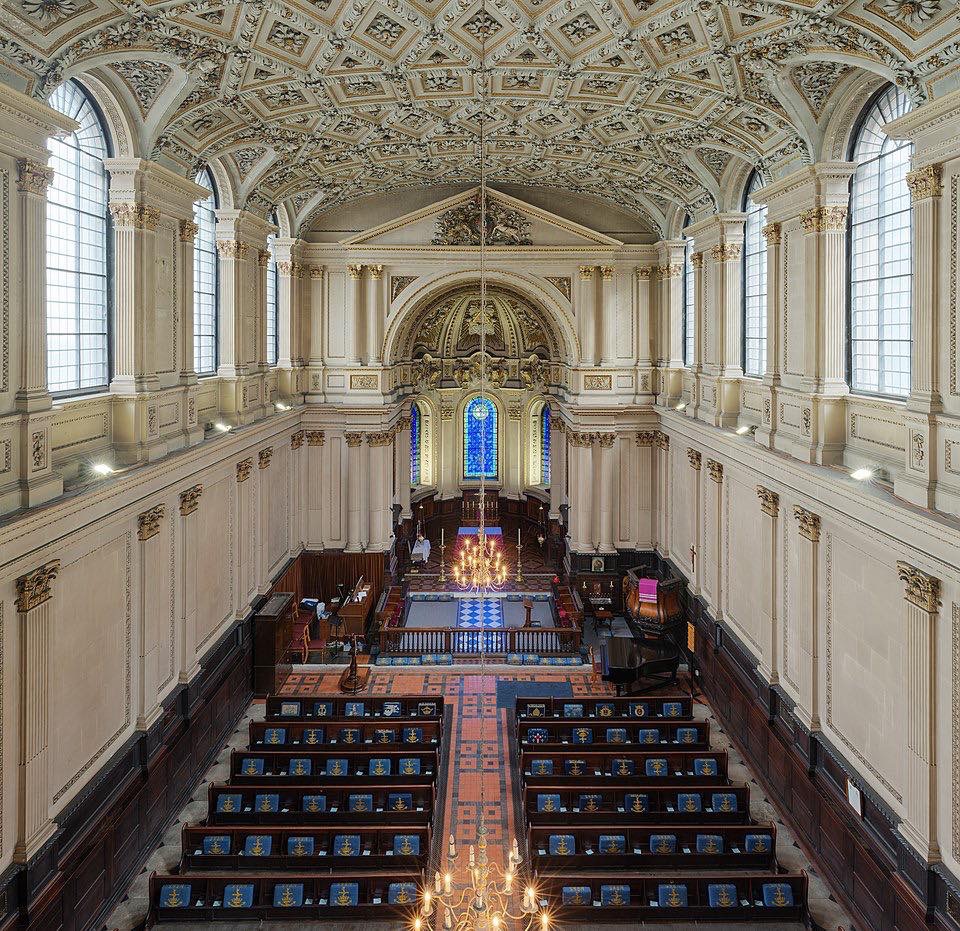
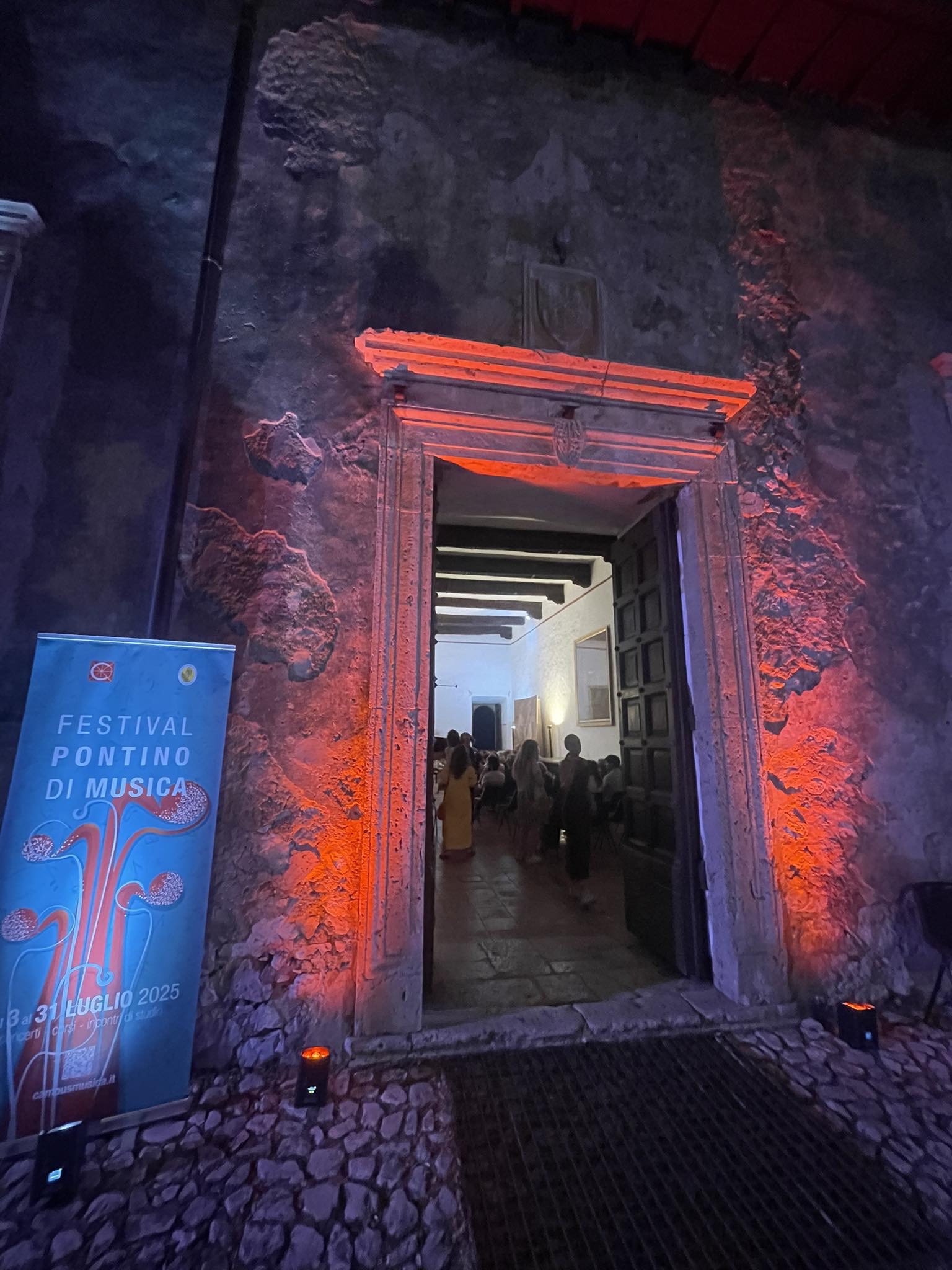
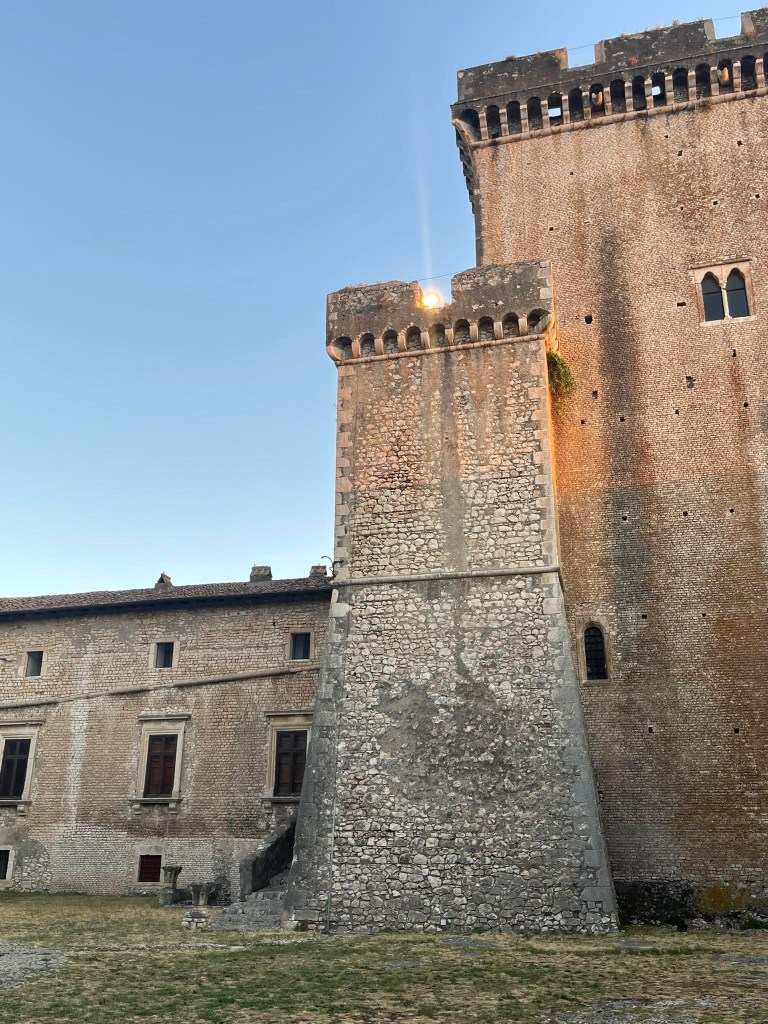
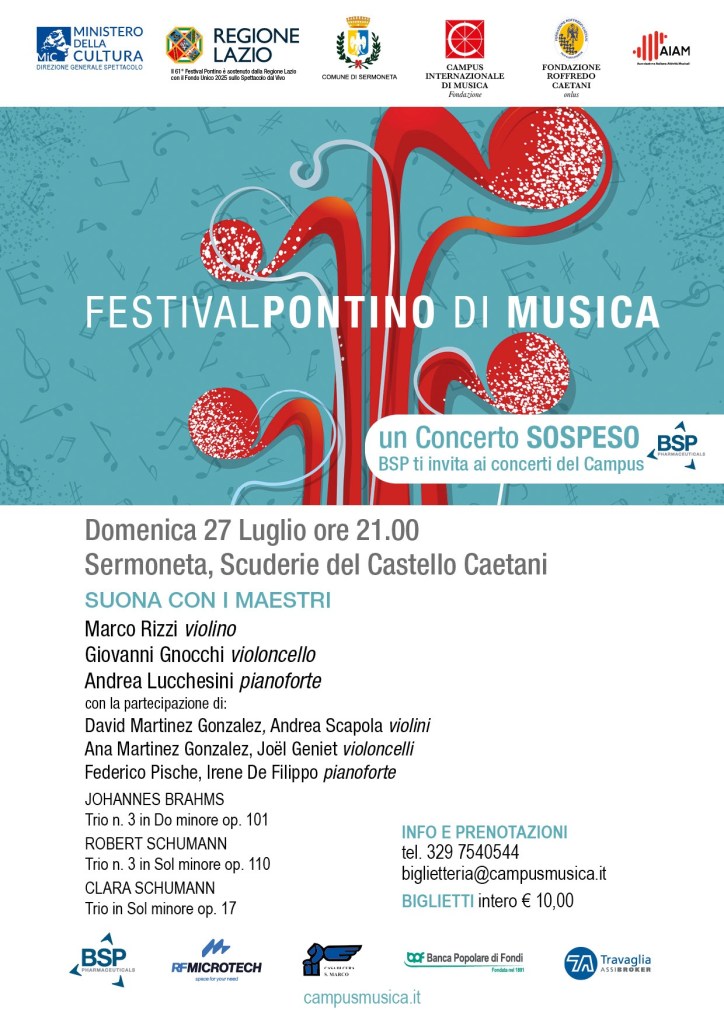
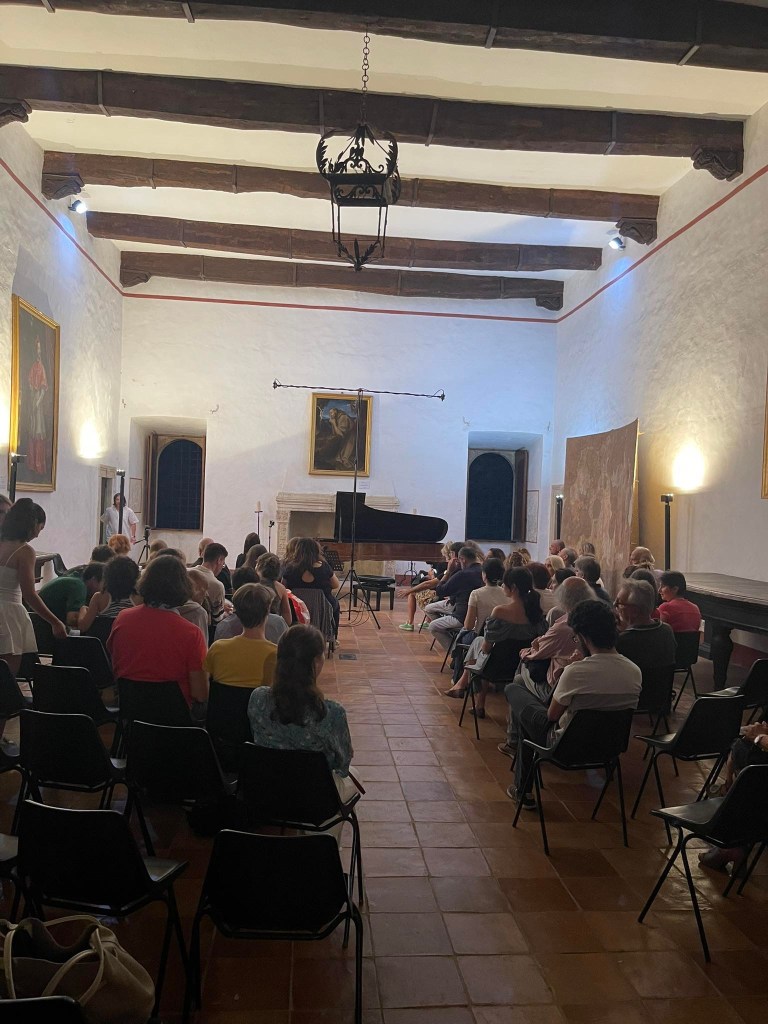
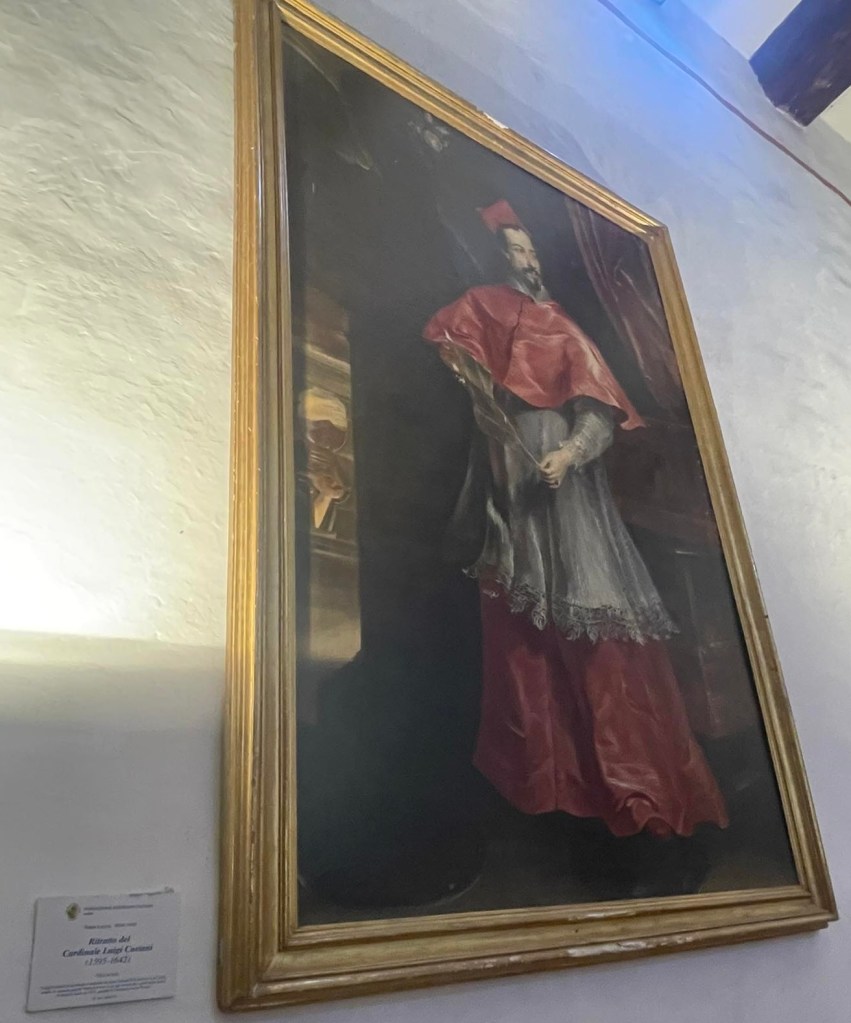
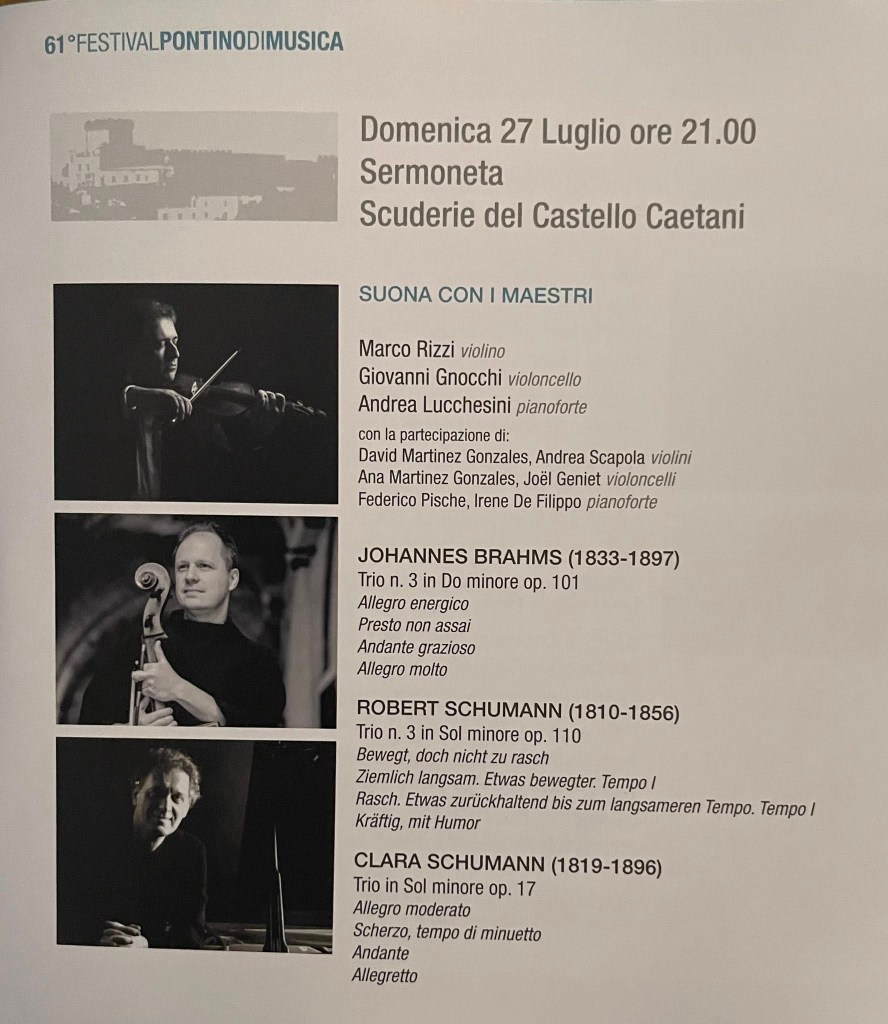
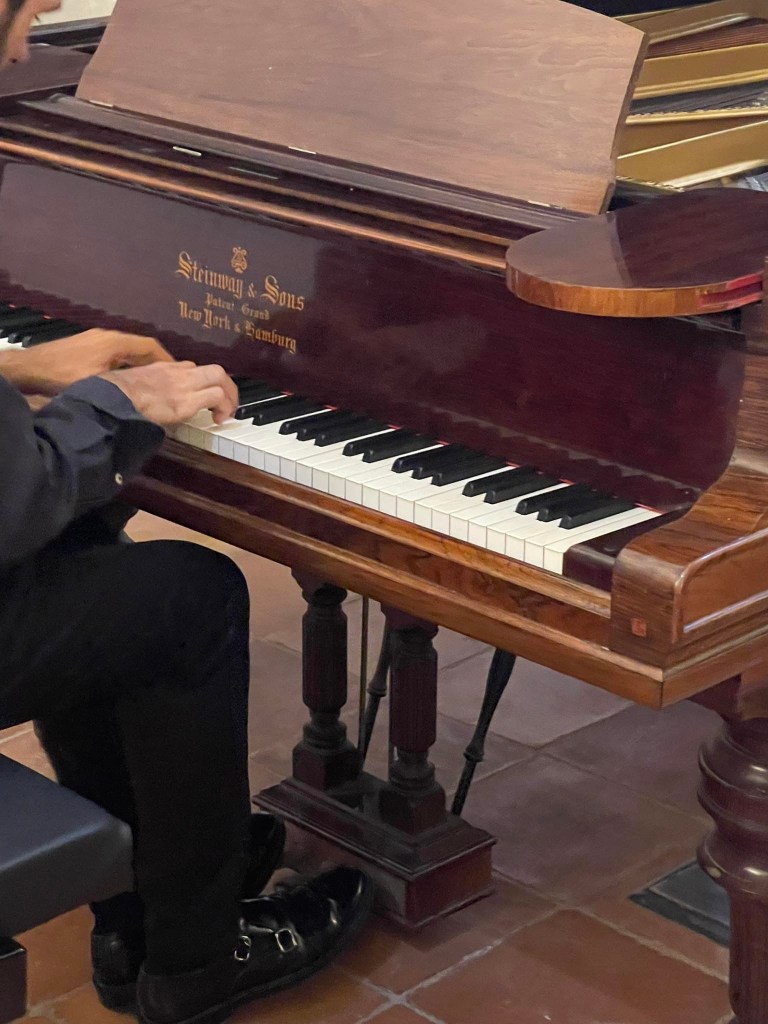
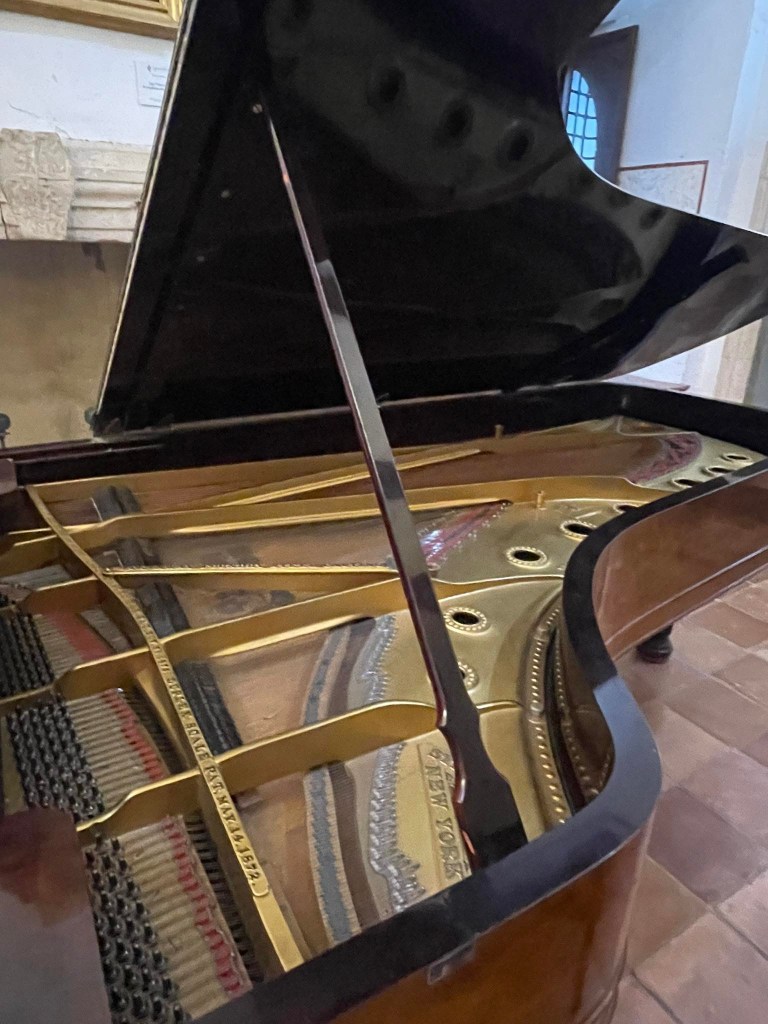
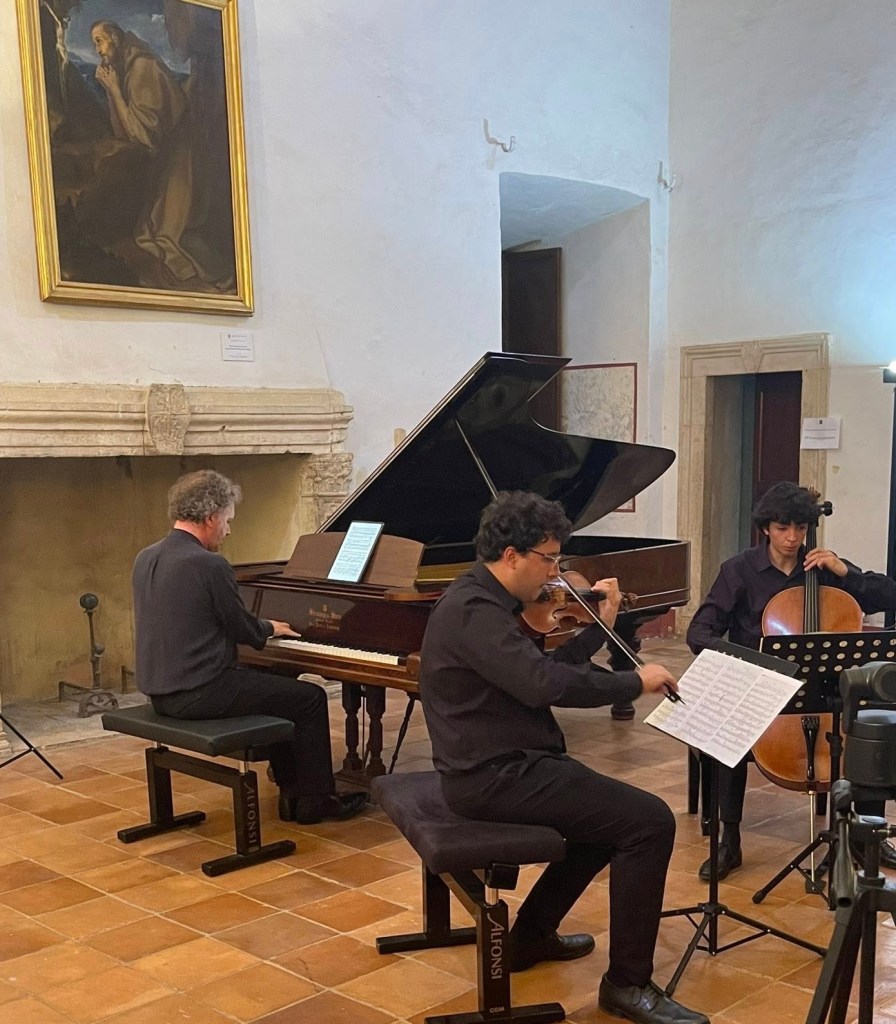
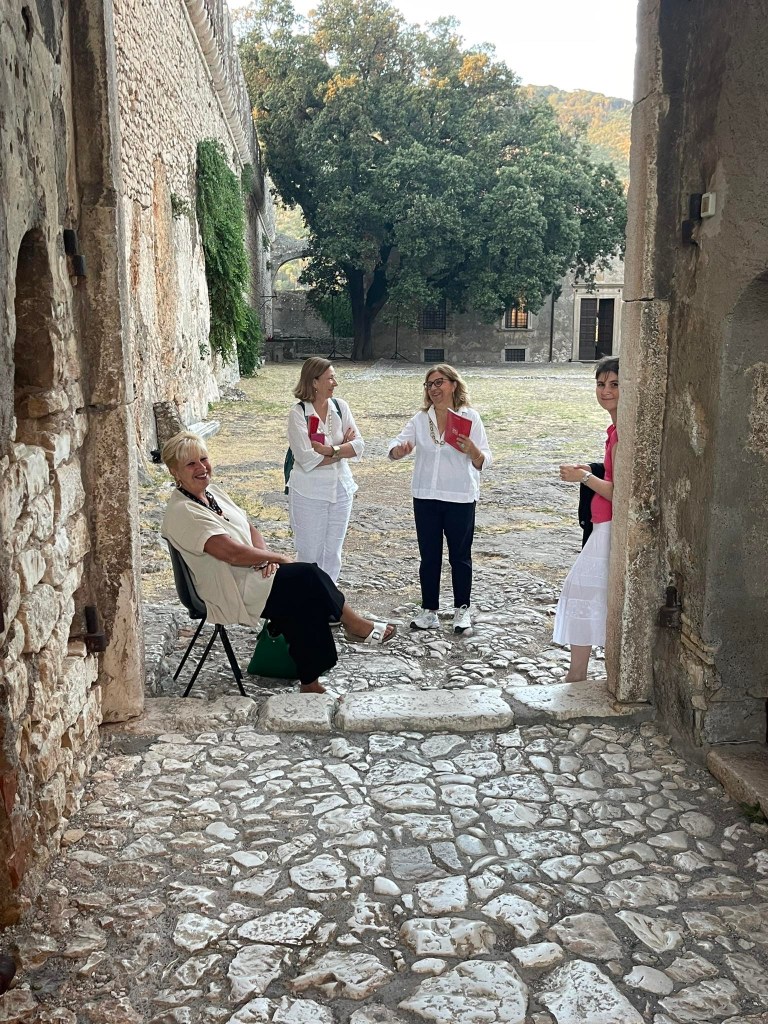
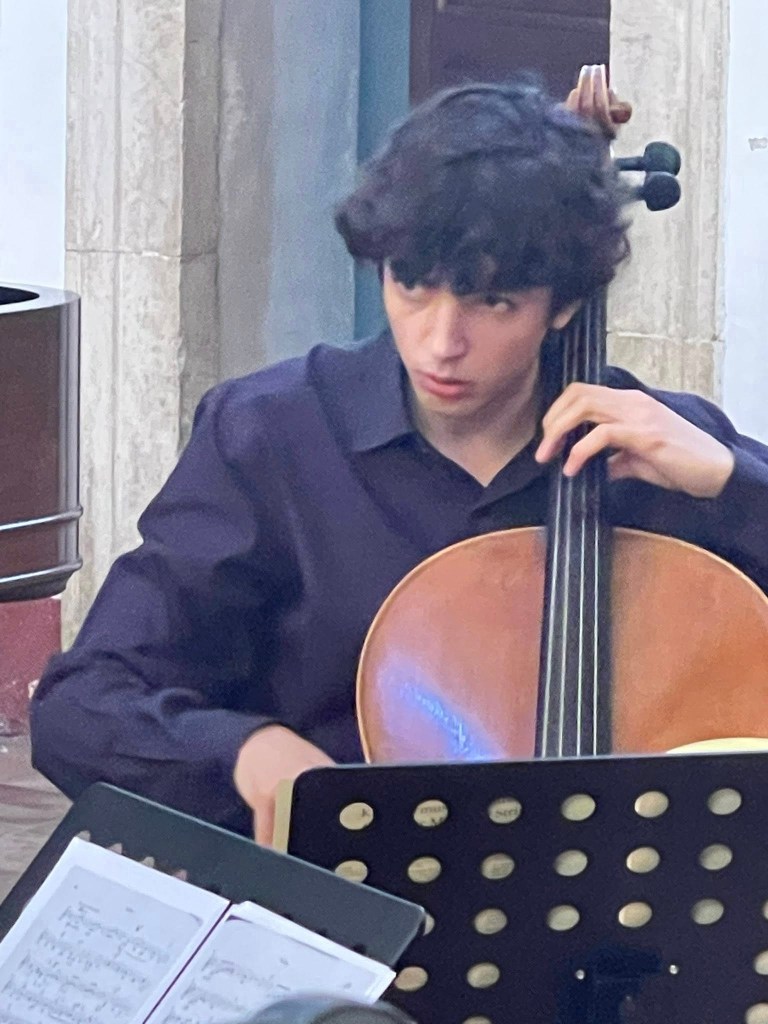
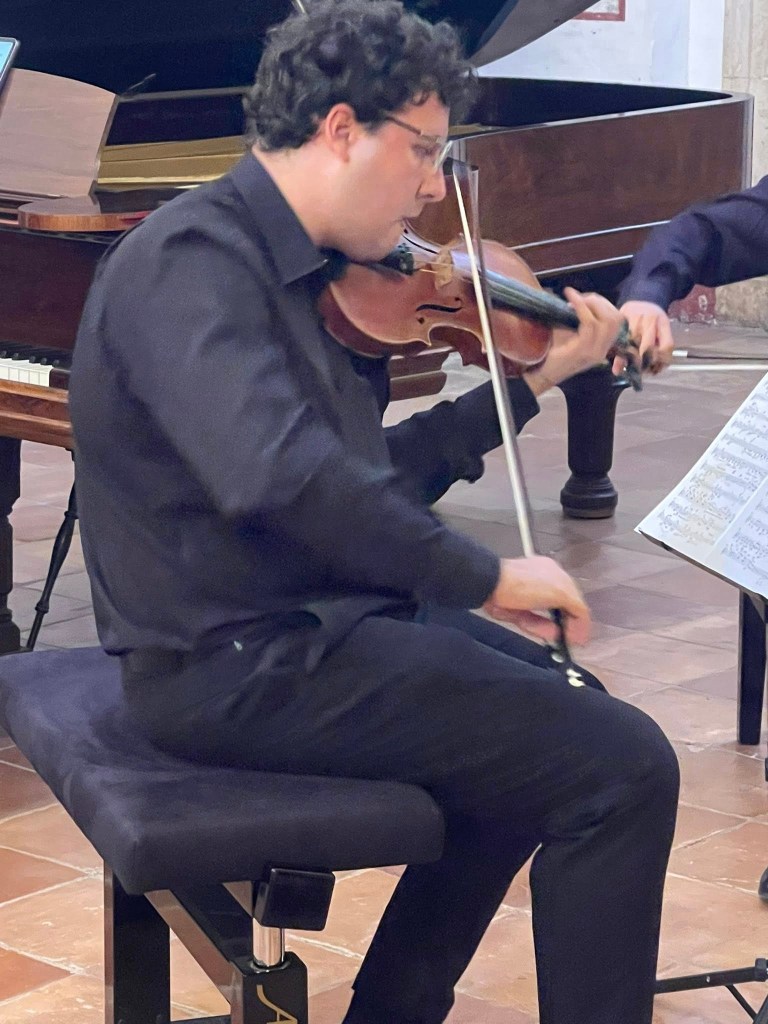
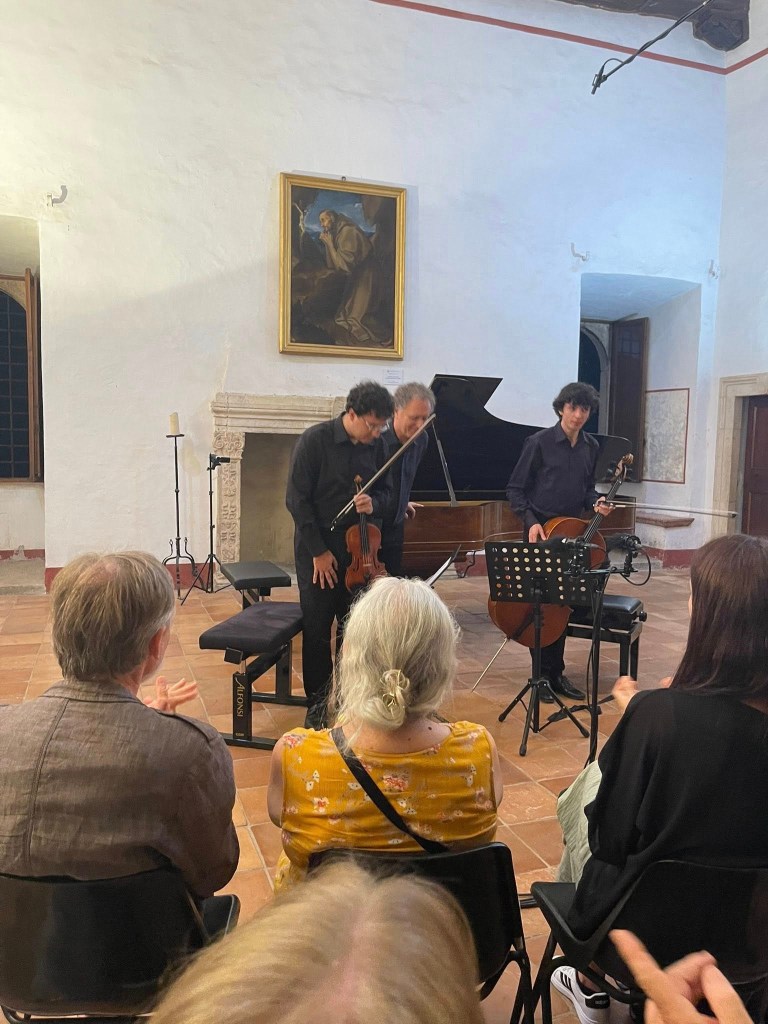
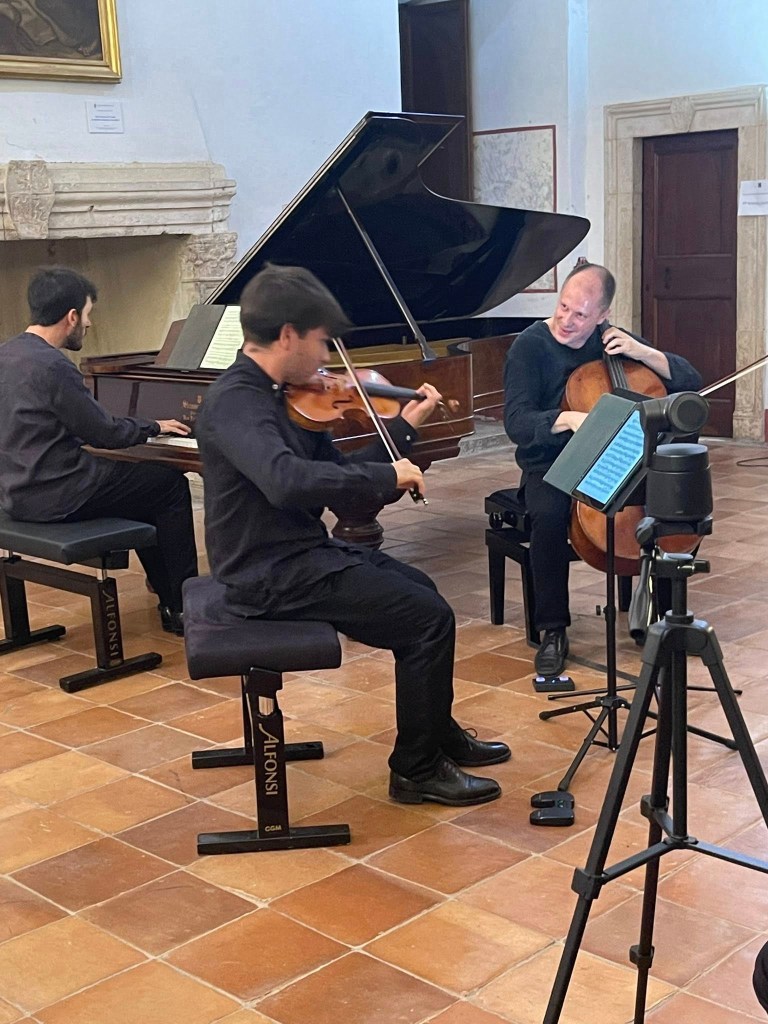
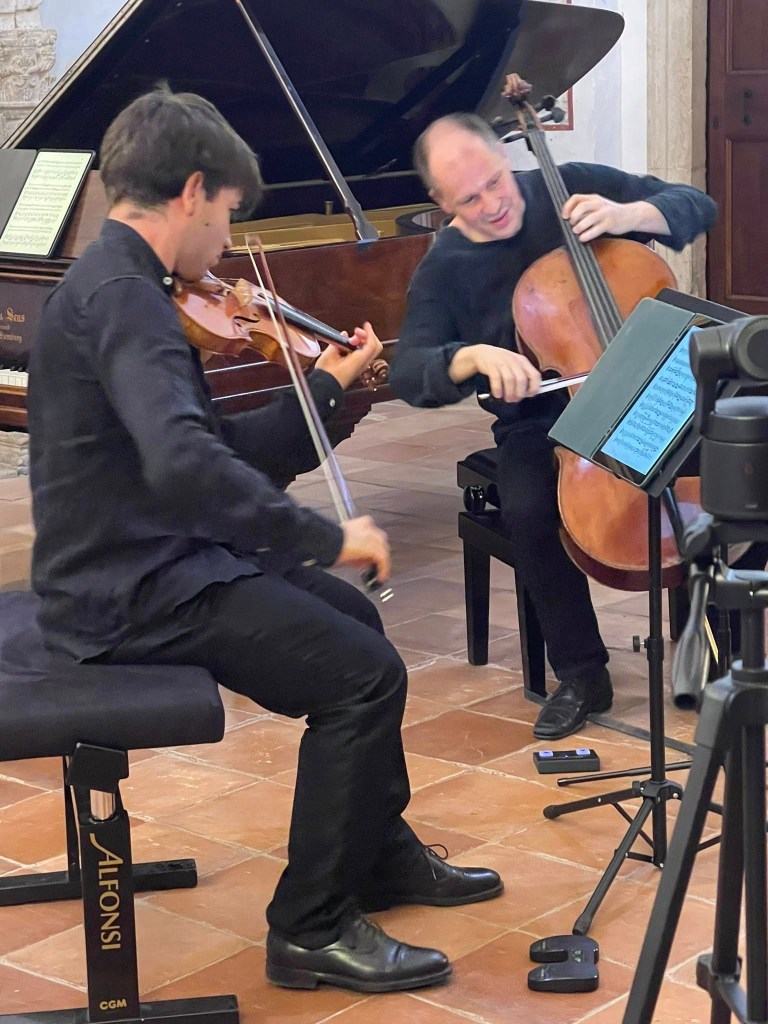
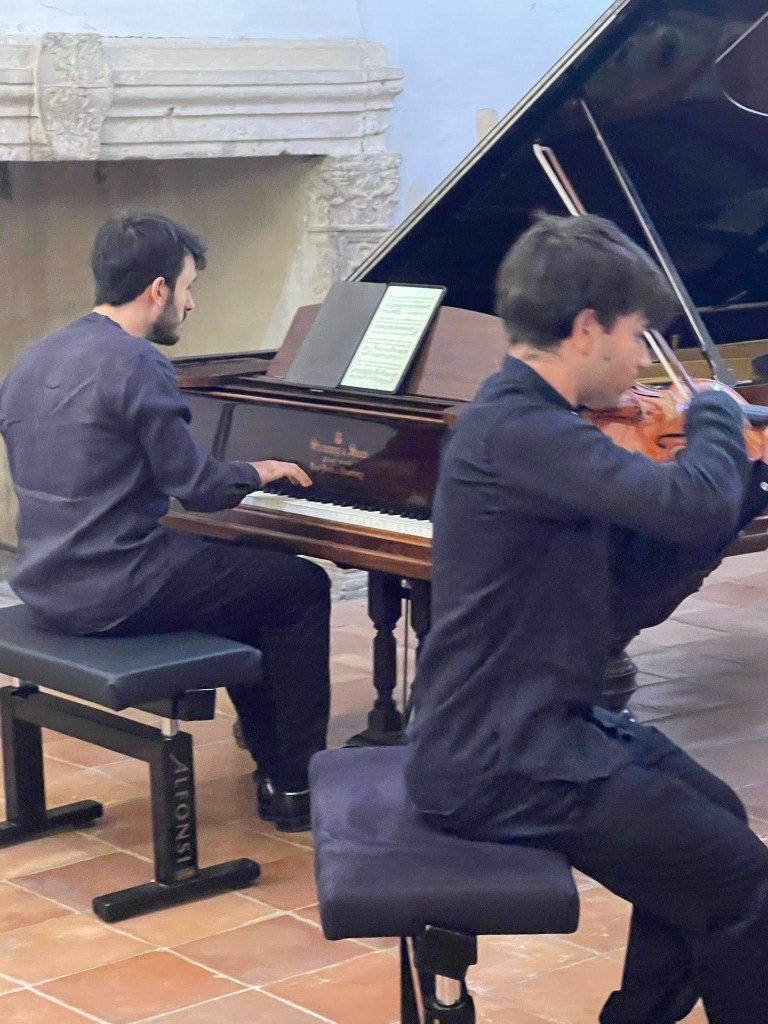
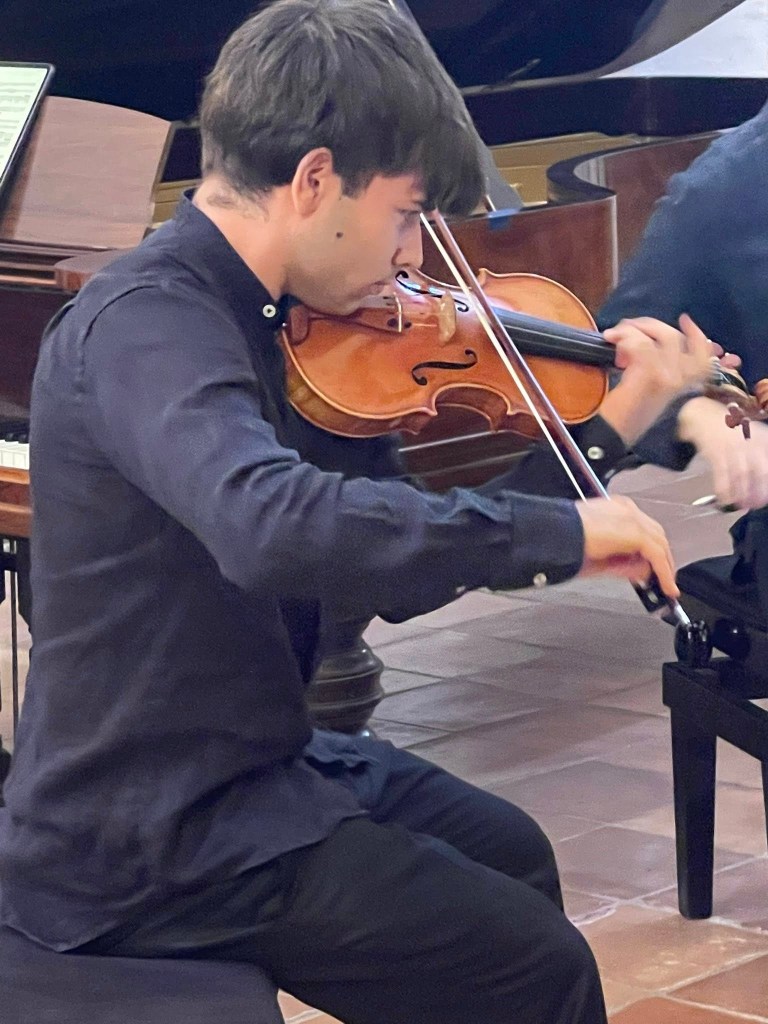
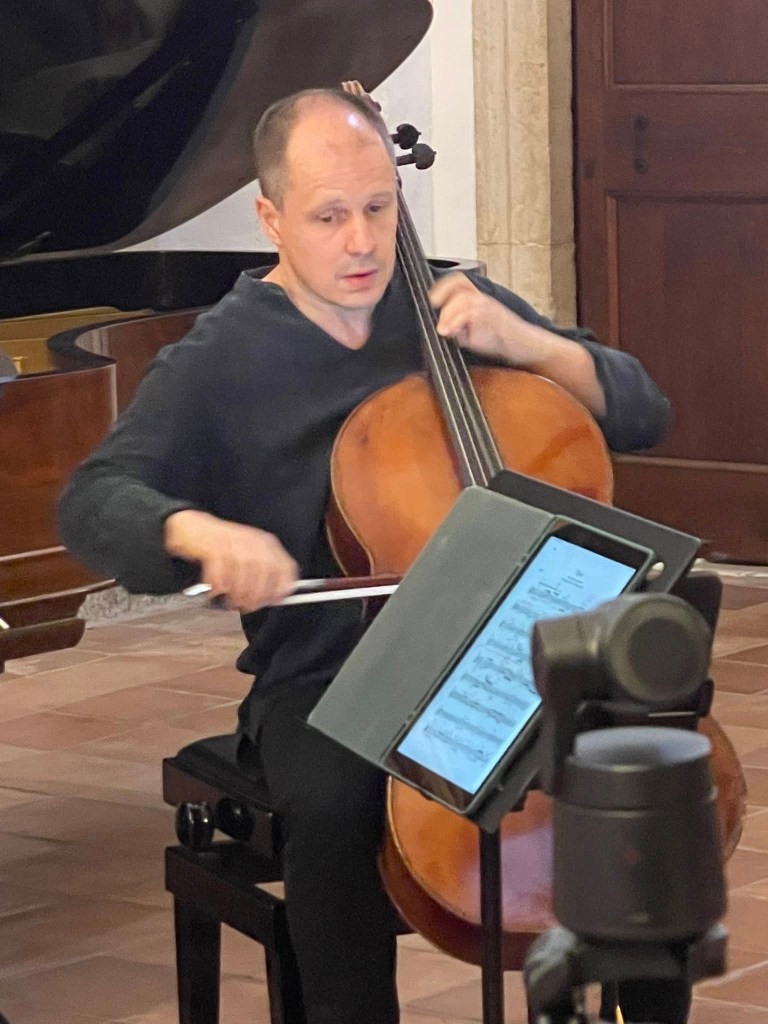
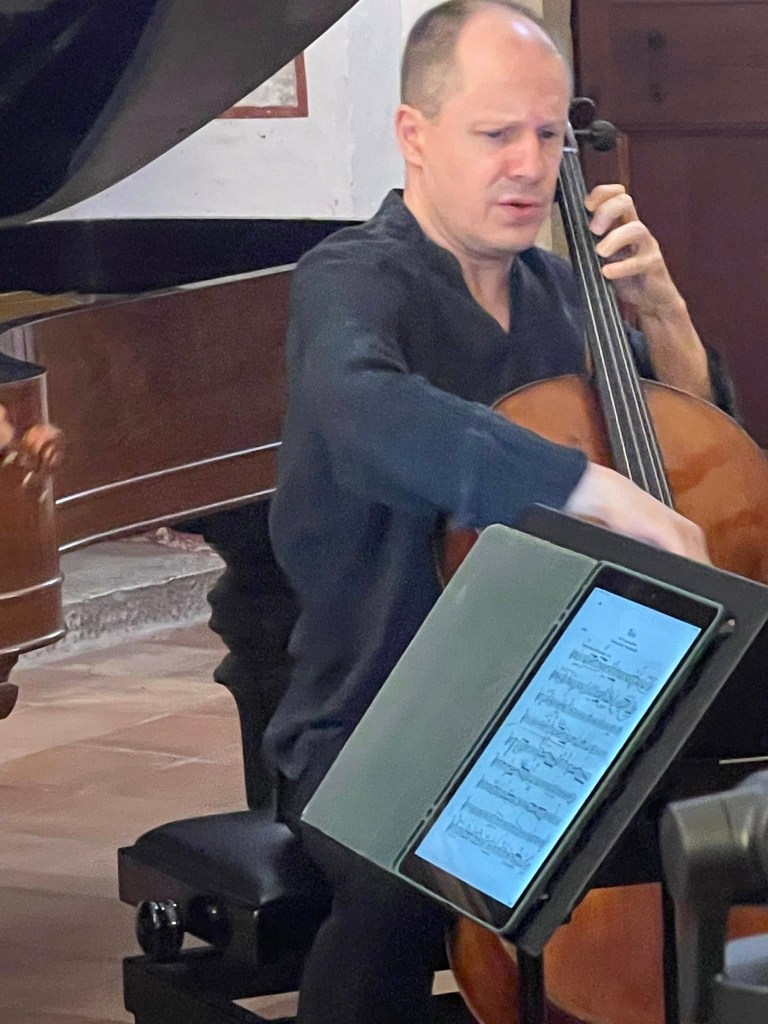
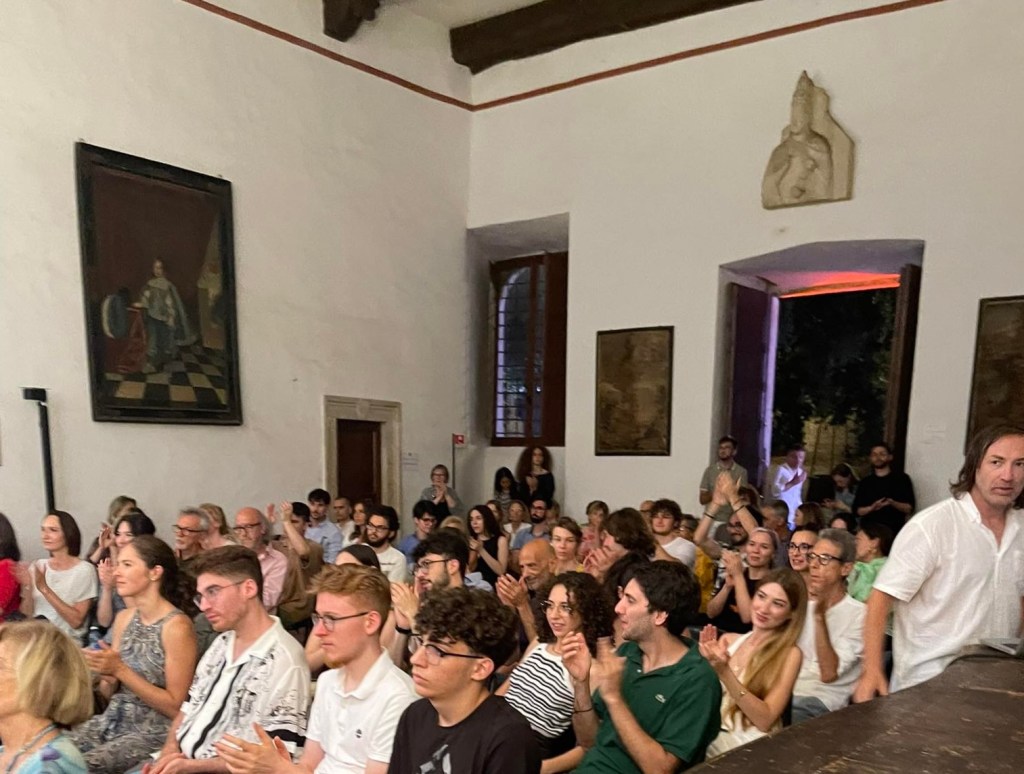
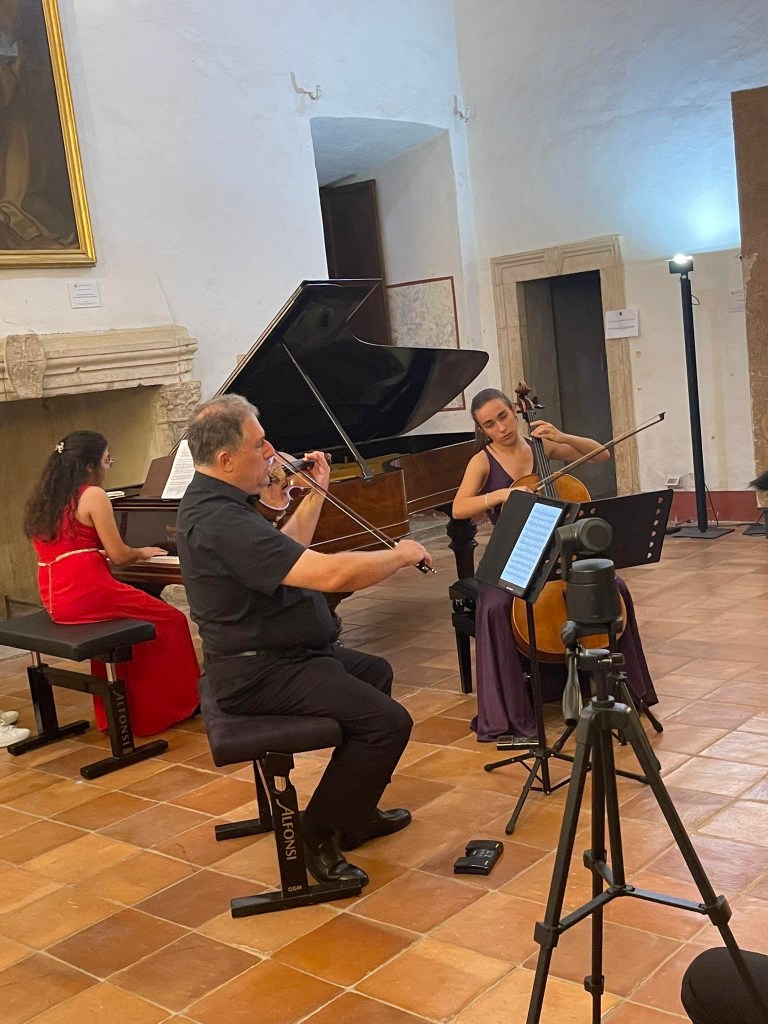
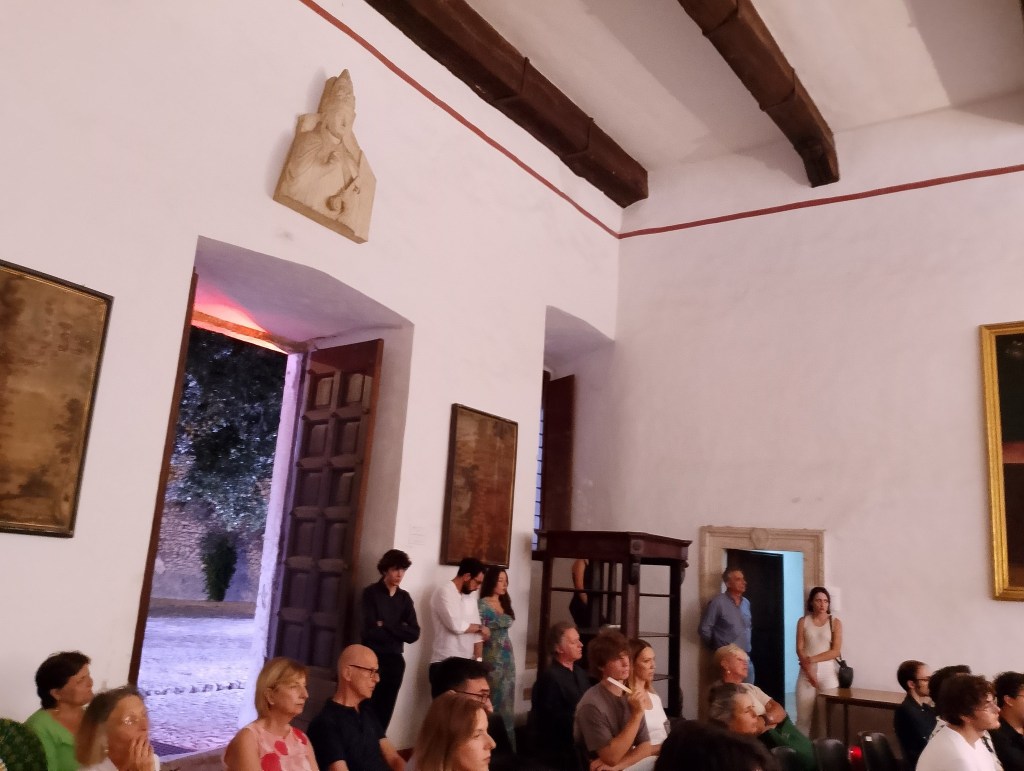
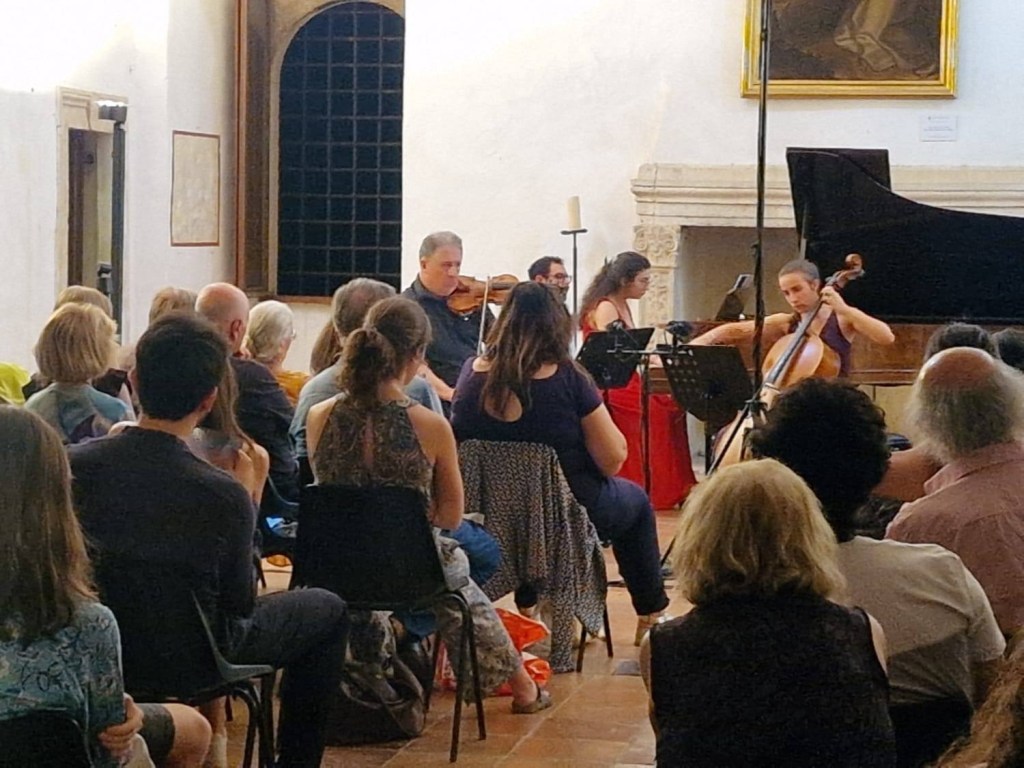
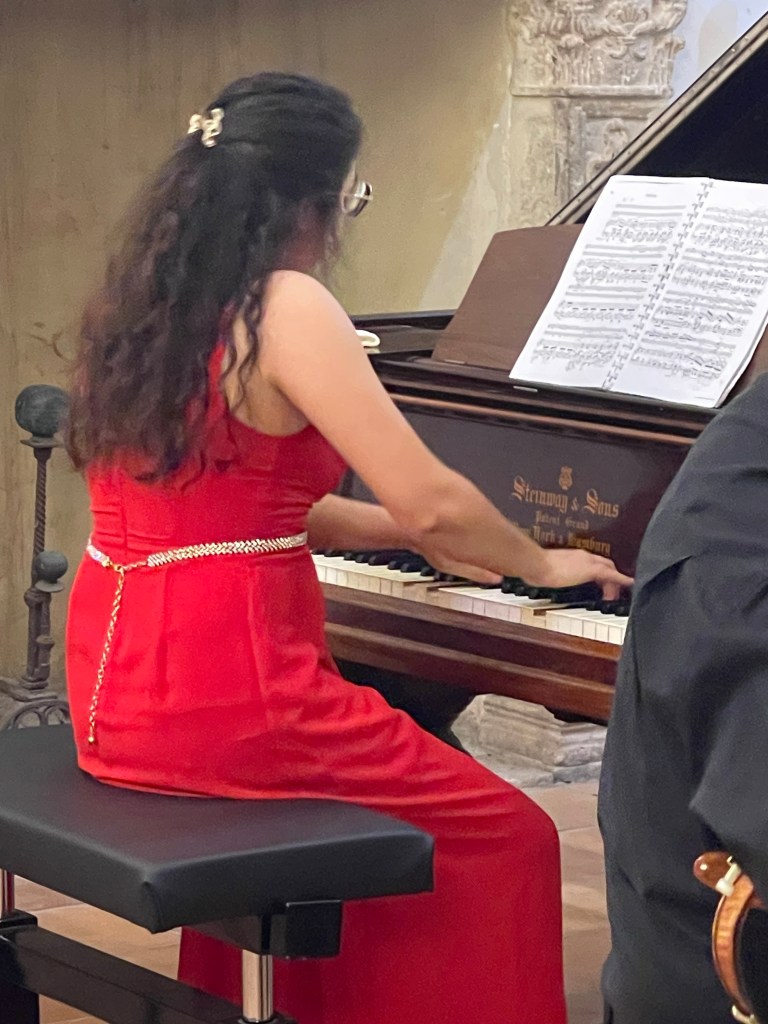
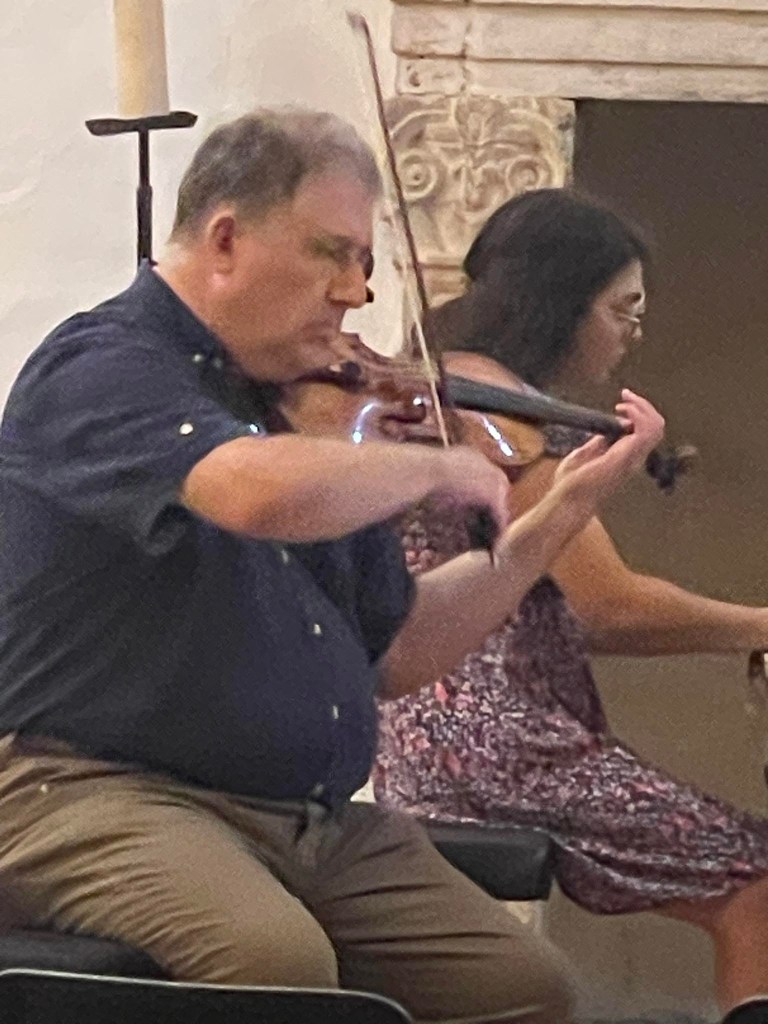
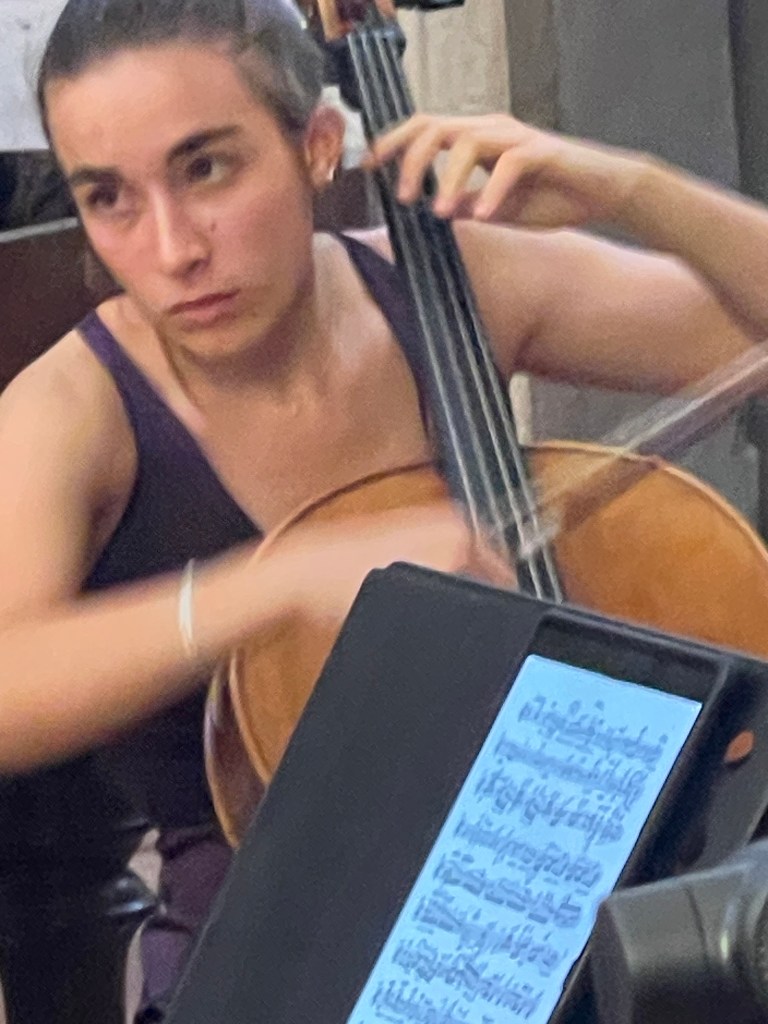
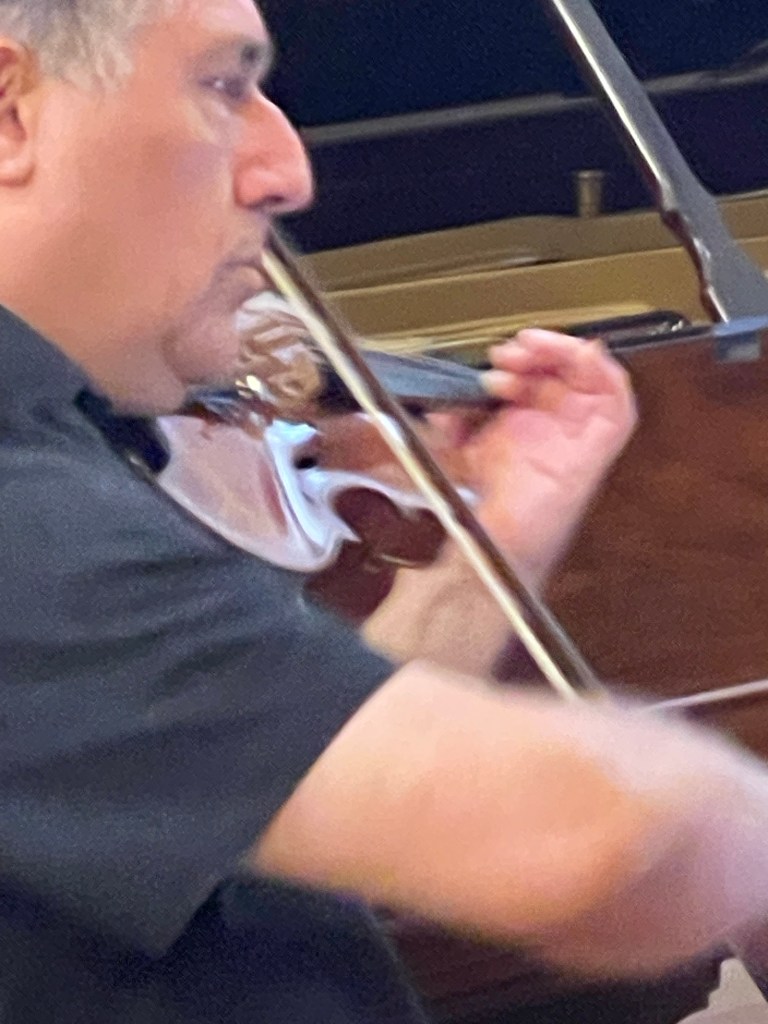
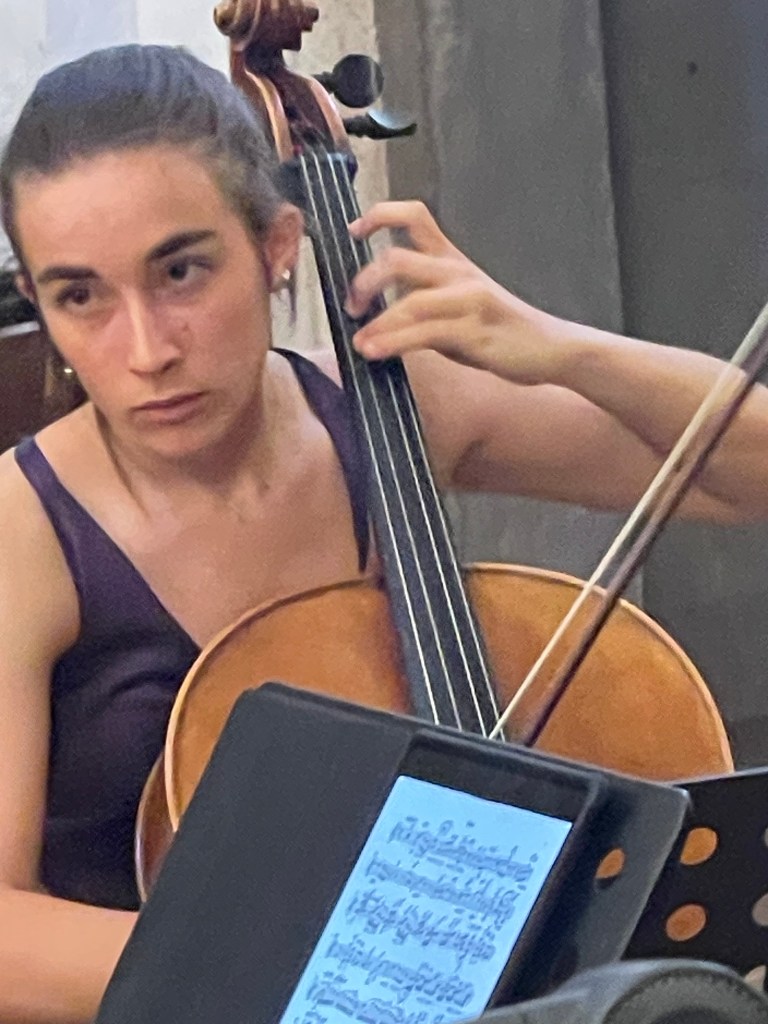
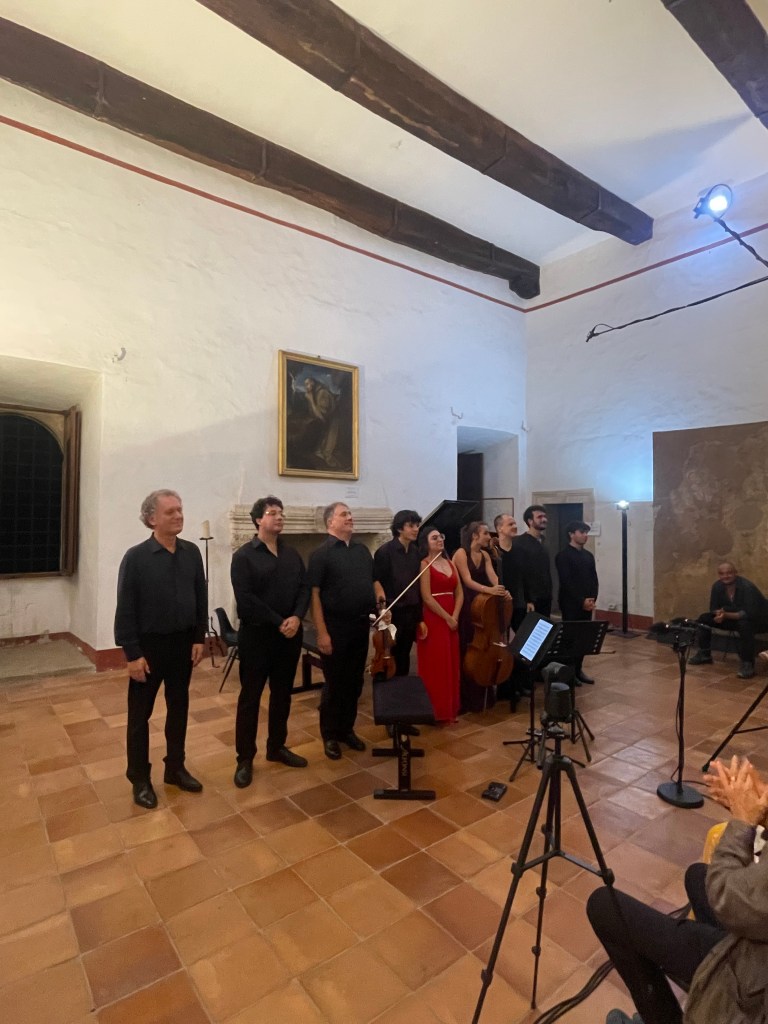
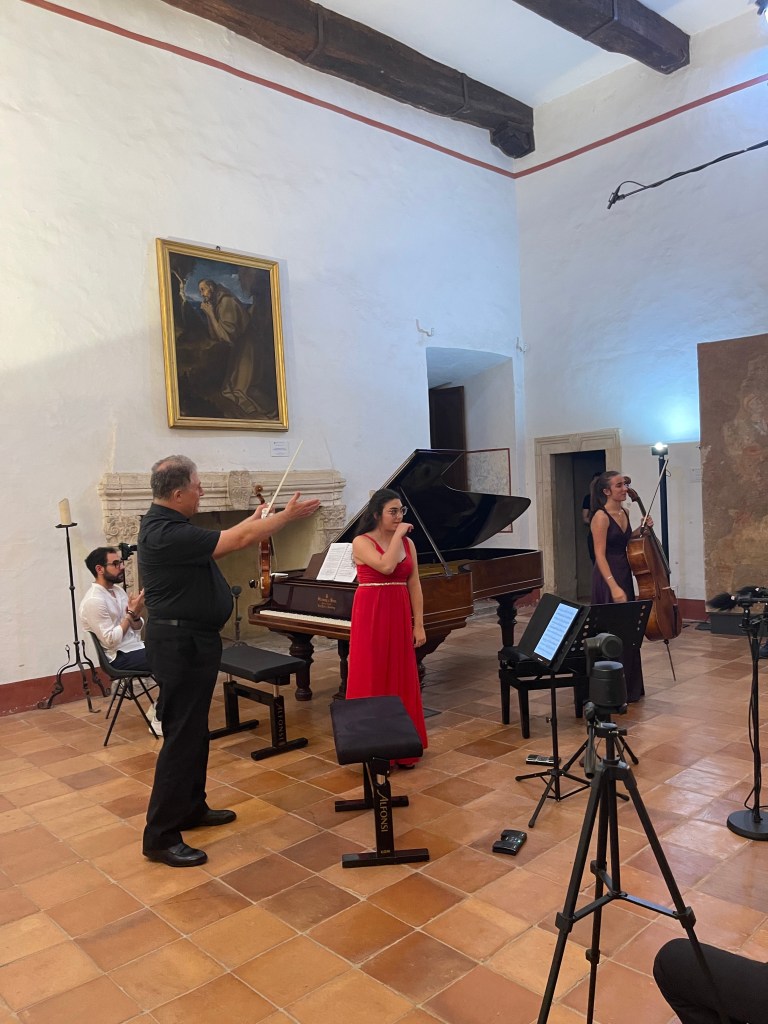
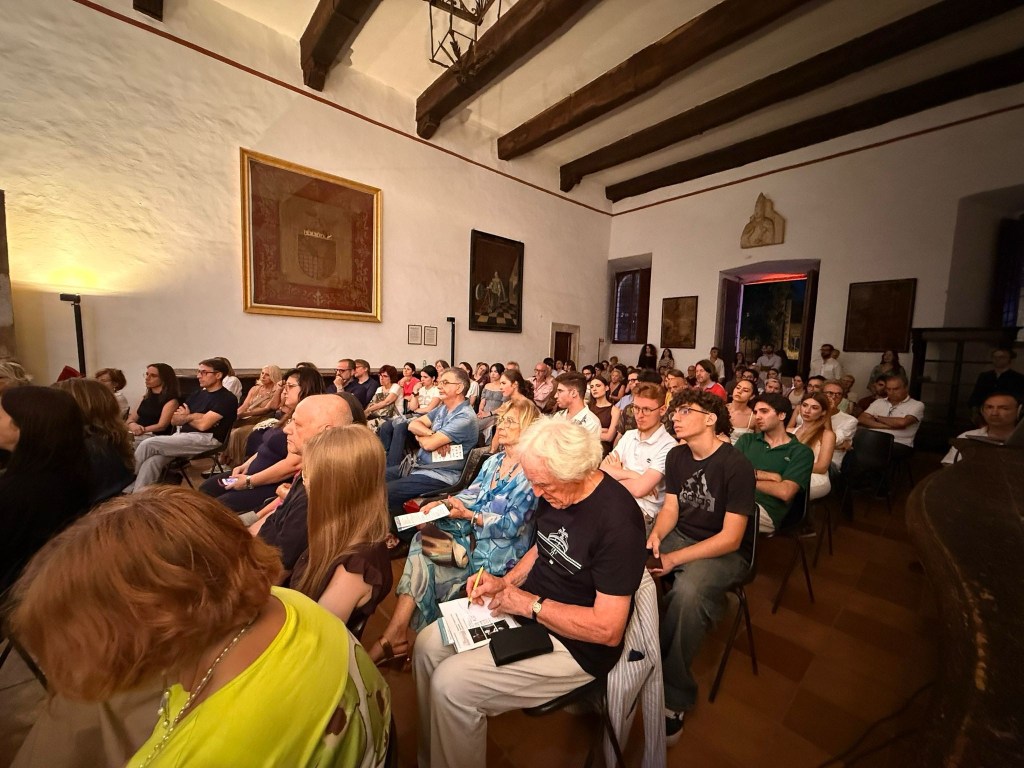
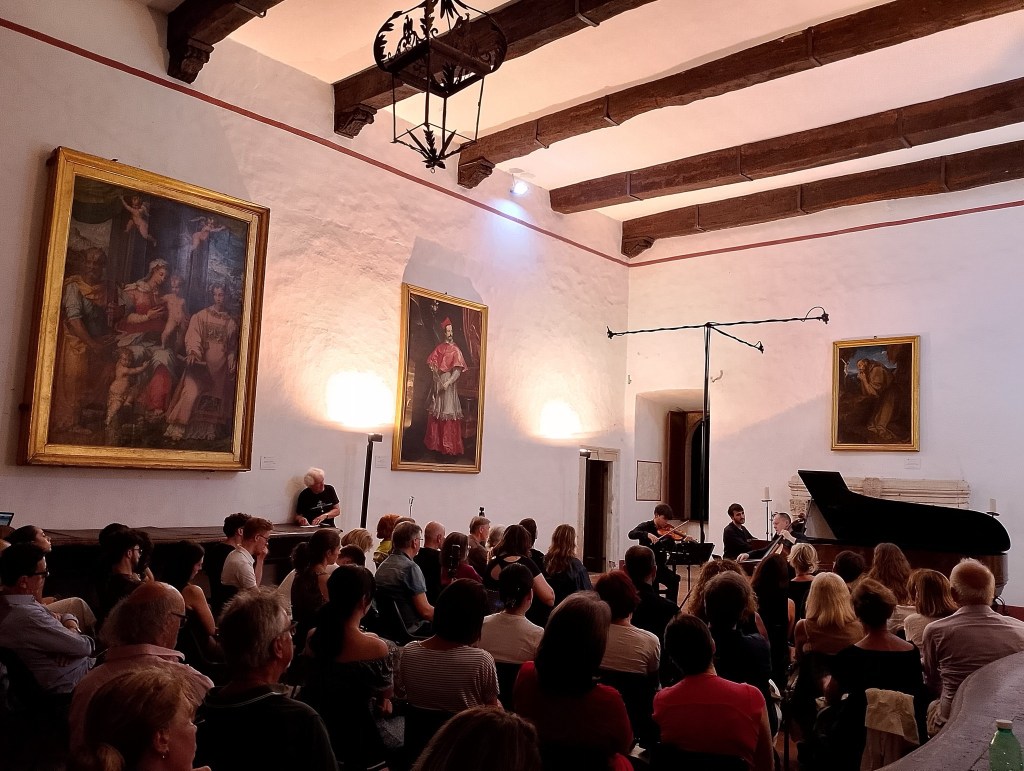
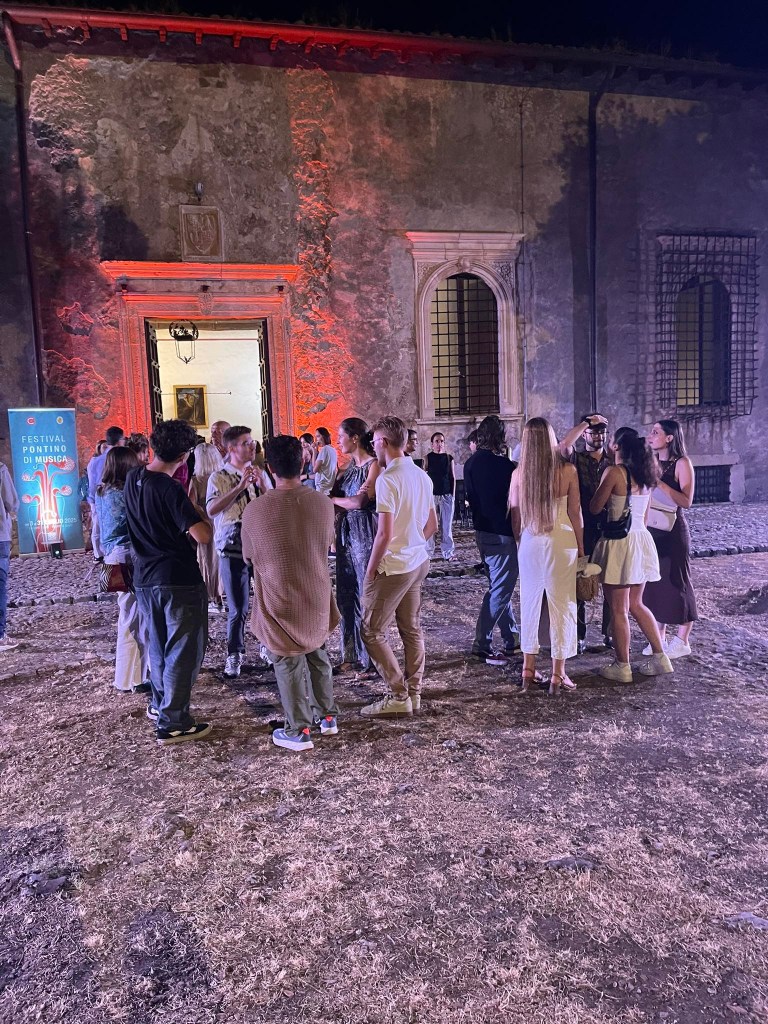
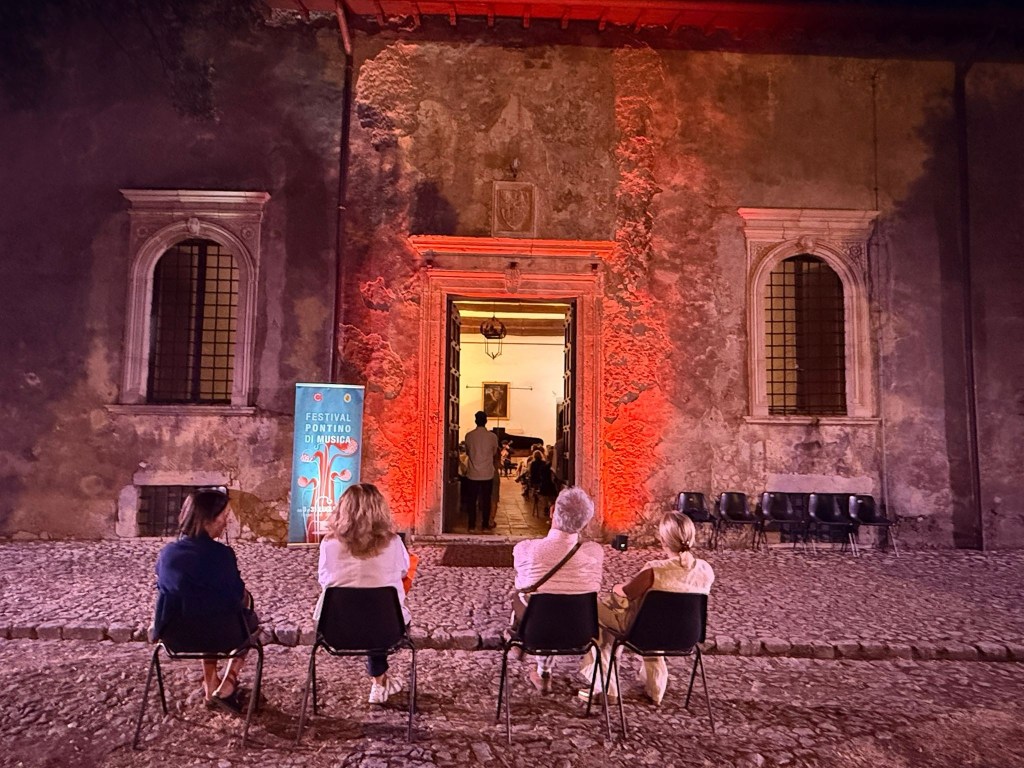
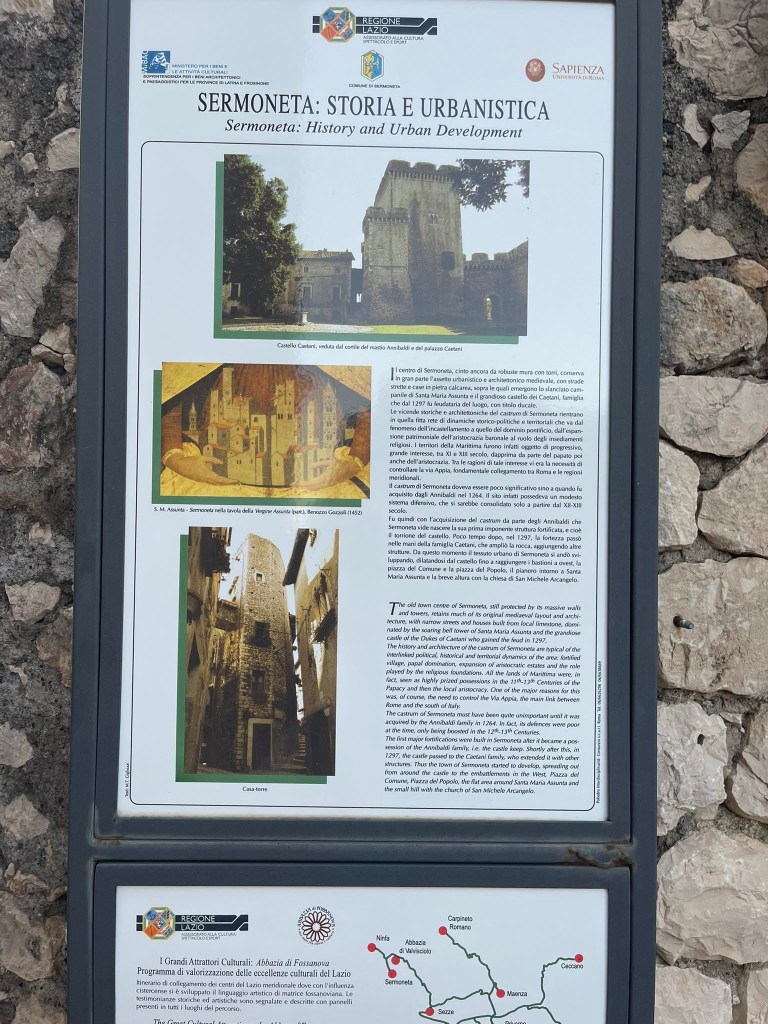
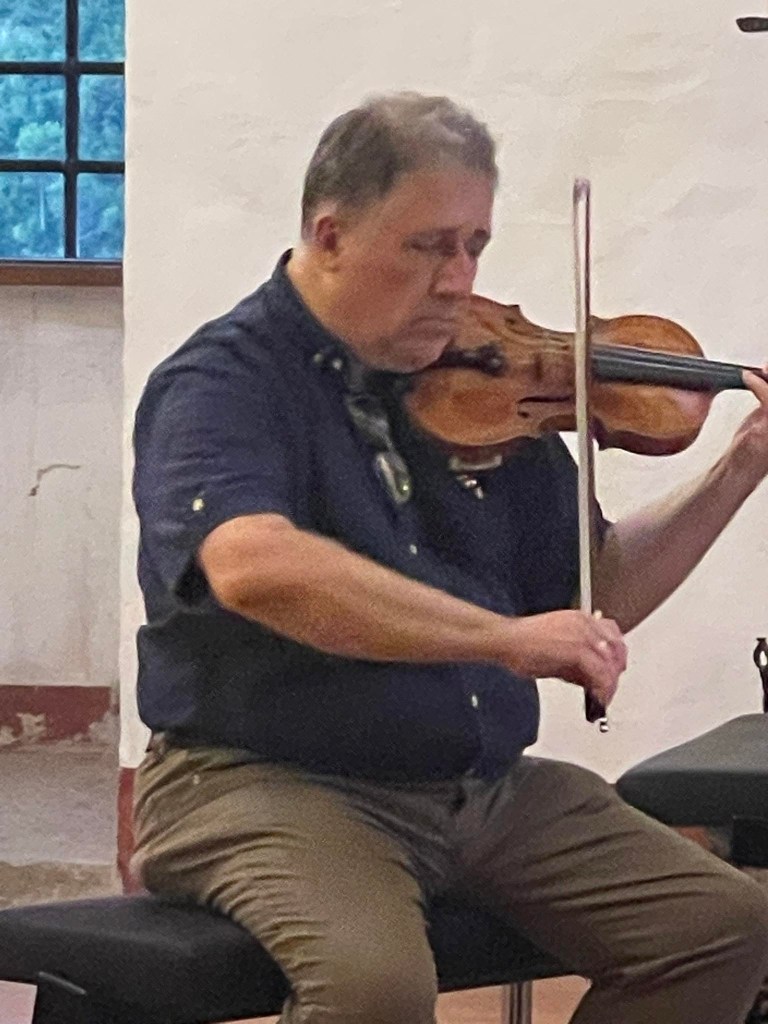
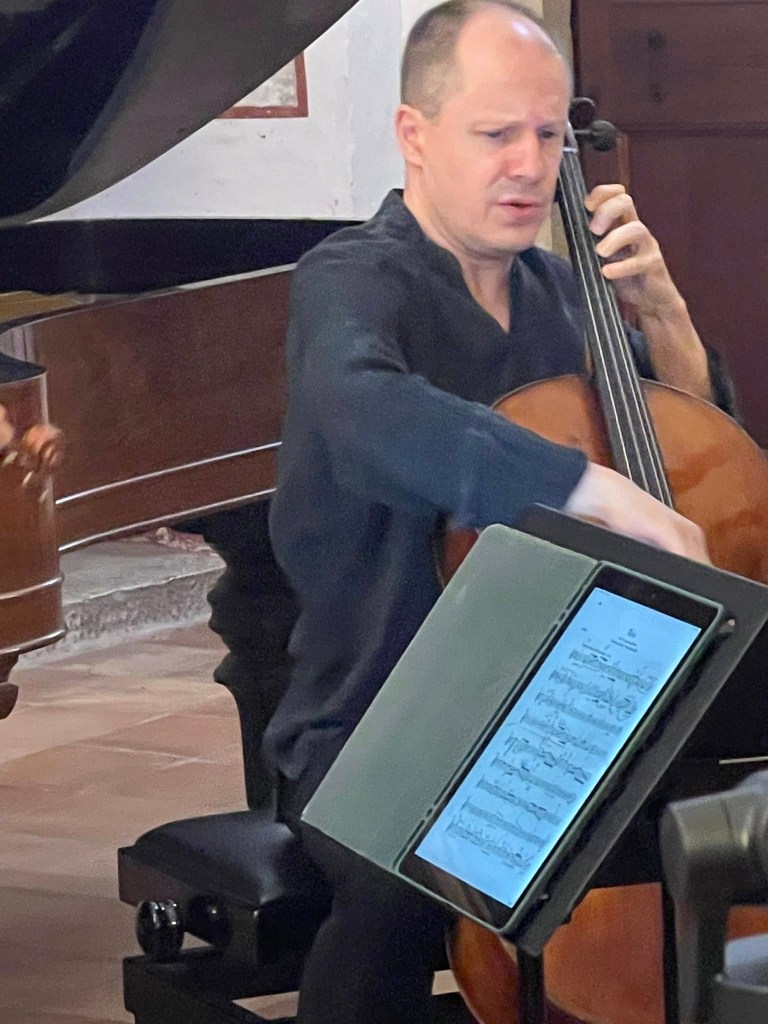
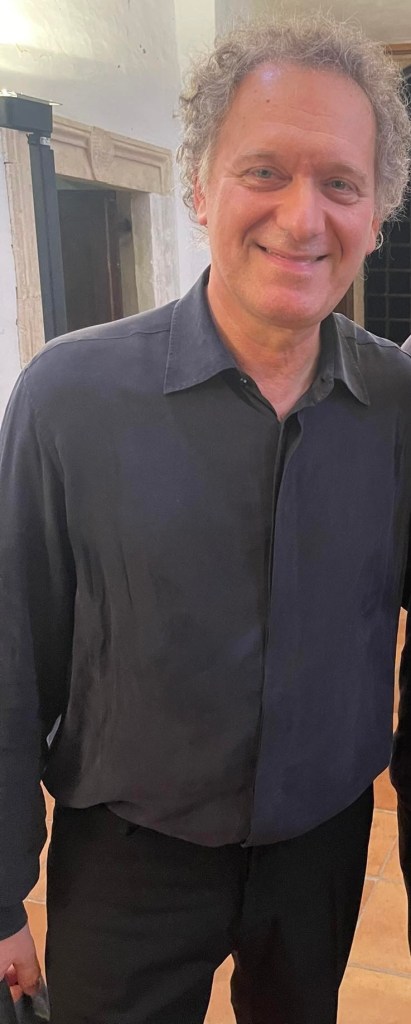
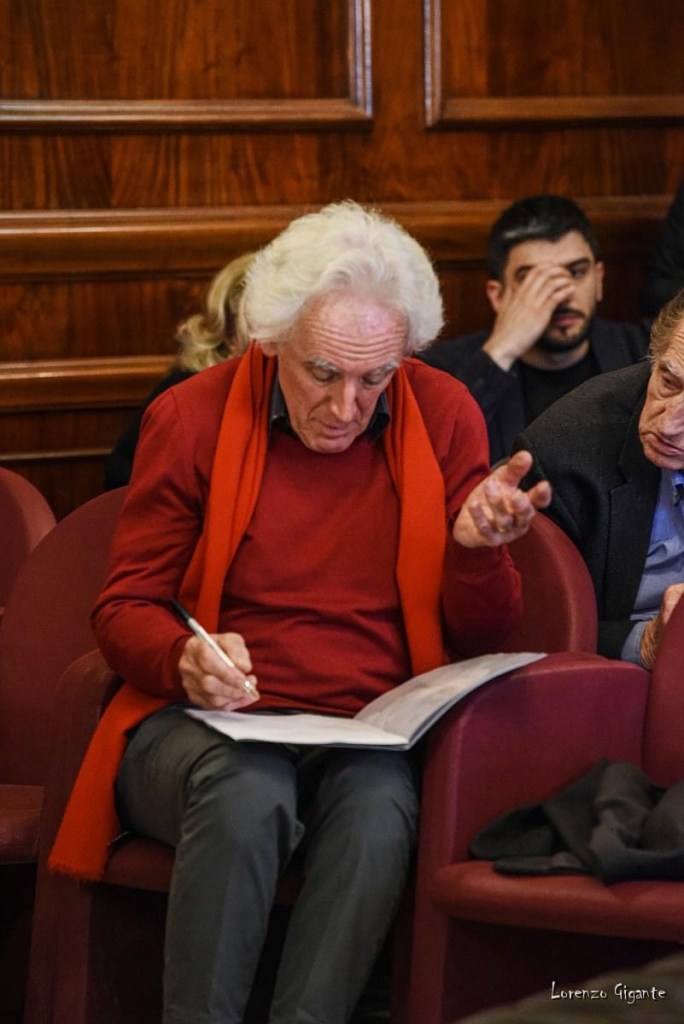
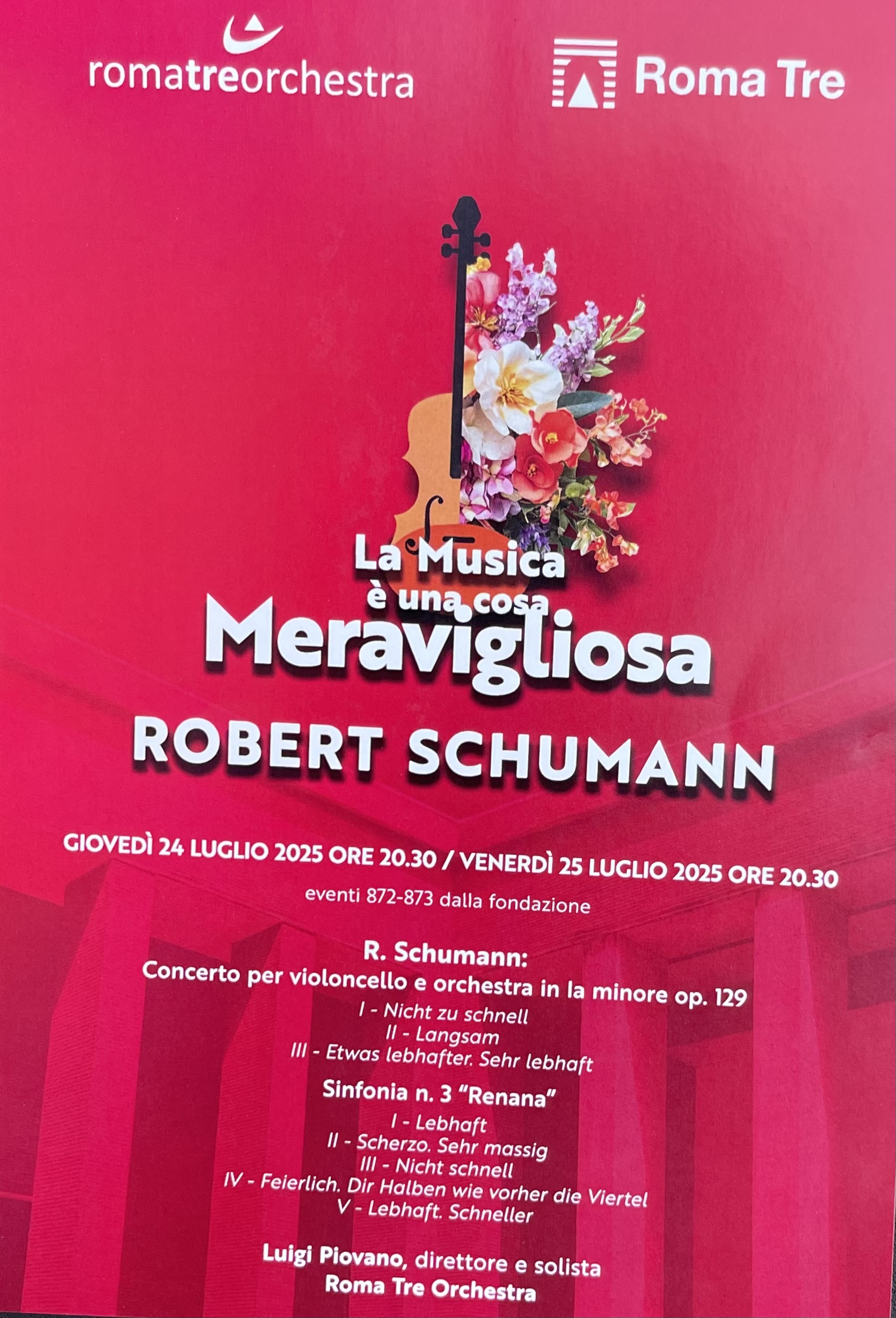
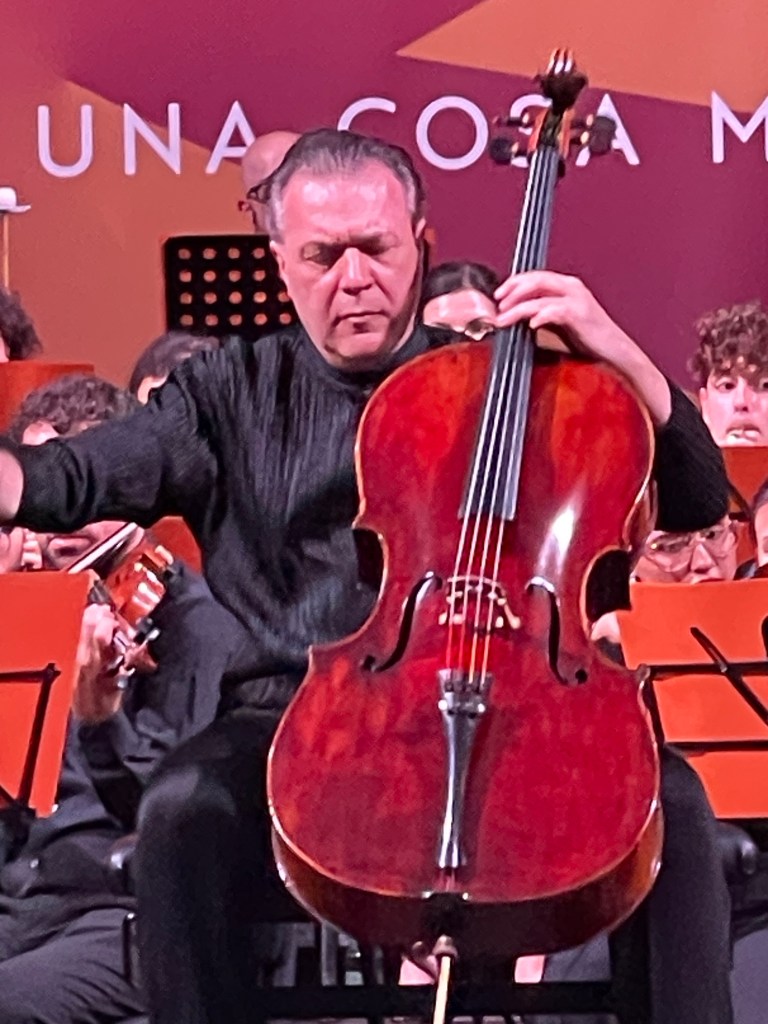
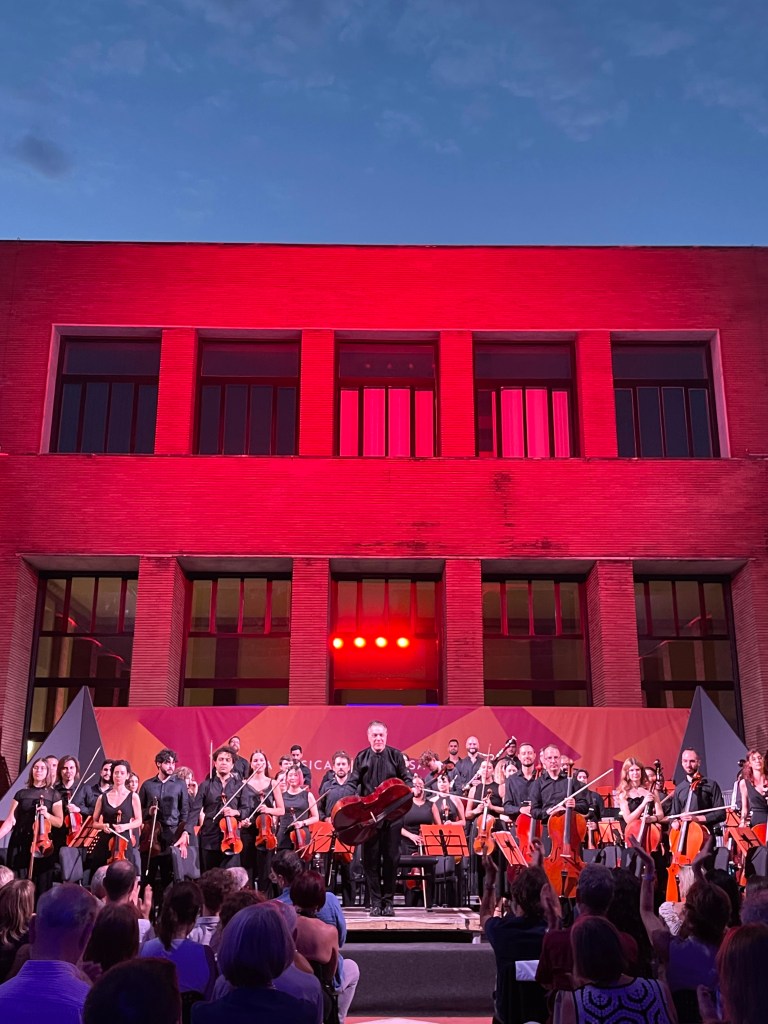
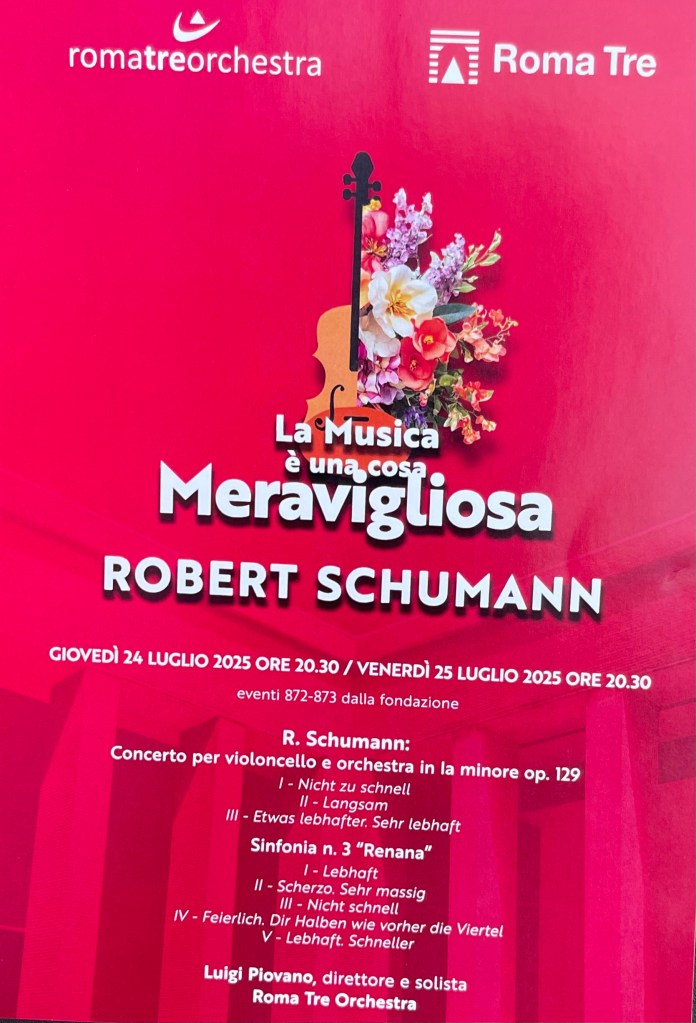
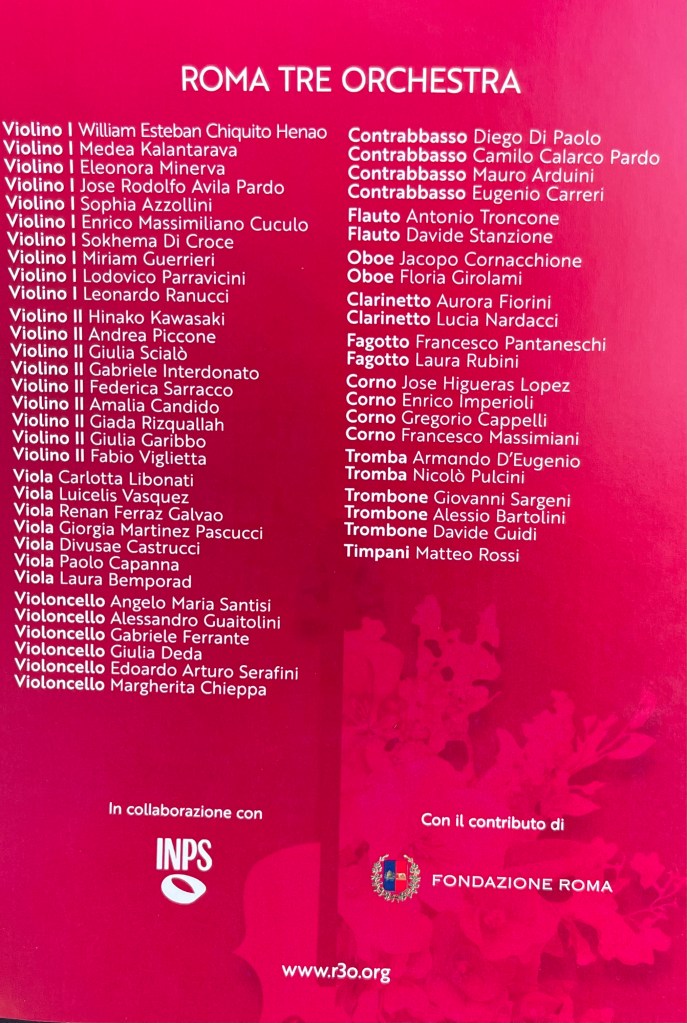
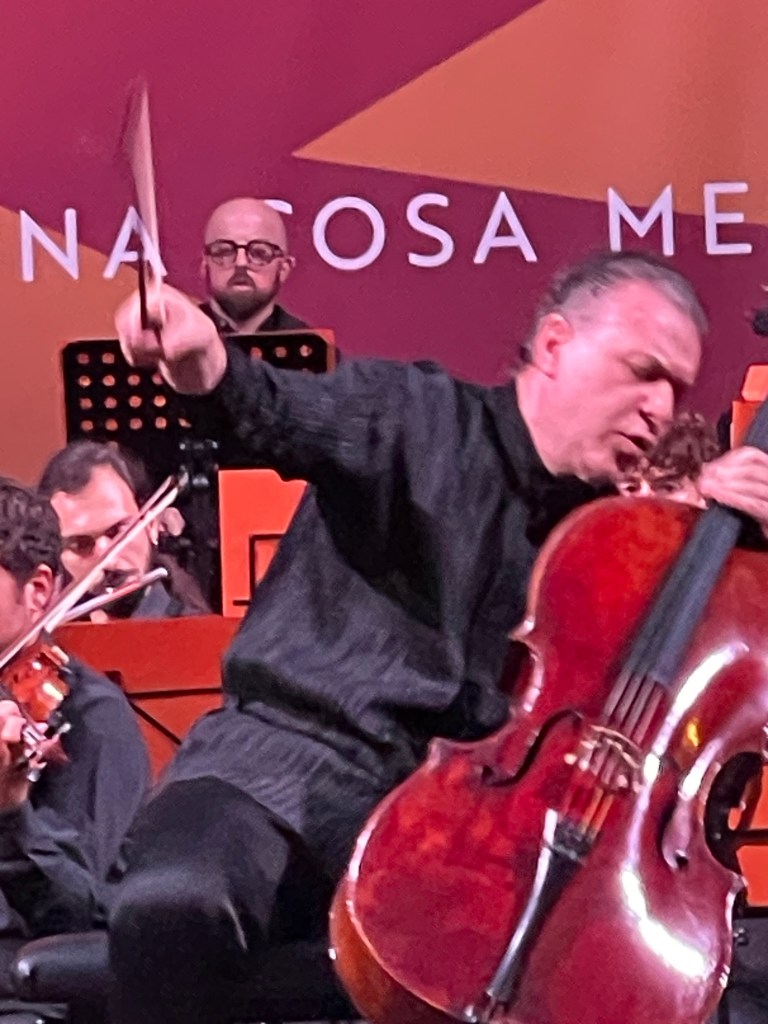
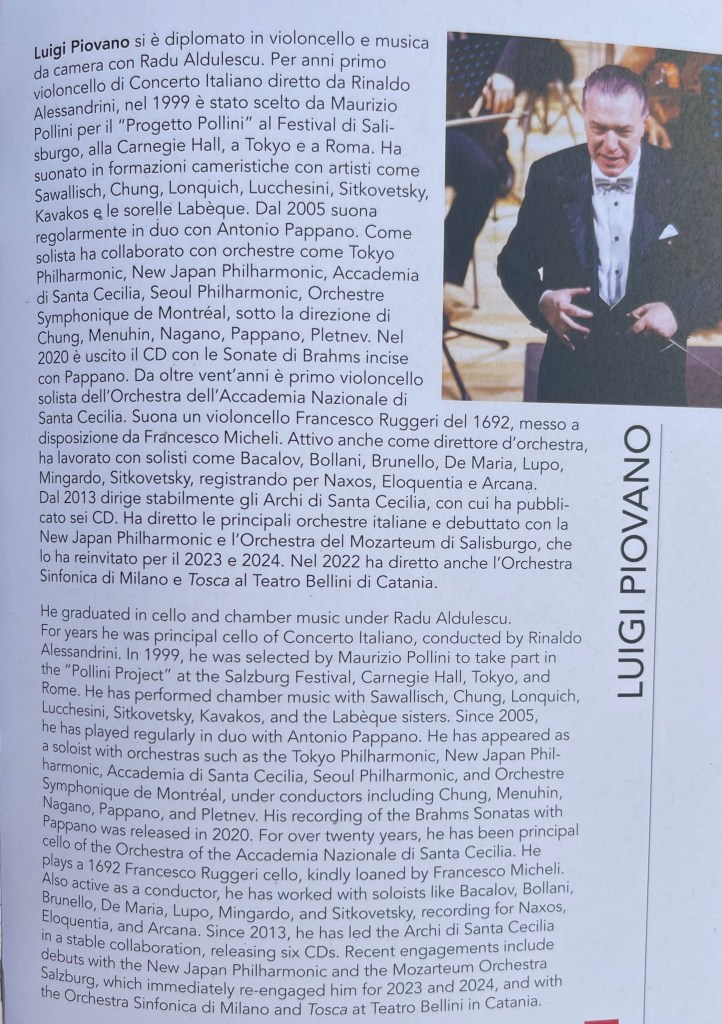
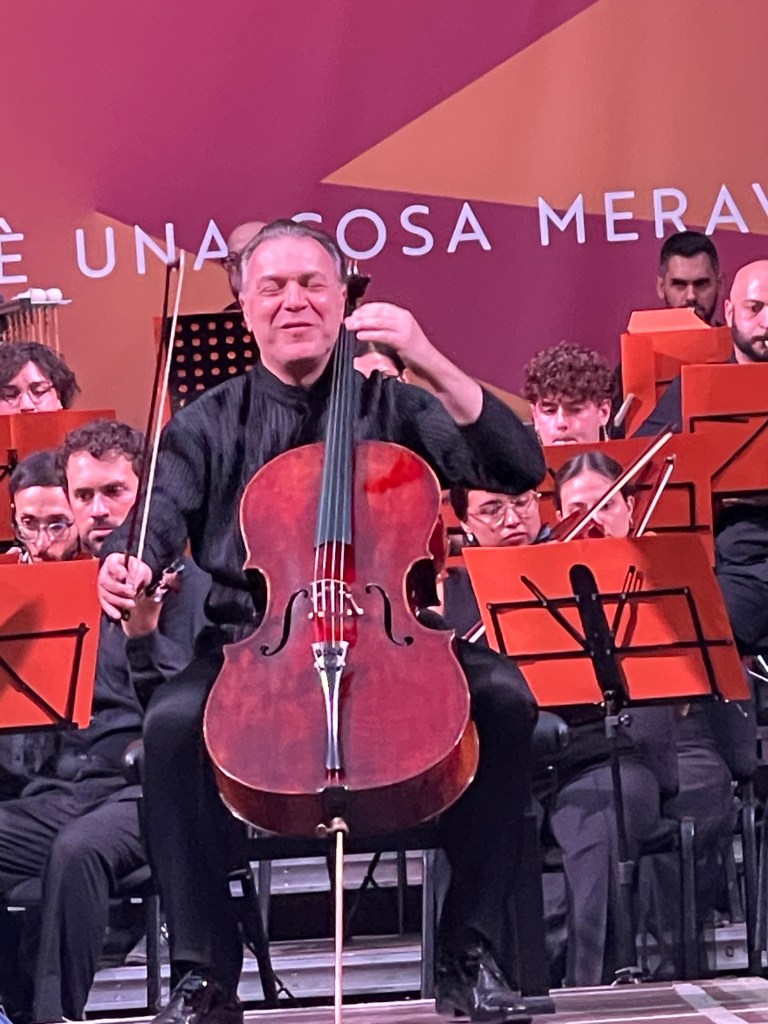
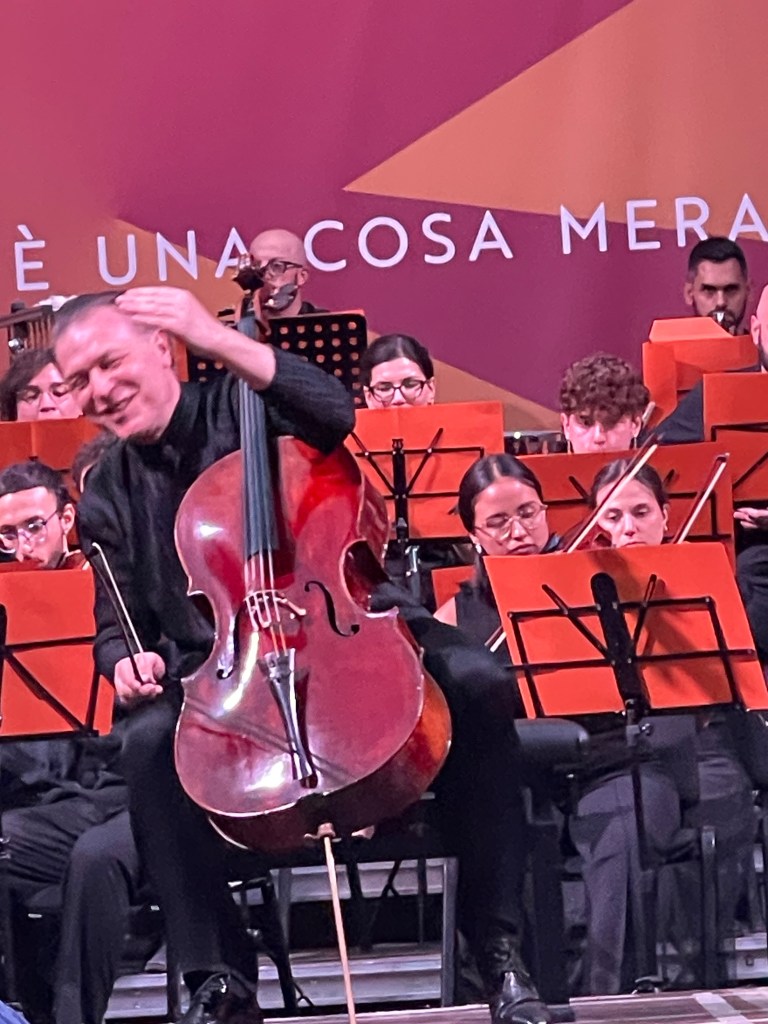
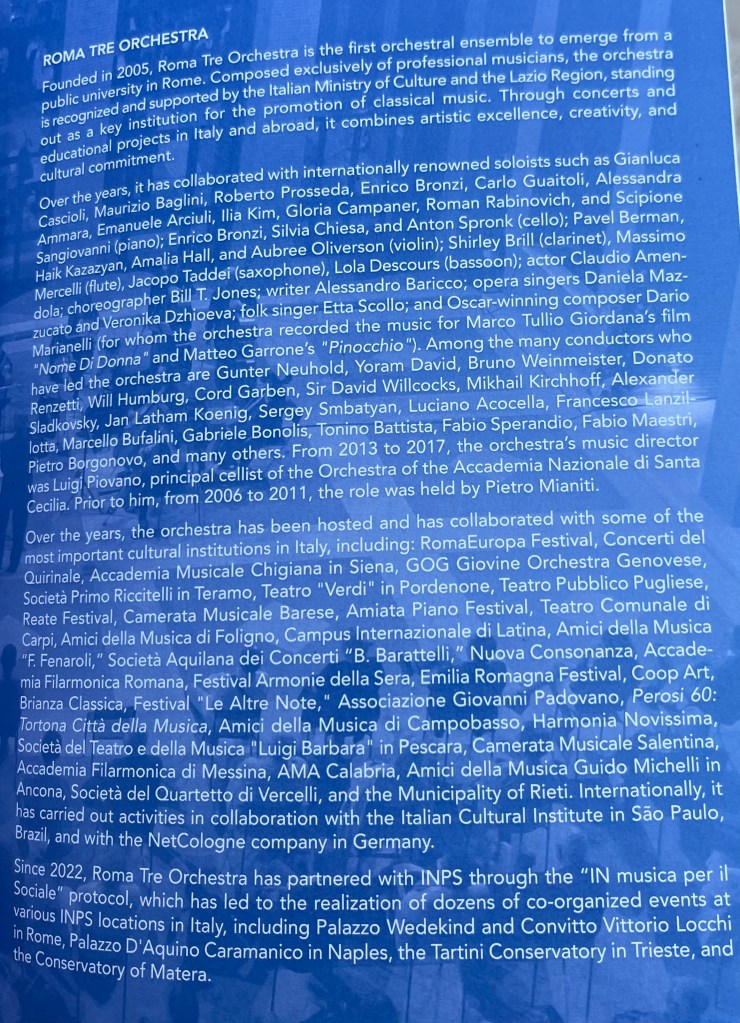
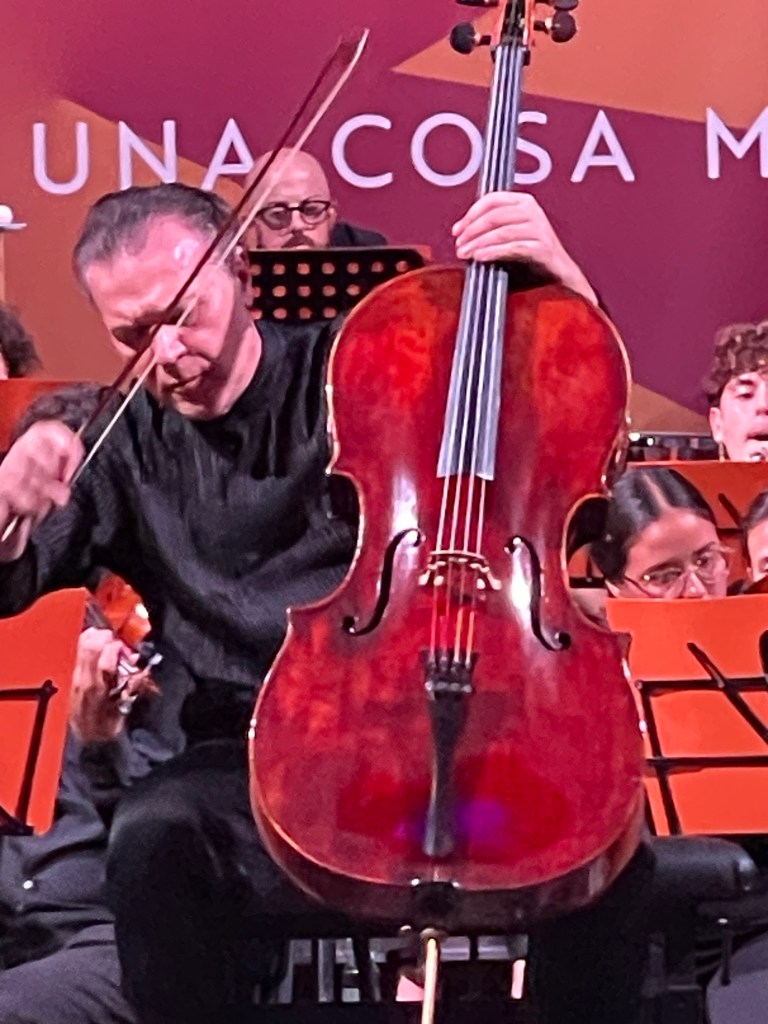
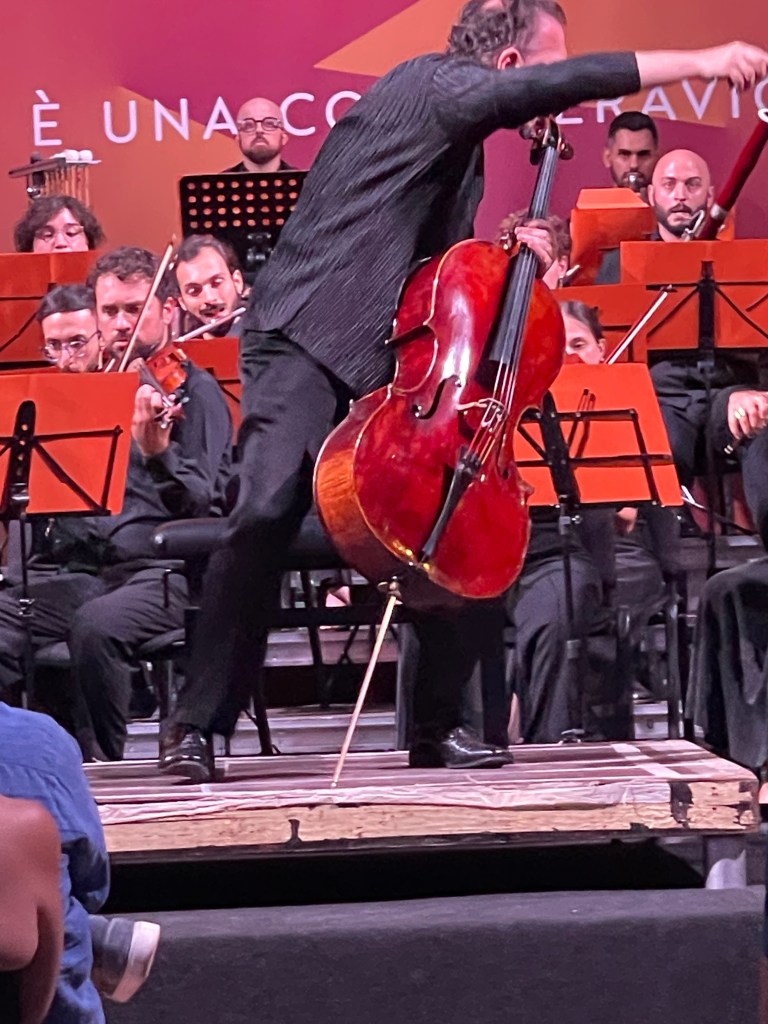
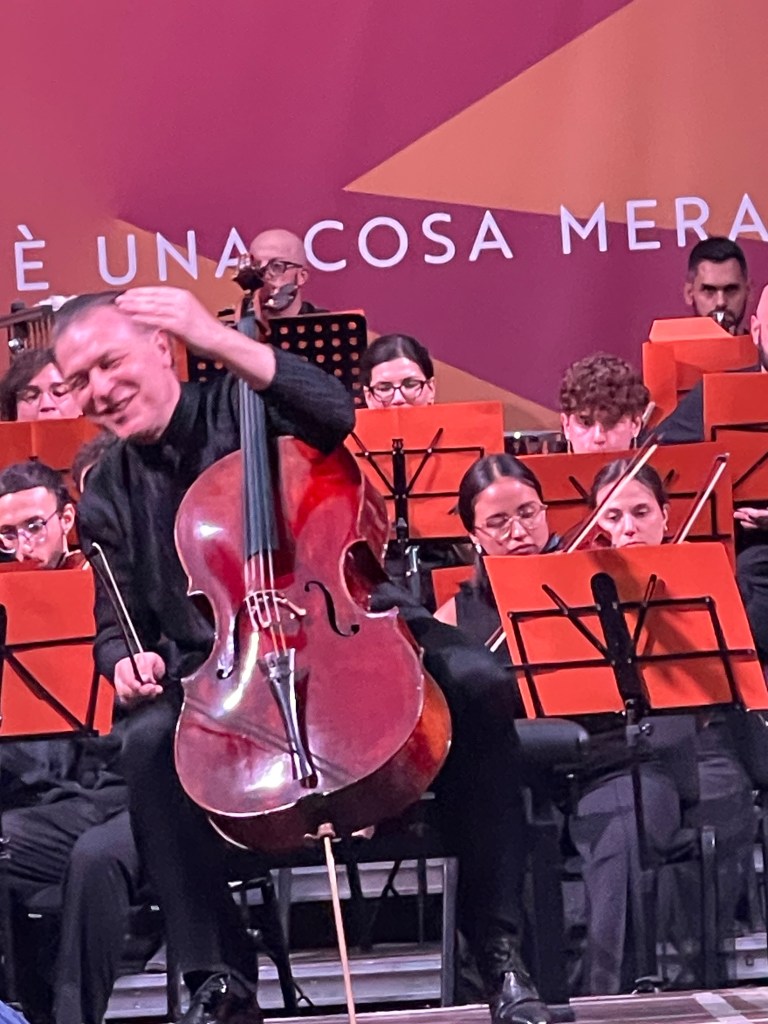
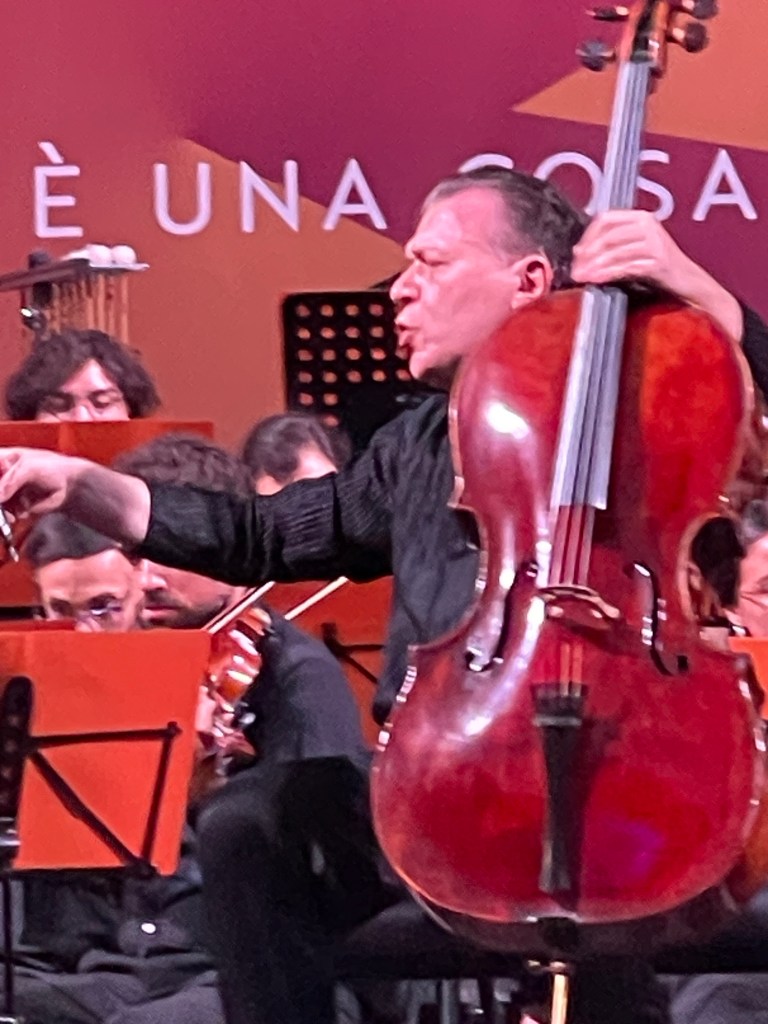
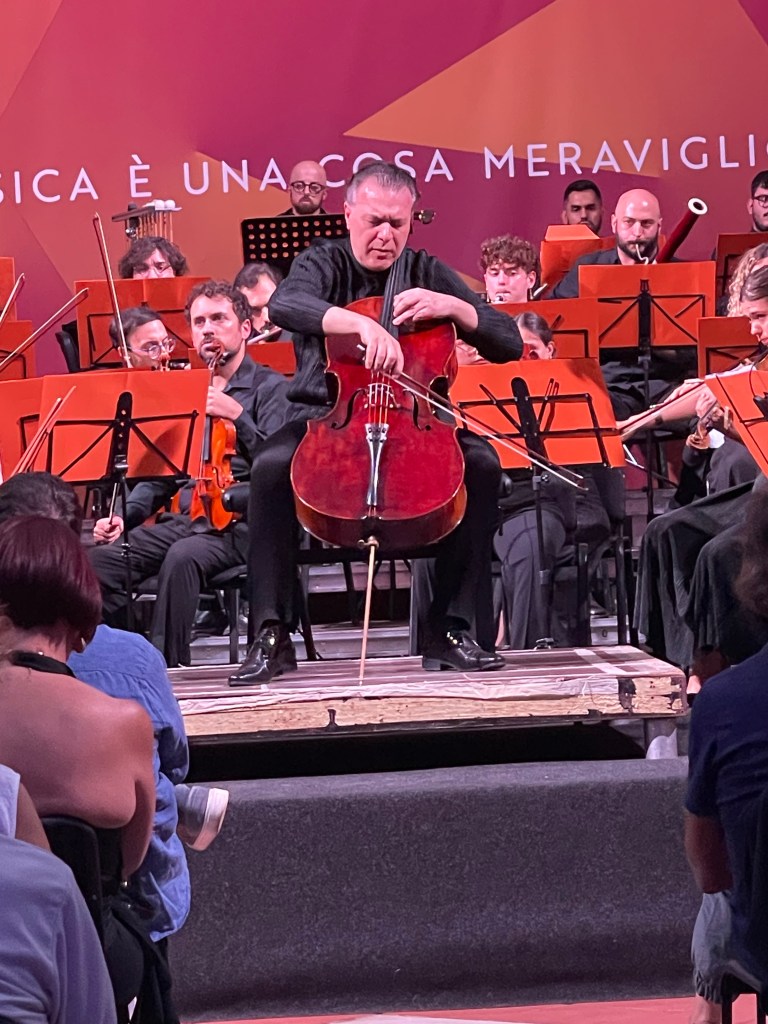
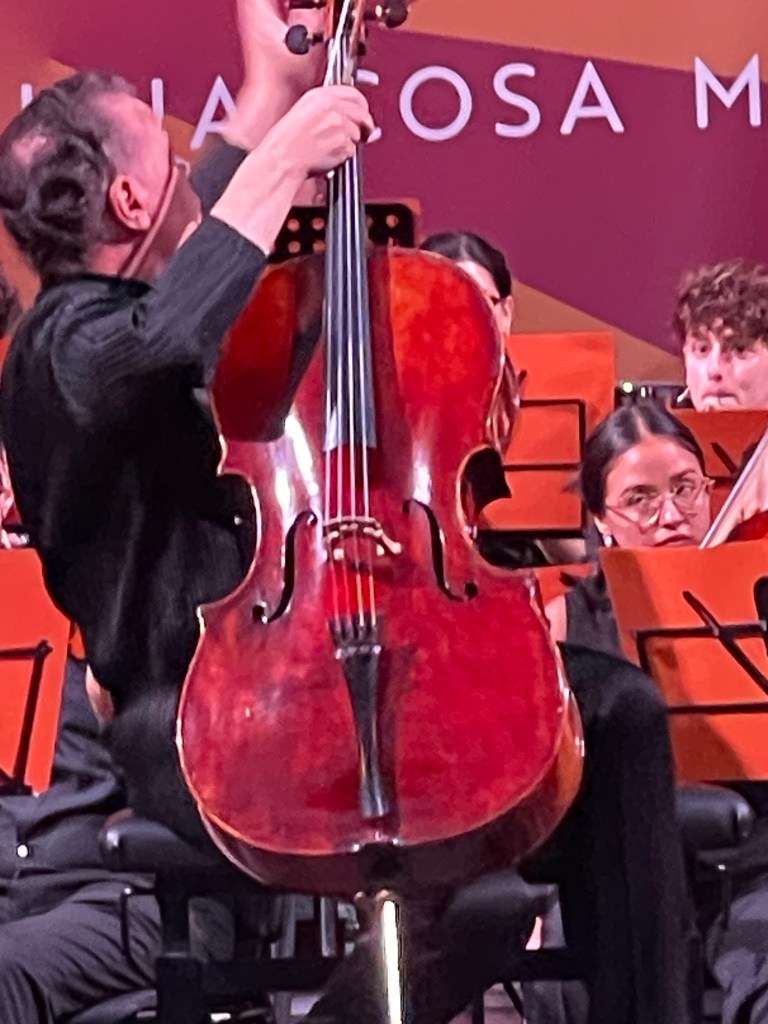
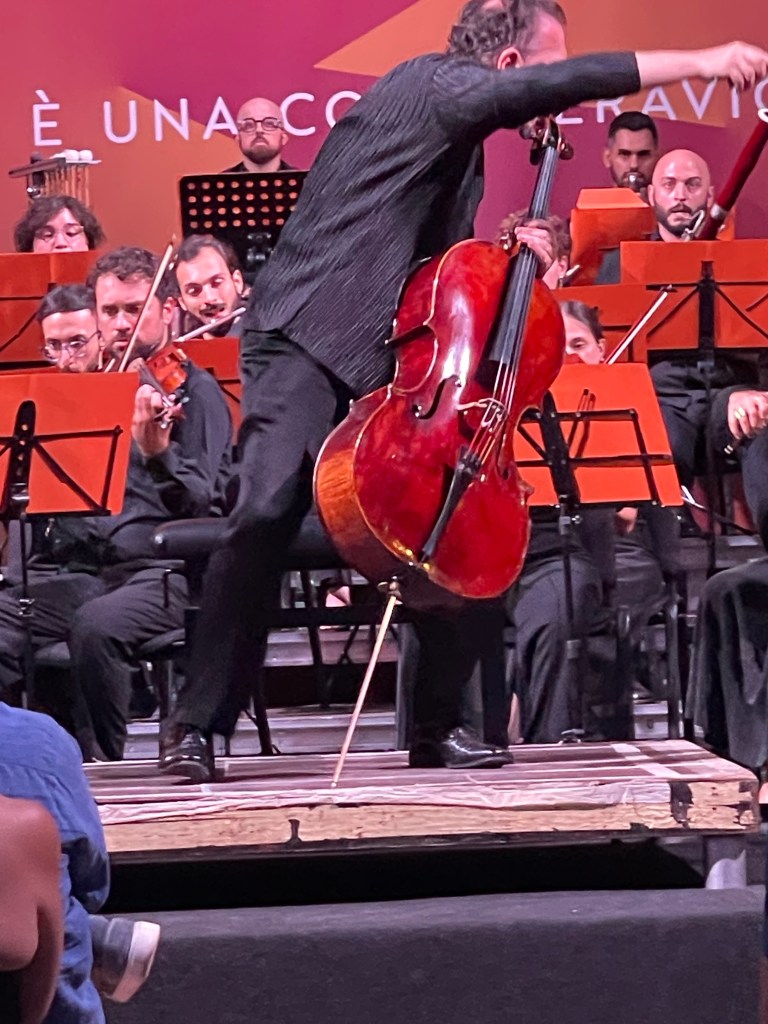
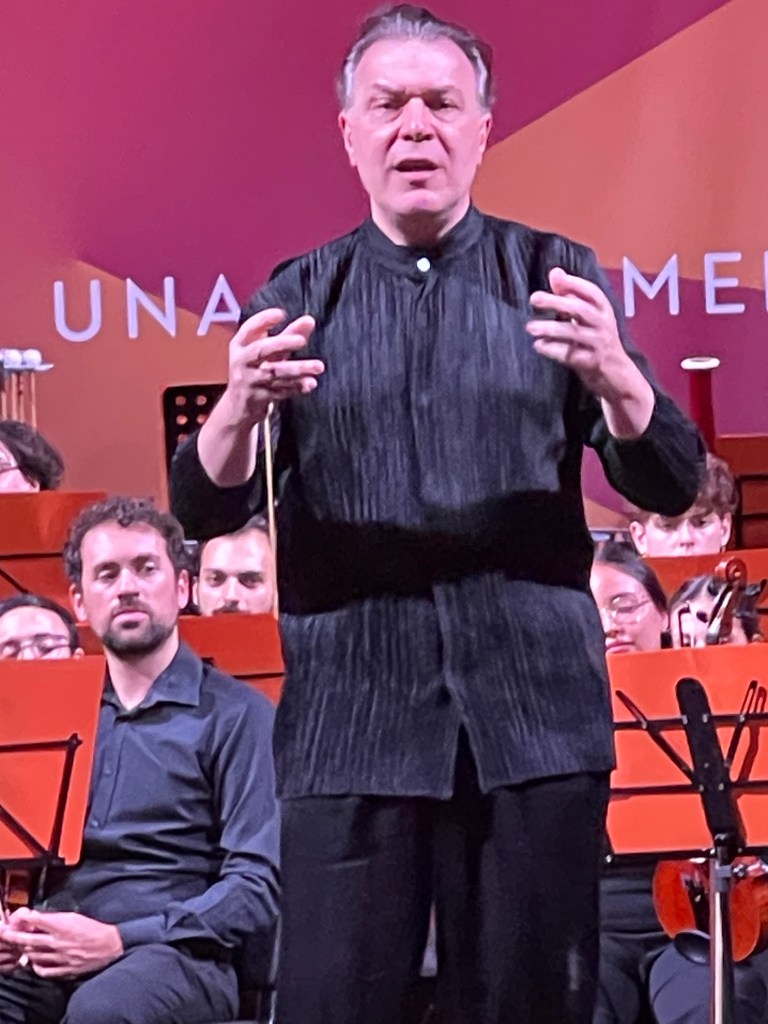
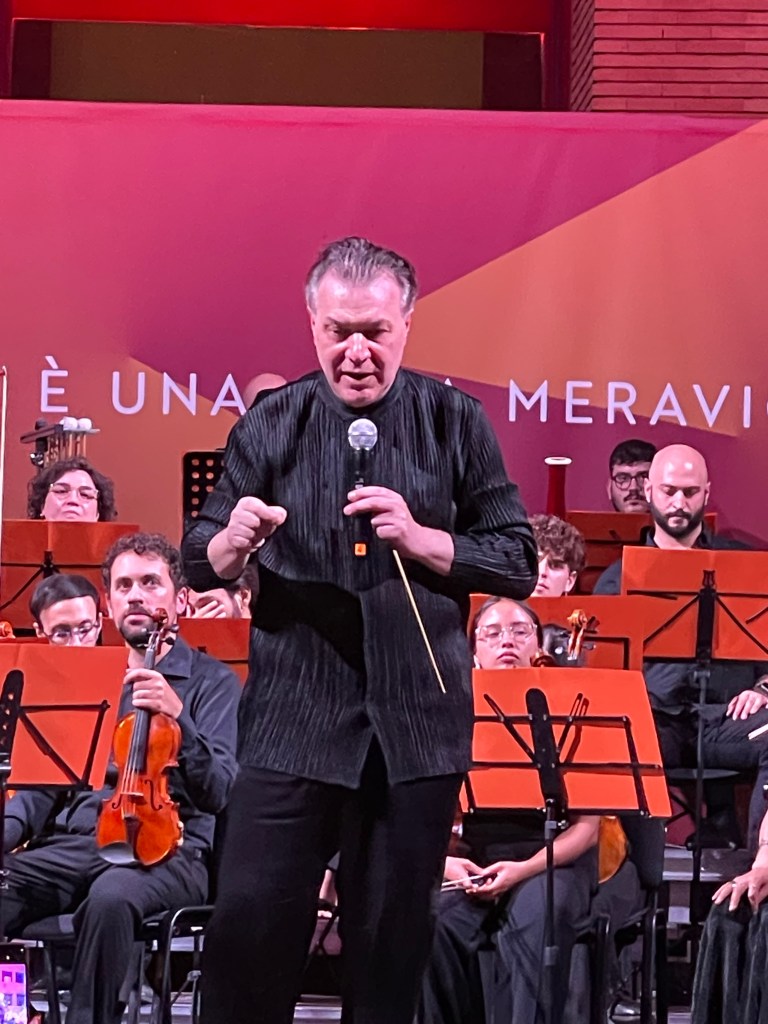
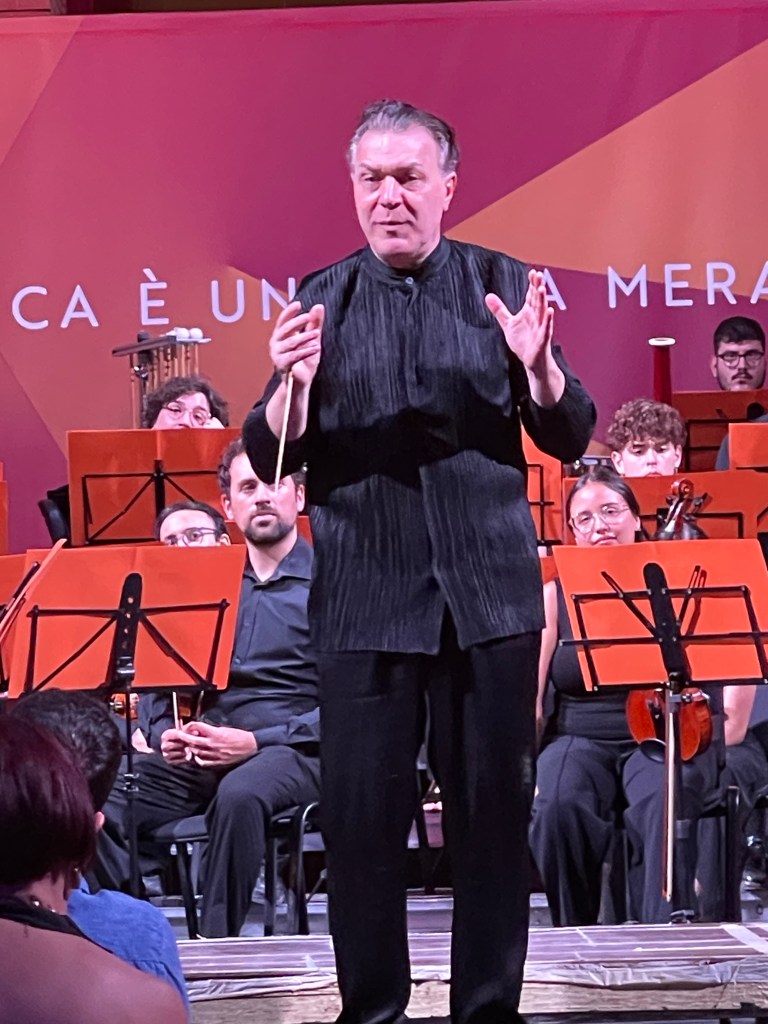
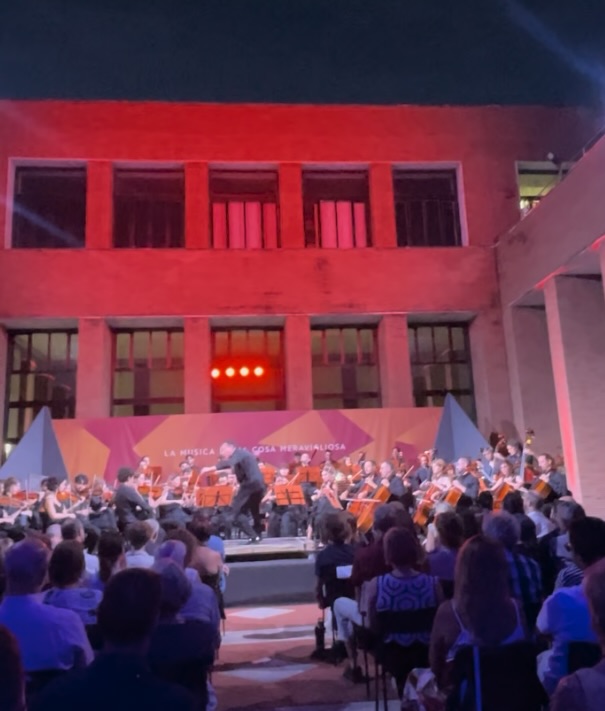
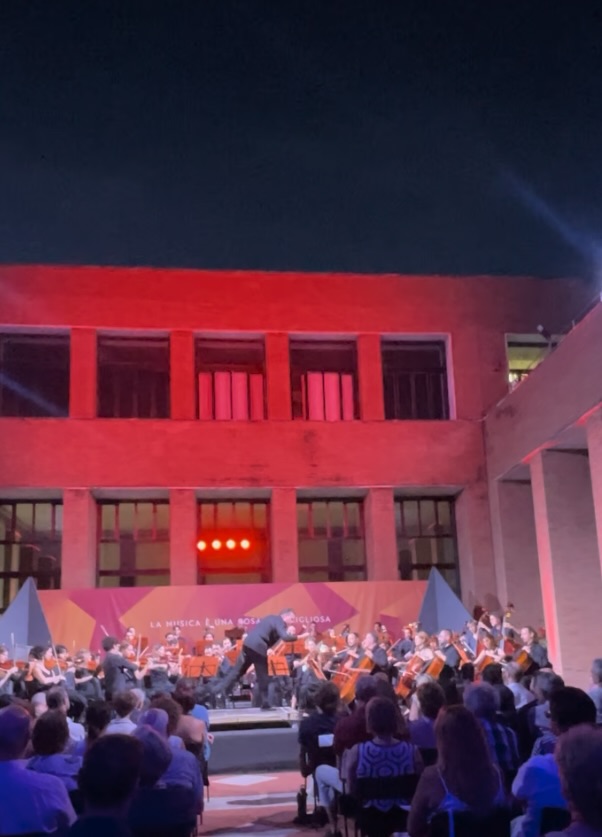
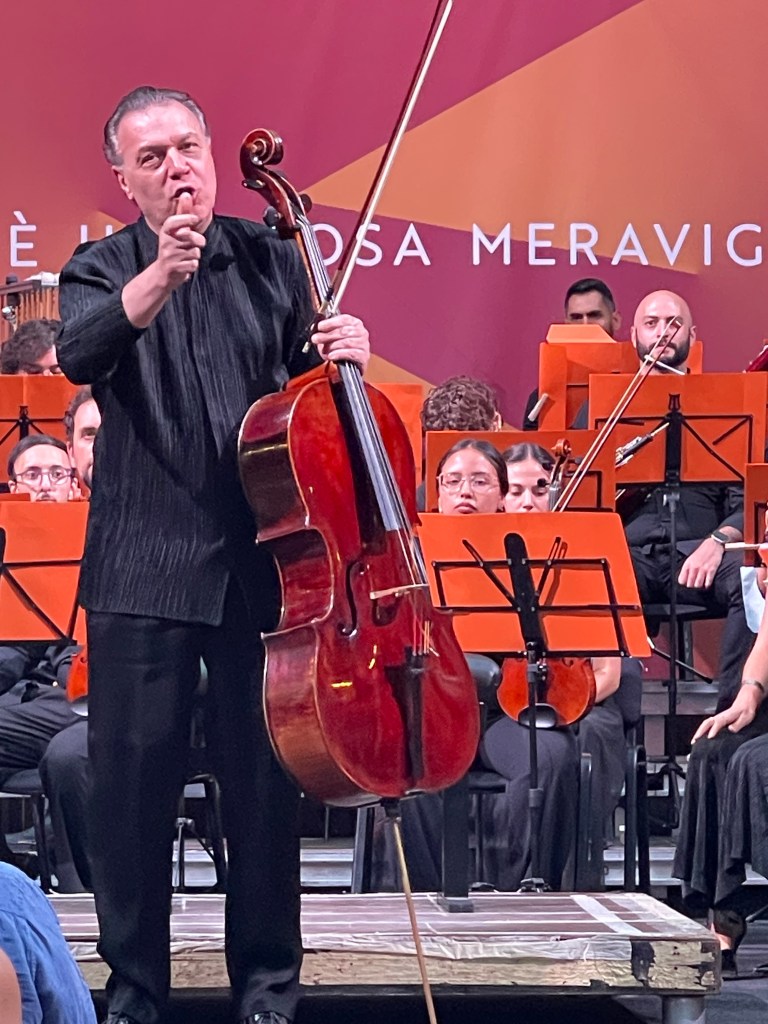
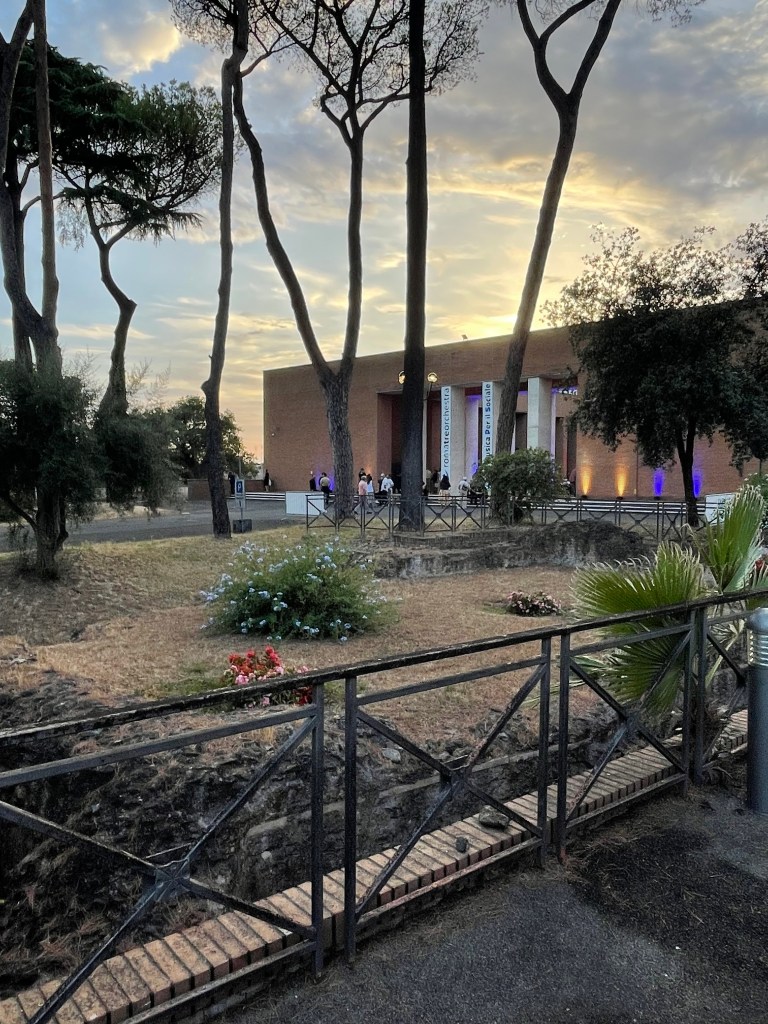
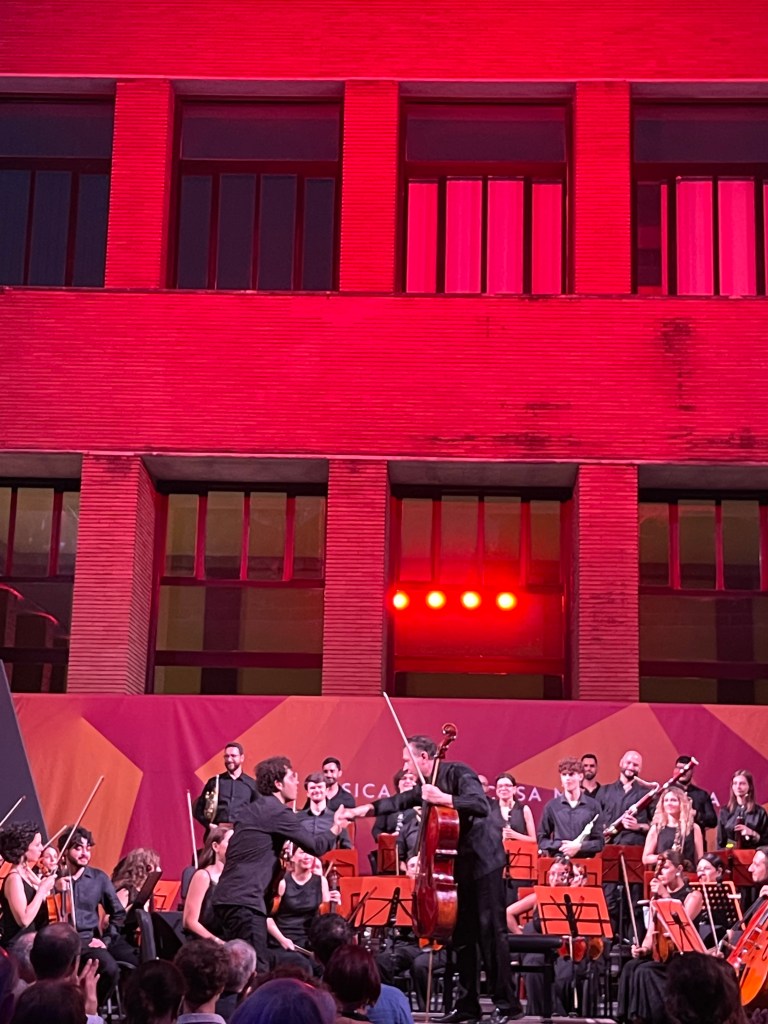
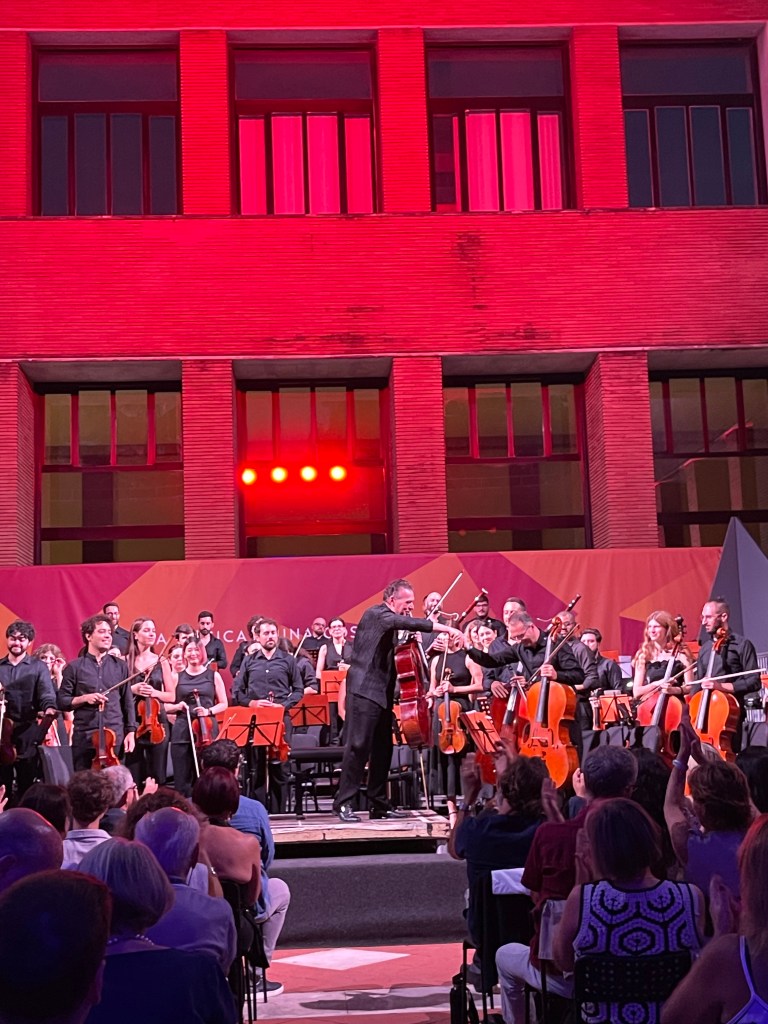
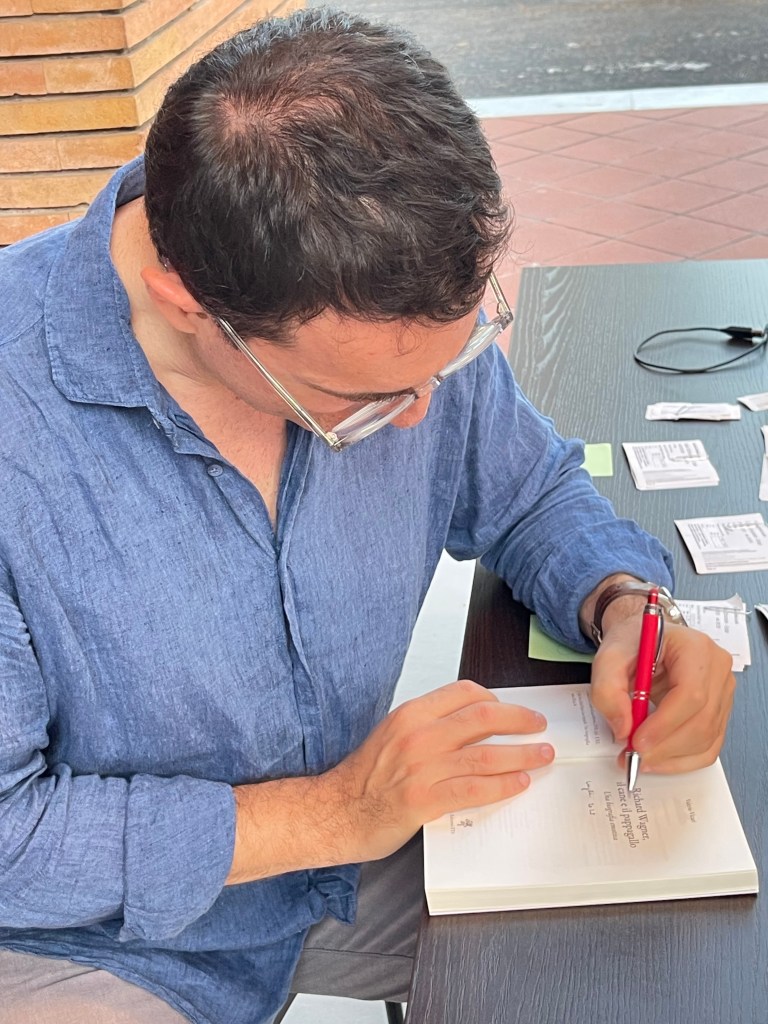
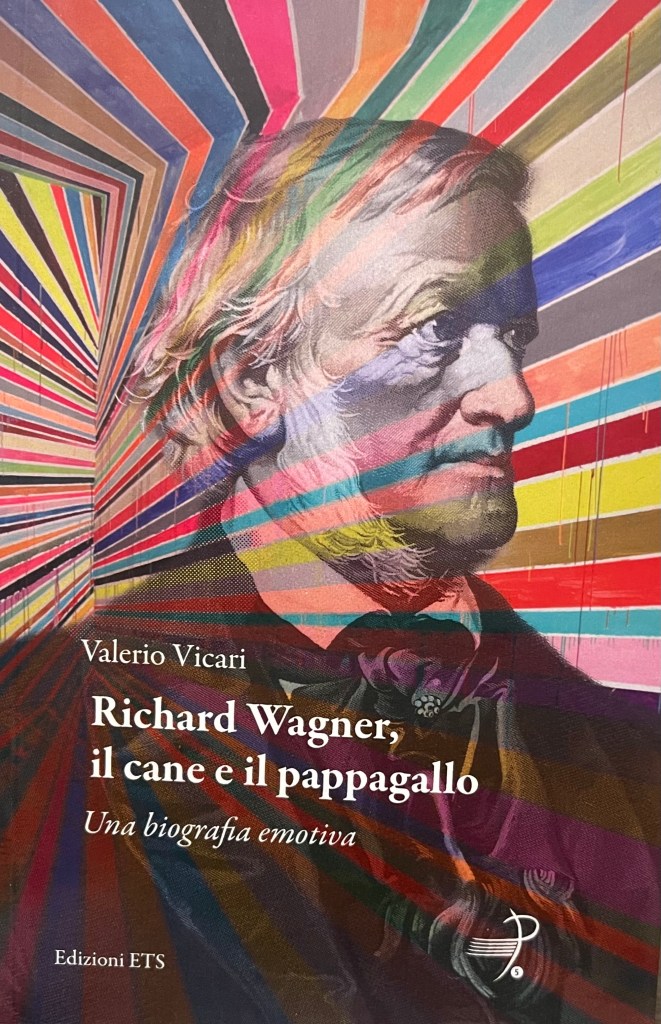
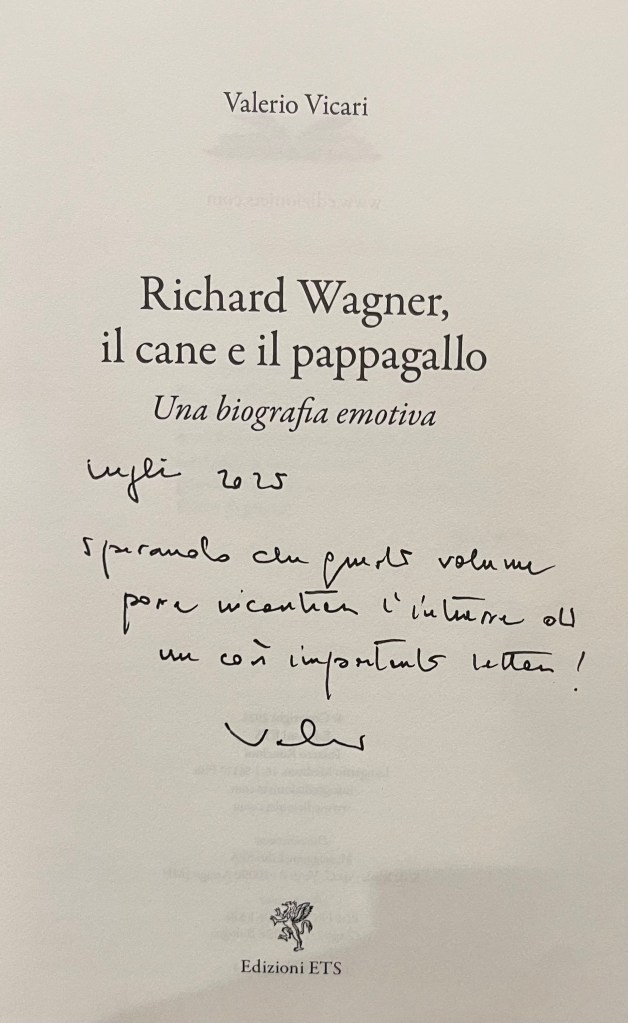
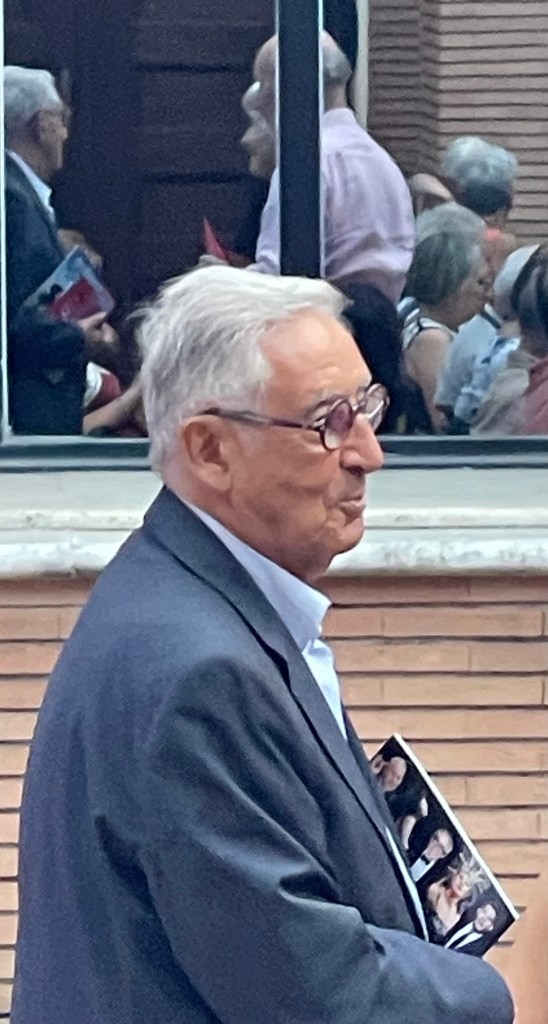
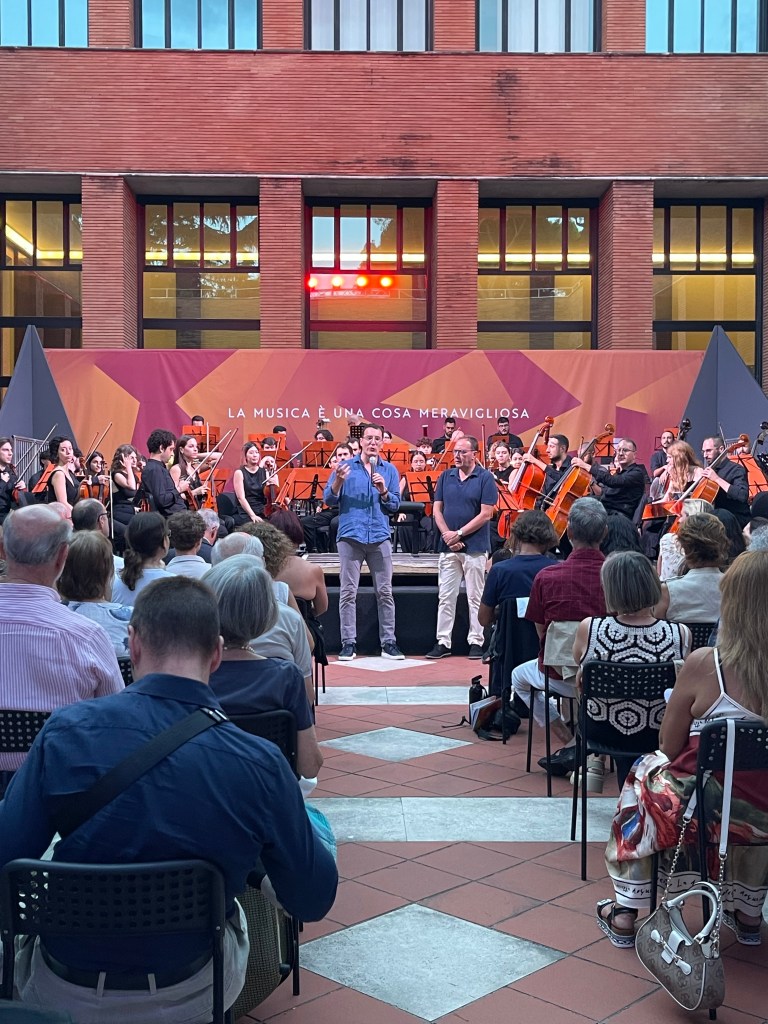
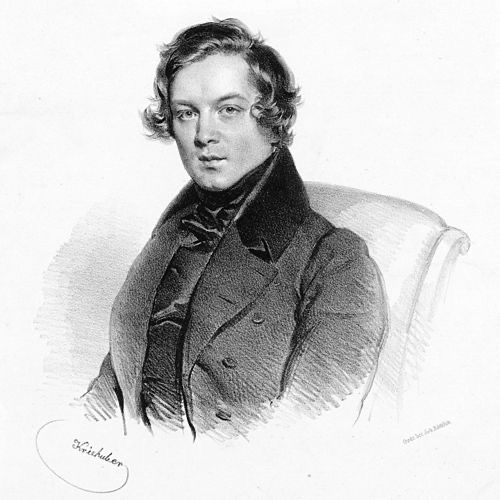
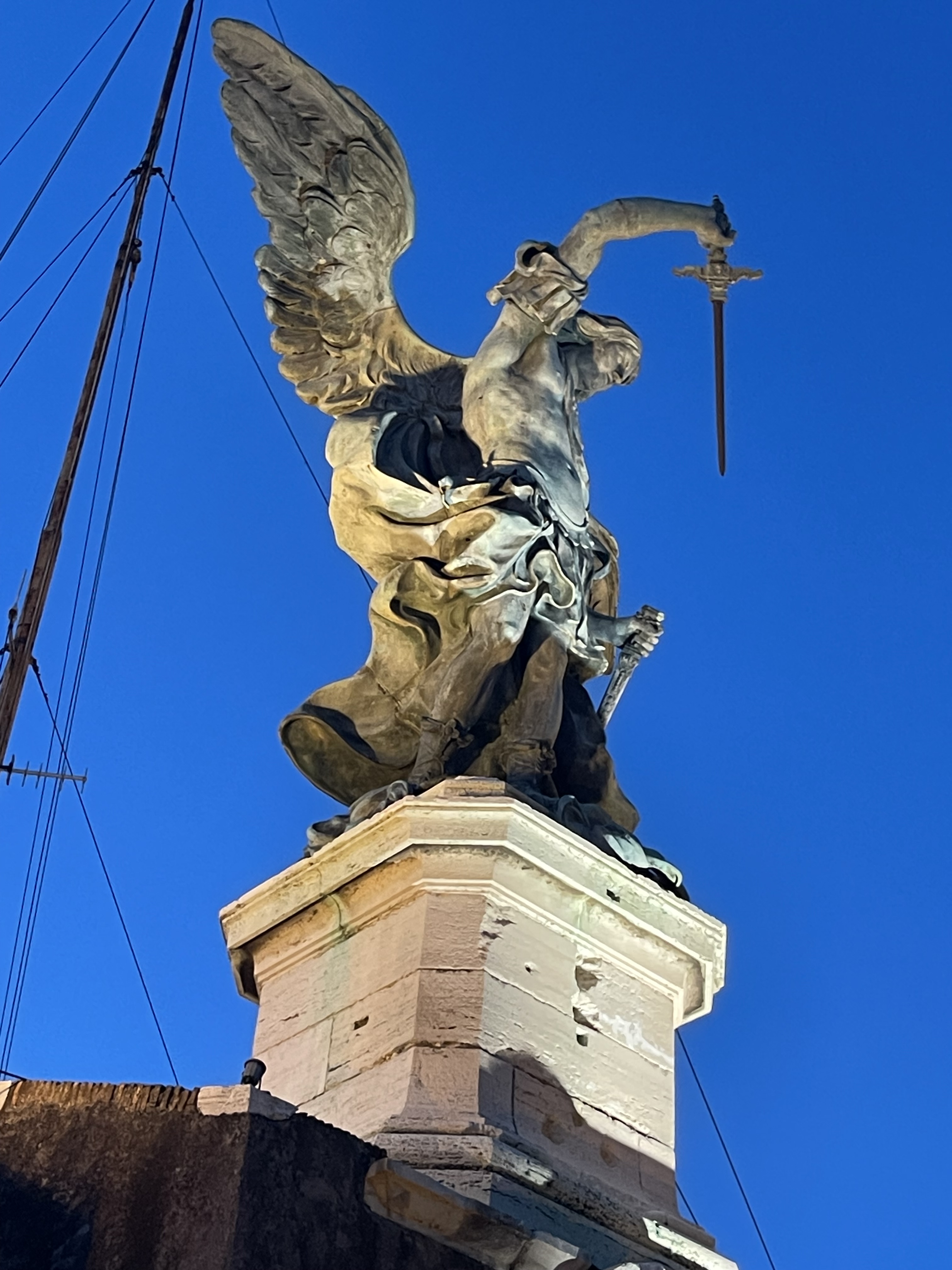
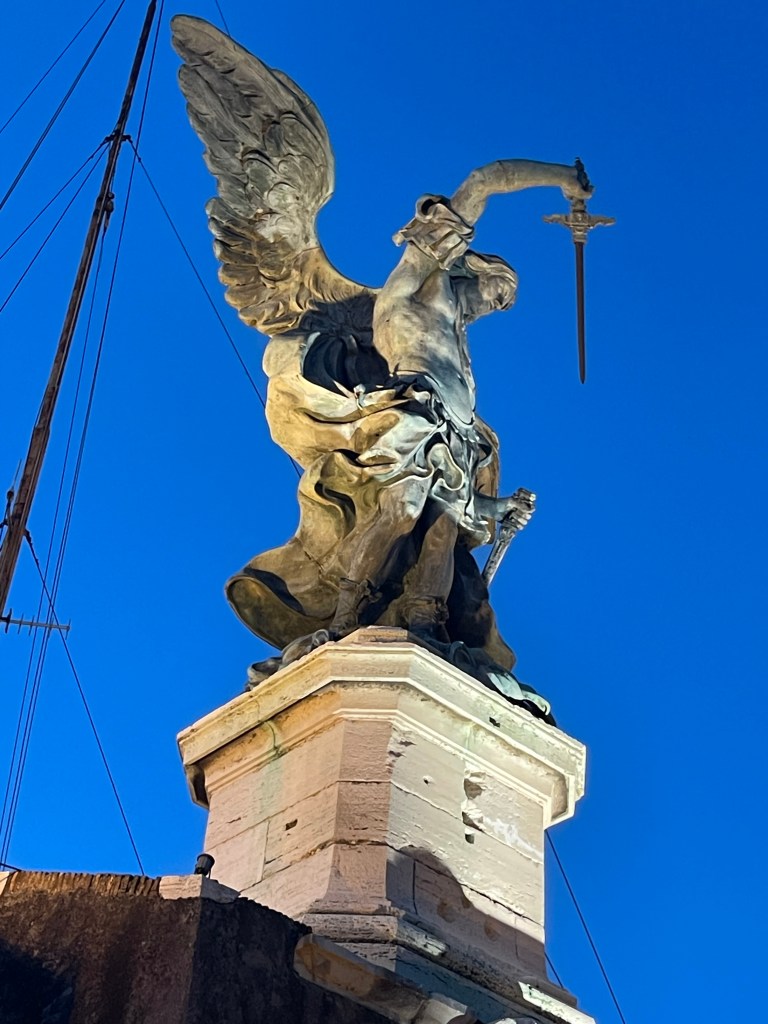
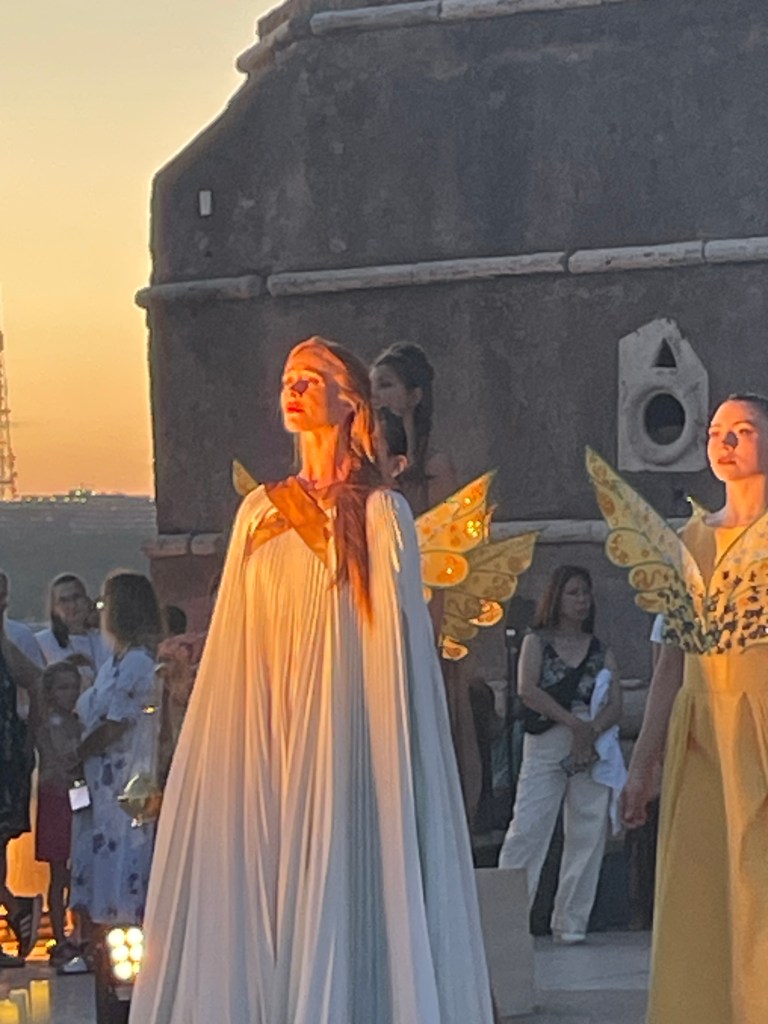
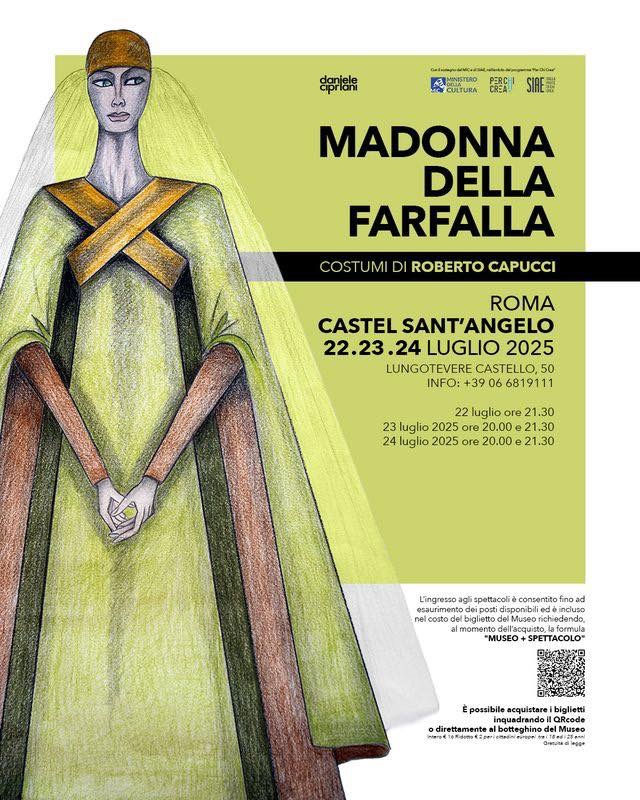
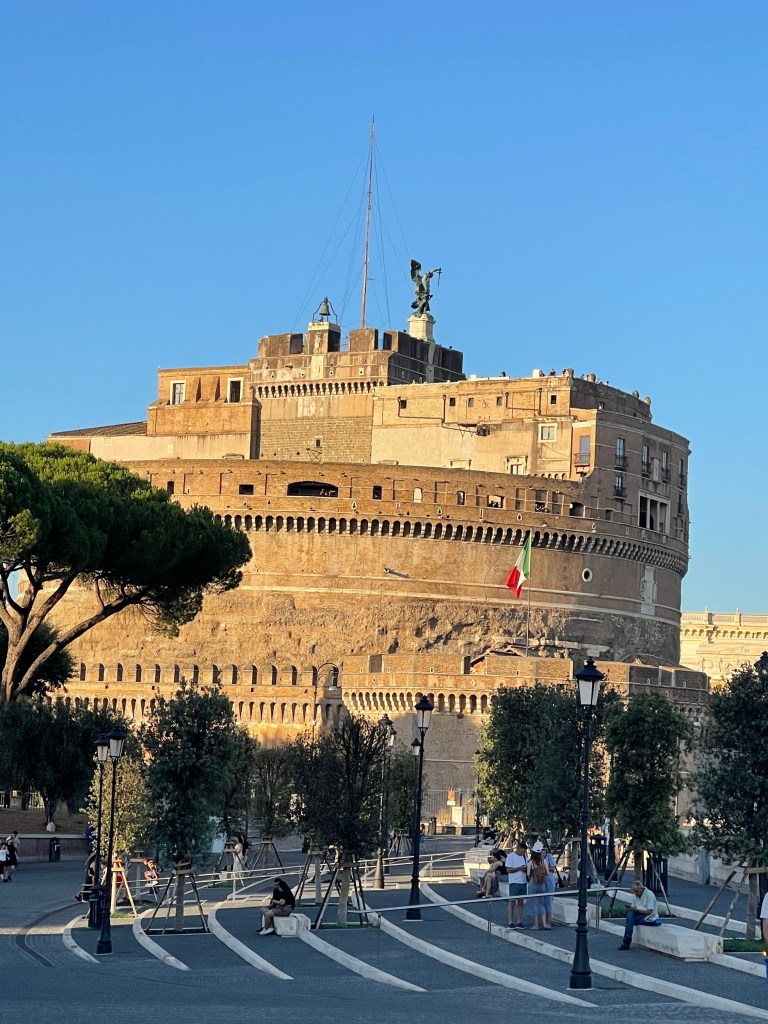
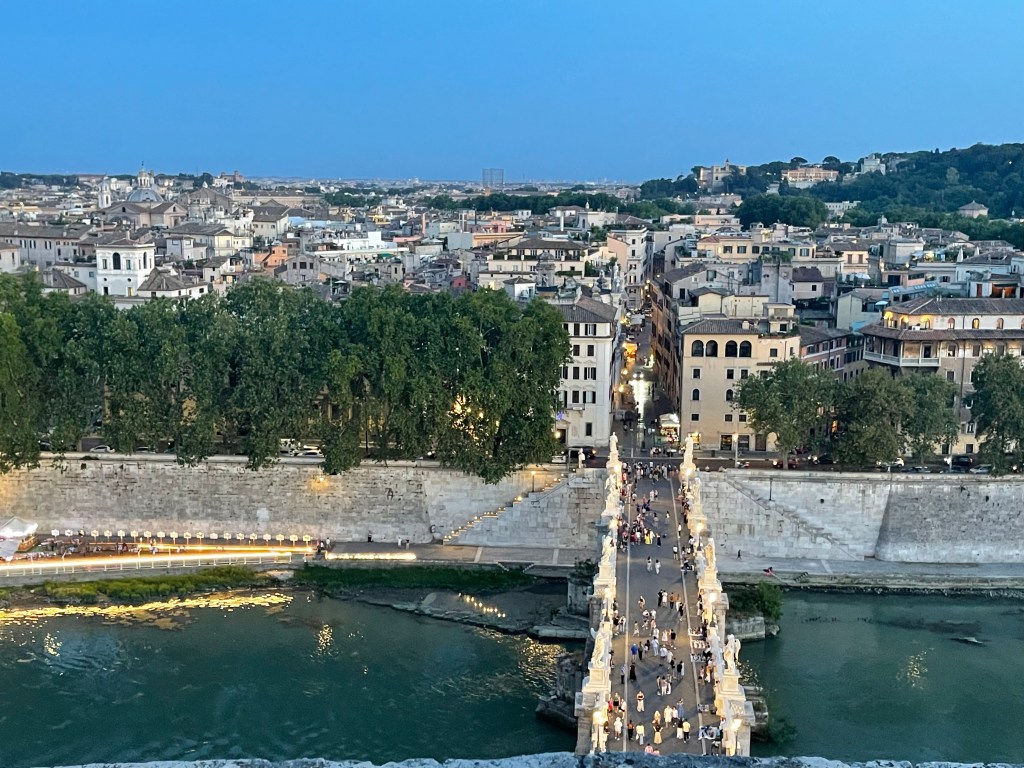
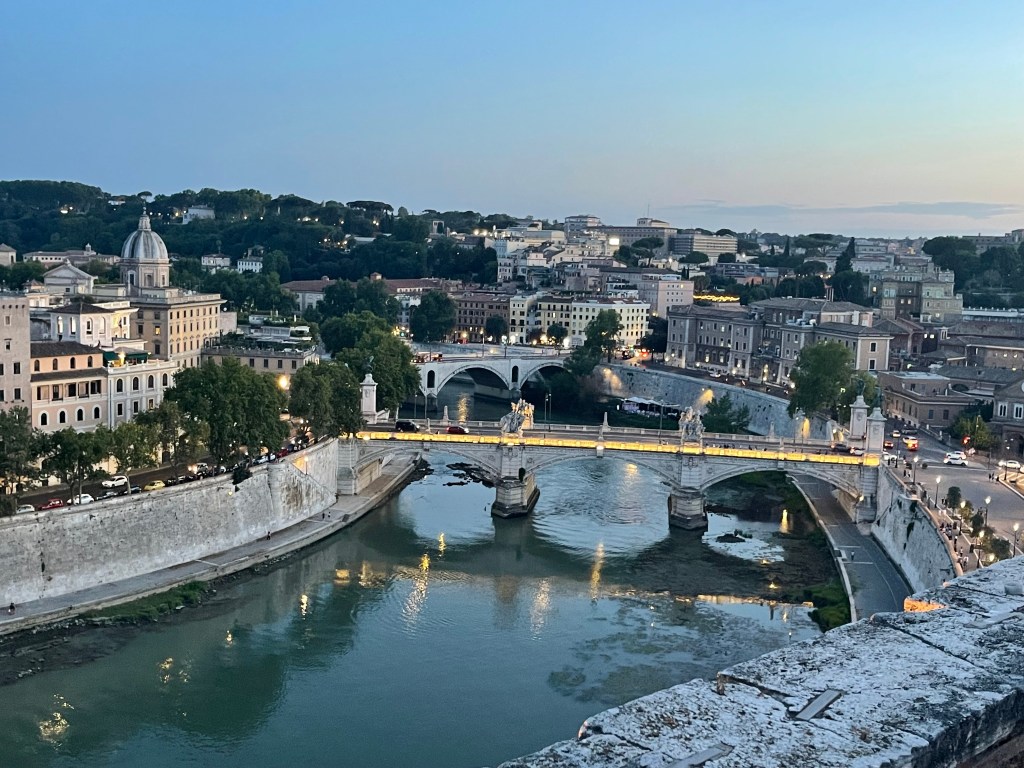
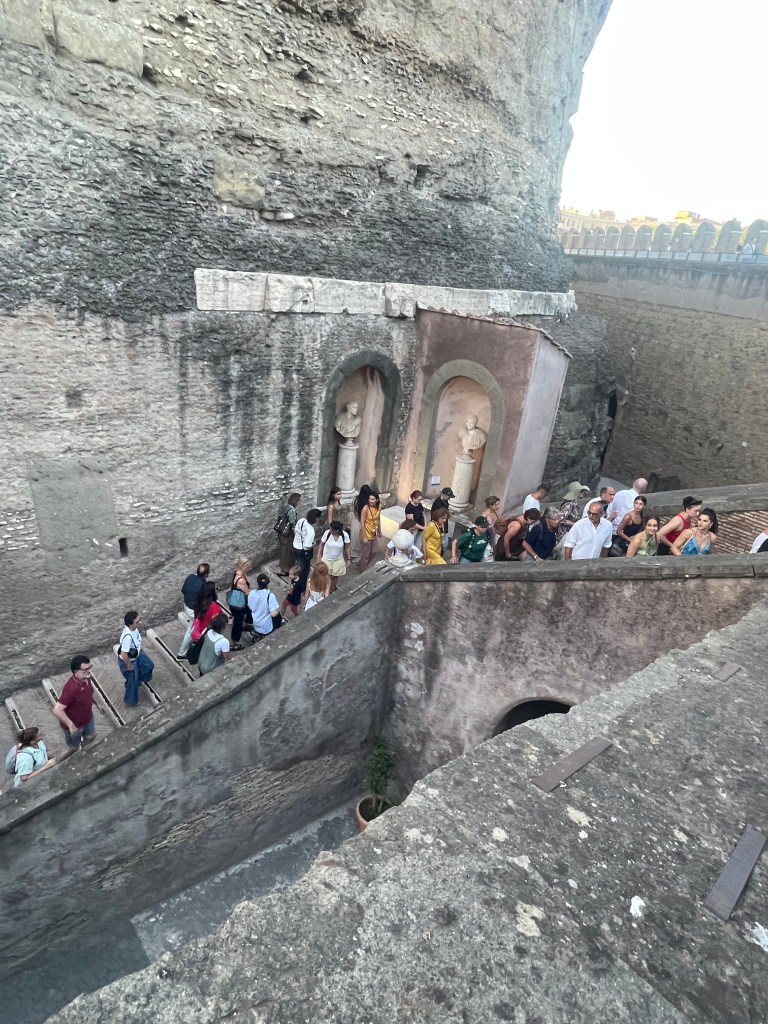
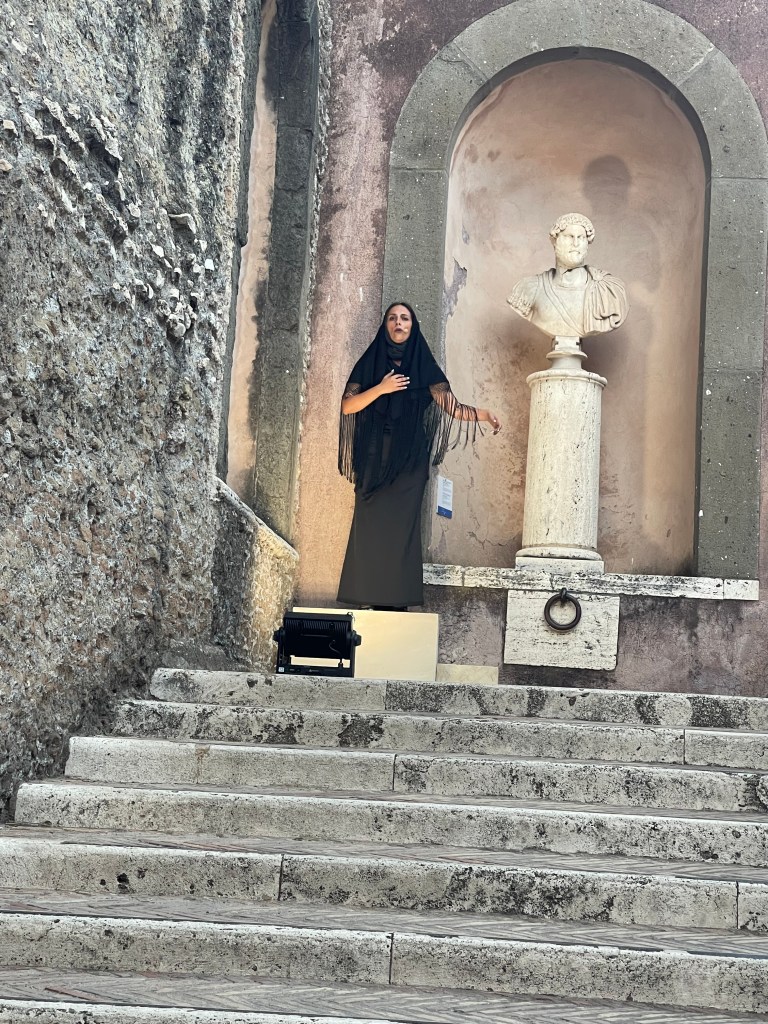
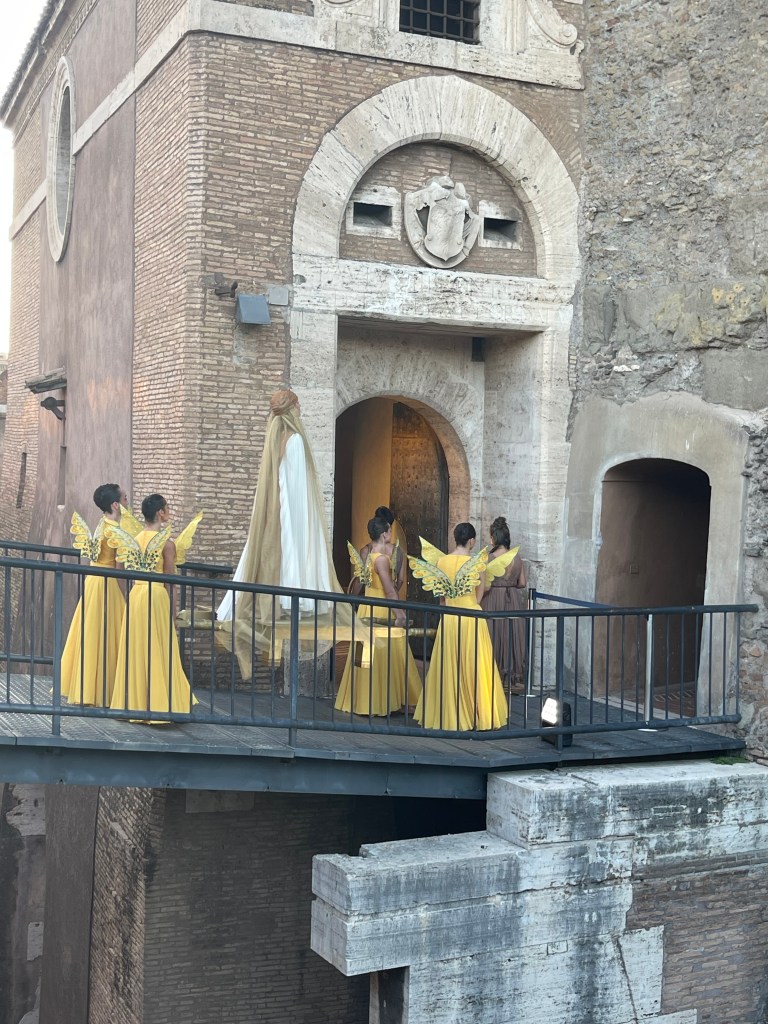
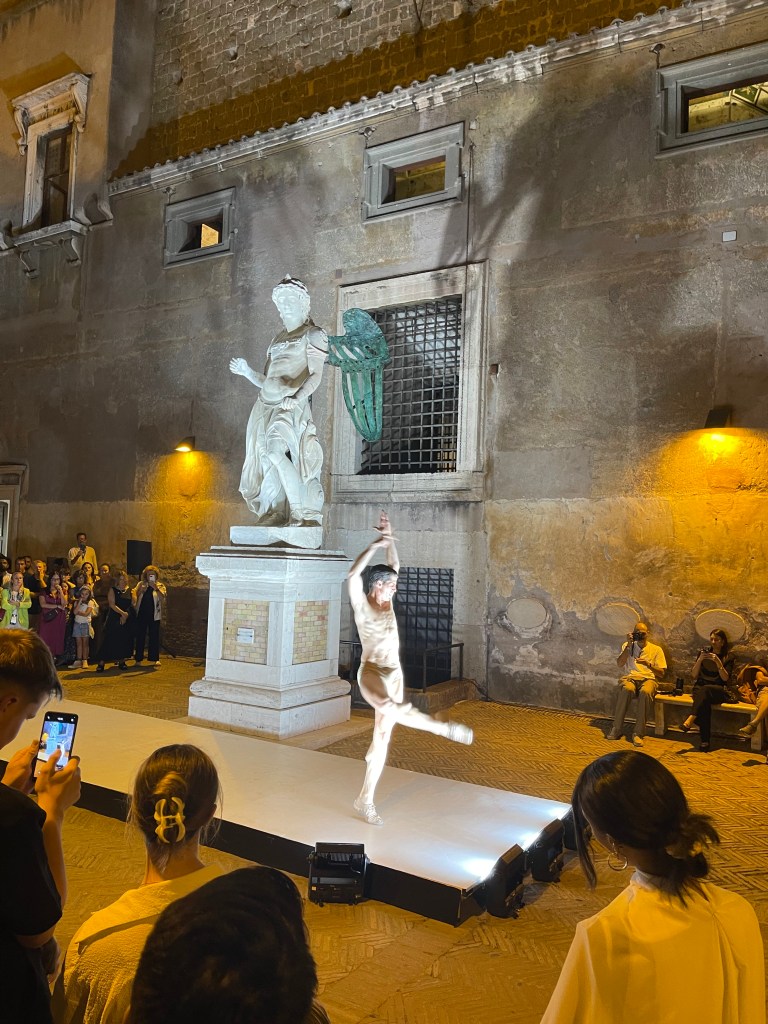
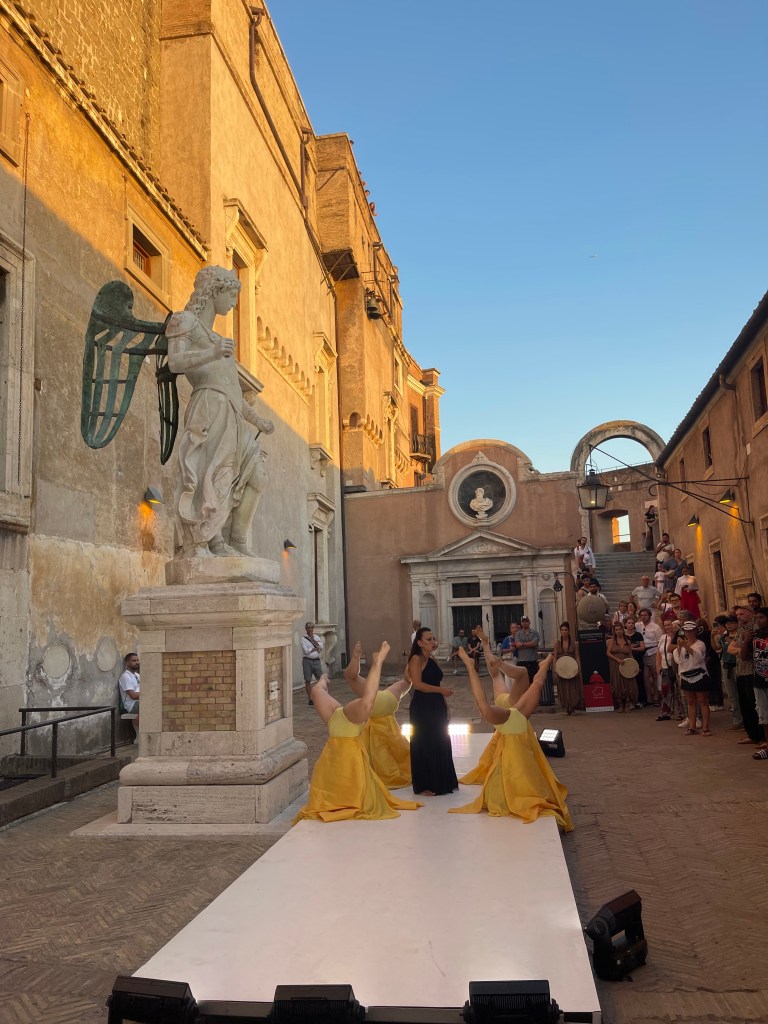
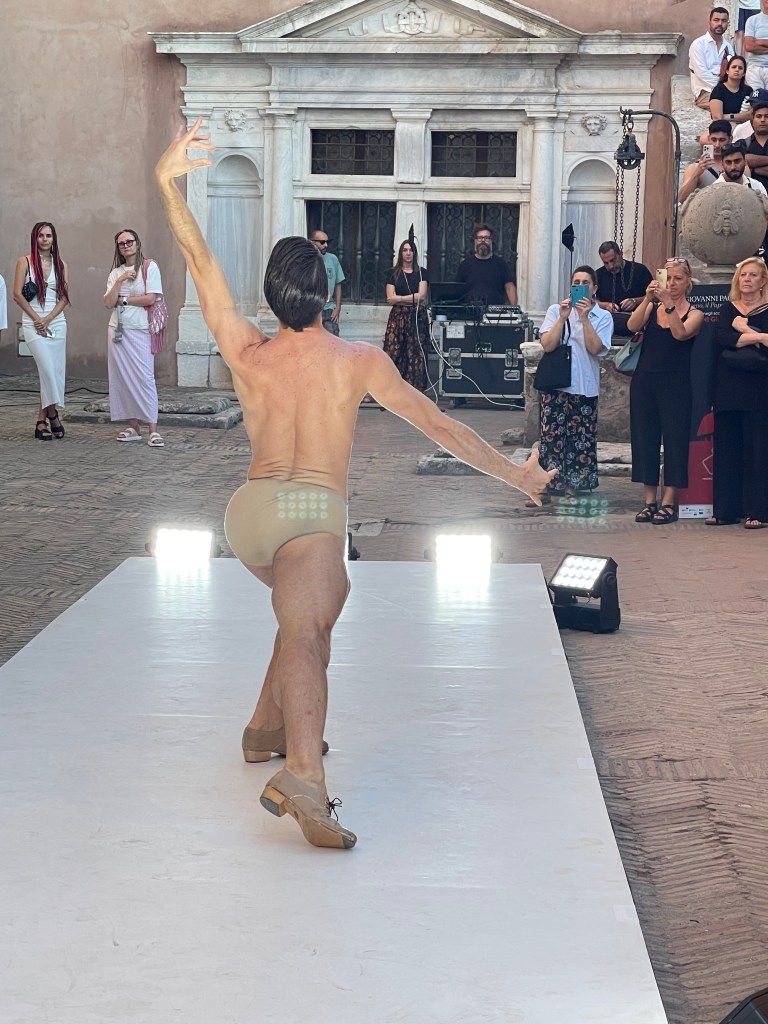
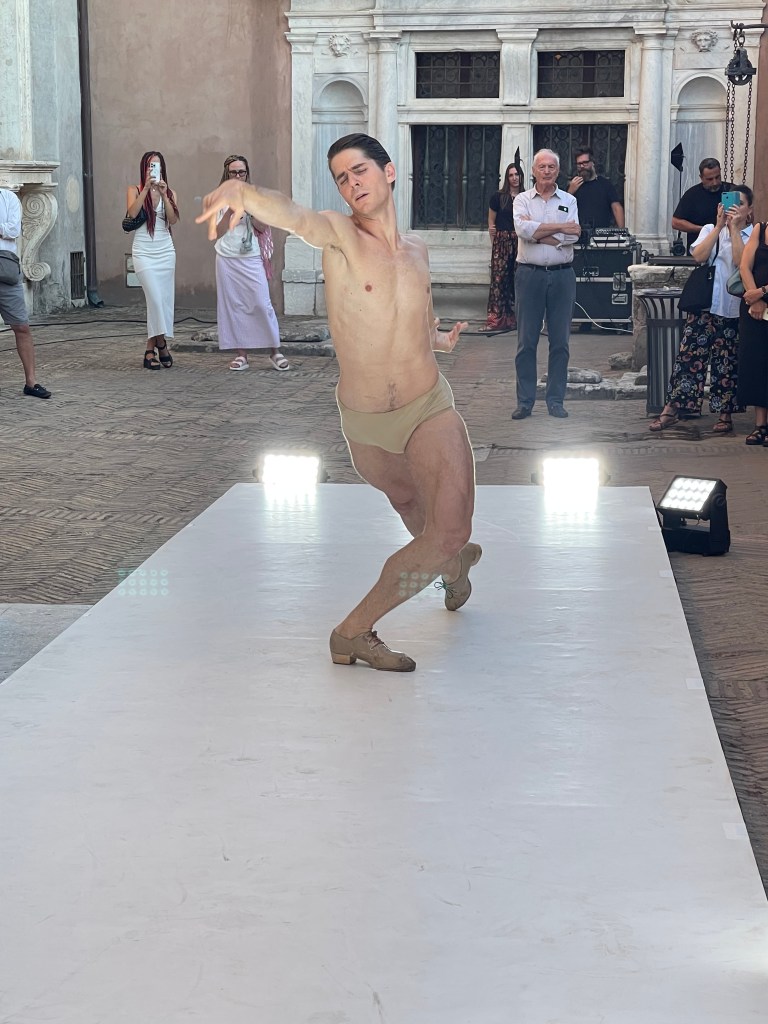
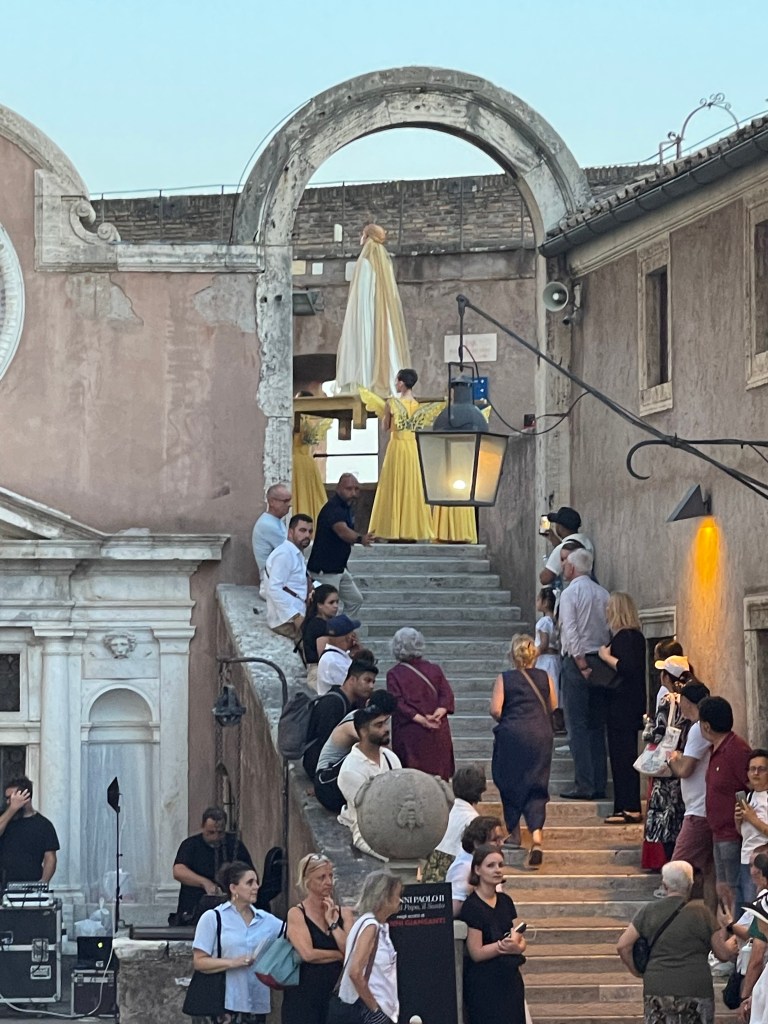
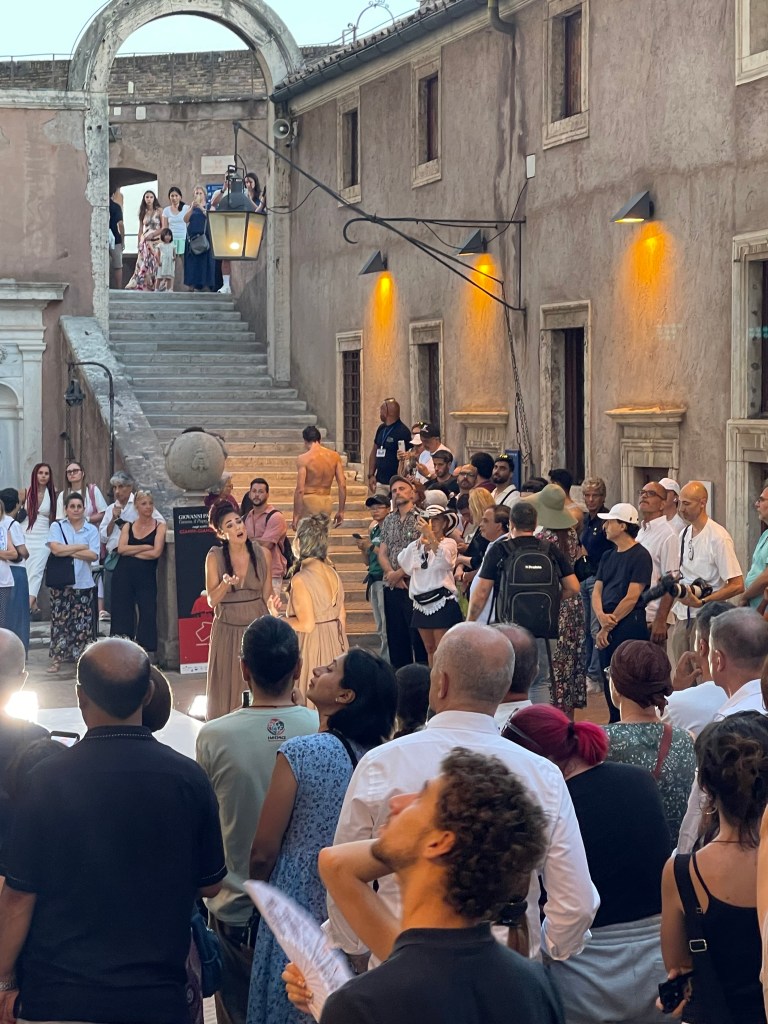
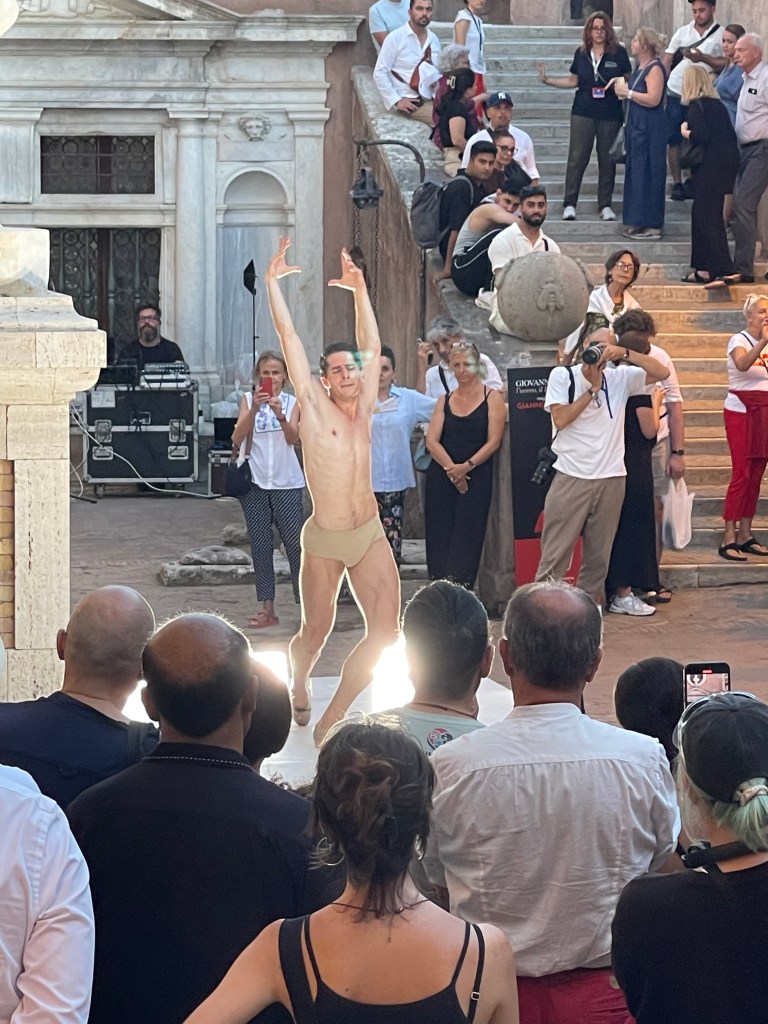
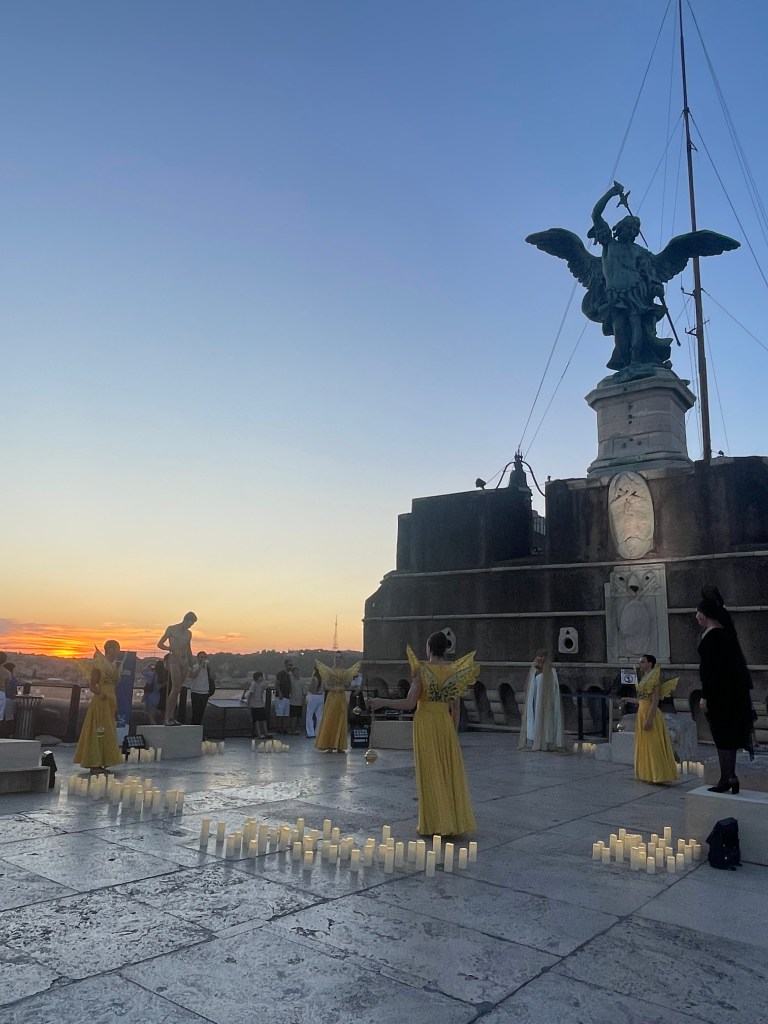
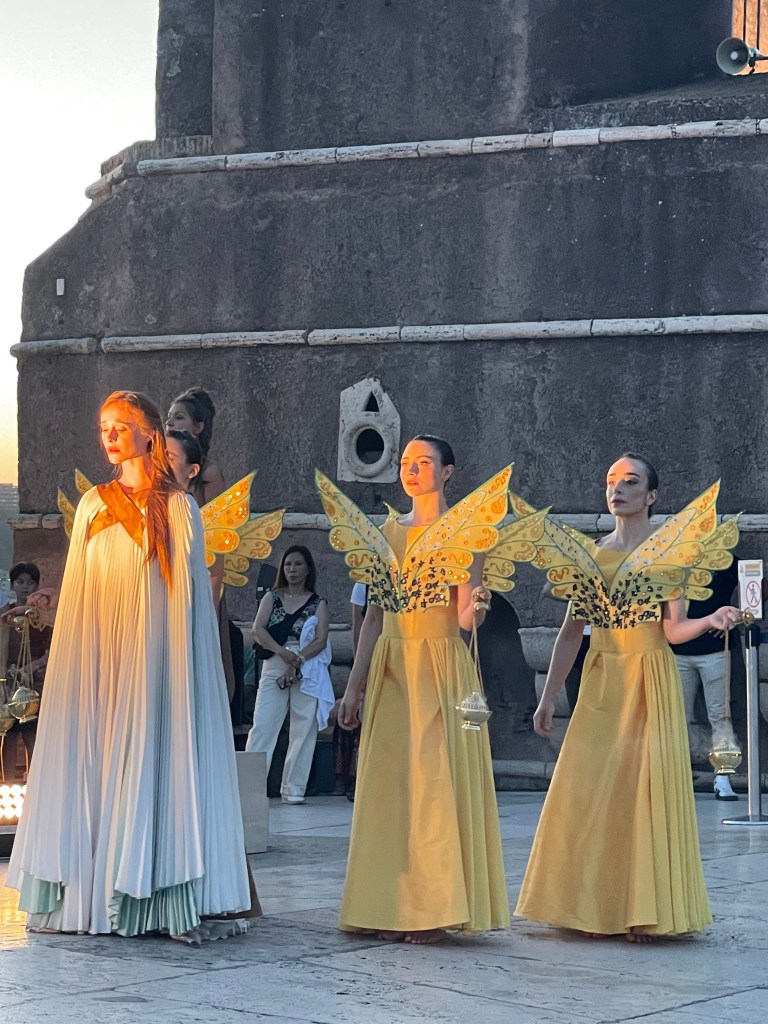
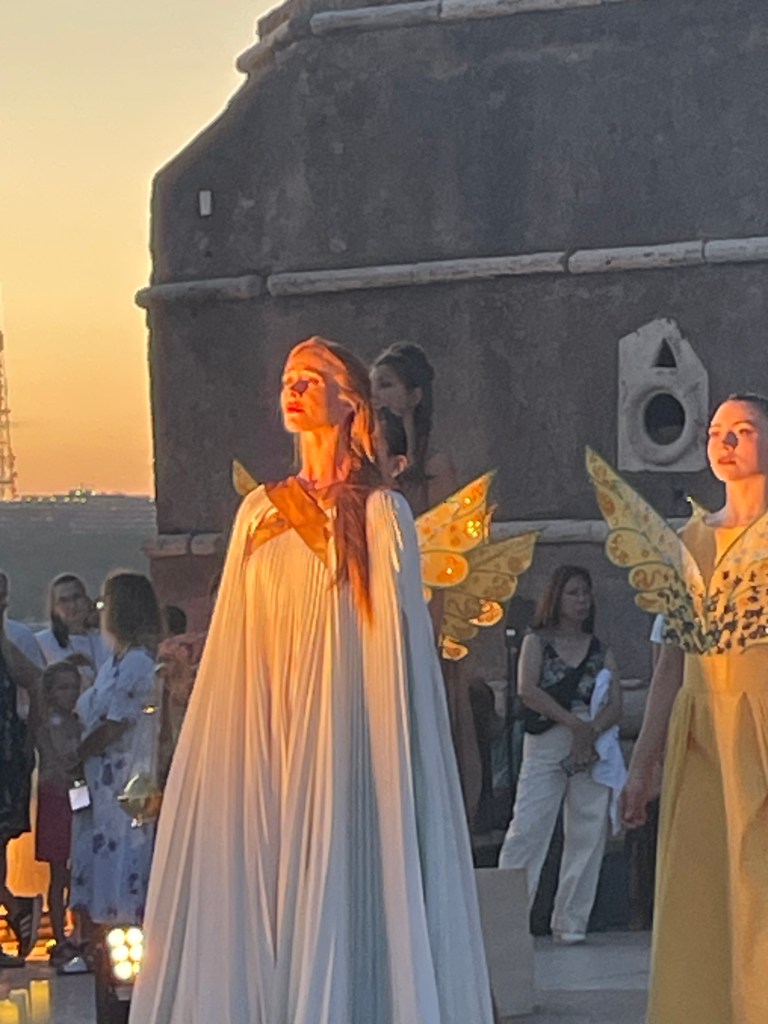
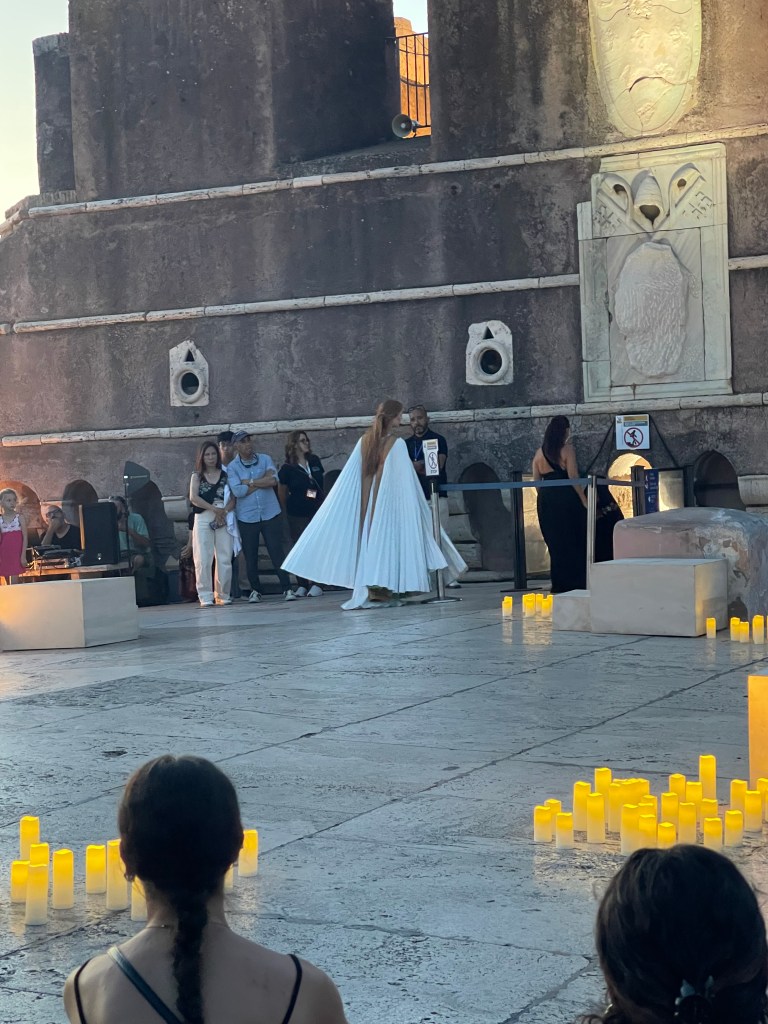
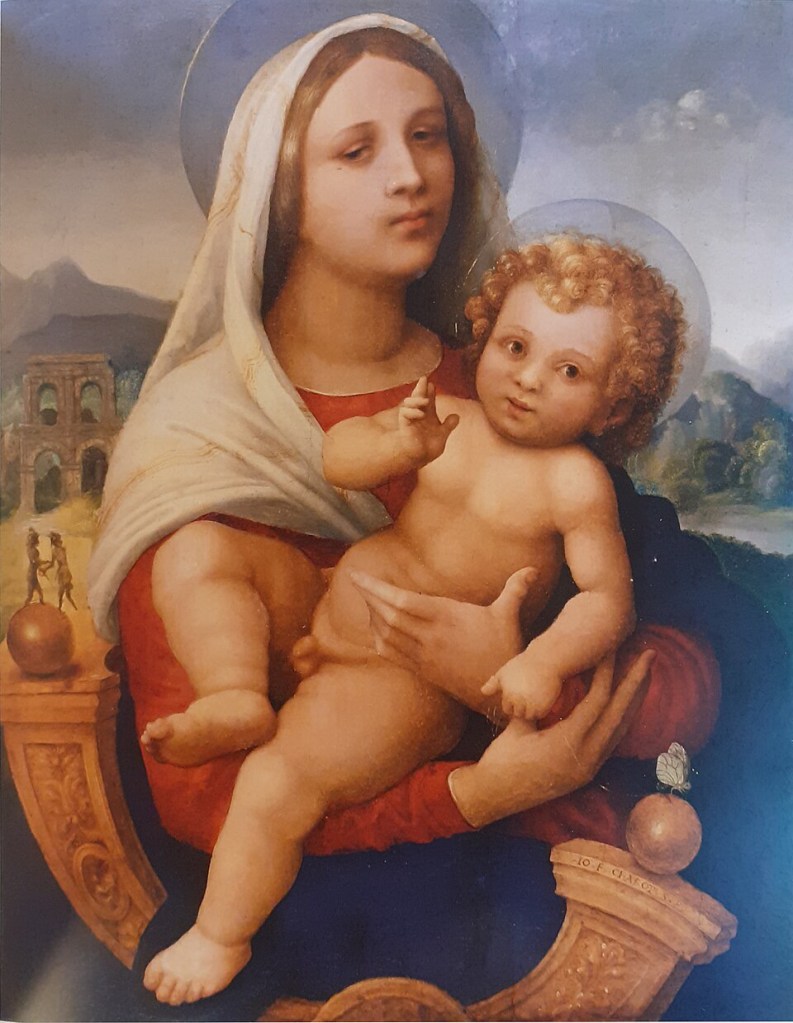
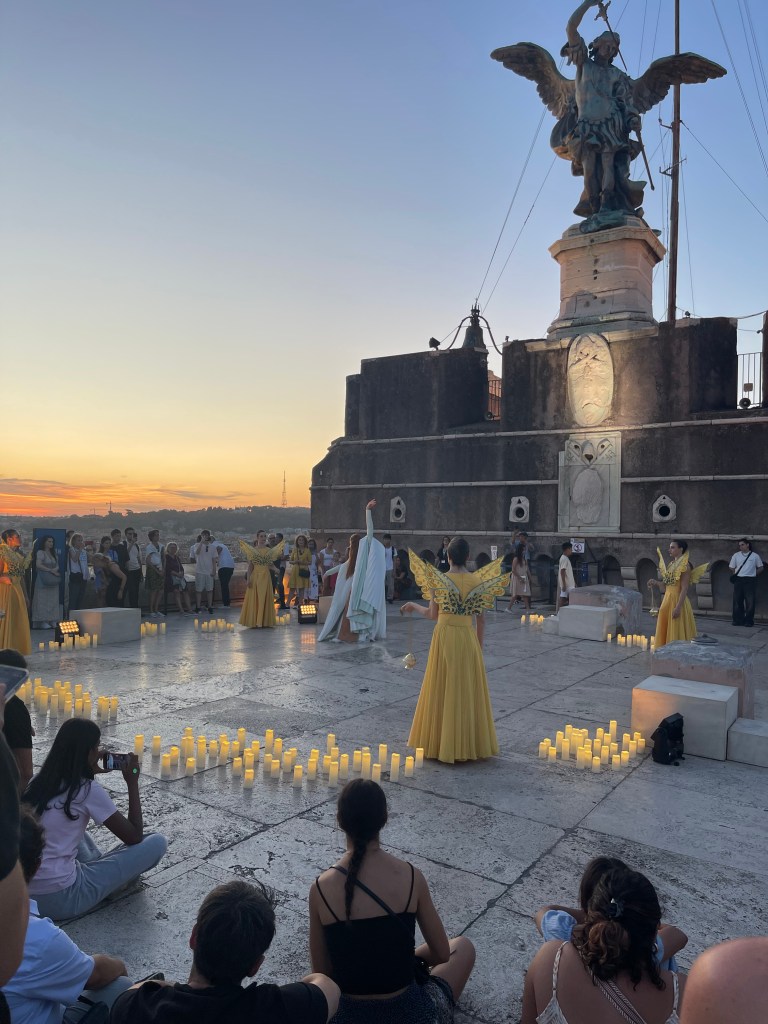
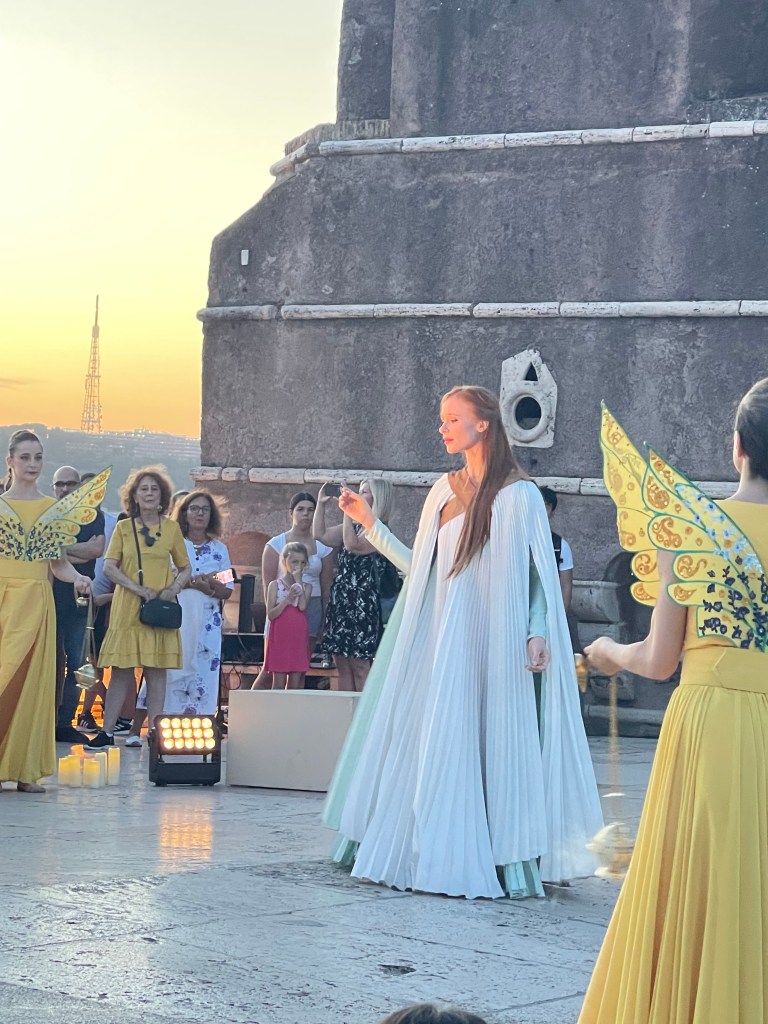
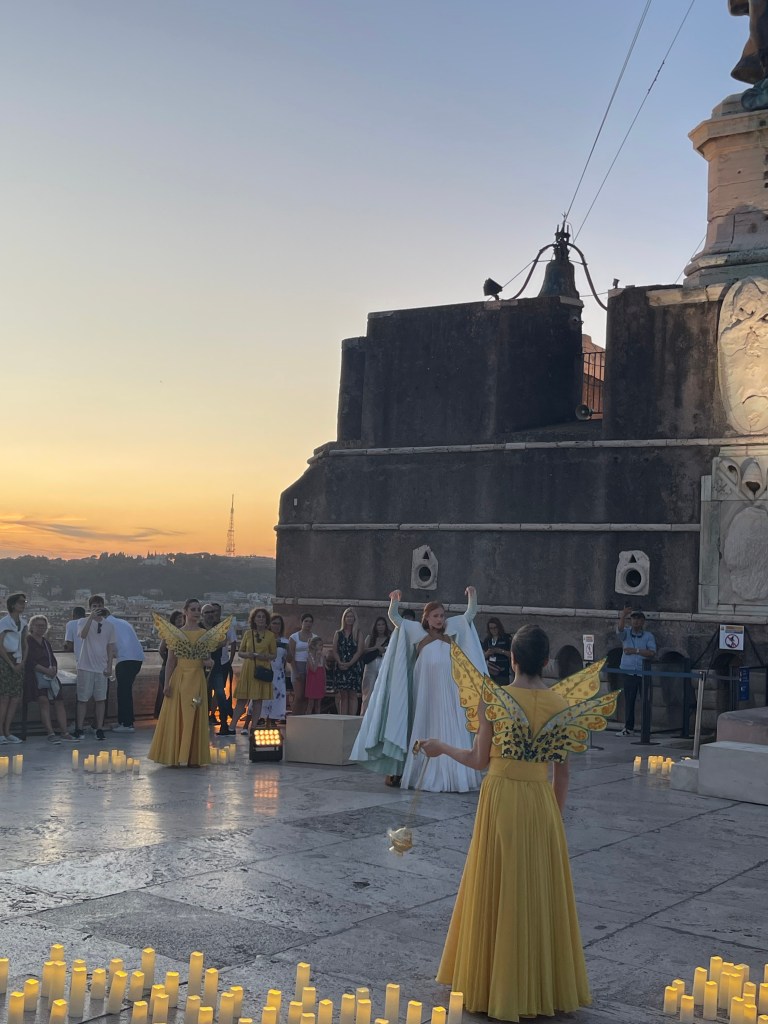
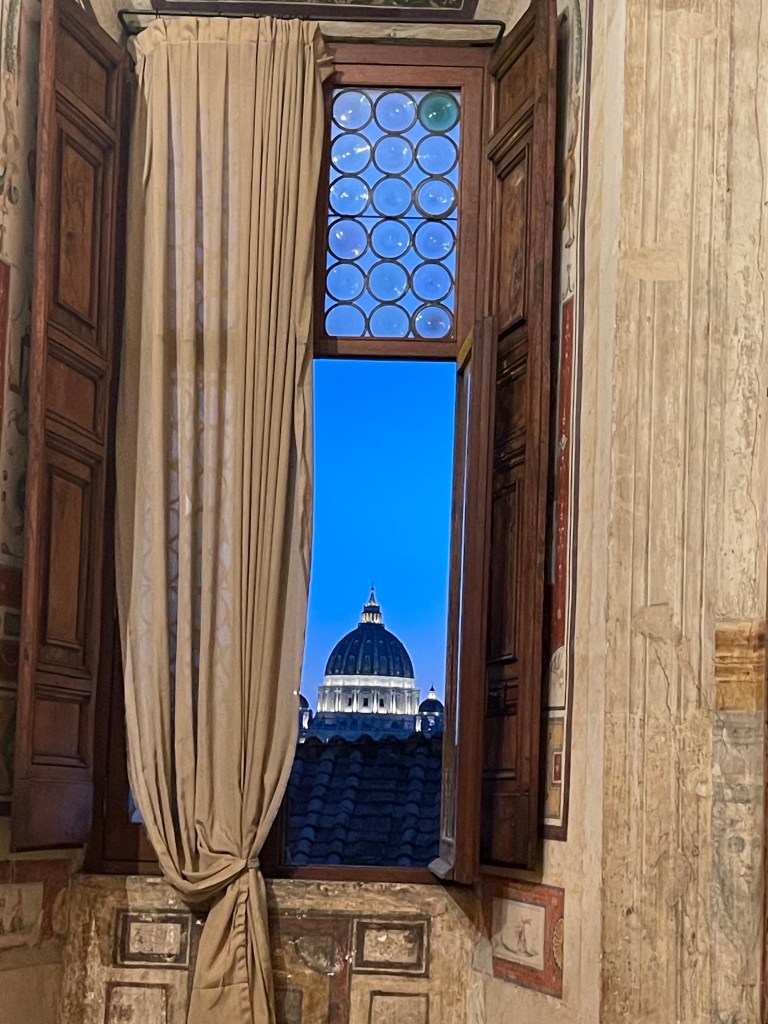
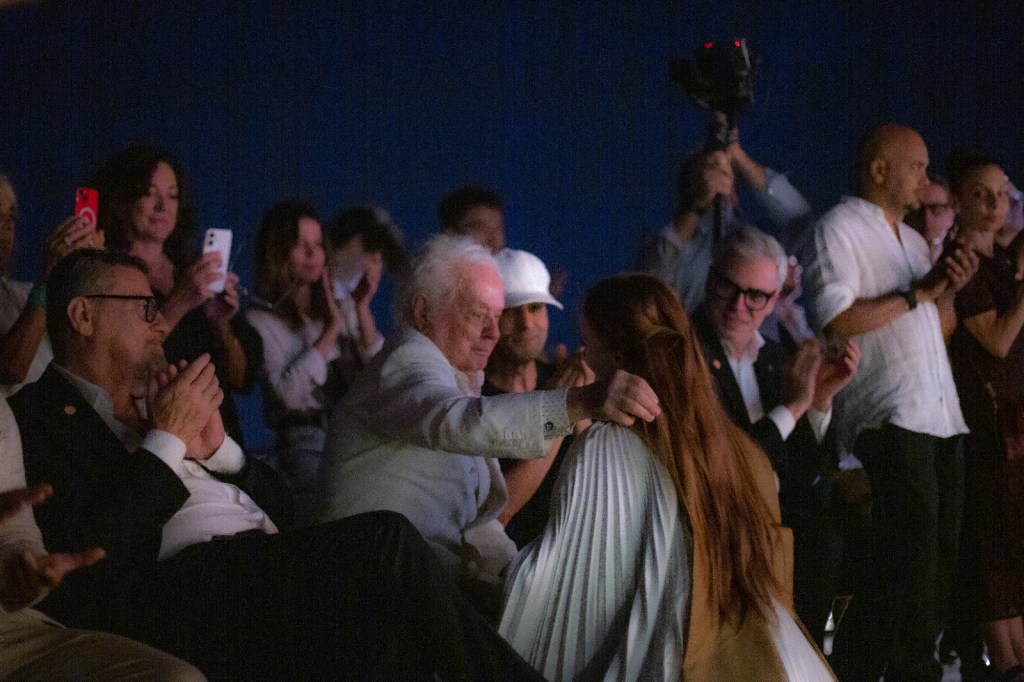
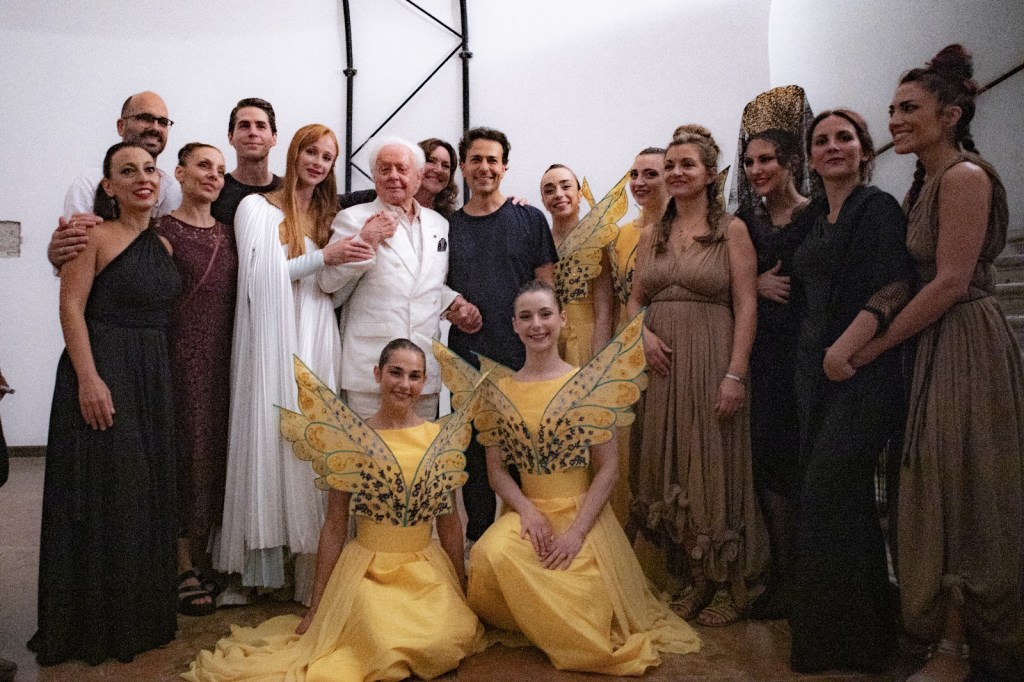
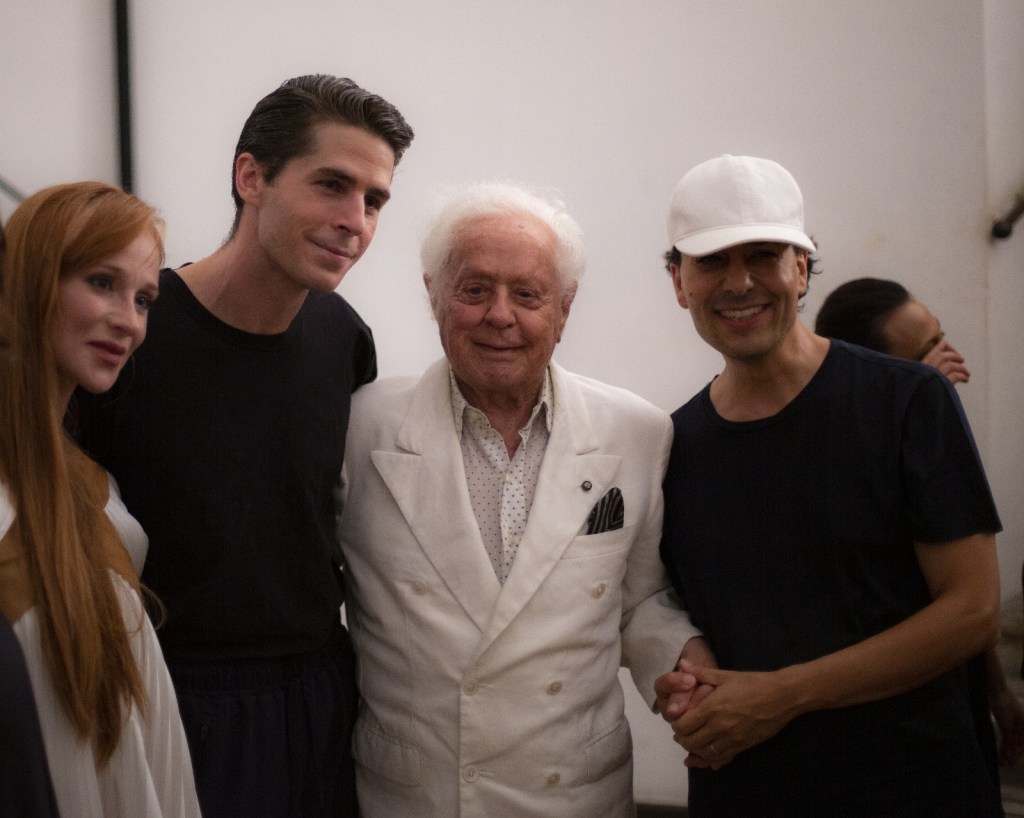
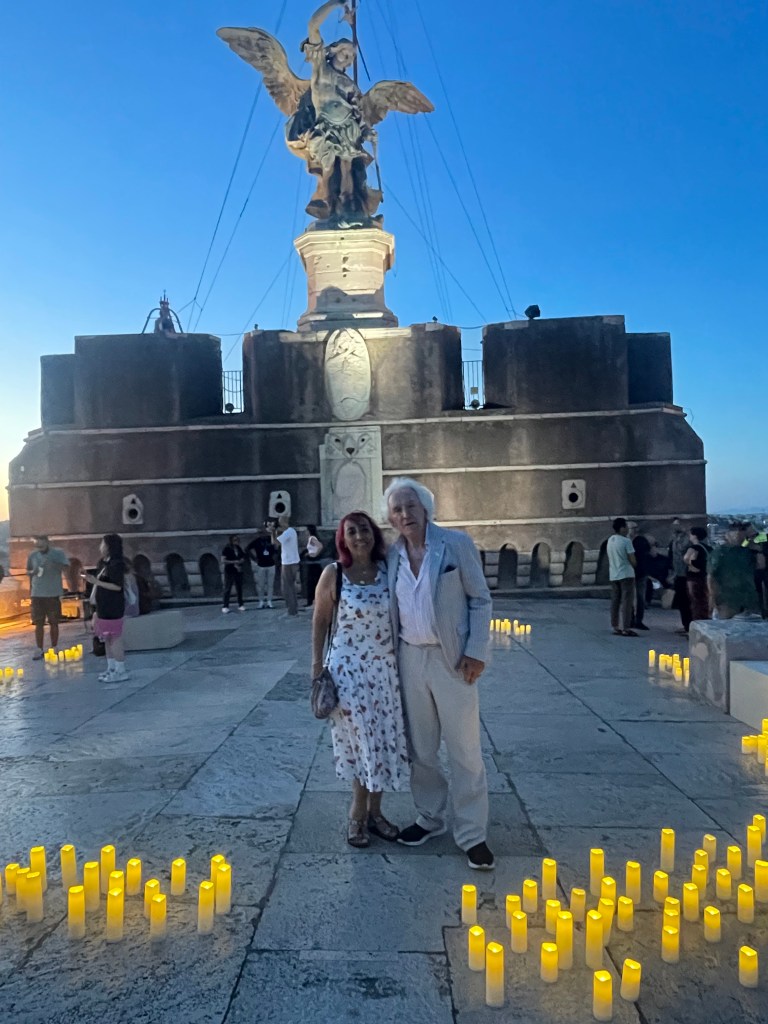
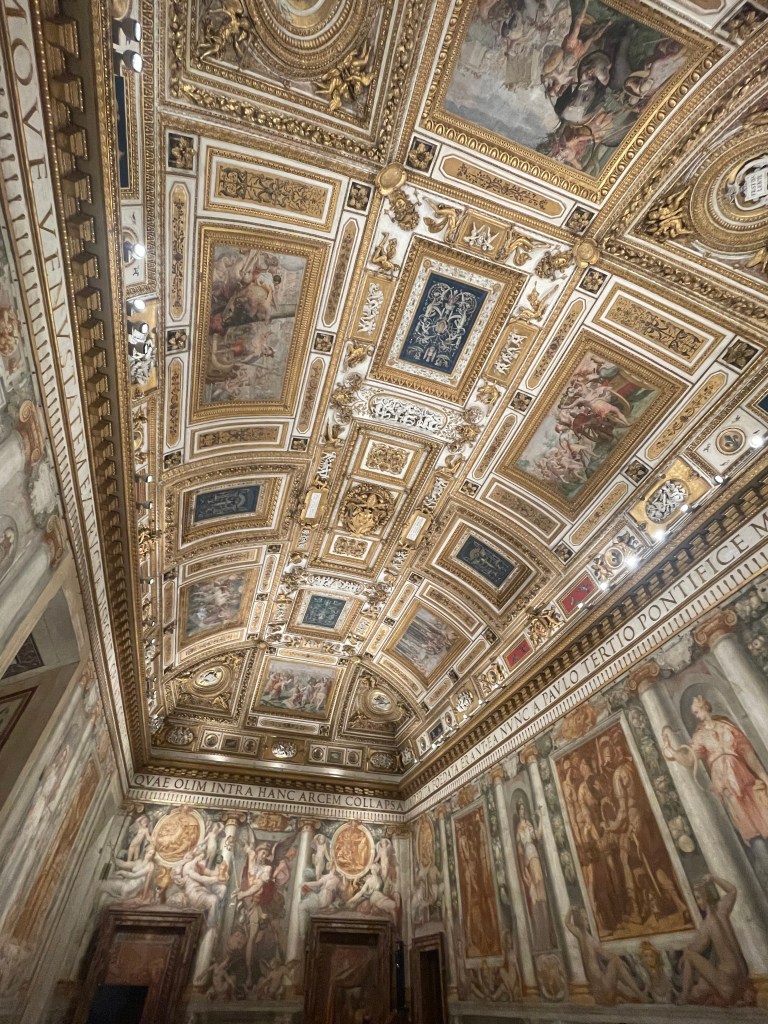
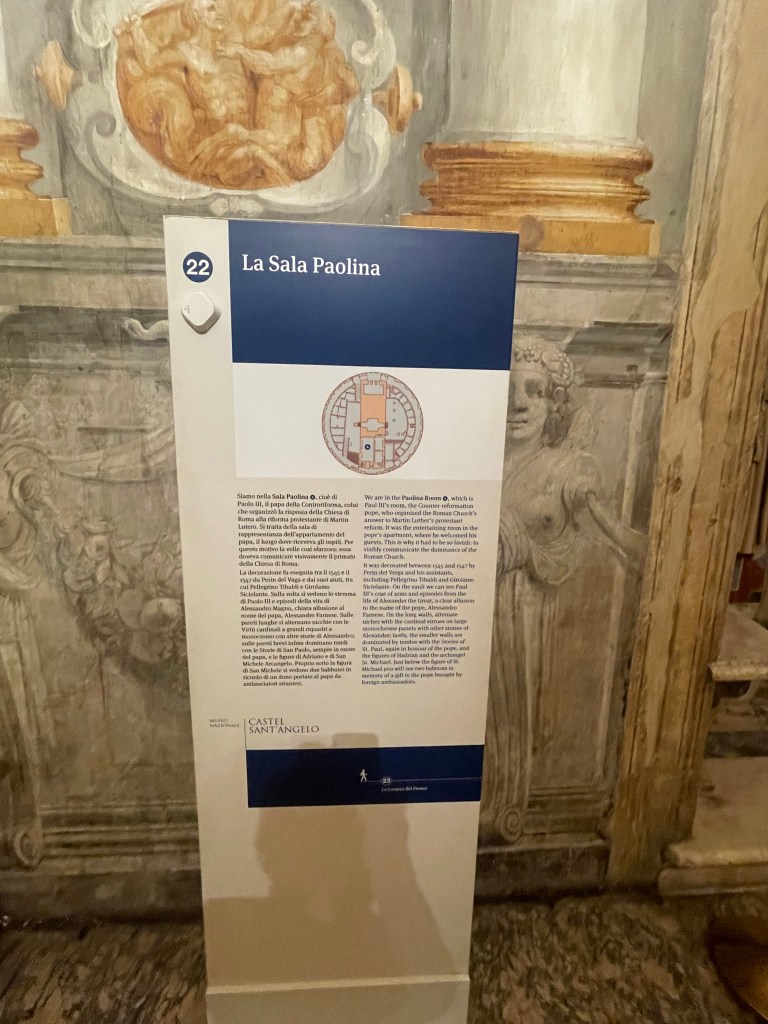
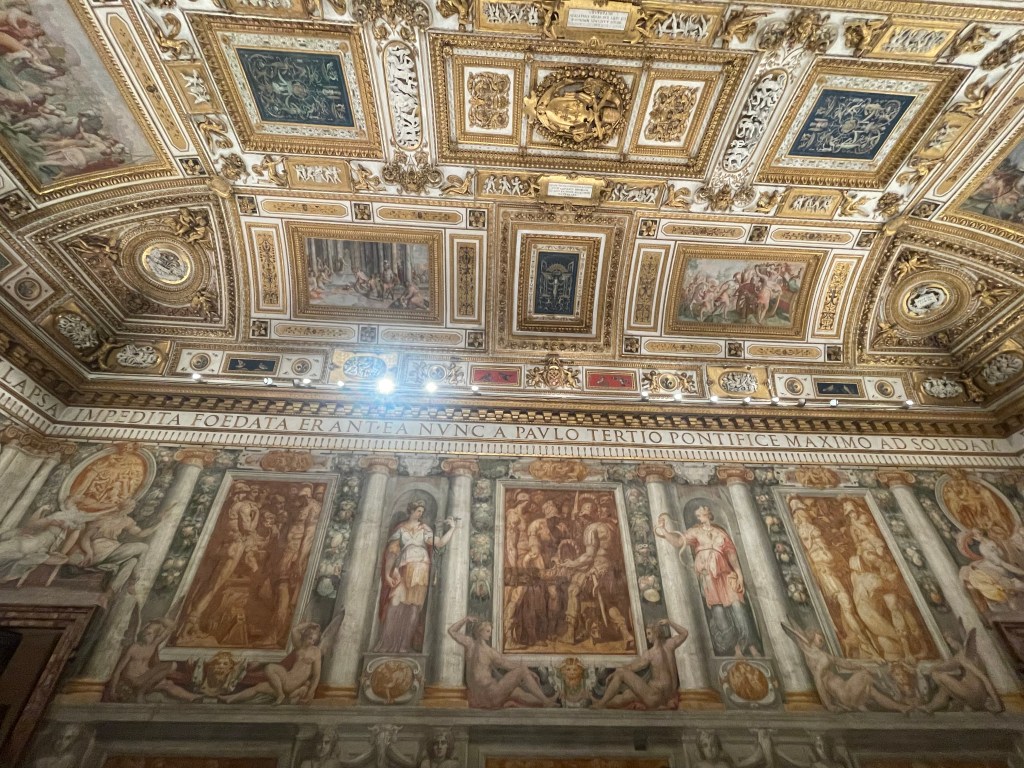
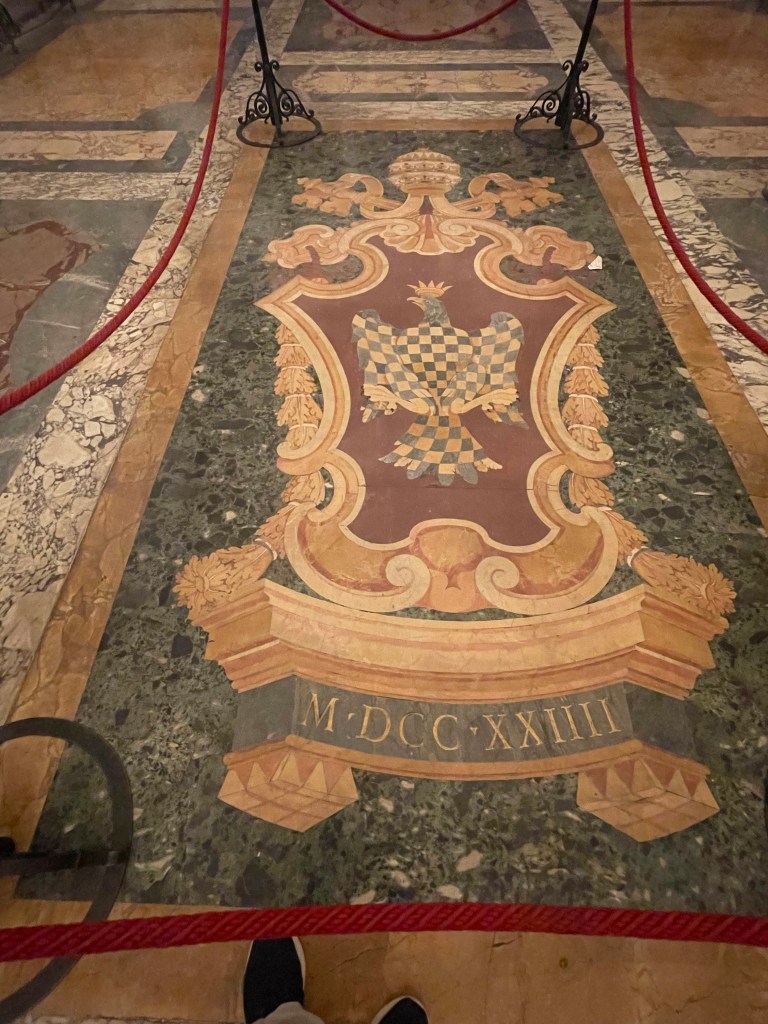
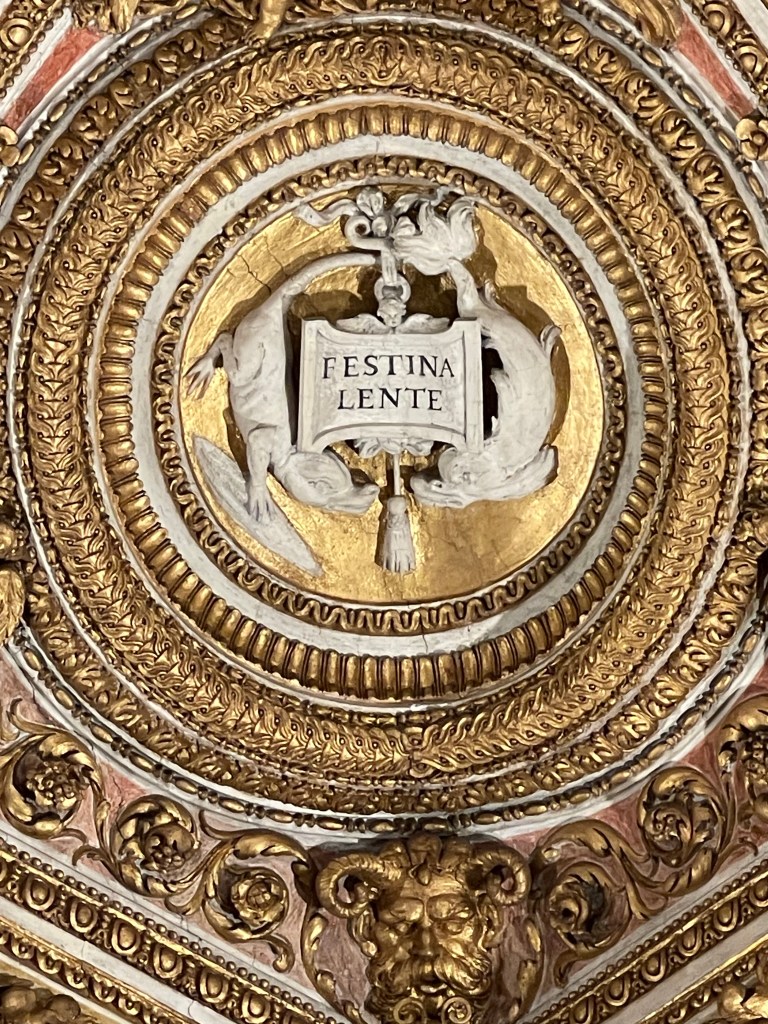
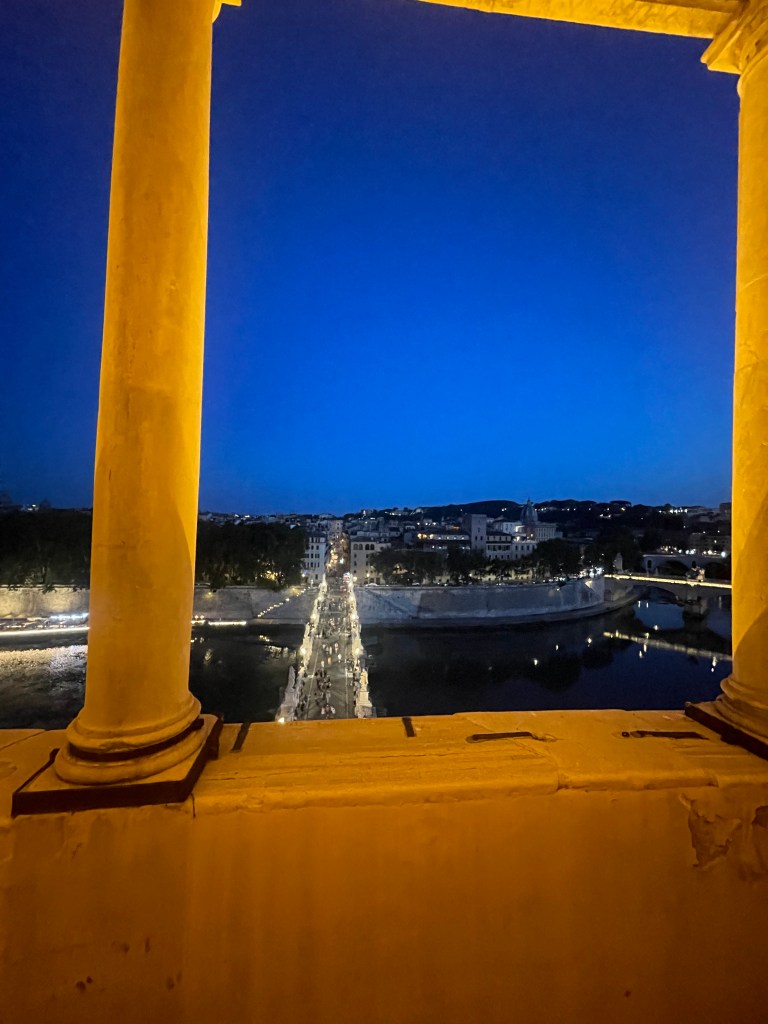
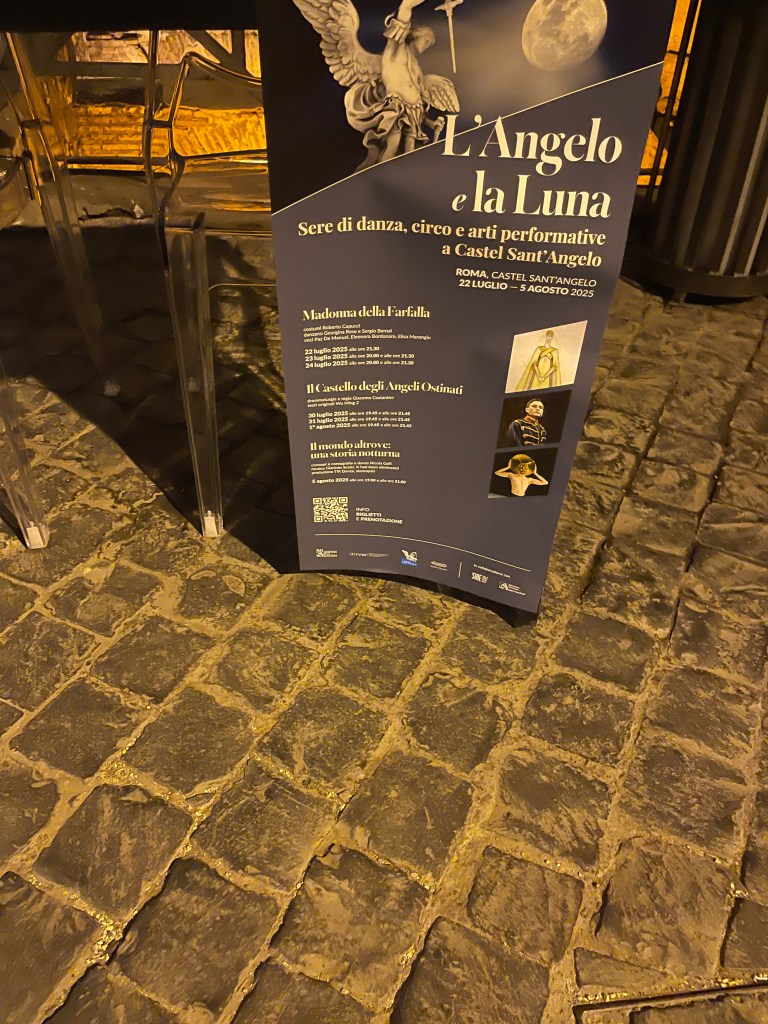
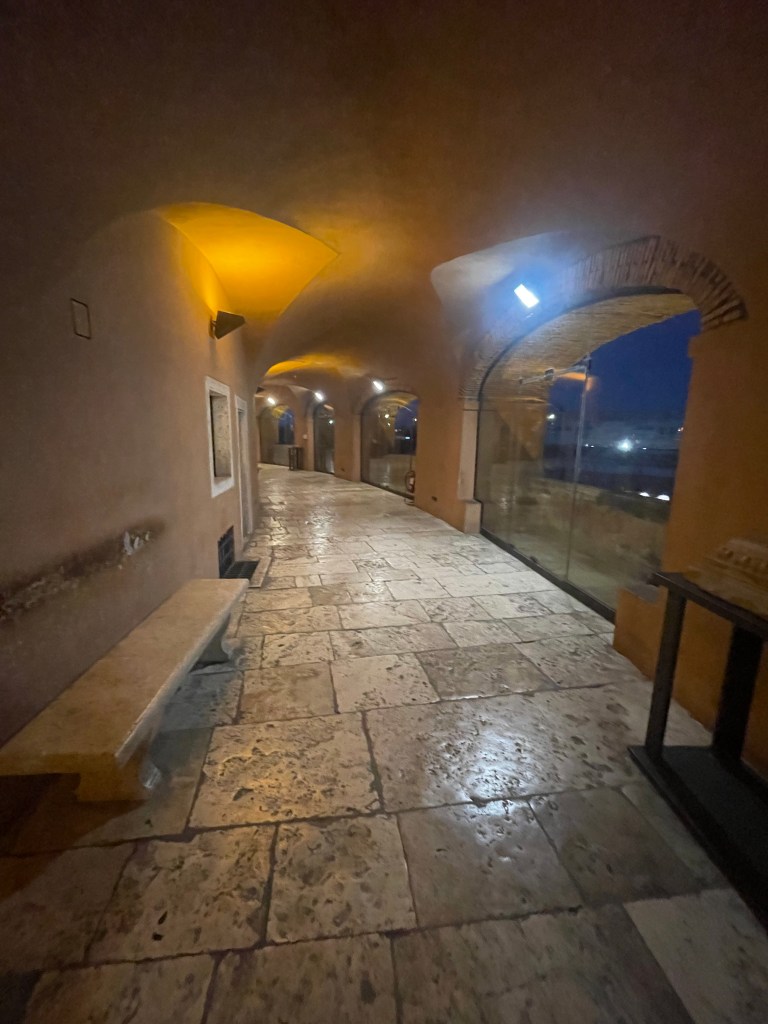
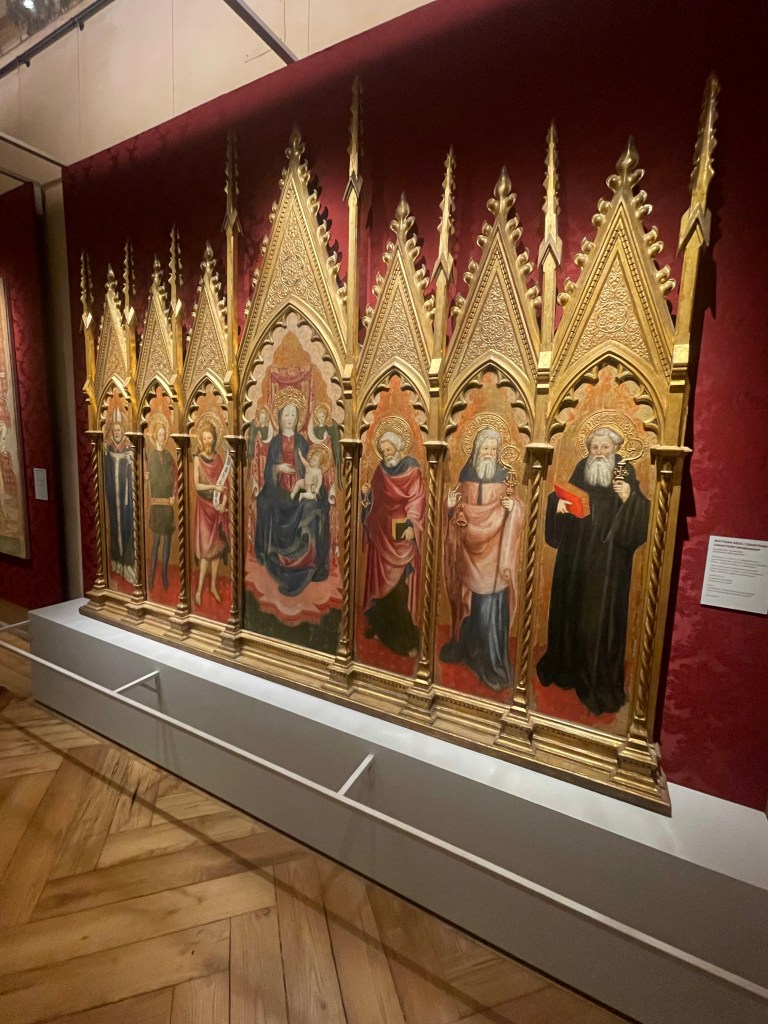
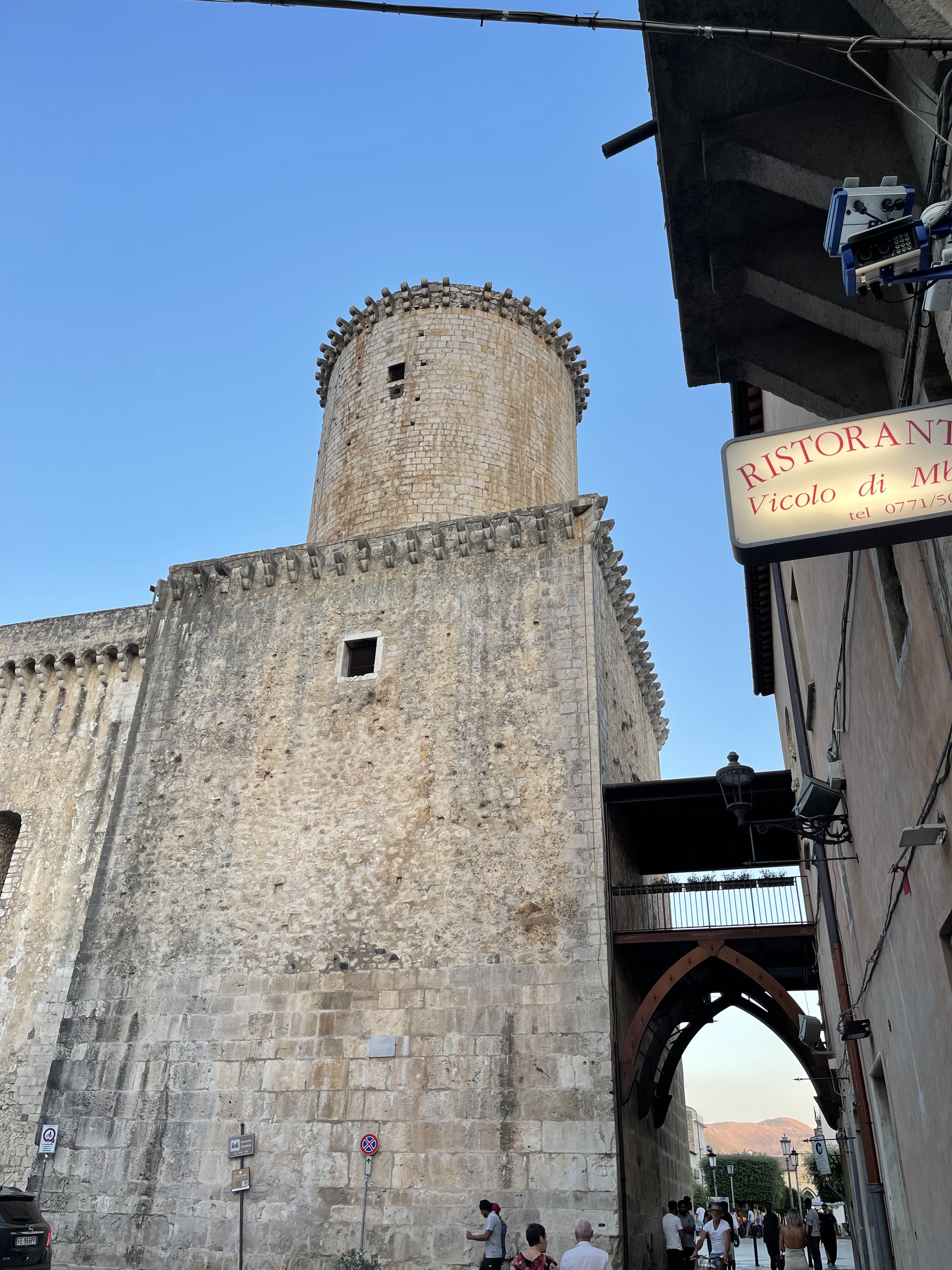
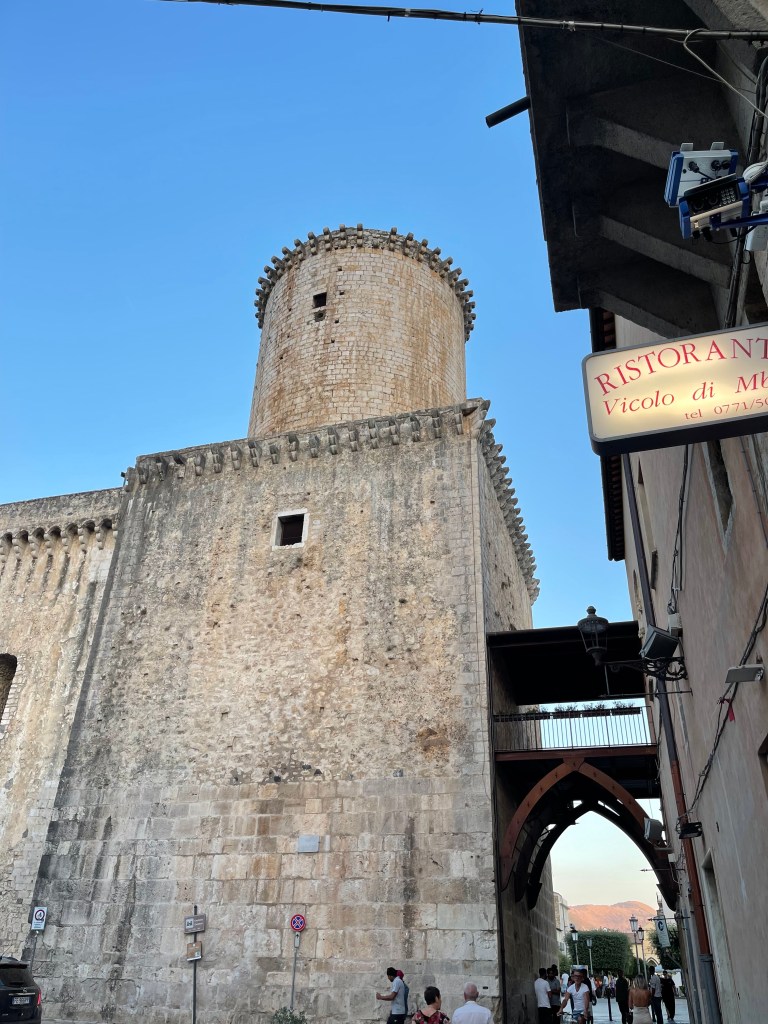
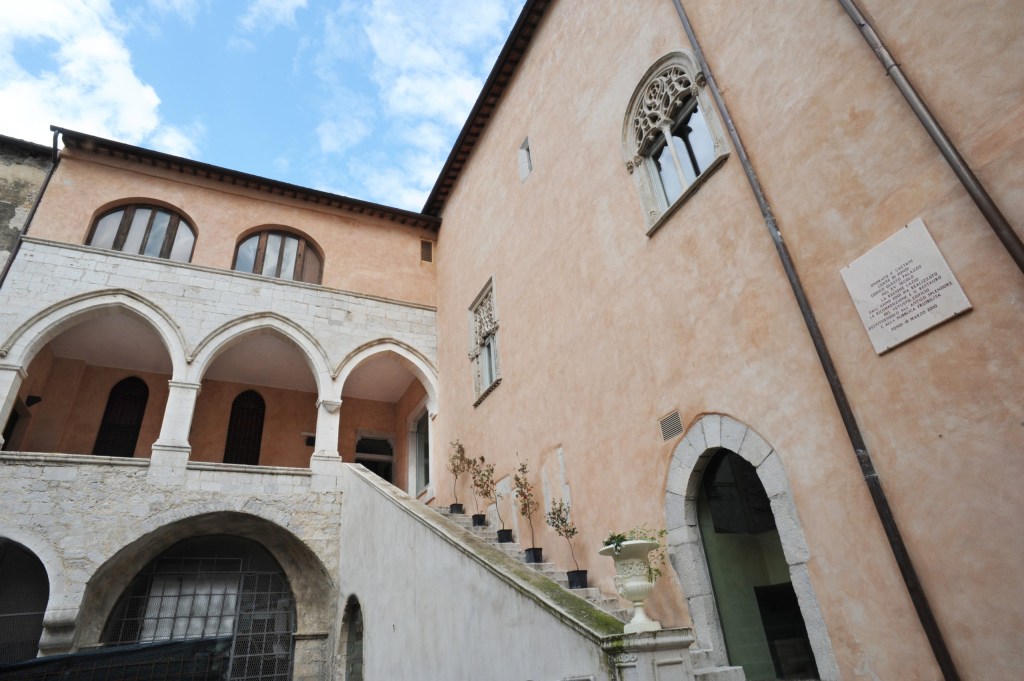
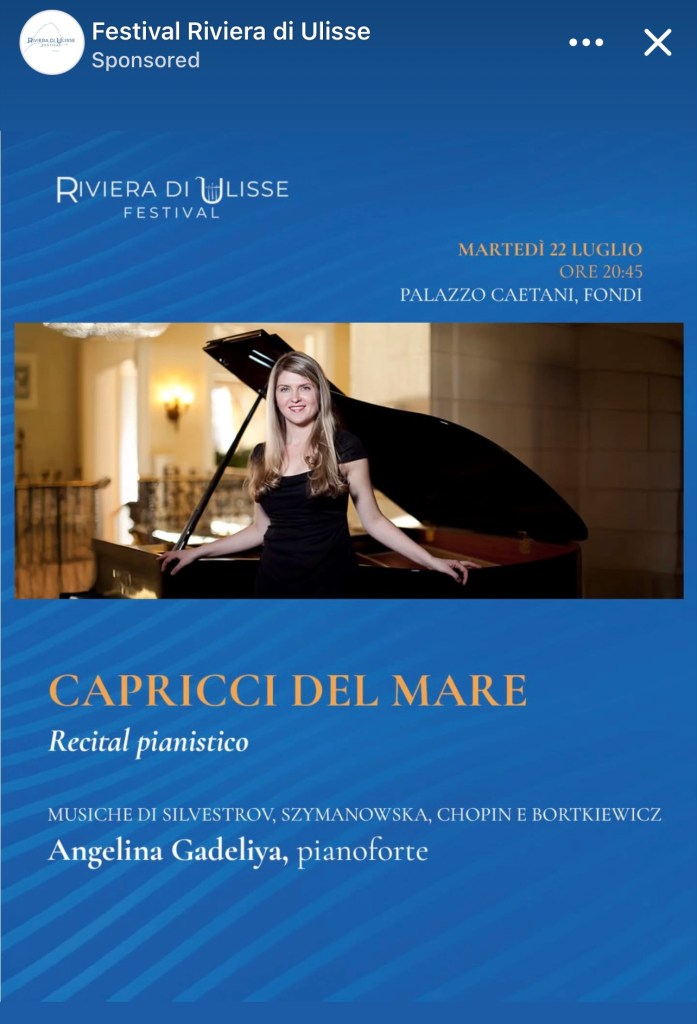
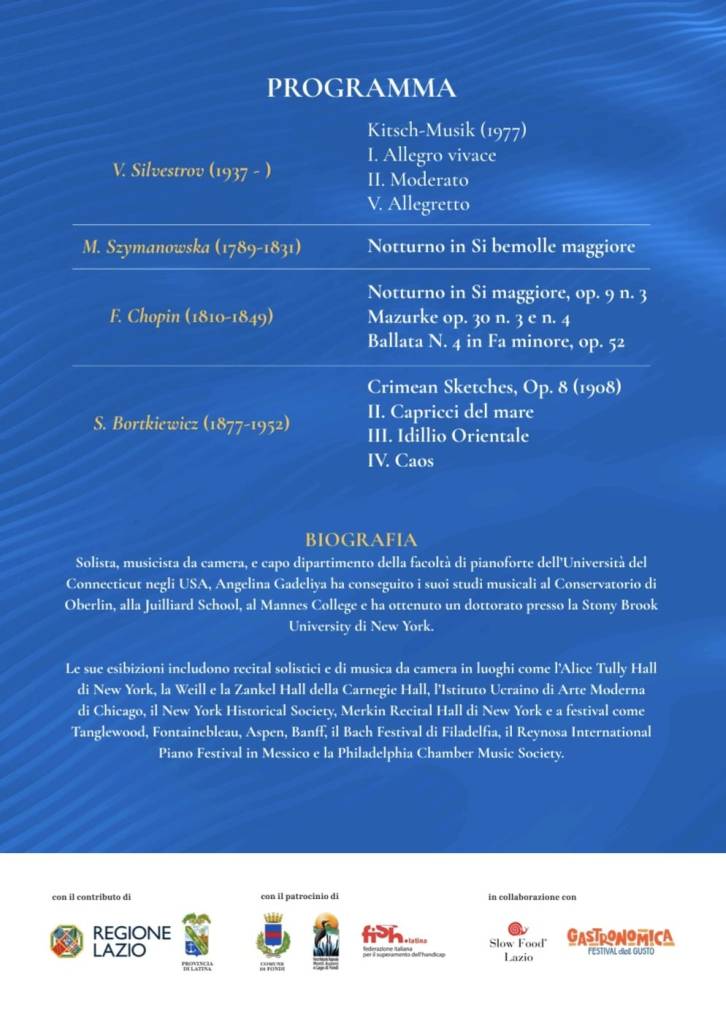
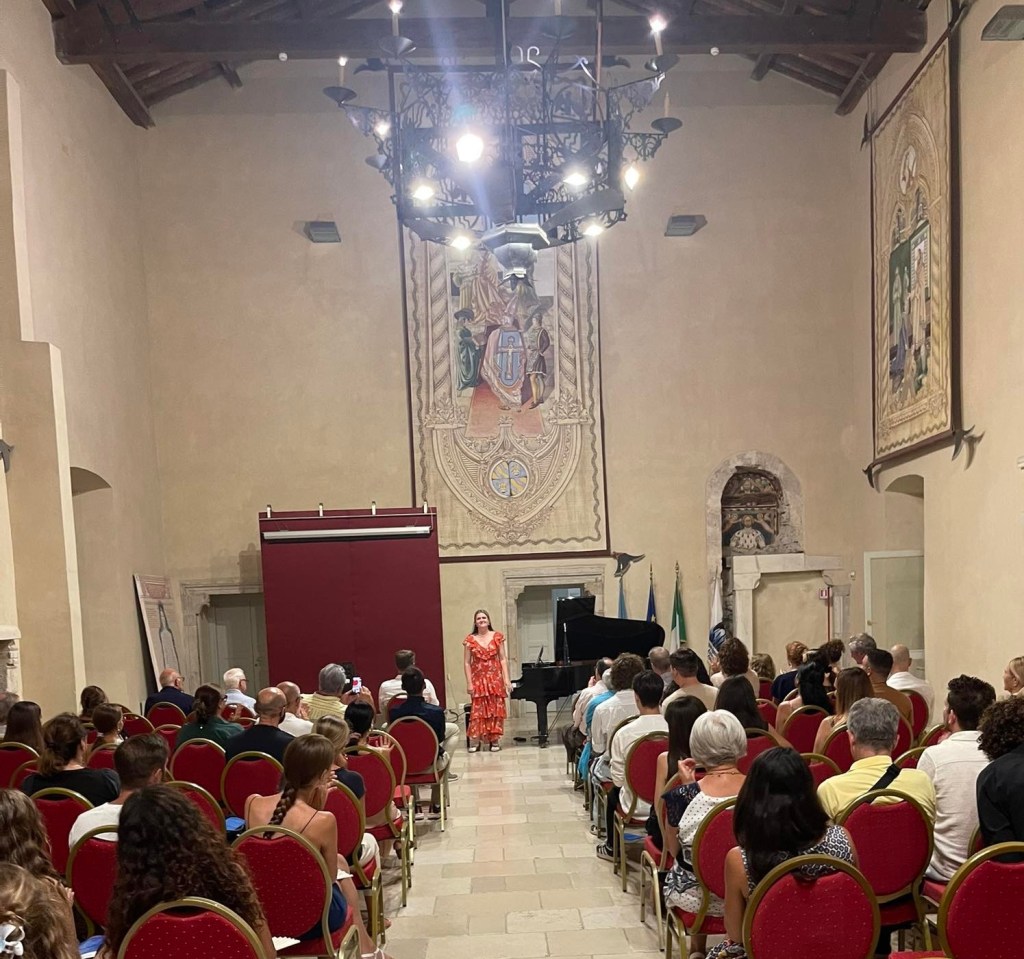
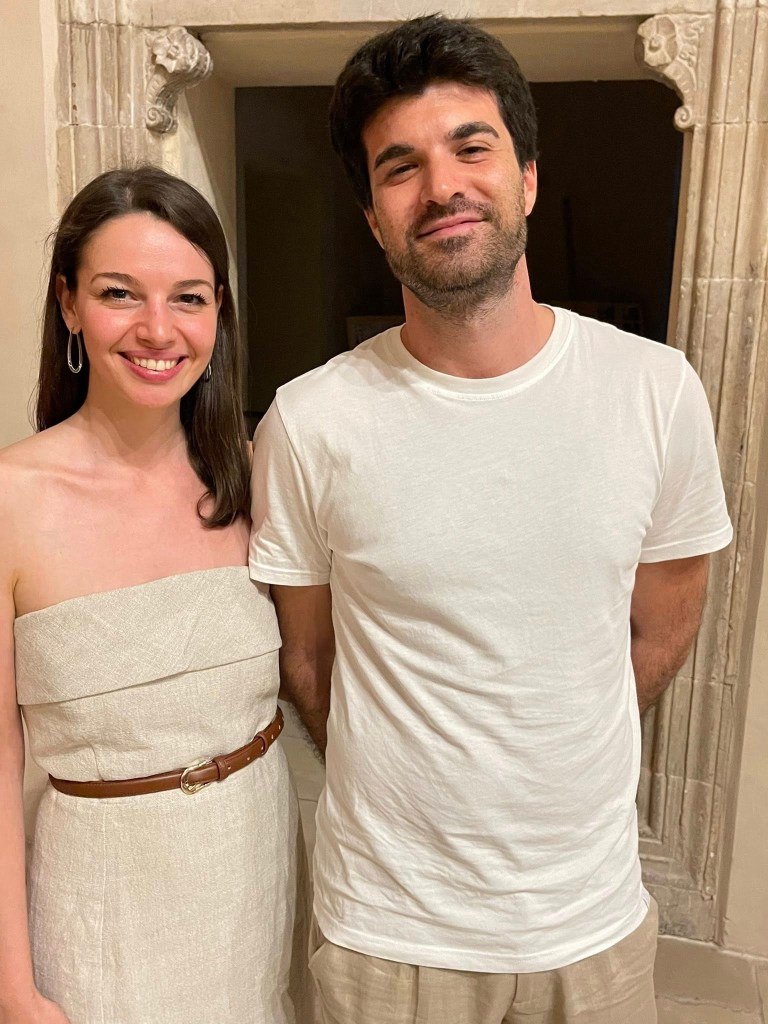
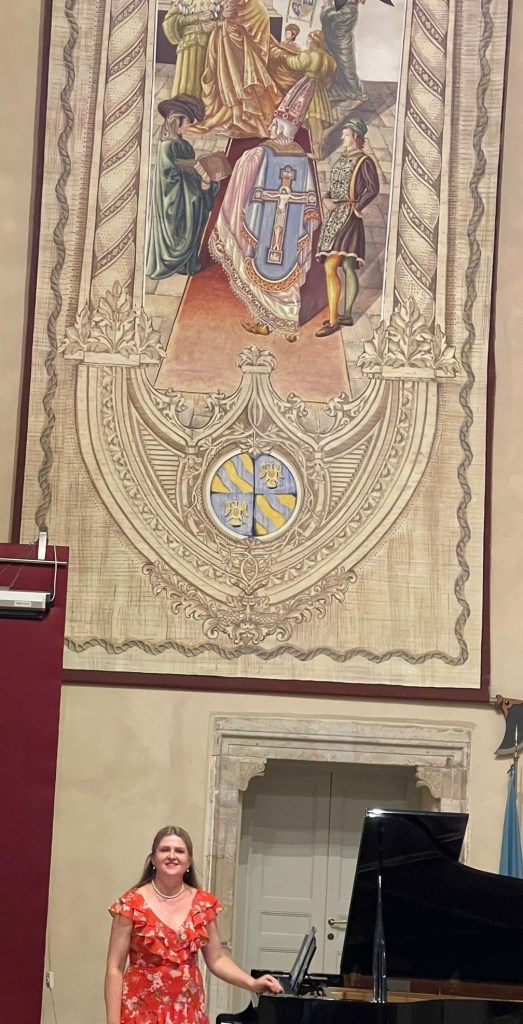
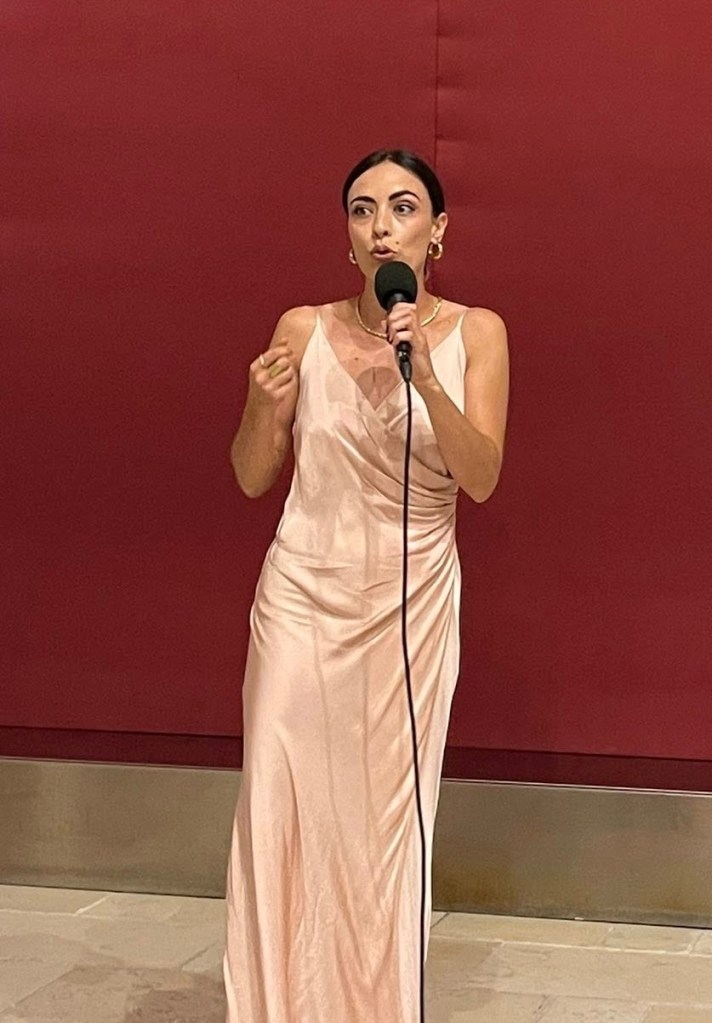
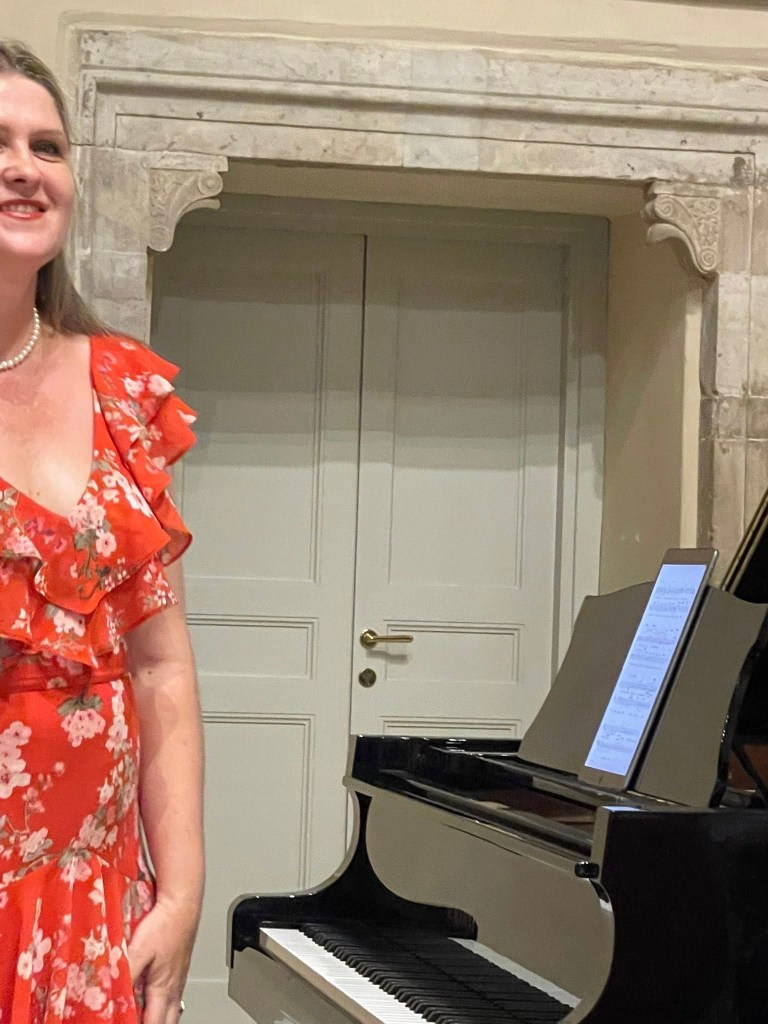
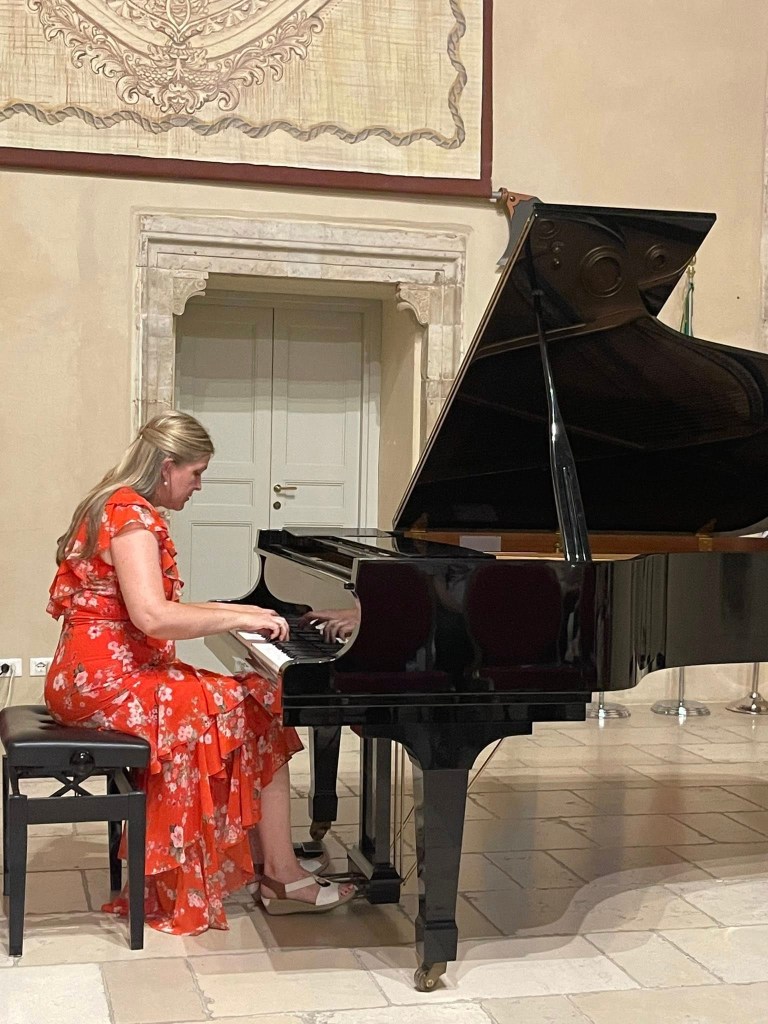
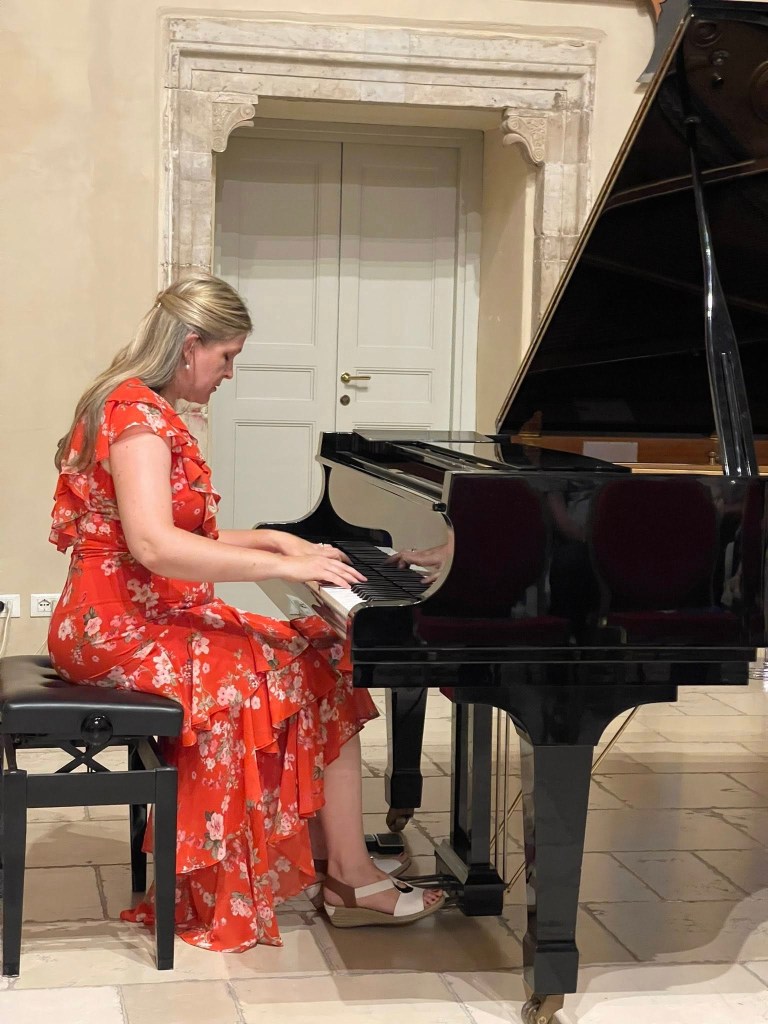
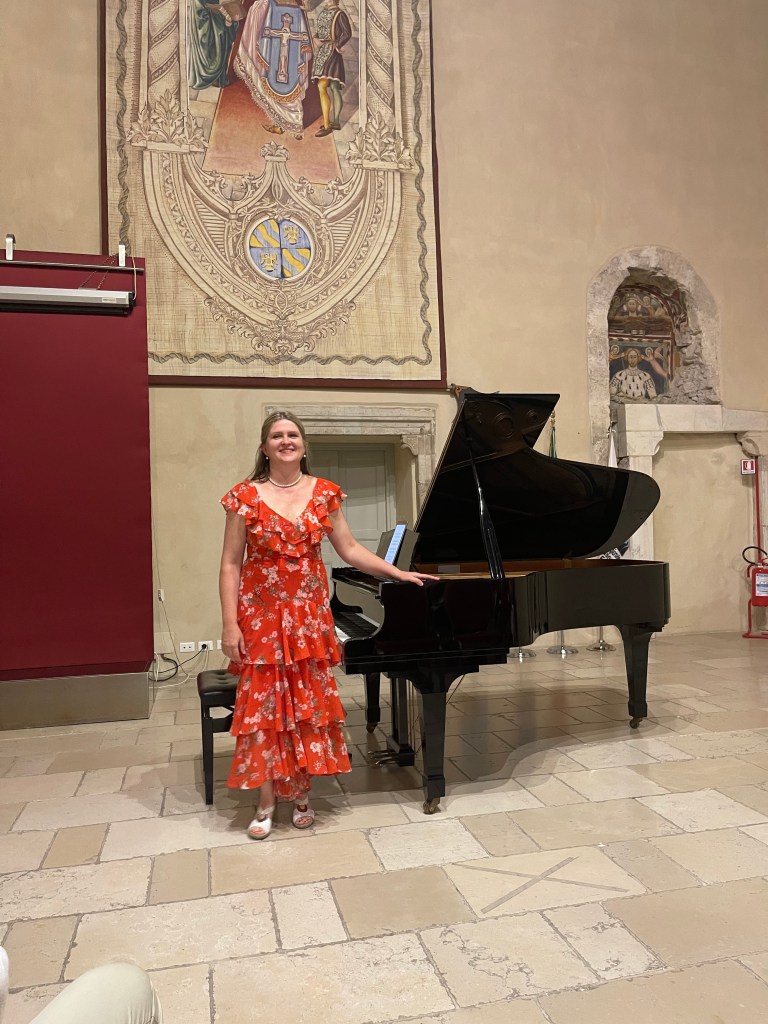
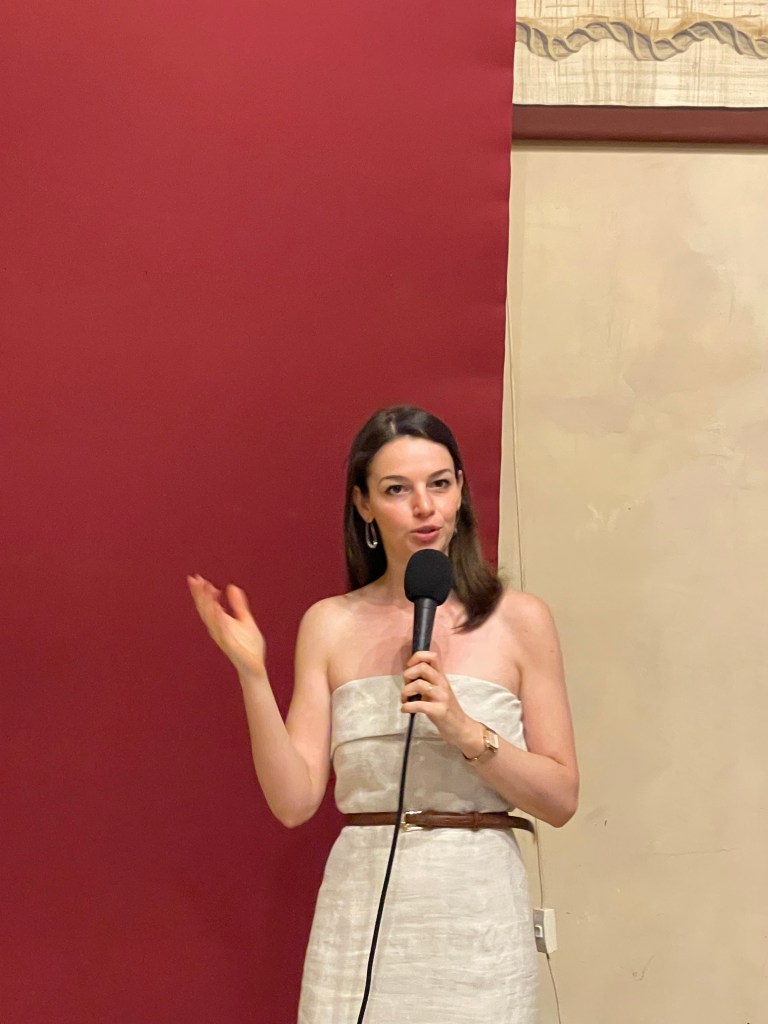
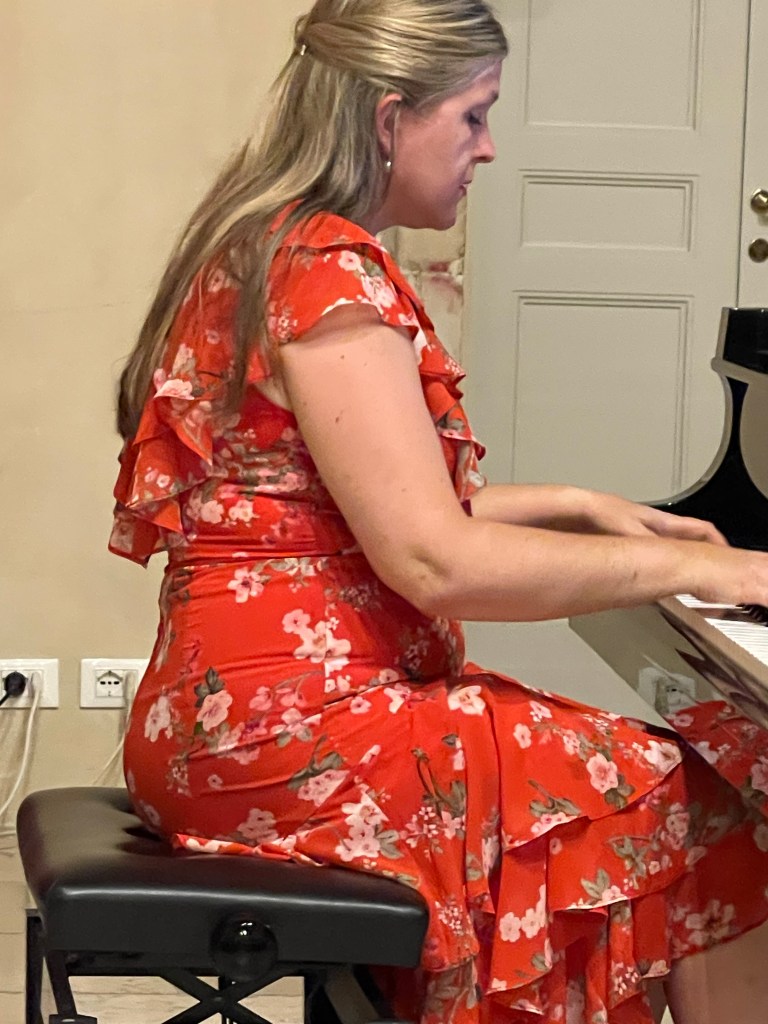
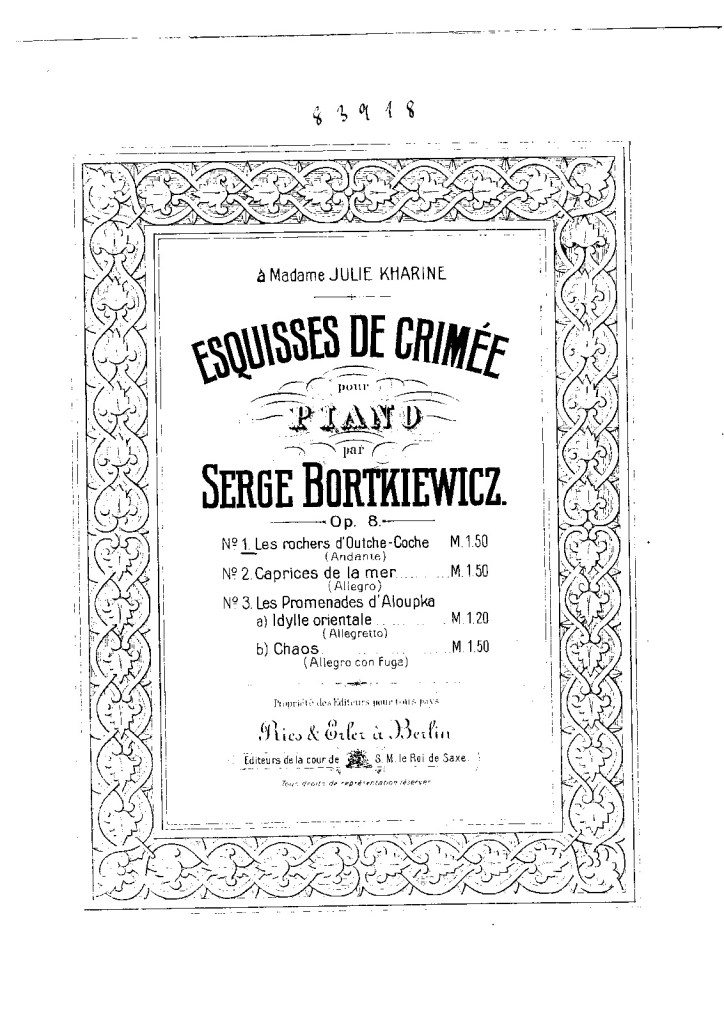
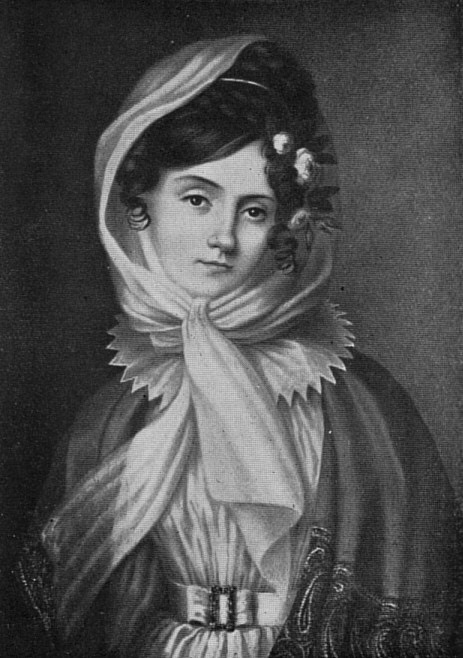
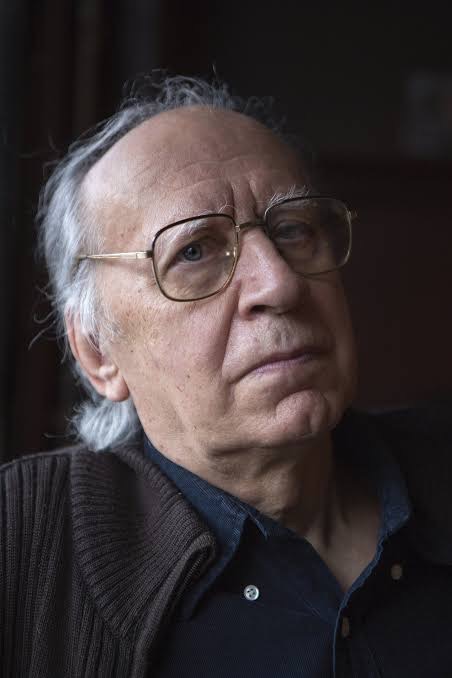
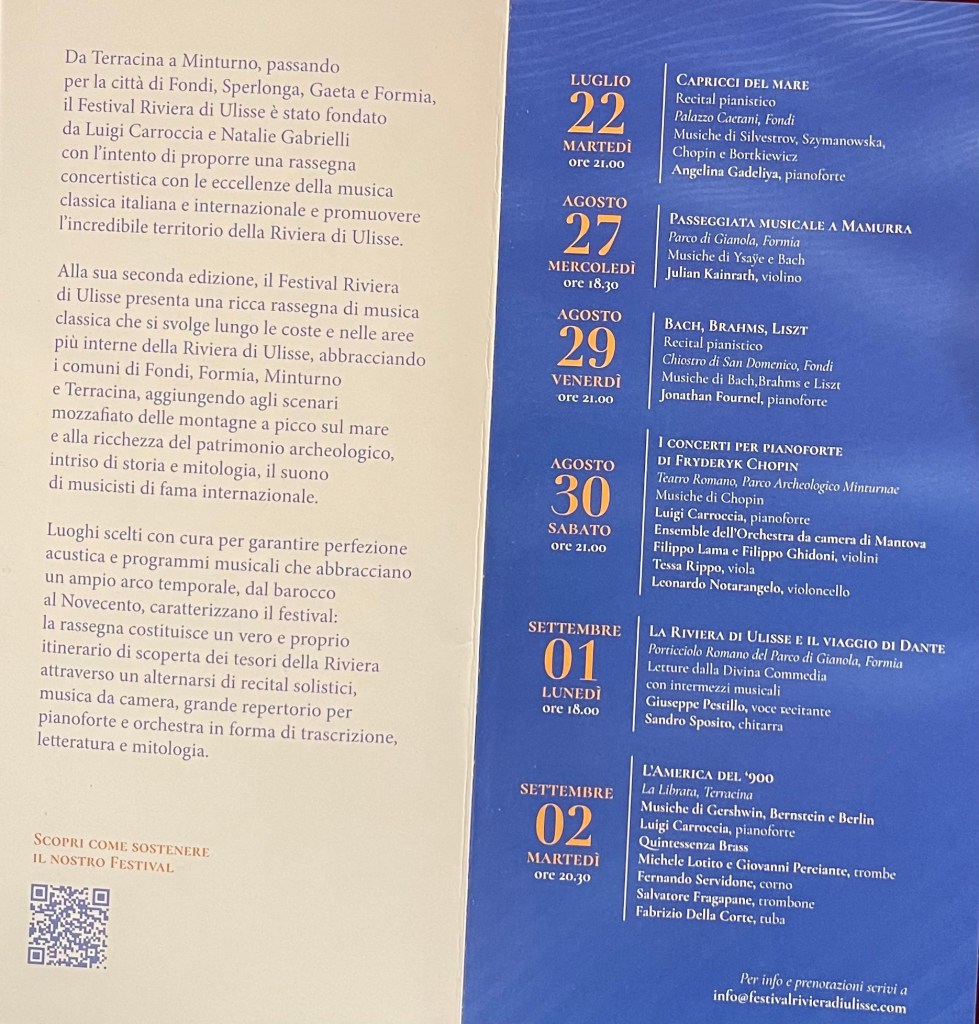
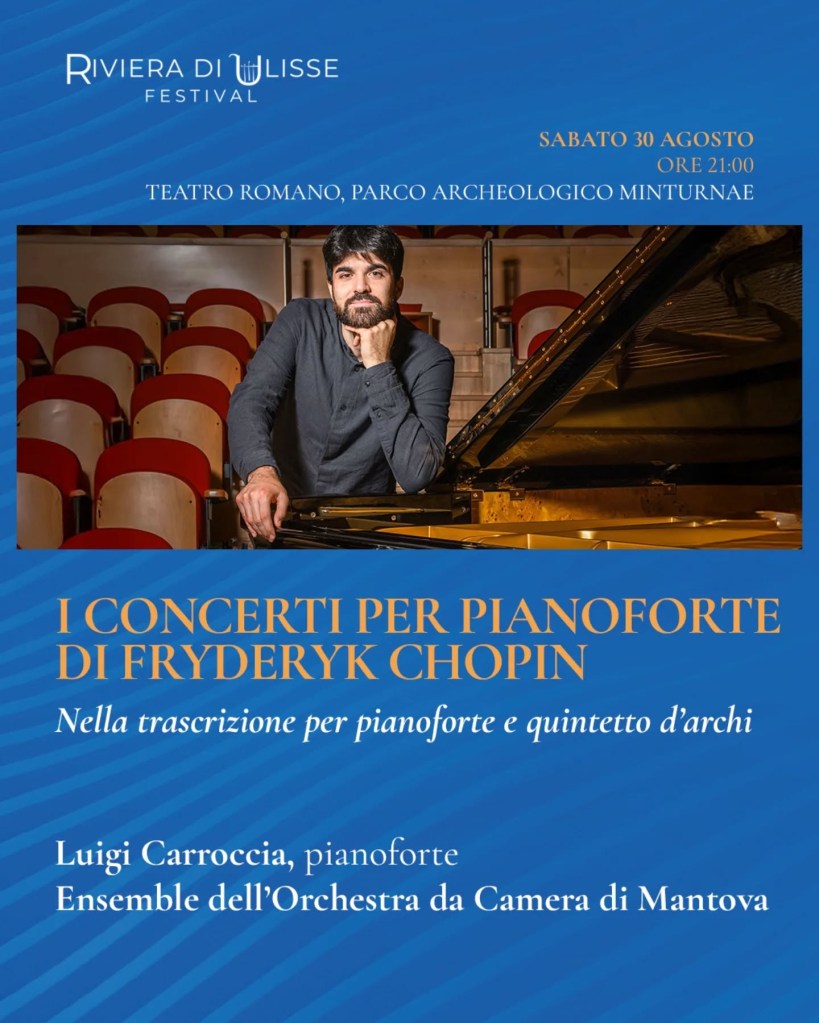
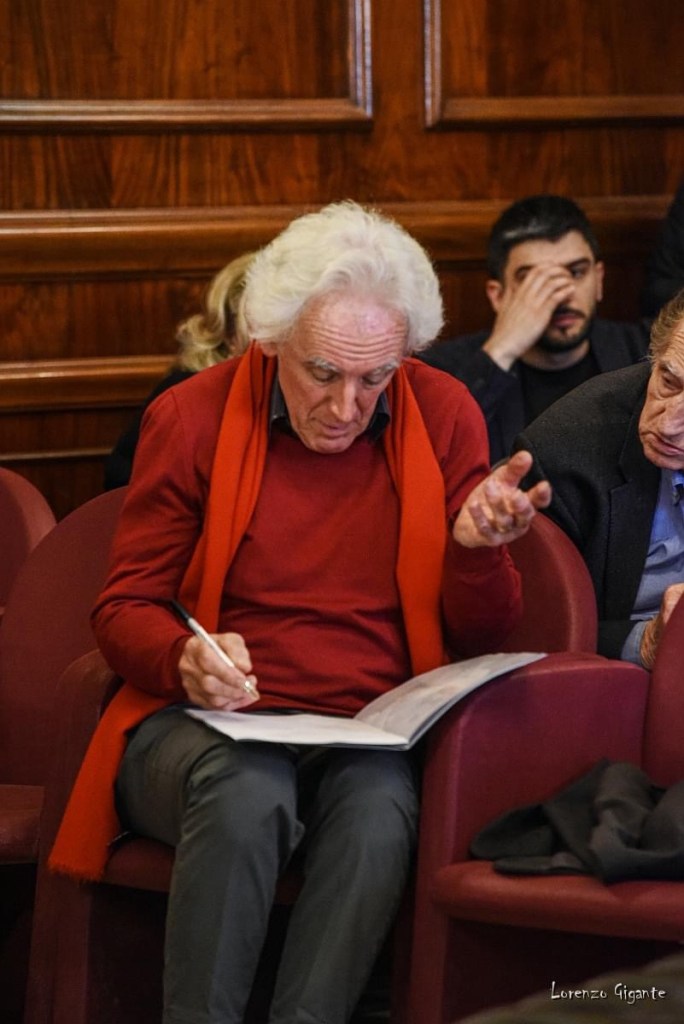
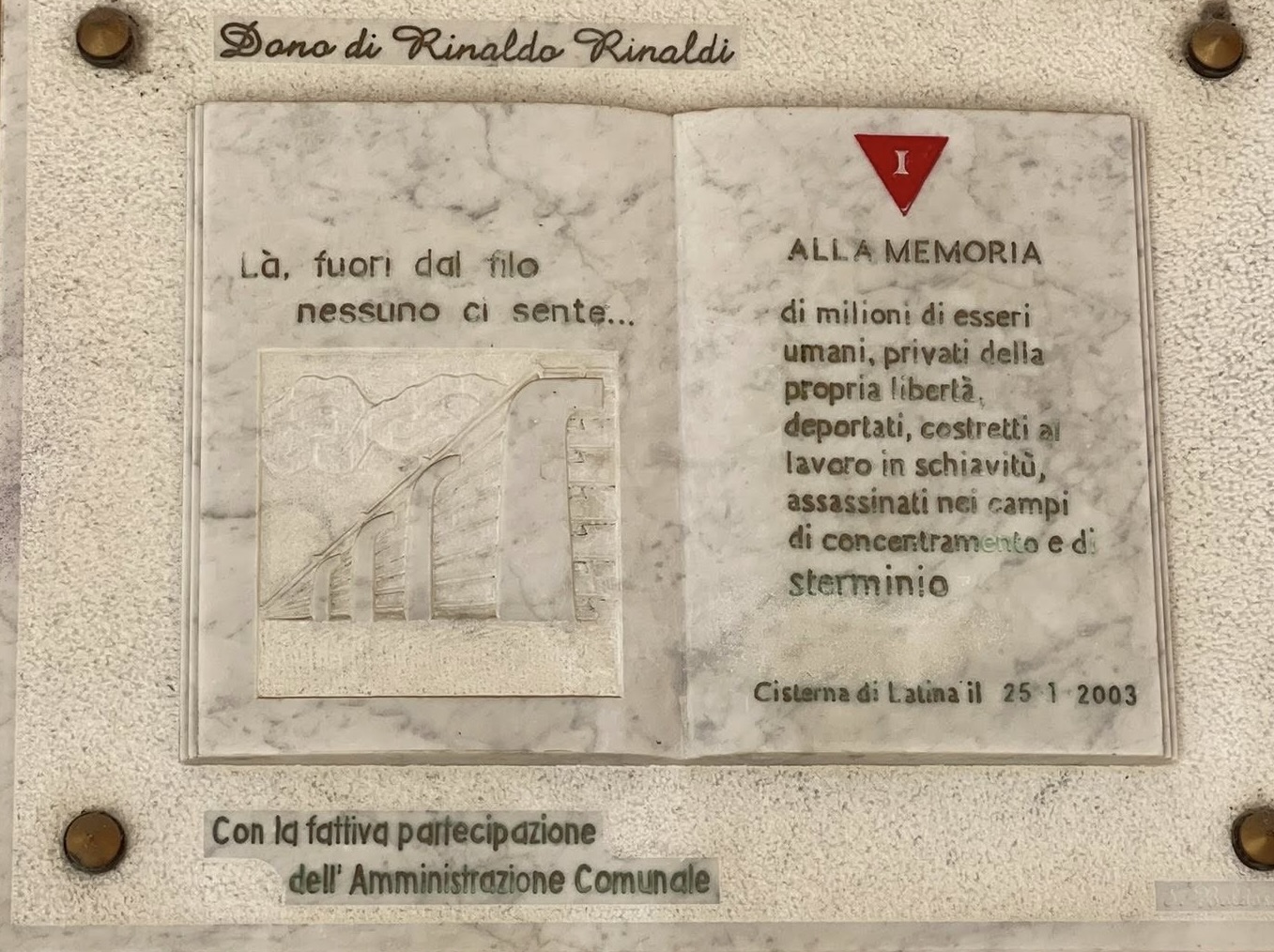
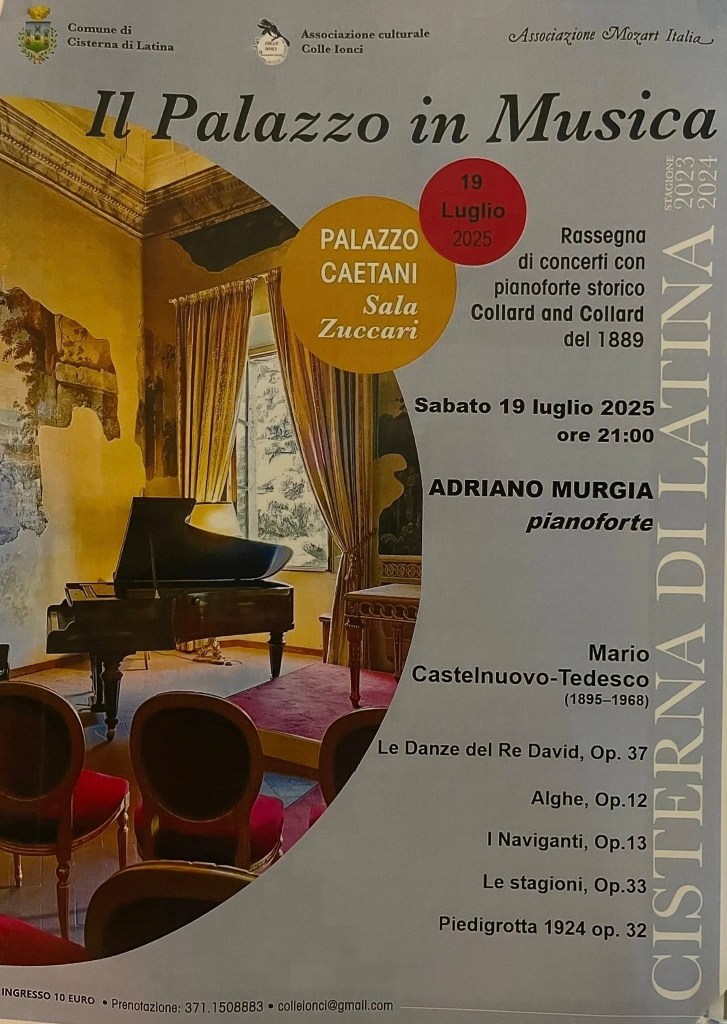
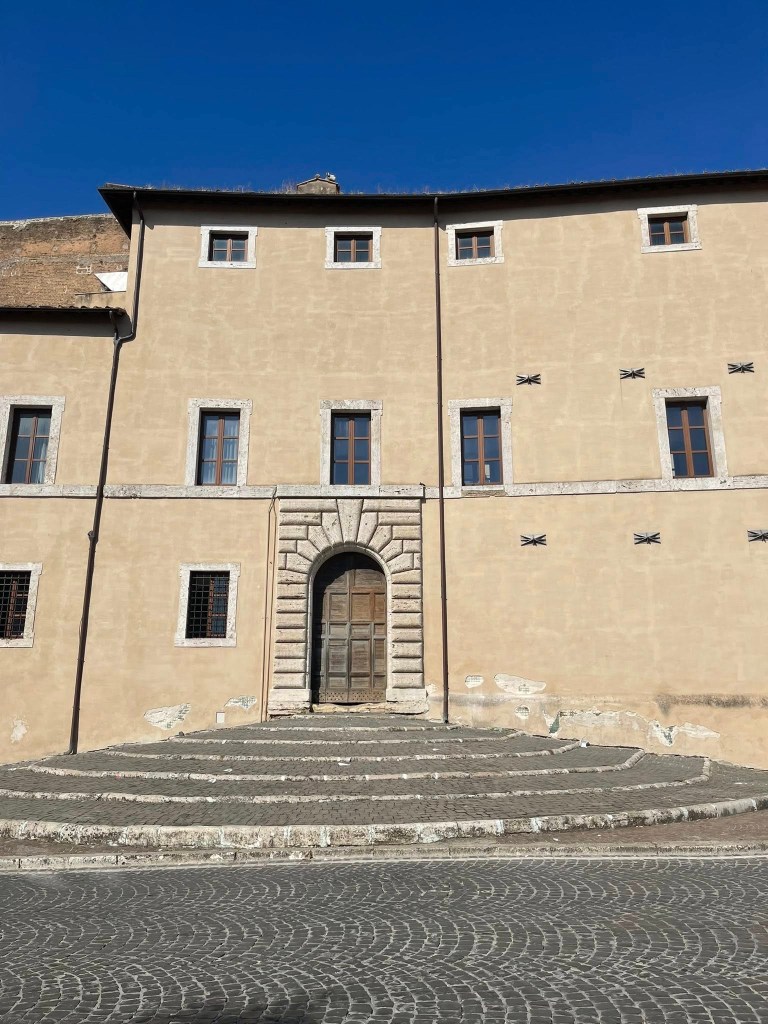
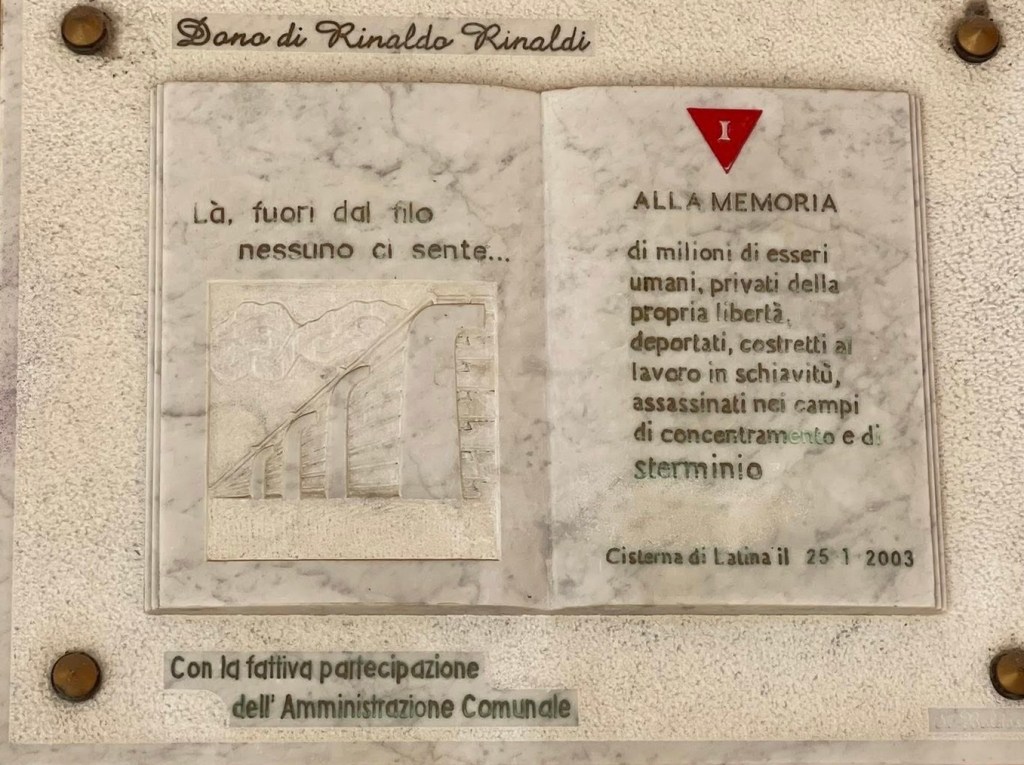
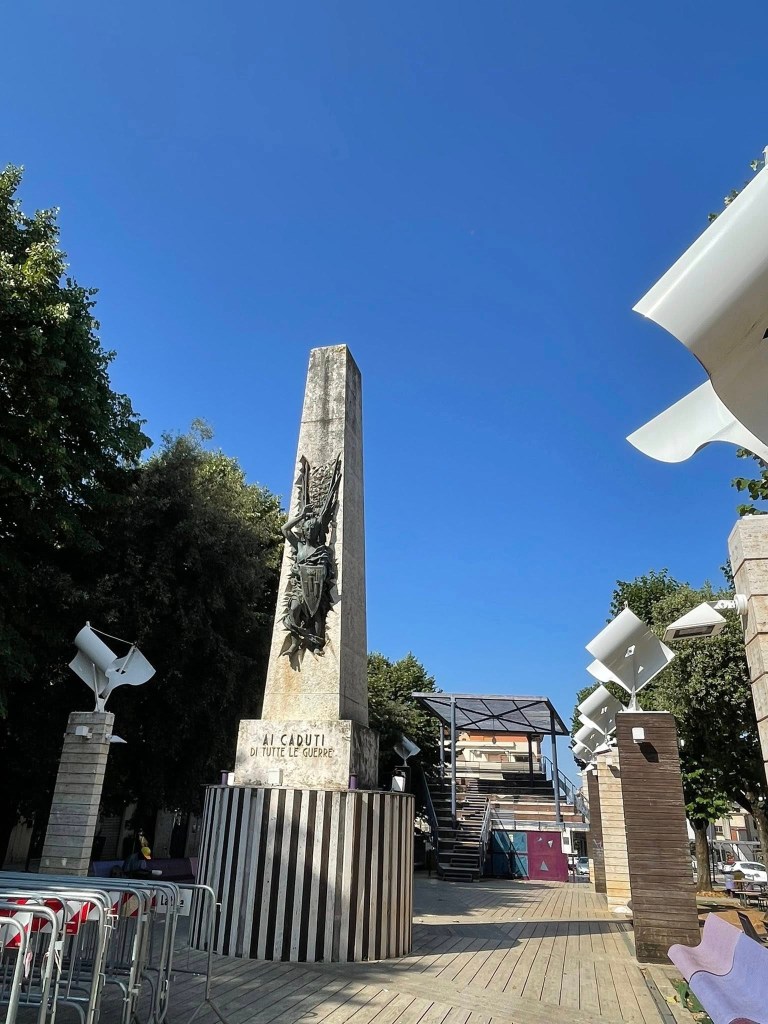
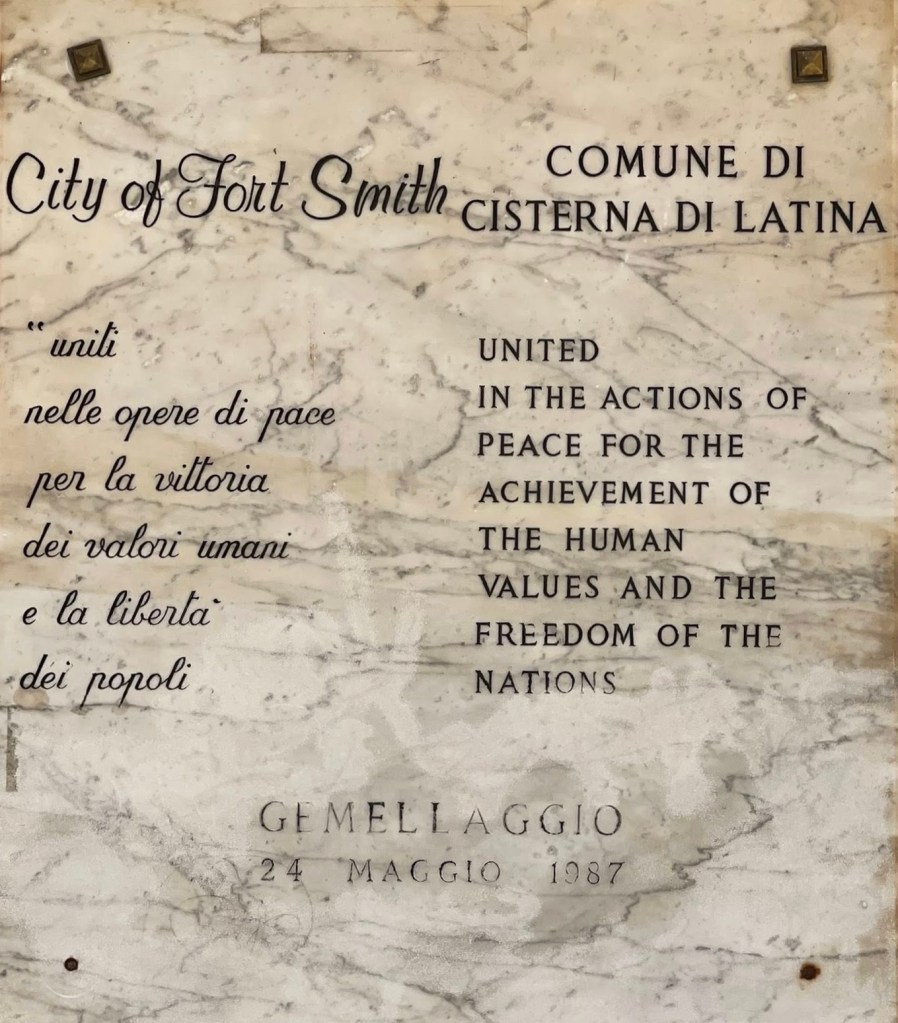
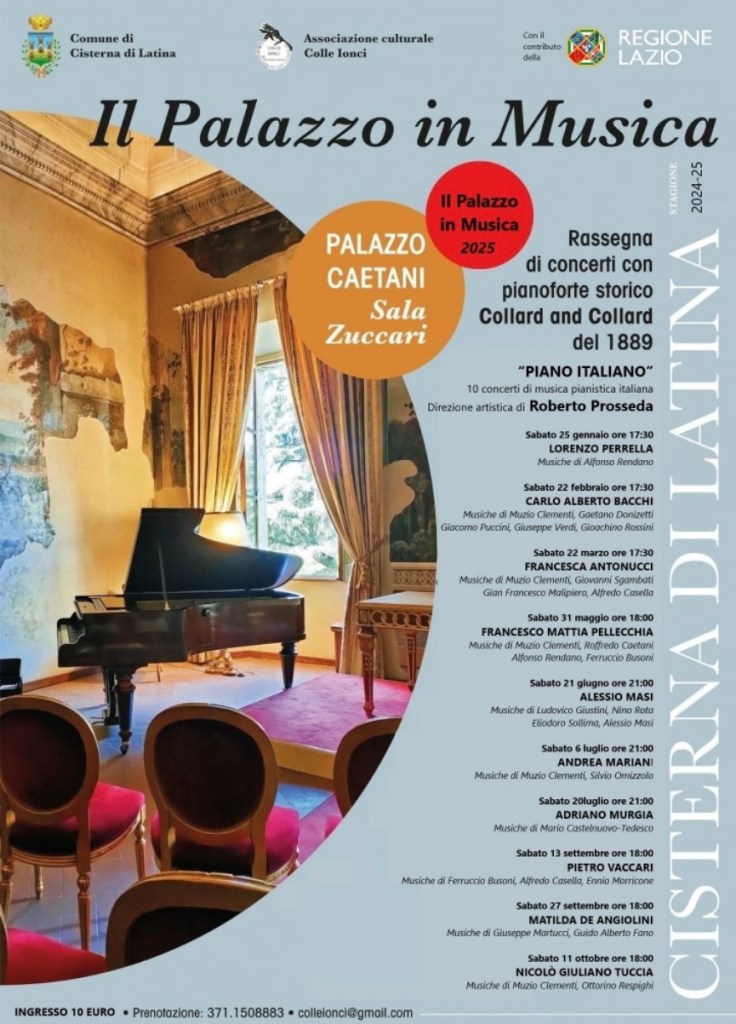
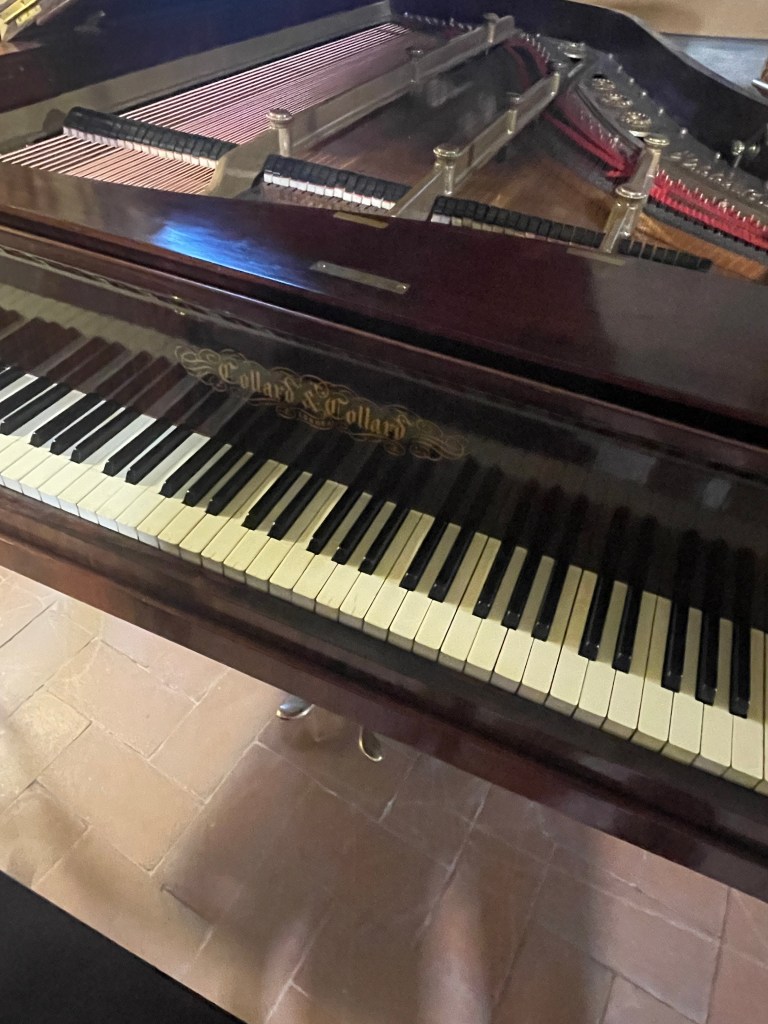
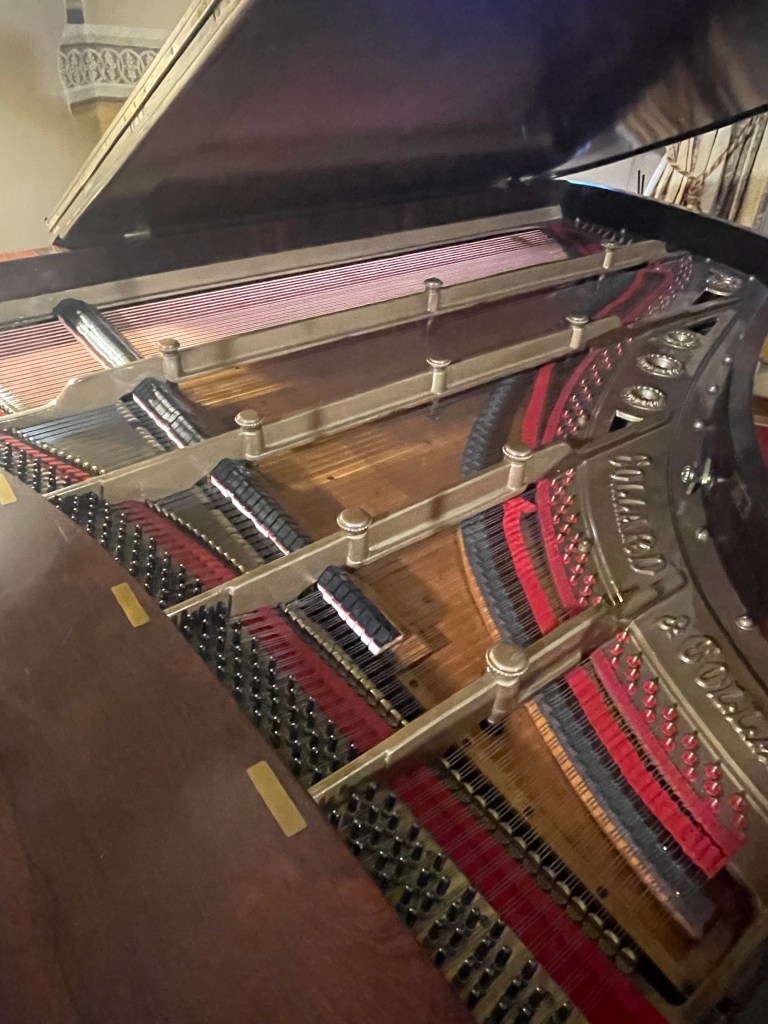
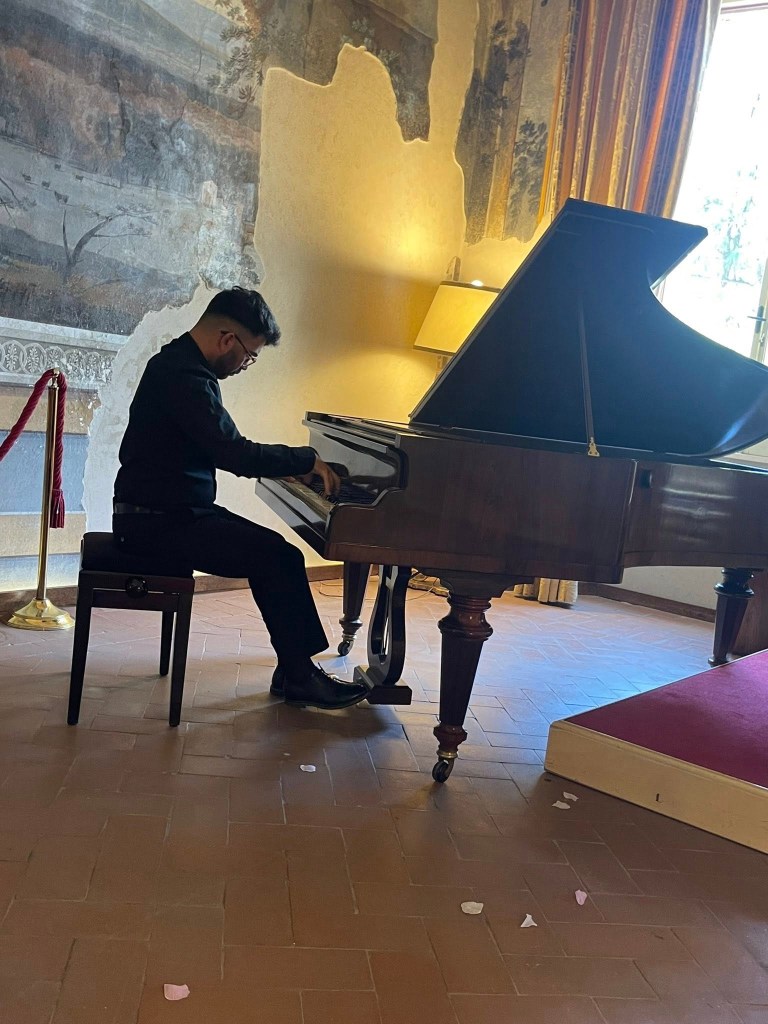
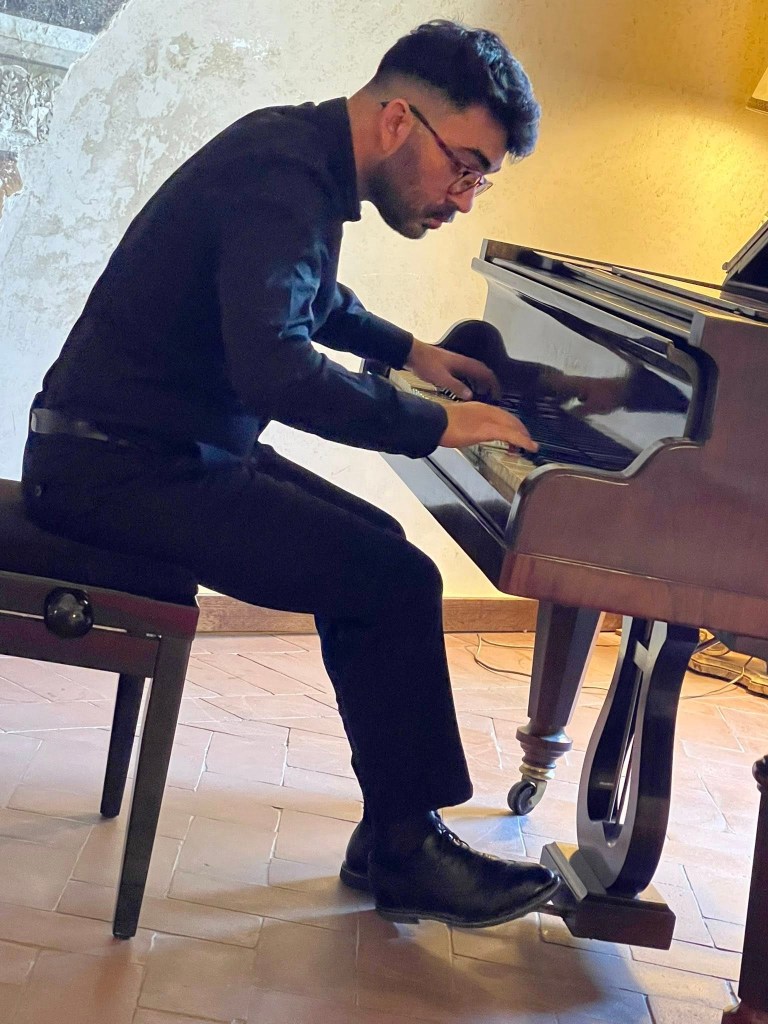
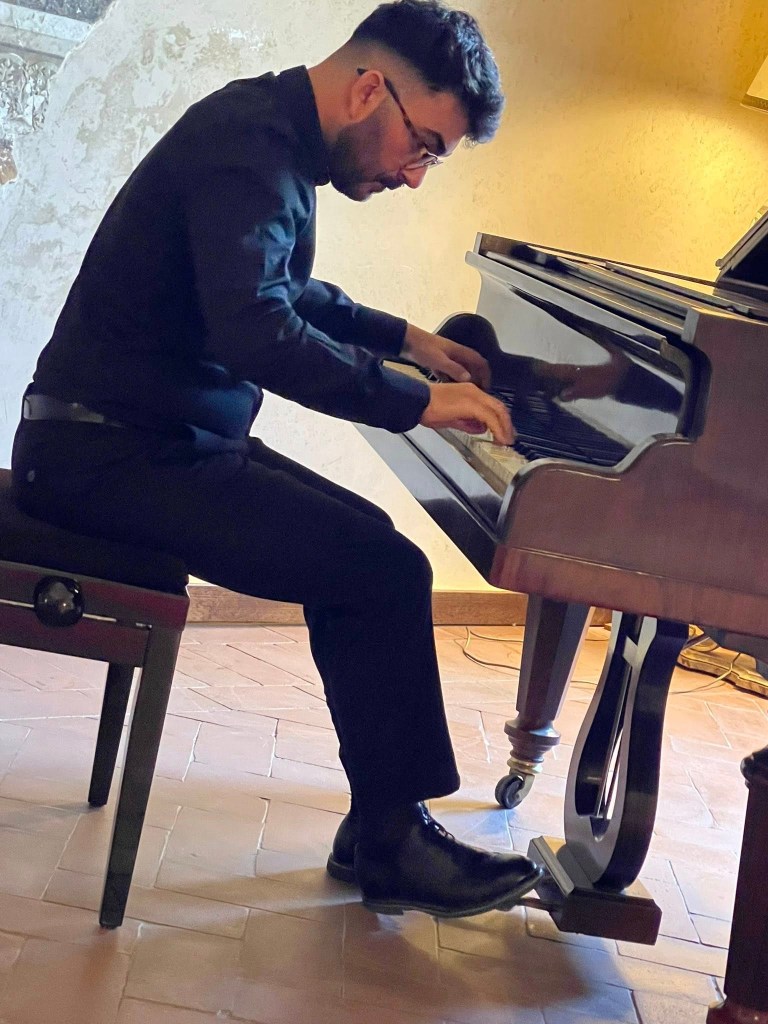
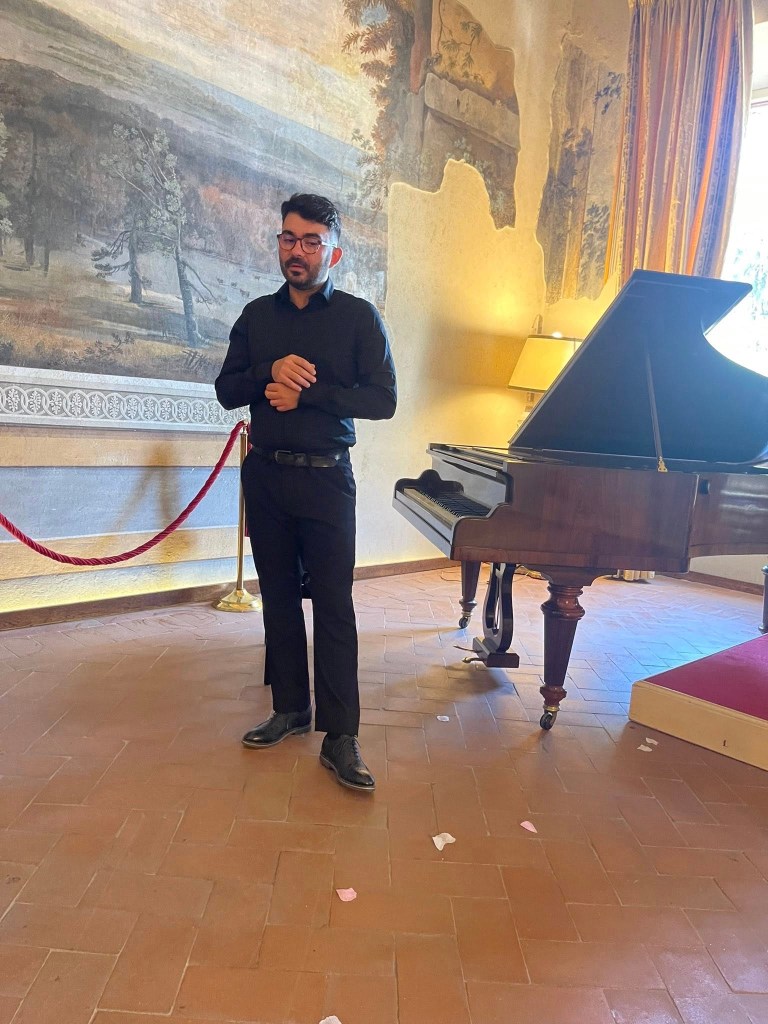
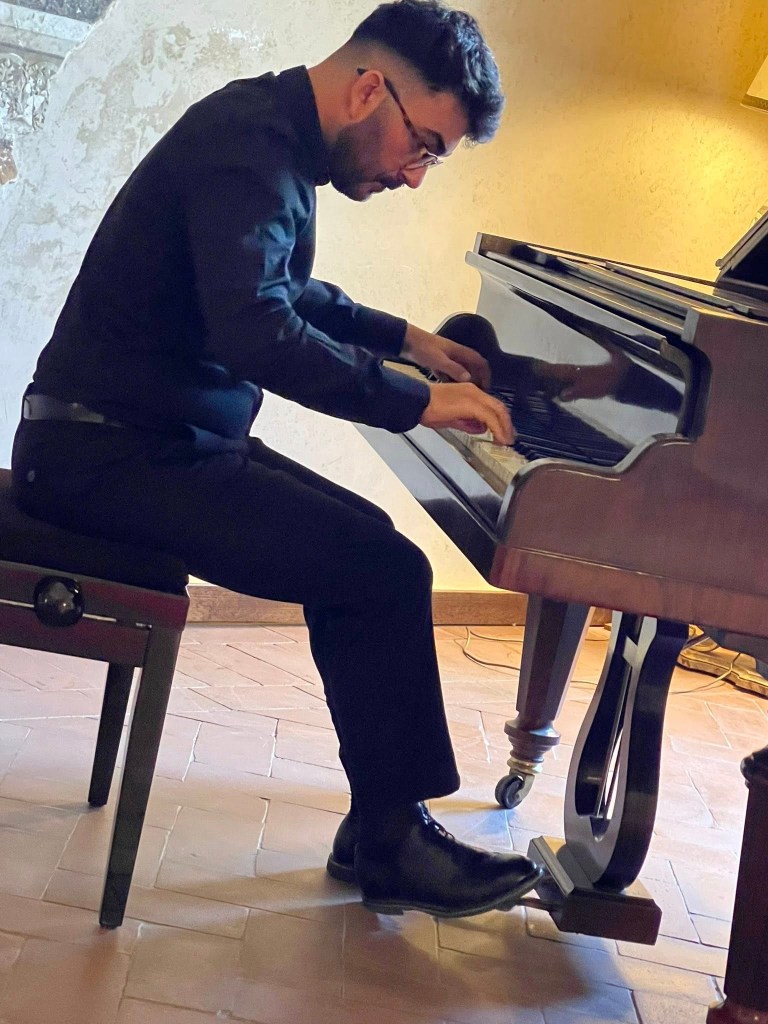
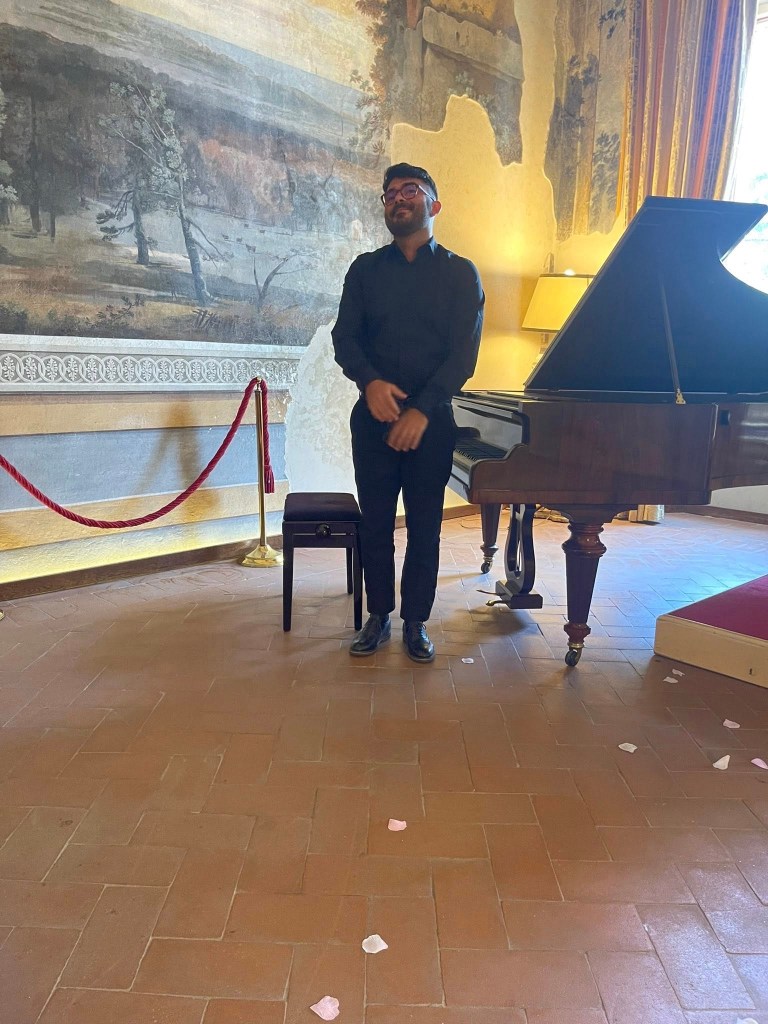
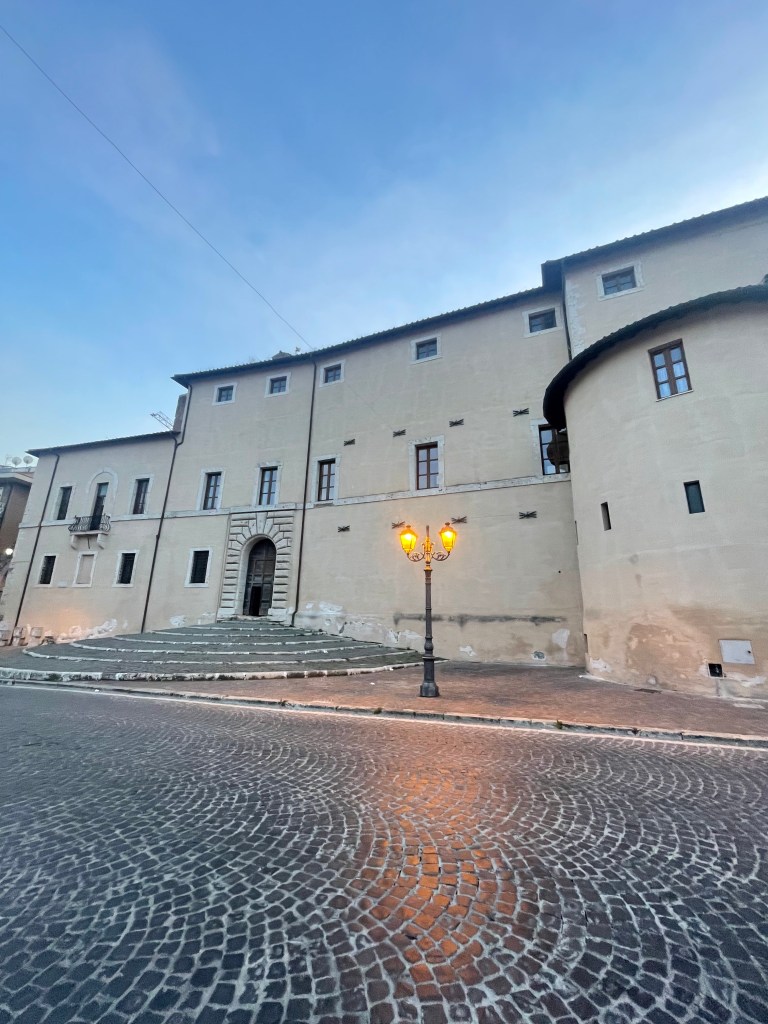
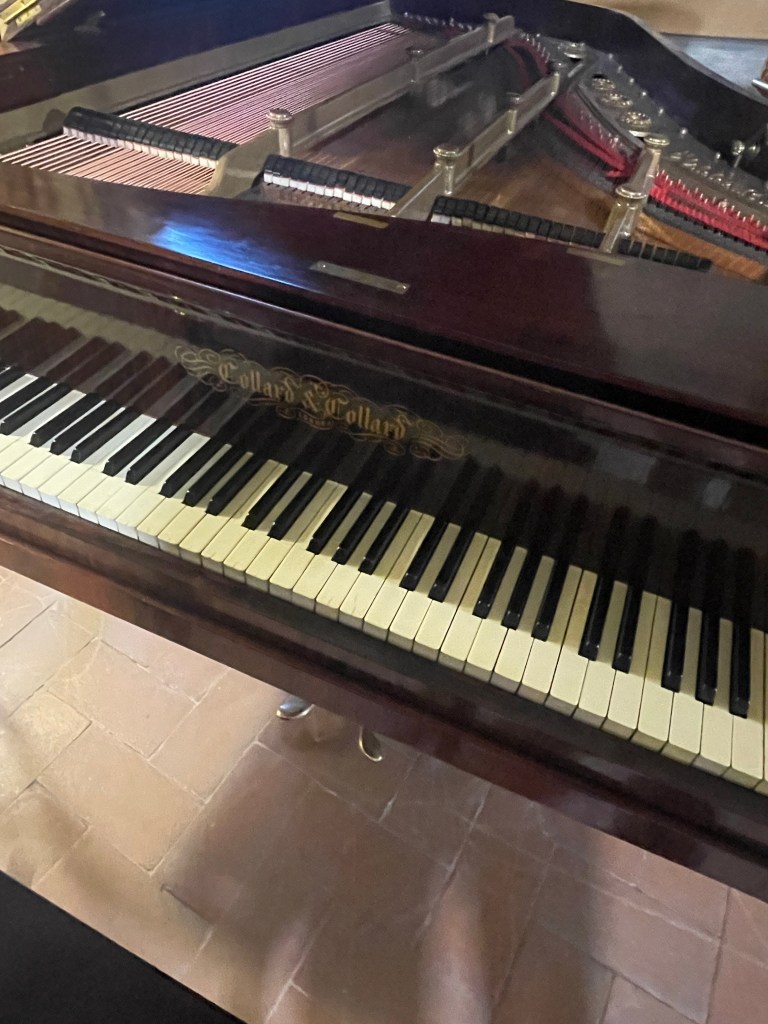
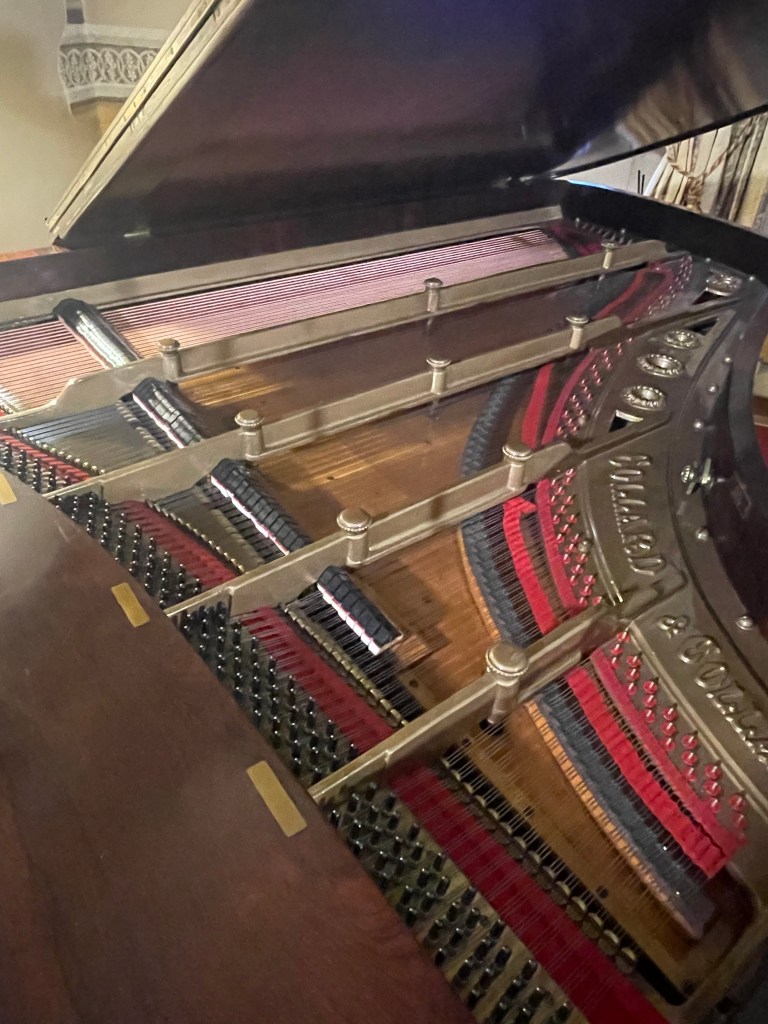
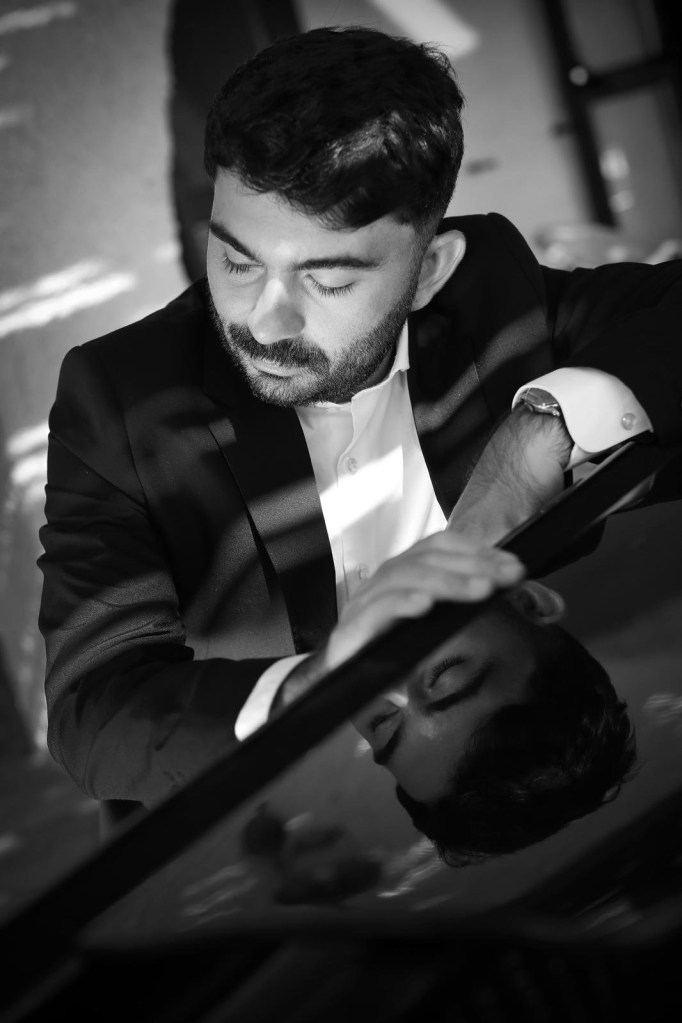
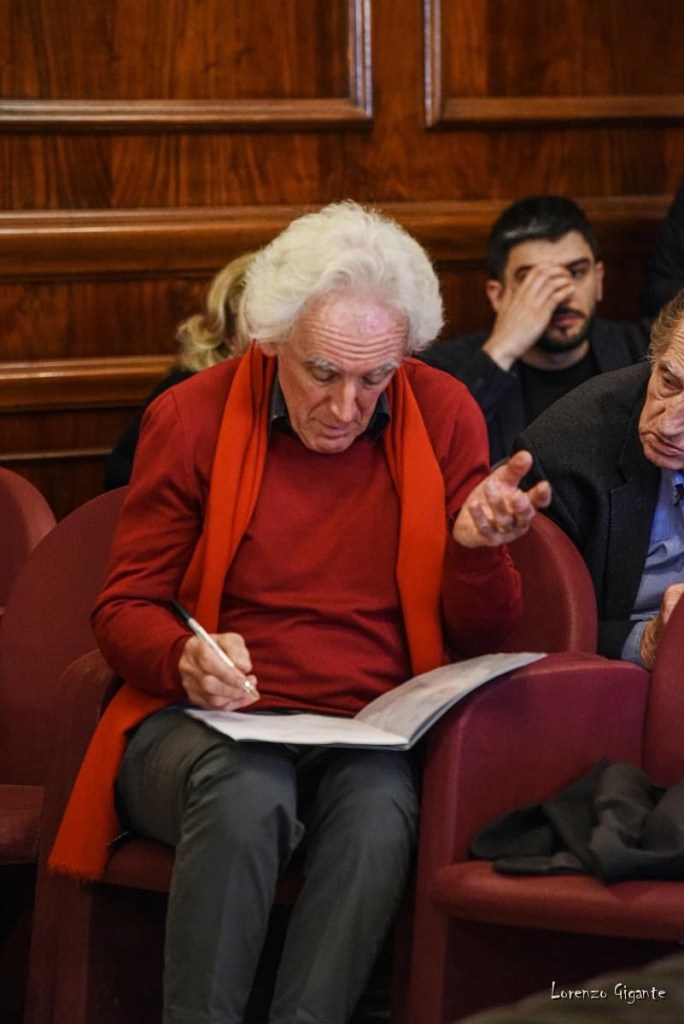
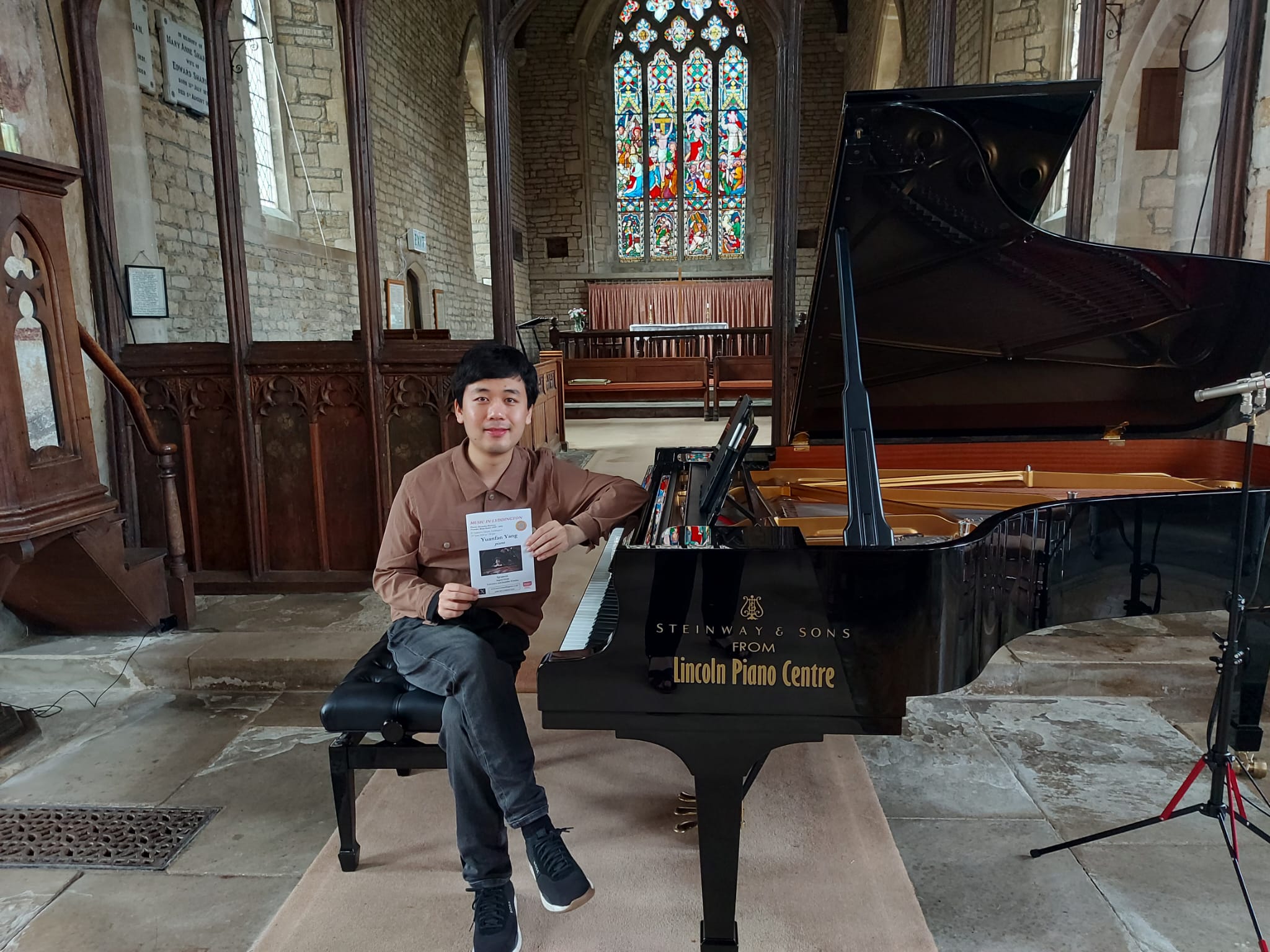
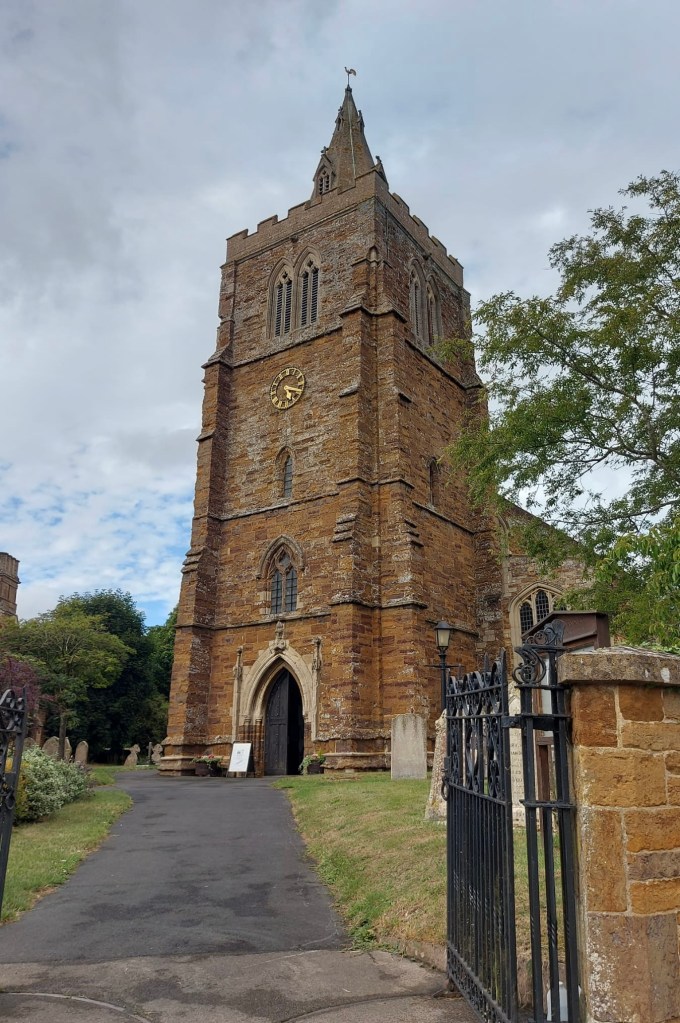
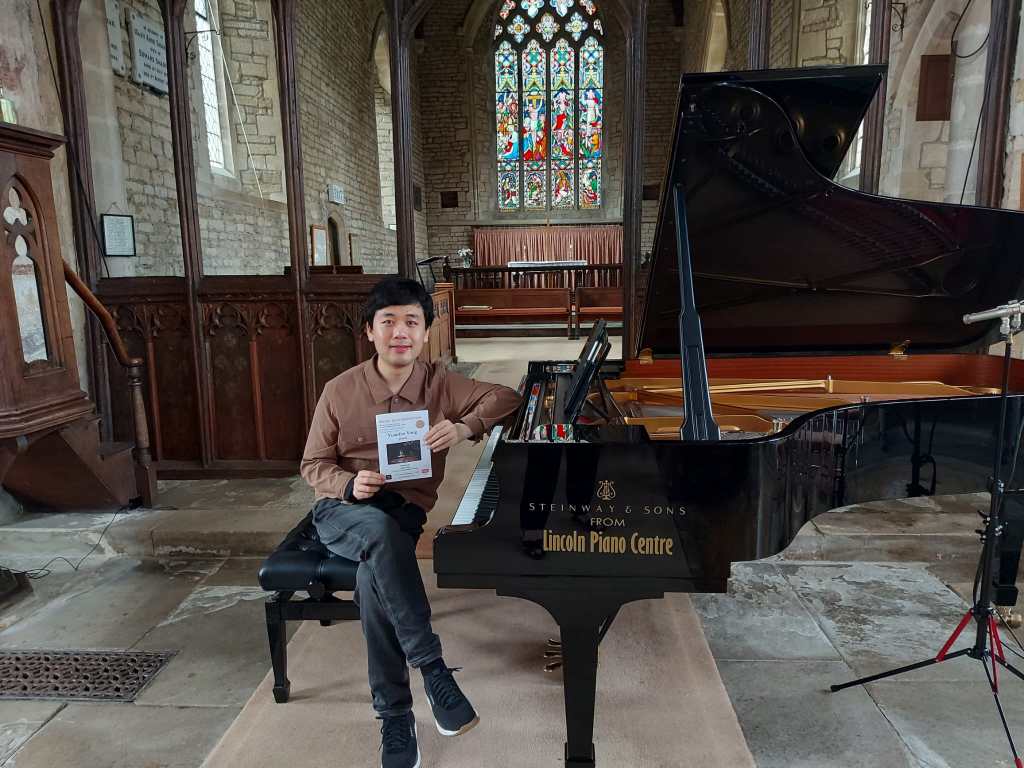
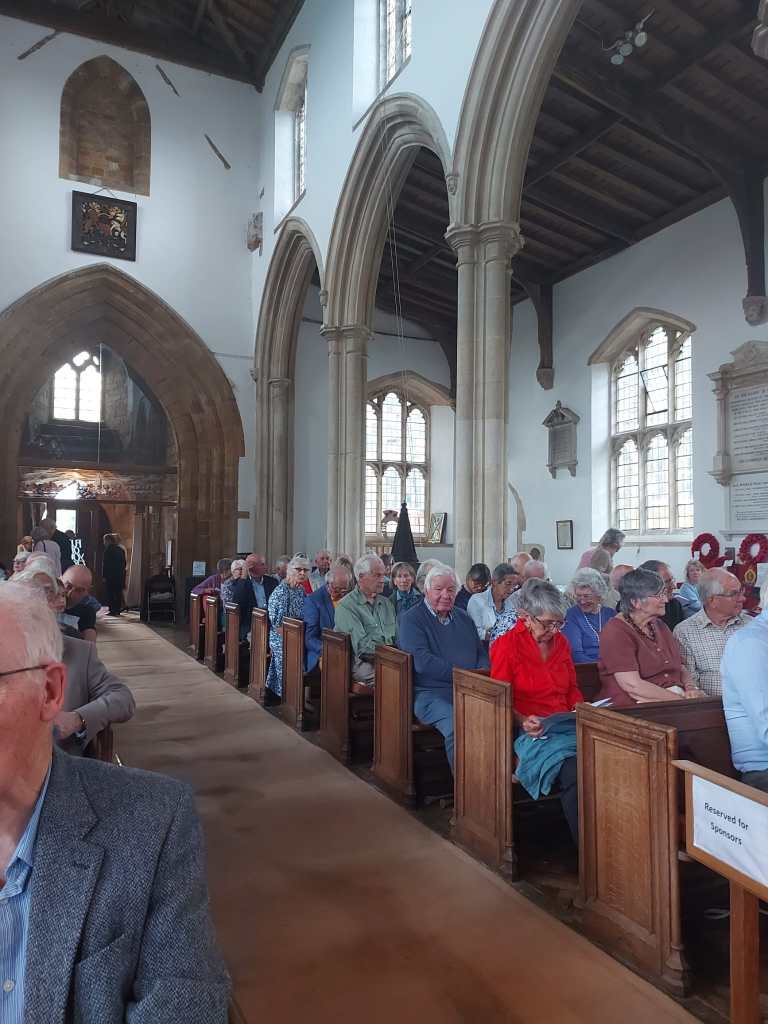
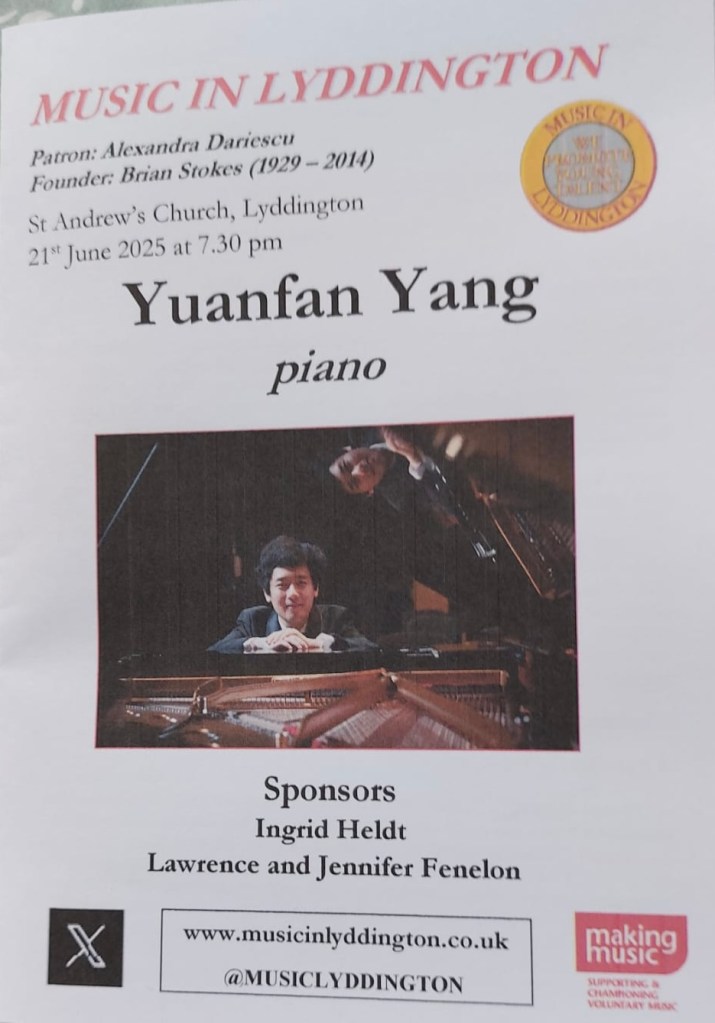
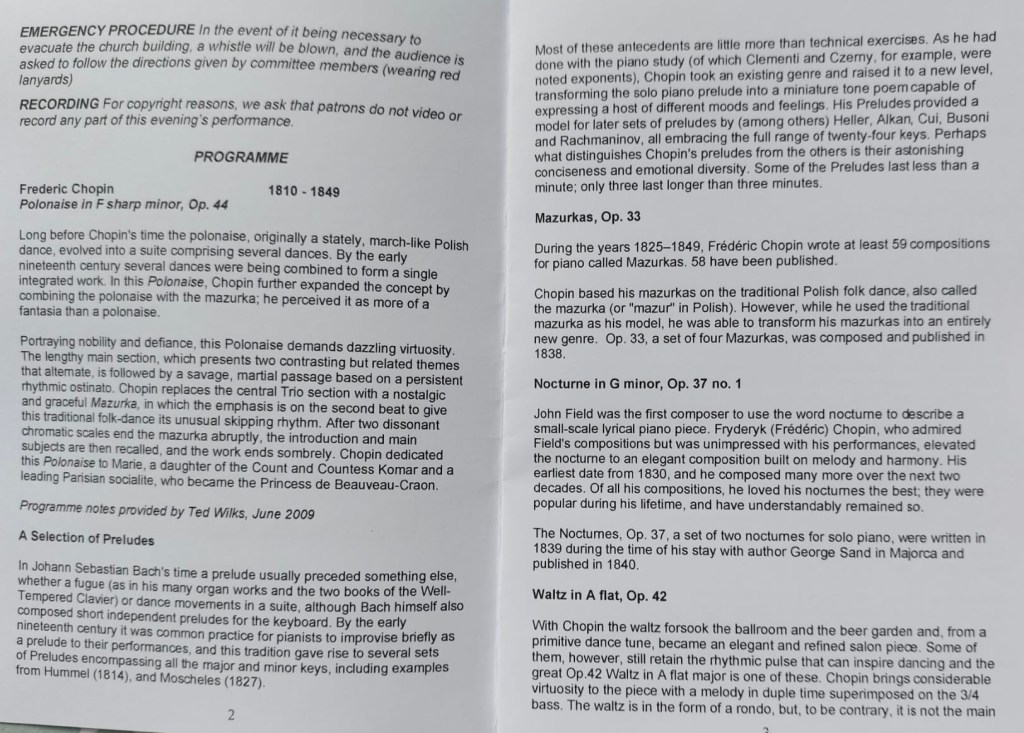
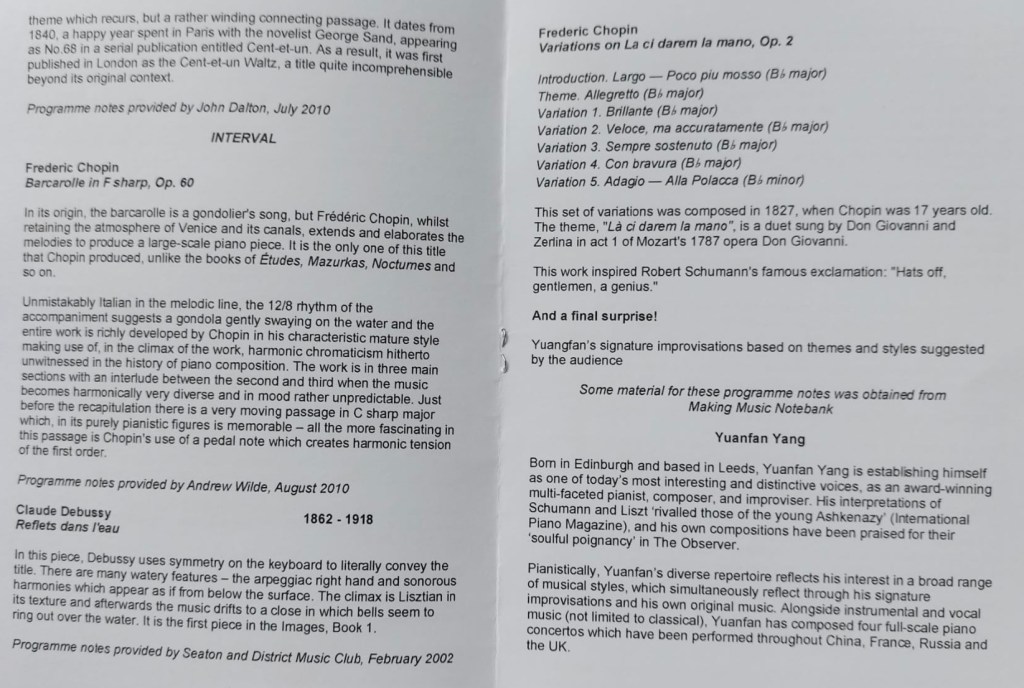
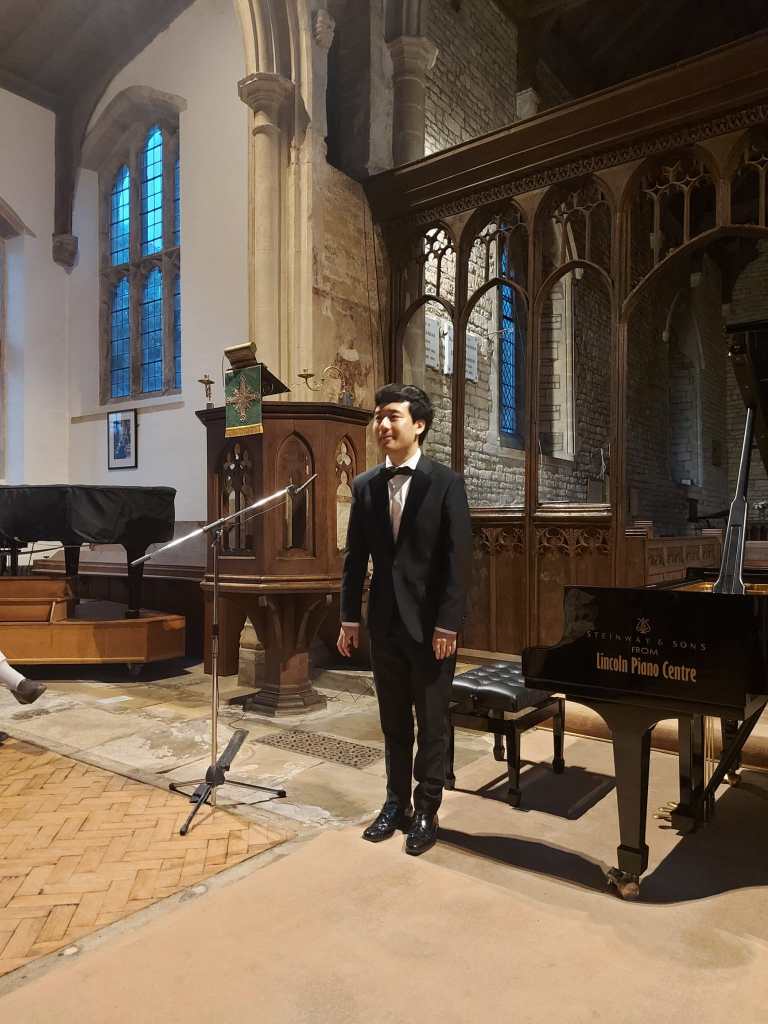
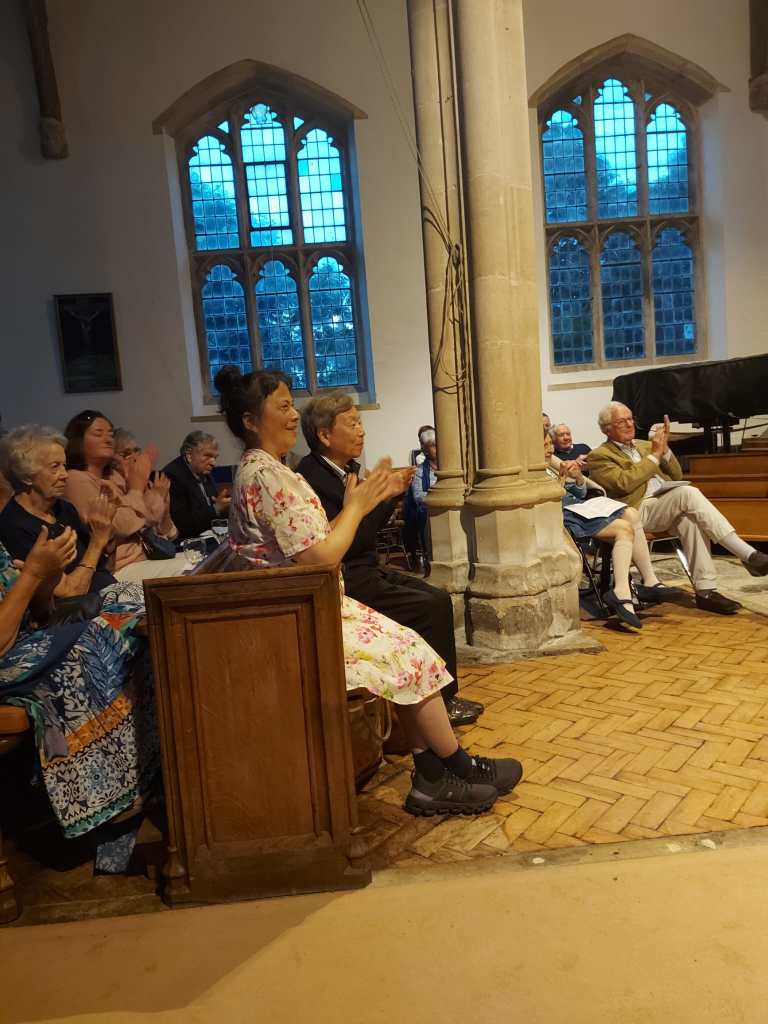
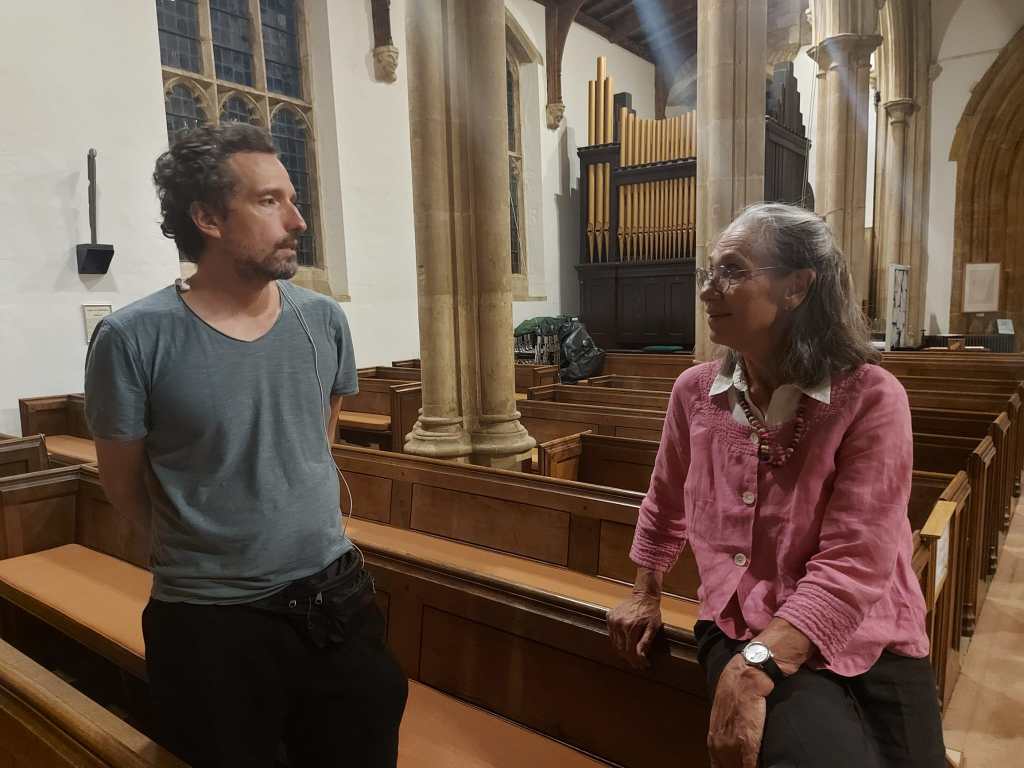
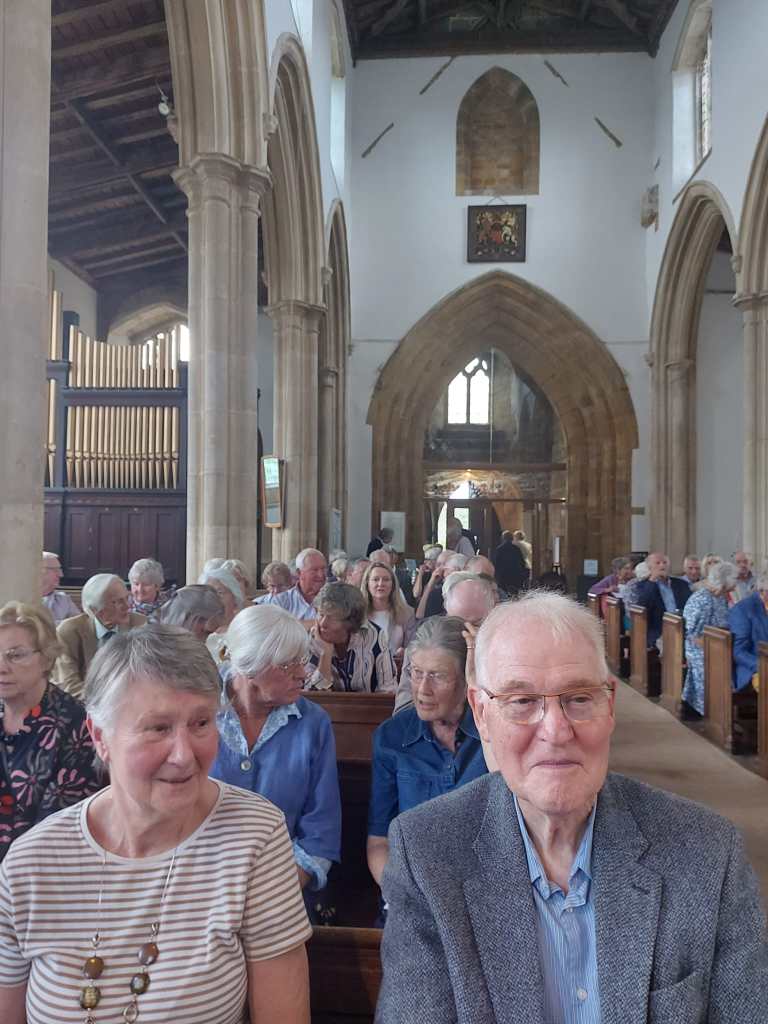
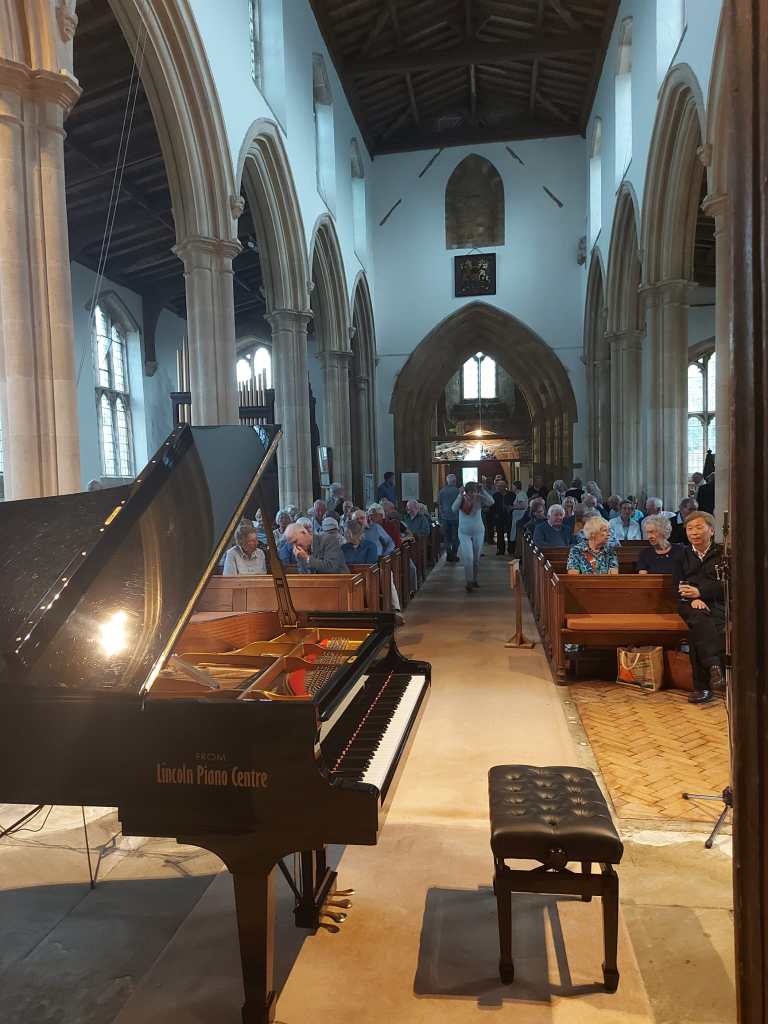
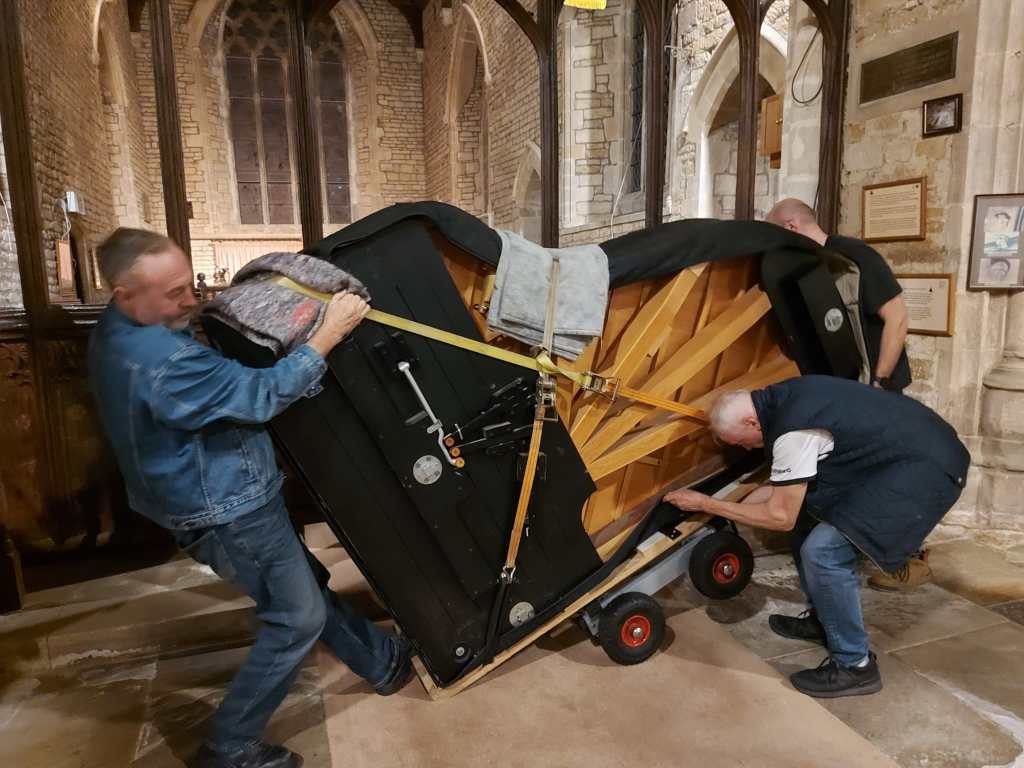
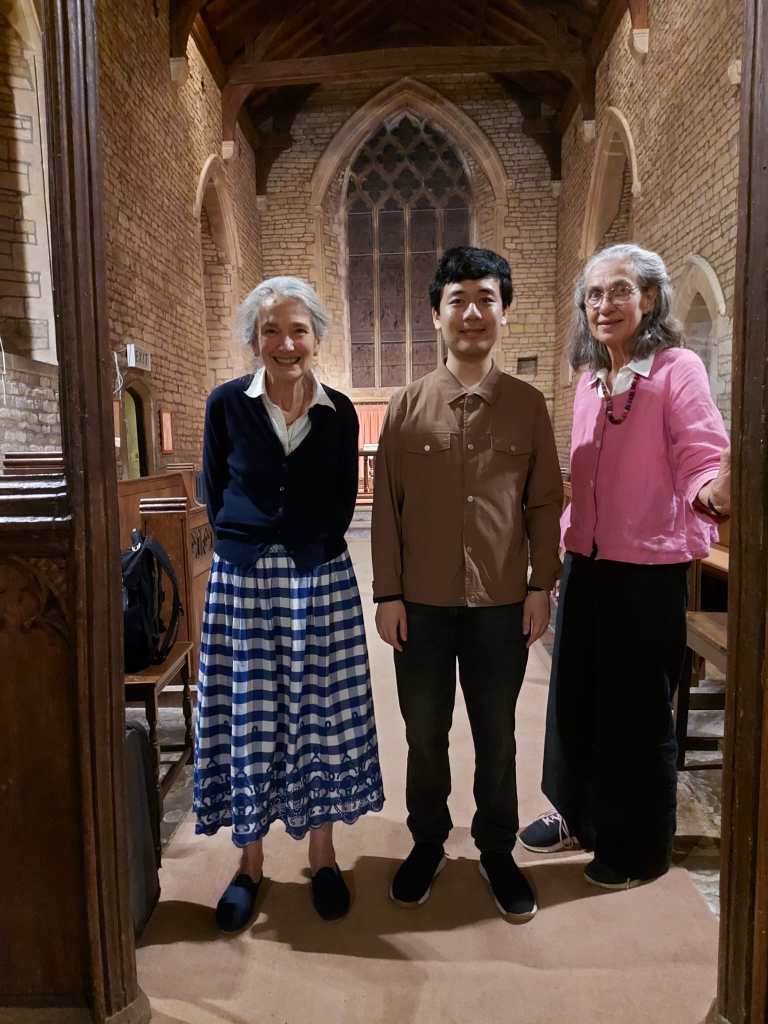
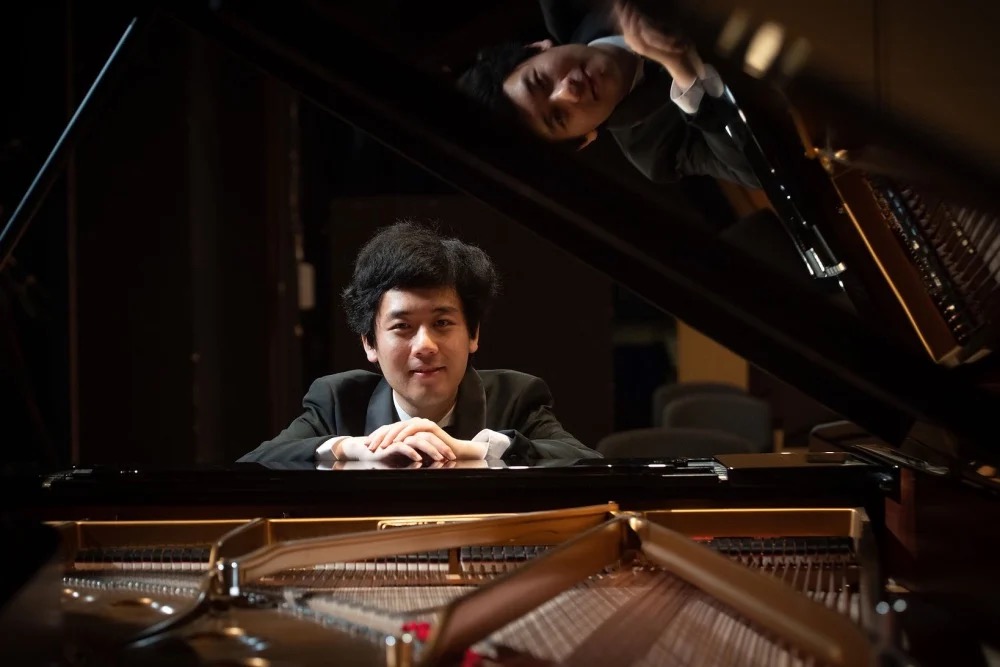
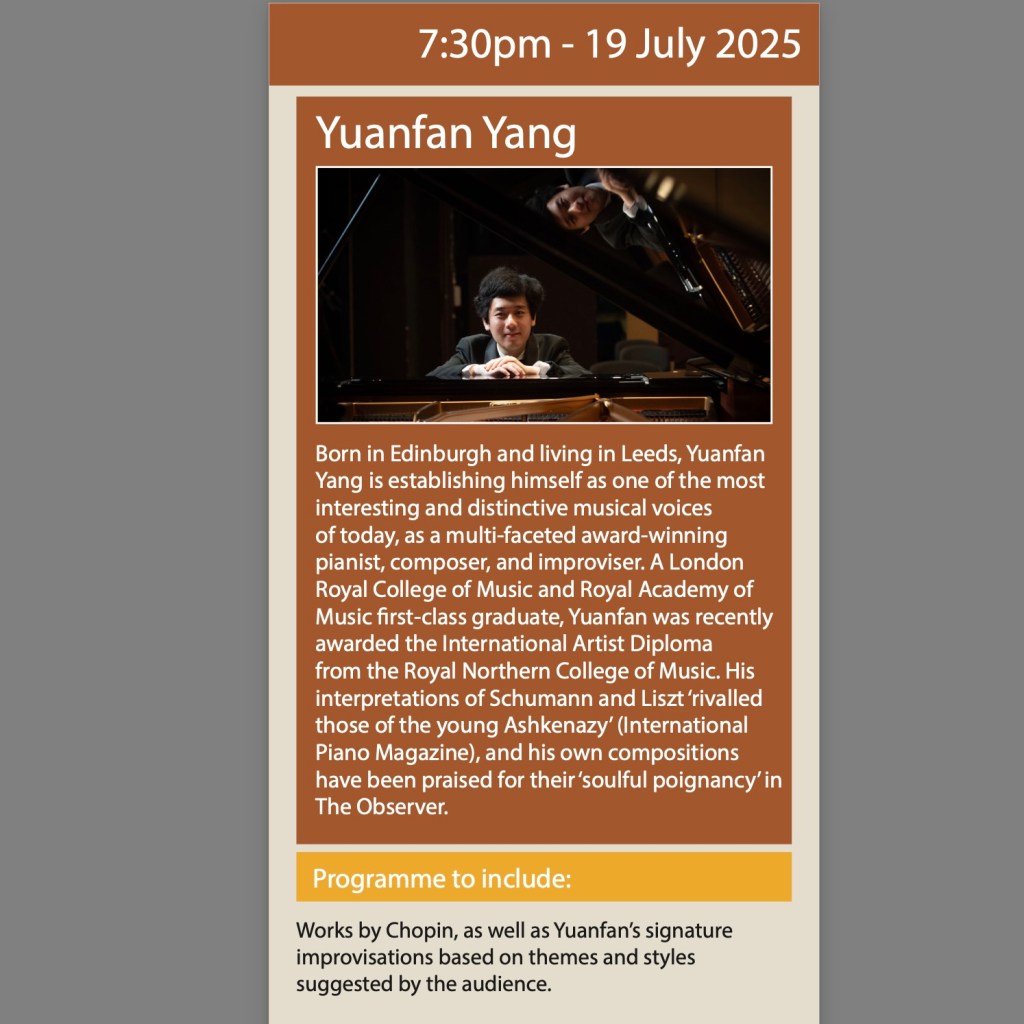

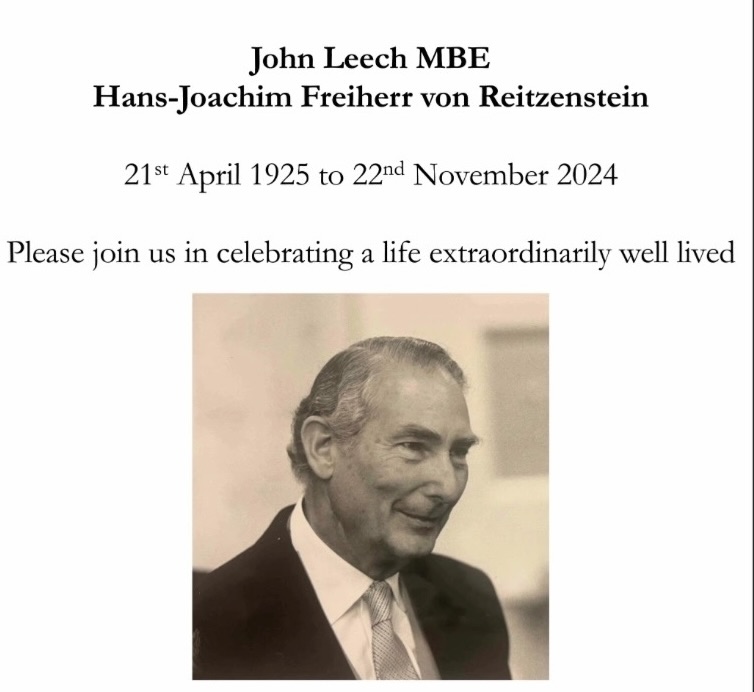
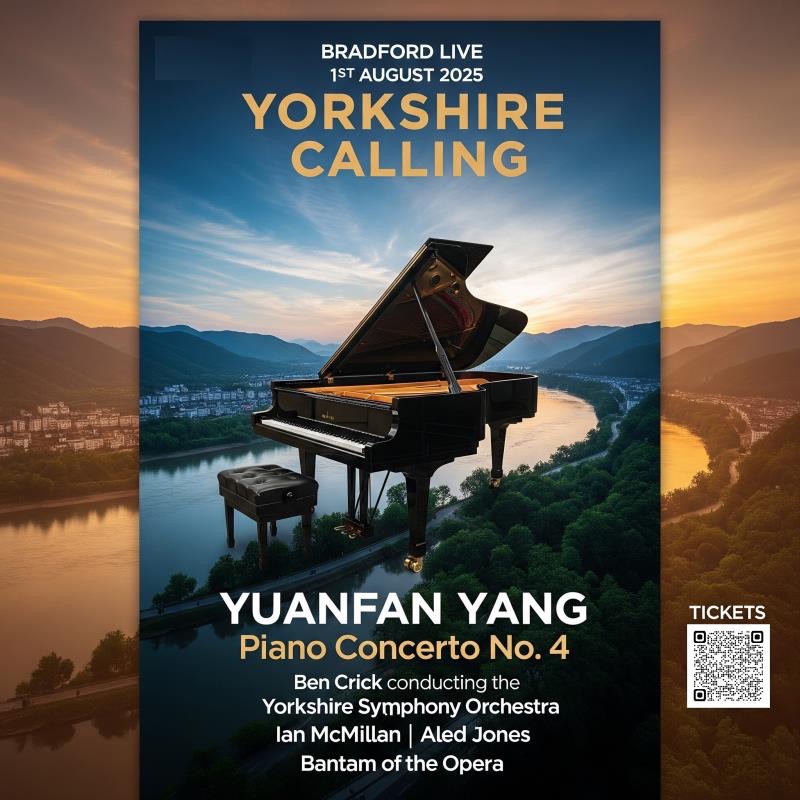
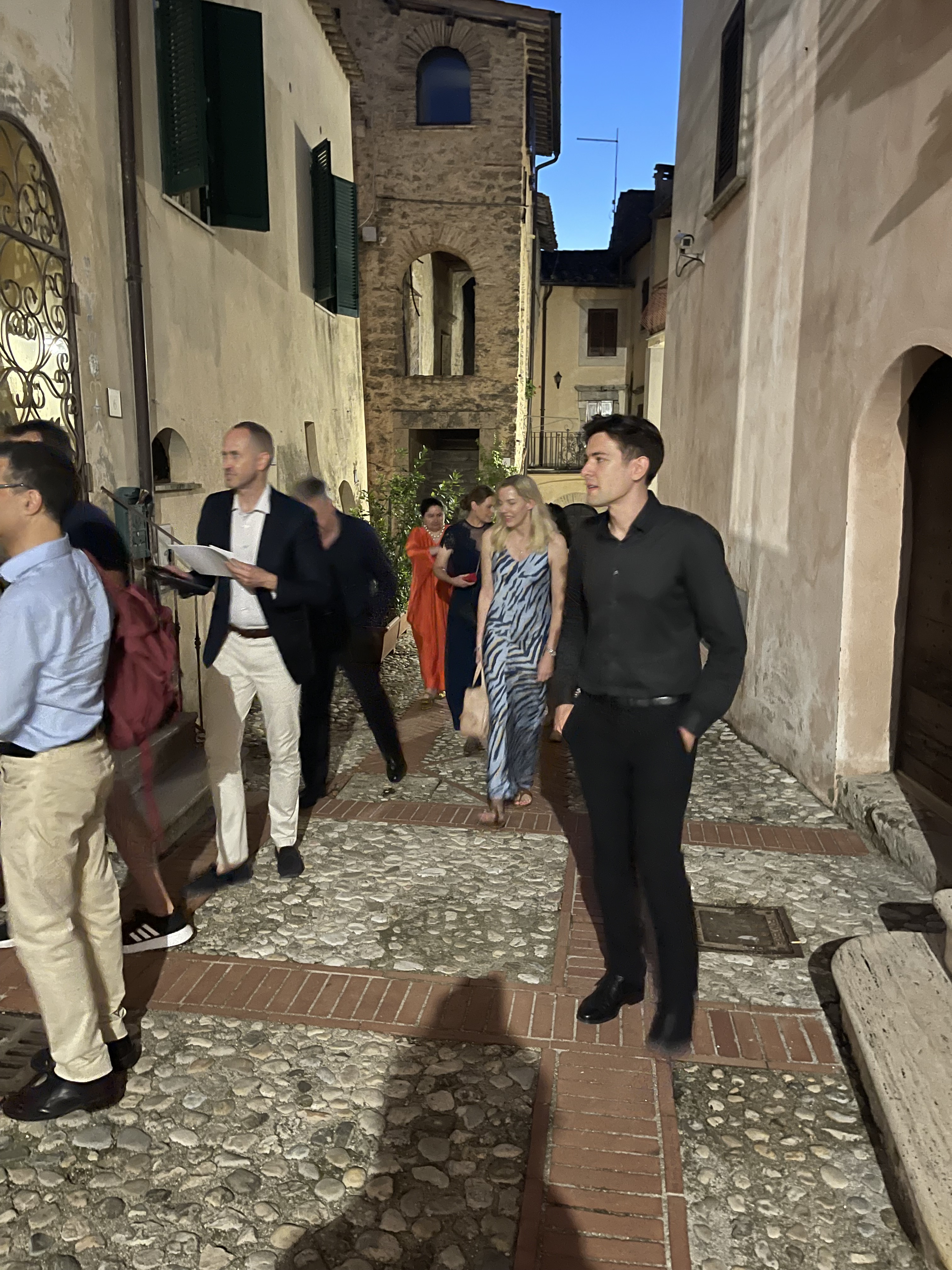
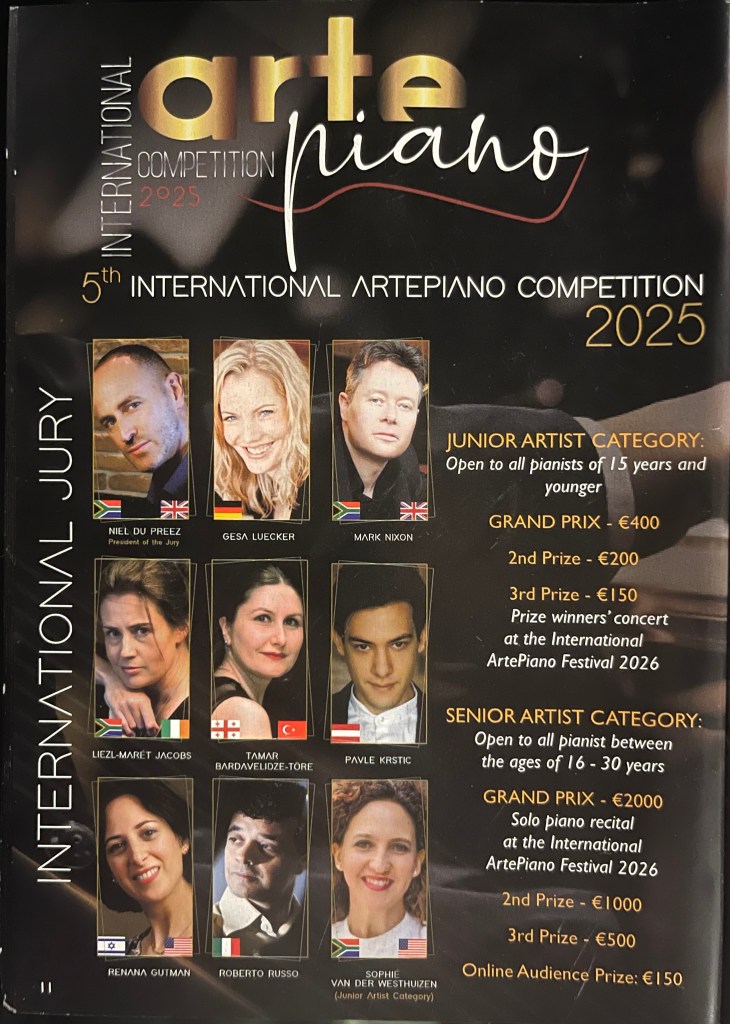
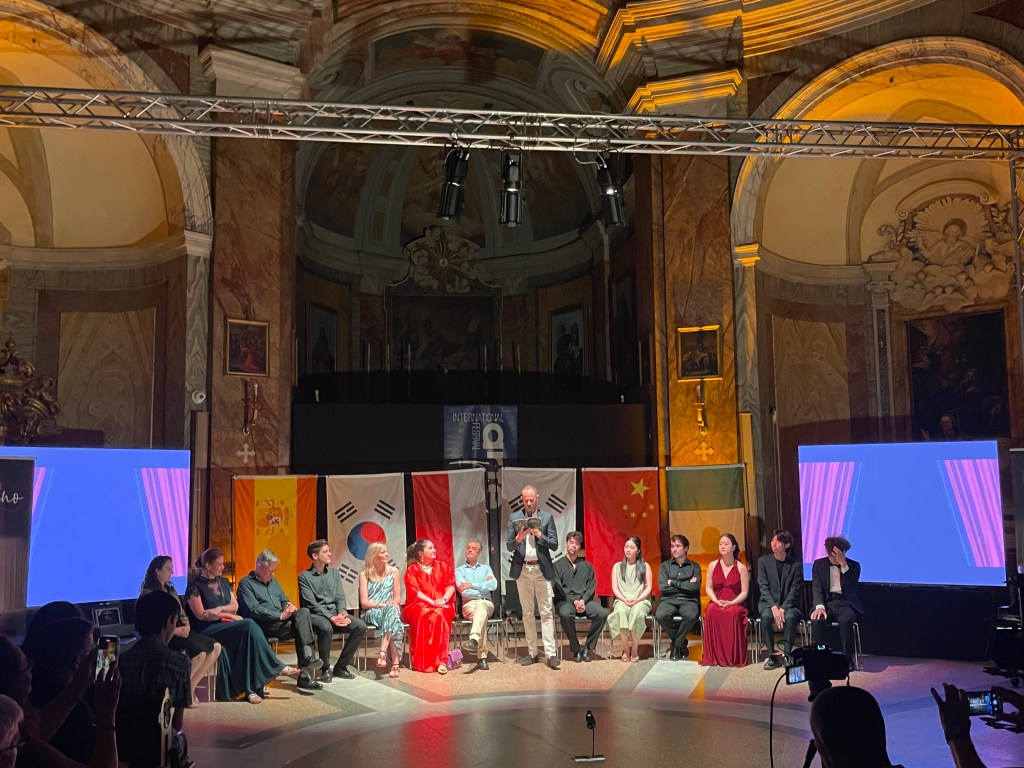
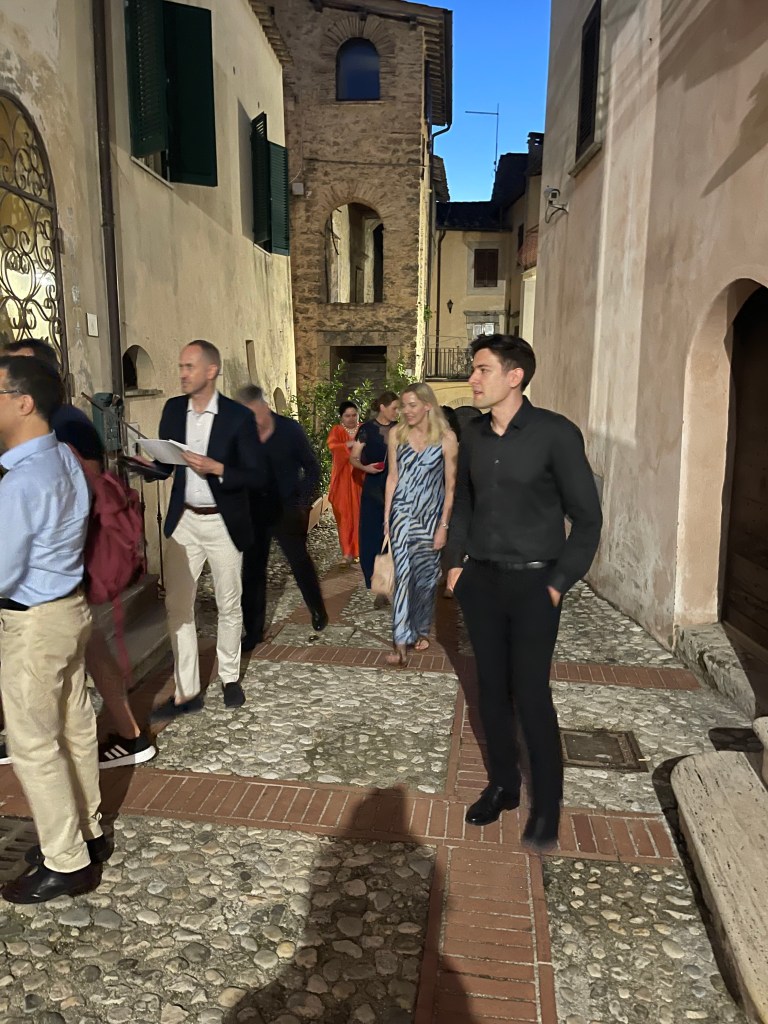
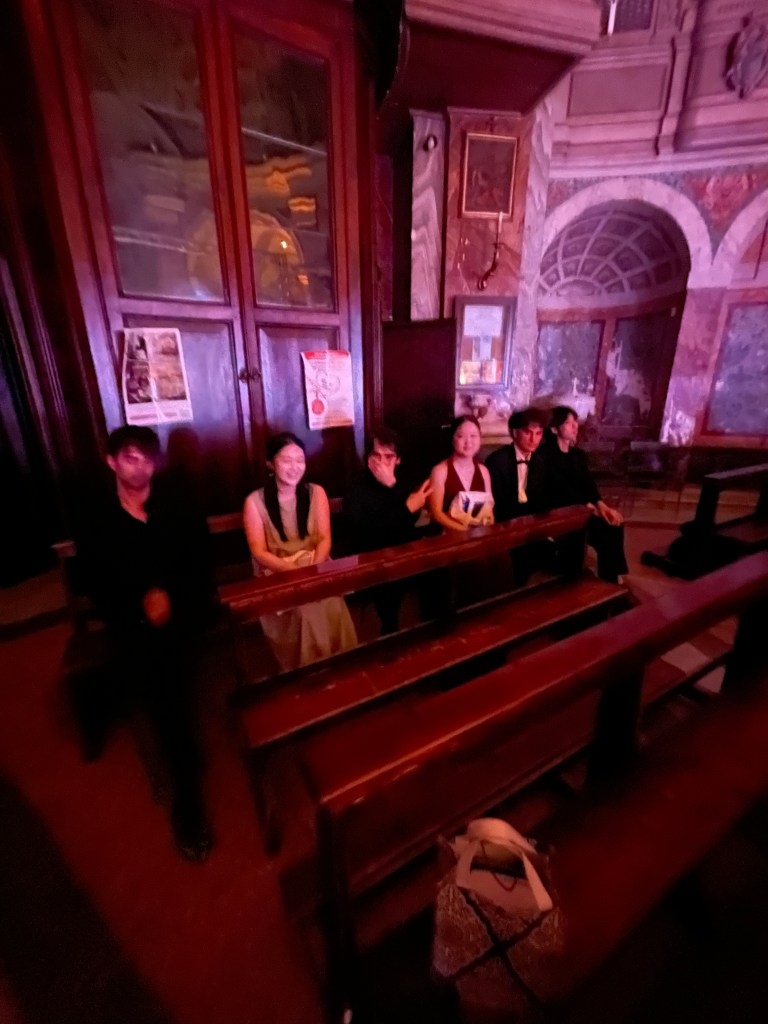
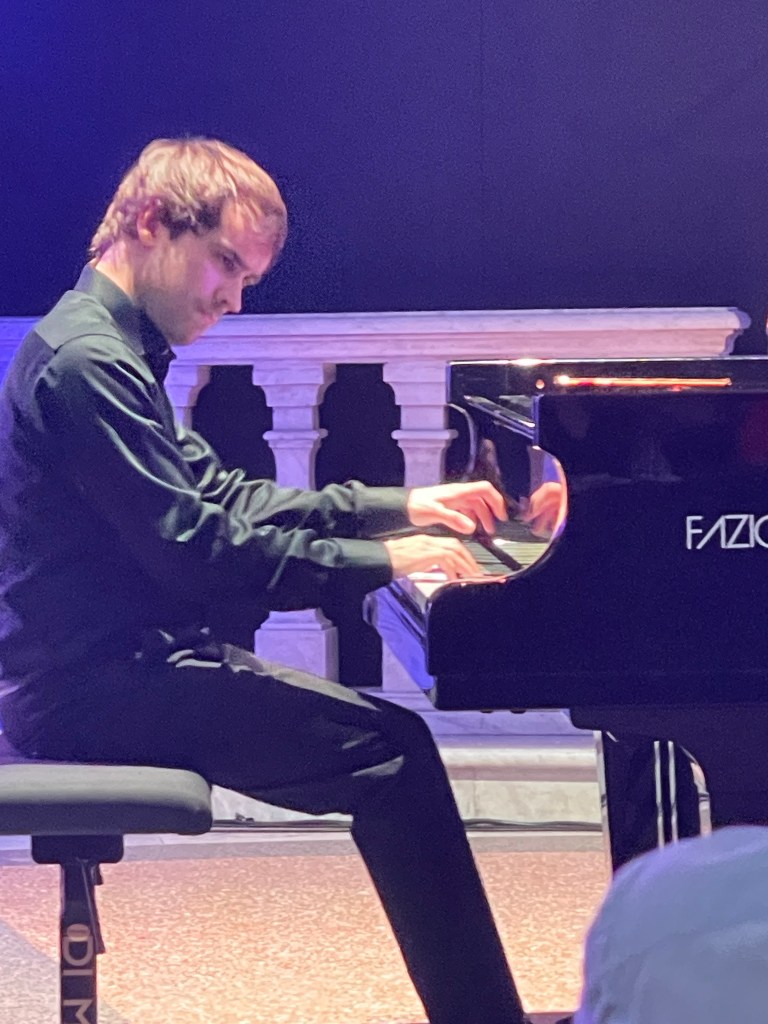
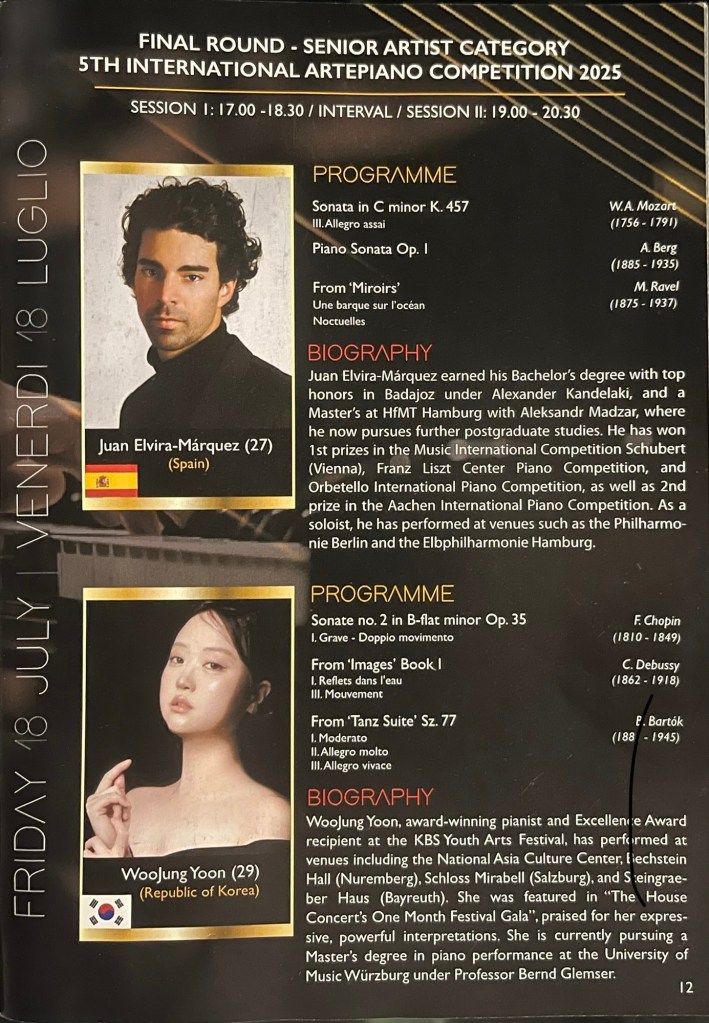
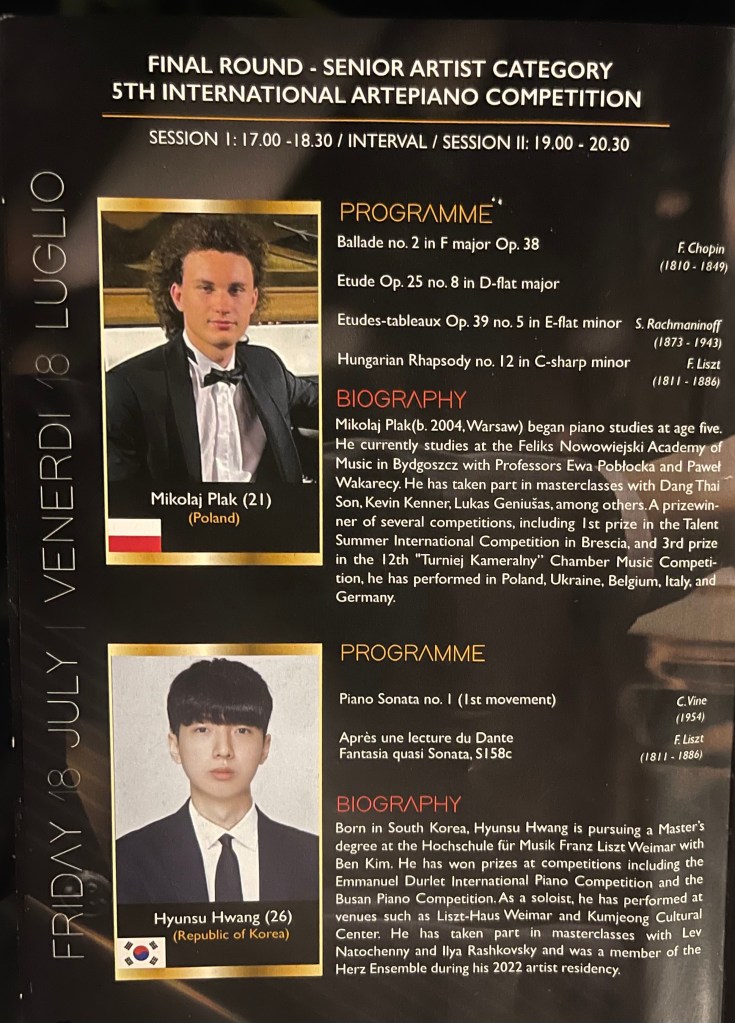
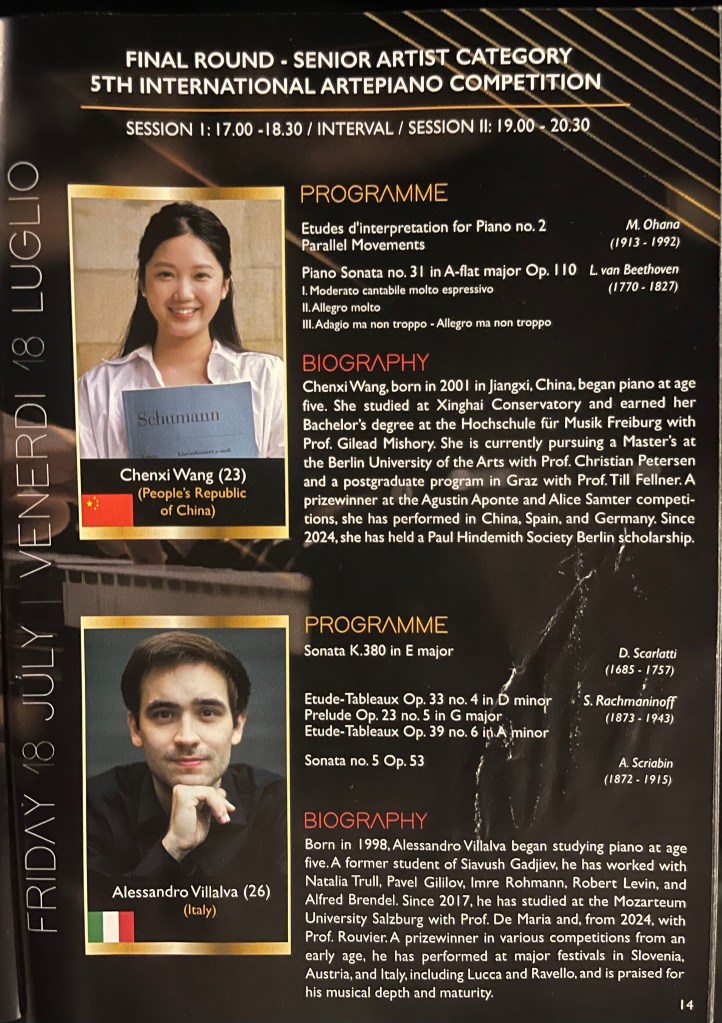
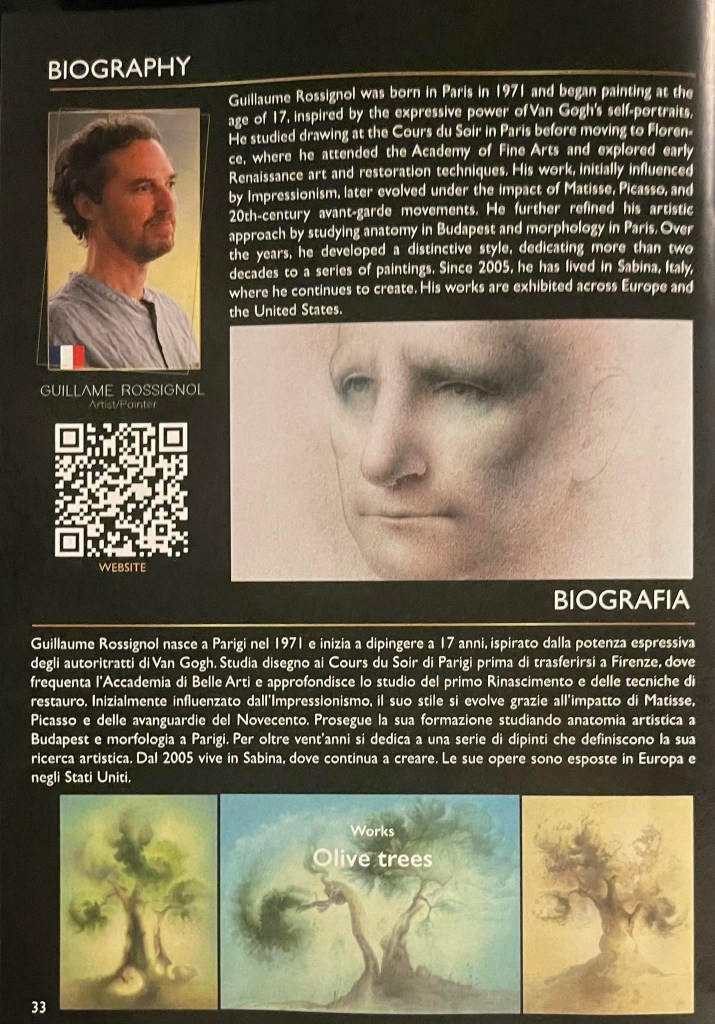
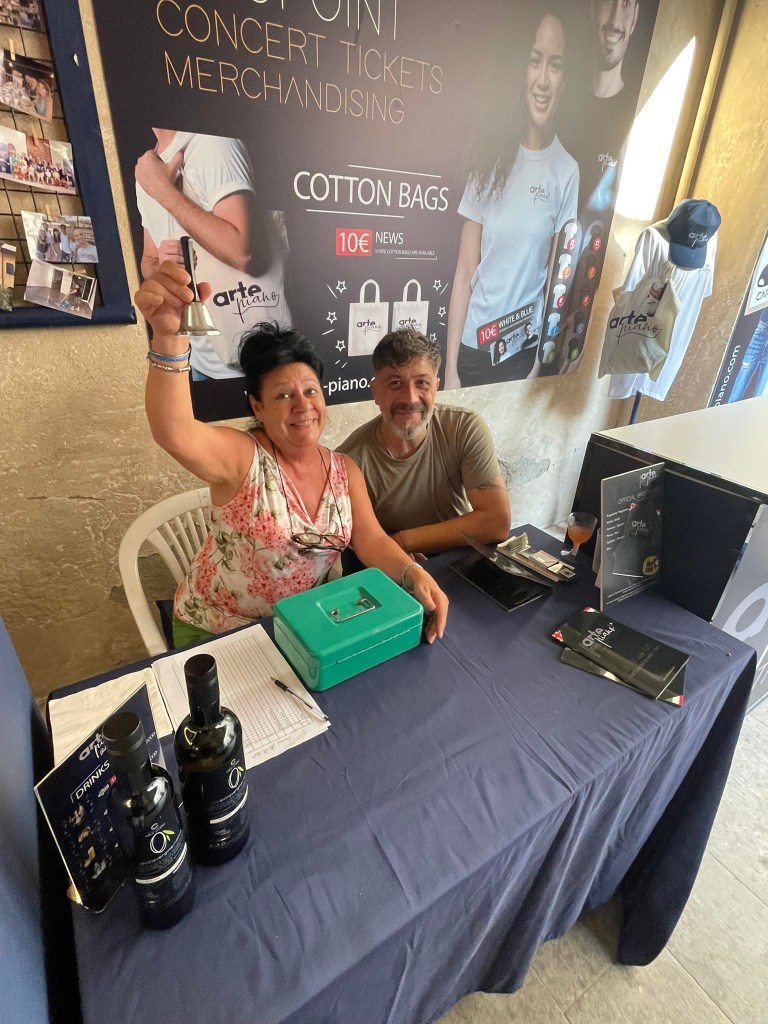
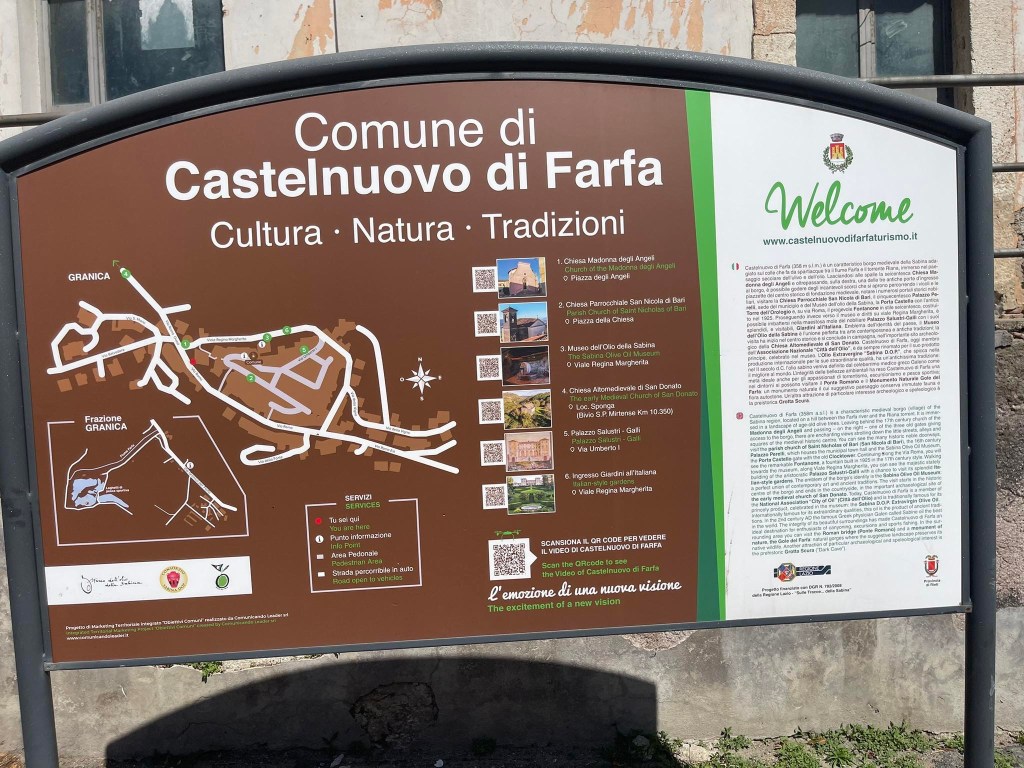
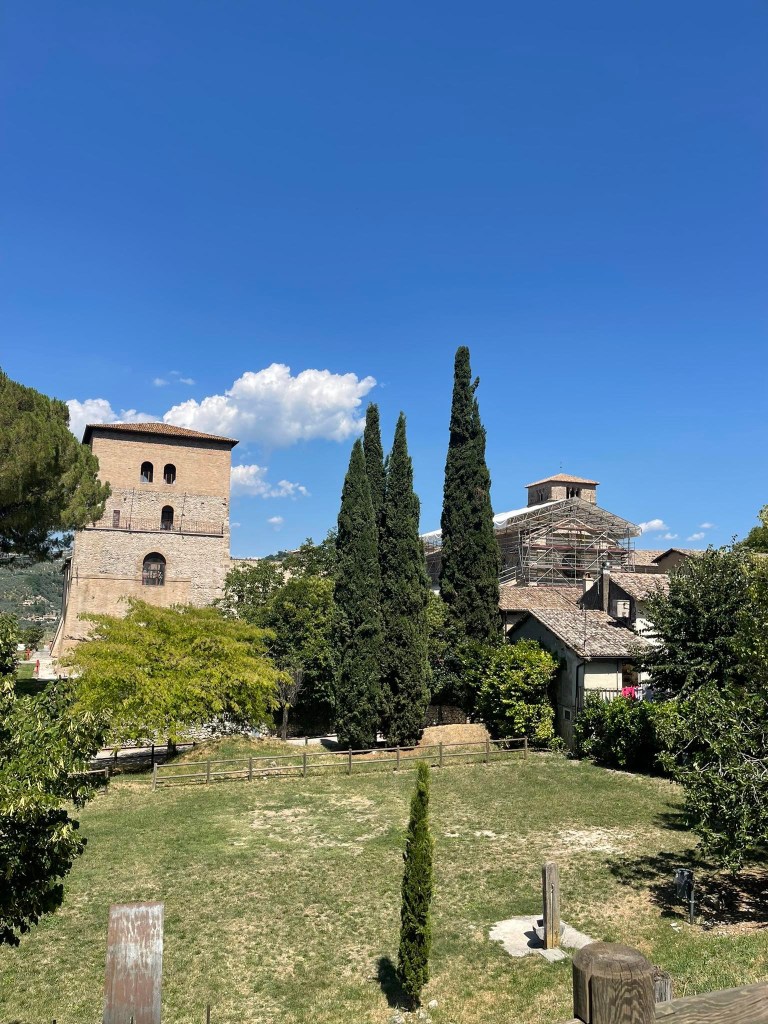
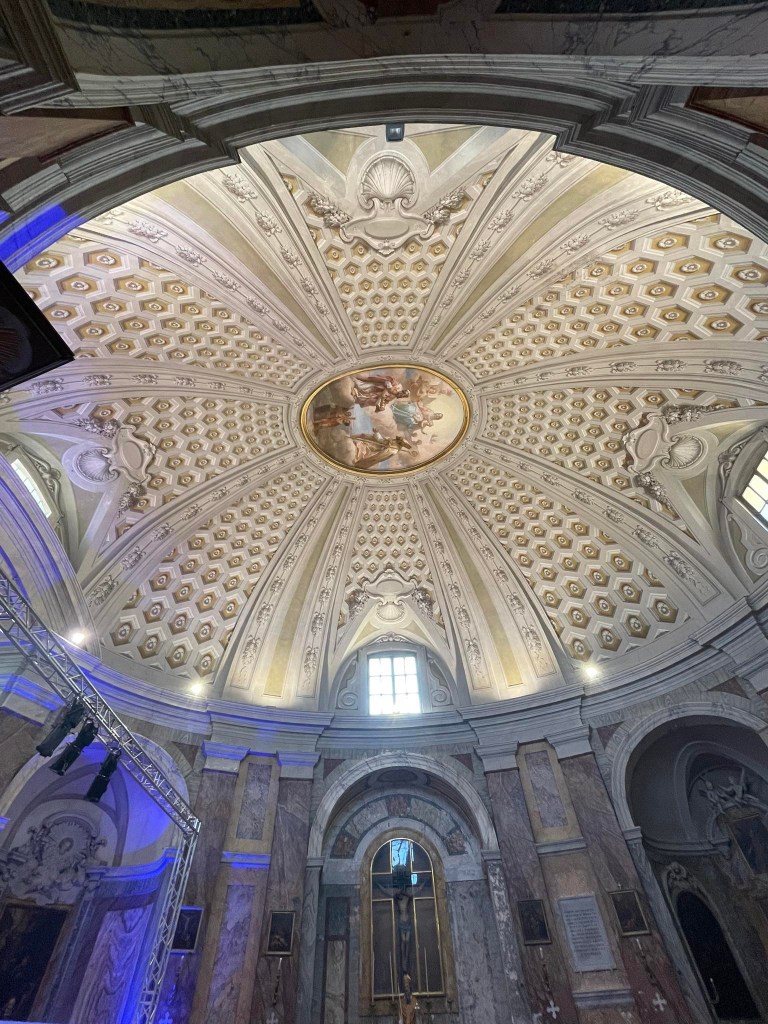
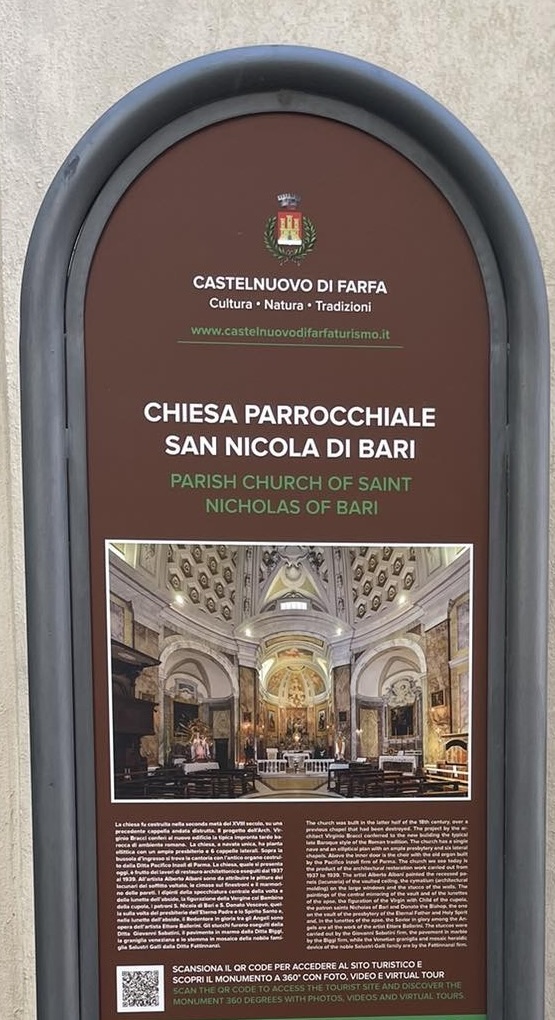
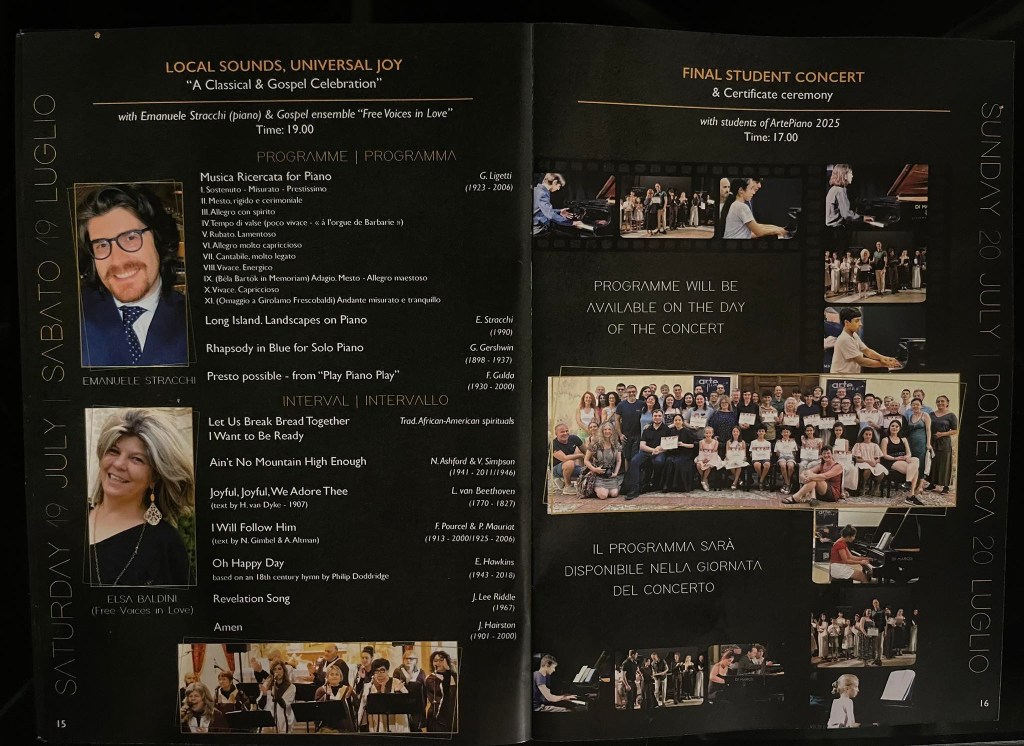
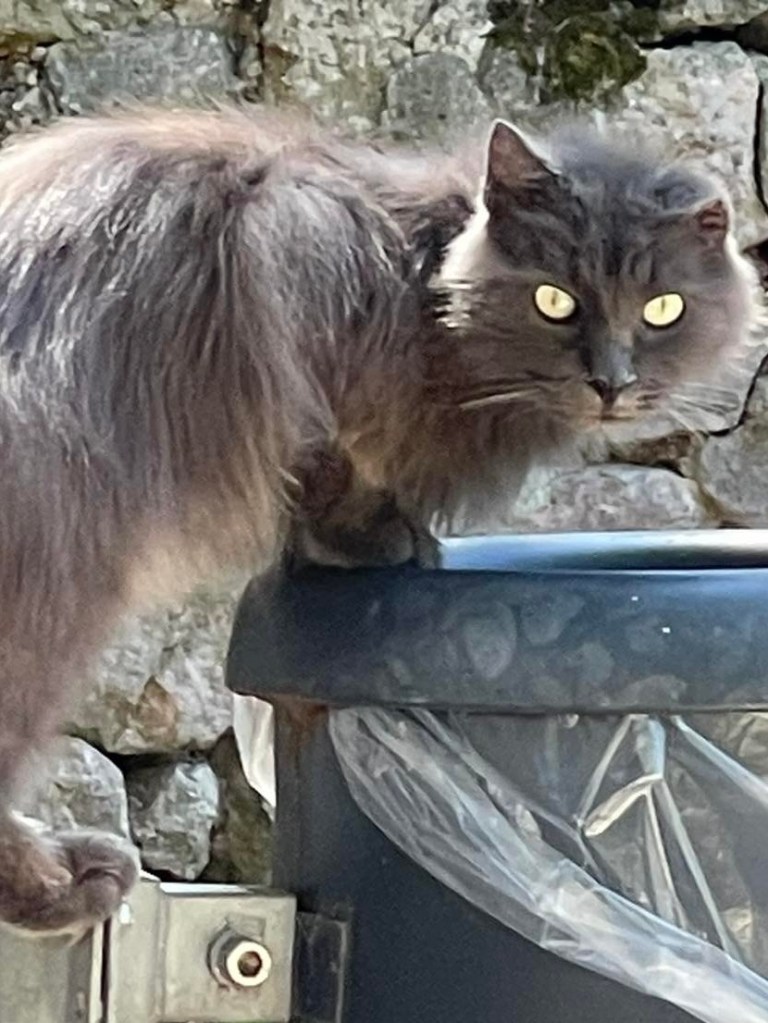
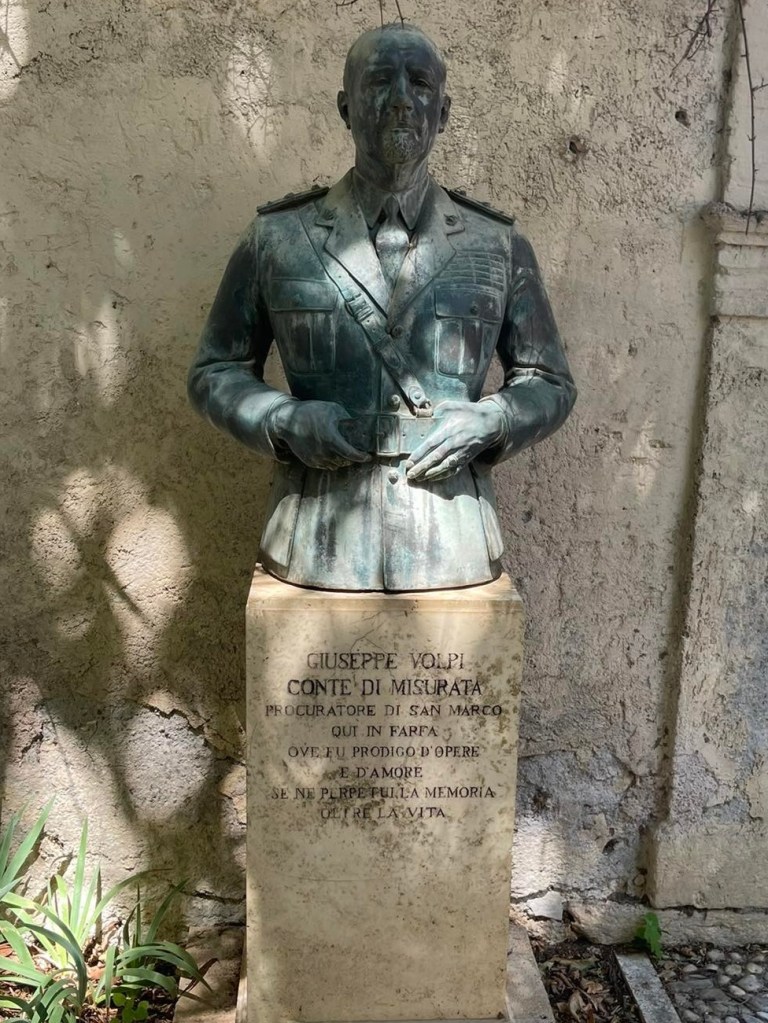

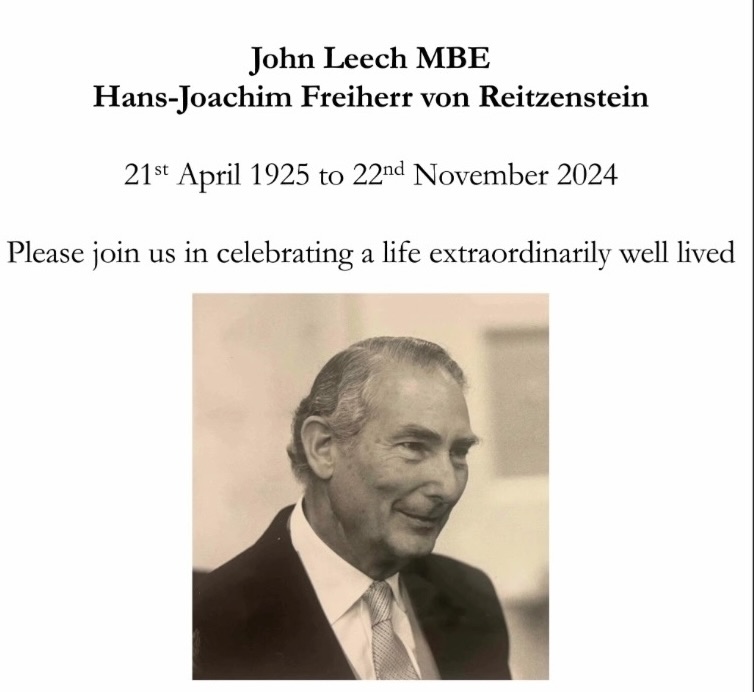
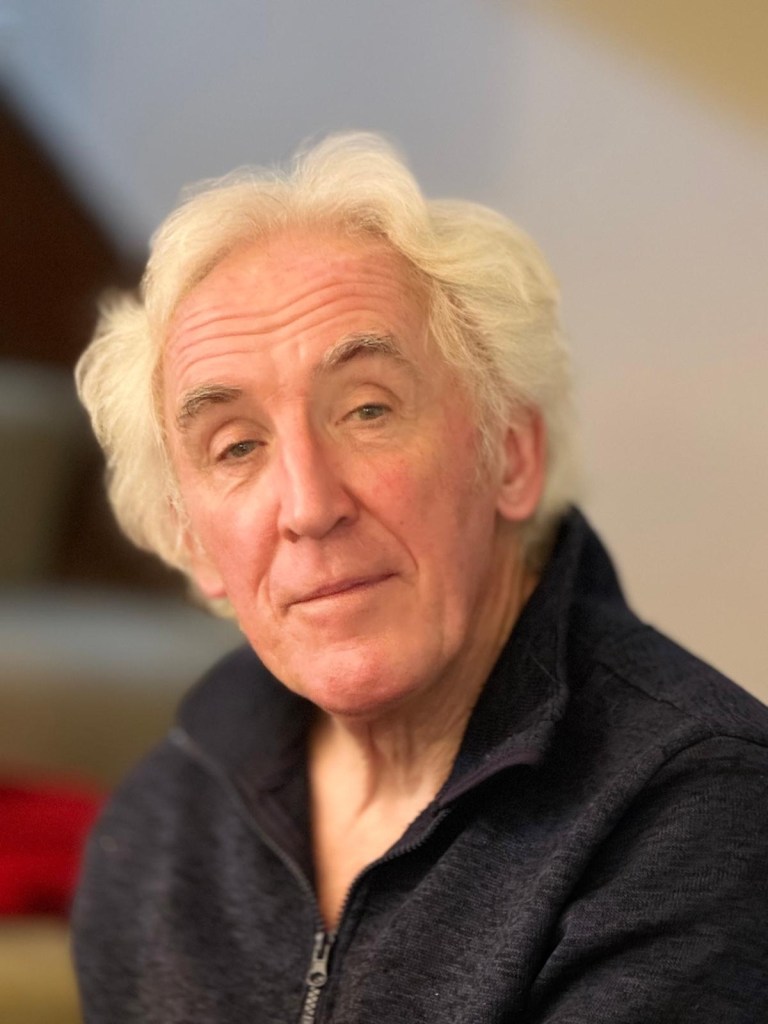
 ChristopherAxworthy-MusicCommentary