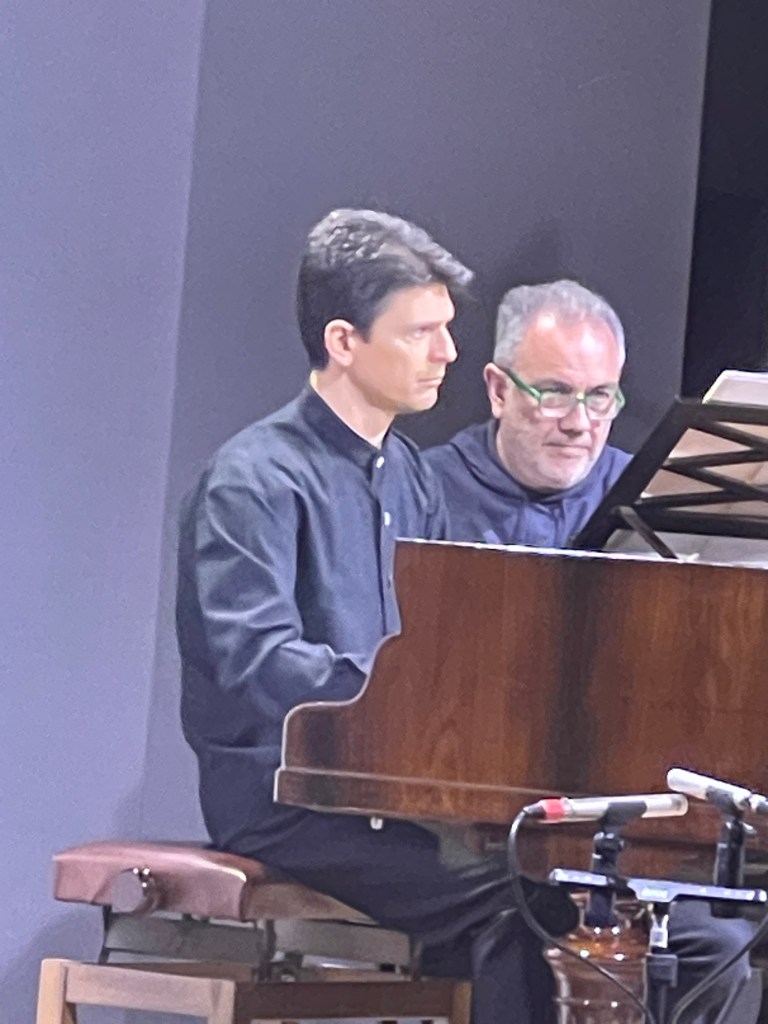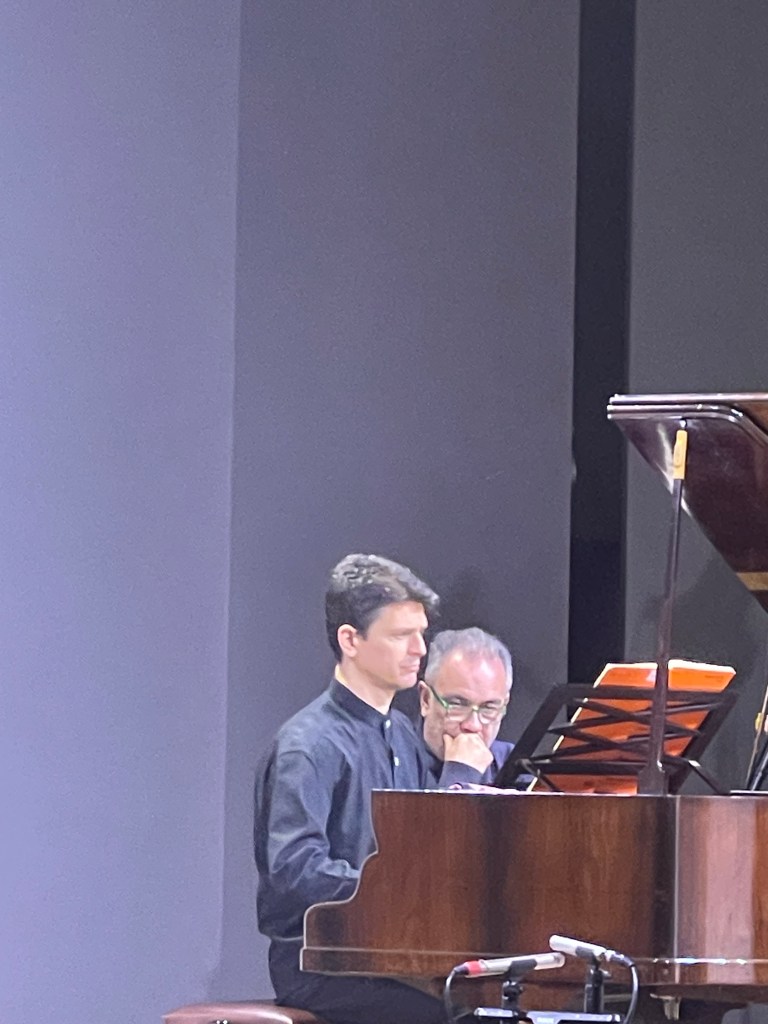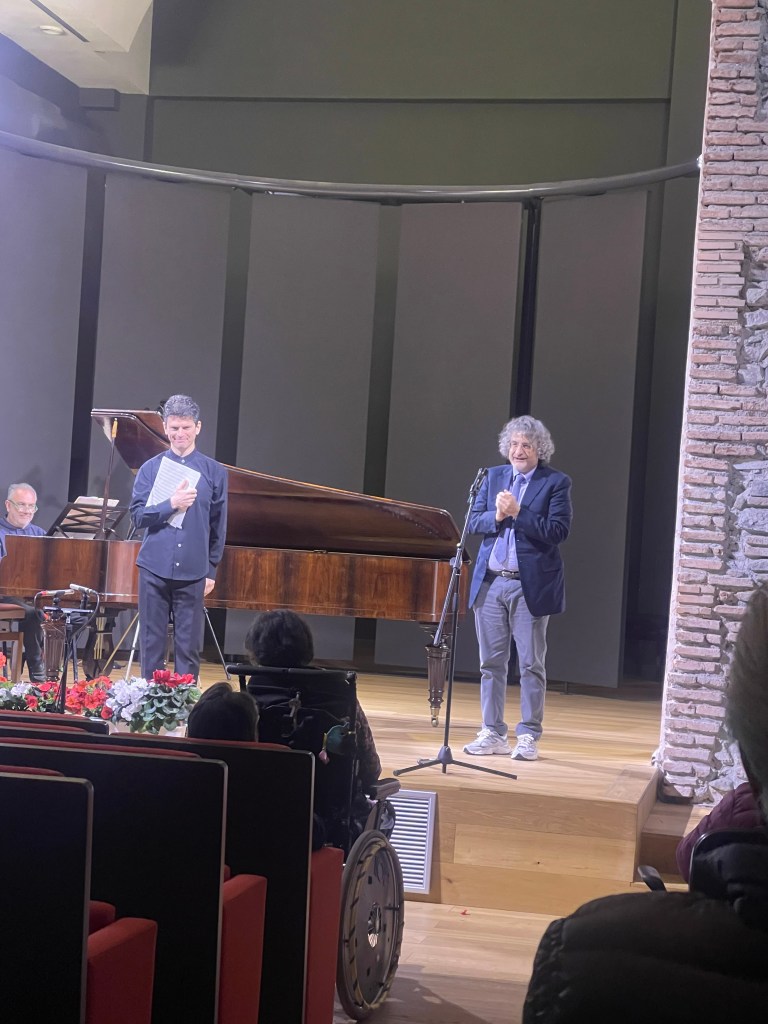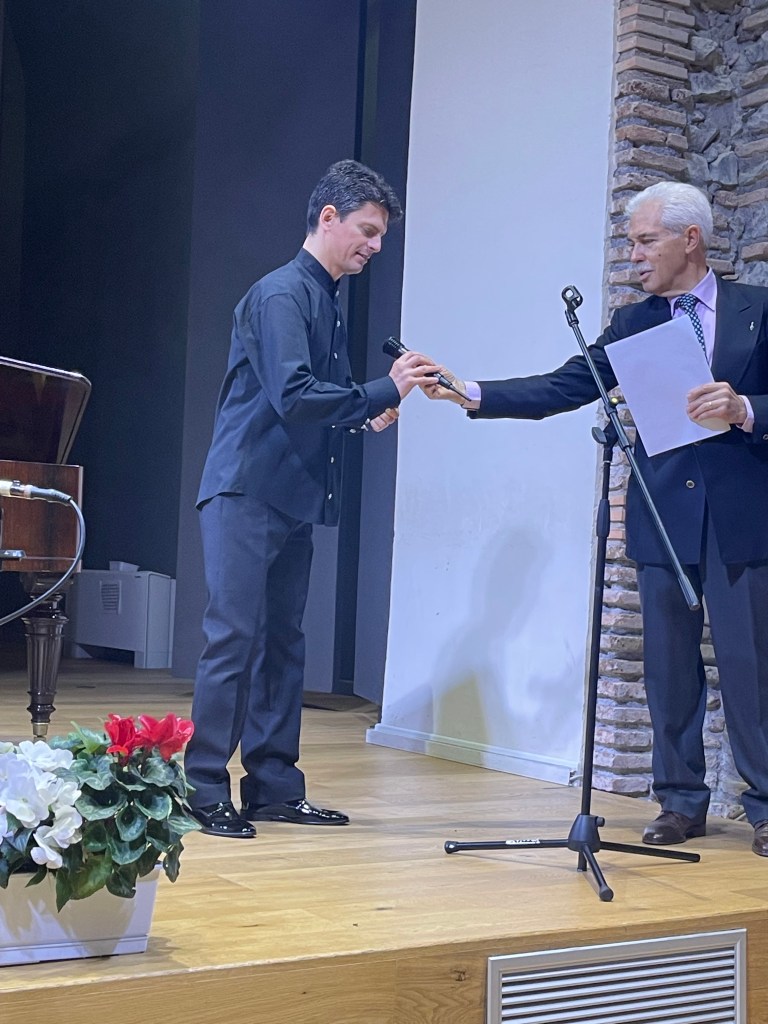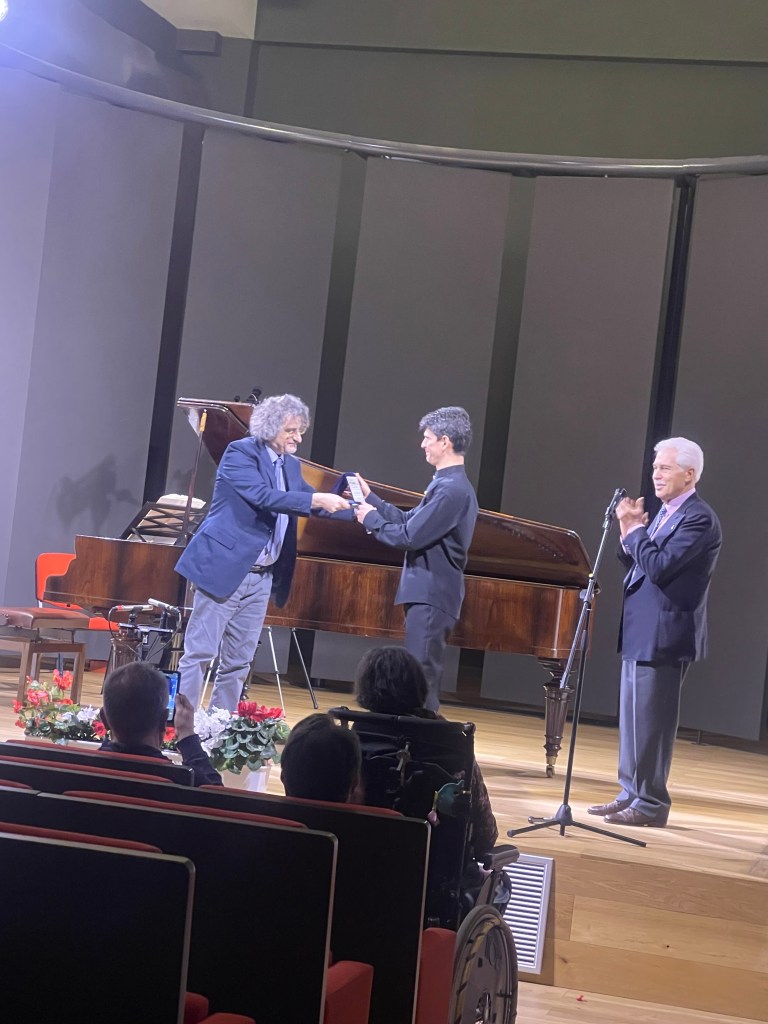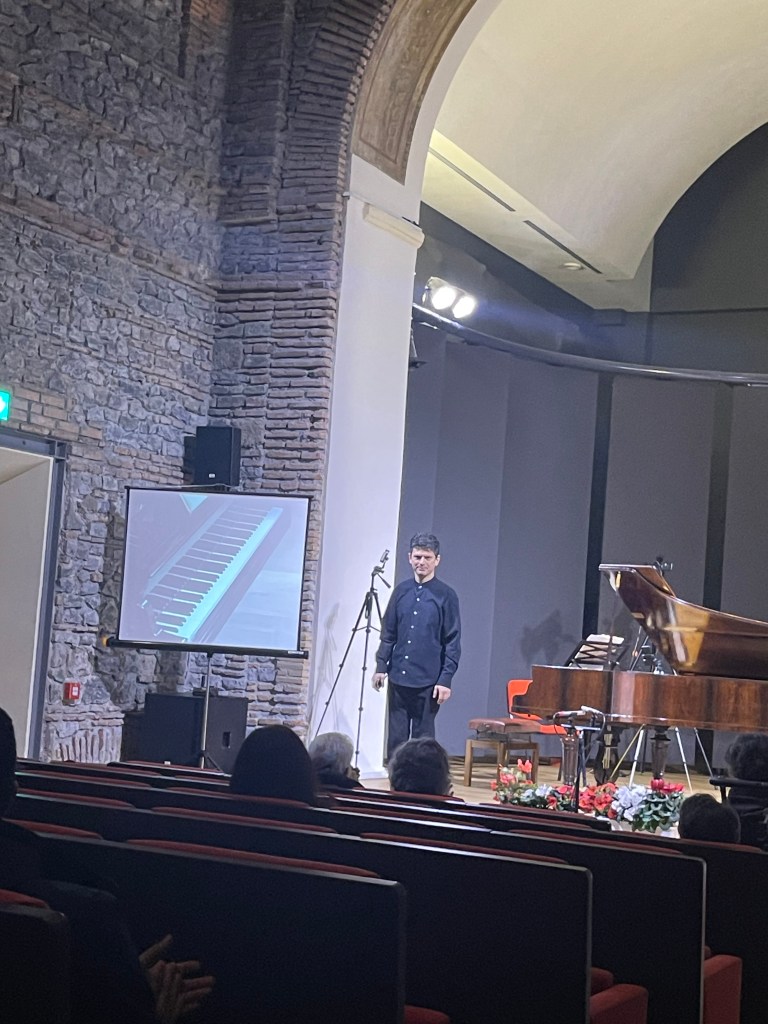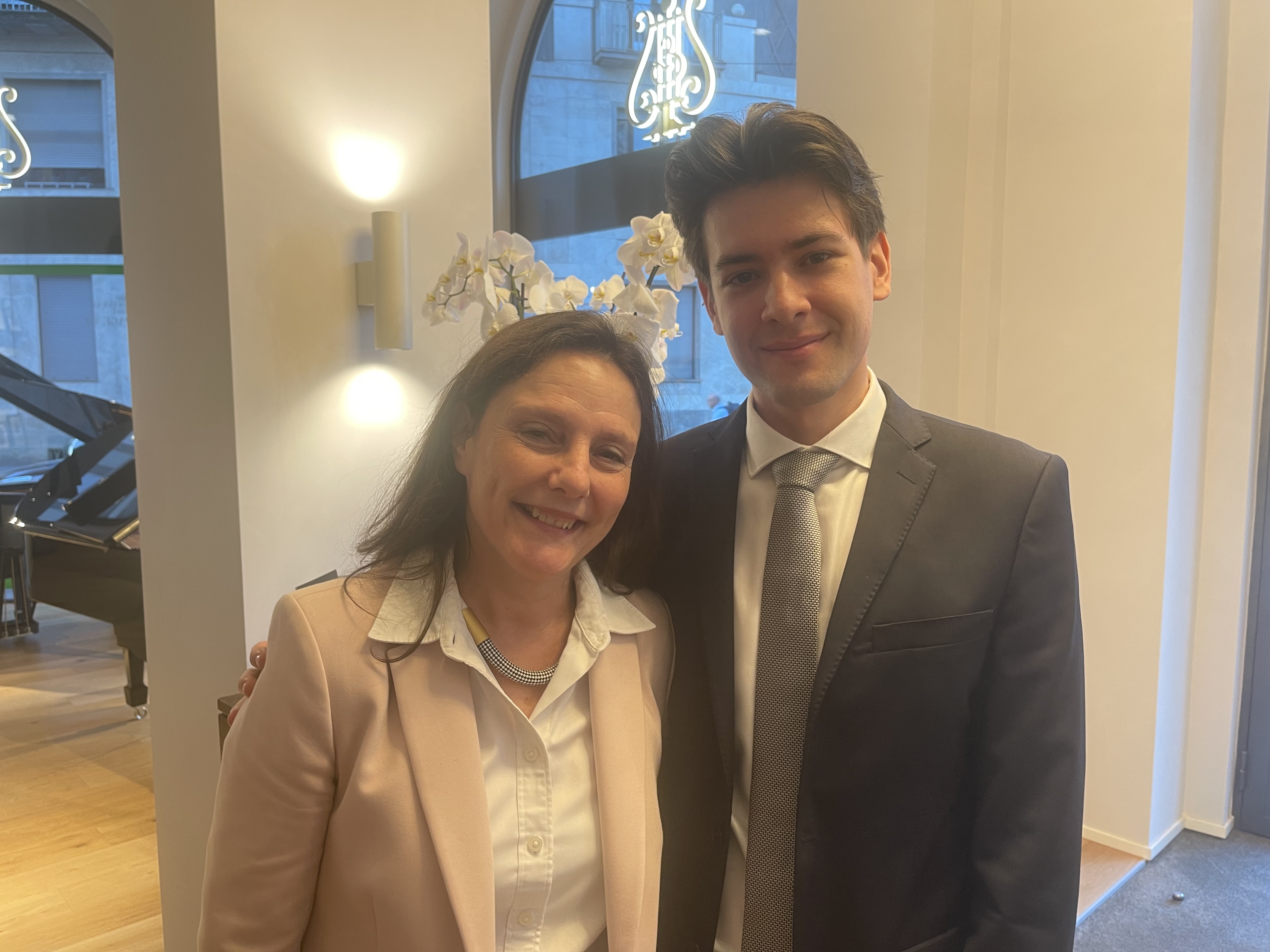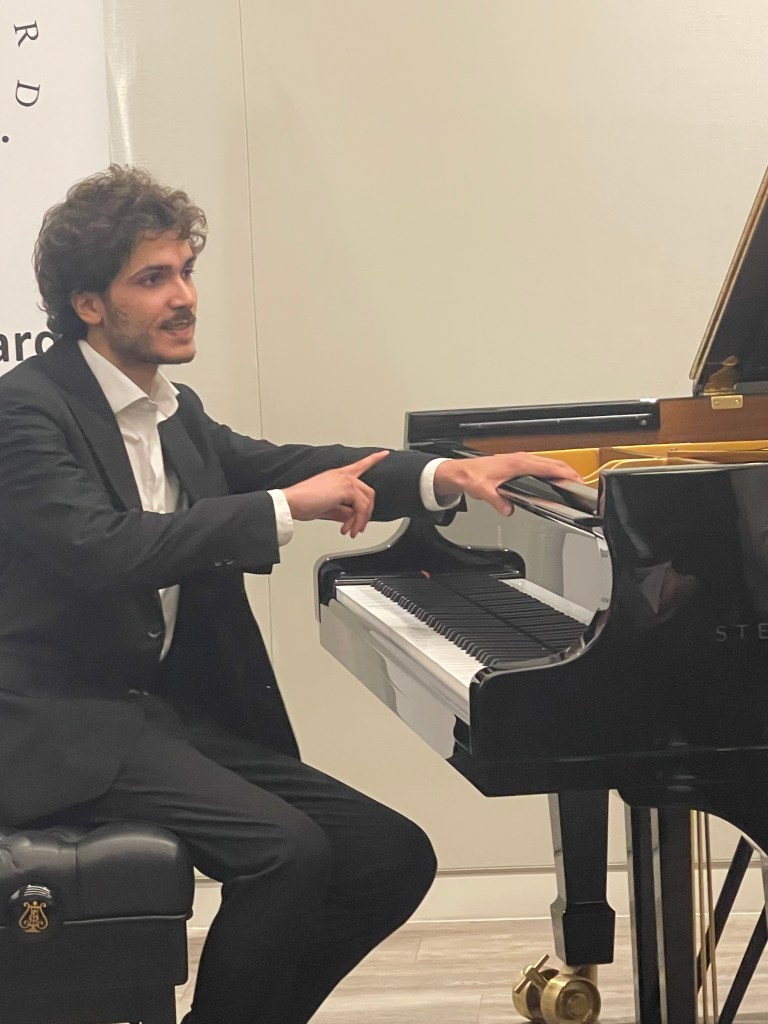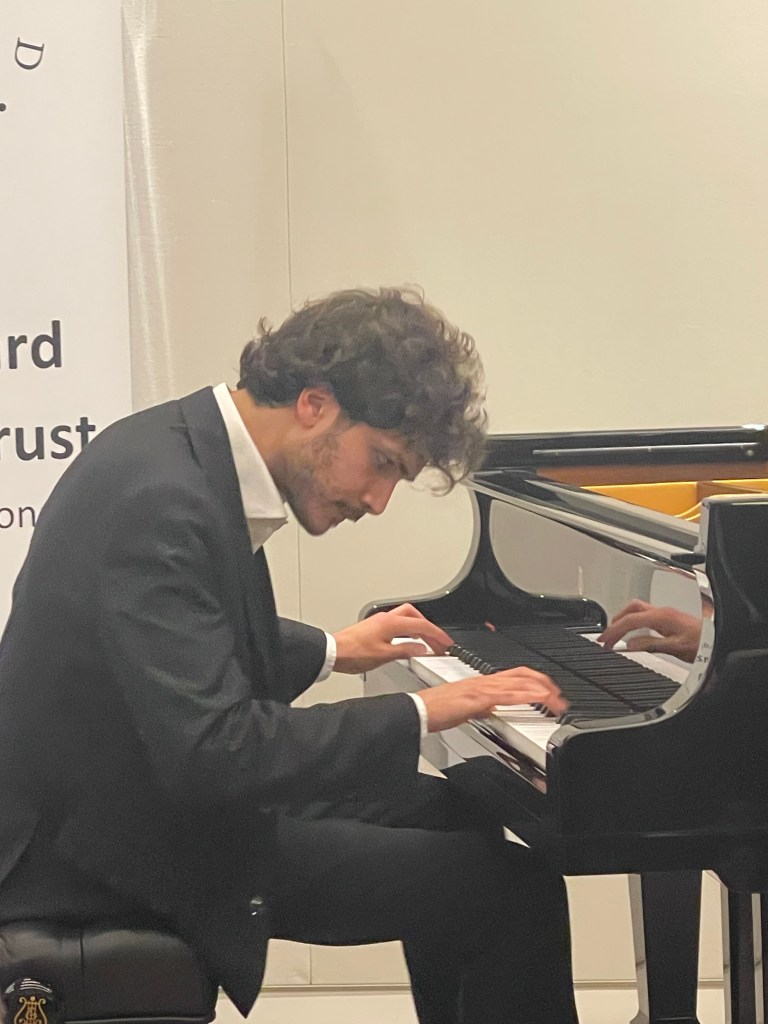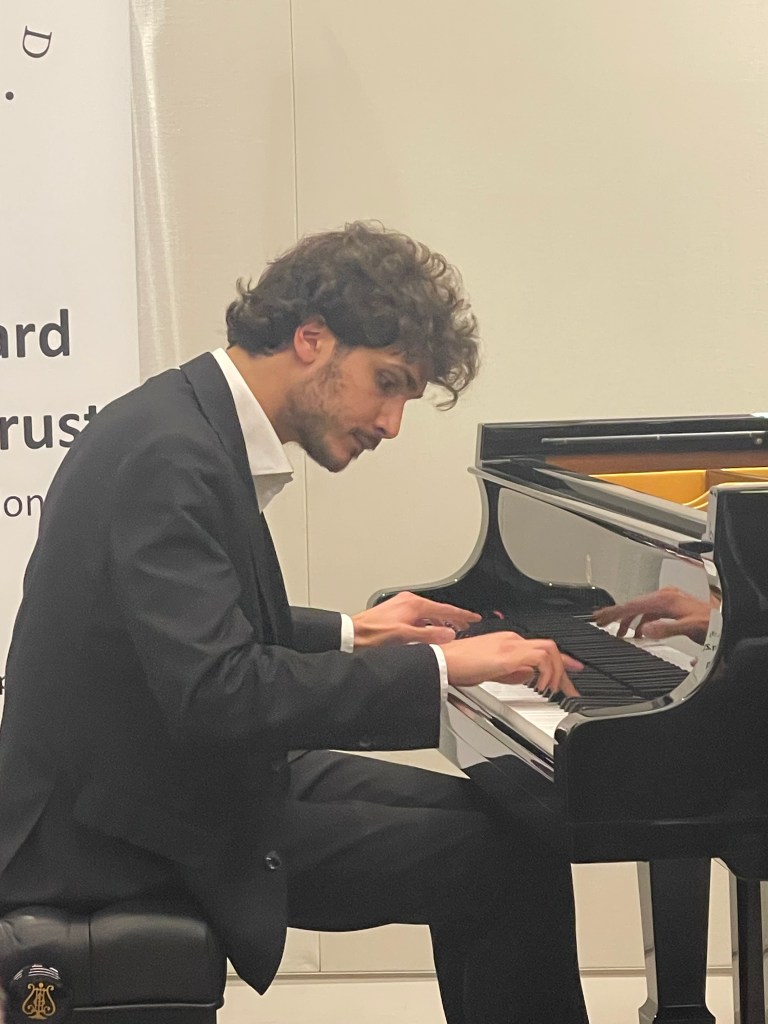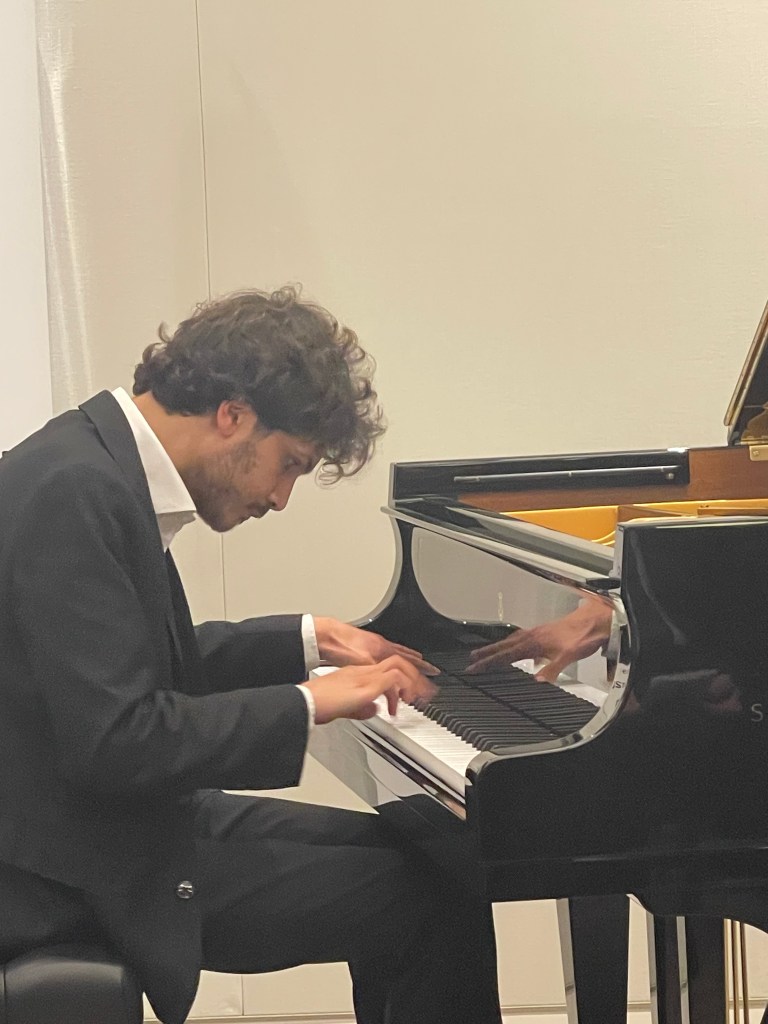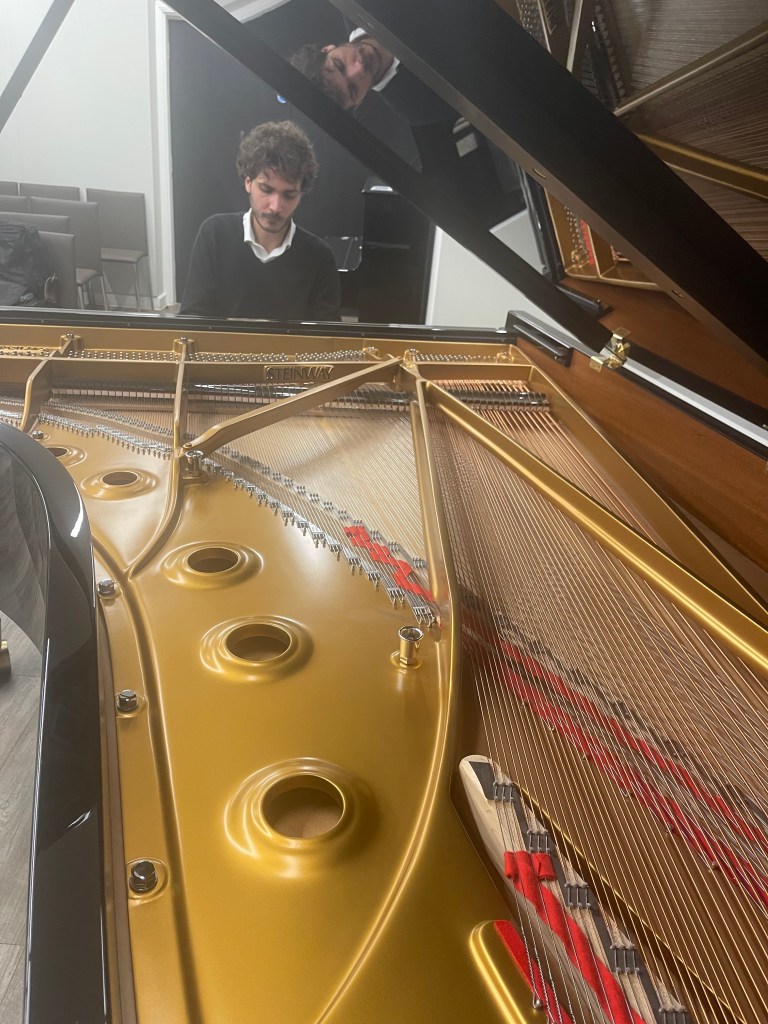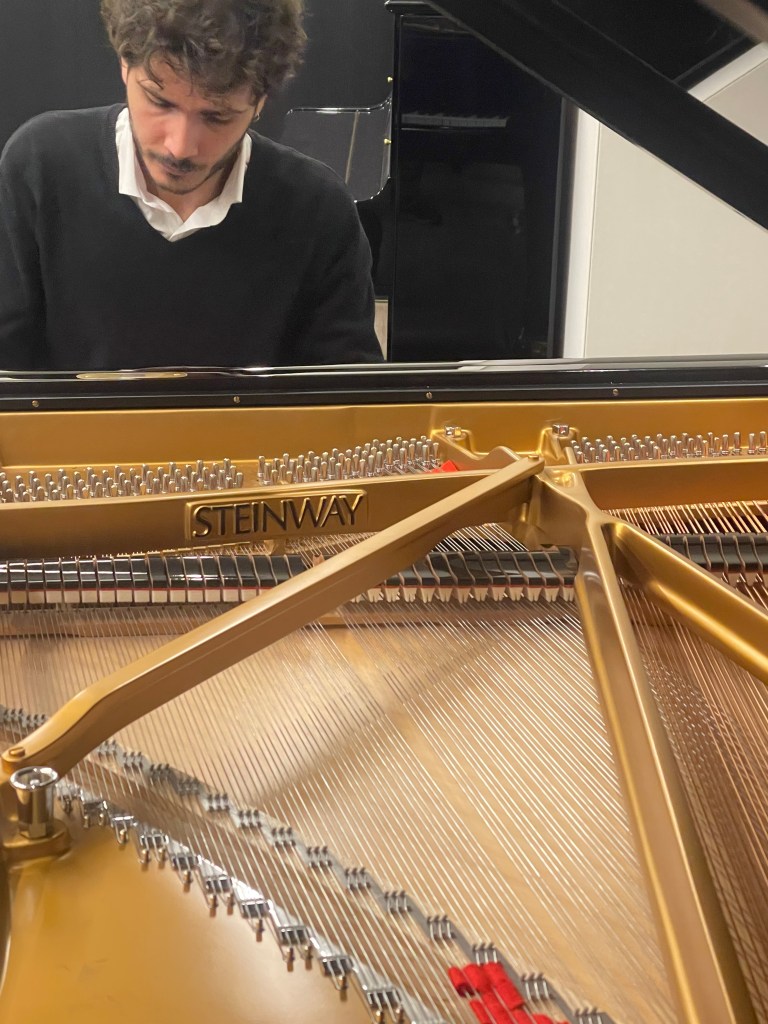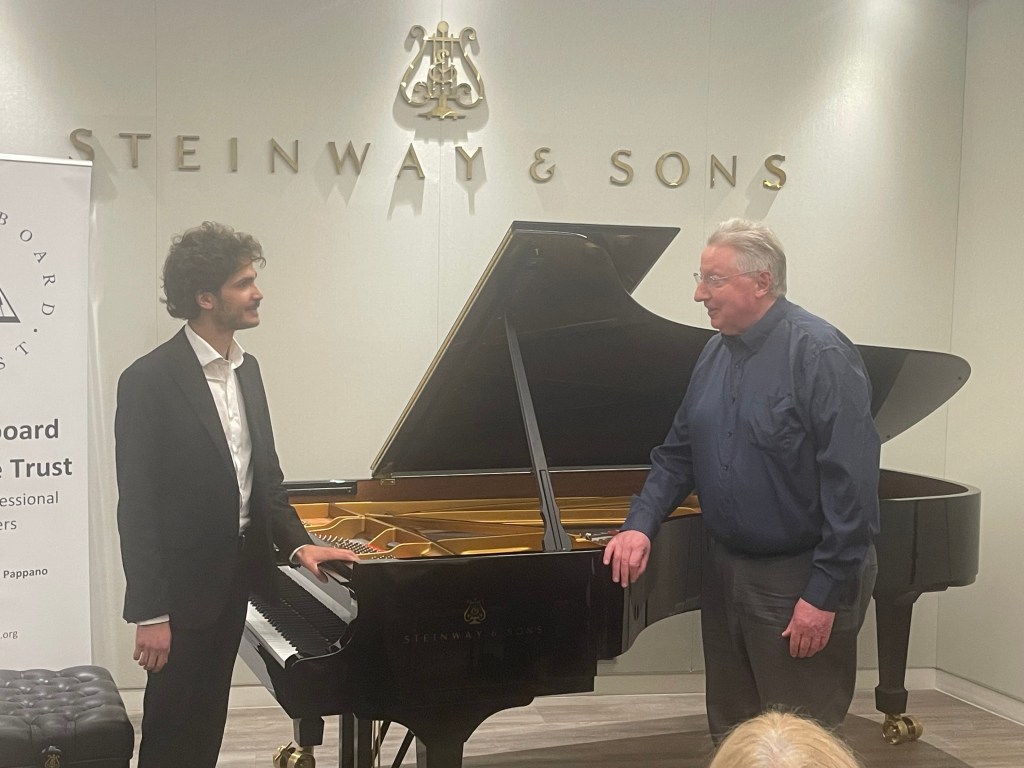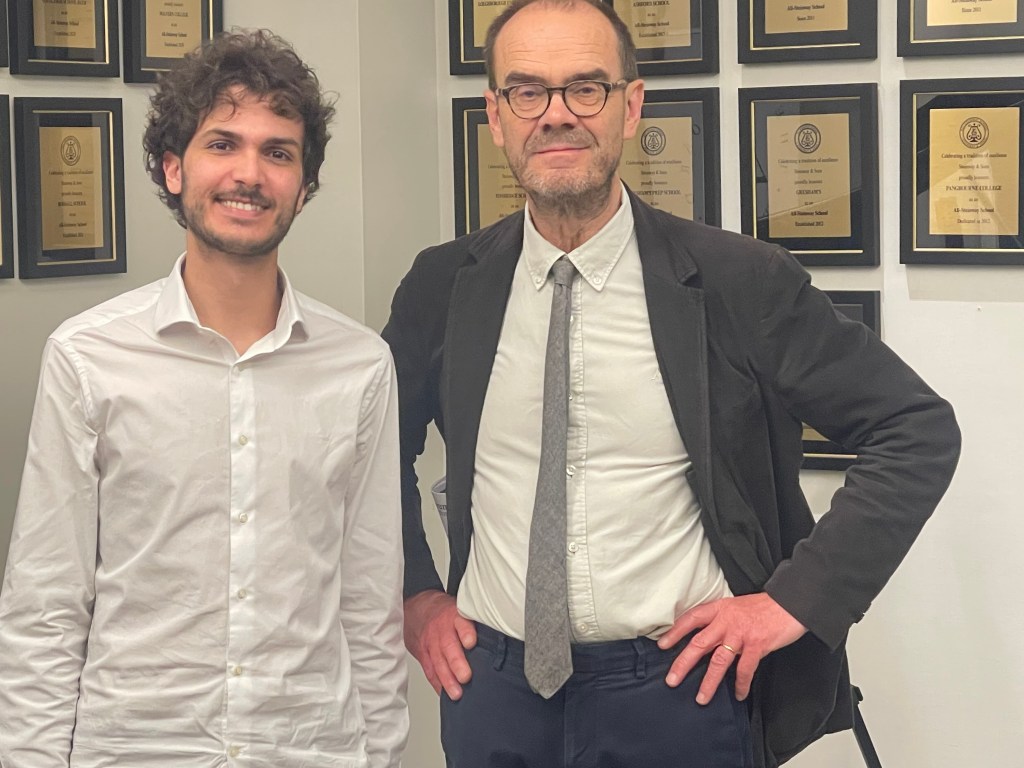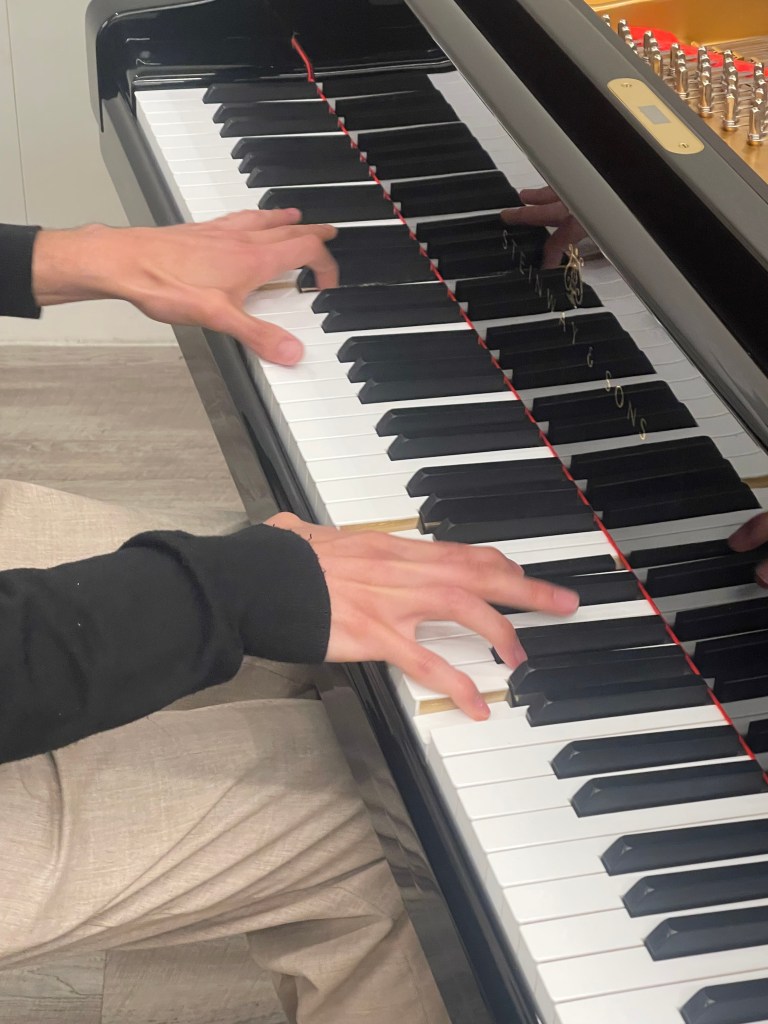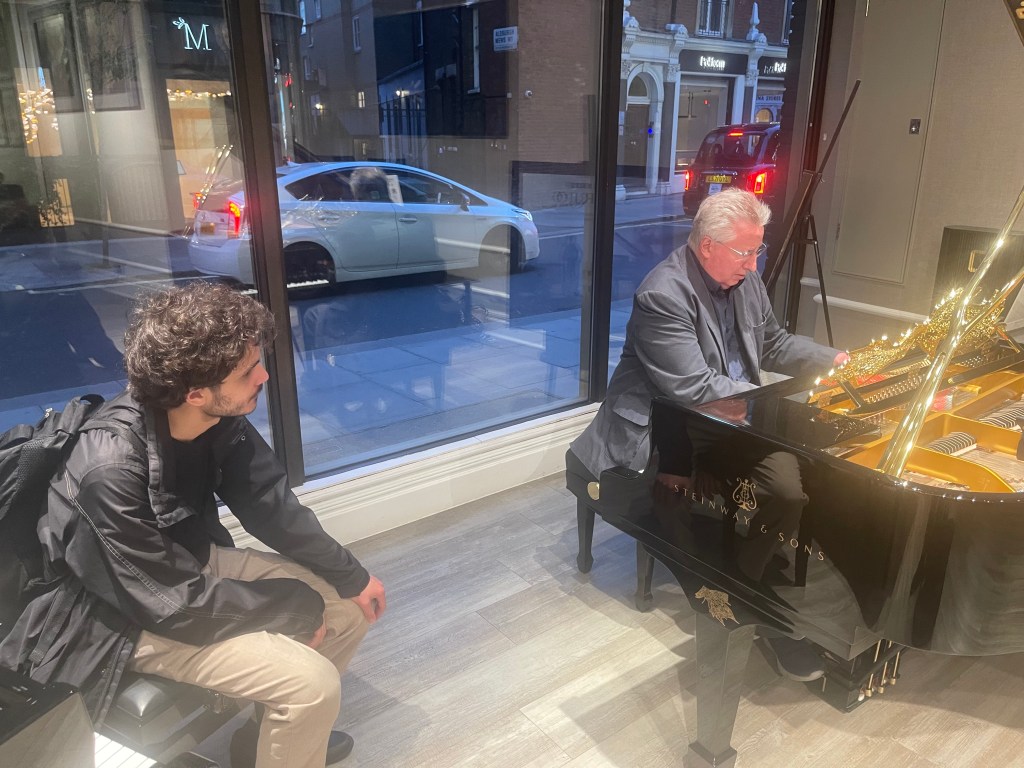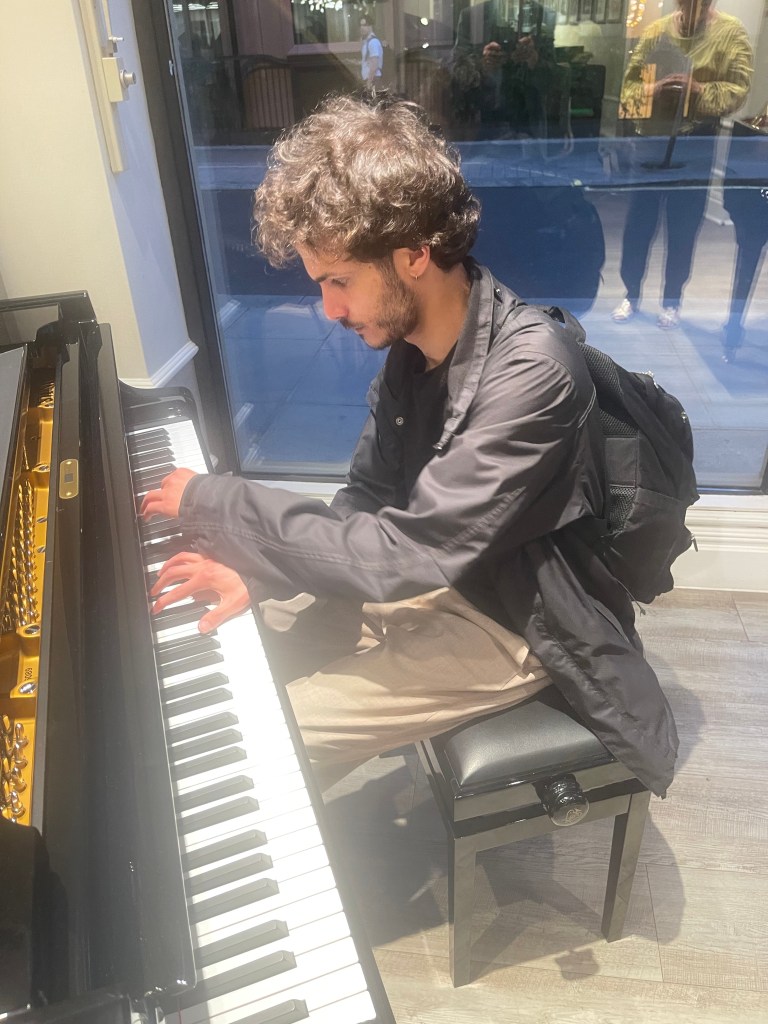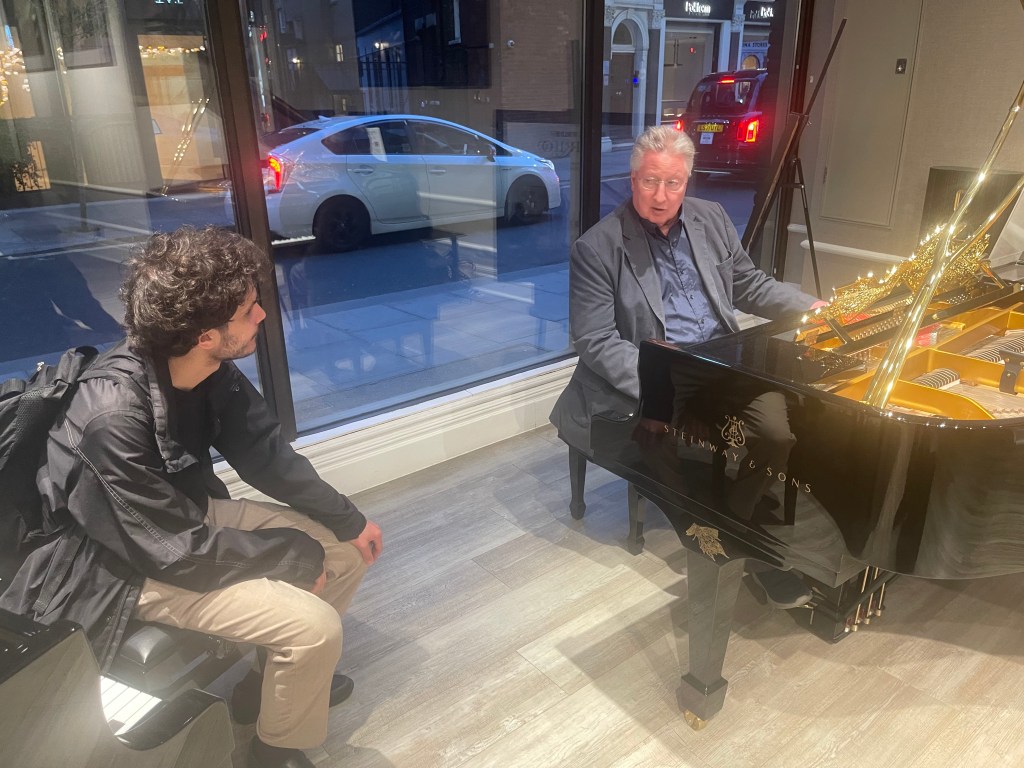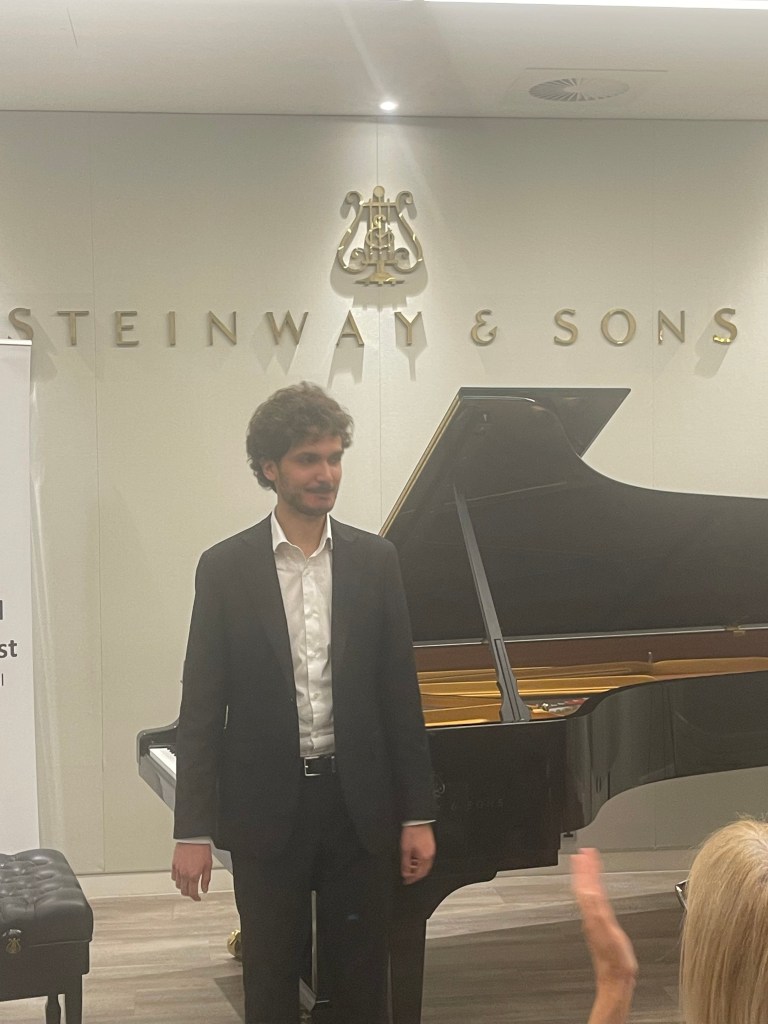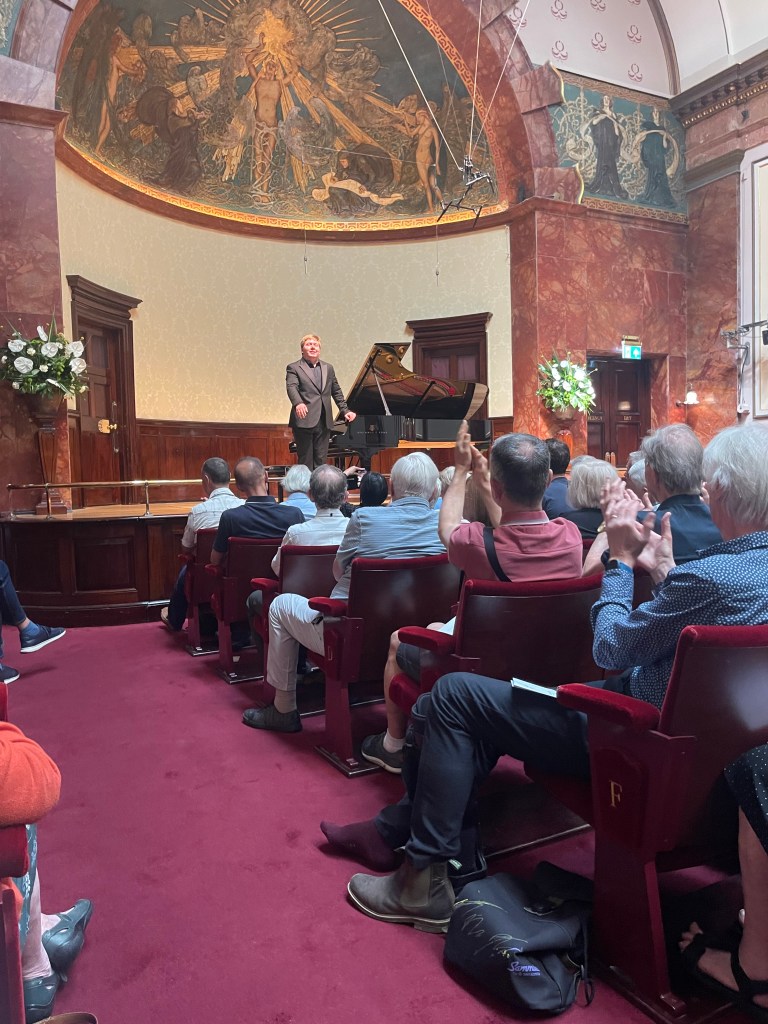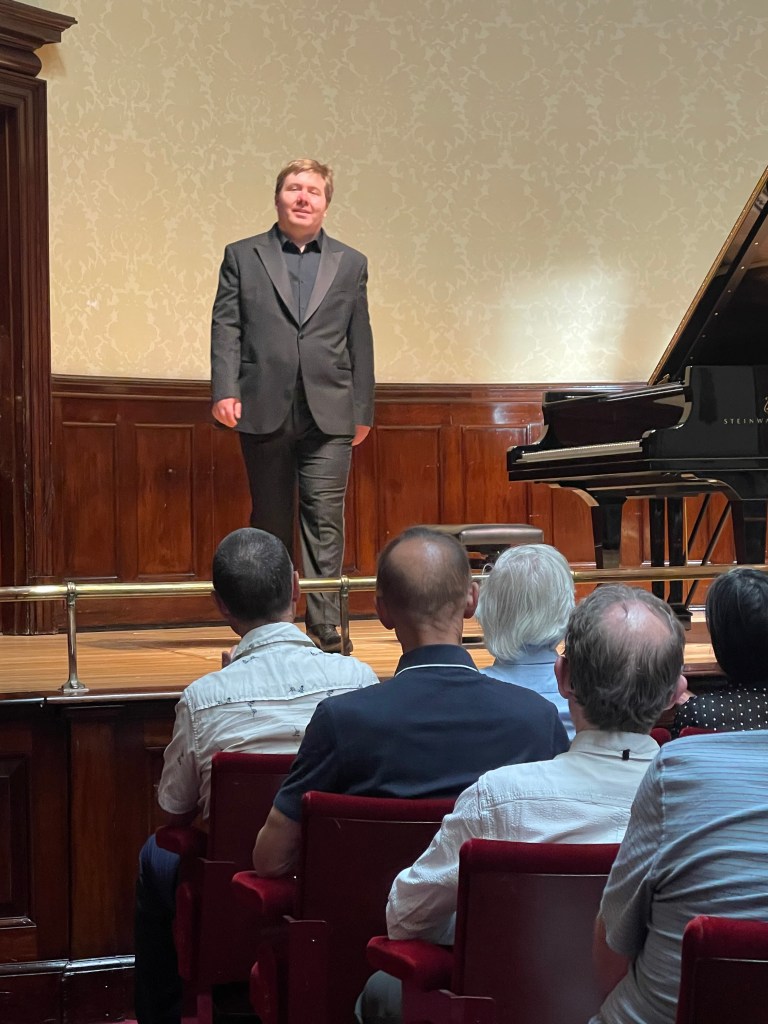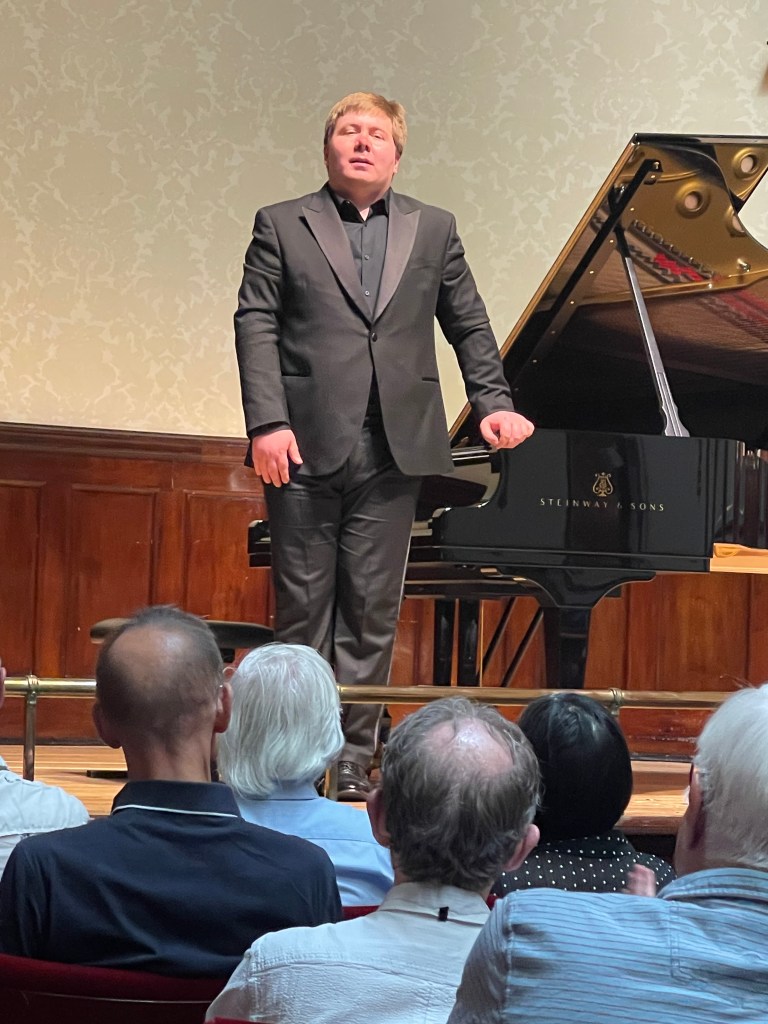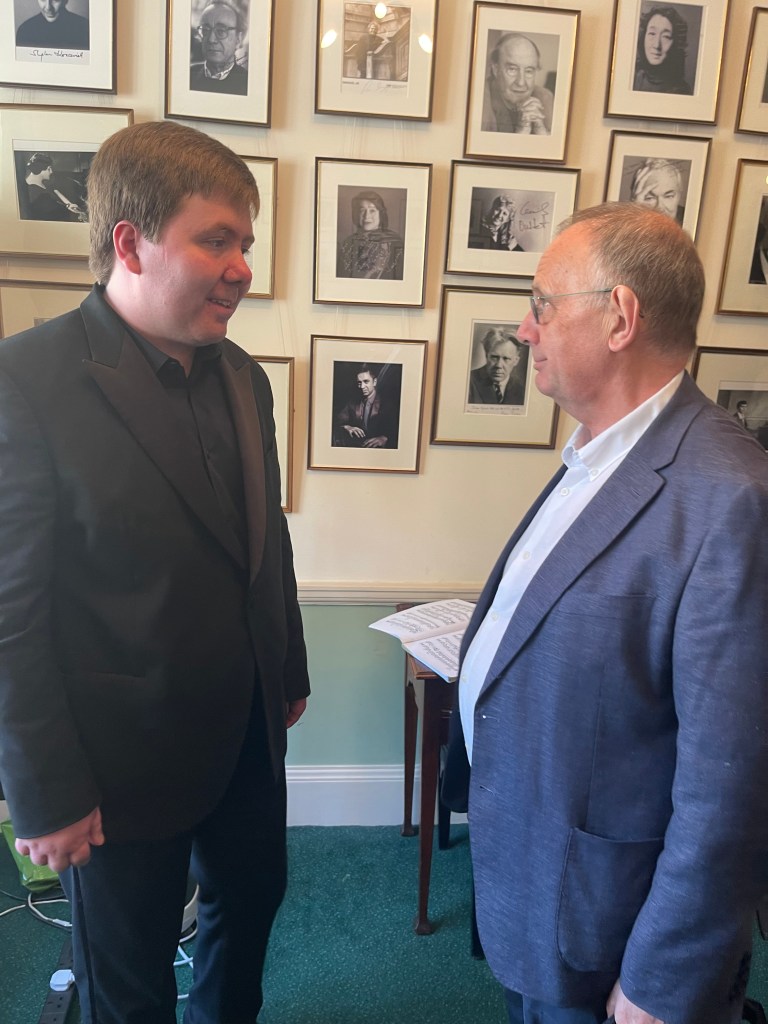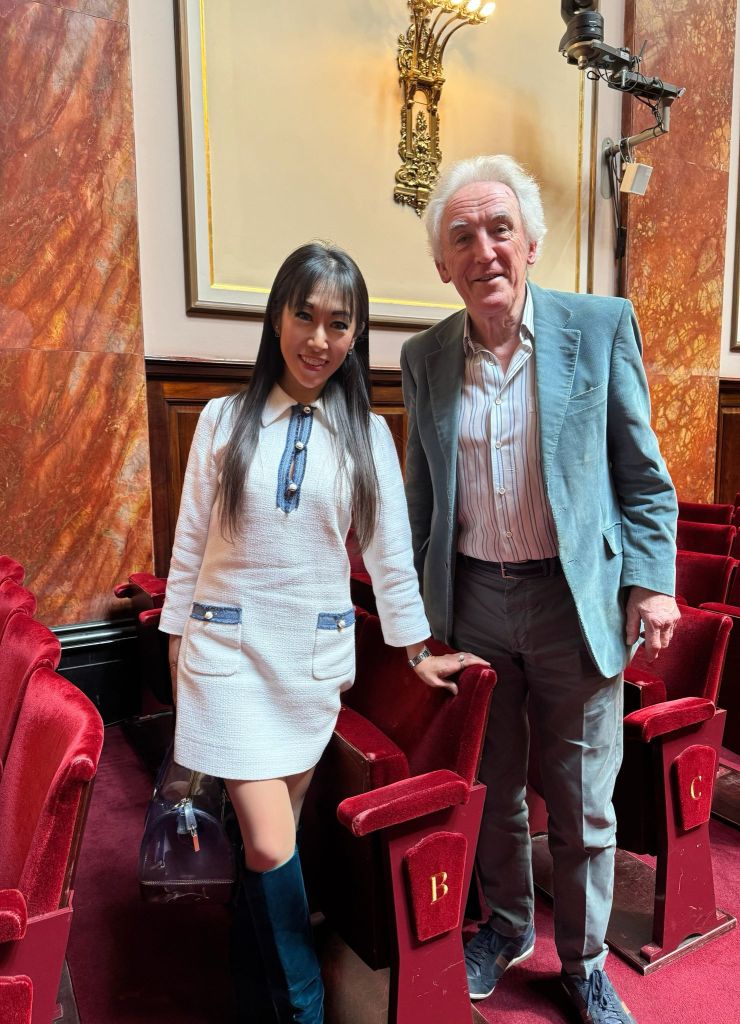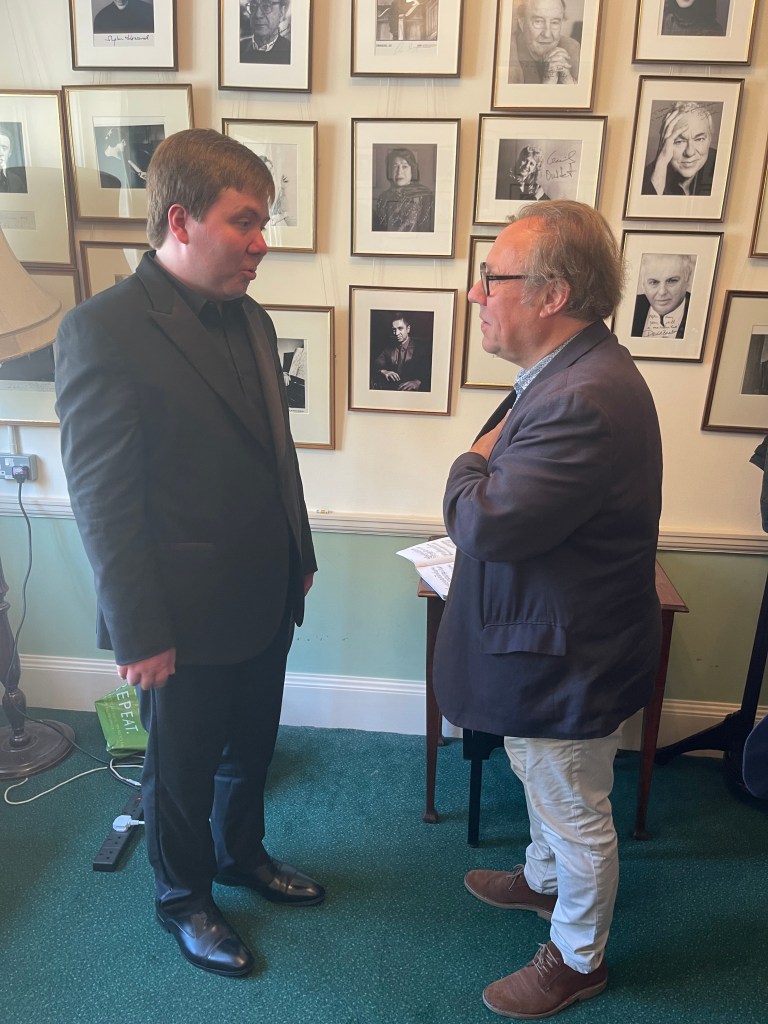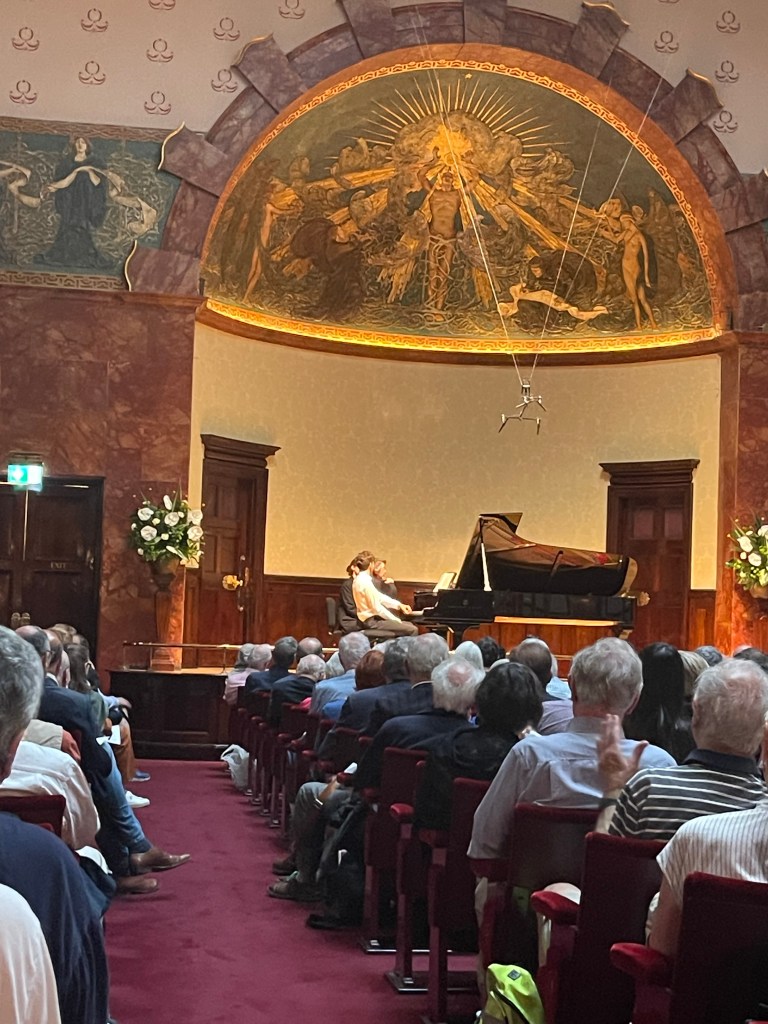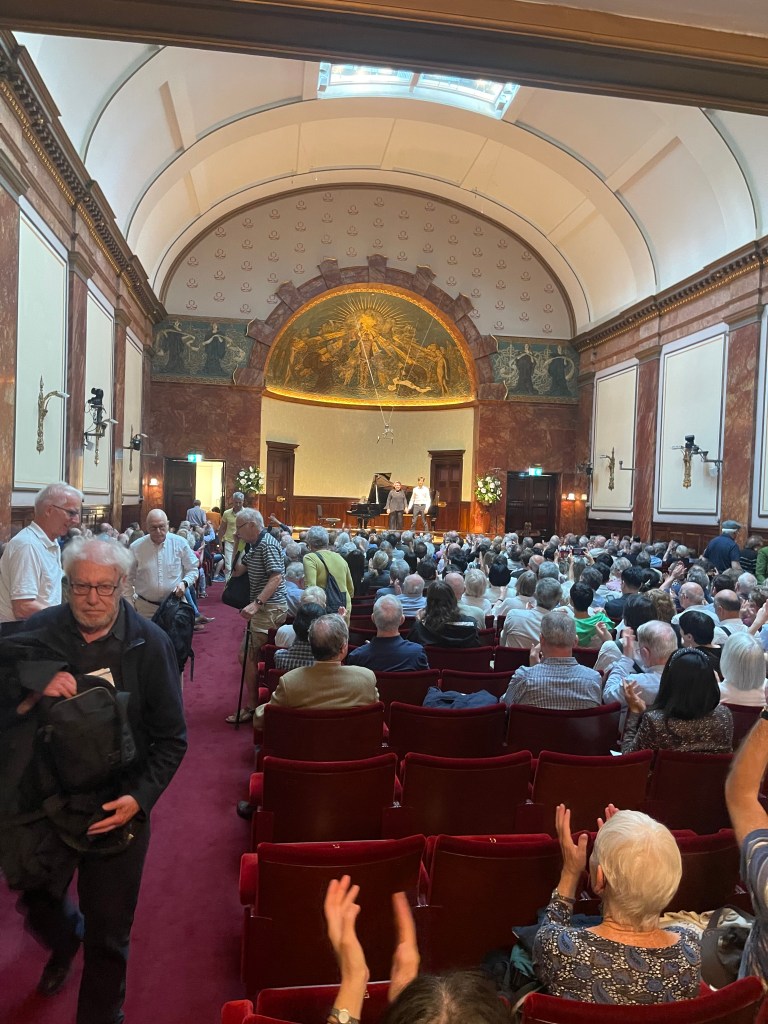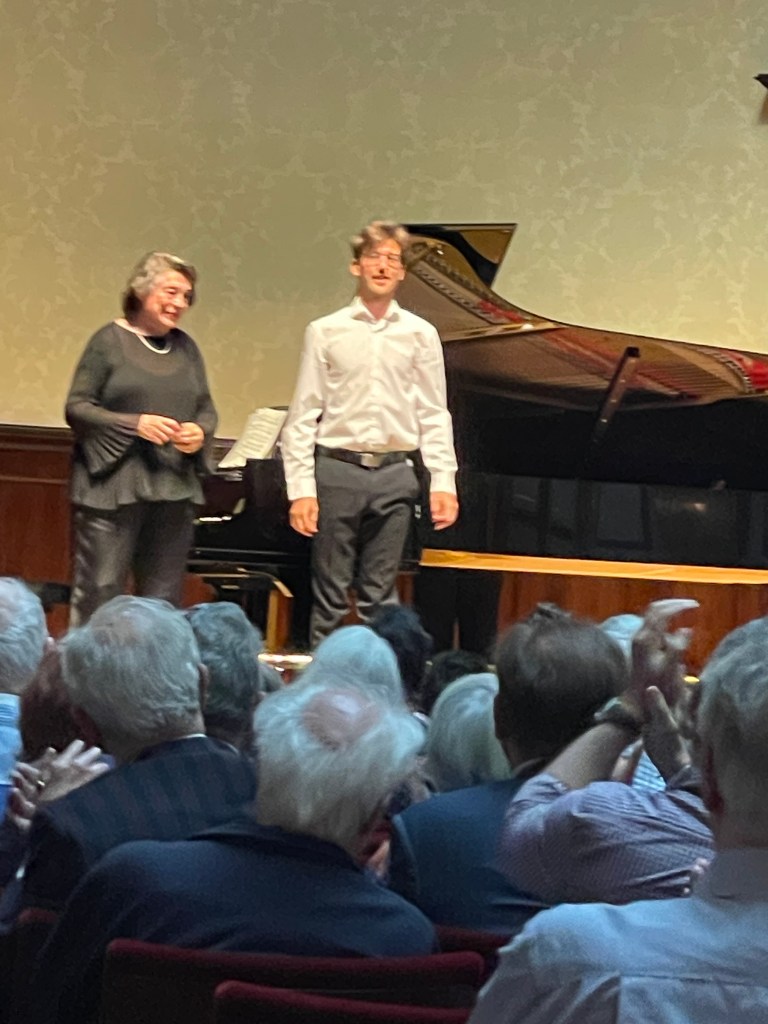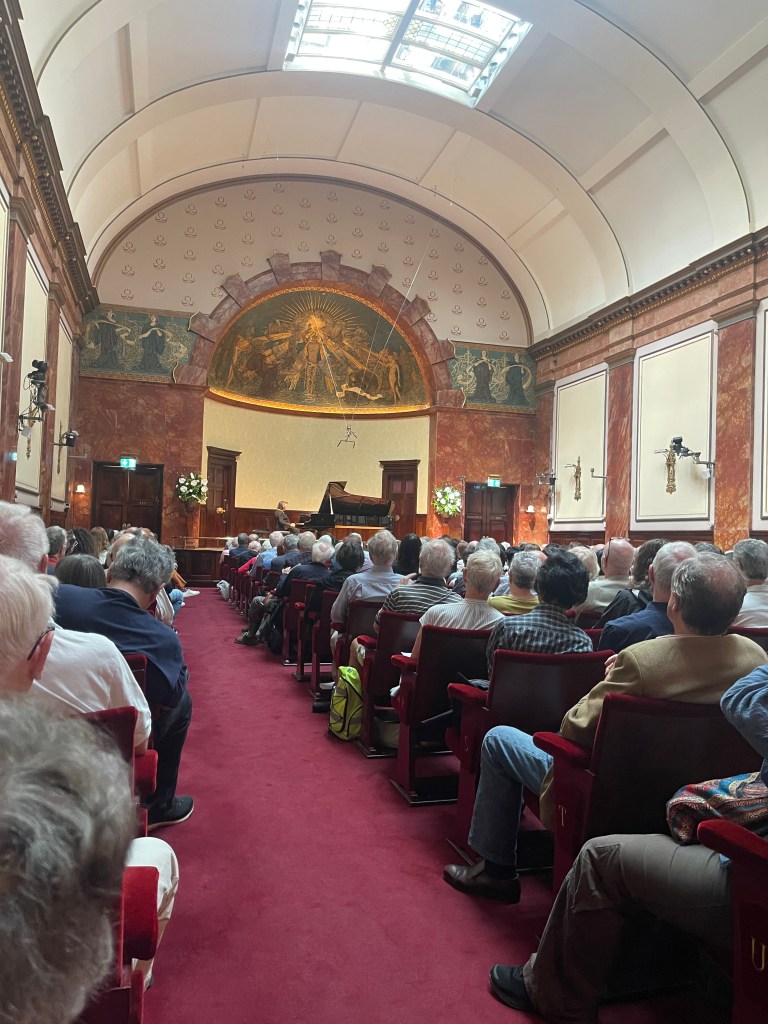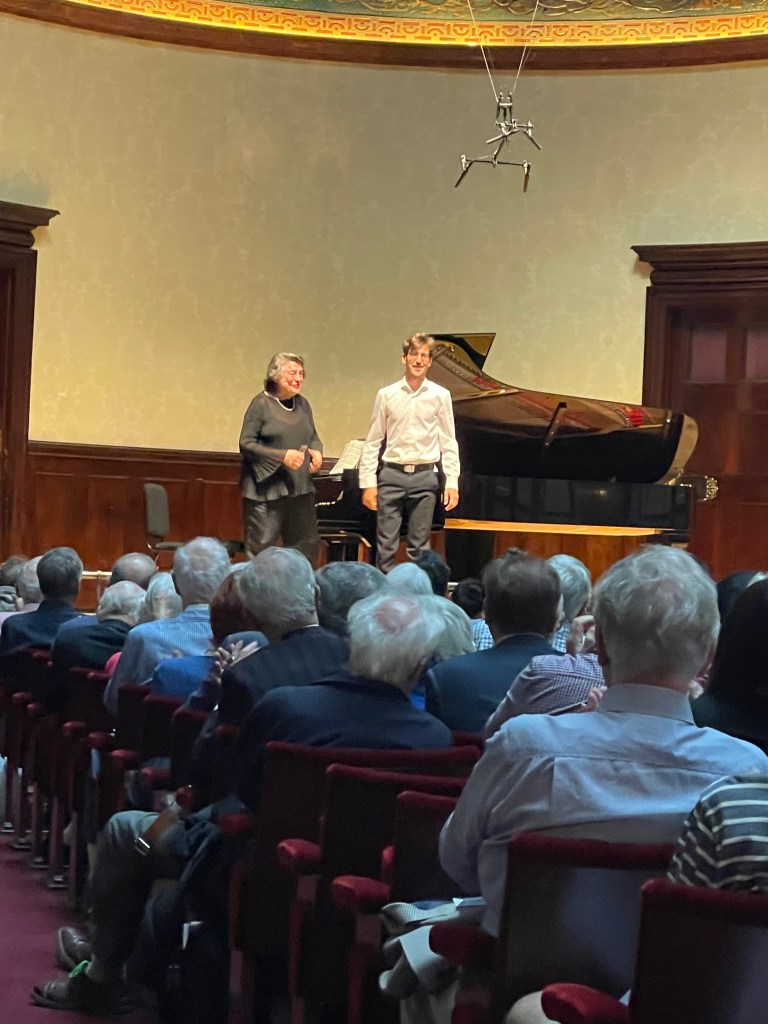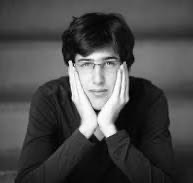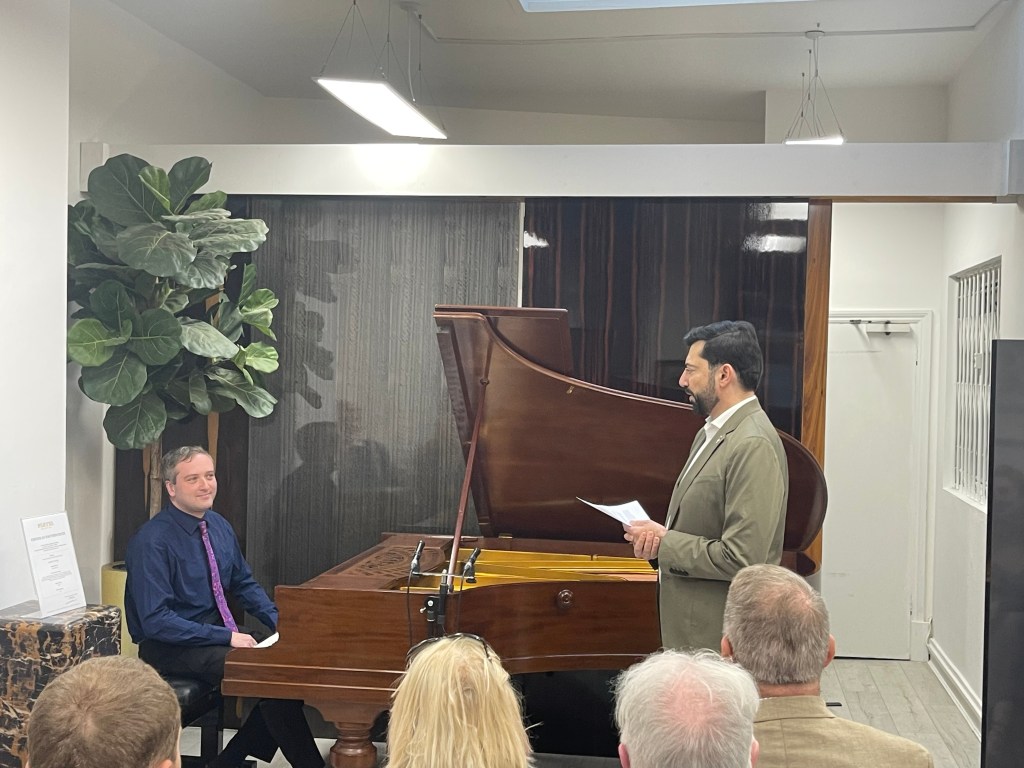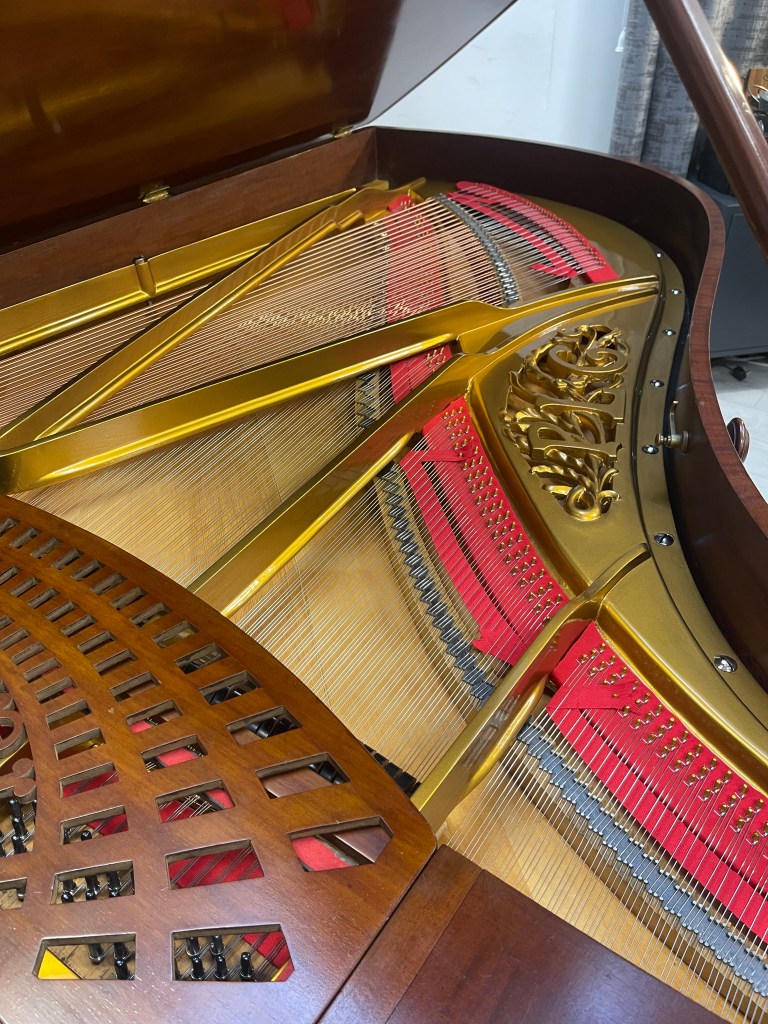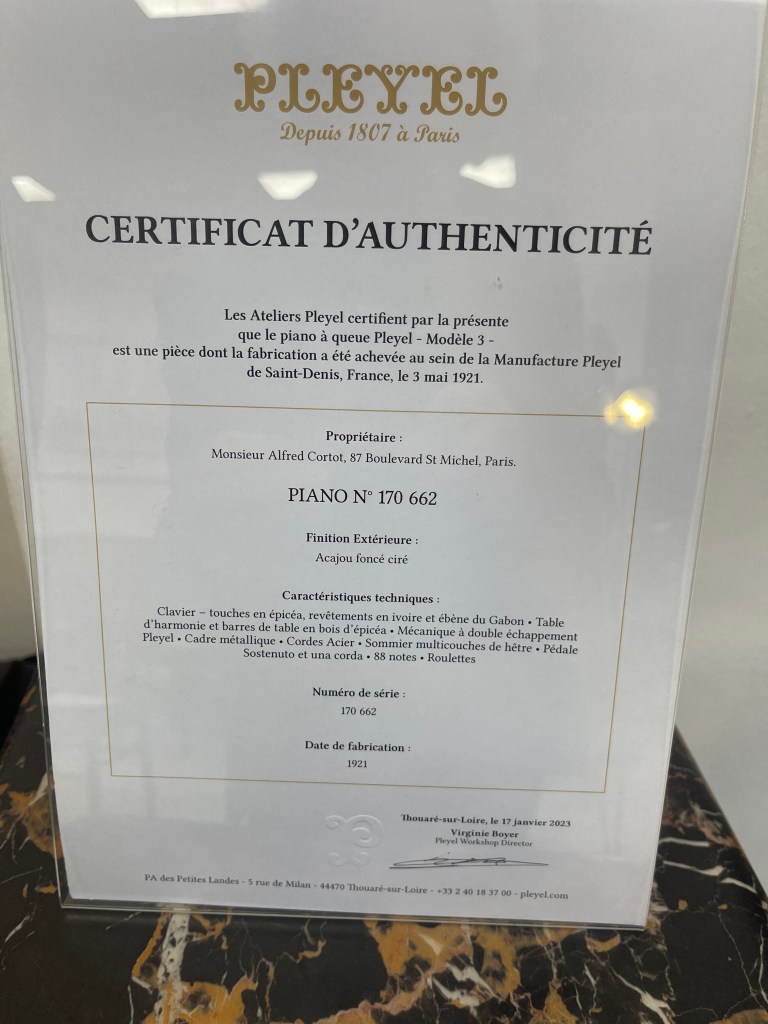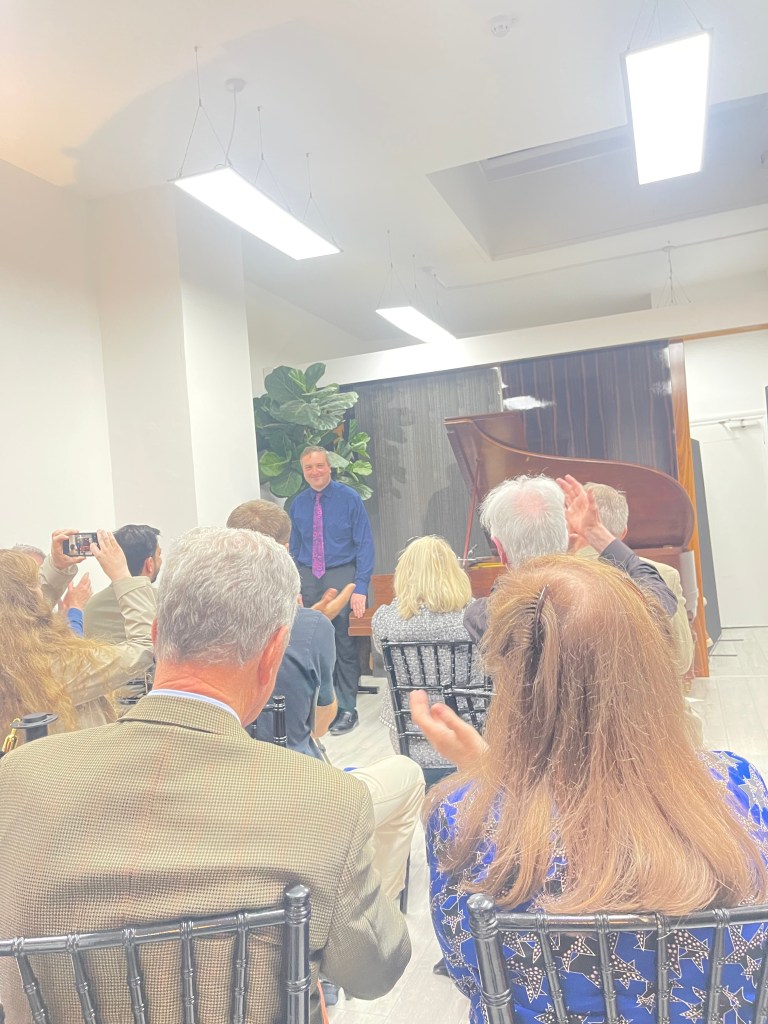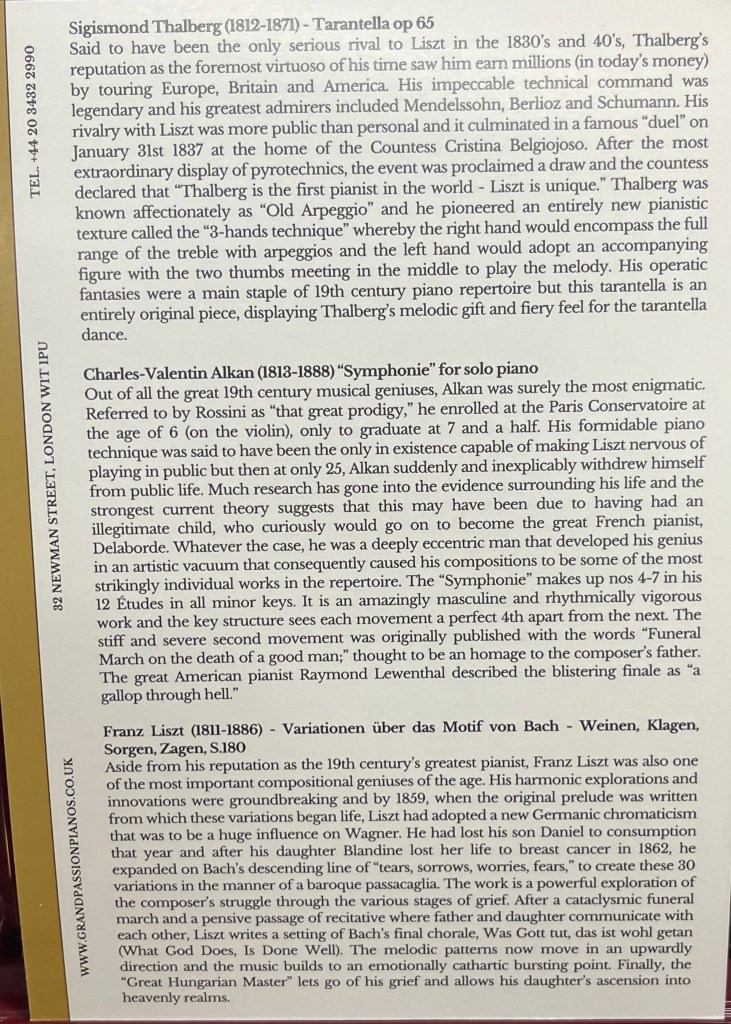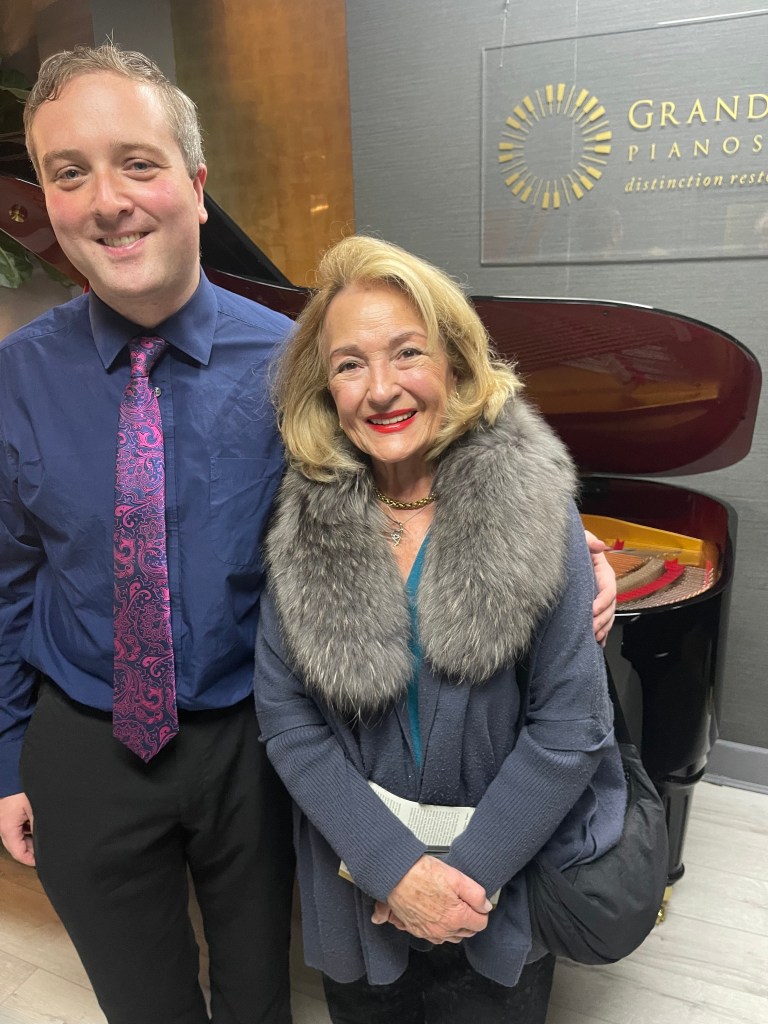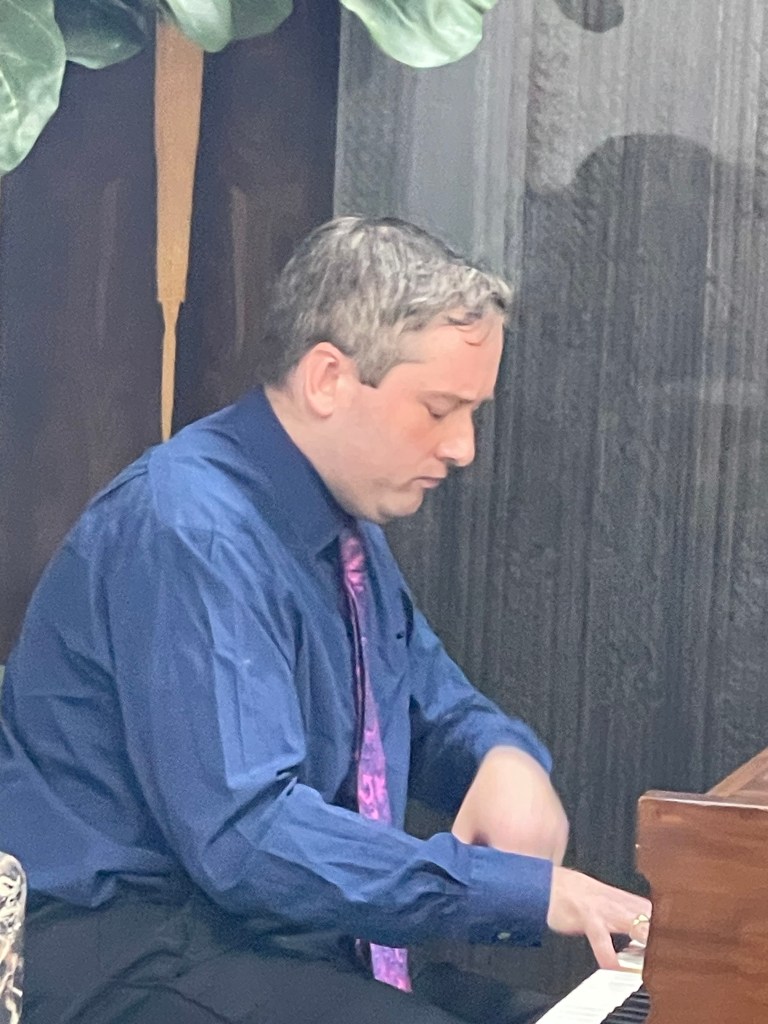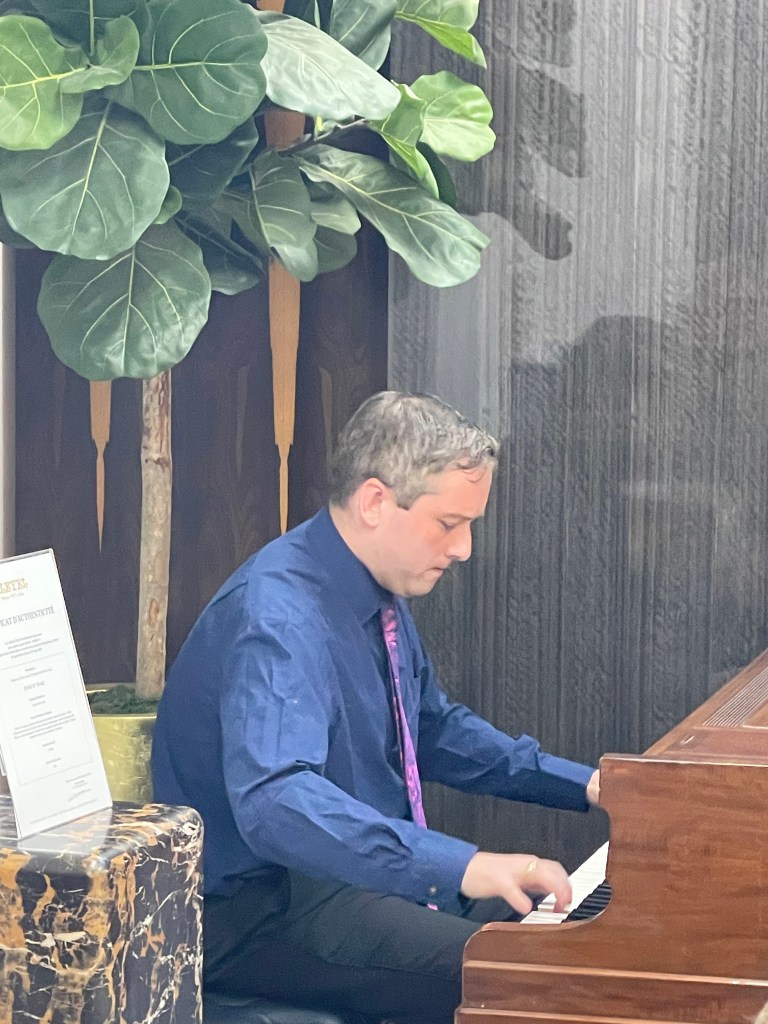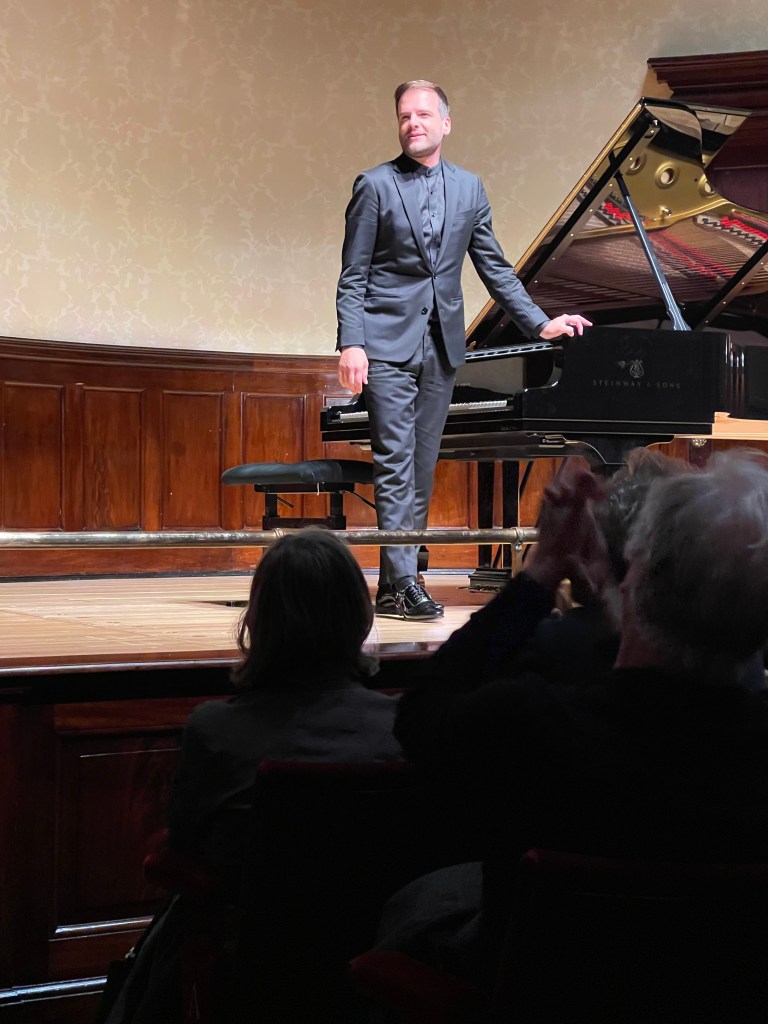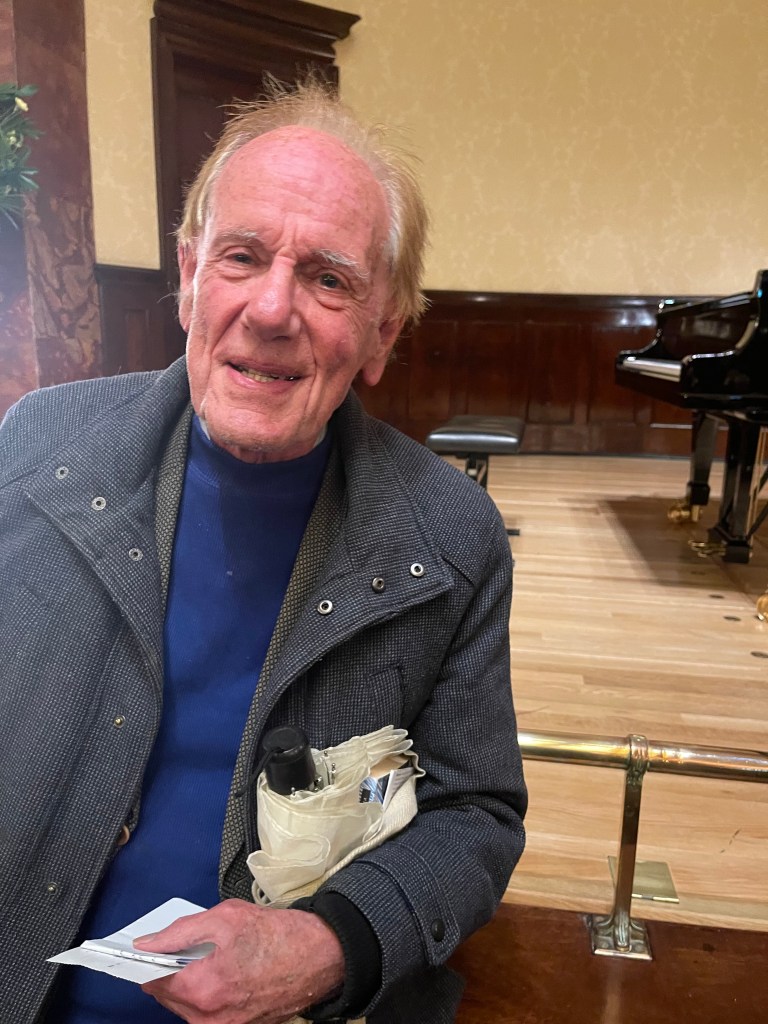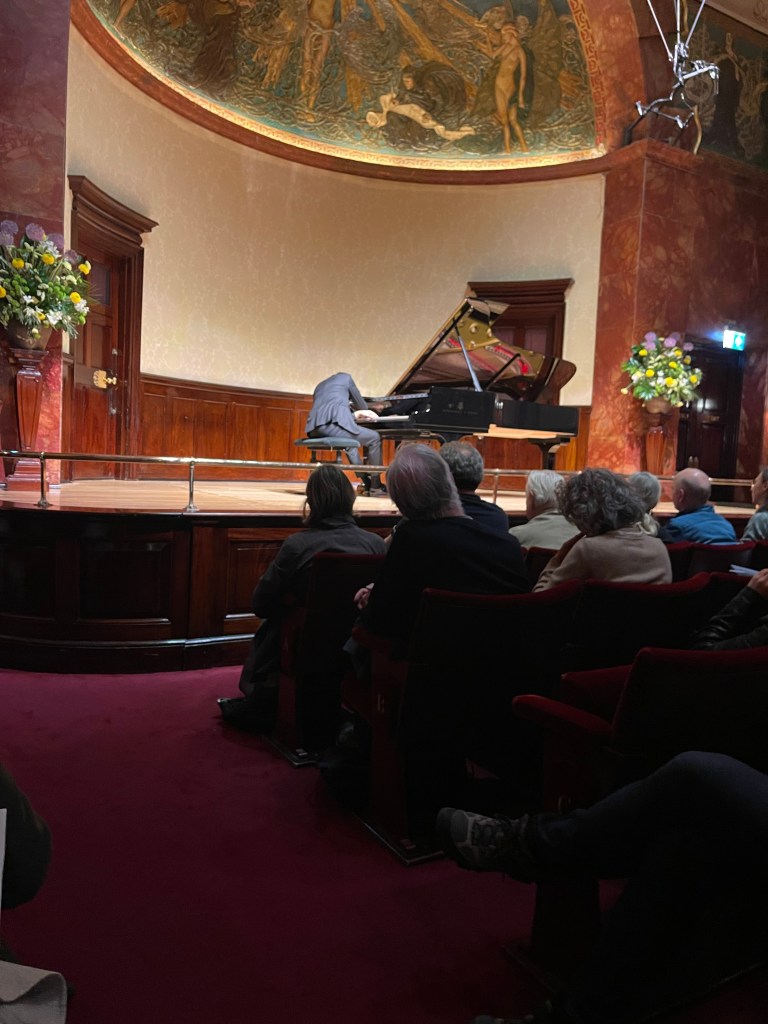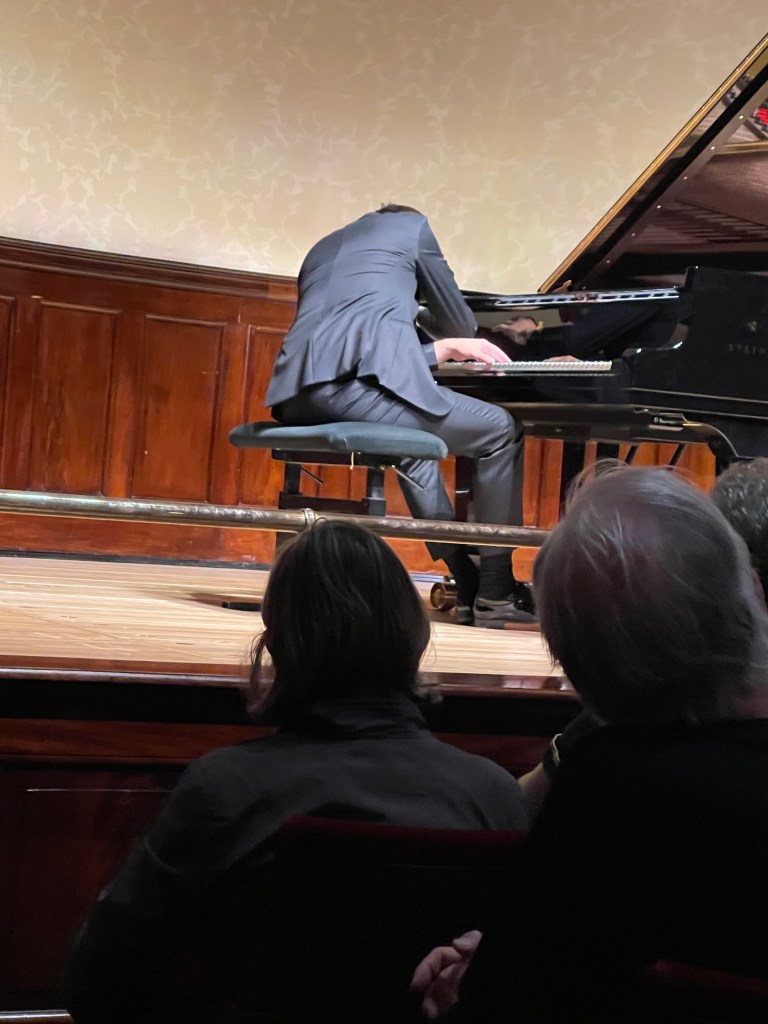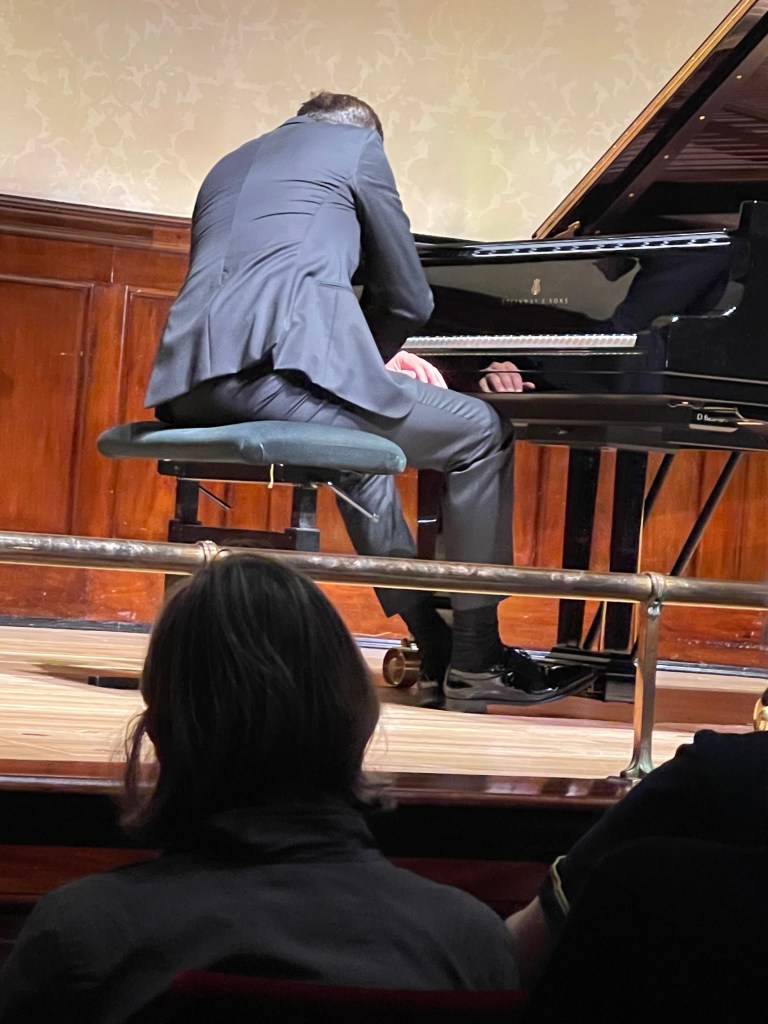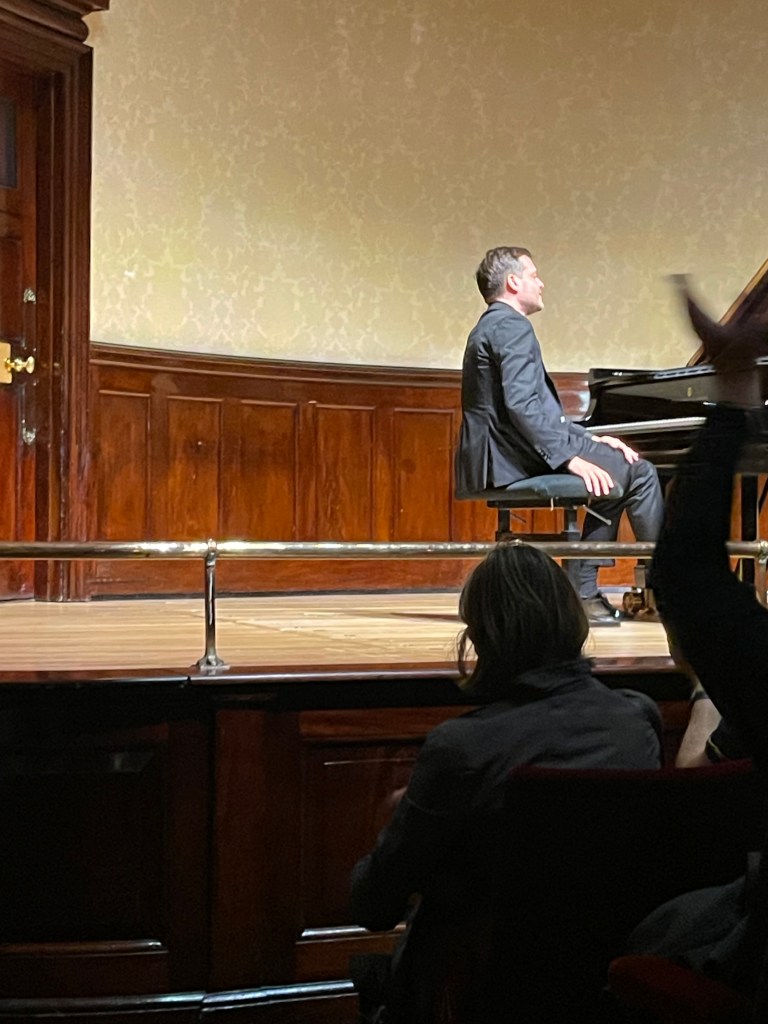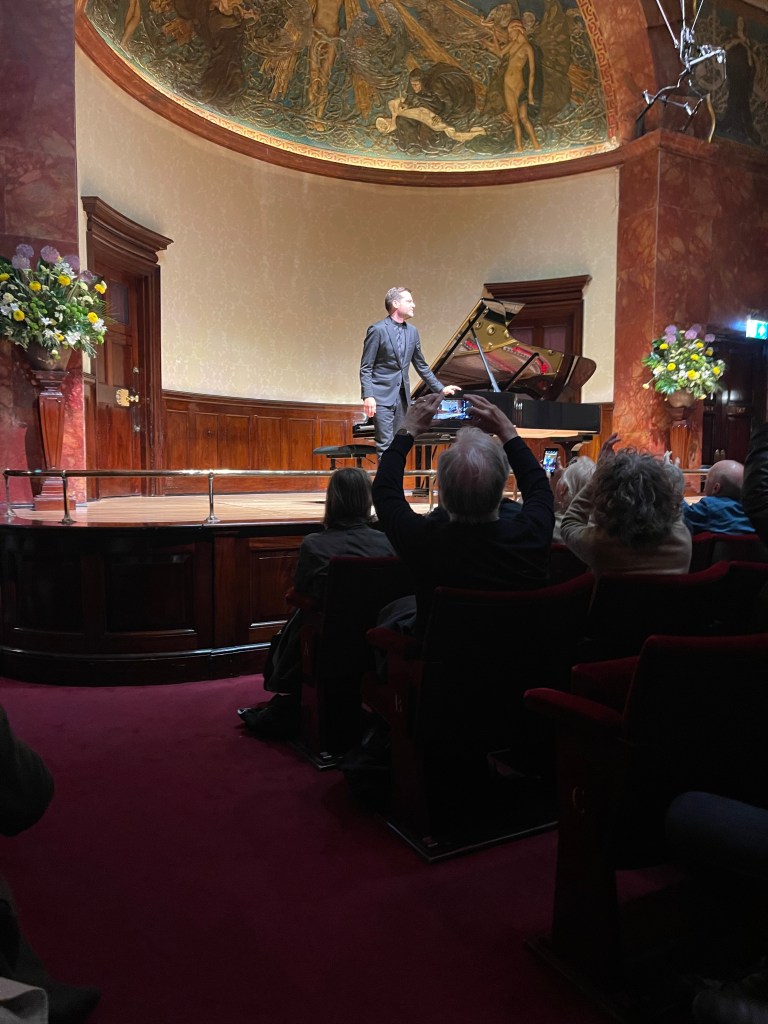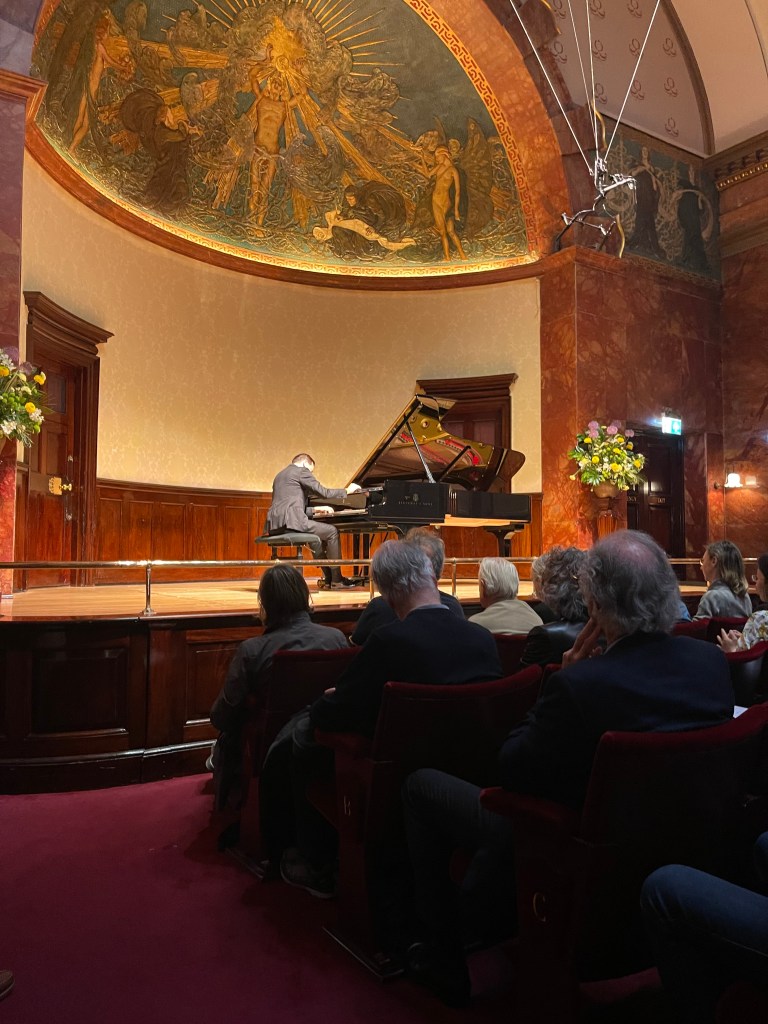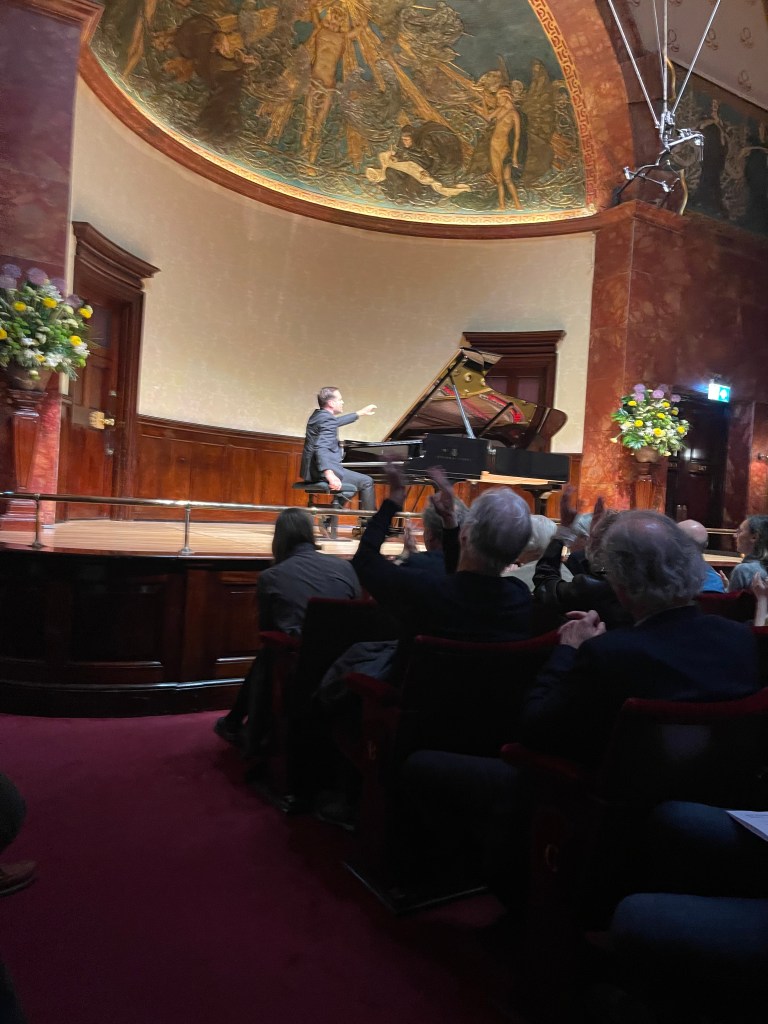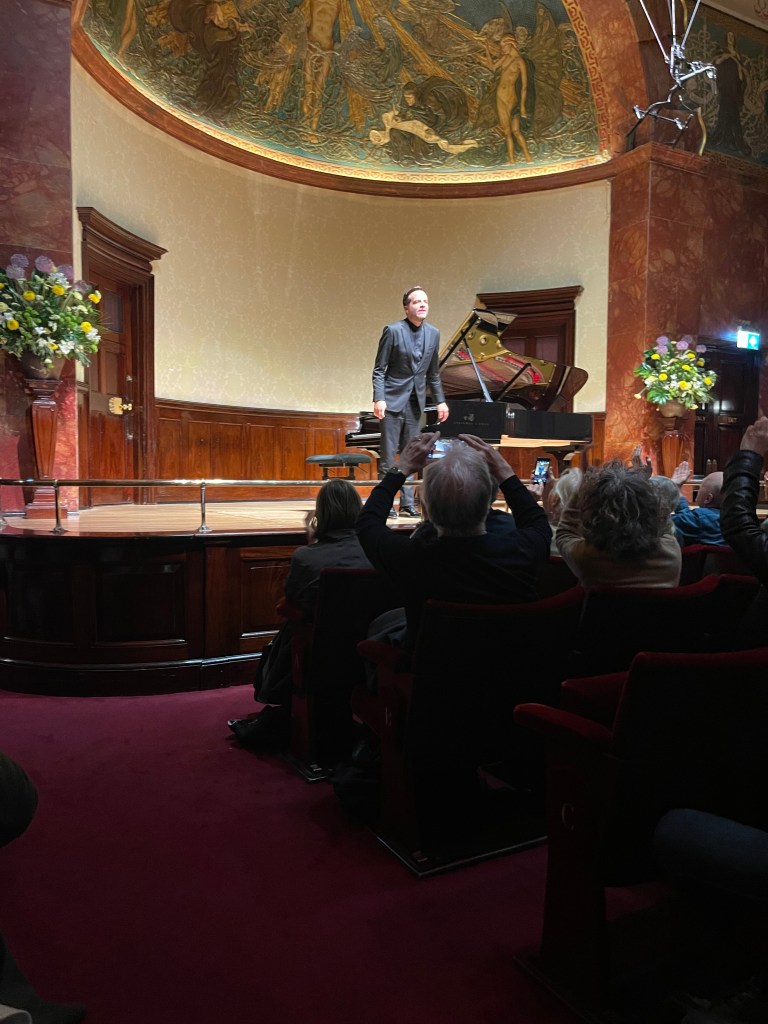
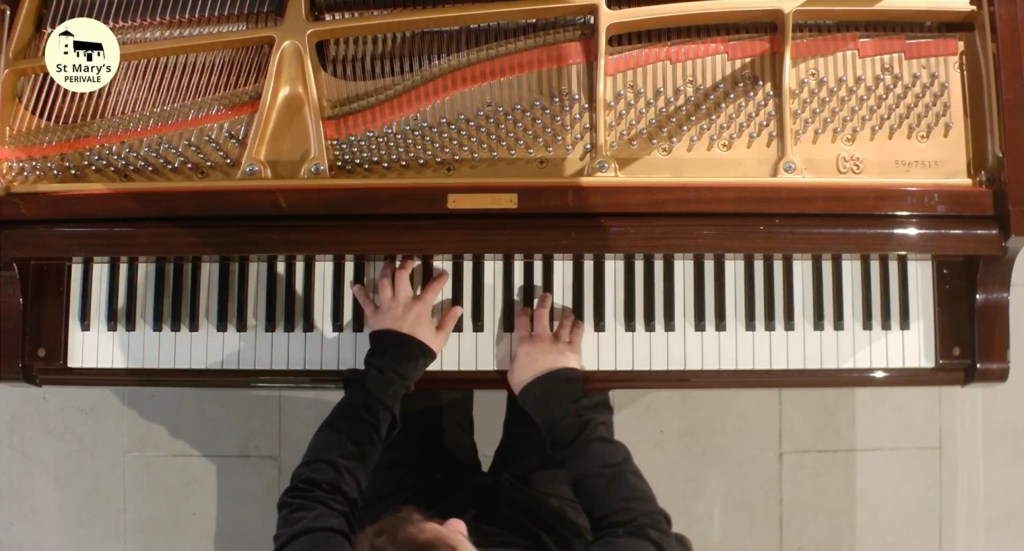
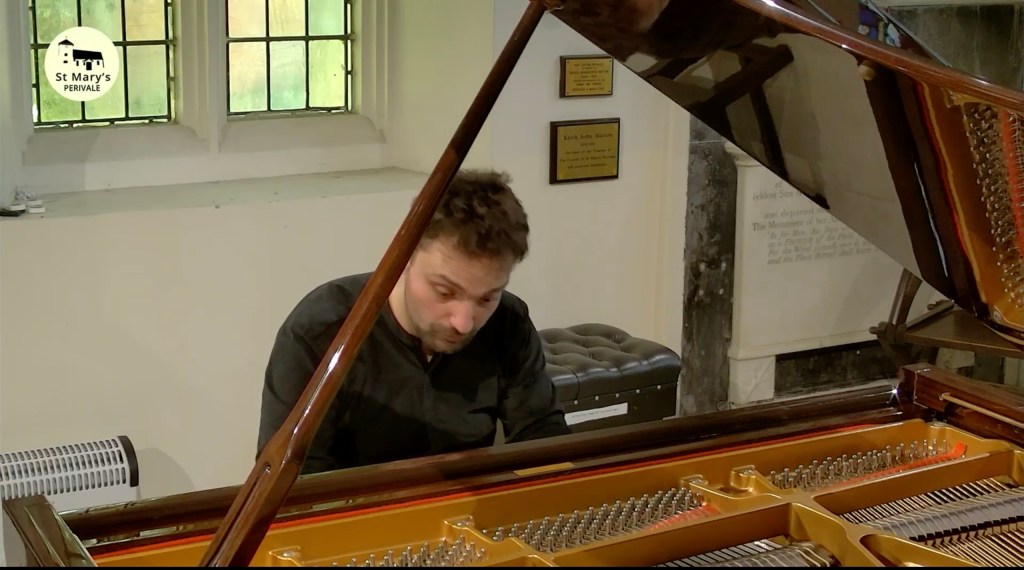
Cristian Sandrin in Perivale Mastery and intelligence illuminate Beethoven Sonatas op 2

As Dr Mather said today it is unusual to find a recital of just Beethoven Sonatas with the exception of the last trilogy. I remember artists such as Serkin, Arrau ,Foldes and Kempff playing recitals of four Beethoven sonatas. Occasionally we would get a cycle of all 32 Sonatas from Arrau, Barenboim and these days from Igor Levitt and Boris Giltburg. It is rare to hear the early Sonatas in concert programmes, yet they are some of the most startlingly original works, where youthful elegance and beauty are starting to feel the eruptions that are in Beethoven’s soul. The real revelations or revolutions are in the slow movements of op 2 n. 3, op 7 and op 10 n.3 where one can see the genius of Beethoven taking the form from his teacher Haydn but adding a density and profundity that was not part of the eighteenth century. where elegance and refined formality was the norm.
https://www.youtube.com/live/AI9lzVcIu-0?si=rDoYzxhfLR5pk2tD

Cristian has started at the top having just recorded the last three Sonatas dedicated to his father Sandu Sandrin’s memory. And only now I hear him play from the bottom, and judging from his masterly playing of these early op 2 Sonatas and the Trilogy, I hope he will now fill in that vast gap which is the map of Beethoven’s life in 32 steps.
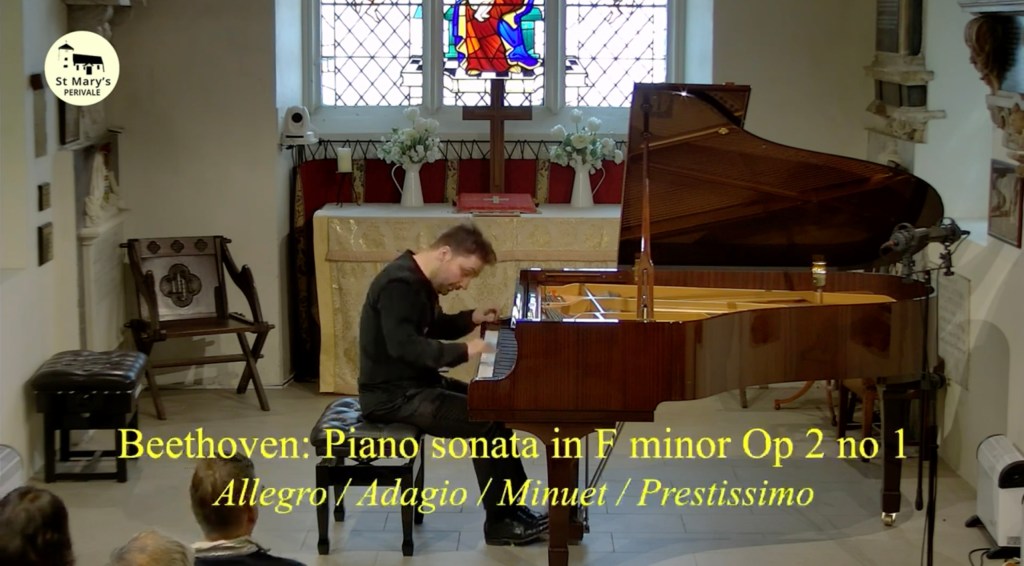
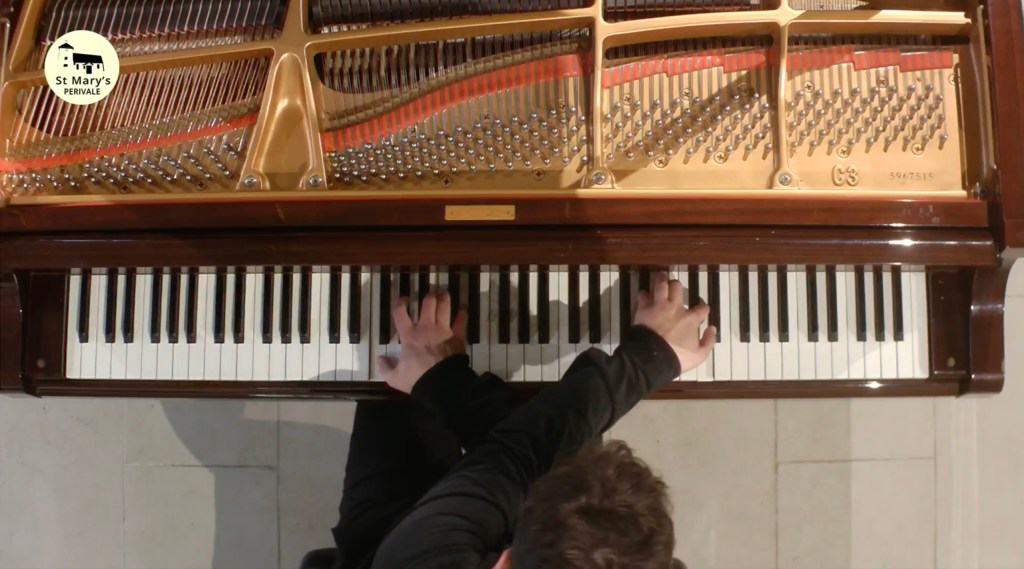
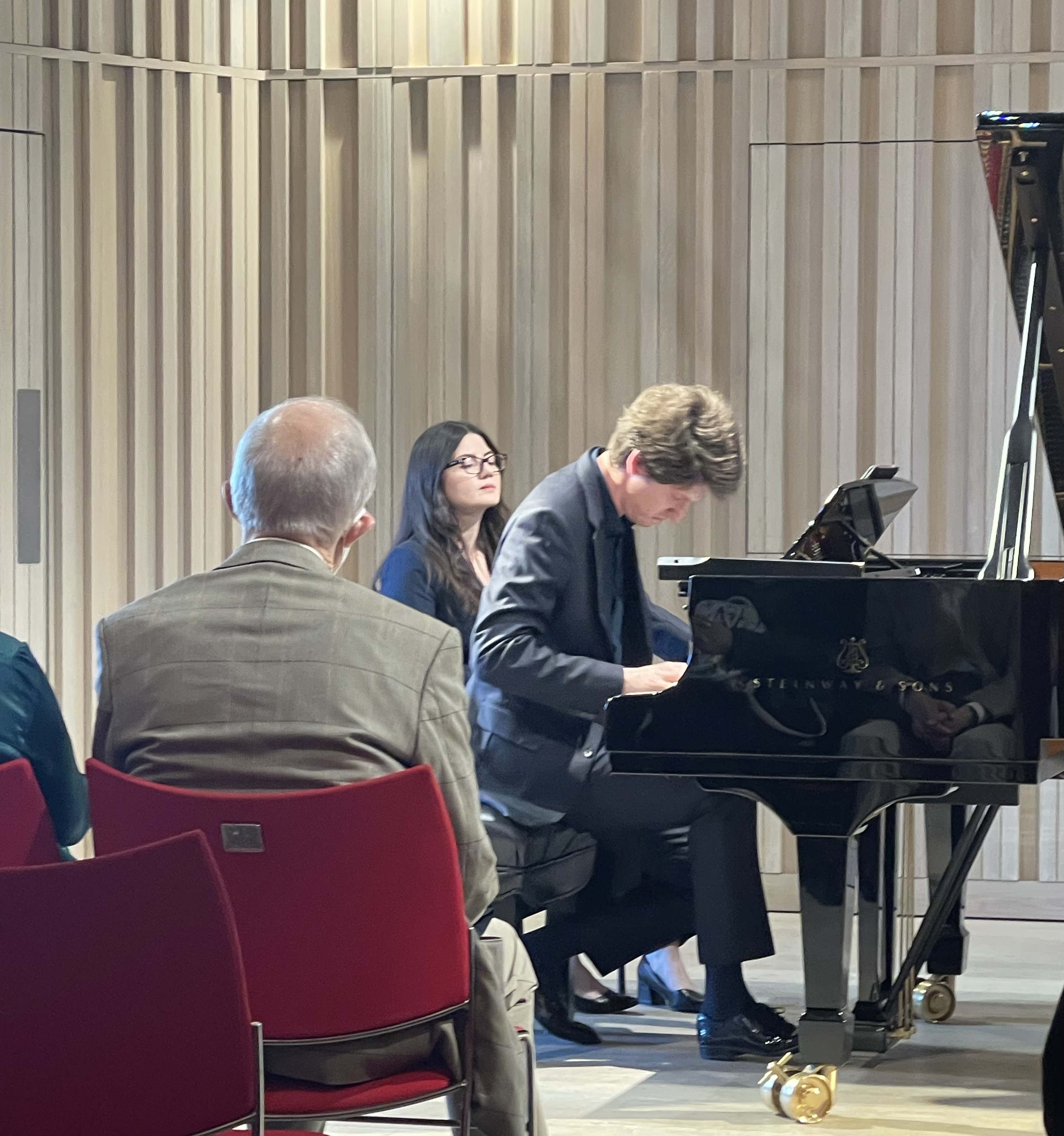
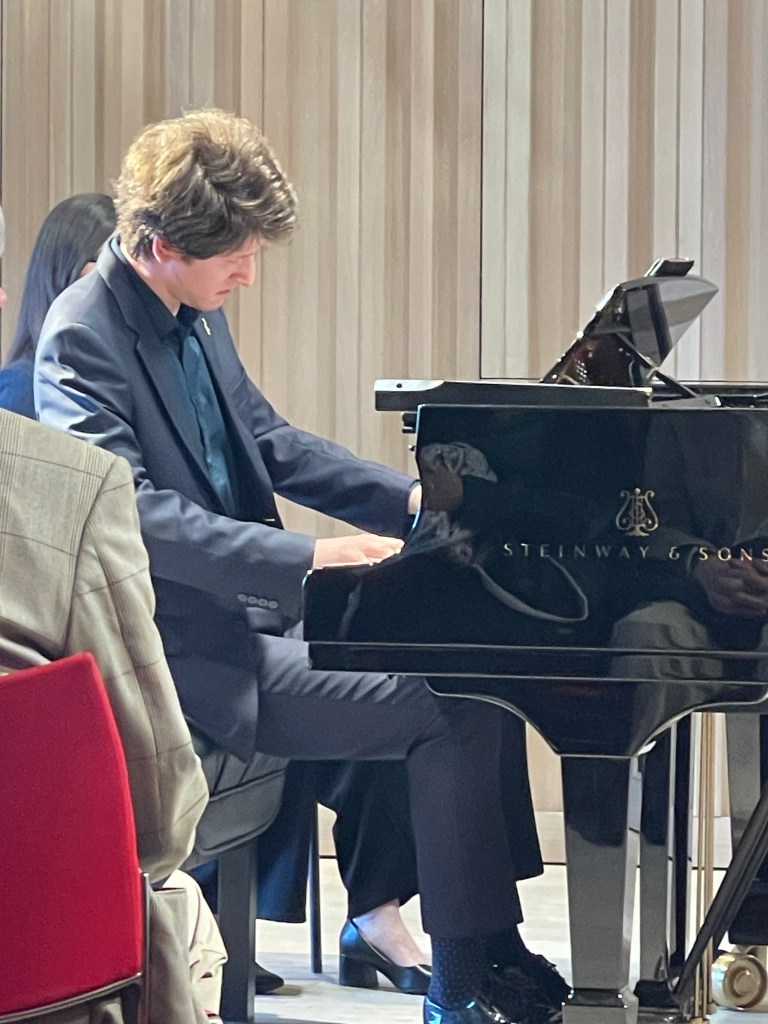
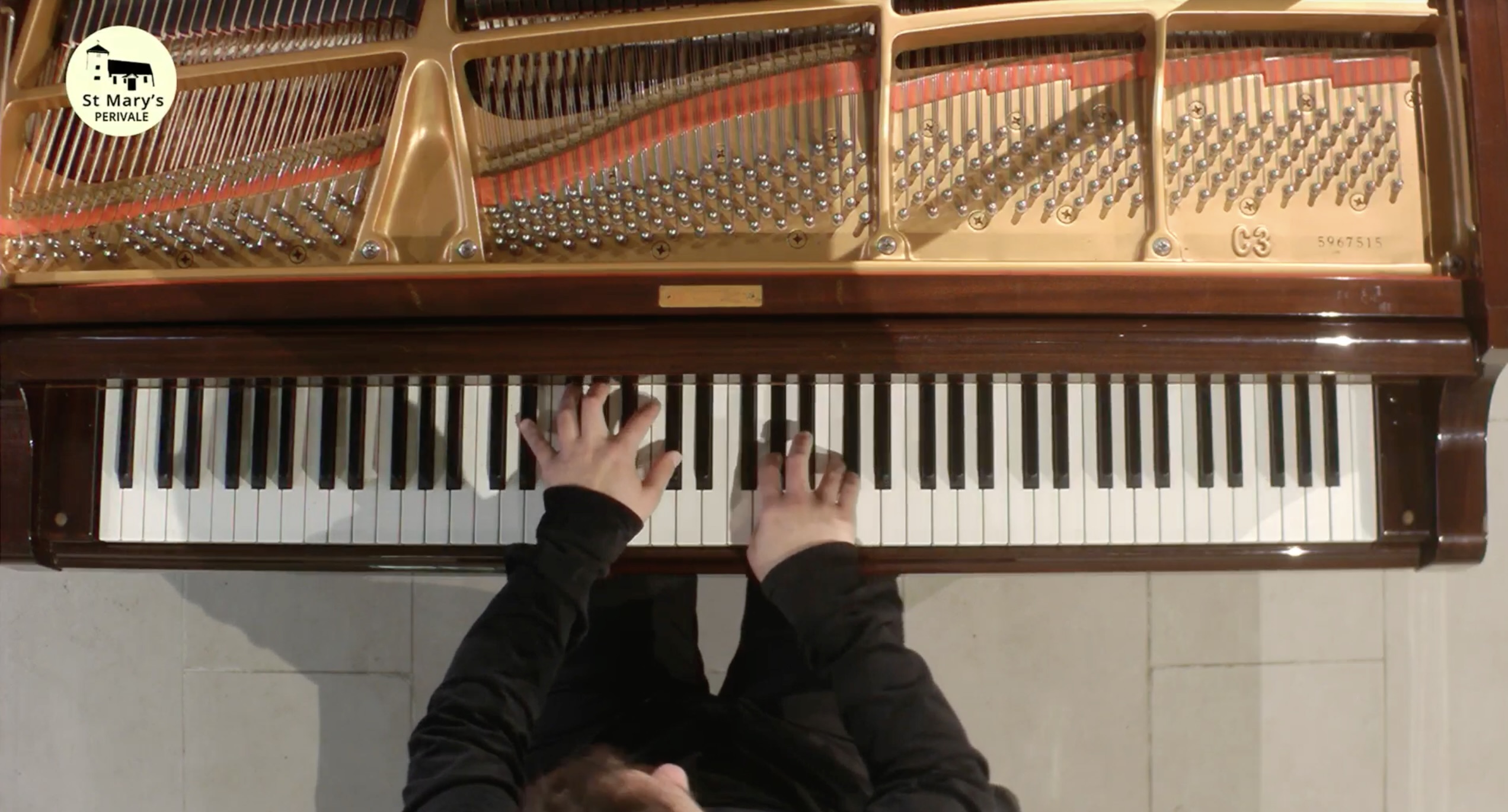
There was an elegance and exhilaration to the first of Beethoven’s 32 sonatas with a clarity and always beauty of sound. The hand of Cristian paints the same beauty as the sound he is creating and he has a noticeable way of allowing his hands to look at the keys like a bird eyeing their prey. An extraordinarily natural way to play where everything he plays is like swimming in water with beautiful horizontal movements of complete relaxation. I have often remarked on his trills, where he holds his arm up high and lets the fingers just vibrate over the keys. It was this simple beauty added to his intelligence of following all the indications left by the composer, not only on the printed page but also within the spaces, which are the meaning behind the notes. An ‘Adagio’ of refined subtle beauty and purity, followed by the elegance of the ‘Minuet’ with its beautifully flowing ‘Trio’. The ‘Prestissimo’was played with controlled brilliance and clarity with the opening bubbling over like water boiling at 100 degrees and then bursting into a melodic outpouring of noble beauty. I remember Serkin playing this with fearless abandon and hysterical intensity which was like an electric shock. Serkin was unique and Cristian played with the intensity and intelligence of Arrau which was controlled but still of great drive and brilliance. 

The very capricious opening of op n 2 n. 2 became ever more serious and demanding with its burning question and answer.There was an orchestral colour to the ‘Largo’ with its pizzicato accompaniment to the nobility and radiance of the melodic line. Delicate playfulness to the ‘Scherzo’ contrasting with the flowing passion of the ‘Trio.’ The swooping flourish of the Rondò played with charm and restraint before the ‘Sturm und Drang’ of the central episode, contrasting always with the elegant entry of the rondò theme with flourishes ever more prolonged. Played with masterly simplicity and radiance where Beethoven was allowed to speak for himself without any extraneous interventions from the performer.
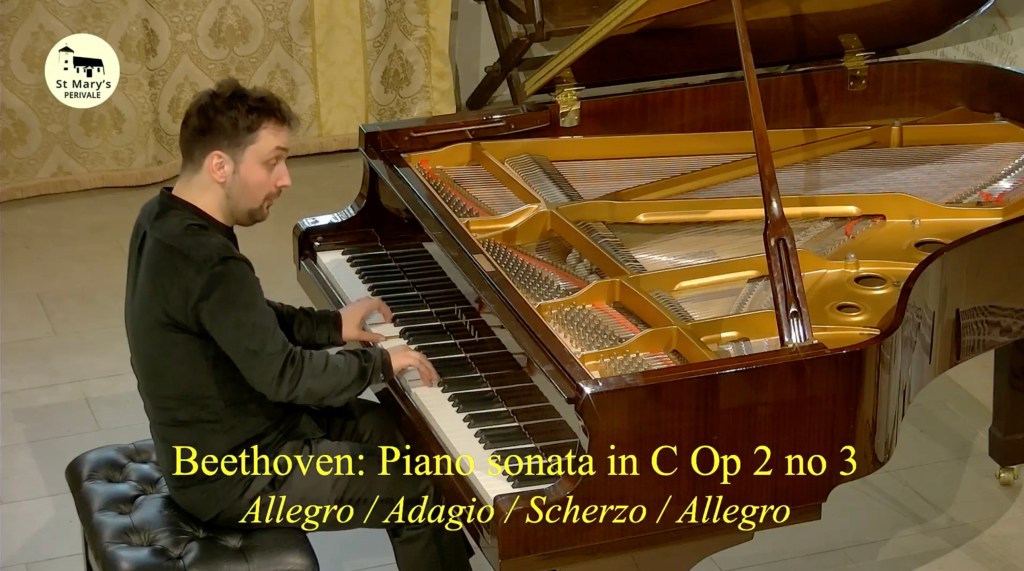
Op 2 n. 3 is notorious for its opening double thirds and I have seen Nikita Lukinov play it even with a helping hand from his left ! Cristian played it with gentle elegance with one hand and it was this return of the opening elegant declaration that was so touching after the dynamic outbursts of a Beethoven who was already feeling the vast canvas that was opening up from his heritage. Full robust sounds where every note had its just weight but without any hardness or brittle percussive brilliance.There was beauty too, with Beethoven’s beautiful mellifluous outpouring of Schubertian proportions. An architectural shape to this, the longest first movement of these first three sonatas. This is the first really important Sonata that became a favourite of the great pianists such as Arturo Benedetti Michelangeli and Claudio Arrau.There was a timeless beauty to an ‘Adagio’ of extraordinary poignancy and importance demonstrating the pupil breaking out of the shell of his teacher. There was a rhythmic insistence to the ‘Scherzo’ and an enviable sweep to the Trio.The ‘Allegro’ was played with infectious dance rhythm where the chords were played with a lightness and elegance that was quite remarkable for its shape and beauty. There was dynamic drive too that brought us to a tumultuous ending, but always within the sound world of Beethoven’s architectural mastery.   
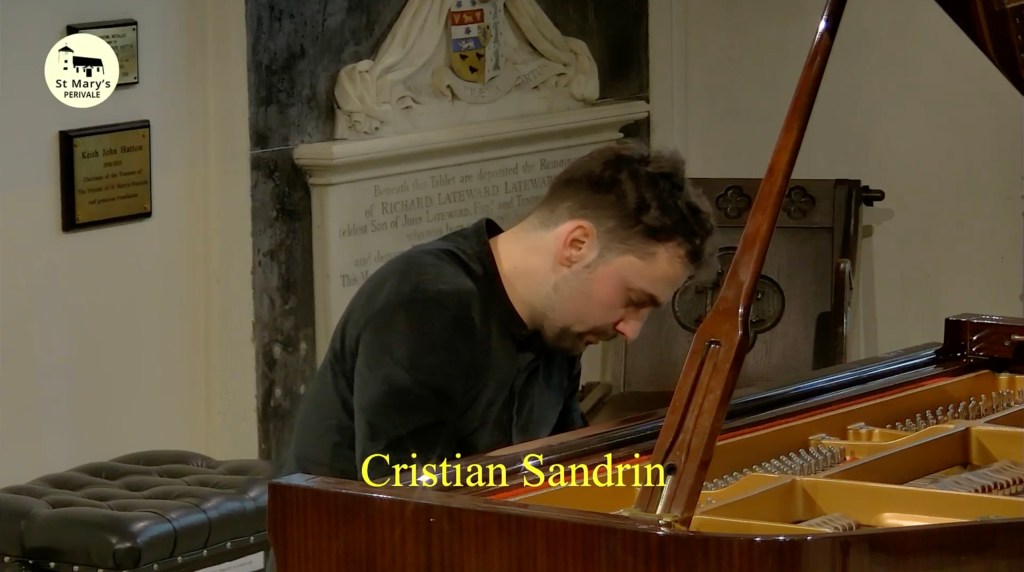
Born into a family of musicians from Bucharest, Cristian Sandrin has been surrounded by classical music all his life. His frequent visits to the historic Romanian Atheneum concert hall and his attendances at the prestigious Enescu Festival shaped his musical aspirations from early childhood. Years later, he would have his own debut at the Atheneum at the age of 13. Cristian is especially devoted to the Classical and Romantic repertoire. His passion for Mozart’s piano concertos led him to direct from the keyboard several concertos during Summer Festivals at the Royal Academy of Music, as well as for the official opening of the Angela Burgess Recital Hall. From 2018–2020 he was privileged to tour the UK as an artist of the Countess of Munster Recital Scheme. Additionally, He is a scholarship holder of the Imogen Cooper Music Trust benefiting from her unique one-to-one guidance and mentorship since 2017. He graduated in 2019 from the Royal Academy of Music, receiving a DipRAM, MMus later being part of the prestigious Advanced Diploma programme.  
In 2023 he was invited to become the co-Artistic Director of the much-admired Kettner Concerts which are held in the David Lloyd George Hall of the National Liberal Club, Rachmaninov’s favourite London recital room and the venue where he performed his European farewell concert. In 2021 Cristian travelled to Romania for his debut with the acclaimed George Enescu Philharmonic performing Mozart’s K 503 Piano Concerto in C major at the country’s foremost music venue: The Romanian Atheneum.Since 2020, Cristian has performed challenging solo programmes including Beethoven’s last three sonatas and Bach’s Goldberg Variations in famous venues across Europe from Berlin’s Konzerthaus, the Radio Hall in Bucharest to London’s LSO St Luke’s and Holywell Music Room Oxford, Sinfonia Smith Square and Sala Puccini in Milan. In July 2025 Cristian will have his debut at Beethovenhaus in Bonn, Germany.  
His debut CD Correspondances (Antarctica Records 2022) featuring music by Ravel, Enescu and Cyril Scott has been highly acclaimed in Europe and accross the Atlantic: the German Magazine Piano News selected it as the CD of the Month whilst the American Record Guide named it “the highlight of this month’s listening. Cristian’s performances have been broadcast on major radio and TV stations in Europe and Canada, from Bayerische Rundfunk, to Rai Tre, Radio France Musique, Radio Romania Muzical and Stingray Classica. 
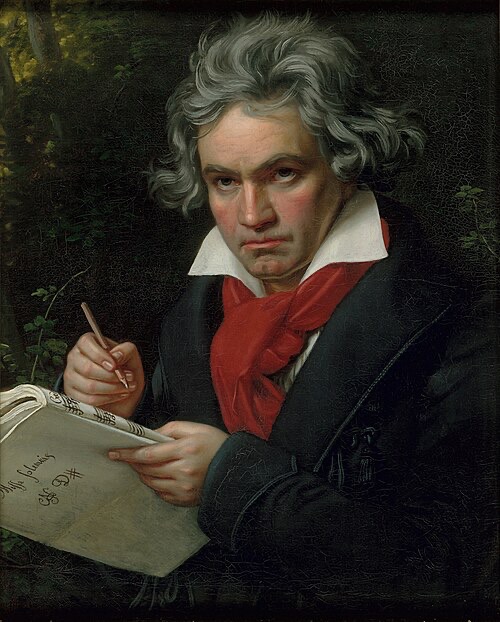
Beethoven with the Manuscript of the Missa Solemnis (1820)
Born in Bonn Baptised 17 December 1770. Died. 26 March 1827 (aged 56) Vienna
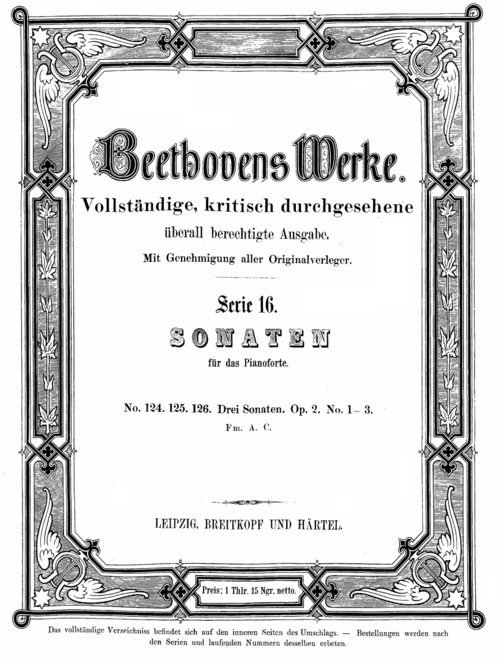
Cover of 1862 edition of Beethoven’s first three piano sonatas (Breitkopf & Härtel)

The conventional first period began after Beethoven’s arrival in Vienna in 1792. In the first few years, he seems to have composed less than he did at Bonn, and his Piano Trios, op.1 were not published until 1795. From this point onward, he had mastered the ‘Viennese style’ (best known today from Haydn and Mozart ) and was making the style his own. His works from 1795 to 1800 are larger in scale than was the norm (writing sonatas in four movements, not three, for instance); typically he uses a scherzo rather than a minuet and trio ; and his music often includes dramatic, even sometimes over-the-top, uses of extreme dynamics and tempi and chromatic harmony. It was this that led Haydn to believe the third trio of Op.1 was too difficult for an audience to appreciate.

He also explored new directions and gradually expanded the scope and ambition of his work. Some important pieces from the early period are the first  and second symphonies, the set of six string quartets op.18 , the first two piano concertos, and the first twenty piano sonatas, including the famous Pathétique sonata, Op. 13.Beethoven’s earlier preferred pianos included those of Johann Andreas Stein ; he may have been given a Stein piano by Count Waldstein. From 1786 onwards there is evidence of Beethoven’s cooperation with  Johann Andreas Streicher , who had married Stein’s daughter Nannette. Streicher left Stein’s business to set up his own firm in 1803, and Beethoven continued to admire his products, writing to him in 1817 of his “special preference” for his pianos. Among the other pianos Beethoven possessed was an Érardpiano given to him by the manufacturer in 1803. The Érard piano, with its exceptional resonance, may have influenced Beethoven’s piano style – shortly after receiving it he began writing his Waldstein Sonata – but despite initial enthusiasm he seems to have abandoned it before 1810 when he wrote that it was “simply not of any use any more”; in 1824 he gave it to his brother Johann. In 1818 Beethoven received, also as a gift, a grand piano by John Broadwood & Sons. Although Beethoven was proud to receive it, he seems to have been dissatisfied by its tone (a dissatisfaction which was perhaps also a consequence of his increasing deafness), and sought to get it remodelled to make it louder. In 1825 Beethoven commissioned a piano from Conrad Graf, which was equipped with quadruple strings and a special resonator to make it audible to him, but it failed in this task. Beethoven  wrote 32 mature piano sonatas  between 1795 and 1822. (He also wrote 3 juvenile sonatas at the age of 13 and one unfinished sonata , WoO. 51.) Although originally not intended to be a meaningful whole, as a set they comprise one of the most important collections of works in the history of music.Hans von Bülow  called them “The New Testament ” of piano literature (Johann Sebastian Bach’s The Well-Tempered Clavier   being “The Old Testament “).

Beethoven’s piano sonatas came to be seen as the first cycle of major piano pieces suited to both private and public performance. They form “a bridge between the worlds of the salon and the concert hall”.[2] The first person to play them all in a single concert cycle was Hans von Bülow; the first complete recording is Artur Schnabel’s for His Master’s Voice.

The first three sonatas, written in 1782–1783, are usually not acknowledged as part of the complete set of piano sonatas because Beethoven was 13 when they were published.

  • WoO 47: Three Piano Sonatas (composed 1782–3, published 1783)
    1. Piano Sonata in E flat major
    2. Piano Sonata in F minor
    3. Piano Sonata in D major

Beethoven’s early sonatas were highly influenced by those of Haydn and Mozart. Piano Sonatas No. 1, 2, 3, 4, 7, 11, 12, 13, and 15 are four movements long, which was rather uncommon in his time.

  • Opus 2: Three Piano Sonatas (1795)
    1. Piano Sonata n. 1 F minor
    2. Piano Sonata n. 2 in A major
    3. Piano Sonata n. 3 in C major

After he wrote his first 15 sonatas, he wrote to Wenzel Krumpholz, “From now on, I’m going to take a new path.” Beethoven’s sonatas from this period are very different from his earlier ones. His experimentation in modifications to the common sonata form of Haydn and Mozart became more daring, as did the depth of expression. Most Romantic period sonatas were highly influenced by those of Beethoven. After his 20th sonata, published in 1805, Beethoven ceased to publish sonatas in sets and published all his subsequent sonatas each as a single whole opus. It is unclear why he did so.
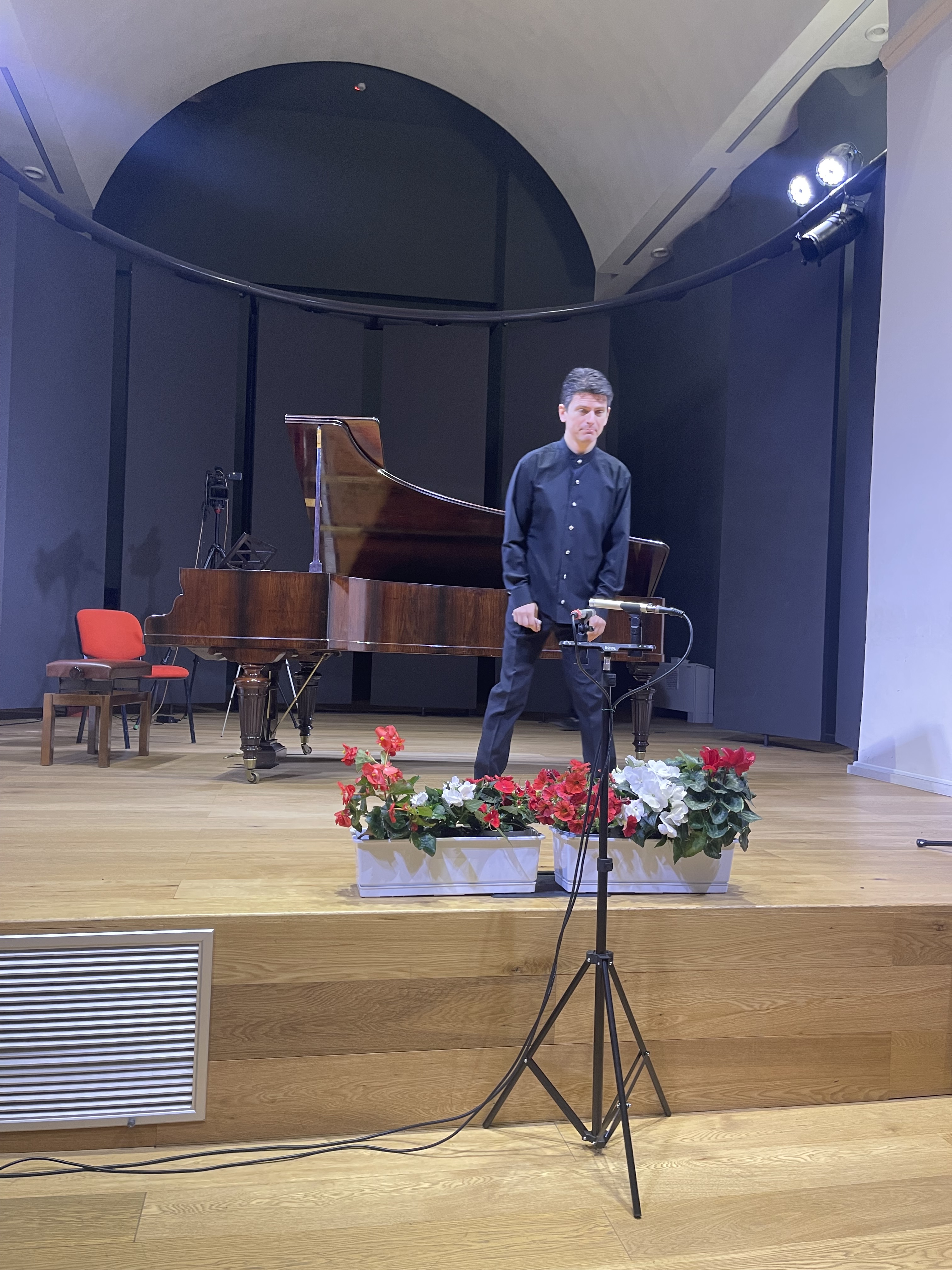
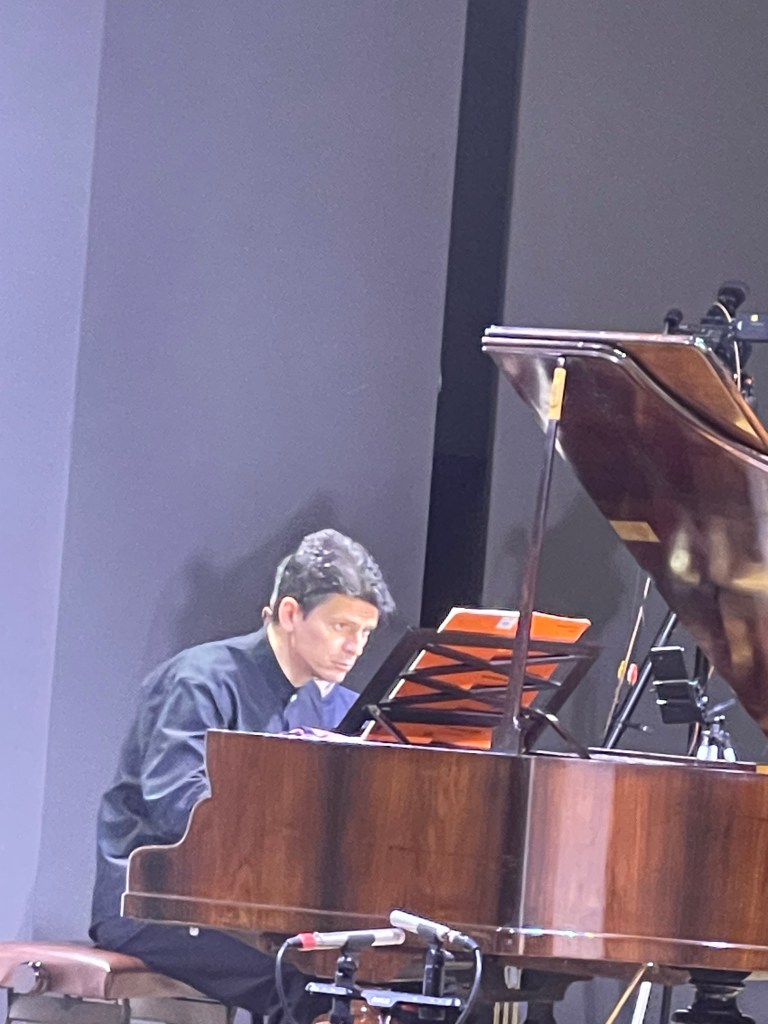
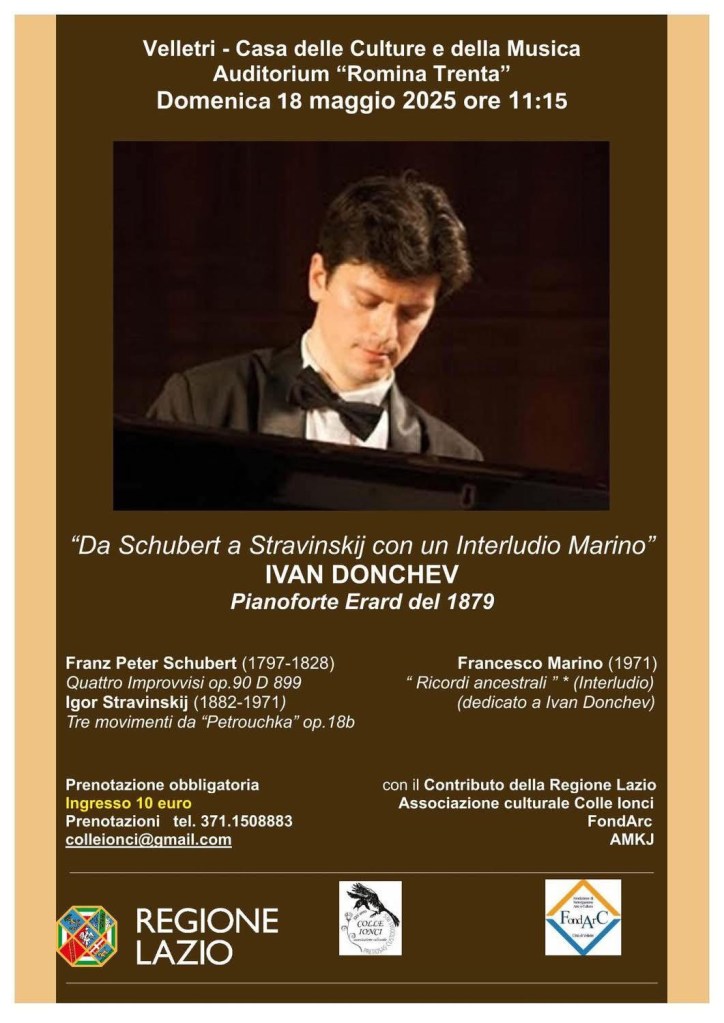
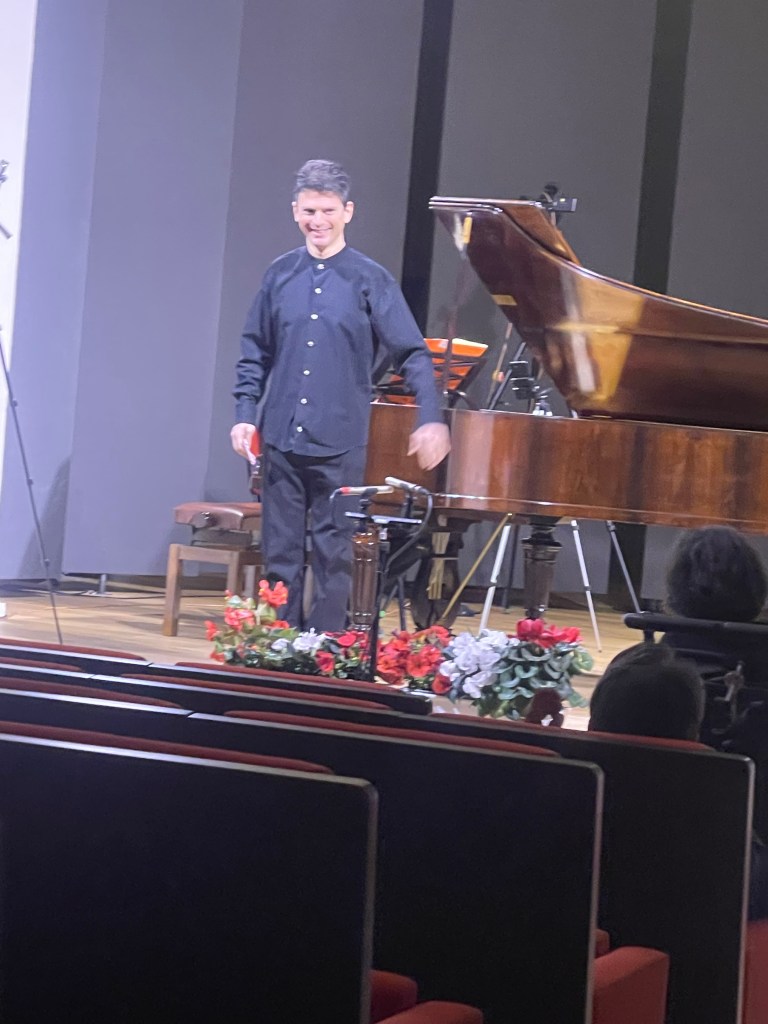
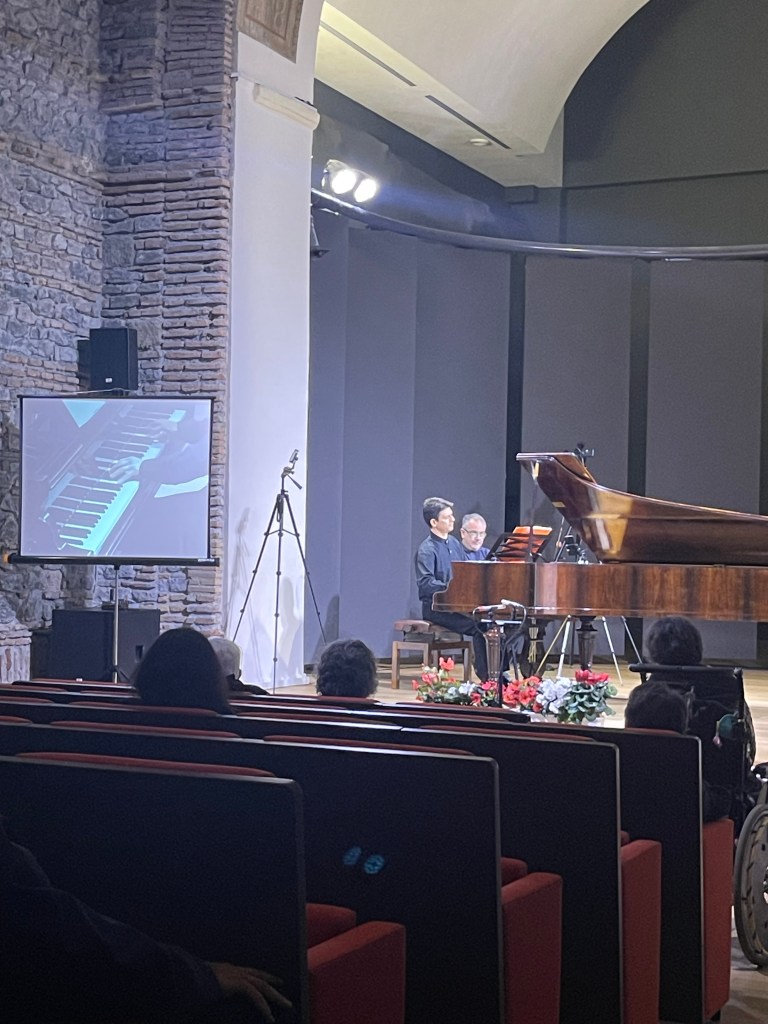
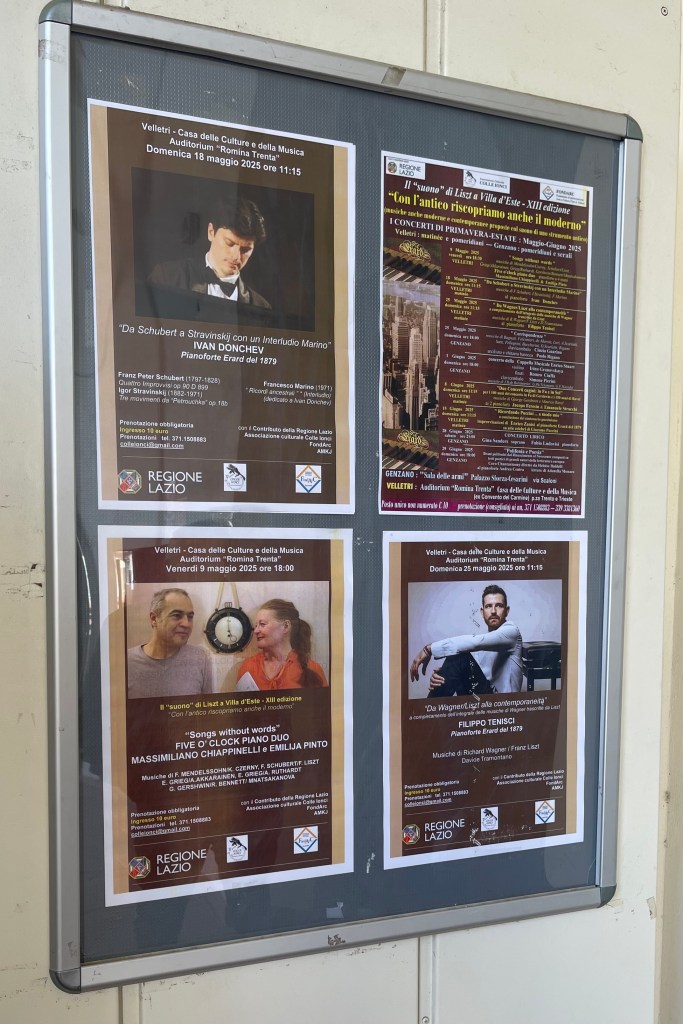
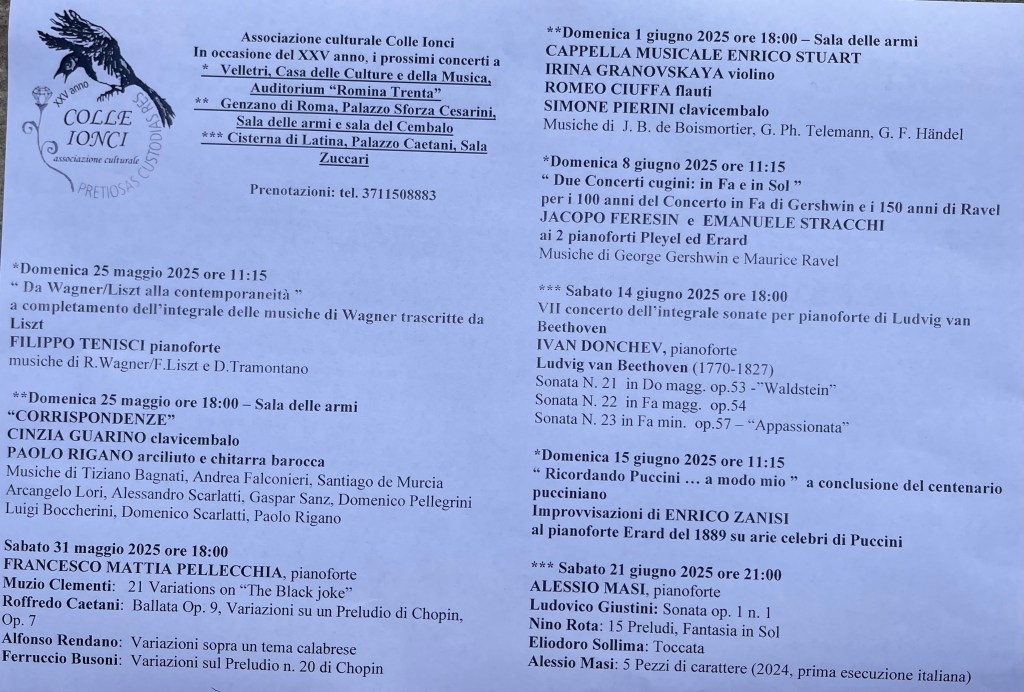
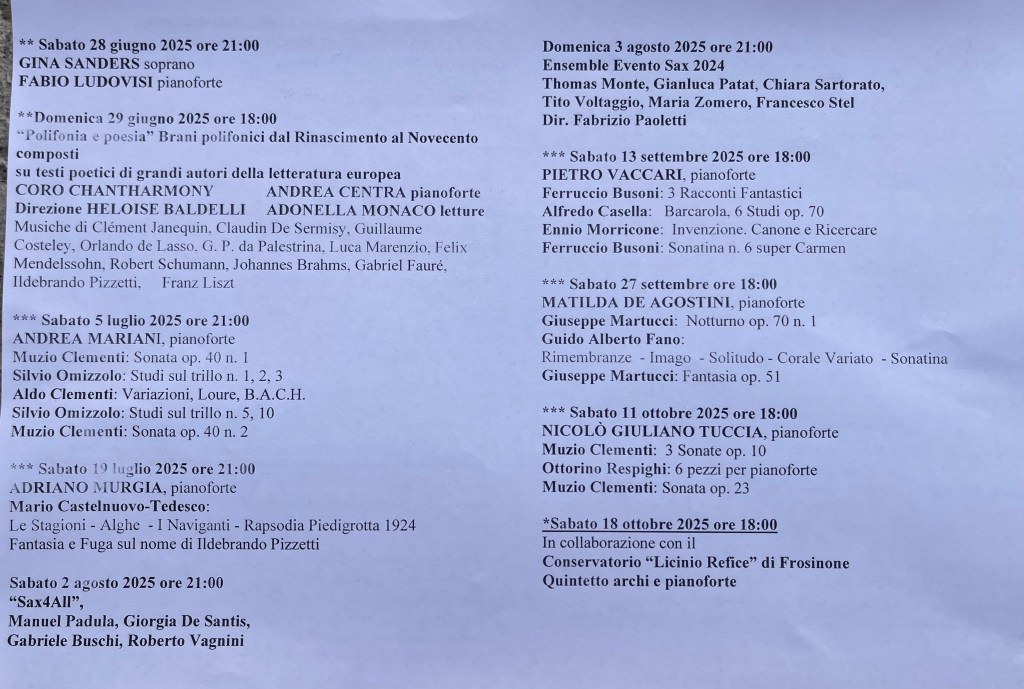
Ivan Donchev in Velletri ‘If music be the food of love’ …play on with the mastery of a poet of the keyboard.

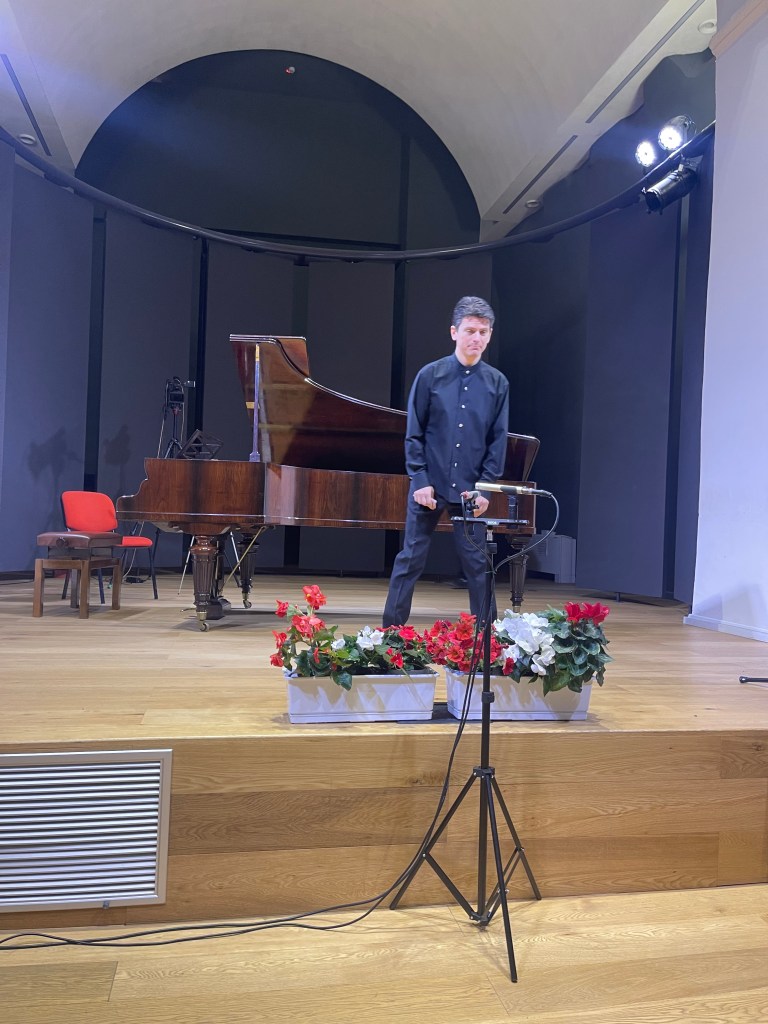
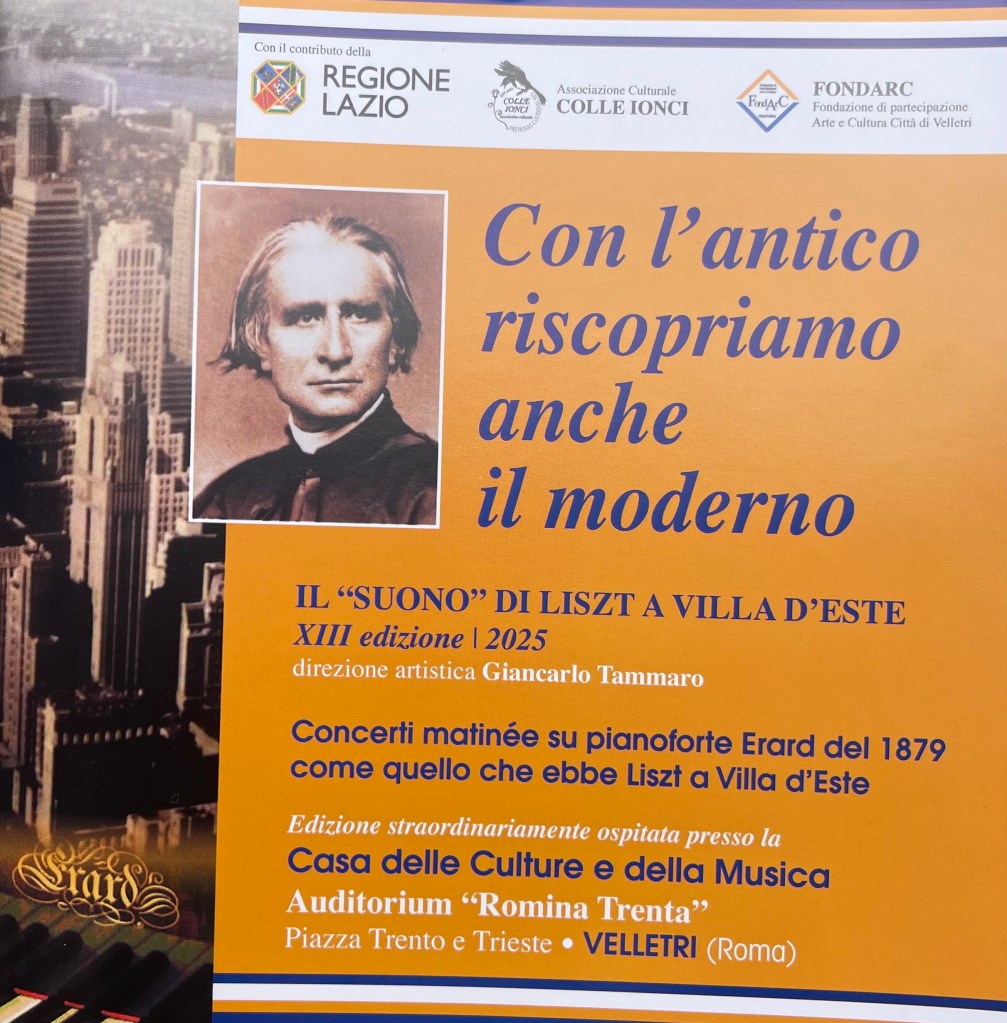
Ivan Donchev performing Schubert and Stravinsky on Ing. Tammaro’s prize Erard of 1879 today in Velletri

Ivan who is playing two separate complete Beethoven cycles this season, not on Erard though, but had played the ‘Diabelli variations’ on this very instrument a while ago .

https://christopheraxworthymusiccommentary.com/2021/07/11/ivan-donchev-diabelli-reigns-in-velletri-while-italy-awaits-the-vital-goal/

Ivan is a master musician who I have heard many times over the years and admired him for his intelligence , musical integrity and pianistic mastery. Also for his large repertoire, always impeccably prepared and played with an extraordinary mastery. I just missed his ‘Hammerklavier’ last Autumn, but was glad at last to catch up now, even though I was very surprised to see in the programme Stravinsky’s ‘Petrushka.’

It was the work that Stravinsky dedicated to his friend Artur Rubinstein when he had complained that the commissioned work, ‘The Piano Rag Music’, was not music ! Stravinsky and Rubinstein had always disagreed about the piano being a percussive or singing instrument. Rubinstein never played the ‘Piano Rag Music’ that was based on percussion but he loved the ‘Petrushka Suite’ and played it often , but not with the note picking accuracy. Stravinsky wrote the suite knowing that his friend would have to spend many more hours at the piano than usual to master it. Rubinstein played his own version, sanctioned by Stravinsky, that was pure theatre rather than the transcendental note picking that Stravinsky had written. Even the composer admitted it was too difficult for him to play because he had no left hand technique !

Now here was Ivan not only prepared to add one of the most notorious war horses to his repertoire but to play it on a piano that was certainly not built for such excess. It is a work in progress and with Ivan’s poetic sensibility it highlighted many beautiful moments that are usually glossed over by more zealous virtuosi, anxious to flex their muscles on one of the most difficult works in the piano repertoire. A ‘Danse Russe’ that was a true dance with moments of striking changes of colour in Stravinsky’s extraordinary score commissioned by Diaghilev for his Ballets Russes. ‘Petrushka’s room’ was brought vividly to life with capricious changes of temperament with their sudden outbursts contrasting with glances of bewitching melancholy. ‘The Semaine Grasse’, though, is where fearless abandon and dynamic drive are on the horizon and will be provided by Ivan when he finds a great black box built like a tank at his feet instead of the sweetest most refined piano of another age.

It was though just this sweetness and mellow sound that added such strength and beauty to works that Schubert had miraculously penned in the last years of his short life on this earth.

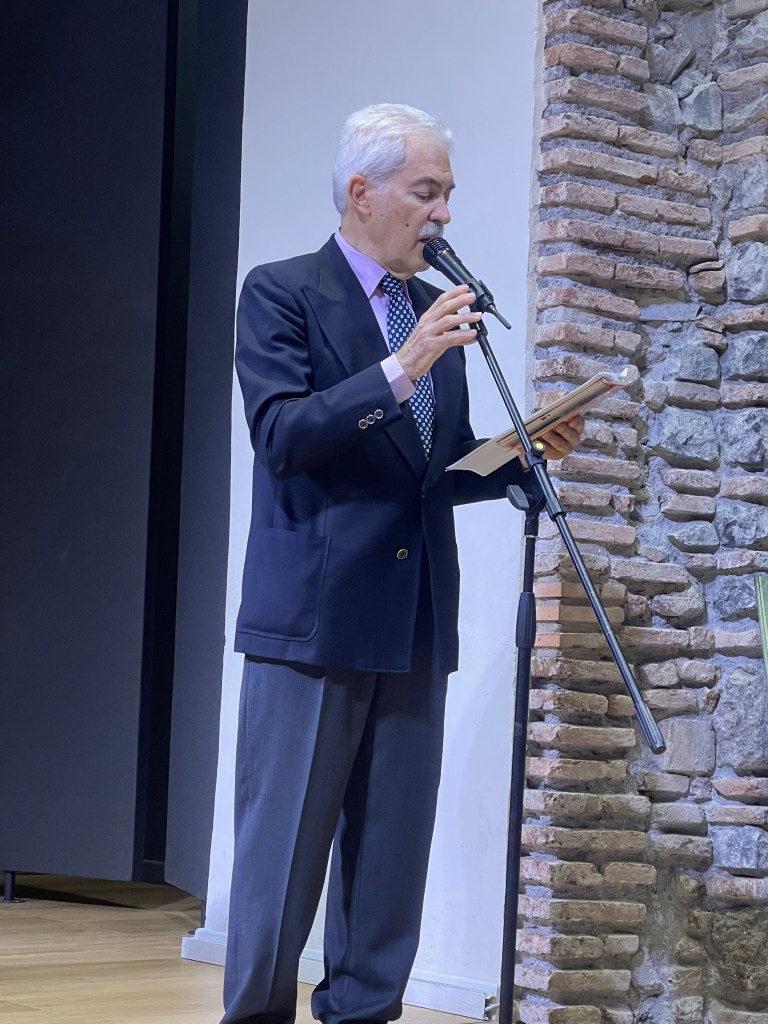
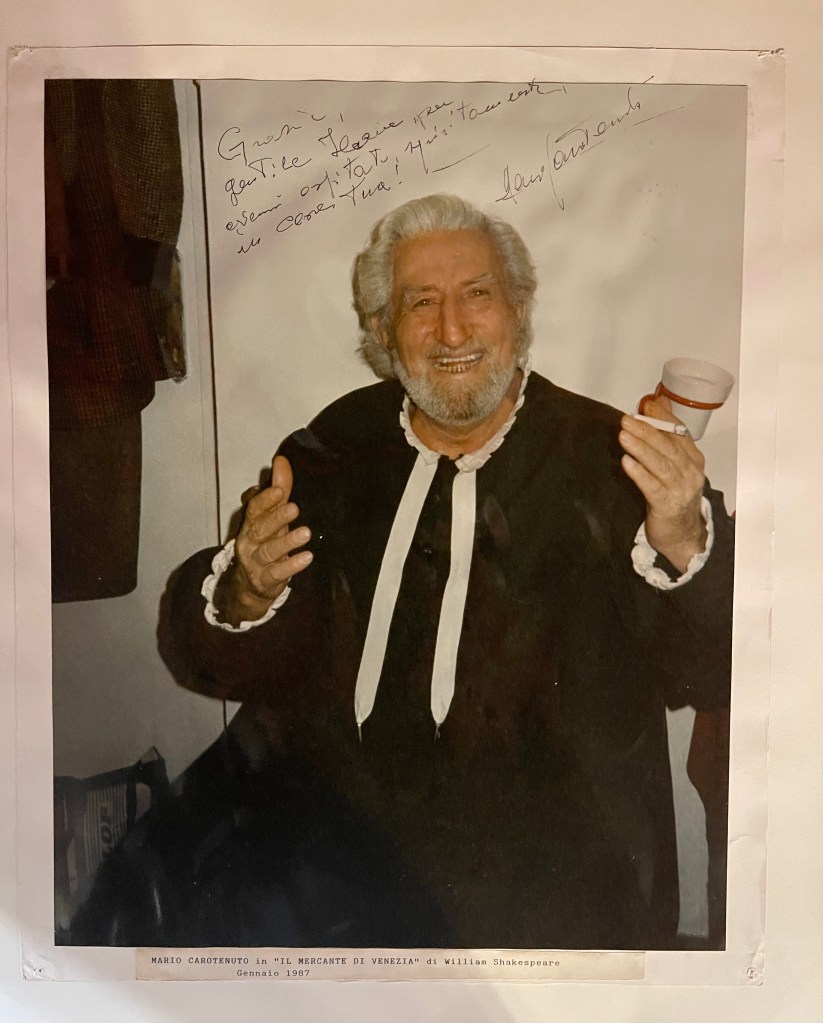
Ing Tammaro prepares a programme for his season that is to be cherished and studied and is full of intelligence and the passionate conviction of a man dedicated to sharing his love with others. Infact it is this dedication that is transmitted as he reads to his public extracts from these volumes that he prepares every year. He reminds me of Mario Carotenuto, though, who used to tell his public off every performance for not being more numerous.

Tammarow too who reprimanded those present saying he would like to see more local citizens involved in this cultural adventure that he brings to their beloved city every Sunday morning for several months a year !

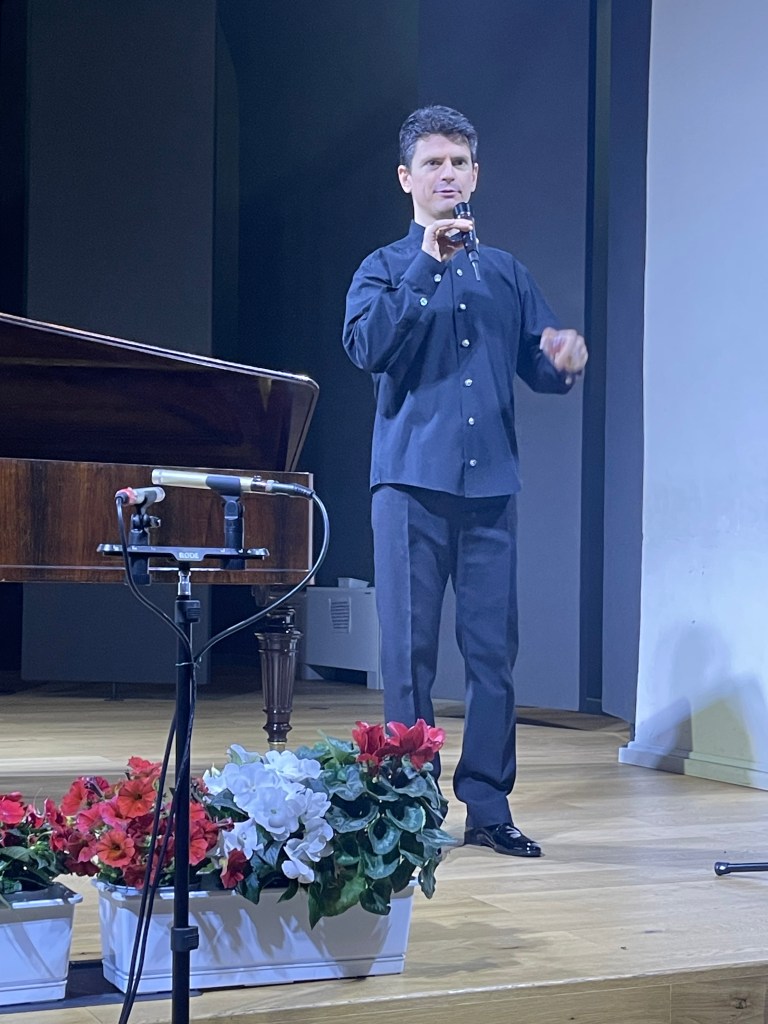
But it was just the few words allowed to an artist of Ivan’s stature ,though, that illuminated many of the things that he was then to demonstrate in poetic performances of visionary simplicity. In particular his pointing to the bell that rings out in the very first impromptu and then is heard in the distance as this miniature tone poem sees the paradise that is awaiting just around the corner for Schubert, ‘for whom the bells was indeed tolling.’ Playing the simple opening octave with a flourish that resounded around the piano and as the vibrations lay exhausted a plaintive voice of poignant simplicity emerged. Transforming this arresting opening into a mellifluous outpouring of emotional impact that under Ivan’s hands and with the sound of a faded postcard, especially poignant the distant tolling bell to be heard in the coda.

I had heard Leonskaja play these very Impromptus in London less than a week ago and she with the same poetic mastery recreated them as Ivan today, but this difference of timbre between a Steinway ‘D’ of the twenty first century manufacture and Erard of the nineteenth added a poignancy today that in London was missing.

https://christopheraxworthymusiccommentary.com/2025/05/12/elisabeth-leonskaja-at-the-wigmore-hall-a-great-lesson-of-humility-generosity-and-mastery/

The second impromptu just flowed from his fingers with mellifluous simplicity and a sudden change of character that was underplayed. The exhilaration and excitement were kept for the final few bars giving an architectural shape to a work too often played as a Mendelssohnian spinning song. Schubert imbues even this simple flowing ‘brook’, to used Ivan’s words, with melancholy and moments of unexpected beauty as the light catches the bubbling cascade of water in so many different ways.

The third impromptu was played not with the usual heart on sleeve cantabile but with an authority and a message that was more of poetic reasoning than conciliatory prayer. It was the quality of these period instruments that they can sing without hardness but with a sound that resembles a photo in brown and white rather than the glossy multicolour of today. Within the notes, as with these daguerreotype photos, there is a hidden message that is not stated openly but it is there for all those with a soul in tune with such subtle messaging. The fourth Impromptu just flowed from Ivan’s hands but where the cascades of notes were of the same sound as the melodic line that they surrounded. On modern instruments these two elements can seem strangely detached form one another but like in Chopin’s third Scherzo there is a chorale that is merely illuminated but the cascades of etherial notes in which it bathes.The dark brooding of the passionate central episode with Ivan’s intense playing combined with the mellow sound of the Erard made and emotional impact that on modern day instruments is completely lost.

Between these two monumental works, Francesco Marino had dedicated one of his eight Harmonies delle Sfere to the poetic sensibility of Ivan.

Particularly moved by his Liszt playing he had remodelled one of these works ,written between 2018 and 2020 , around the poetic fantasy of such a refined poet of the piano.Today was a world première of a work that owed more to Medtner than Rachmaninov but was of a similar rhapsodic beauty that Ivan shaped with loving thankfulness.

A simple children’s song was an encore that Ivan played to reminds us of the suffering of children in the conflicts around the world where making war makes more financial sense for world powers than making music. A deeply felt message from a poet of the keyboard and the father of three year old Leo and aware of what suffering there is still in a world where our cultural heritage is being ignored and where quantity rather than quality is the ethos.

Ivan writes :

‘Caro Chris, ti ringrazio della bellissima e dettagliata recensione! Grazie davvero! 

The reason for my encore (il piccolo montanaro) were they – the children of Palestine .Obviously I love and cherish all children in the world ,but in this moment these are in the worst situation and it is no secret of anyone.

Il motivo del mio bis (ll piccolo montanaro) erano loro – i bambini della Palestina. Ovviamente amo e compatisco tutti i bambini del mondo, ma in questo momento loro sono nella situazione peggiore e questo non è un segreto per nessuno!!

https://www.unicef.it/media/gaza-oltre-950-bambini-uccisi-negli-ultimi-due-mesi/

Obviously the responsibility for what I think and say is just mine ,and no-one elses ( if that should worry you) .But for me it is important that it is stated clearly as I said yesterday on stage. (Naturally I remember that even the young Pollini was not indifferent to humanitarian causes and it is right to cite a great artist)

Potresti aggiungerlo? Anche tra parentesi va bene.

Ovviamente, la responsabilità di ciò che penso e dico è soltanto mia, e di nessun altro (se questo ti preoccupa). Ma per me è importante che sia specificato, così come l’ho detto ieri. 

(Naturalmente ricorderai che nemmeno Pollini in gioventù era indifferente alle cause umanitarie giusto per ricordare un grande). 

Grazie di cuore

Dear Ivan ,I wanted to add this but was wary as I had not heard completely what you had announced from the platform.You have confirmed what I thought you said .

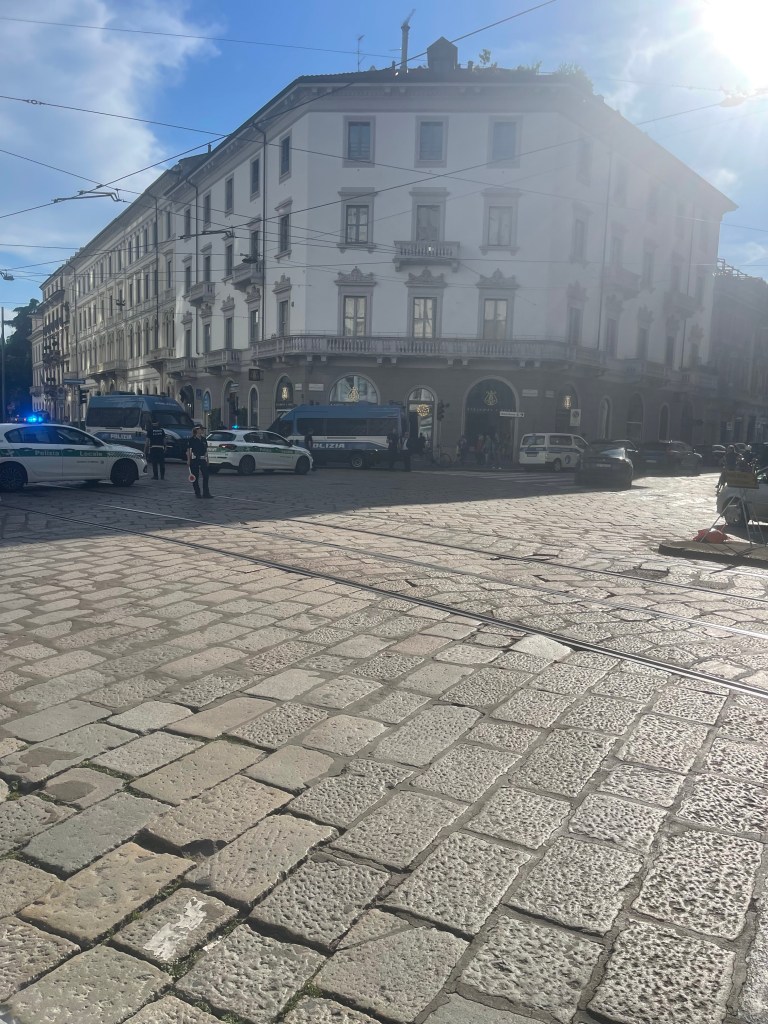
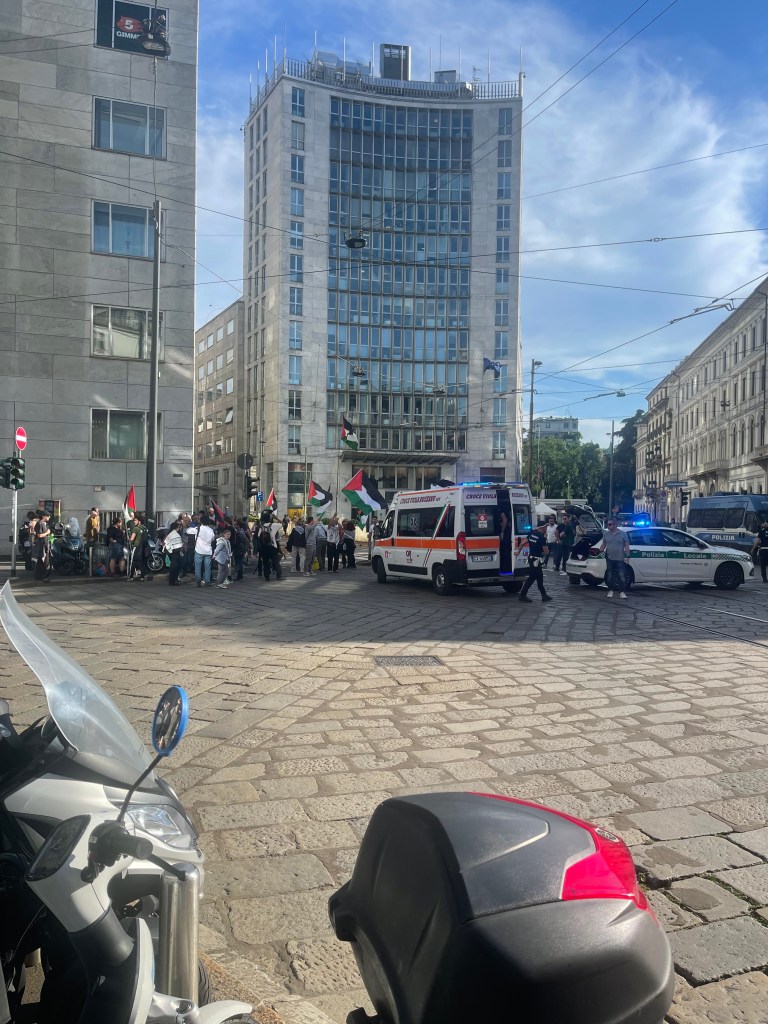
I wanted to add that on Thursday in Milan there was a protest in the square outside Steinway Hall for Palestine for the reasons you have so sincerely outlined. If only more people would have your sensibility and willingness to speak out.You are a great artist and how could you be indifferent ……it is part of greatness that within lies a soul that feels and cares about their neighbour’s suffering.

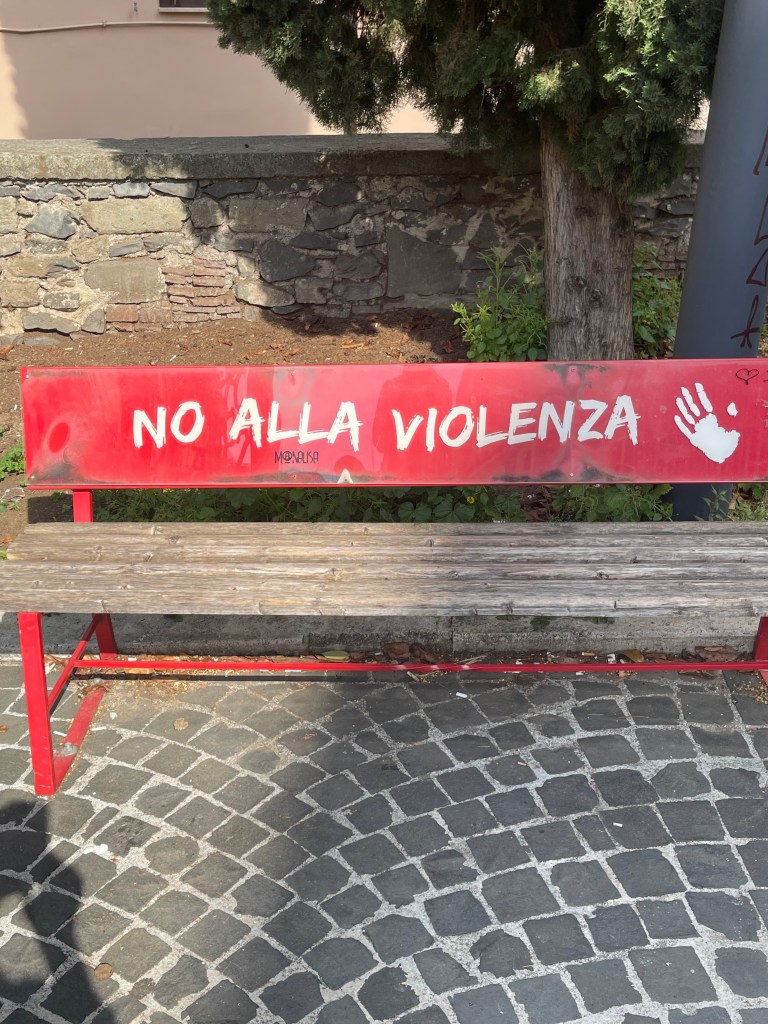
The bench outside the Casa della Cultura in Velletri

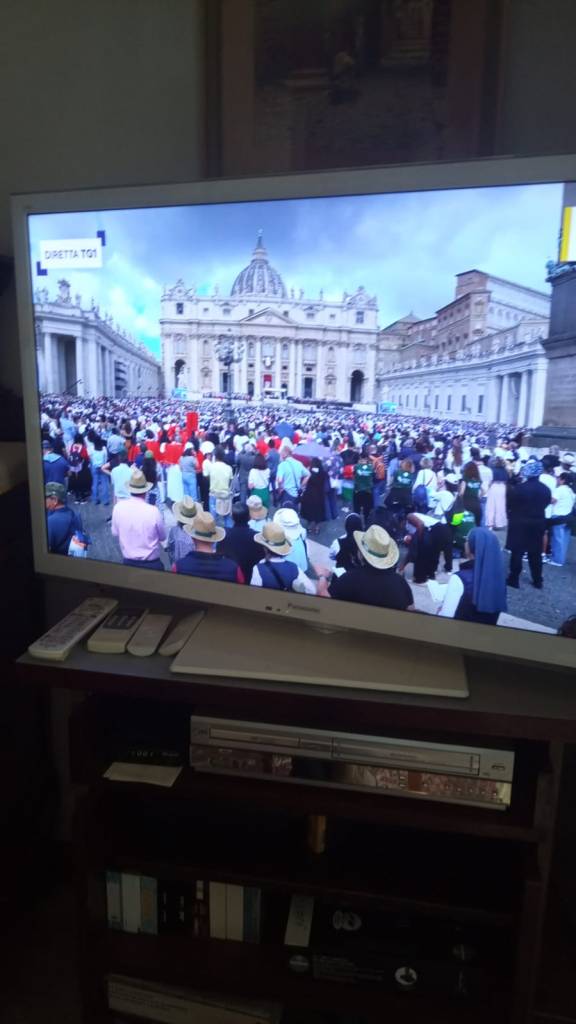
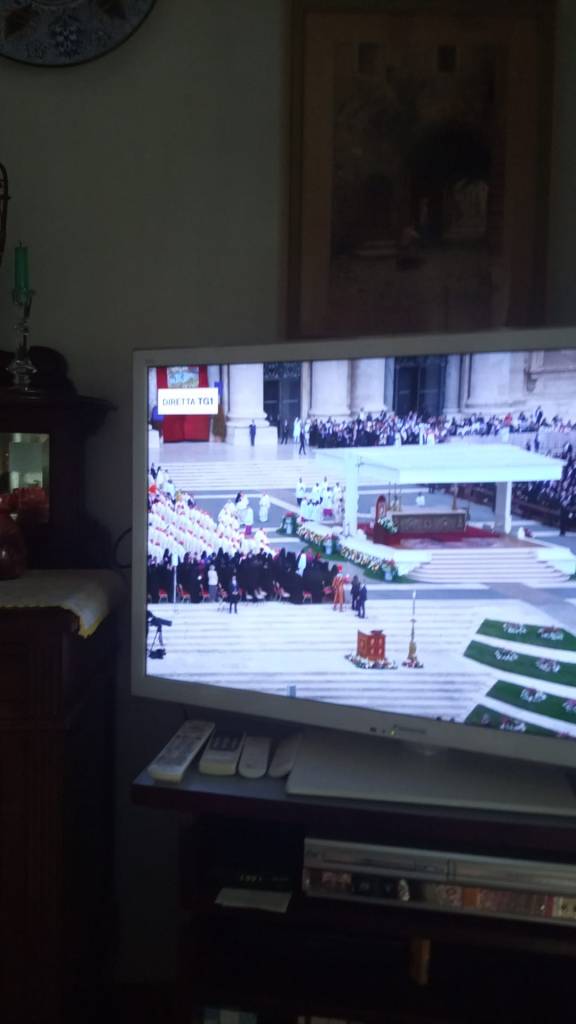
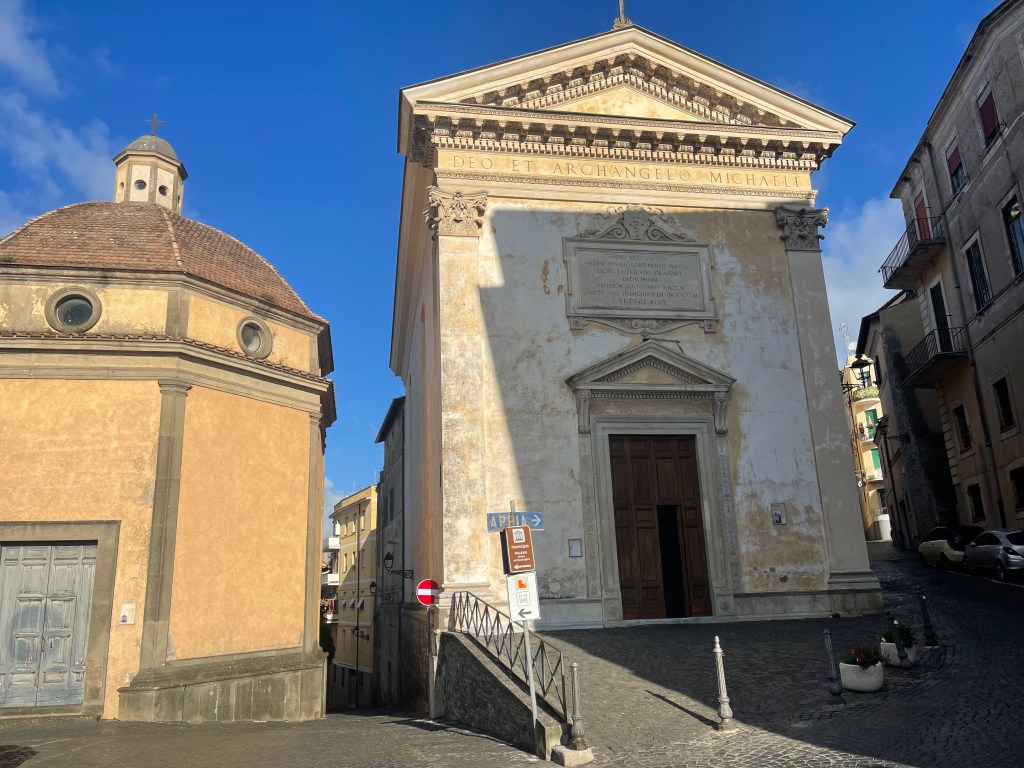
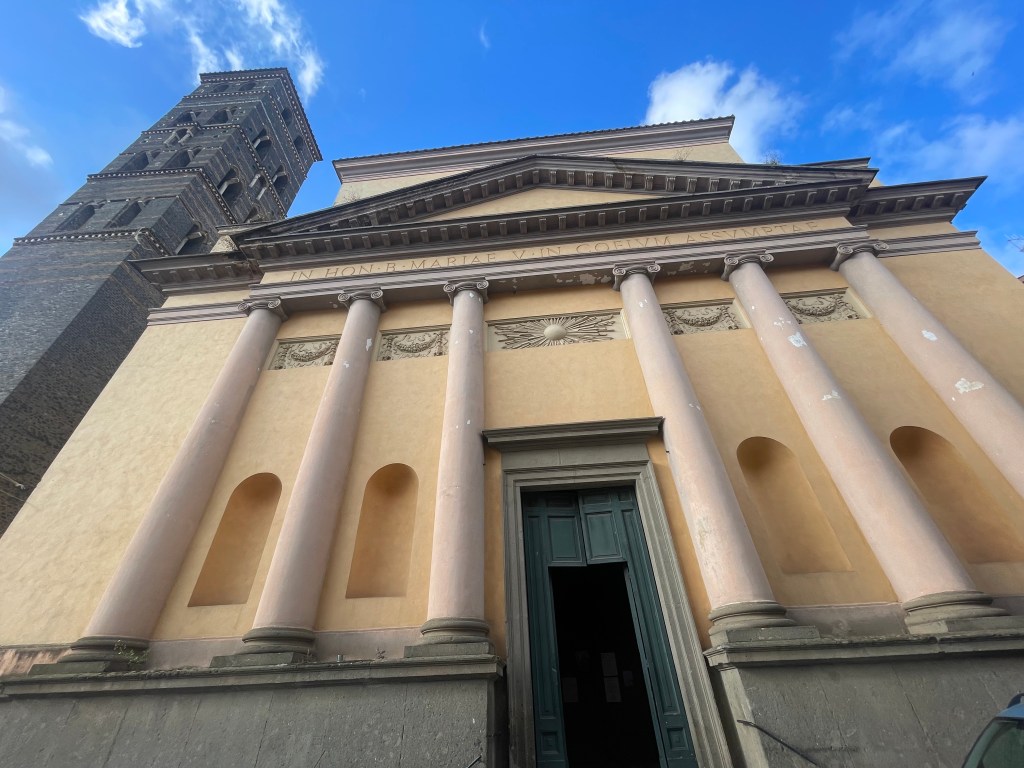
Escaping the confusion in Rome with the coronation of the Pope, I was able to enjoy a voyage of discovery in Velletri this morning .

https://christopheraxworthymusiccommentary.com/2023/03/06/filippo-tenisci-exults-the-genius-of-wagner-and-liszt-in-velletri/

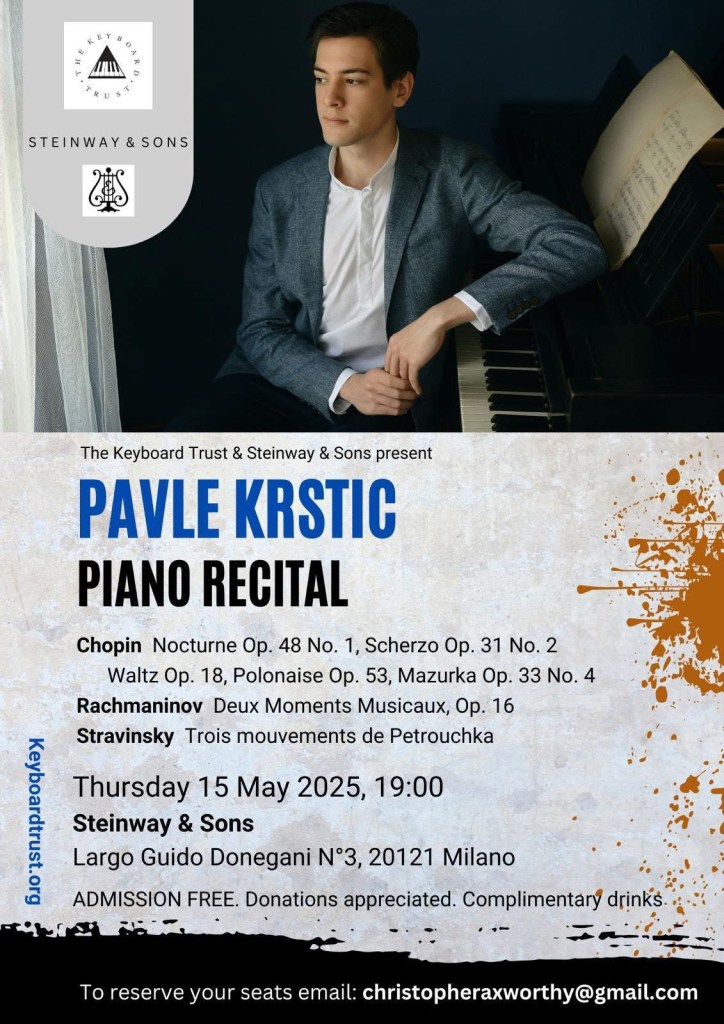
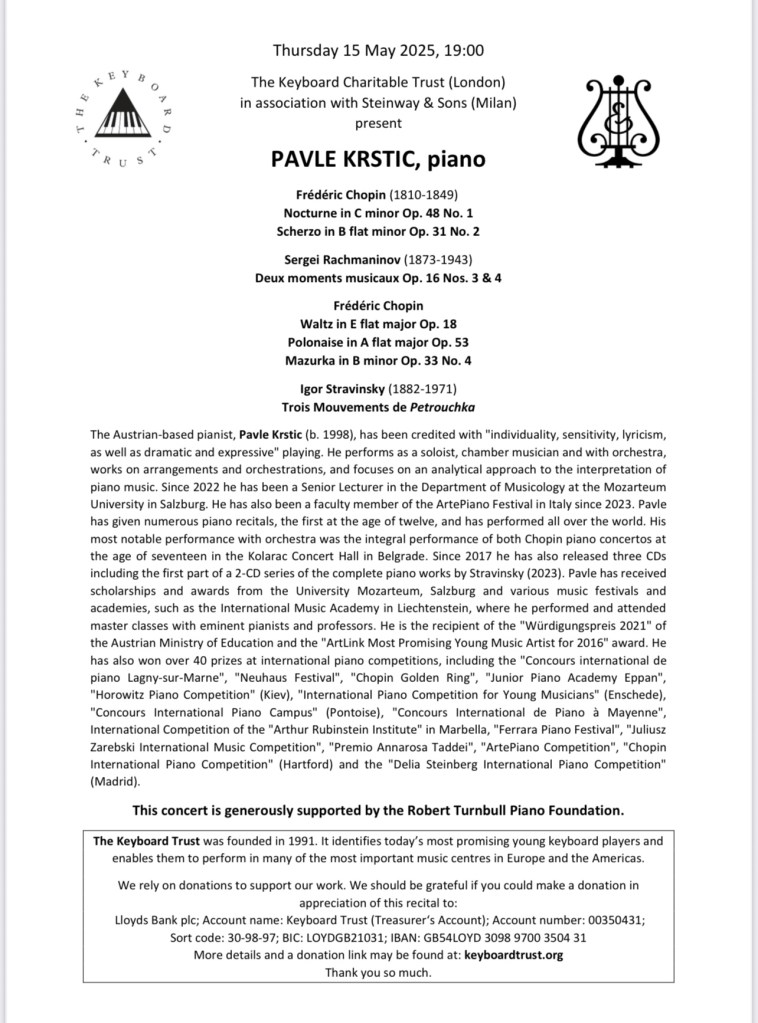
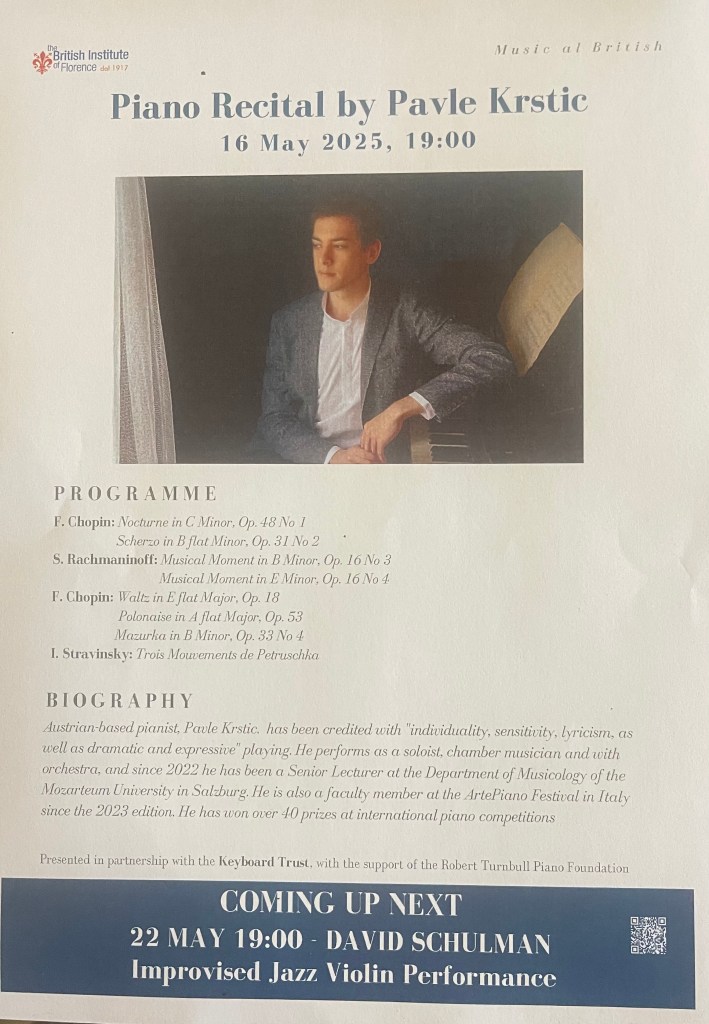
Pavle Krstić Keyboard Trust and Robert Turnbull Piano Foundation Italian Tour ‘Refined artistry and mastery’

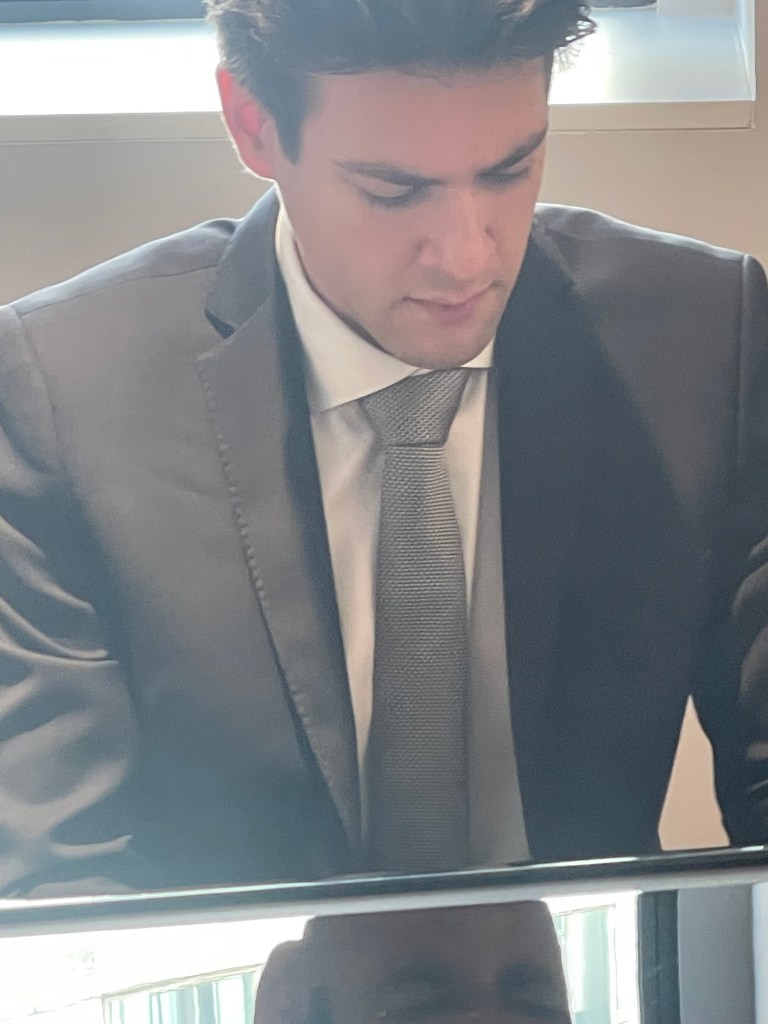
Some refined piano playing from Pavle Krstić who had just driven down from Salzburg ,where he lives and teaches, to play a programme that turned out to be a celebration of Artur Rubinstein.


Pavle was unaware that he had chosen all the works of Chopin that were particularly associated with the greatest pianist I have ever heard. He also added an encore of the Ritual Fire Dance that one of the audience remembers hearing Rubinstein play in his last appearance at La Scala.

The temple of music that is just a stones throw from the Flagship Steinway that with Maura Romano at the helm is fast becoming one of the most important cultural centres in Milan .
The choice of programme may have been a coincidence but his playing of refined aristocratic elegance was of the same musicianship of simplicity , intelligence and artistry.


From the very first notes of the C minor nocturne there was the same unmistakable golden sound, that with his superb sense of balance resounded around this hall full of pianos and a much larger audience than usual. A glowing beauty of refined music making of the true bel canto with the same inflections as the human voice.


There was a political rally just outside in the square that after Pavle’s masterly performance of the Polonaise Héroique decided that they had had enough and we could see the military police stacking away all the barriers and driving off with the magnificence of Pavle’s playing ringing in their ears . ‘Make music not war’ as Barenboim and Said were desperately insisting on demonstrating with otherwise inconsolable disputes.
Rubinstein whose ashes were scattered in his homeland of Israel and whose memory lingers on in so many poignant ways. Finishing his first Chopin group with the Scherzo in B flat minor played with ravishing beauty and a musicianship that recreated afresh this much abused masterpiece.The sumptuous beauty of the sound and a central episode played with whispered confessions that gradually were built up with supreme mastery and control into a climax of exhilaration and excitement.It brought spontaneous cries of approval from an audience that was not expecting such a feast of music today .
This was in fact the last work that Rubinstein ever played in public. It was a concert that he had been asked to play in 1976 to save the Wigmore Hall from developers ! He was partially blind and stopped half way through the Scherzo after having played Schumann Carnaval, Beethoven op 31 n3 and much else besides, it was just his vision in this piece that betrayed him. He played instead some Chopin studies that we had never heard him play in public before. A triumph and he made a speech saying he had started his career in 1904 in this hall and was happy to finish it in 1976 but please don’t let them demolish it . The hall since has been reborn and is now the major chamber music hall of worldwide renown and much loved by the greatest musicians of our time.
Rubinstein was 90 and Pavle just 27 and like Rubinstein at that age could hold his public with playing of mastery and simplicity. Pavle, like Rubinstein, looks at what the composer has written on the page and does not rely on the so called Chopin tradition of distortion and vulgar crowd pleasing rubato. There is the same strength to Pavle’s playing that is of startling originality as he allows the composer to show him the way.
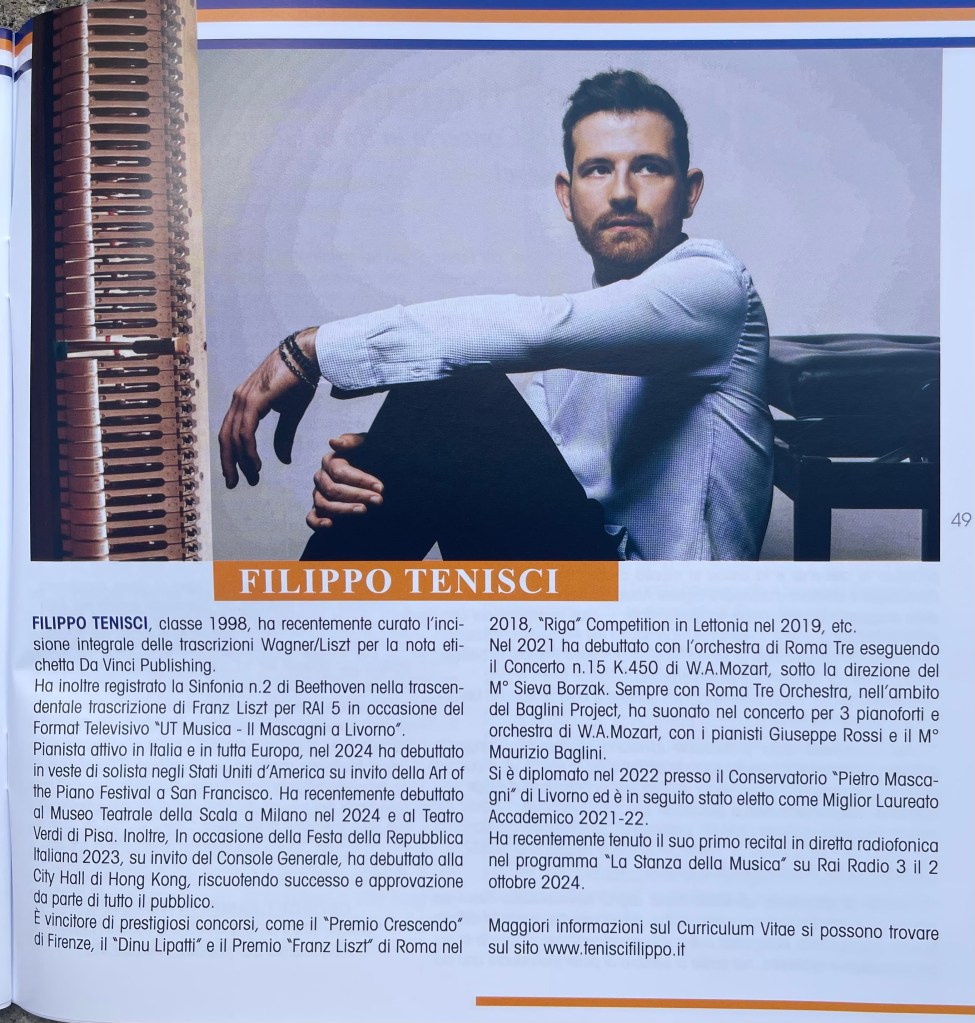
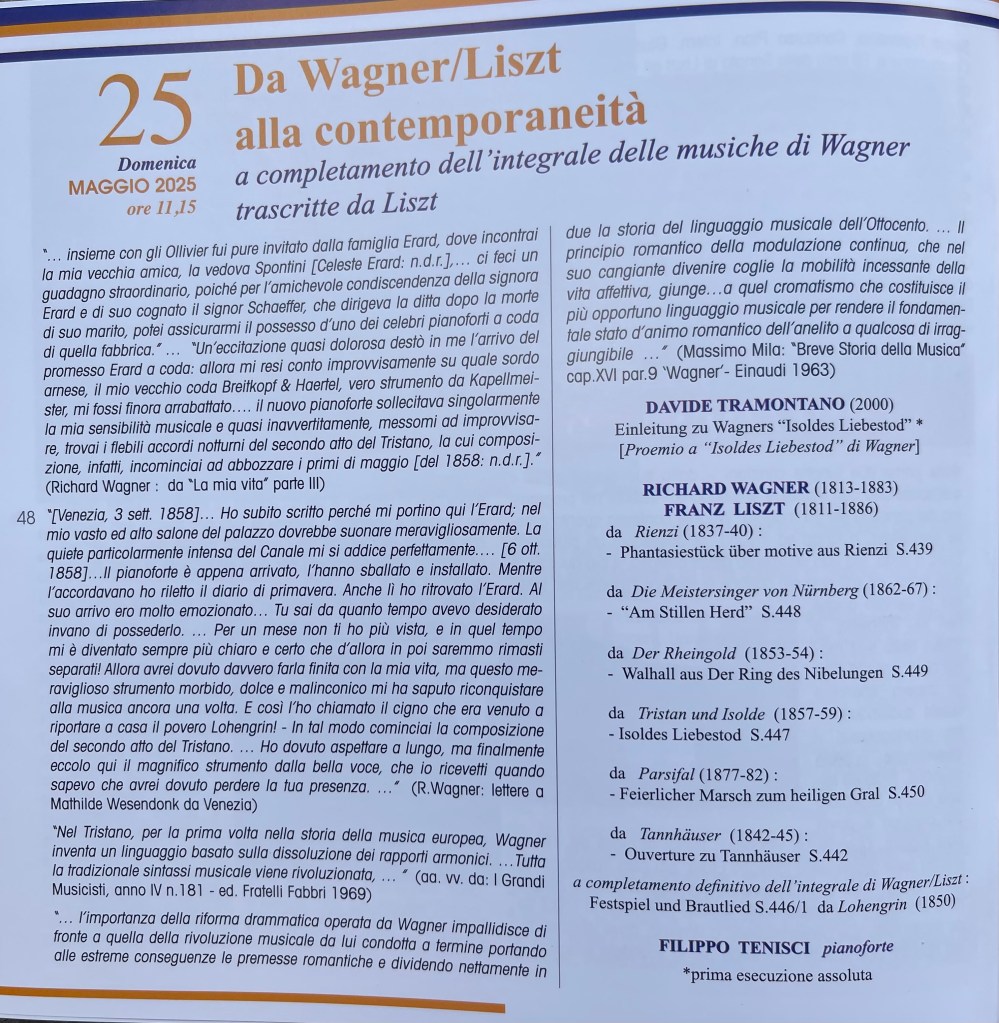

Of course Pavle also has the charisma of a performer who can hold his public, never leading them astray but taking them directly to the heart of a composer that was always in his his homeland that he was destined never to see again.
Stravinsky had written Piano Rag Music for his friend Rubinstein which just added to their difference of opinion about the piano being a percussion or singing instrument . Rubinstein never played it in public and to make amends his dear friend Stravinsky wrote a piano transcription of three of the movements from his ballet suite Petrushka dedicating it with impish glee to his friend. Rubinstein loved it and played it in many of his concerts worldwide with a freedom sanctioned by the composer that was never recorded for the stale studio. This for Rubinstein was pure theatre and he was not going to spend hours in note picking accuracy to play crisp and cleanly one of the most transcendentally difficult pieces ever written for piano ( there does exist a pirate performance that Rubinstein gave during his ten historic recitals in Carnegie Hall ,the proceeds of which went to charities, and was Rubinstein’s way of thanking America for giving him a home when Europe was under siege in the Second World War)
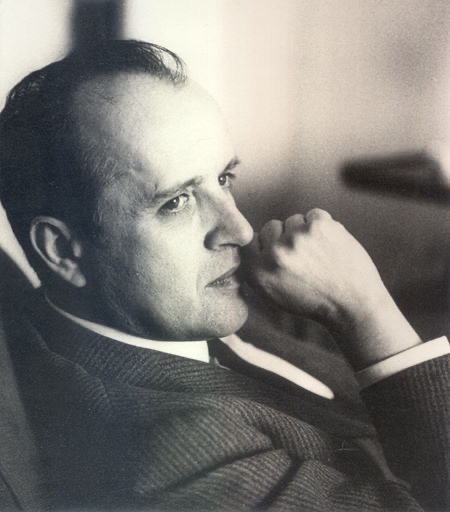
Pavle today not only played all the notes but he brought a sense of dance and character to each of the three episodes that belied their technical difficulty .
The ‘Dance Russe’ that just jumped for joy as the printed page became dancers before our very eyes . ‘The house of Petrushka’ played with poignant significance and the hussle and bussle of the Semaine Grasse just burst into a joie de vivre of scintillating exhilaration and excitement .


Masterly playing and an audience that would not let him go .
He sat at the piano one last time and struck up the frantic boiling trill of the ‘Ritual Fire Dance’.
Naked passion and dynamic drive but no copy cat Rubinstein arm movements, but in the central episode boiling sounds of ferment out of which arose the passionate cry of the flamenco dancer. Two Moments Musicaux by Rachmaninov were the bridge between the two Chopin selections.


The nostalgic elegie of Rachmaninov’s homeland that he fled as the Russian hierarchy were so cruelly eliminated .Played by Pavle with a legato that was so perfect that it seemed like a human voice in anguished yearning. The second was n .4 usually played as a ‘tour de force’ of pianistic gymnastics but that Pavle, with his acute sense of balance, played with quite extraordinary mastery that could let us appreciate Rachmaninov’s total mastery of the keyboard and his passionate feeling for colour.

https://www.corrierebit.com/successo-per-il-pianista-pavle-krstic-a-milano-presso-il-flagship-di-steinway-sons/


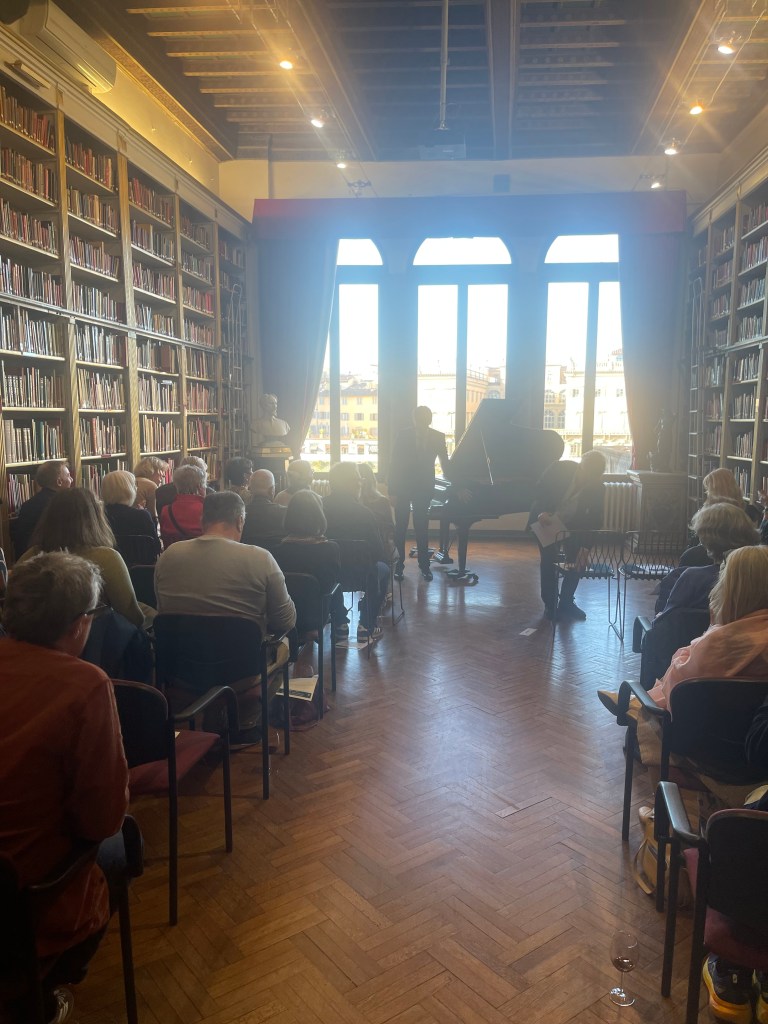
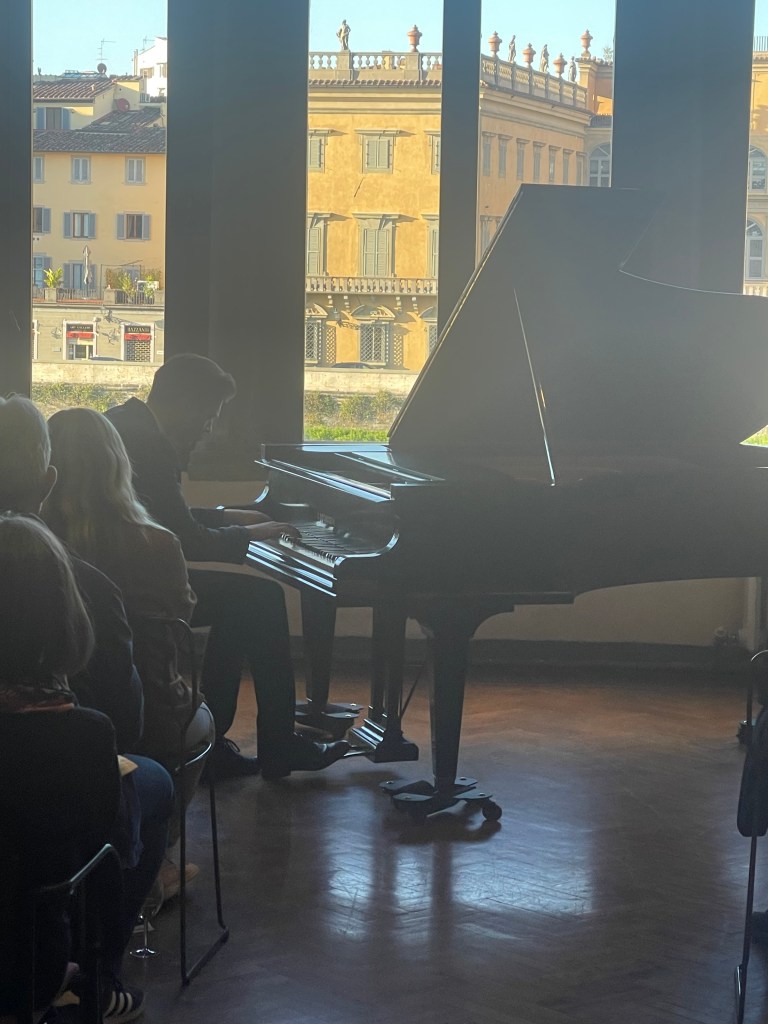
Pavle Krstić drove to Florence for the repeat performance in the ‘Room with a View’ on this all too short Keyboard Trust tour. A recital in the Harold Acton Library of the British Institute where Simon and Jennifer Gammell had arranged a Gala Concert for their special guests of friends and sponsors of the Institute. Pavle completing the magic with playing of Mozart . The sublime second movement of the concerto K 488 ‘ dictated by God’ and played without any added ornamentation but allowing Mozart’s notes to speak with purity and beauty from the hands of a poetic master.

Miracles do happen in a room with such a view, transformed from a concert hall to a hall for a sumptuous after concert feast
https://christopheraxworthymusiccommentary.com/2023/06/02/the-gift-of-music-the-keyboard-trust-at-30/
https://christopheraxworthymusiccommentary.com/2024/12/25/point-and-counterpoint-2024-a-personal-view-by-christopher-axworthy/
https://christopheraxworthymusiccommentary.com/2024/03/20/christopher-axworthy-dip-ram-aram/

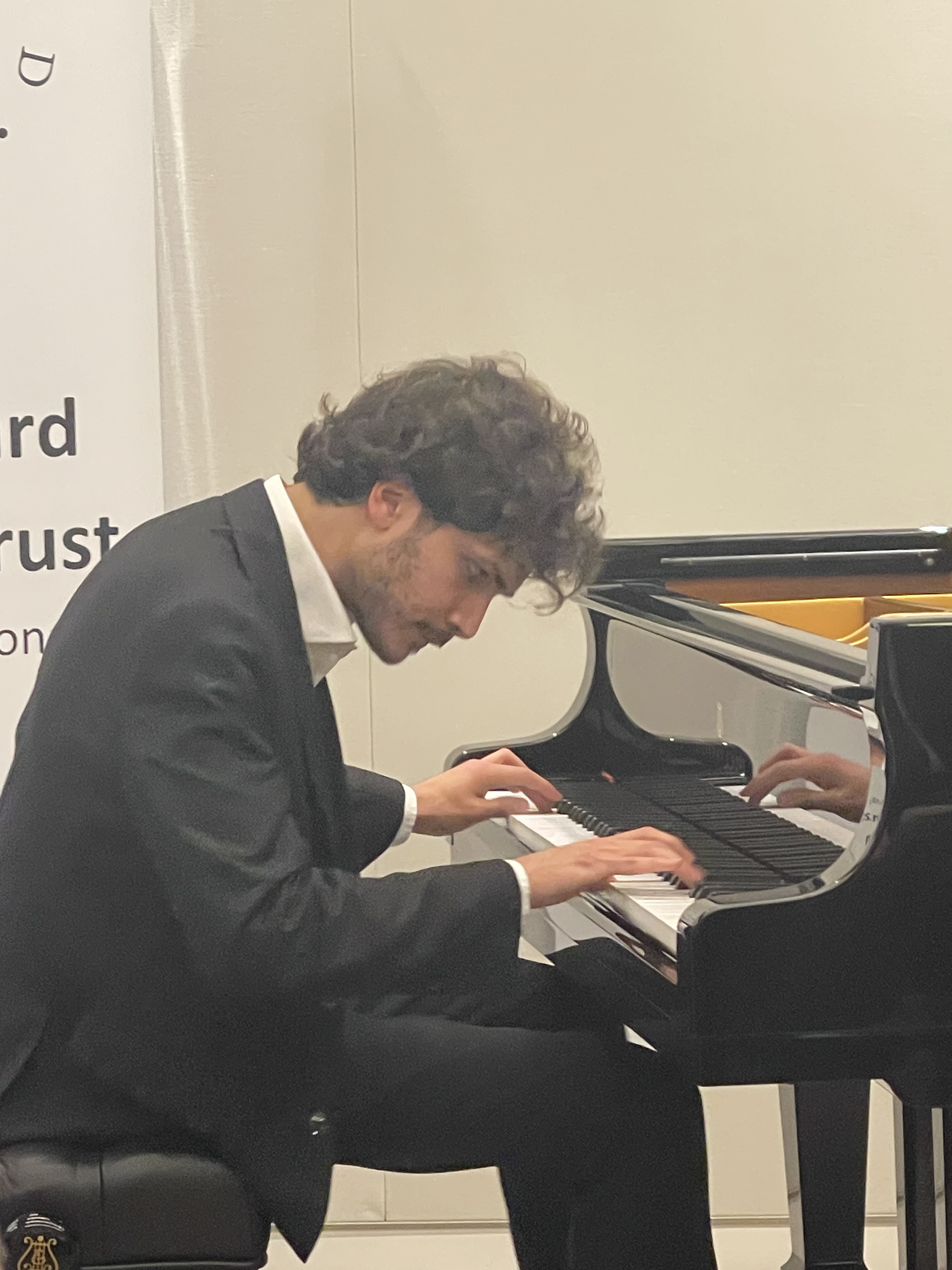
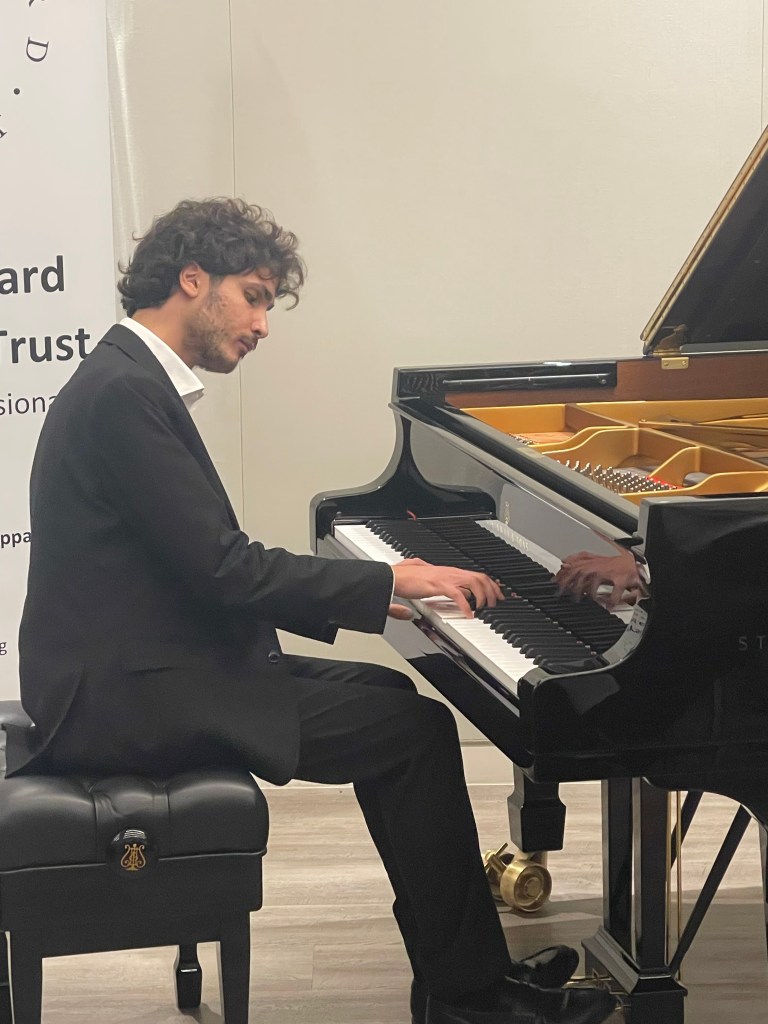
Alessio Masi at Steinway Hall for the Keyboard Trust ‘Passion and curiosity with Poetic Mastery’

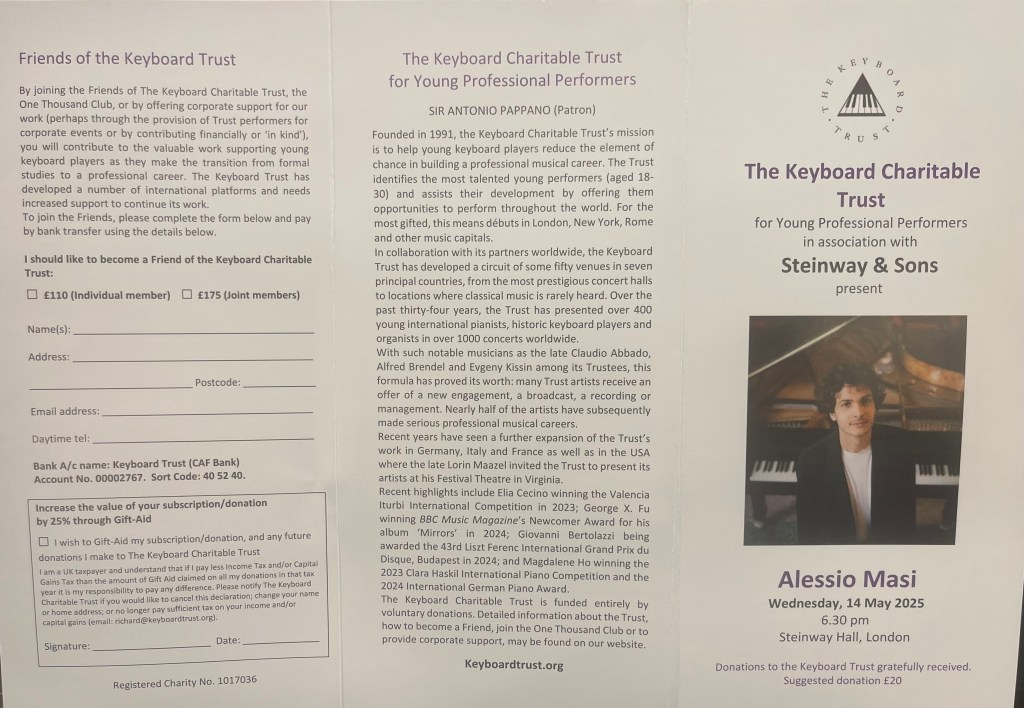
The Keyboard Trust presents a New Artist Recital by Alessio Masi
Steinway Hall, London – Wednesday 14 May 2025.

Alessio Masi at Steinway Hall for the Keyboard Trust ,substituting at short notice an artist who had not received her visa.

Alessio had flown in from Florence where he is studying with Roberto Prosseda and Alessandra Ammara, and is shortly to continue his studies in the Manhattan School of Music in New York

.https://christopheraxworthymusiccommentary.com/2021/01/22/duo-prosedda-amara-french-women-composers-for-four-hands-from-palazetto-bruce-zane-in-venice/

A programme that was particularly interesting for two rarely performed Italian composers, one from the seventeenth century and the other from the twentieth.

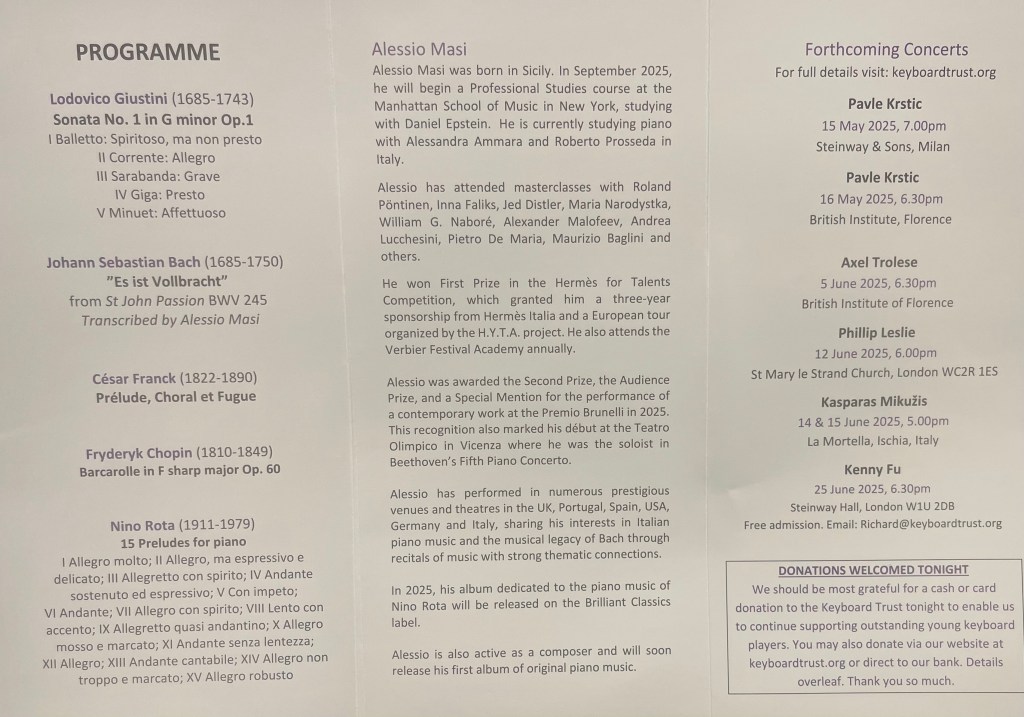
A programme that also included his own transcription of Bach’s ‘Es ist Vollbracht’ from the St John Passion, that acted as an introduction to César Franck’s ‘Prelude,Chorale and Fugue’ and Chopin’s greatest work:the ‘Barcarolle ‘ op 60 .

From the opening notes of the Sonata by Giustini, one of the many Italian baroque composers who have lain in neglect for too long, Alessio imbued it with such character. The opening ‘spiritoso ’ of capricious invention followed by a ‘Corrente’ that just burst into life with its infectiously busy chattering. A ‘Sarabande’ of a delicacy of crystalline purity and fluidity with an ending of ravishing whispered beauty. The dynamic rhythmic drive of the ‘Gigue’ was strangely followed by a Minuet with Giustini tip toeing to the final chord of a sonata showing us a composer who deserves to be heard more in the concert hall.

Alessio’s playing with an extraordinary clarity and a kaleidoscope of colour of a chameleonic sense of character.

It was this mastery that he brought to the 15 Preludes by Nino Rota. A composer of ‘Godfather’ fame who was also a remarkably original composer.

Fifteen miniatures each one imbued with character that reminded me of Prokofiev’s ‘Visions Fugitives’ in the way that so few notes could immediately be imbued with an ever changing character. Mellifluous , capricious , ponderous , exhilarating , monumental, pompous and brilliant ,Alessio managed to bring a different colour and sound to each little bauble that he , with his always beautiful chiselled sound, could turn into gleaming gems .

As Leslie Howard pointed out in his short post concert ‘meet the artist’ conversation the works of Rota have yet to be discovered and it is thanks to Alessio and the Robert Turnbull Foundation that what we heard tonight will soon be a precious and overdue addition to the CD catalogue .

Alessio with Rupert Christiansen Artistic director of the Robert Turnbull Piano Foundation

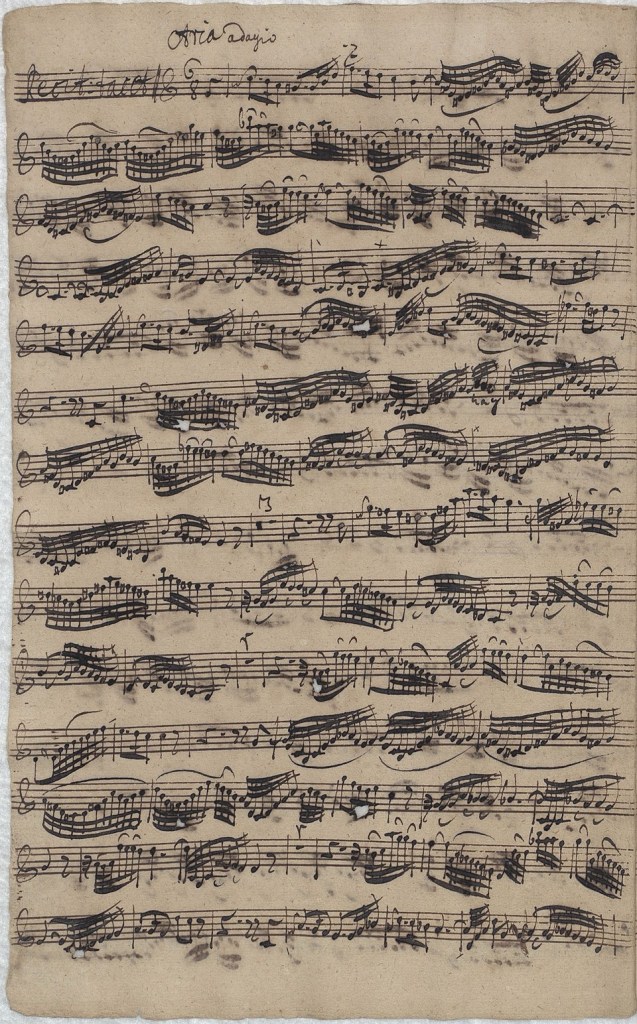
Alessio is also a composer and it was his transcription of the Bach aria that showed his mastery, able to convey the poignant poise of one of Bach’s most potent moments of the St John Passion with playing of the extraordinary conviction of a true believer . Bursting into life with vibrant, robust sounds of joyous elation before dying away to a place of peace and refined beauty. All this played by a composer who could convey so poignantly Bach’s intentions on a single modern day instrument.

Out of the meditative silence of Bach the sublime beauty of César Franck was heard. Franck, the organist of Sainte Clotilde in Paris , could translate the sounds of the organ to the piano with ravishing effect. A performance remarkable for the whispered sounds and poignant silences that made the passionate outpourings so much more imposing. A chorale that glowed with golden beauty as it built to an overpowering outpouring of fervent aristocratic conviction . A fugue where Franck’s knotty twine was played with a whispered clarity as the opening theme returned on a wave of golden sounds .

A technical mastery that allowed him to combine the three themes with transcendental control and majesty never allowing the sounds to harden, but to become ever more richer with his slender spindly fingers that could dig deep into the keys without ever becoming percussive. Adding the occasional deep octave notes to give more sound at moments of powerful emotional impact and gave great depth and breathtaking potency when added with the discreet good taste of a true musician. Nelson Freire and Rubinstein often would take that liberty in public performances depending on the atmosphere in the hall and the vibrations from the audience.

Admonished,though , by Leslie Howard who suggested that the composer was quite capable of adding an octave or two if he wanted to! Leslie was taken under the wing of Guido Agosti and is very much influenced by the musical integrity and humility of a disciple of Busoni where the composers wishes are like the bible and we are merely servants trying to communicate their genius without any extraneous interventions.

https://christopheraxworthymusiccommentary.com/2024/01/03/forli-pays-homage-to-guido-agosti/

In a private pre dinner master class Leslie gave some invaluable advice to this young very talented Sicilian.Alessio with youthful passion in his heart and quite considerable mastery in his fingers

But it was some of this youthful passion that betrayed him in Chopin’s great wave of song.However if he allowed youthful passion to overpower such a masterpiece it was only because he loved it too much and did not allow his head to offer advice to the passion in his Sicilian heart.

Another gem of Nino Rota was added as an encore with a work constructed on the letters of Bach’s name. A tongue in cheek passacaglia, one might surmise, of brilliance and effervescence to complete this surprising young man’s unexpected debut recital for the keyboard trust.

our genial hostess at Steinway & Sons Wiebke Greinus Concert & Artists Manager.
with our much loved Mario embracing a fellow Italian

Alessio Masi was born in Sicily. In September 2025, he will begin a Professional Studies course at the Manhattan School of Music in New York, studying with Daniel Epstein.  He is currently studying piano with Alessandra Ammara and Roberto Prosseda in Italy. 
Alessio has attended masterclasses with Roland Pöntinen, Inna Faliks, Jed Distler, Maria Narodystka, William G. Naboré, Alexander Malofeev, Andrea Lucchesini, Pietro De Maria, Maurizio Baglini and others. 
He won First Prize in the Hermès for Talents Competition, which granted him a three-year sponsorship from Hermès Italia and a European tour organized by the H.Y.T.A. project. He also attends the Verbier Festival Academy annually. 
Alessio was awarded the Second Prize, the Audience Prize, and a Special Mention for the performance of a contemporary work at the Premio Brunelli in 2025. This recognition also marked his début at the Teatro Olimpico in Vicenza where he was the soloist in Beethoven’s Fifth Piano Concerto.
Alessio has performed in numerous prestigious venues and theatres in the UK, Portugal, Spain, USA, Germany and Italy, sharing his interests in Italian piano music and the musical legacy of Bach through recitals of music with strong thematic connections. 
In 2025, his album dedicated to the piano music of Nino Rota will be released on the Brilliant Classics label. 
Alessio is also active as a composer and will soon release his first album of original piano music.

https://christopheraxworthymusiccommentary.com/2023/06/02/the-gift-of-music-the-keyboard-trust-at-30/
https://christopheraxworthymusiccommentary.com/2024/12/25/point-and-counterpoint-2024-a-personal-view-by-christopher-axworthy/

Composer Nino Rota (1911 – 1979) was born into a family of musicians in Milan. He was initially a student of Giacomo Orefice and Ildebrando Pizzetti until he moved to Rome while still a child and completed his studies under Alfredo Casella at the Conservatory of Santa Cecilia in 1929. In the meantime, he became an enfant prodige, famous as both a composer and a conductor. His first oratorio, L’infanzia di San Giovanni Battista, was performed in Milan and Paris as early as 1923, and his lyrical comedy, Il Principe Porcaro, was composed in 1926.From 1930 to 1932, Rota lived in the U.S.A. He won a scholarship to the Curtis Institute of Philadelphia and studied composition under Rosario Scalero and orchestra under Fritz Reiner.

Rota returned to Italy and earned a degree in literature from the University of Milan. In 1937, he began a teaching career that led to the directorship of the Bari Conservatory, a title he held from 1950 until his death in 1979.After his ‘childhood’ compositions, Rota wrote the following operas: Ariodante (Parma 1942), Torquemada (1943), Il cappello di paglia di Firenze (Palermo 1955), I due timidi (RAI 1950, London 1953), La notte di un neurastenico (Premio Italia 1959, La Scala 1960), Lo scoiattolo in gamba (Venezia 1959), Aladino e la lampada magica (Naples 1968), La visita meravigliosa (Palermo 1970), and Napoli milionaria (Spoleto Festival 1977).

He also wrote the following ballets: La rappresentazione di Adamo ed Eva (Perugia 1957), La Strada (La Scala 1965), Aci e Galatea (Rome 1971), Le Molière Imaginaire (Paris and Brussels 1976) and Amor di poeta (Brussels 1978) for Maurice Bejart.

In addition, countless of Rota works are performed worldwide.

Rota’s work in film dates back to the early forties and his filmography includes virtually all of the noted directors of his time. The first of these is Federico Fellini. Rota wrote the scores for all of Fellini’s films from The White Sheik in 1952 to The Orchestra Rehearsal in 1979.

Rota also collaborated with other directors, including Renato Castellani, Luchino Visconti, Franco Zeffirelli, Mario Monicelli, Francis Ford Coppola (he received the Oscar for Best Original Score for The Godfather II), King Vidor, René Clément, Edward Dmytrik and Eduardo de Filippo. Additionally, he composed the music for many theatre productions by Visconti, Zefirelli and de Filippo .He  is best known for his film scores, notably for the films of Federico Fellini  and Luchino Visconti. He also composed the music for two of Franco Zeffirelli’s Shakespeare screen adaptations , and for the first two installments of Francis Ford Coppolas’s The Godfather Trilogy , earning the Academy Award for the Best Original Score for The Godfather Part II in 1974

A prolific composer :

Musica for pianoforte

  • 1919: Il Mago doppio – Suite per quattro mani
  • 1920: Tre pezzi
  • 1922: Preludio e Fuga per pianoforte a quattro mani (Storia del Mago Doppio)
  • 1924: Illumina Tu, O Fuoco
  • 1924: Io Cesserò il Mio Canto
  • 1924: Ascolta o Cuore June
  • 1925: Il Presàgio
  • 1925: La Figliola Del Re (Un Augello Gorgheggiava)
  • 1930: Ippolito gioca
  • 1931: Campane a Festa
  • 1933: Campane a Sera
  • 1935: Il Pastorello e altre Due Liriche Infantili
  • 1938: La Passione (poesia popolare)
  • 1941: Bagatella
  • 1945: Fantasia in sol
  • 1946: Fantasia in do
  • 1954: Azione teatrale scritta nel 1752 da Pietro Metastasio
  • 1964: 15 Preludi
  • 1971: Sette Pezzi Difficili per Bambini
  • 1972: Cantico in Memoria di Alfredo Casella
  • 1975: Due Valzer sul nome di Bach
  • 1975: Suite dal Casanova di Fellini

Chamber music

Duets

  • Pezzo per Corno in Fa e Contrabbasso (1931)
  • Sonate per flauto e arpa (1939)
  • Sonata in re per clarinetto e pianoforte (1945)
  • Sonata per ottoni e organo (1972)
  • Tre Pezzi per 2 flauti (1972-73)
  • Allegro danzante per clarinetto e pianoforte (1977)

For strings and pianoforte

  • Improvviso in re minore per violino e pianoforte (1947)
  • Improvviso per Violino e Pianoforte (Un diavolo sentimentale) (1969)
  • Intermezzo per viola e pianoforte (1945)
  • Sonata in sol per Viola e Pianoforte (1934-35, revised 1970)
  • Sonata per Viola e Pianoforte della Sonata in Re per Clarinetto e pianoforte (1945)
  • Sonata per violino e pianoforte(1936-37)

For wind and pianoforte

  • Castel del Monte – Ballata per Corno e Pianoforte (1974)
  • Cinque Pezzi facili per flauto e pianoforte (1972)
  • Elegia per Oboe e Pianoforte (1955)
  • Pezzo in Re per clarinetto e pianoforte (agosto) (1977)
  • Sonata in Re per Clarinetto e Pianoforte (1945)
  • Toccata per Fagotto e Pianoforte (1974)

For flute and harp

  • Cadenze per il Concerto K299 di Mozart per flauto e arpa (1962)
  • Sonata per flauto e arpa (1937)

Trios

  • Trio per clarinetto, violoncello e pianoforte (1973)
  • Trio per Flauto, Violino e Pianoforte (settembre, 1958)

Quartets

  • Invenzioni per quartetto d’archi (1932)
  • Quartetto per archi (1948-54)

Miscellaneous

  • Il Presepio: Quartetto d’archi con voce (1929)
  • Il Richiamo: Quintetto d’archi con voce (1923)
  • Minuetto (1931)
  • Nonetto, per flauto, oboe, clarinetto, fagotto, corno, violino, viola, violoncello e contrabbasso (1959, 1974, 1977)
  • Piccola Offerta Musicale per flauto, oboe, clarinetto, corno e fagotto (1943)
  • Quintetto per flauto, oboe, viola, violoncello e arpa (1935)
  • Romanza (Aria) e Marcia (1968)
  • Sarabanda e Toccata per Arpa (1945)
  • Sonata per Organo (1965)

Vocal music

  • Perché Si Spense la Lampada (Quando Tu Sollevi la Lampada al Cielo) August 1923)
  • Vocalizzi per Soprano leggero e Pianoforte (1957)
  • Tre liriche infantili per canto (soprano, tenor) e pianoforte/Three childrens’ lyrical poems for voice and piano (1935)
  • Le Prime Battute di 6 Canzoni e un Coro per “L’Isola Disabitata” April 1932)
  • Mater fons amoris per Soprano (o tenore) solo, coro di donne e organo (1961)
  • Canto e Pianoforte/Voice and Piano (1972)
  • Ballata e Sonetto di Petrarca (1933)
  • Mysterium (1962) per coro e orchestra su testi scelti da Vincenzo Verginelli, tratti dal Vangelo di Giovanni e dai primi scrittori cristiani, commissionato dalla Pro Civitate Christiana di Assisi
  • la Vita di Maria (1970), rappresentazione sacra in 16 parti più l’interludio, per soli, coro e orchestra, con scelta di testi sacri dal Vecchio Testamento, i Vangeli ortodossi e quelli apocrifi di Vincenzo Verginelli
  • Roma capomunni (1970-71), vocale corale cantata per solo, coro e orchestra, su testi scelti da Vincenzo Verginelli tratti da Belli, Virgilio, Orazio, Byron, Goethe, Dante, Servio, Macrobio, Vigolo

Orchestral music

  • Infanzia di S. Giovanni Battista oratorio per soli, coro e orchestra (1922)
  • Balli per piccola orchestra (1932 al Teatro La Fenice di Venezia)
  • Sonata (Canzona) per orchestra da camera (1935)
  • Variazioni e fuga nei 12 toni sul nome di Bach per orchestra (1950)
  • Concerto in Fa, Concerto Festivo per orchestra (1958-61)
  • Concerto per archi (1964-65, nuova revisione 1977)
  • Due Momenti (Divertimenti) (1970)
  • Fantasia sopra dodici note del “Don Giovanni di Mozart” per pianoforte e orchestra (1960)
  • Fuga per Quartetto d’Archi, Organo e Orchestra d’Archi (1923)
  • Guardando il Fujiyama (Pensiero per Hiroshima) (1976)
  • La Fiera di Bari (28.4.1963)
  • La Strada (Teatro alla Scala di Milano 1966 con Carla Fracci)
  • Le Moliere imaginaire – Ballet Suite (1976-78)
  • Meditazione per coro e orchestra (1954)
  • Rabelaisiana – Tre canti per Voce e Orchestra (1977) a Martina Franca con Lella Cuberli
  • Serenata per Orchestra in quattro tempi (1931-1932)
  • Sinfonia n. 1 per orchestra (1935-1939)
  • Sinfonia n. 2 in Fa per orchestra (1937-39)
  • Sinfonia n. 3 in Do (1956-1957)
  • Sinfonia Sopra una Canzone d’Amore (1972)
  • Sonata per orchestra da camera (1937-1938)
  • Variazioni e fuga nei 12 toni sul nome di Bach per Orchestra (1950)
  • Variazioni sopra un tema gioviale per orchestra (1953)
  • Waltzes

Concertos for solists and orchestra

  • 1947: Concerto per Arpa

Piano and Orchestra

  • Cadenze per il Concerto n. 4 in Sol Hob.XVIII:4 di Franz Joseph Haydn)
  • 1960: Concerto in Do
  • 1962: Concerto soirée
  • 1973, 1998: Concerto in Mi Piccolo mondo antico

Strings and orchestra

  • 1925: Concerto per Violoncello n. 0
  • 1968-73: Divertimento Concertante per Contrabbasso e Orchestra
  • 1972: Concerto per Violoncello n. 1
  • 1973: Concerto per Violoncello n. 2

Wind and orchestra

  • 1959: Andante sostenuto per il Concerto per Corno K412 di Mozart
  • 1966: Concerto per Trombone
  • 1974: Ballata per Corno e orchestra “Castel del Monte”
  • 1974-77: Concerto per Fagotto

Opera

Napoli milionaria (1973-1977), libretto di Eduardo de Filippo dall’omonima opera teatrale.

Il principe porcaro (1926)

Ariodante, opera in 3 atti, libretto di Ernesto Trucchi (1942) al Teatro Regio di Parma diretta da Gianandrea Gavazzeni con Mario Del Monaco

Torquemada (1943) e seconda versione nel 1976 al Teatro di San Carlo di Napoli con Maurizio ArenaSaturno MelettiAntonio Boyer, Carlo Cava e Agostino Ferrin

I due timidi (1950)

Il cappello di paglia di Firenze (prima esecuzione nel 1955)

Scuola di guida (1959)

La notte di un nevrastenico (1959)

Lo scoiattolo in gamba, libretto di Eduardo De Filippo (1959 al Teatro La Fenice di Venezia diretta da Ettore Gracis)

Aladino e la lampada magica, fiaba lirica in tre atti e 11 quadri su libretto di Vincenzo Verginelli (da Le mille e una notte); (1963-1965), prima rappresentazione assoluta al Teatro di San Carlo nel 1968, diretta da Carlo Franci con Franco Bonisolli

La visita meravigliosa (1965-1969)

Lodovico Giustini (12 December 1685 – 7 February 1743) was an Italian composer and keyboard player of the late Baroque  and early Classical eras. He was the first known composer ever to write music for the piano.

Giustini was born in Pistoia, of a family of musicians which can be traced back to the early 17th century; coincidentally he was born in the same year as Bach,Scarlatti and Handel . Giustini’s father was organist tat the Congregazione dello Spirito Santo, a Jesuit -affiliated group, and an uncle, Domenico Giustini, was also a composer of sacred music.

In 1725, on his father’s death, Giustini became organist at the Congregazione dello Spirito Santo, and acquired a reputation there as a composer of sacred music: mostly cantatas and oratorios. In 1728 he collaborated with Giovanni Carlo Maria Clarion a set of Lamentations  which were performed that year. In 1734 he was hired as organist at S Maria dell’Umiltà, the Cathedral of Pistoia, a position he held for the rest of his life. In addition to playing the organ at both religious institutions, he performed on the harpsichord  at numerous locations, often in his own oratorios.

Giustini’s main fame rests on his work 12 Sonate da cimbalo di piano e forte detto volgarmente di martelletti, Op.1, published in Florence in 1732, which is the earliest music in any genre written specifically for the piano. They are dedicated to Dom António de Bragança, the younger brother of King Joäo V of Portugal (the Portuguese court was one of the few places where the early piano was frequently played).

Sonate frontispiece, 1732.

These pieces, which are sonate da chiesa, with alternating fast and slow sections (four or five movements per sonata), predate all other music specifically written for the piano by about 30 years. Giustini used all the expressive capabilities of the instrument, such as wide dynamic contrast: expressive possibilities which were not available on other keyboard instruments of the time. Harmonically  the pieces are transitional between late Baroque and early Classical period practice, and include innovations such as augmented sixth chords  and modulations to remote keys.

James Parakilas points out that it is quite surprising that these works should have been published at all. At the time of composition, there existed only a very small number of pianos, owned mainly by royalty. He conjectures that publication of the work was meant as an honor to Giustini; it “represents a gesture of magnificent presentation to a royal musician, rather than an act of commercial promotion.”

While many performances of his large-scale sacred works are documented, all of that music is lost, with the exception of fragments such as scattered aria. Giustini’s fame rests on his publication of his set of piano pieces, although they seem to have attracted little interest at the time.

Karim Said Discovering Schoenberg and Byrd with mastery and artistry

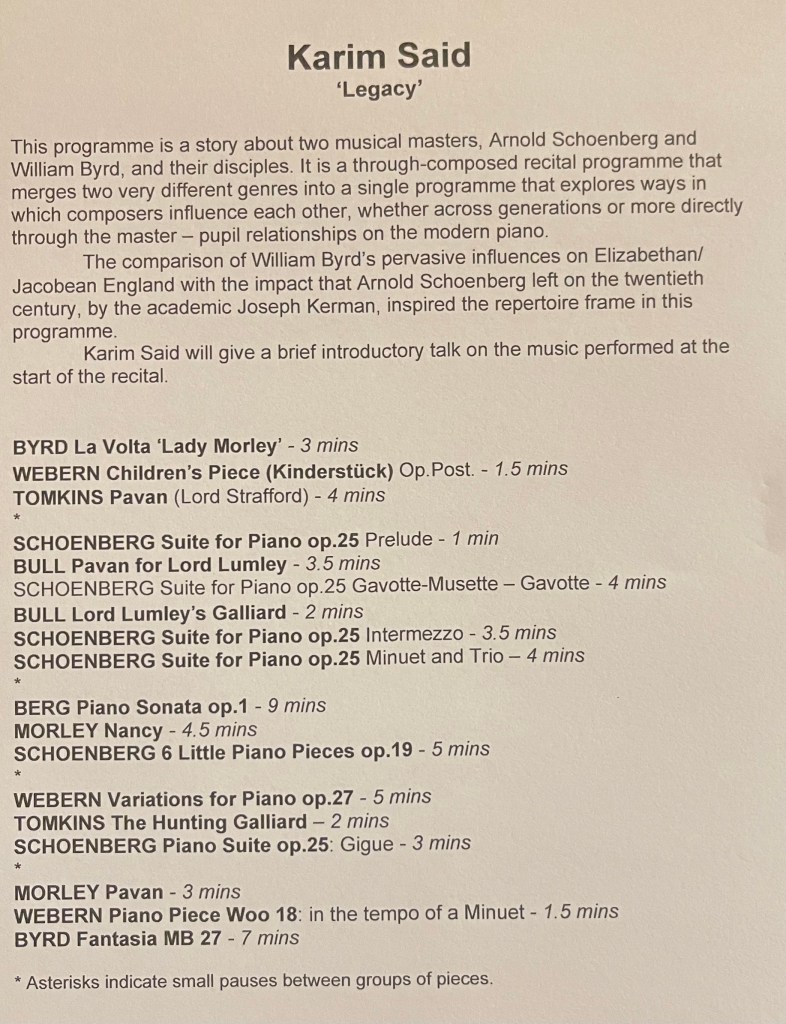
A fascinating journey about two musical giants Arnold Schoenberg and William Byrd and their disciples .

90 minutes of music woven together with mastery and artistry by Karim Said

“Born Communicator”
The Independent
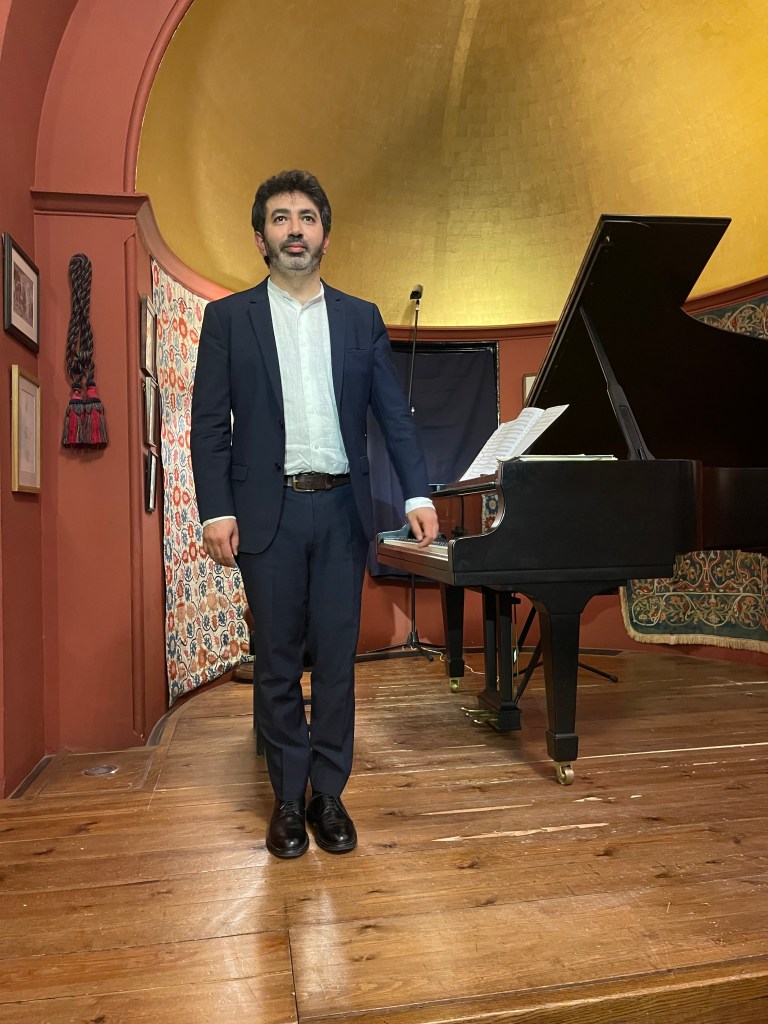
Karim Said is known for pushing the boundaries of artistic expression as an award-winning pianist, conductor, and composer. From an early age, his talent and dedication have propelled him to the forefront of the classical music scene. His first major concerto performances were in 2009 at London’s Barbican Centre with the English Chamber Orchestra under the baton of the late Sir Colin Davis, and at the Royal Albert Hall, (BBC Proms) with Daniel Barenboim.
Karim’s musical journey began at the young age of five, when he discovered his love for the piano and classical music. Ever since, he had a distinctive ability to communicate and connect with audiences through music; a “born communicator” as described by the Independent.
Karim has performed on some of the world’s most renowned stages, captivating audiences both as a solo pianist and chamber musician. This was made possible largely through his association with Daniel Barenboim, who first heard Karim perform at the age of ten, saying: ‘what you cannot learn, he already knows.’ Highlights include appearances at such festivals and venues as the UK’s Aldeburgh Festival, Philharmonie in Berlin, Philharmonie de Paris, Teatro Colon in Buenos Aires, the Great Hall of the Tchaikovsky Conservatory in Moscow, and the Musashino Concert Hall in Tokyo. His love for Schoenberg’s music led him to perform the composer’s complete published solo works at London’s Southbank Centre, as part of “The Rest Is Noise” festival.
Karim’s dedication to his craft also extends to his native Middle East, where he regularly performs in Jordan, Lebanon and the United Arab Emirates.
One of Karim’s distinguishing strengths lies in his ability to draw connections between different eras of Western classical music. His talent and interests extend to modern and renaissance music, as evidenced by his critically acclaimed ‘exceptionally thoughtful’ (The Guardian) album, “Legacy,” which draws connections between the works of William Byrd and Albert Schoenberg. Karim’s first album release was  “Echoes from an Empire” – 2015 , and his latest release in 2024, consisted of music by Mozart, Schoenberg, Webern and Beethoven. 
Driven by his fascination with the sound of the orchestra and the creative process, Karim ventured into conducting and composing at an early age, embracing a comprehensive artistic path. He was the subject of the BBC4/Allegro Films documentary ‘Karim’s Journey’, which followed his progress as a developing artist at the Purcell School of Music in the UK, where he was awarded a full scholarship.
Amidst the challenges posed by the global pandemic, Karim seized the opportunity to give back to his native community, and established the Amman Chamber Orchestra as its founding principal conductor and accepted the post of director of music at the new Amman Institute of Performing Arts in Jordan, both initiatives of the Bank al Etihad Foundation. As Director of Music at the foundation, Karim focuses his efforts on establishing a regional hub for musical education and world-class performances that embrace both Western and Middle Eastern classical music in an increasingly thriving environment in Jordan.
 Karim has been an Associate of the Royal Academy of Music (London) since 2017.
For a list of past performances (highlights) and awards, please download the file below. 


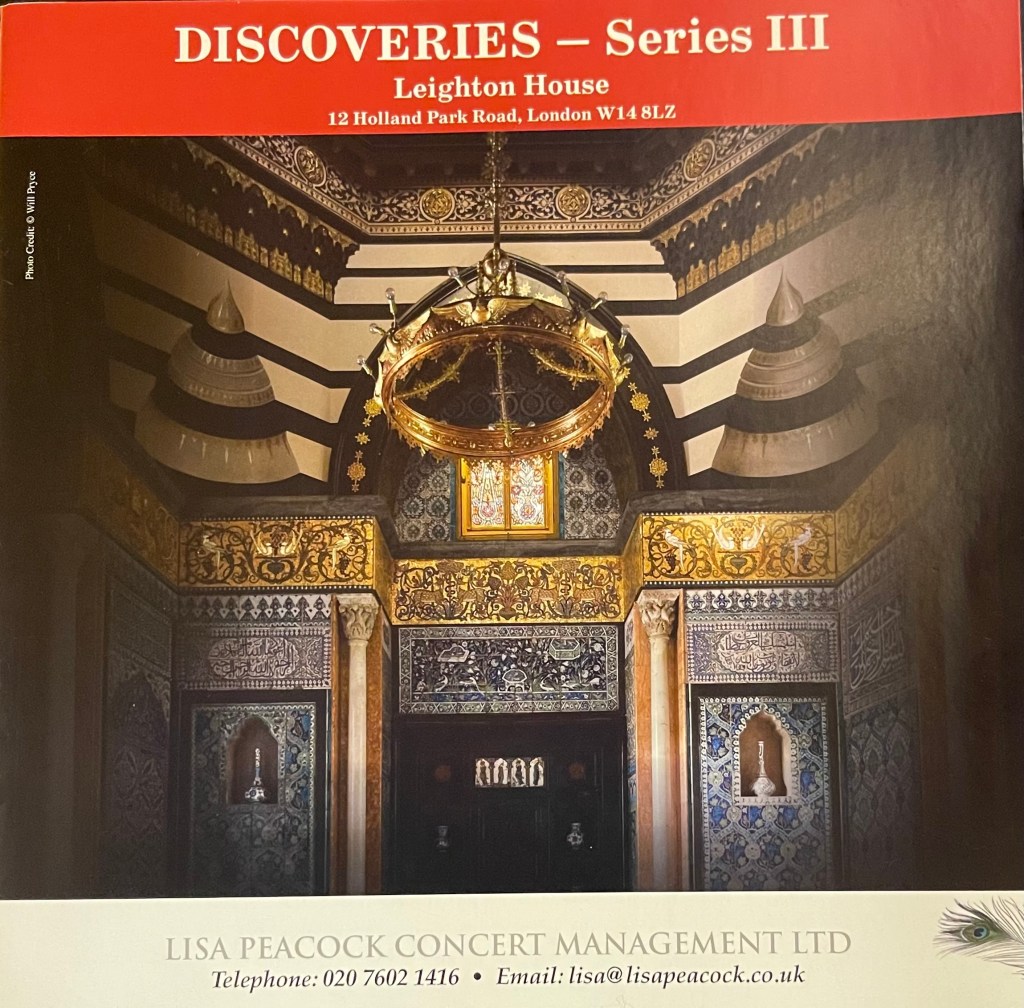
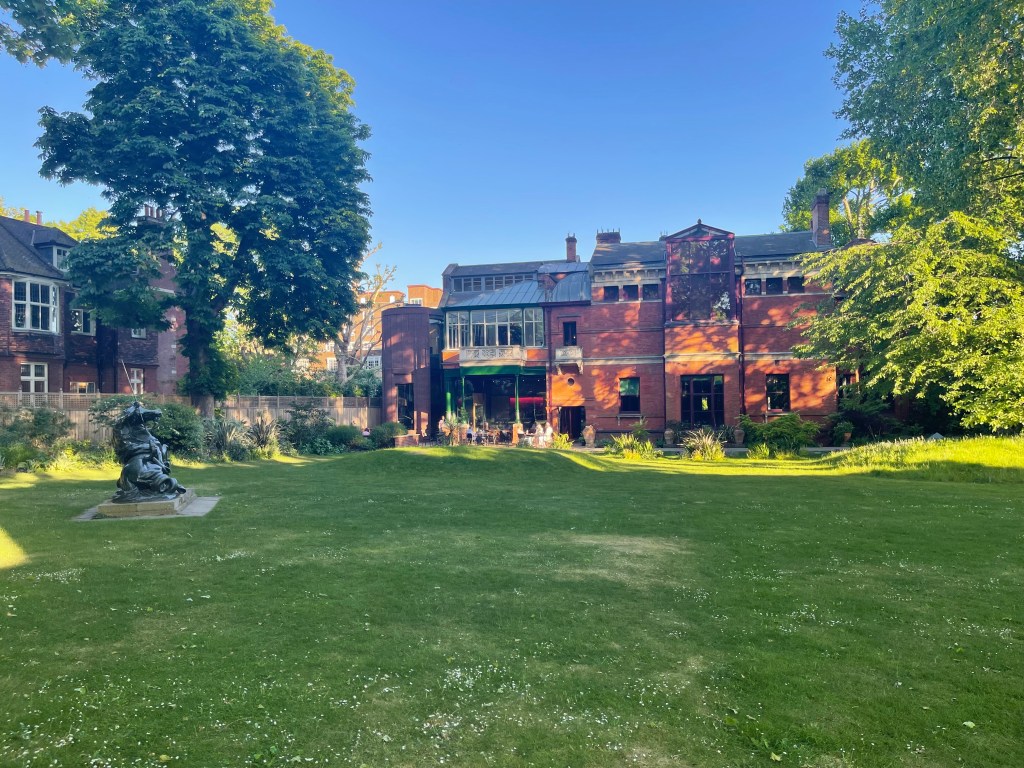
In the beautiful music room in this oasis of civilised culture that is Leighton House, Karim told a fascinating story in music.

Drinks on the lawn afterwards were just part of the treat that the Peacocks had to offer a distinguished audience for this final concert this season of Lisa Peacocks Discovery series

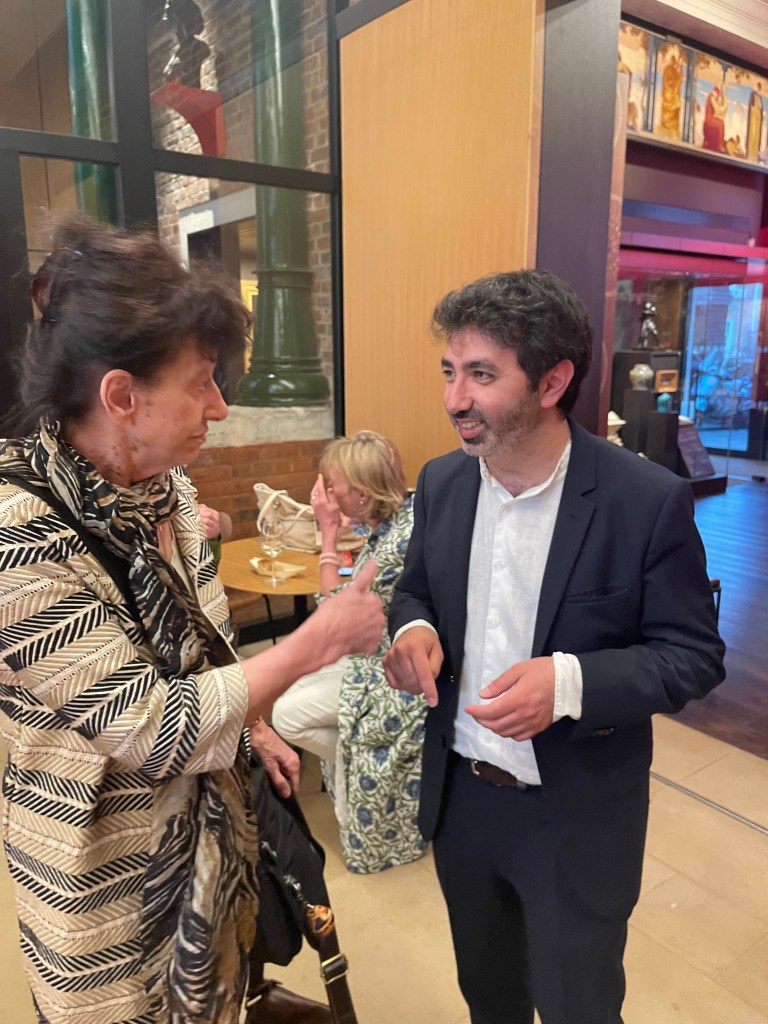
Karim Said with Tatiana Sarkissova
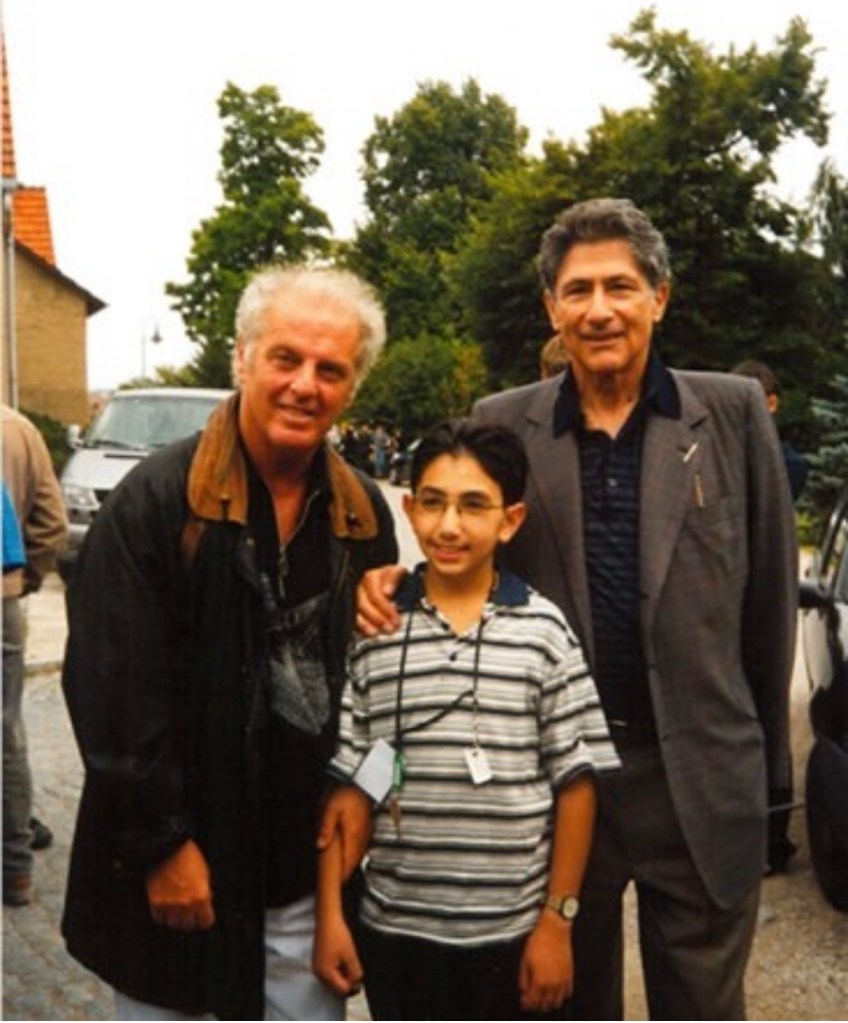
Daniel Barenboim with Karim and Edward Said in 1999

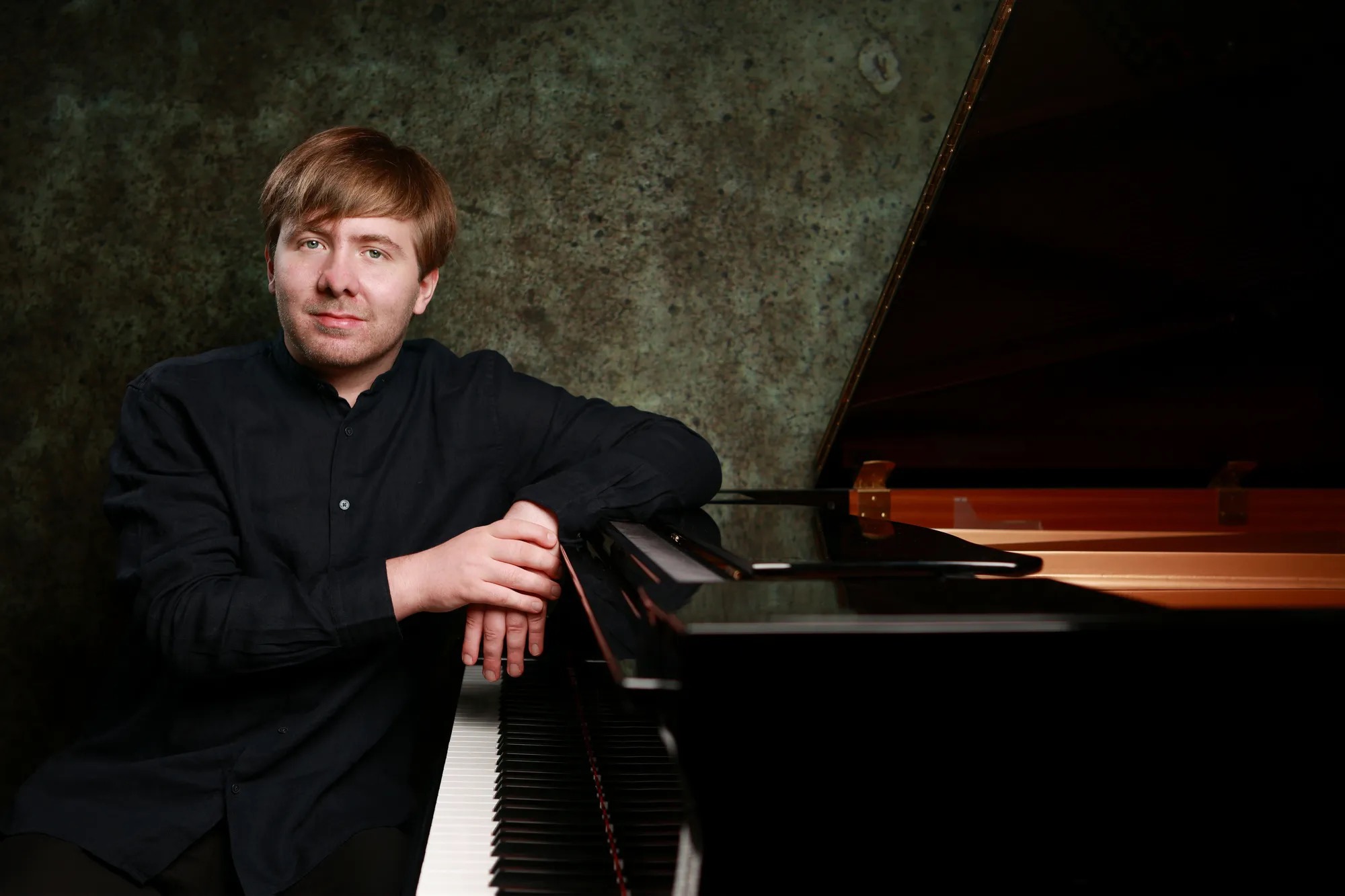
Emanuil Ivanov at the Royal Academy of Music Astonishment and Enlightenment of a master musician

Screenshot

Emanuil Ivanov piano
Michelle Choi
 flute

IVES Piano Sonata No 2, ‘Concord, Mass’

Bulgarian pianist Emanuil Ivanov attracted international attention at the age of 21 after receiving the first prize at the 2019 Ferruccio Busoni International Piano Competition in Italy. This achievement was followed by concert engagements in some of the world’s most prestigious halls, including Teatro alla Scala in Milan and Herkulessaal in Munich. For his Advanced Diploma Recital, he offers a performance of Charles Ives’ second Piano Sonata.

Each of the movements in this work represent figures associated with transcendentalism and the village of Concord, Massachusetts: Emerson, Hawthorne, Bronson and Louisa May Alcott, Thoreau.Emanuil Ivanov with more sensational playing this time of Ives Concord Sonata.

Winner of the Busoni competition some years ago and in many ways a Busonian figure he has gone on to give astonishing performances of the monumental piano concerto and his recording of the Rzewski variations ,that took the Wigmore Hall by storm earlier this season, has been recorded by the Royal Academy for release in December.

I cannot wait for him to record this ‘Concord’ after his monumental performance this morning

Not only a master pianist but a composer too. His Theme and variations written as a present for his fiancée had led to wedding bells and a successful internship at the Royal Academy.

Emanuil is a complete musician and one of the most humble people you could ever meet

Some material in the Concord Sonata dates back as far as 1904, but Ives did not begin substantial work on it until around 1909 and largely completed the sonata by 1915. The Concord Sonata was first published in 1920 with a second, revised, edition appearing in 1947. It is this version which is usually performed today. In 2012, a reprint of the original, uncorrected 1920 edition was published, including Essays before a Sonata and with an added introductory essay by the New England Conservatory’s Stephen Drury.

Ives recalled performing parts of the (then incomplete) sonata as early as 1912.However, the earliest known public performances of the sonata following its publication date back to October 1920, when author Henry Bellamann who had been writing and lecturing about new music, persuaded a pianist named Lenore Purcell to tackle the work. According to Henry and Sidney Cowell , “she gave performances of it, usually one movement at a time, in conjunction with Bellamann’s lectures, across the southern states from New Orleans to Spartanburg, South Carolina.”

During the late 1920s, a number of pianists including Katherine Heyman , Clifton Furness, E.Robert Schmitz, Oscar Ziegler, Anton Rovinsky, and Arthur Hardcastle performed various movements of the sonata. In the spring of 1927, John Kirkpatrick saw the score of the sonata on Heyman’s piano in her Paris studio and was intrigued.He borrowed Heyman’s copy and soon contacted Ives to request his own copy, which he promptly received. Kirkpatrick began learning and performing individual movements of the piece and engaged in regular correspondence with Ives, and in 1934, he decided to learn the entire piece. Kirkpatrick met Ives in person for the first time in 1937,and by 1938, Kirkpatrick was playing the entire sonata, performing it for the first time at a private concert in Stamford ,Connecticut (In a letter to Ives dated June 22, 1938, Kirkpatrick wrote: “Last night, in our little series here, we got to the American impressionists, and I trotted out the whole Concord Sonata — not yet from memory — but it was nice to feel its unity.”) 

On November 28 of that year, Kirkpatrick performed the sonata in its entirety at a public concert in Cos Cob.Connecticut and on January 20, 1939, he gave the sonata its New York premiere at Toen Hall in New York City. Among those present was Elliott Carter , who reviewed the piece in the March–April 1939 edition of the journal Modern Music. The Cowells wrote that the premiere generated “a riot of enthusiasm,”and stated that “the audience responded so warmly that one movement had to be repeated, and on 24 February, at a second Town Hall program that was devoted entirely to Ives, Mr. Kirkpatrick repeated the whole Sonata by popular request.”Kirkpatrick proceeded to play the sonata in major cities around the United States.

The sonata’s four movements represent figures associated with transcendentalism . In the introduction to his Essays Before a Sonata[(published immediately before the Concord Sonata, and serving as what Henry  and Sidney Cowell  called “an elaborate kind of program note (124 pages long)”), Ives said the work was his “impression of the spirit of transcendentalism that is associated in the minds of many with Concord Massachusetts  of over a half century ago. This is undertaken in impressionistic pictures of Emerson and Thoreau, a sketch of the Alcotts, and a scherzo  supposed to reflect a lighter quality which is often found in the fantastic side of Hawthorne.”

The four movements are:

  1. “Emerson” (after Ralph Waldo Emerson )
  2. “Hawthorne” (after Nathaniel Hawthorne)
  3. “The Alcotts” (after Bronson Alcott and Louisa May Alcott )
  4. “Thoreau” (after Henry David Thoreau)

The piece demonstrates Ives’ experimental tendencies: much of it is written without barlines , the harmonies are advanced, and in the second movement, there are cluster chords  created by depressing the piano’s keys with a 14+34-inch (37 cm) piece of wood, as well as clusters marked “Better played by using the palm of the hand or the clenched fist.” The piece also amply demonstrates Ives’ fondness for musical quotation : the opening bars of Beethoven’s Symphony No 5 are quoted in each movement. James B. Sinclair’s catalogue of Ives’s works also notes less obvious quotations of Beethoven’s Hammerklavier Sonata  as well as quotations from Debussy and Wagner. Unusually for a piano sonata , there are optional parts for other instruments: near the end of the first movement there is an optional part for viola , and in the last movement a flute f (an instrument which Thoreau played) briefly appears.

In a conversation with Ives, Elliott Carter wrote :

[Carter] asked why the notation of the Concord Sonata was so vague, why every time he played it, he did something different, sometimes changing the harmonies, the dynamic scheme, the degree of dissonance, the pace… He said that he intended to give only a general indication to the pianist, who should, in his turn, recreate the work for himself… This improvisational attitude toward music… affects all of Ives’s more mature works… In his compositions, the notation of a work is only the basis for further improvisation, and the notation itself… is a kind of snapshot of the way he played it at a certain period in his life.[16]

Tom C. Owens, the editor of Selected Correspondence of Charles Ives, noted that, for Ives, the sonata was “elusive and ephemeral”, and wrote:

Although he was very much interested in producing a sound and error-free edition that would best represent his understanding of the piece, he was reluctant ever to say that any one version had achieved that goal. Ives’s performance of the work reflected an ideal that could exist only within his mind. And this ideal form changed with time and context as a landscape changes with the position of the sun and the time of year or as one’s interpretation of an essay changes with one’s mood and experience.

Regarding the “Emerson” movement, Ives wrote: “I find that I do not play or feel like playing this music even now in the same way each time… Some of the passages now played have not been written out, and I do not know as I ever shall write them out as it may take away the daily pleasure of playing this music and seeing it grow and feeling that it is not finished and the hope that it never will be – I may always have the pleasure of not finishing it.” In a letter to John Kirkpatrick , Harmony Ives wrote the following on behalf of her husband: “it depends sometimes, on the time of day it is played heard — at sunrise that wide chord — and at sunset maybe with an overtone, towards a star. He has felt that some music, like a landscape, though fundamentally the same, may have changing colors during a cosmic horizon, and as you know the oak tree in May doesn’t always play the same tune way that it plays (shouts out) in October.”

Essays Before a Sonata, written by Ives and published in 1920 to explain the sonata to listeners

Commenting on the sections without barlines, Henry and Sidney Cowell wrote:

This is a prose concept of rhythm; it is also related to the idea that different stresses may be given by different performers, all of them right… [U]sually one feels that Ives hopes to induce the performer not to be too bound by any one way of organizing strong and weak beats, playing the passages now one way, now another. Ives’s whole approach to his complex rhythms should be understood as an attempt to persuade players away from the strait-jacket of regular beats, with which complete exactness is impossible anyhow, and to induce them to play with rubato in the involved places, with a freedom that creates the impression of a sidewalk crowded with individuals who move forward with a variety of rhythmic tensions and muscular stresses that make constant slight changes of pace. In fact, Ives has often expressed regret at having to write out a piece at all, since its rhythms will then be hopelessly crystallized.

John Kirkpatrick compared aspects of Ives’s sonata, particularly “Emerson”, to Ives’s own prose writing, noting “the way his sentences spin out and are a little bit reluctant to close. They qualify the thoughts and even counterqualify them. The ideas tumble in on one another, and they make a kind of magnificent soaring ascent.” The “prose” sections of music described by the Cowells caused difficulties for Kirkpatrick, who stated that he didn’t have “the kind of musical intelligence that could swim around in this kind of prose rhythm with no bar lines at all. I had to explain to myself very clearly just where all the main first beats were… so that I could act freely in respect to them.”Nevertheless, Kirkpatrick maintained a certain degree of interpretational flexibility and openness in relation to Ives’s music, specifically with regard to Ives’s numerous revisions, stating “In playing it I use some of the old and some of the new in varying degrees. Practically every time I take it up again, I see some of these choices in different lights, and everything changes slightly.”

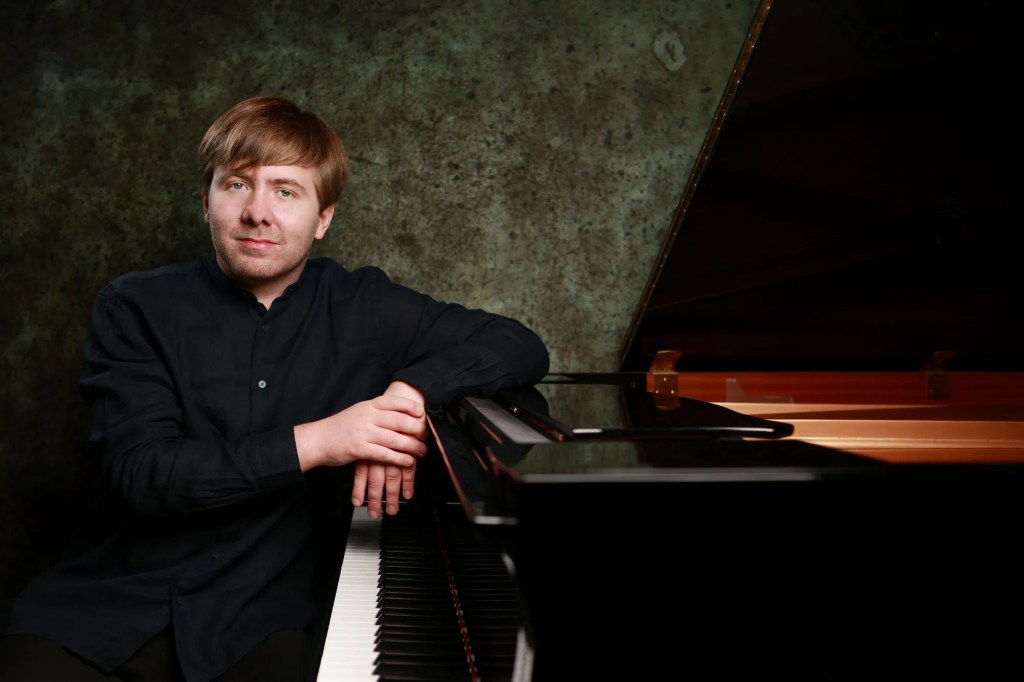
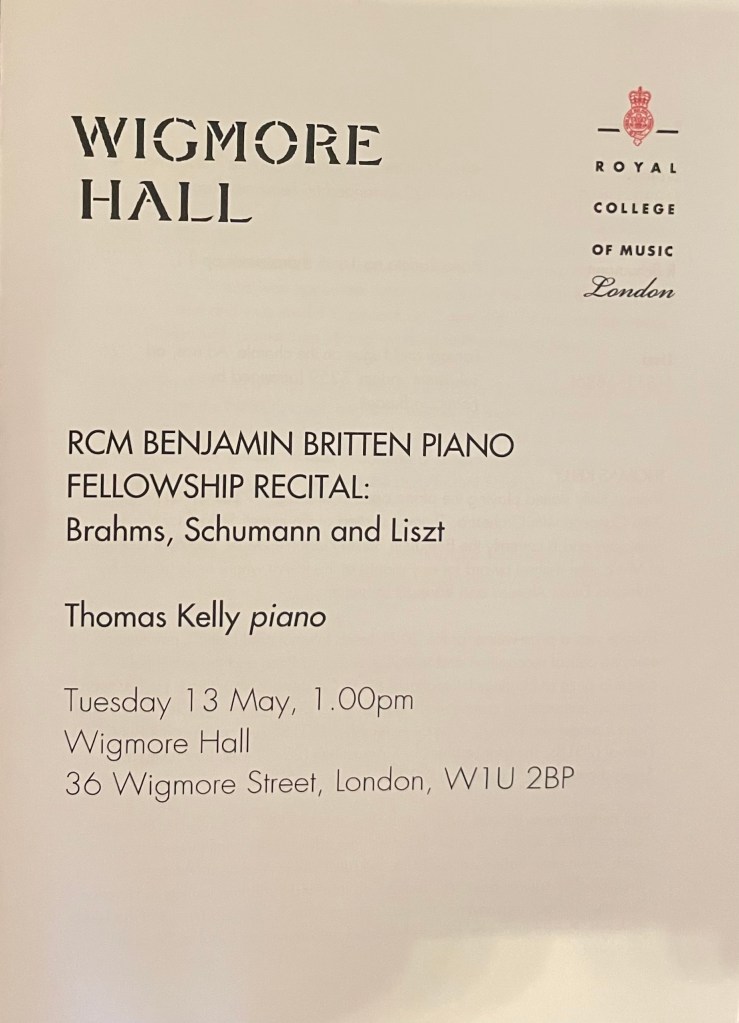
Thomas Kelly at the Wigmore Hall Britten Fellow astonishes with pianistic genius of another age

As Royal College of Music 2023/24 Benjamin Britten Piano Fellow, Thomas Kelly is no stranger to London’s stages, having performed the dazzling piano cadenzas in the RCM’s packed performance of Messiaen’s Turangalîla at the Royal Festival Hall last summer.

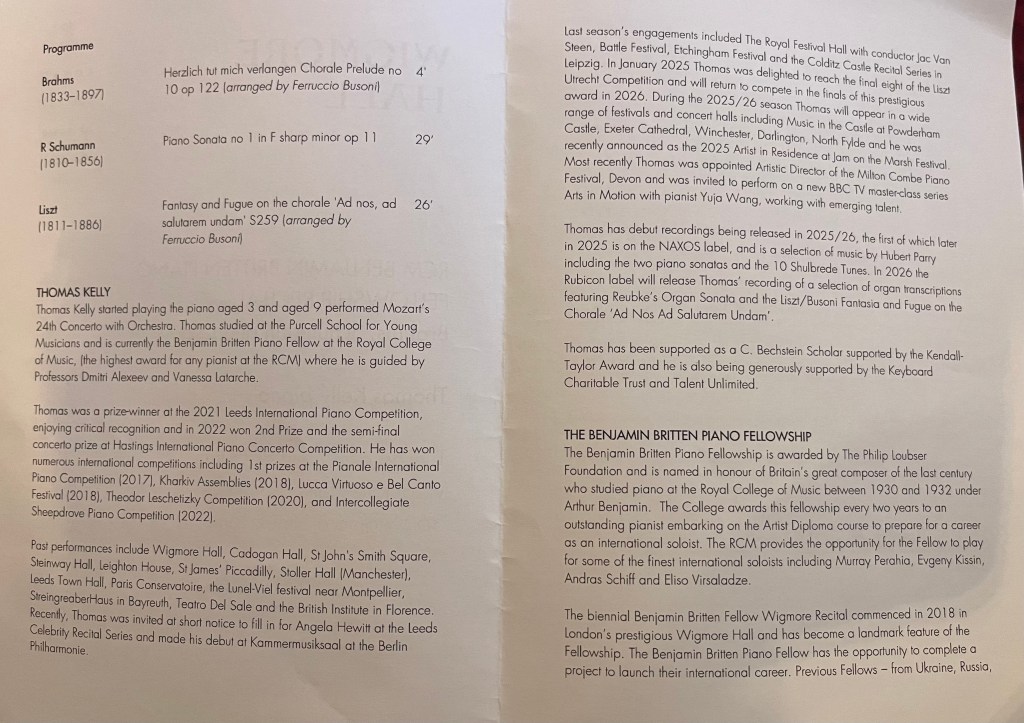
For this programme, Thomas Kelly performed a solo recital of three extraordinary works, two of them arranged by Busoni – famed for his fiendishly challenging and richly textured transcriptions. Based on Lutheran chorales, Brahms’ 11 Chorale Preludes were the last composition he ever completed. The tenth is a piece of brooding profundity, reflecting Brahms’ grief for the recent loss of his friend, Clara Schumann – who was also the dedicatee of Robert Schumann’s heartfelt First Piano Sonata, while Liszt’s Fantasy and Fugue encompasses grandeur and devout meditation.

Johannes Brahms 1833-1897 Chorale Prelude ‘Herzlich tut mich verlangen’ Op. 122 No. 10
 (arranged by Ferruccio Busoni)

Robert Schumann 1810-1856 Piano Sonata No. 1 in F sharp minor Op. 11

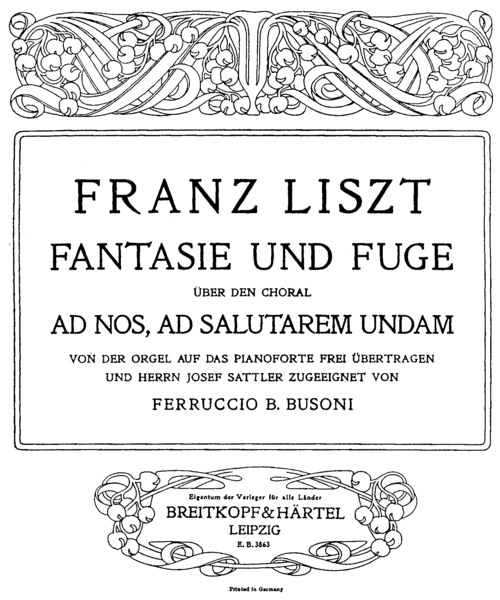
Frank Liszt 1811-1886 Fantasy and Fugue on the chorale ‘Ad nos,ad salutarem undam’ S 259 ( arranged by Ferruccio Busoni)

My second concert this morning was the Britten Fellow Thomas Kelly at the Wigmore Hall .

Hot footing it from my old Alma Mater and Ivanov’s monumental performance of the Concord Sonata I find myself transported to another world, that of the Golden Age of piano playing.

Strangely enough they are the two sides of Busoni, who was the continuation of the prophetic genius of Liszt, who besides being the greatest showman the world has ever known was a prophetic genius who could forge the path into the future .

‘Unconventional’, Emanuil described Ives, but isn’t that just the ingredient where genius is born?

Busoni was a monumental figure whose transcriptions became recreations and his own works looked so far into the future that there are very few that dare to tread that path ,even today.

One such pianist was John Ogdon who like all true geniuses are consumed far faster than ordinary mortals .

Ogdon coming under the influence of Gordon Green who was a disciple of Egon Petri who was a disciple of Busoni, would exhort his many illustrious students to discover the world of Busoni. Stephen Hough on the other hand chose the road of the virtuoso Busoni and the celebration of the piano of the nineteenth century, when after adding a ‘soul’ to the piano it became a complete orchestra.

Pianists became magicians that could turn a wooden box of hammers and strings into a magic box where dreams could come true.

Genius is a hard word to define ( how insufficient words can be when it becomes apparent that music speaks louder than words).

Ogdon was certainly a phenomenon, a genius ,as he was born with a mind and fingers that knew no limits and could embrace the monumental works of Busoni and many of the most complex works in the piano repertoire,as only the master himself could have done .

Thomas Kelly I had heard five years ago at the Joan Chissell Schumann competition at the Royal College and I was immediately bowled over by the sound he made and the fact that he seemed made to sit at the piano. He and his mentor Andrew Ball walking out of the hall together after a monumental performance of Schumann’s Carnaval passed through my mind as I listened mesmerised by a piano genius today .

Genius is not easy to live with as the Alexeev’s and Vanessa Latarche well know. Vanessa had taken over the post of Head of Keyboard from an already ailing Andrew Ball and in a certain sense inherited his pride and joy, Thomas Kelly.

There was magic in the air as Tom opened with the murmured benediction of Brahms /Busoni, where the chorale emerged from the sumptuous sounds of reverence that were wafting into the rarified air that was emanating from Toms magic fingers .

Schumann grew out of these sounds as Brahms bequeathed his halo to Schumann . One of Schumann’s most beautiful melodies was intoned by Tom as he literally recreated the whole sonata before our incredulous eyes . There was a feeling that we were on a voyage of discovery together, with Tom at the helm taking us to places we never knew existed . And if he sometimes submerged the journey in a haze of mist, it was a mist of the golden beauty of Tom’s fantasy world .

It was to Liszt that the true soul of Tom found it ‘s goal. A monumental performance of a work rarely heard in the concert hall, I imagine because of its technical and musical complexity.

No encores were possible after such a monumental performance greeted by an ovation by an select public of musicians and connoisseurs of great piano playing

The encore we actually heard on Radio 3 this morning with a scintillating rondo by Weber from Tom’s ‘In Tune’ appearance last night.

Tatiana Sarkissova and Vanessa Latarche

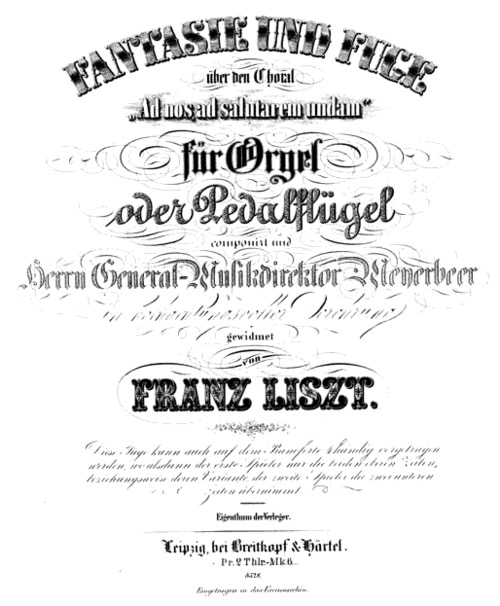
The Fantasy and Fugue on the chorale “Ad nos, ad salutarem undam”, S.259, is a piece of organ music composed by Franz Liszt   in the winter of 1850 when he was in Weimar.The chorale on which the Fantasy and Fugue is based was from Act I of Giacomo Meyerbeer’s opera Le prophète. The work is dedicated to Meyerbeer, and it was given its premiere on October 29, 1852. The revised version was premiered in the Merseburg Cathedral  on September 26, 1855, with Alexander Winterberger performing. The whole work was published by Breitkopf & Härtel in 1852, and the fugue was additionally published as the 4th piece of Liszt’s operatic fantasy “Illustrations du Prophète” (S.414). A piano duet version by Liszt appeared during the same time (S.624).The piece consists of three sections:

  1. Fantasy: opens with the “Ad nos” theme and then turns quiet and contemplative. The theme returns and eventually a climax is reached. A second climactic passage follows, after which this section ends.
  2. Adagio: serves as a development section, beginning quietly, the theme moving to major keys now from the minor keys of the preceding section. The piece brightens a bit in the latter half of this section.
  3. Fugue: serves as the finale, but also, within the sonata-form, as the recapitulation and coda. Elements from the previous sections appear again. The piece ends with a triumphant coda, on full organ.

A typical performance lasts nearly half an hour, although performances of the composition by Liszt and by Winterberger lasted, according to contemporary reports, an average of forty-five minutes.

Ferruccio Busoni prepared a piano arrangement which was published in 1897 by Breitkopf & Härtel. Alan Walker , Liszt’s biographer, said that it “represents one of the pinnacles of twentieth-century virtuosity.”Liszt at least once performed his own piano transcription, of which Walter Bache, his student, made an account in 1862. Liszt never seems to have notated such a version.

Elisabeth Leonskaja at the Wigmore hall A great lesson of humility generosity and mastery

https://www.bbc.co.uk/sounds/play/m002br09

La Leonskaja, the last of the four great dames of the piano, sharing the platform with a young musician in a display of humility, generosity and above all the enjoyment of making music together.

And what music!

Seven of Brahms Hungarian dances played with a young prodigy from the Liszt Academy in Budapest and the Royal Academy in London.

Madame Leonskaja taking back seat from where she could control and direct the refined musicianship of her youthful partner.

It is this humility and generosity that marks out the truly great artists.

Martha Argerich and Maria João Pires help young musicians too by sharing their platform with them .

I remember thanking La Pires when she played the Mozart double concerto in Oxford with Julian Brocal, a young musician who I had noted at the Monza Competition. ‘But it is not what I do for them, it is what they give to me.!’ I know that Madame Leonskaja played in the south of France, too, in a series of concerts dedicated to teacher and pupil . On that occasion she shared the piano with Evelyne Berezovsky .

Youthful energy, enthusiasm and technical mastery are part of the baggage of youth. Artistry, dedication and hard work are part of the baggage of the mature, truly great artists of our day.

Nikolaeva ,Virsaladze ,Yablonskaya and Leonskaja, four great ladies and master musicians and who are ( or were, as alas Nikolaeva died on stage in San Francisco some years ago ) blessed with an early discipline which is that of the true kapellmeister, where music has been planted from an early age into their very being. A technical mastery where the fingers have been moulded into the keys as they have grown, with a limpet- like rubbery flexibility that can dig deep into the keys without any hardness. A musicianship that can allow them to transpose or improvise as Mozart, Bach or Beethoven would have been expected to do.

I remember Kempff walking into the recording studio asking which pieces from his vast classical repertoire would they like him to play. Ilona Kabos told her students that your repertoire is what you can produce flawlessly at a moments notice, as her husband Louis Kentner would often demonstrate.

So Leonskaja is in the back seat, but I have never heard of backseat driving like this !

Britten tried with Richter but just got his feet trodden on. Leonskaja, who was also a duo partner of Richter, was listening carefully to her gifted young colleague never overpowering but sustaining his music making. Adding an occasional injection of energy and a depth of sound where, as all great musicians know, music is created with roots firmly planted in the ground.

Thinking upwards from the bass but always playing horizontally.

What a lesson!

Some extraordinary counterpoints underlined with refined exhilaration and some final chords with that unmistakable rich full sound in the bass that we were to hear in the solo Schubert that was to follow in the second half of the programme.

The D minor dance played with a great sense of freedom with Leonskaja directing from the bass with the unmistakable sound that only she seems to find, and a real injection of power at the end.The F minor was unusually slow and luxuriant with a very flexible beat.There was a teasing rubato in the D flat dance and a hesitancy to the A major contrasting with the sumptuous outpouring of the one in A minor. There was a yearning intensity of the D minor and finishing with the languid opening of the F sharp minor that was transformed into a joyous dance. There were dynamic left hand interruptions from Leonskaja and the ravishing charm they brought to the central episode. Mihály dashed into the hall after his performance to listen to the oracle speak.

Leonskaja’s playing of Schubert is a marvel of simple musicianship allowing the music to unfold naturally without any personal interruptions. But every so often she would take Schubert into the world of Beethoven with passionate outbursts of almost orchestral proportions. Taking us by surprise even with the opening octave of the first impromptu that after the shock, she allowed the vibrations to die down as a plaintive voice could be heard in the distance emerging with purity and simplicity. An extraordinary jeux perlé and delicate brilliance in the second ,leading to the central episode that was more restrained that usually heard, being melodic rather than militaristic.There was a chiselled beauty of aristocratic poise to the G flat impromptu played with the same weight that I remember hearing in this hall from Perlemuter and Tagliaferro many years ago. It is the weight of inevitability and simplicity that there could be no other way in that moment. The delicacy of the fourth impromptu was more of a dance than the usual digital delight of well oiled fingers. Greeted with sincere thanksgiving by a full hall Madame Leonskaja returned with a book in her hand and beckoned her young partner to join her in celebrating in music their success and joy at making music together.

Winner of the Liszt-Bartók Prize at the 15th Concours Géza Anda 2021 Mihály Berecz was born in Budapest in 1997 and began to learn the violin at the age of six. Later, in parallel with his work in various orchestras, he began to devote himself to the piano with Edit Major and Erzsébet Belák.

He obtained his First Class Honours Bachelor of Music degree at the Royal Academy of Music in London with Christopher Elton, however. Winner of the Debut Berlin International Concerto Competition, Mihály performed for the first time at the Berlin “Philharmonie” in June 2017.

Previous awards include the Golden Prize of the 2nd Manhattan International Music Competition and the Harriet Cohen Bach Prize of the Royal Academy of Music. At the 2013 Young Euro Classic Festival he performed Liszt’s “Hungarian Fantasy” at the Konzerthaus Berlin. Also in 2013, and upon the invitation of Zoltán Kocsis, he made his debut at the Béla Bartók National Concert Hall, Budapest.

At the Liszt Academy, where he frequently performs, he recently played Mozart’s “Jenamy” concerto under the baton of Mikhail Pletnev. Mihály’s interest in historical interpretation has led to performances of fortepiano concertos with renowned orchestras playing on period instruments, such as the Orfeo Orchestra. Between 2020 and 2022, as part of a scholarship from the Hungarian Academy of Arts, he performed Béla Bartók’s complete solo works of in eight concerts at the Hungarian Radio’s Marble Hall.

Mihály Berecz has won first place at the 2023 Kissingen Piano Olympics (Kissinger Klavier Olymp).

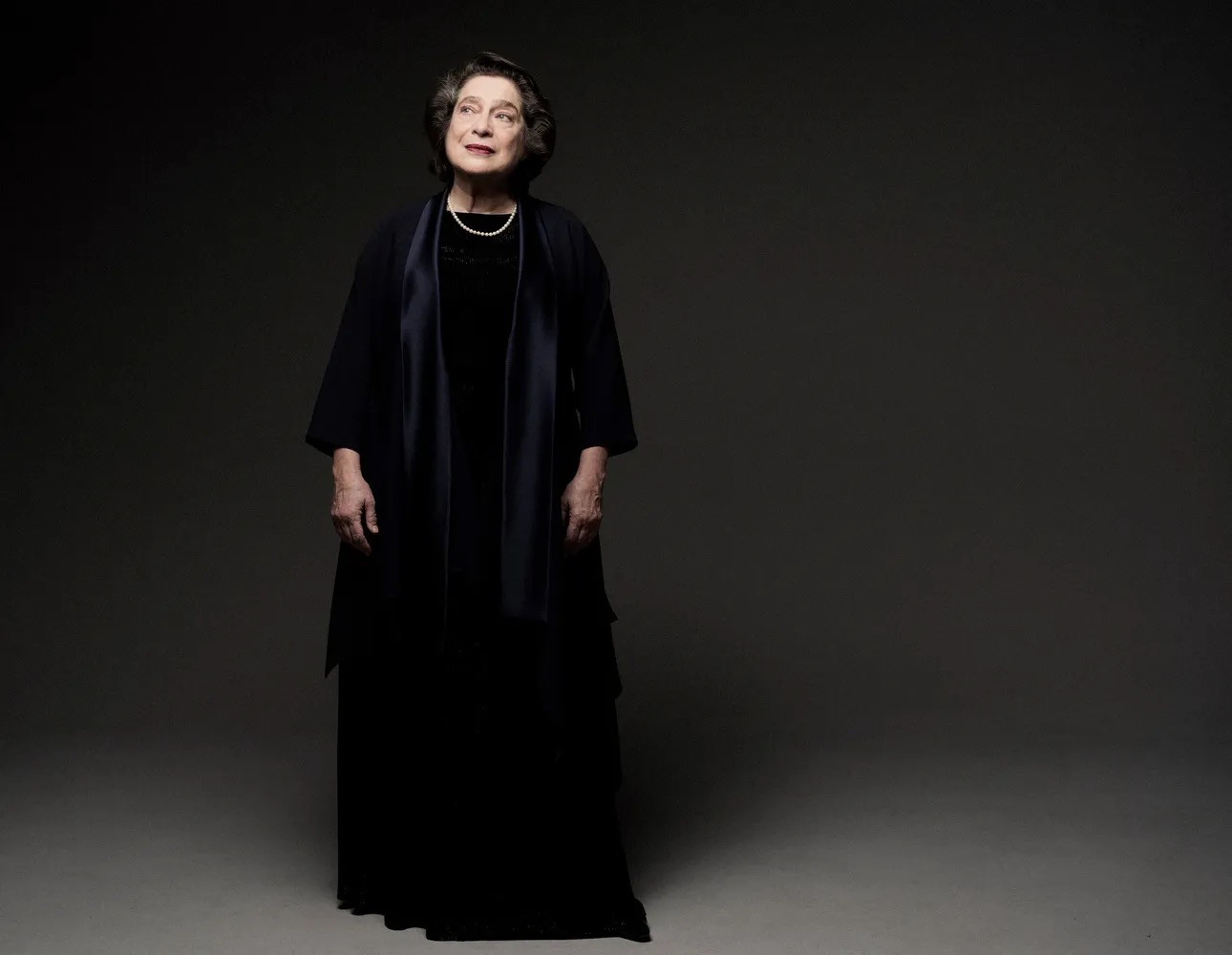
Elisabeth Leonskaja (born 23 November 1945) is a Georgia-born naturalized Austrian pianist. She made an international career after she won the Enesco International Piano Competition in Bucharest in 1964, and has lived in Vienna since 1978.

Leonskaja was born on 23 November 1945 to a family of Jewish and Polish origin living in Tbilisi then the capital of the Georgian Soviet Socialist Republic.

When Leonskaja was six and a half, her parents were able to buy her first upright piano. At 7, she passed the entrance exam of one of Tbilisi’s sixty music schools. At 11, she gave her orchestral debut with Beethoven’s Piano Concerto in C major, at 13 her first solo recital. At 14, she began an intense four-year period of study in secondary school with a new piano teacher from Kyiv. In 1964, Elisabeth Leonskaja won the Enesco International Piano Competition  in Bucharest. The judges included the composer and conductor Aram Khachaturian and the pianist Arthur Rubinstein.

In 1964, Leonskaja began studies in the Moscow Conservatory. During her conservatory years she won prizes in the Long-Thibaud- Crespin Competition  in Paris and the Queen Elisabeth Music Competition in Brussels.

Leonskaja left the Soviet Union in 1978 and has since then resided in Vienna. A notable recording of hers is of Edvard Grieg’s arrangement for two pianos of Mozart’s piano sonatas K.545 and K.533/494, accompanied by Sviatoslav Richter , with whom she built a close friendship and collaboration. She recorded many years for Teldec, now for German label MDG, and presently for several different labels including Warner, who have also re-released a number of recordings. She also gives many masterclasses.

Leonskaja with the Finnish cellist Arto Noras and the Russian violinist Oleg Kagan in 1967

Leonskaja was married for a short time to the violinist Oleg Kagan.

The amazing Mr Hay ignites Grand Passion Pianos with poetry and wizardry

‘Giants of Nineteenth Century Pianism’ presented by Tyler Hay in Muzz Shah’s sumptuous Grand Passion Pianos salon. An oasis of civilised culture where all around there is the confusion of Saturday night fever in central London .

Here on Alfred Cortot’s newly restored Pleyel piano Tyler Hay kept us spellbound with transcendental performances of some of the most spectacularly difficult piano works ever written. From Czerny variations ,two nocturnes by Field, three Henselt Études a Tarantella by Thalberg and even a Symphony by Alkan, there was no stopping Tyler. An extraordinary ray of lightning immediately ignited this noble instrument ,that had once belonged to Alfred Cortot the poet of the piano. https://youtu.be/rNUNNNNj_Qw?feature=shared

A stroke of lightning from Czerny , played with extraordinary ease and ‘fingerfertigkeit’. But a sense of style as the variations became ever more astonishing, with feats of piano playing that made even Tyler wonder how he dared open a programme with such transcendental wizardry. Czerny, the teacher of Liszt and pupil of Beethoven was a prolific composer of over 15000 works for the piano!

There was a chiselled beauty to two of John Field’s eighteen nocturnes. It was his genre that had inspired Chopin who also wrote 18 nocturnes but more of miniature tone poems of Bel Canto rather than the simple moonlit pieces of the Russianised Irish pianist.

I have often marvelled as a student at Rachmaninov playing of ‘Si oiseaux j’etais ‘ on piano rolls in the Piano Museum in Brentford and often wondered what other works there might be by Henselt .https://youtu.be/_5hCX-Eik8M?feature=shared

Well Tyler showed us another two today, all played with the beautiful fluidity that we hear more often in Mendelssohn’s much technically simpler ‘Songs without Words’. Tyler showed us that there are still so many works that have lain on dusty shelves in the archives that can illuminate a historic moment in the piano’s evolution. With the addition of the sustaining pedal described by Anton Rubinstein, a pupil of Liszt, as the ‘soul’ of the piano, leading to the consequent Liszt and Thalberg so called three handed piano technique.Tyler with his charmingly assured manner on stage and in life, reveals the soul and depth of his poetic understanding the moment he touches the keyboard. It was this poetic beauty that he brought not only to the Field Nocturnes but also these three studies by Henselt. They are salon pieces but in a masters hands such baubles can be turned into gems. Alkan’s Symphony for Piano is certainly not a salon piece but an extraordinarily masterly work that thanks to Raymond Lewenthal and Rodney Smith was rediscovered fifty years ago. Alkan’s works are not for the fearless or the living room parlour, they are works that need massive technical and physical resources. Mark Viner like Tyler Hay is an ex student of Tessa Nicholson at the Purcell School. It was they that needed to acquire a piano technique that could do justice to the enormous amount of works that had been gathering dust in the archives since the nineteenth century. It was Tyler who encouraged Mark to embark on a journey to record all of Alkan’s works and to date I believe he has made ten CD’s all rapturously received by the critics.

https://christopheraxworthymusiccommentary.com/2024/10/03/mark-viner-cooks-a-dish-fit-for-a-king-ravishing-beautysupreme-artistry-and-total-mastery-served-up-on-a-casserole-by-a-cordon-bleu-maitre/

https://christopheraxworthymusiccommentary.com/2020/11/15/mark-viner-at-st-marys-faustian-struggles-and-promethean-prophesis/

The Symphony which makes up just four of his twelve studies in all the minor keys, was played by Tyler with searing passion and a kaleidoscope of colour .The pulsating opening .like Beethoven’s Eroica, so noble but so unsettling. The extraordinary mastery of touch needed to play the second movement with its legato melody and staccato accompaniment .The last movement Raymond Lewenthal described as ‘a gallop though hell ‘ and it certainly left even Tyler exhausted, as our young hero certainly never plays safe, but throws himself fearlessly and with spotless precision into all that he plays.

After almost ninety minutes of pyrotechnics he saved the best for last with the monumental variations of Liszt on the chorale from Bach’s cantata : ‘Weinen, Sagen, Sorgen, Zagen. ‘

A performance of emotional and physical endurance with Tyler visibly moved at the thought of Liszt fleeing the funeral of his beloved daughter,Blandine, after playing this very chorale .

A tour de force of technical mastery but there was much more than just empty note spinning. The sacking of Thalberg’s tomb in Naples a few years ago had Tyler searching the archives for original works by the most famous pianist of his day – the Lang Lang of the nineteenth century. Obviously grave robbers had done their homework thinking of the riches that might have accompanied this pianistic genius on his journey to heaven! One of the pieces Tyler found was the Tarantella op 65.You can read all about the duel between Liszt and his only real rival Thalberg in Tyler’s very interesting programme notes. And here was an original composition of beguiling exhilaration played with dynamic drive and charm with the nonchalant ease that makes this music still so enticing. https://christopheraxworthymusiccommentary.com/2020/01/04/a-la-recherche-de-thalberg/

Everything Tyler did or said was imbued with the poetic passion of a true disciple of the great period of the birth of the modern day piano. Grand Piano Passions was indeed the place to be

Anyone interested in the Golden Age of piano playing should not miss the Musical Museum in Brentford founded by Frank Holland. My piano ‘Daddy’, Sidney Harrison was president and responsible for getting the BBC to record many of the legendary pianists immortalised on piano rolls that Frank used to keep in his damp garage. https://christopheraxworthymusiccommentary.com/2018/04/02/the-piano-museum-of-frank-holland/


“A Piano has to have personality, It has to have colour” 
Described by the Financial Times as a “person of note”, Muzz Shah leads Grand Passion Pianos with an uncompromising dedication to quality and innovation. It was Muzz that determined that Steinway and Pleyel are perfect counterparts and together offer compelling alternatives for almost every pianist looking for a top-quality instrument.  

As a modern polymath, Muzz is a qualified lawyer and worked for many years in the City of London whilst researching piano construction methodologies, the physics of piano sound generation and the history and innovations of the houses of Steinway and Pleyel. He has written for International Piano magazine and Pianist  magazines on the topics of piano technology and the remarkable history of the Maison Pleyel. 

His work at Grand Passion Pianos has been profiled by the Financial Times, Country Life, Whispers and the Mayfair Times
not to be missed in the enchanting 1901 Arts Club – selling fast – Tyler writing an enticingly amusing narrative to accompany his scintillating and poetically enhanced performances

https://www.grandpassionpianos.co.uk/single-post/conversations-at-the-keybo

http://grandpassionpianos.co.uk/

Francesco Piemontesi at the Wigmore Hall ‘Simplicity,Humility, Intelligence and Mastery combine, the just heir to Perahia’s throne’

Having started the week shocked and embarrassed we finished the week in astonished amazement.

Bryce Morrison and I were transported into seventh heaven tonight where all is forgiven and forgotten.

From the hands of Francesco Piemontesi we were transported into a magic world of intelligence ,beauty and seduction .With the humility of a complete musician he recreated each of the three master works on his programme .

Already looking at the programme we could appreciate ,as with Arrau, the serious intent that would unfold.

A Liszt Sonata restored to the pinnacle that it deserves and since Brendel has never received.

Schubert as I imagine Edwin Fischer must have recreated it.

Perahia is sadly in retirement but Francesco Piemontesi is the just heir to his throne.

Simplicity,Humility ,Intelligence and Mastery combine in Francesco Piemontesi to recreate the master works for generations to come.

Unlike Arrau, after the Liszt Sonata that stood so proudly on its own in his programme, he was persuaded to play again.

‘Wachet auf, ruft uns die Stimme’ rang out with the imperious authority of a fervent believer.The final glorious ending filling this hall with the Glory To God on High! https://youtu.be/GzSLGfkhCIQ?feature=shared

But to Liszt was given the last sounds with the gentle murmuring of lapping water on the shores of Lake Wallenstadt.

I am sure Liszt would have approved and that after such a wondrous journey we should be reminded of the beauty that surrounds us for those with eyes that can stop and stare with a soul that can take count of such simple marvels.

From the very first notes of the ‘Grazer Fantasie’ we were taken to a land of pure magic. The way that Francesco caressed the keys before actually allowing them to squeeze sounds of etherial beauty out of this great black box of hammers and strings. It reminded me of Rosalyn Tureck finding the piano lid opened she would look dismissively at the public as she proceeded to dust the keys, making sure every speck had been eliminated that could interfere with with her ultra sensitive sense of touch. Of course Matthay wrote reams about that, and the fact that in every key there are an infinite amount of sounds that can be found, for those that have the ears of a true recreative artist and the mastery and dedication to be able to seek them out! The opening left hand arpeggios like the F minor four hand Fantasie was a hardly audible whisper, that already in this artists hands had a golden radiance to it, ready to receive the magic that was to descend from on high. There were so many ‘echt’ Schubert things in this work and even a hint of Weber ,that makes you wonder whether it might have been created by artificial intelligence. However it is an extremely beautiful piece especially when played with the golden gloves of a real artist as it was today.There was Swiss grace ,charm and irresistible subtlety. Ravishing beauty with a kaleidoscopic sense of colour from a man who can make the piano sing, cry and really speak with a voice of poignant beauty and meaning. A revelation that was to be continued with the undisputed masterpieces of Schubert’s final year on this earth.

The final Impromptus D 935, where the first and third are really tone poems in their own right but when added to two and four take on the form of a Sonata , as some have suggested, to add to his final trilogy.The first entered a perfectly balanced world where forte was just a more emphatic sound in a place of horizontal beauty. Etherial beauty of the pulsating sounds on which a touching musical conversation was so poignantly played out between the bass and the treble. All through this recital whether Schubert or Liszt there was a perfect sense of legato, that which Kempff and Lupo found the secret key to, in their Indian Summer. Francesco is an early starter and his sense of legato and infinite gradations of tone are what held us captivated in a conversation of extraordinary subtle communication. Suddenly a deep bass note would be allowed to shine for a second to illuminate all that stood above it. It was the final question and answer of the coda that was of beseeching beauty where one could feel four hundred people united as we waited with bated breath for his final gasp.

There was a glowing fluidity to the second played with a searing passion rising to the fore. The theme and variations of the third were played with a grace and charm as the variations were thrown off with teasing nonchalance.The deeply sonorous minor variation with it’s clouded bass of overpowering emotional impact was answered by the rocking lullaby with the tenor voice answered by the soprano and after a scintillating jeux perlé we were lead to the gentle final prayer of thanksgiving.

The final Impromptu took off at a quite gentle pace of luminosity and dynamic drive. But there were passionate outbursts with fearless glissandi played with the help of the left hand to give even more bite and impact to such a passionate outcry.The final cascade from the top to the bottom of the keyboard arrived with an almighty crash with an added octave that was quite breathtaking as it was unexpected.

The Liszt Sonata was give the space it deserves and was consigned to its rightful place at the Pinnacle of the pianistic repertoire. Clara Schumann may have thought it a dreadful noise and all too often I have thought so too, as I listen to performances used to show off pianistic muscles and heart on sleeve emotions. Liszt destroyed his original ending in a blaze of glory and bombastic showmanship because Liszt in Weimar was no longer the touring virtuoso but a prophetic genius who with Schubert could forge a path into the future. The final pages of the Liszt Sonata are the most remarkable in all piano literature and Francesco played them with searing intensity and prophetic character allowing the three components of this remarkable work to come to rest, united with three barely whispered chords. It was terrifying to see Francesco hardly touch the keys, as these were not just three chords, but three different vibrating sounds. Leaning over to the bottom of the keyboard, Francesco barely touched the final B with his right hand and stayed stationary and curled over the keys for quite some minutes as we contemplated the miracle that we had all been witness to. Francesco usually so controlled and with his Swiss precision and cleanliness has tonight allowed himself to let go and join the ranks of the finest virtuosi of our time. He had played Liszt 2 Piano Concerto in Rome recently and I remember hearing him at the Proms many years ago, when very few knew who he was, playing not only a Mozart concert rondò but also Strauss’s mighty Burlesque. The two characters have now been united and in both the Schubert and Liszt were breathtaking moments added with architectural understanding at crucial moments to the overall shape of his interpretations. The opening of the Sonata I found rather fast and impetuous after the opening exposition of the three germs that are the nuts and bolts of the whole sonata ,and consequently the left hand demonic rhythm was not as precise as I remember hearing from Curzon. I remember Agosti too, playing the Liszt sonata in his studio in Siena where the whole world flocked to hear a second generation student of Liszt intone this sonata ,and much else,in radiantly whispered tones that like Francesco today would suddenly erupt with breathtaking potency.Octaves where he leant on the inner note to give more depth to the sound.The beauty of the ‘Margherita’ melodic outpouring was of sublime beauty as Francesco’s superb sense of balance allowed the melody to ring out accompanied, but never interrupted by washes of sound.The build up to the slow movement was an unforgettable experience in Francesco’s hands as he came to rest before allowing the central episode to expand into a movement of devastating emotional intensity of seamless legato and passionate outpouring. In the faster passages Francesco would often build up the tension and then let it go so it could start all over again. Other times he just let himself go and the emotional impact was overwhelming. A remarkable performance that I hope might one day be recorded in live performance where the stop and start of studio recording could kill this quite extraordinary artistic voyage of discovery

Wachet auf, ruft uns die Stimme (‘Awake, calls the voice to us’),[1] BWV 140, also known as Sleepers Awake, by J.S. Bach is regarded as one of his most mature and popular sacred cantatas. He composed the chorale cantata in Leipzig for the 27th Sunday after Trinity  and first performed it on 25 November 1731. https://youtu.be/GzSLGfkhCIQ?feature=shared


Franz Schubert 31 January 1797 Vienna. 19 November 1828 (aged 31) Vienna

Schubert’s rarely-performed ‘Grazer’ fantasy in C, laid the foundations for the Wanderer and the later Fantasie in F minor for piano four-hands, D940. The provenance of this work is disputed (a copy whose title page was written by Schubert’s friend Joseph Huttenbrenner was discovered in the 1960s in the Graz estate of Rudolph von Weis-Ostborn).   In May 1968, a manuscript of a Fantasie signed by Josef Hüttenbrenner was found in the attic of 14 Parkstrasse in Knittelfeld, Austria. The two-story stucco house belonged to the great-nephew of Hüttenbrenner who was a friend, supporter and copyist of Schubert’s. Walter Durr, from the Schubert Center of the University of Tubingen, suggests that Schubert himself composed the work after he studied the manuscript in Graz (which is how this fantasy came to be known as the “Grazer”). While no irrefutable authentication can be made of this work (which is not autograph), there are certainly Schubertian characteristics throughout.

Moderato con espressione; Alla polacca; più moto; Moderato con espressione; Tempo I.

It is thought to have been composed around 1818 and as no autograph exists, its authenticity is still in doubt. It was given its premiere by Lili Kraus shortly after it was discovered, and subsequently recorded by her (Odyssey, 1970) https://youtu.be/65uRn8fLWlQ