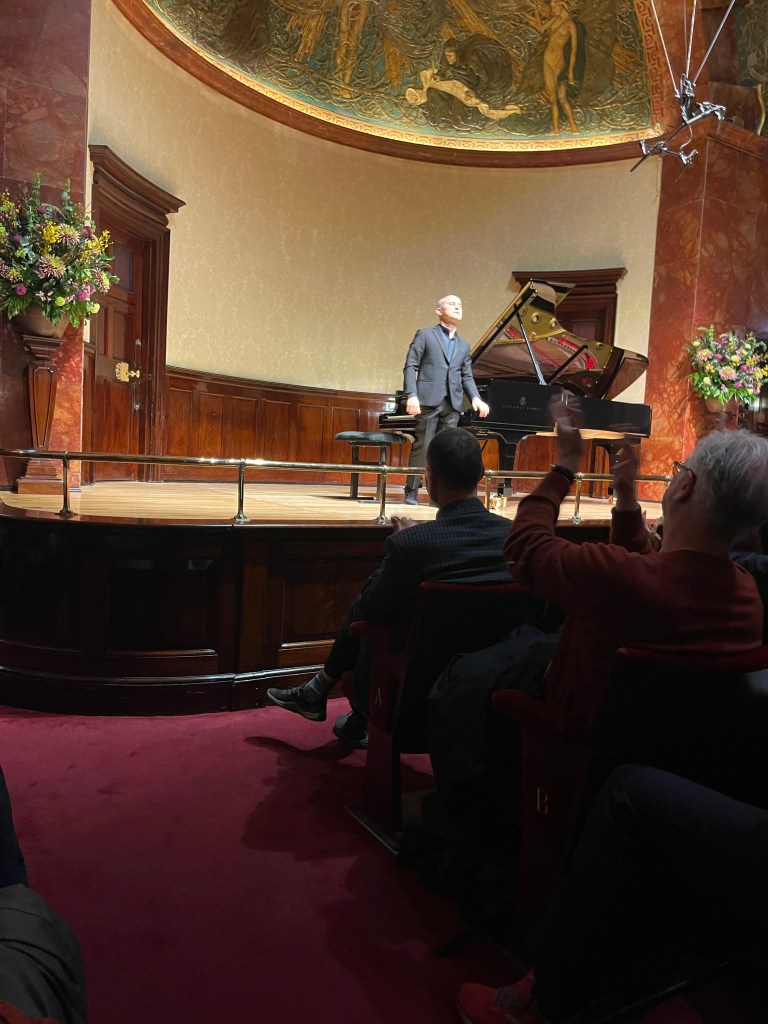
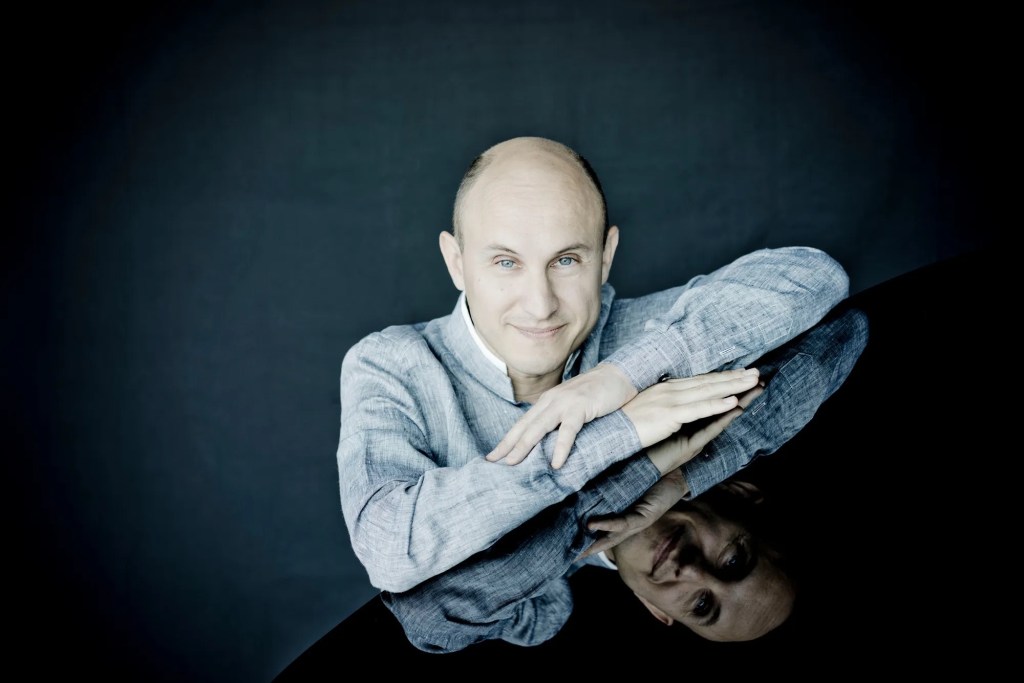
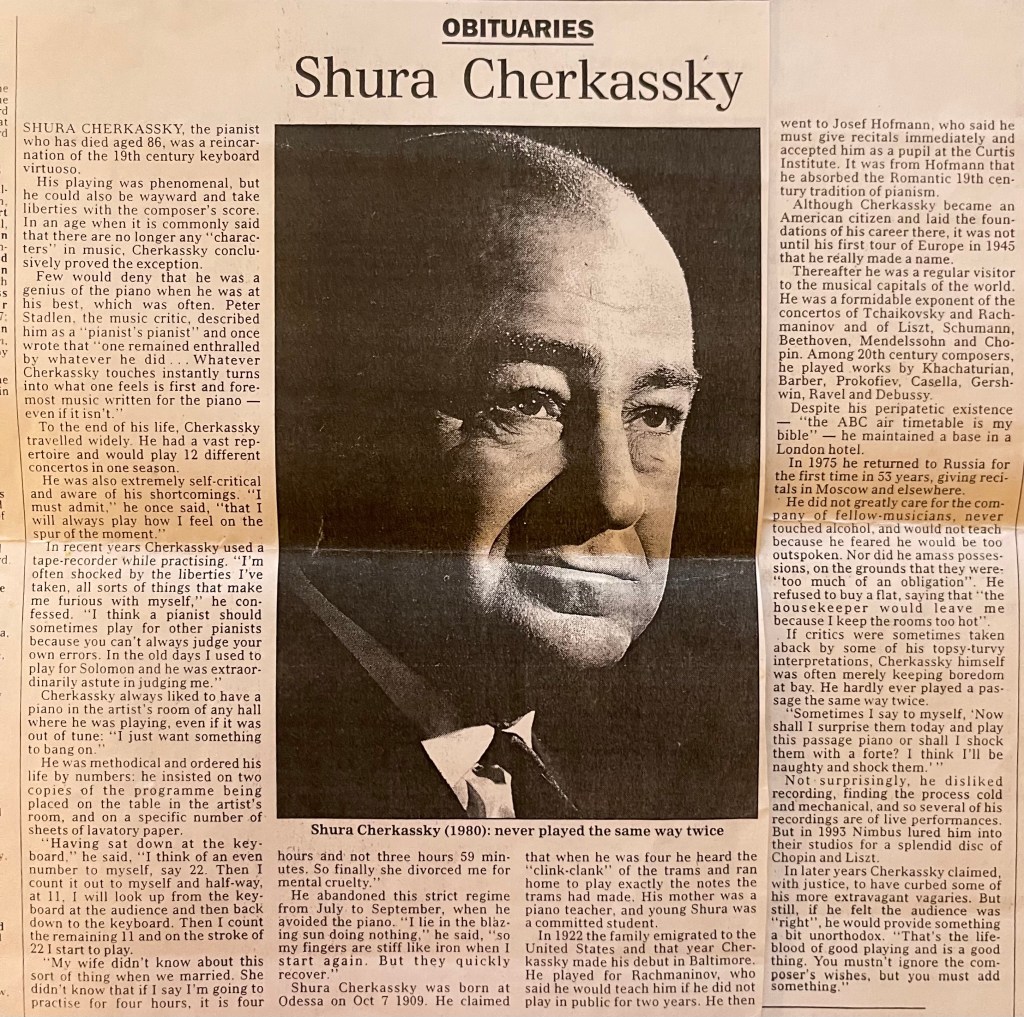
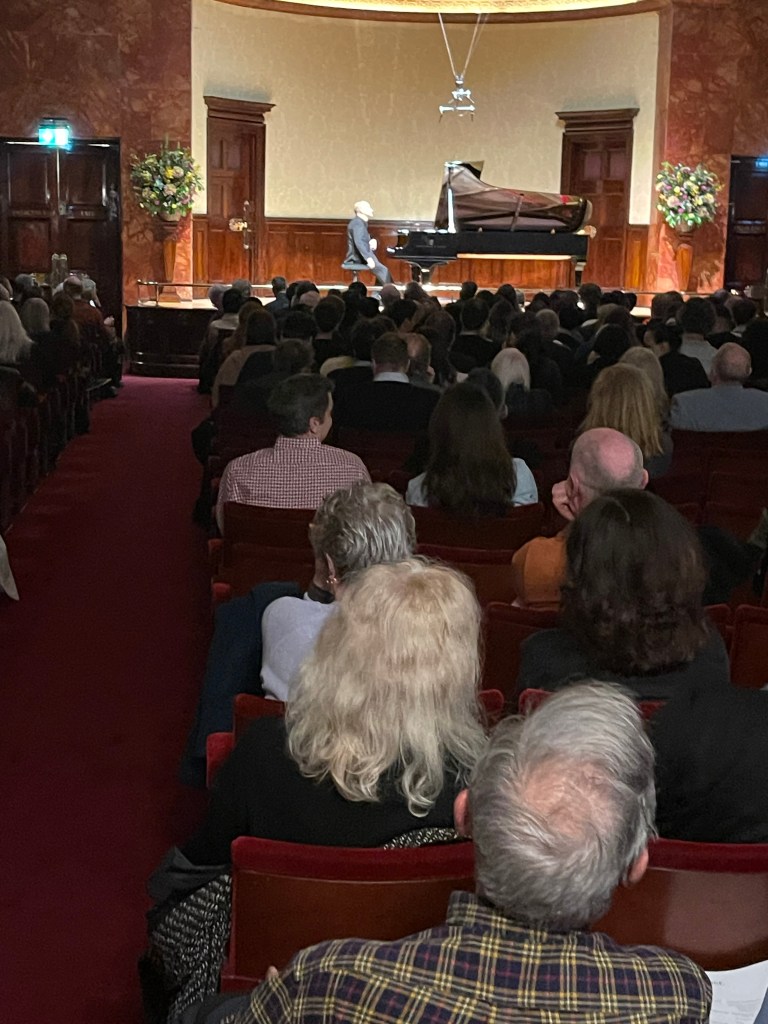
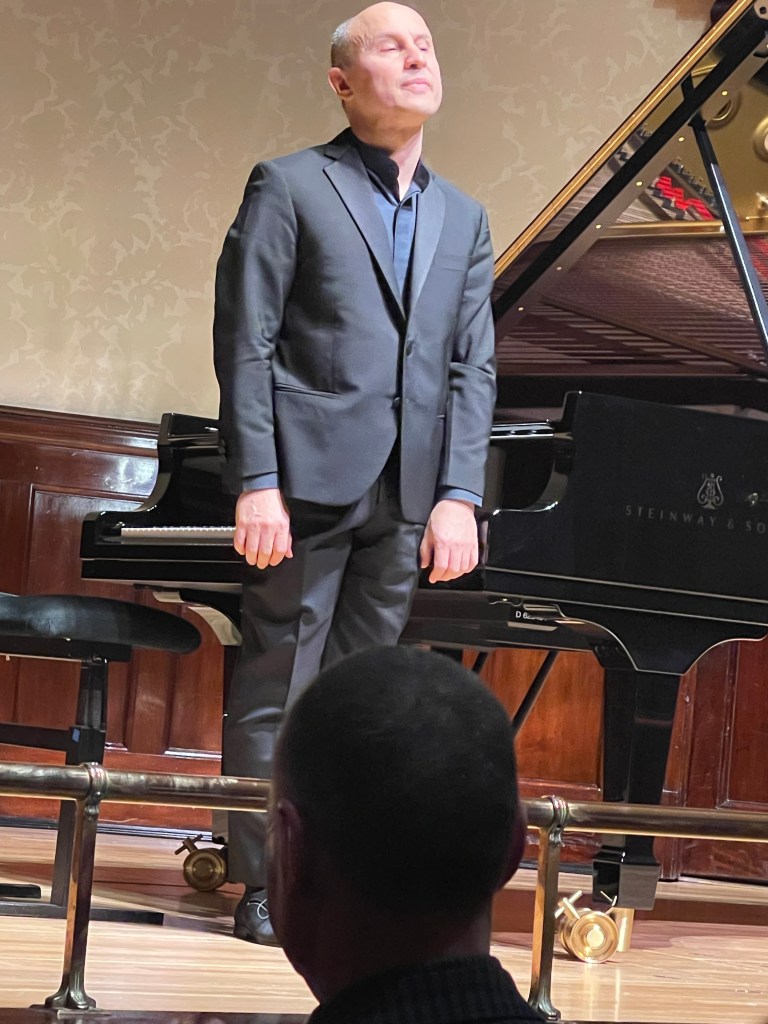
Nelson Goerner at the Wigmore Hall and the magic of Cherkassky returns with a refined multi coloured mastery of another age .
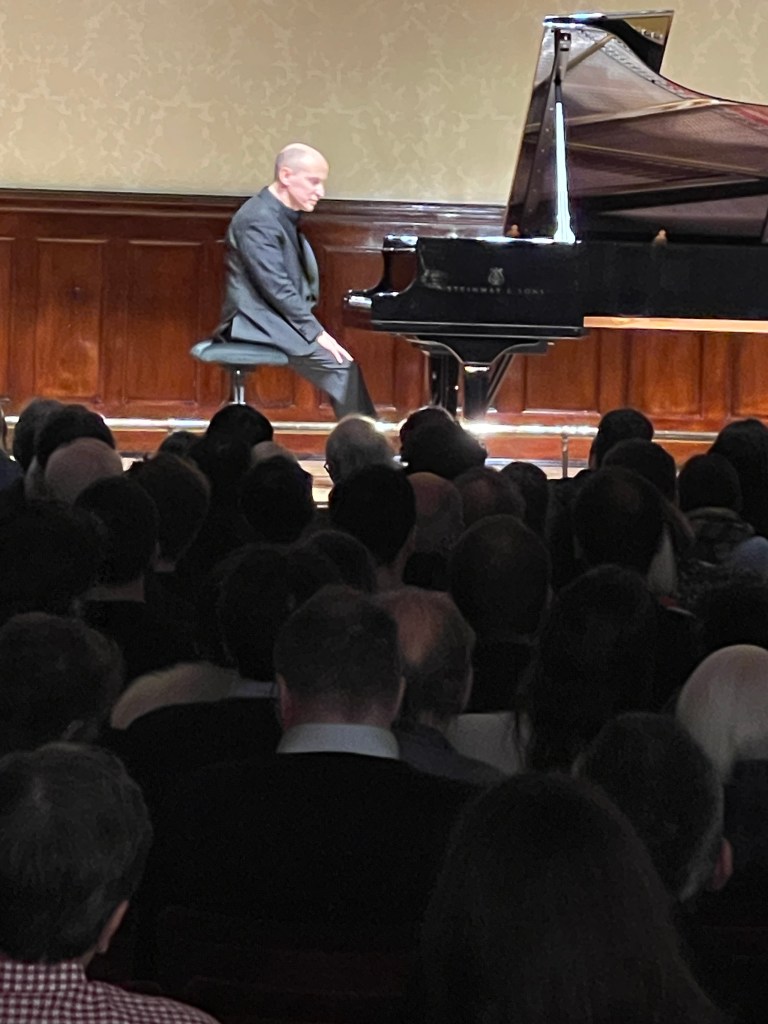
A seemless jeux perlé of silken whispered beauty and a reminder of a time when pianists were magicians who could turn baubles into gems and gems into sounds of breathtaking beauty .A time when the piano was an orchestra that could roar like a Lion or seduce with whispered secrets of intimate confessions .
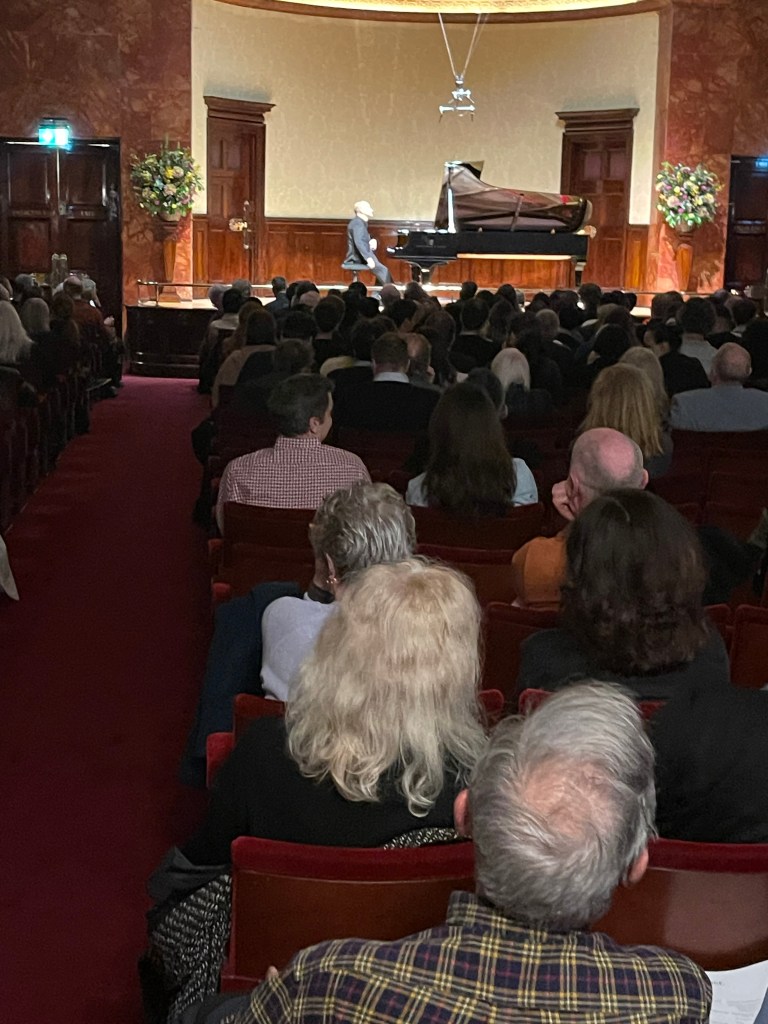
The piano that we read about in books of the power that Liszt and Thalberg had over a high society audience turning them into a screaming mob trying to grab a souvenir of the wizard with such bewitching powers .
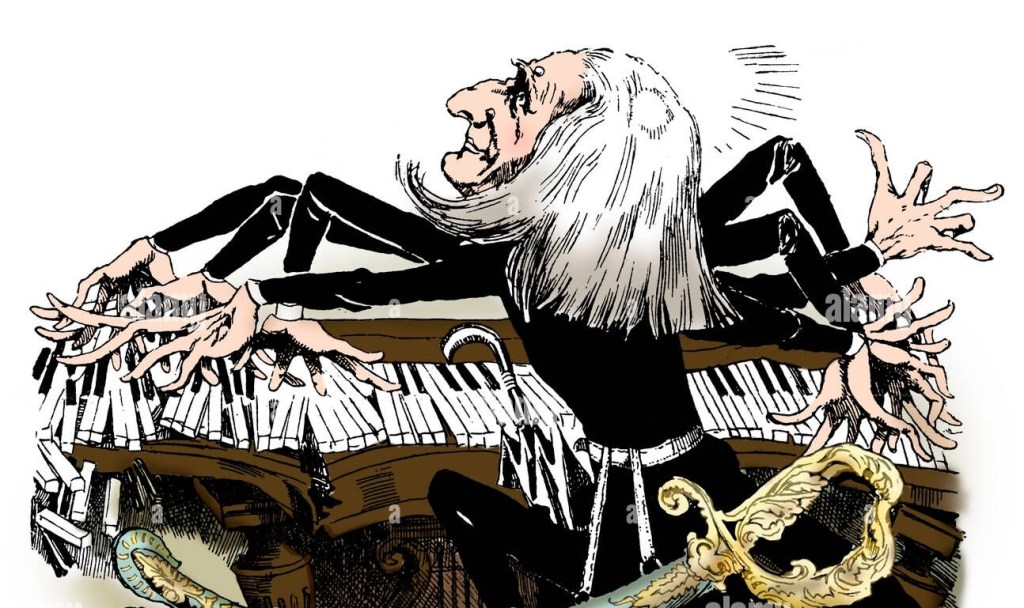
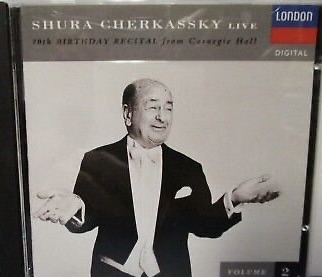
It was of course Horowitz in our day who was described on his arrival in Paris as the greatest pianist alive or dead .I remember Cherkassky telling me that on the death of Bolet, Horowitz declared that they were the only two left .
It was Nelson who many years ago had the same agent as Shura Cherkassky , Christa Phelps, who persuaded me to engage a very young Goerner because Cherkassky ( our hero of many recitals in Rome ) admired him so much .
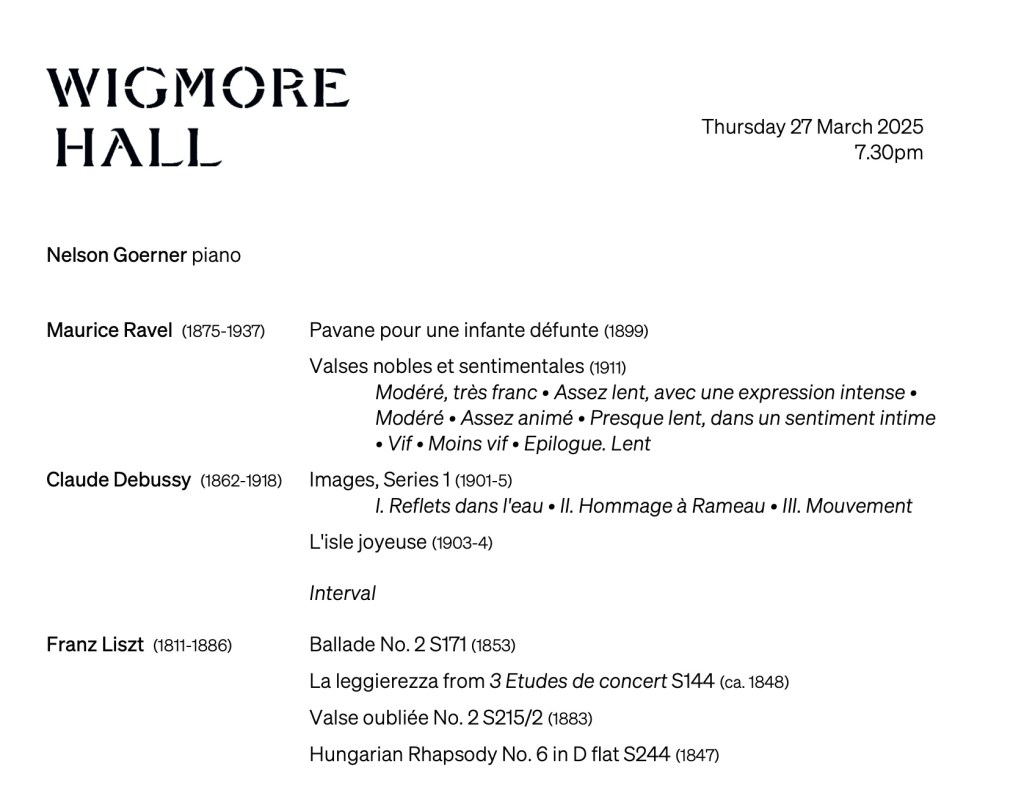
Shura and Horowitz are long gone and I can now say that there is only one left to show us what it means to make the piano sing . Nelson Goerner ,a master pianist, who is a magician from the Golden age and many of those pianists adorn the walls of this much loved hall: De Pachman,Moiseiwich, Rubinstein ,Myra Hess etc. A programme of Ravel ,Debussy and Liszt ideal for a supreme colourist. I well remember a 45rpm recording of Cherkassky playing the Ravel Pavane coupled with the Chopin Study op 10 n. 6 in E flat minor in the magical left hand transcription by Godowsky. I have searched high an low for a recording that completely bewitched me as a teenager asI fell in love with that kaleidoscopic sound world.
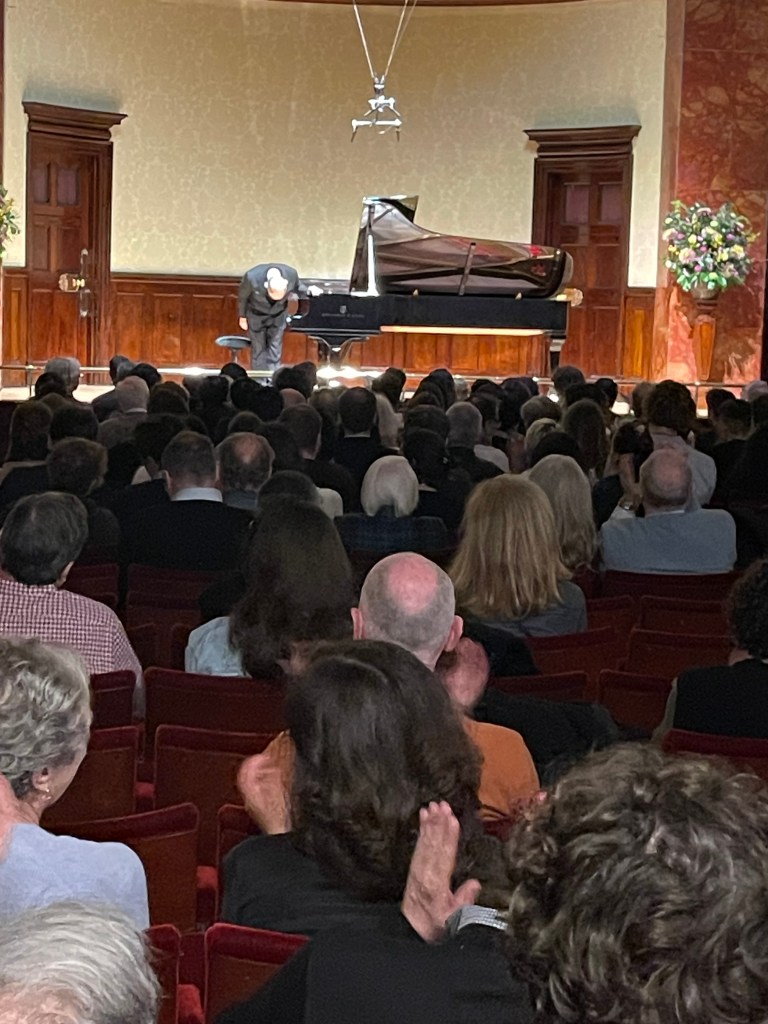
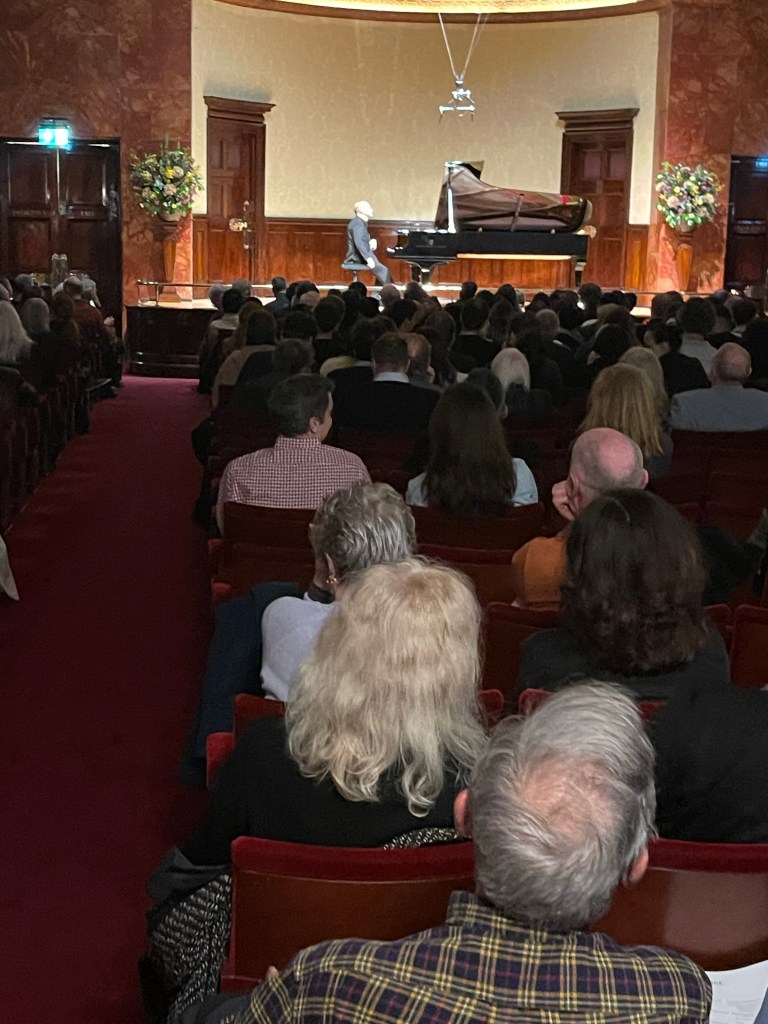
Nelson played the Pavane as an opening piece with refined good taste and drew us in to his world of colour but also of a musician who allows the music to speak for itself with simplicity and beauty. It did not quite have the weight of Perlemuter and it is good to remember that this was the last piece he played in public in this hall suffering the ‘guillotine’ just one more time in remembrance of his agent Basil Douglas. It was the Valses Nobles that followed that immediately showed the world of Nelson Goerner inspired by the magic of the Golden age pianism.But Nelson also has the modern day approach, inspired by his mentor the late Maria Tipo, that the composers indications in the score are to be pondered over searching for the real meaning that inspired the composer to put the notes on the page. A ‘modéré’ that was a little too ‘franc’ but had a great orchestral sense to it and one can quite understand how Rubinstein was booed off the stage when he gave the first performance in Spain. He famously got his own back, though, by playing them again as an encore !.Even now it comes as a shock but the ravishing beauty and crystalline purity of the ‘assez lent’ really does have ‘une espressione intense’ just as there was simple playful clarity to the ‘modéré’ that follows,and a chiselled questioning beauty to the ‘assez animé’.An almost lumbering capriciousness to the ‘presque lent’ leading to the gradual build up of grandiose nobility of the ‘vif’ immediately dispelled in a wash of sumptuous sounds. It was in the ‘Epilogue’ where Nelson showed his true musicianship, holding together strands of the previous waltzes as the composer looks back placing them in magical cloud of sound but never loosing the masterly architectural shape of a genius . A masterly performance that was followed by a Debussy of great fluidity but always with a sense of line. Allied to a kaleidoscope of sounds and mastery of the keyboard that gave great strength to these ‘Reflets dans l’eau’ but also lent an aristocratic nobility to ‘Hommage à Rameau’.’Mouvement’had an improvised freedom of whispered beauty as notes became mere washes of sound of an orchestral richness and colouring.’L’isle joyeuse’ was played with extraordinary mastery as he created the atmosphere with chameleonic changes of character leading to a climax that was breathtaking for it’s passionate grandiloquence and insistence.It is hard to believe that Debussy could conceive such magic looking across at Jersey whilst holidaying in Eastbourne but then genius is only for the chosen few. I have rarely heard this work played with such a kaleidoscope of colour and burning intensity allied to sonorities of bewitching enticement.
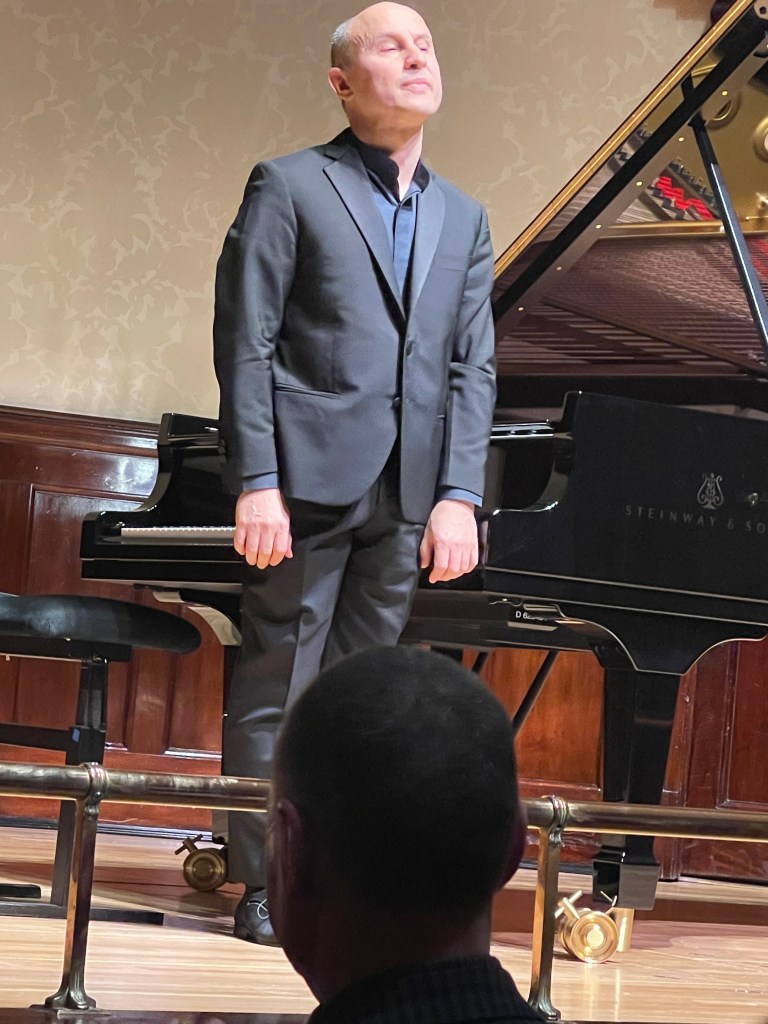
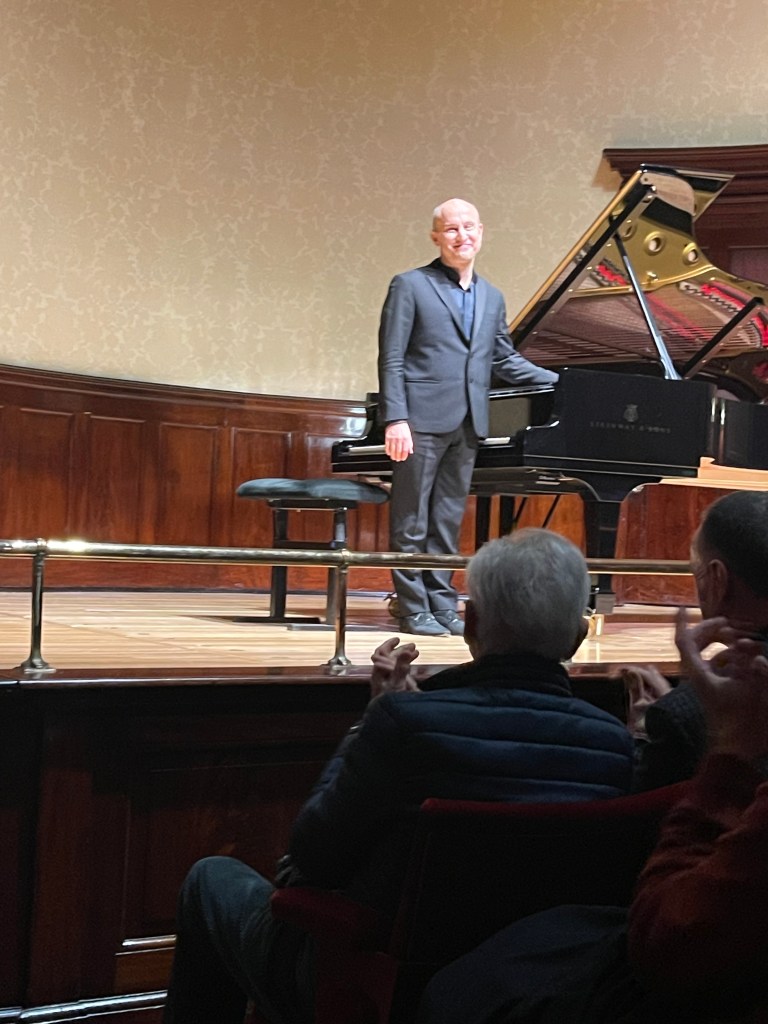
The second half was dedicated to just four works of Liszt but that was a feast fit for a king and could well have been a typical Cherkassky second half. The ‘second ballade’ played with heroism and beauty as this great tone poem recounts the tragedy of Hero and Leander with the menacing waves embracing us from the very first notes. Sumptuous rich sounds and fearless technical mastery were at the service of this remarkable work where the genius of Liszt was becoming ever more divorced from Liszt the greatest virtuoso that has ever lived. Here the two worlds combine as they were to do in his B minor sonata and it is interesting to note that not only is it in the same key but also written in the same year. There are also two conflicting endings for both, and that Liszt chose the quiet more introspective one as opposed to and ending of blazing transcendental glory.The B minor Sonata is at the pinnacle of the Romantic piano repertoire.It was followed by a beguiling account of ‘La Leggierezza’ concert study that was every bit as wonderful as the piano roll recording of Godowsky that astonished me so much as a teenage student. Sidney Harrison,my mentor, was president of the piano museum in Brentford where the BBC discovered these gems in Frank Holland’s leaky old church ! Chromatic scales that are washes of golden sounds becoming ever more whispered as they are played with astonishing technical perfection. But there was also the elegant beguiling charm of all that surrounds these streams of gold and silver and an ending that was thrown off with the mastery of a lost age.
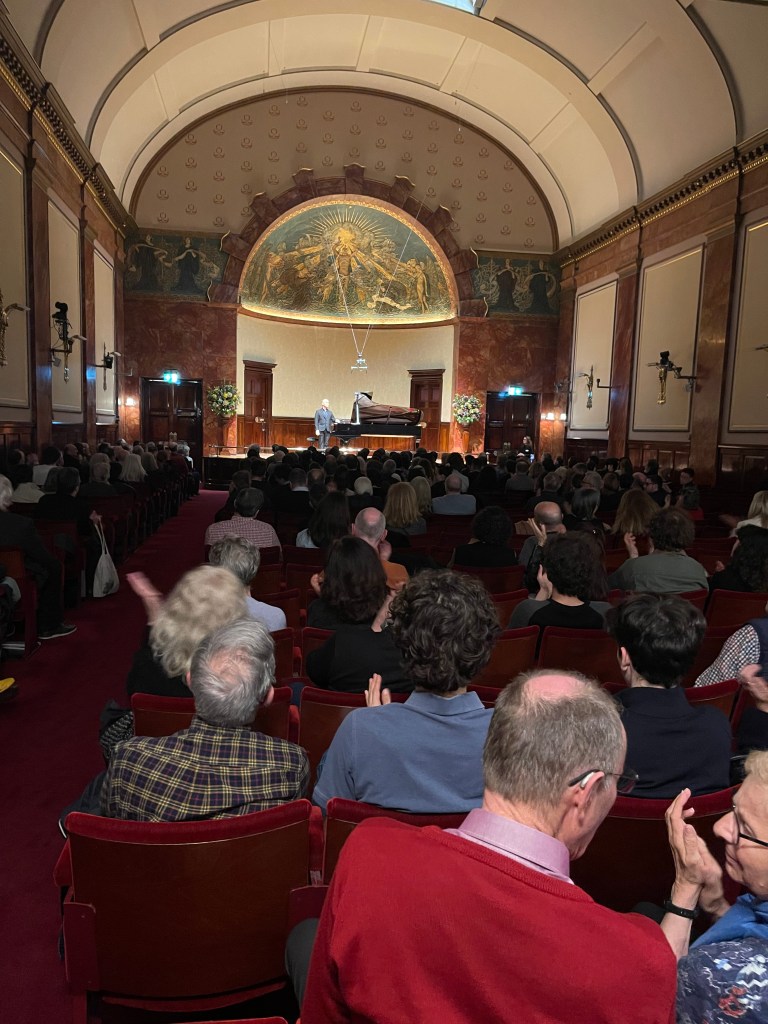
Nelson relished the impish humour of the Valse oubliée n.2 .I don’t ever remember Shura playing it but looking at Nelson and how he relished the dissonant impish capriciousness, I could envisage Shura on stage taking delight in sharing in such a musical joke and feeling the audience reaction to such audacious behaviour. The 6th Hungarian Rhapsody has long been a showpiece for virtuosi with is amazing display of octaves, but there is much more too it that, just as Nelson showed us today with the real Hungarian dance steps and enormous orchestral sonorities. A tour de force of fearless mastery but above all of musical understanding.
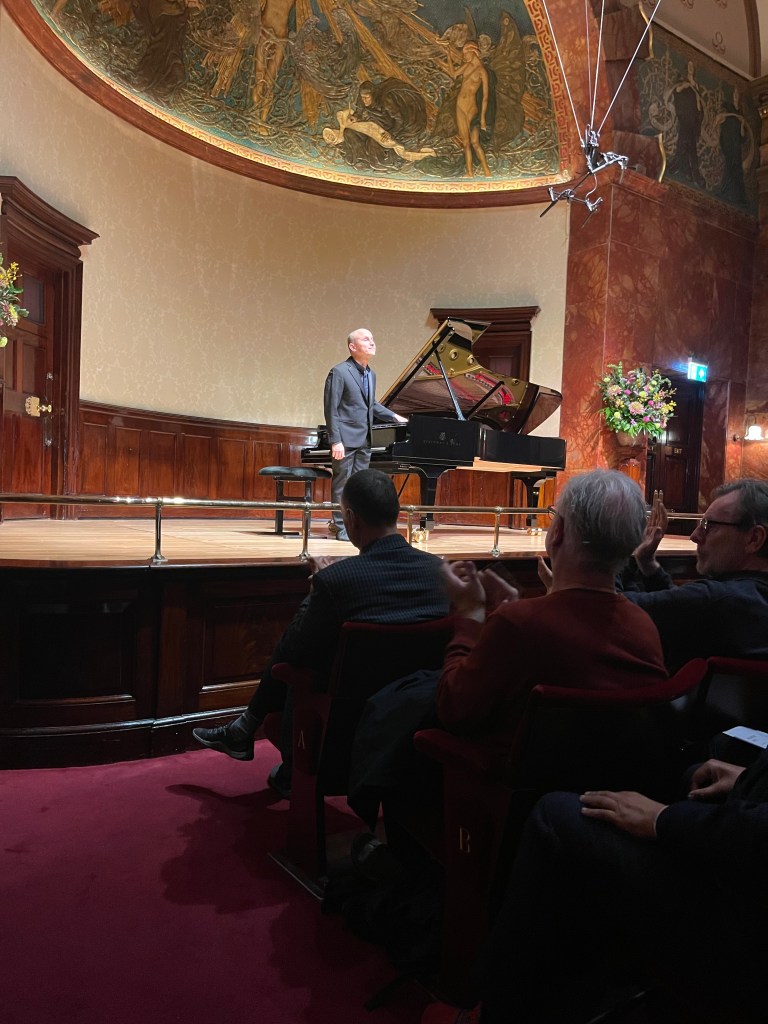
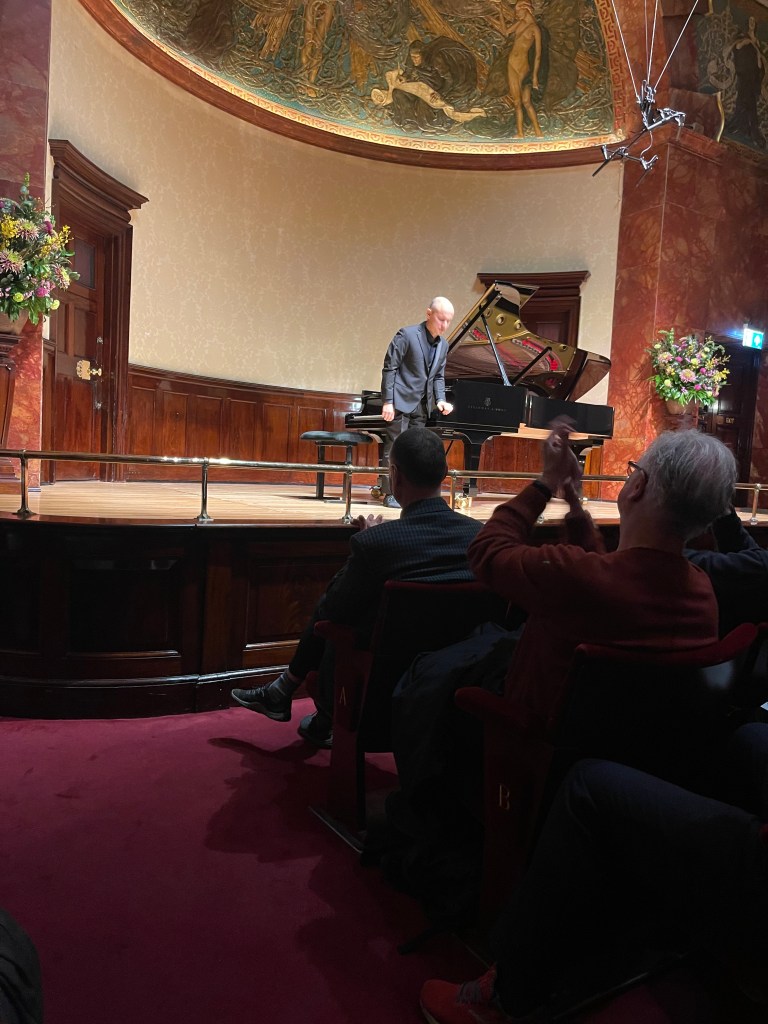
Nowhere was that more evident than in the two encores that were a ravishing outpouring of song. Rachmaniniov’s ‘Lilacs’ where the melodic line emerges from clouds of glowing sounds was followed by Brahms Intermezzo in A op 118 n.2. It was here that time stood still as we listened in breathless wonder to the colours and sounds that Nelson could find without ever loosing sight of the overall architectural shape. This stage has heard some of the finest musicians performing but doubt it has rarely, if ever, experienced such magic as flowed from Nelson’s whole being in this farewell encore today.
It was enough to hear Nelson’s final ‘words’ today with a glowing whispered Brahms A major intermezzo. The moments of aching silence after the final carefully placed note just confirmed what we had witnessed all evening that we were in the presence of a pianist who listens to himself and who truly loves the piano and is the last true heir to the tradition of Liszt.
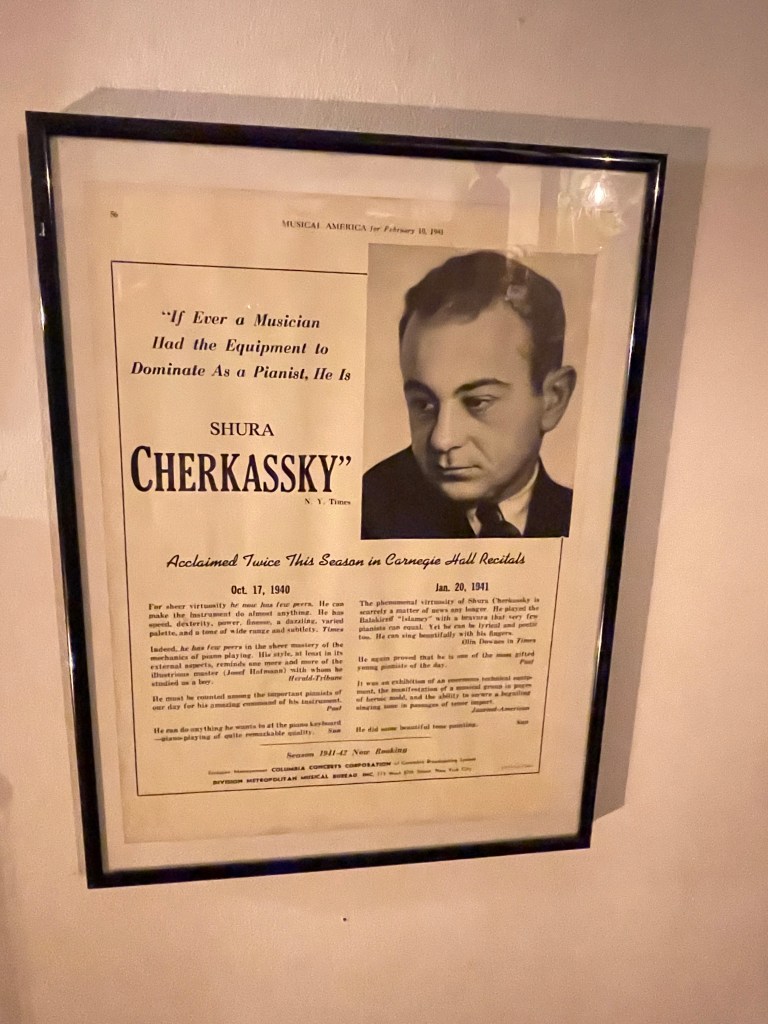
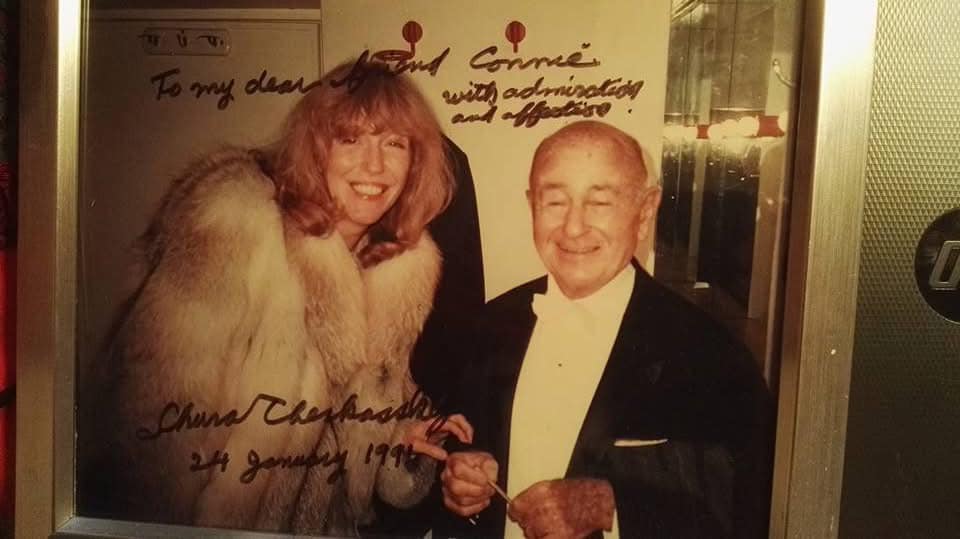
The amazing thing is that he even resembles Cherkassky! …….could it be reincarnation? ……welcome back Shura we have missed you so much and the piano gave a great sigh of relief tonight treated with velvet gloves and a warm heart again.
Wonders in Gstaad Sommets musicaux Martha Argerich,Renaud Capucon,Nelson Goerner,Michel Dalberto, Victor JulienLaferrière Alexandre Kantorow
https://christopheraxworthymusiccommentary.com/2021/02/07/wonders-in-gstaad-sommets-musicaux-martha-argerichrenaud-capuconnelson-goernermichel-dalberto-victor-julienlaferriere-alexandre-kantorow/
 ChristopherAxworthy-MusicCommentary