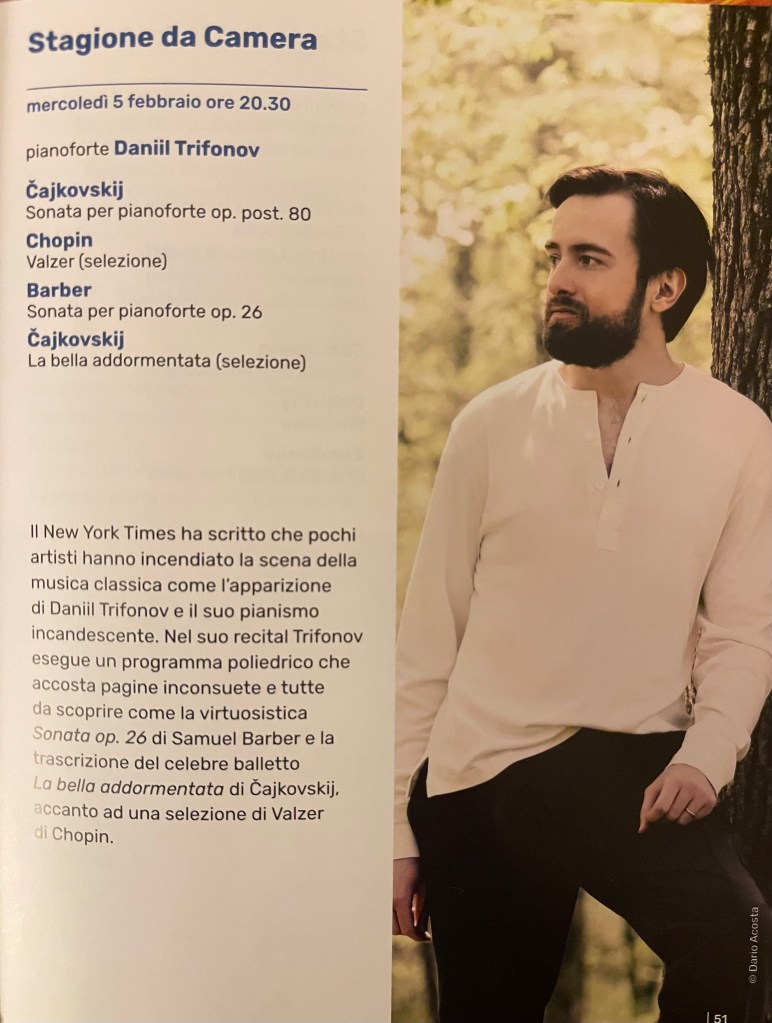
Trifonov was sensational in Rome yesterday with playing like Martha Argerich. They both love music so much and it shows. I can only quote Rubinstein as always. The wonder of music is that it is not a printed picture. With a real artist like Martha and now Trifonov it is a vibrant living thing forever changing
What I heard from Trifonov playing today was so ravishingly beautiful that it is obvious that the genius we know and have always admired has found the key to Olympus which only Gods have.
TRIFONOV and that piano.
https://christopheraxworthymusiccommentary.com/2015/05/26/trifonov-and-that-piano/
The Price of Genius- Trifonov at the Barbican London
https://christopheraxworthymusiccommentary.com/2019/06/11/the-price-of-genius-trifonov-at-the-barbican-london/
The Genius of Trifonov
https://christopheraxworthymusiccommentary.com/2017/01/22/the-genius-of-trifonov-2/
The genius of Trifonov
https://christopheraxworthymusiccommentary.com/2016/09/08/the-genius-of-trifonov/
https://youtu.be/gex0sOR7XZ0?feature=shared
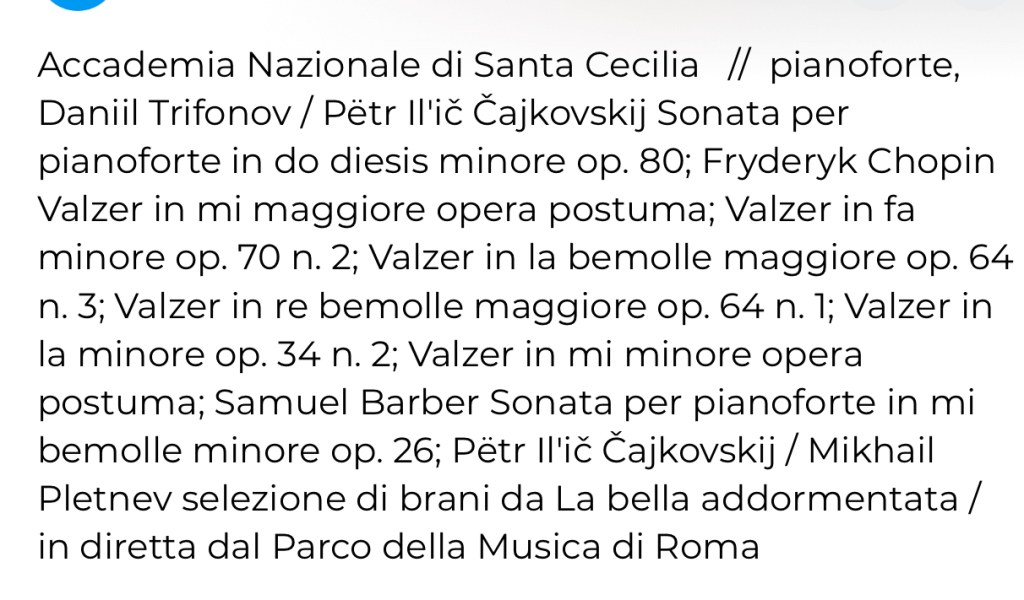
The Piano Sonata in C sharp minor , op. posth. 80, was written by Russian composer in 1865, his last year as a student at the st Petersburg Conservatory. In its original form was not published in Tchaikovsky’s lifetime; it was published in 1900 by P.Jurgenson, and given the posthumous opus number 80.
Tchaikovsky transposed, adapted and orchestrated the third movement of the sonata to create the scherzo of his Symphony n.1 in G minor op,13. The four movements are :
- Allegro con fuoco
- Andante
- Allegro vivo
- Allegro vivo
Much of Tchaikovsky’s music that remained in manuscript at his death was subsequently seen through the press by the Russian composer and pedagogue Sergey Taneyev (who also completed a number of unfinished works, notably the remaining two movements of the hastily issued third piano concerto—the Andante and Finale—which was published as Tchaikovsky’s Op 79). This accounts for the apparently late opus number of the C sharp minor Piano Sonata which, nonetheless, antedates his Op 1. Whilst it would not do to make exaggerated claims for this work, it is certainly better than its critics frequently allow: the bold gestures at the opening of the first movement, a transition passage which is echoed in Eugene Onegin, a typically yearning second subject, and a codetta suggestive of Romeo and Juliet all command notice.
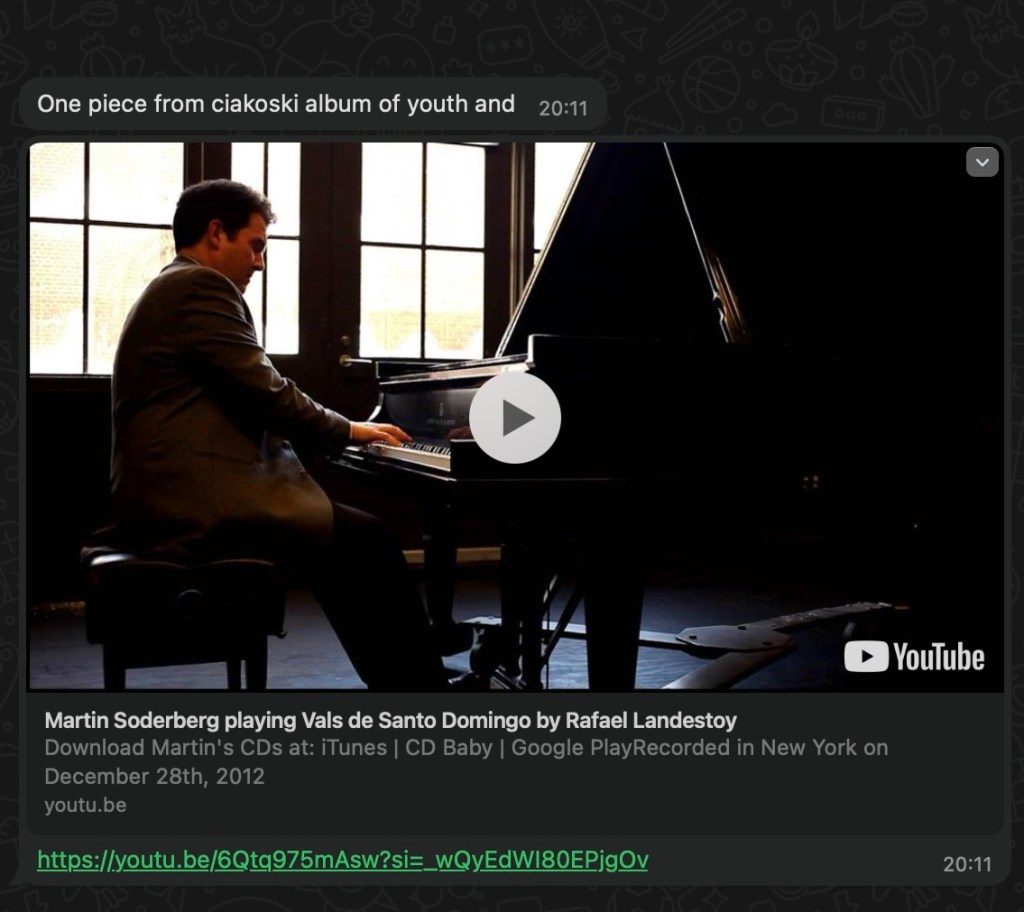
https://youtu.be/6Qtq975mAsw?si=_wQyEdWI80EPjgOv
Trifonov transformed, though, a bauble into a gem with playing of such subtle colours and seeming improvised abandon as he is a master illusionist who can transform this old box of hammers and strings into an orchestra of miraculous sounds.
Lhevine,Rosenthal and Godowsky not to forget Horowitz were of an era when the piano could still reveal secrets of beauty and wonder in the hands of such transcendental mastery of balance and style.
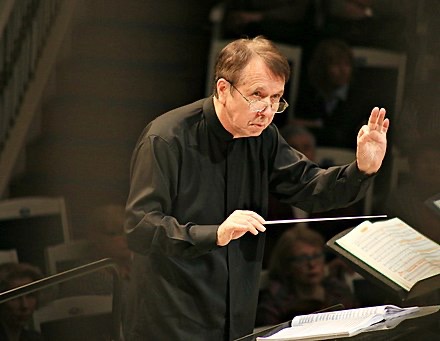
Tchaikovsky arr. Pletnev : The Sleeping Beauty Op. 66 (1888-89), selections arranged for solo piano
I. Introduction (Prologue) II. Danse des pages (Act I) III. La vision (Act II) IV. Andante (Act II) V. La féé d’argent (Act III) VI. Le chat (Act III) VII. Gavotte (Act II) VIII. Le canarie (Prologue) IX. Le chaperon (Act III) X. Adagio (Act III) XI. Le fin (Act III)

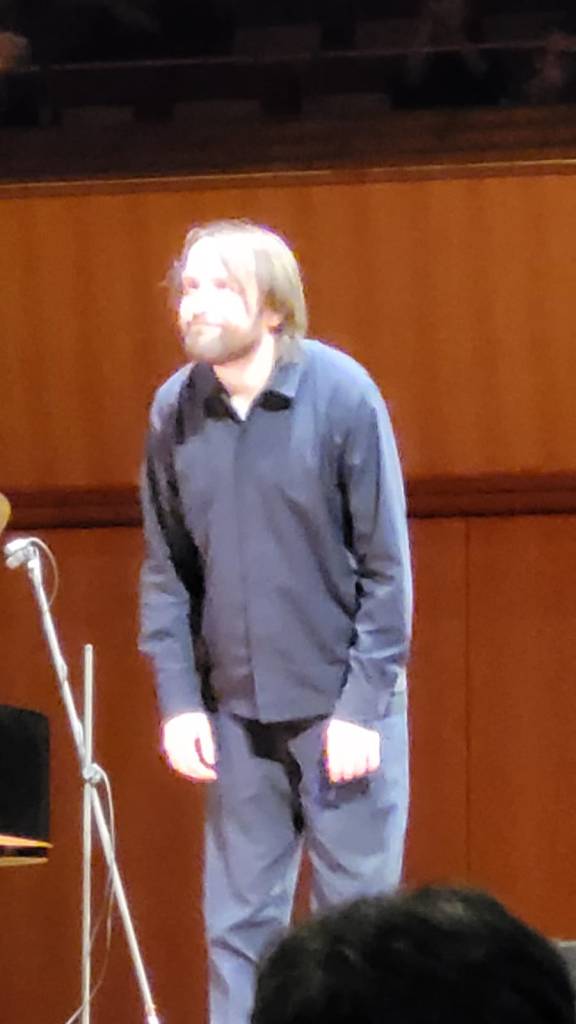
The PR boys have given up nd have left Trifonov’s masterly playing to speak for itself
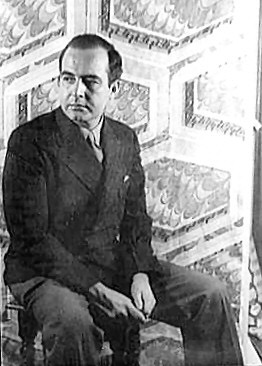
January 23, 1981 (aged 70) New York
The Piano Sonata in E-flat minor, op 26, by Samuel Barber , was commissioned for the twenty-fifth anniversary of the League of Composers by American songwriters Irving Berlin and Richard Rodgers . Composed from 1947 to 1949, the sonata is in four movements and was first performed by Vladimir Horowitz in December 1949 in Havana, Cuba, followed by performances in Washington D.C and New York City in January 1950 In September 1947, the American songwriters mentioned above on the League of Composers’ recommendation, announced a commission for a piano sonata by Barber to mark the 25th anniversary of the League. Berlin and Rodgers provided funding for the commission.[2] Barber began writing the sonata that month, completing the first movement by December 1947.
However, Barber’s progress on the sonata was interrupted by a hectic schedule that demanded his focus, including rehearsals for his ballet Medea and plans for Knoxville :Summer of 1915. Barber planned to complete his sonata during his stay at the American Academy in Rome, initially planned from February to July. The composer was wary of the academy’s crowded conditions and disgruntled atmosphere but hoped to work in isolation. However, once in Rome, he found it hard to focus, with the change of scenery and the charm of Italy’s culture and people distracting. Barber was distracted by the postwar social and political scene, engaging with intellectuals, Vatican insiders, and historical interests like an excavation near Cosa. Despite attending inspiring concerts, including programs of newly discovered Vivaldi pieces, Barber struggled to accomplish much during his stay.
Barber returned to the United States early in the summer, sooner than planned, and finished the second movement in mid-August of 1948. Upon completing the first two movements, Barber initially planned that a slow movement would conclude the piece, and played the completed movements for Vladimir Horowitz, who later premiered the work, at Horowitz’s house. Horowitz then suggested Barber include a “very flashy last movement, but with content”; Barber added a fugue after the slow movement in response to this request.
The composer finished the sonata in June 1949, and Vladimir Horowitz began to prepare it for performance, spending five hours a day practicing it. Barber later commented that Horowitz had been playing it “with a surprising emotional rapprochement which I had not expected”. Horowitz premiered the sonata in Havana, Cuba, on December 9, 1949. This was followed by a private performance in New York at the former G.Shirmer headquarters on January 4, 1950. Gian Carlo Menotti ,Virgil Thomson,Douglas Moore,William Schuman,Thomas Schippers,Aaron Copland,Lukas foss,Myra Hess and Samuel Chotzinoff all attended. The official United States premiere was in Washington, D.C., on January 11, 1950, at Constitution Hall ; Horowitz then publicly played the work in New York on January 23, 1950 at Carnegie Hall. It received ubiquitous praise from music critics. By April 1950, plans were in place for Horowitz to record the sonata for a Christmas release that year; Horowitz made the recording in May, for RCA Victor. This recording remained Barber’s preferred version for at least a decade.The sonata is in four movements:
Fuga: Allegro con spirito
Allegro energico
Allegro vivace e leggero
Adagio mesto
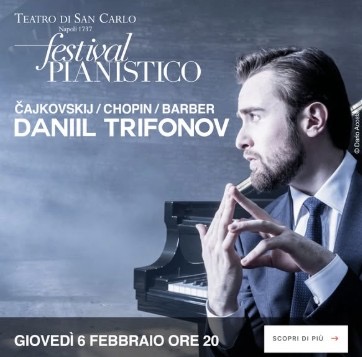
Grammy Award-winning pianist Daniil Trifonov has made a spectacular ascent of the classical music world, as a solo artist, champion of the concerto repertoire, chamber and vocal collaborator, and composer. Combining consummate technique with rare sensitivity and depth, his performances are a perpetual source of awe. “He has everything and more, … tenderness and also the demonic element. I never heard anything like that,” marveled pianist Martha Argerich. With Transcendental, the Liszt collection that marked his third title as an exclusive Deutsche Grammophon artist, Trifonov won the Grammy Award for Best Instrumental Solo Album of 2018. Named Gramophone’s 2016 Artist of the Year and Musical America’s 2019 Artist of the Year, he was made a “Chevalier de l’Ordre des Arts et des Lettres” by the French government in 2021. As The Times of London notes, he is “without question the most astounding pianist of our age.”
Trifonov undertakes season-long artistic residencies with both the Chicago Symphony Orchestra and Czech Philharmonic in 2024-25. A highlight of his Chicago residency is Brahms’s Second Piano Concerto with Klaus Mäkelä, and his Czech tenure features Dvořák’s Piano Concerto with Semyon Bychkov, first at season-opening concerts in Prague and then on tour in Toronto and at New York’s Carnegie Hall. Trifonov also opens the Leipzig Gewandhaus Orchestra’s season with Mozart’s 25th Piano Concerto under Andris Nelsons; performs Prokofiev’s Second with the San Francisco Symphony and Esa-Pekka Salonen; reprises Dvořák’s concerto for a European tour with Jakub Hrůša and the Bamberg Symphony; plays Ravel’s G-major Concerto with Hamburg’s NDR Elbphilharmonie Orchestra and Alan Gilbert; and joins Rafael Payare and the Montreal Symphony for concertos by Schumann and Beethoven on a major European tour of London, Amsterdam, Luxembourg, Paris, Hamburg, Berlin, Munich, and Vienna. In recital, Trifonov appears twice more at Carnegie Hall, first on a solo tour that also takes in Chicago and Philadelphia, and then with violinist Leonidas Kavakos, with whom he also appears in Chicago, Boston, Kansas City, and Washington, DC. Fall 2024 brings the release of My American Story, the pianist’s new Deutsche Grammophon double album, which pairs solo pieces with concertos by Gershwin and Mason Bates. Bates’s concerto is dedicated to Trifonov and both orchestral works were captured live with Yannick Nézet-Séguin and the Philadelphia Orchestra, who previously partnered with the pianist on his award-winning Destination Rachmaninov series.
Last season, Trifonov performed Brahms concertos with the Cleveland Orchestra, Los Angeles Philharmonic, Atlanta Symphony, and Toronto Symphony; Schumann’s with the New York Philharmonic; Mozart’s “Jeunehomme” at Carnegie Hall, the Kennedy Center, and other U.S. venues with the Rotterdam Philharmonic; Chopin with the Orchestre de Paris; Bates’s Concerto with the Chicago Symphony, Orchestra dell’Accademia Nazionale di Santa Cecilia, and Deutsches Symphonie-Orchester Berlin; and Gershwin and Rachmaninov with the Philadelphia Orchestra, at home and on a European tour. In recital, he joined cellist Gautier Capuçon for dates in Europe and toured a new solo program to such musical hotspots as Vienna, Munich, Barcelona, Madrid, Venice, Milan, Boston, San Francisco, Dallas, and New York, at Carnegie Hall.
In fall 2022, Trifonov headlined the season-opening galas of Washington’s National Symphony Orchestra and New York’s Carnegie Hall, where his Opening Night concert with the Philadelphia Orchestra marked the first of his four appearances at the venue in 2022-23. Other recent highlights include a multi-faceted, season-long tenure as 2019-20 Artist-in-Residence of the New York Philharmonic, featuring the New York premiere of his own Piano Quintet; a season-long Carnegie Hall “Perspectives” series; the world premiere performances of Bates’s Piano Concerto with ensembles including the co-commissioning Philadelphia Orchestra and San Francisco Symphony; playing Tchaikovsky’s First under Riccardo Muti in the historic gala finale of the Chicago Symphony’s 125th-anniversary celebrations; launching the New York Philharmonic’s 2018-19 season; headlining complete Rachmaninov concerto cycles at the New York Philharmonic’s Rachmaninov Festival and with London’s Philharmonia Orchestra and the Munich Philharmonic; undertaking season-long residencies with the Berlin Philharmonic, Rotterdam Philharmonic, Radio France, and at Vienna’s Musikverein, where he appeared with the Vienna Philharmonic and gave the Austrian premiere of his own Piano Concerto; and headlining the Berlin Philharmonic’s famous New Year’s Eve concert under Sir Simon Rattle.
Since making solo recital debuts at Carnegie Hall, London’s Wigmore Hall, Vienna’s Musikverein, Japan’s Suntory Hall, and Paris’s Salle Pleyel in 2012-13, Trifonov has given solo recitals at venues including the Kennedy Center in Washington DC; Boston’s Celebrity Series; London’s Barbican, Royal Festival, and Queen Elizabeth Halls; Amsterdam’s Concertgebouw (Master Piano Series); Berlin’s Philharmonie; Munich’s Herkulessaal; Bavaria’s Schloss Elmau; Zurich’s Tonhalle; the Lucerne Piano Festival; the Palais des Beaux-Arts in Brussels; the Théâtre des Champs Élysées and Auditorium du Louvre in Paris; Barcelona’s Palau de la Música; Tokyo’s Opera City; the Seoul Arts Center; and Melbourne’s Recital Centre.
Last season, Deutsche Grammophon released a deluxe CD & Blu-Ray edition of the pianist’s best-selling 2021 album Bach: The Art of Life. Featuring Bach’s masterpiece The Art of Fugue, as completed by Trifonov himself, the recording scored the pianist his sixth Grammy nomination, while an accompanying music video was recognized with the 2022 Opus Klassik Public Award. Trifonov also received Opus Klassik’s 2021 Instrumentalist of the Year/Piano award for Silver Age, his album of Russian solo and orchestral piano music by Scriabin, Prokofiev, and Stravinsky. Released in fall 2020, this followed 2019’s Destination Rachmaninov: Arrival, for which the pianist received a 2021 Grammy nomination. Presenting the composer’s First and Third Concertos, Arrival represents the third volume of the DG series Trifonov recorded with the Philadelphia Orchestra and Nézet-Séguin, following Destination Rachmaninov: Departure, named BBC Music’s 2019 Concerto Recording of the Year, and Rachmaninov: Variations, a 2015 Grammy nominee. DG has also issued Chopin Evocations, which pairs the composer’s works with those by the 20th-century composers he influenced, and Trifonov: The Carnegie Recital, the pianist’s first recording as an exclusive DG artist, which captured his sold-out 2013 Carnegie Hall recital debut live and secured him his first Grammy nomination.
It was during the 2010-11 season that Trifonov won medals at three of the music world’s most prestigious competitions, taking Third Prize in Warsaw’s Chopin Competition, First Prize in Tel Aviv’s Rubinstein Competition, and both First Prize and Grand Prix – an additional honor bestowed on the best overall competitor in any category – in Moscow’s Tchaikovsky Competition. In 2013 he was awarded the prestigious Franco Abbiati Prize for Best Instrumental Soloist by Italy’s foremost music critics.
Born in Nizhny Novgorod in 1991, Trifonov began his musical training at the age of five, and went on to attend Moscow’s Gnessin School of Music as a student of Tatiana Zelikman, before pursuing his piano studies with Sergei Babayan at the Cleveland Institute of Music. He has also studied composition, and continues to write for piano, chamber ensemble, and orchestra. When he premiered his own Piano Concerto, the Cleveland Plain Dealer marveled: “Even having seen it, one cannot quite believe it. Such is the artistry of pianist-composer Daniil Trifonov.”

 ChristopherAxworthy-MusicCommentary