
Another great lesson from a Master. Alexeev’s long awaited return to The Chopin Society UK with the second half of his programme dedicated to Chopin with a very eclectic choice of shorter works many of which are rarely heard these days.
Dmitri Alexeev at the Chopin Society London
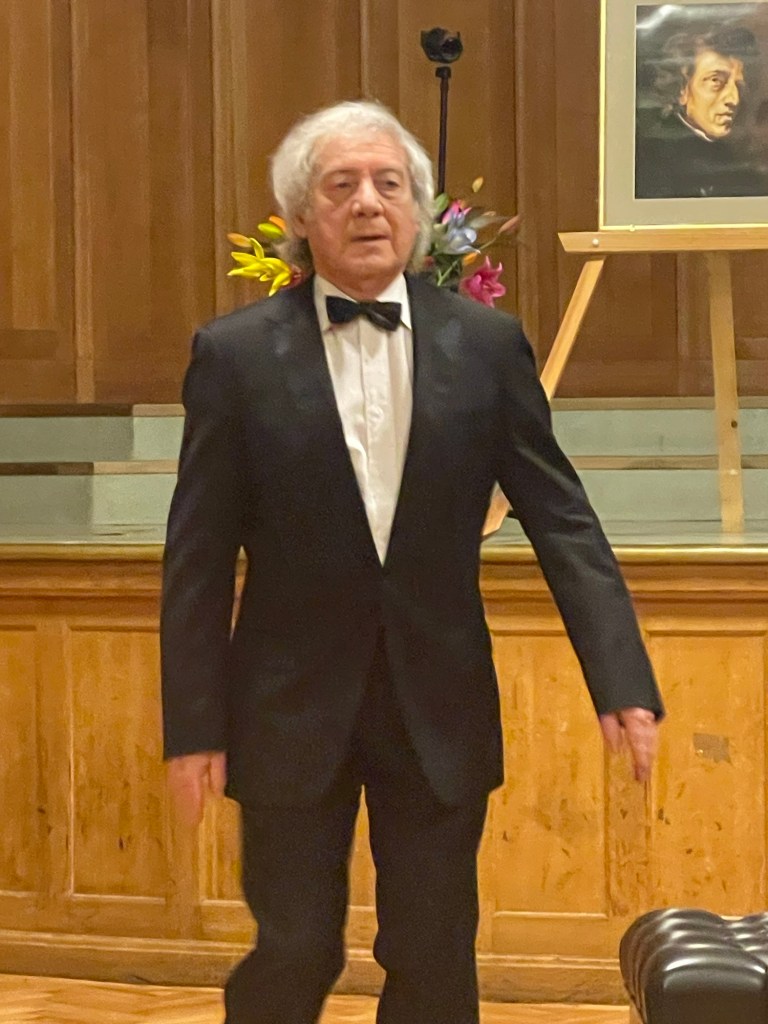
But it was the first half with a daring choice of Rachmaninov’s first sonata.that revealed the true greatness of one on the finest pianists of our time.
A modesty and dedication to others that has been a rock for so many aspiring young musicians. Dmitri and Tatiana like the Craxtons in my day creating an oasis that is a workshop for pianists prepared to dedicate their youth to their art.

But put Maestro Alexeev on stage with just him and eighty eight keys and a tornado is unleashed of such overwhelming power of communication. A conviction of ravishing beauty that after all the wonderful pianists I listen to this is the only one that I felt myself having to hold back a tear as his message penetrated so directly and deeply into my being .
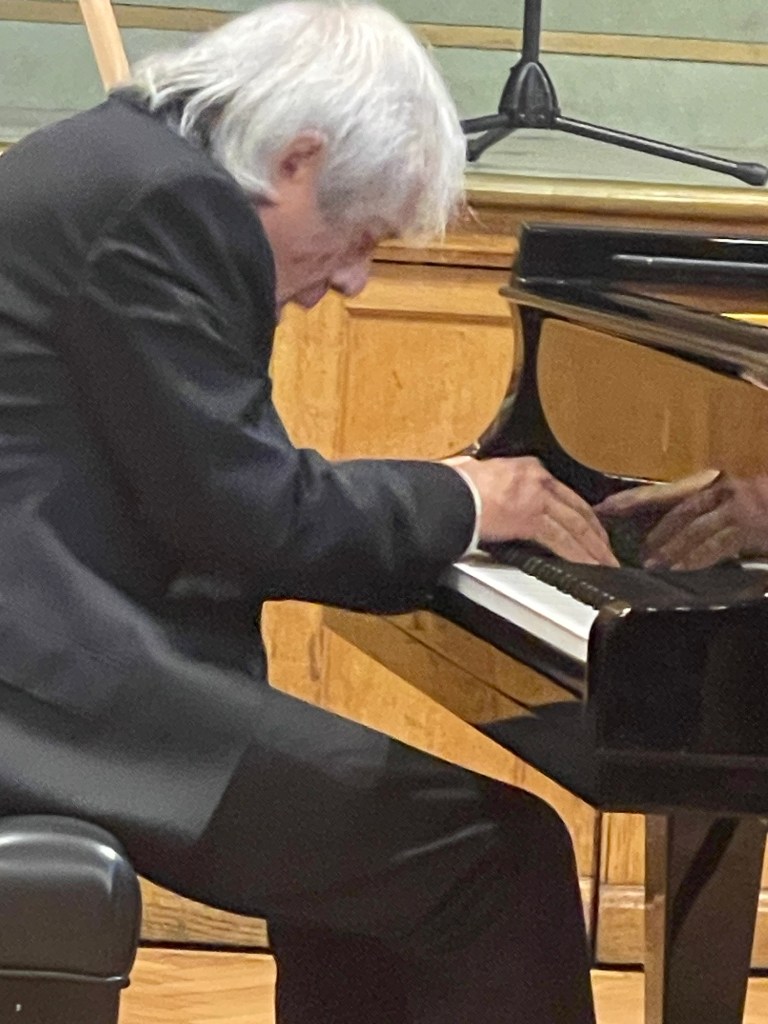
He can create a cocoon of sound which envelopes all those in range and there is no escape for us or for him. A great roof of sound in which anything is possible. It was the seemingly impossible that we heard with sumptuous sounds of Philadelphian proportions that would dissolve leaving just a plaintive voice emerging like a jewel from this magic land.
Of course Dmitri has lived with this music for a lifetime and this usually fragmented and much misunderstood masterpiece suddenly came together with overwhelming power and beauty

A work that had even left Rachmaninov and his colleagues with doubts as he like Schubert or Liszt had broken away from convention in trying to create a new form made up of leit motives that permeated the entire structure creating a unified whole of devastating emotional effect.
It was Kantorov who recently showed us the way with extraordinary effect and many students are changing their choice from n.2 (Horowitz inspired ) to n 1 .
But it took the mature mastery of Alexeev to show us such a clear path where words are superfluous as it is MUSIC that can and should arrive in places where words cannot reach.
In retrospect Inferno and Paradiso come to mind but unlike Liszt , Rachmaninov’s morose Russian soul chooses to finish with a final glimpse of Inferno.(Liszt having changed his mind and substituted his original blazing ending for one of the most sublime inspired pages in the piano literature.
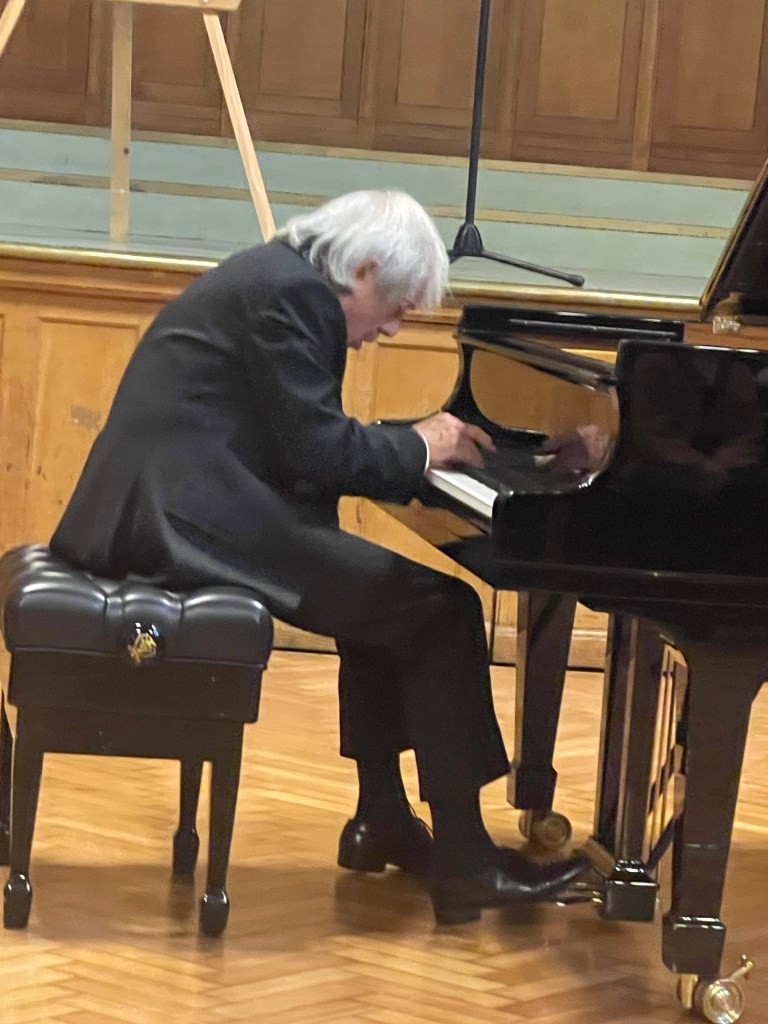
All this sprang to mind unconsciously as the menacing opening to the sonata hit us in the solar plexus with unexpected vehemence such was Alexeev’s identification with Rachmaninov’s world. Paradise with a chorale of purity and beauty but permeated with nostalgia .A throbbing monotone of unimagined emotional power whether whispered or passionately intoned linked these two worlds.

The second half was all Chopin with three nocturnes, those less frequently heard, with op 48 n 2 not n 1, or op 27 n 1 not it’s famous twin n 2 both linked by one of Chopins last works op 62 n 2.
Alexeev showed us what it means to play with weight that like Cortot or Perlemuter are fingers that are like limpets never leaving the key but sucking the life blood from the depths within each one. Horizontal playing in which ungrateful ugly sounds are just not part of the equation that is of poignant significance and deep meaning.
The F sharp minor op 48 was played with radiance and beauty with a beguiling central episode of subtle insinuation. The deep bass notes of the E major op 62 allowed a glow to the bel canto with the knotty twine of counterpoints just adding to the profound meaning but never overpowering the sublime musical line. There was a chiselled beauty to the C sharp minor op 27 on it’s magic cloud of changing harmonies taking us unawares to a passionate climax before dissolving to the consilitary coda of calming beauty and a great wave of sounds taking us to barely whispered chords.
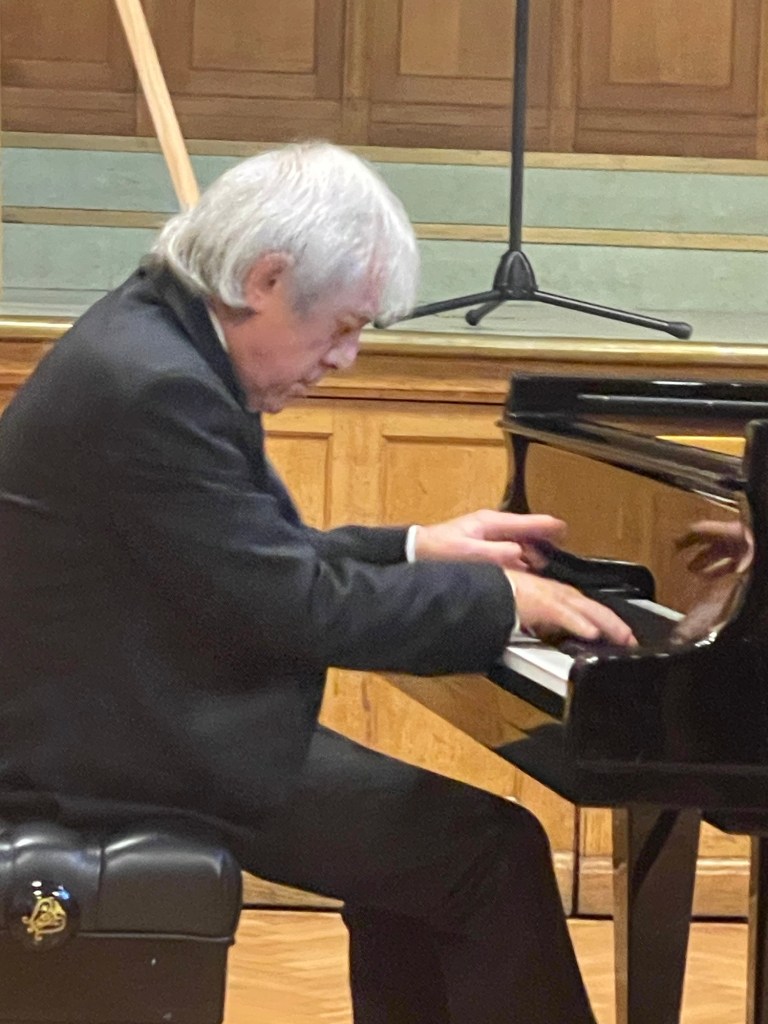
A link to the three Nouvelle Etudes was provided by the most elegant and French of all Chopin’s works, the G flat Impromptu .Of course Rubinstein had this French elegance but Alexeev showed us an equally ravishing world of beguiling charm wrapped in velvet , where the beauty of the central outpouring in the bass reached the sublime.
The three Nouvelle Etudes were for Chopin part of his treatise with Fetis that was unfinished on his death and was bequeathed to his friend Alkan to complete. They are three studies published after his death that are designed to incorporate a juxtaposition of rhythms and also legato and staccato touch.
I think these may also be described as ‘canons covered in flowers’ as the ravishing beauty of flowing sounds filled the air with intoxicating freshness. No thought of three against four was even conceivable or for that matter two against three .The charm and delight of the third belied the difficulty of playing legato and staccato with the same hand at the same time. Such was the beguiling charm and beauty of Alexeev’s playing where communication took precedence over any mundane technical considerations .
Five Polish songs by Chopin in Liszt’s wonderful transcriptions where as for those of Schubert become art works in their own right. I have heard only one of them in public often played as an encore by the older generation of pianists who alas are no more.
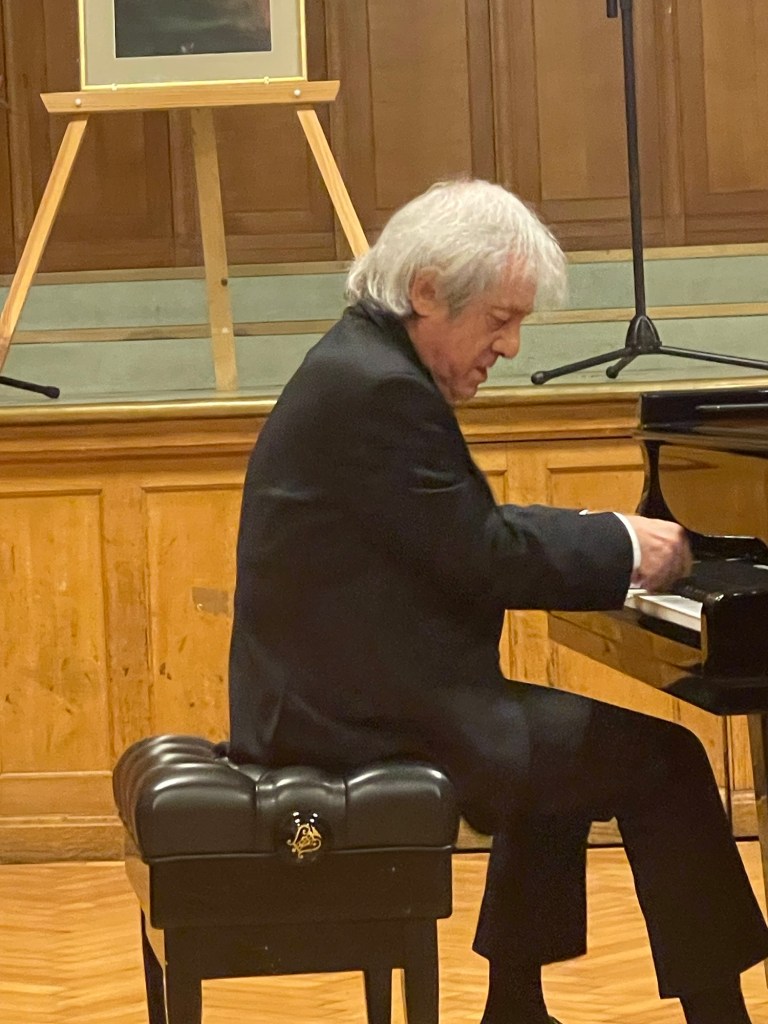
A glorious outpouring of songs with a sumptuous sense of balance from the sublime to the ridiculous with the final song gliding across the keys with the refined ease of a Master
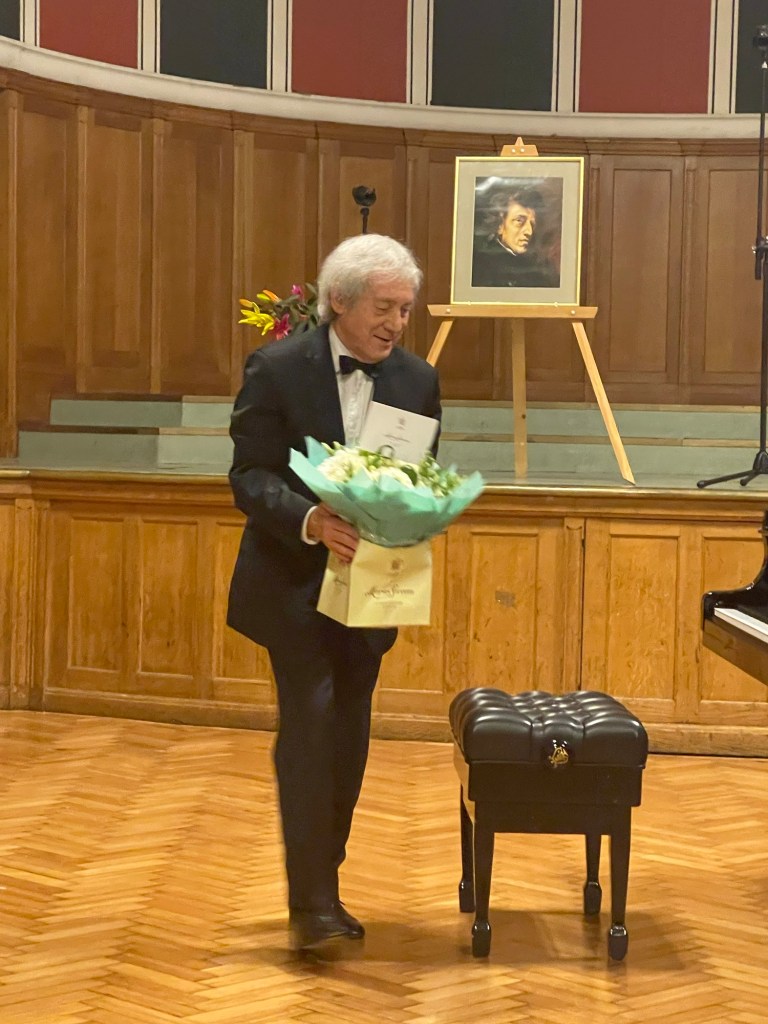
Three encores two of Chopin : the op posth nocturne in C minor and a Mazurka op 7 n. 3 in F minor and a final glimpse of early Rachmaninov again with his sumptuous Melodie op 3 https://youtu.be/yNUvAGXwj08?feature=shared
So we had come full circle in a recital that thank God was recorded for posterity and will go down in history .Mitsuko Uchida does not approve of her live performances being recorded because she says a performance should remain in the memory as a thing of beauty and not a printed photo that with time will fade .

https://christopheraxworthymusiccommentary.com/2024/10/20/posk-chopin-festival-2004-mak-dubiel-pawlak-swigut-a-feast-of-music-and-full-immersion-with-lady-rose-cholmondeley-and-prof-john-rink/
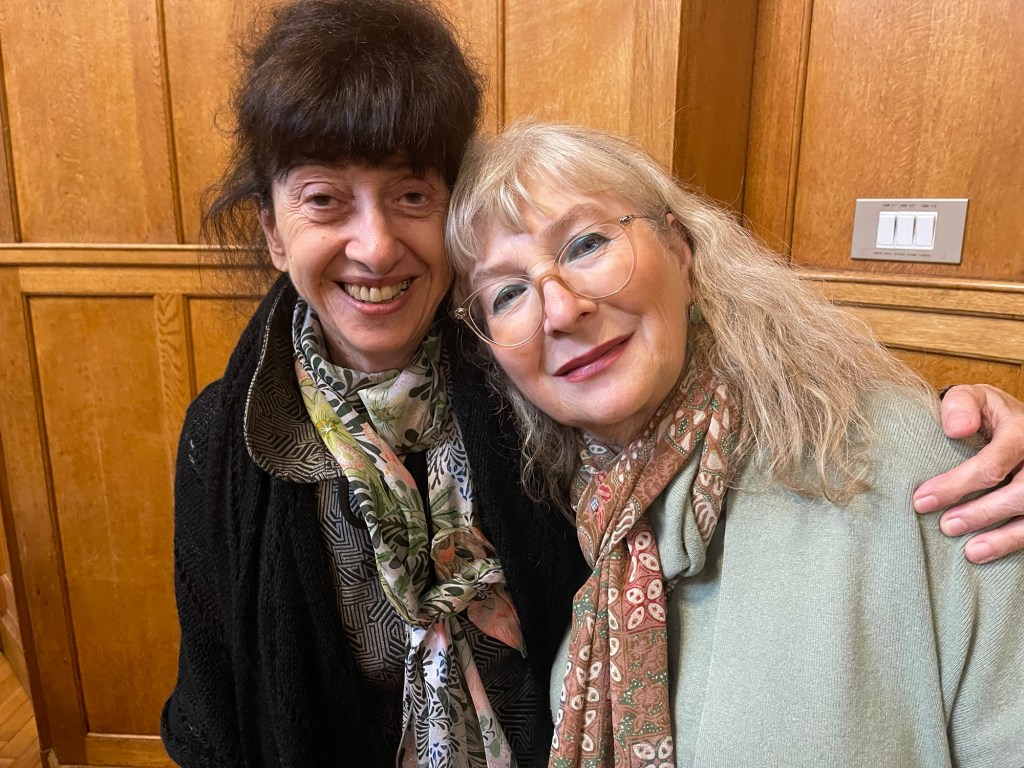
All those present will not forget the privilege to be part of such music making and it is thanks to three remarkable ladies: Lady Rose C ,Gillian Newman and Lisa Peacock who are able to persuade one of the greatest musicians of our age to leave his studio and share his music with a public starved for too long.

We live in an age where quantity rather than quality is the norm .It was Gilels who likened live music to the difference between fresh or canned food .
Too often we hear performances of note picking perfection rather than the risk of discovery where the public is an integral part of a voyage in music and true communication. Horowitz complained that the younger generation are frightened of showing their feelings and Cherkassky simply said he did not think they listened to themselves. Horowitz after the death of Bolet said :”We are the last two left” . They both would be relieved to know that these two pianists from the great school in Odessa at last have a true heir in Dmitri Alexeev .
.
Dmitri Alexeev The supreme mastery and anguish of a tormented soul

https://christopheraxworthymusiccommentary.com/2022/01/21/francois-dumont-remembering-the-genius-of-fou-tsong-at-the-rasumovsky-academy/

https://christopheraxworthymusiccommentary.com/2023/04/01/victor-maslov-at-cranleigh-arts-a-great-artist-illuminates-and-enriches-our-lives/


 ChristopherAxworthy-MusicCommentary