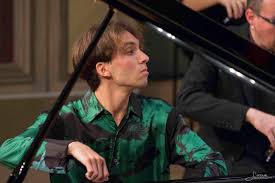
Jonathan Ferrucci returns after his outstanding 2022 Norden Farm solo recital to play one of the greatest of all Mozart’s piano concertos.Followed by the charming and virtuoso, Saint-Saens Havanaise; an entrancing showpiece for local young violinist Elena Tomey.Concluding with the Beethoven symphony cycle (21-25) which continues with the radiant and witty Second.
Jonathan Ferrucci (piano)
Elena Tomey (violin)
Nigel Wilkinson (conductor)
Faure Pavane
Mozart Piano Concerto No.24 in C minor, K.491
Saint-Saens Havanaise
Beethoven Symphony No.2
Courtyard Theatre

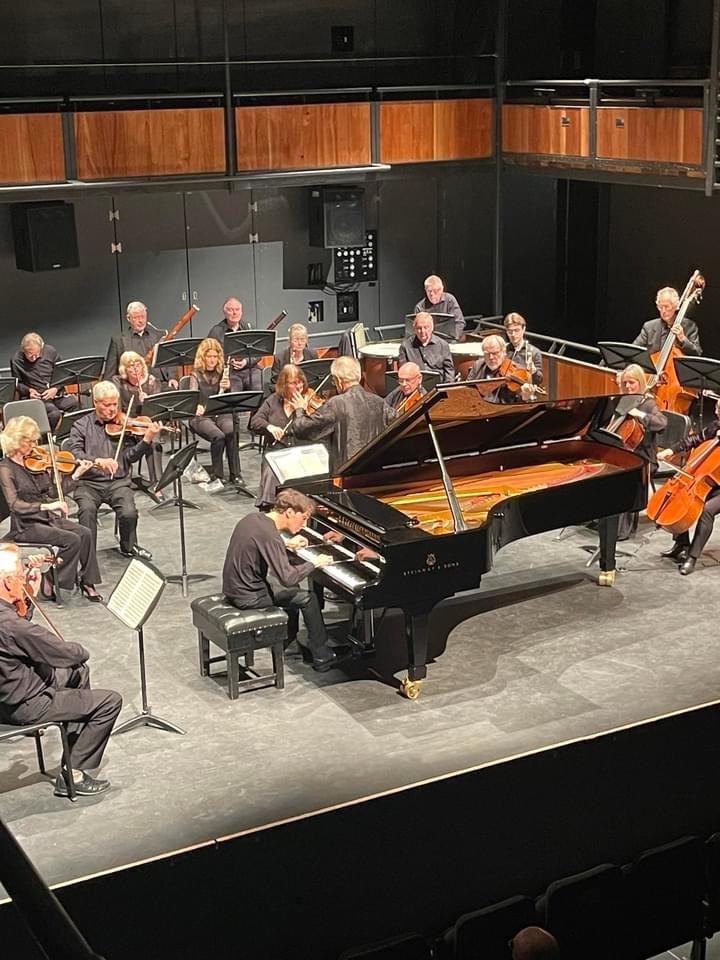
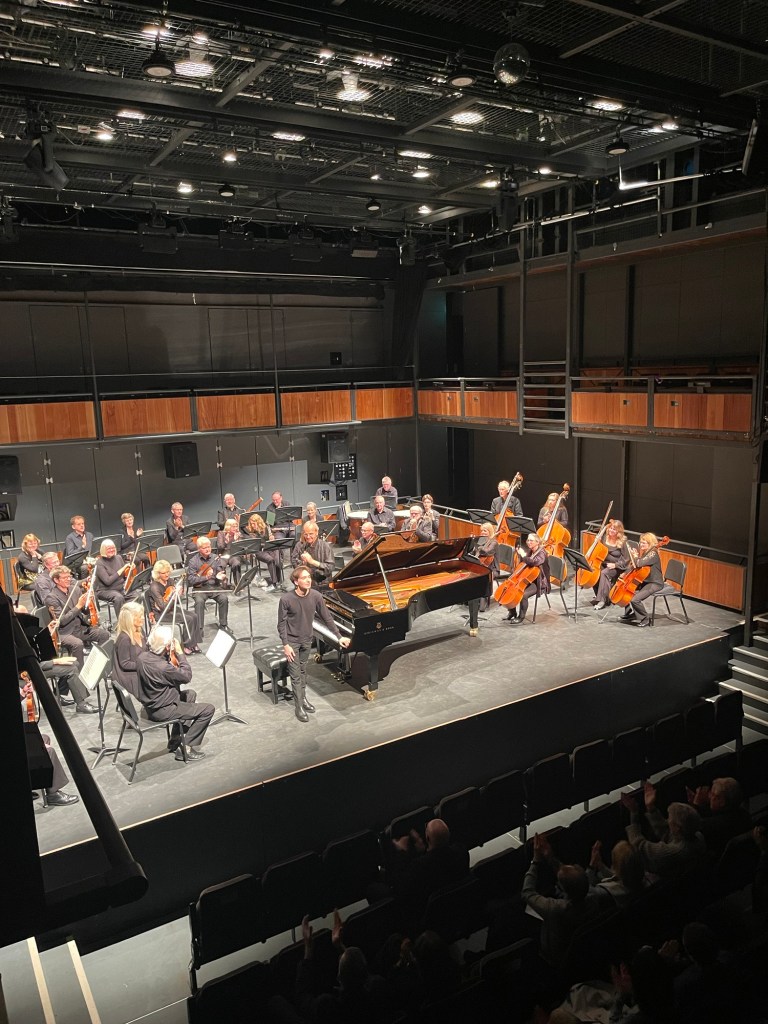
Jonathan Ferrucci at Norden Farm Arts Centre with the St John’s Chamber Orchestra under Nigel Wilkinson playing Mozart’s Concerto in C minor K 491.

Jonathan playing with refined good taste and colours that can illuminate such a well loved work with beguiling simple fantasy but allied to a sense of style and intelligence that even a great flourish in the slow movement made such musical sense. A crystalline clarity to the Larghetto was played with a disarming simplicity where the delicate embellishments he added later made such sense in a conversation of exquisite beauty.The cadenza too,his own, in the Larghetto was a consequence of all that had gone before and although a surprise it was a very pleasant one.
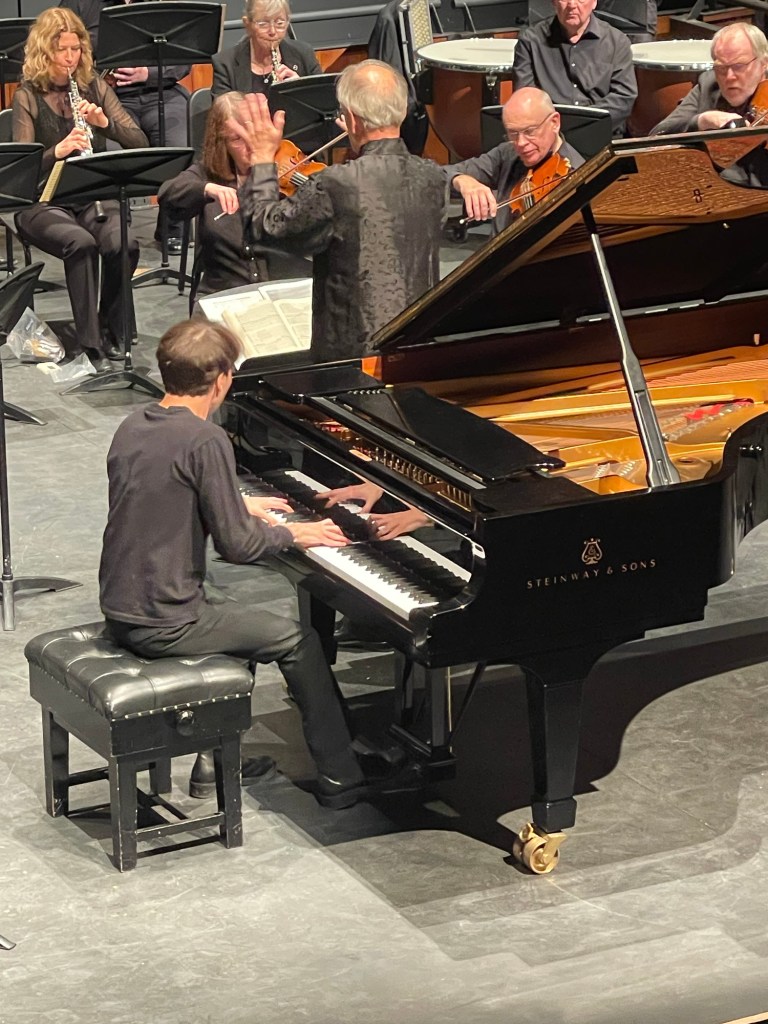
The cadenza in the first movement made a refreshing change from Hummel too , when played with such fantasy and radiance.A brilliant scale passage at the end was remarkably well caught by the very attentive conductor Nigel Wilkinson.In fact he had brought out the best throughout the concerto from his well prepared amateur players.

Drama and scintillating brilliance from Jonathan in the Allegro first movement were given a sparkling ‘joie de vivre’ in the Allegretto finale where yet another of his cadenzas was beautifully integrated into Mozart’s genial concerto that was to be such an inspiration for Beethoven. Infact Hummel’s cadenzas are usually played but today Jonathan chose to play his own adding a breath of fresh air and new life to a work that like his mentor Robert Levin continues a tradition of improvisation and embellishing the bare outlines left by the composer. There are many cadenzas for this concerto and Murray Perahia played a lot of them including one of his own. When on tour with the St Martin in the Fields Orchestra he would have fun surprising them each night,not telling them which he was going to play- sadistically keeping them on their toes!
Home
A History Of Norden Farm Centre For The Arts
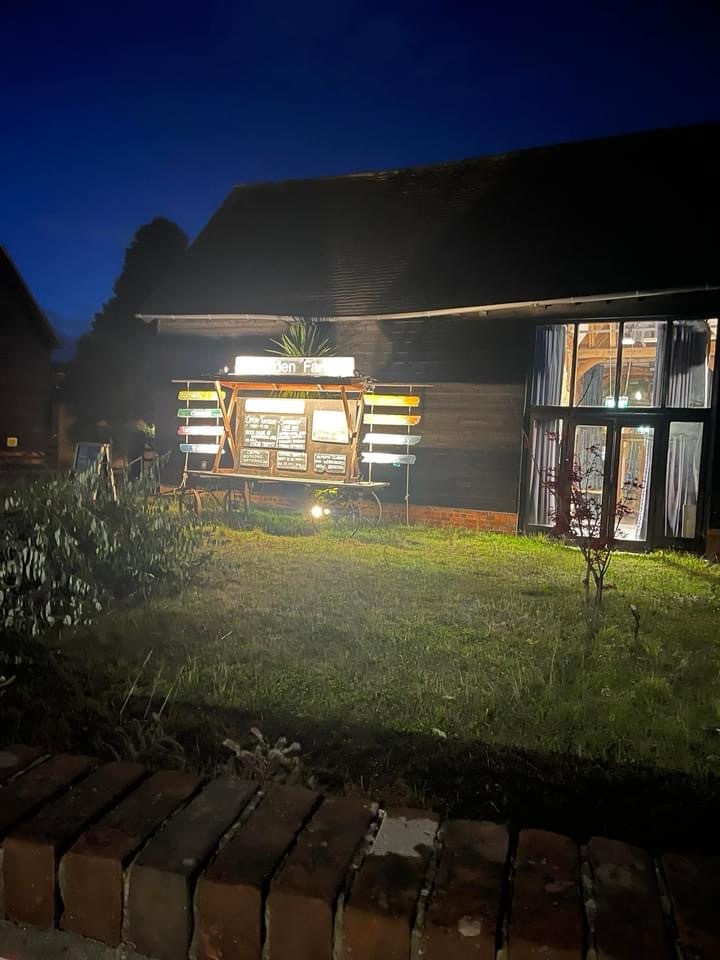
Norden Farm is built on the site of an ancient Dairy Farm. The site includes two original, listed buildings; a Georgian Farmhouse and 18th Century Long Barn. The plan to have an arts centre in Maidenhead had been a long held dream. Lobbying for such a space had begun in the 1970’s when a strong demand for an arts centre for Maidenhead began to emerge. Maidenhead Arts was set up in 1978 as an umbrella organisation of local arts groups committed to this vision.

The site had been received by the RBWM Council as planning gain for housing development on the farmland in 1992, and the first Norden Farm Board raised funds from the Foundation for Sport and the Arts to develop the buildings and build a small scale theatre (where the current studio lives today) starting work in 1994. Norden Farm Centre Trust applied to the Arts Council for lottery funding to complete Norden Farm.

Following an intensive and detailed design and public consultation phase, planning approval was granted in September 1997. The Arts Council carried out a full assessment during autumn 1997, prior to an announcement of support and approval for the finished scheme with a Lottery award of £5,295,000 in January 1998. The assessment changed the original vision for Norden Farm. In order to receive lottery funds, the design needed to change to a much larger arts centre plan that would serve the wider community and be able to present a larger range of professional touring work. This meant that a new theatre, now known as The Courtyard, with a 280 capacity, joined The Studio theatre, with a 100 capacity, together with other spaces.
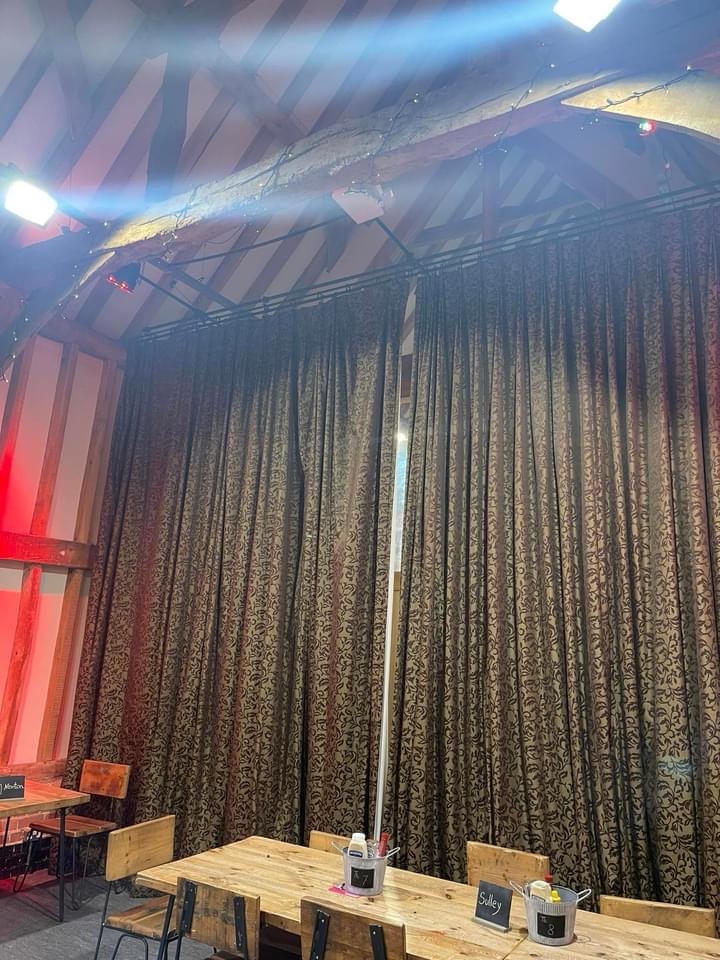
The final design stage of the project was completed in late 1998 and Norden Farm Centre for the Arts finally opened its doors to the public on the 17 September 2000 with Director, David Hill at the helm. Annabel Turpin took over in 2003, followed by the current custodian, Jane Corry.
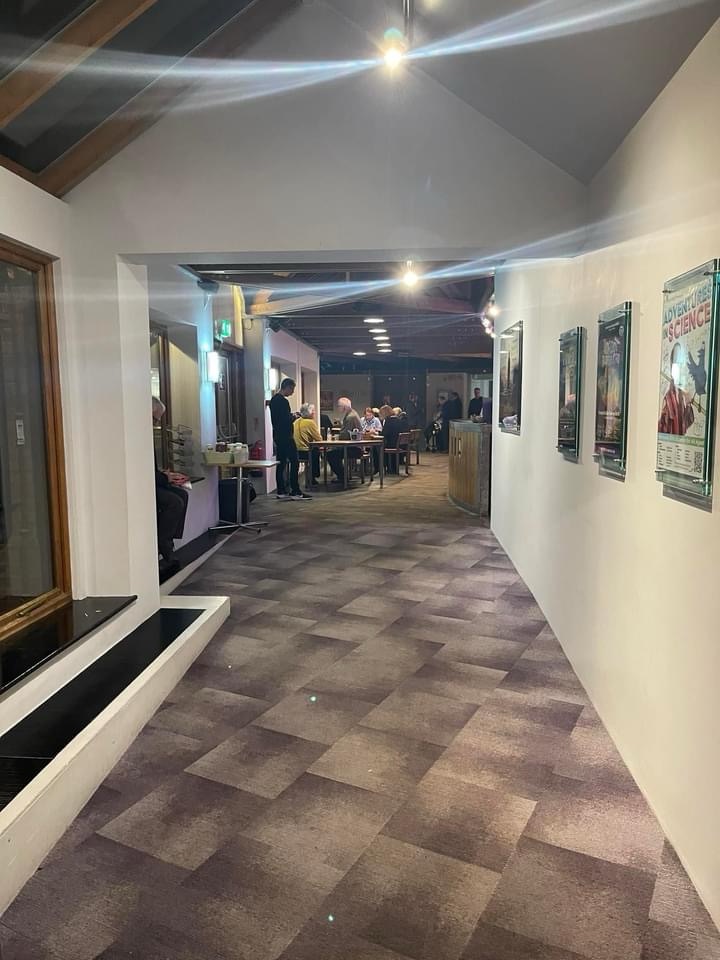
Today, Norden Farm presents a performance and participation programme of film, theatre, music, visual arts, comedy and classes. It is also a venue for conferences, seminars, meetings and social functions.
Commissioned Artwork at Norden Farm
The new design for Norden Farm, had a radical plan to incorporate visual artists into the design team from the outset, ensuring that art was literally at the heart of the arts centre. At the same time, a poet in residence.

Mozart triumphs at Torlonia with Jonathan Ferrucci -Pietro Fresa -Sieva Borzak with encore at Teatro Vespasiano in Rieti

Goldberg -Ferrucci to be or not to be The crowning Glory in London Kings Place
Jonathan Ferrucci KCT American Tour – Goldberg – A voyage of discovery
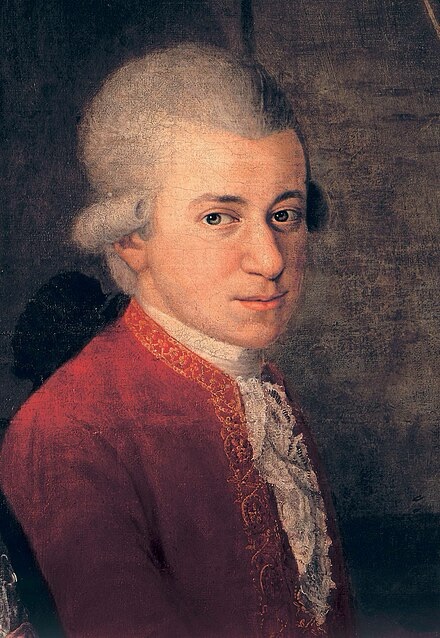
27 January 1756 Salzburg 5 December 1791 (aged 35) Vienna
The Piano Concerto No. 24 in C minor K 491, was composed in the winter of 1785–1786, finishing it on 24 March 1786, three weeks after completing his Concerto in A K.488 . As he intended to perform the work himself, Mozart did not write out the soloist’s part in full. The premiere was in early April 1786 at the Burgtheater in Vienna. Chronologically, the work is the twentieth of Mozart’s 23 original piano concertos which Mozart composed in the winter of 1785–86, during his fourth season in Vienna. It was the third in a set of three concertos composed in quick succession, the others being n. 22 in E flat and 23 in A. Mozart finished composing the C minor concerto shortly before the premiere of his comic opera The Marriage of Figaro ; the two works are assigned adjacent numbers of 491 and 492 in the Kochel catalogue Although composed at the same time, the two works contrast greatly: the opera is almost entirely in major keys while the concerto is one of Mozart’s few minor-key works.The pianist and musicologist Robert Levin suggests that the concerto, along with the two concertos that precede it, may have served as an outlet for a darker aspect of Mozart’s creativity at the time he was composing the comic opera.

The concerto was premiered at the Burgtheater in Vienna.
The premiere of the concerto was on either 3 or 7 April 1786 at the Burgtheater in Vienna; Mozart featured as the soloist and conducted the orchestra from the keyboard.
In 1800, Mozart’s widow Costanze sold the original score of the work to the publisher Johann Anton André of Offenbach am Main . It passed through several private hands during the nineteenth century before Sir George Donaldson, a Scottish philanthropist, donated it to the Royal College of Music in 1894.

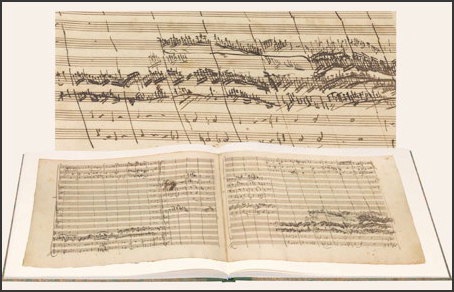

The College still houses the manuscript today. The original score contains no tempo markings ; the tempo for each movement is known only from the entries Mozart made into his catalogue. The orchestral parts in the original score are written in a clear manner whereas the solo part is often incomplete: on many occasions in the score Mozart notated only the outer parts of passages of scales or broken chords. This suggests that Mozart improvised much of the solo part when performing the work.The score also contains late additions, including that of the second subject of the first movement’s orchestral exposition.There is the occasional notation error in the score due to Mozart having “obviously written in great haste and under internal strain”.
The concerto is divided into the following three movements
- Allegro
- Larghetto in
- Allegretto ( variations with the eight variations and coda )
The concerto is scored for one flute , two oboes , two clarinets , two bassoons, two horns , two trumpets , timpani and strings . This is the largest array of instruments for which Mozart composed any of his concertos.
It is one of only two of Mozart’s piano concertos that are scored for both oboes and clarinets (the other, his concerto for two pianos K.365 has clarinets only in the revised version). The clarinet was not at the time a conventional orchestral instrument. Robert Levin writes: “The richness of wind sonority, due to the inclusion of oboes and clarinets, is the central timbral characteristic of the concerto : time and again in all three movements the winds push the strings completely to the side.”
The solo instrument for the concerto is scored as a “cembalo”. This term often denotes a harpsichord , but in this concerto, Mozart used it as a generic term that encompassed the fortepiano , an eighteenth-century predecessor of the modern piano that among other things was more dynamically capable than the harpsichord.
Beethoven admired the concerto and it may have influenced his own Piano Concert n. 3 ,also in C minor. After hearing the work in a rehearsal, Beethoven reportedly remarked to a colleague that ” we shall never be able to do anything like that.” Brahms also admired the concerto, encouraging Clara Schumann to play it, and wrote his own cadenza for the first movement.Brahms referred to the work as a “masterpiece of art and full of inspired ideas.”
 ChristopherAxworthy-MusicCommentary