
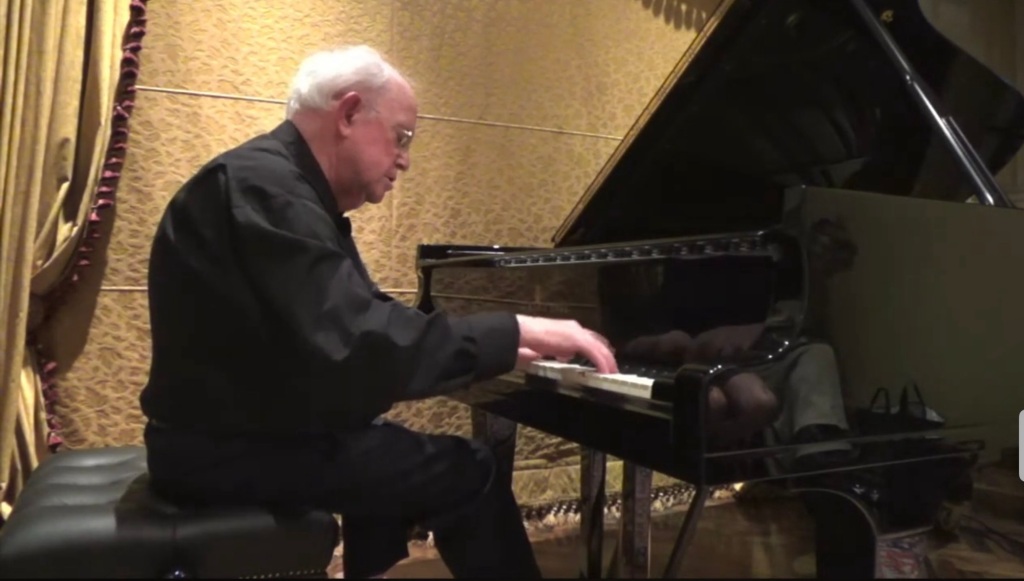
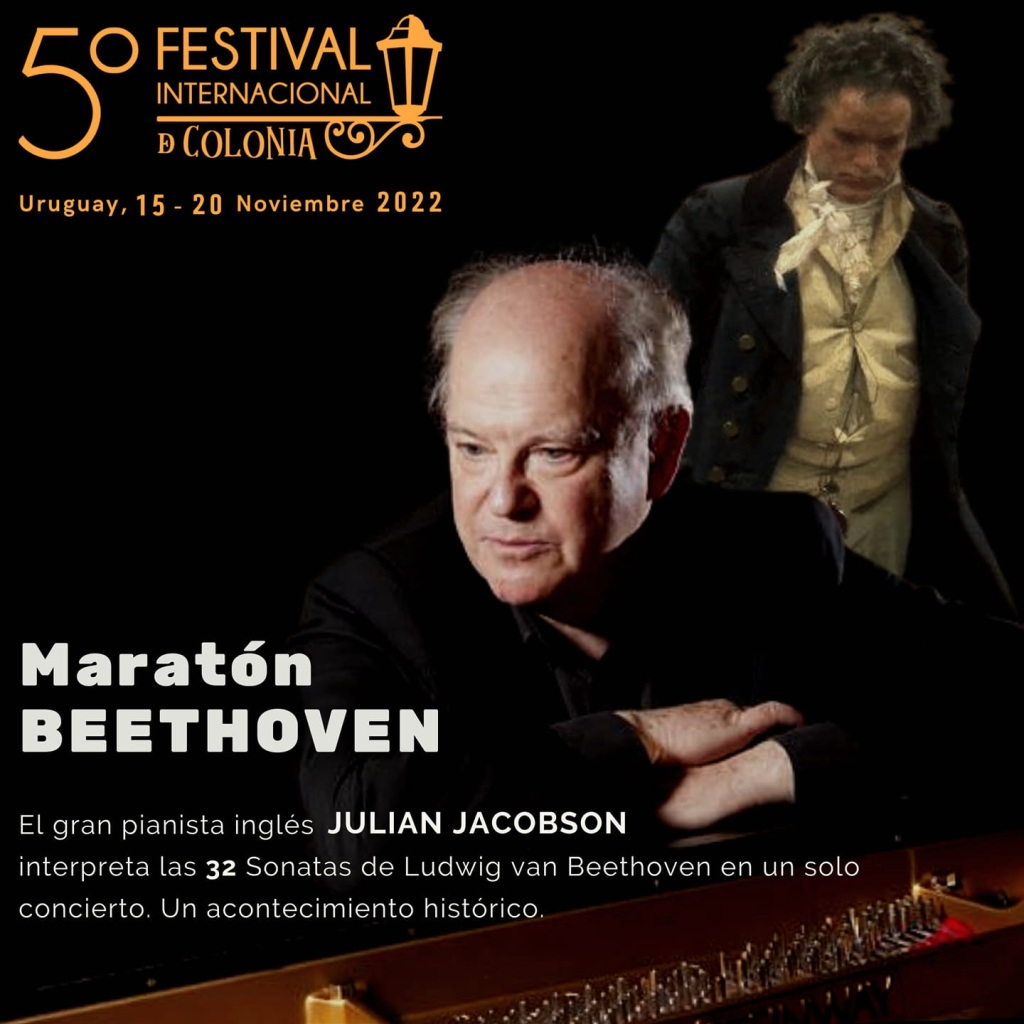
Another ‘tour de force’ from Julian Jacobson from the 32 Beethoven Sonatas played on the same day and without the use of the score which was indeed a feat of memory, stamina and intellectual daring. He had also helped prepare the new Barenreiter Beethoven Edition together with Leslie Howard and Jonathan De Mar.
Barenreiter Beethoven of Jonathan Del Mar
It is of course impossible to assimilate all the Beethoven Sonatas at one sitting but it does give one a chance to have a panorama and an overall view of Beethoven’s evolution throughout his turbulent life.

Today it was equally interesting to be reminded of the 24 Preludes of Debussy in one sitting.These Preludes were never meant to be played together and Debussy was even careful not to give a title to each one until it was over. However they are now so well known through the historic performances of Richter and Michelangeli and those more recent of Zimmerman, Fou Ts’ong and strangely enough Daniel Barenboim.I remember very well the very first performances of Richter in London where,seated on the stage , I could appreciate not how powerfully he could play in terms of volume but the power and control of sound at a whispered level that we in the west were not yet used to.There was such control but also a temperament that could be unleashed with savage abandon without warning.

There was also the chiselled perfection of Michelangeli the very opposite of Richter and of course Zimmerman was able to combine both worlds with extraordinary perfection.Rubinstein would often play Ondine in his recitals and it would be a tone poem of dynamic drive and ravishing beauty.His ‘terraces du Clair de lune’ was one of the marvels of my concert going experience. Fou Ts’ong too in a documentary about his life showed the camera slowly moving around his beautiful house in Hermitage Lane with Ts’ong playing ‘Canope’ that was truly unforgettable. Agosti too arrived at the Chigiana in Siena for his annual masterclasses announcing that it was his 80th year but did not wish to be celebrated. It was he indeed who celebrated but with the second book of Debussy Preludes that went on late into the night as he wanted to talk about each one in turn (this is one of the few recordings of the legendary musician that are available) Lya De Barberiis and many other illustrious admirers were ready even at 1 am to uncork the forbidden Champagne for a musician of such extraordinarily simplicity and integrity.
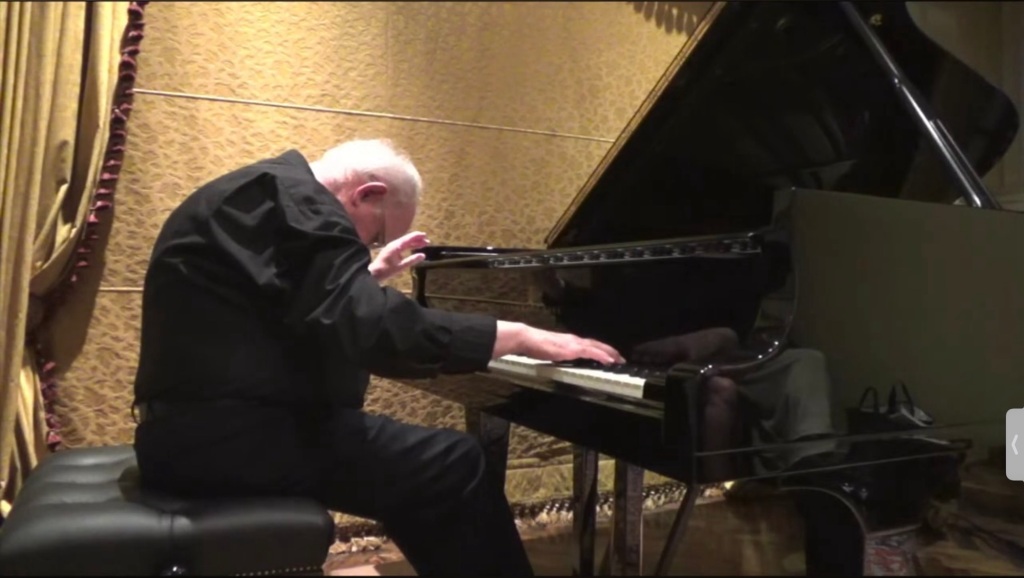
You see Julian with this ‘tour de force’ has allowed me to stop and think about past performances as I in turn admired his playing too. From the austere lightness of the Delphic Dancers and the easy wind and calm sea of the Sails where even the wind on the plain seemed strangely calm too .

It was soon to be ruffled when the West Wind blew in after a visit to Anacapri of urbane aristocratic brilliance and it was good to be reminded of Richter at this point too. His gentle steps in the snow reminded me of Moura Lympany with her extraordinary kaleidoscopic touch that thanks to Uncle Tobbs could make simple notes gleam and shine like precious jewels. Julian treated the flaxen haired girl of Debussy’s dreams very gently and beautifully as Debussy had requested – ‘sans rigueur’. The Serenade was played with real Latin aplomb and boiling controlled passion.The great Cathedral of Mont S .Michele was played with aristocratic control and wonder just ready for Puck to poke fun at these serious goings on before the plodding gait of Minstrels ended this parade of twelve picture postcards.

A slight break ,more for the audience than for Julian, and we were immersed in the whispered mists of ‘Brouillards’ as Julian gently allowed the dead leaves to drift slowly around the keyboard. A much needed wake up call from Spain brought us to Debussy’s magic fairy land . Such simplicity and elegance to ‘Bruyère’ , a piece we have all played in our youth.Suddenly Julian was a Jack in the box with ‘General Lavine’ striding on to the scene and if Rubinstein could create more of a magical tone poem of La terraces and Ondine it was also because he chose the two closest to his warm heart and never attempted the feat that Julian has embarked on today.

Clockwork precision and musicianly shaping of the double thirds was followed by the etherial magic of Debussy’s fireworks where the misty vision of La Marseillaise was a wonderful way to close 24 picture postcards of such ravishing colour and character.
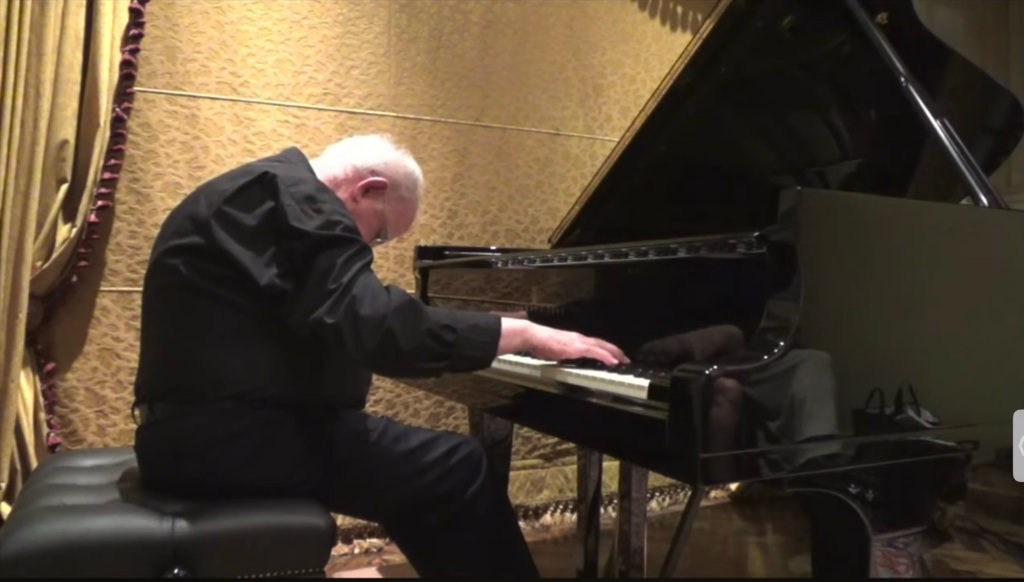
And to salute a musician who is a real kapellmeister especially in these days where so often the mechanical has taken over from the human element in the concert hall! Diaphragm has been replaced with a microphone and memory has passed into the feet and is no longer the feat we were witness to today!
Claude Debussy’s Préludes are 24 pieces for solo piano , divided into two books of 12 preludes each. Each book was written in a matter of months, at an unusually fast pace for Debussy. Book I was written between December 1909 and February 1910, and Book II between the last months of 1912 and early April 1913.On 3 May 1911, pianist Jane Mortier premiered the first book of preludes at the Salle Pleyel in Paris.German-English pianist Walter morse Rummel , a student of Leopold Godowsky , premiered the second book in 1913 in London.The first complete recording of both books was made in England in 1938 by South African pianist Adolph Hallis.

Claude Debussy is sometimes seen as the first Impressionist composer, although he vigorously rejected the term. He was among the most influential composers of the late 19th and early 20th centuries.
Born: August 22, 1862, Saint- Germaine – en – Laye
Died: March 25, 1918 (age 55 years), Paris
In the original editions, Debussy had the titles placed at the end of each work,allowing performers to experience each prelude without being influenced by its titles beforehand.
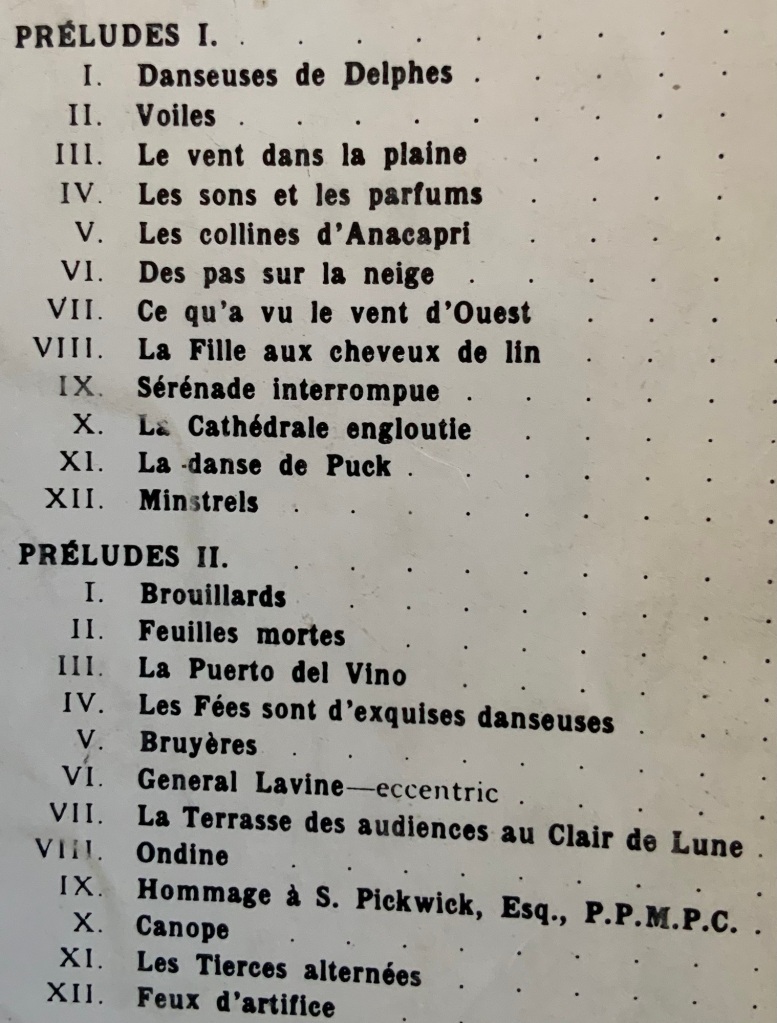
Two of the titles were set in quotation marks by Debussy because they are, in fact, quotations: «Les sons et les parfums tournent dans l’air du soir» is from Baudelaire’s poem Harmonie du soir (“Evening Harmony”), from his volume Les Fleurs du mal “Les fées sont d’exquises danseuses” is from J.M. Barrie’s book Peter Pan in Kensington Gardens,, which Debussy’s daughter had received as a gift.
At least one title is poetically vague: The exact meaning of Voiles, the first book’s second prelude, is impossible to ascertain; in French, voiles can mean either “veils” or “sails”.
Kapellmeister Jacobson informs and delights with mastery at St Mary’s
 ChristopherAxworthy-MusicCommentary
Una risposta a "Kapellmeister Julian Jacobson reveals the Debussy Préludes at the 1901 Arts Club with integrity and old style musicianship"