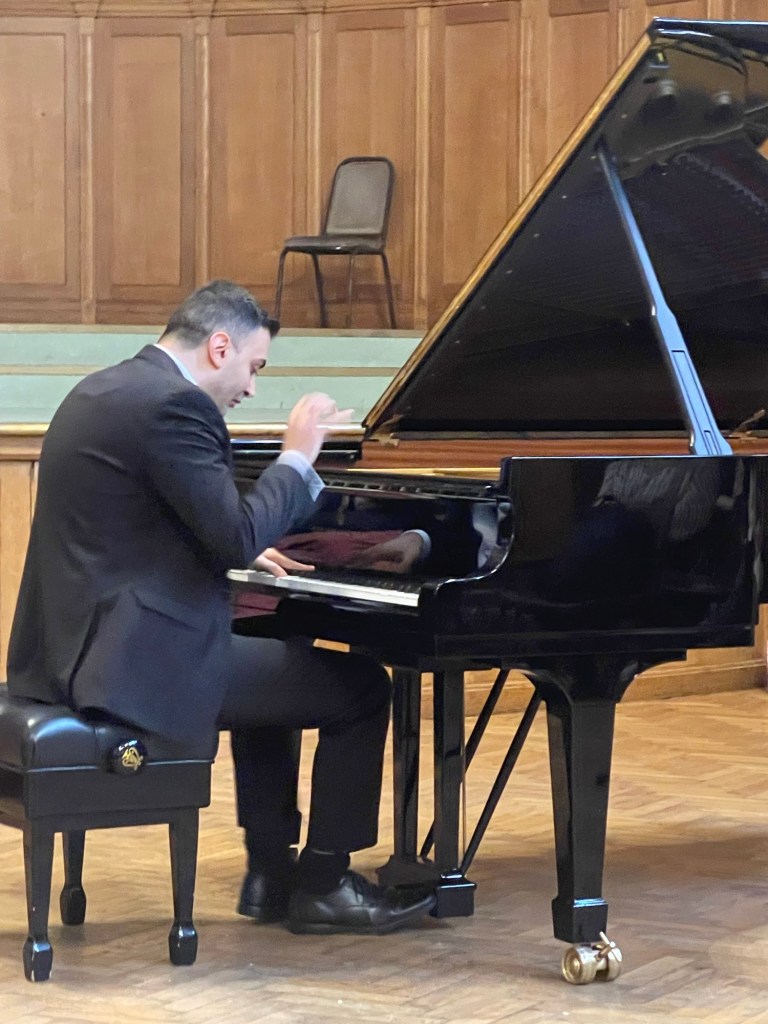
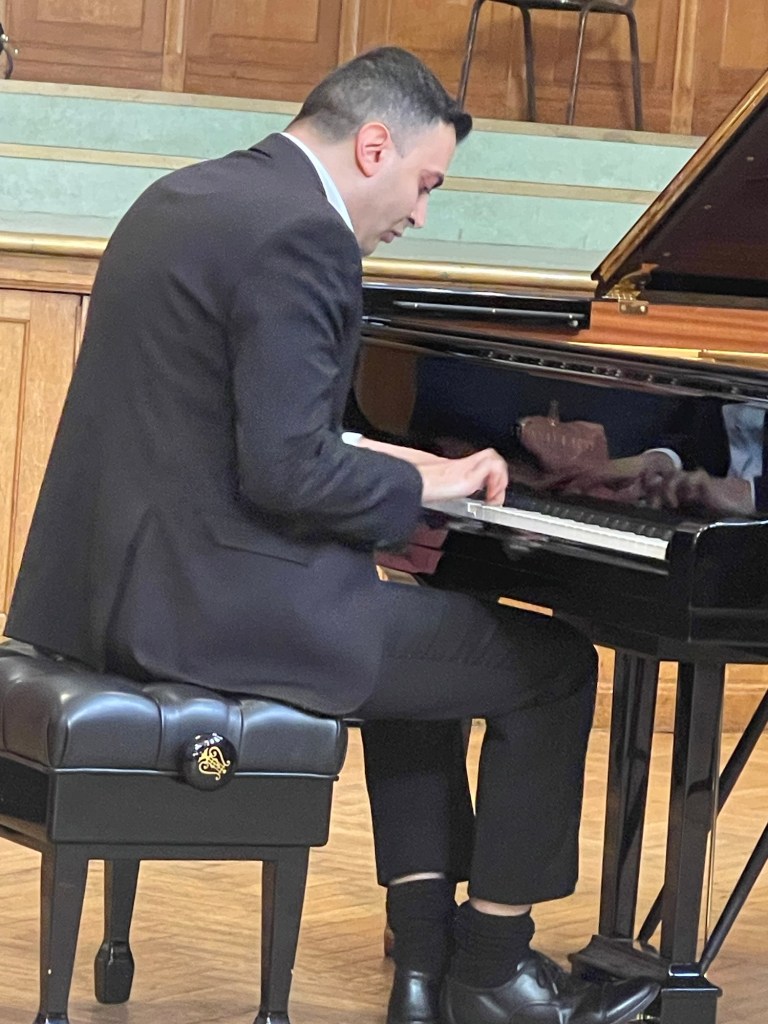
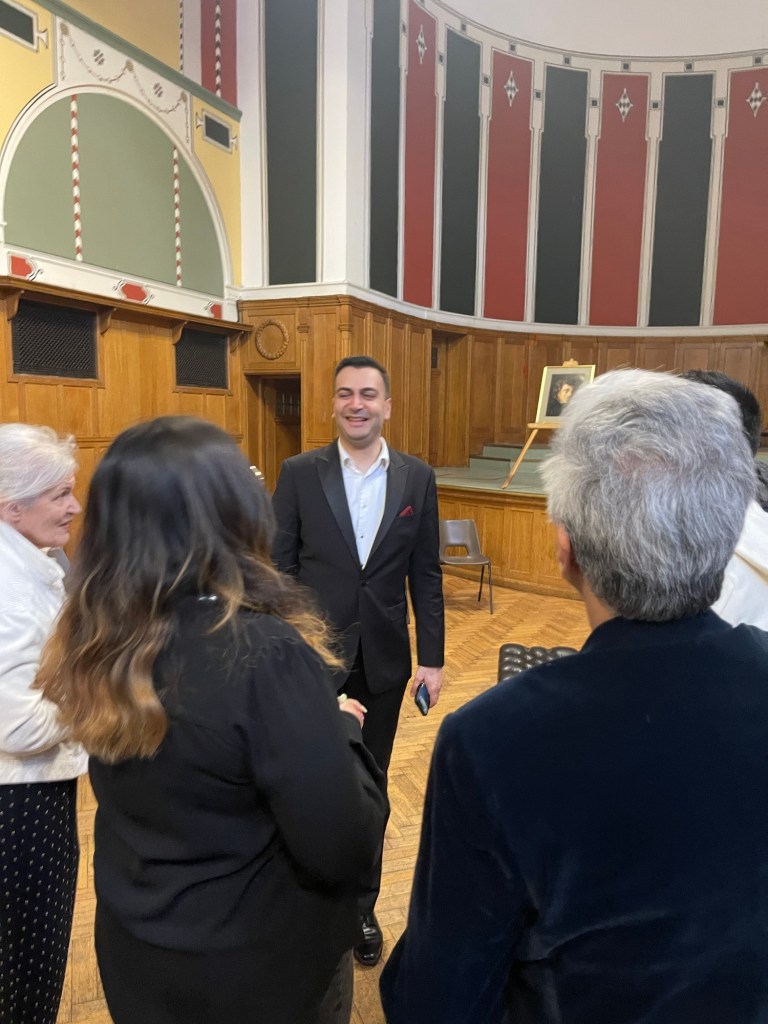
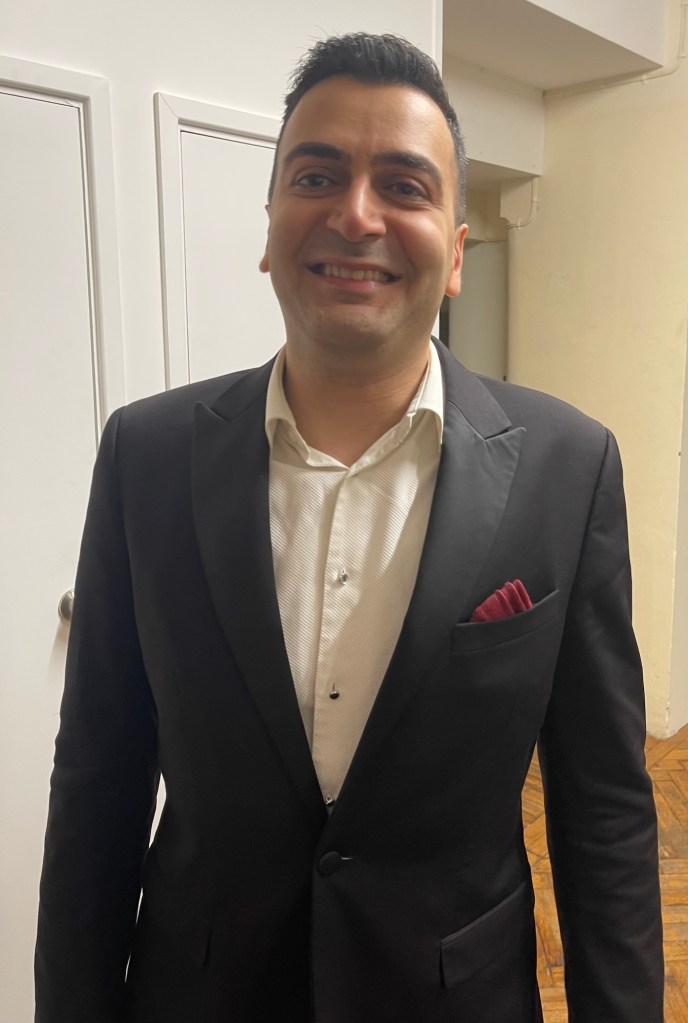
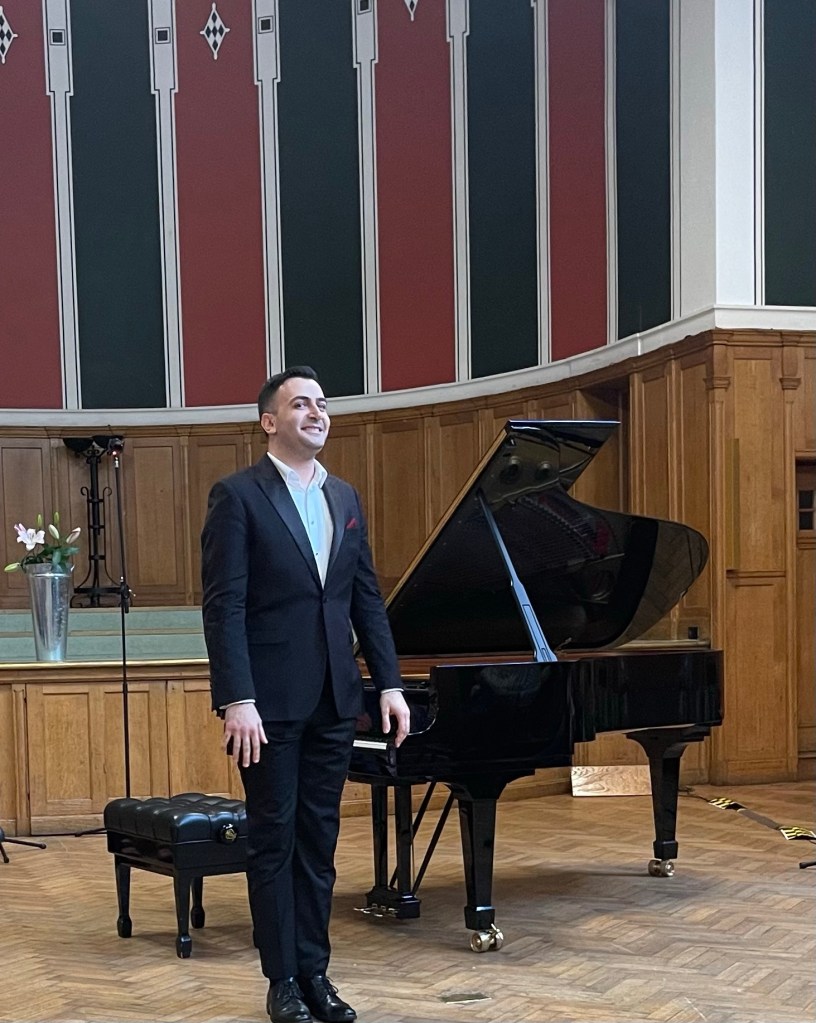
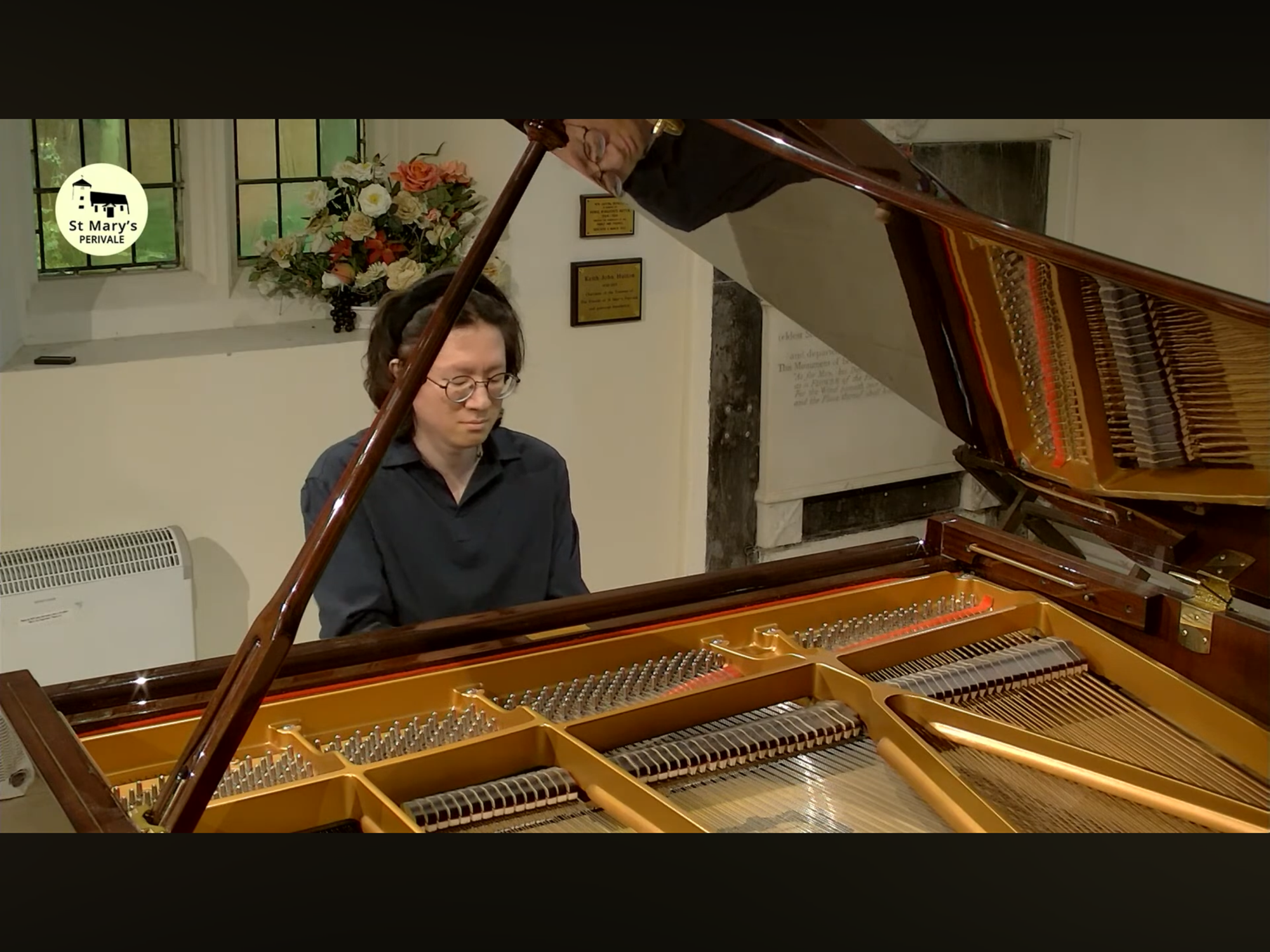
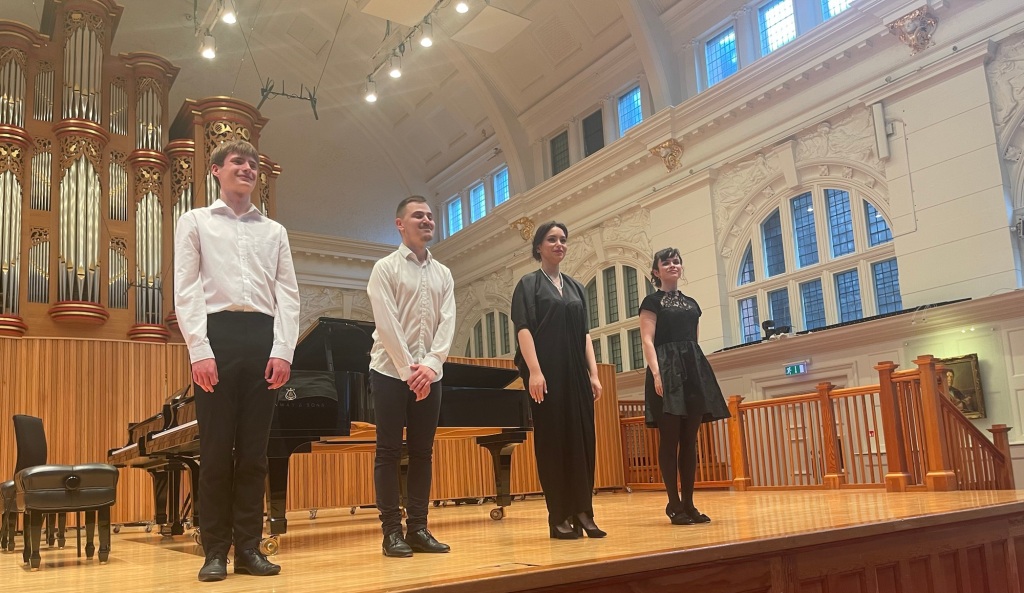
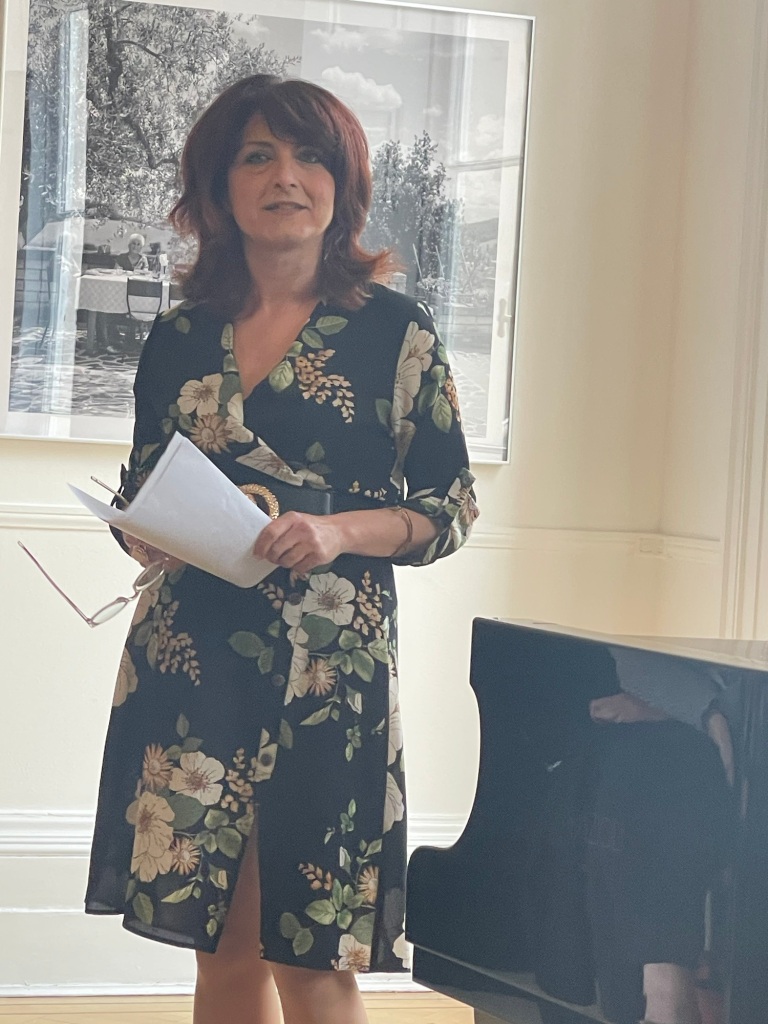
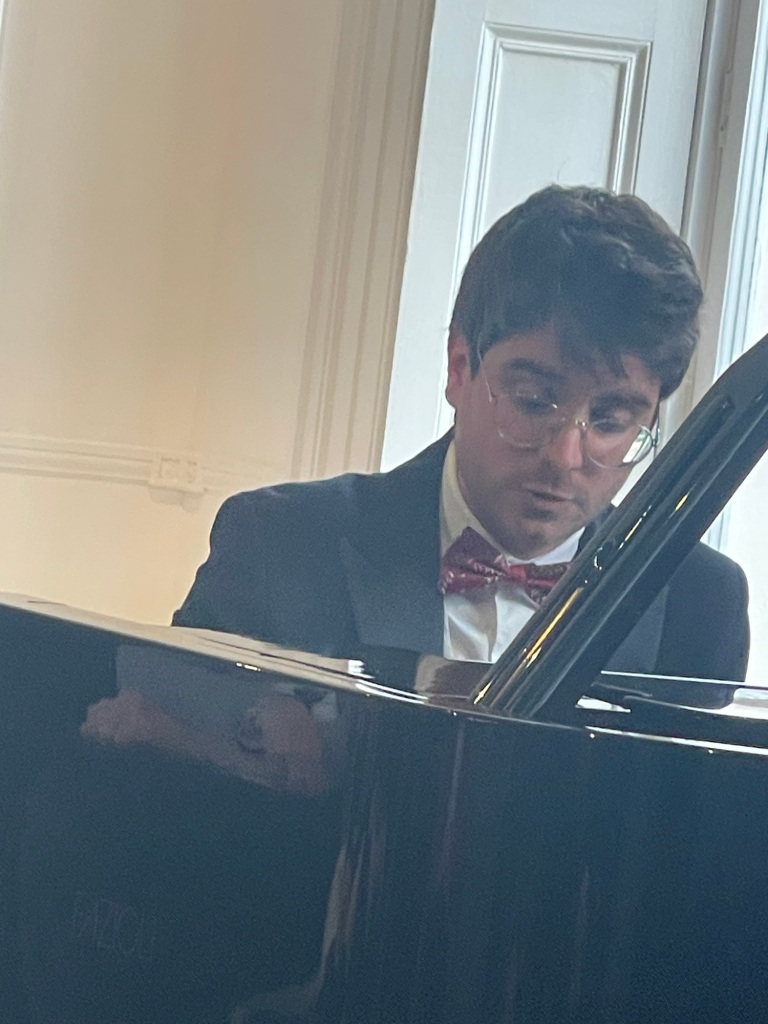
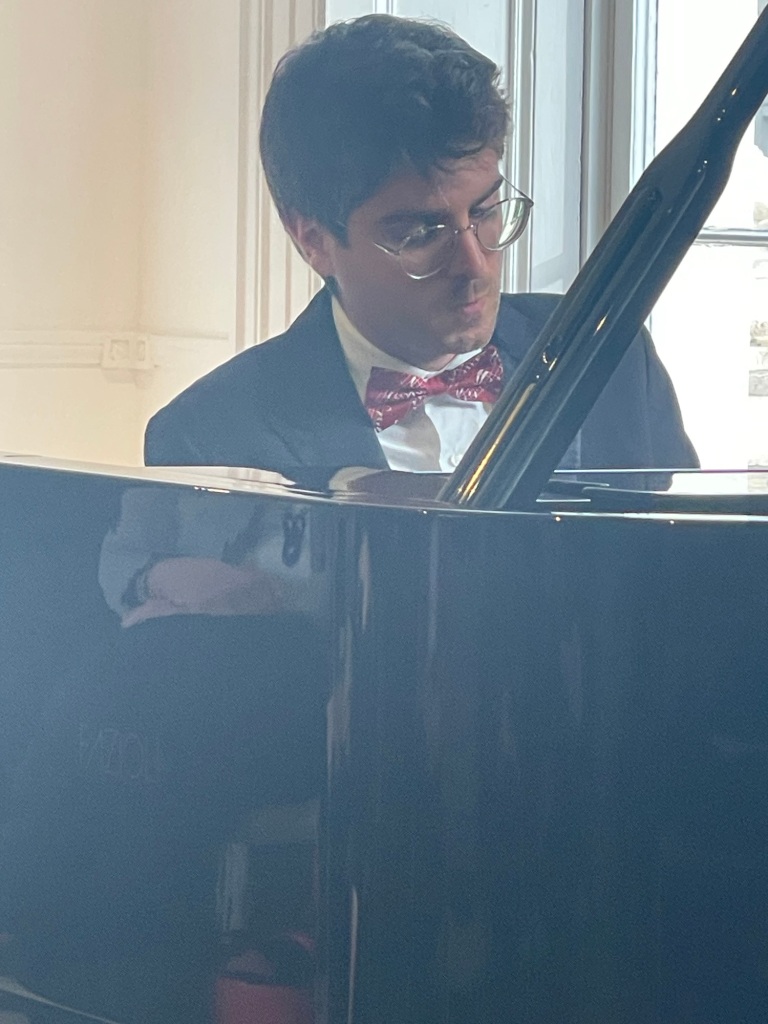
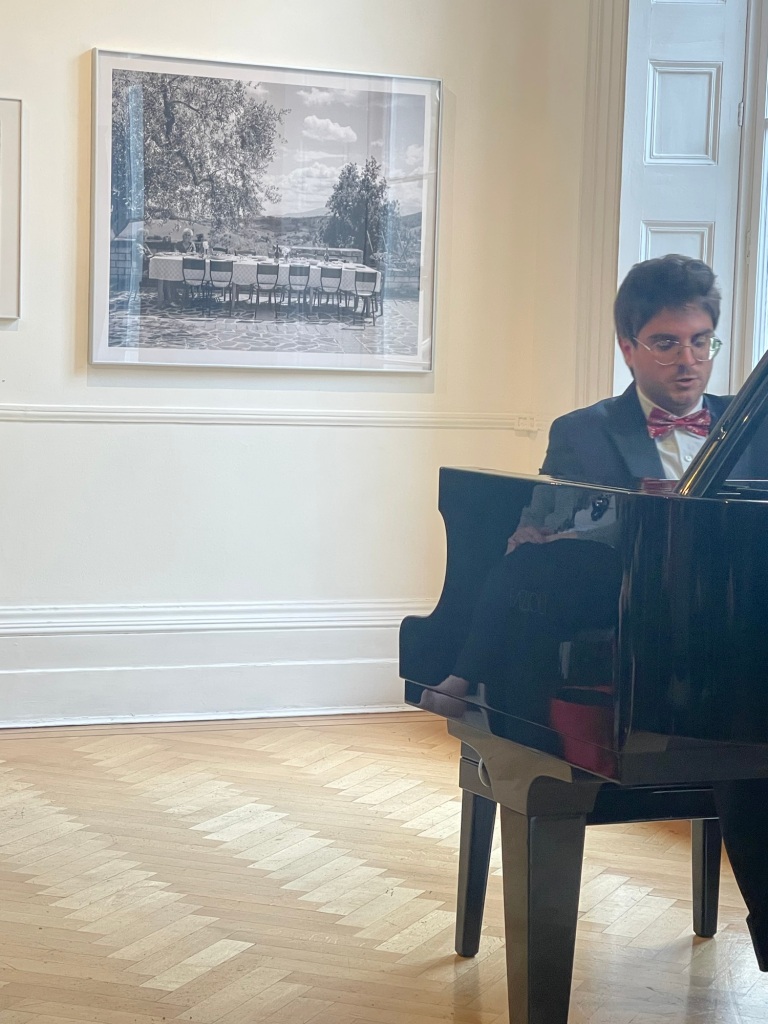
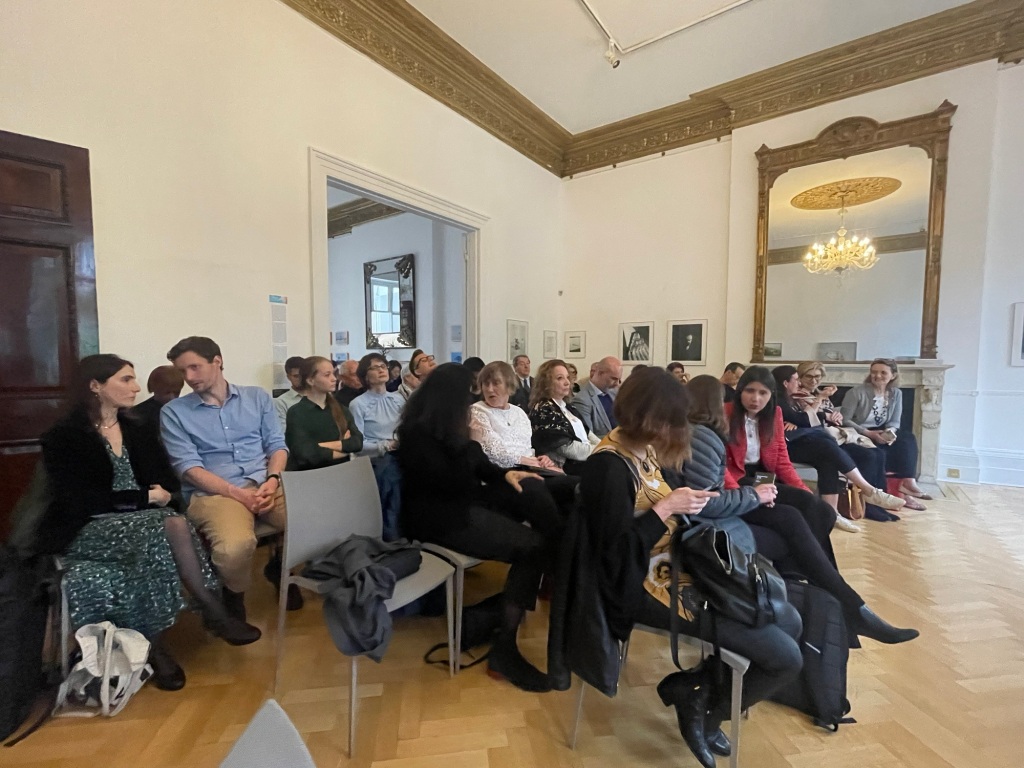
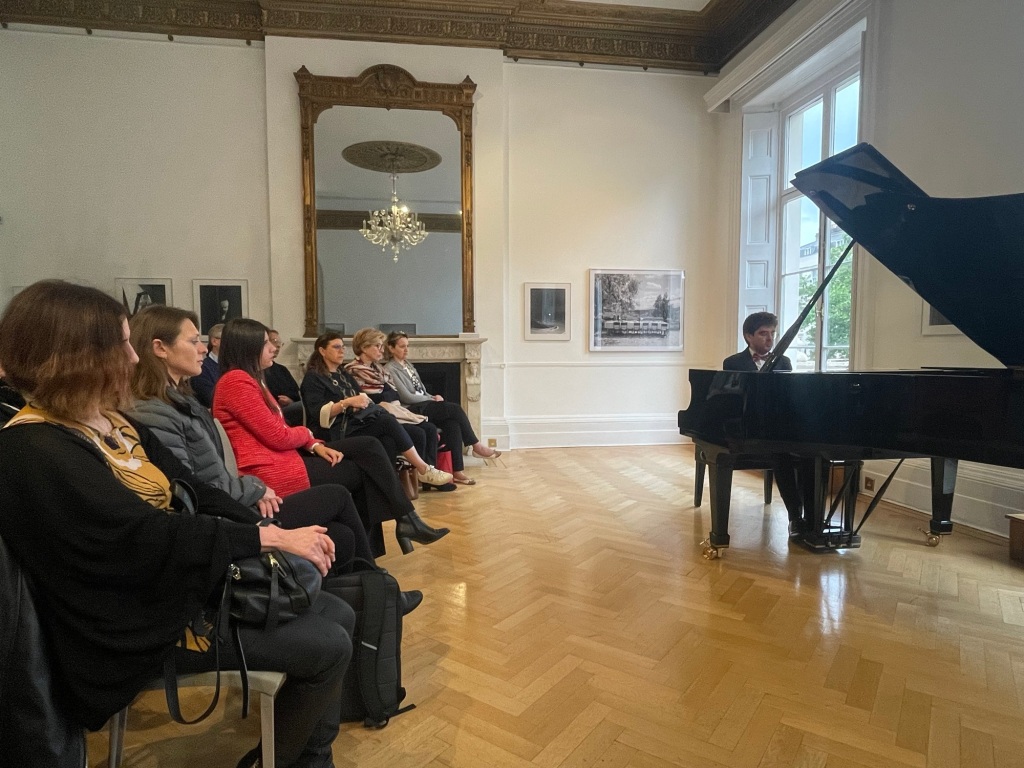
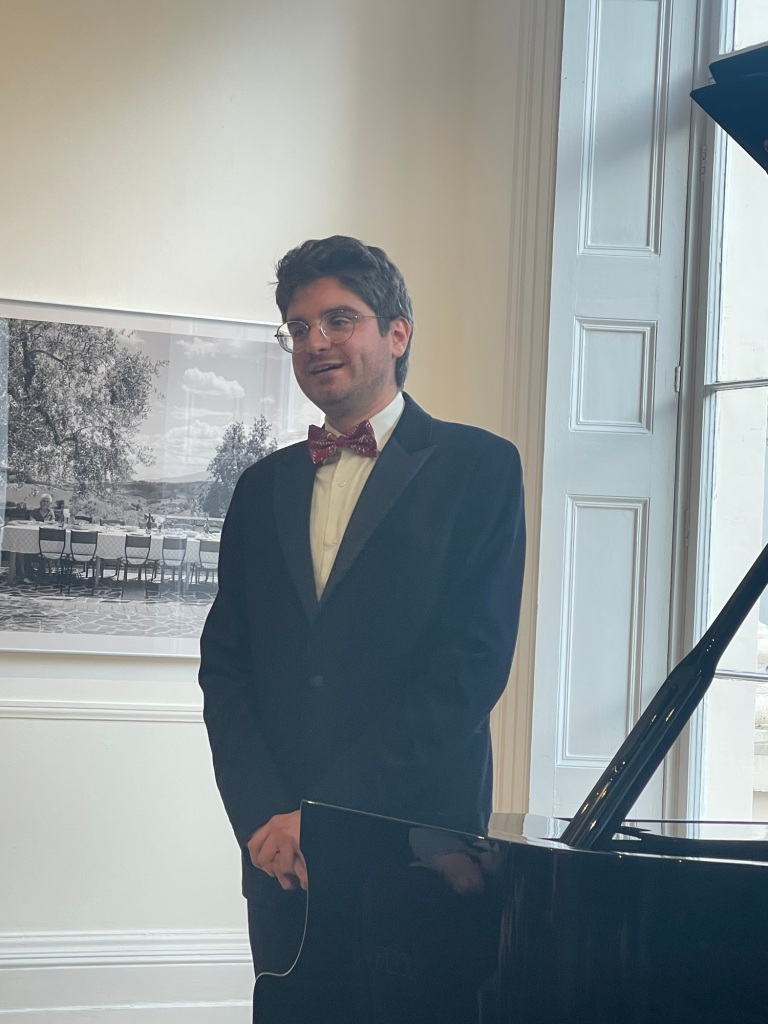
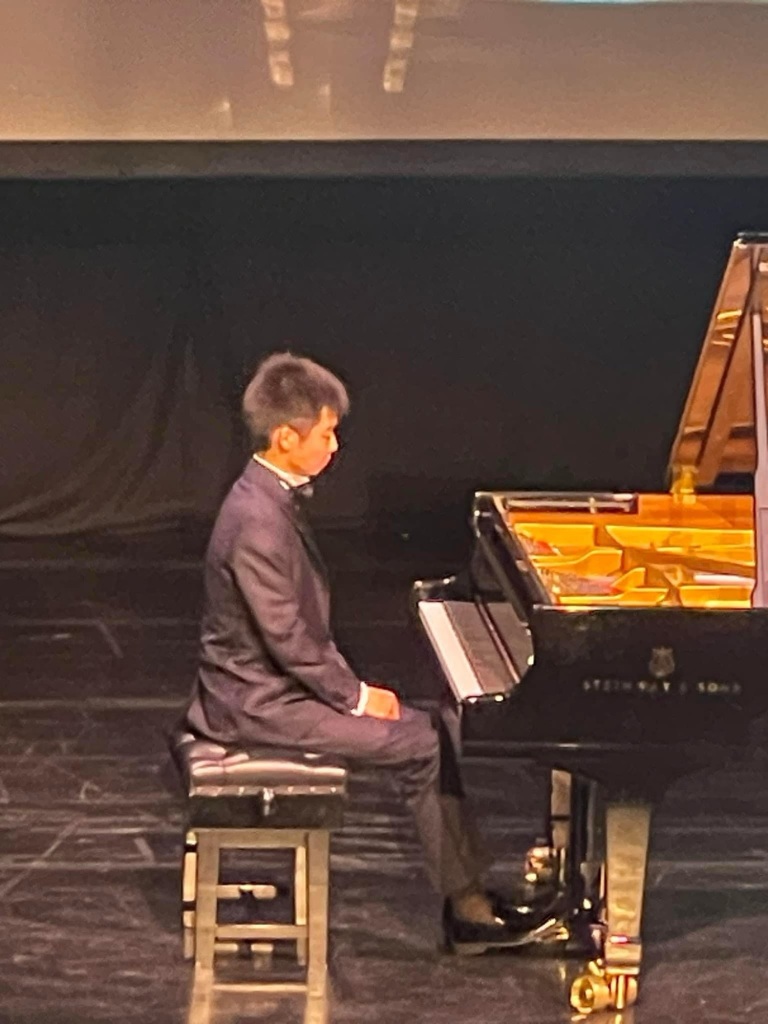
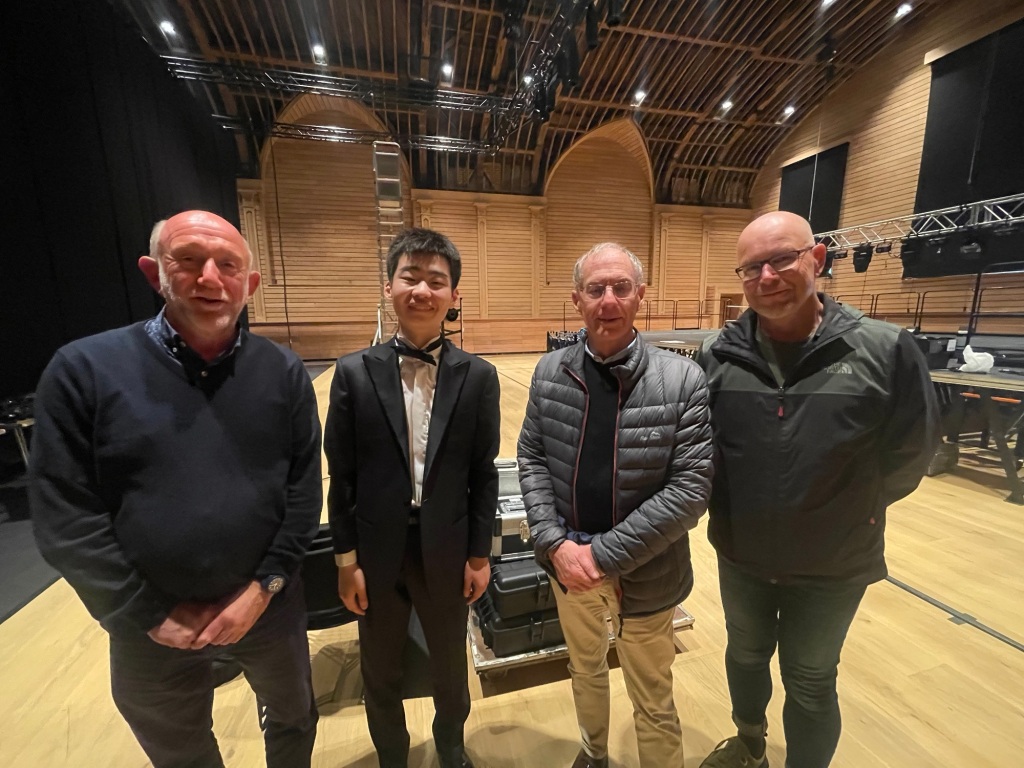
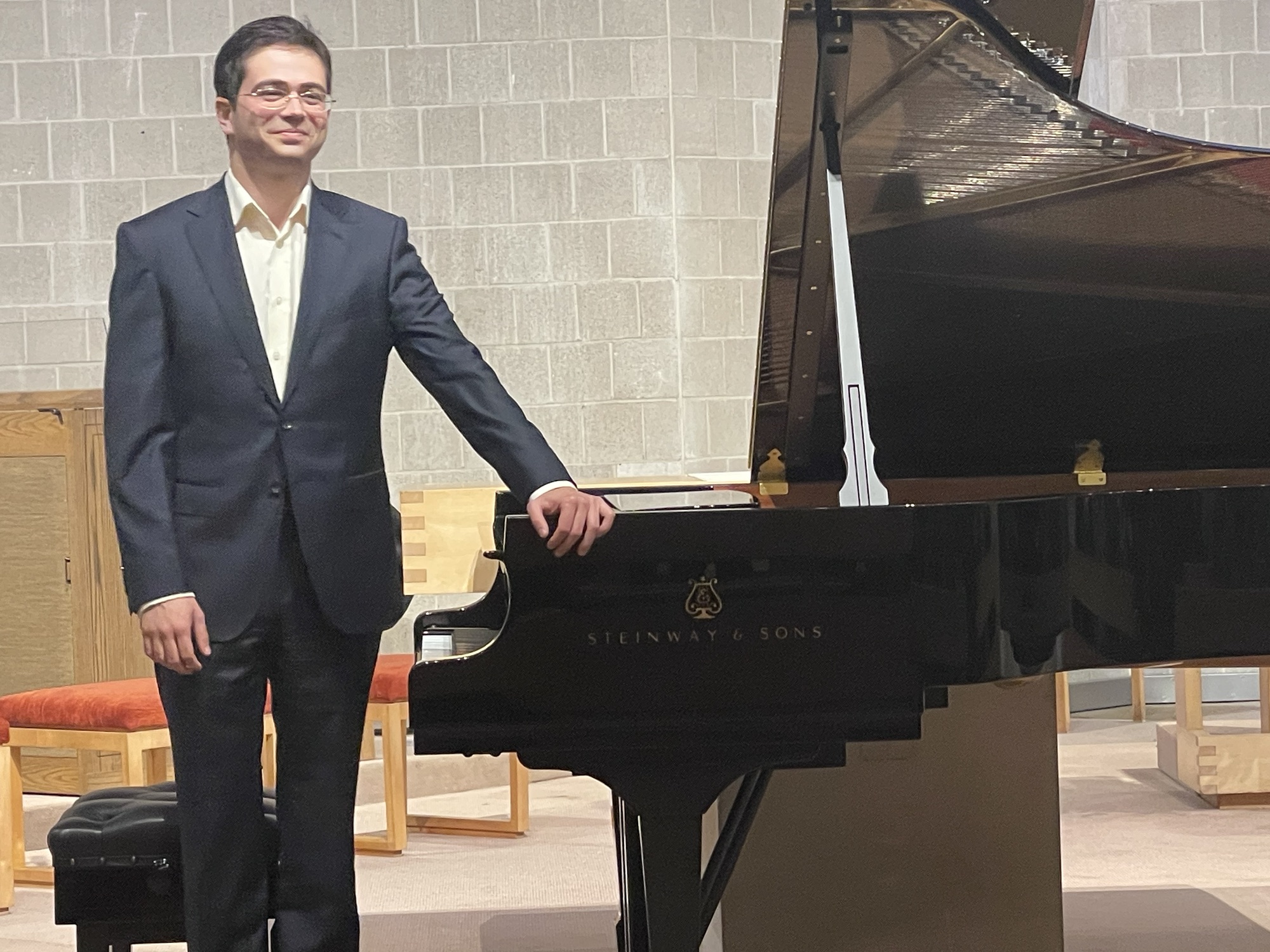
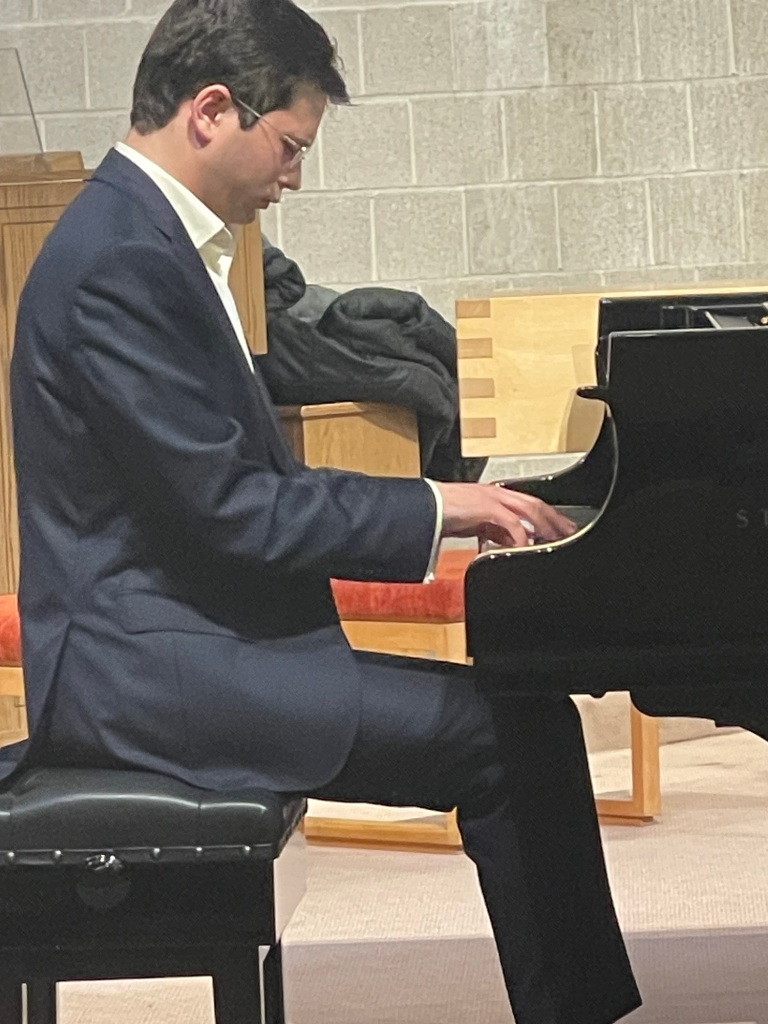
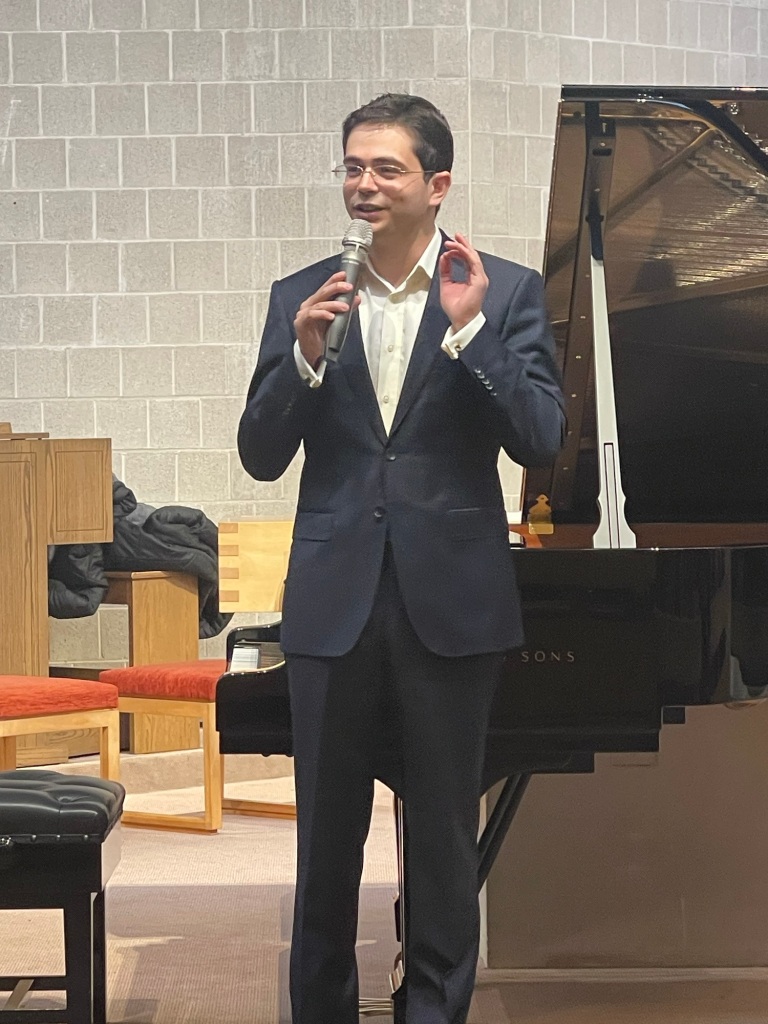
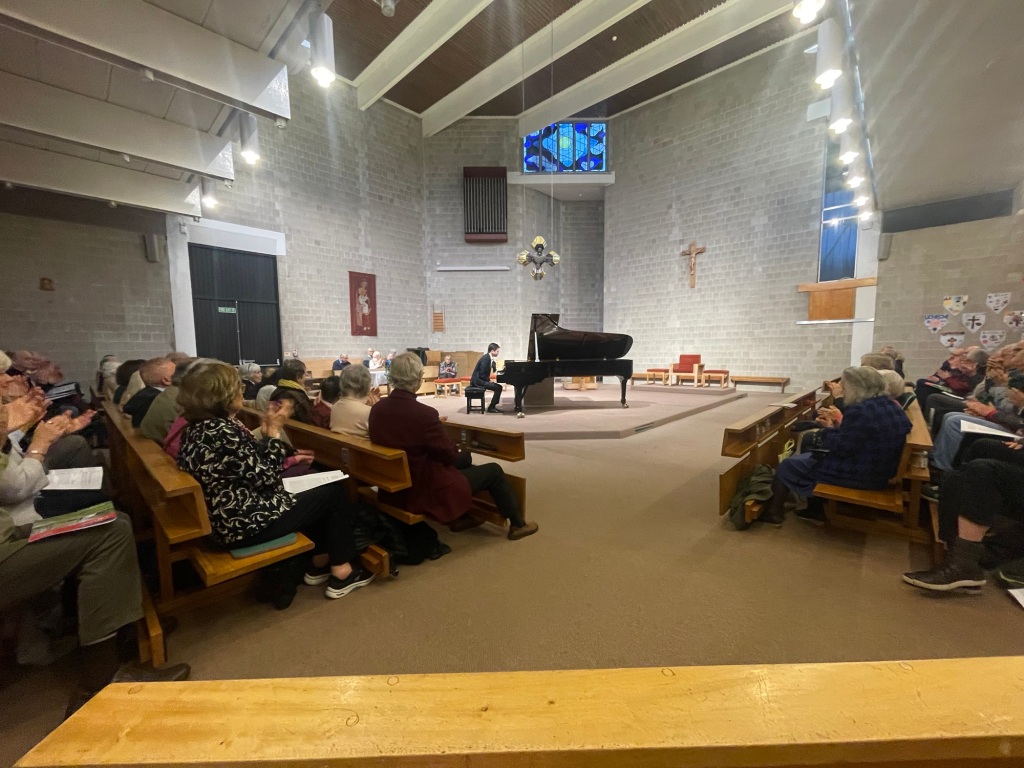
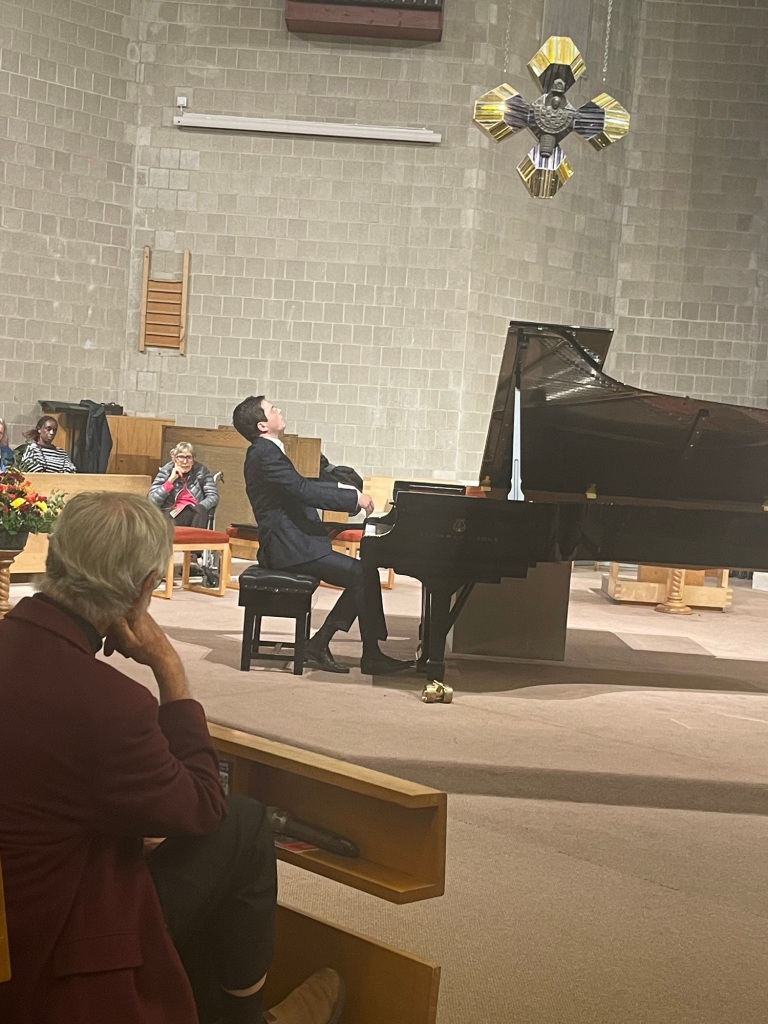
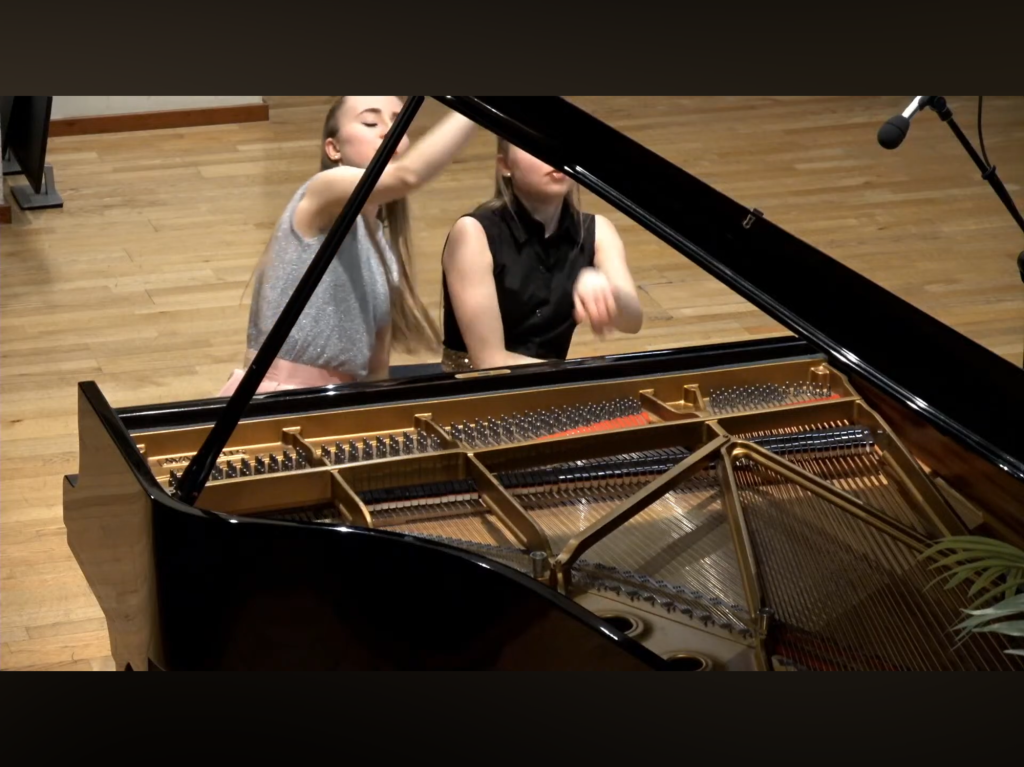
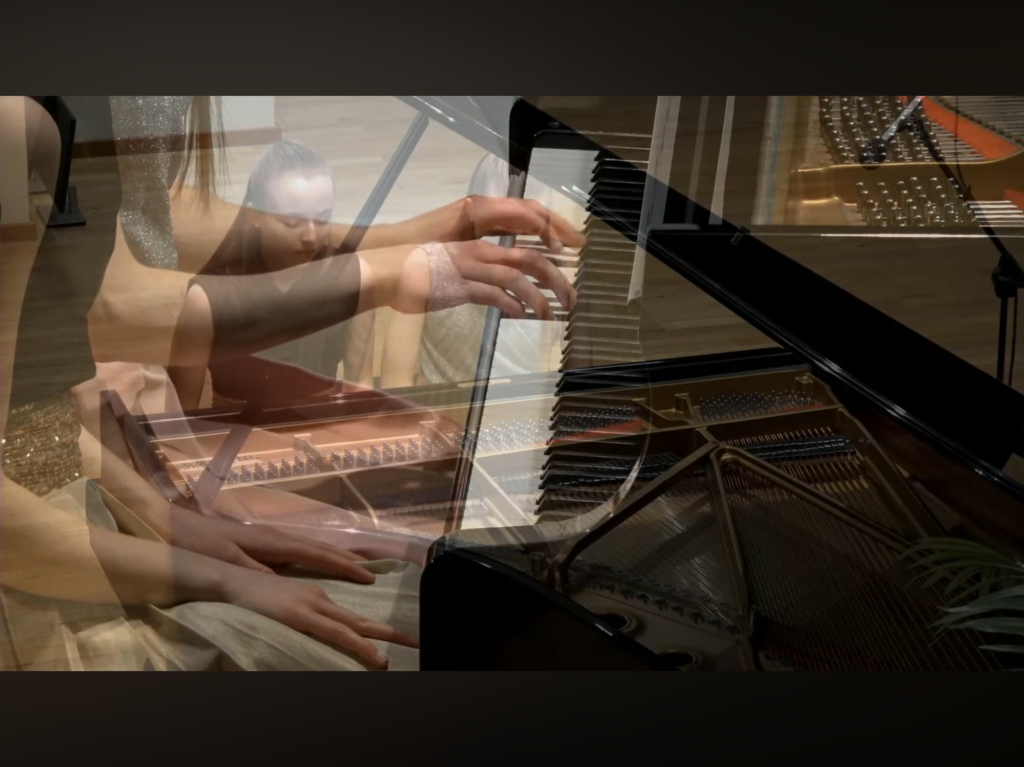
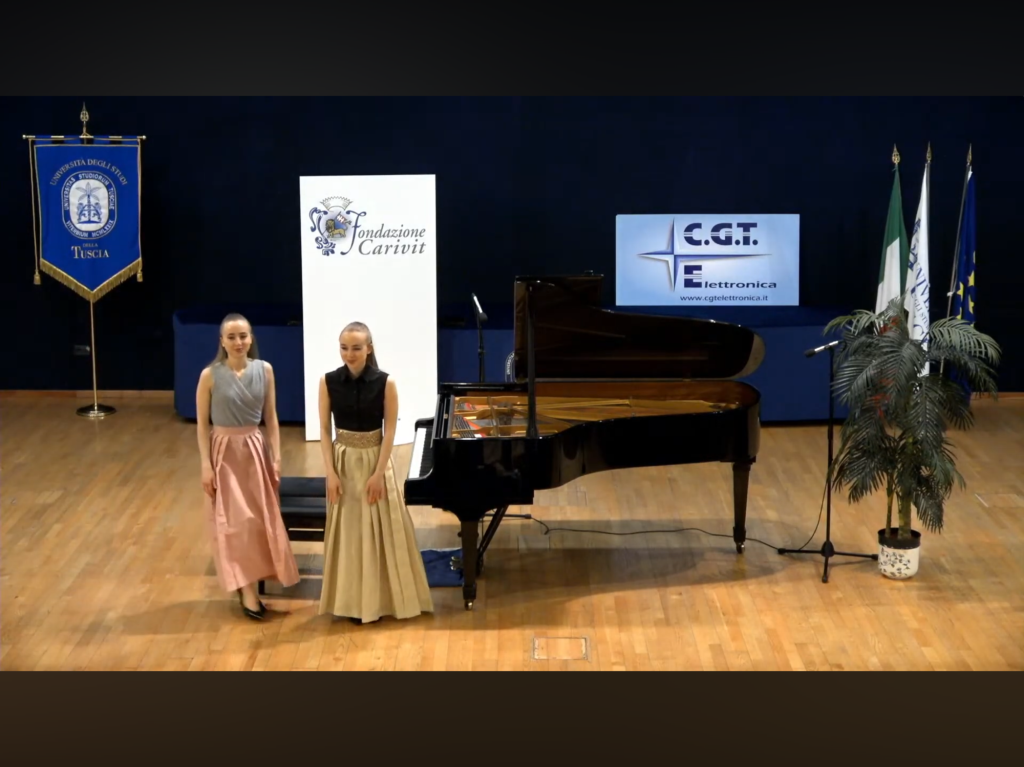
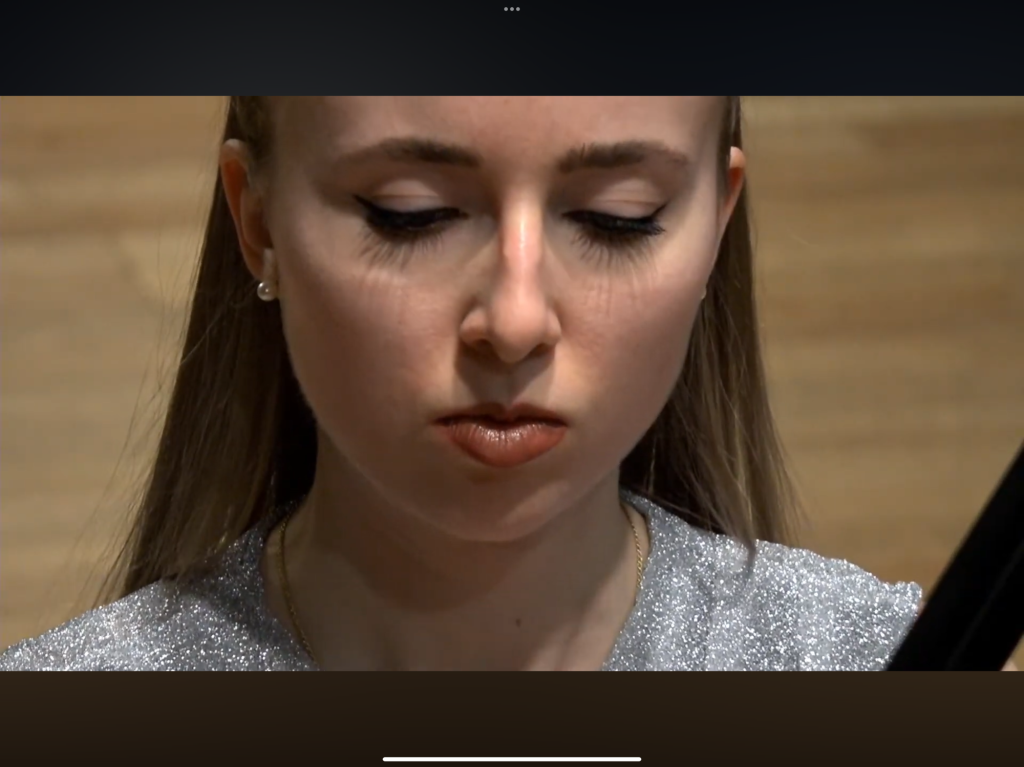
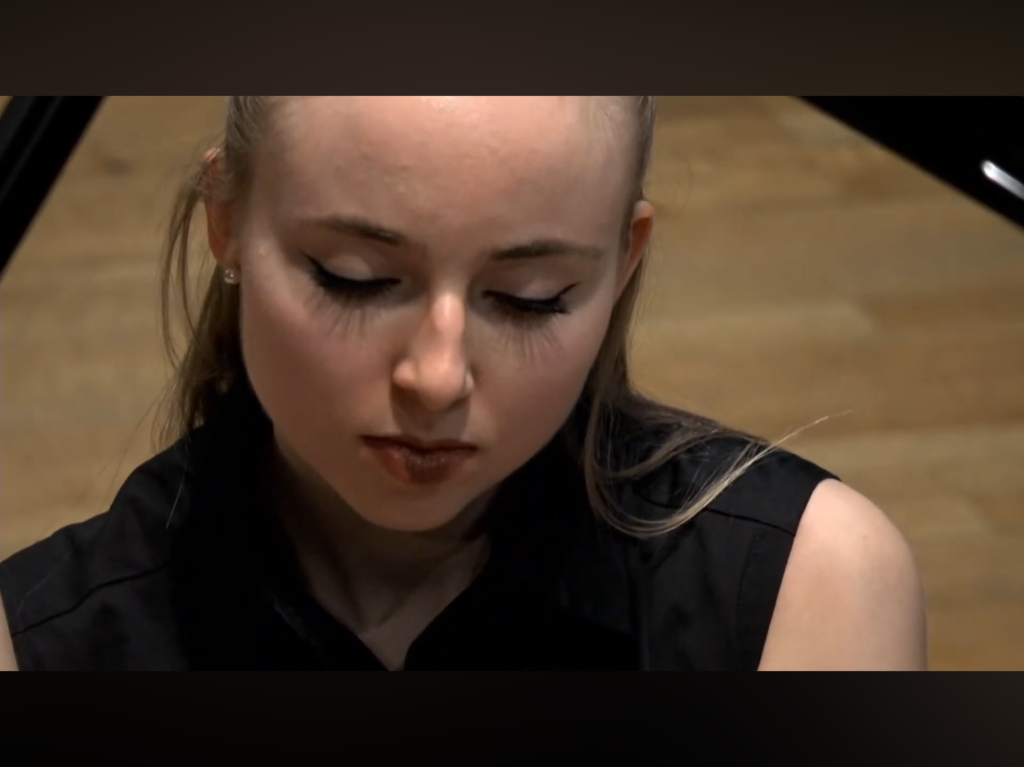
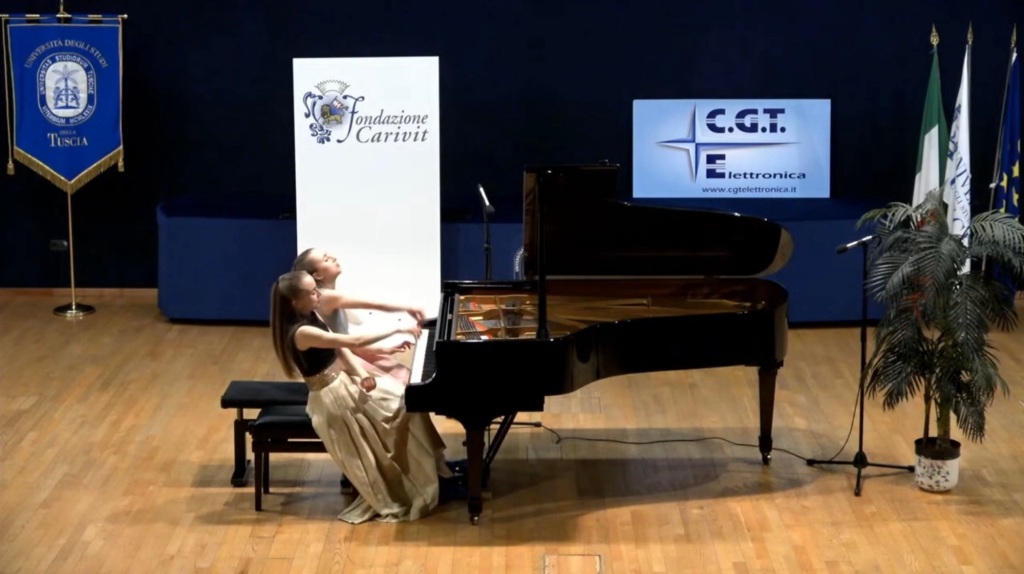
Milda Daunoraite at St Mary’s a joyous journey of beauty and poetry


https://youtube.com/live/1IM8_upIyeg?feature=shared

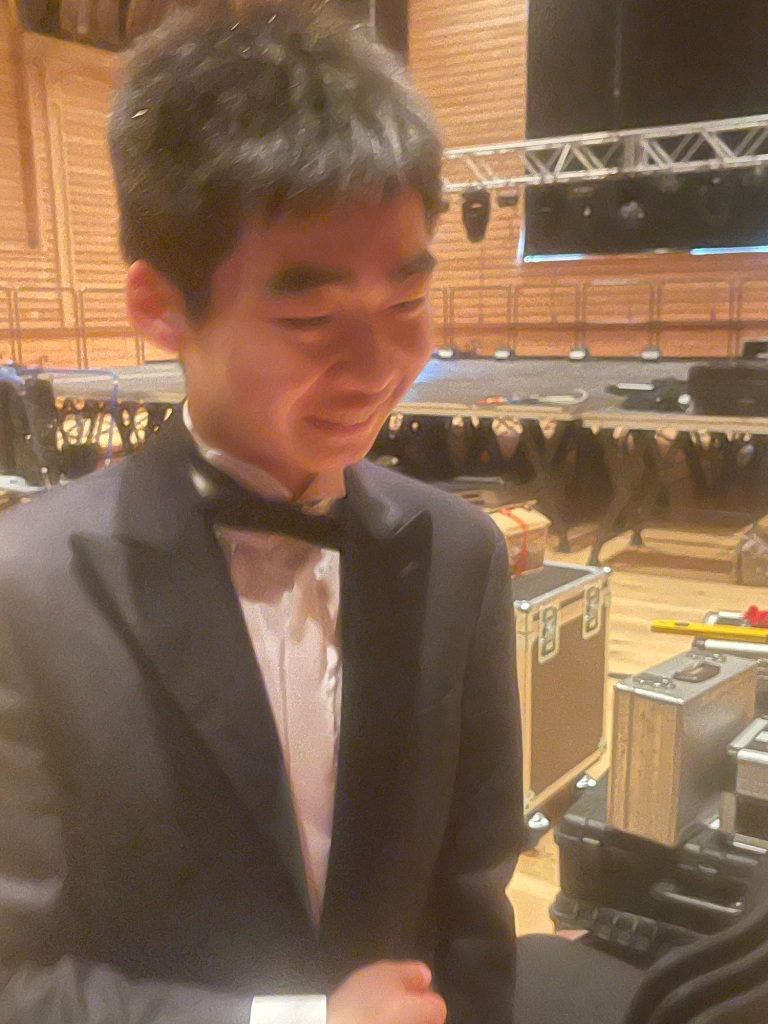
Lovely Milda as Dr Mather says ‘Alive and captivating with her charismatic and charming personality that is what comes across in her playing’.
From an almost too serious Schubert but with ravishing glimpses of paradise that shone through as it did with Chopin’s Fourth Scherzo with brilliant playing of breathtaking beauty and vitality. An all or nothing performance of Liszt’s Dante Sonata had us all on the edge of our seats as demonic octaves were calmed with whispered secrets of sublime beauty.Finally a cat and mouse study by Ligeti that just showed off her brilliant technical command as the wind blew so securely over the keys in her beautiful hands.What is it about these pianists from Lithuania that have a freshness and fluidity of playing that is like a breath of fresh air blowing especially on this winters day in Perivale!

A truly joyous opening to the Schubert Sonata that she played with great rhythmic drive but also with poetic sensibility knowing that this Beethovenian opening would soon dissolve into the most etherial mellifluous sounds before the startling call to arms of the development.Some magical sounds and deeply felt playing of exquisite poetry where Schubert’s whispered asides spoke so deeply to this very sensitive young artist. Always with a radiance of sound whether loud or barely audible there was a fluidity and glow of vibrancy to everything she played. Moments of almost Schumannesque changes of mood were played with great style and character as the music was allowed to speak simply and directly. It was the same ravishing sound that she brought to the ‘Allegretto’ where the beautiful theme that Schubert was to use again in his penultimate sonata was floated on a light staccato accompaniment that Milda played with transcendental control of sound .The capricious ‘Allegro vivace ‘ of the last movement was played with a question and answer of beguiling charm and beauty where Schubert’s inevitable bursting into song was tinged with bitter sweet melancholy.
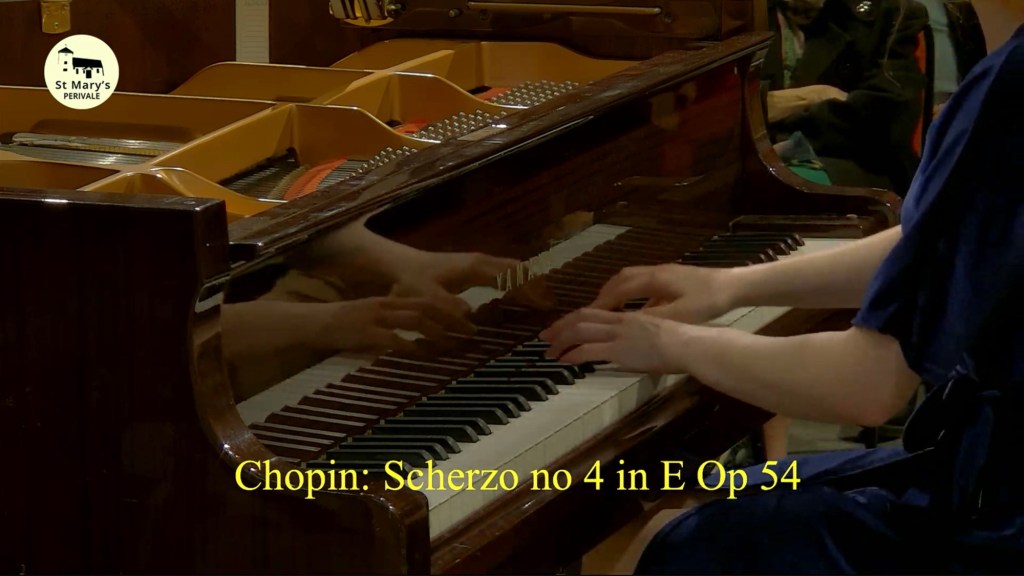
The Chopin Fourth Scherzo demonstrated Milda’s superb technical control with not only brilliantly agile fingers but her whole body that followed the flow of the music with enviable naturalness and simplicity. Feather like precision but limpet like tenacity gave great shape to the fleeting changes of mood that unusually invade Chopin’s works in this final period of his life .The expansive central episode was allowed to unfold on a gentle wave of subtle emotions of ravishing beauty and intoxicating perfumed sweetness. A masterly build up of changing harmonies as Chopin finds his way back to the capricious silf like scherzo, awakening from a momentary apparition of miraculous beauty . Milda played the final pages with aristocratic authority and passionate involvement where the grandiosity of the final joyous outpouring was played out with sumptuous golden sounds of richness and nobility.
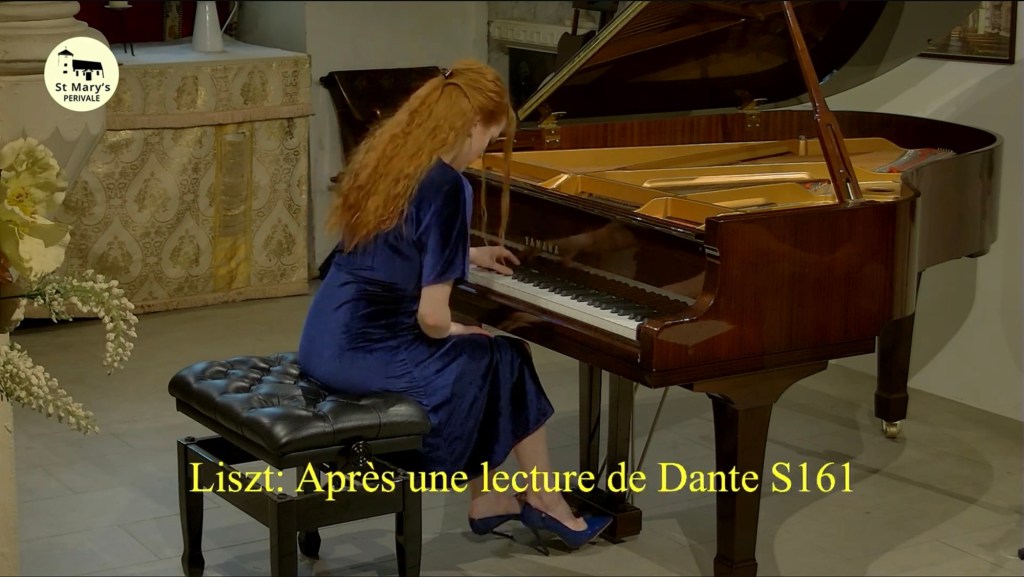
There was a suitably dramatic opening to the Dante Sonata but also a very subtle palette of colours which enabled Milda to open a window on a work that she was to depict so grafically, as barely whispered gasps led us into an underworld of terrifying vibrancy and desperation .Cascades of octaves that were streams of sounds in Milda’s poetic hand – never percussive but full and with a sense of direction as they strode across the keys with fearless abandon.She brought a glowing beauty to the Andante which as Liszt suggests was finding its way to the barely whispered confessions that the composer marks ‘pianississimo dolcissimo con amore’ and indeed could not have found a more sensitive artist to turn his deepest thoughts into sounds. Gradually unwinding like in the Chopin Scherzo after a magical oasis gave way to a drama that was to be played out in Liszt’s case with outpourings of transcendental difficulty, not least the treacherous final leaps that Milda threw off with mastery as she was living the story right to the final anguished chords deep in the underworld of the piano.

I remember Shura Cherkassky pulling out an old BBC copy of a Ligeti Study that he had programmed for the following season .He liked to add a new contemporary work to his repertoire every year and after Rodney Bennet studies and El Salon Mexico by Copland,in the past years,it had fallen to ‘L’escalier diabolique’ the 13th of Ligeti’s eighteen studies.I think Shura chose it for the title and he asked Connie and I to teach it to him whilst holidaying with us in my seaside home in Italy!
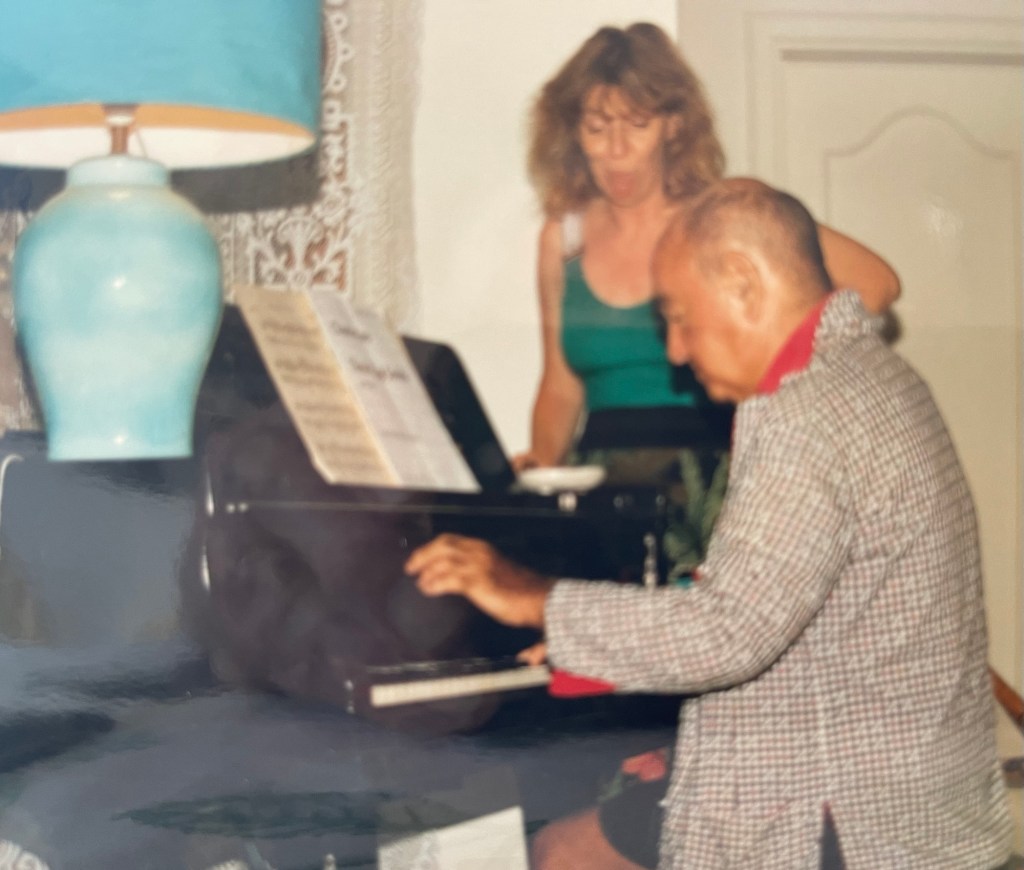
Shura with Constance Channon -Douglass with the Ligeti n.13

Milda had chosen the sixteenth ‘Pour Irina’ with its long drawn out opening that she played with a purity and clarity before her hands took off on their journey of a moving web of sounds .One can almost compare this to the last movement of Chopin’s Funeral March Sonata which was described by Schumann as :”more like a mockery than any sort of music”, Mendelssohn asked for an opinion, simply stated that he ‘abhored it’. Milda played it with the score and was totally involved in the intricacies that she commanded her agile fingers to carve out with rhythmic drive and precision giving the notes a life of their own that was certainly no mockery!
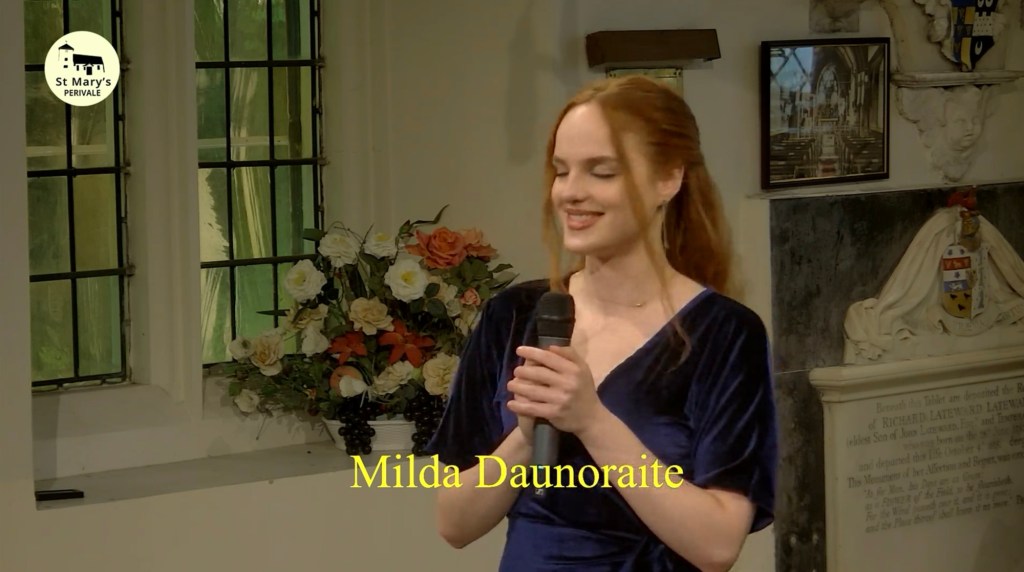
Lithuanian pianist,  Milda Daunoraite , began her piano studies at the age of six. She received her formative education at The Purcell School of Music and is currently studying with Tessa Nicholson at the Royal Academy of Music, on a full fees scholarship, where she is a recipient of the ABRSM Scholarship Award.  She is supported by The Keyboard Charitable Trust, ‘SOS Talents Foundation – Michel Sogny’  and the Mstislav Rostropovich Foundation. 

Milda’s performances have been featured live in forty countries through Mezzo TV, Radio Classique, TV5 Monde and Lithuanian National Television and Radio. In 2018, Milda performed the Fourth Piano Concerto by V. Bacevicius for the Lithuanian National Philharmonic Society with the Latvian National Symphony Orchestra. This concert was broadcast across Europe by Euroradio (EBU). 

She has performed at venues such as Wigmore Hall, the Amsterdam Concertgebouw, Musikhuset Aarhus, the United Nations headquarters in Geneva, at the EMMA World Summit of Nobel Prize Peace Laureates in Warsaw and many others. Milda’s recent performances include a recital in the Laeiszhalle Recital Hall in Hamburg, at the Deal Music & Arts Festival, at the Petworth Festival, Biarritz Piano Festival and at the Palermo Classica Festival. 

Milda won the Purcell School’s Concerto Competition which gave her the opportunity to perform Ravel’s Piano Concerto in G major at the Queen Elizabeth Hall in London.  She also won First Prize in the international V. Krainev Piano Competition in Kharkov, Ukraine; the ‘Jury‘ Prize in the Pianale International Academy & Competition in Germany; and First Prize in the fourth International Piano Competition in Stockholm.

https://christopheraxworthymusiccommentary.com/2023/09/05/milda-daunoraite-at-the-national-liberal-club-sparks-flying-with-refined-piano-playing-of-elegance-and-simplicity/

https://christopheraxworthymusiccommentary.com/2022/10/19/milda-daunoraite-youthful-purity-and-musicianship-triumph-in-florence/


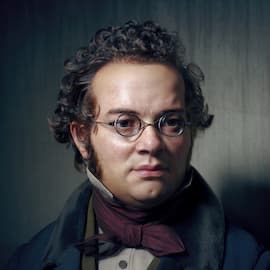
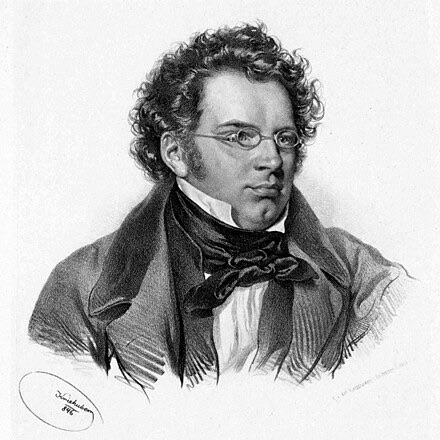
Franz Peter Schubert 31 January 1797 – 19 November 1828
Der Winterreise original manuscript

Franz Schubert’s Piano Sonata in a minor op. post. 164, numbers among his early sonatas written between 1815 and 1819. In many of these pieces, Schubert still struggles with form; the Sonata in a minor from 1817 was a year in which Schubert showed a particular interest in the sonata, writing six piano sonatas, of which two are incomplete. The same year saw the composition of the violin and piano Duo Sonata, the B flat String Trio and some sixty songs. Written in March, the A minor Sonata is the first of the 18l7 sonatas in order of composition. however, is already wonderfully accomplished. In contrast to Schubert’s two later a-minor piano sonatas, the key here does not yet result in a tragic, fatalistic sound. This is also due to the fact that he took every opportunity to brighten the key to the major, or to swerve into neighbouring, friendlier harmonic regions.
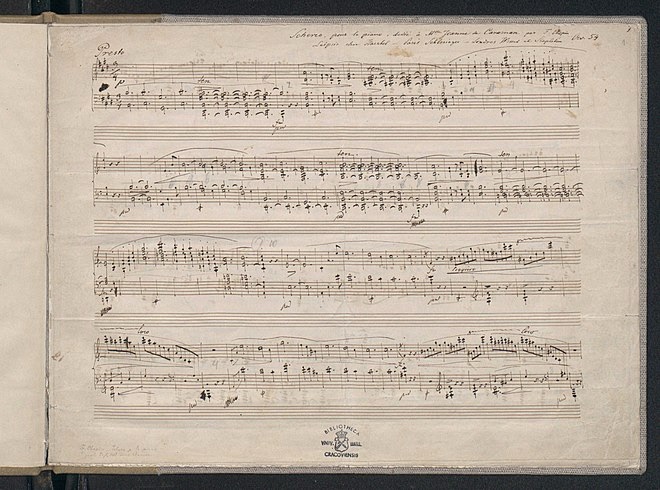

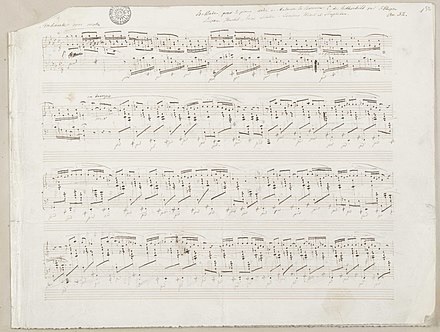
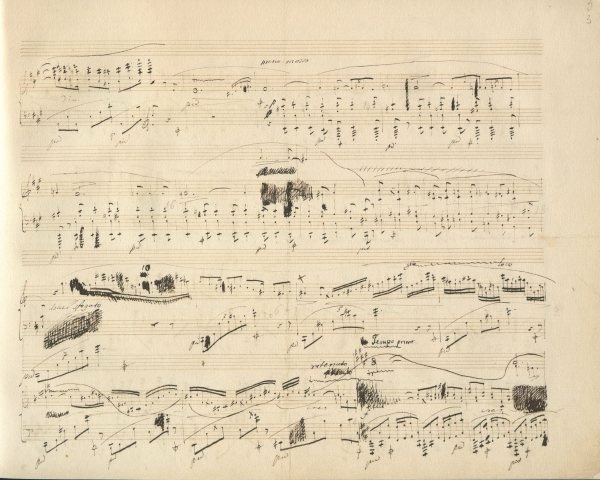
Autograph manuscript of Scherzo No. 4, Op. 54 in E major, 1842–1843, Biblioteka Jagiellonska, Kraków

The Scherzo No. 4, Op. 54, in E major  was composed in 1842 in Nohant and was published in 1843. Unlike the preceding three scherzi (Op. 20, Op. 31, Op. 39) It is one of Chopin’s most elegiac works, and without doubt contains some of the most profound and introspective music the composer ever wrote

It is the only one of Chopin’s four scherzos primarily in a major key and as one critic explains, “When Chopin is at his happiest, most outwardly serene, then, for the pianist, he is at his most treacherous and its mercurial brilliance and whimsy are notoriously hard to control.” It was also a favourite of Saint – Saens

The four Scherzi of Chopin are single-movement  pieces for solo piano, composed between 1833 and 1843. They are often linked to Chopin’s four ballades , composed in roughly the same period; these works are examples of large scale autonomous musical pieces, composed within the classical framework, but surpassing previous expressive and technical limitations. Unlike the classical model, the musical form adopted by Chopin is not characterised by humour or elements of surprise, but by highly charged “gestures of despair and demonic energy”.Commenting on the first scherzo, Schumann wrote: “How is ‘gravity’ to clothe itself if ‘jest’ goes about in dark veils?”


The highly programmatic  themes depict the souls of Hell wailing in anguish

Après une lecture du Dante: Fantasia quasi Sonata (French for After a Reading of Dante: Fantasia quasi Sonata; also known as the Dante Sonata) is a  one movement sonata  written in 1849. It was first published in 1856 as part of the second volume of his Années de pèlerinage  (Years of Pilgrimage).Originally a small piece entitled Fragment after Dante, consisting of two thematically related movements , which Liszt composed in the late 1830s and gave the first public performance in Vienna in November 1839.When he settled in Weimar  in 1849, he revised the work along with others in the volume, and gave it its present title derived from Vitor Hugo’s Victor own work of the same name.


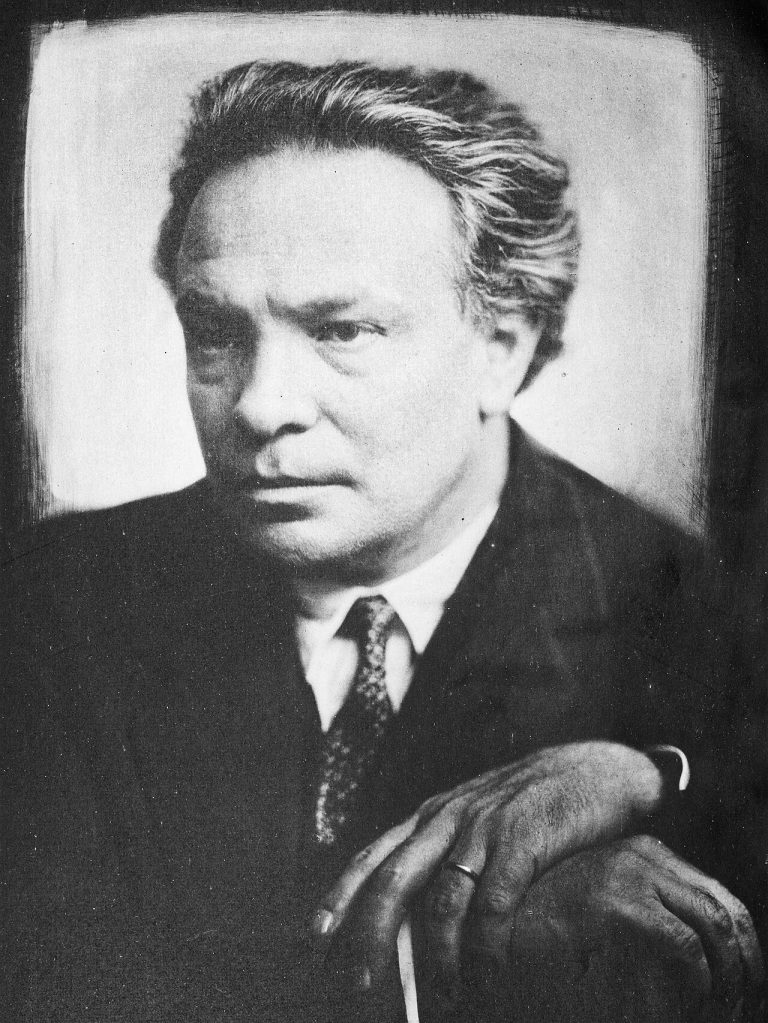
György Sándor Ligeti
28 May 1923 Transylvania Romania 12 June 2006 
Vienna, Austria

The studies by Ligeti were written between 1985 and 2001. Ligeti originally intended to write twelve, in two books, on the model of Debussy’s piano études, but apparently he enjoyed writing them so much that he eventually wrote eighteen, in three books, and would have added more had illness not prevented him.They are indeed works of formidable difficulty, and a mere look at the printed page is enough to make the heart of the stoutest pianist quail. Although they do require the traditional virtuoso techniques involving speed, finger dexterity and strength, perhaps the greatest difficulties are of a different order: the two hands often play nearly independent lines with different rhythms and stresses. Ligeti’s writing exploits the whole range of the piano, including the very highest pitches, and the dynamic indications go from the extremely loud to the extremely quiet. He is also fond of the carrying a figure up to the extreme heights and then starting again in the depths, and of doing both simultaneously. He gave the individual études titles, in various languages, which indicate the character of the pieces. I should add that Ligeti, though he worked out the études at the piano, could not actually play them himself.From 1985 to 2001, Ligeti completed three books of Etudes for piano (Book I, 1985; Book II, 1988–94; Book III, 1995–2001). Comprising eighteen compositions in all, the Études draw from a diverse range of sources, including gamelan,African polyrhythms Béla Bartók, Conlon Nancarrow, Thelonious Monk and Bill Evans. Pour Irina is the 16th Study from the third book .

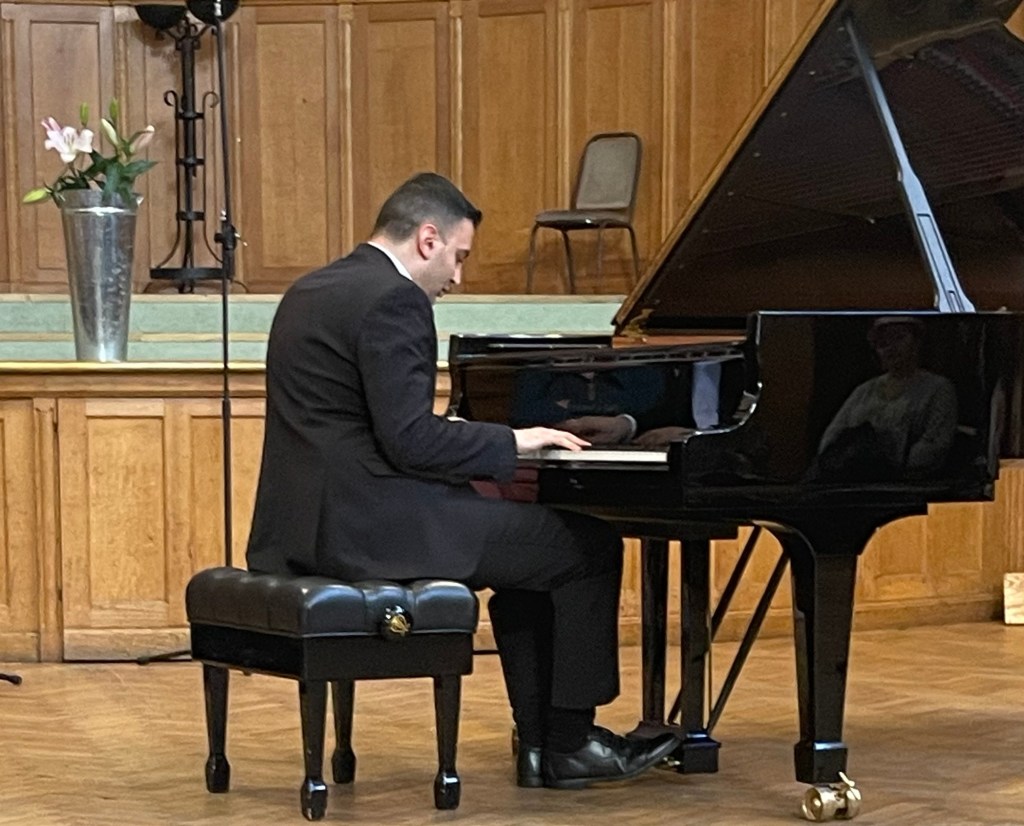
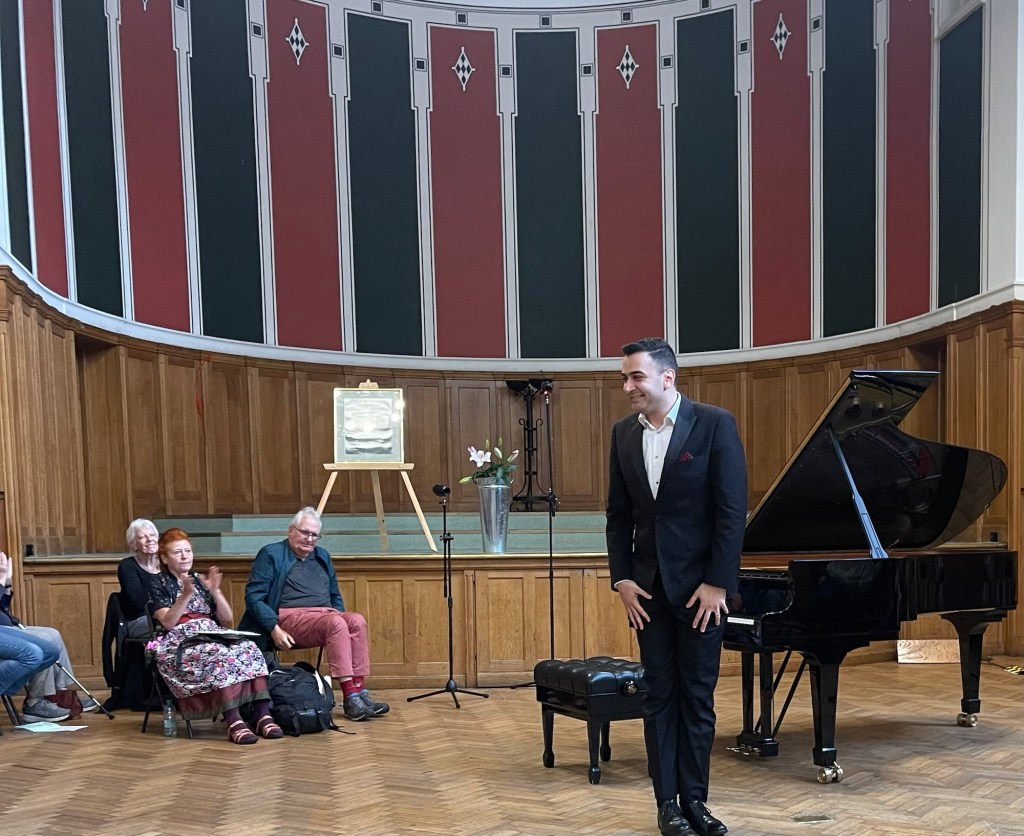
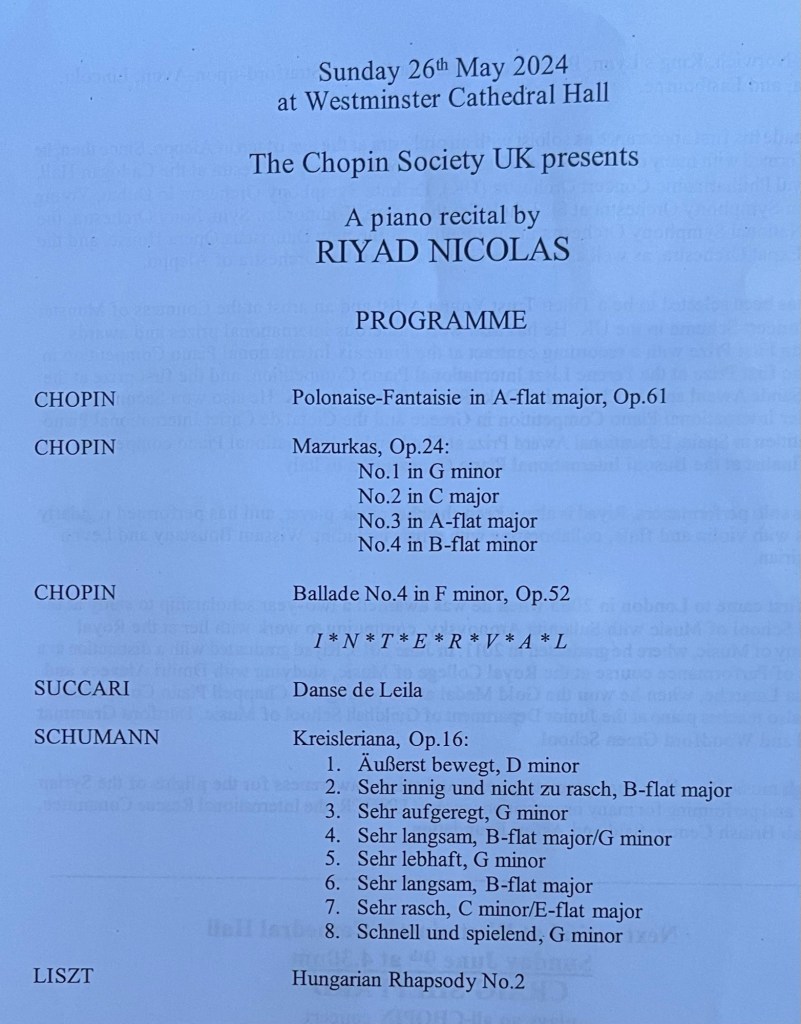
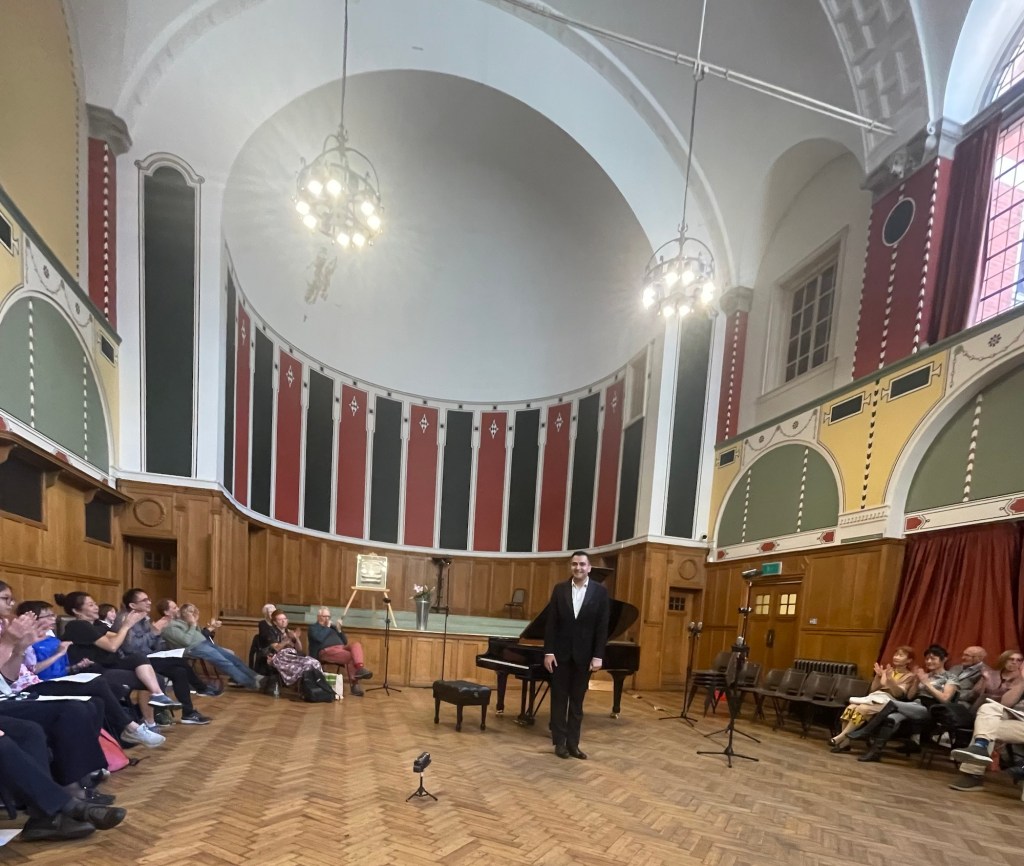
Riyad Nicolas at the Chopin Society A gentle giant with velvet gloves creating playing of rare beauty

  • Chopin—Polonaise Fantaisie Op.61
  • Chopin—Mazurkas Op.24: Nos 1 & 4
  • Chopin—Ballade No.4 Op.52
  • Schumann—Kreisleriana Op.16
  • Liszt—Hungarian Dance No.2

Wonderful to see this giant of a man play with the velvet gloves of an Angel
Helped by Barenboim to flee Syria when he auditioned as a youthful pianist in the interval of a conducting rehearsal .He could not provide the music as in Syria the scores were not available but he sat at the piano and played Beethoven’s penultimate Sonata that he had learnt by ear from a recording much to the astonishment of Barenboim .
Studies followed with the indomitable Sulamita Aronovsky and Dmitri Alexeev renowned winner of the Gold medal in Leeds over Uchida and Schiff.
Riyad has turned rags into riches and is now a Professor at the junior Guildhall school of Music and Drama with a career that has taken him around the world.
It is on ‘wings of song’ with his passionate love of music that has saved Riyad from an inevitable life of suffering in his homeland
It was this love that shone through all he did today for Lady Rose Cholmondeley and her ‘friends’ of the Chopin Society.
Playing of rare beauty often played phrase by phrase in astonished gasps rather than in a big expansive breath.
Chopin,Schumann and Liszt were on the menu but it was the Danse de Leila by a compatriot that ignited his soul and with great expansive lines he drew the same poignant feeling for his homeland that Chopin was to draw in his Mazurkas .
‘Canons covered in flowers’ exclaimed Schumann how right can you be! ‘Hats off Gentlemen.A Genius!’

Riyad did not know but as he opened his recital with Chopin’s Polonaise – Fantasie I was reminded of the very first work I heard Vlado Perlemuter play and whose 120th birthday it would have been today. I arrived at the last minute from London in 1968 as a ‘fresher’ at the Royal Academy to hear and study in Dartington – the famous summer school run by Sir Willian Glock and the valiant and ever elegant John Amis. I will never forget the sound that Vlado made in those beautiful surroundings- rich and full but never hard or ungrateful- sometimes even nasal as he would play loudly with the soft pedal down to get that very french sound that could be so much part of his french heritage from Cortot. I was later to learn that this was weight and as Vlado later showed me in lessons in his home in Rue Ampère in Paris just what it meant never to leave the keys. I still have my score of the Fourth Ballade with three or four fingerings on the same note! I recently saw a score of Clifford Curzon with the same multicoloured fingerings on every note.These were artists looking for the perfect legato to deny the piano its percussive birthright and persuade us that this black box of hammers and strings was as multicoloured as any orchestra.

Riyad showed us today what it means to truly love the piano and to seek out the beauty from every phrase. Playing with arms strangely tied closely to his body – sink or swim?! The greatest pianists I have noted are those that look as though they are swimming in sound with a natural seemingly relaxed continual circular movement. In spite of this and because of his warm artistic soul he could produce some exquisite sounds of purity and ravishing beauty. His great love of the music meant that he tended to think like Grieg in short beautiful modules that linked from one to another but did not always give a great architectural arch to the whole work.The Polonaise was exactly this as he played with beauty ,intelligence and aristocratic good taste but in a strange way it was as though we were looking at the work through a magnifying glass from within and not looking on from afar at a great edifice of monumental proportions.

The four Mazurkas op 24 were played with ravishing sound and an innate sense of dance in gasps of heart rending nostalgia .The beautiful ending of the first led into the beguiling rhythmic drive of the second.’Con anima’ Chopin writes over the third and this is exactly what Riyad did so beautifully as he revealed the very soul of a young man a long way from his homeland but was still so much part of his being.The fourth is truly a tone poem of beguiling beauty with tantalising rhythms and deeply felt mellifluous outpourings and was the ideal way to lead into one of Chopin’s greatest compositions.

It was the opening of the Fourth Ballade that revealed Riyad’s true artistry and poetic soul.This etherial opening repeated half way through the Ballade and is where Perlemuter wrote in my score ‘avec un sentiment de regret’. A work that is a picture painted in sound and that Riyad played with architectural shape and real understanding. A technical control that passed unnoticed as he allowed the music to unfold with the natural unadorned simplicity of a monumental composition of a Genius who had created a work to take it’s place with the Liszt Sonata and the Schumann Fantasie as the pinnacles of the ‘ Romantic’ era.

After the interval Riyad played a piece by Dia Succari who was born in Aleppo, Syria, in 1938 and died in 2010,a composer, teacher and conductor in Paris from 1969 until his death in2010. He melded the melodies and rhythms of Arabic music in a Classical language influenced by composers such as Debussy, Ravel and Faure.Playing the Danse de Leila with heartfelt passion and long phrases beautifully shaped with a kaleidoscopic sense of colour and fantasy.

Schumann’s ever elusive eight scenes that make up ‘Kreisleriana’ were played with great style, with each piece linked to the other in a whole that Riyad managed to convey with musicianship and poetic insight. From the waves of sound of the first to the long beautifully sung simple legato lines of the second with it’s interruptions of two intermezzi ;the first of spikey dynamic drive and the second of expansive romantic abandon. He brought a romantic fervour to the sumptuous melodic weavings of the third contrasting with it’s glorious final outpouring of rhythmic drive. There was a subtle beauty to the ‘ sehr langsam’ of the fourth where the ‘bewegter’ took flight on a magic carpet of simple beauty. The impish good humour of the fifth burst into a passionate romantic fervour before the whispered confessions of the sixth. The seventh was thrown of with great technical command where even the treacherous left hand ,that is usually split between the hands,was fearlessly played as Schumann had actually written it! There was a beautiful ending to this movement where the music disintegrates before our very eyes and the final haunting whispers of the last are heard in the distance .Bursting into ever greater outbursts of romantic fervour the relentless opening snail like percourse ended with whispered asides deep in the heart of the piano.

Liszt’s most famous Hungarian Rhapsody was played with subtle colouring and the dynamic drive and virtuosity that brought this usually staid public in Westminster Hall to their feet. An all or nothing performance but always from an artist who has such love in his velvet clad hands.

An encore – a Rubinstein favourite – the waltz op 64 n.2 was Riyad’s way of thanking an enthusiastic audience for allowing him to show us what it means to make love not war!

Riyad Nicolas at St Mary’s Refined beauty in the name of peace

P.S. A note from Riyad that I am glad to include and correct a few details in the above :

‘Thank you so much for your kind words and detailed review! I greatly appreciate your highlights on my love and passion for music, and I cannot thank you enough. I will also share it shortly. I hope it is okay for me to share a few points from the review: 1) The Arabic piece I performed was written by Dia Succari, not the violinist Nejmi Al Succari. 2) I love playing to Barenboim from time to time, but he did not help me fly from Syria to London initially. 3) We had music scores in Syria. Warmest …’

I had confused Riyad with another remarkable Syrian pianist who had played for the Keyboard Trust some time ago and who had in fact played Brahms 2nd Piano Concerto to Barenboim never having had access to the score.Remarkable lives of course of great suffering and which music could very well be the common denominator that could bring peace instead of war. Edward Said and Daniel Barenboim have created The West–Eastern Divan Orchestra which is based in Seville, Spain, and consists of musicians from countries across the Spanish world and the Middle East—of Egyptian, Iranian, Israeli, Jordanian, Lebanese, Palestinian, Syrian, and Hispanic background in an attempt to find the common denominator of music as a way of peacefully communicating with each other.

https://en.wikipedia.org/wiki/Michael_Axworthy
Michael George Andrew Axworthy FRSA, FRAS was a British academic, author, and commentator. He was the head of the Iran section at the British Foreign & Commonwealth Office between 1998 and 2000.
Born: 26 September 1962, Woking
Died: 16 March 2019 (age 56 years), Rome,Italy
Education: PeterhouseThe King’s School Chester

My late cousin Michael Axworthy was an expert in Persian history his father having been the Shah’s banker and he as a little boy having been so influenced by the experience. They managed to escape and Michael went to Peterhouse College,Cambridge and became an expert on the history of that part of the world .He wrote five books and created a movement dedicated to trying to find a common denominator within the very roots of the Far Eastern culture that could be the starting point for drawing factions together that are unable to comunicate with each other because of deep inner grievances. Make love not war is a very simplistic motto for something engraved so deeply within all the peoples so intensely involved.


Dia SUCCARI was born in Aleppo, Syria, in 1938 and died in 2010. He studied music with his father and with Michael Boricenko before going on to the Conservatoire National Supérieur de Musique de Paris in 1951 (13 years old) where he studied theory with Henri Challan, Noël Gallon,Marcel Bitsch and Jeanine Rueff and composition with Tony Aubin and Olivier Messiaen and conducting with Robert Blot and Manuel Rosenthal.There he obtained first prizes (Harmony, Conterpoint, Fugue and Composition classes). He was an active composer, occasionally conductor and teacher in Paris since 1969.
He was professor of theory at the Conservatoire National de Région de Paris and at the Université Paris Sorbonne, and taugh music training at the Conservatoire de Suresnes.
His musical compositions were various: instrumental, lyrical, solo, chamber and orchestral.
He also wrote didactic books about theory (solfege, harmony,counterpoint..).
He studied in depth the musical Maquams and their rhythmic versatility which is quite recognizable in his compositions written in a classical language, without simplify or modify traditional arabic music but polishing it with a western veneer influenced by great French composers such as Debussy, Ravel, Fauré and others. The outcome called Dia Succari, neither oriental nor european but the both.
He opened new horizons in Arabic music. Among his essential works:
• Syrian suite for piano (Jobert Ed.)
• The night of destiny for piano (Jobert Ed.)
• Album from folklore, violin and piano (Fertile Plaine Ed.)
• Yakza for oriental instruments, voices and orchestra
• Forget what you have learnt for speaker, voices and orchestra
• Sin flûte and violin (Billaudot Ed.)
• Ur Nina, song, clarinet and piano (Fertile Plaine Ed.)
• Trio for piano,violin and cello
• Baal and Anat for stings
• Silex’s sparkle for chamber orchestra
• Forgotten splendours for orchestra
• When the morning reveals it lights for violon and orchestra

Riyad is very talented and has a very high level of musical sensitivity. He reached an impressive level of musicianship which speaks a dedication to music that bodes well for his career” Maestro Daniel Barenboim

Syrian British Pianist, Riyad Nicolas was born in Aleppo, Syria, in 1989, and has already established himself as a leading figure of his generation on the international performing circuit. He has been complimented by such musicians as Daniel Barenboim, Vladimir Ashkenazy and Mitsuko Uchida .Riyad has given solo recitals in many prestigious venues at the UK, including Royal Albert Hall, Cadogan Hall, Wigmore Hall, Barbican, St. Martin-in-the-Fields, St. James’s Piccadilly, and Leighton House in London, and Bridgwater Hall and Staller Hall in Manchester. Concert performances have also taken him to USA, including a debut at the Kennedy Center in Washington and Chicago Cultural Center (Dame Myra Hess series), Yehudi Menuhin Forum in Switzerland, plus other performing venues in France, Spain, Germany, Holland, Malta, the Gulf, Lebanon and Syria.In the UK, Riyad is regularly invited to give recitals hosted by the Beethoven Piano Society of Europe and the Chopin Society UK, and performed extensively as solo pianist for over 80 music societies in the UK. He has also been invited to performing numerous UK musical festivals such as Harrogate, Norfolk-Norwich, King’s Lynn, Brighton, Devon, Darlington, Stratford-upon-Avon, Lincoln, Crediton, and Eastbourne.Riyad made his first appearance as soloist with an orchestra at the age of ten in Aleppo. Since then, he has performed with many orchestras including the London Chamber Orchestra at the Cadogan Hall, The Royal Philharmonic Concert Orchestra (UK), Emirate Symphony Orchestra in Dubai, Young Musician Symphony Orchestra at St. John’s Smith Square, Todmorden Symphony Orchestra, the Syrian National Symphony Orchestra at the opening of the new Damascus Opera House, and the Syrian Expat Orchestra, as well as with the Gomidas Chamber Orchestra of Aleppo.Riyad has been selected to be a Tillett Trust Young Artist and an artist at the Countess of Munster Trust Concert Scheme in the UK. He has also won numerous international prizes and awards including First Prize with a recording contract at the Francaix International Piano Competition in Paris, the first Prize at the Ferenc Liszt International Piano Competition, and the first prize at the Norah Sande Award and the Christopher Duke Recital Prize in the UK. He also won Second Prize at the Seiler International Piano Competition in Greece and the Ciutat de Carlet International Piano Competition in Spain, Educational Award Prize at The London International Piano competition and was a finalist at the Busoni International Piano Competition in Italy.Besides solo performances, Riyad is also a keen chamber music player, and has performed regularly in duos with violin and flute, collaborating with artists including the flautist Wissam Boustany and the Violinist Levon Chilingirian.Riyad first came to London in 2005 when he was awarded a two-year scholarship to study at the Purcell School of Music with Sulamita Aronovsky, continuing to work with her at the Royal Academy of Music, where he graduated in 2011. In June 2015, Riyad graduated with a distinction in a Master of Performance course at the Royal College of Music, studying with Dmitri Alexeev and Vanessa Latarche, when he won the Gold Medal at the prestigious Chappell Piano Competition. Riyad also teaches piano at the Junior Department of Guildhall School of Music, Dartford Grammar School and Woodford Green School. Through music Riyad has been promoting peace and raising awareness for the plights of the Syrian people and performing for many organizations such as UNHCR, the International Rescue Committee, the Arab British Centre, Said and Asfari Foundation. Riyad Nicolas is one of the most exciting young artists to emerge from the Middle East.

Our piano, a fine 2015 Hamburg Steinway Model B Grand, chosen for us by Ulrich Gerhartz, Steinway’s Head of Artist & Concert Services, is maintained by Steinways and tuned by them immediately before each performance.

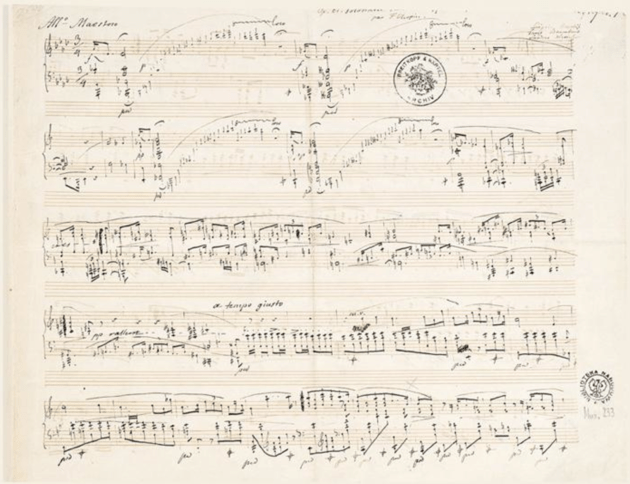
Autograph manuscript, Bodleian Library ,1842

The Ballade No. 4 in F minor, Op. 52 was completed in 1842 in Paris and is considered not only one of Chopin’s masterpieces, but one of the masterpieces of 19th-century piano music.john Ogdon described it as “ the most exalted, intense and sublimely powerful of all Chopin’s compositions… It is unbelievable that it lasts only twelve minutes, for it contains the experience of a lifetime.”

Dedicated to Baroness Rothschild ,wife of Nathaniel de Rothschild,who had invited Chopin to play in her Parisian residence, where she introduced him to the aristocracy and nobility.

Alfred Cortot claims that the inspiration for this ballade is Adam Mickiewicz’s poem The Three Budrys, which tells of three brothers sent away by their father to seek treasures, and the story of their return with three Polish brides.

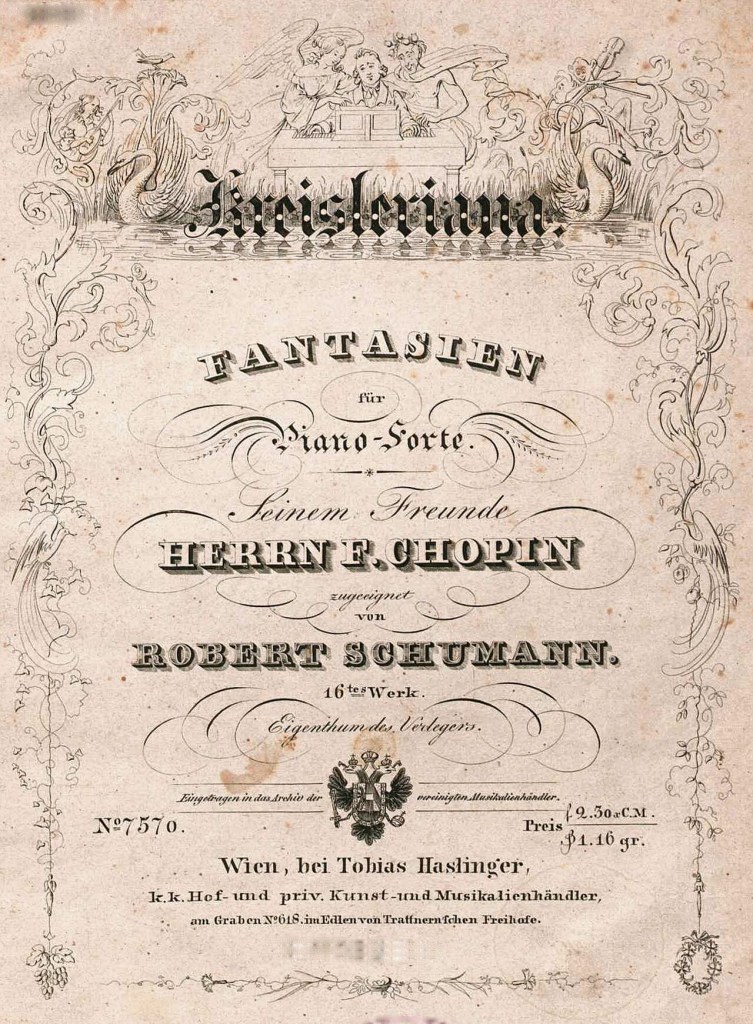
Kreisleriana, op 16 is in eight movements subtitled Phantasien für das Pianoforte. Schumann claimed to have written it in only four days in April 1838 and a revised version appeared in 1850. The work was dedicated to Chopin , but when a copy was sent to the Polish composer, “he commented favorably only on the design of the title page”.

Kreisleriana is a very dramatic work and is viewed by some critics as one of Schumann’s finest compositions.In 1839, soon after publishing it, Schumann called it in a letter “my favourite work,” remarking that “The title conveys nothing to any but Germans. Johannes Kreisler is one of E.T.A.Hoffmann’s creations, an eccentric, wild, and witty conductor.”

Like the kaleidoscopic Kreisler, each number has multiple contrasting sections, resembling the imaginary musician’s manic depression , and recalling Schumann’s own “Florestan” and “Eusebius,” the two characters Schumann used to indicate his own contrasting impulsive and dreamy sides. Johannes Kreisler appears in several books by Hoffmann, including Kater Murray  and most notably in the Kreisleriana section of Fantasiestücke in Callots Manier, published in 1814.

In a letter to his wife Clara , Schumann reveals that she has figured largely in the composition of Kreisleriana:

I’m overflowing with music and beautiful melodies now – imagine, since my last letter I’ve finished another whole notebook of new pieces. I intend to call it Kreisleriana. You and one of your ideas play the main role in it, and I want to dedicate it to you – yes, to you and nobody else – and then you will smile so sweetly when you discover yourself in it.

  1. Äußerst bewegt (Extremely animated), 
  2. Sehr innig und nicht zu rasch (Very inwardly and not too quickly), This movement in ABACA form, with its lyrical main theme includes two contrasting intermezzi . In his 1850 edition, Schumann extended the first reprise  of the theme by twenty measures in order to repeat it in full.
  3. Sehr aufgeregt (Very agitated), 
  4. Sehr langsam (Very slowly),
  5. Sehr lebhaft (Very lively),
  6. Sehr langsam (Very slowly),
  7. Sehr rasch (Very fast), 
  8. Schnell und spielend (Fast and playful), G minor. Schumann used material from this movement in the fourth movement of his first symphony

The Polonaise-fantaisie op 61 Is dedicated to Mme A. Veyret,and was written and published in 1846 in late autumn: in Paris, London and Leipzig. Its shape and its style caused much consternation. It was quite some time before listeners could come to terms with it and appreciate that ‘the piano speaks here in a language not previously known’.Liszt’s opinion of the work, expressed in his controversial monograph from 1852 did a great deal of damage, stating that the Polonaise-Fantasy was dominated by ‘an elegiac tristesse ….punctuated by startled movements, melancholic smiles, unexpected jolts, pauses full of tremors, like those felt by somebody caught in an ambush, surrounded on all sides…’. Frederick Niecks’s stated that the Polonaise-Fantasy ‘stands, on account of its pathological contents, outside the sphere of art’.It was slow to gain favour with musicians, due to its harmonic complexity and intricate form.One of the first critics to speak positively of the work, writing in 1947 stated that it “works on the hearer’s imagination with a power of suggestion equaled only by the F minor Fantasy op 49 or the fourth Ballade op 52”, Justice was rendered to it as a wonderful poetical vision expressed in the language of a grand pianistic poem by great pianists such as Horowitz, Rubinstein ,Cortot and Richter.Arthur Hedley, writes about the ‘spirit that breathes’ in Chopin’s polonaises: ‘pride in the past, lamentation for the present, hope for the future’.

Hungarian Rhapsody No. 2 in C-sharp minor, S 244/2 is the second in a set of 19 Hungarian Rhapsodies by Liszt ,published in 1851, and is by far the most famous of the set.

Franz Liszt was strongly influenced by the music heard in his youth, particularly Hungarian folk music, with its unique gypsy scale , rhythmic spontaneity and direct, seductive expression. These elements would eventually play a significant role in Liszt’s compositions. Although this prolific composer’s works are highly varied in style, a relatively large part of his output is nationalistic in character, the Hungarian Rhapsodies being an ideal example.

Composed in 1847 and dedicated to Count Laszlo Teleki Hungarian Rhapsody No. 2 was first published as a piano solo in 1851 by Bartholf Senufo .Its immediate success and popularity on the concert stage led to an orchestrated version, arranged (together with five other rhapsodies) in 1857–1860 by the composer in collaboration with Franz Doppler , and published by Schuberth in 1874–1875. In addition to the orchestral version, the composer arranged a piano duet version in 1874, published by Schuberth the following year.

Offering an outstanding contrast to the serious and dramatic lassan, the following friska holds enormous appeal for audiences, with its simple alternating tonic and dominant harmonization, its energetic, toe-tapping rhythms, and breathtaking “pianistics”.

Most unusual in this composition is the composer’s invitation for the performer to perform a cadenza , although most pianists choose to decline the invitation.Rachmaninov wrote a famous cadenza for his interpretation. Liszt himself wrote several cadenzas for his pupils’ performances of the piece,but they were rarely performed.Other pianists have arranged their own versions of the Rhapsody with changes beyond that of simply adding a cadenza, most notably Horowitz  in 1953.


Vladislas “Vlado” Perlemuter (26 May 1904 – 4 September 2002) was a Lithuanian-born French pianist and teacher. Vlado Perlemuter.
https://christopheraxworthymusiccommentary.com/2023/12/05/ileana-and-joan-3rd-december-2023/

A friend ,Antonio Lizzi , sent me this CD that was signed after one of Vlado’s many concerts in Rome for my Euromusica Series .He reminded me that today would have been Vlado’s 120th birthday

https://christopheraxworthymusiccommentary.com/2023/09/20/andrzej-wiercinski-at-hatchlands-the-cobbe-collection-trust-a-great-pianist-on-a-wondrous-voyage-of-discovery/

Andrzej Wiercinski at La Mortella Ischia The William Walton Foundation – Refined artistry and musical intelligence in Paradise

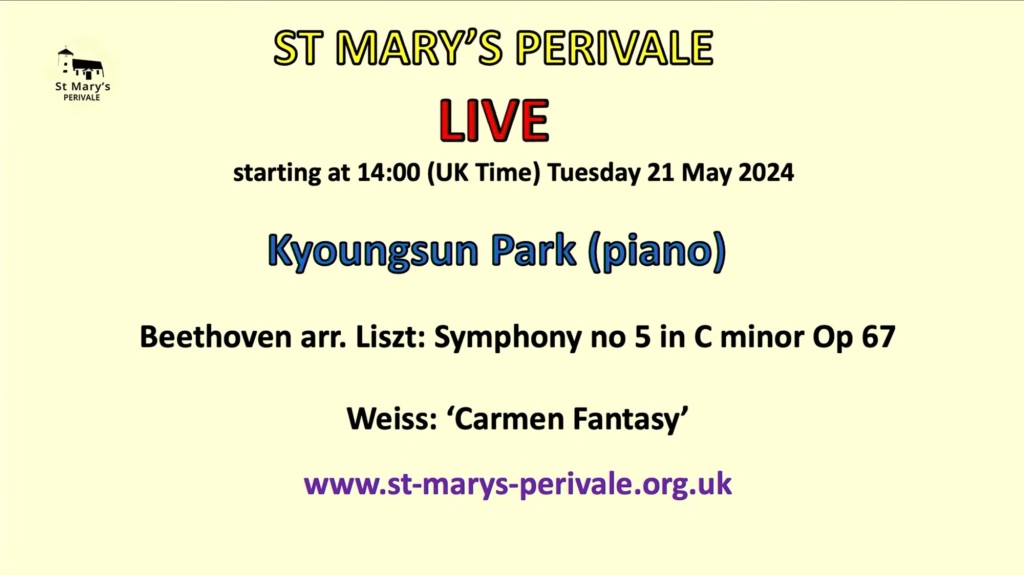
Kyoungsun Park at St Mary’s scaling Olympian heights with the fearless abandon of virtuosity and intelligence.

https://youtube.com/live/T3oODF_-g_E?feature=shared

Cover of the symphony, with the dedication to Prince j.F. M. Lobkowitz and Count Rasumovsky
  1. Allegro con brio
  2. Andante con moto
  3. Scherzo :Allegro
  4. Allegro – Presto

Some extraordinary playing of great clarity and dynamic drive .There were enormous sonorities too from this young man’s well oiled fingers .But there was also great beauty as he shaped the Andante with simple beauty and a sense of balance that allowed all the orchestral instruments to be heard so clearly . A tour de force of transcendental piano playing that was astonishing for his musical intelligence and architectural understanding quite apart from his fearless breathtaking piano playing .

Beethoven Symphonies S.464, are a set of nine transcriptions  for solo piano by Franz Liszt of Beethoven’s 9 Symphonies and are among the most technically demanding piano music ever written.By 1837, Liszt appears to have completed the transcriptions of the fifth,sixth and seventh symphonies , of which the fifth and sixth were published by Breitkopf & Hartel and the seventh by Tobias Haslinger .Liszt was paid 8 francs  per page by Breitkopf & Härtel, who first requested two symphonies to be transcribed. During his 1840 travels in Europe he might have given the transcribed symphonies some publicity by playing them at his concerts.With three symphonies transcribed, Liszt set aside the work for another 23 years. It was not until 1863 that Breitkopf & Härtel suggested to Liszt that he transcribe the complete set for a future publication. For this work, Liszt recycled his previous transcriptions by simplifying passages, stating that “the more intimately acquainted one becomes with Beethoven, the more one clings to certain singularities and finds that even insignificant details are not without their value”. He would note down the names of the orchestral instruments for the pianist to imitate, and also add pedal marks and fingerings for amateurs and sight readers.The full set of transcriptions were finally published in 1865 and dedicated to Hans von Bulow .The original publication of the fifth and sixth symphonies had been dedicated to the painter and amateur violinist Jean-Auguste-Dominique Ingres

Beethoven La Chapelle offers an Ode to Joy


Franz Liszt  in 1884 – twenty years after his completion of the symphony transcriptions.

‘I love Liszt’s operatic paraphrases and I was surprised to see that he never wrote a fantasy on Bizet’s Carmen. Carmen was first performed in 1875, and Liszt was still alive and writing at that time. Did he simply neglect to write a fantasy on it? I would have liked to see how he would work the fantastic themes…’ Busoni on the other hand ‘It was of no concern to him that opera fantasies had long fallen out of fashion when he wrote his sixth and final sonatina, “Kammer-Fantasie über Carmen,” in 1920.’Fantasie after Bizet’s opera Carmen, composed in 1907 by Josef Weiss, who was one of the pupils of Franz Liszt.

These were some of the comments I found in trying to understand why Liszt had never written a paraphrase or transcription of one of the most famous operas of the day .Maybe Liszt by then had moved on from his virtuoso days and was looking more into the future and the sounds that he so prophetically could foresee.Sounds that were to be continued by his pupil Busoni who did actually write a fantasy on Bizet’s Carmen.Busoni starting at the other end of the opera from Weiss where the difference between Weiss and Busoni is the difference between a virtuoso pianist and a genius.It was so interesting to research about Weiss and also listening to his Carmen Fantasy today to be able to realise what an inspiration this had obviously been to Horowitz whose performance of his own Carmen fantasy has passed into legend.Kyoungsun played it with breathtaking virtuosity and fearless abandon scaling the heights of this Olympian work.

Kyoungsun is much more than just a note spinner as he also showed with his very delicate and ravishingly beautiful performance of Tchaikowsky’s month of May from ‘The Seasons’.

Hats off to Perivale for allowing us to hear such wizardry from this as yet unknown young musician.

Kyoungsun Park’s musical voyage commenced at Seoul National University, laying the foundation for his future brilliance. Seeking further artistic refinement, he pursued advanced studies at eminent institutions such as the Royal College of Music in London, Hochschule fur Musik und Theater München and Universität der Künste Berlin. Kyoungsun’s talent has garnered widespread recognition, with a string of notable achievements. At the Horowitz International Piano Competition Kyiv-Geneva, he claimed the 3rd Prize and Horowitz Prize. The Artur Schnabel Competition awarded him the 1st Prize, while the Munich Gasteig Music Prize honored him with both the 1st Prize and the Audience Prize. Other triumphs include the Isang Yun International Music Competition (2nd Prize), the Singapore International Piano Competition (2nd Prize), and the Windsor International Piano Competition (1st Prize).His musical uniqueness lies not only in interpreting existing works in new ways but also in his pioneering approach to exploring and interpreting new compositions. Furthermore, he established his musical identity through arranging and composing cadenzas, solidifying his artistry. Kyoungsun made his concerto debut with the Seoul National University Symphony Orchestra in the Concert Hall of the Seoul Arts Center, performing his own jazz-inspired cadenza. He has further showcased his prowess as a soloist with the Orchester de la Suisse Romande, the Royal Philharmonic Orchestra, the Mihail Jora Philharmonic Orchestra. In 2021, Kyoungsun Park achieved a significant milestone with the release of “12 Hymn Suites”. This recording showcases not only his technical prowess but also his interpretive depth and commitment to musical expression.

His highly individual recording of Liszt 12th Rhapsody

Josef Weiss (5 November 1864 – 1945) was a Hungarian composer and pianist .Born in Kosice he was the son of Hungarian Jewish parents Emil and Charlotte Weiss. A child prodigy, he began his career as a concert pianist at the age of 13.Like his brother, the composer Henri Bereny, he was a pupil of Liszt  at the Budapest Conservatory He then studied music composition at the Vienna Conservatory where one of his classmates and friends was Leos Janacek.After this he studied piano in Germany with Moritz Moszkowski. He began his career as a concert pianist in 1877 at the age of 13. He performed in concert halls internationally through 1924, and was particularly admired for his performances of the works of  Brahms,Chopin and Liszt the latter of whom was his teacher at the Budapest Academy. Weiss’s reputation as a pianist was marred by personal issues .Dohnanyi lamented that Weiss’s inability to control nervousness was a detriment to his playing. He considered Weiss the “greatest pianist in the world” when he was playing in low pressure concerts, but noted that in high pressure situations Weiss’s nerves made his playing “exaggerated and distorted”.In 1914 Weiss joined the faculty of the Stern Conservatory in Berlin. From 1920 to 1924 he toured widely as a concert pianist, appearing in concerts in Paris, Chicago, London, Liepzig, Budapest, Vienna, and New York City among other locations while maintaining a residence in Berlin.

https://youtube.com/watch?v=7fpp0JKOlFM&feature=shared

And a live recording of part of his Carmen Fantasy

https://youtube.com/watch?v=DQ9E16yR9hA&feature=shared

With the rise of Nazi Germany Weiss fled Berlin in 1936 and made his way to the city of Kosice. Unable to take much with him beyond what he could carry in a suitcase, he had little resources and was homeless. He had a nomadic existence over the next few years, spending time first in Italy and then in Switzerland before returning to Hungary in 1939 where he settled in Budapest.

Weiss was a victim of the Holocaust and was involuntarily interned in the Budapest Ghetto  and was one of the first 80 people placed in that Nazi ghetto  in November 1944. He died in that ghetto in 1945 in unknown circumstances.


In 1910 Weiss had a high-profile outburst in a rehearsal with Mahler  and the New York Philharmonic  at Carnegie Hall .Accounts vary, with some sources claiming the men merely shouted and exchanged rude words with one another which ended with Weiss slamming the piano shut and leaving the rehearsal.Other sources claim that Weiss threw and struck Mahler with his piano score for Schumann’s Piano Concerto  and had to be forcibly restrained from physically attacking Mahler before leaving.Other accounts suggest that Weiss merely threw his score angrily on the ground, but not at Mahler.[Regardless, Weiss’s decision to leave the rehearsal required that the orchestra find a last minute soloist for their impending concert,and this event negatively impacted his reputation.Press clipping from 31 January 1910, covering the incident between Weiss (left) and Mahler (right).In spite of this incident, Mahler considered Weiss to be the “greatest pianist he had ever heard” and the two men maintained a friendship.

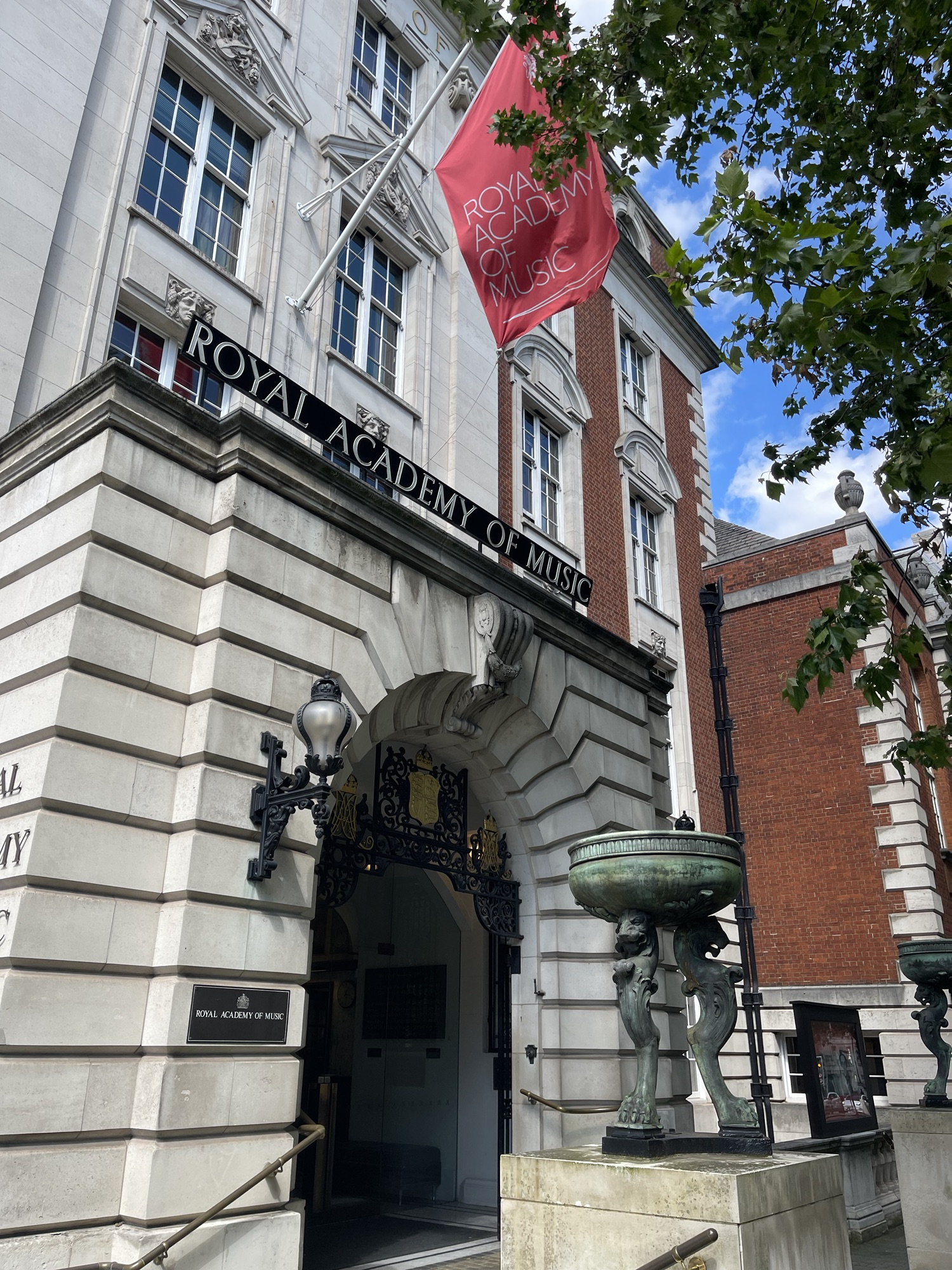
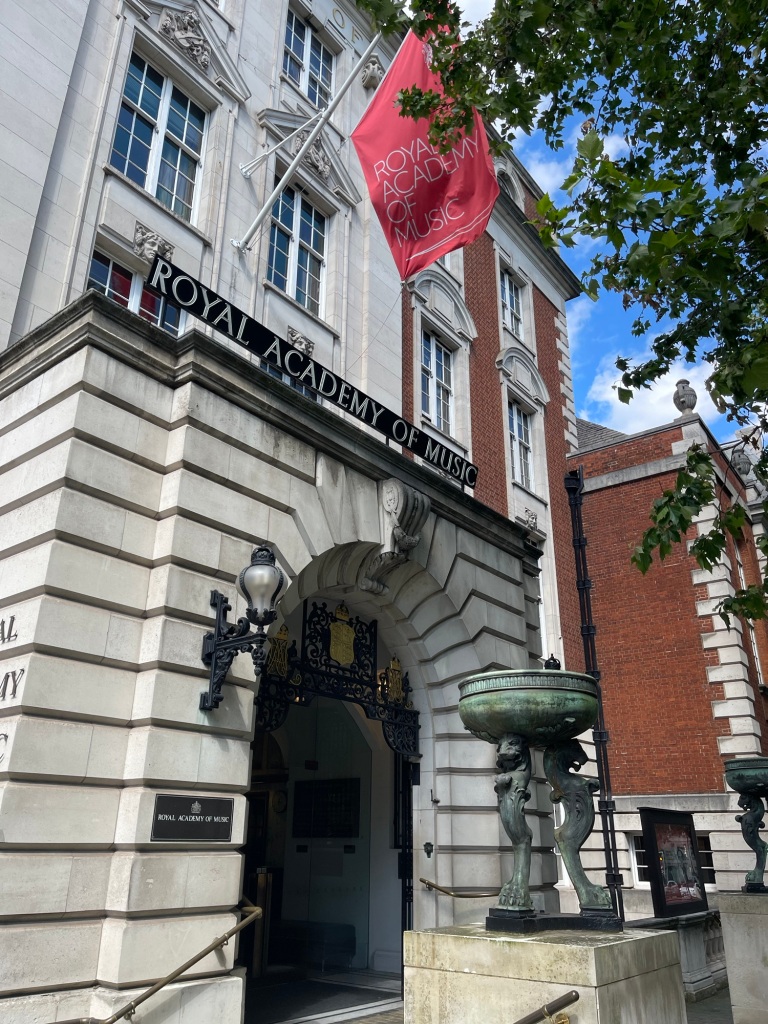
Ellis Thomas graduation recital at the Royal Academy of Music ‘Poetry and mastery combine to thrill and inform.’

Ellis Thomas at the Royal Academy for his final graduation recital
Nice to be back after my own trial by fire in 1972 on this very stage !
But for Ellis already with a degree from Cambridge under his belt and with the tireless dedication of his great teacher Tessa Nicholson he was enjoying every minute of his hour long recital in one of the most beautiful halls in London and certainly one of the finest Steinway concert grands in the city.


Brahms’s Handel variations were played from the very first notes with a clarity and rhythmic drive that kept us hypnotised from the first note of Handel’s innocent theme to the final mighty chords of the fugue that had inspired Brahms .
It was this clarity that made one realise that unlike the sonatas that are disguised symphonies these variations are purely instrumental and the technical mastery that Ellis demonstrated was quite remarkable
Hardly ever using the ‘soft ‘ pedal as he was able to control the sounds purely with his sensitive agile fingers and show us the architectural shape and inevitability of the triumphant outpouring of Handel’s innocuous theme.The mighty fugue whilst still maintaining remarkable clarity suddenly became more orchestral as he allowed himself more pedal to build up the enormous sonorities that were truly ‘Brahmsian’.
It just goes to show his courage and artistic conviction that he could think to present two rarely heard works in his farewell recital.
Poulenc’s Nocturnes and Szymanowski’s youthful variations on a Polish Theme op 10 were on the menu.
What a discovery too when played with such fantasy and kaleidoscope of colour not to mention a transcendental mastery of sound especially in Poulenc.But also a technical mastery in the Variations where he was totally in control and without a moment of hesitation or having to turn corners more gently he just threw himself fearlessly into the fray with searing energy and dynamic drive.
Another great artist on the horizon for the indomitable Tessa Nicholson school.


Passing by the sumptuous waiting room I noticed a bust that I thought was Myra Hess who always used to sit so regally there in my day.But no it was that other great ‘M’ of Uncle Tobbs, Moura Lympany ……..dear Moura always so elegant how she would have hated to be remembered like this!

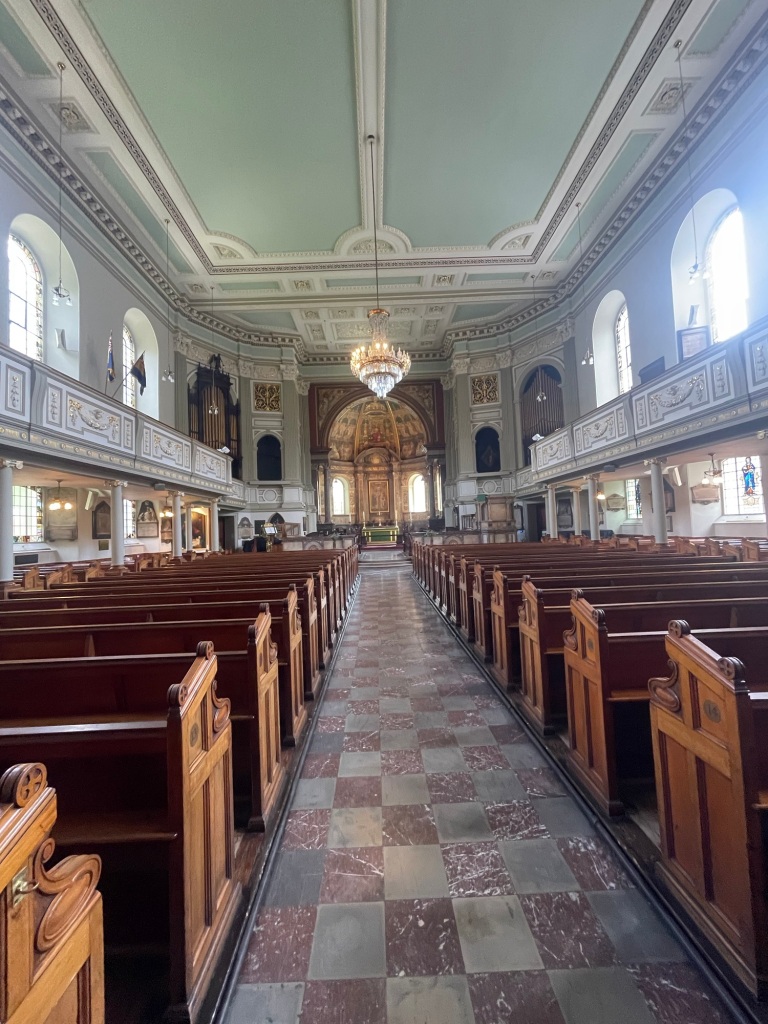
Over the road too there is a plaque to where Leonard Stokes went to school within the gardens of the magnificent church that sits opposite the Academy.Just shows how one can have the head in the sand as it has taken me over fifty years to venture in and marvel at what I missed during my five student years just over the road!

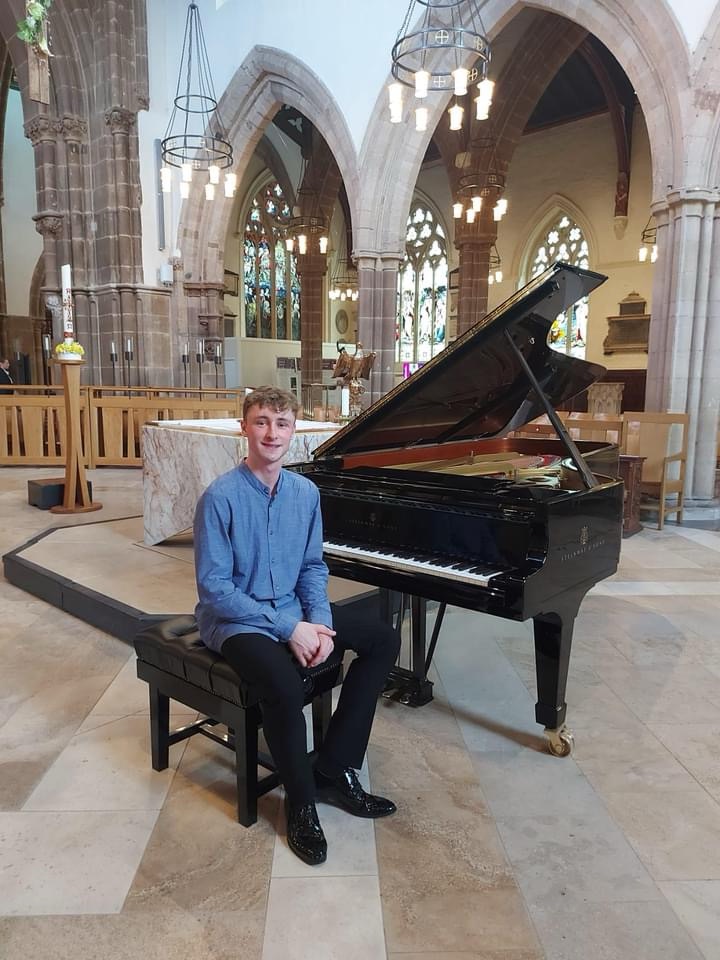
A recent concert in Leicester Cathedral for the Keyboard Trust

Karol Maciej Szymanowski 3 October 1882 – 29 March 1937

The Variations on a Polish Theme, Op. 10, by Karol Szymanowski (1882-1937) are a youthful extravagance. Szymanowski was in his late teens when he arrived in Warsaw in 1901 and began composition lessons with Zygmunt Noskowski, to whom he dedicated these Variations. The work seems to have been completed by 1904, and received its premiere in 1906 on a concert featuring music by Young Poland in Music, a small activist group of composers that Szymanowski helped found.

The variations draw their theme from a tune in Jan Kleczyński’s book O muzyce podhalańskiej / On the Music of Podhale (1888); interestingly, this tune will reappear in Harnasie a few years later.

Understandably Chopin-besotted at the time, Szymanowski was also much influenced by Scriabin, whose own early music was similarly indebted to Chopin. He launches these B-minor Variations with a sad little introduction, Scriabin evident in its restless chromaticism and Chopin in the five-against-four filigree. The Theme itself – prefigured in the introduction – begins with a modal statement of the main melodic material in soft octaves, although the descending chromatic slither that quickly follows will be equally important.

Traditional passages that follow the nineteenth-century pattern (such as the final variation with the four-voice fugue) exist side by side with more individualized ones in which Szymanowski’s creativity manifests itself alongside his mastery. Such is for example the moving, tense variation No. 8, its form that of a funeral march.

Ten connected variations follow, the first nine of which are diverse A-B-A miniatures. Variation VI takes us to sweet B major, and Variation VII (also in B major) is a lightly rustling metrical experiment, with the right hand in 9/16 and the left in 6/16. The eighth Variation is a doleful funeral march in the remote key of G minor. Variation IX, back in B major, is basically a prelude for the finale, which is a complex, triumphant monster nearly as long as the others combined. In many ways it is almost a parody of late Beethoven, filled with violent contrasts, mystical trilling, and broad spaces between the depths and the heights. There is even a buffo fugue on the theme, marked “mit Humor,” and a heroic coda to close.


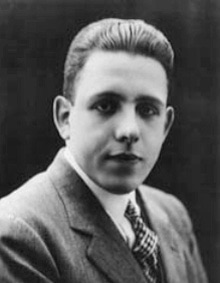
Francis Jean Marcel Poulenc  7 January 1899 – 30 January 1963

The set of eight nocturnes as we know it today is a result of long years of work. The first Nocturne was finished in 1929. The Nocturne No. 2 was composed in 1933, Nocturnes No. 3 to No. 6 were finished by 1934, No.7 in 1935, and the concluding piece was added in 1938. The Nocturnes were not intended to form a cycle until 1938, when Poulenc decided to include them in one collection. The entire set was published in 1939. Given the kaleidoscopic nature of Poulenc’s writing, his Nocturnes do not obey the classic laws of musical structure where the English-language scholarship tries to make them fit. The interest of these pieces lays in the superposition of the layers of sound, in the extraordinary experiments with the piano resonance, very intimate sensitivity, and subtle, witty, and fine humor. 

Nocturne No.1 in C major features a simple singing melody and harp-like arpeggios in the accompaniment. There are three instances in which the theme returns, and three contrasting sections, giving the impression of a rondo. Poulenc adds a little coda, which rather than resuming the action occurred during the piece, offers a new shed of light and a new emotion.

While writing his Nocturne No.2 Poulenc must have had in mind the young Janine Salles, to whom the piece is dedicated. We only can imagine how beautifully she danced, since this piece has a flavor to certain numbers of ballets by P. Tchaikovsky.

Les cloches des Malines (No.3) brings to the pallet the foggy colors of distant bells in the dusk. The faraway resonances give place for an instant to closer ones, returning soon to the surreal sounds of the beginning.

The fourth Nocturne, preceded by a quote from Julien Green’s “Le Visionnaire”, pictures an old man in his sick bed remembering the pleasures of his youth. It is a nostalgic mix of a waltz and a mazurka. 

Nocturne No.5 depicts night bugs (Phalènes – Moths), randomly flying around the lanterns and swiftly changing directions.

Nocturne No.6, contrary to the suggestions of the scholars, represents in my opinion a beautiful eulogy to Poulenc’s dear friend and intended wife, Raymonde Linossier, who tragically passed away in 1930. The strong emotional charge of the piece and the use of traditional eastern musical means support the theory of a musical homage to the late Raymonde Linossier, who specialized in Eastern cultures and before her tragic death had organized an exposition of Indian and Tibetan art at The Guimet Museum in Paris.

As is usual for Poulenc, in Nocturne No.7 he changes completely the mood and turns to a light-hearted almost popular tune.

However, the last Nocturne, added much later, in a way summarizes the cycle and brings the ends together. The simplicity of the harmony, the diatonic harmonization, and a coda that quotes the coda from the first nocturne blend beautifully in a nostalgic closure to the cycle.

Louis Lortie plays Ravel in London with the RPO under Jean- Luc Tingaud – A Magic Garden in Chelsea!

Louis Lortie in London playing Ravel and immediately there is magic in the air .A magnificent Bosendorfer piano with the name embossed in antique gold script as the sounds were indeed of the same quality.


Louis playing with the weight that only the greatest artists possess with a way of projecting the sounds at crucial moments with a simplicity and aristocratic authority.

A chamber work that rarely comes across as it did tonight with an orchestra inspired as they had also been in the world première of Richard Dubugnon’s sumptuous score of his Panem & Circenses.

Richard Dubugnon thanking the musicians after the World Première of his Panem &Circenses


But there was more magic in the air as Louis Lortie took us into his ‘Enchanted Garden ‘ in a sumptuous performance with only two hands and two feet of the last of the Mother’s Geese.
Laying down the gauntlet for the orchestra that were playing Ma Mère l’Oye’ immediately after or was he merely lighting the way for Ravel’s magical orchestration ? This was the real thing not the usual dry clinical Boulezian Ravel but a Ravel of true luminosity and colour .

Of course how could it be otherwise with a pianist who had been taught by a pupil of Alfred Cortot and a conductor Jean-Luc Tingaud who had been the assistant of Manuel Rosenthal himself a pupil of Ravel.


This was a dream performance of the piano concerto that only Vlado Perlemuter could have matched in my lifetime.There is the famous recording of Vlado playing the concerto with Horenstein in 1955 that is a lesson in what it really means to play with weight and where the pedals really are the soul of the piano. Vlado would often like Arrau play loudly with the soft pedal down to obtain a very particular nasal sound that is vert rare to hear these days.https://youtu.be/LEh8qGdhMa8?feature=shared.

Tonight we caught a glimpse of what the Ravel concerto can really sound like in the concert hall by musicians of an artistic pedigree so rare these days ‘just’ playing with the love and joy of sharing their music with us.

Little did the crowds in festive mood for the Chelsea Flower Show realise what a magic garden was being enacted just around the corner

Louis Lortie pays ‘Hommage à Fauré’ ‘À la recherche du temps perdu’

I am sure that Louis would appreciate my adding a performance by a pianist who he has taken under his wing and who was heard flying high in Rome last week

Luigi Carroccia ‘The poet of the piano’ Chopin Concerti op 11 and 21 in Rome Orchestra delle Cento Città directed by Luigi Piovano

Paul Mnatsakanov graduation recitals at the Royal College Music

Very pleased to be invited back to hear Paul Mnatsakanov again having heard his remarkable Mussorgsky Pictures a few months ago where his magnificent performance was just a curtain raiser for the full Symphonic transcription by Ravel.
https://christopheraxworthymusiccommentary.com/2024/02/09/paul-mnatsakanov-s-monumental-mussorgsky-pictures/


A wonderful hall full of memories for me who as a schoolboy who had discovered music ,but was from a barren background so far as my unbounded passion for music was concerned, I could replenish my insatiable thirst for music with free concerts timed perfectly to fit in with after school hours.
Here I had heard Sir Adrian Boult and the debut of John Lill in Rachmaninov third and a Mendelssohn double with him and Gwyneth Pryor.Many other pianists who later went on to great careers including George Barber who found fame in America as Rostal and Schaefer the true heirs to Gold and Fitzdale but who I had known in Brahms two with Boult and a Wigmore debut of Beethoven op 126,111 and 120!
The late Dennis Lee playing Brahms 2 with Boult too and Enloc Wu in Liszt n. 1 not to mention unforgettable lecture recitals by Menuhin and Tureck.
Still with that insatiable schoolboy appetite for music I recently discovered Thomas Kelly and Magdalene Ho whilst they were competing for the Joan Chissell Schumann prize in this hall.
It was nice to be present at the final recital today and see what a feast of music it was but also his colleagues joining in the fun of superlative music making with him.


A Mozart sonata in F K 332 of impeccable style and discreet ornamentation that just highlighted the beauty of the Allegro played with refined good taste and character.Not the colours of Horowitz but much more restrained and classically orientated but nevertheless spoke with the same operatic voice.Ravishing beauty of the Adagio where his superb sense of balance allowed the bel canto to sing but also the audacious accompaniment to be an equal partner.An Allegro assai that just burst onto the scene with scintillating energy and high spirits and where Mozart’s surprise ending was judged to perfection without ever giving the game away.
The Saint Saens I must confess I have only heard in Horowitz’s bewitching transcritption of Liszt.But Paul today showed me a tone poem of subtle architectural shape and meaning and the added glistening baubles that Horowitz adds really take away from the overall structure that Paul as with his Mussorgsky is absolute master.
At this point the party began and Paul was joined by the ravishing Amber Reeves in a subtle rendition of ‘June Twilight’ but it was the showgirl in the show stopper ‘I too beneath your moon’ that unleashed a pianist who could let his hair down ( metaphorically of course ) and really let rip with sumptuous full sounds of a real showman.Nadia Chaichenko had added some wonderfully deep seductive tones to Tchaikowsky’s Frenzied Nights and a piano solo by Babajanian in this group of ‘Songs from the shows’ was played with insinuating seductive tones.


Two pianos with Thomas Luke ,a former winner of the BBC young artist of the year competition,played an Armenian Rhapsody where their consummate musicianship and superb technical control allowed them to play as one.
It will be for the commission comprising Vanessa Latarche and Sofya Gulyak to comment far better that I in detail on his performances but am glad to give my own personal impressions at the end of a happy period of study for this remarkable young artist.

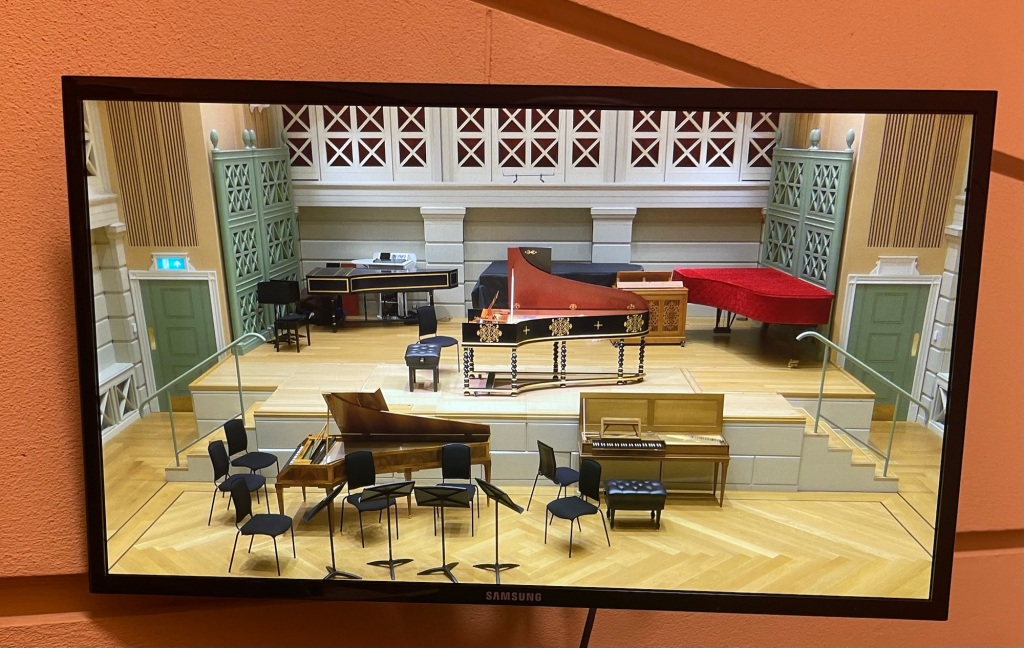
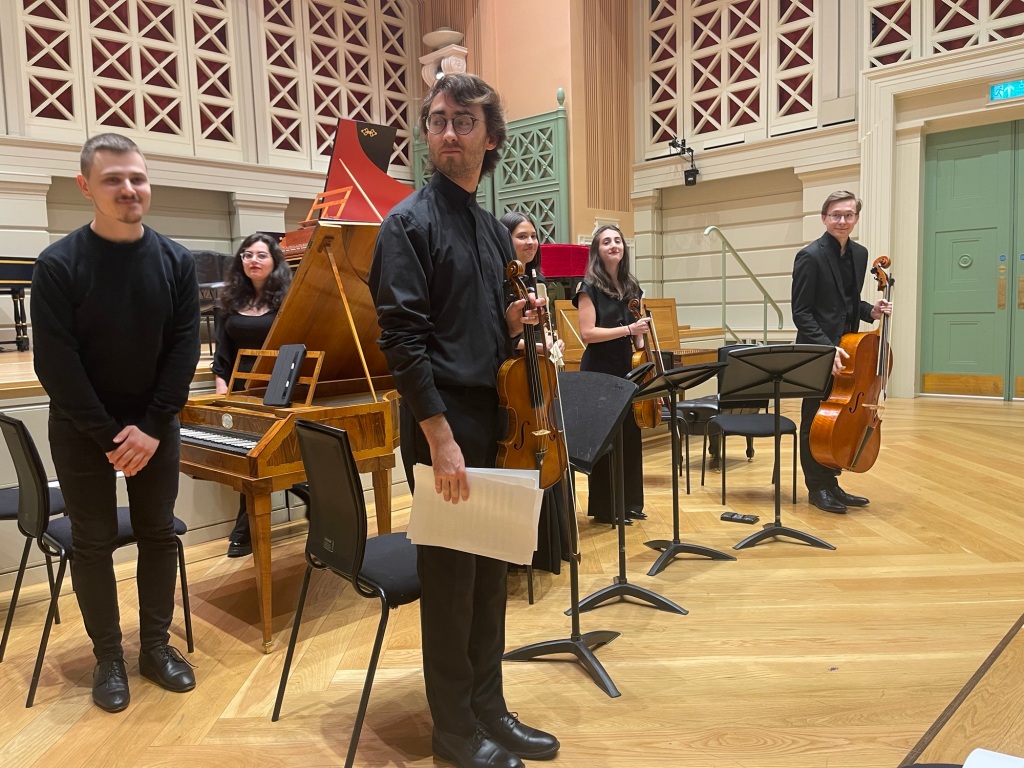
I am very happy to invite you to my final Historical Keyboard recital, happening at 10:40am to 11:30am in the Performance Hall of the Royal College of Music in London.
I will be presenting a program on three (!) different historical keyboard instruments showcasing the classical period.
The program will include C.P.E. Bach’s 12 Variations on the Spanish Folia played on the clavichord and J. Haydn’s Keyboard Sonata in D major, Hob. XVI:37 played on the harpsichord. Matthew Millkey, Taisia Sandetcaia, Elena Accogli and Alex Boyd-Bench will then join me for a rendition of W. A. Mozart’s Keyboard Concerto in C major, K. 415 on fortepiano with string quartet.

Paul Mnatsakanov’s Historical Keyboard Graduation recital .Strange to see an artist who had filled the vast concert hall with the explosive sounds of Mussorgsky just a few months ago now playing with refined delicacy three historic instruments one of which was barely audible to the human ear!


Artistry is what it is called and the Royal College has certainly formed a remarkable artist of great versatility who only a few days ago gave his graduation recital on a magnificent Steinway D.


Today in a smaller but no less beautiful hall he showed us how Haydn had conceived his D major Sonata for the harpsichord on a beautiful Kennedy Harpsichord after Mietke


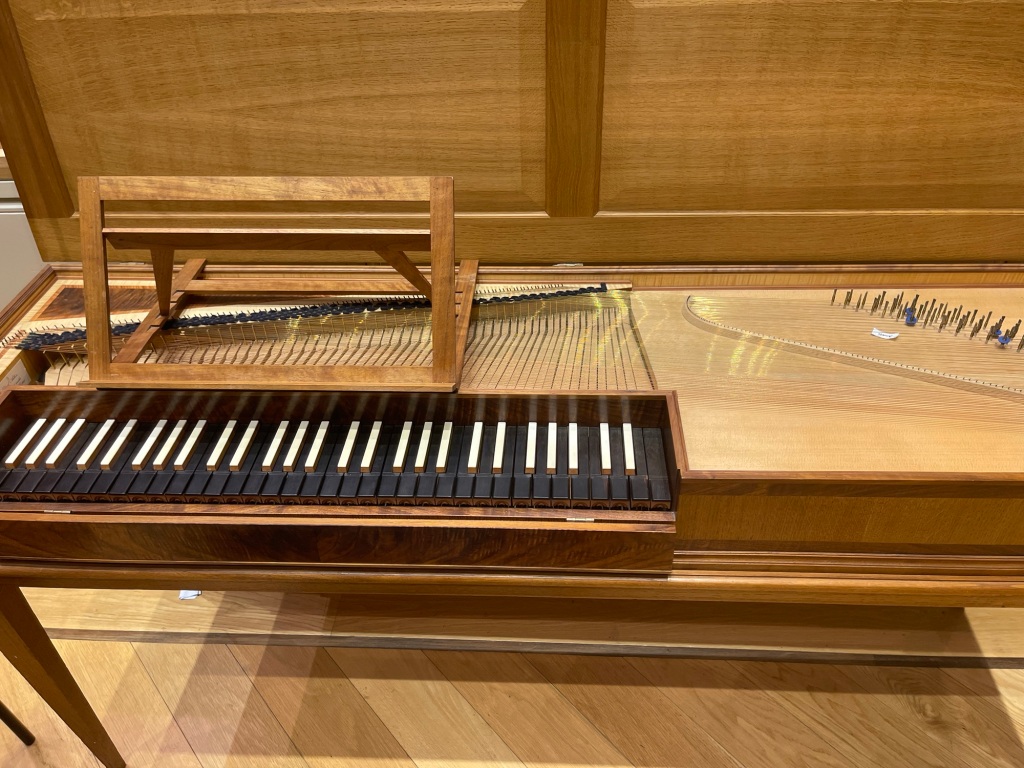
La Folia was a long way off from Liszt’s Spanish Rhapsody or the last piece that Rachmaninov was to write for the piano as we strained to hear the whispered jewel like perfection of C.P.E Bach’s variations played on an Adlam Hubert clavichord .


He was joined by Matthew Millkey,Taisia Sandetcaia,Elena Accogli and Alex Boyd-Bench in a performance of Mozart’s C major concert K415 on a NcNulty Walter fortepiano. Superb playing of refined good taste and dynamic drive for one of the trio of concertos that really benefit from being played in a chamber format. What a treat to be able to enjoy such selfless music making in the intimate performance hall away from the trials and tribulations of Lisztian showmanship upstairs!

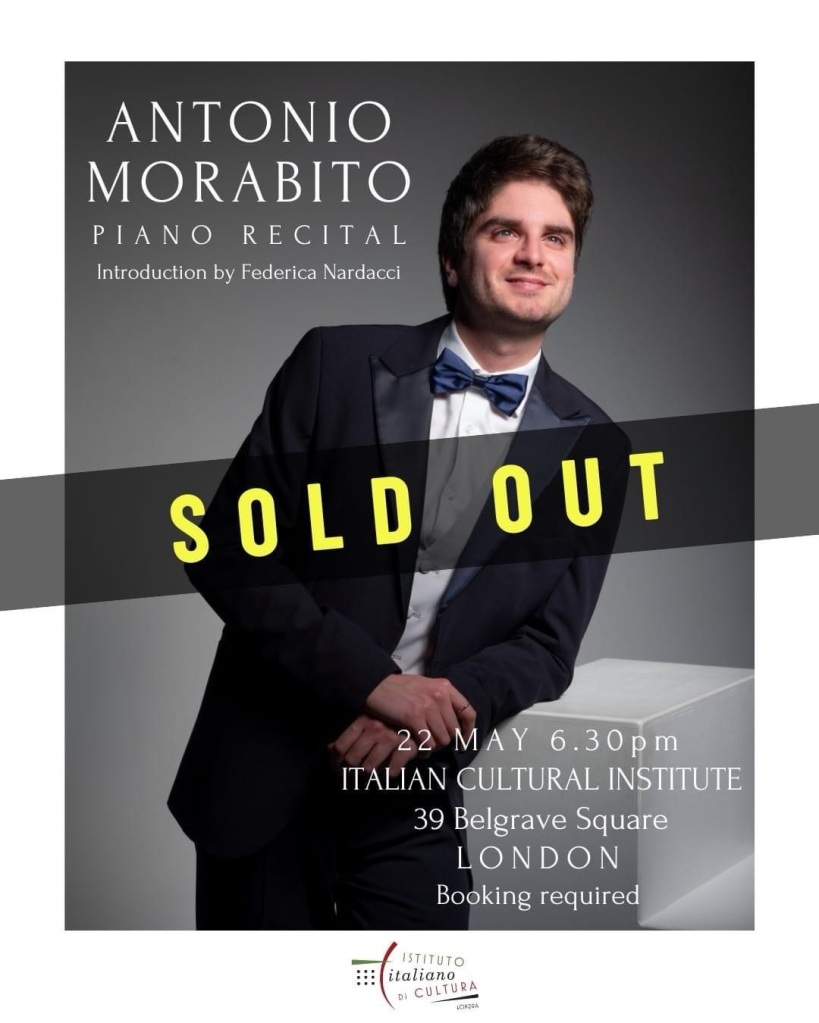
Antonio Morabito at the Italian Institute The return of a warrior with virtuosity and poetic sensibility in his fingers

A wonderfully uplifting evening in the Italian Institute with a young Italian pianist coming to London to perfect his studies at the Royal College of Music but arriving in a London struck down by the pandemic .
Now graduated and a fully fledged professional he was able to treat us to a Chopin recital in this beautiful hall overlooking Belgrave Square.A dream come true indeed.

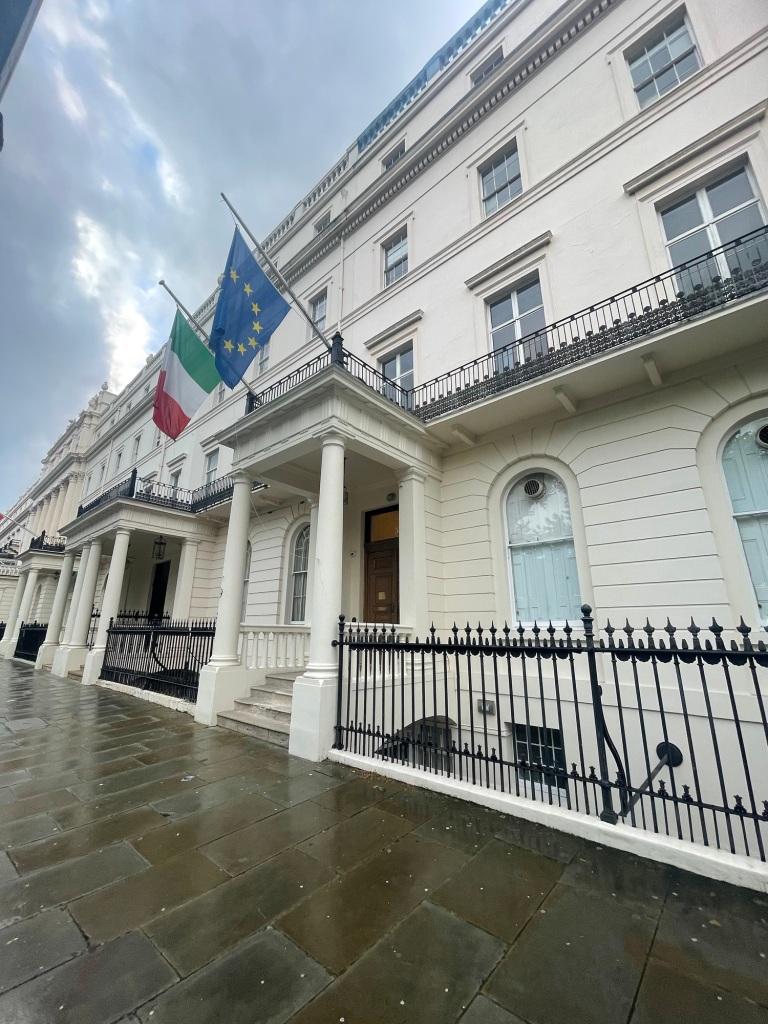
The Italian Institute in Belgrave Square


I well remember this beautiful institute when I too as an aspiring student auditioned to have an Italian Government Scholarship to study with Guido Agosti in Rome.How could I forget the fearsome Signora Barzetti, the great critic Andrew Porter or the terrifying Ilona Kabos putting me through my hoops.
Little did I imagine that I would loose my heart to and in Rome and end up spending more than half of my life running a theatre and concert hall in the Eternal City.

Christopher Axworthy Dip.RAM ,ARAM

Federica Nardacci ,musicologist and authoress of ‘The Black Pearl‘ a play written about Maria Callas and performed by Marco Gambino in many languages. He was also present tonight and whose one man performance tomorrow in this same hall is completely sold out. There is even a waiting list from hopefuls wanting to hear his reading from the Premio Strega award winning authors


Federica Nardacci now residing in London and an important part of the Royal College of Music was presenting Antonio Morabito’s programme not only in perfect English but describing a fascinating voyage of discovery. She told us of a composer who had never set foot in Italy but was so inspired by the bel canto of Bellini that he brought it’s sublime beauty to an evolving instrument creating a completely new world and technique for his beloved piano


Antonio from Reggio Calabria is now a freelance musician in London and treated us to a sumptuous feast of nocturnes,waltzes ,studies and even the beautiful G flat impromptu and the B flat minor Scherzo.

The nocturne op 55.n.1 in F minor was Cherkassky’s favourite and he would often play it in the many recitals he gave for us in Rome. It opened Antonio’ s programme and created the intimate magic of beauty and nobility that only Chopin can portray in the right hands. Antonio allowed it’s ravishing bel canto to resonate around this beautiful room with refined aristocratic good taste.Helped by the beauty of this very fine Fazioli piano , the filigree web of sounds that unfolded wafted around this salon as we were enveloped in the warmth and subtle rubato that Antonio’s magic fingers could spin.The second nocturne in A flat op 32 n.2 has become well known also via the ballet ‘Les Sylphides’ and it was the orchestral sounds and the passionate outpouring of the central episode that began to ignite the atmosphere at the very opening of this all too short recital.

Two early Waltzes op posth in E and op 72.n.3 in D flat were a happy choice because relatively unknown but full of the youthful spirit of the young aspiring virtuoso Chopin. At only 18 had left his homeland never to return as he searched for fame and recognition in the fashionable Paris Salons of that period.Antonio played them with beguiling charm and simplicity and they were a refreshing discovery inbetween the sumptuous G flat Impromptu op 51 and the spectacular Scherzo in B flat minor op 31 that Federica had so eloquently described in her opening introduction.

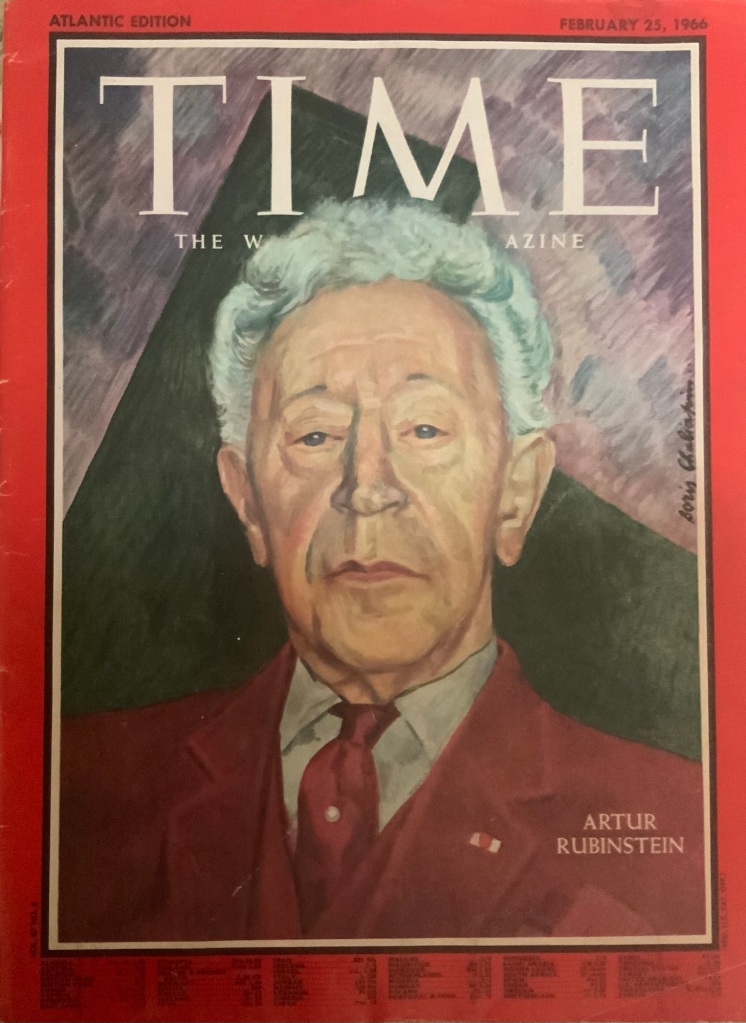
Both op 51 and op 31 were works very much associated with Artur Rubinstein.The aristocratic finesse he brought to the Impromptu I was reminded of in Antonio’s sensitive hands where he allowed the music to be played so simply with deep rooted sentiment but never sentimental.This beautiful instrument allowed him to chisel out the melody with sumptuous richness whether in the opening that was teasingly enticing or the rich tenor melody of the central episode.The Scherzo was played with considerable mastery and dynamic drive but also with beauty and character as this masterpiece was allowed to unravel leading to the excitement and exhilaration of the final few pages. Antonio receiving a just acknowledgment from the audience who were following his every move.

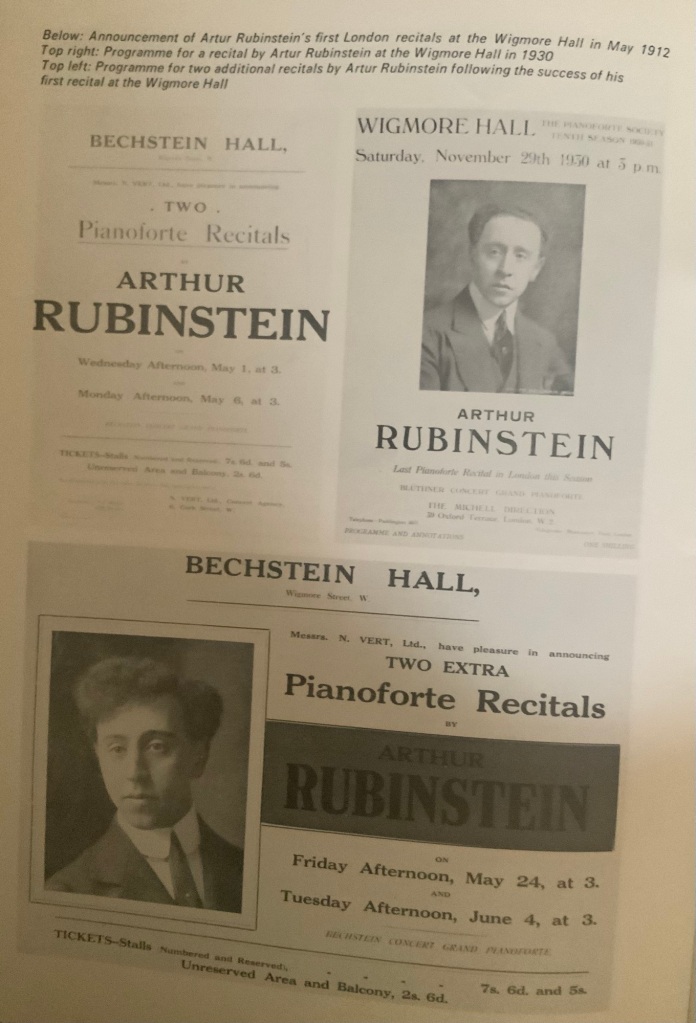
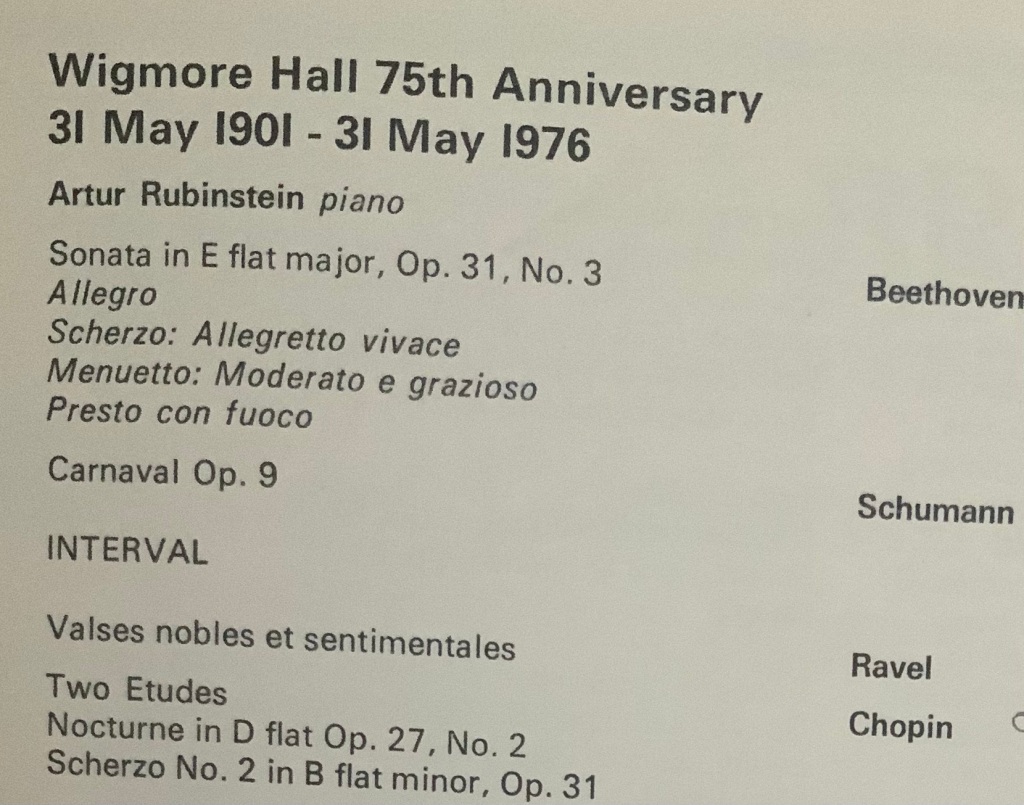
It was Rubinstein at the age of 90 at the end of his final concert at the Wigmore Hall where this work op 31 that he he had played all his life but his sight would no longer allow him to affront the final leaps to opposite ends of the keyboard. This great man had come out of retirement to give one last concert in a career that spanned almost a century in order to save the Wigmore Hall from the developers insensitive eyes. He stopped playing and declared he would play something else more in the center of the keyboard that he could still see perfectly.

And the great man took our breath away as he always had but this time with some Chopin studies that we had never heard him play in public before ! At the end of the concert he made a speech saying that he had started his career in London here in 1901 and he was glad to finish it in this glorious hall in 1976 ,but please do not let them pull it down.William Lyne,the illuminated manager had had the idea to approach Rubinstein in a last effort to save the hall.The Wigmore since then has gone from strength to strength with William Lyne passing the direction in his retirement to his assistant John Gilhooly .

An interesting anecdote that I can also vouch for was when almost the entire audience was invited by the great man backstage.We were all gathered around him and suddenly Rubinstein was aware of a special presence next to him.‘I may be blind’ he quipped ‘but not too blind to know when an beautiful lady is standing next to me’. Lauren Bacall was charmed and totally captivated as most women had been all his long life!

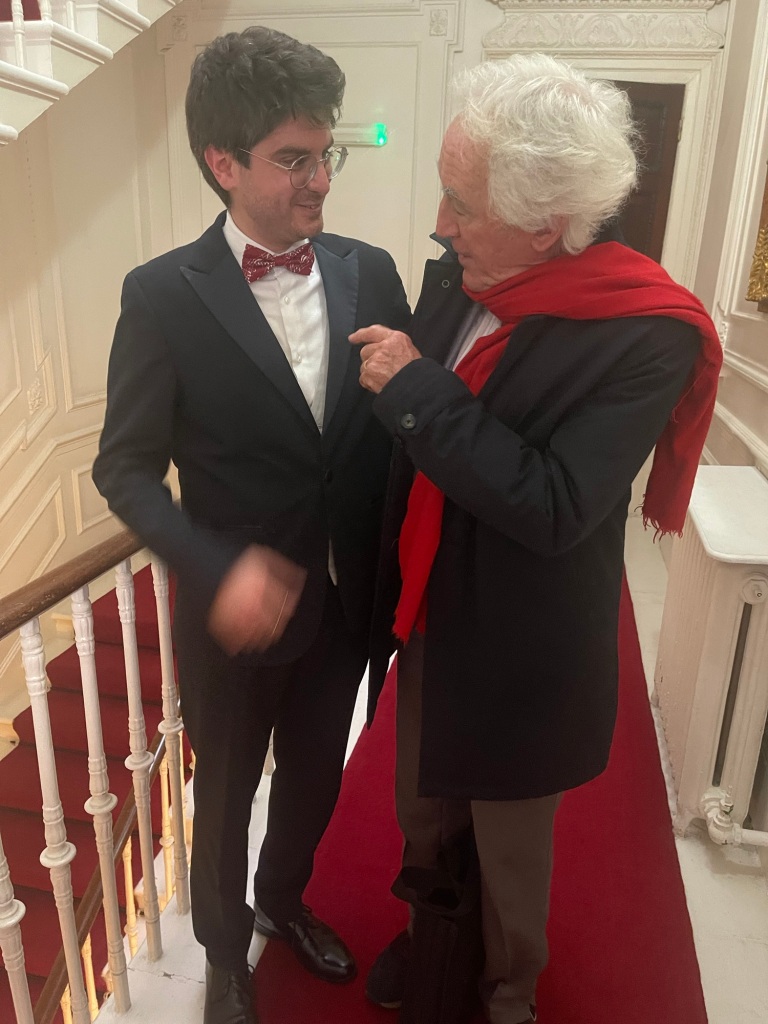
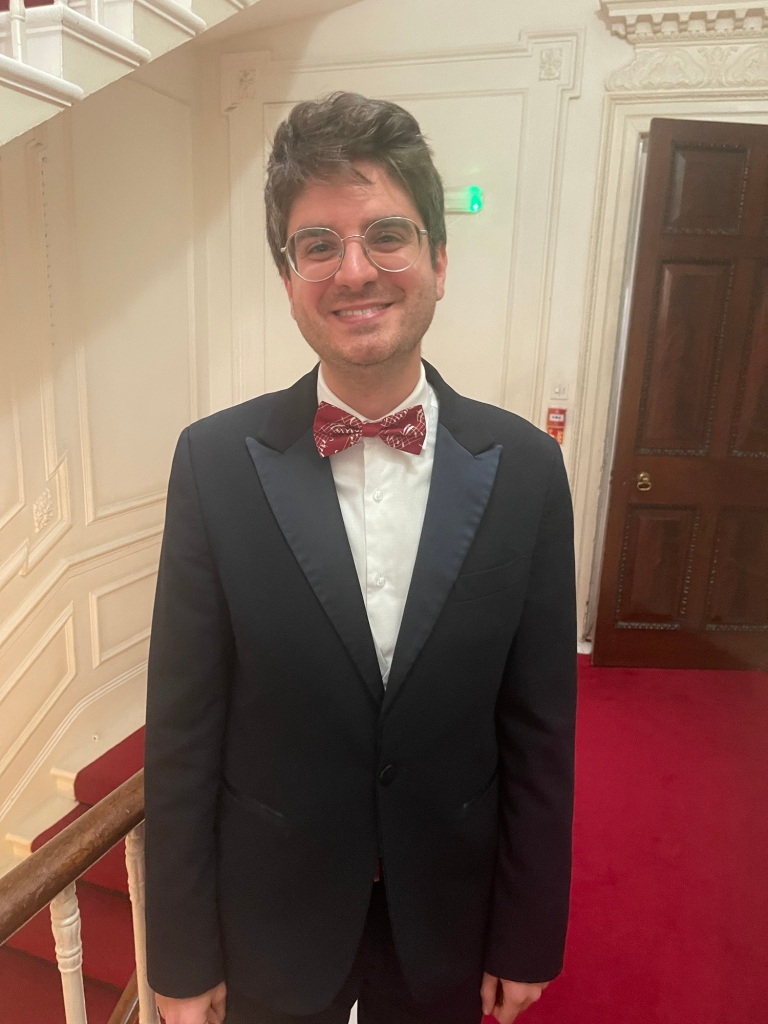
Admiring Antonio’s musical bow tie

Antonio at this point too played 4 Chopin studies from op 25.The one Rubinstein had astonished us with was n 2 that Antonio also played with fleeting lightness and enticing phrasing. Antonio also included the famous ‘Aeolian’ harp of op 25 n. 1 which is described so grafically by Sir Charles Hallé of Chopin playing it in Manchester. Antonio showed us the same beautiful melodic line with the glistening accompaniment of changing harmonies.The other two studies were of transcendental difficulty and were n. 8 and n.10 for sixths and for octaves.As Schumann said of the Mazurkas they are too are ‘ canons covered in flowers’ and Antonio showed us the true musical meaning of these highly charged two studies.

Ending his recital with the Andante Spianato and Grande Polonaise brillante op 22 which was one of the work that Chopin would have seduced his public with in the Parisian Salons of the day. Schumann famously wrote ‘Hats off Gentlemen ,a Genius’ on listening to Chopin playing his Rondo op 2 .It was the ravishing bel canto of ‘spianato’ contrasting with the brilliance and showmanship of one his most scintillating Polonaises that worked the same magic from Antonio’s well oiled fingers and soulfully poetic playing

An ovation for this young man who as he said had first been greeted so kindly by the Institute on his arrival in London during the pandemic and was happy to repay their kindness now with this heartfelt recital by the true poet of the piano

It was though the encore of Chopin’s much loved E flat nocturne op 9 n. 2 that stole our hearts, as this charming young man knew it would ,especially on this beautiful Fazioli piano so proudly installed in the sumptuous salon of the piano nobile of the institute

https://christopheraxworthymusiccommentary.com/2023/06/26/london-salutes-a-legend-maurizio-pollini-the-story-of-a-miracle-by-antonio-morabito/
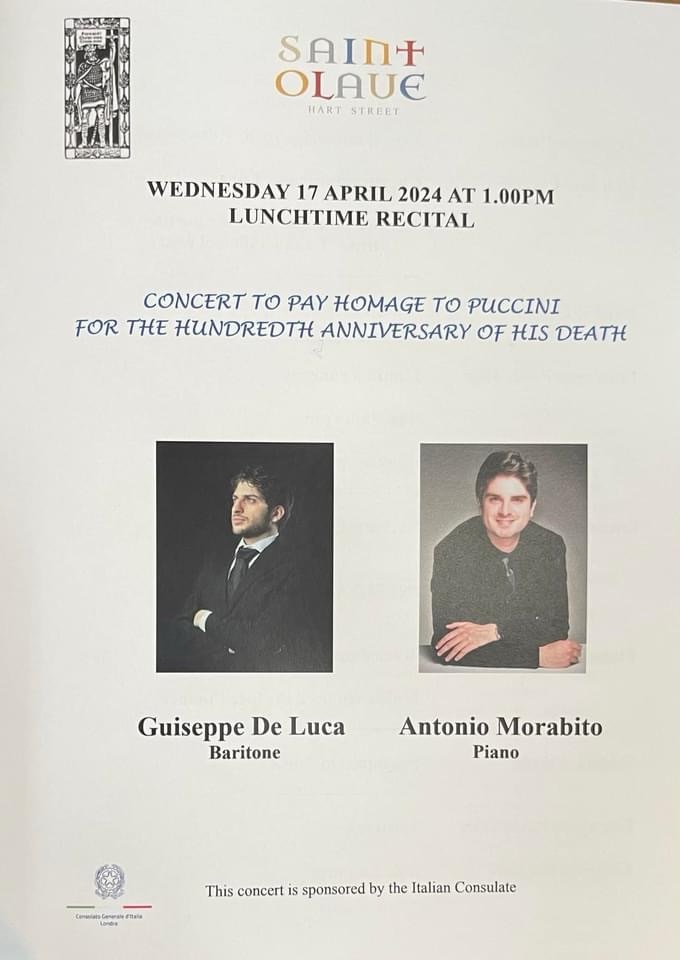
Italy comes to Tower Hill and it is a triumph for the 100th Anniversary Celebration of Puccini .
The wondrous vibrating tones of the sumptuous baritone voice of Giuseppe De Luca had as a heartbeat the beauty of Antonio Morabito’s sensitive accompaniment .
Three Chopin nocturnes added to give a rest to our valiant operatic hero showed off the exquisite artistry of the ever generous colleague from their student days together in Reggio Calabria deep in the south of Italy.
A standing ovation rarely if ever seen before in this ancient edifice was a way of showing how much a full house had been touched by the heart rending emotions of these two Italian artists .
Sponsored by the Italian Consulate it will be repeated in that beautiful candlelit church of St Mary Le Strand on the evening of the 24th April

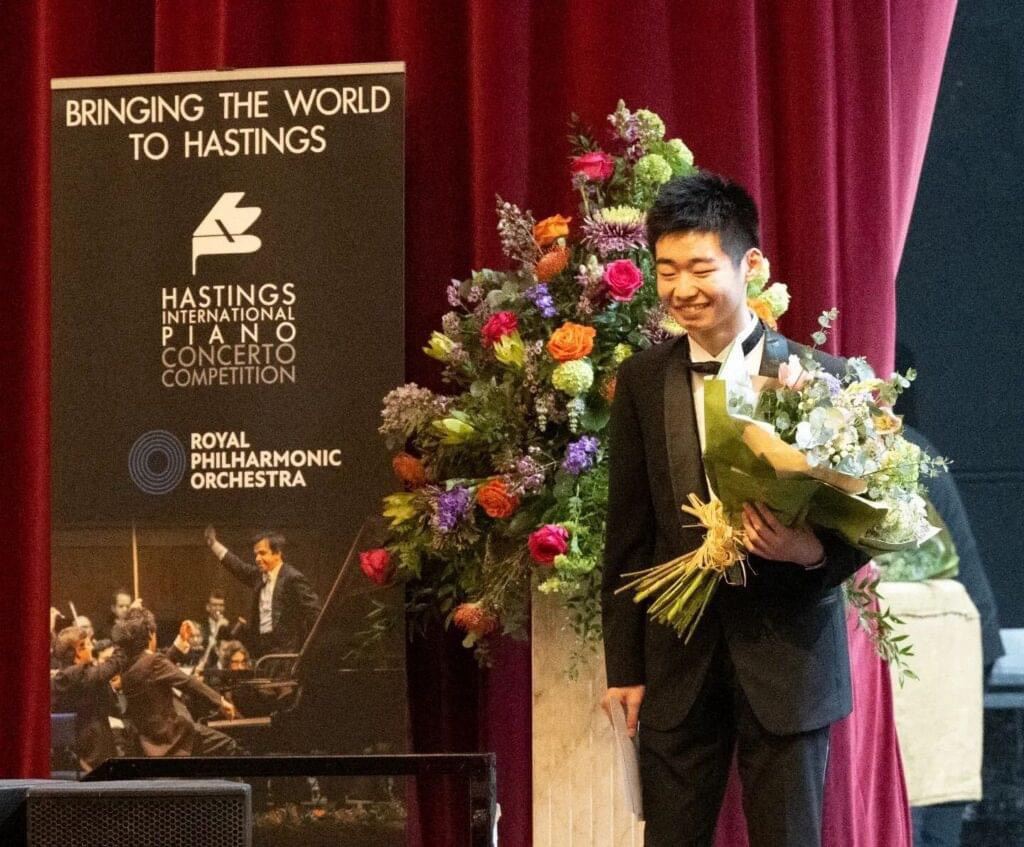
Shunta Morimoto at Brighton Festival The sublime inspiration of a poet of the piano

Hastings International Piano Competition Winner 2022

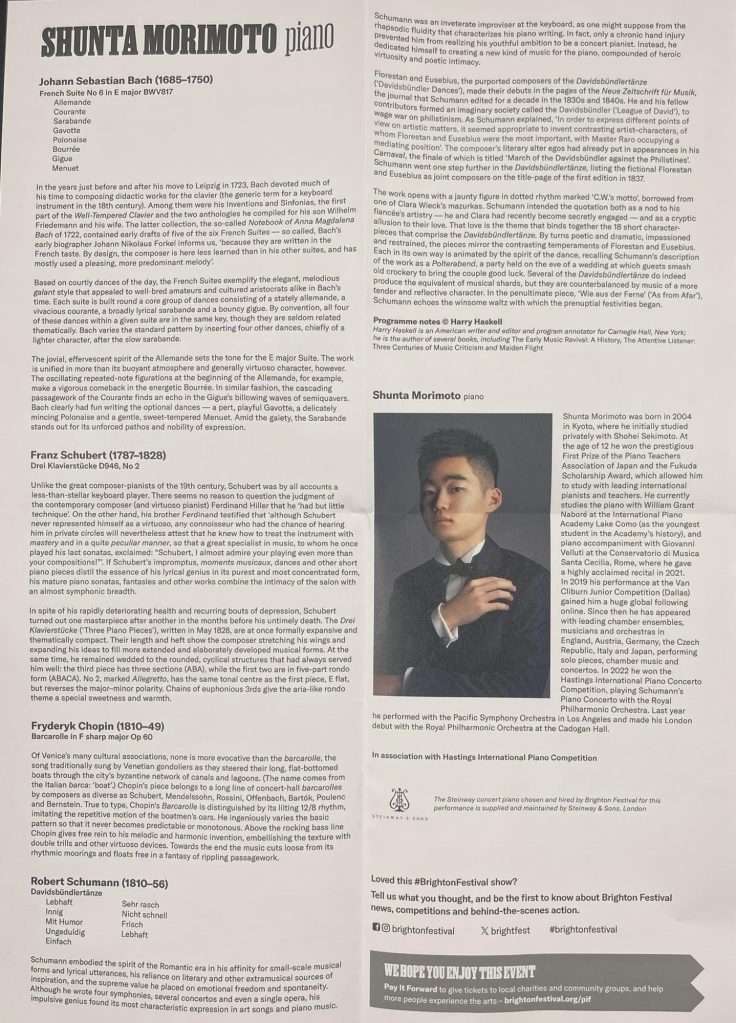
Bach French suite No. 6 in E minor BWV 817  
Schubert Klavierstücke D. 946 no.2 E flat major
Chopin Barcarolle Op. 60  
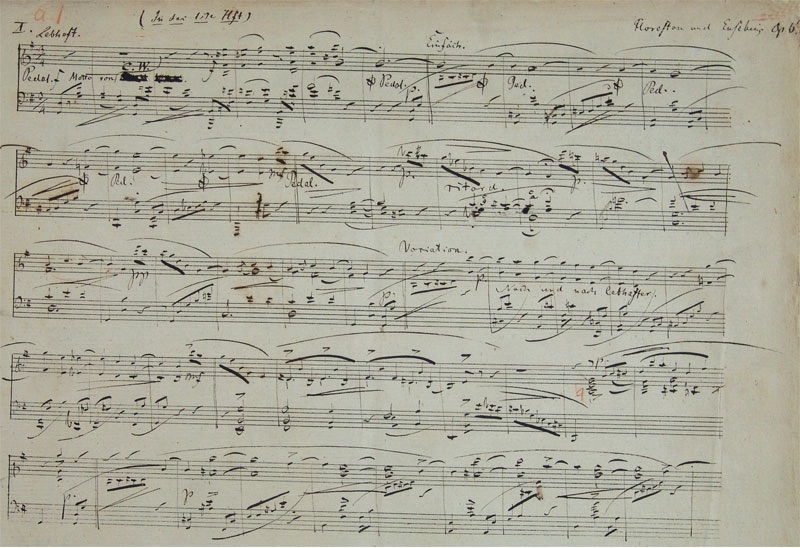
Schumann Davidsbündlertänze Op.6  

In 2022, aged just 17, Japanese pianist Shunta Morimoto was unanimously awarded First Prize in the Hastings International Piano Concerto Competition following his performance of Schumann’s Piano Concerto. Here he ends his lunchtime recital with the same composer’s Davidsbündlertänze, a kaleidoscopically varied set of 18 ‘dances’ for Florestan and Eusebius – two supposed members of Schumann’s imaginary ‘League of David’, but actually representing twin aspects of his artistic personality.

In Association with Hastings International Piano Competition

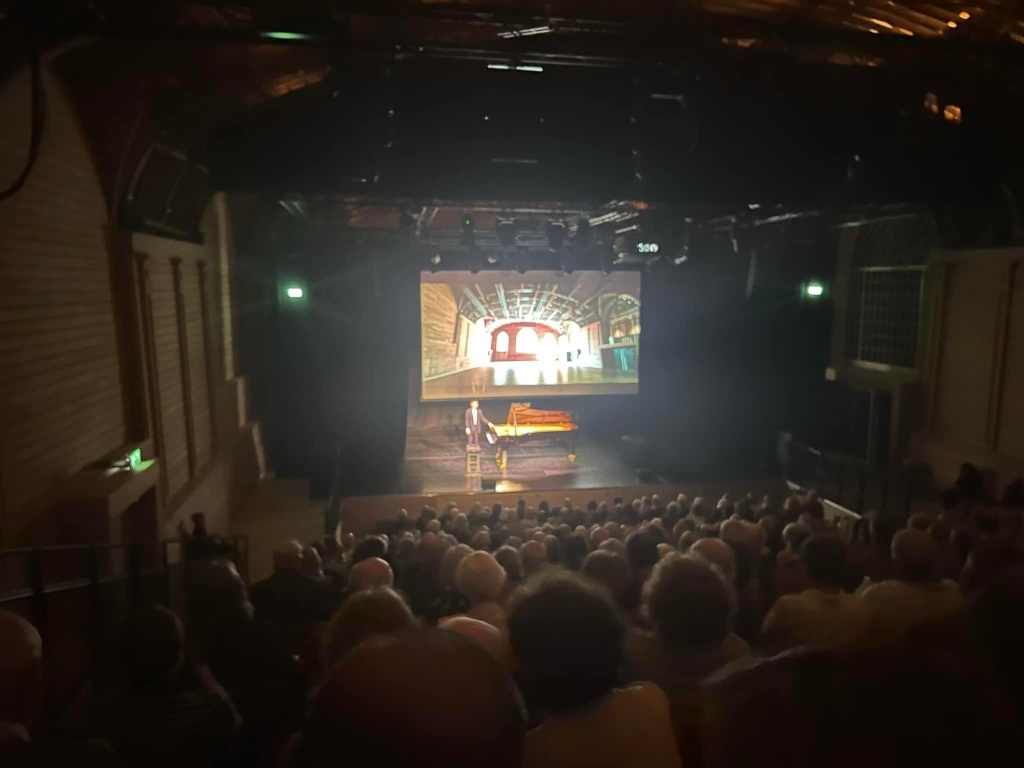
I have heard Shunta many times over the past few years but rarely have I heard him play with the intimacy that only a large hall can afford .

Bach’s 6th French Suite was played with exquisite ornaments that shone like jewels and discreet changes of register that he acknowledged with sudden changes of colour of whispered tones just shadowing what it mirrored.A sense of dance that was hypnotic and tantalising in it’s subtlety. Bach is Song and Dance and nowhere more than in Shunta’s inspired hands.Each of the eight movements flowed so naturally that time stood still as the magnificence of Bach was revealed with simplicity and sublime beauty.

The second of the three Klavierstucke flowed from his fingers with a luminosity and fluidity that when the sinister undertones of the first episode suddenly appeared on the scene we were held in a spell of discovery not knowing how such a drama would play out. The storm in a teacup was followed by a second episode of refined beauty and sumptuous golden sounds.The whispered return of the opening melody was overwhelming in its impact as we were drawn into this intimate private world that this young man shared with us today.

Chopin’s Barcarolle was a continuous outpouring of song played by Shunta today with a simplicity and freedom that was hypnotic.From the opening deep C sharp he held us in a spell of aristocratic simplicity where the music was allowed to pour from his fingers as the waves washed around Chopin’s imaginary lagoon.The transition from the sublime beauty of the central episode to the final outpouring of nobility and heart rending passion was masterly controlled as we were held on a wave of sound that gradually increased in intensity until bursting point and the final disintegration.We could literally see the strands gradually unfolding until they wafted on high with a cadenza of breathtaking beauty where time seem to stand still as the notes unfolded with that inevitable simplicity that I have only ever experienced with Rubinstein in the hall next door.

Schumann’s Davidsbundlertanze filled the second half of this lunchtime recital where the freedom and subtle colours that Shunta found was nothing short of miraculous.There was passion and transcendental playing of astonishing natural ease where technical difficulties ceased to exist with an artist where music was burning within his being and was the only consideration.The beautiful fourteenth dance was played with glowing beauty and a balance that showed us too the very roots from which this sublime music had grown.The penultimate dance that Schumann describes as ‘from a distance’ was played with trance like beauty of etherial sounds that gradually built up to the final climax that dissolved as fast as it arrived.It left just the final dance that was played with subtle whispered sounds where we were caught in a spell of magic that was greeted by the silence of an audience unified in one of those rare magic moments that can still occasionally happen in the concert hall.

The spell was broken by an ovation that brought this young man back on stage for three encores .Chopin’s Study op 10 n. 4 was breathtaking not only for its transcendental virtuosity but more for the music he made of these notes .I have only ever heard from Perlemuter streams of sound and moving harmonies as one phrase was passed from the right hand to the left in a playful duet until the final outburst of passionate abandon.I have heard many pianists play this study but no one has ever played it with the musical mastery of this young man.

Bach’s prelude and fugue n.13 from the first book was Shunta’s way of thanking us and wanting to share with us again the sublime beauty of the Genius of Bach.


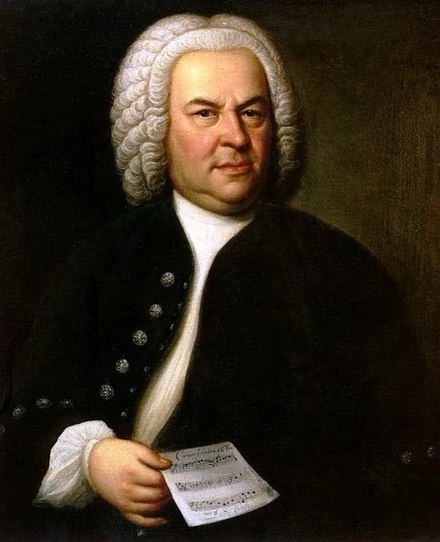
1748 portrait of Bach, showing him holding a copy of the six-part canon BWV 1076

21 March 1685 Eisenach 28 July 1750 (aged 65) Leipzig

The French Suites, BWV 812–817, are six suites which Johann Sebastian Bach wrote for the clavier (harpsichord or clavichord )between the years of 1722 and 1725.Although Suites Nos. 1 to 4 are typically dated to 1722, it is possible that the first was written somewhat earlier.The suites were later given the name ‘French’ (first recorded usage by F.W Marburg  in 1762). Likewise, the English Suites received a later appellation. The name was popularised by Bach’s biographer Forkel , who wrote in his 1802 biography of Bach, “One usually calls them French Suites because they are written in the French manner.”This claim, however, is inaccurate: like Bach’s other suites, they follow a largely Italian convention.There is no surviving definitive manuscript of these suites, and ornamentation varies both in type and in degree across manuscripts.

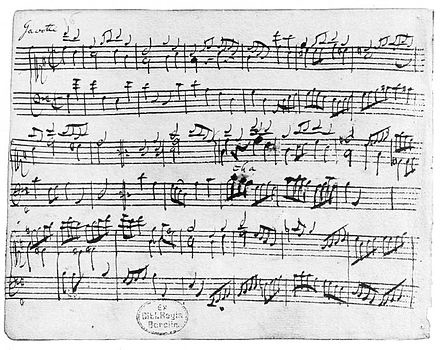
Gavotte from French Suite No. 5

Suite No. 6 in E major, BWV 817

  1. Allemande
  2. Courante
  3. Sarabande
  4. Gavotte
  5. Polonaise
  6. Bourrée
  7. Menuet
  8. Gigue

Franz Peter Schubert 31 January 1797 – 19 November 1828

The three “piano pieces” D.946, were completed in May 1828, the year Schubert died, and follow the far more well-known and popular Impromptus D.899 and D.935, which Schubert composed the previous year. Like the Impromptus, the Drei Klavierstücke express in microcosm so much of Schubert’s unique soundworld and musical personality – daring and unusual harmonies, beautiful songful melodies, and episodes of profound poignancy or intimacy. Throughout these three pieces, we hear the extraordinarily broad scope of his creativity and emotional landscape.

“He has sounds to express the most delicate feelings, of thoughts, indeed even for the events and conditions of human life.” – Robert Schumann 

Untitled and unpublished in Schubert’s lifetime, it was Johannes Brahms who anonymously edited and published the Drei Klavierstücke in 1868 and gave the works their collective title. The second of the triptych is a five-part rondo. It opens in E-flat major, which connects it to the previous piece, though it is not known whether Schubert conceived the three pieces to be linked. An elegant barcarolle, the A section has an aria-like melody coloured by harmonic shifts between major and minor.

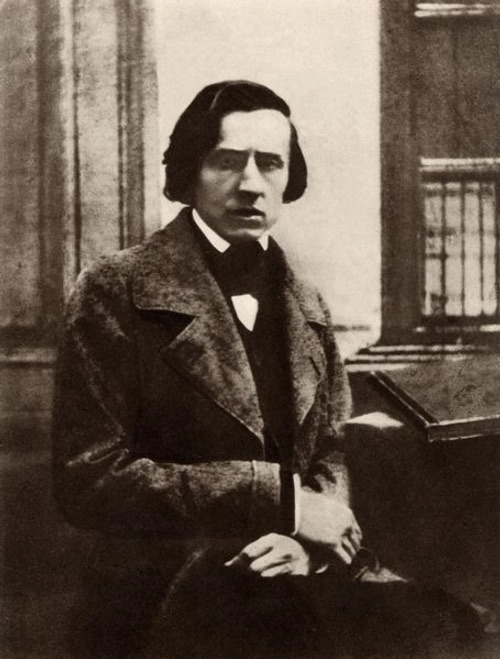
Daguerreotype, c. 1849
Frédéric François Chopin born Fryderyk Franciszek Chopin;
1 March 1810 – 17 October 1849

The Barcarolle in F sharp major op 60 , by Chopin was composed between autumn of 1845 and summer 1846, three years before his death. This is one of Chopin’s last major compositions, along with his Polonaise – Fantasie op 61. In the final years of his short life, Chopin reached a new plateau of creative achievement. His sketches from these years suggest that the agony of composition, the resistance it set up, wrested from him only music of an exceptional, transcendent quality. And nowhere is this clearer than in the three great extended works of 1845–6: the Barcarolle Op 60, Polonaise-Fantasie Op 61 and Cello Sonata Op 65

In the summer of 1845, alongside new mazurkas and songs, the Barcarolle was written . Perhaps by coincidence, perhaps by design, the last of the three Mazurkas, Op. 59, composed in the key of F sharp minor, ends with a switch to the bright F sharp major. And it is in that same F sharp major – a rare key in Chopin – that the Barcarolle begins. It is also in shades of F sharp major (as the work’s main key) that the Barcarolle’s musical narrative proceeds, departing from it and returning to it again.

We do not know when and in what circumstances the idea for this music was conceived. Chopin never visited Venice. He had but a fleeting encounter with Italian landscapes and atmosphere on a boat trip from Marseilles to Genoa. A storm at sea was perhaps more likely to have impressed itself onto his memory of that fatiguing expedition than any image of the city. It is assumed that Chopin could have been given the idea of composing a barcarolle, as well as a prototype for its shape and character, by works in that genre which functioned in the current musical repertoire, especially in opera, and above all in Rossini and Auber. All the operatic barcarolles by those composers were well known to Chopin. He could not possibly have forgotten the barcarolles from Guilllaume TellLa muette de Portici or Fra Diavolo.

The barcarolle genre was becoming increasingly popular in vocal and pianistic lyricism. We know that Chopin gave his pupils Mendelssohn’s Lieder ohne Worten to play. The sixth number in the first book of the Songs without Words bears the title ‘Venezianisches Gondellied’ Venetian boat song. This could certainly have been a path for Chopin into the convention of the nineteenth-century barcarolle. Yet in Chopin’s Barcarolle there are no references to either the historical tradition of the songs of the Venetian gondoliers (as do appear in Liszt’s ‘Venezia e Napoli’) or the banal idiom of the opera-salon barcarolle of the day, which would soon reach its pinnacle with the Barcarolle from Offenbach’s Les contes d’Hoffmann. In Chopin’s Barcarolle, beneath the cloak of the generic convention, we find music that encapsulates his supreme pianistic experience and the musical maturity that he had attained during this rather reflective phase, and at the same time music that echoes his experience of the whole Mediterranean south of Europe: the Italian songs of Lina Freppa, Bellini’s bel canto, the passionate Spanish songs of Pauline Viardot, which Chopin listened to in rapture, and the wild, but incredibly beautiful landscape of Majorca.

One peculiar, extraordinary moment comes at the point which Chopin defines with the words dolce sfogato and precedes with a lead-in filled with hushed mystery. That enigmatic, unfathomed dolce sfogato then starts to develop and bloom.

In his Notes on Chopin, André Gide went into raptures: ‘Sfogato, he wrote; has any other musician ever used this word, would he have ever had the desire, the need, to indicate the airing, the breath of breeze, which, interrupting the rhythm, contrary to all hope, comes freshening and perfuming the middle of his barcarolle?’

Robert Schumann Davidsbündlertänze (Dances of the League of David), op 6, is a group of eighteen pieces composed in 1837 by Robert Schumann , who named them after his music society Davidsbundler. The low opus number is misleading: the work was written after Carnaval op 9 and the Symphonic Studies op.13.

Original manuscript first page 

Robert Schumann’s early piano works were substantially influenced by his relationship with Clara Wieck . On September 5, 1839, Schumann wrote to his former professor: “She was practically my sole motivation for writing the Davidsbündlertänze, the Concerto , the Sonata and the Novelettes .” They are an expression of his passionate love, anxieties, longings, visions, dreams and fantasies.
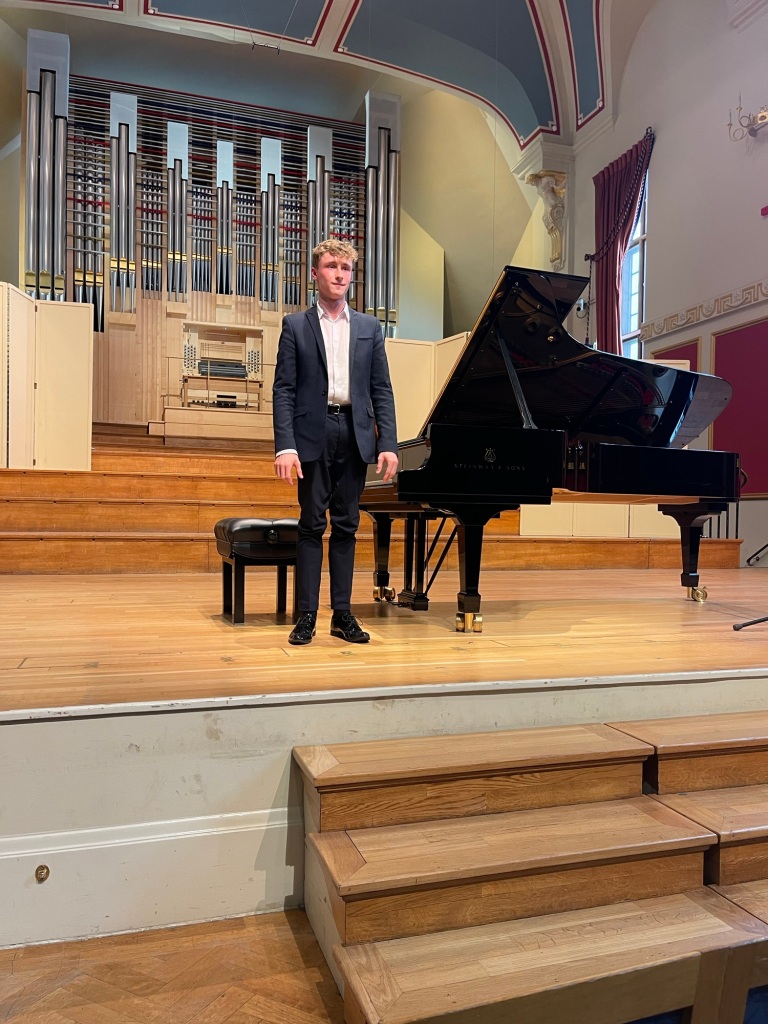
Clara’s Mazurka printed in the 1997 urtext edition of Davidsbundler 

The theme of the Davidsbündlertänze is based on a mazurka by Clara Wieck.The intimate character pieces are his most personal work and in 1838, Schumann told Clara that the Dances contained “many wedding thoughts” and that “the story is an entire Polterabend (German wedding eve party, during which old crockery is smashed to bring good luck)”.

The pieces are not true dances but characteristic pieces, musical dialogues  about contemporary music between Schumann’s characters Florestan and Eusebius. These respectively represent the impetuous and the lyrical, poetic sides of Schumann’s nature. Each piece is ascribed to one or both of them. Their names follow the first piece and the appropriate initial or initials follow each of the others except the sixteenth (which leads directly into the seventeenth, the ascription for which applies to both) and the ninth and eighteenth, which are respectively preceded by the following remarks: “Here Florestan made an end, and his lips quivered painfully”, and “Quite superfluously Eusebius remarked as follows: but all the time great bliss spoke from his eyes.” The suite ends with the striking of twelve low Cs to signify the coming of midnight.

The first edition is prefaced by :

Old saying
In each and every age
joy and sorrow are mingled:
Remain pious in joy,
and be ready for sorrow with courage

The movements are : 

  1. Lebhaft: Lively (Vivace),Florestan and Eusebius;
  2. Innig: Intimately (Con intimo sentimento), , Eusebius;
  3. Etwas hahnbüchen: Somewhat clumsily (Un poco impetuoso) (1st edition), Mit Humor: With humor (Con umore) (2nd edition), Florestan (hahnbüchen, translates as “cockeyed” )
  4. Ungeduldig: Impatiently (Con impazienza), , Florestan;
  5. Einfach: Simply (Semplice), , Eusebius;
  6. Sehr rasch und in sich hinein: Very quickly and inwardly (Molto vivo, con intimo fervore) (1st edition), Sehr rasch: Very quickly(Molto vivo) (2nd edition), , Florestan;
  7. Nicht schnell mit äußerst starker Empfindung: Not fast, with very great feeling (Non presto profondamente espressivo) (1st edition), Nicht schnell: Not fast (Non presto) (2nd edition), Eusebius;
  8. Frisch: Freshly (Con freschezza), Florestan;
  9. No tempo indication (metronome mark of ♩ = 126) (1st edition), Lebhaft: Lively (Vivace) (2nd edition), , Florestan;
  10. Balladenmäßig sehr rasch: Balladically very fast (Alla ballata molto vivo) (1st edition), (“Sehr” and “Molto” capitalized in 2nd edition), (ends major), Florestan;
  11. Einfach: Simply (Semplice), Eusebius;
  12. Mit Humor: With humor (Con umore), Florestan;
  13. Wild und lustig: Wildly and merrily (Selvaggio e gaio), Florestan and Eusebius;
  14. Zart und singend: Tenderly and singing (Dolce e cantando), Eusebius;
  15. Frisch: Freshly (Con freschezza), – Etwas bewegter: With agitation (poco piu mosso),with a return to the opening section (with the option to go round the piece once more), Florestan and Eusebius;
  16. Mit gutem Humor: With good humor (Con buon umore) (in 2nd edition, “Con umore”), – Etwas langsamer: A little slower (Un poco più lento); leading without a break into
  17. Wie aus der Ferne: As if from afar (Come da lontano), (including a full reprise of No. 2), Florestan and Eusebius; and finally,
  18. Nicht schnell: Not fast (Non presto), Eusebius.

Shunta Morimoto takes Hastings by Storm

https://christopheraxworthymusiccommentary.com/2023/06/09/shunta-morimoto-pitti-piano-festival-florence-the-inspired-recreation-of-a-great-artist/

https://christopheraxworthymusiccommentary.com/2023/05/06/shunta-morimotos-all-or-nothing-performance-of-liszt-with-aristocratic-nobility-and-brilliance/

https://christopheraxworthymusiccommentary.com/2024/03/20/christopher-axworthy-dip-ram-aram/

Ariel Lanyi illuminates Richmond Concert Society with the integrity and humility of a great artist

Ariel Lanyi at the Richmond Concert Society playing a very serious programme of just three great works: Beethoven’s Sonata op 109 ,Franck’s Prelude Aria and Final and Reger’s monumental Variations and Fugue on a Theme by Bach .
Last year Alim Beisembayev had given a recital here opening too with late Beethoven, the second of the last trilogy: op 110 .

Alim Beisembayev – The poetic vision of a great artist


Both had made their mark at the a Leeds International Piano Competition and both are revealing themselves to be extraordinary musicians dedicated with selfless humility to serving the composer and following with scrupulous attention the very precise indications that litter the scores of Beethoven.


Ariel is a very intense and dedicated musician following in the footsteps of Rudolf Serkin but he is also a supreme stylist where the composers indications are incorporated into interpretations of ravishing beauty and searing intensity.
I well remember Serkin playing this sonata op 109 as I also remember him as being the only pianist I have encountered that had the courage and conviction to bring Reger into the concert hall


Ariel’s op.109 was like the same apparition of Franck as it wafted into our lives on a magic wave of sounds .
The sounds of Beethoven played with scrupulous attention to not only what the composer marks on the page but more importantly the sounds that must have been in his head at the moment of inspiration.
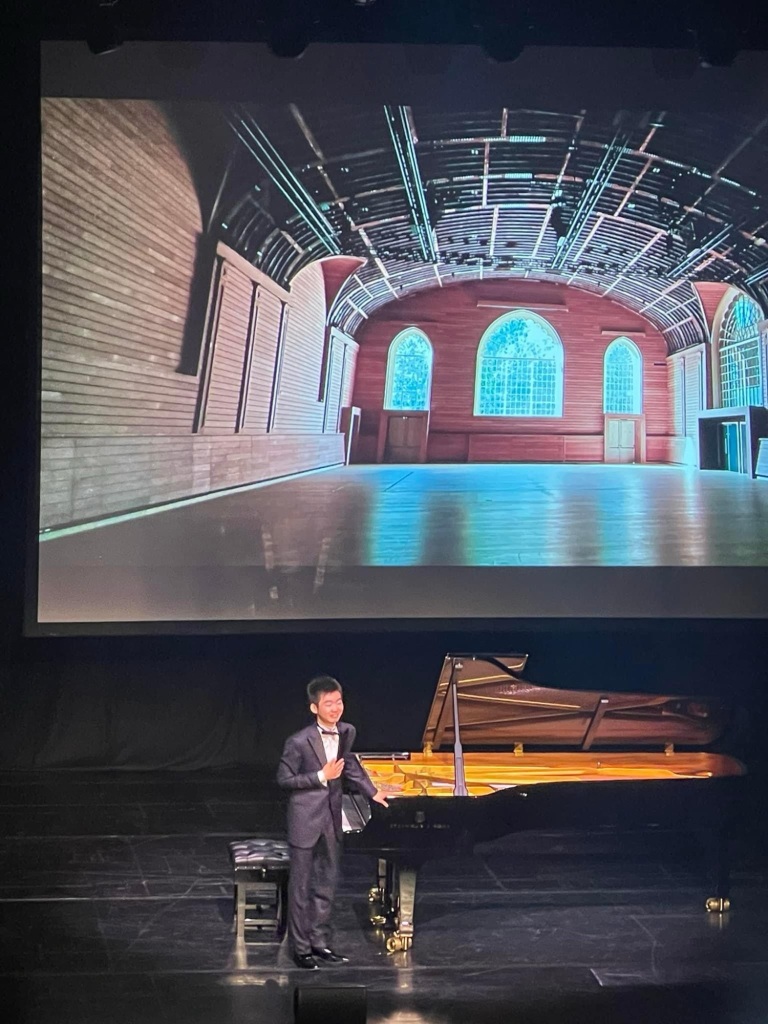
Ariel playing with fervant dedication convinced us that this was the only path he could have taken today. And it was with one breath that he created a halo of sounds that never overstepped their essential place in a jig saw of dynamic drive and ethereal beauty, pulsating rhythmic intensity but also moments of sublime visionary peace.


Franck’s unjustly neglected twin received a performance of overwhelming nobility and the intense beauty of a true believer that one wondered why this was probably one of the all too few times we had heard it in the concert hall.A kaleidoscope of sounds but a masterly architectural control that when he reached the climax it was of such overwhelming sumptuous sounds that it truly was the cry of someone desperately wanting to share the vision of a dedicated believer with us.


Reger’s monumental variations were a tour de force in every possible way.Based on the Aria ‘No one can fathom his omnipotence’ unfolding in mellifluous Brahmsian style.Followed by variations of almost Paganinian complexity thrown off with enviable ease by an artist whose only concern was to find the true meaning behind this complex outpouring of nobility and extraordinary complexity.Starting like Brahms and finishing like Busoni with a fugue where the words knotty twine would be an understatement.Even with all these complexities Ariel played with masterly assurance and searing intensity.I don’t know if Ariel is a true believer but he certainly convinced us tonight that he is blessed by the Gods with a gift to see into the very heart of the music and to be able to transmit it with simplicity and humility.


Even the Chopin Nocturne op posth offered as an encore was played with the same aristocratic love and good taste that he had so generously shared with us all evening.

I have reviewed both the Reger and Franck recently in more detail that can be seen and even heard in the links below.

https://christopheraxworthymusiccommentary.com/2023/09/06/ariel-lanyi-at-st-marys-simple-pure-beethoven-and-monumental-reger-a-new-serkin-is-in-our-midst/

But Ariel is a great artist where there are no printed pages but every performances is a vibrant discovery and rejoicing that makes live performance still so essential in these days of instant communications.

https://christopheraxworthymusiccommentary.com/2022/05/02/ariel-lanyi-the-simplicity-and-poetry-of-a-great-musician-at-st-marys/

It was Mitsuko Uchida who very wisely said when asked if photos or recording could be taken from her live performances .She simply exclaimed with her penetrating directness that a performance should remain a memory that grows and glows in the memory and not just a printed picture of a moment that with time will fade! As always so perceptive and right.

https://christopheraxworthymusiccommentary.com/2023/09/06/ariel-lanyi-at-st-marys-simple-pure-beethoven-and-monumental-reger-a-new-serkin-is-in-our-midst/

https://christopheraxworthymusiccommentary.com/2024/03/20/christopher-axworthy-dip-ram-aram/

Beatrice and Eleonora Dallagnese in Viterbo.Mastery and Musicianship with a duo that plays as one

https://www.youtube.com/live/j6Y8kTk9DzU?feature=shared

A quite extraordinary recital from these identical twins.To say they play as one would be too obvious but their sense of ensemble and musical understanding are so remarkable that there really is an alchemy that is their birthright. These two beautiful young ladies sit bolt upright listening to each other and without the score create a kaleidoscope of sounds as they truly play as one.

https://bedallagnese.com/

There was a fluidity and clarity to the opening of the Respighi and even the nursery rhymes quoted never interrupted the continual flow as they depicted these vivid ‘Pines of Rome’ with the same colours and excitement as an orchestra.Playing of mastery and breathtaking technical prowess.Even the deep meditative sounds and evocative bird calls showed a masterly control of the pedal as they listened so attentively to the overall line they were creating together with a deep concentration that seemed to exclude any physical movement.

Swopping over for the Schubert but I have no idea who is who but I do know that the Schubert was of sublime beauty and sensitivity with the same perfect ensemble. An architectural understanding that held this long sonata movement as one glorious whole where the change to the major towards the end showed so poignantly Schubert’s sublime outpouring of mellifluous beauty. Pianississimo that was truly that and forte that was always with the long musical line in mind as they created a complete musical whole of great power and beauty.

No change over for the Stravinsky that was given a quite remarkable performance and it is the first time I have heard it in this four hand version.There was all the vivid characterisation and sudden dynamic outbursts .The excitement they generated with the ‘Shrove Fair’ was the same they had shown at the end of the Respighi and it was breathtaking in it’s tonal control and gradual building of excitement.

A quite remarkable duo and the only other team I know that play the four hand – two piano repertoire without the score are the Jussen brothers – not twins but obviously something in their genes like the two young ladies today.

A beautiful Brahms waltz was offered as an encore and just showed their refined sense colour and stylistic mastery .

Beatrice and Eleonora Dallagnese began studying the
piano at the age of 4 under the guidance of M° Eleonora Mometti.

Their parents still recall the twin’s first recital with emotion: “Two pianists who played with their feet dangling because they couldn’t reach the floor”. From that first performance, Beatrice and Eleonora Dallagnese embarked on a path that to date has led to them being recognized as among the leading Italian female pianists, and seeing them perform in some of the most prestigious theatres.

From playing their very first notes, thanks to the intuition of their teachers, they began to develop their distinctive technique as a duo that today places them among the leading Italian classical pianists. A technique which over time they have refined and perfected through the symbiosis so common to twins, whilst not detracting from their differences.

In 2015, they joined the International Piano Academy “Incontri con il Maestro” in Imola, founded by M° Franco Scala. They were instructed in piano by M° Stefano Fiuzzi and M° Ingrid Fliter, and by M° Nazzareno Carusi for their chamber music class. The educational path undertaken by Beatrice and Eleonora has allowed them to grow professionally with an international vision.

They continue their studies with M° Ingrid Fliter and M° Boris Petrushansky, whilst from 2015 also taking classes with M° Alberto Nosé.

In 2018 they graduated from the “C. Pollini ” Conservatory of Padua, both with full marks, praise and special mention.


Franz Peter Schubert
31 January 1797, Himmelpfortgrund,Vienna
Died: 19 November 1828 (age 31 years), Vienna

The Allegro in A minor, D947 and the Rondo in A major, D951 were written in May and June 1828 respectively, and may well have been intended to form a two-movement sonata along the lines of Beethoven’s E minor Sonata Op 90. Rondo was published in December 1828, less than a month after Schubert died, but its A minor companion-piece did not see the light of day until 1840, when Anton Diabelli issued it under the heading of Lebensstürme (‘The storms of life)

Franz Schubert was one of the most prolific composers of ensemble piano music, and the Allegro in A Minor, Op. 144, demonstrates his mastery at writing for one piano, four hands. This large and passionate work was composed in 1828, the year of Schuberts death. It is written in sonata-allegro form and may have been intended as the first movement of a sonata. It was first published by Anton Diabelli in 1840 with the title Lebensstürme: Characterischeres Allegro (Lifes Storms: Characteristic Allegro). The Allegro makes extensive use of chromaticism, Neapolitan sixth chords, and contrasts of moods.


Ottorino Respighi 
9 July 1879 Bologna , Italy. 18 April 1936 (aged 56). Rome, Italy

Pines of Rome (Pini di Roma), P 141 is a tone poem in four movements for orchestra completed in 1924 and is the second of his three tone poems about Rome following Fontane di Roma (1916) and preceding Feste Romane  (1928) He completed I Pini di Roma in the summer of 1924, after he had “conceived, started and restarted” work on the piece in the course of several years. Having relocated from his hometown of Bologna to Rome in 1913, Respighi said that the city’s “marvellous fountains” and “umbrella-like pines that appear in every part of the horizon” were two characteristics that “[have] spoken to my imagination above all”.This influence resulted in the first of his three tone poems about Rome, the Fontane di Roma  (1916), which brought him international fame.

The piece consists of four movements, for which Respighi wrote programmatic notes describing each scene:

  1. “I pini di Villa Borghese” (“The Pines of the Villa Borghese”) – Allegretto vivace This movement portrays children playing by the pine trees in the Villa Borghese gardens , dancing the Italian equivalent of the nursery rhyme “Ring a Ring o’Roses”and “mimicking marching soldiers and battles; twittering and shrieking like swallows”.[
  2. “Pini presso una catacomba” (“Pines Near a Catacomb”) – Lento In the second movement, the children suddenly disappear and shadows of pine trees that overhang the entrance of a Roman catacomb dominate.It is a majestic dirge, conjuring up the picture of a solitary chapel in the deserted Campagna; open land, with a few pine trees silhouetted against the sky. A hymn is heard (specifically the Kyrie ad libitum 1, Clemens Rector; and the Sanctus from Mass IX, Cum jubilo), the sound rising and sinking again into some sort of catacomb, the cavern in which the dead are immured. An offstage trumpet plays the Sanctus hymn. Lower orchestral instruments, plus the organ pedal at 16′ and 32′ pitch, suggest the subterranean nature of the catacombs, while the trombones and horns represent priests chanting.
  3. “I pini del Gianicolo” (“The Pines of the Janiculum”) – Lento The third is a nocturne set on the Janiculum Hill  and a full moon shining on the pines that grow on it. Respighi called for the clarinet solo at the beginning to be played “come in sogno”(“As if in a dream”).The movement is known for the sound of a nightingale  that Respighi requested to be played on a phonograph  during its ending, which was considered innovative for its time and the first such instance in music. In the original score, Respighi calls for a specific gramophone record to be played–“Il canto dell’Usignolo” (“Song of a Nightingale, No. 2”) from disc No. R. 6105, the Italian pressing of the disc released across Europe by the Gramophone Record label between 1911 and 1913.[8] The original pressing was released in Germany in 1910, and was recorded by Karl Reich and Franz Hampe. It is the first ever commercial recording of a live bird.Respighi also called for the disc to be played on a Brunswick Panatrope  record player. 
  4. “I pini della via Appia” (“The Pines of the Appian Way”) – Tempo di marcia Respighi recalls the past glories of the Roman Empire in a representation of dawn on the great military road leading into Rome. The final movement portrays pine trees along the Appian Way in the misty dawn, as a triumphant legion  advances along the road in the brilliance of the newly-rising sun. Respighi wanted the ground to tremble under the footsteps of his army and he instructs the organ to play bottom B♭ on the 8′, 16′ and 32′ organ pedals. The score calls for six buccine  – ancient circular trumpets that are usually represented by modern flugelhorns , and which are sometimes played offstage. 


Igor Fyodorovich Stravinsky 17 June 1882 St Petersburg – 6 April 1971 New York was a Russian composer and conductor with French citizenship (from 1934) and United States citizenship (from 1945). 
Stravinsky as drawn by Picasso  in 1920

The meeting of Diaghilev and Stravinsky was inspired by a performance of the latter playing his piano version of Fireworks in 1909. Diaghilev commissioned him to write The Firebird, and although Stravinsky was 27 and unknown at this time, he still possessed the chutzpah to verbalize his reluctance to compose within constraints or to collaborate with set designer Alexandre Benois and choreographer Mikhail Fokine.

The Firebird, of course, was a huge success. But it was their second collaboration – Petrushka – that brought the pair its first multimedia success and freed Stravinsky to put his own stamp on Parisian musical life.

Unlike The Firebird, the idea for Petrushka was Stravinsky’s own. It had haunted him during the final weeks of revisions for Firebird, and when the project was finished he threw himself into the first sketches. Stravinsky wrote to his mother: “…my Petrushka is turning out each day completely new and there are new disagreeable traits in his character, but he delights me because he is absolutely devoid of hypocrisy.” Petrushka is a descendant of the commedia dell’arte Pulcinella, a clown representing the trickster archetype. He is playful, quarrelsome, mercurial, antiauthoritarian, naughty, but of course indestructible, which is the reason for his appeal. Other characters evolved: the Blackamoor, Petrushka’s nemesis and eventual murderer; the Ballerina, a Ballets Russes version of the commedia dell’arte Columbine – pretty, flirtatious, shallow, irresistible; and the Magician, who reveals Petrushka’s immortality.

The concert version of Petrushka comprises four tableaux – imagine scenes from a storybook come to life. The first tableau depicts the last days of Carnival, 1830, Admiralty Square, old St. Petersburg.

First tableau: The Shrovetide Fair the music opens with a bustling fair day: crowds and glittering attractions everywhere reflected in the constantly shifting rhythms and harmonies, and in orchestration that alternates and ultimately merges high winds and bell-like tones in piano with thrusting low strings, erupting into a fantastic, oddly accented full-orchestra fiesta. Two drummers appear outside a puppet theater, and a drum roll (a connecting device that runs throughout the work) knocks the crowd into pregnant silence. The Magican appears to the mesmerizing twists and turns of the orchestra, featuring an undulating, almost lurching, flute solo, and the sinister spell is cast. Petrushka is introduced with the other major connective device of the work: the “Petrushka Chord,” a tone cluster made of the major triads of C and F-sharp that weaves the work together both harmonically and melodically. Here we also meet the Ballerina and the Blackamoor, and the three together do a warped, angular, yet still quite folksy Russian dance.

Second tableau: Petrushka’s Room evokes Petrushka alone in a gloomy cell. Piano arpeggios accompany the puppet’s dreaming of freedom, which escalates to enraged cries in the trumpets and trombones. Solo flute re-enters with a flirty little tune, shifting the mood to portray the Ballerina, whom Petrushka loves. She will tease, but of course wants nothing to do with him.

Third tableau: The Moor’s Room Who the Ballerina really wants is the Blackamoor, the bad boy who is the center of the third tableau. A clumsy, banal tune played by solo winds and pizzicato strings, all sounding slightly out of sync with each other, accompanies their lovemaking. Petrushka crashes the party, and the Blackamoor chases him into the crowd.

Fourth tableau: The Shrovetide Fair (Toward Evening) after the music of the fair scene, the Blackamoor pursues Petrushka and murders him. The Magician realizes that Petrushka is a puppet, and when Petrushka’s ghost appears the Magician runs away scared; the recurring “Petrushka chord” gives the last laugh. Stravinsky later said he was “more proud of these last pages than of anything else in the score.”

Petrushka opened on June 13, 1911, at the Théâtre du Châtelet in Paris to overwhelming success. Conducted by Pierre Monteux, then 36, the performance was praised as a feat of sophisticated, intellectual theatrical folklorism.

During rehearsals for the 1911 premiere, Stravinsky and other pianists including Russian composer Nikolai Tcherepnin used a piano four hand  version of the score. This has never been published, although Paul Jacobs and Ursula Oppens , among other pianists, have played it in concert.

In 1921, Stravinsky created a virtuosic and celebrated piano arrangement for Artur Rubinstein Trois mouvements de Patrouchka, which the composer admitted he could not play himself, for want of adequate left-hand technique.

Cremona Musica ….2023 Day 2 Angelo Fabbrini the crowned Prince of Cremona