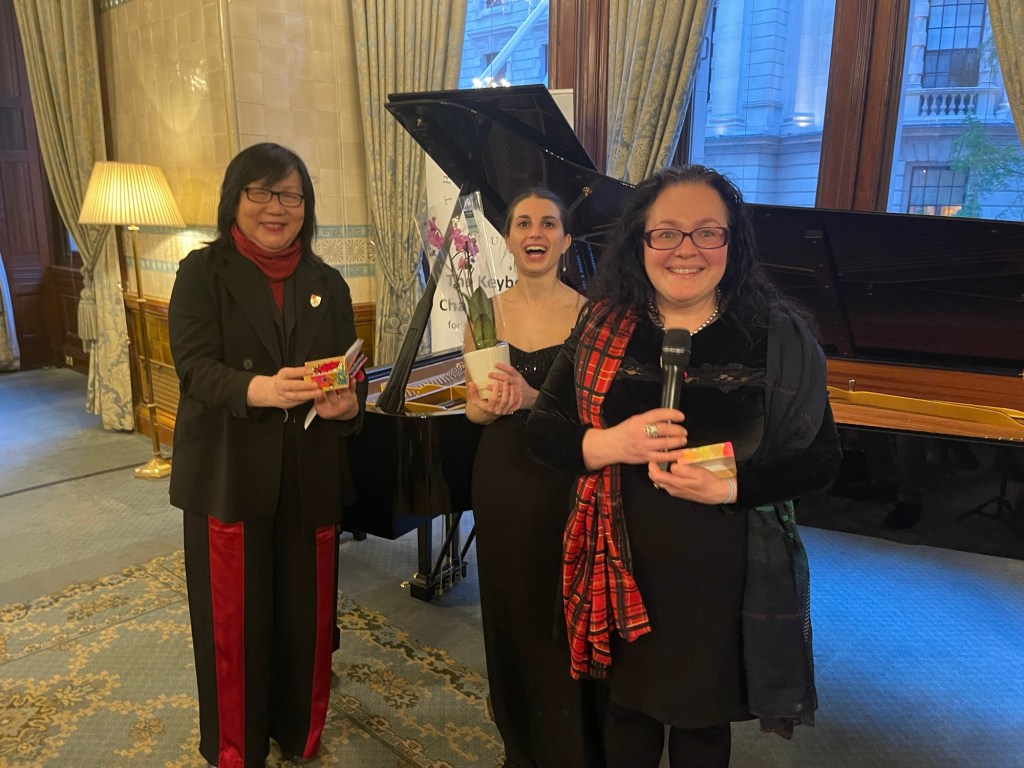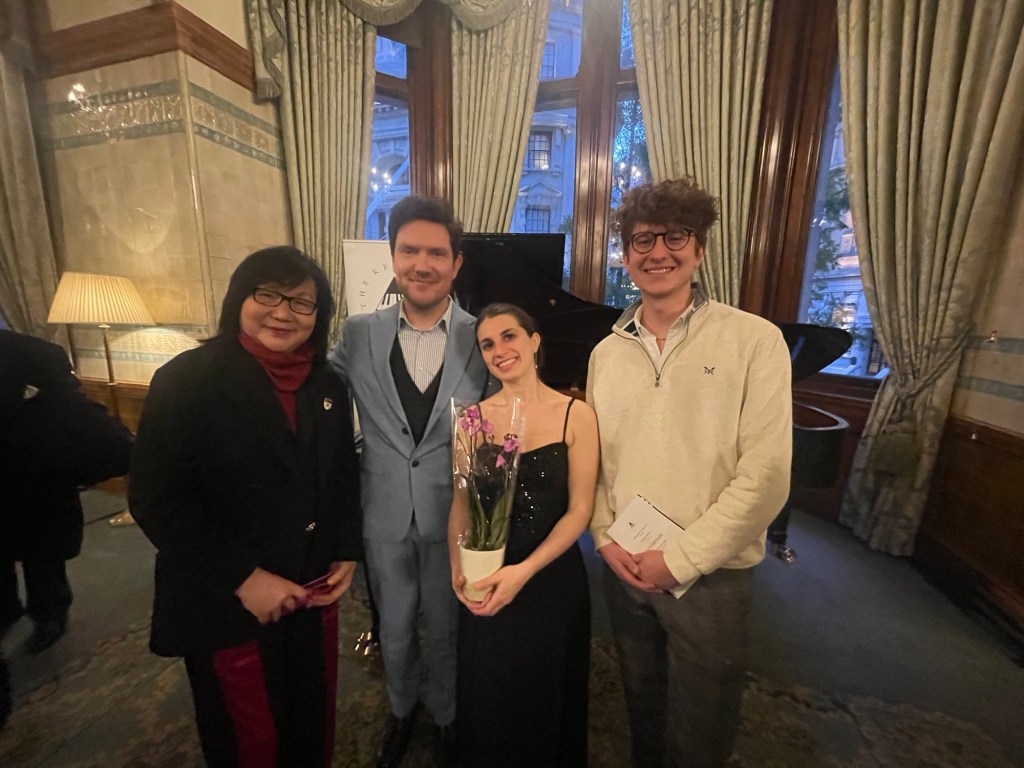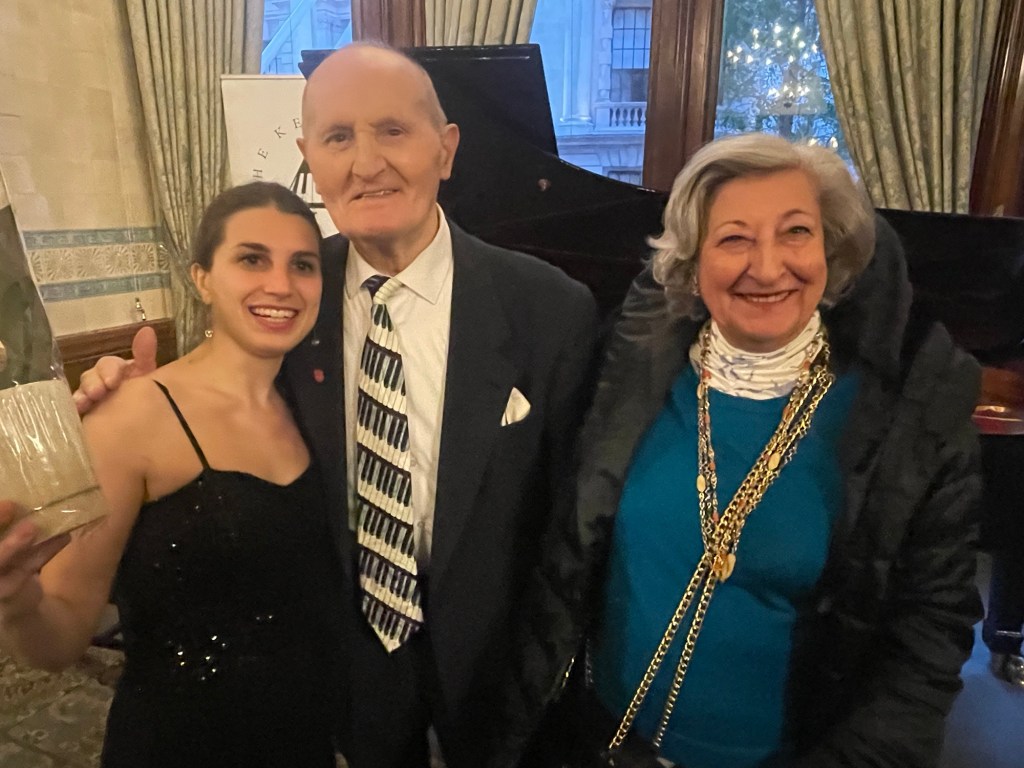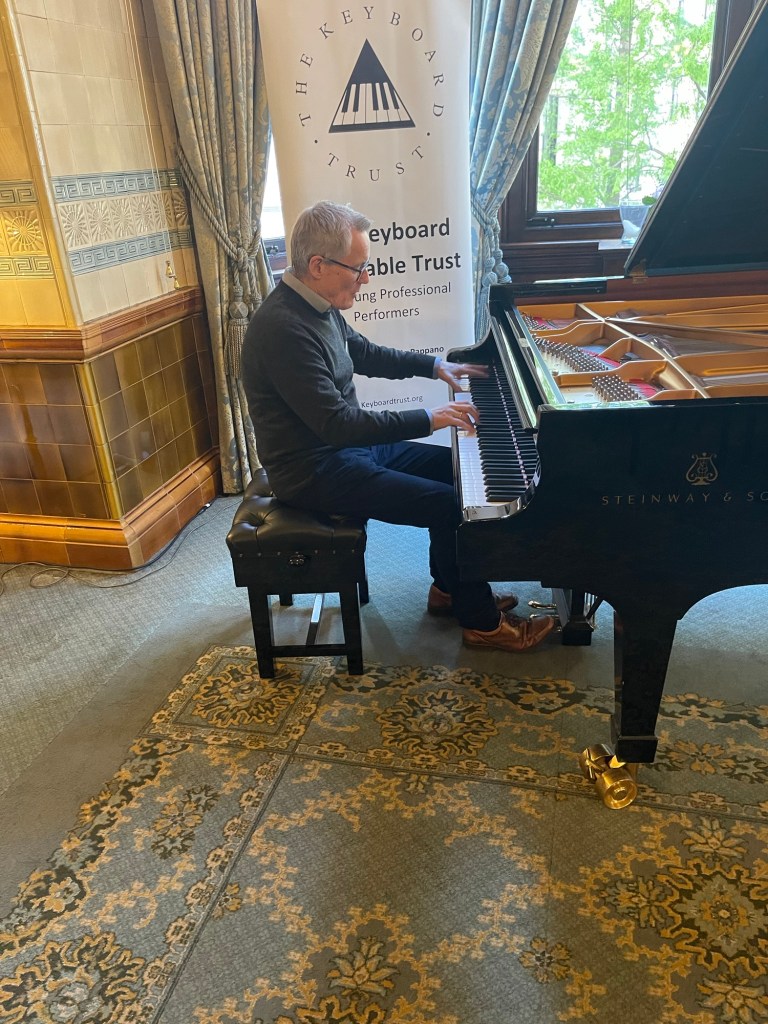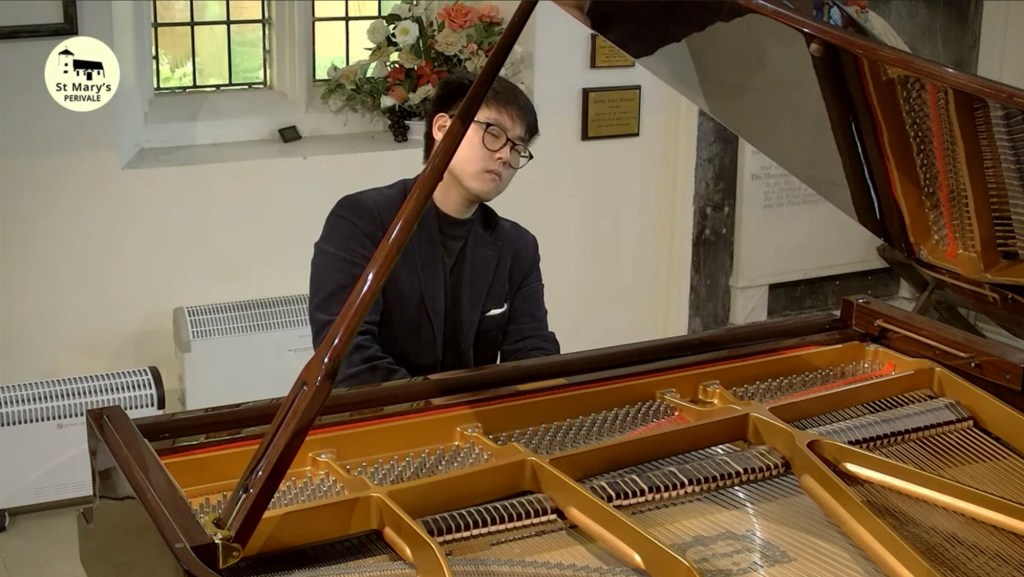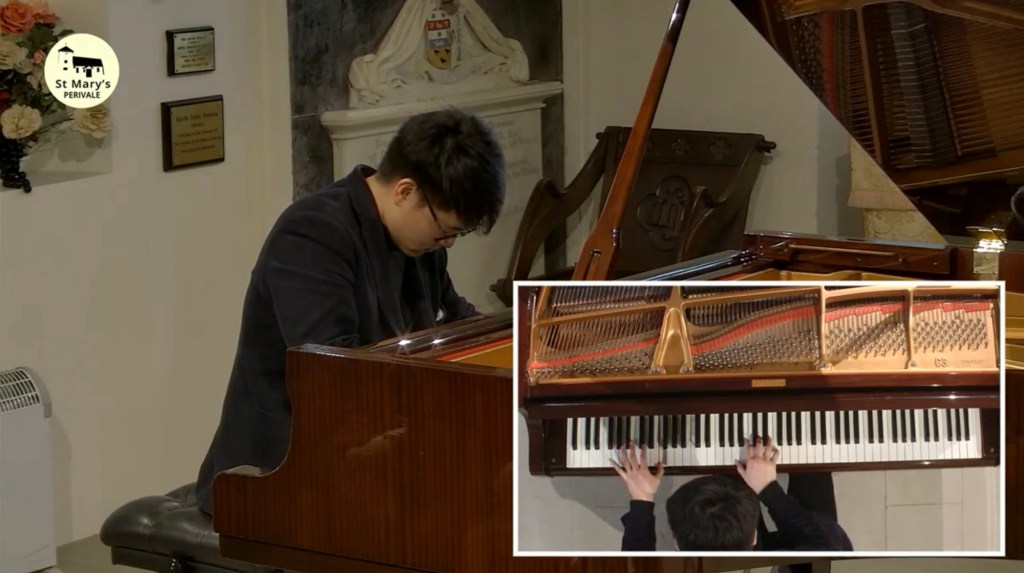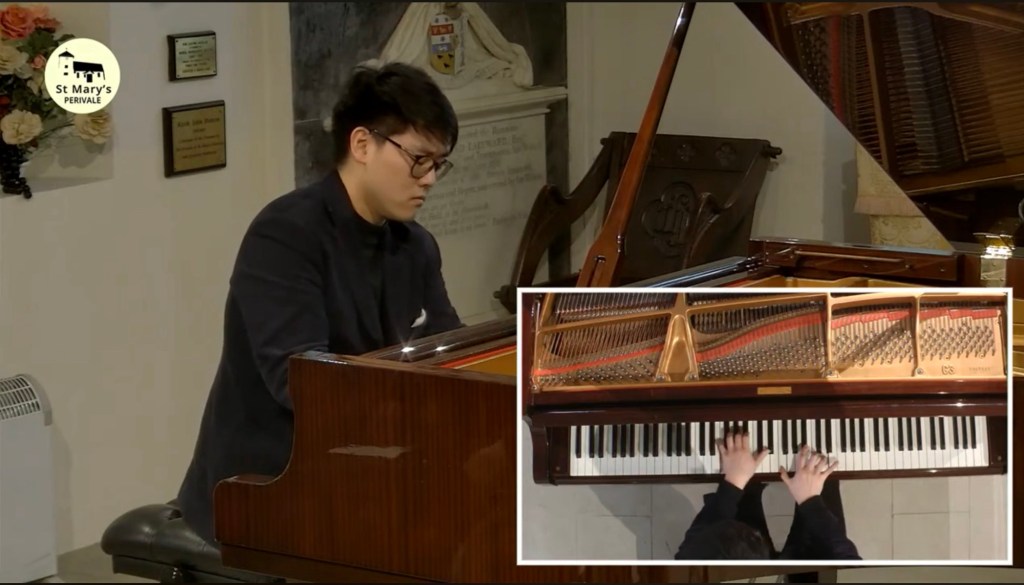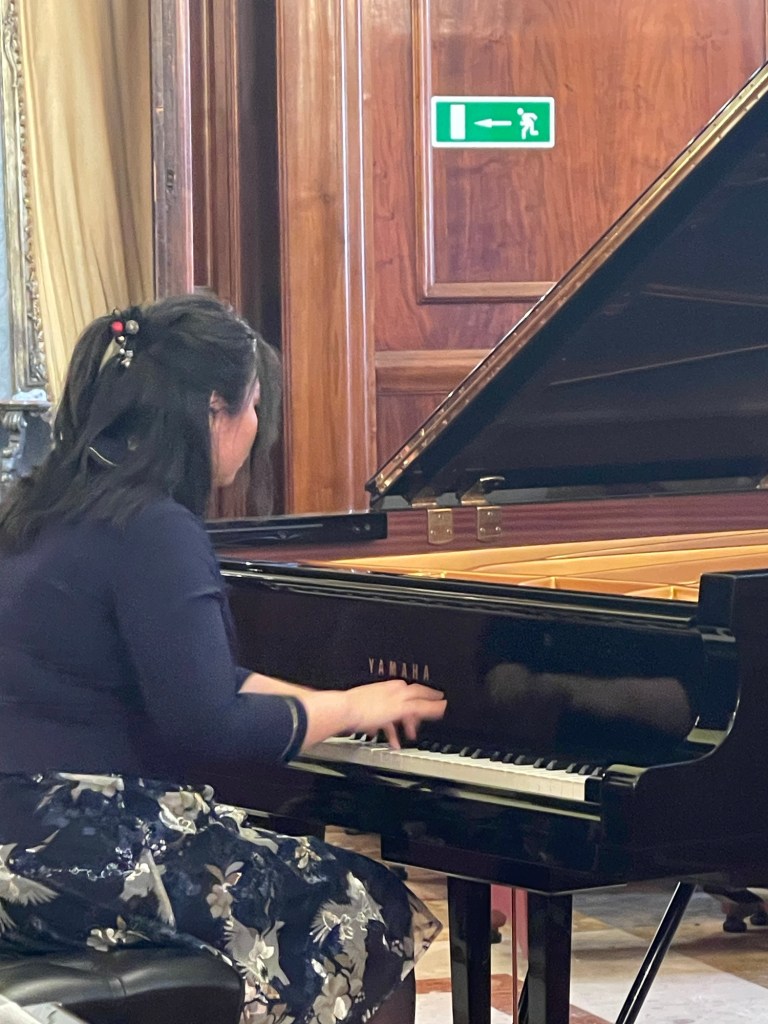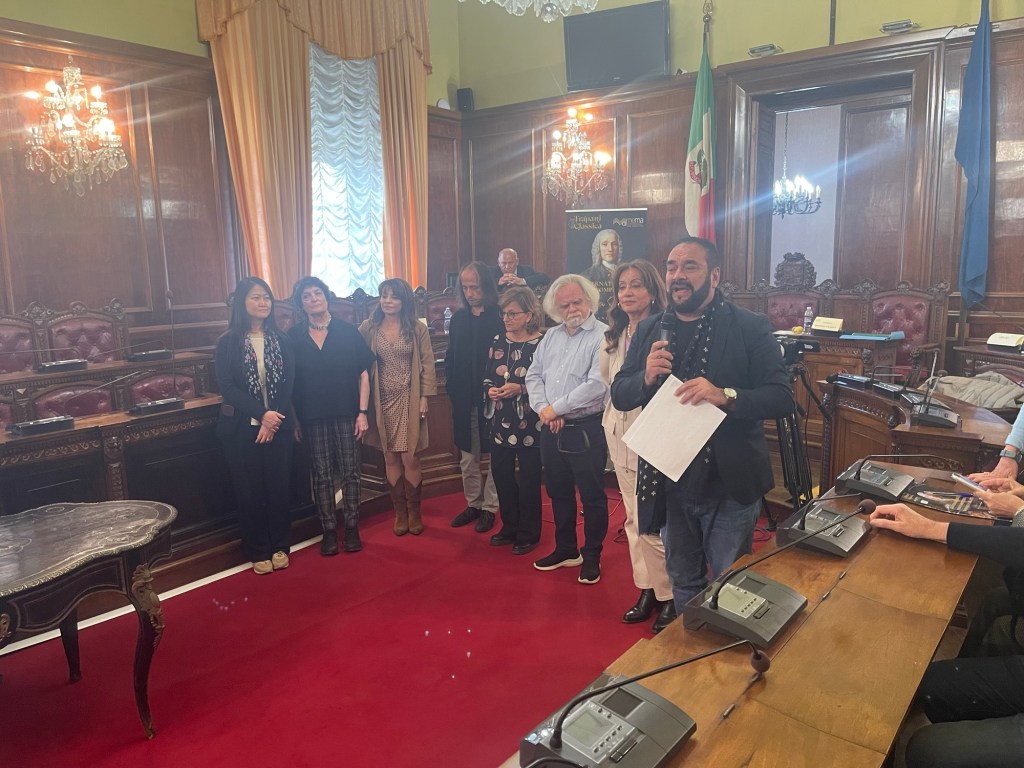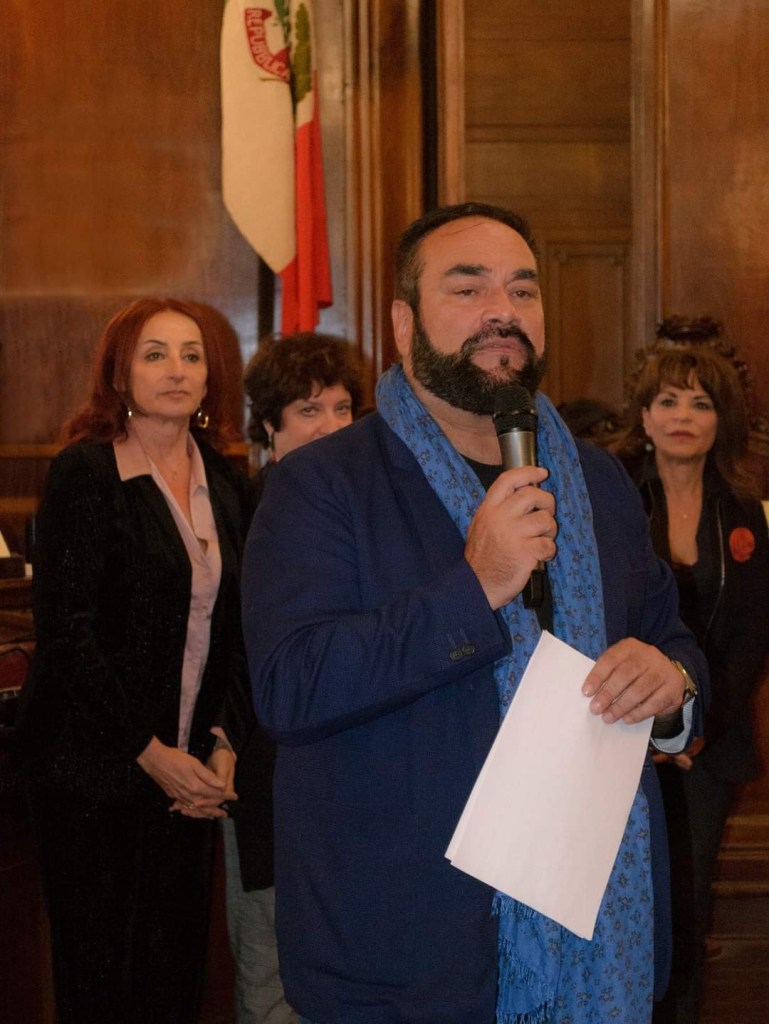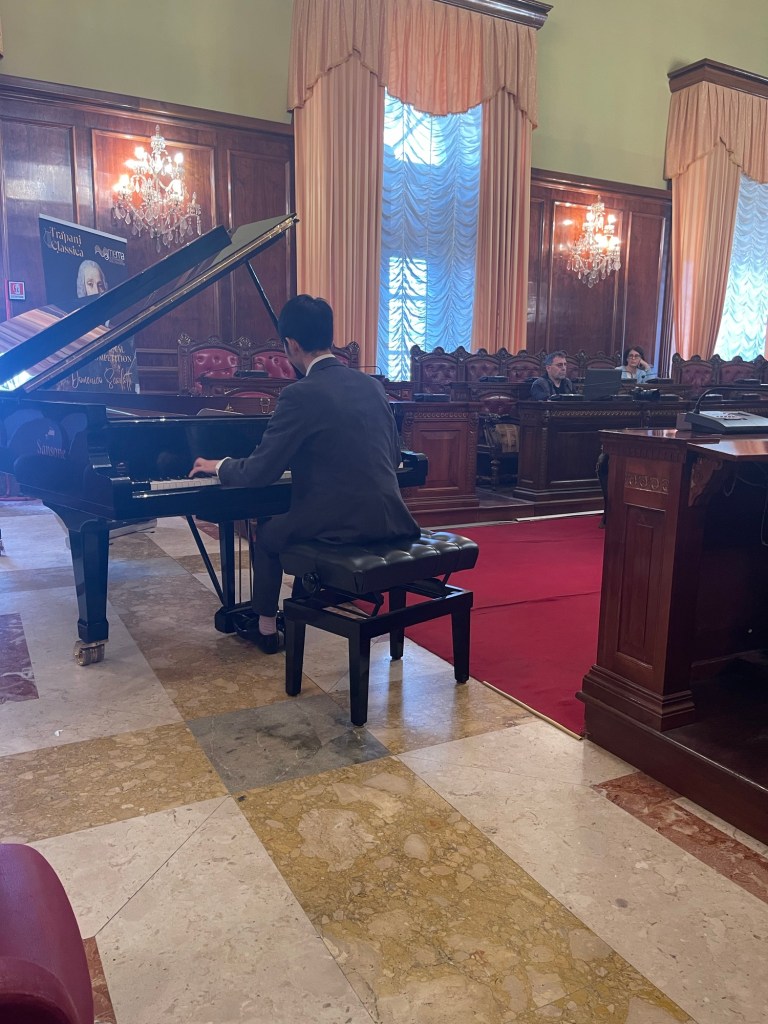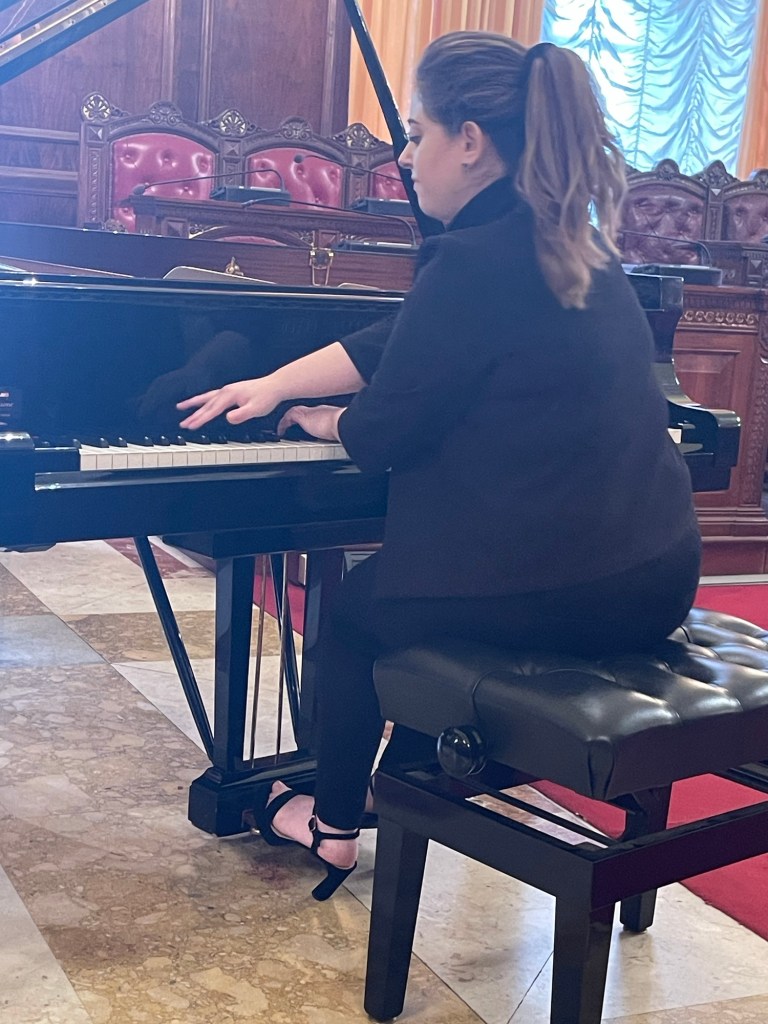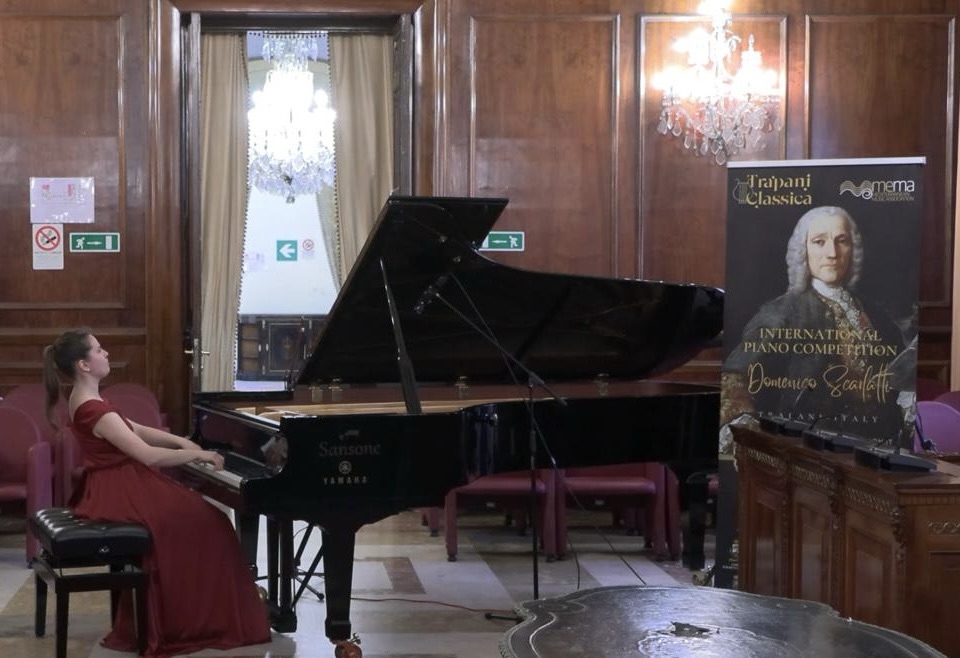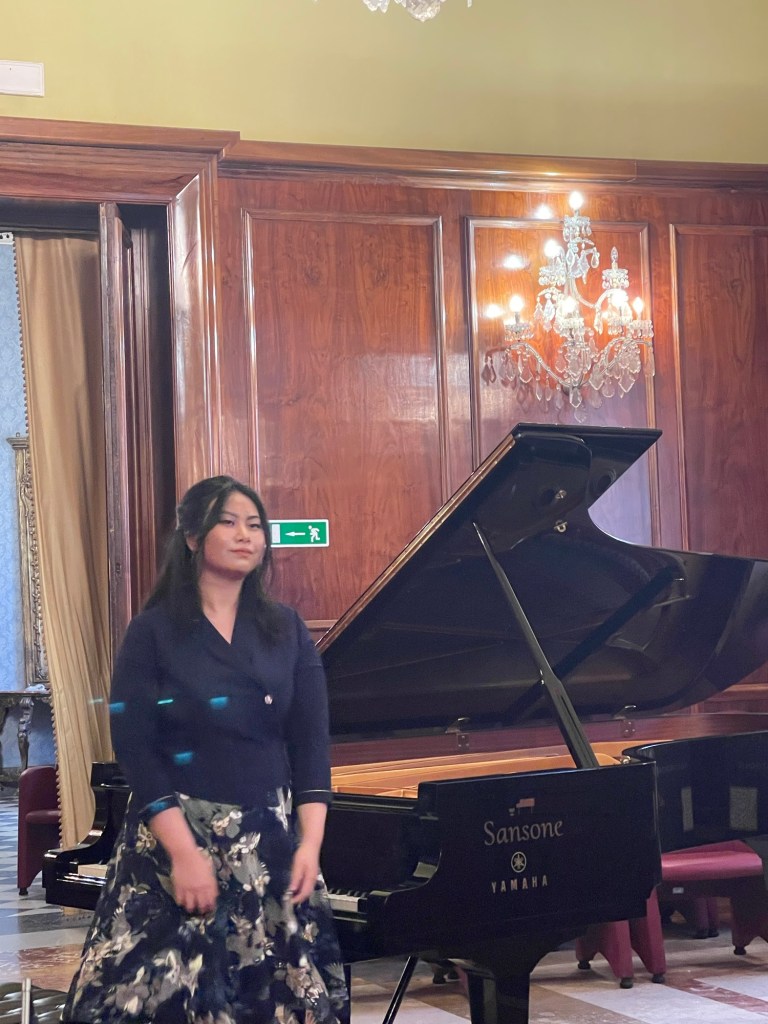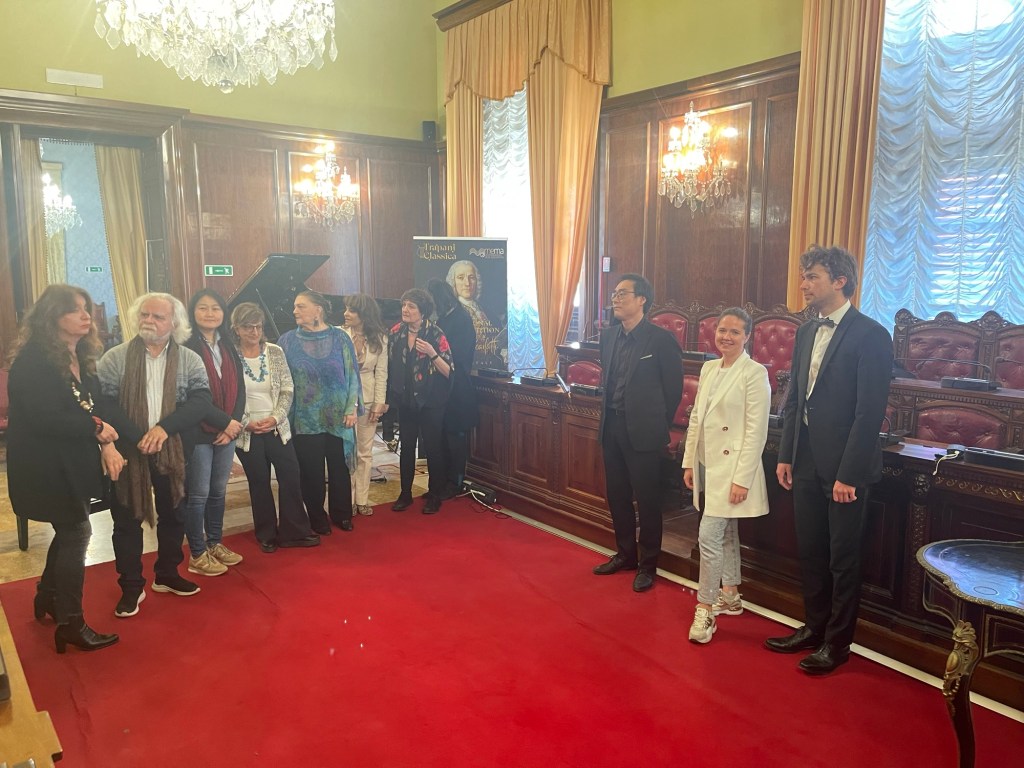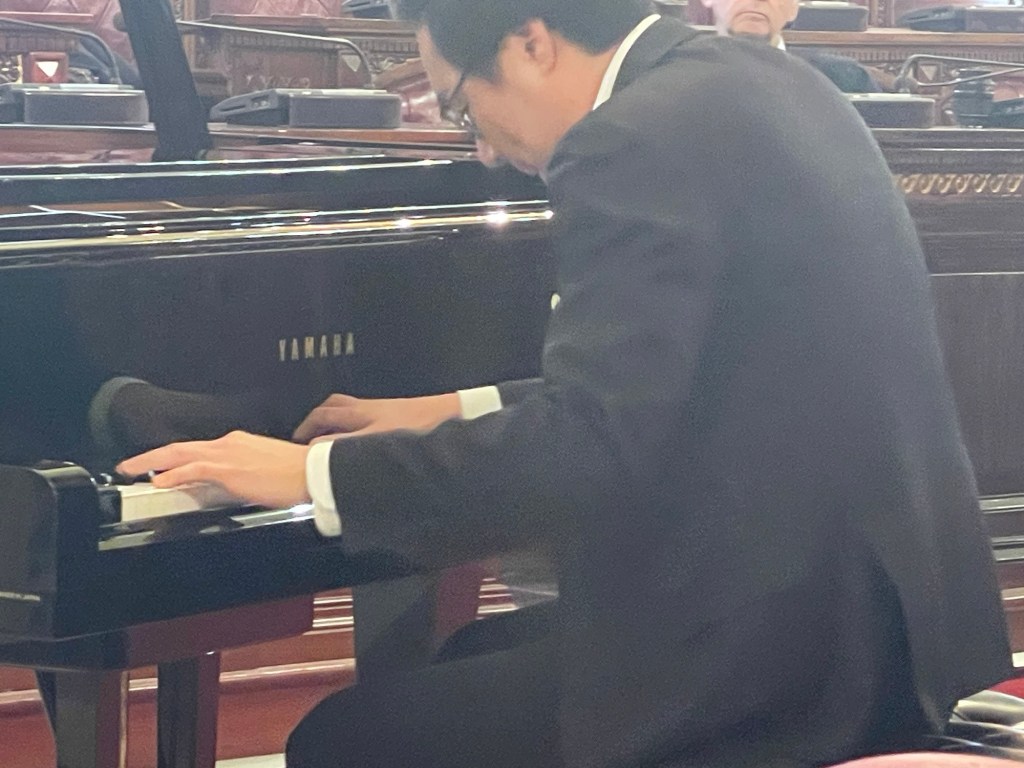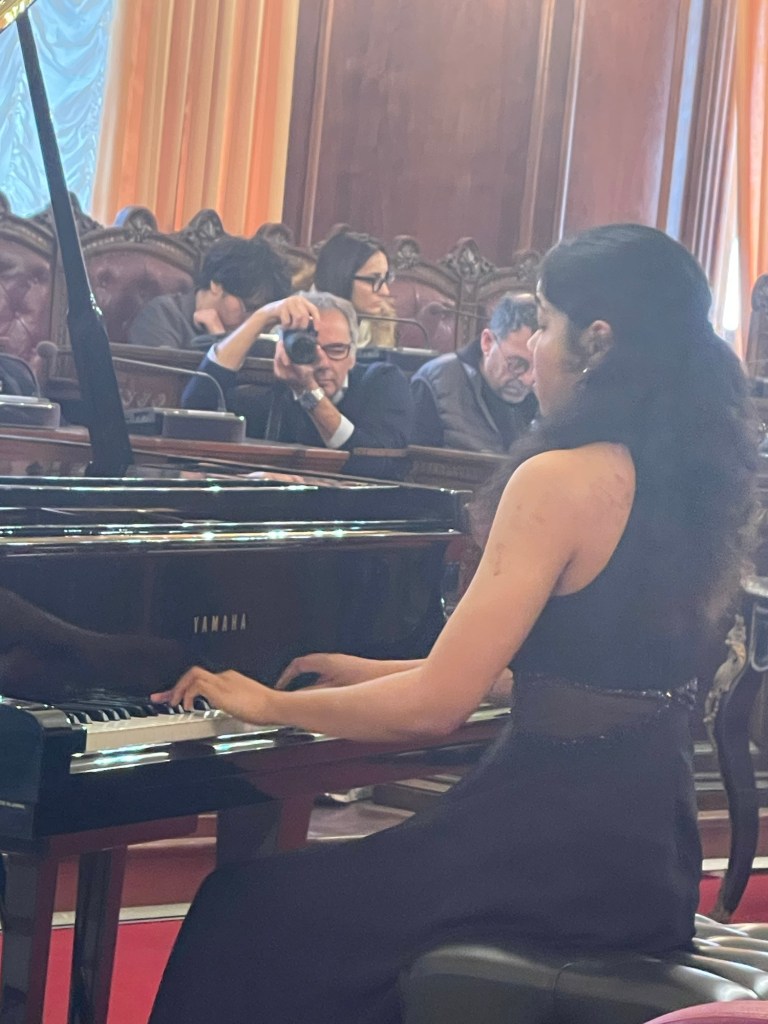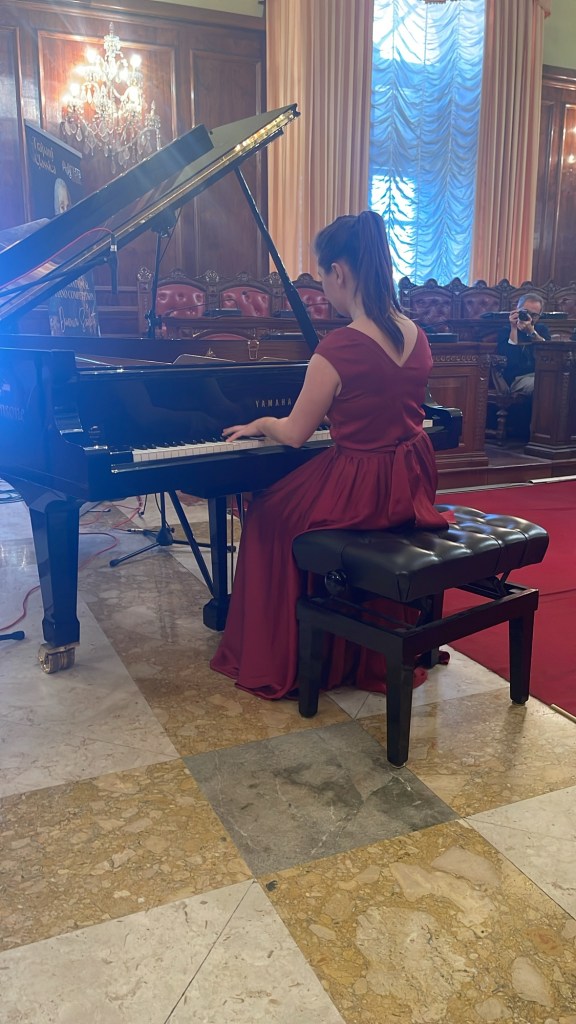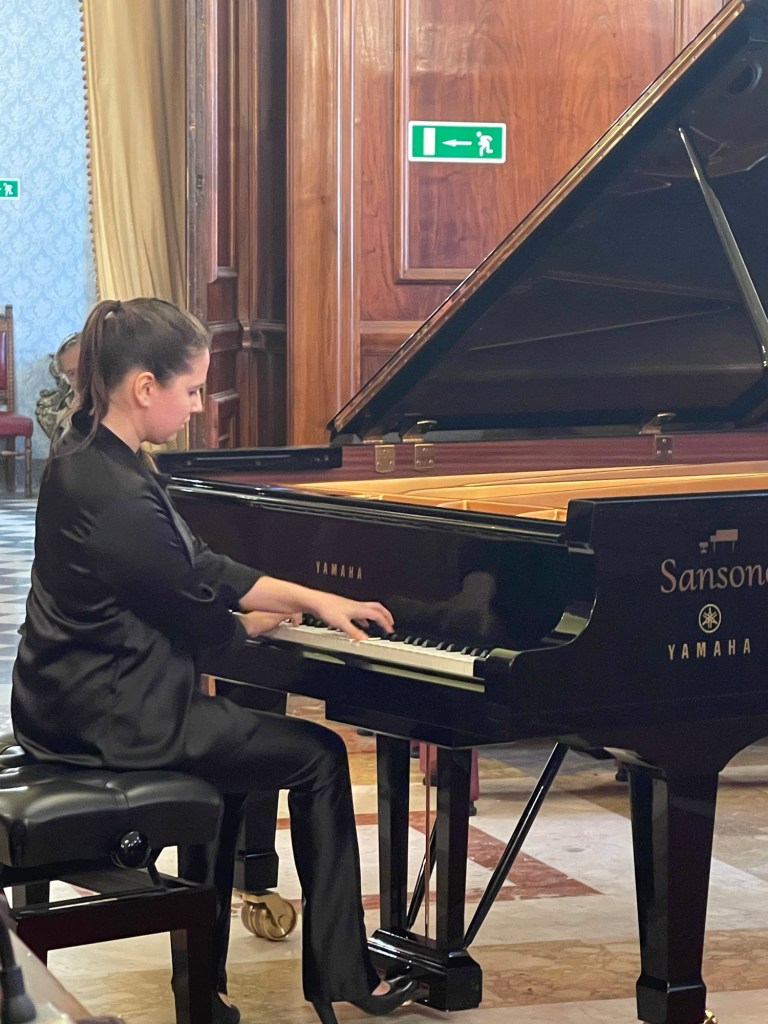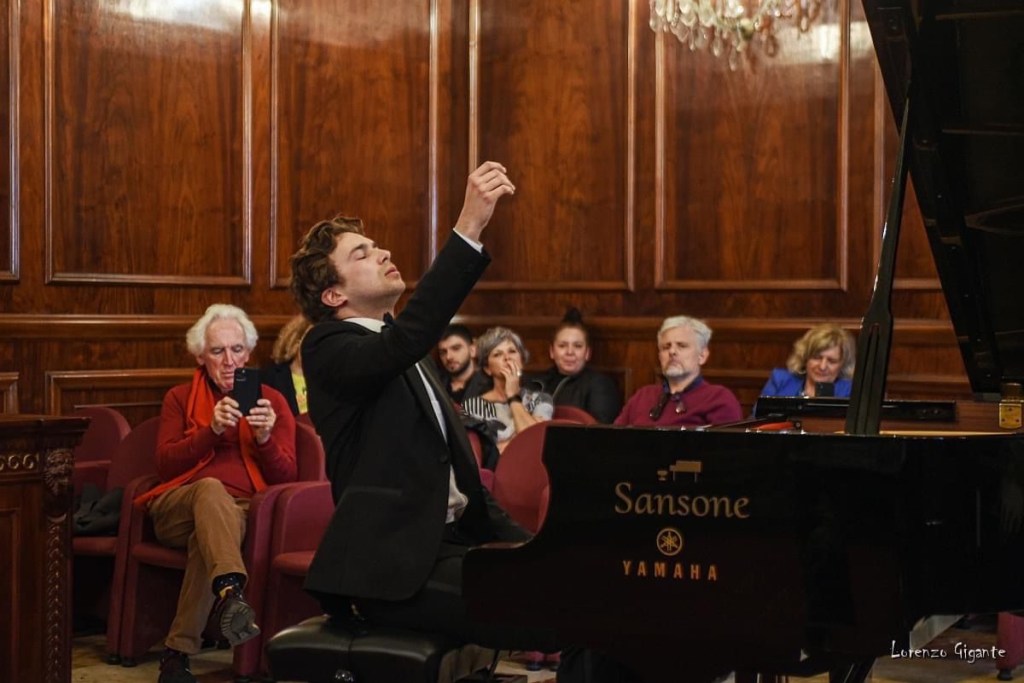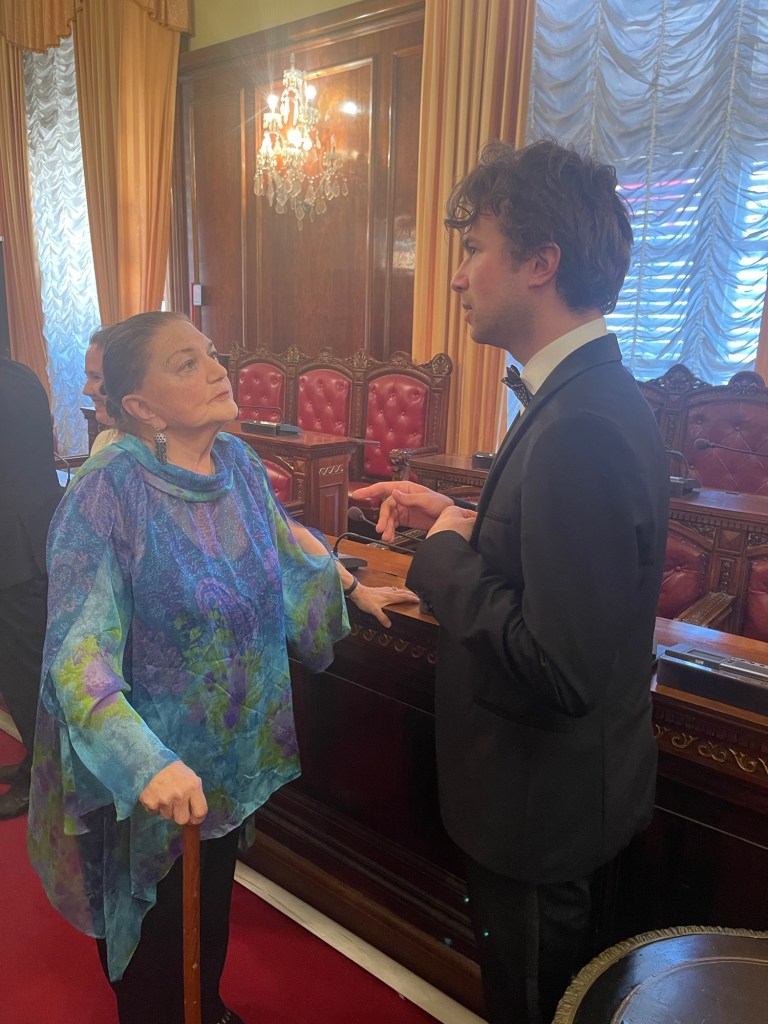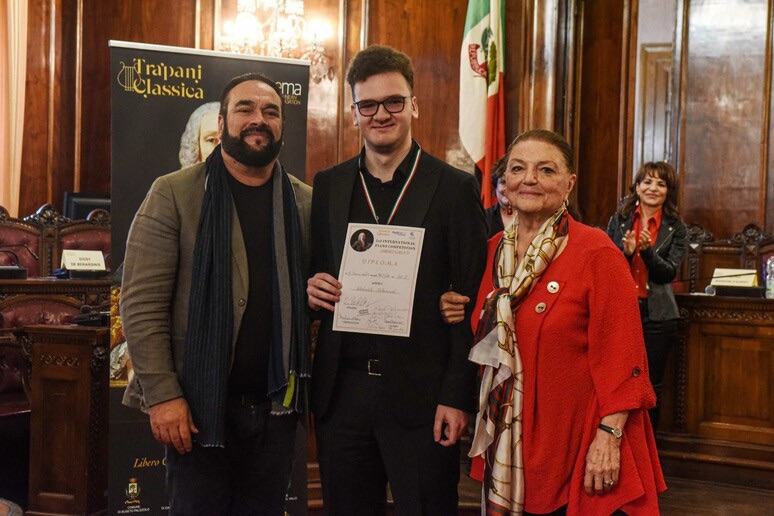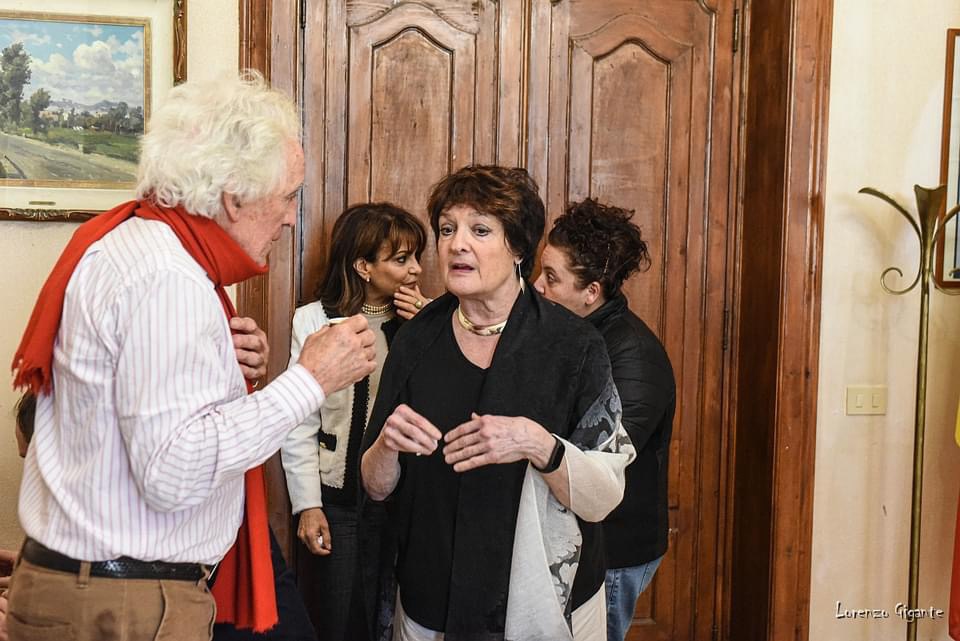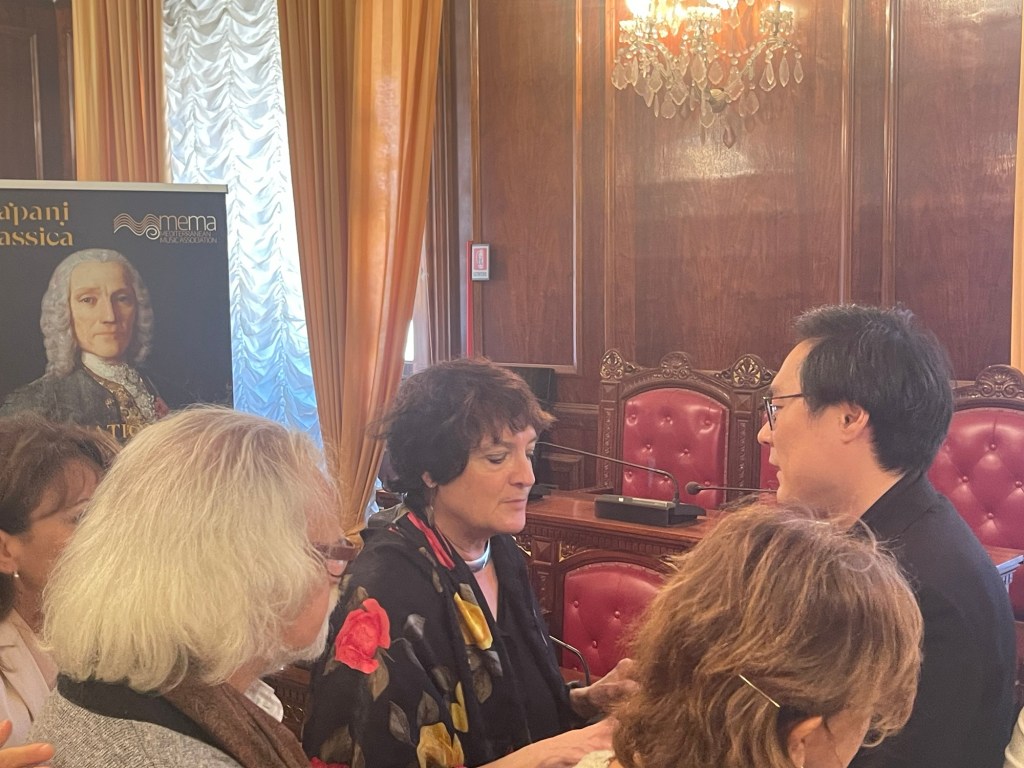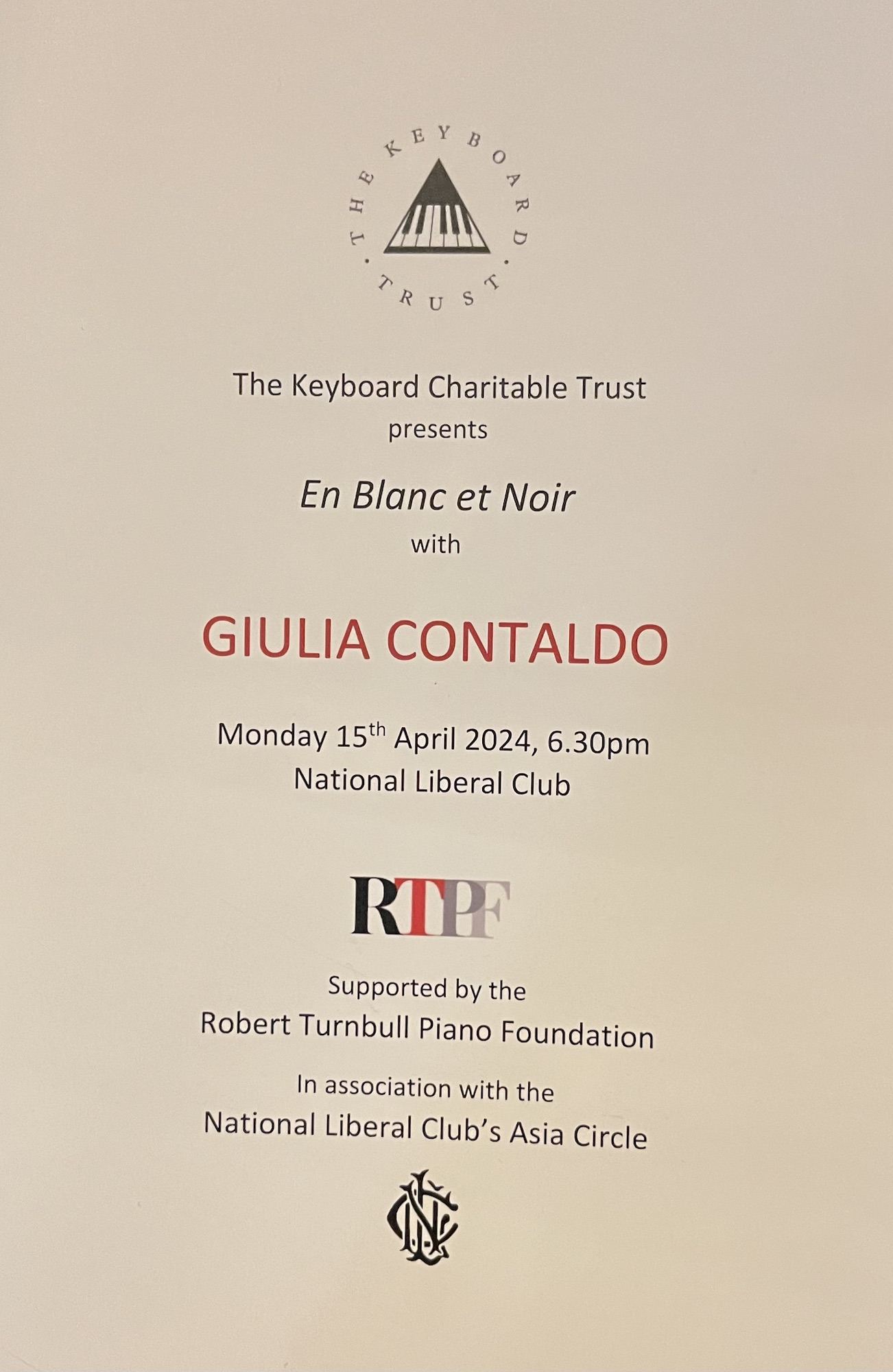
Giulia Contaldo at the National Liberal Club ‘Mind and heart at the service of the music ‘

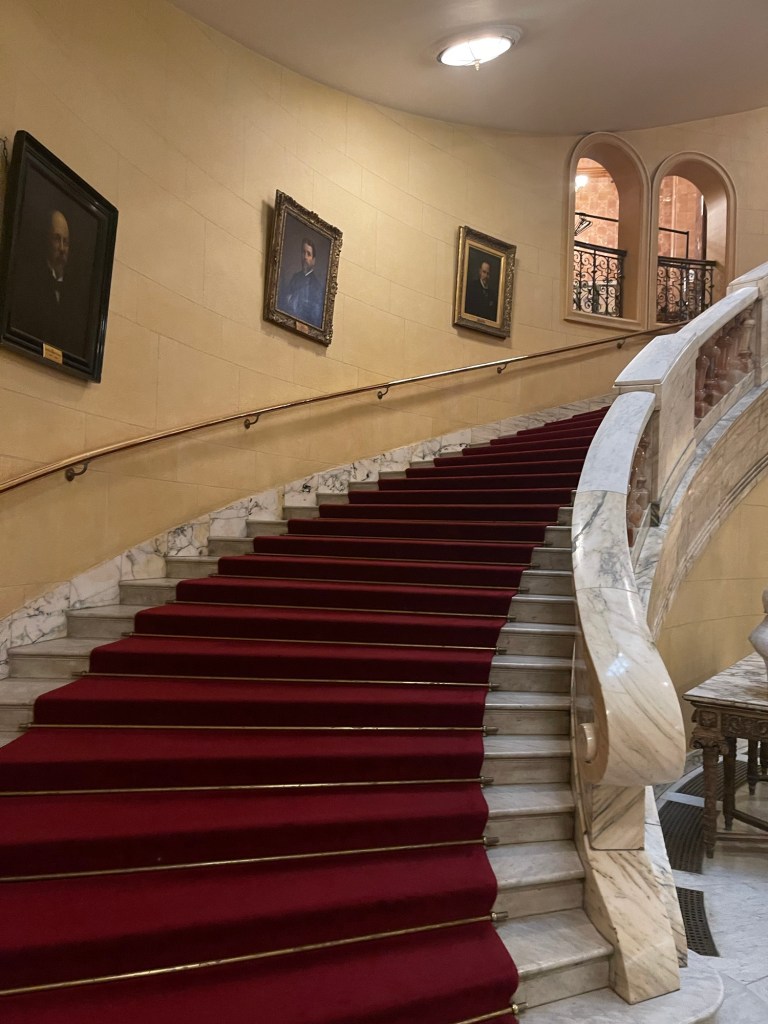
The great staircase leading to the Lloyd George Music Room
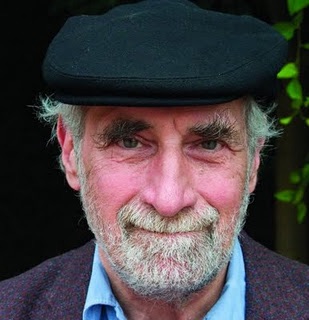
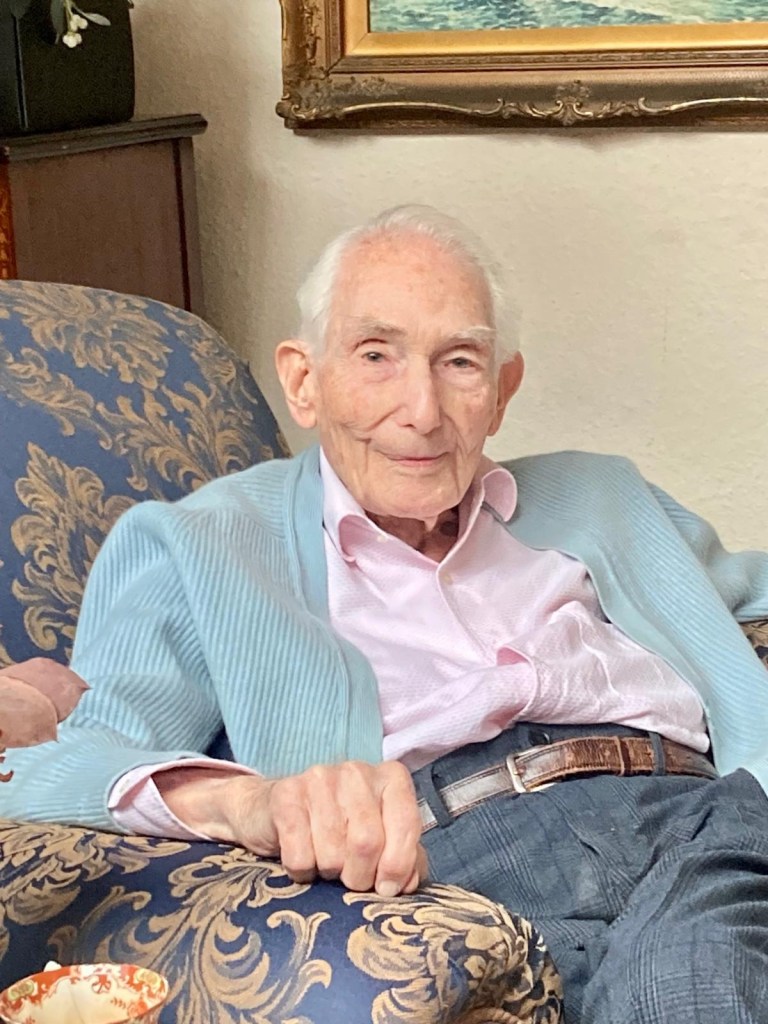
John Leech Founder of the Keyboard Trust who will be 99 years old on the 21st April – we wish him many happy returns

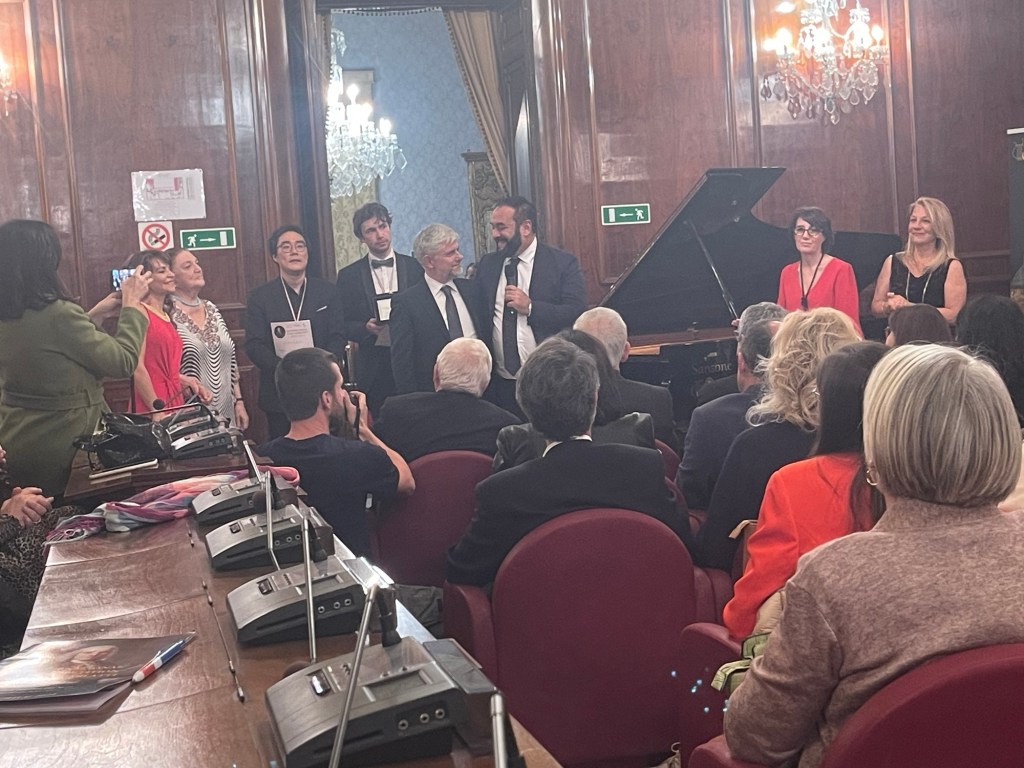
This was the final concert in a series of six recitals sponsored so generously by the Robert Turnbull Piano Foundation in collaboration with the National Liberal Club’s Asia Circle.It had begun with a greeting to the founder of the Keyboard Trust ,John Leech.Unable to attend this evening but who will be 99 years old in a few day’s time and a greeting from us all was recorded and will be shown to him and his wife Noretta Conci on his birthday of Sunday the 21st April.
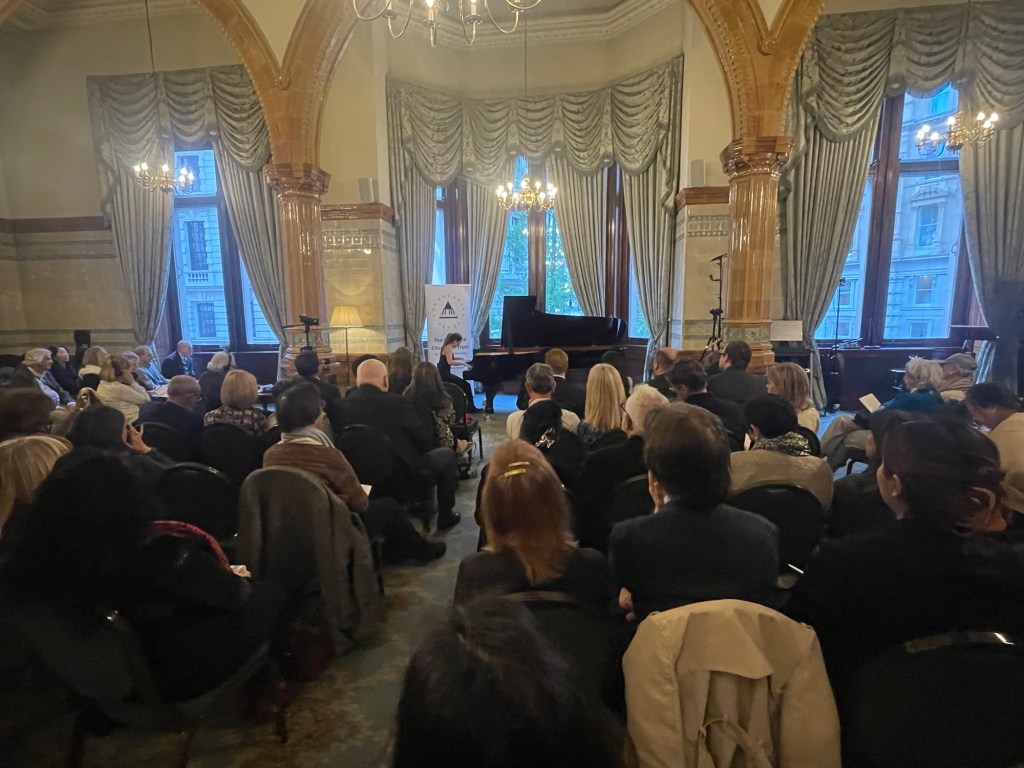
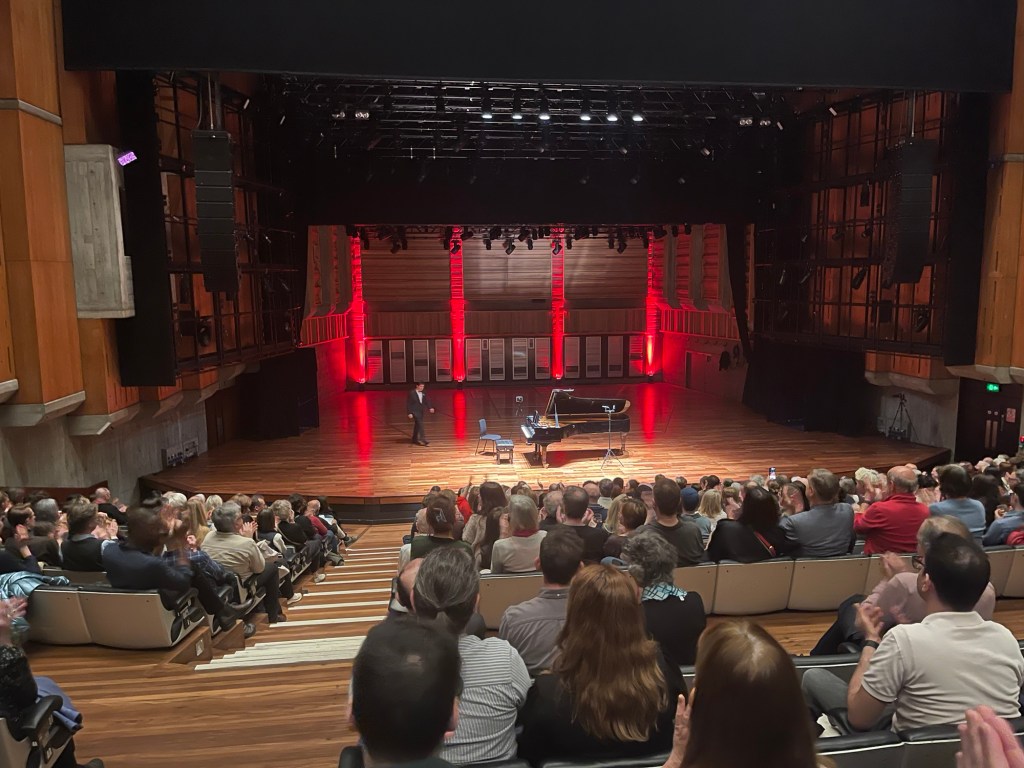
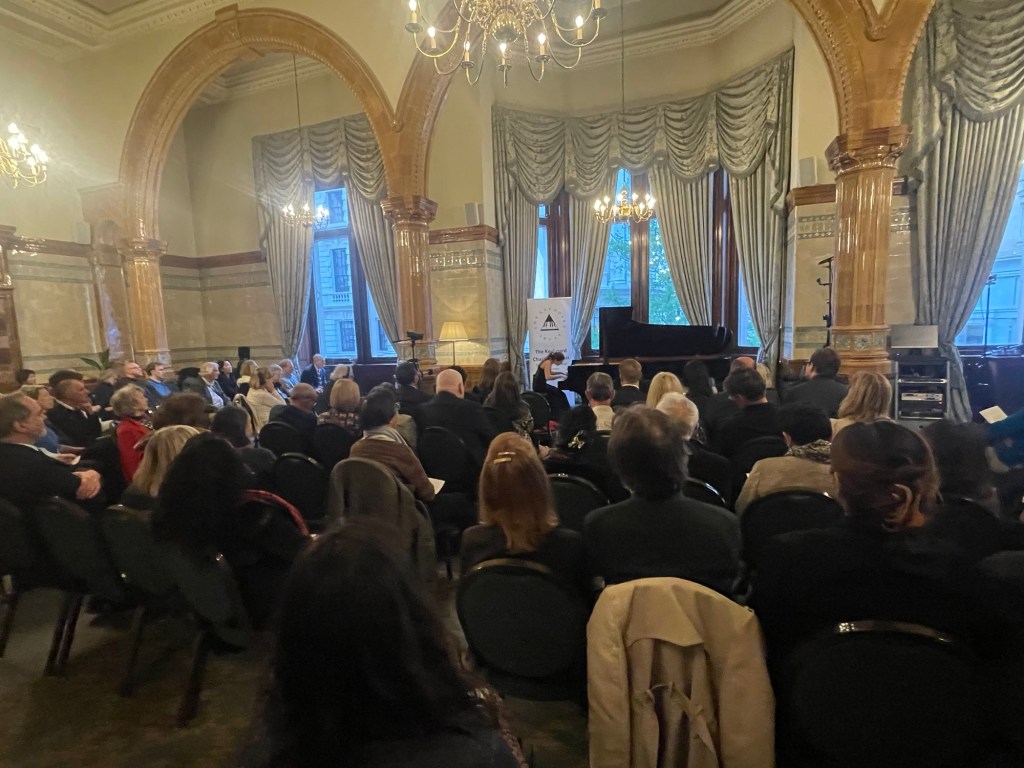
A full hall for the last of our series
Giulia Contaldo

Giulia Contaldo enchanted and entranced the audience of the Liberal Club with playing of superb musicianship and a kaleidoscope not only of colours but of intense concentration as she told a story of wondrous marvels.
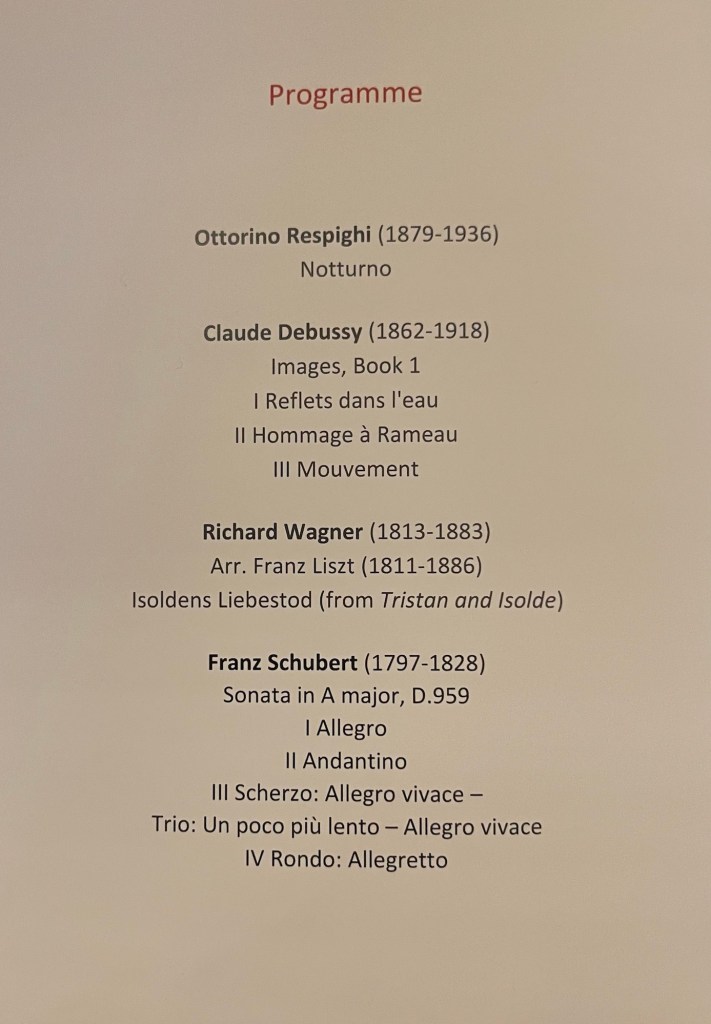
A Respighi Nocturne of ethereal beauty but also of passionate outpourings of overwhelming intensity
A Debussy of fluidity and aristocratic control allied to a technical mastery that allowed the fleeting lightness of ‘movement’ to sweep across the keys with transcendental mastery.
The passionate intensity she brought to Wagner’s Liebestod was even more astonishing for the palette of colours that she used to paint a picture of burning intensity and searing inner murmurings
But it was in Schubert that her great artistry was revealed to the full with playing of aristocratic control as she allowed Schubert’s mellifluous outpourings to speak with heart rending immediacy and simplicity.

The simple fluidity of the Notturno by Respighi was played with subtle half colours and a sense of balance that allowed the wistful melody to glow on the gentle breeze that she created with infinite care and sensitivity.Growing in intensity with passionate involvement but always a sense of line that guided us through this seemingly innocent little piece that in Giulia’s hands became a ravishing tone poem of jewels that were allowed to shine with purity and beauty.
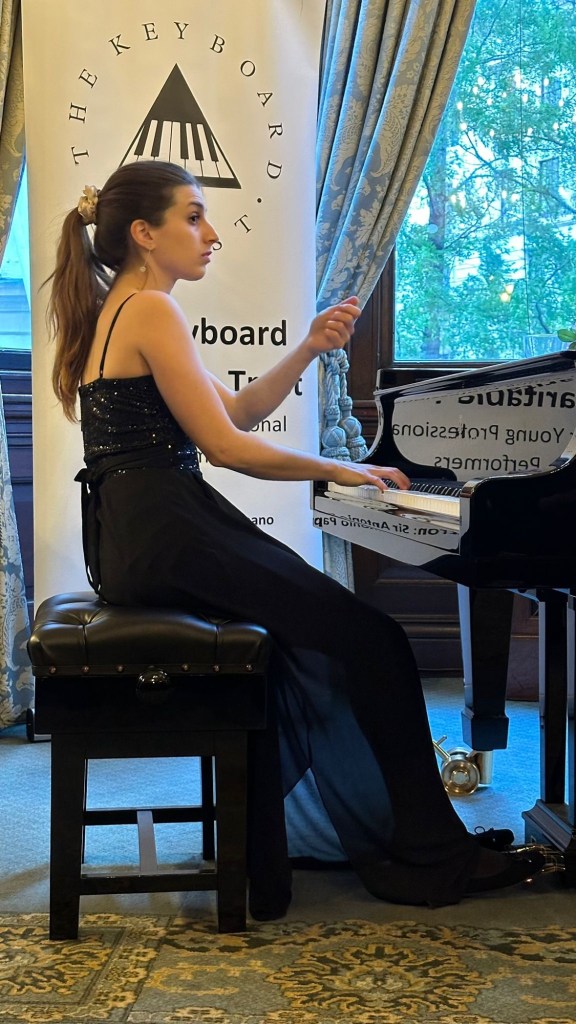
It was the same fluidity and fantasy that she brought to Debussy.But this was not the more usual impressionistic mist but a performance of virile rhythmic drive played with a kaleidoscope of changing colour that created a picture of the ‘reflections’ that Debussy was depicting in music. A sense of line of intelligence and musicianship but allied to a technical mastery as cascades of notes were merely streams of sound on a wave of sultry beauty.The simplicity and glowing purity she brought to the the sounds in the coda were indeed like drops of crystalline water falling so perfectly onto a canvas, as only a true poet of the keyboard could aspire to. ‘Hommage a Rameau’ was a movement much loved by Rubinstein because it needs an aristocratic sense of control but also a subtlety of sound without any sentimentality.This is like a Greek temple of poignant beauty and a feeling that history has past through the atmosphere that is evoked by such a noble edifice.Giulia had a range of sound from the opening French aristocratic cantabile that was truly Rubinstein’s, but there was also passionate conviction and masterly control as she opened up to the climax with great flourishes over the entire keyboard.The wonderful change of harmony at the end was of whispered secrets of heart rending intensity. In this one piece Giulia showed us her masterly control of the keyboard and a range of sounds that could bring this extraordinary piece to life with the virile intensity that is of such poignant significance.’
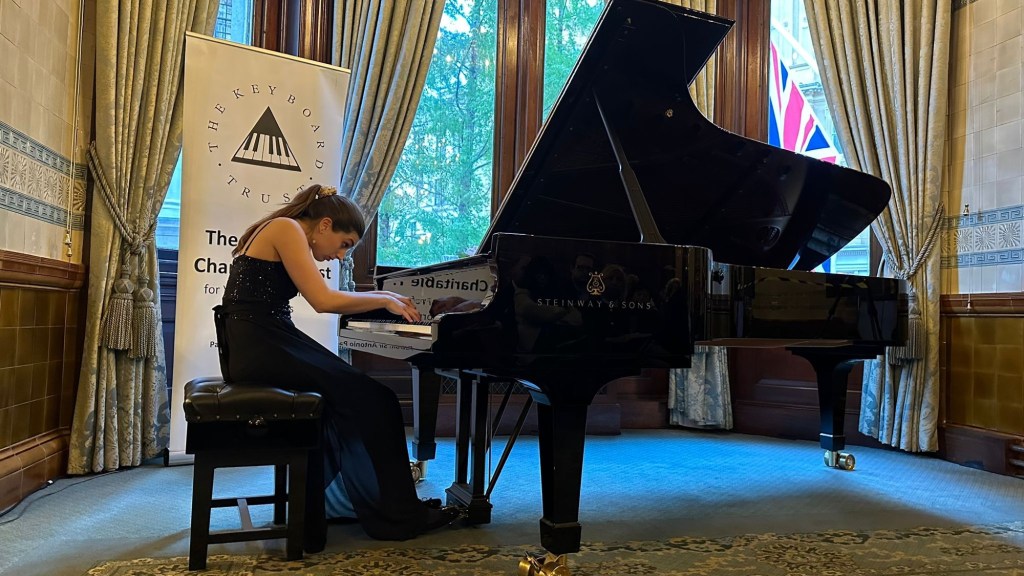
‘Movement’ was played with extraordinary clarity and murmured precision as the accents were like signposts in this breeze of sounds.The declamations in the right hand answered by the left were even more surprising over such a murmured atmosphere.Opening up into a transcendental display of rhythmic drive where notes were spread over the entire keyboard with a technical mastery that never allowed the music to become clouded or interrupted.The murmured brilliance of the opening was a never ending undercurrent throughout this movement as the notes gradually moved closer to the top of the keyboard with strands of melody that lit up this stream of sounds with jewel like rays of light.Disappearing into the distance I have rarely heard this movement finish with such mastery and musicianship.This was the Impressionism of vision and virile emotions that only a true musician could find in Debussy who surely is the greatest pianistic innovator since Chopin.
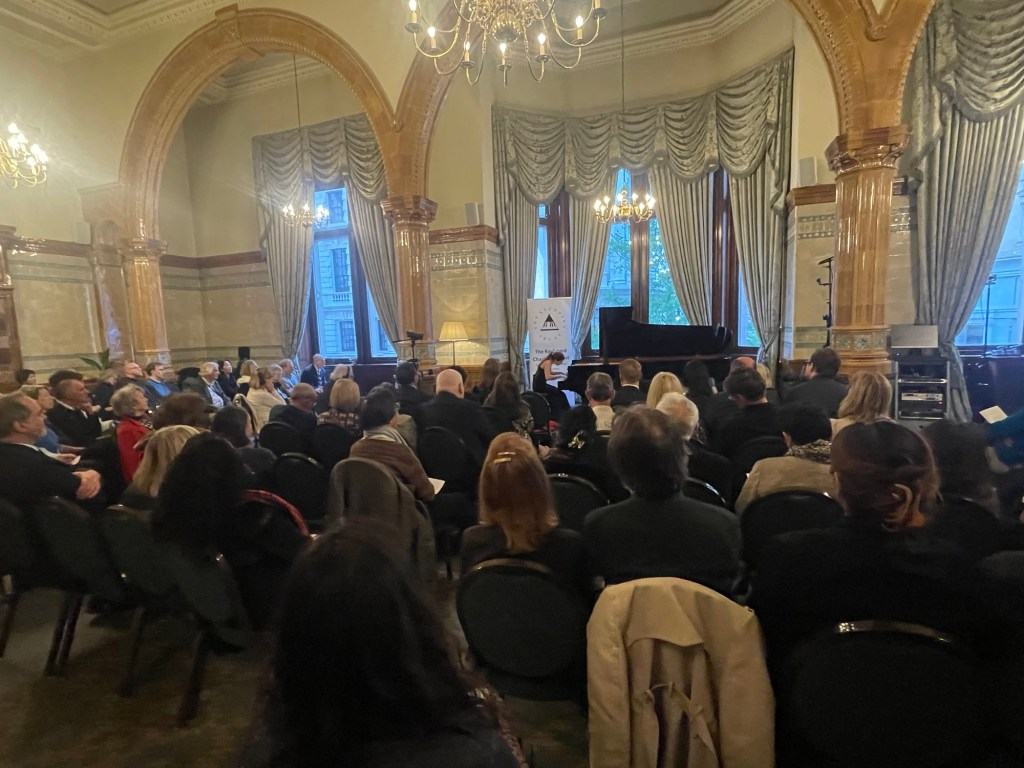
The opening of Liebestod was like a call to arms leading to sumptuous strands of melody that weaved there way forward with ravishing beauty .The clarity of the counterpoints was always perfectly controlled as they grew in ever more passionate intensity.The climax was played with a dramatic force and passionate conviction that was quite breathtaking as indeed it should be.We all knew that this burning cauldron of sounds was about to explode but it was the masterly control that kept us with baited breath waiting for the moment when Giulia would at last succumb to this red hot atmosphere and lose all control with frenzied movements and theatrical command.Allowing the music to gradually die away to a mere murmur where even here in Giulia’s poetic hands there was a sense of balance that allowed the final melodic notes to glisten like jewels as they lay exhausted after such passionate intensity.A remarkable performance where once again Giulia’s sense of architectural shape made such a poignant statement of one unified whole.
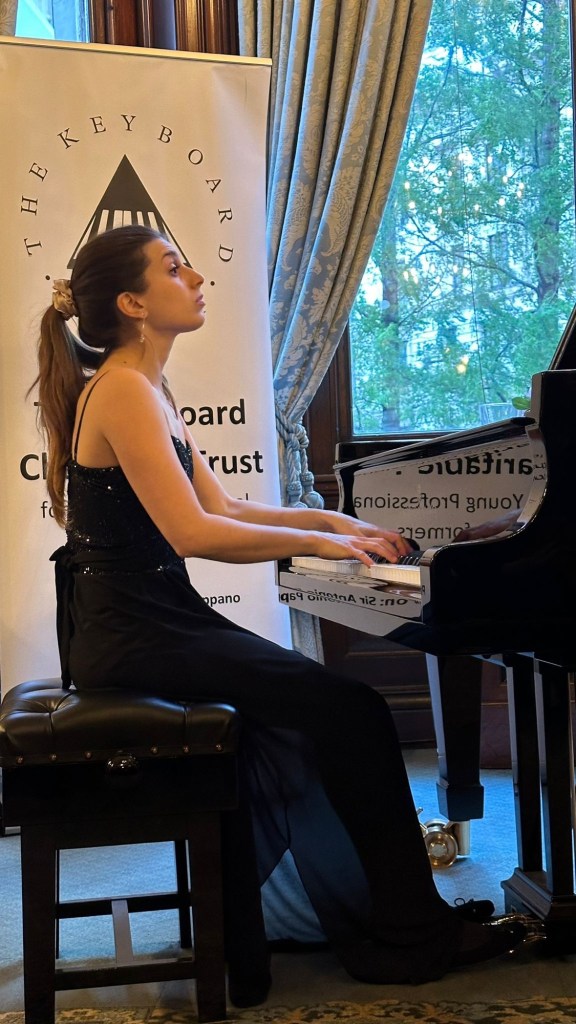
The whole of the second half was taken up with Schubert’s penultimate Sonata.A work lasting forty minutes and was one of the last works that the composer was to write before his untimely death.Long neglected after his death because it needs a true musician to be able to mould this great edifice into one unified whole.One who can see the whole architectural shape but at the same time turn Schubert’s seemingly endless streams of mellifluous outpourings into sounds which should have the same inflections as a singer ,where every note has a story to tell of great significance.Giulia gave a superb performance that keep the audience mesmerised from the dynamic opening declamations of intent to the final equally imperative chords that come forty minutes later.It was of course in between that Giulia brought every strand of music vividly to life with poetry,whimsical fantasy,passionate drive and above all with the simplicity of Art that conceals Art.Beethovenian you might say in its rigour and formal construction which is what Schubert was accused of in his own time .But there is a content of Viennese charm and dramatic invention , less irascible and tempestuous that is quite unique to Schubert .It takes a pianist of great musicianship to be able to enter into this world of poetic fantasy and mellifluous beauty without loosing the overall architectural shape of monumental invention and drive.There should be from the first to the last note an undercurrent on which the music evolves and the pianist like a conductor must show his players with flexibility and colour how to fill this vast canvas where the wood must be constructed with the beauty of the trees still intact.
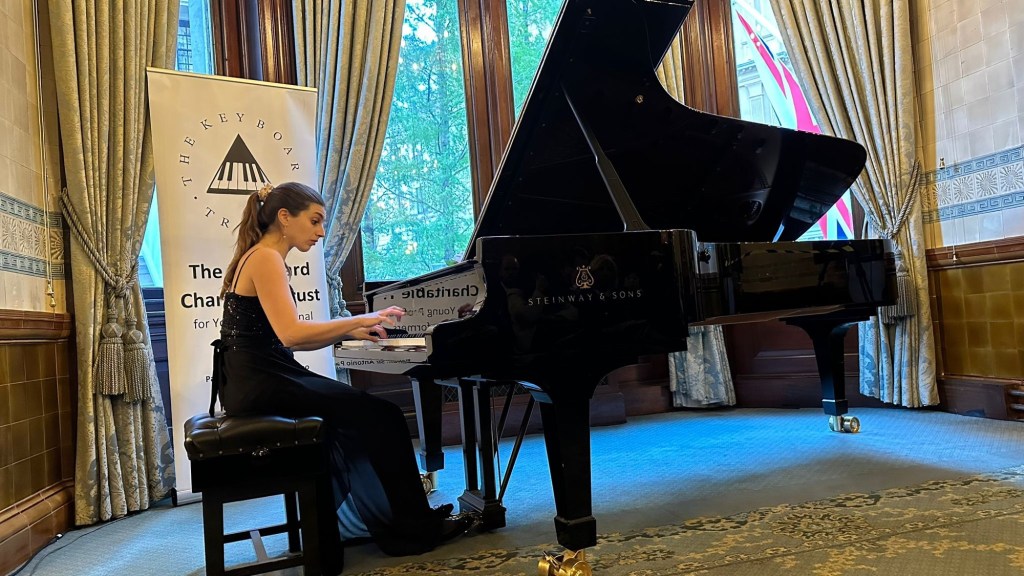
There was absolute clarity to Giulia’s playing with a sense of improvisation as she unwrapped the music before our very eyes and where the music was allowed to flow so naturally as it built up with rhythmic intensity.Some very personal touches too brought the music vividly to life in a true musical conversation .Streams of beautiful seemless scales in the development floated on gently vibrating chords as the music gradually returned to the opening imperious chords.A coda of extreme delicacy where the legato melodic line was accompanied by whispered staccato notes leading to clouds of sounds that brought this movement to a delicate close ready for the poignant simplicity of the Andantino.There was purity and delicacy in the melodic line over the continuous barcarolle like accompaniment .A melodic line of searing intensity as the heart beat so gently underneath.A remarkable control of sound and a masterly control of the pedal that allowed for purity without ever any clouding of the texture .Gradually building up to a storm of truly Beethovenian intensity and drive and a recitativo of heart rending intensity rebuked by the composer with such unusual vehemence until surrendering to the magic return of the main theme.Returning with the most ravishing embellishments and comments that were played with exquisite delicacy revealing an ever more masterly control of sound.She brought sparkling brilliance to the Scherzo and tender refined elegance to the Trio.The ever more delectable return of the Scherzo this time ending with the same finality that owed more to Beethoven than Schubert! The gently flowing Rondo was of subtle shading and beauty as the episodes unfolded with teasing charm and gentle brilliance before burning themselves out.An attempt at restarting the Rondo with Schubert teasingly trying to find a way out which he does with a coda of burning intensity and dynamic brilliance.A final brusque recollection of the Rondo theme leads to the same dramatic opening chords that this time close a story that has spanned all the emotions of the genial invention and mastery of a poet destined to die just a few months later.A performance played by Giulia with mastery and poetry and above all supreme musicianship.
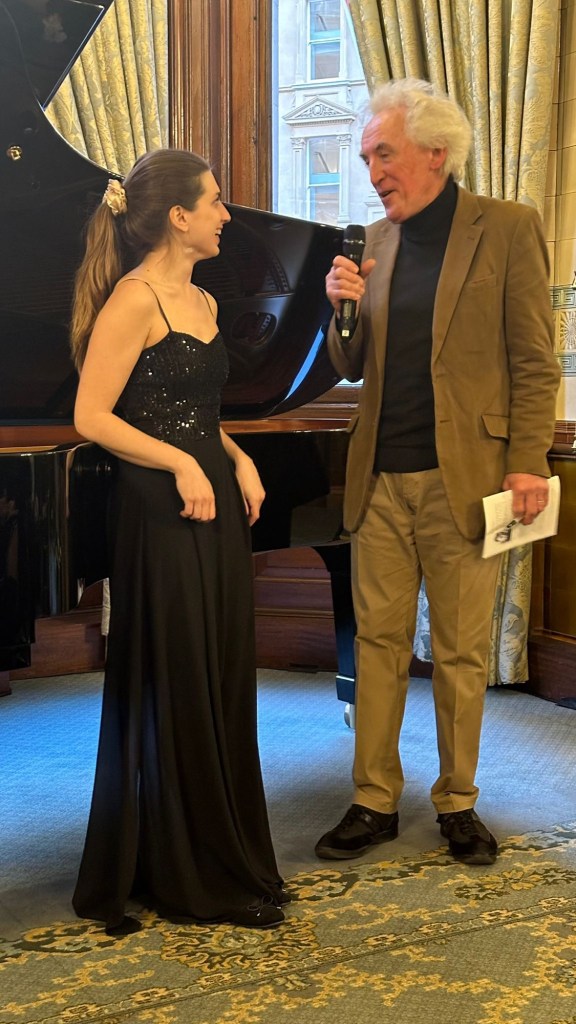
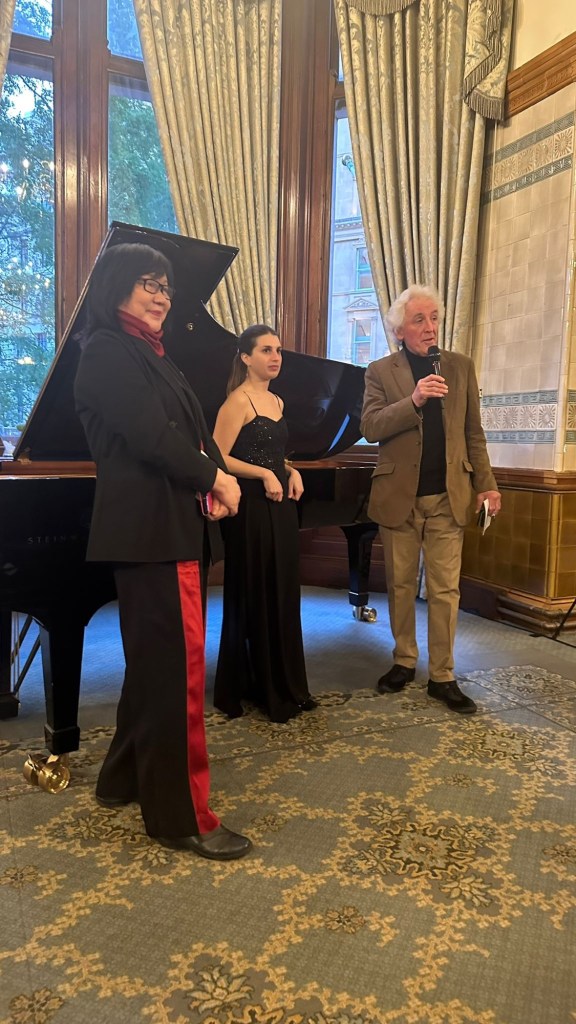
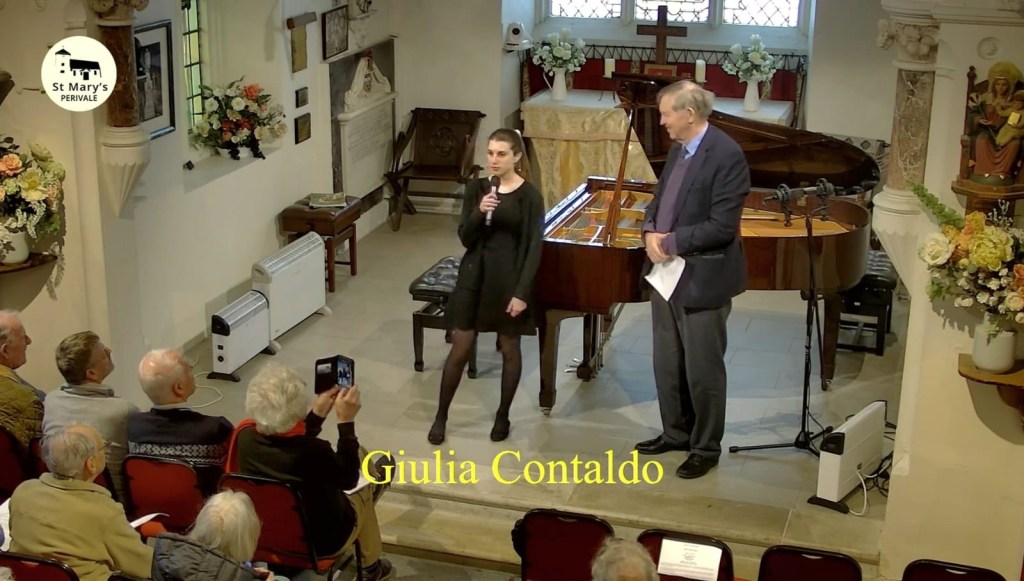
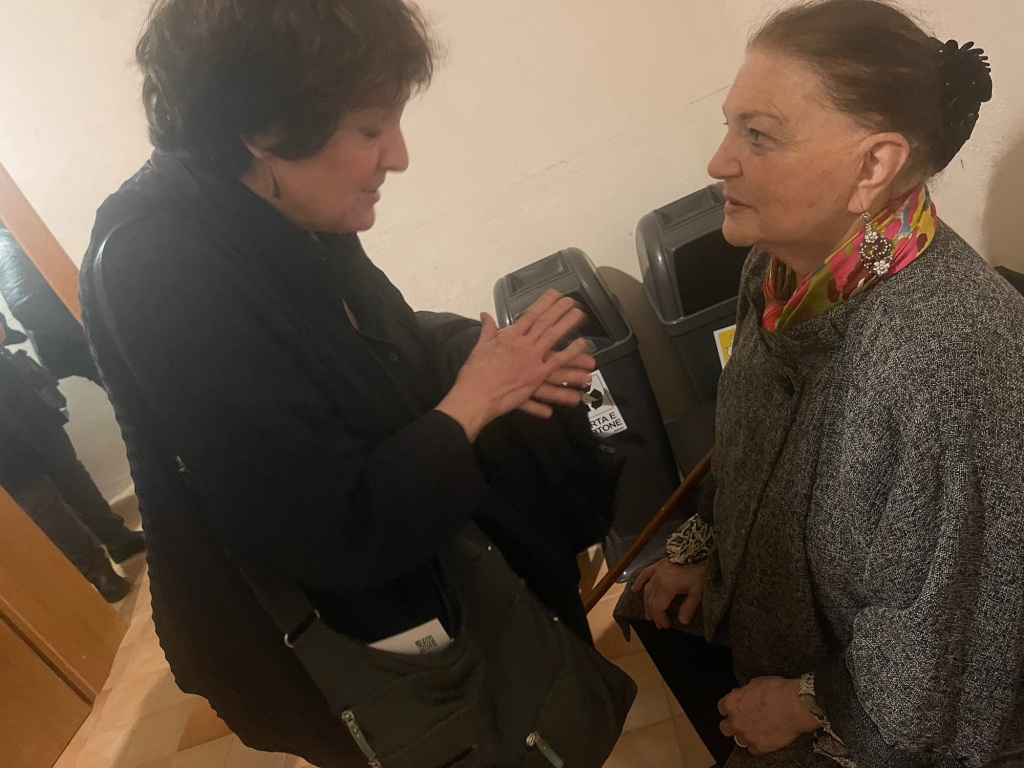
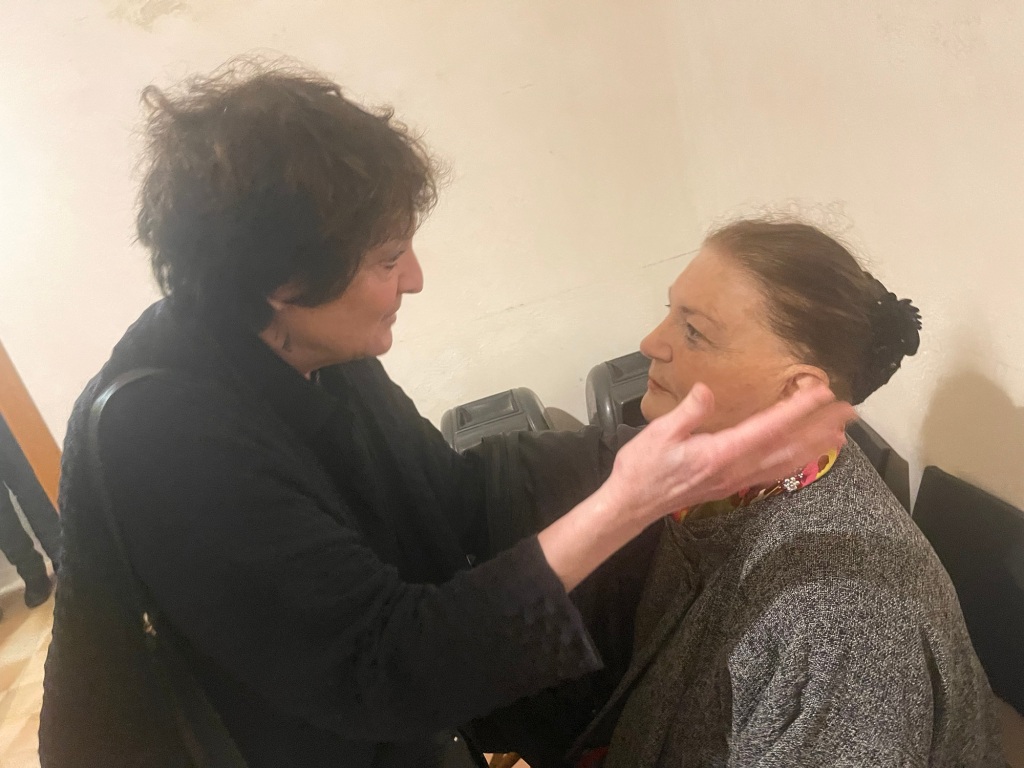
No encore was possible after such performances of intensity and total commitment and Giulia allowed me to ask a few questions for us all to get to know a little better the background of this superb young artist
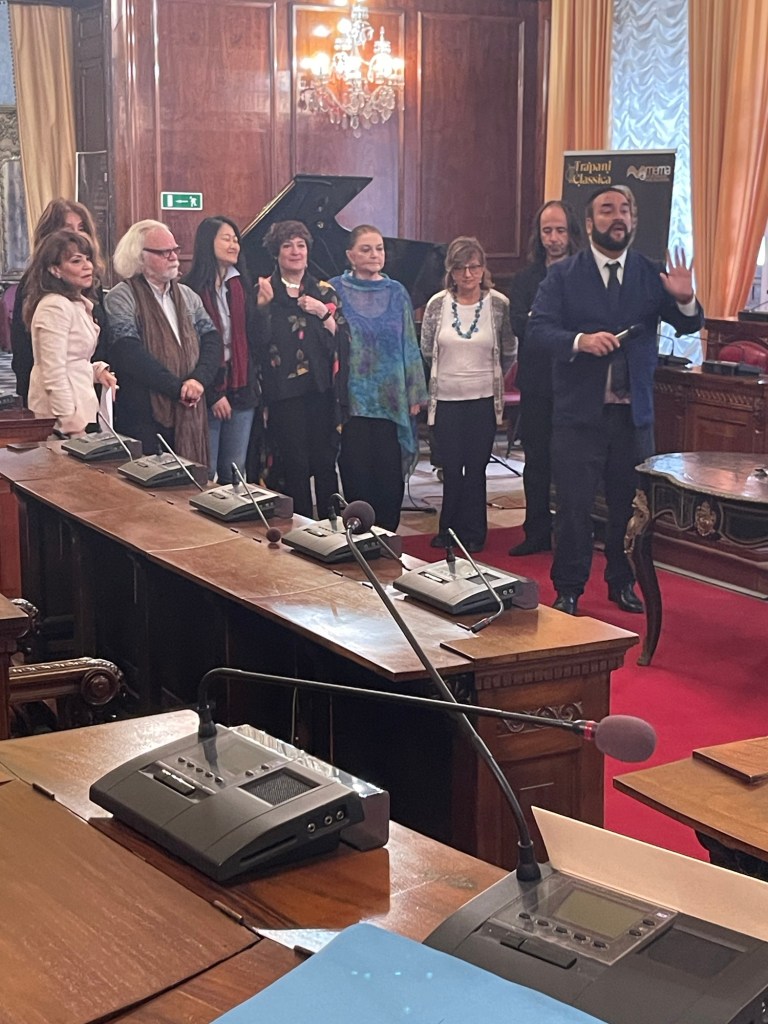
Yisha Xue our hostess for this series in her Asia Circle joined us to thank the public and above all the artist
Yisha and colleague with presents for the artist
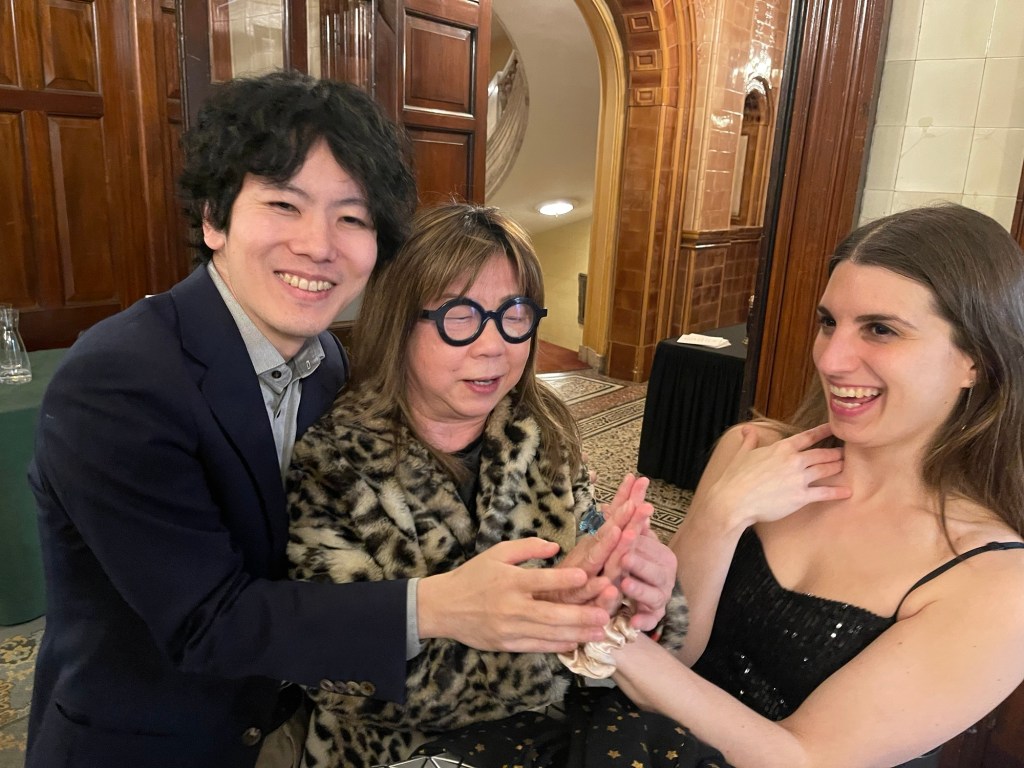
Comparing small but very agile hands
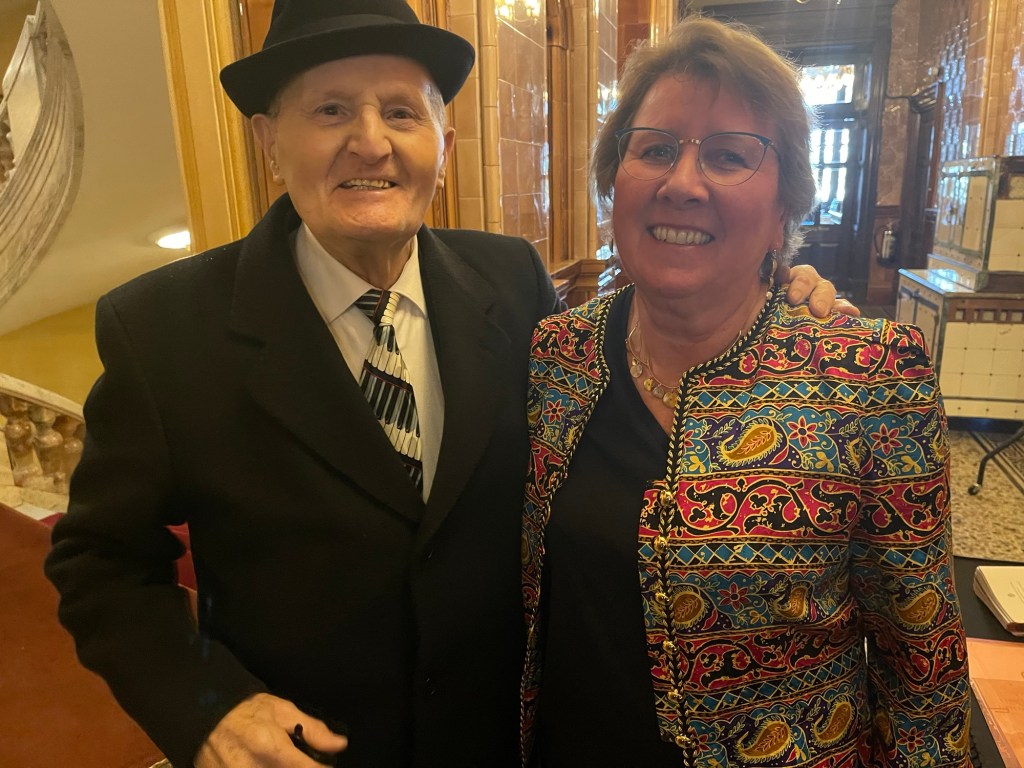
Sarah Biggs ,chief executive of the KT with Mario a friend of the KT and frequent guest who had just celebrated his 90th birthday
Richard Thomas ,senior executive of the KT ,conductor,organist and choir master,leading the tribute to John Leech

Ottorino Respighi
18 July 1879 Bologna , Italy. 18 April 1936 (aged 56) Rome, Italy

The Sei pezzi per pianoforte (“Six pieces for piano”),P.044, is a set of six solo piano pieces written by the Italian composer Ottorino Respighi  between 1903 and 1905. These predominantly salonesque pieces are eclectic,drawing influence from different musical styles and composers. The pieces have various musical forms and were composed separately and later published together between 1905 and 1907 in a set under the same title for editorial reasons; Respighi had not conceived them as a suite , and therefore did not intend to have uniformity among the pieces. The set, under Bongiovanni, became his first published work. Five of the six pieces are derived from earlier works by Respighi, and only one of them, the “Canone”, has an extant manuscript.

  1. Valse Caressante” – (“Tempo lento di Valzer.”)
  2. “Canone” –  (“Andantino”)
  3. “Notturno” –  (“Lento.”)
  4. “Minuetto”
  5. “Studio” – (‘Presto”)
  6. “Intermezzo-Serenata” – (“Andante calmo”)
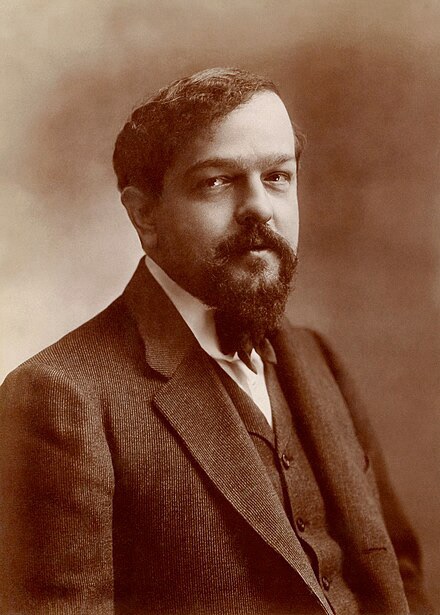
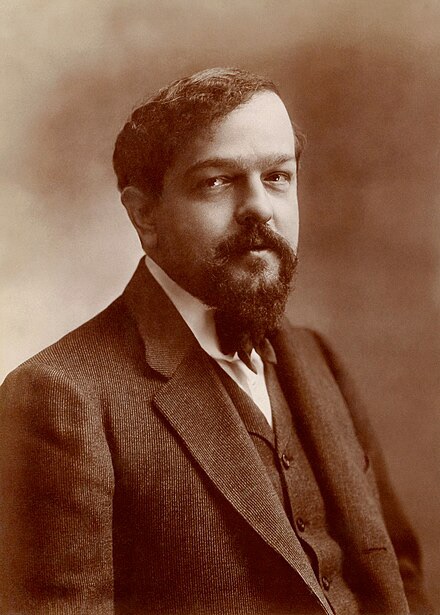
(AchilleClaude Debussy. 22 August 1862 – 25 March 1918 is sometimes seen as the first Impressiomnist  composer, although he vigorously rejected the term. He was among the most influential composers of the late 19th and early 20th centuries

Images is a suite  of six compositions for solo piano by Claude Debussy. They were published in two books/series, each consisting of three pieces. The first book was composed between 1901 and 1905, and the second book was composed in 1907. Debussy wrote to his publisher , Jacques Durand about the first series : “Without false pride, I feel that these three pieces hold together well, and that they will find their place in the literature of the piano … to the left of Schumann, or to the right of Chopin… “

Liszt Tristan und Isolde – Liebestod S.447


Ludwig and Malvina Schnorr von Carolsfeld  as Tristan and Isolde in the first performance, conducted by Hans von BulowHans

Tristan and Isolde is a musical drama in three acts written by Richard Wagner between 1857 and 1859, and premiered in 1865. Two years after the debut of the work at the National Theater of Munich, Franz Liszt (who was Wagner’s father in law) made a piano transcription of Isolde’s final aria. The piece, called “Mild und leise”, was referred to as “Verklärung” (Transfiguration) by Wagner. Liszt prefaced his transcription with a four bar excerpt from the Love Duet from Act II, which in the opera is sung to the words “sehnend verlangter Liebestod”. Accordingly, he referred to his transcription as ‘Liebestod’. Later it was designated with the catalogue number S. 447. Liszt’s transcription (which underwent a revision in 1875) became famous in Europe well before Wagner’s opera reached most places.

Tristan und Isolde (Tristan and Isolde),was composed between 1857 and 1859 and premiered at the Konigliches Hoftheater und Nationaltheater in Munich on 10 June 1865 conducted by Hans von Bulow .Wagner referred to the work not as an opera, but called it “eine Handlung” (literally a dramaa plot, or an action).

The score of Tristan und Isolde has often been cited as a landmark in the development of Western music.[15] Throughout the opera, Wagner uses a remarkable range of orchestral colour, harmony, and polyphony, doing so with a freedom rarely found in his earlier operas. The very first chord in the piece, the Tristan chord , is of great significance in the move away from traditional tonal harmony  as it resolves to another dissonant chord:


Franz Peter Schubert 31 January 1797 – 19 November 1828

Schubert’s last three piano sonatas , D 958, 959 and 960, are his last major compositions for solo piano. They were written during the last months of his life, between the spring and autumn of 1828, but were not published until about ten years after his death, in 1838–39.Like the rest of Schubert’s piano sonatas, they were mostly neglected in the 19th century but by the late 20th century, however, public and critical opinion had changed, and these sonatas are now considered among the most important of the composer’s mature masterpieces.

The last year of Schubert’s life was marked by growing public acclaim for the composer’s works, but also by the gradual deterioration of his health. On March 26, 1828, together with other musicians in Vienna he gave a public concert of his own works, which was a great success and earned him a considerable profit. In addition, two new German publishers took an interest in his works, leading to a short period of financial well-being. However, by the time the summer months arrived, Schubert was again short of money and had to cancel some journeys he had previously planned.

Schubert had been struggling with syphilis since 1822–23, and suffered from weakness, headaches and dizziness. However, he seems to have led a relatively normal life until September 1828, when new symptoms appeared. At this stage he moved from the Vienna home of his friend Franz von Schober to his brother Ferdinand’s house in the suburbs, following the advice of his doctor; unfortunately, this may have actually worsened his condition. However, up until the last weeks of his life in November 1828, he continued to compose an extraordinary amount of music, including such masterpieces as the three last sonatas.

Schubert probably began sketching the sonatas sometime around the spring months of 1828; the final versions were written in September. The final sonata was completed on September 26, and two days later, Schubert played from the sonata trilogy at an evening gathering in Vienna.In a letter to Probst (one of his publishers), dated October 2, 1828, Schubert mentioned the sonatas amongst other works he had recently completed and wished to publish.However, Probst was not interested in the sonatas,and by November 19, Schubert was dead.In the following year, Schubert’s brother Ferdinand sold the sonatas’ autographs  to another publisher, Anton Diabelli, who would only publish them about ten years later, in 1838 or 1839.[16] Schubert had intended the sonatas to be dedicated to Hummel , whom he greatly admired. Hummel was a leading pianist, a pupil of Mozart , and a pioneering composer of the Romantic style  (like Schubert himself).However, by the time the sonatas were published in 1839, Hummel was dead, and Diabelli, the new publisher, decided to dedicate them instead to composer Robert Schumann , who had praised many of Schubert’s works in his critical writings.
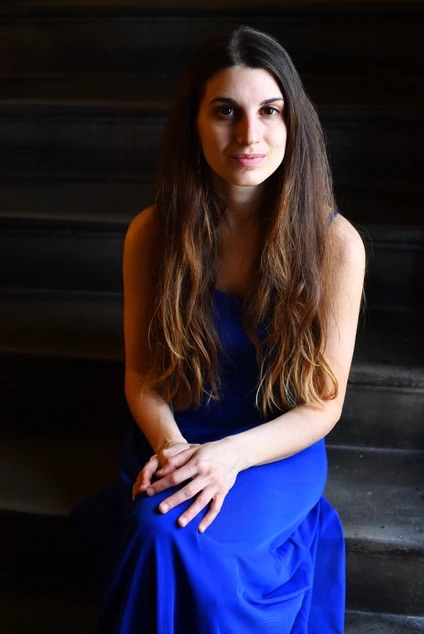
Giulia Contaldo attracted international attention when she replaced Elisso Virsaladze in a performance (broadcast live on BBC Radio 3) of Schumann’s Piano Concerto with the BBC Philharmonic Orchestra at Bridgewater Hall, Manchester. ‘A dashing account’ — Guardian
Giulia was born in Florence and graduated from Florence’s Luigi Cherubini Conservatory. She went on to study at the International Piano Academy at Imola where she completed her diploma with Jin Ju in 2019. She subsequently won a scholarship to study for the Advanced Postgraduate Diploma in Piano Performance at the Royal Northern College of Music with Graham Scott and Dina Parakhina and graduated with distinction. In 2021/2022 she studied on the International Artist Diploma Course at the RNCM.Giulia won First Prizes at the 28th J.S. Bach Italian National Competition (S. Levante) and the 15th International Maria Giubilei International Piano Competition. She also won prizes at the International Competition Prémio Internacional de Piano Figueira da Foz (Coimbra), the 32nd Concours Européen de Musique de Chambre organized by FNAPEC (Paris), the Massarosa International Piano Competition and the James Mottram International Piano Competition. In 2022, she won Second Prize and the Classical Sonata Special Award at the Verona International Piano Competition. Also in 2022, she won the Concerto Competition and the Piano Duo Prize at the RNCM — and was awarded the prestigious Gold Medal.As a soloist, Giulia has performed with the BBC Philharmonic, Royal Liverpool Philharmonic Orchestra, Manchester Camerata, Orchestra dell’ Arena di Verona, RNCM Symphony Orchestra, Young Musicians European Orchestra, Giovane Orchestra di Abruzzo and the Orchestra del Carmine di Firenze. She has performed at many festivals throughout Europe and at prestigious venues including Bridgewater Hall, Wigmore Hall, Musica Insieme (Bologna), Teatro Alighieri (Ravenna) and the Teatro Filarmonico (Verona).  She is also a passionate chamber musician.Since 2022, Giulia has been continuing her studies at the Haute Ecole de Musique in Geneva with Ricardo Castro.  She is also a Professor at the Conservatorio A. Scontrino in Trapani, Sicily
https://christopheraxworthymusiccommentary.com/2023/05/18/giulia-contaldo-in-london-at-steinways-for-the-keyboard-trust/

https://christopheraxworthymusiccommentary.com/2023/06/02/the-gift-of-music-the-keyboard-trust-at-30/

Our series of six concerts at the National Liberal Club :
https://christopheraxworthymusiccommentary.com/2023/06/06/giovanni-bertolazzi-liberal-club-en-blanc-et-noir-5th-june-2023-a-star-is-born/

https://christopheraxworthymusiccommentary.com/2023/06/14/adam-heron-at-the-national-liberal-club-an-eclectic-musician-of-refined-taste-and-eloquence/

https://christopheraxworthymusiccommentary.com/2023/09/05/milda-daunoraite-at-the-national-liberal-club-sparks-flying-with-refined-piano-playing-of-elegance-and-simplicity/

https://christopheraxworthymusiccommentary.com/2023/11/07/nikita-lukinov-at-the-national-liberal-club-a-supreme-stylist-astonishes-and-seduces/

https://christopheraxworthymusiccommentary.com/2024/03/05/pedro-lopez-salas-at-the-national-liberal-club-with-aristocratic-style-and-artistry/

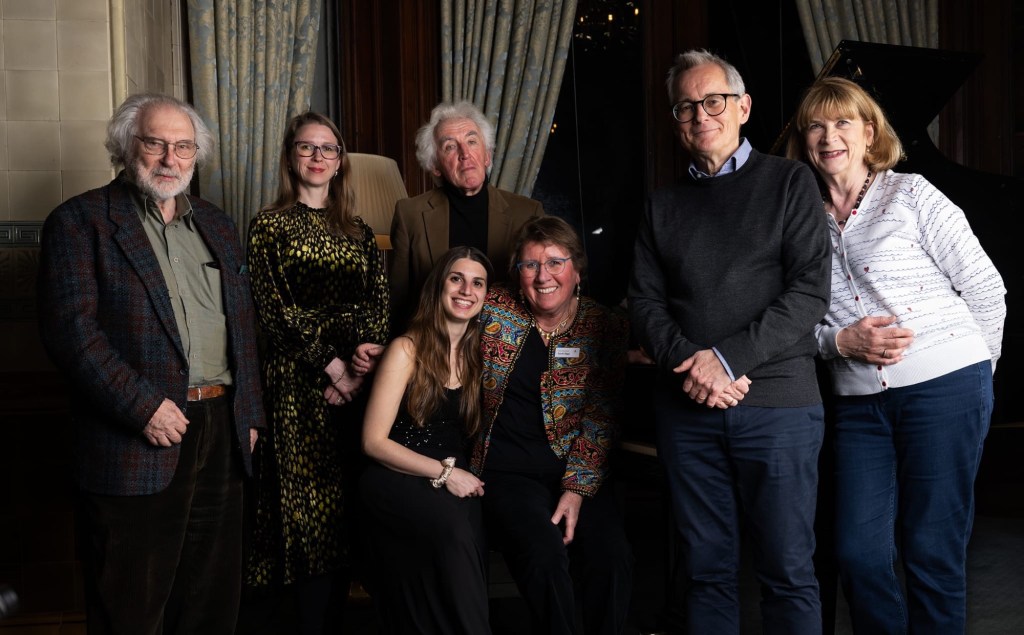
The Keyboard Trust team
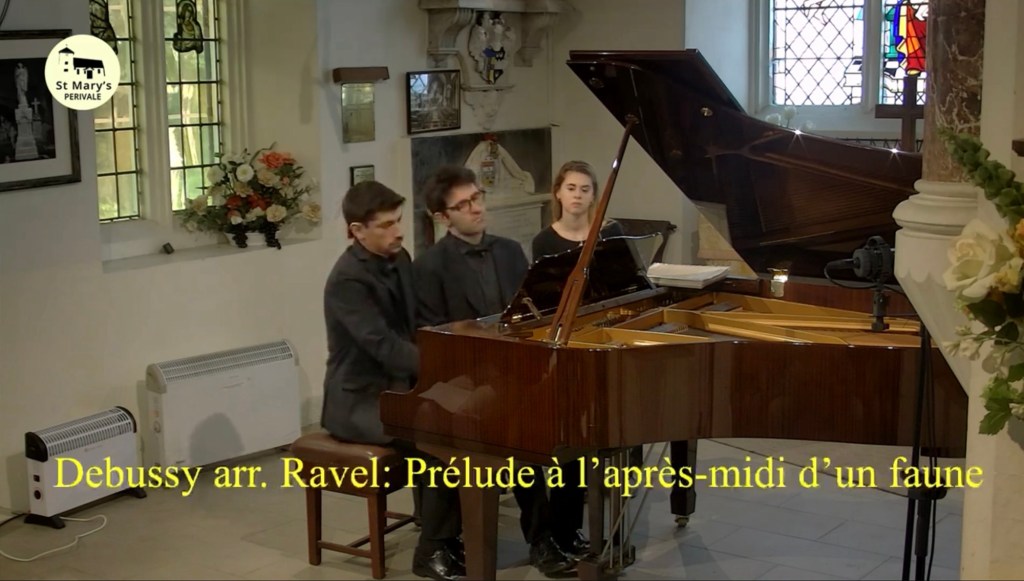
The same programme was streamed live from Perivale the day after
https://youtube.com/live/ZMCS7DT_mNg?feature=shared
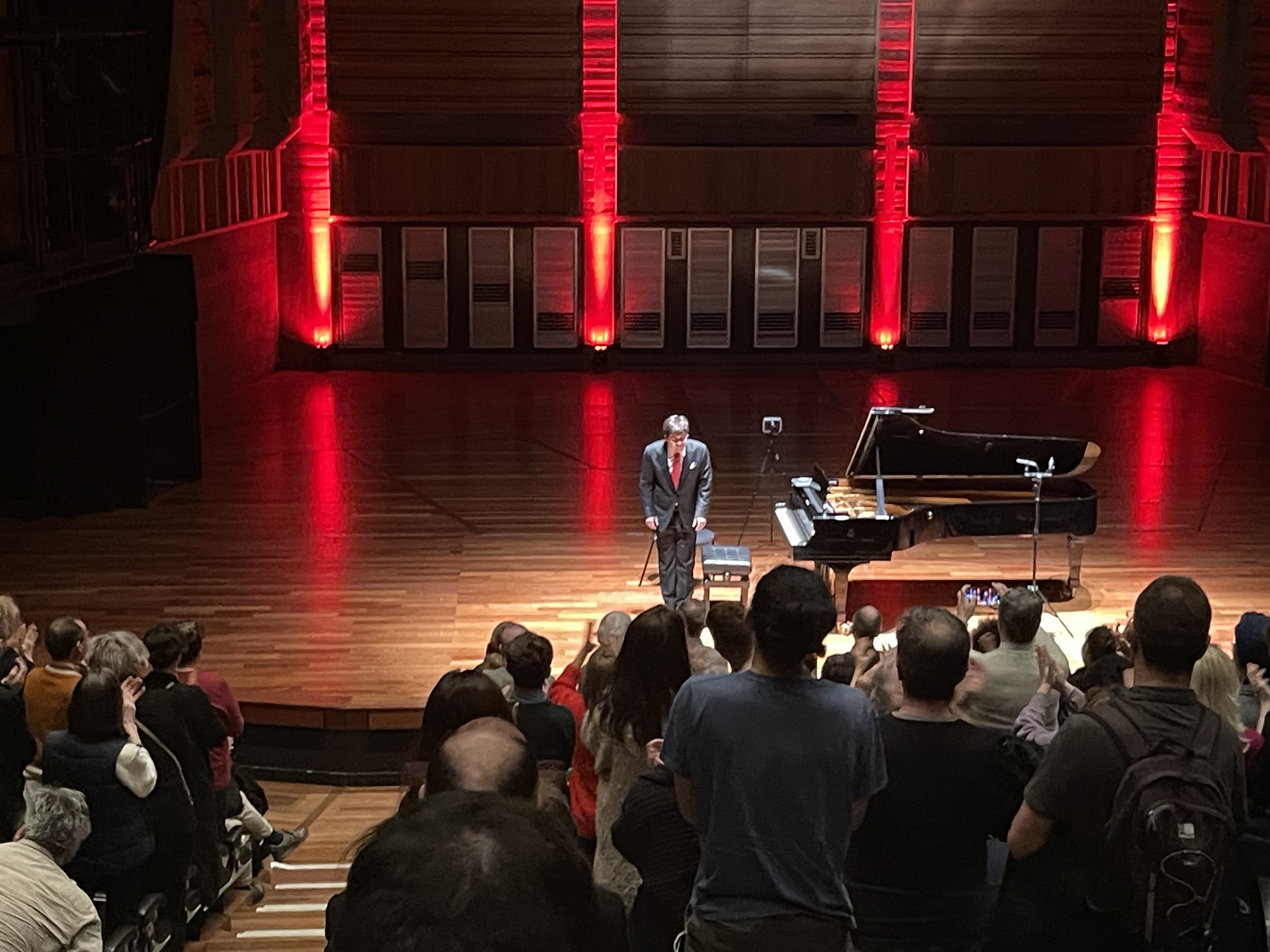
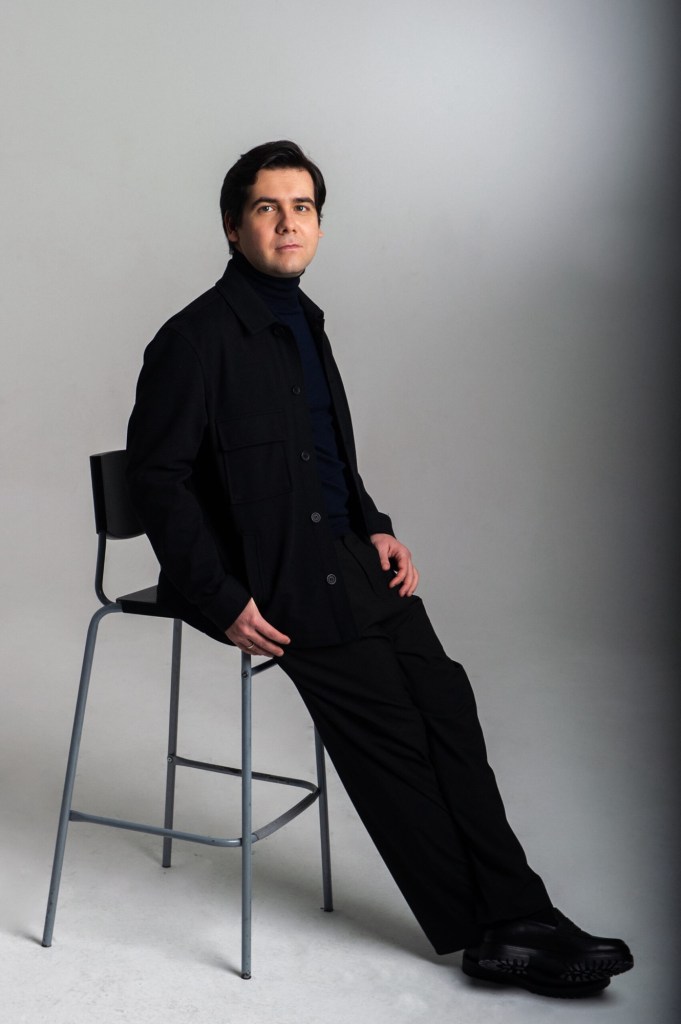
Vadim Kholodenko today of all days reminds us with artistry and mastery that ‘The People United Will Never Be Defeated’

‘One of Kholodenko’s two most notable qualities as a pianist are his stunning ringing tone, which allows him to leave notes hanging in the air longer than the physics of acoustics would suggest is possible. The other is an opposite crisp and spectacular digital speed.’
Los Angeles Times

‘Vadym Kholodenko’s ear-tickling trills and textural transparency … set the stage for the intimate, subtle and crisply detailed playing to come’Gramophone

The virtuoso pianist presents an unusual recital of two halves: Mozart’s Requiem transcribed for piano and Rzewski’s resistance anthem.

Winner of the 2014 Van Cliburn International Piano Competition, the Ukrainian pianist Vadym Kholodenko devotes his concert to two vast, extraordinary works – spanning a narrative from grief to resistance that connects deeply with the spirit of his home country.

He performs Mozart’s Requiem in a little-known, grand-scale transcription by Karl Klindworth, a pupil of Franz Liszt, who managed to encapsulate the beauty and magnificence of the work for chorus and orchestra on the piano alone.

The recital’s other half consists of Frederic Rzewski’s 36 Variations on ‘The People United Will Never Be Defeated!’, the American composer’s ear-boggling transformation of Sergio Ortega’s Chilean resistance anthem.

This truly iconic piece has become the late 20th century’s successor to the giant variation sets of Beethoven and Bach.

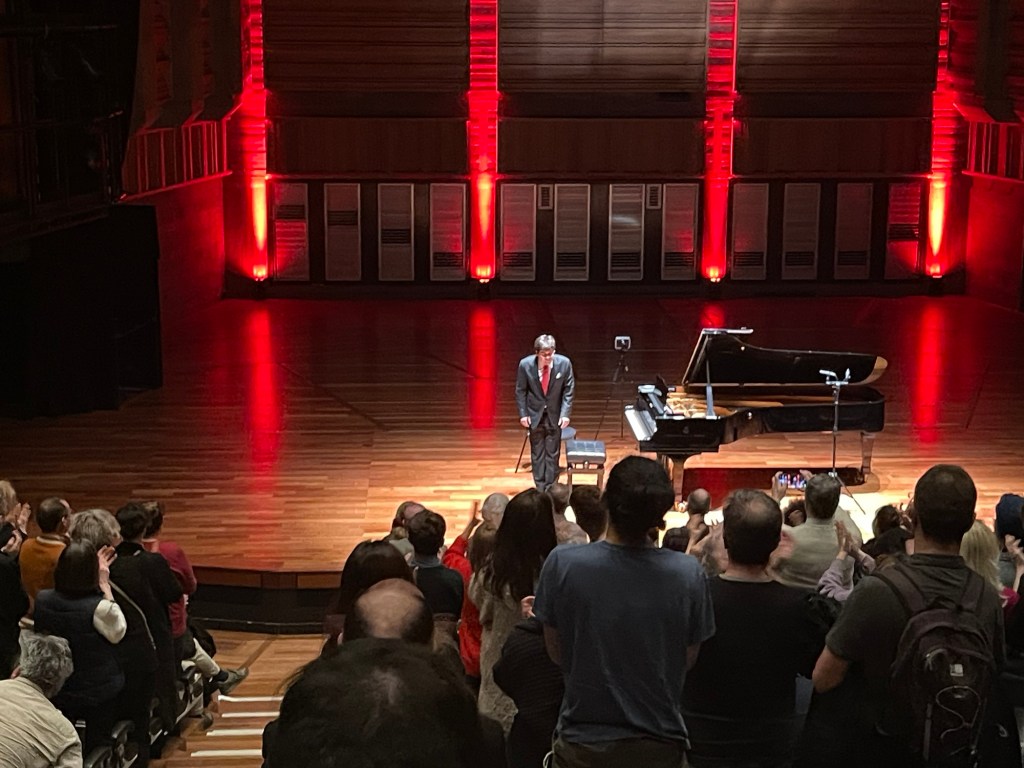
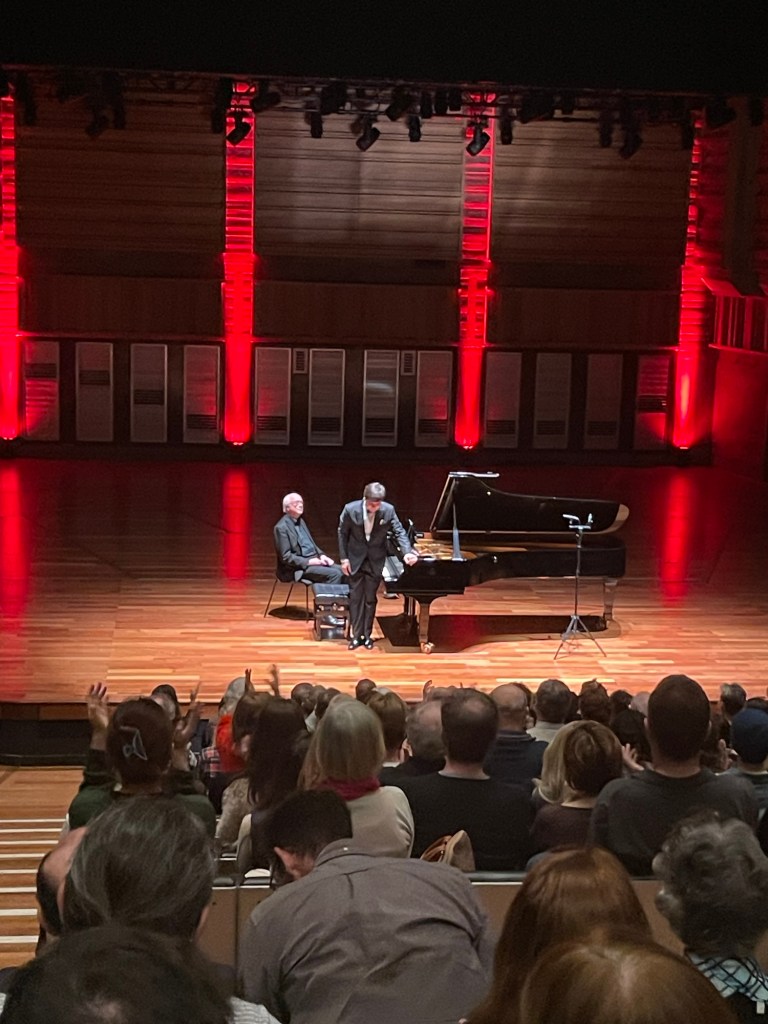
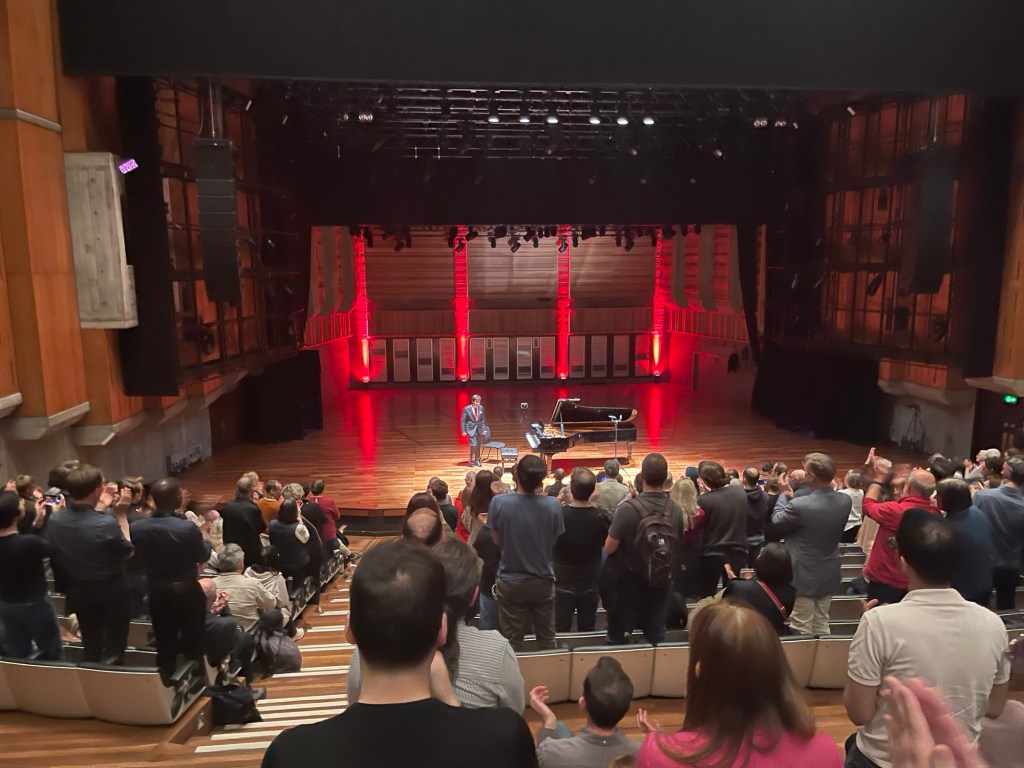
Standing ovation for a true ‘tour de force’ of multifaceted playing of prismatic colour and total mastery by Vadym Kholodenko
Klindworth’s transcription of Mozart appeared rather dated compared to the extraordinary vivid and vital Rzewski variations on ‘The People United Will Never Be Defeated’ .How actual can that be as the bombs fall on the cradle of Cristian civilisation last night .
‘An eye for an eye and tooth for a tooth when will it ever end!’
These were the last words my wife declaimed on stage as Electra by Euripides before being struck down by an aneurysm – the silent killer on the stage of our own theatre in Rome!


Exhilarating and quite exhausting performance from a master pianist.
Commissioned and first performed in 1975 by Ursula Oppens who passed by Siena to play to Agosti in 1968 before catching the train to Bolzano where she won the Busoni Competition.
Kholodenko ,winner of Van Cliburn , with courage and resiliance can really show us what it means ‘never to be defeated’.

This is an interview with Ursula Oppens : https://m.youtube.com/watch?v=uuarpS_u59Q.

And to Jed Distler’s Between the Keys : https://soundcloud.com/jeddistler/episode-0032-the-people-united-at-40-2015-11-03?in=jeddistler/sets/between-the-keys-archive

The song on which the variations is based is one of many that emerged from the Unidad Popular  coalition in Chile between 1969 and 1973, prior to the overthrow of the Salvador Allende  government. Rzewski composed the variations in September and October 1975, as a tribute to the struggle of the Chilean people against the newly imposed repressive regime of Augusto Pinochet ; indeed the work contains allusions to other leftist struggles of the same and immediately preceding time, such as quotations from the Italian traditional socialist   song “Bandiera Rossa “ and the Bertold Brecht /Hans Eisler “Solidarity Song”

In general, the variations are short, and build up to climaxes of considerable force. The 36 variations, following the 36 bars of the tune, are in six groups of six. The pianist, in addition to needing a virtuoso technique, is required to whistle, slam the piano lid, and catch the after-vibrations of a loud attack as harmonics: all of these are “extended” techniques in 20th-century piano writing. Much of the work uses the language of 19th-century romanticism, but mixes this language with pandiatonic  tonality, modal writing, and serial techniques .

As in the Goldberg Variations , the final variation is a direct restatement of the original theme, intended to be heard with new significance after the long journey through the variations.

https://christopheraxworthymusiccommentary.com/2023/11/23/jeremy-chan-at-st-olaves-tower-hill-masterworks-played-with-intelligence-and-sensitive-artistry/

Jeremy Chan’s review of the concert can be read here :https://literallylefthanded.com/2024/04/14/vadym-kholodenkos-core-shaking-rzewski-variations/

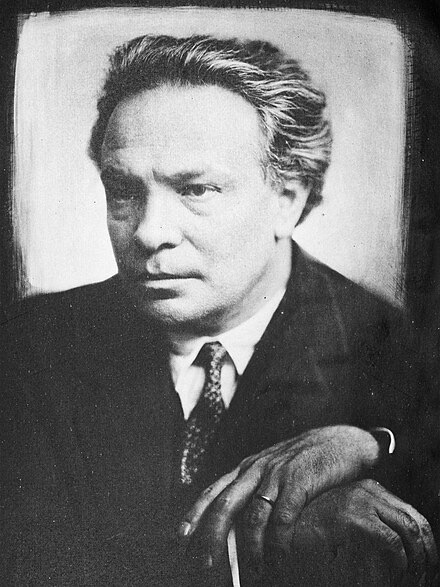
Frederic Anthony Rzewski
April 13, 1938 Westfield Massachusetts USA
June 26, 2021 (aged 83) Montiano Italy

Rzewski was born on April 13, 1938,to parents of Polish and Jewish descent,and raised Catholic.[He began playing piano at age 5 and attended Phillips Academy Harvard and Princeton , where his teachers included Randall Thompson,Roger Sessions,Walter Piston and Milton Babbitt . In 1960, he went to Italy on a Fulbright Scholarship where in addition to studying with Luigi Dallapiccola in Florence he began a career as a performer of new piano music, often with an improvisatory element.

In 1966, Rzewski co-founded Musica Elettronica Viva with Alvin Curran  and Richard Teitelbaum in Rome which was conceived music as a collective, collaborative process, with improvisation and live electronic instruments  prominently featured. In 1971, he returned to New York from Italy.

In 1977, Rzewski became Professor of Composition at the Conservatoire Royal de Musique in Liège, Belgium, then directed by Henri Pousseur

In 1963, Rzewski married Nicole Abbeloos; they had five children.While Rzewski never divorced Abbeloos, his companion for about the last 20 years of his life was Françoise Walot, with whom he had two children. He also had five grandchildren.Rzewski died of an apparent heart attack in Montiano Tuscany on June 26, 2021, at the age of 83.Nicola Slonimsky  said of Rzewski in 1993: “He is furthermore a granitically overpowering piano technician, capable of depositing huge boulders of sonoristic material across the keyboard without actually wrecking the instrument.”Michael Schell called Rzewski “the most important living composer of piano music, and surely one of the dozen or so most important living American composers”.

Rzewski plays ‘The People United Will Never Be https://youtube.com/watch?v=xiWwYsWWVSk&feature=shared


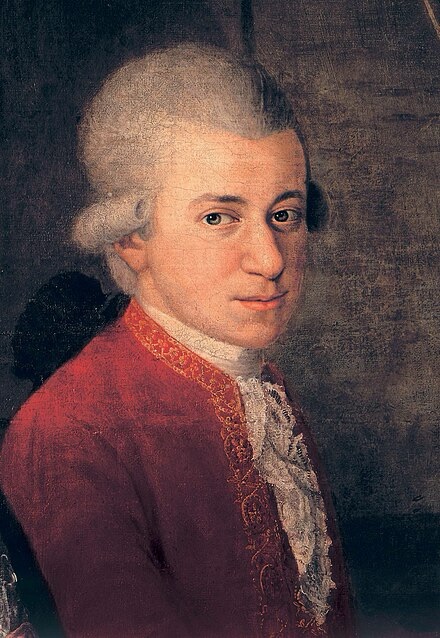
Wolfgang Amadeus Mozart
27 January 1756 Salzburg – 5 December 1791 (aged 35) Vienna
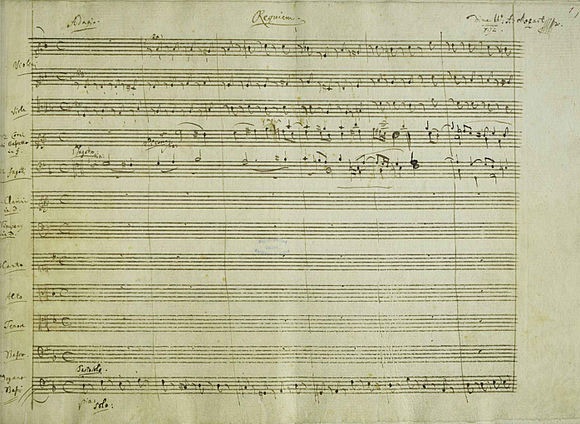
The first page of Mozart’s autograph score

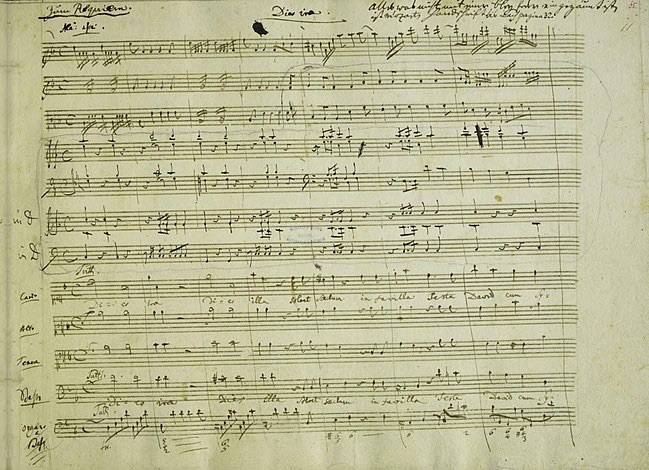
The beginning of the Dies irae in the autograph manuscript, with Eybler’s orchestration. In the upper right, Nissen has left a note: “All which is not enclosed by the quill is of Mozart’s hand up to page 32.” The first violin, choir and figured bass are entirely Mozart’s.

At the time of Mozart’s death on 5 December 1791, only the first movement, Introitus (Requiem aeternam) was completed in all of the orchestral and vocal parts. The Kyrie, Sequence and Offertorium were completed in skeleton, with the exception of the Lacrymosa, which breaks off after the first eight bars. The vocal parts and continuo were fully notated. Occasionally, some of the prominent orchestral parts were briefly indicated, such as the first violin part of the Rex tremendae and Confutatis, the musical bridges in the Recordare, and the trombone solos of the Tuba Mirum.What remained to be completed for these sections were mostly accompanimental figures, inner harmonies, and orchestral doublings to the vocal parts.

The eccentric count Franz von Walsegg commissioned the Requiem from Mozart anonymously through intermediaries. The count, an amateur chamber musician who routinely commissioned works by composers and passed them off as his own,wanted a Requiem Mass he could claim he composed to memorialize the recent passing of his wife. Mozart received only half of the payment in advance, so upon his death his widow Costanze  was keen to have the work completed secretly by someone else, submit it to the count as having been completed by Mozart and collect the final payment.Joseph von Eybler was one of the first composers to be asked to complete the score, and had worked on the movements from the Dies irae up until the Lacrymosa. In addition, a striking similarity between the openings of the Domine Jesu Christe movements in the requiems of the two composers suggests that Eybler at least looked at later sections.After this work, he felt unable to complete the remainder and gave the manuscript back to Constanze Mozart.

The task was then given to another composer, Franz Xaver Süssmayr who borrowed some of Eybler’s work in making his completion, and added his own orchestration to the movements from the Kyrie onward, completed the Lacrymosa, and added several new movements which a Requiem would normally comprise: Sanctus, Benedictus, and Agnus Dei. He then added a final section, Lux aeterna by adapting the opening two movements which Mozart had written to the different words which finish the Requiem Mass, which according to both Süssmayr and Mozart’s wife was done according to Mozart’s directions. Some think it unlikely, however, that Mozart would have repeated the opening two sections if he had survived to finish the work.The completed score, started by Mozart but largely finished by Süssmayr, was then dispatched to Count Walsegg complete with a counterfeited signature of Mozart and dated 1792. The various complete and incomplete manuscripts eventually turned up in the 19th century, but many of the figures involved left ambiguous statements on record as to how they were involved in the affair. Despite the controversy over how much of the music is actually Mozart’s, the commonly performed Süssmayr version has become widely accepted by the public. This acceptance is quite strong, even when alternative completions provide logical and compelling solutions for the work..


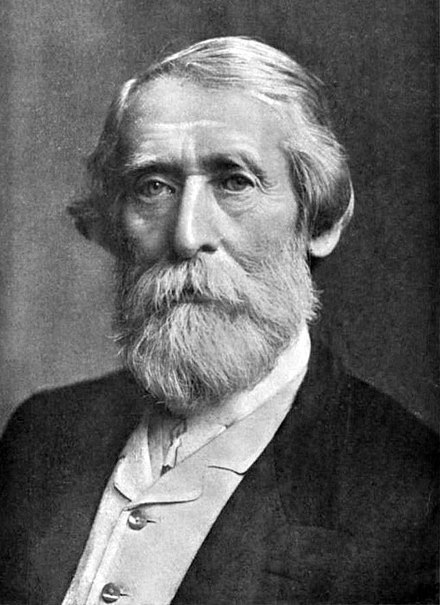
Karl Klindworth (25 September 1830 – 27 July 1916) was a German composer, virtuoso pianist, conductor, violinist and music publisher. He was one of Franz Liszt’s pupils and later one of his closest disciples and friends, being also on friendly terms with Richard Wagner , of whom he was an admirer. He was highly praised by fellow musicians, including Wagner .
As a child, the young Klindworth received violin lessons and taught himself to play the piano. As he was not accepted as violin pupil of Louis Spohr, he then joined a traveling theater company as a successful violinist and conductor when he was only 17. In 1850, he took over the leadership of the Neue Liedertafel in Hanover. In the summer of 1852, Klindworth went to Weimar where he took piano lessons from Liszt and was soon one of his closest disciples and friends.He also became on friendly terms with Richard Wagner
In 1854, Klindworth went to London,where he remained for fourteen years, studying, teaching and occasionally appearing in public.From London Klindworth went to Moscow in 1868, following Nikolai Rubinstein’s invitation to take up the position of professor of pianoforte at the Moscow Conservatory where he first met Tchaikowsky  as professor of harmony.While in Russia, he completed his piano arrangements for Wagner’s Der Ring des Nibelungen , which he had begun during Wagner’s visit to England in 1855, Beethoven’s sonatas and also his critical edition of Chopin’s works.He then became conductor of the Berlin Philharmonic in 1882, in association with Joseph Joachim  and Franz Wüllner , being also the conductor of the Ber5lin Wagner Society. At this time, he established the Klindworths Musikschule, which later became the Klindworth – Scharwenka Conservatory
Klindworth remained in Berlin until 1893, when he retired to Potsdam, practicing as a teacher.He earned his great reputation as an editor of musical works, having re-orchestrated Chopin’s second piano concerto, adopted and raised Winifred Williams to be a perfect “Wagnerite” and made the orchestration of the first movement of Alkan’s solo piano concerto,the eighth of the composer’s etudes in all the minor keys.

Combining fierce pianism, an unrivalled breadth of repertoire, and a level of interpretative refinement that ascends to the realms of poetry, Vadym Kholodenko rises as an artist the likes of which the world has rarely seen since the great pianists of the Golden Age.
Gold Medallist of the Van Cliburn International Piano Competition, Kholodenko’s distinguished pianism and profound artistic gifts have led to invitations from many of the world’s finest orchestras and concert halls.
Highlights include concerto performances with leading orchestras of North America (Atlanta Symphony, Cincinnati Symphony, Indianapolis Symphony, and the Philadelphia Orchestra); Europe (Accademia Nazionale di Santa Cecilia, Danish National Symphony, London Philharmonic, Orchestra Sinfonica di Milano G. Verdi, and the Orquesta Nacional de España); and Asia & the Far East (National Symphony Orchestra of Taiwan, Sydney Symphony Orchestra, and the Tokyo Metropolitan Symphony Orchestra).  He has held the position of Artist-in-Residence with the Fort Worth Symphony Orchestra (Texas, USA) and the SWR Sinfonieorchester (Stuttgart, Germany).
Kholodenko has forged strong musical partnerships with many of the world’s leading conductors, and has had the pleasure of collaborating with such conductors as Karina Canellakis, Myung-Whun Chung, Cristian Măcelaru, Gemma New, Sir Antonio Pappano, Dima Slobodeniouk, Thomas Søndergård, Krzyzstof Urbański, and Kazuki Yamada, amongst others.
In recital, Kholodenko appears on the world’s leading stages – from London, Paris, and Vienna, to Boston, Chicago, and New York – where he is praised for his “iron-clad technique, capable of moments of crystalline delicacy” (The Guardian).  He is also a thoughtful and committed chamber musician, enjoying rewarding collaborations with an array of such artists as Clara Jumi-Kang, Anastasia Kobekina, Vadim Repin, and the Belcea and Jerusalem string quartets.  He has made numerous recordings with violinist Alena Baeva, with whom recent and forthcoming appearances include concerts in the cultural capitals of Florence, London, and Paris.
Possessing an extraordinary facility for the assimilation of music, the sheer scale of of Kholodenko’s knowledge and command of the piano literature is unrivalled, and he holds a vast array of active repertoire.  His discography to date encompasses solo piano works by a diverse list of composers (J.S. Bach, Balakirev, Beethoven, Chaplygin, Kurbatov, Liszt, Medtner, Prokofiev, Rachmaninov, Rzewski, Schubert, Scriabin, Siloti, Stravinsky, and Tchaikovsky, amongst others).  Recordings for the Harmonia Mundi record label include the Grieg Piano Concerto, Saint-Saëns Piano Concerto No.2, and the complete cycle of Prokofiev’s piano concertos.
Kholodenko’s recordings have been described as “truly outstanding” (Gramophone Magazine), and received such accolades as Editor’s Choice Award (BBC Music Magazine), and the much-coveted Diapason d’Or de l’année.  His latest release – a pairing of Beethoven’s Diabelli Variations and Rzewski’s The People United Will Never Be Defeated! for the Quartz Music label (2022) – met with tremendous critical acclaim, described as “carefully contoured and impactful” (BBC Music Magazine), and “playing that pulls no punches: Kholodenko is in the elite of classical pianists” (Norman Lebrecht, for The Critic).
Born in Kyiv, Ukraine, Vadym Kholodenko took his first piano lessons at the age of six, and began touring internationally at thirteen years old.  He was educated at the Kyiv Lysenko State Music Lyceum and the Moscow State Tchaikovsky Conservatoire, under the renowned pedagogues Natalia Gridneva, Borys Fedorov, and Vera Gornostaeva.  He won First Prize at the Sendai International Piano Competition (2010) and Schubert International Piano Competition (2011), before taking the Gold Medal at the Van Cliburn International Piano Competition (2013).  He is now resident in Luxembourg.

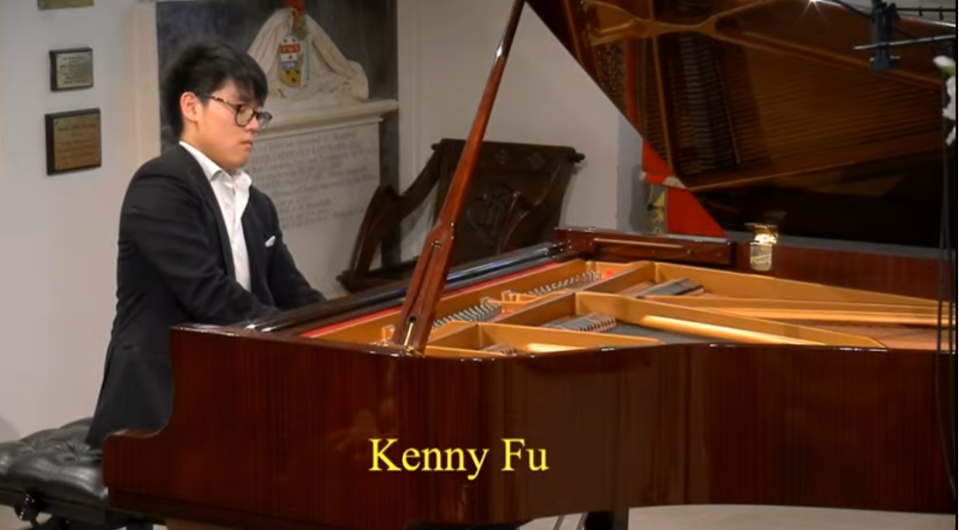
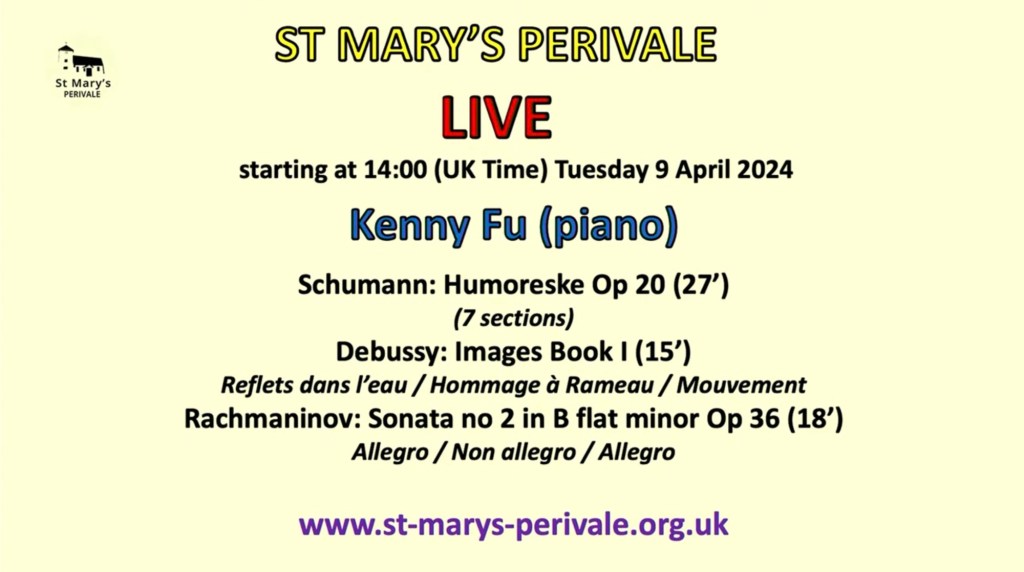
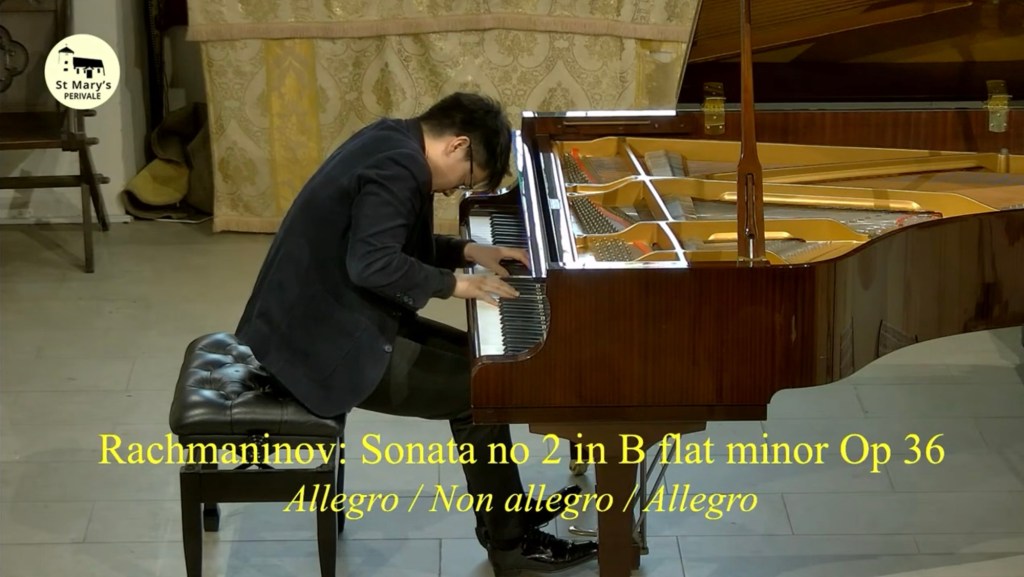
Kenny Fu at St Mary’s ‘Rachmaninov ignites and inflames an artist of impeccable musicianship’

https://youtube.com/live/OfCAnq69Tek?feature=shared
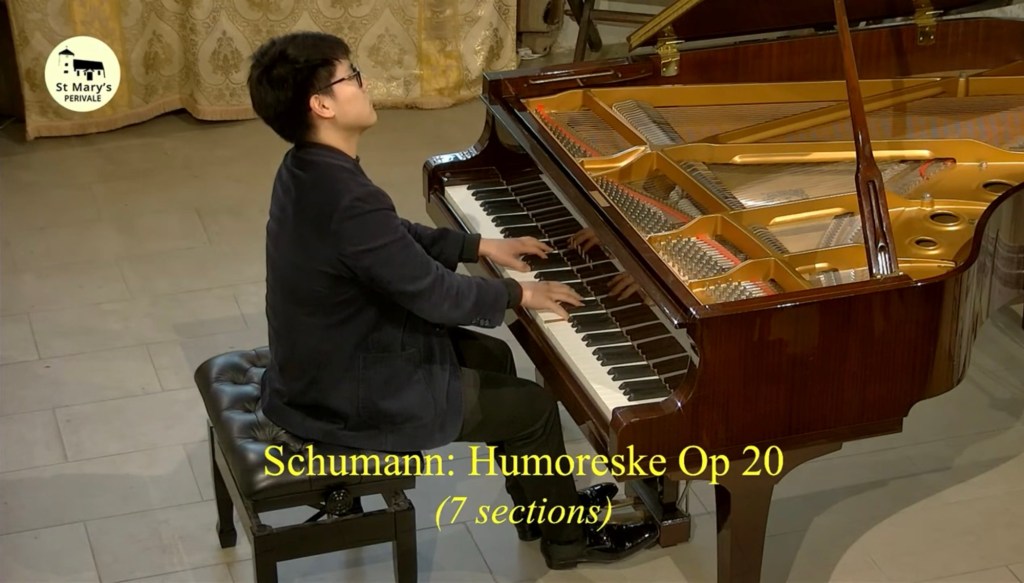
A musician is known by his programme and it was the three bold blocks that Kenny Fu presented that showed off his serious musicianly qualities.His Schumann was played from the very first notes with style and poetic sensibility but never sacrificing the clarity and chameleonic wistful changes of character that Schumann’s imbues into this work of seemingly improvised fantasy.

There was a rhythmic drive to the ‘sehr rasch und leicht ‘ and even Schumann’s insistence of even more energy was played with a sparkling lightness bursting into moments of rhetoric before finding its way to the magic of the opening.Episodes played without a break as Schumann joins the differing movements together into one unified whole.Kenny showed a wistful sense of poetic understanding in the gently flowing ‘hastig’ and if he just missed the sense of arrival in the spiky chords that follow he brought a sense of magic and colour to the ever changing moods of the Floristan and Eusebius characters that Schumann describes.The ‘Einfach und Zart’ of the third episode was expansive and elegiac before bursting into dynamic energy with an Intermezzo that he played with authority and technical skill as he maintained the tempo even through the infamous octaves that abound.The ‘Innig’ of the fourth that seems almost improvised in character was where the fleeting changes were brought to life with great vitality and poetry.There was fluidity and driving energy in the ‘sehr lebhafter’ and Kenny managed to give a sense of expansiveness as the excitement grew until the ‘Mit einigem Pomp’.It is here that Schumann manages to create a legato melody of searing intensity in this rather militaristic outpouring.There was a strange misreading at the opening of the ‘Zum Beschluss’ but not given any importance as the music was allowed to flow so naturally until the final imperious unwinding of the coda.

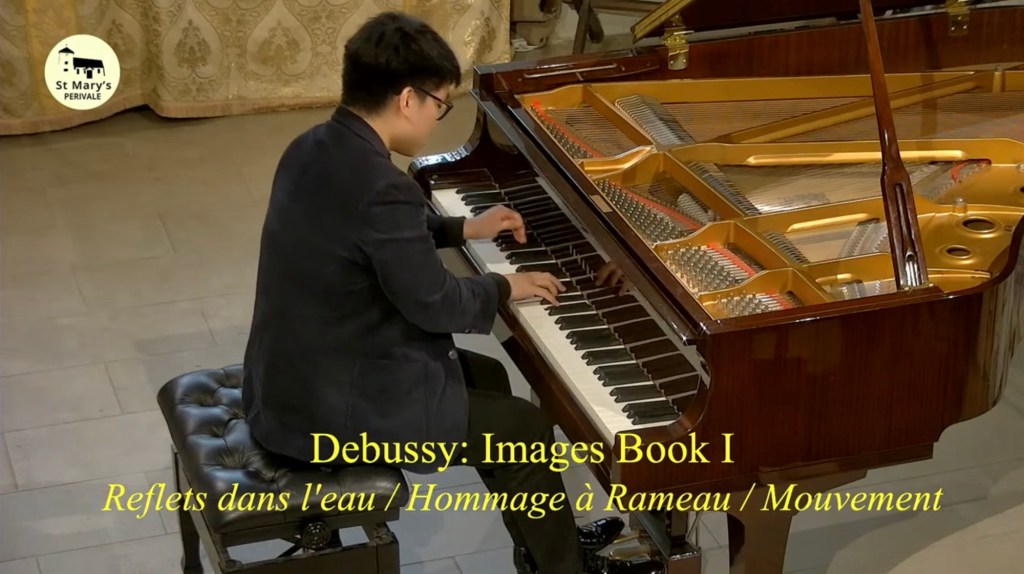
Debussy’s Images Book 1 was played with a beautiful fluidity where after the tempestuous outpouring at the climax of ‘Reflets’ Kenny brought a magical stillness to the coda but strangely seemed to miss the resolution of the final chord! However it lead beautifully into ‘Hommage a Rameau’ that he played with poetic freedom and as he said in his introduction a sense of fluidity that pervades all three pieces of Images Book 1. ‘Movement’ too was barely a murmur as it gradually became bathed in sunlight with playing of transcendental drive until disappearing into the distance from where it had first appeared.

It was however the Rachmaninov Sonata that ignited a spark in this young musician.Here was playing of more colour and sumptuous sounds as he obviously identified with the passionate romantic outpourings and cauldron of boiling sounds creating excitement and intensity.Here was playing where the clarity and precision of Schumann and Debussy were followed by playing of searing drive and intensity and considerable technical mastery.It was the same beauty of colour and sense of balance that he showed in the encore of the Bach /Siloti Prelude in B minor.Barely touching the keys he allowed the tenor melodic line to enter as if by magic creating a spell that showed off magical sense of balance and quite considerable artistry.

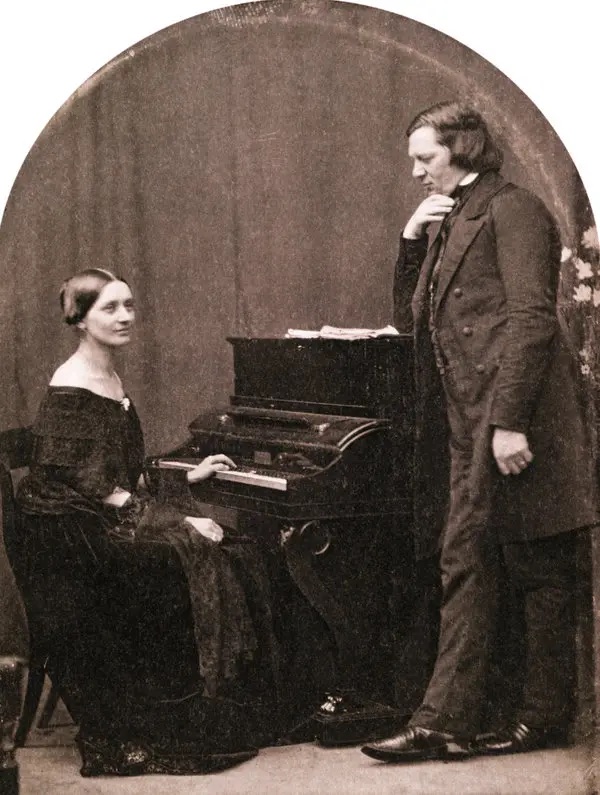
Clara and Robert Schumann

All week I’ve been sitting at the piano and composing and writing and laughing and crying, all at the same time,” wrote Schumann to his beloved Clara Wieck from Vienna in March 1839. “You will find this beautifully illustrated in my Opus 20, the great Humoreske.” 

The conflicting emotions Schumann felt while composing his Humoreske are reflected in the music’s contrasting moods, or ‘humours’. In a letter of 15 March 1839 to his Belgian follower Simonin de Sire, Schumann provided a hint as to the meaning of the work’s title when he pointed out that the word ‘humoreske’ couldn’t adequately be translated into French. ‘It is a pity’, said Schumann, ‘that there are no good and apt words in the French language for such deeply ingrained characteristics and concepts as Gemütlichkeit, and for humour, which is the happy fusion of the gemütlich and the witty. But it is this that binds the whole character of the two nations together.’ The previous year, in drawing de Sire’s attention to his F sharp minor sonata, Op 11, and the Fantasiestücke, Op 12, Schumann told him: ‘The human heart sometimes seems strange, and pain and joy are intermingled in wild variegation.’

“Do you not know Jean Paul, our great writer? I have learnt more counterpoint from him than from my music teacher”. His “Vorschule der Ästhetik” with its extensive treatment of humour probably occasioned Schumann to think of giving a piano work the title “Humoreske” – thus giving birth to a new musical genre.
The “romantic humour” is not, however, aimed at humour in a modern sense of the word, but rather at a portrayal of the fragility and contradictory nature of the human condition. As if in a kaleidoscope, Schumann juxtaposes the most diverse elements of form and moods. Ernst Herttrich’s revision reflects the latest scholarly findings for this unusual work.

Schumann needed some happy diversion in his life at that particular time: he was very unhappy being separated from Clara but the reason for being in Vienna was to be able to establish in the Austrian capital his journal, Neue Zeitschrift für Musik, which he had founded in Leipzig in 1833. But the city fathers said a resounding “No.” So, what to do other than compose a new keyboard masterwork.

In fact, Schumann in 1839 was close to the end of the line of works for the keyboard, master or otherwise. His creative life had centered virtually exclusively on music for the piano, the instrument on which he envisioned becoming a virtuoso. This dream, however, was shattered when he injured his fingers by way of a contraption he used to strengthen those digits that might have been his means for attaining performing fame. But after his marriage to Clara in 1840 he turned more to songs and then symphonies and chamber music.

  1. Einfach Sehr rasch und leicht Noch rascher Erstes Tempo Wie im Anfang
  2. Hastig Nach und nach immer lebhafter und stärker. Wie vorher
  3. Einfach und zart Intermezzo
  4. Innig Schneller
  5. Sehr lebhaft. Immer lebhafter
  6. Mit einigem Pomp
  7. Zum Beschluss. Allegro
(AchilleClaude Debussy. 22 August 1862 – 25 March 1918 is sometimes seen as the first Impressiomnist  composer, although he vigorously rejected the term. He was among the most influential composers of the late 19th and early 20th centuries.

Images is a suite  of six compositions for solo piano by Claude Debussy. They were published in two books/series, each consisting of three pieces. The first book was composed between 1901 and 1905, and the second book was composed in 1907. Debussy wrote to his publisher , Jacques Durand about the first series : “Without false pride, I feel that these three pieces hold together well, and that they will find their place in the literature of the piano … to the left of Schumann, or to the right of Chopin… “

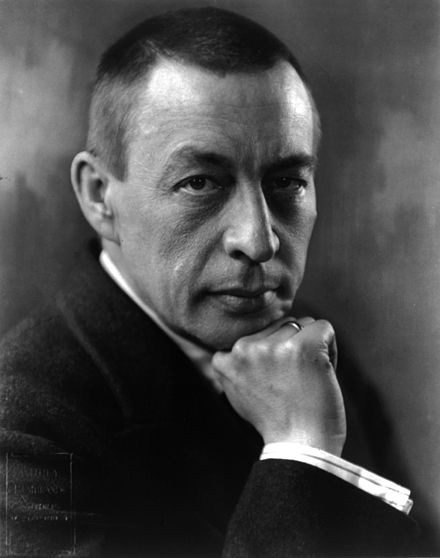
Sergei Vasilyevich Rachmaninov 1 April  1873- 28 March 1943

Piano Sonata No. 2, op 36 was  composed by Rachmaninov  in 1913, who revised it in 1931, with the note, “The new version, revised and reduced by author.”

Three years after his third piano concert  was finished, Rachmaninov moved with his family to a house in Rome that Tchaikowsky had used.It was during this time in Rome that Rachmaninov started working on his second piano sonata.However, because both of his daughters contracted typhoid fever, he was unable to finish the composition in Rome but instead he moved his family on to Berlin in order to consult with doctors.When the girls were well enough, Rachmaninoff traveled with his family back to his Ivanovka  country estate, where he finished the second piano sonata.Its premiere took place in Kursk on 18 October 1913 ,The sonata is in three interrelated movements:

  1. Allegro agitato
  2. Non allegro—Lento (E minor—E major)
  3. Allegro molto (B-flat major)

When Rachmaninov performed the piece at its premiere in Moscow, it was well received.However, he was not satisfied with the work and felt that too much in the piece was superfluous and in 1931, he commenced work on a revision. Major cuts were made to the middle sections of the second and third movements and all three sections of the first movement, and some technically difficult passages were simplified.

A performance of the original version lasts approximately 25 minutes, while a performance of the revised version lasts approximately 19 minutes.

In 1940, with the composer’s consent, Vladimir Horowitz created his own edition which combined elements of both the original and revised versions.His edition used more original material than revised throughout all three movements.A performance of the Horowitz revision lasts approximately 22 minutes.


From his early solo debut at the Wigmore Hall to his attainment of the prestigious Sir Elton John Scholarship, Kenny Fu holds much potential and promise for a bright future. He has given concerts on three continents and performed extensively throughout UK which include distinguished halls such as the St Martin-in-the-Fields, Kings Place, Wigmore Hall, Assembly Hall and Fazioli Concert Hall. His repertoire choices gravitate toward the late Classical and Romantic Eras where he brings an intense and captivating temperament to the works of Beethoven, Brahms and Rachmaninov. Kenny was a semi-finalist at the Sussex International Piano competition. During his earlier years he was the winner of the Solihull Young Musician of the Year and a Quarter Finalist at the BBC Young Musician of the Year. His reputation as a musician has also extended internationally where he was a International Piano Competition. He has also received guidance from numerous esteemed musicians such as Dimitri Alexeev, Pascal Devoyon, Imogen Cooper, Bernard d’Ascoli and Angela Hewitt. Kenny is looking forward to his Postgraduate studies at the Royal Academy of Music under the tutelage of Professor Tatiana Sarkissova. He is also the recipient of the ‘Myra Hess’ award from Help Musicians UK and is also sponsored by the Warwick Arts fund. 

https://christopheraxworthymusiccommentary.com/2022/06/06/kenny-fu-the-making-of-an-artist-with-poetry-and-intelligence-at-st-marys/

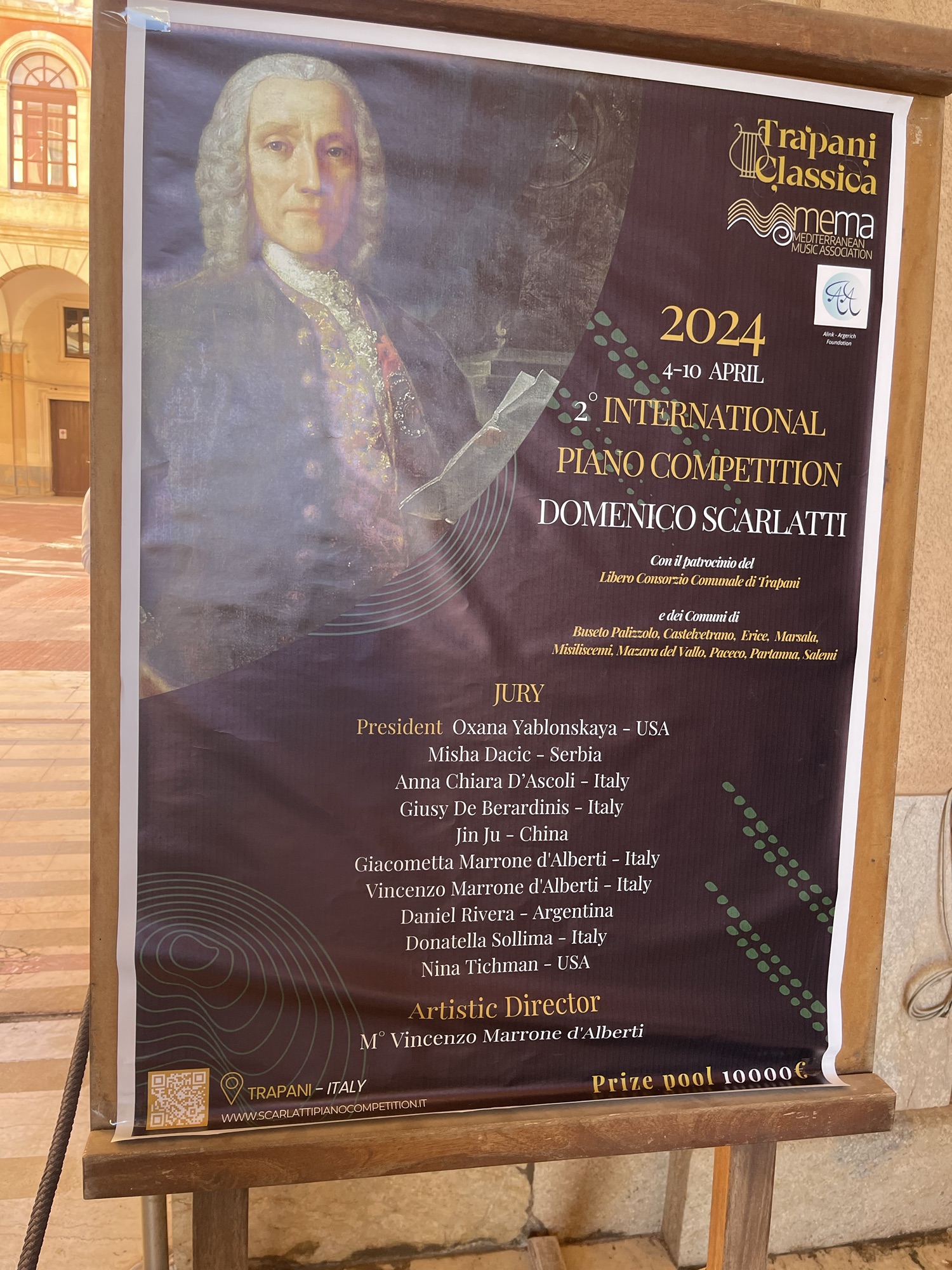
Trapani the jewel of Sicily where dreams can become reality – The International Piano Competition – Domenico Scarlatti

Lost for words for such a warm heartfelt welcome from one of the truly great artists of our time.
This regal artist here in Sicily dedicating her time and energy to helping and encouraging young musicians as she has always done in a long and distinguished career.


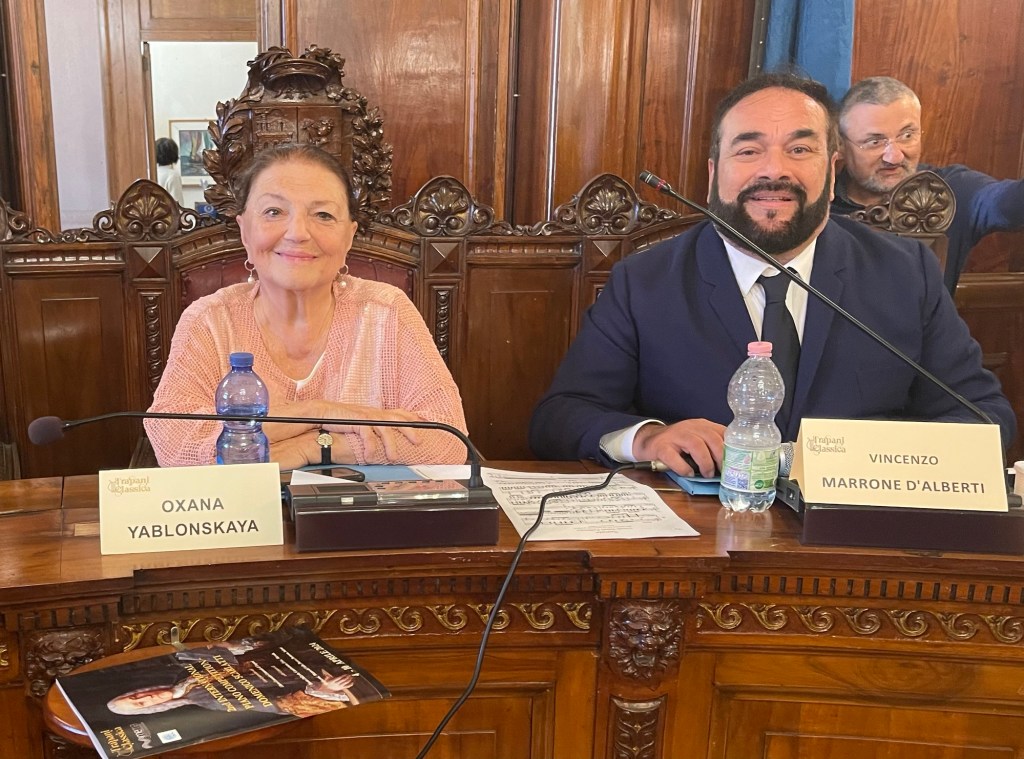
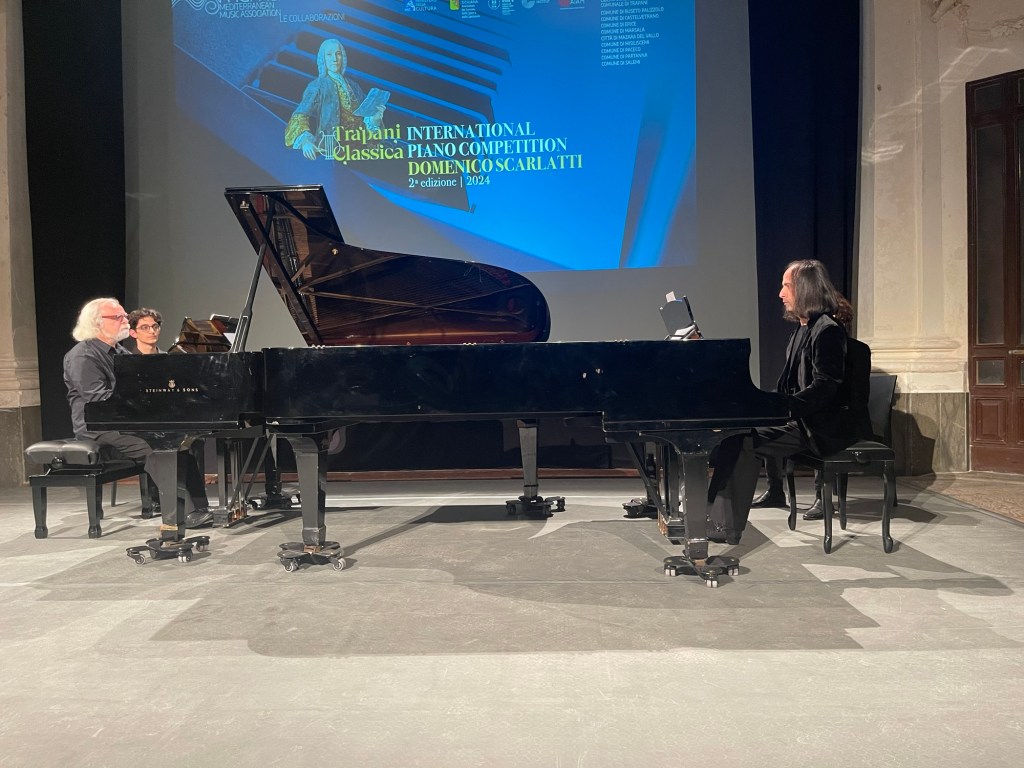
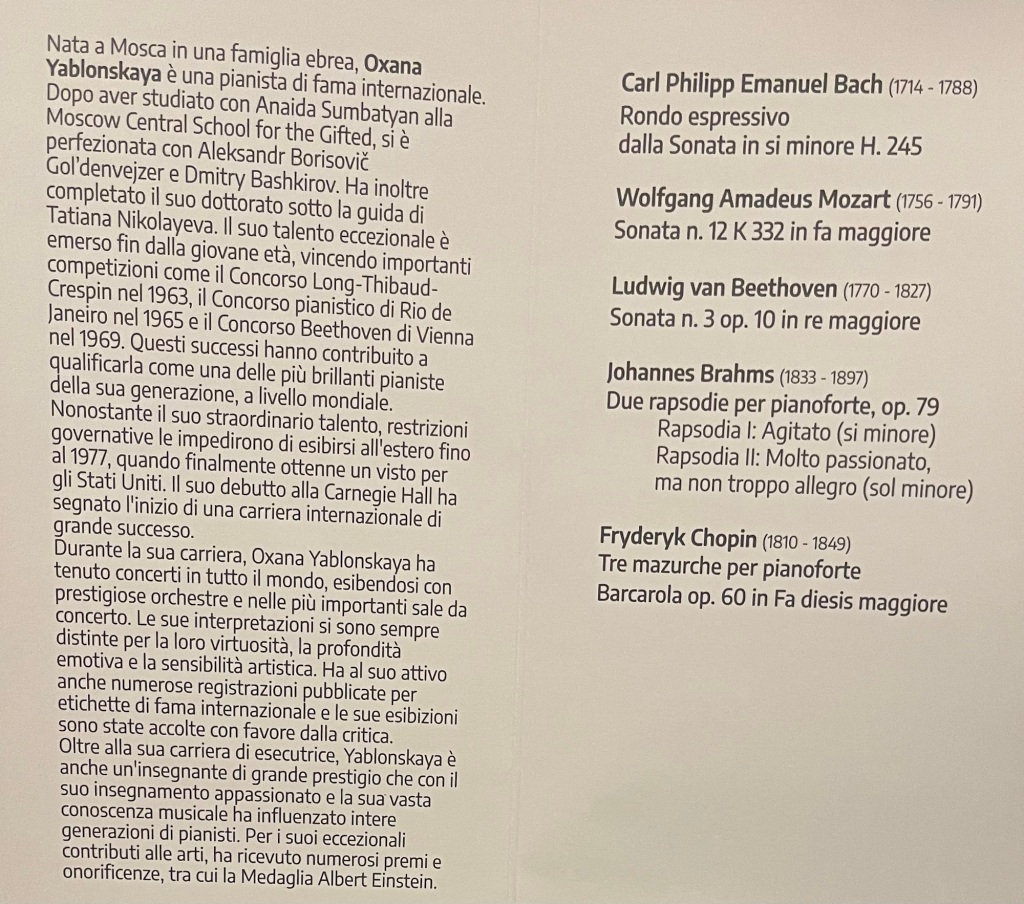
Oxana Yablonskaya,in Trapani as presidente of a jury that includes many distinguished colleagues all united for their friend Vincenzo Marrone d’Alberti in his wish to launch his home town of Trapani as a centre of cultural excellence on the world stage.
Oxana now in her 85th year has come from Jerusalem where she lives and teaches to listen to young musicians gathered from around the world whose only wish is to be able to dedicate their lives to sharing their art.
We hear everyday about war and greed but there is also another world that is not spoken about which is our only hope for a better future.
Young musicians dedicating their youth to their art and despite differences and worldly grievances searching for the same Eutopia that we are all in the end striving for .
I have never forgotten Oxana’s Prokofiev third sonata ,that she played for Bruno Nicolai’s Edipan in Rome forty years ago,in the theatre that my wife and I had built and run just next door to St.Peter’s Square.
And only twenty years ago playing again in Rome a magnificent Rachmaninov Third Concerto where her regal presence and command allowed her to take over from a conductor overcome by emotion.
She not only played magnificently but also conducted the performance from the keyboard!
It is we that should thank you dear Oxana for the honour of wanting still to share with aspiring young artists your vast experience and legendary musicianship with such humility and humanity.

https://christopheraxworthymusiccommentary.com/2024/04/11/oxana-yablonskaya-la-regina-the-queen-of-the-keys/

First day for me of the 2nd International piano competition Domenico Scarlatti


https://www.scarlattipianocompetition.it

Ekaterina Chebotareva Foto Lorenzo Gigante


Some superb playing from Ekaterina Chebotareva where she was able to bring the same extraordinary clarity to Ravel’s La Valse as she had done to Scarlatti K 47 or Rachmaninov op 33 etude tableaux in D minor .

Rongrong Guo


Playing of extraordinary involvement and conviction from Rongrong Guo brought vividly to life a really sizzling Scarlatti K 24 and a deeply felt Scriabin with the passionate outpouring of this most romantic of studies op 42.
Her 12th Hungarian Rhapsody would have got an ovation in the concert hall for its theatrical vividness and conviction.What she missed in detail was made up for with passionate involvement .

Mikhail Kambarov


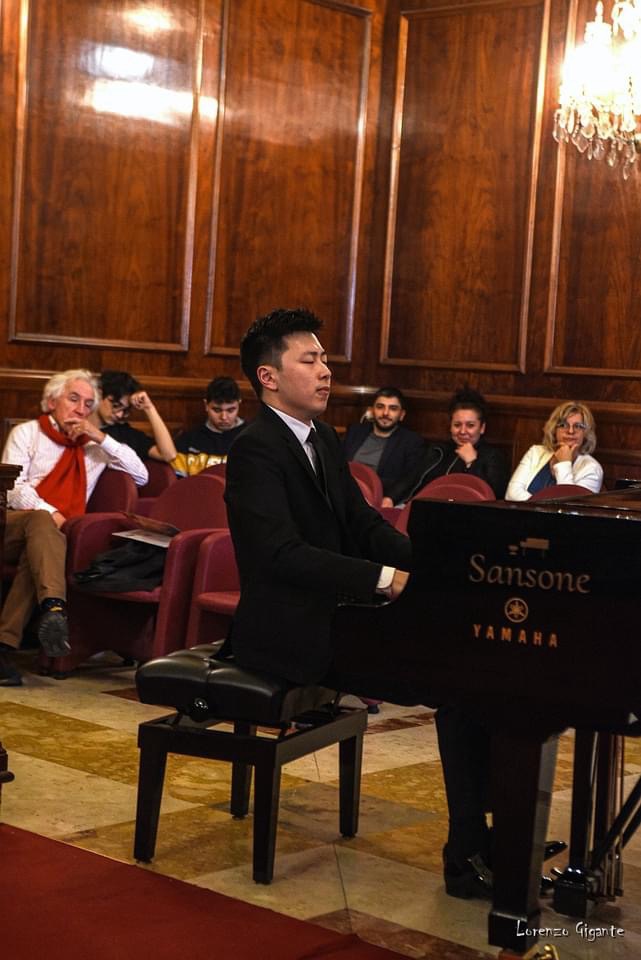
The surprise was the young Russian in refuge in Weimar like Liszt .Mikhail Kambarov ignited and illuminated this Yamaha concert grand with the ravishing colours that only a born artist could discover .A Scarlatti Sonata K 87 that owed more to Chopin than Scarlatti but was imbued with ravishing subtlety.Colours that were strangely missing from Chopin’ s own double third study where his technical command and ingenious fingering brought a smile even to Oxana’s up until now rather serious demeanour. Scriabin fifth that was just the ideal piece for a passionate young artist of his calibre.
I missed seven earlier candidates but this jury of serious distinguished musicians had decided to allow all ten competitors to return to the second round where they will give an hour long recital including a classical sonata which will certainly demonstrate their artistry and musicianship to the full .

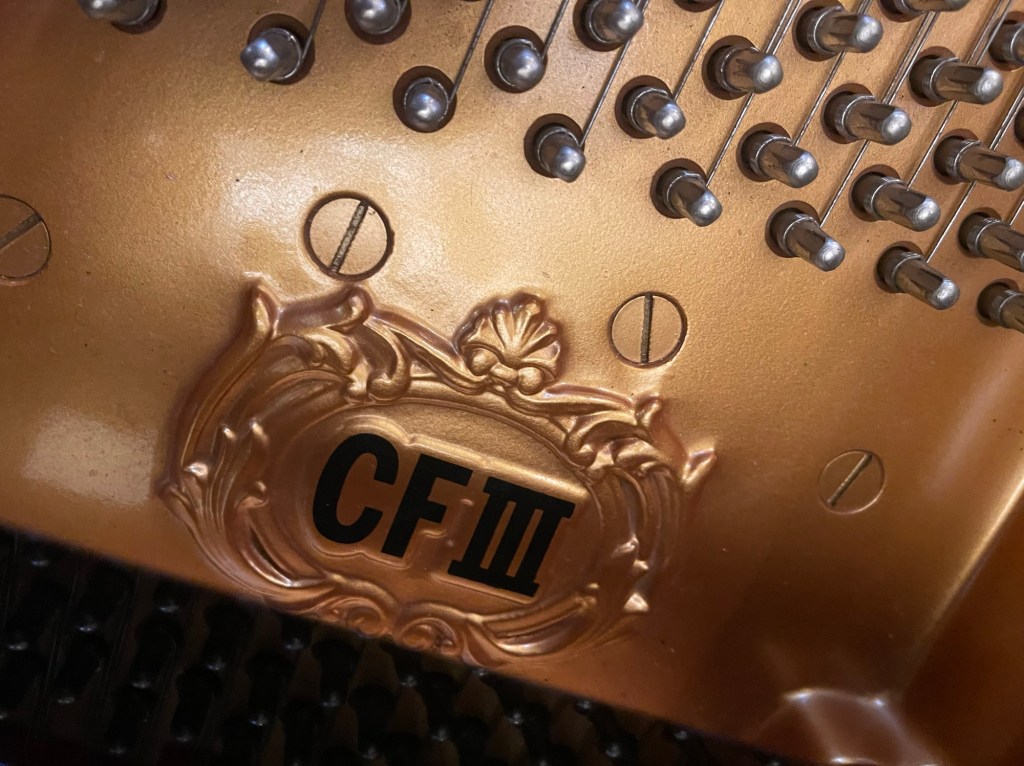
The second day for me in Trapani and what a surprise it has been.The day started with a student of the artistic director Vincenzo Marrone d’Alberti taking advantage of this magnificent CF 3 Yamaha whilst awaiting the arrival of the candidates and the jury.

Matteo Pierro just turned twenty gave a performance of Scriabin’s 9th Sonata that would have won him a top prize in the competition if a conflict had not stopped him from entering into the circus arena.

Matteo Pierro like a scene from Chekhov giving a superb Scriabin 9th before assisting everyone else in the competition

Vincenzo’s staunch advocacy of the Tobias Matthay school allows for a range of sounds that most pianists today do know exist! This young artist was humbly placed at the service of the distinguished jury and just managed to snatch a few minutes to indulge in the sumptuous sounds that lay within this instrument that have mostly remained undiscovered.

Jeongro Park – masterly playing from day 1 Foto Lorenzo Gigante


It was one of those mornings because the jury was seated now and Jeongro Park took his place at the piano and proceeded to give a series of performances of such mastery and conviction that time stood still as he kept us in his spell for over an hour.
His Davidsbundler reminded me of Murray Perahia playing it in the Leeds competition and reducing the jury to tears.As if that was not enough after the desolate final waltz he played his own transcription of the fourth movement of the Resurrection Symphony .The organisers had put this before the Davidsbundler but a great artist is known by his programmes and this young man knew exactly where it should be placed.With baited breath we were now treated to an astonishingly masterly display of fireworks in a performance of Liszt’s diabolical Totentanz that I have never heard played with such total mastery even from Arrau.
Follow that !

Federica Reale


It was the young Italian pianist Federica Reale who treated us to a musicianly performances of five Scarlatti’s Sonatas ,Clementi’s Sonata op 26 n.2 and the Eight pieces that make up Brahms op 76.This certainly calmed the air as we listened to the refined and intelligent performances that were played with beauty and colour as she shaped the music with such loving care and restrained passion.

Kiana Reid


The final pianist before the lunch break was the Japanese pianist Kiana Reid.Stylish playing of sonatas by Scarlatti K.450 and Haydn Hob VI .23 both played with great character and clarity.But it was the Schumann Fantasie op 17 that showed off her true musicianship and considerable artistry.An architectural shape to the great outpouring of love for the composer’s future wife Clara.Fussy meticulous indications by the composer can be distracting for lesser musicians but Kiana was able to steer her way through the beautiful trees to show us the power and sweep of the entire wood.If the second movement was a little overpowering at the beginning ,as it is marked only mezzo forte ,she managed even here to give a coherent shape to Schumann’s rather tiresome dotted rhythms as she built up the tension to the final coda .Many lesser pianist can fall at this last notorious hurdle but Kiana played with controlled passion where maturity and mastery can allow youthful exuberance to be always kept under control.The last movement was played with ravishing beauty and delicacy and the final pages were played with aristocratic authority following impeccably the composers wishes to allow the work to come to rest only on the final three consiliatry chords.

Kiana Reid


A remarkable performance especially coming after the Davidsbundler where these two more mature contestants could show us how maturity can tame youthful passion.And like her colleague she finished with the pianistic fireworks of the Tarantella from Liszt’s Venezia e Napoli. A breathtaking performance but one that should be linked to the previous ‘Canzone’ as Liszt very clearly indicated.His very precise pedal indications make his wishes quite clear but that almost no one observes thinking of Liszt as merely a juggler of notes rather than the most visionary composer and precise editor of his own and his colleagues scores .
As Nadia Boulanger was fond of quoting from Shakespeare 12th Night :’words without thought no more to heaven go’.

Zukhra Sharpova. Foto Lorenzo Gigante


After the lunch break Zukhra Sharpova gave very crisp and clear performances of Scarlatti and Beethoven Sonatas.One or two mishaps very professionally disguised obviously made her feel very uncomfortable but she went on to give a musicianly performance of another Schumann masterwork op 22.She was obviously not happy with her performances and this was a disappointing off day for a very fine pianist.

Changyu Yin Foto Lorenzo Gigante


The final contestant was Changyu Yin,a 23 year old pianist from China.He was down to play the ‘Hammerklavier’ but it had been changed to yet another master work of Schumann with the Etudes Symphoniques op 13.
Beginning with two Sonatas by Scarlatti and Haydn that were played with clarity and precision but just missing a natural sense of style.
The Schumann showed off impeccable preparation and musicianship but whereas Schumann himself had described Chopin ‘s Mazurkas as ‘canons covered in flowers’,these are studies that should also blossom and we should not be aware of the considerable technical hurdles that are being attempted.

Changyu Yin Foto Lorenzo Gigante

It was in the five posthumous studies (published by Brahms after Schumann’s untimely death) that Changyu allowed the music to bloom with great style and beauty.The finale can seem very repetitive and some pianists like Changyu today look maybe unnecessarily to the first edition to bring a little variety to what can seem monotony to less imaginative hands.
A fine well prepared performance but missing the natural artistry that had taken us so by surprise this morning.
And so another five pianists to hear tomorrow but not before two jury members give a concert together tonight.

https://christopheraxworthymusiccommentary.com/2024/04/11/daniel-rivera-and-misha-dacic-take-trapani-by-storm/

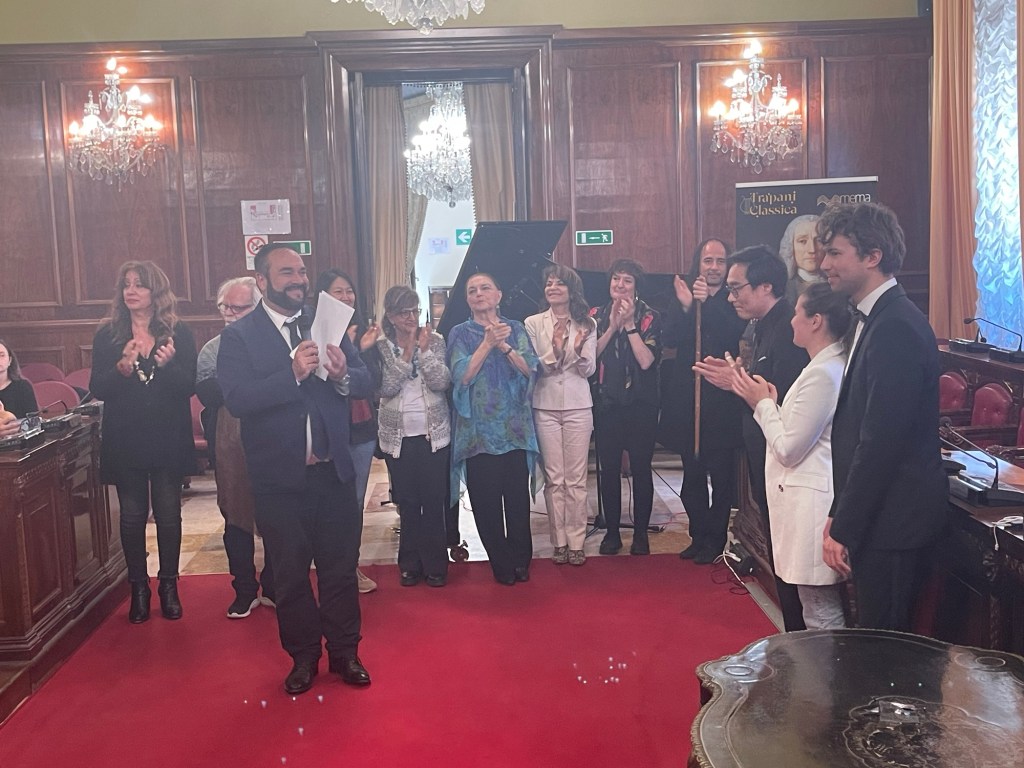
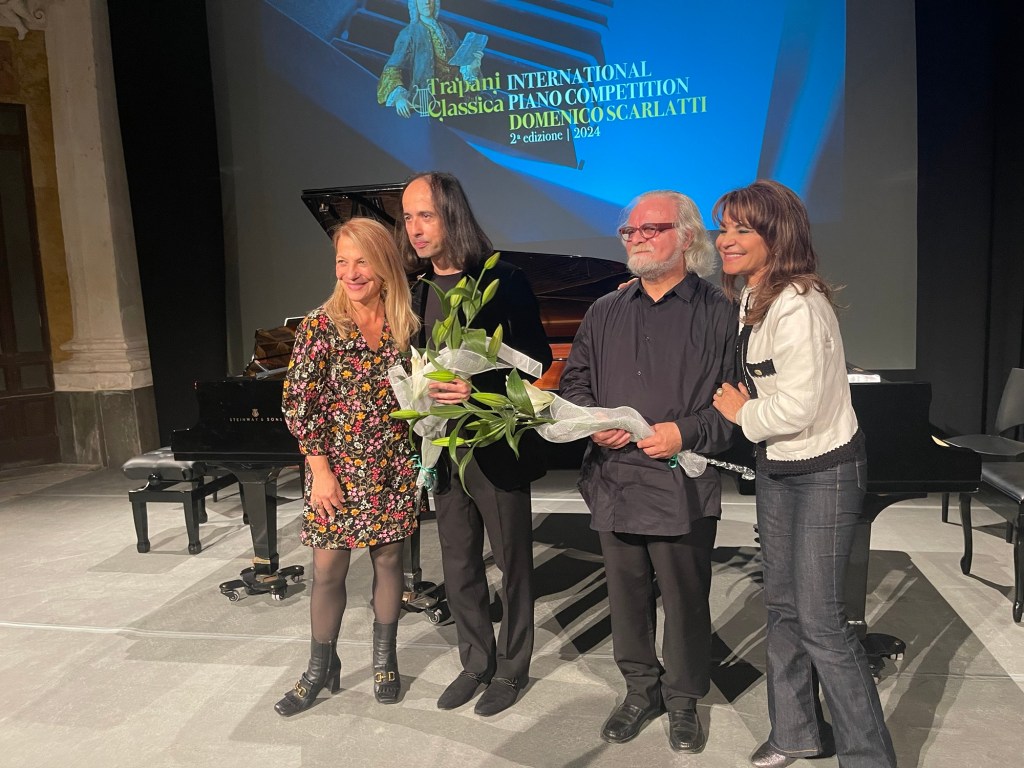
The jury members with maestro Vincenzo Marrone d’Alberti announcing their decision

The end of the semifinal as we wait for the result to see which out of the ten contestants will take part in the final tomorrow morning

Vincenzo Marrone d’Alberti making the announcement. Foto Lorenzo Noto


In the meantime tonight a much awaited recital by Oxana Yablonskaya

Kazumitsu Ujisawa

The day started with the Japanese pianist Kazumitsu Ujisawa with the Scarlatti Sonata K.101 played with sparkling brilliance and clarity.This was followed by Beethoven’s penultimate Sonata op 110 that we were to hear three times today.An intelligent musician and there were moments of great beauty but I did not really feel he penetrated the deep inner meaning of one of Beethoven’s most poignant compositions.There was an unexpected change of programme as instead of the Schumann Fantasie we suddenly heard a sublime performance of Chopin’s F sharp major Nocture op 15 n.2.A refined performance that will long be remembered for it’s delicacy and aristocratic poise.This was followed by the Andante spianato op 22 that we were also to hear three times today.A beautiful performances of refined delicacy ,brilliance and style.

Dott. Maria Efenesia Baffa


Maria Efenesia Baffa,a doctor from Florence ,started her recital with Beethoven’s last Sonata op 111. With tiny hands but such a passionate heart she played with the temperament and drive of someone who is in love with music.I remember when I was teaching at the Royal Academy in London ,next door to Harley Street,a doctor came asking for lessons.I was the youngest teacher then and was sent to a sumptuous studio with a grand piano that would have been the envy of many professional musicians.This charming overworked doctor admitted after an hour of talking but not actually performaing music that it was me or the psychiatrist and I was a bit cheaper !
It is this love for music that came across so vividly today and if there were blemishes in the longer works by Beethoven and Chopin due obviously to having to divide her time between her passion for medicine and music it was in the shorter Scarlatti Sonatas that her temperament and agile fingers brought the music vividly to life.

Ekaterina Chebotareva


Ekaterina Chebotareva I had already heard and admired in the first round,in particular playing a crystal clear ‘La Valse’.Today she showed much more authority and character and it was this that came across in theatrical performances of Scarlatti and Haydn Sonatas.There was scintillating brilliance to the second movement of the Haydn Sonata in G that she played with crystalline clarity.Brahms’s 8 pieces op 76 were played with fluidity and luminosity that she combined with mastery and musicianship.

Rongrong Guo


Rongrong Guo I had heard too in the first round when her performances were more of a good impression than perfect in detail.So it came as a surprise to hear such a fine performance of Scarlatti with well controlled and detailed playing with a natural musicality of someone who loves the music that is pouring from her agile fingers.Beethoven’s op 110 was given a very well prepared and controlled performance only getting slightly out of hand as she lost her head allowing her heart full reign for the passionate finale outpouring.However an impressive performance that I was not expecting from someone with a natural but sometimes untamed temperament.There were many beautiful things in her Carnaval even though this was more a good impression than a detailed interpretation.She feels the music so intensely and it is this love which she communicates with such immediacy to the public.

Mikhail Kambarov


Having lifted an eyebrow at Mikhail Kambarov’s Scarlatti in the first round I was bowled over by his superb performance of the two Scarlatti Sonatas that opened today’s programme.K8 was dynamic,rhythmic but above all refined and scintillating.The Sonata K 487 was played with such fantasy that he revealed the genius of this little Sonata which was a true tone poem in his refined poetic hands.There was beauty from the very first note of Beethoven’s op 110 where there was weight mixed with gossamer lightness.A sound world of whispered confessions of ravishing beauty and showed a sensitivity to sound that I remember startled us in the west on the first visits from Richter.One critic of his performance of Beethoven’s op 22 Sonata said that the slow movement had been in existent such were its secrets revealed in whispered undertones by a Master. There were so many beautiful things today too and a Scherzo that was shaped as a real musician with scrupulous attention to Beethoven’s detailed indications.The sublime Adagio was allowed to gradually grow in intensity until the final passionate explosion of triumph as Beethoven ,like Scriabin a century later ,had envisaged his star.

Chopin too was elegant and refined maybe trying a little too hard to ‘do things’ instead of letting the music speak simply and eloquently for itself but it was of such ravishing beauty with the scintillating beguiling jeux perlé of another age.
Ten exceptional performances over two days but the circus aspect of a competition is the decision now to choose only four to take part in the final tomorrow morning.
After an hour long deliberation the four chosen to go ahead are Jeongro Park,Kiana Reid,Ekaterina Chebotareva and Mikhail Kambarov.
Mikhail,this poet of the piano was awarded unanimously the Scarlatti Prize today too.

And today was the final round of the International Piano Competition in Trapani .Four pianists had been chosen for this final round and it was a morning of sumptuous music and scintillating piano playing.Such was the high standard that the distinguished jury could do no better than award two tied prizes.

Three of the finalists (missing Kiana Reid who after her ‘tour de force’ of Rachmaninov 2nd Sonata followed by La Valse needed to eat something!)

First Prize was awarded to Jeongro Park and Mikhail Kambarov and Second Prize to Ekaterina Chebotareva and Kiana Reid.A happier result could not have been bettered from the sumptuous music making that all four had offered us today.
It had all been streamed live at http://www.memassociation.org

Jeongro Park


Jeongro Park had opened today’s final round with a scintillating account of the Scarlatti Sonata K.20 that he played with an infectious rhythmic drive that did not exclude refined phrasing of delicacy and style.A kaleidoscope of sounds and colours was opened up in the magic box that is Kurtag’s Homage to Scarlatti .Jeongro showed us his mastery of sound from the whispered barely audible to the rich full sounds that this wonderful instrument can reveal .There was never any hardness but always with full sounds of seemingly infinite reverberations.A truly masterly performance of Schubert’s Drei Klavierstucke revealed an intelligent musicianship allied to a poetic fantasy always at the scrupulous service of the composer.There was a wonderful sense of balance that allowed the melodic line to sing without any forcing but also to be sustained by Schubert’s miraculous harmonic invention.
Rachmaninov’s Chopin variations have long been neglected because thought of as overlong and drawn out.This was not the case today in Jeongo’s masterly hands where his sense of colour and transcendental piano playing showed a work of great invention and variety .Chopin’s C minor prelude was subjected to Rachmaninov’s fantasy world of scintillating pianistic invention from the hands of a master who could show us so clearly the musical line in a work where there are so many notes that it takes a real musician to sort out the wood from the trees.
Jeongro’s own trascription of Dreams ,one of Rachmaninov’s six romances op 38 , was a masterly reworking of a rarely heard song.

Kiana Reid


The second to play in this final round was the Japanese pianist Kiana Reid whose beautifully florid C sharp major prelude lead so beautifully into the opening of Beethoven’s Sonata op 109. Playing where beauty and intelligence combined as Beethoven’s first of his final trilogy was given the space and freedom as meticulously noted in the score.There was dynamic drive to the Prestissimo second movement where the melodic line was finely drawn also here.The final theme and variations were played with great weight and authority as the quartet quality of the theme was gradually transformed into ever more vigorous variations until the return of the theme and Beethoven’s miraculous use of seemless trills on which his vision of Eutopia is revealed as the theme is allowed to float on this wonderful stream of sounds.This was playing of remarkable technical control but also of poetic understanding and intelligence.

Kiana Reid


It was the same intelligence combined with breathtaking virtuosity that made for overwhelming performances of Rachmaninov’s Second Sonata and Ravel’s own transcription of “La Valse’. There was a sense of colour and transcendental virtuosity that was a continual outpouring of sumptuous beauty and overwhelming power.
The range of colour that she found in La Valse was quite remarkable and her glissandi in both hands were just streams of gleaming sounds that shone in this rather sultry atmosphere with a build up in tension that was hypnotic and breathtaking in it’s mastery of control and daring.

Ekaterina Chebotareva


The third of our quartet of finalists was Ekaterina Chebotareva who saved her finest performances for today’s final round. Playing of intelligence and authority with a poetic understanding that could bring Schubert’s three movement Sonata in A minor D.537 vividly to life .It is a sonata that can seem rather disjointed in lesser hands but Ekaterina made the music speak eloquently and with such subtle colouring .The seemingly ungrateful rather heavy handed chords were given a new life and meaning that I have rarely heard from others. She had started with Soirée de Vienne n 6 by Schubert in Liszt’s teasingly tantalising transcription and she played it with subtle charm and a lightweight jeux perlé of great character and style.A Scarlatti Sonata K.82 was played with a scintillating lightness and clarity before Puccini’s ‘Crisantemus’.

Ekaterina Chebotareva

A work I have never heard in concert before and it was a real curiosity inserted in a programme by this discerning young artist.It was a sumptuous interlude before Agosti’s famous transcription of Stravinsky’s ‘Firebird’.Her transcendental technique and musicianship brought this famous transcription vividly to life.After the extraordinary gymnastics of the opening there were moments of purity and beauty before the magic entry of the Firebird and the tumultuous build up to the final breathtaking ending.Some remarkable playing for it’s intelligence and musicianship allied to a clarity and technical mastery.

Mikhail Kambarov taken from the live stream by his teacher Misha Lifits in Weimar. Foto Lorenzo Gigante

The fourth of the pianists today was another Russian pianist this time transferred to Weimar and was the youngest of the four competitors .Mikhail Kambarov’s performance today was for me the highlight of a very special morning of music making.
Everything he played was so convincing and full of temperament as he lived every moment of the works he played.I was brought up on the Bach of Rosalyn Tureck and would often stick the pages on the aide memoire that she would use in her old age when she was no longer the High Priestess that had reigned in the world’s great concert halls for generations.But Mikhail played a different type of Bach ,more streamlined and certainly faster but it had the same unrelenting pulse that Rosalyn would bring to all she did.Mikhail today brought a sense of colour to his Bach that showed a phenomenal technical control allied to an intelligence and a personality that were for me totally convincing.The range of sounds that he brought to the slow movement were quite remarkable where legato and staccato somehow in his hands could live together without any smudging from the pedal.
It was Anton Rubinstein who said that the pedal was the soul of the piano and Mikhail certainly realised that.He had a total mastery of them which just gave him the same range of sounds of the different manuals that Bach would have had.But Mikhail also had the modern piano with it’s range of sounds and possibilities that Bach could never have imagined!
The Messiaen brought tears to my eyes as the stillness and whispered sounds of heart rending significance struck deep and the pungent harmonies ,sometimes like broken glass,were of searing intensity.
Rameau’s ‘La Poule’ was played with the same amazing dexterity and clarity as Sokolov and it was a lesson in refined playing of great artistry.
The control of sound in Scriabin’s Prelude for the left hand was nothing short of miraculous.I have never heard it played with such golden luminosity and delicacy but there was also an unbridled passion as this little prelude was monumental in the way that Mikhail managed to tell a story in sound that was really quite remarkable for its control and poetic understanding.
There was a magical luminosity and purity to the ‘Follia’ that Rachmaninov chose for his variations.Even a very subtle addition of ornaments ,as he had done in the Bach Italian Concert too , brought a smile to my face at the cheek of daring to hint at such a thing!
But this was a true artist where one felt anything was possible on a true voyage of discovery.The sounds and colours that he found together with the sudden rhythmic impulse that he would add to some of the variations were astonishing in their daring and total conviction.Using his whole body to obtain a rhythmic energy where his devil may care daring was totally at the service of the music ,as he plunged into the octaves or the menacing chords that fill many of the final variations.Like Alfred Cortot the poetic content and musical meaning made any little technical slips on the way completely irrelevant in performances of such overwhelming authority and vision.The searing intensity of the coda and the final return of the theme was one of those magic moments that will remain in my memory for long to come.

Mikhail in discussion with la Yablonskaya after the final result


At 23 this is an artist to watch and the Jury quite rightly awarded him first prize together with the more mature mastery of Jeongro Park who is though more than ten years his elder.

The final concert and prize giving was for me an occasion to hear a remarkable pianist from Palestine who had been having lessons from Oxana Yablonskaya on line as travelling to her home in Jerusalem was not possible.Mohammed Alshaikh aged 21 was awarded the young Emerging Pianist Category Prize and I was astounded by his performance at the concert tonight of the Danse Macabre by Saint Saens in the diabolical transcription of Vladimir Horowitz .

https://www.ansa.it/sito/notizie/cultura/musica/2024/04/08/la-pianista-ebrea-yablonskaya-premia-il-palestinese-alshaikh_b2540cbe-8a06-4411-9889-15a23f16508d.html

My wish to hear a young man who I was told had taken the competition by storm,had come true .But then Trapani is that sort of place where dreams can become reality thanks to the vision and hard work of Vincenzo Marrone d’Alberti and his team intent on bringing,to the world’s attention, culture in their beloved city of Trapani

discussions with Nina Tichman. Foto Lorenzo Gigante

Prof Tichman discussing with first prize winner
Discussions between illustrious colleagues are an important part of competitions
discussions with young professional pianists following the competition
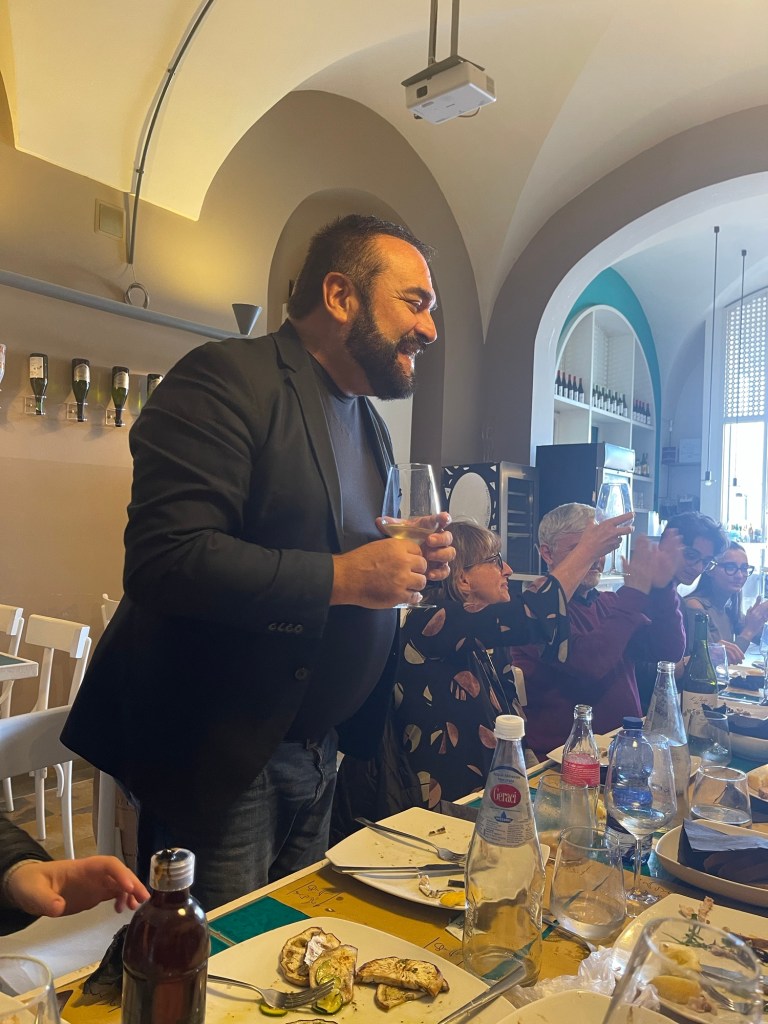
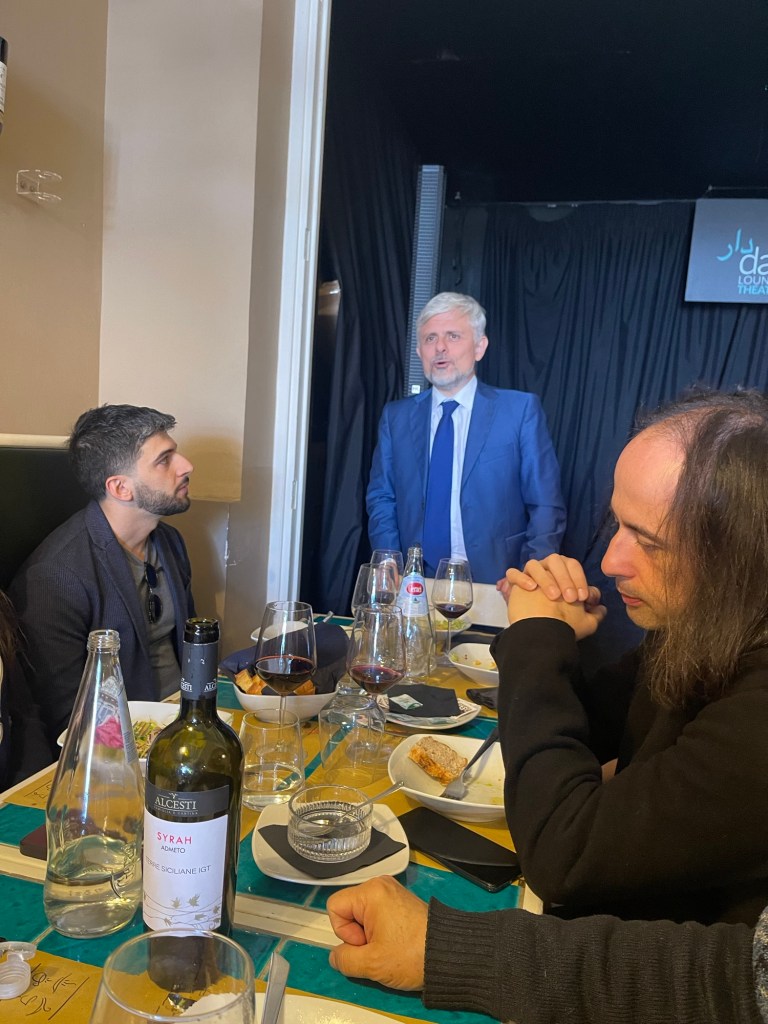
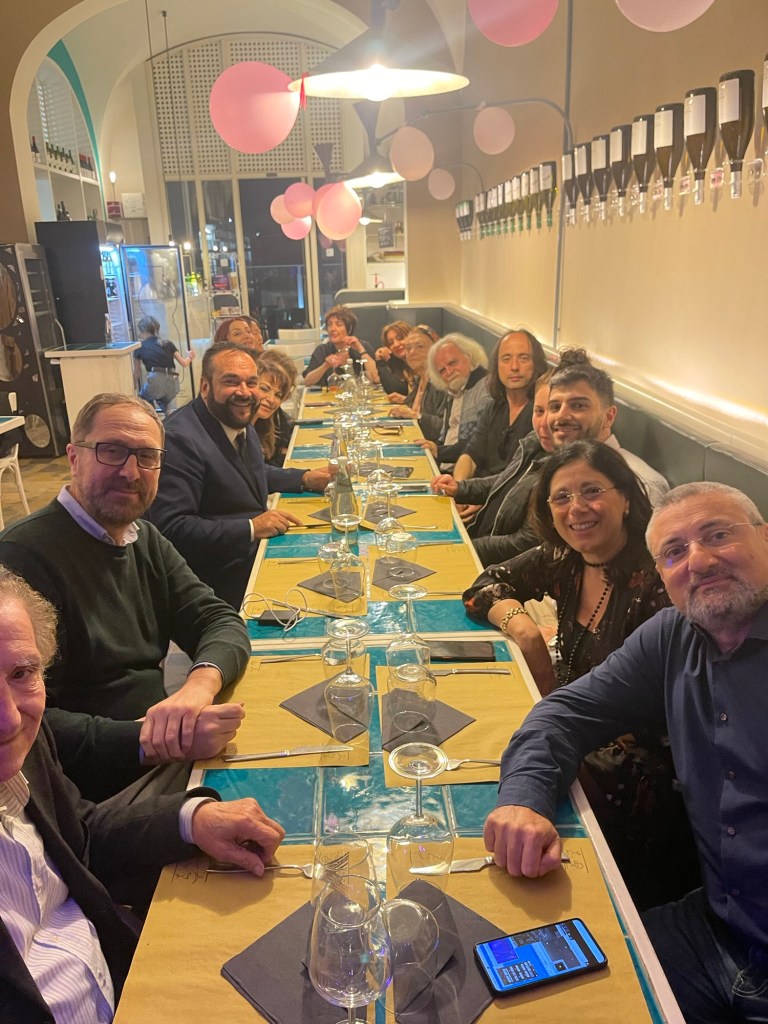
Moments to cherish even at the dinner table
Silence for President Vincenzo Marrone d’Alberti of Trapani Classica created in 2021
Silence for President Giovanni De Santis of MEMA – Mediterranean Music Association -the oldest concert society in Trapani founded in 1947
In the office this week
Foto hanoutmedia .com
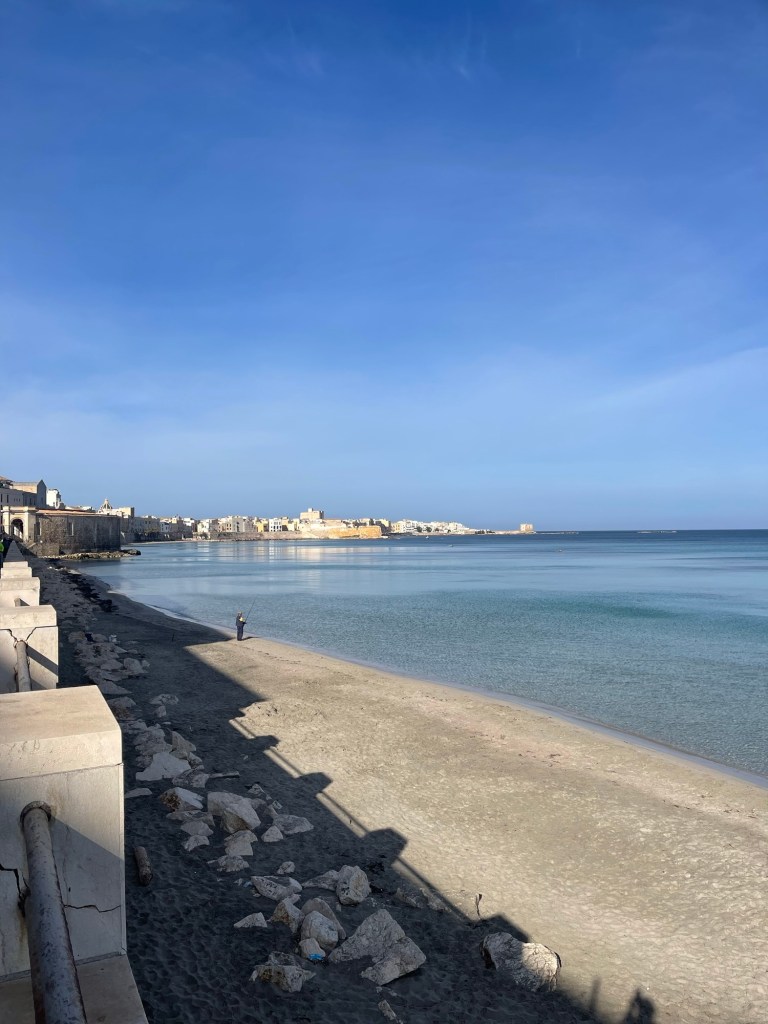
Beautiful Trapani
https://christopheraxworthymusiccommentary.com/2024/03/20/christopher-axworthy-dip-ram-aram/. Foto Lorenzo Gigante

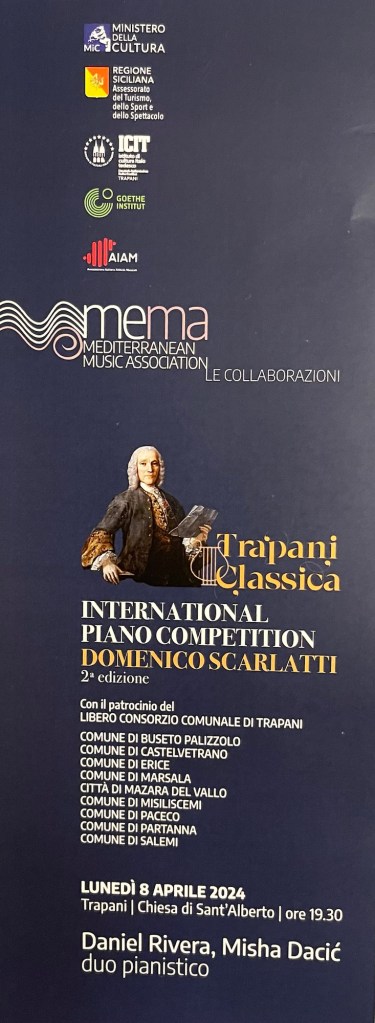
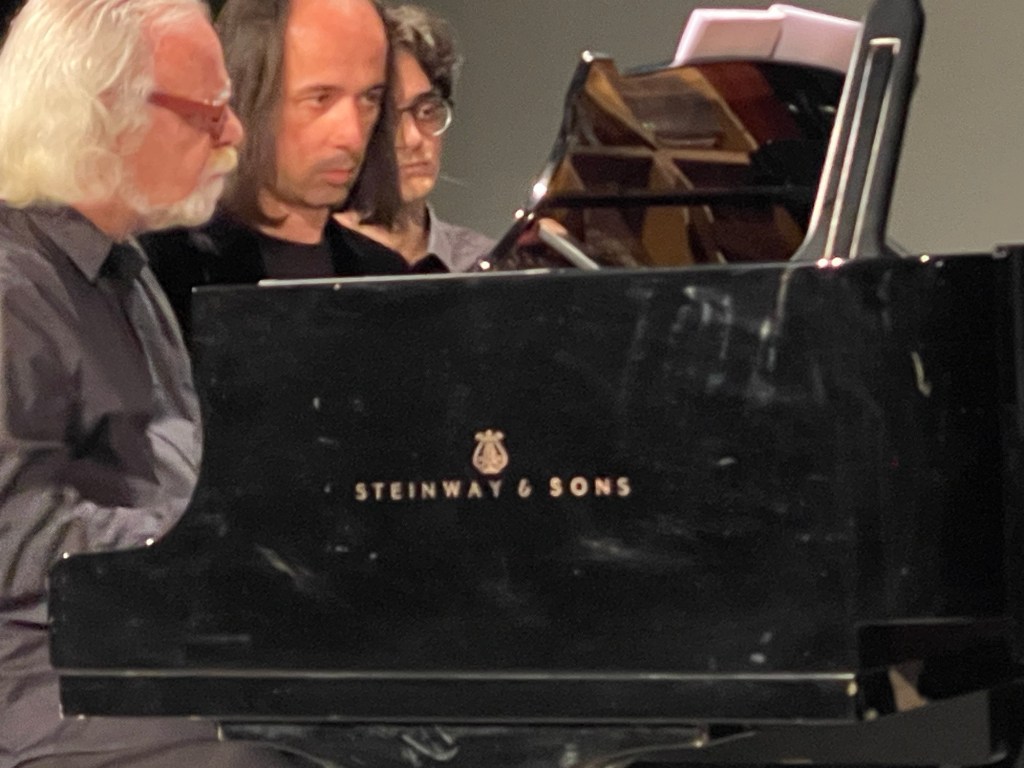
Daniel Rivera and Misha Dacic take Trapani by storm

It is only right that a Jury should be given the chance to perform themselves after having given so generously of their time to listen to their younger colleagues.


And so it was tonight the turn of two jury members Daniel Rivera and Misha Dacic to give a duo concert together of works by Rachmaninov at the end of the 150th anniversary celebrations of this much loved composer.


An impeccable sense of balance from Misha Dacic in the bass, who was also in control of the pedals, allowed Daniel Rivera to play with chiselled beauty.Ravishing penetrating sounds from a pianist who knows what real weight means squeezing golden sounds out of every note from pianissimo to forte.Misha too would suddenly illuminate sounds in the heart of the keyboard that would light up a phrase while Daniel would immediately accomodate the entry of this new instrument from their sumptuous Philadelphian orchestra.


Starting with the six little pieces op 11 for four hands on one piano.They really are not such little pieces as these two artists showed us,turning each one into miniature tone poems.


And a Philadelphian orchestra there certainly was when each pianist had his own instrument to play the Simon Callaghan transcription of Rachmaninov’s much loved Second Symphony.
A kaleidoscopic sense of colour as the demonstrative Daniel played with passion and technical mastery equalled but not outwardly visible by Misha Dacic.It was interesting to watch Misha as his eyes devoured the music but without any physical effort whatsoever.


Playing as one with a clarity and beauty that was never overpowering but as sumptuous and golden as Rachmaninov’s favourite orchestra .It is interesting to note that just before Rachmaninov’s death in 1943 he and Horowitz’s had become neighbours in Beverley Hills and often used to play at home for fun.


If only I phones had been invented then but I imagine the conviction and mastery of the performance we heard tonight may have been similar to what the neighbours in Beverley Hills might have experienced as the Second World War was in full devastating force in Europe.

Oxana Yablonskaya La Regina – The queen of the Keys

foto hanoutmedia.com

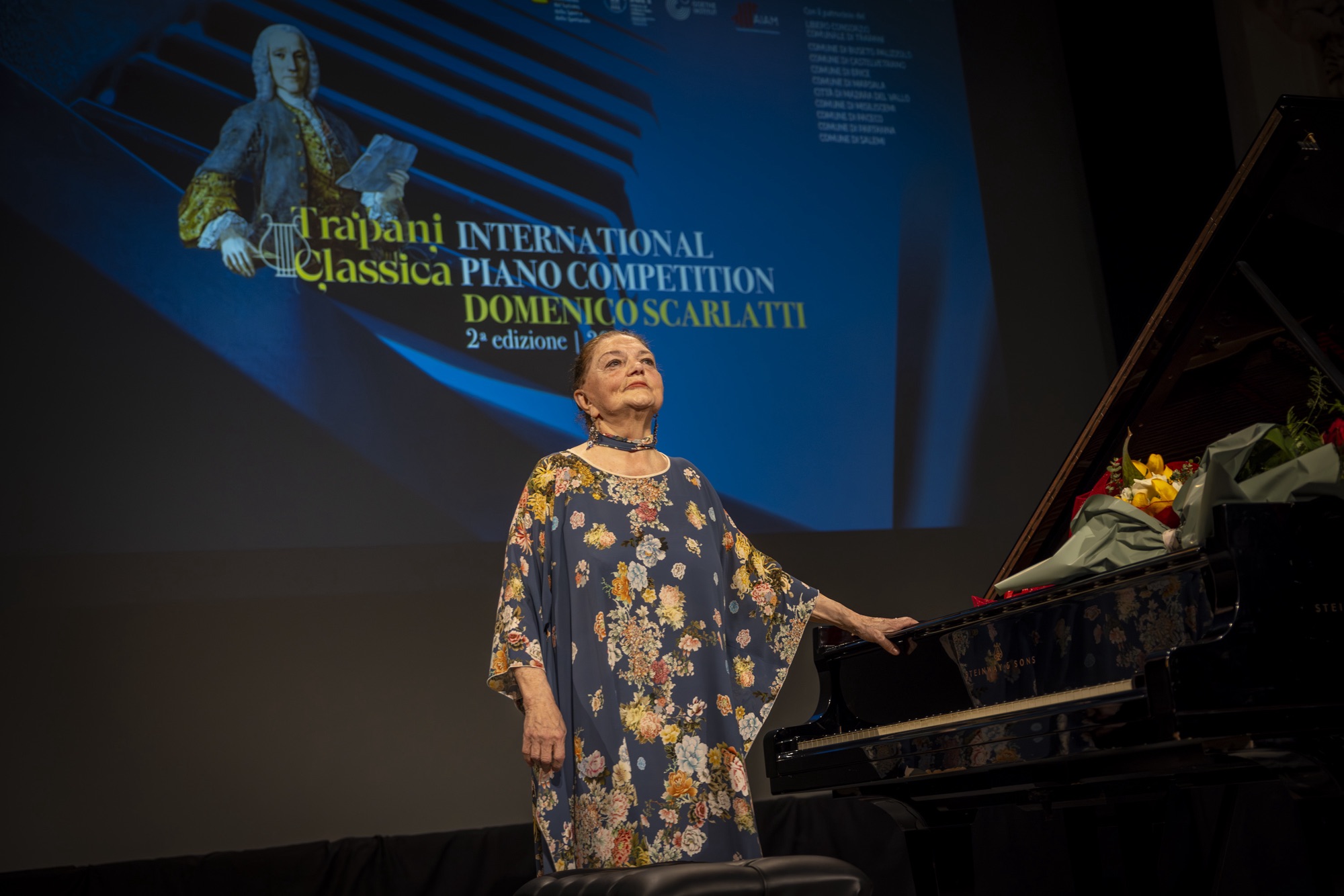
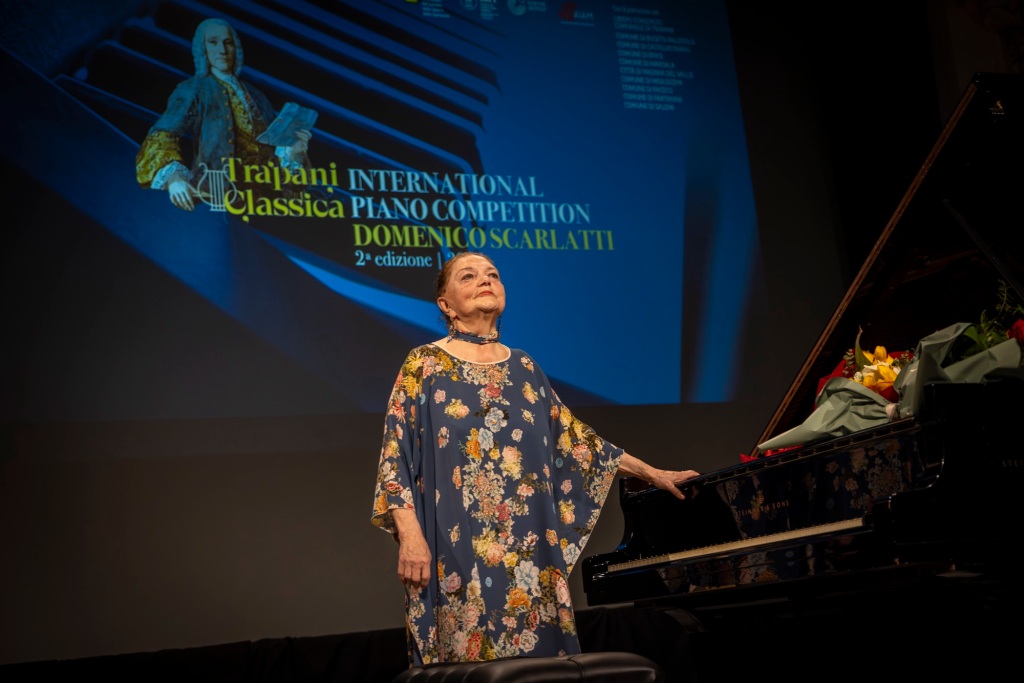
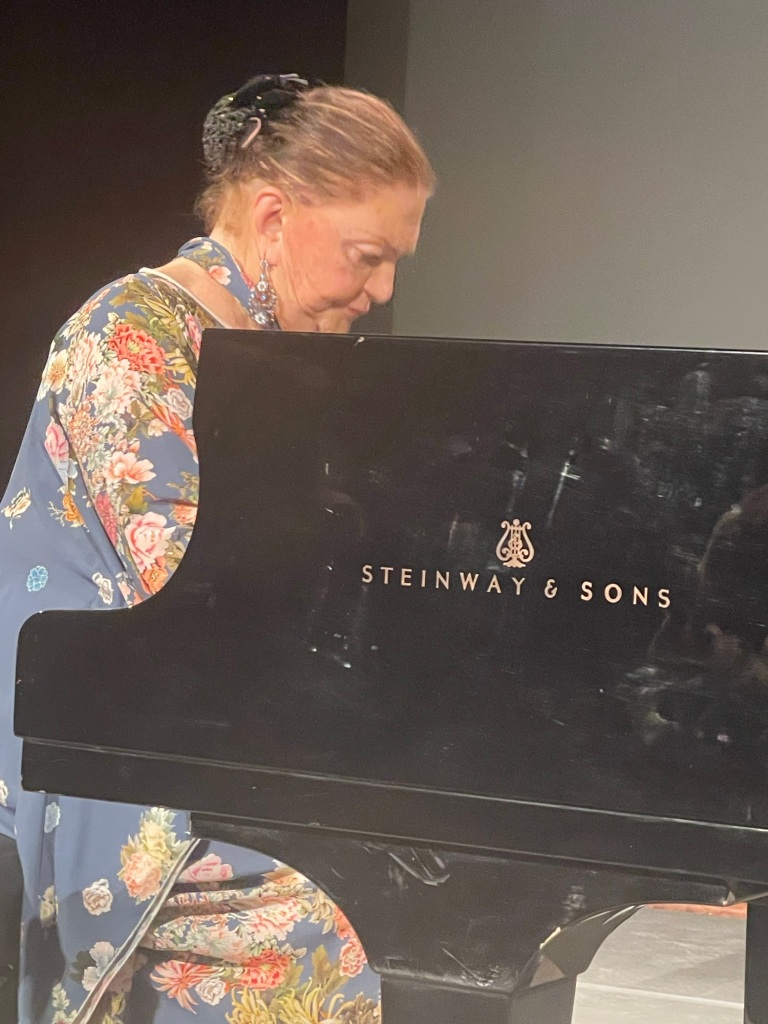
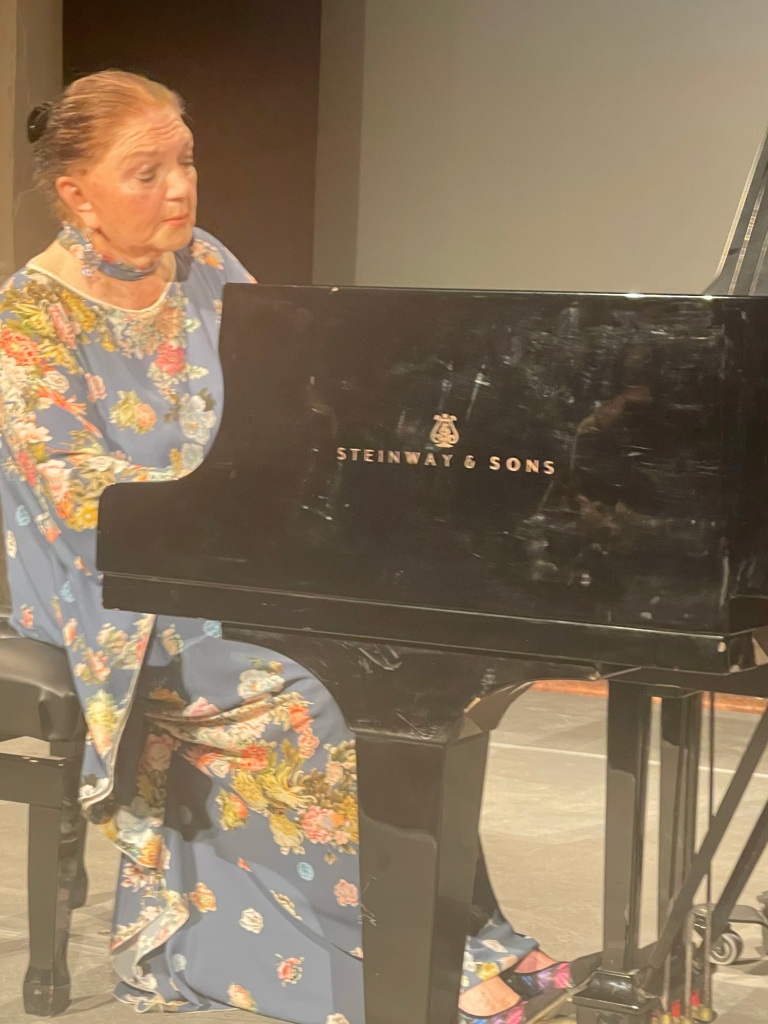
Oxana Yablonskaya at 85 the undisputed Queen of the Keyboard
A superb recital during her gruelling schedule as president of the Jury in Trapani.Having spent the entire day listening to five young pianists and as President supervising the votes of her much younger colleagues before having a cup of tea and appearing on stage with a solo recital and a programme that would have tired a pianist even half her age.


Here this regal lady appeared on stage and proceeded to create the magic that she has been sharing with her public for the past four decades.It was the same authority and presence that I remember from the first time I heard her in Rome forty years ago or as she suggested even more than that !

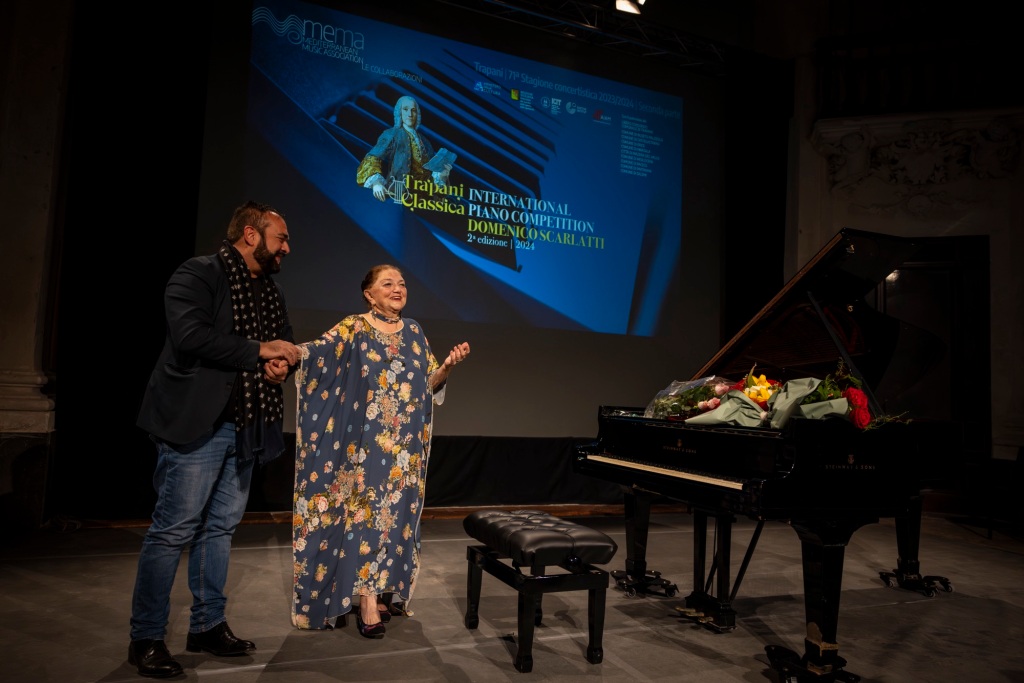
Oxana Yablonskaya President of the jury of the 2nd International Piano Competition Domenico Scarlatti

Lost for words for such a warm heartfelt welcome from one of the truly great artists of our time.
This regal artist here in Sicily dedicating her time and energy to helping and encouraging young musicians as she has always done in a long and distinguished career.
Oxana Yablonskaya,in Trapani as presidente of a jury that includes many distinguished colleagues all united for their friend Vincenzo Marrone d’Alberti in his wish to launch his home town of Trapani as a centre of cultural excellence on the world stage.
Oxana now in her 85th year has come from Jerusalem where she lives and teaches to listen to young musicians gathered from around the world whose only wish is to be able to dedicate their lives to sharing their art.
We hear everyday about war and greed but there is also another world that is not spoken about which is our only hope for a better future.
Young musicians dedicating their youth to their art and despite differences and worldly grievances searching for the same Eutopia that we are all in the end striving for .
I have never forgotten Oxana’s Prokofiev third sonata ,that she played for Bruno Nicolai’s Edipan in Rome forty years ago,in the theatre that my wife and I had built and run just next door to St.Peter’s Square.
And only twenty years ago playing again in Rome a magnificent Rachmaninov Third Concerto where her regal presence and command allowed her to take over from a conductor overcome by emotion.
She not only played magnificently but also conducted the performance from the keyboard!
It is we that should thank you dear Oxana for the honour of wanting still to share with aspiring young artists your vast experience and legendary musicianship with such humility and humanity.


I had heard her twenty years on take over the reigns of a performance of Rachmaninov Third Concerto that was at risk of falling apart in the hands of an ‘elderly’ Turkish conductor overcome with emotion from such a towering performance as Oxana’s.

She actually had programmed the earlier Sonata in F K.280


Today the moment she sat at the piano she became another person as the serenity and simplicity she unfolded in C.P.E Bach’s Rondo espressivo from his B minor Sonata H.245 seemed to give her the vigour and stamina to contemplate a programme that included two major Sonatas by Beethoven and Mozart.
The rondo was played with a delicacy and a ravishing sense of colour but above all a simplicity that allowed the music to speak for itself with disarming beauty.It is the same simplicity that Rubinstein was to share with his public when he too had reached Oxana’s age.It is a simplicity born of total mastery not only as a musician but also being able to play with such natural movements that it is like a great sage seated before us ready to recount the most wondrous stories.


Relaxation in tension because to play the piano is also a physical exercise and Oxana’s technical mastery allows her to place her hands on the keys like a swimmer floating in water.The physical effort is reduced to a minimum with no superfluous crowd pleasing gestures .She like Rubinstein is there at the service of the music with the disarming simplicity of Art that disguises Art.
The Mozart Sonata in F K 280 she told me afterwards she had learnt as a child .The little Polka by Tchaikowsky played as one of three encores she had first played when she was seven!


It was Schnabel who said that Mozart is too difficult for adults and too easy for children as it must be played with simplicity and style where every note has been placed by a Genius in its proper place.There is also a theatricality in Mozart that is apparent in his sonatas and it was this that Oxana made so apparent and which brought her performance vividly to life as the characters entered onto the scene with dynamic drive and individuality.The years just disappeared as she too became one of those characters enjoying acting a part with such vitality .A slow movement that was of etched beauty and the last movement played with buoyancy and a scintillating ‘joie de vivre’ where the years just seemed to disappear as she became once more the child prodigy discovering the genius of Mozart for the first time in this early F major Sonata .The Beethoven she had chosen to play is one of the first major sonatas of the 32 that were to span the composers entire life.Breaking away from the model of his illustrious mentor Haydn it is in the Sonatas op 2 n 3 , op 7 and this op 10 n 3 that the composer reveals his revolutionary spirit in opening new paths into the future.It is in all three of these early sonatas that the slow movements become of great poignancy and beauty and show the depth of feeling and orchestral thinking of Beethoven.

foto hanoutmedia.com


From the very first notes Oxana took us into a world of dynamic drive and suprising contrasts with the opening octaves shaped with her great artistry into a wind that blew in from a far to arrive at a light where the beautiful second subject could flourish with greater beauty but without ever sacrificing the drive that was to guide us from the first to the last note of this remarkable sonata .The dark sombre string quartet texture of the extraordinarily poignant Largo and mesto was followed by the wonderful way Oxana just allowed the minuet to float in like a ray of sunlight after such sombre brooding .The wonderful expression on this great artist’s face as Beethoven’s question and answer in the Rondo became ever more insistent .There was an ethereal ending with jeux perlé scales accompanying the still questioning left hand as it disappeared so peacefully into the depths of the keyboard .
A remarkable performance of mastery and musicianship that will long be remembered.

foto hanoutmedia.com


An all too short break brought her back on stage to play the two Rhapsodies by Brahms.I don’t know what happened in the Green Room but she attacked the first Rhapsody with a force and drive that were breathtaking and overwhelming .There were great orchestral sounds where this great black beast was aflame with passionate outpourings of great intensity.There were moments when the music dissolved to leave a heart melting mellifluous outpouring of nostalgia and beauty. Not allowing herself a break between the two Rhapsodies she burst into the second with a kaleidoscope of colour and sumptuous richness.A breath of fresh air blew over the keys as she brought simplicity and purity to the contrasting central episode.


Three Chopin Mazurkas were indeed ‘canons covered in flowers’ and became miniature tone poems in Oxana’s poetic hands.There was searing beauty full of nostalgia in the barely whispered A minor op 17 which was the bridge between two boisterous folk dances of Chopin’s native homeland.
It was though the Barcarolle that will be long remembered where Chopin’s greatest outpouring of song is united in one continuous work.Oxana played it with the same aristocratic ease as Rubinstein where the music was allowed to unfold with sumptuous beauty and ravishing colour.There was passion too but always with every strand of counterpoints allowed to sing as it built to the final beautiful bars where the tenor melodic line is accompanied by a florid accompaniment ,that was Ravel’s favourite passage, as it rose to the top of the keyboard only to cascade to the final four chords and the end of a dream.

foto hanoutmedia.com


Our Queen of the Keyboard was submerged with bouquets of flowers and a standing ovation from a public who knew no other way to thank her for coming to their city.Three encores were her way of repaying their kindness with a Scarlatti Sonata ,a Polka by Tchaikowsky and another Mazurka by Chopin.

foto hanoutmedia.com


She even had enough energy to make a little speech together with the artistic director Vincenzo Marrone d’Alberto with her only thought being to publicise the concert the next day of the young musicians that she had been listening to all week.


After such a long day one might have thought that Madam Yablonskaya would want to to get home to rest.This indomitable great artist had other ideas and was happy to enjoy the hospitality of her colleagues and friends way into the early hours!

Recognise the scarf ?!
With her colleague the distinguished pianist and jury member Nina Tichman
With Daniel Rivera

With fellow jury members Anna Chiara D’Ascoli and Daniel Rivera

Our twice daily office

foto hanoutmedia.com

Bravi – Scapicchi at St Mary’s A Piano Duo playing with one mind and one heart with ravishing colour,refined brilliance and savagery.

https://youtube.com/live/VnYjOq2xqlc?feature=shared

Some exciting playing from four hands and four feet but more importantly one mind and one heart …………..Ravishing colours of Debussy and refined brilliance of Ravel were but just an inspired preparation for the savagery of Stravinsky with his mixture of innocence and brutality depicted magnificently by a team that played as one.An ovation from a full house in Perivale was rewarded with an even more dynamic Danse Russe from this young Italian duo who had come especially to make their first appearance in the UK before embarking on an American tour.

A superb sense of balance with a luminosity of sound from Francesco and a majestic passionate climax from Adriano .It was ,though,the architectural shape allied to their kaleidoscopic sense of colour that made this a fascinating opening for an afternoon of refined playing from a duo that played as one
There was a great sense of atmosphere from the very first notes of the Prelude.Malaguena was an exotic dance with very suggestive recitativi answered by the pungent colours and sounds of Spain.An insinuating melodic outpouring in the Habanera (showing a remarkable resemblance to Debussy) was followed by a Feria of excitement and refined brilliance.
Innocence and menace went hand in hand in the remarkable work which caused a scandal at its first orchestral performance conducted by Pierre Monteux in Paris in 1913.
Today 111 years on it was greeted by an ovation rarely seen by the usually undemonstrative audience at St Mary’s Perivale!
The dynamic changes of character and driving rhythms from this piano duo created a hypnotic atmosphere from the beauty of the introduction similar in many ways to the Debussy Faune,but erupting into savagery with the pungent rhythms from Alessandro of the ‘Dances of the young girls’.It is interesting to note that it was Debussy who first played this original version for four hands with the composer.
A remarkable precision that allowed Francesco to show us the parade of ‘Young Girls’ in all their naive innocence floating above this undercurrent of menace.Erupting in a ‘Ritual of Abduction ’ and a display of transcendental piano playing from Francesco before the insinuating pulsating sostenuto e pesante of the ‘Spring Rounds’.All the time the rhythmic drive was remarkably constant despite all the enormous rhythmic intricacies involved. There was beauty too as ‘Le Sacrifice’ opened the second part of the ‘Rite’. Gradually leading to the eruption and the ‘Glorification of the Chosen One ’.A remarkable sense of control and colour in the ‘Ritual action of the Ancestors ’ in which Alessandro kept the pulsating driving rhythm as an undercurrent to the insinuating melody from Francesco.
Knotty twine indeed but nothing could prepare us for the remarkable playing of the ‘ Sacrificial Dance’ where the precision and continual changes of colour were like shots being fired with their piercing lightening strikes.
A tour de force of piano playing but above all of united musicianship that could reveal this extraordinary work in all its naked brilliance.

Italian pianists Francesco Bravi and Adriano Leonardo Scapicchi regularly perform in duo since 2018. In 2019 they performed Stravinsky’s original version for piano four-hands of The Rite of the Spring at Teatro Palladium, for Roma Tre Orchestra Young Artist Piano Solo Series. The success following their performance, described by Christopher Axworthy as “a formidable knotty twine of great precision and rhythmic pulse”, brought them to be invited to many international music festivals, such as Villa Pennisi in Musica, I Tramonti di Tinia, Villa Borghese Piano Day. In 2023 they were awarded the Outstanding Musicians Prize at the International Classical Music Competition Ibla Grand Prize, where they also received a special mention for their interpretation of Debussy’s Prélude à l’après-midi d’un faune. As winners of the competition, in 2024 they will take part in a tour in the USA, performing in many important venues including the Weill Recital Hall of the Carnegie Hall. In 2022 they were invited to play Stravinsky’s Petrouchka at the Accademia Filarmonica Romana for the presentation of a new edition of Roman Vlad’s biography of Stravinsky. The following year they have been invited again for the presentation of the new book written by Francesco Maria Colombo. They performed at several venues, including Università Roma Tre, Reale Circolo Canottieri Tevere Remo, and Pontificio Istituto di Musica Sacra. In 2024 they have been invited to perform in the chamber music concert series Suoni Oltre Confine and at the Pauline Chapel of the Quirinal Palace for the series The Concerts at the Quirinale, live streamed by Radio 3. They took part in masterclasses led by renowned pianists who regularly perform in piano duos, such as Massimo Spada and Alessio Bax. They attend the Chamber Music Course at the International School of Music Avos Project in Rome. 

https://christopheraxworthymusiccommentary.com/2020/12/23/roma-3-orchestra-young-artists-series-streamed-live-from-teatro-palladium-rome/

Stravinsky’s sketchbooks show that after returning to his home at Ustilug in Ukraine in September 1911, he worked on two movements, the “Augurs of Spring” and the “Spring Rounds”.In October he left Ustilug for Clarens in Switzerland, where in a tiny and sparsely-furnished room—an 8-by-8-foot (2.4 by 2.4 m) closet, with only a muted upright piano, a table and two chairs – he worked throughout the 1911–12 winter on the score.By March 1912, according to the sketchbook chronology, Stravinsky had completed Part I and had drafted much of Part II.He also prepared a two-hand piano version, subsequently lost,which he may have used to demonstrate the work to Diaghilev and the Ballets Russes conductor Pierre Monteux  in April 1912.He also made a four-hand piano arrangement which became the first published version of Le Sacre; he and the composer Claude Debussy played the first half of this together, in June 1912.The conductor Pierre Monteux had worked with Diaghilev since 1911 and had been in charge of the orchestra at the premiere of Petrushka.
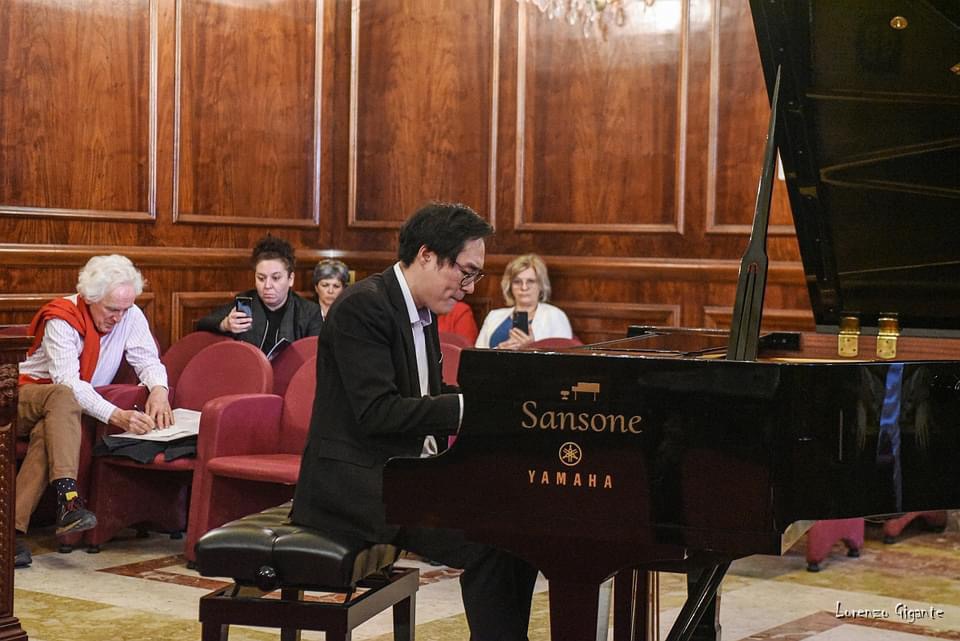
Stravinsky by Picasso 1920

The Rite of Spring – Le Sacre du printemps is a ballet and orchestral concert work written for the 1913 Paris season of Sergei Diaghilev’s Ballets Russes ; the original choreography was by Vaslav Nijinsky and the first performance at the Theatre des Champs- Elysées on 29 May 1913, caused a sensation and many have called the first-night reaction a “riot” or “near-riot”.Monteux’s first reaction to The Rite, after hearing Stravinsky play a piano version, was to leave the room and find a quiet corner. He drew Diaghilev aside and said he would never conduct music like that; Diaghilev managed to change his mind.Although he would perform his duties with conscientious professionalism, he never came to enjoy the work; nearly fifty years after the premiere he told enquirers that he detested it.In old age he said to Sir Thomas Beecham’s biographer Charles Reid: “I did not like Le Sacre then and I have conducted it fifty times since. I do not like it now”.On 30 March Monteux informed Stravinsky of modifications he thought were necessary to the score, all of which the composer implemented.The orchestra, drawn mainly from the Concerts Colonne  in Paris, comprised 99 players, much larger than normally employed at the theatre, and had difficulty fitting into the orchestra pit.

Stravinsky was a young, virtually unknown composer when Diaghilev recruited him to create works for the Ballets Russes. Le Sacre du printemps was the third such major project, after the acclaimed Firebird (1910) and Petrushka ( 1911 ).The concept behind The Rite of Spring, developed by Roerich from Stravinsky’s outline idea, is suggested by its subtitle, “Pictures of Pagan Russia in Two Parts”; the scenario depicts various primitive rituals celebrating the advent of spring, after which a young girl is chosen as a sacrificial victim and dances herself to death.  In his autobiography, Stravinsky writes that the derisive laughter that greeted the first bars of the Introduction disgusted him, and that he left the auditorium to watch the rest of the performance from the stage wings. The demonstrations, he says, grew into “a terrific uproar” which, along with the on-stage noises, drowned out the voice of Nijinsky who was shouting the step numbers to the dancers.Monteux believed that the trouble began when the two factions began attacking each other, but their mutual anger was soon diverted towards the orchestra: “Everything available was tossed in our direction, but we continued to play on”. Around forty of the worst offenders were ejected—possibly with the intervention of the police, although this is uncorroborated. Through all the disturbances the performance continued without interruption. 

Claude Debussy in 1905

Prélude à l’après-midi d’un faune (L. 86), is a symphonic poem ,composed in 1894 and first performed in Paris on 22 December 1894. It was inspired by the poem by Stephane Mallarmé and is one of Debussy’s most famous works and is considered a turning point in the history of Western art music . Pierre Boulez  considered the score to be the beginning of modern music, observing that “the flute of the faun brought new breath to the art of music.”
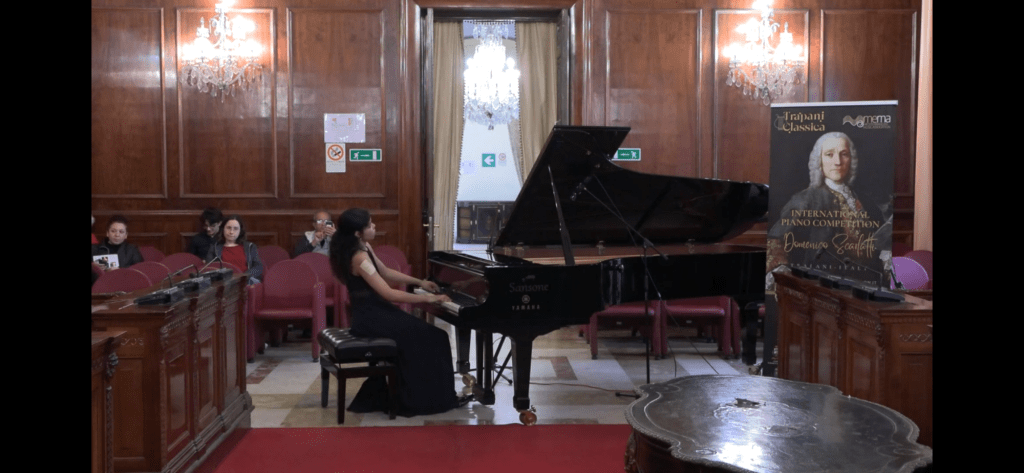
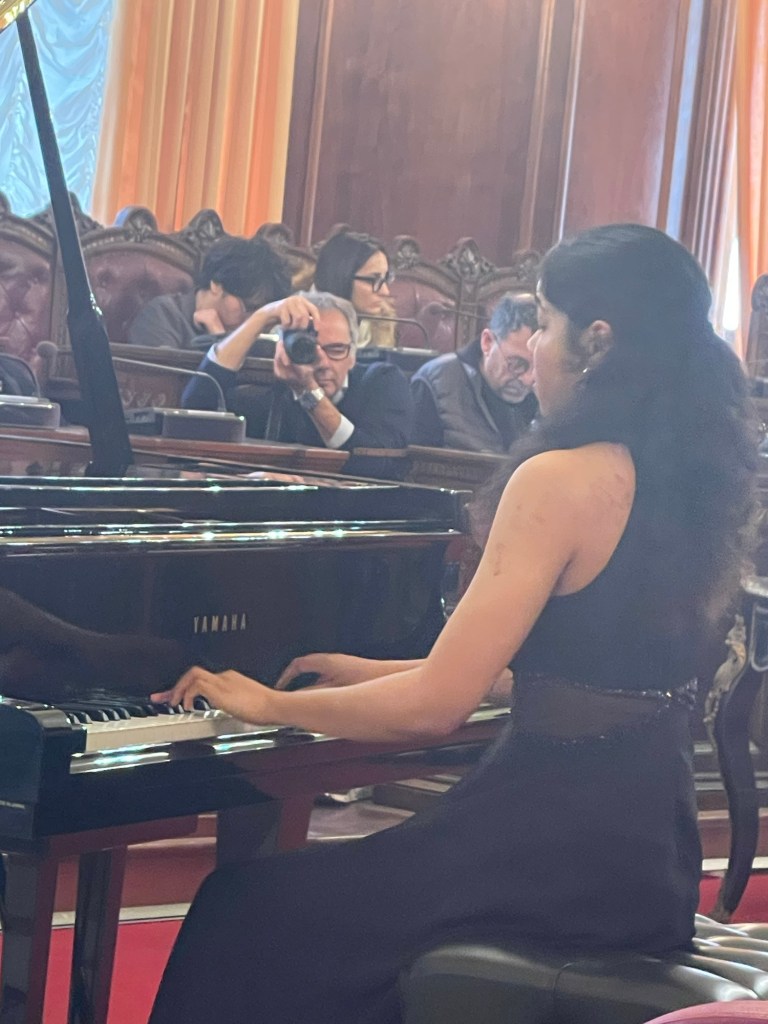
Debussy’s work later provided the basis for the ballet choreographed by Vaslav Nijinsky.

Debussy wrote :’The music of this prelude is a very free illustration of Mallarmé’s beautiful poem. By no means does it claim to be a synthesis of it. Rather there is a succession of scenes through which pass the desires and dreams of the faun in the heat of the afternoon. Then, tired of pursuing the timorous flight of nymphs and naiads , he succumbs to intoxicating sleep, in which he can finally realize his dreams of possession in universal Nature.
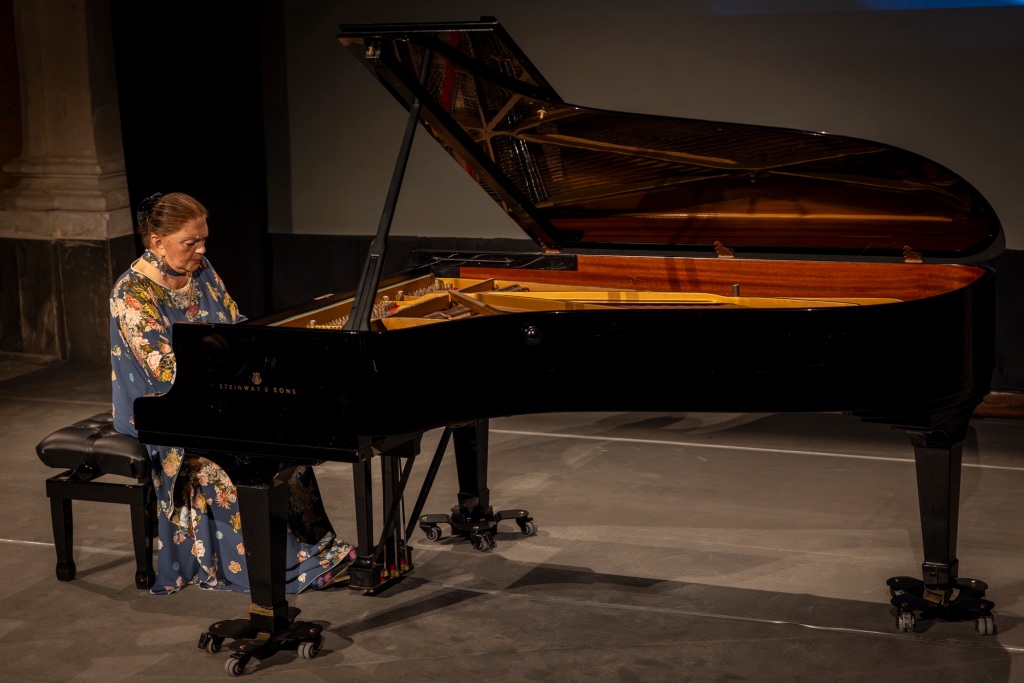
Mallarmé himself was unhappy with his poem being used as the basis for music: He believed that his own music was sufficient, and that even with the best intentions in the world, it was a veritable crime as far as poetry was concerned to juxtapose poetry and music, even if it were the finest music there is.However, after attending the premiere performance at Debussy’s invitation, Mallarmé wrote to Debussy: “I have just come out of the concert, deeply moved. The marvel! Your illustration of the Afternoon of a Faun, which presents no dissonance with my text, but goes much further, really, into nostalgia and into light, with finesse, with sensuality, with richness. I shake your hand admiringly, Debussy. Yours, Mallarmé.”
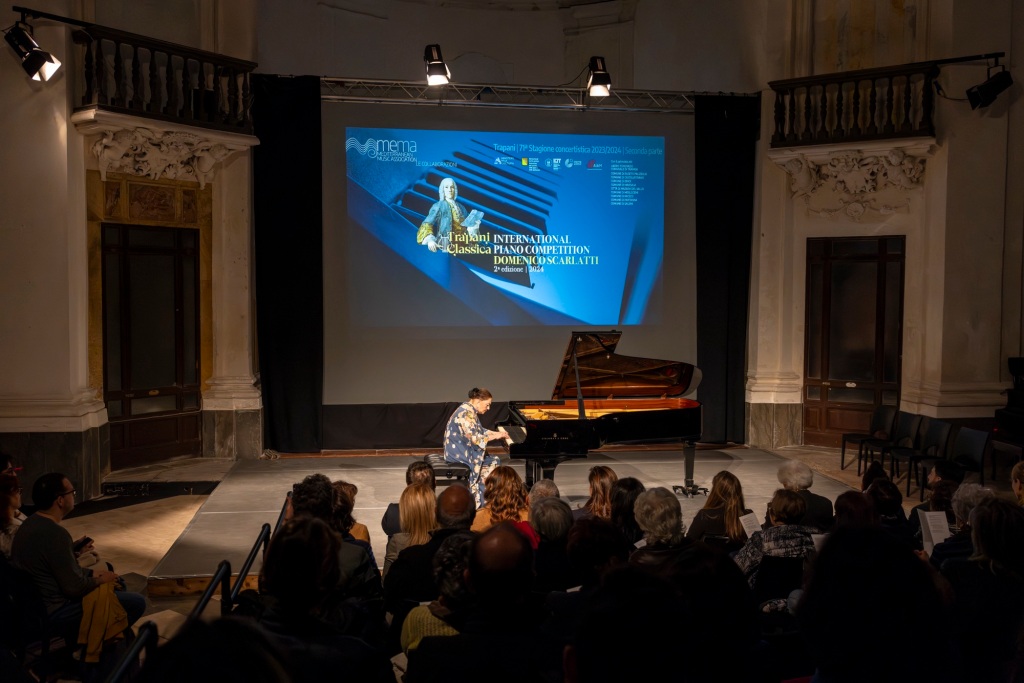
Maurice Ravel in 1913

Rapsodie espagnole was composed between 1907 and 1908, the Rapsodie is one of Ravel’s first major works for orchestra. It was first performed in Paris in 1908 and quickly entered the international repertoire. The piece draws on the composer’s Spanish heritage and is one of several of his works set in or reflecting Spain.

The genesis of the Rapsodie was a Habanera, for two pianos, which Ravel wrote in 1895. It was not published as a separate piece, and in 1907 he composed three companion pieces. A two-piano version was completed by October of that year, and the suite was fully orchestrated the following February.At about this time there was a distinctly Spanish tone to Ravel’s output, perhaps reflecting his own Spanish ancestry.His opera L’heure espagnole  was completed in 1907,as was the song “Vocalise-Etude en forme de habanera”.

In the interval between the composition of the original Habanera and the completion of the four-movement Rapsodie, Debussy had published a piano suite, Estampes (1903), of which the middle section, “Soirée dans Grenade”, had a Spanish theme.To counter any accusations of plagiarism, Ravel made certain that the date 1895 was clearly printed for his Habanera in the published score of the Rapsodie.