

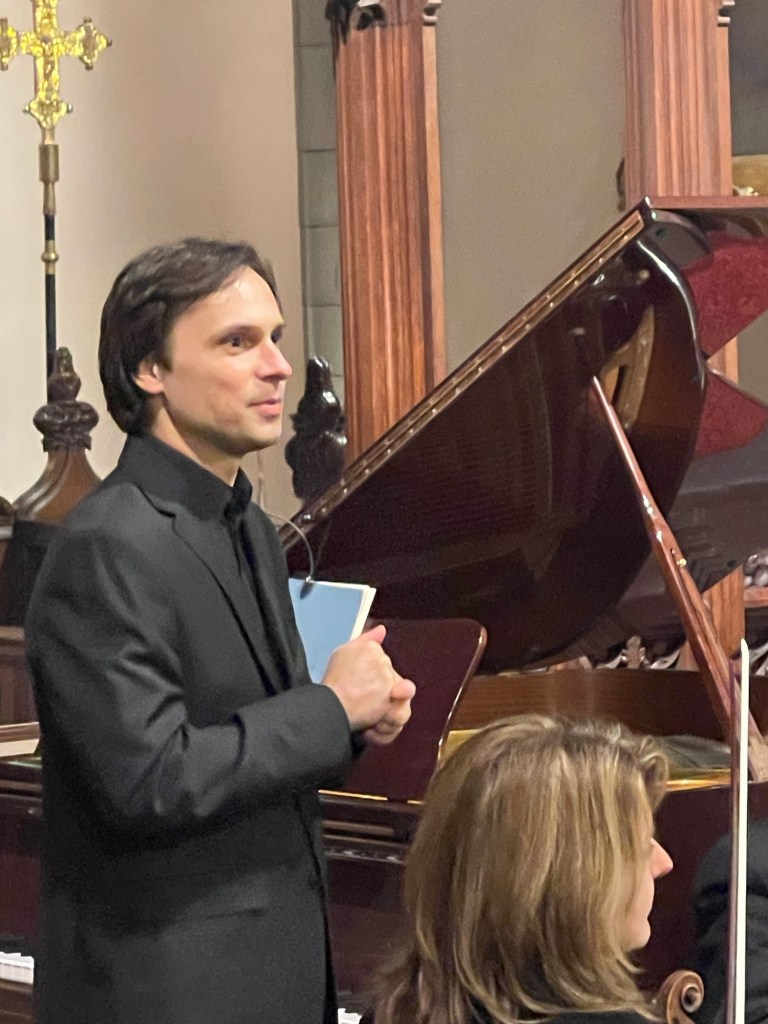
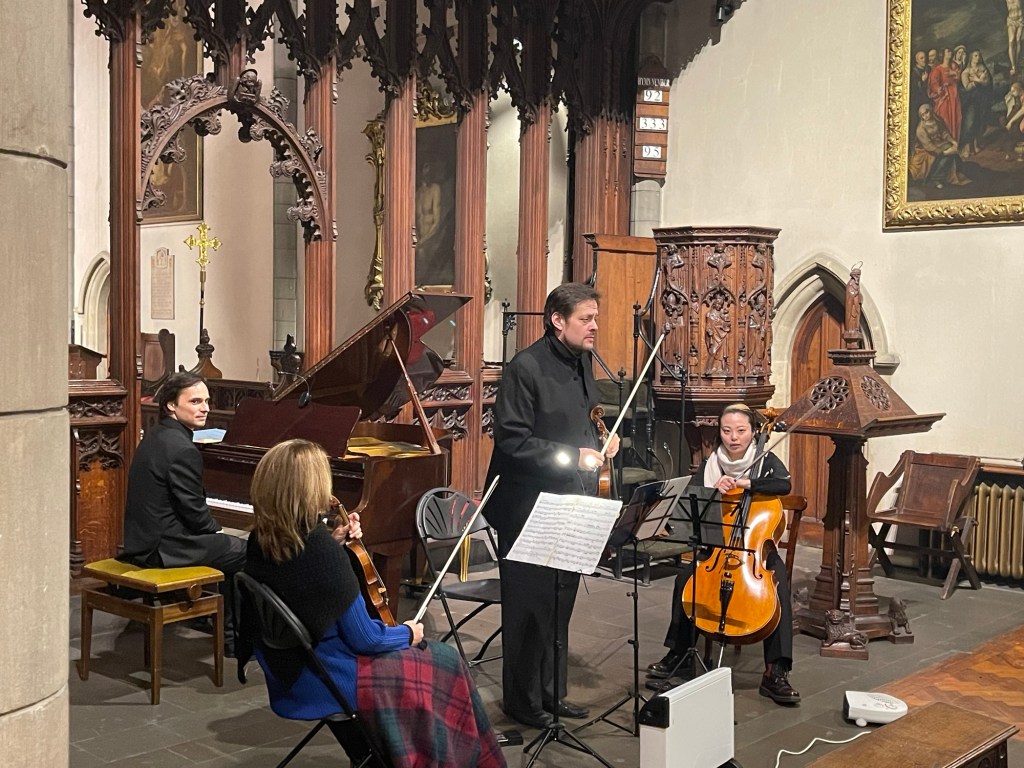
In the majesty of the Church of the Annunciation just a stone’s throw from the Wigmore Hall Sasha Grynyuk and his colleagues have formed a music group to share with us their musical discoveries from a repertoire where there are still so many master works to discover.
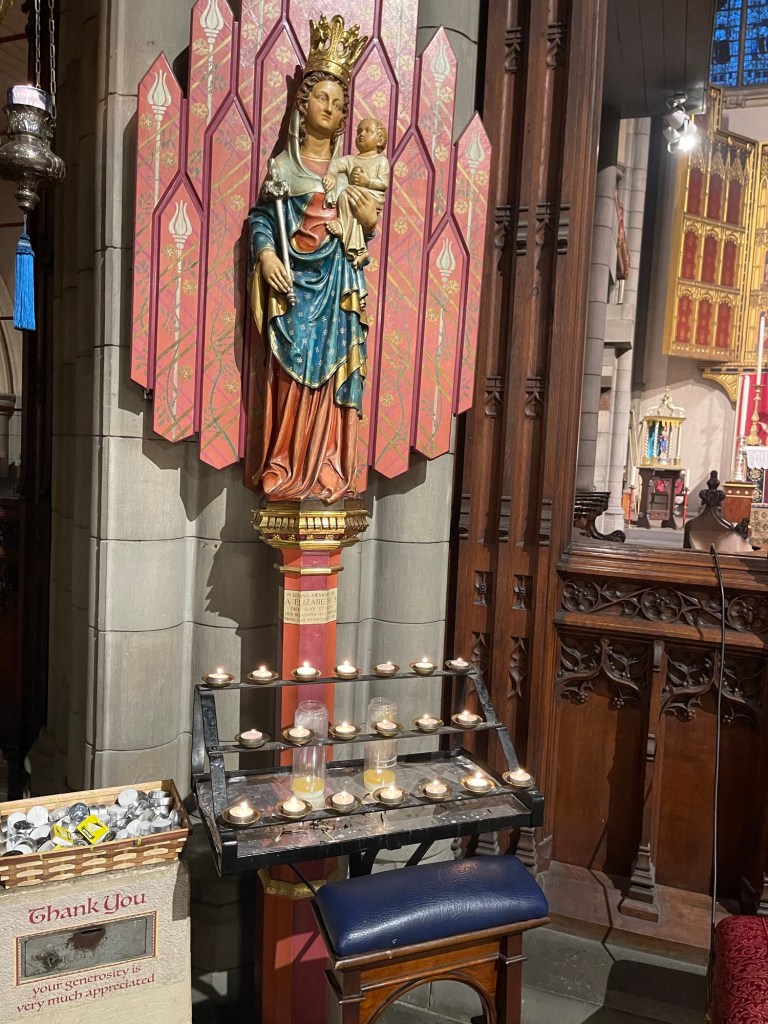
Not only was there the discovery of a rarely performed Quartet by Richard Strauss but it was also prefaced by an all too brief excerpt from Bach’s mighty Goldberg Variations.The Aria and first variation for piano solo with the addition of three variations for string trio.An excerpt to whet our appetite for the main work on the programme and to get us used to this beautiful but rather austere edifice that strangely enough ( with a nave six storeys high) is blessed with an excellent acoustic for chamber music.The church was indeed the discovery of Sasha and Katya looking for a church to take eternal vows to each other during the Pandemic four years ago.
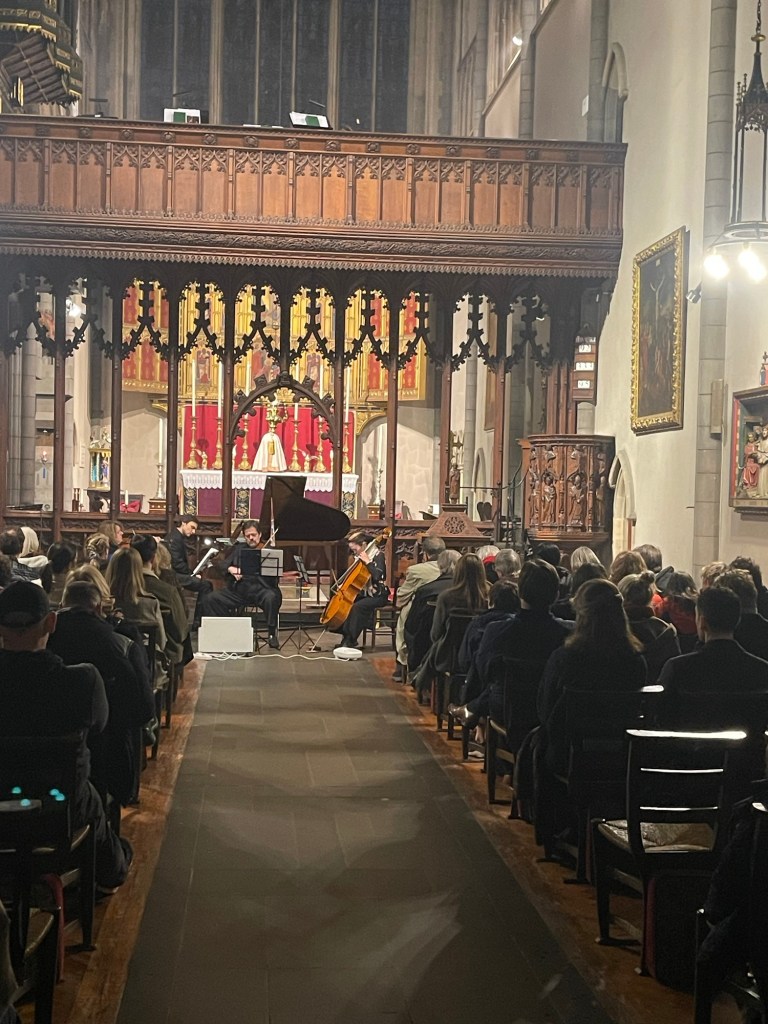
Now with a newly acquired piano they have adopted this space to share their love for music with others.Many of Sasha’s illustrious colleagues have joined them in making music together much to the delight of a very large audience who had gathered on a rather bleak Sunday evening to enjoy the fruits of such a warm and noble venture into the unknown.

Sasha gave an impeccabile performance of the Aria from the Goldbergs which is no mean feat as the sublime simplicity of this Aria can sometimes be overzealously ornamented.The first variation too was played quite simply and if I am used to Rosalyn Tureck’s more non legato rhythmic assertion here Sasha convinced with his rather more legato touch as it melded so well with the strings as he passed the chair to the trio just waiting to join in the fun.The ninth and fifteenth variations beautifully played with noble style as was the Quodlibet but surely this brief excursion into paradise needed as Bach himself realised a reappearance of the Aria on high.We needed to be reminded that after all the knotty twine and elaborations the sublime beauty of the Aria cleansed the air with more than a touch of genius!
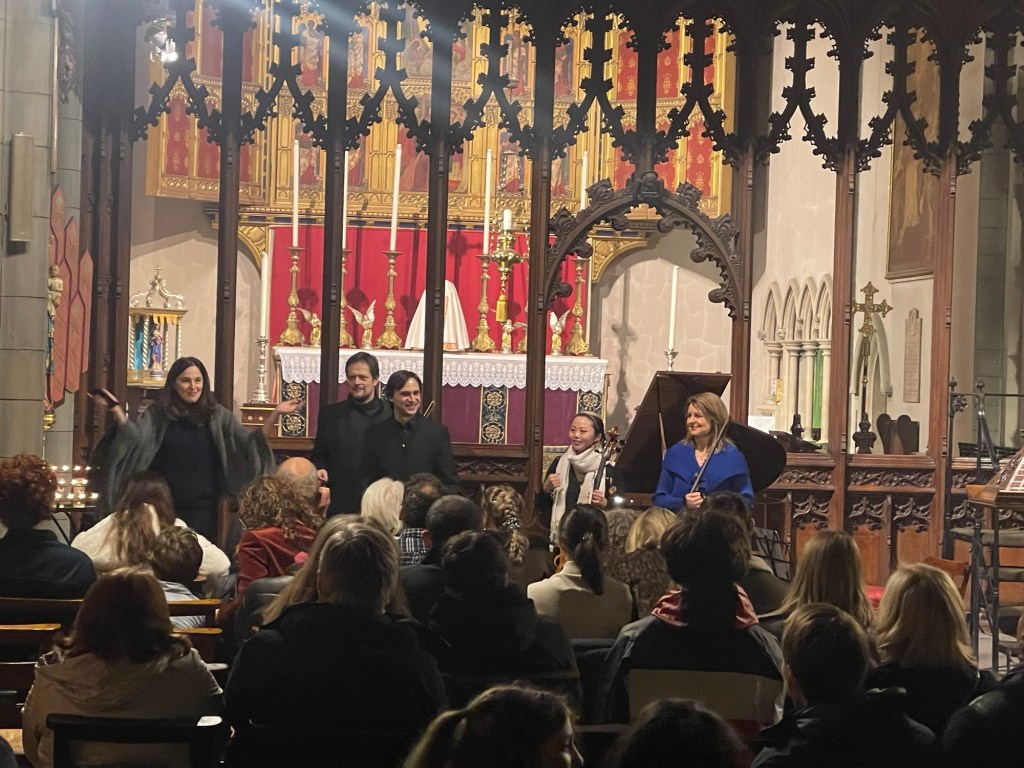
There followed a superb performance of Strauss’s Brahmsian Quartet that was new to me.A work in four movements lasting over 30 minutes.It was played with a kaleidoscope of sounds from the whispered to the ravishing and from the quixotic silvery beauty of the Scherzo to the full romantic sweep of the outer movements.There were moments of touching beauty in the Andante with four players listening and watching each other to see and feel which way their musical trail was to take.This was chamber music at it’s best with four master players combining in a musical conversation of surprise and discovery.

An aperitif after such a feast was indeed another good reason not to miss this musical treat on store every month in this noble edifice blessed with peace and tranquility just off Oxford Street where even on a Sunday chaos reigns even in the rain!

https://christopheraxworthymusiccommentary.com/2022/03/12/war-or-peace-the-help-ukraine-concert/
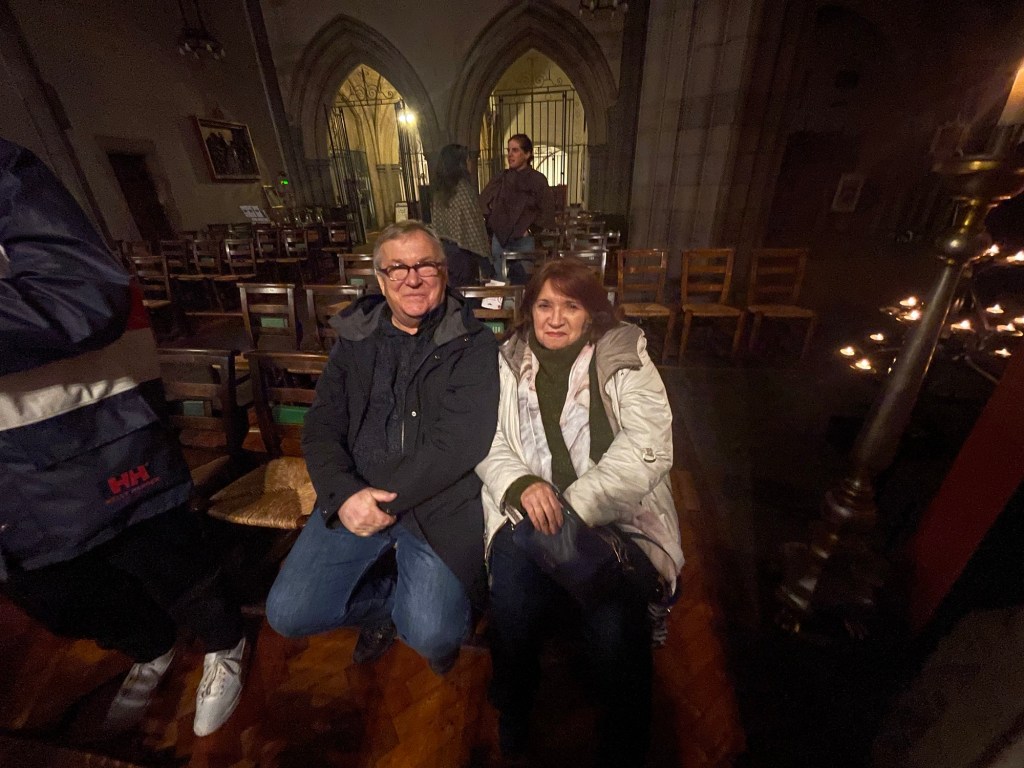
https://christopheraxworthymusiccommentary.com/2022/06/10/sasha-grynyuk-at-cranleigh-arts-for-ukraine-joint-fundraiser-for-the-disasters-emergency-committee-and-cranleigh-arts/


21 March 1685 Eisenach – 28 July 1750 (aged 65) Leipzig
Goldberg -Ferrucci to be or not to be

11 June 1864 Munich – 8 September 1949 (aged 85) Garmisch Partenkirchen,Bavaria

The Piano Quartet in C minor was written in the fall and winter of 1884–85, bearing an autograph date of 1 January 1885. This early chamber music work, written when Strauss was 20 years old, shows considerable influence from Brahms.A few weeks after the work’s completion, the Berliner Tonkünstlerverein, a Berlin-based professional association for musicians, held a competition for “the best piano quartet received”,
Strauss submitted his Piano Quartet and was awarded the first prize out of 24 submissions, receiving a prize of 300 marks
The premiere of the Piano Quartet took place in Weimar on 8 December 1885, with the composer playing the piano part.The work bears a dedication to Georg II Duke of Saxe-Meiningen;as Court Kapellmeister in Meiningen, Strauss was eager to win the trust of the duke. After Strauss resigned to take up a position in Munich, the duke afforded his thanks to the dedication in a letter to Strauss: “The dedication of your inventive, beautiful quartet will afford me great pleasure. On this occasion, I would like to tell you that I am very sad to see you leave and confess that through your achievements I am thoroughly cured of my earlier misapprehension that you, due to your youth, were not yet qualified to be the sole director of an orchestra.” In December 1885, Bülow unexpectedly resigned from his post, and Strauss was left to lead the Meiningen Court Orchestra as interim principal conductor for the remainder of the artistic season through April 1886.He notably helped prepare the orchestra for the world premiere performance of Brahms’s Fourth Symphony which Brahms himself conducted. He also conducted his Second Symphony for Brahms, who advised Strauss: “Your symphony contains too much playing about with themes. This piling up of many themes based on a triad, which differ from one another only in rhythm, has no value.”Brahms’ music, like Wagner’s, also left a tremendous impression upon Strauss, and he often referred to this time of his life as his ‘Brahmsschwärmerei’ (‘Brahms adoration’) during which several his compositions clearly show Brahms’ influence, including the Piano Quartet in C minor op.13 Op. 13 (1883–84), Wandrers Sturmlied (1884) and Burleske (1885–86).”
- Allegro
- Scherzo: Presto
- Andante
- Finale: Vivace
Following a performance in Berlin on 22 May 1886 at a soiree of the Tonkunstlerverein ,the Vossische Zeitung wrote:
‘Richard Strauss’] new work testifies to aesthetic sense, inventiveness and technical skill. Just as the composer keeps within the bounds of a healthy sensibility here, he also develops his themes in a clear and mostly lively, as well as artistic manner. Only the first Allegro and the Scherzo of the quartet seem to be the most peculiar in substance, the latter especially with its rhythms. The Andante initially captivates with its soft and full swelling cantilena, but becomes tiring in the course due to the lack of a more lively contrast. The finale is fresh and brisk; in keeping with the basic character of the work, we would have liked a grander conception of this movement. The arrangement of the instruments, especially the strings, is as melodious as it is often characteristically charming.’ Music critic Arthur Johnstone wrote in 1904 that Strauss “shows himself a better Brahmsian than Brahms, avoiding all his model’s worst faults” and that the quartet “might rank as the mature work of anyone but Strauss” The work was performed in Cologne in 1887 and the critic Richard Pohl wrote :’Richard Strauss has an unusual talent for composition – he has his own thoughts, imaginative ideas, great formal dexterity and a ‘long breath’, a proof of proficient skill. The Quartet lasts three quarters of an hour and yet kept us in suspense until the end. The last movement, however, is the weakest – but that happens to most composers, as it is much harder to satisfactorily conclude than to begin. Dramatists usually do not fare any better with their final acts. The first movement is large in scale and broad in development; the Scherzo has real humor, but is so exceptionally difficult rhythmically that, as one kind artist told me, “you must be able to keep time very well just to listen to it”. The Andante is noble and flows beautifully.’

 ChristopherAxworthy-MusicCommentary