
What greater tribute could a son make to his mother on what wouid have been her 100th birthday .
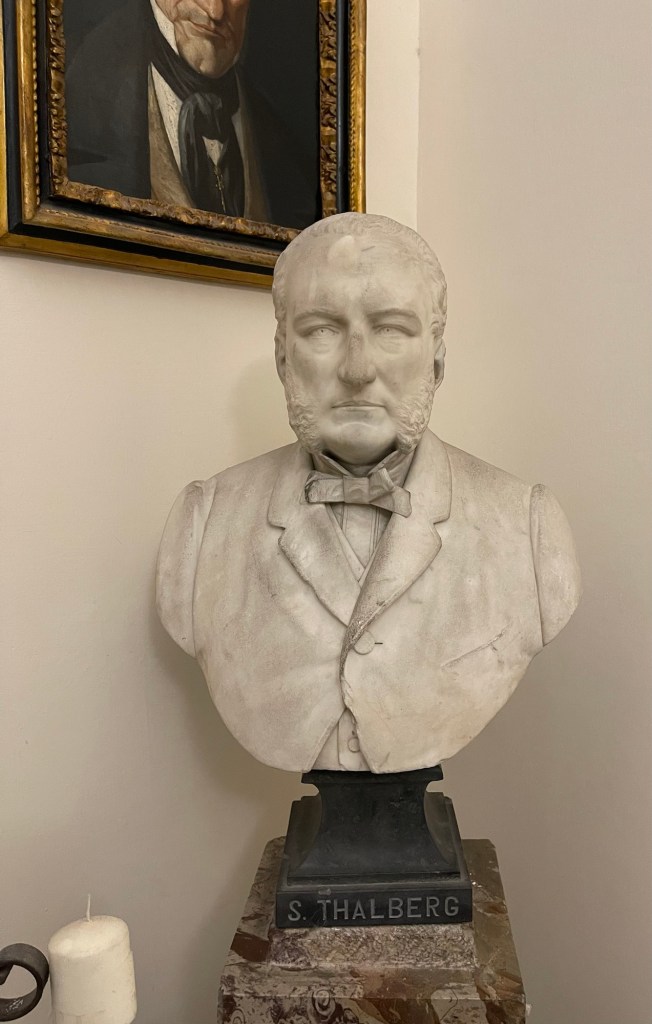
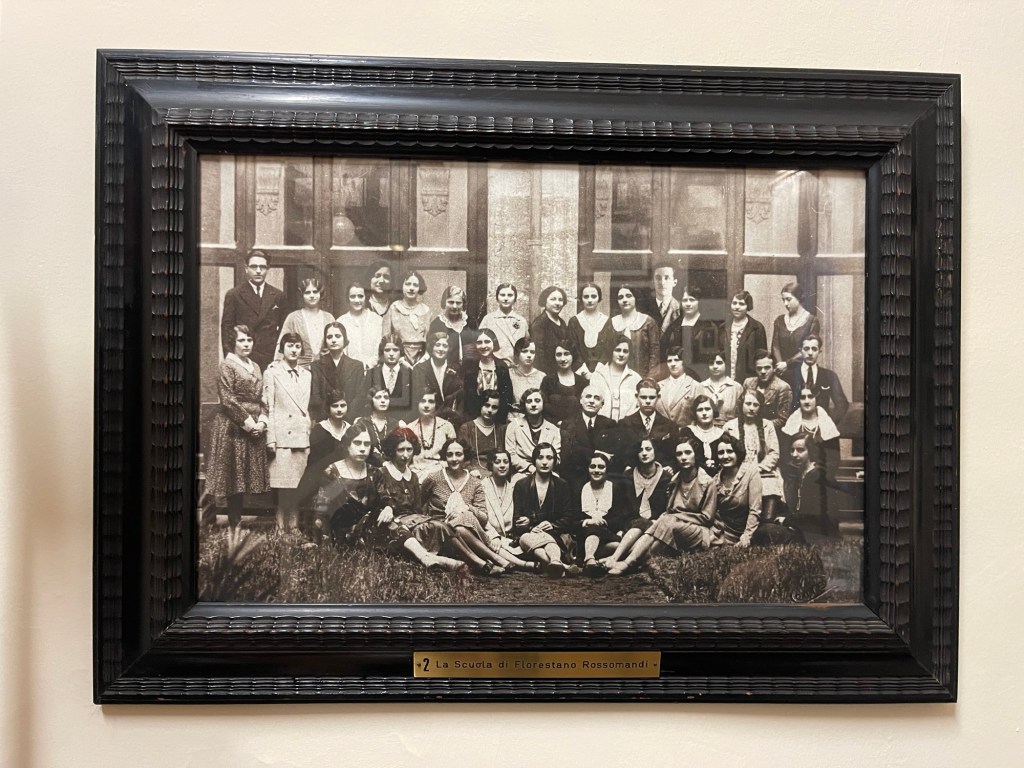
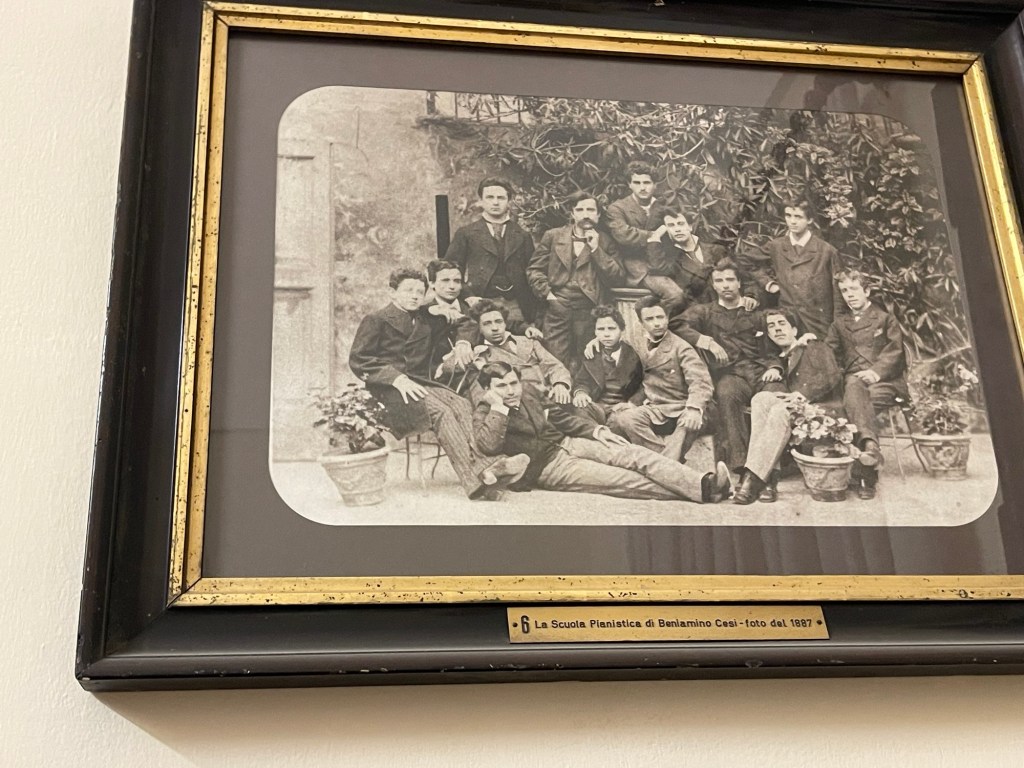
A city ready to salute such an important figure of the great Neapolitan piano school and to have her anniversary celebrated by the opening of a new era for this great school that goes back to Clementi and forward to Martha Argerich via Denza ,Thalberg,Rossomandi,Cesi,Vitali,Scaramuzza and Anna Maria Pennella
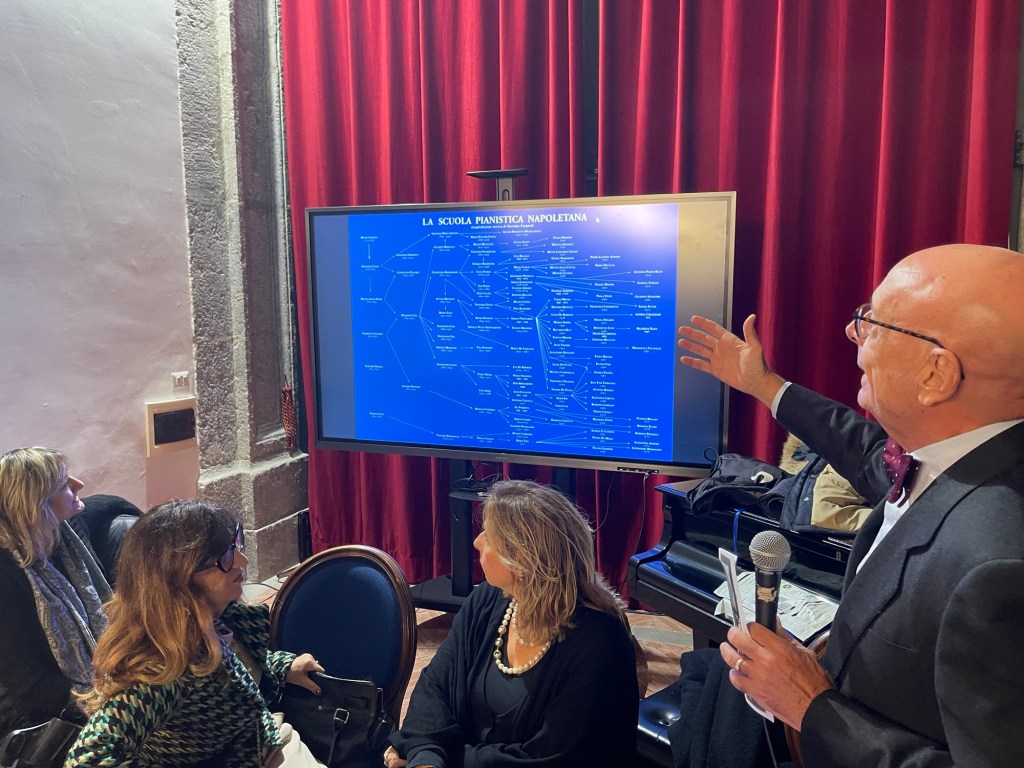
After tributes from illustrious colleagues it was the music of one of her former stellar students that demonstrated that music can reach us where words are not enough

And in today’s performance I have rarely heard it played so clearly or with such colour.Chiselled sounds of purity over a chromatic murmuring base.A pointed finger technique that like Michelangeli was penetrating and luminous.A wonderful sense of colour and a feeling for the inner harmonies in a truly magic wonderland of sounds.
Cascades of notes generating an overwhelming excitement and exhilaration whilst never losing sight of the overall orchestral line with its jewel like precision but with a prism of chameleonic colours.
I have heard many wonderful performances of this work from Arrau,Horowitz,Kentner and many others but none that touched me as this remarkable pianist I heard today.There was an overall shape that contained all the emotions and atmosphere and even a sense of showmanship in moments of a culmination of exhilaration.This is a great musician listening like Horowitz with arms open wide as he embraced and pointed to the jewel like sounds as a conductor might do with a great orchestra.
Antonio Pompa-Baldi had flown in from America where he now resides to give a recital that included the very first piece that he had studied with his adored piano ‘mother ’ : Rachmaninov ‘Corelli variations’.A performance that in the city of San Gennaro had something of the miraculous about it and was certainly the finest performance I have ever heard !

Pianist and composer, Roberto Piana was born in Sassari, on the Italian island of Sardinia, in 1971. He perfected his studies with numerous famous pianists, but owes his training to Isabella Lo Porto, with whom he graduated in piano studies with top marks, at the Music Conservatory of Sassari where he now teaches and is based : http://www.robertopiana.com.
Aldo Ciccolini,that great pianist of the Neapolitan school wrote of Piana’s own playing :’«I liked his way of playing very much, there is colour, imagination, an overwhelming sensitivity, determination… the instrumental performance is of enviable clarity».
It could be exactly the way to describe what we heard today.This was a remarkable work played with a clarity and character that were mesmerising and it is obviously a work that will become with time a stable part of the piano repertoire.
There were scintillating vibrations of ‘Scarbo’ proportions of ‘Cerbero’.The bell like distant chimes with its beautiful tenor melodic line of ‘Fortuna’.The plaintive cry of ‘Messo Celeste’and the deep tenor voice of ‘Epicuro’.Or the high pitched sounds of chiselled notes of ‘Arpie’ with a syncopated melody in its midst of tantalising and mesmerising clockwork precision with a final chord like broken glass.
Enticing ‘Penelope’ with its ravishingly beautiful harmonies with swirling mists of sounds spread over the whole keyboard from which a deep tenor melody emerges with a brooding constant wave of sounds.’Lucifero’with great bass vibrations of fluidity that were never hard but extraordinarily liquid.
This was an extraordinary performance of a master work.
At the end of sensational performances of a pianist I did not know but who is in my opinion without doubt one of the greatest pianists I have heard since Michelangeli and dare I say Horowitz too.
He played two of the Brahms Paganini variations that his teacher had particularly loved.
This was after a performance of Liszt’s Second Ballade that I have never heard played with such clarity and passion.A breathtaking performance followed ‘Sguardi sulla Divina Commedia’ ,written only two years ago by his colleague Roberto Piana and following in his teacher’s footsteps of promoting the music of their contemporaries.
A straight finger technique (as Agosti always said :’ fingers of steel but a wrist of rubber’ ) .What Agosti did not say was also a heart of gold and a soul that can reach all the multicoloured stars that are hidden in this black box of hammers and strings.
The colours that this pianist managed to discover in a Shegeru Kwai that he was able by his total mastery to turn a good solid bauble of a piano into a golden box of gems .
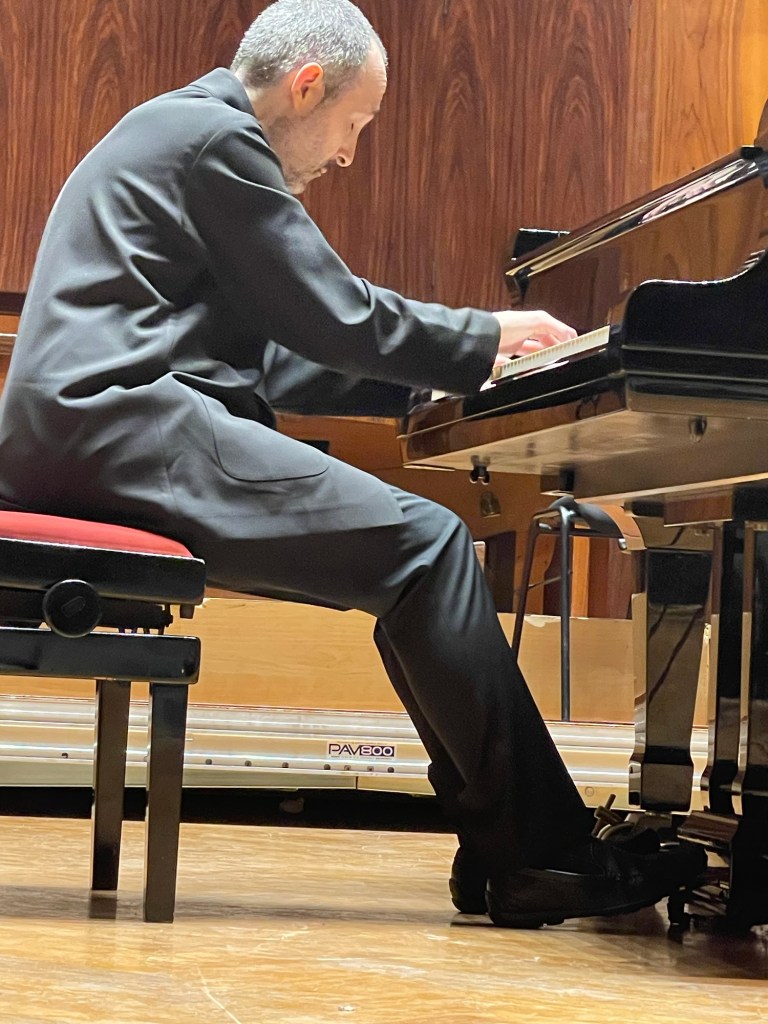
A purity of chiselled beauty.A clarity where every strand was clear and part of a sumptuous whole.Each variation was imbued with a character that I have never heard before.After the tumultuous final build up with driving rhythmic energy and virtuoso octaves with an increasingly sumptuous and rich sound only vibrations were left dying away and from the distance a nostalgic heartrending final apparition of ‘La Folia’. A truly memorable performance that if I had my score with me I would have like to describe each marvel in more detail.
But it was the final encore ‘Le Chemin de l’amour ’ that said it all and had her son the distinguished pianist Orazio Maione on his feet together with the entire audience to salute not only Antonio Pompa- Baldi but his ‘piano mother’ Anna Maria Pennella who by the same miracle as San Gennaro was with us today in her city seething with activity just a few days before Christmas.

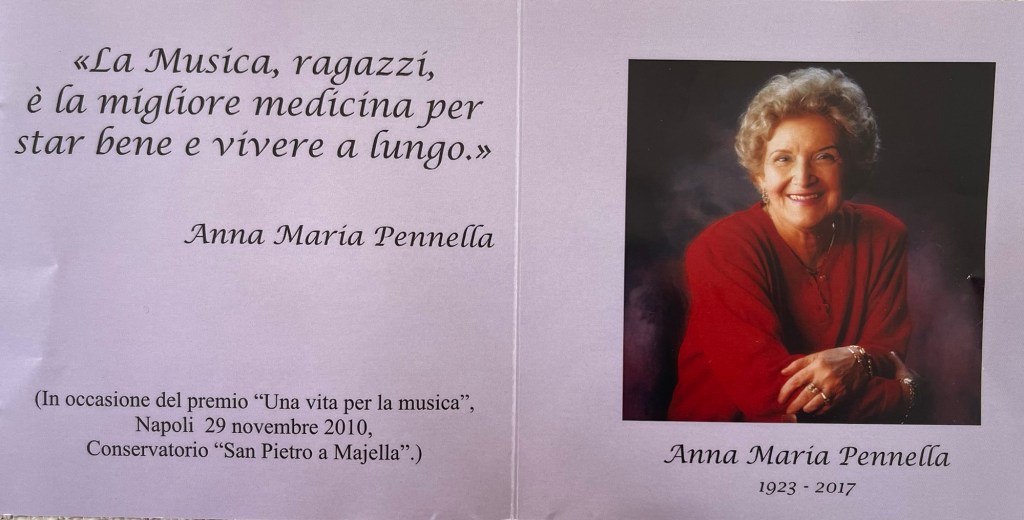
Born in Portici ,Naples in 1923 Anna Maria Pennella dedicated her life to music in her city that she loved and today returned that same love.
As she said to her students : ‘Music is the best medicine for living well and having a long life’.


Something that is amply demonstrated by her CD of Brahms Sonata op 5 recorded live in 2010 at the age of 87 when she was awarded ‘ Una vita per la musica’…………

https://christopheraxworthymusiccommentary.com/2023/10/24/marco-scolastra-at-the-goethe-institute-a-voyage-of-discovery-from-clementi-to-rossini/ Marco who had played the Brahms First Concerto op 15 four hands with Orazio Maione and his mother having heard a try through announced that she could now bless their duo.


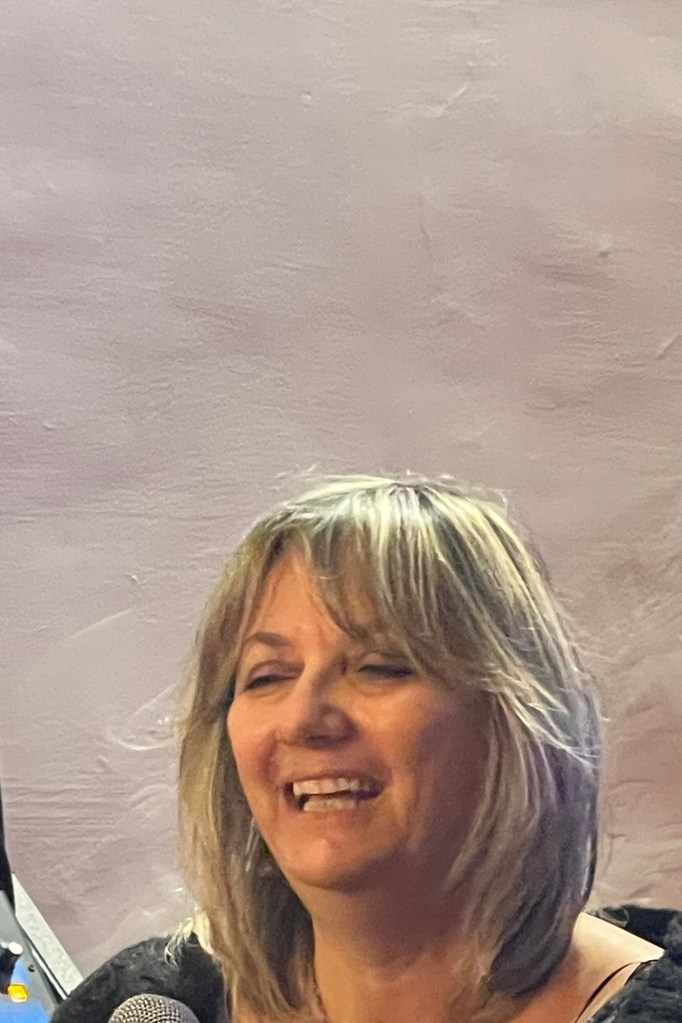
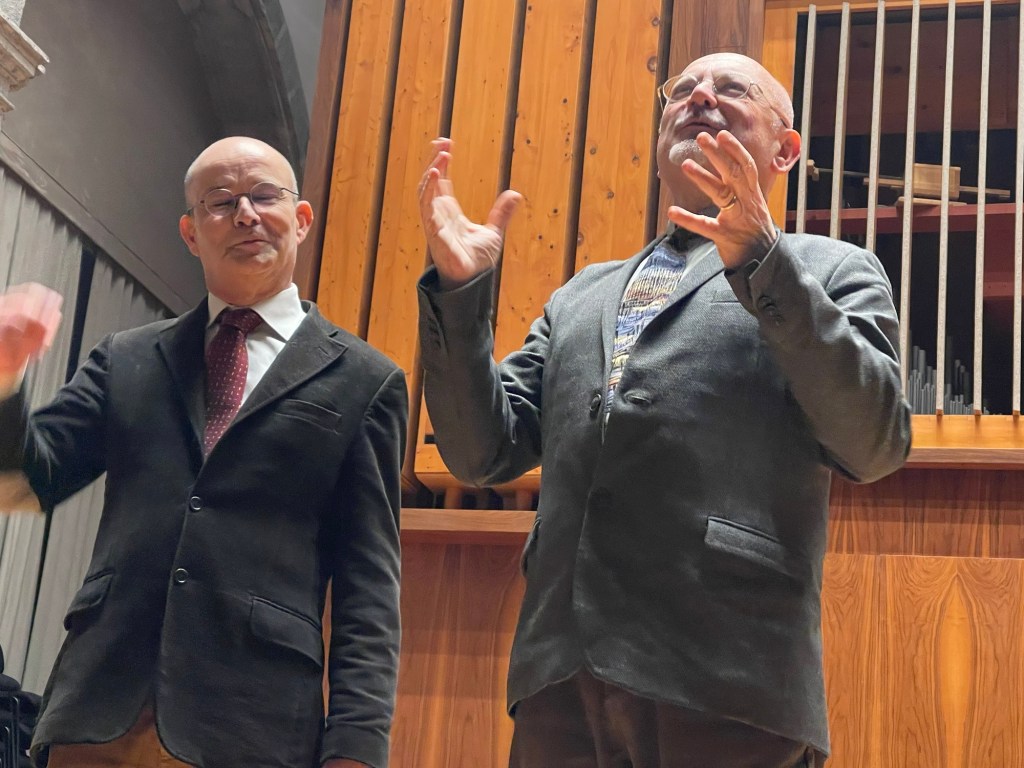
And so to the real Homage in music opening with a work by Debussy that Orazio’s mother had fallen in love with in her last years :Images oubliees n. 1 Lent (melancolique et deux) .Played by a student of her son : Giuliano Grella .

I remember Fou Ts’ong often delving into these early works of Debussy as well as playing the last great work and absolute masterpiece that are the Etudes.
Claude Debussy composed Images, a three-piece cycle for piano, in 1894. The cycle was only eventually published in its entirety in 1977, entitled Image (oubliées). The reason for adding the words “forgotten” was to prevent it from being confused with his other two popular Images cycles, published in 1905 and 1907 .Maurice Ravel orchestrated the Sarabande in 1923, and Zoltán Kocsis created an orchestral transcription of the other two pieces. The first, “melancholic and sweet” is followed by the Sarabande, which Debussy instructed to be performed “[…] with dignified and slow elegance, not unlike an old portrait, a memory from the Louvre, etc. […]” The vigorous and humorous third piece is based on the first line of the French nursery song “Nous n’irons plus au bois”.
Images (oubliées)
No. I. Lent (Mélancolique et doux)
No. II. Sarabande (Ravel’s orchestration)
No. III. Quelques aspects
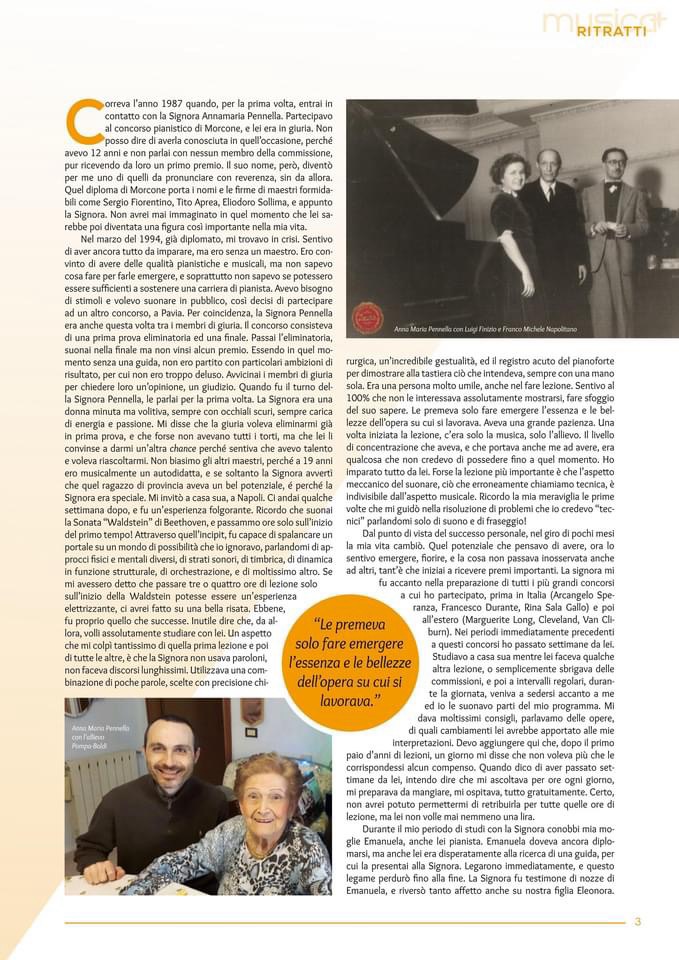
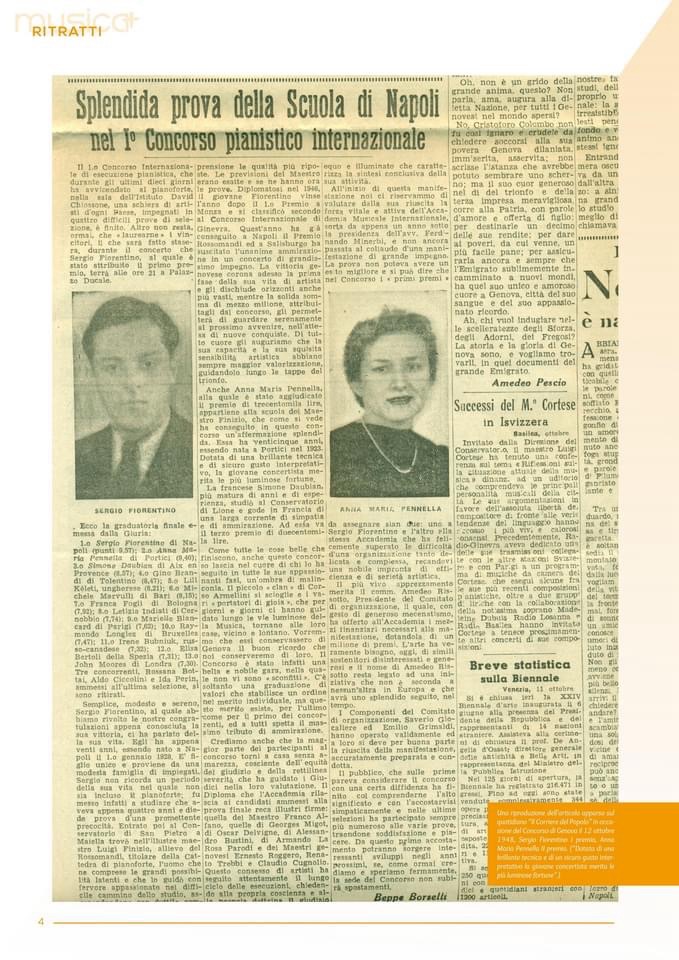
Carla di Lena writes :Domani sarò presente all’omaggio che il Conservatorio di Musica San Pietro a Majella di Napoli renderà ad Anna Maria Pennella, scomparsa alcuni anni fa, quest’anno ne avrebbe compiuti 100. Su questa personalità straordinaria – da ascoltare le sue interpretazioni disponibili su YouTube – che ha formato schiere di pianisti e di attuali docenti di conservatorio, nonchè mamma di un bravissimo pianista e docente come Orazio Maione, avevamo pubblicato un articolo qualche anno fa ( n. 49/2017 ) nella rivista Musica+ del Conservatorio dell’Aquila. Lo ripropongo qui perchè è una bella testimonianza del suo allievo Antonio Pompa-Baldi, che domani suonerà per ricordarla. Tra le immagini, nell’articolo, è stato inserito per intero un estratto del “Corriere del Popolo” del 1948 relativo al Concorso Pianistico di Genova, concorso nel quale Annamaria Pennella vinse il secondo premio, il primo era stato assegnato a Sergio Fiorentino. E proprio domani 22 dicembre Fiorentino avrebbe compiuto 96 anni. Una bella coincidenza, che vede idealmente unite due figure importanti per la storia del pianoforte in Italia.
Per la lettura in pdf questo il link (pp.21-24)
https://www.consaq.it/files_repos/pubblicazioni/riviste/musica/2664/49lugsett17Musicapiu.pdf


https://christopheraxworthymusiccommentary.com/2020/01/04/a-la-recherche-de-thalberg/





 ChristopherAxworthy-MusicCommentary
Una risposta a "Naples pays homage to Annamaria Pennella"