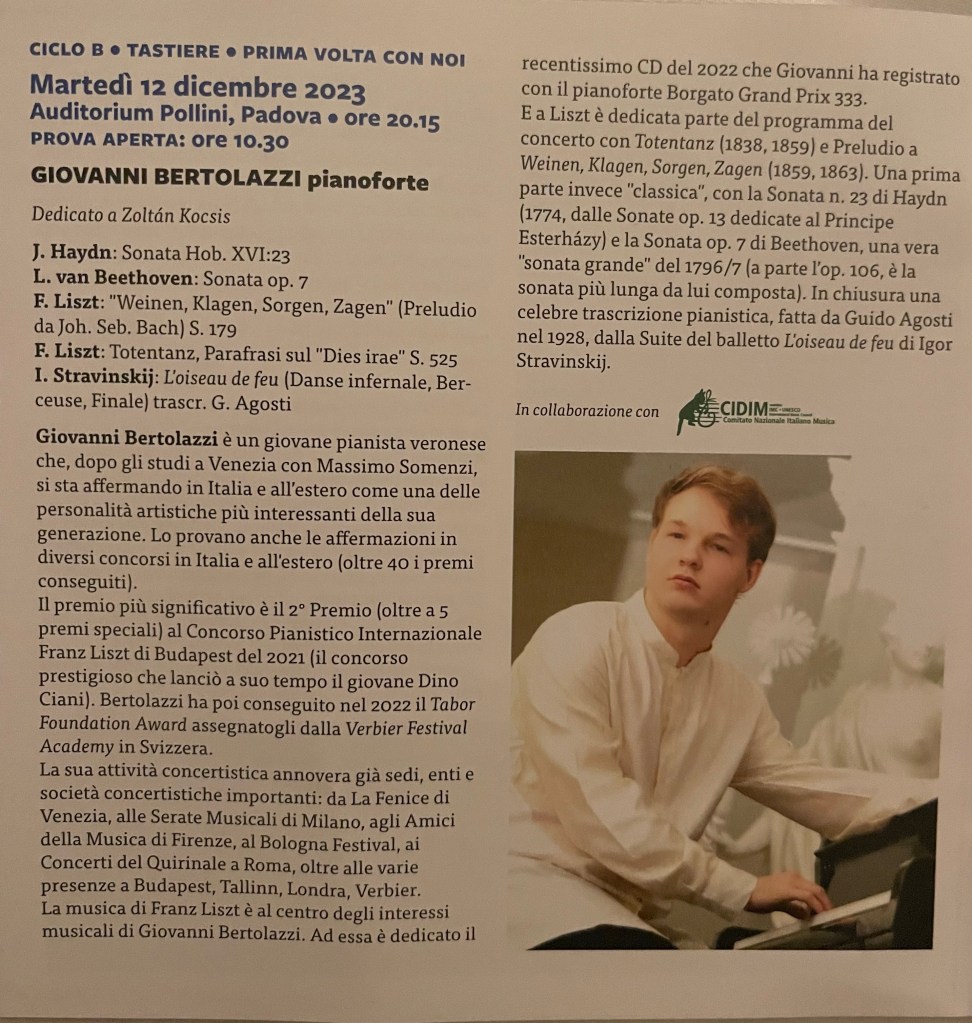

Giovanni Bertolazzi e gli Amici della Musica di Padova desiderano dedicare il concerto di questa sera alla memoria di Zoltán Kocsis,
nel ricordo sempre vivo dei suoi concerti padovani
“Si dovrebbe tendere all’eterno, non a ciò che finisce.” Z. Kocsis (1952 – 2016) ‘One should think of the infinite ,not just that which finishes ‘
Joseph Haydn
(1732 – 1809)
Sonata in fa maggiore Hob. XVI:23
Allegro moderato
Adagio
Finale (Presto)
Ludwig van Beethoven
(1770 – 1827)
Sonata in mi bemolle maggiore op. 7
Allegro molto e con brio
Largo, con gran espressione
Allegro
Rondo (Poco allegretto e grazioso)
Franz Liszt
(1811 – 1886)
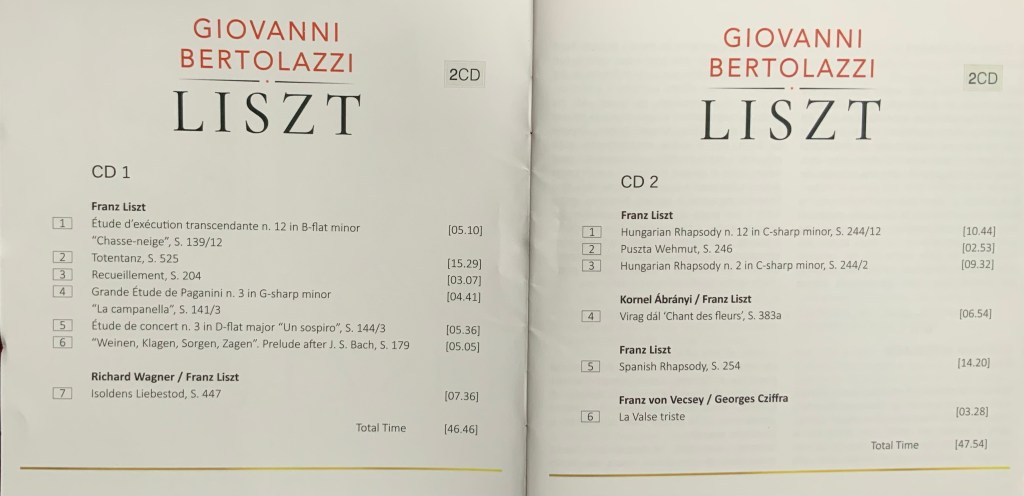
“Weinen, Klagen, Sorgen, Zagen” (Preludio da Joh. Seb. Bach) S. 179
Totentanz, Parafrasi sul “Dies irae” S. 525
Igor Stravinskij
(1882 – 1971)
da L’oiseau de feu (trascr. Guido Agosti) Danse infernale
Berceuse
Finale

It was almost four years ago that Giovanni played in the Sala dei Giganti in a sunday morning series dedicated to young competition winners .Giovanni,I had already heard in Bolzano and had immediately realised that here was potentially a remarkable musician and passionately dedicated pianist.I wrote about that first concert in Padua giving it the title ‘A Giant amongst the Giants’
Giovanni Bertolazzi – “A Giant amongst the Giants”

Giovanni has now grown into a very mature young man with a quarter of a century behind him as his playing is growing steadily in stature.He has been taken under the wing of the Keyboard Trust and has already played in London on two occasions.On the first occasion he took advantage of the generosity of Leslie Howard ,the leading Liszt expert of the day and Artistic director of the KT ,to discuss repertoire and consult scores with a true expert.Leslie had been a esteemed student of Guido Agosti who had studied with Busoni who in turn had been a student of Liszt.On the same occasion he played the Liszt Sonata to Peter Frankl at his home and they spent many hours discussing it together.Giovanni on his second visit to London last June took the National Liberal Club by storm as he gave the first in a series of six concerts for young musicians in a hall which had seen Rachmaninov and Moiseiwitch before the war.Last autumn he toured America and astounded all that heard him including the New York critic Jed Distler one of the most informed critics of our day. I like to think that Giovanni and I have become friends since that fateful day in Bolzano when I by chance bumped into him with his father and was able to congratulate him on the superb performances he had given in the ‘Busoni’.
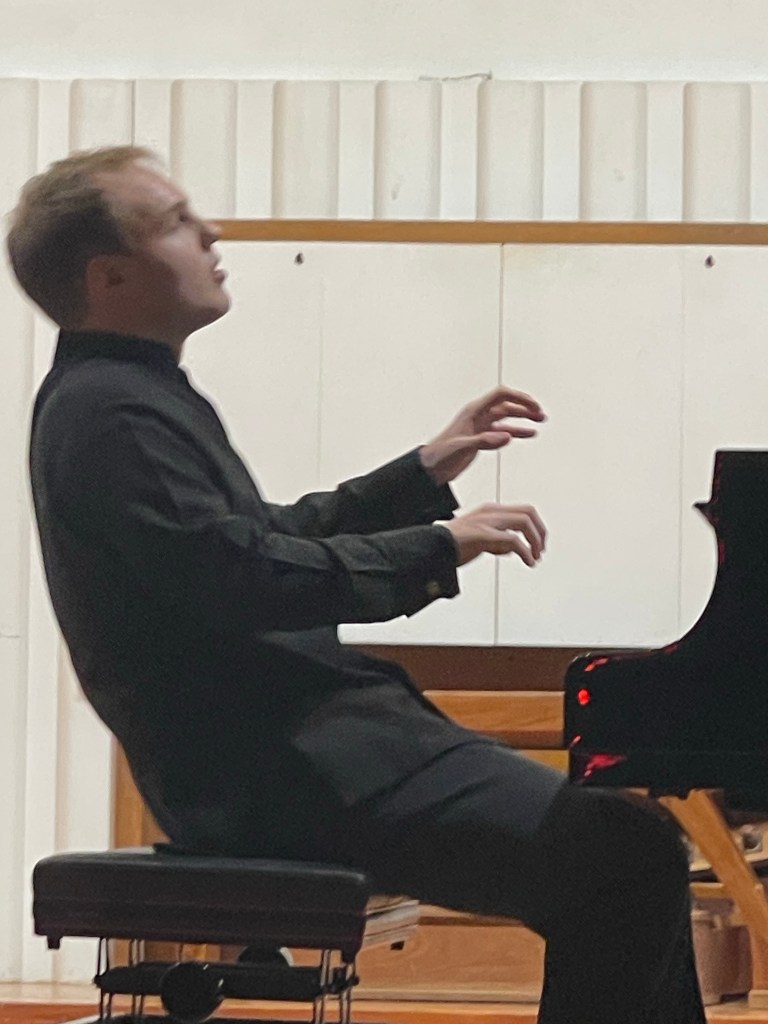
It is this artistry that has flowered into a towering presence where he is merely the medium between the composers and his audience.I have heard most of the works in today’s programme but such was his way of recreating the music that I was bowled over by so many things that I had not noticed before.One of the most remarkable things about Giovanni’s playing is his kaleidoscopic sense of colour and with just the right amount of showmanship that allows him to reenact the music before our astonished eyes.Remarkable ,no nonsense contrasts in the Trio of the Scherzo but it had also been noticeable from the very first notes of this early sonata.A sonata where the genius of Beethoven suddenly comes to the fore as he takes the form bequeathed to him by his teacher Haydn and transforms it with his irascible genius into the sonatas that were to be the thermometer for a life span in 32 steps.
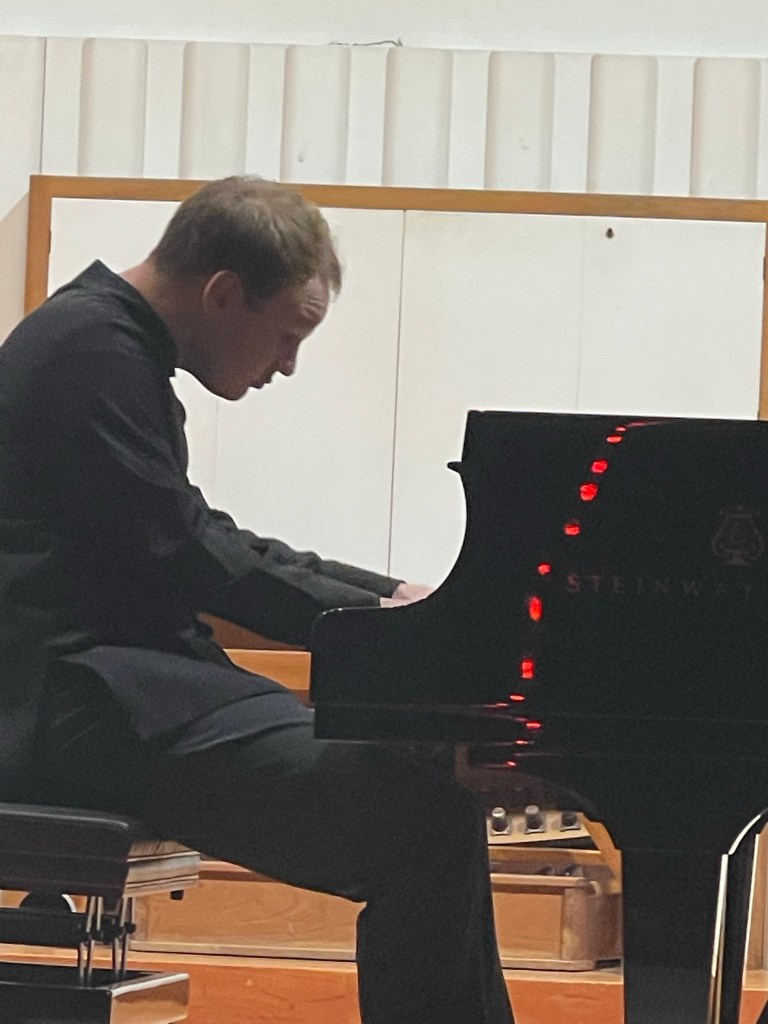
I have written about Giovanni’s performance quite recently in London but suddenly in Giovanni’s hands one becomes aware of what a great work this early sonata is.It is ,of course ,the Largo that is so poignant and already points to the things that are to come in the last great trilogy.Giovanni on a piano that at first seemed rather muffled, here in this great slow movement he discovered its secrets and he created a full string quartet sound where even the rests took on a searing significance as each gasp became more and more intense.A mastery of touch that allowed a non legato bass but with a legatissimo melodic line of such subtle tenderness.Slightly leaning on the inner notes of the chords in the octaves it gave a real string quartet feel as one could suddenly be aware of what ravishing beauty the young Beethoven was capable of .The opening of the Scherzo- Allegro was like opening a window to let fresh air in after such intensity.It was in the Trio with its rolling harmonies with injections of electric shocks that must have been truly astonishing in Beethoven’s time and it was this same surprise and stupor that this musician ,the same age as Beethoven when he penned such marvels,was able to show us today.A rondo that was all elegance and delicacy and on each appearance still more insinuatingly presented.But this was rudely interrupted by an episode of overwhelming power and rhythmic energy.The most noticeable thing was the clarity that Giovanni brought to the music with never hard or ungrateful sounds but always rich and full of a string quartet or orchestral texture.This was not just a great virtuoso but a musician of stature dedicated to recreating the music and surprising even himself as the music was allowed to unravel so naturally from his extraordinarily sensitive ten players.
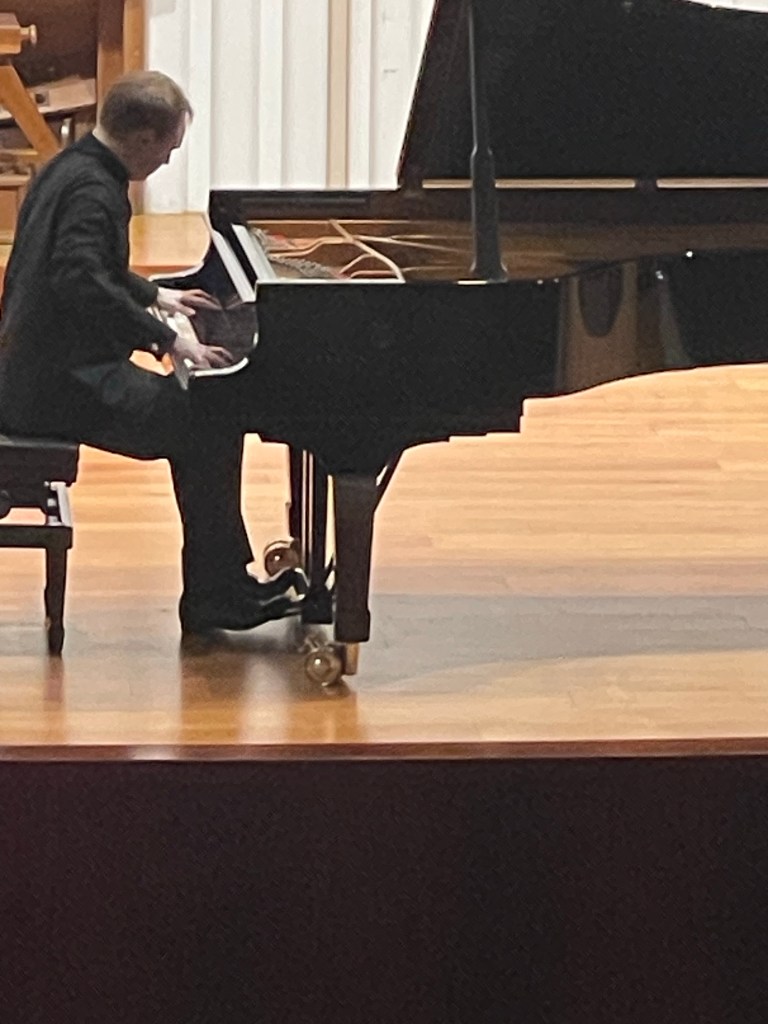
I am reminded of Kantarow who is one of the blessed few that lives every note and like Giovanni makes the music speak in a musical conversation that keeps us enthralled from the first to the last.A story that has to be told ….and what a story!It was the same immediacy that he had brought to Haydn’s sonata in F that opened this well balanced programme.An Allegro moderato that was all brilliance and charm .From these very first notes the subtle legato of the right hand with the gentle non legato of the left was a transcendental tour de force of touch that I have not heard played with this Matthay type simplicity for too long .The ravishing beauty of the Adagio had me thinking that this surely is the birth of ‘bel canto’.A sense of balance that allowed the melodic line to glow and shine with golden beauty and ornaments that unwound with the ease and grace of a great singer.Haydn marks the Finale Presto but surely not so fast as to loose the sense of fun and games that the composer is treating us too.Giovanni’s kaleidoscopic palette of colour allowed him nevertheless to shape this movement with subtle shading but surely Giovanni you can let your hair down now and have more fun after the burning intensity you had shown us in the sublime Adagio?

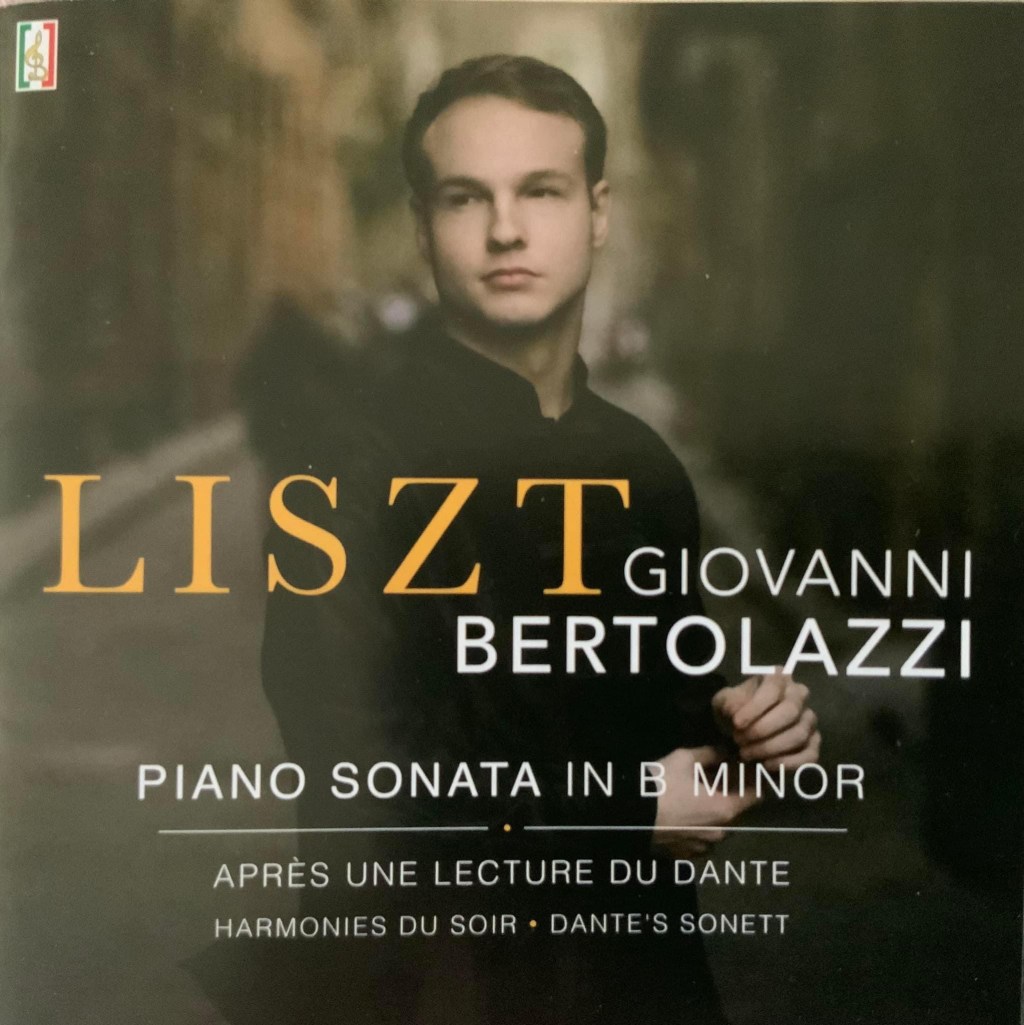
Giovanni’s Liszt playing is well known as his CD’s can already testify.CD’s that were produced by Borgato the makers of superb instruments and infact the preferred piano of Radu Lupu whenever he played in the Teatro Olimpico in Vicenza.
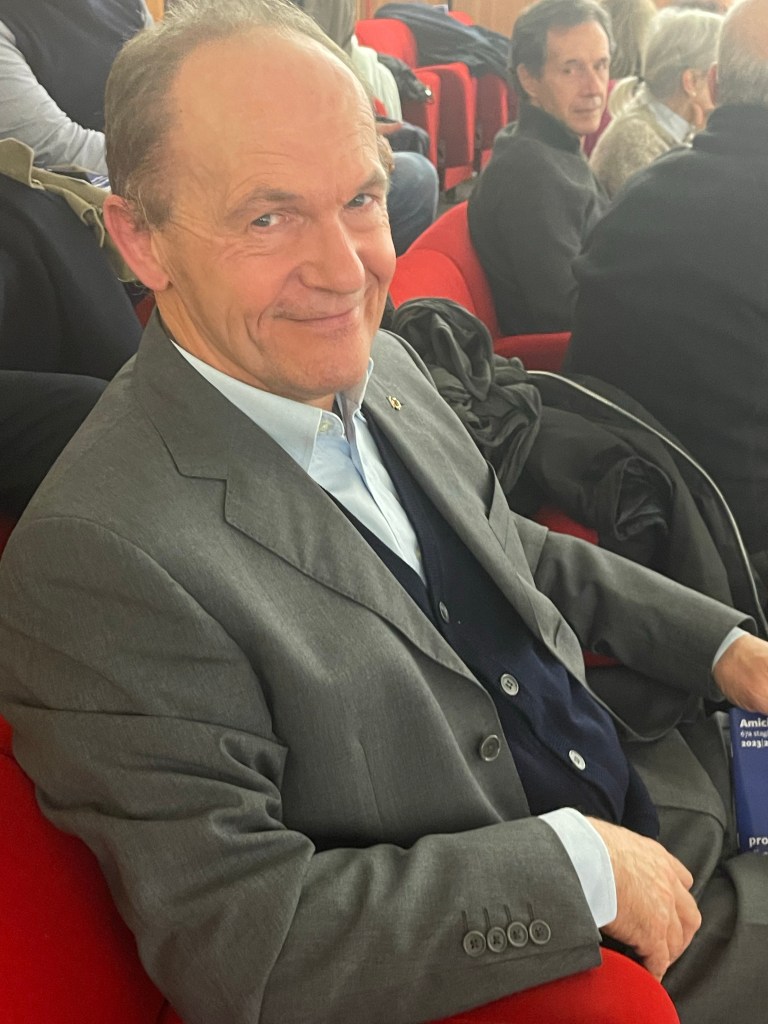
Hopefully this marriage between Borgato pianos and a star pianist will bring lustre to both in the name of art.Mr Borgato was present tonight together with Giovanni’s father and both were visibly bowled over as were we all by what we were about to be treated to after the interval.
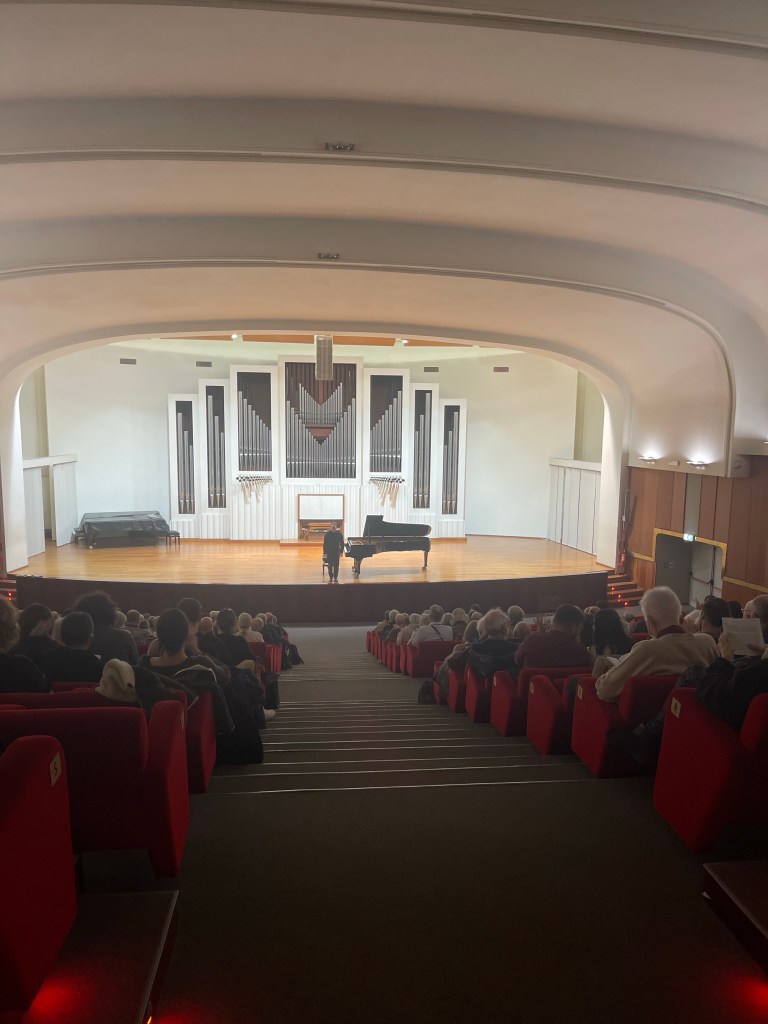
It was Liszt that he and Kevin Chen had surprised the world with at the International Competition in Budapest.Both top prize winners Chen a genial figure who at fourteen ,a prodigious genius who went on to astonish the juries of Geneva at 16 and Rubinstein at 18.Like Lim or Trifonov it is an early presumptuous genius that may or may not mature well.Giovanni has been carefully delving into the scores and studying intensely helped by many great musicians like Jean Eflem Bavouzet and Peter Frankl in particular.It is this time that has been so important to allow the music to mature within this already superbly trained musician.Here mention should be made of the five years vigorous training that Giovanni received in Catania from Epifanio Comis .We live in an age when time to stop and think becomes ever more precious .An age of instant comunication, fast travel and where quantity seems to be more important that quality.

All this to say that I was overwhelmed by Giovanni’s performances of Liszt and Agosti ( Agosti my own teacher and great friend who I will celebrate tomorrow in Forlì where he was born and is buried .A student of Busoni who was in turn a student of Liszt.Liszt who had been taught by Czerny,a student of Beethoven who in turn had been a student of Haydn – small world !).
Liszt’s “Weinen,Klagen,Sorgen,Zagen ‘ I have never been aware of what a remarkably beautiful work it is until today.It was played with a simplicity as the opening desolate notes were whispered into our ears only to be transformed into a work of a true believer with genial resources in his hands and heart.Totentanz too ,usually a work of scintillating virtuosity here was transformed into a satisfying whole where each variation whilst given its own character was part of a much larger architectural design.Astonishing technical fireworks abound,of course ,but like with Arrau never forgetting the extraordinary musical invention of a master work.
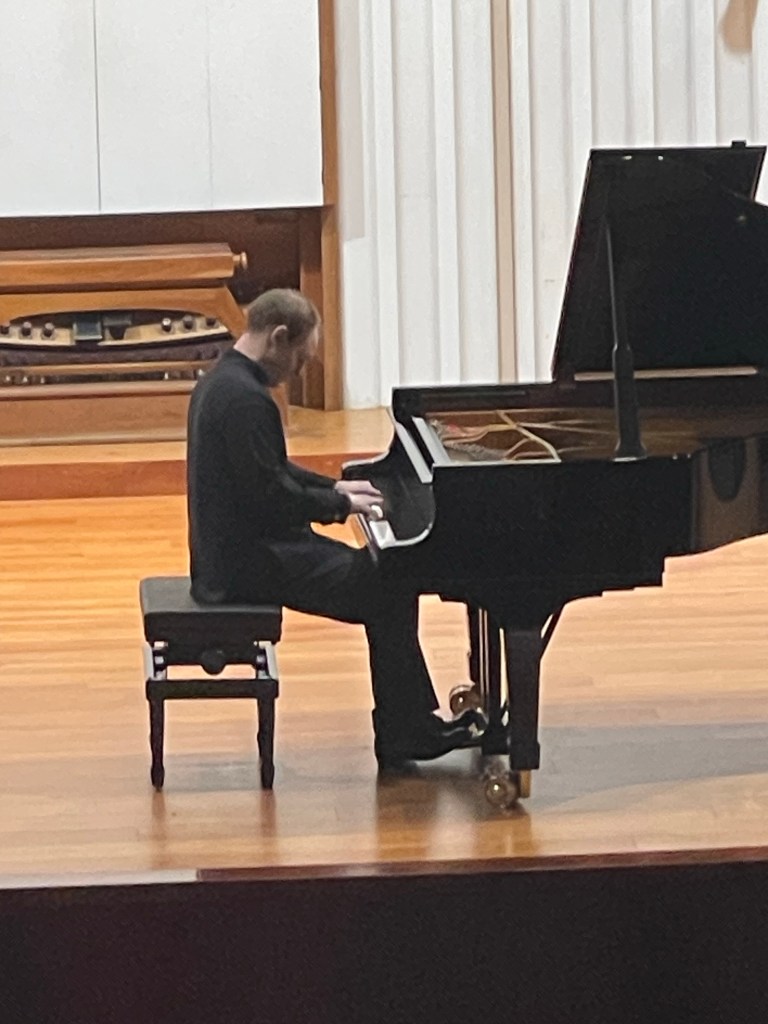
Breathtaking virtuosity with double notes I have never heard before played with such colour and ease.Glissandi that shot across the keyboard like streaks of lightening but linked always to an overall musical line.But it was Agosti’s ‘Firebird’ where all of Giovanni’s technical brilliance and kaleidoscopic sense of colour produced an unforgettable performance that is for me undoubtedly the greatest I have ever heard.There have been some remarkable performances from two stars such as Kantarow and Rana recently but what Giovanni produced today I could only imagine coming from the hands of Agosti himself.All those that flocked to Agosti’s studio in the summer months at the Chigiana in Siena have never forgotten the sounds that came from this rather reserved musical genius.

The opening was indeed a ‘Danse Infernale’ as Giovanni suddenly let rip with amazing technical command, authority and above all a rhythmic drive that was exhilarating and exciting.The hushed tones of the Berceuse were bathed in pedal and whispered with a glowing fluidity in a magic sound world that kept us all mesmerised .It is always a magic moment when the clouds open and the ‘Firebird’ is revealed but today the ravishing beauty that Giovanni was able to create still is with me as I write these few poor lines to try to understand myself and share with others such a wondrous musical experience.The gradual build up to the final tumultuous wave of sounds was truly masterly .

I thought of the young pianist I had heard all those years ago in Bolzano and the long difficult path he has had to pursue since.A trial of fire indeed for a young man who dedicates his life to his art but what joy he finds as he comes out of the jungle to become one of the most exciting performers before the public today.
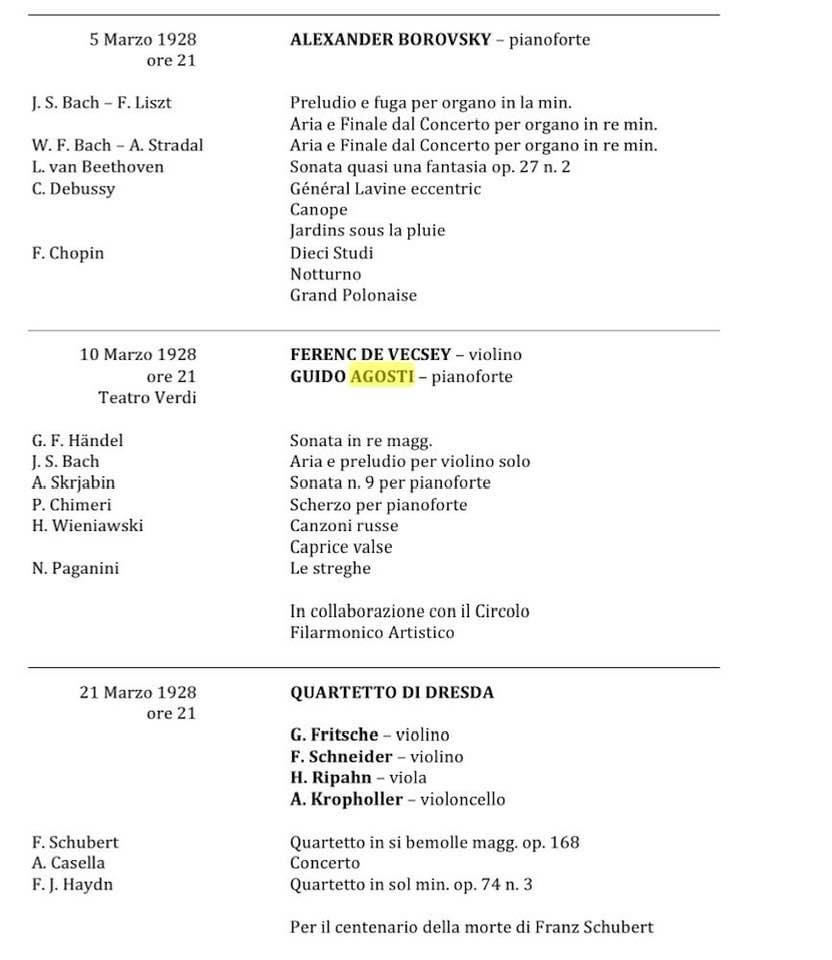
An encore was introduced very eloquently considering the tour de force that Giovanni had been through .The ‘Valse Triste’ in a transcription by Cziffra of the violinist Vecsey.A violinist almost forgotten these days but as Giovanni had told us he had played for the Amici della Musica di Padova in 1928 .What he did not tell us was that Agosti had written his transcription of the ‘Firebird’in that same year!A vintage year indeed!Also I was just told en passant that Guido Agosti was the pianist!

I have written about Giovanni’s performance before so let’s just enjoy it together now.
Here is a link to a recent performance Giovanni gave in Milan for the Serate Musicali :

Franz von Vecsey was a Hungarian violinist and composer, who became a well-known virtuoso in Europe through the early 20th century. Born: March 23, 1893, Budapest ,Hungary Died: April 5, 1935, Rome his Full name: Ferenc Vecsey
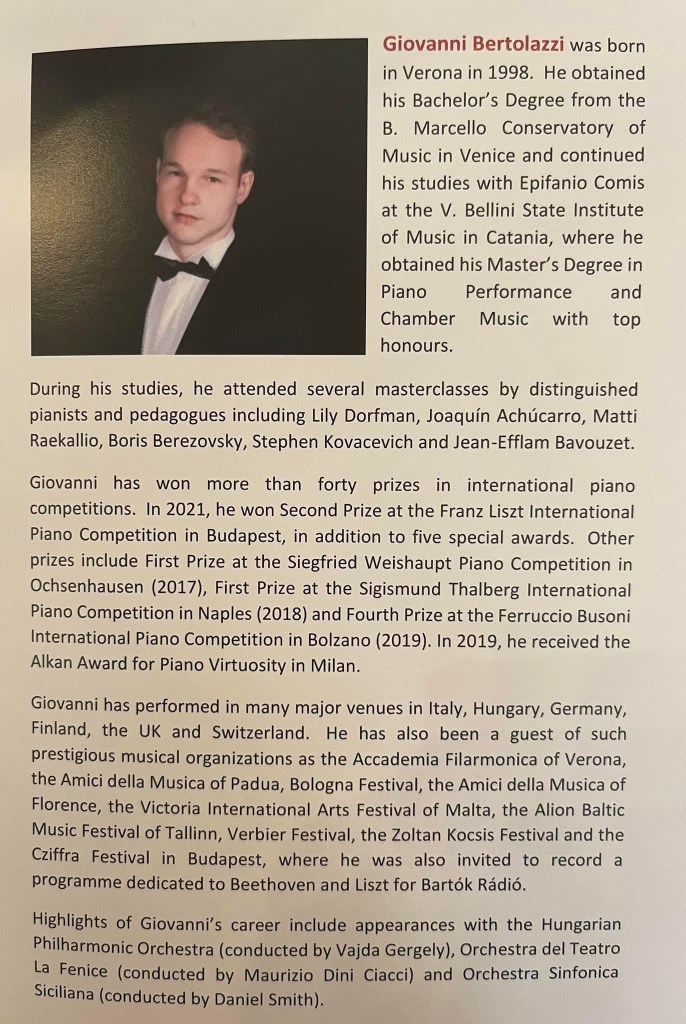
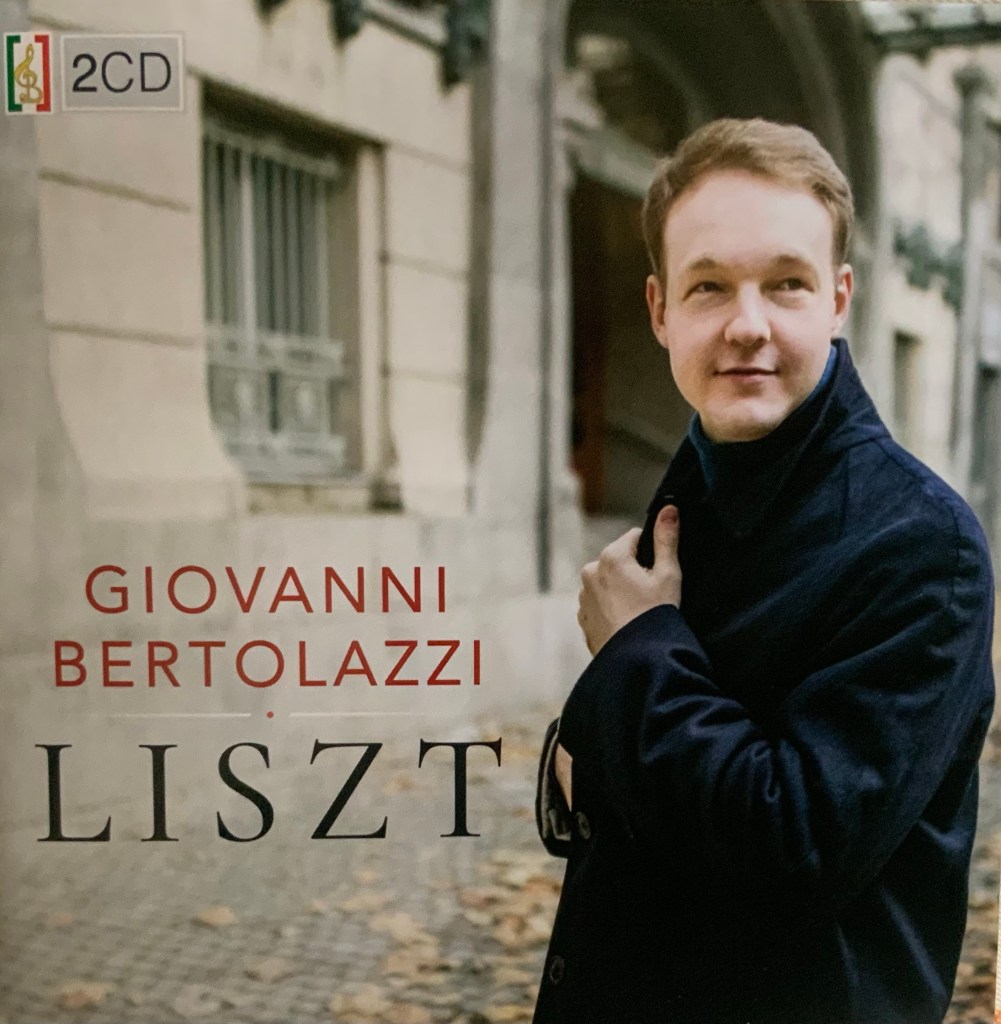
GIOVANNI BERTOLAZZI
Giovanni Bertolazzi è il vincitore del 2° Premio e di 5 premi speciali al Concorso Pianistico Internazionale “Franz Liszt” di Budapest (2021).
Nato a Verona nel 1998, si è avvicinato al pianoforte da bambino, crescendo in una famiglia particolarmente interessata alla cultura, all’arte ed alla musica.
Dopo aver conseguito il diploma accademico di I livello in Pianoforte con 110 e lode presso il Conservatorio “B. Marcello” di Venezia con Massimo Somenzi, decide di seguire gli insegnamenti della scuola pianistica di Epifanio Comis presso l’Istituto Superiore di Studi Musicali “V. Bellini” di Catania, dove ha conseguito il diploma accademico di II livello con 110, lode e menzione speciale.
Durante i suoi studi, ha frequentato diverse masterclass di pianoforte tenute da illu- stri pianisti e pedagoghi come Lily Dorfman, Joaquín Achúcarro, Matti Raekallio, Violetta Egorova, Boris Berezovsky, Stephen Kovacevich e Jean-Efflam Bavouzet. Ha vinto più di 40 premi in concorsi pianistici internazionali, tra cui il 1° Premio al Concorso Pianistico “Siegfried Weishaupt” di Ochsenhausen (2017), il 1° Premio al Concorso Pianistico Internazionale “Sigismund Thalberg” di Napoli (2018) e il 4° Premio al Concorso Pianistico Internazionale “Ferruccio Busoni” di Bolzano (2019). Nel giugno 2019 a Milano ha ricevuto il “Premio Alkan per il virtuosismo pianisti- co”. Da gennaio 2020, Giovanni è sostenuto artisticamente dalla Associazione Culturale “Musica con le Ali”. Nel luglio 2022 è stato premiato con il “Tabor Foundation Award”, riconoscimento assegnatogli dalla Verbier Festival Academy in occasione del Verbier Festival (Svizzera).
Si è esibito in importanti sedi tra cui Teatro La Fenice di Venezia, Palazzo Pitti di Firenze, Teatro Politeama Garibaldi di Palermo, Teatro Bellini di Catania, Palazzo del Quirinale a Roma, Sala Verdi del Conservatorio di Milano, “F. Liszt” Academy of Music di Budapest, Liszt Ferenc Memorial Museum a Budapest, Landesmusikakademie di Ochsenhausen, Kadrioru Kunstimuuseum di Tallinn, Steinway Hall a Londra. Inoltre è stato ospite di prestigiose organizzazioni musica- li come Serate Musicali di Milano, Amici della Musica di Padova, Bologna Festival, Amici della Musica di Firenze, Verbier Festival, Cziffra Festival di Budapest nel- l’ambito del quale è stato anche invitato a registrare un programma dedicato a Beethoven e Liszt per Bartók Rádió.

March 31, 1732, Rohrau,Austria – May 31, 1809, Vienna ,Austria
He was instrumental in the development of chamber music such as the string quartet and piano trio. His contributions to musical form have led him to be called “Father of the Symphony” and “Father of the String Quartet”.
Haydn’s six Piano Sonatas Hob. XVI:21-26 were published in 1774 with a dedication to Prince Nicholas Esterházy I. The Sonata in F major Hob. XVI:23 is undoubtedly the most popular of them. The playful opening movement with its two contrasting themes, the wonderfully melancholic Adagio in f minor and the lively Presto finale make this work a prime example of the classical sonata,

Painting of Ludwig Van Beethoven by Joseph Karl Stieler made in the year 1820
Sonata no. 4 in E flat major, opus 7: Beethoven himself named this pianoforte sonata Grande Sonate because it was published by itself in 1797 – unusual for the time. It remains his second-longest sonata, behind the Hammerklavier Sonata op 106. Beethoven’s pupil (and Liszt’s teacher) Carl Czerny wrote: “The epithet appassionata would fit much better to the Sonata in E flat op. 7, which he wrote in a very impassioned mood”. It may be that the reason behind such passionate music was the composer’s attraction for his dedicatee, the then 16-year-old pupil Anna Luise Barbara Countess von Keglevich, and it is possible be that her father had commissioned Beethoven to write the work for her.

31 July 1886 (aged 74) Bayreuth,Germany
Weinen, Klagen, Sorgen, Zagen (Weeping, lamenting, worrying, fearing),BWV 12, is a church cantata composed by J.S.Bach in Weimar for Jubilate ,the third Sunday after Easter with the first performance on 22 April 1714 in the Schlosskirche, the court chapel in Weimar.
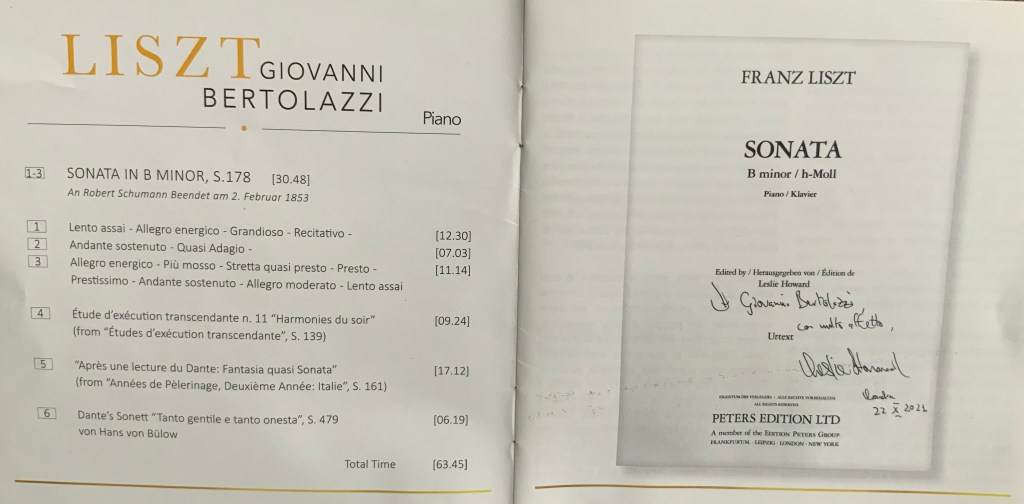
Variations on “Weinen, Klagen, Sorgen, Zagen,” S. 180 is one of Franz Liszt’s most significant works. Written after Liszt joined the Third Order of Saint Francis and during a time of deep personal tragedy, it reflects both Liszt’s religious journey and his coping with suffering and shows daring explorations of chromaticism that pushed the limits of tonality. It was arranged for organ one year after the piano version was composed and became one of his best-known compositions for organ.The work dates from 1862 and was motivated by the death of Liszt’s elder daughter, Blandine and is dedicated to Anton Rubinstein.This massive set of variations was written by Franz Liszt when two of his three children had died within three years of each other; he had resigned his position of Kapellmeister to the court of Weimar due to continued opposition to his music, and finally his long sought marriage to Princess Caroline Wittgenstein had been thwarted by political intrigue.Giovanni played the heartrending prelude S.179 which precedes the massive set of variations S.180.
Totentanz (Dance of the Dead): Paraphrase on the ‘Dies irae’, S126 for pianoforte and orchestra is notable for being based on the Gregorian hymn Dies irae as well as for its many stylistic innovations. The piece was completed and published in 1849, and later revised twice (1853-9 and early 1880s. All these versions were also prepared for two pianos). In the late 1860s, Liszt published a version for pianoforte solo, S525. Some of the titles of Liszt’s pieces, such as Totentanz, Funérailles, La lugubre gondola and Pensée des morts show the composer’s obsession with mortality, as well as his profound Christian faith, these things being apparent from Liszt as a teenager right up until his last days – more than 50 years later.
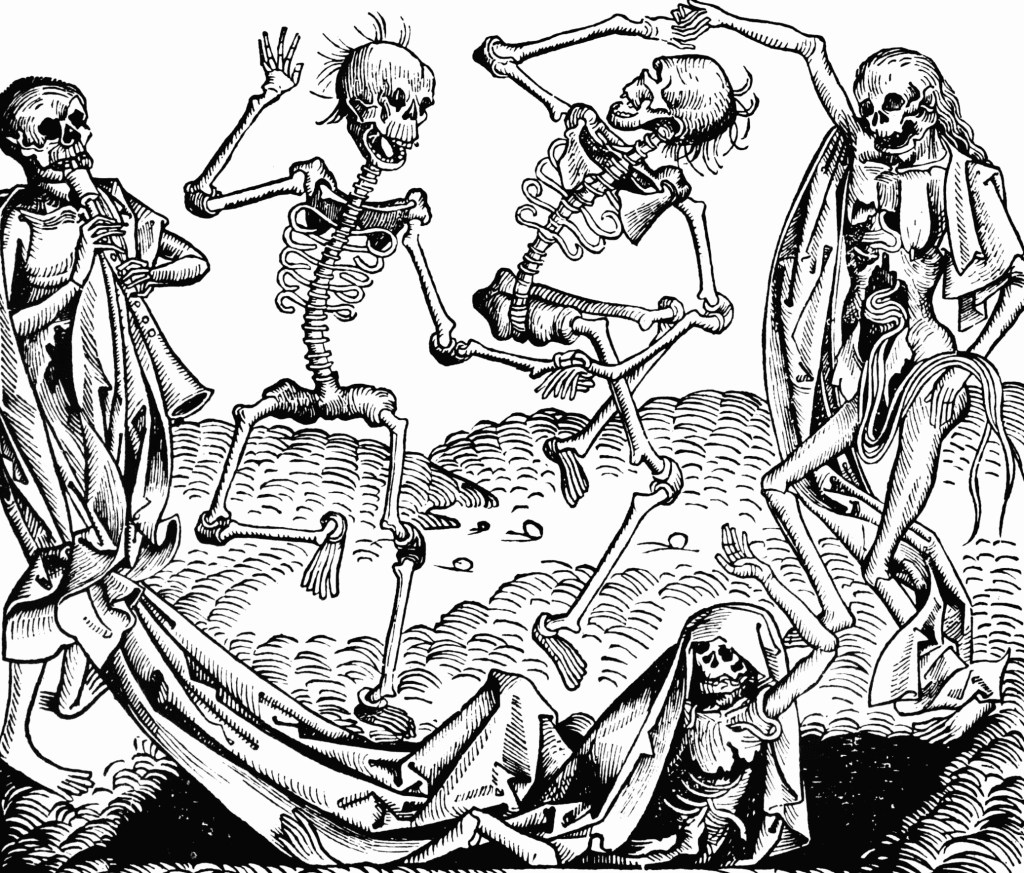
The Dance of Death (Totentanz) from Liber Chronicarum [Nuremberg Chronicle], 1493, attr. to Michael Wolgemut
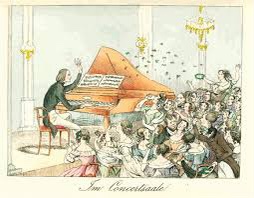
In the last movement of the Symphonie fantastique by Berlioz the medieval (Gregorian) Dies Irae is quoted in a shockingly modernistic manner. In 1830 Liszt attended the first performance of the symphony and was struck by its powerful originality. Liszt’s Totentanz presents a series of variations on the Dies irae – a theme that his will have known since 1830 at the latest from Berlioz’s Symphonie fantastique. As an early biographer noted, “Every variation discloses some new character―the earnest man, the flighty youth, the scornful doubter, the prayerful monk, the daring soldier, the tender maiden, the playful child.” A second theme, beginning at variation 6 – taken from the Prose des morts in the Catholic breviary – is itself varied before the first theme returns at the end of the work.

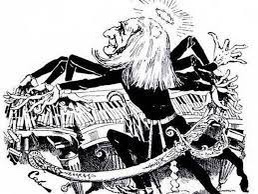
Liszt’s hand
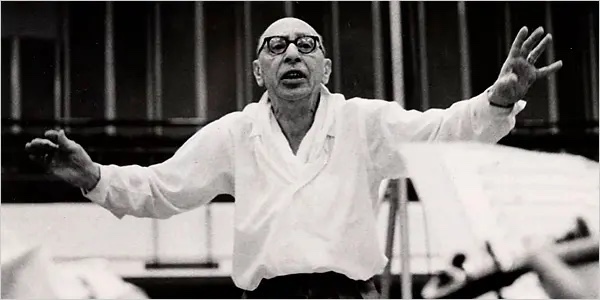
New York City, US
Stravinsky’s score for The Firebird was written for Sergei Diaghilev’s Ballets Russes dance company, which premiered the work in Paris in 1910. Based on ancient Russian folk tales, it tells the story of the young Prince Ivan’s quest to find a legendary magic bird with fiery multi-coloured plumage. In the course of his adventures, he falls in love with a beautiful princess but has to fight off the evil sorcerer Katschei to eventually marry her. The suite presents the culminating scenes of the ballet in a piano transcription by the Italian pianist and pedagogue Guido Agosti (1901-1989), who studied with Ferruccio Busoni.
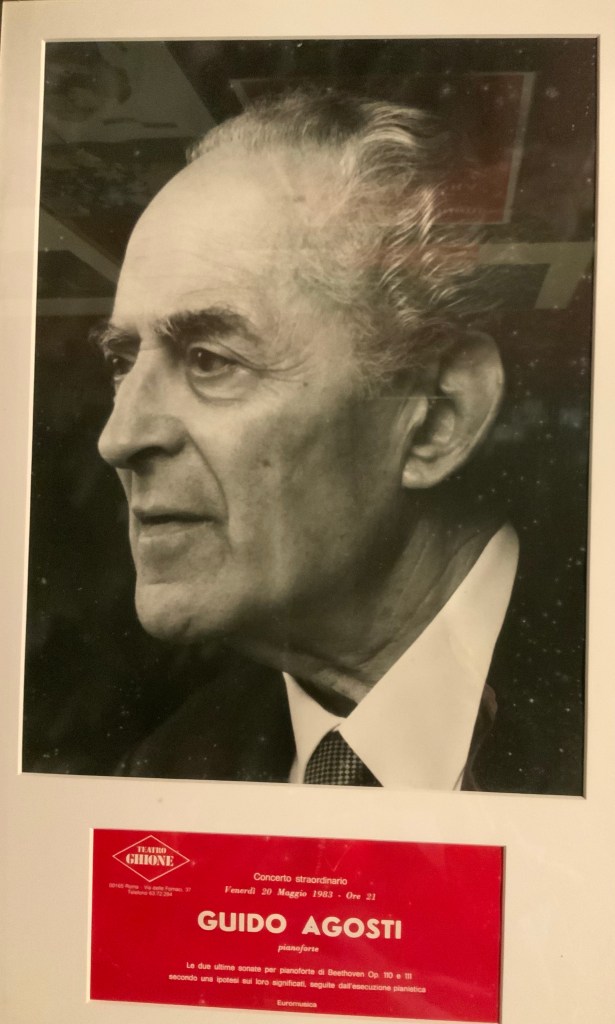
The Danse infernale depicts the brutal swarming and capture of Prince Ivan by Katschei’s monstrous underlings until Prince Ivan uses the magic feather given to him by the Firebird to cast a spell on his captors, making them dance until they drop from exhaustion. The Berceuse is a lullaby depicting the eerie scene of the slumbering assailants, leading to the Finale, a wedding celebration for Prince Ivan and his princess bride.Agosti’s piano transcription, completed in 1928, is a daunting technical challenge for the pianist. Most of the piano writing is laid out on on three staves in order to cover the multi-octave range of the keyboard that the pianist must patrol. The piano comes into its own in this transcription as a percussion instrument, to be played with the wild abandon with which a betrayed lover throws her ex-partner’s possessions off the balcony onto the street below.Judging from the shocking 7-octave-wide chord crash that opens the Dance infernale, Agosti captures well the bruising pace of the action, with off-beat rhythmic jabs standing out from a succession of punchy left-hand ostinati constantly nipping at the heels of the melody line. The accelerating pace as the sorcerer’s ghouls are made to dance ever more frantically is a major aerobic test for the pianist.
Relief comes in the Berceuse, which presents its own pianistic challenges, mainly those of finely sifting the overtones of vast chord structures surrounding the lonely tune singing out from the middle of the keyboard.The wedding celebration depicted in the Finale presents Stravinsky’s trademark habit of cycling hypnotically round the pitches enclosed within the interval of a perfect 5th. Just such a melody, swaddled in hushed tremolos, opens this final movement. It is a major challenge for the pianist to imitate the shimmering timbre of the orchestra’s brightest instruments as this theme is given its apotheosis to end the suite in a blaze of sonority that extends across the entire range of the keyboard.

Guido Agosti (11 August 1901 – 2 June 1989) was an Italian pianist and renowned for his yearly summer course in Siena frequented by all the major musicians of the age.It was on the express wish of Alfredo Casella that Agosti took over his class which he did for the next thirty years.Sounds heard in his studio have never been forgotten.

Agosti was born in Forli 1901. He studied piano with Ferruccio Busoni Bruno Mugellini and Filippo Ivaldiand earning his diploma at age 13. He studied counterpoint under Benvenuti and literature at Bologna University. He commenced his professional career as a pianist in 1921. Although he never entirely abandoned concert-giving, nerves made it difficult for him to appear on stage,and he concentrated on teaching. He taught piano at the Venice Conservatoire and at the Santa Cecilia Academy in Rome.In 1947 he was appointed Professor of piano at the Accademia Chigiana Siena .He also taught at Weimar and the Sibelius Academy in Helsinki.

His notable students include Maria Tipo,Yonty Solomon Leslie Howard,Hamish Milne,Martin Jones,Ian Munro,Dag Achat,Raymond Lewenthal,Ursula Oppens,Kun- Woo Paik,Peter Bithell.He made very few recordings; there is a recording of op 110 from the Ghione theatre in Rome together with his recording on his 80th birthday concert in Siena of Debussy preludes .

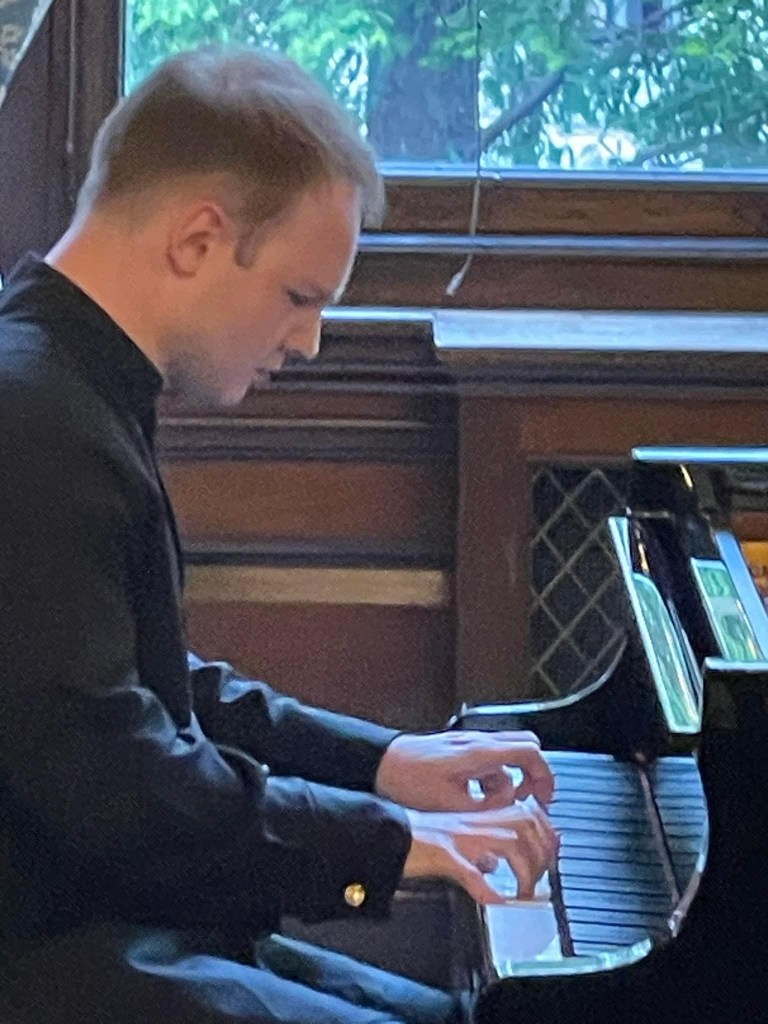
Giovanni Bertolazzi Liberal Club ‘En Blanc et Noir’ 5th June 2023
Giovanni Bertolazzi Liberal Club ‘En Blanc et Noir’ 5th June 2023 ‘A star is born!’

Giovanni with the piano technician looking on

An admirer,Giselle Pascal,looking at a pianist’s hands.She had heard Cziffra play Totentanz in Paris

Giovanni Bertolazzi con Caterina Isaia Museo Teatrale alla Scala di Milano
Complimenti a Caterina Isaia e Giovanni Bertolazzi che questa sera al Museo Teatrale Alla Scala di Milano, come ieri al Teatro La Fenice di Venezia, hanno emozionato il pubblico in una Sala Esedra sold out!
Il Salotto Musicale, realizzato in collaborazione con il Museo Teatrale alla Scala, torna a settembre…grazie a tutti e al prossimo appuntamento con l grande musica dei migliori giovani talenti italiani!
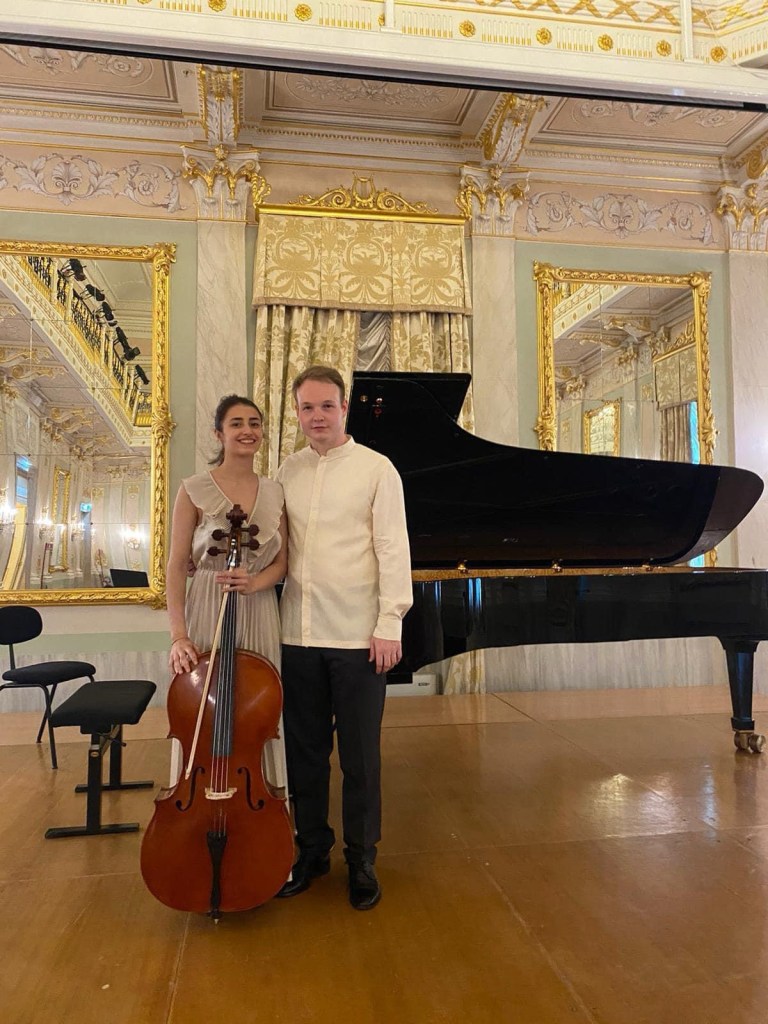
Caterina Isaia and Giovanni Bertolazzi at the Teatro La Fenice Sala Esedra Venice La Scala La Fenice
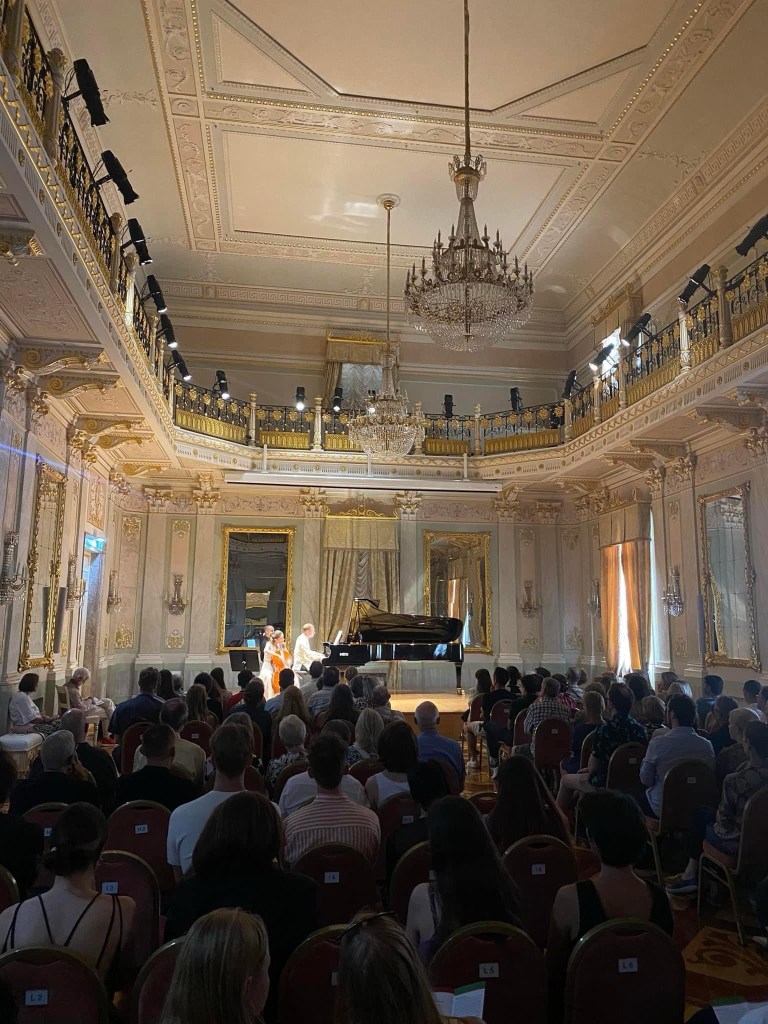

https://christopheraxworthymusiccommentary.com/2023/06/02/the-gift-of-music-the-keyboard-trust-at-30/
Zoltán Kocsis, pianist and conductor, born 30 May 1952; died 6 November 2016
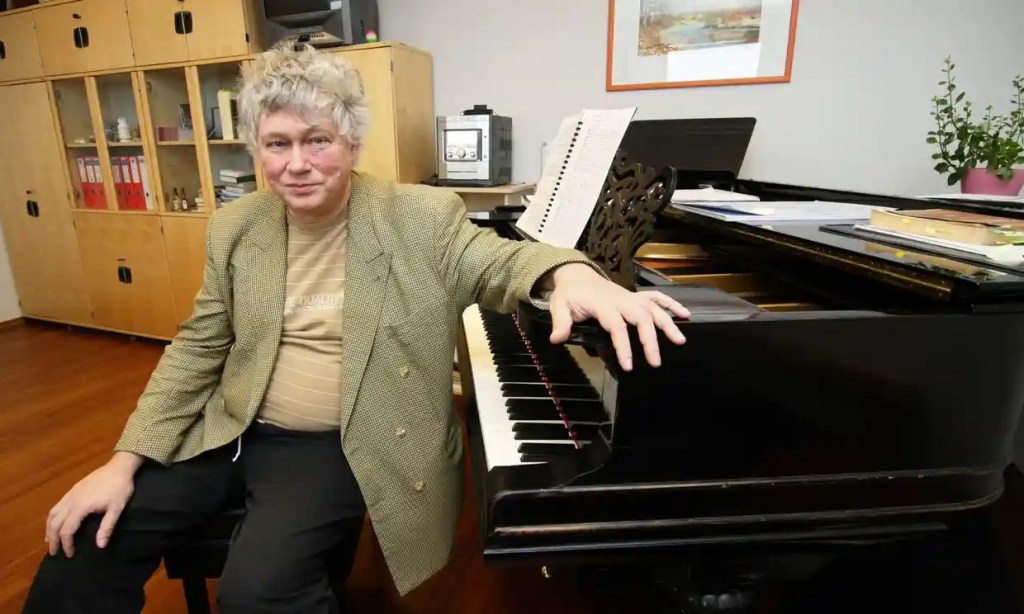
Zoltán Kocsis, died aged 64 following a long illness, was a member of a distinguished troika of Hungarian pianists – with Dezsö Ránki and András Schiff – who emanated from the late 1960s class of Pál Kadosa at the Liszt Academy of Music in Budapest. Schiff, although the youngest of the trio, was the first to embark on an international career, while Kocsis, like Ránki, remained closer to Hungary ,engaging fruitfully with his compatriots, provocatively and often courageously towards officialdom. Kocsis’s contribution to the culture of his native country was all the more valuable in that he was not only a pianist and conductor, but also a teacher, arranger, musicologist, composer, record producer and critic.

Underpinning that versatility was a sense of mission: a burning desire to pass on the insights and experience of previous generations. To that end he would proselytise on behalf of, for example, Rachmaninov’s or Bartók’s performances of their own works, even when this approach ran counter to orthodoxy. Thus his interpretations of Bartok (he recorded the complete piano works, both solo and with orchestra , to high acclaim) exemplified his conviction that. The ‘barbarism’ traditionally projected in the ubiquitous motor rhythms was too extreme, too mechanical. Kocsis preferred a more flexible and sensitive approach, as had been demonstrated, he maintained, by Bartók himself.

Rubato was indeed a prominent feature of all Kocsis’s playing, whether in his ravishing account of Grieg’s Erotik, in the subtle inflections of Debussy’s Clair de Lune, evoking the preternatural stillness of a moonlit night, or in the transcendental figuration of Liszt’s Les Jeux d’Eau à la Villa d’Este .The other predominant characteristic of his performances was the pellucid tone, consistently sensuous even in passages of heightened emotion and enhanced by the singing quality he unfailingly brought to melodic lines.
As a conductor, Kocsis achieved prominence as co-founder with Iván Fischer of the Budapest Festival Orchestra in 1983. Remaining as an artistic director until 1997, he helped establish the orchestra as one of the leading world ensembles, with appearances at the Amsterdam Concertgebouw, Vienna Musikverein, BBC Proms and Salzburg and Lucerne festivals. In 1997 he became music director of the Hungarian national Philharmonic Orchestra , nailing his colours to the mast with a performance of Schoenberg’s massive Gurrelieder in his first season. Inventive programming and contemporary repertoire remained features of his orchestral and solo piano programmes: among the composers who wrote works for him was György Kurtág, another of his teachers at the Liszt academy.
Born in Budapest, son of Mária (nee Mátyás) and Ottó Kocsis, Zoltán began his piano studies at the age of five and continued them at the Béla Bartók Conservatory, where he also learned composition. Moving on to the Liszt Academy in 1968, he was still a student when he won the Hungarian Radio Beethoven Competition in 1970. The following year he toured the US, and in 1972 appeared in London and at the Salzburg and Holland festivals. Rapidly establishing a career as an international pianist, he also achieved celebrity status in Hungary, as conductor and teacher as well as pianist. His academic pursuits continued to inform his activities on all fronts: meticulous in his study of texts and sources, he brought a scholarly, inquiring mind to the art of performance. He was appointed to teach at the Liszt academy in 1976.
Dividing his time between playing and conducting, he appeared with leading orchestras such as the Berlin Philharmonic and Royal Concertgebouw, as well as the Hungarian National Philharmonic. He also toured extensively in Europe,America and the Far East.
With his cherubic features, shock of wavy hair and penetrating, often idiosyncratic, readings, he had a charismatic stage presence, and was especially renowned for his exceptional pianistic talents, on account of a series of prizewinning recordings. In addition to the complete Bartók series, he made some acclaimed recordings of Debussy, Rachmaninov, Liszt and Dohnányi. Drawing on his talents as composer and arranger, he made his own version of Rachmaninov’s Vocalise, concluding with imaginatively virtuosic figuration.
His transcription of the prelude to Wagner’s Tristan und Isolde , which at the climax spills on to multiple staves, deployed virtuosity to project the heights of passion. It is possible to feel that his account of the Liebestod from the same work (this time using Liszt’s version) emphasised passion at the cost of Isolde’s transfiguration; a similar criticism may be levelled at his forceful rather than enraptured Prelude to Lohengrin. Elsewhere, however, his undoubted virtuosity was harnessed to a sensitivity and poetic imagination that made his artistry compelling.
In 1986 he married the pianist Adrienne Hauser . After their divorce, in 1997 he married the pianist Erika Tóth. She survives him, as do their son, Krisztian, also a pianist, and daughter, Viktoria, and his son, Mark, and daughter, Rita, from his first marriage.
I concerti di Zoltán Kocsis per gli Amici della Musica di Padova
28 aprile 1983
B. Bartók: C. Debussy:
R. Wagner:
For children (I fascicolo)
Arabesque n. 1 – Tarantelle Styrienne (Danse) – Pour le piano Berceuse hé roique – Images (oublié es)
Parsifal: Scena delle fanciulle-fiore e Finale (trascr. Z. Kocsis)
19 novembre 1992
L.v. Beethoven: B. Bartók:
F. Chopin:
F. Chopin:
F. Liszt:
Sonata op. 2 n. 1
Sette Bagatelle op. 6: QuattroMazurche(op.7n.2,op.17n.4,op.24n.1,op.67n.2) Polonaise-Fantaisie op. 61
Da Anné es de pè lerinage, Troisiè me Anné e, Italie:
IV: Les jeux d’eau à la Villa d’Este – VI: Sunt lacrymae rerum Csárdás macabre
27 gennaio 1998
C. Debussy: W.A. Mozart: B. Bartók:
Douze Préludes Libro II Fantasia in do min K 475 Dieci Pezzi da Mikrokosmos Sonata 1926


 ChristopherAxworthy-MusicCommentary
2 risposte a "Giovanni Bertolazzi -Homage to Zoltan Kocsis A giant returns to celebrate a genius"