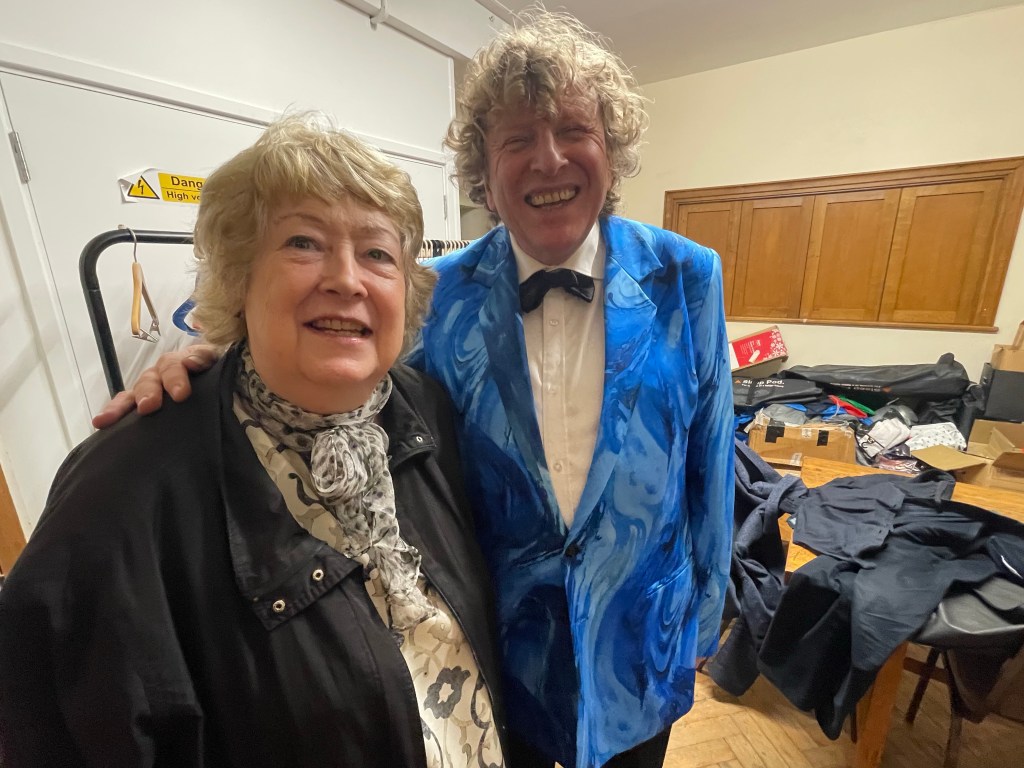
Piers Lane the Nightingale of the piano ravishes and delights the Chopin Society in London.
Has the piano ever sounded so exquisite as in the poetic hands of this great musician?A sense of balance that could make us believe that this black box of hammers and strings could sing as eloquently as that bird in Berkeley Square!
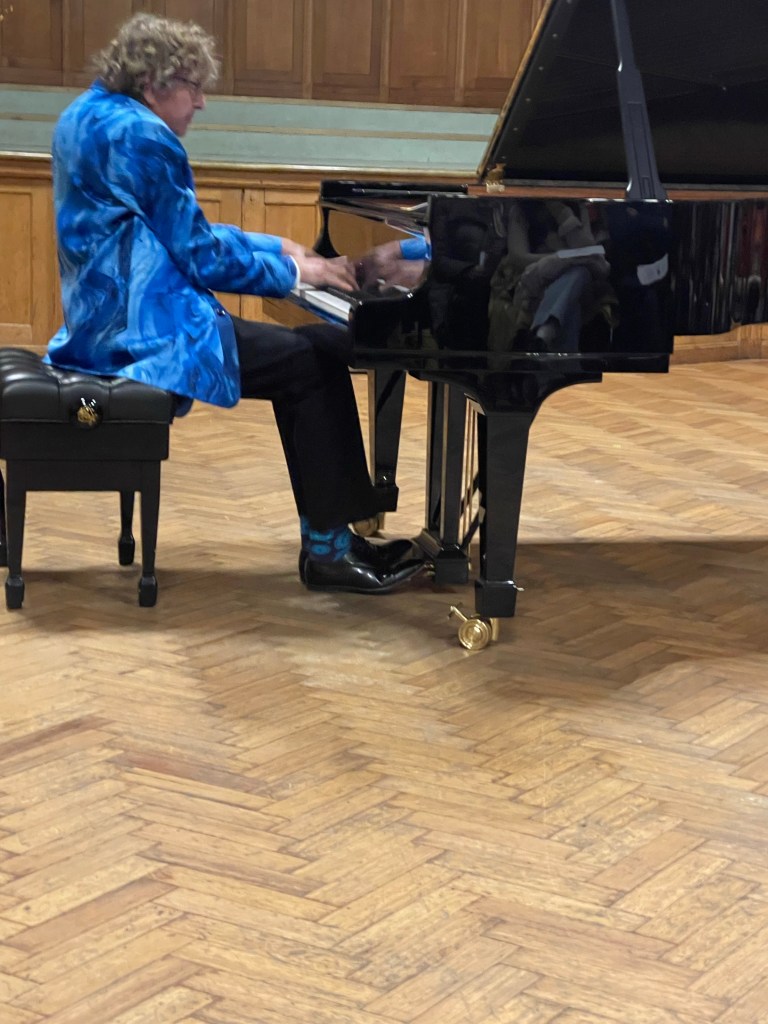
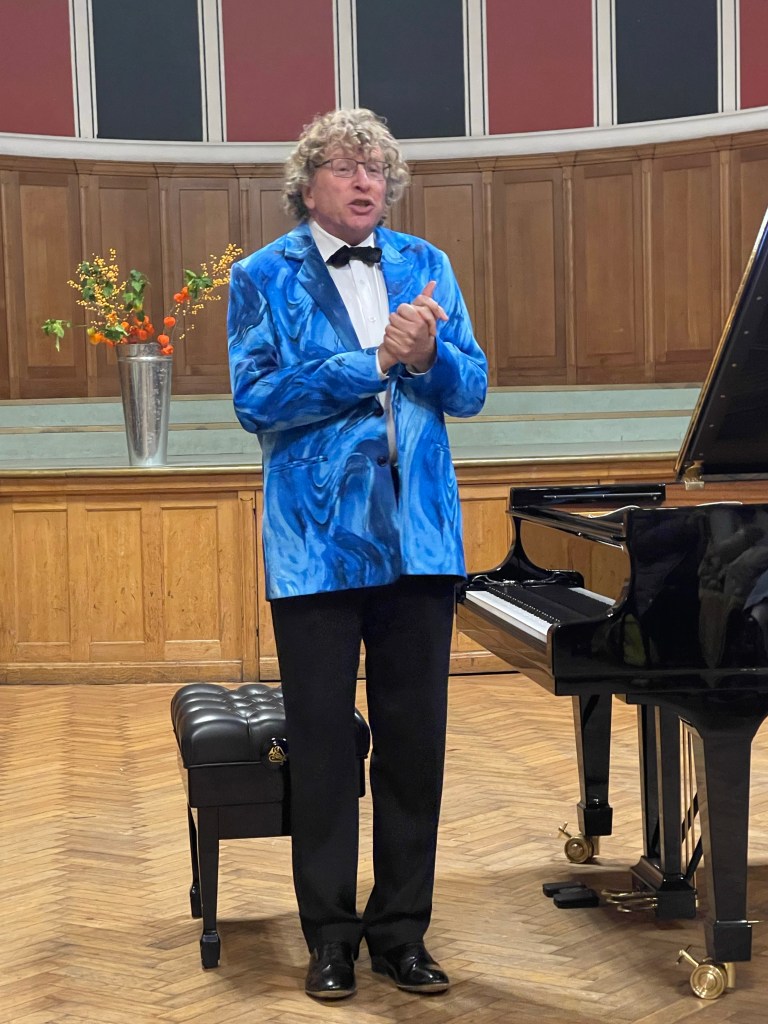
Sporting a pure silk jacket one of only ten – the other nine,he tells me with tongue in cheek,Elton John got – his refined musicianship and superb technical finesse defied this rather outlandish garb (note matching socks ) that he had brought back from Sydney (where he is chairman of the International Piano Competition) to astonish and amaze us as his playing certainly did today.
A fascinating programme introduced,by this much loved pianist,with intelligence and charm.Rachmaninov for the 150th Anniversary Celebrations of the composers birth but with an eclectic twist of a discerning musician who could dare include the rarely played Chopin Variations .Chopin of course made up the whole of the second half.But another intriguing choice of many of the works of Chopin that had been arranged for the Ballet ‘Chopiniana’ by Glazunov and not just a pot pourri of well know pieces.Adding his own touch at the end with a performance of the D flat nocturne where he reached the heights that I have only heard from Rubinstein with a timeless performance that touched something of the sublime.

Considered by the composer as a poor relation to his other 23 Preludes it was the one that his audiences demanded to hear at every recital that the great master gave.
Rachmaninov,as my teacher Vlado Perlemuter was fond of recounting,was the pianist with the most voluptuously romantic sounds even though he looked as though he had just swallowed a knife.
Piers certainly has not swallowed any knives but his appearance in a multi colour tuxedo with matching accessories belied the ravishing kaleidoscope of sounds that he could conjure out of the fine Steinway that is a fairly new acquisition of the Chopin Society.It is a piano that I have heard many times but I have never heard such subtle sumptuous sounds from it as today from our Nightingale’s deceptively sensitive hands.
I am sure that Piers will forgive me for alluding always to that bird in Berkeley Square but a few years ago I was listening to Radio 3 and heard the most ravishing performance of ‘A Nightingale sings in Berkeley Square’.
I was stopped in my tracks totally overwhelmed by the beauty that could be transmitted over the air into my garden in Italy.Hence Piers,who has since become a great friend, allows me to make reference to this surprise meeting of souls which is done with the greatest of respect for a pianist who is above all a sensitive musician who actually listens to himself.A rare ‘bird’ indeed! There was grandeur and delicacy combined in THE prelude enriched with inner colours as it gradually took flight with increasing passion.Dissolving to a magical voluptuous silence- where silence is indeed Golden following such ravishing playing.
Four Preludes op 23 were four whispered gems starting with the wonderful sense of balance that he brought to the F sharp minor prelude with its multicoloured contrapuntal line and a passionate outpouring of rich sounds.Ending with a final vibration of a fast beating heart.
The D major prelude I never thought I would hear more beautifully than from Richter’s famous recording.But I was wrong because today from Piers there was a luminosity of sound to the beautiful melodic line as it was covered in layers of golden arabesques.
Sidney Harrison always used to call the E flat prelude the most romantic outpouring of them all as it unwinds with beguiling beauty of insinuating perfection.An outpouring of unbearable nostalgia in which Piers highlighted some beautiful inner colours with a heart that beats with delicacy and warmth.This was the subtle colouring that only a true artist can find.
The final G flat Prelude of this quartet was with a tenor melody magically accompanied by the right hand until it eventually duetted with the soprano where two hearts were entwined in ecstatic paradise.
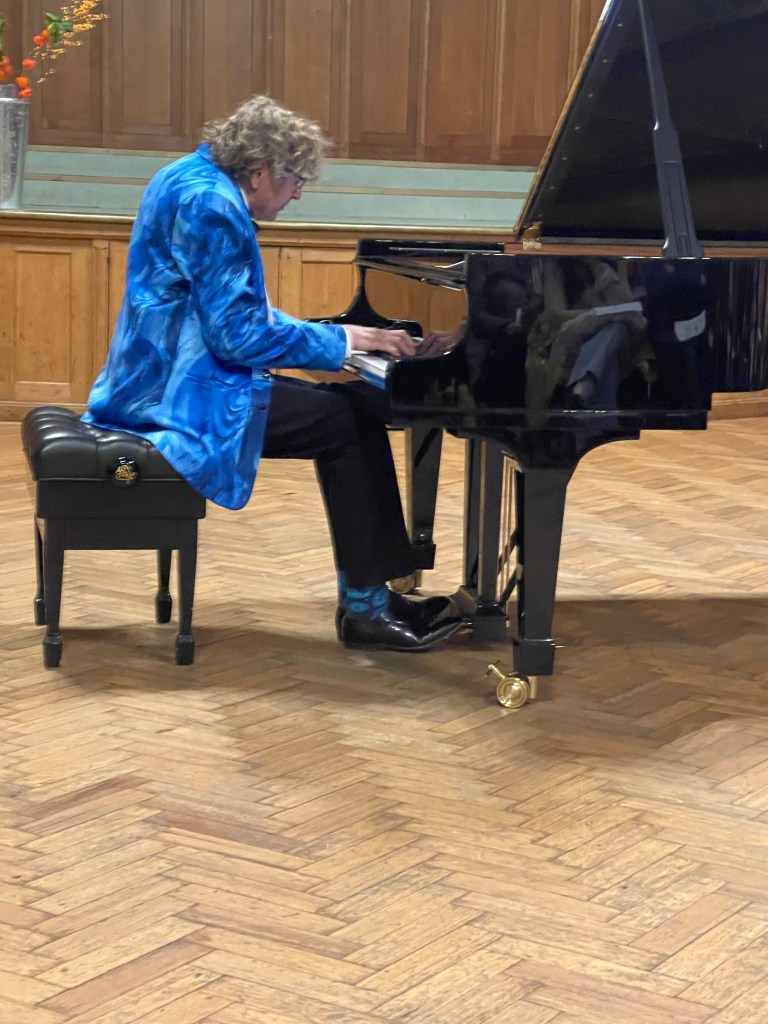
As Piers explained it is a question of giving an architectural form to the 22 variations in order to shape them into three great blocks like a sonata.
The opening statement of the Chopin C minor Prelude alla Rachmaninov was of grandiloquence and surprising sense of colour.There followed an astonishing display of virtuosity and a kaleidoscope of colours with chameleonic shifts of character as Chopin’s simple prelude was covered in ingenious pianistic trickery and the brooding sumptuous sounds so typical of Rachmaninov.
Twenty five minutes of a breathtaking discovery that showed off every facet of Piers great artistry.
In fact it was the heart that was sent back to Poland on his early death at only 39 whereas his earthly remains were buried in Père Lachaise Cemetary in Paris.
https://www.google.co.uk/url?sa=t&rct=j&q=&esrc=s&source=web&cd=&ved=2ahUKEwiK5due_p2CAxVvWEEAHWaOD-EQFnoECBoQAQ&url=https%3A%2F%2Fwww.thefirstnews.com%2Farticle%2Fhome-is-where-the-heart-lies-the-amazing-story-of-chopins-heart-10636&usg=AOvVaw12ievY6_oE_KLHvU2tPrK4&opi=89978449
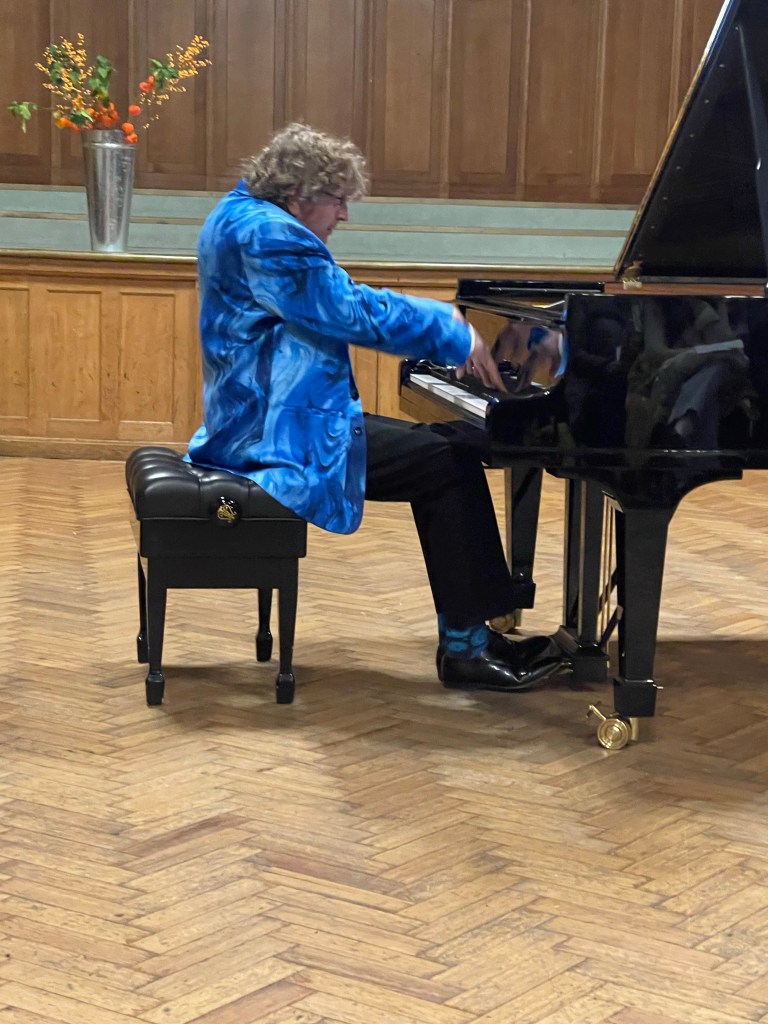
Seated with the President of the Chopin Society I whispered in her ear that I had never heard her piano sound so beautiful – What an artist!
There was the mellifluously shaped ‘Military Polonaise’ so often played like soldiers in formation but here like soldiers with a goal.A trio played with sedate beauty.
Wondrous fluidity and delicacy greeted the Nocturne op 15 n.1 where even the usually tempestuous central episode was played like the entry of the cello section of the Philadelphia with no hardness but just more intensity than the bel canto melodic line that surrounds it and that was of superb breath control.
The Mazurka in C sharp minor unwound as if in a dream as it gradually found its true path.There were such insinuating counterpoints leading to the final plaintive cry of anguish with which it finishes.
The G flat Waltz with a jeux perlé of delicious charm.
Piers at this point decided to improvise a link as pianists of the Golden age were wont to do.
And here lay the Nocturne in A flat with a cantabile of timeless beauty where Chopin’s heart beat even faster in the central episode.
Piers was now living the part as the Mazurka in D was in playful mood of scintillating question and answer.
The Tarantelle was played with considerable virtuosity and playful ease with a finale of exhilarating excitement.
The C major Mazurka was of simple beauty and there followed an astonishing performance of the shortest of all Chopin’s 24 preludes.Here was an unbelievable control of sound as this well know prelude appeared as if with the notes still wet on the page such was the disarming simplicity and beauty of Art that conceals Art.
There was deliberate playfulness to the Waltz in C sharp minor played rather slowly but with the energy of someone who had lived with this piece for a lifetime and had distilled the very essence from it’s innocent beguiling charm.
The Valse Brillante was played with chameleonic artistry of subtle virtuosity and brought this recital to a truly triumphant end.
The nocturne in D flat played as an encore as I have stated above touched something of the sublime.(Piers absolute fidelity to Chopin’s pedal indications gave a magic sheen to the sound that I have rarely heard before)
Piers Lane AO, who lives in London, is one of Australia’s most renowned and engaging performers.
Always in demand worldwide as soloist and collaborative artist, highlights include a performance of Busoni’s mighty piano concerto at Carnegie Hall, premieres of Carl Vine’s second piano concerto and double piano concerto (with Kathryn Stott) Implacable Gifts, both written for him, and annual solo recitals at Wigmore Hall. His 2023 engagements include appearances in Dubai, New Zealand, Portugal, the UK, the USA and throughout Australia.
In July he chaired the jury of the 2023 Sydney International Piano Competition and has recently adjudicated the Horovitz Kyiv-Geneva Piano Competition, the Michael Hill Violin Competition in New Zealand and the Clara Haskel International Piano Competition in Vevey. He has been Artistic Director of the Sydney International Piano Competition since 2015 and is responsible for recent initiatives like the 2021 Online Piano Competition, the Piano Lovers’ amateur competition and Composing the Future.
Rachmaninoff:
- Prelude in C# minor Op. 3 No. 2
- Preludes Op. 23: Nos. 1 in F# minor;
- 4 in D major; 6 in Eb major and 10 in Gb major.
- Variations on a theme of Chopin Op. 22
Chopin:
- Polonaise in A Op.40 No.1
- Nocturne in F Op.15 No. 1
- Mazurka in C# minor Op. 50 No.3
- Waltz in Gb Op. 70 No.1
- Nocturne in Ab Op. 32 No. 2
- Mazurka in D Op. 33 No.2
- Tarantelle
- Mazurka in C Op.67 No.3
- Prelude in A Op. 28 No. 7
- Waltz in C# minor Op. 64 No.2
- Valse Brillante in Eb Op.18
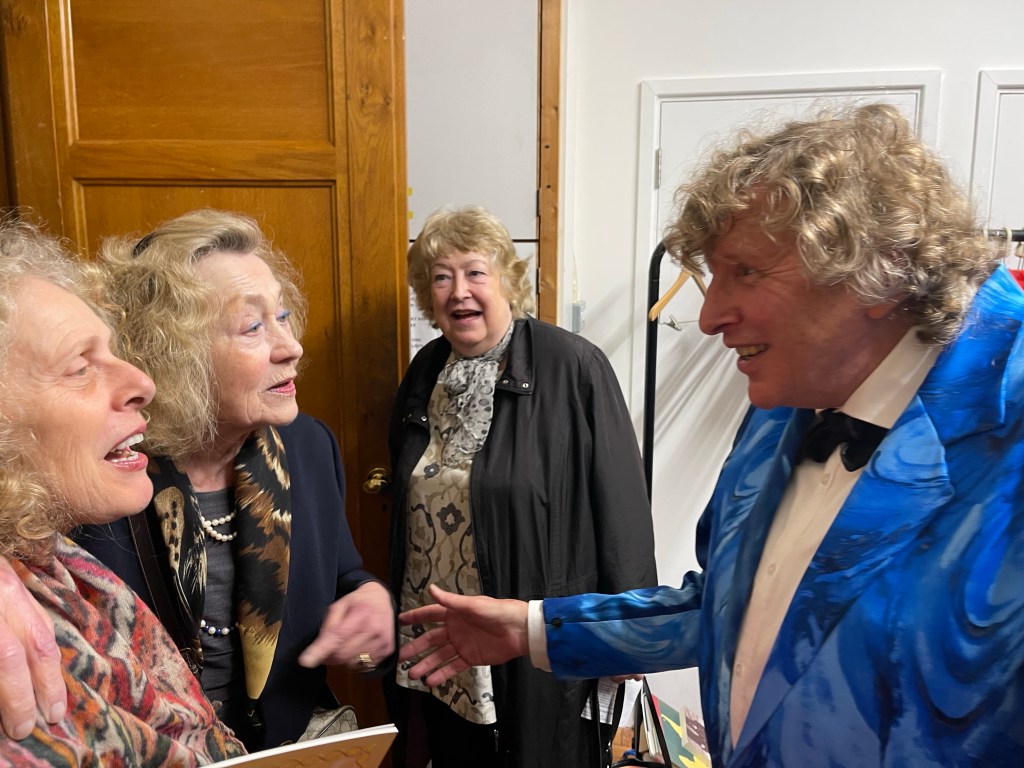
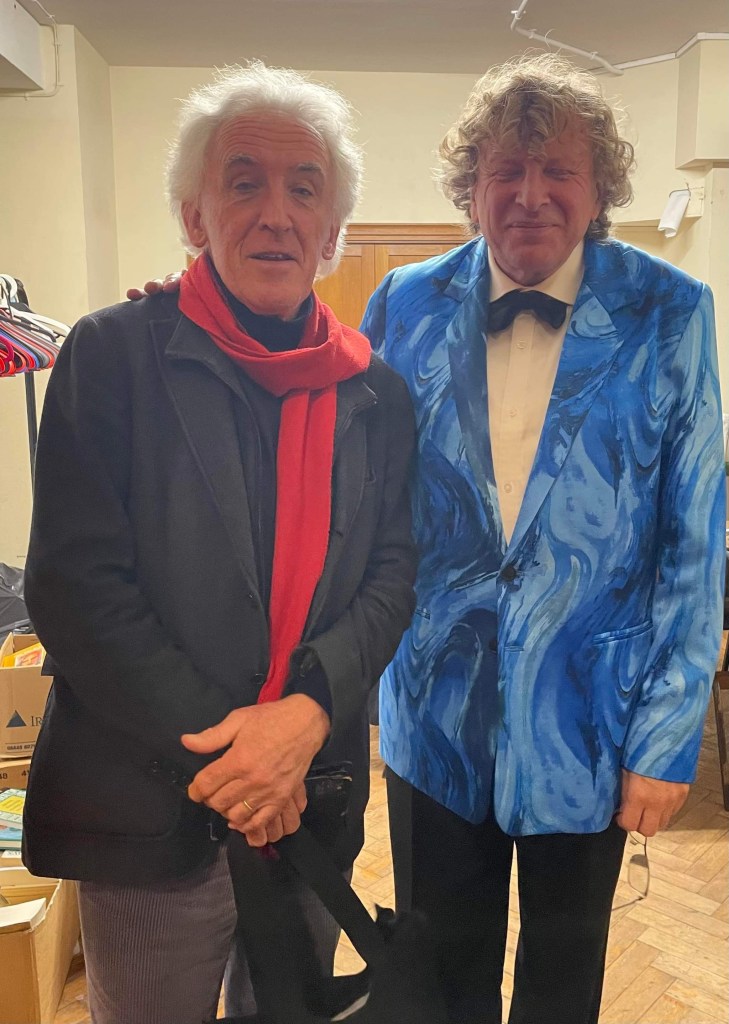
Dame Patricia Routledge and Piers Lane integrity and humility ravish and enrich
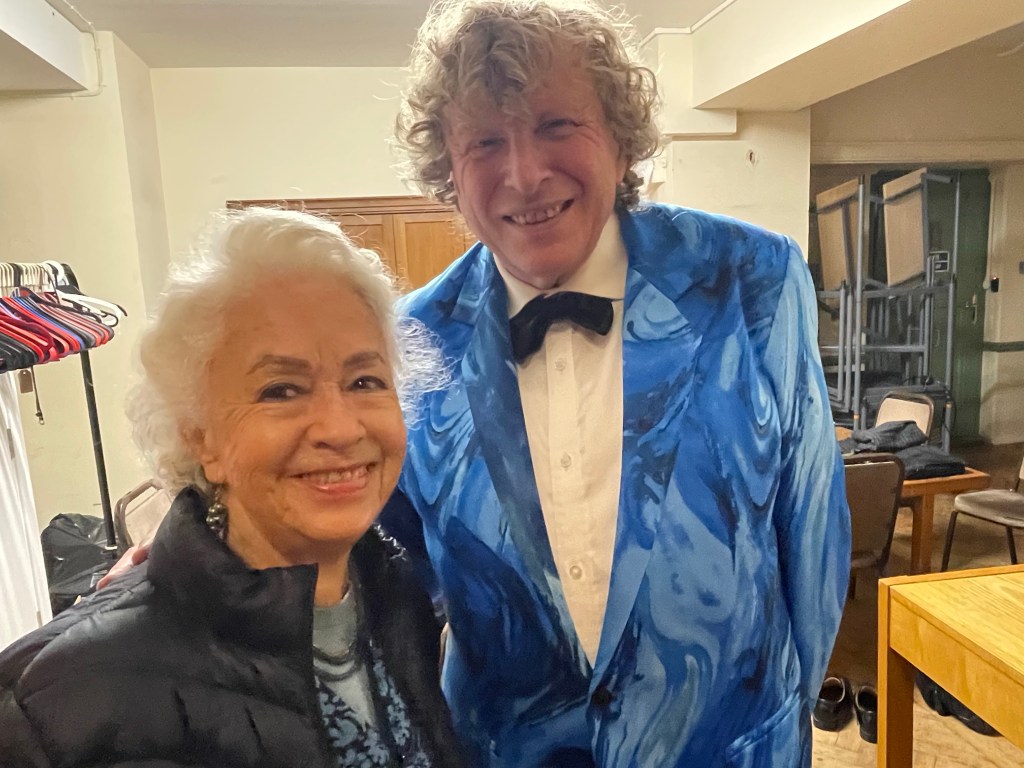
Piers Lane a nightingale ravishes us at the Wigmore Hall – A Christmas treat from a true poet of the piano.
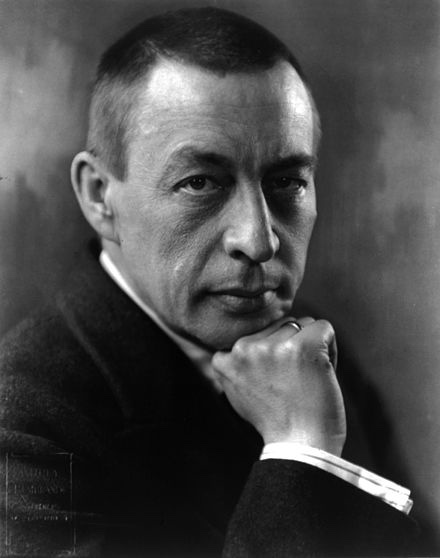
1 April [O.S.20 March] 1873
Semyonovo, Staraya Russa,Novgorod Russa ,Novgorod Governorate ,Russian Empire
Died
28 March 1943 (aged 69)
Beverly Hills California, U.S.A
Variations on a Theme of Chopin op.22, is a group of 22 variations on Chopin’s Prelude in C minor op 28 n.20 composed in 1902–03. In the first edition, it is noted that 3 of the variations and the final Presto section can be omitted if the performer wishes.

Ten Preludes, op 23, was composed in 1901 and 1903. Together with the Prelude in C sharp minor op 3/2 and the 13 Preludes op 32 this set is part of a full suite of 24 preludes in all the major and minor keys.Rachmaninoff completed Prelude No. 5 in 1901. The remaining preludes were completed after Rachmaninoff’s marriage to his cousin Natalia Satina: Nos. 1, 4, and 10 premiered in Moscow on February 10, 1903, and the remaining seven were completed soon thereafter.The years 1900–1903 were difficult for Rachmaninoff and his motivation for writing the Preludes was predominantly financial.He composed the works in the Hotel America, financially dependent on his cousin Alexander Siloti , to whom the Preludes are dedicated.Of the comparative popularity of his Ten Preludes and his early Prelude op.3 n.2 ,a favourite of audiences, Rachmaninoff remarked: “…I think the Preludes of Op. 23 are far better music than my first Prelude, but the public has shown no disposition to share in my belief….”The composer never played all of the Preludes in one sitting, instead performing selections of them, consisting of preludes from both his Op. 23 and Op. 32 sets which were of contrasting character
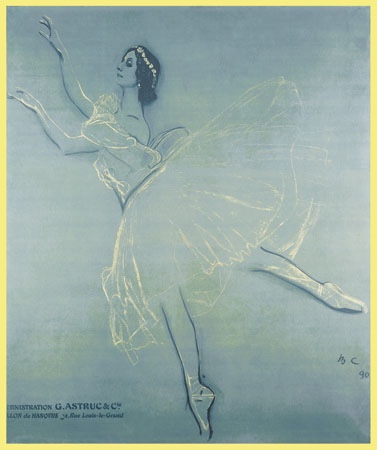
Choreographer
Mikhail Fokine
Music
Chopin ,Glazunov
Based on
Chopiniana
Premiere
(as Chopiniana): 1907, Marinsky Theatre ,Saint Petersburg Russia
(as Les Sylphides): 2 June 1909, Theatre du Châtelet , Paris
Original ballet company
Ballets Russes
Characters
the poet, sylphs
Design
Alexandre Benois (set)
Leon Bakst (costumes)
Created for
Tamara Karsavina ,Vaslav Nijinsky,Anna Pavlova and Alexandra Baldina
Original production

Chopiniana, staged by Fokine, had a different musical composition. Also, Chopiniana was originally a compilation of dramatic or character dances set to Chopin’s piano music. The Glazunov suite upon which this original version was based had only four Chopin pieces; Fokine wanted to use a waltz as an addition to the suite and was able to get Glazunov to orchestrate this to create his ballet, also called Chopiniana.
- Polonaise in A major op 40.n.1
- Nocturne in F major op.15 n.1
- Mazurka in C sharp minor op.50 n.3
- Waltz in C sharp minor op 64 n.2as added by Michel Fokine
- Tarantella in A flat major op 43
The newly orchestrated waltz would be Fokine’s inspiration to re-choreograph the ballet into its nearly-final form, selecting different Chopin pieces to go with it and getting these orchestrated by the Maryinsky répétiteur Maurice Keller.
Ballets Russes production
When Fokine’s ballet premiered in Paris as part of Diaghilev’s “Saison Russe” in 1909, Diaghilev commissioned re-orchestrations of all the dances, except for the Glazunov-orchestrated Waltz, by Anatoly Lyadov,Sergei Taneyev,Nikolai Tcherepnin and Igor Stravinsky .This version, now titled Les Sylphides, was first staged at the Theatre du Châtelet on 2 June 1909.
 ChristopherAxworthy-MusicCommentary