Lina Tufano,the artistic director of the Incontri Musicali in Ischia writes to Sarah Biggs, C.E.O of the Keyboard Trust :
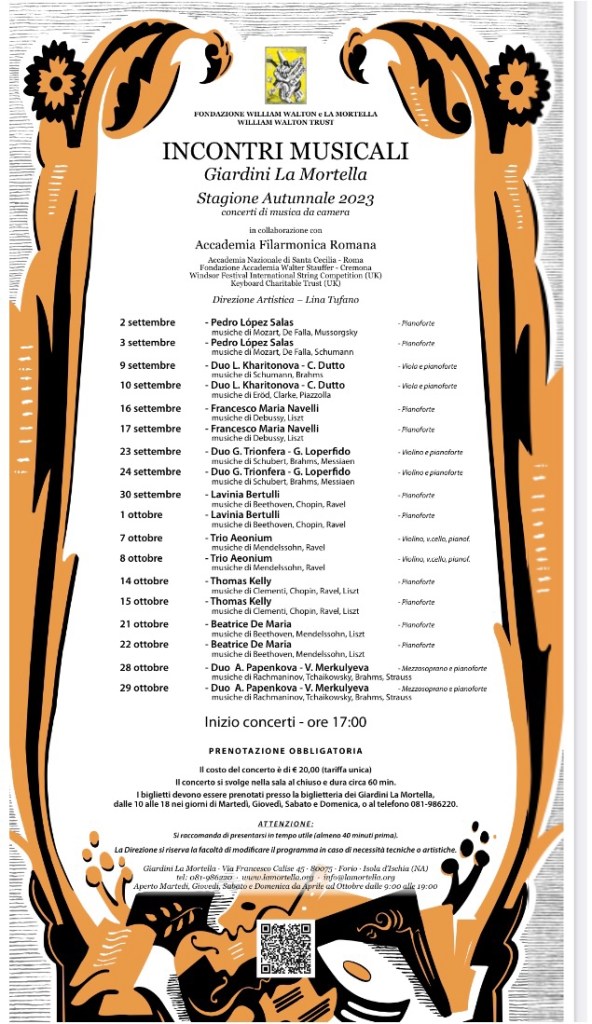
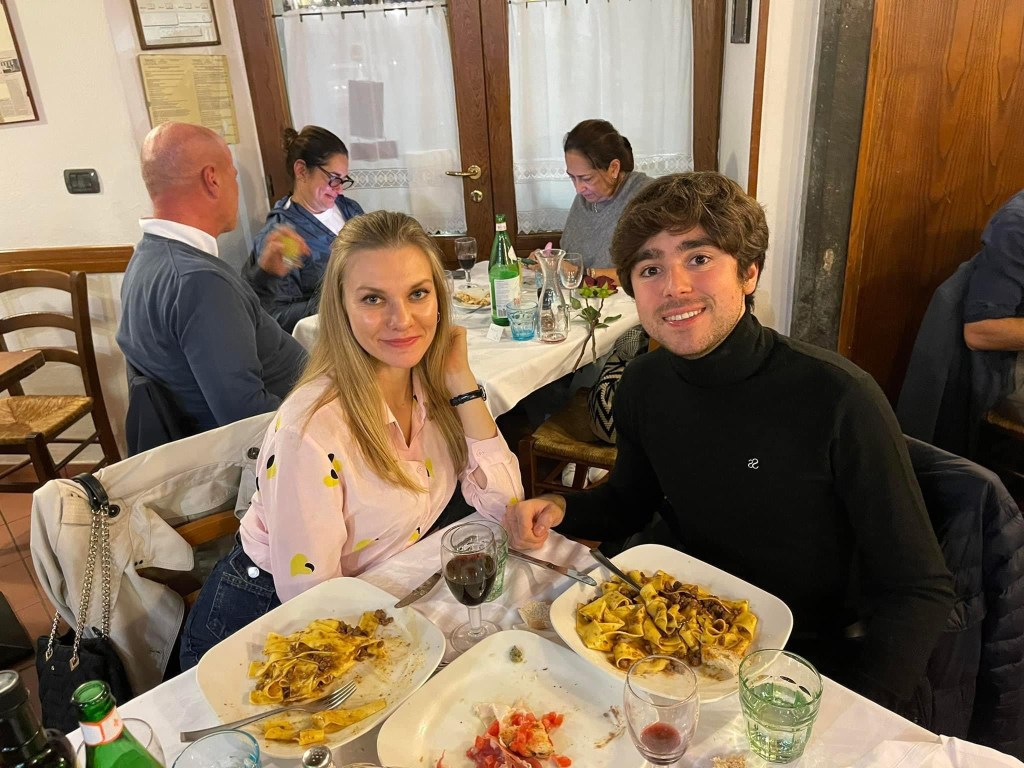
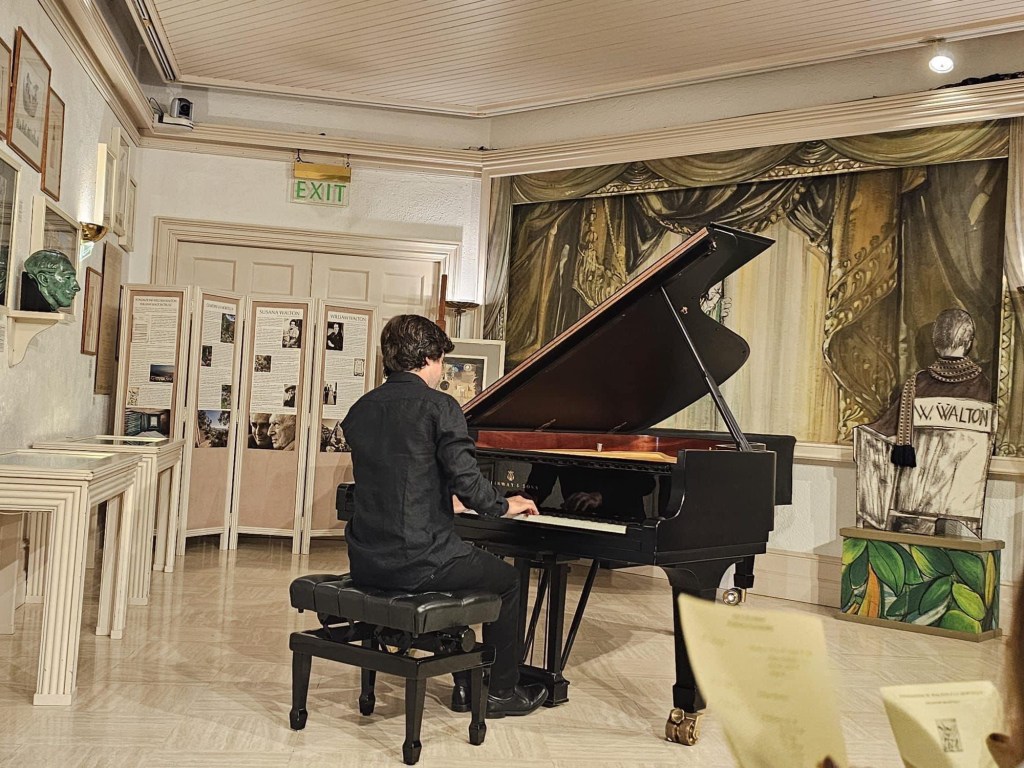
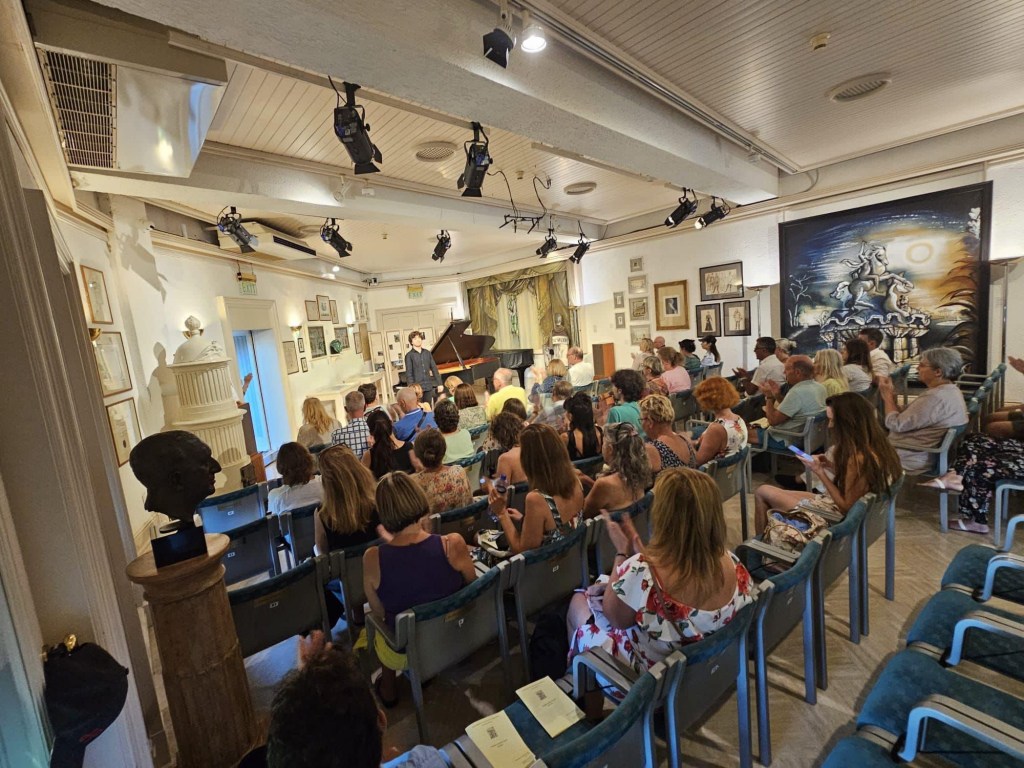
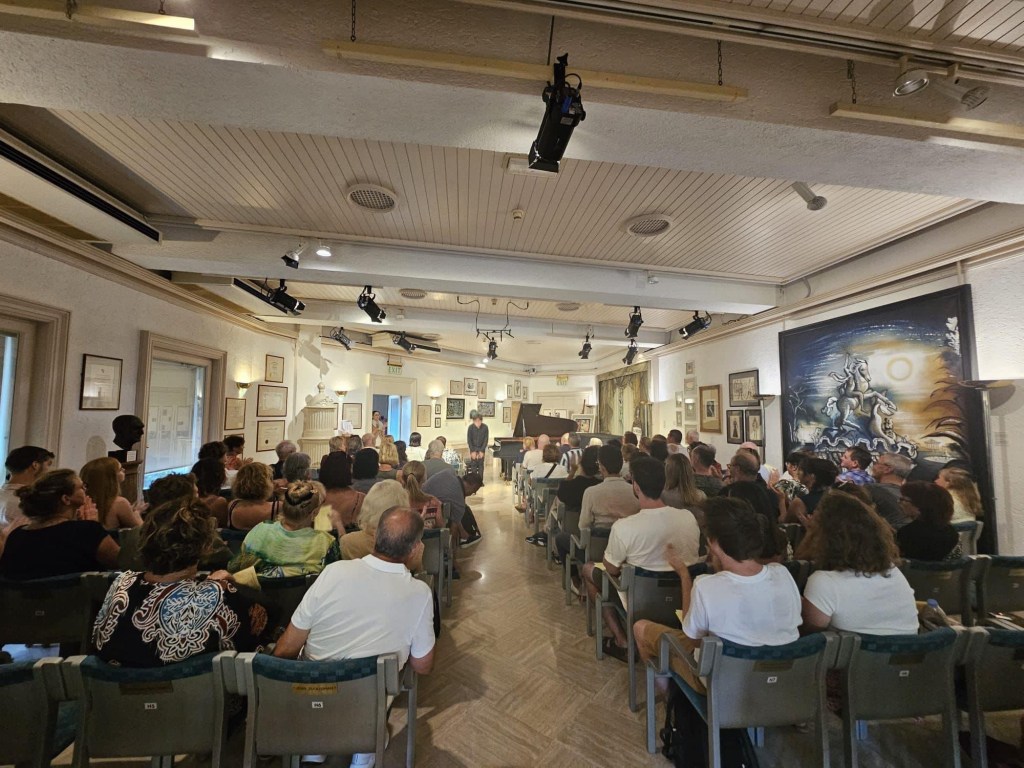
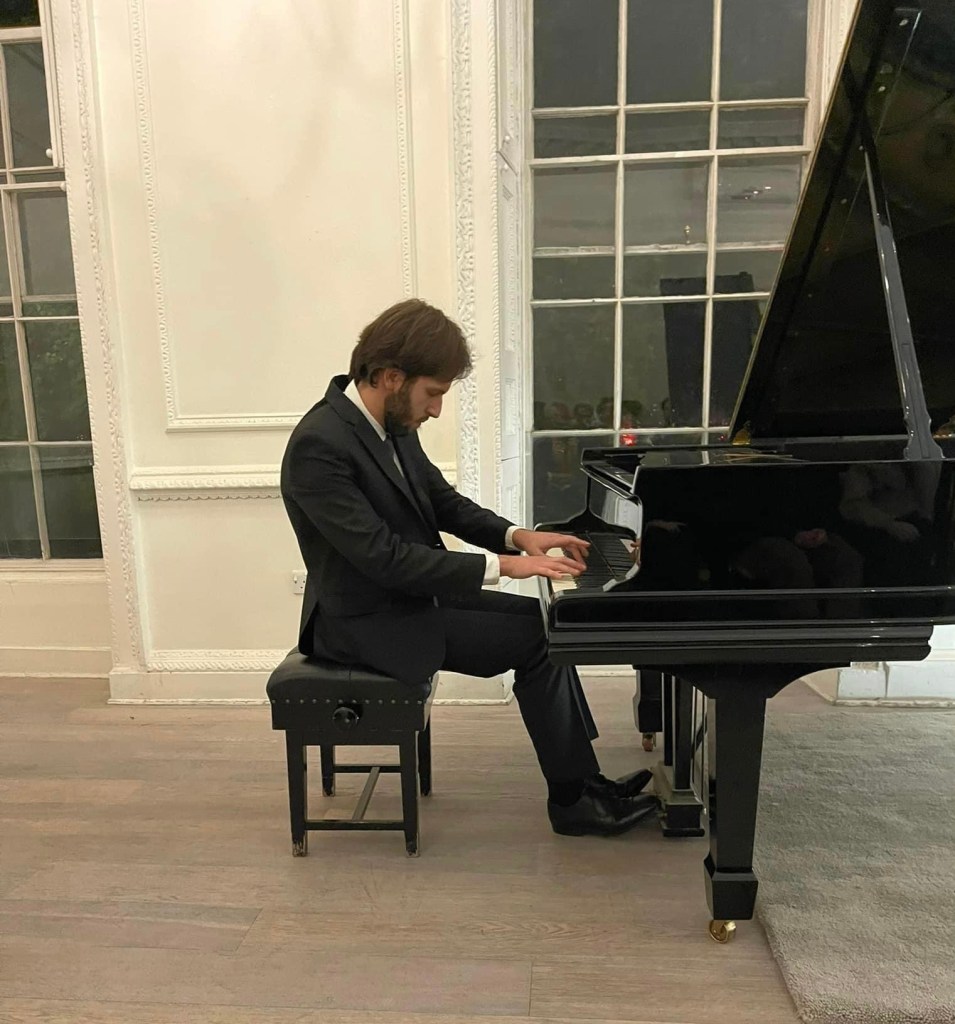
Pedro gave us 2 wonderful recitals!
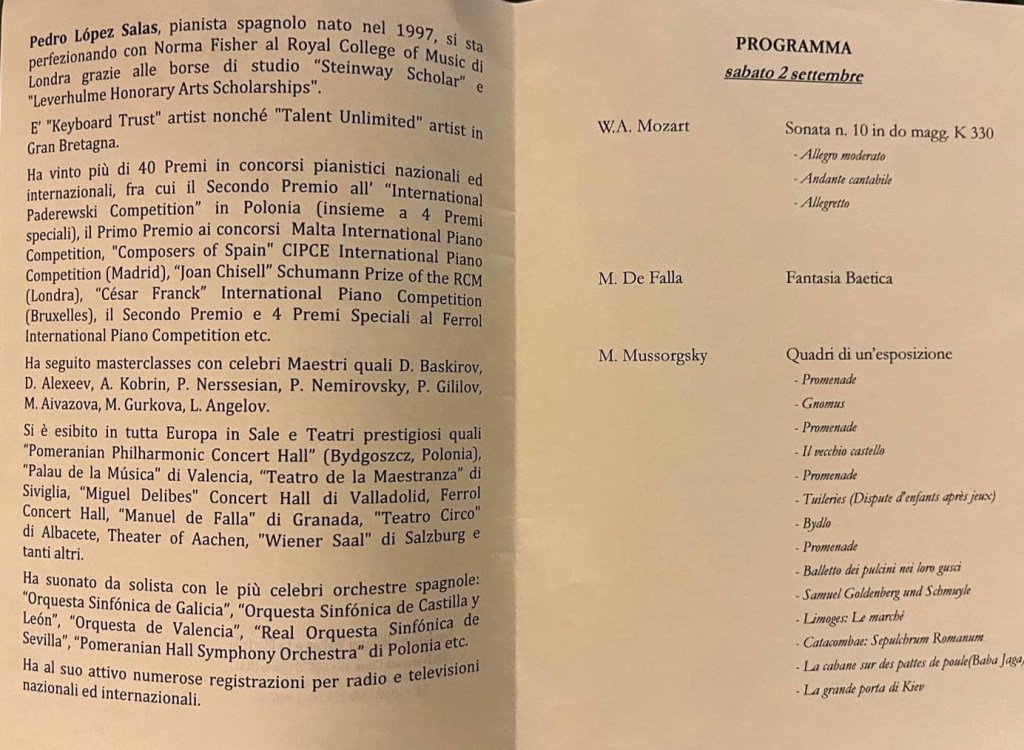
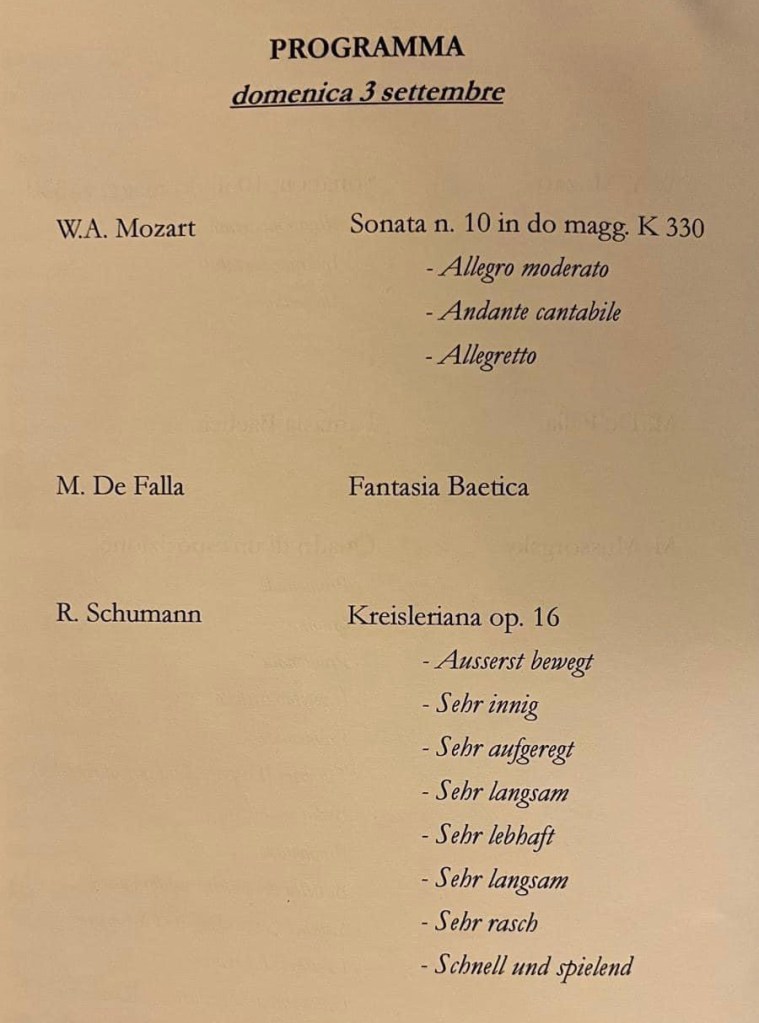
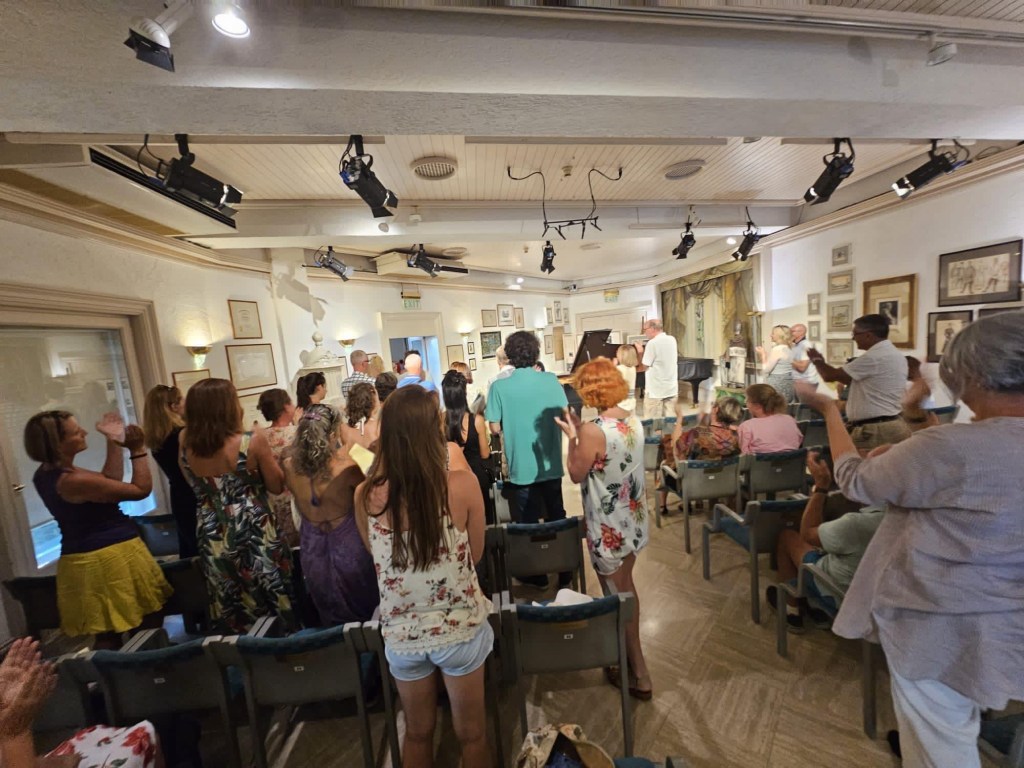
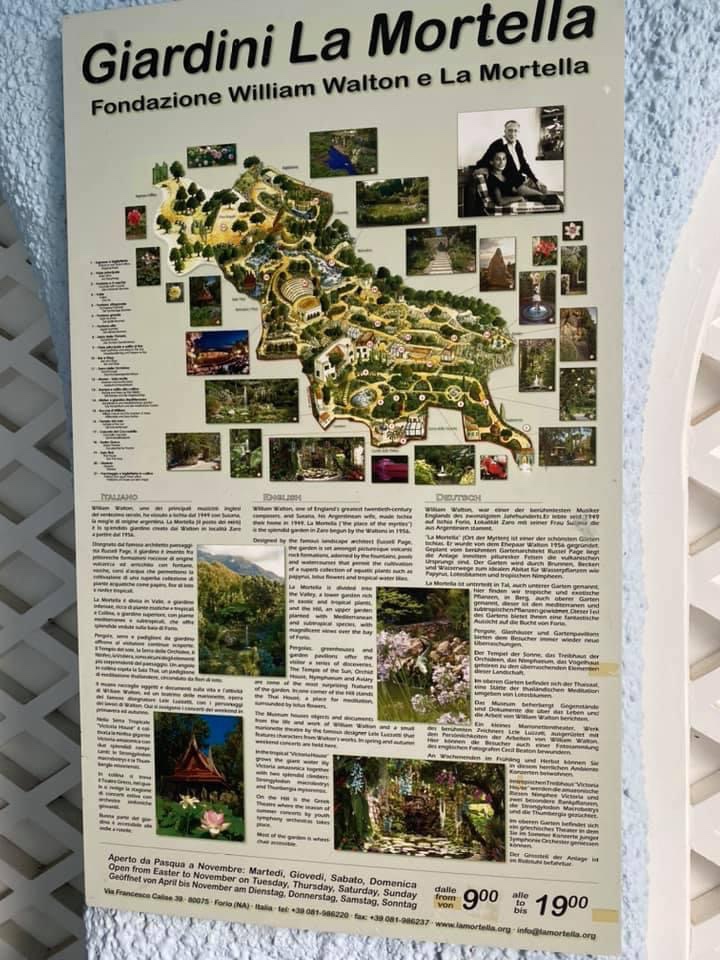
He is a very talented young pianist! The audience enjoyed so much his performances in both the concerts ( the Hall was full) that gave him a standing ovation. He has a very sharp musical intelligence, Mozart’s sonata was emotional and expressive , Fantasia baetica by De Falla was colorful and impressive and here his interpretation was really superbe. He played Mussorgsky ‘s Pictures and Schumann’s Kreisleriana with great confidence. I liked him so much that I asked him to come back and play to La Mortella when he wants (may be before the Chopin competition, so that he can play in 2 concerts the whole Chopin programs?)
Thank you Sarah,and thanks to the Keyboard Trust for sending us such talented young pianists! We are waiting for the next one!
And to me C/O artistic director of the Keyboard Trust :
Caro Christopher, Pedro è stato davvero bravissimo, è un giovane pianista di grande talento! Ha tenuto 2 concerti in una sala piena e con un pubblico straordinariamente attento e caloroso che ha gradito moltissimo le sue esecuzioni tanto che gli ha tributato alla fine una standing ovation. È un pianista dotato di grande intelligenza musicale, attento ad ogni sfumatura e particolare della partitura, la sonata di Mozart davvero ammirevole per equilibrio ed espressività, mai leziosa, una straordinaria Fantasia baetica di De Falla, dove davvero ha dato il meglio di se’ con una esecuzione appassionata e piena di colori. Belle le interpretazioni dei Quadri di Mussorgsky e della Kreisleriana di Schumann, 2 monumenti della letteratura pianistica affrontati con grande sicurezza . Mi è talmente piaciuto che l’ho invitato a ritornare alla Mortella quando vorrà! Grazie per avercelo segnalato, mancavi solo tu! Ti aspettiamo per Thomas Kelly. Un caro saluto
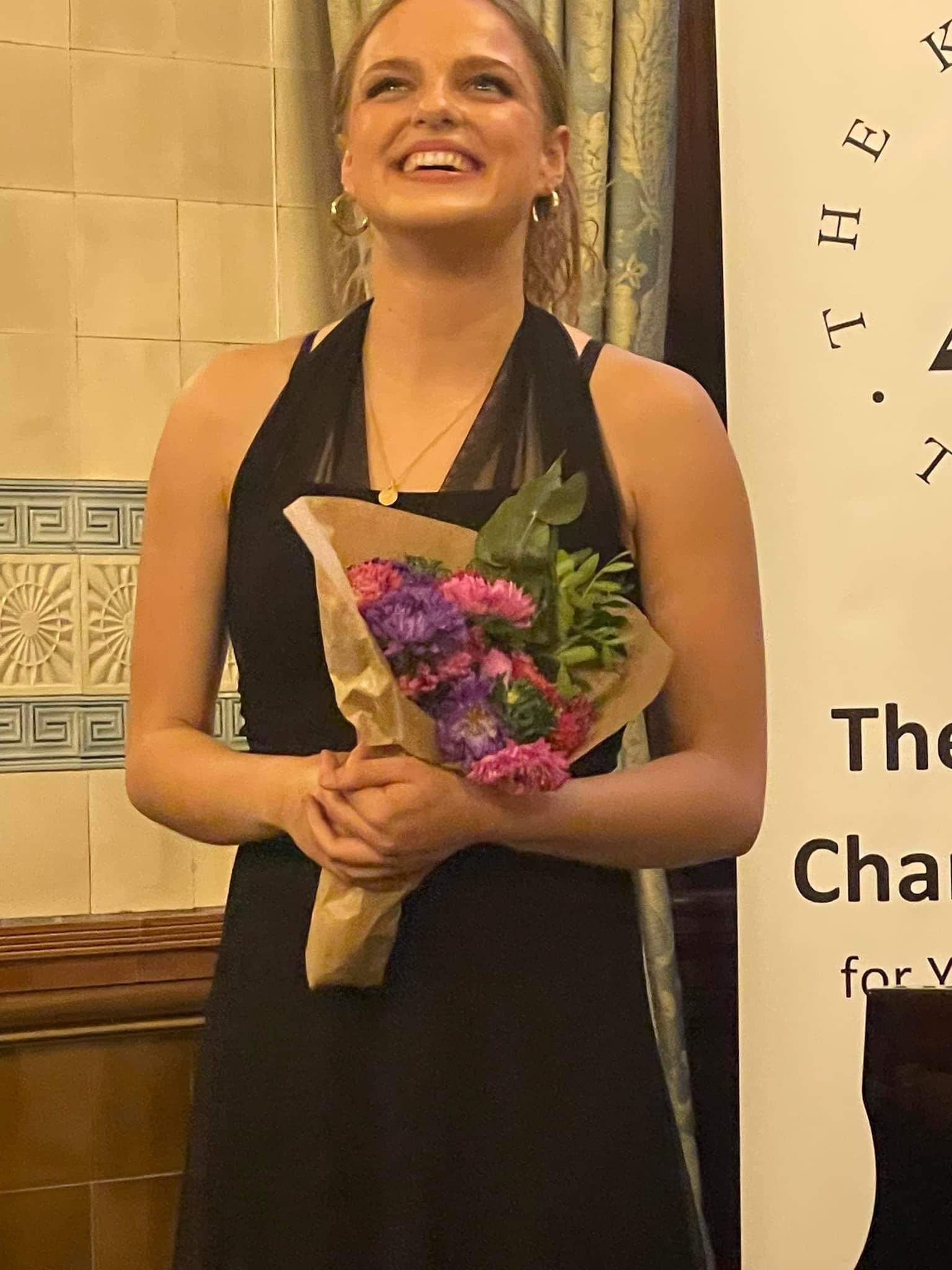
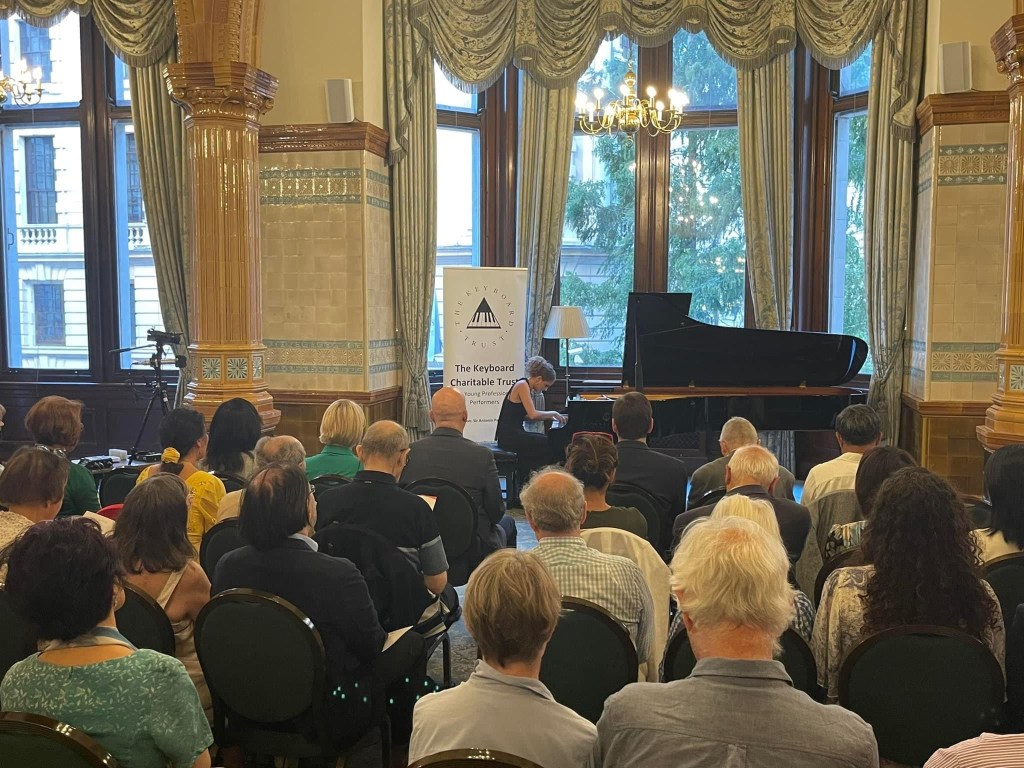
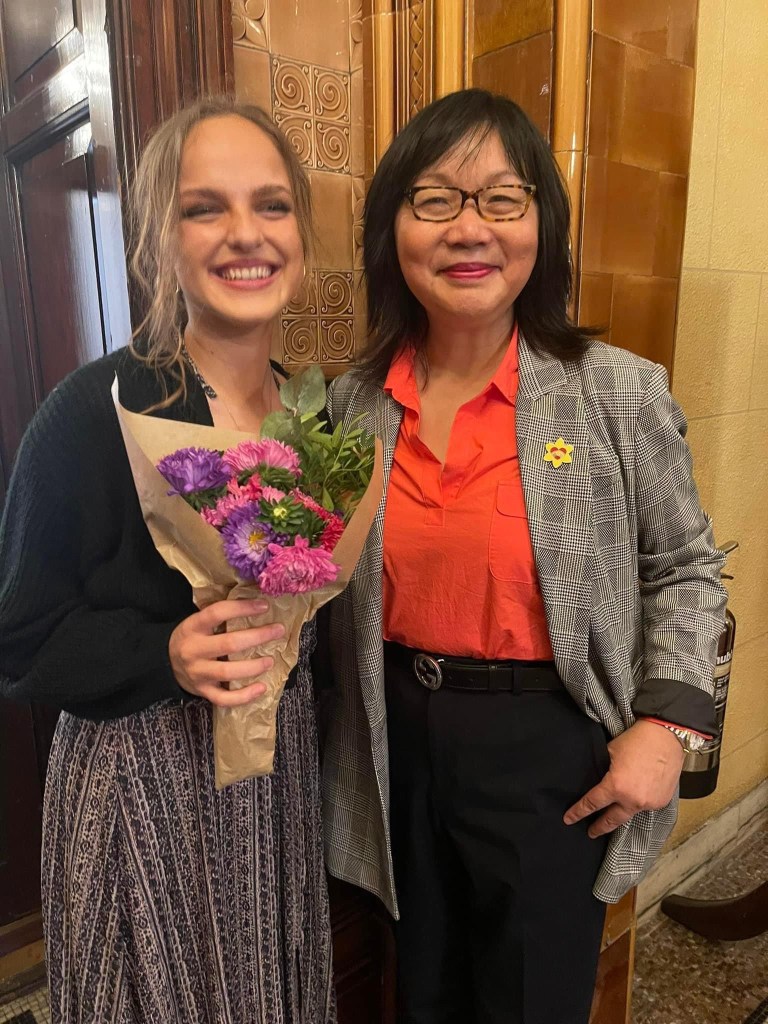
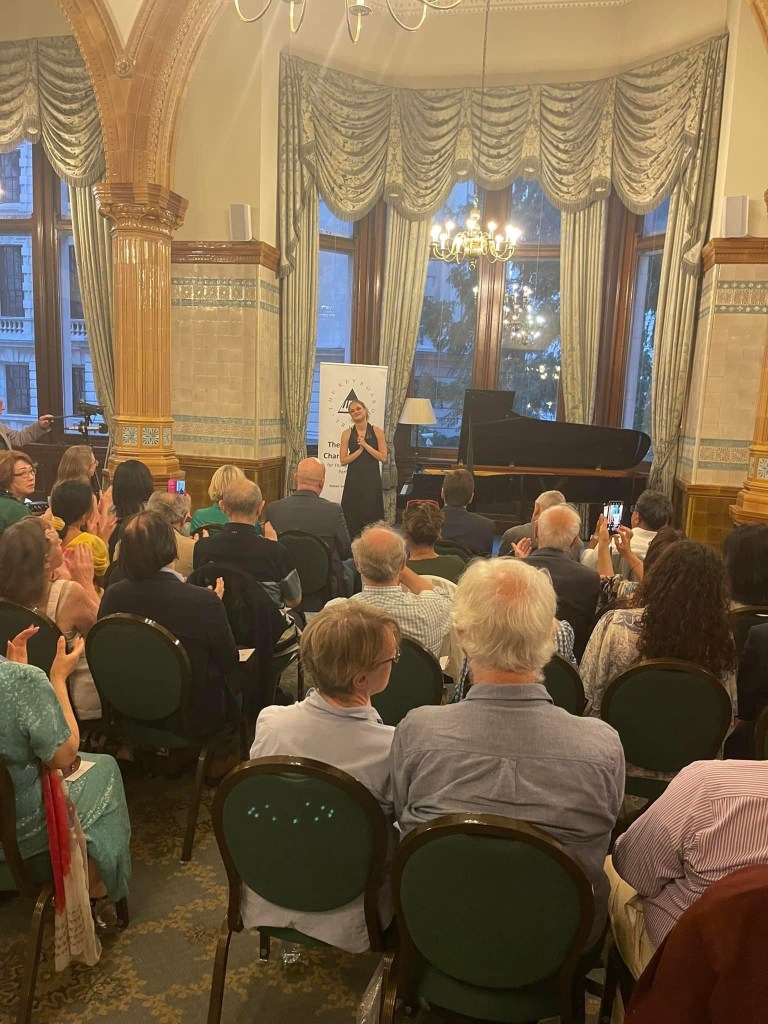
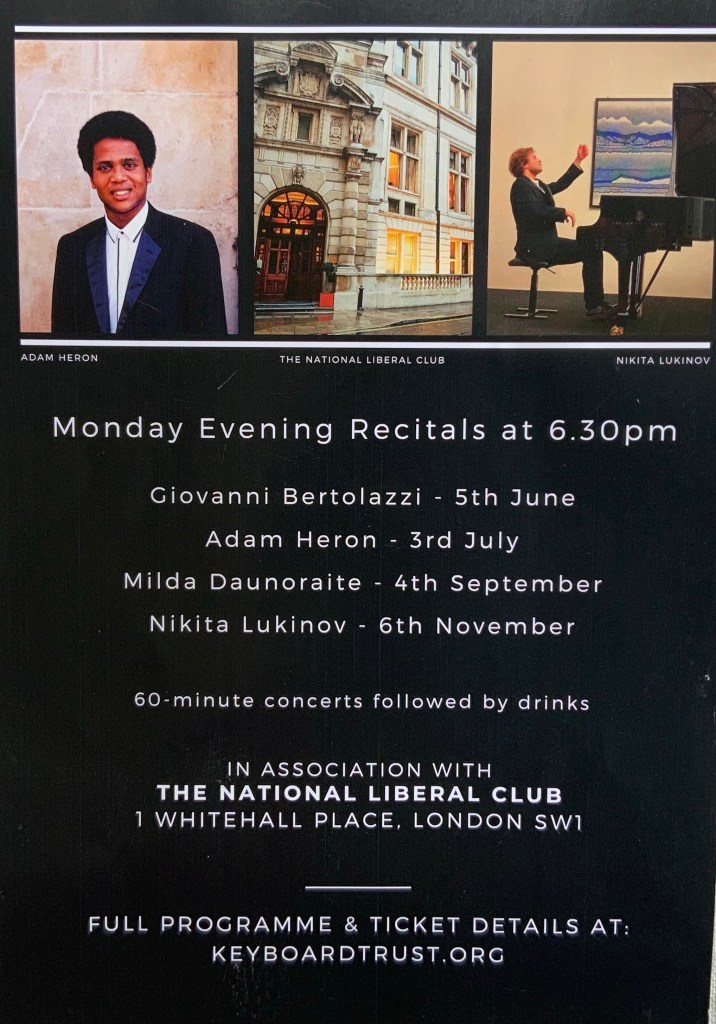
Some superb playing from the young Lithuanian pianist Milda Daunoraité from the school of Tessa Nicholson.The Lithuanians seem to be born with an ingenuous ‘joie de vivre’ that is reflected in their wonderful,relaxed style of playing . Perlemuter,born in Kaunas ,was a prime example and it was to his first teacher Moszkowski that Milda turned today to close her scintillating recital with sparks that crackled and shone with such fun as they spun from her fingers with the ravishing style of a bygone age. The sheer enjoyment and exhilaration that she shared with us was of that was the same refreshing simplicity that was mirrored in the short conversation with Elena Vorotko at the conclusion of another memorable concert in the En Blanc et Noir series dedicated to the memory of the late Robert Turnbull. This had come after one of the finest performances of Chopin’s elusive fourth Scherzo I have ever heard.It was full of jewel like colours and pungent emotions all thrown off with a mastery that revealed the true depth of feeling behind the seemless web of golden notes. Debussy’s haunting bells were heard with a purity and a luminosity as they became ever more insistent followed by the ravishing vision of moonlight that in turn gave way to the fleeting high jinx of Golden Fish. Schumann’s monumental first sonata bravely opened the recital and is an early work where the continual conflict of Floristan and Eusebius is never truly resolved .It was given an at times heroic performance of deeply felt emotions from the intense to the frivolous.Living every minute but where a greater architectural awareness would have united her emotions into one great outpouring of monumental shape .
Lithuanian pianist, Milda Daunoraitė, began her piano studies at the age of six. She received her formative education at The Purcell School of Music and is currently studying with Tessa Nicholson at the Royal Academy of Music, on a full fees scholarship, where she is a recipient of the ABRSM Scholarship Award. She is supported by The Keyboard Charitable Trust, ‘SOS Talents Foundation – Michel Sogny’ and the Mstislav Rostropovich Foundation.
Milda’s performances have been featured live in forty countries through Mezzo TV, Radio Classique, TV5 Monde and Lithuanian National Television and Radio. In 2018, Milda performed the Fourth Piano Concerto by V. Bacevičius for the Lithuanian National Philharmonic Society with the Latvian National Symphony Orchestra. This concert was broadcast across Europe by Euroradio (EBU).
She has performed at venues such as Wigmore Hall, the Amsterdam Concertgebouw, Musikhuset Aarhus, the United Nations headquarters in Geneva, at the EMMA World Summit of Nobel Prize Peace Laureates in Warsaw and many others. Milda’s recent performances include a recital in the Laeiszhalle Recital Hall in Hamburg, at the Deal Music & Arts Festival, at the Petworth Festival, Biarritz Piano Festival and at the Palermo Classica Festival.
Milda won the Purcell School’s Concerto Competition which gave her the opportunity to perform Ravel’s Piano Concerto in G major at the Queen Elizabeth Hall in London. She also won First Prize in the international V. Krainev Piano Competition in Kharkov, Ukraine; the ‘Jury‘ Prize in the Pianale International Academy & Competition in Germany; and First Prize in the fourth International Piano Competition in Stockholm.Yisha Xue of the Asia Circle at the National Liberal Club Elena Vorotko in discussion with Rupert Christiansen and Sarah Biggs https://christopheraxworthymusiccommentary.com/2023/06/02/the-gift-of-music-the-keyboard-trust-at-30/Milda with her distinguished teacher Tessa Nicholson
The Piano Sonata No. 1 in F♯ minor, Op. 11, was composed by Robert Schumann from 1833 to 1835. He published it anonymously as “Pianoforte Sonata, dedicated to Clara by Florestan and Eusebius”.
Eric Frederick Jensen describes the sonata as ‘the most unconventional and the most intriguing’ of Schumann’s piano sonatas due to its unusual structure.The Aria is based on his earlier Lied setting, “An Anna” or “Nicht im Thale”.Schumann later told his wife,Clara , that the sonata was “a solitary outcry for you from my heart … in which your theme appears in every possible shape”.
The four movements are as follows:
Un poco adagio – Allegro vivace (F♯ minor)
Aria: Senza passione, ma espressivo (A major)
Scherzo : Allegrissimo (F♯ minor) – Intermezzo: Lento. Alla burla, ma pomposo (D major) – Tempo I
Finale: Allegro un poco maestoso (F♯ minor, ending in the tonic major)
Images is a suite of six compositions for solo piano by Claude Debussy.They were published in two books/series, each consisting of three pieces. The first book was composed between 1901 and 1905, and the second book was composed in 1907.The total duration is approximately 30 minutes. With respect to the first series of Images, Debussy wrote to his publisher, Jacques Durand : “Without false pride, I feel that these three pieces hold together well, and that they will find their place in the literature of the piano … to the left of Schumann, or to the right of Chopin… “
Debussy wrote another collection, Images oubliées (L. 87), in the Winter of 1894 and dedicated it to Yvonne Lerolle, daughter of the painter Henry Lerolle.
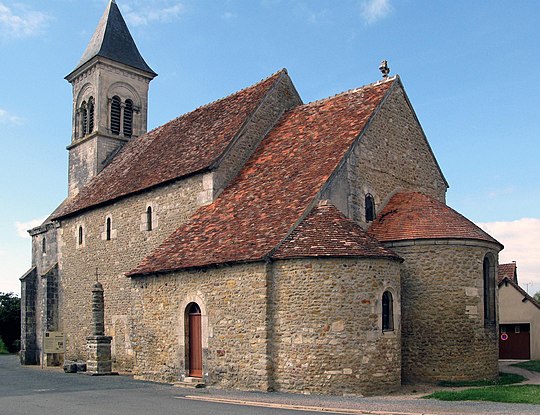
“Cloches à travers les feuilles” was inspired by the bells in the church steeple in the village of Rahon in Jura, France.Rahon was the hometown of Louis Laloy , a close friend of Debussy and also his first biographer.
“Et la lune descend sur le temple qui fut” (And the moon descends on the temple that was) was dedicated to Laloy.The name of the piece, which evokes images of East Asia , was suggested by Laloy, a sinologist. The piece is evocative of Indonesian gamelan music, which famously influenced Debussy.
“Poissons d’or” was probably inspired by an image of a golden fish in Chinese lacquer artwork or embroidery , or on a Japanese print. Other sources suggest it may have been inspired by actual goldfish swimming in a bowl,though the French for goldfish is ‘poisson rouge’ (red fish).
The Scherzo No. 4, Op. 54, was composed in 1842 in Nohant
The scherzo was published in 1843. Unlike the preceding three scherzi (Op. 20, Op. 31, Op. 39), the E-major is generally calmer in temperament, though it still possesses some exceptionally passionate and dramatic moments. It seems to be a work that divides opinion: “it is one of Chopin’s most elegiac works, and without doubt contains some of the most profound and introspective music the composer ever wrote”compared to “more capriciousness and elegance than profundity.”`” it differs from the others as if it had passed through a magically purifying expressive filter.”The scherzo is in sonata rondo form with a trio in C sharp minor .It is the only one of Chopin’s four scherzos primarily in a major key. As one critic explains, “When Chopin is at his happiest, most outwardly serene, then, for the pianist, he is at his most treacherous. The Fourth Scherzo is the only one in a major key and its mercurial brilliance and whimsy are notoriously hard to control.” Saint- Saens particularly liked this scherzo.
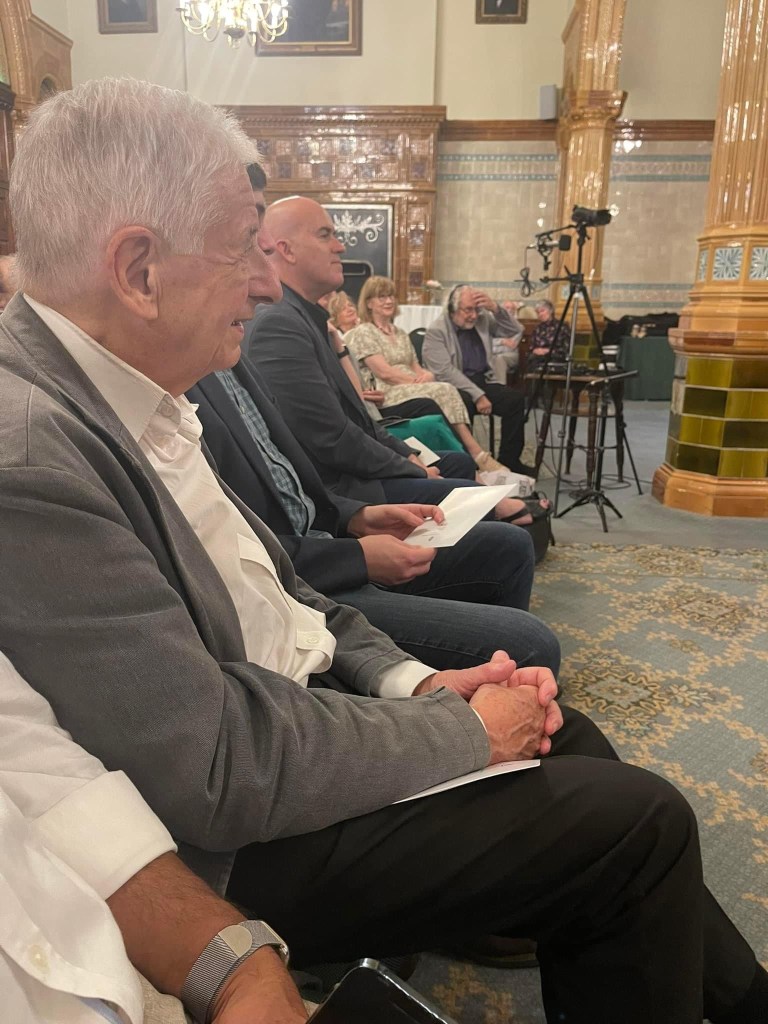
The distinguished film director Tony Palmer enjoying the performance The National Liberal Club where Rachmaninov had given his last performance in London in 1939
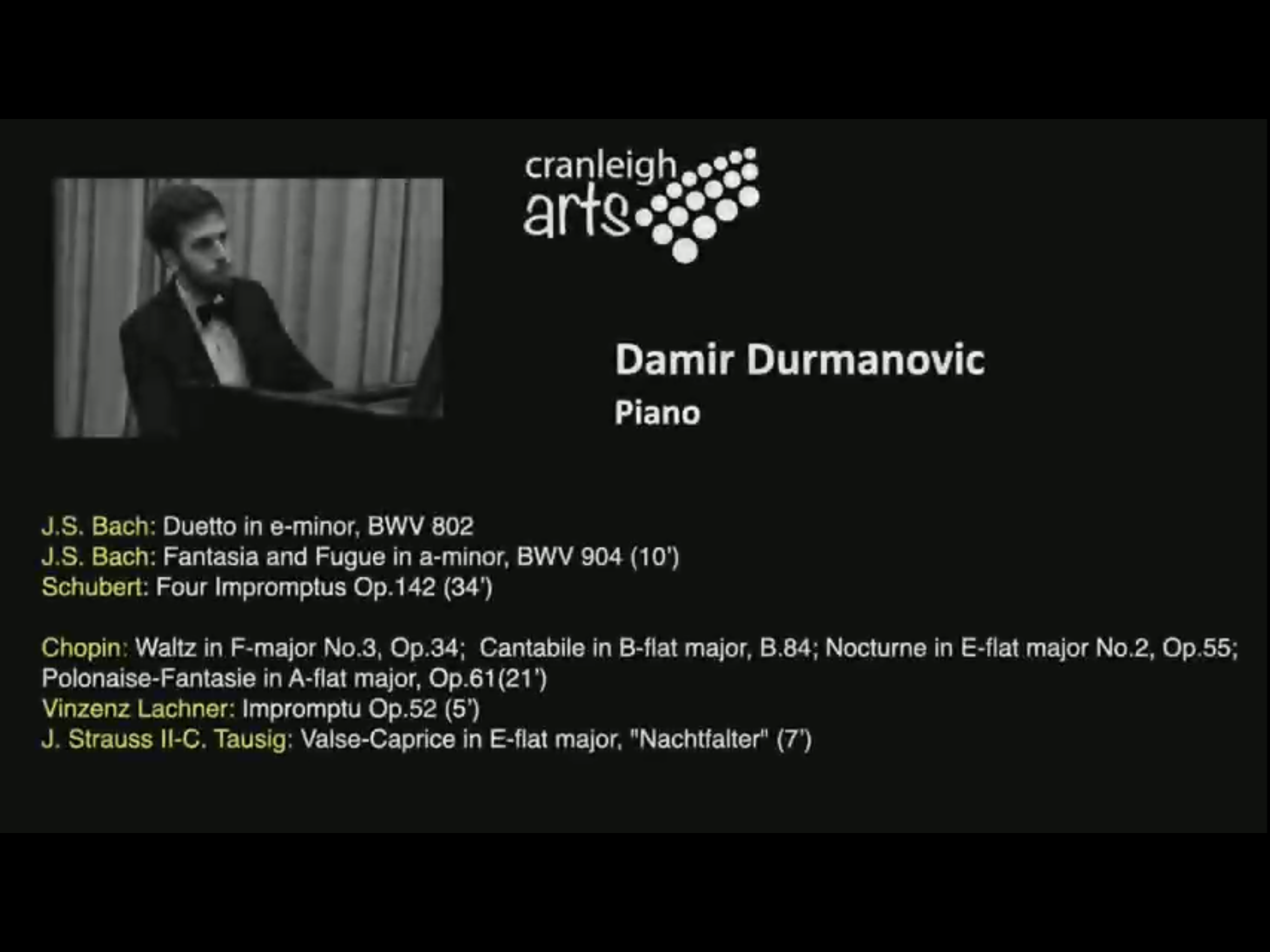
It is always stimulating to hear a recital by a real thinking musician and it was just this that Cranleigh Arts offered to us in a performance live and streamed.In partnership with the Keyboard Trust Damir Durmanovic not only offered a fascinating programme but also spoke with such refreshing simplicity and intelligence about his musical pedigree.
An informal conversation with Stephen Dennison during the interval for those like me watching from afar.No gin and tonic but another type of tonic to hear this young artist describe the unparalleled education that he had received from the age of fourteen at the Menuhin School.As it happens Cobham is just a short drive away from Cranleigh.An illustrious list of musicians who he had been able to come into contact with in his formative years .But it is Robert Levin who stands out for the obvious influence that he had on a young student fresh from Bosnia.A country as he explained where folk music and improvised performances were more the norm than classical concerts.Of course he received the state musical education from the schools run on the Eastern European system of serious training from an early age.Damir was lucky as a teenager to continue this early training with Marcel Baudet at the Menuhin and Dmitri Alexeev at the Royal College,both superb trainers of so many magnificent musicians.But there is a moment in one’s youth when a light is suddenly illuminated and it is this influence that remains into maturity.Both Can Arisoy and Damir spent their schooldays together at the Menuhin School in Cobham and they are both two of the most complete musicians that I know amongst the younger generation.Both obviously greatly inspired by the authority and scholarship of Robert Levin and the teaching of Marcel Baudet.
In their fascinating conversation Damir described how he organised a recital programme around key relationships and that he even improvised between each piece where necessary to prepare the ear by moving to the dominant key of the work that was to follow.The ‘historic’ performance practices of ornamentation and rhythmic adjustments were all elements that Damir explained were to bring the works he played back to life with the same sense of voyage of discovery as when the ink was still fresh in the page .He explained that this and choosing from different styles was his way of getting away from the standardised ‘recital’ formula and breathing new life into interpretations not only of recognised master pieces but also compositions long forgotten and now completely overlooked.
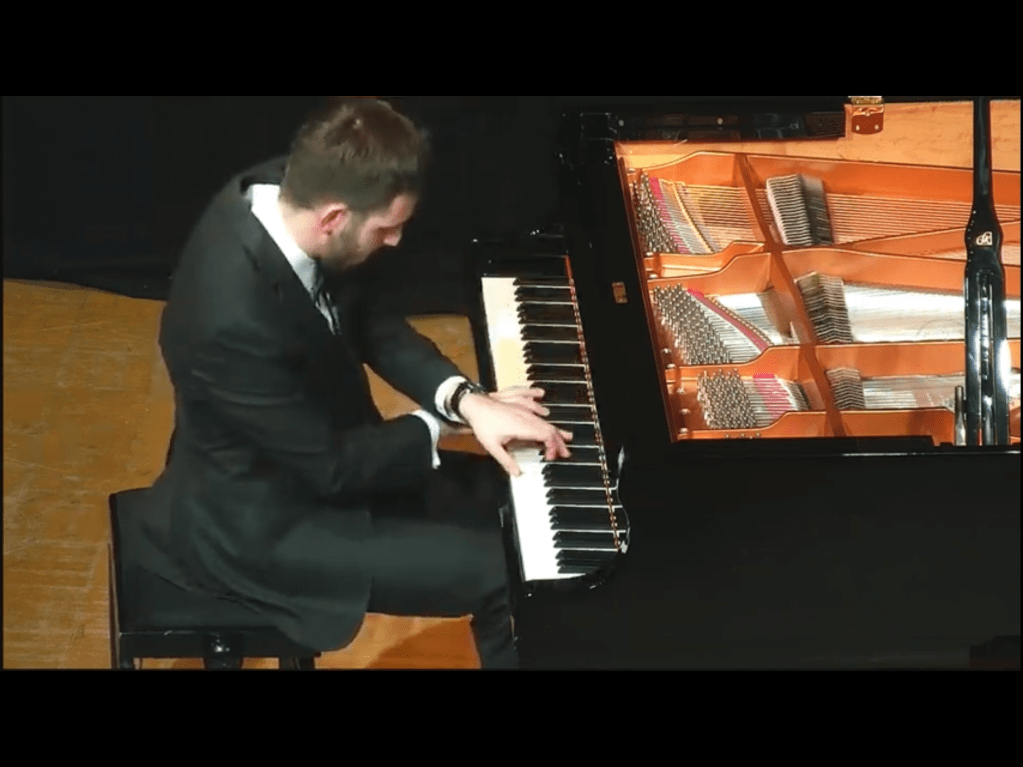
And so it was that the programme in Cranleigh was carefully thought out and spanned from Bach to Strauss with an unknown Lachner thrown in as a bridge between Chopin’s masterpiece op 61 and much lighter salon pieces.Ending with a Tausig arrangement of Strauss that one might well have encountered in recitals of the Golden age of piano playing at the beginning of the twentieth century in the hands of the legendary Lhevine ,Godowsky or Rachmaninov .Damir’s musicianship shone through all that he did as he created a sound world which was so flexible one felt that it could unfold in so many unexpected ways.A natural timelessness where even slight blemishes were incorporated into the music making of the moment.There was also great passion and driving energy but it was the music making of a kapellmeister that was very similar to that of Wilhelm Kempff.Such was Kempff’s total absorption in music he would arrive at a recording studio asking what they would like to record that day.He,more than any other pianists I have heard had the same preparation as the real musicians that would have to prepare music every week for the church and more often than not have to improvise much of the music as well as preparing the choir.A complete musician where music would pour out of them as naturally as breathing .
Damir’s Bach was of a crystal clarity where the single parts were played with a simplicity and purity with the ornaments adding the emotional expression that together with slight rhythmic deviations was the practice in Bach’s day.There was grandeur in the Fantasia but never clouding the texture or the clarity of the architectural line.
The first of four duets published in 1739 as part 3 of the Clavier Ubung consists of a double fugue of 73 bars in which the material is invertible: for example, it is possible to invert the two parts. The first subject is exhibited in six bars and it is a scale that leads to a syncopated passage . In the sixth bar a theme in two-tone is introduced which will be developed later and which will also serve as a modulation between the two parts of the piece. The second subject, in contrast to the first, is composed of quavers . The harmony between the two parts is very similar to that of the prelude BWV 889 in the second book of The 48 , and it is therefore probable that Bach composed the two pieces in the same period.
The Fantasia and fugue in A minor as is often the case with Bach, little is known about the origins of the piece. It is not even clear whether he intended it for organ, clavichord or harpsichord.The Fantasia begins with a series of descending notes in the bass, and descending lines continue to dominate the rest of the piece. The Fugue builds up steadily to a four-part web of harmonies. Then halfway through, there is a chromatically descending line as a second theme, which takes the idea of the descending bass in the Fantasia one step further. And then Bach weaves both themes together to form a rich harmonic whole.
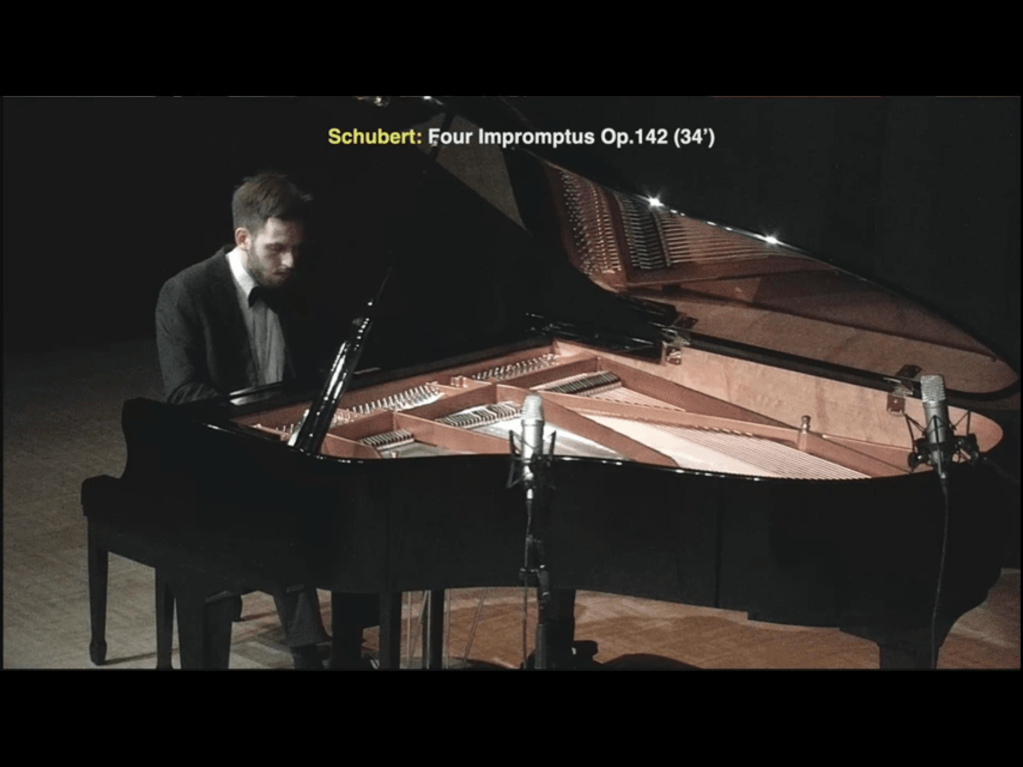
The Schubert Impromptus are a series of eight pieces for solo piano composed in 1827. Schubert was born in 1797 and died in Vienna, aged 31, on 19 November 1828, at the apartment of his brother Ferdinand. The cause of his death was officially diagnosed as typhoid fever , though other theories have been proposed, including the tertiary stage of syphilis.It was near the grave of Beethoven, whom he had admired all his life, that Schubert was buried at his own request, in the village cemetery of Wahring on the edge of the Vienna Woods.A year earlier he had served as a torchbearer at Beethoven’s funeral.The Impromptus were published in two sets of four : the first two pieces of the first set were published in the composer’s lifetime as Op. 90; the second set was published posthumously as Op. 142 in 1839 (with a dedication added by the publisher to Franz Liszt).The third and fourth pieces of the first set were published in 1857.As the first and last pieces in this second set are in the same key (F minor) and the set bears some resemblance to a four-movement sonata it has been suggested that these Impromptus may be a sonata in disguise.It was Schumann and Einstein , who claim that Schubert called them Impromptus and allowed them to be individually published to enhance their sales potential.However, this claim has been disputed as it is also believed that the set was originally intended to be a continuation of the previous set, as Schubert originally numbered them as Nos. 5–8.
Improvised modulation from Bach to Schubert brought us to the beauty and simplicity of the four late Impromptus.Damir’s slight hesitations just added to their poetic intensity and there was beauty in the long central duet over the flowing accompaniment of the first impromptu in F minor.The second was in A flat so no need for an improvised bridge and there was great melodic weight and sumptuous rich sound that excluded any sentimentality to the melodic line.There was subtle ornamentation too that just added to the simplicity and beauty of Schubert’s melodic outpouring.The middle episode was beautifully fluid and shaped so eloquently.A slight bridge from A flat to B flat for the beautiful theme and variations of the third Impromptu.Variations that evolved one out of the other from the lightness of the jeux perlé of the second variation to passionate intensity of the third.There was a beautiful lilt to the duet between left and right hand in the fourth and streams of sound in the fifth before the improvisation to the playful but also menacing dance of the fourth.There was also a frenzy and intensity to the great washes of sound that eventually led to the final streak of sound from the treble to the final mighty bass note.The Devil and the Deep Blue Sea indeed!
Damir’s Chopin was played with great sense of style.The waltz op 34 n 3 is known as the cat waltz for the way it leaps with cat like movements across the keys.It was played with a perfect flowing tempo that allowed the music to speak so eloquently.The little one page ‘Cantabile’ that I heard for the first time in recital,was played with ravishing colour and all the freedom that its bel canto demands.The nocturne op.55 n.2,one of Chopin’s most beautiful creations,was an outpouring of ecstasy ,delicacy and intimate sentiment.The Polonaise Fantasie op 61 that ended this Chopin group was played with a great sense of architectural shape but also with ravishing sounds and a forward movement that led to its triumphant final outpouring.An overall sound that was of a fluidity and flexibility,always though with the simplicity and aristocratic good taste of a true musician.
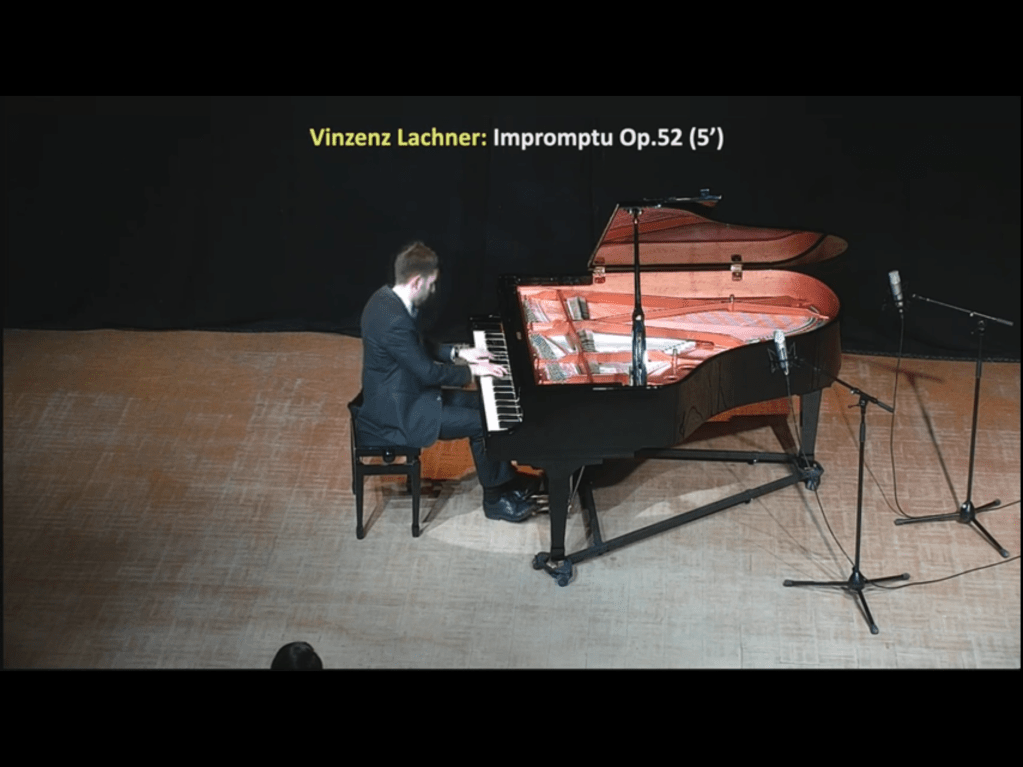
Vinzenz Lachner (also spelled Vincenz) (19 July 1811 – 22 January 1893)was a German composer and conductor.Born in Rain am Lech in Bavaria .Vinzenz was the youngest brother of Franz Lachner also a composer and conductor and a close friend of Schubert.As a composer Vinzenz was essentially self-taught and was first educated by his father Anton Lachner, the municipal organist.Like all the Lachner brothers, he was friendly with Brahms and in 1879, he wrote a letter to Brahms asking why he had used trombones, tuba, and a drumroll — trombones being associated with death — early in the pastoral first movement of his Second Symphony.Brahms replied in detail, expressing the “great and genuine” pleasure he received from the letter, calling Lachner’s analyses unusually perceptive and insightful, then saying “I would have to confess that I am, by the by, a severely melancholic person, that black wings are constantly flapping above us” Lachner died in Karlsruhe after a number of strokes at the age of 81.Lachner’s compositions include symphonies, overtures, festive marches, works for wind orchestra; a Mass in D minor, a setting of the 100th Psalm and other choral works; incidental music to Schiller’s Turandot; a tone poem entitled Lagerleben; a Piano Quartet, String Trio, two String Quartets, 42 Variations on the C major scale, Op. 42, for piano or string quartet;Deutsche Tanzweisen for cello and piano; a set of Landler for piano duet (dedicated to Brahms); and numerous songs of which the cycle Scherz im Ernst und Ernst im Scherz was popular during his lifetime. His song-cycle Frauenliebe und legend appeared in c1839, not long before Schumann made his better-known settings of Adelbert von Chamisso’s poems.Few of his works have been revived or reprinted, though a recording of the string quartets issued in 2005 reveals a minor master of that genre.
It was interesting to hear this short salon piece by Lachner with its gloriously rich tenor melody that gave way to an exuberant jeux perlé stream of notes that was very reminiscent of Mendelssohn.It led so well to the charm and ravishing colours of the Valse Caprice by Tausig of Strauss’s ‘Nachtfalter’.It was played with the style and charm of a lost age of teasing rubati and exuberant virtuosity that all the great pianists of the past would end their recitals with.A little Mazurka by Scriabin was Damir’s way of thanking his very appreciative audience at Cranleigh Arts
As an internationally sought-after performer, Damir Durmanovic has performed in venues and festivals including the Wigmore Hall, Champs Hill Studios, YPF Festival Amsterdam, Wimbledon Music Festival, Renia Sofia Audotorium Madrid, Gstaad Menuhin Festival, Derby Multifaith Center, Flusserei Flums, ‘Ballenlager’ Vaduz. He has won prizes in numerous international competitions including The Beethoven Intercollegiate Junior Competition in London, Adilia Alieva International Piano Competition in Geneva and Isidor Bajic International Piano Competition in Novi Sad.He has performed in masterclasses with Claudio Martinez-Mehner, Dmitri Bashkirov, Pascal Devoyon, Jacques Rouvier, Robert Levin, Jean-Bernard Pommier, Tatyana Sarkisova, and chamber ensembles such as the Emerson Quartet. Damir is also a scholar at the ‘Musikakademie Liechtestein’ and regularly participates in the courses organised by the academy.Damir began his studies at age of eight in his home country, Bosnia and Herzegovina, with Maja Azabagic before continuing his studies at the Yehudi Menuhin School where he studied with professor Marcel Baudet.Damir is an ABRSM scholar and is kindly supported by the Talent Unlimited Scheme. He has been studying at the Royal College of Music in London with professor Dmitri Alexeev where he graduated in 2021.Damir is supported by the Keyboard Trust
Damir Durmanovic at Pushkin House with a refined performance of 19th century Slavic piano music .
Performances of aristocratic style with a refined kaleidoscopic palette of sounds.Culminating in a complete performance of Rachmaninov Preludes op 23 where the volcanic eruptions of the B flat and C minor preludes were followed by the rhythmic drive of the fifth in performances of breathtaking depth and drive.
It was in the study by Scriabin op 2 offered as encore that the true Slavic soul was revealed with playing of great weight and sentiment.Not a trace of the sickly sentimentality that we hear from lesser mortals who do not understand the real poetic soul of a people who were free to express their feelings of a true heart that beats always in the Slavic soul.
A group of rarely heard preludes by turn of the century Russian/Ukrainian composers.Blumenthal is well known to be the first teacher of Horowitz but his own piano music has still to be discovered.A kaleidoscope of subtle sounds of great naturalness.The nuances and colours created a magic atmosphere in a beautiful but sparsely furnished room where the atmosphere was created solely by the streams of beautiful sounds that Damir coaxed from an old but friendly Steinway.There was passion too and a technical command totally at the service of the music.A discovery of a world of a different era with music written by and for the performers themselves.Today we are gradually finding interpreters like Damir or Mark Viner that can make it relive.It needs a great sense of style but above all a sense of colour and polyphony where music is caressed rather than hammered out on the piano .An illusion that with great artistry a box of strings with hammers can be transformed into a celestial harp.An artist that can create the impression that the piano can sing as beautifully as the greatest of bel canto singers.A world that looks back to the world of Chopin rather than to the new world of Stravinsky and Prokofiev.
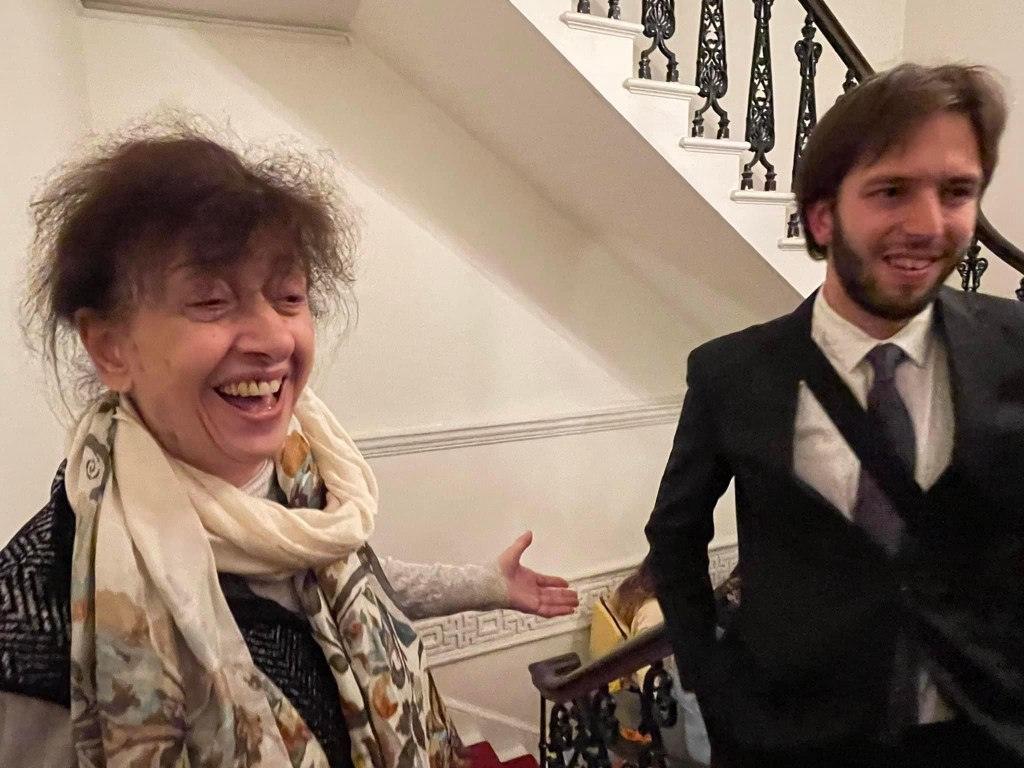
Tatyana Sarkisova ,the wife of Dmitri Alexeev,former teacher of Damir at the Royal College of Music
Damir is a remarkable musician brought up by musical parents who are used to improvising in Bosnia and Herzegovina where traditional music is heard and performed spontaneously everywhere rather than concert performances.Damir came to the Menuhin school at an early age where he received a unique musical education from artists such as Marcel Baudet and Robert Levin.So it was no surprise that deciding to play the complete Preludes op,23 by Rachmaninov he chose to play them in an order that each one was the dominant of the next.
Friends and colleagues who have come to listen to Damir’s performances at Pushkin House Tolga Antaly Un,Petar Dimov,Can Arisoy,Bobby Chen,DD,Matthew McLachlan
Starting with the hauntingly beautiful prelude in F sharp minor with its brooding left hand so reminiscent of the second of Chopin’s preludes op 28 and the final repeated chords each one played so differently as it dies away to a murmur just like so many of Chopin’s Preludes and Studies.
I will keep to the printed order just for clarity and so to the mighty B flat Prelude which Damir ended with.A tour de force of sumptuous sounds with the wonderful tenor melody in the central section just revealed rather than hammered out as is so often heard in lesser hands.A flurry of notes like rush hour leading to the triumphant return of the opening and the excitement and transcendental difficulty of the coda.Fearlessly played chords that carried us on a wave of exhilaration to the final heroic cadence.The quixotic questioning of the third in D minor was answered by the robust beauty of the fourth in D major.A sumptuous string orchestra of Philadelphian richness and beauty,the gentle embroidered meanderings never interfering with the flowing melodic line.The G minor fifth Prelude was played with rhythmic drive and energy that was startling and at times overwhelming.The ending thrown off with nonchalant ease just like his Paganini Rhapsody or the G sharp minor prelude op 32.Rachmaninov was after all one of the greatest virtuosi of his day and he obviously knew how to tease and beguile his audiences as much as ravish and seduce them.Vlado Perlemuter often used to recount the pianist who came on stage looking as though he had swallowed a knife but then would produce the most beautiful sounds he had ever heard.The most romantic of Preludes in E flat was followed by a transcendental performance of the west wind puffing and blowing in the C minor that followed.The romantic meanderings of the eighth were followed by the feux follets difficulties of the ninth in E flat minor.Damir played this most difficult of Preludes with astonishing ease concentrating solely on the musical shape and colour with breathtaking audacity.Surely the haunting beauty of the tenth in G flat is so similar to the sixth of Chopin’s Preludes.It is however imbued with a voice that is uniquely Slavic ,full of nostalgia and brooding.
Can Arisoy and Bobby Chen remarkable pianists from the Menuhin School – Can was a student with Damir studying with Marcel Baudet and Bobby is a distinguished visiting professor.
An hour of real music making from a poet of the piano.A true illusionist who can transform this old black box creating an intimate atmosphere in a rather cold room.Making us believe for a moment that we are in the most sumptuous of salons in one of the great pre revolutionary palaces.
The first pieces in the concert are by the Russian Romantic composer Anatoly Lyadov (1855-1914), known for his piano miniatures, a number of orchestral works and folksong arrangements. In 1870 he entered the St. Petersburg Conservatoire to study composition with Nikolay Rimsky-Korsakov. On graduating, Lyadov became a professor, teaching composition for more than three decades, his students including Sergei Prokofiev, Nikolai Myaskovsky and other notable figures.
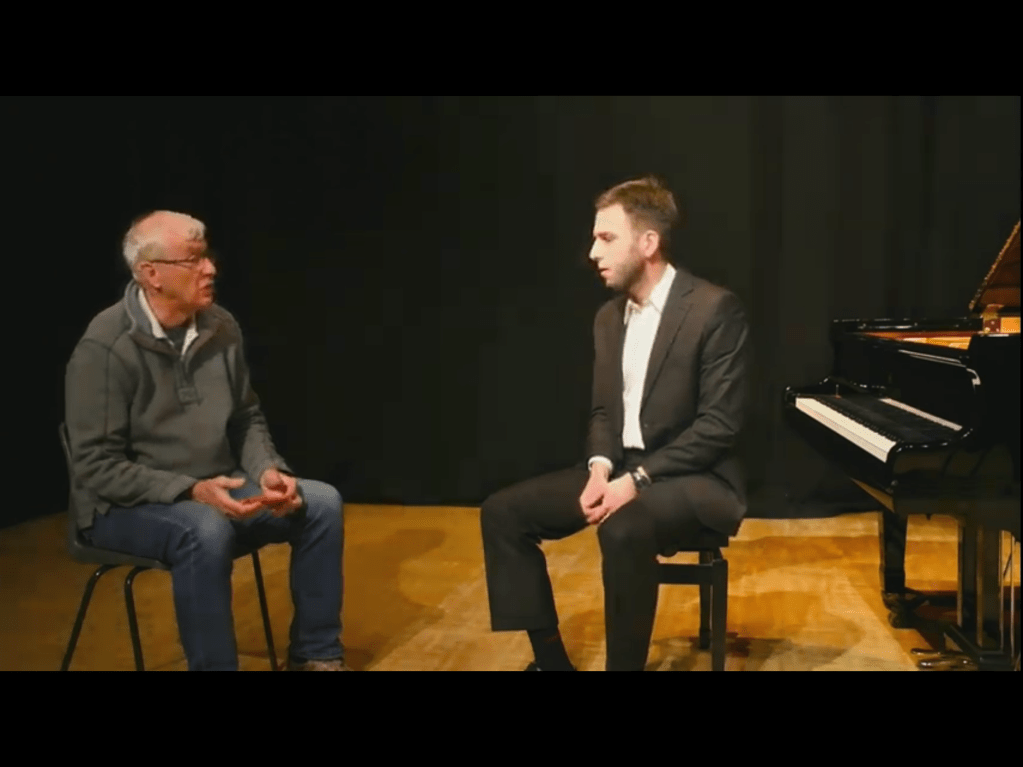
A young member of the audience in discussion with Damir about his eclectic programme
Next in the programme, the Preludes from 1931 by one of Lyadov’s students, Sergei Bortkiewicz (1877-1952) – a Ukrainian Romantic composer and pianist of Polish ancestry, born in Kharkov, then a part of the Russian Empire. After studying in St. Petersburg and Leipzig, from 1904 he spent ten years in Berlin. When the First World War began, he was deported back to Russia. Soon after, the Bolsheviks occupied his family estate, and later took Kharkov. In 1920 Bortkiewicz and his wife fled the country. Spending time in Istanbul and in Belgrade, they finally settled in Vienna. The music of Bortkiewicz is influenced by Chopin and Liszt, as well as Tchaikovsky and early Scriabin. In an interview from 1948 he said, “Today, one is probably inclined to dismiss all melodicists as epigones. Certainly, very often wrongly. As far as I am concerned, romanticism is not the bloodless intellectual commitment to a program, but the expression of my most profound mind and soul.“
Tolga congratulating Damir as Petar looks on. They are all guests at the Kew Academy
The concert will continue with the 1890s pieces by Felix Blumenfeld (1863-1931). He was born into a family of Polish and Austrian Jewish origin, in Yelysavethrad (present-day Kropyvnytskyi city in Ukraine), in Kherson Governorate of then the Russian Empire. Some time after Lyadov, he was a student of Rimsky-Korsakov at the St. Petersburg Conservatoire. Alongside his composition practice, Blumenfeld was a conductor and a prominent pianist. From 1918 to 1922, he was the director of the Lysenko Music and Drama School in Kyiv, before he moved to Moscow, where, until the end of his life, he taught in the Conservatoire, having an influential role as a piano teacher.
Post concert discussion with the distinguished pianist and teacher Tatyana Sarkisova
The complete set of Preludes Op. 23 by Sergei Rachmaninoff (1873-1943) will close the concert. Composer, pianist and conductor, Rachmaninoff was born into Russian aristocracy in the Novgorod Governorate. He studied in the Moscow Conservatoire with A. Siloti (piano), A. Arensky (composition) and S. Taneyev (counterpoint). Being a famous pianist, throughout his life Rachmaninoff was often travelling abroad on tours. Soon after the 1917 Revolution in Russia, his estate was confiscated by the communists. By chance, granted a tour to Scandinavia, he and his family left Russia, and never returned. For the rest of his life he was living between the United States and Switzerland, focusing most of his professional activity on piano performance.
PROGRAMME
Anatoly Lyadov
Three Piano Pieces Op. 57 (1900-05):
I. Prelude
II. Valse
III. Mazurka
Sergei Bortkiewicz
Preludes Op. 40 (1931):
No. 3 Con moto
No. 4 Sostenuto
No. 6 Andantino dolente
No. 7 Appassionato
Felix Blumenfeld
Preludes Op.17 (1892):
No.10 in c-sharp minor
No.15 in D-flat major
Etude de concert Op. 24 (1897)
Sergei Rachmaninoff
Preludes Op. 23 (1901-03), the complete set.
Damir Durmanovicis an internationally sought-after performer, who has performed at venues and festivals across Europe and the UK. He has won prizes in numerous international competitions, including the Beethoven Intercollegiate Junior Competition in London, Adilia Alieva International Piano Competition in Geneva and Isidor Bajic International Piano Competition in Novi Sad. Durmanovic is a scholar at the International Academy of Music in Liechtenstein and regularly participates in the courses organised by the academy.
Durmanovic began his studies at age of eight in his home country, Bosnia and Herzegovina, with Maja Azabagic before continuing his studies at the Yehudi Menuhin School where he studied with professor Marcel Baudet. He is a graduate from the Royal College of Music where he studied with Dmitri Alexeev. He is supported by the Keyboard Charitable Trust, as well as the Talent Unlimited Scheme.
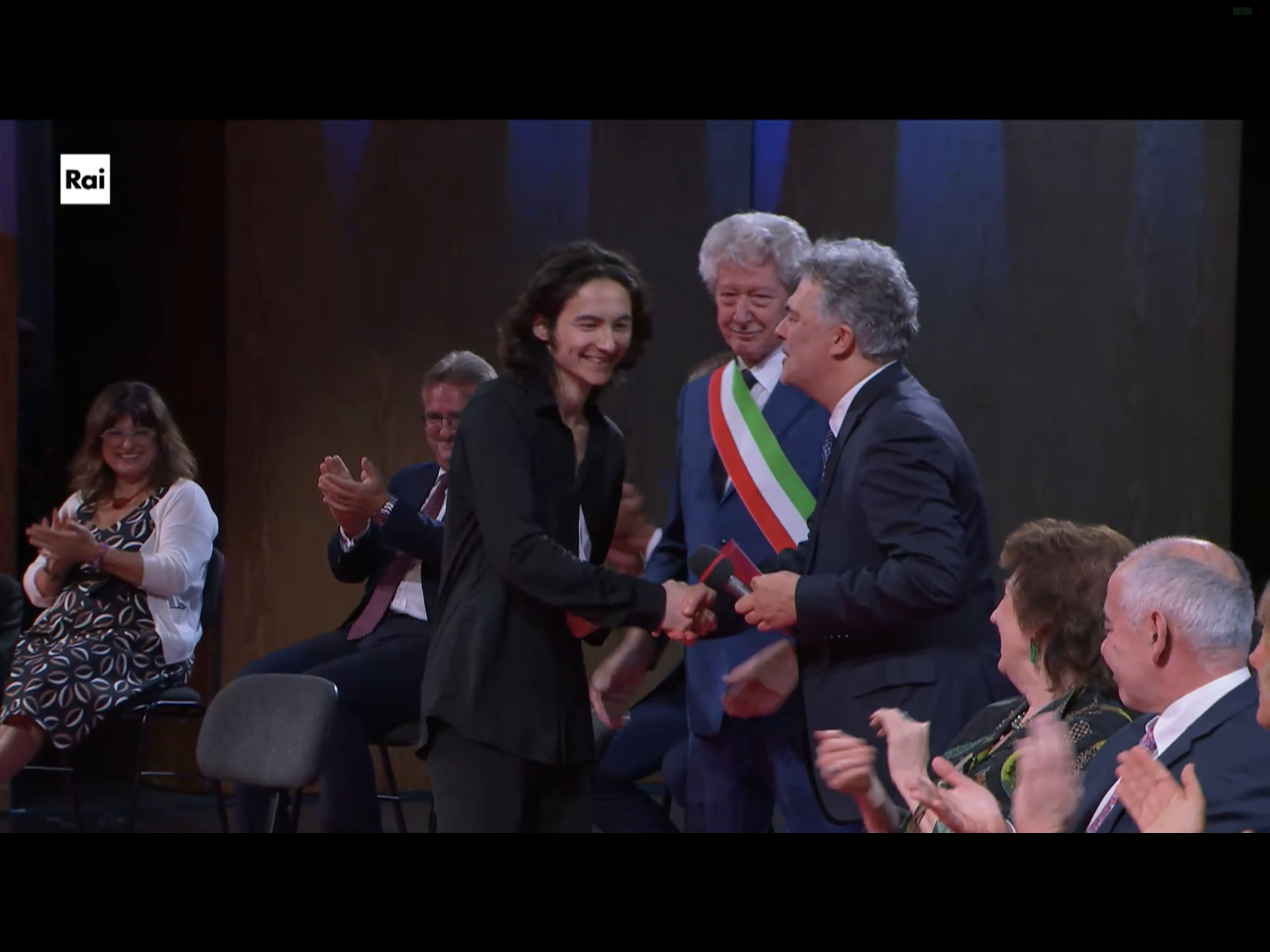
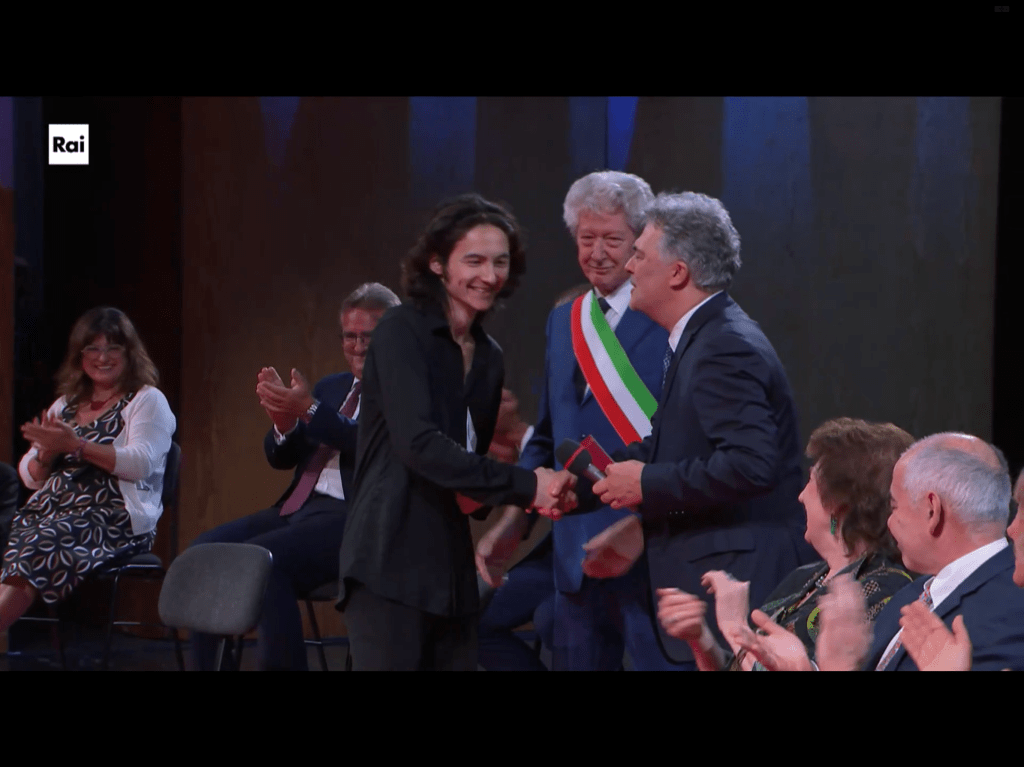
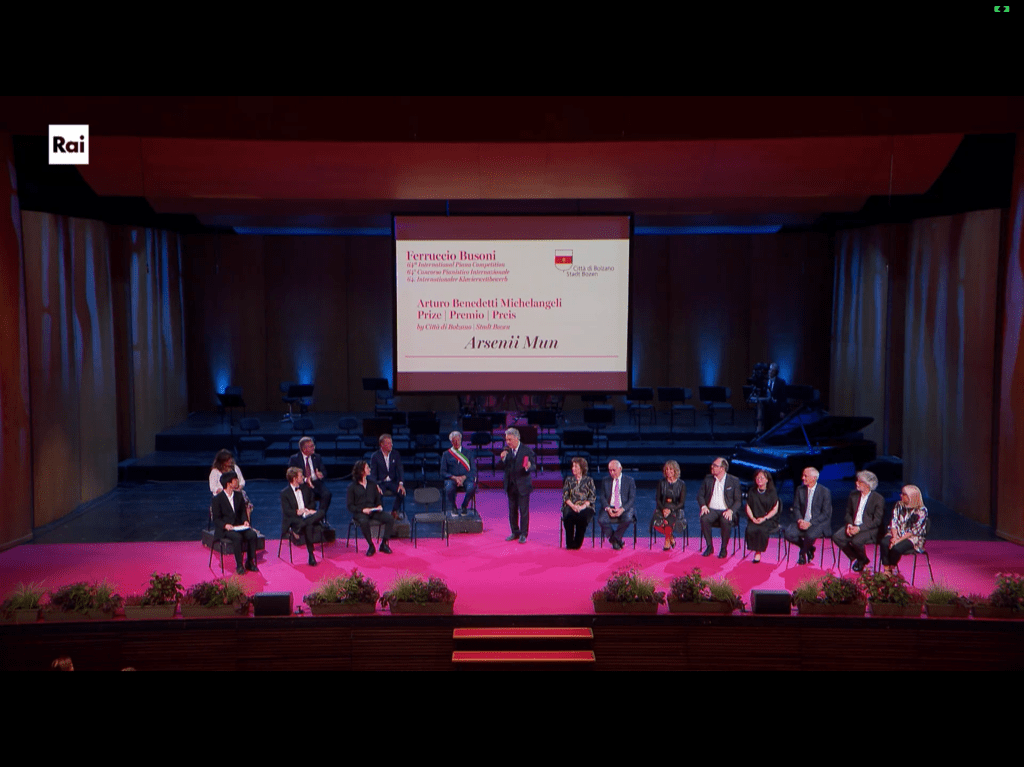
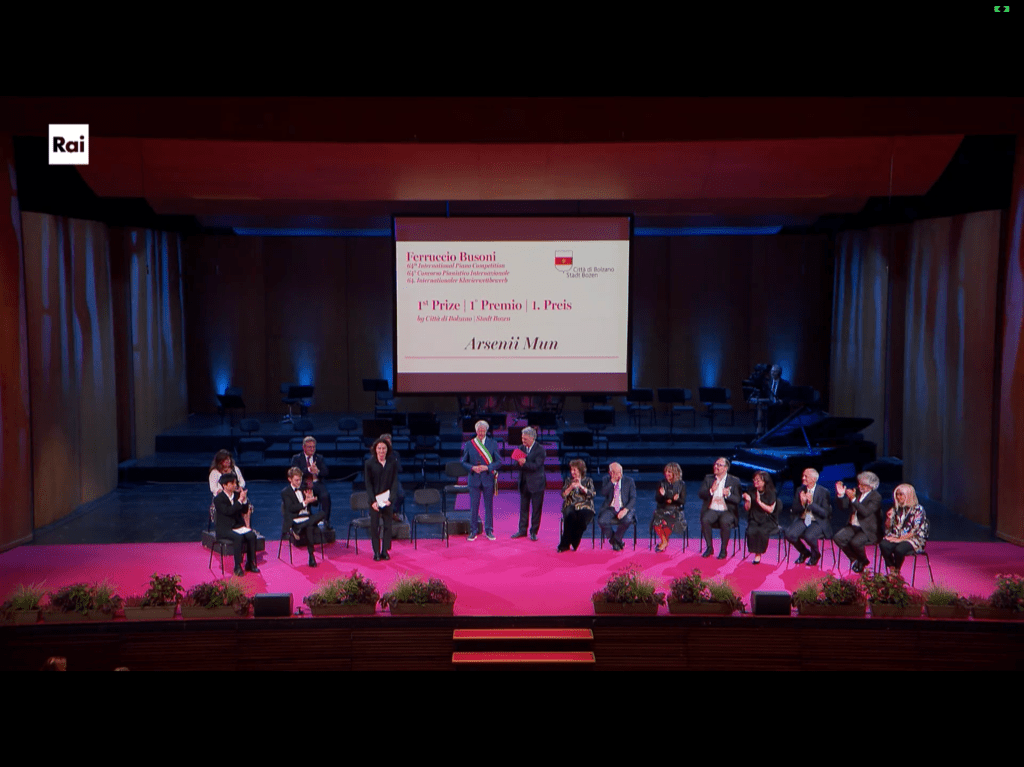
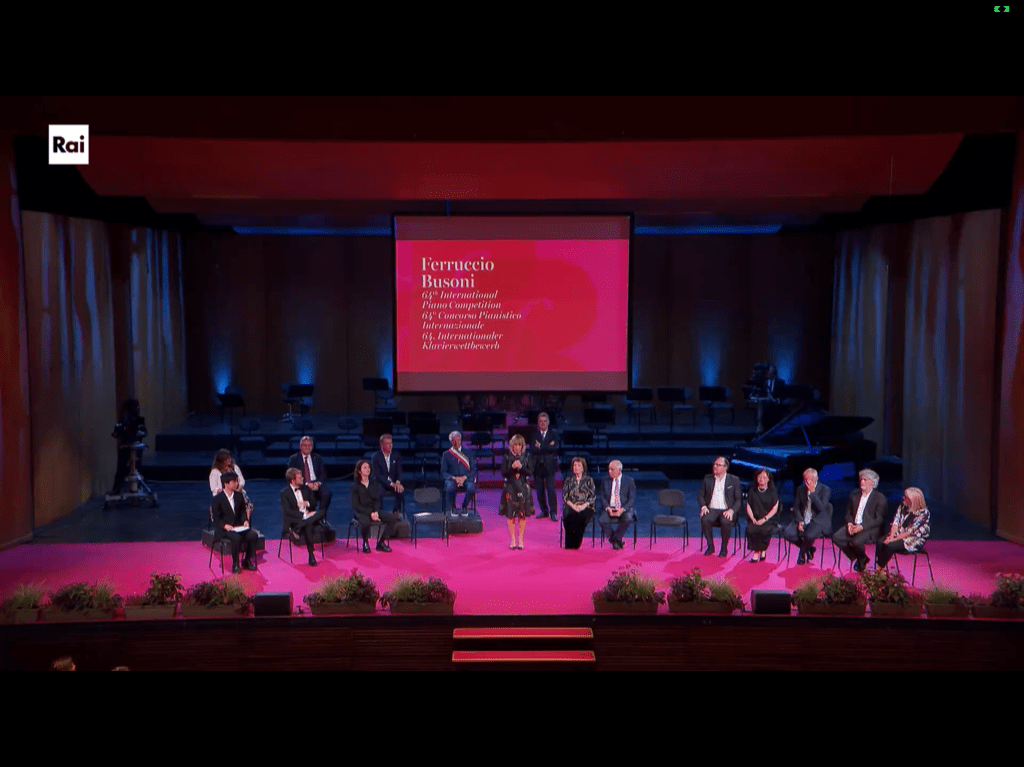
Arsenii Mun with the Mayor of Bolzano and the Artistic Director of the Busoni
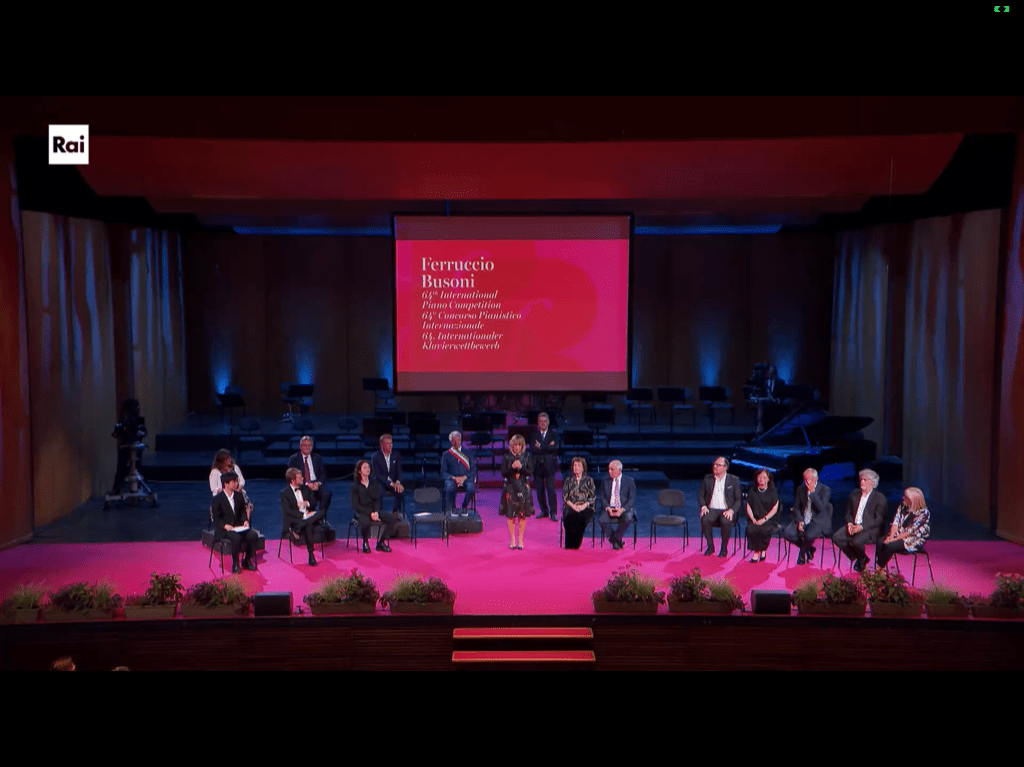
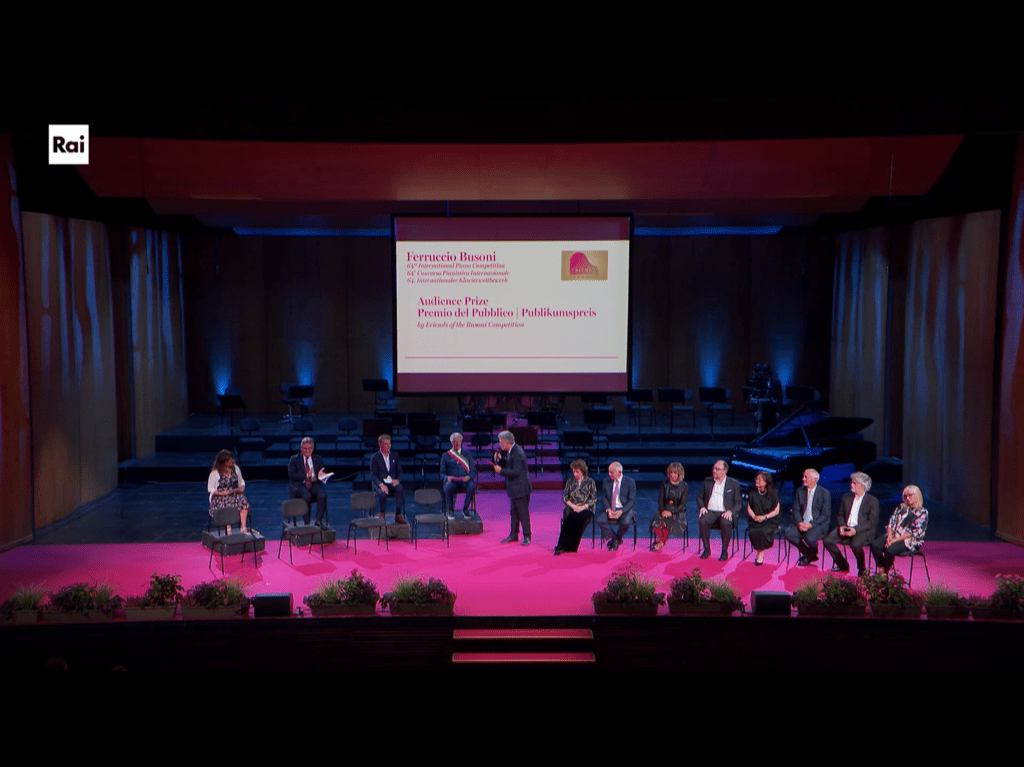
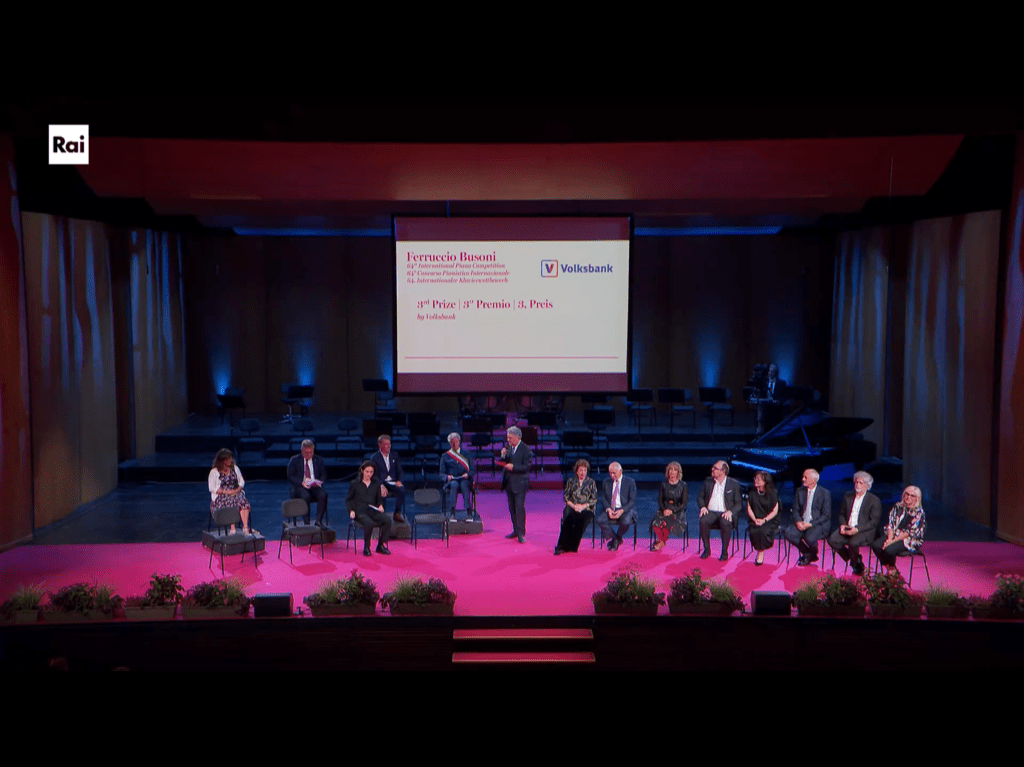
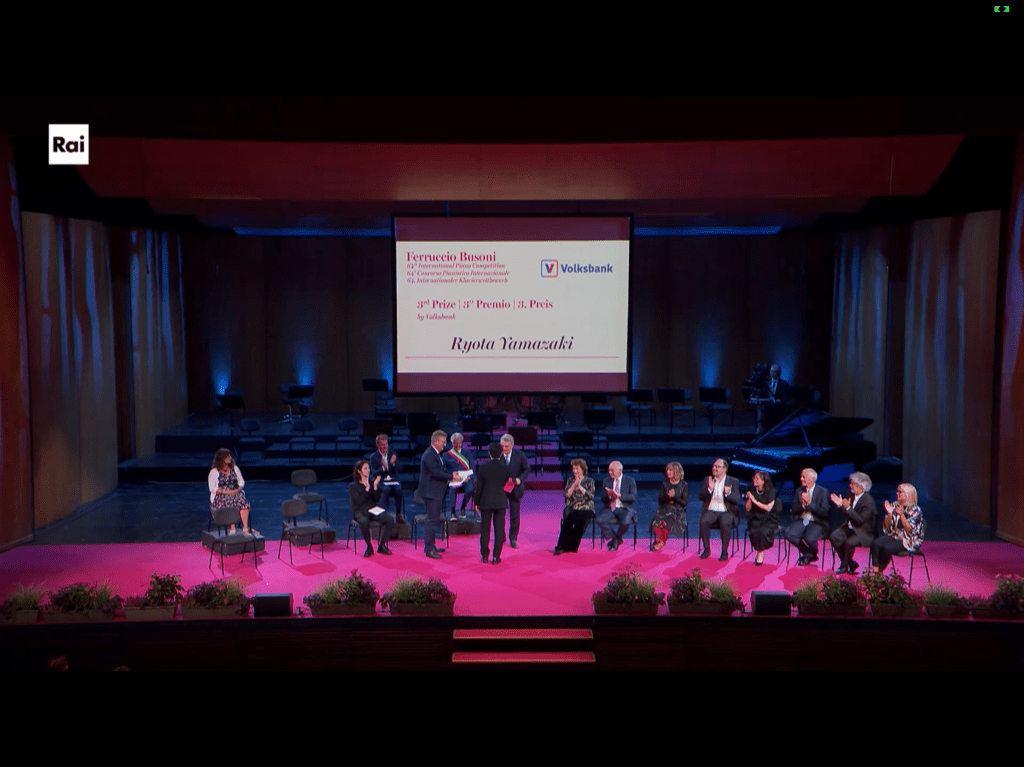
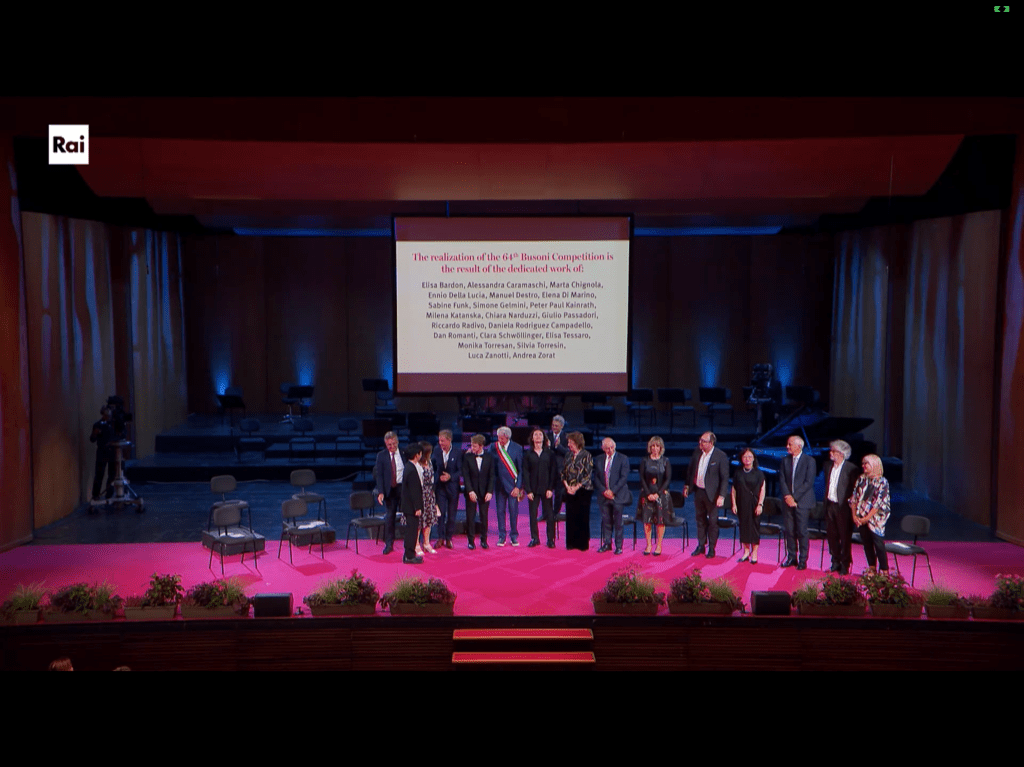
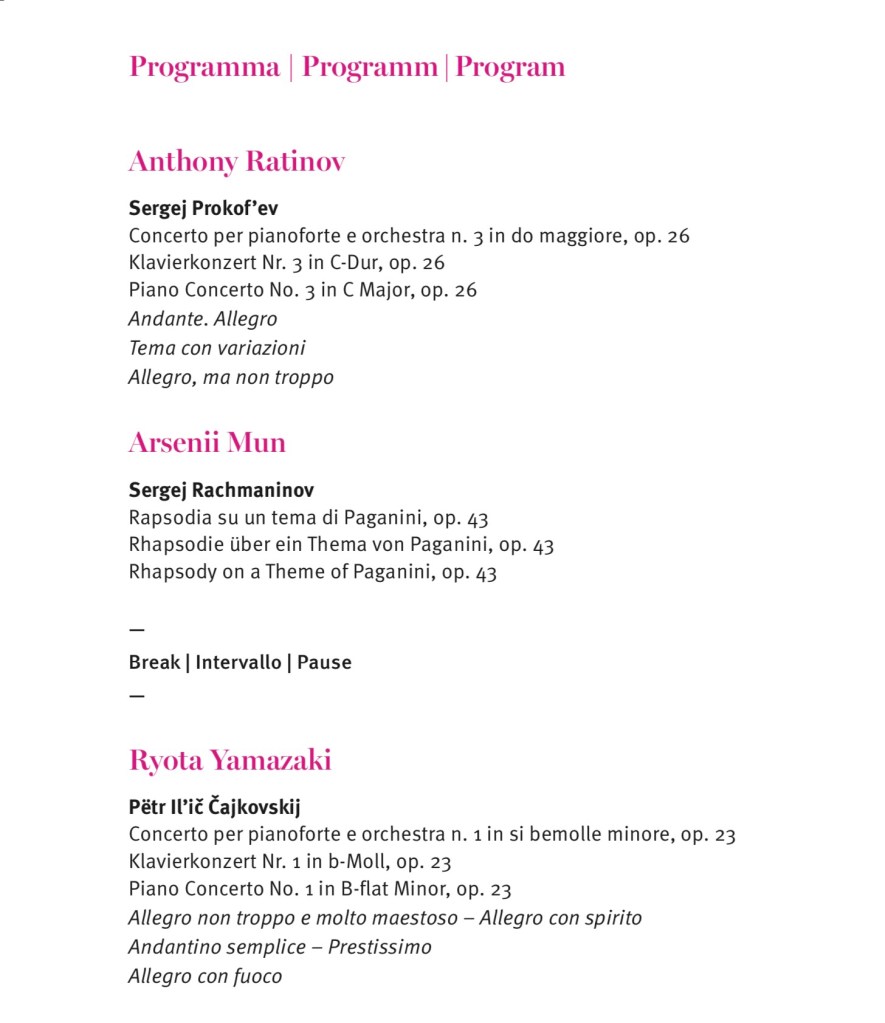
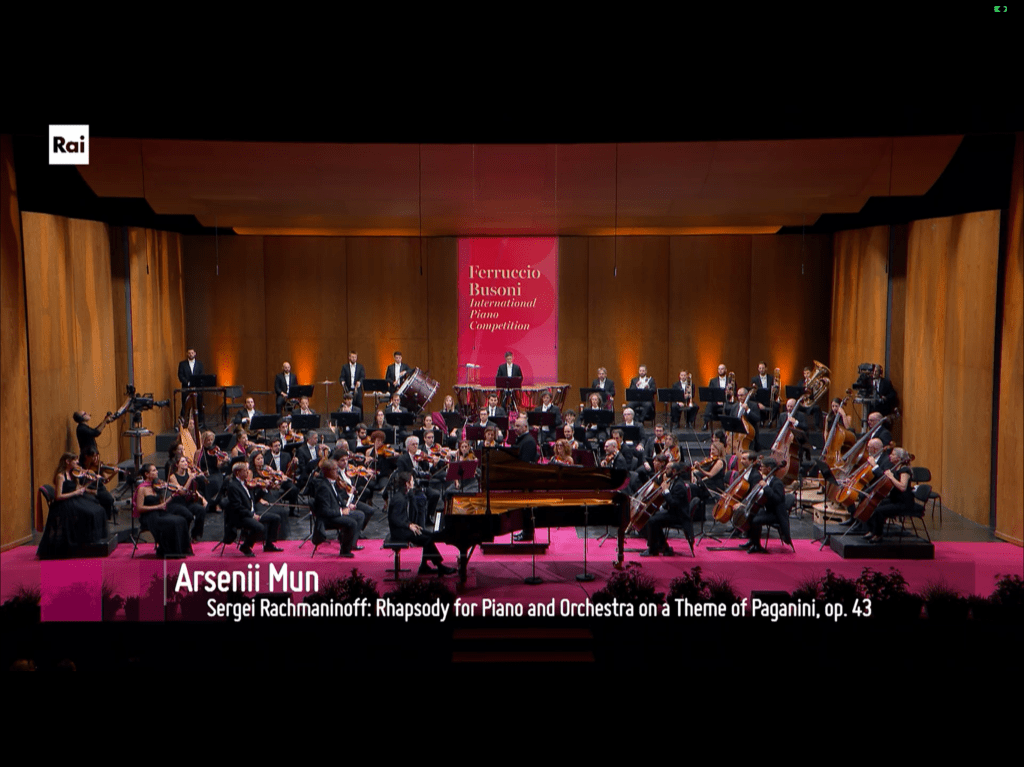
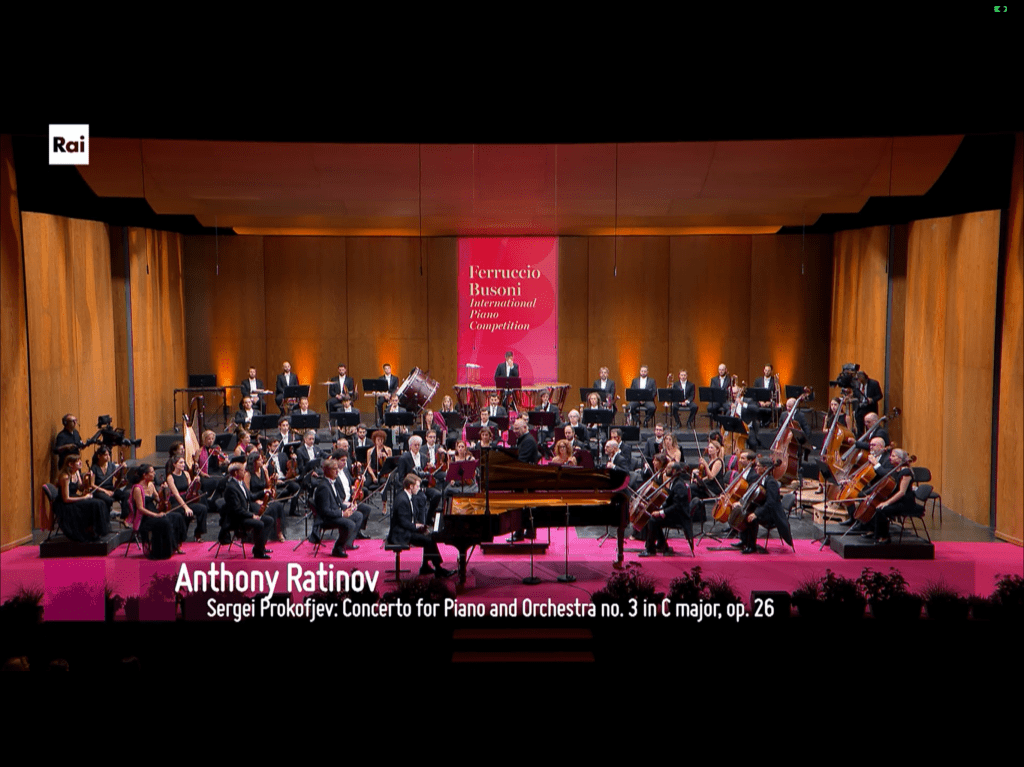
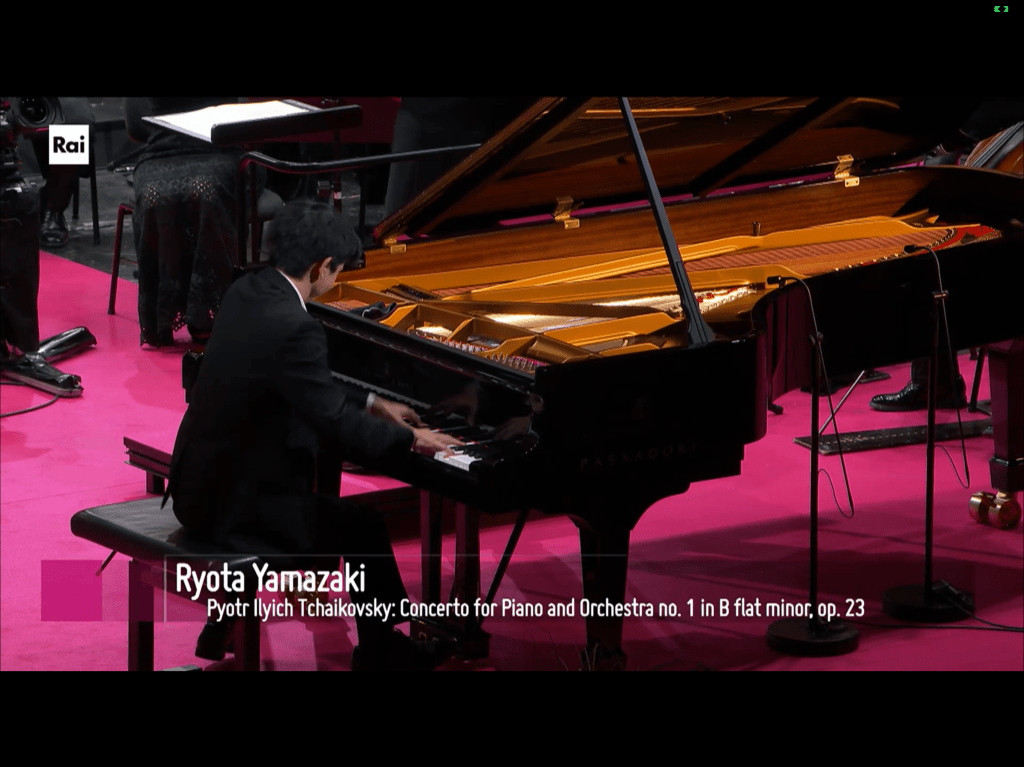
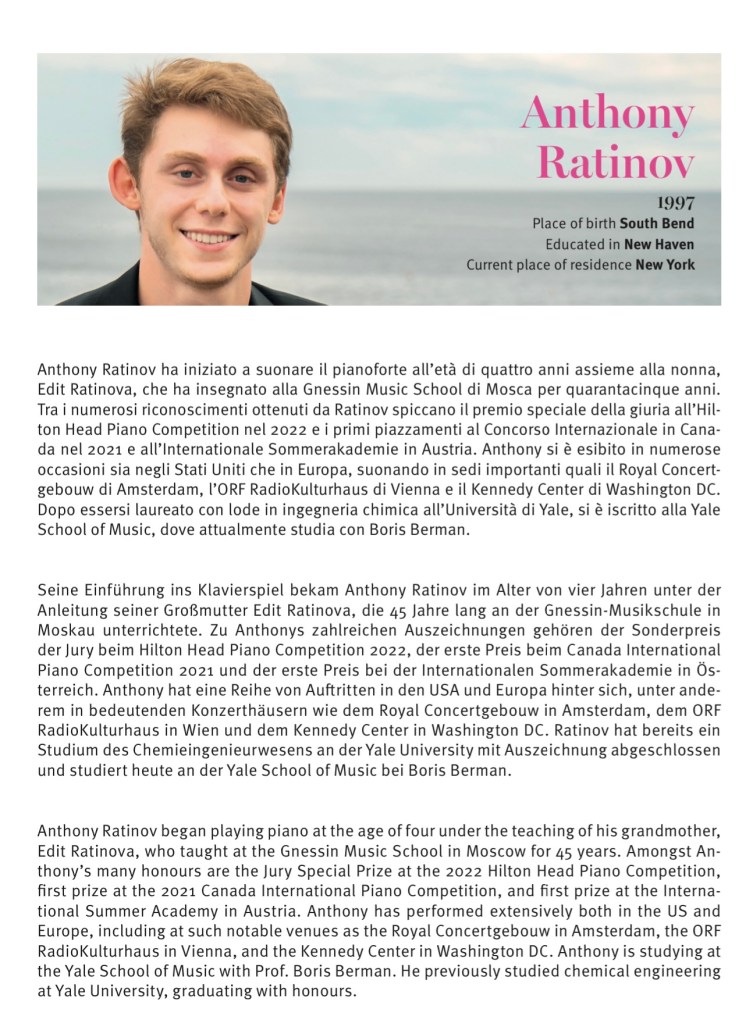
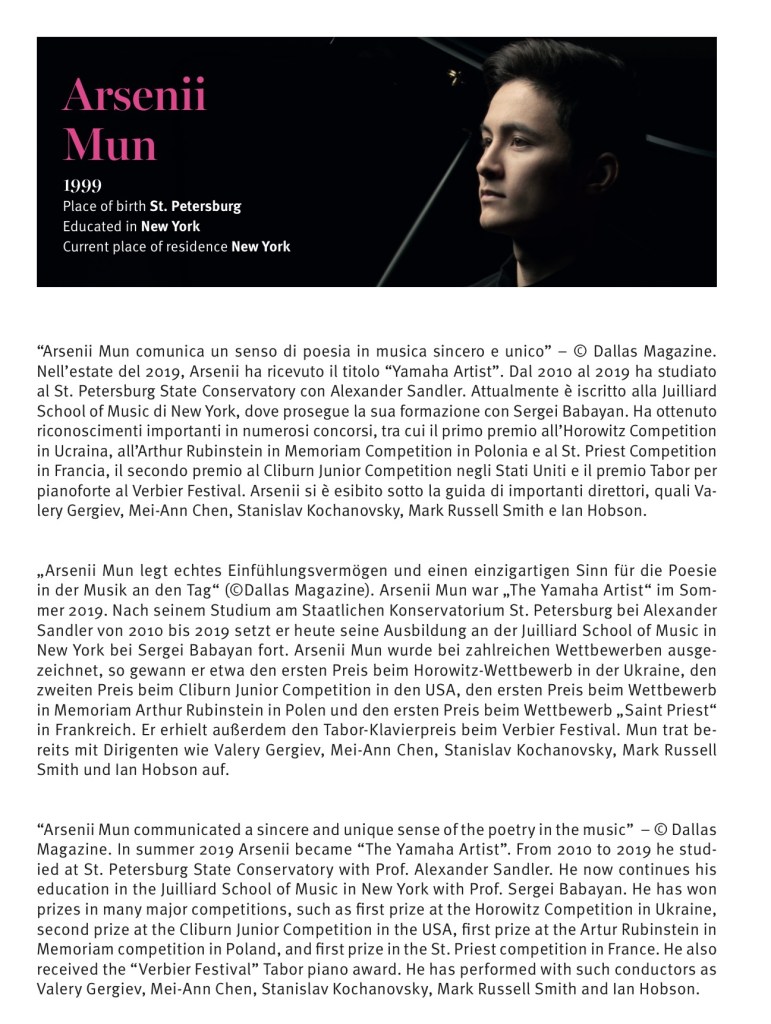
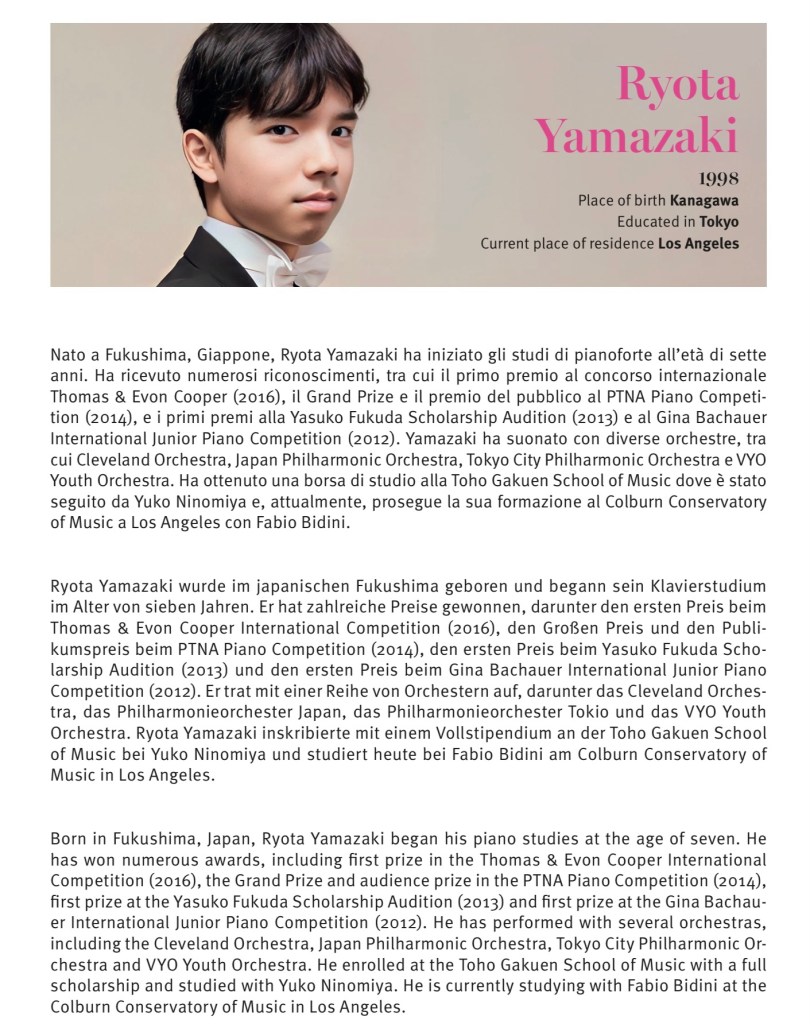
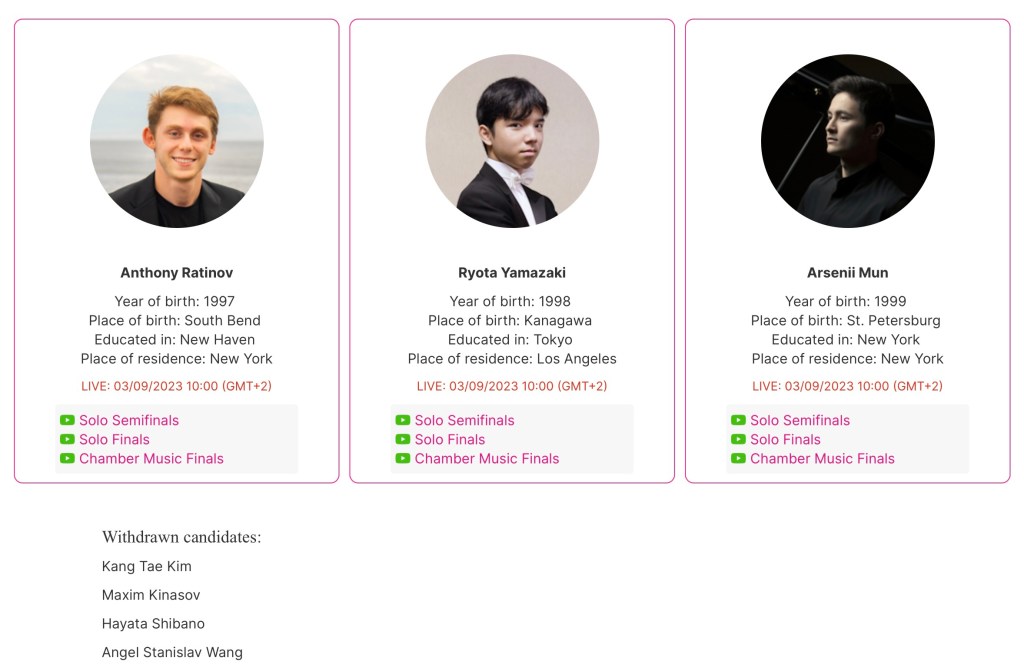
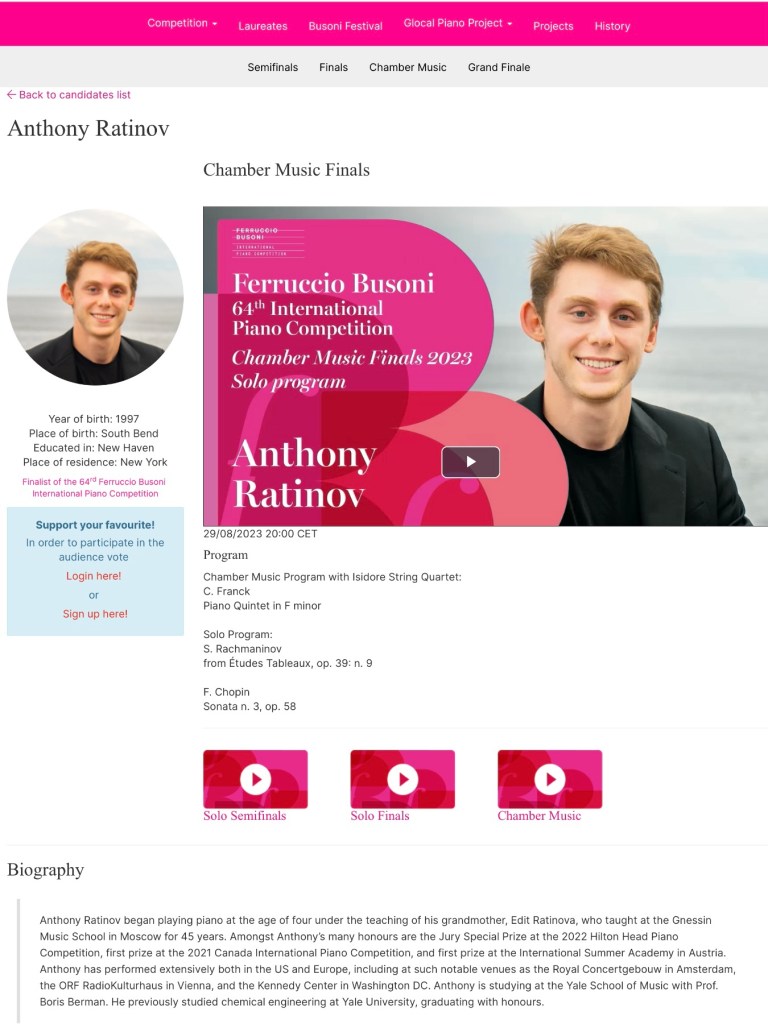
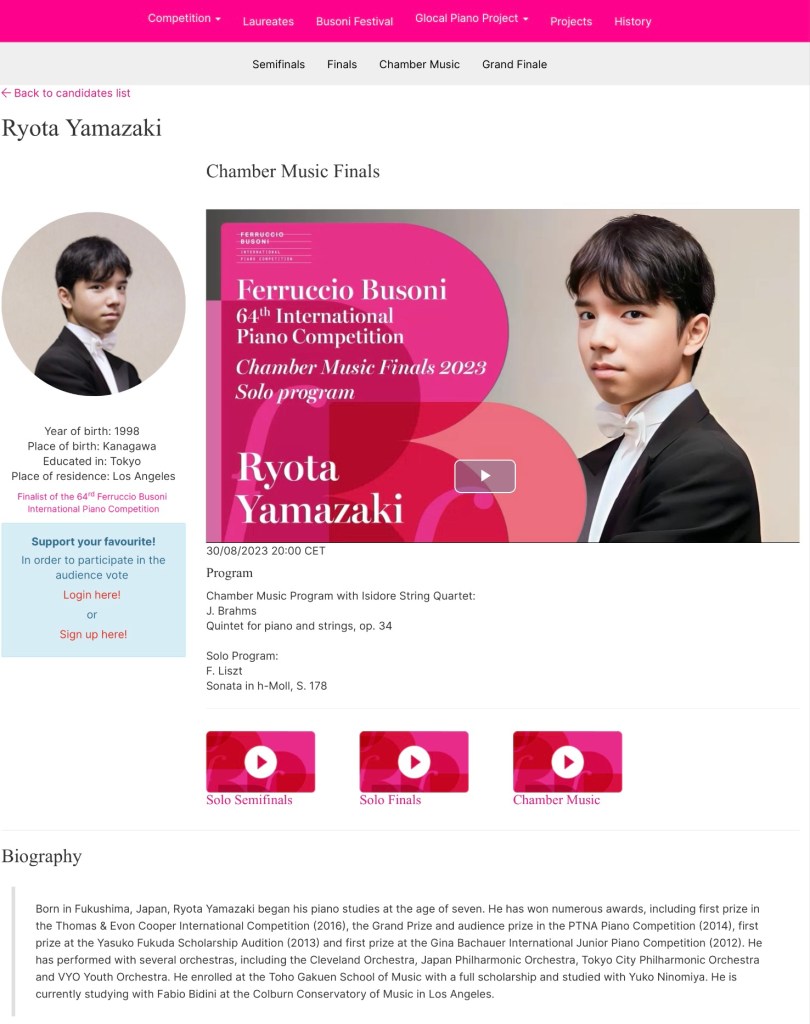
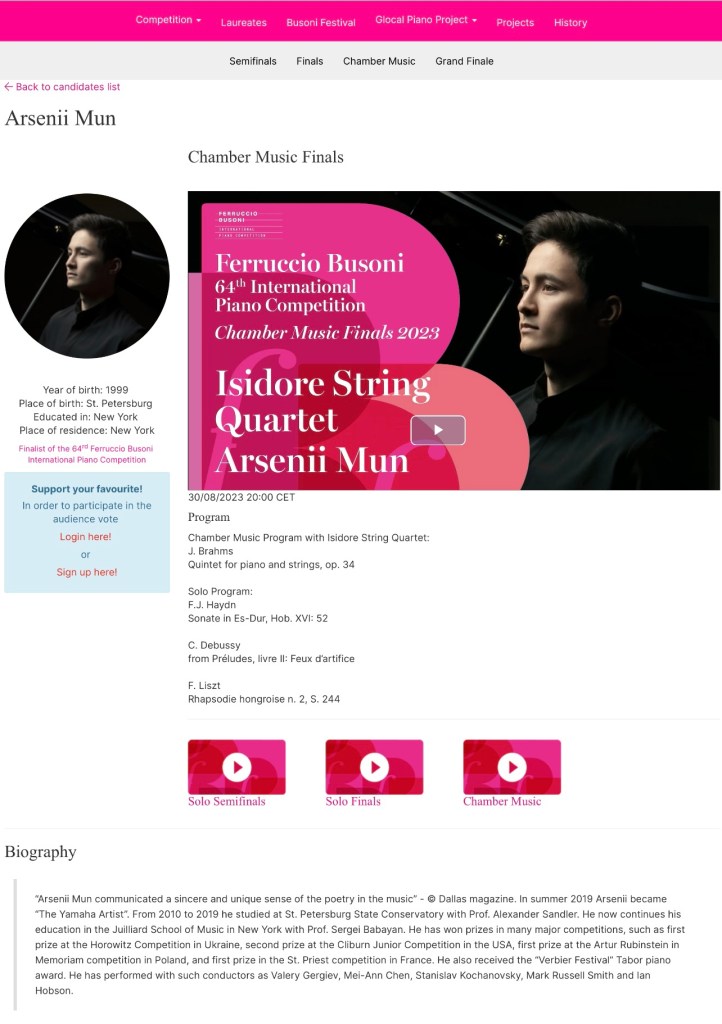
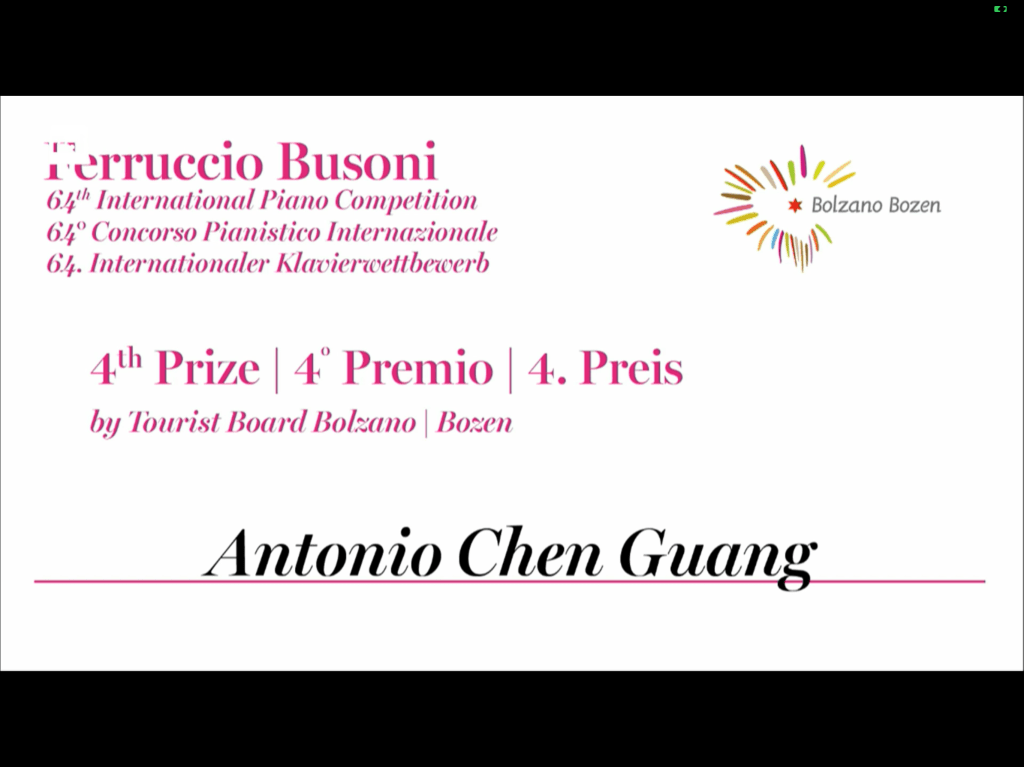
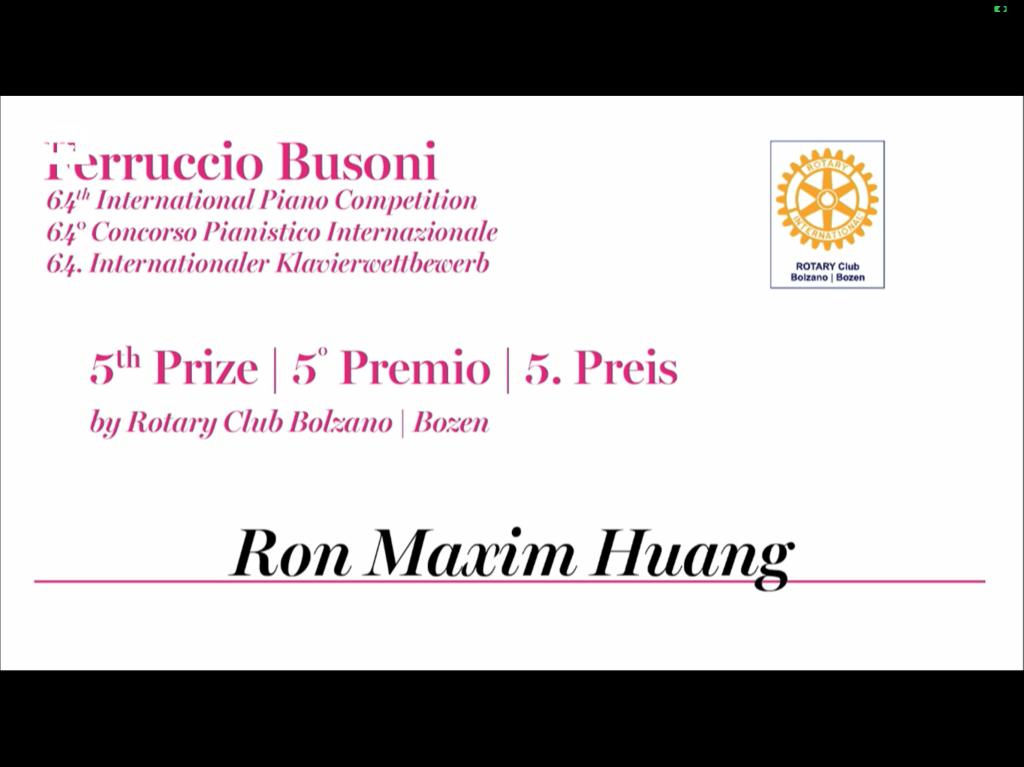
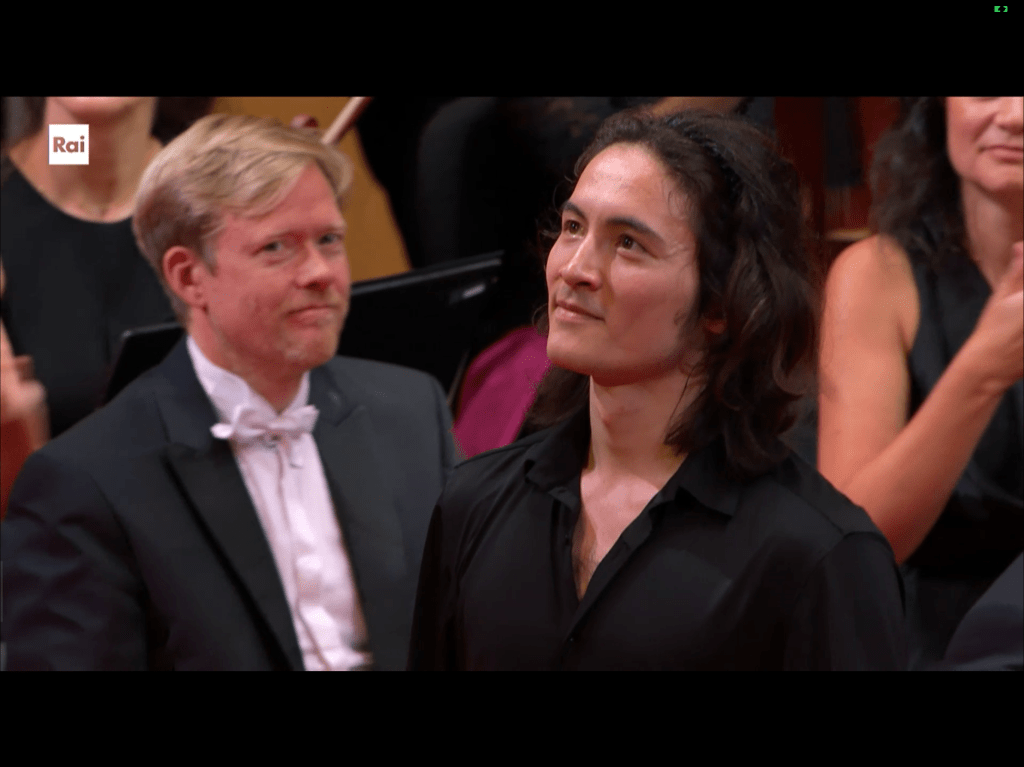
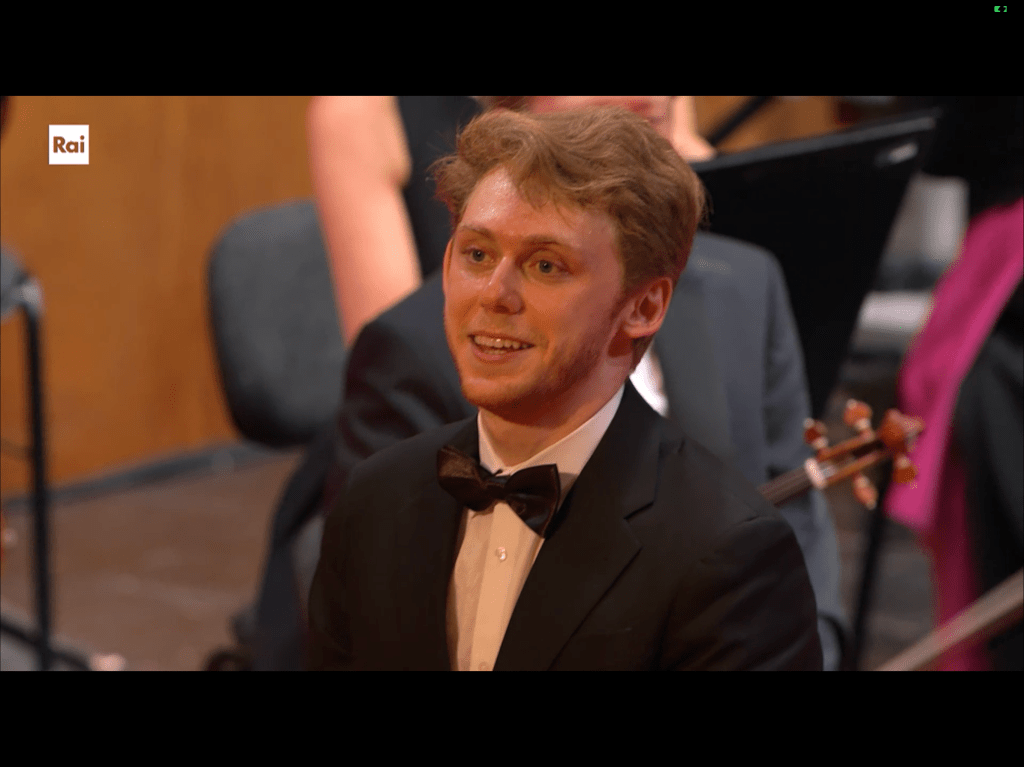
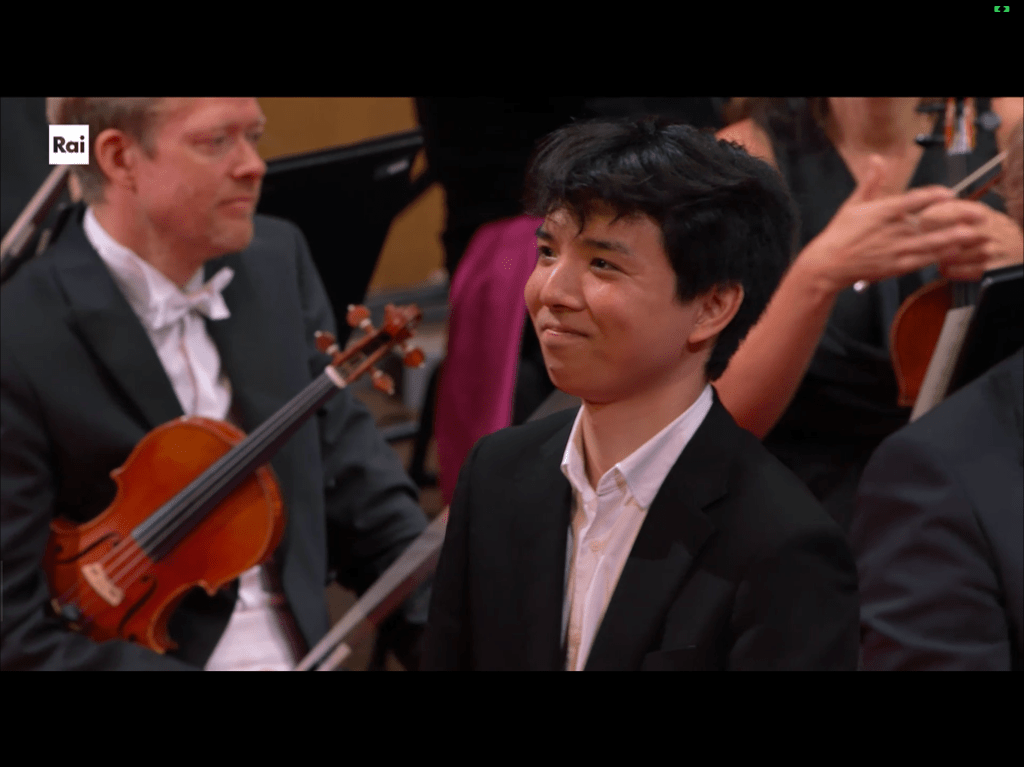
A very impressive Busoni Competition beamed live not only on Italian television but also to a vast Asian audience following throughout the world at a time that was possible for all to enjoy the excitement generated by the competition.A jury with Ingrid Fliter,Imogen Cooper and many other distinguished musicians and operators from the musical world.Steinway pianos presenting a choice of wonderful instruments to the contestants.I personally was very pleased to see that the Chamber Music Final with string quartet also included a major work for solo piano which allowed the jury to be reminded of the artistry of the contestants in the previous rounds.A magnificent orchestra directed by the distinguished conductor Arvo Volmer bought this sumptuous feast to a wonderful conclusion.Ingrid Fliter chairwoman of the jury thanking everyone at the conclusion of the competition The first time in 15 years that the Arturo Benedetti Michelangeli has been awarded Arsenii Mun first prize Audience Prize Arsenii MunAnthony Ratinov 2nd prize Ryota Yamasaki 3rd prize https://christopheraxworthymusiccommentary.com/2023/08/28/and-then-there-were-six-all-the-excitement-of-the-circus-the-busoni-competition/The jury with the three finalists Jury of the final rounds 2023 in Bolzano: Ingrid Fliter (President of the Jury, pianist), Iain Burnside (pianist), Jiang Chen (pianist), Imogen Cooper (pianist), Fulvia de Colle (Artistic Director – Fondazione Musica Insieme), François -Frédéric Guy (pianist), Aleksandar Madžar (pianist), Nicolas Namoradze (pianist), Clemens Trautmann (CEO – Deutsche Grammophon)A very controversial artist,a showman,who thinks more of himself than the music he is serving .But like his mentor Serghei Babayan creates his own world with the notes of the others that can be rather hit or miss but they are prepared to risk all. https://christopheraxworthymusiccommentary.com/2022/05/21/sergei-babayan-artist-in-residence-bewitchedbothered-and-bewildered/ A very impressive Chamber music final where his choice of Liszt 2nd Rhapsody and Feux d’Artifice not to mention Haydn E flat sonata had me appreciating the fact that everything he did was spontaneous and like many jazz players as though in a world of discovery of his own making.His Rachmaninov final with orchestra I found his self indulgent showmanship too much but of all three finalist one had to admit that he was a true artist. ‘So you are a composer …you take the notes of others and make them your own ‘ Karl Ulrich Schnabel exclaimed to a young virtuoso now a renowned pianist .He refused to teach someone who thought more of himself than the composer he was serving. Controversial but some of the sounds he found and moments were memorable and the effect he had on the public was rewarded with the public audience prize,the Michelangeli prize and the Gold Medal! Viva Busoni.A very solid musicianly performance of Prokofiev as you might expect from the class of Boris Berman .Following an equally impressive Chopin B minor Sonata op 58 that he had played in the chamber Music Final together with the Franck Quintet.His Prokofiev 8th sonata in the semifinal had been memorable too .No rhetoric or showmanship but a very impressive architectural understanding of all he does.A wonderful performance of the Chopin op 25 Studies was followed by a very rhetorical Liszt Sonata where strangely he chose to ignore the composers very specific indications in the Chamber music round.The Tchaikowsky Concerto was brilliantly played but suffered from a lack of direction in slow lyrical passages as in his Liszt Sonata earlier .The Andantino semplice slow movement suffered from a lack of direction and flow due to the very slow tempo whereas his mastery and conviction in the more virtuoso passages was of great authority .
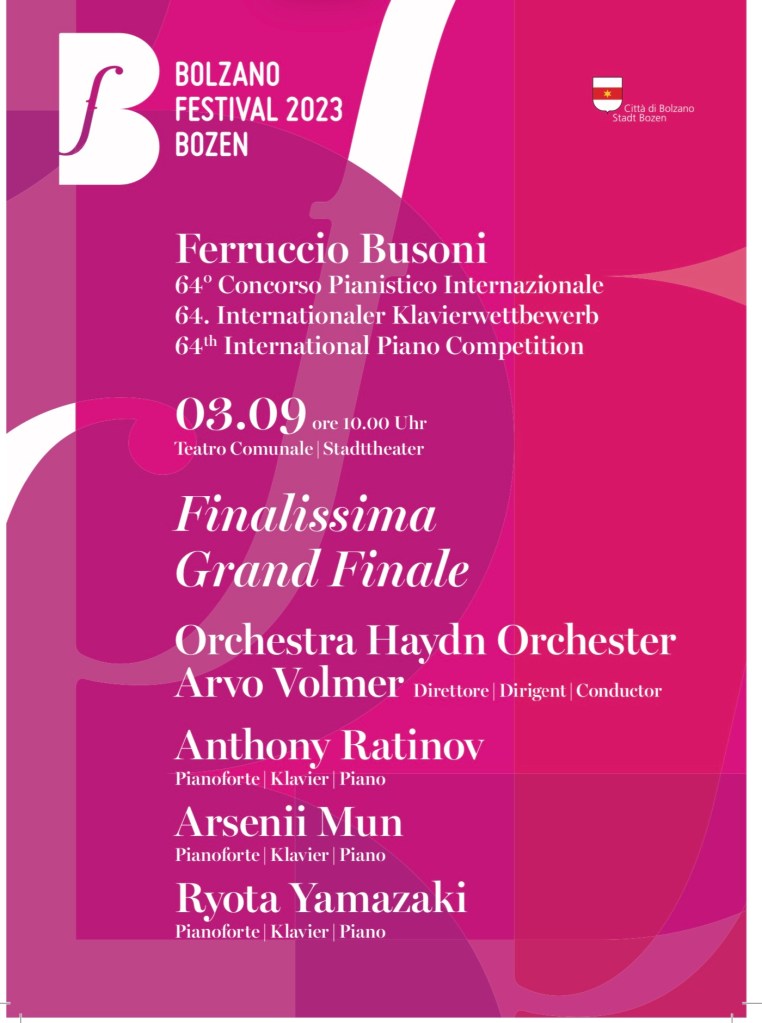
The jury Arsenii MunAnthony Ratinov Ryota Yamasaki The magnificent Haydn Orchestra under Arvo Volmer
Again, the piano world is turning its attention to South Tyrol, where one of the oldest and most renowned piano competitions is entering its all-important decisive phase. A year ago, 110 candidates from almost 600 applicants were invited to participate in the Glocal Piano Project in November 2022. Under this motto, the first round of the competition was held in Steinway & Sons showrooms worldwide over the course of 10 days. The recitals recorded in front of live audiences were professionally recorded, and the jury subsequently appointed the main group of 26 finalists based on the videos. Further candidates got to enter the final stages through the audience vote or were nominated from among prize winners from associated WFIMC competitions; three young pianists were allowed to postpone their 2020 final participation to this year. The audience in Bolzano and the world can look forward to a particularly wide field of participants, with now 32 outstanding young talents!
The final stages in 2023 The structure of the four-part final phase is divided into two solo rounds, a chamber music round, and the grand finale with orchestra, in which only three finalists get to play for the First Prize. This year the chamber music round is divided into a recital and a quintet part, accompanied by the breathtakingly energetic Isidore String Quartet from New York City. The Finalissima with orchestra will be held on a Sunday morning for the first time, a response to a constantly growing interest in Asia. Streaming: Follow the competition live anywhere The gripping, thrilling course of the competition can also be experienced directly from a distance, thanks to the live-streaming of all phases of the competition on
Haydn Orchestra, Arvo Volmer conductor & 3 pianists
September 3 10.00 a.m *all times CET
STAGE+ and Busoni Competition Announce New Cooperation In 2023, Deutsche Grammophon’s recently introduced service STAGE+ will also feature the final rounds of the Busoni Competition. A multi-faceted accompanying program will also feature portraits of the finalists, musical highlights from the solo or chamber music rounds, and a historical summary of the prize-winners of the past four editions. Not only the final rounds of the International Ferruccio BusoniPiano Competition will be part of the exclusive offer in August 2023; in addition, the first-prize winner will be featured in the “Rising Stars”, comprising an audiovisual concert portrait and digital audio releases.
Jury of the final rounds 2023 in Bolzano: Ingrid Fliter (President of the Jury, pianist), Iain Burnside (pianist), Jiang Chen (pianist), Imogen Cooper (pianist), Fulvia de Colle (Artistic Director – Fondazione Musica Insieme), François -Frédéric Guy (pianist), Aleksandar Madžar (pianist), Nicolas Namoradze (pianist), Clemens Trautmann (CEO – Deutsche Grammophon)
Competition rules and prize money
The new competition rules include an increasingly demanding repertoire list, including the preparation of two concerts with orchestra. The prize money donated by the city of Bolzano was increased to 30,000 euros. Including all special prizes, prizes with a total value of over 60,000 euros will be awarded in August 2023. A particular innovation is the Mentoring Program, specially tailored to the Chinese market, which the competition, in cooperation with the Schoenfeld String Competition and its media partner Amadeus.
Two-year management for the prizewinner
The importance of a music competition can be determined by many parameters: the artistic diversity of its candidates, the quality of its jurors, media visibility and networking, and the attractiveness of the prizes. A competition is particularly important if it enables its award winners to make significant appearances. In this way, a music competition does justice to its very own task, to act as a door opener for young talents to international music life. The International Ferruccio Busoni Piano Competition has also concluded various partnerships, which enable the Busoni prize winner to have his own management for a period of two years and thus various bookings at international music institutions . The last award winner, Jae Hong Park, played more than 80 concerts in the period from September 2021 to June 2023, mainly in Europe and Asia. These are the first fundamental building blocks of his international career. The network of international partnerships for engagement and appearance opportunities is constantly growing; Negotiations with national and international concert organizers for the 2023-2025 season are in full swing. —
























 ChristopherAxworthy-MusicCommentary