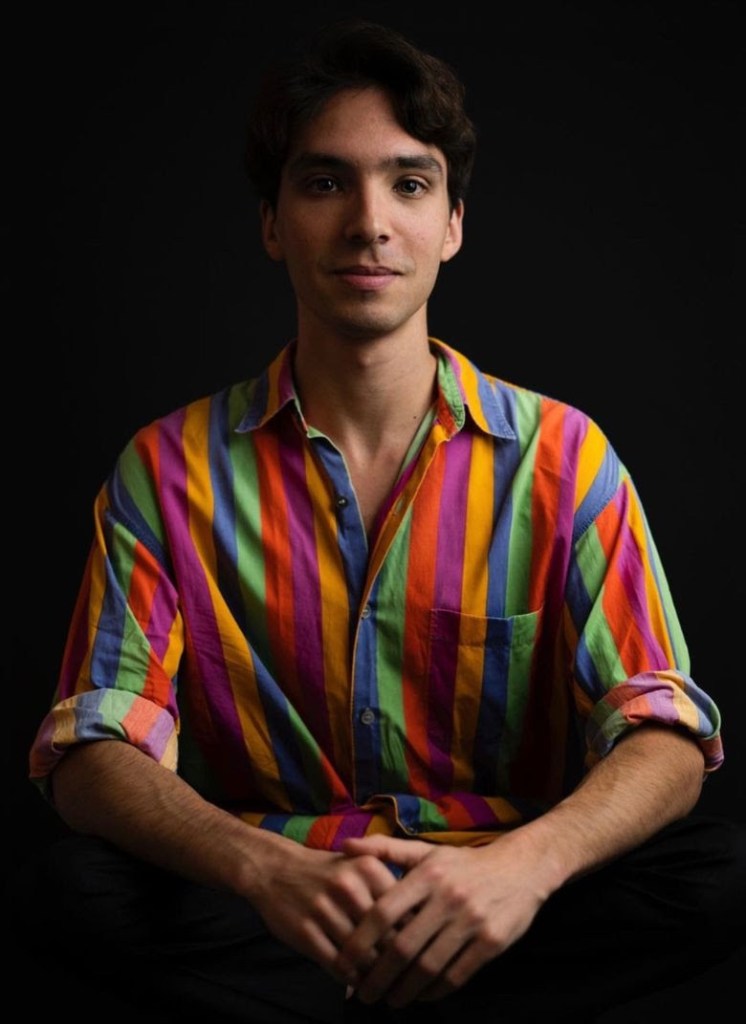
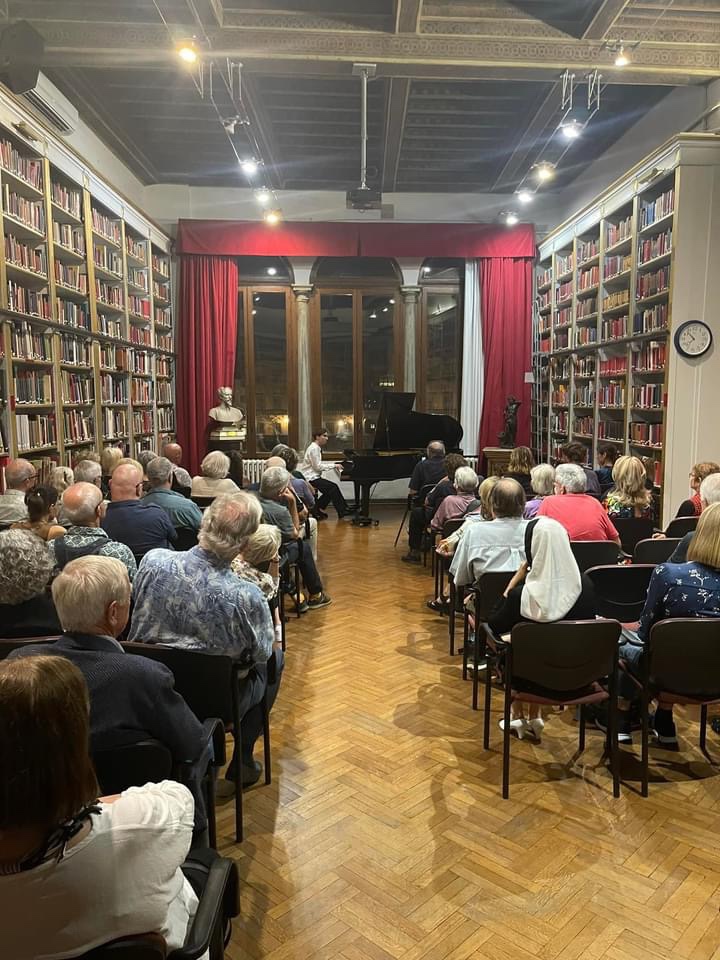
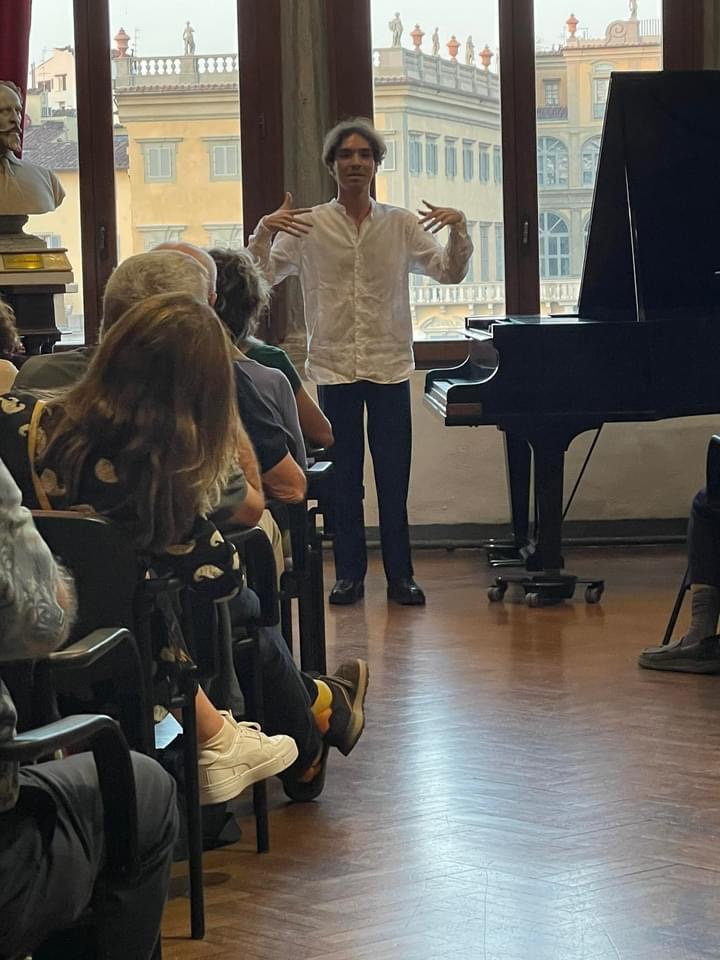
Jonathan Ferrucci is back in his home city of Florence, with the seven Toccatas by Bach,in the Harold Acton library now part of the British Institute.
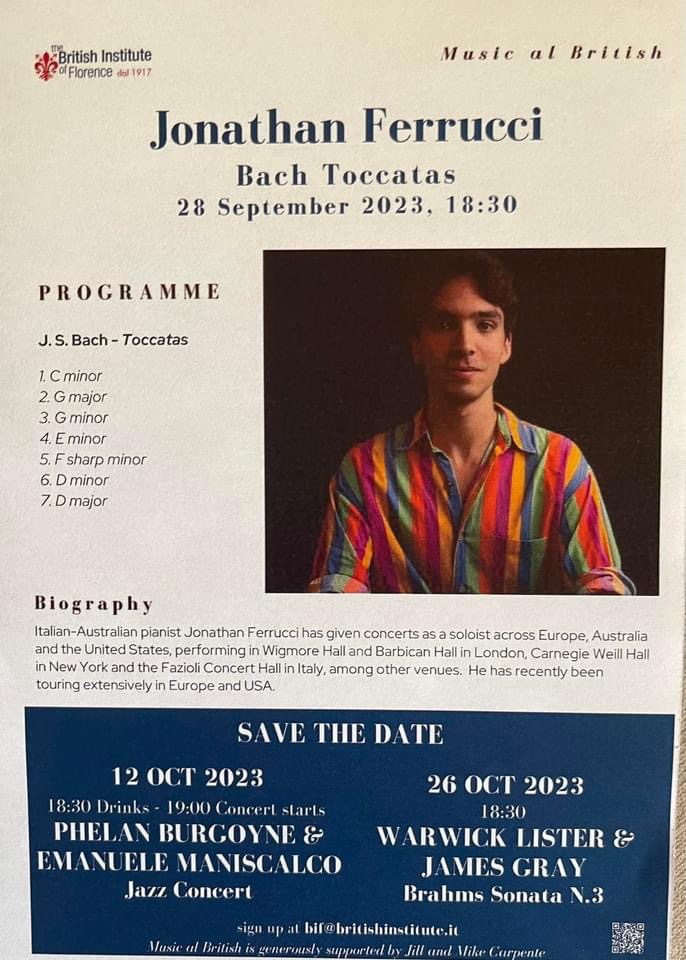
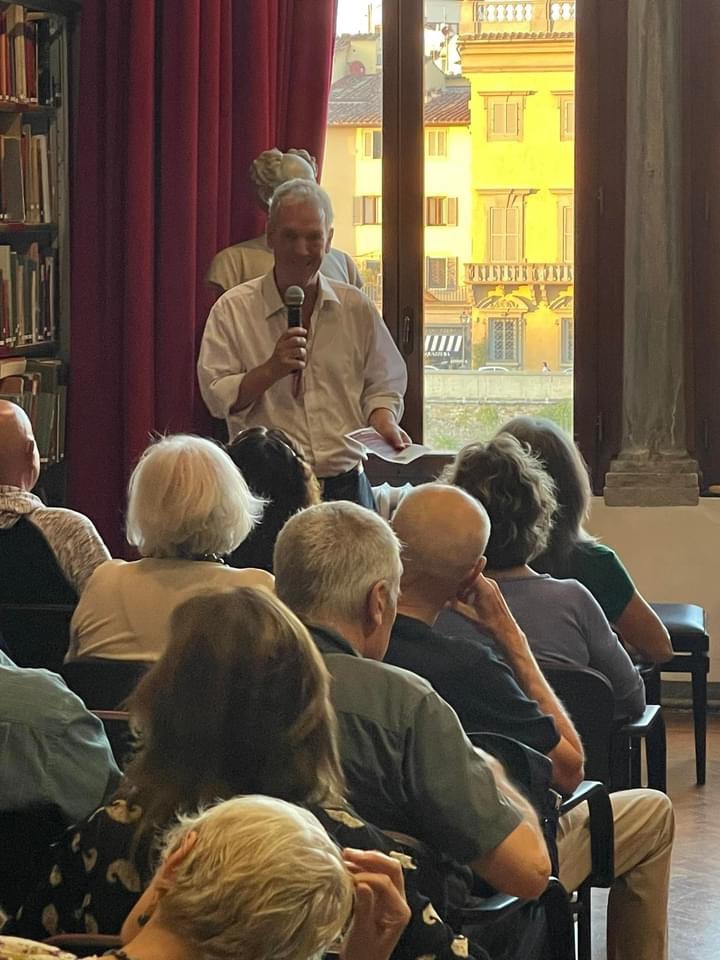
As Jonathan said,’Bach invites you to dance with him’ in these early works inspired by listening to the great organist Buxtehude.An invitation to improvise and ornament in works that do not have a specific formal construction and are very free almost improvised episodes before bursting into flaming showmanship with the sudden eruption of the toccata itself.
Starting with the scintillating C minor and ending with the imperious D major. But what a wonderful surprise the grandeur of the F sharp minor BWV 910 or the very busy knotty twine of the E minor.A kaleidoscope of colour in the opening C minor with a very deliberately paced toccata where the whispered return was as breathtaking as the ecstatic outpouring of glorious exultation of the ending.Ravishing beauty and delicacy of the G major before the popular ditty of the toccata that disappeared into the depths of the Keyboard.What contemplation of the greatly extended D minor.
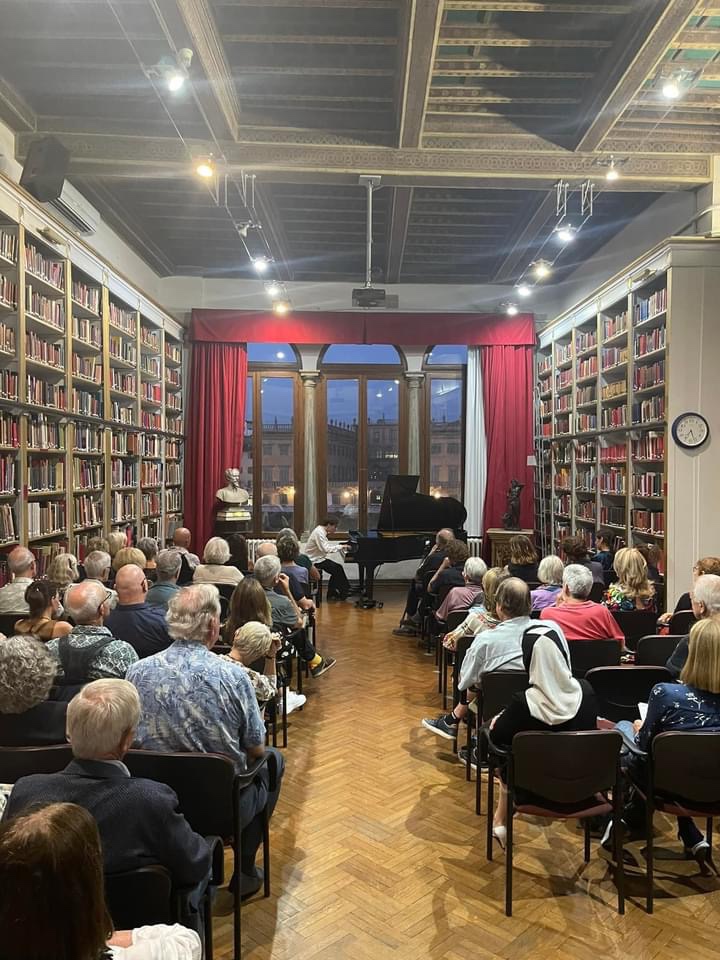
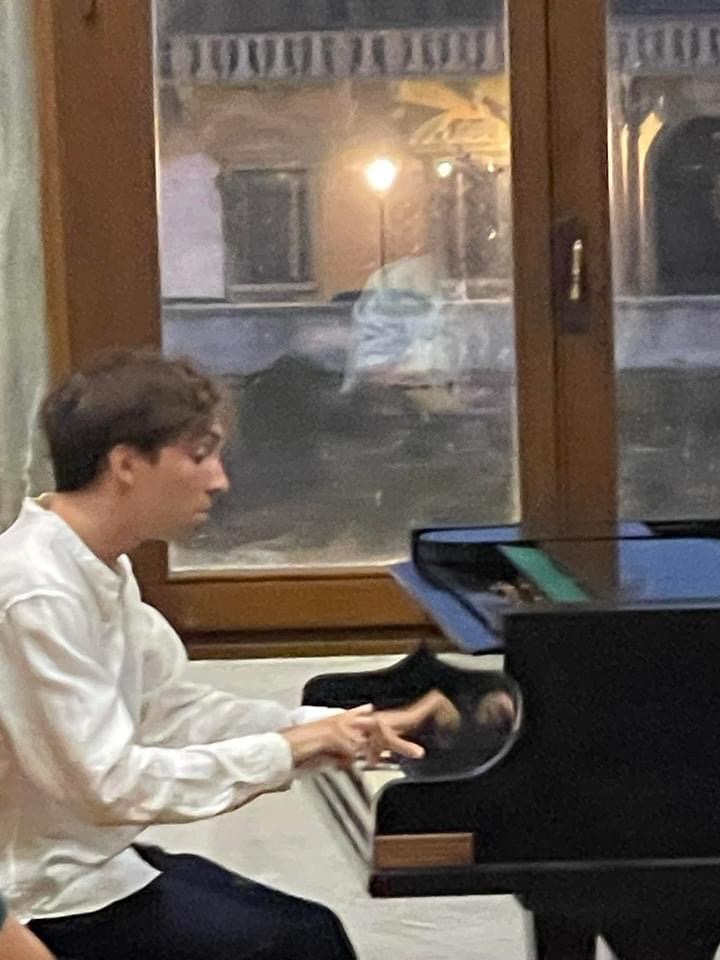
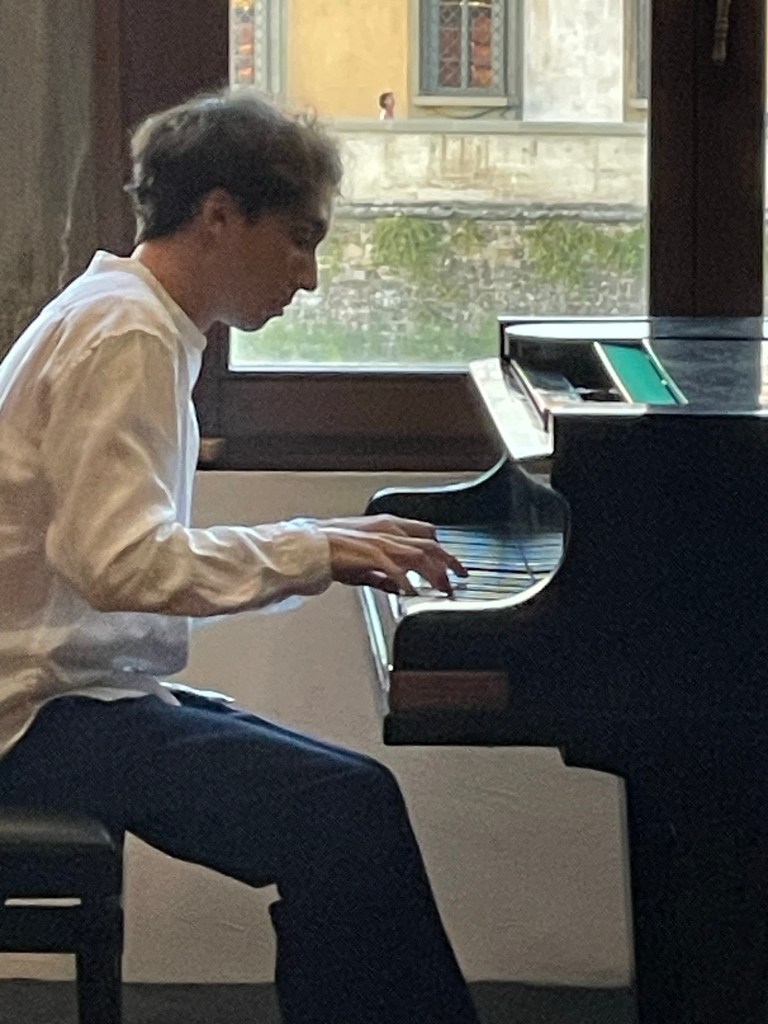
Jonathan had a whole world in his hands and all with the gentle sunset through the beautiful windows turning Jonathan’s silhouette into a room with a remarkable view indeed .
But another Toccata that Jonathan had up his sleeve was truly a breathtaking and exhilarating cleansing of the air .Ravel’s decadent and ravishingly exotic Toccata from a work dedicated to friends sent to their slaughter in the First World War .A whole generation wiped out and denied the better world that Bach had already depicted with mathematical universal genIus.
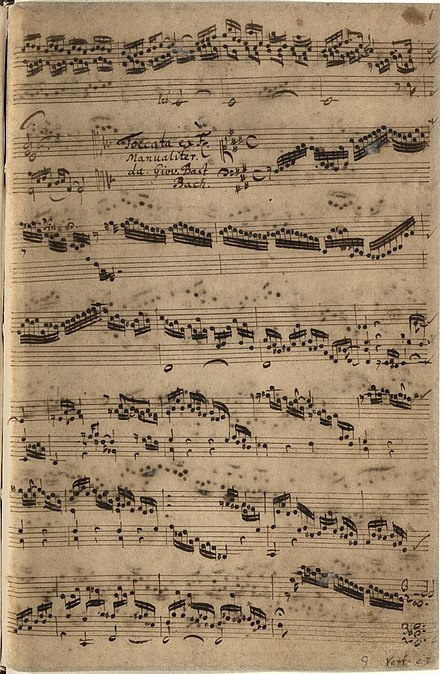
The Toccatas for Keyboard, BWV 910–916, are seven pieces for clavier written by J S Bach Although the pieces were not originally organized into a collection by Bach himself (as were most of his other keyboard works, such as the Well Tempered Clavier and the English Suites etc.), the pieces share many similarities, and are frequently grouped and performed together under a collective title.
The seven Toccatas by J.S. Bach contain some of the great master’s most joyous keyboard music. The toccatas are youthful, improvisatory, virtuoso works, composed in the aftermath of Bach’s trip in 1705 to Lübeck to hear the great organist and composer Buxtehude.
The toccatas represent Bach’s earliest keyboard compositions known under a collective title.The earliest sources of the BWV 910, 911 and 916 toccatas appear in the Andreas Bach Book ,an important collection of keyboard and organ manuscripts of various composers compiled by Bach’s oldest brother, Johann Christoph between 1707 and 1713. An early version of the BWV 912 (known as the BWV 912a) also exists in another collection compiled by Johann Christoph Bach known as the ‘Moller manuscript’ from around 1703 to 1707.This indicates that most of these works originated no later than Bach’s early Weimar years, though the early northern German style indicates possible Arnstadt origin.
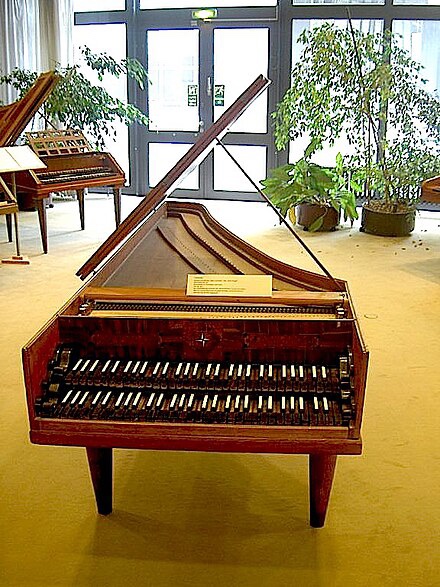
Though the specific instrumentation is not given for any of the works, none of them call for pedal parts and like Bach’s other clavier works, these toccatas are frequently performed on the piano
The actual order of tonight’s performance was C minor BWV.911 – G major BWV. 916 – G minor BWV.915 – E minor BWV.914 – F sharp minor BWV 910 – D minor BWV .913 – D major BWV.912
- Toccata in F-sharp minor, BWV 910
- (Toccata)
- [no tempo indication]
- Presto e Staccato (Fuga)
- [no tempo indication]
- (Fuga)
- Toccata in C-minor, BWV 911
- (Toccata)
- Adagio
- (Fuga)
- Adagio
- (Fuga)
- Adagio / Prest
- Toccata in D-major, BWV 912
- Presto
- Allegro
- Adagio
- [no tempo indication]
- Con Discrezione
- Fuga
- Toccata in D-minor, BWV 913
- (Toccata)
- [no tempo indication]
- Presto
- Adagio
- Allegro
- Toccata in E-minor, BWV 914
- (Toccata)
- Un Poco Allegro (a 4 voci.)
- Adagio
- Allegro – Fuga (a 3 voci.)
- Toccata in G-minor, BWV 915
- (Toccata)
- Adagio
- Allegro
- Adagio
- Fuga
- Toccata in G-major, BWV 916
- Presto
- Adagio
- Allegro (Fuga)
Jonathan Ferrucci at the Trasimeno Music Festival The long voyage of discovery of a real artist
Jonathan Ferrucci KCT American Tour – Goldberg – A voyage of discovery
Jonathan Ferrucci -The essence of music with aristocratic intelligence and passion at St Mary’s
Jonathan Ferrucci -in Vicenza Je joue,je sens je transmets A timeless search in music
Jonathan Ferrucci the return of a warrior The Goldberg Variations in Florence
 ChristopherAxworthy-MusicCommentary