
https://christopheraxworthymusiccommentary.com/2020/02/27/a-lion-in-villa-torlonia-luca-lione-at-teatro-di-villa-torlonia/
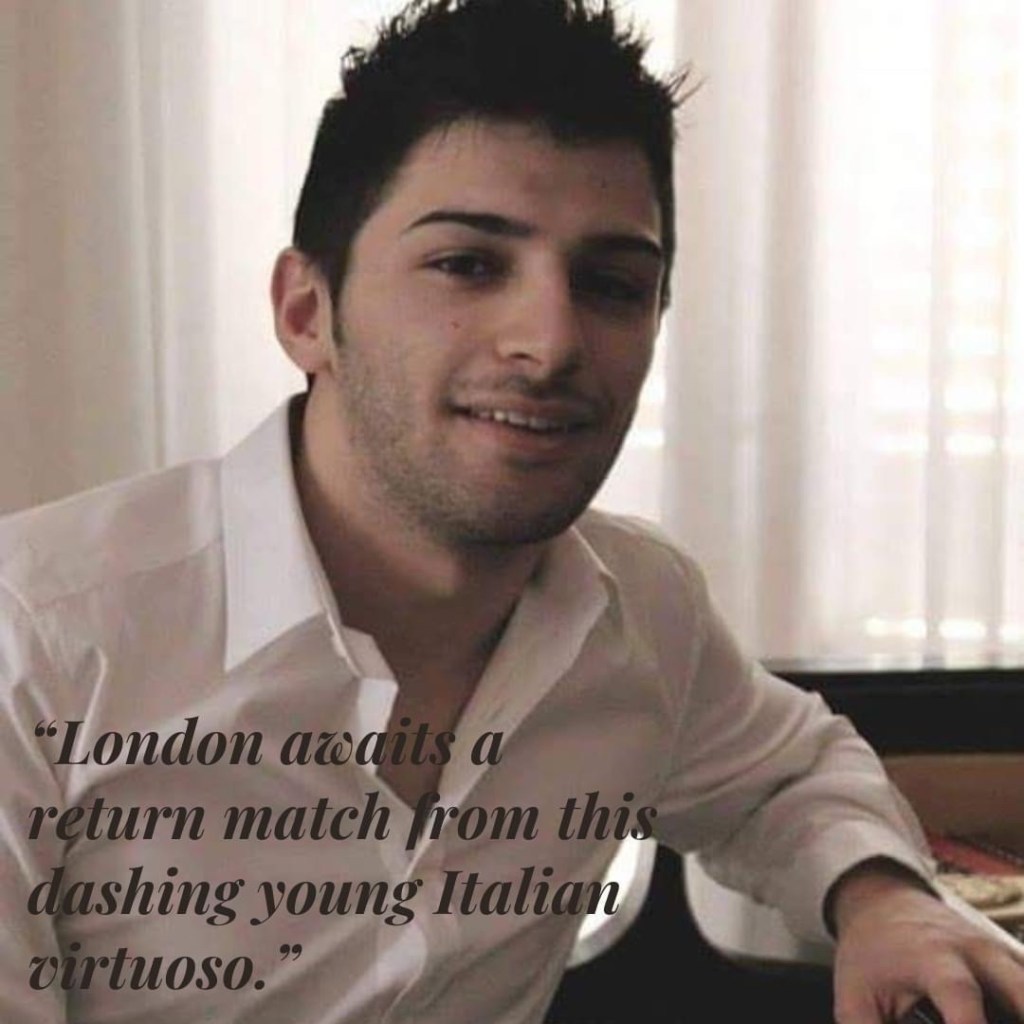
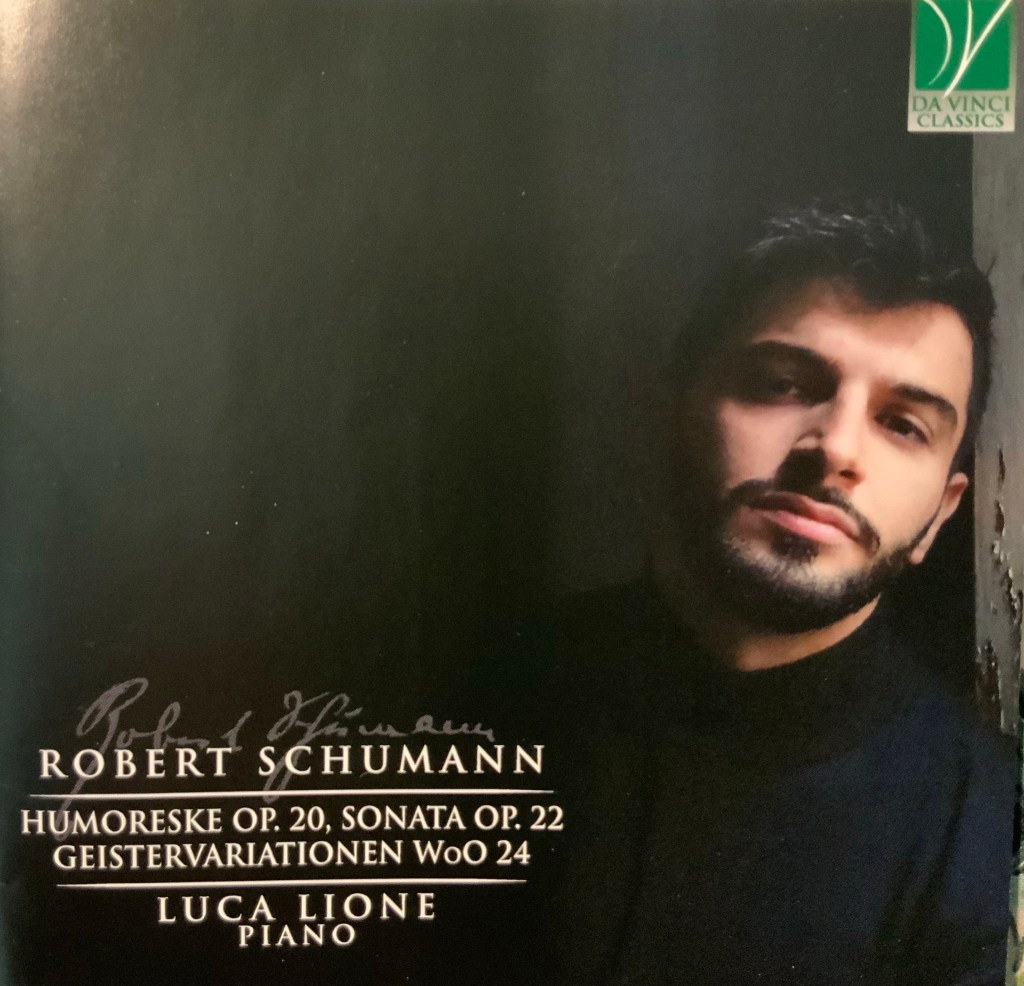
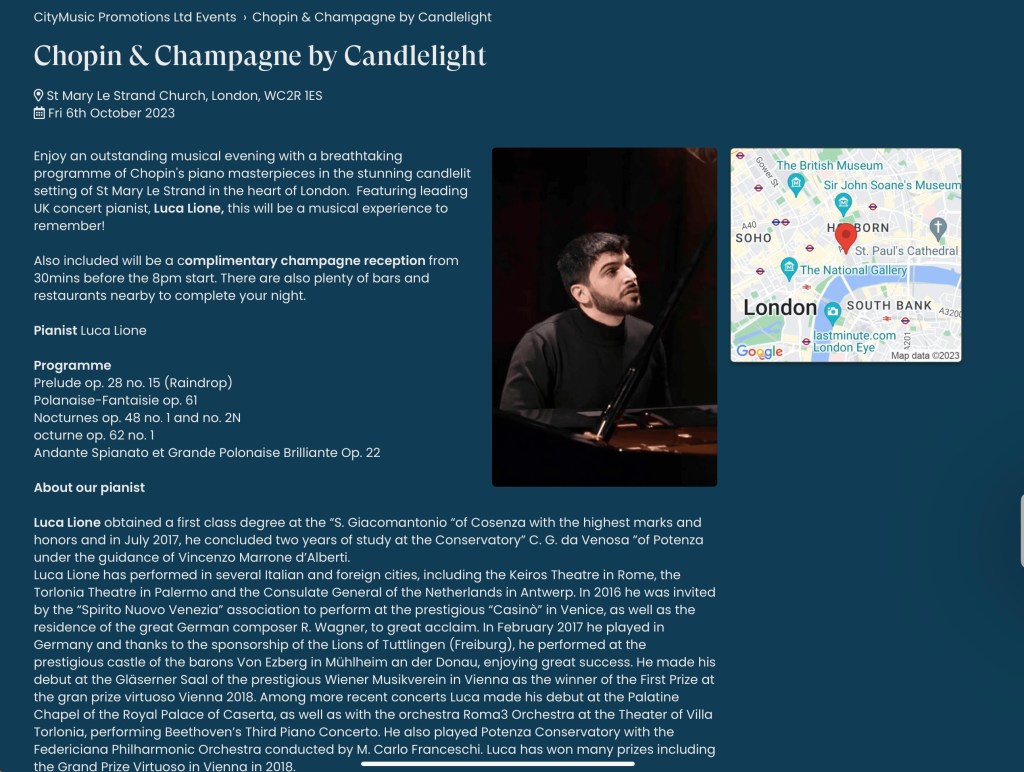
In the Lion’s den last night with a candlelit Chopin and Schumann from a dashing young Italian virtuoso.
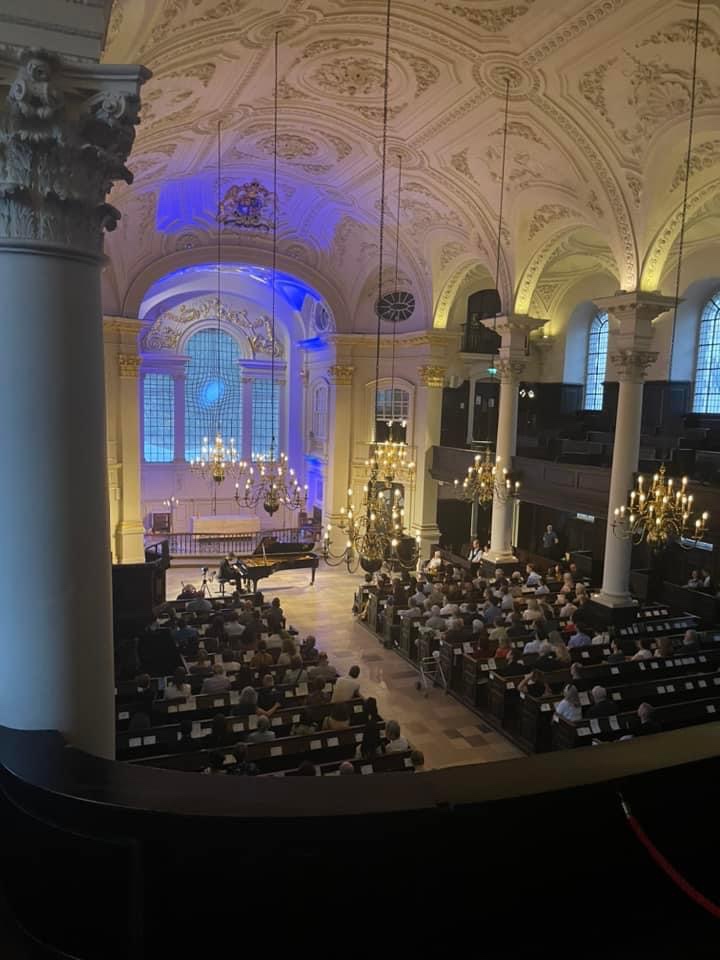
A standing ovation and shouts of ‘ Bravo Luca ‘ from fellow Italians who had ventured into St Martin’s in Trafalgar Square to be ravished and seduced by the beauty and passion of such romantic sounds from the hands of Luca Lione.

https://christopheraxworthymusiccommentary.com/2023/08/02/tyler-hay-reaching-for-the-stars-from-candlelight-to-starlight-a-masterly-display-of-artistry-and-showmanship-at-st-martin-in-the-fields/
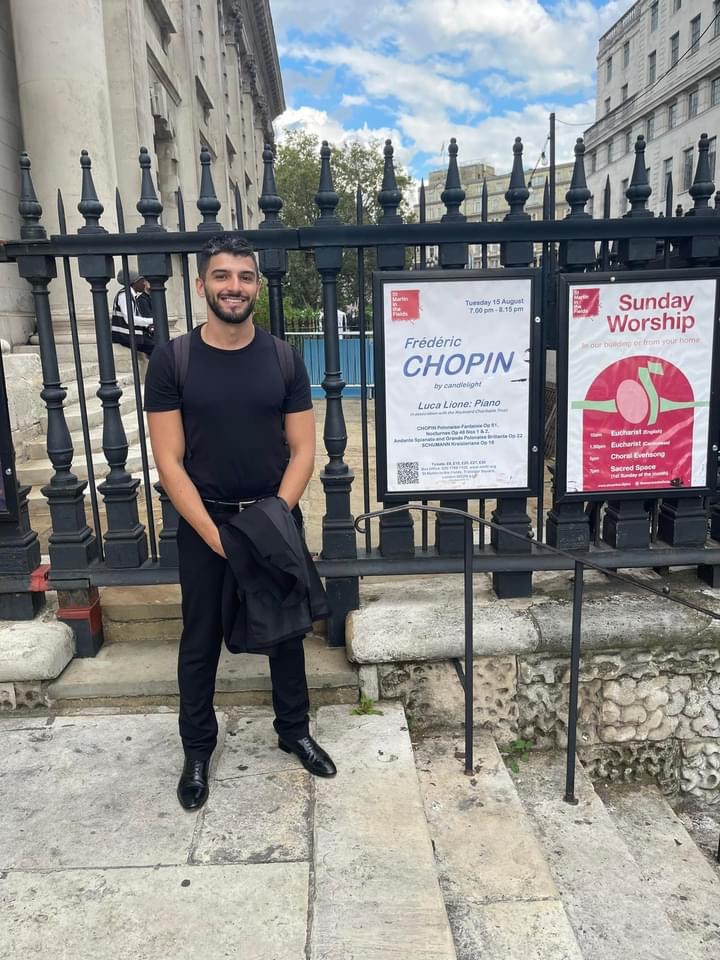
Invited by John Landor and the Keyboard Trust to bring over the sun and warmth from his home in Calabria and to share Ferragosto- the biggest bank holiday in Italy- with us in London.

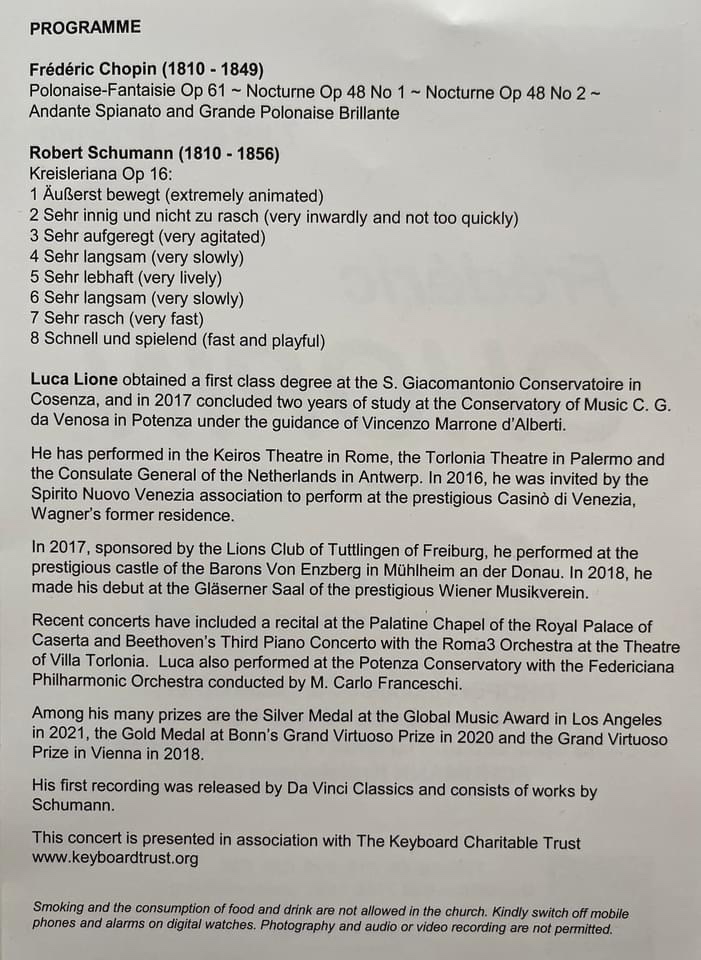
Chopin’s Polonaise Fantasie opened with ravishing timeless sounds as the imposing opening chords were allowed to vibrate over the entire keyboard wafting into the cavernous beauty of this glorious edifice.Each chord with a different inflection as the fantasy world of Chopin led to the Polonaise where the two were mixed in a wondrous land that Chopin could envisage just three years before his early death on October 17,1849 ,when Poland’s greatest composer, Frédéric Chopin (1810-1849) died aged only 39. There was a beautifully mellifluous central episode with some very expressive inner counterpoints that Luca highlighted with aristocratic good taste and consummate artistry.The return of the opening heralded the quickening of adrenaline leading to a tumultuous climax of glorious sounds that were allowed to die away to a whisper as this masterpiece drew to its breathless conclusion.
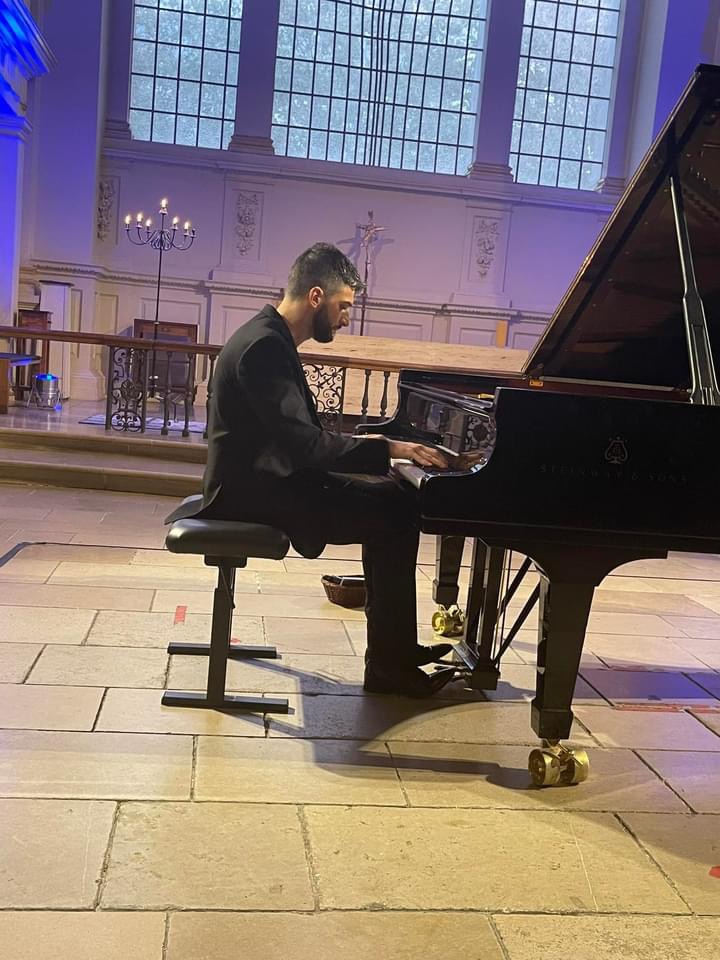
The most noble of nocturnes op 48 n.1 was played with the same beauty that was to follow in the ‘Andante Spianato.’A sense of balance that allowed the melodic line to speak so expressively on a cloud of poetic harmonies.Chords unfolded with ravishing beauty as the passion mounted culminating in a climax that spilled over into the return of the opening melodic line but this time on a cloud of moving,agitated sounds.
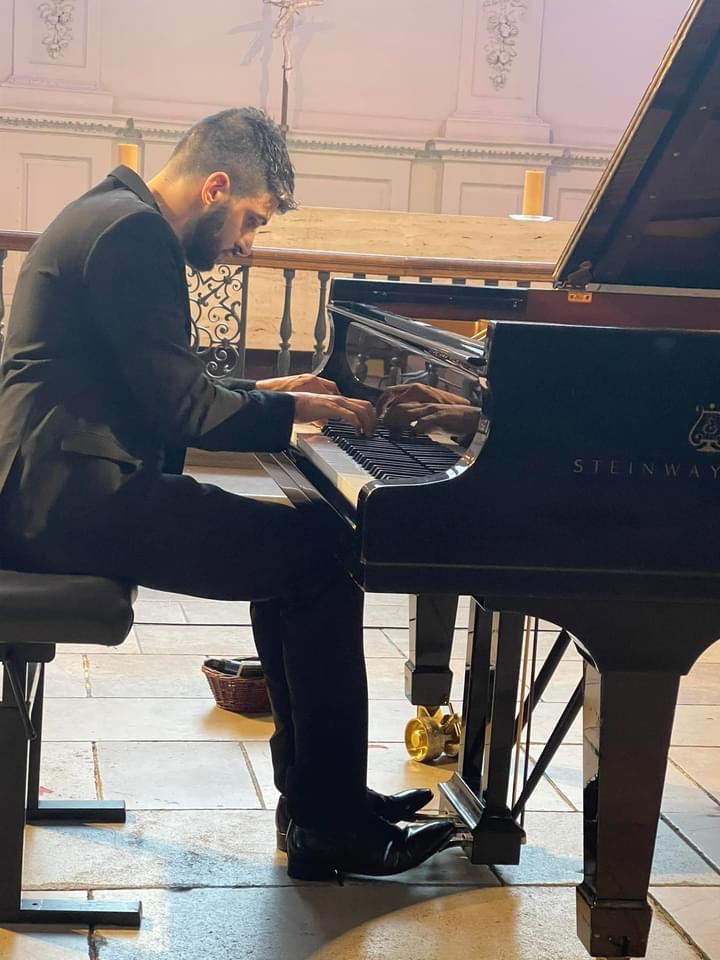
It’s companion op 48 n.2 was played with simplicity and beauty.An unbroken stream of golden sounds interrupted by a central episode of elusive,questioning chords with the opening returning with trills that were mere vibrations of pulsating beauty dissolving into the extremities of the keyboard.A final chord placed with the infinite care of a true poet.
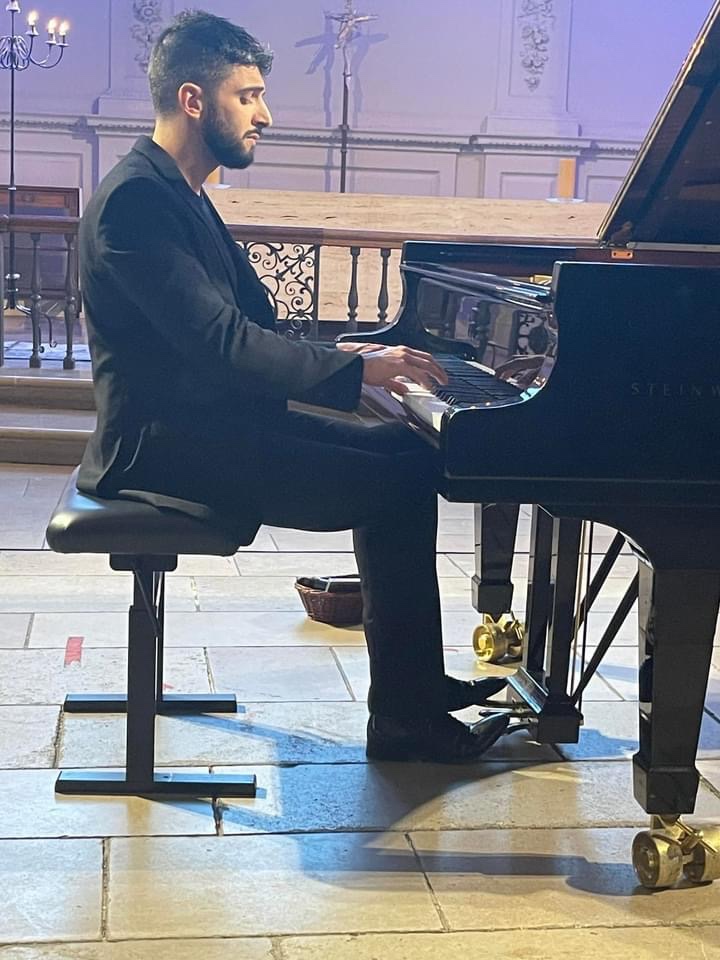
The chiselled beauty of the ‘Andante’ were floated on a wave of ‘Spianato’ with sounds of purity and luminosity and very expressive changes of harmony dissolving into a mazurka played with disarming simplicity and beauty.The Polonaise burst onto the scene with the ‘Molto allegro’ orchestral introduction of one of only six early works for piano and orchestra :the two concertos op 11 and 21;the variations op 2 on Mozart’s ‘La ci darem la mano’;the Fantasy on Polish Themes op 13 and the Krakowiak op 14.This Polonaise op 22 entering ‘meno mosso’ with the beauty of Bel canto and a jeux perlé of beguiling style and kaleidoscopic colour.There were moments of great virtuosity too that Luca played with power and transcendental control but it was the innocence and purity of Chopin’s early genius that he was able to capture with playing of poetic freedom.Allowing his virtuosity full reign only in the final few pages that brought spontaneous applause and a ‘ Bravo Luca’ from this large audience captivated by the beauty revealed by such soulful performances.

A brief pause for a much needed glass of water as Luca charmingly explained to an audience captivated already by this young man’s charm and bravura.
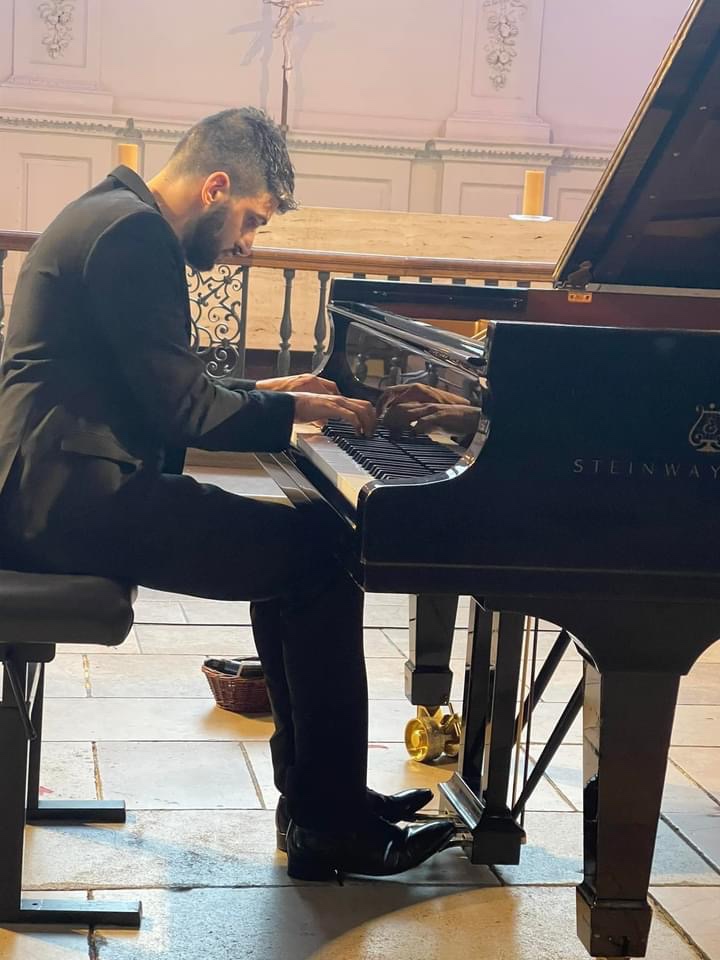
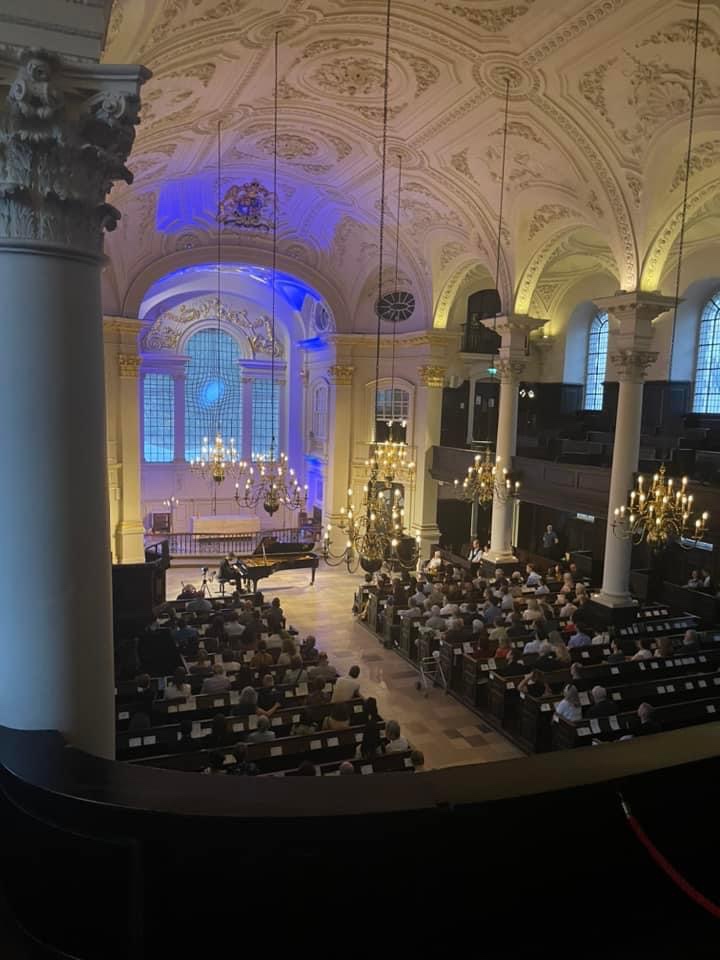
The eight movements that make up Schumann’s Kreisleriana op 16 opened with a passionate outpouring of beautifully shaped sounds that led without any slackening of the pace to the fleetingly mellifluous central episode.He found some beautiful inner colours hidden below the outpouring of song of the second movement that was interrupted only by the dynamic energy of the first episode and the sweeping question and answer of the second.There were biting rhythms to the third movement with its contrasting ‘etwas langsamer’ central episode and a melodic line of voluptuous sounds before the passionate race to the finish.The fourth movement was played with simplicity and beauty and a stillness that suited the magic atmosphere of a church illuminated by candles as dusk settled outside as seen through the vast window that is the backdrop of tonight’s concert.Quixotic energy and Schumann’s beloved dotted rhythms in the fifth movement gradually turned into a melodic line of driving passion only to disappear as if by magic into oblivion.The ravishing beauty of the sixth movement was interrupted only by the frantic dynamic drive of the seventh.Played with a brilliance and speed of lightening that struck like a sudden electric shock.Some transcendental playing at a speed that Schumann implores to be played ever faster before a coda of startling contrast of poetry and meaning.The final movement with it’s impish capriciousness was interrupted only by two ever more passionate outpourings before dissolving into a whisper deep in the bottom of the keyboard.

Two encores by great request were offered to a public now on their feet to applaud this young man who had brought a ray of sunshine with him from the 35 degrees he had just left in the toe of Italy.A beautifully simple Scarlatti Sonata in G K.455 and the tumultuous Etude tableau op 39 n.1 by Rachmaninov whose 150th anniversary is being celebrated this year.

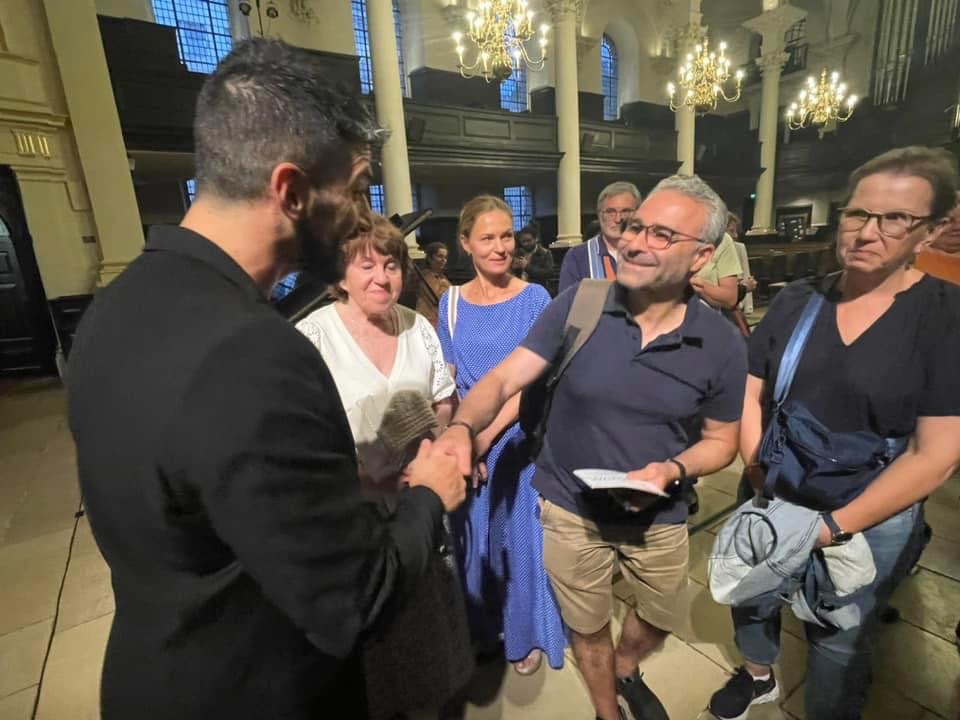
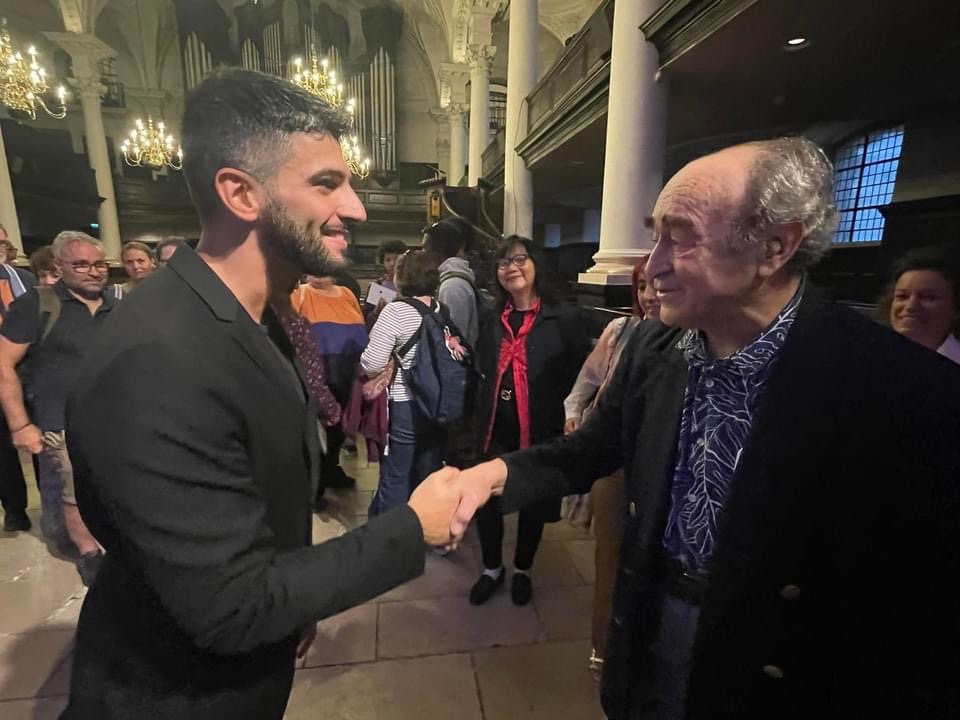
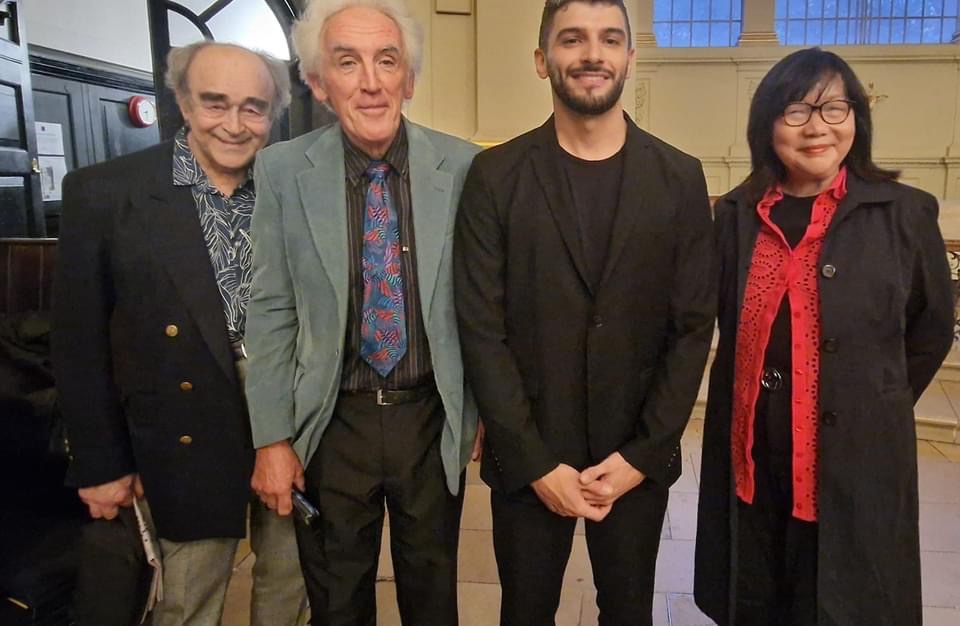
Surrounded by admirers young and old after the concert Luca was happy to share his Ferragosto with us in London instead of like the rest of his compatriots in Italy who seek refuge from the searing heat fleeing the great cities to sit and ponder for this holiday week on the beautiful beaches of what Rostropovich called ‘The Museum of the world’.
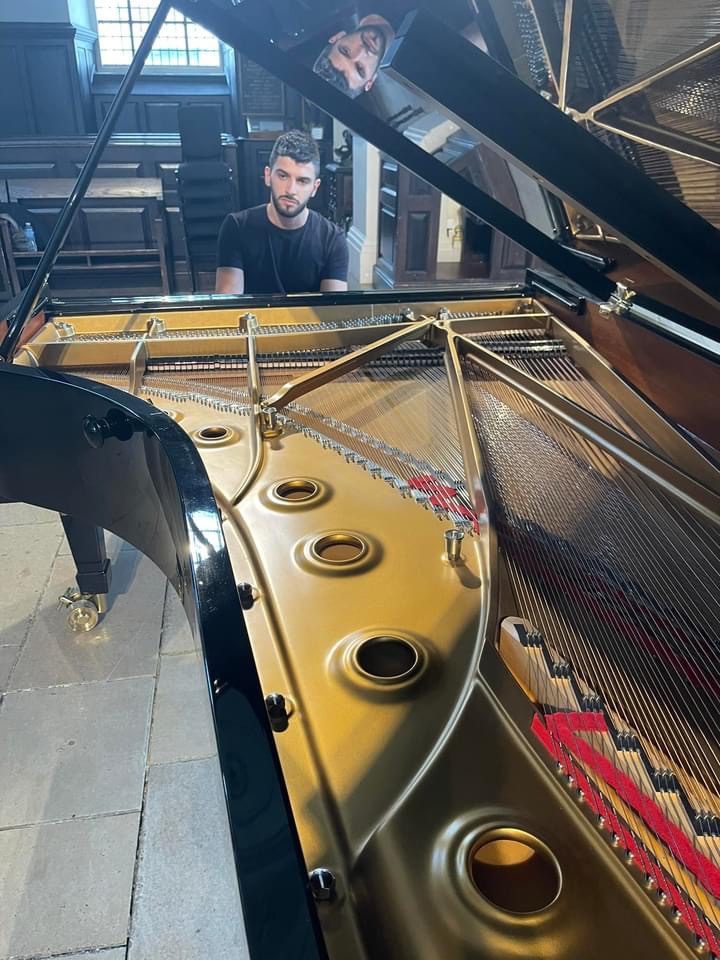
LION AND LIGHT OF THE KEYBOARD by Simonetta Allder

“Lei è Lione di nome e leone del pianoforte”, is how I addressed Luca Lione last night after his extraordinary performance at St. Martin-in-the-Fields August 15th “Candlelight Concert” which I attended thanks to an invitation by Christopher Axworthy to whom my gratitude (along with that of the thousands of talented musicians he has mentored and supported) goes. This isn’t a review but, rather, the drooling record of my appreciation. I am a ballet critic, not a musicologist, yet sufficiently versed to say that I was stunned by the sheer difficulty of the programme Luca Lione chose to offer us last night. His fingers danced and jeté-ed to Robert Schumann’s Kreisleriana and some of the most devilishly intricate pieces of Chopin with more ease than water flowing down from Niagara Falls; had it been possible to generate hydroelectric power from the energy of Lione’s playing, one would have been able to light up an entire city. “Mi chiami Luca!” (Call me Luca), said this young Calabrian pianist to me, with the humility that distinguishes the very great from the great. Obsessed as I am by the genius of language, I cannot help musing that it suffices to replace the “a” at the end of his name with an “e”… and in Italian one gets the word for light: “luce”. Luca Lione is indeed a powerful shining light among the top pianists of today.
https://christopheraxworthymusiccommentary.com/2023/02/23/alberto-portugheis-a-renaissance-man-goes-posk-to-celebrate-the-213th-birthday-of-fryderyk-franciszek-chopin/
I was particularly struck by a comment last night by the great pianist Alberto Portugheis, a dear friend, who was sitting next to me during Luca’s recital: “He isn’t an interpreter, he doesn’t try to be more original or faster or better than other pianists: he plays like a composer, as if the music were his own!” Gosh… goose pimples. Alberto’s words say all there is to say. Last night, as young and handsome Luca Lione sat at the Steinway, we were in fact listening to Frédéric Chopin and Robert Schumann playing their own music as they themselves had heard it played by the angels of inspiration and written it down. What a blessed, blessed experience.’ Simonetta Allder
https://christopheraxworthymusiccommentary.com/2016/12/13/a-birds-eye-view-of-a-very-happy-occasion-martha-argerich-and-alberto-portugheis-wigmore-hall-75th-birthday-celebration/


The Polonaise-fantaisie op 61 Is dedicated to Mme A. Veyret,and was written and published in 1846 in late autumn: in Paris, London and Leipzig. Its shape and its style caused much consternation. It was quite some time before listeners could come to terms with it and appreciate that ‘the piano speaks here in a language not previously known’.Liszt’s opinion of the work, expressed in his controversial monograph from 1852 did a great deal of damage, stating that the Polonaise-Fantasy was dominated by ‘an elegiac tristesse ….punctuated by startled movements, melancholic smiles, unexpected jolts, pauses full of tremors, like those felt by somebody caught in an ambush, surrounded on all sides…’. Frederick Niecks’s stated that the Polonaise-Fantasy ‘stands, on account of its pathological contents, outside the sphere of art’.
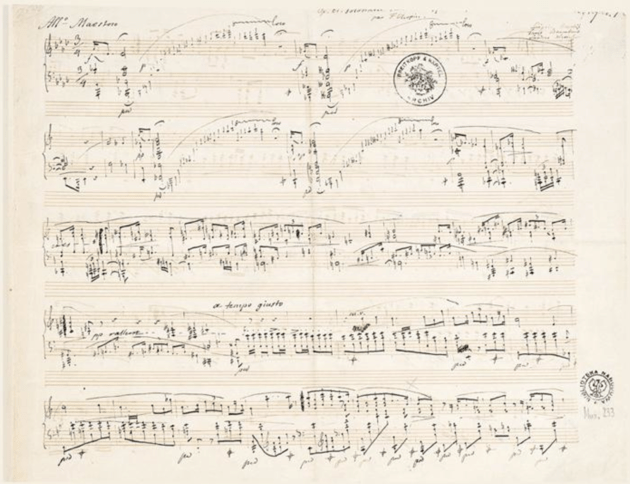
It was slow to gain favour with musicians, due to its harmonic complexity and intricate form.One of the first critics to speak positively of the work, writing in 1947 stated that it “works on the hearer’s imagination with a power of suggestion equaled only by the F minor Fantasy op 49 or the fourth Ballade op 52”, Justice was rendered to it as a wonderful poetical vision expressed in the language of a grand pianistic poem by great pianists such as Horowitz, Rubinstein ,Cortot and Richter.Arthur Hedley, writes about the ‘spirit that breathes’ in Chopin’s polonaises: ‘pride in the past, lamentation for the present, hope for the future’.
The Nocturnes, Op. 48 are a set of two nocturnes written in 1841[and published the following year in 1842. They are dedicated to Mlle. Laure Duperré. Chopin later sold the copyright for the nocturnes for 2,000 francs along with several other pieces.The Nocturne in C minor n.1 is one of the more well known nocturnes, and has been categorized as one of Chopin’s greatest emotional achievements.Notable comments have said :”the design and poetic contents of this nocturne make it the most important one that Chopin created; the chief subject is a masterly expression of a great powerful grief.””broad and most imposing with its powerful intermediate movement, a thorough departure from the nocturne style.””the noblest nocturne of them all.””the most imposing instrumental effect of any of the nocturnes,” with the crescendo and octaves “almost Lisztian”The nocturne intensifies “not through ornamentation, but through a new textural background.” and “is the tale of a still greater grief told in an agitated recitando; celestial harps come to bring one ray of hope, which is powerless in its endeavor to calm the wounded soul, which…sends forth to heaven a cry of deepest anguish.”

The Nocturne in F sharp minor n.2 where compared with the more melancholy outer themes, the middle section, più lento, is completely different and “is finer” and contains “soothing, simple chord progressions.”Chopin once noted that the middle section was like a recitativoand should be played as if “a tyrant commands, and the other asks for mercy.”
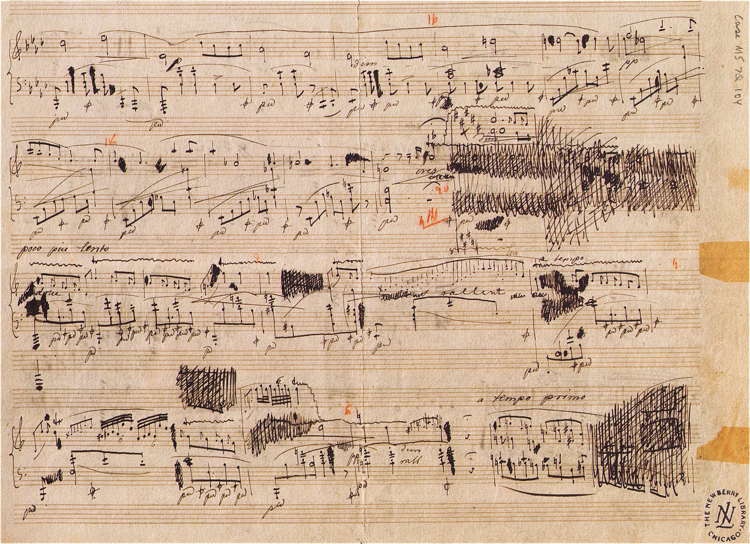
The Andante spianato e Grande Polacca brillant was written between 1830 and 1835. The Andante is for solo piano, while the Polacca features orchestral accompaniment.It was written in two stages, approximately five years apart. Chopin wrote the Grande Polacca between 10 September and 25 October 1830 and it is the most virtuosic of his youthful ones, conceived when he was still in Poland.The initial part, Andante spienato , was instead composed later, in 1835 and was initially thought of as a nocturne due to its lyrical and romantic tone, but then the musician thought he could use it as an introduction to the previously written Polonaise brilliant . The finished composition was performed in public on April 26, 1835 in a charity concert in the Salle de Concert of the Conservatoire National de Musique with Chopin himself at the piano and the direction of Francois-Antoine Habeneck , considered at the time the most important conductor. The work was published the following year under the title Grande Polonaise brillant, précédée d’un Andante spianato.
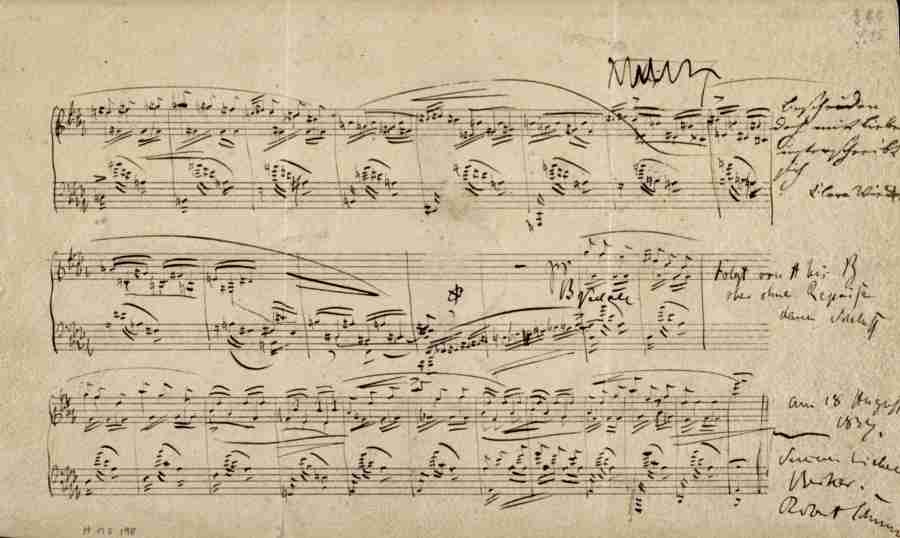
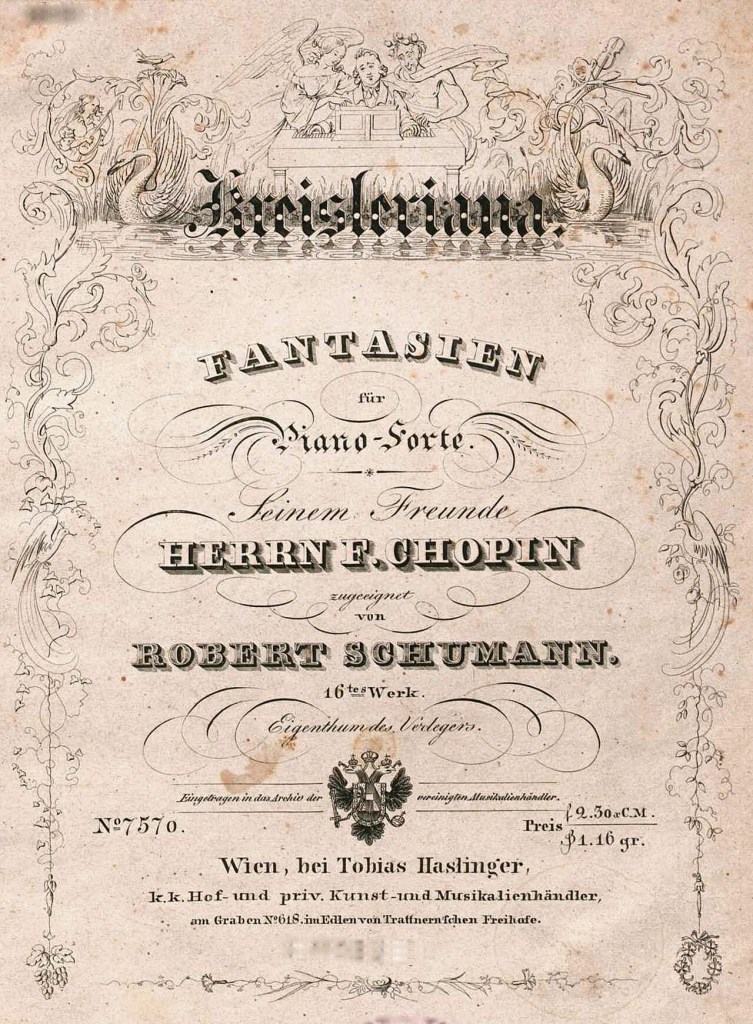
Kreisleriana, Op.16, is a composition in eight movements that Schumann claimed to have written in only four days in April 1838 and a revised version appeared in 1850. The work was dedicated to Frederic Chopin but when a copy was sent to him he commented favourably only on the design of the title page.It is a very dramatic work and is viewed by some critics as one of Schumann’s finest compositions.In 1839, soon after publishing it, Schumann called it in a letter “my favourite work,” remarking that “The title conveys nothing to any but Germans. Kreisler is one of E.T.A Hoffmann’s creations, an eccentric, wild, and witty conductor.”In a letter to his wife Clara,Schumann reveals that she has figured largely in the composition of Kreisleriana:”I’m overflowing with music and beautiful melodies now – imagine, since my last letter I’ve finished another whole notebook of new pieces. I intend to call it Kreisleriana. You and one of your ideas play the main role in it, and I want to dedicate it to you – yes, to you and nobody else – and then you will smile so sweetly when you discover yourself in it”.
- Äußerst bewegt (Extremely animated),
- Sehr innig und nicht zu rasch (Very inwardly and not too quickly)This movement in ABACA form, with its lyrical main theme , includes two contrasting intermezzi . In his 1850 edition, Schumann extended the first reprise of the theme by twenty measures in order to repeat it in full.
- Sehr aufgeregt (Very agitated),
- Sehr langsam (Very slowly),
- Sehr lebhaft (Very lively),
- Sehr langsam (Very slowly),
- Sehr rasch (Very fast),
- Schnell und spielend (Fast and playful), G minor. Schumann used material from this movement in the fourth movement of his first symphony





https://m.facebook.com/story.php?story_fbid=pfbid02CR1vRdncAmkmGNS2dgksmChgGkGooheqVQY4qTL2HRQVjGMSBtdDq5MhAnf1iYD8l&id=1311561820



 ChristopherAxworthy-MusicCommentary
2 risposte a "Luca Lione A lion is let loose in Trafalgar Square with ‘playing like a composer as if the music were his own’."