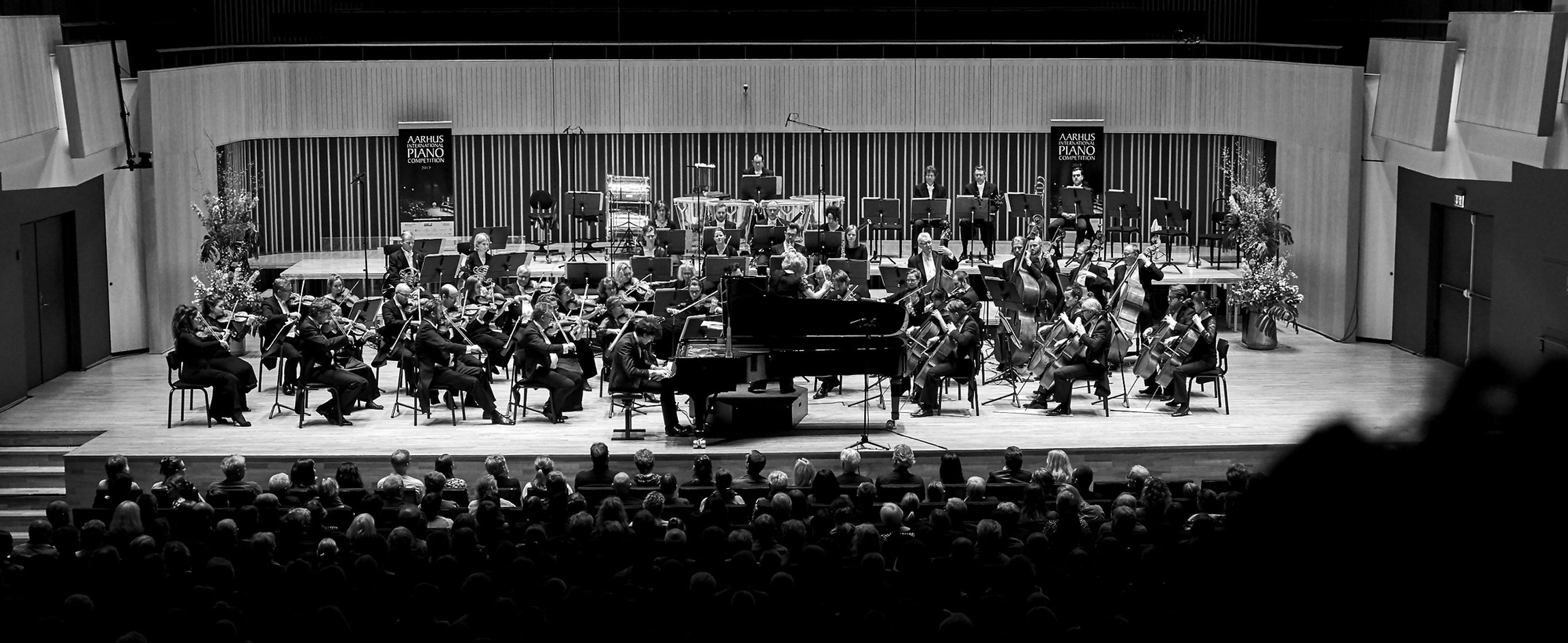
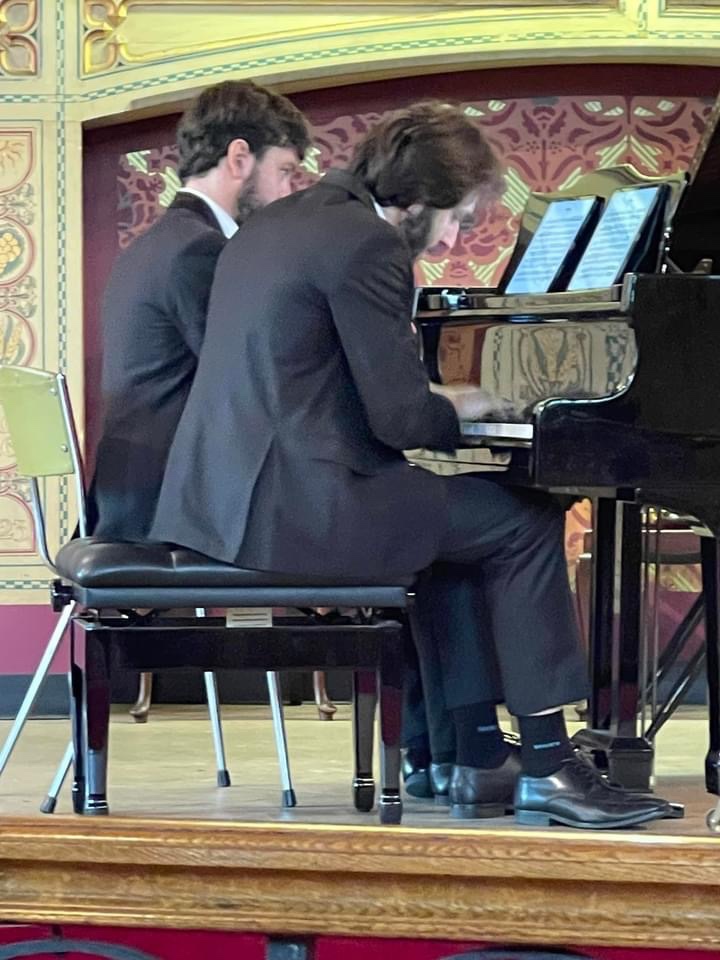
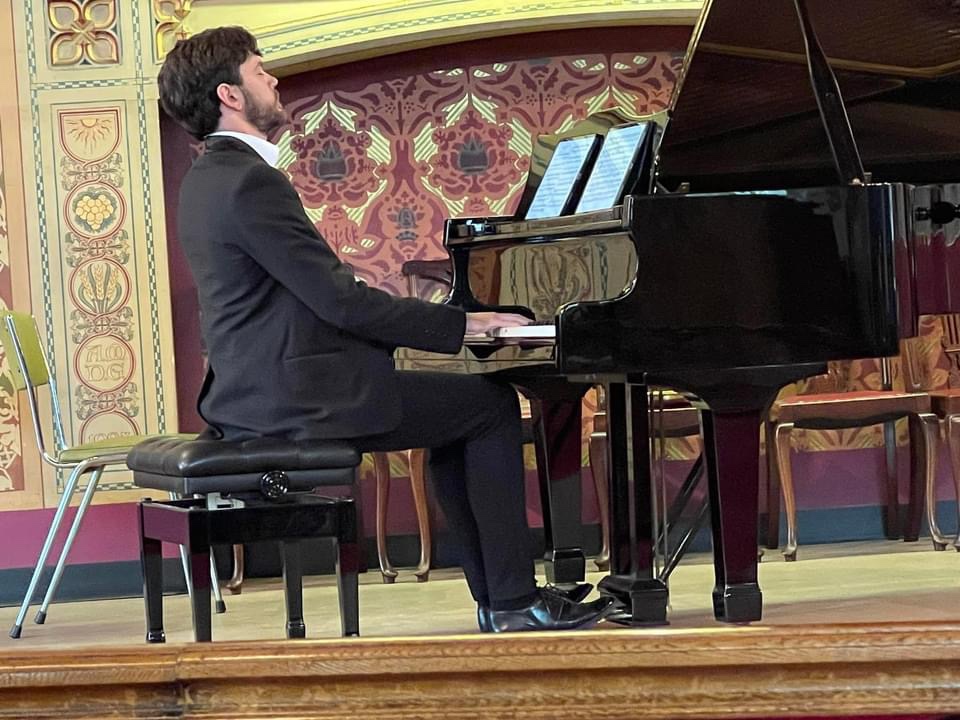
Ke Ma at St Mary’s ‘Masterly playing of intelligence and poignant beauty’

Tuesday 11 July 3.00 pm 
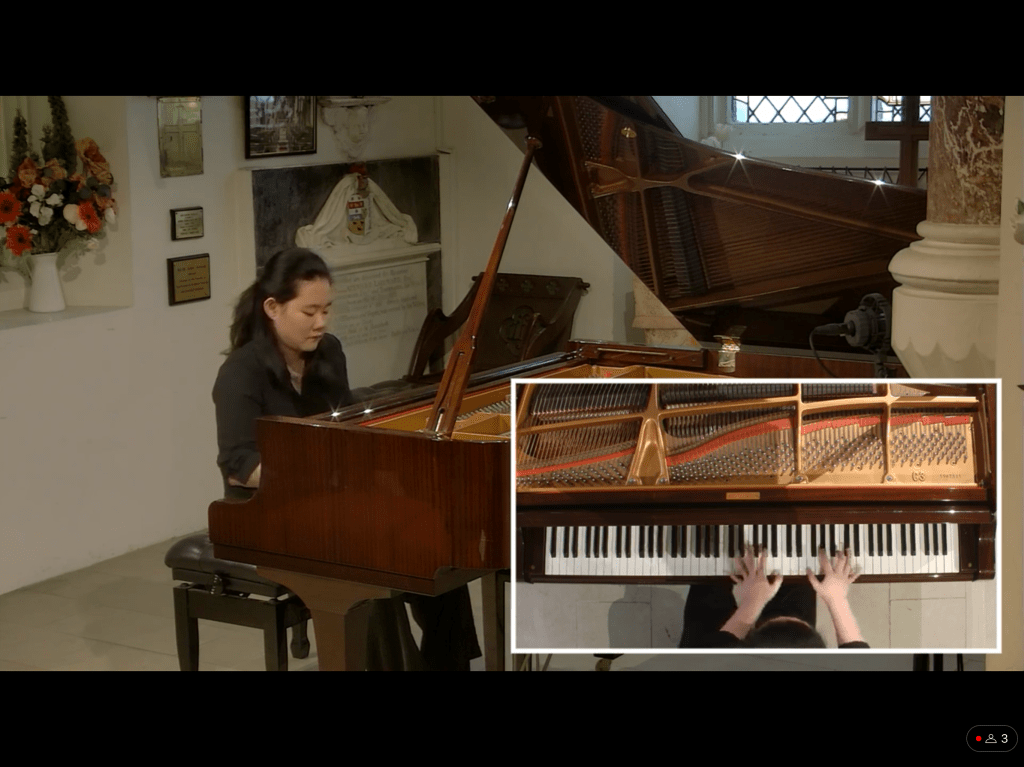
Some superb musicianly playing from Ke Ma .From the very first notes of the Schubert G flat Impromptu there were beautiful rich sounds of changing harmonies on which emerged the melodic line .Incorporated into the harmonic fabric the melodic line emerged with such strength and beauty .A disarming simplicity in which Schubert’s ‘Liebestraum’ was not of bitter sweet sentimentality but strong sentiments of poignant beauty.Playing of almost orchestral proportions as the F minor impromptu unwound with a rhythmic energy and buoyancy with moments of joyous excitement as the embellishments were thrown off with such deliberation.The central episode had a luminosity without ever loosing the rhythmic propulsion of this final exhilarating Impromptu.There were moments of great fantasy as Schubert seemed to be searching for a way back to the opening exhilarating dance.It was played with beauty and intelligent musicianship creating a tension of expectation just waiting for the moment of arrival and unwinding of the spring to lead to the return of the dance and the final great plunge to the bottom of the keyboard.


The absolute desolation of the opening of Book 2 of Debussy’s Image was just the scene for the bells that started to peal all over the keyboard creating a magic spell that was quite extraordinarily atmospheric.’Doucement sonore’ and ‘un peu en dehors’ Debussy suggests and later ‘très égal come une buée irisée’ all played with a transcendental control of sound as the melodic line was floated on this wave of sound.What grandeur there was too as the bells became more and more insistent only to die away to a mere whisper.What beauty she brought to the bleak landscape of the moon shining down on the Temple with wondrous sounds of unearthly luminosity.A masterly control of the pedal and of touch but above all an intelligence as she brought to life all the minute indications that Debussy seminates throughout the score.Have Gold Fish ever found such shimmering murmured pools to dip in and out of?Ke Ma brought a wonderful clarity to the melodic line as the fish enjoyed splashing around with such evident joy and exhilaration only to find absolute peace and tranquility in the final bars.Debussy wrote to his publisher,Jacques Durand :”Without false pride, I feel that these three pieces hold together well, and that they will find their place in the literature of the piano … to the left of Schumann, or to the right of Chopin… “

Cloches à travers les feuilles” was inspired by the bells in the church steeple in the village of Rahon in Jura,France.Rahon was the hometown of Louis Laloy ,a close friend of Debussy and also his first biographer.

“Et la lune descend sur le temple qui fut” (And the moon descends on the temple that was) was dedicated to Laloy.The name of the piece, which evokes images of East Asia ,was suggested by Laloy, a Sinologist The piece is evocative of Indonesian gamelan music, which famously influenced Debussy.

“Poissons d’or” was probably inspired by an image of a golden fish in Chinese lacquer artwork or embroidery ,or on a Japanese print. Other sources suggest it may have been inspired by actual goldfish swimming in a bowl,though the French for goldfish is ‘poisson rouge’ (red fish).


The revised 1931 version of Rachmaninov’s Sonata n.2 in B flat minor was played with passion and sumptuous sounds.But it was her musical intelligence and absolute attention to Rachmaninov’s indications that gave such strength and authority to a work that in lesser hands can seem so superficial and episodic.Her sense of orchestral colouring with a kaleidoscopic palette of colours was allied to the full Philadelphian luxuriant sounds that are so much part of Rachmaninov’s world.There was excitement and transcendental virtuosity but always with an organic feel of architectural shape and meaning.
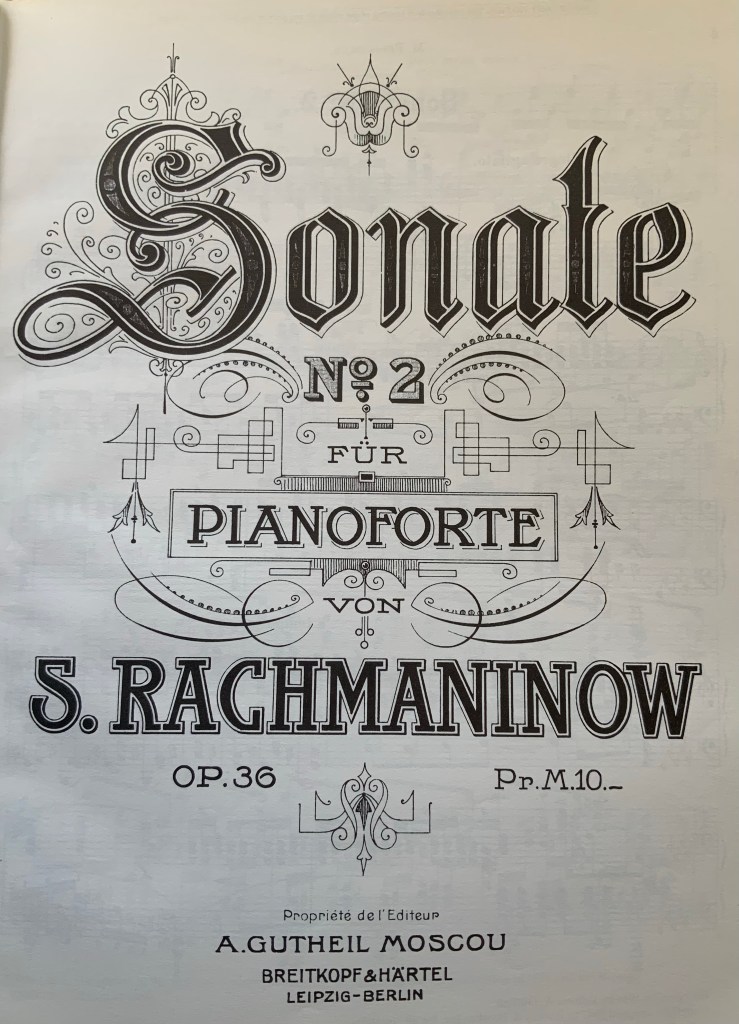
The original 1913 edition

Rachmaninov worked on his Second Sonata over several months in 1913, beginning it while in Rome and later completing it in Russia and including it in his concerts that Autumn prior to its publication the following Spring.Although conceived in three movements (Allegro agitato, non allegro, Allegro molto), the Second Sonata flows as one astonishing piece, its bravura technical demands matched by that dark emotional intensity which runs through so much of Rachmaninov’s music. The movements are bound together by thematic cross-references and transformation; in particular, the opening descending passage pervades all three movements in different guises.The original version is not without its problems however; not only is the scale of the work daunting, so too some of the passage-work makes very significant demands on the performer.
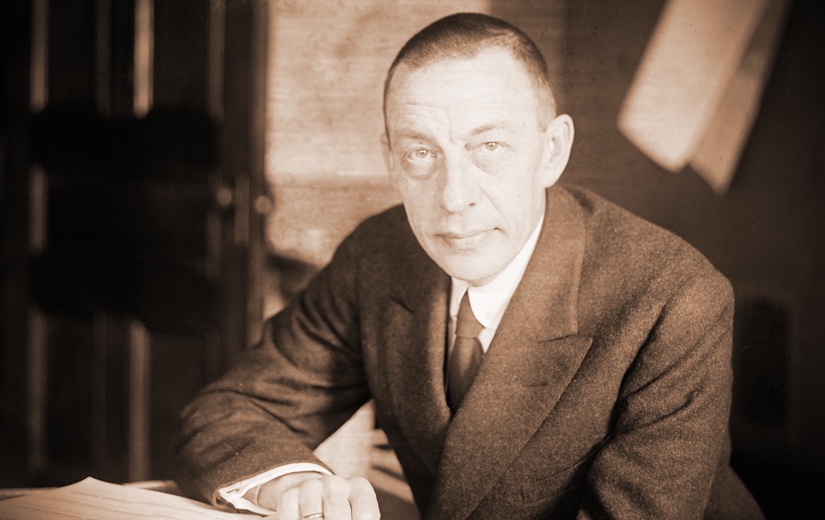
Serghei Rachmaninov

Rachmaninov’s own thoughts were expressed when he himself later wrote:”I look at some of my earlier works and see how much there is that is superfluous. Even in this Sonata so many voices are moving simultaneously, and it is so long. Chopin’s Sonata lasts nineteen minutes and all has been said.”

It was no doubt to address these points that Rachmaninov set about revising the Sonata in the summer of 1931, just as he was also composing his final solo piano work, the Corelli Variations.In this revised version, Rachmaninov makes significant changes to the piano writing throughout, both giving the piece a cleaner, more transparent texture and at the same time making the piece easier to play. In addition to these changes, he reduced the overall length of the Sonata by some 120 bars, tightening the structure considerably.

In spite of these efforts, as Rahmer points out in his concise but illuminating Preface to the new Henle edition,

“The question of whether Rachmaninov really altered the Sonata to its advantage is disputed to the present day among pianists and music critics. While many authors consider the significant cuts as a successful tightening up and elimination of unnecessary virtuoso ballast, the opposing faction criticises this intervention as a mutilation that upsets the Sonata’s formal balance and thematic conception.”

He goes on to note that while the revised version is the one frequently heard, some such as Zoltán Kocsis have advocated a return to the unaltered first version, while many others (notably Horowitz and Van Cliburn) have produced their own composite versions, based on their preferred elements from both.
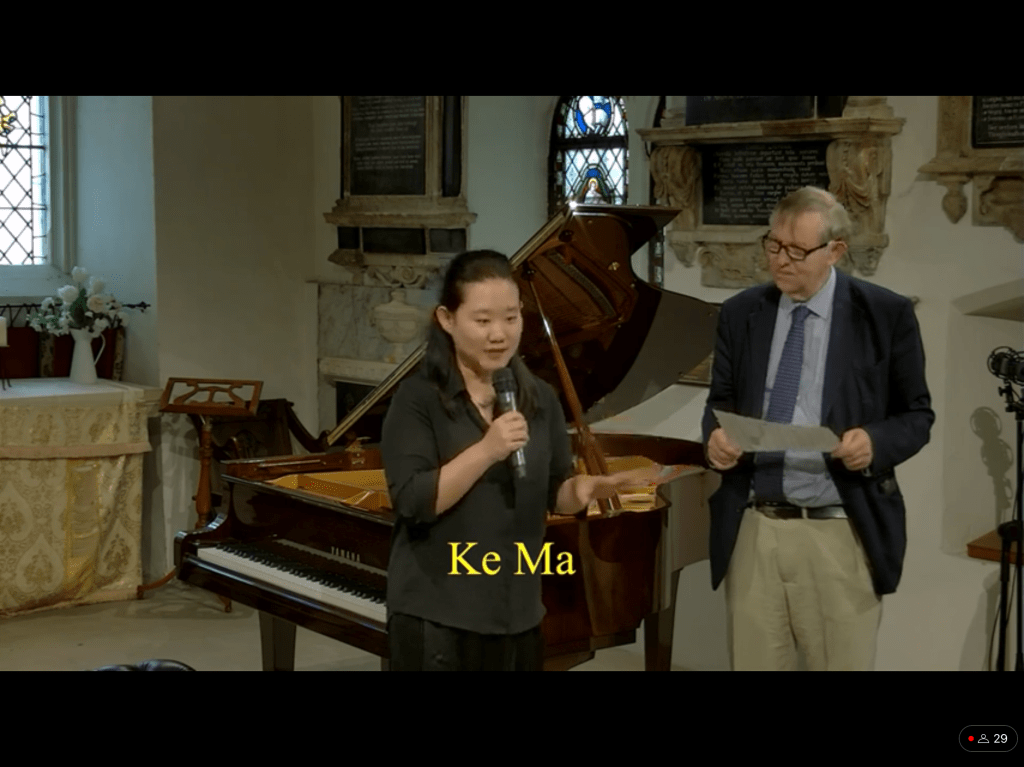
Ke Ma introducing her programme subject of a thesis for her Doctorate that she is preparing at the Guildhall on the Chinese influence on western music


Born in Datong, China, Ke Ma is a highly accomplished pianist who has earned international acclaim for her exceptional musical talent and technical prowess. She pursued her musical education at the prestigious Royal Academy of Music in London, under the tutelage of Christopher Elton, Michael Dussek, and Andrew West, and graduated with a Masters with distinction (DipRAM) in 2017. Currently, Ke is actively engaged in her Doctoral study at Guildhall School of Music and Drama, where she is studying with esteemed professors Joan Havill, Dr. Alexander Soares, and Rolf Hind. Ke’s impressive achievements include securing top prizes at several international competitions, including 1st Prize at the 2016 Concours International de la vie de Maisons-Laffitte and Karoly Mocsari Special Prize in France, 1st Prize at the 2014 Shenzhen Competition in China, and 3rd Prize at the 2012 Ettlingen Competition in Germany. She has showcased her exceptional talent as a soloist, having performed with renowned orchestras such as the Royal Philharmonic Orchestra, Shenzhen Symphony Orchestra, and Miskolc Symphony Orchestra conducted by Tamás Gál at the Palace of the Arts in Budapest , among others.

Ke Ma at St Mary’s a seduction of luminosity and musicianship

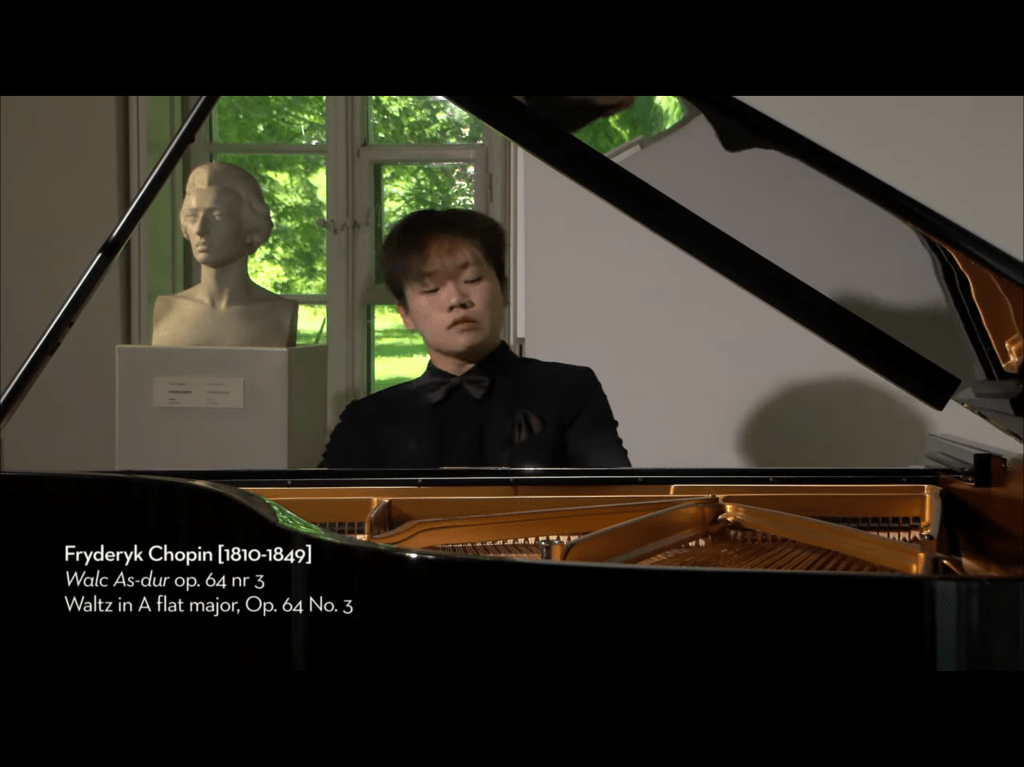
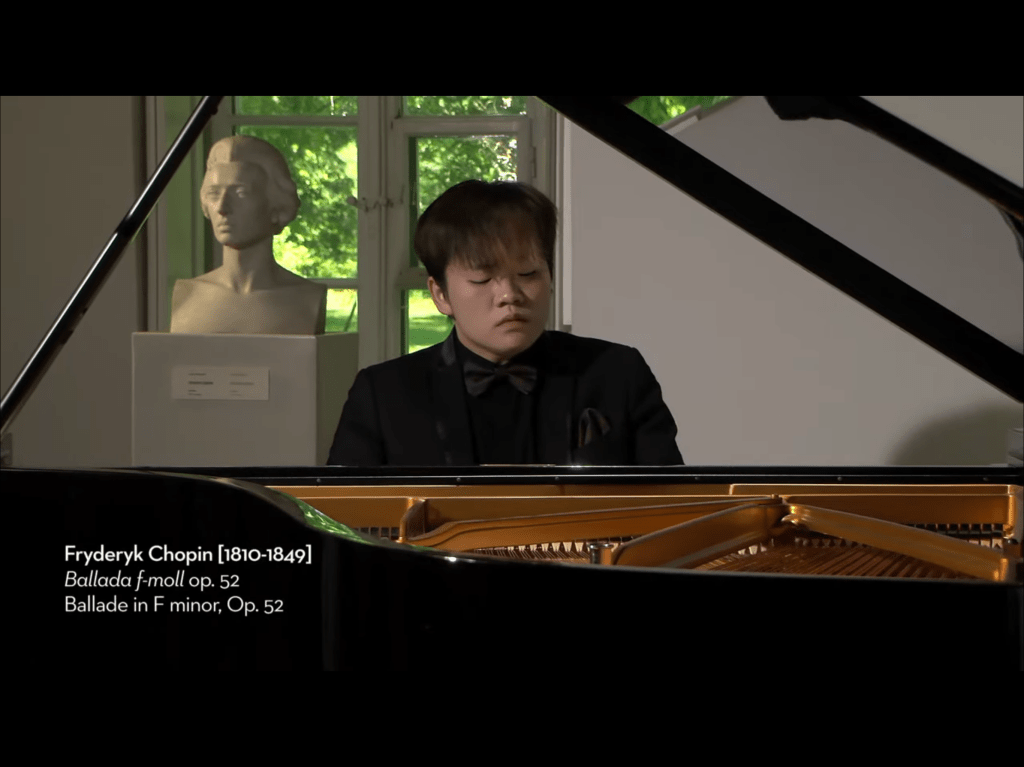
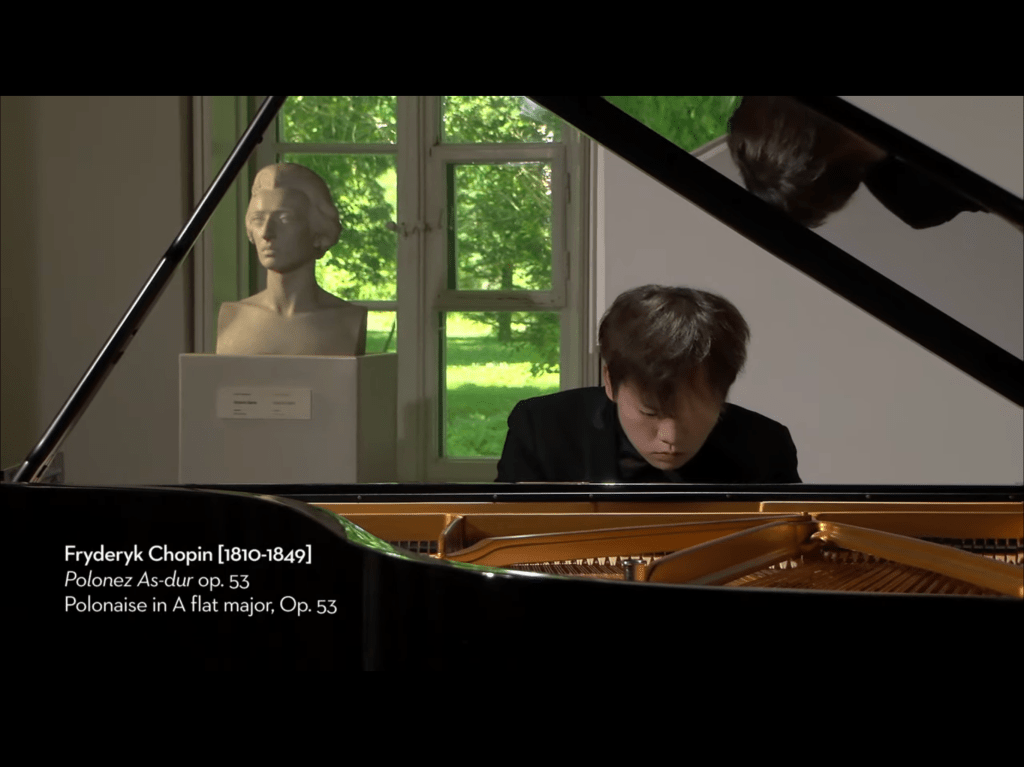
Hao Rao plays Chopin in Zelazowa Wola Playing of aristocratic timeless beauty

https://www.youtube.com/live/Y4FudQi7D6M?feature=share

Żelazowa Wola is a village in Gmina Sochaczew, Sochaczew County, Masovian Voivodeship, in east-central Poland.It lies on the Utrata River, some 8 kilometres (5 mi) northeast of Sochaczew and 46 km (29 mi) west of Warsaw. Żelazowa Wola has a population of 65.The name means “Iron will” in Polish and is the birthplace of ChopinIt is known for its picturesque Masovian landscape , including numerous winding streams surrounded by willows and hills.

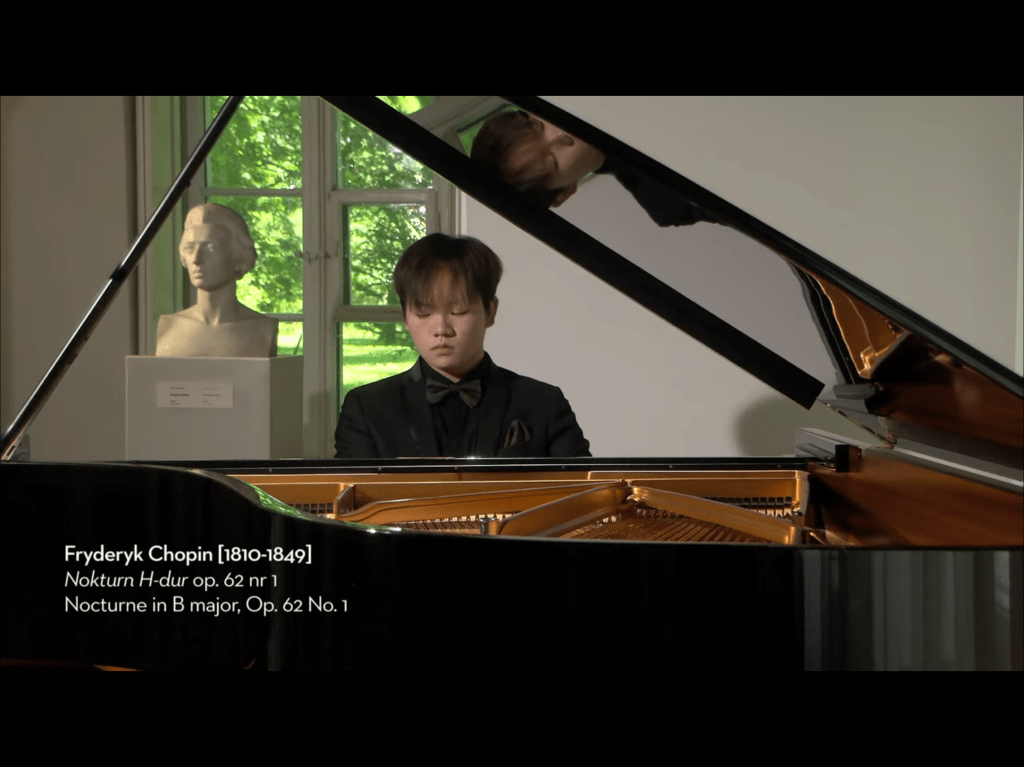
Playing of extraordinary maturity and beauty from this twenty year old Chinese pianist.A beauty not only of sound but the delicacy with which his fingers caressed the sounds out of the keys with a certainty and authority that would be the envy of pianists twice his age.

Chopin’s late nocturne in B major was played with aristocratic beauty and a finesse of sounds with whispered secrets of ravishing beauty .Trills that were mere vibrations of sound out of which unwound embellishments of exquisite delicacy.But there was strength too as these were sentiments of profound meaning and his weight and depth gave a poignancy and strength to this Nocturne written as Chopin neared the paradise that lay in waiting at such an early age.

Mazurkas ,the most idiomatic of Polish dance,and the real jewel in the crown of all Chopin’s works .Here in these over 60 miniature tone poems Chopin could relive the Poland of his dreams that he remembered from that day in his teens when he left his homeland never to return.But Poland was always in his heart and indeed a heart that was returned to Poland after his bodily remains were buried in Pere Lachaise Cemetary in Paris https://www.google.co.uk/url?sa=t&rct=j&q=&esrc=s&source=web&cd=&ved=2ahUKEwj-lYbF64GAAxVkgP0HHcJjCrIQFnoECA4QAQ&url=https%3A%2F%2Fwww.thefirstnews.com%2Farticle%2Fhome-is-where-the-heart-lies-the-amazing-story-of-chopins-heart-10636&usg=AOvVaw12ievY6_oE_KLHvU2tPrK4&opi=89978449

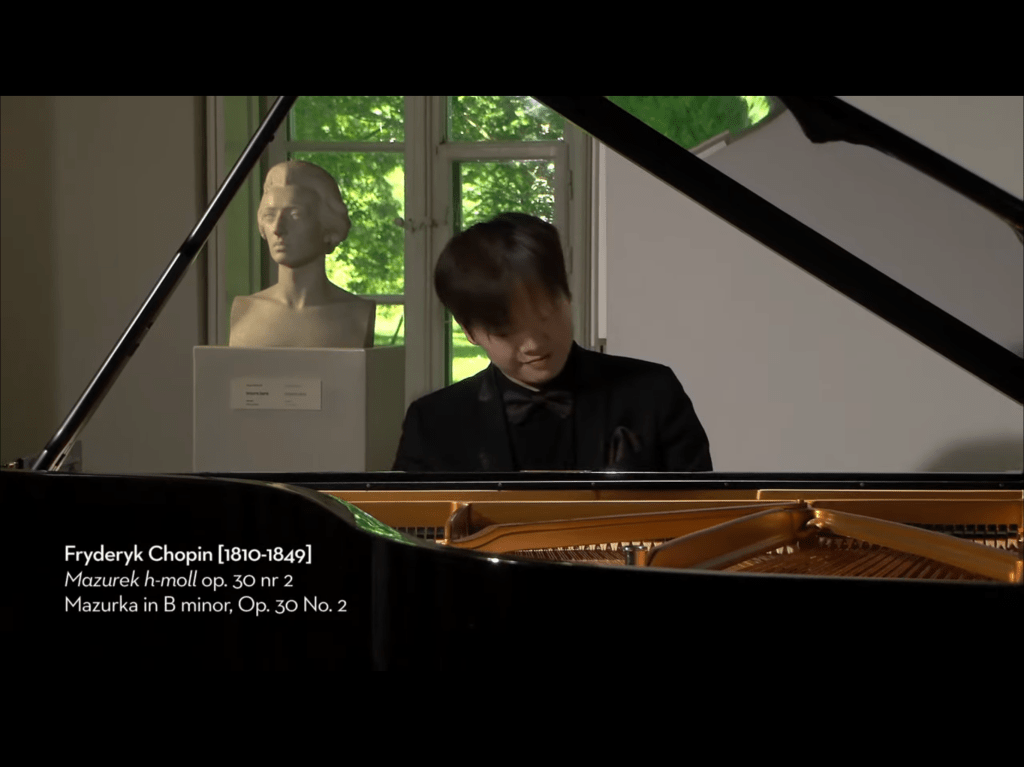
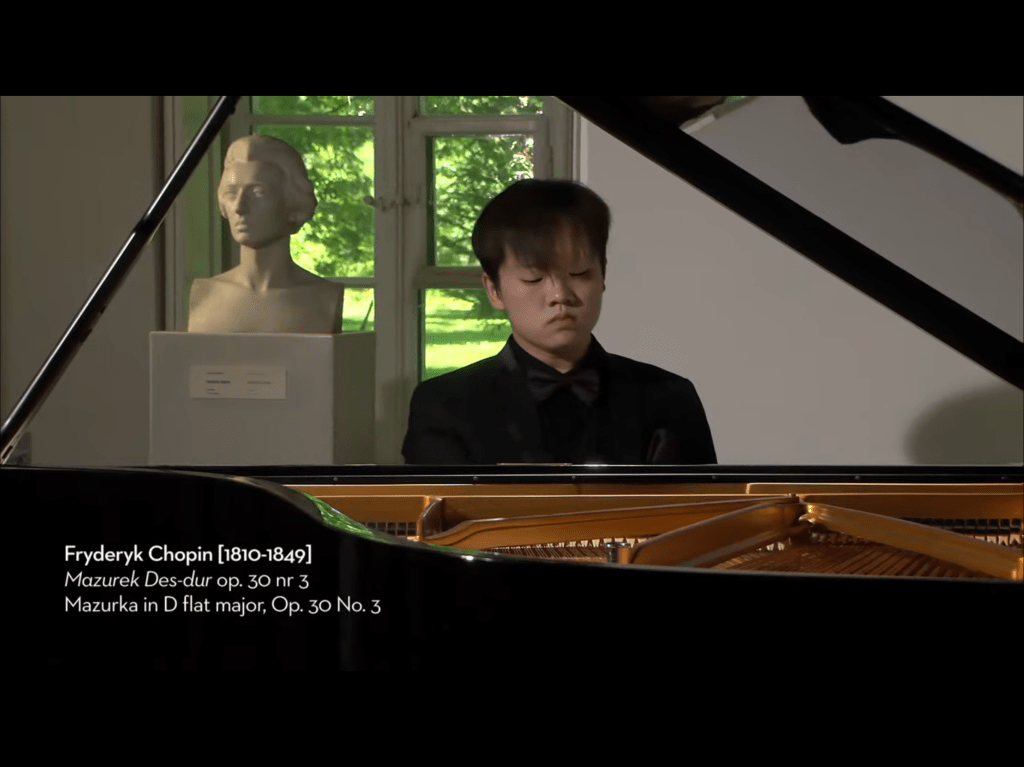
There was delicacy and flamboyance in the B minor Mazurka with a stream of nostalgia and a beguiling natural buoyancy that made one marvel at how a native of China could understand so perfectly the Polish soul of Chopin.It was the same question that perplexed the jury of one of the very first Chopin Competitions when the Mazurka prize was awarded much to the surprise of the polish contestants to Fou Ts’ong.Ts’ong was to become a great friend playing every year and giving masterclasses in my Euromusica Concert Series in Rome.He would often liken the poetic soul of Chopin to the same poetic soul that was to be found in the works of the great Chinese poets.The great tolling bell and calling to attention of the Mazuka op30 n.3 in D flat.Its beautifully suggestive central episode ‘con anima’ searching for a way back to the rumbustuous opening dance with a search of such fantasy and a pianissimo ‘slentando’ as Chopin indicates in the score.

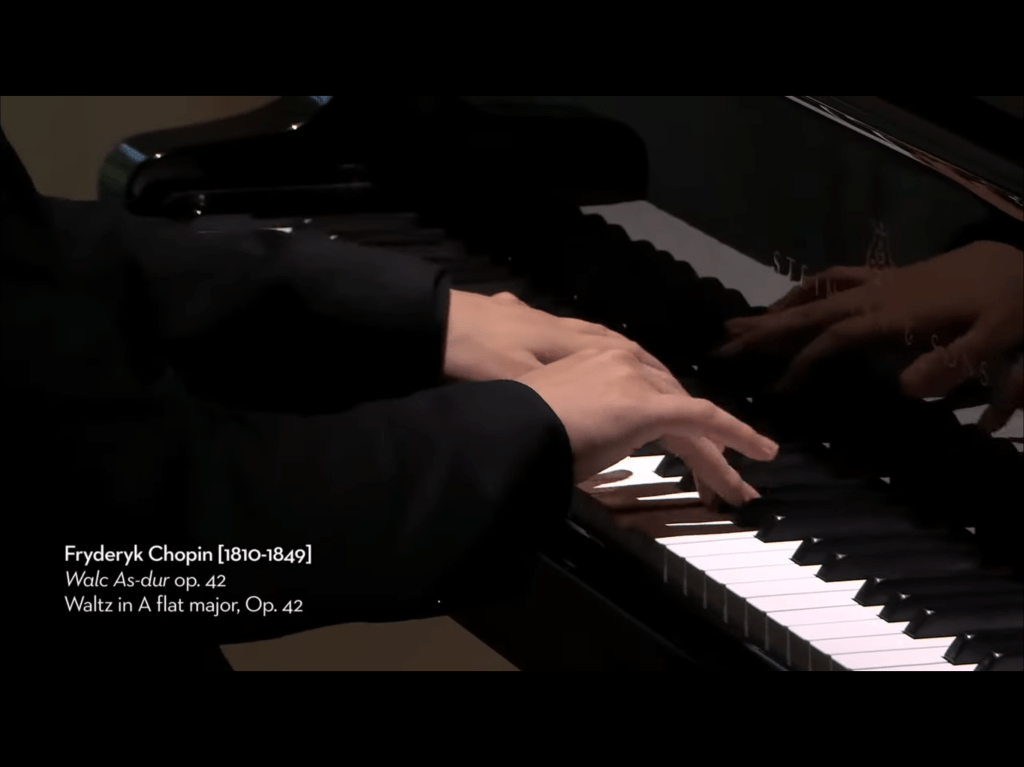
There was an irresistible rhythmic impulse to the Waltz in A flat op 42 with it’s rhythmic obstinacy and legato melodic line played so sensitively by Hao Rao.He did not have quite the aristocratic poise allied to rhythmic energy that was so much part of Rubinstein’s playing but it did have the same elegance and poise of Cortot and Rachmaninov .

The other waltz also in A flat op 64 n.3 was played with a ravishing insinuation almost of salon character but never descending into vulgar but always with the head held high.The beauty of the whispered bass melodic line was mirrored by the brilliance of the final bars ending deep in the bass.

Hao Rao brought a timeless beauty to the A flat Ballade,the most pastoral of the four ballades.It was beautifully phrased but with a clarity even in the most mysterious episodes of weaving contrapuntal scales.The build up to the final climax was played with a relentless forward propulsion before the explosion of the final climax of passion and nobility.

Absolute delicacy announced the elusive opening of the fourth Ballade.Followed by the opening theme played with great sentiment but also great strength and a sense of forward movement as each variation grew so naturally out of the other.There was a timeless beauty to the mazurka episode and a passionate climax before the heartrending return of the opening introduction which Cortot described as ‘avec un sentiment de regret’.The final variation where the embellishment of the theme is spread like a great wave over the entire keyboard was played with overwhelming beauty but there was also a transcendental control and shape as it lead to the final outpouring and the sumptuous waves of surging passionate sounds.The ‘stretto’ chords were a bit too literally staccato for my taste and could perhaps have had less speed but more weight.But the ravishing beauty of the five pianissimo chiselled chords before the coda was memorable.The sforzando deep in the bass so often ignored at the opening of the coda just showed what intelligence Hao Rao brought to his interpretation with the wishes of the composer utmost in his thoughts and soul.A tour de force of musicianly virtuosity brought this masterpiece to a magnificent conclusion .

Authority and Nobility were the hallmarks of a superb performance of Chopin’s ‘Heroique’ Polonaise op 53.Beautiful rich sonorities never hard but a sumptuous full orchestra.I noticed his very high wrist in the notorious left hand octaves but it was the legato of the cavalry above the stamping of the horses hooves that was so remarkable.A sense of balance that never lost sight of the musical line.There were some very beautiful deep bass notes as the Polonaise gradually picked up momentum leading to the tumultuous excitement of Chopin’s great cry of Victory.

At just seventeen years old, Hao Rao was a finalist and Honorable Mention at the 2021 18th Chopin International Piano Competition in Warsaw, performing Chopin’s First Piano Concerto in the finals under the baton of Andrey Boreyko and drawing praise both internationally and domestically. Jan Popis, special music commentator of the Chopin Competition claimed: “The 17-year-old Chinese boy has been manifesting his naturally charming talent since his first round. His playing is poetic, his legato is beautiful like a song, with a sound full of colors. He’s a great talent!”Born in the mountainous village of Jishou and beginning his piano studies at the age of four, Hao’s talent was evident from the beginning, and at the age of eight, he began making 32-hour roundtrip commutes to Guangzhou for studies with Dr. Vivian Li at Xinghai Conservatory Middle School where he is currently enrolled as a third-year high school student. Though still young, Hao Rao has already amassed an impressive resume of competition awards including first prize at the three most prestigious Chinese national piano competitions – Steinway, Pearl River, and Xinghai Cup – as well as top prizes in major international competitions including the Youth Gina Bachauer, E-piano Junior, Krainev, Aarhus, Ettlingen, Beijing Chopin and Zhuhai Mozart. He is also a three-year full scholarship student of the highly exclusive Morningside Music Bridge Program. His extensive performance experiences have taken him from Asia to Europe and North America in solo and chamber as well as concerto appearances with the China NCPA Orchestra, Orchestra Academia China, Warsaw Philharmonic, Salzburg Chamber Soloists and symphony orchestras of Shenzhen, Ningbo, Shenyang, Guizhou, Central and Xinghai Conservatories, collaborating with conductors Jia Lü, Guoyong Zhang, En Shao, Lin Chen, Huan Jing and Ming Liu.Outside of piano, Hao loves opera, ballet, pop culture, gourmet, singing, as well as riding roller coaster.

At the Cliburn Junior international Piano Competition China the 15 year old HAO RAO wrote this :

Hao Rao grew up in the mountainside town of Jishou, China. Every week, his mother would take him on a 16-hour train ride to his piano lesson; he never tired of the trip and instead saw it as “departing for a great music journey with unknown surprises.” He now attends the Middle School of Xinghai Conservatory of Music in the sprawling city of Guangzhou, but still studies with his teacher of almost seven years, Vivian Li (Suirong). He has won three major national competitions in China, received prizes at the 2018 Ettlingen Competition and the 2019 Aarhus Competition, and—at the age of 13—presented the complete Chopin etudes in recital. He listens to opera and enjoys reading fiction, playing sports, and sampling desserts.

“I’ve been to several competitions or festivals abroad, and every time it was a life-changing inspiration with unforgettable memories, but the Cliburn Fort Worth… that’s almost like the Vatican for pianists. For me, it almost seems like a fairy tale, and I will treasure every moment of this journey.”

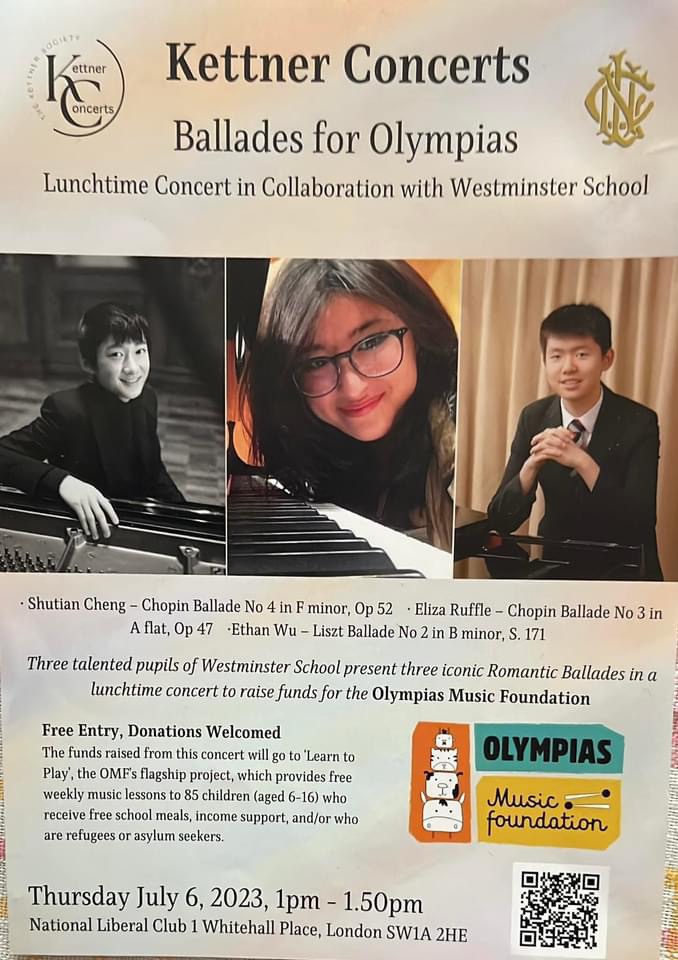
Reaching for the stars at the National Liberal Club ‘Ballades for Olympias’

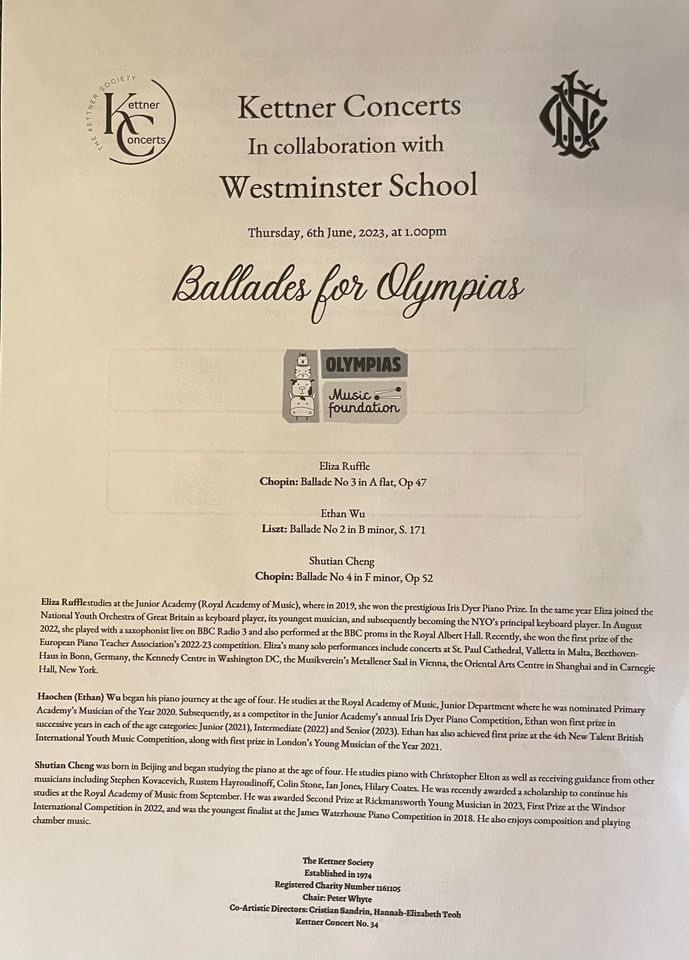
A new lunchtime series for the Kettner Concert Society at the National Liberal Club.An opportunity for young musicians from Westminster School with three remarkably gifted young pianists playing two Ballades by Chopin and one by Liszt.
‘Ballades for Olympias’ raised over 500 pounds today for the music education charity in Longsight,Manchester.These funds will go to ‘Learn to Play’which will provide free weekly music lessons to 85 children aged between 6-16.
The Olympias Foundation believe that everyone should be given the opportunity to partecipate in music regardless of income or background.


Three precociously gifted young musicians gave remarkable performances of Ballades by Liszt and Chopin.

Eliza Ruffle


Eliza Ruffle gave an at times very passionate performance of Chopin’s Third Ballade.It was also a professionally prepared performance of a prize winning student of the Junior Academy.Already a member of the National Youth Orchestra but still a student and trained by the magnificent piano faculty of Westminster she is obviously going on to even greater things.

Ethan Wu


Ethan Wu gave an extraordinary account of Liszt’s spectacularly evocative Second Ballade.Claudio Arrau ,who studied under Liszt’s disciple Martin Krause, maintained that the Ballade was based on the Greek myth of Hero and Leander, with the piece’s chromatic ostinati representing the sea: “You really can perceive how the journey turns more and more difficult each time. In the fourth night he drowns. Next, the last pages are a transfiguration”.In Ethan’s hands it sprang to life with subtlety and virtuosity.
Extraordinary mastery of the keyboard sonorities and remarkable virtuosity allied to a poetic understanding of this very evocative tone poem.Ethan has been studying for the past year with Prof Christopher Elton.

Shuntian Cheng


Shutian Cheng I have heard before playing Rachmaninov’s notoriously difficult third piano concerto at St John’s Smith Square.Just finishing in the sixth form at Westminster and ready for University he has been studying for the past six years with that magnificent trainer of so many remarkable pianists:Christopher Elton at the Royal Academy.He will now open a new chapter in his musical life with Rustem Hayroudinoff.A real artist who could bring to life the elusive opening of one of the pinnacles of the piano repertoire:Chopin’s Fourth Ballade.He also could turn the technical difficulties of the coda into ravishing music of passionate fervour.

Cristian Sandrin co artistic director of Kettner Concerts with the Head of Keyboard at Westminster School Mr Steven Wray


Three pianists that have been endowed by Westminster with the early training that gives them the possibility of choosing music as a professional career.
Life will lead them to whichever road they choose but Music will always be present and will be their guiding light wherever life takes them .
So pleased that the new artistic directors Cristian Sandrin and Hannah Elizabeth Teoh are giving a platform to the stars of tomorrow.I hope that after Westminster their series might continue with the Purcell and Menuhin schools as well as many others on an exciting voyage of discovery reaching for the stars.

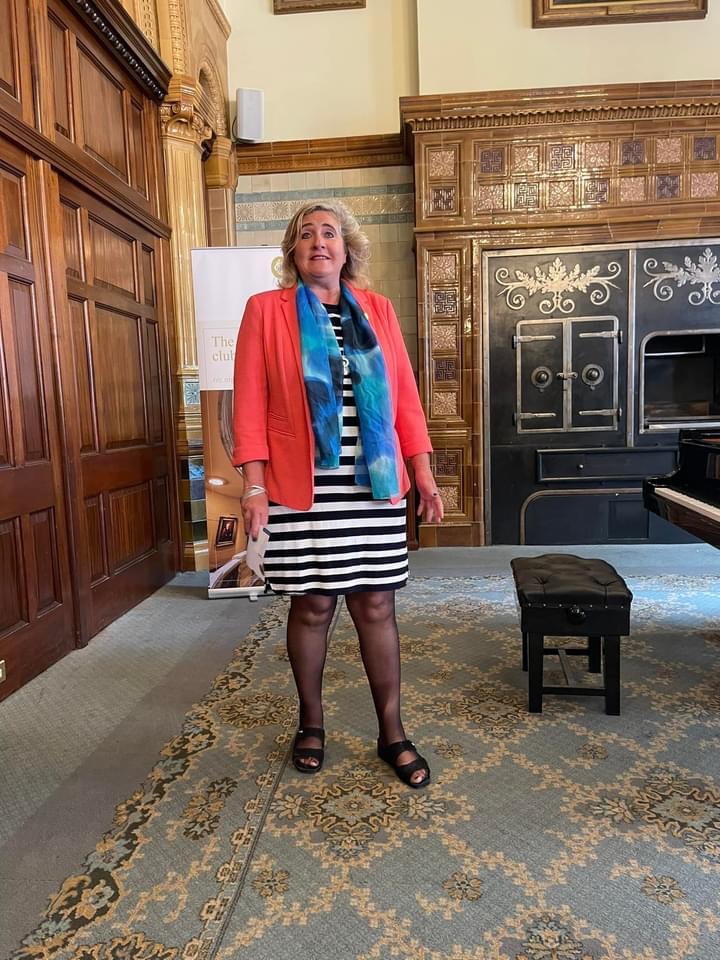
Chairwoman of the National Liberal Club Karin Rehacek
The imperious stairway to the David Llloyd George Music room

Adam Heron at the National Liberal Club. An eclectic musician of refined taste and eloquence

Cristian Sandrin at the National Liberal Club – A voyage of discovery of nobility and timeless beauty

Ignas Maknickas and Wouter Valvekens Music at the Matthiesen Gallery “If Music be the food of love please,please play on”

A thing of beauty is a joy forever sprang to mind as the sounds of Mozart and Schubert engulfed us as we were surrounded by beautiful paintings.

The indomitable Mary Orr a lady with a heart of gold


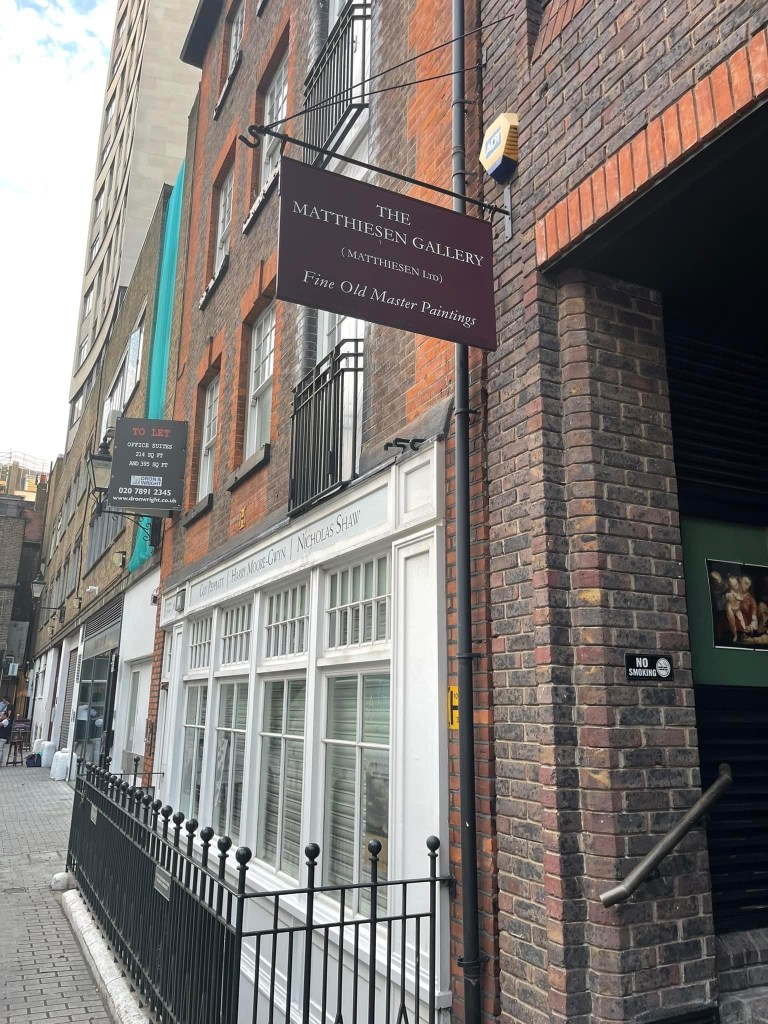
Music at the Matthiesen Gallery organised by the Matthiesen Foundation and the indomitable Mary Orr with many thanks to the Imogen Cooper Music Trust for the loan of their magnificent piano.A sparkling jewel in a crown and an honour to have Imogen Cooper at the concert too to support two young artists who had met at the Royal Academy and teamed up as a duo under her guidance at the ICMT masterclasses held annually in France.


How could one ever forget the supreme artistry of two remarkable women pianists Imogen Cooper and Ann Queffélec who had met in Leeds at the beginning of their illustrious careers as soloists and as kindred spirits became duo partners bringing music and joy to so many.
Nice to be able to appreciate a new generation whose musical values and intelligent musicianship are added to a natural God given talent.

Two works by Mozart opened this short but very satisfying recital for the Matthiesen Foundation – Music at the Matthiesen Gallery.
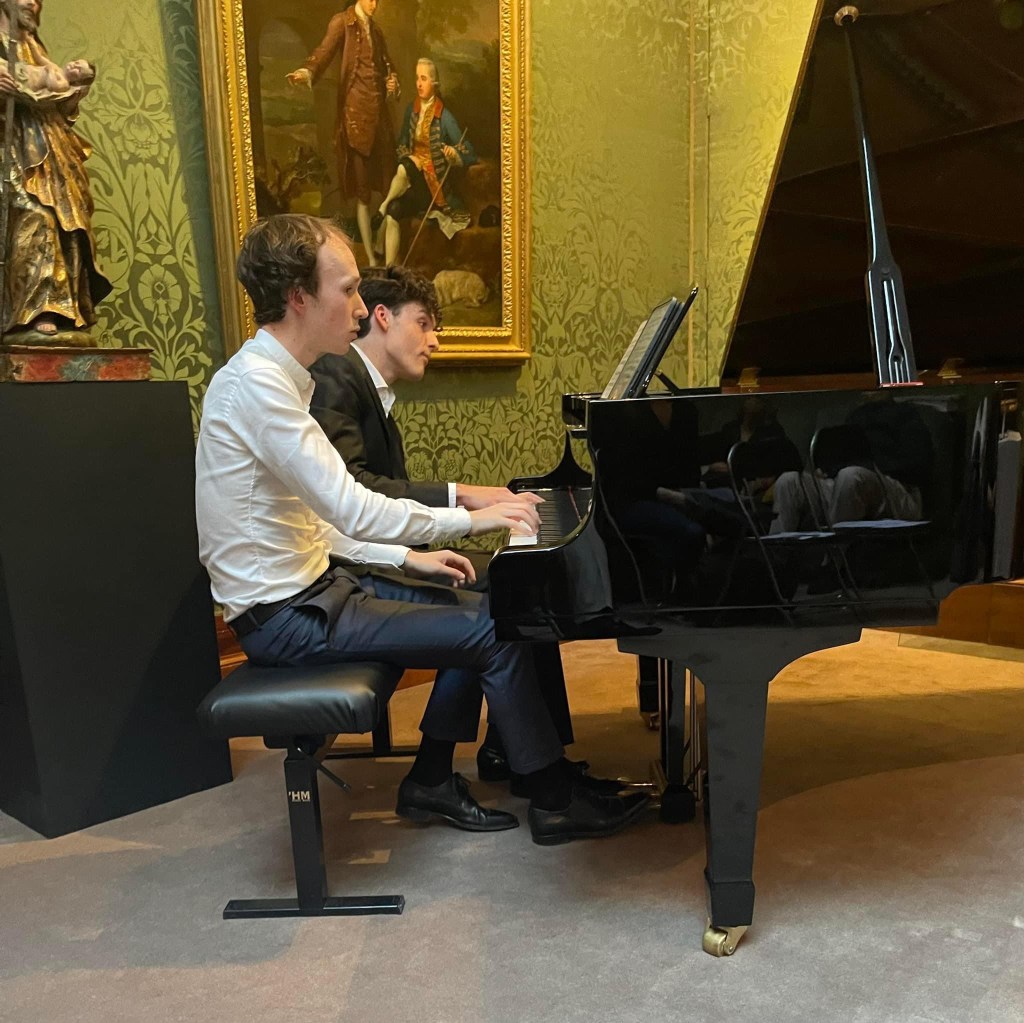
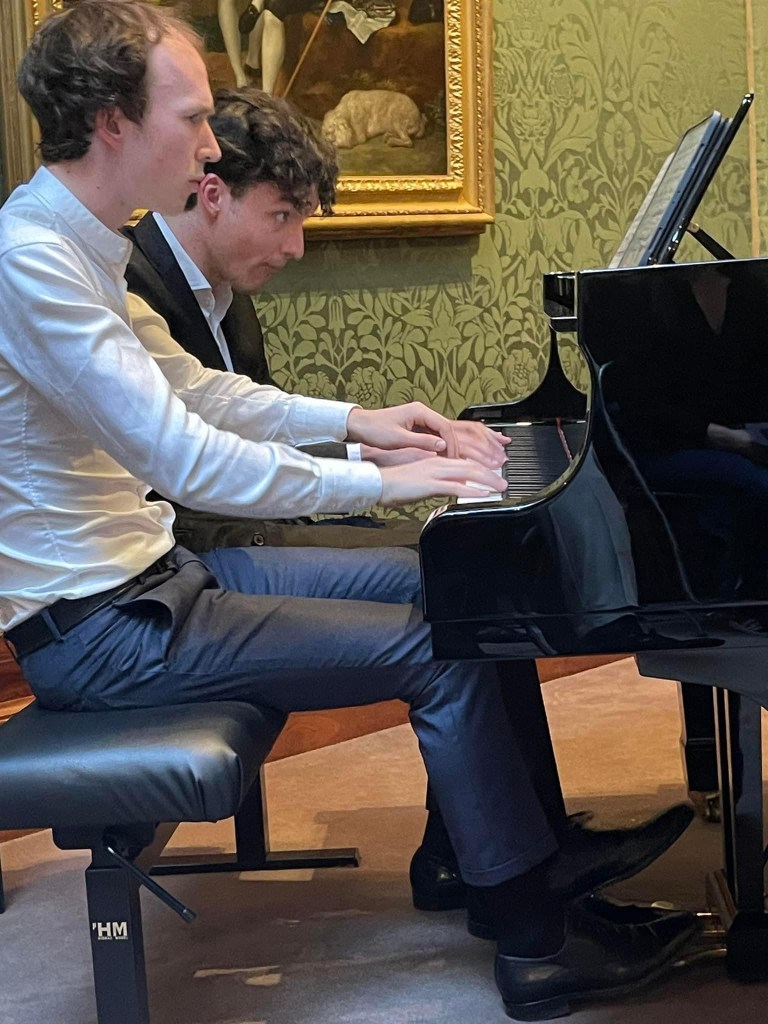
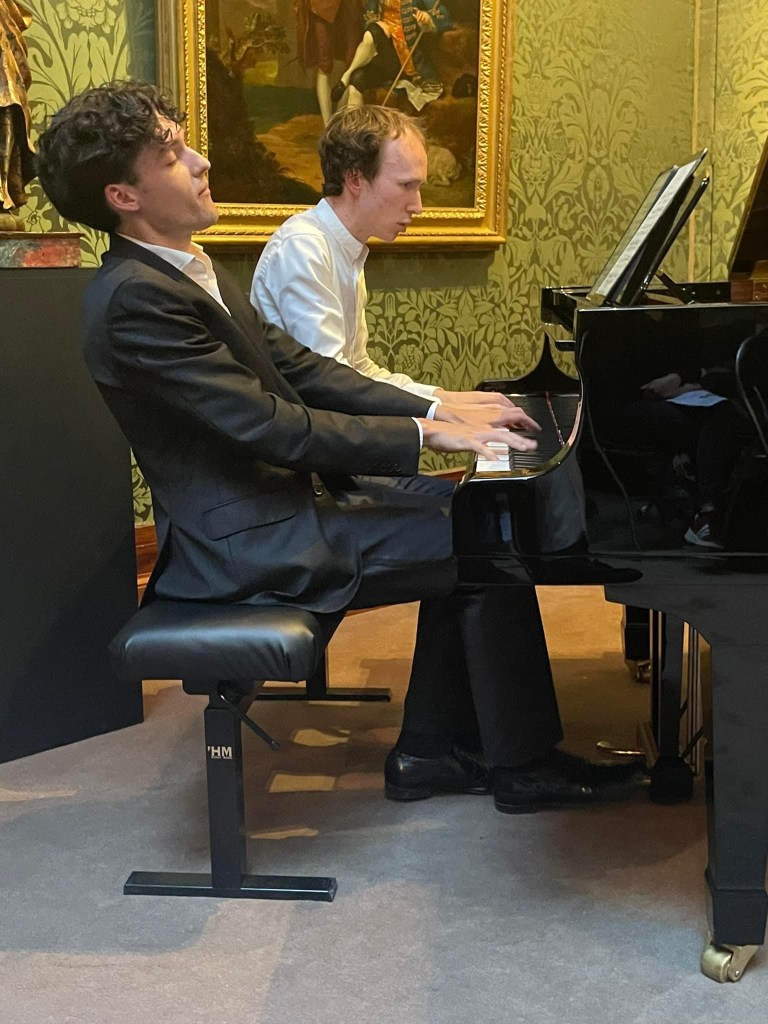
The beauty and simplicity they brought to the Andante and Variations in G K501 immediately showed us that we were in the hands of very fine musicians.A fluidity and beauty that Wouter brought to the disarming simplicity of the theme as accompanied by the delicacy of Ignas’s playing.The hardest thing for a piano duo is that four hands should sound as two.It means a supreme sense of balance is essential to avoid any conflict with the musical line that should be so clearly defined.It was exactly this that was so apparent today that these two young artists were actually listening to each other in their wish to create a single unified whole.
Two pianists played as one – there could be no greater compliment and I wonder if indeed Mozart experienced the same with his sister for whom he wrote a number of important works for four hands.
Very little pedal meant that there was great clarity but with their well oiled fingers there was a fluidity created by fingers not feet.Wouter occasionally touched the pedal to add colour especially in the ‘minor’ fourth variation.The beauty and clarity that Wouter brought to the first variation was shadowed by the fleeting lightness of Ignas in the second.The same lightness and obvious enjoyment they brought to the third .Their mastery was even more evident in the clarity and brilliance they both brought to the scintillating fifth variation.A beautifully poignant and graceful return of the theme just underlined the genius of Mozart where so few notes could mean so much.

The Sonata in C major K521 was played with a rhythmic energy from the first engaging opening fanfare.But it soon dissolved into elegance and nobility.Ignas’s agile fingers replied to Wouter’s purity of sound that was crisp and clear and very sensitively and discreetly ornamented.The dramatic question and answer between the two players was played with a sudden injection of youthful energy.The Andante was played with a purity of sound that was of a simple flowing natural beauty.There was great beauty to the opening of the Allegro but swiftly turned into the impetuosity and rhythmic energy of this final movement with great agility from Wouter and sensitivity from Ignas in the bass.
Two very fine performances that as they play more together will find the freedom and flexibility of the voice with its natural breathing and shaping which was after all the early seeds of ‘bel canto’ and indeed the supreme Genius of Mozart.


Ignas Maknickas and Wouter Valvekens are two young musicians at the start of their careers.Like their mentor they will obviously fly high and ensure that the values of musical integrity and honesty go hand and hand with dedication and above all love for music -‘If music be the food of love,play on!’ And it will,thanks to Mary Orr,who as she says two charitable organisations linking up are a guiding force for the new generation of artists seeking an audience to share their wonderful gifts with.


Beautiful musicianly performances of Mozart and Schubert were crowned with a glorious performance of Dvorak’s most Brahmsian of Slavonic Dances op 72 n.2.
Here the heavens opened as these two young artists revealed their very soul to us with such freedom and artistry and were not intimidated by the great masterpieces they had shared so beautifully but respectfully with us.
To savour and enjoy them with respect but not too much!

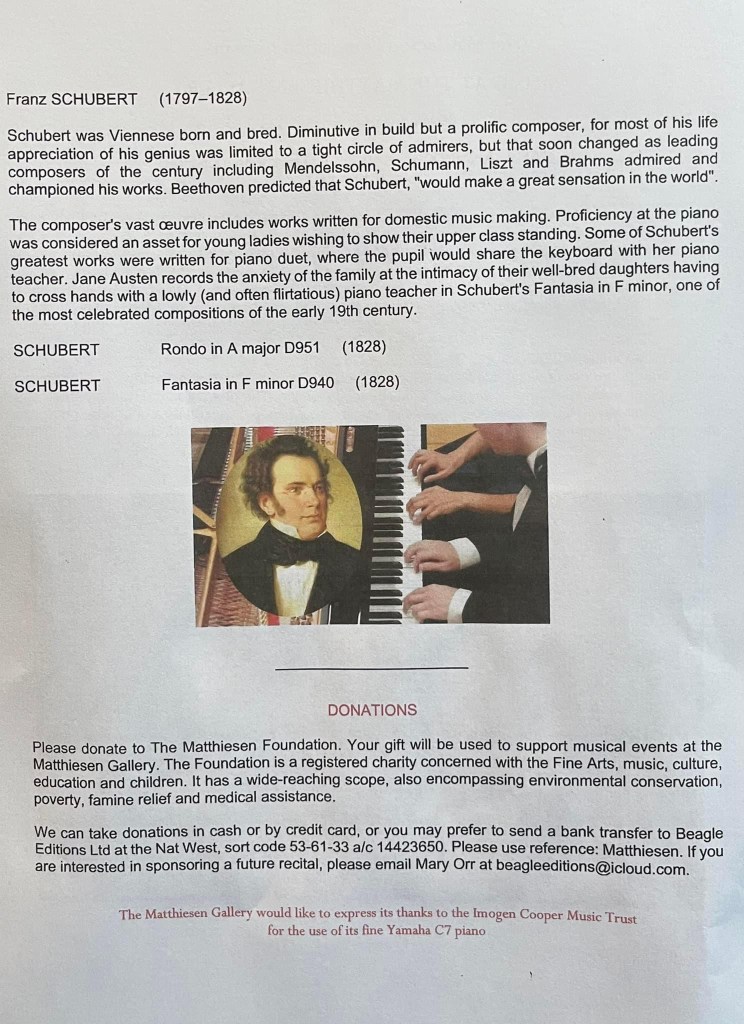
Two works by Schubert completed the programme.This time Ignas was ‘Primo’ .The A major Rondo was published in December 1828, less than a month after Schubert died.Schubert left the largest number of piano duets and four-hand works of all the great composers and his Rondo, D. 951, dates from 1828, the last year of his life.A beautiful continuous outpouring of melodic invention transferring the final reprise of the rondo theme to the sonorous tenor register, with a continuous pattern of semiquavers unfolding above it. Particularly beautiful is the manner in which one of the important subsidiary themes returns towards the end, surmounted by a shimmering pianissimo accompaniment in repeated chords from the primo player.It was now Ignas who his the pedals and could add the ravishing colours that illuminate this masterpiece .It is usually customary for the bass or secondo to have the pedal because the harmonies are created from the bass upwards.Benjamin Britten thought so too until in performance with Richter at Aldeburgh he suddenly found two rather large feet on top of his!
No such problem today with Wouter and Ignas in total harmony and as Schubert himself was to write in the his next Rondo D 608 ‘Notre amitié est invariable.’


The Fantasia in F minor by Franz Schubert, D.940 (Op. posth. 103) is one of Schubert’s most important works .He composed it in 1828, the last year of his life dedicating it to his former pupil Caroline Esterházy
Schubert began writing the Fantasia in January 1828 in Vienna.The work was completed in March of that year, and first performed in May. Schubert’s friend Eduard von Bauernfeld recorded in his diary on May 9 that a memorable duet was played, by Schubert and Franz Lachner.The work was dedicated to Caroline Esterházy, with whom Schubert was in (unrequited) love.
Schubert died in November 1828. After his death, his friends and family undertook to have a number of his works published. This work is one of those pieces; it was published by Anton Diabelli in March 1829. In four continuous movements Allegro molto moderato
Largo
Scherzo. Allegro vivace
Finale. Allegro molto moderato
The basic idea of a fantasia with four connected movements also appears in Schubert’s Wanderer Fantasy and represents a stylistic bridge between the traditional sonata form and the essentially free form tone poem and it was beautifully played with a flexibility and freedom.There was also nobility and rhythmic precision in the Largo and an energetic Scherzo but a ‘Trio’ that was far too serious and more ‘joie de vivre’ and flexibility would have lightened the tension and dynamic drive.The fugue was played with great authority and extraordinary technical command but never loosing sight of the overall musical line.The disarming return of the opening fantasia was one of those master strokes of the Genius of Schubert giving such shape to one of the most beautiful of all Fantasias


Mozart and Schubert had the same youthful soul as these two valiant artists whose sensitive fingers had been entrusted with such treasures today .

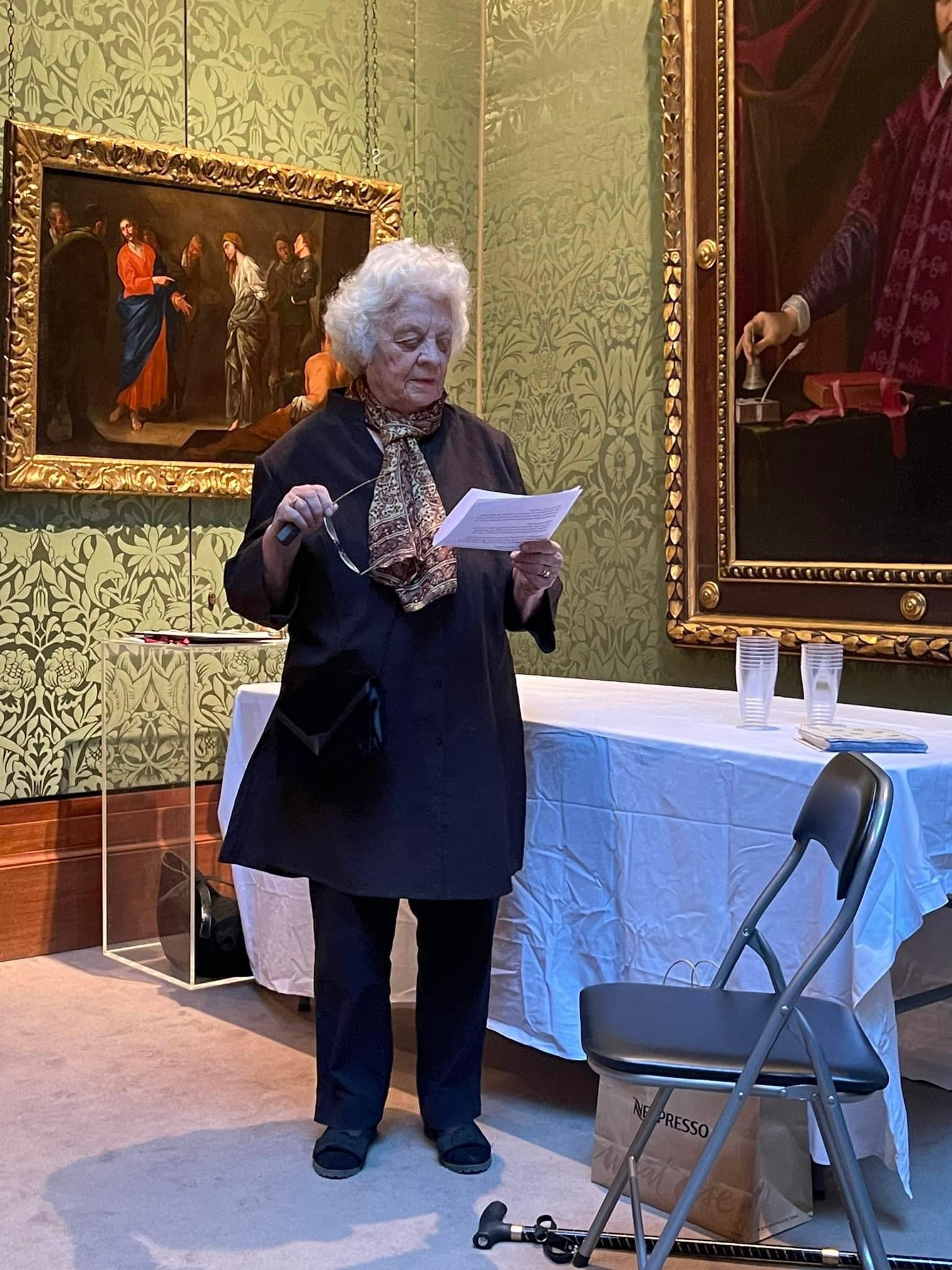
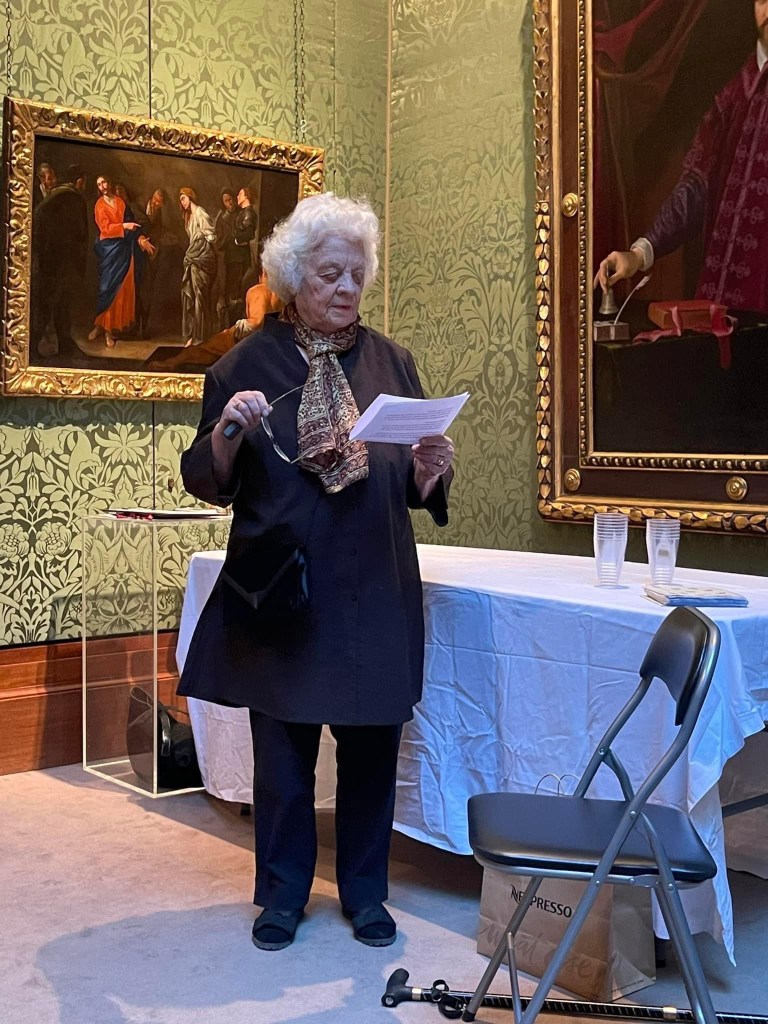
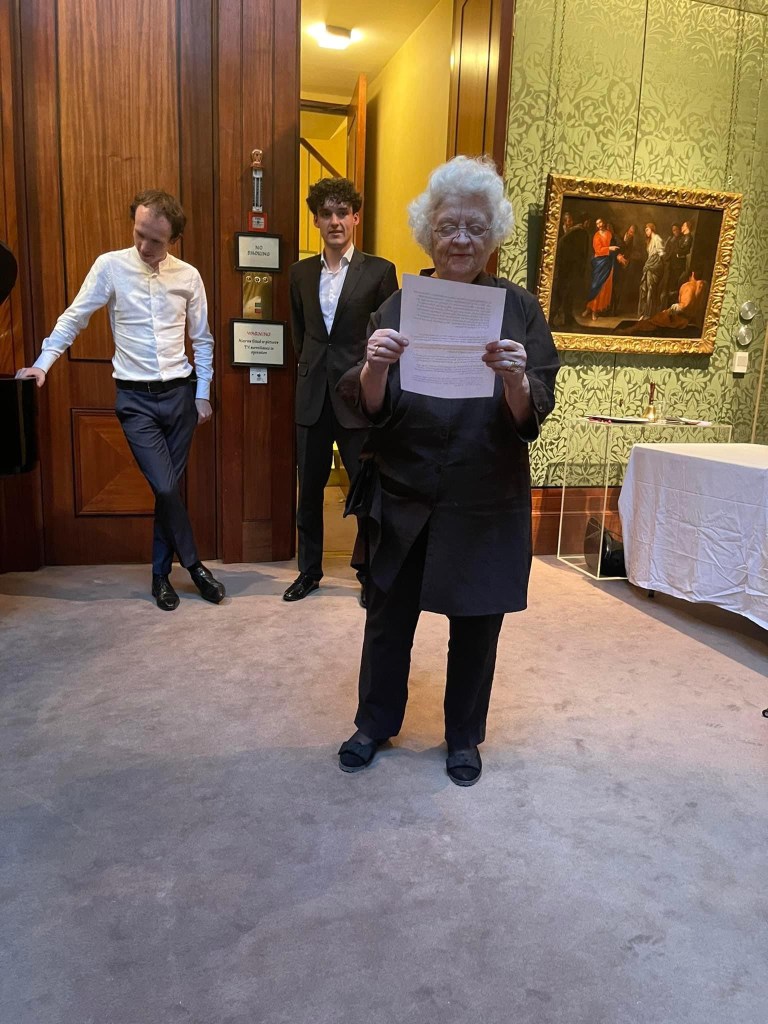
Mary Orr presenting the two young artists
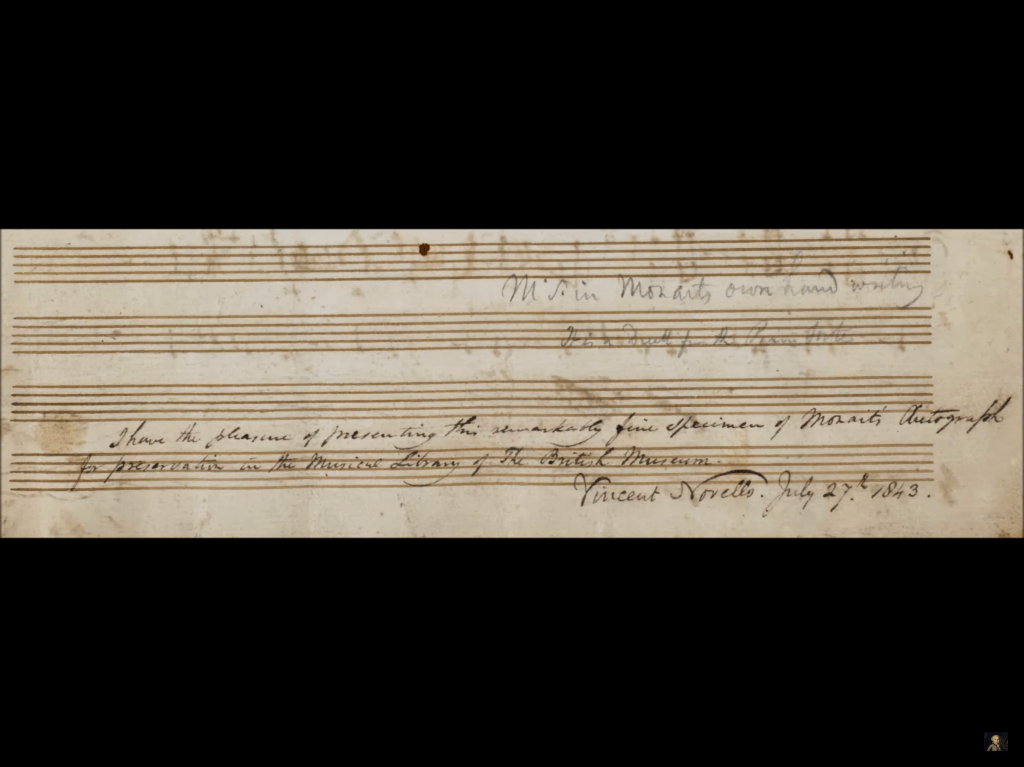
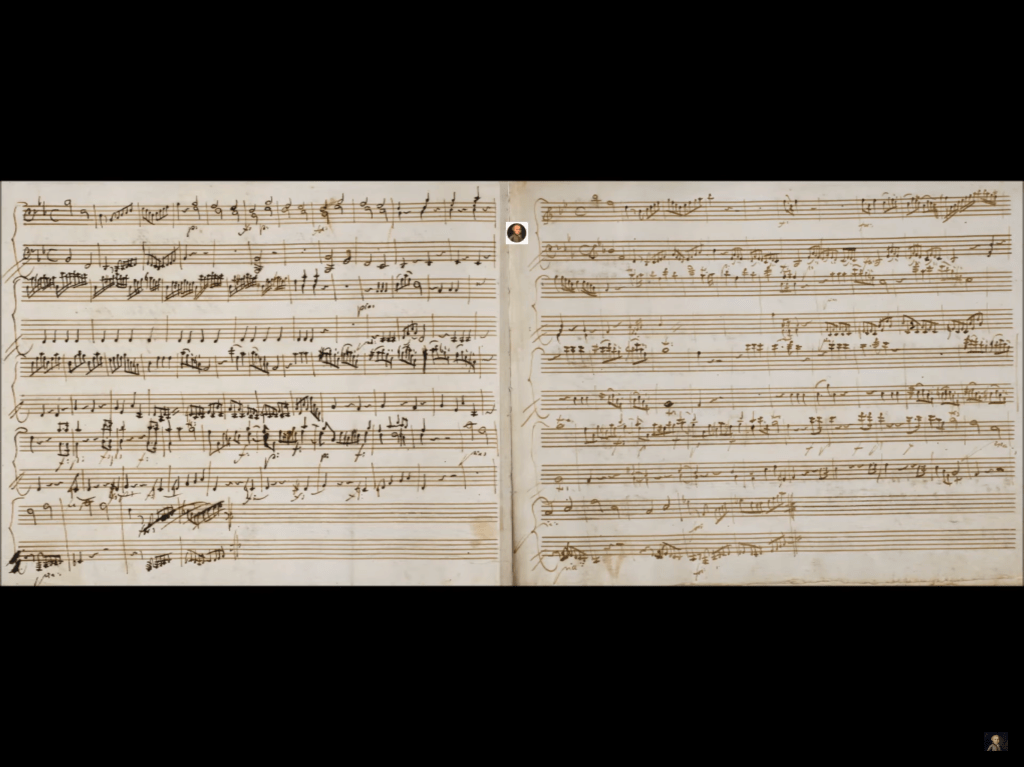
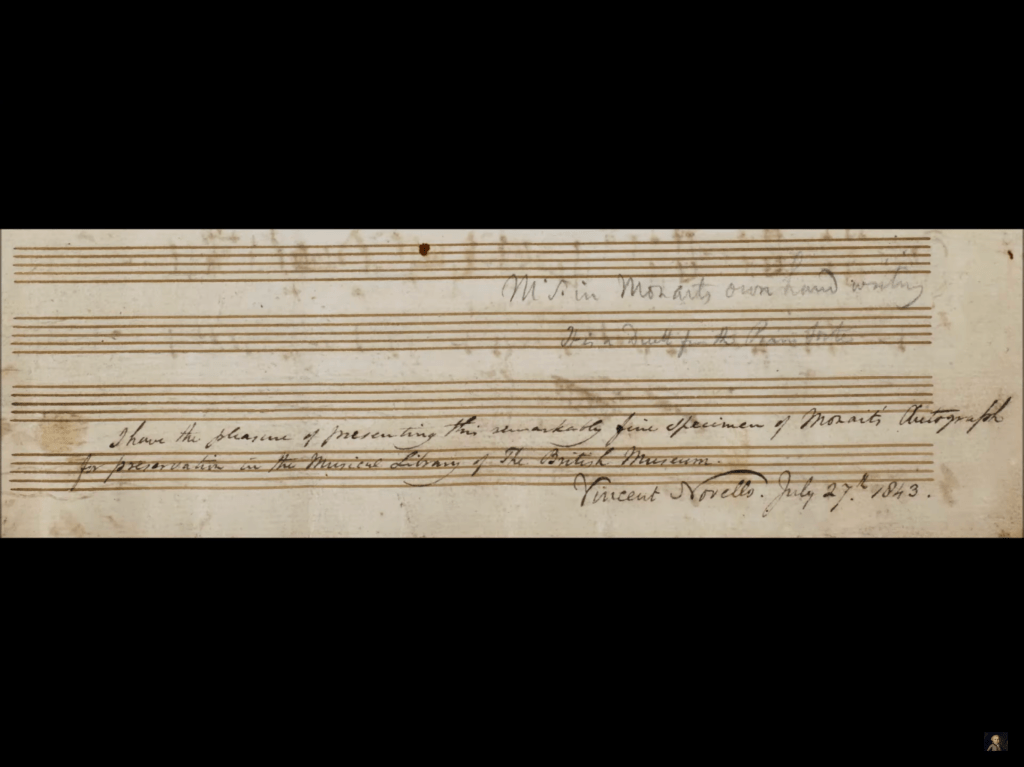
Mozart original manuscript
Schubert Fantasy original manuscript

Ignas Maknickas – finds a home in an artistic oasis between the Gherkin and the Shard

cover pic.jpg

Wouter Valvekens is a Belgian concert pianist. He has been invited to perform on different occasions in Belgium, Portugal, Italy, the Netherlands, Germany and the United Kingdom, for solo recitals and with orchestras such as the Chamber Orchestra of Mechelen, the Euregio Youth Orchestra and the St. John’s Chamber Orchestra in Maidenhead. Apart from his solo career, Wouter Valvekens is also a very active chamber musician. He is a founding member of the ‘Trio Aries’, which won the prestigious Supernova Chamber Music Competition 2020. The ensemble had its debut in the Henri Le Boeuf-Hall of BOZAR Brussels. He is also a founding member of the ‘Werther Piano Quartet’, which is supported by the Mozart Gesellschaft Dortmund. The ensemble gave its debut in the Konzerthaus Dortmund in 2018, to critical acclaim.
During his studies, Wouter Valvekens has been actively participating in numerous national and international competitions. In 2014 he was awarded the first prize at the Belfius Classics competition. He was a finalist at the International VriendenCultuurPrijs Theaters Tilburg and he was awarded the second prize in the International André Charlier piano competition in 2015. In 2016, he won the 1st prize and the prize of the audience in the international VriendenCultuurPrijs piano competition in Tilburg, the Netherlands, and the 3rd prize in the César Franck International Piano Competition. Wouter won the first prize, and two special prizes at the International Paços Premium Competition in Paços de Brandão, Portugal.
Wouter Valvekens received his first piano lessons at age 6 at the Conservatory of Mechelen, where he was studying with Rita Degraeuwe from 2004 to 2014. From 2014 to 2018, Wouter studied with Polina Leschenko at the Royal Conservatory of Antwerp. In 2017, he obtained the degree of Bachelor in Music magna cum laude. From 2018 to 2020 he studied with Ian Fountain at the Royal Academy of Music in London, where he obtained his Postgraduate degree in 2020. His studies at the Academy were generously supported by the Winifred Christie Trust Award, a scholarship award from Inspiratum vzw and a Senior Award from the Hattori Foundation.He has worked with András Schiff, Imogen Cooper, Elisabeth Leonskaja, Richard Goode, Klaus Hellwig, Frank Braley amongst others in various masterclasses. Wouter Valvekens is also supported by the SWUK Flanders Foundation to follow masterclasses worldwide.

Ignas 11_edited.jpg

July 2021 Ignas Maknickas received “The Queen’s Award for Excellence” as the highest-scoring graduate of the Royal Academy of Music. In June 2023 Ignas became the winner of Young Classical Artists Trust (YCAT) International Auditions. He has taken First Prize at the XIX Fryderyk Chopin Piano Competition for Youth in Szafarnia, First Prize at the XX Piano Competition “Young Virtuoso” in Zagreb, Third Prize at the Aarhus Piano Competition and, in 2021, was the semi-finalist of the Vendome Prize.Ignas has appeared with the Aarhus Symphony, Alicante Philharmonic, Dartington Festival Orchestra, Lithuanian National Symphony, Lithuanian State Symphony, Lithuanian Chamber Orchestra, London Mozart Players and Royal Academy of Music Chamber Orchestra.2023-24 highlights include Mozart K. 467 with London Mozart Players in London, Rachmaninoff Piano Concerto No. 2 with Bloomington Symphony Orchestra in Indiana and solo recital at the Wigmore Hall in London.Born in California in 1998, Ignas was raised in Lithuania. In 2017, graduating from the National M.K. Čiurlionis School of Art in Vilnius, he was honoured by the President of Lithuania, H.E. Dalia Grybauskaitė. With his sister and three brothers the talented Maknickas Family Ensemble has represented Lithuania on National Television and at State Occasions.Ignas completed his Bachelor of Music at the Royal Academy of Music on full scholarship under Professor Joanna MacGregor. In September 2021 he commenced the Master of Arts Programme with Professor MacGregor, also on full scholarship. He is a Leverhulme Arts Scholar, a recipient of the ABRSM Scholarship Award, the Imogen Cooper Music Trust Scholarship, Munster Trust Mark James Award, Robert Turnbull Piano Foundation Award, Tillett Trust and Colin Keer Trust Award and Hattori Foundation Award. He is an Artist of the Munster Trust Recital Scheme.He has attended masterclasses with Dmitri Bashkirov, Dame Imogen Cooper, Christopher Elton, Stephen Hough, Yoheved Kaplinsky, Marios Papadopoulos, Menahem Pressler, Geoffrey Simon, Tamás Ungár, Arie Vardi and Ilana Vered. As a soloist he has appeared at the Steinway Hall in London, Auditorium du Louvre in Paris, Charlottenborg Festival Hall in Copenhagen, Ed Landreth Hall in Fort Worth, Lithuanian National Philharmonic in Vilnius and Kinross House in Scotland.

The Mozart’s at home

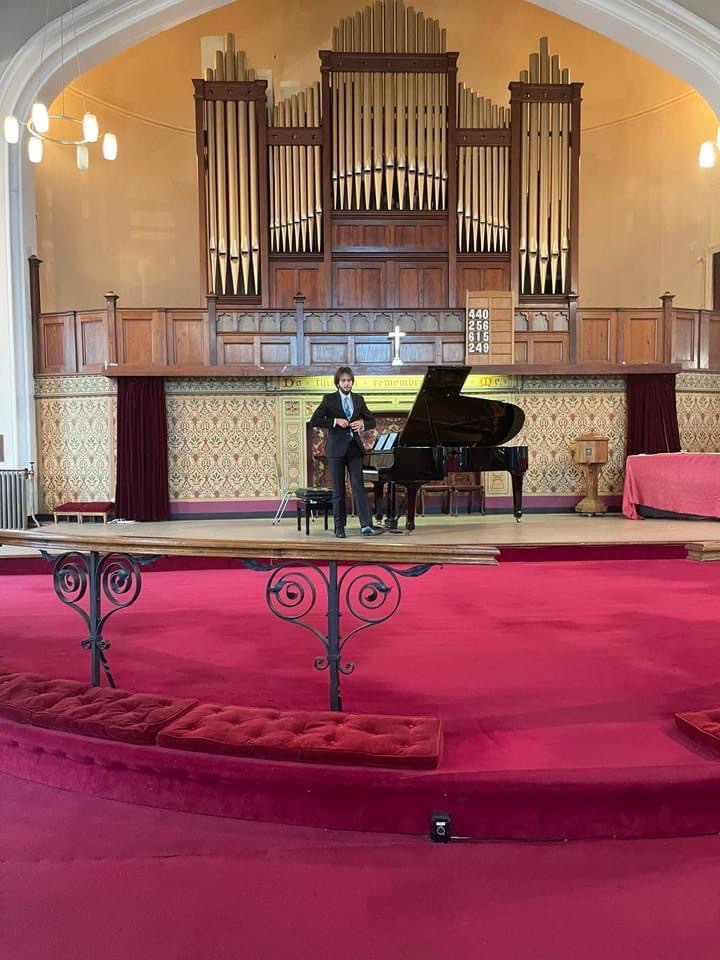
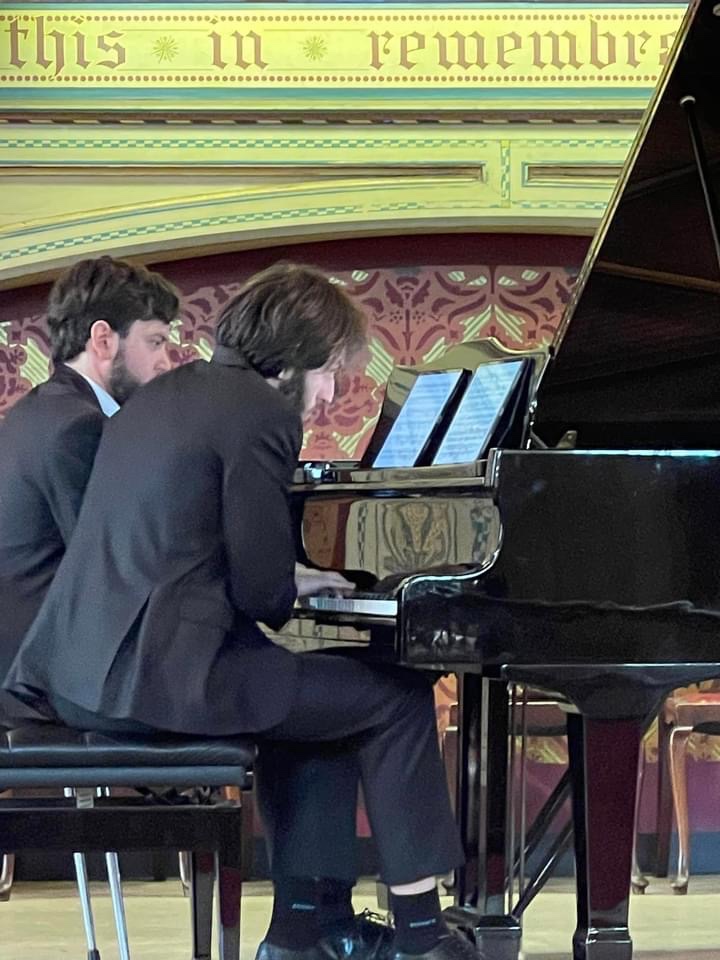
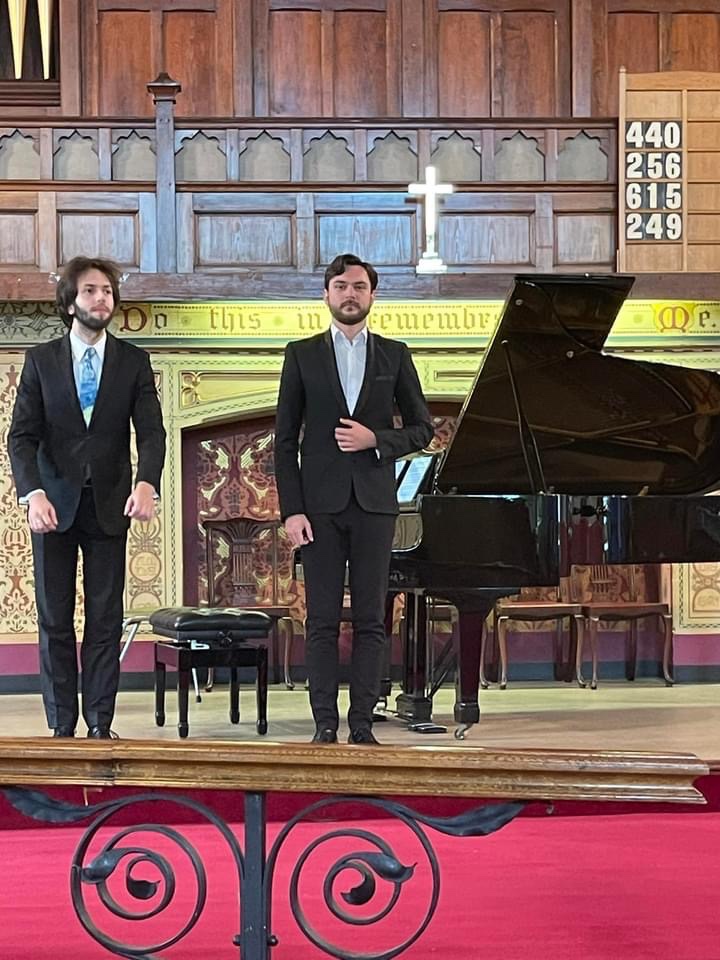
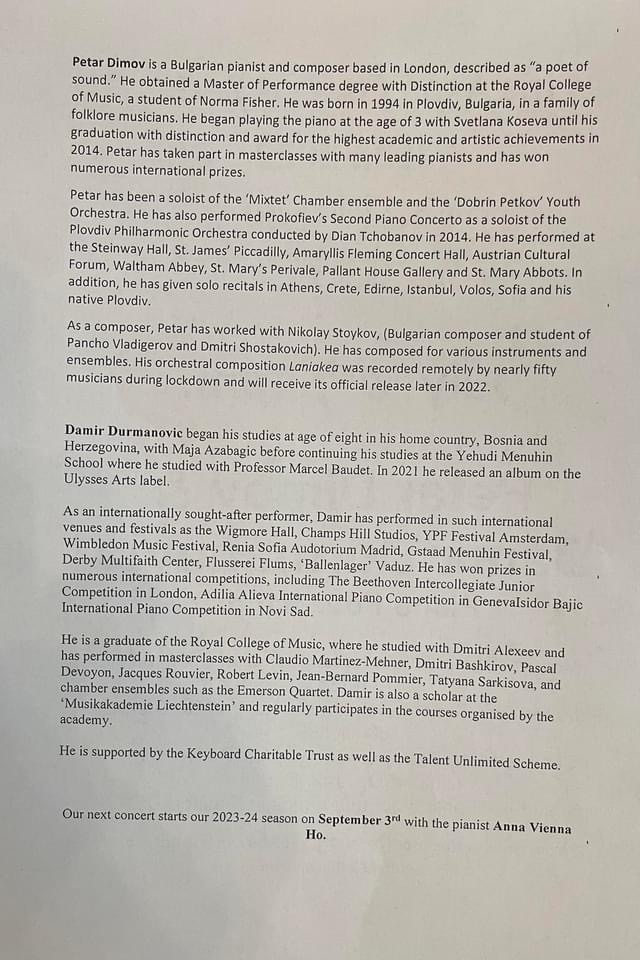
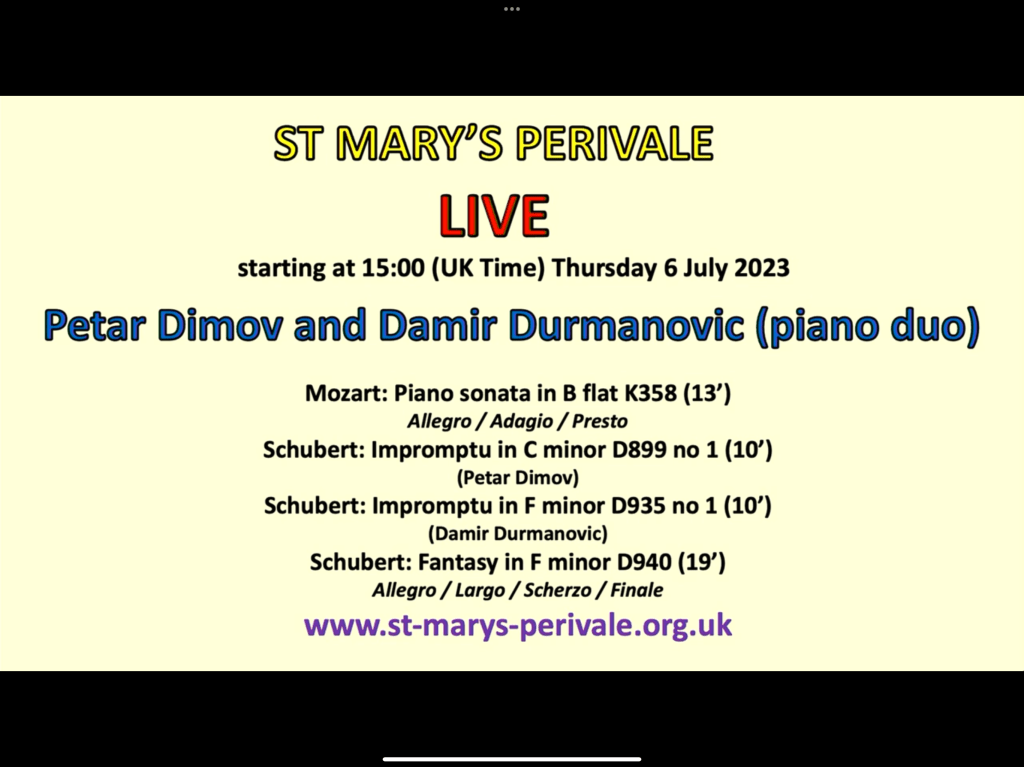
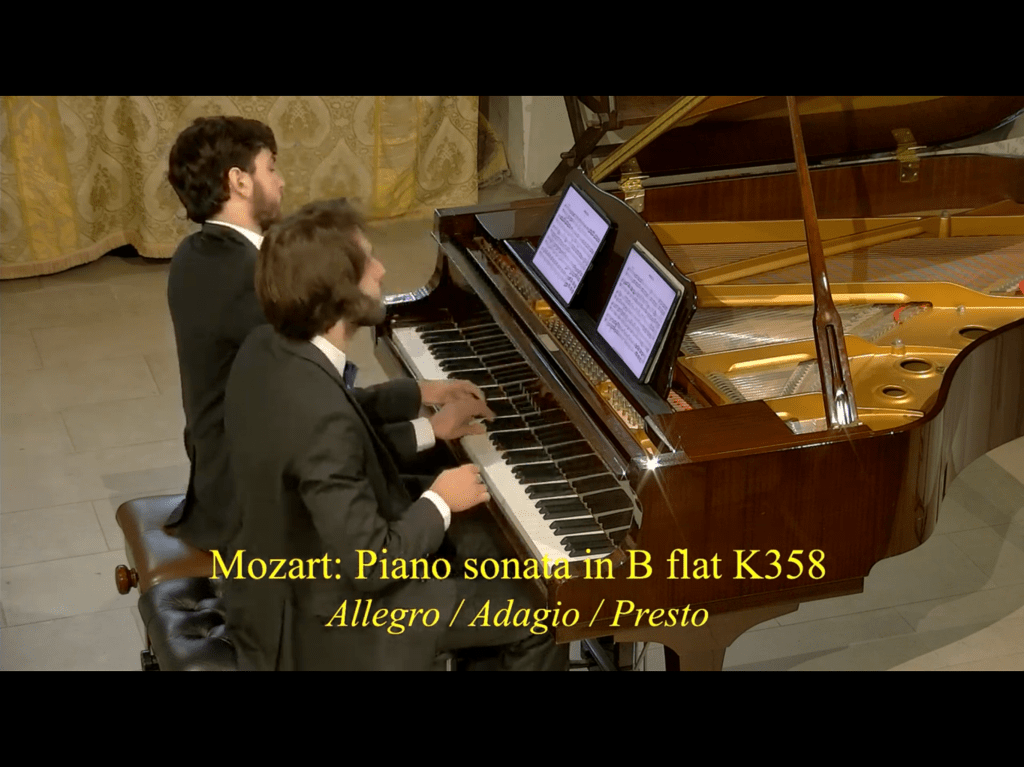
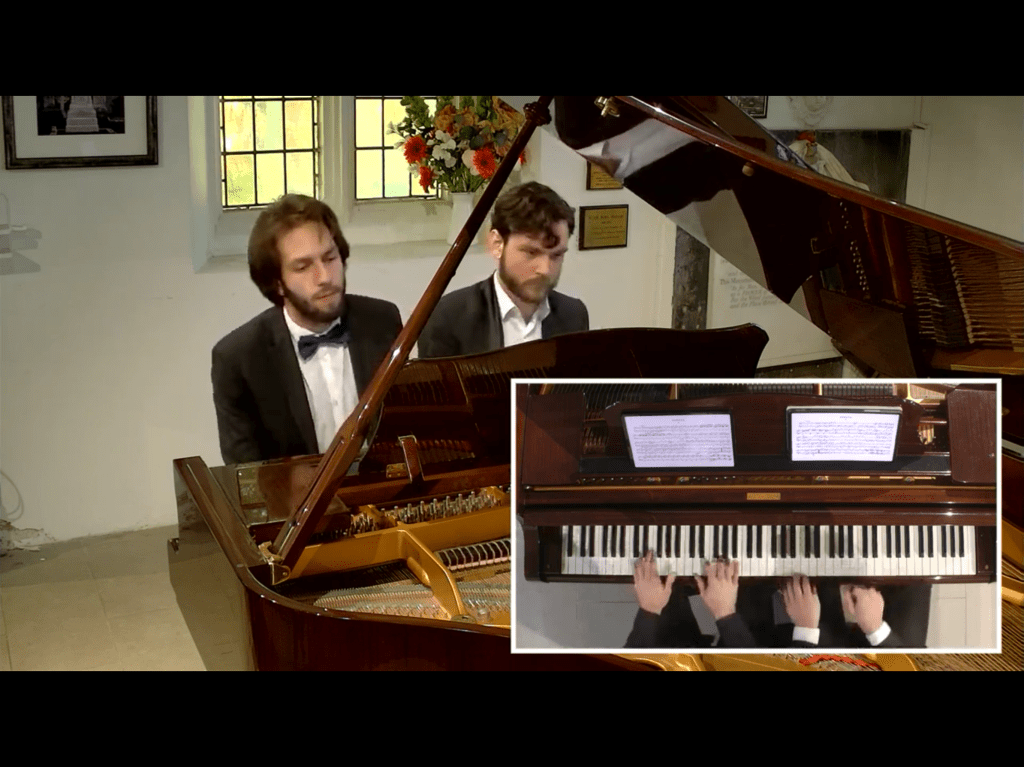
Petar Dimov and Damir Duramovic united in performances of poetic sensitivity Acton Hill and a repeat performance at St Mary’s Perivale

When two superb musicians decide to team up to make music together sparks begin to fly even in Acton on a balmy summer Sunday afternoon.

Acton Hill Church home of the Iris Axon Concert Series


From the first notes of Mozart’s B flat Sonata with its driving energy and perfect sense of balance where four hands played as two.A musical shape where the added ornamentation added an extra colour to the question and answer that passed between their hands.
An Adagio of simple beauty and a molto presto strangely deliberately played with a beguiling non legato touch of great effect .Obviously enjoying their intelligent liberty of ornamentation but occasionally exaggerating in their zeal to inject the music with charm sometimes at the expense of the overall architectural shape .

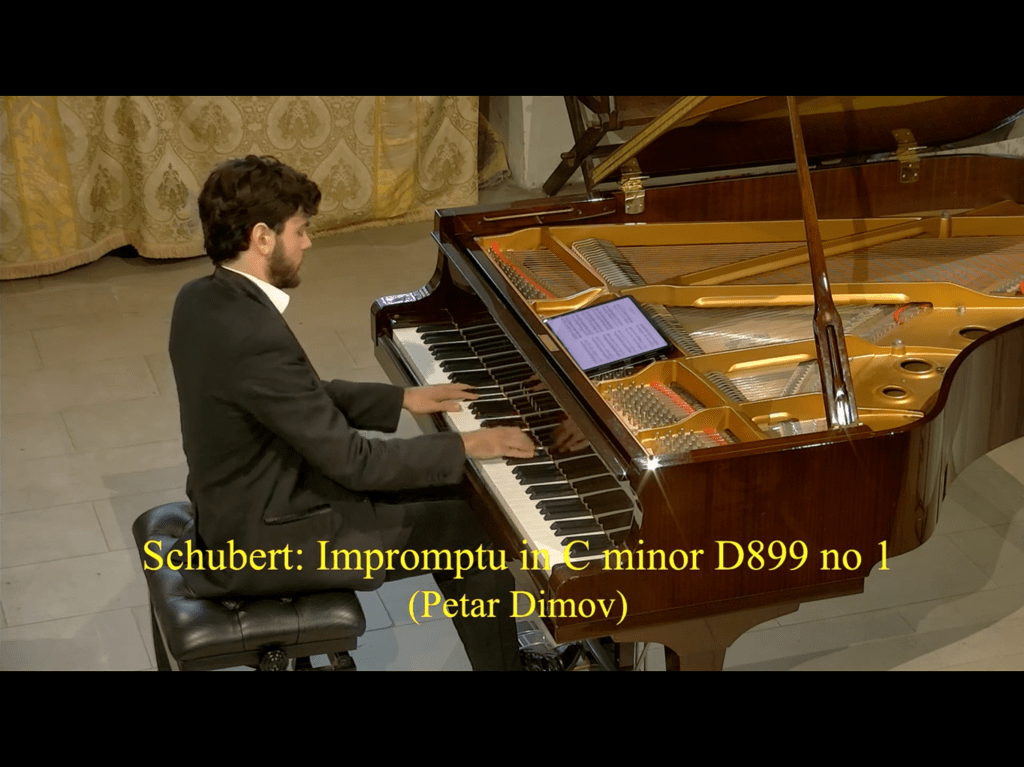
Petar Dimov plays Schubert Impromptu op 90 n.1 D.899


Petar Dimov offered a solo of the first desolate Impromptu from Schubert’s op 90.A long sustained opening note out of which could be overheard a distant ethereal march.A large range of colours from passionate outpourings to beseeching beauty of this remarkable tone poem with its whispered ending of disarming simplicity.

Damir Duramovic played Schubert Impromptu op 142 n.1 D.935


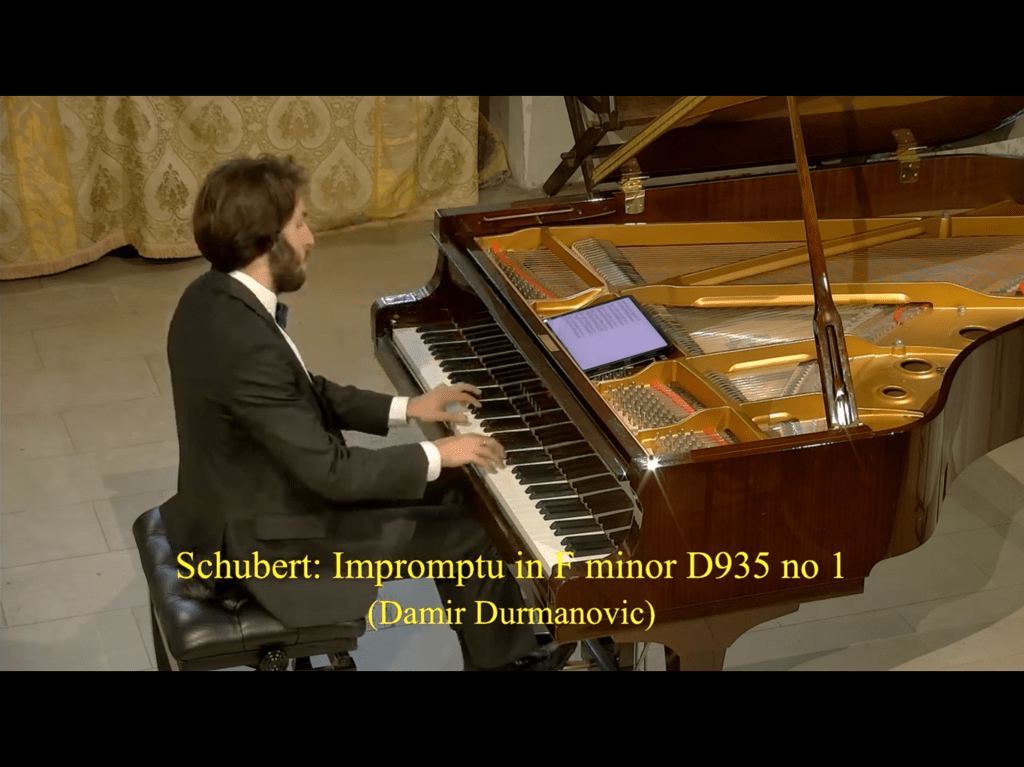
Damir Durmanovic played the first impromptu from the second set op 142.A fluidity and beauty with whispered utterings of sublime mellifluous invention.Time stood still as the tenor and soprano voices communed over a murmuring flood of sound.
A performance of extraordinary communication and a musicality that allowed the music to pour from his fingers with a poetic simplicity as Schubert reached for the sublime heights in the short time still left to him on this earth.


It was in the F minor Fantasy that the supreme artistry of these two young artist allowed Schubert’s sublime creation to shine with ravishing beauty and nobility.The magic created by Petar who barely touching the keys created a layer of sound on which Damir could allow the simple magic of one of Schubert’s most sublime creations to unfold with subtle poetry and sensitivity.There was great nobility to the dotted rhythms of the Largo and a wonderful fluidity to the Minuet and Trio.The fugue was brought to a monumental climax before the beseeching calm of the return of the opening creating the magic but also tragic atmosphere of the final noble ending to this sublime masterpiece .
A superb sense of balance between the two pianists who played as one with the unity and musicianship of a partnership of kindred spirits.
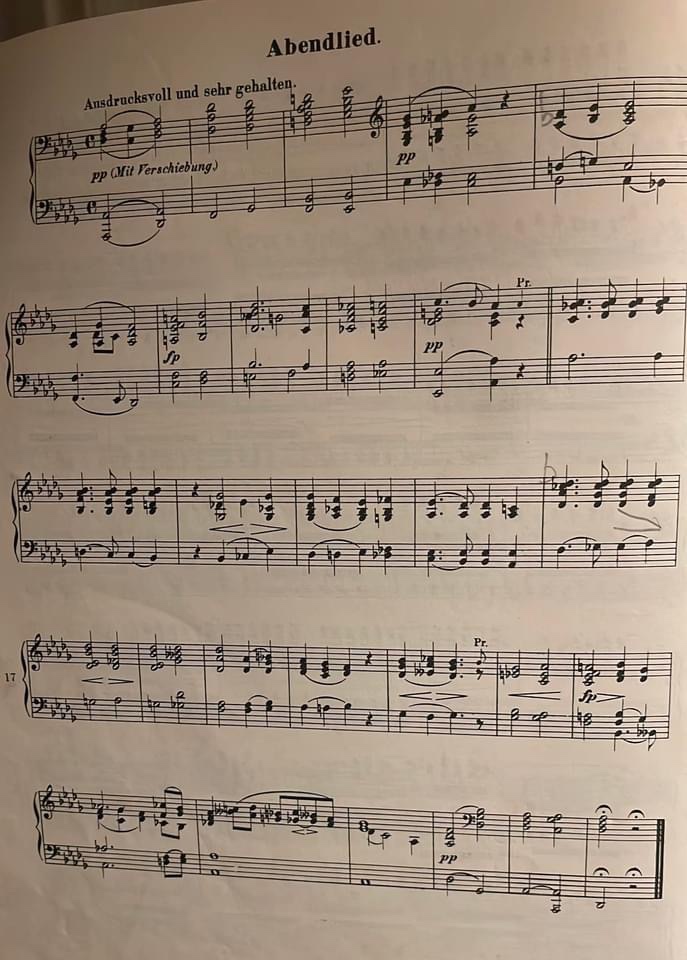
A mix up of parts in the beautiful page by Schumann of his Abendlied op 85 n 12 ,offered as an encore, meant that Damir had to completely improvise the simple chordal accompaniment to one of Schumann’s most poetic outpourings.


Trained from an early age at the Menuhin school this was part of Damir being a complete musician and his further training from Dimitri Alexeev at the RCM just complimented Petar’s musicianly training from Norma Fisher where he had been awarded his Masters degree at the Royal College of Music.

Damir Durmanovic in Cyprus

Petar Dimov a voyage of discovery of sumptuous beauty

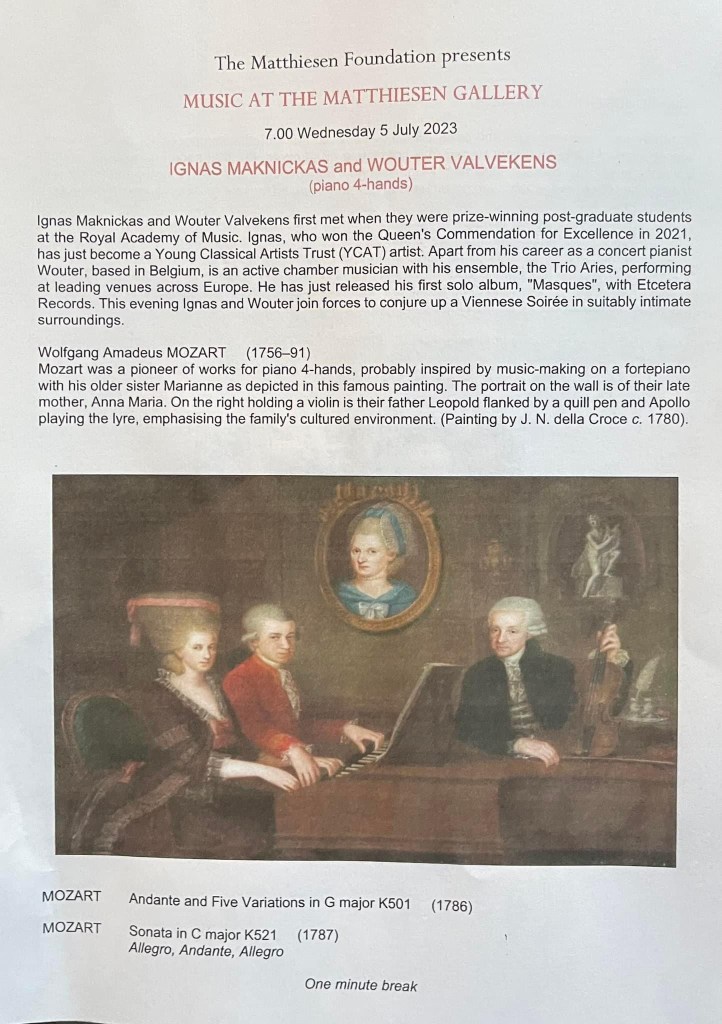
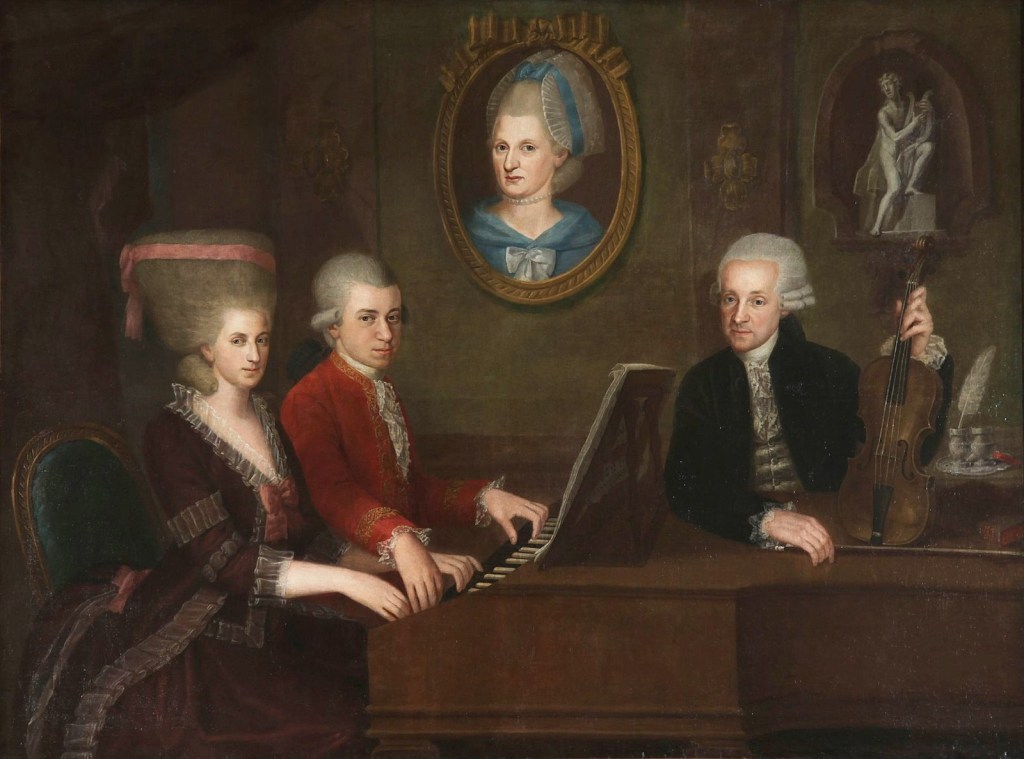
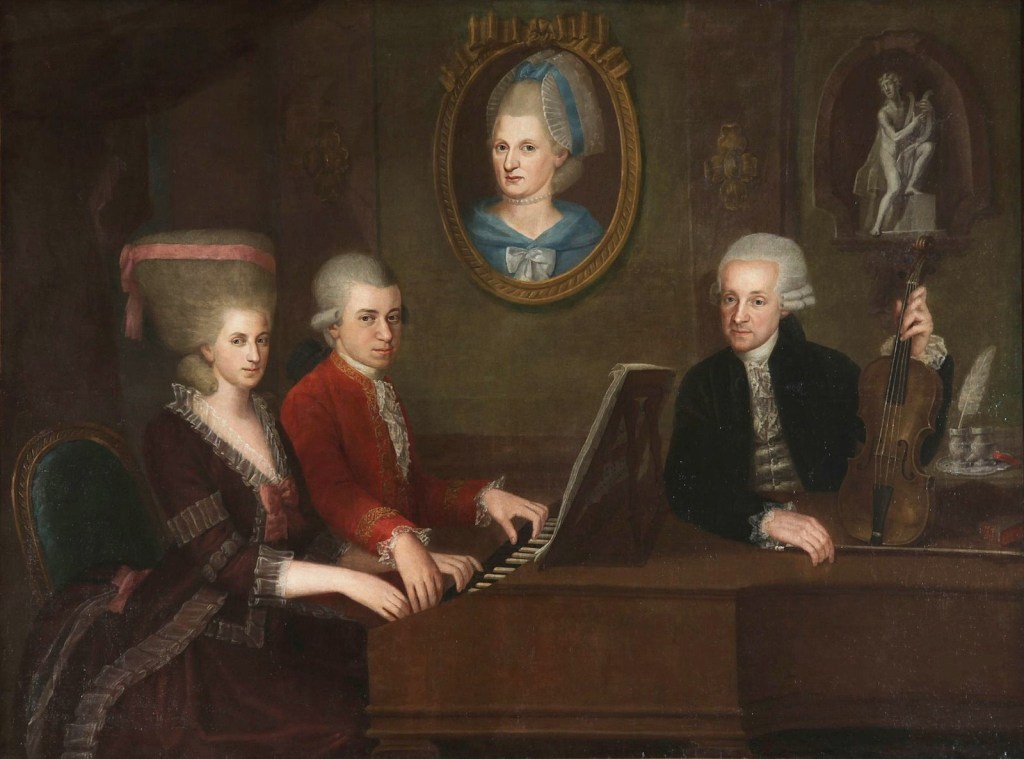
Mozart composed his Sonata for piano duet in B flat major, K. 358, in Salzburg some time in 1773 or 1774 for his sister Nanerl and himself to perform in Paris and Vienna. A three-movement work, the first two without tempo markings, but self-evidently an Allegro and an Adagio, and a finale marked Molto presto,The Sonata in B flat is full of virtuoso fingerwork and lightly lyrical melodies, and its finale is especially brilliant and was published in 1783.Mozart is one of the pioneers of works for piano four-hands; he was undoubtedly encouraged to do so through his music-making on the harpsichord with his sister, as depicted in the famous family portrait by della Croce (1780/81).

Johann Nepomuk della Croce ( 7 August 1736 – 4 March 1819) was an Austrian painter, known in Italy as Giovanni .Wolfgang with his sister Maria Anna and father Leopold on the wall a portrait of his dead mother Anna Maria c. 1780

Schubert began writing the Fantasia in January 1828 in Vienna and it was completed in March of that year, and first performed in May. Schubert’s friend Eduard von Bauernfeld recorded in his diary on May 9 that a memorable duet was played, by Schubert and Franz Lachner and was dedicated to Caroline Esterházy, with whom Schubert was in (unrequited) love.

Caroline Esterházy

Schubert died in November 1828. After his death, his friends and family undertook to have a number of his works published. This work is one of those pieces and was published by Anton Diabelli in March 1829.

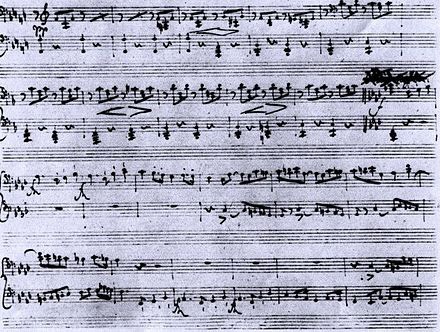
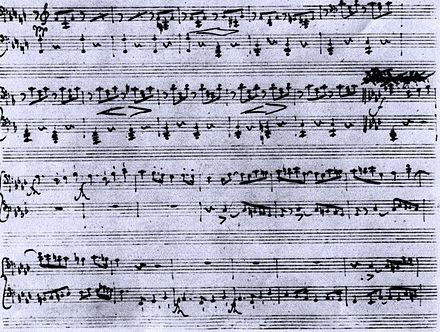
Original manuscript of a section of the left hand part of the fourth movement

The Fantasia is divided into four movements, that are interconnected and played without pause.

  1. Allegro molto moderato
  2. Largo
  3. Scherzo. Allegro vivace
  4. Finale. Allegro molto moderato

The basic idea of a fantasia with four connected movements also appears in Schubert’s Wanderer Fantasy and represents a stylistic bridge between the traditional sonata form and the essentially free-form tone-poem.The basic structure of the two fantasies is essentially the same: allegro, slow movement, scherzo, allegro with fugue.The form of this work, with its relatively tight structure (more so than the fantasias of Beethoven and Mozart was influential on the work of Franz Liszt who arranged the Wanderer Fantasy for piano and orchestra among other transcriptions he made of Schubert’s music.

Interesting to se and here this piano born out of Clive Pinkham’s love and passion for the piano .The enthusiasm for the instrument from an early age gave him a lifetime of dedication striving for perfection. He used to do ten hours a day piano practice and found it frustrating having to play on poor pianos. From this a burning desire was born to make a piano that would respond accurately to what he asked of it. His aim was to create a piano that was affordable to all. A piano that would respond accurately to what he was asking from it, and a piano that would produce an effortless long rich sweet singing tone.
Clive Pinkham gave his first piano recital at the age of eight and went on to win the prestigious August Holmes scholarship to the London College of Music. He has given recitals at the Purcell Room of the Royal Festival Hall, at the Wigmore Hall and has appeared on American and British television.

“My philosophy is a total commitment to quality and customer satisfaction. For me it is important for my pianos to of the very best as it is my name that is on the front of each piano, and I know myself first hand how much pleasure can be given by a piano that is a dream to play.”

clive.pinkham@pinkhampianos.com
One of Schumann’s most poetic outpourings
https://youtube.com/live/CpxUTUMgs04?feature=share

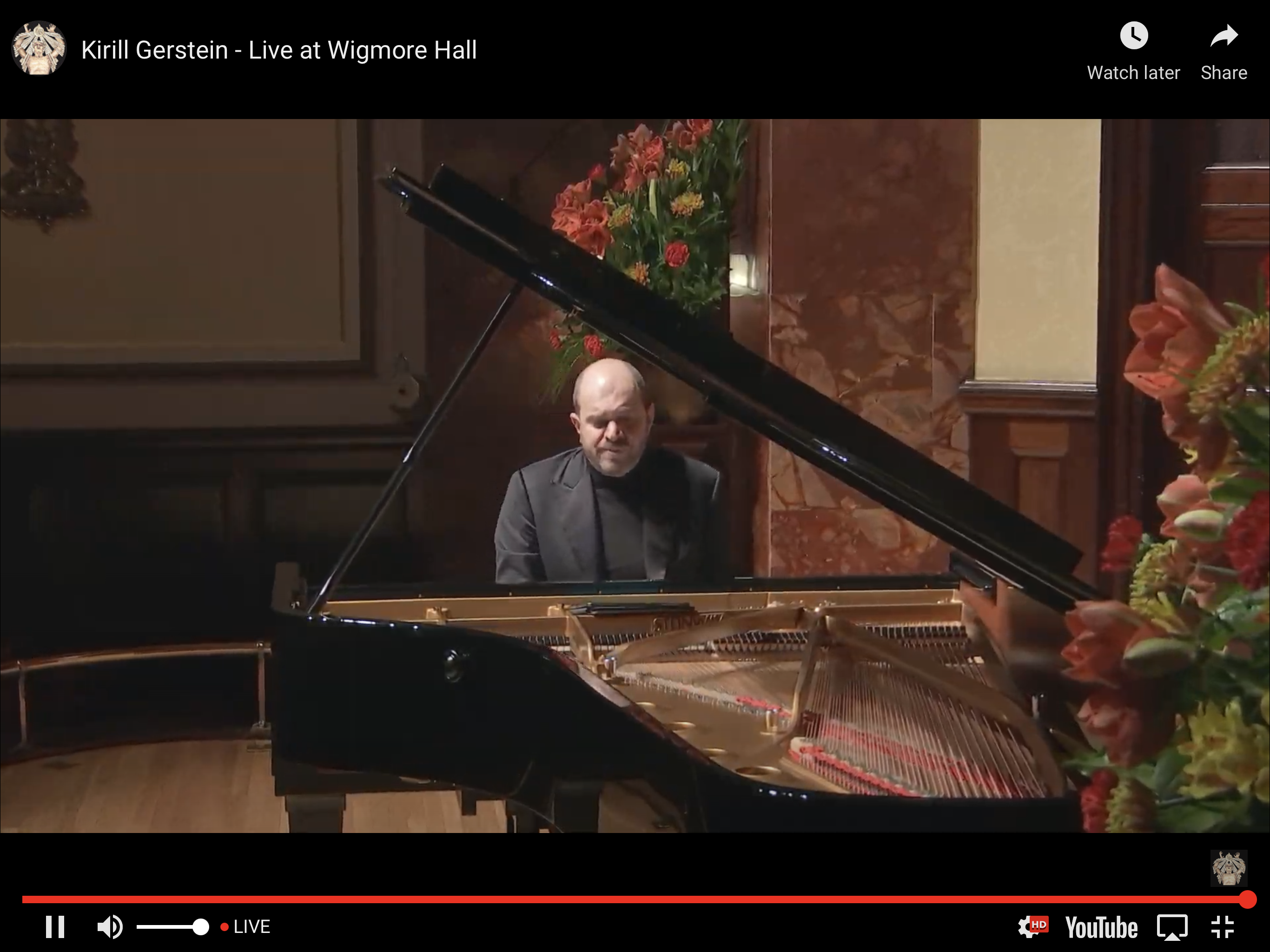
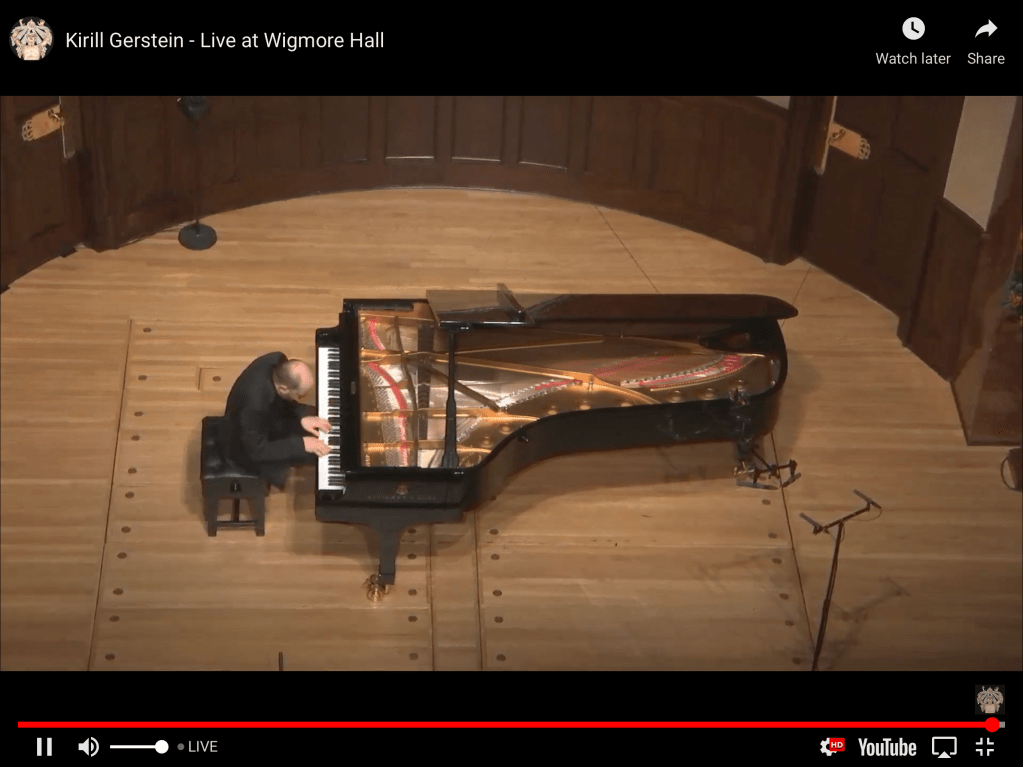
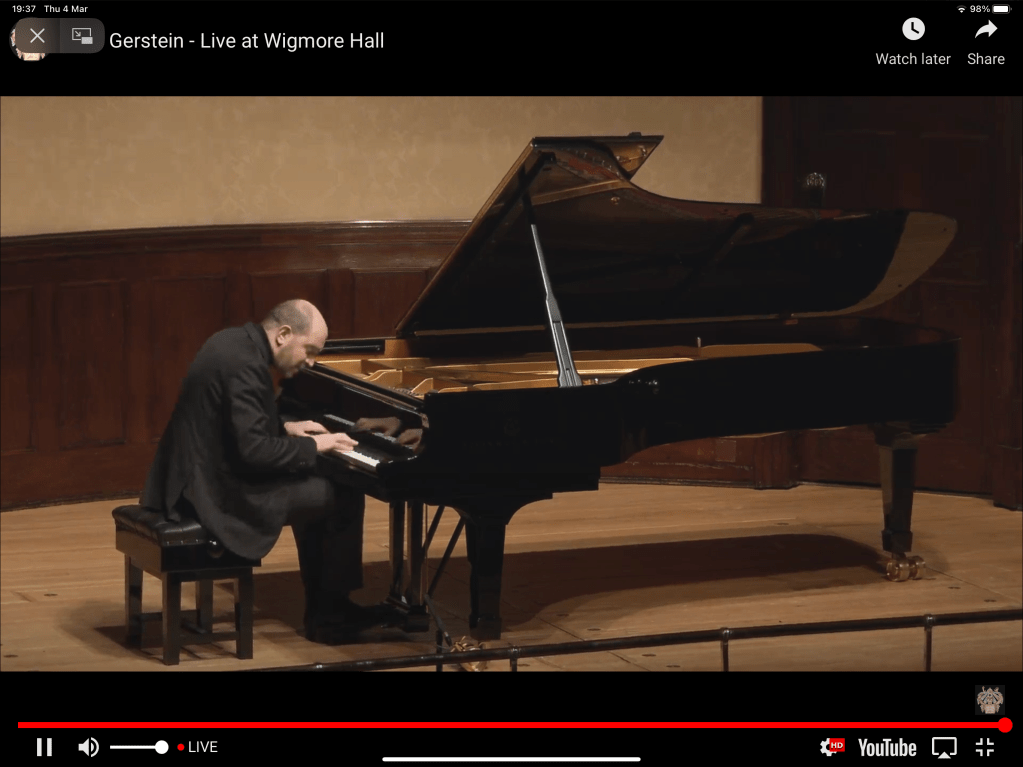
The sublime mastery of Kirill Gerstein at the Wigmore Hall

  • Joseph Haydn (1732-1809) Fantasia in C HXVII 4
  • Ludwig van Beethoven (1770-1827)Fantasia in G minor Op. 77
  • Fryderyk Chopin (1810-1849) Fantasy in F minor Op. 49
  • Franz Schubert (1797-1828) Wanderer D760

A thrilling recital by a master musician.Kirill Gerstein teased us with Fantasies by Master and pupil.Haydn’s rarely heard C major Fantasia linked up to Beethoven’s even rarer G minor .Played with a truly improvisatory flare that was a real jack in the box of delights.
And what better birthday present for Chopin than one of his greatest works restored to the noblest of spirits by an artist who could seduce as he could take our breath away with aristocratic dynamism.
Going full circle back to C major for a breathtaking account of Schubert’s Wanderer Fantasy.
Played with sumptuous clarity and moments of sublime beauty and with an overall architectural shape that had us on the edge of our seats from the first to the last exultant notes.
A birthday gift for Thomas Ades too sharing the day with Chopin.Playing Ades’s Berceuse with the rattling of the cupboard door at the end that was enough to turn our golden dreams into nightmares.
A quite remarkable tour de force of musicianship and total mastery
Kirill Gerstein – Busoni is alive and well and returned to the Wigmore Hall

‘Truly Bach is the Alpha of pianoforte composition and Liszt the Omega’.— Busoni, 1900

https://wigmore-hall.org.uk/live-streams/kirill-gerstein-busoni-and-liszt

  • Ferruccio Busoni (1866-1924). Franz Liszt (1811-1886)

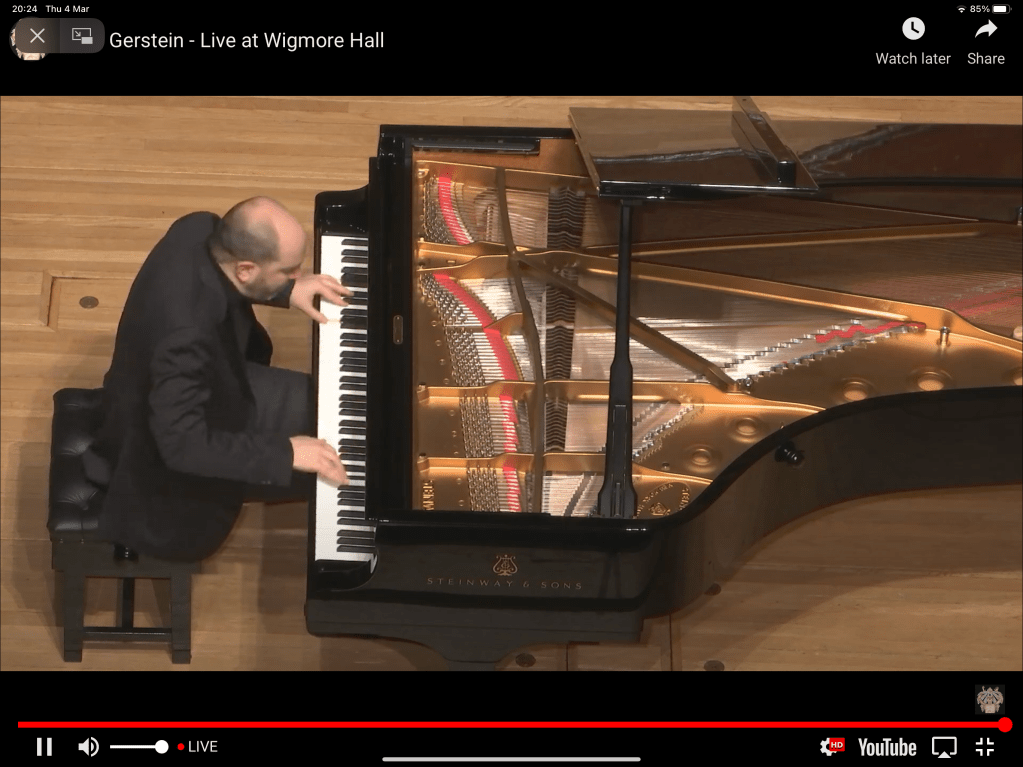
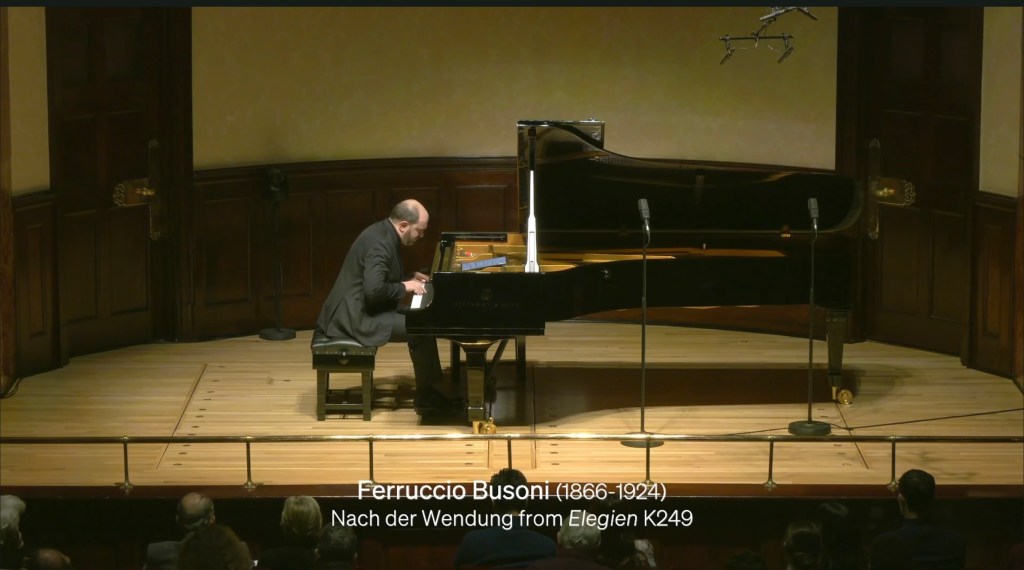
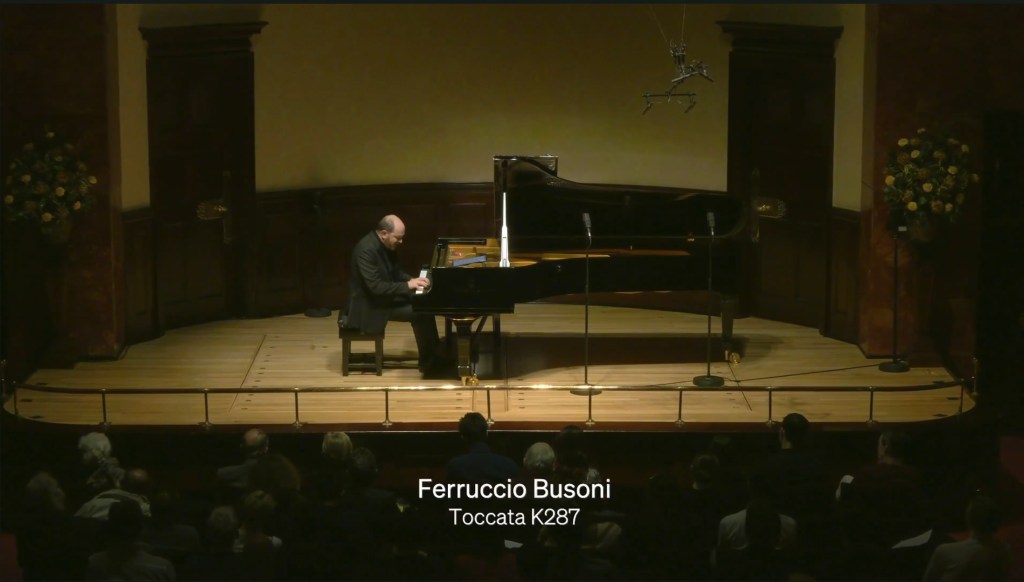
For so many reasons the recital by Kirill Gerstein was a remarkable event.Firstly because the performances he gave were sensational for their musical authority and technical mastery.Even the seemingly obscure works by Busoni were brought to life by someone who had entered so fully into this mysterious sound world that was described by Gernstein with a quote from 1901 :’A musical sun that set at Liszt’s death and shines again through Busoni.‘It was on this very stage known then as Bechstein Hall that was inaugurated by Busoni and Ysaye on 31st May 1901.

It was fascinating to hear Gerstein talk about Busoni as he took us on a journey from his Elégie n.1 ‘ after the turning’ where Busoni had finally freed himself from the romanticism of his early piano concerto and was reaching out to find a new musical voice.It was the voice that Liszt hints at in his late works and is a voice made of mists and colours ,music without key signatures or bar lines.Again quoting Busoni:’Music is born free and to win back it’s freedom is it’s destiny.

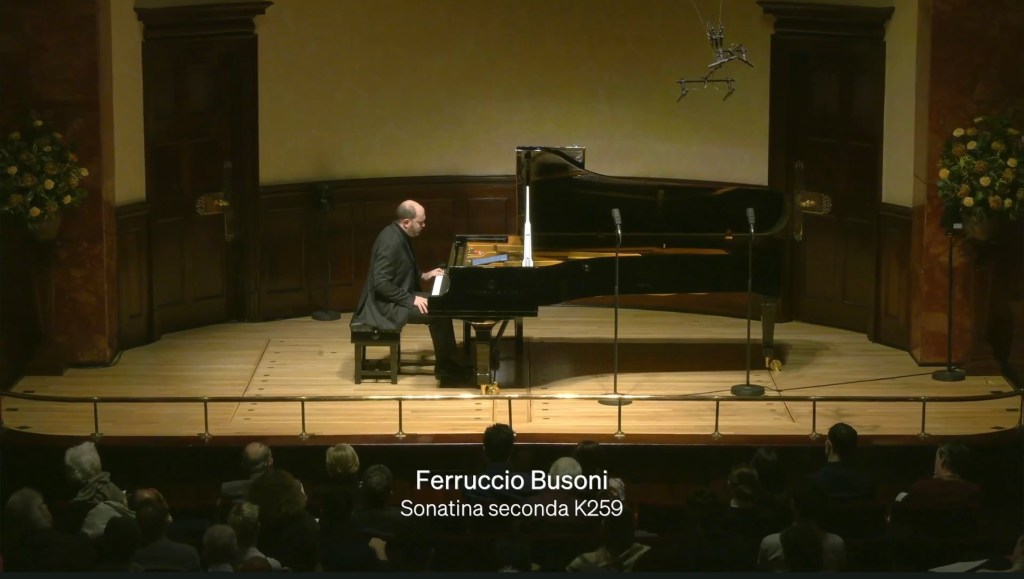
And so it was with the Second Sonatina of 1912 ‘senza tonalità’ where all boundaries are removed.

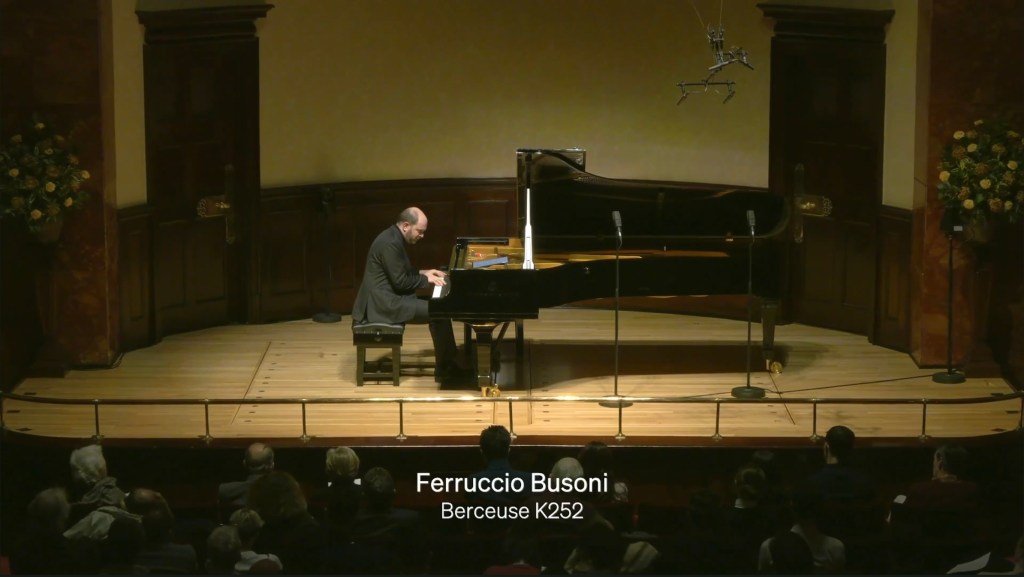
The mists of sound of the Berceuse – 7th Elégie which Mahler had included in the orchestral version in his last concert.Mysterious sounds out of which emerge a melodic line ,similar in many ways to the searching sound world of late Scriabin.I have not heard it played in recital since Serkin included it with the Toccata in London in the 70’s (together with works by Reger in a programme including the Schumann Carnaval and Beethoven op 111).

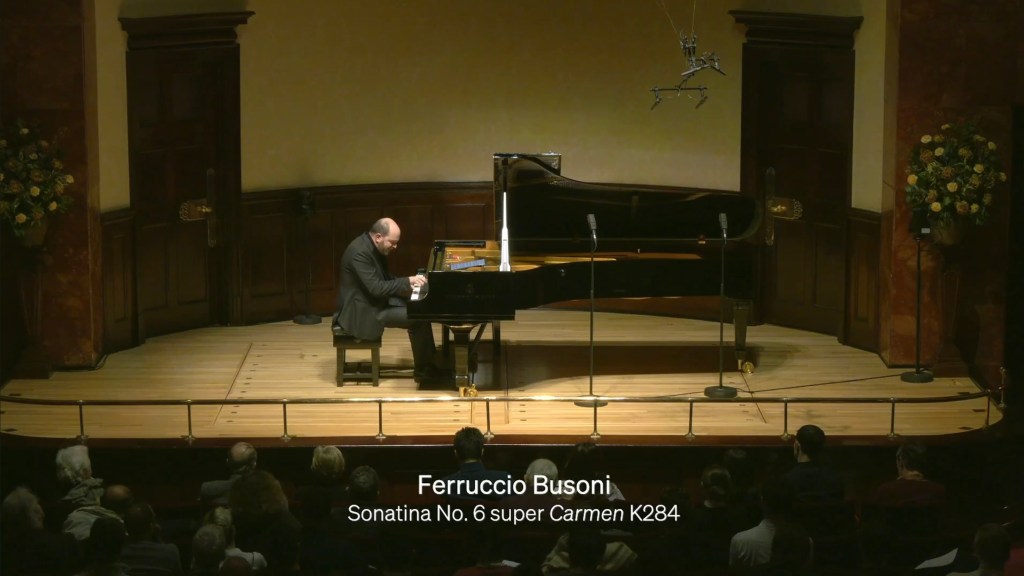
The sixth sonatina that followed is known as the Carmen fantasy as it was Busoni’s recreation of the opera he had seen in Paris in 1920.The ending he even marks Andante visionario which of course it is.Like Liszt’s transcriptions or paraphrases this was someone who had understood the very core of the work and was able to transmit it’s inner message more clearly and in Liszt’s case sometime improve on it by changing the order of appearance.Thomas Ades was present in the audience and a close friend from whom Gerstein had recently commissioned a piano concerto (with funds from the prestigious Gilmore Trust).He describes Busoni’s music as a ‘suitcase with a false bottom’.The last piano work that Busoni wrote was the Toccata where he prefaces it with a quote of Frescobaldi:’Not without difficulty will we come to the end” Busoni had exchanged Frescobaldi’s ‘effort’for ‘difficulty’.Busoni’s last appearance at the now renamed Wigmore Hall was in 1922 when he was already suffering from a kidney disease no doubt due to his love of Champagne – he died two year later.Greatly disturbed by the First World War exclaiming :’The uninterrupted arch of our life has been interrupted!”These were only the fascinating introductions to the works that Gernstein played with such overwhelming mastery.Playing of such extraordinary sounds where notes did not seem to exist as we moved from one shimmering atmospheric planet to another.There were moments of breathtaking virtuosity as in the opening of the Carmen Fantasy taken at a breakneck speed but with such character and clarity – bright sunlight – before the amorous and ominous clouds overtook.

The toccata too was played with extraordinary authority and technical command.But it was the overall understanding of a sound world that was so remarkable and a sense of balance that could make the musical landscape of Busoni so clear.Indeed the world that Liszt so prophetically had pointed to at the end of his life suddenly came alive with sense and reason and just underlined the opening quote between the sun setting with Liszt and rising again with Busoni.A fascinating journey of pure music where the fact that we were listening to one of the great pianists of our time was secondary to his overwhelming musical authority.I think that could also be the way of describing Busoni himself!

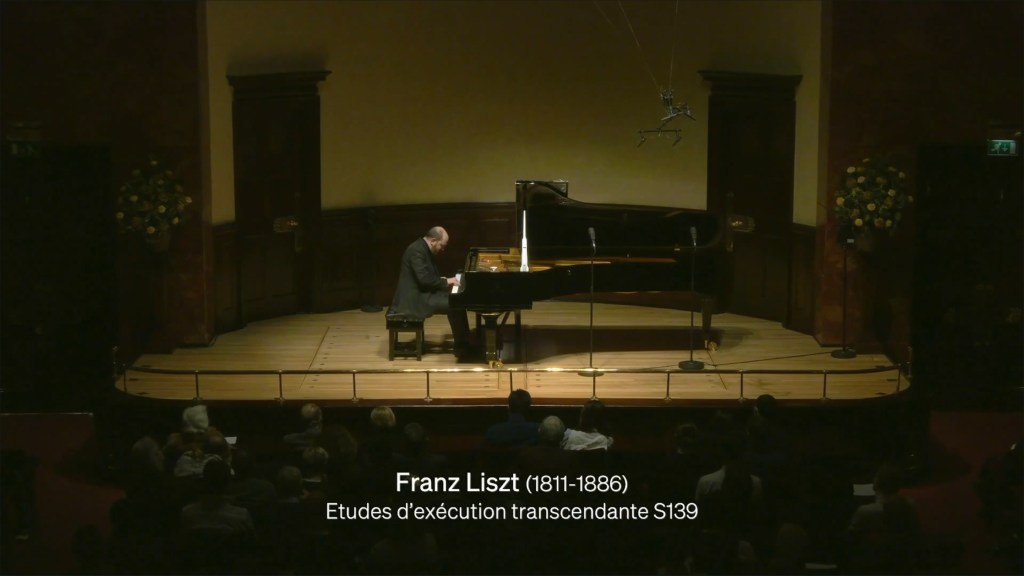
What seemed so remarkable and indeed visionary in the first half of the concert opened the door for Liszt’s transcendental studies.They were played with the same sense of colour and architectural shape that the feat of being able to play so many notes paled into insignificance before the musical message that was being transmitted.I remember listening to Lazar Berman play the studies in one of his first concerts in the Festival Hall in London.There was such overwhelming sound that I quickly left the hall after the third one as my ears could just not take so much continuous sound.A school of playing where every note is played right to the bottom of the key ….and beyond ………exemplified by master virtuosi such Alexander Toradze and Denis Matsueev.A school that turns the piano back into a percussion instrument whereas Liszt and Busoni had pointed us into the direction of multicoloured sounds.A world where notes were transformed into shapes and atmospheres.A magic world where a box full of hammers and strings could be turned into a kaleidoscope of sounds and emotions.Was it not Thalberg who when he played was accused of having made a pact with the devil as it seemed he had three hands,such was the illusion he was able to create by the subtle use of the pedal,balance and technical control.It was Anton Rubinstein who had said that the pedal is the ‘soul’ of the piano We seem these day to have lost what was known as the ‘Matthay touch’,where every note could have at least one hundred different gradations.I remember Rosalyn Tureck who if the lid of the piano was not left shut before a concert she would spend time brushing off the minutest particles of dust that could impede her from weighing up each key.It was this that made Kirill Gernstein’s performance today so remarkable.

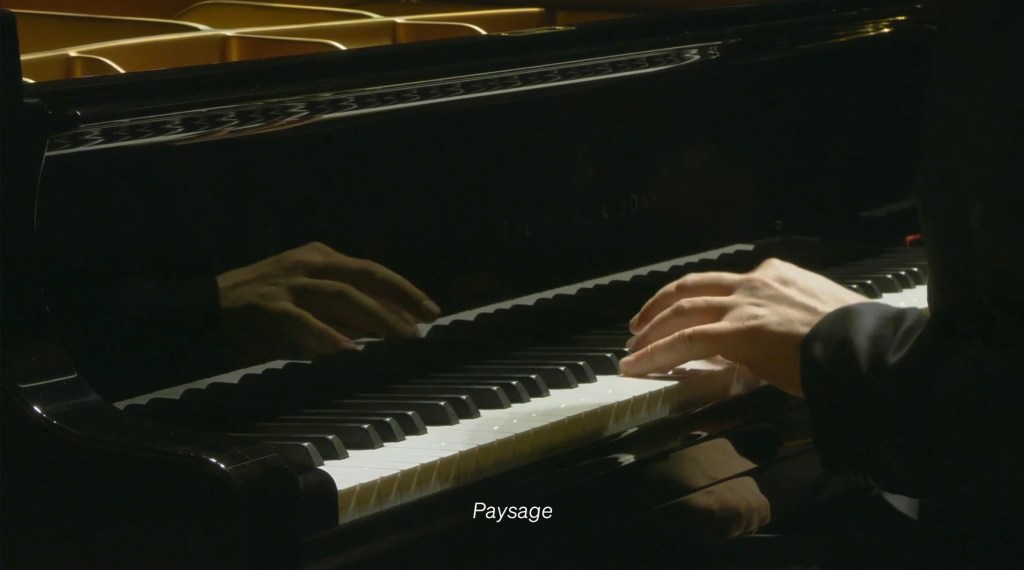
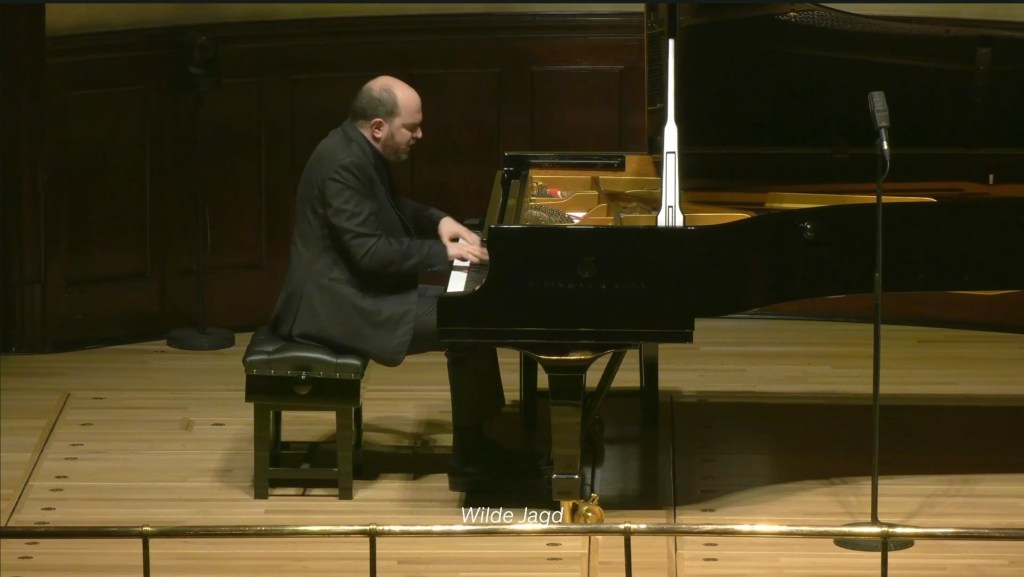
We were treated to twelve miniature tone poems where Paysage became just as significant as Der Wilde Jagd because the passionate involvement and sense of line was the same .

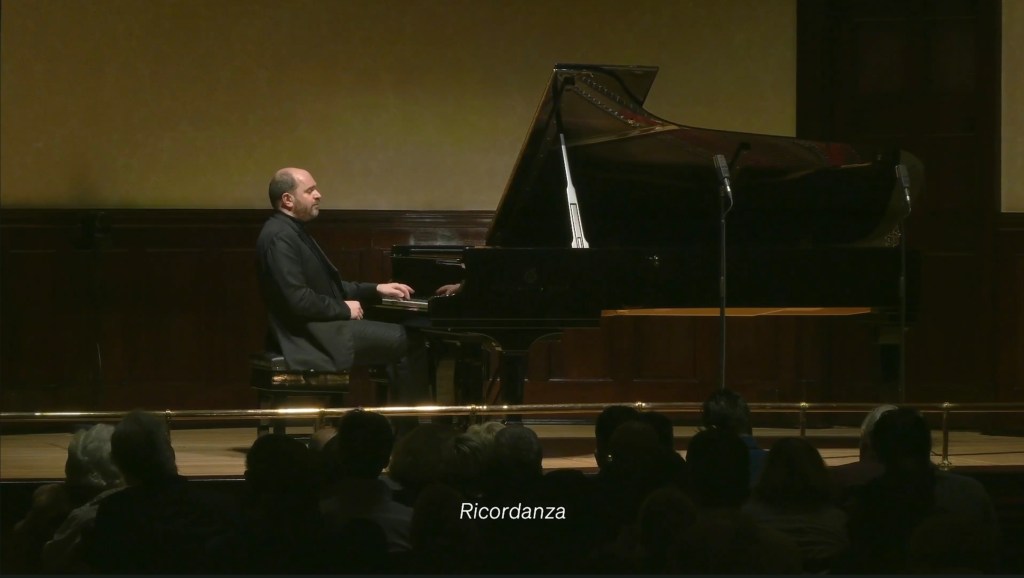
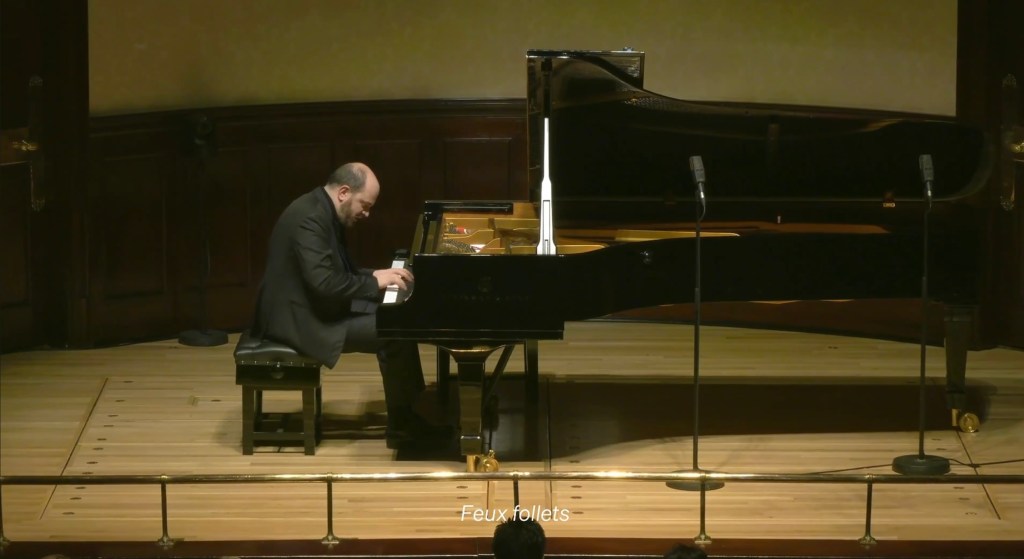
The ravishing beauty of Ricordanza – ‘a bunch of faded love letters tied with a pink ribbon’ to quote Busoni and the incredible fleeting impression of ‘Will o’ the wisp’ Feux Follets .One of the most technically challenging of all piano pieces was played with such a haze of sounds that blew across the keyboard with a left hand that was like a jewels sparkling in the night air.

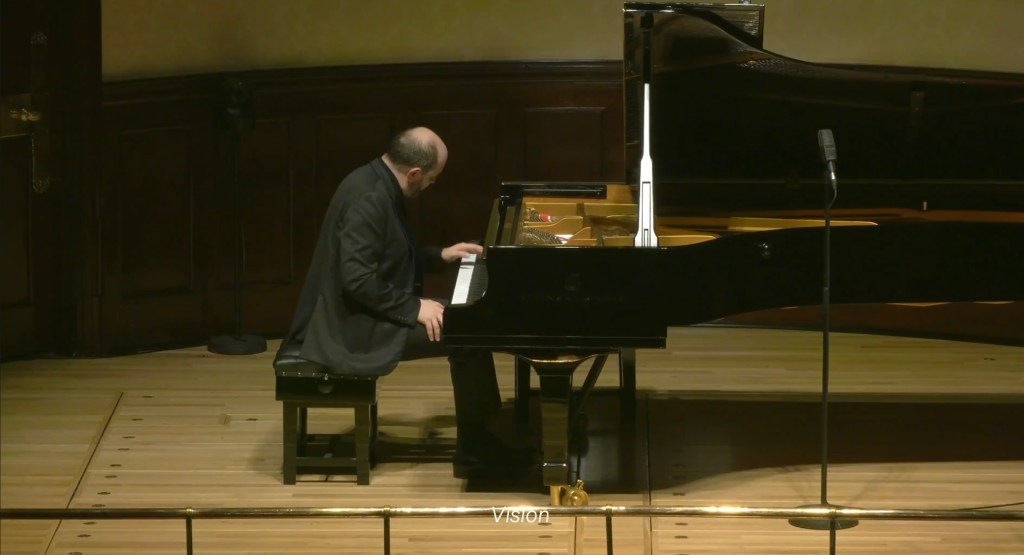
Has Vision ever sounded as noble or ‘visionary’ with such sumptuous sounds?The whole opening page played by the left hand alone before the streams of sounds where even two hands did not seem enough!

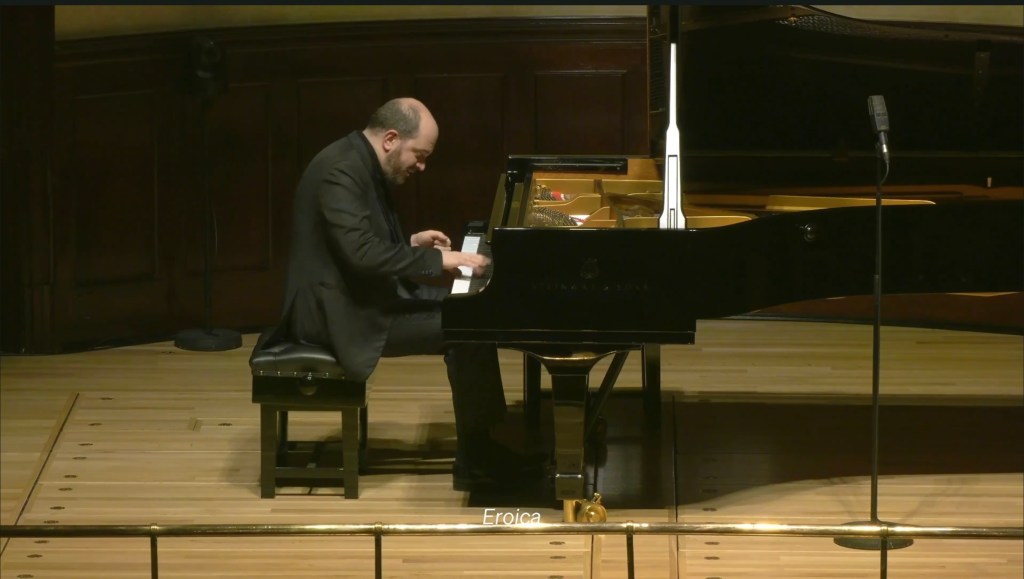
The octaves in Eroica after the quixotic opening were like vibrations of sound and we were certainly not aware that they were the notoriously difficult octaves that we all wait for.

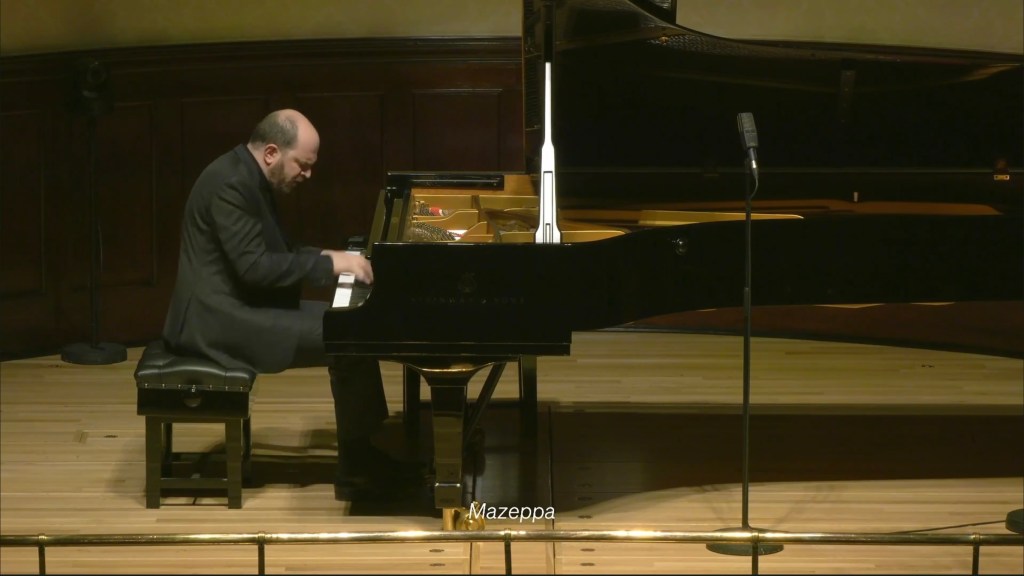
Mazeppa too was played with astonishing energy but also a sense of balance where everything was so clear as the excitement grew to breathtaking proportions.The central episode,sumptuous tenor melody with streams of golden sounds cascading around it.Has the Fminor study ever sounded more passionately abandoned or beautifully phrased with a coda of terrifying brilliance? Harmonies du soir was played like Paysage with ravishing sounds and passionate involvement.The final left hand arpeggios so reminiscent of Busoni’s own Berceuse with just a mist of sound on which floated the melodic line.

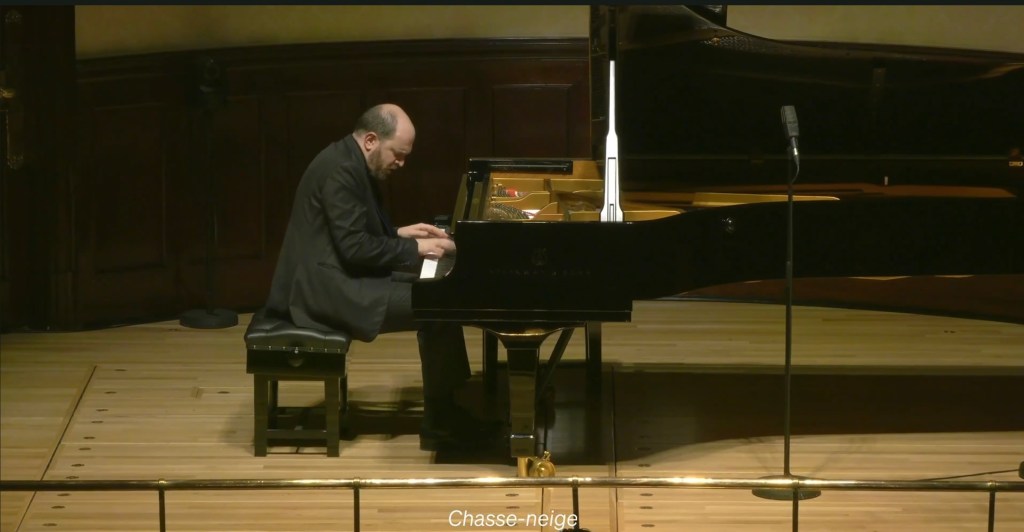
Chasse Neige ,considered by many to be the finest of the set ,was played with an extraordinary sense of balance and forward movement building up to a breathtaking climax before dying away with swirls of sound.It died away to end this extraordinary performance with a simple bare chord.

Minutes of aching silence at the end as the audience tried to come to terms with what they had experienced and Kirill Gernstein had a moment of recovery.

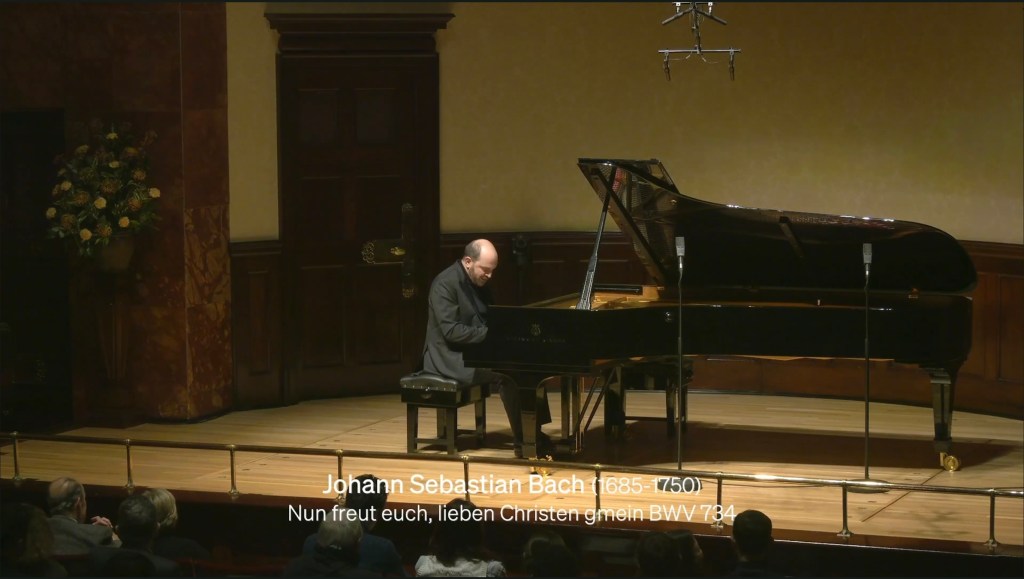
The only encore possible after that could be by Bach-Busoni!It was in fact the chorale prelude ‘Nun freut euch ,Lieben Christen gemein’ played at incredible speed but with such clarity,the melodic line miraculously emerging above the joyous outpouring of brilliance.

The sublime mastery of Kirill Gerstein at the Wigmore Hall

Domonkos Csabay at St Mary’s masterly playing of fluidity and poetic sensibility

Tuesday 4 July 3.00 pm 

https://youtube.com/live/lhihQNNFII4?feature=share


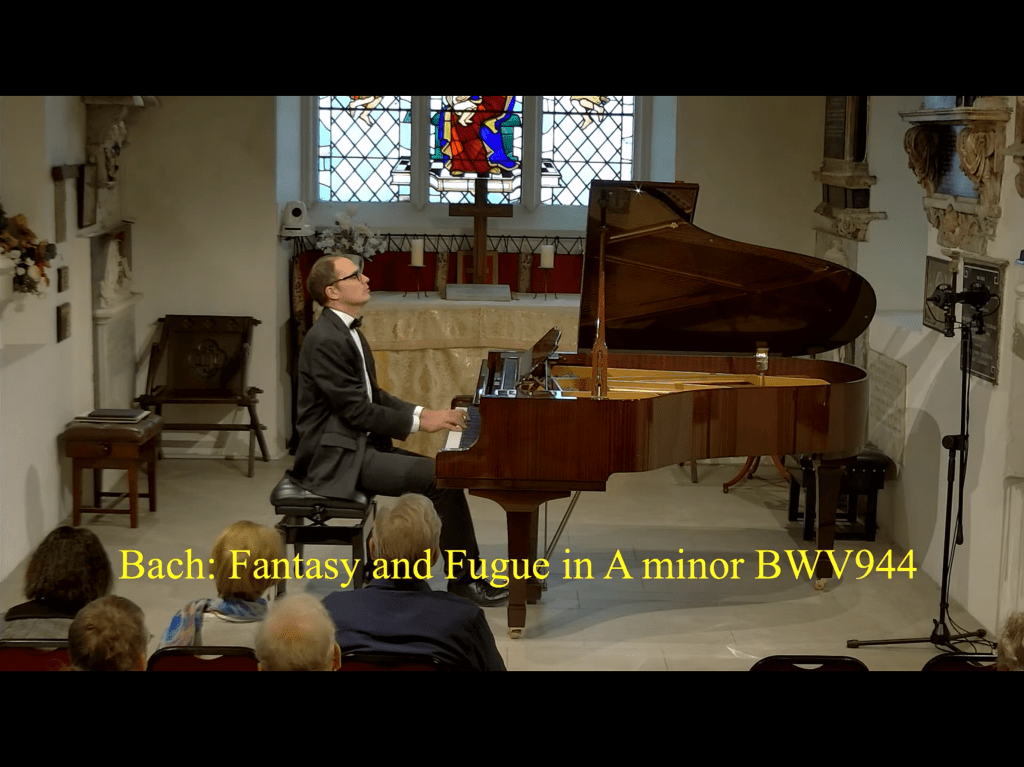
The Hungarian roots of Domonkos were apparent throughout his recital at St Mary’s Perivale not only for the obvious dance idioms in Kodaly’s ‘Dances of Marosszek’ but in the very sound he produced from the very opening notes of Bach’s Fantasia and Fugue BWV 944.
A Hungarian school of playing with a very crisp and clean sound of great fluidity very noticeable in Geza Anda,Tamas Vasary ,Deso Ranki and Zoltan Kocsis.It gives great clarity to the sound but with a kaleidoscopic range too from gently whispered sounds to the full sound of a truly Grand piano.


There was a clarity to the long improvised lines of the Bach Fantasia with a fugue that had an inner rhythmic propulsion where Bach’s extremely ‘knotty twine’ was unravelled with extraordinary beauty of sound.Each strand had a life of its own while creating a architectural whole of great nobility.


It was a sound that was ideally suited to the world of Benjamin Britten where luminosity and subtlety created a world where every note seems to have a life of its own in a musical language that is always based on the human voice.The piano accompaniments of the Song Cycles like the Winter Words or Michelangelo Sonnets are so similar to this sound world of solo piano.
Britten was a wonderful pianist but more like Gerald Moore where their accompaniment for singers was quite unique.Britten’s creation of a new genre of song (and opera)for his companion Peter Pears and his duo playing of Schubert with Richter or Rostropovich from Aldeburgh has become legend.

Rostropovich and Britten, 1964


I was studying in Italy in 1972 when I was asked by the British Council to give a series of recitals to celebrate Britten’s 60th birthday playing the entire piano works of Britten together with the song cycle ‘Winter Words ‘ and some of his folk song arrangements.The piano works were Holiday Diary Suite and the Notturno commissioned for the first Leeds International Piano Competition.
Today is the first time since then that I have seen this suite on a concert programme.
Domonkos played it with superb character where Britten’s very individual language created a world where you could visualise the atmosphere that Britten was describing.A master craftsman Britten knew exactly how to make the piano talk with the same inflections and shapes as the human voice.The crystal clear sounds that are so much part of Domonkos’s technical finesse were ideally suited and it brought each of the four scenes of a ‘Holiday Suite’ vividly to life.
‘The Early Morning Bathe’ where you could almost see the water splashing,taking a plunge into the icy water and the tentative steps before taking another.Or the beautiful serene melodic line ‘sailing’ on gently moving waves.The agitation as they sailed into deeper waters only to return to the serenity and calm as they neared the shore.All the fun of the ‘Fun Fair’ with its sparkling perpetuum mobile played with such enviable precision.Fireworks shooting off with glissandi fired from Domonkos’s superbly trained fingers.The extraordinary lament as ‘Night’ falls with the tenor melody that sings out so poignantly while all around slumber is taking over.A superb sense of balance and complete control of timbre and balance made this a particularly poignant farewell.
A work that deserves a place on more concert programmes when played with the mastery that we heard today (I can imagine Curzon for whom it was eventually dedicated bringing the same eloquence to these seemingly sparse notes – as he did of course to Mozart).
A very individual ’medley’ of four completely different works from the musicianly hands of Domonkos turned into a Sonata of magnificence and opulence.


‘Finlandia’ transcribed by the composer Sibelius was a revelation as Domonkos showed us a tone poem of extraordinary evocative suggestion with its imperious orchestral opening and sumptuous string chords answered by the purity of the woodwinds.A virtuosistic build up to the glorious melodic outpouring of Nationalistic pride that has become the emblem of Finland.Superb full orchestral sound never hard or ungrateful from Domonkos’s wonderfully fluid sound world.


A beautiful Chopin Prelude op 28 n.17 was played with aristocratic rubato and sounds of magic and wonder.The deep tolling bell in the base and the mist it created for the apparition of the opening melody,floating into a stratosphere of poetic beauty,was quite memorable.


Rachmaninov’s G sharp minor prelude was played with a poetic sensibility and kaleidoscope of ravishing colours.


The sombre entry of S.Paolo walking on the waves was just a prelude to a tone poem of remarkable grandeur and beauty that was truly breathtaking.I have only heard the like from Wilhelm Kempff on his all too few historic recordings of Liszt.


The Kodaly ‘Dances’were played to the manner born with scintillating colours of such insinuating beguiling sounds and also technical brilliance of nobility and grandeur.

Domonkos Csabay is a Hungarian concert pianist, chamber musician and accompanist. He studied with András Kemenes and István Lantos at the Liszt Academy Budapest, and is a graduate of Royal Birmingham Conservatoire, where his professors were Pascal Nemirovski and John Thwaites. Besides pursuing a solo carreer, he has worked as a répétiteur with renowned opera companies and co-operated with diverse chamber ensembles. He has made several concerto appearances and has been invited to many prestigous venues and festivals, such as the Budapest Spring Festival or the Wye Valley Chamber Music Festival. Competition successes include 1st prize at the Lyon International Chamber Music competition and at the Birmingham International Piano Chamber Music Competition in 2022, special award in the Budapest Liszt Piano Competition, as well as prizes won as a composer in Romania and as member of a Lied duo in Wales. His performances have been broadcast on BBC Radio 3 and in the Hungarian Radio. His debut CD was issued by Naxos in 2021, his second solo album is appearing soon with the label Hungaroton. Domonkos recently finished his fellowship as a collaborative pianist the Royal College of Music, London.”

Domonkos Csabay at St Mary’s. A refined recital from a true musician

The Holiday Diary (Tales) of 1934, dedicated in the first published edition of 1935 to Arthur Benjamin, the composer’s piano teacher at the RCM, were later—in a sense—re-dedicated on the manuscript given to Britten’s friend, the pianist Clifford Curzon (‘who made them his’). They show Britten’s sharp sense of the descriptive and that boyish sense of fun which never entirely deserted him. The exuberant ‘Early Morning Bathe’ (Britten loved swimming) is irresistible with its hesitant shivers before taking the plunge, its wave-like arpeggios gathering momentum into warmer tonal waters, and the shivers in reverse of its coda as the bather emerges from the water. ‘Sailing’ broaches a vein of melodic serenity (parodied in a turbulent middle section) that was to prove consistent in many a more emotionally serious situation in Britten. The delights of the ‘Fun-Fair’ (a brisk toccata-like rondo with descriptive episodes) are a riot of piano sonority. The work concludes with an atmospheric night-piece in which the ghosts of former themes from the suite float past.

Jean Sibelius 1865–1957

Jean Sibelius born Johan Julius Christian Sibelius;(8 December 1865 – 20 September 1957) was a Finnish composer of the late Romantic and early-modern periods. He is widely regarded as his country’s greatest composer, and his music is often credited with having helped Finland develop a national identity during its struggle for independence from Russia.The core of his oeuvre is his set of seven symphonies which, like his other major works, are regularly performed and recorded in Finland and countries around the world. His other best-known compositions are Finlandia ,the Karelia Suite ,Valse triste ,the violin Concerto ,the choral symphony Kullervo,and The Swan of Tuonela (from the Lemminkainen suite).There is also quite a large number of piano pieces yet to be discovered .In performing selected piano works, Lief Ove Andsnes finds that audiences were “astonished that there could be a major composer out there with such beautiful, accessible music that people don’t know.”

  • Piano Suite (Florestan), JS 82 (1889)
  • Sonata in F major op 12.(1893)
  • 10 Pieces, Op. 24 (1894–1903)
  • 10 Bagatelles, Op. 34 (1914–16)
  • 10 Pensées lyriques, Op. 40 (1912–14)
  • 10 Pieces, Op. 58 (1909)
  • Three Sonatinas, Op. 67 (1912)
    • No. 1 in F-sharp minor
    • No. 2 in E major
    • No. 3 in B-flat minor
  • 2 Rondinos, Op. 68 (1912)
  • 4 Lyric Pieces, Op. 74 (1914)
  • 5 Pieces (The Trees), Op. 75 (1914)
  • 13 Pieces, Op. 76 (1914)
  • 5 Pieces (The Flowers), Op. 85 (1916)
  • 6 Pieces, Op. 94 (1919)
  • 6 Bagatelles, Op. 97 (1920)
  • 8 Short Pieces, Op. 99 (1922)
  • 5 Romantic Compositions, Op. 101 (1923)
  • 5 Characteristic Impressions, Op. 103 (1924)
  • 5 Esquisses, Op. 114 (1929)

Kyllikki

Six Impromptus

  • 1) No. 1 in G minor (Moderato)
  • 2) No. 2 in G minor (Lento-Vivace)
  • 3) No. 3 in A minor (Moderato/Alla marcia)
  • 4) No. 4 in E minor (Andantino)
  • 5) No. 5 in B minor (Vivace)
  • 6) No. 6 in E major (Commodo)
The Dances of Marosszek were written for piano in 1927, and expanded for orchestra in 1930, this colourful folk-inspired music is one of Zoltán Kodály’s most celebrated pieces. Kodály often composed in a similar fashion to Bella Bartók, venturing into regions to get authentic impressions and samples of the native music. The six tunes featured in this piece were collected from Marosszek, a town in the Szekely region of eastern Hungary.
Kodály in the 1930s
Born
16 December 1882
Died
6 March 1967 (aged 84)
Budapest, Hungary

Born in Kecskemet,Hungary and learned to play the violin as a child .In 1900 he entered the department of Languages at the University of Budapest and at the same time Hans von Kössler’s composition class at the Royal Hungarian Academy of Music. After completing his studies, he studied in Paris with Charles Widor for a year.

In 1905 he visited remote villages to collect songs, recording them on phonograph cylinders.In 1906 he wrote a thesis on Hungarian folk song, “Strophic Construction in Hungarian Folksong”. At around this time Kodály met fellow composer and compatriot Bela Barto whom he took under his wing and introduced to some of the methods involved in folk song collecting. The two became lifelong friends and champions of each other’s music.

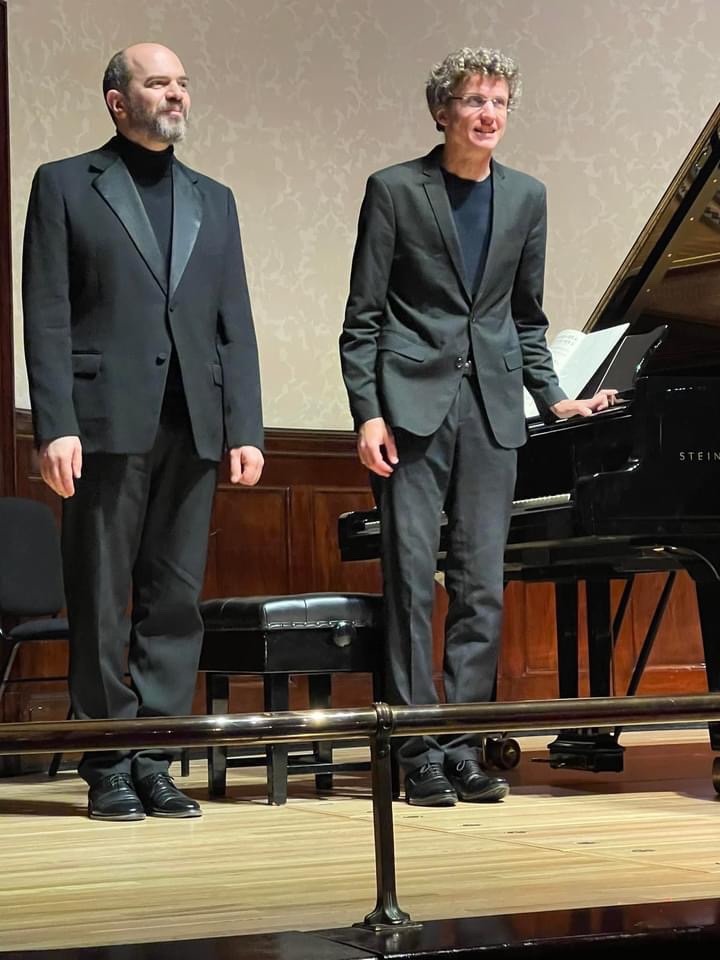
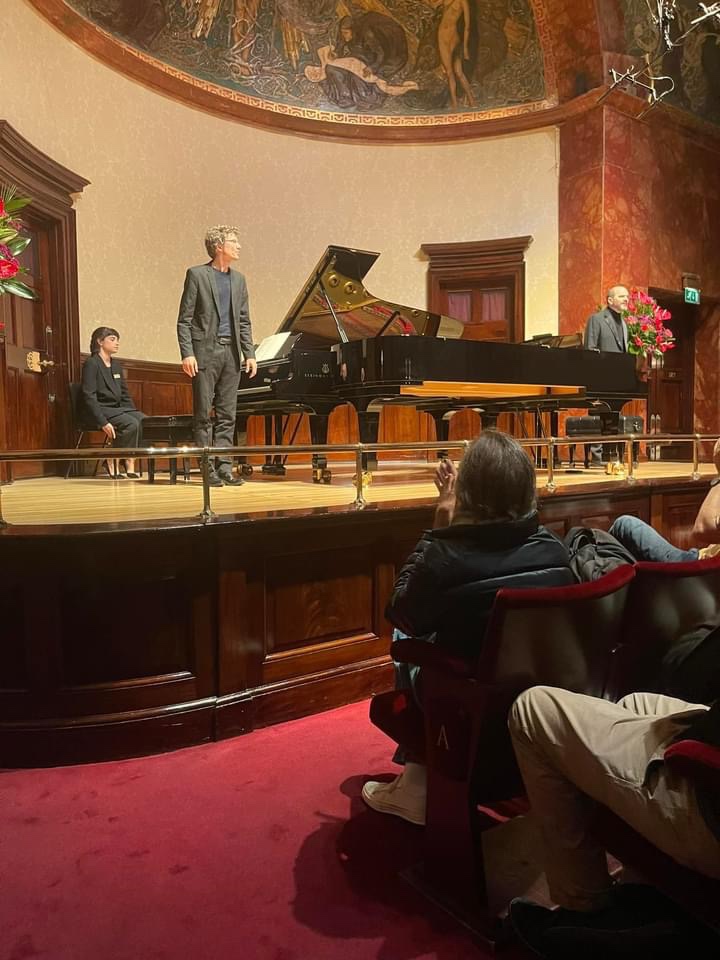
Gerstein-Fejérvàri at the Wigmore Hall -Overpowering Mastery of two pianos

Kirill Gerstein piano
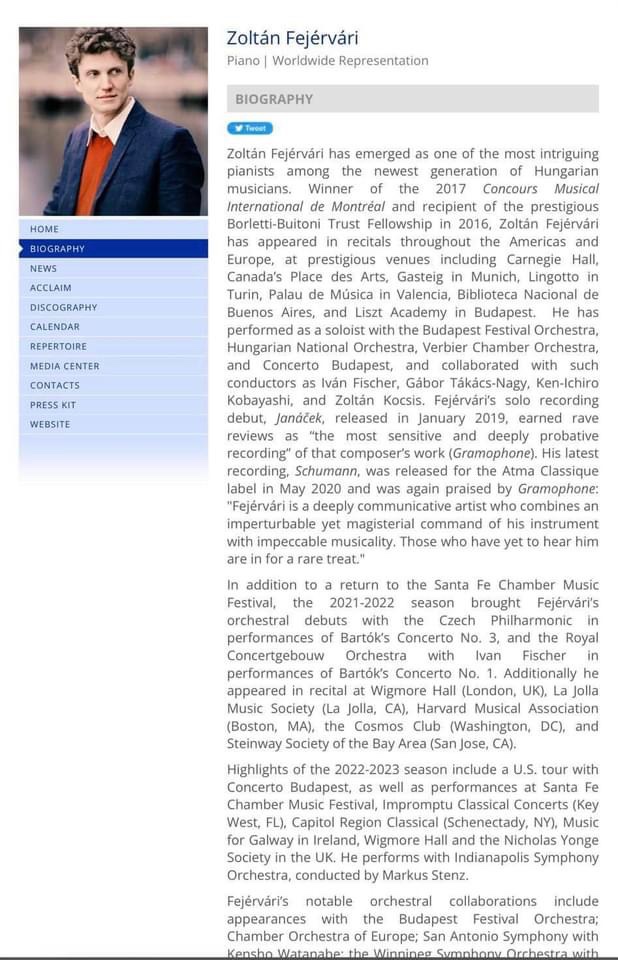
Zoltán Fejérvári piano
Wolfgang Amadeus Mozart (1756-1791)
Ferruccio Busoni (1866-1924) Wolfgang Amadeus Mozart
Ferruccio Busoni
Sonata in D for 2 pianos K448 (1781)
I. Allegro con spirito • II. Andante • III. Allegro molto
Improvisation on JS Bach’s Chorale Wie wohl ist mir, o Freund der Seele BV271 (1916)


Interval

Fantasia in F minor for mechanical organ K608 (1791) arranged by Ferruccio Busoni
Duettino concertante after the finale of Mozart’s Piano Concerto No. 19 in F K459 BVB88 (1919)
Fantasia contrappuntistica for 2 pianos BV256b (1921)

  1. Choral-Variationen (Einleitung – Choral und Variationen – Übergang) – 2. Fuga I – 3. Fuga II – 4. Fuga III – 5. Intermezzo – 6. Variato I –
  2. Variato II – 8. Variato III – 9. Cadenza – 10. Fuga IV – 11. Corale – 12. Stretta

On 18 February 1922, Busoni and Egon Petri performed a two-piano afternoon matinee recital at Wigmore Hall that contained many of the pieces featured on tonight’s programme, all then receiving their first performances in England. This followed soon after a similar two-piano recital in Berlin at the Beethoven-Saal on 16 November 1921. There were only slight variations in the programming. Where the 1922 Wigmore Hall recital began with Busoni’s arrangement of Mozart’s Fantasia in F minor for mechanical organ K608, the 1921 Berlin recital instead opened with Busoni’s arrangement of Mozart’s Sonata in D for two pianos K448. Both recitals also featured Busoni’s Improvisation on JS Bach’s Chorale Wie wohl ist mir, o Freund der Seele BV271, the Duettino concertante after the finale of Mozart’s Piano Concerto No. 19 in F K459 (BVB88), and the two-piano version of the Fantasia contrappuntistica, BV256b. Kirill Gerstein and Zoltán Fejérvári re-create these historic recitals for us.
Busoni had previously collaborated with several soloists or chamber ensembles, such as the Belgian violinist Eugène Ysaÿe, the Australian soprano Nellie Melba, and the US-based Kneisel Quartet. However, the majority of his performing career focused on solo repertoire and solo recitals. Busoni’s interest in composing, transcribing, arranging and performing two-piano literature only emerged in the late 1910s and the early 1920s. This interest might have been partly inspired by his Berlin composition masterclasses (1921- 4), where, as Tamara Levitz has documented, there were frequent performances of new compositions in two-piano arrangements. He also played two-piano literature with Ernst Lochbrunner in Switzerland while in exile during World War I. Edward Joseph Dent surmises, however, that the Berlin and London recitals mentioned above were probably specifically motivated by an interest in promoting the career of Busoni’s closest protégé, Petri.
The two-piano literature featured in this recital reflects Busoni’s lifelong interest in the music of both Bach and Mozart. All of the pieces on this programme are, at least partially, transcriptions or arrangements of their music. Composed in 1916, Busoni’s Improvisation represents his musical musings on a chorale melody used earlier by Bach in a setting for solo soprano over basso continuo (BV517) from the Notebook for Anna Magdalena Bach. Busoni first performed his Improvisation with Lochbrunner at the Zürich Tonhalle on 18 December 1917. Less than two weeks later, on 1 January 1918, Busoni wrote to Lochbrunner, expressing gratitude for his companionship during Busoni‘s exile in Switzerland during World War I. The piece itself is a radical reworking of the final movement of Busoni’s Sonata No. 2 for violin and piano BV244 (1898). One of the most significant changes in the two-piano version is that the chorale melody appears in the middle of the piece, rather than at the beginning. This is especially striking, because the piece is a set of variations
displaying a breadth of technical approaches. Thus the chorale melody emerges after the variations have already begun. This recital also includes the better- known Fantasia contrappuntistica, which Busoni originally composed for solo piano in 1910, then revised in 1912 and reworked yet again in 1921 for two pianos. The Fantasia contrappuntistica contains 12 sections: a chorale prelude, four fugues, three variations, an Intermezzo, a Cadenza, a chorale and a Stretta. Like the Improvisation, the Fantasia contrappuntistica is based partly on chorale music set earlier by Bach, Allein Gott in der Höh sei Ehr. In addition, Busoni reworked the main theme of the Contrapunctus I and Contrapunctus XIX from Bach’s Die Kunst der Fuge BWV1080. Busoni also reused material from his own piano Elegy No. 3.
If Busoni’s two-piano works based on Bach are primarily new compositions, the two-piano works based on Mozart are mainly arrangements or transcriptions. Although Dent and Jürgen Kindermann reference an arrangement (1921) of Mozart’s three-movement two- piano sonata in D major (originally composed in 1781 for a performance by Mozart and Josepha Barbara Auernhammer), all that survives is a marked up performance score with numerous annotations and suggested textual alterations. There is also a cadenza handwritten in the back of the score. Busoni’s transcription of the F minor Fantasia for mechanical organ, by contrast, is fully notated, and consists of a first section in the style of an Italian Overture, an allegro (fugue), an andante, and a final allegro (double fugue). This is one of Busoni’s most faithful transcriptions, with no major compositional changes up to the andante. However, he extended the cadenza leading back to tempo I, cut 11 bars of the fugue, and added ornamentation and chromaticism. Moreover, he had to consider how to translate it pianistically, because the piece was originally composed for a mechanical organ or Flotenühr, a musical clock with a built-in organ. Busoni transcribed the piece specifically for his two- piano recital at Wigmore Hall, completing it on 23 January 1922. Busoni envisioned it as preceding the Duettino concertante, so that the two together could form a musical structure resembling a great sonata for two pianos, with the Duettino concertante providing the finale. Busoni had initially transcribed the Duettino concertante in 1919 fairly literally from the ending of Mozart‘s Piano Concerto, even if he infused the work with interplay between the pianos, shortened the second fugato, and streamlined fugal sections while adding a newly composed concert ending. He wrote in a letter to Hugo Leichtentritt of 25 May 1920 that the Duettino concertante was initially inspired by a two- piano recital given by Philipp Jarnach and Lochbrunner. Jarnach, who performed the Duettino concertante on 1 December 1919 with Lochbrunner in a recital that also featured works by Reger, Mozart, Schumann and Saint- Saëns, described Busoni’s piece as ‘magical’ in a letter of 29 January 1920, and that word might be aptly used to describe much of the repertoire on this programme.
© Erinn Knyt 2023

Kirill Gerstein – Busoni is alive and well and returned to the Wigmore Hall