Dmitri Alexeev The supreme mastery and anguish of a tormented soul

Only London recital for the 2022-23 season

Dmitri Alexeev showed us what we have been missing for too long in London A demonstration of supreme artistry with playing of authority and weight.
Such artistry that in the Mozart C minor Sonata every note was played with seeming simplicity with only the slightest of inflections but that gave such meaning and poignancy to every note.There was great drama too but it was all within a certain architectural framework with a sense of direction that left no doubt that we were in the hands of a master who has lived with this music for a lifetime.


It was the same authority that he brought to Schumann with a memorable account of Waldszenen where every one of the nine pieces was painted with extraordinary characterisation with a sound that created a complete world of ravishing beauty.The first Novelette too was an explosion of sumptuous and even sensuous sounds driven with a passion and beauty that swept all before it.
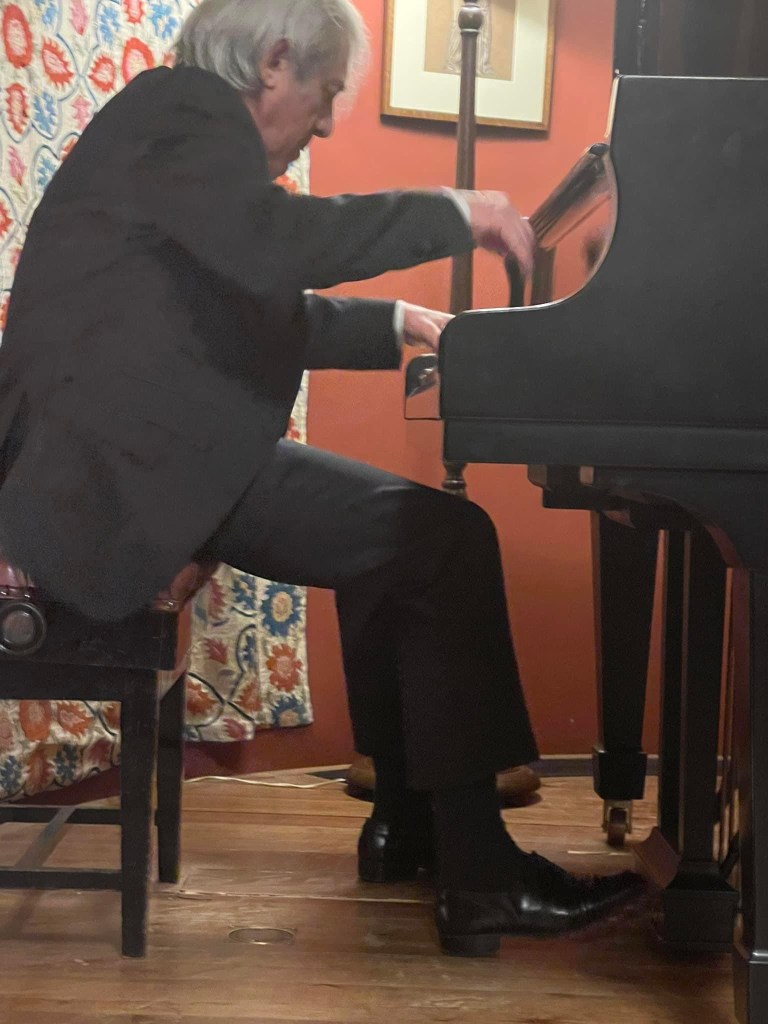

The ravishingly sumptuous sound he brought to the beautiful opening of Prokofiev’s 8th Sonata created a barren landscape out of which was to erupt explosions of frenzy and breathtaking dynamism.It took us by surprise as Prokofiev had intended with the last of his trilogy of War Sonatas.
War is a cruel and ugly beast but there are also moments of peace that become even more poignant in the midst of a full battle.And a full battle was waged tonight with Alexeev’s total immersion with all his transcendental piano playing exposed with brutality,dynamism and driving rhythmic energy.Even the Andante sognando was a dream of almost nightmare proportions before the driving insistence of the final battle.Looking back for a moment to the desolate beauty of the first movement it just made the final cries for help even more terrifying.

The indomitable Lilian Hochhauser friend of Emil Gilels and many other great Russian artists who together with her husband Victor was responsible for bringing them to be heard in the west

A remarkable performance that kept the full house riveted to their seats even Lilian Hochhauser a great friend of Emil Gilels who gave the first performance in the early 40’s was cheering as we all were as we were left breathless with the terror and excitement that war can produce and be reproduced from the descriptive soul and hands of a master.
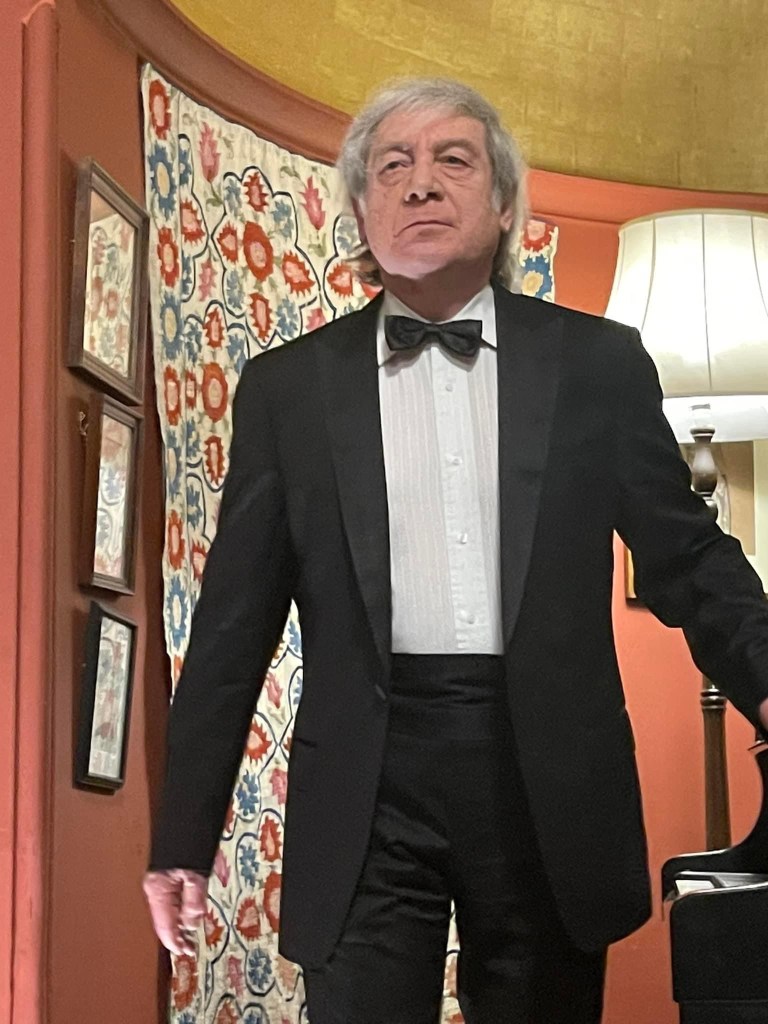
Mastery and sublime inspiration of Dmitri Alexeev


Visions fugitives op 22 was the only way to break the spell after a performance of that stature.
These jewels that Prokofiev had also penned were the ideal antidote for his later nightmare visions.
The first was played with an unusual freedom as though Alexeev was freeing himself of the tight reigns that he had set himself before.The impish second (n.10) even brought a smile to lips when played with the charm and control of sound of a pianist of another age.
One of the Albumblatter op 126 that Schumann had produced towards the end of his life, n.16 Schlummerlied was the simple charm of his second encore before bursting into the unbridled passion of the Intermezzo from Schumann’s Carnaval Jest from Vienna op 26
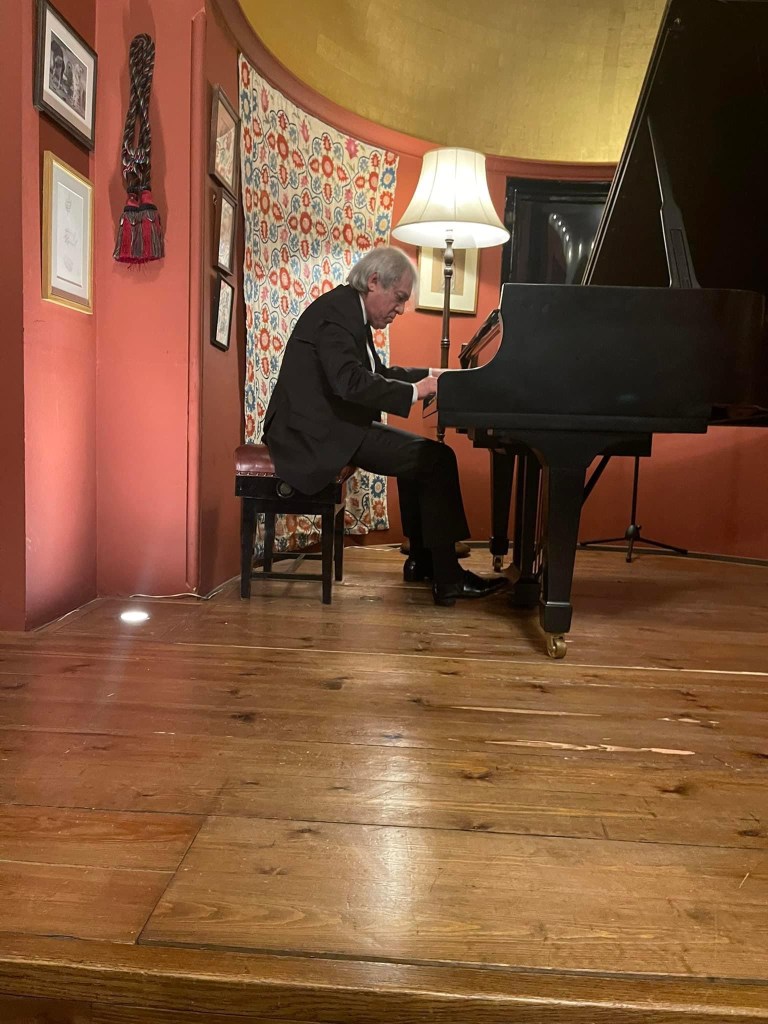

And jesting indeed he now was as,he was persuaded to play a fourth encore with the charming staccato song without words by Mendelssohn op 67 n.2 on which floats a beguiling melody of Victorian charm.

A full house for an artist much missed for too long in London


An ever more insistent audience brought us the Spanish dance n.5 by Granados.It was played with insinuating charm and beguiling rhythmic agitation.
Was it just a coincidence that Granados too went down in a torpedoed boat during the First World War?
An unforgettable evening in beautiful Leighton House a true oasis of artistic endeavour between the wars and recently restored to it’s original splendour.

Lisa Peacock a feathered friend of great artists


It is thanks to Lisa Peacock that once again this music room resounds to the sounds of great artists as it had done in the past.
A sumptuous feathered nest to revive any soul.

MOZART: Sonata C minor KV457

The Piano Sonata No. 14 in C minor K. 457, was composed and completed in 1784, with the official date of completion recorded as 14 October 1784 in Mozart’s own catalogue of works.It was published in December 1785 together with the Fantasy in C minor K.475 as opus 11 by the publishing firm Artaria,Mozart’s main Viennese publisher.The title page bore a dedication to Theresia von Trattner (1758–1793), who was one of Mozart’s pupils in Vienna. Her husband, Thomas von Trattner (1717–1798), was an important publisher as well as Mozart’s landlord in 1784. Eventually, the Trattners would become godparents to four of Mozart’s children.It was composed during the approximately 10-year period of Mozart’s life as a freelance artist in Vienna after he removed himself from the patronage of the Archbishop of Salzburg in 1781. It is one of the earliest of only six sonatas composed during the Vienna years, and was probably written either as a teaching tool or for personal use.Sonatas during this time were generally written for the domestic sphere– as opposed to a symphony or concerto,they were designed to convey ideas in a small, intimate setting.The sonata is in three movements Molto allegro,Adagio ,Allegro assai.The Sonata is only one of two sonatas Mozart wrote in a minor key, the other being the Sonata in A minor K.310 which was written six years earlier, around the time of the death of Mozart’s mother .Mozart was extremely deliberate in choosing tonalities for his compositions; therefore, his choice of C minor for this sonata implies that this piece was perhaps a very personal work.

SCHUMANN : Waldszenen Op.82

Forest Scenes , op.82, is a cycle of nine character pieces ,composed in 1848 and 1849. The sequence of the pieces reveals the striving for a largely symmetrical architecture of the cycle. The first piece ( Entrance ) corresponds to the last ( Farewell ), the second ( Hunters in wait ) to the penultimate ( Hunting song ). The third piece ( Lonely Flowers ) is also thematically related to the third piece ( Vogel als Prophet ): flowers and birds are both representatives of living nature. Finally, the disreputable place , as an eerie place, corresponds in contrast to the homely inn . All of these pieces center around the fifth piece ( Friendly Landscape ) as an axis of symmetry.The main key of B flat major determines the beginning, middle and end of the cycle. The Lonely Flowers also use B flat major, whereas the thematically relevant bird as a prophet (probably because of its more mysterious character) is in the relative key of G minor. It is also worth noting that the two uncanny pieces ( Hunters on the Lauer and Verrufene Stelle ) are in D minor, while their positive counterparts ( Jagdlied and Herberge ) are both in E flat major.
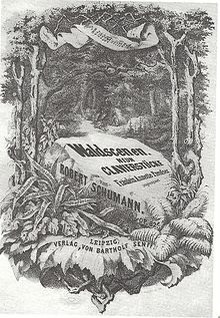
Title page of the first edition

SCHUMANN: Novelette Op.21 No.1

The Novelletten, op 21, is a set of eight pieces written by Schumann in 1838 and is dedicated to Adolf von Henselt.February 1838 was a period of great struggle for Schumann who originally intended the eight pieces to be performed together as a group, though they are often performed separately.
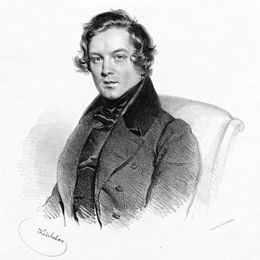
Schumann in 1839

After seeing his beloved Clara again at a concert in August 1837 , Schumann, despite the difficulty of their relationship, felt more relieved and went through a serene period during which he composed some more relaxed and happy works, among which the Novellettes .The origin of the title has been a field of discussion by critics, but the reality is very simple and has been explained by the composer himself: «How happy I have been in recent days… In these last three weeks I have written a frightening amount of music, of jokes, of family scenes with parents, a wedding: in short, as you can see, all the most desirable things. I called the whole thing Novelletten because your name is Clara like Novello’s and because Wiecketten unfortunately didn’t sound as good!» Schumann in the letter refers to the singer Clara A.Novello whose name was the same as his girlfriend.The Novellettes reflect the happiest and most peaceful period the composer went through while composing them; this serenity is clearly represented by the keys of the eight pieces which are all written in a major key, with the prevalence of D major; it was a period in which, as he himself said, he wrote easily, as had happened few other times; moreover, the presence of the inspiring figure of Clara is evident in the momentum and lyricism that dominate the composition. The collection, even if it includes only eight pieces, is of considerable size and is the most extensive among the piano works of the musician, so much so that no real connection can be found in the structure; the individual pieces therefore remain autonomous, showing in this a weakness of the composition, as if there were already a sort of weariness of the musician towards the piano.Despite everything, the Novellettes contain some of Schumann’s most inspired and happy pages.The first Novelletta , nearly five minutes long, opens incisively with the grand-looking main theme. Then enters the second melody, sweet and dreamy which suggests melancholy sensations and which returns several times alternating with the more marked initial section.

Entry-Hunters lying in wait-Lonely flowers-Disreputable place-Friendly landscape,hostel,Bird as a prophet,Hunting song,Farewell.

Interval

PROKOFIEV: Sonata No.8 Op.84

Piano Sonata No. 8 in B♭ major, op.84 is the third and longest of the three ‘war sonatas ‘.He completed it in 1944 and dedicated it to his partner Mira Mendelson ,who later became his second wife.The sonata was first performed on 30 December 1944, in Moscow by Emil Gilels

Prokofiev with Mira Mendelson ,the sonata’s dedicatee, in 1946

The sonata has three movements.

  1. Andante dolce — Allegro moderato (in B♭ major)
  2. Andante sognando (in D♭ major)
  3. Vivace (in B♭ major)

Russian pianist Dmitri Alexeev is one of the world’s most highly regarded artists.  His critically acclaimed recitals on the world’s leading concert stages and concerto appearances with the most prestigious orchestras have secured his position as one of “the most remarkable pianists of the day” (Daily Telegraph).

He has performed in all the major concert halls around the world and with all leading orchestras including the Berlin Philharmonic, Chicago Symphony, Philadelphia, Royal Concertgebouw of Amsterdam, the five London orchestras, Orchestre de Paris, Israel Philharmonic and Munich Bavarian Radio Orchestra. He has worked with conductors including Ashkenazy, Boulez, Dorati, Giulini, Jansons, Muti, Pappano, Rozhdestvensky, Salonen, Svetlanov, Temirkanov, Tilson Thomas and Klaus Tennstedt. Alexeev has been a juror for many of the world’s most prestigious international piano competitions including Leeds, Chopin (Warsaw), Van Cliburn, Santander, Beethoven (Vienna) and Tchaikovsky (Moscow)Alexeev has made many fine recordings for EMI, BMG, Virgin Classics, Hyperion and Russian labels. Following his Virgin Classics recording of the complete Rachmaninov Preludes, which won the Edison Award in the Netherlands, BBC Music Magazine described him as “a pianist at once aristocratic, grand and confessionally poetic. This is an inspiring disc.” His recording of the complete Chopin Mazurkas was released in 2014. A recording that Gramophone Magazine referred to as “one of the best recordings of the Chopin Mazurkas that have appeared in the past three-quarters of a century – one of the best alongside those of Rubinstein and Yakov Flier.” His recordings of the complete Scriabin works for piano solo were released by Brilliant Classics in 2022. Alexeev’s two piano transcriptions of works by Shostakovich, Stravinsky and Gershwin, as well as his transcriptions of Brahms’ Ballade for Viola and Piano were recently published.

https://christopheraxworthymusiccommentary.com/2021/11/13/dmitri-alexeev-mastery-and-communication-beyond-all-boundaries/

https://christopheraxworthymusiccommentary.com/2020/08/11/dmitri-alexeev-in-poland-a-master-speaks-the-supreme-stylist/

The distinguished critic Bryce Morrison with superb pianist Petr Limonov talking about Petr’s imminent performance of the Chopin 24 Preludes op 28 that Fou Ts’ong considered 24 problems! https://christopheraxworthymusiccommentary.com/2020/07/22/petr-limonovs-masterly-final-recital-in-st-marys-summer-lockdown-series/
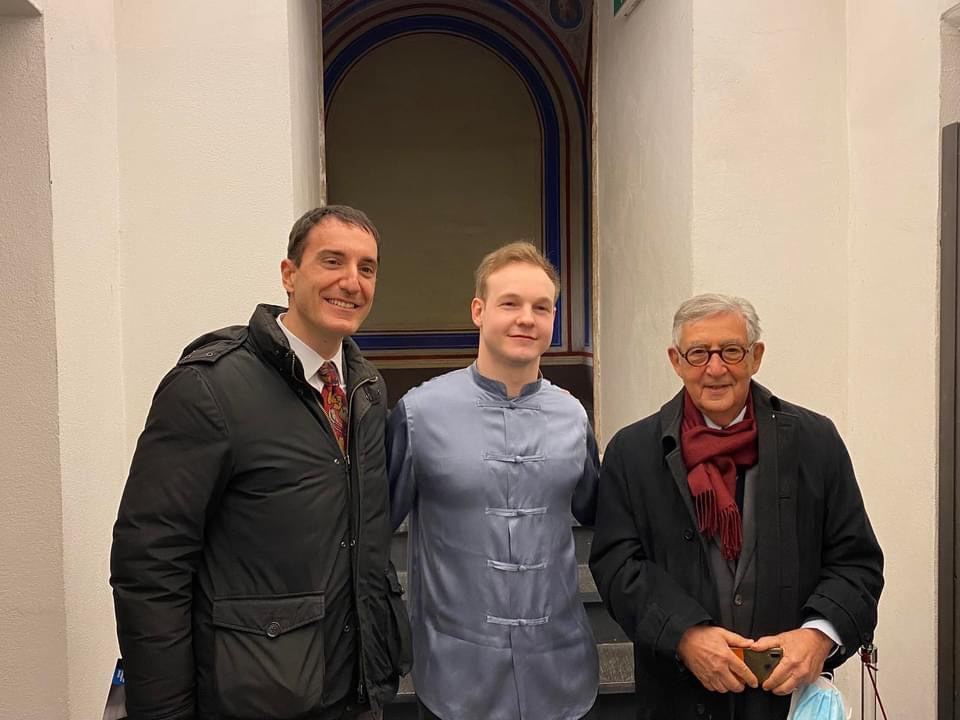
Tatyana Sarkissova – Mrs Alexeev ,without whom none of this would have been possible together ,with Caterina Grewe a former student of the Alexeev’s and now a Professor at the RCM in London https://christopheraxworthymusiccommentary.com/2022/03/21/caterina-grewe-a-great-pianist-born-on-wings-of-song-at-st-marys/
Thomas Kelly a rising star and student of Dmitri Alexeev who had played recently in the series of young artists recitals organised by Lisa Peacock in the newly restored Leighton House https://christopheraxworthymusiccommentary.com/2023/01/08/thomas-kelly-reaching-for-the-stars-a-voyage-of-discovery-at-leighton-house/
Victor Maslov star student of Alexeev who will play in the young artists series in Leighton House on the 7th March …this weekend he plays for the Keyboard Trust at the Pharos Arts Centre in Cyprus https://christopheraxworthymusiccommentary.com/2022/05/30/victor-maslov-at-st-marys-the-return-of-a-great-artist/
More distinguished pianists Misha Kaploukhii and Simo Sisevic with Yisha Xue of the National Liberal Club
https://christopheraxworthymusiccommentary.com/2022/10/28/misha-kaploukii-plays-liszt-at-the-rcm-a-sea-symphony-concert-youth-and-music-a-joy-to-behold/
Yulia Chaplina ex student of Dmitri Alexeev rushing away at the end to prepare for her recital at the ESU in Mayfair tomorrow evening https://christopheraxworthymusiccommentary.com/2022/04/28/yulia-chaplina-the-aristocratic-love-and-beauty-of-chopin-at-st-marys/
A tormented soul indeed

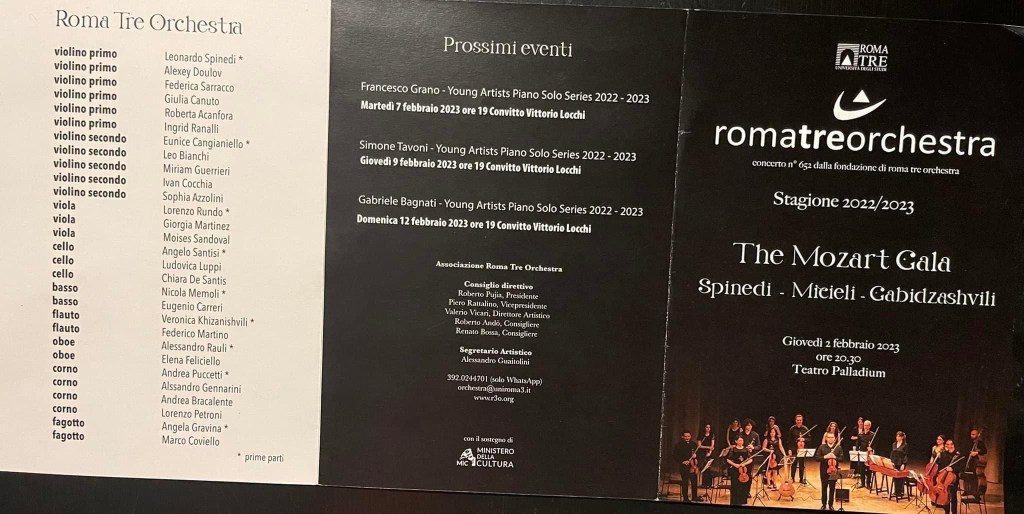
Mozart Gala for Roma 3 Orchestra The ‘Veni,vidi,vici’ of Valerio Vicari

It was Rubinstein who quipped that Tureck makes Bach box office and I think we can say judging from the full house at Teatro Palladium that Valerio Vicari makes Mozart box office too .Valerio Vicari,the artistic director of the Roma Tre Orchestra and concert season at the University where he too was a student under Prof.Robert Pujia.Together with the help of the University they have created over the past twenty years a reality that is proving to be unique in Italy.A season for Young Artists on the threshold of starting a career in music giving concerts even during the pandemic thanks to streaming from their Teatro Palladium.Valerio is also Professor of Latin and corrected my Italian title to the more perfect Latin …….hats off indeed and many thanks for all that he is doing .

Wolfgang Amadeus Mozart. The Symphony No. 25 in G minor, K. 183/173dB, was written by the then 17-year-old Wolfgang Amadeus Mozart in October 1773,shortly after the success of his opera seria Lucio Silla. It was completed in Salzburg on October 5, a mere two days after the completion of his Symphony No. 24.Its first movement was used as the opening music in Miloš Forman’s film biographical Amadeus.
This is one of two symphonies Mozart composed in G minor, sometimes referred to as the “little G minor symphony”. The other is the Symphony No. 40.
The symphony is laid out in standard classical form:
Allegro con brio,
Andante,
Menuetto & TrioTrio Allegro.
Scored for two oboes, two bassoons, four horns and strings.
Convitto Vittorio Locchi

Now the solo concerts are held in the splendid surroundings ,just a stones throw from the theatre ,in the Convitto Vittorio Locchi.

Valerio Vicari still a student at heart but with a unique managerial capacity to organise and galvanise his young forces that flock to him for assistance

The theatre is now mainly the seat for the orchestral concerts that Valerio has battled to create over the last sixteen or more years giving valuable orchestral experience to young talented musicians freshly minted from the many State run Conservatories that abound in Italy.No one thinks about what do these superbly trained young musicians do once their studies are completed.Well Valerio has found a solution for these young musicians who are ever grateful for a serious platform in which to gain invaluable concert experience.This activity after twenty long years has now been recognised by the Government authorities.An activity,that despite all the difficulties,the mission of Roma 3 has never wavered and now with this financial backing can take the message of music and youthful hope into many places in Italy far from the Eternal city.

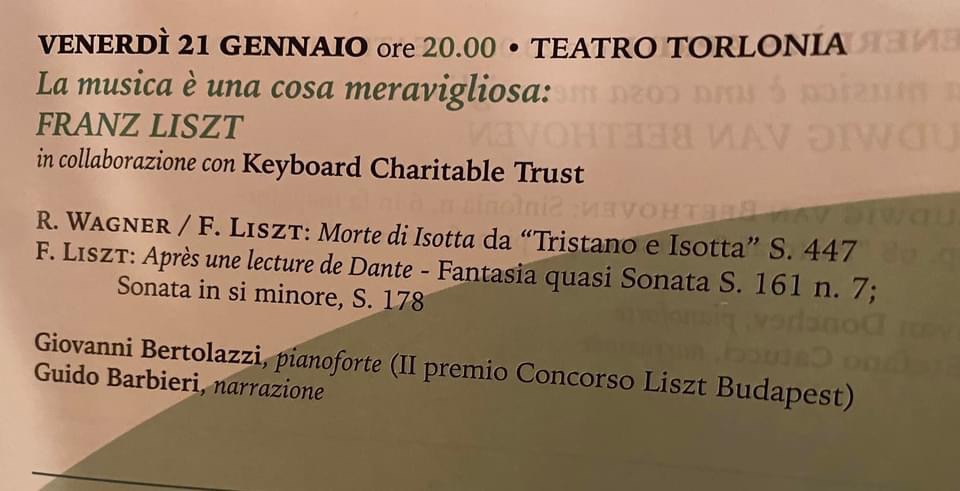
https://christopheraxworthymusiccommentary.com/2022/01/17/giovanni-bertolazzi-in-rome-liszt-is-alive-and-well-at-teatro-di-villa-torlonia/

A reality too that includes themed concerts in the historic Teatro Torlonia where the young musicians share the platform with distinguished critics and musicologists giving a unique insight into the music to be played https://christopheraxworthymusiccommentary.com/2021/10/30/mozart-triumphs-at-torlonia-with-jonathan-ferrucci-pietro-fresa-sieva-borzak/

Valerio Vicari ,artistic director ;Giovanni Bertolazzi ,Liszt soloist;
Prof Roberto Pujia,President of Roma Tre https://christopheraxworthymusiccommentary.com/2021/02/09/roma-3-orchestra-the-mozart-project/

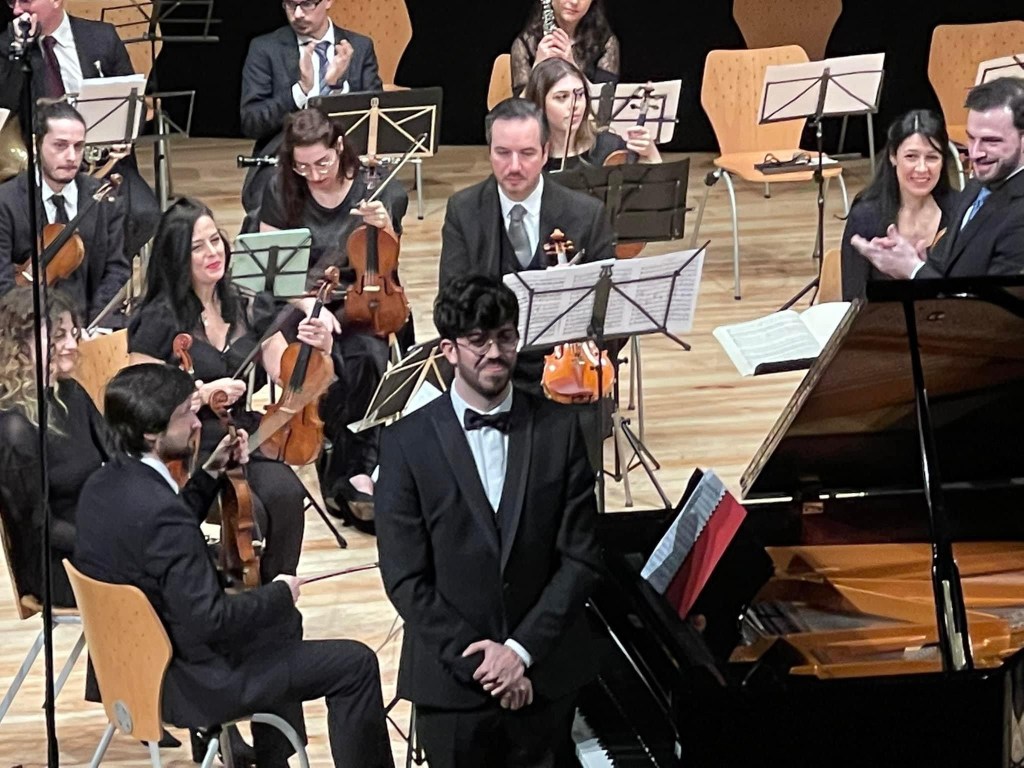
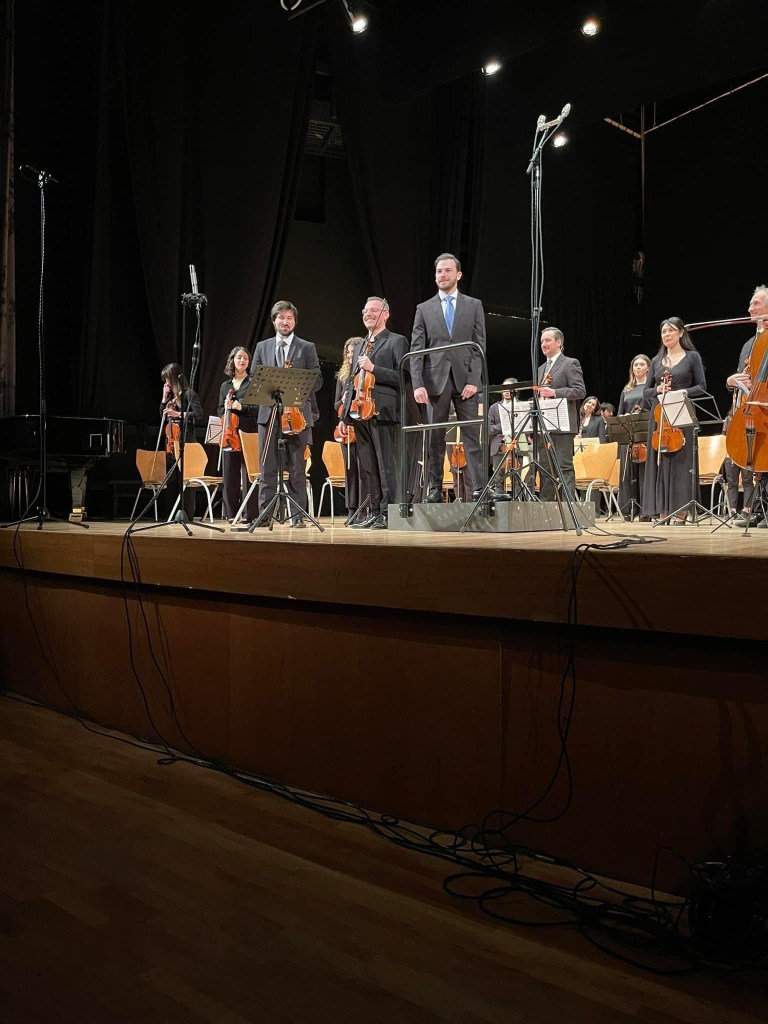
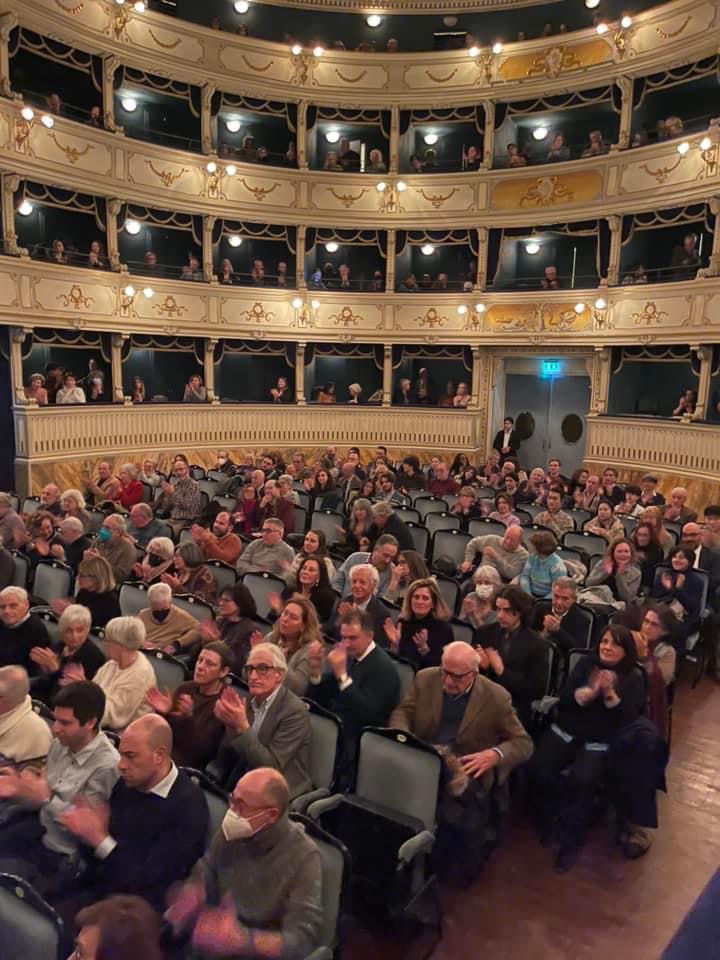
Mozart does you good as the full house and final ovation can confirm with Roma 3 Orchestra at Teatro Palladium.

Some very impressive conducting from Vakhtang Gabidzashvili

An orchestra that is now being heard not only in Rome but in tournées throughout Italy .An impressive amalgamated sound in Mozart’s early G minor Symphony under Vakhtang Gabidzashvili.An orchestra that knew how to sensitively support the two solists who had stood in at short notice for an indisposed violinist/ pianist.

Leonardo Spinedi,soloist and also leader of the Roma 3 orchestra
Mozart in 1770 aged fourteen The Violin Concerto No. 3 in G major K.216 was composed in Salzburg in 1775 when Mozart was 19 years old. In a letter to his father Mozart called it the “Straßburg-Concert”,which comes from the motive in the third movement’s central section, a local, minuet-like dance that already had appeared as a musette – imitating tune in a symphony by Carl Ditters von Dittersdorf
It is scored for solo violin two flutes (second movement only), two oboes ,two horns in G and D, and strings
Allegro
Adagio
Rondo:Allegro

The leader of the orchestra Leonardo Spinedi valiantly stepping in with a very authoritative performance of the 3rd violin concerto.Playing with grace and charm and imbuing this much loved concerto with great style.

This portrait of Mozart was painted in 1777 in Bologna the same year as the Piano Concerto No. 9 K. 271 known as the Jeunehomme or Jenamy concerto,written in Salzburg in 1777, when the composer was 21 years old.The work is scored for solo piano, 2 oboes,2 horns (in E♭), and strings
Allegro
Andantino,
Rondo

He composed the work for Victoire Jenamy, the daughter of Jean – Georges Noverre and a proficient pianist.Mozart himself performed the concerto at a private concert on 4 October 1777. Jenamy may have premiered the work earlier.Charles Rosen describes it as ‘perhaps the first unequivocal masterpiece of the classical style .Alfred Brendel chose it as his farewell to the concert platform and called it “one of the greatest wonders of the world”.Alfred Einstein dubbed it “Mozart’s Eroica”.
Ruben Micieli standing in at a few days notice with a sparkling performance Mozart ‘Jeunehomme’ concerto and an encore of Mozart alla Turca!

Ruben Micieli learnt the Jeunehomme in just a few days and like ‘the young man’ he filled it with sparkling clarity and purity of sound .But it was Mozart goes to town that stole the show as Ruben gave a breathtaking account of Fazil Say’s virtuoso show piece,a fantasmagoric Mozart encore that brought the house down .

Valerio Vicari has also sought out partnerships with other important realities that are dedicated to promoting young musicians at the start of their career .One of these is the Keyboard Charitable Trust in London who are promoting several concerts each year together.Giovanni Bertolazzi and Jonathan Ferrucci have given several important concerts in Villa Torlonia. https://christopheraxworthymusiccommentary.com/2020/02/27/a-lion-in-villa-torlonia-luca-lione-at-teatro-di-villa-torlonia/Luca Leone went from Torlonia to London and back again this year for the inauguration of the new university venue https://christopheraxworthymusiccommentary.com/2022/11/13/luca-lione-the-great-communicator-for-roma-3-young-artist-series/. This year Simone Tavoni will be playing on the 9th February at the Convitto Vittorio Locchi and Ruben Micieli will be playing for the Keyboard Trust in London on the 19th April.

https://christopheraxworthymusiccommentary.com/2022/09/14/the-gift-of-life-the-keyboard-trust-at-30/

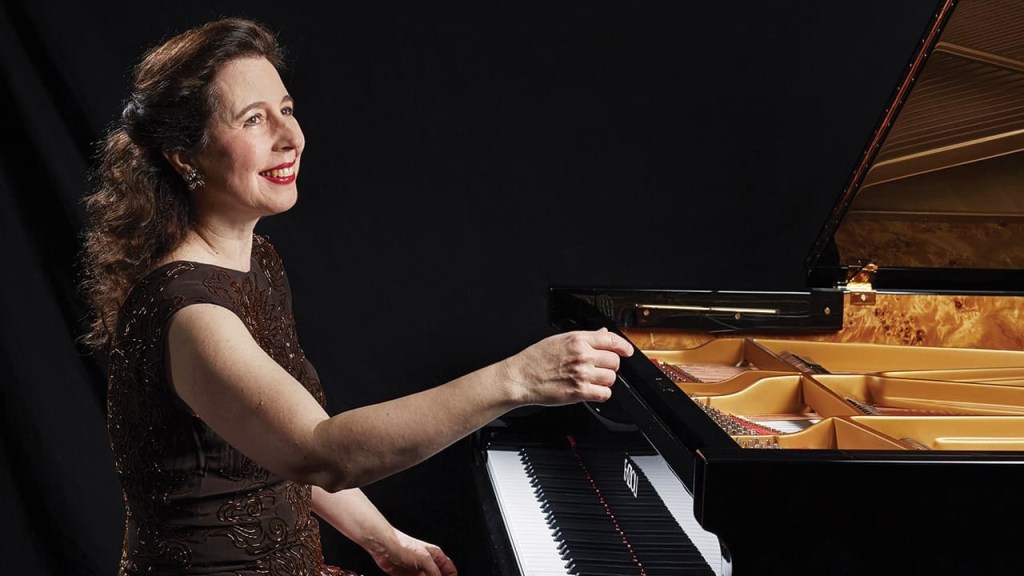
Angela Hewitt – The 100th Anniversary season of the Accademia Chigiana in Siena.Bach shining brightly with intelligence,ravishing beauty ……and wit.

Angela Hewitt for the 100th anniversary of the Chigiana Academy
Teatro dei Rozzi – the subdued blue reminding me of the theatre in Blackpool in the UK where Eleonora Duse performed.

Angela’s Bach is a human Bach not a monument to be worshipped from afar but a musical genius who also had human feelings that he expressed within the formal boundaries of music of his time.He also had seventeen children so he must surely have had a sense of humour!Angela’s Bach is based on the song and the dance but above all on the human voice.It is this that kept the audience enthralled with eight Preludes and Fugues from Book two of the Well Tempered Clavier played alternately at times with a rhythmic drive and others a beseeching melodic line of great beauty.Has the D minor prelude ever seen such a seemless stream of notes with unexpected colours appearing like jewels suddenly gleaming brightly.The opening D major had something of the nobility that she brought later to the opening of the Overture BWV 831.There was a pastoral beauty to the Prelude in E flat contrasting with the simple joy of the Fugue and there was delicate expression to the end of the D sharp Fugue too.The poignant simple beauty of the E major contrasting with the nobility and grandeur of the four part fugue.The busy weaving of the E minor Prelude and Fugue you could begin to see what Delius meant when he dismissed Bach as ‘knotty twine!’He obviously had not heard Angela’s wonderful sense of colour and shape and a way of highlighting without exaggeration.She would just shine a mini spotlight on the entry of the fugue but with a kaleidoscope of different colours.The F major prelude was allowed to flow so naturally before the joyous eruption of the three part fugue.Her Bach has great architectural shape but within that Gothic cathedral there were so many hidden shapes and different characters that made what looked like a dry exercise on paper become a vibrant exhilarating and moving experience.I was reminded of the great actress Sybil Thorndyke who was also a very fine pianist who was the first to show me the refined beauty of the final F minor Prelude that could almost have been written one hundred years later.It was contrasted though with the rumbustuous outcry of the Fugue like a popular ditty ( was not the quodlibet the last of the Goldberg variations based on two popular songs of the day?It just shows that Bach may have been a genius but he was also a person of his times.The Quodlibet combines :’I have so long been away from you,come closer,come closer’ and ‘Cabbage and turnips have driven me away,had my mother cooked meat,I’d have opted to stay!’).It was this Fugue that going backstage in the interval of one of her many concerts in Florence we ended up singing Ebenezer Prout’s famous words to the Bach Fugues.I pretended to remember but she knew them all and was dancing around the room reciting them showing what fun Bach can be too!A lifetime companion indeed !Lucky Angela!And lucky us who can share her ‘joie de vivre’ in her ever generous tournées world wide. P.S. The only other time I remember being so overwhelmed by Preludes and Fugues in the concert hall was a rare recital by Friedrich Gulda in the Queen Elisabeth Hall in London .Appearing on stage as though ready for the gym with tennis shoes and baseball hat looking the audience in the eye as he played A recital of Bach and Debussy where his performance of the Prelude in A flat BXV 886 has haunted me ever since. Angela in Siena chose a perfect sequence of n. 5 to n. 12 from Book two which worked so perfectly as a whole that it could have well been a suite by Bach on its own.Gulda like Gould was a genius and like all genii was extremely unconventional not to say eccentric by our ‘more normal’standards.And it was indeed Angela Hewitt who had won the one and only Glenn Gould International Bach Competition and had been promoted by the Canadian Embassy in concerts including the Ghione Theatre and Teatro Olimpico in Rome in 1985.It was on that occasion that I met her father and mother.Her father ,Godfrey,was a very distinguished organist for 50 years at Christ Church Cathedral in Ottawa and mother Marion a distinguished piano teacher https://www.google.co.uk/url?sa=t&rct=j&q=&esrc=s&source=web&cd=&ved=2ahUKEwjm2ovmh4H9AhWZSPEDHd5fDrkQFnoECCIQAQ&url=https%3A%2F%2Fangelahewitt.com%2Fpress%2Farticles%2Fangela-hewitt-plays-for-her-mom%2F&usg=AOvVaw35i8C2WYW_wlYw-2kLeygB

Gulda years later in the ‘90’s announced a Mozart recital in the Ghione Theatre in Rome.A Bosendorfer was duly delivered for the concert.But Gulda appeared on stage in a wig and declared himself to be Mozart as a dancer began her sensuous performance to Gulda who pretended to play on an electric keyboard.The audience waited patiently for the promised Mozart recital but with pop music blaring away at full force began to leave in droves.About eleven thirty after Gulda had consumed a bottle and a half of Gin I enquired when he thought the performance would finish as the hall was by now empty.’I will finish when I am ready’ was the reply ……when he was sure the hall was empty he sat at the piano and he played so wonderfully that I just wish the audience could have waited a little longer.After the performance he went to the Alexanderplatz Jazz Club where he stayed until the early hours.In the meantime he had announced to the press his death because he wanted to see what the obituaries would say about him !When he did actually die a few years later there was not a squeak about him in the press!Crying Wolf I believe it is called!But the Bach I have heard from him and now Angela I will never forget.

Johann Sebastian Bach

Johann Sebastian Bach da “Il Clavicembalo ben Temperato”, Libro II
Preludio e Fuga n. 5 in re magg. BWV 874
Preludio e Fuga n. 6 in re min. BWV 875
Preludio e Fuga n. 7 in mi bem. magg. BWV 876
Preludio e Fuga n. 8 in re diesis min. BWV 877
Preludio e Fuga n. 9 in mi magg. BWV 878
Preludio e Fuga n. 10 in mi min. BWV 879
Preludio e Fuga n. 11 in fa magg. BWV 880
Preludio e Fuga n. 12 in fa min. BWV 881  

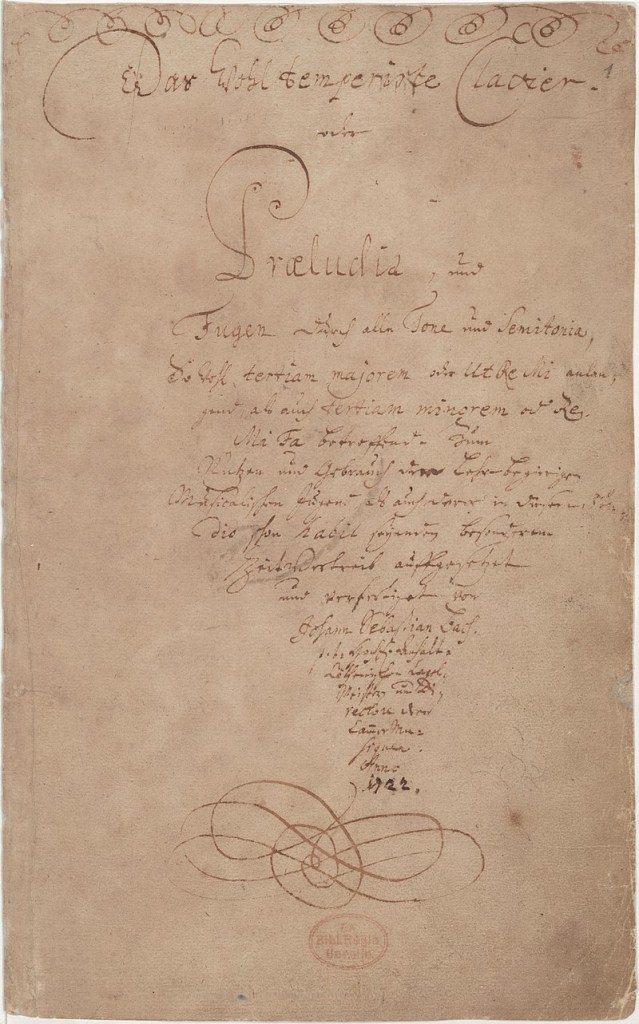
Top of Bach’s title page for the 1st book of ‘The Well-Tempered Clavier’, 1722, showing handwritten loops which some have interpreted as tuning instructions.Each set contains twenty-four pairs of preludes and fugues.The first pair is in C major the second in C minor,the third in C sharp major the fourth in C sharp minor and so on. The rising chromatic pattern continues until every key has been represented, finishing with a B minor fugue. The first set was compiled in 1722 during Bach’s appointment in Kothen the second followed 20 years later in 1742 while he was in Leipzig.

Johann Sebastian Bach Ouverture in stile francese in si min. BWV 831
1. Ouverture
2. Courante
3. Gavotte I
4. Gavotte II (re maggiore)
5. Passepied I
6. Passepied II
7. Sarabande
8. Bourrée I
9. Bourrée II
10. Gigue
11. Echo

https://youtube.com/watch?v=QlyggQbN_Ec&feature=share

A monumental performance of the Bach Overture in the French Style was again a complete revelation just as the Preludes and Fugues had been in the first part of this extraordinary recital.A work I have rarely heard in the concert hall but the declamative nobility of the opening immediately made one aware that this was a work of great weight and importance.An Overture that lasts almost half the length of the whole work with the noble opening returning after the interruptions of a four part fugue played with pulsating rhythmic energy.A Courante gently flowing with florid ornamentation that just added to the radiance after the grandeur and nobility of the opening.A Gavotte n.1 of grace and charm and a slightly more serious Gavotte n.2 with Angela’s obvious joy at the return to the Gavotte n.I full of her infectiously spontaneous ‘joie de vivre’.The refined courtly dance of the Passepied n.1 in 3/8 contrasted with the more melodic Passepied n.2,a formal trio like contrast before the return of the Passepied n.1.A deeply meditative Sarabande that was played with an aristocratic florid beauty.The two Bourées with their civilised rhythmic dance and beguiling outpouring of popular melodic effusions of a period of formal civilised culture.Even the Gigue had a gracious 6/8 lilt of courtly elegance before the fun and games of the Echo.A regal stately opening that gave way to an exhilarating rhythmic drive where Bach’s continual stopping and starting was of startling good humour and brought this monumental work to the conclusion that only the genius of Bach could have envisaged.A masterly performance that had me searching out the score to delve even more deeply into a work I had overlooked for too long.Thank you dear Angela also for that !

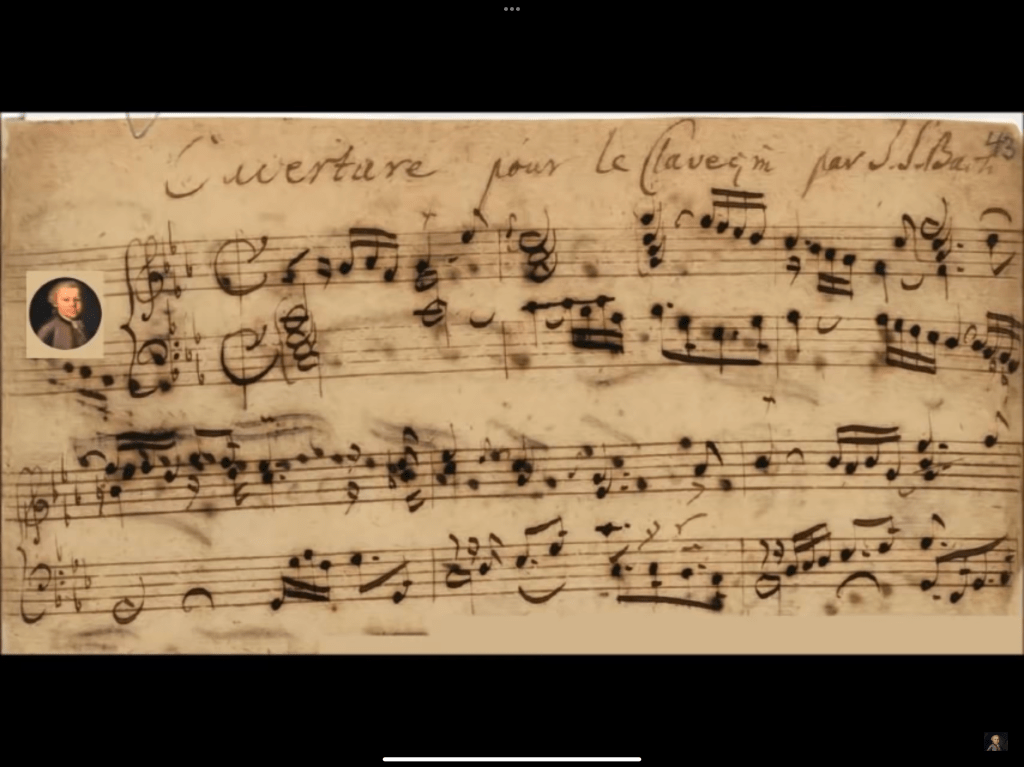
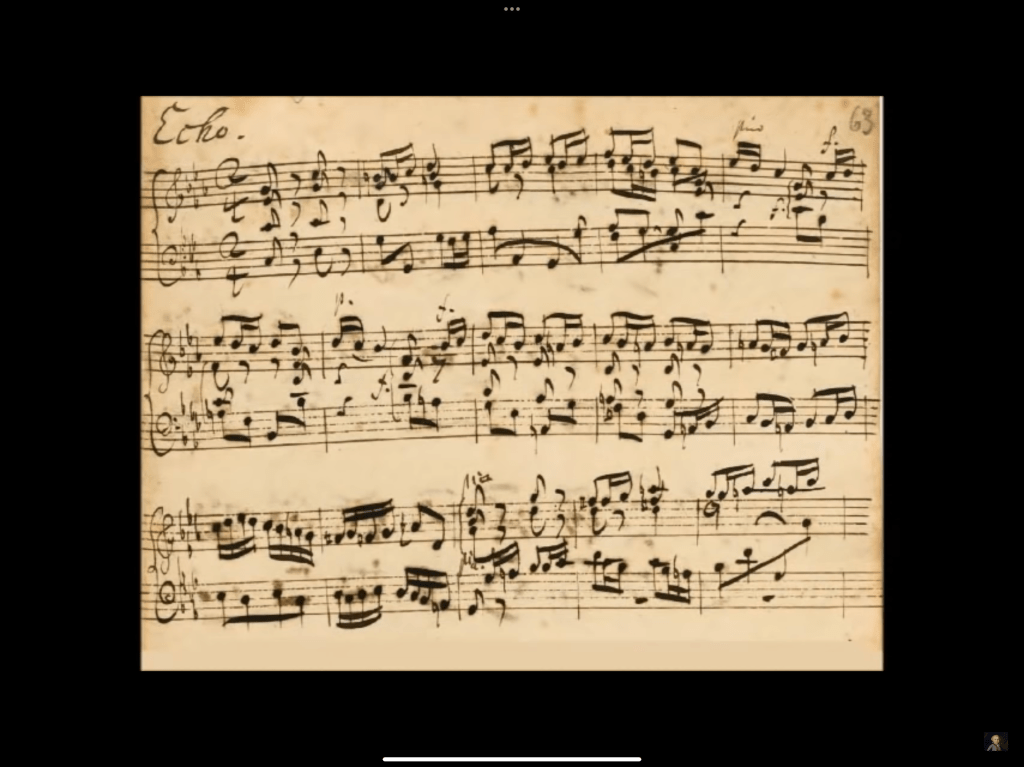
The Overture in the French style,BWV 831, original title Ouvertüre nach Französischer Art, also known as the French Overture and published as the second half of the Clavier- Ubung 11 in 1735 (paired with the Italian Concerto ) and is a suite in B minor for a two-manual harpsichord.An earlier version of this work exists, in the key of C minor (BWV 831a); the work was transposed into B minor to complete the cycle of tonalities in Parts One and Two of the Clavier-Übung.[The keys of the six Partitas (B♭ major, C minor, A minor, D major, G major, E minor) of Clavier-Übung I form a sequence of intervals going up and then down by increasing amounts: a second up (B♭ to C), a third down (C to A), a fourth up (A to D), a fifth down (D to G), and finally a sixth up (G to E).The key sequence continues into Clavier-Übung II (1735) with two larger works: the Italian Concerto, a seventh down (E to F), and the French Overture, an augmented fourth up (F to B♮). Thus this sequence of customary tonalities for 18th-century keyboard compositions is complete, extending from the first letter of his name (Bach’s “home” key, B♭, in German is B) to the last letter of his name (B♮ in German is H).The term overture refers to the fact that this suite starts with an overture movement, and was a common generic name for French suites (his orchestral suites were similarly named). This “overture” movement replaces the allemande found in Bach’s other keyboard suites. Also, there are optional dance movements both before and after the Sarabande .In Bach’s work optional movements usually occur only after the sarabande. All three of the optional dance movements are presented in pairs, with the first one repeated after the second, but without the internal repeats. Also unusual for Bach is the inclusion of an extra movement after the Gigue.This is an “echo”, a piece meant to exploit the terraced loud and soft dynamics of the two-manual harpsichord. Other movements also have dynamic indications (piano and forte)which are not often found in keyboard suites of the Baroque period, and indicate here the use of the two keyboards of the harpsichord. With eleven movements, the French Overture is the longest keyboard suite ever composed by Bach.

A full and very enthusiastic public were rewarded with two encores.The Gigue from the fifth French Suite in a wildly driven performance of astonishing relentless urgency.Followed by a sumptuous performance of an unusual transcription of ‘Sheep May Safely Graze’ which was of truly sublime beauty.

Angela Hewitt for the glory of Bach.The pinnacle of pianistic perfection

Angela Hewitt at the Wigmore Hall a moment to cherish in difficult times

‘A nice masterclass in Perugia yesterday at the Conservatorio. Eight students played Preludes and Fugues for me from the Well-Tempered Clavier, and besides going through those specific ones, I talked a lot about Bach interpretation in general. And then at the end sat down and played four of them from Book II. A lot of students turned up, so it was a nice crowd. I hope it inspires them to go on with this wonderful music.’ Angela Hewitt

Angela Hewitt at the RCM a light of radiance and simplicity

Angela Hewitt casts her spell over Rome

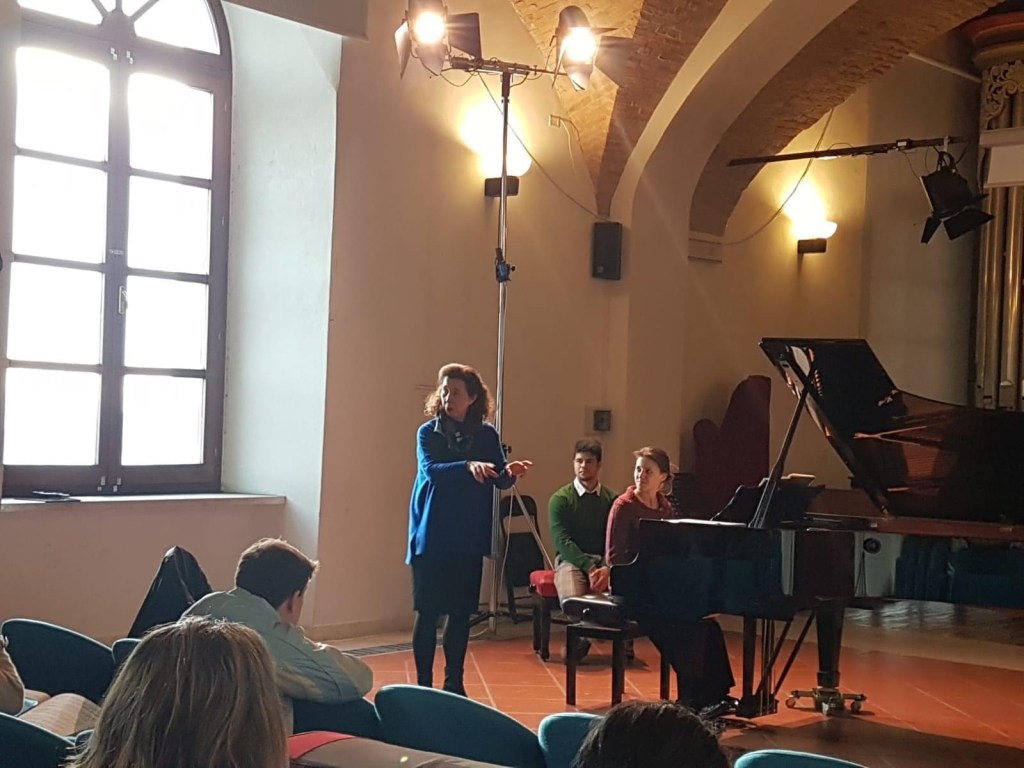
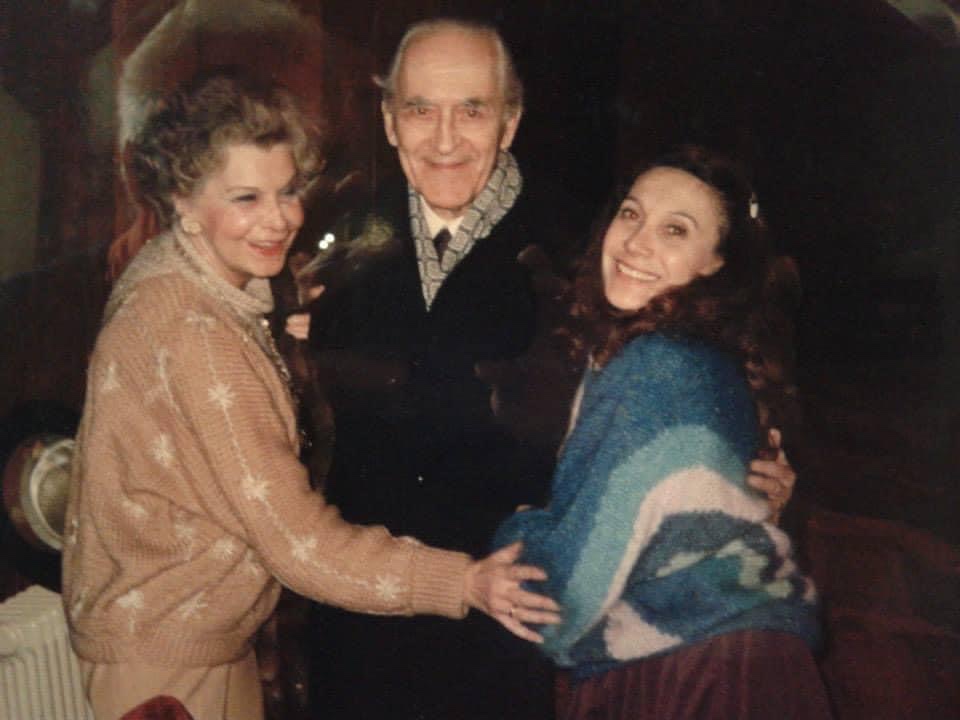
Lydia and Guido Agosti with my wife Ileana Ghione.We met whilst I was helping Lydia with her course ‘Da Schoenberg ad Oggi” with her students from the Silvio D’Amico Academy in Rome .The course took place in the ballroom of the Circolo dei Rozzi and we were told in 1978 about the abandoned theatre next door.It has since been restored to the splendour that it is today.Guido Agosti gave his legendary six week course at the famous Academy founded by Count Chigi.Lydia was invited to bring her course to Siena so they could both be happily occupied together during the Maestro’s annual six week sojourn in Siena
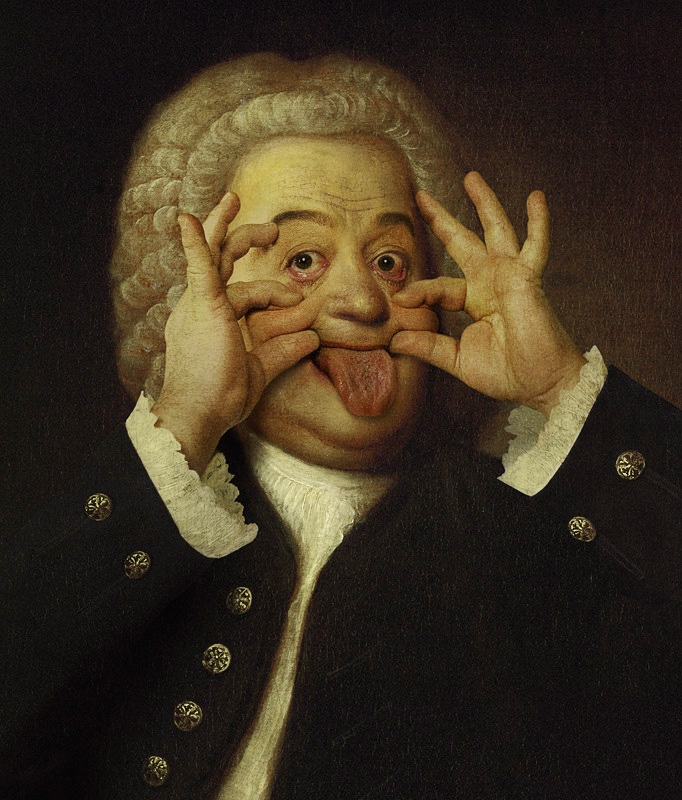
Bach can be fun too !
The magnificent Palazzo Pubblico and the Campo.The little house perched on the roof on the right was were Hilda Colucci lived.She had been the Arts Officer at the British Council in Rome.A post taken over by the late Jack Buckley.Hilda had made a pact with the local council that she would completely renovate that little house and install a lift at her own expense if she could live in it for the rest of her life!Of course as time past and the councillors changed,the new ones realised that she was living on a gold mine and they tried by devious legal means to get her out.She got a lawyer from Siena and being Sienese herself she also got a lawyer from Florence!The strain and struggle never altered Hilda’s wonderful jovial demeanour but she had a stroke and ended up in a Hotel where she was well looked after by friends.It is the same hotel where I am staying today recommended by the Chigiana – the Canon d’Oro………small world.Hilda’s name is still on the door bell in Piazza del Campo.I like to think she must be looking on from on high and chuckling to herself.’Che buffo’ she would always say.
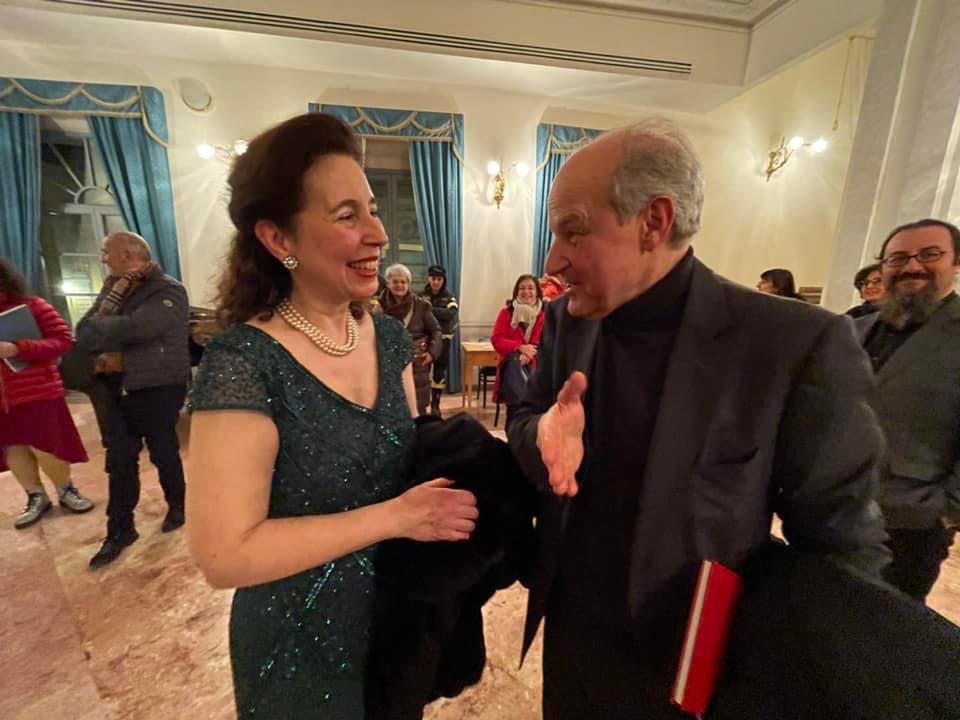
With the artistic director of the Chigiana Foundation,Nicola Sani.it was nice to reminisce among friends of long standing.Angela thinks we first met in 1985 when she came the first time to the Ghione Theatre .I was very wary to say that it was much before that,when Sidney Harrison who was my teacher and became her neighbour and mentor when she was living in Fielding Road in Chiswick.Sidney had often adjudicated festivals in Canada (his wife Sydney was Canadian born) and had know Angela’s parents and their little girl who won all the prizes!Nicola Sani was my neighbour in Rome, he at n.3 and we at n.4 Carlo Dolci .Our downstairs neighbour was Audrey Hepburn with a beautiful little house she built in our garden for her son Luca,still at school when her marriage to Dr Dotti broke up.What a wonderful refined presence she was and when she knew she was dying of cancer she used her fame to help publicise the plight of starving children of the third world.They don’t mak’em like that anymore.She and my wife were great admirers of each others art and had much in common as human beings,they also shared the hairdresser in Piazza di Spagna too!
With Carlo Rea and his family .Carlo used to play in the orchestra that Franco Ferrara used for his legendary conducting course .A course where Mehta,Abbado,Barenboim and most of the great conductors of our day learnt from one of the great musicians that were at the Chigiana during the summer months.I came there as a first year student at the RAM ,together with Peter Bithell ,to study with Guido Agosti,a student of Busoni ,and we thought we would get the sack if they ever found out in London.When we got back to the RAM we found we had been awarded the Tobias Matthay Fellowship for our initiative!