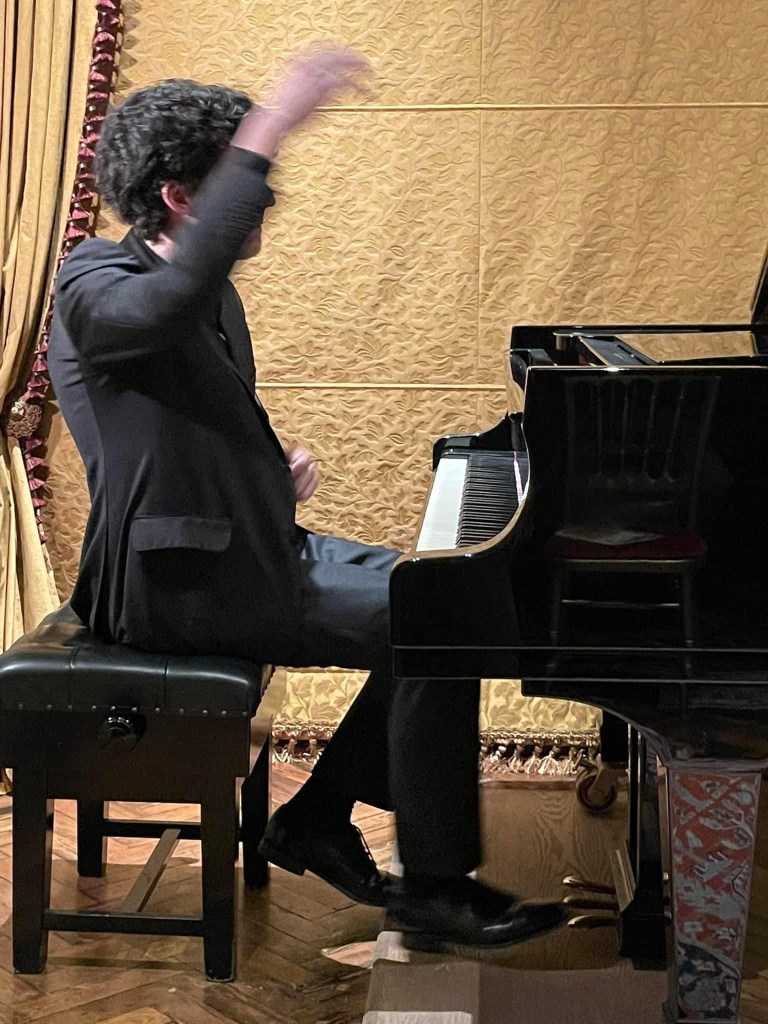
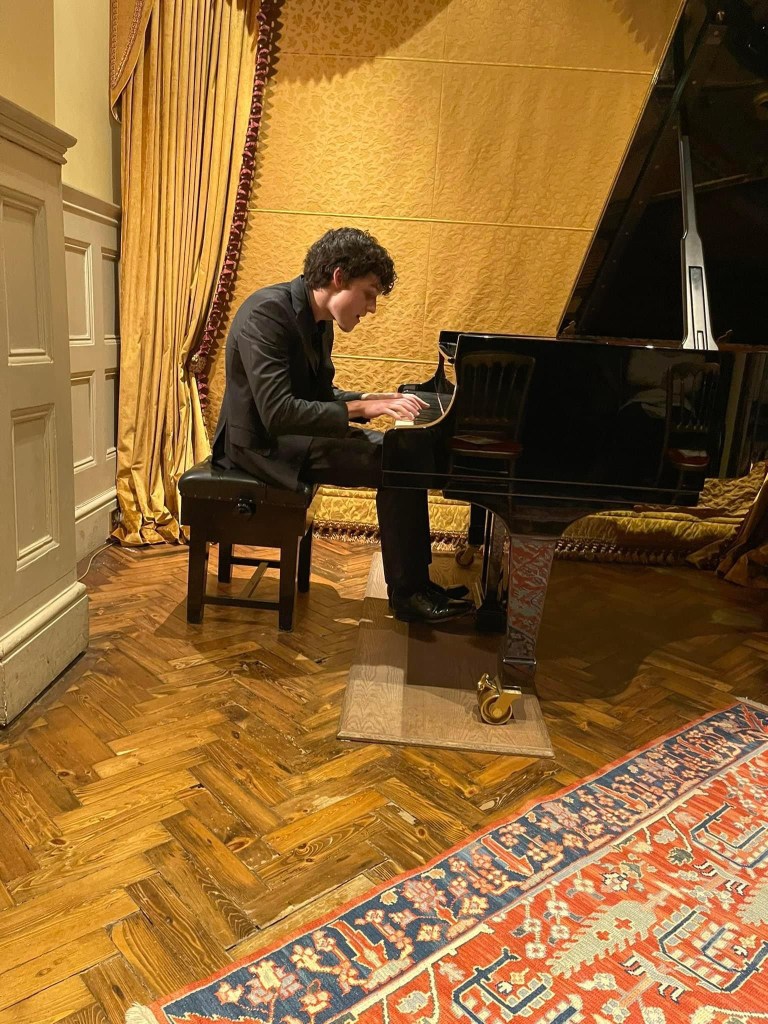
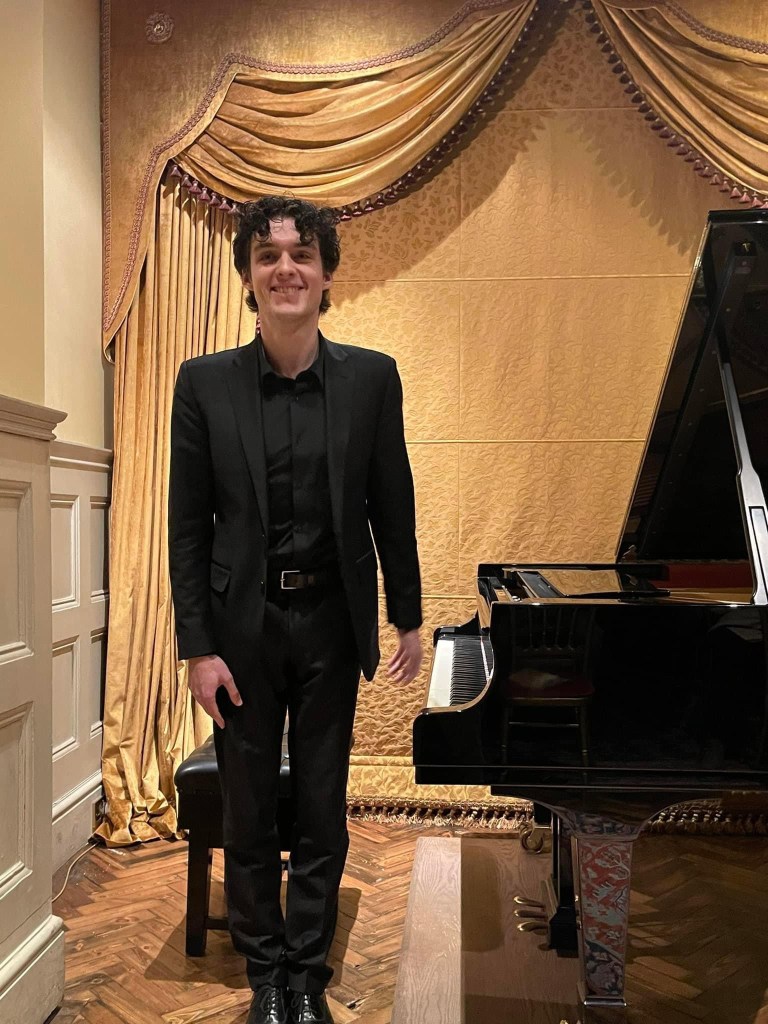
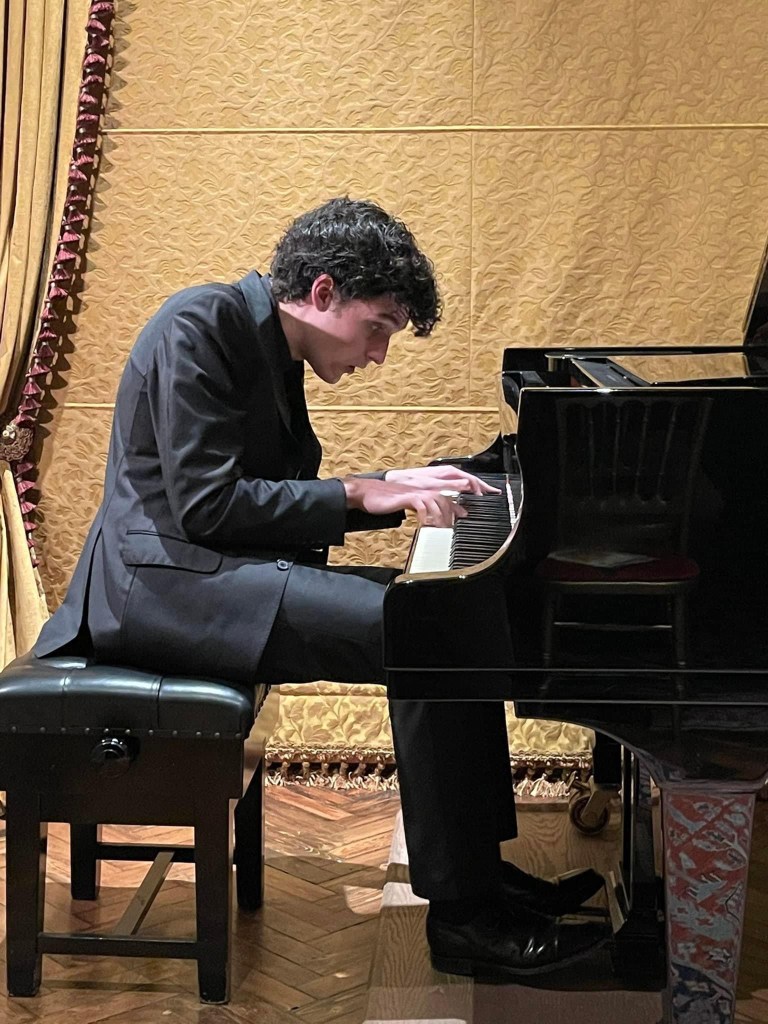
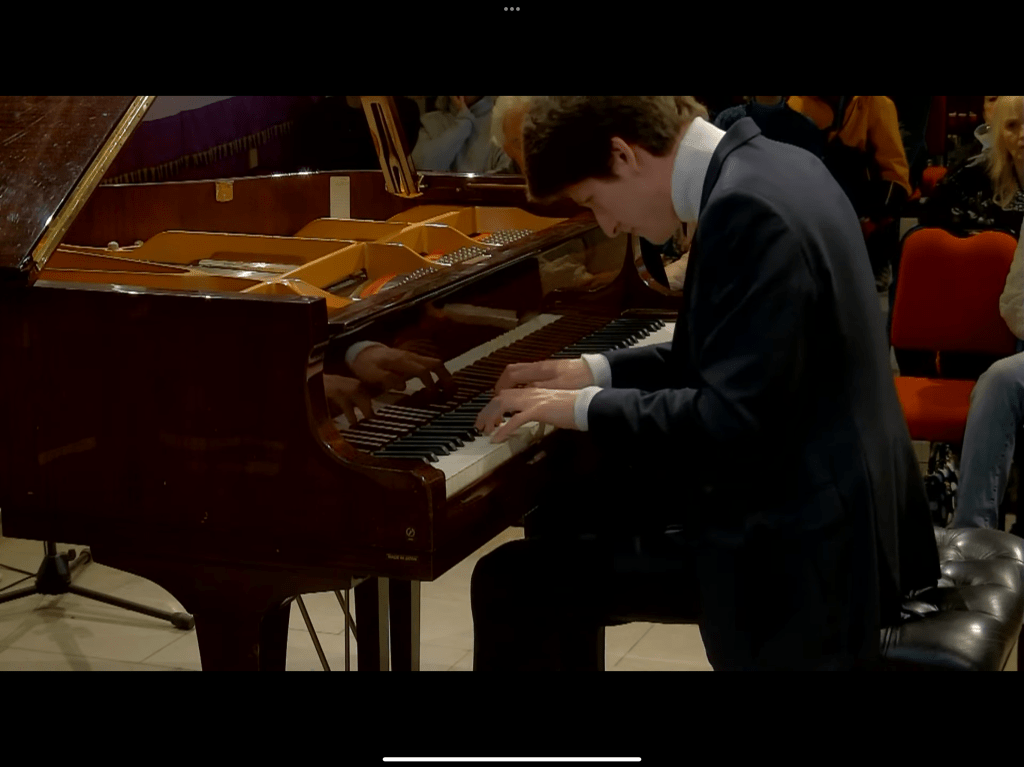
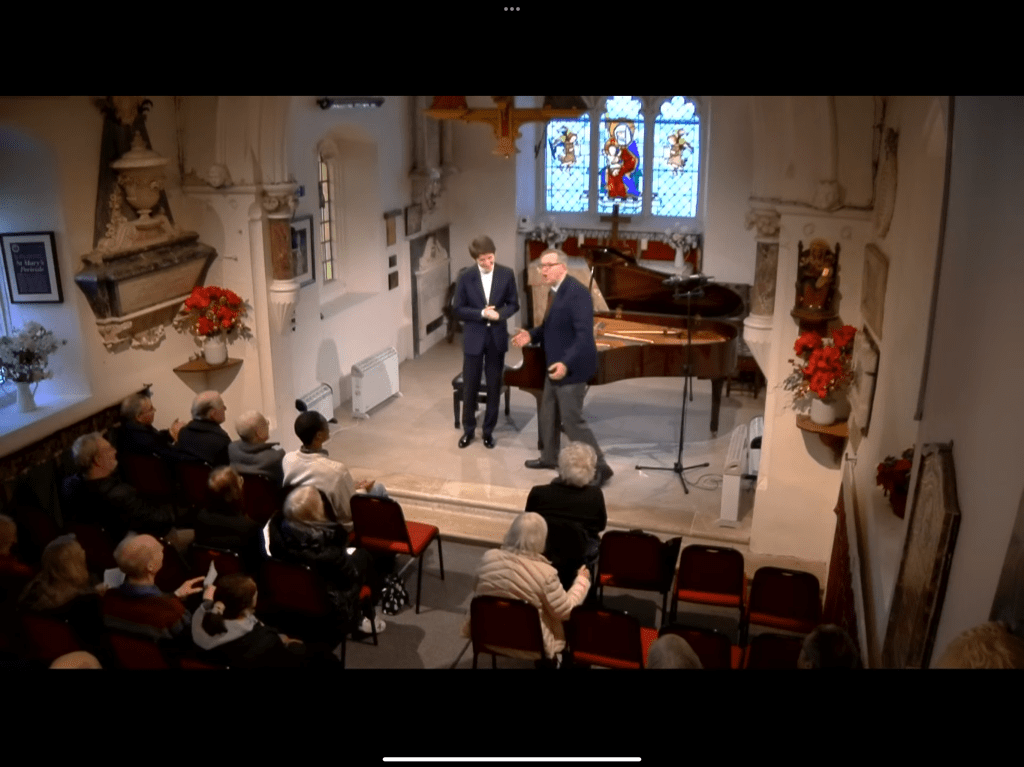
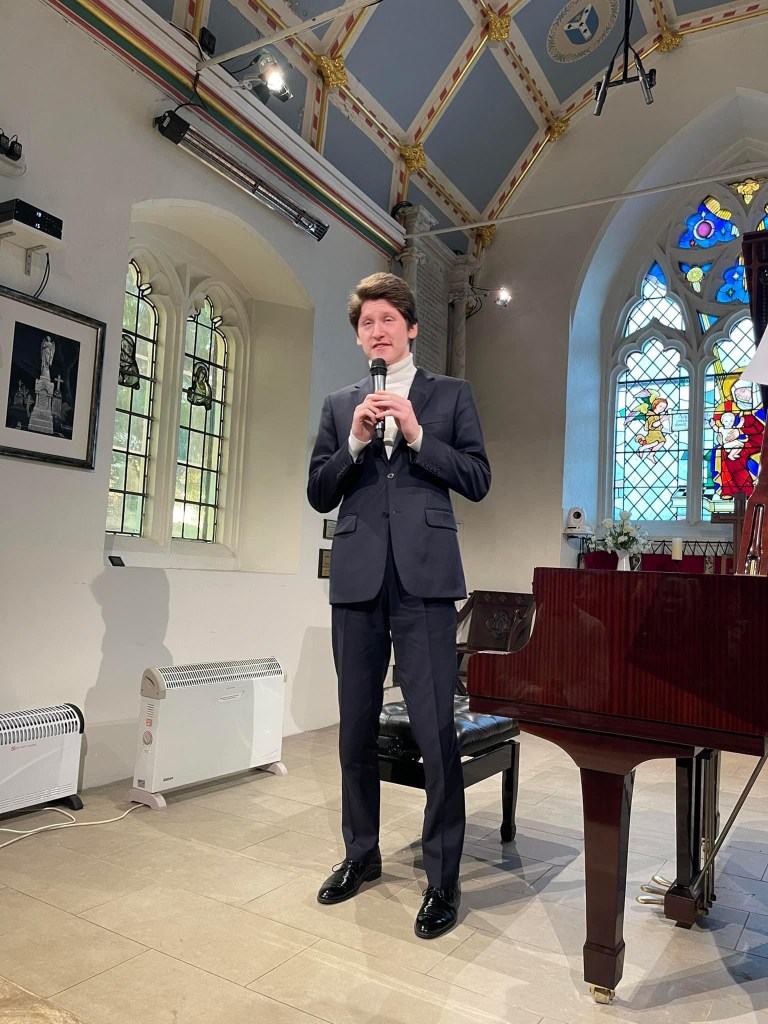
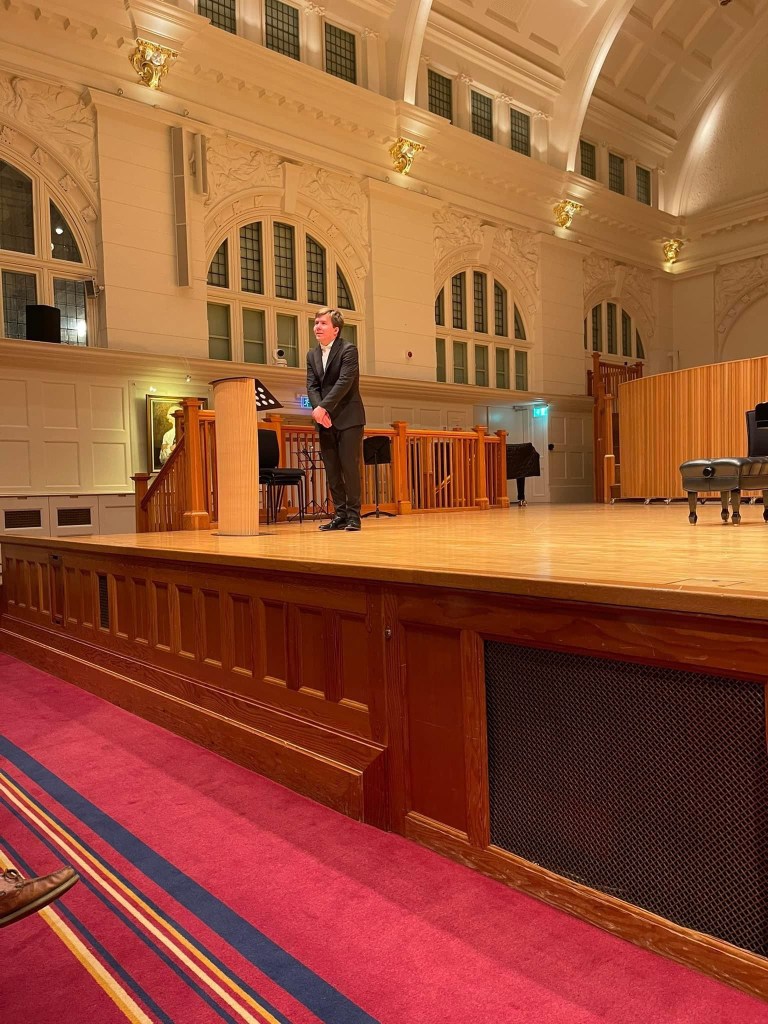
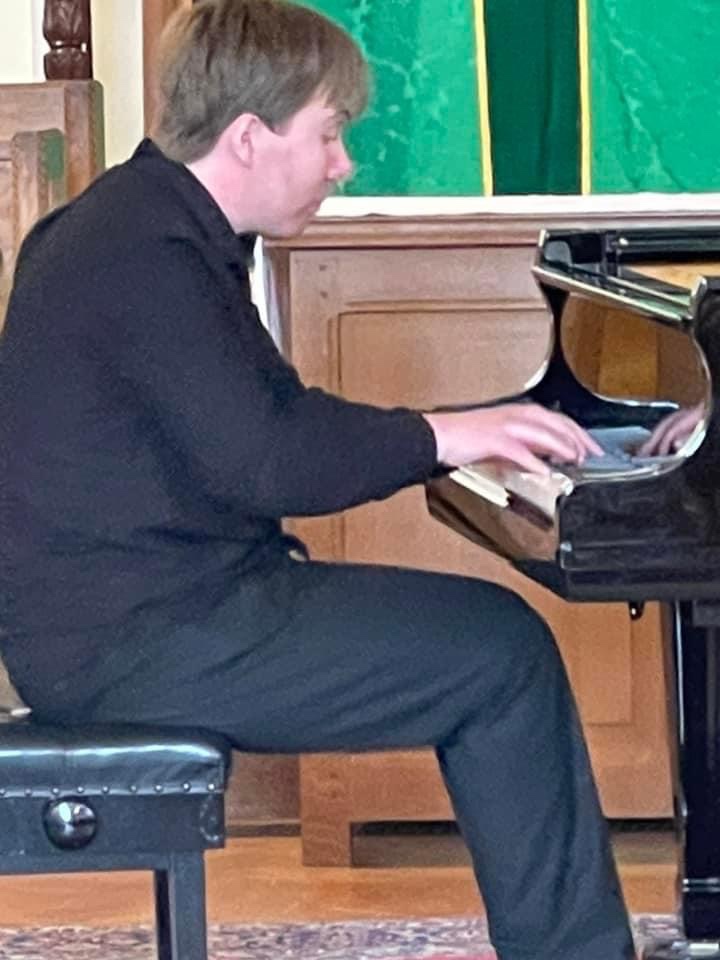
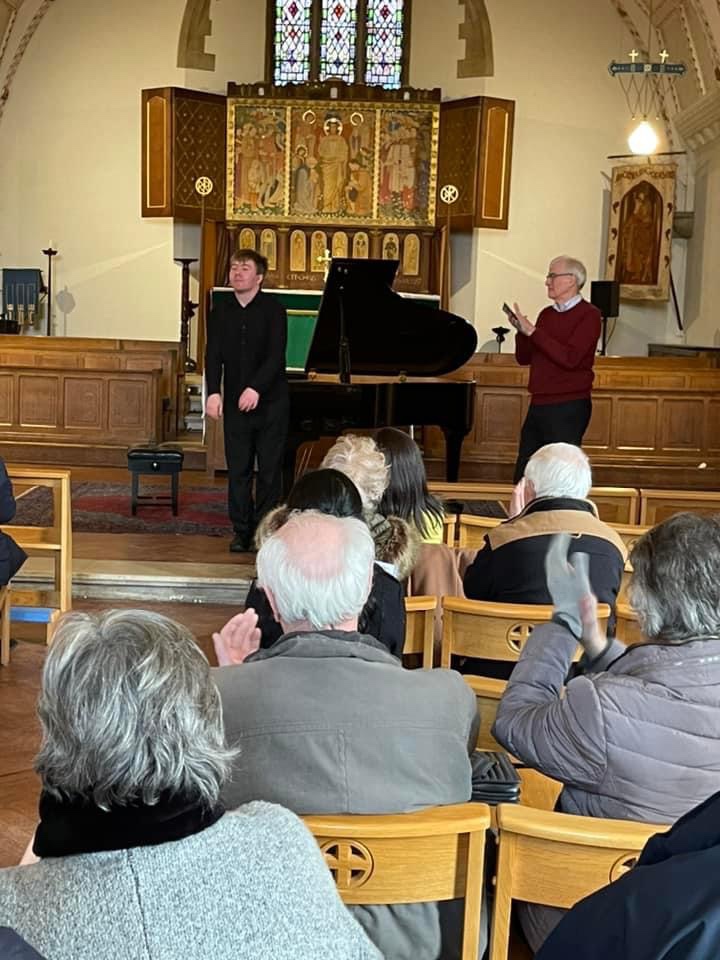
Ignas Maknickas at the Hattori Foundation 1901 Arts Club. Chopin 2 Nocturnes op 27 and Schubert’s last sonata filled this intimate salon space with an hour of sublime music.
It is the second time this month that I have heard Ignas’s performance of Schubert and even in such short a time it has grown in assurance and stature. Last time he very courageously paired it with the Schumann Fantasie.It is no coincidence that the Schubert was dedicated to Schumann by the publisher,Diabelli,as recognition of the admiration that Schumann had publicly declared for a composer whose works were greatly neglected after his early death. Today Ignas shared it with the most beautiful pair of Chopin Nocturnes.Those in C sharp minor and D flat op 27 .A form that was inspired by John Field but the content was decidedly influenced by bel canto.
It was just this continuous outpouring of song that linked Chopin to Schubert and was especially noticeable today in Ignas’s eloquent hands. The 1901 Arts Club started life as part of the next door school and when that closed became offices and later still part of London Underground operations where the Jubilee line was masterminded. Thanks to the Hattori Foundation it has now been transformed into an exquisite intimate venue for chamber music and good conversation. It was obviously an inspiration for our young pianist today. The artistry of this young musician I have described many times but today this intimate atmosphere created a particular magic of its own, A good but stubborn Steinway B piano that Ignas transformed into an instrument that could sing and dance under his slender agile fingers. The hardest thing for a pianist is not playing loud and fast but to be able to play pianissimo and fast. It requires a transcendental technique and a superbly regulated piano.It is infact not the transcendental eruptions that are a problem so much as the little menacing trill deep in the bass.It must reverberate in pianissimo and unwind without any slowing or smudging,It needs a virtuoso technique of Richter proportions but above all a piano perfectly regulated.It may be a detail but like the menacing four note motive in Beethoven’s Appassionata it is of fundamental importance. Just as the rude interruptions of G in the final rondo,every time it returns it has to be with a different intensity and meaning.
Ignas with his natural musicality managed to persuade us that this was a perfectly regulated piano but not without some difficulty. He transformed the opening of the sonata ‘molto moderato’ into a architectural whole by establishing the tempo from the bucolic dance like section that follows the long opening outpouring.The sublime mellifluous streams of song that were unstoppable for a poet destined to have all too short a time left on this earth. It is what gave such strength to his performance where he allowed Schubert’s sublime streams of song to speak so simply without any underlining or eccentricity. The Andante unfolded in an natural way that was all the more poignant allowing Schubert the last word. Of course the heart of this last Sonata in the ‘Andante sostenutio’ slow movement miraculously written with many other masterpieces in the last months of his life. It was played with a delicacy and ravishing sense of balance,the delicately embellished return ever more poignantly unfolded. The nobility of the central chorale of almost Brahmsian proportions was played with disarming simplicity and of orchestral colour that made the contrast so moving knowing that just a few months later Schubert would breathe his last breath .
A scherzo all lightness -‘ con delicatezza’- but with the foreboding in the trio ever present. Ignas played it with a refreshing youthful ‘ joie de vivre ‘ but the ‘spook in the night ‘left hand accents of the Trio are more a bow digging deeper that suddenly a blast from a brass band ! The last movement with its rude interruption was given an ebullient life,the one that was to be denied so imminently to the composer. The great declamatory outbursts were played with rhythmic drive and fiery youthful passion but always within the overall structural sound of the whole performance. It demonstrated Ignas’s natural musicianship that I had admired so much s few weeks ago in Perivale. No encores were offered and certainly were not needed after such a poignant offering of poetic significance.
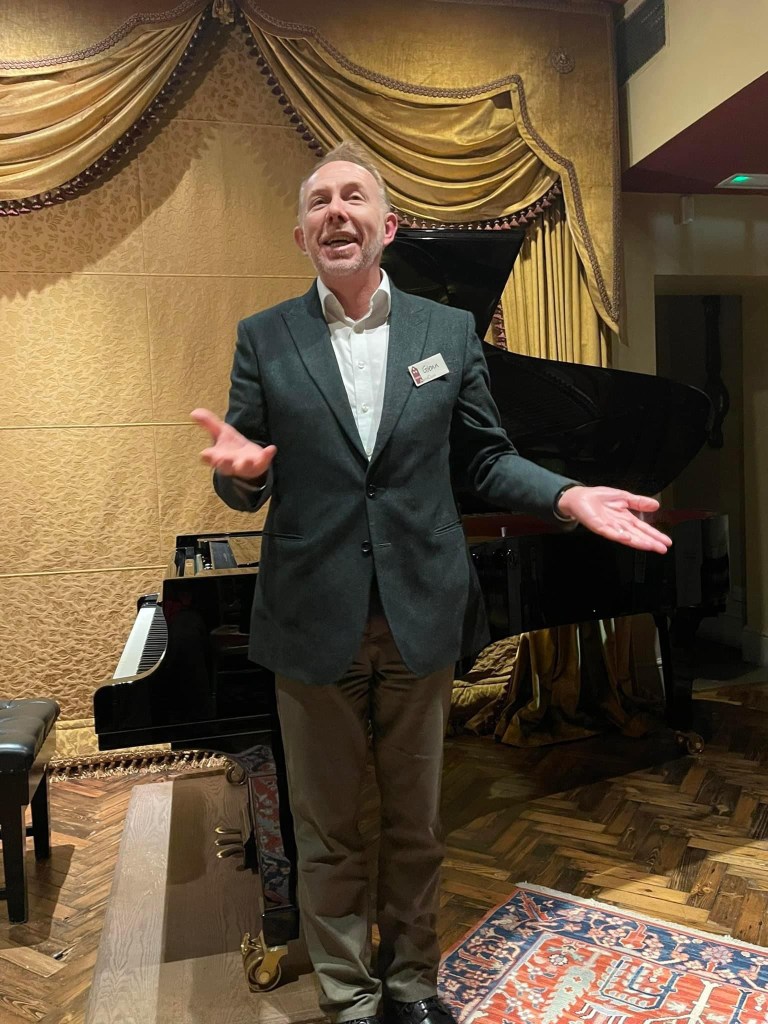
The genial general manager Glenn Kesby How could we resist his invitation to the dance upstairs
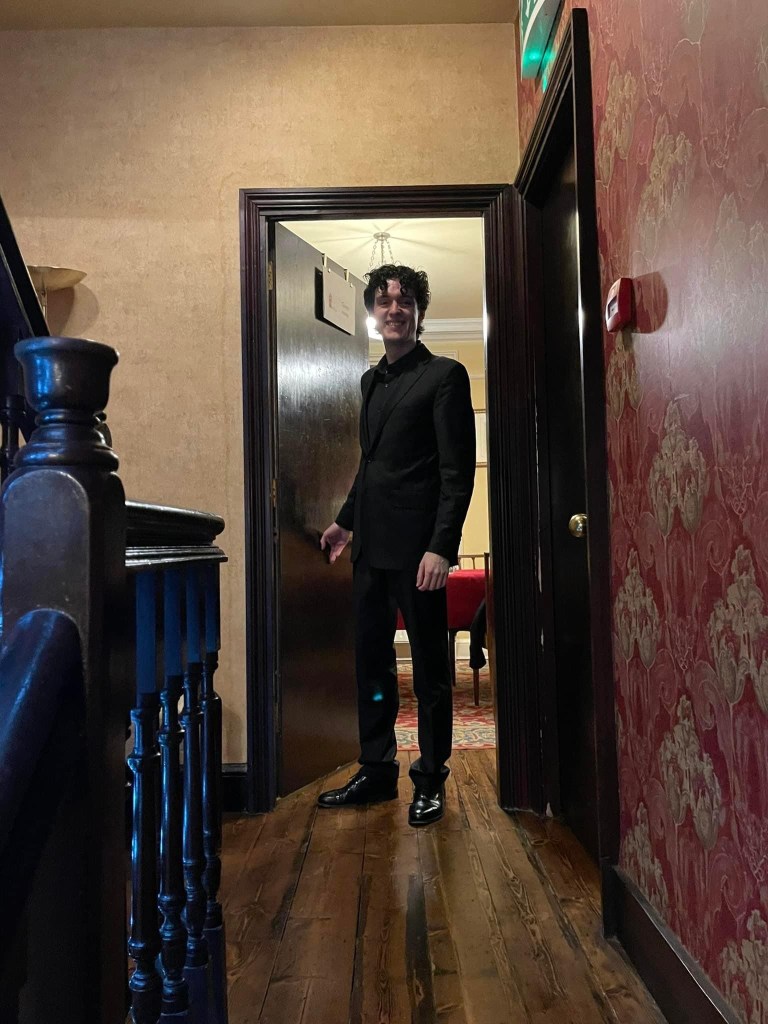
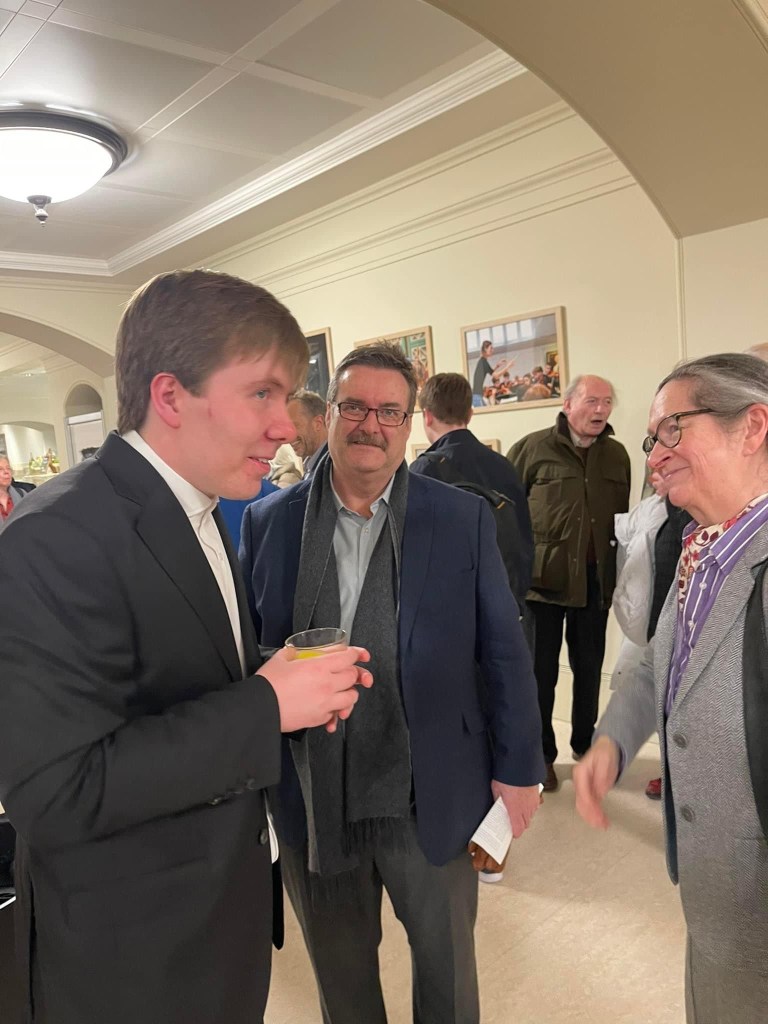
We all adjourned to the upstairs salon to join in convivial conversation with the artist and all those that had been lucky enough to be present at this artistic seance . An evening all too rare to find in a great metropolis that seems to have no time to stop, stare and dream as we were allowed to do tonight .
The two Chopin nocturnes that opened the concert were a continuous outpouring of bel canto over a gently moving bass accompaniment. If the first started in a mysterious haze of sound bursting unexpectedly into dance.The second in D flat was one of Chopin’s most beautiful melodic inventions. Time stood still as it did on so many memorable occasion with Artur Rubinstein just a stone’s throw from this jewel of 1901 Arts Club. Dwarfed by the Shard and the Gherkin but only in size.
It is quality not quantity that replenishes the soul as was so obvious to us all tonight !
Fryderyk Chopin (1810-1849) Ballade No. 1 in G minor Op. 23 Ballade No. 2 in F Op. 38 Ballade No. 3 in A flat Op. 47 Ballade No. 4 in F minor Op. 52 INTERVAL Sergei Prokofiev (1891-1953) 10 Pieces from Romeo and Juliet Op. 75 Juliet as a Young Girl Montagues and Capulets Mercutio Romeo and Juliet Before Parting Maurice Ravel (1875-1937) Gaspard de la nuit
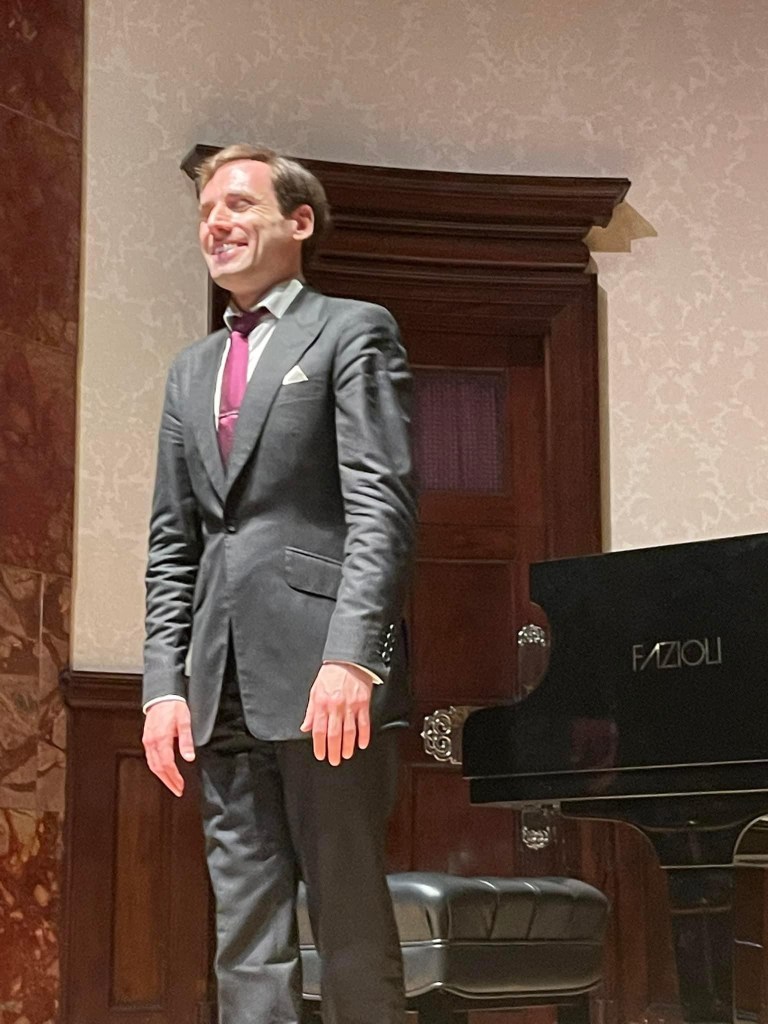
Four Ballades played as four great statements by Boris Giltburg each one etched with hard driven emphasis. This was a modern day Chopin that was shorn of all tradition and we were shown the great structure of each one with infinite care of detail but with a driving rhythmic pulse that did allow any sentimentality. This was an almost Beethovenian Chopin of great weight and clarity. On a magnificent Fazioli piano he rarely touched the soft pedal such was his technical control.In fact the left foot was used to turn the pages of an I pad discreetly hidden inside the piano. An ‘aide memoire’ that surely was the reason that for all its magnificence Giltburg’s Chopin rarely touched my heart.It was in a way being present in a recording studio. Some fleeting moments in the opening of the first Ballade or the delicate return of the opening in the fourth were rare moments to cherish.The high powered explosions in the second or the coda of the fourth seemed out of context being overpowered and played with excessive weight and drive. The chords at the climax of the fourth I have never heard so detached and rather than being a consequence of the climax they seemed rather clinical and out of place. Here though was a Chopin of great authority written in stone not in sand.
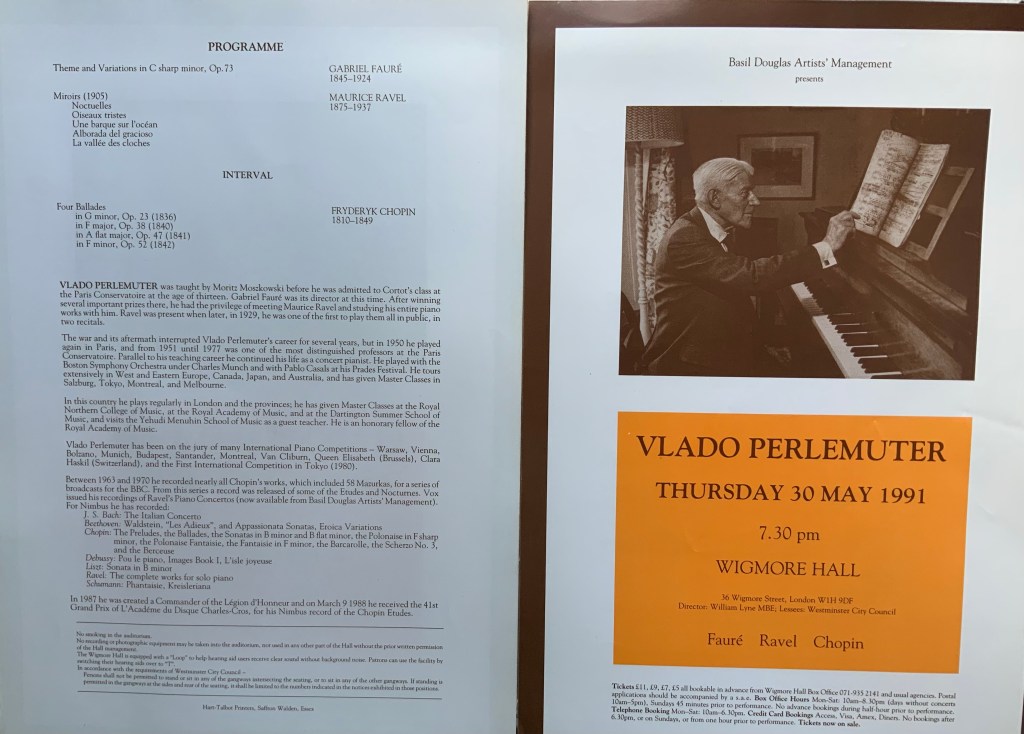
I remember helping Vlado Perlemuter enter that door onto this very stage when in his 90th year he gave his last concert.He played the four ballades as one with a weight and real legato that relayed the magic of Chopin to his adoring public.The distinguished pianist Irene Kohler came back stage in tears.I pads did not exists and even if they did Vlado knew the scores after a lifetime of living with them.Joan and I waited for him backstage as we had always done in the Ghione Theatre in Rome from when he made his Italian concert debut at the age of 81!Right to this last appearance entering that door was always like going to the guillotine!
The second half was a different ‘kettle of fish’ with ‘diabolical suggestions’from the first to the last with a ravishing contrast of water nymphs and moonlight. The characterisation and orchestral sense of colour in four pieces from Romeo and Juliet were indeed Ill fated lovers for Valentine’s day.Breathtaking volumes of sound and savage conviction swept all before it with a magnificence that I was not expecting after his comparatively clinical studio performances of Chopin. Gaspard too was played with a sumptuous kaleidoscope of colour with the fleeting water nymph weaving her way in and out of a glittering sheen of water before climbing the heights with devastating effect and astonishing bravura.A very subdued Le Gibet where the tolling bell became part of this desolate landscape where we had to strain to differentiate them but where the melodic line was chiselled out with deadly impersonal precision. Scarbo produced the fireworks even at the astonishing pace that this impish goblin was allowed to race around the keyboard. Passionate outbursts where Giltburg just threw himself into the fray with total devastating abandon.The infamous repeated notes were played with a drill like precision that made the menacing legato even more terrifying.
Exhausted after an exhilarating Gaspard he sat to introduce his encore
Claire de lune was the ideal respite for such hard driven performances of Prokofiev and Ravel and it was played with timeless lingering beauty. The Wiggies were on their feet craving for more and now the disguise was totally lifted as we were torpedoed into an avalanche of diabolical suggestions that left us all totally exhausted and happy to go back home …..perchance to dream …..I sincerely doubt that!
A Wigmore Hall sold out leaving the audience exhilarated and exhausted after his last avalanche of ‘suggestion diabolique ‘ encore.
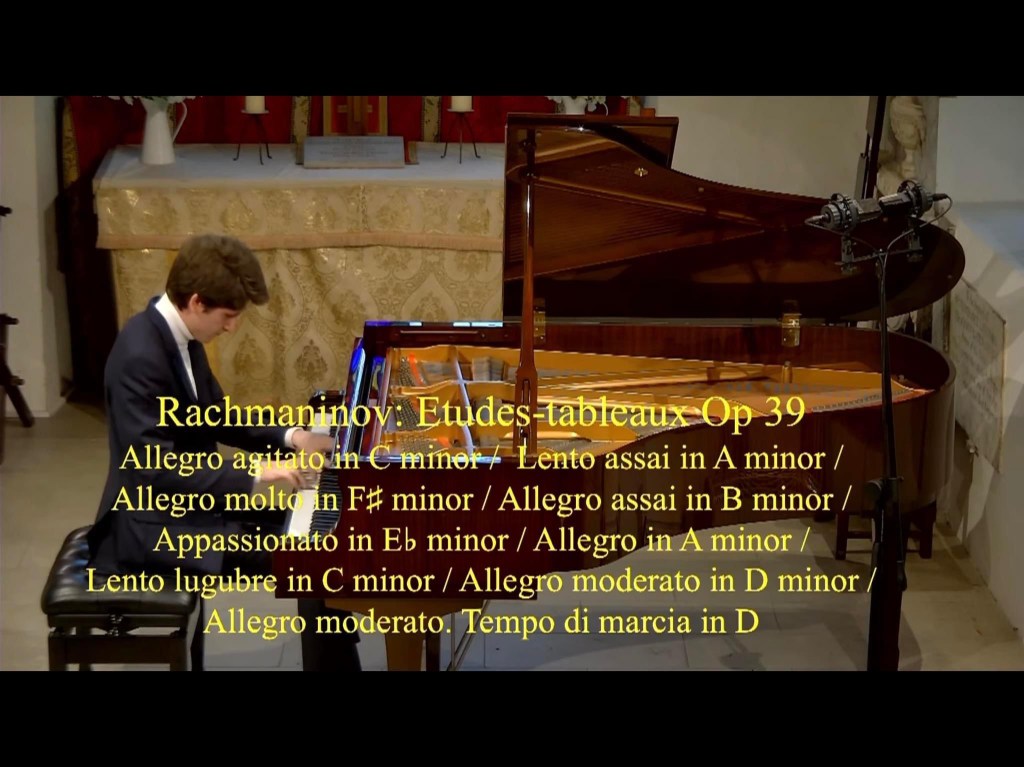
Dr Mather’s comment of sensational was an understatement indeed . Phenomenal technical assurance allied to refined intelligent musicianship combined to astonish,amaze and seduce in the complete Etudes Tableaux op 39 in celebration of Rachmaninov’s 150th anniversary of his birth.Superhuman control of sound made each of these tableaux come vividly to life with Nobility,Sensuality and Exhilaration.
The famous fifth In E flat minor I have never heard with the same searing passion and aristocratic control with contrasts tinged with bitter sweet Russian nostalgia.The ‘Red Riding Hood’ study number six was enough to scare the life out of us with its continual roaring interruptions and its ever more driving insistence .There was beauty as the rhapsodic melody of number eight was allowed to expand so naturally leading to the imperious declamation of the ninth.the final study was played with majestic grandeur and scintillating march rhythms of glittering virtuosity.There was ravishing beauty in the question and answer of the languid second study in A minor leading to the intricacies and swirling brilliance of the third with the breaks suddenly applied at the end where the the last cadence was reduced to a reverberating echo.The deeply brooding seventh marked ‘lugubre’ and Lento was only the opening of a transcendental accumulation of chords that were played with quite phenomenal technical and musical assurance.A tour de force of musicianship and virtuosity that was indeed breathtaking and exhilarating .
Two Scarlatti sonatas opened the concert .Crystalline clarity and rhythmic Spanish propulsion with dynamic contrasts of superhuman control.
But the surprise was still to come with Emanuil’s delicious theme and variations,written last year as a birthday present for his girlfriend. He was happy to declare on this Valentine day that it was a piece full of sincerity and loving expression. Ravishing beauty of an original theme developed into a series of variations that like bagatelles were full of character and amazing gymnastics.A cloud of sound in the bass was created at the climax on which the theme came back ever more tender and lovingly played. What a charmer this wonderful young pianist is! Off now to play Saint Saens Egyptian Concerto with the Sophia Philharmonic and next month to wow the Florentine public in the Keyboard Trust’s new series in the beautiful Harold Acton Library. Emanuil as winner of the 2019 Busoni Competition will play on the 30th and Ivan Krpan winner of the 2017 Competition will play on the 2nd. It reminds me of the duel between Thalberg and Liszt in Princess Belgioso’s salon. A duel between giants indeed !
Last but not least was the jewel in a regal crown with an encore of ‘Reflets dans l’eau’.A prism of magical reflections of sumptuous ravishing sounds.The final chord was a revelation of clarity where Agosti had told me that Busoni played the last chord split from top to bottom but the superb musicianship of Emanuil suddenly revealed the solidity of the final chord and the final notes at the extremes of the keyboard just vibrations or should I say reflections. There was magic in the air today at St Mary’s!
Emanuil Ivanov attracted international attention after receiving the First prize at the 2019 Ferruccio Busoni Piano Competition in Italy. This achievement was followed by concert engagements in some of the world’s most prestigious halls including Teatro alla Scala in Milan and Herculessaal in Munich. Emanuil Ivanov was born in 1998 in the town of Pazardzhik, Bulgaria. From an early age he demonstrated a keen interest and love for music.
He regards the presence of symphonic music, especially that of Gustav Mahler, as tremendously influential in his musical upbringing during his childhood. He started piano lessons with Galina Daskalova in his hometown around the age of seven. He later studied in and graduated from the Bertolt Brecht language high school in Pazardzhik. Ivanov studied with renowned bulgarian pianist Atanas Kurtev from 2013 to 2018. He is currently studying on a full scholarship at the Royal Birmingham Conservatoire under the tutelage of Pascal Nemirovski and Anthony Hewitt. Ivanov has won prizes in competitions such as “Alessandro Casagrande”, “Scriabin-Rachmaninoff”, “Liszt-Bartok”, “Young virtuosos” and “Jeunesses International Music Competition Dinu Lipatti”. He was also awarded the honorary Crystal lyre and the Young Musician of the Year Award – some of the most prestigious awards in Bulgaria. In 2022 he received the honorary Silver Medal of the London Musicians’ Company and later in the same year became a recipient of the Carnwath Piano Scholarship.
His participations in masterclasses include those of Dmitri Bashkirov, Dmitri Alexeev, Stephen Hough, Vladimir Ovchinnikov, Peter Donohoe, etc. In February 2021, at the height of the Covid-19 pandemic, Ivanov performed a solo recital in Milan’s famous Teatro alla Scala. The concert was live-streamed online and is a major highlight in the artist’s career. He has also performed at many festivals in Bulgaria and has also given solo recitals in France, Italy, Germany, Austria, Cyprus, South Africa, the United Kingdom and Poland. He has played with leading orchestras in Bulgaria and Italy.
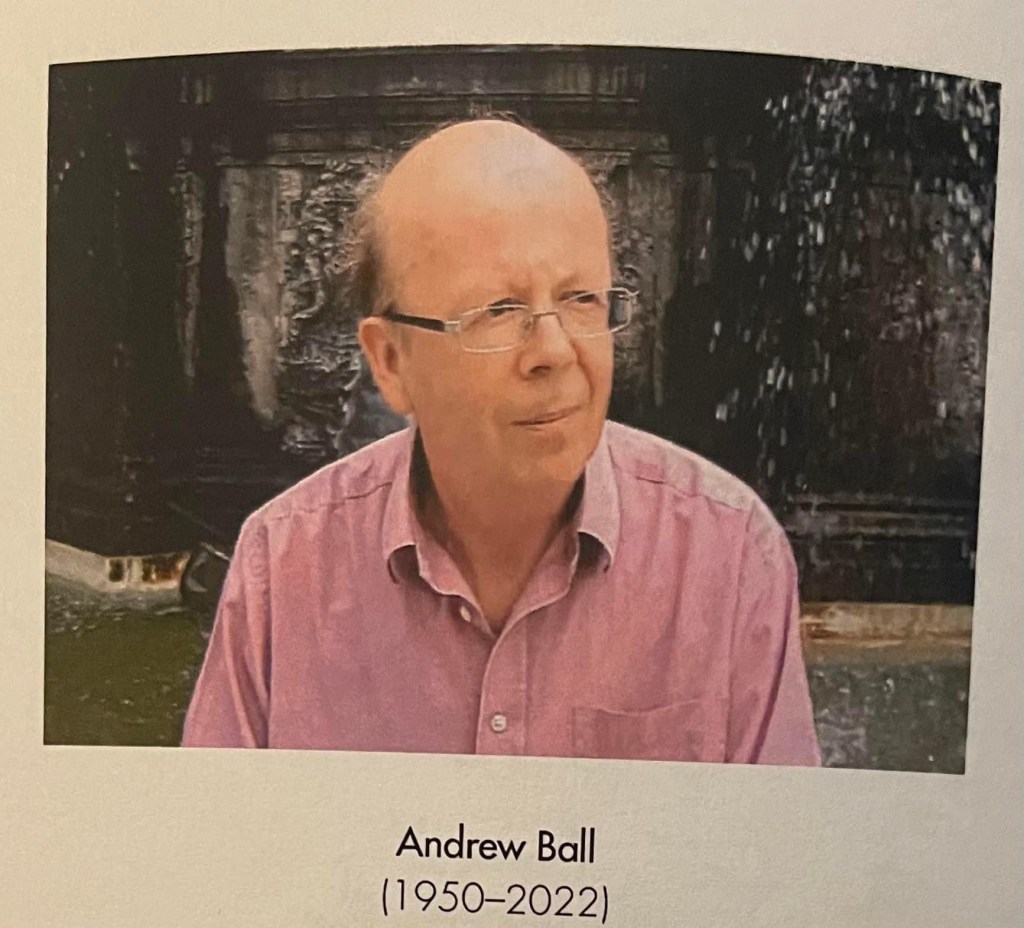
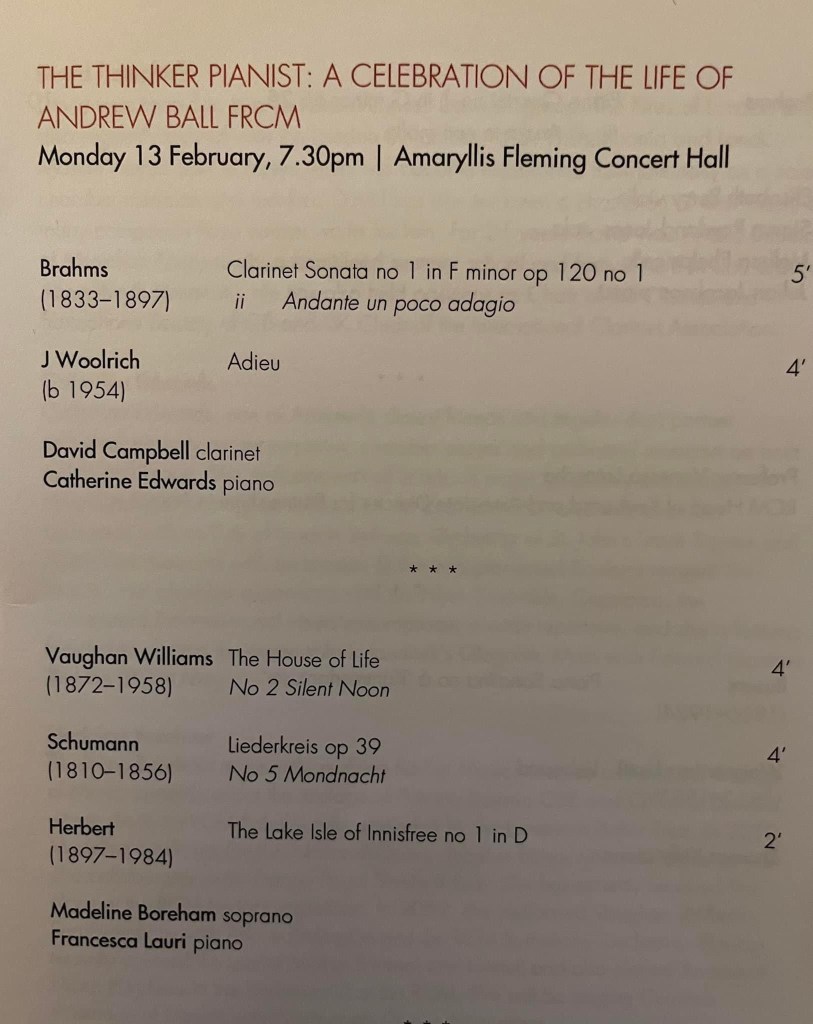
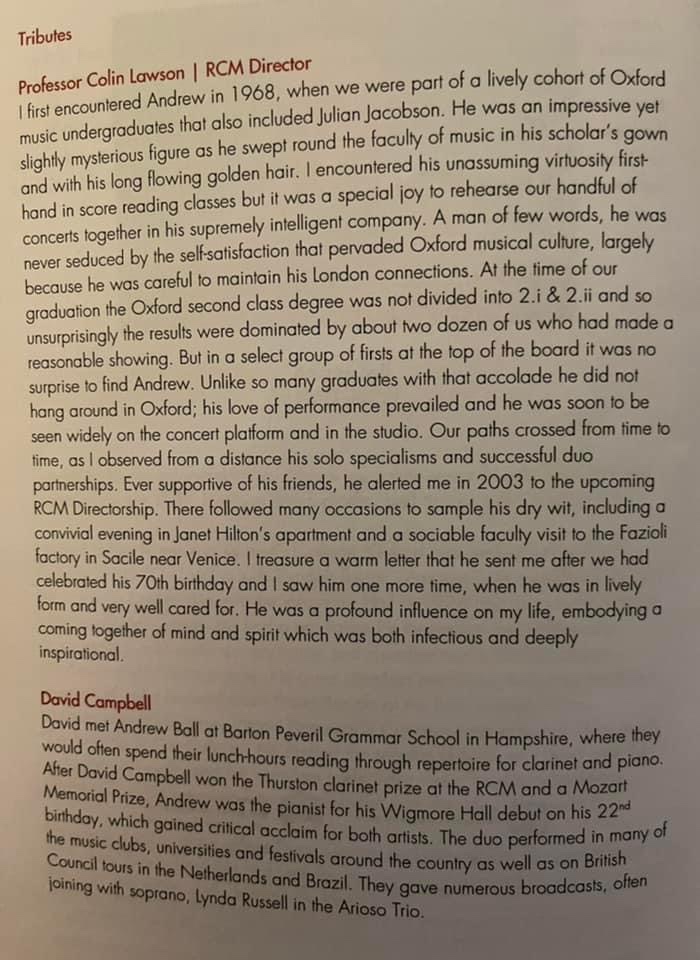
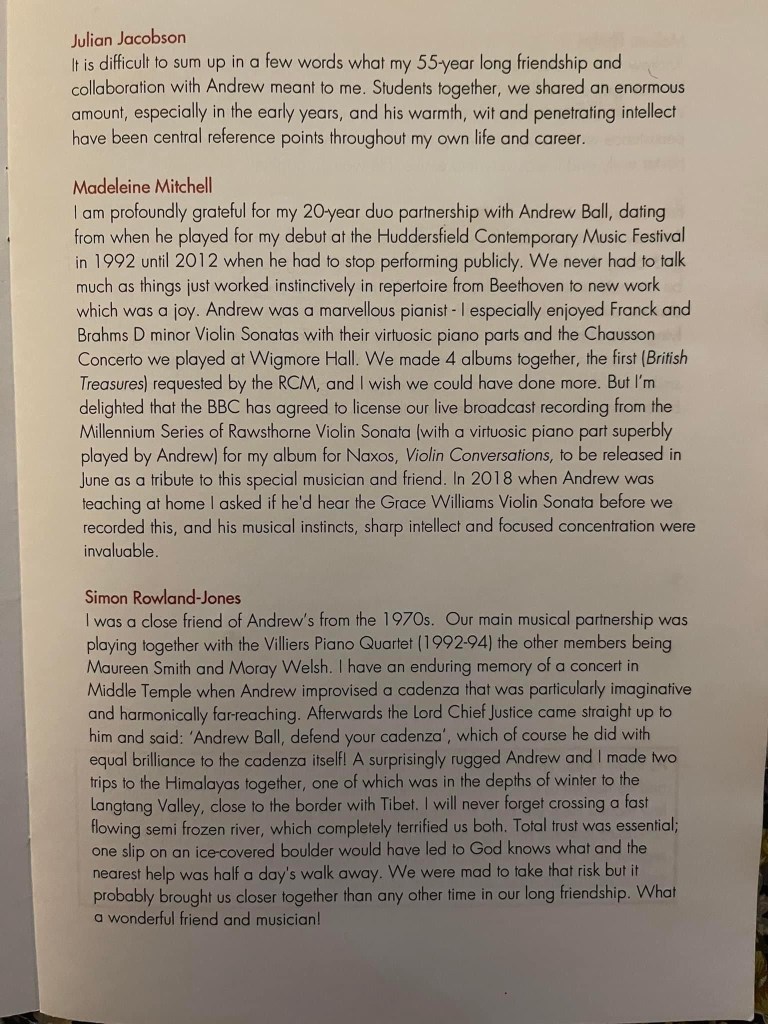
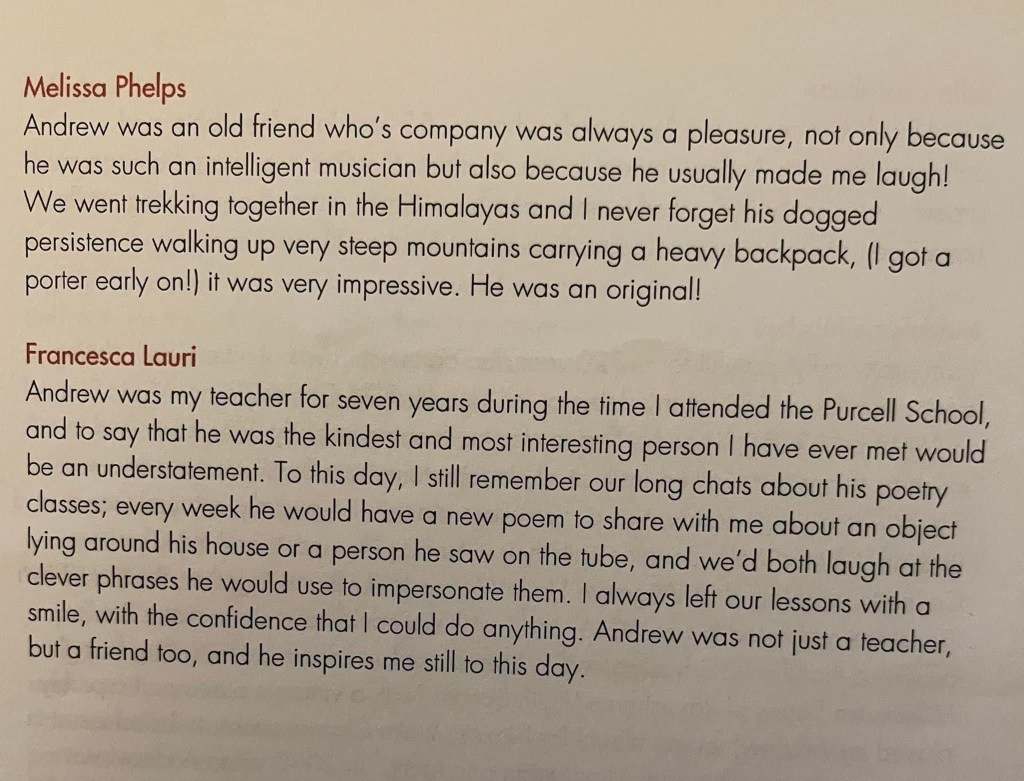
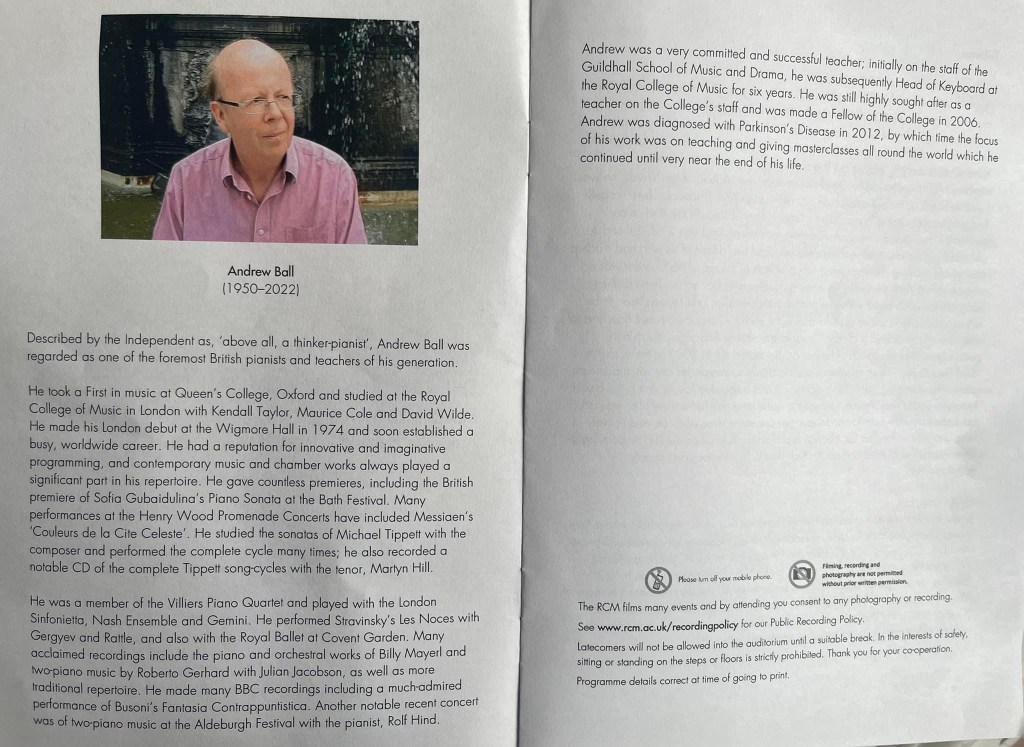
A heartfelt celebration of Andrew Ball finished with a strange unexpectedly moving twist last night.
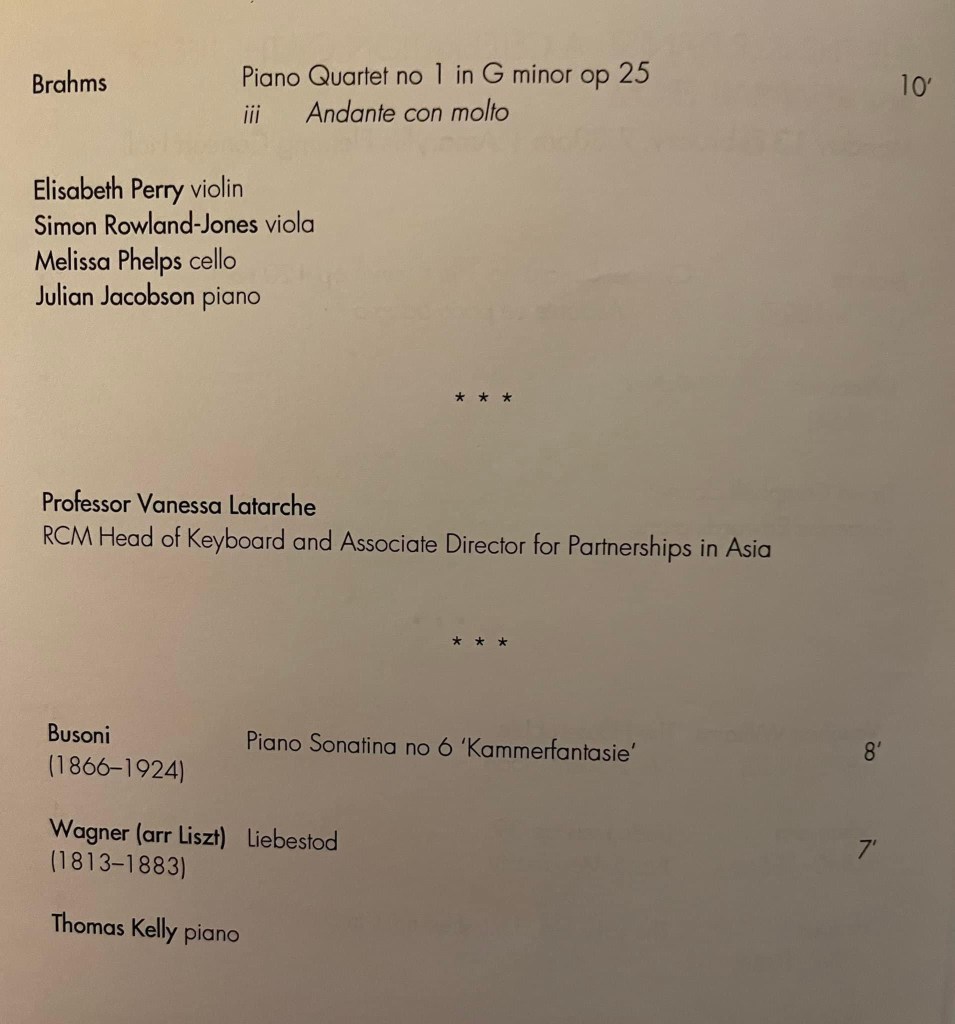
Sumptuous Brahms in a tribute of sensibility and passion Elisabeth Perry,violin;Simon Rowland- Jones ,viola;Melissa Phelps,cello;Julian Jacobson,piano.
Performances from his illustrious friends and colleagues with Andante’s ,Adagio’s,Adieu ,and even Silent Noon.
Vanessa Latarche ,RCM Head of Keyboard Studies and Associate Director for Partnerships in Asia
An eulogy from Vanessa Latarche,the magnificent Head of Keyboard who Andrew Ball had bequeathed to her caring hands in 2005. But the last performance was left to Thomas Kelly,his musical son,who Andrew had taken under his wing as a youth at the Purcell School and later had brought to perfect his extraordinary talent at the RCM . Tom came on in a beautiful new jacket to celebrate the father figure that Andrew had been right up to the end of his long fight with Parkinson’s.
Thomas Kelly a moving tribute to his mentor Andrew Ball
It was a jacket that he bought especially with the fee from a concert he gave a few days earlier for the Keyboard Trust.A concert that to say little was sensational! https://christopheraxworthymusiccommentary.com/2023/02/12/hhh-concerts-and-the-keyboard-trust-a-winning-combination-of-youthful-dedication-to-art/ He and Benjamin Grosvenor are bathed in a sense of style from a different age -The Golden Age of piano playing- of an ultra sensibility to sound and an ease of playing that is always horizontal like swimming in water never vertical like laying bricks. A pianist who listens to himself and is in love with the sounds he can conjure out of a black box of strings and hammers. A supreme illusionist the one I had heard five years earlier in competition for the Joan Chissell Schumann prize.He already had a sound of his own and of course ran off with the prize that Joan Chissell has bequeathed to the college. It was she that had penned :’Mr Rubinstein turned baubles into gems’ as Rubinstein had ravished us in the Royal Festival Hall with a selection of miniatures from the ‘Doll Suite’ by his friend and protégée,Villa Lobos. Carnaval is certainly not a bauble but the pictures that Schumann depicts were gems indeed in Tom’s hands. Andrew had come in especially to support his star pupil and friend. To see them together afterwards belied the refined aristocratic performance that had won him Joan’s prize. Today Tom came on in his beautiful new tuxedo to pay homage to his teacher and friend, No Adagios or Adieu’s for him but an extraordinary performance of Busoni’s Carmen Fantasy.Full of radiance and sunshine with a scintillating display of his- their artistry.Where in every note there are hundreds of possibilities of sound that makes the music speak in a way that is so rare in these times of super virtuosistic pianists where quantity seems to have taken precedence over quality! This is the great lesson that Andrew Ball has bequeathed to us with his remarkable young protégée. But at the end of the visionary Carmen fantasy clouds appear dampening the high spirits as tragedy takes over. It was here that Tom plunged straight into the ‘Liebestod’ by Wagner in the famous transcription of his son in law,Liszt. It was here that the emotion struck too deeply and Tom had to stop,he could not continue. Fatigue and emotion had taken over and it was a moving and sincere tribute to a remarkable man much missed! I rang him immediately afterwards and asked if he would like to meet and suggested he join the faculty of friends and colleagues and his actual mentor Dmitri Alexeev.
He agreed but confided that he felt so embarrassed! To show one’s emotions so openly in front of so many illustrious colleagues was the greatest and sincerest tribute that he could ever have made ! Bravo Thomas forward and upwards in celebration of the art of Andrew Ball
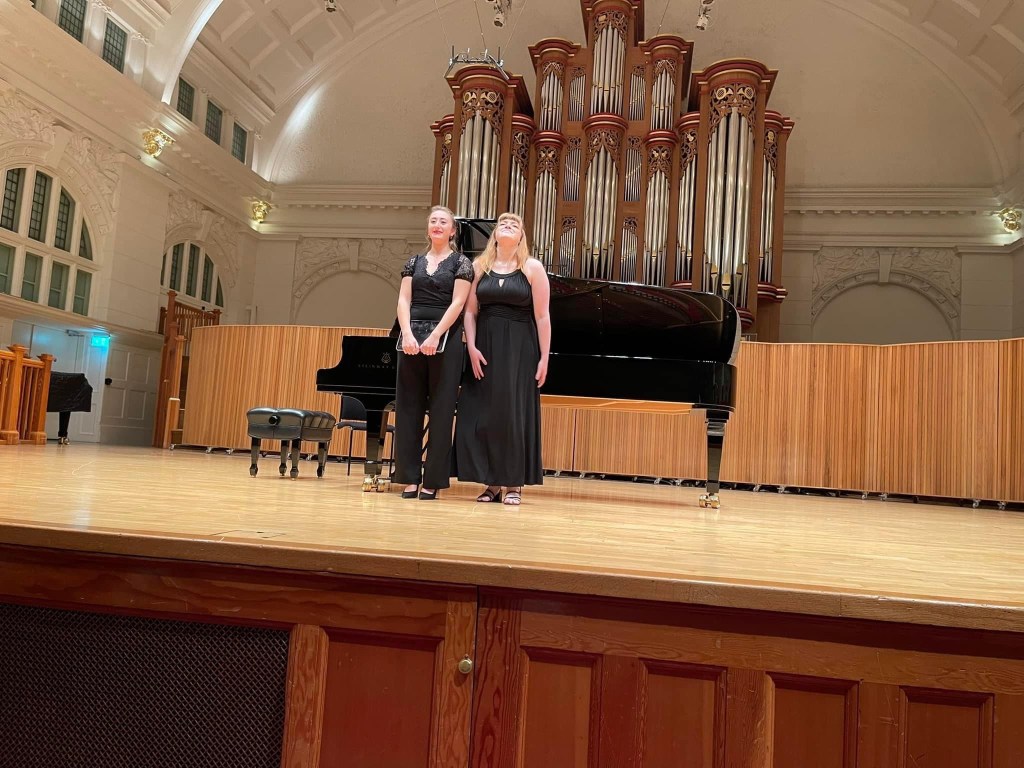
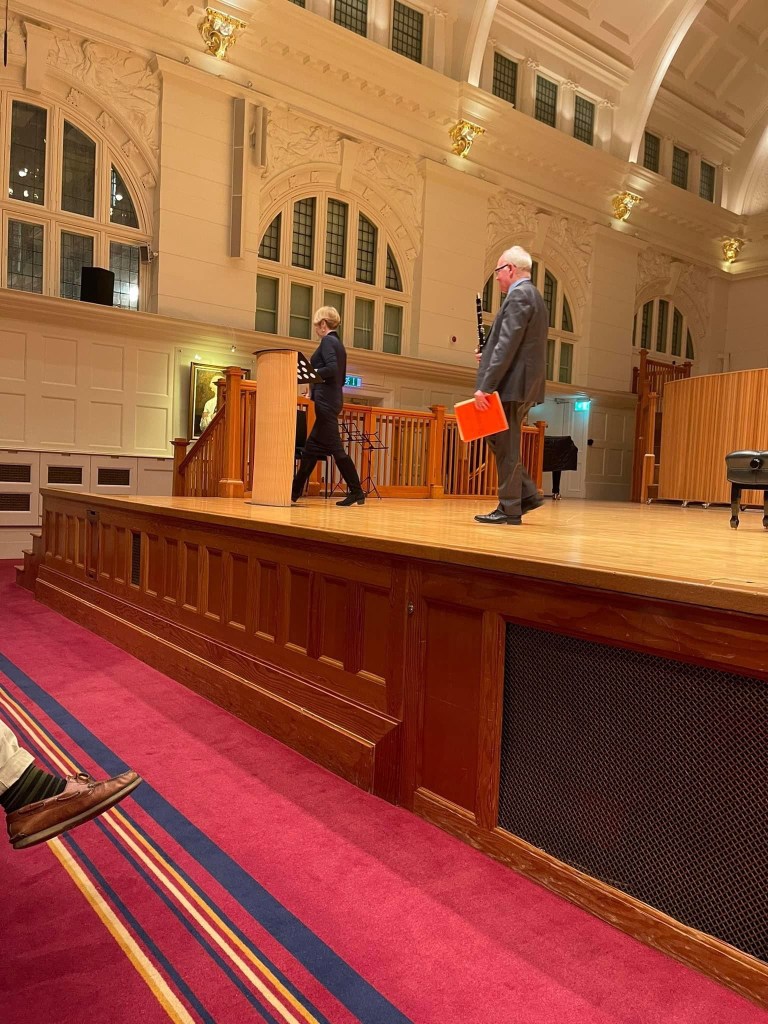
Madeline Boreham and Francesca Lauri with a sumptuous performance of Vaughan William Silent Noon David Campbell and Catherine Edwards leaving the stage in respectful silence after a heartfelt performance of ‘Adieu’by Woolwich
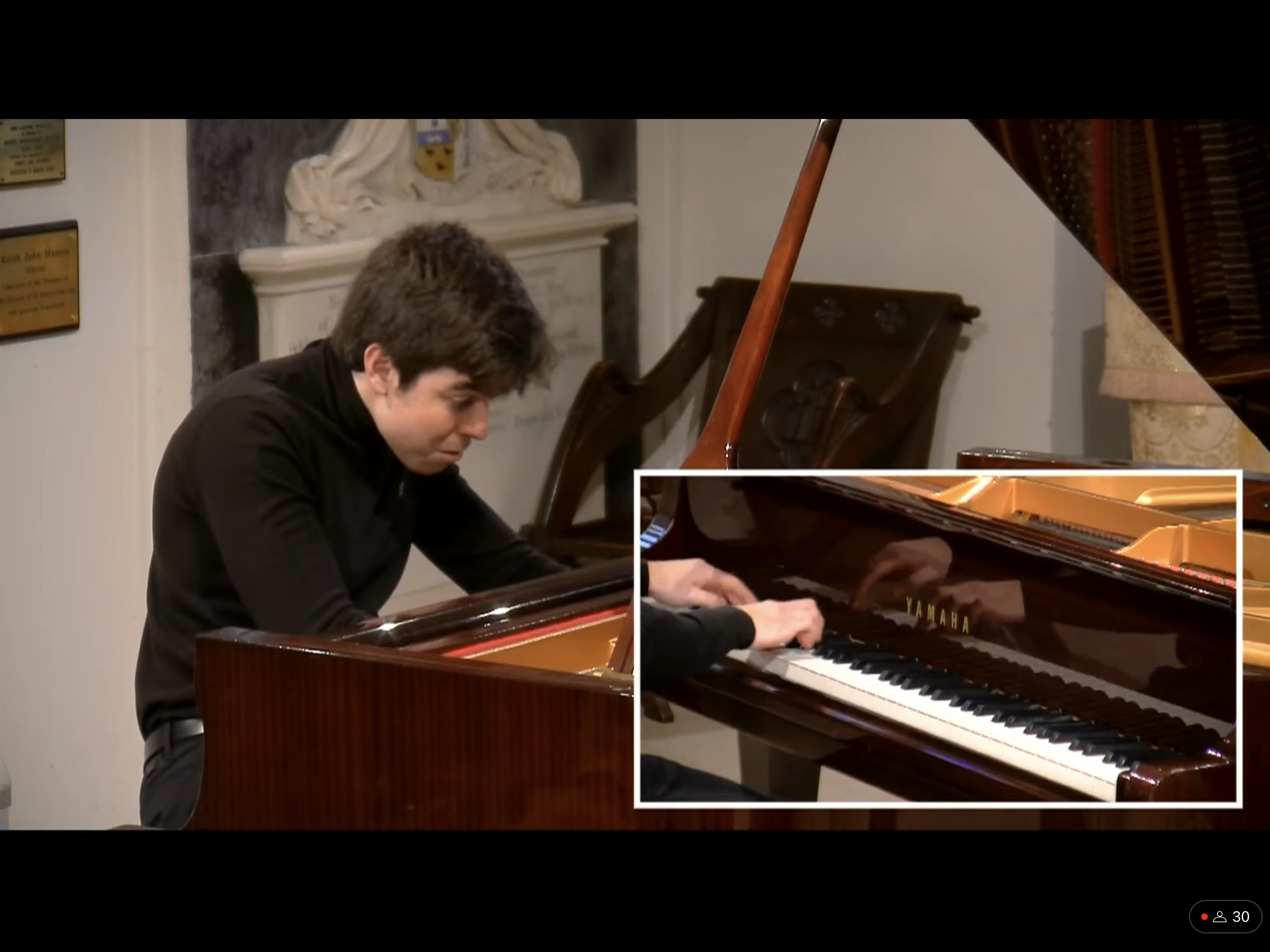
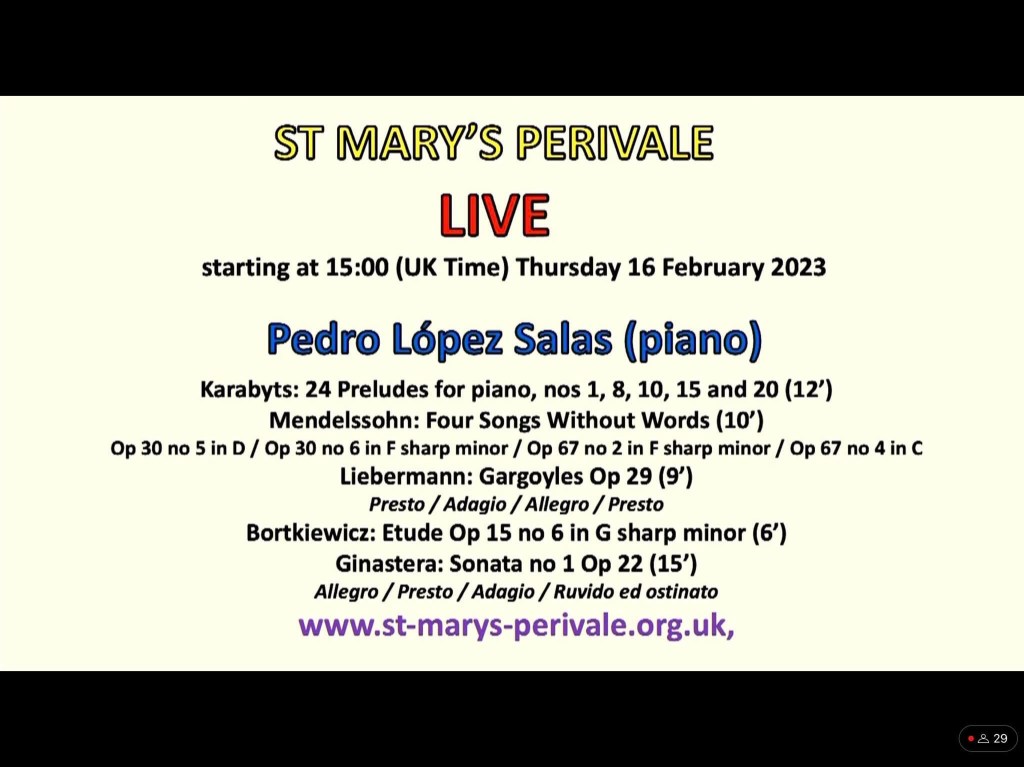
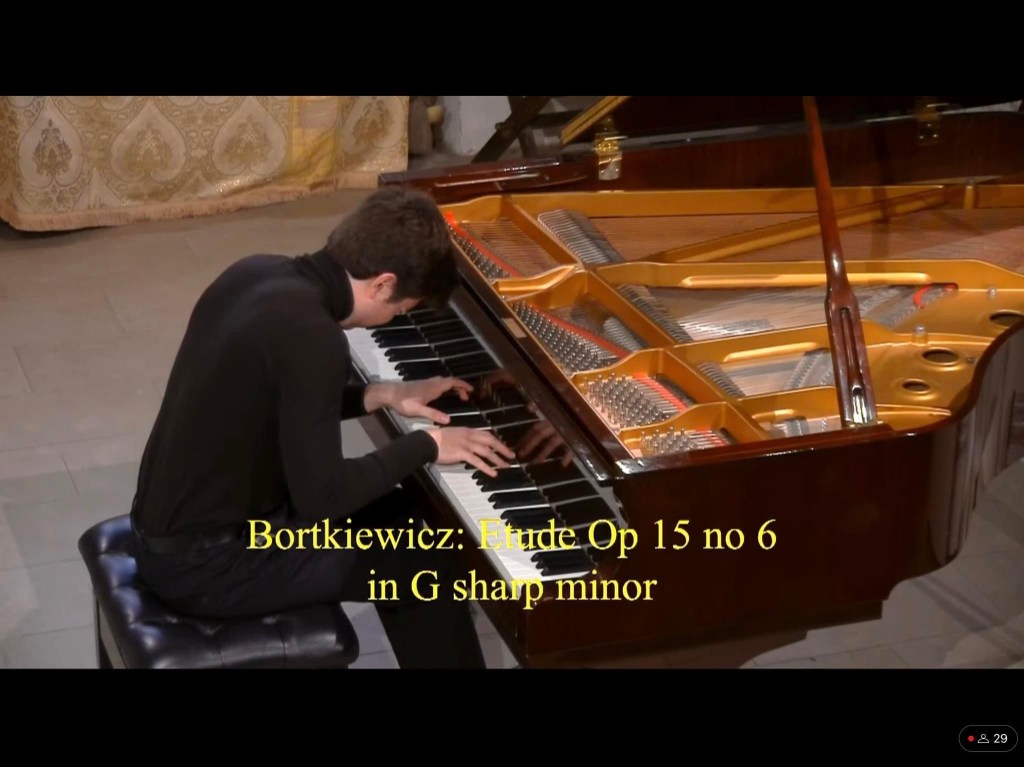
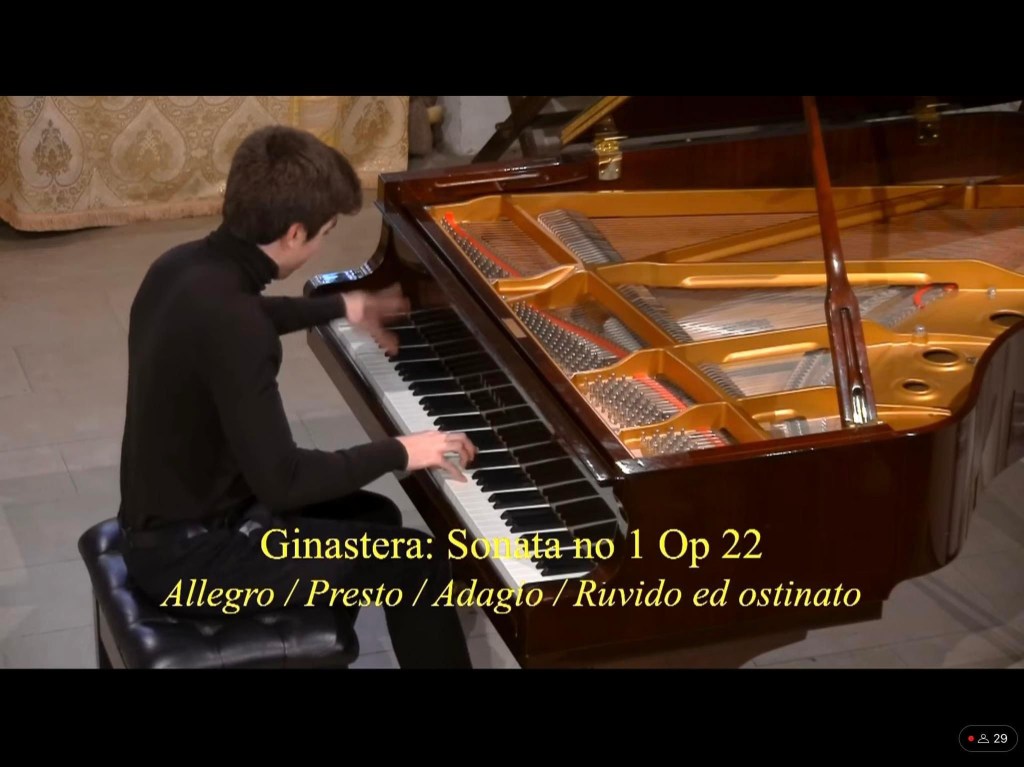
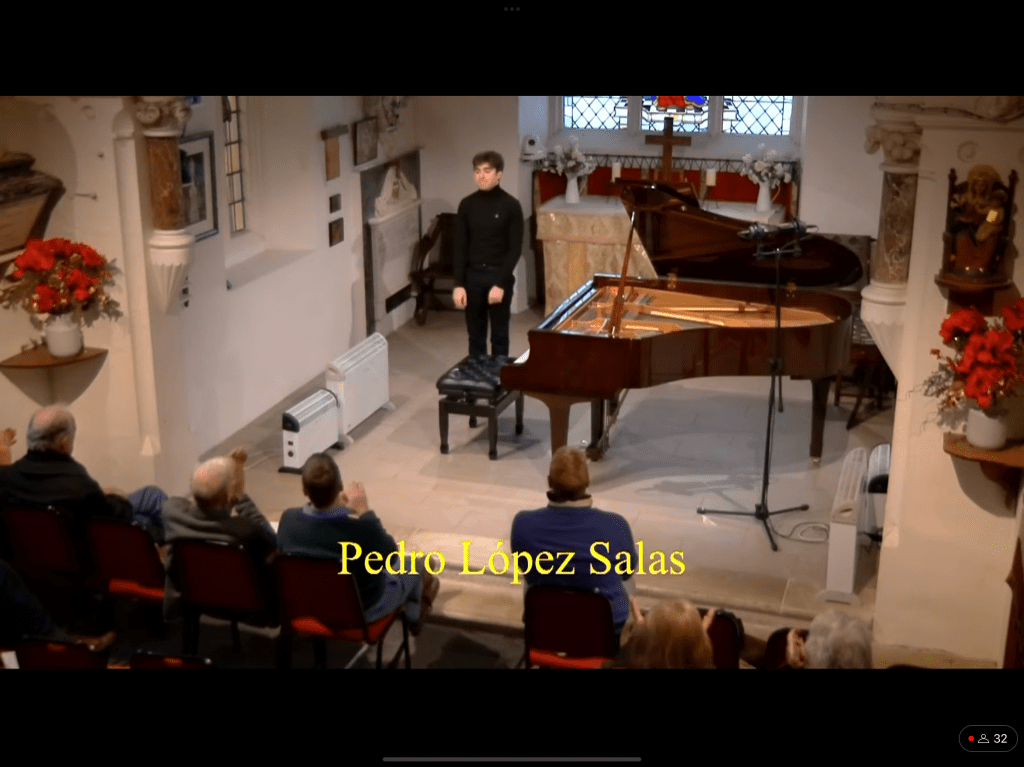
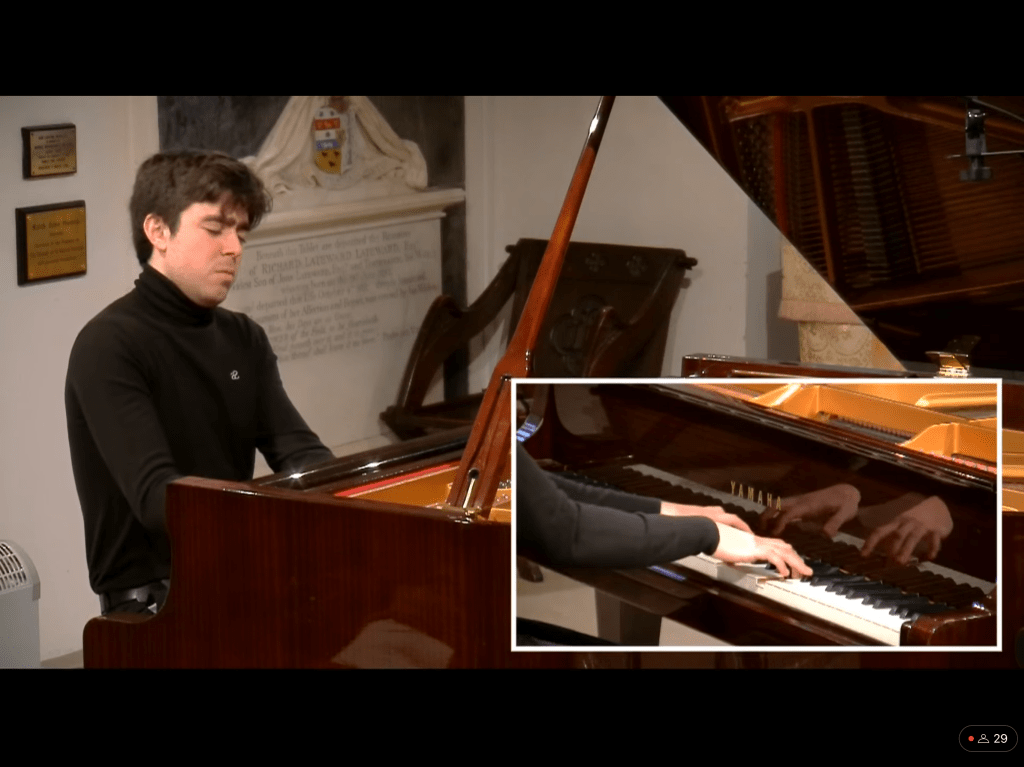
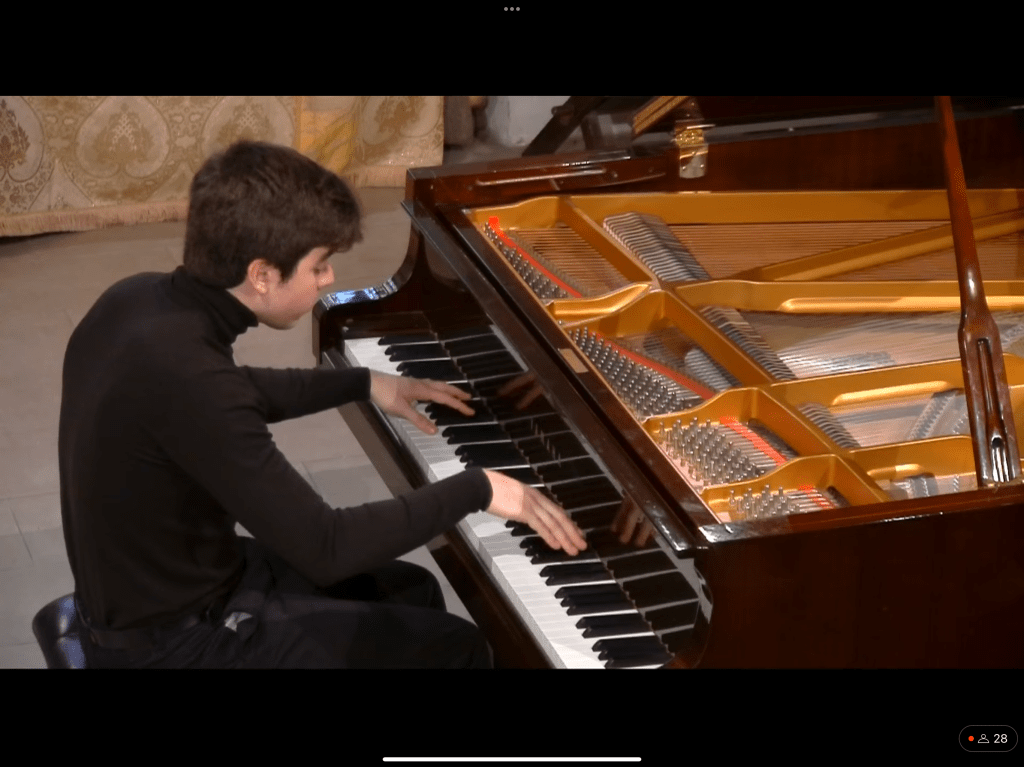
An eclectic programme from a musician who can make even the most unfamiliar music speak with a voice of such subtlety and dynamism that one is compelled to listen. A musician with a range of colours that very few can match.A technical assurance allied to a total commitment that is mesmerising. Such were the ingredients today and it is is this compelling sense of communication that is rare indeed.A musician who not only listens to himself but is totally convinced about the sounds that he is creating. An artist ready to honour the great concert halls of the world as he is indeed starting to do. There was a kaleidoscope of colour that he found in the Ukrainian Karabyts preludes.The deeply felt melodic outpouring with the magic bell like sounds that he was able to produce in the first of the five that he chose from the set of twenty four was a technical tour de force . There was a deep questioning with the continuous motion of the bass in the second and the deeply contemplative chorale line of the third with the expansive mellifluous melodic outpouring of the last. It was the same intimate world as Mendelssohn because everything he played was like a voice with a different word on every note or phrase- Songs without words indeed.But sometimes music speaks louder than words and like in the postlude of Schubert’s songs can arrive in places where words are just not enough . Of course the world of Mendelssohn is much more accessible to our more conventional ears but it is the same sound world. The gentle weaving bass of the first song without words or the ravishing beauty of the ‘Venetian song ‘ of the second.The gentle staccato accompaniment in the third on which flows a melodic line full of Victorian sentiment.But never for a moment was it sentimental but always played with aristocratic poise and a subtle sense of rubato .The ‘Bees wedding ‘ is rarely played in concert these days.The last time I heard it was from Rubinstein as an encore and today it was played with the same timeless ease and character that I remember.Pedro also found some enchanting will’ o the wisp inflections that brought a smile to my face. Great artists are a continual surprise even in the most familiar of pieces! The Lieberman ‘Gargoyles’ in four movements was played with amazing clarity and phenomenal dexterity.In Pedro’s hands it was not empty virtuosity but full of meaning and driving force.There was ravishing beauty too of the beautiful mellifluous singing line over the almost inaudible chordal accompaniment in the second movement.The purity of the melodic line of the third had something of the same character as some of Rachmaninov’s mellifluous preludes with the gently flowing accompaniment to a melodic line of such purity.The perpetual motion of the last movement and the ever increasing dynamic drive and excitement was a tour de force of masterly control and viruosity. The other Ukrainian composer this time of the nineteenth century was Bortkiewicz and Pedro played one of his highly romantic studies op 15. A continuous outpouring of romantic sounds of sumptuous yearning beauty played with rich voluptuous sound contrasted with moments of supreme delicacy. The Ginastera Sonata I have written about his remarkable performance before in the attachment that follows.But enough to say that it is a truly convinced and convincing performance of savage rhythms and driving energy.Even the whispered second movement is a tour de force of intricate playing of such clarity at such a quiet level .The slow movement was played with truly heartfelt sentiment with the beauty of the way he just stroked the keys that matched the beauty of the sounds he was able to produce. Of course the last movement was an avalanche of dynamic energy and spectacular virtuosity. A Prelude by Scriabin played as an encore produced sounds of a luminosity and liquidity that this young musician just pulled out of his magic box. A box that all too few know the combination of and which is a secret shared only by the greatest of artists.
Ivan Fedorovych Karabyts was a Ukrainian composer and conductor, and a People’s Artist of Ukraine. He was born in village Yalta in the Donetsk region of the Ukraine, and graduated from the Kyiv Conservatory in 1971, where he studied under Borys Lyatoshynsky and Myroslav Skoryk. Born: 17 January 1945, Ukraine Died: 20 January 2002, Kyiv,Ukraine. Ivan Karabits described his own style as follows: ‘In Soviet times, we received a basic education, but we were not sufficiently informed about what was going on in the multifaceted music world…. My music [is] characterized by a desire to synthesize different musical sources…Mahler, Lyatoshynsky, Stravinsky, Shostakovich, [are some who] influence my music…. I consider the most important of my works [to be]: Concerto for choir and orchestra “Garden of Divine Songs”; Symphony “5 songs about Ukraine”, 2nd concert for orchestra, 3rd concert for orchestra; Symphony for strings.’Songs Without Words, German Lieder ohne Worte, is a collection of 48 songs written for solo piano by Felix Mendelssohn. Part of the collection—consisting of 36 songs—was published in six volumes during the composer’s lifetime.Lowell Liebermann is an American composer, pianist and conductor. Born: 22 February 1961 (age 61 years), New York .His Gargoyles are from 1989At the age of sixteen Liebermann performed at Carnegie Hall playing his Piano Sonata, op. 1. He studied at the Juilliard School of Music with David Diamond and Vincent Persichetti, earning bachelor’s, master’s and doctoral degrees. The English composer-pianist Sorabji also expressed interest in Liebermann’s early work,Liebermann lives in New York City and presently serves on the composition faculty at Mannes College and is the director of the Mannes American Composers EnsembleSergei Bortkiewicz was a Russian-born Austrian Romantic composer and pianist. He moved to Vienna in 1922 and became a naturalized Austrian citizen in 1926. Born: 28 February 1877, Kharkiv,Ukraine Died: 25 October 1952, Vienna 2015 — He built his musical style on the structures and sounds of Chopin and Liszt, with the unmistakeable influences of Tchaikovsky.Alberto Evaristo Ginastera was an Argentinian composer of classical music. He is considered to be one of the most important 20th-century classical composers of the Americas. Born: 11 April 1916, Buenos Aires,Argentina Died: 25 June 1983, Geneva ,Switzerland. Ginastera grouped his music into three periods: “Objective Nationalism” (1934–1948), “Subjective Nationalism” (1948–1958), and “Neo-Expressionism” (1958–1983). Among other distinguishing features, these periods vary in their use of traditional Argentine musical elements. His Objective Nationalistic works often integrate Argentine folk themes in a straightforward fashion, while works in the later periods incorporate traditional elements in increasingly abstracted forms.His first Sonata op 22 is from 1952.
Born in 1997, Pedro López Salas is a Spanish pianist who is currently studying the Master of Performance Degree with Prof Norma Fisher at the Royal College of Music in London, awarded with full scholarship and the title of “Steinway Scholar” and the “Leverhulme Honorary Arts Scholarships”. He is a “Keyboard Trust” artist, as well as a “Talent Unlimited” artist, both from the UK. He has been awarded with more than 40 prizes at International and National piano competitions, among them, the Second Prize at the “International Paderewski Piano Competition” of Bydgoszcz (Poland), as well as four special prizes, including the best semifinal recital. The First Prizes at the Malta International Piano Competition; “Composers of Spain” CIPCE International Piano Competition (Las Rozas, Madrid); “Joan Chisell” Schumann Prize of the RCM (London); “Ce´sar Franck” International Piano Competition (Bruxelles), Second Prize and four special Prizes at the Ferrol International Piano Competition, etc. He has also received crucial inspiration from internationally renowned masters such as Dmitri Baskirov, Dmitri Alexeev, Alexander Kobrin, Pavel Nerssesian, Pascal Nemirovsky, Pavel Gililov, Marianna Aivazova, Mariana Gurkova and Ludmil Angelov.
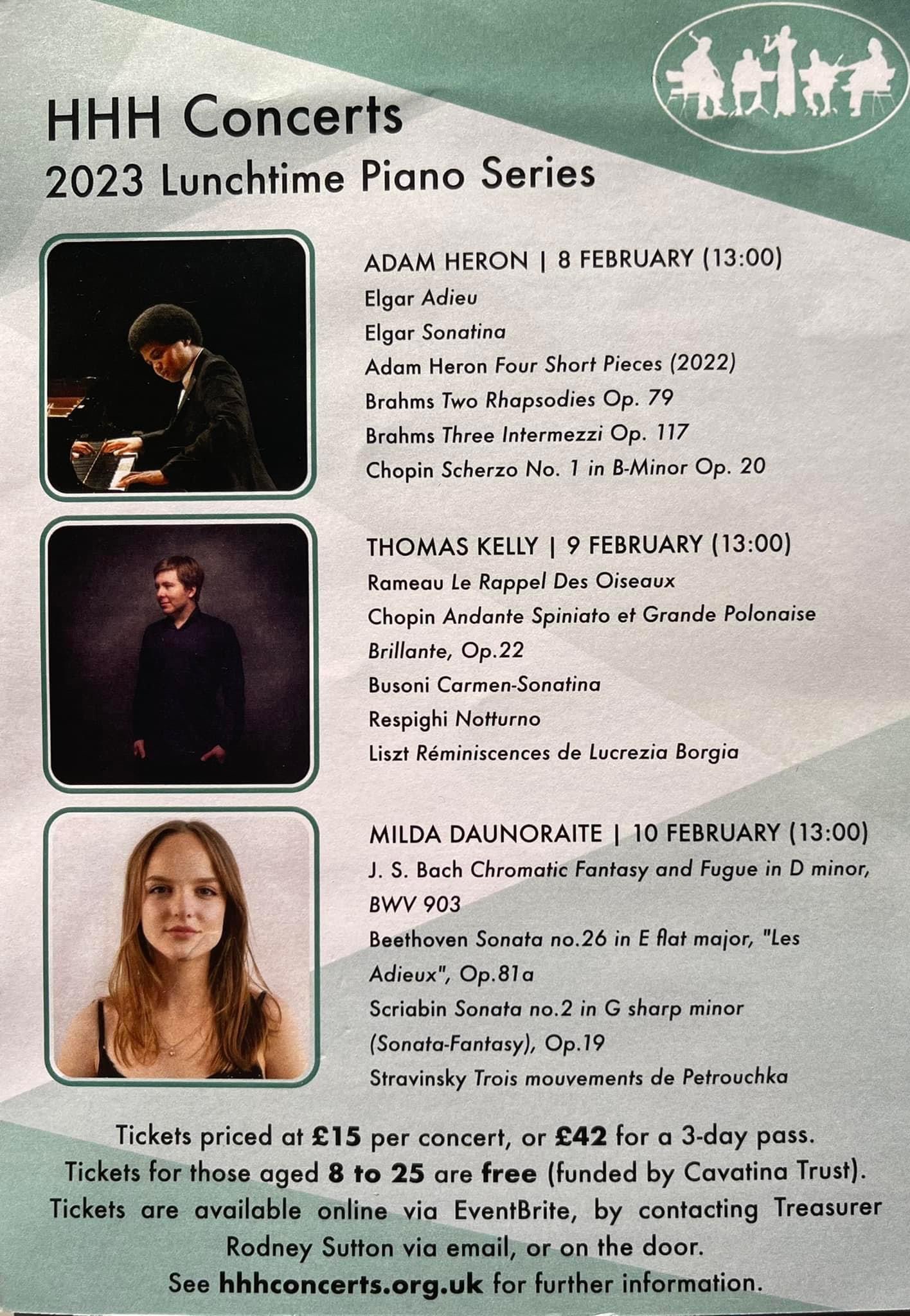
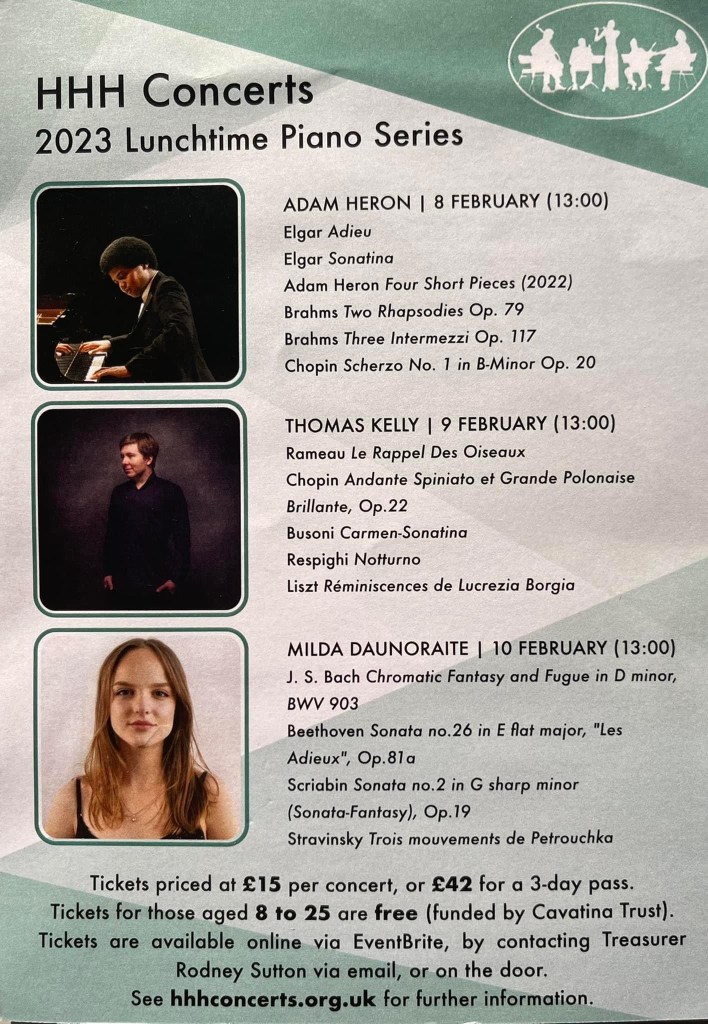
A superb new series dedicated to young artists – wonderfully organised by Stephen Dennison and all the HHH voluntary concert staff.A partnership with the Keyboard Trust that is obviously just the start of an important series for years to come.
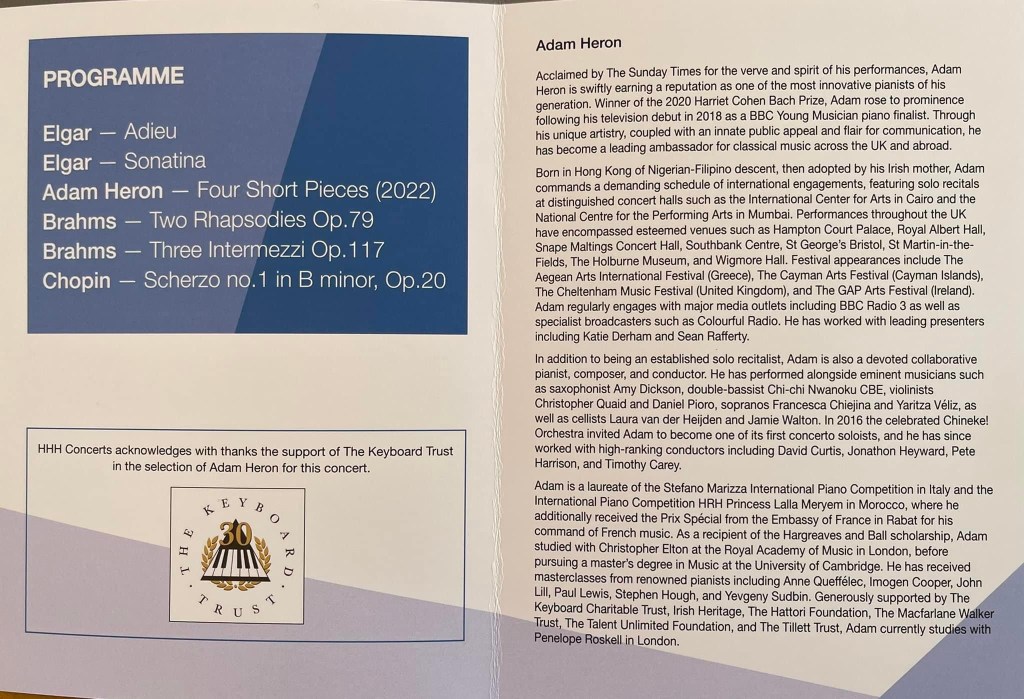
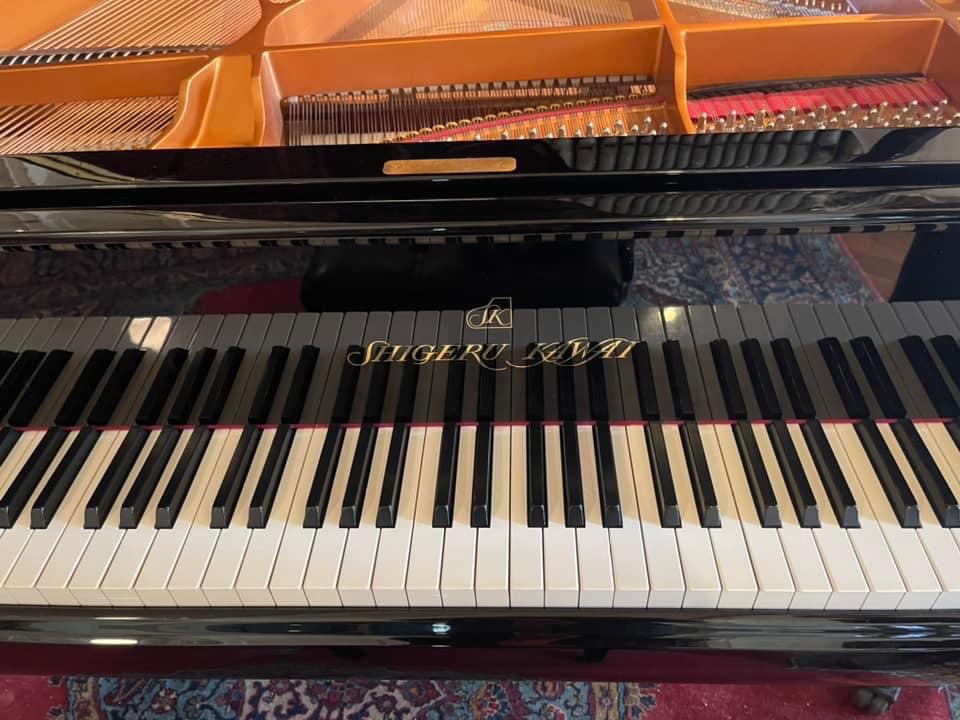
A standing ovation for Adam Heron at end of the first of a new lunchtime series in Haslemere .Organised by Stephen Dennison of Cranleigh Arts in partnership with the Keyboard Trust .A sure fire success with a full house,marvellous publicity and the superb Shegaru Kwai brought in from Cranleigh for this mini series.
All gathered together to relish the consummate artistry of a great communicator whether by words or music.Adam a graduate of the Royal Academy where he was in the class of the renowned trainer of superb young musicians,Christopher Elton.
He also holds a masters degree from Cambridge University so his enlightened introductions of such warmth and intelligence prepared the audience for his sumptuous musical performances. From the charm of early Elgar to the sturm und drang of Brahms Rhapsodies.He even included four short pieces of his own written last year of beguiling emotions and immediate appeal. There was sublime aristocratic poise to the three beautiful Brahms Intermezzi op 117 before the driving rhythms and romantic fervour of Chopin’s first Scherzo op 20.
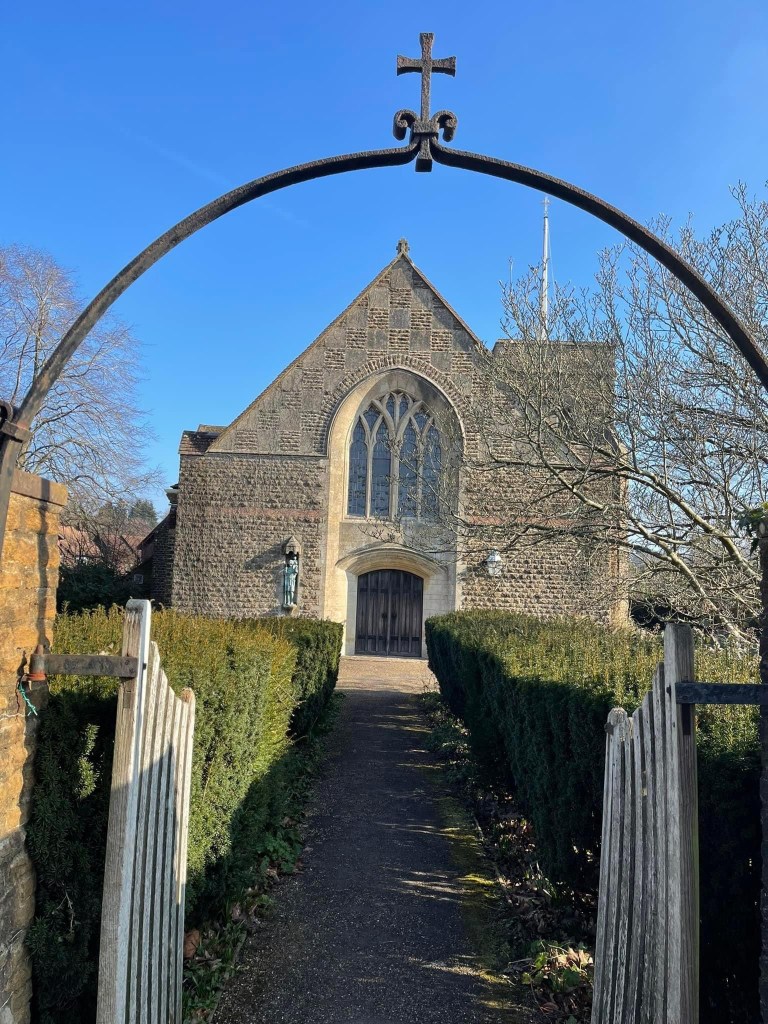
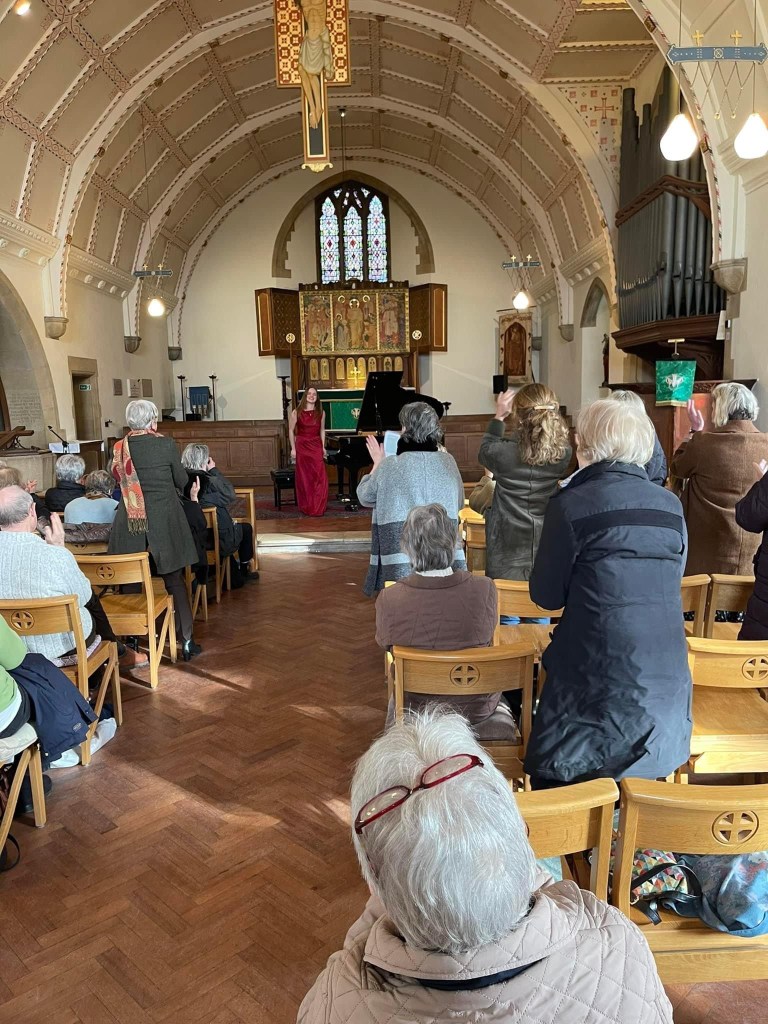
A standing ovation from an audience who Adam held spellbound in the beautiful surroundings of St Christopher’s Church in Haslemere.
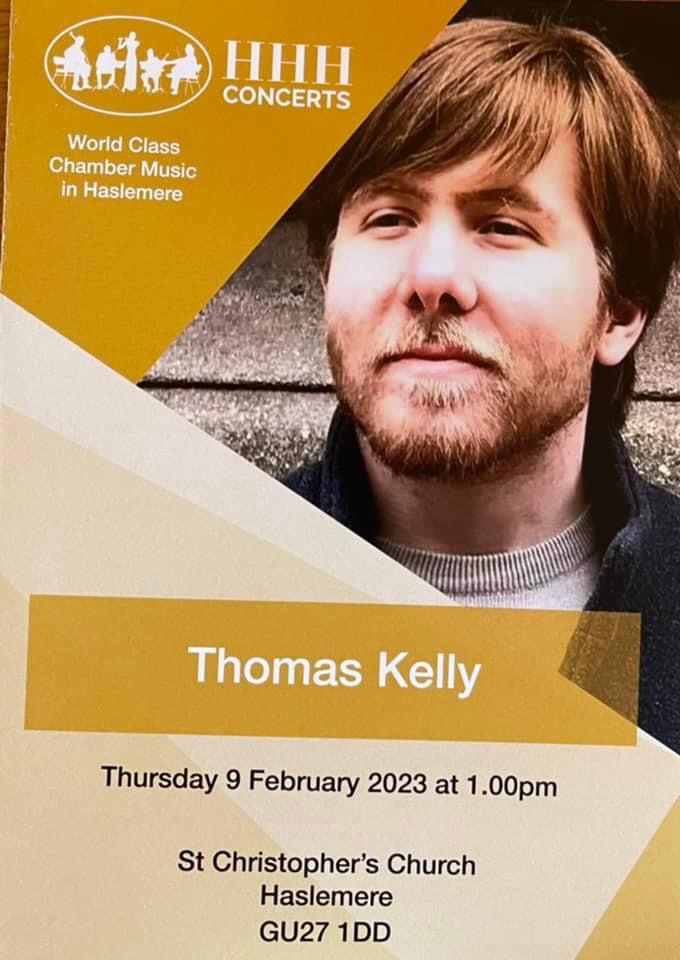
Tomorrow the rising star of Thomas Kelly will create his own unique magic of piano showpieces from the Golden era of piano playing of which he is like Benjamin Grosvenor fast becoming a recognised master.
St Christopher’s Church Haslemere
And the final of this tris of lunchtime concerts on Friday will be with Milda Daunoraite a young Lithuanian pianist from the class of that other great trainer of young pianists Tessa Nicholson. She will enlighten us intellectually with Bach and Beethoven before the romantic effusions of Scriabin’s early Fantasy sonata and astounding us with a Stravinsky Petroushka that will above all invigorate us with her refreshing intelligence and sheer exuberant joy.
A sensational recital by Thomas Kelly in the new lunchtime series in Haslemere organised by Stephen Dennison in partnership with the Keyboard Trust. I first heard Tom when he swept the board at the Joan Chisell Schumann competition prize at the RCM. At the time he was continuing his studies with the late Andrew Ball and is now completing them with Dmitri Alexeev. He had a sound of his own of radiance and fluidity.Bass notes that seemed to resonate only for him with a rich sonorous sound of a truly ‘Grand’ piano. He was so different from the other contestants and I immediately marked him out as someone with the God given gift of actually listening to the sounds he was making.
§§St Christopher’s Church
He has since gone from strength to strength and although his long term mentor is no longer with us he has bequeathed to Tom a research of pianistic colour and a jeux perlé brilliance of another age . The Golden age of playing when subtlety,refined elegance and effortless virtuosity were combined with an individual sound created by artists who were influenced by all the beauty that surrounds them. Tom like Benjamin Grosvenor was born of a different age and they are two of the most exciting realities for future music making. The rebirth of a past era when piano virtuosi could seduce and hypnotise an audience not with barnstorming brilliance but with their kaleidoscope of sounds and a superhuman sensitivity and control that could create seemless streams of pianissimo notes of jewel like precision and colour.They could also make the piano roar but always with a sumptuous rich sound of a truly ‘grand’ piano.They were masters of understatement so that when they came to the architectural climax of a work it was truly breathtaking.
A very fine piano on loan from Cranleigh Arts which Stephen also directs.Deep bass notes like a Bosendorfer that give such depth and resonance to the sound .It was chosen by another KT artist Sasha Grynyuk
They were great musicians many of whom were also composers .Chopin and Liszt created the sounds on the piano that they had heard in the opera house with sumptuous bel canto embellishments that drew their audience in to them not bombard them with sounds.It is too often the case today with the modern day piano that can withstand sledgehammer tactics! Piano playing should be like swimming not like brick building.The prime example of this today is Arcadi Volodos who sets the example where the beauty of his bodily movements depict the magic sounds that he is producing.A sculptor of sound. Today in Haslemere Tom revealed that he has grown in stature and weight with a sense of discipline that was sometimes lacking. Today ,above all,he revealed himself to be the great artist that was such a promise only five years ago.
A supreme stylist and great artist that is so needed in the rather barren uniform life that surrounds us. A society where all too often it is quantity not quality that counts………Tom is showing us a magic world where a thing of beauty is a joy forever. He at least is in love with the piano and is not afraid to share it with an audience.It is this that came across so clearly today. Have the birds ever sounded so beautiful as they conversed so eloquently with a freedom and fantasy that belied the formality of Rameau’s time? A luminosity of sound as Chopin’s haunting Andante spianato spread it’s wings with ravishing beauty and cascades of ornaments that just glistened like jewels sparkling as radiance shone upon them. A Grande polonaise so often a barn storming contrast to the spianato was here played with an elegance and beguiling rubato that was stretched to the limit with a chiaroscuro insinuation of tantalising beauty.Breathtaking jeux perlé was played with an elastic ease of another age.
Excitement and virtuosity there was too with a piece that Chopin had seduced the Parisian salons of the day with,on his exile from his homeland that he was destined never to see again. Busoni’s scintillating and visionary fantasy on Bizet’s Carmen was the first work that Tom had worked on with Andrew Ball. After the lightweight gust of wind that opens this remarkable Sonatina a melody of sumptuous beauty was revealed as Tom’s truly magical sense of balance allowed the sumptuous velvet Philadelphian beauty of one of Bizet’s most memorable melodies to sing out with delicate embellishments glowing like jewels in the crown.Hair raising excitement of a habanera that had entered with sensual charm before turning into a whirlwind of decorative ornamentation.The rumbustuous entry of the brass band fanfares brought exhilaration and excitement.
Suddenly clouds of dust with a miriade of delicate cascades of notes brought us to the desolate finale of visionary beauty. Even the final chords played staccato on a long held note where Tom’s transcendental control of sound showed that he like Busoni was an absolute master of creating an atmosphere of orchestral dimensions. The works of Busoni are of atmospheres created with a mastery of the pedals that just demonstrates that the pedals are truly the soul of the piano as Anton Rubinstein had declared. It was Kyril Gernstein who revealed so clearly ,at his extraordinary recital recently of Liszt and Busoni at the Wignore Hall,this misunderstood world where the visionary late works of Liszt are taken and developed by his disciple Busoni. A strange world of atmospheres where nothing is written in stone but everything is suggested in sand.
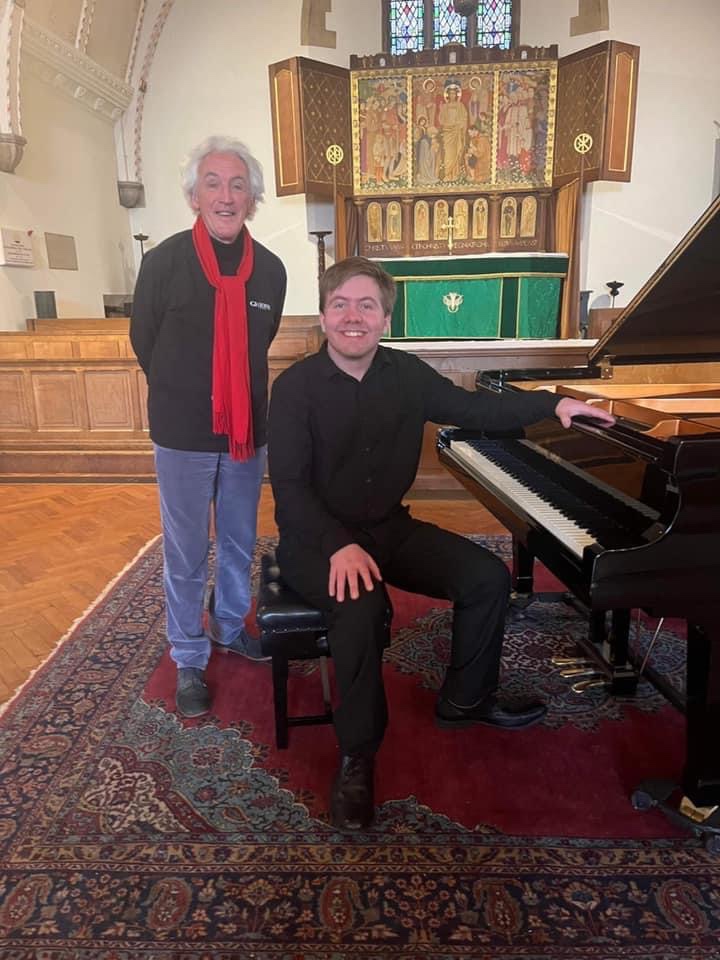
With artistic director Stephen Dennison
What ravishing beauty he brought to Respighi’s nocturne a forgotten masterpiece of mellifluous golden sounds on which rose a melody chiselled with a purity and luminosity that was truly memorable . What to say of Liszt’s revisitation of Lucrezia Borgia. Tom had said before the concert that he could not understand why it was not more often heard in the concert hall.The only answer is because there are very few ,if any pianists,endowed with such transcendental virtuosity but above all a sense of style and showmanship. It was what made of Liszt an idol of his time. It will allow all those astonished,amazed and seduced today by this display of breathtaking recreation to say that they were there too when Thomas Kelly was at the start of his career.
Milda Daunoraite was the last to play in this mini series of three lunchtime concerts in Haslemere. It was born of a collaboration between Stephen Dennison of HHH concerts and the Keyboard Trust. After Adam Heron and Thomas Kelly it was the young Lithuanian pianist,student of Tessa Nicholson ,who was to play the final concert. An alarm call the evening before to say that Milda was in bed with flu and did not think she would have the strength to play an encore after the exertions of Petrouchka. But would she be well enough to play the recital?
Milda radiant even with a temperature
We need not have worried because from the very first notes of the Bach Chromatic Fantasy and Fugue she had risen to the challenge and plunged straight in with her usual youthful ‘joie de vivre’despite an occasional stifled cough. Milda is a pianist of very strong character but above all a musician who has that rare gift of being able to make the music speak. From the very first notes there was a conversation with the first whirlwind phrase answered by the next with very subtle inflections of colour and phrasing. A conversation that opened a whole fascinating world and that held our attention as we were swept up in a continual wave of rhythmic energy. A fugue that was barely audible such was the extreme delicacy of the opening statement which she built up in a continual crescendo until the final triumphant cadenza.
Her great musicality brought the opening of Beethoven’s Les Adieux Sonata vividly to life with a sensitivity to sound that gave such character to this very moving opening statement. Bursting into the dynamic energy and a rhythmic fervour of the Allegro that follows she played with remarkable technical control and character. There was ravishing beauty in the Andante espressivo where the magical atmosphere she created at the end made the ‘vivacissimamente’outburst of the last movement even more startling. Milda confessed that this was her first public performance of the Scriabin Fantasy Sonata as she threw herself fearlessly into it with sumptuous ravishing sounds and dynamic rhythmic energy.The barely whispered opening was transformed into a sumptuous melodic outpouring with cascades of notes embroidering Scriabin’s youthful romantic effusions.The last movement unleashed a true whirlwind of notes on which appeared the pulsating melody reaching passionate heights that just swept all before it.
Petrouchka is one of the great show pieces for piano. It was dedicated to Stravinsky’s friend Artur Rubinstein and was a substitute for the Piano Rag music that his friend had commissioned but had not been happy with and refused to play in public. There were far too many notes in the Petrouchka transcription for Rubinstein so he played his own arrangement agreed by the composer. These days most pianists can conquer the multitude of notes quite easily but to bring the work back to life as Rubinstein did is only for the most gifted musicians.Those that unselfishly transmit the composers intentions rather than using the piece as a vehicle to show off their virtuosity and resiliance. Milda immediately played the Danse Russe at a speed that the dancers of Stravinsky’s ballet suite could dance to without incurring injury. There was great virtuosity too but also a sense of driving movement based on the dance.
A total identification with Chez Petrouchka as with devastating conviction she plunged into the depths of the piano only to create a heaven and hell situation that was mesmerising as it led to the joyous outpouring of ‘La Semaine grasse.’ A relentless driving rhythm of excitement out of which emerged the melodic line with the tension ever mounting until the final explosion that Milda played with fearless vehemence.
A standing ovation and cheers from an audience that she had held in her spell from the first to the last note.A valiant soldier who had braved her sick bed to bring such vibrant music making to today’s audience.But then Milda is already a great professional and refreshingly intelligent musician.Her playing is growing in authority and weight as her intensive studies continue with her severe task master ,Tessa Nicholson the teacher of artists of the stature of Alim Baesembayev,Mark Viner,Tyler Hay and many others. Headed for the heights with a ‘joie de vivre’ which is refreshing and inspiring. Haslemere can boast too to be one of the steps in a future important career thanks to the Keyboard Trust. Milda very sweetly confided that the KT had given her so many concert opportunities how could she ever repay them! Milda is augmenting he studies by working behind the scenes at the Wigmore Hall before she too will take them by storm on that hallowed stage.
With Stephen Dennison With Christopher Axworthy co artistic director of the KT Thank goodness music is the food of love!Beautiful St Christopher’s Church
What a way to say farewell ……..one of the great musicians of our time bows out while still at the top of his game.
Two Cristians together in the green room learning the name of a tantalisingly familiar encore that Zacharias played ,sneakily joined at the umbelical to a Scarlatti Sonata. He obviously hoped that two for the price of one would quel the ovation that the Wiggies reserve only for their very favourite musicians.
He was also Perlemuter’s favourite because apart from being a superlative musician he had like his mentor shyed away from the PR boys preferring to concentrate solely on what the composer,not the butler,saw!
A sound world all of his own .A cocoon of sound within which everything was so natural and simply expressed.Very reminiscent of Wilhelm Kempff where music just seemed to pour from his simple undemonstrative hands with the ease and inevitability of a master.Leif Ove Andsnes is a natural heir to this tradition of musicians who are a medium between the written score and the sounds they represent.No showmanship or extraneous movements that could disturb the course of the music in full flow.The variety of sounds that he produced within this framework brought the music vividly to life with a luminosity and occasionally even ferocity.This was a Schubert more in the Beethoven tradition of rhythmic drive and contrasts of orchestral colour rather than pianistic delicacy.Tchaikowsky was played with ravishing sounds and a sense of style that was scintillating,seductive and even exhilarating.A jeux perlé where notes were just streams of sounds thrown off with a nonchalant ease and with the remarkable characterisation of someone who was living and enjoying every moment of these little gems.
He is also a very nice man who is always pleased to meet people after the concert with a simplicity and a genuine memory of past meetings. Well Zacharias did not get off so easily and did the backward and forward charade until he gave his adoring public another encore in waltz time!Debussy’s ‘La plus che lente’ joined the elusive ‘Homage a Piaf’ by Poulenc – the fifteenth of his improvisations! The cat is out of the bag!
It was only with impish good humour and a wicked twinkle in his eye that we were able to extract the information from him. He is Cristian Sandrin’s childhood idol from when as a boy his father ,the renowned pianist Sandu Sandrin,took his son to hear him play in Bucharest.
Zacharias remembers Perlemuter and Joan and the scarf that Joan gave me when she was 104 for MY birthday.
He loved hearing about the message from the Queen on her 100th birthday and the thank you note she sent in her beautiful convent learnt calligraphy.He loved hearing too about her surprise when she did not receive any more on her 101/104 birthdays! My accompanying Perlemuter from this very room to the stage door for the last time.Every time was like going to the guillotine for Vlado,even in his 90th year. He pushed me aside as he did not want anyone to see the stick that gave him the confidence to still travel the world with his beloved Joan. There was always a smile of affectionate recognition on Vlado’s face when remembering Cristian but then Cristian is such a nice man and a simple great musician how could you ever forget him! Like Perlemuter,Cristian is one of the world’s best kept secrets how can we ever let him go!
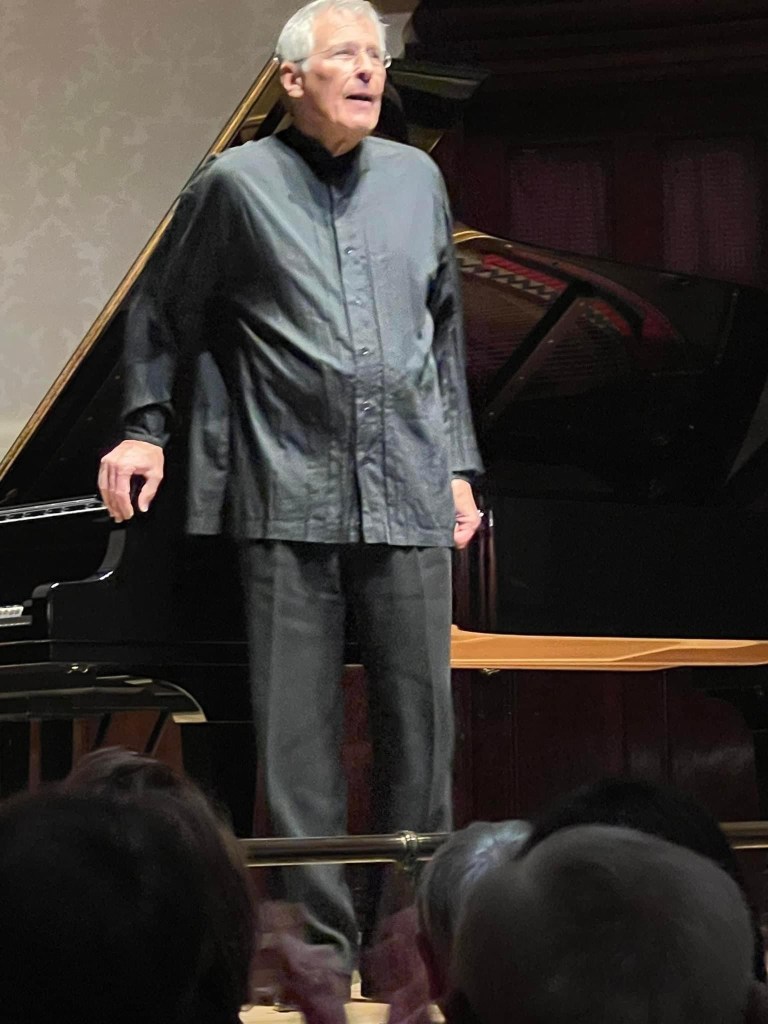
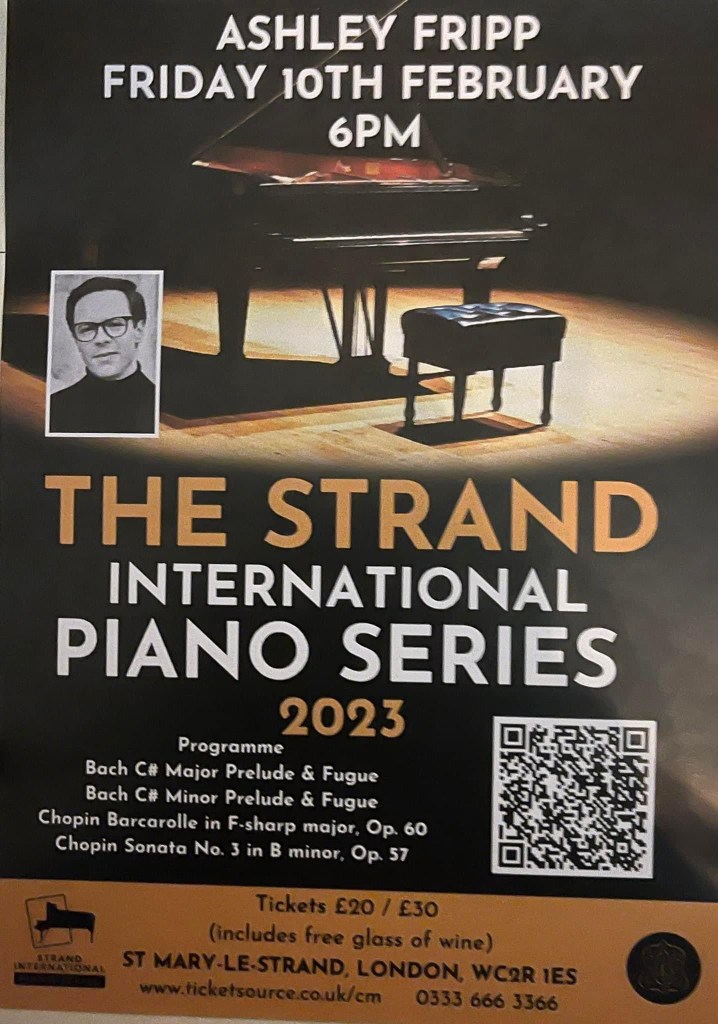
This may be the coldest church in the kingdom but with Ashley Fripp at the Keyboard the air was quickly filled with the beautiful sounds where the fact that the oil had run out was a total irrelevance.
Strange that the same thing had happened a few weeks ago for Murray McLachlan’s concert too ! Three Preludes and fugues immediately showed his pedigree as a favourite student of Eliso Virsaladze. An impressive architectural shape but with clarity and very subtle pointing that added a nobility and grandeur in these august surroundings. As Ashley pointed out in his very informed introductions the works by Bach were written in the same period as the construction of this noble edifice.
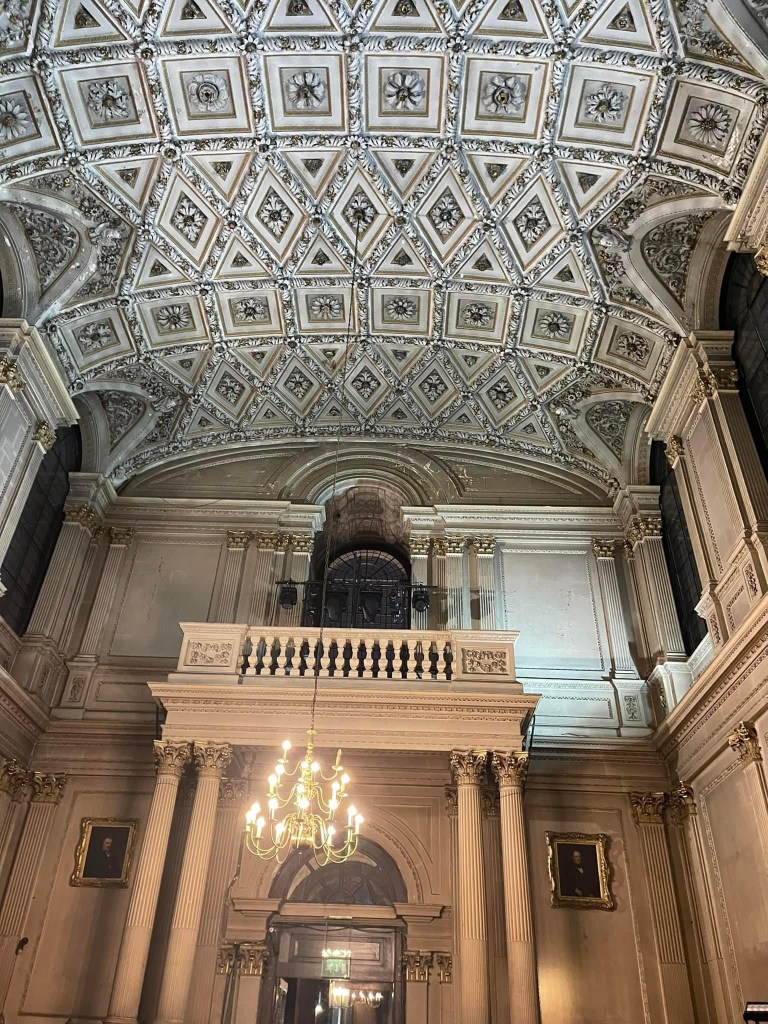
St Mary Le Strand
I have often passed this beautiful church that sits in the middle of the Strand but have never ventured inside until today. Someone has had the genial idea to eliminate the traffic that surrounded this church on all sides and it now sits nobly in a pedestrian precinct and is an oasis of tranquility and peace. Chopin carried the Bach ‘48 with him as his musical bible so it was fitting that after Bach should come two masterpieces by Chopin.
The Barcarolle op 60 which is an outpouring of song that in Chopin’s hands reaches the sublime heights that had Perlemuter (one of the greatest interpreters of Chopin),exclaim that this was surely paradise! Ashley played it with an aristocratic nobility which gave it a superb architectural shape leading so inevitably to the fervant passion of the penultimate page.The final page was full of reams of golden sounds (much admired by Ravel) that led to a streak of gently more pressing notes gliding so gracefully from the top to the bottom of the keyboard as it drew to its ever noble conclusion.
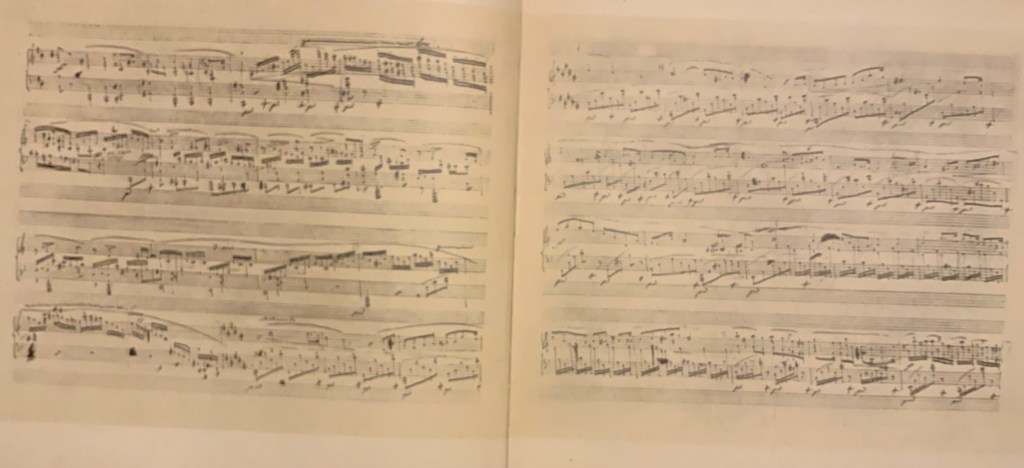
The B minor sonata written just before the Barcarolle is a full scale work in four movements that Ashley miraculously wove together into one inevitable whole. The nobility of the opening was followed by the fleeting jeux perlé of the Scherzo linked by imperiously majestic chords to the heart of the sonata which is the Largo.The rondo finale was a continuous crescendo of excitement and sound as Ashley judged with superlative control the mounting tension to the final breathtaking explosion of scintillating notes that shot from one end of the keyboard to the other with astonishing technical prowess. But how could one forget the freedom and nobility he gave to the beautiful second subject in the first movement.So often played with sickly sentimentality and slower tempo ………and it is Chopin who gets it in the neck for not being able to construct larger forms! It needs the artistry of a great musician who with sensibility can construct Chopin’s masterly form without sentimental distortions of the so called Chopin tradition.
Exposition of the second subject with diminuendo
The return of the second subject too is marked forte and is a glorious exultation rather than a sad remembrance ( the same sort of traditional distortion that hits the first movement of Schumann’s Fantasie). The Largo too was played with an elasticity and weight that allowed Chopin’s glorious creation to unfold so naturally.The long meandering central episode with it’s cantabile left hand counterpoint was a glorious outpouring of golden sounds.The whispered return of the theme ‘avec un sentiment de regret’ was played by Ashley with transcendental control and ravishing beauty which was not easy in the polar temperature that surrounded this magnificent new Steinway.
Facsimile of Chopin B minor Sonata second subject with no diminuendo Ashley Fripp with his superlative performances warming the cockles of our hearts in Polar temperatures
No encores (like Arrau who was not a circus act but a servant at the service of music.Merely a medium between the notes on the page and the sounds that the composer intended).But there was a glass of wine to warm the cockles of his heart that was already beating fast after such a feast of music. But unfortunately the physical extremities were fast turning blue !
Ashley barely able to make it to the door after such a tour de force but soon revived by the standing ovation that he received for his memorable performances……….and the glass of red wine waiting for him and the public by the door!
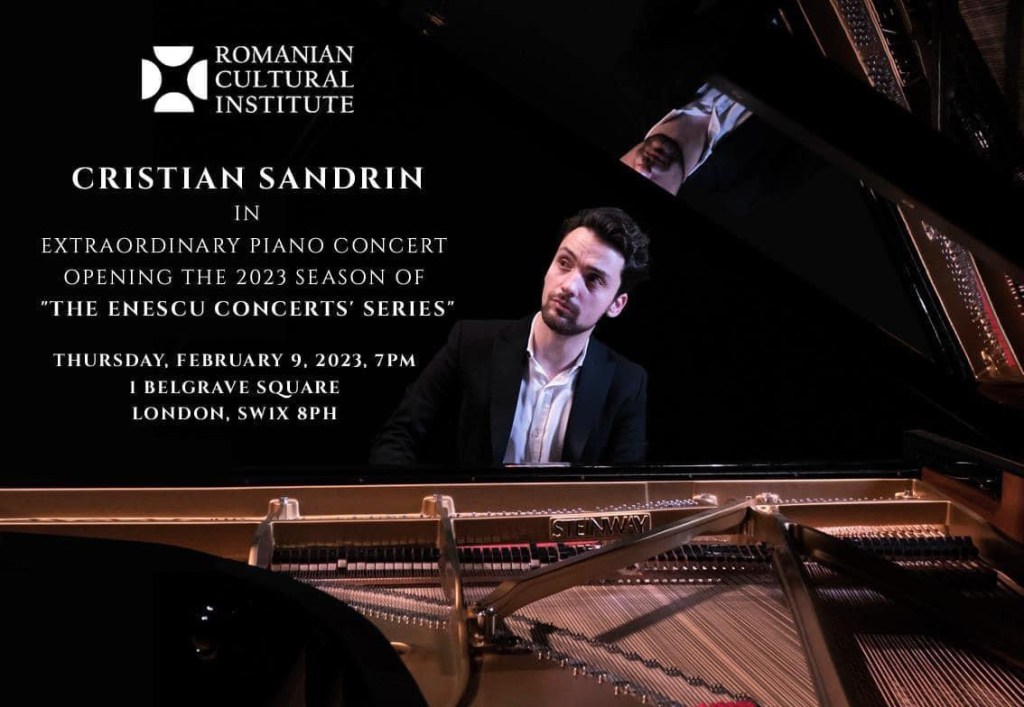
Great celebrations at the beautiful Romanian Cultural Embassy with a pre launch presentation of Cristian Sandrin’s new CD that includes the remarkable first Sonata by Enescu.
The cover of the new CD that will be available shortly
A National hero celebrated every year,in Bucharest and throughout the whole of Romania with a festival and international competition in his name. Cristian gave a superb performance of this two movement work with its bleak second movement after the brilliance of the first.
Pablo Casals described Enescu as “the greatest musical phenomenon since Mozart”and “one of the greatest geniuses of modern music”Queen Marie of Romania wrote in her memoirs that “in George Enescu was real gold”.Yehudi Menuhin considered Enescu “the most extraordinary human being, the greatest musician and the most formative influence” he had ever experienced.[
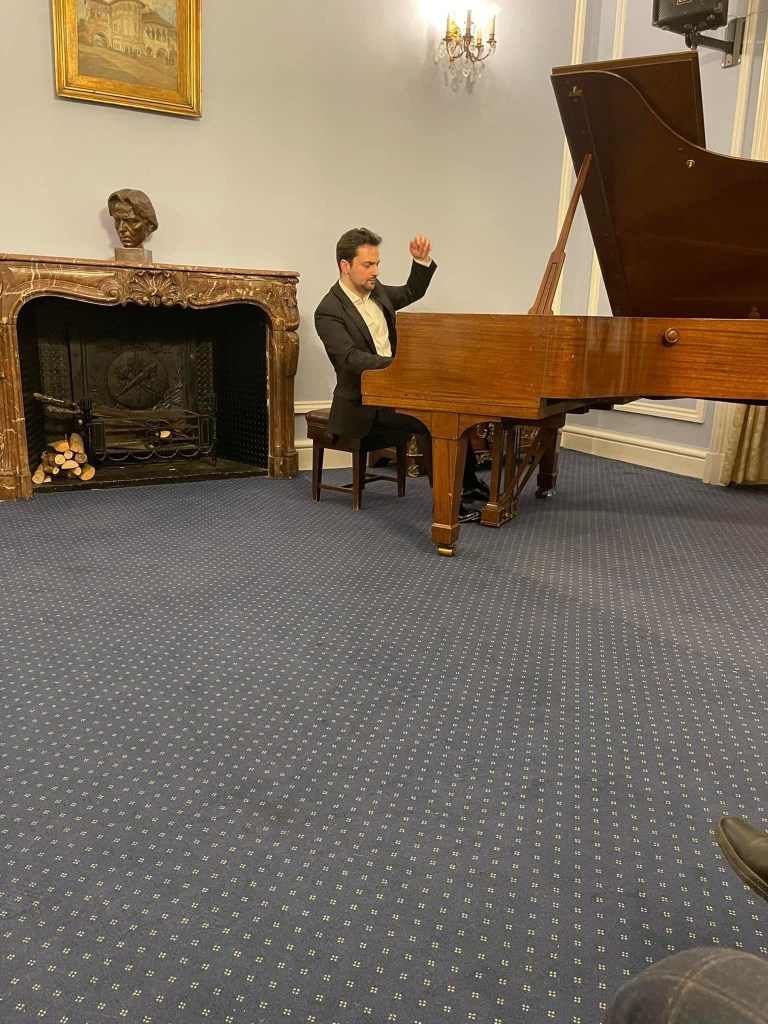
With Enescu looking on from the mantelpiece we were treated to a performance of great rhythmic energy and a subtle kaleidoscope of sounds.A performance of weight and authority of a masterpiece that deserves to be heard more often in the concert hall. The concert had begun with two Petrarc sonnets by Liszt that were played with ravishing sounds and passionate conviction.
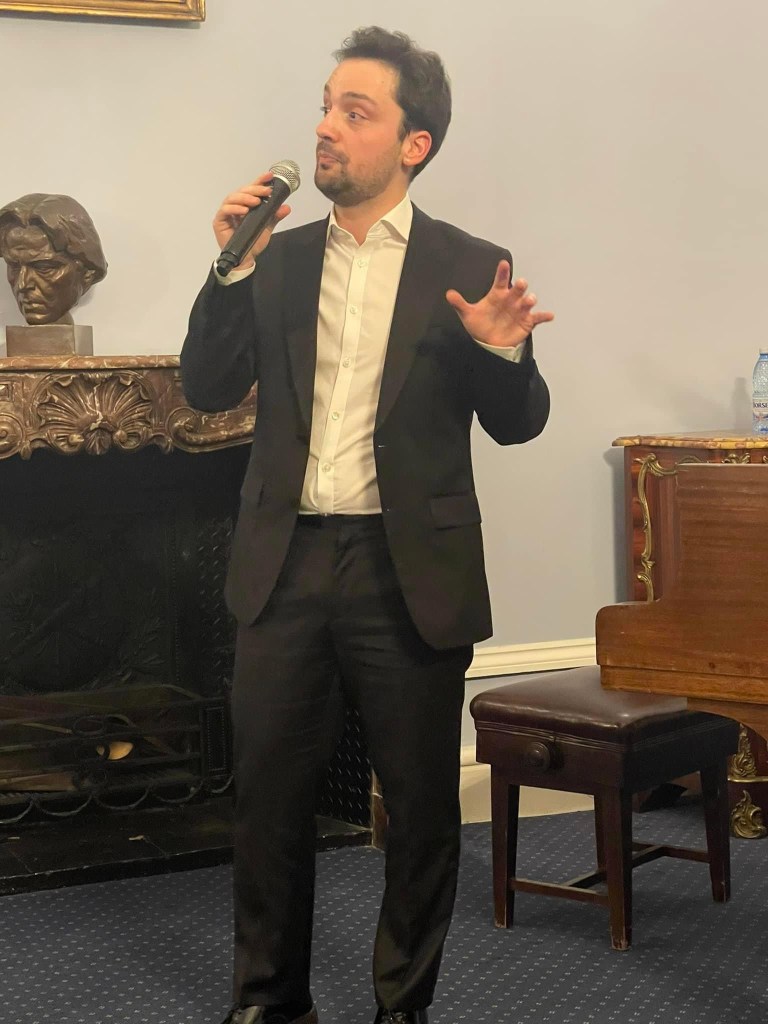
Cristian introducing his surprise programme
It was a concert without a printed programme and so after the interval we were astonished when Cristian announced that he would now play Beethoven’s Sonata in E op 109 and Chopin Sonata in B minor op 58! Reminiscent of Andras Schiff who prefers not to be tied down years in advanced to a specific programme but knows the public will trust him to play only the greatest of works.He had appeared on the Wigmore Stage recently and after the interval had announced quite casually that he would now play Beethoven’s monumental ‘Hammerklavier’Sonata! Wilhelm Kempf would regularly arrive at the recording studio and simply ask ‘what would you like me to play today?’ Cristian like Schiff is a superb musician who is mentored by that great musician Imogen Cooper.Everything he plays is imbued with intelligence and beauty. https://christopheraxworthymusiccommentary.com/2022/05/17/cristian-sandrin-plays-goldberg-variations-the-start-of-a-lifetime-journey-of-discovery/
An architectural shape which creates a great arch of noble importance where the details are not of prime importance as much as a structure that is constructed like a great cathedral on rock. A lesson of musical integrity and serious intent that was bequeathed to him by his recently deceased father the renowned pianist Sandu Sandrin. The school of Enescu of an age of complete musicians at the service of the music . And what music was heard tonight!
Queen Elisabeth of Romania with George Enescu and Dimitrie Dinicu at Peles Castle
Beethoven’s last thoughts on the sonata opened in a magic cloud of insinuating beauty only to be interrupted by Beethovenian outbursts of majestic nobility.Driving rhythms of the second movement with its relentless energy left Beethoven free to express his inner soul with the sublime theme and variations that followed. Beethoven’s ever more present celestial trills created streams of sound on which floated on high the theme before laying to rest weary and barely able to whisper the final heart rending return of the magical opening.
George Enescu ……..of whom Yehudi Menuhin, Enescu’s most famous pupil, said “He will remain for me the absoluteness through which I judge others.Enescu gave me the light that has guided my entire existence.”
Cristian with the director of the Romanian Institute,Catinca Maria Nistor,who had given a very poetic welcoming introduction to this evening’s concert
Chopin’s B minor Sonata completed this marathon recital.Notable was the ravishing masculine nobility that he gave to the second subject of the first movement and the mounting excitement he brought to the final rondo. Playing of nobility and architectural weight that lent to Chopin a strength and shape that made one aware of what a revolutionary genius he truly was!
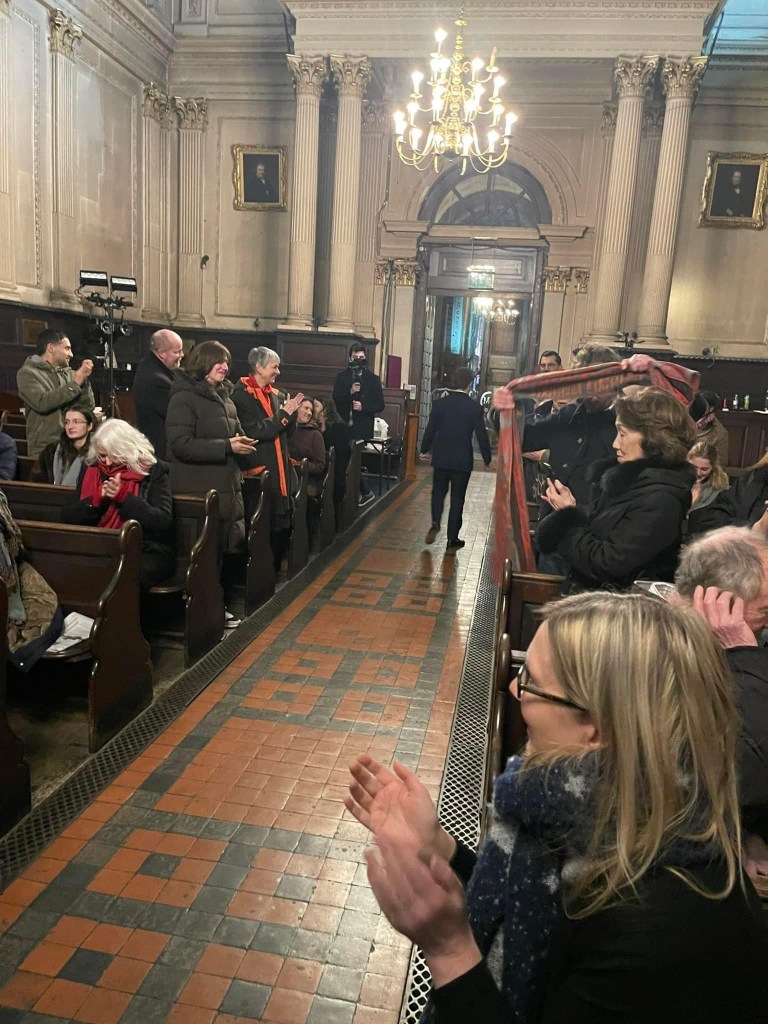
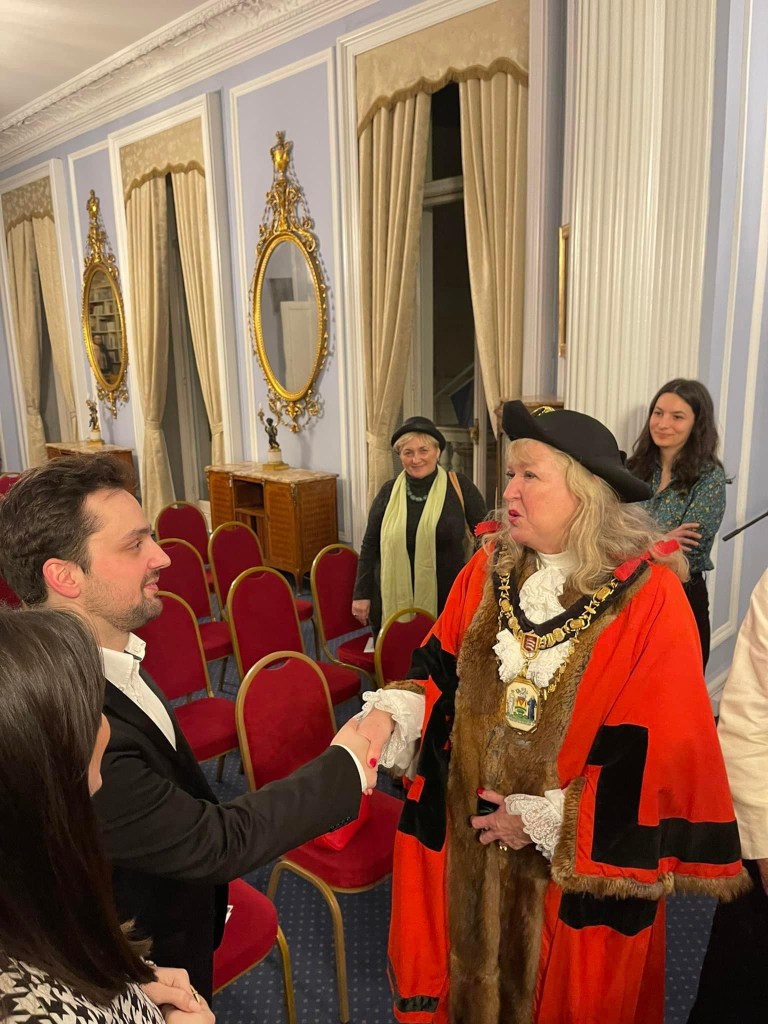
Honoured by the presence of the Mayor of Harrow where there is a particularly large Romanian community The group photo celebrating this great opening event in the name of Romania’s greatest musician .Great celebrations in the sumptuous Romanian Cultural Institute in Belgravia And finally dinner in a nearby Lebanese Restaurant which stayed open especially to feed this young artist after his marathon recital.
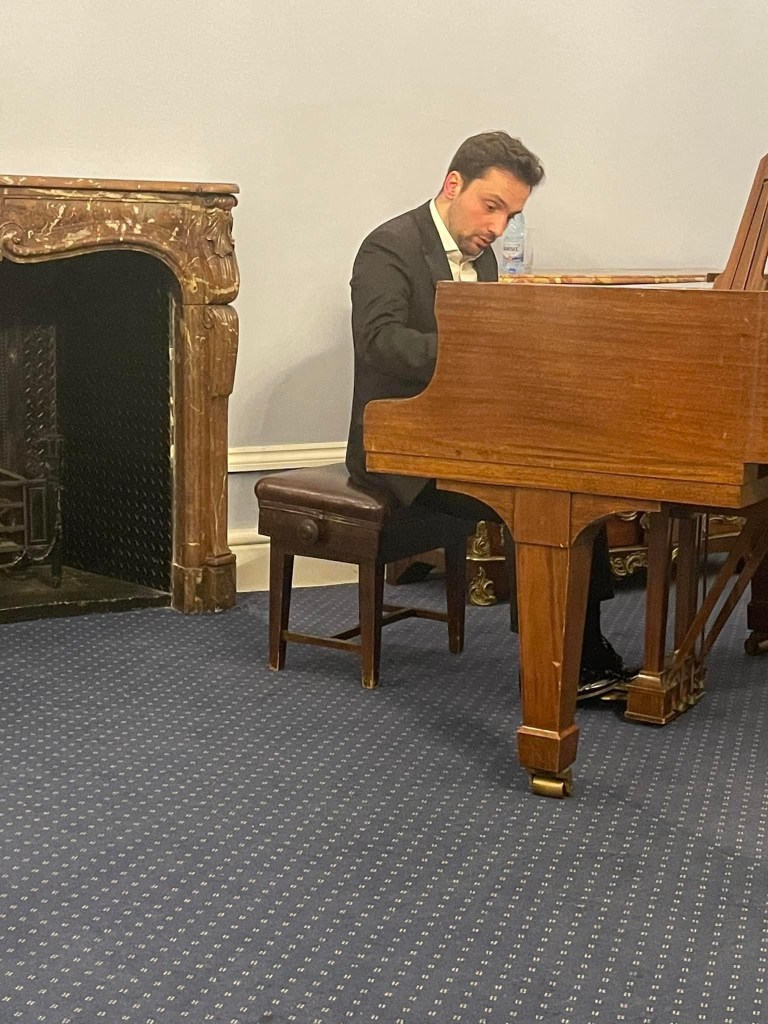
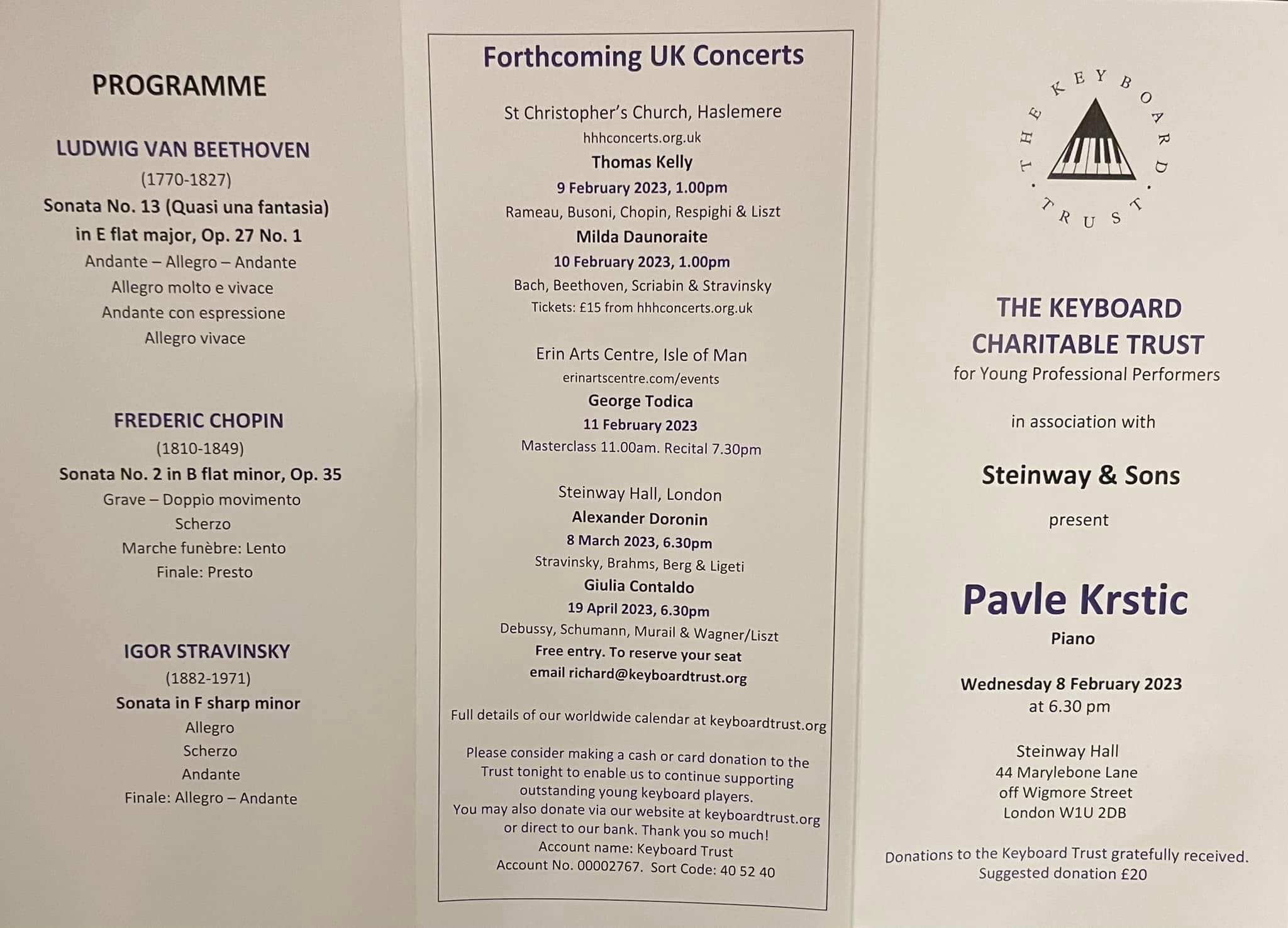
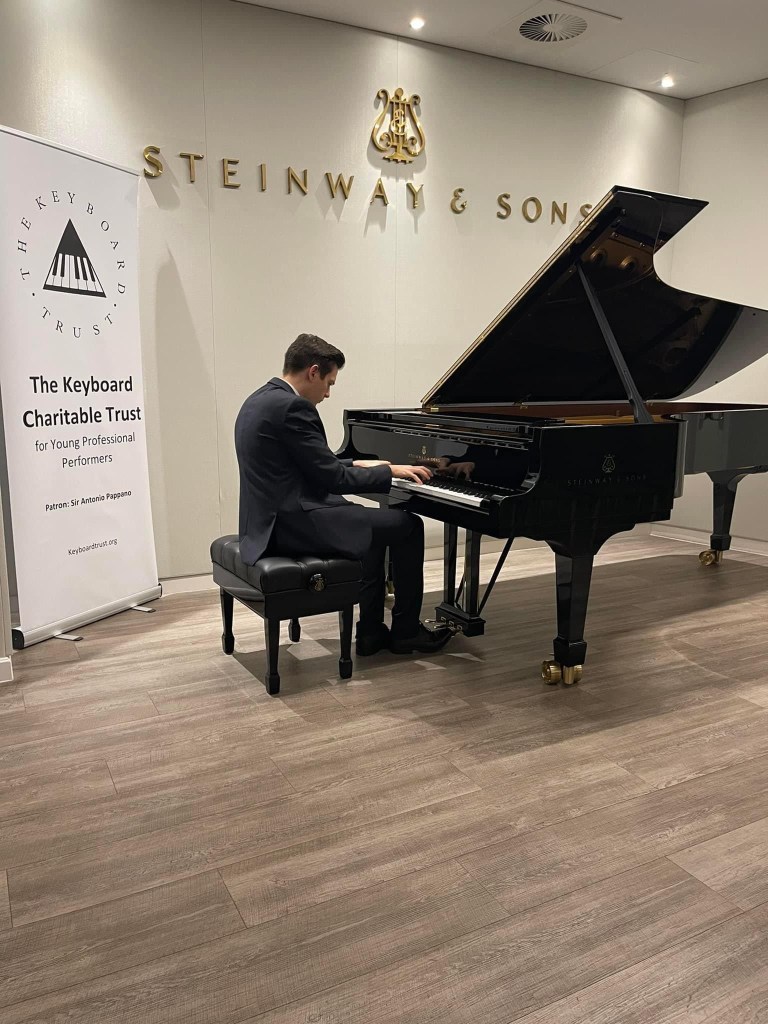
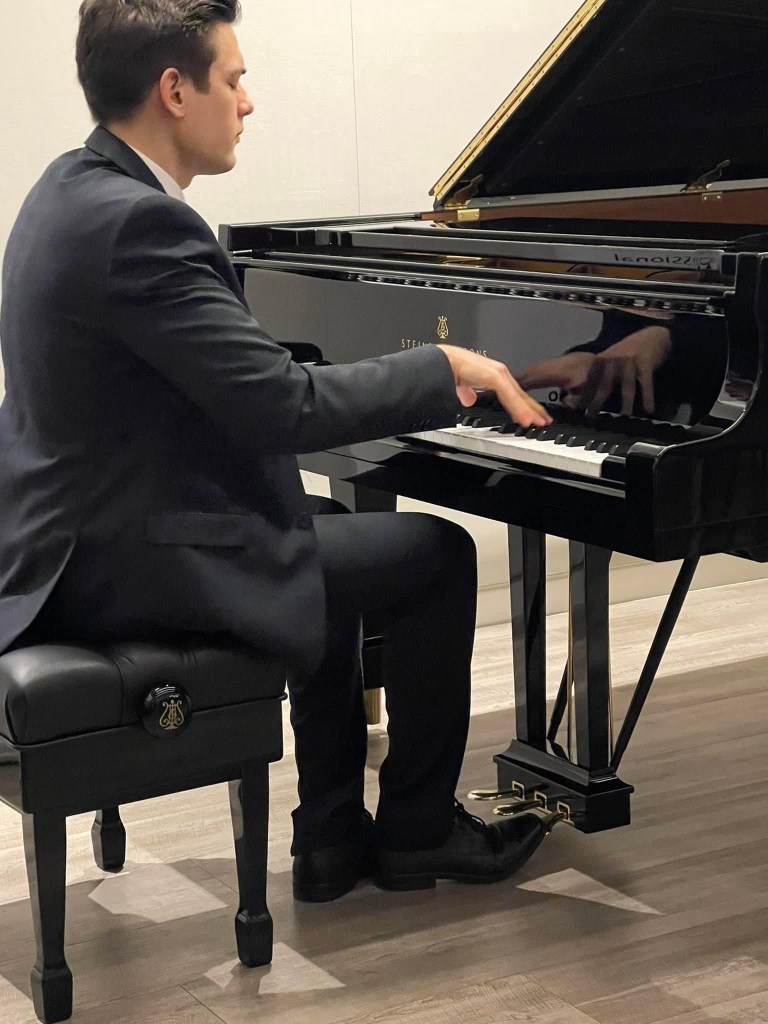
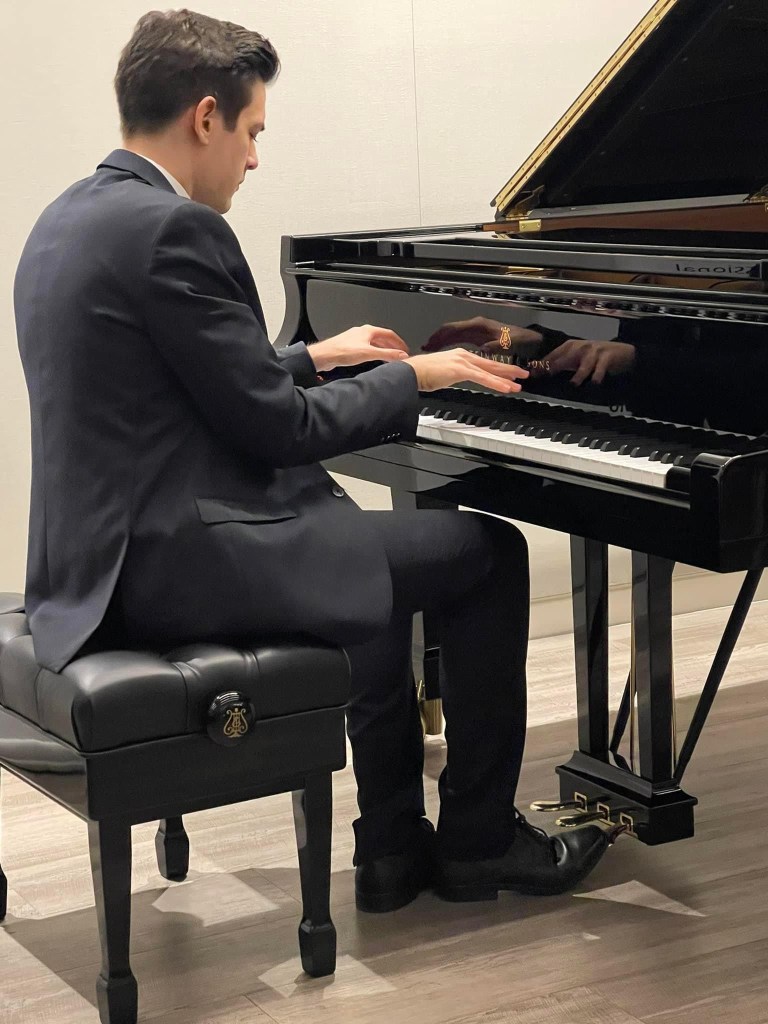
Pavle Krstic flew in from Salzburg invited by the Keyboard Trust to play at Steinway Hall in London.
Three sonatas on the programme by Beethoven,Chopin and an early Sonata by Stravinsky that the composer had hoped had been destroyed by the regime when he left his homeland in 1914. Two great works,one by Beethoven with his ‘quasi una fantasia’companion to the renowned ‘Moonlight’Sonata and Chopin’s B flat minor ‘Funeral March’Sonata. Strange no Mozart,considering that Pavle for the past ten years has been resident in Salzburg where he has been in the class of Pavel Gililov. Only a Sonata that the composer Stravinsky was horrified to see had survived the revolution!
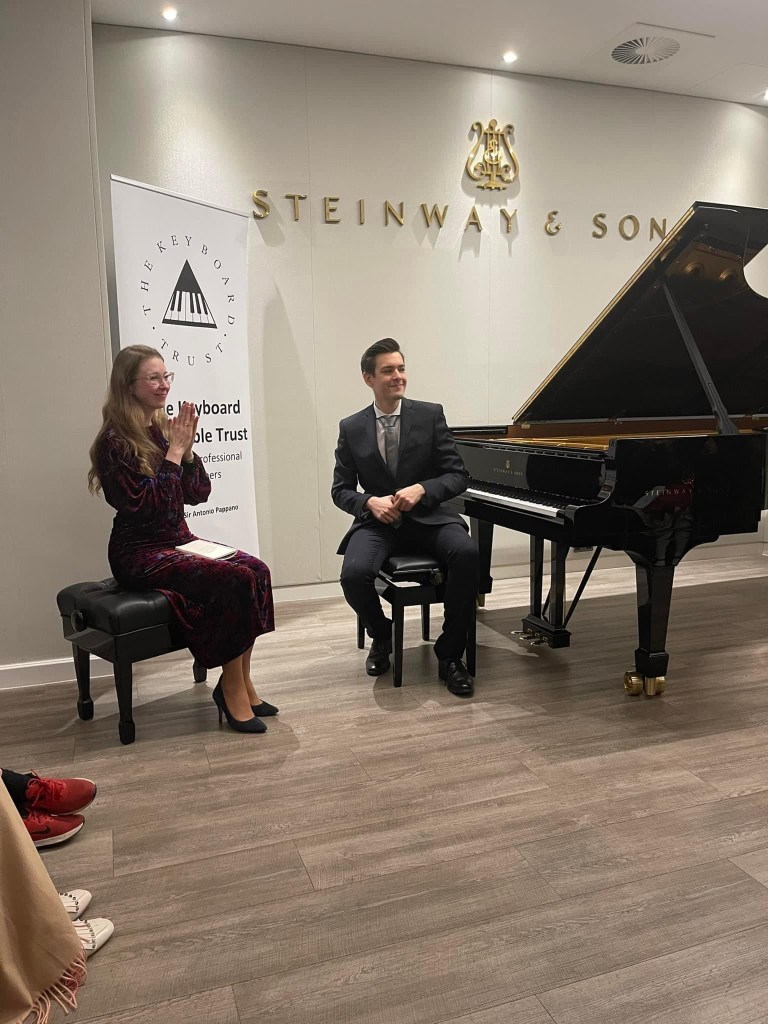
Elena Vorotko,co artistic director of the KT in conversation with Pavle after his superb performances
As Pavle explained ,in his very informed and enjoyable conversation with Elena Vorotko,he chose this early unknown Stravinsky because after the success of his Chopin CD recorded last year in Verona he had been persuaded to record the complete piano works of a composer who much to his friend Rubinstein’s consternation thought of the piano as a percussive instrument!
Rubinstein had commissioned his great friend Stravinsky to write a piano piece for him.’Piano rag music’ duly arrived on his doorstep but it was such an ungrateful piece that he refused to play in public so Stravinsky dedicated his Petrouchka suite to him that was so technically challenging Rubinstein asked permission to make his own arrangements. Such a free arrangement that Rubinstein kept it only for the concert hall and not encapsulated on record. A pirate recording has survived though from his historic ten Carnegie Hall recitals the proceeds of which he gave to ten charities to thank America for befriending and supporting him during his long career. Rubinstein would have loved this early sonata that when Pavle was rehearsing I thought was some Godowsky type show piece that he intended to astonish us with after the three sonatas on the official programme .
An astonishing funabulistic show piece with a melodic effusion Hollywood style. What a shock to learn that it was the Stravinsky sonata! It certainly was not the one I was expecting that I had been forced to learn as a student to play to Nadia Boulanger.A later work of Stravinsky’s rather impersonal barren stile of neo classicism ?! This youthful work Pavle played with astonishing clarity and bravura that with some judicious cuts could grace the concert hall as a virtuoso encore piece. It was interesting after hearing his very musicianly account of the Chopin Sonata to learn that he was using the new recommended Ekier edition where the question of the first movement repeat was swiftly resolved. Not only was it his brilliant playing but also his very eloquent explanation that made a very persuasive case for an edition that my generation still find rather clinical and hard to accept compared to the old Paderewski Edition which is now by the Chopin National Edition to be considered obsolete!
What a joy to be part of this voyage of discovery together
An exemplary account of Beethoven’s Sonata op 27 n.1 demonstrated his musical pedigree and technical mastery on a magnificent Steinway D piano that could happily grace any of the great concert halls of the world. Halls of much bigger dimension than the relatively small space available for recitals at Steinways .A magnificent instrument for which we can only be immensely grateful to Steinways allowing young artists of the calibre of Pavle an important platform in central London.Sound though needs space to travel to be able to find that kaleidoscope of colours and chiaroscuro that the Steinway for generations has allowed the greatest artists to share with the world. We are left to imagine what other wonders Pavle could have discovered but as Fou Ts’ong so wisely said it is much easier to be intimate in a large space than in a small one.
Pavle after great insistence from a full hall astonished us even further with a breathtaking account of Rachmaninov’s fourth of the Moments Musicaux.
Musicianship,virtuosity and sumptuous sound combined to give a performance of exhilaration and brilliance.
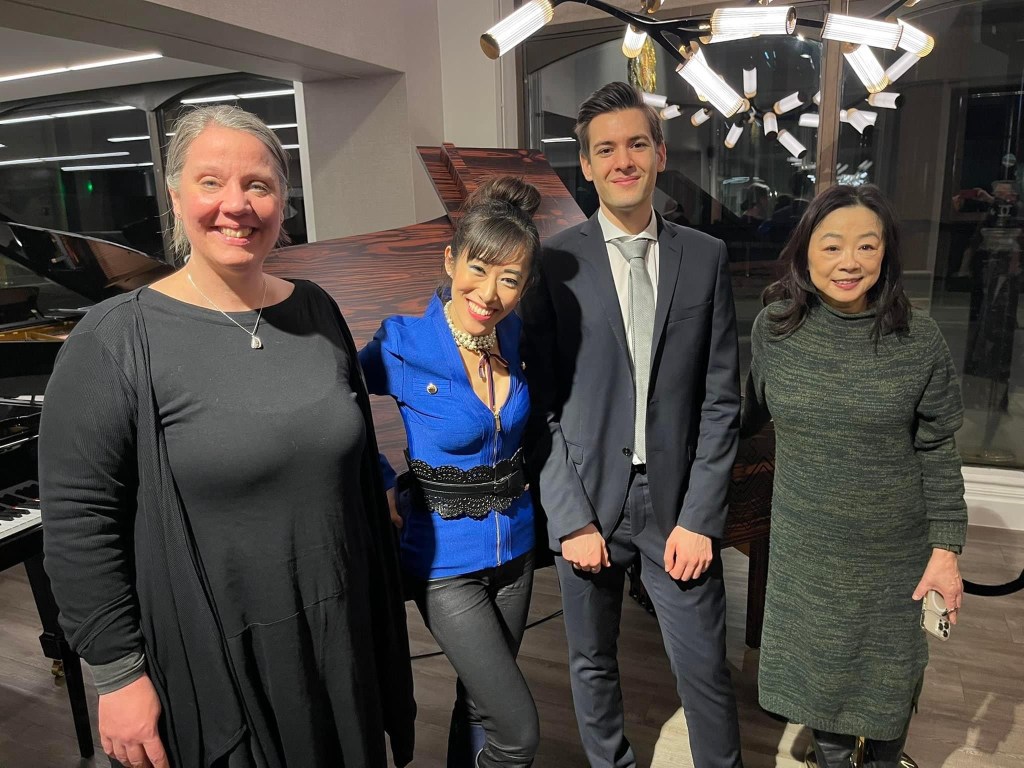
Our adorable hostess Wiebke Greinus (concert and artists manager) together with the distinguished pianist Aisa Ijiri whose photo adorns the wall of Steinway’s Hall of Fame
The only thing to do after a performance like that was to share a cup of champagne with the artist in the beautiful new space that Steinways have created here in the centre of London.
Pavle in good company with Aisa left and friend Two thirds of the artistic direction of the KT with Aisa …Leslie Howard our distinguished colleague unfortunately was indisposed and could not join us .A full house and only one empty seat that Michael Church valiantly occupied until his cough became uncontrollable and he had to miss the Stravinsky …….we await his enlightened words in the International Piano Magazine What fun we had !And above all some great music making from an artist already with Bachelor’s and Master’s degrees from Salzburg Mozarteum University.He is in the process of preparing a thesis on Chopin editions for his PHD.How lucky we are to meet such wonderful thinking musicians ……… and be able to give them a step or two up that very tricky ladder of being able to share their art with others . Pavle writes ‘Thank you very much for the wonderful and very interesting text! I loved revisiting our discussions from yesterday through it. 😊 I have many more arguments for the Ekier edition (which I was also apprehensive of at first), by the way, which I didn’t get to yesterday. In terms of content and the studiousness of his editorial decisions, I think he actually did a far better job than Paderewski. There are many places in the Preludes, which I wrote my Master’s thesis on, which show these kinds of details’.

















































 ChristopherAxworthy-MusicCommentary