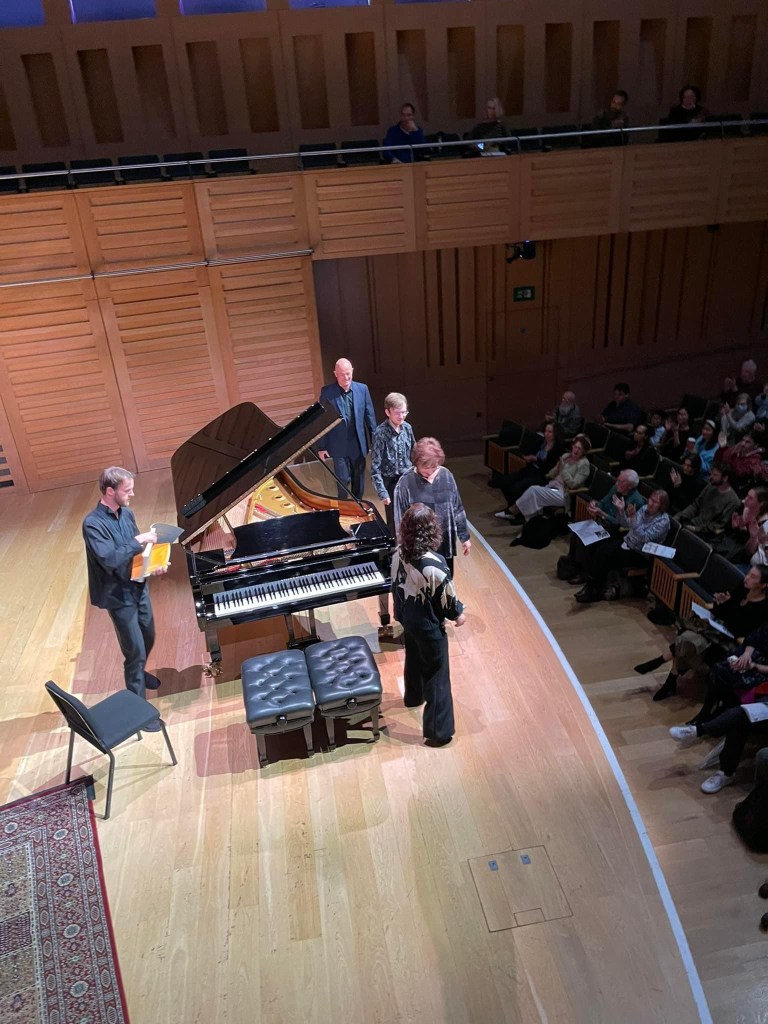
Fascinating to see the woodwinds in a circle behind the piano with the strings behind .I know Andras Schiff does that with Bartok 2 but what a genial idea for Beethoven 4 where there is so much dialogue between wind and piano.
And dialogue there truly was with a crystalline account by Thomas Kelly who is evolving by the minute and becoming one of the most exciting talents of his generation ………..there seems to be no limit to his talent that is taking him in directions that not even he is aware of.A true voyage of discovery every time he sits in front of that black box that he obviously loves so much. I had heard him five years ago on this very stage play Schumann Carnaval in the Joan Chissell Competition.He was head and shoulders above his colleagues for the kaleidoscopic range and the richness of sound that never became hard or ungracious but grew in luminosity and sumptuous beauty. I am reminded very much of the Scaramuzza school with the seemingly rubber limbs of an Argerich or Gelber. A superb collaboration with a genial Sakari Oramo who was obviously enjoying allowing these super talented young musicians to listen to each other and be free as they were at one with one another.Such wonderful sounds from Thomas in the slow movement but why interrupt the precise pulse that the conductor has set up with a vision of Hades which is only answered by the beseeching plea of the piano.It is as though Thomas does not feel the pulse in the bottom of his heels and his rather bolt upright stance at the keyboard (reminiscent of Rachmaninov according to Perlemuter ) does not permit the cat and mouse anticipation of an animal ready to pounce.Of course Thomas is listening with great sensitivity to the sounds he is making but sometimes these sounds have to be incorporated into a whole – chamber music is where it is absolutely fundamental.
‘The Young Musicians Symphony Orchestra represents the realisation of an ambition I have had for some time – that the musicians of this orchestra be drawn not only from the most eminent Conservatoires in England but that it be an orchestra representing the whole of the British Isles, Ireland and beyond. Their audiences will be treated to an integrated body of musicians incorporating the great cultural strands which compose these green islands. I am happy that this more than national orchestra is now in existence and will continue. I pray, for years to come to bring our audiences the most wonderful music played in a most wonderful way by our young people.” Lord Menuhin – late President of the YMSO
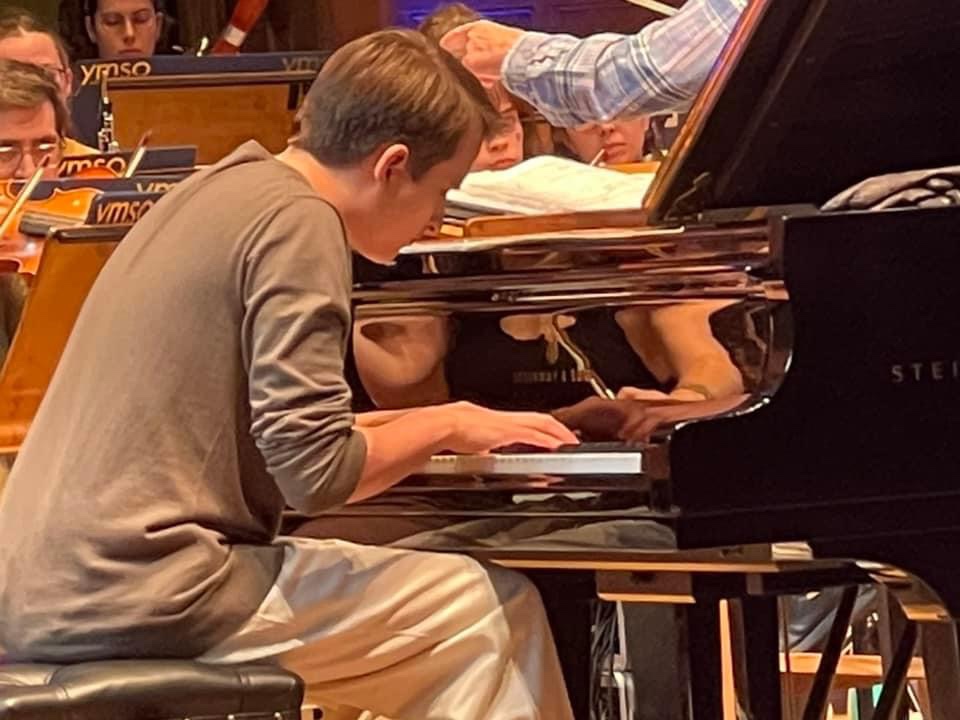
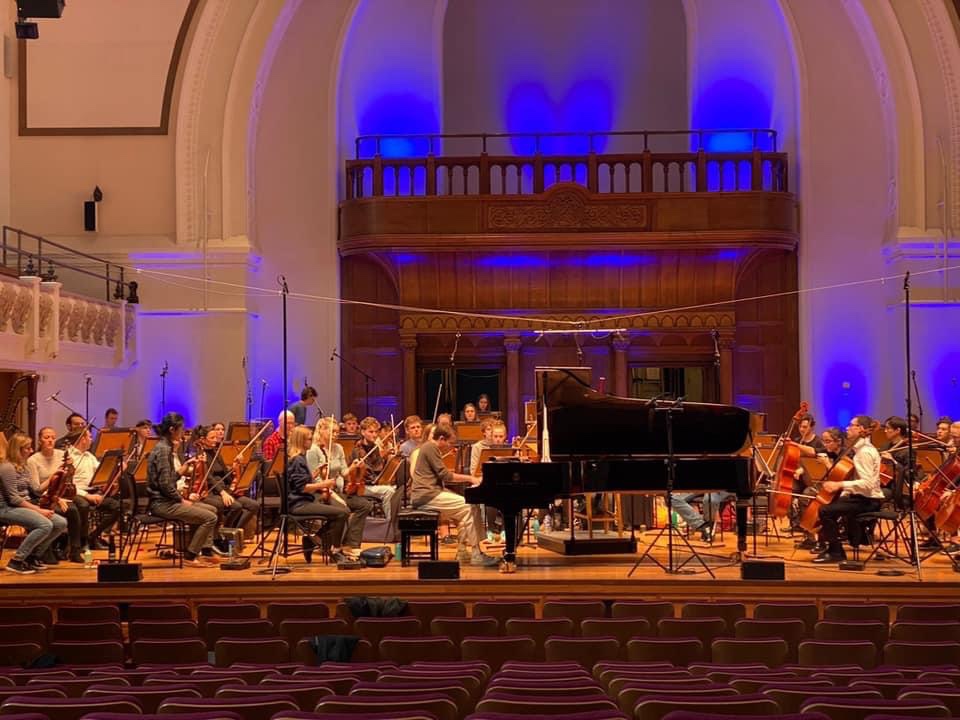
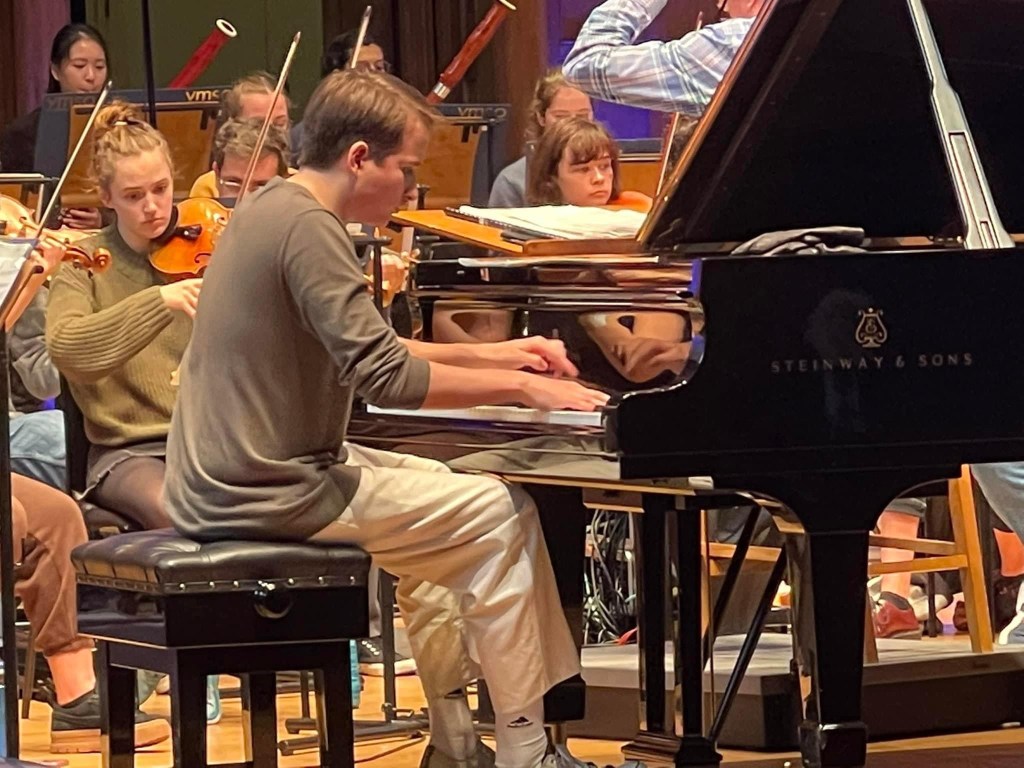
I was very privileged to be able to attend the rehearsal of the Rachmaninov Concerto,invited by the young soloist together with his teacher Prof Ian Jones to listen to the balance and the acoustic. I remember doing the same for Trifonov a few years ago at the Festival Hall.Misha is only 19 and Trifonov was 21 and we had a birthday party for him afterwards.In the rehearsal Lady Weidenfeld and I were sitting near the stage and the balance sounded fine and what could we say but just marvel,as I did today with Ian,at the fluency and absolute youthful mastery.
In rehearsal
At Trifonov’s concert though in the evening the BBC had discovered that the sound of the piano did not carry into the notoriously difficult acoustic of the hall.The public were kept waiting for half an hour whilst they tried to resolve the problem by moving the position of the piano and the microphones.This was not the case today with Misha in the smaller Cadogan Hall although I remember other problems with this work that Alex Ullman,also an alumni of the RCM a student of Ian Jones together with Dmitri Alexeev,found on playing this same concerto in the Keyboard Trust Complete series in Italy.Three performances of each of the five works for piano and orchestra culminating in the final performance in Rossini’s own theatre in Pesaro.After the first performance in Fabriano Alex was not happy with his performance as he realised that it was not the great heroic romantic concerto that he had thought .Although there are moments of youthful grandeur and romantic fervour the interplay between the piano and the orchestra is really of chamber music proportions.Alex’s second performance was a triumph.https://christopheraxworthymusiccommentary.com/2015/05/26/rachmaninoff-festival-ancona-2015/
Triumphant evening performance
It was the performance of Richter of such power and delicacy that pointed the way in modern times .Byron Janis had given a quicksilver electric performance for RCA as you would expect from a disciple of Horowitz.I always found it strange that Horowitz never seemed to play it in public especially as Rachmaninov always said that his best friend plays him well!Of course the composers own recorded performance with his favourite Philadelphia Orchestra is a great guide.
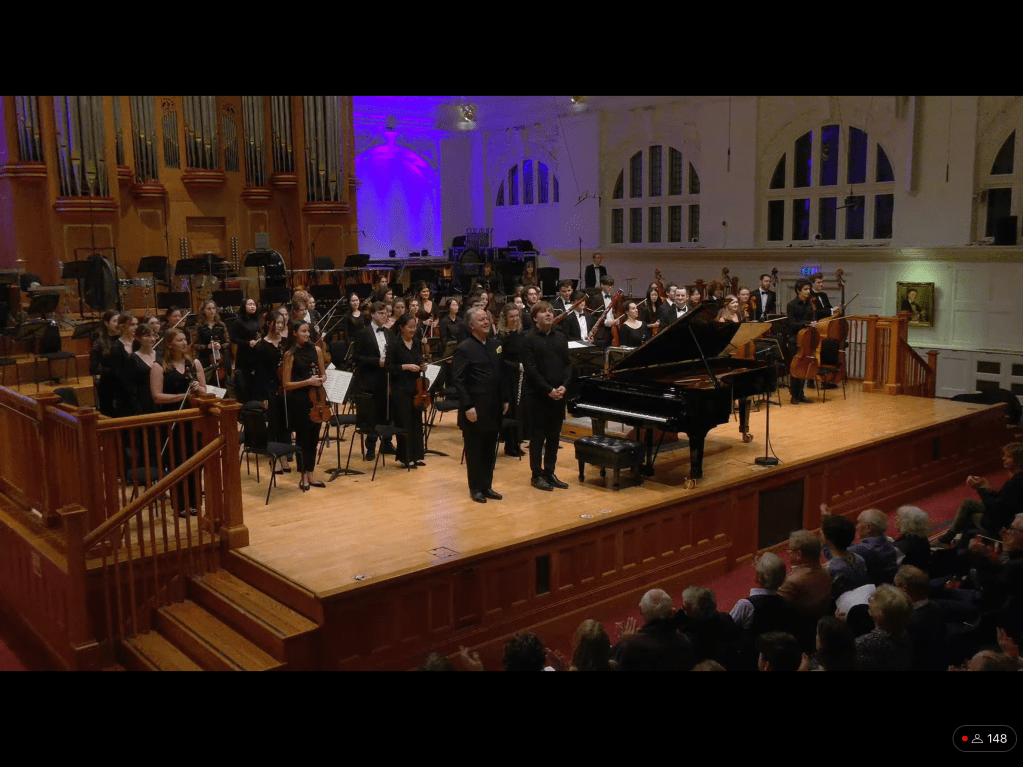
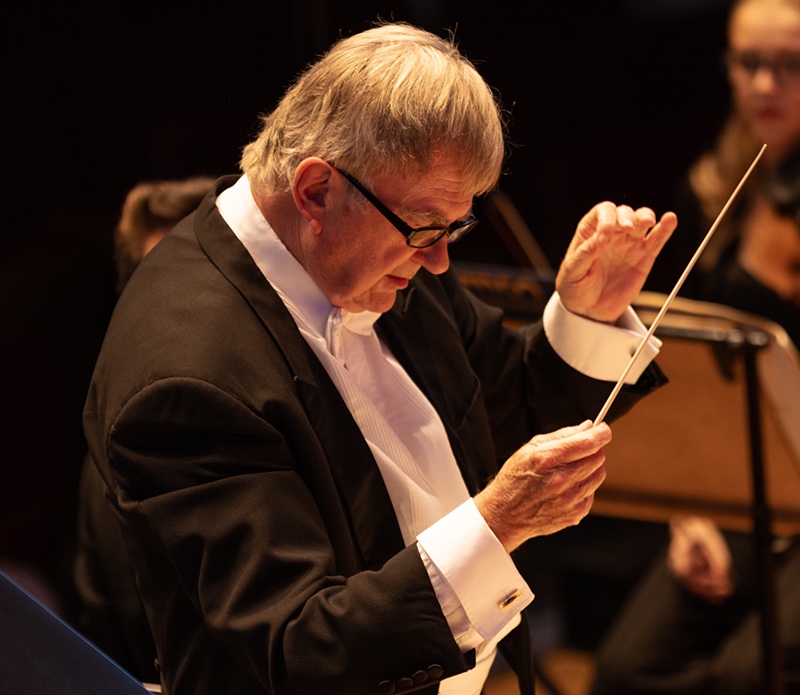
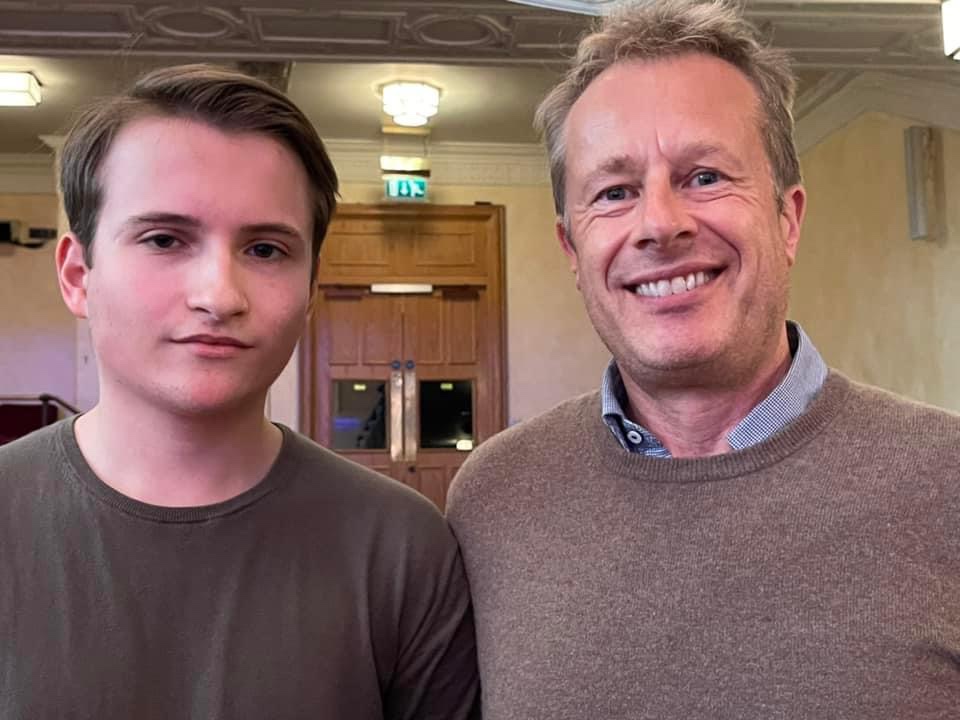
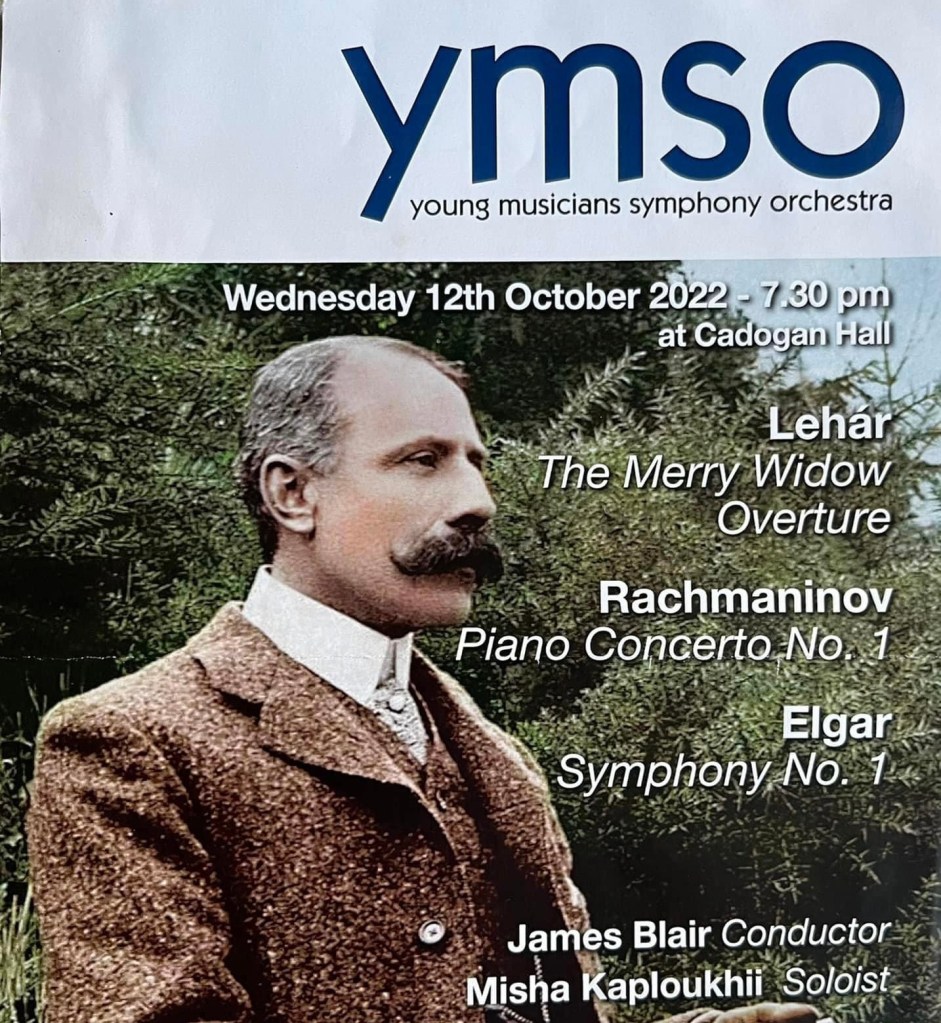
Misha with the genial James Blair The Young Musicians Symphony Orchestra is Britain’s leading orchestra for young musicians on the threshold of their professional careers. It provides invaluable experience to those who are studying or have recently completed their training, but are not yet established in the profession.
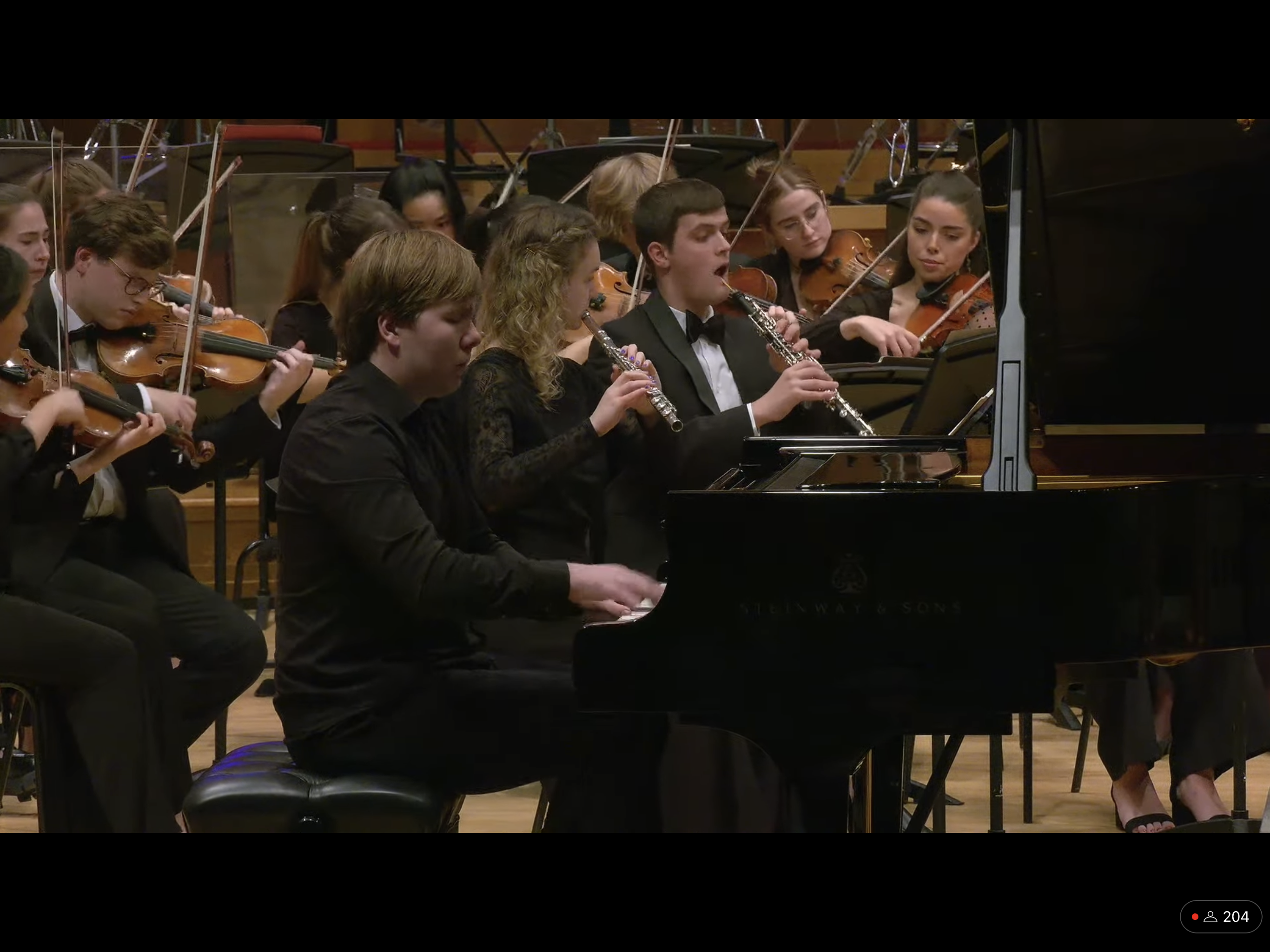
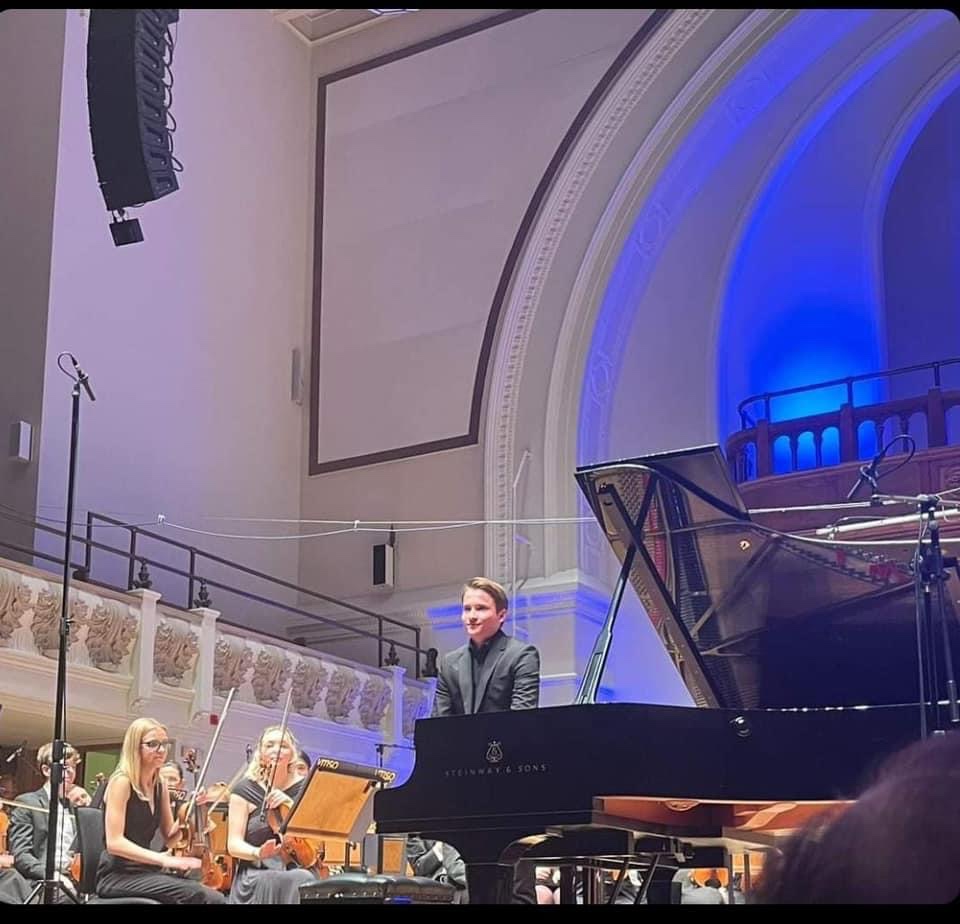
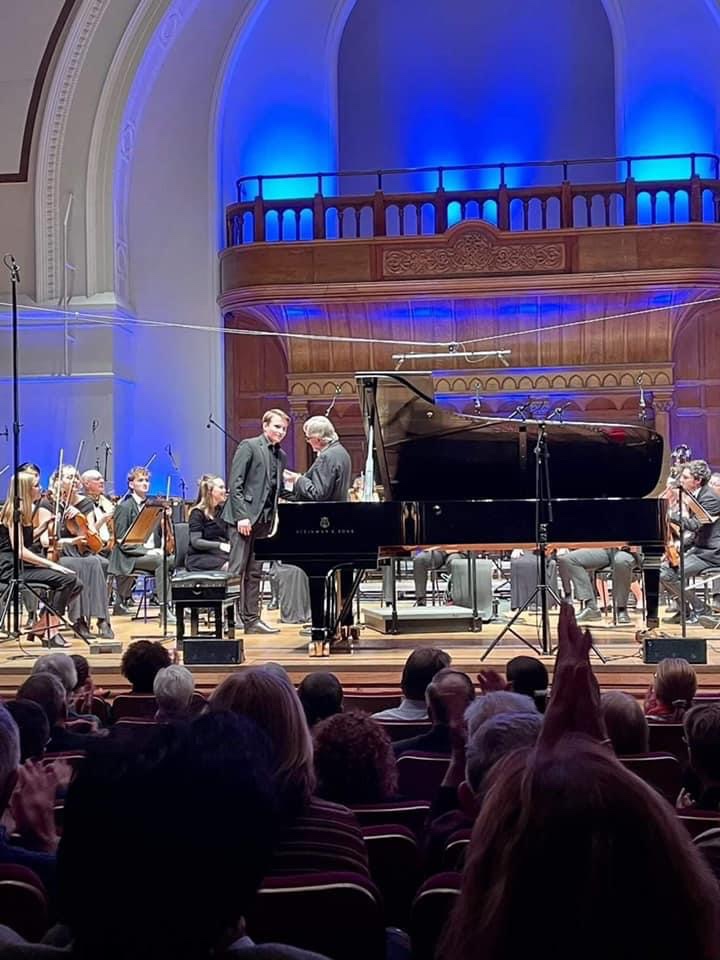
It was obvious that this young man today had the same youthful spirit as Rachmaninov allied to a remarkable pianistic mastery that allowed him to play the intricate webs of sound with such clarity .There was sumptuous beauty too with the great romantic melodies that ravish and seduce almost Hollywood style. The grandiloquence of the opening in reply to the orchestras opening fanfare was remarkably assured but it was the authority and colour of the cadenza that really showed his artistry. Ravishing beauty and projection in the slow movement reached moments of sublime inspiration in the lyrical central episode of the devilishly tricky last movement .Misha at only 19 is a great artist who saved something very special for the performance with public with a gargantuan cadenza of great intensity leading to a thrilling first movement finish.A ravishing opening solo in the slow movement which was extremely moving and a scintillating last movement where he really let go and had fun, scampering around with great playfulness but without losing an ounce of crispness and clarity.It is the sign of real artistic temperament that the finest performance was with the stimulation of a live audience.
Misha winner of the Royal College of Music Concerto Prize will be playing Liszt 2nd Piano Concerto on the 27 and 28th October in the Amaryllis Fleming Concert Hall.The concert will include Vaughan Williams Sea Symphony as a 150 anniversary tribute to the composer.It is strange that today the 12th October, Vaughan Williams’s 150th birthday the orchestra chose to play Elgar!They had though started with a deliciously idiomatic performance of Lehar’s Merry Widow Overture and how wonderfully and with what beguilingly stylish passion these young musicians played.After the concerto an encore was requested but we had in a sense had the encore already with Lehar at the beginning!A first half,that dare I say it,was like showtime!
Pianist and flautist Misha Kaploukhii was born in 2002 and is an alumnus of the Moscow Gnessin College of Music, where he studied in the piano class of Mikhail Egiazarian. Misha is currently studying at the Royal College of Music; he is an RCM and Robert Turnbull Piano Foundation scholarship holder studying for a Bachelor of Music with Professor Ian Jones. He also gained inspiration from lessons and masterclasses with musicians such as Claudio Martínez Mehner, Dmitri Bashkirov, Jerome Lowenthal and Konstantin Lifschitz. Misha already has experience of performing with orchestras internationally and his overall repertoire includes a wide range of solo and chamber music. Recently, Misha has won prizes in the RCM concerto competition (playing Liszt’s 2nd Piano Concerto) and in the International Ettlingen Piano Competition.
In rehearsal
Misha writes : ‘It is my first Rachmaninov concerto to learn and play with orchestra, despite also studying Paganini Variations with Prof.Ian Jones. I always felt connection with the 1st one because of its prodigious harmonic language due to the fact it was orchestrated and edited after 25 years, when the 2nd and 3rd were already completed, yet some people would call the architecture of the concero “disjointed” I find beauty and youthfulness in it.Itis rarely played in the uk and it was such an amazing opportunity to work with great James Blair. It was also a privilege to be on one stage with taleneted musicians of YMSO who I suppose didn’t know the concerto before, but understood all the difficult tempo changes and challenges of polyrhythms with a high level of professionalism
The Young Musicians Symphony Orchestra (YMSO) is distinctive in being the only full-size symphony orchestra based in London which provides orchestral training, performance experience and professional development opportunities to outstanding young classical musicians from across the UK, between the ages of 18-25. The YMSO is a registered Charity and has never received any statutory funding. For nearly 50 years it has successfully bridged the gap between college life and the orchestral profession.By the time a student leaves music college they will have committed at least fifteen years to developing their skills as a musician. Abruptly, competition for the small number of performance opportunities against several hundred other musicians in the same position becomes a fact of life.The number of students destined for a solo career is limited. Instead, the majority will end up as freelance musicians. They will have to be equally at home in a string quartet, a chamber or symphony orchestra. Today’s musician must be versatile, flexible and thrifty in order to survive. They will be required to reach public performance standard after minimal rehearsal and be available in the most disparate venues from one day to the next.The YMSO provides a bridge between college life and the profession. The richness of London’s musical life is world-renowned, but the musical education system does not have the resources to address these issues. Many students find themselves abandoned in a world of work without being equipped to handle it. The YMSO gives students and graduates the advantage of experiencing the major classical repertoire, realistic rehearsal schedules and public performance.
James Blair
James Blair, Principal Conductor and Artistic Director of the Young Musicians Symphony Orchestra, was born in Scotland. Whilst studying in London with Bernard Keefe, Sir Adrian Boult and in Italy with Franco Ferrara, his talent was soon recompensed with numerous awards including the Ricardi Conducting Prize and an Italian Government Scholarship to study in Sienna, Rome and Venice.James has been associated with the YMSO since 1971 and has established it as the UK’s leading training orchestra. He has received particular renown with the orchestra in two areas; the interpretation of large-scale romantic works and the rediscovery of and, in some cases, British and World Premieres of neglected works by a variety of important composers.
with Prof Ian Jones
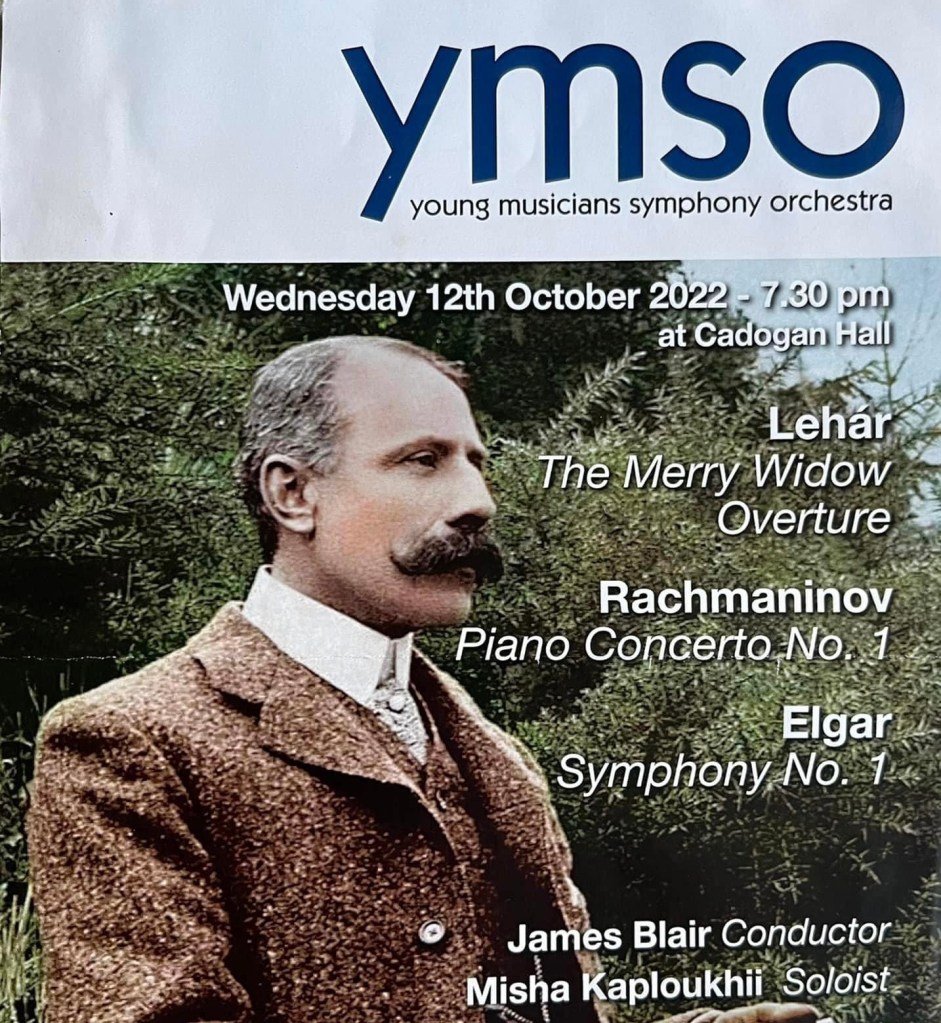
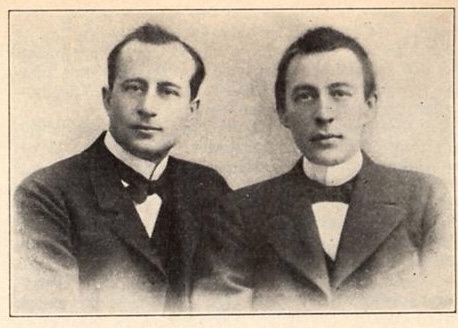
The Piano Concerto No. 1 in F♯ minor, Op. 1, was started in 1891 at age 17-18 (the first two movements were completed while he was still 17; the third movement and the orchestration were completed shortly after he had turned 18). He dedicated the work to Alexander Siloti
Alexander Siloti first cousin and teacher of Sergei Rachmaninov
The public was already familiar with the Second and Third Concertos before Rachmaninoff revised the First in 1917. The First is very different from his later works incorporating as it does elements of youthful vivacity and impetuosity.The differences between the 1890–1891 original and the 1917 revision reveal a tremendous amount about the composer’s development in the intervening years. There is a considerable thinning of texture in the orchestral and piano parts and much material that made the original version diffuse and episodic is removed.Of all the revisions Rachmaninoff made to various works, this one was perhaps the most successful. Using an acquired knowledge of harmony, orchestration, piano technique and musical form, he transformed an early, immature composition into a concise, spirited work.However as Rachmaninov himself said :”I have rewritten my First Concerto; it is really good now. All the youthful freshness is there, and yet it plays itself so much more easily. And nobody pays any attention. When I tell them in America that I will play the First Concerto, they do not protest, but I can see by their faces that they would prefer the Second or Third.”
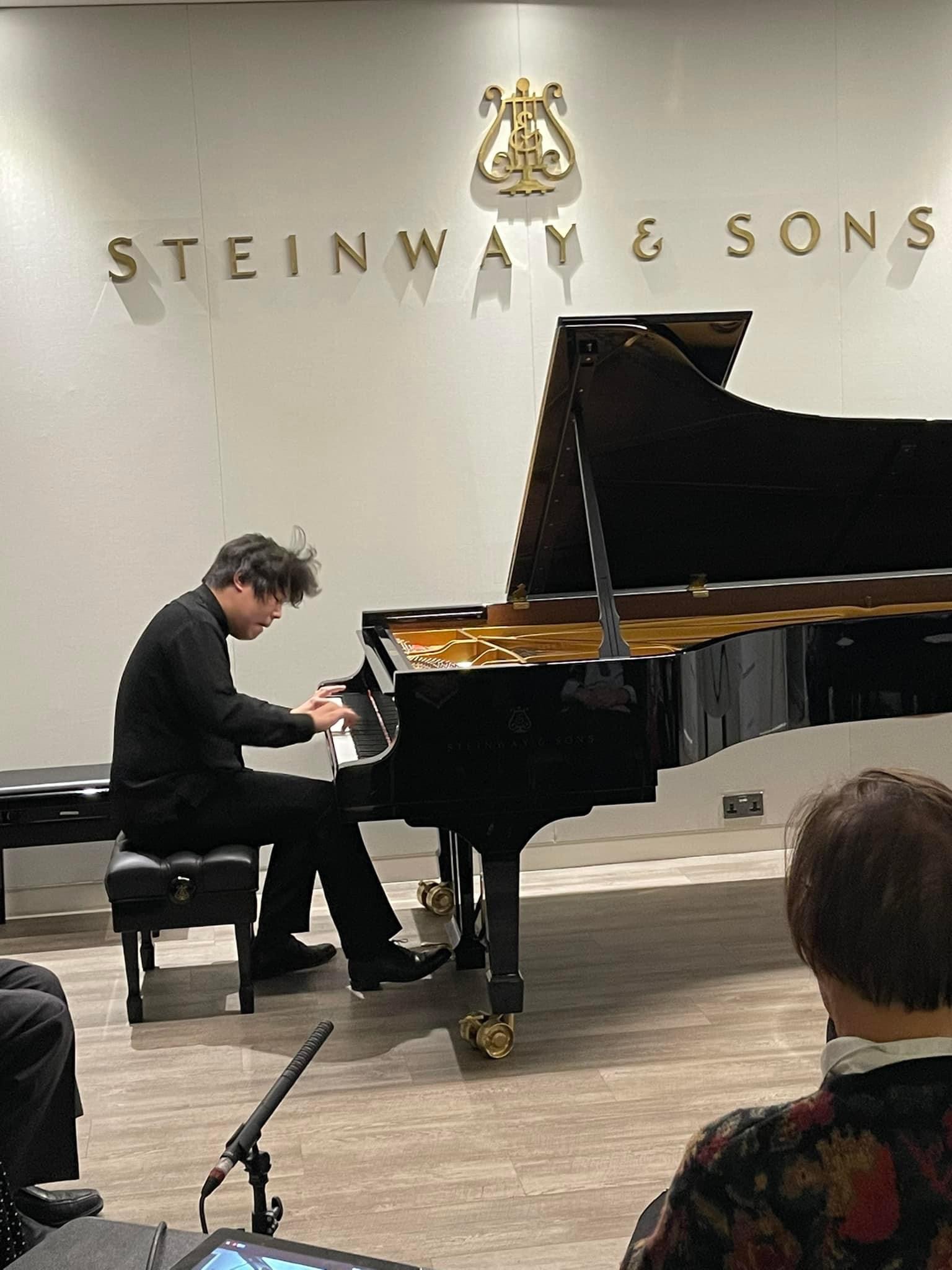
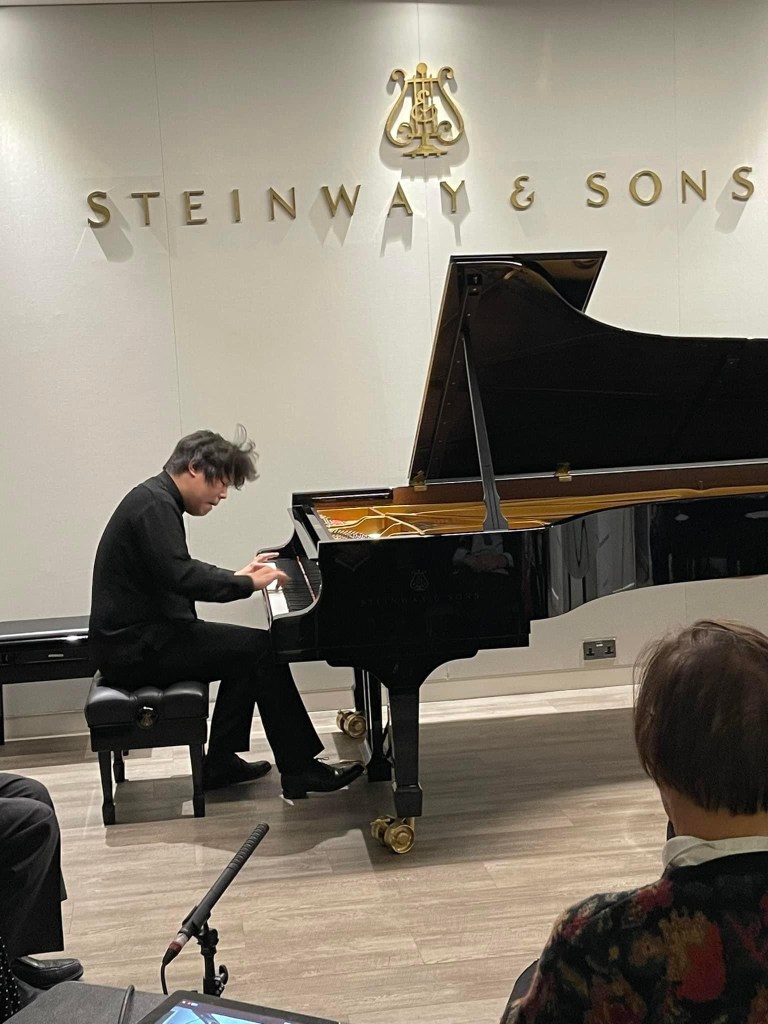
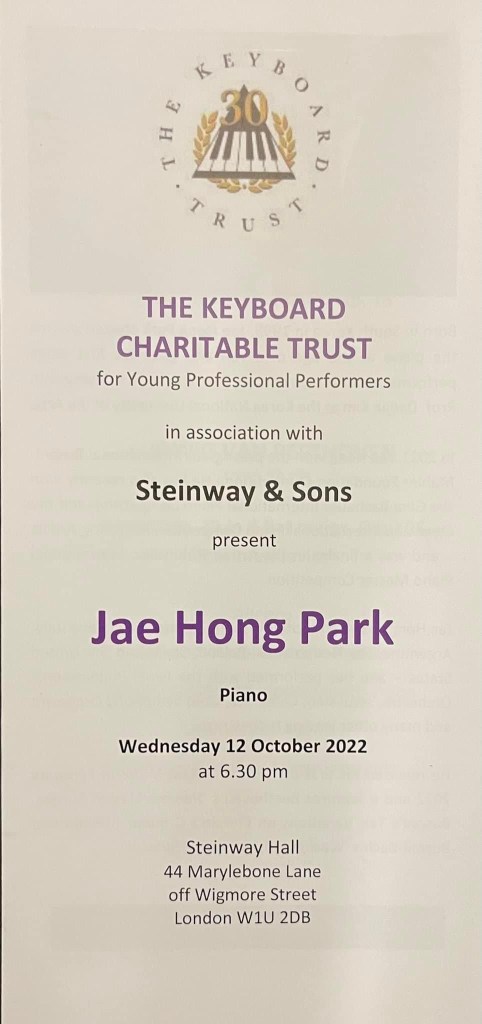
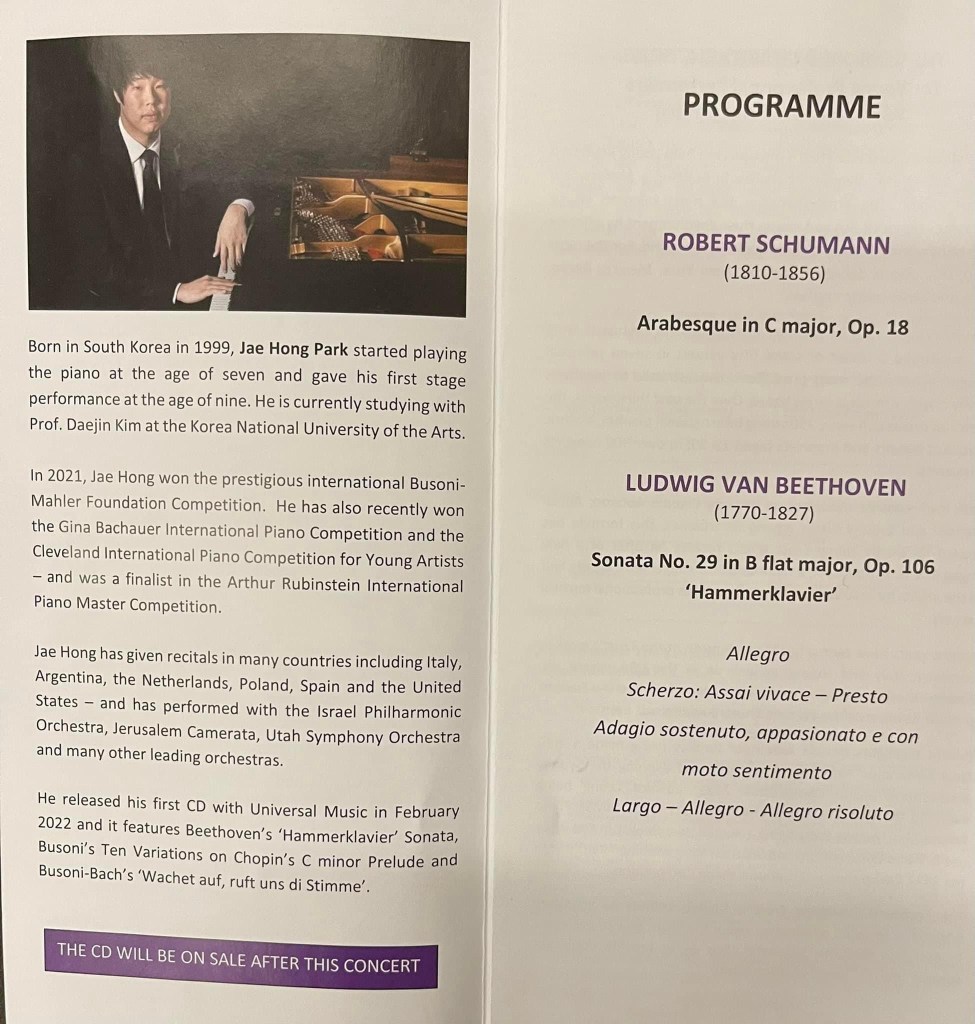
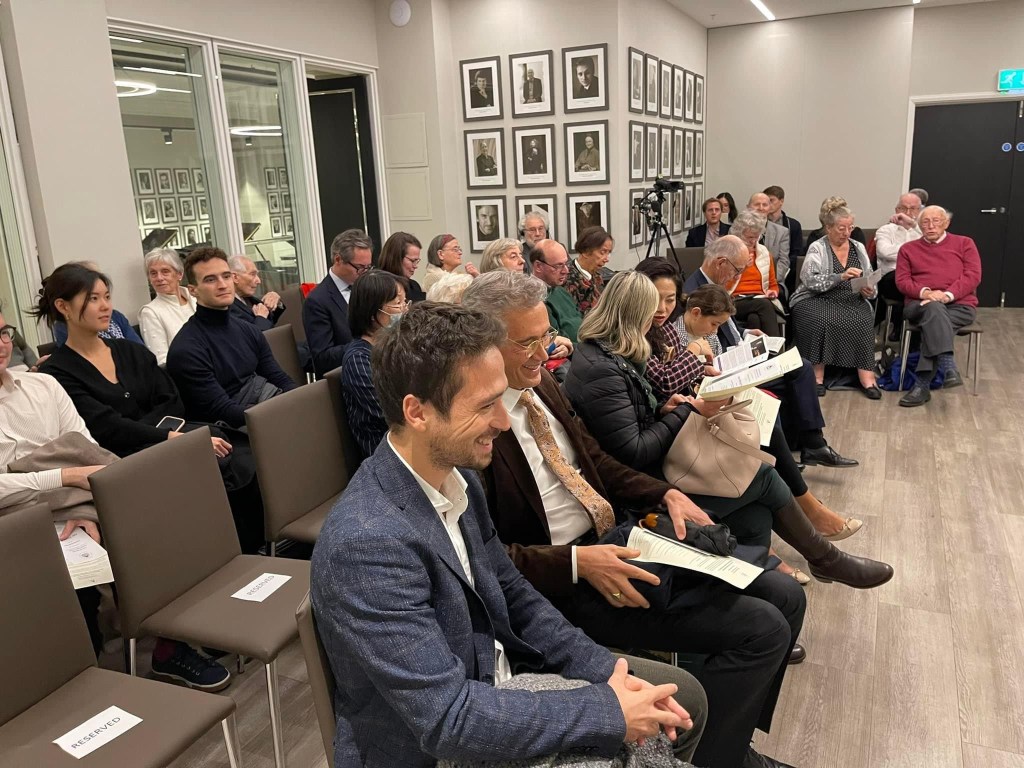
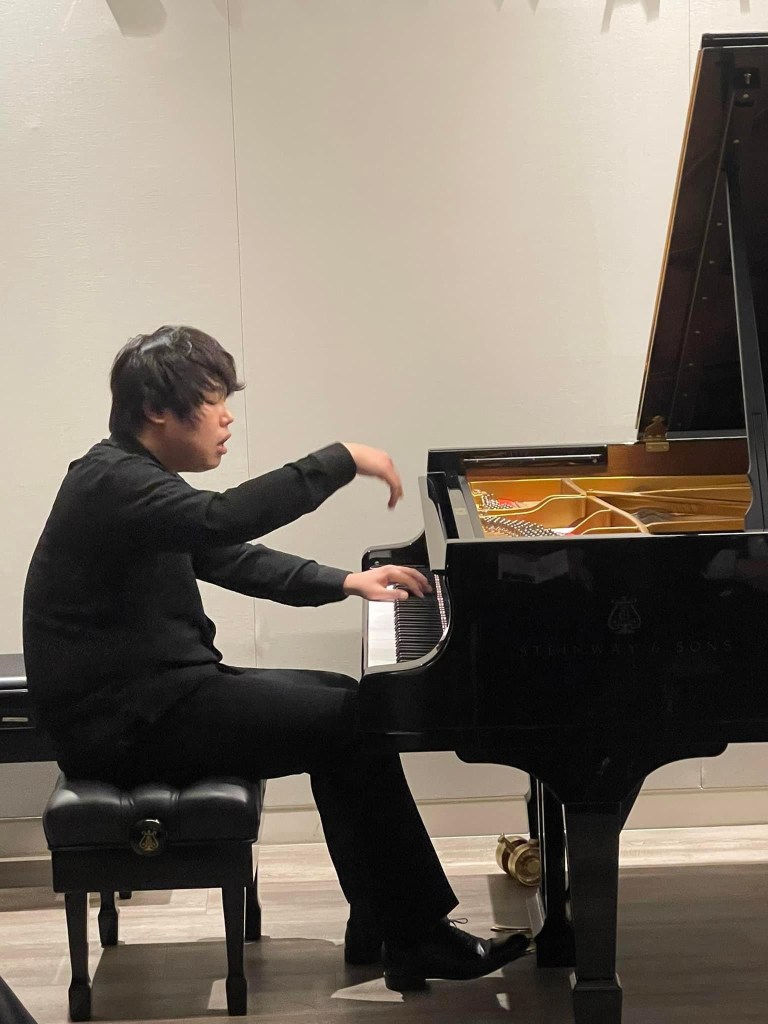
Jae Hong Park as winner of the Busoni Competition in Bolzano was invited by the Keyboard Trust to play in London as their Career Development Prize offered to the winner. Jae Hong not only astounded with his monumental performance of the ‘Hammerklavier’ he also seduced and ravished with Schumann’s Arabesque. In the very interesting talk after the performance he explained that this combination is part of a full length recital which includes Schumann’s Sonata op 11.Recitals he was flying off the next day to give in Zurich,Germany and Italy. A very big piano with a big pianist in a small hall,but when you are a real artist you listen to yourself and regulate the sound. As he very spiritedly said the piano is his best friend that he loves more and more and it is in the practice studio that he has such fun experimenting without being judged by an audience.Just him and his best friend the big black box of hammers and strings. In fact he was advised not to play the Hammerklavier in the Busoni Competition but he just wanted to share it with an audience, politics were of no importance to him. It was this total dedication to music that won him first prize in Bolzano and was so evident with his performances last night.What better way to finish than with Siloti’s magical Prelude in B minor some say by Bach and so be it ……..sublime it is always ! ‘A voyage of discovery ‘……..playing Beethoven’s longest sonata :‘ It is like climbing Everest …….you can never reach the top but the journey is so amazing and Beethoven is the best teacher ever’ The performance to a small but distinguished audience was recorded and together with the very spirited and articulate talk with Elena Vorotko will be streamed at a later date.
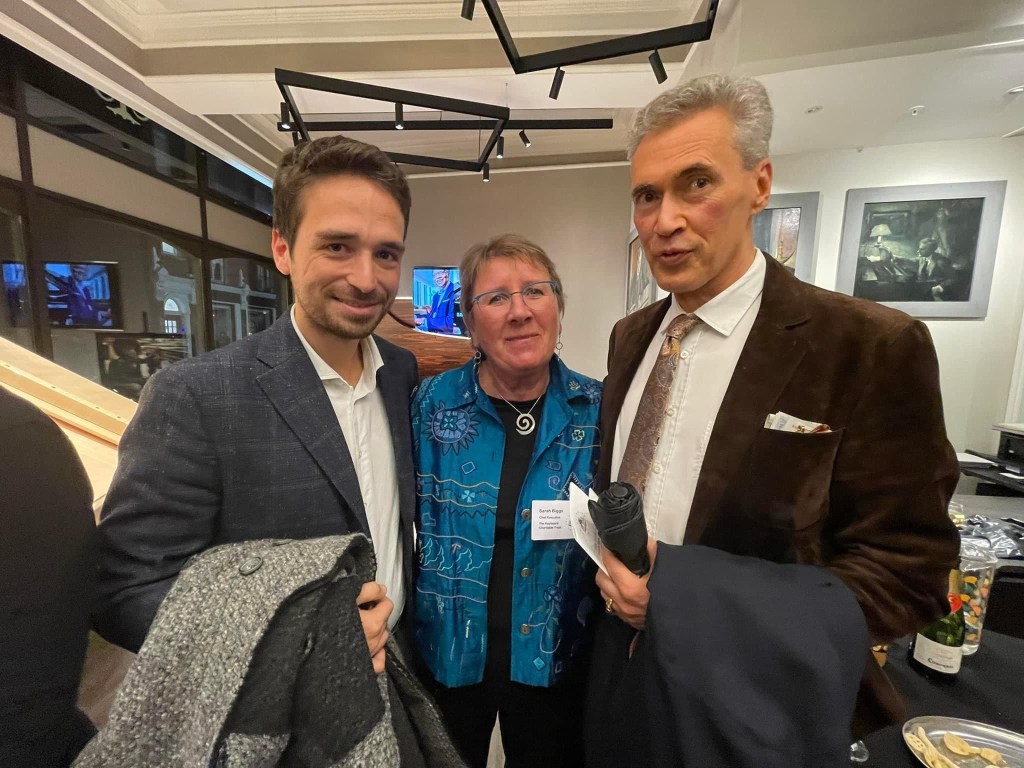
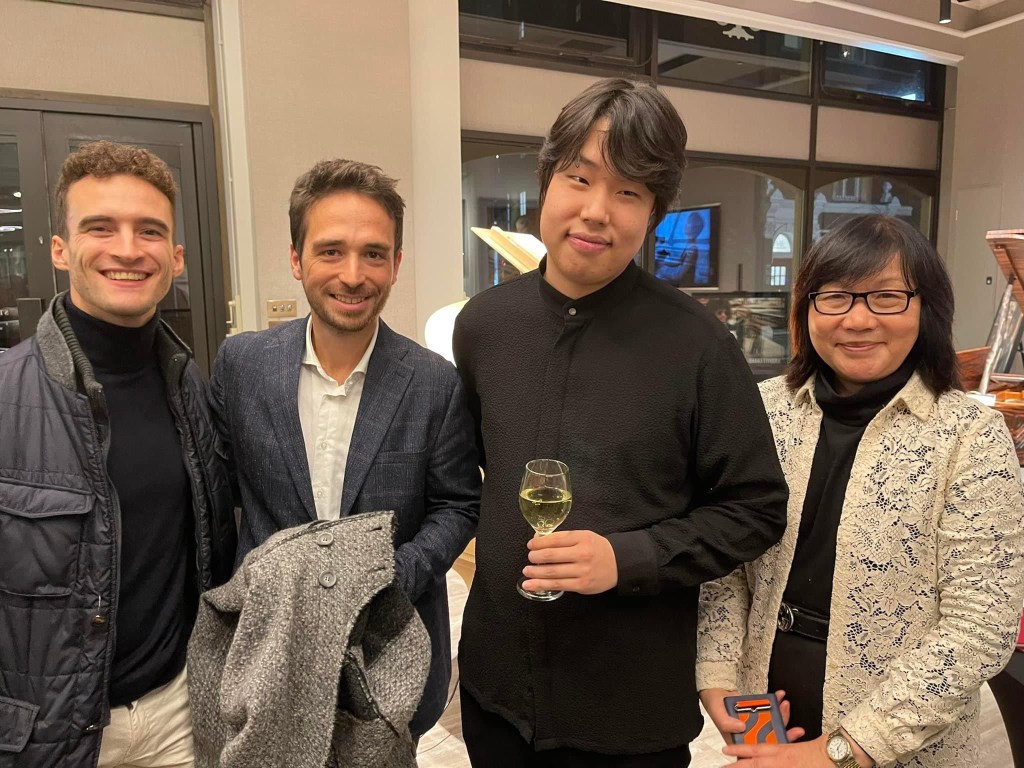
In conversation with Elena Vorotko Simone Tavoni. Sarah Biggs Prince Dr Hohenzollern Giordano Buondonno Simone Tavoni jHP Yisha XueIn rehearsal
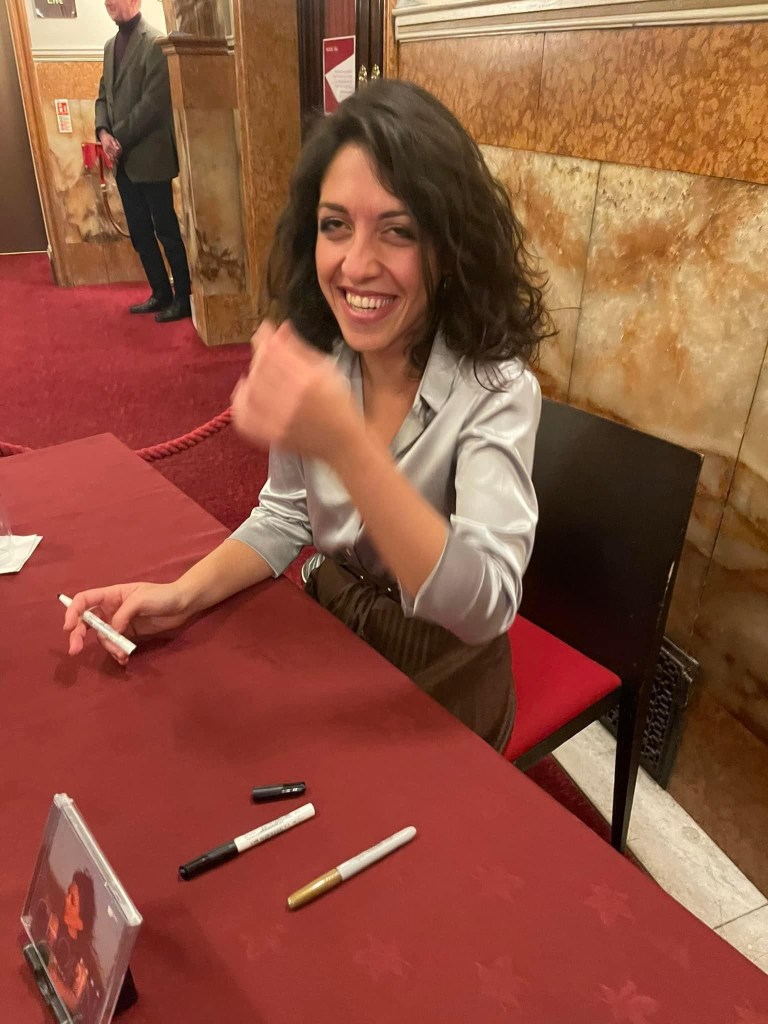
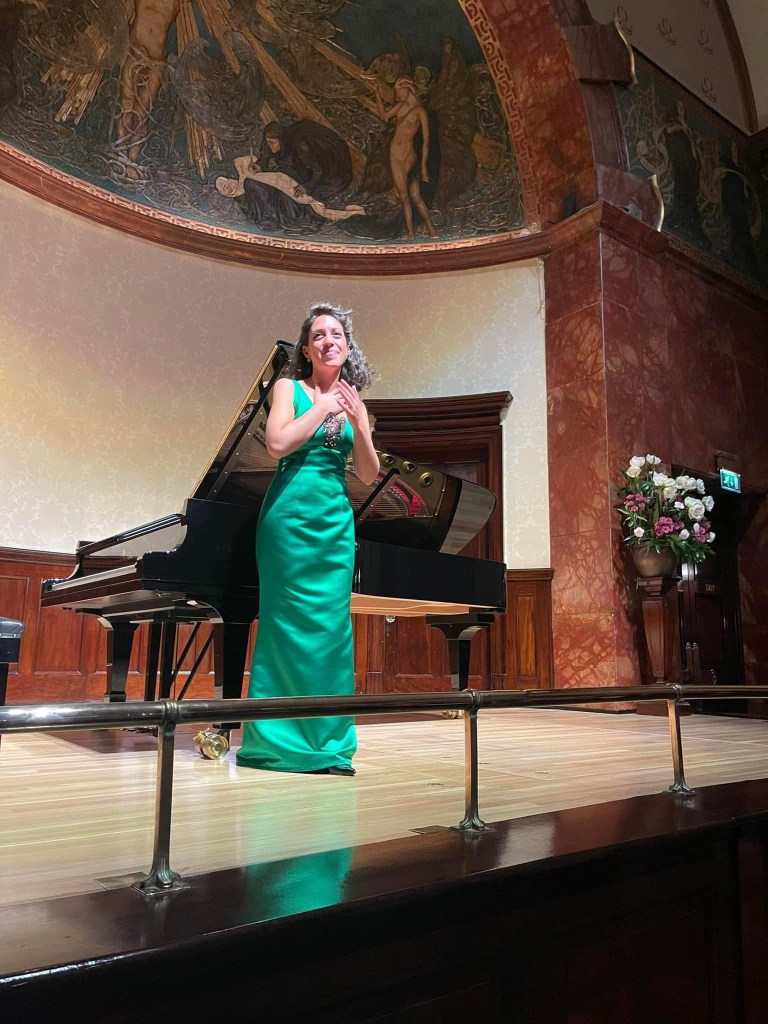
Beatrice appeared on stage looking like a thousand dollars but playing like a tornado . Unleashing an electric energy that started with the ravishing beauty of a mixture of Preludes op 11 and 16 culminating in the study in C sharp minor op 42 of red hot blazing energy.It blew itself out with searing passion but out of the ashes arose the other C sharp minor study op 2 with a whispered insinuating beauty that was as breathtaking as it was ravishing.The opening Prelude op 11 n.16 misterioso indeed as it shadows the funeral March that is still to come. What a start to a journey of discovery that was to leave us astonished bewitched and bewildered. A Chopin B flat minior sonata with an imperious opening declaration before a rhythmically aggressive doppio movimento that had unexpected drive and overwhelming authority .Of course she repeated the opening at the ritornello and for once there was no doubt that this is what Chopin wanted of this overdebated detail. Unbridled aggression in the development dissolved into a second subject of such contrast as it was barely whispered leading inexorably to the final tumultuous chords .The scherzo just grew out of the last chord being almost a continuation of the red hot flame that had been ignited.Momentarily calmed by a più lento of such subtle colouring and sensual rubato before the return of the scherzo but remembered like a dream in the coda with a final gentle chord and two bass notes plucked out of thin air And then a miracle occurred with the Funeral march.Expressionless as it made its relentless journey to the trio where Beatrice Rana barely touched the notes with a transcendental control of barely audible sounds.The return of the funeral March and its massive climax was quite overwhelming in its emotional impact as was the harrowing stillness of the final few emotionless gasps. The wind on the graves was just that,with sounds puffing and blowing over the keys.Suddenly out of the mist there was the throbbing of a heartbeat of such intensity before blowing itself out.Not before the dying breath had some unimaginably expressive counterpoints that I had never been aware of before.The final explosion was a tumultuous release.
I thought overwhelming until after the interval when Beatrice unleashed the opening of the Hammerklavier like an atomic explosion .Using two hands right over left to get more power that I think even Serkin would have approved because she had truly understood this monumental opening as Beethoven could only have imagined it in his head.She did not play it at Beethoven’s metronome marking as Schnabel tried to do but she did play it with the implied wild struggle contrasting with moments of sublime release. No repeat meant that this monumental movement arrived immediately at the release of the fugato played with astonishing clarity even at this demonic speed .The alternating interjected chords over a rumbling ostinato base in the coda was astonishing and terrifying at the same time. The cadenza of the Scherzo too saw a wild abandon as she raced to the top of the keyboard with a dynamic athleticism that was truly astonishing .The trio just floated on waves of shifting harmonies. The astonishing stillness that she created with the opening two chords of the Adagio created a magic atmosphere for one of Beethoven’s most sublime utterances .The end of the Adagio after moments of searing passion and religious meditation was a miracle of sounds where there was an aching silence created in a hall full to the rafters for this beautiful young pianist. The fugue was taken at an astonishing speed but it was not the speed but the energy that was unleashed with pungent punched out declarations of the fugue subject that was so astonishing and that led to a tumultuous climax.Total silence that seemed like an eternity Beatrice barely touching the keys in a religious communion like a plain chant which built up to the final explosion where Beatrice really let us have it as Serkin had done all those years ago at the Festival Hall . I have never forgotten Serkins performance as I shall never forget todays .
Beatrice receiving the standing ovation with such simplicity and even able to offer a thank you to a public in delerium. What to play after the Hammerklavier ? The dying swan of course in the bewitching transcription of Godowsky that Cherkassky used to play and who even played it at his own funeral! The same ravishing sounds and beguiling rubato .Shura would have been 113 only 3 days ago and is still much missed. I begin to believe in reincarnation though but then I am totally drunk on what I have experienced this evening
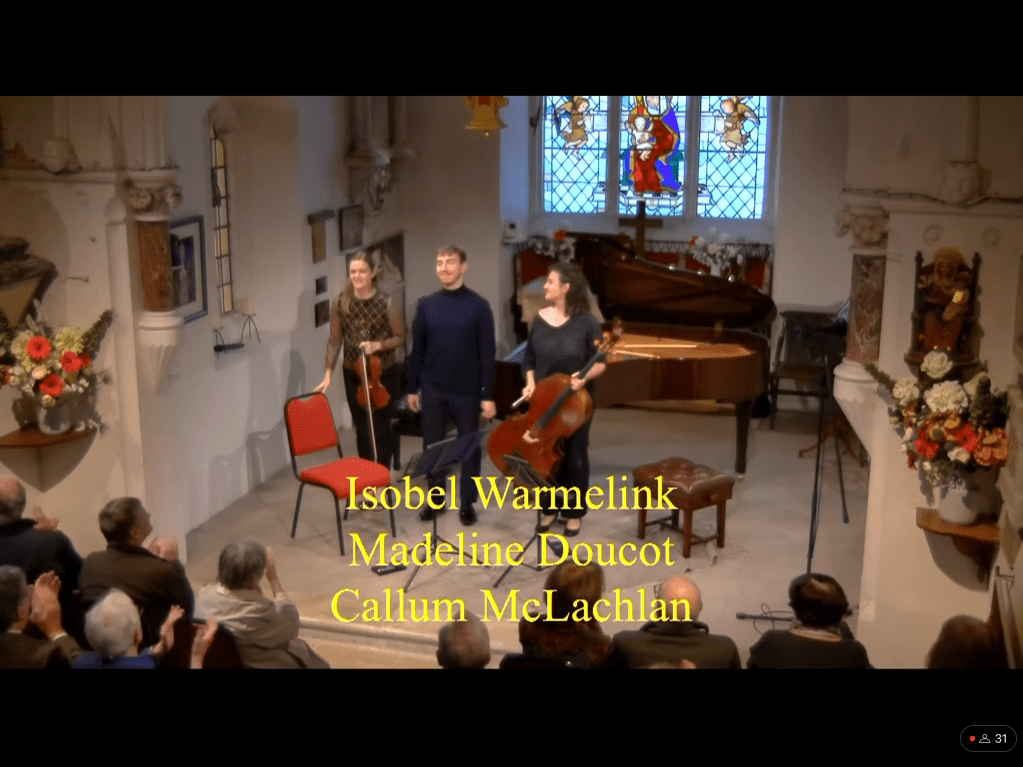
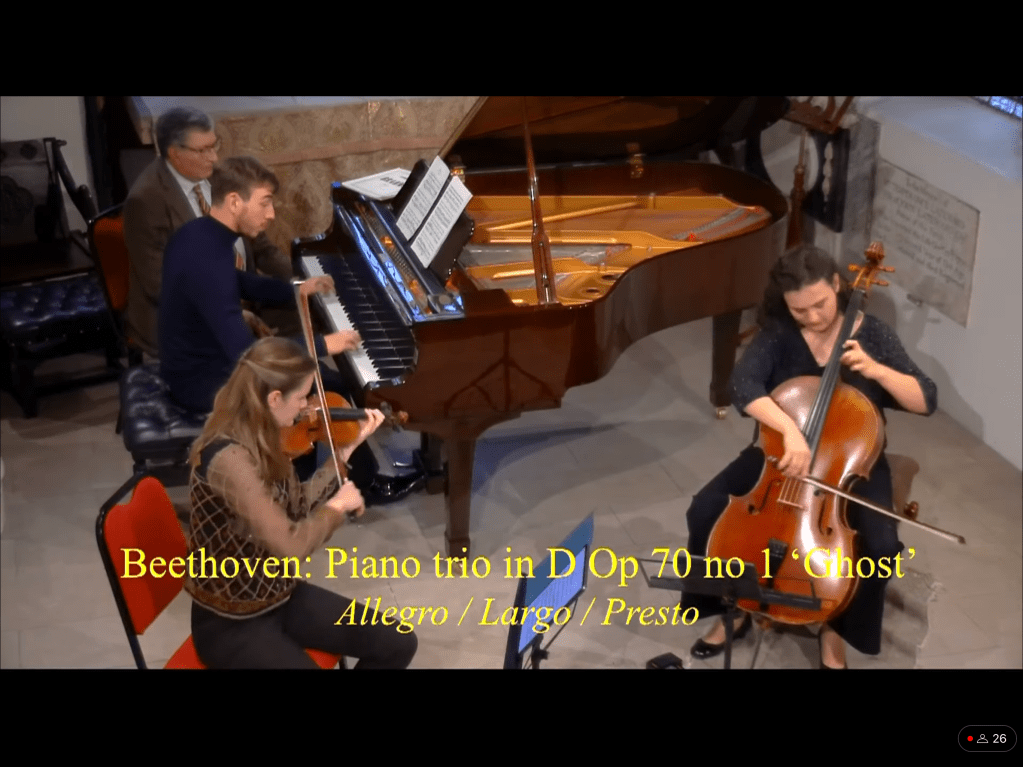
Fresh from the Kew Academy having flown in from Salzburg where as students they met and have now created a superb trio. Perivale was full to the rafters to hear two of the great masterpieces for piano trio by Beethoven and Brahms. Living and rehearsing together in Kew prior to their tour which has included Manchester London and tomorrow Amsterdam.Madeline not only plays the cello divinely but she has the same love for cooking and the house has been ringing with music and the most wondrous smells from the kitchen.Callum is a dab hand at the computer and Isobel loves to practice and keep us all in order. It is only experiencing life together that a trio can come alive as it did today with each one knowing instinctively what the other might do.Like the cat chasing the mouse ,waiting and watching ready to pounce.Each one a master of his or her instrument.The piano lid fully opened because Callum is a good driver who knows where he is going and Madeline sits in the curve of the piano knowing that the wooden lid will reflect her beautiful cello playing without any forcing.Isabel coming into her own playing in perfect harmony with her two friends.Some extraodinarily luminous playing from Callum taken over by the soaring passion of Isabel and Madeline in the sublime Brahms trio. Bringing the same meditative mystery to the Brahms Adagio that they had brought to the whispered Largo of the ‘Ghost’trio.What energy there was in the Allegro of the Beethoven and the sheer joy at the end of the first movement of the Brahms was exhilarating. Hugh Mather has hit the nail on the head when he says St Mary’s is the ideal venue for chamber music as was proven today by a packed house listening in rapt attention to these three wonderful young players.I bet Hugh Mather is watching in from home too where he is on family duties with a well earned rest from the hundreds of concerts that he presents every season. Roger Nellist was the expert presenter today having come down from his perch in the video studio to share in the fun we were all having on stage.
Opus 70 is a set of two Piano Trios by Beethoven. Both trios were composed during Beethoven’s stay at Countess Marie von Erdody’s estate and are dedicated to her for her hospitality. They were published in 1809 and the trio features themes found in the second movement of his 2nd Symphony . Because of its strangely scored and undeniably eerie-sounding slow movement, it was dubbed the ‘Ghost’ Trio. The name has stuck with the work ever since but it was Beethoven’s pupil Carl Czerny who wrote in 1842 that the slow movement reminded him of the ghost scene at the opening of Shakespeare’s Hamlet, and this was the origin of the nickname.A page from the original manuscript by Beethoven In 1888 Breitkopf sold the rights in Brahms’s music that had appeared under their imprint to the composer’s principal publisher, Fritz Simrock of Berlin. Brahms eagerly seized the opportunity to recast what had been his earliest chamber work. ‘You cannot imagine how I trifled away the lovely summer’, he told Clara Schumann the following year; ‘I have rewritten my B major Trio and can now call it Op 108 instead of Op 8. It will not be so dreary as before—but will it be better?’Brahms had completed the trio in January 1854, when he was only twenty and received its first performance on 13 October 1855 in Danzig.
Isobel Warmelink was born in Rotterdam in 1996, and studied at the Royal Conservatory in The Hague, graduating in 2018. She is now finishing her master studies at the Mozarteum University in Salzburg, Austria. In January 2022 she won first prize at the prestigious Oskar Back violin competition in Utrecht. As a soloist Isobel has played with several orchestras, such as the Residentie Orchestra, the National Youth Orchestra of the Netherlands, the Orchestra of the Royal Conservatory of The Hague and the Orchestra of the Eighteenth Century. She performs regularly with the Royal Concertgebouw Orchestra in Amsterdam and she travelled with them through Europe, Asia and the United States.
Born in 1999 in Paris, France, Madeleine Douçot studied cello with Marie-Thérèse Grisenti until 2015. In 2016 she entered the Mozarteum University, Salzburg, and she now continues her Master Studies there. She is laureate of several national and international competitions, Madeleine started performing from a very young age, giving many concerts and recitals in Paris, Saratov and Moscow. She is now regularly playing in Austria, Germany, France and Italy, both as a soloist and as a member of the « Trio Tempora », founded together with the Romanian clarinetist Marius Birtea and the Hungarian pianist Emese Wilhelmy in 2017. In 2020 she entered the « Young Talents » programme of Jaroussky Academie in Paris. She recently joined the Métamorphoses String Quartet, an outstanding French ensemble.
Callum Mclachlan was born into a family of musicians, and started lessons with his father at the age of 7, and entered Chetham’s School of Music at age 11, where he studied with Dina Parakhina. He currently studies at the Universität Mozarteum in Salzburg and at the Cologne Hochschule fur Musik. He has performed at many prestigious concert venues in the UK, Europe and USA. In 2019, he made his New York recital debut.. He has won 1st prizes in the Welsh International Piano Competition, The Youth Scottish International Piano Competition, the RNCM Chopin Competition as well as reaching the final of the EPTA Piano Competiton. He was a finalist of Robert Schumann Competition Zwickau and semi-Finalist of the Ferrol Competition, and most recently, he was selected as one of 20 participants for the Santander Paloma O’ Shea Competition. He is a Talent Unlimited Artist. He is also a Hattori Foundation Senior Finalist, who generously support his musical and artistic endeavours.
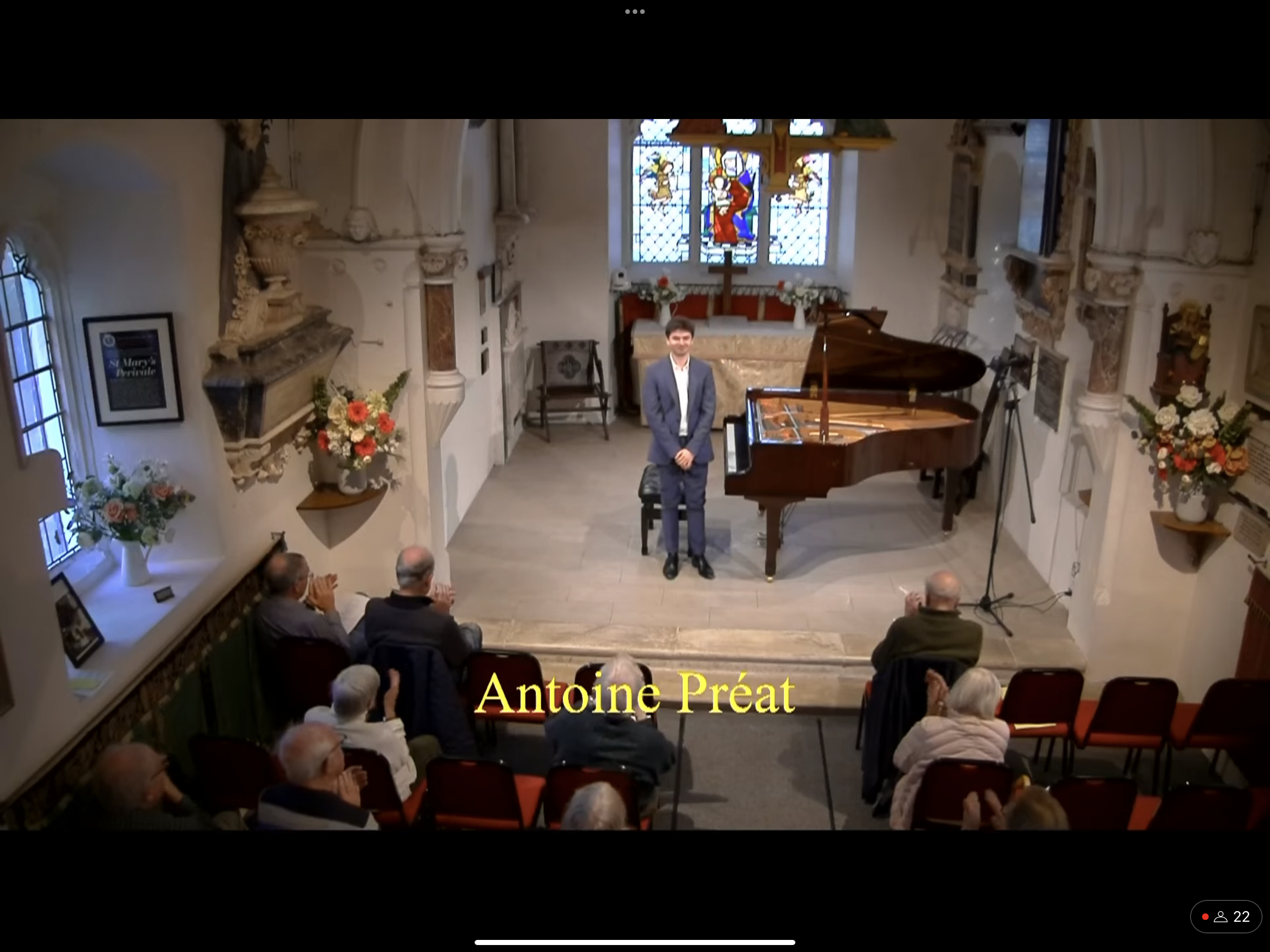
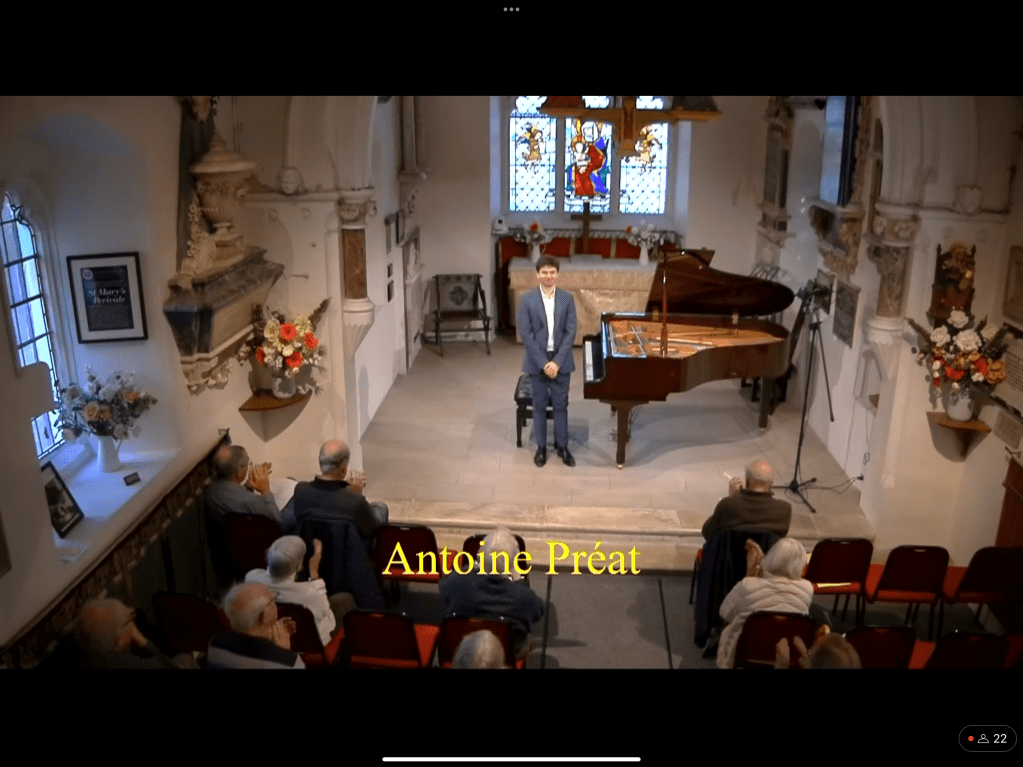
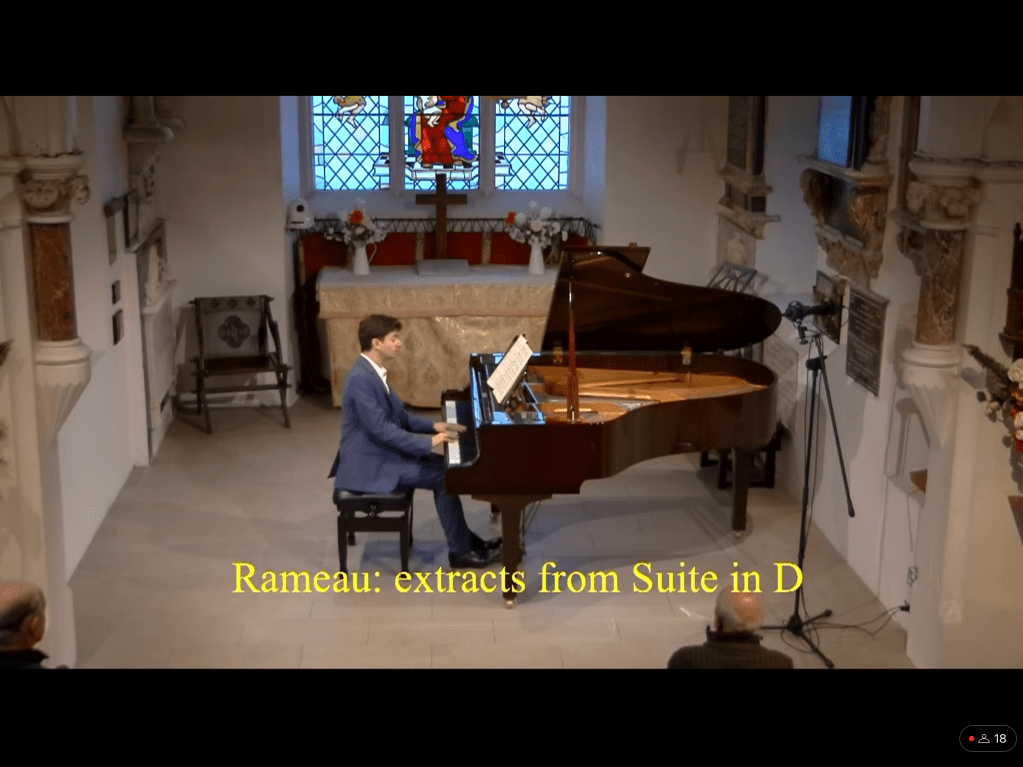
Some wonderfully descriptive playing by a musician who can make the piano speak louder than words.Hovering over the keyboard like a cat about to pounce he brought these descriptive pieces vividly to life.A superb technical control and a kaleidoscopic sense of colour allied to a sumptuous sense of balance brought a radiance and immediacy to all that he did. From the crystalline elegance of Rameau to the soaring romanticism of Schumann and the utmost delicacy of Debussy. But it was the muffled sounds of the Turkish pipes that Fazil Say depicts in his Black Earth that brought back the terrible story of a pianist sentenced to death by a regime where he is now considered a hero.
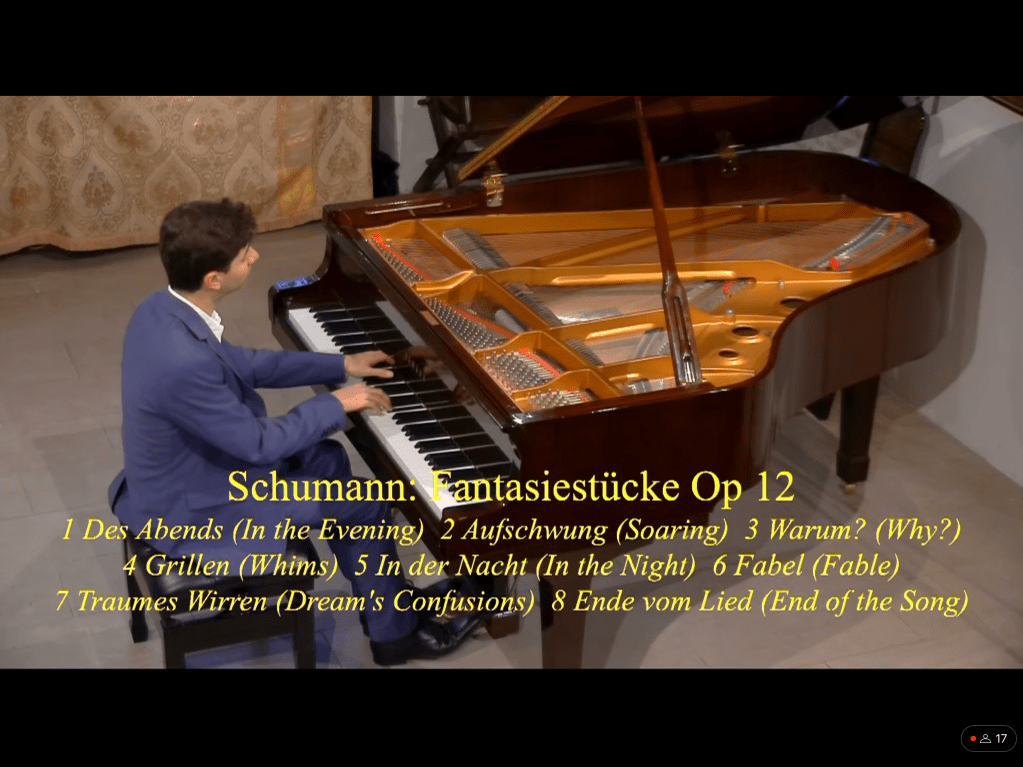
The ravishing half shades of ‘Des Abends’ contrasted with the passion and drive of ‘Aufschwung’ with its sumptuously rich sweeping melodic line.Beguiling balance and subtle beauty of ‘Warum’ contrasted with the rumbustuously innocent rhythmic energy of ‘Grillen’.A sweep of soaring intensity in ‘ In der Nacht’ with a deeply moving moving central episode before the wind builds up again with even greater passionate intensity.The almost too serious ‘Fabel’ with its wonderfully capricious comments .There was great clarity and technical assurance in ‘Traumes Wirren’.But it was the majestic nobility of ‘Ende vom Lied’ that was so movingly portrayed as it gently disintegrated before our very eyes with a stillness as though recalling distant dreams . Some remarkably vivid story telling from a true artist
Dr Mather may have been concerned for his piano that like mine after visits from Stockhausen and Adulescu I was forced to write in the contract that the piano could only be played with two hands and two feet in the traditional manner! He need not have worried because it is obvious that Antoine truly loves the piano where others may hate it .
Franco-Belgian pianist Antoine Préat was born in August 1997 in Paris. Described by the French radio as “one of the most gifted pianists of the youngest generation”, and as “a young artist with a distinctive voice”, Antoine is in demand both as a chamber musician and a soloist.Antoine made his orchestral debut at 17, playing Rachmaninov’s second concerto under the baton of Mihnea Ignat, and has since performed with orchestras such as Orchestra of Alicante, the Tonerl Chamber Orchestra, the Sainsbury Soloists, the Academy Festival Orchestra, the London Student Orchestra, the Resonate Chamber Ensemble. Antoine is regularly invited to perform in France as well as in Europe and the United States in halls such as the Salle Cortot, Salle Gaveau, Wigmore Hall, Thayer Hall, Paris Beaux Arts Museum, Frederyk Chopin Institute.
His performances have been broadcast on the BBC and France Musique. Performance highlights include festivals such as the Nohant Chopin Festival, Lisztomanias, Chopin à Bagatelle, les Concerts d’Esther, Marathon Chopin (for his bicentenary), les Nuits du piano in Paris, and Jeunes talents. Antoine is an avid chamber musician, and dedicates himself to his piano duo, Duo Martelli, currently studying under Amandine Savary’s tutelage at the Royal Academy of Music. He was the youngest artist to be invited to join the Centre de Musique de Chambre de Paris, (directed by Jerome Pernoo) with whom he gave a series of concert at the Salle Cortot in Paris, sponsored by Deutsche Gramophone.He has been a finalist/prizewinner in numerous national and international competitions such as the Ettlingen competition for young pianists, the Concours International de la Ville de Gagny, the Concours international d’Ile de France, received an honor prize at the New York Début Piano Competition, and more.
Antoine began his studies at the Junior Paris Conservatoire (CRR de Paris). One year later, he made his public debut at the Salle Gaveau. In 2011, he was invited to continue his studies at the Ecole Normale de Musique A. Cortot, from which he graduated with a distinction at the age of 17. He then continued his studies at the Royal Academy of Music in London, under the tutelage of Tatiana Sarkissova, where he received the Colin Murray Award (2016) and Vivian Langrish Award (2018) for highest mark in an examination as well as the Bache Fund Award for special achievement (2019). Antoine is currently enrolled as Master of Arts student at the Academy under Christopher Elton’s tutelage. He is very fortunate to be supported by Talent Unlimited as well as the Munster Derek Butler Award and the Winifred Christie Trust Award.
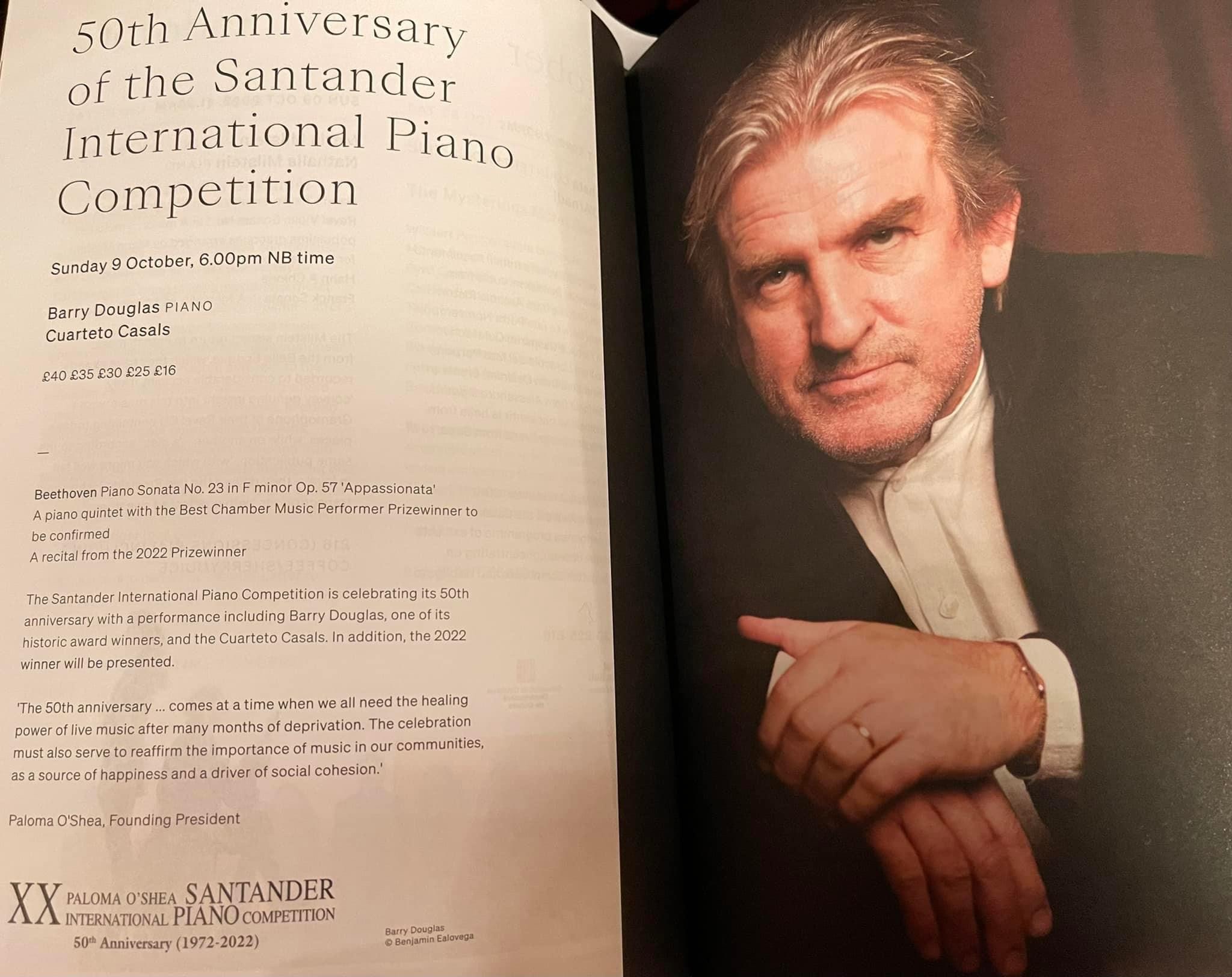
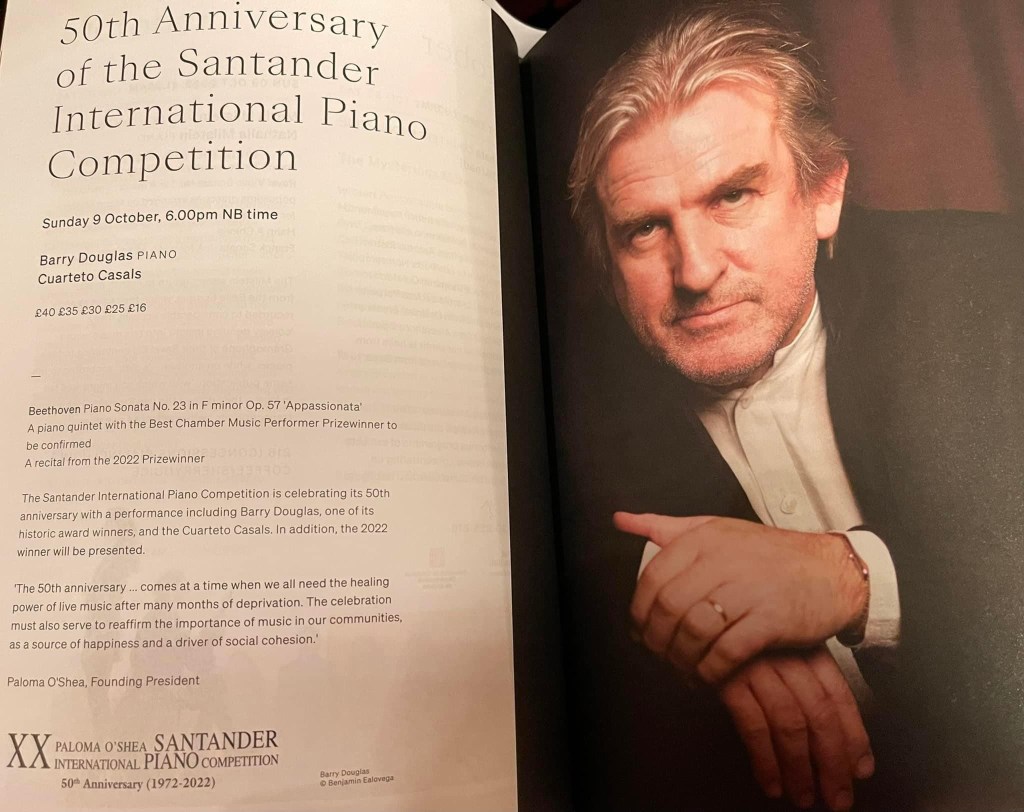
50th Anniversary Gala of the Santander International Piano Competition and a sad but joyous farewell for Paloma O’Shea the Founding President.
The distinguished critic Bryce Morrison with Paloma O’Shea
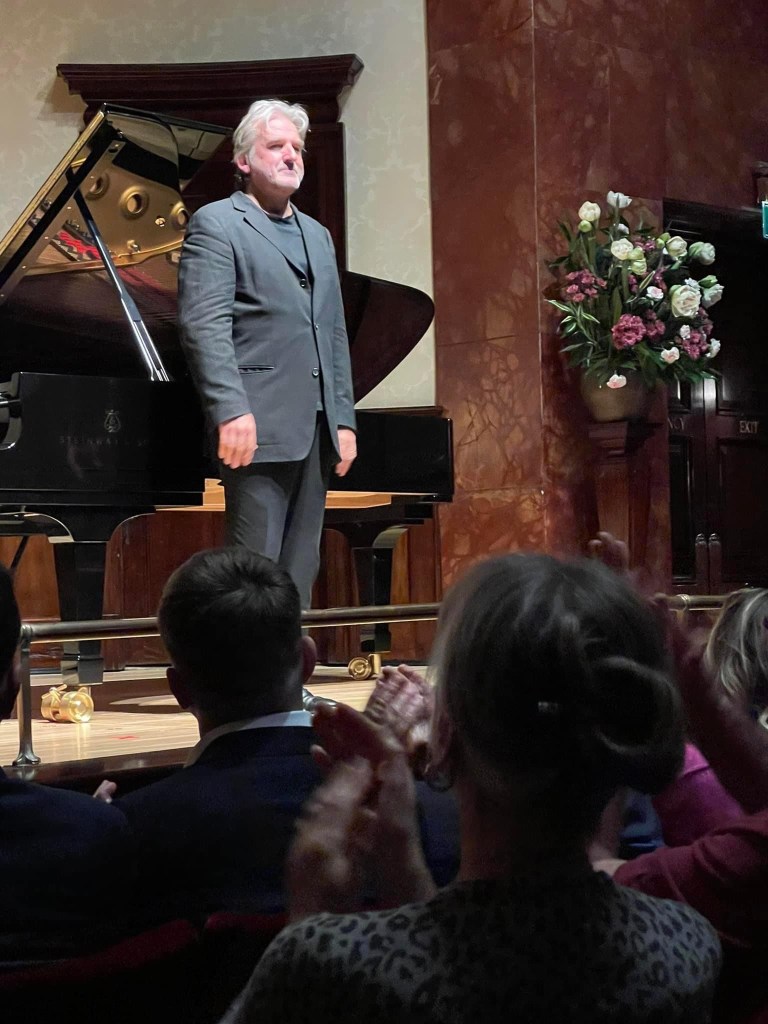
Barry Douglas ,the elder statesman winner many years ago,gave a sterling performance of the Appassionata.The complete opposite of another winner,Floristan,who played it yesterday as Rubinstein winner too with quicksilver colour in a voyage of discovery. Barry’s voyage had arrived at its glorious destination and Floristan is still searching for his Etiopia but both were faithful interpretations seen through a different lense.https://christopheraxworthymusiccommentary.com/2022/10/09/juan-perez-floristan-takes-london-by-storm/
Barry Douglas
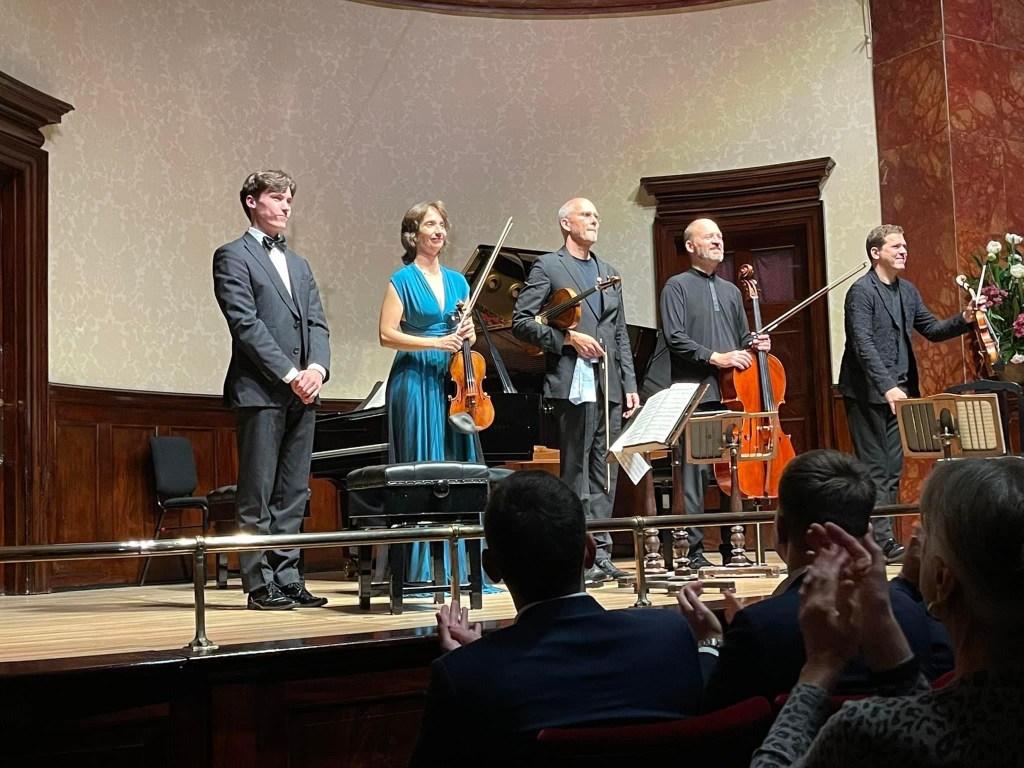
A magnificent performance of the Brahms Quintet with the present winner the 23 year old Canadian Jaeden Izik Dzurko and the magnificent Casals Quartet.Jaeden an excellent partner to his magnificent colleagues.What a marvel to see Vera Martinez- Mehner rise out of her seat as she and her colleagues watched each other waiting to see what the other would do.Like the Kelemen Quartet with Peter Frankl recently they had moved the standard shape of the quartet to fit this passionate score .First Violin and Viola on the outside with cello under the lid of the piano and what a wonder he was too!Looking so expectedly at the pianist as this young man was too …..music making of infectious improvisation.The viola waiting to pounce too as the young pianist joined in this wonderful circus act.An act where they were all on the high wire risking all for the sake of the music …….and what music.We certainly needed another interval after that emotionally exhausting journey.
Another interval to cleanse the air and prepare for the solo piano of Jaeden.
The magnificent Cuarteto Casals with Jayden Izik -Dzurko
Top of the class performances of Albeniz El Albaicin and Rachmaninov’s troubling first Sonata.Impeccable performances of extraordinary technical prowess at the service of the music. Performances though that were strangely black and white compared to the kaleidoscopic colours that Floristan could find on a Yamaha piano yesterday. But then Floristan is quite unique and in many other ways this young man is too .
At only 23 Jaeden gave greatly assured performances .Albeniz was remarkable for the rhythmic insistence of the hypnotically repetitive opening giving way to hauntingly mirrored utterances of beguiling insinuation before bursting into glorious flames of unbridled passion.The Rachmaninov is notoriously difficult to master with an architectural line that must lead the way and not be distracted by the enormous amount of notes that embroider it’s path.It needs a kaleidoscopic palette of colours to distinguish between the actual line and the streams of gold and silver that embroider it.Jaeden’s command of the transcendental difficulties was remarkable as was his sense of architecture but the driving brooding opening and passionate obsessive declarations were absorbed into a clarity of detail that needed to be hidden in mystery like a cauldron of boiling water always present and about to burst I have only heard one truly successful performance of this and that was from Alexandre Kantarow in a concert streamed live during the pandemic from the Philharmonie de Paris.Martin Garcia Garcia winner of Cleveland came close too in Cremona the other day.He told me that this once very neglected Sonata was now being played by many top pianists at Juilliard in New York these days.We have been over saturated with the second sonata since Horowitz’s staggering performance that he astonished the world with in one of the concerts of his Indian summer .
Jaeden came close and am sure as he matures and suffers more the path will become clearer. Two encores of Scriabin and I think Medtner had the audience on its feet for this remarkable young virtuoso
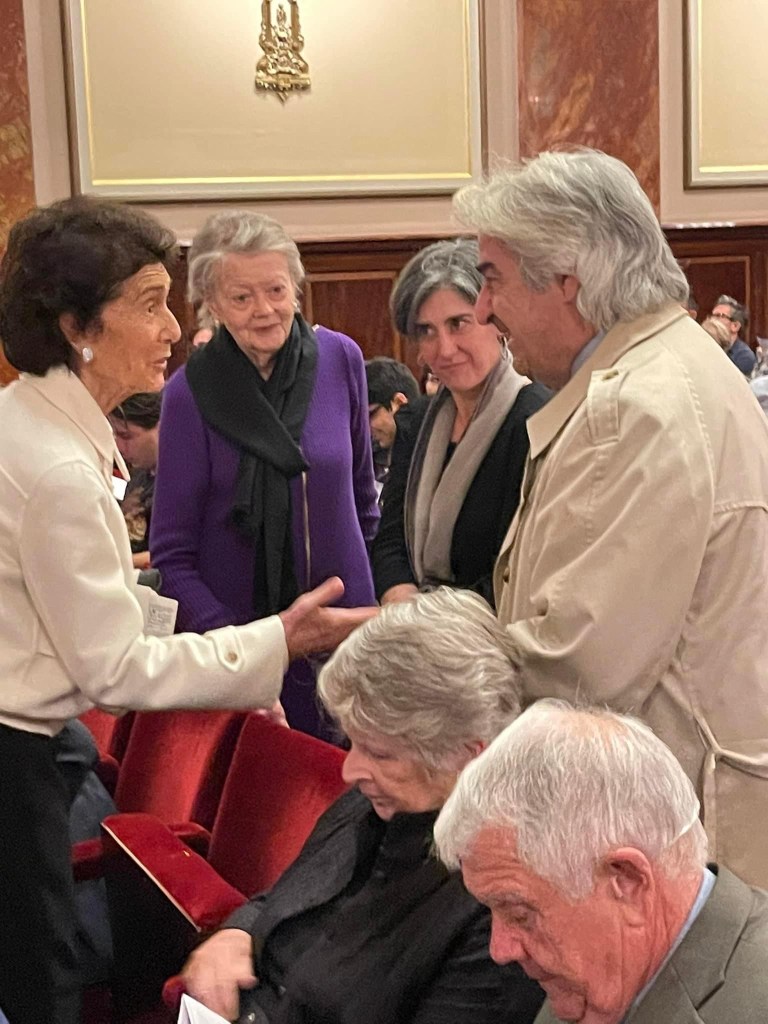
Madame O’Shea saluting Marios Papadopoulos with concert manager Lisa Peacock and Pilar Pertusa,general secretary of the Santander Competition
Wonder of wonders a miracle of ravishing playing where time just stood still as we listened breathless in wonder . A young man who recreated the music not only before our eyes but where he too is astonished by the wonders that flow from his fingers. Has the menace of the Appassionata ever been more terrifying than in the opening few bars or the sumptuous beauty that follows that until now only Rubinstein could make glow like gold. Chopin Preludes that I had heard streamed live from Duszniki Festival together with the same group by Liszt but tonight created an electric atmosphere that made words superfluous .Where most pianists have a range of ten gradations in every note ,Floriestan has 100 but even that is a ridiculous calculation because it is infinite . At last an artist, the worthy heir of Rubinstein.An artist who lives and breathes music. I have written about some of programme from Verbier last summer but tonight there was the Appassionata where stood the Wanderer Fantasy and there is still so much to say about an artist who lives and breathes music so intensely.
Floristan telling the story behind the notes like an artist describing the landscape that he is about to depict.
An Appassionata of absolute clarity but veiled in mystery where the rests spoke louder than the notes.From the very opening with a dynamic energy within the whispered notes.The phrases ending abruptly in silence after a trill that unwound with spine tingling nervous energy.The menacing bass notes played totally expressionless sent a cold shiver down our backs before the inevitable irascible explosion.Fragments appearing on expressionless repeated notes led to the sumptuous richness of the second subject played with a timelessness that I have not heard since Rubinstein’s performances in London.The mysterious descending scale bathed in a veiled mist led to an explosion of rhythmic energy of breathtaking contrast.The opening theme’s gentle appearance in the left hand marked only forte by Beethoven as it spread over the entire keyboard with ever more fervour before the point of arrival with the sforzandi and its immediate disintegration.The second subject now got gradually more intense leading suddenly to fortissimo cascades of notes and the menacing four notes from the opening unmasked revealing the real force behind their opening menace.The final virtuosistic cascades of notes were built up with levels of sound ever more intense until the bubble burst with devastating effect and it was here that Floristan had been saving his true dynamic force raising himself up in the seat as Rubinstein would do at the key moment in the movement .It took our breath away for its audacity and seemingly improvised freedom.Beethoven’s great temperament had been unleashed before the agitated coda dissolves into a mist of sound that is all very clearly Beethoven’s wishes for those that can understand them.This was a remarkable recreation of the score where not only the composers wishes had been digested fully but also an understanding of the composers temperament,personality and the times he lived in .
For us tonight Floristan had become Beethoven.
The Andante con moto was played in whispered tones as the variations became more and more agitated leading to the mysterious arpeggiando chord (did I hear it played top to bottom ?) and the final fortissimo chord heralding the start of the Allegro ma non troppo.It was played with swirls of sound with a great sense of urgency and ever increasing intensity never allowing the dynamics to take over or disturb the relentless rhythmic pace that he had set .Even the coda was played with great control until the final page where the wild beast of Beethoven was unleashed with devastating effect.
Floristan with Lady Weidenfeld
The Preludes by Chopin in Floristan’s hands were not those described by Fou Ts’ong as 24 problems but these were 24 jewels of ravishing beauty as the rays they projected shone with such radiance and subtle colouring within a sound world that was like a shell into which we were invited to look.The improvised beauty of the opening flourishes were transformed into a brooding almost lumbering second prelude on which the melodic line was placed so freely with subtle shaping of great delicacy.The lightness of his left hand in the third allowed the melodic line to sing without any forcing and was even allowed to breathe with the same liberty as a singer.The beauty of the fourth was enhanced by the opening rather rapid tempo that was allowed to dissolve into three beautifully placed chords of great significance.The whispered entrance of the fifth’s meanderings led to the luxuriance of the melodic line of the sixth suddenly bathed in a warm glow of pedal and where the final few bars were like a dream or reminiscence of what had come before.The grace and delicacy he brought to the seventh belied the fact it is the shortest of them all!The eighth grew out of this so naturally -one can see where Scriabin got his inspiration from- beautifully shaped with timeless phrasing despite the fistful of notes that have to be contemplated.
Yisha Xue of the National Liberal Club with Floristan
The added bass notes in the ninth just added to the nobility and beauty and contrasted with the jets of jeux perlé interspersed between the simple melodic line.The frenzy and sense of dance in the twelfth was allied to a precision and clarity but given also shape and colour.The shimmering beauty of the thirteenth allowed the melodic line to float with subtle delicacy and breathless beauty.The almost secret entry of the wind blew itself out before the great bel canto singer took the stage with ‘raindrops’from heaven.Adding some slight embellishments of his own that only added to the beauty and legato line as a great singer might do with the superlative breath control of a Caballée.Even the usually overblown central section was allowed to grow so naturally and never was an unwanted visitor to this extraordinary tone poem.There was beauty and transcendental control with richly highlighted inner harmonies that added a golden richness to the sixteenth and seventeenth.There was passion and rhetoric in the cadenza of the eighteenth having crept in almost unnoticed before exploding before our very eyes.The transcendental difficulties of the nineteenth were ignored by a pianist that lives and breathes only music and the fullness of the C minor chords of the twentieth became a whispered secret in only a few magical bars .The octaves of the twenty second were played with the same mellifluous colour that had illuminated all the preludes .Chopin’s flowing jeux d’eau was of timeless beauty as the final prelude crept in with such subtlety without for a moment becoming the usual bombastic show piece we are used to in lesser hands.He even found time for a magical pianissimo in the ever boiling intensity and the final dive from the top to the bottom of the keyboard was greeted by three ‘D’s’of such colour and subtle vibrancy and not the usual bomb shell final blast played helter skelter with the right hand A performance where Floristan allowed the music to breathe and vibrate so naturally but also keeping the overall architectural line from the first improvised notes to the final beauty of the last three magic gongs.
Franz Liszt composed Sposalizio, which means marriage in Italian ,after being inspired by Raphael’s painting The Marriage of the Virgin.The first piece from Deuxième Année de Pélerinage :Italie (Second Year of Pilgrimage: Italy), published in 1858.Starting with a simple pentatonic melody, which is transformed into a complex musical shape. The melody is then transformed into a type of wedding march leading to the grand climax before dying away to a mere whisper.It was played with beautiful hand movements caressing the keys as I have only seen the like from Volodos, producing magic sounds with even the thumbs delicately punching the notes deep into the keys with passiona\te fervour within an almost whispered confession.The melodic line floated on the ever busy left hand that even in the most passionate climax never overpowered the melodic line and sense of overall shape.Coming full circle and ending with the same delicately played configurations as at the beginning. it prepared the scene for the brooding contemplation of ‘Pensieroso’
Distinguished guests in discussion Norma Fisher with Prof.Christopher Elton
The concept of ‘Il pensieroso’ which Michelangelo Buonarroti symbolized in his idealized representation of Lorenzo di Piero de’ Medici at Florence’s Cappelle Medicee might have had even earlier roots but it became a fascinating subject for many years after Michelangelo’s time. ‘Il pensieroso’, this time was in Liszt’s Années de pèlerinage, Deuxième année: Italie. The inspiration for the main title of the three cycles for piano solo came from Goethe whose Wilhelm Meisters Wanderjahre (years of the journeyman) provided the idea. Much later in Liszt’s life, parts of ‘Il pensieroso’ surfaced once again in the second part of his Trois odes funèbres, La notte where Michelangelo meets Liszt, Milton, Goethe, Händel, and last not least the British/American Painter Thomas Cole.In La notte Liszt divides his attention between the tomb of Giuliano de’ Medici which shows the sleeping woman to the left symbolizing the night and the tomb of Lorenzo de’ Medici who is portrayed as the man who is deeply thinking seemingly in an introspective and melancholy mode. If Liszt’s La notte came after the untimely death of his daughter Blandine at childbirth, it adds tragedy to the composer’s life of highs and lows, of extremes and contradictions that it followed the early death of Liszt’s son Daniel which had been reflected in the music of Les morts. Here Liszt was seeking guidance from Hugues Félicité Robert de Lamennais, a priest and author who had Liszt’s confidence and trust throughout most of Liszt’s life. It is Lamennais’s presence when Liszt subtitled the work ‘oraison’ (prayer or oration). Les morts was dedicated to Liszt’s daughter Cosima who survived her father by almost a half-century. Liszt’s music can be said to represent a philosophy of art, poetry and religion, the complex sources he drew from, the multitudes of inspiration from an unending number of origins and the awareness that Liszt’s work transcended music in a multitude of ways and means.
The distinguished cellist Oleg Kogan and pianist wife Polina of the Razumovsky Academy
A deeply introspective performance where Floristan barely touched the keys before Liszt’s chords of the final scene from Tristan and Isolde opened a flood gate of a gasping,breathless unending build up of fragments that led to the final crowning passionate outpouring.It was played with a magical sense of colour with golden streams of sounds that grew so naturally with an inner passion and intensity that was mesmerising.Even the most passionate of climaxes was played with a beauty of sound from a pianist who could never play vertically but saw the long lines with his body movements as horizontal and deeply etched into the keys.The aching silence that greeted the final moments of this marvel were proof enough of the trance that had been created by this true poet of the Keyboard.
Lady Weidenfeld with concert manager Lisa Peacock without whom this concert would not have been possible
Imogen Cooper Katya Apekisheva Dominic Degavino Charles Owen
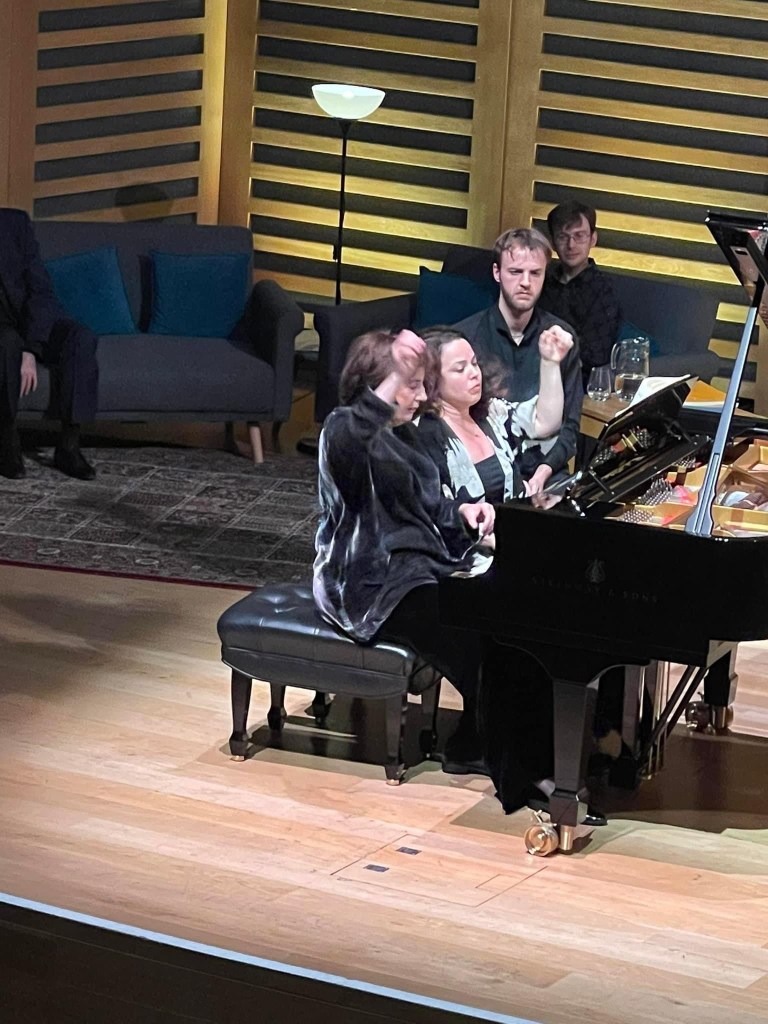
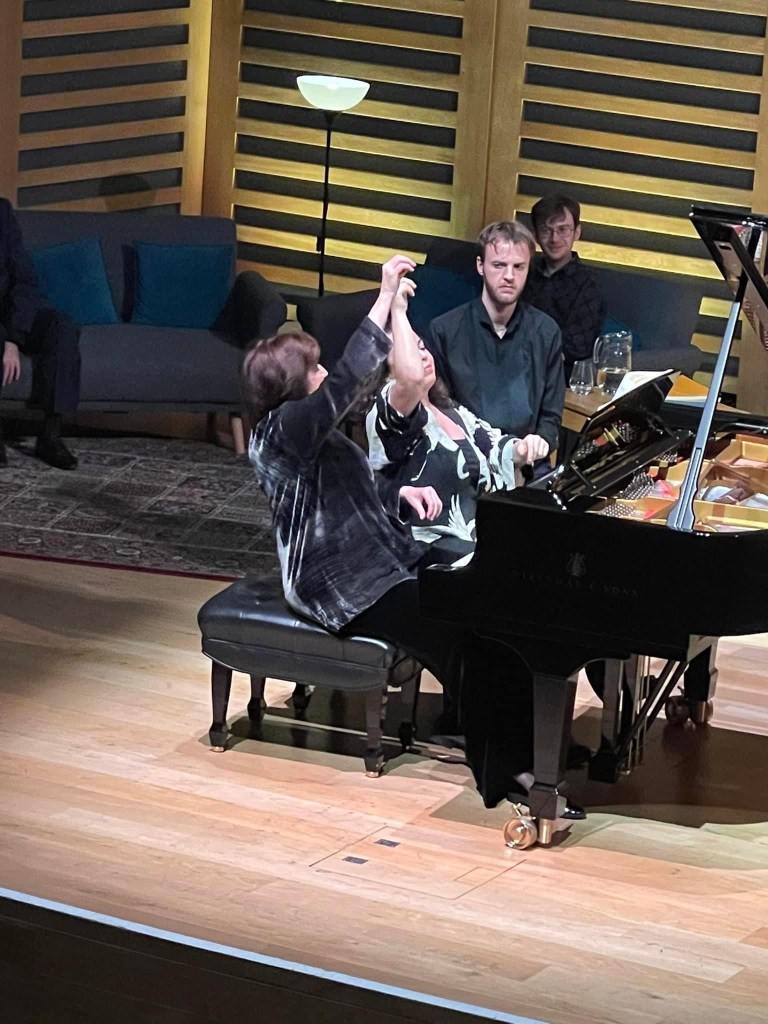
The stage of Kings Place was transformed for the evening into an intimate salon of sublime music making with a Schubertiade of eight hands on one piano.
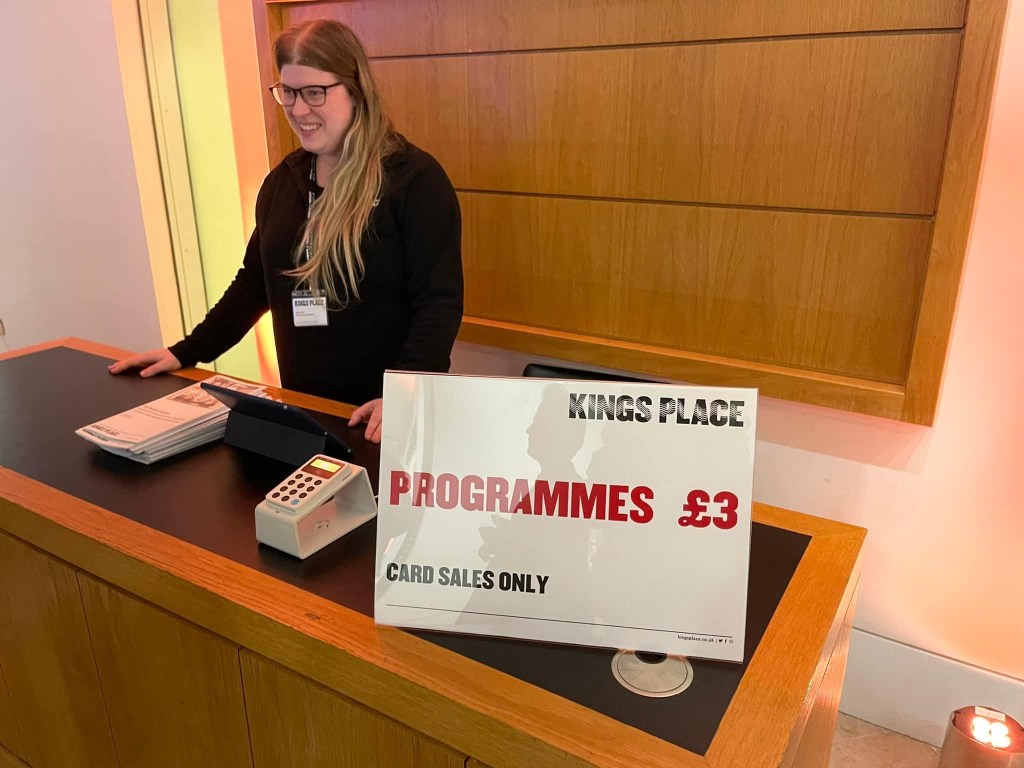
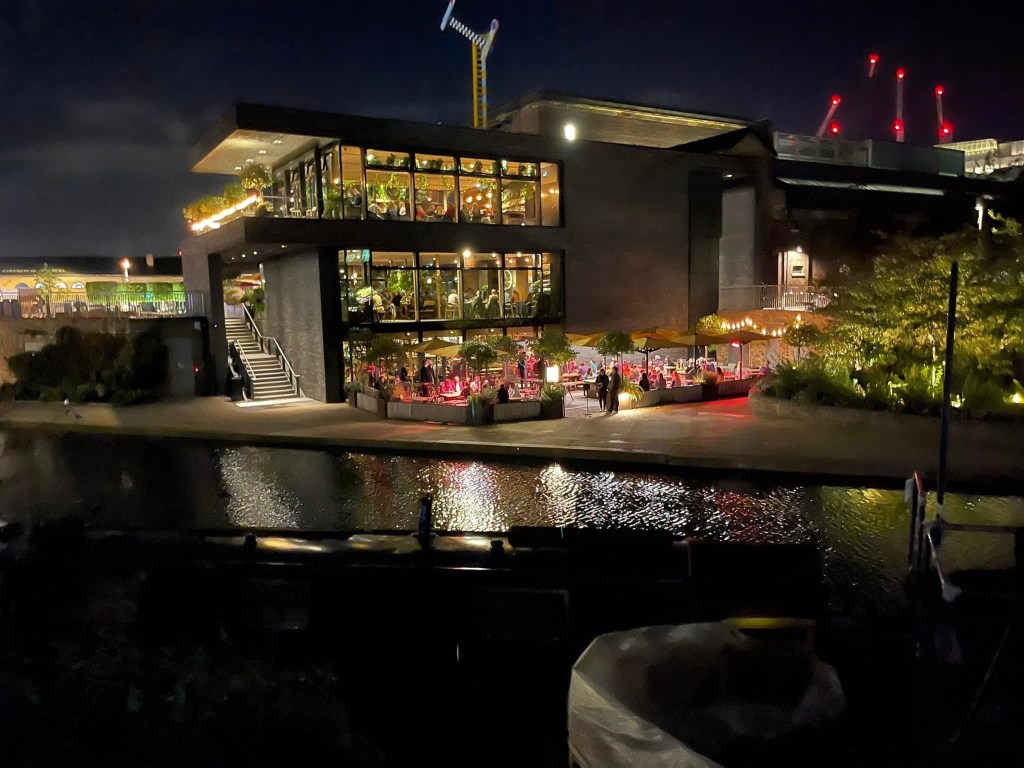
Kings Place had tried its best to unwrap itself for the evening but with a card machine that did not work and only one place where programmes were on sale.
A public convenience that was a bit like scaling Everest or descending into Hades !Some rather duff furniture on stage in the hope of creating an intimate atmosphere in this most antiseptic of concert halls. It was trying too hard again to please . It was enough the sublime creation of Schubert on its own to create the magic that eludes the PR boys of Kings Place. An even distribution of boy and girl created a fascinating glimpse of the artistry of all four fine musicians who listen so unselfishly to each other.
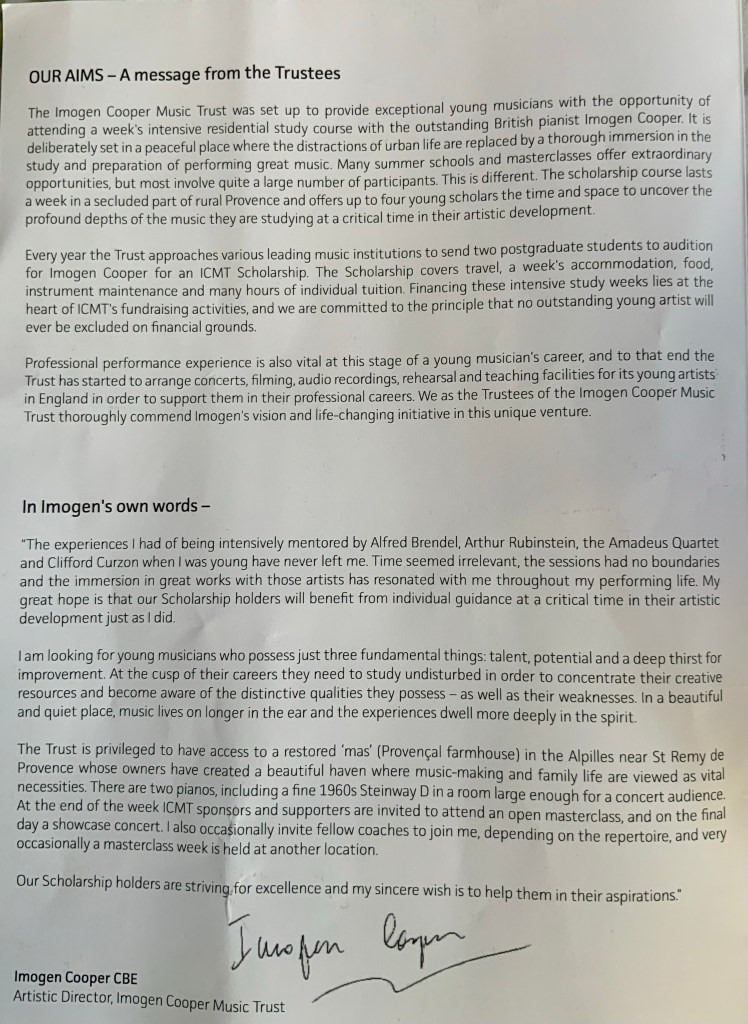
Also a protégée of Imogen Coopers Music Trust,Dominic Degavino,created a magic atmosphere much helped by the sensitive musicianship of Charles Owen who had also played a major part sustaining Katya .He also joined Imogen Cooper in a very musicianly account of Lebenssturme where the mutual sensitivity of Schubert’s chameleon like changes of colour was breathtaking. Imogen together with her protégée Dominic played as one in a monumental performance of the sublime masterpiece that is the F minor Fantasy .
Imogen Cooper. Katya Apekisheva
But it was the combination of the two ladies that stole our hearts with a performance of the rarely heard Variations on an original theme. Delicacy,passion,virtuosity and simplicity combined with four hands locked in a true love duet of refined music making of perfect ensemble. It was more than that ….they played as one ….their hearts beating together.
Magic had taken the stage …….it took just the genius of Schubert and the artistry of the medium between us and his soulmates. If only Kings Place could wrap this up and keep it safe for my next visit.
Magic at Kings Place The artistic endeavours of KP knows no bounds …..trying so hard to please .Knotty twine indeed !
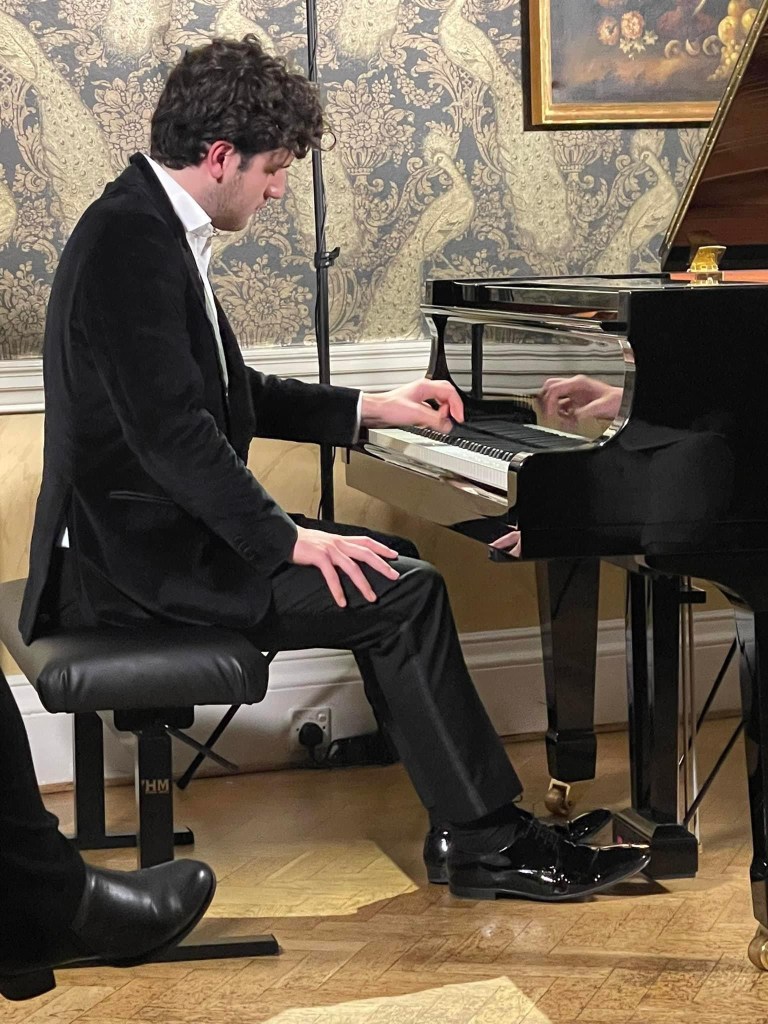
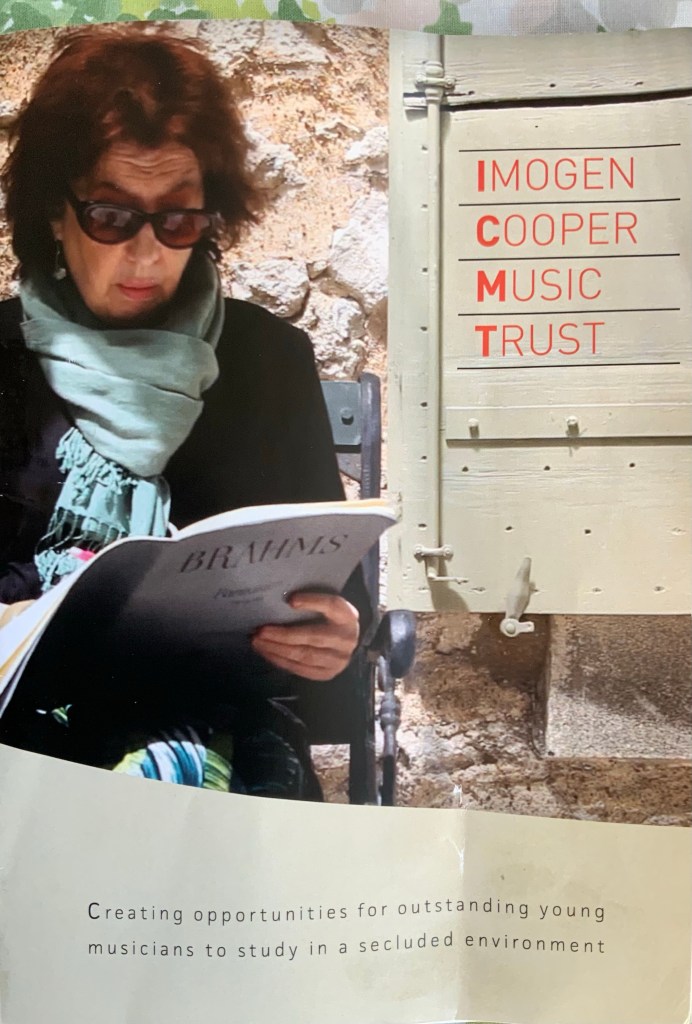
Aidan Milkdad a name to remember ……astonishing playing for the Imogen Cooper Music Trust.A Liszt Sonata of such clarity and assurance with an architectural understanding that made you almost forgive his youthful passion that ignored Liszt’s very specific dynamic instructions. But there were so many memorable things that when he has had a serious talk with Dame Imogen he will understand that there can only be one climax that must be the very pinnacle of the sonata. The tumultuous and overpowering climax before the return of the deep mysterious opening chords.He played the fugato at breakneck speed too (because he can!) and then of course he had to put the break on.There were so many beautiful things though and a technical ease that allowed such clarity.The opening with its murmured mystery so beautifully shaped and that reached sublime heights in the final bars when Aidan hinted at a dissonance so unexpected but for that so moving.As Ashkenazy once said,the final two pages of Sonata are some of the most moving in all of music.It was after all the spectacular gymnastics that this young man had understood that these final pages were the very core of this masterpiece and he was able to reveal it’s soul as only a kindred spirit could do.No wonder Liszt scratched out his triumphant first draft for the sonata where like Busoni with the Goldberg variations it finished in a blaze of glory.The genius of Liszt was able to pen one of his most moving utterances that pointed to the future.The Genius of Liszt has no bounds.Q.E.D.
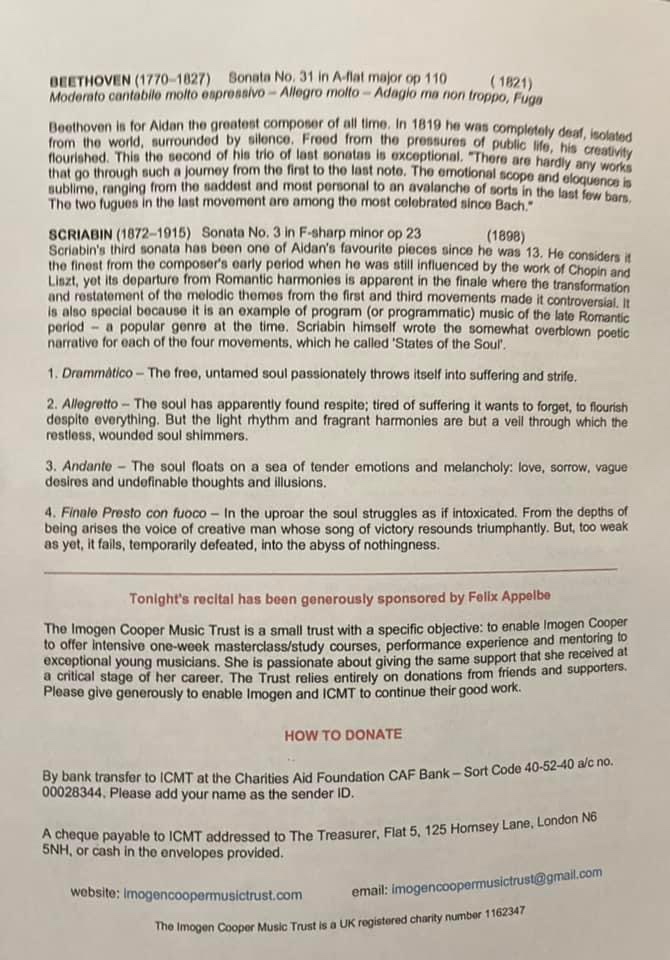
I remember,as students,buying the fifty pence Turnabout recording of Alfred Brendel who was a beacon in a world of empty virtuosi who would dare dabble their feet in such dangerous waters. Of course Beethoven’s op.110 was given an exemplary performance with scrupulous attention here to the composers indications and much else besides.There was a fluidity and luminosity to the sound contrasting with the butterfly clarity of the leggiermente and the simplicity with which he played the astonishing change from E flat to D flat before the development.His scrupulous attention to Beethoven’s very precise markings where his left hand meanderings were so clear but never overpowered the right hand melodic line as it found its way back home.What poignancy he brought to the coda and the final two chords played with such delicacy of one who is truly listening to every sound he makes.The Allegro molto was played very deliberately with great care of the dynamics.The treacherous trio held no fear for this young man but if he had given more weight to the bass notes that Beethoven marks to be accented it would have given much more weight and meaning to his continuous meanderings.There was a sublime timeless beauty to the Adagio which led to the serenity of the fugue.It built to a climax before the miraculous change of key and the melodic line breathing its dying breath – ‘perdendo le forze,dolente’.The simplicity and mastery of his playing was very moving as it wove its way inexorably to the triumphant final pages building the tension that was to explode in the glorious outpouring of its arrival home.Dame Imogen was looking on in admiration at her young disciple,how could it be otherwise! Scriabin’s hypnotically obsessive 3rd Sonata was played with fluidity and radiance with his youthful passion and exuberance in the tumultuous climaxes and how could one criticise when the impact was so overwhelming.Power,passion and luminosity but above all radiance and sumptuous beauty like jewels sparkling brightly in the intoxicating perfumed air.The 5 preludes op 5 by Scriabin too that had opened his programme with the passionate outpouring of the second,ravishing beauty of the third and elegance of the fifth all played with such kaleidoscopic colour and style.
A ravishingly solid performance of the nocturne op 9 for the left hand alone was his way of thanking the audience.Scriabin’s right hand had been almost irreparably damaged trying to get his fingers around Liszt’s Don Giovanni paraphrase.
with our hostess for the last time today Anne Machin …..tomorrow she assures us that the Trust will be in good hands with our new host an equally enthusiastic admirer of all that Dame Imogen is doing to help young musicians
There was no risk of that with our young hero tonight as he dedicated to our hostess,Anne Machin,a dazzling transcription by Volodos of Liszt’s 13th Hungarian Rhapsody. Left to young virtuosi like Aidan these days to astonish and amaze as the elder statesman Volodos turns to the classics. It was indeed a fizzling end to a remarkable concert by a 21 year old pianist who is obviously headed for the heights.
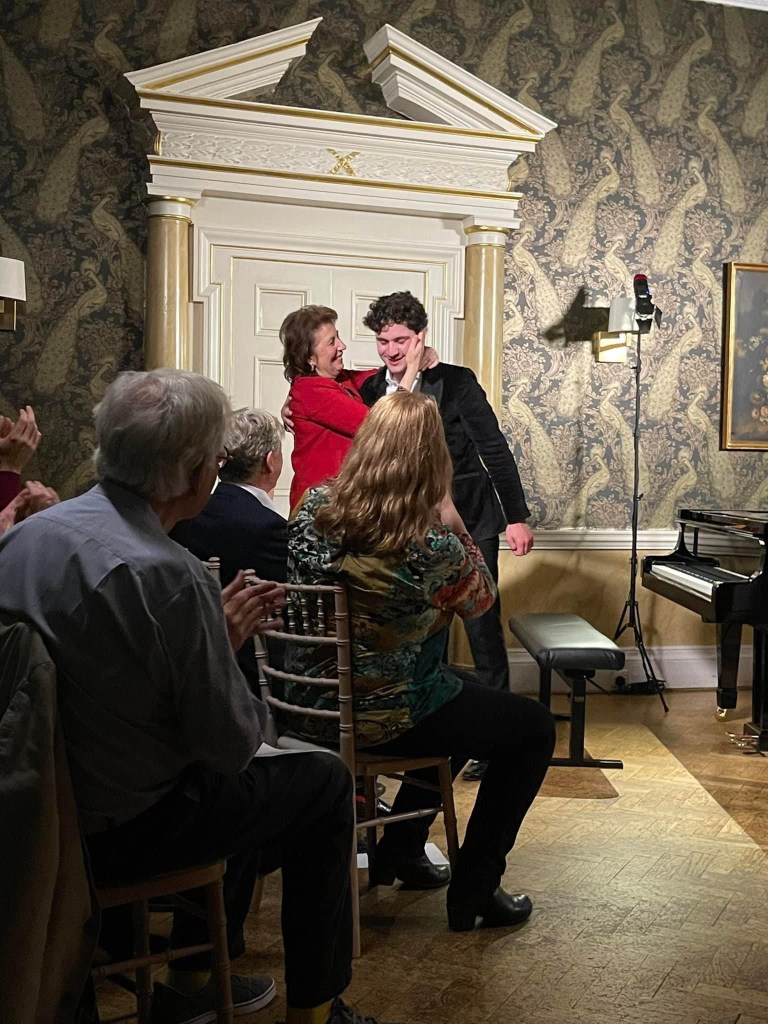
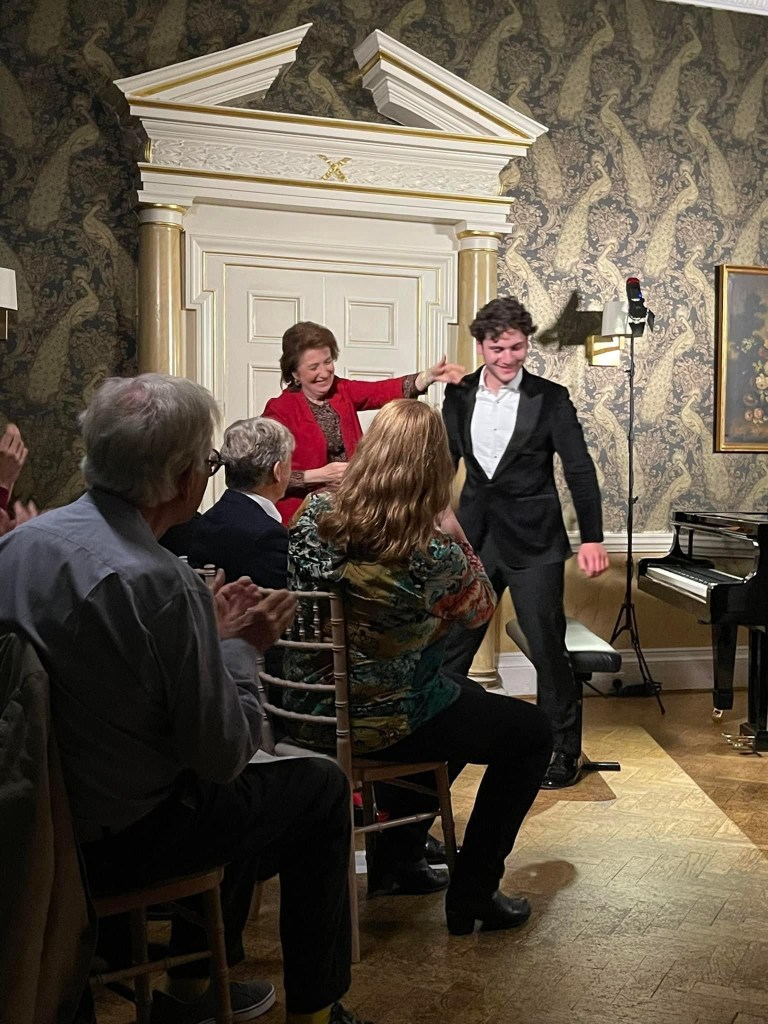
On his knees before Dame Imogen asking forgiveness for giving way to such undisguised showmanship.How could we not forgive him as we were all enthralled and involved in the excitement this young man had generated with his astonishing virtuosity.





































 ChristopherAxworthy-MusicCommentary