The historic Sala del Notari in the centre of Perugia
A concert of simple great artistry from Chloe Mun in Perugia. A ‘Building Bridges’ concert in which her mentor Andras Schiff brings to public attention artists who are ready to share the true message of music with the world. Haydn,Debussy and Schubert of intensity and beauty with a control and mastery that allowed these great works to live and breathe with a natural musicianship. An artist who with humility and integrity can delve deep into the scores to find the secrets bequeathed to us by the composers.
Winning both Geneva and Busoni competitions as a teenager, a distinction that she shares only with Martha Argerich and whose mutual love and passion for music is their raison d’etre, that with generosity share with a public hungry for masters who will never let them down!
Haydn’s two movement late C major Sonata opened with an ‘Andante’ of delicacy and etched beauty of a continual questioning as the beautifully shaped melodic line was imbued with a subtle sense of colour. A ‘Rondò’ that sprang from her fingers with a refreshing ‘joie de vivre’ and impish sense of humour of scintillating rhythmic drive. Fluidity and golden delicacy she brought to Debussy’s ‘Estampes’ with a kaleidoscope of sounds bathed in pedal,creating the same magic and ethereal perfection that Richter was to seduce us with on his first visits to the West. ‘Pagodes’ with a sheen of magical sounds that were wafted into the air with a mixture of melody and mist that became ever more intense, bursting into passion and fire only to disappear to the wondrous land from which it had been born. Whispered haunting sounds of a ‘Soirée dans Grenade’ seen in the distance as it gradually came into view with its rhythmic insistence wrapped in a warmth of ravishing beauty. The pitter patter of rain in ‘Jardins’ was of gentle persuasion as its velvet clarity gave way to a vision of childish wonderment. Chloe demonstrated her masterly control of sound and transcendental command as she brought these three etchings to us as if newly minted, with a freshness and perfection of rare sensibility. There was delicacy and a perfection of art that conceals art but there was also passion and intensity as Chloe kept her eyes glued to the keys with daggers drawn. Looking down at her hands as they delved deep into the keys with selfless authority commanding them to show us what was in her heart and mind. Her work with Andras Schiff at the Barenboim-Said Academy has only intensified her wish to delve ever more deeply into the scores of the great masters and share them with a public hungry for the message that is hidden within.
Schubert’s C minor Sonata was lain bare with its deep brooding Beethovenian declamation that Schubert was immediately to diffuse with a mellifluous outpouring of disarming simplicity. What contrasts Chloe brought with her burning intensity of orchestral sounds mixed with the ethereal beauty of Schubert’s seemingly endless mellifluous invention. A mastery that could allow Chloe to unravel the contrapuntal complexities of the developments with simple, unadorned mastery. Fingers that could extract rich orchestral sounds with never a trace of hardness or words spoken in haste . An ‘Adagio’ of monumental proportions as the melodic line built to a climax of searing intensity only to return ever more beautifully with a delicate filigree accompaniment that showed Chloe’s transcendental control of the pedal.
It brought to mind Anton Rubinstein’s declaration, that was surely that of his mentor Franz Liszt, that the pedal is the soul of the piano. It was the mastery of the pedals tonight that illuminated all that Chloe did as she so unobtrusively used them to illuminate and ignite the wishes of the composers of which she was merely their devoted servant. A beautiful fluidity to the ‘Menuet’ was complimented by the subdued beauty of the ‘Trio’ with its very subtle bass counterpoints.
A last movement that sprang from her fingers with a rhythmic drive and vervet fluidity that gave no indication of the irascible Beethovenian interruptions it would receive before being allowed to weave it’s way to the final chords of this masterwork written in the final years of the composers thirty one years on this earth.
As Maude Tortelier once said Schubert is one of the angels bequeathed to us on this earth for a short period to enrich and illuminate our lives forever.
After such a monumental performance Chloe could only share with us Chopin’s vision of paradise with a recreation of his D flat nocturne where time stood still. Here in just a few moments her mastery and musical integrity illuminated one of Chopin’s most beautiful bel canto creations.
We shared one of those rare moments where people are united in the strage alchemy that only music can provide.
United under a roof of peace and sublime beauty.
morning rehearsal in the Sala dei Notari Ravel Left Hand Concerto for a performance in Seoul shortly
Venerdì 28 febbraio 2025 ore 20:30 Perugia, Sala dei Notari Chloe Mun, pianoforte
Programma F.J. HaydnSonata in do maggiore Hob. XVI: 48 C. DebussyEstampes (1903) F. SchubertSonata in do minore D. 958
Classe 1995, la sudcoreana Chloe Mun ha iniziato lo studio del pianoforte all’età di cinque anni, distinguendosi con la vittoria a due importanti Concorsi europei, a Ginevra (2014) e a Bolzano (“Busoni”, 2015). Da allora si è esibita in numerosi paesi europei, nonché in Corea e in Giappone, sia in recital che come solista con orchestra sotto la direzione di Myung-Whun Chung, Alexander Shelley, Yuri Bashmet, James Judd, Mario Venzago, Eiji Oue e altri ancora. Per l’etichetta DGG ha registrato un primo cd dedicato a Schumann (la Sonata op. 11 e la Fantasia op. 17). Attualmente è allieva di Sir András Schiff alla Barenboim-Said Akademie di Berlino e la sua attività della stagione in corso fa parte del progetto “Building Bridges”, con il quale il maestro ungherese invita organizzatori musicali internazionali a voler dare spazio ai suoi allievi più meritevoli.Molto articolato il programma della serata, che ha inizio con una delle ultime Sonate (1789) di Joseph Haydn, in do maggiore Hob. XVI:48. Due soli i movimenti, ma di una grande originalità: una serie caratteristica di “doppie variazioni” (tra maggiore e minore), seguito da un animato Presto dal clima innegabilmente “orchestrale”. Seguono le Estampes (“stampe” o “incisioni”) di Debussy (1903), le prime delle sue escursioni coloristiche in paesi “esotici”: l’Estremo Oriente per Pagodes e la Spagna per i ritmi suggestivi di habanera nella Soirée dans Grenade, mentre sono più vicini a casa i Jardins sous la pluie, quando i giochi di bambini vengono interrotti da improvvisi scrosci di pioggia. Decisamente turbato – quando non tragico – il clima espressivo della Sonata in do minoreD. 958 di Franz Schubert. Stati d’animo che a momenti rasentano la disperazione, che nelle successive due Sonate si trasformeranno in un’atmosfera più rassegnata, seppure sempre inquieta. Andrew Starling
An indisposed Bronfman in Rome, and after Kholodenko’s recent success with Pappano of the Busoni Piano Concerto , it provided the ideal opportunity to be able to hear this 2014 Van Cliburn Gold Prize Winner in a programme of entirely his own making .
I have heard Vadim recently playing the Rzewski Variations in London and was completely won over by the kaleidoscopic range of sounds that he was able to find in a marathon work of transcendental difficulty that was commissioned by Ursula Oppens in 1975. In fact Ursula was in Siena in the class of Agosti in 1968 before going on to win first prize in the Busoni competition . A pianist much admired by Agosti for her respect for the composer’s wishes and her very intellectual and serious preparation of all the works she played. I remember Siena resounded to her continuous practicing of a Prelude by Busoni that was one of the set pieces that she had obviously decided to prepare in Siena. Her Chopin Fourth Ballade, her teacher Rosina Lhévinne had advised her never to play in public was praised to the skies by Agosti for its lack of adherence to tradition but total respect for what the composer actually wrote. Ursula now in her 80th year is a legendary figure amongst contemporary composer who she has been championing all her life. She has recorded the Rzerwski Variations twice since its commission in 1975. But it was Kholodenko who could add fantasy and colour that illuminated a rather intellectual score. He paired it in London with the transcription of the Mozart Requiem by Karl Klindworth ,a pupil of Liszt. And I remember that the strict construction of the Requiem was lost with Kholodenko’s searching for hidden sounds and colours instead of etching out the great architectural contour of such a masterpiece.
Today he had chosen three pieces to open the programme that demonstrated his extraordinary sense of colour and a range of sounds from pianissimo to mezzo forte that are remarkable. Byrd with its renaissance meanderings was an ideal way to prepare the audience for Kholodenko’s unique sound world. Sokolov has recently brought the Renaissance music into the concert hall, after the pioneering work of Glenn Gould, with works by Purcell and Byrd. Sokolov,though,was able to bring a sense of line and architectural shape to these works written for keyboard instruments where colour and variety were provided by the change of manuals and ornamentation. Kholodenko brought us into a sound world that was the same as the contemporary Saariaho’s Ballade which was played without a break after the Byrd. A world of wondrous whispered sounds, but music is made of the song and the dance and it is this sense of rhythm or pulse that creates an architectural line giving order to the sounds, however magical that are being produced.
This was the world of Kholodenko that was to pervade the whole of his programme. Even the miniature tone poems that are Chopin’s Mazurkas were treated to sounds and beguiling whimsical half lights, but the overall shape of these ‘canons covered in flowers’ was sacrificed for a palette of sounds that had a momentary pleasing effect but sounded more as though they were a personal gratification rather than an interpretation of what the composer had written in the score. An improvised freedom that in the hands of a true servant of the composer becomes a freedom as one discovers the inspiration that was behind the notes that were still wet on the page. But to take the notes of the composer and use them for a free improvisation is something that the pianists of the 19th century used to do as they discovered more and more the possibilities of a instrument with touch and pedals. De Pachman would talk to the public to tell them about the wonders he was producing from a box with strings and hammers. Anton Rubinstein described the pedals as being the ‘soul’ of the piano. These were artists that excelled in miniatures of whispered asides contrasted with bombastic showmanship. Liszt and Thalberg had a pianistic duel to decide who was the better of the greatest pianists before the aristocratic audiences of the day. They had invented the three handed pianistic technique of allowing a melody to be sustained by the pedal with the melody shared between alternating hands while notes were awash all around the keyboard. A pianist of the calibre of Artur Schnabel was to appear on the scene ,who even his teacher Leschetizky said that he was not a real pianist. It was Schnabel himself who said that usually the programmes of pianists of the day were with a serious,boring first half and and crowd pleasing second.His programmes were with both halves equally boring!
I was hoping that Kholodenko with masterpieces such as Beethoven’s Sonata op 31 n. 1 and Chopin’s B minor sonata that have such an architectural shape would be where Kholodenko’s palette of colours could illuminate and bring fresh life to such well know and often played works. On this occasion Kholodenko was in contemplative mood and the Beethoven suffered from a lack of shape and became a series of disjointed episodes where Beethoven’s continuous undercurrent of rhythmic pulse was sacrificed for colourful episodes and a continual change of tempo disturbing the very structure of Beethoven’s edifice. Nowhere was it more apparent, though, than in the Chopin B minor Sonata.The second subject of the first movement was slowed down and played as a delicate nocturne having been prepared for by a cloud of delicate filigree notes that completely lost the sense of structure of this monumental work.The Scherzo was played like a charming encore piece of glistening bravura ,juggling notes , and the opening of the rondò with whispered insinuation bore no resemblance to what Chopin had indicated.
Two Bagatelles by Beethoven were encores that Kholodenko generously offered to this rather small audience and they ideally suited his mood today .They were played with bewitching colour and the same whimsical fantasy with which Beethoven had penned them to please a public that often thought his music was too long and serious for their taste !
Jed Distler writes of the 2023 London Piano Festival performance:
Boundaries between ideation and execution do not exist for Vadym Kholodenko. He can do whatever he pleases on the piano, and his interpretations, like them or not, draw attention to that fact. To be sure, his kaleidoscopic shades, half tints and boundlessly nuanced voicings in Handel’s Suite in B-flat HWV 434 will cause Baroque purists to squirm, yet they are catnip for piano connoisseurs. Haydn’s C-sharp Minor Sonata Hob. XVI:36 unfolded with similar pianistic orientation. In Beethoven’s Sonata No. 27 in E Minor Op. 90, Kholodenko’s penchant for arpeggiating left hand chords grew increasingly predictable and without purposeful intent in the first movement, while his animatedly glib Finale bounced through one ear and out the other.
Still, Kholodenko’s total independence between hands and multi-leveled separation of melody and accompaniment must be acknowledged. So does his ability to toss off octave passages in both the Liszt Dante Sonata and Tarantella with more speed, suavity and proficiency than most pianists can handle single notes. Kholodenko also is fond of playing rapid decorative passages in tempo. Such technical feats, however, ultimately amount to tricks, drawing attention away from the music’s drama, dynamism and raving harmonic genius. By contrast, the disarming simplicity of Silvestrov’s Bagatelles Op. 1 and the complex, leisurely unfolding textures through Thomas Adès’ Traced Overhead easily absorbed the pianist’s one-size-fits-all interpretive game plan. In sum, this rather odd assemblage of works added up to a pianistic version of a line from a Leonard Bernstein song: “I hate music, but I love to sing.”
Fascinating to discover yet another very fine young artist via Dr Mather and his team in Perivale. Here is a young lady who quite simply loves the piano and who with humility, musical integrity and refreshing innocence played a varied programme of Haydn, Chopin and Stravinsky with a quite remarkable musical and technical perfection. She reminds me very much of one of Gordon Green’s star pupils Anne Shasby, a musicians’ musician, similar in many ways to the artistry of Andras Schiff where music seems to pour so naturally out of their sensitive fingers. It is playing ,above all, of a musician delving deeply into the scores to find the intentions of the composer with the ink still wet on the page. This is Art that conceals Art with a subtle mastery where showmanship or mere note spinning have no place.
The Haydn E flat Sonata was played with great weight with her fingers delving deep into the keys with brilliance and delicacy. There was a clarity and beauty to all she did with scales that just flew from her well oiled fingers with a shape and colour that brought them vividly to life. A beauty to the ‘Adagio’ of disarming simplicity allowing the music to speak eloquently for itself, bringing an extraordinary sense of character to the final Presto. This was a very particular sound world where everything she played made musical sense and was imbued with a beauty of sound and a very definite personality of great conviction and quiet authority.
The six Preludes from Chopin’s op 28 and the Third Ballade op 47 showed the beauty and a disarming simplicity of her playing, allowing the music to flow naturally and without any unnecessary excesses.The prelude op 28 n. 13 flowed faster that I am used to hearing which gave her greater freedom to shape the melodic line with style and good taste. Golden sounds and a beautiful timeless rubato gave an architectural shape to this most beautiful of preludes. N. 14 usually rattled off at tempestuous speed was here played with a clarity, beautifully phrased and shaped with great musicality.There was a glowing beauty to the ‘Raindrop’ Prelude where even the central episode was played with great sensitivity and eloquence.The 16th was played with dynamic drive but phrased so musically that one forgot about the transcendental difficulty of notes that stormed up and down the keyboard. There was radiance and style to the 17th that she shaped as a real tone poem of wondrous beauty.The 18th usually played as a dramatic cadenza was played like the 14th, with measure, where every note was shaped with eloquence and unusual beauty.
The third Ballade is the most pastoral of all four ballades and it suited her playing with its perfect legato allowing the music to unfold so naturally. The final climax was played with restrained passion and fearless brilliance as the final flourish was thrown off with remarkable mastery. I was reminded of the fourteen year Andras Schiff playing it at André Tchaikowsky’s Masterclass in Dartington and being so astonished by such a perfect legato and the lack of hard edges or ungrateful sounds. A beauty that is formed by fingers that have been trained to caress not hit the keys with a weight that can suck the lifeblood out of each note.
Having listened to such musicianly playing I was curious to hear her Stravinsky Petrushka. Usually a showpiece for pianists who battle with the piano to show off their stamina ,technical mastery and transcendental command. Ekaterina showed us a Petrushka that is above all a ballet and whilst her technical mastery was in no doubt it was the musical values she gave to the streams of notes that allowed us to appreciate Stravinsky’s extraordinary musical invention and imagination. An architectural shape of relative values that each note had a very definite place in an overall plan. There was excitement and dynamic drive but Ekaterina sees more of Eusebius than Florestan in her music making. I remember Joan Havill telling one of her students that he would have to put on a few more muscles before attempting Brahms Second Piano Concerto and maybe this side of Ekaterina’s playing is lacking too. Her sense of style and love of music though, makes her, like Schiff an ideal interpreter of the classical repertoire. Piano bashing virtuosi abound but real musicians like Ekaterina are rare indeed.
ScreenshotScreenshot
Her encore of Chopin’s op 10 n. 4 study showed a transcendental mastery but where Rubinstein would stand up in the seat in the final page to inject excitement and not a little showmanship, Ekaterina chose to play it with clarity and restrained brilliance which in its way was just as breathtaking !
Katya Grabova is a young pianist based in London, currently studying under Professor Mei-Ting Sun at the Royal Academy of Music, where she is pursuing her master’s degree. In recognition of her achievements, Katya has been awarded the Michael Gilsenan Named Scholarship. She was born in Moscow, Russia, and began her musical education at the age of six. Katya graduated from the Gnessin School of Music, where she studied with Professor Tatiana Zelikman and the renowned pianist Boris Berezovsky.
As an active pianist and chamber musician, she frequently collaborates in many music festivals, including the Rheingau Music Festival in Germany, the Gijon International Piano Festival in Spain, the Tel-Hai Piano Masterclasses in Israel, “Bezszady bez granic” in Poland, and the Bowdoin Music Festival in the United States. She has also performed at various festivals and concert series at the Royal Academy of Music, such as the Summer Piano Festival. Katya is a winner of numerous competitions, including “Mlody Virtuos” in Poland, “Sforzando” and the Rubinstein International Music Competition in Germany, and the “Steps to Mastery,” Neuhaus Music Festival, and Nutcracker TV Competition for Young Musicians in Russia. In 2019-2020, she was awarded the First Prize Grant from the Mayor of Moscow.
Throughout her participation in different festivals and masterclasses, Katya has worked with esteemed musicians such as Dmitri Bashkirov, Robert McDonald, Andrzej Jasinski, Katarzyna Popowa-Zydron, Christopher Elton, Vanessa Latarche, Mikhail Voskressensky, Vladimir Tropp, Vladimir Ovchinnikov, Victor Derevianko, Soyeon Kate Lee, and Ran Dank. Her recent recital appearances include performances at the Purcell Room at Southbank Centre, St James’s Church Piccadilly, and Southwark Cathedral in London; the Shanghai Concert Hall and Wuxi Theatre in China; the Great Hall of the Moscow Conservatory and Tchaikovsky Concert Hall in Russia; the Lielais Dzintars Concert Hall in Latvia; Mozarthaus Vienna in Austria; and various venues across the United Kingdom, USA, Israel, Spain, Germany, and Poland.
Most recently, in March 2024, Katya was awarded First Prize at the Coulsdon and Purley Festival Concerto Competition and was invited to perform Liszt’s Piano Concerto No. 1 with the Worthing Philharmonic Orchestra, conducted by Dominic Grier, during the 2024-2025 concert season. Katya is incredibly grateful to be a part of Talent Unlimited.
A remarkable recital for the BBC lunchtime series. Steven Osborne was able to seduce a full hall from the very first notes, drawing in the audience to share with him the discovery of whispered glowing sounds rather than projecting the performance out to them.
It was the arrival of Richter in the west whose control of sounds from mezzo forte to pianissimo was so astonishing for us used to hearing pianists project the sound out with a rich concert cantabile. It was this magic world of whispered glowing sounds that made everything Osborne did glow with a luminosity and beauty that with a very sensitive sense of balance created a continuous mellifluous outpouring. No rough hard edges – this was no longer a percussion instrument but he had found the secret, all too rare these days, of making the piano sing. Of course there were contrasts especially in the rumbustuous outbursts of the last movement of the B flat Sonata but there was a sense of line and a relationship between the notes that never exceeded the natural voice limit of the phrase.
Photos courtesy of Nikita Lukinov
Opening with the Myra Hess transcription of ‘Jesu Joy of Man’s Desiring ‘ and immediately establishing a luminosity of sound and an intimate world of subtlety and beauty. A flowing tempo allowed Bach’s glorious chorale to rise above the continuous accompanying flow of notes with respectful but also seductive beauty.There was a sense of balance that added a timeless beauty to every strand that sang with the fervant conviction of a true believer. A coda of magical bell like sounds interrupted only to make way for the music box folk song simplicity of MacMillan’s ‘Lumen Christi’. Judith Weir’s ‘Chorale for Steve’ was an alluring chattering of questioning sounds and answered by a chorale of poignant simplicity with a beguiling Scottish accent. The scene and the atmosphere was set for one of the most miraculous works ever written for the piano. Could Schubert have known that he had only a few months left on this earth? For this is truly a ‘Song of the Earth’ reaching out as Beethoven was to do in his last Sonatas to share with us their vision of Paradise. It was a pity to have to break the atmosphere that had been created, but the BBC obviously had to leave time for Fiona Talkington to present the sonata to the listeners, like me, at home.
The Schubert B flat Sonata has no real beginning as it has started somewhere else and just passes in front of our eyes like a heavenly vision of glowing beauty. There was a wonderful sense of legato with no rough edges as everything was allowed to sing. Even the playful duet between the hands was shaped with bucolic delicacy and refined restraint. An almost operatic flourish leads momentarily to a moment of assertion immediately defused with rests that became even more meaningful that the notes they separate. What a wonder were the bars leading to the repeat ,how could they ever be disregarded on the pretext of length? In Steven Osborne’s hands they became gasps of questioning until disposed of with a wave of the hand, as the deep rumbling of the bass could be heard in the distance.The sudden change of key for the development was played with breathtaking beauty as the opening melody was transformed into a bel canto of meditative poignancy. A magic land of ravishing beauty that brought us to a well tempered climax and the disarming preparation for the reappearance of the opening. It was very moving to hear how Steven Osborne interpreted ‘forte’ by just slightly giving more weight to the bottom notes of the chords. Time stood still for the ‘Andante sostenuto’ with its deeply moving lament of yearning and searching beauty. The gentle entry of the chorale and the magical change of key was played with subdued passion and when the melodic line was allowed to float above the quivering accompaniment Osborne produced sounds of extraordinary beauty. A bel canto of the voice of a Caballé ,an unforgettable timbre of glowing warmth, produced by a masterly use of the pedals and an extraordinary sense of balance. The ‘Scherzo’ burst onto the scene with a joyous simple outpouring: ‘Allegro vivace con delicatezza’, where the quavers were given their rightful measure of three in a bar and not allowed to run away too lightly. A ‘Trio’ where Schubert’s sforzando markings were merely gasps accompanying the mellifluous chords.There was a gently buoyancy to the ‘Allegro,ma non troppo’, last movement that was played with music box simplicity, interrupted only by an interrogative ‘G’ that just provided a resting place between such joyful playfulness. Schubert bursting into song that was played exquisitely but with a burning forward movement that was to take us to the only really Beethovenian outburst in the whole sonata. It brought us to the triumphant final notes that Osborne played with masterly abandon. An ovation from a public that had been overwhelmed by such mastery and beauty as we too over the air had experienced some of the atmosphere that exploded at the end with a vociferous ovation rarely experienced over the air.
Danny Driver with the Midas touch of a great artist bewitches and bewilders the Chopin Society with wondrous Chopin and monumental Beethoven mixed with superhuman feats of transcendental pianistic control in Adès, Ligeti and Frank
photo Marek Ostas
Adès’s ‘Darknesse Visible’ immediately demonstrated the mastery of the pianist before us today .Reverberations of barely audible notes of Scarbo like intensity. Visionary atmospheres resounded around the hall with subtle delicacy and radiant glowing beauty. A ‘tour de force’ of control and musical imagination and above all a magic sound world of beauty and passionate persuasion that was to be experienced throughout this very varied programme. It is an explosion of John Dowland’s lute song ‘In Darknesse Let Mee Dwell’ (1610). “No notes have been added; indeed, some have been removed,” Adès writes. “Patterns latent in the original have been isolated and regrouped, with the aim of illuminating the song from within, as if during the course of a performance”.
‘In darknesse let mee dwell, the ground shall sorrow be, The roofe Dispaire to barre all cheerful light from mee, The wals of marble blacke that moistned still shall weepe, My musicke hellish jarring sounds to banish friendly sleepe. Thus wedded to my woes, and bedded to my Tombe, O let me living die till death doe come.’ Dowland ends the song with a restatement of the opening line.
And Danny Driver played the ending like a Bach Chorale with whispered intensity that created a magic spell that only Handel could break . Adès transforming the piano into an instrument that’s alchemically capable of sustaining a continuous line of melody; the technique of ceaseless tremolo that he demands of the player conjures a ghostly shimmer from the instrument.
Photo by Marek Ostas
Handel’s Suite n. 5 is best known for its ‘Harmonious Blacksmith’ Air and Variations final movement.The magic sounds of Adès gradually became clearer as the mellifluous meanderings of this suite were played with a beautiful fluidity. No jagged edges but a pure simple outpouring of ingenious counterpoints. The ‘Allemande’ had the same fluidity and it was not until the ‘Courante’ that we began to experience a busy weaving of joyous outpourings with some subtle ornaments just glistening like jewels. A great cadenza like flourish announced the well known last movement often given to valiant learner pianists together with simplified versions of the ‘Moonlight’ or ‘Liebestraum’. Little could they have imagined where the variations would take them. A gradual build up of more and more notes that Danny D played with a disarming mastery, where the streams of notes seemed to pour from his fingers with such ease. Among the eight suites published for harpsichord in 1720, Handel published his Suite no. 5 in E major, HWV 430 it was promulgated a year after Handel became Master of the Orchestra at the Royal Academy of Music, also known as the first Italian opera company in London. Handel lived the remainder of his life in London after leaving Germany to work as resident composer for Earl of Carnarvon .
These two works were a gradual build up to Beethoven’s last Sonata op 111. A truly masterly interpretation of intelligence and integrity as Beethoven’s meticulous indications were not just followed but interpreted with intelligence and poetic understanding. An architectural shape and dramatic tension from the first to the last note. Not only the first movement that is an introduction to the theme and variations that follows but with the Arietta rarely heard so beautifully played with such inner strength. A strength that unwound as one variation lead into the other floating on a great wave that was to explode in the third variation and the pieces magically reassembled as it reached it’s passionate climax before the celestial vision of the paradise that awaited Beethoven. This was the conclusion of thirty two steps that he had made over a turbulent troubled life. Danny D realising that the leaps at the beginning are the same struggle as at the beginning of the Hammerklavier and that this is no play safe music. A first movement like water bubbling over at 100 degrees, as Perlemuter described it to me, and that even as it draws to a close there is no rallentando as the Arietta appears as a miraculous vision after such turbulence.The beauty that Danny D brought to the final pages was quite memorable with an audience in total silence as they waited for the final silence to be savoured with poignant emotion after such a voyage of discovery.
The second half opened and closed with Chopin.The two nocturnes op 27 were played with great beauty as there was a sense of balance that allowed Chopin’s bel canto to ring out with glowing luminosity. Op 27 n.1 was played with passion and poetry with a brooding whispered opening gradually building in turbulence, played with unexpected passion.It gradually took on a mazurka feel of improvisatory freedom and a cadenza as Chopin writes ‘con forza’ of quite breathtaking vehemence before the magic that Danny D could draw from the piano with bell like sounds of exquisite beauty.The D flat Nocturne opened with a whispered glowing luminosity of timeless beauty. A breathtaking arrival on C flat out of which grew streams of sounds of fluidity and extraordinary delicacy.
Three studies by Ligeti were played with quite extraordinary rhythmic precision and clarity but played by a musician who could bring this extraordinarily complex music to life with a vital vibrant musical line.
The ‘Nocturno nazqueňo’ by Gabriella (?) Frank was given an equally committed performance by a composer that I can find no trace of, but it completed the shape of a programme that this extraordinary thinking musician had pieced together to make one architectural whole. Chopin’s First Ballade was seen in a fresh light where the composer’s indications were interpreted with poetic mastery. Gone was the rhetoric of the so called Chopin tradition and now there was revealed an astonishing masterpiece where even the return of the main theme before the coda took us by surprise for its whispered beauty and kaleidoscope of colour.
A recital of quite extraordinary mastery from a musician who is above all at the service of the composer. Nowhere more than in the encore of Chopin’s ‘Aeolian Harp’ study op 25 n. 1 that was played as Chopin’s own playing himself had been described by Sir Charles Hallé. A melody of glowing beauty that was floated on top of changing harmonies with sounds that just vibrated as in the Adès work that had opened this quite extraordinary revelatory recital.
with Lady Rose Cholmondeley With Bobby Chen who will be performing at the next Chopin Society Concert on 23rd March
The New Bechstein Hall rapidly taking its place in London as a unique venue for young musicians Magnificent Beef Roast with bread and roast potatoes to die for.All served with elegance and refined simplicity at easily affordable prices
Nikita Lukinov with a dish fit for a dashing Russian Prince. A triumph of cuisine and masterly music making
I have heard Nikita many times since listening to his first recital for the Keyboard Trust in 2021. Since then he has gone from strength to strength with tours in Germany, Italy,Switzerland and all over the UK with engagements designed to give experience to young star pianists who in order to progress on the first steps of a career need an audience. It is only with an audience that artists at this stage can learn from listening to themselves and experiencing the magic of live performance.
Nikita this year has organised a 20 concert tour of Scotland taking music to some of the most beautiful places on earth but with rare access to live performances. Bringing his music to communities that are deprived of live music and at the same time gaining experience of playing to different audiences.
The concert at the Bechstein Hall was a culmination of this experience and thanks to Terry Lewis and Luka Okras for providing a much needed space in London for young musicians to be able to play in what is regarded by many as the capital of the music world
Nikita had come armed with Mussorgsky and Debussy, the works he had been playing on tour. I had heard his performances before and during the the tour and my words of praise can be read in detail below.
But today there was a different Nikita. Still the same dashing Russian Prince with impeccable musicianship and technical training, mostly at the Purcell School and Royal Scottish Academy with teachers from the Russian school, but now there was added an authority and sense of communication that all those present at the Bechstein were immediately aware of.
His playing of Rimsky Korsakov /Tchernow transcription of ‘A Night on the Bare Mountain’ was played with breathtaking brilliance and rhythmic energy from the very first notes. Nikita had a full orchestra in his hands as he delved deeply into this magnificent Bechstein Concert Grand and found a glorious luminosity with a natural fluidity of rare beauty. Full sounds never hard or ungrateful went side by side with barely whispered asides.
Debussy’s ‘ Reflets dans l’eau’ was given a ravishing performance of brilliance and subtle beauty. Streams of notes just flowed from his hands but always with the melodic line glowing above this torrent of fleeting water. The ending was pure magic as Nikita barely touched the keys, but with his supreme sense of balance could guide us through this extraordinary page of ravishing imagery.
A monumental performance of Mussorgsky’s ‘Pictures at an Exhibition’ showed off Nikita’s extraordinary self identification with the pictures that had so inspired the composer to write what is his undisputed masterpiece. But it was his arrival to ‘Catacombs’ after an extraordinarily brilliant ‘Market Place at Limoges’ that one was suddenly aware that there was magic in the air. One of those rare but miraculous moments when strangers are united by the magic that only music can hold. From here, together with Nikita we were even more aware that the only thing that mattered was the music that was filling the room. Nikita felt it too because his fearless performance of ‘Baba Yaga’ and the ‘Great Gate of Kyiv’ were played as I can never remember hearing before.
Nikita from being a star student of great promise has become a great artist who will go from strength to strength bringing such moments to a world at a time when quantity reigns over quality. People will realise the need for shared experiences and the isolation that media can provoke will be interrupted only by shared human experience. As Gilels so wisely said, it is the difference between canned and fresh food!
Talking of which the cuisine at the Bechstein is also a unique experience!
Nikita was so inspired by this shared experience that for the first time in public he risked improvising an encore on the notes of the promenade we had just heard. Magical sounds wafted through the hall with the same atmospheric intensity as the music of Pärt or Adès. Another shared experience from the hands of this valiant Knight of the Keyboard .
Sir Edward Fox wonderful to listen to such beautifully spoken English with his housekeeping instructions
Another fine concert in the Young Artists Series at the Bechstein Hall. Jeremy Chan a young pianist I had first heard in the summer master classes that Angela Hewitt holds in her hometown of Perugia . I later discovered that he had been at school with the daughter of my first cousin, Michael Axworthy who I had become very close to in Rome where his love of music made his cruel journey with pancreatic cancer more acceptable. His wife was Ambassador to the Holy See and they were living in the Eternal City with their four children, Michael being wonderfully looked after in the ‘Pope’s’ hospital Gemelli. (https://www.google.com/url?sa=t&source=web&rct=j&opi=89978449&url=https://en.wikipedia.org/wiki/Michael_Axworthy&ved=2ahUKEwiyp7XA49mLAxVgYEEAHZeZGb0QFnoECCcQAQ&usg=AOvVaw0YhlvKhH-Yoe3SJDSJ9qIb).Triffy one of his four children with his Ambassador wife studied Japanese in University and is actually pursuing her passion in Japan.
Jeremy after his degree in English Literature at Durham is pursuing his advanced piano studies, and the start of a career in music. Having more time to dedicate to the keyboard his piano playing is fast catching up on his formal intellectual studies .
His learned introductions to the two works he played today were a revelation of poetic intelligence where his formal studies are combining with interpretative skills allowing him to communicate both in words and in music .
Franck’s ‘Prelude Chorale and Fugue’ he described as being in three sections : ‘Gloom and Doubt -Triumph and Glory – combining to produce an ending like no other.’ Words worthy of Cortot .
Words reflected in playing of great weight and nobility, worthy of the resident organist of Saint Clotilde in Paris. Some very sensitive playing and a kaleidoscope of colour gradually allowing the music to take wing as the magical opening returned building with architectural integrity always from the bass. An almost colourless simplicity to the Chorale until the celestial harps brought the vision of beauty of a fervent believer with melodic notes that glowed like jewels. Gradually the passionate intensity increased as passion and power combined with fervent conviction and brilliance, laying spent preparing for the monumental rejoicing of the Holy Trinity.
Rhetorical outbursting glimpses of what was to follow just allowed the simplicity of Franck’s knotty twine to expose the third strand of the genial leit motifs that are to combine to create ‘ an ending like no other ‘ and the transformation of a work into the Glory of God. And what a climax Jeremy produced building the sound with musicianly intelligence but also with youthful passionate energy.
The final chords placed with masterly precision after such improvised reckless brilliance.
Fantasia Baetica was commissioned by Rubinstein who rarely played it as he found it too long, actually not having learned it in time for the proposed Spanish first performance which he gave at a later date in New York.
The composer stated that he was inspired by Rubinstein’s own personality and maybe it was this mirror to the world that the great master was not happy to publicise! He never recorded it either ! But at least it did not receive the ignominious fate of his Stravinsky commission of the ‘Piano Rag Music’ that he refused to play ! Petrushka was the pardon that his great friend was to concede.
It is a work of great effect and as Jeremy said :’Dark,Passionate and very exciting’.Jeremy also told us that he had visited Andalucia and had not realised with what emotion the flamenco rhythms were lived.
He gave a brilliant performance playing with fearless abandon. A piercing shout of joy and suffering as melodies were etched at the octave with extraordinarily evocative sounds.There were beautiful lazy moments of beguiling musings. Streams of glissandi and pungent rhythmic frenzy always building from the bass that gave an overall architectural shape to a work that can so often sound like a collection of separate episodes. Animalistic emotions and technical brilliance living together under one roof!
No encores encouraged as the next pianist needs to practice for the ‘Roast’ concert, this was after all just the ‘hors d’oeuvres’. Can’t wait for the main course after that ………Mussorgsky Pictures from Nikita Lukinov promises to be monumental!
A sumptuous Roast of Beef and vegetables cooked to perfection.The bread and roast potatoes were memorable as was the wonderful Salento wine.All served with linen and crystal with impeccable service and very reasonably priced.
Viva the Bechstein Hall and the platform that they are offering to the great talents of the next generation.
Rarely has the piano been treated to such unabashed emotions as in the hands of 84 year old Alberto Portugheis in his annual recital at the Royal Academy of Music.
The Mozart D minor Fantasy was truly an operatic experience as one could savour the drama that was being enacted by Alberto’s ten fingers. A mysterious troubling opening where this intense atmosphere was interrupted by disarming simplicity of innocence. And after such drama only the genius of Mozart could defuse it with the eloquence of its pastoral mellifluous ending.
Beethoven’s original slow movement for the ‘Waldstein’ Sonata was the ‘Andante Favorì’, that the composer substituted for a much simpler introduction to the final bell like beauty of the rondó. It is much too an important work which Alberto showed us today and made us understand why Beethoven had realised that his pen had taken him to a work that could only stand on it’s own (as with the poignancy of Mozart’s B minor Adagio). It was played with extraordinary intensity as the opening ‘gasps’ were transformed into a question and answer of dialogue and the extraordinary melodic invention that genius could convey in variations of such varied character. The intensity that Alberto brought to this great work was diffused by the simplicity and haunting beauty of Schumann’s ‘Eintritt’ (Entrance). Played with a feeling of innocence as it is a true Hymn to the exhilaration and joy of being free. Alberto painted each of the nine scenes with vivid characterisation and a weight that reminded me of his childhood friend Martha Argerich. They both spent their early, formative years in Buenos Aires and were given a technical training from Vincenzo Scaramuzza that has seen them through a long and distinguished life in music. It is most noticeable not only for the etched beauty and solidity of their touch but to watch the arch of their hand with wrists kept very low shows us even in their 80’s a mastery that is so natural that age has no relevance.
I have heard Martha play the ‘Fantasiestücke’ but never the ‘Waldscenen’ which her friend and colleague beguiled us with today. I imagine that she would have approved of her friend’s performance as Alberto brought his vivid sense of characterisation to each of the scenes that Schumann’s imagination could describe in his Indian summer return to the piano.
There is an element of nostalgia and a feeling of looking back with reminiscences of the youthful impact the beauty and magic of the forest could hold. It was this that shone through Alberto’s performance today. From the whimsical sense of improvisation ‘Jäger auf der Lauer’ (Hunters on the Lookout) with its cheeky ending finishing in a puff of smoke. A beautifully etched ‘Einsame Blumen’ (Lonely Flowers) , where the loneliness of these few lost blooms were depicted with a knowing weight of a lifetime at the keyboard. Projection and communication were one of the most significant features of Alberto’s playing. Not afraid of his emotions as he delved deep into each of these picture postcards to show us the very essence of the music. There was a luminosity to ‘Verrufene Stelle’ (Haunted Place) suddenly bathed in a mist of pedal with Schumann’s dotted rhythms describing the fear and secrets that the forest can hold. A continual forward movement to ‘Freudliche Landschaft’ (Friendly Landscape) where a ray of light suddenly illuminated the keyboard and the nobility that he found on the discovery of ‘Herberge’ (Wayside Inn). There was a tone of melancholy too, but a surprise afterthought brought a smile to Alberto’s vivid enjoyment of this outing in the forest! ‘Vogel also Prophet’ (Bird as Prophet) had a glowing luminosity as this feathered friend flitted from branch to branch with a knowing glance over its shoulder. It could foresee the gloriously warming hymn that was in the distance advancing with Brahmsian richness. A capriciously improvised ‘Jagdlied’ (Hunting Song) lead to the nostalgic beauty of the ‘Abschied’ (Farewell) which Alberto played with deeply felt intensity.
The Fauré nocturne in E flat was played with the aristocratic beauty that Perlemuter used to describe. A composer in whose house he lived and would be the first to try out his compositions when the ink was still wet on the page. Sentiment without sentimentality and scrupulous attention to the composers indications. Alberto has that same rich sound of true weight that Perlemuter had inherited from his teachers Moszkowski and Cortot. It is a weight of fingers that never leave the keys but suck the vital juice from each sound never striking the key from above. Perlemuter’s fingerings were legendary and an example of how he would change fingers while holding the note so as to reposition the hand to the shape of the music. A timeless beauty as Alberto created a miniature tone poem from Fauré’s rich expressive imagination.
The Ginastera Sonata was given a performance of a pianist who had known and worked with the composer. A testament for future generations where above all the intensity and deeply felt emotion that he brought to the ‘Adagio’ was vividly portrayed also on Alberto’s face. An explosion of Latin temperament and quite considerable technical demands brought Alberto’s recital to its climax.
Chopin ‘s shortest Prelude was a peaceful introduction to the Nobel Peace Prize winner Dr Shirin Ebadi who had come to the Royal Academy not only to enjoy Alberto’s concert but also to receive from Professor Antonio Imeneo’s hands the ‘Books for Peace Prize’ for her heroic, tireless work for women’s rights.
Alberto as president of HUFUD – Humanity United for Universal Demilitarisation – was very honoured to share the platform with such a distinguished guest, who was awarded the Nobel Peace Prize for her pioneering efforts for democracy and women’s, children’s and refugee rights. She was the first Muslim woman and the first Iranian to receive the award and has lived in exile in London since 2009 https://en.wikipedia.org/wiki/Shirin_Ebadi
Since winning the prestigious Sydney International Piano Competition Andrey has performed on some of the most prestigious stages in the world, including the Musikverein,Vienna, Konzerthaus, Berlin, Carnegie Hall,New York and the Grand Hall of the Moscow State Conservatory.
BBC Music Magazine Awards chose Andrey as the winner of the Instrumental category for his Shostakovich recording for Hyperion Records.
‘extraordinarily versatile and agile technique, which serves an often inspired musical imagination’ – Gramophone
Andrey Gugnin at Bechstein Hall with 48 Chopin Studies !
Mastery of a stylist shaping each of the complete studies op 10 and op 25 with loving care and sensitivity where technical hurdles disappeared in a cloud of poetic beauty. Two performances back to back to content the demand in the beautiful intimacy of the New Bechstein Hall. It was nice to see Tasmin Little in the audience and imagine her musical partner Piers Lane the artistic director of the Sydney International Piano Competition ,which Gugnin won ,must be on the other side of the world.
These were masterly performances more in the style of De Pachmann,Novaes,Freire ( dare I mention also Horowitz as a unique supreme stylist ) than Cortot ,Perahia or Perlemuter ( dare I mention Arrau as the unique interpreter of the composers written intentions).
A feat of transcendental piano playing and concentration that he could perform both sets of studies in the same evening with barely a break between the two performances. He also played the two sets without a break. There was absolute clarity and character that he gave to the ‘Revolutionary Study’ op 10 n. 12, played very simply and passionately with the searing intensity of the swirls of notes in the left hand on which Chopin places one of his noblest most heroic outpourings of nationalistic fervour ( similar to his Polonaise Héroique op 53 where the cavalry almost out number the military band!).
After such a clear and highly characterised performance it was a surprise and even a revelation to hear the gentle almost improvised opening of Chopin’s ‘Aeolian’ Harp op 25 n. 1 gently trying to find its way in a magic mist until the beautiful bel canto that Chopin floats so magically on a wave of changing harmonies took wing and became ever more fervent and passionately involved.These were the improvised inventions of a supreme stylist .A freedom that may not always succeed but when it does it can create imaginary visions of searing beauty. The study op 25 n.2 that followed was played very simply with a stream of jeux perlé sounds that rose and fell with poetic beauty. It was this study that Artur Rubinstein had surprised us with at his very last concert appearance to save the Wigmore Hall ( ex Bechstein Hall -sic) from demolition. Being partially blind he could no longer negotiate his famous B flat minor Scherzo so he stopped and in all honesty said he could not manage the skips but nevertheless proceeded to seduce us with Chopin studies some of which we had never heard him play before in a career that spanned over 70 years. Gugnin played it with the same simplicity and velvet clarity of great fluidity and beauty. Not the fluidity of Geza Anda but a richer more warm sound of reassuring comfort.
In fact for all the technical wonders that Gugnin demonstrated and shared with us tonight it was the two slow studies from op 10 that will remain with me for a long time. ‘How sweet is my heart’ indeed comes to mind when one hears op 10 n. 3 played with such subtle timeless beauty. Even the second subject was played unusually delicately almost whispered and the alternation between melody and its growing radiance was played with a poetic understanding that rarely I have been aware of. It may be a study but this only underlines Schumann’s words to describe Mazurkas as ‘canons covered in flowers, which could be applied to so many magical moments in Chopin’s works. The same magic web he was to spin in the E flat minor study op 10 n. 6. A breathtaking bel canto that was allowed to breathe with a timeless wonder that I have only been aware of before in Cherkassky’s wondrous performance of Godowsky’s reimagining for the left hand alone.
Of course 25 n. 7 was a tone poem of searing intensity and beauty with an architectural line that was like a Gothic Cathedral full of wondrous visions of poignant intense beauty. The studies op 10 n 4 and the ‘Black Key’ study n. 5 ( that Myra Hess used to play with two carrots and an orange which is hard to imagine from the rather matronly appearance of a dedicated musician who also had a sense of humour) and it was exactly the sense of humour and charm that Gugnin brought to this study. A jeux perlé mastery that needed no help from vegetables as his extraordinary fingers could weave a web with the same charm that De Pachmann enchanted generations with. Gugnin did not need to resort to telling the audience how he was doing as we listened with baited breath and could hear and appreciate his mastery for ourselves!
Op 10 n. 4 that Rubinstein often used to play and that he did play on that last occasion too.He would rise up in his seat at the end with the breathtaking effect that Chopin indicates ‘con più fuoco possible’- red rag to a bull for Rubinstein but that Gugnin preferred to play with a crystal clear cleanliness of enviable precision but more of a digital perfection than a blaze of military victory! Op 10 n. 2, the chromatic scale study, showed a technical mastery of art that conceals art as the gentle undulating chromatic scales were played with fingers that are not made to do that without encouragement and hours of early training. Gugnin turned it into a bauble of beguiling charm and lilting grace.Not quite that of Smeterlin who used to highlight inner harmonies much to astonishment of us mortals. After contenting the family with a law degree he had secretly studied with that pianist of pianists Leopold Godowsky who remanaged 57 studies based on Chopin’s 27 sometimes combining two studies together under the title of ‘Badinage’. Gugnin too played the sailing wave of notes of op 10 n. 8 with the same easy grace and drive as Horowitz throwing the ending off with the nonchalant ease of a circus entertainer milking his audience with irresistible charm preferring to finish pianissimo instead of Chopin’s (more prosaic?!) fortissimo. Op 10 n. 9 Gugnin like Rubinstein played as a mysterious tone poem with the magical questioning and whispering answer given all the time necessary to speak with haunting appeal. The ending ( similar to Rachmaninov’s famous Prelude in G sharp minor) was played very slowly and gently creating an ending of whispered magic. Chopin does after all write leggierissimo and smorzando. This was where the stylist Gugnin really convinced, as he was to do later with the central episode of op 25 n.10 the so called ‘Octave’ study. Of course the great passion and drive of octaves held no fear for such a well equipped virtuoso but it was the quiet legato octaves of the central episode that revealed the real poet of the keyboard. A fantasy too as the gentle tiptoed return to the mighty onslaught of octaves was done with a barely audible staccato of great suggestion which was truly memorable even if Chopin had marked it legato!
Poetic license can on occasion be inspirational! The barely whispered opening of the ‘Winter Wind’ op 25 n. 11 that followed gave no hint of the cavalry that were about to jump the fence and take over this idyllic opening.Breathtaking playing of nobility and pyrotechnics and a declamation of all the forces together with a final scale that was indeed like the entry of a hurricane onto the scene.
Bursting into the ‘Ocean’ study with dynamic drive and passionate intensity. Not following the usual change of colour or underlining the harmonic changes but preferring to ride out the storm with overwhelming intensity. I must just mention the wonderful song that he was able to spin of alternating sixths and very particular phrasing in op 10 n. 10 that I have only ever heard played with similar legato and staccato mastery from Richter. The arpeggio study just before the ‘Revolutionary’ was played with the same timeless mastery and sense of style as Richter with Gugnin maybe finding even more timeless beauty with the addition of the melodic acciaccaturas. An ending that was thrown off with a timeless charm and grace before the cavalry advanced.
These are just some of the thoughts and memories of a memorable performance of mastery and poetic beauty. Maybe on occasion allowing himself a freedom from the composers very precise instructions but it was done with a poetic integrity of someone who loves the piano deeply. The fact that he could play the two sets consecutively is of course a tour de force of unheard of mastery. I was glad he did not offer an encore after filling this unique space for over two hours with forty-eight jewels of enticing delight and astonishment but above all with radiant beauty and love.
Concert pianist Andrey Gugnin is rapidly gaining international acclaim as a passionately virtuosic performer, who possesses an “extraordinarily versatile and agile technique, which serves an often inspired musical imagination” (Gramophone). One of his recent achievements is winning the prestigious 12th International German Piano Award in 2023. In 2024, Andrey Gugnin won first place at the Classic Piano International Competition in Dubai, claiming the grand prize with a performance of Rachmaninoff’s Piano Concerto No. 3. In 2020, the BBC Music Magazine Awards named Gugnin the winner of the Instrumental Award for his recording Shostakovich: 24 Preludes – Piano Sonatas 1 & 2 (Hyperion). Since winning the prestigious Sydney International Piano Competition in 2016, Gugnin has gone from strength to strength in concerts and recordings which exhibit his impassioned interpretations. In addition to winning in Sydney, Gugnin also received prizes at this illustrious competition for Best Overall Concerto, Best 19th/20th Century Concerto, Best Violin and Piano Sonata, and Best Preliminaries for his first-round recital. He won the Gold Medal and Audience Award at the XCI International Gina Bachauer Piano Competition in 2014, and second prize at the 2013 Beethoven International Piano Competition in Vienna. Increasingly in demand as a concerto soloist, Gugnin has been invited to perform as a guest artist with notable orchestras worldwide, such as the London Philharmonic Orchestra, Danish Radio Orchestra, the Mariinsky Symphony Orchestra, the Netherlands Symphony Orchestra, Utah Symphony, West Australian Symphony Orchestra and the Sydney Symphony, and has performed under the distinguished batons of Maestro Valery Gergiev, Jaap Van Zweden, Reinbert de Leeuw, Daniel Raiskin, Stanislav Kochanovsky and Asher Fisch. He has also collaborated in a more chamber context with the Asko Schönberg ensemble, Orchestre de Chambre de Genève, Jerusalem Camerata and Camerata Salzburg and on several occasions as the duo partner of violinist Tasmin Little. As a recording artist, Gugnin has published a broad scope of repertoire ranging from solo piano to symphonic works. His release of Liszt’s Transcendental Etudes (Piano Classics, 2018) were commended as Editor’s Choice, and distinguished Gugnin as “one to watch” (Gramophone). Other notable recordings include his duo programme with violinist Ioana Cristina Goicea (Atoll Records, 2019), an inspired selection of solo piano suites entitled Pictures (Steinway & Sons, 2016), and a collection of piano duets with Vadim Kholodenko (Delos International, 2010). Andrey has also extensively recorded for TV and radio in Russia, The Netherlands, Croatia, Austria, Australia, Switzerland and the USA. Currently Gugnin continues his collaboration with Hyperion Records. His latest album of complete Scriabin’s Mazurkas (2022) was awarded the Recording of the Month by Limelight Magazine. In addition to these recordings, Gugnin’s Shostakovich Concertos (Delos International, 2007) were selected to feature on the soundtrack of Steven Speilberg’s Oscar®-winning film Bridge of Spies. Gugnin’s expanding list of performance venues include Vienna’s Musikverein, Auditorio Nacional in Madrid, Victoria Hall in Geneva, Carnegie Hall in New York, Abravanel Hall in Salt Lake City, Sydney Opera House, the Great Hall of the Moscow State Conservatory, Mariinsky Concert Hall, the Louvre in Paris, Tokyo Metropolitan Art Space and Asahi Hamarikyu Hall. Gugnin has also participated in a plethora of international festivals, including Verbier, Klavier Festival Ruhr, Mariinsky International Festival, Dubrovnik Summer Festival, the Ohrid Summer Festival and the Duszniki Chopin International Festival.
In 2020-21, as allowed by the covid pandemic, Gugnin embarked on performing numerous solo recitals at prestigious venues in Russia. Gugnin joined Tasmin Little in her farewell concert at the Southbank Centre as one of her four favourite pianists to collaborate with, which was broadcast live on BBC Radio 3 and for which Andrey was praised for his ‘emphatic, mesmerising playing’ (Bachtrack).
The 2022/23 season is seeing Gugnin performing solo recitals across Europe, Asia and America, including Lithuanian National Philharmonic Hall in Vilnius and Rose Wagner Performing Arts Center in Salt Lake City, Utah and Seattle recitals as well as in Thailand, Koerner Recital Hall in Vancouver, at the Cziffra Festival in Budapest, at the Bard Music Festival in New York and Leamington Festival as well as in Tel Aviv Museum of Art. Gugnin is also showcasing a number of piano concertos in the 2022/23 season, including Ravel’s Piano concerto for the left hand with Danish National Symphony Orchestra, Rachmaninoff’s Piano concerto no. 3 with National Symphony Orchestra of Taiwan, Grieg Piano concerto with South Czech Philharmonic Orchestra, Rachmaninoff’s Piano concerto no. 4 with Armenian State Symphony Orchestra, Schumann’s Piano concerto with Tenerife Symphony Orchestra, Rhapsody on a theme of Paganini with Bulgarian National Radio Symphony Orchestra, to name few. As a chamber musician, he is actively performing with Andrei Baranov and Alexey Zhilin in trio, having a recital with Julian Rachlin and Sarah McElravy as well as performances with Roman Simovic, Milena Simovic and Antonio Meneses. In the season 2023/24, he will be returnin to the Bard Music Festival in New York, Husum Festival in Germany, having a recitals in Salzburg and Linz in Austria, a tour in Japan (recitals in Tokyo, Hiroshima and Takasaki and Rachmaninoff’s Piano concerto no. 2 with Nagoya Phillharmonic Orchestra), in Spain (Beethoven Piano concerto no. 5 with Orquesta Clasica Santa Cecilia in Auditorio Nacional de Musica in Madrid), recitals in Portugal, Singapore, Taiwan and Australia, where he will have a recitals in Sydney and Melbourne and will be acting as an artistic director of the OutWest Piano Fest.
Vladimir de Pachmann or Pachman (27 July 1848 – 6 January 1933) was was born in Odesa as Vladimir Pachmann and died in Rome in 1933, aged 84. Von or later De was most probably added to his name by himself to study music at the Vienna Conservatory , studying piano with Josef Dachs (a pupil of Carl Czerny) and theory with Anton Bruckner . He gained the Conservatory’s Gold Medal and made his concert debut in Odesa in 1869, but until 1882 he appeared in public infrequently, spending his time in further study. He then toured throughout Europe and the United States , and was acclaimed as a top player of his era. His programmes consisted almost exclusively of the works of Chopin.Alfred Denis Cortot 26 September 1877 – 15 June 1962 was a French pianist, conductor, and teacher who was one of the most renowned classical musicians of the 20th century. Born in Nyon,Vaud, in the French-speaking part of Switzerland, to a French father and a Swiss mother. His nationality was French and he was a pianist of massive repertory, he was especially valued for his poetic insight into Romantic piano works, particularly those of Chopin,Franck,Saint-Saëns and Schumann For Éditions Durand he edited editions of almost all piano music by Chopin, Liszt and Schumann. He participated in official concerts in Paris during the occupation as well as in Germany in 1942.After the war’s conclusion, Cortot was found guilty by a French government panel of collaboration with the enemy and was suspended from performing for a year. He said in his defence, “I’ve given 50 years of my life to helping the French cause […] when I was asked to become involved with the interests of my comrades, I felt I couldn’t refuse. […] I represented the interests of the French government less than the interests of France. […] I have never been involved in politics.”[Once the suspension expired he returned to performing more than 100 concerts a seasonGuiomar Novaes (February 28, 1895 – March 7, 1979) was a Brazilian pianist known for individuality of tone and phrasing, singing line, and a subtle and nuanced approach to her interpretations.Harold Schonberg states :”The sheer beauty of her playing managed to transcend any other considerations; it was its own reward. There may have been more monumental pianists, more intellectual pianists, but it is hard to think of a pianist whose playing gave as much sheer pleasure as that of Guiomar Novaes.” David Dubal writes in The Art of the Piano that her playing was “first and always personalized. She delighted in details, leaving one wondering why others never saw or savored them. Even at capricious moments, she had that marvelous and indispensable trait of a great interpreter — the power to convince. In whatever she touched there was a feeling of intimacy, and it was Chopin she touched most.” Nelson Freire said that he was deeply influenced by Novaes’ recording of Chopin F minor Concerto with Klemperer, which he first heard at age 14 and regards as an ideal to strive for
The Études published during the 1830s. Ther are twenty-seven compositions overall, comprising two separate collections of twelve, numbered op.10 and op. 25, and a set of three without opus number. They form the foundation for what was then a revolutionary playing style for the piano. They are some of the most challenging and evocative pieces of all the works in concert piano repertoire. Trois novellas études were written in 1839 as a contribution to Méthode des méthodes de piano, a piano instruction book by Ignaz Moscheles and François- Joseph Fétis, and were not given a separate opus number. While less technically brilliant than those of Op. 10 and 25, these three études nevertheless retain Chopin’s original formula for harmonic and structural balance.
Some remarkable playing at the Pharos Arts Foundation from the young Italian virtuoso Giovanni Bertolazzi. A programme that ranged from the imperious nobility of the Bach Chaconne through the driving intensity of Beethoven’s Waldstein Sonata to Liszt’s ravishing revisitation of Verdi and his funabulistic vision of Dante.
Fearless dynamic drive and power was contrasted with ravishing beauty and whispered seduction from a pianist who has a story to share with intelligence and mastery.The Bach Chaconne in Busoni’s miraculous ‘elaborazione concertistica per pianoforte a due mani’, immediately opened with nobility and breathtaking authority. There were dramatic contrasts from the imperious to the almost expressionless innocence with a quite extraordinary command of the keyboard and of the three pedals. A technical mastery that allows him to play the left hand octaves with lightweight ease without ever having to accommodate the surge of inner energy that Bach’s genius could incorporate on a single violin line.The whispered repeated notes between the hands ‘tranquillo’ and ‘subito piano’ had just as much impact as the mighty fortissimo passages that followed .There was a masterly control that could pass from one layer of sound to another. ‘Quasi tromboni’, Busoni writes and Giovanni finding a heartrending richness at the beginning of the build up to the mighty climax and the final glorious declamation ‘largamente maestoso’ with the blaze of glory that Busoni brings to this Chaconne with devastating effect. Giovanni entering into this world of majesty and nobility with authoritative abandon on this magnificent instrument and if sometimes the bass notes were overpowering it was the energy behind the notes that enthralled and astonished an audience that had not expected such youthful mastery from the very first notes.
the famous octave glissandi
The ‘Waldstein’ Sonata together with the ‘Emperor’ concerto are both from Beethoven’s ‘middle ‘ period and one can see why Delius dismissed Beethoven with ‘all scales and arpeggios’, Bach he simply dismissed as ‘knotty twine’.There is an element of truth ,though, because the ‘Waldstein’ has a driving intensity and burning rhythmic drive in the first and last movements that needs a transcendental mastery to be able to maintain the undercurrent of surging energy. It also needs intelligence to be able to interpret Beethoven’s very meticulous indications. Giovanni has both the technical mastery and also the intelligent musicianship that allows him to maintain the tempo of the first movement, taking the opening tempo from the mellifluous second subject so there is no sickly slowing down where Beethoven combines strength with beauty.This first movement is a series of electric shocks with the opening like a wind that every so often erupts with Beethoven’s irascible impatience and without warning. It was with these contrasts that we could appreciate Giovanni’s intelligent musicianship and absolute respect for the composers indications.Not just playing them because they are written in black and white on the page but understanding what the composers intentions were at the moment of creation. Remarkable finger legato in the final pages that allowed him to keep the burning rhythmic motif in the left hand with legato descending octaves in the right all pianissimo without pedal! The final few bars were also quite extraordinary with three isolated chords as if Beethoven was slamming the door in our face. The audience dared not breathe such was the state of shock provoked by Giovanni’s burning authority. Beethoven’s irascible character had silenced and mesmerised the audience as the solemn beauty of the ‘Adagio molto’ opened with orchestral nobility and a kaleidoscope of colour. ‘Rinforzando’ Beethoven writes and here Giovanni brought an intensity, building to a burning agitation that died away almost as soon as it was born, as Giovanni pointed with one outstretched finger to the top ‘G’ that was to be transformed into the magic opening of the Rondò. Beethoven’s long held pedal indications giving a pastoral feel to the undulating accompaniment of the rondò. The contrasting episodes were ever more exhilarating and virtuosistic with some extraordinarily masterful playing of relentless dynamic rhythmic energy. Gradually the majestic chordal declamations died away to a ‘pianississimo’ whisper suddenly to be awakened by an electric shock change of character that in Giovanni’s hands was truly startling.The ‘Prestissimo’ coda was played with remarkable brilliance and control with Beethoven’s glissando octaves first in the right hand and then the left played with a mastery that is not of all pianists on the pianos of today that have much more weight.The long pedals and Beethoven’s trills were played like streams of sound on which the bell like rondò theme could ring out with music box precision.
The second half of the concert was dedicated to Liszt who is a composer that is close to Giovanni’s heart. He was justly feted in the Liszt Academy with a top prize in the International Franz Liszt Piano Competition at the age of twenty two. The remarkable thing about his Liszt playing is his total identification with the sound world that the genius of Liszt could bring to the piano. I have heard him in Rome play all seven of the transcriptions and paraphrases that Liszt made of Verdi operas. Today he chose just three with the deep bass brooding of the ‘Miserere’ from il Trovatore where out of these dark sounds a ravishing melody emerges ever more elaborate played with a beguiling style and astonishing virtuosity. The ‘Rigoletto’ paraphrase is perhaps the most often played of these Liszt revisitations of Verdi. Giovanni played it with great style with swirls of notes with the so called ‘three handed piano playing’ that Liszt and Thalberg were to use with such extraordinary effect on pianos that now had a sustaining pedal that allowed a melodic line to be shared between the hands in the tenor register with swirls of notes all around. Giovanni brought a richness and beauty together with breathtaking pyrotechnics but also a bewitching sense of dance that was quite hypnotic in its charm and even daring.
But the most beautiful and strangely rarely played ‘Aida’ paraphrase was a revelation as the genius of Liszt combines with that of Verdi with mists of notes on which emerges the final ravishing duet of what is really a chamber opera of extraordinary intimacy.There may be the sacred dance music that Giovanni played with clockwork precision ( luckily Liszt did not add the Triumphal March ) but it was magic that illuminated the keyboard as the final duet reached its emotional climax just to die away to a barely audible whisper. The poetic beauty and ravishing sounds that Giovanni created just illustrated his quite extraordinary poetic artistry.
His complete identification with Liszt’s Dante Sonata was quite remarkable for the dramatic opening and the beauty of the central episode as it gradually reawakens and reveals a burning cauldron of sounds, where octaves and technical hurdles abound that Giovanni fearlessly took in his stride as he revealed the true musical shape of this might tone poem.
An ovation from a distinguished audience gathered in this remarkable space that has been bringing culture to Nicosia for the past twenty years.
Three encores that included Cziffra ‘s magical transcription of Vecsey’s Valse Triste and Liszt’s 12th Hungarian Rhapsody, but it was the last piece of the evening that touched us even more. A disarming waltz by Puccini, his only original piano piece, that he was to use in La Boheme. Giovanni dedicated it to the memory of the founder of the Keyboard Trust ,John Leech, who had passed away in his hundredth year on S.Cecilia ‘s day – the patron saint of music! It was the piece that Giovanni had played on a Keyboard Trust tour in Germany the day before S. Cecilia day, and a live recording had been sent to our beloved founder as he was about to be called to a far more beautiful place than we could ever imagine.
Evgeny Kissin not only playing wonderfully but talking about Noretta and John so movingly on the Valentine’s Day celebration beautiful programme designed by Alison Sale Michael Tatham ,The British High Commissioner with H.E. The Ambassador of QatarGaro’s remarkable 94 year old mother Stella Keheyan with H.E.Italian Ambassador Federica Ferrari Bravo with Christopher Axworthy with dancer Jana Federici from New York Giovanni with Garo in the Shoe Factory and in the proposed site for the New Arts Centre in the Olive GroveSuperb programme notes orchestrated by the Artistic Director Yvonne Georgiadouwith Polina the resident photographer After concert dinner in the polyfunctional Shoe Factory- ‘penne all’ arrabiata’ ‘on the menu cooked by our host the Founder and President of Pharos who also offered a surprise birthday cake for Polina the photographer with music provided by Giovanni Bertolazzi pre concert rehearsal Garo presenting the concert and Giovanni’s Liszt CD’s produced by Borgato Pianos (the longest piano in the world!)with Constantinos the most important man – the piano technician Ludwig van Beethoven baptised 17 December 1770 Bonn – 26 March 1827 Vienna
Piano Sonata No. 21 in C major , Op. 53, known as the Waldstein, is one of the three most notable sonatas of his period middle (the other two being the Appassionata op 57 and Les Adieux op 81a . It was completed in summer 1804 and surpassing Beethoven’s previous piano sonatas in its scope, the Waldstein is a key early work of Beethoven’s “Heroic” decade (1803–1812) and set a standard for piano composition in the grand manner.
The sonata’s name derives from Beethoven’s dedication to his close friend and patron Count Ferdinand Ernst Gabriel von Waldstein , member of Bohemian noble Waldstein family. It is the only work that Beethoven dedicated to him. It is in three movements :
Allegro con brio
Introduzione: Adagio molto
Rondo . Allegretto moderato — Prestissimo
The Andante favori was written between 1803 and 1804, and published in 1805. It was originally intended to be the second of the three movements of Beethoven’s Waldstein op 53.The following extract from Thayer’s Beethoven biography explains the change:Ries reports (Notizen, p. 101) that a friend of Beethoven’s said to him that the sonata was too long, for which he was terribly taken to task by the composer. But after quiet reflection Beethoven was convinced of the correctness of the criticism. The andante… was therefore excluded and in its place supplied the interesting Introduction to the rondo which it now has. A year after the publication of the sonata, the andante also appeared separately.
It was composed as a musical declaration of love for Countess Josephine Brunsvik but the Brunsvik family increased the pressure to terminate the relationship. She could not contemplate marrying Beethoven, a commoner.The reason for the title was given by Beethoven’s pupil Czerny, quoted in Thayer: “Because of its popularity (for Beethoven played it frequently in society) he gave it the title Andante favori (“favored Andante”).
Johann Sebastian bach 21 March 1685 Eisenach 28 July 1750 (aged 65) LeipzigFerruccio Busoni 1 April 1866 – 27 July 1924
Alfred Brendel said of Busoni’s playing that it “signifies the victory of reflection over bravura” after the more flamboyant era of Liszt. He cites Busoni himself: “Music is so constituted that every context is a new context and should be treated as an ‘exception’. The solution of a problem, once found, cannot be reapplied to a different context. Our art is a theatre of surprise and invention, and of the seemingly unprepared. The spirit of music arises from the depths of our humanity and is returned to the high regions whence it has descended on mankind.” Busoni, born in Italy of an Italian father and a German mother, displayed a passion for Bach at an early age. A prodigy who played some of his own compositions in a piano recital in Vienna when he was 10 years old, Busoni made an exhaustive study of Bach’s music and throughout his adult life worked tirelessly at editing and making transcriptions of works by the Baroque master. His philosophical notions of music and the advanced practices of composition that he applied to his own pieces seem now to be at odds with such a bravura, flamboyant piece of work as his transcription for piano of the Chaconne from Bach’s Partita No. 2 for solo violin. The transcription was made sometime in the late 1890s and was dedicated to the pianist Eugene d’Albert; Busoni himself played it frequently on his own blazingly brilliant recitals.
Lest it be thought that Busoni was being irreverent in appropriating the lofty Chaconne for showpiece purposes, one must remember that the unimpeachably ethical Brahms made a piano transcription of the selfsame piece, for left hand alone. It must be said that, whereas Brahms imitates the original as closely as possible, Busoni ventures an arrangement that seems to be a piano realization of a grand orchestral or organ work rather than one for a single violin.
In fact, the Chaconne, the final movement of the Partita, is monumental in its original version—a set of more than 60 variations on a simple bass theme. The great Bach scholar Philipp Spitta (1841-1894) gave a description of the Chaconne that might have quickened Busoni’s fascination with it. Wrote Spitta:
“The overpowering wealth of forms displays not only the most perfect knowledge of the technique of the violin, but also the most absolute mastery over an imagination the life of which no composer was ever endowed with… What scenes the small instrument opens to our view!… From the grave majesty of the beginning to the 32nd notes which rush up and down like very demons; from the tremulous arpeggios that hang almost motionless, like veiling clouds above a gloomy ravine, till a strong wind drives them to the tree tops, which groan and toss as they whirl their leaves into the air; to the devotional beauty of the movement in D major, where the evening sun sets in the peaceful valley. The spirit of the master urges the instrument to incredible utterances; at the end of the major section, it sounds like an organ, and sometimes a whole band of violins seems to be playing. [Busoni took this reference seriously.] The Chaconne is a triumph of spirit over matter such as even Bach never repeated in a more brilliant manner.”Busoni’s transcriptions go beyond literal reproduction of the music for piano and often involve substantial recreation, although never straying from the original rhythmic outlines, melody notes and harmony. This is in line with Busoni’s own concept that the performing artist should be free to intuit and communicate his divination of the composer’s intentions.https://www.google.com/url?sa=t&source=web&rct=j&opi=89978449&url=https://derricksblog.wordpress.com/2016/02/28/johann-sebastian-bach-and-bach-busoni-chaconne-in-d-minor-jascha-heifetz-violin-and-helene-grimaud-piano/&ved=2ahUKEwjgstfF6syLAxVuVqQEHR4iMZUQFnoECCkQAQ&usg=AOvVaw3k3IORkRtzNnpOa48knBMv
Franz Liszt 22 October 1811 Doborján Kingdom of Hungary, Austrian Empire 31 July 1886 (aged 74) Bayreuth , Kingdom of Bavaria, German Empire
Liszt generally approaches transcriptions one of two ways. The first is a relatively faithful transcription, taking songs and phrases from operas or symphonies and composing a reproduction of the music for the keyboard. In other transcriptions he is more improvisational, taking a work and building it in his own image.
In Liszt’s transcriptions and paraphrases of Verdi, we hear as much of Liszt as we do of the great Giuseppe. The composer makes sure the beautiful melodies are kept intact as much as possible, while still putting his own Lisztian spin on them. Liszt coined the terms “transcription ” and “paraphrase”, the former being a faithful reproduction of the source material and the latter a more free reinterpretation.He wrote substantial quantities of both over the course of his life, and they form a large proportion of his total output—up to half of his solo piano output from the 1830s and 1840s is transcription and paraphrase, and of his total output only approximately a third is completely original. In the mid-19th century, orchestral performances were much less common than they are today and were not available at all outside major cities; thus, Liszt’s transcriptions played a major role in popularising a wide array of music such as Beethoven’s symphonies . Liszt’s transcriptions of Italian opera, Schubert songs and Beethoven symphonies are also significant indicators of his artistic development, the opera allowing him to improvise in concert and the Schubert and Beethoven influence indicating his compositional development towards the Germanic tradition. He also transcribed his own orchestral and choral music for piano in an attempt to make it better known.
Verdi wrote his Egyptian opera Aida for the opening of the Cairo Opera House in 1871. Aida, daughter of the King of Ethiopia but enslaved by the Egyptians, is in love with Radames, appointed captain of the Egyptian armies in their fight against the Ethiopians. Victorious in battle, Radames is promised the hand of Aida’s mistress, Amneris, daughter of the King of Egypt, as a reward for his triumph. In an assignation with Aida, whom he loves, he divulges military secrets to her, overheard by her father, a prisoner of the Egyptians. Accused of treachery, Radames is condemned to death, to the dismay of Amneris, and, immured in a tomb, he is joined by Aida, allowing the two to die together, while Amneris mourns the fate of her beloved Radames. Liszt offers a paraphrase of the Danza sacra e duetto final,published in 1879. The sacred dance, from the end of the first act, accompanies the reception by Radames of the sacred sword, the symbol of his army command. Priestesses in the temple chant their prayer to the god Phtha, Possente, possente Phtha!, followed by their dance. In the fourth act the chant of the priestesses in the temple is heard, as Radames and Aida, entombed below, bid farewell to life in O terra addio, o valle di pianti (O earth, farewell, O vale of tears, farewell), and Amneris, distraught, offers her own prayer.
First staged in Rome in 1853, Il trovatore has a plot of some complexity. The troubadour of the title, Manrico, is the supposed son of the gypsy Azucena, but actually the stolen child of the old Count di Luna, a rebel and declared enemy of the young Count di Luna. Both are in love with Leonora, and Manrico, in his stronghold, is preparing to marry her, when news comes of the imminent death of his supposed mother, taken by the Count and condemned to death by burning. In his attempt to save her, Manrico is taken prisoner by the Count. In the fourth act Leonora, brought to a place outside Manrico’s prison, thinks to bring him new hope. From the tower the Miserere is heard, Miserere d’un’ alma già vicina / Alla partenza che non ha ritorno! (Have mercy on a soul already near / To the parting from which there is no return). Leonora’s horrified exclamation, Quel suon, quelle preci solenni, funeste (What sound, what solemn, mournful prayers) leads to Manrico’s Ah che la morte ognora / È tarda nel venir (Ah how slow the coming of death), from the tower, his farewell to his beloved. Once again Liszt has chosen the point of highest tragedy for his 1859 paraphrase. It is followed by Leonora’s offer of herself to the Count, in return for her lover’s release, having secretly taken poison, her death, and that of Manrico, executed, but now finally revealed by Azucena to the Count as his own brother.
Liszt’s concert paraphrases, are more than mere transcriptions, offering a re-interpretation based on thematic material drawn from their source. Among the best known of his Verdi arrangements is his Rigoletto Paraphrase de concert, written in 1859. Verdi’s opera had had its first performance in Venice in 1851. The plot centres on the court jester of the title, a servant and accomplice of the Duke of Mantua in his amorous adventures. Cursed by a courtier whose daughter the Duke has dishonoured, Rigoletto suffers the loss of his own daughter, Gilda, seduced by the Duke and then abducted, for the Duke’s pleasure, by the courtiers. In the last act of the opera Rigoletto has hired an assassin, Sparafucile to murder the Duke as he dallies with Sparafucile’s sister, Maddalena. They are observed from the darkness outside by Rigoletto and his daughter, who is to die at the assassin’s hands. It is this final scene that Liszt takes as the basis of his paraphrase. The theme that dominates is the Duke’s Bella figlia d’amore (Fair daughter of love), interspersed with the light-hearted replies of Maddalena, and the exclamations of Gilda, as she sees her lover’s infidelity exposed.
The highly programmatic themes depict the souls of Hell wailing in anguish.
Après une lecture du Dante: Fantasia quasi Sonata also known as the Dante Sonata is a piano sonata in one movement, writen in 1849. It was first published in 1856 as part of the second volume of his Années de pèlerinage (Years of Pilgrimage) and was inspired by the reading of Victor Hugo’s poem “Après une lecture de Dante” (1836).The Dante Sonata was originally a small piece entitled Fragment after Dante, consisting of two thematically related movements , which Liszt composed in the late 1830s.He gave the first public performance in Vienna in November 1839. When he settled in Weimar in 1849, he revised the work along with others in the volume, and gave it its present title derived from Victor Hugo’s own work of the same name and was published in 1858.
Masterclasses in Cyprus
Giovanni Bertolazzi working with Maria Matheus ( Chopin Fantasie Impromptu) Ella Zhou ( Chopin 2nd Ballade ) Anna Avramidou ( a student of Tessa Nicholson at the Purcell School playing Beethoven op 57 Ist Movement and Debussy Feux d’Artifice). Two local pianists playing Chopin with passion and intelligence.
A Fantasie Impromptu all too rarely heard in the concert hall these days was played with loving care and beauty and just needs sorting out technical details before taking flight .
A second Ballade played with remarkable control and technical brilliance for an 18 year old schoolgirl. A search for more beauty and delicacy of phrasing will turn this into a remarkable performance.
An Appassionata played with mastery and total respect for the score. Quite considerable technical mastery too but above all a musical intelligence and dynamic drive. Debussy was played with a clarity and precision that was quite remarkable for a 17 year old student on a short return home for half term from the Purcell School in the UK


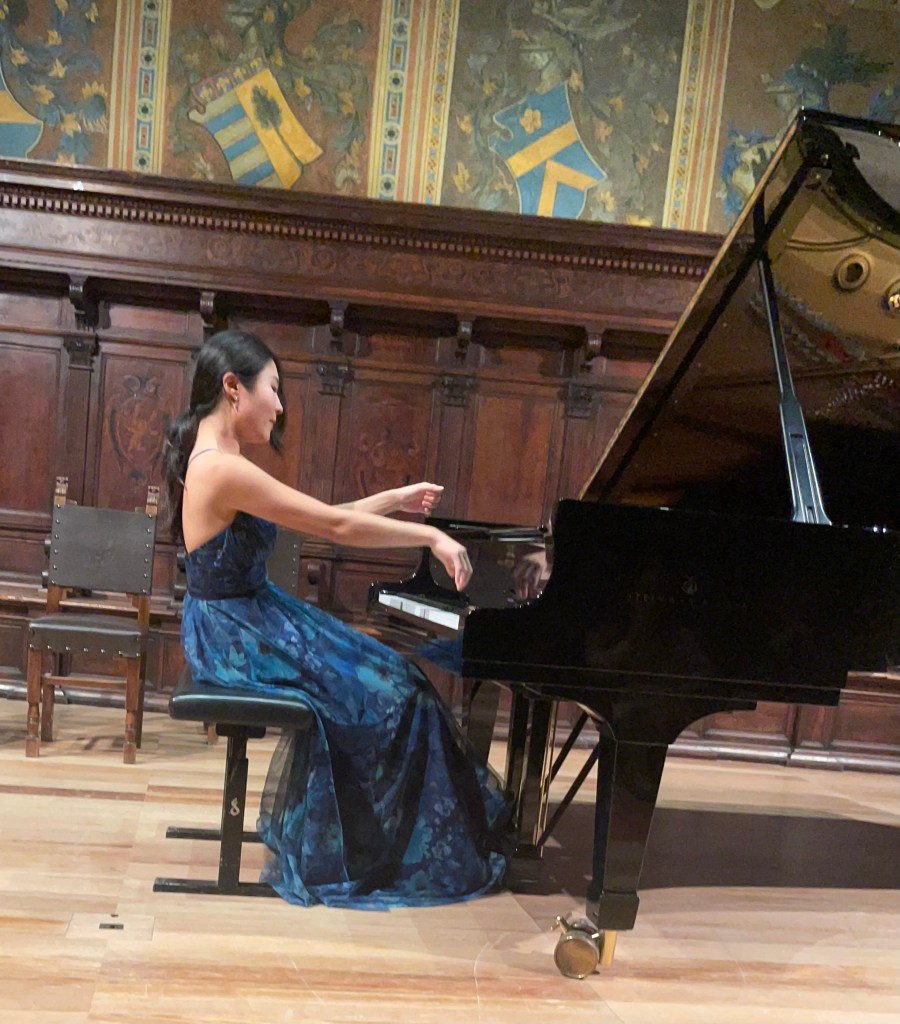


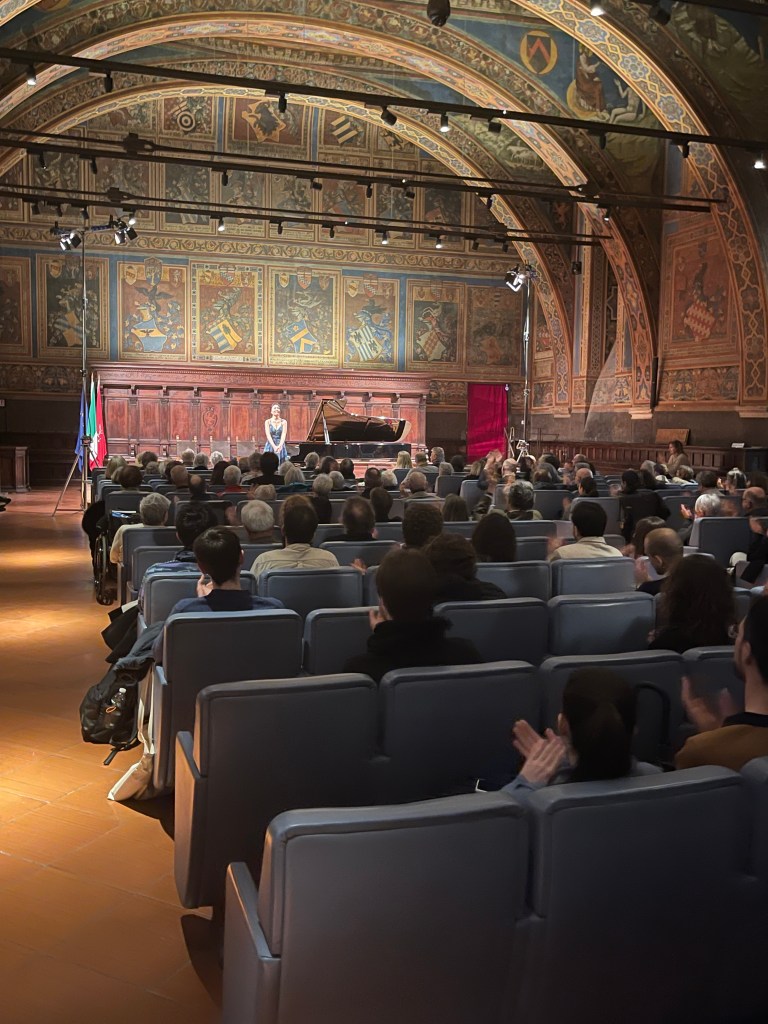


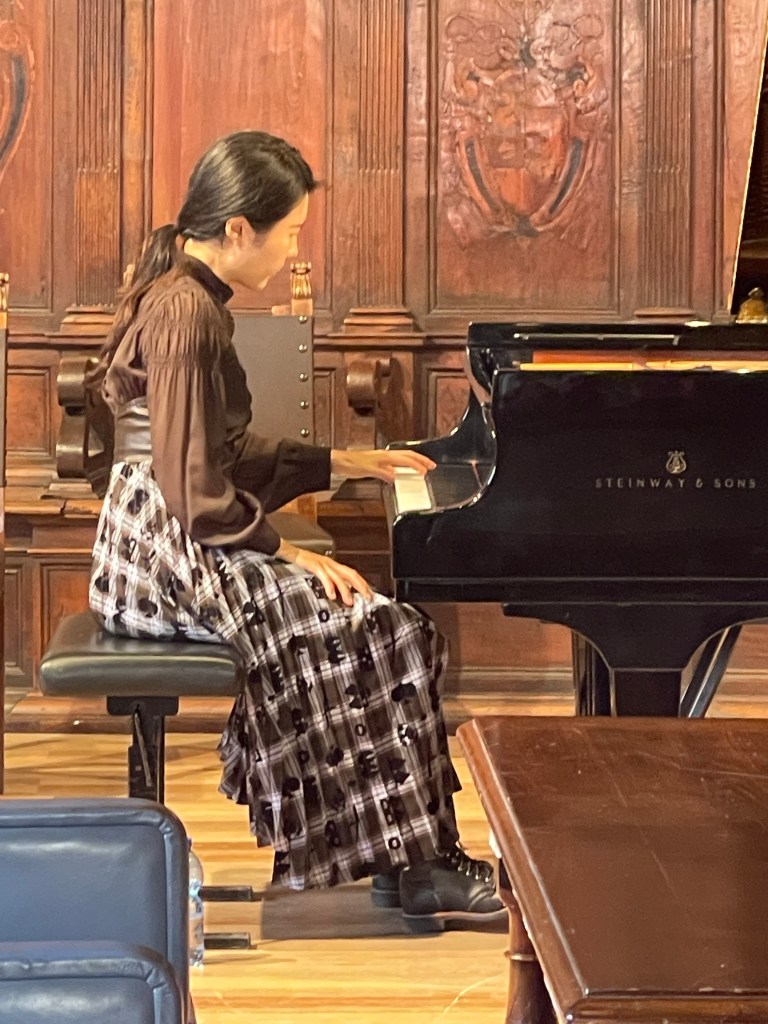
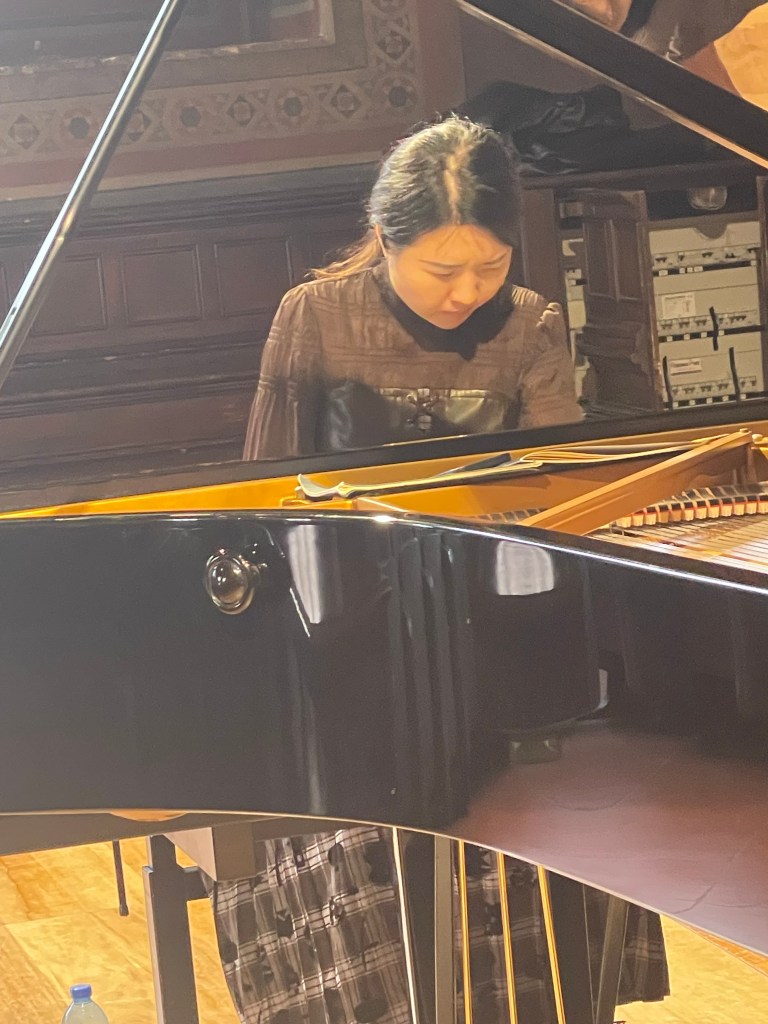
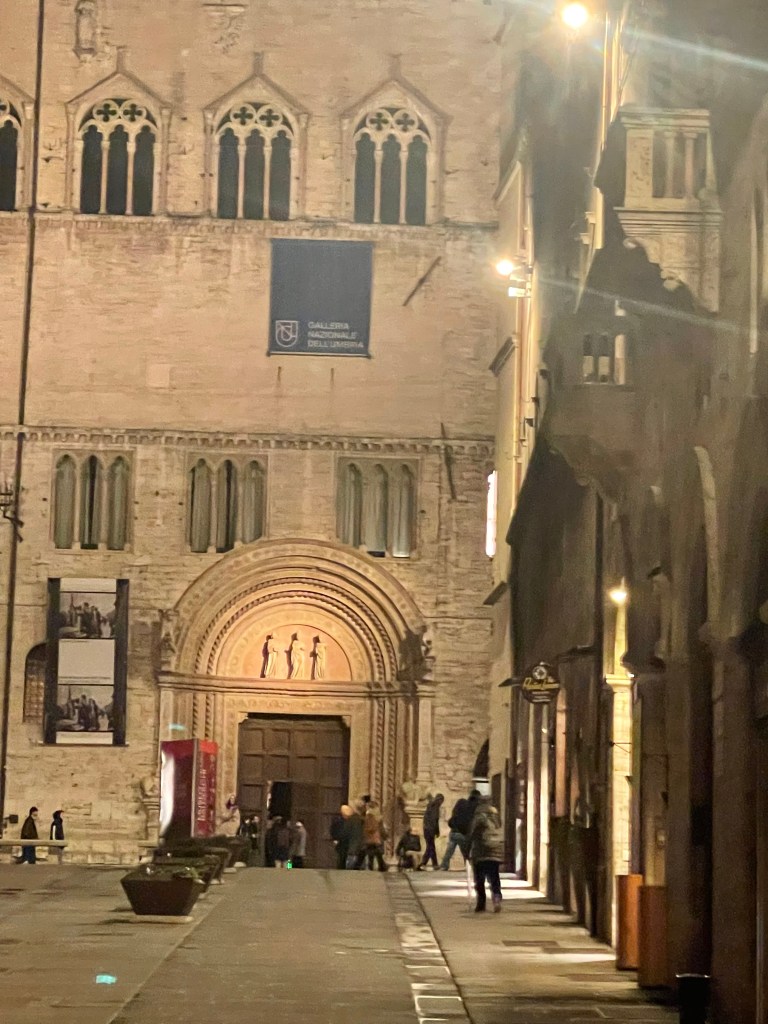
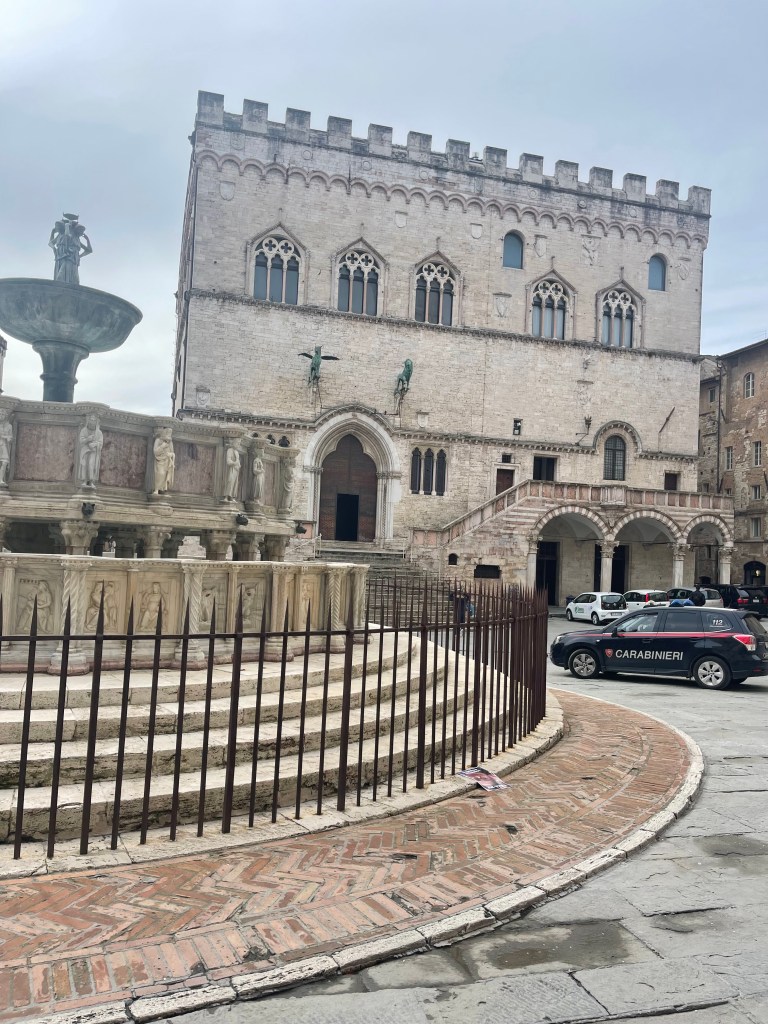


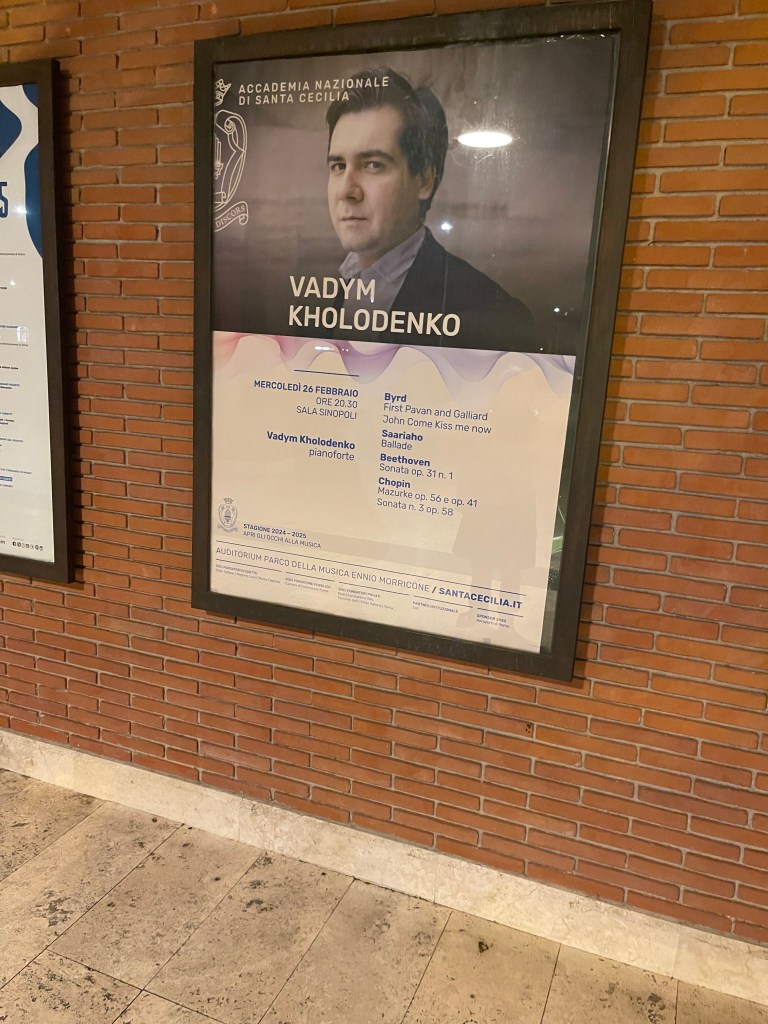
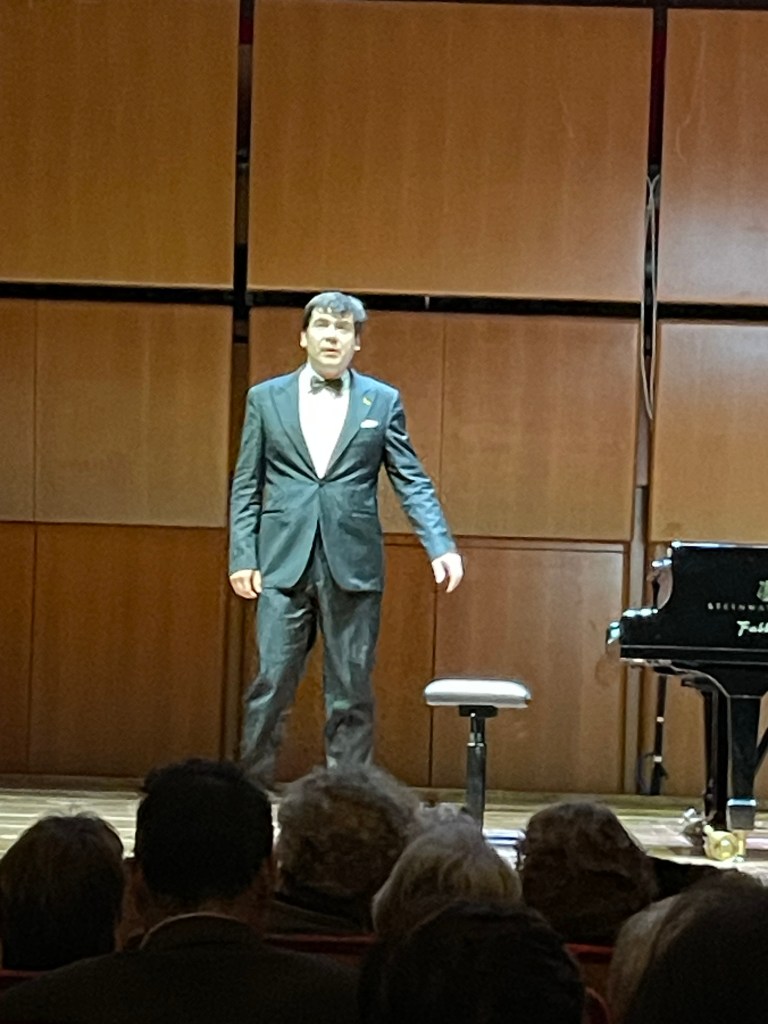
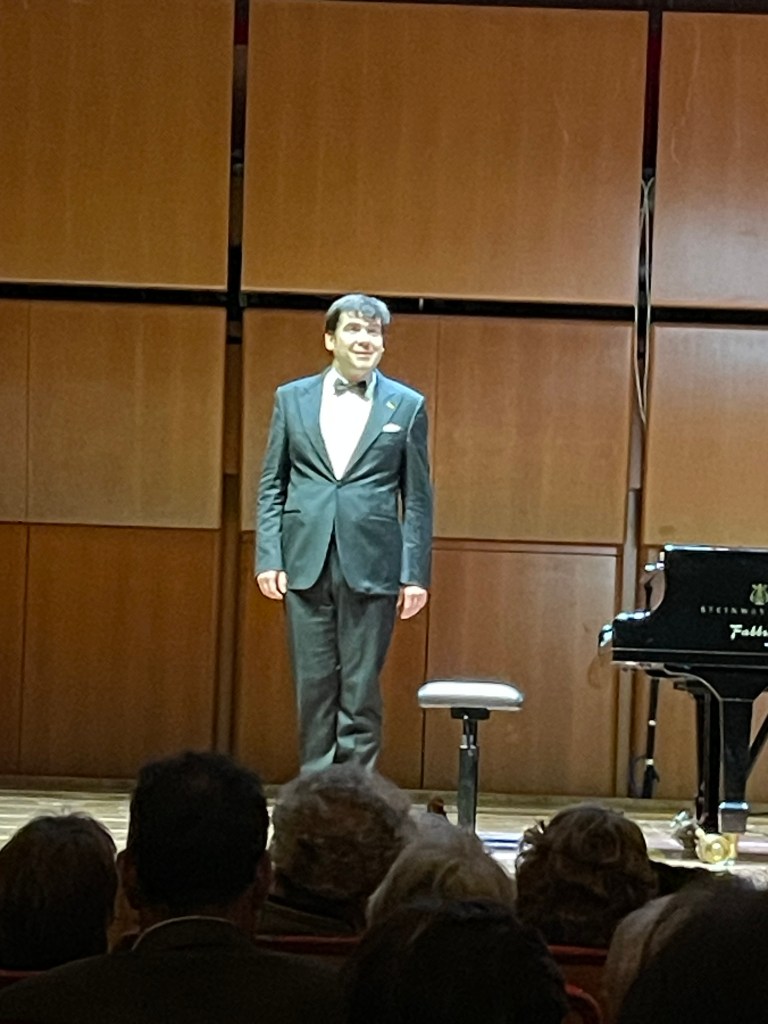
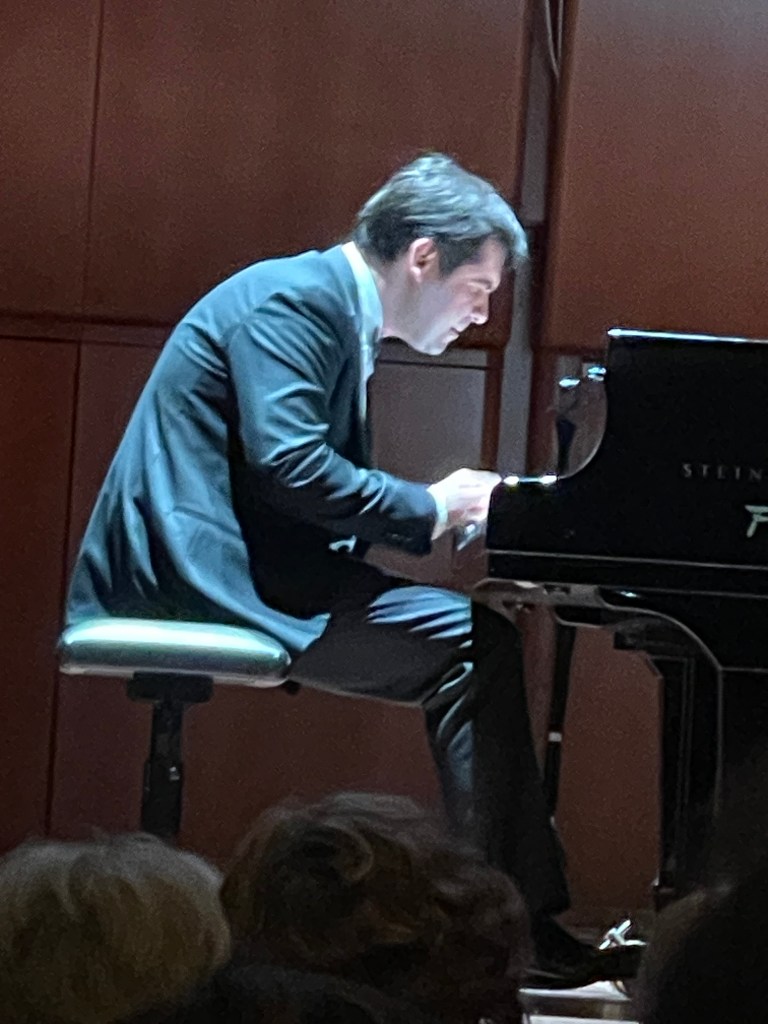
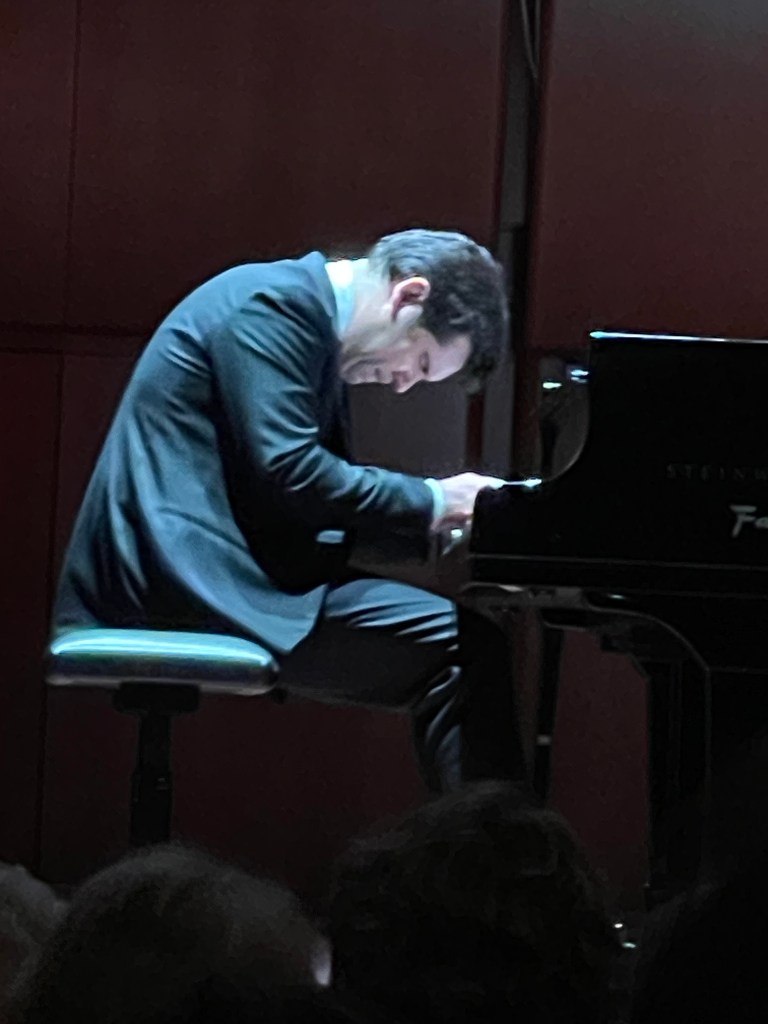
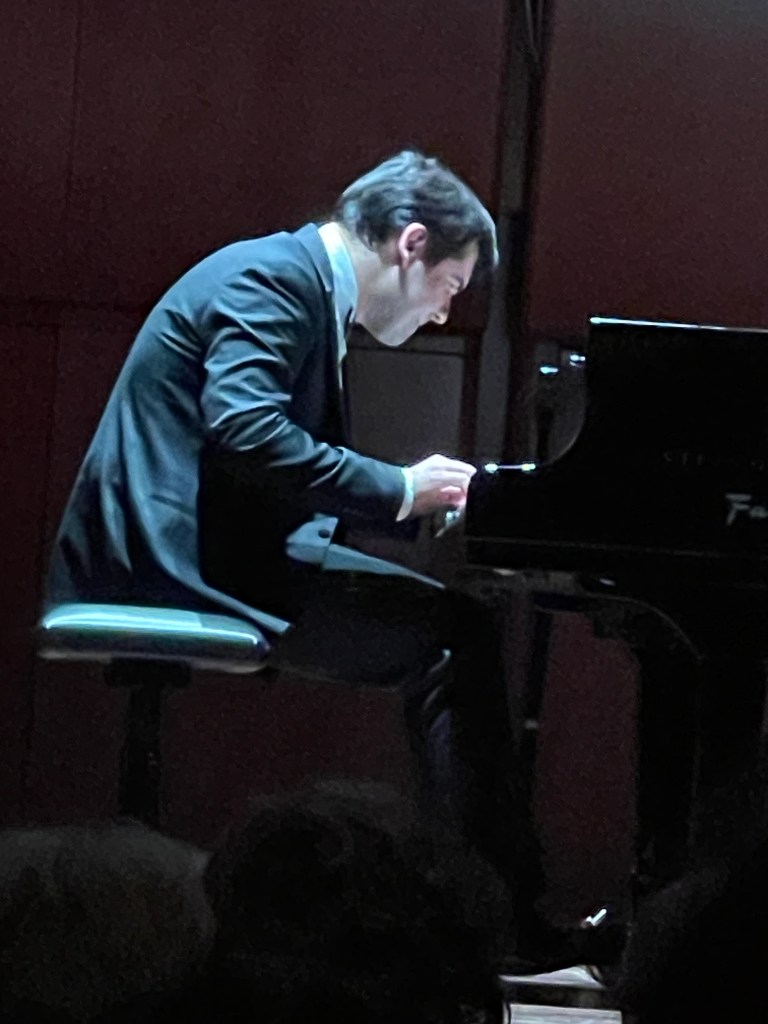
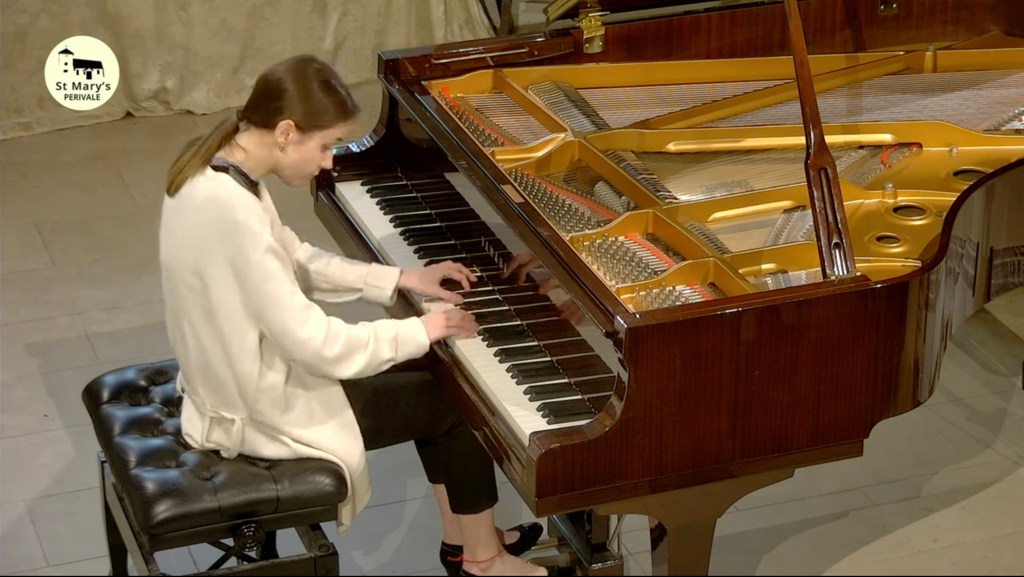
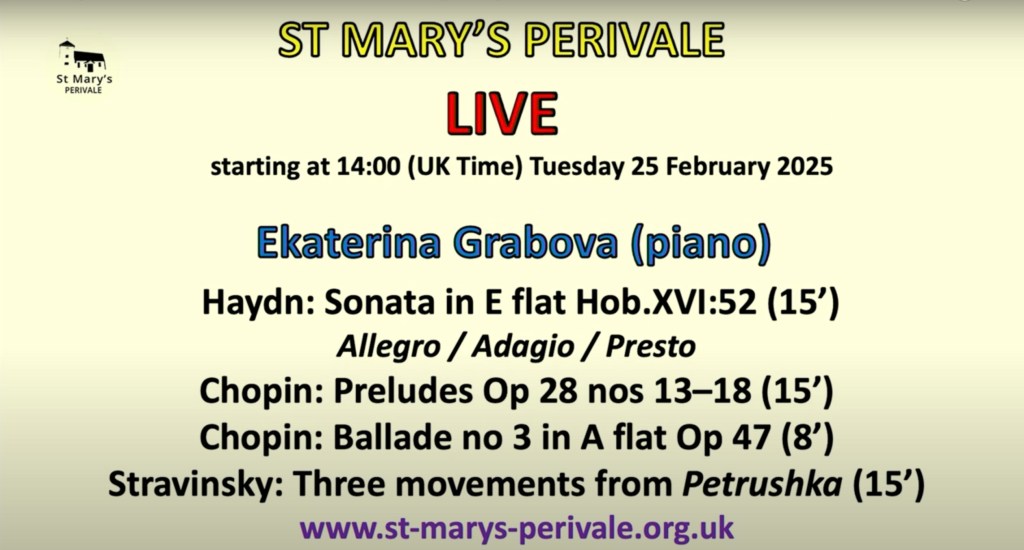
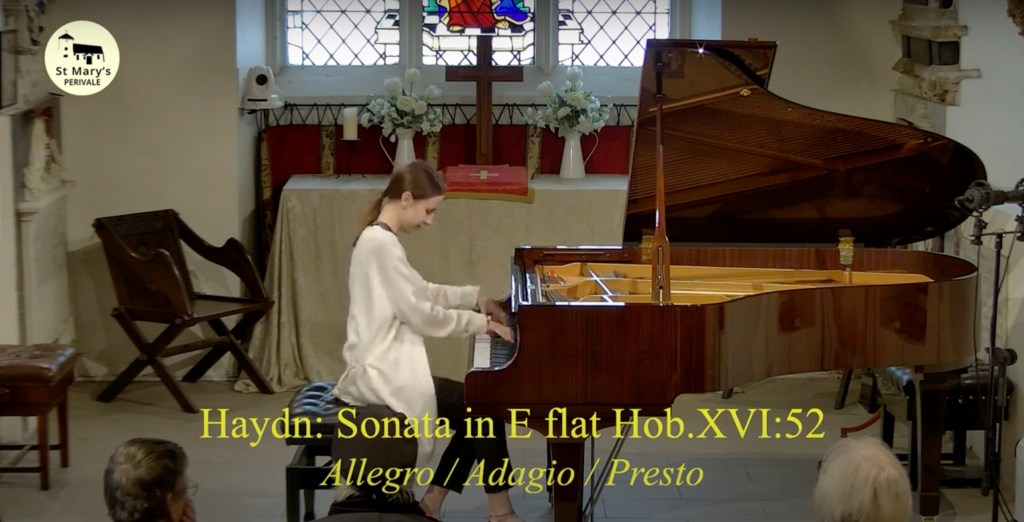
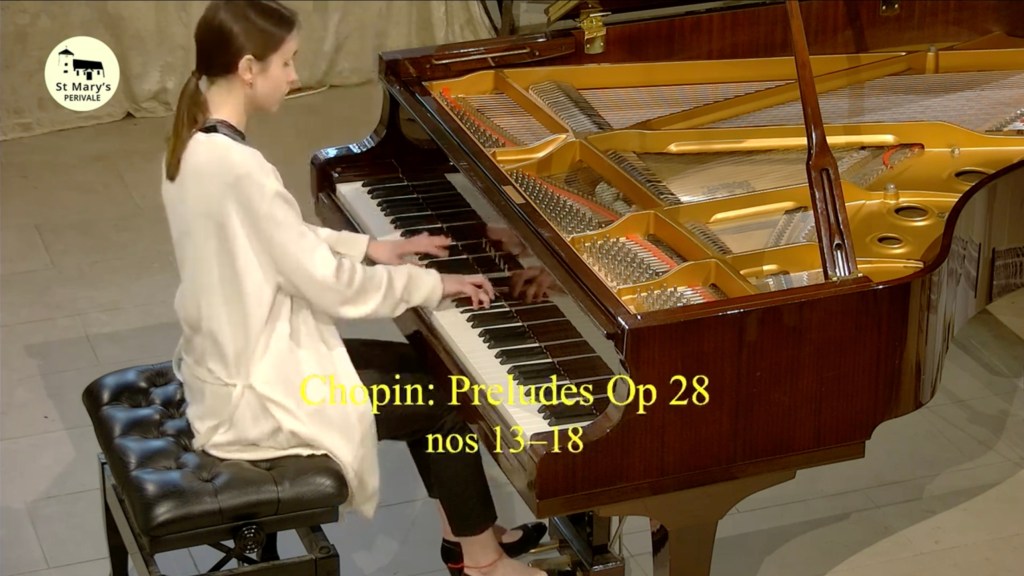
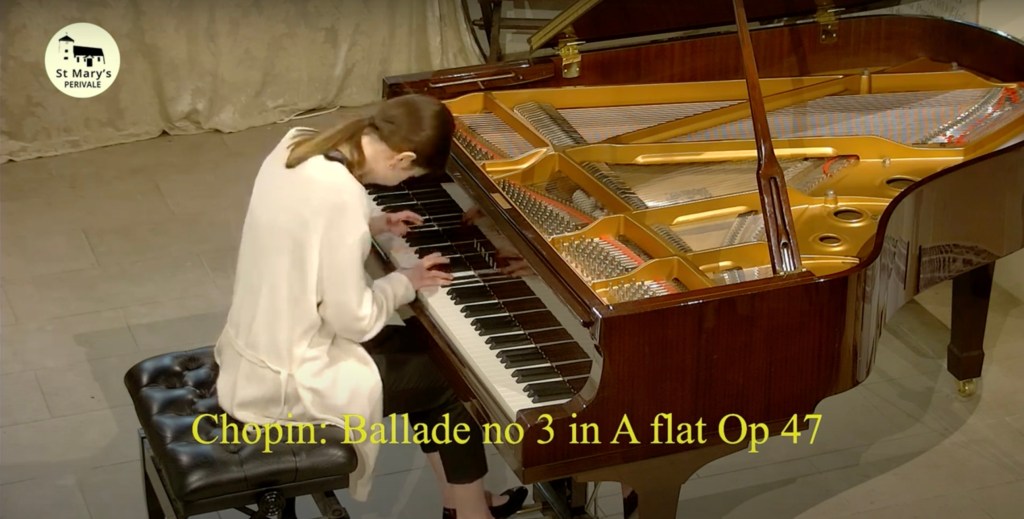
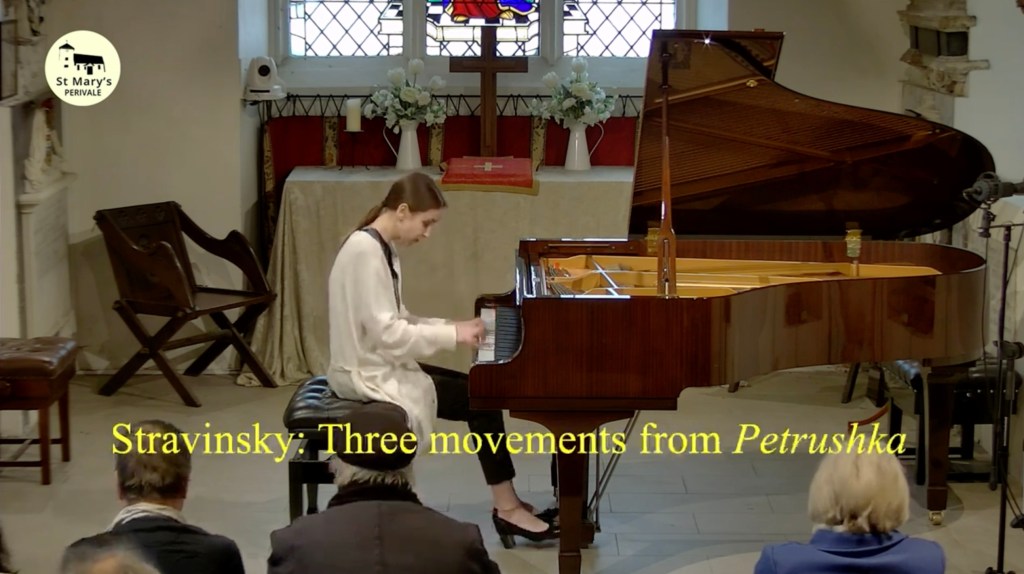
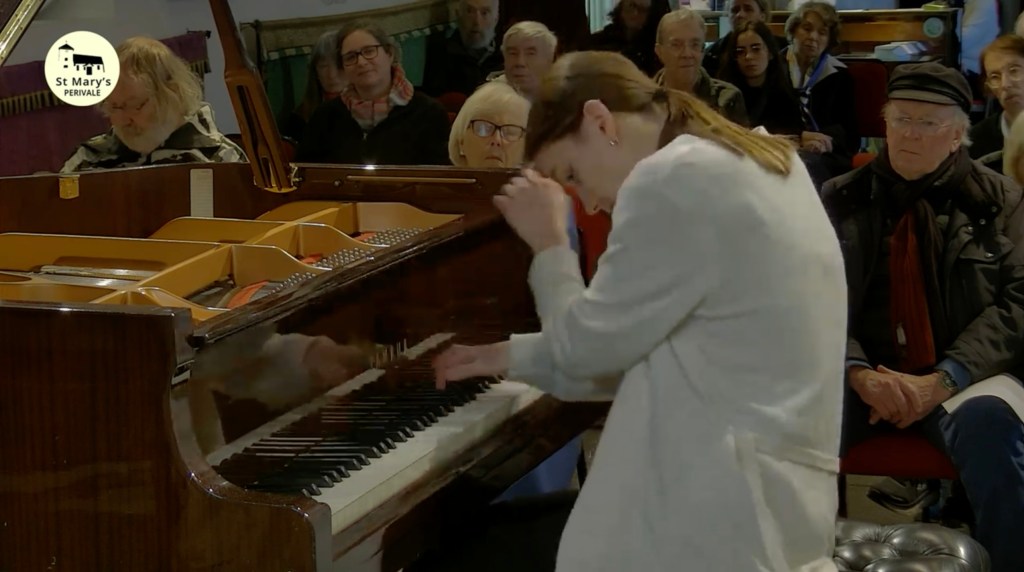
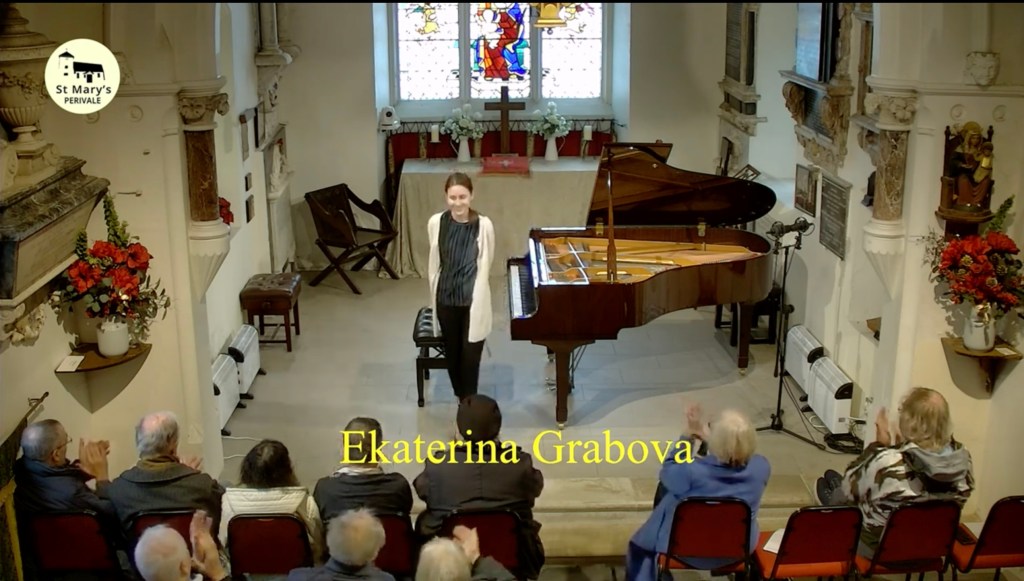
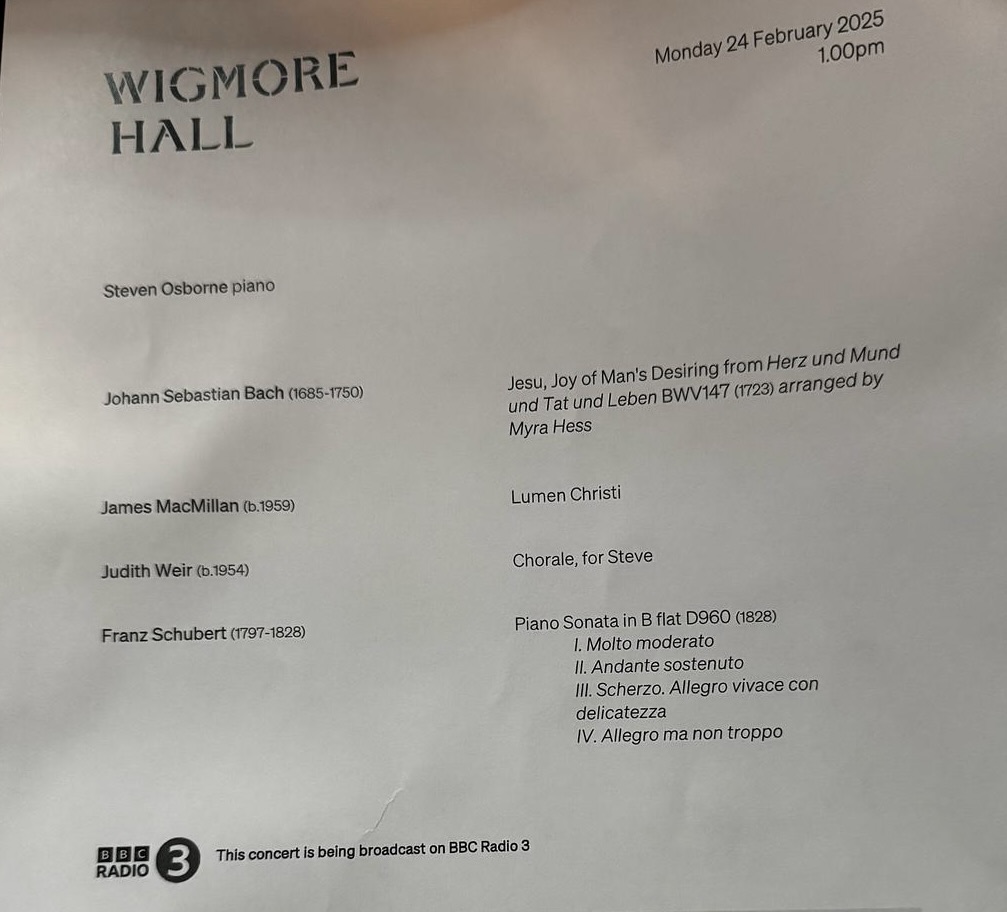
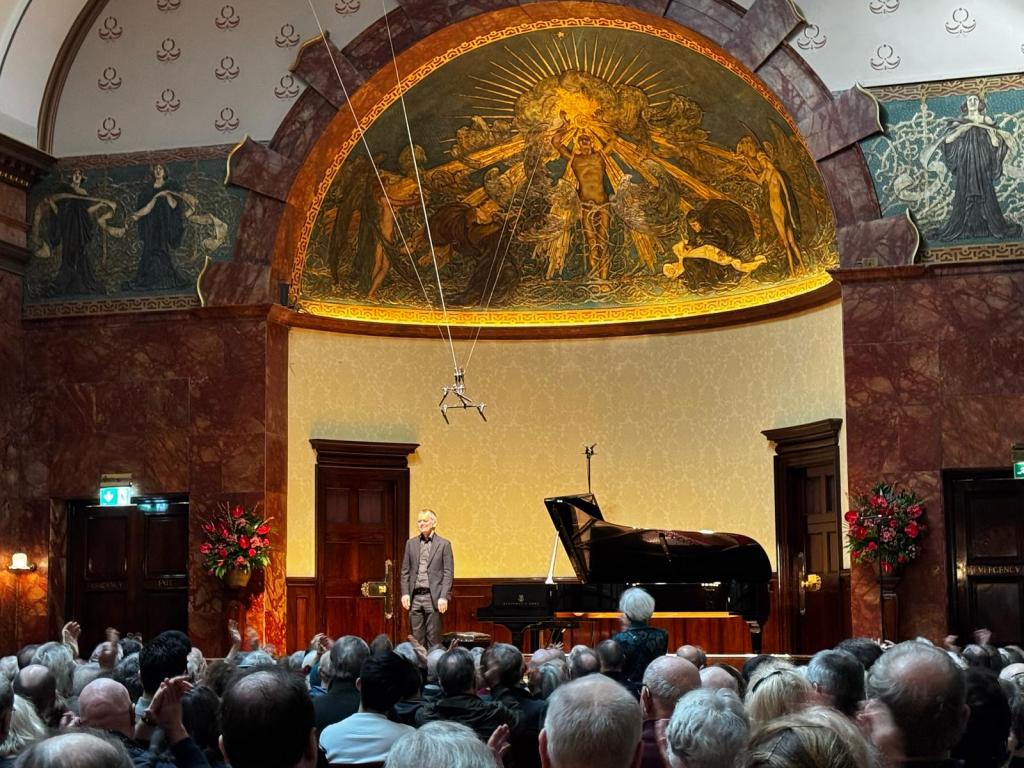
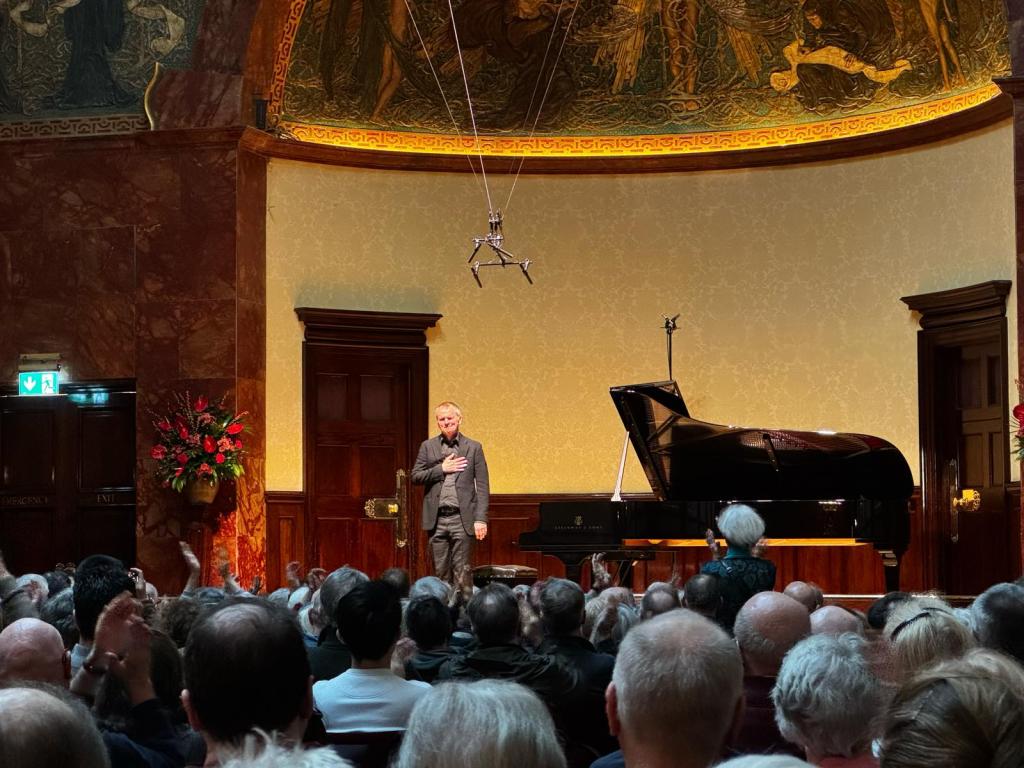
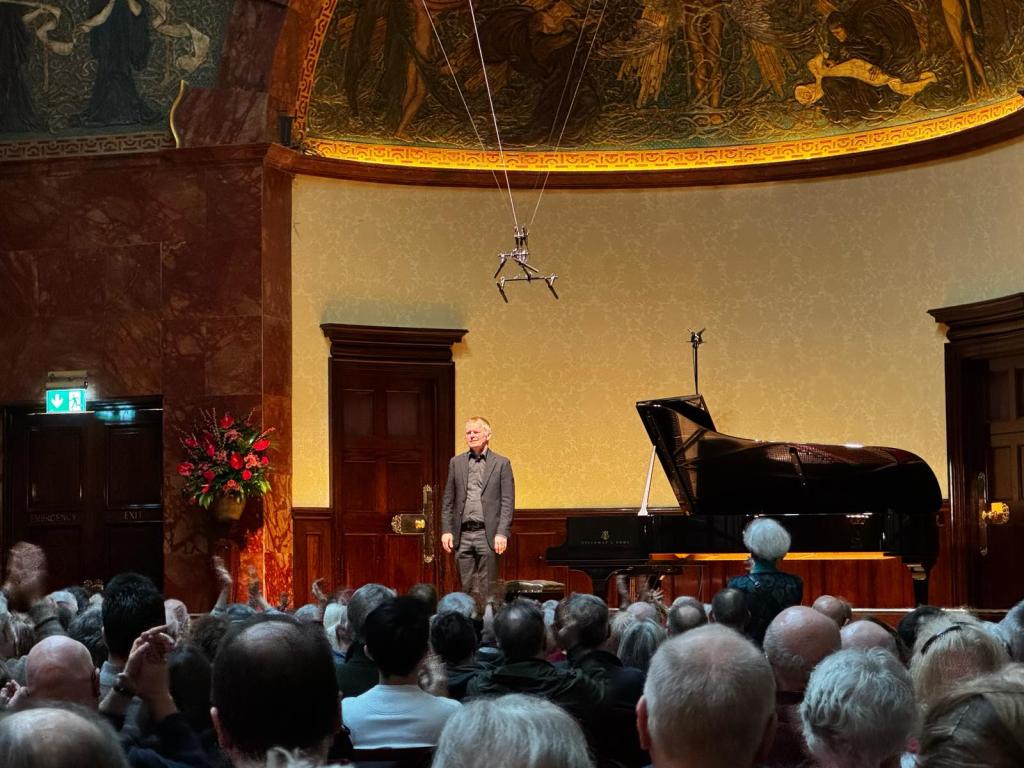
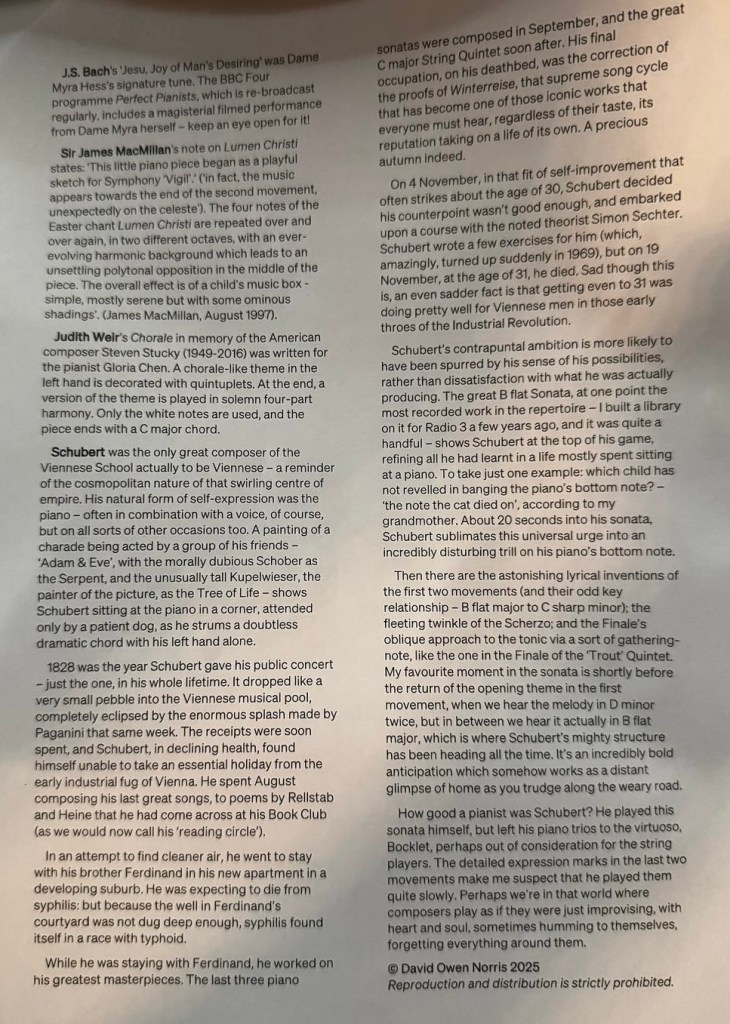
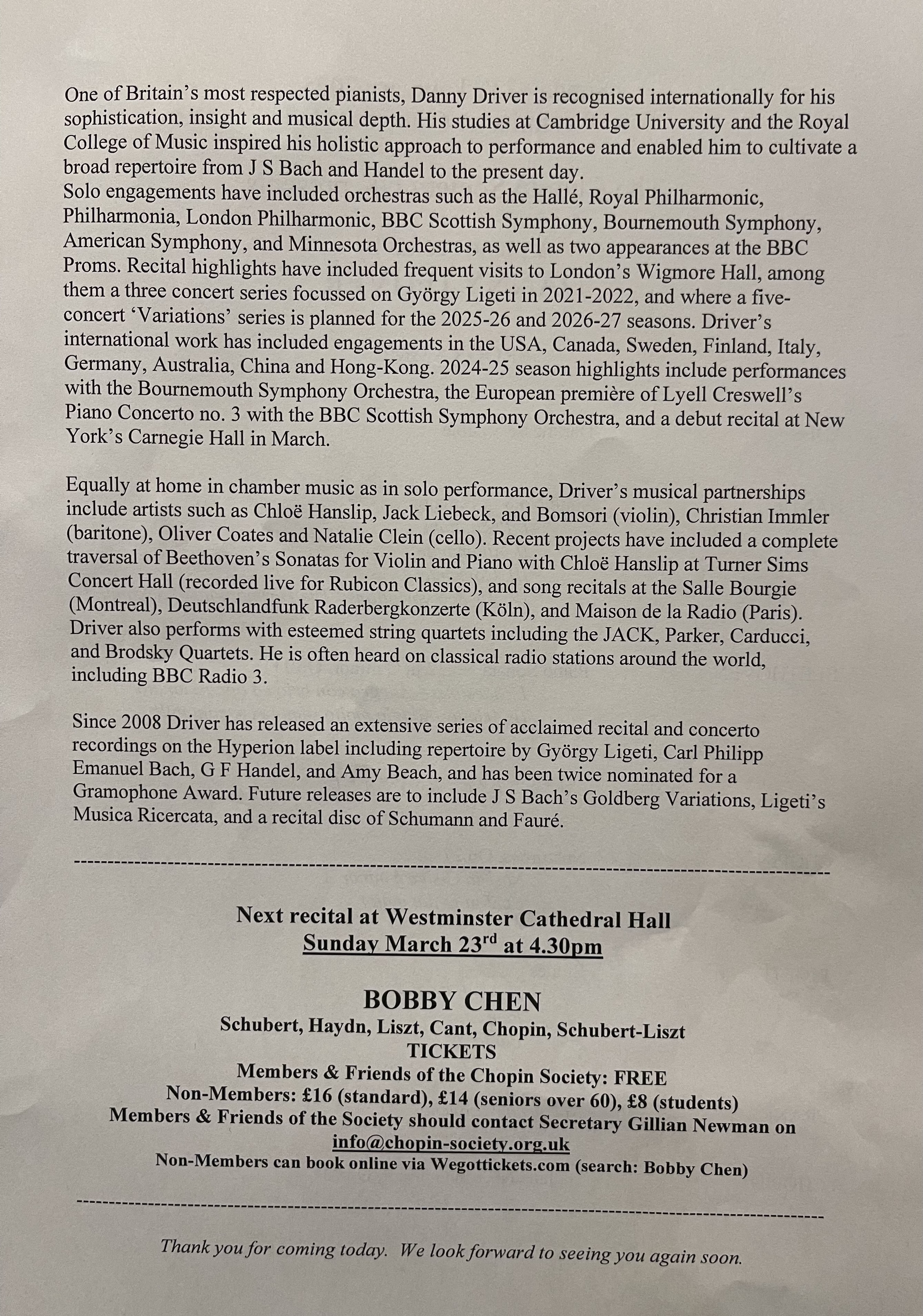
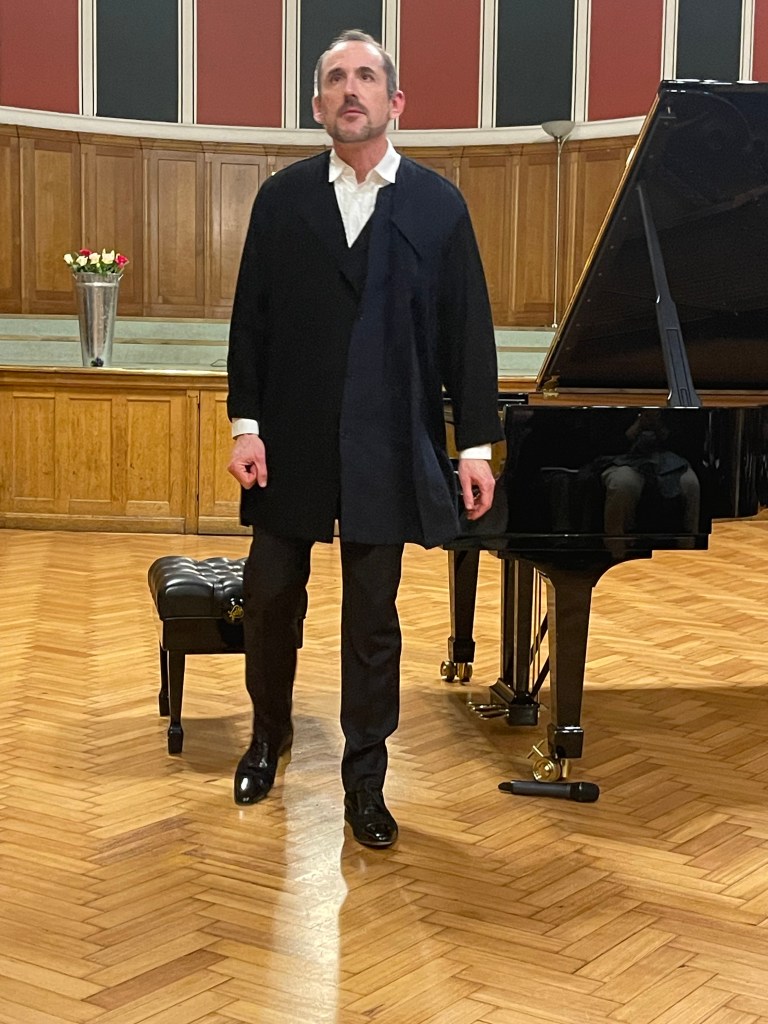
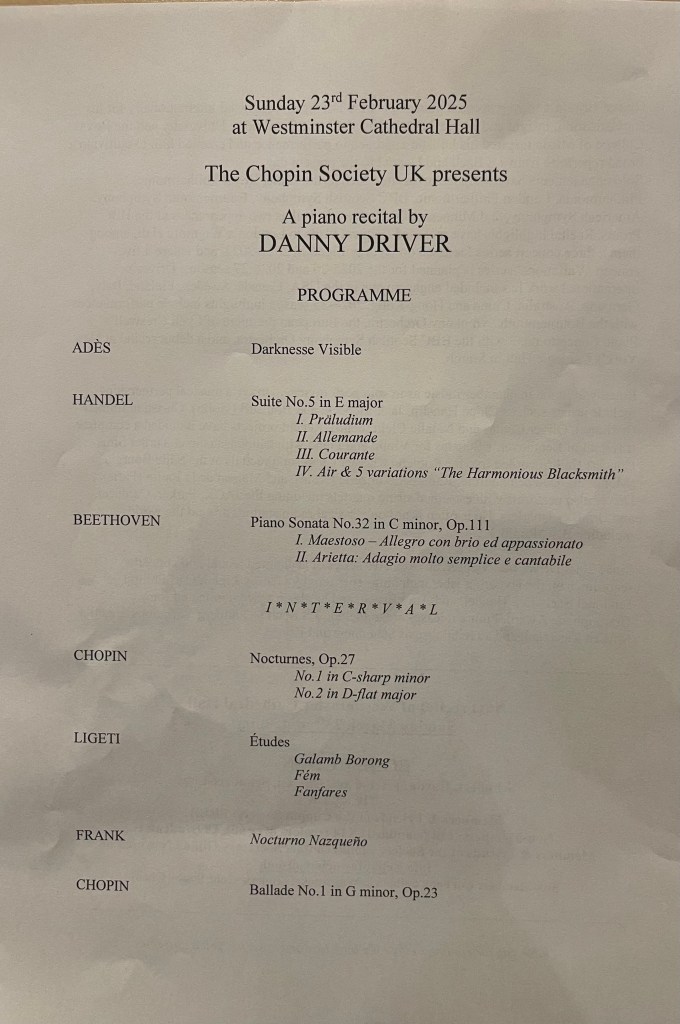
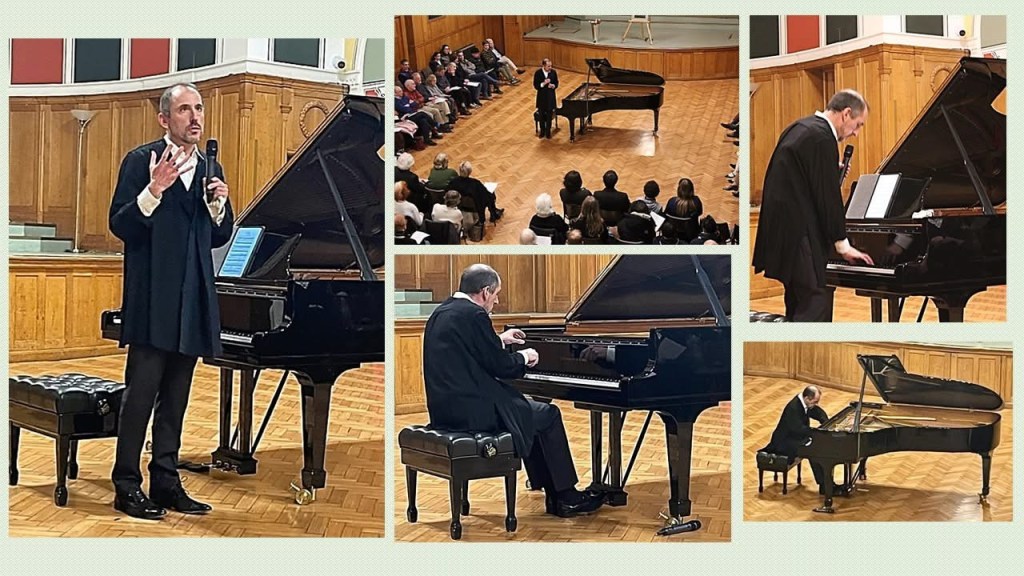
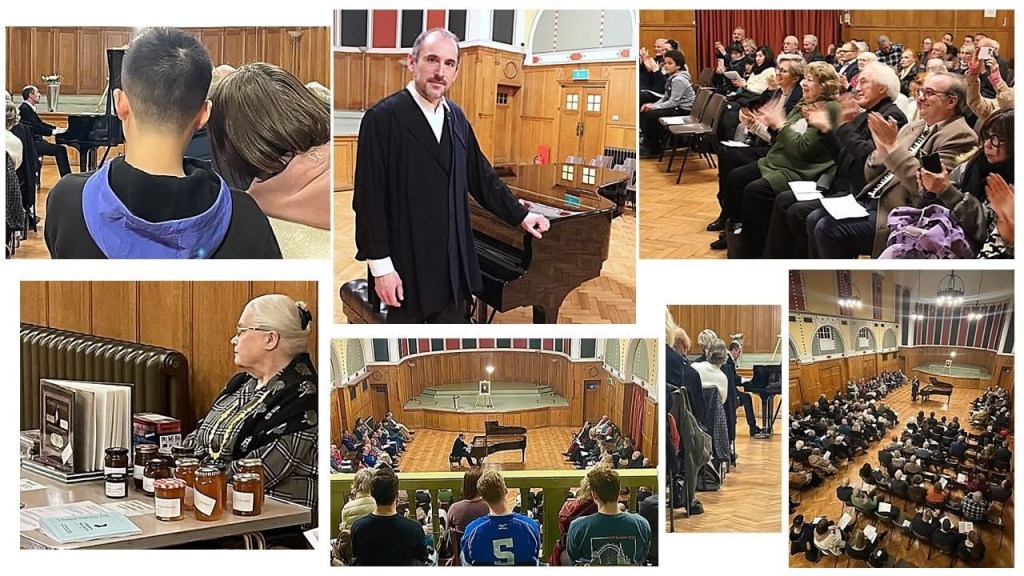
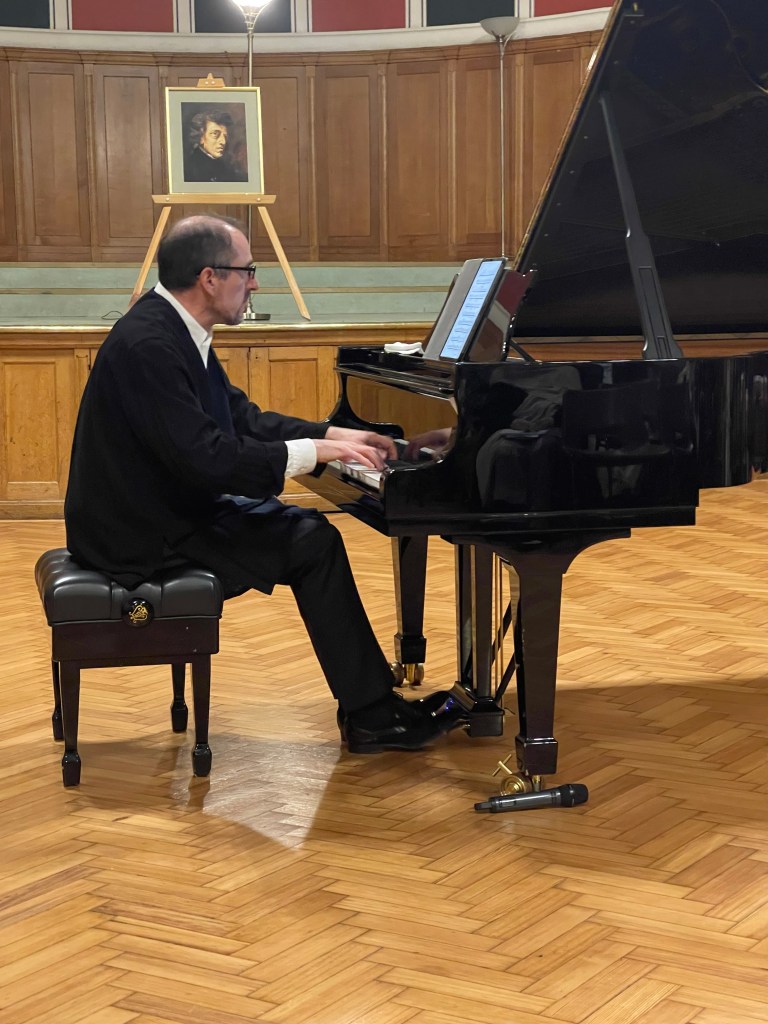
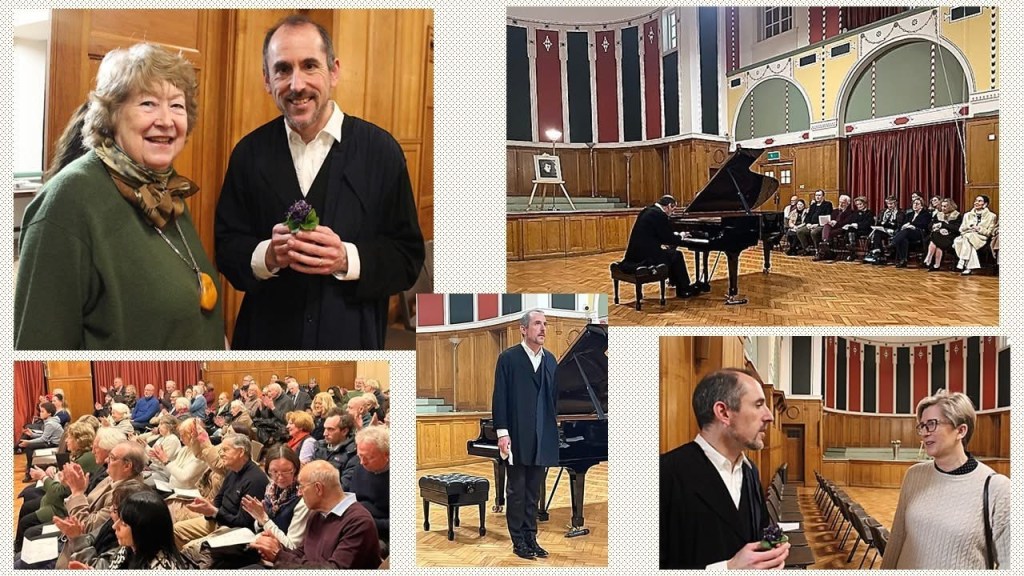
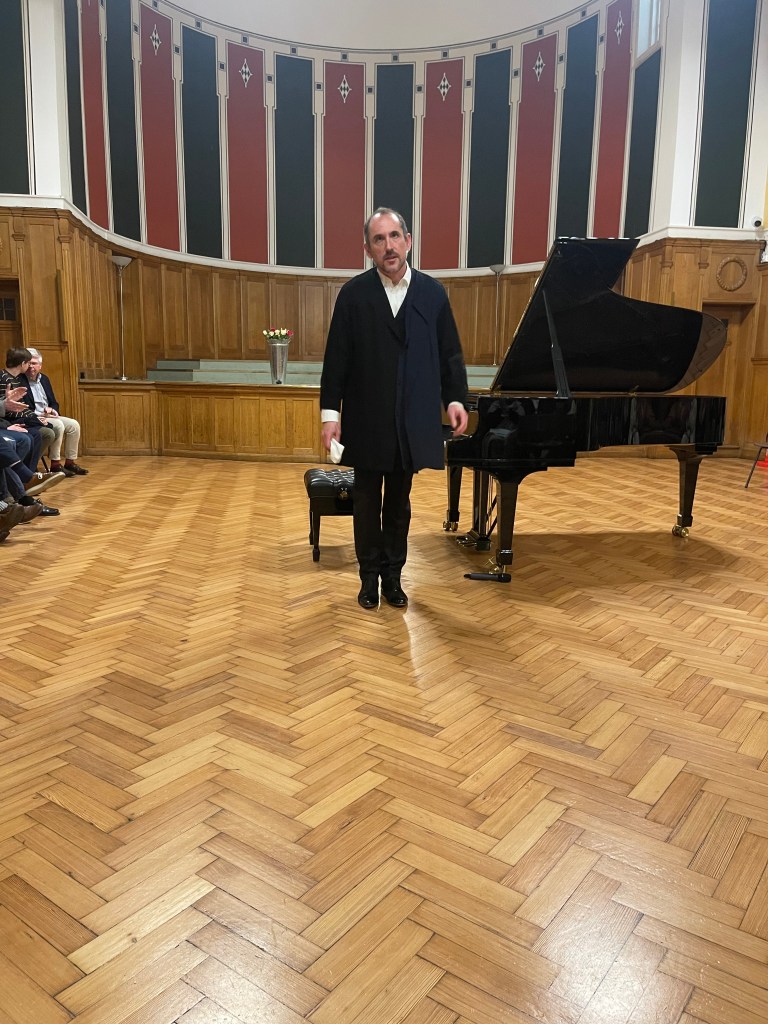
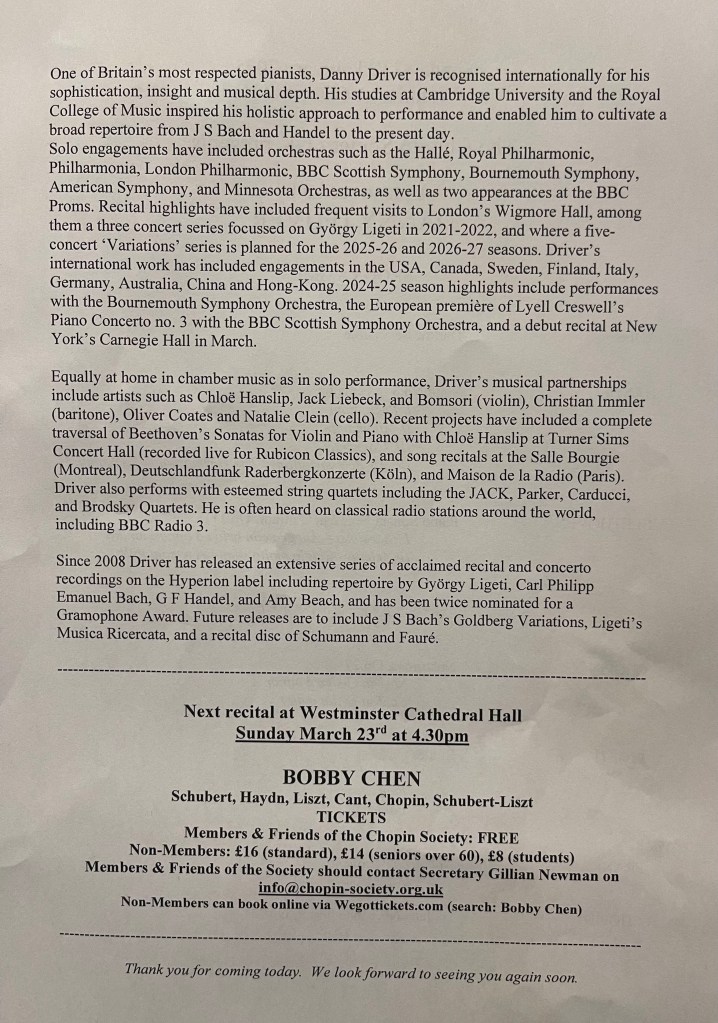
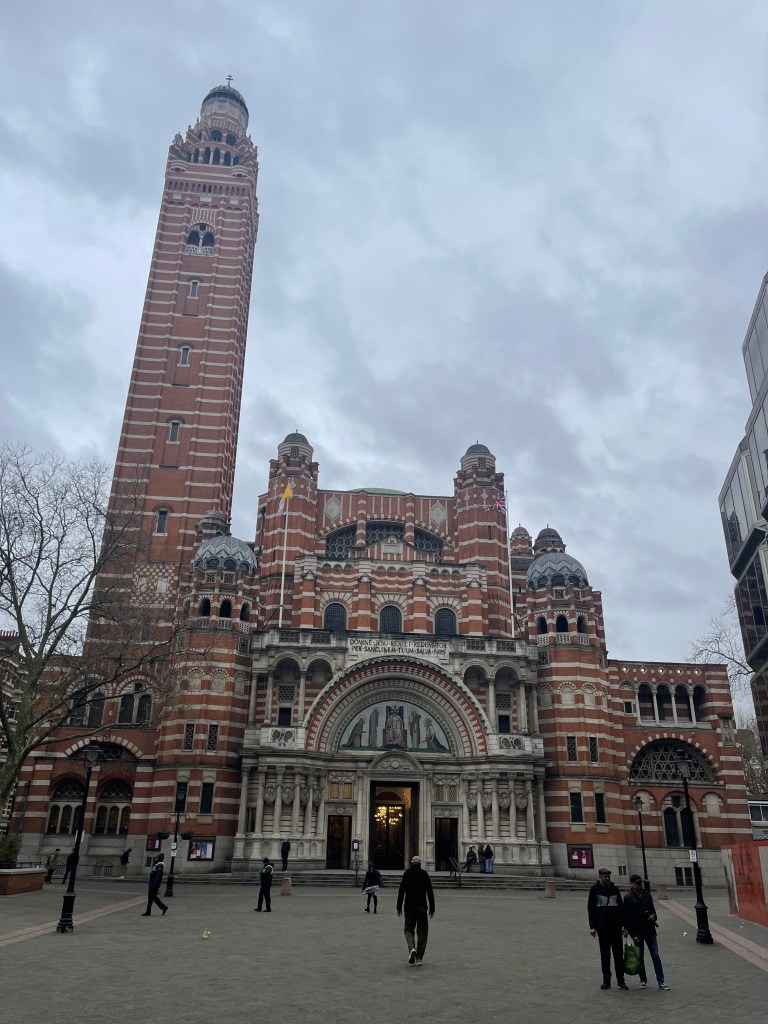
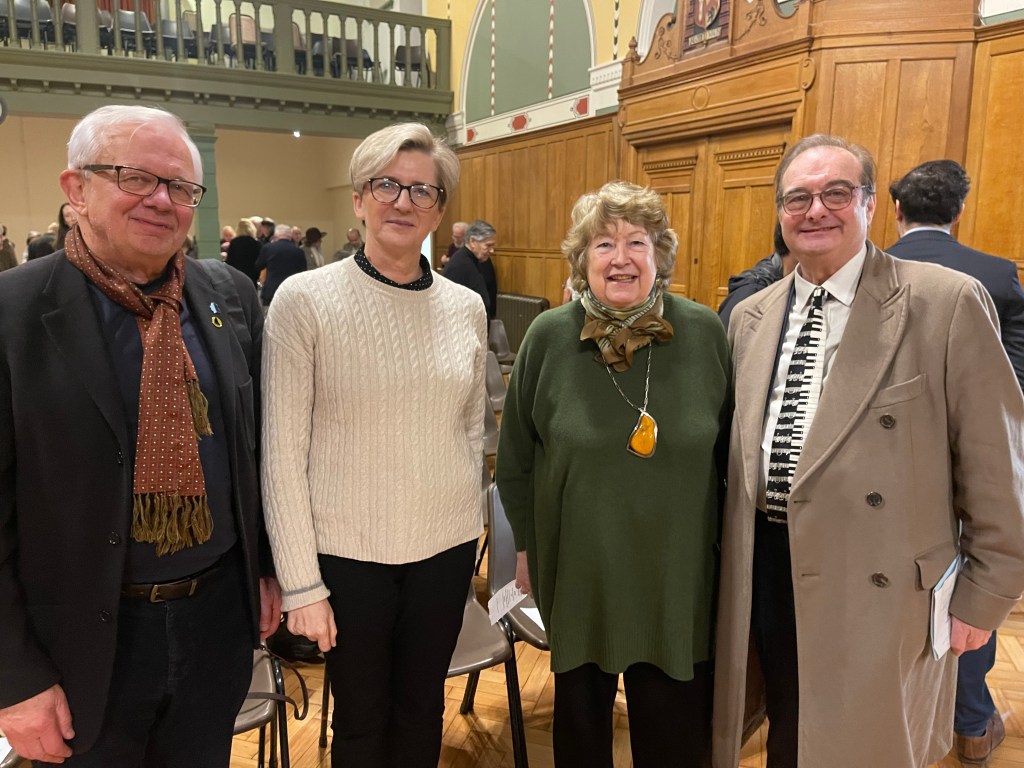
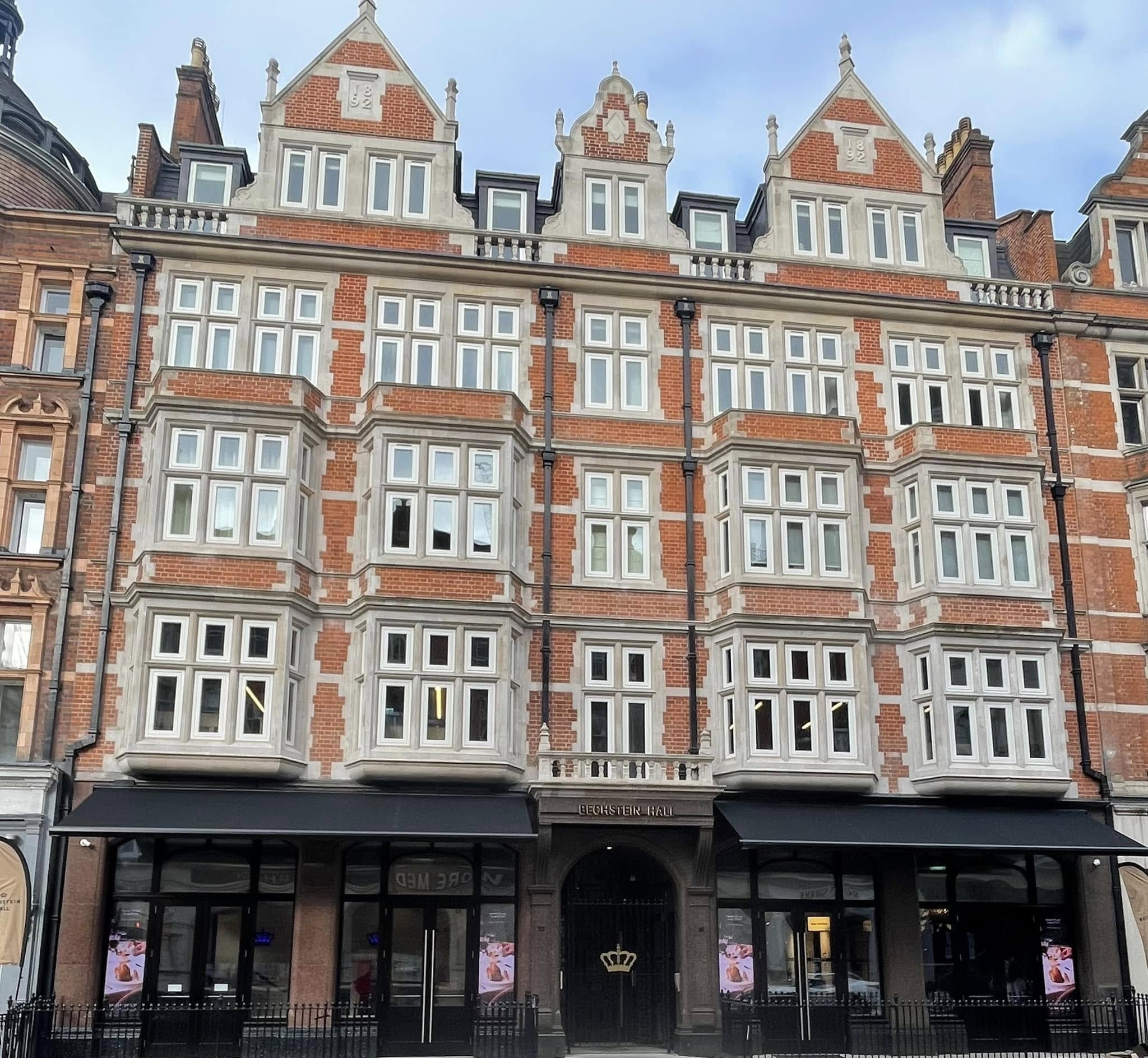
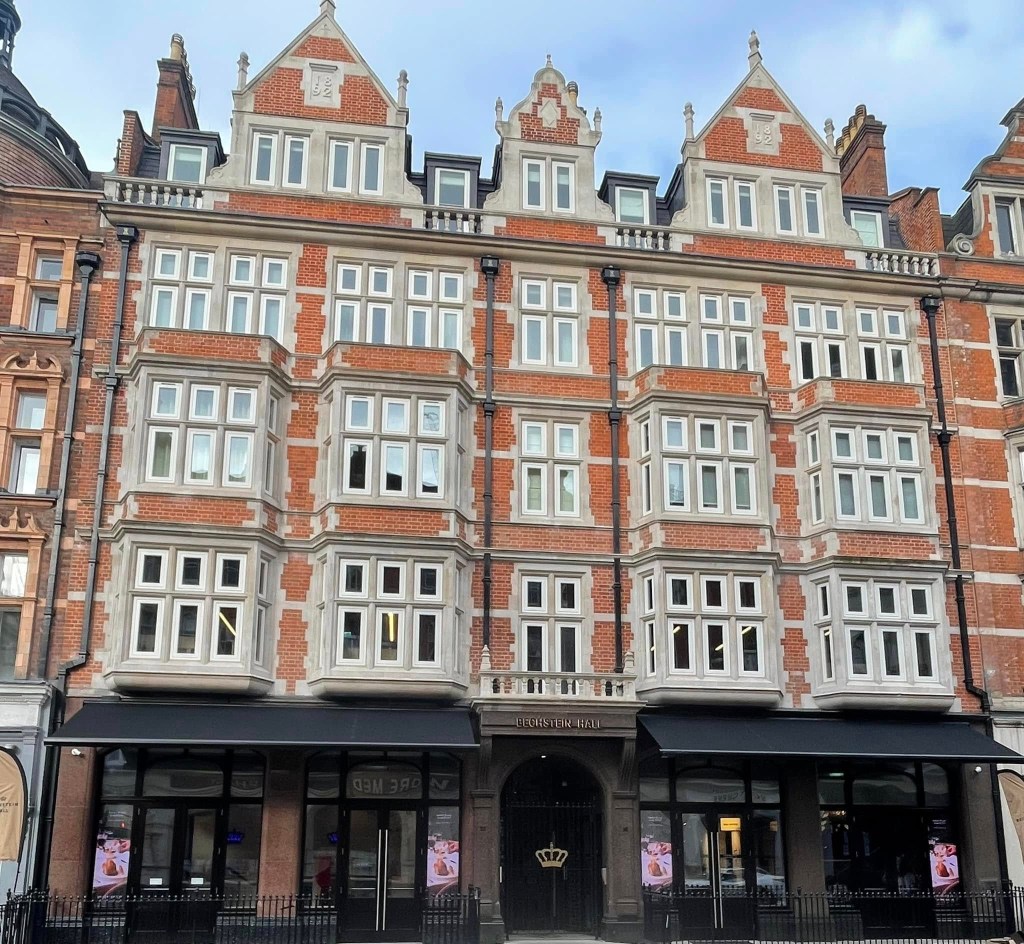
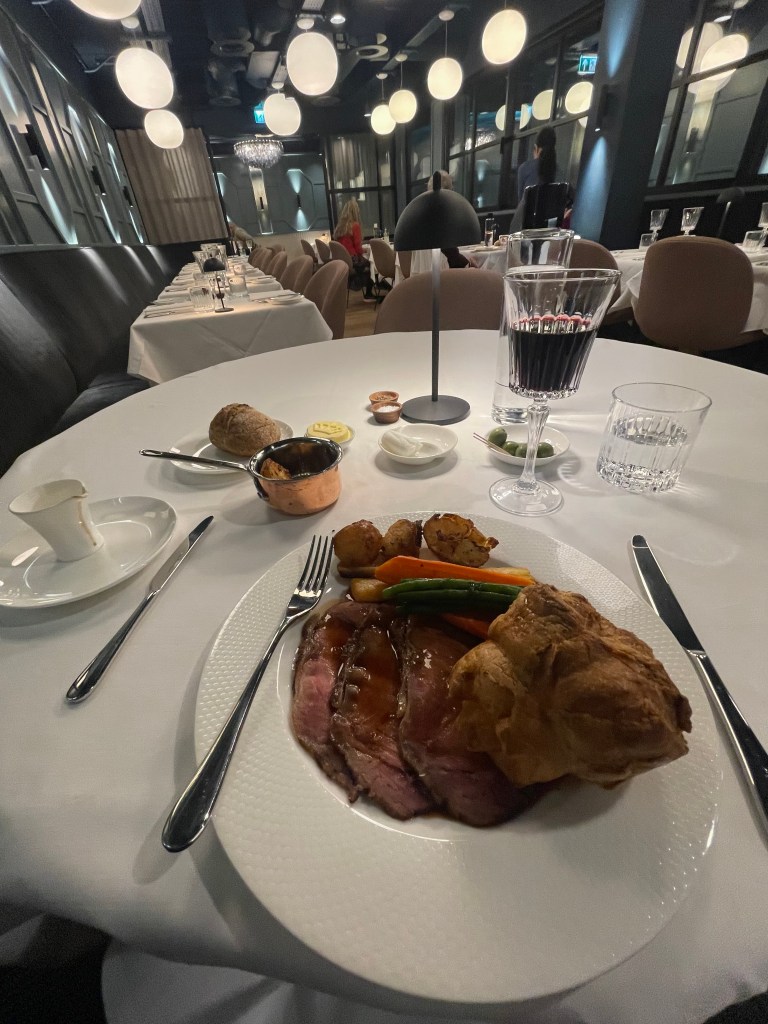
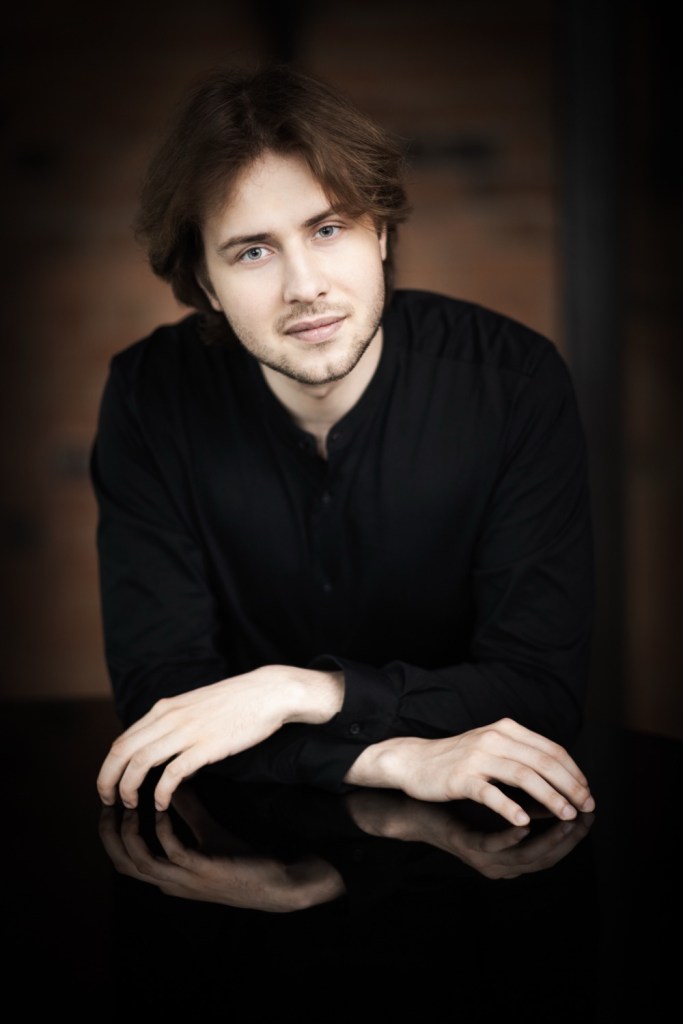
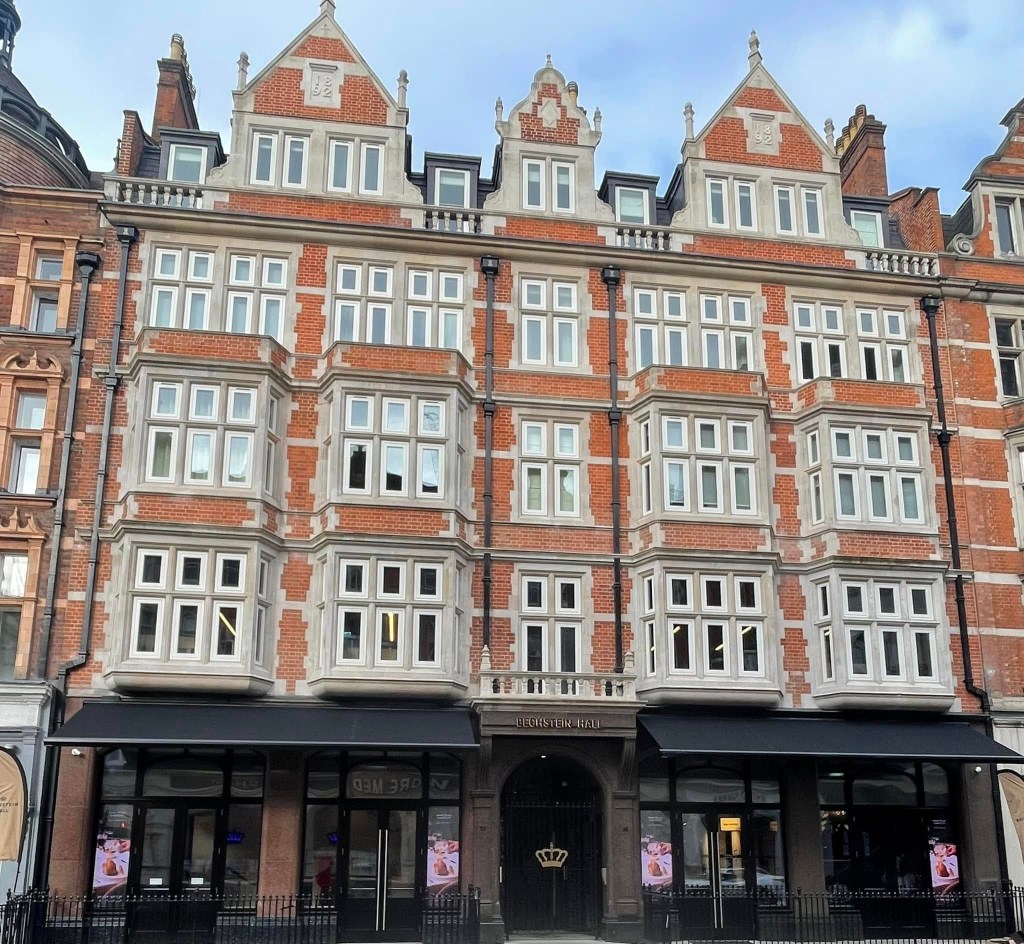
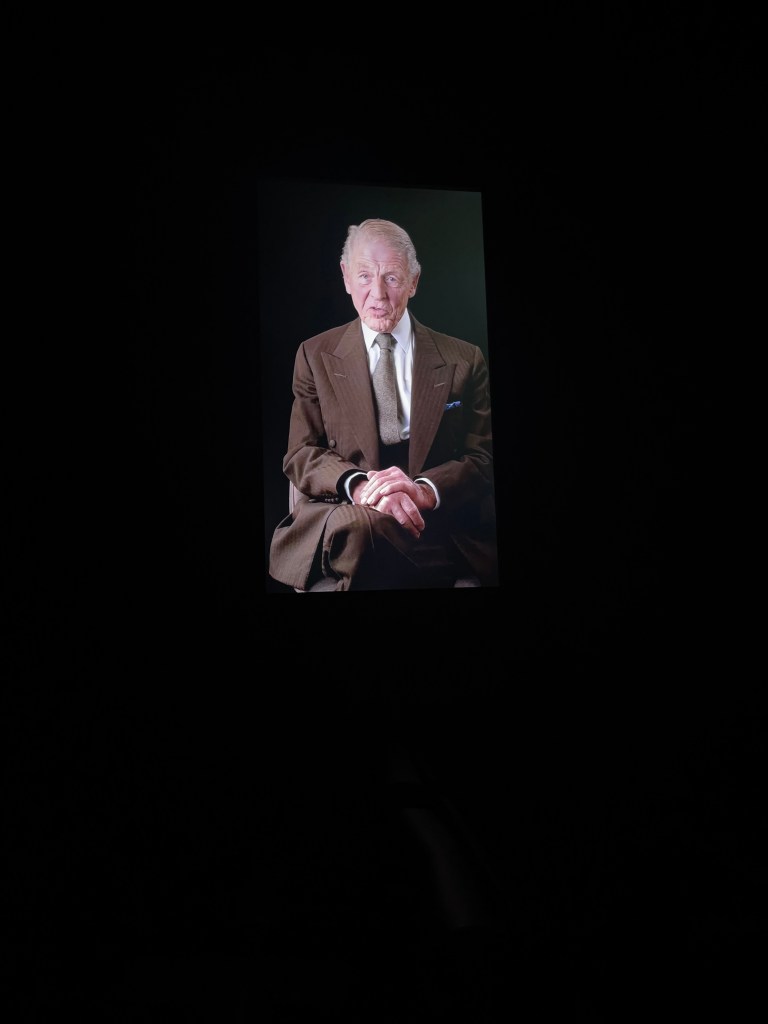
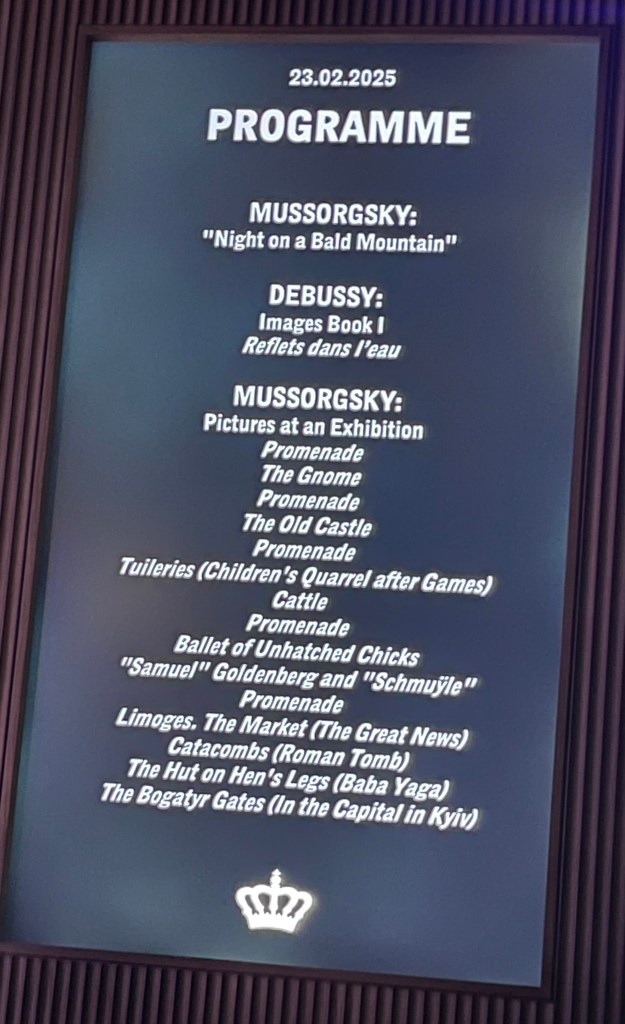
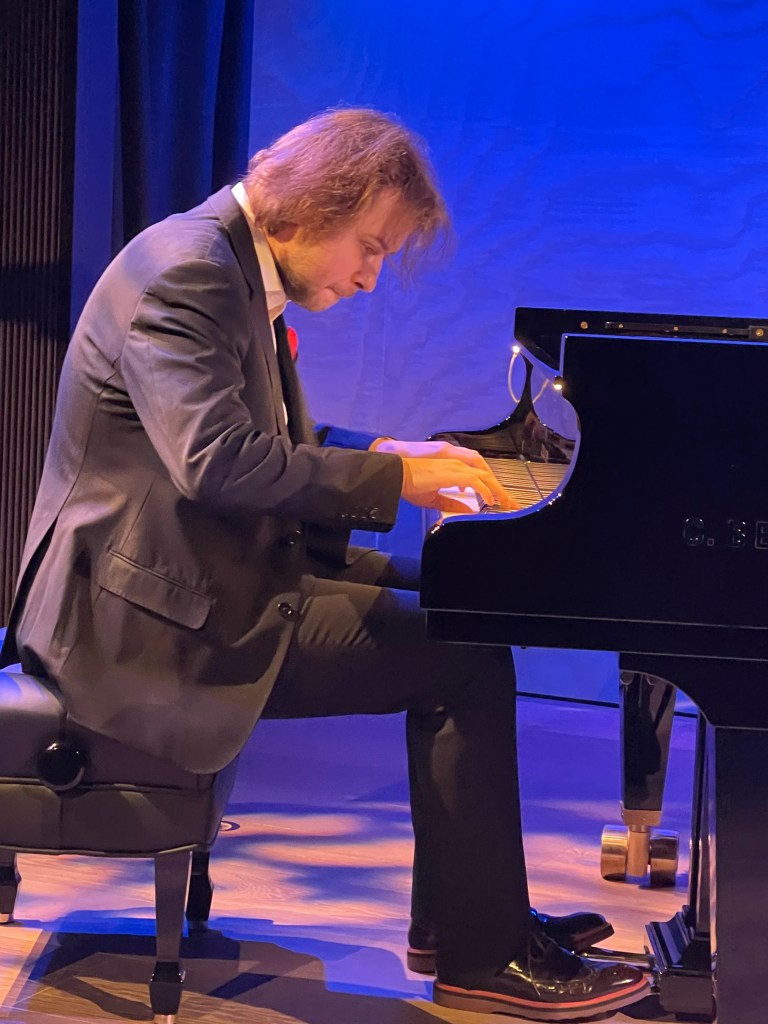
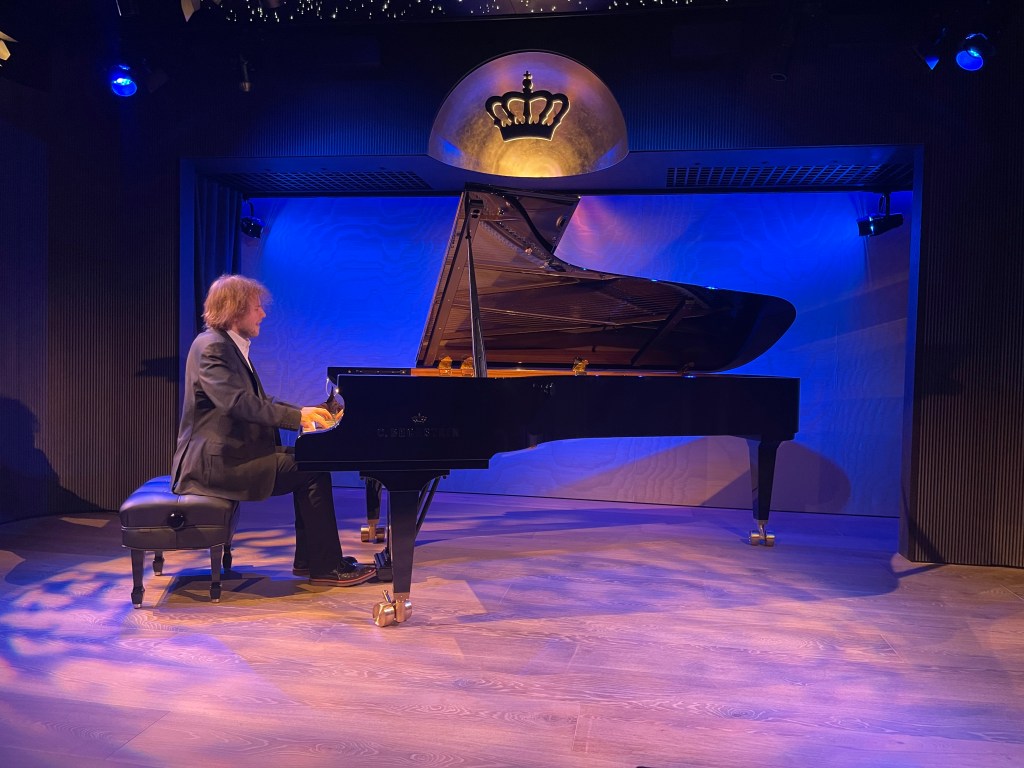
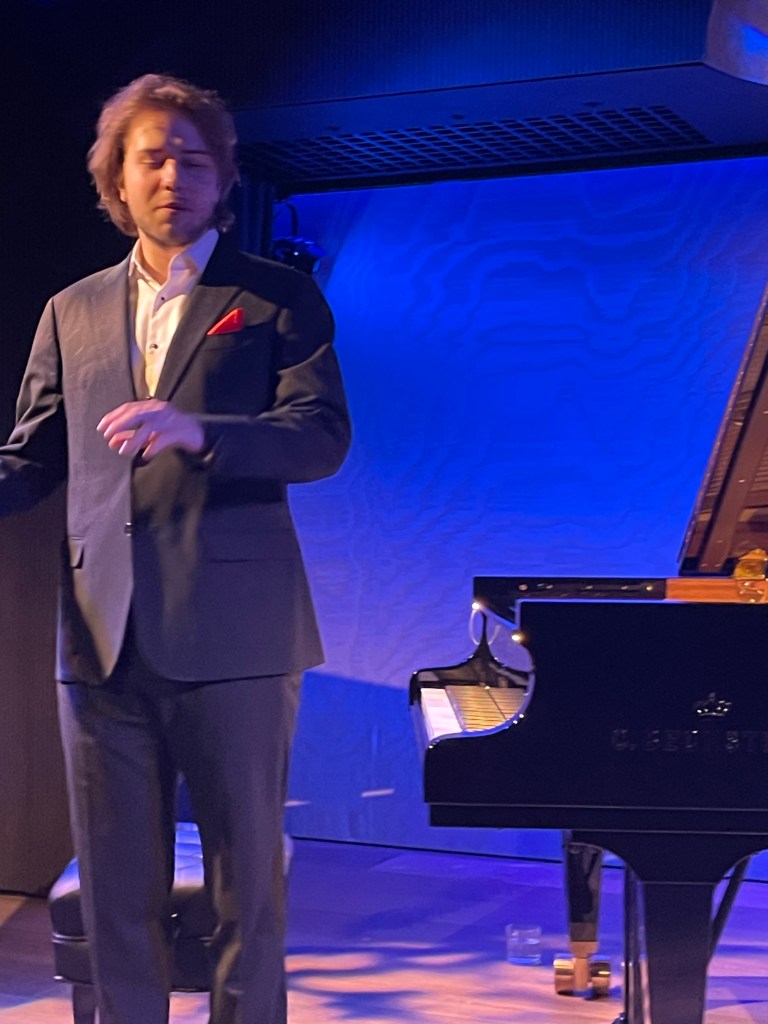
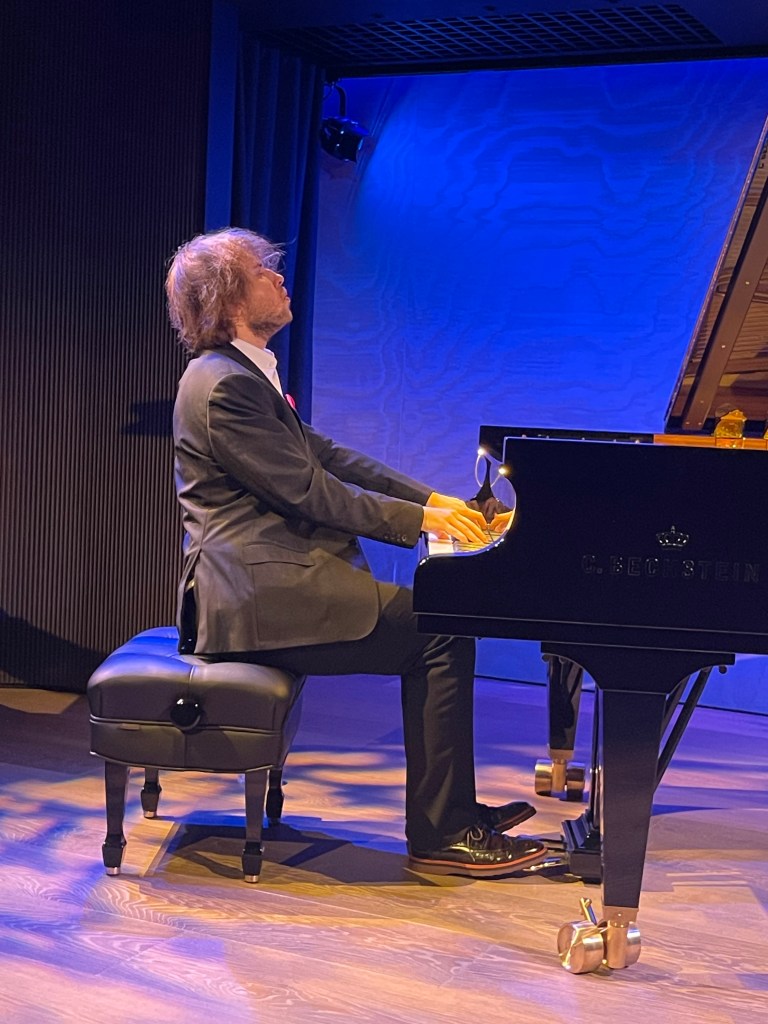
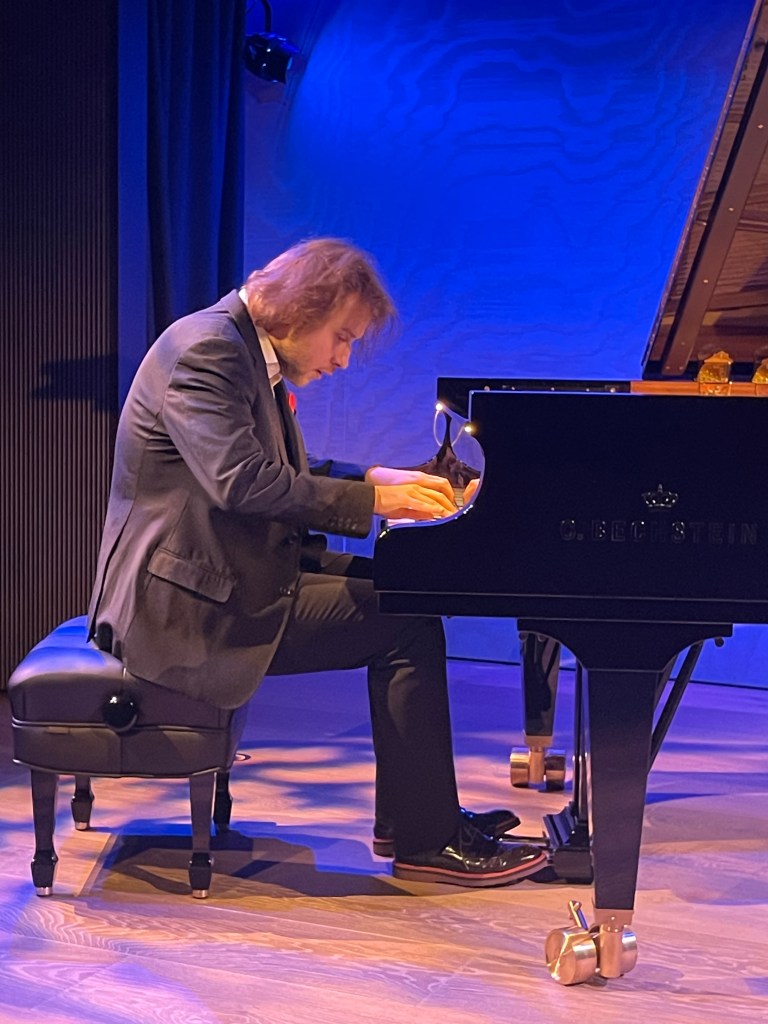
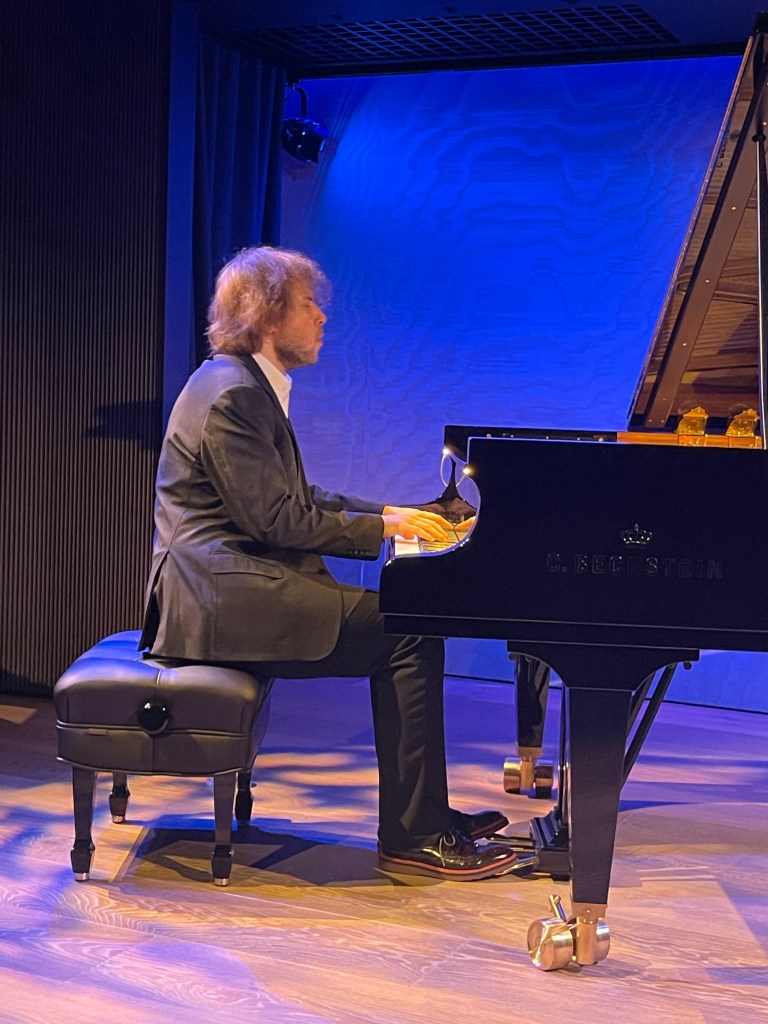
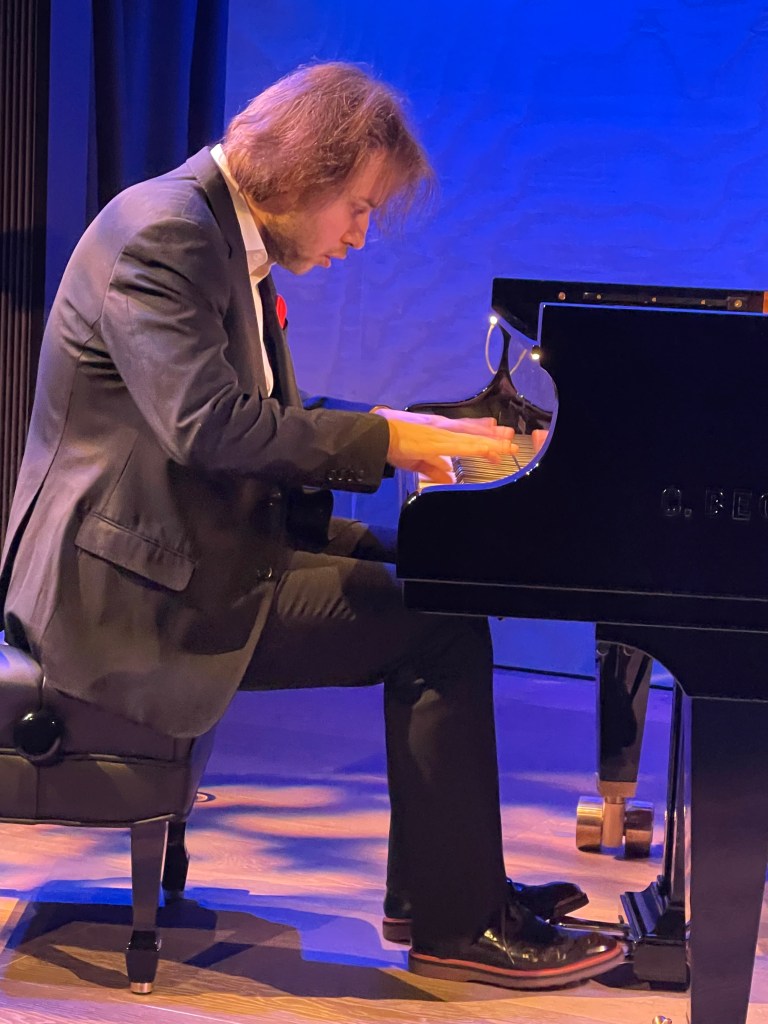
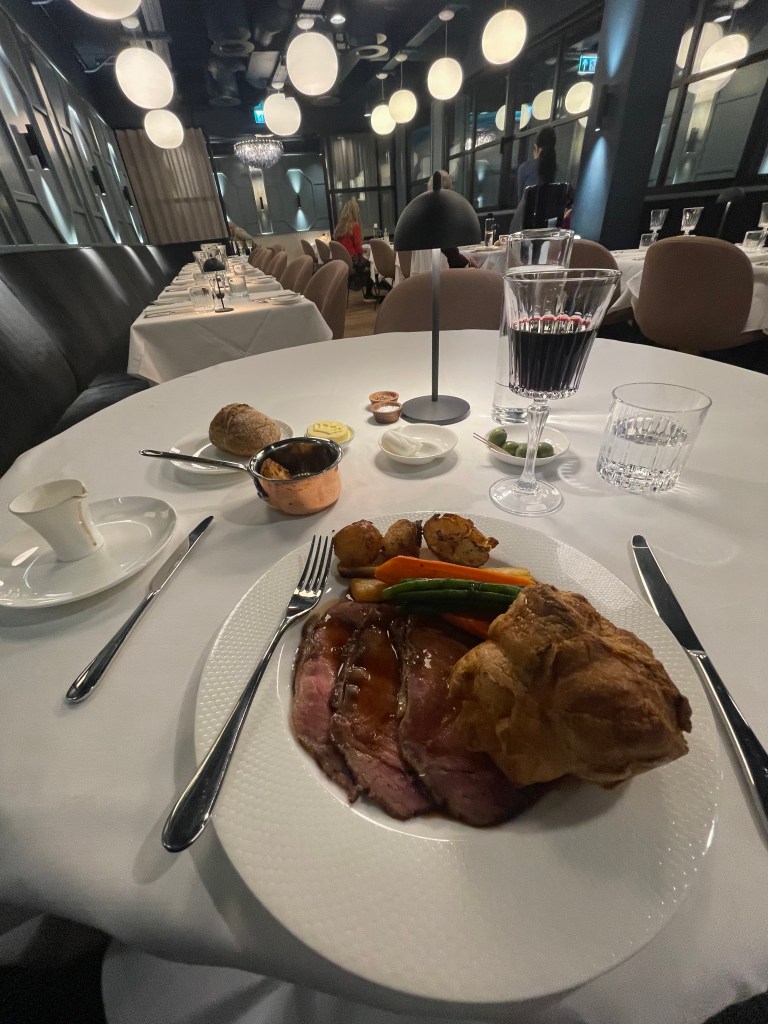
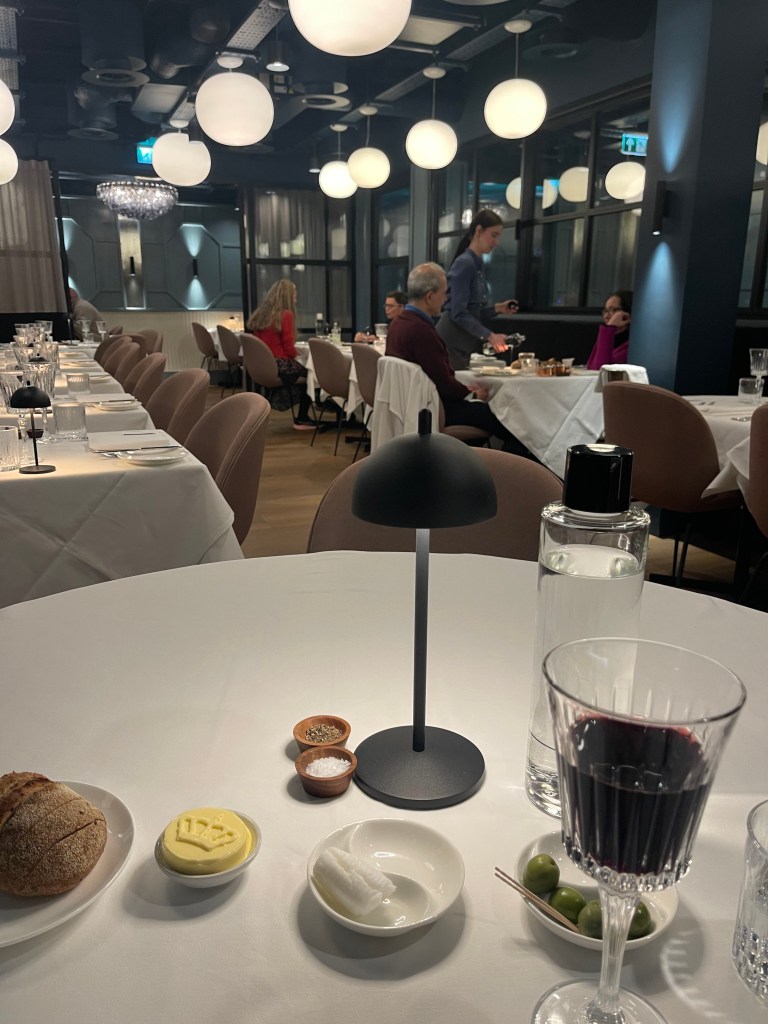
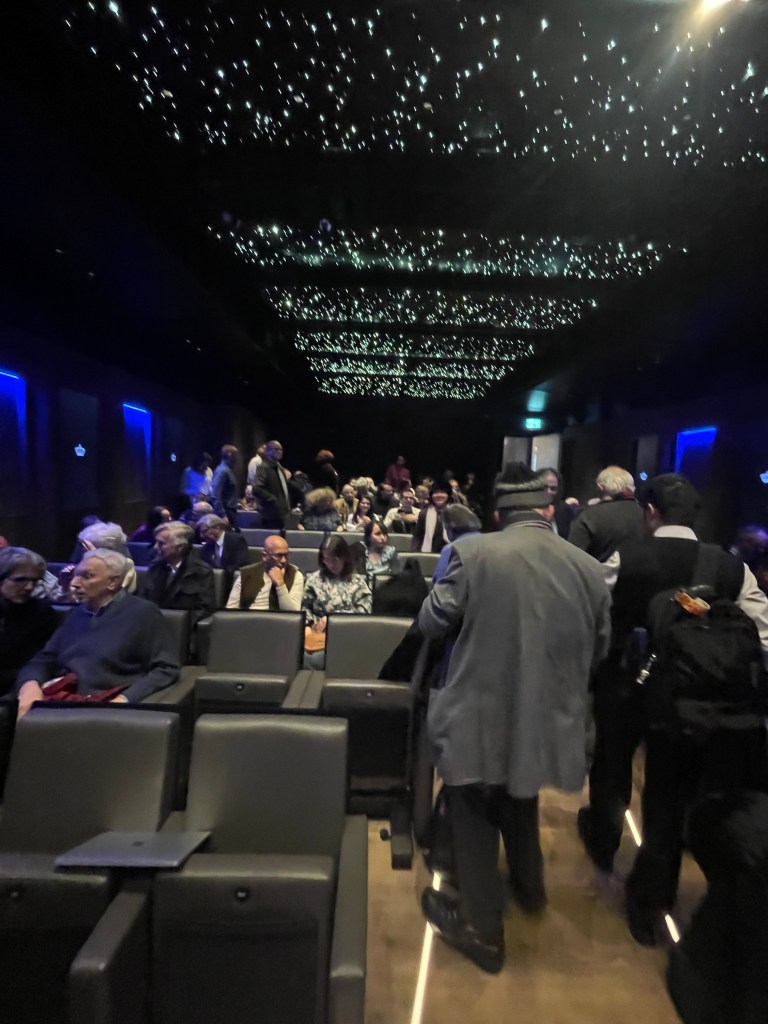
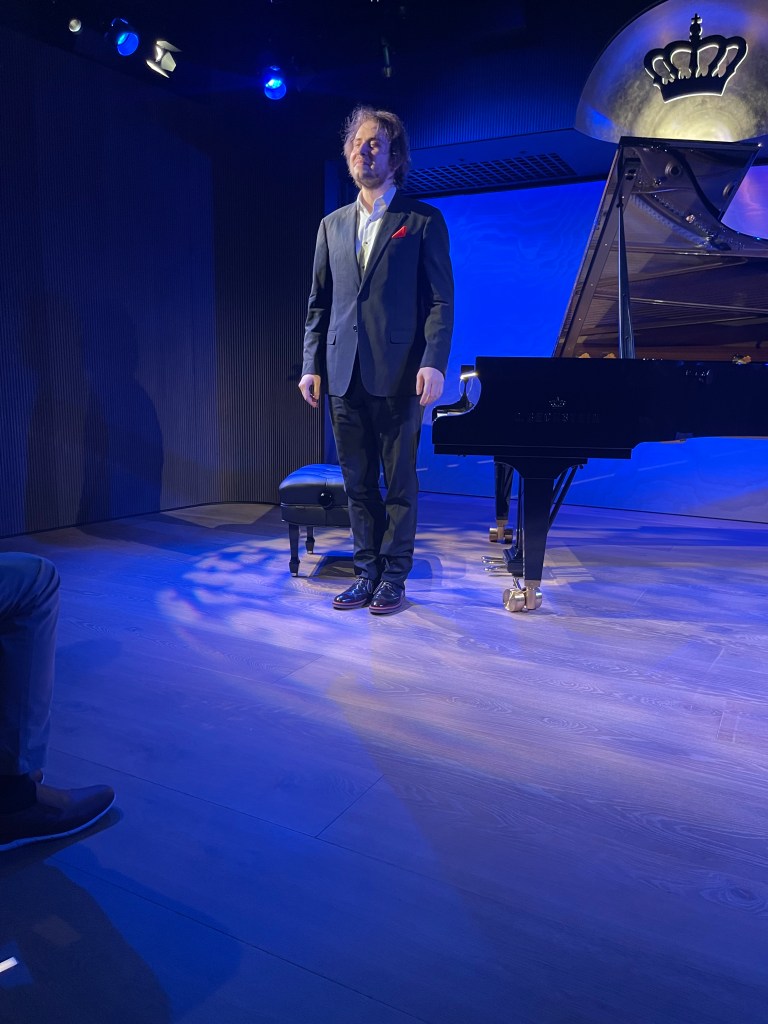
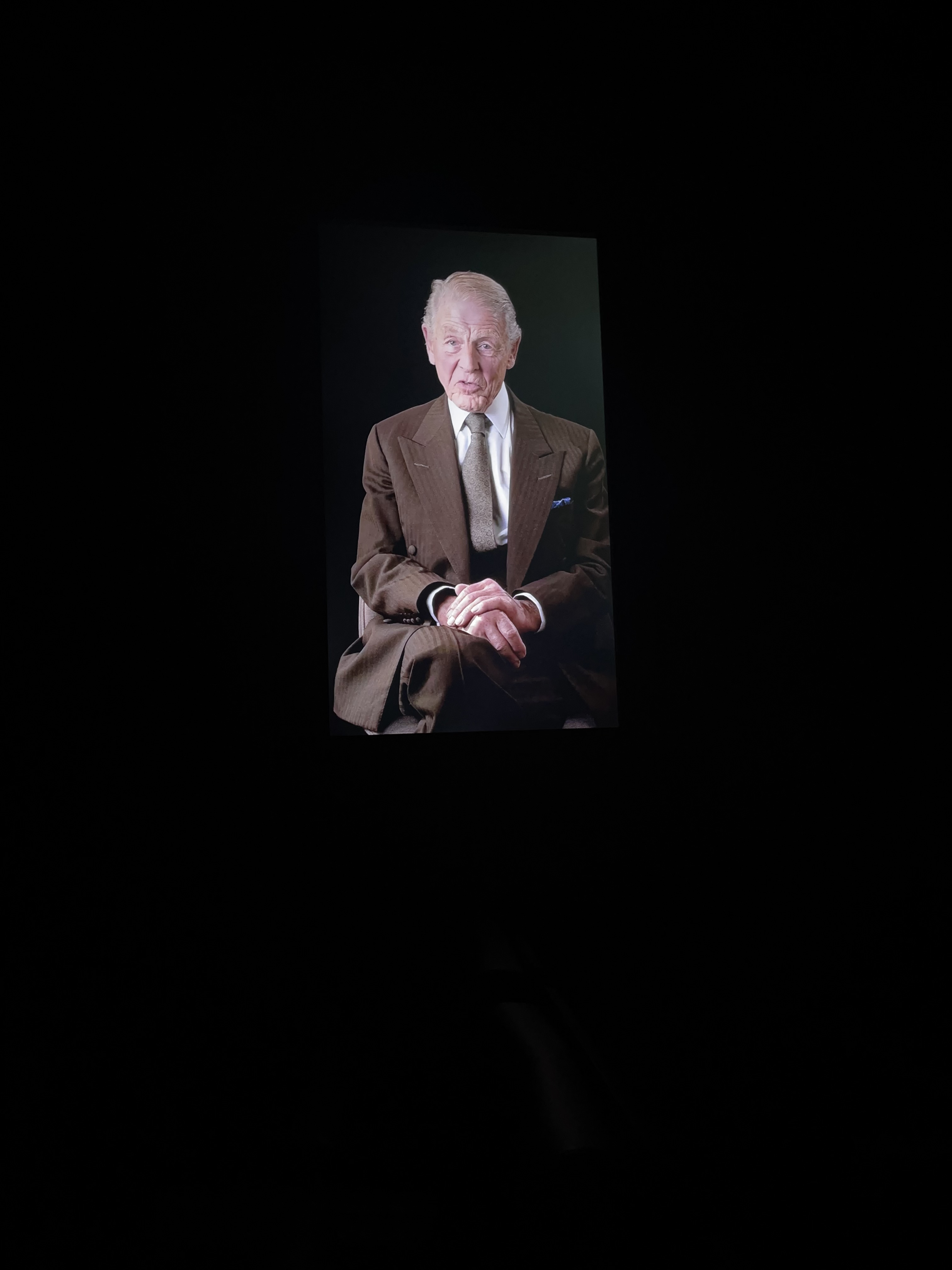
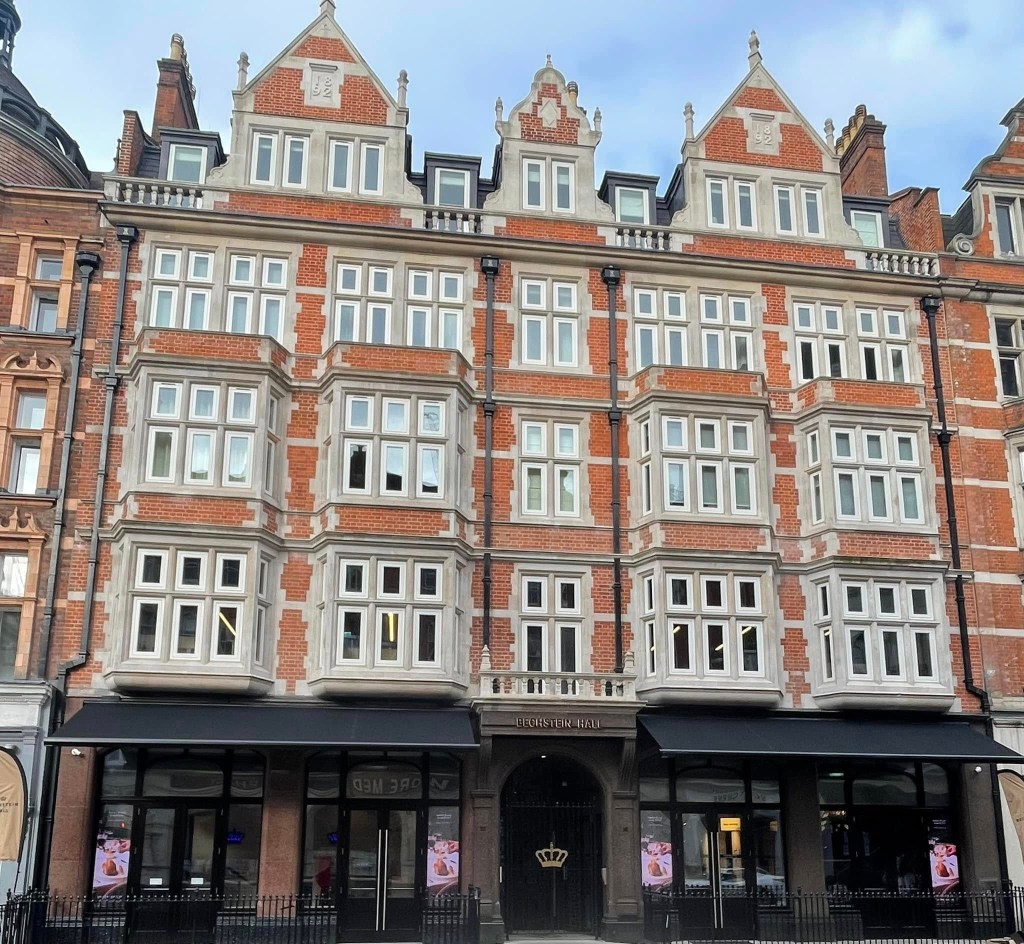
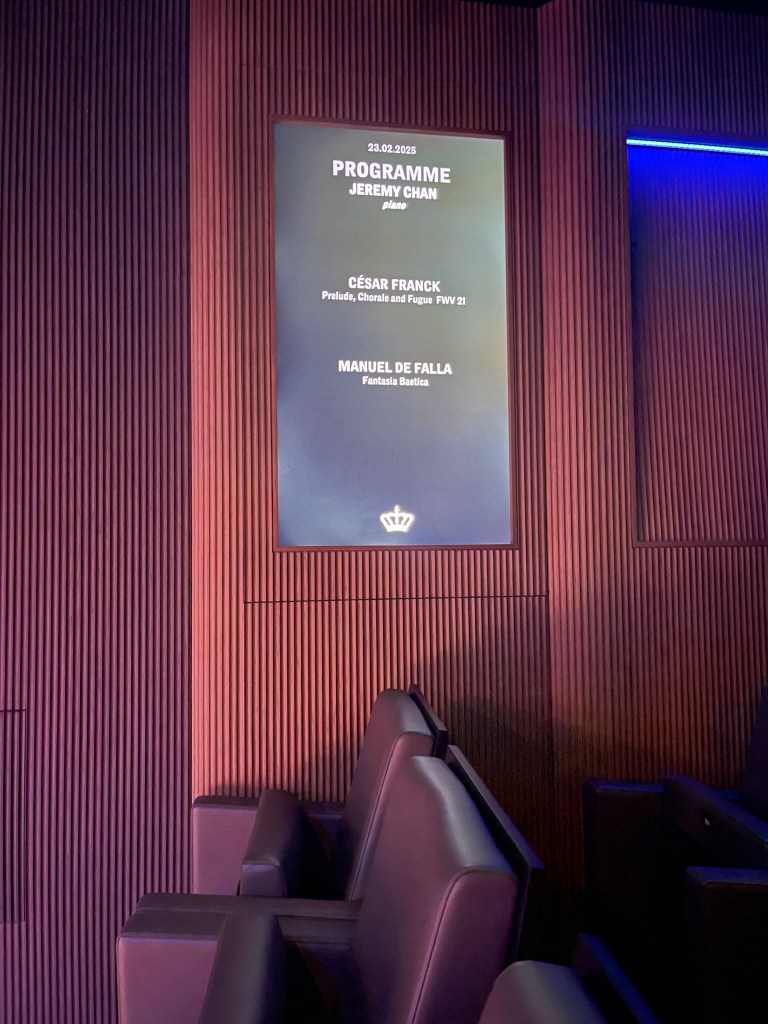
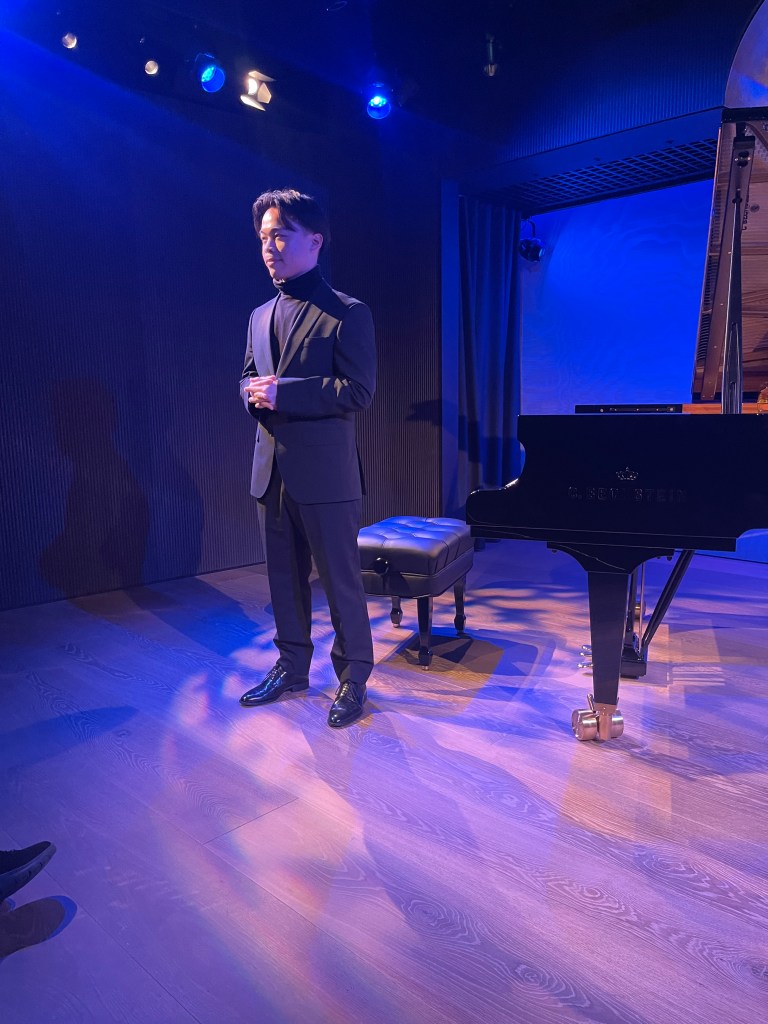
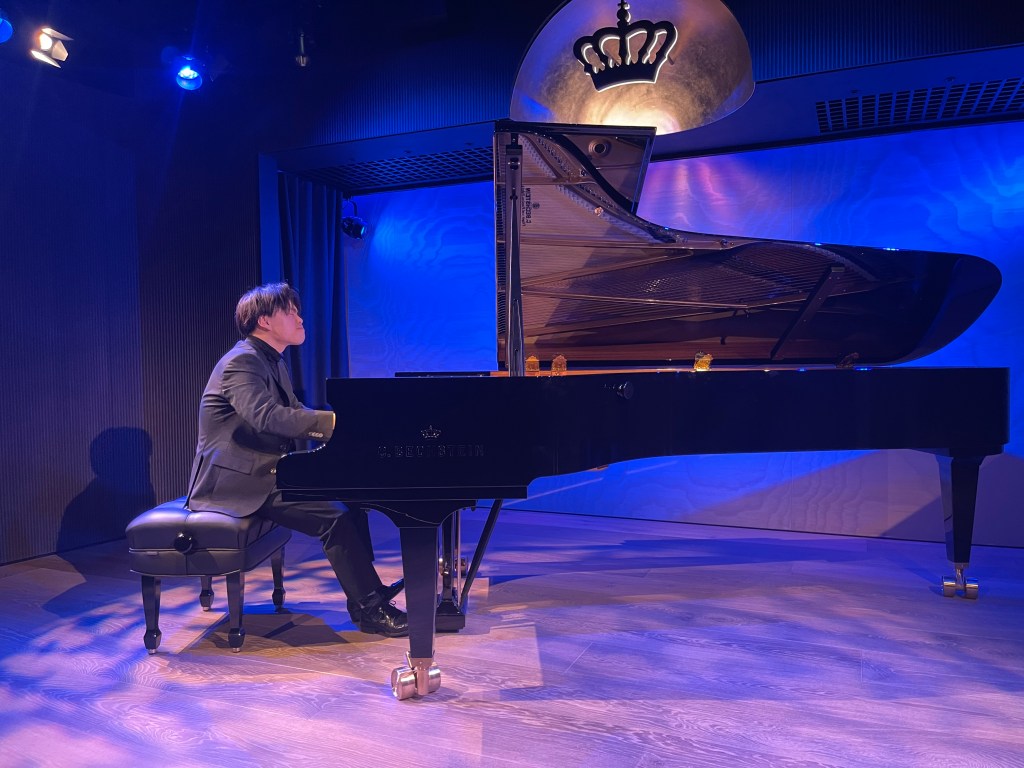
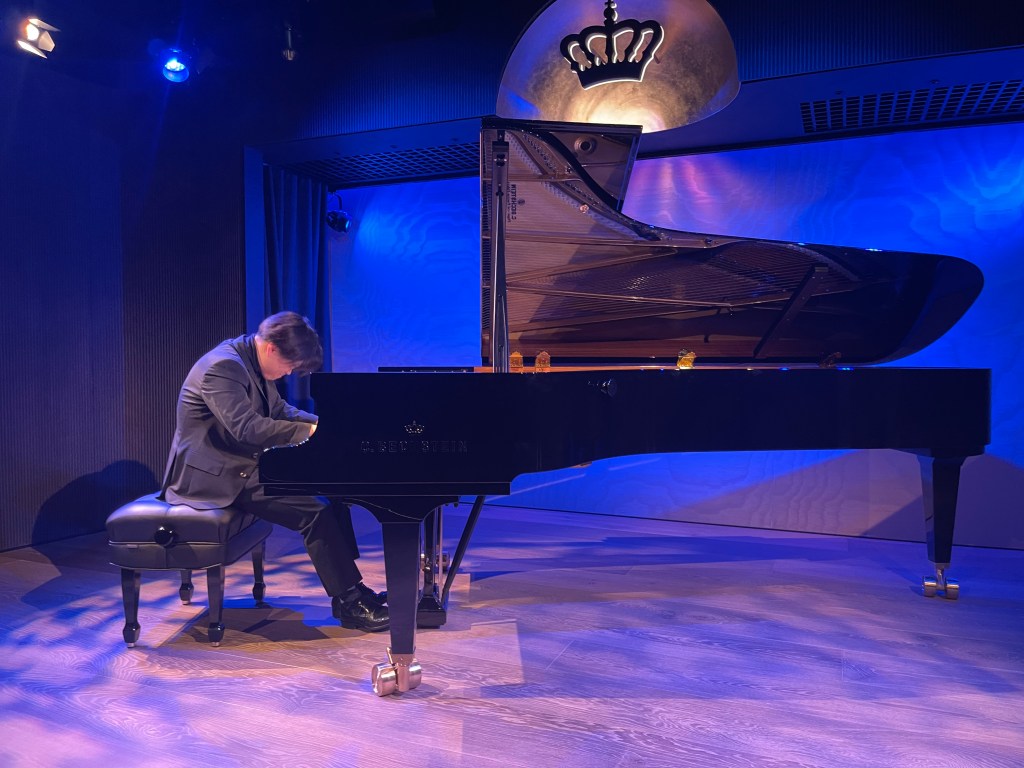
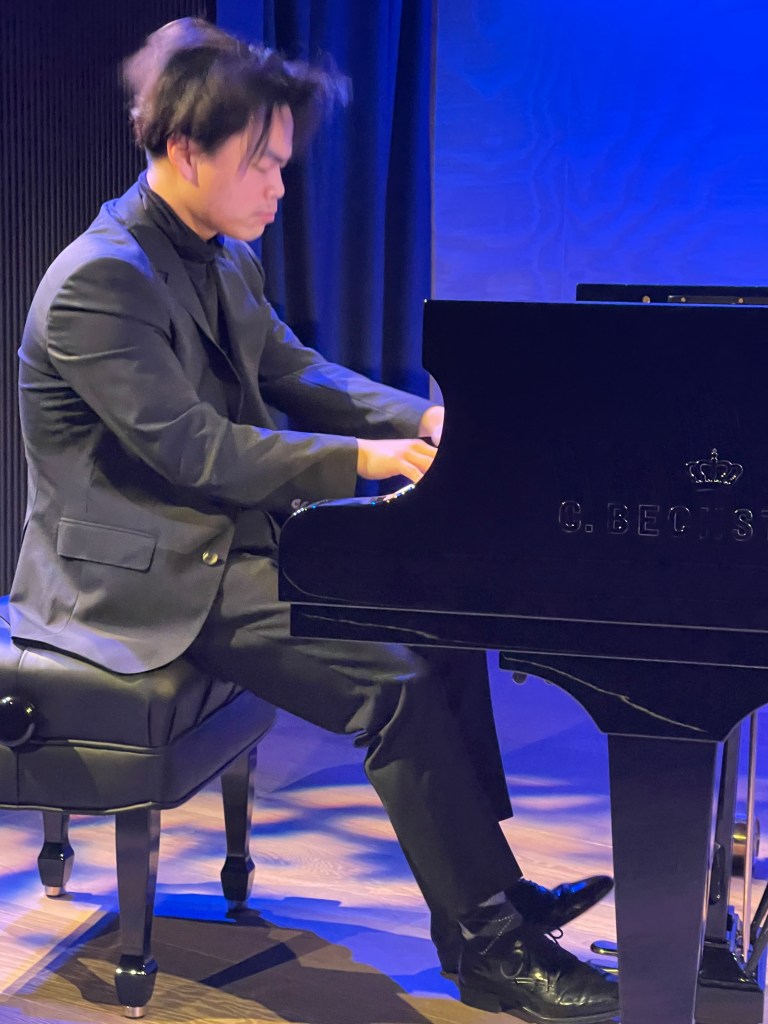
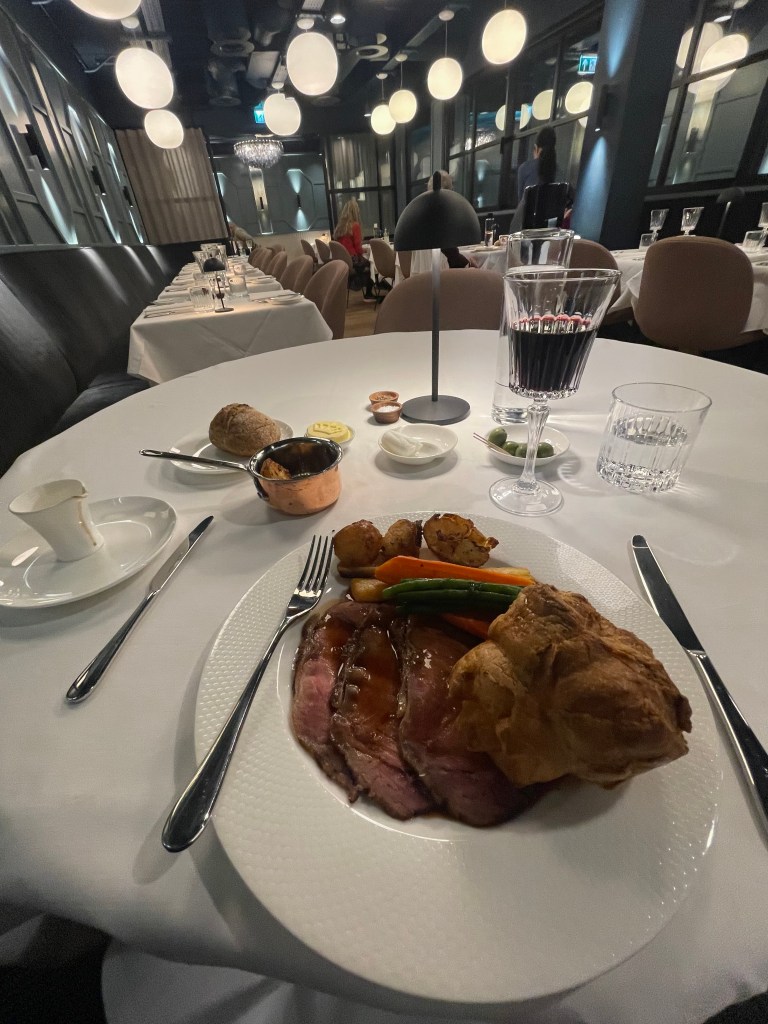
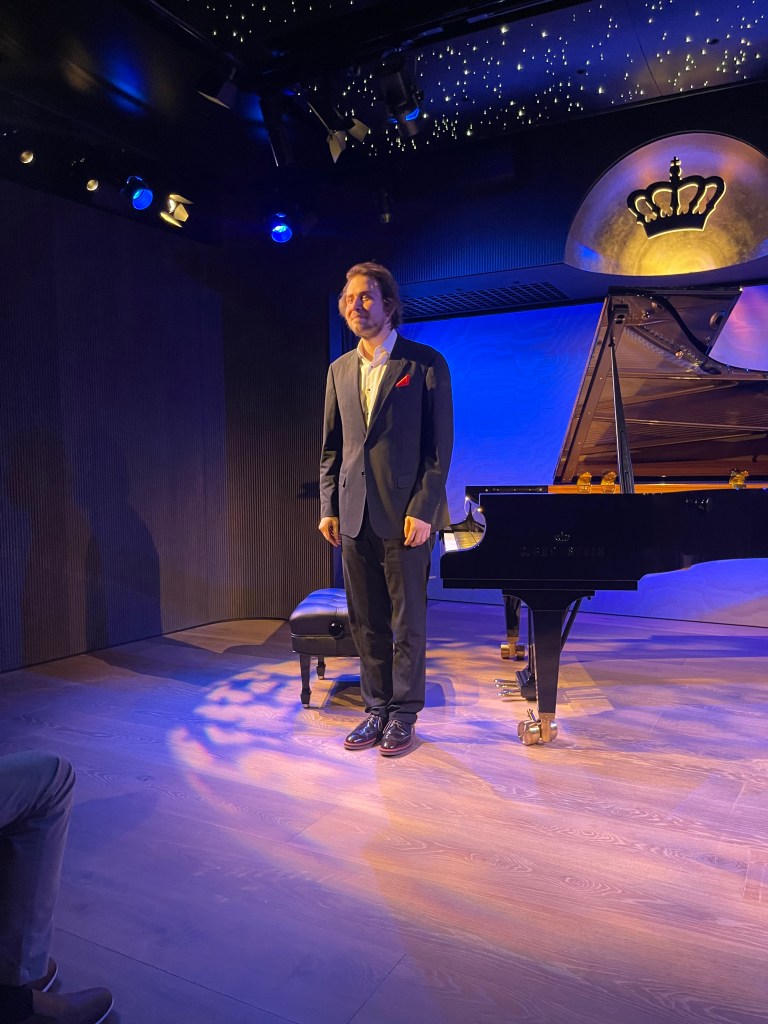
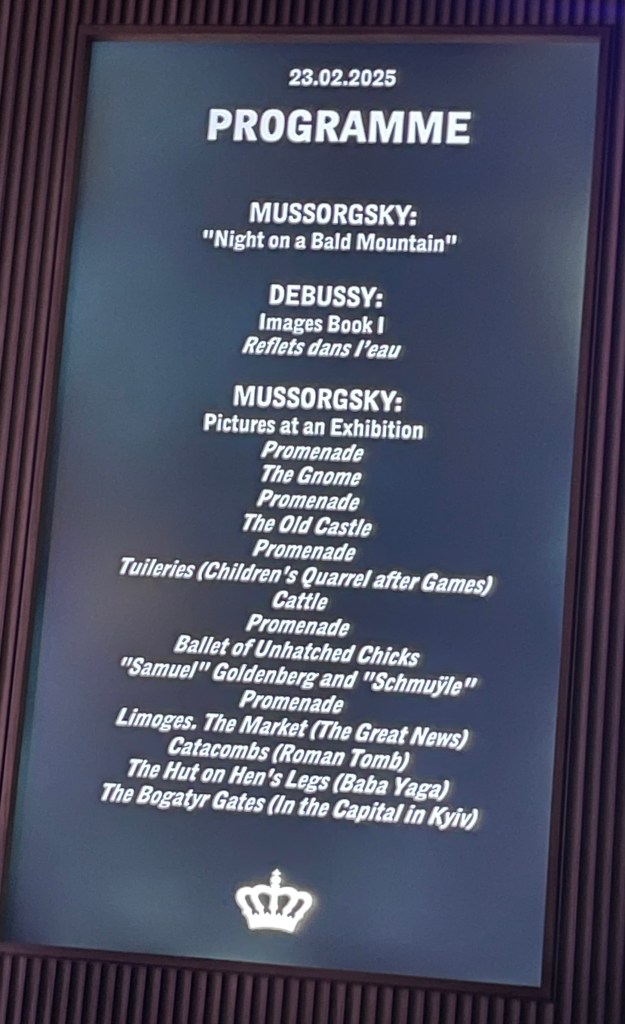

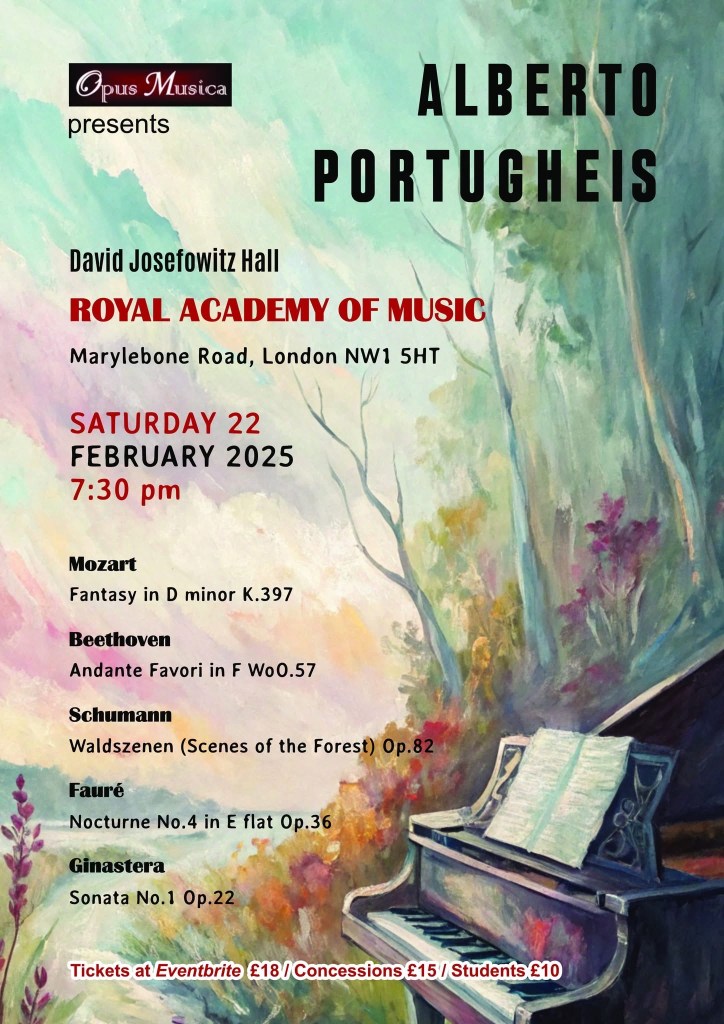

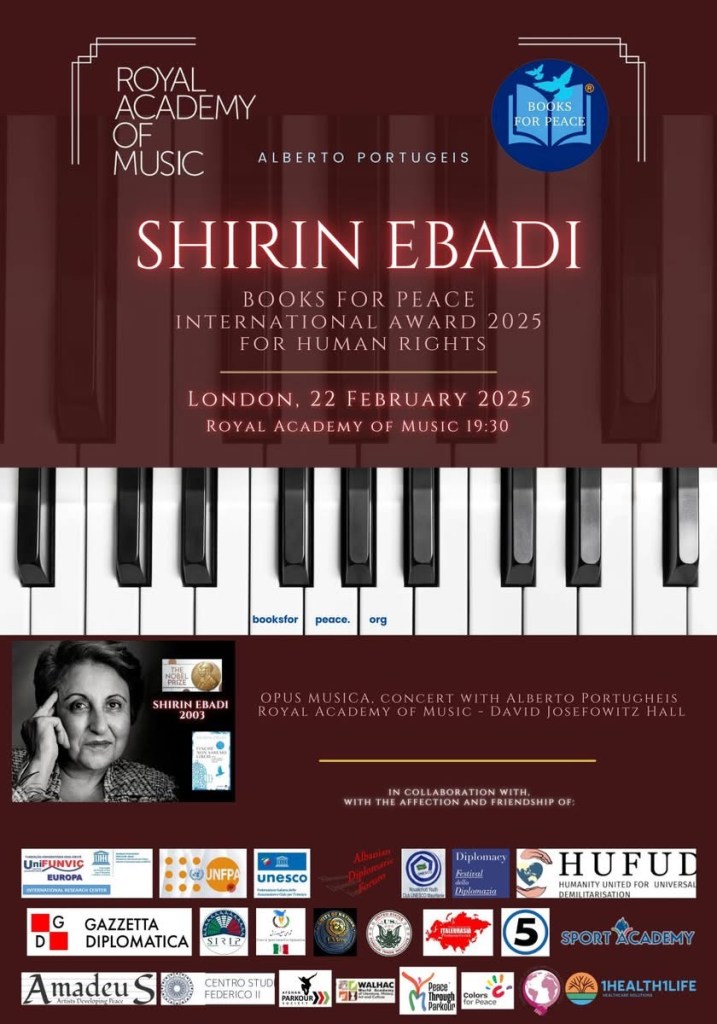
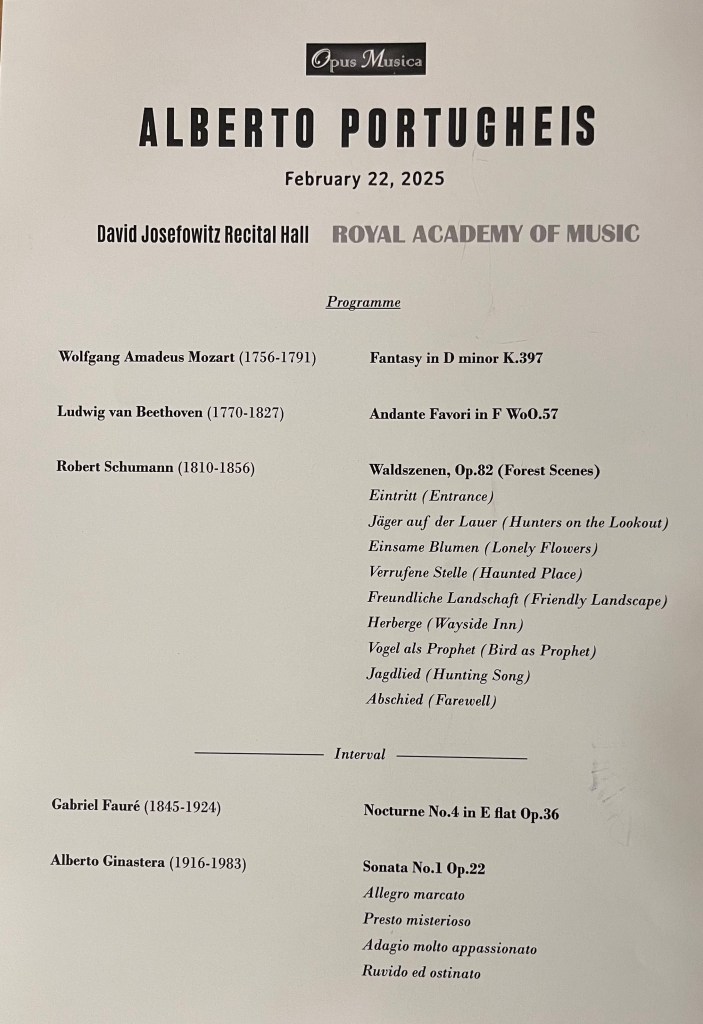
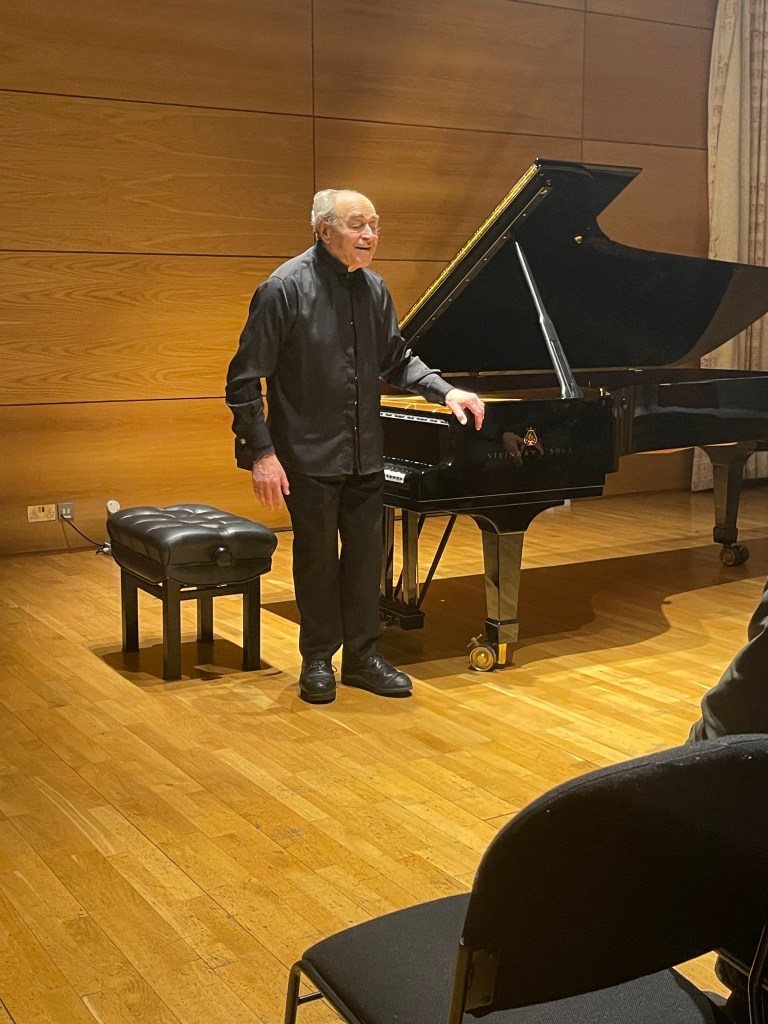
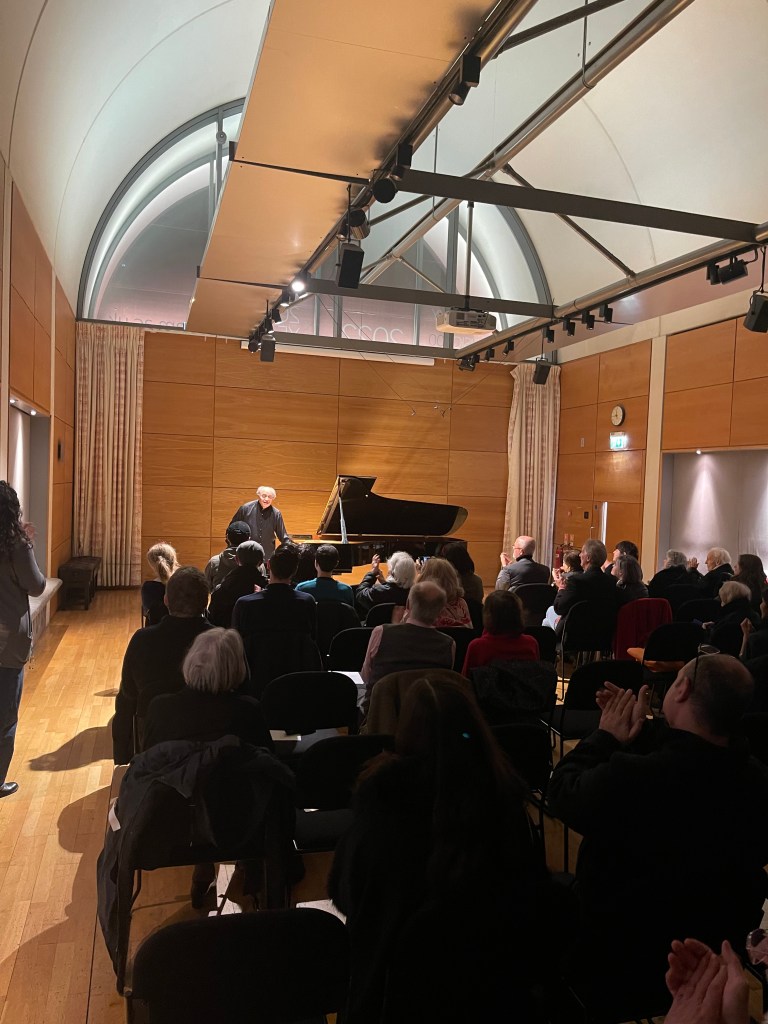
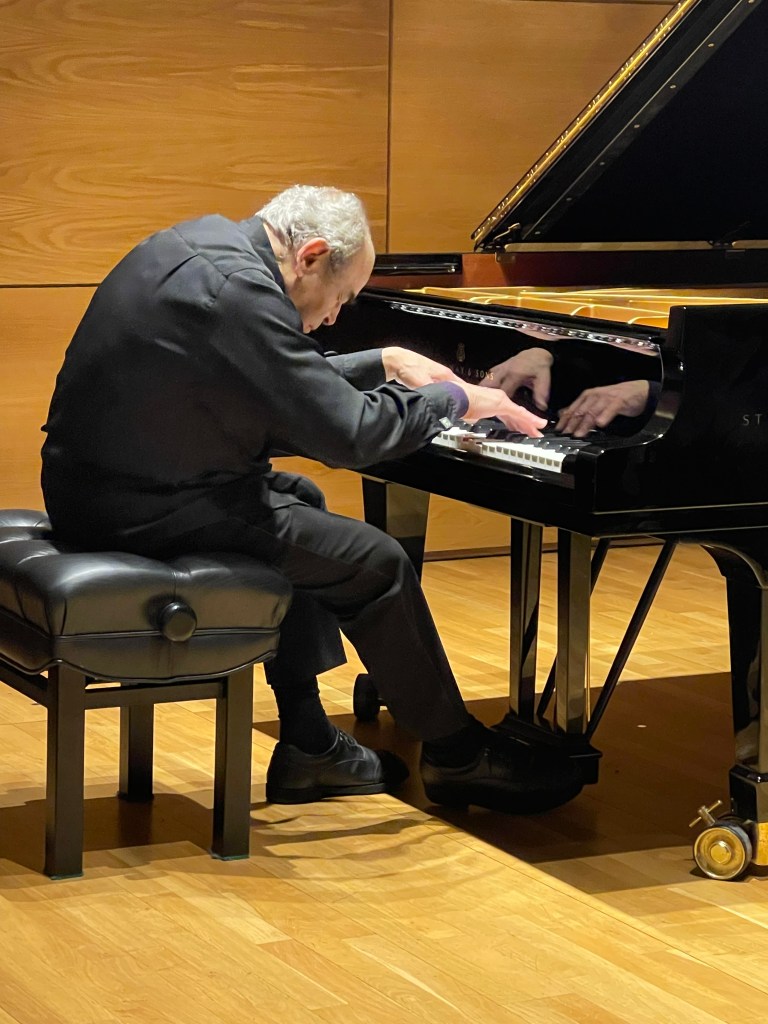
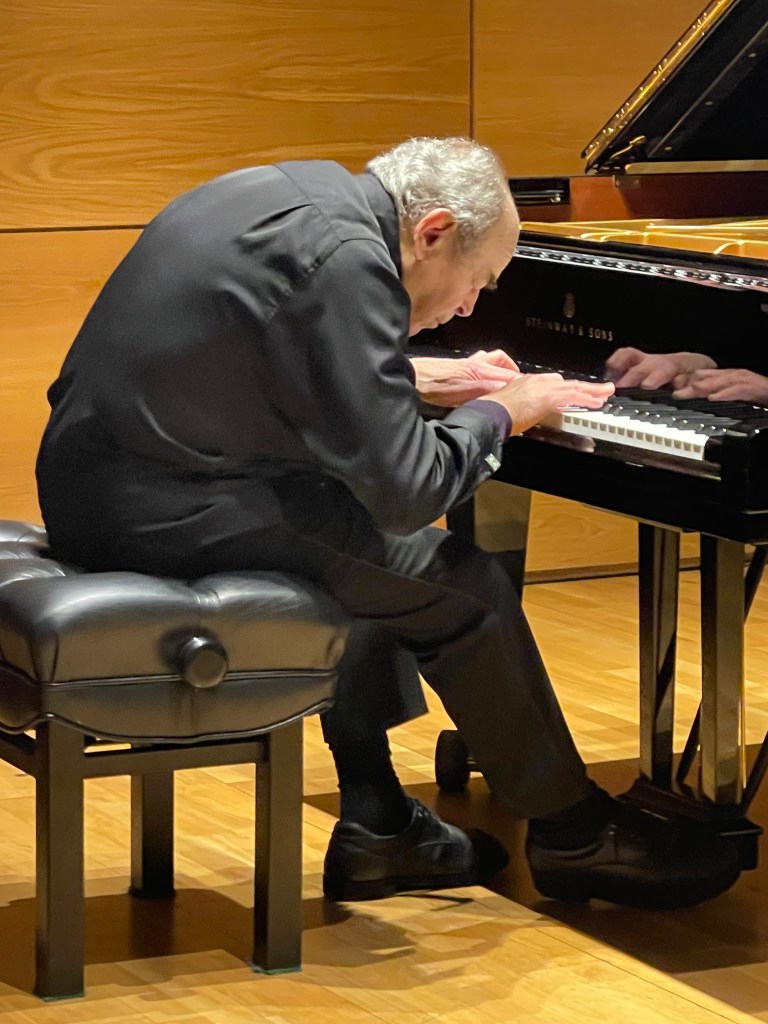
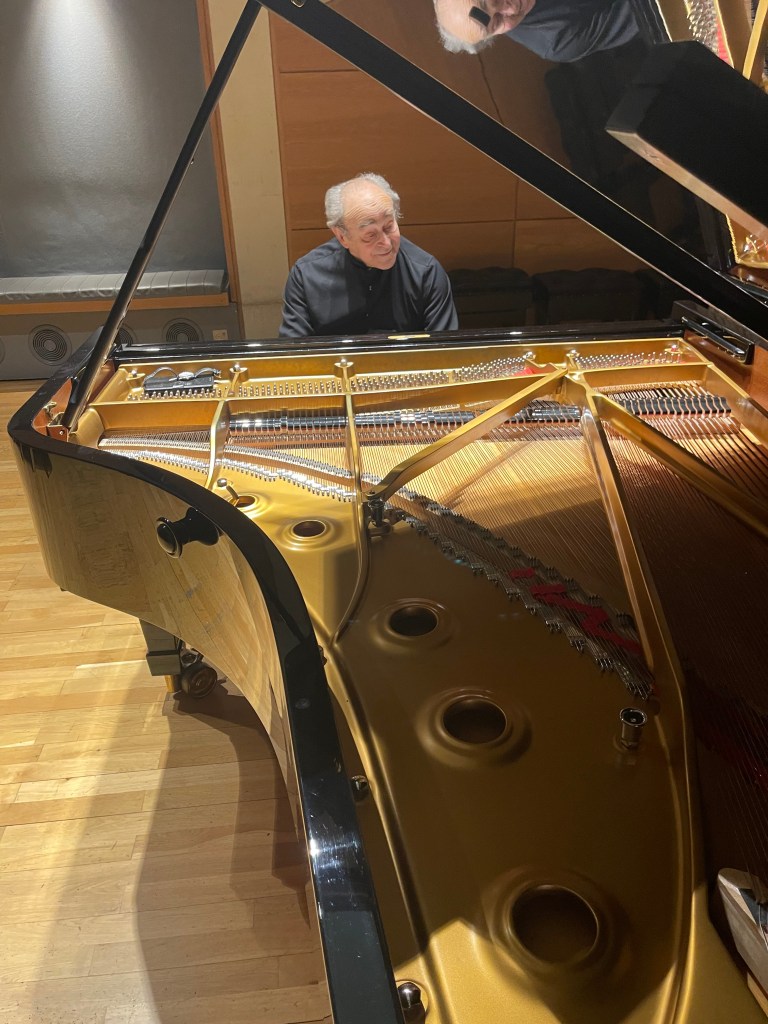
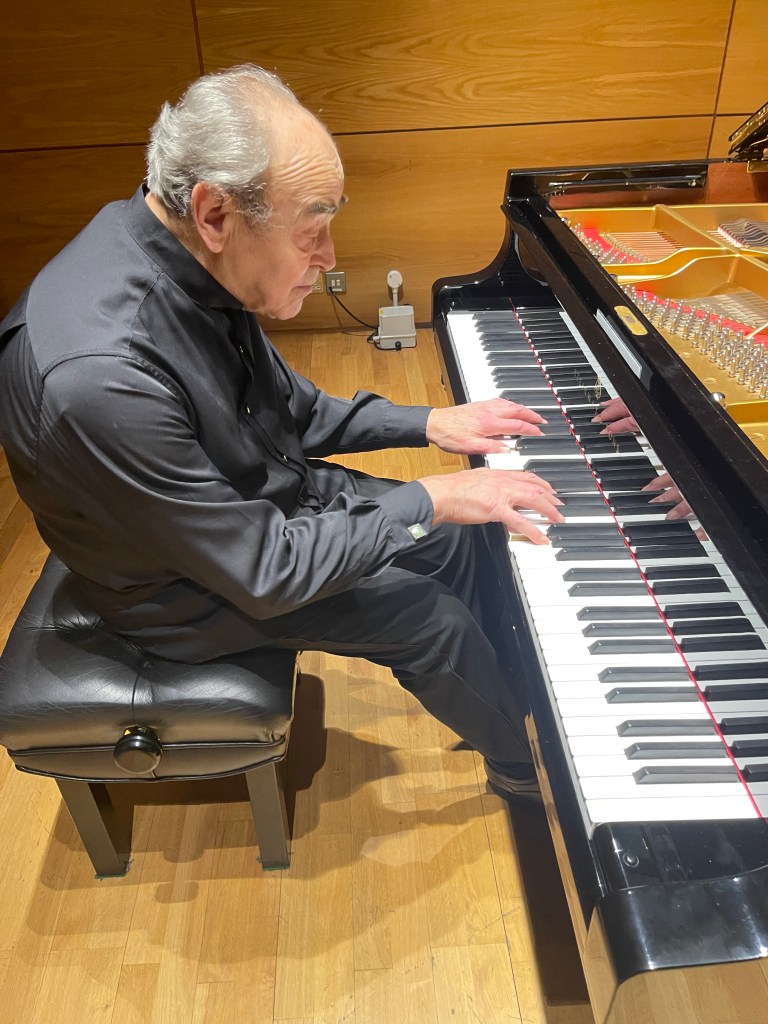
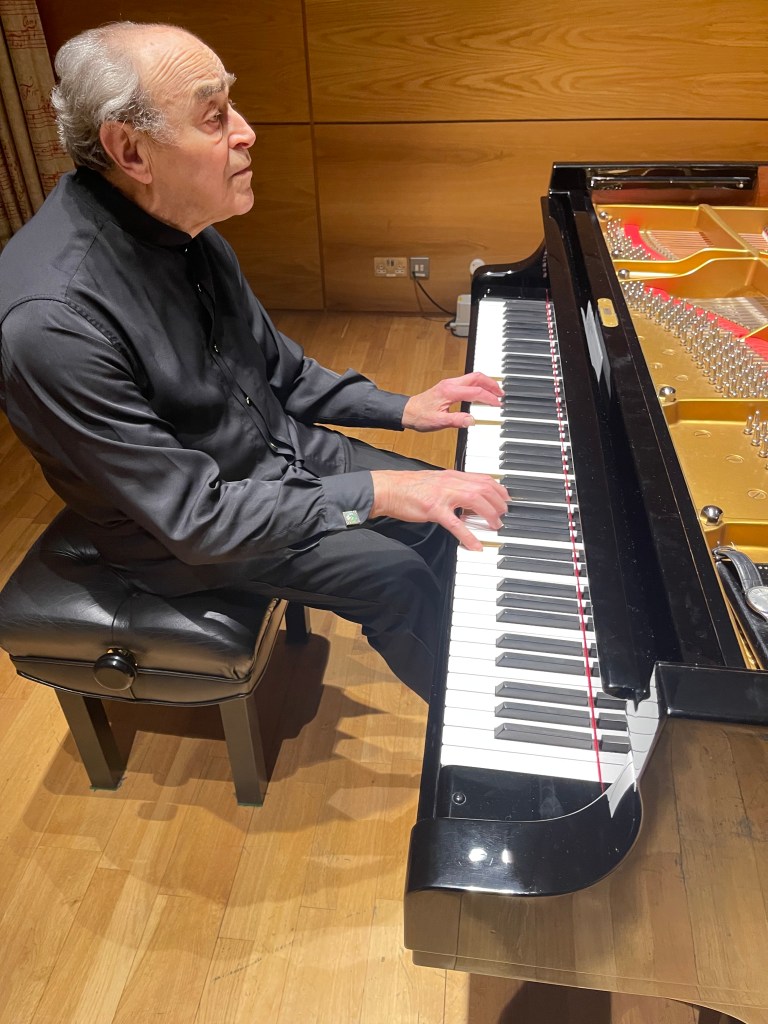
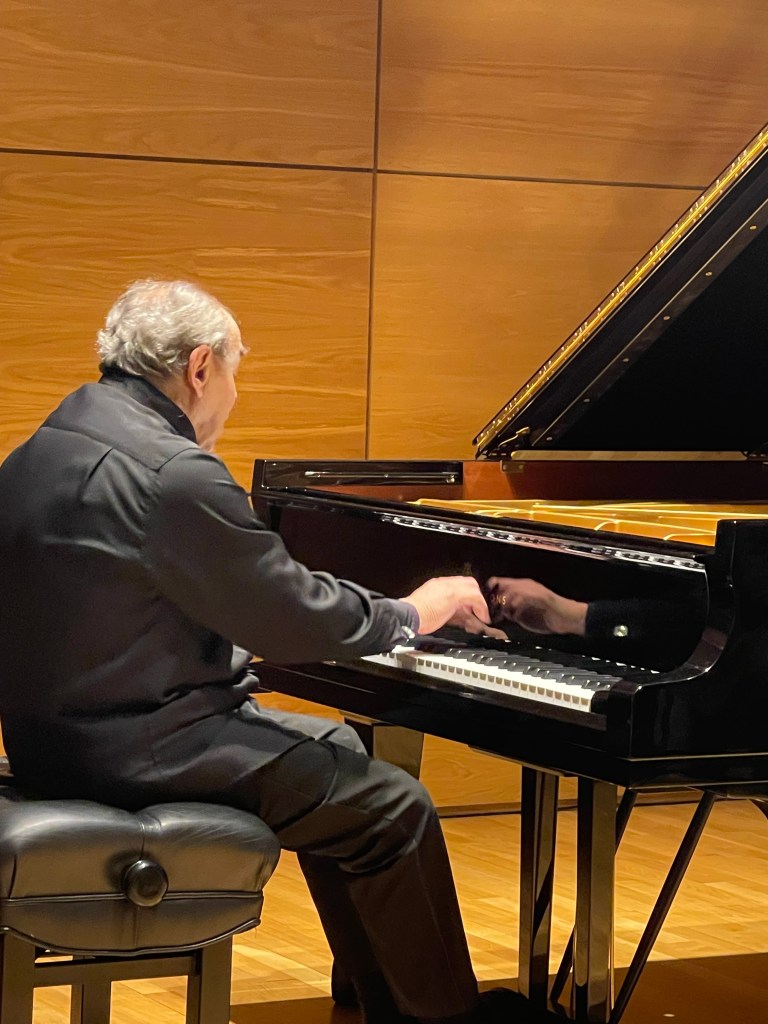
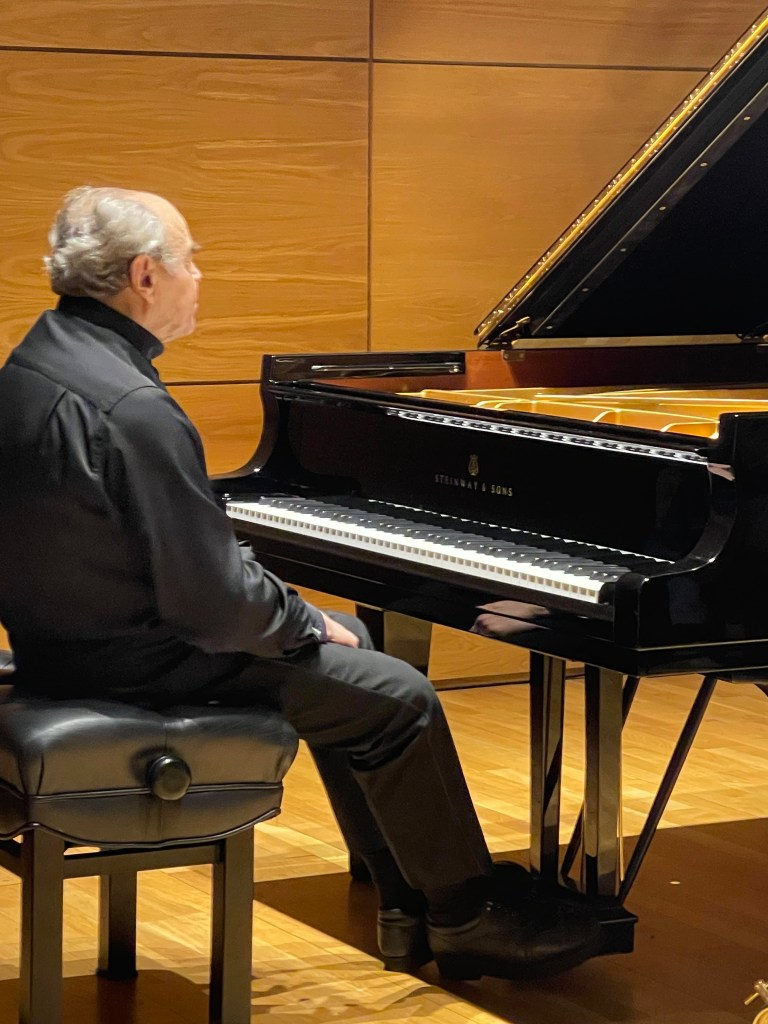
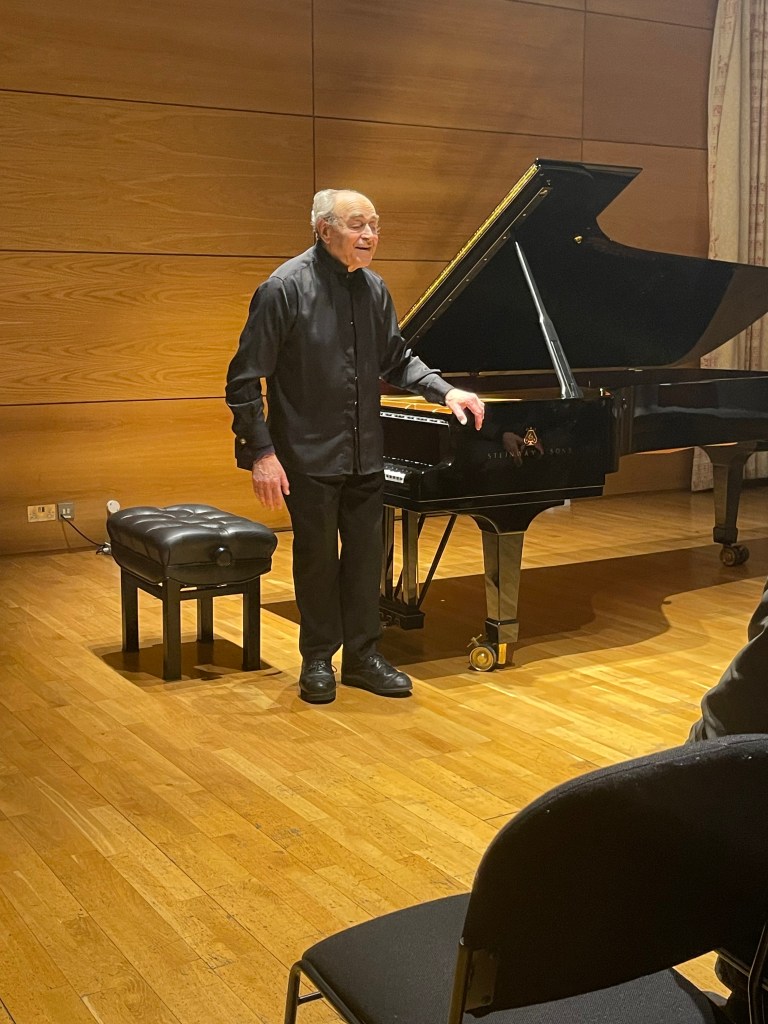
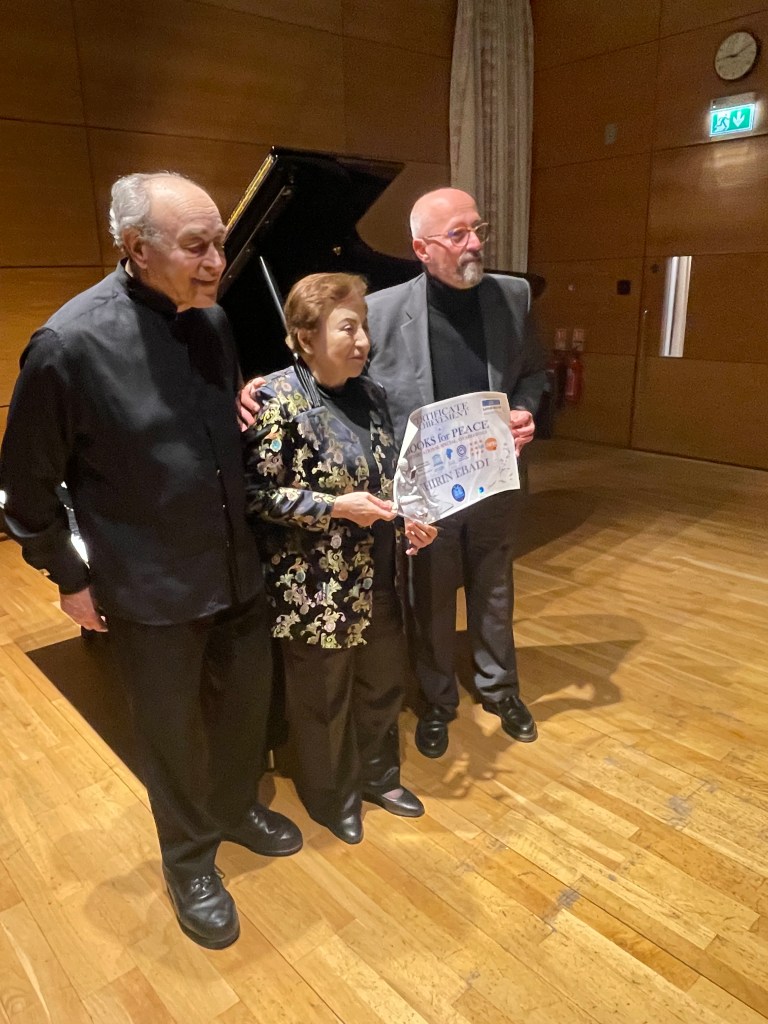
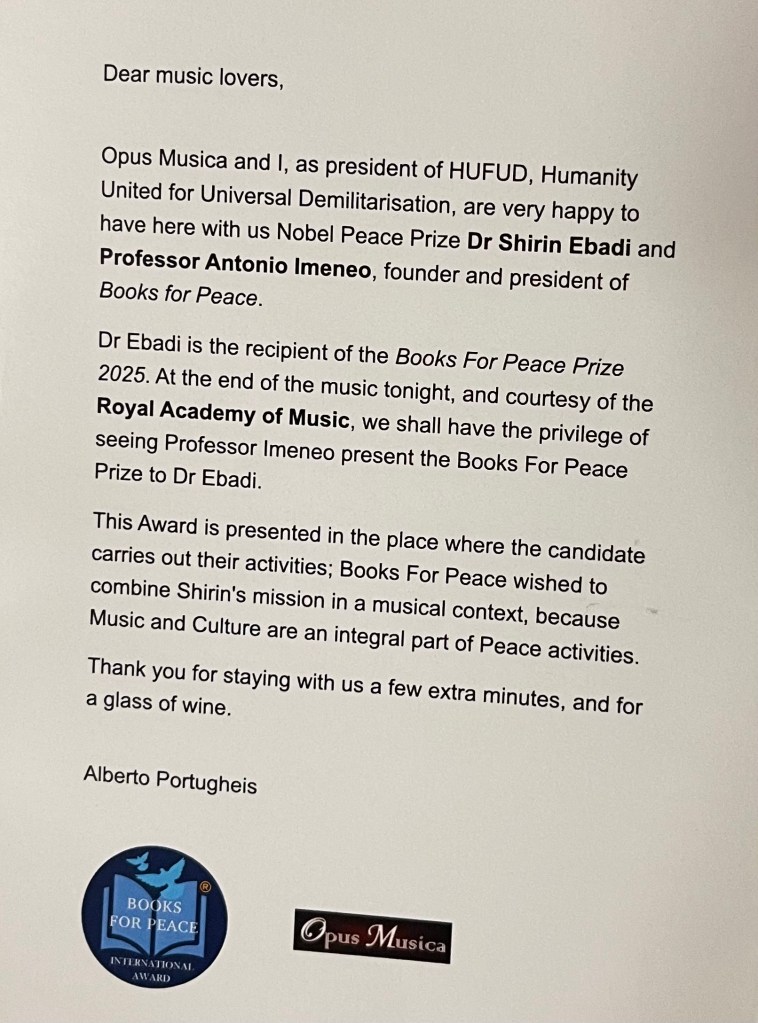
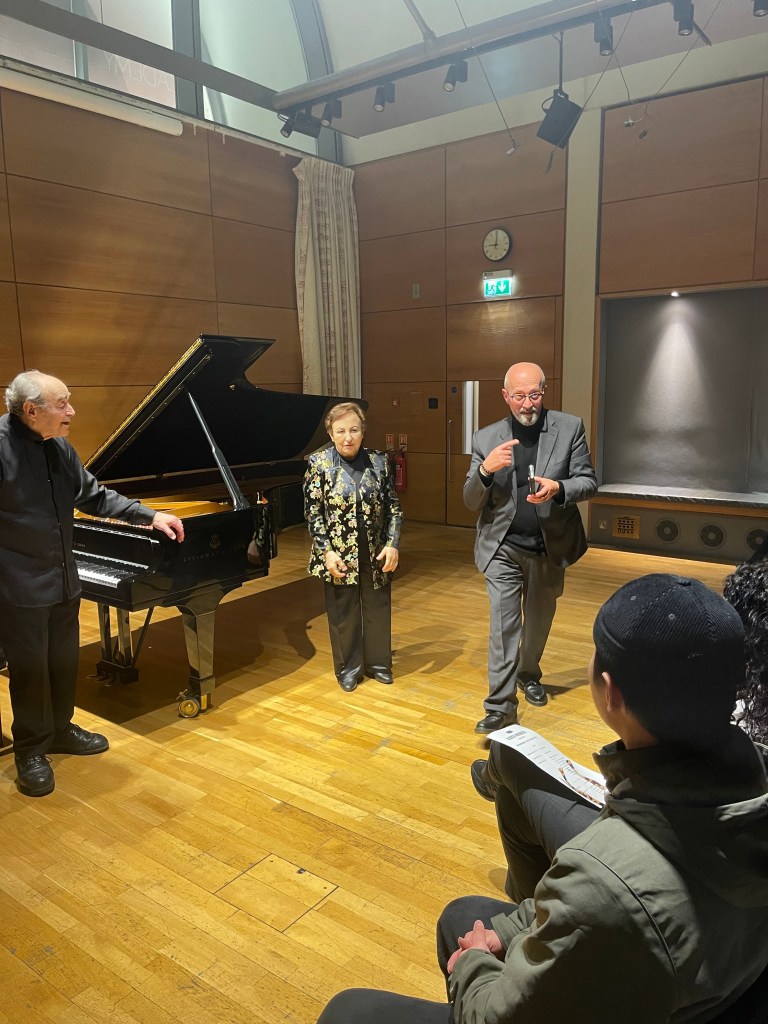
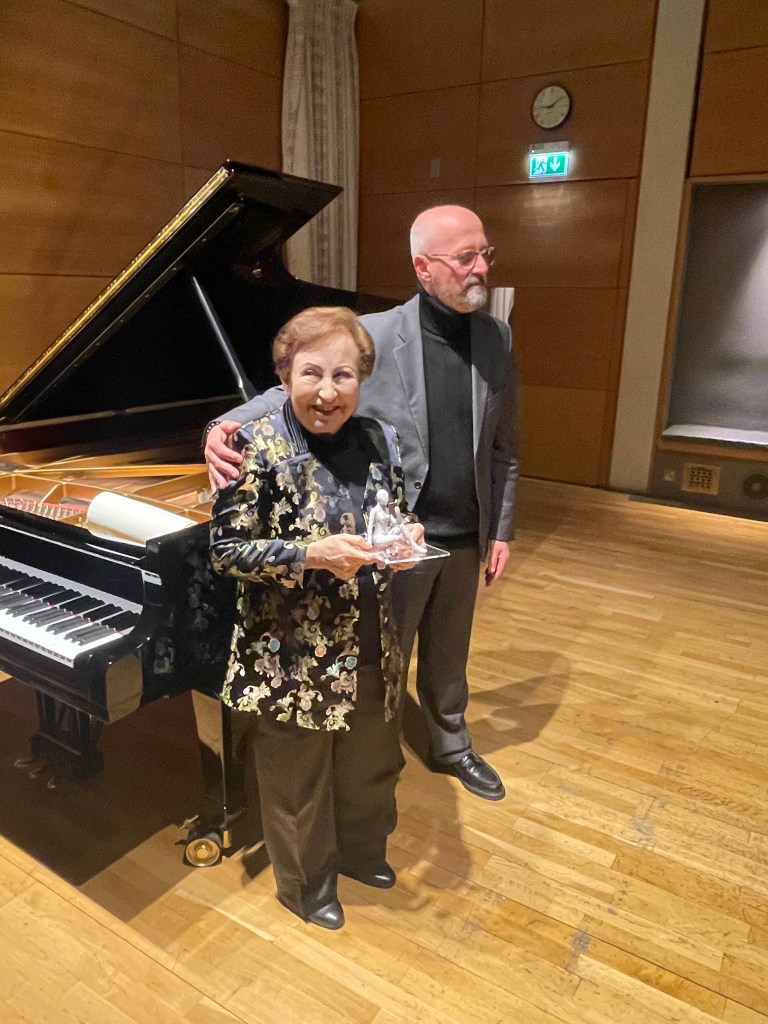
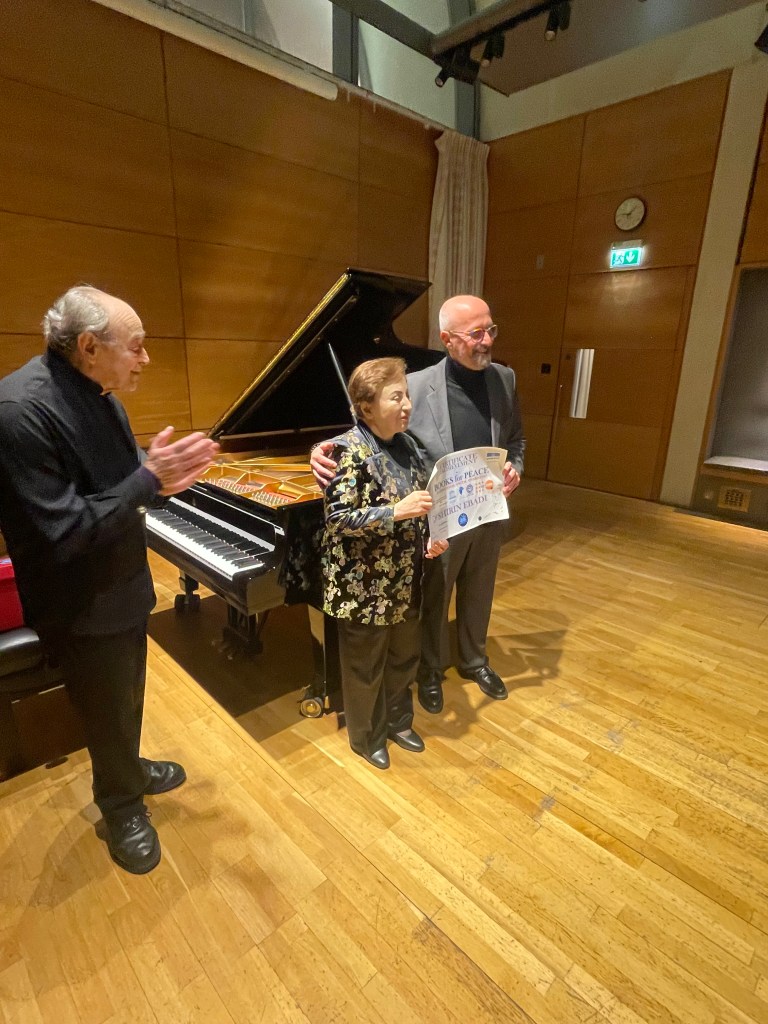
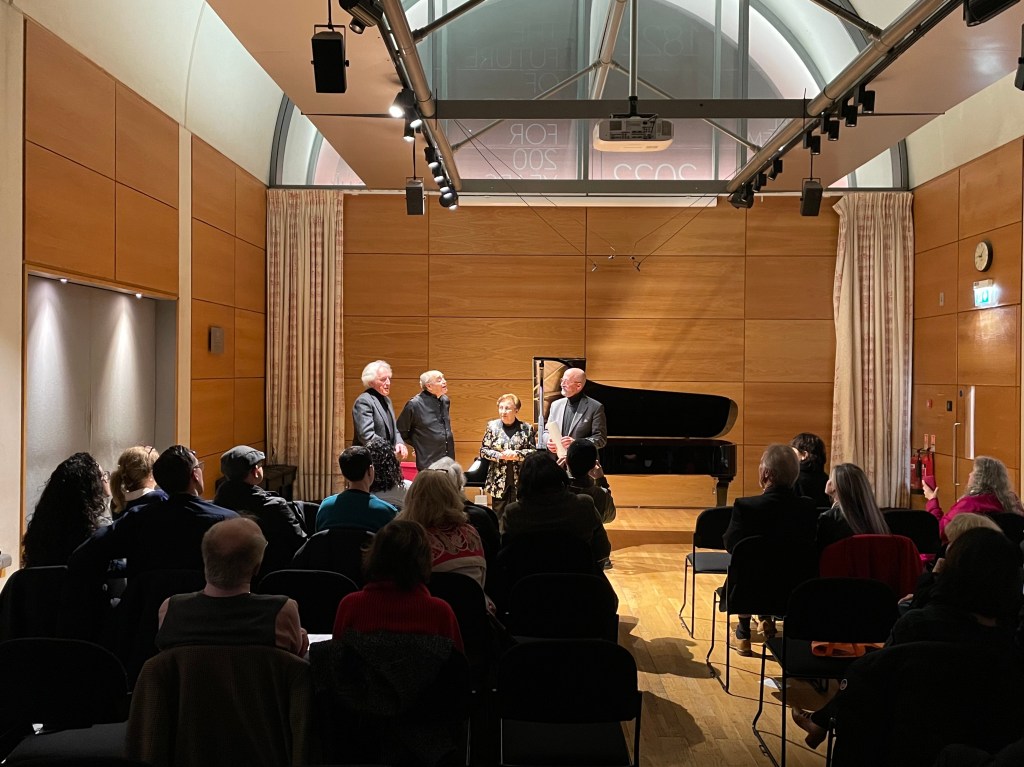
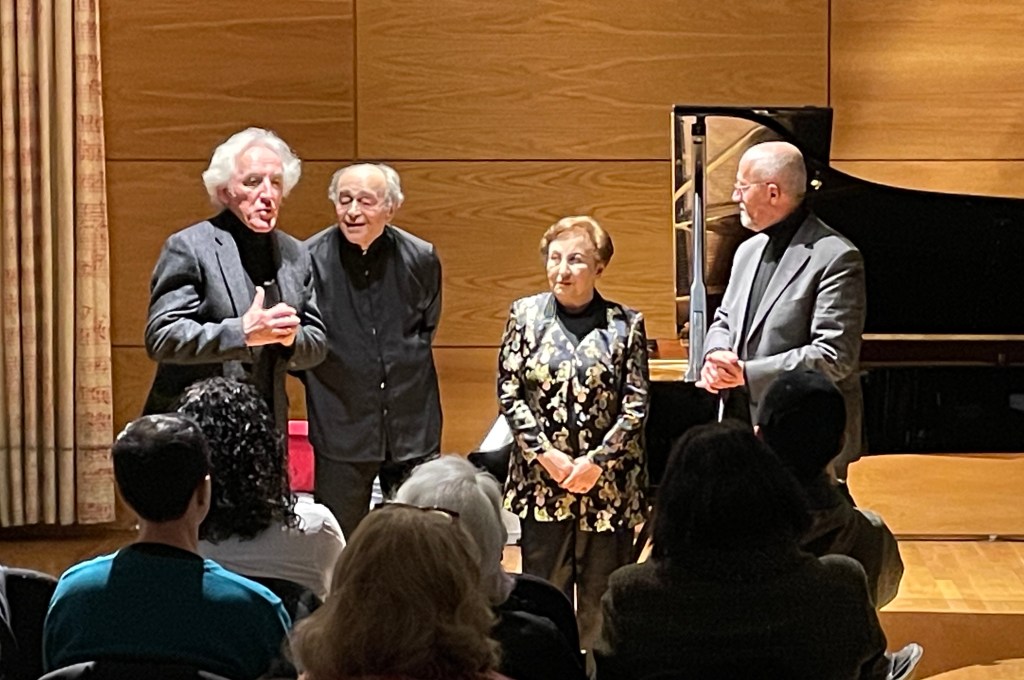
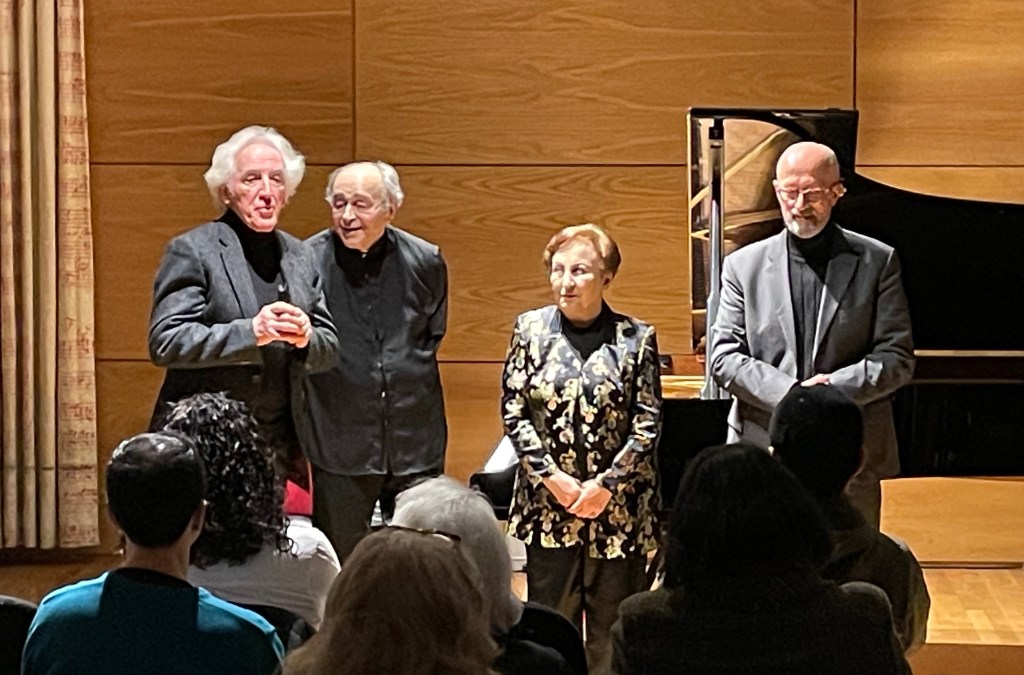

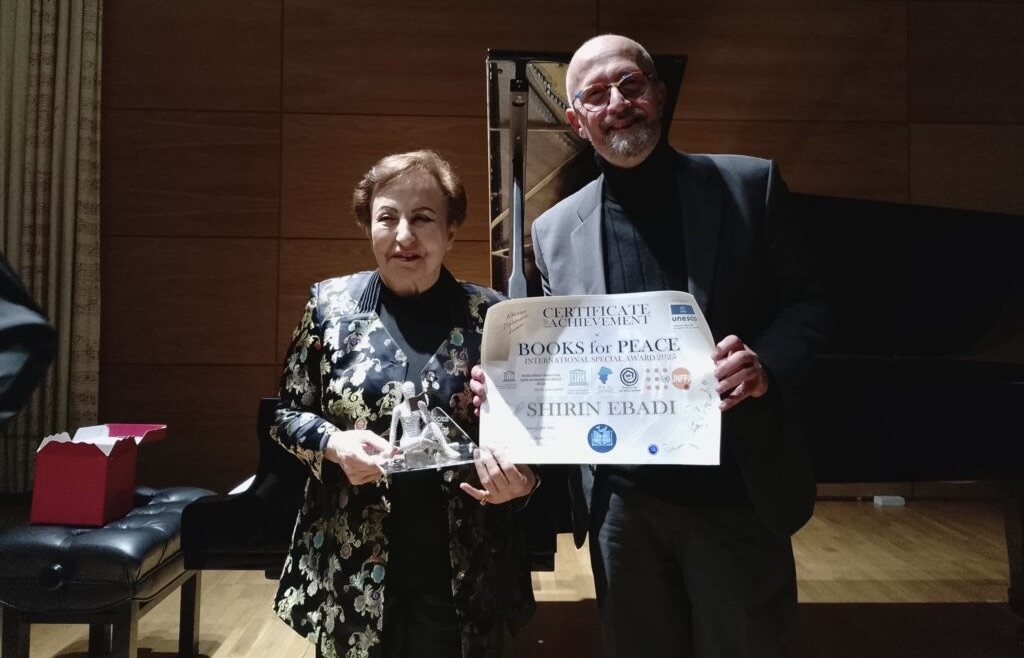
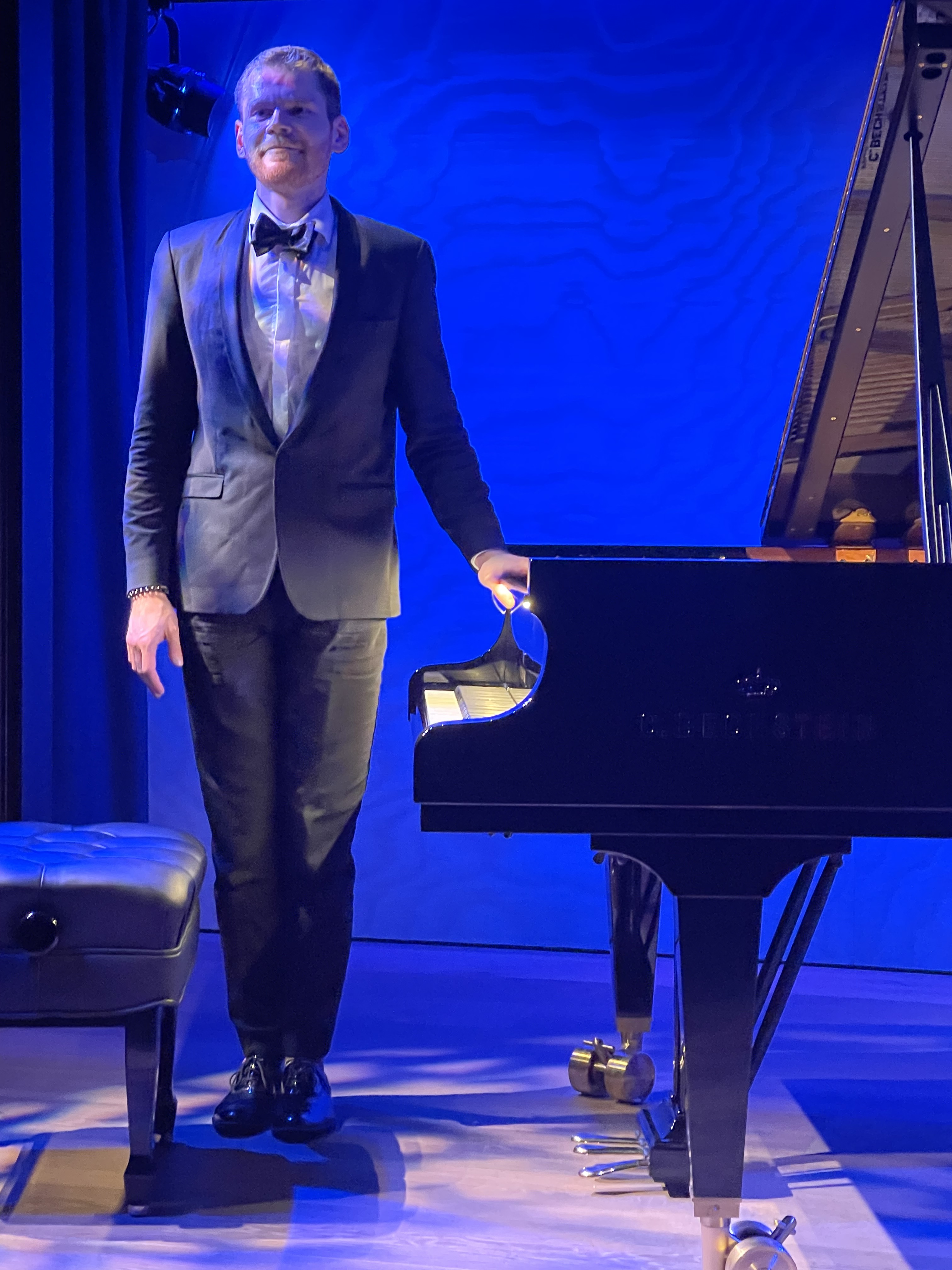
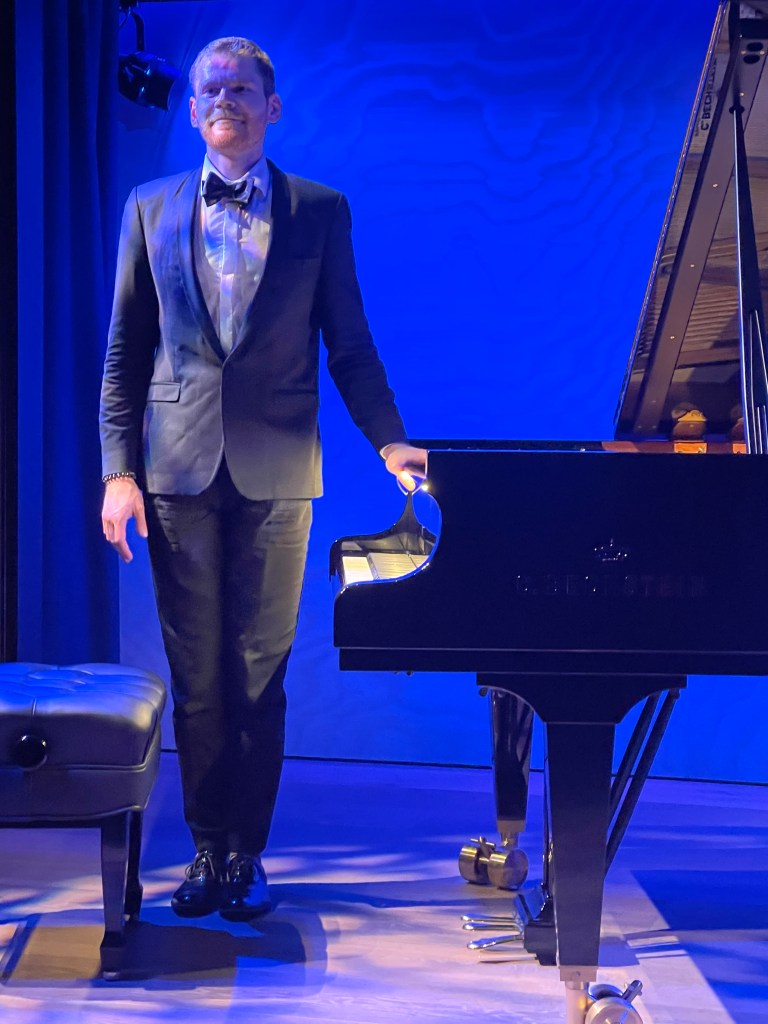
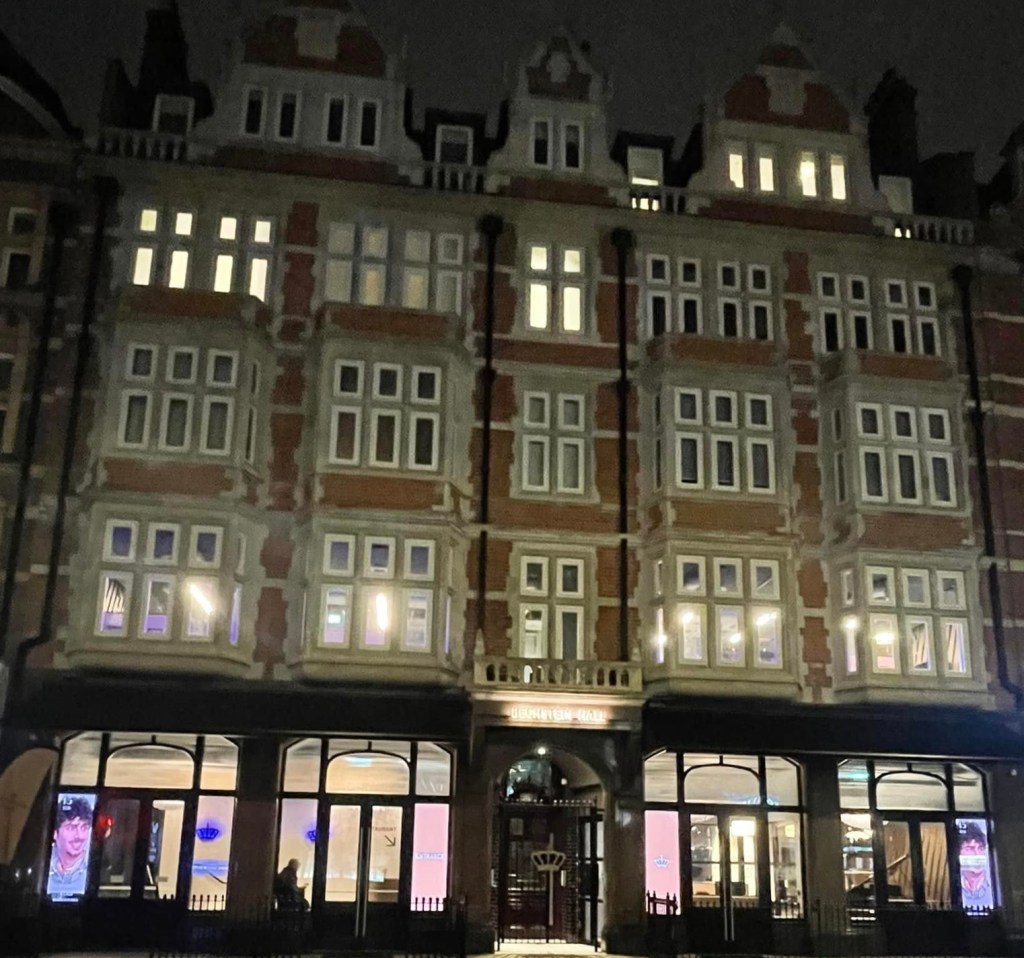
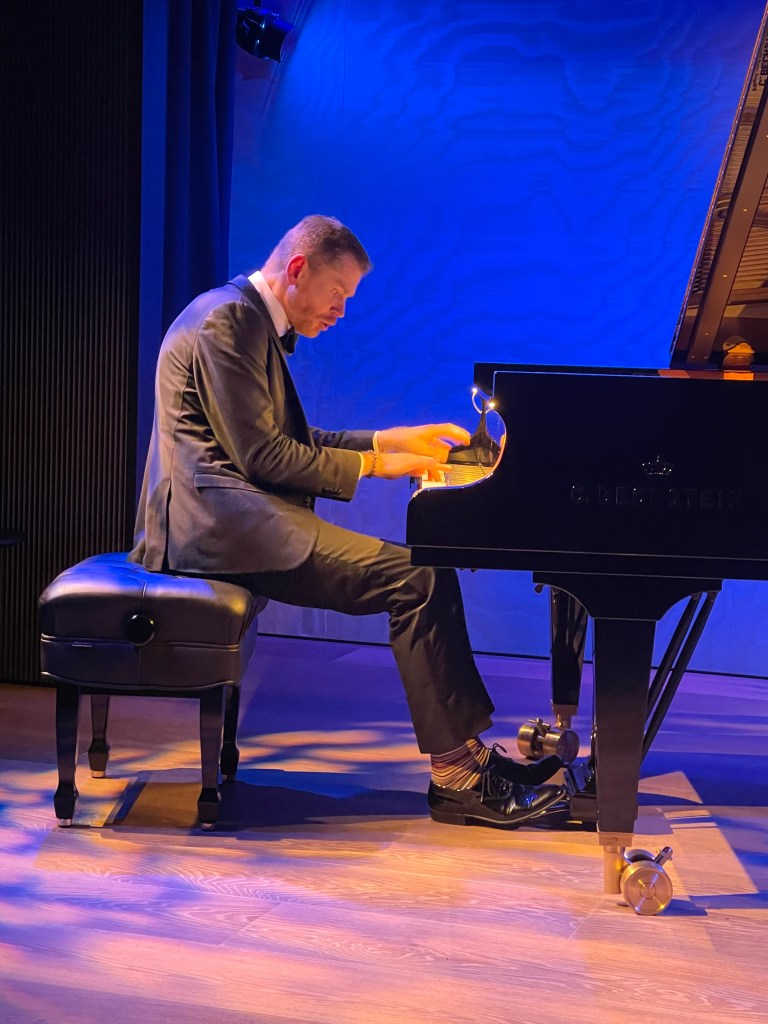
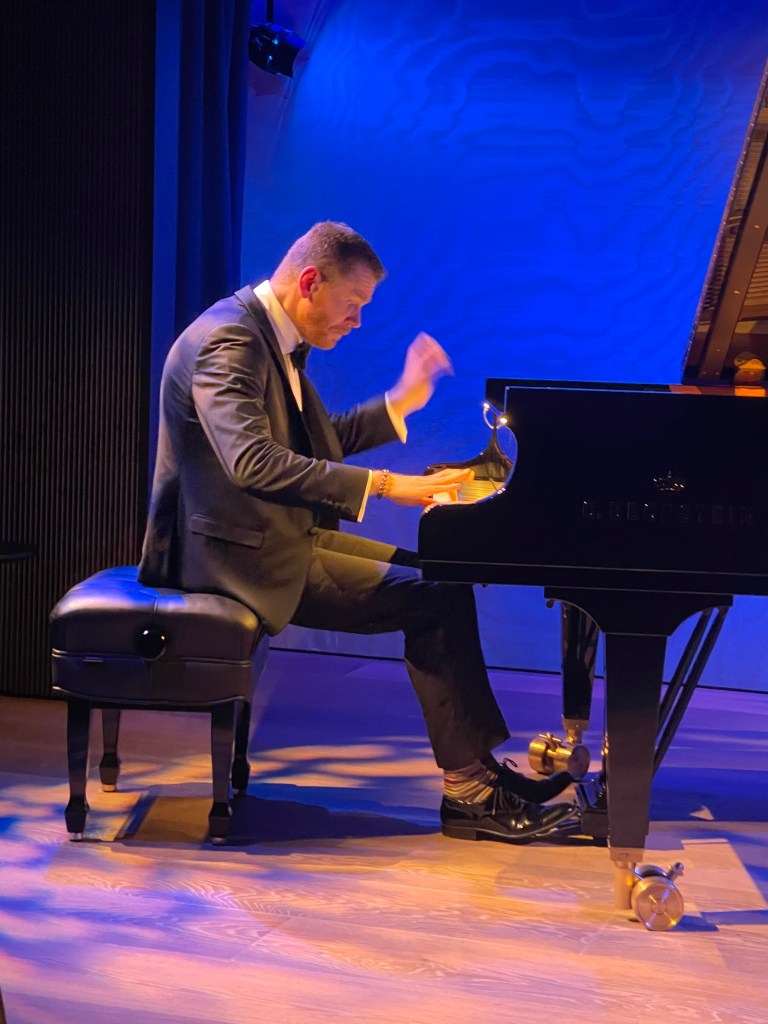
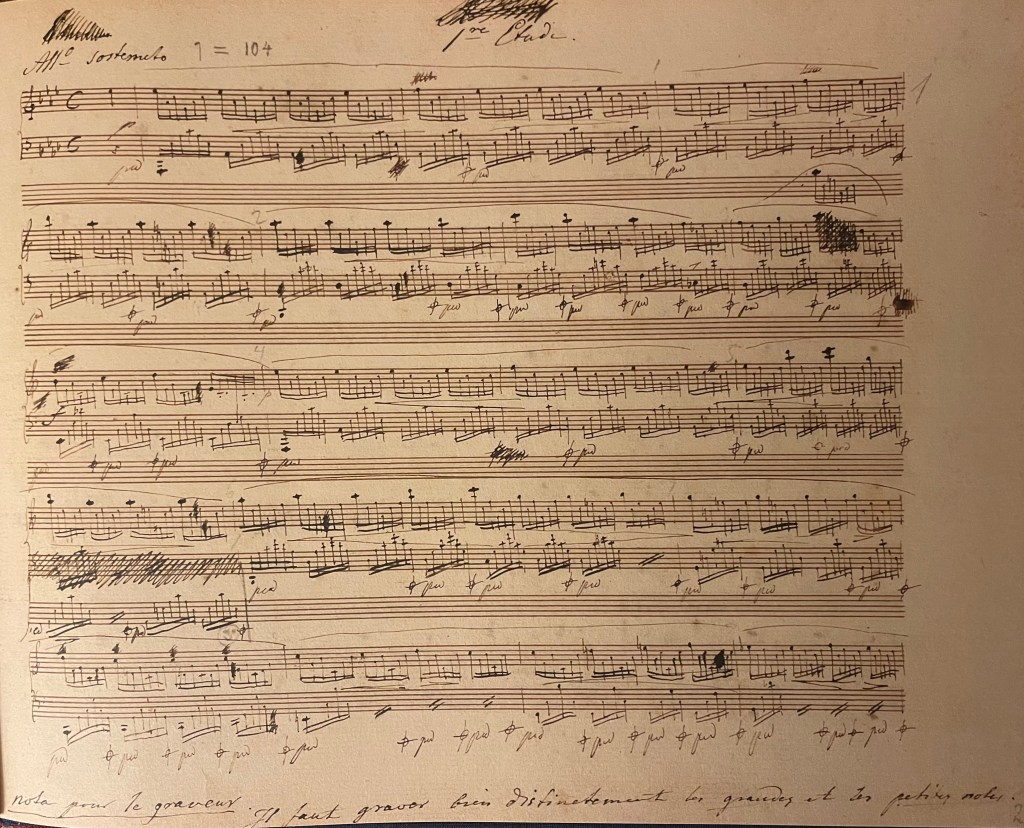
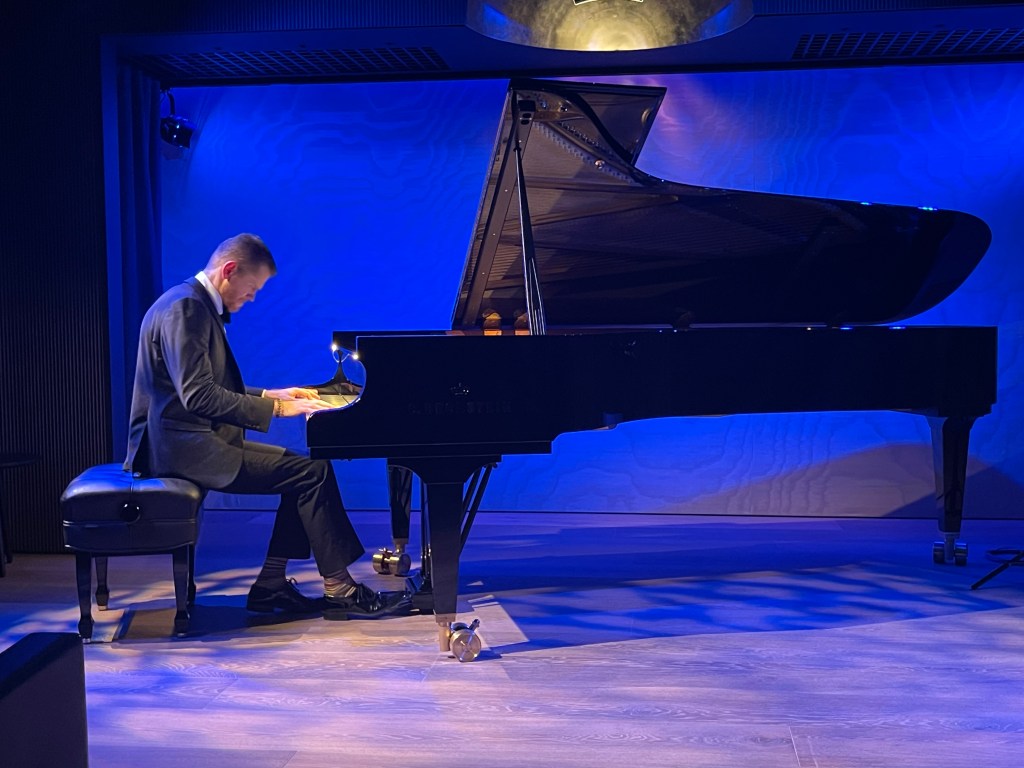
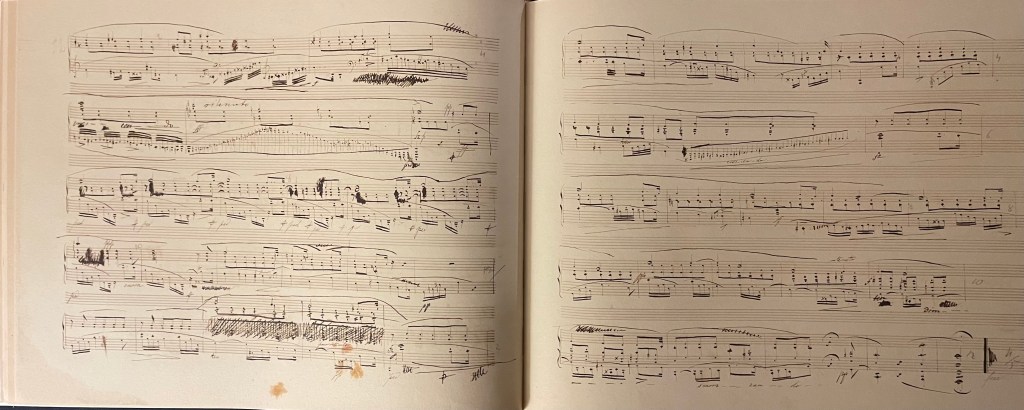
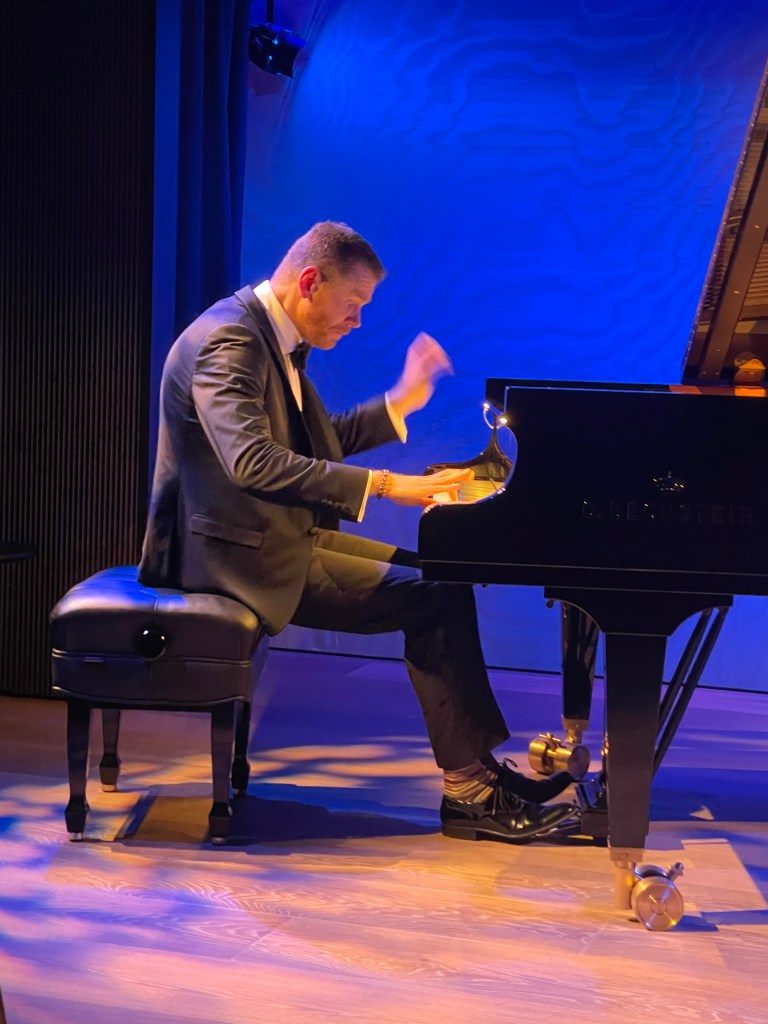
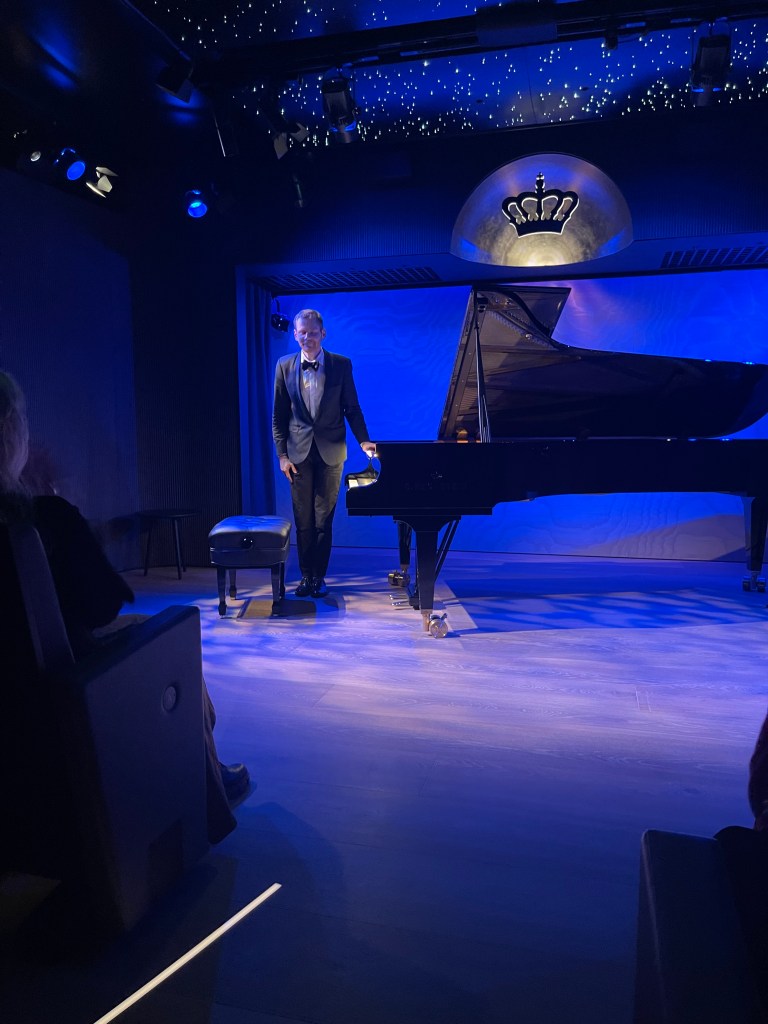
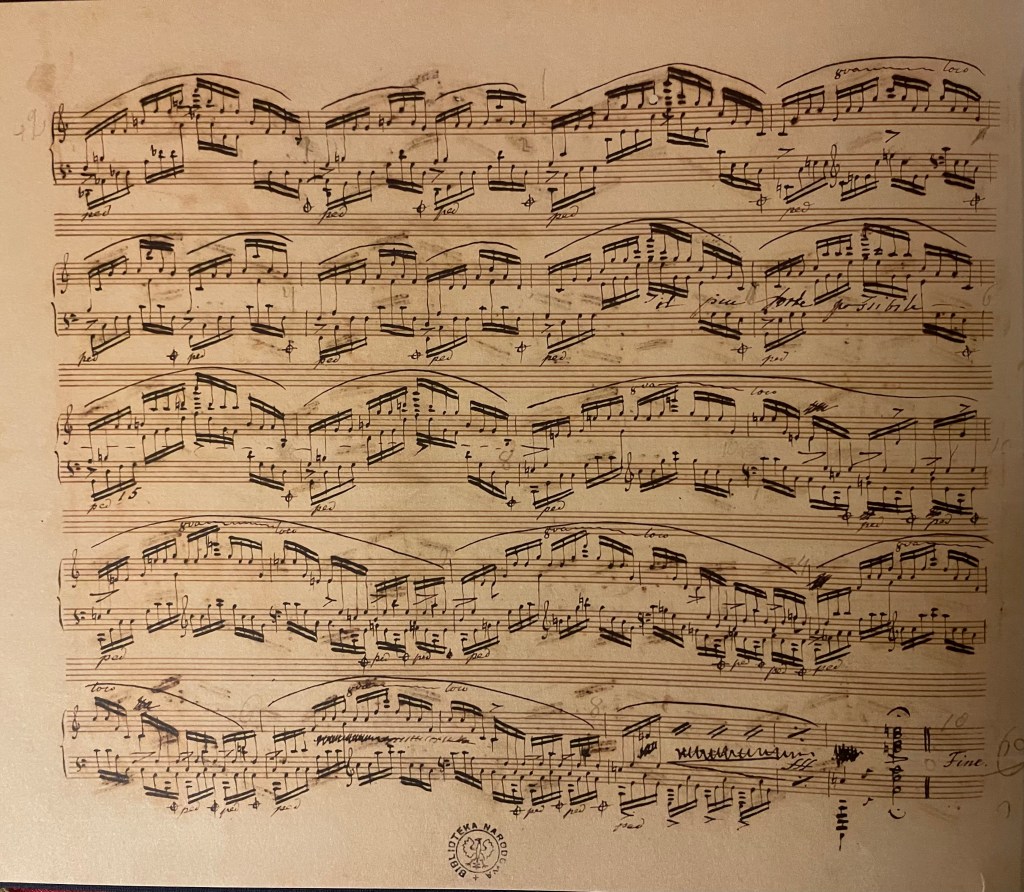
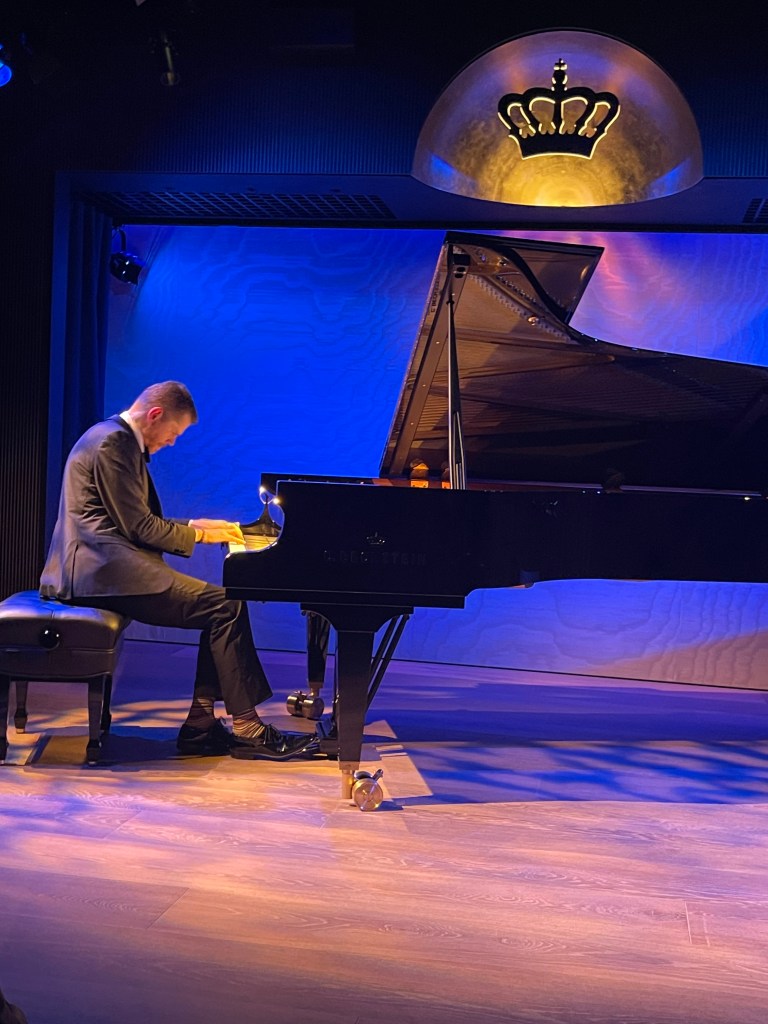
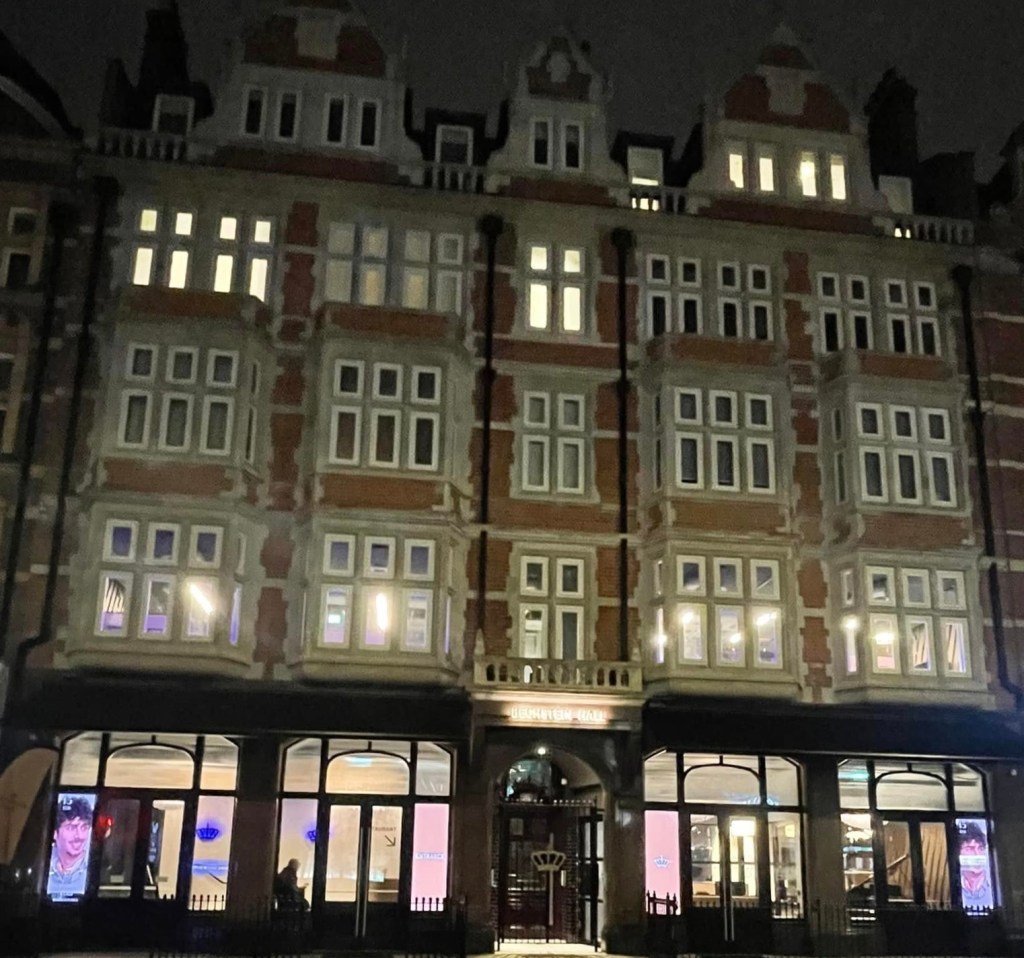
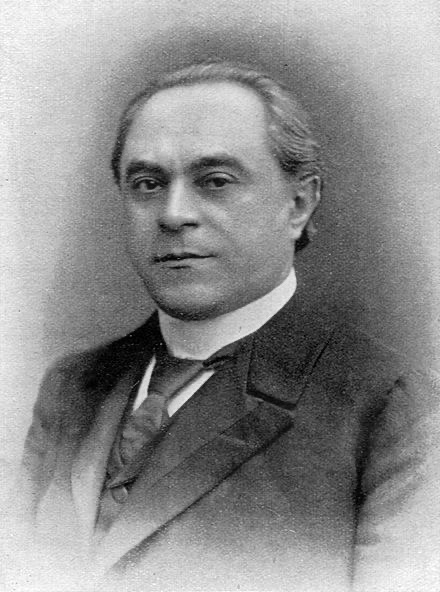
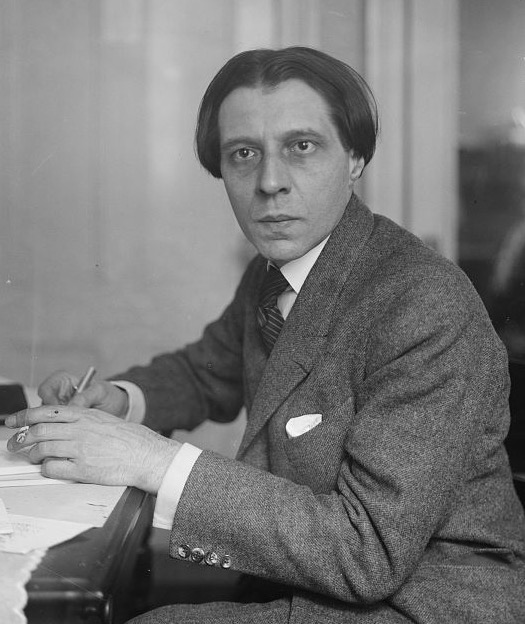
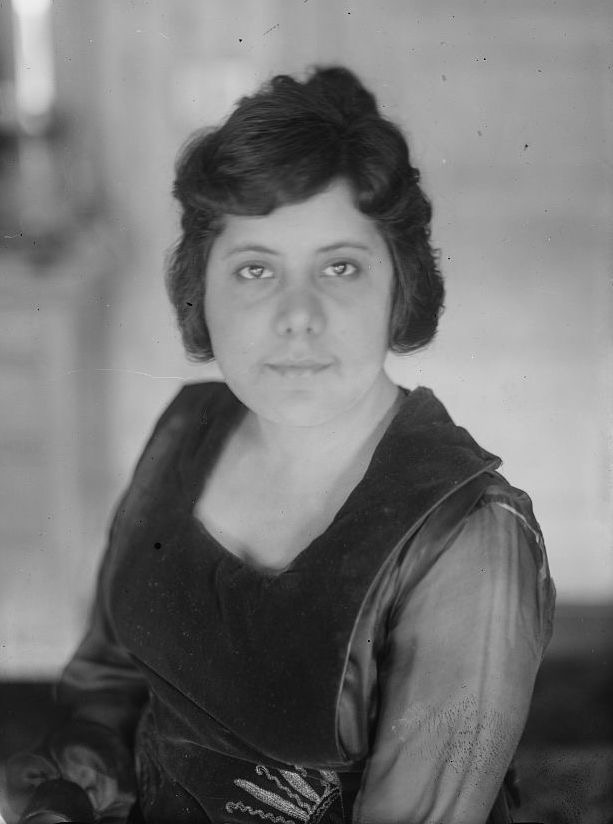
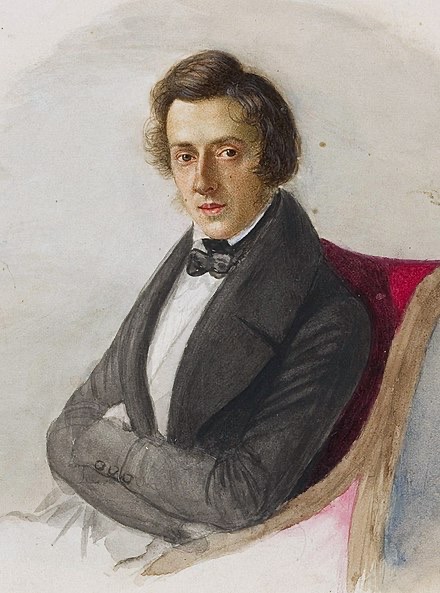
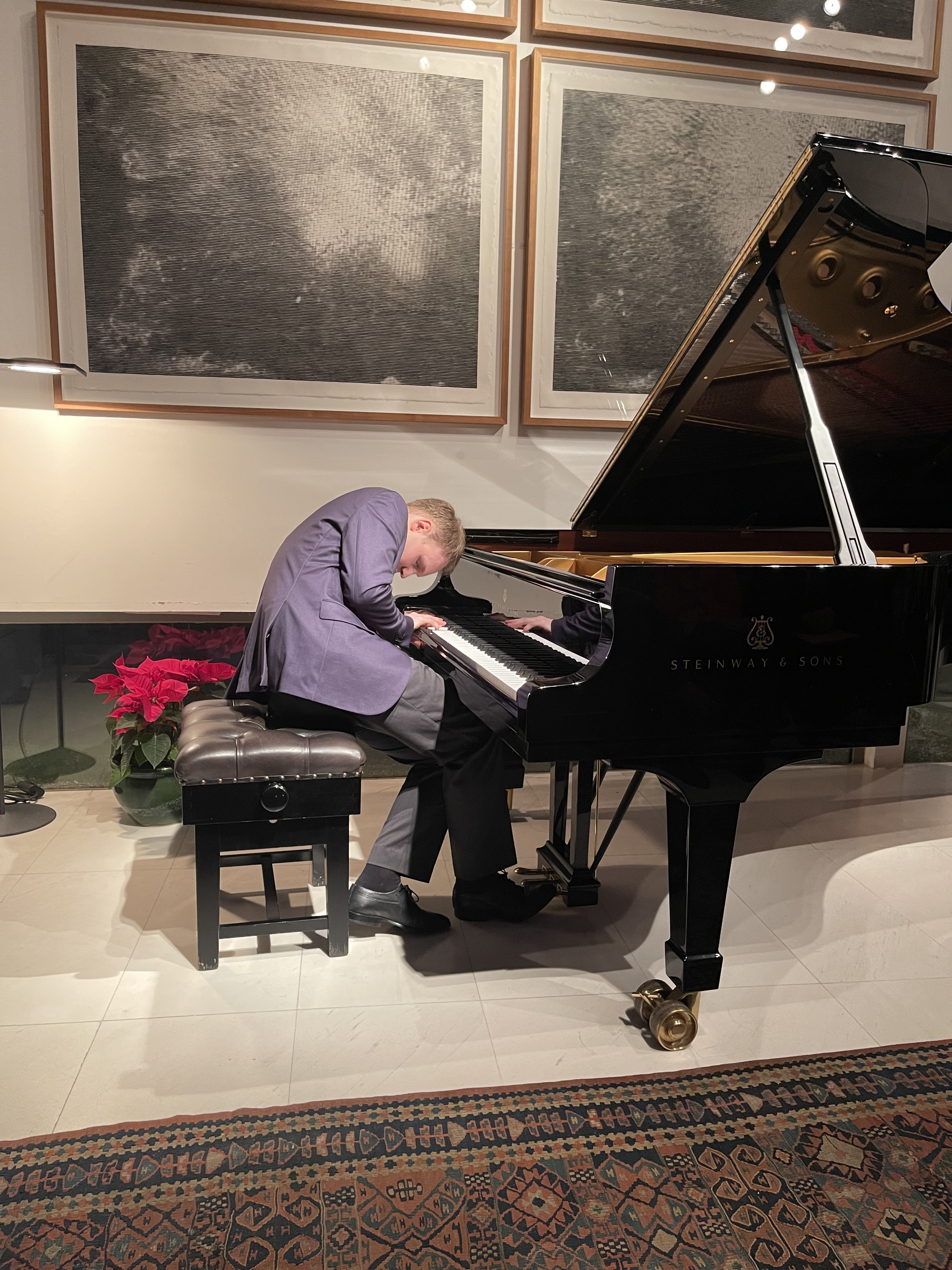
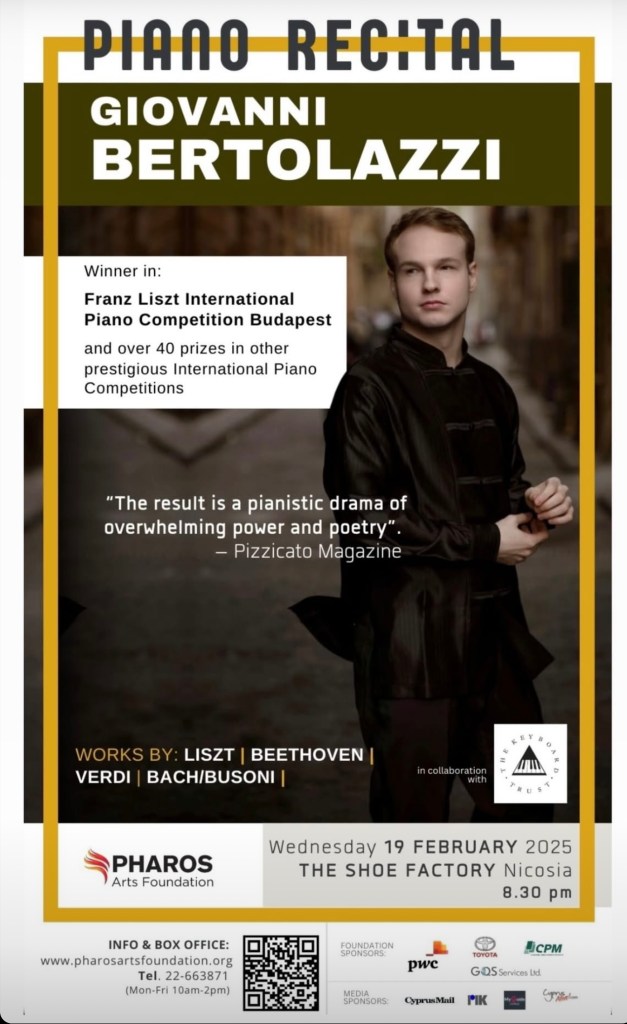
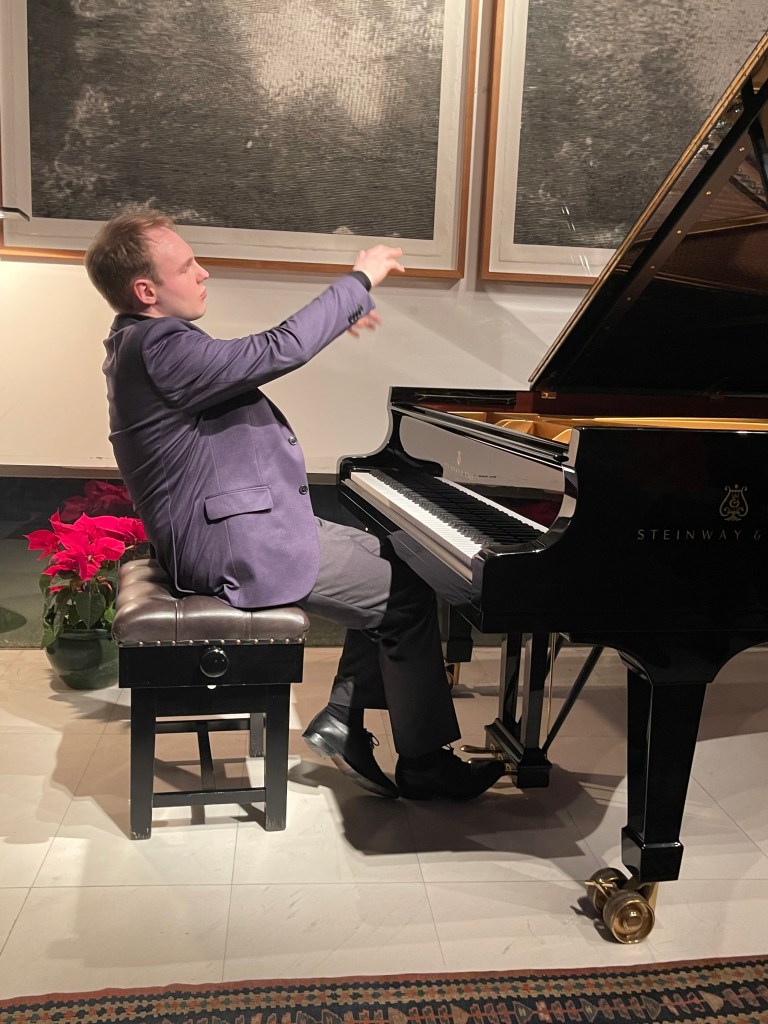
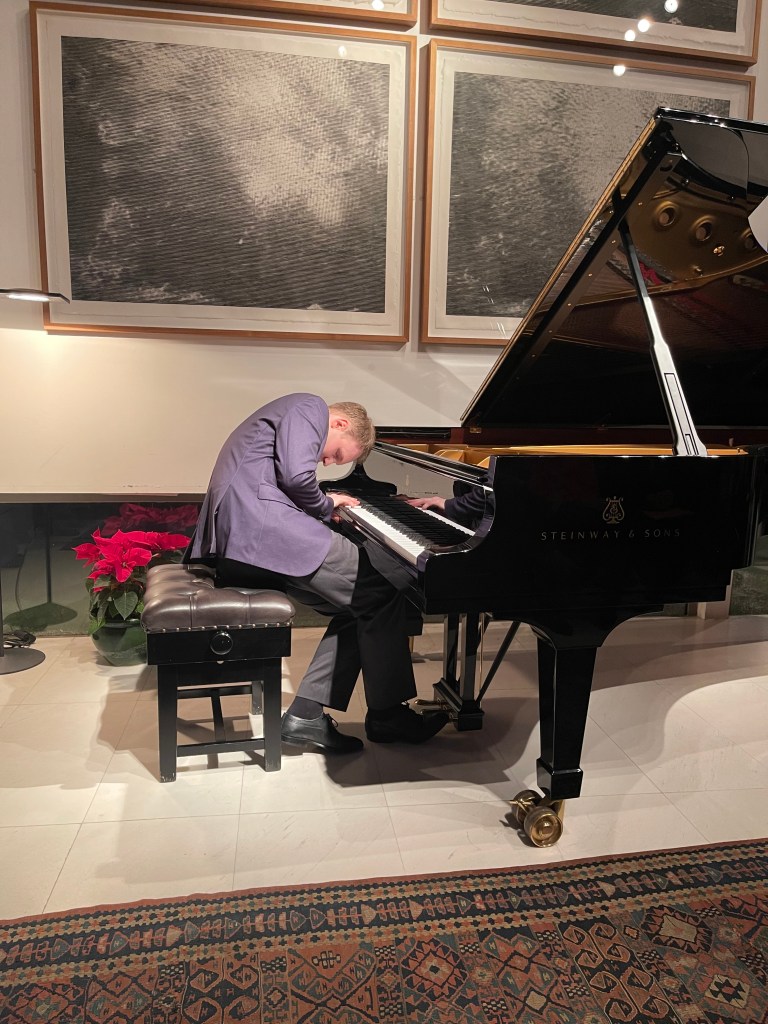
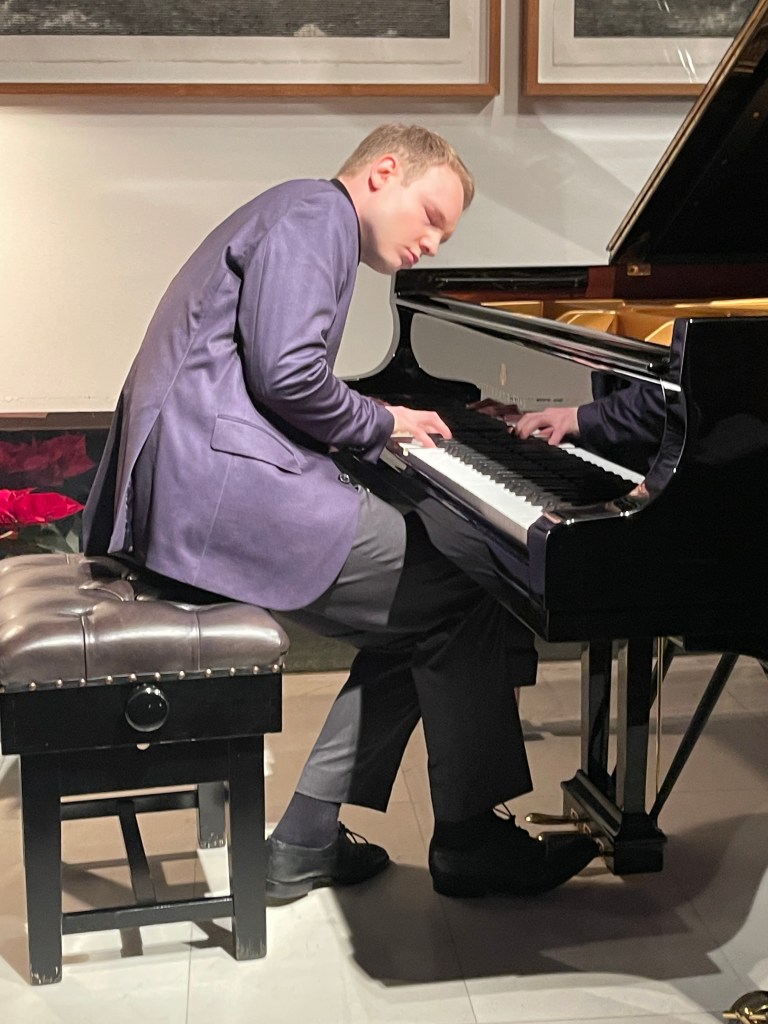
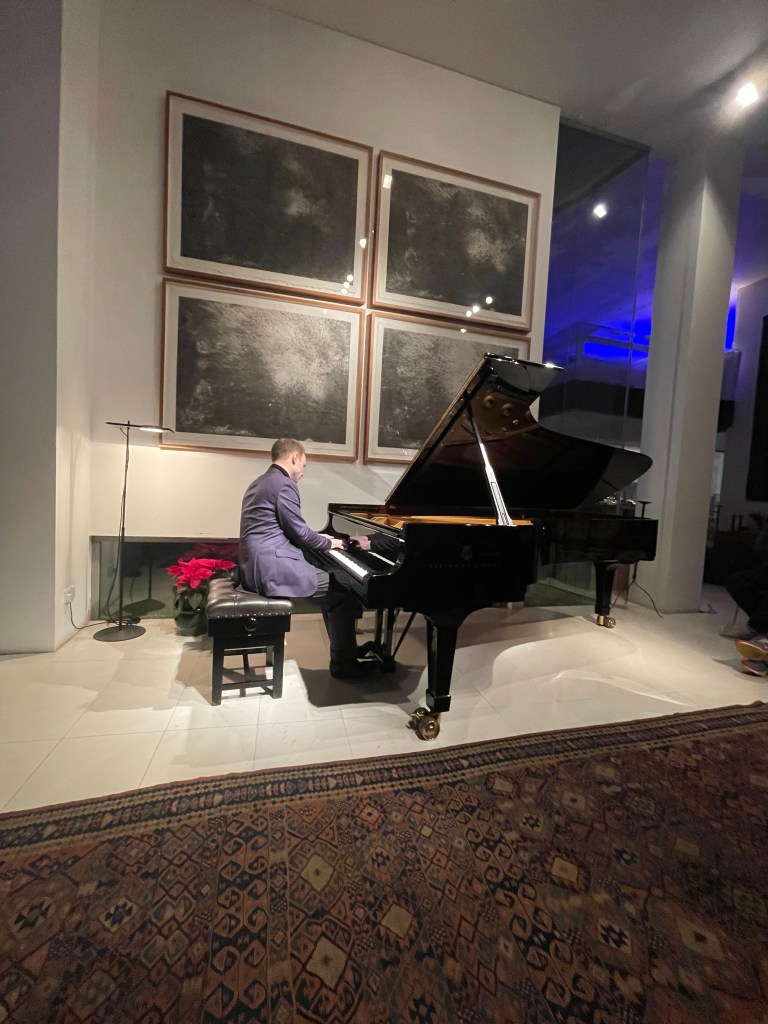
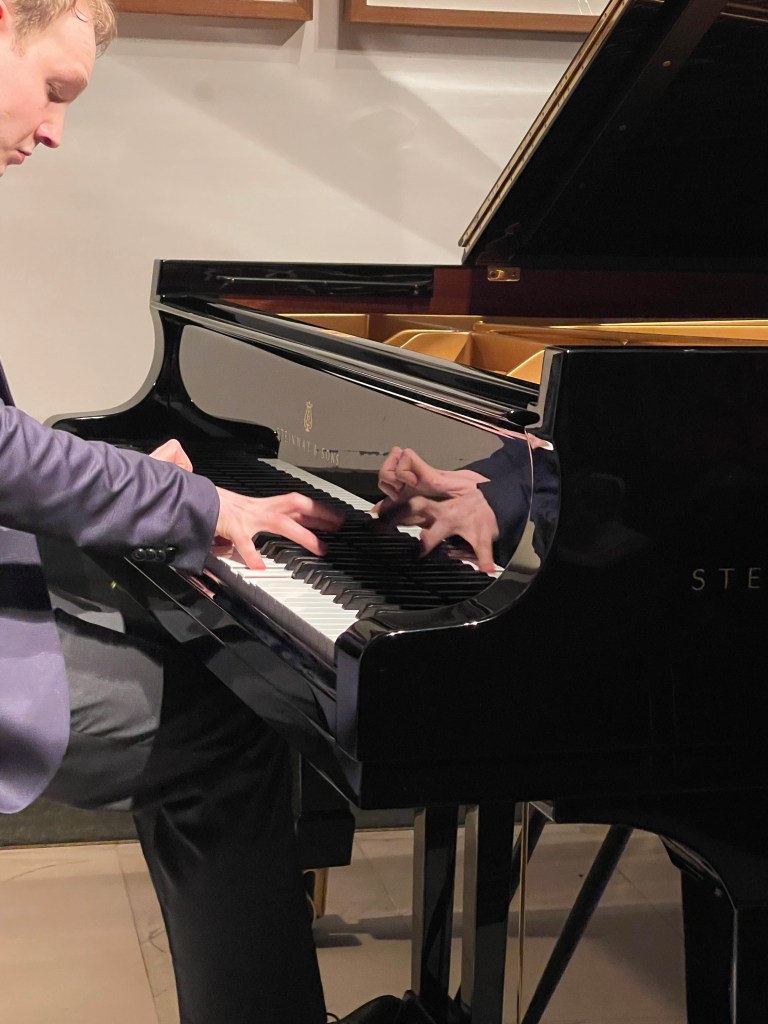
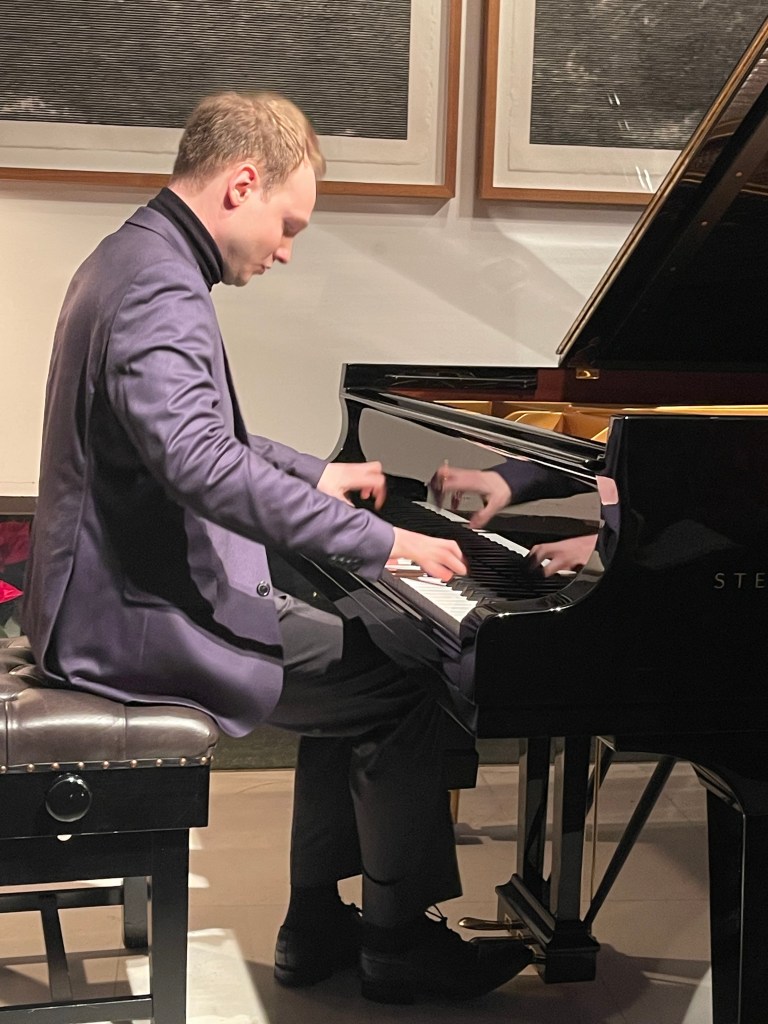
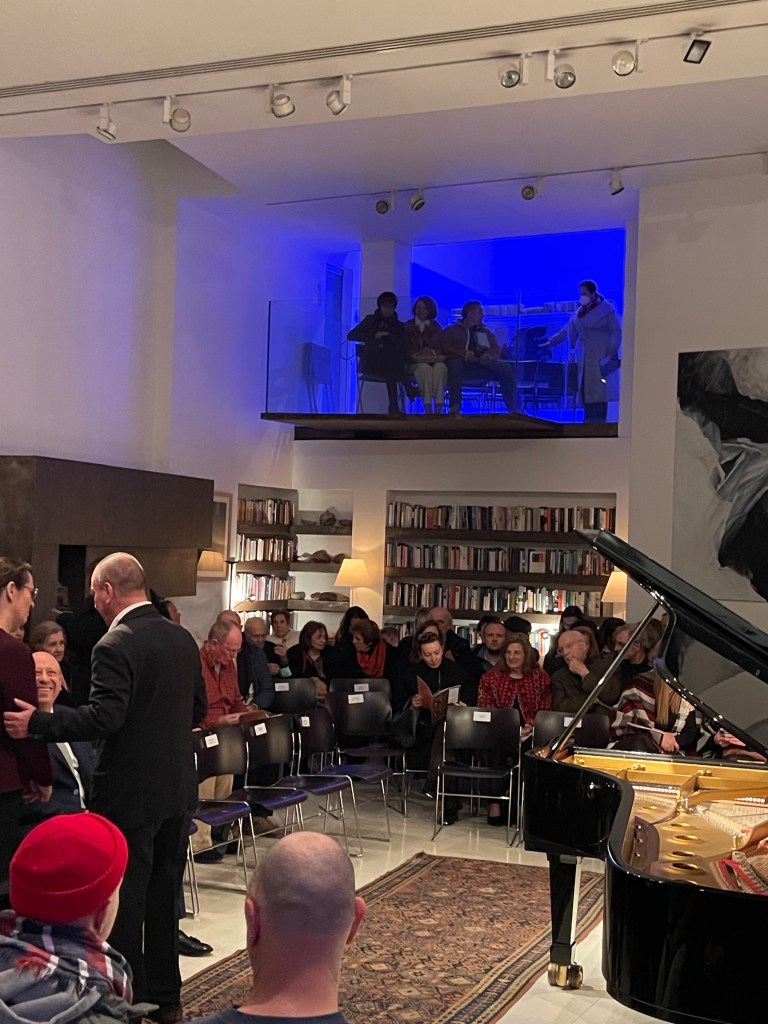
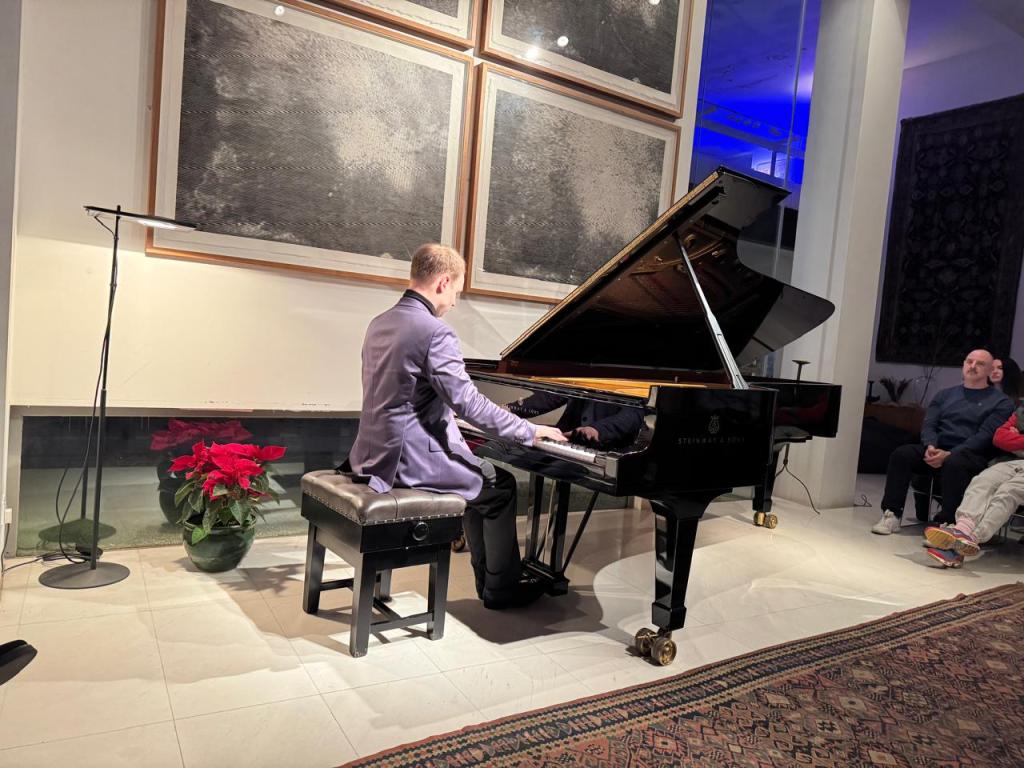
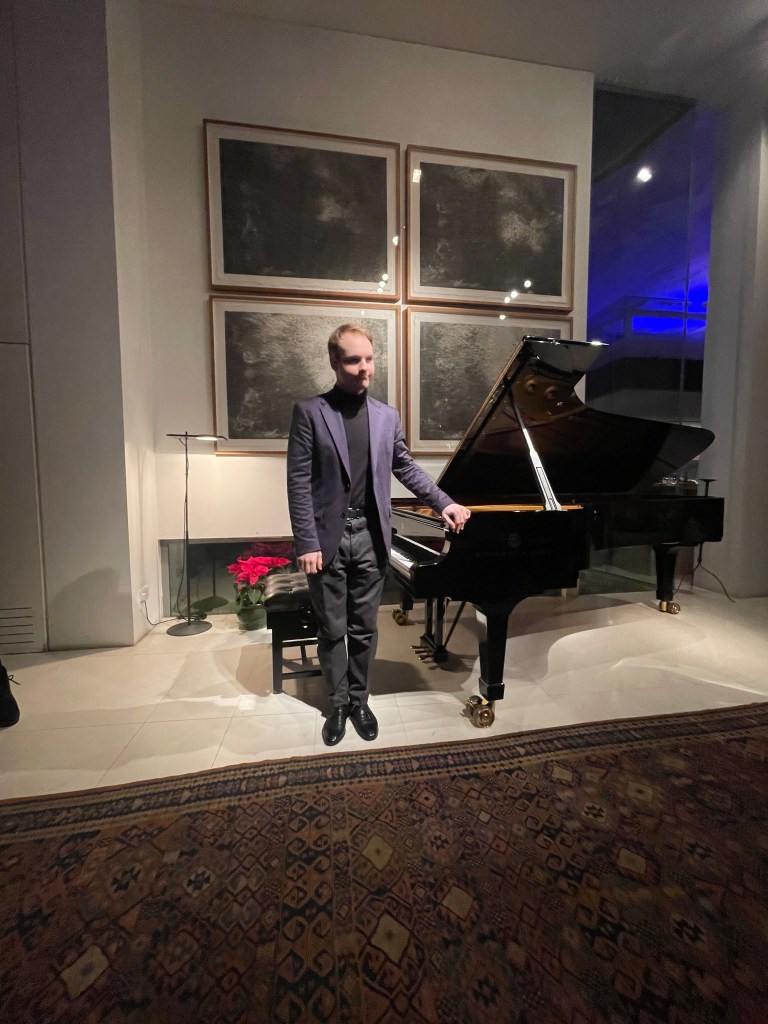
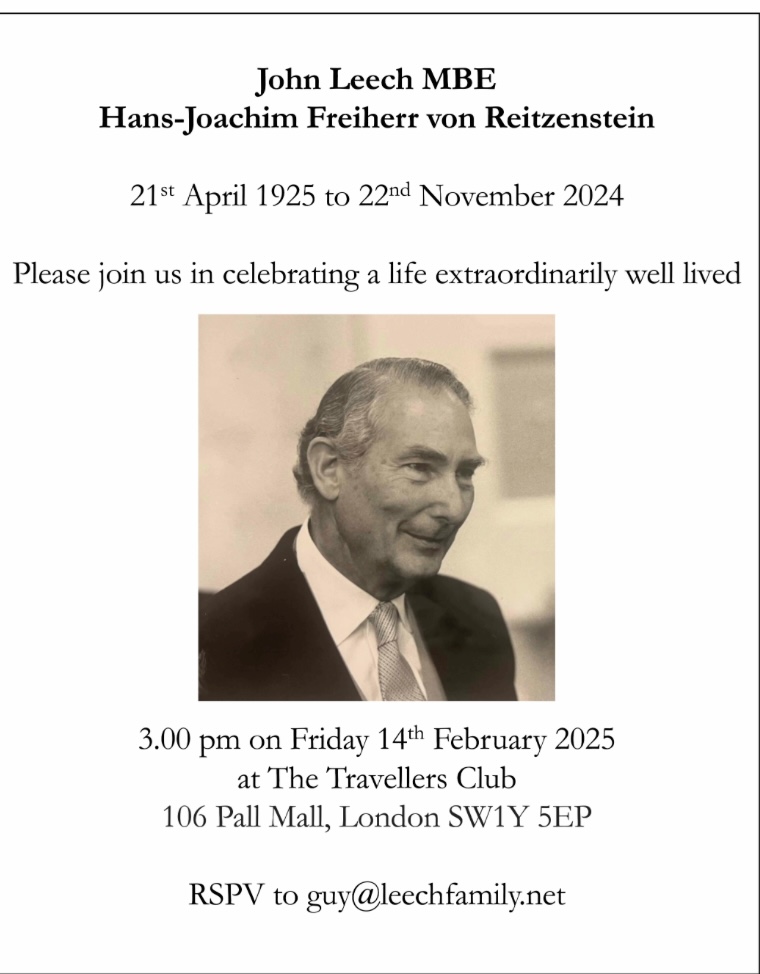
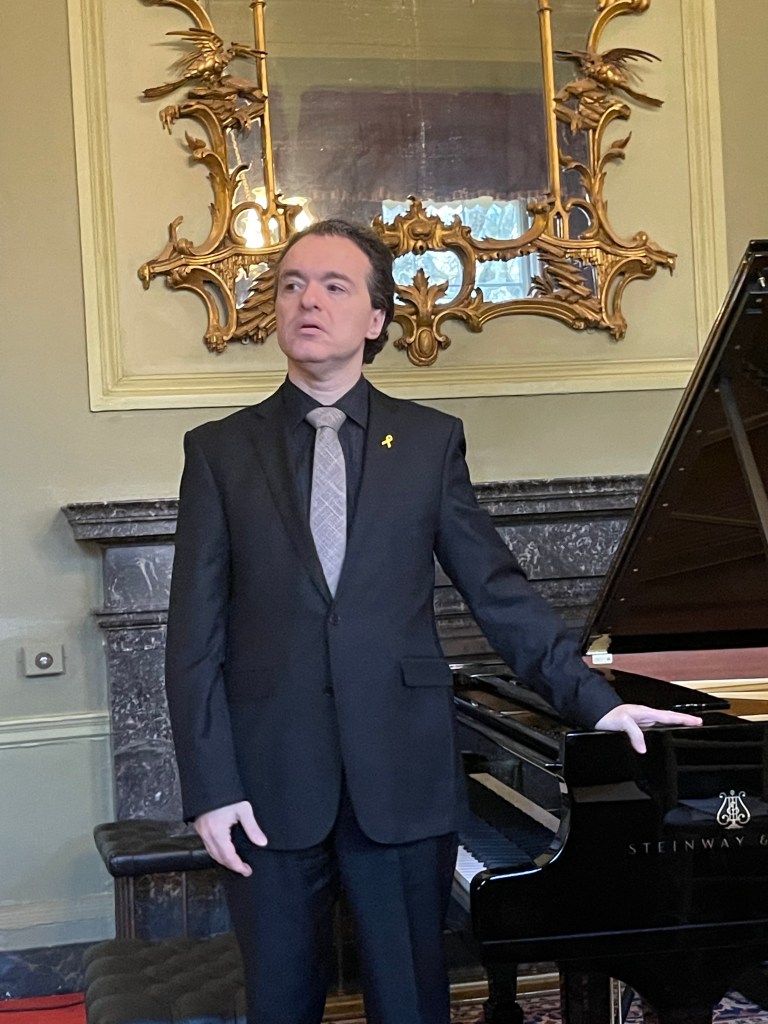
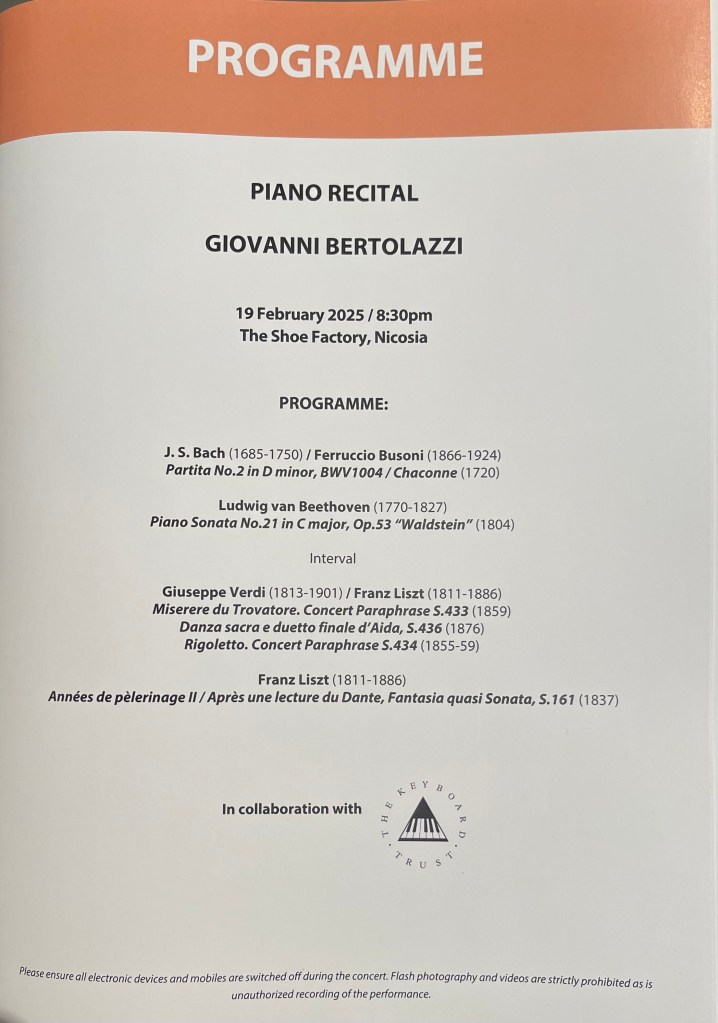
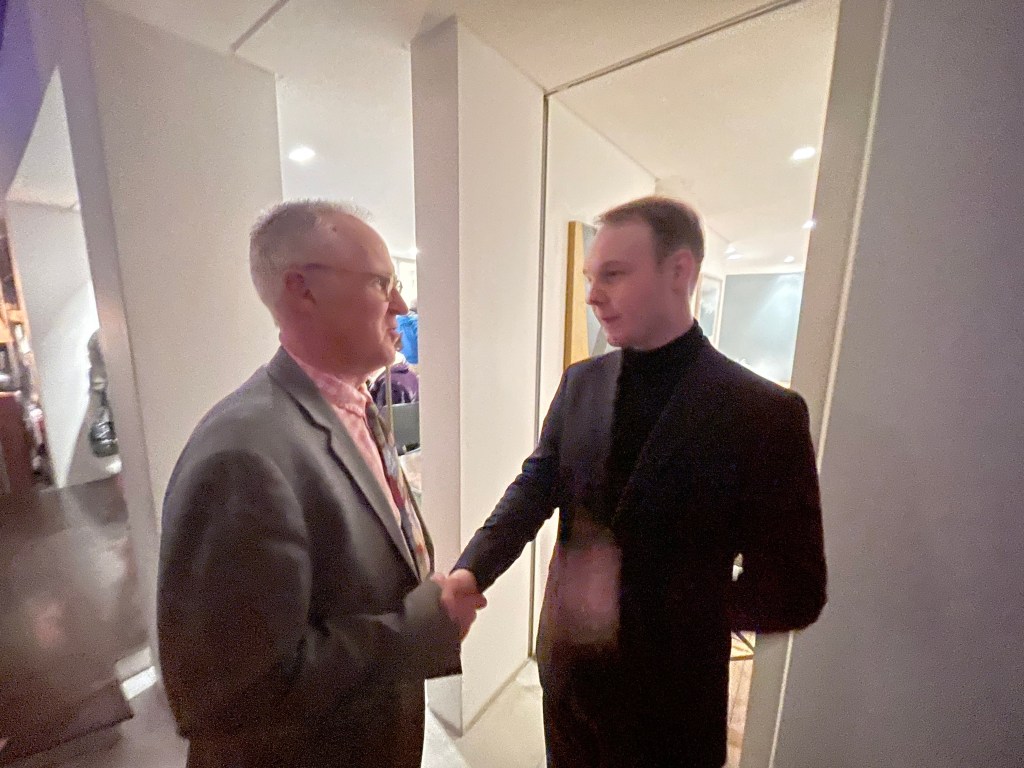
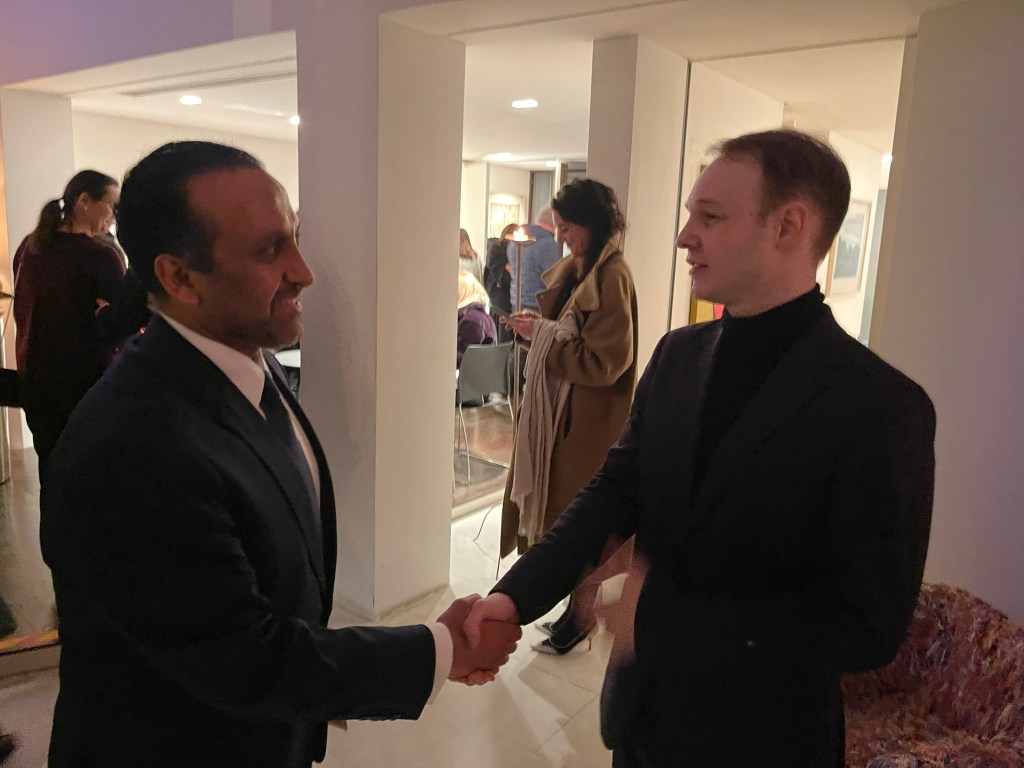
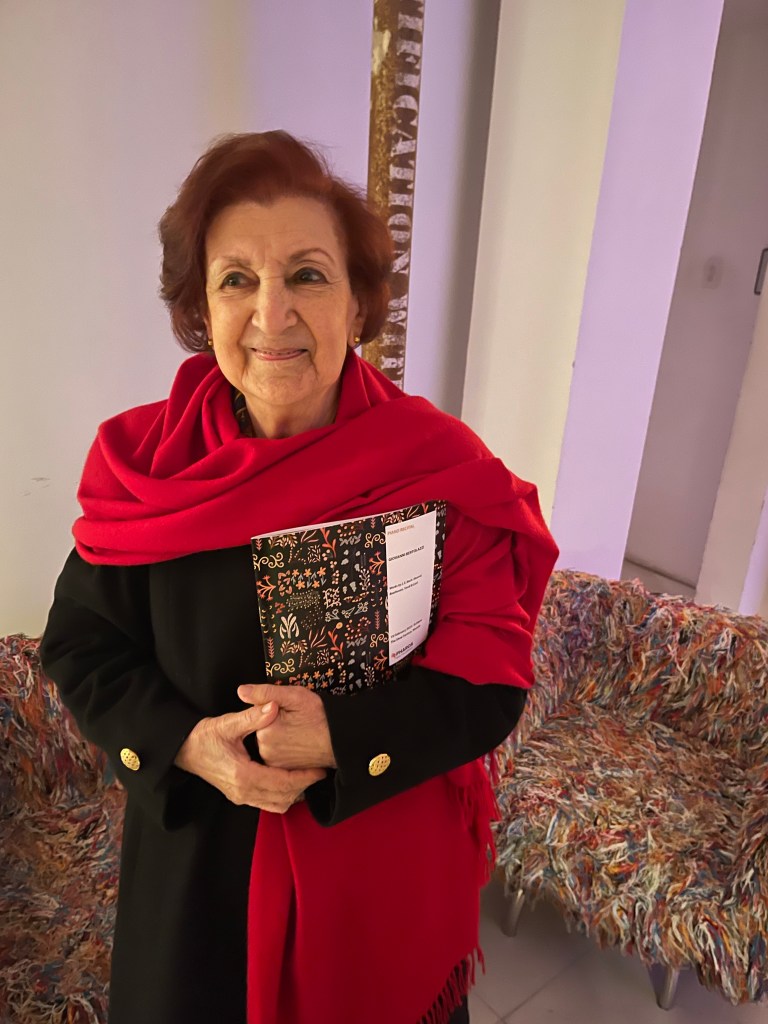
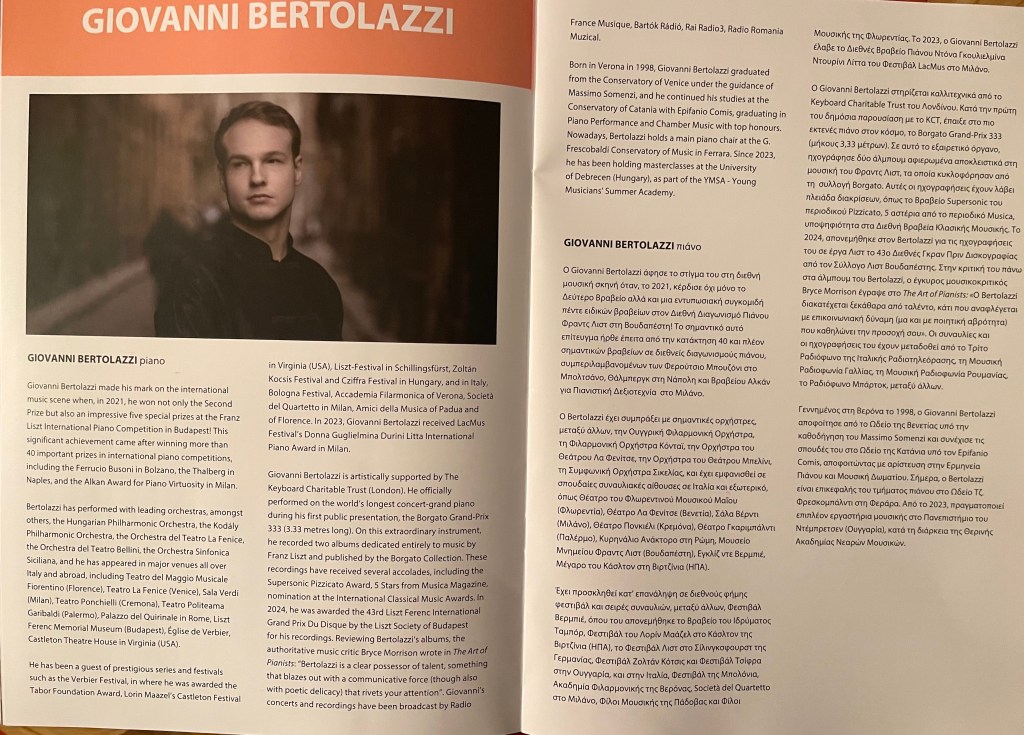
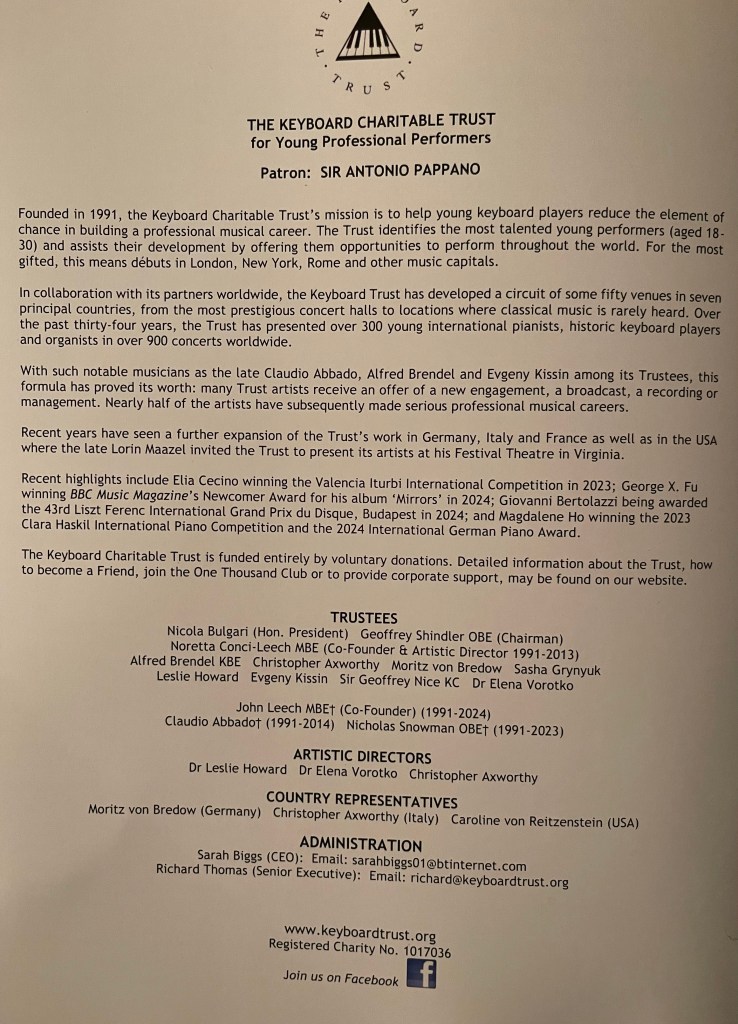
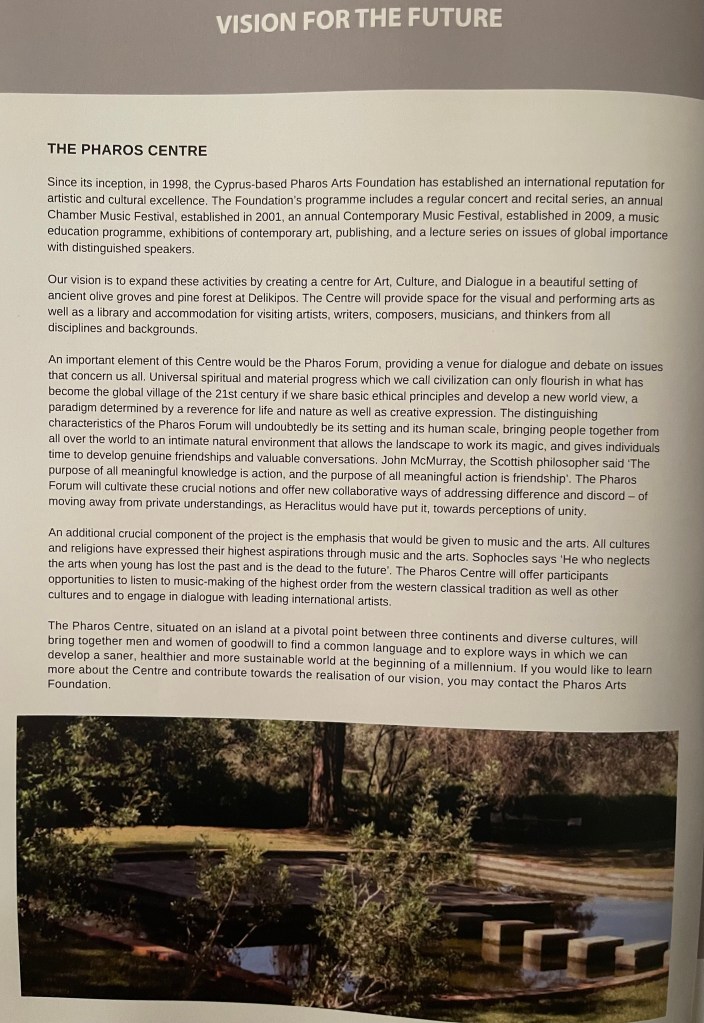
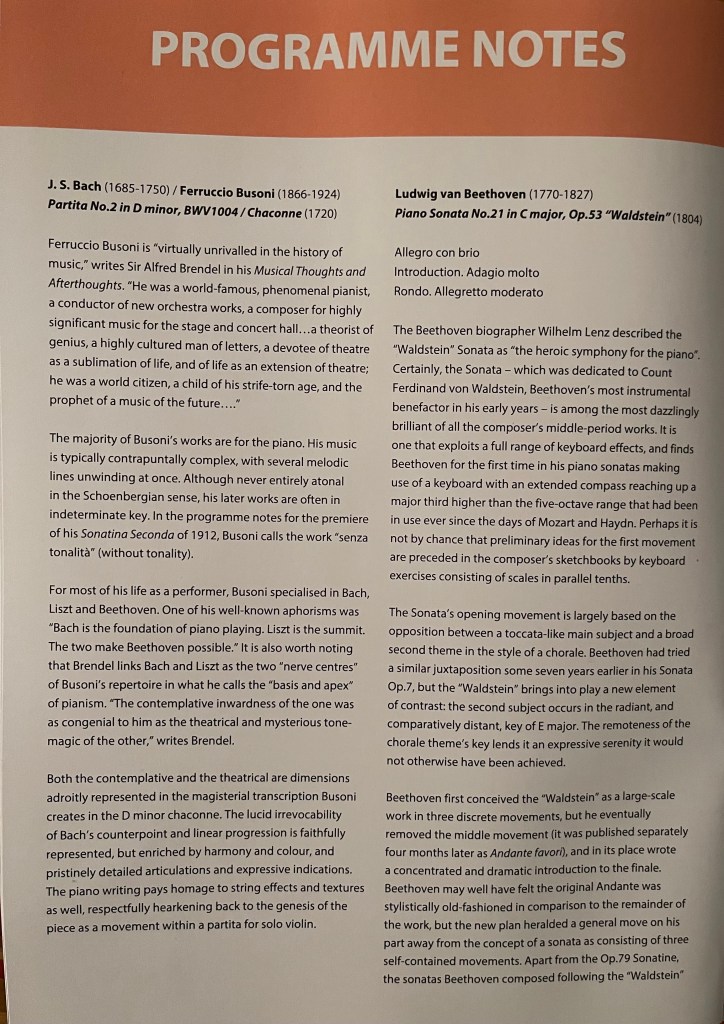
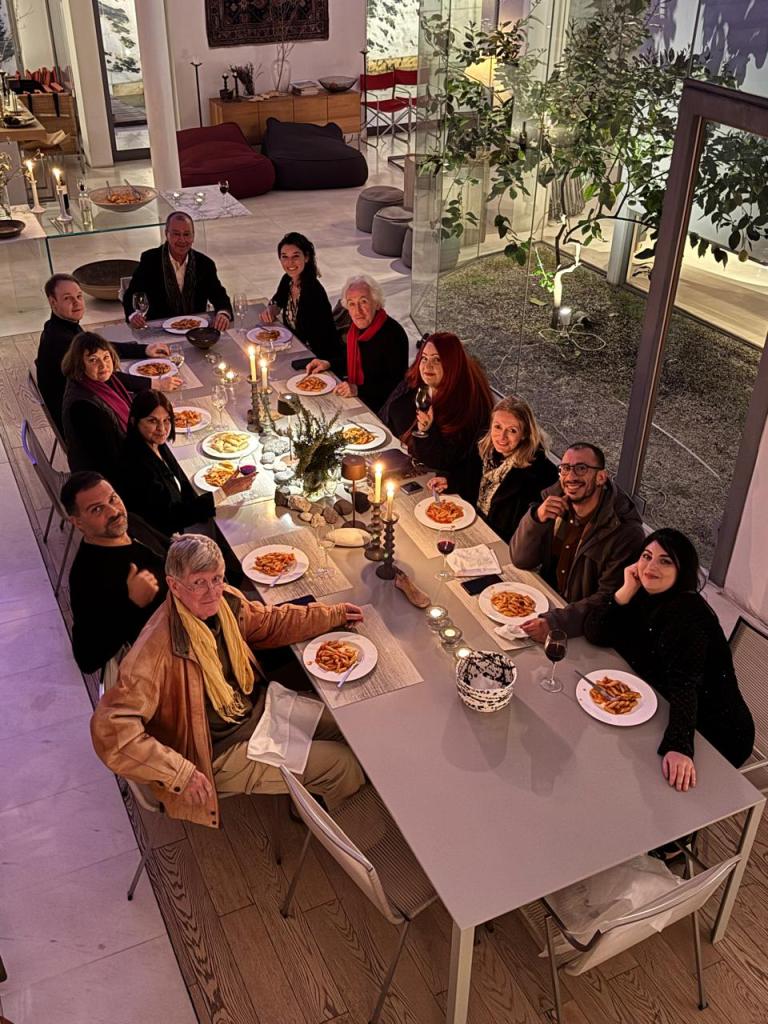
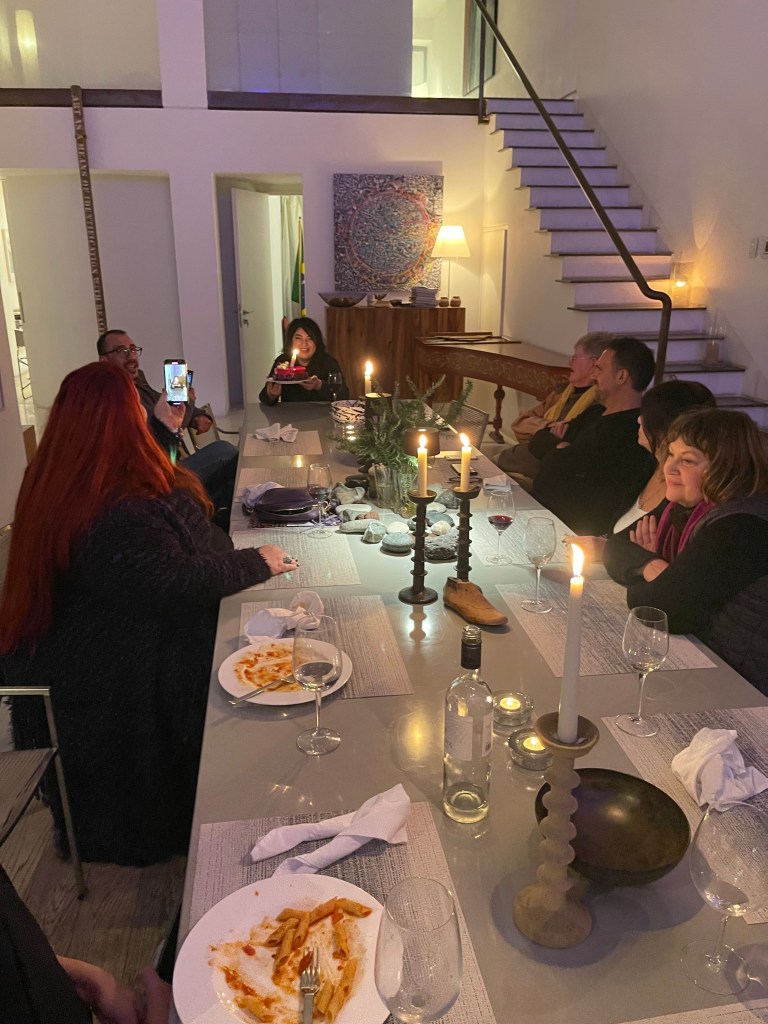
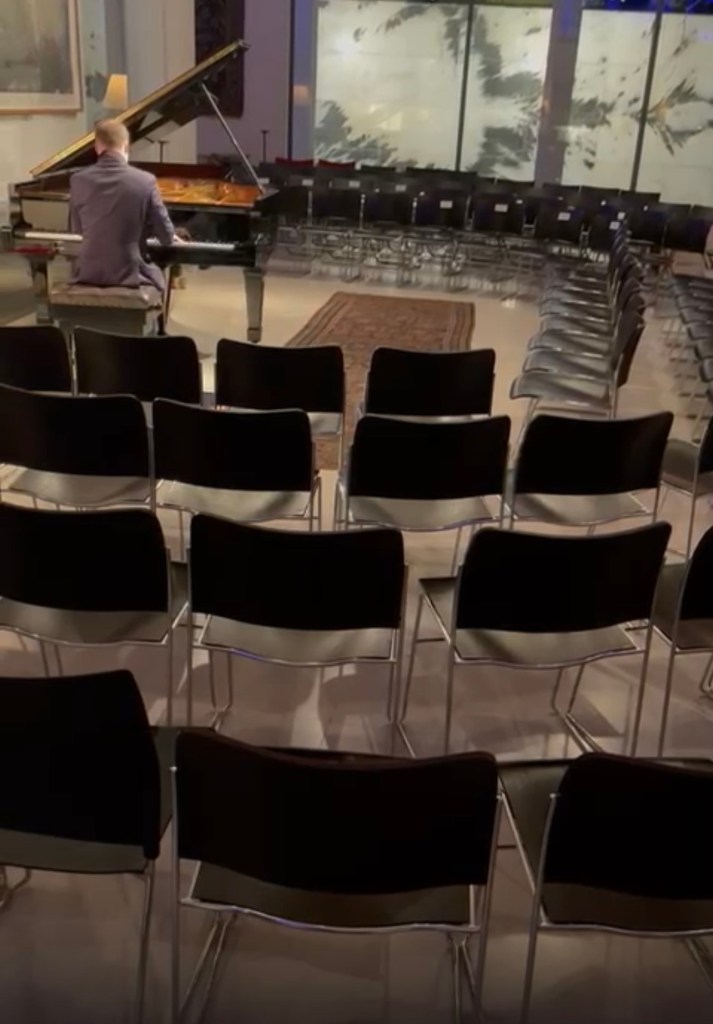
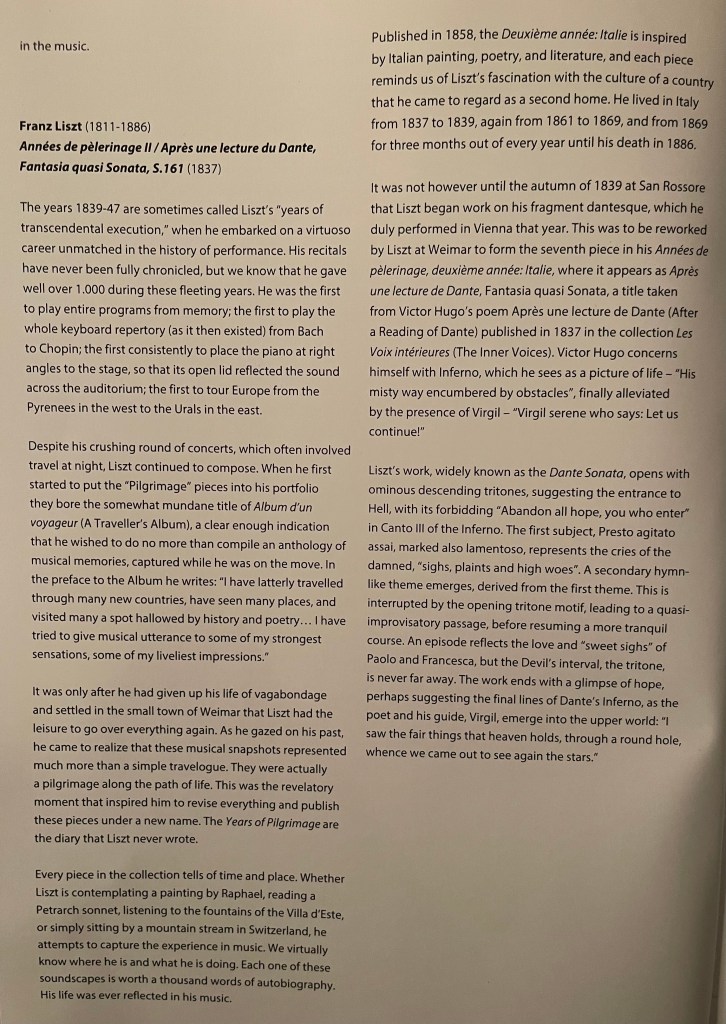
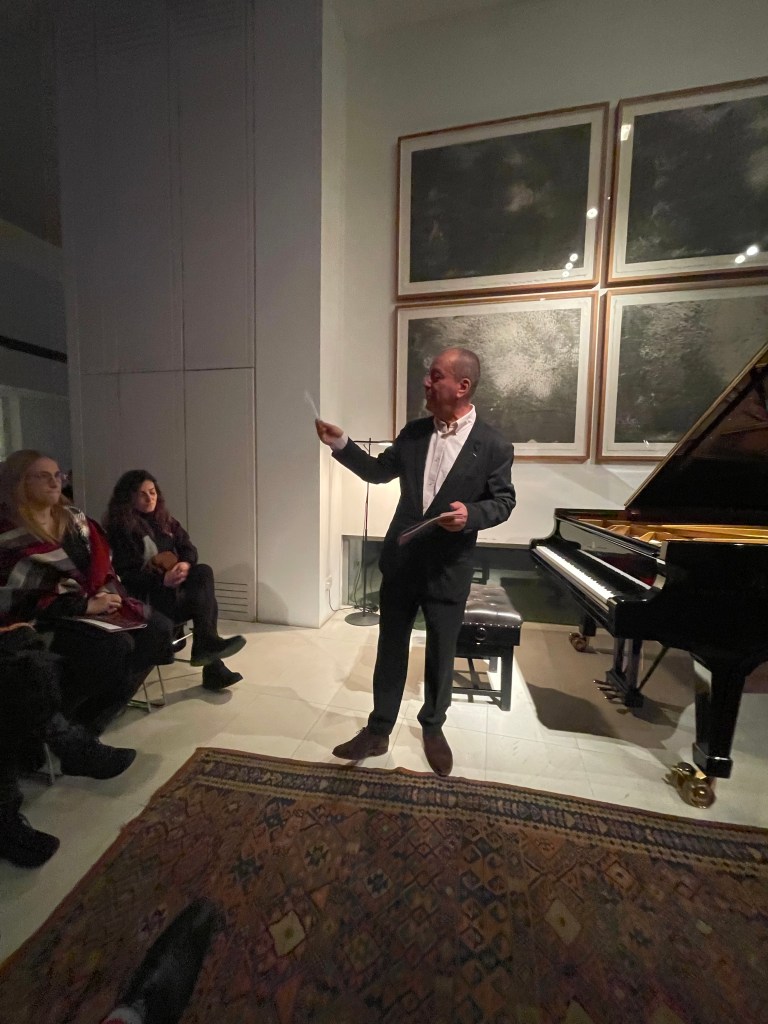
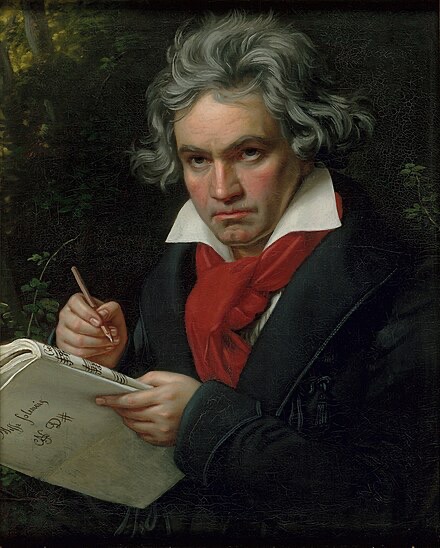
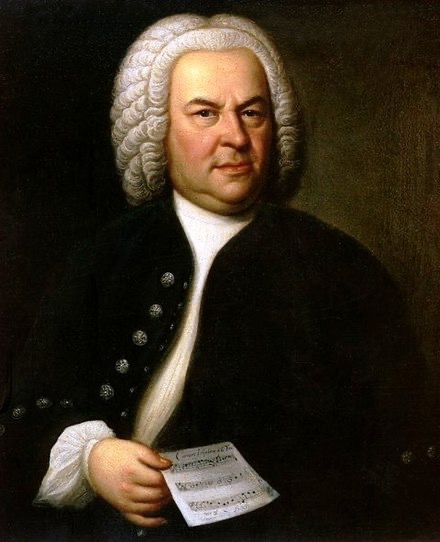
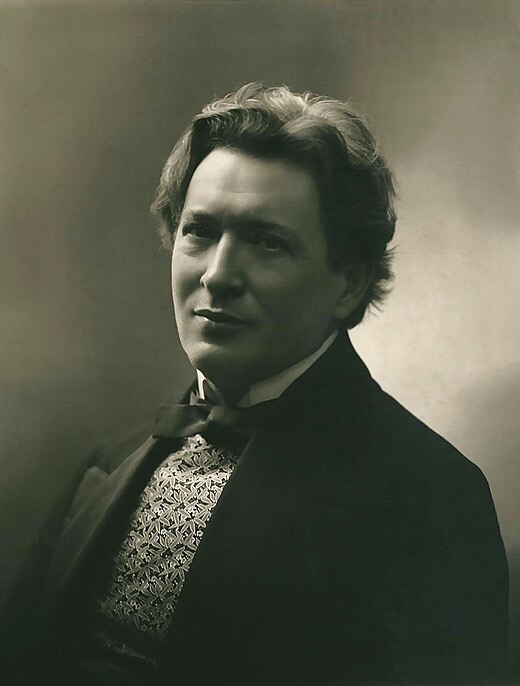
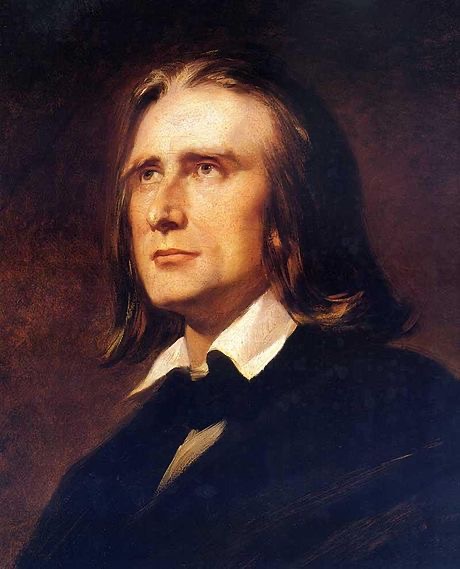
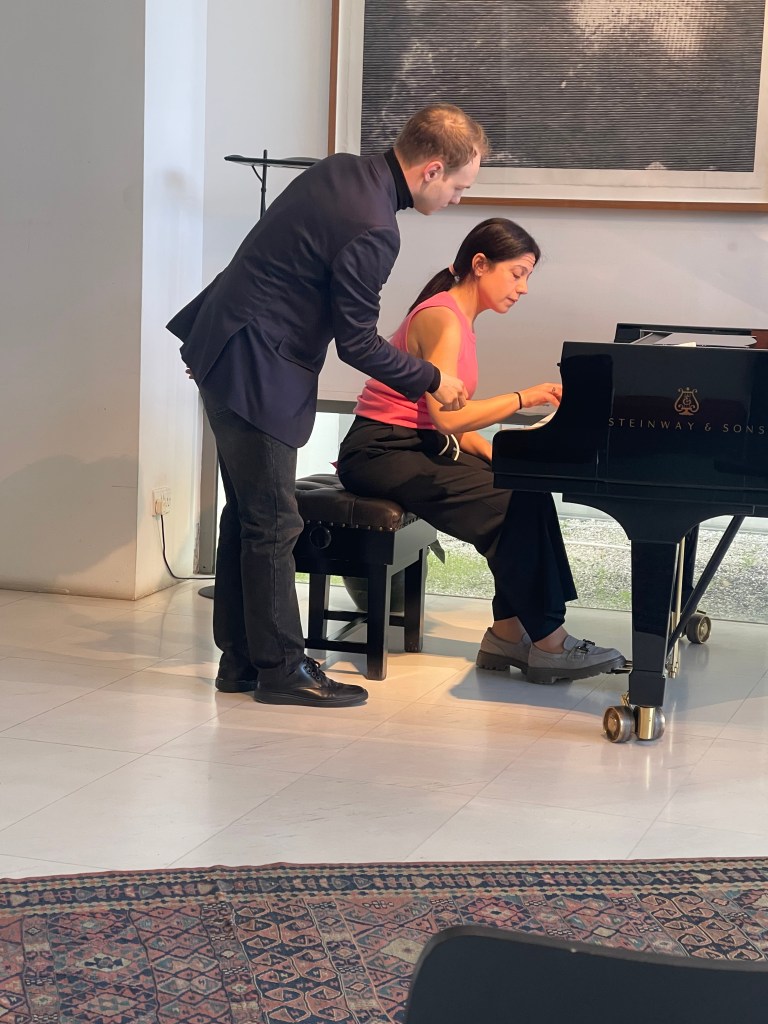
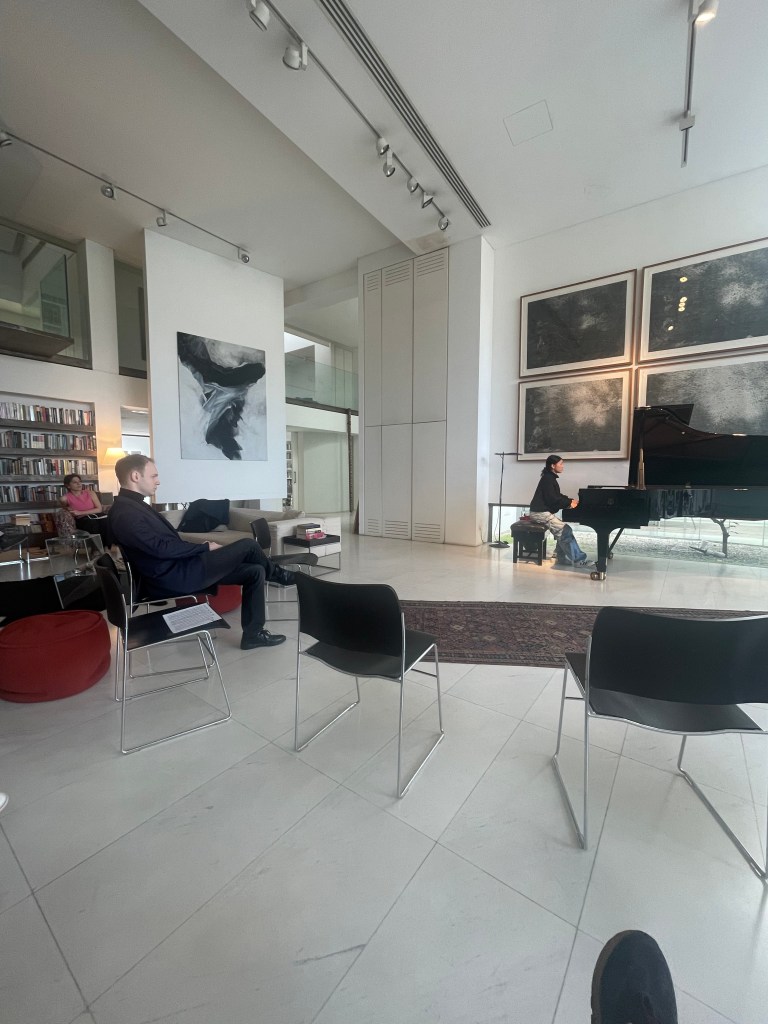
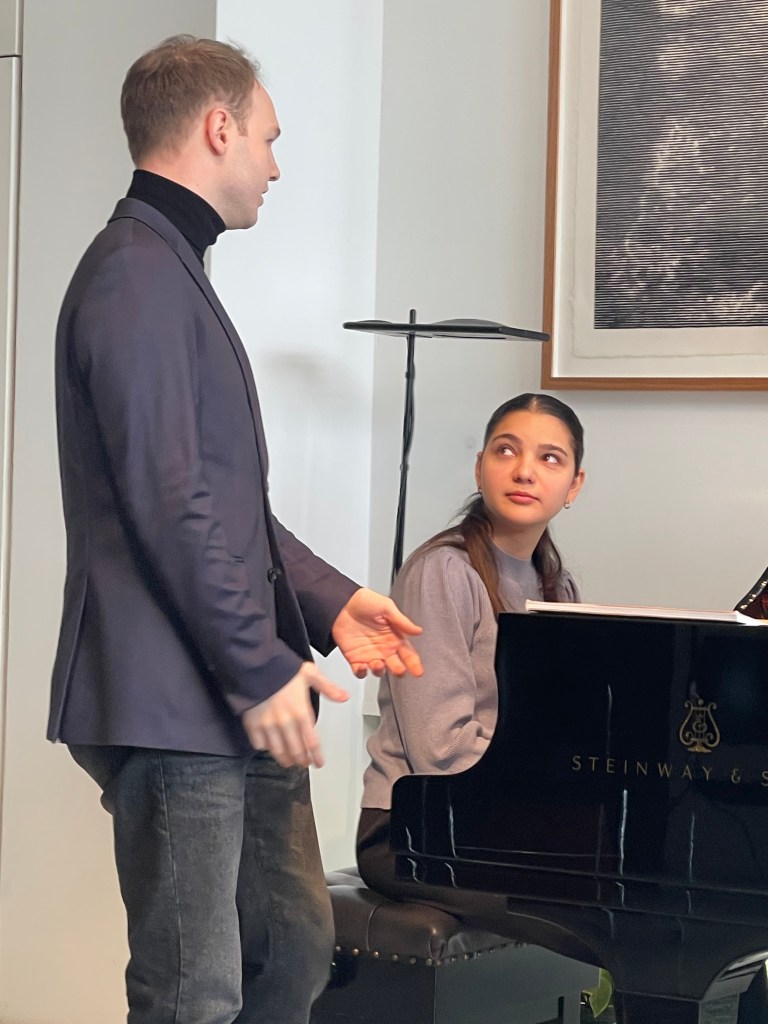
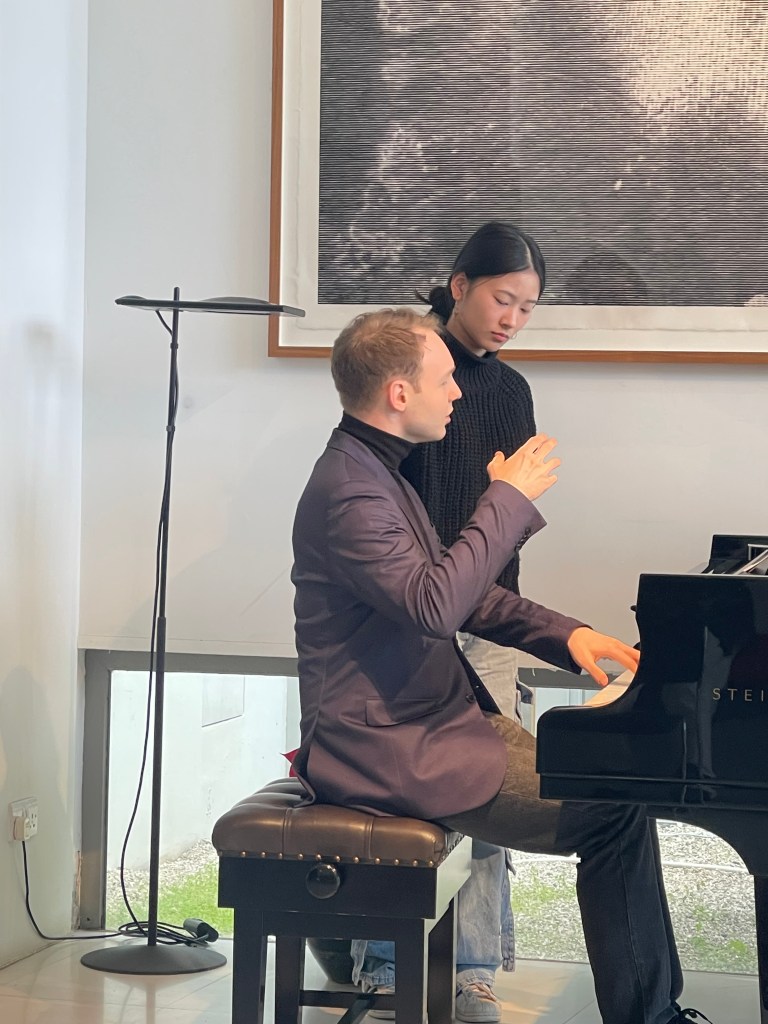
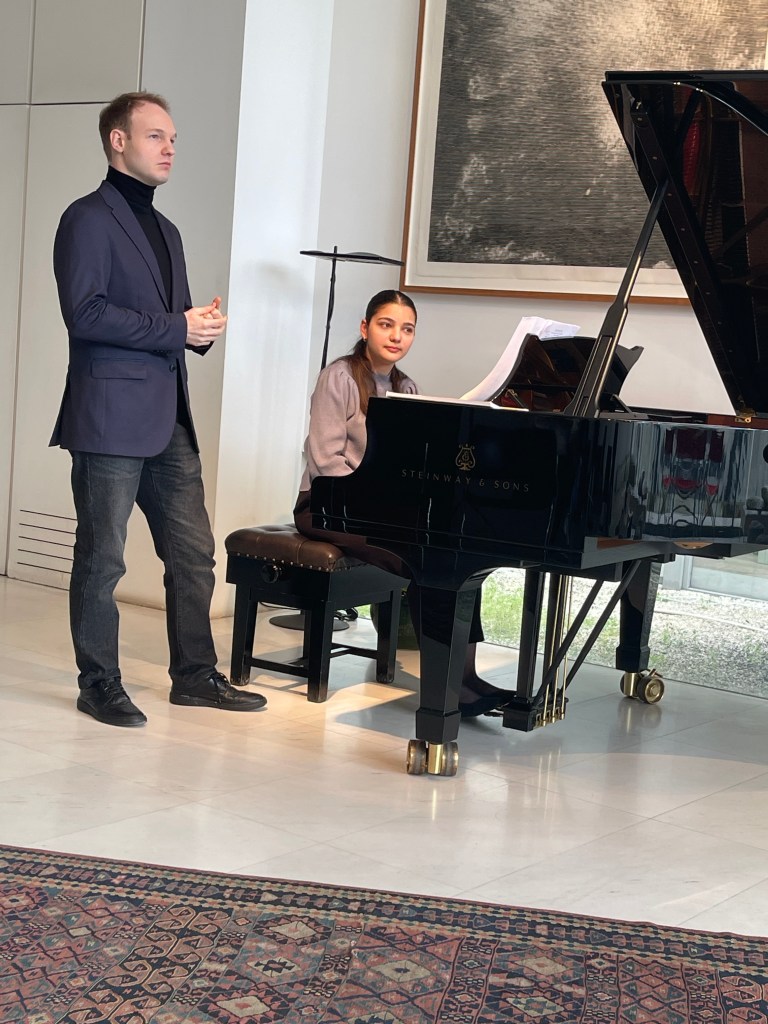
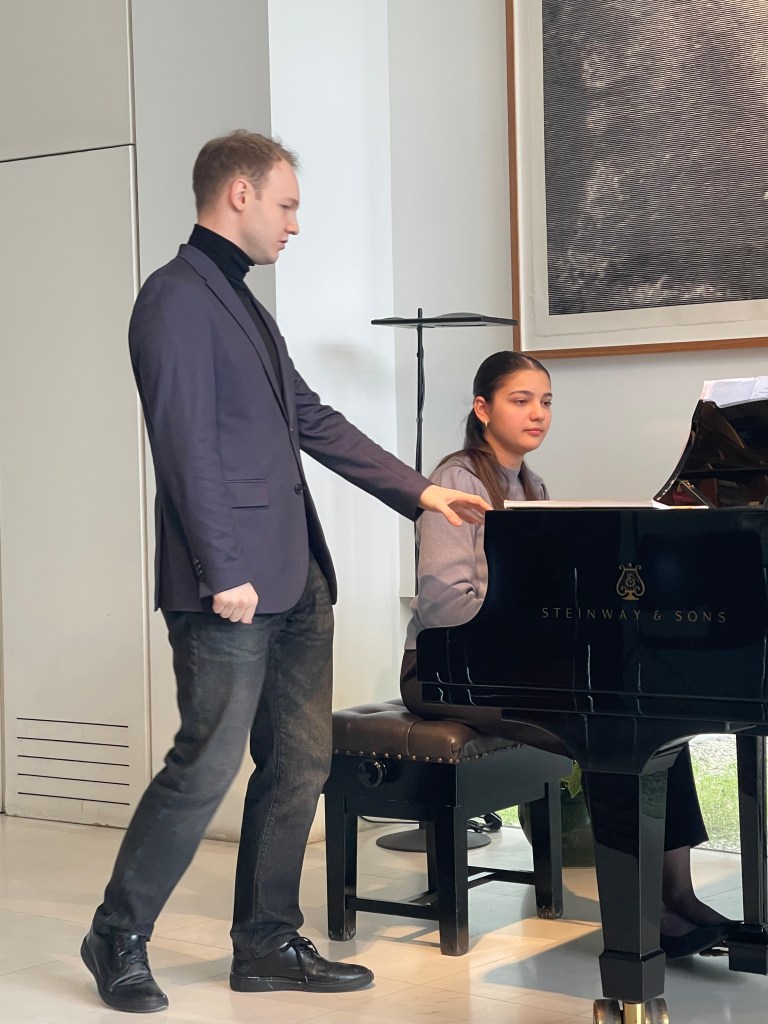

 ChristopherAxworthy-MusicCommentary