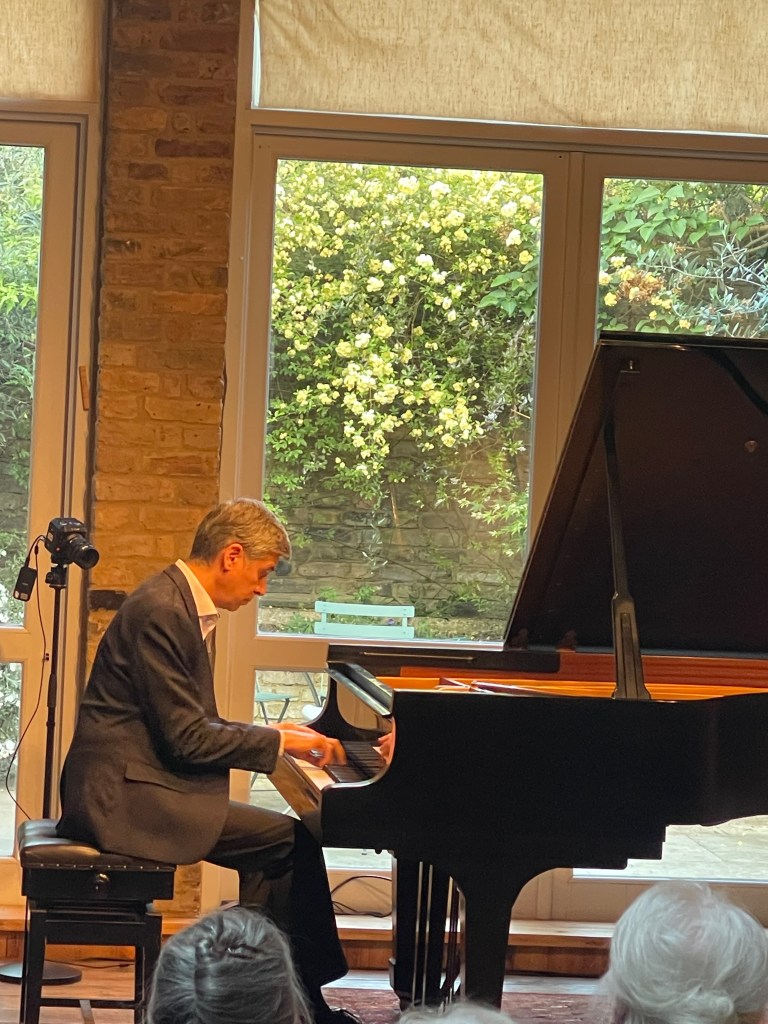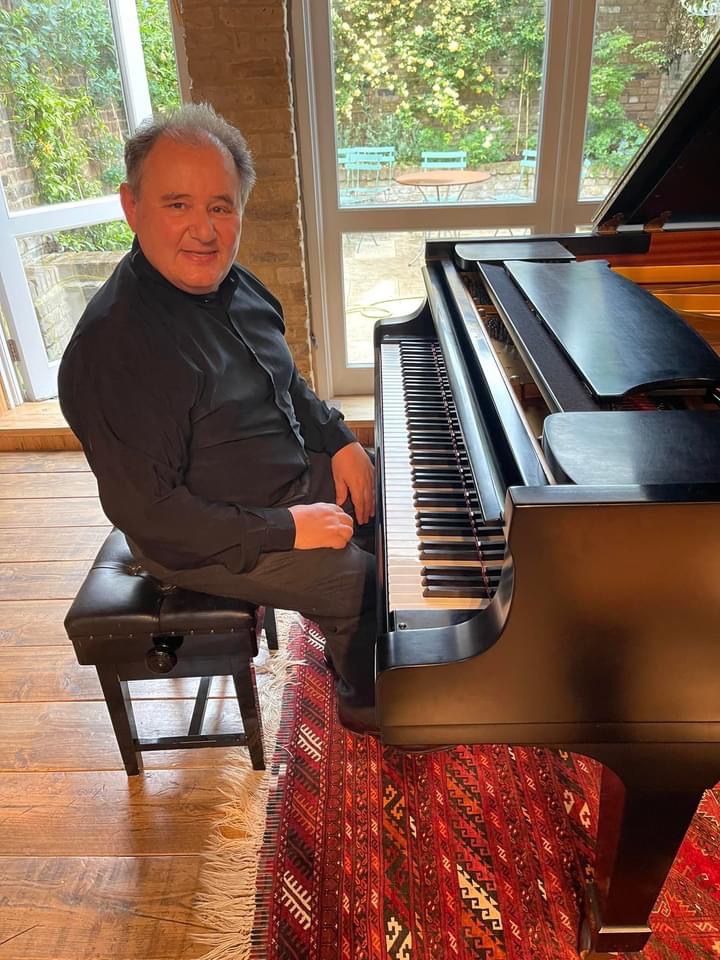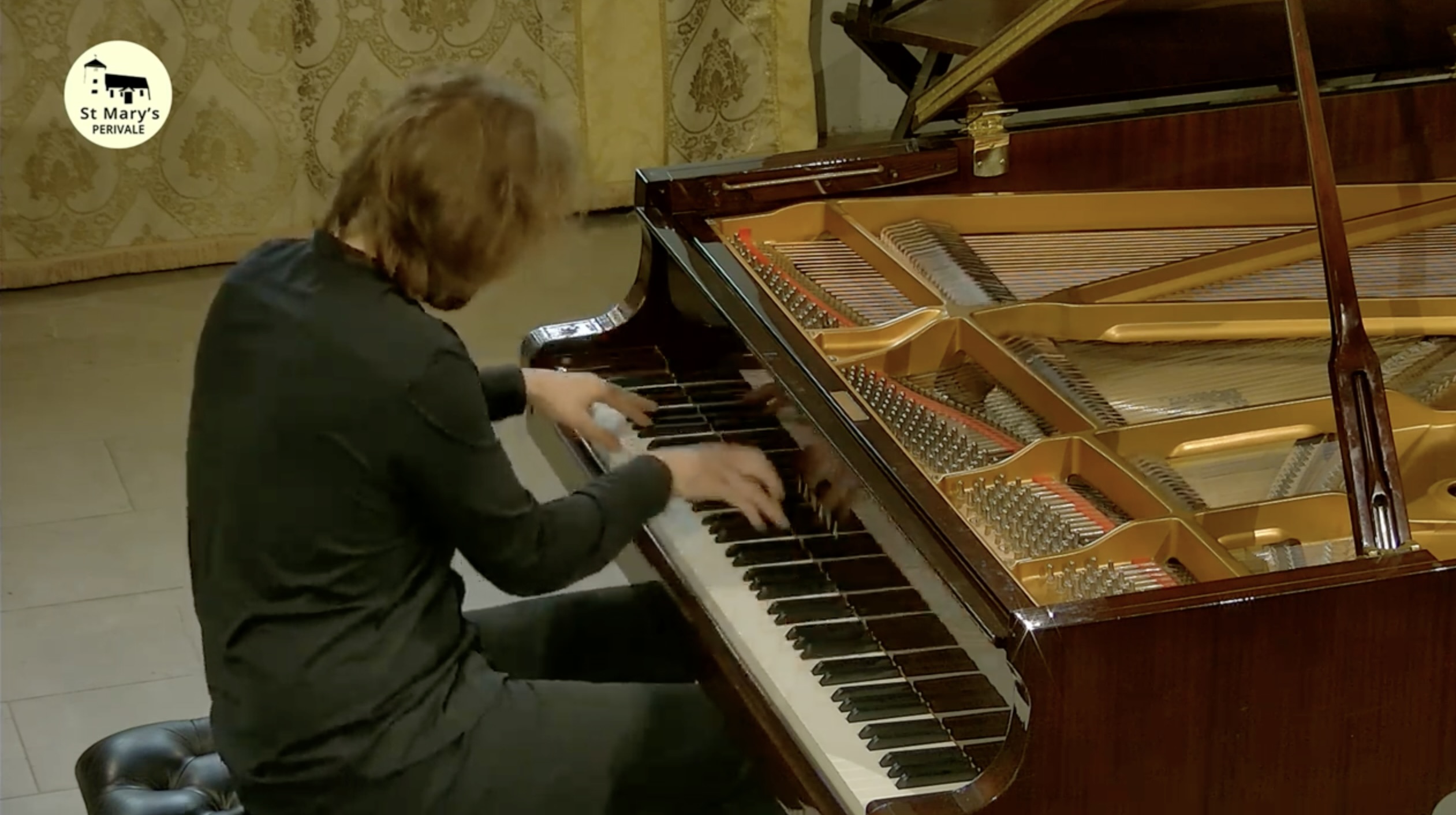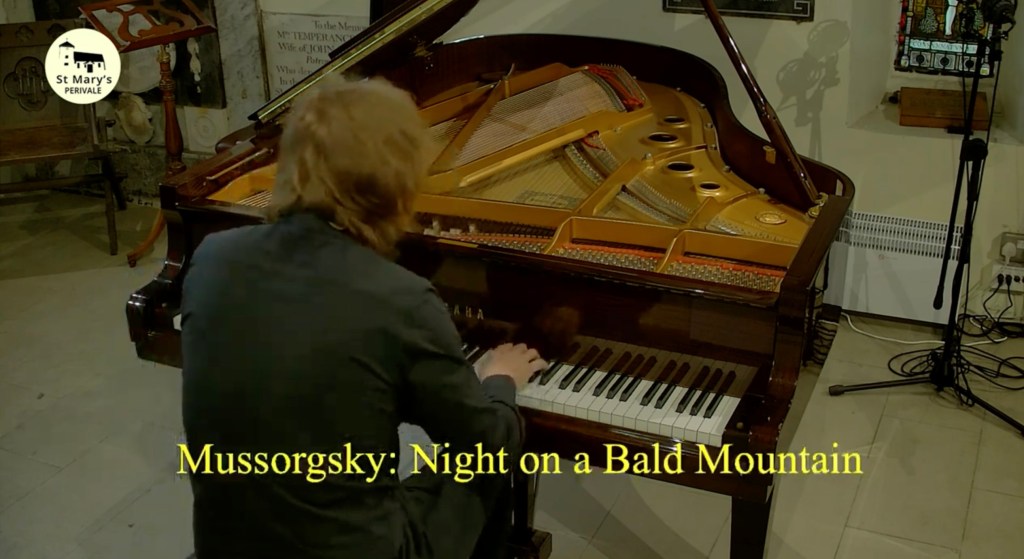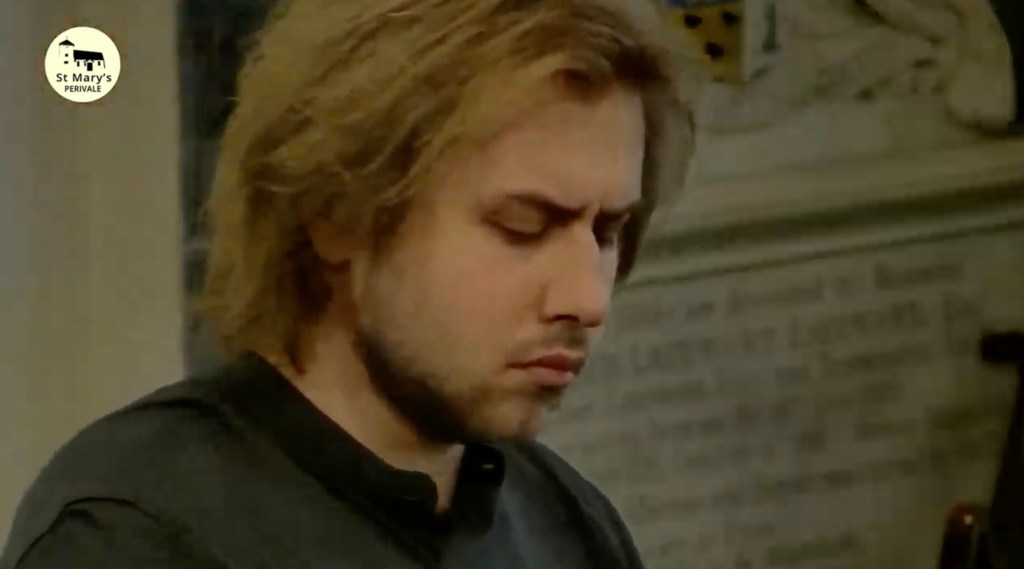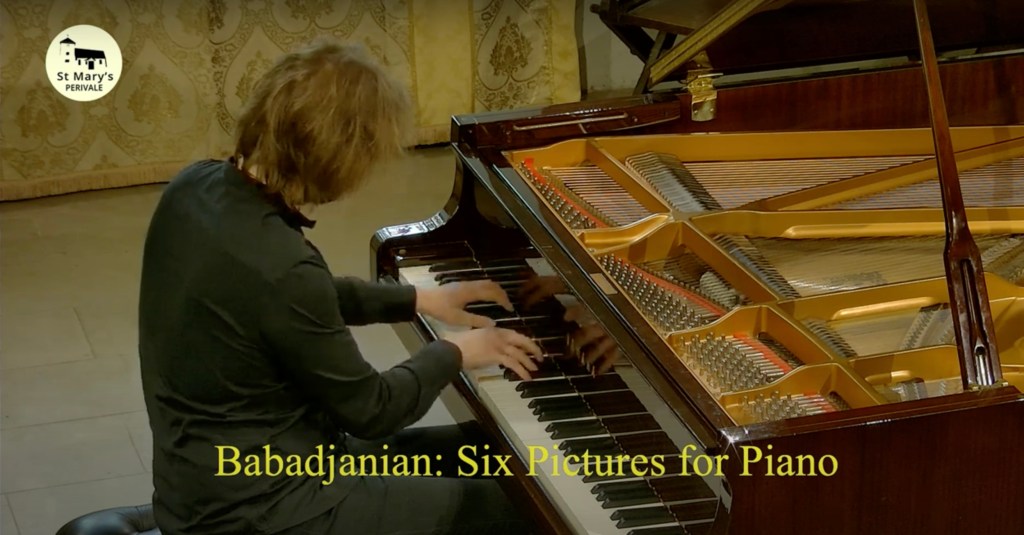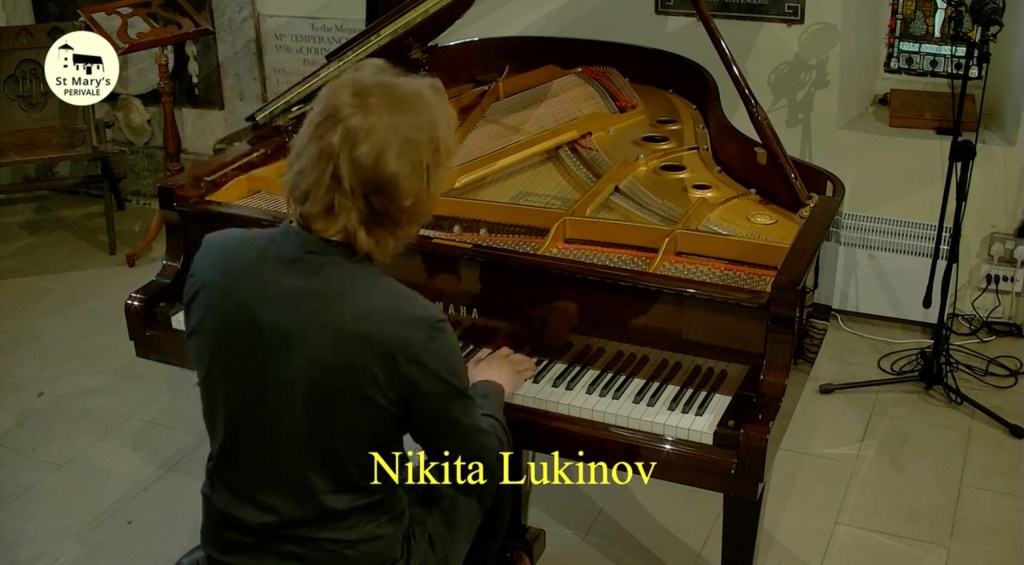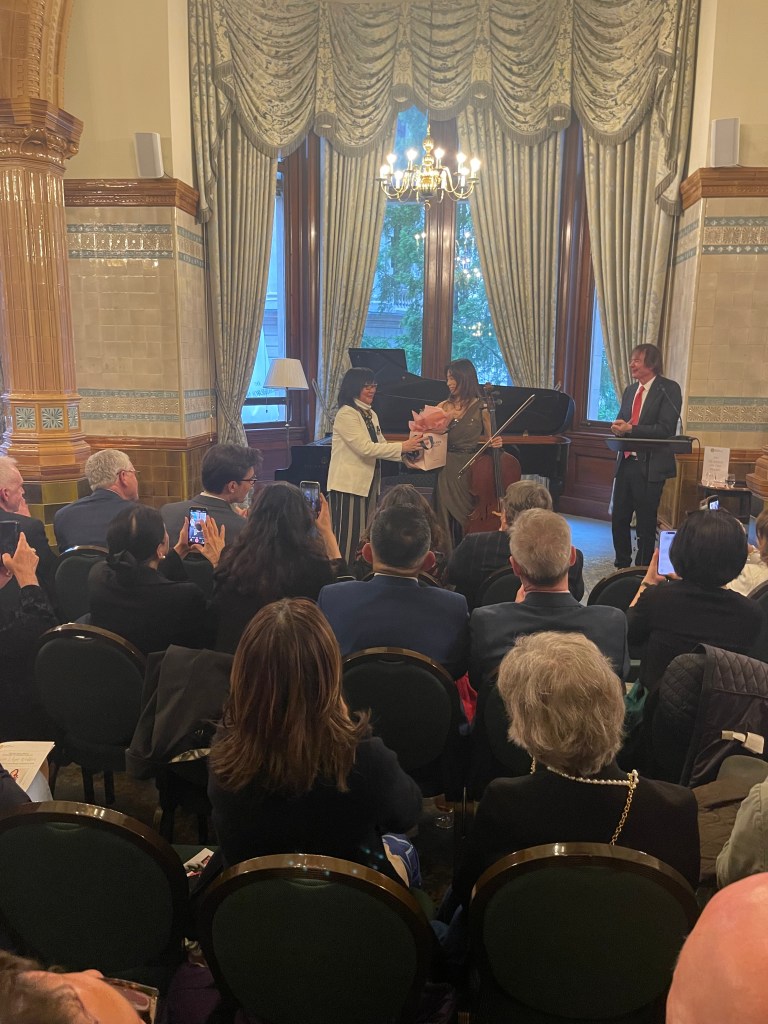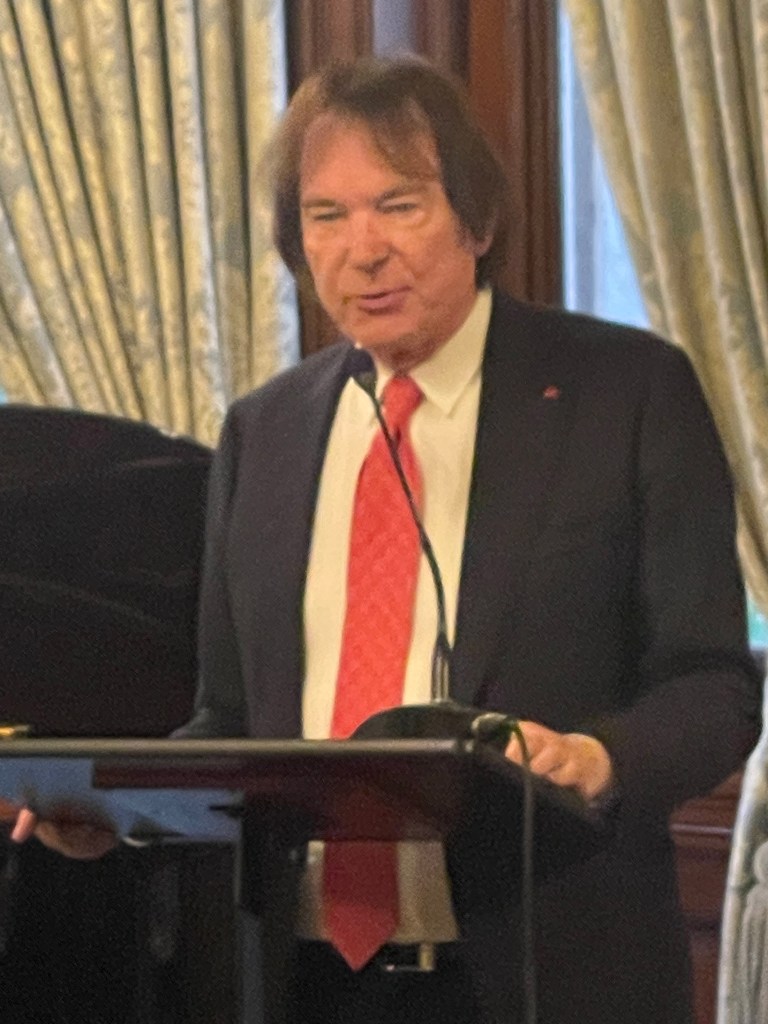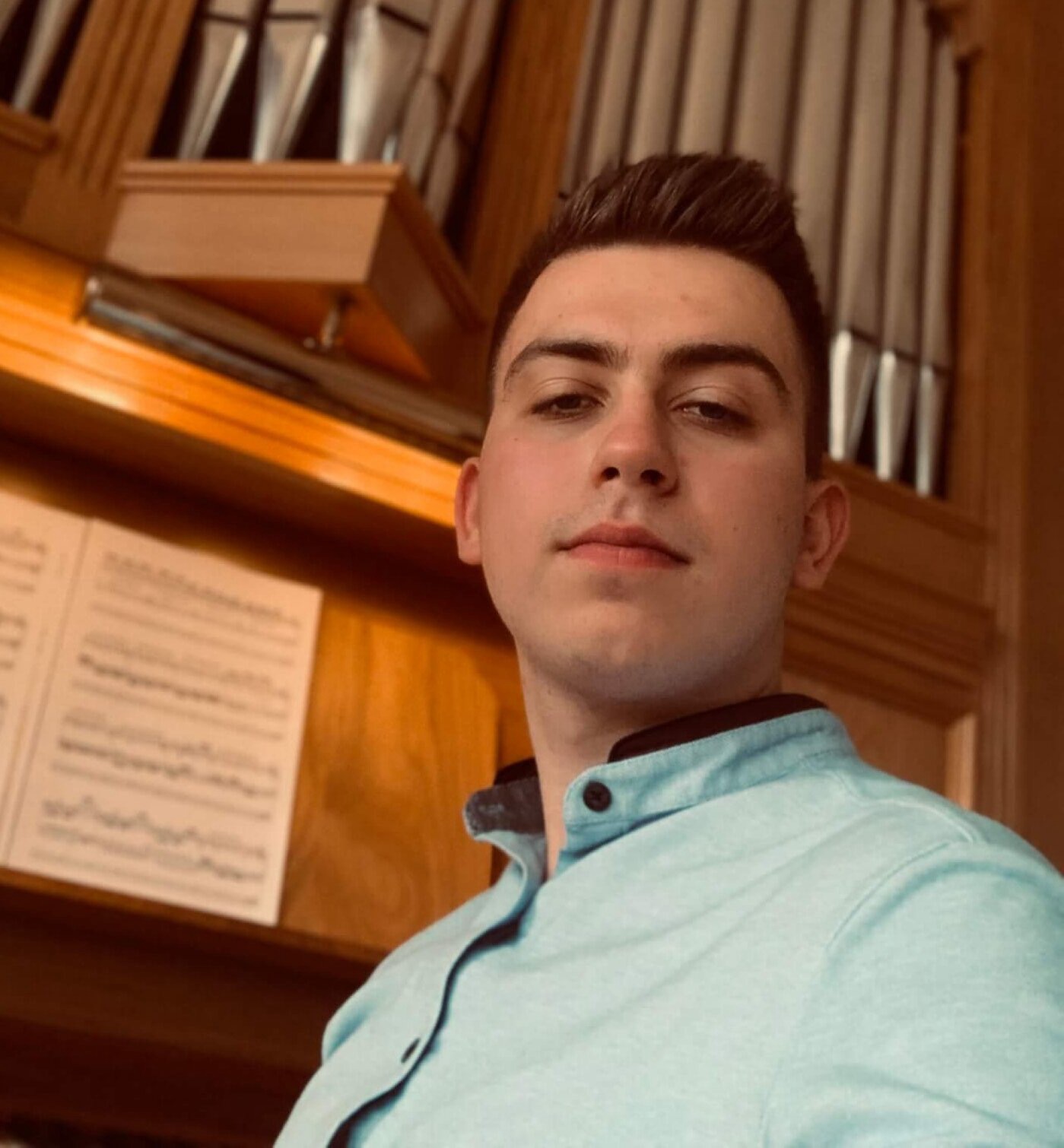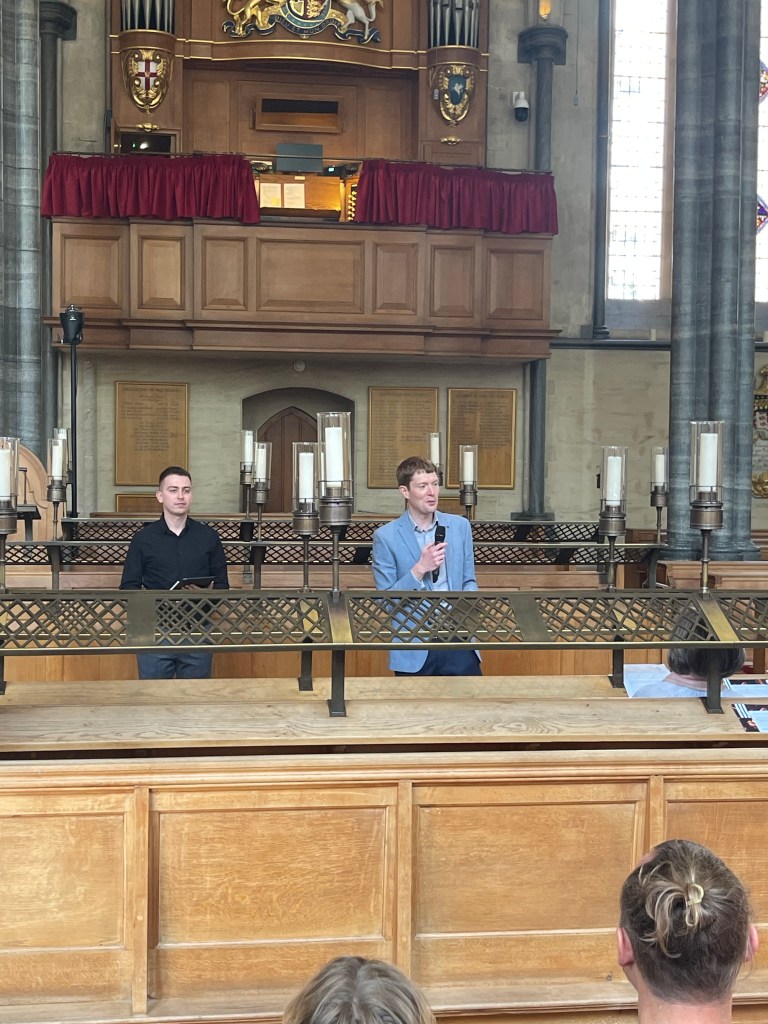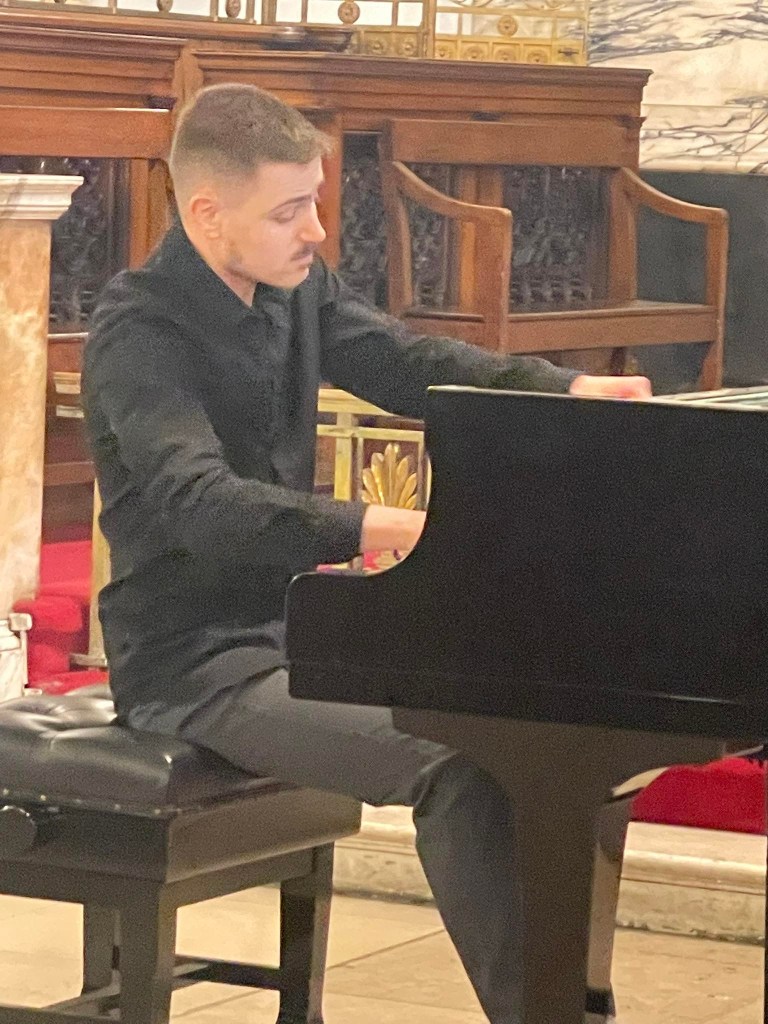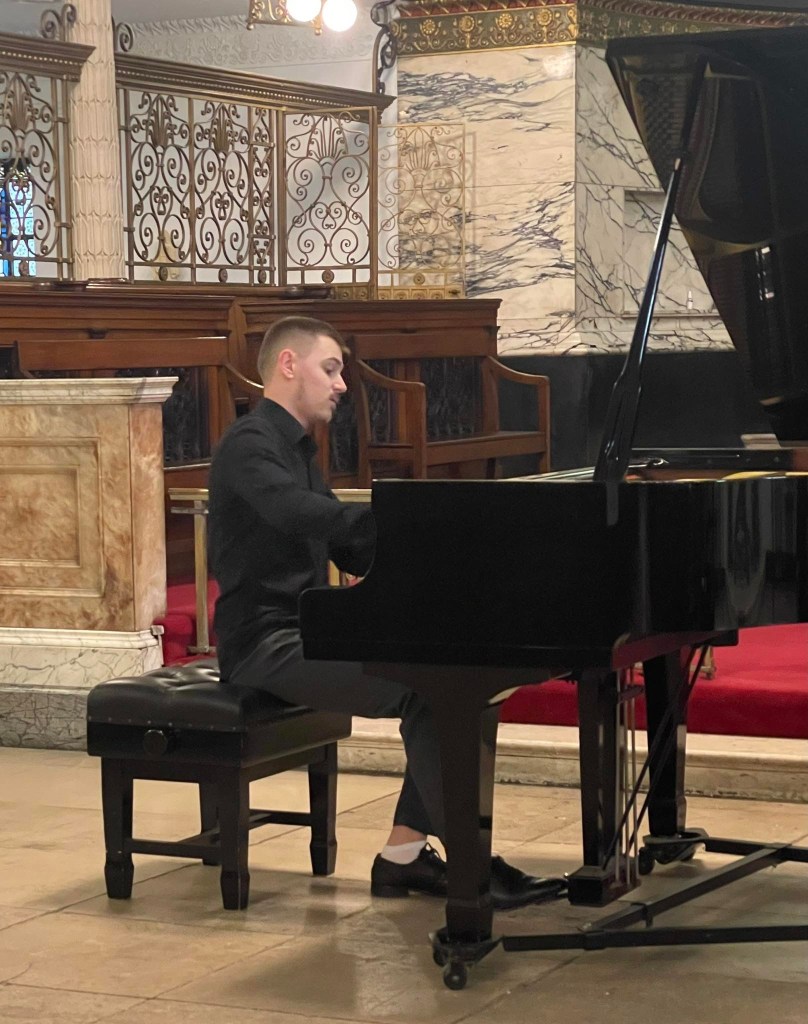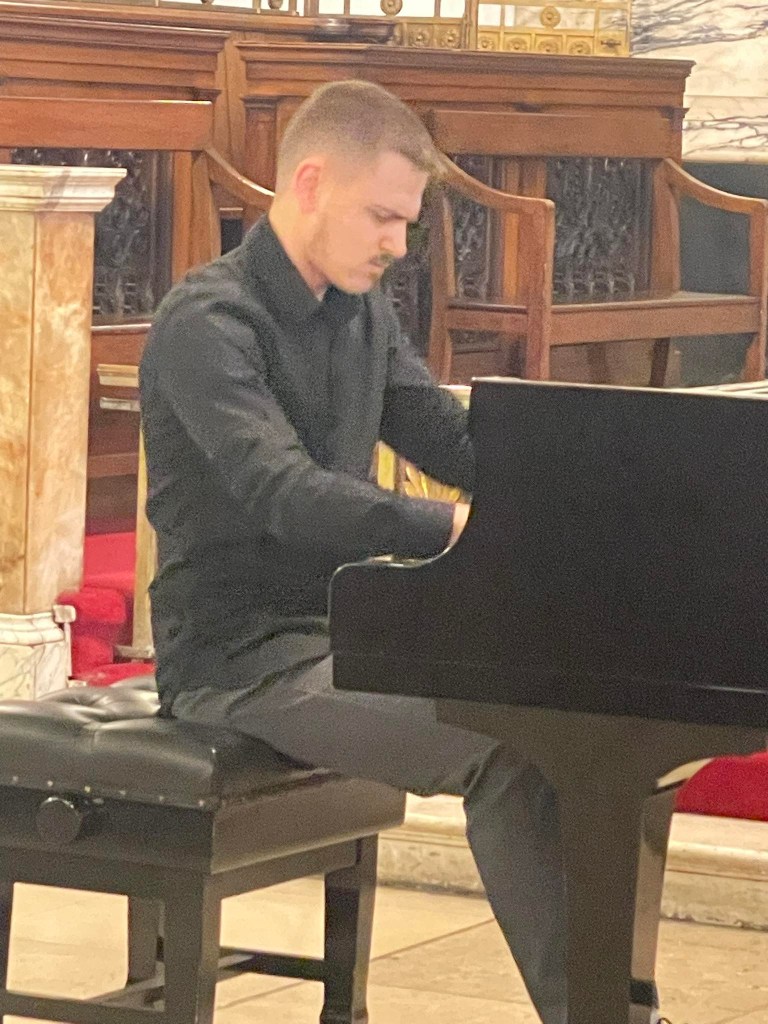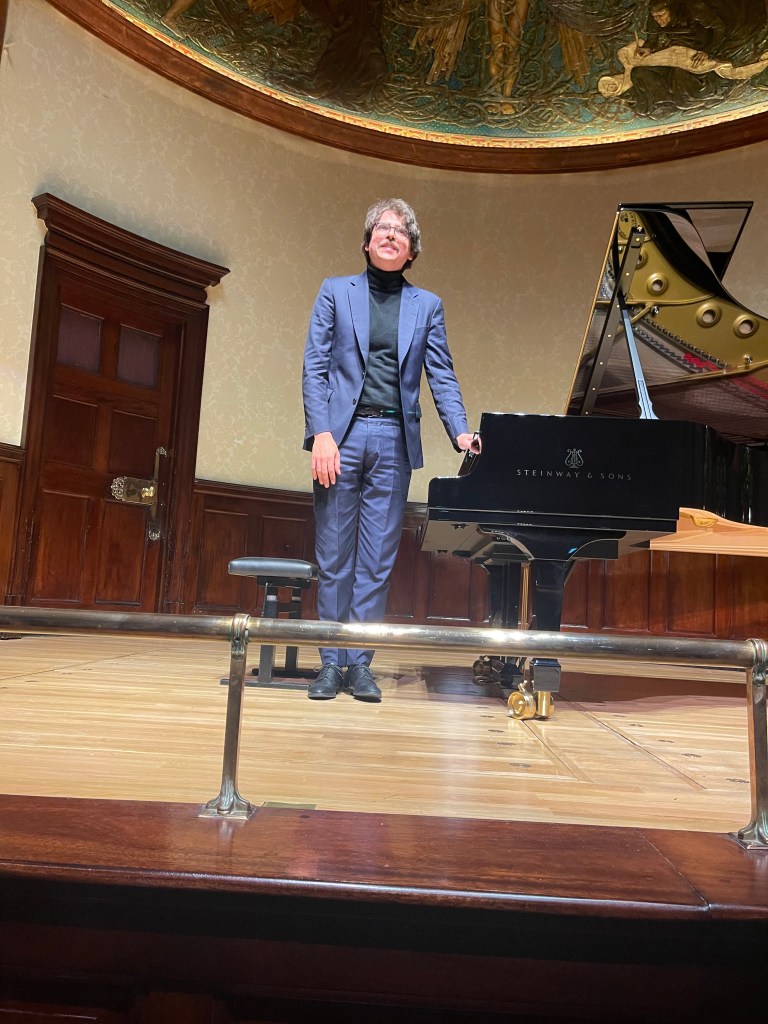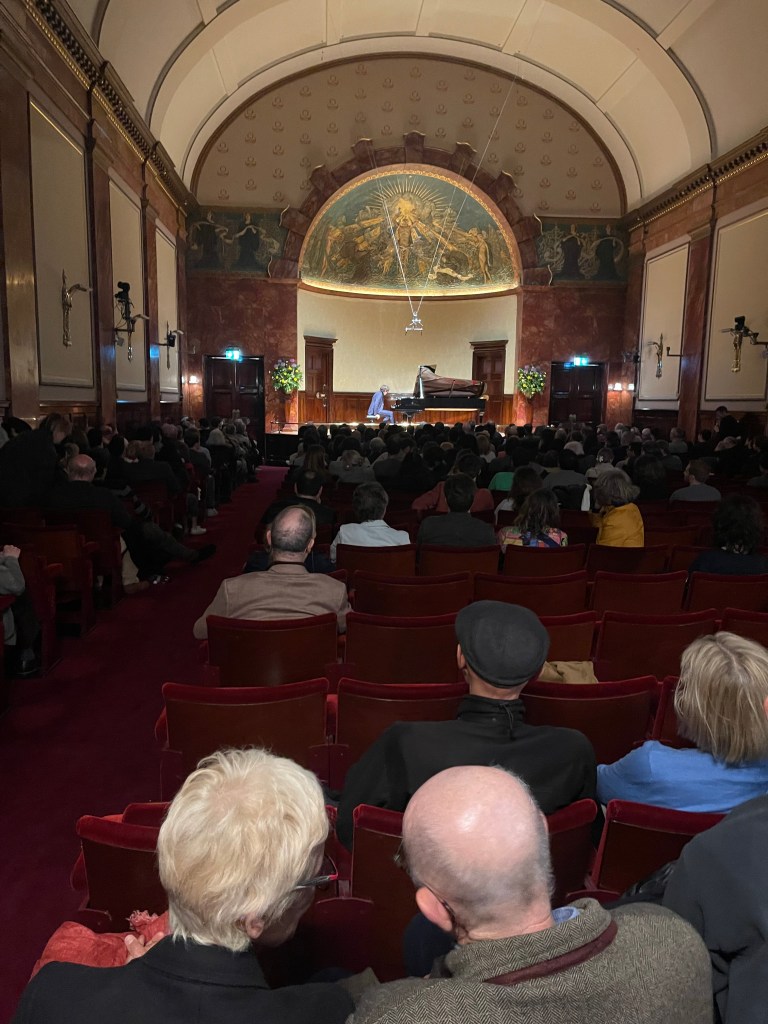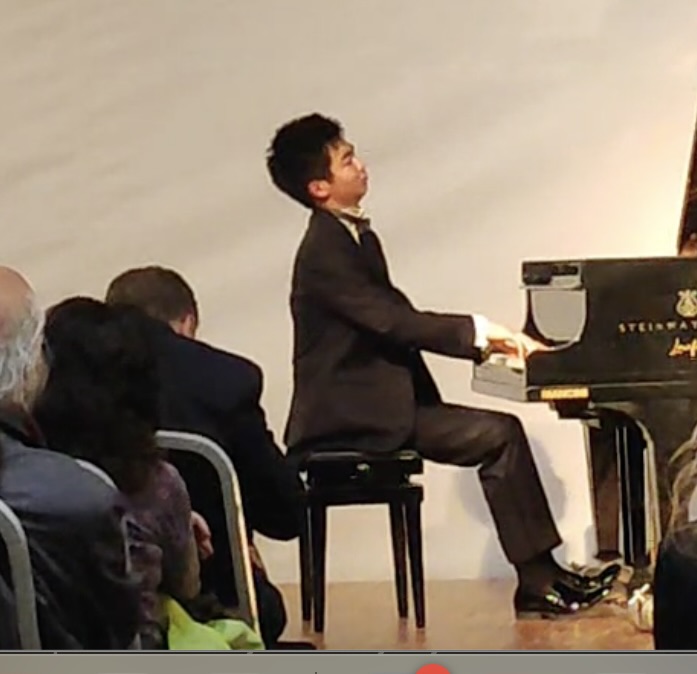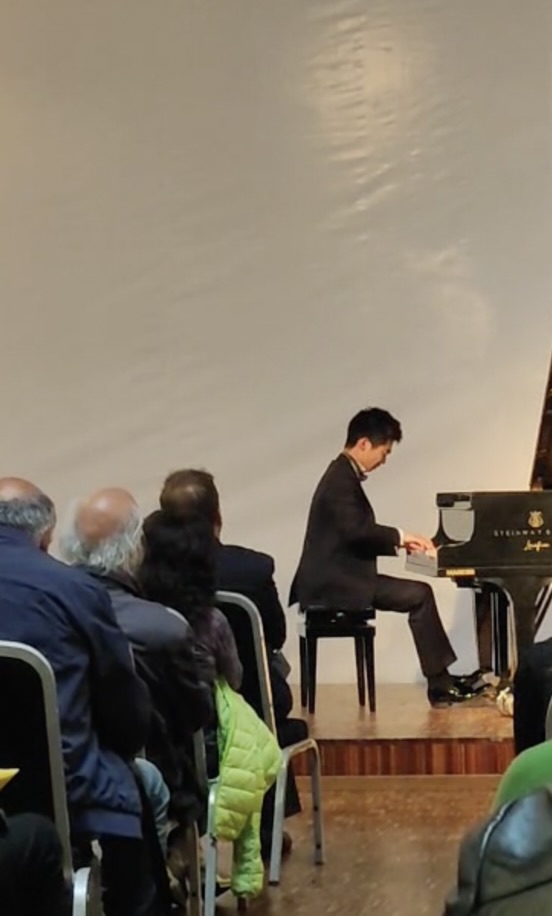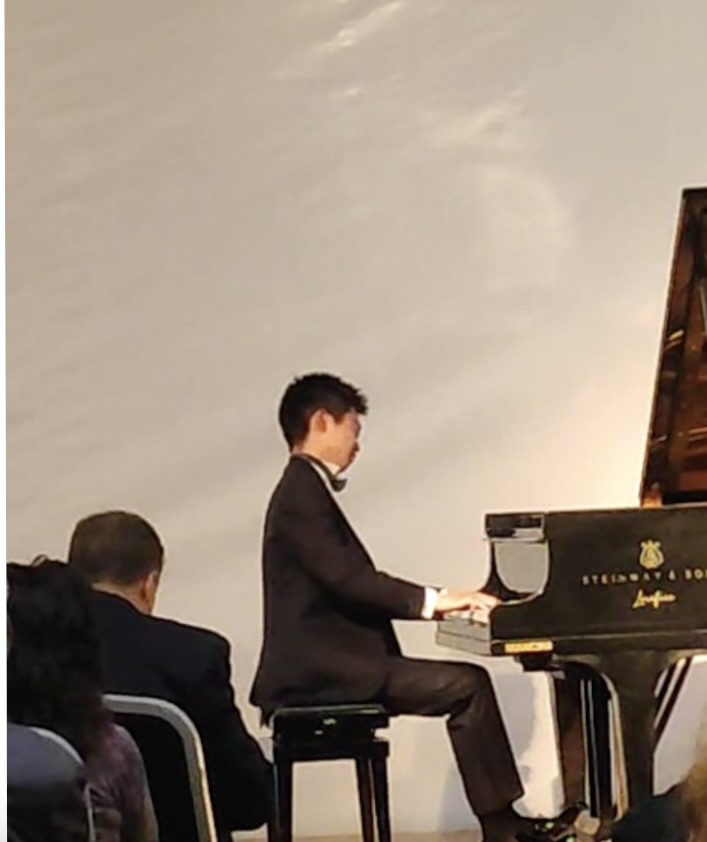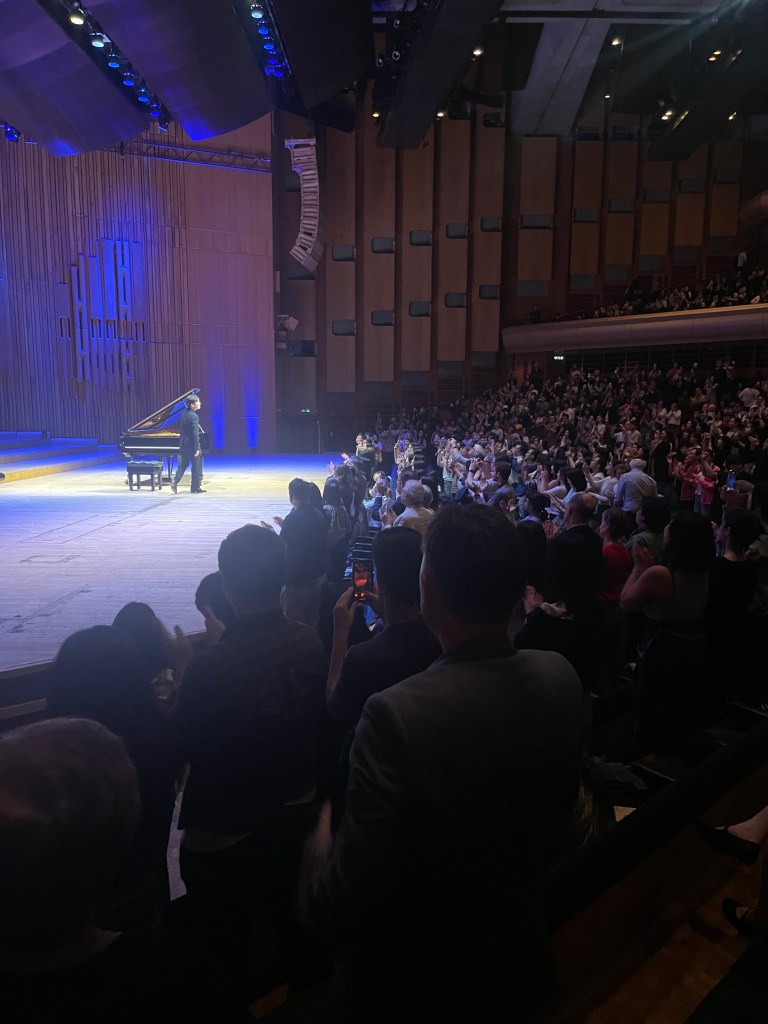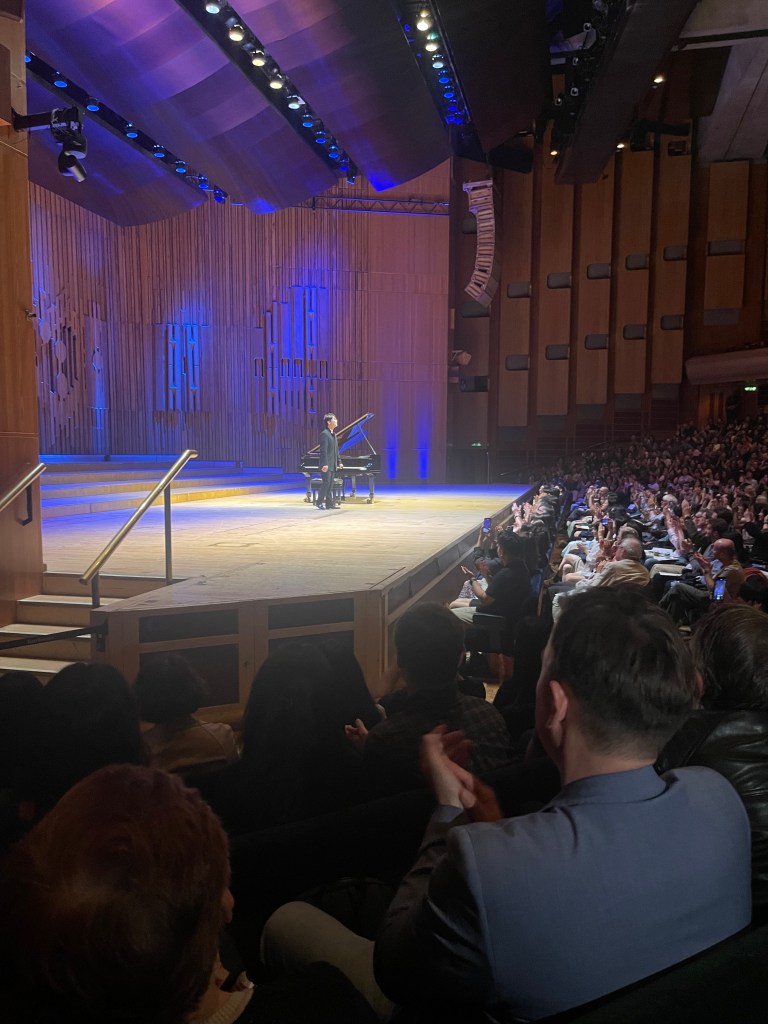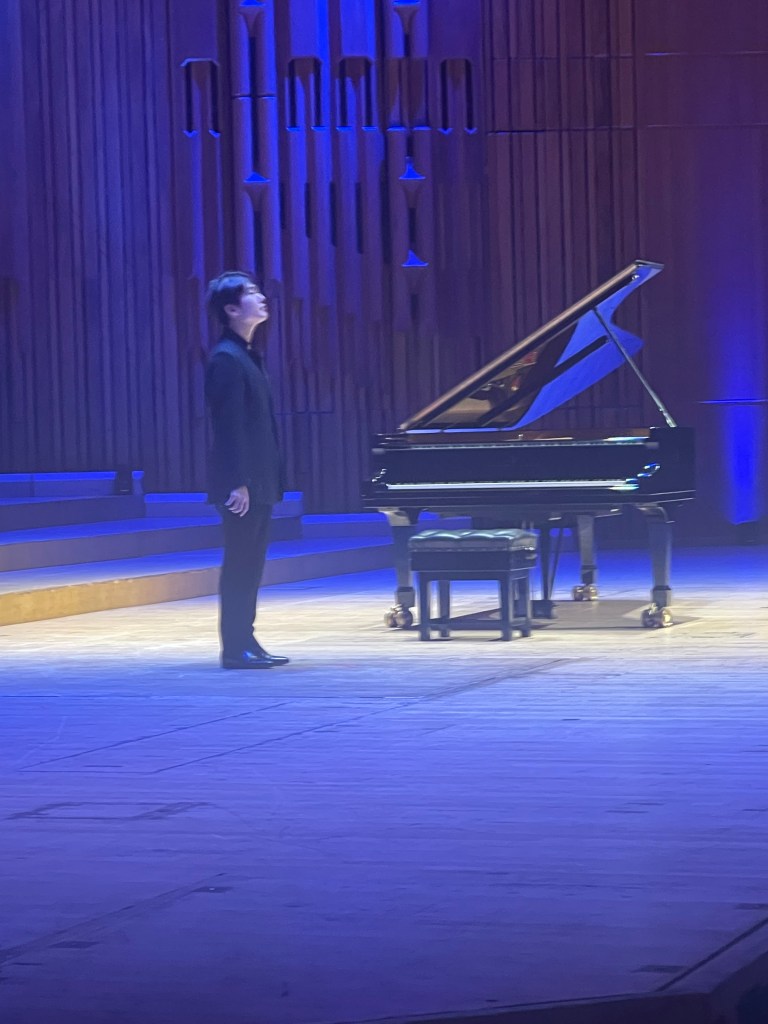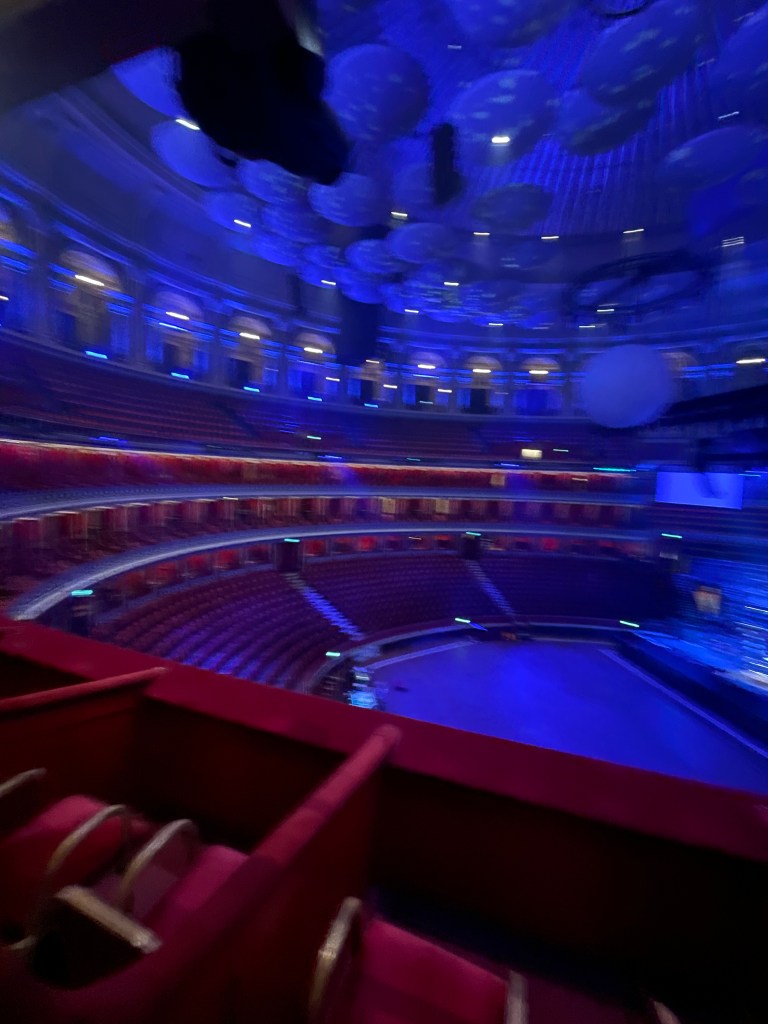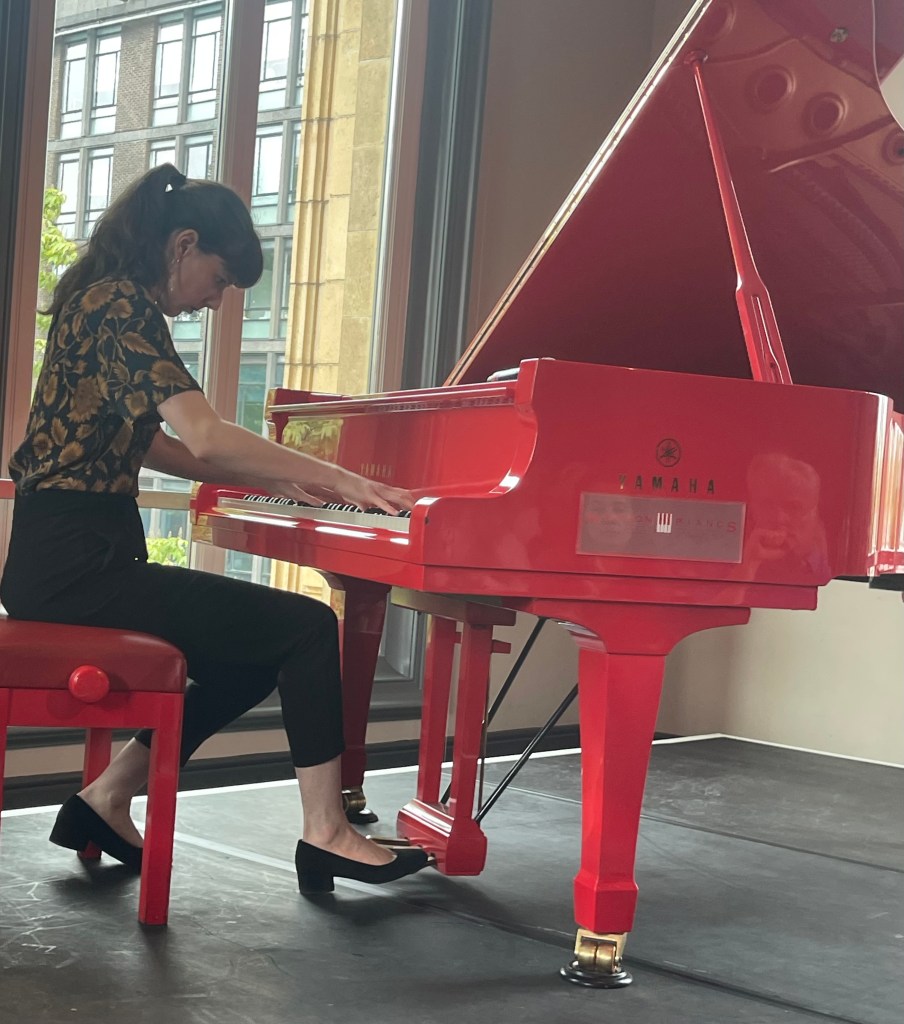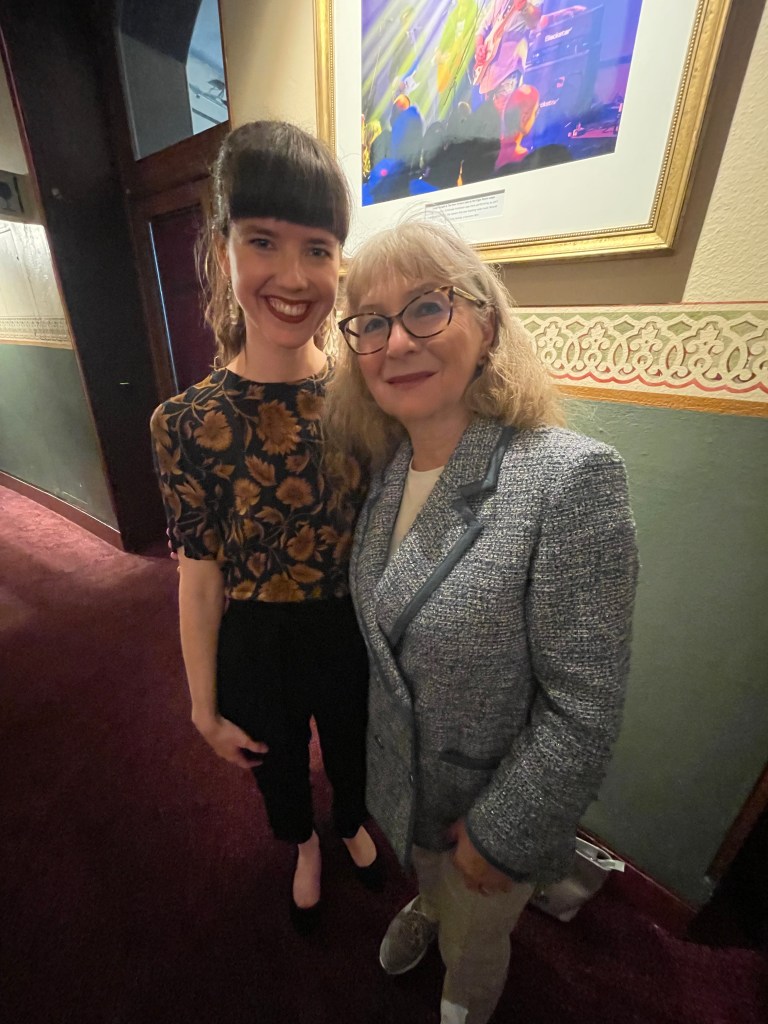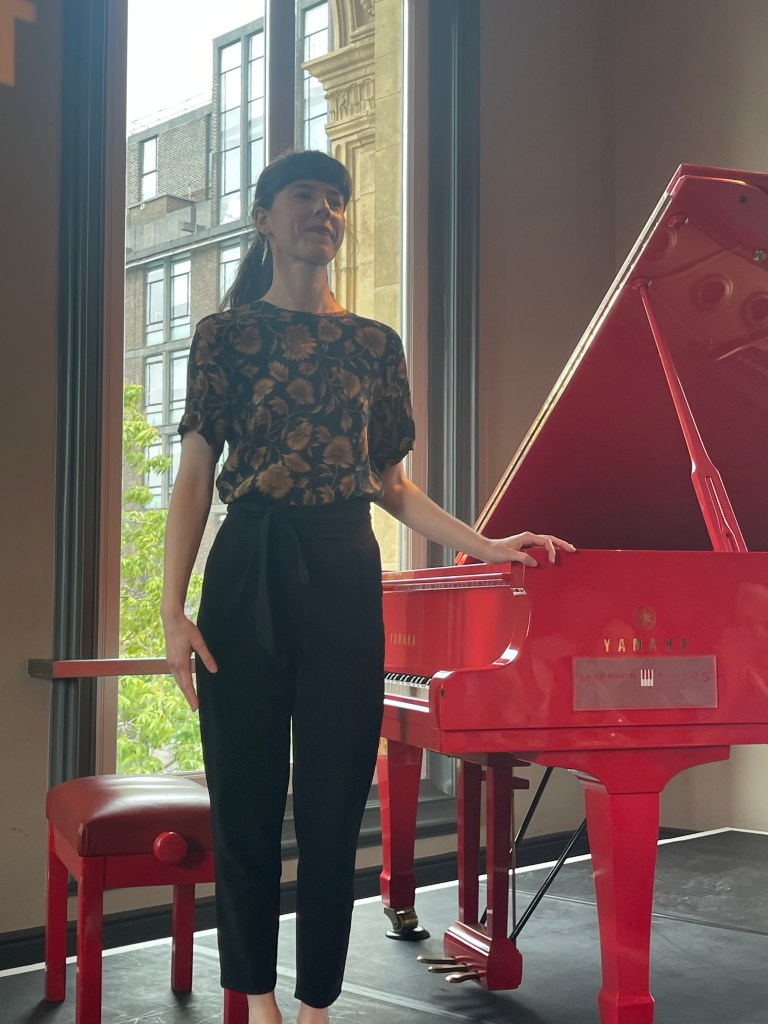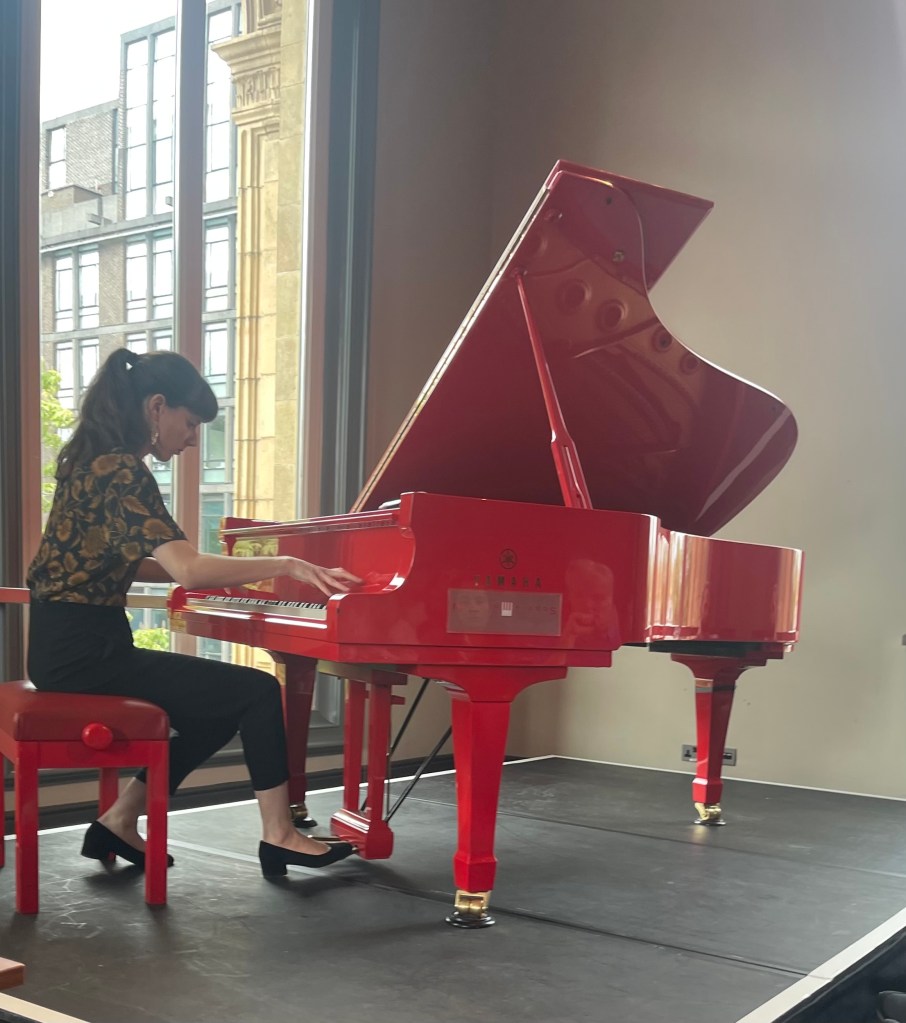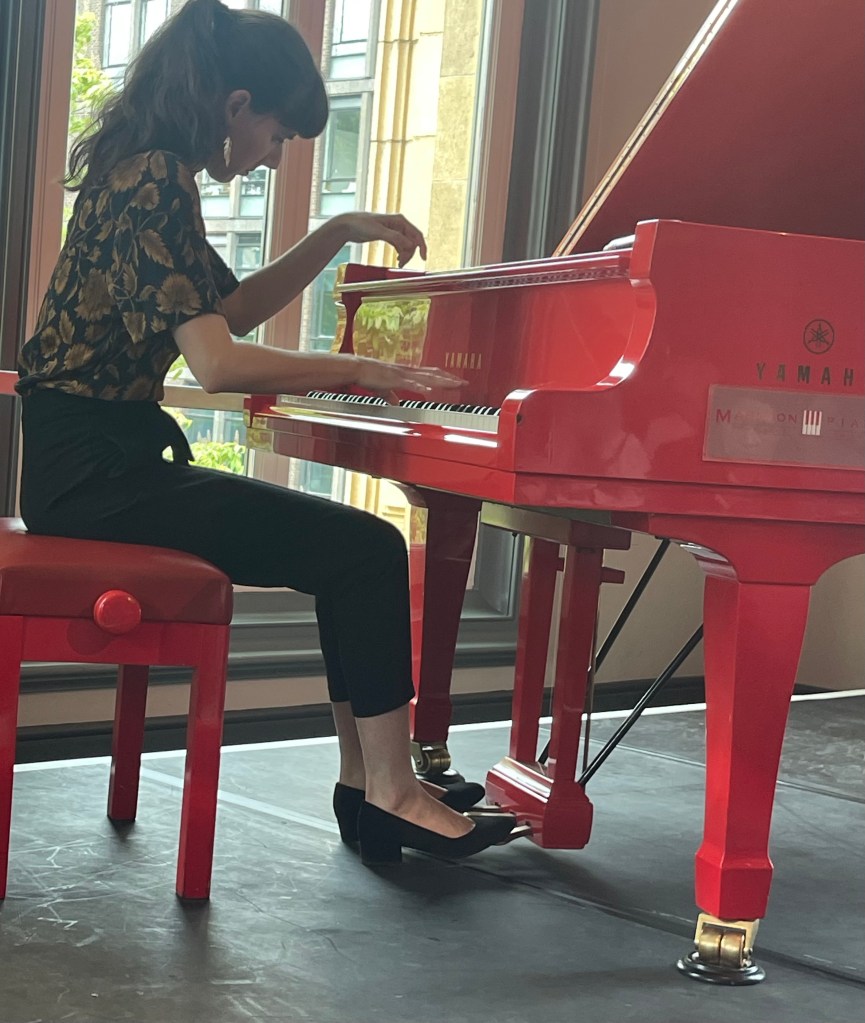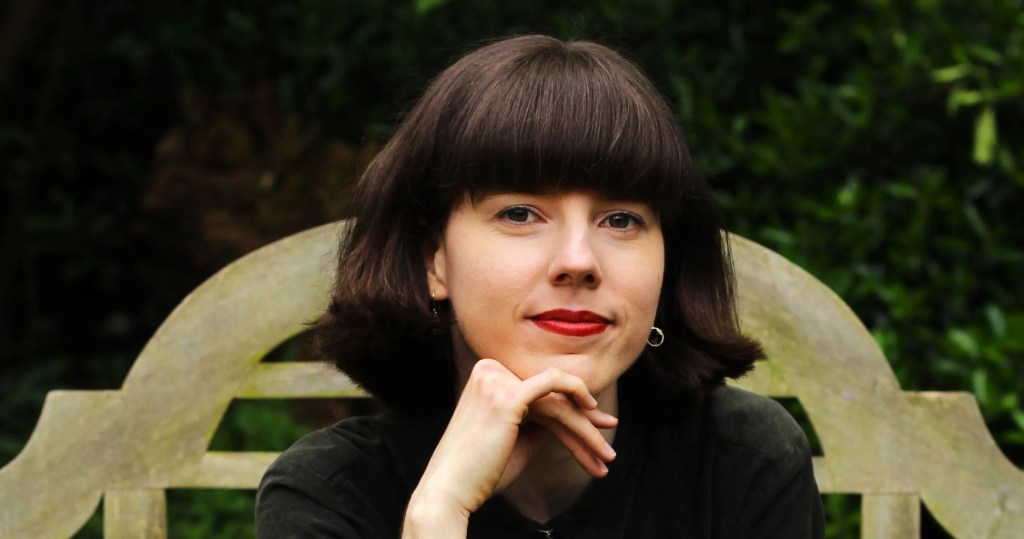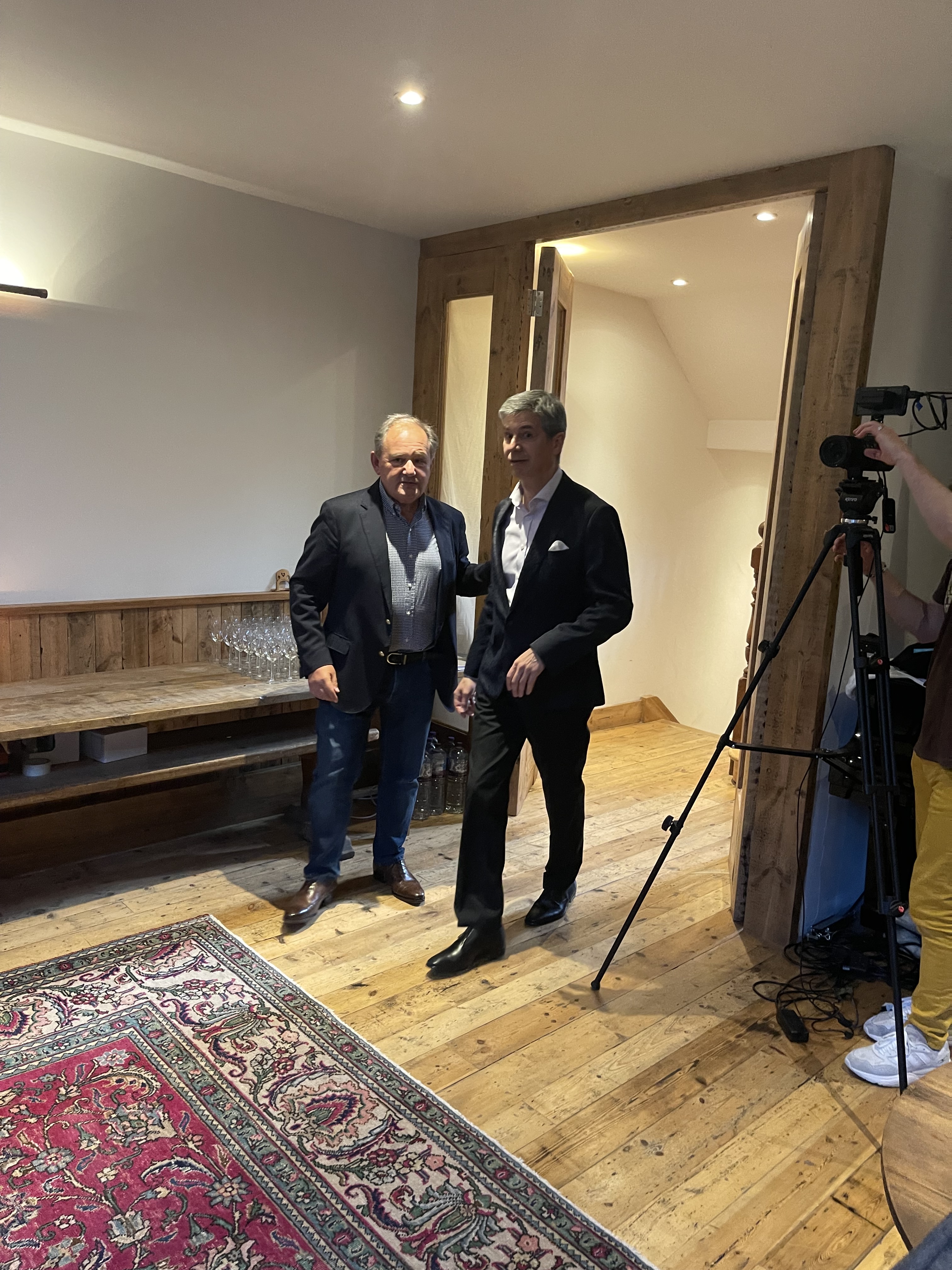
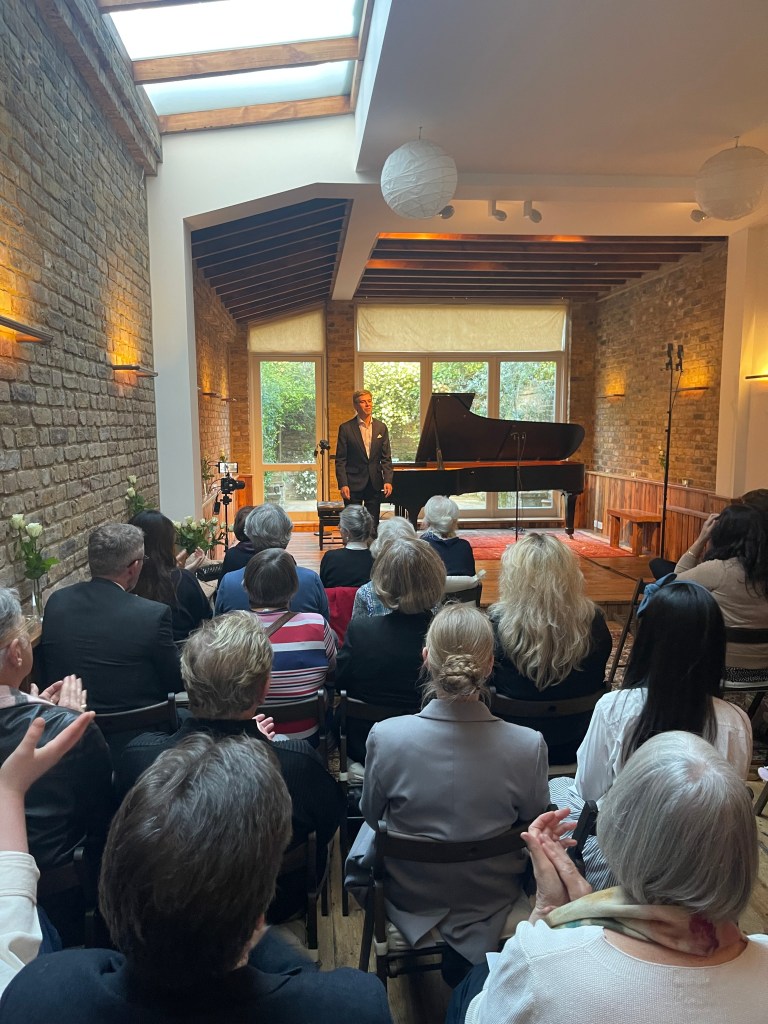
Mikhail Kambarov illuminates La Mortella for Easter with poetic inspiration and mastery

https://youtube.com/watch?v=QiQI8JOOEeM&feature=shared
https://youtube.com/watch?v=yPAHDiWFZw4&feature=shared

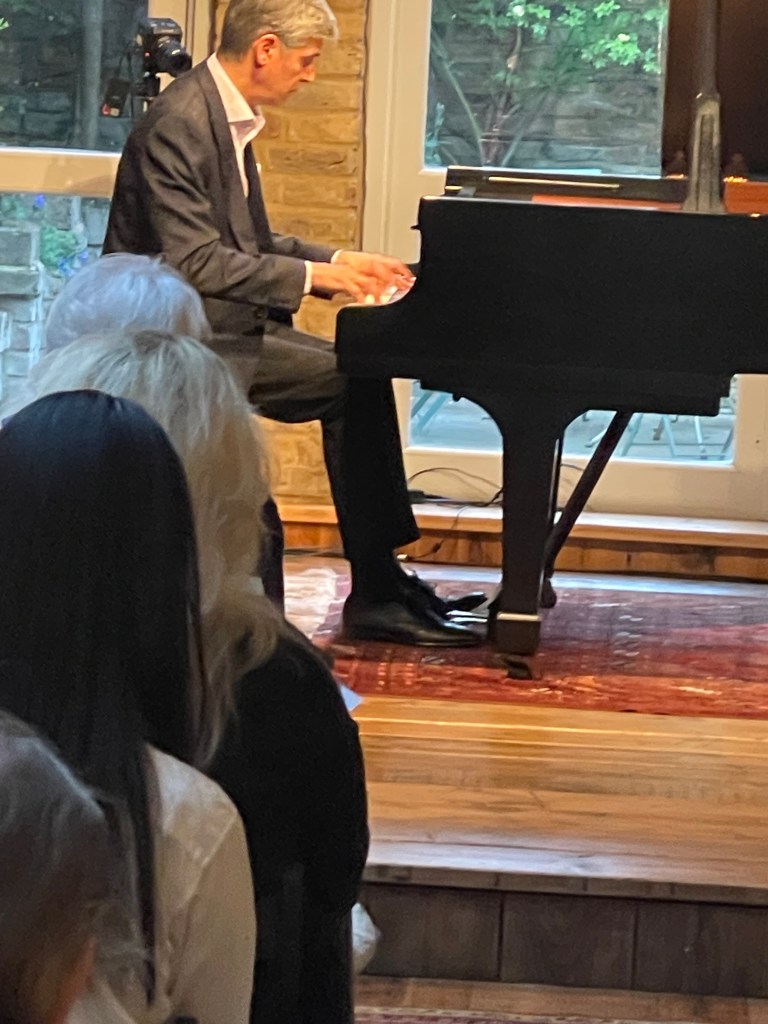
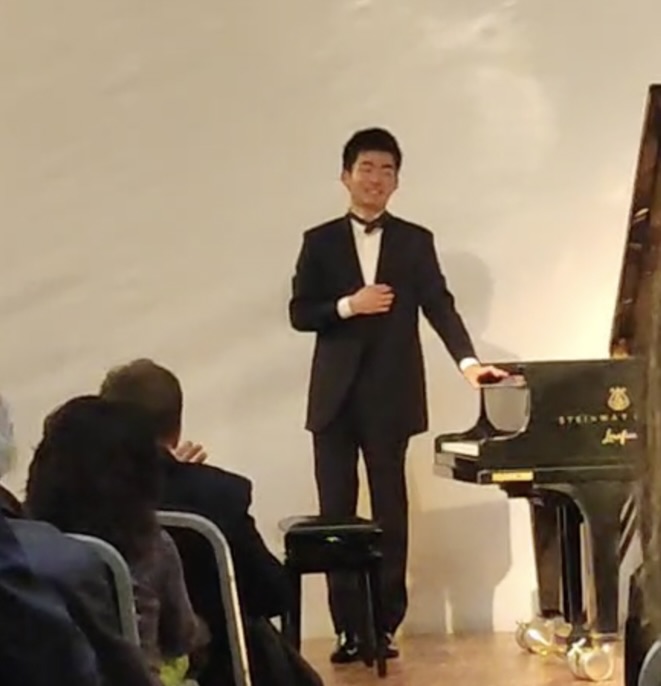
Playing of beauty and intelligence from Mikhail Kambarov in Ischia at the Walton Estate of La Mortella. A sense of style like pianists from another age, when the piano became a multicoloured box of jewels in the hands of musicians that were above all magicians.

There are very few of the younger generation who are prepared to climb onto the high wire and risk falling off or even worse falling into habits of crowd pleasing juggling of notes.

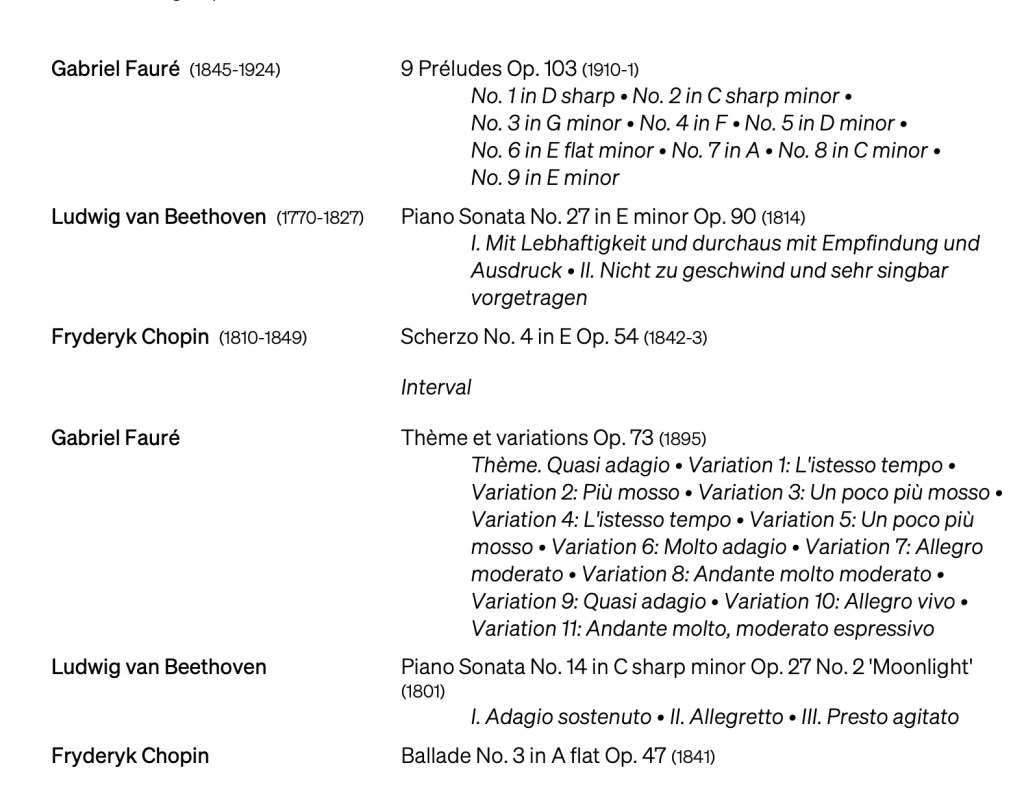
It was evident from the very first notes of Chopin 3rd Ballade that here was a pianist who had something to say. With respect and humility for the composer he added his own sense of imagination and a wondrous palette of colour that brought a radiance and subtle beauty to all he played. There was a disarming simplicity to his Chopin that from the pastoral opening, plaintiff whispered gasps gently entered the scene as almost imperceptibly they were allowed to grow on an ever more passionate wave of sounds. Momentarily interrupted by scenes of ravishing fioritura or dynamic pulsating energy but nothing could interrupt this continual flow of beauty riding on a wave of radiance and at times even menace. Bursting into a glorious outpouring of joyous exhilaration before plunging from on high to the final chords that were played quite sedately. They were after all merely the conclusion of a miniature tone poem with an architectural shape of poetic musicianship.

There was exquisite fluidity and disarming poignancy to the whispered intimate secrets that he shared with us in Scarlatti’s D minor sonata. Magic, as we had to strain to listen to the central episode such was this young man’s ability to draw us in to his world of intimate secrets rather than projecting out with more usual stylistic correctness. We were astonished by the genial poetic invention of Scarlatti who not only created over 500 sonatas of the brilliant jeux perlé perfection of his age, but also added many, demonstrating that Scarlatti had a heart and soul that dared speak to all those with the same poetic sensibility with which they were born. Mikhail’s discerning intelligent musicianship, too,was clear from a programme where the D minor of Scarlatti was but a preparation for the world of ‘La Folia’ ( also in D minor), in the hands of a composer born into a world two centuries on.

Rachmaninov’s ‘Corelli’ variations are dedicated to Fritz Kreisler and it was in fact Kreisler that mislead his doting public with compositions that he claimed were found in the archives of baroque music but admitted later that they had been penned by him in the style of ……!

‘La Folia’ too was not actually composed by Corelli but a popular melody that was used by many composers as a basis for variations, Liszt being the prime example with his Spanish Rhapsody.

However a Rose is always a Rose, whoever its creator really was (or as Kreisler said ‘ the name changes but the value remains!’ ), and it was Mikhail’s genial idea to combine Scarlatti with ‘La Folia’, alas foiled by a public enthused by his sublime playing of Scarlatti and wanting to show their appreciation!

Later in the second half, where Mikhail again wanted to preface Beethoven’s ‘Appassionata’ with Schumann’s ‘Arabesque’, this time he was ready and waiting to pounce before the public could!

Mikhail brought purity and beauty to the theme of ‘La Folia’ ready for the variations to evolve as an almost continuous outpouring of emotions inspired by this ravishing melody. The first variation opened with beguiling subtlety, with pointed comments added of syncopated dryness.The second took wing with a perpetuum mobile of insinuating propulsion, leading to the presumptuous question and beseeching answer of the third. The variations were revealed with a fantasy of sumptuous sounds and a dynamic drive of subtle mastery. There was a poignant cry of liquid sounds of extraordinary potency as the midway cadenza took wing descending with poetic improvised freedom and revealing ‘La Folia’ in all its naked major costume. Dynamic drive and technical mastery in the last three variations found rest on the pedal note of ‘D’ on which a wondrous melody was floated of bewitching, unmistakably Rachmaninovian harmonies of brooding nostalgia, before ‘La Folia’ returned ,in whispered tones, to complete this remarkably concise and poetic work.

It is only now that many of the lesser known works of Rachmaninov are being heard in the concert hall, and a composer known mostly for his Hollywood style romanticism encased in a blinding amount of knotty twine is now being appreciated as a master of his craft with variations not only on a theme of Paganini but also on Chopin’s equally disarmingly simple Prelude in C minor.

Mikhail gave a remarkable performance that was justly received with an ovation and a well earned pause before the equally taxing second half of the programme.

Schumann’s ‘Arabesque’ was played with a wondrous flexibility, allowing the music to unfold and speak so naturally. There were beautiful inner doublings that just underlined the melodic line with the refined good taste of a poet giving more richness to the sound , as the passion rose for an outpouring of noble beauty. An architectural shape to a work that in lesser hands can seem sweetly repetitive, but in a true poet’s hands returns to the original inspiration, as when the music was still wet on the page. Yearning, passionate with disarming simplicity as Mikhail brought his fantasy and colour to bear, turning a bauble into a gem,( as indeed Horowitz was to do with it’s twin: ‘Blumenstück’ op 19 which immediately followed this ‘Arabesque’ op 18). A coda of the same magic as ‘Dichterliebe’ (op. 48, the song cycle by Schumann), music reaching places where words are just not enough. A glowing radiance and beauty to the final page with a fluidity and the glowing sounds of purity with the deep significance of a poet of the piano. https://youtu.be/Ka5x167wNt8

Leaving his hand on the final note, which he miraculously transformed into the whispered opening of Beethoven’s ‘Appassionata’. There was an extraordinary dynamic range and sense of drama that kept us on the edge of our seats. A scrupulous attention to Beethoven’s very precise indications meant that seemingly impossible explosions of notes were played with the struggle that Beethoven implied, not simplifying the execution by sharing between the hands. This is not play safe music but only for the fearless that dare open the door to a revolutionary work of its day. Performances that even today should still have that same astonishing struggle that Beethoven was to bequeath to the world. The music like a tightly spun spring unfolding with breathtaking drive and intensity. Even the return of the theme was over a bubbling cauldron of sounds boiling over at 100 degrees. Beethoven’s revolutionary and poetic effects were interpreted with remarkable authentic intuition and the final pedal effect of the coda came after an astonishingly violent chord out of which a whole world was allowed to dissolve and disappear into the distance, where we were to envisage a funeral procession of sumptuous beauty. An ‘Andante con moto’ played with sumptuous rich sounds of string quartet quality, where every strand has a meaning and poignant significance. The variations unfolded with beauty, the deep legato bass of the first with chords interjecting unusually promptly above, which contrasted with the golden beauty of the second mellifluous variation. Gradually building in agitation until the astonishing unsettling chords of the diminished 7th, firstly barely suggested and then thrown at us with Beethovenian vehemence. The continual drive of the ‘Allegro ma non troppo’ , Mikhail played with relentless forward movement of turbulent control. Exhilaration and excitement of the coda brought this recital to a astonishing end and an ovation from a Saturday afternoon audience who had come to admire the beauty of Susana’s Ischian Paradise and were not expecting to be astonished by the presumption of Beethoven.

John Piper, front curtain for the 1942 production of Facade

It was now that Mikhail could let his hair down and show us his admiration for the sound world of pianists ‘old style’ from the Golden age. Artists like De Pachmann, Rosenthal, Lhevine or Friedman, when a black box of hammers and strings could be turned into a box of gleaming jewels.

A truly fascinating historical piano recording is this June 28, 1938 recording of Chopin’s famous Nocturne in E-Flat Major Op.9 No.2 ‘with authentic variants’ played by Raoul Koczalski, who studied with Chopin’s pupil Karol Mikuli.

https://youtu.be/cW-VRsOeIwM?si=PpdgETkXYHqfHULa

As a young child, Koczalski famously had lessons with Chopin’s pupil Karol Mikuli over the course of four consecutive summers from 1892 to 1895, but he had trained with a number of teachers: Julian Gadomski, Ludwig Marek, and Henryk Jarecki. Some have sought to minimize the extent to which he studied with Mikuli but Koczalski detailed the extent of their work together, noting that “it was no mere trifle: each lesson lasted two full hours and these were daily lessons. I was never permitted to work alone…Nothing was neglected: posture at the piano, fingertips, use of the pedal, legato playing, staccato, portato, octave passages, fiorituras, phrase structure, the singing tone of a musical line, dynamic contrasts, rhythm, and above all the care for authenticity with which Chopin’s works must be approached. Here there is no camouflage, no cheap rubato, and no languishing or useless contortions.”

Chopin’s Nocturne in E flat op 9 n. 2 was played by Mikhail with whispered beauty and barely suggested asides with embellishments that were in fact described in the most recent authentic edition of Chopin.

The Jan Ekier edition takes into account the pages of manuscripts that Chopin would give to his noble women students in Paris and also letters of the time describing Chopin’s own performances. The edition was completed in 2010, in time for the bicentenary of Chopin’s birth and as an urtext, the Chopin National Edition aims to produce a musical text that adheres to the original notation and the composer’s intentions. All extant sources were analyzed and verified for authenticity, mainly autographs, first editions with Chopin’s corrections and pupils’ copies with Chopin’s annotations. Necessary editorial decisions are documented in each volume’s source commentary. Additionally, a separate performance commentary documents cases where Chopin’s notation may be misunderstood by contemporary pianists, such as realizations of ornaments and pedaling. In Ekier’s own words : ‘We owe Chopin a debt… His music allowed us to survive the worst moments, and in the periods of hope extols Polish culture all over the world. We owe it to the author to publish his work in the form he intended. This is the goal of the National Edition: to pay off a Nation’s debt to Chopin.’

The Chopin National Edition consists of 36 volumes in two series, for works published during Chopin’s lifetime (Series A), and for works published posthumously (Series B). A 37th volume (titled Supplement) consists of compositions partly by Chopin, for instance his contribution to Hexameron.

The second concert in Ischia there was another work by Chopin: the ‘Andante Spianato and Grande Polonaise’ op 22 in place of the ‘Third Ballade’. And what a performance this was ,truly worthy of the great pianists of the past, with a ‘jeux perlé’ at the end of the Polonaise that I have never heard played with such refined elegance and supreme golden sounds of ravishing beauty. An ‘Andante Spianato’ of exquisite beauty and subtle phrasing, always supported by sumptuous bass harmonies of luxuriant velvet clad intoxicating beauty. Interrupted by the orchestral introduction to the Polonaise where the pizzicato notes I have never heard played with such a delicate diminuendo as they lead the way to the Polonaise, that was played with suave elegance. A ‘joie de vivre’ of refined playfulness with an extraordinary sense of measure and balance. Even the octave declarations were played with a mellifluous beauty and not the more usual hard hitting showmanship.There was also a subtle beauty as light was shed on certain inner notes, like a will o’ the wisp lighting up the night sky with their magic wand. A quite extraordinary performance where I am not sure if it was he or us that was having such self indulgent enjoyment .

Chopin’s own performances sprang to mind as it must have been like this that the young Chopin took the Parisian Salons by storm, with poetic genius and refined brilliance.

‘Hats off, a Genius’ , declared Schumann and tonight we could understand why !

A standing ovation and two encores ( the Scarlatti Sonata from yesterday and the Chopin Nocturne op 9 n. 2 ) in an afternoon of absolute magic that rarely has been experienced in this Paradise .

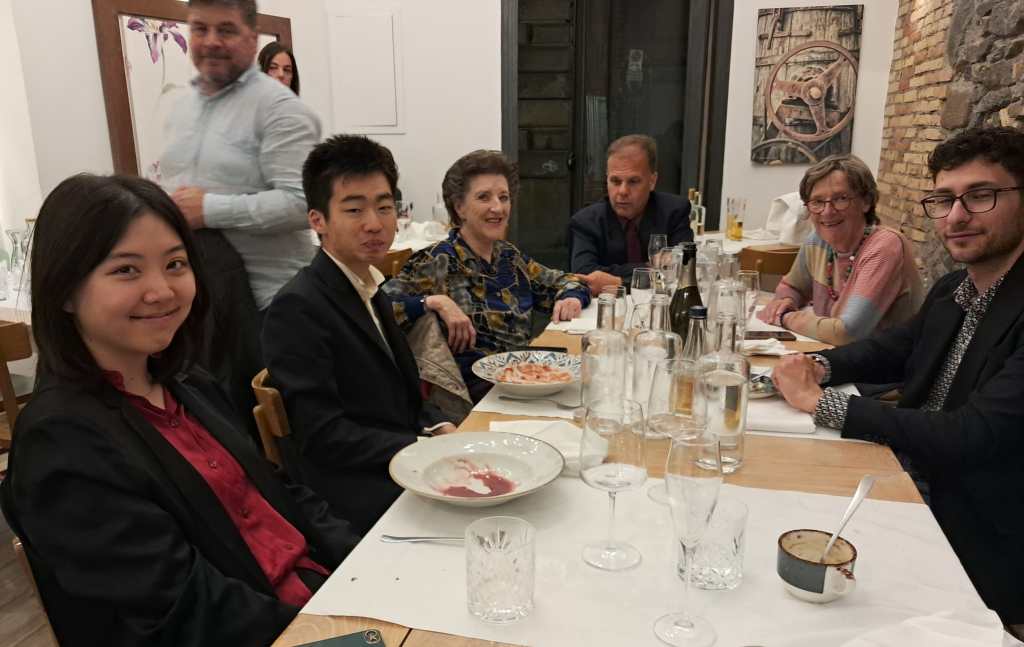
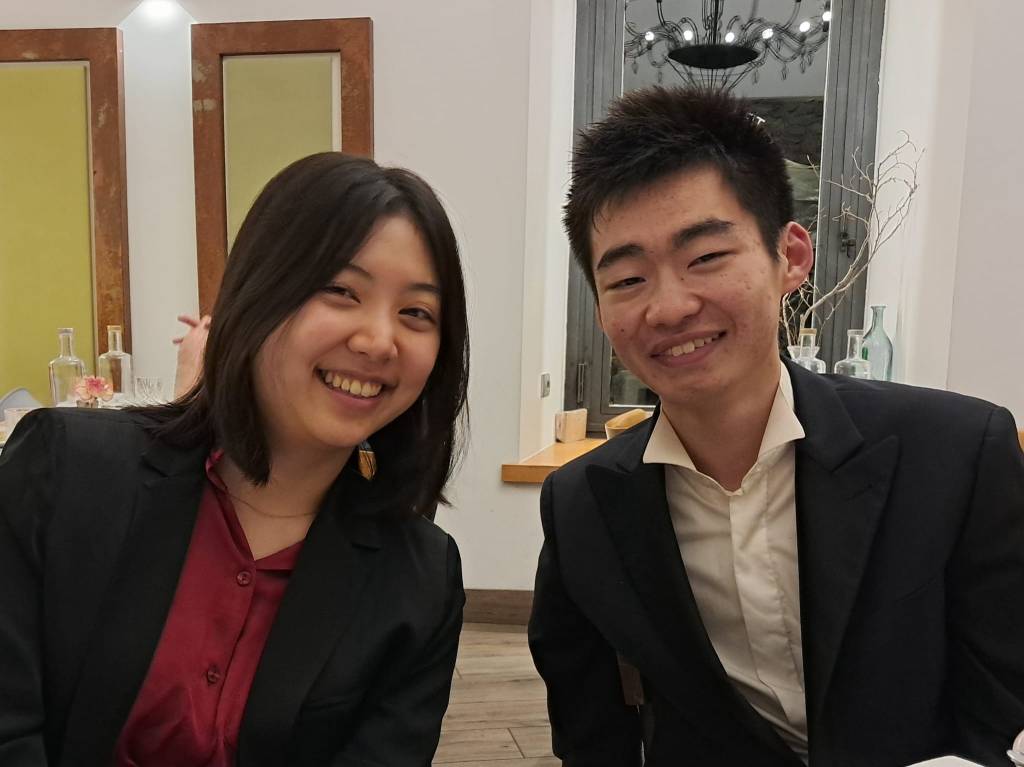
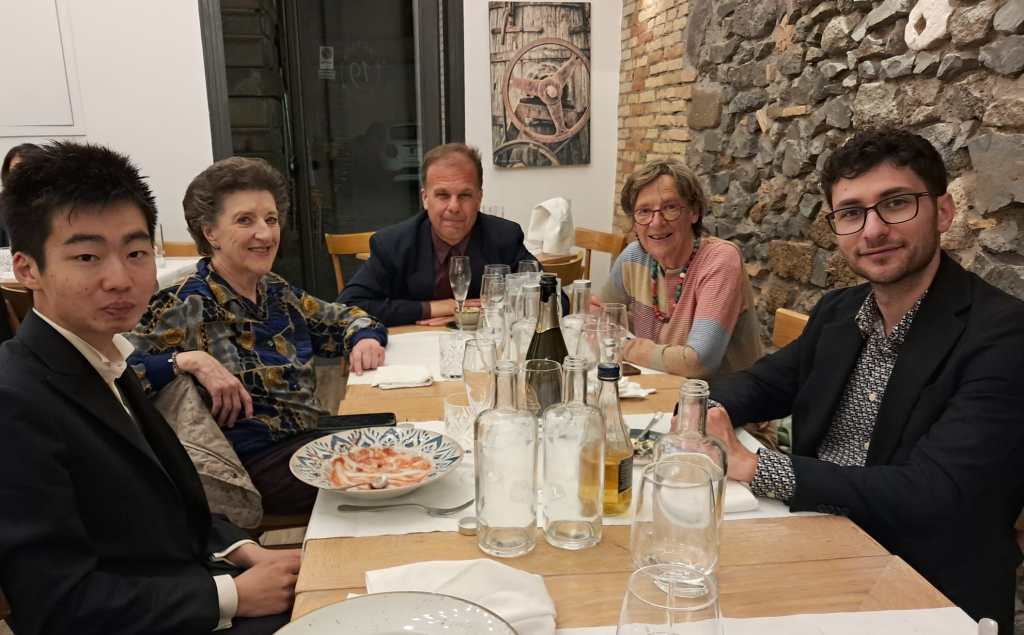
A well earned after concert dinner on the beach at Sig.ra Anna’s La Rondinella with Prof.ssa Lina Tufano in the restaurant, which Susana would often come to in the evening.
Sergei Rachmaninov 1 April  1873 Semyonovo, Staraya Russa.
28 March 1943 (aged 69) Beverly Hills , California, U.S.

Variations on a Theme of Corelli op. 42, is a set of variations for solo piano, written in 1931 by the Russian composer Sergei Rachmaninov . He composed the variations at his holiday home in Switzerland.

The theme is La Folia, which was not in fact composed by Arcangelo Corelli , but was used by him in 1700 as the basis for 23 variations in his Sonata for violin and continuo (violone and/or harpsichord) in D minor, Op. 5, No. 12. La Folia was popular as a basis for variations in Baroque music. Franz Liszt  used the same theme in his Rhapsodie espagnole S. 254 (1863).Rachmaninoff dedicated the work to his friend the violinist Fritz Kreisler with whom he often played in recitals together. He wrote to another friend, the composer Nikolai Medtner, on 21 December 1931:

I’ve played the Variations about fifteen times, but of these fifteen performances only one was good. The others were sloppy. I can’t play my own compositions! And it’s so boring! Not once have I played these all in continuity. I was guided by the coughing of the audience. Whenever the coughing would increase, I would skip the next variation. Whenever there was no coughing, I would play them in proper order. In one concert, I don’t remember where – some small town – the coughing was so violent that I played only ten variations (out of 20). My best record was set in New York, where I played 18 variations. However, I hope that you will play all of them, and won’t “cough”.

Rachmaninoff recorded many of his own works, but this piece wasn’t one of them.

The Theme is followed by 20 variations, an Intermezzo between variations 13 and 14, and a Coda to finish. All variations are in D minor except where noted.

  • Theme. Andante
  • Variation 1. Poco piu mosso
  • Variation 2. L’istesso tempo
  • Variation 3. Tempo di Minuetto
  • Variation 4. Andante
  • Variation 5. Allegro (ma non tanto)
  • Variation 6. L’istesso tempo
  • Variation 7. Vivace
  • Variation 8. Adagio misterioso
  • Variation 9. Un poco piu mosso
  • Variation 10. Allegro scherzando
  • Variation 11. Allegro vivace
  • Variation 12. L’istesso tempo
  • Variation 13. Agitato
  • Intermezzo
  • Variation 14. Andante (come prima) (D♭ major)
  • Variation 15. L’istesso tempo (D♭ major)
  • Variation 16. Allegro vivace
  • Variation 17. Meno mosso
  • Variation 18. Allegro con brio
  • Variation 19. Piu mosso. Agitato
  • Variation 20. Piu mosso
  • Coda. Andante
Ludwig van Beethoven Bonn Baptised. 17 December 1770 26 March 1827 Vienna

One of his greatest and most technically challenging sonatas , the Appassionata was considered by Beethoven to be his most tempestuous piano sonata until the Hammerklavier1803 was the year Beethoven came to grips with the irreversibility of his progressive hearing loss. It was composed during 1804 and 1805, and perhaps 1806, and Beethoven dedicated it to cellist and his friend, Count Franz Brunswick. The first edition was published in February 1807 in Vienna.

Unlike the early Pathétique , the Appassionata was not named during the composer’s lifetime, but was so labelled in 1838 by the publisher of a four-hand  arrangement of the work. Instead, Beethoven’s autograph manuscript of the sonata has “La Pasionata” written on the cover, in Beethoven’s hand.The sonata consists of three movements:

Allegro assai Andante con moto. Allegro ma non troppo – Presto

Beethoven started writing the  Sonata n. 23 in the summer of 1804. After the first two movements were outlined, the composer had difficulty finding the right idea for the final movement. Ferdinand Ries (1784–1838) described the moment of inspiration. The two of them had been walking in the woods when the inspiration hit: We went so far lost that we didn’t get back… to where Beethoven lived, until almost eight o’clock. All the way he hummed, or even howled to himself, up and down, up and down. down without singing any definite notes. When I asked him what this was, he replied: I have thought of a theme for the last movement of the sonata. When we entered the room, he ran to the piano without removing his hat. I took a seat in the corner and he soon forgot about me. He burst in for at least an hour with the new ending to the sonata, which is so beautiful. He finally got up, was surprised to see that I was still there, and told me: I can’t teach you a lesson today. I still have work to do.
During this time, Josephine Deym (née Brunsvik, 1779–1821) resumed lessons with Beethoven after her husband’s death. As the months passed, Beethoven’s earlier attraction to her was rekindled. He wrote the song An die Hoffnung, Op. 32, for her, as well as thirteen cards that became more and more loving. There is evidence that the composer proposed to him. It is believed that she returned his love, but she could not marry below her position for the protection of her four children, for if she did, she would lose both her noble title and her security. After rejecting the composer, she remarried in 1810, forging an unsuccessful union with Baron Christoph Von Stackelberg (1777-1841). The couple separated in 1813. It was once thought that Josephine might be the subject of Beethoven’s famous love letter to the Immortal Beloved, but recent evidence has refuted that possibility.

Friedrich “Fritz” Kreisler (February 2, 1875 – January 29, 1962) was an Austrian-born American violinist  and composer. One of the most noted violin masters of his day, he was known for his sweet tone and expressive phrasing, with marked portamento and rubato. Like many great violinists of his generation, he produced a characteristic sound which was immediately recognizable as his own. Although it derived in many respects from the Franco-Belgian school, his style is nonetheless reminiscent of the gemütlich (cozy) lifestyle of pre-war Vienna.Kreisler wrote a number of pieces for the violin, including solos for encores, such as “Liebesleid” and “Liebesfreud”. Some of Kreisler’s compositions were pastiches ostensibly in the style of other composers. They were originally ascribed to earlier composers, such as Pugnani,Tartini and Vivaldi and then, in 1935, Kreisler revealed that it was he who wrote the pieces. When critics complained, Kreisler replied that they had already deemed the compositions worthy: “The name changes, the value remains”, he said. 

This is my 8th visit to the Walton Foundation bringing wonderful young musicians to breathe the rarified air that was the intent of William and Susana Walton.Their wishes are being respected with dedication and warmth, the founders looking on from their perch where they can view the world inside and out of La Mortella .

Thomas Kelly on Ischia – The Walton Foundation at La Mortella -‘The Devil and the Deep blue Sea’
https://christopheraxworthymusiccommentary.com/2023/10/15/thomas-kelly-on-ischia-the-walton-foundation-at-la-mortella-the-devil-and-the-deep-blue-sea/

Pedro Lopez Salas in Paradise .A standing ovation at La Mortella – The Walton Foundation
https://christopheraxworthymusiccommentary.com/2023/09/05/pedro-lopez-salas-in-paradise-a-standing-ovation-at-la-mortella-the-walton-foundation/

Andrzej Wiercinski at La Mortella Ischia The William Walton Foundation – Refined artistry and musical intelligence in Paradise
https://christopheraxworthymusiccommentary.com/2023/05/11/andrzej-wiercinski-at-la-mortella-ischia-the-william-walton-foundation-refined-artistry-and-musical-intelligence-in-paradise/

Kyle Hutchings A poetic troubadour of the piano reveals the heart of Mozart,Schubert and Franck the Keyboard Trust Concert Tour of Adbaston ,Ischia,Florence and Milan
https://christopheraxworthymusiccommentary.com/2024/09/11/kyle-hutchings-a-poetic-troubadour-of-the-piano-reveals-the-heart-of-mozartschubert-and-franck-the-keyboard-trust-concert-tour-of-adbaston-ischiaflorence-and-milan/

Misha Kaploukhii mastery and clarity in Walton’s paradise where dreams become reality – updated to include the Sheepdrove Competition and graduation recital
https://christopheraxworthymusiccommentary.com/2024/05/05/misha-kaploukhii-mastery-and-clarity-in-waltons-paradise-where-dreams-become-reality/

Magdalene Ho A musical genius in Paradise
https://christopheraxworthymusiccommentary.com/2024/05/12/magdalene-ho-a-musical-genius-in-paradise/

Yuanfan Yang in paradise
https://christopheraxworthymusiccommentary.com/2021/09/06/yuanfan-yang-in-paradise/

Christopher Axworthy Dip.RAM ,ARAM
https://christopheraxworthymusiccommentary.com/2024/03/20/christopher-axworthy-dip-ram-aram/

Kyle Hutchings ‘A Pied Piper casts his spell in Perivale’

https://www.youtube.com/live/wx49-CCldLQ?si=yXIEUWNDtVIGeIts

I have heard Kyle play quite a few times and each time I remain struck by his selfless humility and total concentration as music just pours from his almost stationary fingers without any showmanship or physical exertion. More Eusebius than Florestan, that is for sure, but there is a hypnotic sense of communication to the secret world of sounds that he chooses to share with all those that allow themselves to come under the same spell as him. The Pied Piper of the piano indeed or as I have so often said before the poetic troubadour of the piano.

A choice of programme that immediately shows that we are to hear pure poetry, not rhetorical declamations. I have rarely heard the six consolations by Liszt in the concert hall and was quite surprised to hear the famous D flat in their midst today, as I am so used to hearing it as an encore! Liebestraum and Mendelssohn’s Spring Song used to sit on every piano stand when the piano not the television took pride of place in the living room, but in the concert hall these days is a rarity. I can still remember the first time I heard the hauntingly beautiful César Franck Prelude, Fugue and Variation and not being able to rid it from my head for days afterwards!

Kyle opened too with the E flat Sonata of Haydn but not the flamboyant imperious E flat n. 52 but the little, charmingly simple one, that virtuosi never bother with! An eclectic choice of programme that describes so well the artist before he even steps into the limelight. Entering and leaving the stage like the later Richter who was merely the medium between the music and the listener and not the star of a show. Kyle’s talent is really quite unique in it’s self effacing simplicity and radiant beauty where the music really speaks but never shouts and often whispers but carries a quite compelling message.

There was a beauty and measure to the opening Allegro of the Haydn with a refined sense of style.The Adagio played with poignant and exquisite simplicity where the music just evolved with radiance and beauty. A finale of purity and fluidity, what it lacked in dynamic drive and ebullient ‘joie de vivre’ it gained with it’s compelling simplicity.

Liszt ‘s six consolations were played with a yearning and beauty of simple fluidity. Only in the last one did Kyle play over mezzo forte such was the refined elegance of a dream world of consolation.

A great preparation for Liebestraum n. 3 that seemed rather restrained but was perfectly shaped and even the ornaments were those of a coloratura singer rather than a virtuoso pianist .It was all part of Kyle’s extreme introverted sound world that he inhabits with almost religious restraint and sensitive gentleness.

The Franck Bauer I have heard Kyle play before and the haunting beauty he brings to the opening theme as it reappears at crucial moments is one of wondrous things of this often neglected work. There was some quite considerable playing too but passed without any showmanship as Kyle was only concerned to show us so clearly the architectural line in a work of sometimes knotty respectfulness.

After a moments thought Kyle decided to pull out all the stops and play as an encore a Rachmaninov song of quite considerable robust sounds and passion which came as a surprise after an afternoon of such intimate music making.

Kyle Hutchings is a British pianist who, after just twelve months of self-taught playing, won a scholarship to study in London with internationally acclaimed pianist Richard Meyrick on the Pianoman Scholarships Scheme, supported by Sir and Lady Harvey McGrath. Subsequently, he made his London debut with the Arch Sinfonia, playing Beethoven’s Second Piano Concerto. Critically acclaimed by International Piano Magazine as “a poet of the piano”, he has performed in venues such as London’s prestigious St. John’s Smith Square, Kings Place, St. James’s Piccadilly, St. Mary’s Perivale, London’s BT Tower, The Lansdowne Club in Mayfair, as part of the Blüthner Recital Series, and many others up and down the country. In addition to this, he is in high demand internationally, having received accolades throughout Europe. During his studies at Trinity Laban, supported by a scholarship from Trinity College London, he was a recipient of the Conservatoire’s most important prizes, including the Nancy Thomas Prize for Piano as well as the Director’s Prize for Excellence; he was also nominated for the Conservatoire’s coveted Gold Medal. Kyle is supported by The Keyboard Charitable Trust and has received support from the Robert Turnbull Piano Foundation as well as the Zetland Foundation. He looks forward to giving performances throughout Europe and making his American debut in the 2024–2025 season. 

Alexandre Kantorów in Rome plays Brahms 2 on the road to Utopia,Teodor Currentzis style

Utopia Orchestra
direttore Teodor Currentzis
pianoforte Alexandre Kantorow
soprano Regula Mühlemann

Brahms Concerto per pianoforte n. 2
Mahler Sinfonia n. 4

Utopia conquers Rome with Alexandre Kantorow and Teodor Currentzis. Sparks were flying of Poetry and Passionate involvement as the entire ensemble moved on a great wave of sound in a continuous flowing movement that reminded me of Stokowski and ‘his’ Philadelphia.

In fact the strings were on their feet as they swayed to Brahms’ Viennese waltz tempi in the final movement of the concerto .

For Mahler the seats were put safely away as the strings were all on their feet with only the cellos on a platform that entered this formation like a boat approaching port.

Creating celestial sounds of Utopian beauty and heart rending nostalgia as they swayed in time to the music just like the chorus of Peter Grimes that become one moving, swaying mass of extraordinary emotional power.

Chopin’s words come to mind as he likened rubato to being a tree with the roots firmly planted in the ground but with the branches free to move in the wind .

That inexplicable but universal word ‘soul’ springs to mind where music making on this level can reach places where words could never arrive.

Photo of Alexandre Kantorow in my seat, taken by Francesco Zito ,the distinguished set designer

I am glad that Kantorow took my seat for the Symphony as I had moved to ‘paradise’ to be able to watch as well as listen to the amalgam of sounds that moved as it indeed moved me with sounds being created as the shapes of the music miraculously unfolded in the beauty of Renzo Piano’s violin ‘belly’ auditorium . ( Anyone who has been to the auditorium of the violin museum in Cremona will understand what I mean ).

One miracle followed another.

I have never heard the opening duo between horn and piano at the opening of Brahms 2 recreated with such intimate whispered beauty.

A conductor living every moment as he swayed with the music looking Kantorow in the eyes with glances of burning intensity that could have stopped the world.

A magnificent performance of music making of rare unified intent. A freedom that only comes when the heart beats at the same rate as your companions who are listening to each other with chamber music intensity .

This surely is one of the finest performances that I have heard with playing of the same unforgettable emotions as with Gilels , Rubinstein or Curzon .

But when Kantorow whispered the entry of Agosti’s Firebird even the orchestra listened with baited breath as this young man , like Agosti who lived just around the corner in via Civinini, created sounds in his studio in Siena, that like tonight will never be forgotten .

The piano became a full orchestra, but not of piano bashing insensitivity, but with the colours and sense of balance of a magician of sound where percussiveness just does not exist. Sounds created with the horizontal beauty of poetic genius like a painter with his canvas

Another miracle was created , at the whispered end of Mahler 4, when after seemingly endless ovations and an orchestra that reached out to every corner of the hall in thanksgiving .

Suddenly the plaintive voice of a solo violin was heard intoning a melody that was so familiar and yet so enticing .

‘Morgen’ by Richard Strauss was the miracle that unfolded and just confirmed that we had truly been transported to a Celestial Paradise in this rather bleak ‘Settimana Santa’ in the Eternal City.

Utopia Orchestra

Founder and Music Director of musicAeterna Orchestra and Choir

Chief conductor of the SWR Symphony Orchestra from 2018 to 2024

Teodor Currentzis was born in Greece, where he began studying music. In 1994, he entered St. Petersburg State Conservatory to study under the legendary professor Ilya Musin.

Together with his ensembles, Teodor Currentzis regularly tours Europe and the world with performances in numerous prestigious venues including Vienna Konzerthaus, Berlin Philharmonic, Elbphilharmonie Hamburg, Munich Philharmonic, Philharmonie de Paris, Kölner Philharmonie, Auditorio Nacional, Baden-Baden Festspielhaus, and La Scala. As a stage conductor and musical director, Teodor Currentzis has worked with the leading opera theatres including Opéra de Paris, Bayerische Staatsoper, Opernhaus Zürich, Teatro Real, and the Bolshoi Theatre.

He has also collaborated with the key figures in modern Western theatre: Robert Wilson, Romeo Castellucci, Peter Sellars, Dmitri Tcherniakov, Theodoros Terzopoulos, and others. Teodor Currentzis is a Resident Artist at the Salzburg Festival as well as at the RUHRtriennale Festival, festivals in Lucerne and Aix-en-Provence.

Works by Mozart, Mahler, Beethoven, Tchaikovsky, Rameau, and Stravinsky released by Teodor Currentzis on Sony Classical record label have received numerous international music awards: ECHO Klassik, Edison Klassiek, Japanese Record Academy Award, and BBC Music Magazine’s Opera Award.Teodor Currentzis has received the Toepfer Foundation’s prestigious KAIROS Award. He has also been awarded the Greek Order of the Phoenix and the international Musikfest Bremen

Two stars shining brightly and both performing in the same month in this very hall in Rome …….Bruce Liu and Alexandre Kantorow together recently at the Elbphilharmonie in Hamburg where they were both giving recitals on alternate days.

Gabrielé Sutkuté at St Mary’s Perivale

‘A star shining ever more brightly’

https://www.youtube.com/live/HreBW1vQJZM?si=of2-nnooj05PPLiw

I have heard Gabrielé play this repertoire in recent recitals and have written about her beautiful playing ( included below)

Beethoven full of extraordinary self identification . Sumptuous passionate Brahms. A kaleidoscope of colours in Debussy and an astonishing technical mastery of Ravel’s La Valse to make your hair stand on end. Rameau of crystalline clarity with ornaments like finely wound springs bursting with jewel like beauty. It was nice to be reminded again of such remarkable performances today as she prepares to take Dublin by storm.

Lithuanian pianist Gabrielé Sutkuté has been praised for her “acute musical intuition, impeccable sense of style and genuine charisma”. She has performed in prestigious venues throughout Europe, including Wigmore Hall, Cadogan Hall, Steinway Hall UK, the Musikhuset Aarhus, and Lithuanian National Philharmonic.In addition to being a soloist, Gabriele frequently performs with chamber ensembles and symphony orchestras. This year, she performed Grieg’s Piano Concerto with the Grammy-nominated Kaunas Symphony Orchestra, conducted by Markus Huber. In 2023, Gabrielé performed this Concerto with the YMSO at the Cadogan Hall, conducted by James Blair. She was also invited to play with the renowned Kaunas String Quartet in Lithuania twice.

Gabriele is a winner of twenty international piano competitions where she also received numerous special awards. She was awarded the 1st Prize at the Chappell Medal Piano Competition 2023 and won the 2nd Prize and the Audience Prize at the Birmingham International Piano Competition 2022. She was also the recipient of the prestigious Mills Williams Junior Fellowship 2022/23. For her musical achievements, Gabrielé received Lithuanian Republic Presidents’ certificates of appreciation six times. 

From 2016-22, Gabrielé had been studying with Professor Christopher Elton and received her Bachelor of Music Degree (First Class Honours) and Master of Arts Degree with Distinction from the Royal Academy of Music. In 2023, she graduated from the Artist Diploma course at the Royal College of Music, where she had been studying with Professors Vanessa Latarche and Sofya Gulyak. This year, Gabriele started her Artist Diploma studies with Gabriela Montero at the Academy. 

Simone Tavoni in Perivale ‘A musician of poetic insight and curiosity’

https://www.youtube.com/live/qIid0Zng5Js?si=omC8it82MXqVeasu

A fascinating and varied programme of ‘something old and something new’. The works of Mendelssohn have been unjustly neglected these days and I remember Murray Perahia playing the Sonata op 106 as part of the programme that brought him to victory and world wide recognition in one of the first Leeds Piano Competitions. Rudolf Serkin too used to regularly include the Preludes and Fugues in his programmes. So it was refreshing to be able to hear the Fantasy in F sharp minor that the 25 year old Mendelssohn penned obviously for his own concerts. It is a work of scintillating brilliance contrasted with a mellifluous outpouring of the sentiment of its time and one that made Mendelssohn a favourite at the court of Queen Victoria. A work in one movement, sometimes known as ‘Sonata Écossaise’, but divided into three episodes like a sonata .The central episode was of a simplicity and charm and the last with a dynamic drive and noble brilliance of beauty and exhilaration. Simone played it with delicacy and subtlety with a jeux perlé of sparkling exuberance and ‘joie se vivre’ as he delved deep into the heartstrings for the melancholic outpourings of Mendelssohn’s genial melodic invention.

The transcription by Moszkowski of the Nocturne from Mendelssohn’s Midsummer night’s dream is a rarity in the concert hall where the Rachmaninov scherzo is more often heard. A beautiful work played by Simone with a chiselled beauty of sumptuous richness and poignant meaning.

The Busoni ‘Berceuse’ I have only heard in the concert hall played by Serkin who combined it with the Toccata. It is a deeply brooding piece with the very particular sound world of Busoni seemingly without any tonal centre and leaving us suspended in an air of uncertainty. I did play it once in Empoli, where Busoni was born, as it was particularly requested by the organisers, and it was very interesting after all these years to hear it again played so beautifully. Simone played it with refined beauty and an architectural line that was very impressive.

It was linked with Busoni’s famous reworking of the Bach ‘Chaconne’. Simone began with a good flowing tempo but allowed the tempo to fluctuate too often and the chords and octaves were played rather without the weight necessary for such a monumental work.Substituting monumental for brilliance in a rather romantic revisitation that in many ways was very beautiful but lacked the overall architectural shape of one of the most important and ingenious works ever written by J.S. Bach.

Rachmaninov’s beautiful D major prelude op 23 was coupled with the monumental Second Sonata in B flat minor op 36.The world of Rachmaninov suited Simone’s sumptuous sound world and romantic temperament.The prelude was enriched with the sonorous accompaniment on which the melody emerged with strength and beauty in a performance of flowing simplicity.

There was passion and a kaleidoscope of colour in the sonata with an architectural shape that linked all three movements into one unified whole of radiant beauty. There were sumptuous rich sounds with an outpouring of notes of exhilaration and excitement. Simone brought his musicianship to bear in a performance that if it did not have the reserves of more animalistic virtuosi it did have the aristocratic musicianship of intelligence and passionate involvement.

Simone Alessandro Tavoni has given recitals internationally across Europe and U.S in venue such the Purcell room, Wigmore Hall, Royal Festival Hall, St Martin in the Fields St.John’s Smith Square, Steinway Hall, St.Mary Perivale in London, Liszt Museum in Budapest, Palau de la Musica Catalana in Barcelona, the Aarhus concert hall, The Tallin Philarmonia ( Estonia ) and the Florence Conservatory hall. In 2019, Simone has been selected as a Parklane Group Artist, as Keyboard Charitable Trust Artist and received the Luciano and Giancarla Berti full-ride scholarship to attend the Aspen Music Festival and School studying with renowned professor Fabio Bidini.  Graduated at Royal College of Music with professor Andrew Ball, and Simone has recently attained an Artist Diploma at Trinity Laban Conservatoire with professors Deniz Gelenbe and Peter Tuite. He began his musical education in Italy with professor Marco Podesta’ and pursue his studies at the Liszt Academy of Budapest with Dr.Kecskes Balazs and in Germany at the Hochschule fur Musik un Darstellende of Stuttgart with Dr,Peter Nagy. In 2016 was selected for the BBC pathway scheme and he is a fellow at the Aspen Music Festival and School. He is generously assisted by HSH Dr.Donatus Prince of Hohenzollern.


Simone Tavoni triumphs on the Italian tour for the Keyboard Trust – part 1 Florence – part 2 Venice and Padua
https://christopheraxworthymusiccommentary.com/2022/01/27/simone-tavoni-triumphs-on-the-italian-tour-for-the-keyboard-trust-part-1-florence/

Simone Tavoni at Livorno Classica flying high with poetic reasoning and with Dinosaurs overhead
https://christopheraxworthymusiccommentary.com/2023/03/24/simone-tavoni-at-livorno-classica-flying-high-with-dinosaurs-with-poetic-reasoning/

Homage to Guido Agosti Gala piano Series in Forli 2025

Artistic director Nicola Giuliano Tuccia writes :

‘The Guido Agosti Piano Series was born from the desire to honour the piano as a poetic, narrative, and profoundly human instrument in collaboration with the Gala Music Festival, chairman Diego Melfi. This concert series brought exceptional performers to the stage of Sala Sangiorgi in Forlì, in an intimate atmosphere full of charm.


Promoted by the association Forlì Cultura – chaired by Nicolò Giuliano Tuccia – and enriched by the vision of Vice President Chiara Bolognesi, who brought her deep sensitivity to education and the arts, this project shines with passion, youth, and musical poetry.

Each concert has been a small artistic miracle, awakening deep emotions in the hearts of the audience.

Giuseppe Lo Cicero enchanted with a brilliant and varied programme: Chopin’s Polonaise brillante with bold energy, the jazzy elegance of Gershwin, the painted delicacy of Debussy’s Ballade, and the dreamy elegance of Ravel’s Valses nobles et sentimentales. A recital that merged virtuosity and charm with natural grace.

Andrei Makarov won the hearts of the audience with his profound and authentic interpretation of Mozart and Chopin. The clarity of his touch and the maturity of his phrasing turned apparent simplicity into pure poetry. A noble pianist with a direct connection to the soul.

Gianluca Faragli tackled a challenging and majestic programme: Ries, Beethoven Op. 22, Chopin’s Scherzo No.1, and the monumental Chaconne by Bach-Busoni. A performance of great dramatic depth and architectural vision, marked by expressive power and commanding presence.

Ekaterina Chebotareva delivered a whirlwind of color and emotion. The fiery spirit of Stravinsky’s Firebird in Agosti’s iconic transcription, the depth of Rachmaninov’s Sonata No.2, the dreamy Estampes by Debussy, and the noble elegance of Beethoven’s Sonata Op.90. An unforgettable evening of passion and sound.

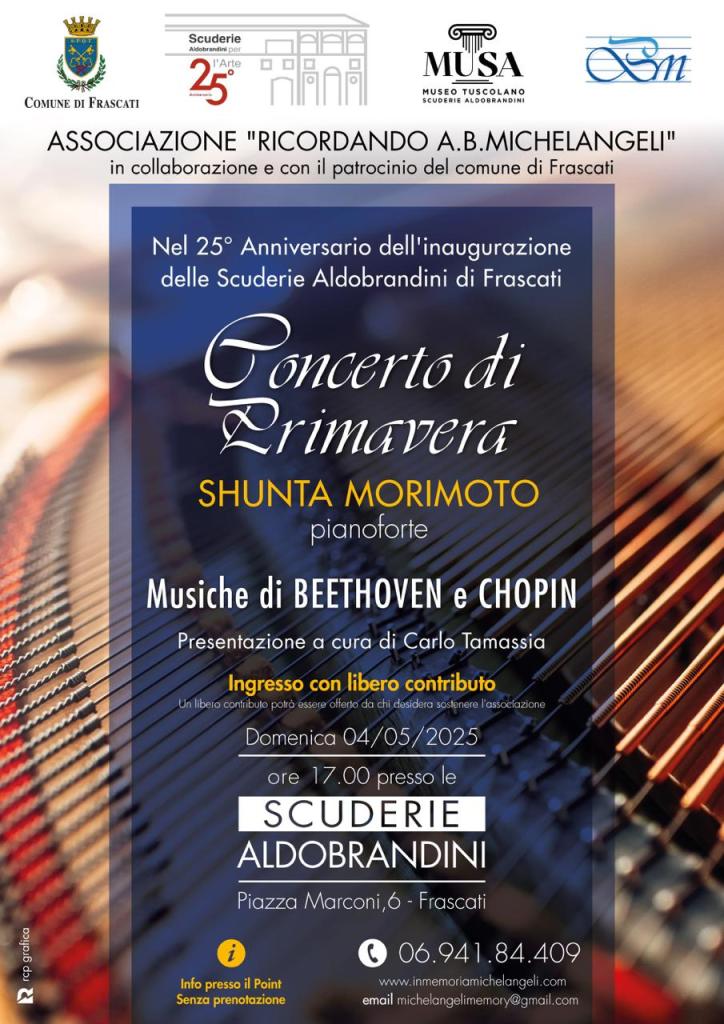
Chiara Bolognesi, Nicolò Giuliano Tuccia e Shunta Morimoto

Shunta Morimoto gave us one of the most captivating performances of the series with a high-level program: Bach’s Partita No.4, Schumann’s Symphonic Etudes, and Chopin’s Polonaise-Fantaisie. Impeccable technique, tonal imagination, and a rare narrative sense enchanted the entire audience.

This a link to a newly elaborated audio by Andrea Fasano from the video of op 111 from this concert https://drive.google.com/file/d/1zdb2qjgWnA3HyPph_6FxnxjLHy7APc_f/view?usp=drive_web

with Janina Fialkowska on her debut in Rome after her top prize in the first Rubinstein Competition in Tel Aviv

Guido Agosti (11 August 1901 – 2 June 1989) was an Italian pianist and renowned for his yearly summer course in Siena frequented by all the major musicians of the age.It was on the express wish of Alfredo Casella that Agosti took over his class which he did for the next thirty years.Sounds heard in his studio have never been forgotten.Agosti was born in Forli 1901. He studied piano with Ferruccio Busoni Bruno Mugellini and Filippo Ivaldi and earning his diploma at age 13. He studied counterpoint under Benvenuti and literature at Bologna University. He commenced his professional career as a pianist in 1921. Although he never entirely abandoned concert-giving, nerves made it difficult for him to appear on stage,and he concentrated on teaching. He taught piano at the Venice Conservatoire and at the Santa Cecilia Academy in Rome.In 1947 he was appointed Professor of piano at the Accademia Chigiana Siena .He also taught at Weimar and the Sibelius Academy in Helsinki.

In the Ghione Theatre in the early 80’s with Ileana Ghione,’Connie’Channon Douglass Marinsanti ,Lydia Agosti ,Cesare Marinsanti,Guido Agosti. A closely knit family 

His notable students include Maria Tipo,Yonty Solomon, Leslie Howard,Hamish Milne,Martin Jones,Ian Munro,Dag Achatz,Raymond Lewenthal,Ursula Oppens,Kun- Woo Paik,Peter Bithell. He made very few recordings; there is a recording of op 110 from the Ghione theatre in Rome together with his recording on his 80th birthday concert in Siena of Debussy preludes .

2024 Season

Nina Tichman Bach’s Goldberg alive and well and safely grazing in Palermo

I was sorry to miss Nina Tichman’s concert in Trapani ,the wonders of which were still echoing around Trapani on my arrival for the 3rd International Piano Competition Domenico Scarlatti .

Luckily Vincenzo Marrone had thought to share such wonders, after the competition final, with the magnificent Politeama Garibaldi in nearby Palermo, thanks to Donatella Sollima, the artistic director of Palermo’s Associazione Siciliana Amici della musica and a fellow jury member of his competition .

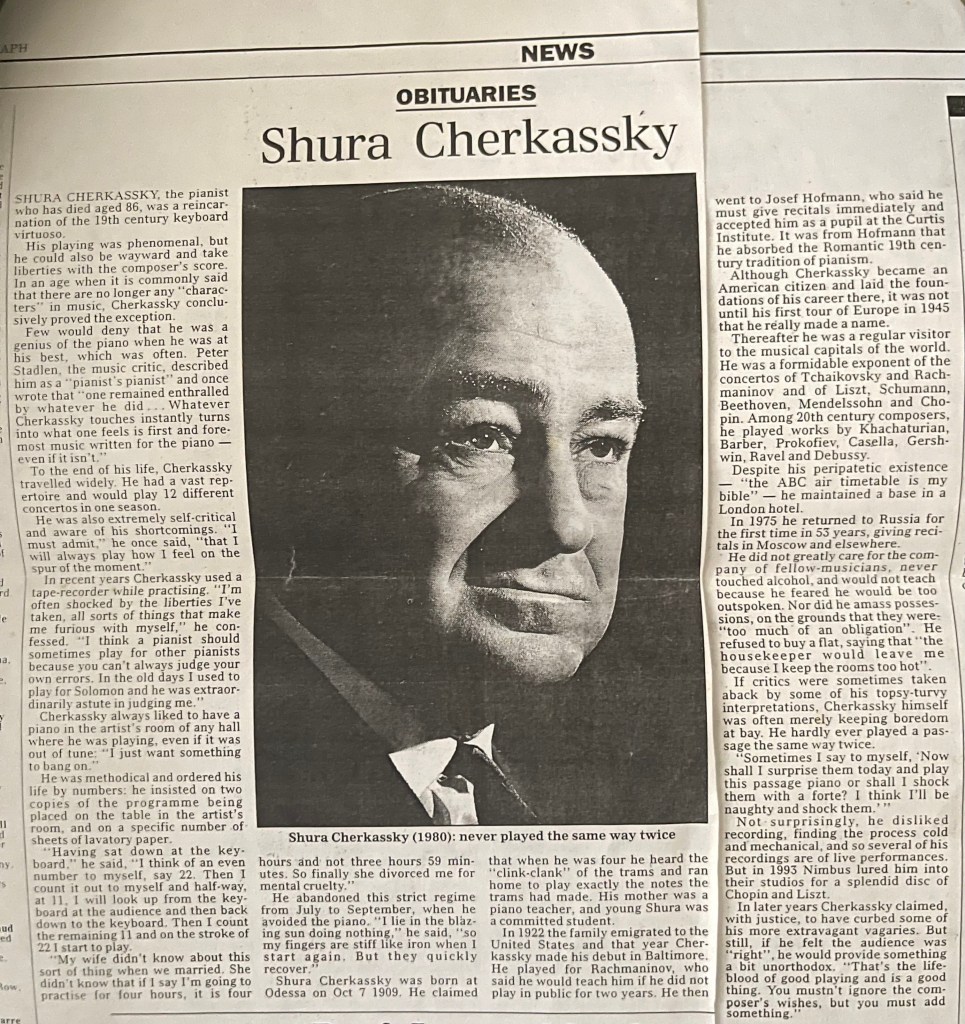
A hall, she tells me, that her father used to bring her as a little girl to listen to artists ,who have now passed into legend, such as Rubinstein ,Kempff,Cherkassky and all the greatest musicians of the age .

A miniature Royal Albert Hall, in which one can feel the presence of it’s past glorious history.

Not only past because Donatella has continued the great tradition and this season the hall has resounded to the magic of Arcadi Volodos, Misha Maisky, Martha Argerich and now to close the season Nina Tichman .

What greater gift could there be for a city steeped in history than a performance of the greatest variations ever written for the keyboard : Bach’s mighty ‘Goldberg Variations’.

Eighty five minutes of sublime music, all created on the simplest of ground basses that Nina as an ‘encore’ revealed in all its naked simplicity. This was after listening with baited breath to the beauty of her performance, played without the score ,and with the subtle pianistic perfection of one of the greatest exponents of the almost forgotten Matthay School of extreme sensibility of touch.

The greatest exponents for Uncle Tobbs ( as he was affectionately known) were another two remarkable women pianists : Dame Myra Hess and Dame Moura Lympany.

Listening to such mastery and dedicated musicianship today, Nina Tichman joins their ranks as an equally illustrious exponent of a school where above all the piano is allowed to sing with the same subtlety as the human voice.

A performance of unusual beauty where Nina allowed the variations to unfold with a refined palette of sounds of extraordinary noble expressiveness. Not projecting the music out to us in this vast hall but miraculously drawing us in to share in the wonders that were being created before our very eyes. Sharing these ingenuous variations with a beauty bathed in intelligence and refined good taste as they were never given a hard ungrateful edge. An ornamentation that was so natural that it could almost pass unnoticed such was it part of the world that Nina inhabited today.Even the 16th variation which heralds the half way mark was played with the elegance of a French overture of it’s time. The twenty ninth too usually played as a gymnastic exercise, where many add deep bass notes, but that Nina allowed to speak for itself as being the culmination of all that had gone before. Busoni of course needed to finish with the glory to God on High (and himself) and his edition from the 16th onwards reads like Liszt studies and a Tchaikovskian 1812 finish in glory. Nina played it with the respectful beauty and nobility of the Genius of Köthen .The ‘Quodlibet ‘ where Bach combines two popular tunes unfolded with unusually refined colouring. Out of the absolute silence after the final chord of the Quodlibet the aria was heard wafting into the refined air of the radiance and beauty that had been created by Nina in an hour an half of concentrated mastery.

Evolving , on Bach’s genial ground bass, with a naturalness that would have had Count Kesserling counting sheep that had at last found safety grazing in the bedroom of an insomniac !

greeted at the stage door by friends ,admirers and colleagues

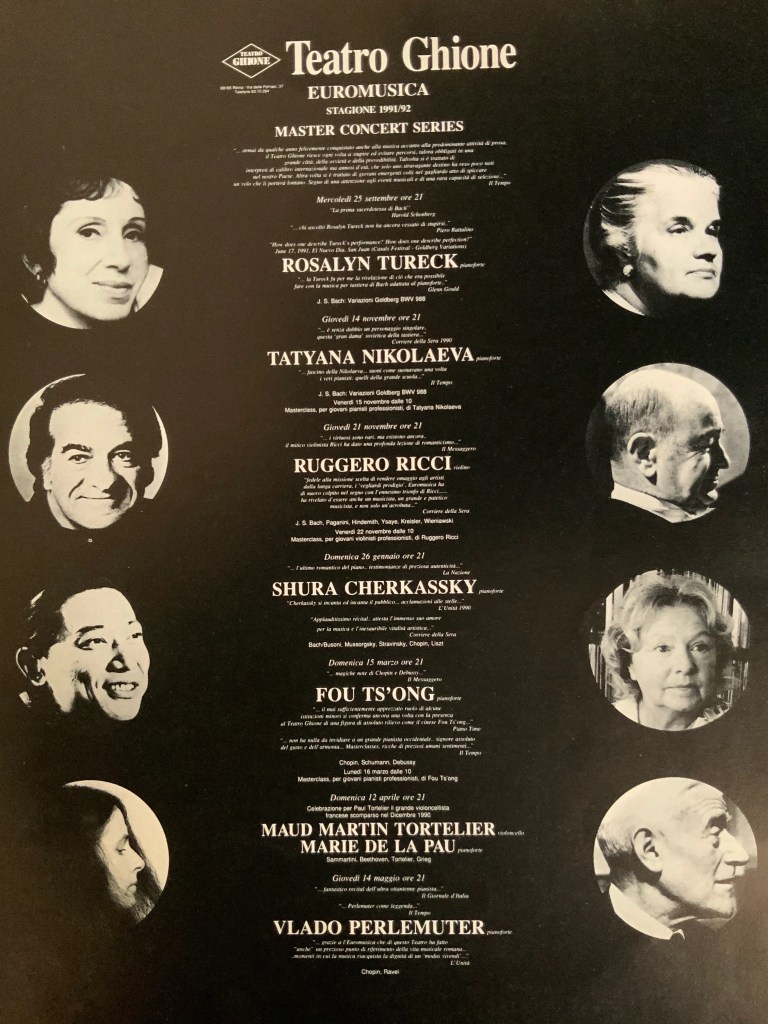
It was in 1991 that my great adventure with the Goldbergs began when I managed to persuade the High Priestess of Bach to leave the archives in Oxford and return to the concert hall where she truly belonged. I also managed to persuade Tatyana Nikolaeva to play the same variations a month later and was much criticised for not having more varied programmes! Rosalyn’s was a monumental Bach carved in stone whereas Nikolaeva was of the song and dance of simple people. I include below Rosalyn Tureck’s own fascinating programme notes for her double performance of the Goldbergs in London in 1972, that gave me the courage to ask her to perform again in public.

“Awesome” and “thrilling” ** are two of the adjectives used to describe Nina Tichman´s performances of Claude Debussy. In New York City, Frankfurt and other cities in Europe and the United States she held audiences spellbound with her traversal of the complete works in three evenings and her CDs with this repertoire have been called “because of her exquisite touch – the most beautiful recording of the complete works”.***

Since her debut at the age of seventeen playing Beethoven´s „Emperor Concerto“ Nina Tichman has appeared in the musical centers of the world such as New York´s Carnegie Hall, the Philharmonie in Cologne, the Konzerthaus in Berlin and the Festspielhaus in Salzburg, to name only a few. Acclaimed as “one of the leading pianists of her generation”****, she is at home in repertoire ranging from Frescobaldi to composers writing today, many of whom have entrusted her with world premieres of their compositions. Her discography includes music by Bartók, Beethoven, Copland (complete), Chopin, Corigliano, Debussy, Fauré, V.D. Kirchner, Krenek, Mendelssohn, Penderecki, und Reger.  Her recording of the Complete Piano Works was hailed as a milestone in Debussy interpretation.

American born, Nina Tichman has been based in Europe since winning the prestigious “Busoni” Competition. Other awards include the Mendelssohn Prize of Berlin, First Prize of the Casagrande Competition in Italy and the Prize of the Organization of American States. She has appeared as soloist with orchestra and in recital in the major music centers of the world and has been featured in radio and television portraits on five continents. Her diverse activities as recitalist, chamber musician and pedagogue have led to invitations to perform and teach in festivals such as Marlboro, Tanglewood, Music from Salem, Styriarte, International Musicians Seminar at Prussia Cove, Frankfurt Feste, Rheingau Musikfestival, Beethoven Festival Bonn.

Nina Tichman is a graduate of The Juilliard School, where she was awarded the Eduard-Steuermann-Prize for outstanding musical achievement. In 1993 she was appointed Professor of Piano at the Hochschule für Musik in Cologne and she has led master classes at Amherst College, Princeton University, IKIF in New York, the Europäischen Akademie für Musik und Darstellende Kunst in Montepulciano, Holland Music Sessions and at the “Mozarteum” in Salzburg

Concert tours in the last years have taken her to China, Japan, Southeast Asia, Scandinavia, Greece, Turkey, Israel, New Zealand, Mexico, the United States as well as almost all European countries.

Highlights of the 2019/20 season include performances of the last three Beethoven Piano Sonatas as well as the continuation of a cycle of the complete Schubert Sonatas.

* New York Times ** Chelseas News *** Darmstädter Echo **** Neue Musik Zeitung *****Saale-Zeitung

Tobias Augustus Matthay (19 February 1858 – 15 December 1945) was an English pianist , teacher, and composer.

Matthay was born in Clapham ,Surrey, in 1858 to parents who had come from northern Germany and eventually became naturalised British subjects. He entered London’s Royal Academy of Music  in 1871 and eight months later he received the first scholarship given to honour the knighthood of its principal, Sir William Sterndale Bennett .At the academy, Matthay studied composition under Sir William Sterndale Bennett and Arthur Sullivan , and piano with William Dorrell and Walter Macfarren . He served as a sub-professor there from 1876 to 1880, and became an assistant professor of pianoforte in 1880, before being promoted to professor in 1884. With Frederick Corder and John Blackwood Mc Ewen, he co-founded the Society of British Composers  in 1905. Matthay remained at the RAM until 1925, when he was forced to resign because McEwen—his former student who was then the academy’s Principal—publicly attacked his teaching.

In 1903, after over a decade of observation, analysis, and experimentation, he published The Act of Touch, an encyclopedic volume that influenced piano pedagogy throughout the English-speaking world. So many students were soon in quest of his insights that two years later he opened the Tobias Matthay Pianoforte School, first in Oxford Street, then in 1909 relocating to Wimpole Street, where it remained for the next 30 years. The teachers there included his sister Dora. He soon became known for his teaching principles that stressed proper piano touch and analysis of arm movements. He wrote several additional books on piano technique that brought him international recognition, and in 1912 he published Musical Interpretation, a widely read book that analyzed the principles of effective musicianship. However, whilst acknowledging its importance, a later interpreter of Matthay’s writing criticized its lack of clarity:

‘The interminable repetitions, recapitulations, summaries, footnotes, all with a change of emphasis and as often as not with new names for the same thing, led enquirers into a maze from which only the clearest brain equipped with a dogged perseverance, could extricate itself.’

Many of his pupils went on to define a school of 20th century English pianism, including Arthur Alexander ,York Bowen,Hild Dederich,Norman Fraser,Myra Hess,  Denise Lasimonne, Clifford Curzon,Harold Craxton,Moura Lympany,Gertrude Peppercorn,Ruth Roberts,Irene Scharrer, Lilias Mackinnon, Guy Jonson, Vivian Langrish, Hope Squire,Eileen Joyce, jazz “syncopated” pianist Raie Da Costa, Harriet Cohen,Dorothy Howell,, and the duo Bartlett and Robertson . He taught many Americans, including Ray Lev, Eunice Norton , and Lytle Powell, and he was also the teacher of Canadian pianist Harry Dean, English composer Arnold Bax and English conductor Ernest Read. In 1920, Hilda Hester Collens, who had studied under Matthay from 1910 to 1914, founded a music college in Manchester  named the Matthay School of Music in his honour. It was later renamed the Northern School of Music , a predecessor institution of the Royal Northern College of Music.

His wife Jessie née Kennedy, whom he married in 1893, wrote a biography of her husband, published posthumously in 1945.

This work has been selected by scholars as being culturally important and is part of the knowledge base of civilization as we know it.
This work is in the public domain in the United States of America, and possibly other nations. Within the United States, you may freely copy and distribute this work, as no entity (individual or corporate) has a copyright on the body of the work.
Scholars believe, and we concur, that this work is important enough to be preserved, reproduced, and made generally available to the public. To ensure a quality reading experience, this work has been proofread and republished using a format that seamlessly blends the original graphical elements with text in an easy-to-read typeface.
We appreciate your support of the preservation process, and thank you for being an important part of keeping this knowledge alive and relevant.
https://youtu.be/pye4AUPFtJE?si=vS3fp4FCpbp5_TtH

Born in 1914, Dorothy Taubman was the founder of the Taubman Institute of New York and developed what became known as the internationally famous “Taubman Approach” to piano playing.

“Playing the piano should feel delicious”, said Taubman whose technique analyses the motions needed for virtuosity and musical expression. In its early days of development it built a reputation through its rate of success in curing playing injuries. It provoked controversy, however, by questioning the physiological soundness of some traditional methods of piano teaching.

“The body is capable of fulfilling all pianistic demands without a violation of its nature if the most efficient ways are used; pain,insecurity, and lack of technical control are symptoms of incoordination rather than a lack of practice, intelligence, or talent”, said Taubman whose methods were always founded on a fundamentally naturalistic approach.

Besides offering a rational, diagnostic system aimed at solving the musical and physiological problems of piano interpretation, the techniques Taubman pioneered allowed her to cure repetitive stress injuries related to piano playing, and generally to rehabilitate injured pianists. Her techniques have been successfully adapted to help with RSI sufferers in general, especially when caused by computer keyboards.

To quote pianist and teacher Thomas Mark: “The application of the Taubman movements to specific pianistic situations, such as leaps, octaves, arpeggios etc, is often brilliantly effective. Almost all pianists, even highly accomplished ones, can develop more perfect use of fingers hands and forearm, and consequently almost all pianists, injured or not, who have studied the Taubman Approach have improved, even transformed, their playing.”

Among her most successful work, Taubman was recognised for her work with Leon Fleisher who was forced to play with only one hand for many years due to a painful medical condition.

For many years, Taubman directed the Dorothy Taubman School of Piano at Amherst College in Massachusetts and was a former professor at the Aaron Copland School of Music and at Temple University. She famously said that “blaming the instrument is like saying that writer’s cramp is caused by the pencil”.

Taubman was born in the East New York section of Brooklyn on August 16, 1917. Her parents, Benjamin and Bertha, were Jewish immigrants from Russia; her father, a businessman, committed suicide after the stock market crashed in 1929. Taubman never graduated from college, but took courses at Juilliard and Columbia University  and studied with the renowned pianist Rosalyn Tureck for a year. In her 20s, her son said, she decided her calling was to be a teacher, not a concert pianist.

Taubman directed the Dorothy Taubman Institute of Piano at Amherst College  in Massachusetts from 1976 to 2002. She was formerly a professor at Temple University  and at the Aaron Copland School of Music in Queens College, and was featured in numerous articles and interviewed in the Boston Globe, The New York Times, and the Los Angeles Times; and the Piano QuarterlyPiano and Keyboard, and Clavier magazines. Taubman was noted for her work with injured musicians. Her students include the American pianist Leon Fleisher,Edna Golandsky and Yoheved Kaplinsky..

Besides offering a diagnostic system aimed at solving the musical and physiological problems of piano interpretation, the techniques Taubman pioneered have been used therapeutically to treat repetitive strain injuries  related to piano playing, and generally to rehabilitate injured pianists. Her techniques have been adapted to computer keyboard typing.

In 1938 she married Harry Taubman, a businessman in the men’s clothing industry and the younger brother of Howard Taubman, chief music and theater critic in the 1950s and 1960s for The New York Times. With Harry, she had one son, who is dean of the school of medicine and dentistry at the University of Rochester .She died from pneumonia on April 3, 2013 in Brooklyn, New York, at the age of 95.

Leslie Howard bringing the concealed mastery of pianistic genius to Trapani

Leslie Howard triumphs in Trapani with the concealed mastery of a pianistic genius.

From Anton Rubinstein to Jerome Kern all wrapped up in an English Country Garden.

An eclectic programme from the ‘Professor’ of the piano who looks deeply into the archives and finds hidden treasures that he has spent a lifetime bringing into the concert hall.

Franz Liszt :Harmonies poétiques et religieuses,S 154 and Variations on theme by J.S. Bach :’Weinen,Klagen,Sorgen,Zagen’,S 180 Anton Rubinstein : Sonata n. 1 in E minor op 12

Chairman of the jury of many important International competitions in particular that dedicated to Liszt in Utrecht, where he sets an unknown work by Liszt as the obligatory piece for all those that dare follow in Liszt’s footsteps.

I first encountered Leslie in the hallowed study of Guido Agosti in Siena where all serious musicians would gather each summer to be inspired by one of the last pupils of Busoni.

A young Australian who Agosti immediately recognised as a future heir to his selfless dedication as a servant of the composers that he was entrusted to decifer. Agosti acting merely as a go between of the printed page and the sounds that they could make in dedicated hands. Lydia, Agosti’ s wife, who propped up the maestro and brought a refreshing vivacity and mondanity to such a dedicated man , she too adored this lithe Australian with golden locks and blue eyes !

It was just this dedication of Agosti that we were witness to today, with a programme of works by Liszt and his pupil Rubinstein that were new for even Oxana Yablonskaya. In fact she leant over to me after the Rubinstein Sonata to say there was nothing much Russian about that!

Each of the many encores had us ‘pianists’ asking each other what piece it was ! A gently murmured hidden waltz we managed to decifer as late Liszt with the final unresolved chords pointing to the future that Liszt could already forsee.

Leslie with his genial nonchalance apologised for not announcing that it was Liszt’s ‘Valse Oubliee’ n 4 ( unjustly forgotten as Leslie demonstrated ) and that he would now play the ‘Valse Caprice’ by Anton Rubinstein.

This was Rubinstein the great pianist who could, like Leslie Howard , let his hair down and put his frightening intellect to one side and tease and beguile us just as the mindless jugglers of notes would do in the Golden era when pianists were first and foremost entertainers.

A performance full of the charm and wizardry of another age .

with Nina Tichman

And from now on Leslie the sage, became Leslie the entertainer. Dedicating an improvised fantasy on a much loved song from the shows of Jerome Kern, to his illustrious colleague, Nina Tichman, whose own performance of Bach’s ‘Goldberg Variations’ a few days ago is still resounding around this hall. A performance that thankfully will be repeated on Sunday in Palermo for the Amici della Musica.

Leslie played this well know ‘tune’ with the style and insinuating abandon of a showman in a refined piano bar.

By now Leslie had us all in his hands and as a farewell he took us down an ‘English Country Garden’ path thanks to his genial compatriot Percy Grainger. Played not only with a verve that is part of his antipodean heritage, but with an incredible control of sound that allowed him to produce an echo effect of whispered asides, with a mastery that I have rarely heard in the concert hall before.

Party time was guaranteed as most of the public came on stage to thank a Maestro of Maestros who had come in their midst of their beautiful city to ‘bewitch, bother and bewilder’ them, as Liszt himself would have done in the Parisian salons of the last century.

Leslie being thanked by Vincenzo Marrone d’Alberti who also publicly thanked the entire jury

All thanks of course to Vincenzo Marrone d’Alberti and his dedicated team who have had the courage and foresight to bring music to their much loved city. Now in it’s third edition the ‘International Piano Competition Domenico Scarlatti’ has become more than a reality, as it goes from strength to strength celebrating by chance today the artistic director’s second quadrato!

What a way to celebrate ….we could have danced all night …..as some of us surely did.

Oxana Yablonskaya in party mood

The programme of course will have me studying the archives before I dare comment on such seemingly authoritative performances, but I can comment on the mastery and kaleidoscope of sounds that Leslie demonstrated. An architectural shape to works that took form before our very eyes with the refreshing discovery of works we had rarely if ever heard before.

I am reminded of Rubinstein’s last concert when almost totally blind, in the green room afterwards, he declared that he may be blind, but not too blind to know a beautiful lady when she stood in front of him. Lauren Bacall was charmed by this ever gallant Prince of Pianists.

Just to say that I may not know the scores but I can appreciate the transcendental piano playing that we heard tonight.

Like Rubinstein ,hardly moving , but listening with a concentration as Leslie sent messages from his mind and soul to his fingers that were the magnificent instrumentalists of a full symphony orchestra.

A technical preparation of the old school where the arch of the hand just supports fingers of steely independence, arms resting as if seated in their favourite chair .

It was in fact Agosti who would rest his hands on mine to show me what real weight means. To lean into the keys never leaving them with verticality but rather horizontally squeezing each key. Agosti would exhort his students ‘troppo forte , troppo forte ‘. He could not abide banging or striking the keys with showmanly exuberance. Fingers of steel but wrists of rubber. This is what we were witness to, today, and it was a great lesson to us all to be reminded of the sublime beauty that can be coaxed out of a black box of hammers and strings in the hands of a true magician .

It was Anton Rubinstein ,too, who exclaimed that the pedal was the ‘soul’ of the piano, and as Leslie showed us not a cover up for the misunderstood technical showmanship that we hear all too often these days.

Jury members and valuable members of the team after in an after concert photo shoot

What better example could there be for the young aspiring pianists gathered this week in this jewel that is the magic city of Trapani

Professor Howard will now give us his lesson in words:

Lamartine’s volume of poetry entitled Harmonies poétiques et religieuses inspired fourteen piano pieces by Liszt. The early piece of that title, although later repudiated by Liszt as ‘tronquée et fautive’, remains an astonishingly avant-garde work from a young composer known for competent juvenilia and several brilliant fantasies. Dedicated to Lamartine, the piece begins with no time- or key-signature, marked ‘senza tempo’, to be played with ennui, and develops into a musically wild elaboration of the two ideas heard at the outset. Rhythmic complications prompted Liszt to write in counting numbers within the bars which are basically in 7/4, and there are later regular subdivisions of five notes to the beat. The final section seems more conventional in that a tonality is finally reached, along with time- and key-signatures, but all is dispelled by the desperate outburst at the end. The trailing away into unresolving silence is so characteristic of Liszt’s last years that it is all the more astonishing to find it in a work composed when he was twenty-two.

from notes by Leslie Howard © 1990

‘Howard always seems to know where the music is going, and why’ (Gramophone)

For some reason the New Liszt Edition is issuing the two ‘Weinen, Klagen’ pieces amongst the volumes of transcriptions and fantasies on other composers’ materials, but that has no more sense than to regard, say, Brahms’s ‘Handel’ Variations in a similar way, for these are certainly original compositions in every sense of the word. Both works bear a dedication to Anton Rubinstein, and both are based on the same wonderful theme. The Prelude of 1859 is a dignified and restrained piece with just one dramatic outburst, all within the framework of a passacaglia which unfolds 25 variations on the motif. The Variations are not simply an expansion of the earlier piece, although there are a few fragments in common. The work dates from 1862 and was motivated by the death of Liszt’s elder daughter, Blandine. A fierce introduction leads to the theme and 43 variations, followed by a chromatic development in the shape of a recitative, and then a group of freer, faster variations, culminating with the choral ‘Was Gott tut, das ist wohlgetan’ (which also ends Bach’s cantata) and a brief coda in which the two themes are juxtaposed before F minor finally gives way to an unequivocally optimistic F major.

from notes by Leslie Howard © 1989

The first important fact about this work is simply that it is probably the earliest piano sonata to be composed by a Russian. It dates from around 1847/8 and, as the product of a teenager who must have been quite a pianist already, it is beyond criticism. It has a youthful naivety about it, with echoes of Mendelssohn as well as a certain brashness which Tchaikovsky was to show in his early keyboard works. Typically, Rubinstein uses no Russian folk material, but some pages of this sonata betray an obviously Russian origin. The first movement, Allegro appassionato, is in a brisk 2/4 and the opening builds through a series of grand gestures into a strong repetition of the first theme in triplet octaves. The tremolos and arpeggios which bind the movement together lead to the second subject and testify to Rubinstein’s easy capacity for fluent melody. The development moves to the remote key of F sharp major where the constantly moving accompaniment stops—as it will again when the second subject returns in the recapitulation. The movement ends quietly and seriously after a further reference to the opening phrase.

The Andante largamente is a simple tripartite conception which launches immediately into its long principal melody in C major. The placid mood becomes gradually ruffled during the central section in A minor, where dotted rhythms are contrasted with pulsating triplets. A delicate modulation (German augmented sixth to tonic 6/4, for those who care about such things) ushers in the principal theme over a florid accompaniment, and the last few bars recall the middle section.

The scherzo, Moderato, is a perky piece in A minor with a tastefully ornamented melody which makes much of the alternative possibilities between G sharp and G natural. The second section, which is repeated, spends some time in C major before returning to A minor and a fortissimo change of gear from 3/8 to four bars of 2/8—something which would have delighted Schumann. The little trio in A major subjects its winsome tune to some quite harmless contrapuntal imitation.

The finale, Moderato con fuoco, is the strongest movement. After a preliminary statement of the theme, a grand Russian outburst reintroduces it in octaves with rushing triplet accompaniment. These rhythms dominate the movement, despite the first appearance of the lyrical second subject—an excellent melody by any standards. The entire development section is given over to a fugue on the first theme, but although young Anton Grigoryevich flexes his academic muscles once or twice the fugal manner actually assists the enormous forward propulsion of the movement. When the second theme returns, the irrepressible rhythm of the fugue continues in the bass, to be displaced only by the grandest possible repeat of this theme, with repeated chords and rich arpeggios, leading (through a harmonic progression that would become Tchaikovsky’s favourite method of heralding a climax) to an enthusiastic conclusion.

from notes by Leslie Howard © 1996

Leslie Howard understands Rubinstein’s range of temperament very well indeed and I cannot think of another pianist whose advocacy could have been more persuasive … a notable pianistic achievement whose effect is heightened by Hyperion’s lifelike digital recording’ (Gramophone)

«Howard est à la fois un prodigieux virtuose et un poète capable de faire surgir de délicates visions de l’ivoire. Si l’on ajoute un imparable sens de la construction conférant une solide assise à ces édifices apolliniens, on comprend que ces sonates ont trouvé avec lui leur référence» (Diapason, France)

Forlì pays Homage to Guido Agosti

Guido Agosti being thanked by my wife Ileana Ghione after a memorable concert and masterclasses in the theatre my wife and I had created together in Rome.
This a link to a newly elaborated audio by Andrea Fasano from the video of op 111 from this concert https://drive.google.com/file/d/1zdb2qjgWnA3HyPph_6FxnxjLHy7APc_f/view?usp=drive_web

Guido Agosti (11 August 1901 – 2 June 1989) was an Italian pianist and renowned for his yearly summer course in Siena frequented by all the major musicians of the age.It was on the express wish of Alfredo Casella that Agosti took over his class which he did for the next thirty years.Sounds heard in his studio have never been forgotten.

https://fb.watch/yWqGsHp_iU/

Agosti was born in Forli 1901. He studied piano with Ferruccio Busoni Bruno Mugellini and Filippo Ivaldi and earning his diploma at age 13. He studied counterpoint under Benvenuti and literature at Bologna University. He commenced his professional career as a pianist in 1921. Although he never entirely abandoned concert-giving, nerves made it difficult for him to appear on stage,and he concentrated on teaching. He taught piano at the Venice Conservatoire and at the Santa Cecilia Academy in Rome.In 1947 he was appointed Professor of piano at the Accademia Chigiana Siena .He also taught at Weimar and the Sibelius Academy in Helsinki.

In the Ghione Theatre in the early 80’s with Ileana Ghione,’Connie’Channon Douglass Marinsanti ,Lydia Agosti ,Cesare Marinsanti,Guido Agosti. A closely knit family 

His notable students include Maria Tipo,Yonty Solomon, Leslie Howard,Hamish Milne,Martin Jones,Ian Munro,Dag Achatz,Raymond Lewenthal,Ursula Oppens,Kun- Woo Paik,Peter Bithell. He made very few recordings; there is a recording of op 110 from the Ghione theatre in Rome together with his recording on his 80th birthday concert in Siena of Debussy preludes .

Alfred Cortot page turner reminds me of a joke that Tortelier used to tell………
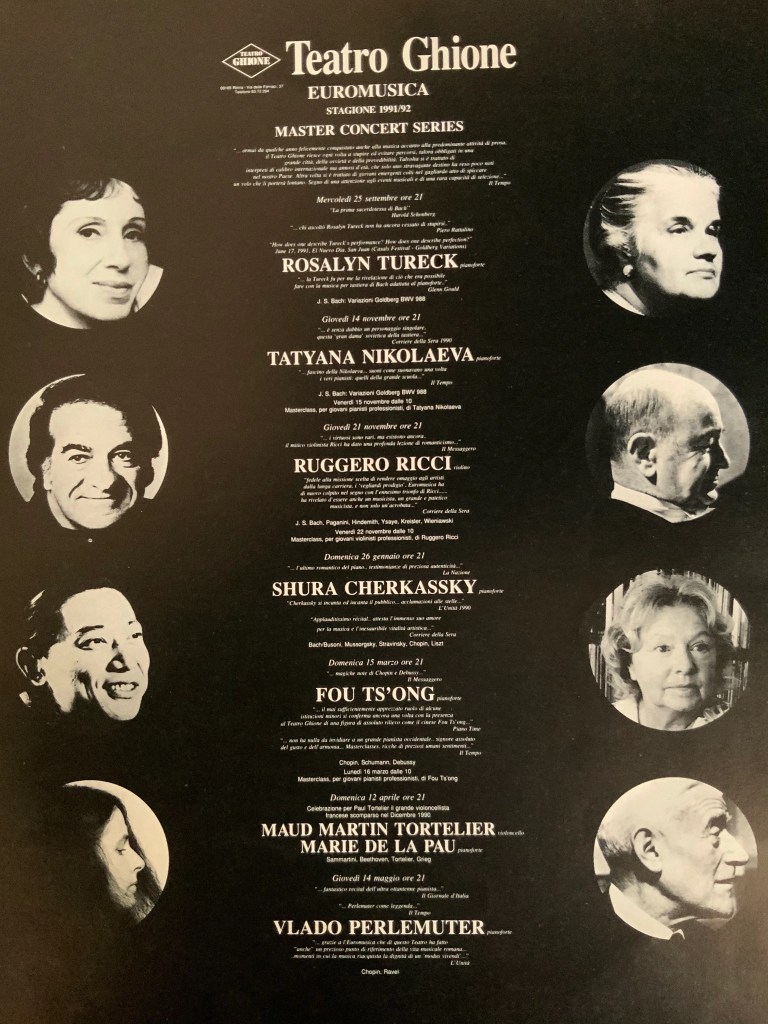
Guido Agosti with Vlado Perlemuter -my two teachers together who both performed in the Ghione theatre when they were well into their 80’s 

Lesson with Jack Krichaf in the front row Leslie Howard (long hair and glasses) looking on
Nice to see Lydia united with Guido 25 years later

Trapani a diamond shining brightly for the 3rd International Piano Competition ‘Domenico Scarlatti’ Part 1 and 2

https://christopheraxworthymusiccommentary.com/2024/08/02/oxana-yablonskaya-sorrento-salutes-the-queen-of-the-keyboard/ https://christopheraxworthymusiccommentary.com/2024/07/17/leslie-howard-the-prince-of-pianists-50th-anniversary-concert-at-the-wigmore-hall/ https://christopheraxworthymusiccommentary.com/2020/03/03/giuseppe-guarrera-at-the-wigmore-hall/
https://christopheraxworthymusiccommentary.com/2025/04/10/oxana-yablonskaya-miracles-in-trapani/

Another miracle in Trapani with the reappearance of the undisputed queen of the keyboard,Oxana Yablonskaya.
A year has passed since her last concert and now at 86 well into her Indian Summer her playing is even more profoundly radiant and her technical prowess proves once again she is still the kitten on the keys.

Leslie Howard bringing the concealed mastery of pianistic genius to Trapani
https://christopheraxworthymusiccommentary.com/2025/04/12/leslie-howard-bringing-the-concealed-mastery-of-pianistic-genius-to-trapani/

Leslie Howard triumphs in Trapani with the concealed mastery of a pianistic genius.
From Anton Rubinstein to Jerome Kern all wrapped up in an English Country Garden.
An eclectic programme from the ‘Professor’ of the piano who looks deeply into the archives and finds hidden treasures that he has spent a lifetime bringing into the concert hall.

https://christopheraxworthymusiccommentary.com/2025/04/14/nina-tichman-bachs-goldberg-alive-and-well-and-safely-grazing-in-palermo/

After careful evaluation by the jury, the candidates who will access the semi-final have been selected.

Pierpaolo Buggiani ,18 year old student of Carlo Palese, played Scarlatti and Haydn Sonatas with great clarity and character and a fine sense of style but it was the 24 Preludes of Chopin that showed even more his remarkable technical and musical command of a work that Fou Ts’ong described as 24 problems. There were none for him in a performance of musicianly mastery.
Luca Cianciotta ,21, is a very solid musician and there were many remarkable things especially in the Schumann Etudes Symphoniques. Unfortunately on this occasion he was hampered by problems of memory and a certain rigidity in performance.
Tetiana Donets ,25,from Ukraine. A refined tone palette with a kaleidoscope of sounds that illuminated the Clementi Sonata op 13 n.6.and brought subtlety to Scarlatti but it was the Brahms F minor Sonata that was given a magnificent performance of nobility, and ravishing beauty with sumptuous orchestral sounds and an extraordinarily mature architectural understanding.
Alecsandru David Irimescu,25, Romania.A remarkable talent but completely without schooling.A fluidity of sound and agility of fingers living every moment with a ferved fantasy ,at times very convincing., He brought a certain sense of style to Chopin Waltzes but it was the Beethoven Sonata op 31 n.1 that revealed a lack of a true architectural understanding and respect for the composers indications.
Sonja Kowollik,23,Germany/Poland .Wonderfully played Scarlatti full of character and colour with an extraordinary dynamic drive and total commitment .Schubert of refined beauty but the central episode was played with a rather overpowering burning intensity .It was this burning intensity and total commitment that brought the Schumann Sonata op 22 vividly to life especially with her mastery of the alternative last movement. An intensity that at times was too much and needed some moments of calm reflection and nobility. But a very remarkable artist.
Xin Luo,32,China. Some remarkably beautiful playing. A sensitivity and beauty of sound combined with intelligent musicianship and a refined sense of style. Lacking a real dynamic drive in the more strenuous passages but his sensitive musicianship shone through all he did.
Salvatore Nicolosi,27,Italy.A young man in love with the Great War horses of the Romantic virtuosi of the nineteenth century. It was in this music that he produced playing of remarkable technical accomplishment and a kaleidoscope of rich romantic sounds. His Haydn and Scarlatti were rather correct and colourless in comparison. His Hexameron on this occasion was rather hit and miss but showed a remarkable mastery of the keyboard. A Raymond Lewenthal figure of our times.
Danylo Saienko,33,Ukraine .Masterly playing for someone who is really ‘fuori contesto’ in a league of his own .The Chopin Mazurkas op 30 were played with wonderful style and real sense of dance but slightly missing the magic and kaleidoscope of colour that Chopin imbues in these miniature masterpieces.Haydn too was masterly playing of style and musicianship .A superb technical control and aristocratic presence but missing the delicacy and colour that give give so much more character to an already monumental performance.The Schumann sonata ‘sans orchestra’ was of impressive mastery with indeed a whole orchestra in his hands of extraordinary mastery. An extraordinary artist who ought already to have a well established career.
Ting Yuan,36,China . Very authoritative playing of intelligent musicianship. Lacking in Scarlatti and Beethoven a sense of colour and her sound was really quite hard at times. But her intelligence and meticulous preparation were never in doubt.It was in the ‘Ricordanza Fantasy’ and Rachmaninov ‘Corelli variations’ that she abandoned the straight jacket of classical performance and her playing suddenly had charm ,style and colour . A remarkable pianist but not really a competitor but a formed artist ready probably with a career already well established .
Anastasia Barabanova, 22, Russia . A student of Ilya Kondratiev at the RCM London. Her Mozart was a lesson in delicacy, style and control. Beautifully played as were her two Brahms Ballades where unexpectedly she filled the piano with sumptuous rich sounds. Her Schumann Sonata op 22 had a kaleidoscope of colours and character all played with extraordinary mastery and refined good taste.It contrasted with the Scarlatti Sonatas that I found rather strait laced and a little hard edged . A real artist of intelligence with a refined palette of colours and temperament.
Rongrong Guo,23,China .Some very musicianly playing and always a beautiful sound.I remember hearing her last year and she she is now a much more assured artist .Her Clementi op 40 n.1 was really exceptional but it was in Chopin and Liszt that she excelled. An architectural shape of dynamic drive to the Chopin Scherzo but with ravishing delicacy and fearless abandon too .Liszt 12th Rhapsody was played with great style and a kaleidoscope of sounds. Her control of the final bars was quite extraordinary as Liszt’s knotty twine becomes ever more frenetic .
The five finalist announced after the semifinal round :
Xin Luo,Sonia Kowollik,Tetiana Donets,Danylo Saienko,Rongrong Guo
Announcement of the winners by the Jury
Leslie Howard awarding First Prize
Danylo Saienko Finalist n. 4. First Prize
His Scarlatti was beautifully ornamented and enriched with fantasy and intelligence where he created a whole world in just a few pages. A masterly performance of the Brahms Handel Variations was followed by the ravishing beauty and dynamic drive of a Debussy Prelude and Etude .Followed by a breathtaking account of Bartók’s sonata where he created the sounds of a whole orchestra that was astonishing and exhilarating.Obviously at 33 he is an established artist of authority and mastery..
Tetiana Donets Finalist n. 1 Second Prize.
An amazing performance of the Weinberg Sonata op73 n. 6 with a kaleidoscope of sounds of desperation and astonishing mastery. Her Scarlatti was multicoloured ( she was awarded the special Scarlatti Prize too ) with a sense of style and a palette of sounds of radiance and crystalline clarity.A masterly control in Schubert’s ‘Drei Klavierstücke’ that showed a real understanding with an architectural shape of poignant meaning, as Schubert’s sublime melodic outpouring was allowed to flourish with simple radiance and beauty. A wonderful fluidity to the second with a kaleidoscope of refined delicacy of intimate meaning .
Sonia Kowollik Finalist n. 2 Third Prize
A quite remarkable control in Agosti’s Firebird with a vast range of sounds and a work that suited her volatile temperament .The Prokofiev Romeo and Juliet Suite sprang to life with subtle colouring and characterisation. There was a classical clarity and buoyancy to her Bach almost completely with pedal that lacked some of the wonderful colours she was to find in her other performances.
Rongrong Guo Finalist n. 5 Fourth Prize A beautifully flowing Bach of clarity and beauty.Chopin played with poetry and fearless beauty – the ‘Raindrop’ prelude played with the architectural shape of a real tone poem of aristocratic poise and menace. Quite extraordinary mastery as she climbed Ligeti’s diabolical staircase . And Brahms was played with the sumptuous golden sounds she had produced in all she did.
Xin Luo Finalist n. 3 Finalist Certificate .Such delicacy and beauty of Bach played with a sensitivity and real understanding of Bach’s mighty 5 part fugue. His playing of the Liszt sonata was played with a beauty of sound and architectural understanding .Sumptuous full sound in the passionate climaxes with a radiance of tone in the more intimate confessions .A wonderful sense of balance and ravishing beauty of tone. A remarkable achievement that one or two blemishes must be ironed out to complete the miracles he already achieves.

Oxana Yablonskaya Miracles in Trapani

Another miracle in Trapani with the reappearance of the undisputed queen of the keyboard,Oxana Yablonskaya.

A year has passed since her last concert and now at 86, well into her Indian Summer, her playing is even more profoundly radiant and her technical prowess proves once again she is still the ‘kitten on the keys’. https://www.youtube.com/watch?v=ZYpZt7iQFcY

A programme of Scarlatti ,Mozart , Beethoven, Rachmaninov and Liszt reminding us once again what it means to play with weight. Seemingly endless amounts of energy, she like her octuagenerian colleague Martha Argerich continue to astonish a public who are starved of real artistry with the selfless dedication to the composers they are serving.

Like ballet dancers they are born with the ‘physique de rôle’ with hands that are made to serve. A technical preparation in childhood when the shape of the hand is formed with fingers of steel,like limpets sucking the sounds out of the keys, but then a wrist of rubber that allows them to play with the seeming ease of someone seated in their favourite chair.

Of course the great example to my generation was Artur Rubinstein who could hold us effortlessly in his hands until his ninetieth year producing golden sounds that will never be forgotten.

Three Scarlatti Sonatas opened the concert and were obviously a homage to the competition of which she is an illustrious jury member. It was enough to show us that she has lost none of her ‘fingerfertigkeit’ as the crystalline clarity and rhythmic drive held us spell bound. But there was much more than that, as the sounds she produced were of a kaleidoscope of colour of operatic performances with the characters parading before us with such individuality, turning these three well known sonatas into miniature tone poems of vibrant beauty.

The first played with a timelessness where the ornaments just sparkled like jewels, with rays of light that illuminated the melodic line without ever disturbing the musical message that was being recounted. In fact an art that conceals art and never draws attention to itself, as a story is being told by a sage of the keyboard .

The second sonata was played with a whispered veiled tone bursting into an ebullient jeux perlé of astonishing vigour and brilliance in the third. Numbers have no meaning in art as Longo numbers have no importance when communication of radiance and beauty are the ‘non plus ultra’ of a true artist.

I remember another High Priestess of the keyboard,Rosalyn Tureck, telling me, after a performance of the Goldberg Variations when she too had reached her Indian summer, that she looked at the numbers of her anagrafical age and they had absolutely no significance where her art was concerned !

A masterly performance of Mozart’s A minor rondo where Schnabel’s dictum springs to mind of Mozart being too easy for children but too difficult for adults!

He obviously had not contemplated Oxana’s Indian summer where a lifetimes struggle has eliminated all superfluous things, as real meaning and significance are distilled into a simple acceptance of the beauty that surround all those that have the soul to appreciate it.

It was just such simplicity that Oxana brought to Mozart with a beauty and crystalline etched beauty of absolute purity. There was a story to tell and Oxana is one of the greatest story tellers of our age, who can bring the notes to life with a meaning and significance where words are just not enough. We were not even aware that she played all the repeats, as the musical discourse was of searing intensity and importance as she returned this monument to the pinnacle of miraculous significance that it truly is .

It was this, too, that was so apparent with Oxana’s masterly performance of Beethoven’s sonata op 109, the first of his trilogy and a farewell to the sonata that had followed his life in thirty two remarkable steps.

A simplicity and fantasy that only the deepest knowledge of the score could contemplate, arriving at the same improvised freedom that was the font of the composers inspiration. The radiance and beauty of the opening will long resound in this hall as an example of a simple mellifluous outpouring . It was as though the sonata like a mountain stream was already flowing as a door was opened by our genial interpreter who could share such beauty with us. The improvised interruptions never allowing this pastoral scene to be brusquely interrupted by Beethoven’s irascible and unpredictable temperament.

The second movement took wing with a dynamic drive and an undercurrent of menace that was to be diffused by the sublime vision of the ‘Gesangvoll, mit innigster Empfindung. Andante molto cantabile ed espressivo’. Words that have no significance where music can express so much more with so little . Beethoven was totally deaf when he wrote these final works that only he could hear with his inner ear but was miraculously still able to share his vision of the world with future generations with simple dots, dashes and words.

Oxana with a lifetime of living with this music could distill the very essence of Beethoven’s message of peace and goodwill after his turbulent and disturbing life . The radiance and beauty of the theme was played with nobility and aristocratic poise but with an inner tenderness, where to watch her hands caress the notes was like watching a great artist with a brush filling a canvas with beauty and significance .

The variations were allowed to evolve so naturally, and even when they burst into dynamic energy it was with the same energy that had lain hidden within the bare notes of the theme .

The fourth variation is where Beethoven, too, gives up on numbers and the significance of this variation becomes evident as the contrapuntal nobility is transformed into a vision of the world that Beethoven could already envisage in the not too distant future. Trills that become streams of sound, as the theme is allowed to float on a sumptuous cloud, as Beethoven ( like Scriabin in the next century ) reaches for the star that shines so brightly and was unfolded by Oxana with knowing brilliance of poignant significance. A cloud dying away with timeless wonder as the theme returns miraculously untouched by the visions we had experienced together, but enriched by delicacy and knowing understanding . Oxana’s hands barely touching the keys as the moments of aching silence that we shared together, after the last whispered confession, was evidence of how Oxana had opened a Pandora’s box of emotions in us all.

After a short break we were treated to works by two of the greatest virtuosi of all time, Franz Liszt and Sergei Rachmaninov .

The Corelli variations op 42, one of the last works that Rachmaninov wrote, but playing in public he would decide on the spur of the moment ,depending on the public’s reaction, if he would play them all or not.

There was no doubt in Oxana’s mind that she should play them all, as she had envisaged the work as a whole with an architectural shape finding momentary refuge in the major key before the final journey back to the original theme. A journey that she shared with us with a constant undercurrent of energy that was always present,whether in the ravishingly beautiful slow variations, the capricious jeux perlé virtuosity or the more monumentally dramatic.

After the dynamic drive of the last three variations the final mighty ‘D’ in the bass was allowed to die away as a ravishingly beautiful coda was played with searing nostalgia and sumptuous chiselled beauty of masterly playing of a weight. Oxana’s fingers dug deep into the keys to find the most extraordinarily poignant sounds, preparing us for the simple vision of ‘La folia’ that had been the inspiration for this magnificent work that Rachmaninov dedicated to his duo partner Fritz Kreisler. Rachmaninov had written to his friend and colleague Nikolai Medtner : “I’ve played the Variations about fifteen times, but of these fifteen performances only one was good. The others were sloppy. I can’t play my own compositions! And it’s so boring! Not once have I played these all in continuity. I was guided by the coughing of the audience. Whenever the coughing would increase, I would skip the next variation. Whenever there was no coughing, I would play them in proper order. In one concert, I don’t remember where – some small town – the coughing was so violent that I played only ten variations (out of 20). My best record was set in New York, where I played 18 variations. However, I hope that you will play all of them, and won’t “cough”.

Today there was no coughing ,and a silence that was truly golden, as this great lady unravelled Rachmaninov’s knotty twine with passion and fearless transcendental mastery.

It was the same mastery that she brought to Liszt’s recreation of three of Schubert’s most sublime Lieder. ‘Standchen’ ,a work that Rachmaninov too had famously recorded, and that Oxana ,inspired by his Corelli variations , played with sublime beauty, where the duets between the voices showed a control of sound that only the very greatest artists can find in this black box of hammers and strings!

The subtlety of her playing of ‘Auf dem Wasser’ and ‘Gretchen ‘ was of another age – a Golden one when pianists were magicians and could find infinite gradations of tone in every key.

A standing ovation was greeted by Chopin’s last Mazurka op 78 n 4 ‘canons covered in flowers ‘ was Schumann’s description of Chopin’s 52 miniature tone poems.

Closing the piano lid to show us that the music making was over for another year.

But indeed covered in flowers from the ever grateful Vincenzo Marrone d’Alberti for her constant presence for his brain child now in it’s third year and bringing such illustrious importance to his much loved jewel of a city.

Oxana touched by such warmth and affection from ‘her’ public reopened the piano lid for just one last thank you in music.

C.P.E Bach’s ‘Rondo espressivo’ was played with one last glimpse of the beauty and mastery that she had offered to us all evening.

Vincenzo Marrone d’Alberti with pianist Luca Leone
Friends and jury members applauding their illustrious colleague after her concert