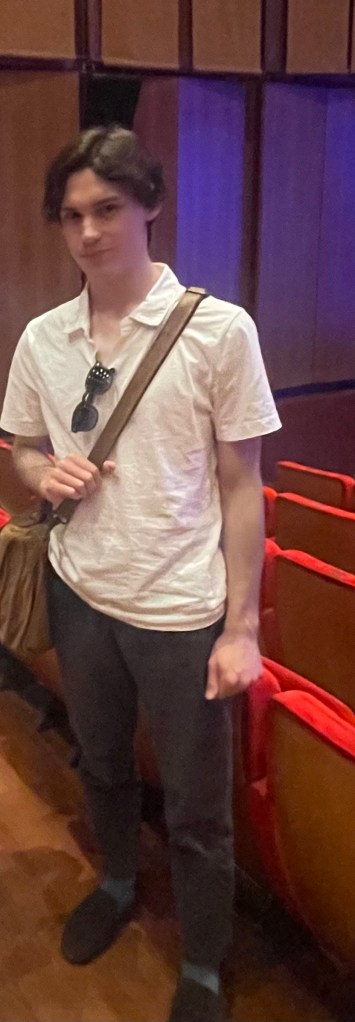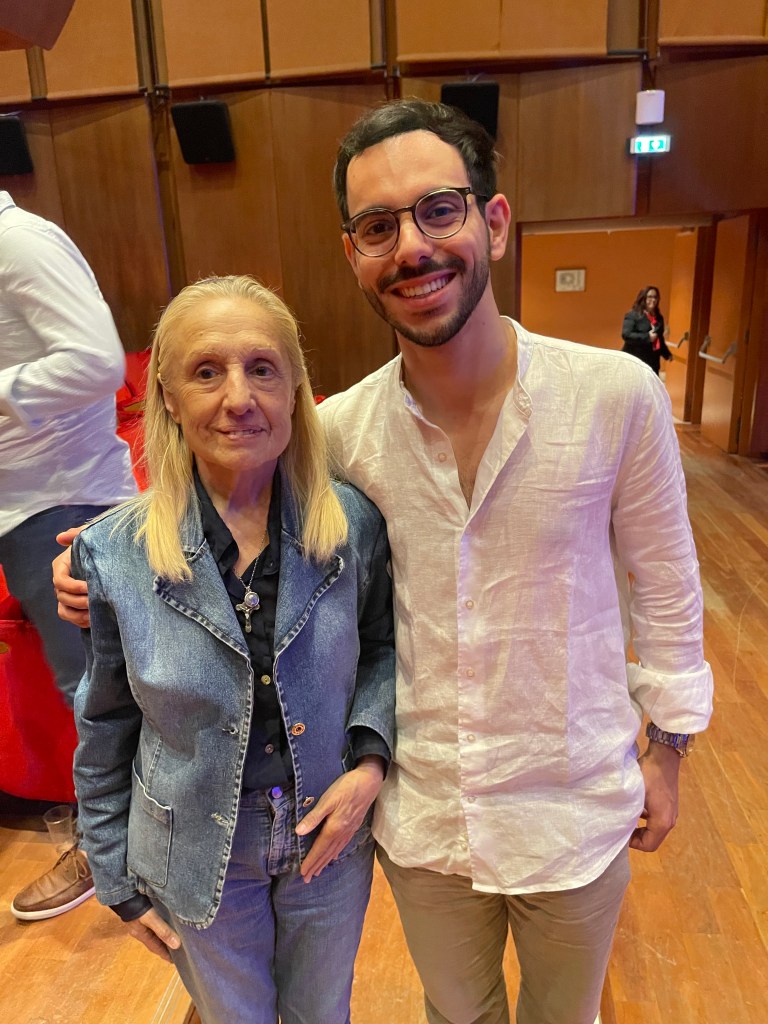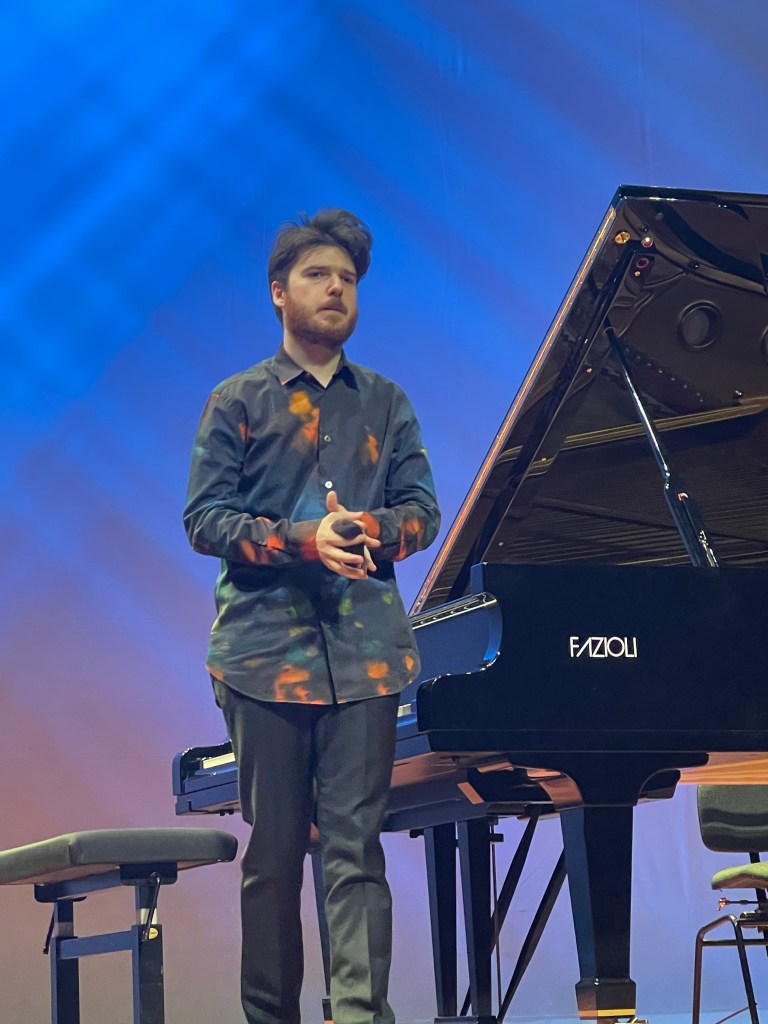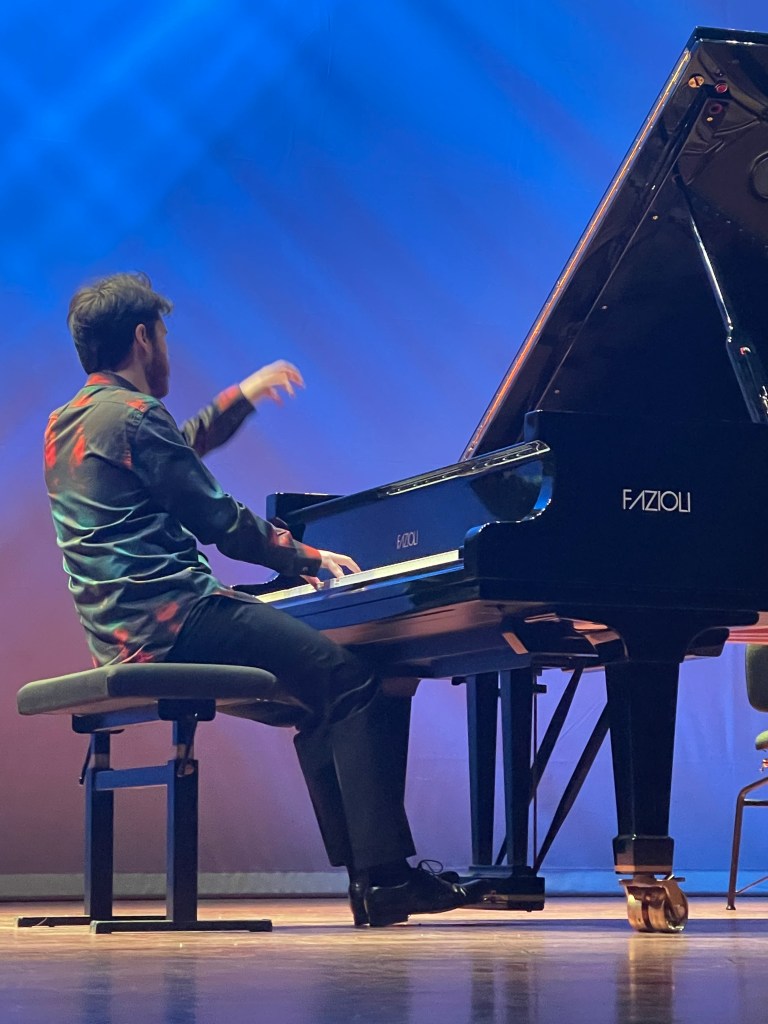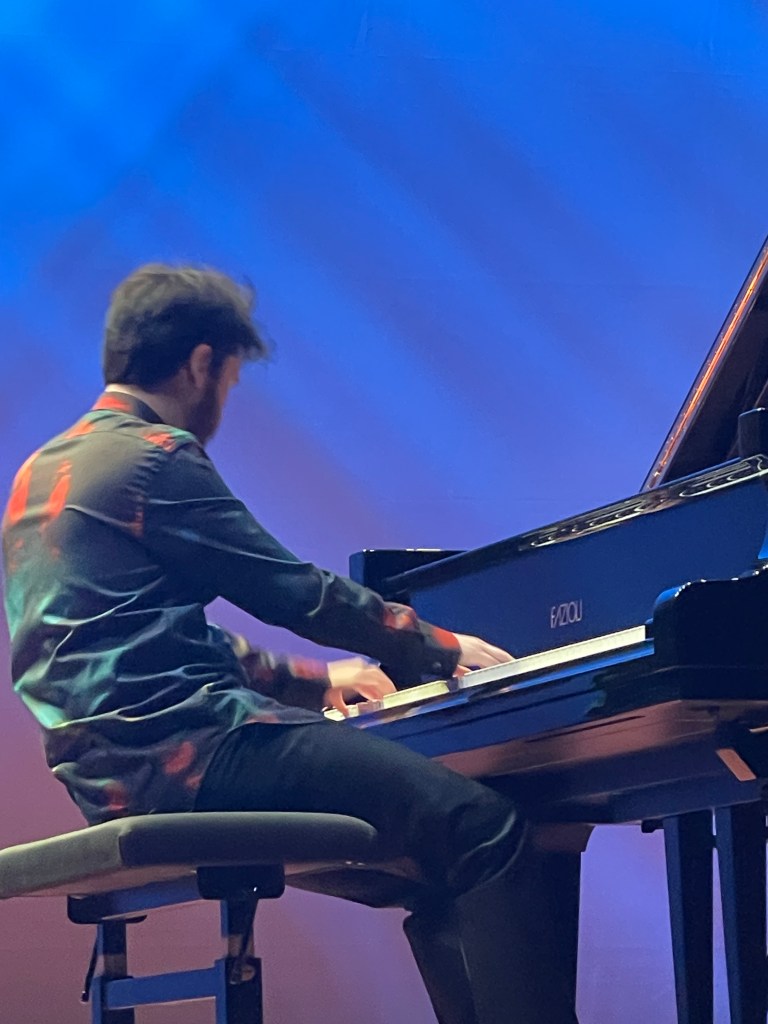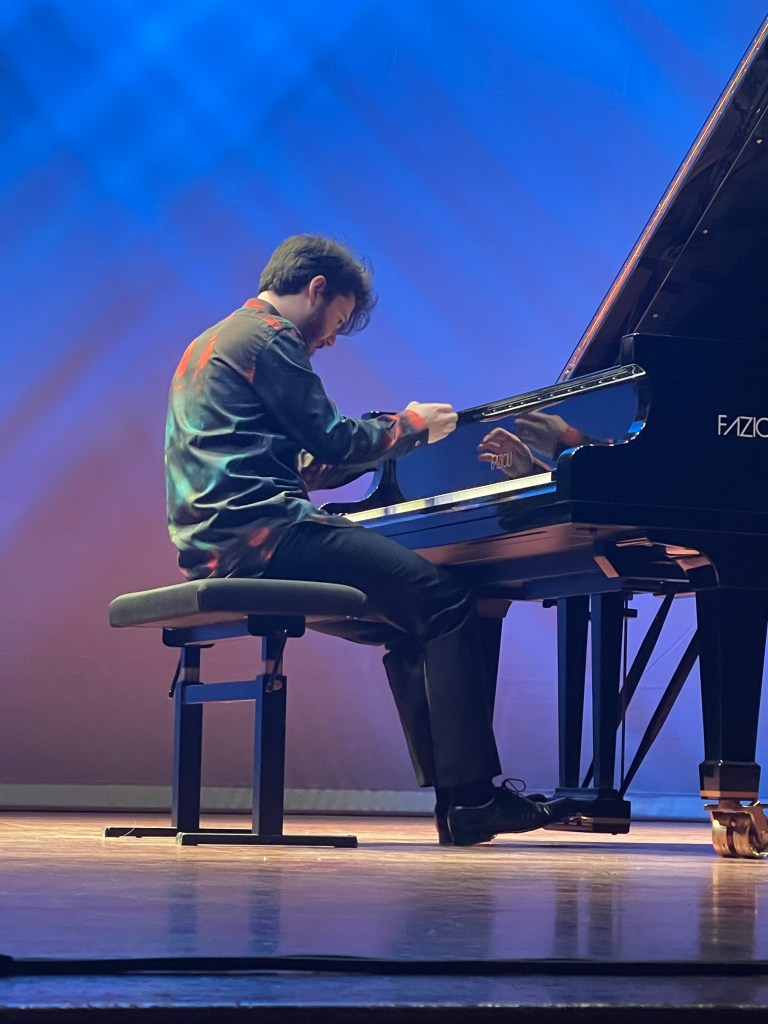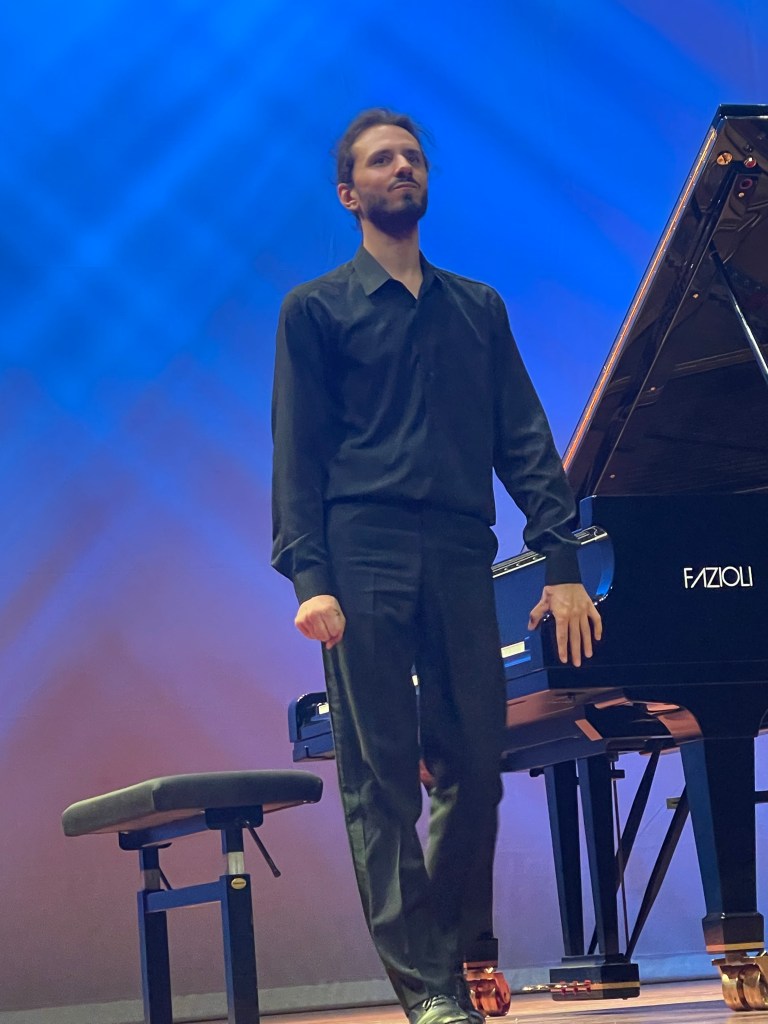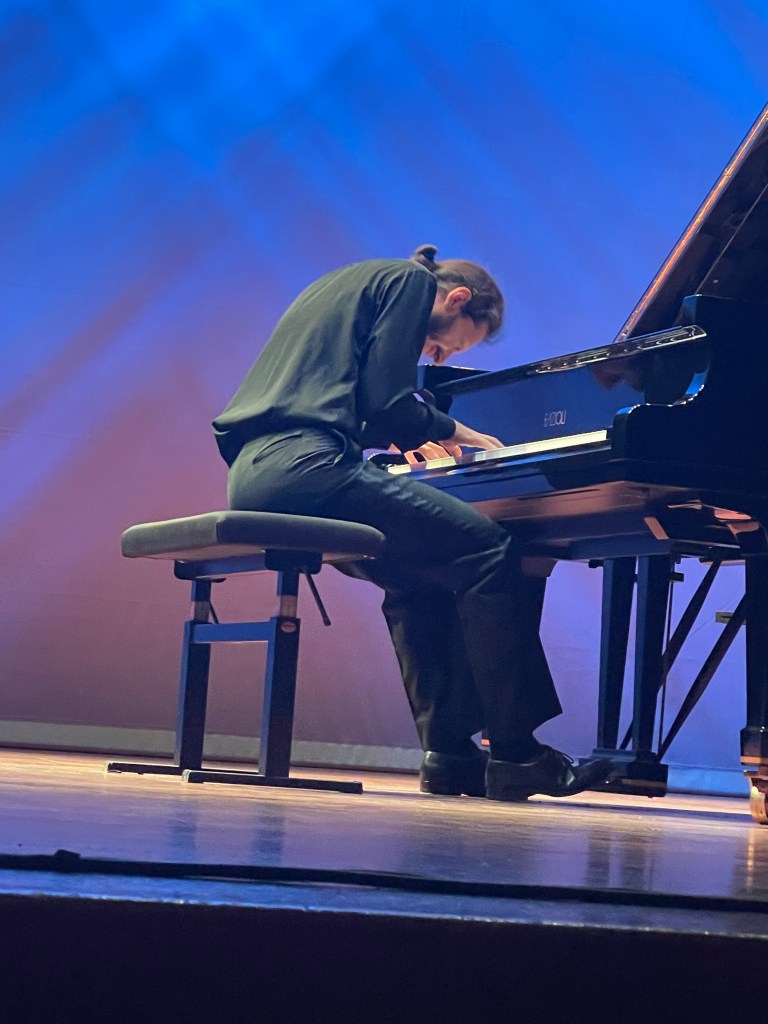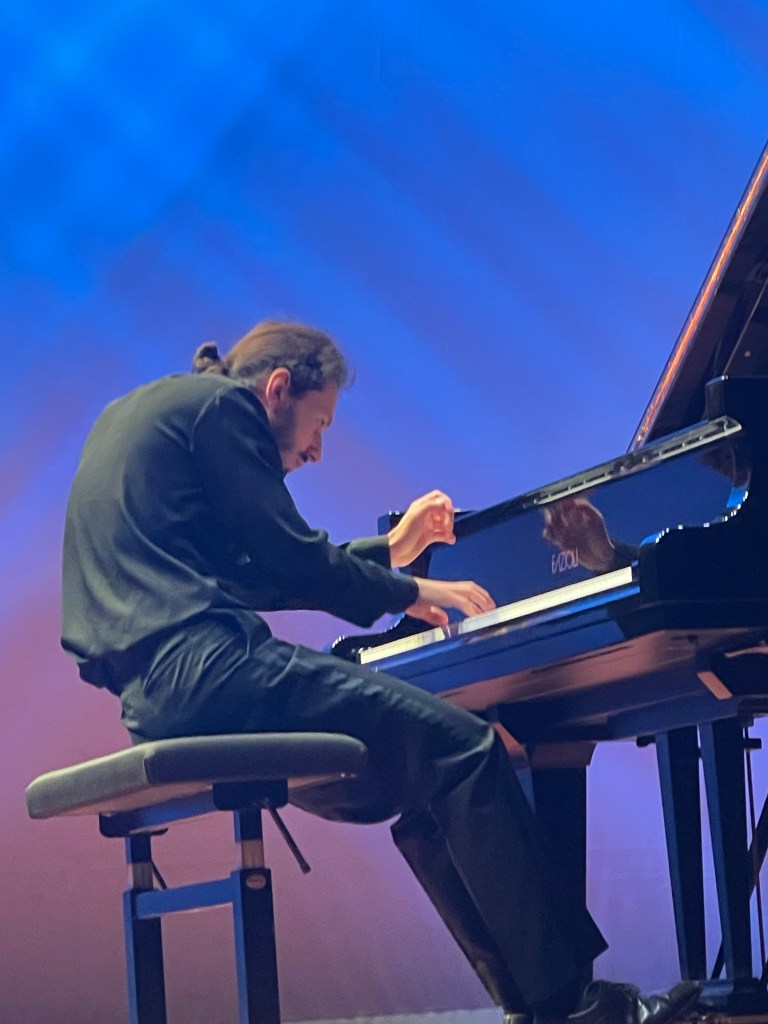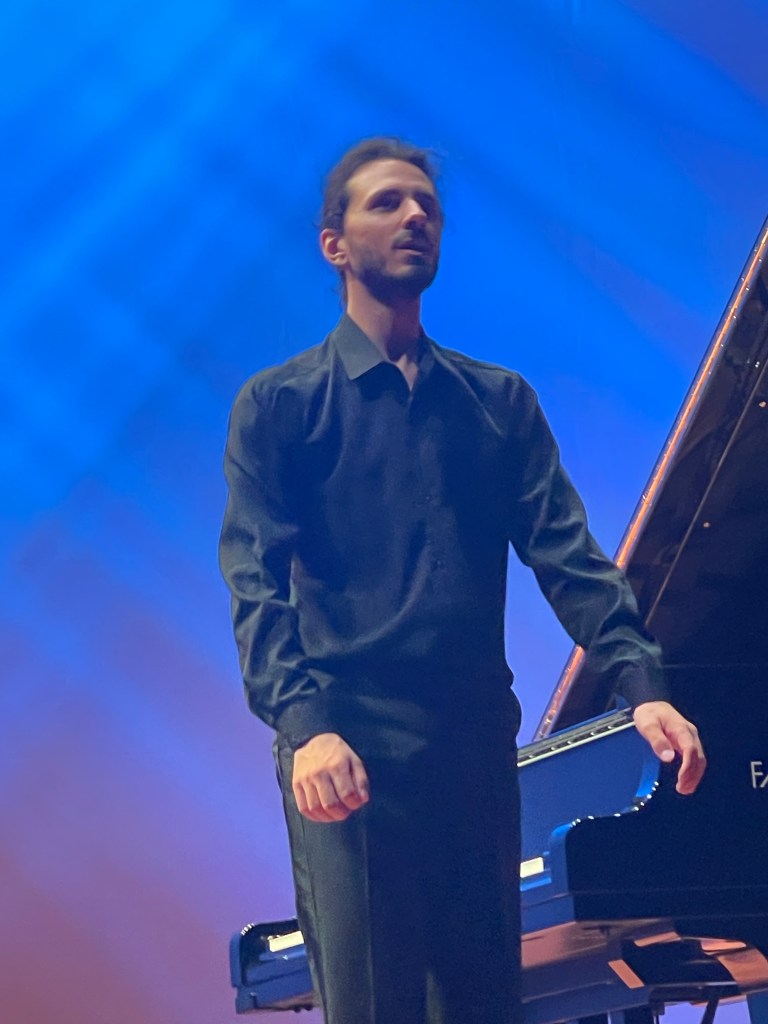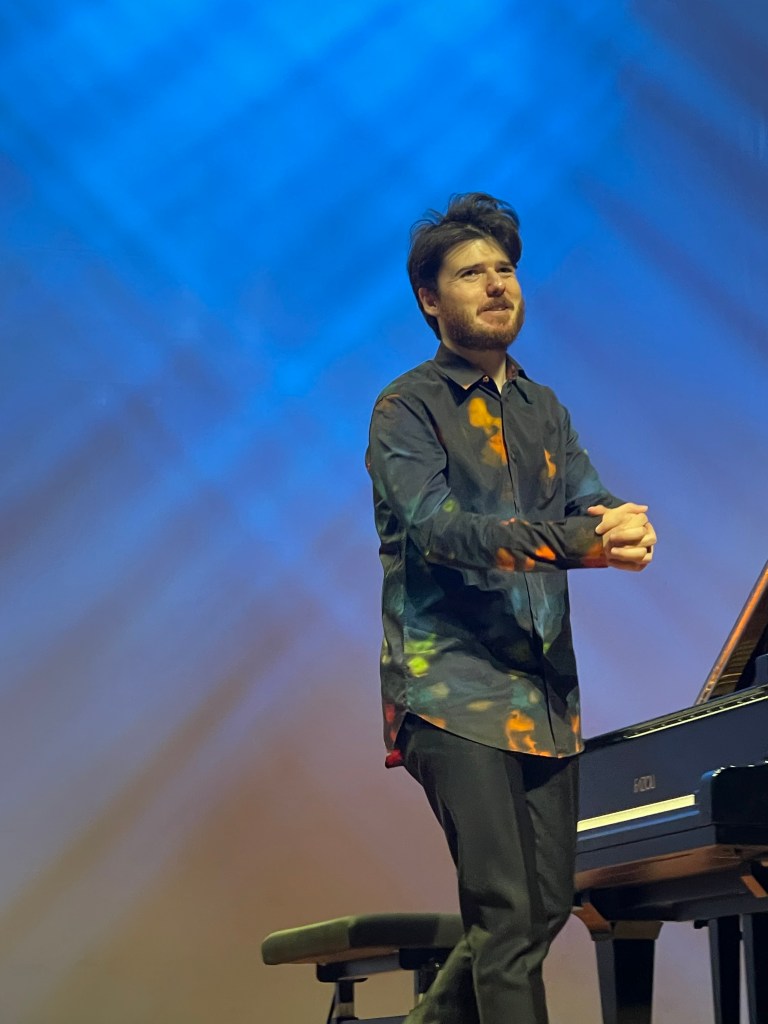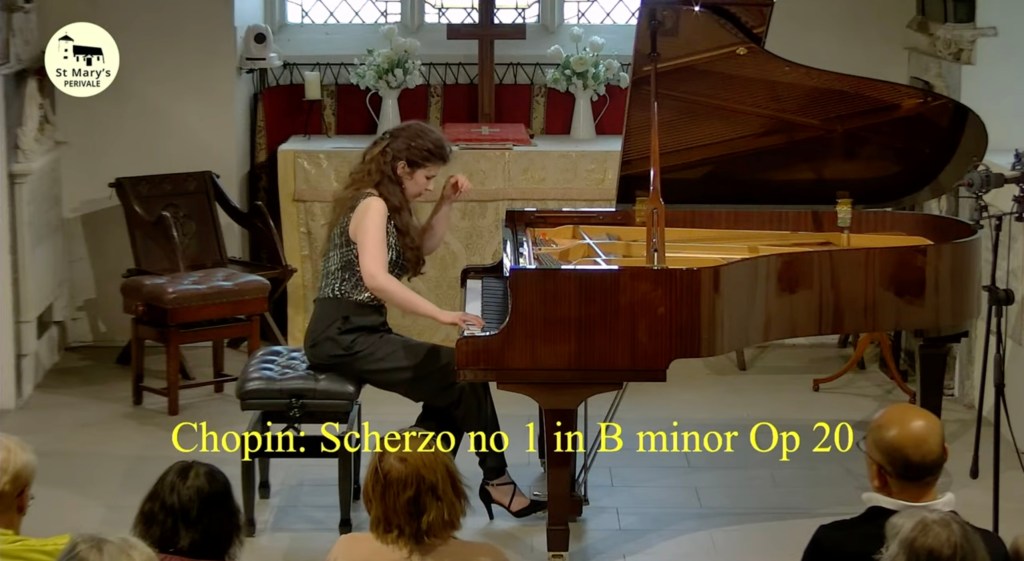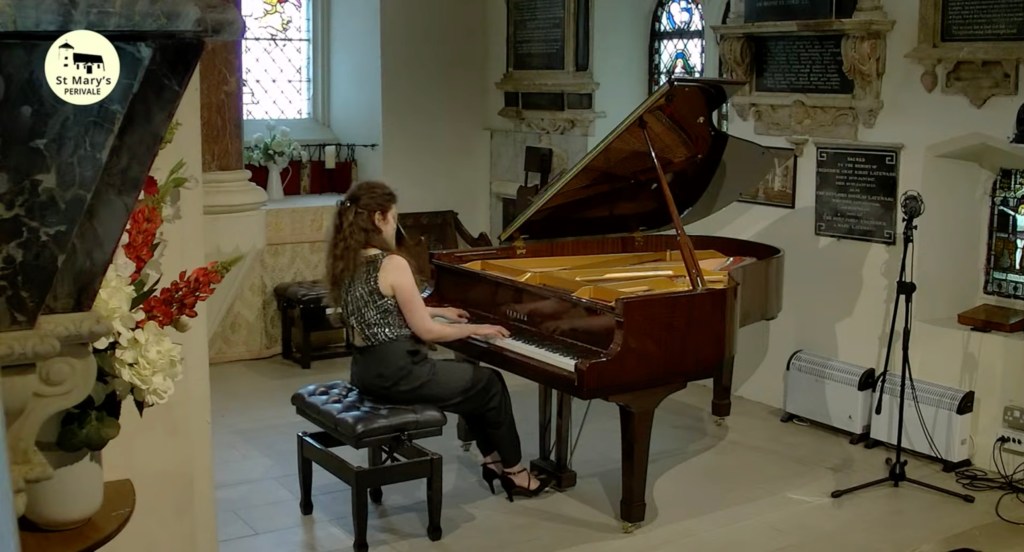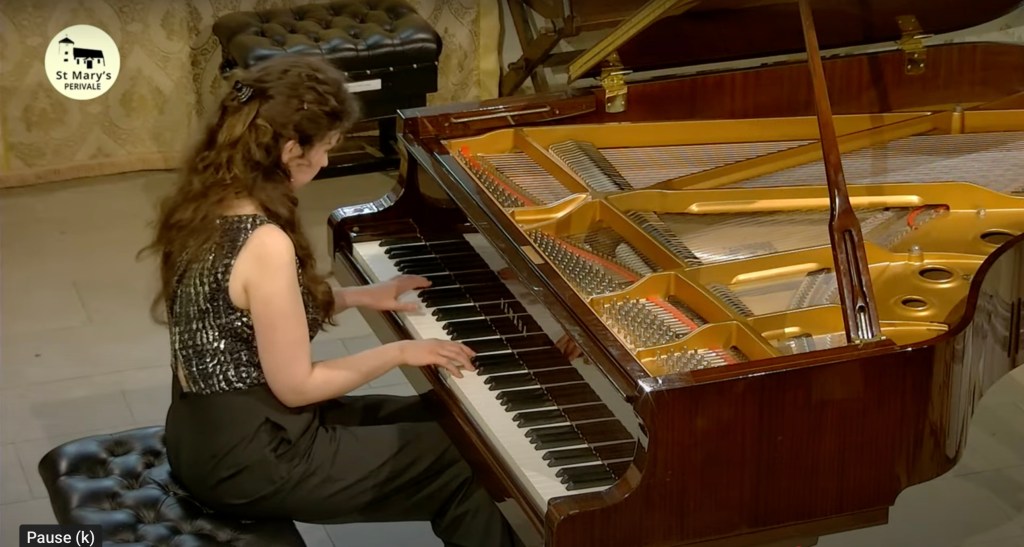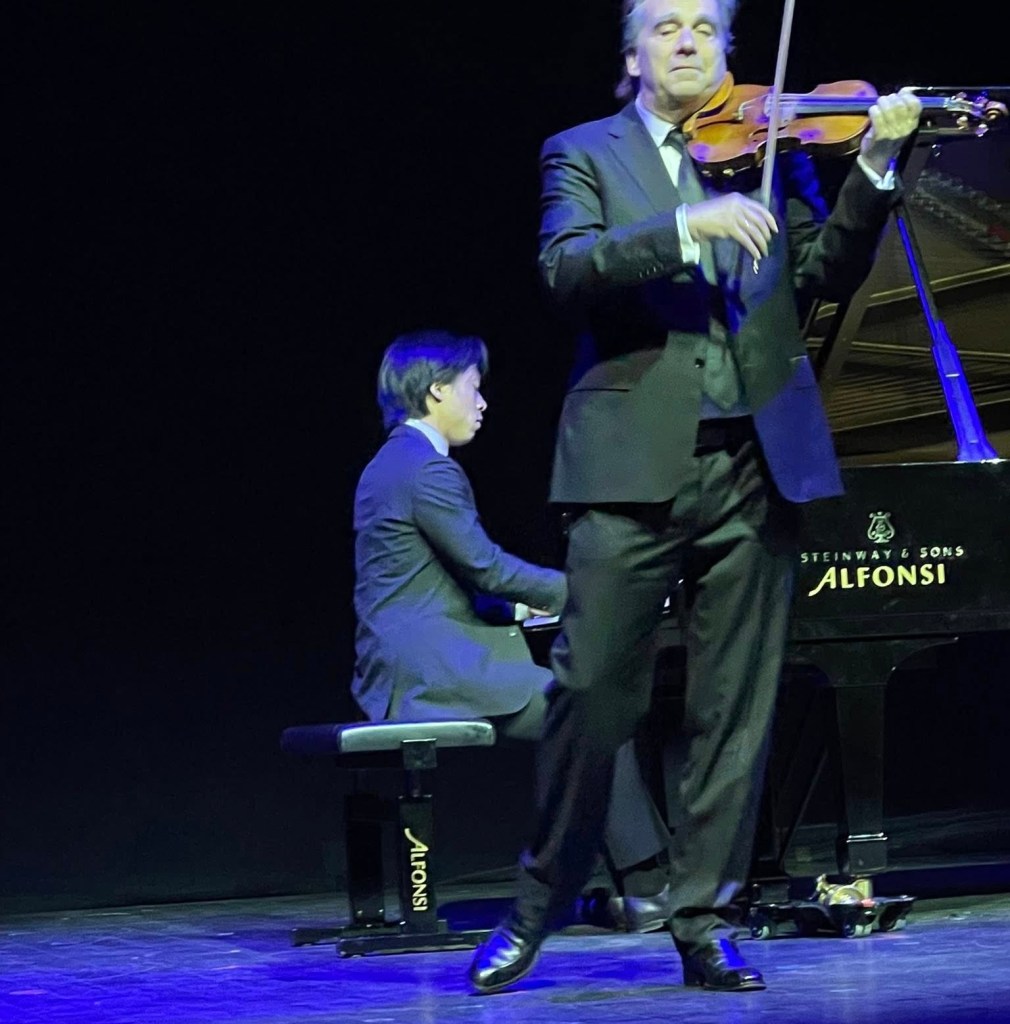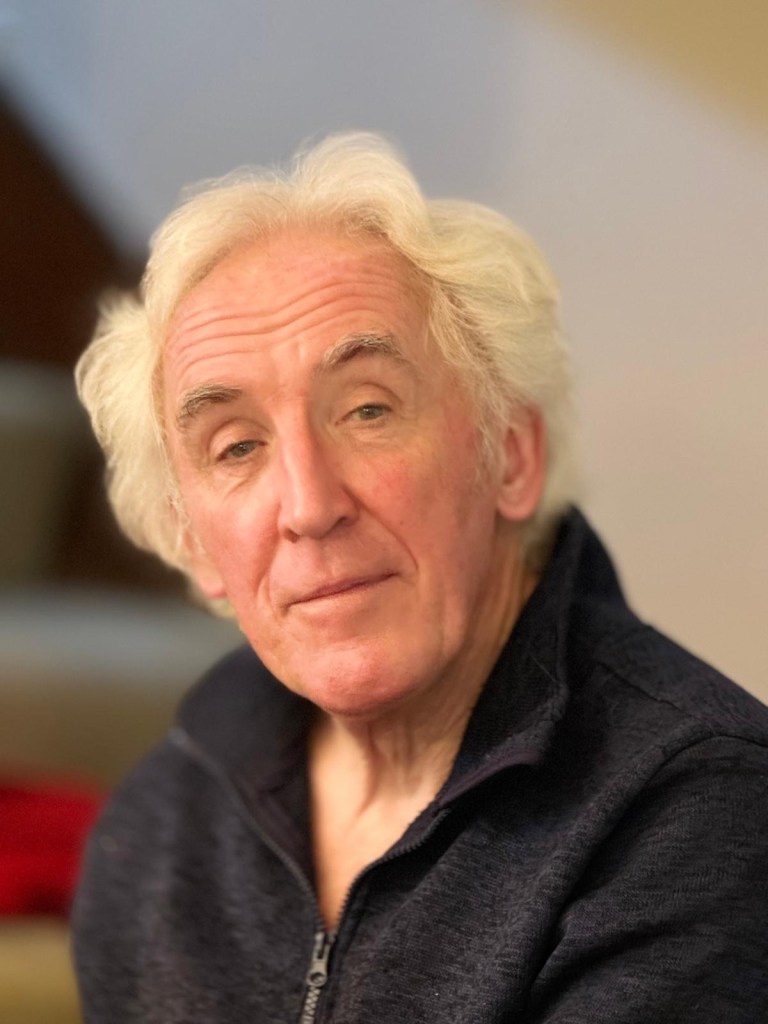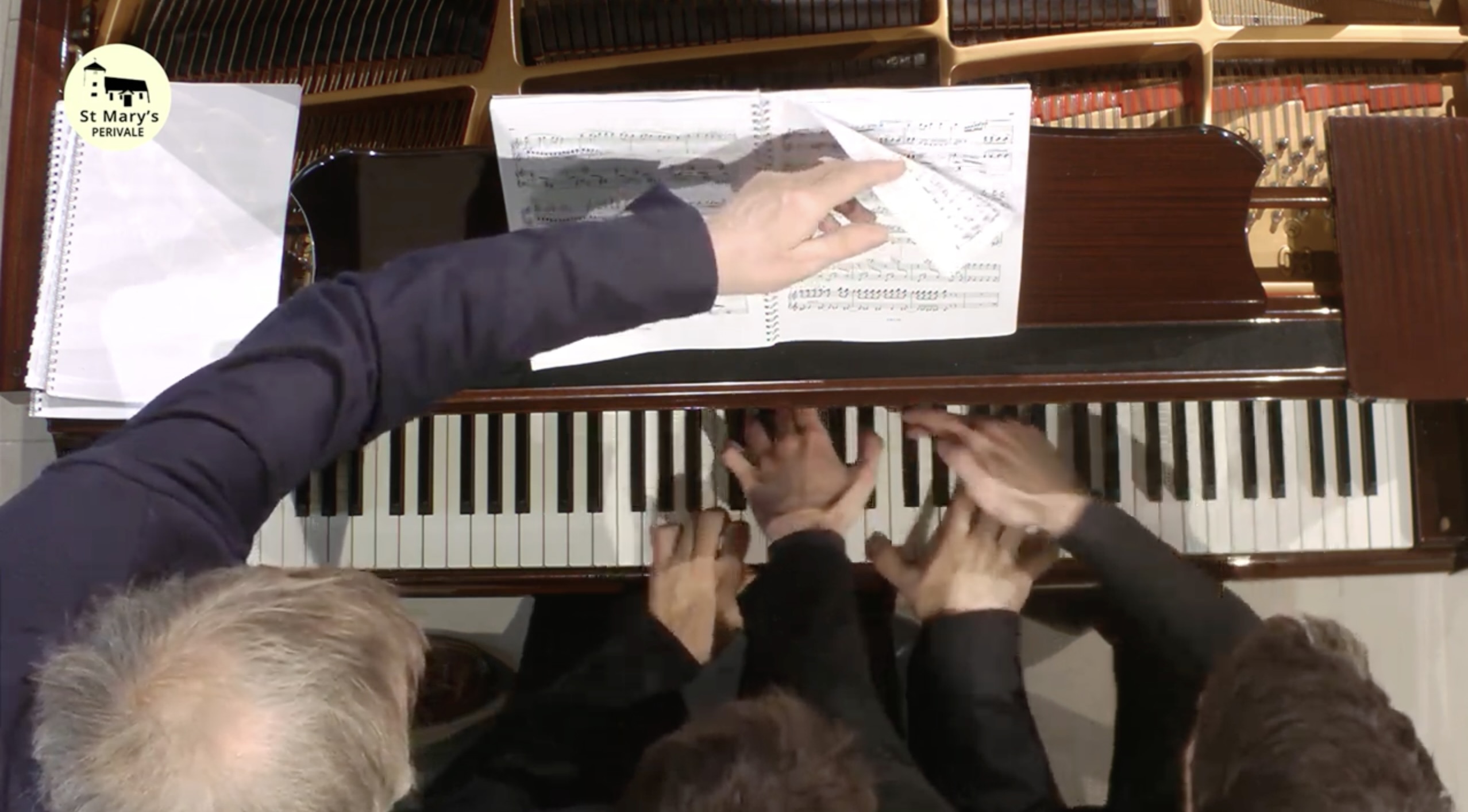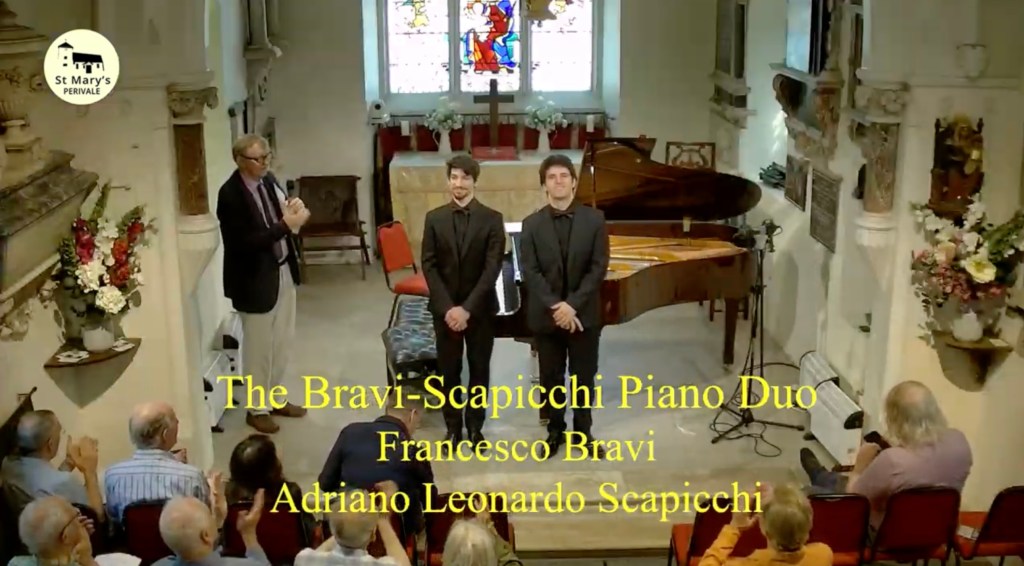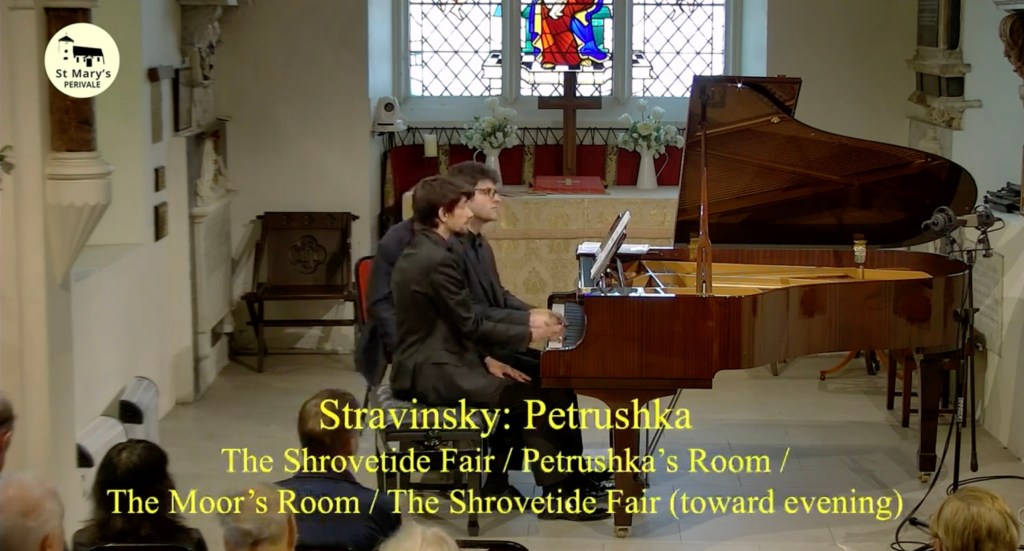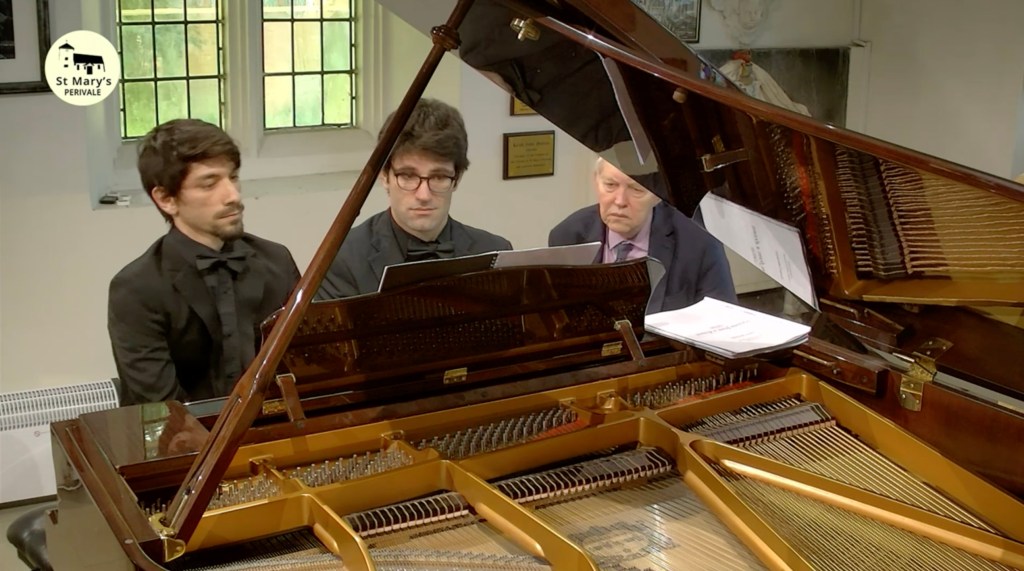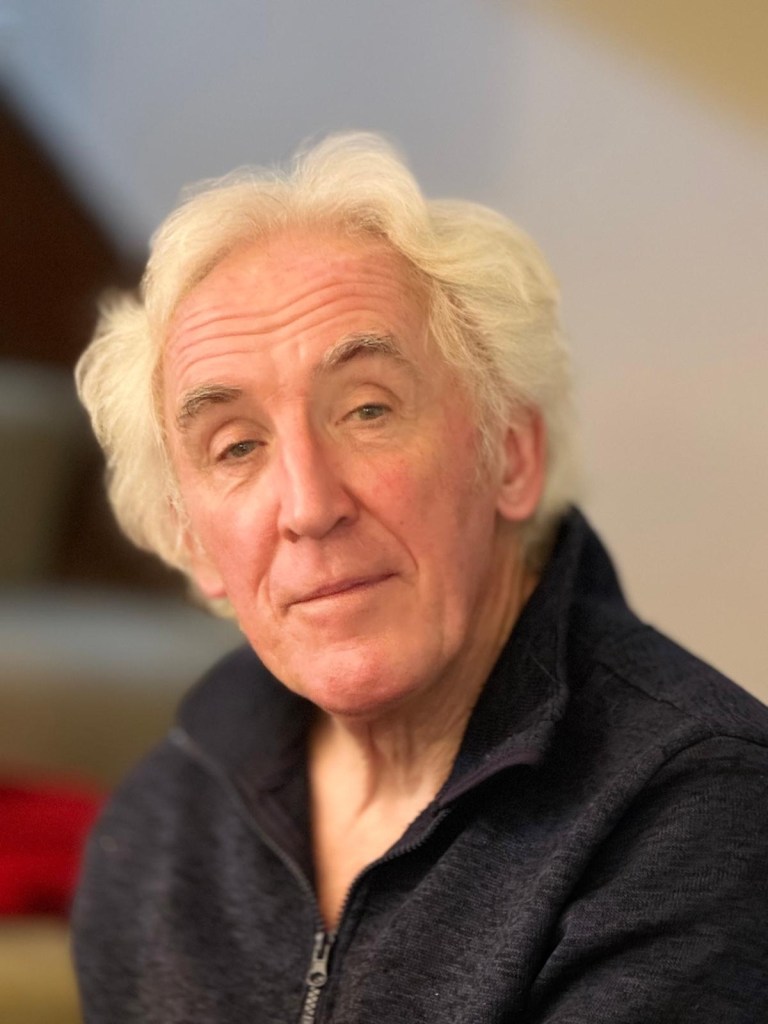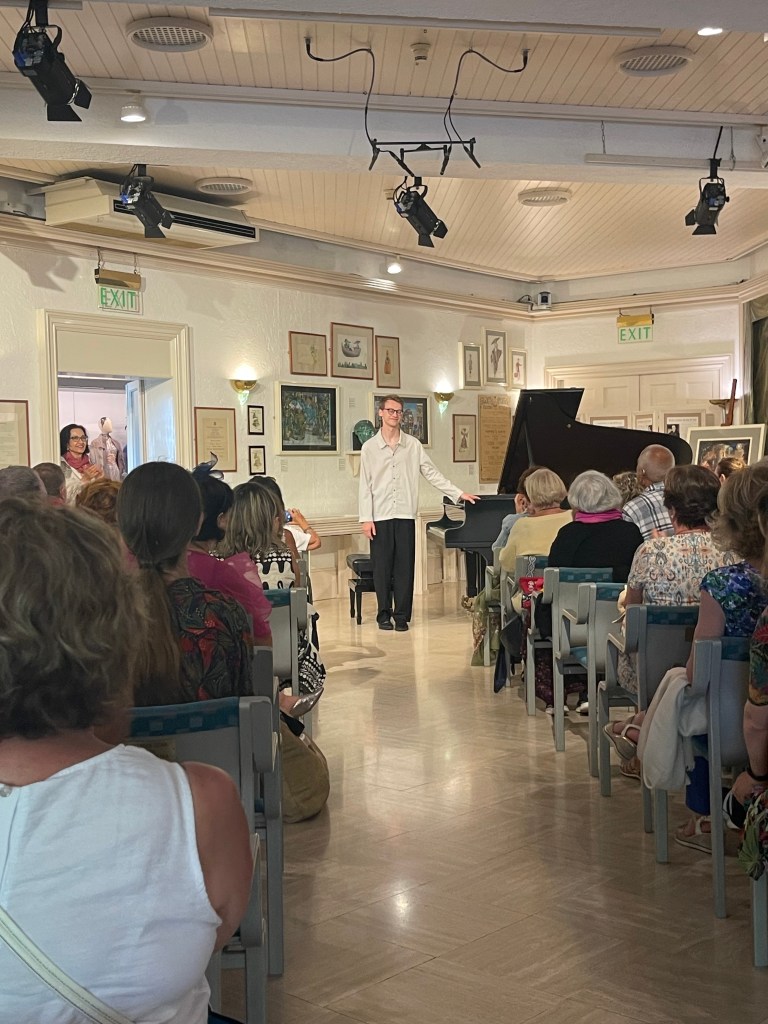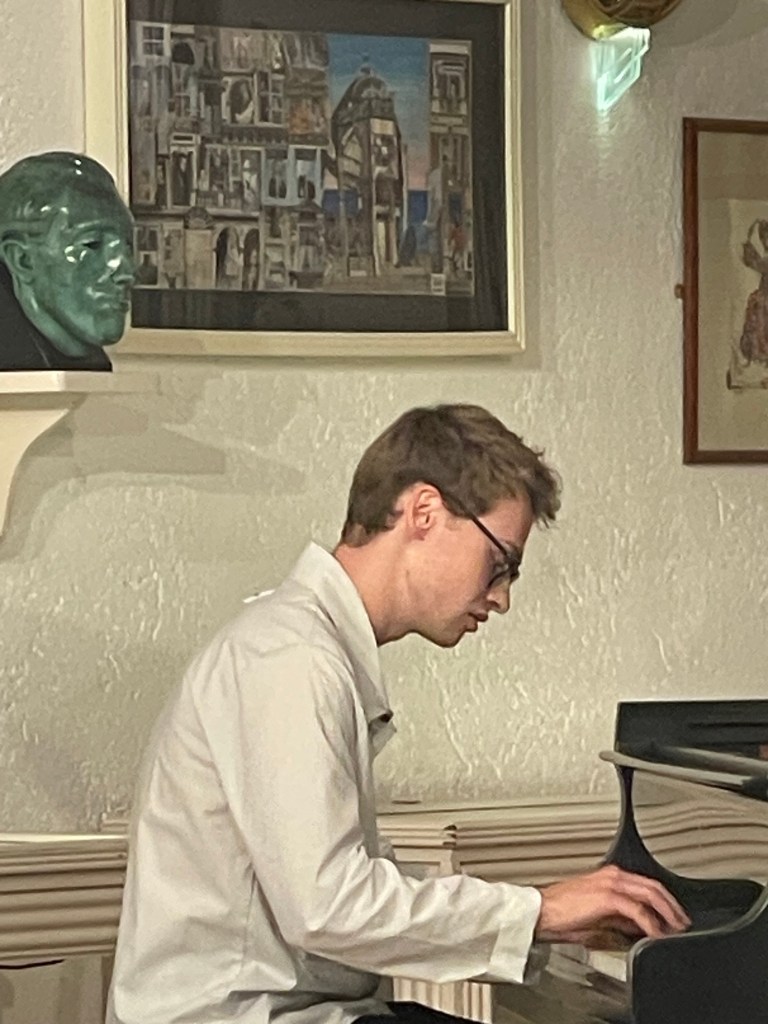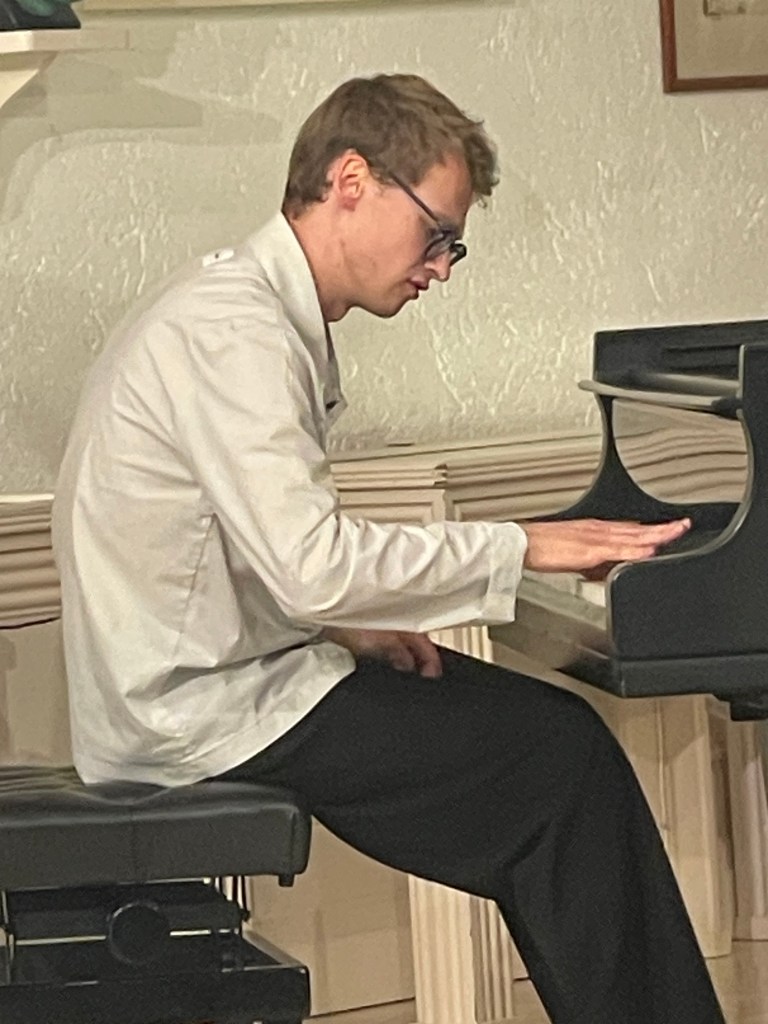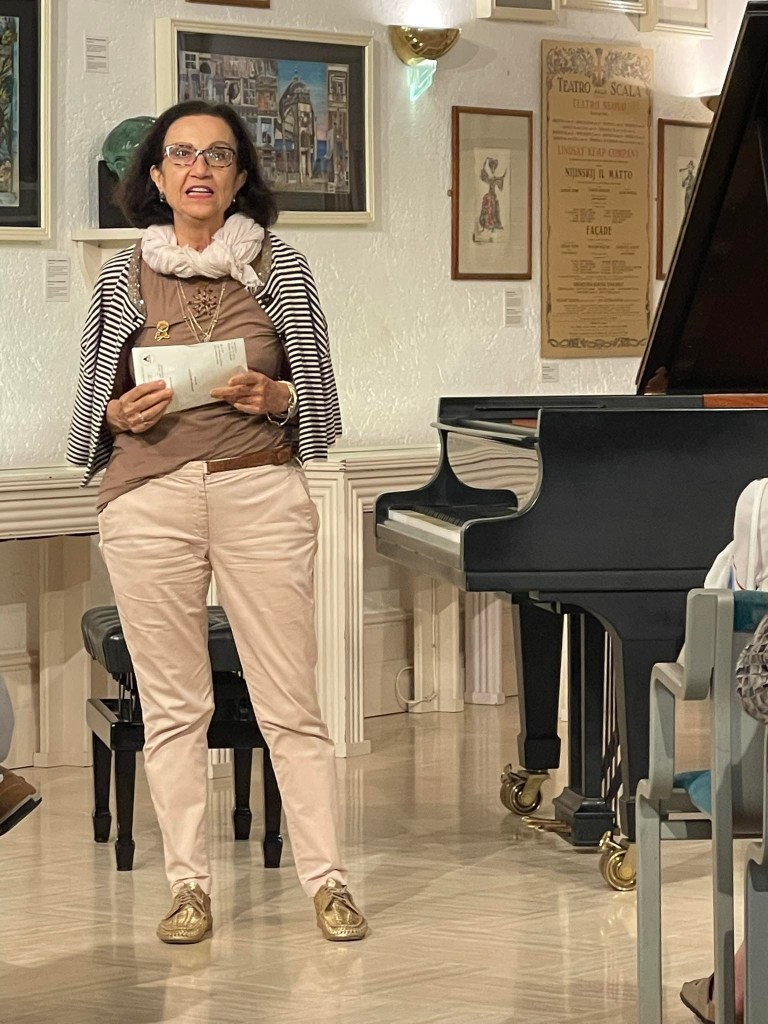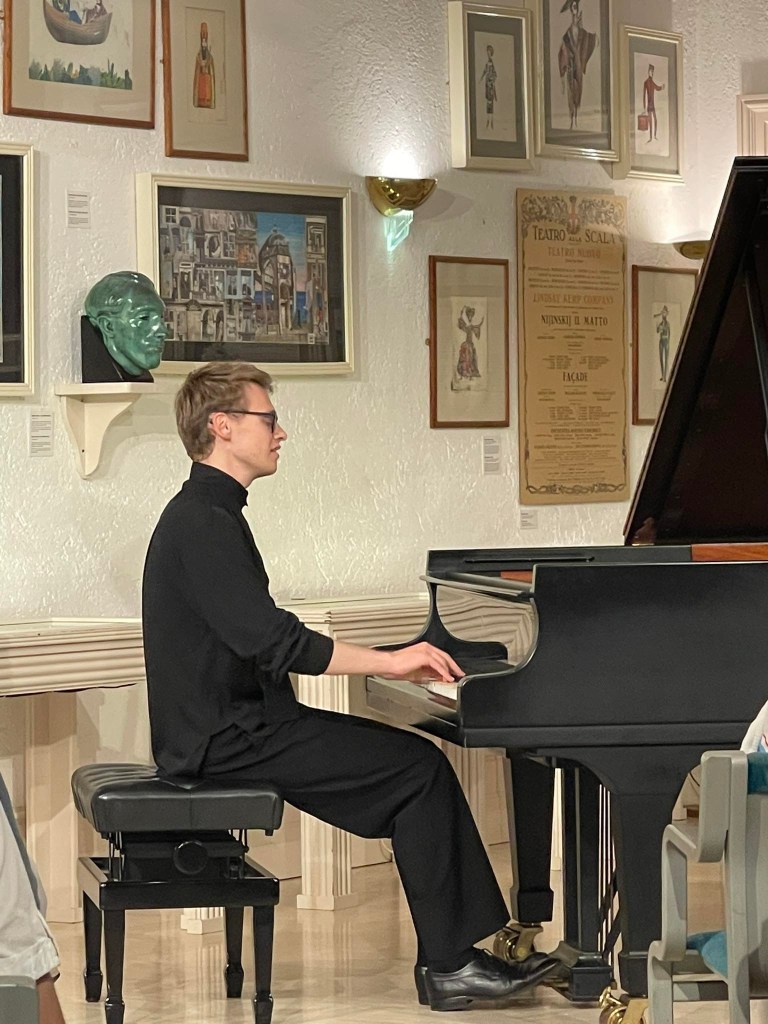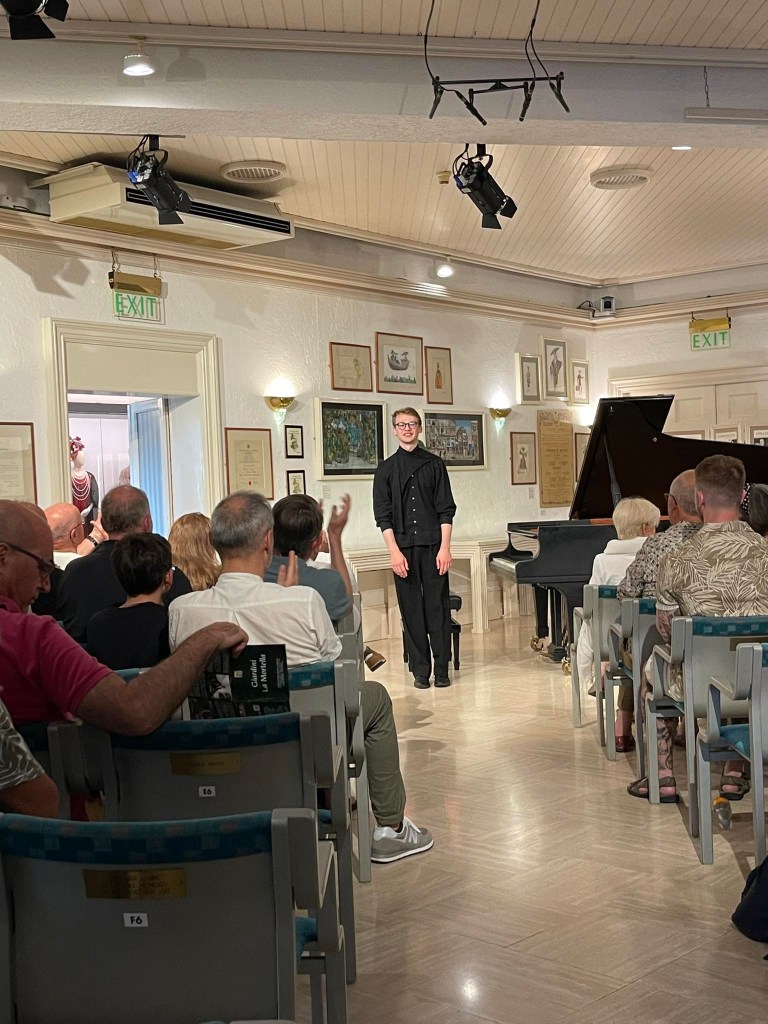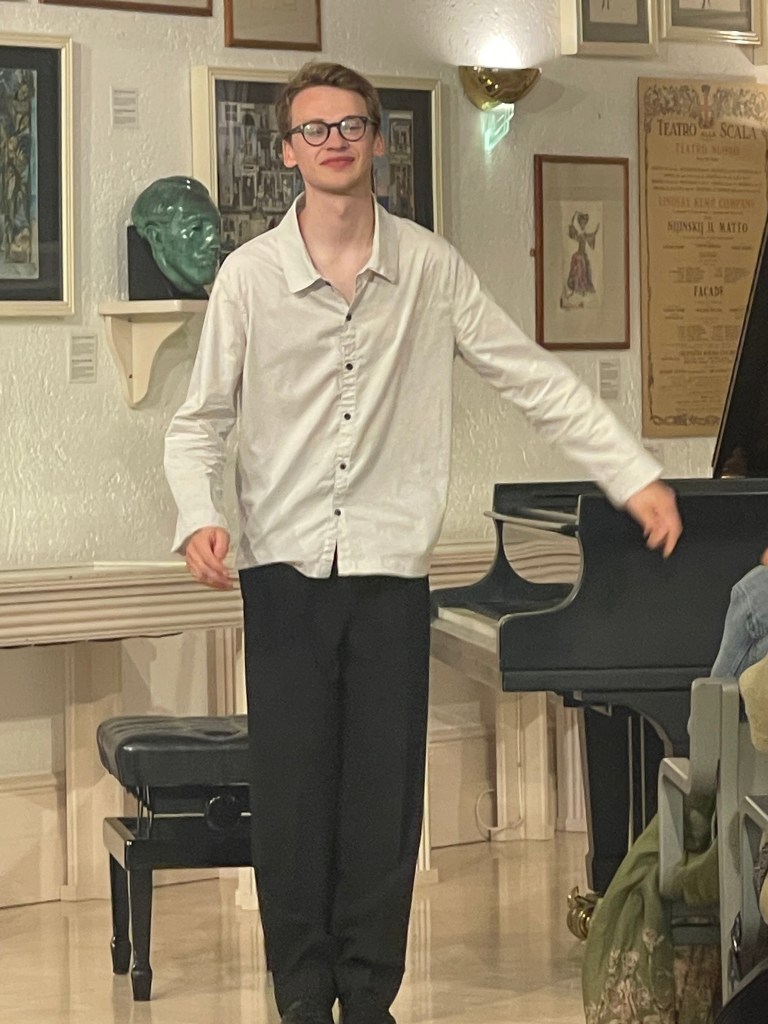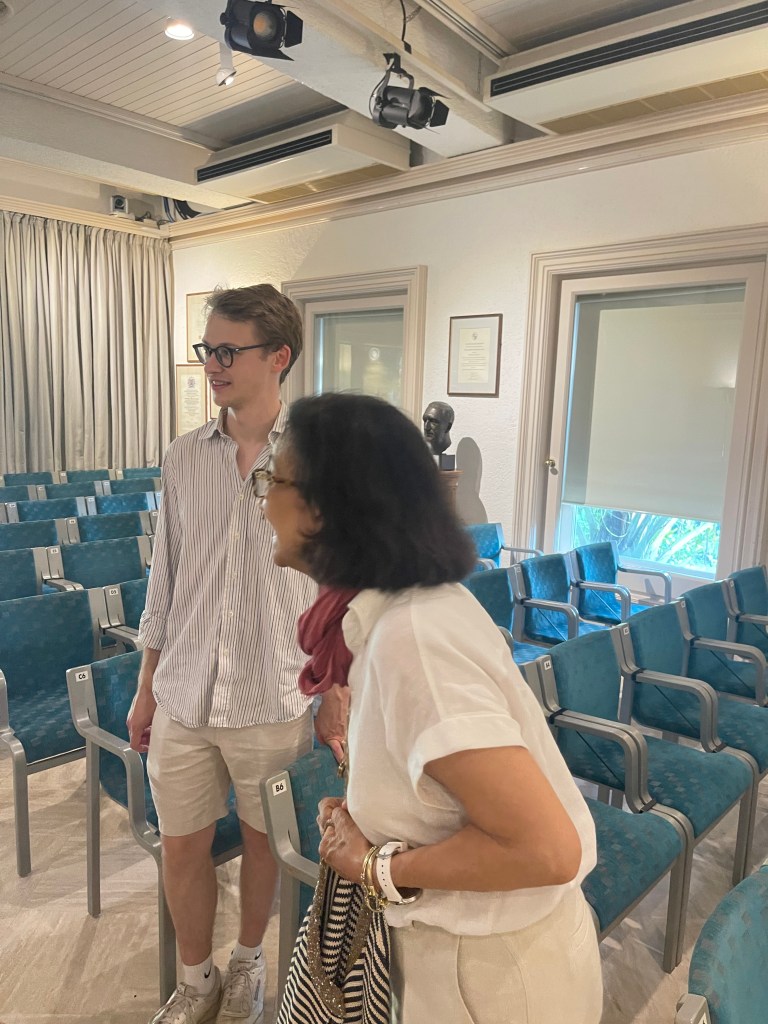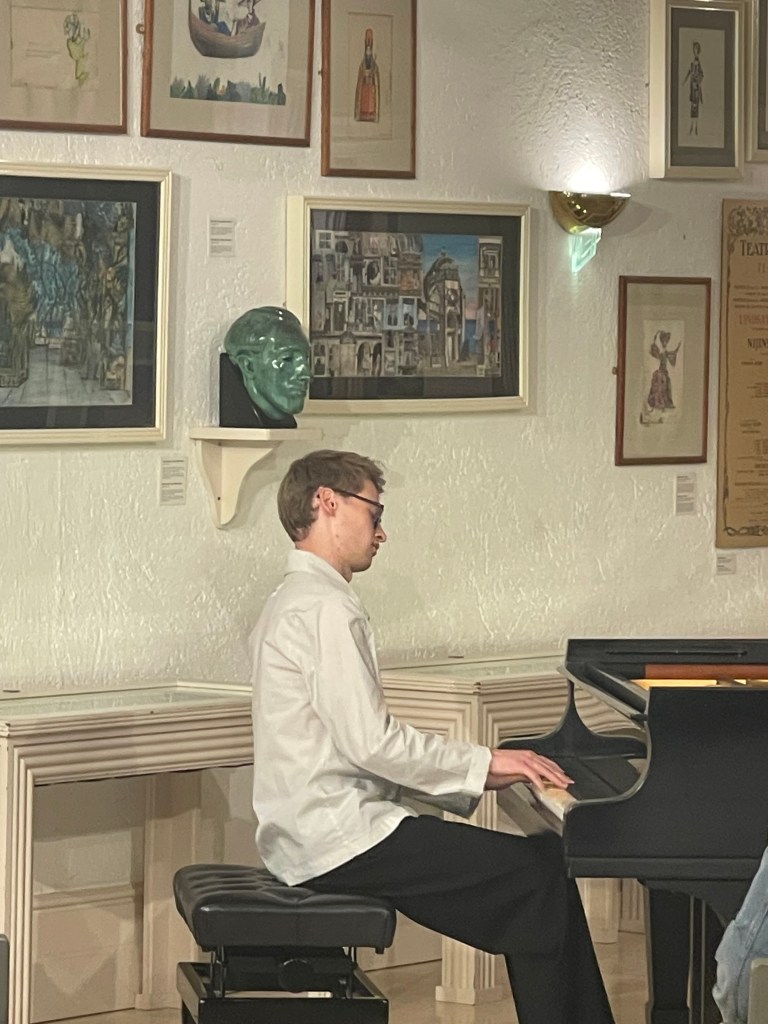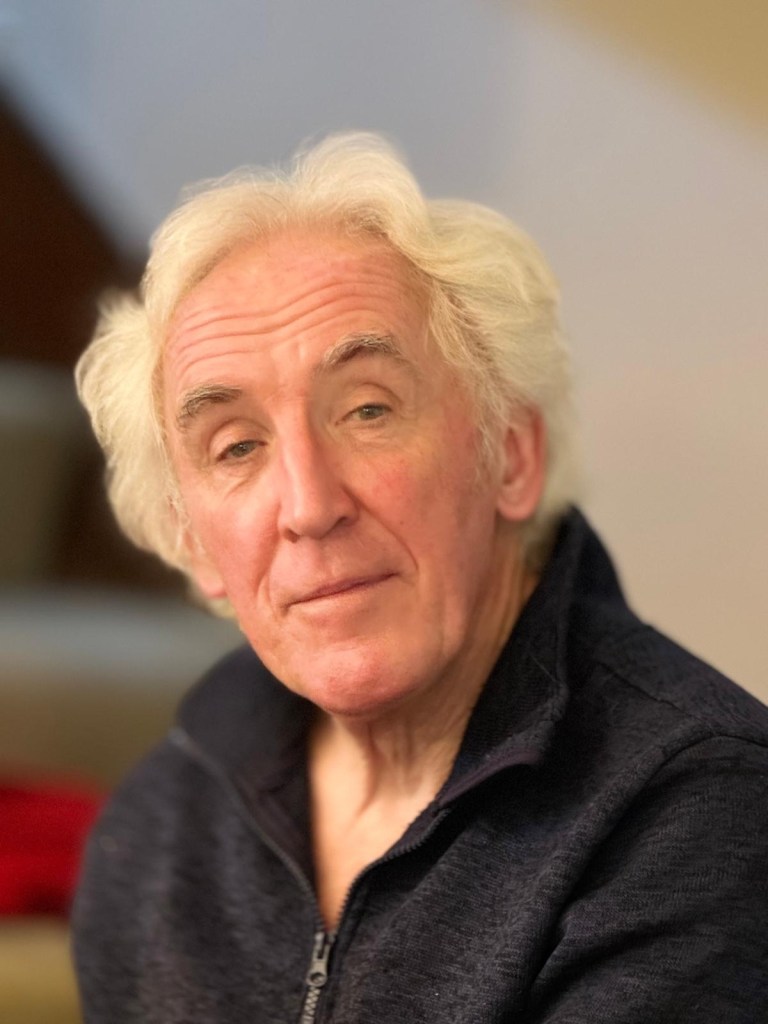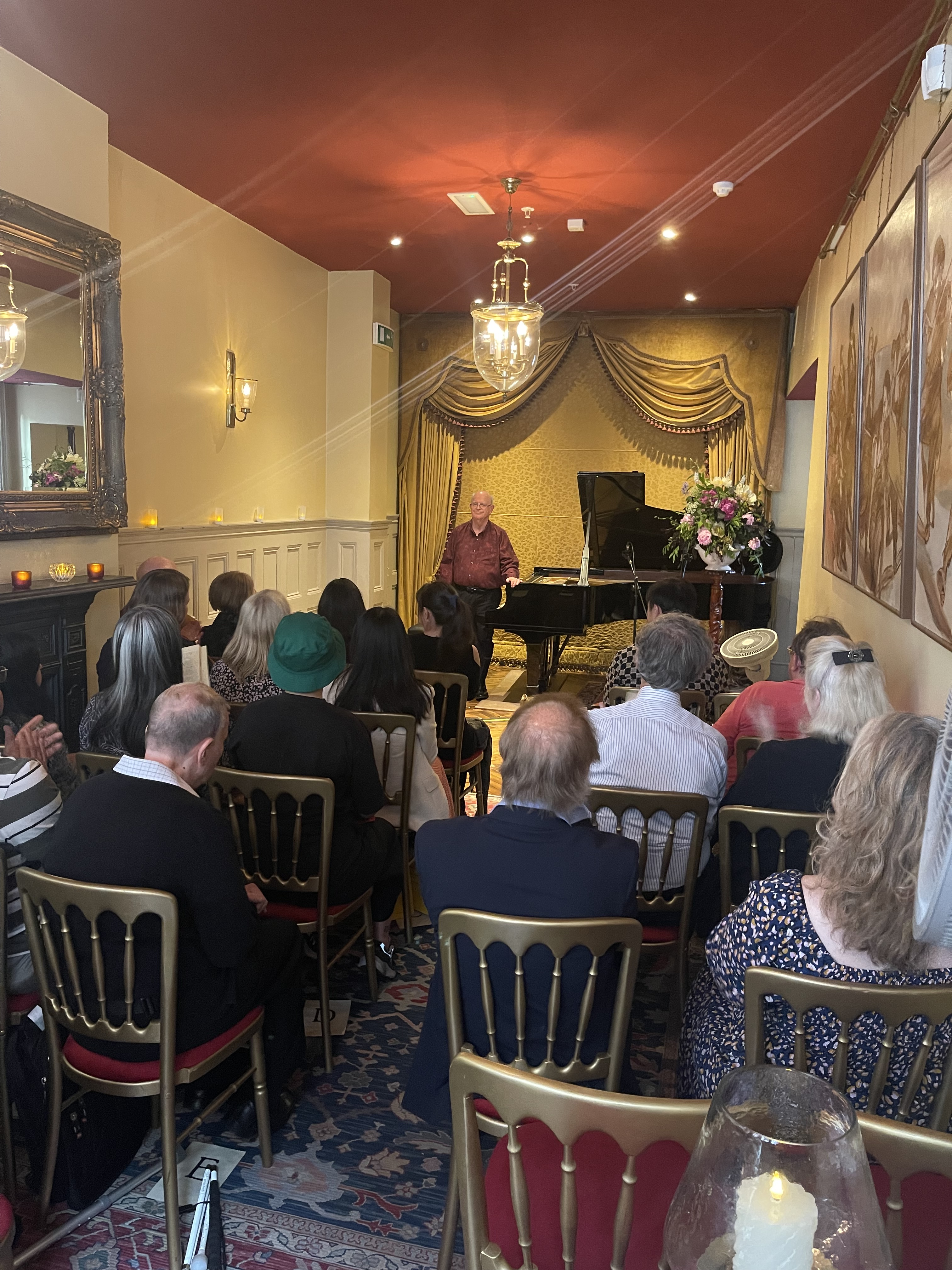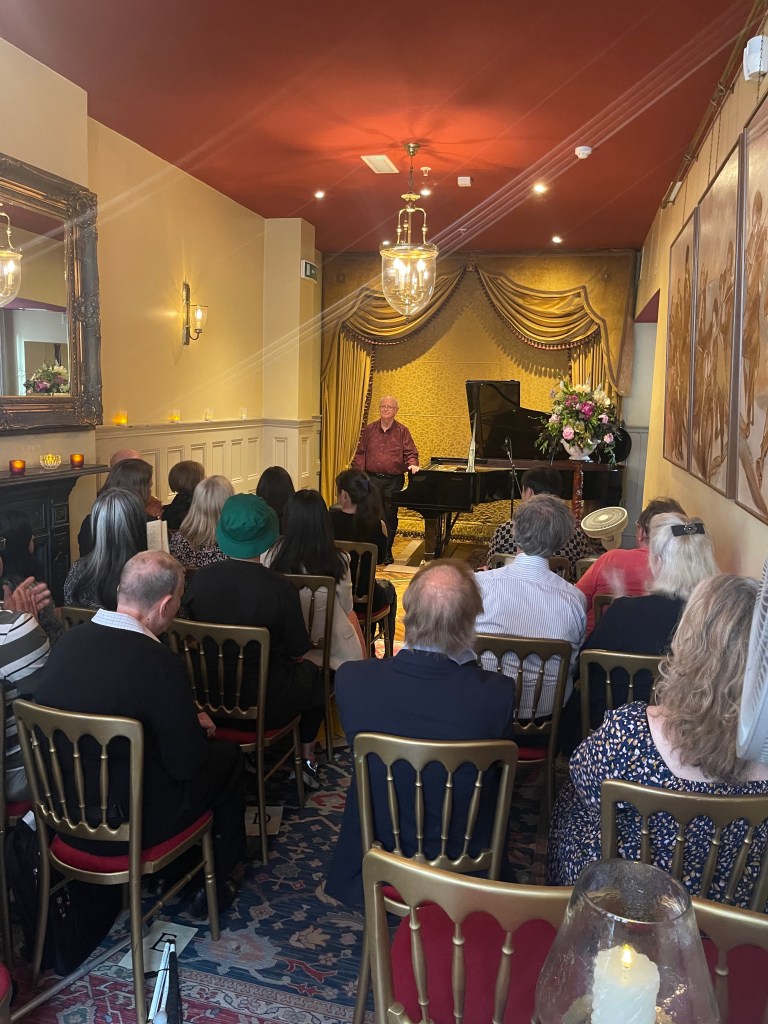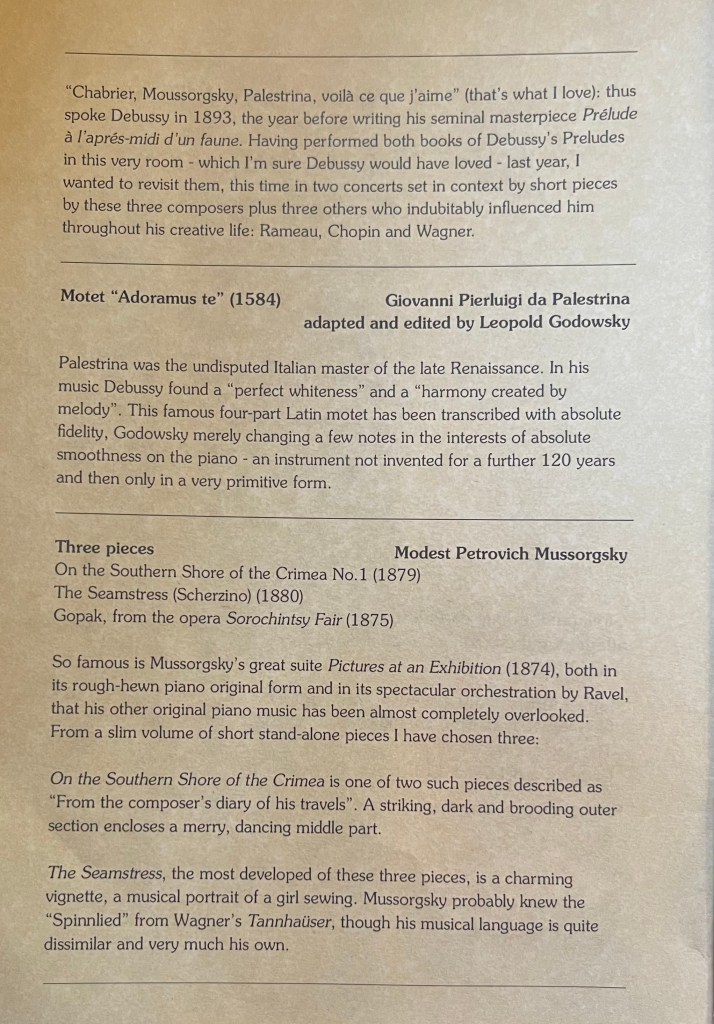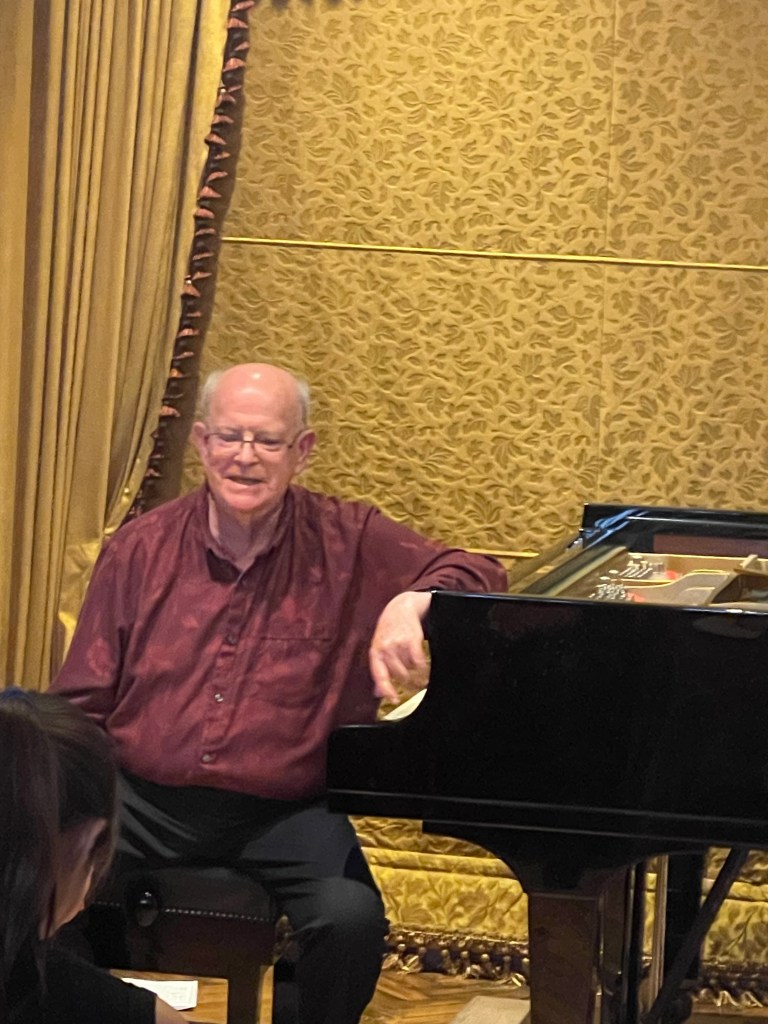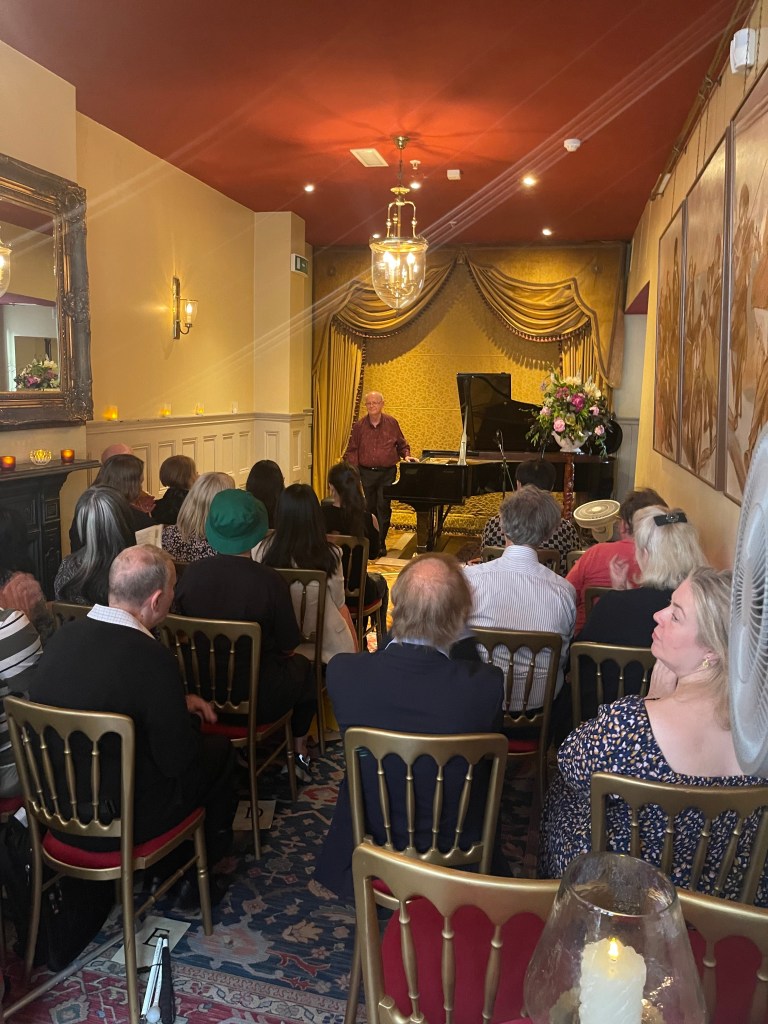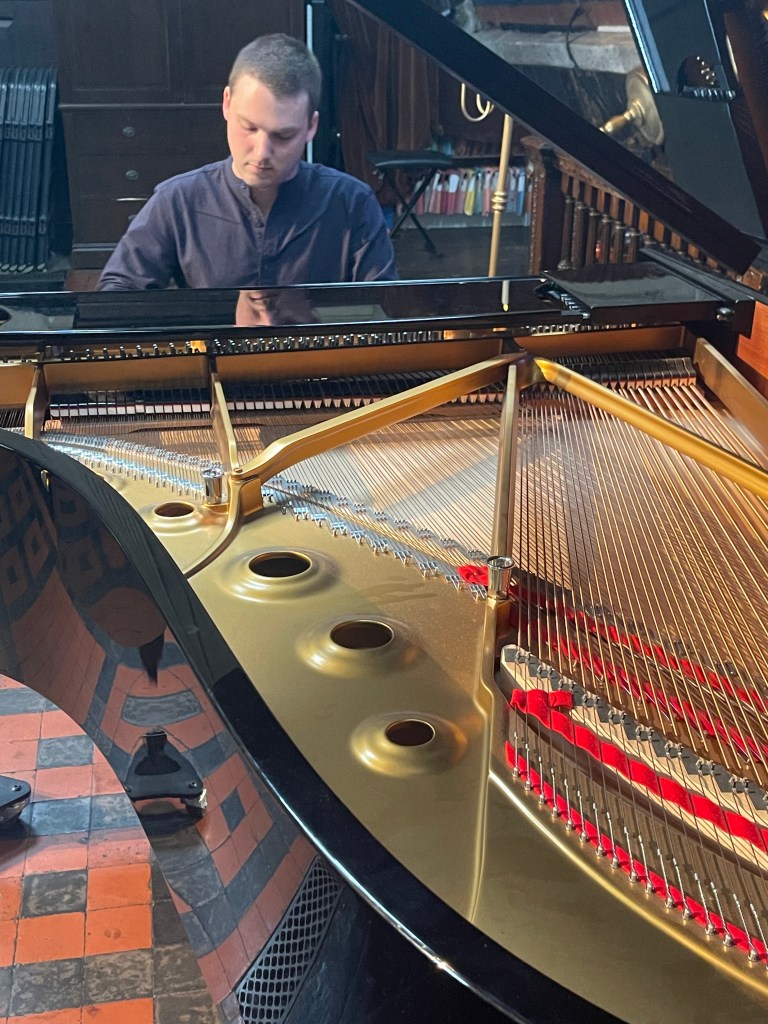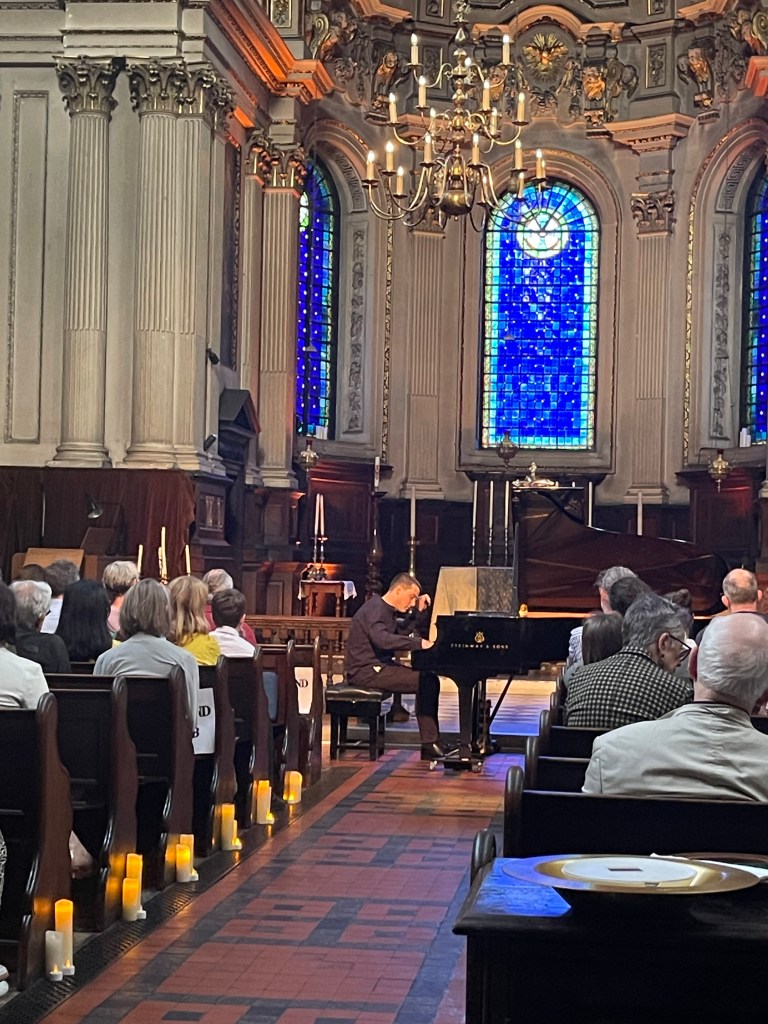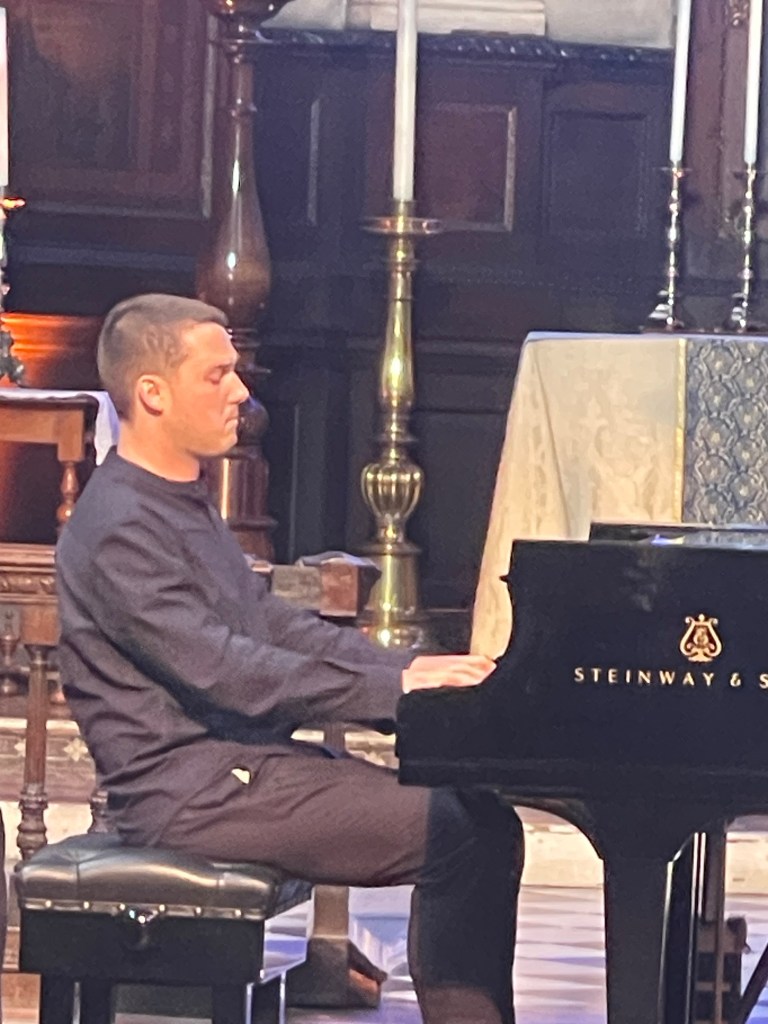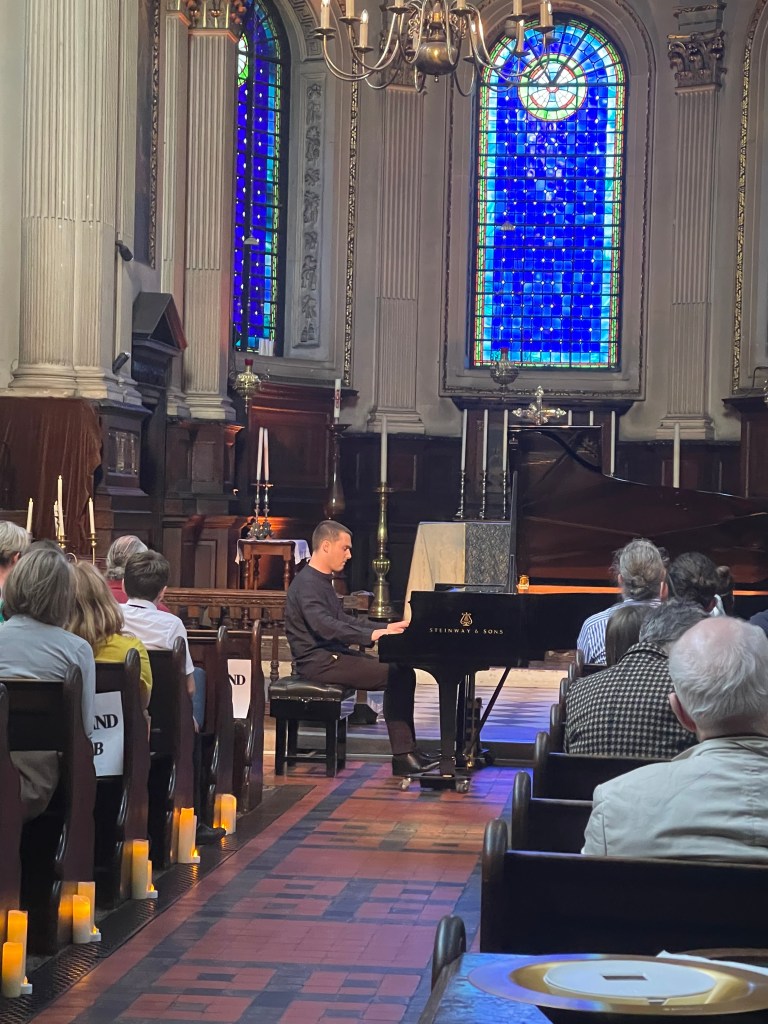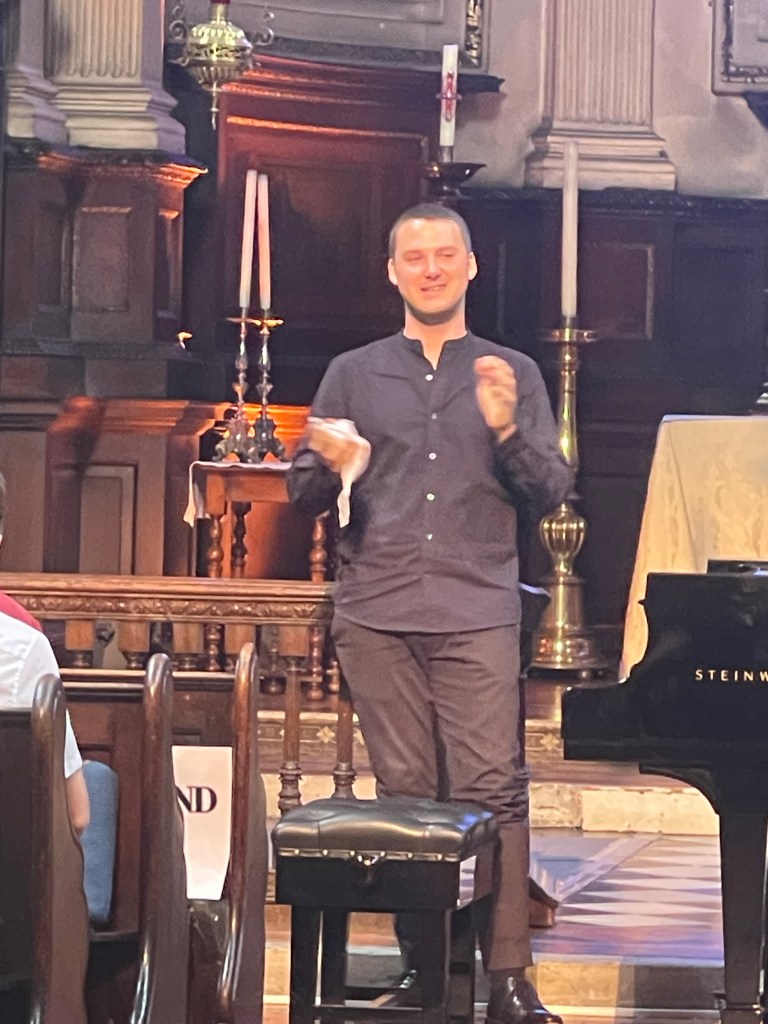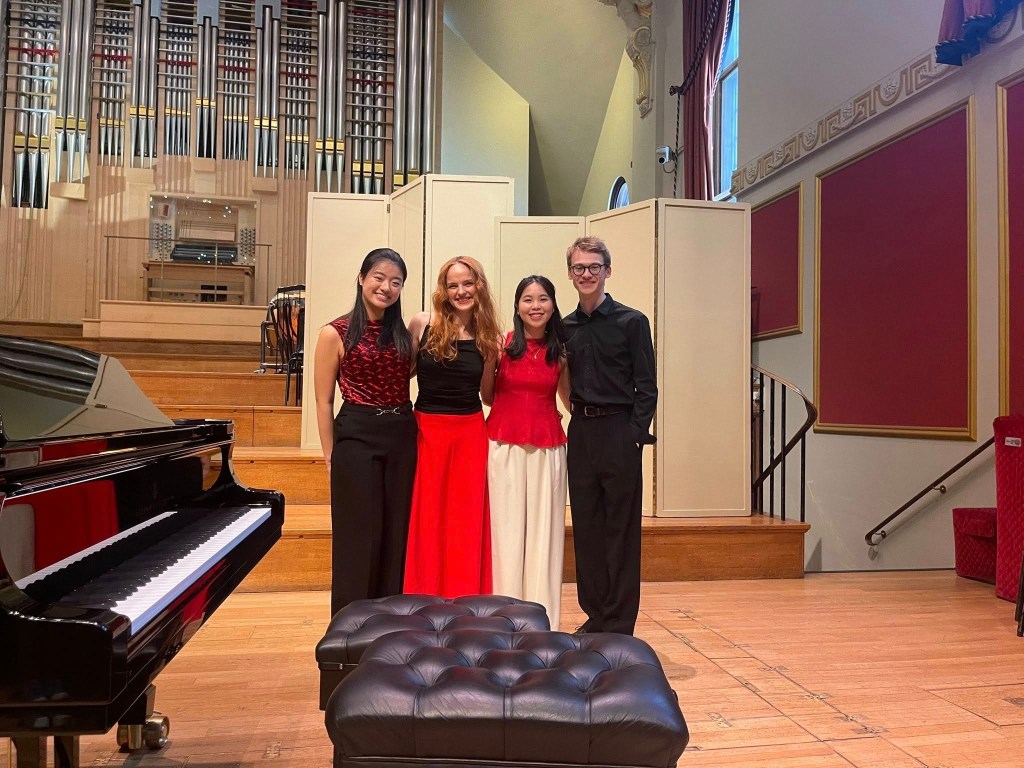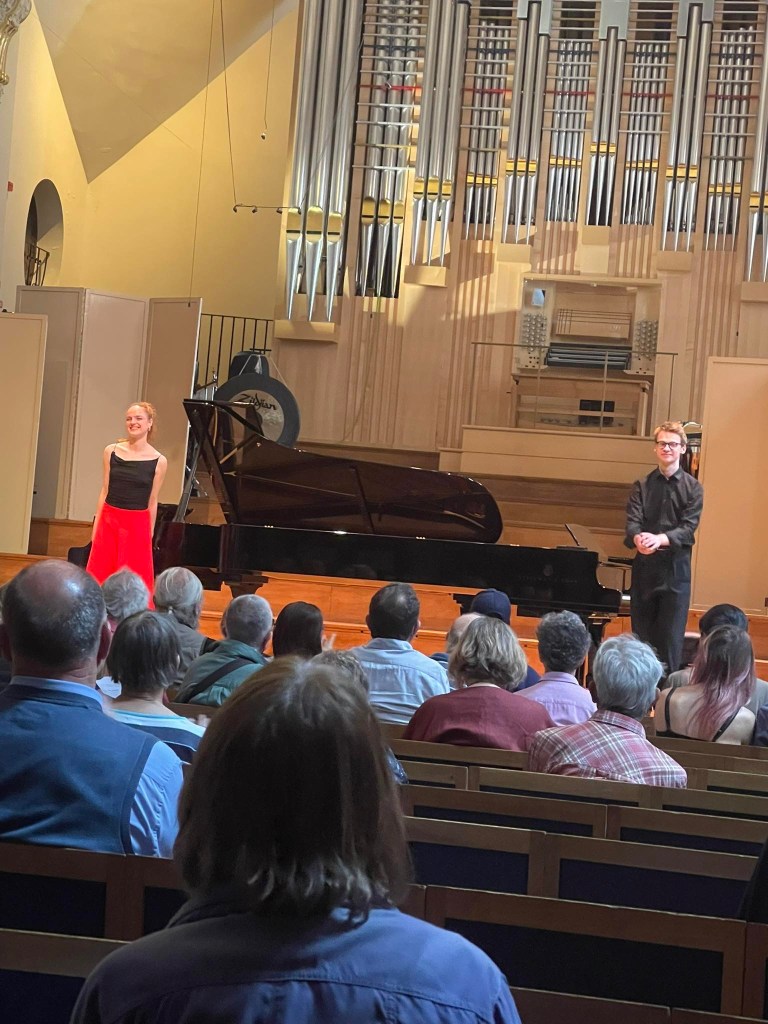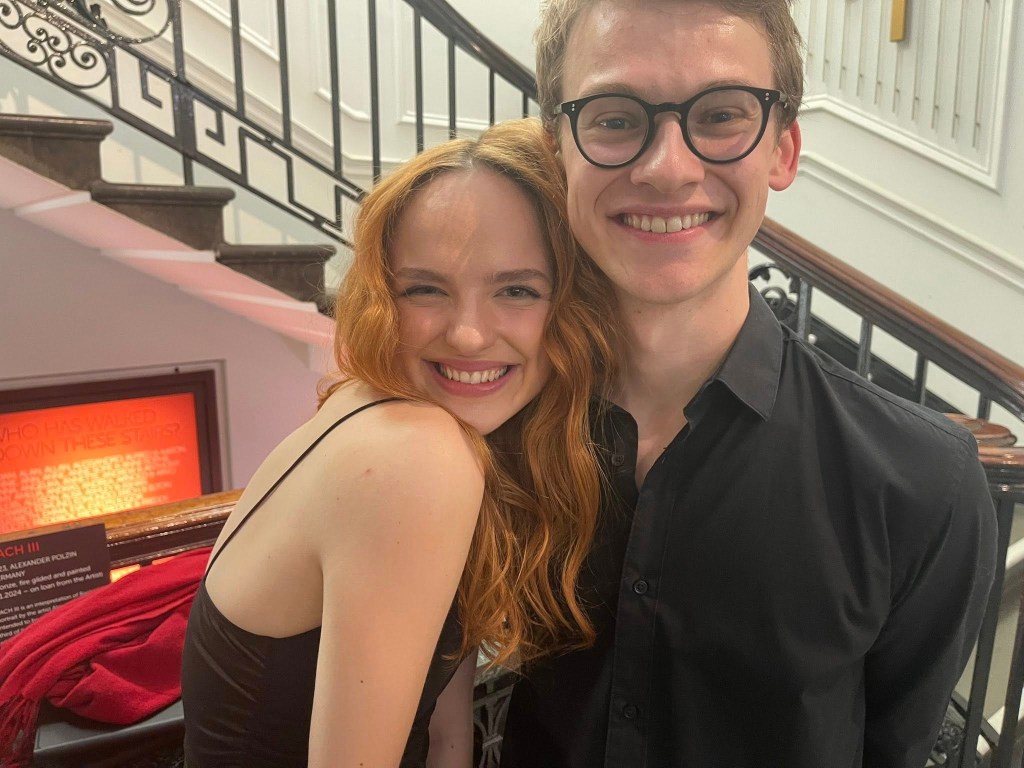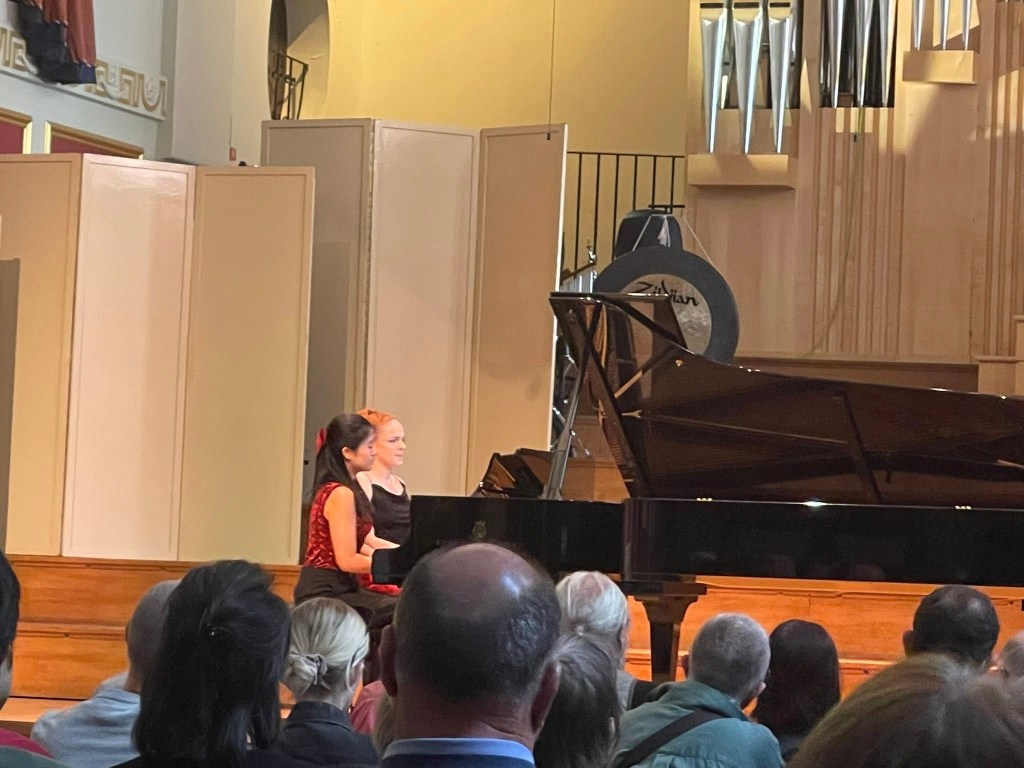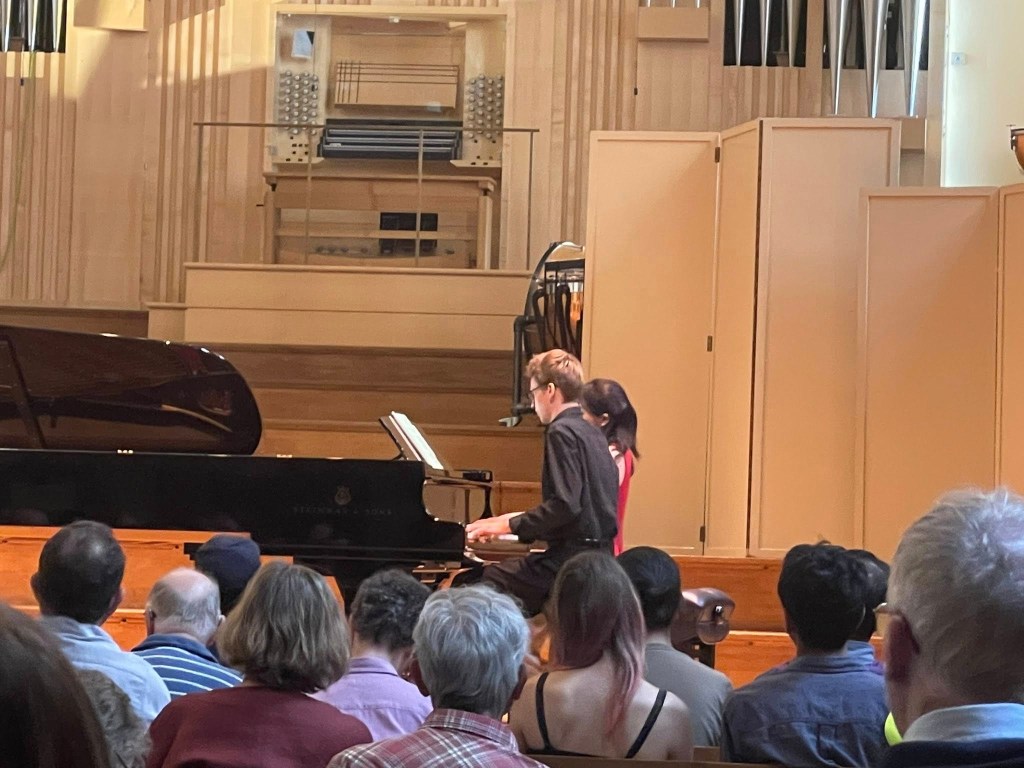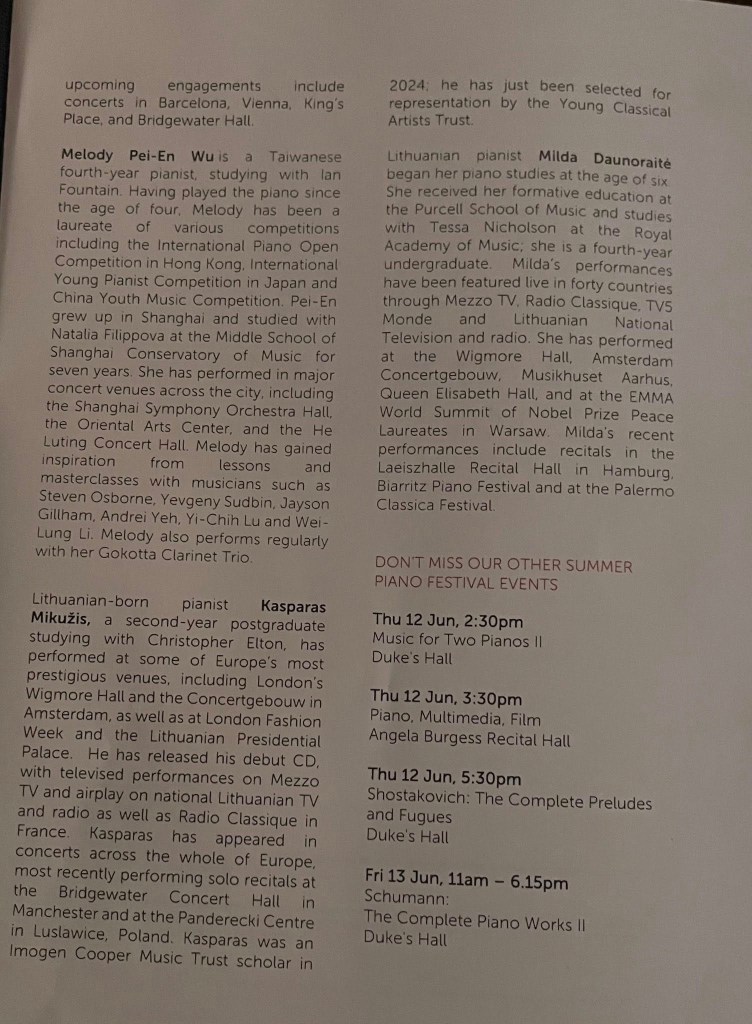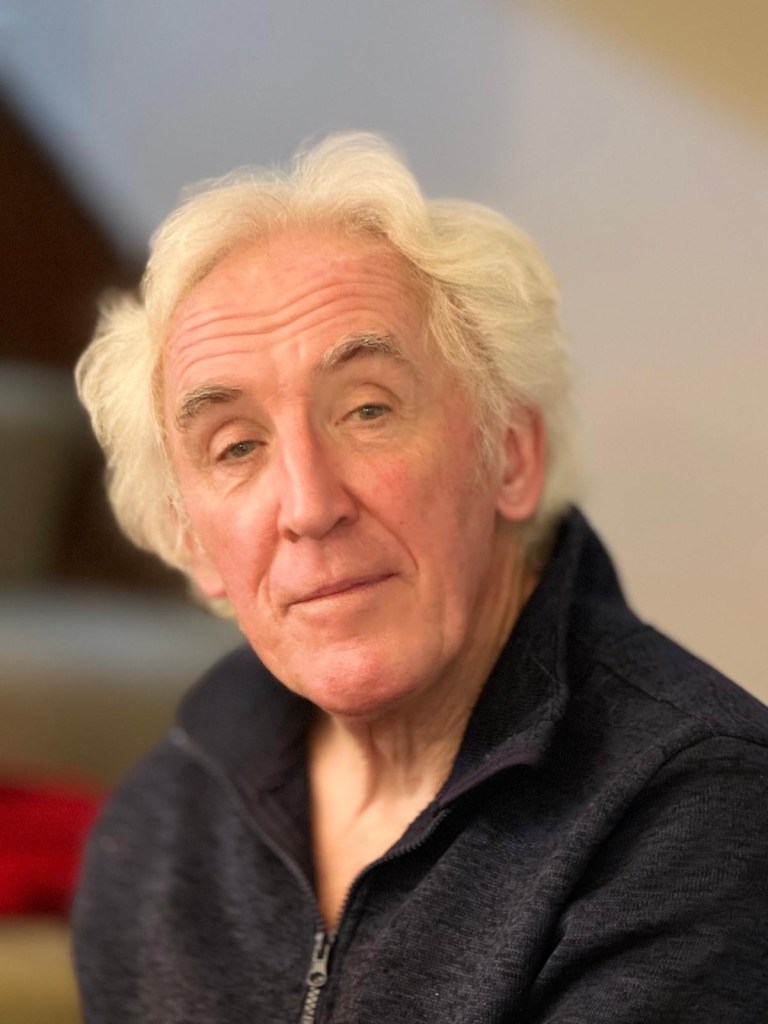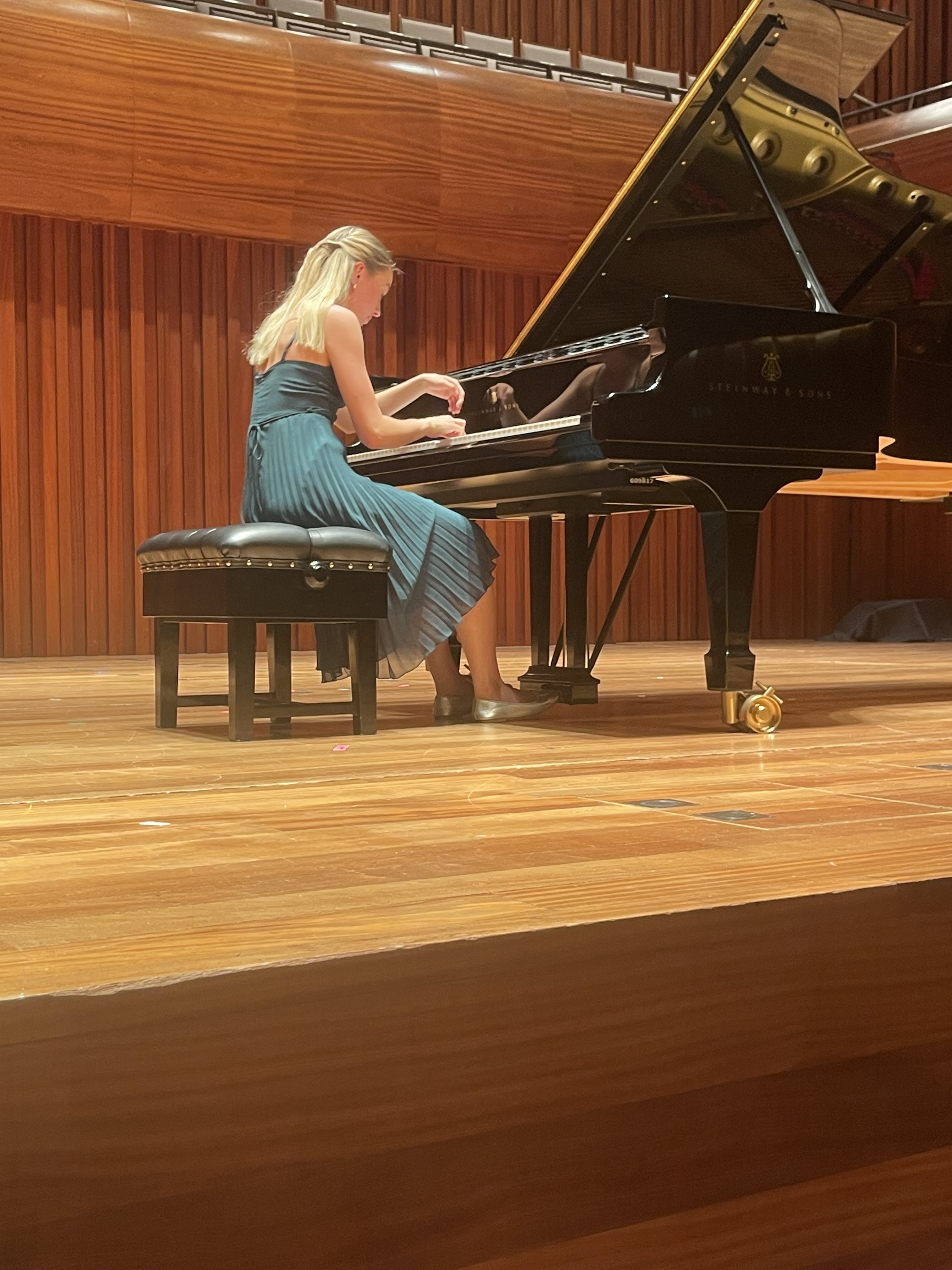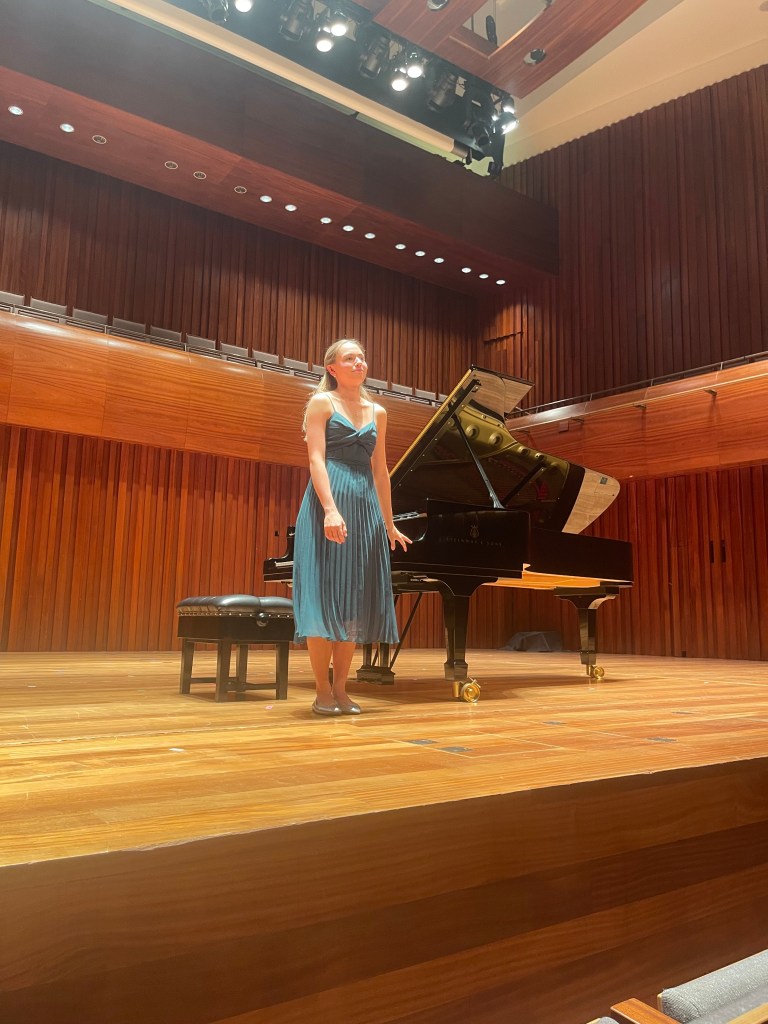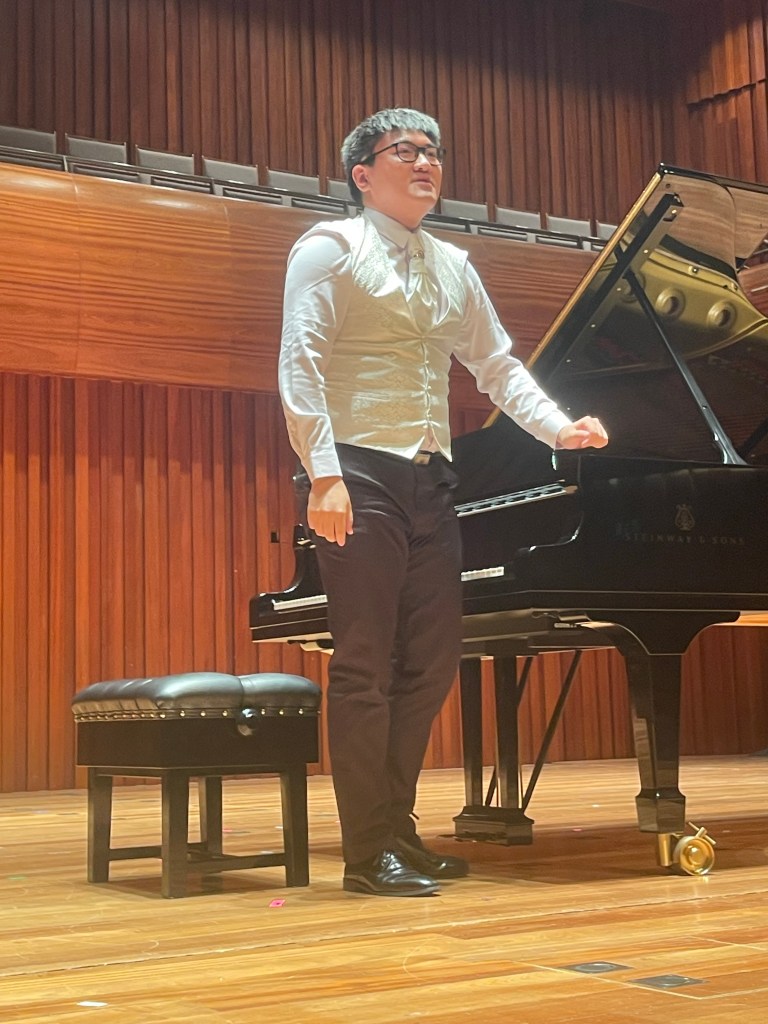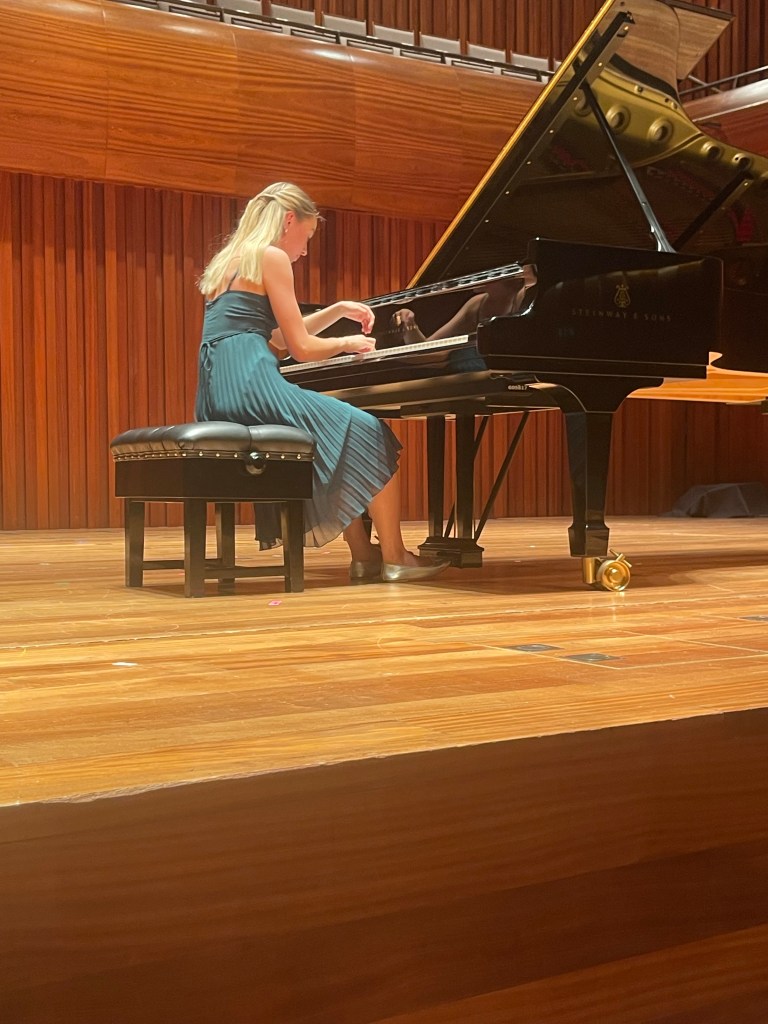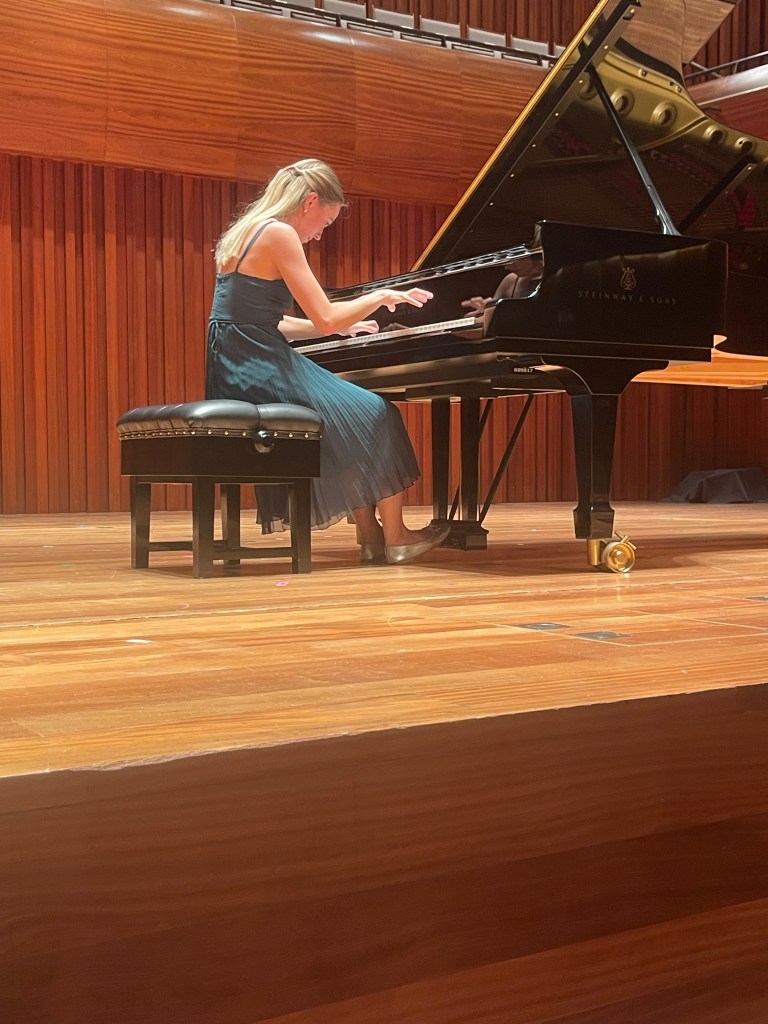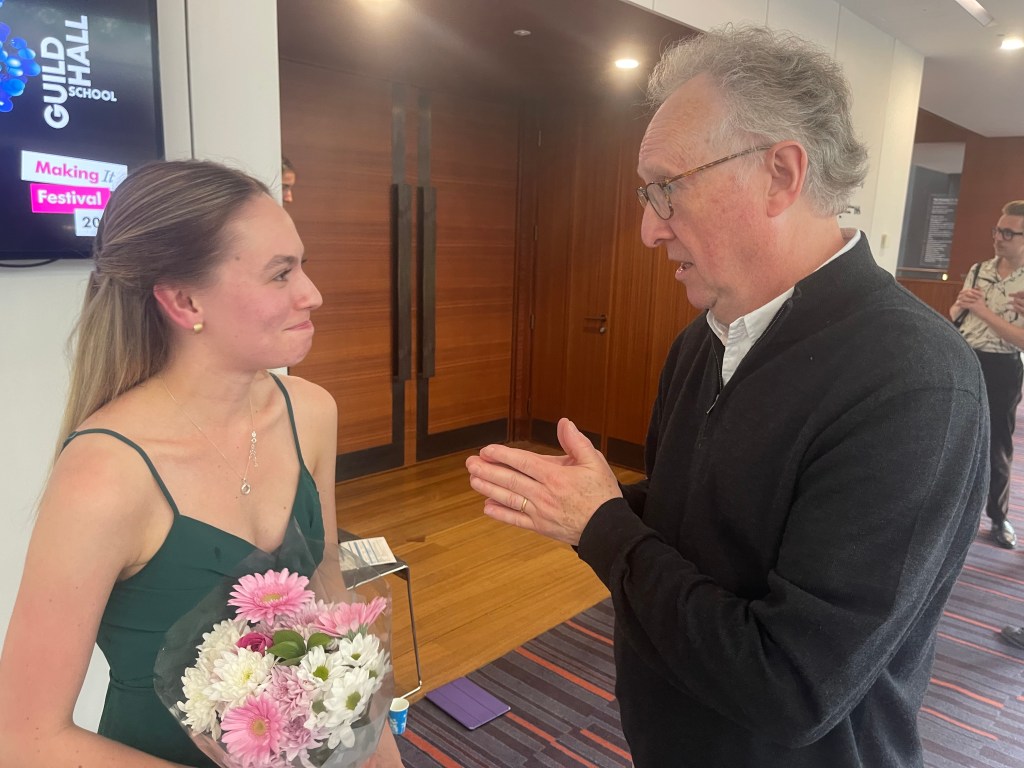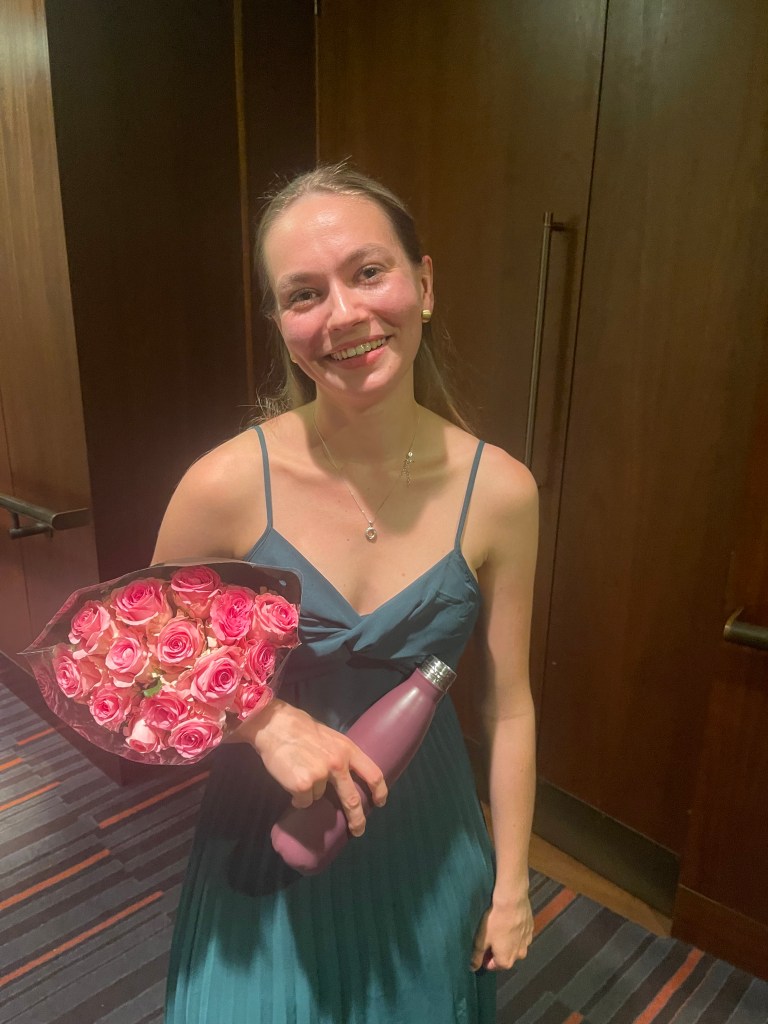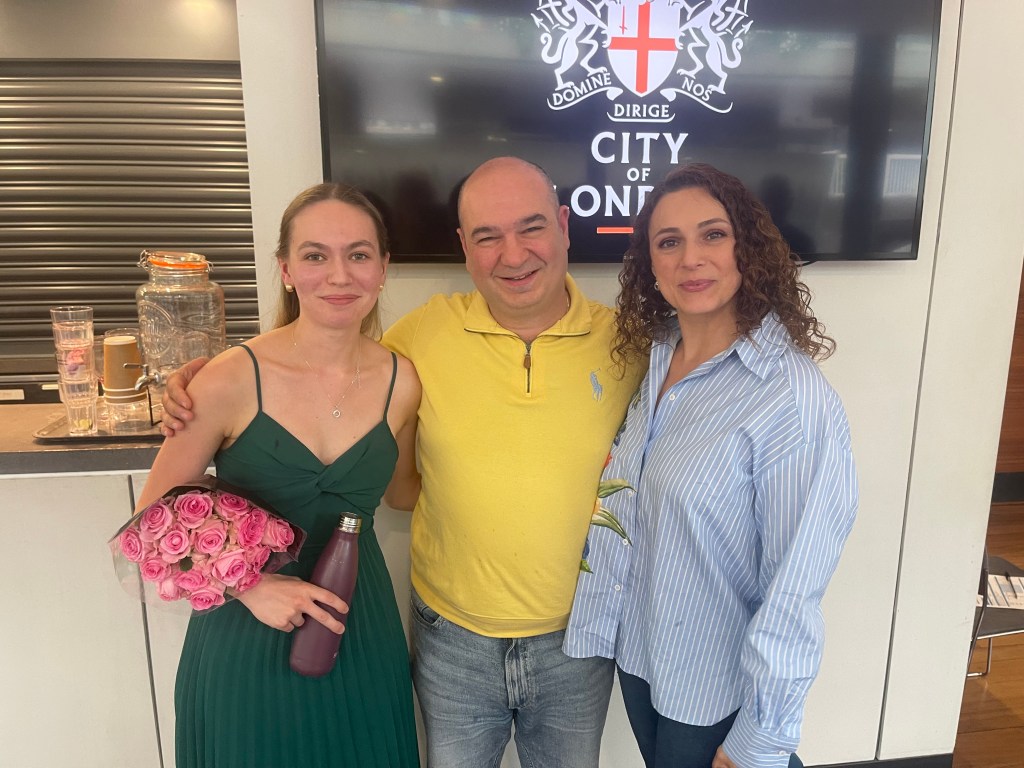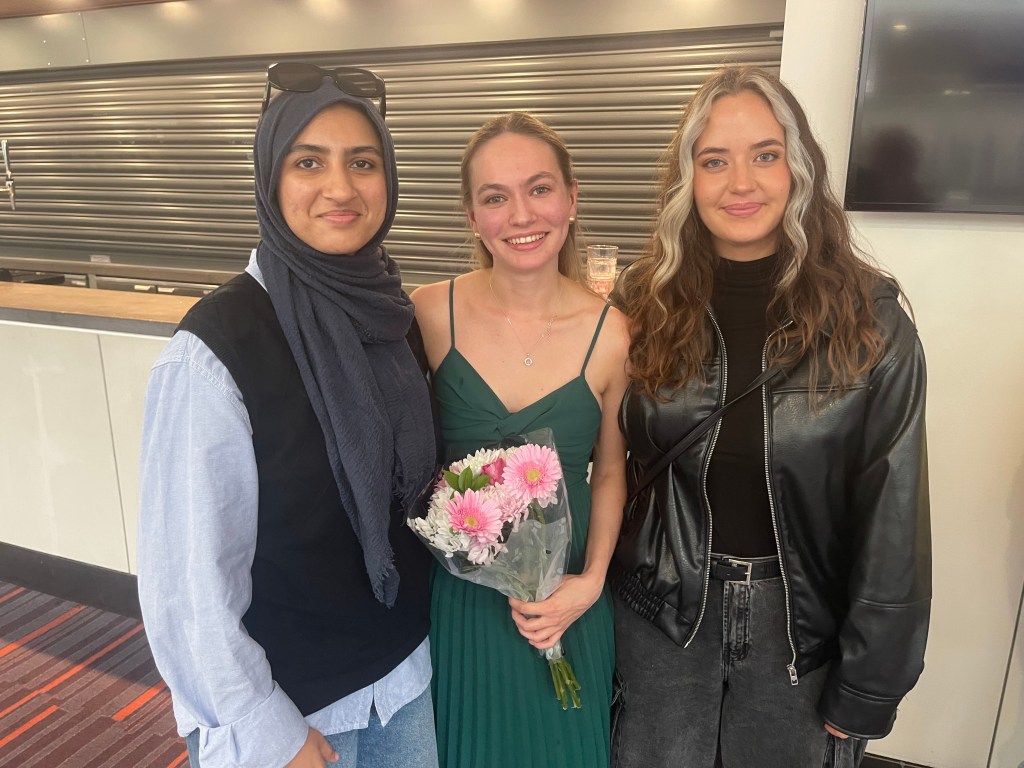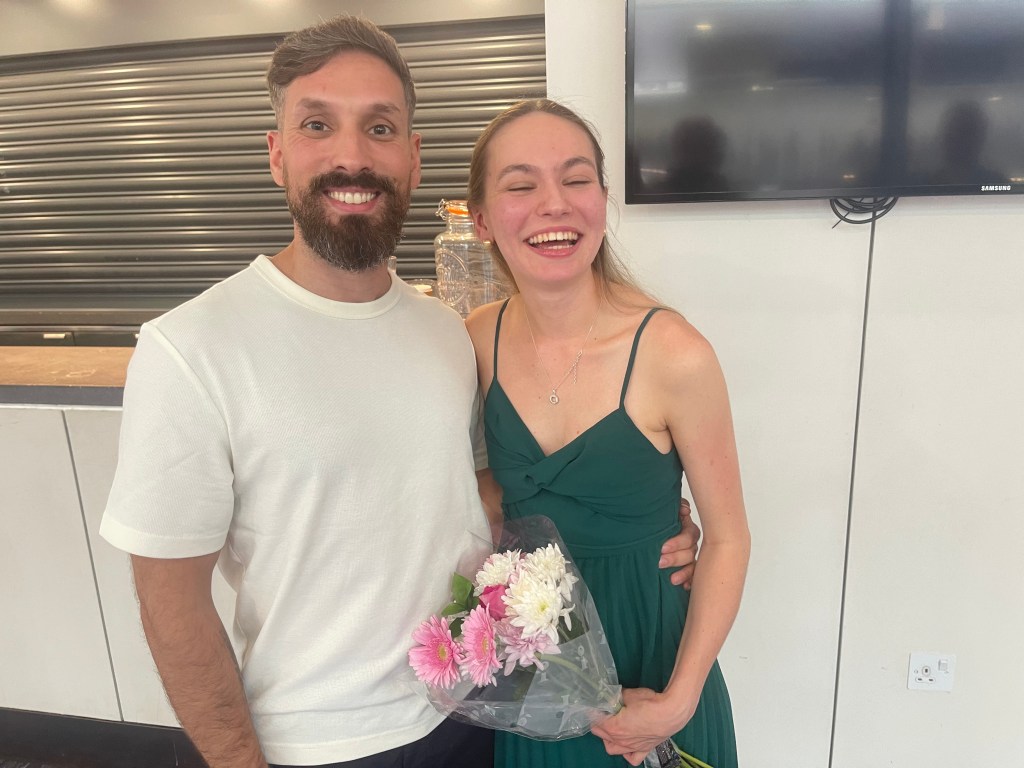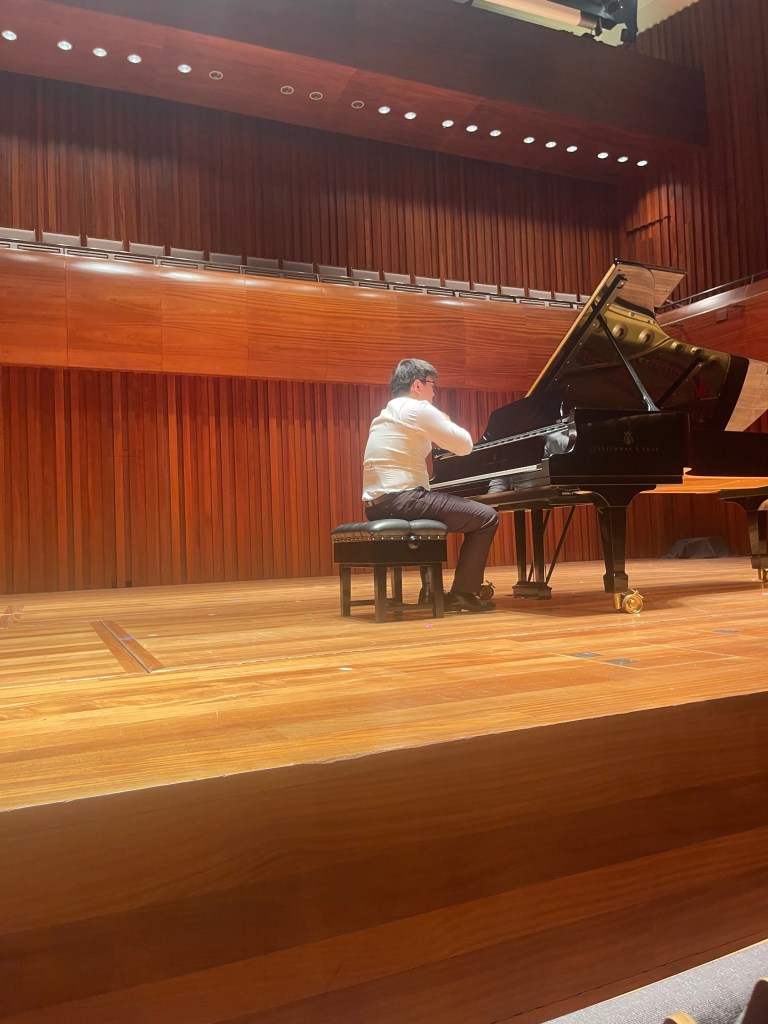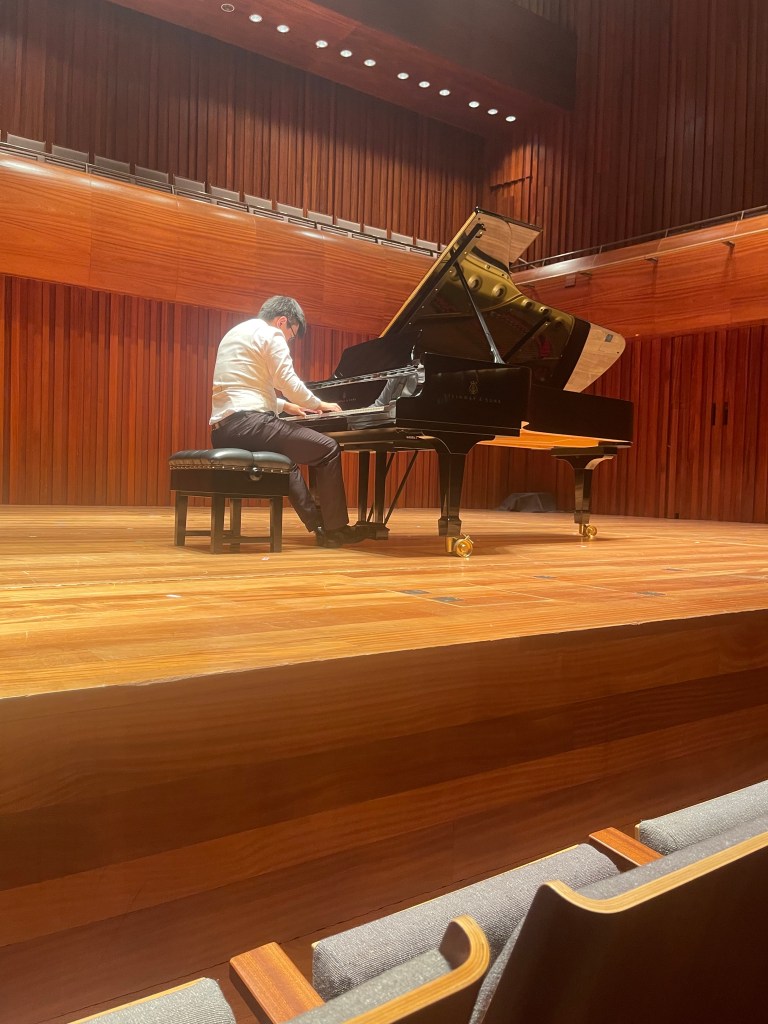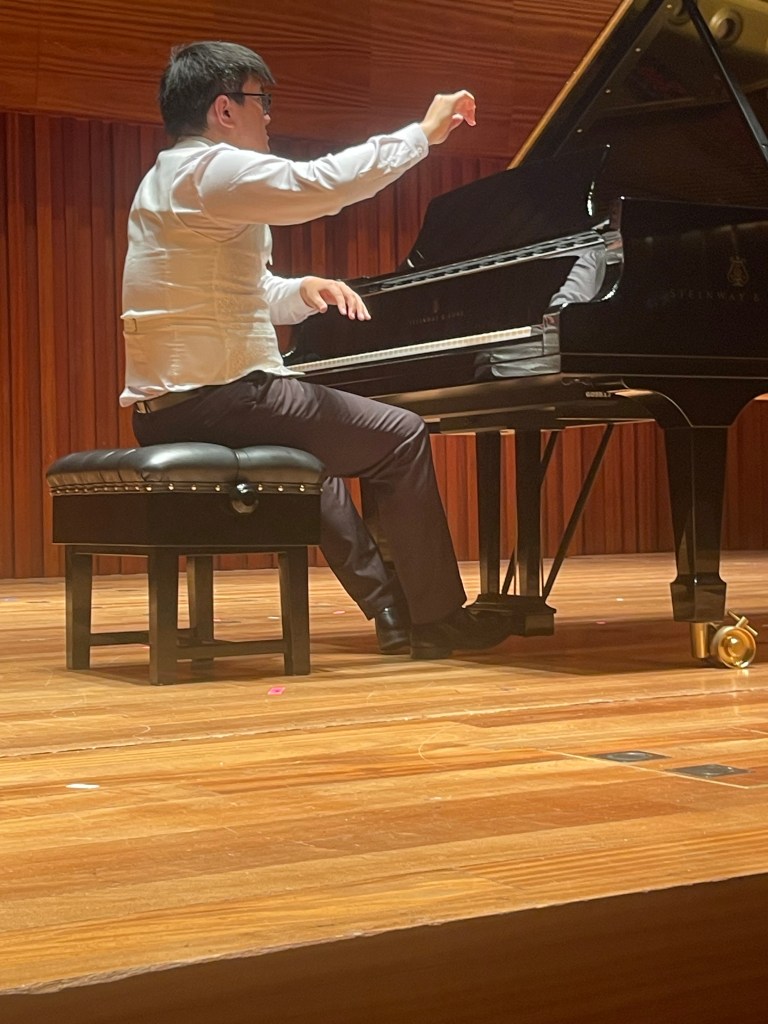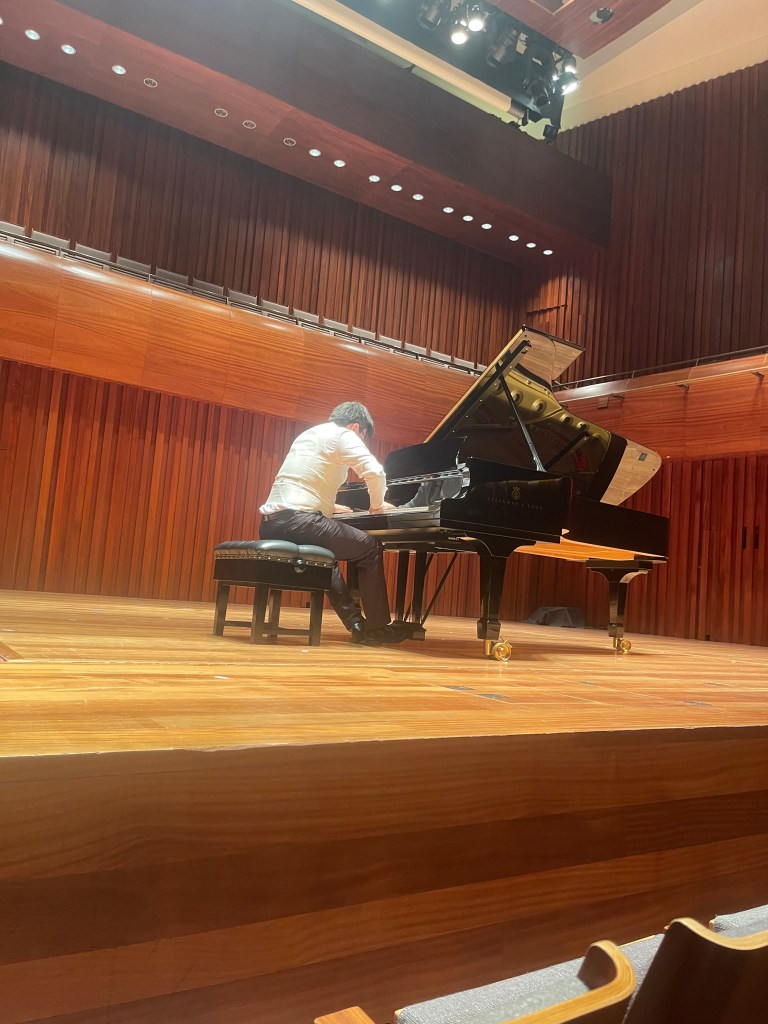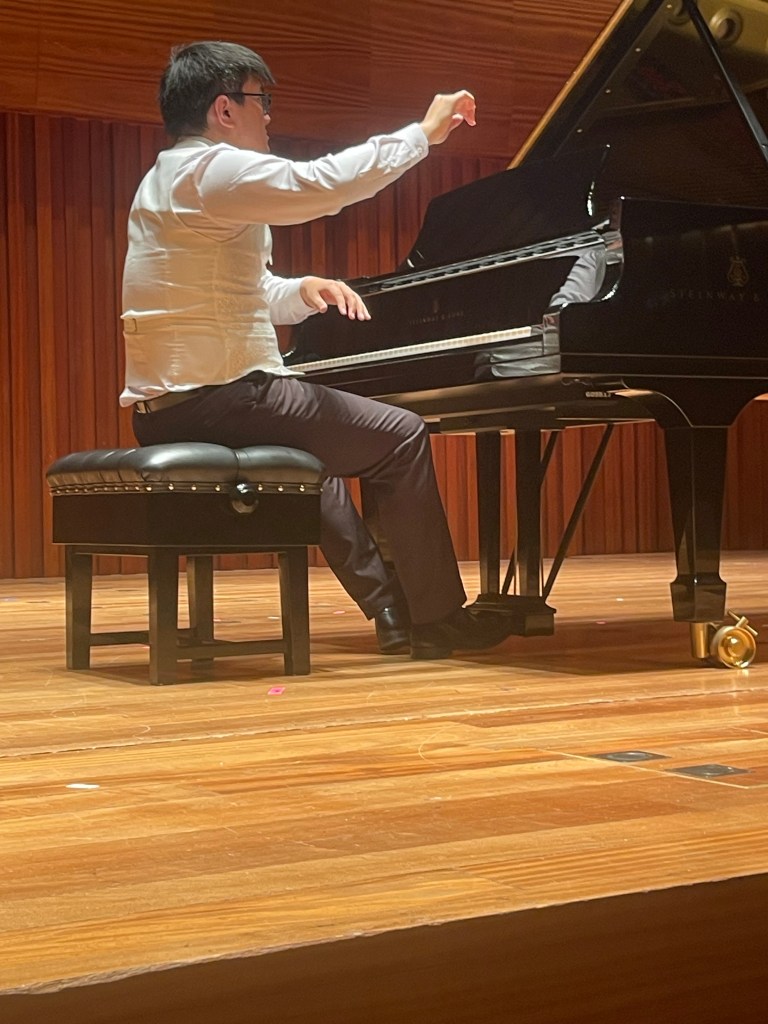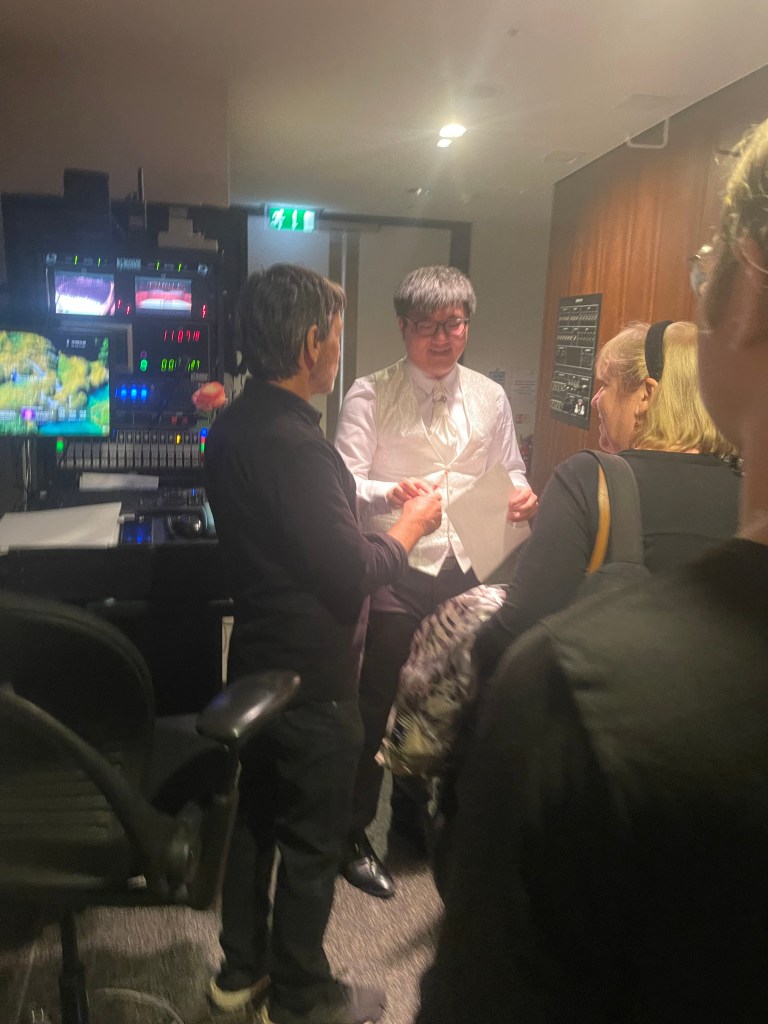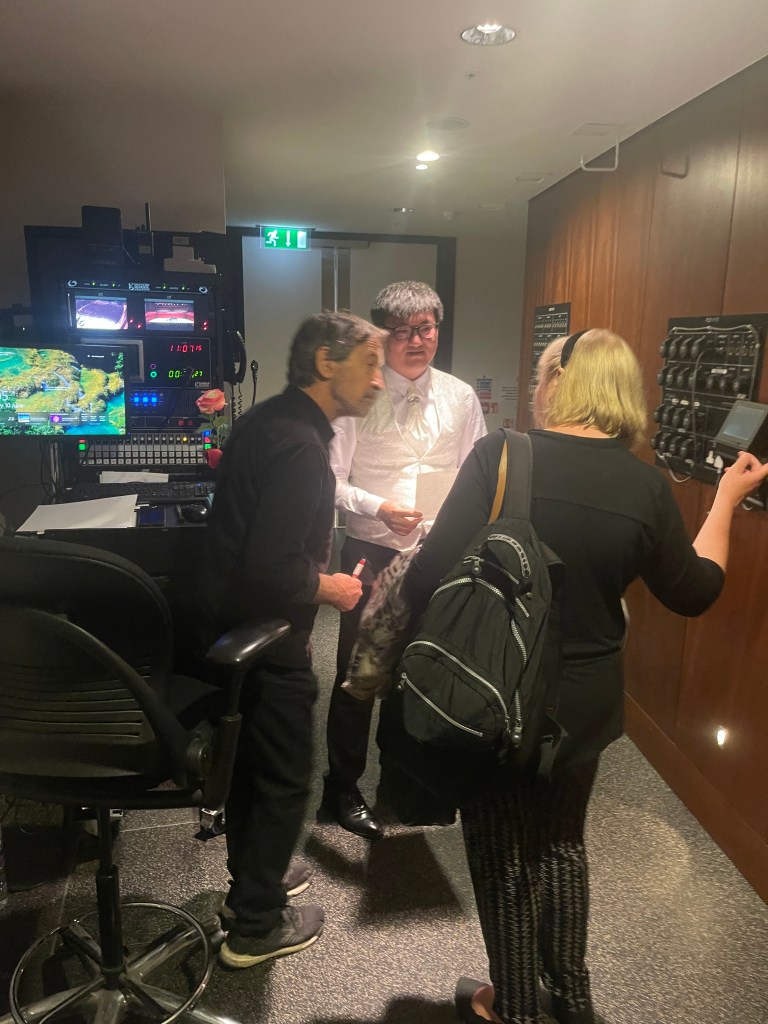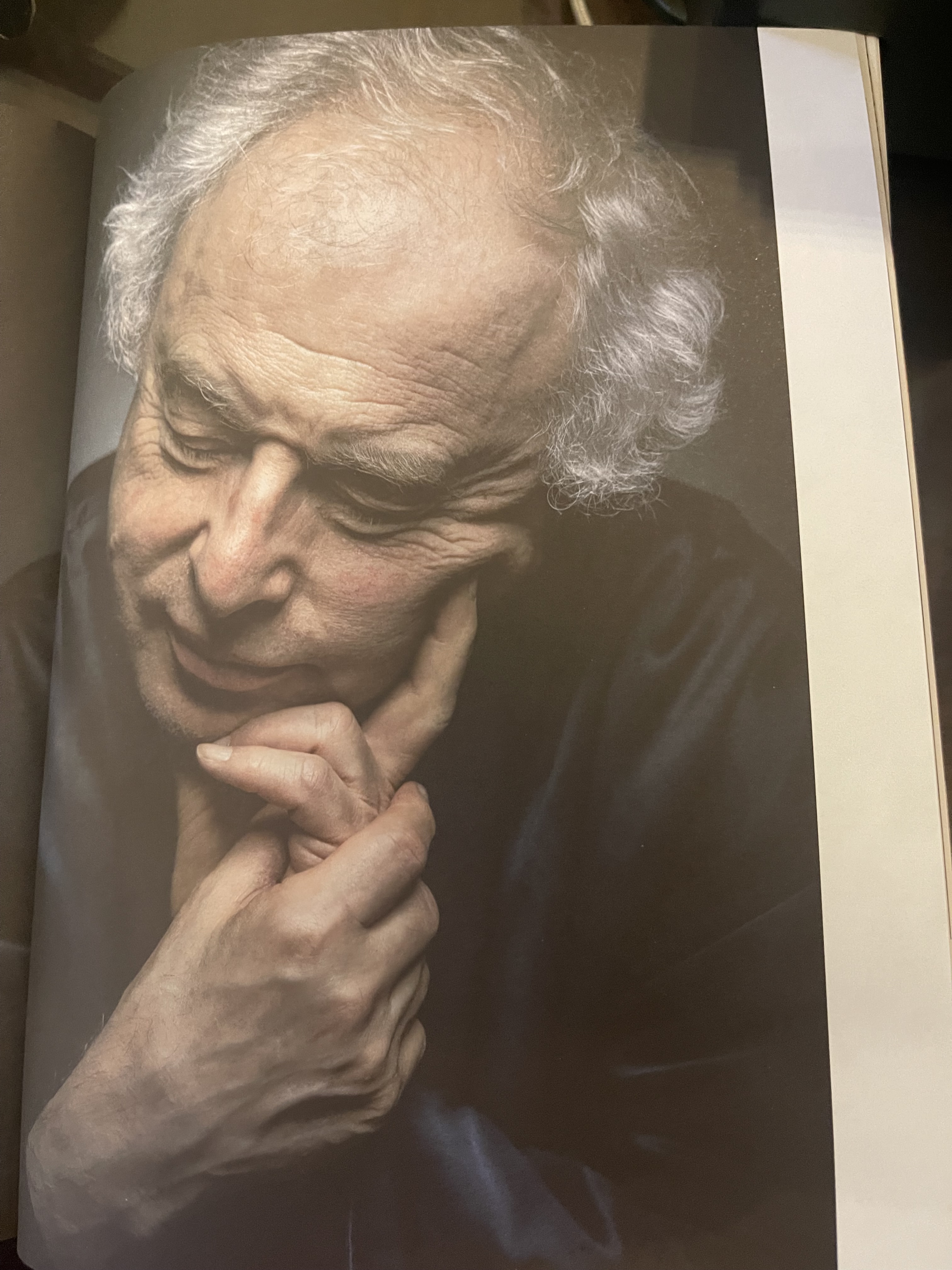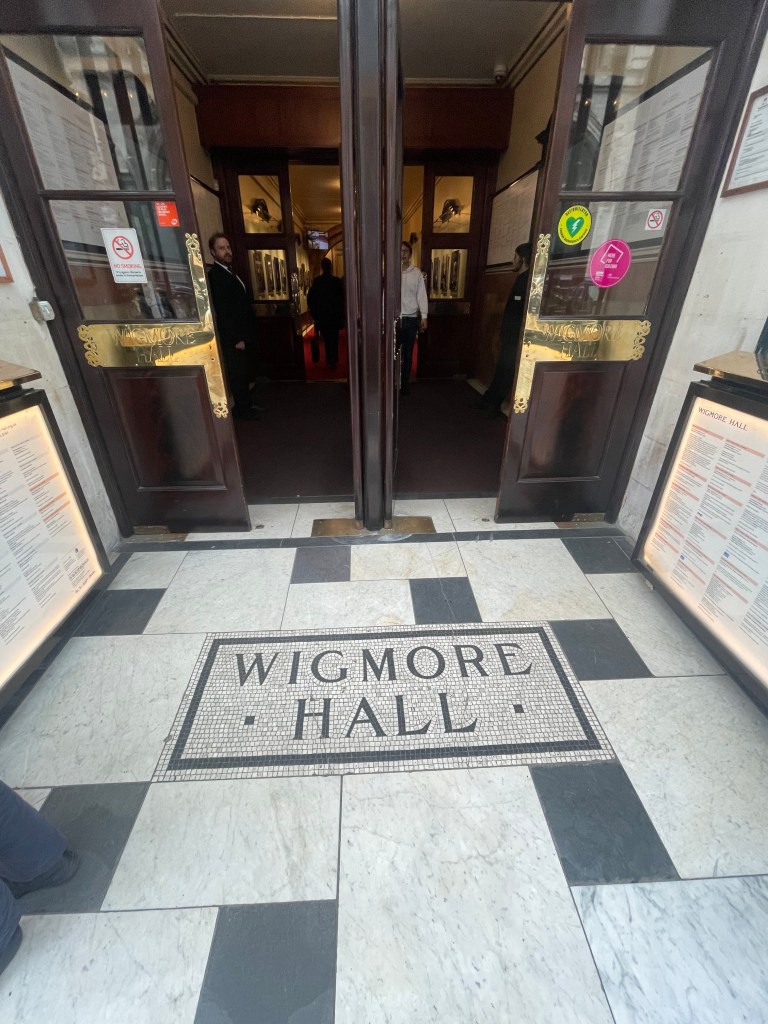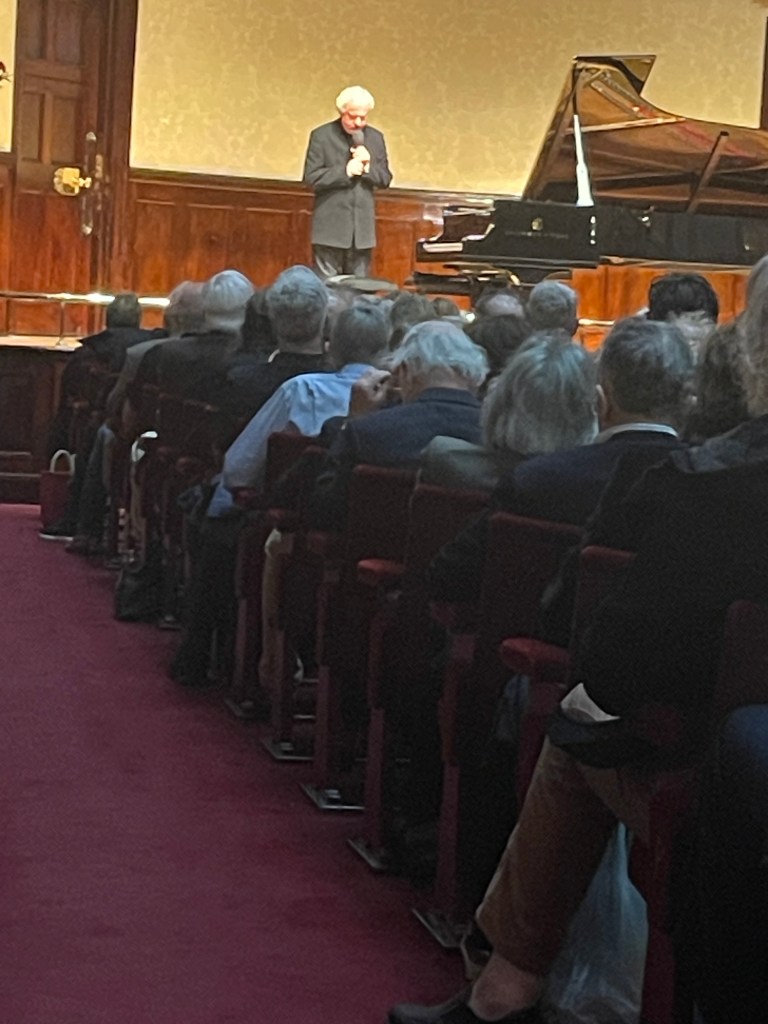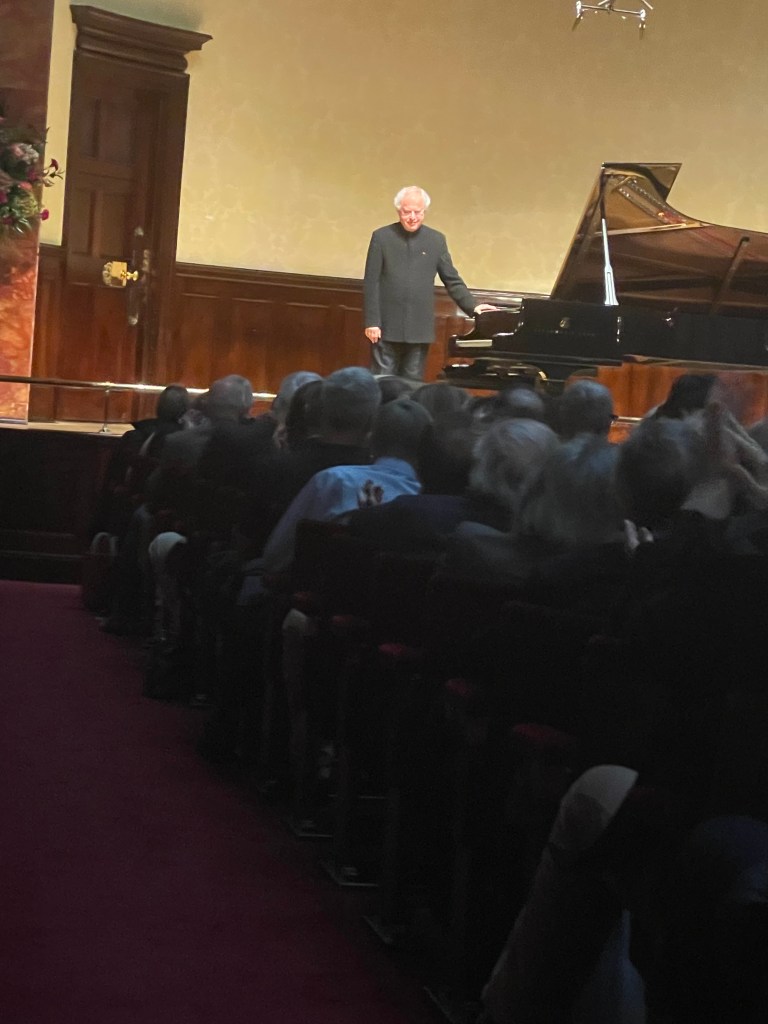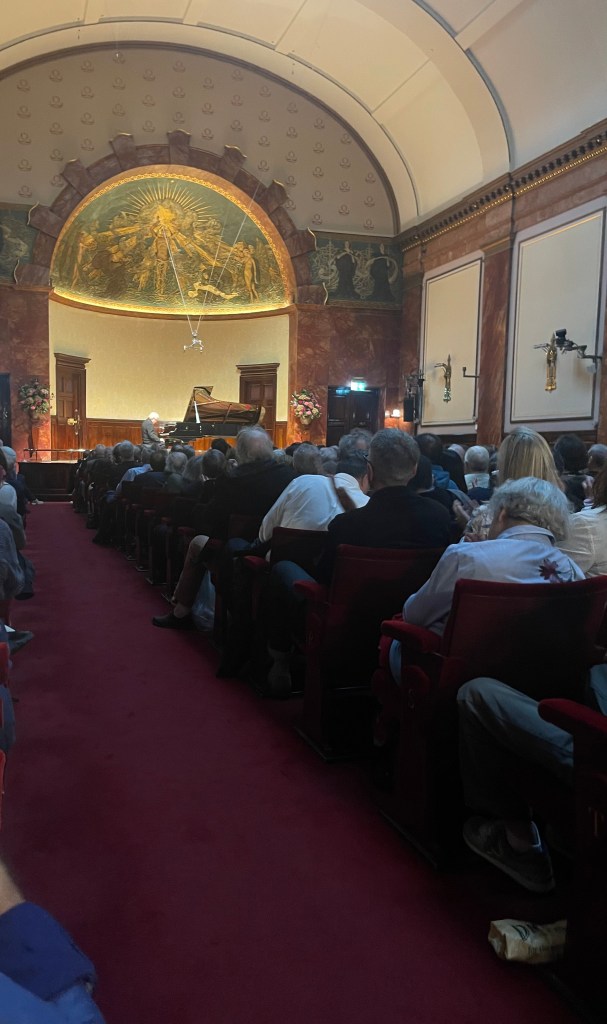
Anson Wong ‘on wings of song’ at the Royal Academy in London

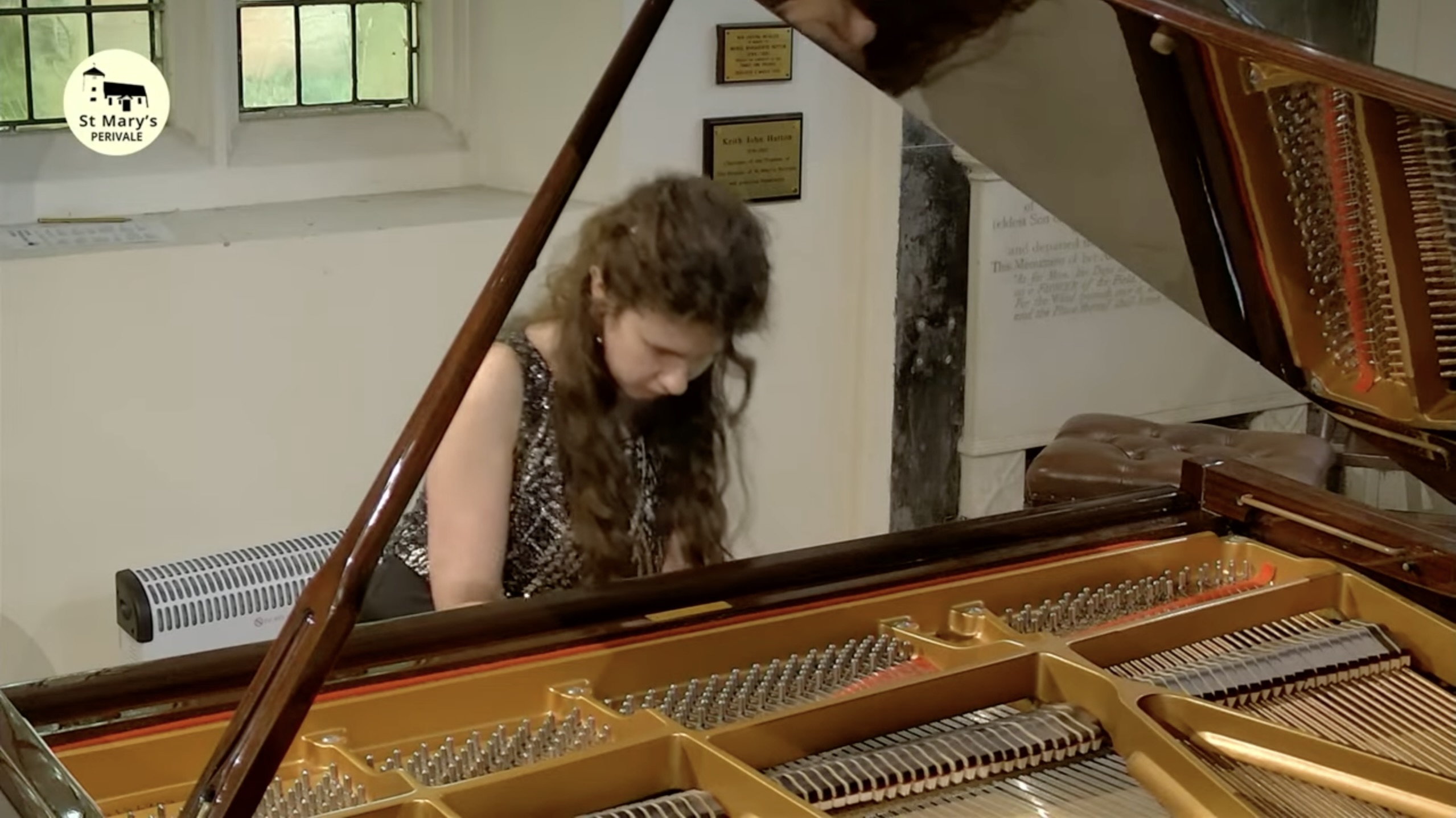
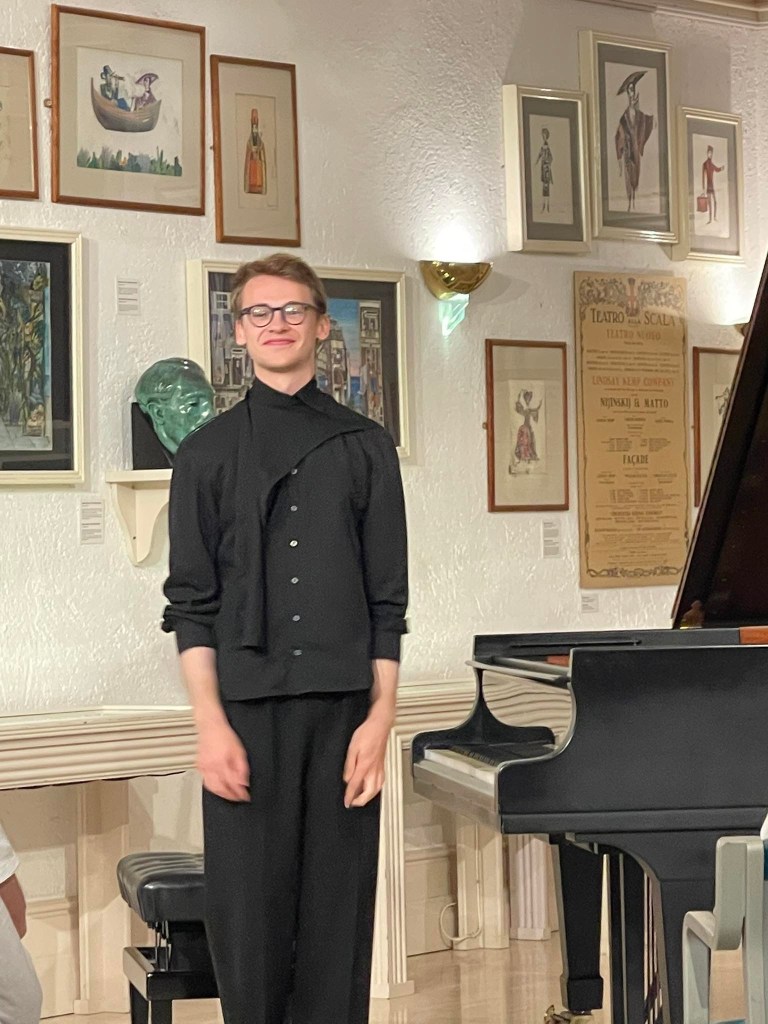
I have heard many graduation recitals in the past few days and am very impressed by what I have heard especially for the musicianship and respect for the composers intentions that has shone through even minor mishaps that could occasionally happen under the strain of condensing four years of intensive study into an hour long recital. Anyone who knows me or is silly enough to read my thoughts that I all to all too readily share with anyone wanting to know my personal reaction to what I have heard. I listen to each performance and it stands on its own. I do not do comparative performance preferring to leave the circus aspect of competitions to others. But if I had to say of all the wonderful performances that I have heard at the RCM and the RAM in the past days, which was the one that shone most brightly in my memory, it would have to be the performances by Anson Wong.

Everything he played sang with a radiance and beauty but above all a sense of balance that was of the magic of a past era. The transcription of the ‘Adagietto’ by Mahler was worthy of Cherkassy, with that golden sound of the melody and insinuating notes swirling above and below in a web of ravishing sounds. This was a transcription in the style of Godowsky and amazingly not only played with an extraordinary sensitivity and kaleidoscope of colour but was also written by Anson. A transcription worthy of becoming part of the standard repertoire for many pianists who are only too happy to delve into the archives and find dusty copies of Alkan,Chaminade,Blumenthal or Thalberg. Works that belong to an age when pianists were magicians who through a subtle use of the pedals and infinite gradations of touch could give the impression that a box of hammers and strings could sing as beautifully as any of the greatest bel canto singers of their day.

https://youtu.be/IHlz43QCliQ?feature=shared

But it was not only the transcription that was of subtle beauty but also Beethoven’s op 101 Sonata and even more remarkably Prokofiev 8th Sonata ,so often played by the militia instead of a poet.
The opening movement of Beethoven was a great wave of sounds that had begun somewhere in the distance and just came into view only to disappear into the distance again. So similar to op 109 where the undulating sounds enter like the water in Visconti’s film ‘Death in Venice’ where a black screen begins to come alive as we are made aware of the water lapping in the lagoon of that city of dreams. Anson played it with a fluidity and no hard edges but a sense of architectural shape that had strength but always under the umbrella of genial creation. Technical mastery too, with the diabolical dotted rhythms of driving intensity. A slight respite with the trio but always with a cauldron ticking away under Anson’s feet .There was a simple aristocratic beauty to the slow movement that was allowed to flow with ornaments that were those of a singer not an instrumentalist. Even the cadenza unwound with poetic sensibility following Beethoven’s very sparing use of pedal, as the opening theme wafted in as if in a dream. A spell soon to be broken by Beethoven’s irascible temperament and quite extraordinary transcendental mastery. To maintain the rhythmic impetus with all the difficulties that Beethoven strews in the path, requires a mastery of musicianship and technical perfection that is of the very few. The fugato last movement, although not quite as complex as the sonata that follows, is certainly a great preparation where only those with a transcendental command of the keyboard can do justice to Beethoven’s knotty twine. Anson proved himself to be a master, as the tension never sagged or had to be accommodated. Even the imperious interruptions were far more arresting because the tension within the silences became fundamental to Beethoven’s irascible impatience.
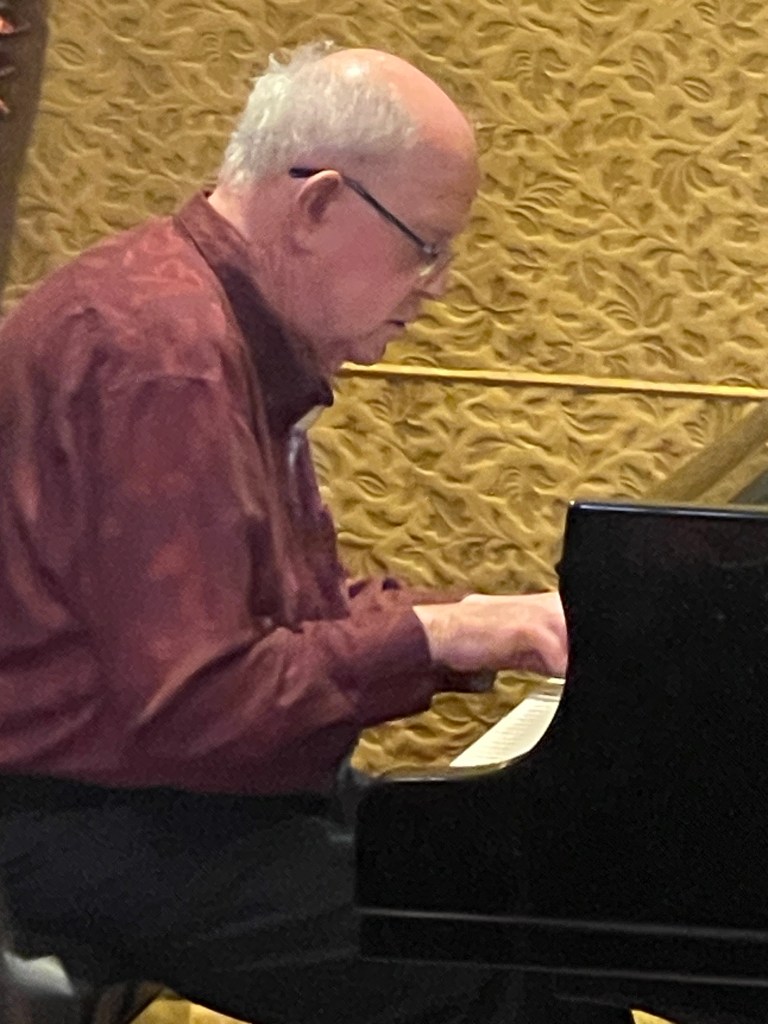
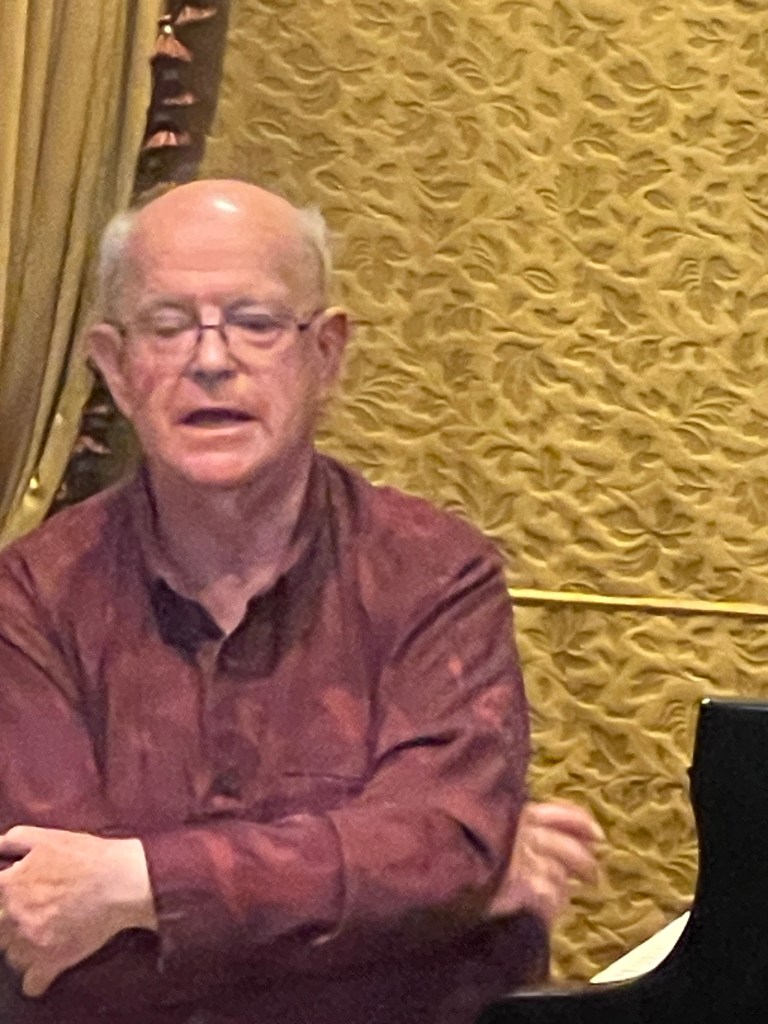
Prokofiev’s 8th Sonata ,although the last of his trilogy of ‘War’ sonatas, is the one where peace and reconciliation reign after the stormy volcanic eruptions from the very start of the sixth and seventh. Too often hammered out by pianists more interested in the technical genius of Prokofiev than the poetry that lies within . The opening is every bit as poetic as Beethoven’s op 101 and was played by this young man with a deeply felt improvisatory sense of discovery. Of course there were explosions too and the extraordinary sweep across the keyboard before the recapitulation was overwhelming and alarming but never ugly. Massive full sounds but never that metallic sound that so often passes for ‘echt’ Prokofiev. This was one of the sonatas written for two of the greatest poets of the keyboard : Gilels and Richter who showed us that frenzy and diabolical abandon were those of poets not the militia.The second movement was indeed a dream as the melodic line unfolded with dance like simplicity and an extraordinary sense of balance that could show us so clearly the musical line that too often can be confused. The last movement was a whirlwind with a kaleidoscope of sounds and changing character. An astonishing ‘tour de force’ of resilience and stamina even the final notes saying ‘he is dead but will not lie down!’ The genius of Prokofiev in this young man’s hands shone through with a mastery and poetic beauty that was quite extraordinary. I see that in the Dublin competition, where he was a top prizewinner last week, he had played Prokofiev’s second concerto – one of the most transcendentally difficult in the repertoire , but like this sonata there is a poetic fantasy, too often neglected by lesser pianists only concerned with flexing their muscles instead of revealing their soul as this young man certainly did today.

Words cannot describe how grateful and thrilled I am to be awarded third prize and Beethoven Prize at the 2025 Dublin International Piano Competition! This is my first major international competition and I never expect myself to be able to progress so far into the competition – nowadays to be accepted into video rounds out of almost 200 applications is already an achievement. Thanks so much to my teachers Chris Elton and Mr Kwok for all their teachings and comments for me during my preparation for this comp(and Hilary for listening to my run-through!). Biggest thanks to my parents for accompanying me throughout the competition and taking care of me amongst the huge stress. Thank you @cooneychoons for writing a piece with such room for imagination and interpretation in the quarterfinal round, I really enjoyed learning and playing it. Thanks also to ConTempo Quartet @amantu.cello for playing Brahms Piano Quintet with me — it was my first time playing it, but they are so open to my ideas and were absolutely amazing (they had an 8-hour rehearsal with all the semi-finalists on the first day!!). Thanks also to Jonas Alber and the @nationalsymphonyorchestrairl for playing Prokofiev 2nd with me, I had such fun playing this difficult music with them (another first for me, playing this concerto!) Finally, big thanks to @dipcie for organising the competition with such efficiency and care — i absolutely enjoy my time in Dublin, walking amongst the streets, visiting different practice houses, and performing at the enormous national concert hall. Biggest congrats to @pf.youngho and @carterjohnsonpiano too! Looking forward to having the chance to play at Dublin again!!!
#dublín #dublininternationalpianocompetition #piano #ireland #competition #music

Anson Wong was born in Hong Kong, his music journey starts at the age of four. He graduated from Diocesan Boys’ School and had been a junior student at the Hong Kong Academy for Performing Arts (HKAPA) since nine, majoring in piano, bassoon and composition. He is now a bachelor degree piano student at the HKAPA, studying with Prof. Gabriel Kwok. He has won numerous prizes in the annual Hong Kong School Music Festivals, Silver prize of 17th Chopin International Piano Competition in Tokyo, the Gold Prize Award and two additional special jury prizes in the Ishikawa International Piano Competition held in Kanazawa, Japan. He was invited to perform in the 6th Shenzhen Piano Music Festival in 2018, alongside other awarded students from Beijing, Shanghai, Macau, Taiwan and Shenzhen. He had also participated in masterclasses by Professors Robert Levin, Gottlieb Wallisch, Arnulf von Arnim and Andreas Frölich in the Salzburg Mozarteum International Summer Academy. Apart from being an able pianist, he is also an accomplished composer. He has studied composition at the Hong Kong Academy for Performing Arts since 2013 with Ms. Poly Ng. In 2017, he won the first prize of the 69th Hong Kong School Music Festival Open class Composition Category with the piece ‘The 5 Elements’. In 2018, he was awarded the Gold standard composition winner in the notation category of the TI:ME Electronic Music Composition Contest in the United States with his composition ‘D’Urban’. He had also presented his original compositions ‘Galaxy’ and ‘Pearl of Orient’ at the 2012 and 2013 Yamaha Asia Pacific Junior Original Concert respectively held in Malaysia and Hong Kong, each with favourable reviews. His abilities in composition is also showcased in his participation in the 2010, 2014 and 2016 Yamaha Asia Pacific Electone Festival held in Taiwan, Malaysia and Macau respectively, in which he composed and performed his compositions himself. In the 2016 season, he was awarded the Grand Prix of the Senior Section, championing in improvisation, performance and composition. He is completing his studies at the Royal Academy of Music with Christopher Elton and this is his final exam performance for his Masters of Music – Piano performance M.Mus.

https://christopheraxworthymusiccommentary.com/2024/03/20/christopher-axworthy-dip-ram-aram/

Jeremy Chan ‘Miracles at Milton Court’

Programme:

Sofia Gubaidulina (1931-2025) Chaconne

César Franck (1822-1890) Prelude, Chorale and Fugue

Manuel De Falla (1876-1946) Fantasia Baetica

Interval

Johannes Brahms (1833-1897) Piano Sonata No. 3 in F minor, op. 5

I had no intention of commenting on Jeremy’s graduation recital today but just wanted to support him on his final recital after five years of intensive study at the Guildhall . What we heard this morning was so extraordinary that I am moved to write about it and share such a wondrous experience with whoever might be foolish enough to read my scribblings ! It reminds me of another rare occasion when I met a pianist in Cremona and he asked me if I would like to come to his graduation recital at 10 am like today.

https://christopheraxworthymusiccommentary.com/2021/09/30/the-rebirth-of-a-global-network-in-cremona-if-music-be-the-food-of-love-please-please-play-on/

It was a recital by a young Hong Kong born pianist Ka Jeng Wong and how could I ever forget one of the finest performances of the ‘Hammerklavier’ I have ever heard. He now has a flourishing career and has become quite famous in Hong Kong !

https://christopheraxworthymusiccommentary.com/2021/09/29/kajeng-wong-a-master-at-milton-court/

There was magic in the air today too as this young man having graduated from Durham University with honours now has time to practise and dedicate himself to a performing career. I had heard Jeremy a few years ago in Perugia, the home of Angela Hewitt and since then I have heard him play lunchtime recitals on varying ‘casseroles’ in churches in London, building up valuable playing experience. Today I heard a pianist where all the ingredients have come together but as Curzon used to say playing the piano is 90% work and 10% talent. Many have one without the other and it is rare indeed when talent combines with hard work to produce an artist worthy of interpreting the great masterpieces for piano.Today Jeremy has come of age and can take the stage as he did today with the knowledge and mastery to be able to bring the greatest masterpieces to a public too often contented by entertainers not dedicated interpreters.
The Brahms F minor sonata is one of the hardest works to play as it is not the quantity of notes but the rhythmic precision needed allied to a poetic and architectural understanding of this vast Symphony for the Piano. From the very opening, if the rhythm is not absolutely precise the structure can fall flat on its face and sag and drag in a very longwinded way. Jeremy’s precision was allied to a passionate involvement and poetic sensibility with a range of sounds and colours that was worthy of the greatest of symphony orchestras. Octaves fearlessly strewn into the path never having to alter the overall pulse that like a great wave was ever present and took us from the first to the very last note. A slow movement of sublime sounds richly embroidered but never entangled in personal emotions but deeply felt within the very notes themselves. Passionate climaxes were played with searing intensity dissolving to a whisper only to be reawakened in a paradise of sublime contemplation. A Scherzo that just shot from Jeremy’s fingers with authority and daring leading to the extraordinary introduction to the final movement.Timeless beauty of emotionless confessions preparing us for the monumental final movement. I know it was hot in the hall and obviously much hotter for Jeremy than for us mere spectators, but I would not have had a pause or even moved between these two extraordinary movements. A final movement that was like the last movement of the B flat concerto,Capricious,noble,majestic but above all aristocratic and sumptuous with a burning excitement of exhilaration and glorification.

The concert had begun with the big guns of Gubaidulina firing full blast with mastery and accuracy. Total commitment and moments of desolation in a performance that took us totally by surprise , not only because of the early hour but because of the driving intensity and masterly command.

The De Falla and Franck I have heard and commented on in the reviews below, but music is created in that very moment and is not a printed post card and Jeremy’s performances today were imbued with an immediate sense of communication where he needs us as much as we need him. It is called artistry and Jeremy has become an artist to reckon with on they world stage .

Notes by Jeremy Chan

For my Artist Diploma graduation recital, the summation of five years of intensive study at the Guildhall School, I have chosen a programme which presents passion in many different aspects. 

There can be no stronger opening for a recital than Gubaidulina’s Chaconne(1962)–written when she was a student at the Moscow Conservatoire–which literally opens with two thunderous B minor chords on either end of the keyboard. Gubaidulina employs serialism techniques to vary the 23-note tone row which constitutes the ground bass of the chaconne. It is therefore much less noticeable than the ground bass of the “other” famous chaconne by Bach, which feels much more the unifying factor of the music. However, her modernist take on the Baroque form gives Gubaidulina much more freedom and flexibility with the material. The melodic contours of the theme give way to rhythmic shadows, giving rise to new melodic material and even a chromatic fugato section which reminds me of Liszt’s Sonata (also in B minor!). The dissonances and angularity in the music reminiscent of works by her other Soviet compatriots Prokofiev and Shostakovich expresses an aggressive bitterness and violence which continues to resonate long after the grotesque clanging of bells at the end has subsided. 

With the dark and bitter quality of B minor still ringing in our ears, we hear the enigmatic five-note motif symbolic of the cross which opens Franck’s Prelude, Chorale and Fugue (1885). Albeit in the same key as the Gubaidulina Chaconne, the Franck immediately opens onto a completely different sound world: that of the gloomy, imposing cathedral, a place where Franck spent most of his life as a church organist. In contrast to Gubaidulina, who takes a restrictive Baroque form (the “chaconne” is literally characterized by its repeating bass line), Franck reaches back into antiquity for the expressive powers of Baroque forms. There is a certain quality of objectiveness and impersonality in these forms that, when combined with symbolism and deep understanding of the power it has on the human psyche, can create transcendental power. In the finale, when all elements from the three sections are fused together and alchemized into something almost omnipotent, and we hear the bells ringing gloriously in B major, we are not witnessing the triumph of a hero; we are witnessing the triumph of our own spirits.

De Falla’s Fantasia Baetica (1919) (“Andalusian Fantasy” in English) has a very conventional ABA structure, yet immediately strikes the listener with its unconventional use of the keyboard to produce sounds more akin to that of a guitar. Born in Cádiz in the region of Andalusia, De Falla reaches back to his roots in this piece, seeking inspiration in the Andalusian art form of “flamenco”.

I remember being baffled by this piece when I first began studying it. It seemed to me just a jumble of runs and arpeggios without much variation in melodic material. 

A trip to Seville, a city in the heart of southern Spain and home to “flamenco”, changed all that. Watching flamenco performers sing and dance with passionate abandon, I realized that, being rooted in dance of a dark, raw and almost cathartic nature, rhythm was the very heart and soul of “flamenco”. Learning the art of flamenco is learning the subtleties of rhythm. The untrained ear would find it difficult to distinguish the different kinds of rhythms, yet even listeners unfamiliar with flamenco would feel how the intensity changes depending on the rhythm. Fortunately for me, the Fantasia Baetica does not involve complex rhythmic manipulations; yet the raw and fiery passion of it ultimately lies in the way different rhythms vary the same melodic material. Amidst the intense dances there are also moments of flamenco singing, improvisatory vocal lines influenced by Arabic musical traditions, as well as an evocative intermezzo.

Watching a flamenco show in Seville 

Often in musical history we see composers come into their own later in their composing career, or in their maturity shed all of their former skin to adopt a different musical persona. In the case of youthful Brahms, we are fortunate to see a fully-fledged composer in a musical work that also carries with it the youthfulness and ambition of a twenty-year-old lad. Such is the case with Brahms’ Piano Sonata No. 3 in F minor, op. 5 (1853)

Posterity categorizes Brahms as a stoic, conservative composer of the Romantic period, and to a certain degree that is true; his insistence on form over fantasy, on craftsmanship over spontaneous emotion puts him squarely at odds with the likes of Liszt and Wagner. In fact, when one realizes that Liszt’s Piano Sonata was written the same year as Brahms’ Third Piano Sonata, one can marvel at the divergent paths the two composers of the same epoch had taken; Liszt was already using the outmoded genre of sonata to look into the future, while Brahms insisted on the classical style of having five separate movements in his. 

And yet, the Third Piano Sonata–and Brahms’ last one too–is bursting at the seams with passion. Notwithstanding its monumental five-movement structure, the first movement requires the pianist to stretch to both ends of the keyboard, maximising the sonic capabilities of the instrument, as if Brahms wanted to continue where Beethoven left off with the “Hammerklavier” Sonata. In fact, the shadow of Beethoven haunts the sonata, as the fate motif (da-da-da-dum) mysteriously creeps into the first, third and fourth movements, with its resonance most felt in the fourth movement (which Brahms also enigmatically subtitles “Rückblick”, or “Remembrance”). It is a well-known fact that Beethoven’s shadow intimidated Brahms for most of his life, but nowhere is this fear more literally manifest than in this sonata. What Brahms perhaps didn’t realize was that this shadow actually helped define him as a composer and most probably assisted him in his ascension towards greatness. 

Young Brahms, swept up by the wave of German Romanticism that was taking Europe by storm, wasn’t as opposed to the heady ideas of love, fantasy and idealism as he would be later in life. References and quotes abound in his early music, just as the music of his mentor Robert Schumann were filled with musical cryptograms. In the second movement of this Sonata, which contains a climax that is arguably the emotional crux of the whole Sonata, Brahms quotes lines from a poem by Sternau about two lovers under the moonlight. In the final movement, Brahms inserts the musical cryptogram which was a German Romantic phrase that his friend Joseph Joachim adopted as personal motto: “frei aber einsam“, “free but lonely”. 

Angsty? Very much so. But when under the guise of youthful idealism and combined with great compositional craftsmanship, it becomes passion of the highest order. 

Long live youth! Long live passion!

Side note: I am not well-versed in the techniques of serialism enough to know that Gubaidulina’s Chaconne is based on a 23-note tone row. I owe my understanding to Ateş Orga’s 1998 programme notes for Hyperion found here: https://www.hyperion-records.co.uk/dw.asp?dc=W8925_GBAJY9378210

Side side note: my knowledge of “flamenco” does not even come close to that of an amateur. Should my programme notes on De Falla’s Fantasia Baetica cause offense to flamenco aficionados, I do humbly apologize. 

with Noriko Ogawa and Charles Owen

Jiali Wang Graduation Recital of poetic sensibility and mastery

What a trial by fire the graduation recitals are with the pressure building up of many years of study and now the final recital in which those years are compressed into an hour of music making.

Jiali Wang presented a very varied programme in which she could show off the full range of her musicianship and remarkable technical mastery. Three preludes by Duttilleux in which she was able to demonstrate a kaleidoscope of sounds and a use of pedal that could create a desolate atmosphere on which piercingly brittle sounds could burst into congested activity with extraordinary dexterity and clarity. Some diabolical sounds left to vibrate creating a desolate landscape dramatically lived.

Brahms’ dramatic and passionate second sonata burst onto the scene with great temperament and playing of real weight. There was an orchestral sense of colour with Lisztian outbursts of dynamic drive .The Andante on the other hand was a desolate landscape of simple refined beauty interrupted by a Scherzo of rhythmic intensity.A trio of sumptuous beauty that was to reappear at the end, in a stroke of genius on Brahms’ part before, giving the final word to the rhythmic fantasy of the Scherzo. Contrasting moods brilliantly played with an overall shape that gave great strength to this early work .The Finale was played with great understanding gradually growing in intensity and incorporating the Hungarian dance mode of tradition. Any mishaps that might have occurred were covered so professionally and did not impede the full impact of a sonata that is of symphonic proportions.

The Fantasia Bética by De Falla was the final work in her recital.It was written for Artur Rubinstein where the composer wanted to make a character sketch of the great pianist and friend with his volatile romantic nature and showmanship. Jiali played it with a technical bravura and masterly control but also allied to a sense of architectural shape and a scintillating palette of colours.Glissandi and explosive emotions were spread over the keyboard with great authority and passionate involvement but there was also a poetic sensibility to the contrasting intimate vibrating emotions.

Jiali left the stage and came back to play the encore,the last piece on her programme. The delicious ‘Autrefois’ by Chaminade with its beguiling enticing ornaments and Scarlatti drive central episode.It was a favourite of the great pianists of the golden era of piano playing together with the Tausig arrangement of two Scarlatti Sonatas under the title of ‘Pastorale and Capriccio’. Jiali imbued this rarely heard piece with the style and beauty of another age but also with a ‘fingerfertigkeit’ that we had appreciated throughout a recital where her art concealed art.

Chinese concert pianist Jiali Wang is a passionate and accomplished musician with a wide range of experiences performing as a soloist and working with other instrumentalists and composers covering various musical genres. Her infectious enthusiasm of playing with a virtuoso technique and vibrancy has brought her to prestigious venues all over the world such as Sun Yat-sen Memorial Hall, Helsinki Temppeliaukio Rock Church, Netherlands Ruïnekerk Church, Xinghai Symphony Orchestral Hall, New York University Concert Hall, Xiamen Concert Hall, London Regent Hall, among others. In 2023, she received the Edna Bralesford Piano Prize from Royal Academy of Music for graduating with the highest mark.She is currently studying with the emeritus head of keyboard-Prof.Christopher Elton and regularly playing for well-established names such as Yevgeny Sudbin and Steven Osborne. In 2023, she has been nominated as one of the applicants of theVendome Prize Piano Competition in New York 2024. 

Jiali began her career by winning the gold award of the Beijing Music Festival Competition, where she gave the prize winner recital in honour of Chinese Piano Music in Sun Yat-sen Memorial Hall. In 2011, she won the 11th Beijing Xiwang Cup National Piano Competition and was invited to give performances of the same concert series with Lang Lang in Peking University. 

Besides the major achievement she has done such as won the Gershwin International Music Competition (US) in 2017, Jiali was also a prize winner of many important national and international competitions, which includes the first prize of Alion Baltic International Piano Competition (Estonia); the first prize of Harbin International Piano Music Festival Competition; Hignly Commended in Chopin International Junior Piano Competition (Russia); In 2022, she won the Harriet Cohen Bach Competitioion and its special Harold Samuel Prize. She was also the winner of First Place of 2022 RAM Piano Duo Competition. 

She has also appeared in famous music festivals, as well as having many masterclasses worldwide with maestros such as Professor Arie Vardi, Alexander Toradze, Ian Hobson, Hung-Kuan Chen, Jerome Lowenthal and Oxana. Yablonskaya.

Misha Kaploukhii ‘A ray of sunlight illuminates the 1901 Arts Club Hattori Foundation

A warm welcome as always from Glenn Kesby and every seat in the house taken including the upstairs salon bar and terrace.All there to hear a young man who is fast making a name for himself.

I have heard Misha Kaploukhii over the past four years when as a ‘fresher’ his teacher Ian Jones invited me to hear his student playing Rachmaninov First concerto in Cadogan Hall.

https://christopheraxworthymusiccommentary.com/2022/10/13/misha-kaploukhii-plays-rachmaninov-beauty-and-youthfulness-triumph/

I have since heard his Rachmaninov 3rd and 4th concerti as well as Liszt and Chopin second and even Brahms 2 played on Myra Hess’s prize Steinway on which she herself worked on this ‘ little concerto with an even smaller scherzo’ . Her recording of it with Bruno Walter is one of the monuments of recorded history.

https://christopheraxworthymusiccommentary.com/2024/12/01/chopin-reigns-at-the-national-liberal-club-and-st-marys-perivale-the-triumph-of-misha-kaploukhii-and-magdalene-ho/

Misha has been invited to play it at the Royal College next season as top prize winner of the annual concerto competition .

https://christopheraxworthymusiccommentary.com/2025/01/18/misha-kaploukhii-plays-brahms-2-with-passion-and-mastery/

But Misha is not a competition animal he does not wish to do comparative performances, his music making is judged by his ability to communicate directly with the public.

His playing over these past years has gained in authority and he has built up a large repertoire which is the baggage that he will share far and wide with audiences that are waiting for that special atmosphere that only live music making can provide .

Choosing two of the most challenging works in the repertoire for a short evening recital for the Hattori Foundation which since 1992 have taken up residence in the little cottage that used to be the headmasters residence and is now an oasis of peace and charm next to the busiest railway station in the world!

Lit by candlelight, extraordinarily convincing fake candies so as not to dirty the exquisite decor, there was nothing fake about what we heard today.

‘Davidsbündler’, Schumann’s 18 dances are the stuff that dreams are made of and are the sum of Schumann’s poetic inspiration for the piano.

An early work in which the simple beauty and with Eusebius’s still joyful sparring partner Florestan kept in a golden cage of some of the most sublime music ever written for the piano .

Schumann was no showman as was Liszt whose Norma Fantasy worked its spell today as the partner in crime .

Octaves and naked emotions as innovative three handed piano writing built to an emotional climax made of impossible counterpoints in a diabolical duet which was silenced only by massive octaves and breathtaking pyrotechnics .

Schumann on the other hand works a different spell and his work finishes with a disarming waltz where ‘quite superfluously Eusebius remarked as follows : but all the time great bliss spoke from his eyes’ and with the whispered chime of midnight disappears into a world of dreams .

It is pure magic and it closes a performance of refined beauty and passionate conviction. A sense of style with a musician who could shape Schumann’s magical world without ever breaking the spell . An architectural journey as well as a spiritual one where Misha led us through a myriad of emotions with a kaleidoscope of sounds and a technical perfection that quite rightly passed unnoticed .

His pianistic mastery is at the service of the master of which he is merely the servant .’Je sens, je joue , je trasmets.’ could indeed be the motto for a performance of such poetic beauty.

The core of the work must surely be the 14th dance ‘tenderly and singing’ that Misha played with the freedom of a singer such was the seamless freedom of inspired beauty . Brahmsian passion too ‘wild and Lustig ‘ bursting into a chorale worthy of an Academic overture and played with that sumptuous rich sound that made Stokowski’s Philadelphia the favourite of Rachmaninov .

Misha never hits the keys so there are never any unexpected hard edges to break a poetic spell that takes us from dawn to dusk on a journey where a box of gleaming jewels are allowed to glisten and glow with the radiant beauty of a supreme stylist.

A performance as Mitsuko Uchida would claim which will remain in the memory and will never fade with time as recordings do, but become ever more beautiful as time passes .

It was interesting to note that our ‘master of ceremonies’, unknown to any but the spies was following the score during the performance on the staircase leading to the upstairs salon.

The 1901 club is that sort of place born of genuine love and passion where quality rather than quantity still can reign .

One could list the places visited by Misha from the gentle refined banter of F and E at the opening with a remarkable jeux perlé of subtle pedalling followed by the purity and simplicity of Eusebius . The clumsy antics of Florestan where the colouring of the coda was played with extraordinary pianistic finesse . The impatient passion of Florestan thinking of the sunny days ahead was gently wrapped over the knuckles by the beguiling reminder of refined beauty of Eusebius . There was remarkable pianistic control to the sixth with its quiet rumbling ruminations and complex syncopations bursting into joyous glee with the coda . But it was the very great feeling of Eusebius that created a stillness and magic in Mishas sensitive hands . Florestan’s mighty Ballade ignited Mishas youthful passion with playing of fervent conviction and a masterly use of the pedal . What skittish charm he just flicked off the notes in the 12th dance playing with remarkable ease and precision . There was great romantic sweep to the fifteenth where Misha united the two sparring partners in a ravishing outpouring of wondrous sounds.

Good humour miraculously turning into one of the most remarkable pages in all piano literature where Schumann can float a dream in thin air, catching beauty as it came to earth as if by chance, and allowing its prismatic beauty to captivate our souls ( Ravel comes close with the epilogue of his Waltzes ).

The Norma Fantasy followed some preludes by a Ukrainian composer which cleared the air like a sorbet in a sumptuous feast.

Played with conviction and simple beauty obviously influenced by Schumann and Liszt with suggestions of Funerailles and the F sharp romance embedded in their structure

But it was more than that as Misha always carries in his heart the tragic conflict that Putin in waging in his homeland .

True artistry is born of human experiences not only of joy and beauty but also of tragedy and suffering and Misha is a true artist and fast becoming a great pianist ready to take his artistry to many corners of the globe in the hope that music can reach peoples where words very often only create conflict and misunderstanding .

The Norma Fantasy is one of the great paraphrases that Liszt wrote for his own performances as the greatest pianist on earth . Seducing the noble ladies of the great salons with diabolical piano playing inspired by that devil of the violin : Paganini . Sedate ladies transformed into a screaming rabble of admirers wanting a souvenir of someone who could ignite sensations they did not know existed .

It is a showpiece of transcendental technical difficulty and where the invention of the pedal could allow for the so called three handed technique to float melodies from the great operatic hits of the day in the tenor register, with notes flying all around in an astonishing manner. Liszt also corrects the running order of Bellini and even connects the two main themes in a final diabolical duet that is breathtaking and overwhelming.

Misha played it with fearless abandon and technical mastery and Norma worked it’s spell on an audience that wanted even more from this daring young man on the flying trapeze.

A sombre Choral prelude by Brahms calmed the atmosphere with sublime sounds of richly embroidered beauty .

An enthusiastic audience member who had been at Misha’s Florence concert .She spoke of banging away at the piano that was a bit disconcerting until we discovered she meant playing an old banger !

The only thing left to do was to go upstairs to meet this talented young man and drink to his health and his future illustrious career that awaits just around the corner.

with Mike Oldham ,the greatest page turner the world has ever known
https://youtu.be/8d1E6h0HOus?si=kZ3v03JHC4jLkban.https://christopheraxworthymusiccommentary.com/2025/04/02/daniel-lozakovich-alexandre-kantorow-burning-intensity-and-passionate-mastery-ignite-then-wigmore-hall-as-never-before/
https://christopheraxworthymusiccommentary.com/2024/03/20/christopher-axworthy-dip-ram-aram/

Dominka Mak ‘If music be the food of love…..please play on ‘

Dominika Mak with her final recital at the Royal Academy illuminated the piano with sounds that were vibrant and living , reaching out to her audience more eloquently than words ever could .

Seeing Dame Myra Hess in the place of honour on the staircase of the Royal Academy and Dame Moura Lympany just nearby, one is reminded that it is quality not quantity that counts in music making.

The ability with subtle inflections of sound that can make the piano speak a language that is more powerful than words because beauty is in the eye of the beholder.

Each eye sees differently depending on their sensibility. But as there are,according to Matthay, an infinite possibility of sound in each key so there are an infinite way of interpreting the sounds.

Uncle Tobbs as Myra Hess and Moura Lympany used to call him created ways of reaching those sounds and wrote numerous tomes about technical matters that somehow can separate sound from matter and one gets lost in a maze of technical mechanics.

The core of the matter is that music is sound and different sounds create different emotions .

It was Nadia Boulanger who told us, over and over again, on this very stage that ‘Words without thought no more to heaven go ‘ quoting from Shakespeare.

Dominika Mak has this rare gift of being able to find sounds that others do not know exist.

The Variations in F minor by Haydn unwound with simplicity and ravishing beauty.Trills that were like vibrations of sound each one with a different meaning as simple scales became a living stream of undulating beauty. There was dynamic drive and passion too but always under an umbrella of sounds with an architectural shape that was like looking at a beautifully shaped Renaissance monument of perfect Da Vinci proportions .

Mazurkas op 33 by Chopin that were a plaintive voice of poetic poignancy .There was exhilaration and exuberance too but with dynamic contrasts made of delectable style and aristocratic good taste. Above all there was a beguiling freedom of ethereal dance that made one realise what Schumann meant when he described Chopin’s Mazurkas as canons covered in flowers.

Messiaen too was brought vividly to life and I was reminded of Rubinstein playing Prokofiev’s Vision Fugitives that were made to speak this different language but still the language of sounds that have a message to carry .

Messiaen with his clashing and heart rending pungent sounds and wailing noses at the extremes of the keyboard can as in Dominika’s hands have the meaning and desperation of a true believer

Gaspard de La Nuit was written by Ravel with the intention of outdoing Balakirev for transcendental difficulty but with Dominika this was not an option or even a consideration.

Difficulties might have meant spending more time at the keyboard in her studio but we were not aware of that, as the sounds and fantasy wove a web of wondrous beauty in a work too often used as a warhorse by battalions of fighting infantrymen .

Here the water nymph could emerge from waters of ravishing beauty as the piano was awash with radiance . The desolate gallows could sit so bleakly in the sun as it was so clear for whom the bell was tolling.

Sounds in Scarbo that I have never heard before, with a middle episode that was a diabolical cauldron of x certificate sounds . The impish Scarbo flitting over the keys, darting here and there like a will o’ the wisp never knowing where he was going to appear next. A massive culmination of diabolical melodic outpouring where Dominika pulled out all her mastery of an art that conceals art but always one that is concerned with communication not technical gymnastics. An hour of true music making ‘old style’!? Sheep may safely graze in Dominika’s masterly hands.

no canons here but covered in flowers
https://christopheraxworthymusiccommentary.com/2024/03/20/christopher-axworthy-dip-ram-aram/

Anna Geniushene at the Matthiesen Gallery The genius of Chopin recreated with ‘canons covered with flowers ‘

As Rubinstein said talent cannot be learnt you must be born with it. https://youtu.be/gex0sOR7XZ0?si=_7WTK5-ZUrhj-BL7

Listening to Anna Geniushene playing Chopin Mazurkas last night those words became so true and as I said to her afterwards:

‘Your mazurkas are still ringing in my soul which you touched deeply and your humanity even more ….you are a real person motherhood has uncovered what was in your genes and it took Mother Nature to make you break away from tradition and follow your genius’

‘ Thank you so so much for coming yesterday and torturing yourself voluntarily with my music I was so happy to see you!!!’

‘ Not as much as me. What a wonder you are and to come all this way for Mary.

Humanity, simplicity, honesty and integrity all ingredients of Genius’

‘ Mary is a treasure of our times! One of a kind!’

‘ Oh thank you so so much for these words! I actually have a dream to make a recording of a full set of Mazurkas as it turned out I played so many opuses and this is the hardest ever task for every single musician. How to transmit complexity through simplicity while staying absolutely sober minded and not forgetting about the shape and the actual form of the every single miniature. Thank you dear Christopher! You are too kind!

Anna had flown in from Berlin obtaining with great difficulty and only at the last minute a visa to come to what has become a third world country . Originally she had concerts arranged with her husband and had planned to spend time in London with their two children of 3 and 5 .

Unfortunately the planned concerts were cancelled but Anna could not let down the indomitable Mary Orr or Imogen Cooper and came alone leaving her family behind in Berlin.

Anna I had heard many times during her period with Christopher Elton at the Royal Academy and I even heard her in the Busoni Competition in Bolzano. https://christopheraxworthymusiccommentary.com/2019/05/08/anna-geniushene-at-the-royal-academy/

But it was the concert streamed live from Duszniki that had me telling Maestro Piotr Paleczny that I would need more time to contemplate what marvels I had just heard https://christopheraxworthymusiccommentary.com/2023/08/10/anna-geniushene-takes-duszniki-by-storm-hats-offgentlemena-genius/

I knew that Anna played the final of the Van Cliburn when she was 8 months pregnant with her first born in the green room waiting for his mummie !

Anna in discussion with Dame Imogen Cooper

But I did not realise that motherhood had unleashed a musical genius that had lain dormant for too long .

Works by Brahms followed with three of his hauntingly beautiful Choral Preludes .With the barely murmured beauty of n. 9 with its deep inner doubling of the melodic line and the imperious voice of n.10. out of which grew the moving wave of sounds of n. 1 from which evolves the radiant beauty of the melodic line.

Two works by Kreisler in the famous transcriptions for piano by Rachmaninov. ‘Liebesleid’ and ‘Liebesfreud’ played with all the charm and subtle beauty that Kreisler was justly feted for. They played often together in recital programmes and it was during one of these concerts that Kreisler got completely lost and whispered to Rachmaninov :’Where are we’ “Carnegie Hall’ growled Rachmaninov !

Two transcriptions or paraphrases by Liszt of Verdi operas followed . There are seven such ‘transcriptions ‘ and they are remarkable for the atmosphere of the entire opera that Liszt could recreate in just a few pages on the keyboard. The mighty ‘Miserere’ from ‘Il Trovatore’ was played with massive tone and great authority .The transcription of the Danza sacra and the final duet from Aida is a true tone poem where Liszt choses not the Triumphant march but the final bars of what is fundamentally a chamber opera of heartrending delicacy. Anna played it with ravishing colours of poetic beauty.

The ‘Firebird’ suite by Agosti was written in 1928 and has become a showpiece for piano written by a man who was a magician of the piano and one of the greatest musicians of his age. Musicians would flock from all over the world to listen to sounds in his studio in Siena that have never been forgotten. One of whom was Christopher Elton who had been Anna’s teacher at the Royal Academy in London. Anna played it with fearless abandon combined with ravishing beauty in an overwhelming performance of total conviction.

It was ,however, the Mazurkas that will remain in my heart and soul as the true canons covered in flowers that Schumann described so perfectly.

https://christopheraxworthymusiccommentary.com/2024/03/20/christopher-axworthy-dip-ram-aram/

Angela Hewitt in Haslemere ‘A radiant light shining brightly’

Angela Hewitt sharing spirituality, humility and generosity with the people of Haslemere helping to create funds for the Meath Epilepsy Charity .

One of the first places that Angela had visited as a teenager was to the Dolmetsch family in Haslemere having been an avid recorder player in her childhood

Today she returns as a star shining brightly , constantly illuminating the lives of so many people on many continents .She has infact been described as the busiest pianist on earth !

But never too busy to help people in need as today, donating her services to raise funds for a noble charity. She came with a big case ready to fly off to Japan tomorrow but not before one of the most spiritual and masterly performances of the Goldberg Variations that I have ever heard and she still found time to enjoy the company of a community dedicated to helping those in need .

Stephen Dennison the tireless organiser of HHH concerts in Haslemere writes : ‘Angela Hewitt’s performance was very very special.
The long silence at the end marvellous.
Well done to the Haslemere audience. Not one cough in the whole 82 minutes.
I will catch up with Meath next week to check how much the concert raised.’

In fact it was Prince Donatus von Hohenzollern who turned to me at the end , after an interminable silence , and murmured obviously very moved, that Angela’s performance had been for him such a spiritual journey.

Not only for him as the minutes of absolute silence after the whispered return of the Aria created an atmosphere where people are united in one of those magic moments that only live music making can reserve.

Dr Prince Donatus von Hohenzollern in discussion with Angela after the concert

The generosity of Angela to agree to play for Charity was repaid by the shadow of Bach looking on in a performance that even for Angela, who has been playing these variations for fifty years, was something very special. Eighty two minutes and thirty variations on, where Angela had played all the repeats with an invention and fantasy that recreated the greatest variations ever written.

From the opening Aria played with simplicity and beauty opening to the rhythmic drive of the first variation played with buoyancy and clarity. Riding on a great wave that was to take us on a journey together of exhilaration, poignancy and even tragedy until the joyous outburst of the quodlibet after the final variation n. 29 had resounded  round this beautiful church with such nobility and glorious sonority.The whispered return of the Aria ,where Angela’s fingers barely touched the keys, was of quite extraordinary potency that one dared not breath for fear of breaking the spell she or rather Bach had created.

Angela was the medium between Bach and the listeners, never interfering, but illuminating with extrordinary fantasy as in the unforgettable seventh variation where she played the repeat at a different register.They were notes that Bach would not have had on the pianos of his day but would have had on the different register of the organ or harpsichord.To hear the question and answer of the voices was a stroke of genius as was the whispered insinuating twenty second variation.This is where suddenly a ray of light can be seen on the horizon as we become ever nearer to the core of a work which explodes with searing intensity in the twenty fifth variation.

Angela had pointed the way at the end of the fifteenth variation that was suspended in mid air with such daring timing.The French overture of the sixteenth ( the half way mark) breaking the spell with nobility and refined aristocratic timelessness. Angela has a technical mastery that was so complete that it passed unnoticed such was the overall musical line and architectural shape, where the extraordinary technical difficulties were just not a consideration. Swept away on a wave of musical genius played with an unassuming mastery that allowed the music to speak for itself.

Angela visibly moved as we all were after such a mementos journey together

I have heard Angela play many times before but tonight for us all there was something very special in the atmosphere that will long be remembered by all those present. As another great lady pianist Mitsuko Uchida once said that a memory is much more important than a recording because it becomes ever more beautiful as time passes,where a printed copy with time fades and turns brown at the edges.

With Stephen Dennison

Thanks must go to Stephen Dennison who has dedicated a year of his life to bring a dream to reality ……….and ‘If music be the food of love play on …………..perchance to dream ‘.

Angela I have known for over fifty years and her joie de vivre has always been an inspiration – the red scarf I had lent Angela and it had been given to me by Vlado Perlemuters companion Joan Flockart Booth.Angela had also had some lessons with Perlemuter whilst she was studying in Paris

Angela was whisked away on a magic carpet to share her love and devotion for Bach worldwide and uniting peoples from many different continents allowing them to share something so beautiful that words could never describe a land where peace and goodwill to all men is still a possibility .

Jill, the sister of the late Sir Jeffrey Tate with whom Angela had played many times

Angela’s energy and enthusiasm are only equalled by her mastery and generosity. Her festival in Umbria in Italy where she lives is now in it’s 20th year.


https://christopheraxworthymusiccommentary.com/2024/03/20/christopher-axworthy-dip-ram-aram/

Lucas Krupinski on a star shining brightly over Westminster Cathedral

Lucas Krupinski at the The Chopin Society UK with playing of radiance and glowing beauty. A mastery of the pedals that made Anton Rubinstein’s words come vividly to life as never before .

From the very first notes of Busoni’s Chaconne with a beautiful fluidity and a vast range of colour and whispered counterpoints that erupted into the passionate outpouring of a fervent believer . From barely audible sounds to an overpowering exuberance of Philadelphian sonorities, never hard or ungrateful but under the same sonorous umbrella that shielded Lukas from all but sublime beauty.

Nobility and fragility with a wondrous sense of balance living together under the same architectural roof of the great Gothic cathedral that Lucas constructed with such mastery . Bathed in pedal like a halo glowing brightly above this Steinway that I have never heard sound so beautiful.

It was the same radiance that he brought to Chopin’s F major Nocturne that made it shine every bit as beautifully as its more famous twin. Even the tempestuous middle episode grew out of these subtle opening sounds of delicacy and demonstrated how glowing radiance can suddenly turn into a storm. No accents or hard edges but a great wave of sounds that overwhelmed and reached the very soul of Chopin.

It was interesting after the concert to hear the ‘tittle tattle’ about Chopin from such an expert as Lady Rose Cholmondely who when provoked regaled the Perahias with unexpected knowledge about Chopin the man,who had a great sense of humour , like Mozart, and would send humorous scribbles to his friends. https://christopheraxworthymusiccommentary.com/2024/10/20/posk-chopin-festival-2004-mak-dubiel-pawlak-swigut-a-feast-of-music-and-full-immersion-with-lady-rose-cholmondeley-and-prof-john-rink/

Fascinating information , from the President to the Honorary President, often overlooked by more serious musicologists but that fascinated Murray and he wanted to know more – Lebrecht eat your heart out !

The Chopin nocturne had created just the atmosphere for Scriabin’s smouldering ‘Fantasie’ played with beautiful fluidity and a kaleidoscopic range of colour with insinuating counterpoints bubbling over in a cauldron of emotions as Scriabin’s turbulent search for the ‘star’ reached boiling point, before lying exhausted at our feet.

This was truly a world that Lucas understood with diabolical ravishment of the senses and the decadence of a world of extraordinary turbulence .

photo Marek Ostas

It was the same colour he brought to the much earlier Preludes op 11 . Twenty four in all the keys obviously inspired by Chopin . Lucas played the last twelve with innocent subtle colouring and short lived outbursts where Scriabin’s turbulent vision of the world had not yet taken hold of his whole being . Played with exquisite colouring and an extraordinary range of character that showed us a demi monde rather than a complete one, that can require too much from the listener to really appreciate as we did today, these jewels shining brightly from a chest of true gems.

‘Ich ruf zu dir Herr Jesu Christ’ opened the second half and this most beautiful of all Bach’s organ preludes was played with the same glowing beauty that I remember from the much missed Nelson Freire. A beauty where surely the melody was sent by the angels and just emerged on earth with the radiance of a true believer. https://christopheraxworthymusiccommentary.com/2021/11/02/nelson-freire-rip/

photo Marek Ostas

The last work was the Chopin Fantasy that started with a strange staccato first note that was a bit disconcerting . Chopin marks staccato on the first notes but surely it means more marcato or detached but with the weight for such a noble opening. The reply was of such delicacy and beauty that nobility and order were immediately restored in a masterly performance that risked occasionally to be over pedalled. But this was the world of an artist who was prepared to risk all for beauty and the love that is inborn in a fellow countryman

photo Marek Ostas

The waltz in C sharp minor op 64 was played with that subtle rubato that Rubinstein meant when he said that talent cannot be taught but you are born with it .

https://youtu.be/gex0sOR7XZ0?si=h8VauAFO-aVD7PCn

A gentle whispered ‘Arietta’ by Grieg was the only way a true artist could finish such a recital of intimate music making. Grieg’s Lyric pieces were much loved by Rubinstein but all too rarely heard in the concert hall.

Hats off to Lucas for sharing such beauty today in the presence of Murray Perahia the greatest and much loved pianist of our ( all) time .

https://christopheraxworthymusiccommentary.com/2017/02/21/the-master-speaks-murray-perahia-at-the-barbican/

The master of ceremonies Charles Grant presenting Lucas with Chopin’s Swansong
Beauty everywhere in Westminster Cathedral Hall today with flowers by Marina Chan
https://christopheraxworthymusiccommentary.com/2024/03/20/christopher-axworthy-dip-ram-aram/
https://youtu.be/8d1E6h0HOus?si=kZ3v03JHC4jLkban. https://christopheraxworthymusiccommentary.com/2025/04/02/daniel-lozakovich-alexandre-kantorow-burning-intensity-and-passionate-mastery-ignite-then-wigmore-hall-as-never-before/

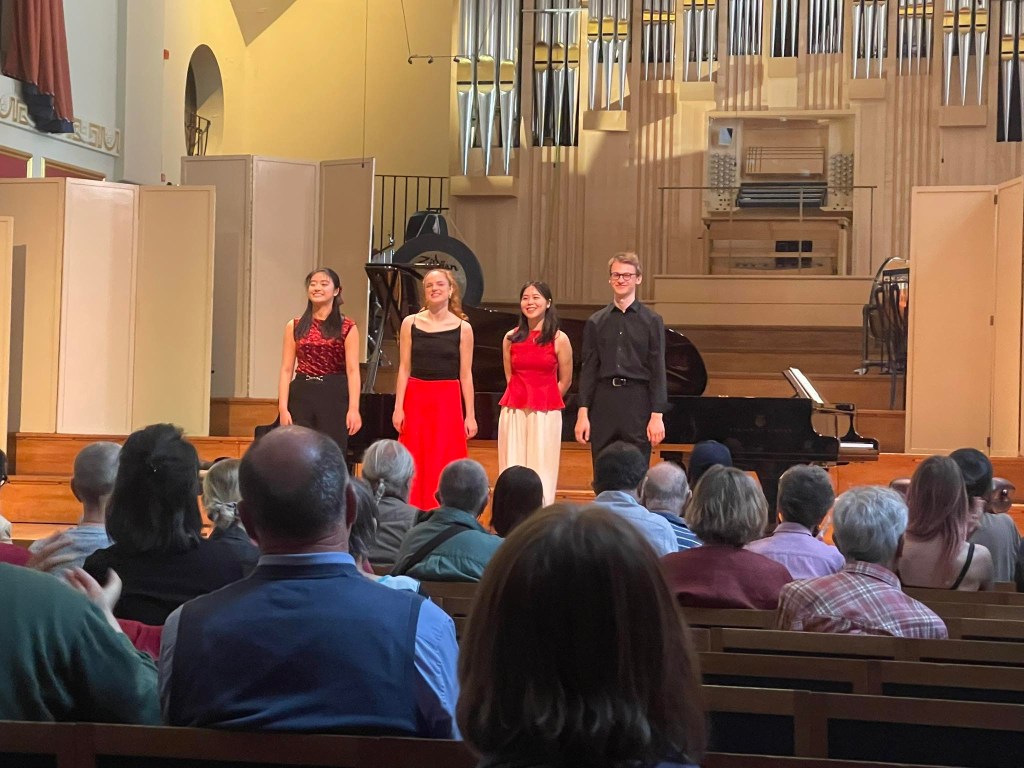
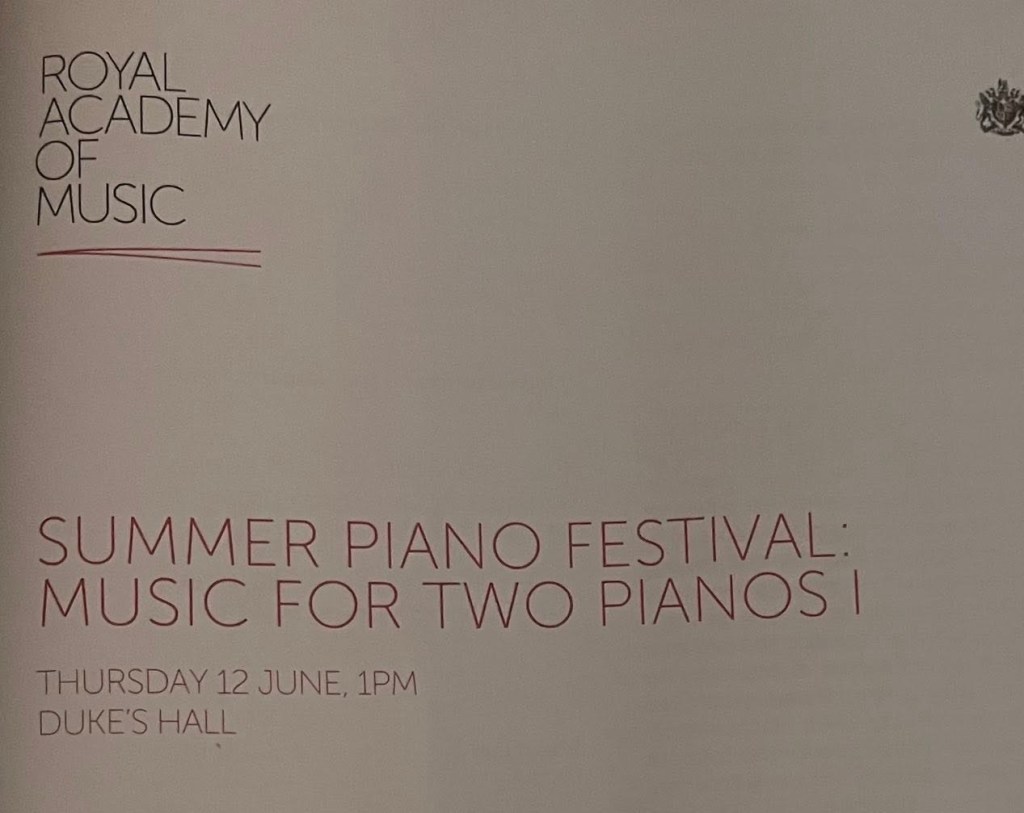
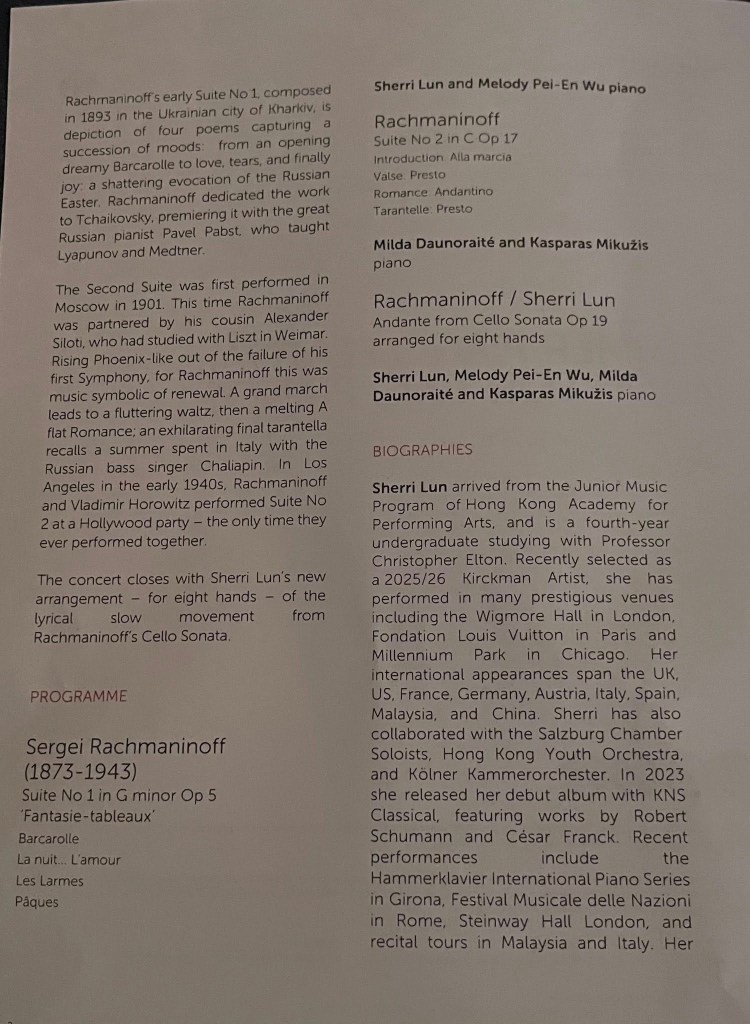
Sherri Lun -Milda Daunoraite- Stephanie Ding Draughton at the Royal Academy of Music

Three beauties at my old Alma Mater today with some superb playing of the greatest works ever written for the piano,

Sherri Lun with the Schumann Fantasie dedicated to Liszt who in turn dedicated his Sonata to Schumann, that was played by Stephanie Ding Draughton.

And all this was possible because Schubert had forged the way with his Wanderer Fantasy that was played by Milda Daunoraite.There were side plates too of ravishing playing of great style and beauty . Sherri even included a Nocturne by Schumann’s wife Clara who had declared the Liszt sonata to be a horrible noise , luckily Robert was already on his painful way to a better world . Milda too gave ravishing performances of French music with a kaleidoscope of gleaming jewels that just balanced her heroic performance of Schubert .

Stephanie on the other hand decided that the only partner for Liszt was that other masterpiece by Chopin in the same key

Flowers excitement and tears of relief as their long journey to Parnassus was coming triumphantly to a close .

This is just the first step in the very steep ladder that awaits these star students on their long and difficult journey to share their music with anyone willing to listen

Sacrificing their youth to art but repaid in full with the fulfilment of having a treasure trove in their hands with jewels gleaming brightly and the satisfaction of having found their ‘soul’ and awaiting now ‘kindred spirits ’ to share it with .

My own journey started in 1972 winning the Macfarren Gold Medal on this very stage and following my heart to Italy where my music has always been a light shining brightly in a wonderful and unexpectedly colourful life! I am the happiest person I know ……to quote the greatest pianist I have ever heard.

https://christopheraxworthymusiccommentary.com/2024/03/20/christopher-axworthy-dip-ram-aram/

I hope theirs will be too illuminated always by music on the wonderful journey that awaits.

Neo Hung at the Royal College of Music with authority and mastery

Neo Hung at 10 am played the opening fanfare of Bach Busoni C major Toccata , Adagio and Fugue better than Horowitz did at 4 pm in 1965!

Authority and mastery of the Gilels school of limpet like fingers that suck every sound out of the notes they cling too with nobility and sumptuous beauty

A mastery from this unassuming young man, a student of Dina Parkhina and the great Russian school born of hard work, dedication and talent.

A radiant beauty to the Adagio with the breathtaking daring of Bach’s extraordinary interruptions .

All recreated by this young man with the same impact it must have had with the ink still wet on the page .

A fugue played with fearless clarity and exhilaration . Even Bach’s revolutionary juxtaposition of keys came across with the same terrifying impact it must have had in its day .

His jump from the furness of a fervent believer into the cool running stream of ‘An Autumn Moon on a Calm Lake’ was with liquid sounds of velvet beauty. I have never forgotten the sound that I thought only Gilels could make.

Hollywood style , as is Chinese classical music, but of fantasy and refined good taste .

I was cheer leader and purposefully did not applaud because Liszt ‘s Auf Wasser was exactly a perfect twin as a combination.

These Liszt reworkings of Schubert Lieder are every bit of genius as Schubert’s with poetry attached .

They have long been a favourite of the great Russian pianists of the past when mastery of subtle sounds and a magical sense of balance gave way to the revolutionary sound world of the twentieth century composers brought up in the rugged and brutal air .

And it was this that is ever present in Prokofiev’s War Sonatas of which Neo played the second – n 7

But Neo played it with an unexpected lyricism from the very first notes . Of course there was a whole orchestra in his hands but always with a kaleidoscope of colours of the greatest of orchestras . A sense of colour and line that leads us on a journey in a maze of wonders .Canons. there were indeed, but unlike Chopin not covered in flowers but with the suffering of the imminent holocaust in the composers soul .

I have never heard the second movement played with such an aching pulsating sense of line and inevitability . When the opening melody unexpectedly appears on the horizon it was somehow transformed for us by what we had suffered on the way back.

The last movement was a relentless tour de force of mastery and dynamism and the painting of Munch came to mind as Neo’s mastery seemed to know no limits .

A scream indeed, of unbridled mastery

And what better way to diffuse such astonishing barberism than a Barcarolle by Fauré ( one of many sadly neglected by pianists these days) . It was like a breath of rarified French air with the refined beauty and elegance that was to disappear after the two world wars.

French perfume was in the air and nullified the stench of the rage that man can still be capable of.