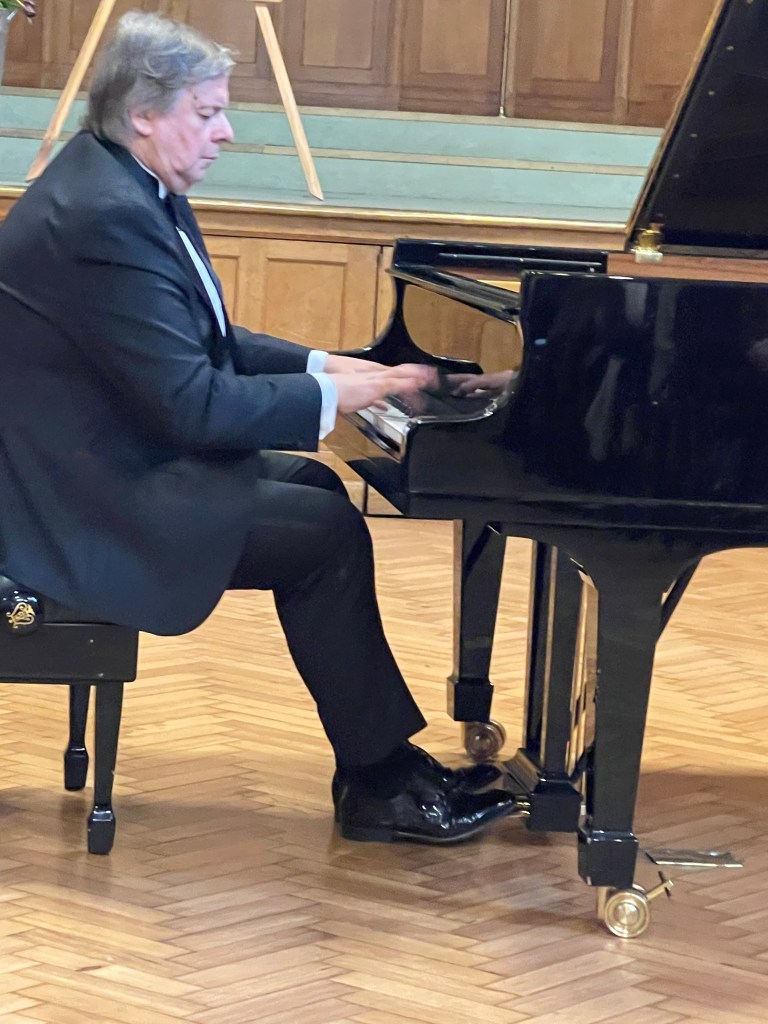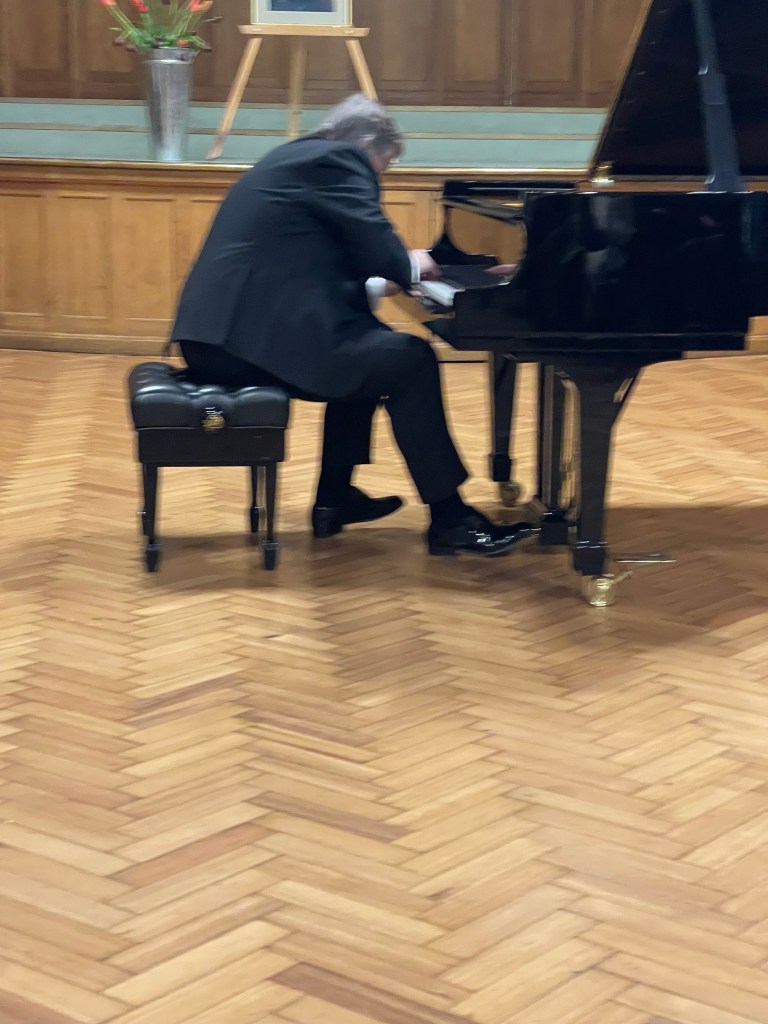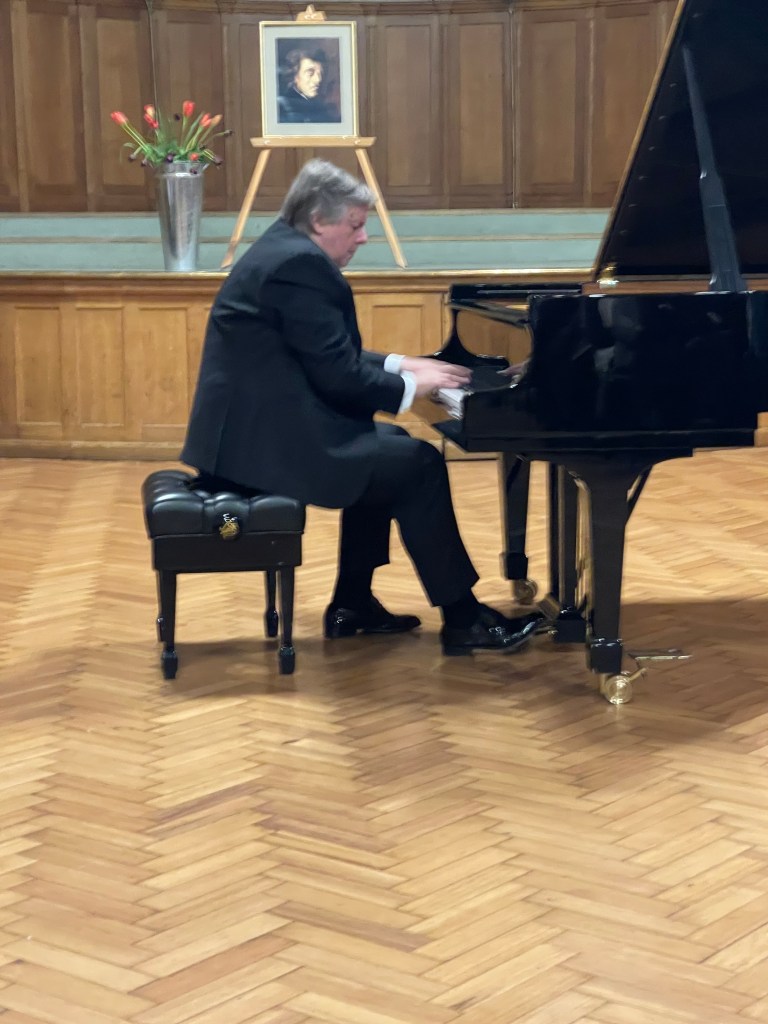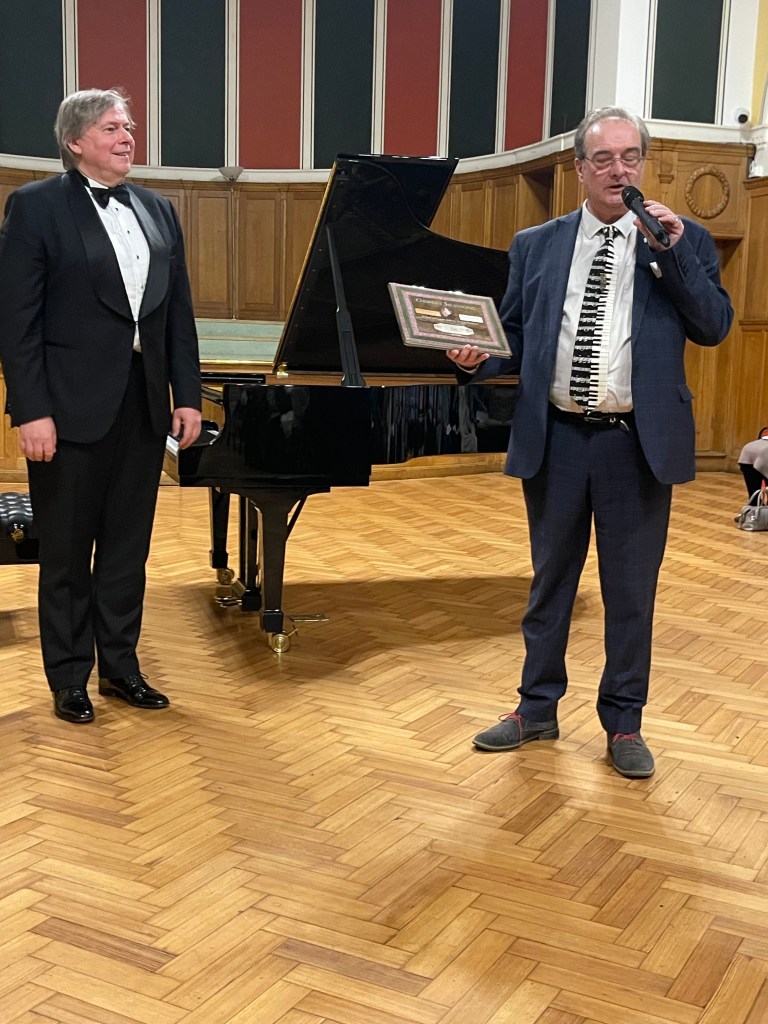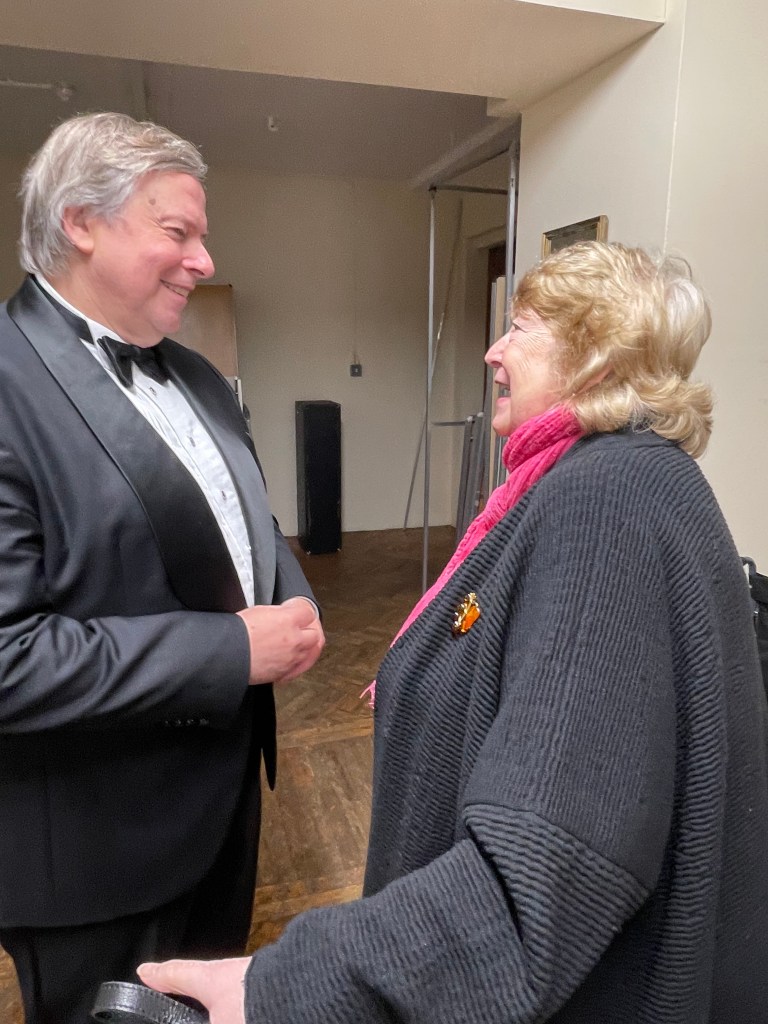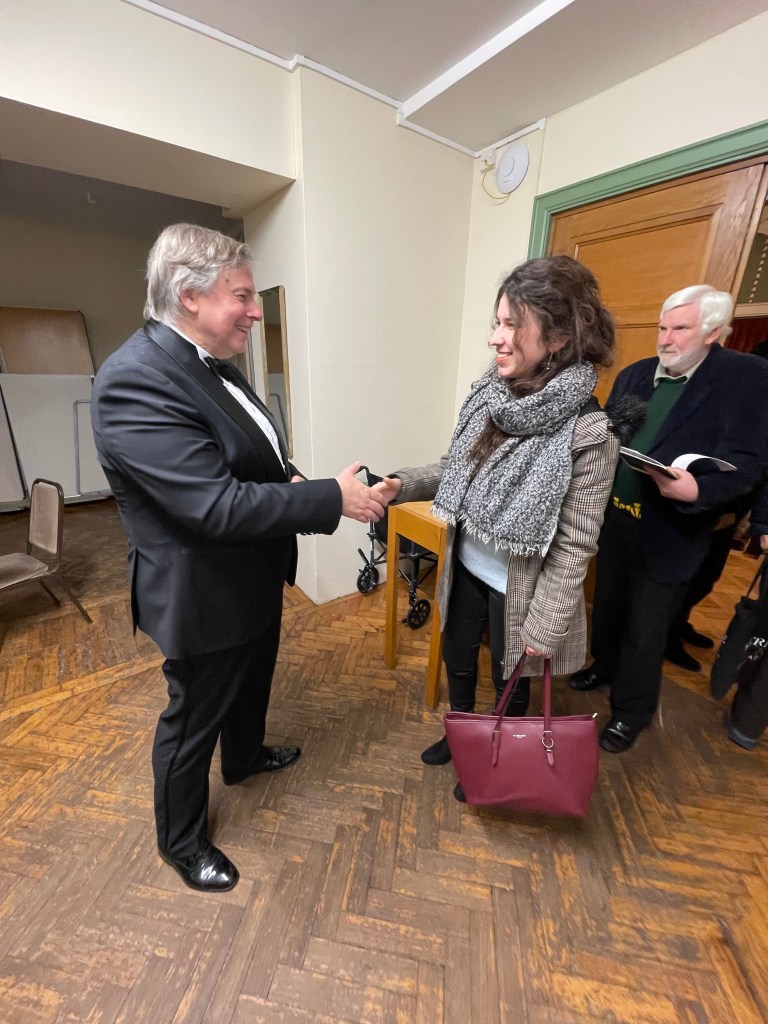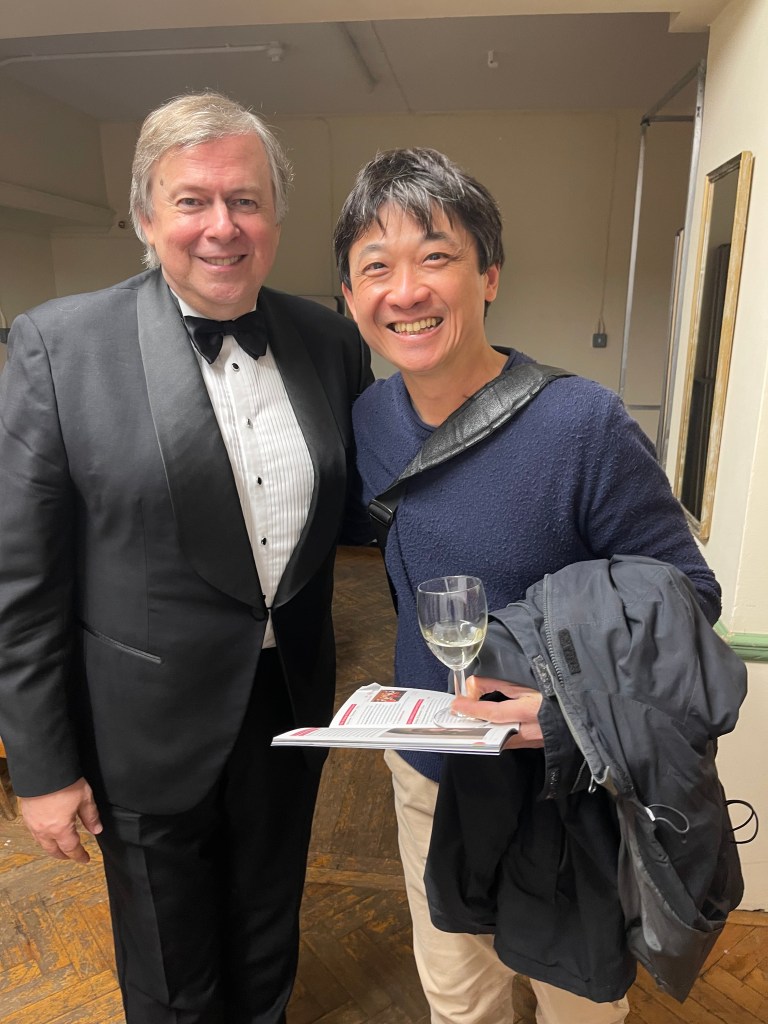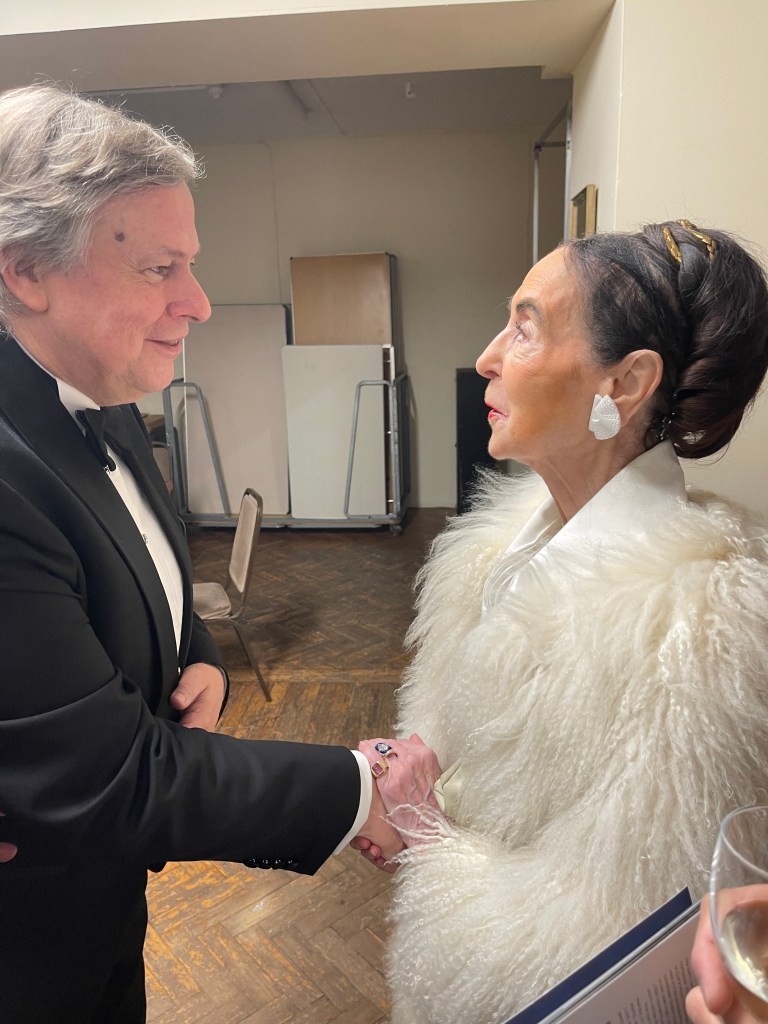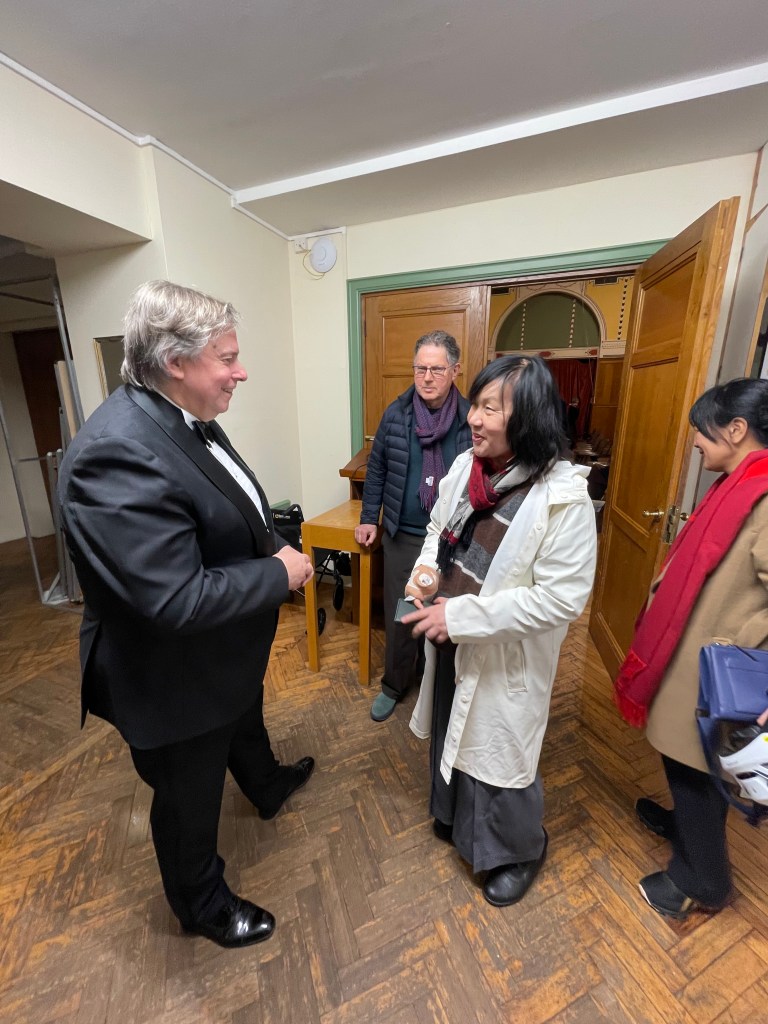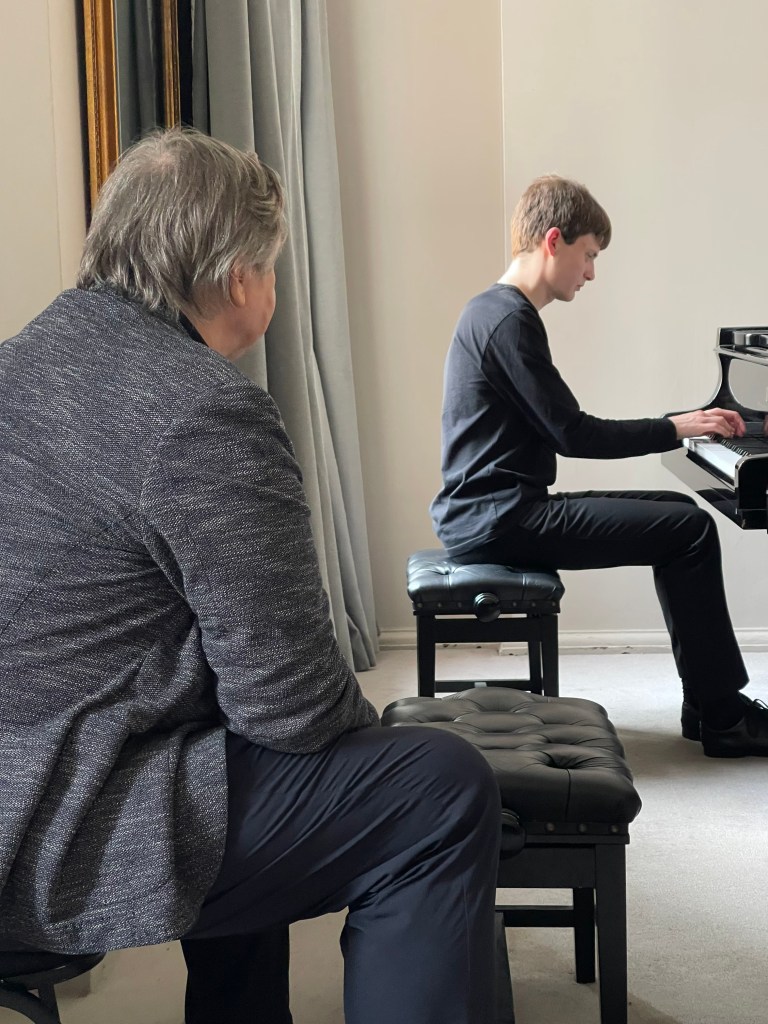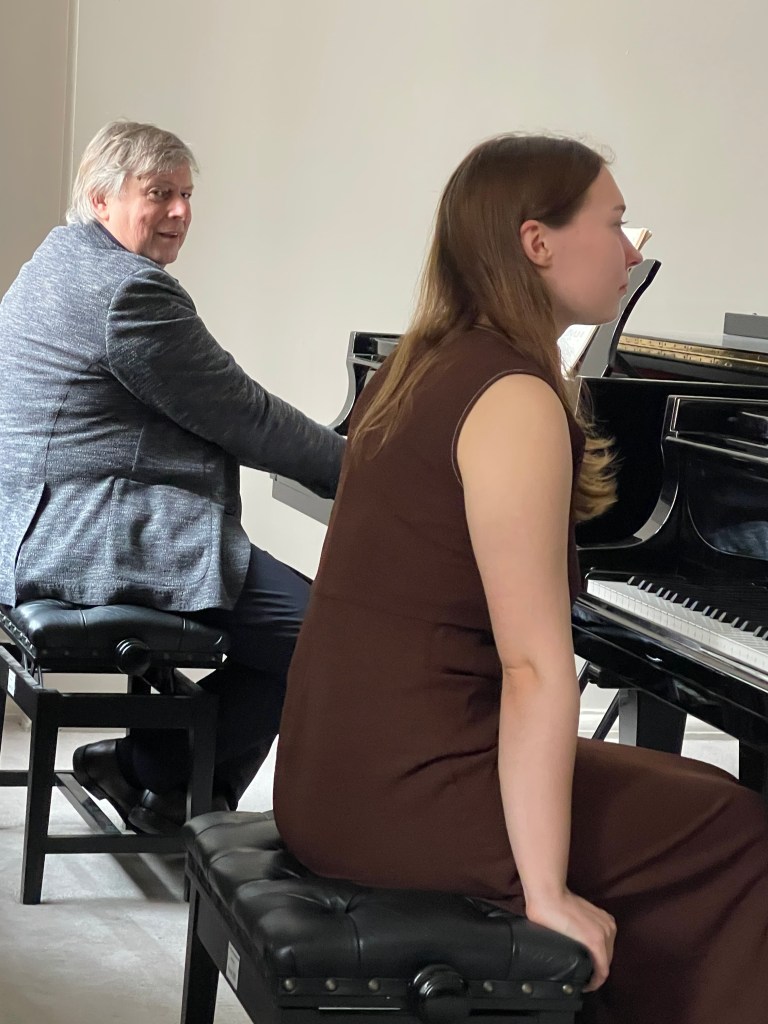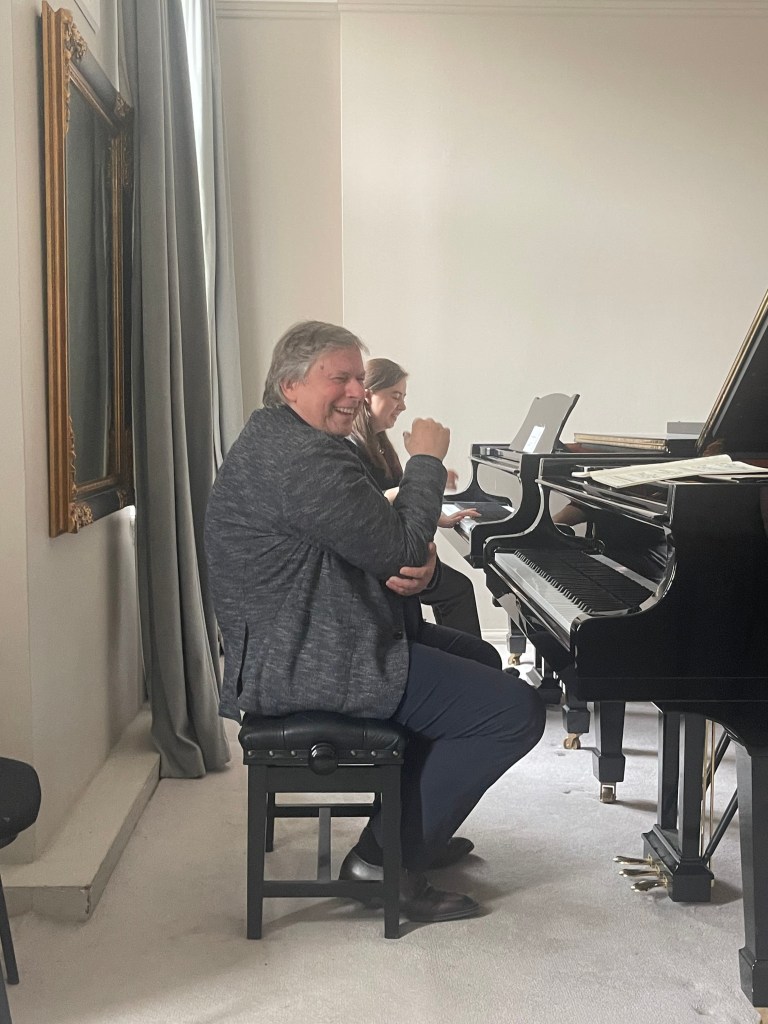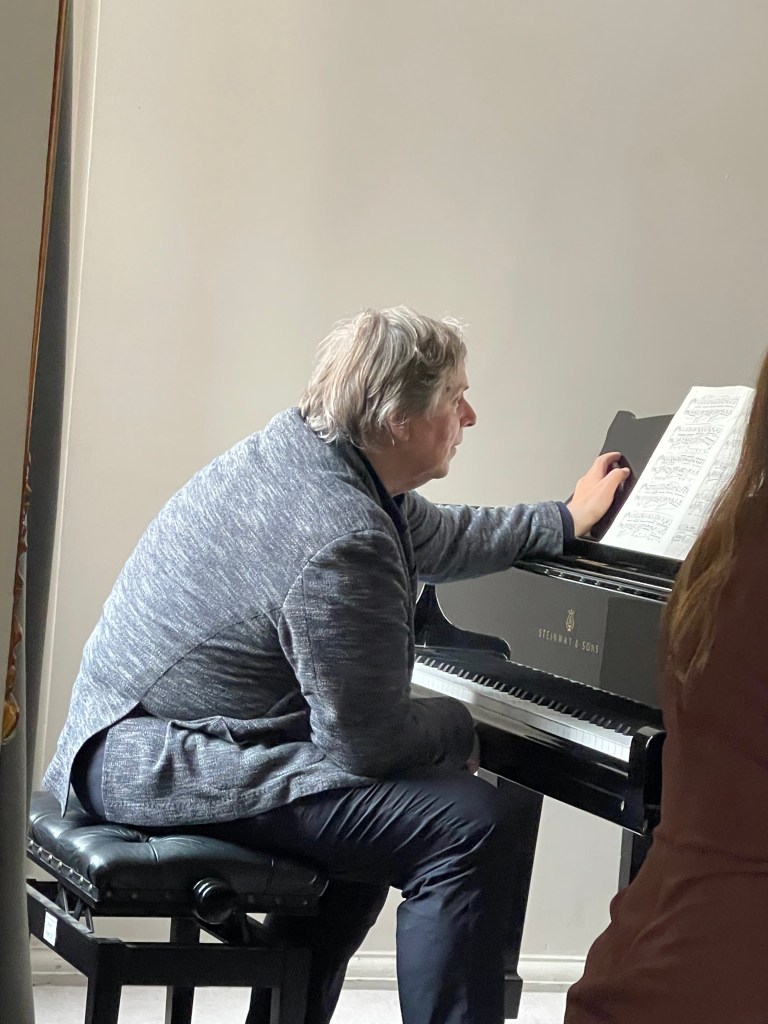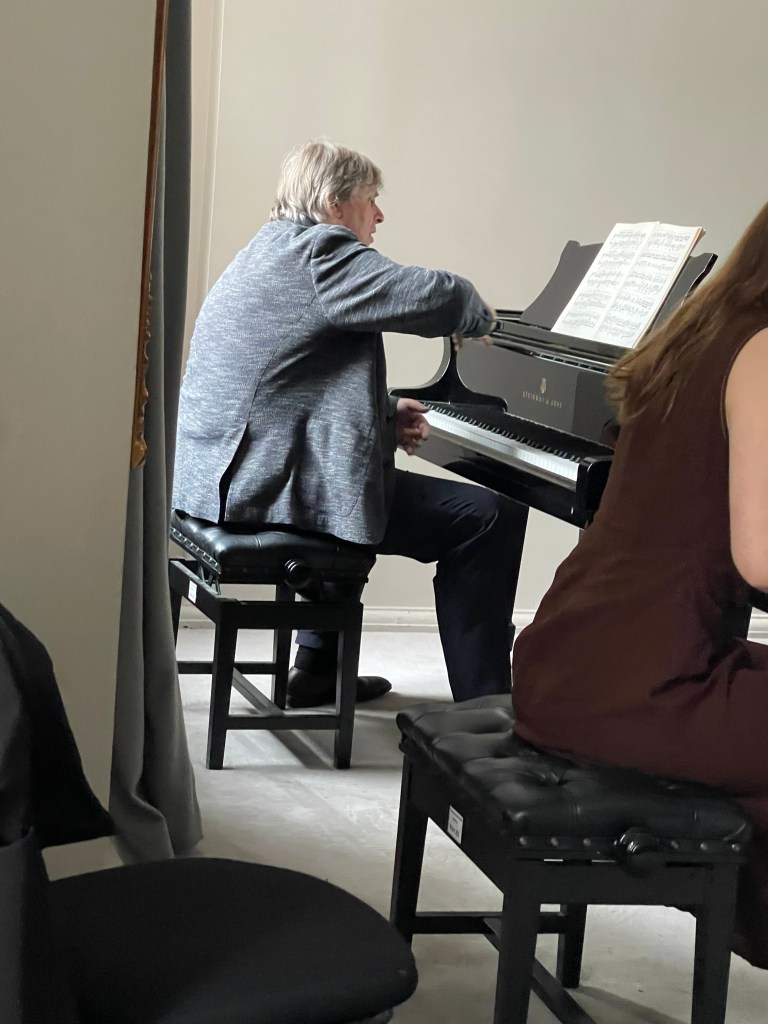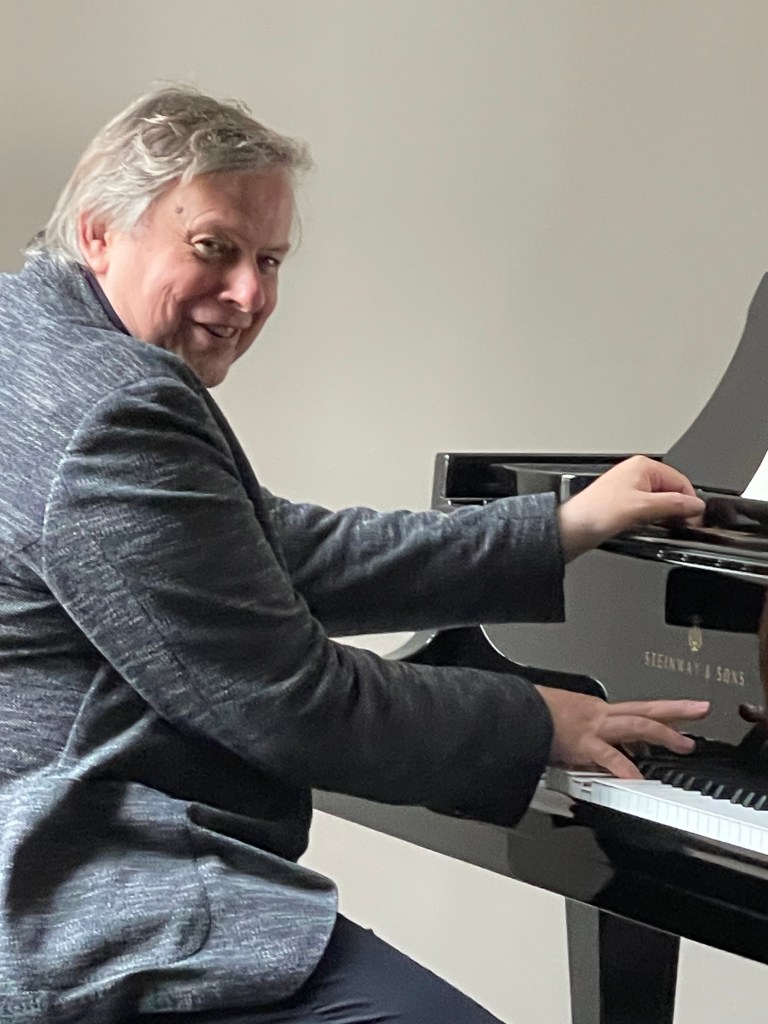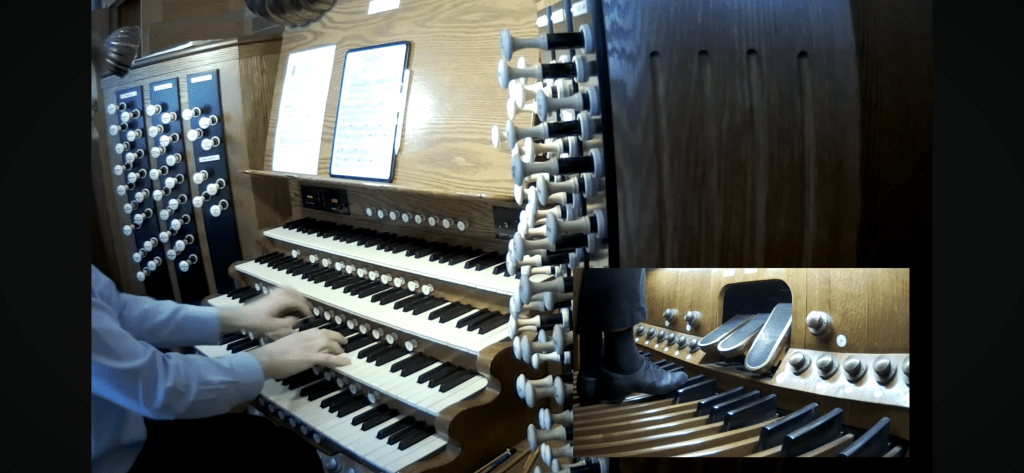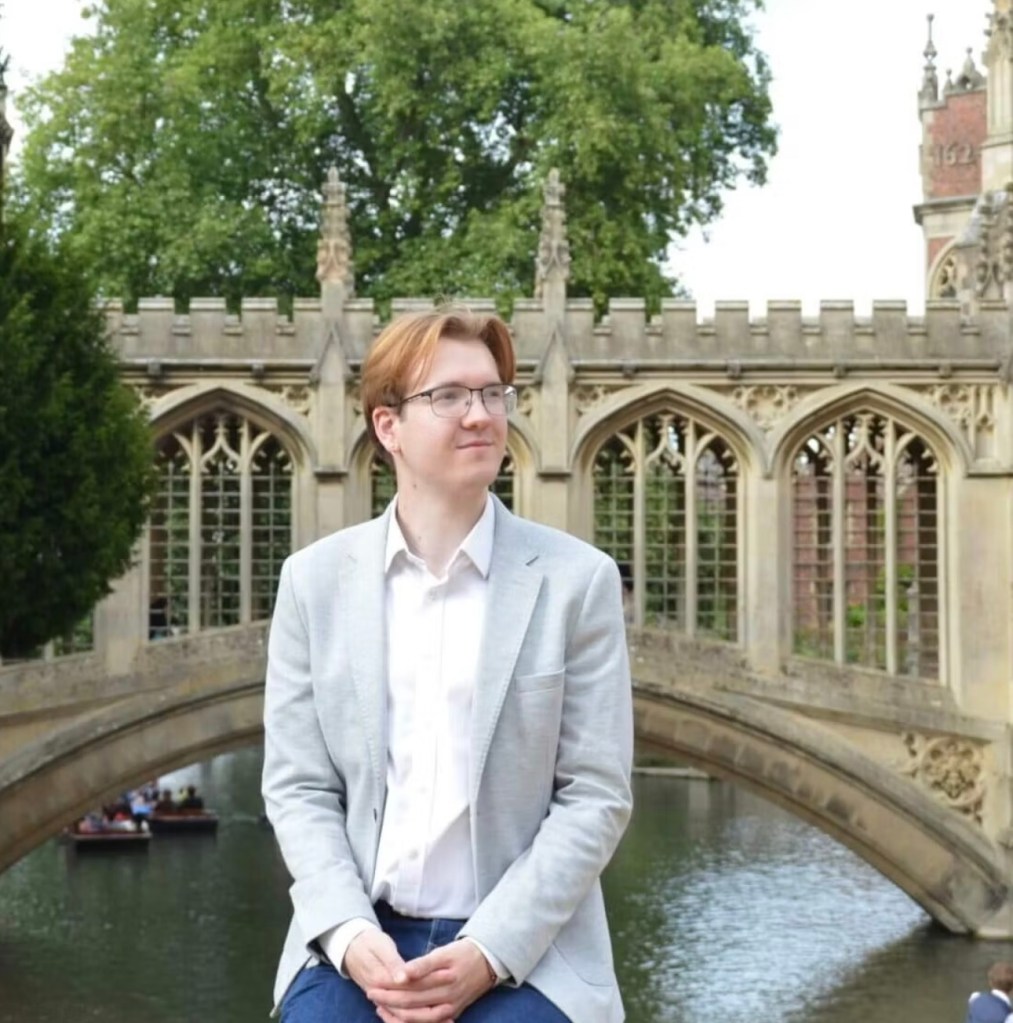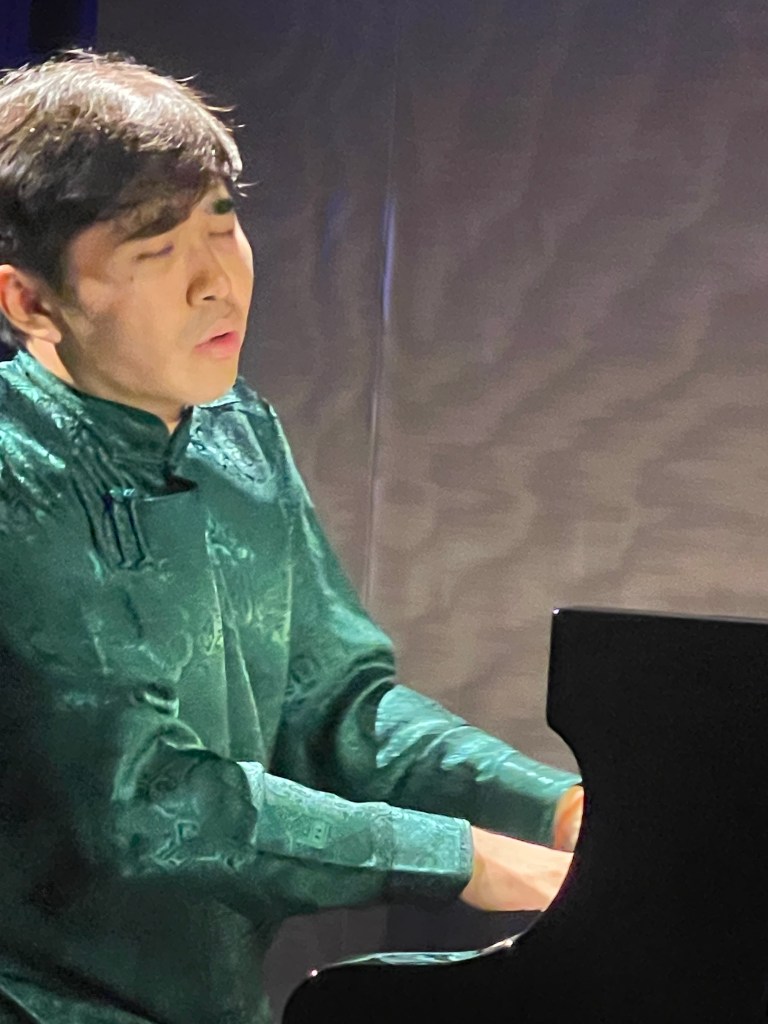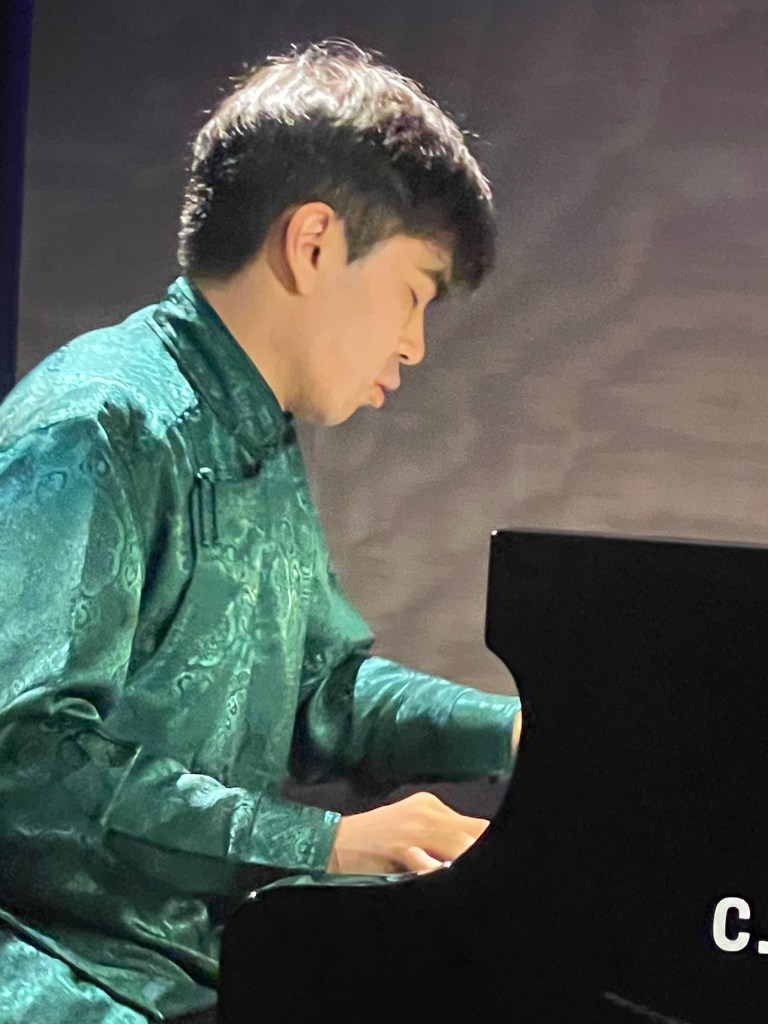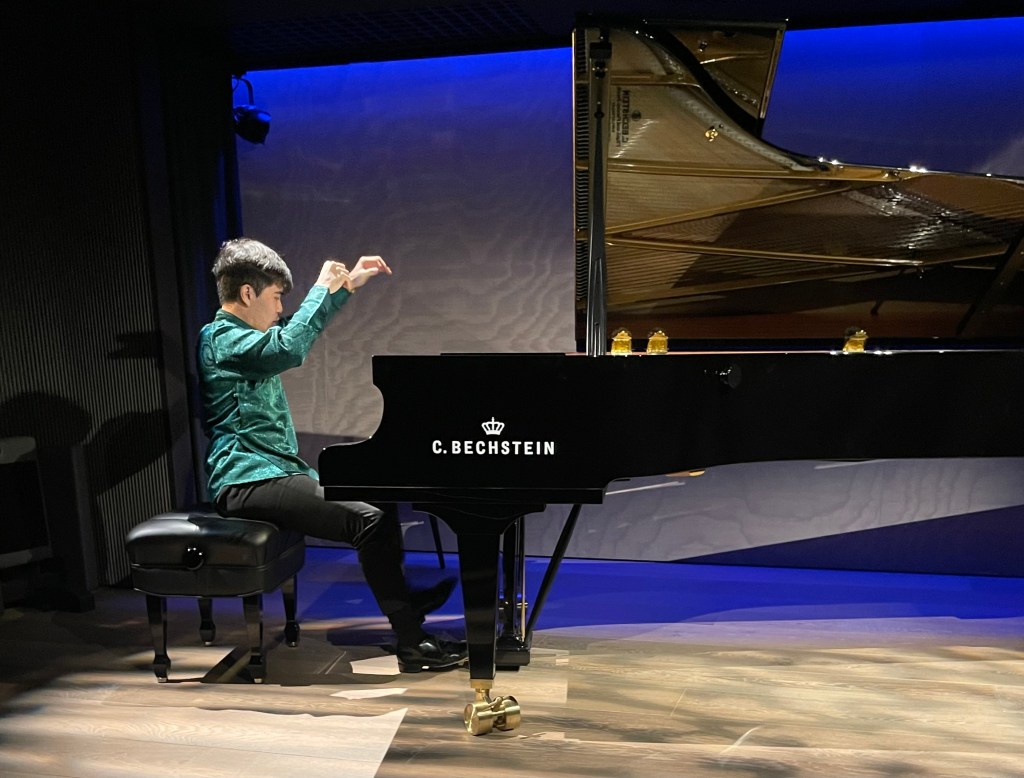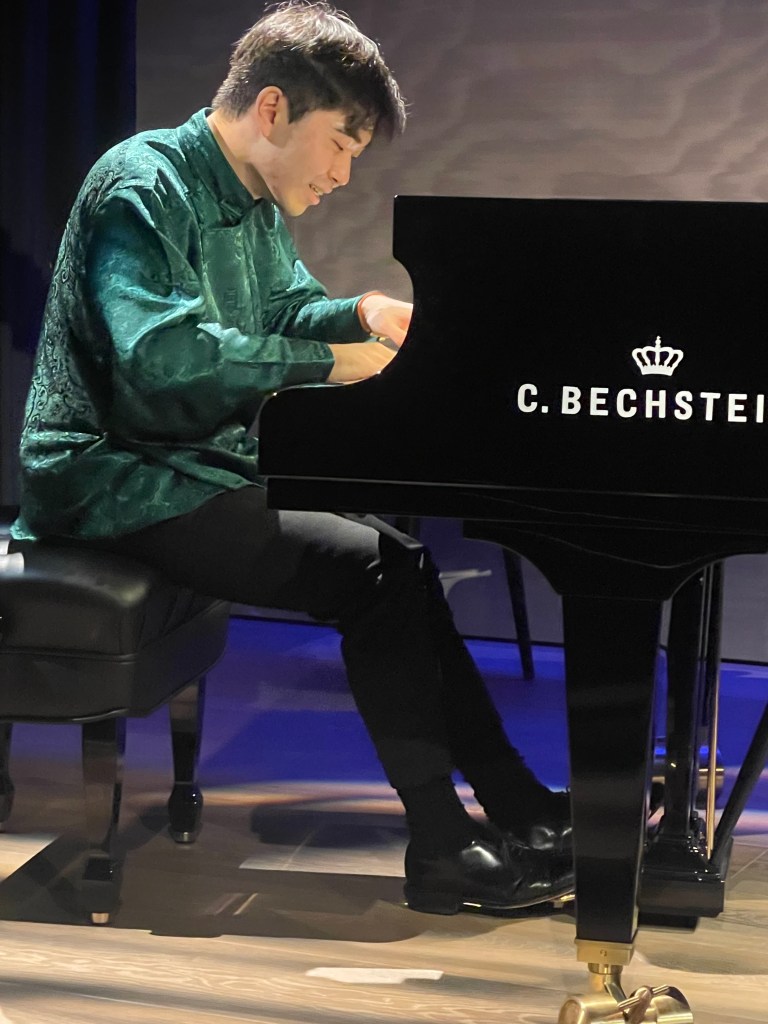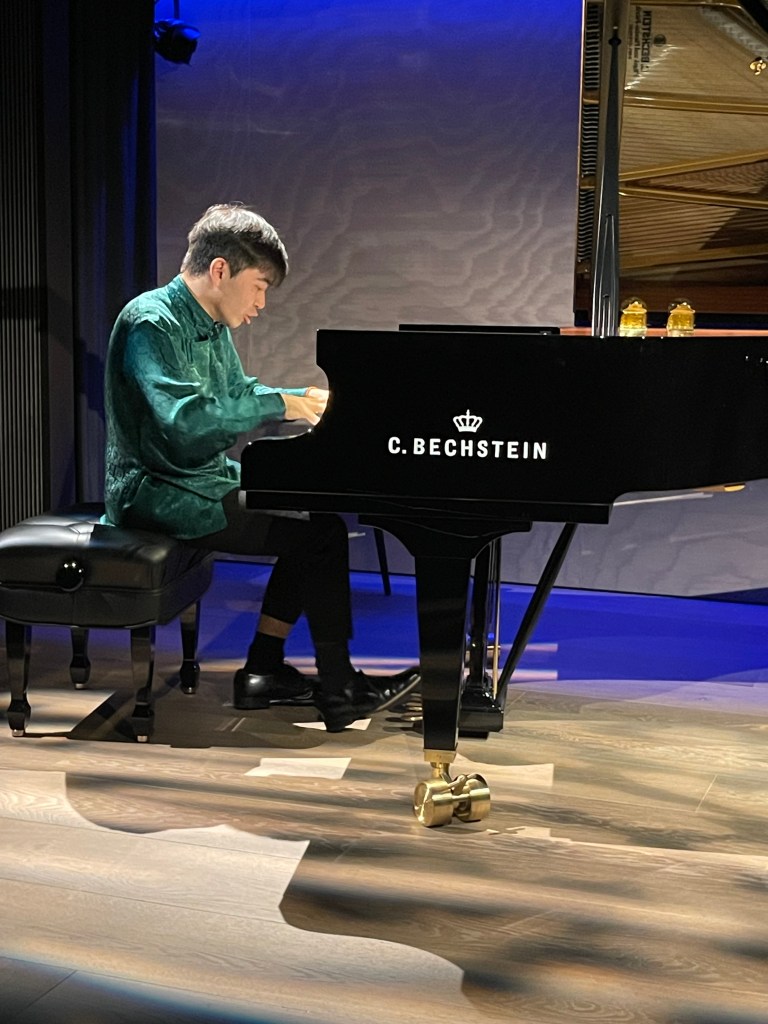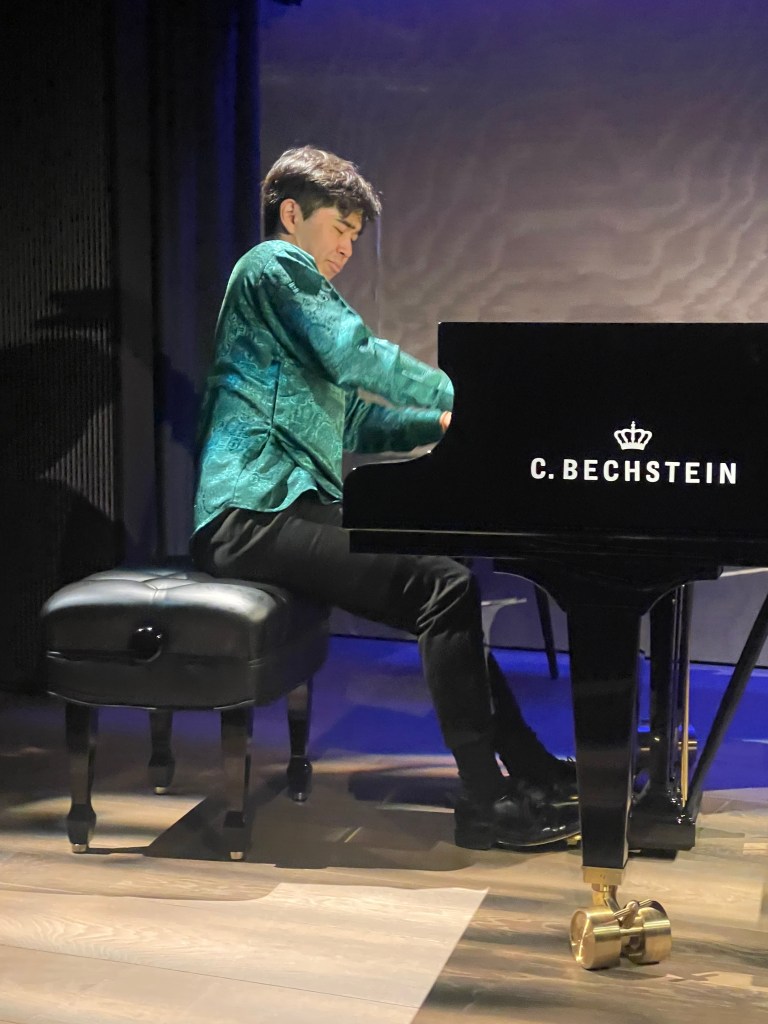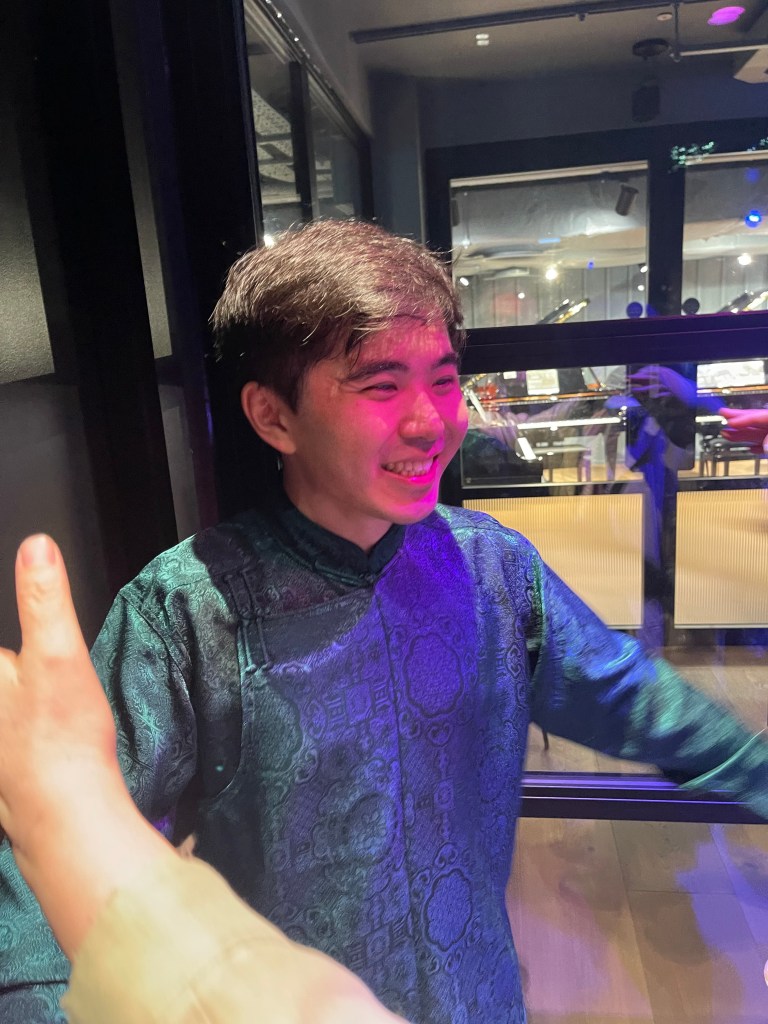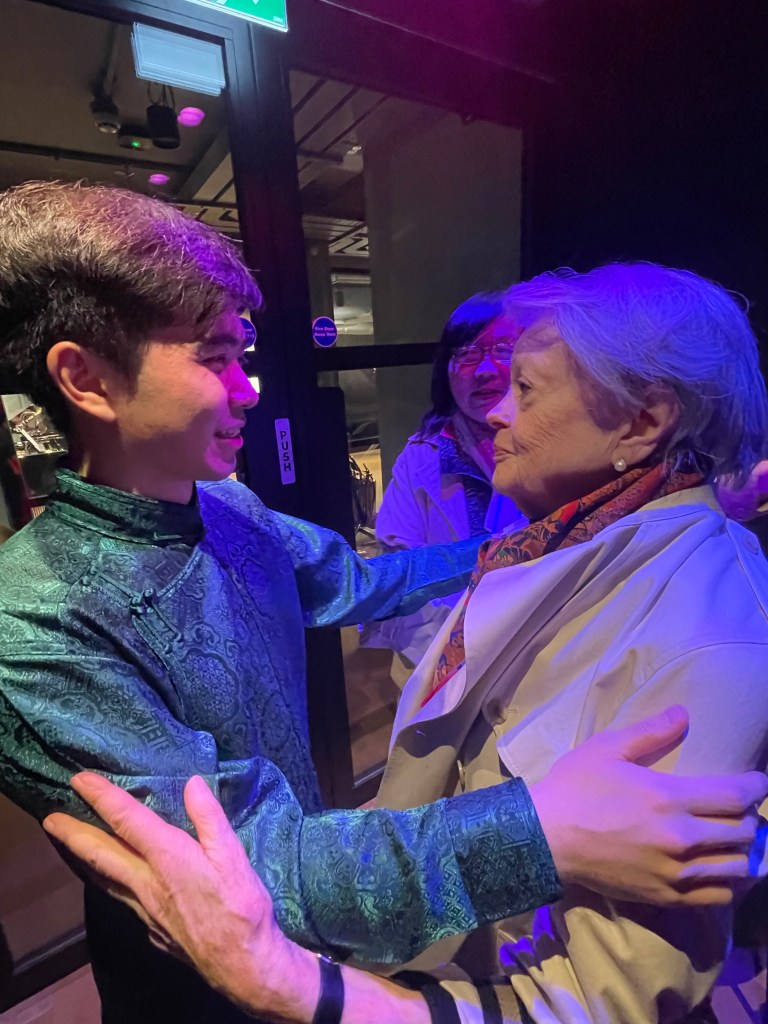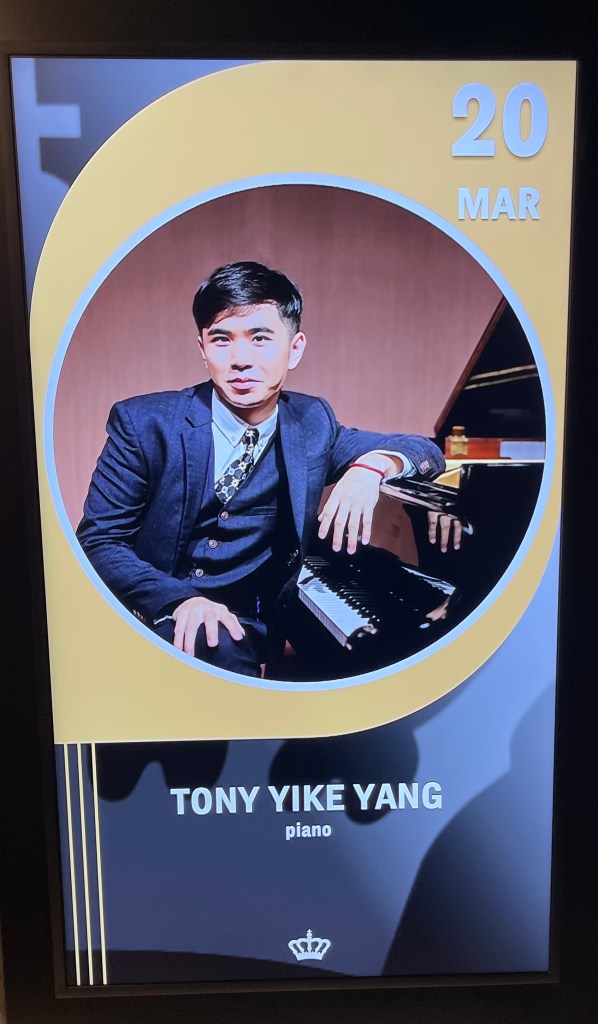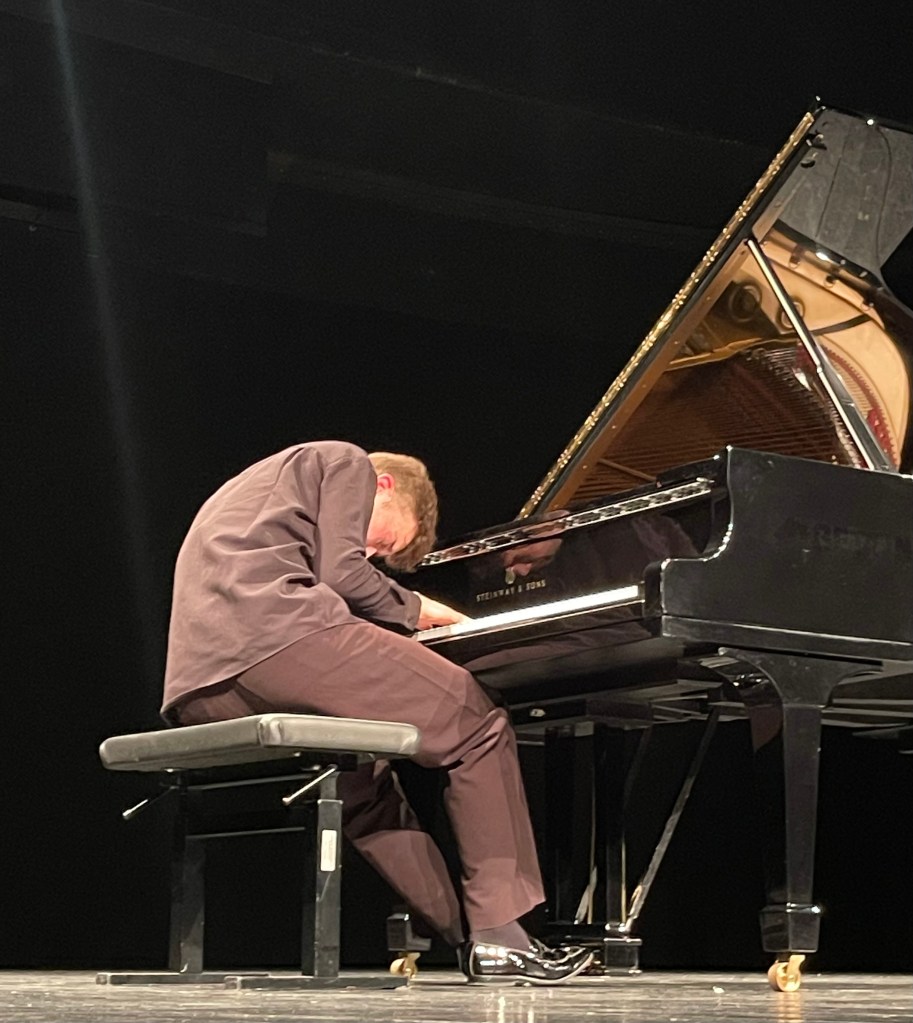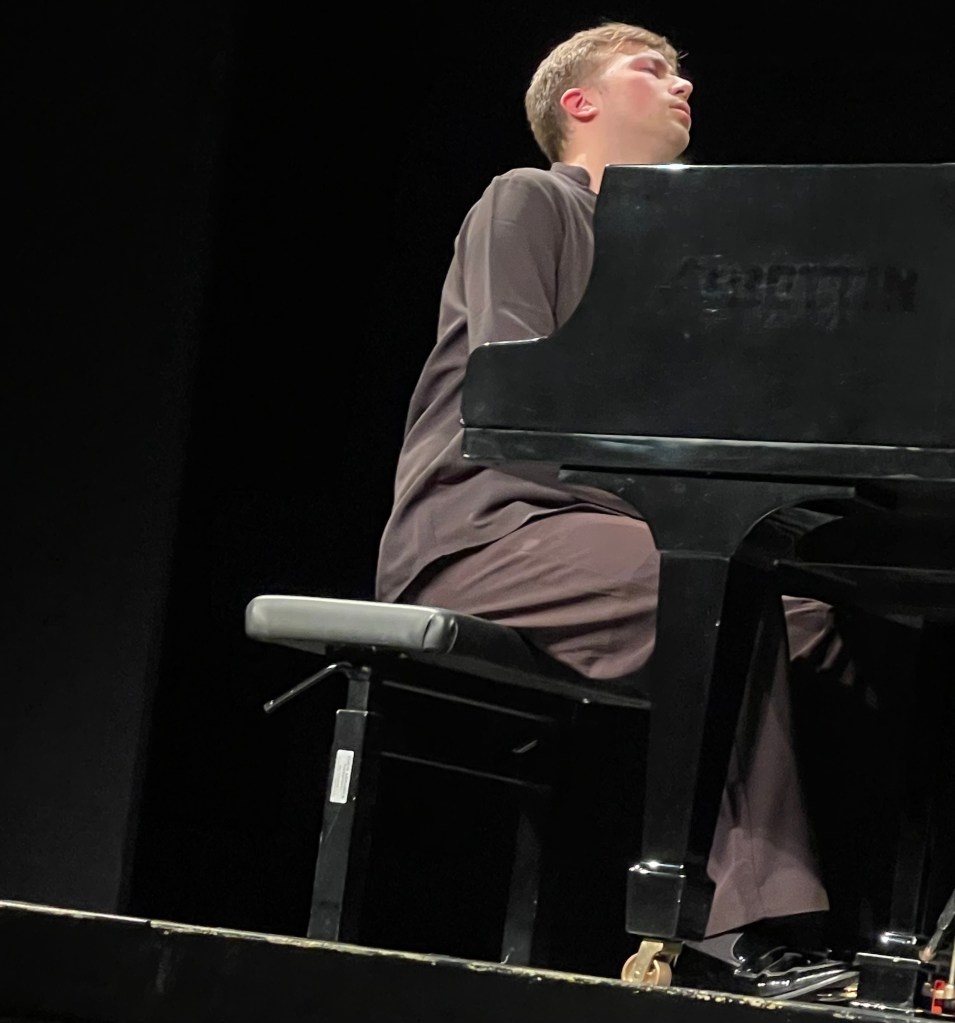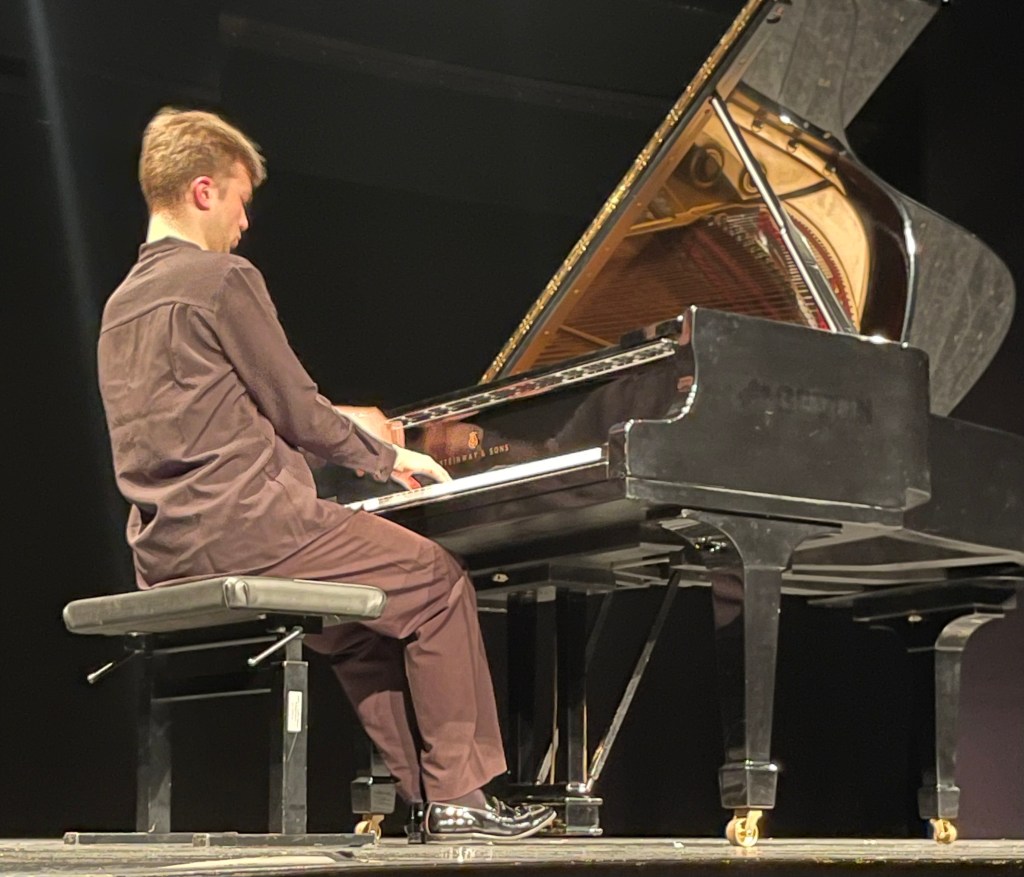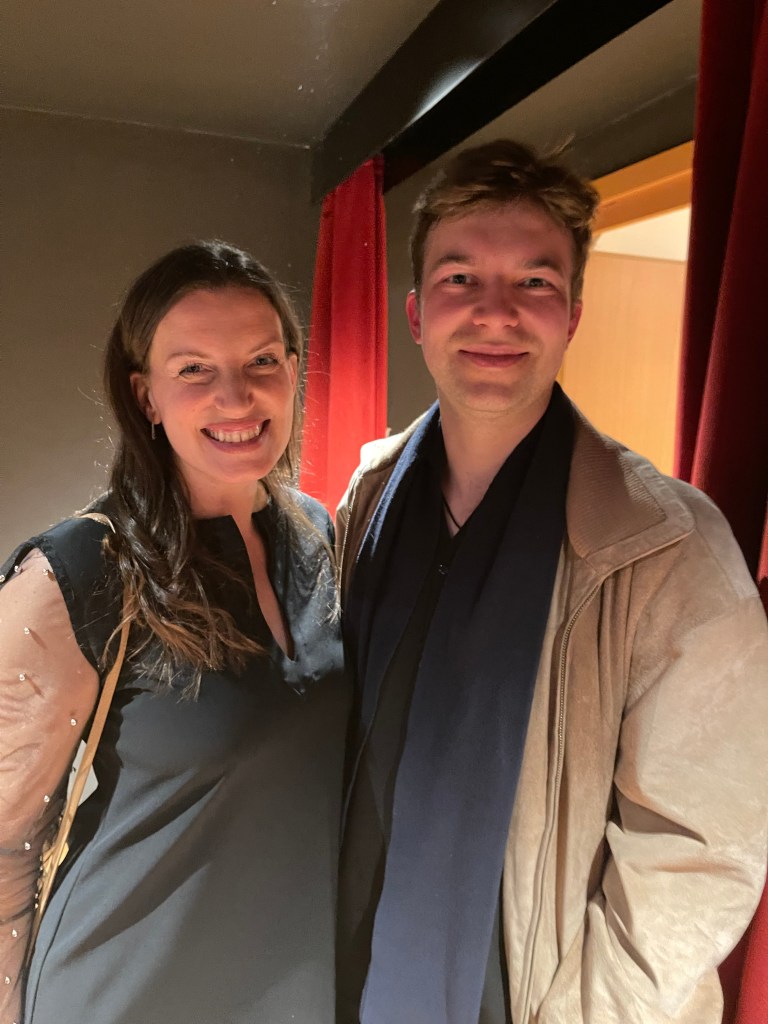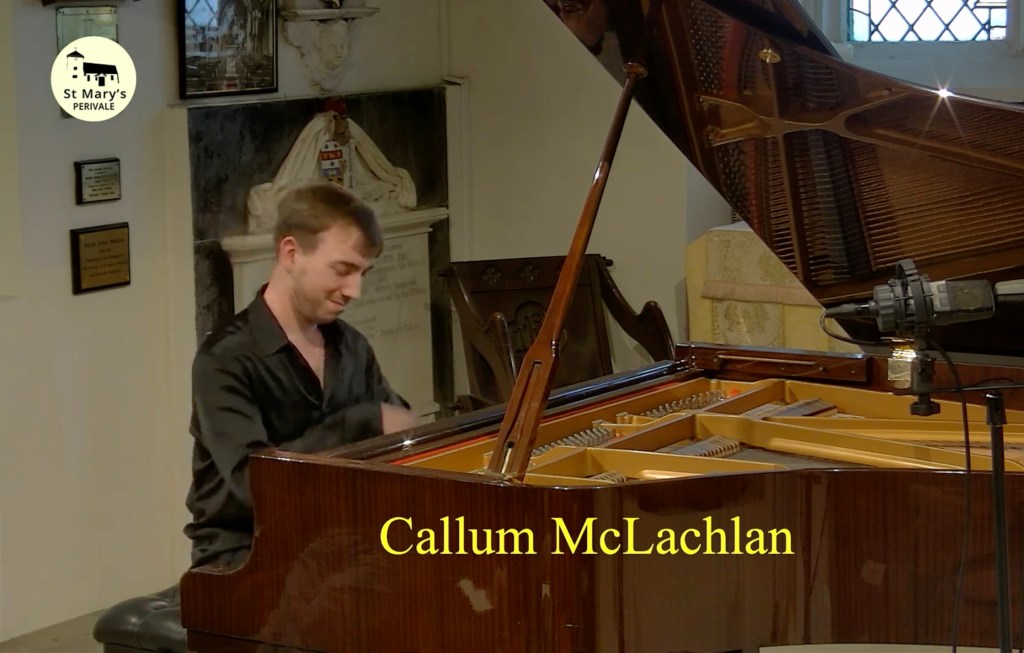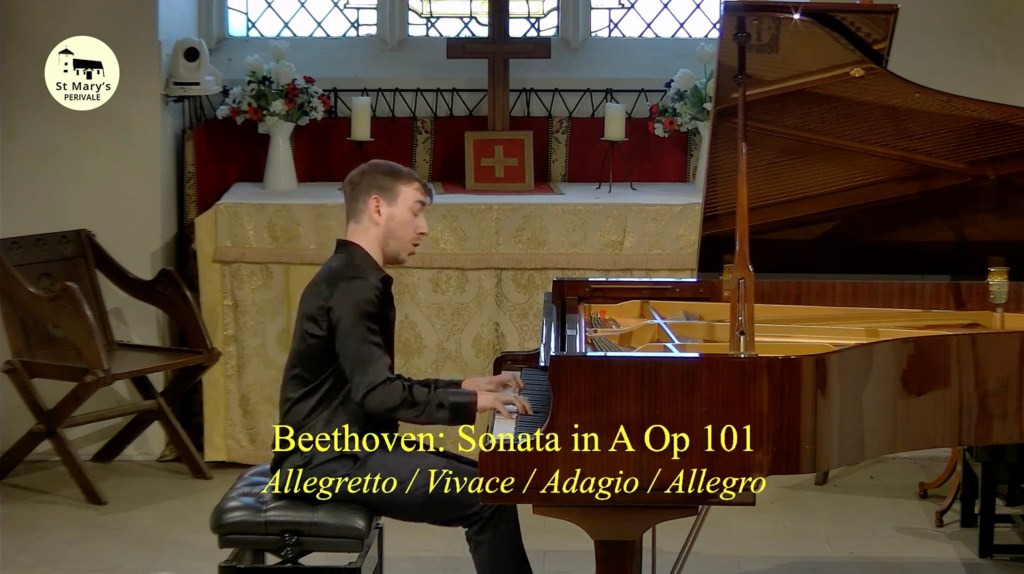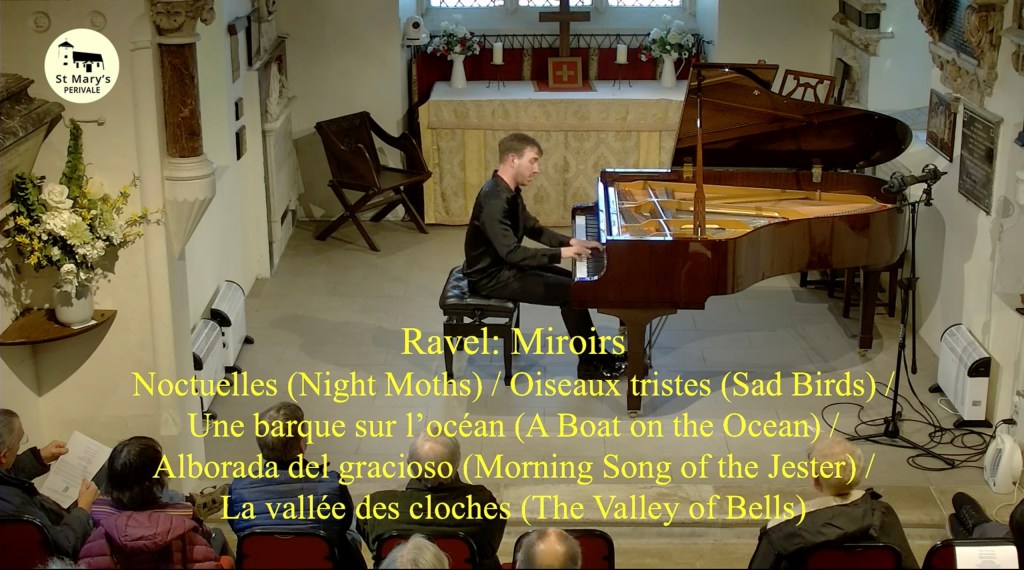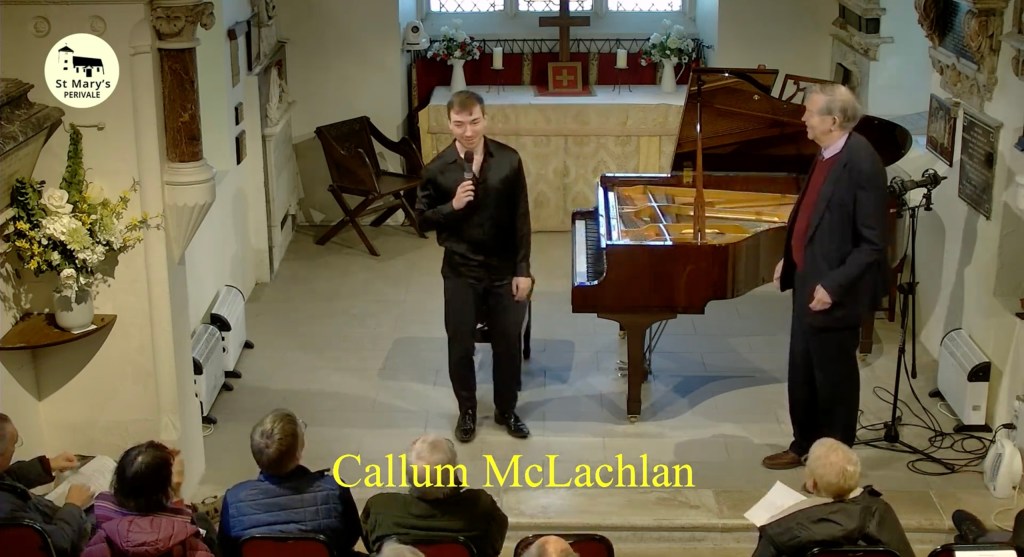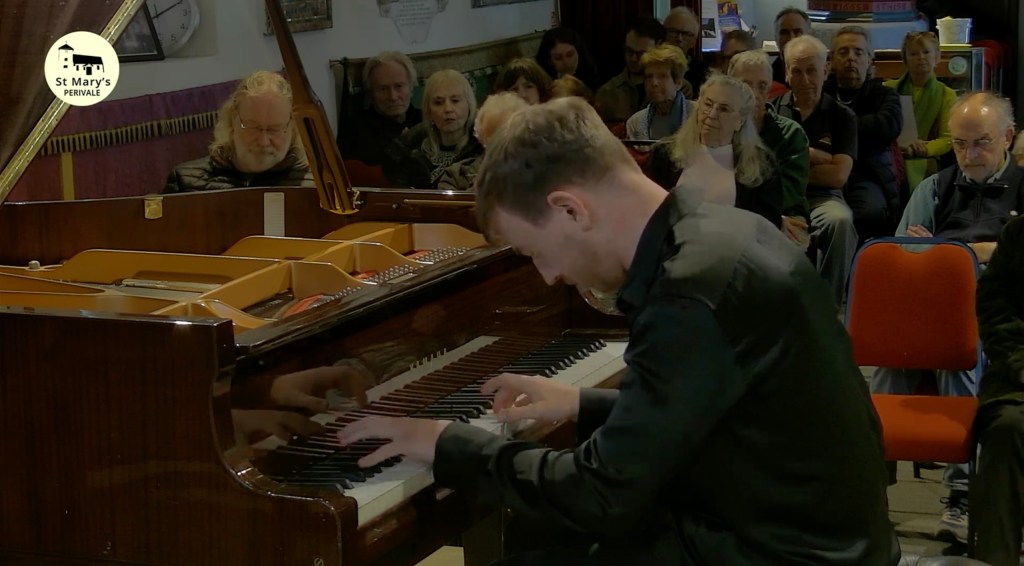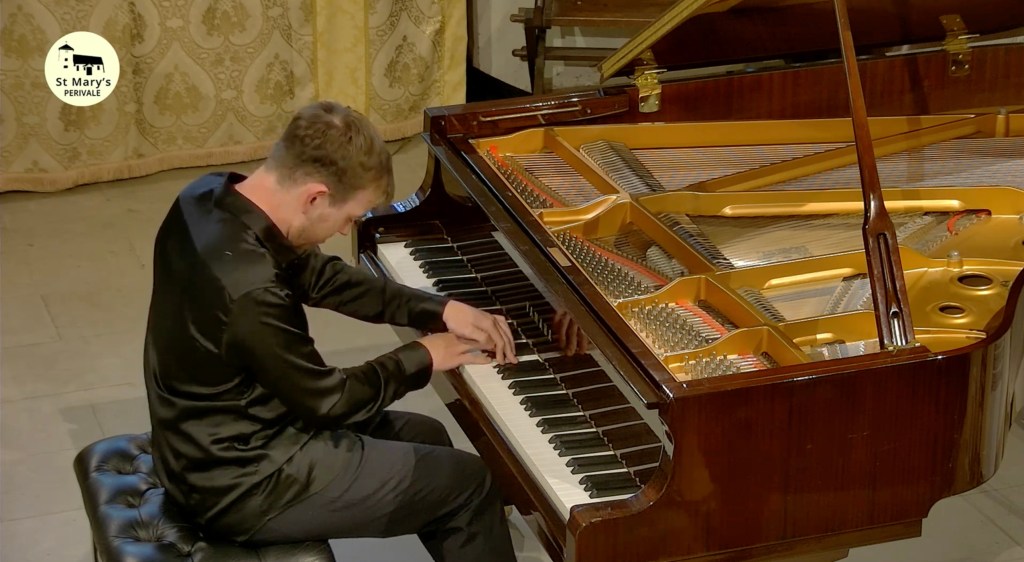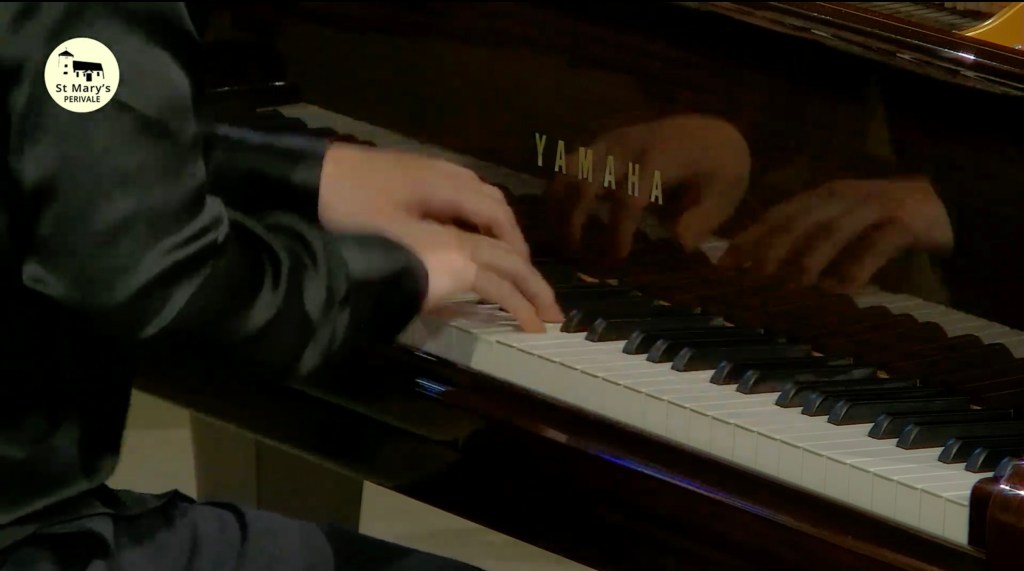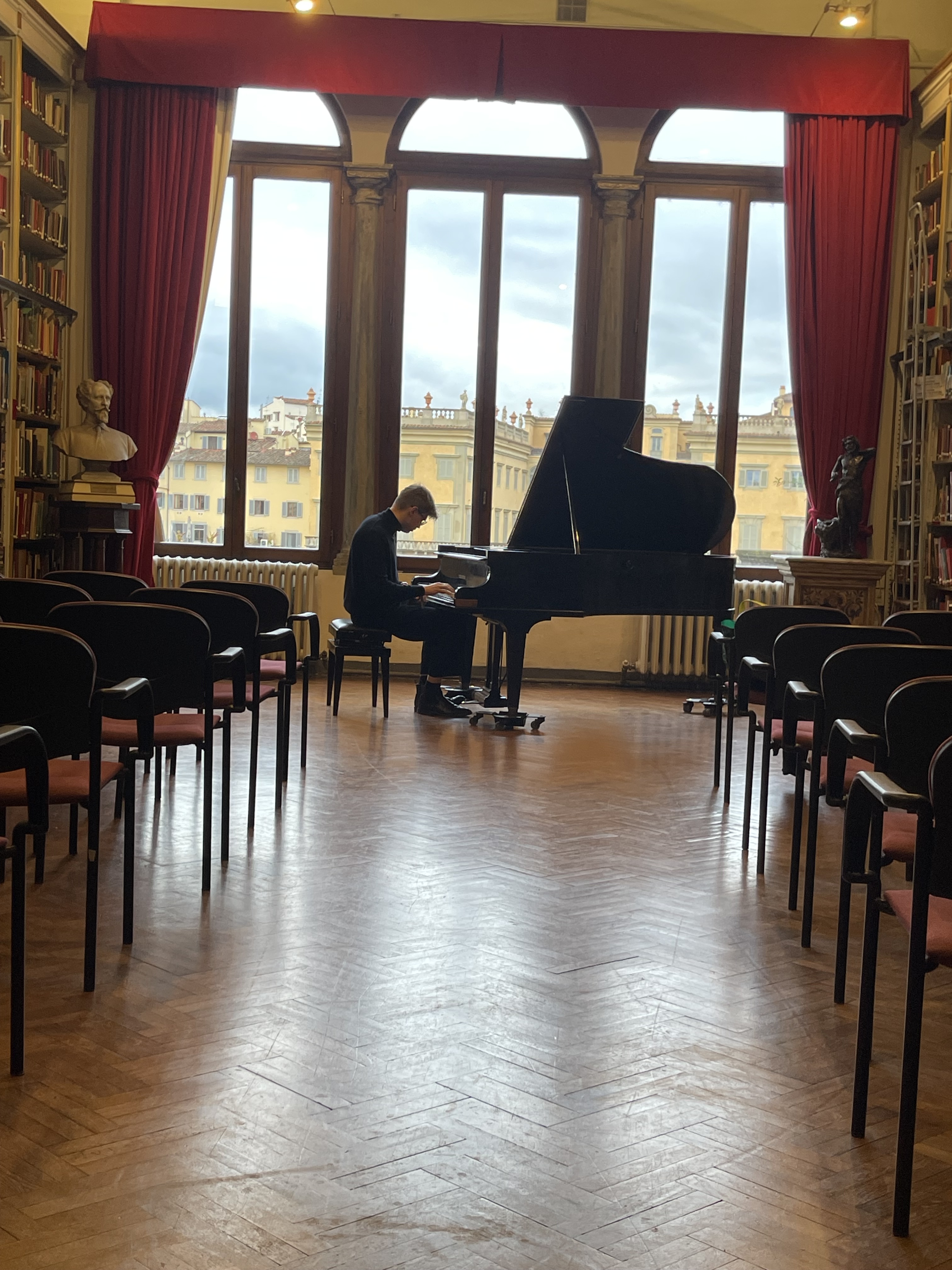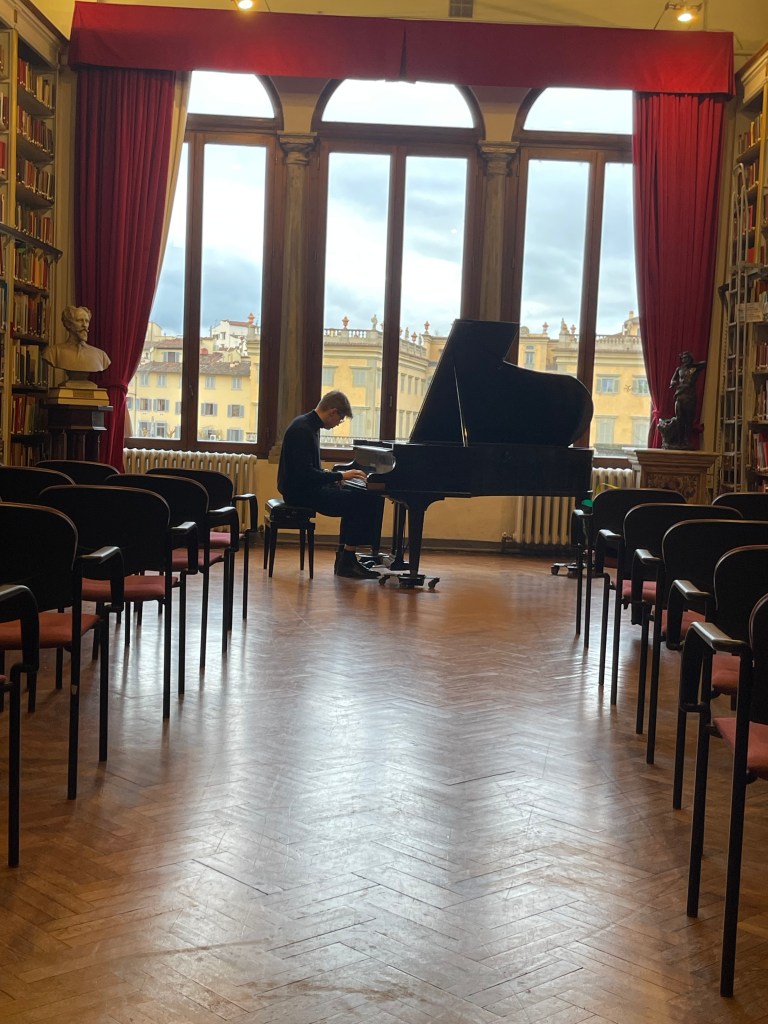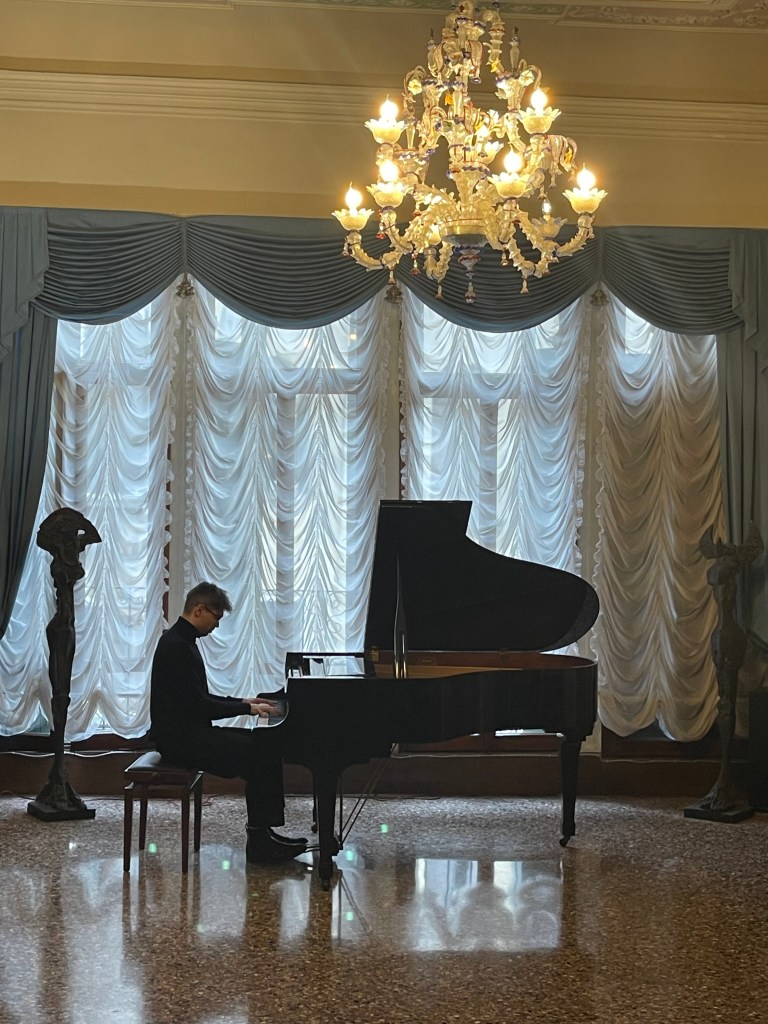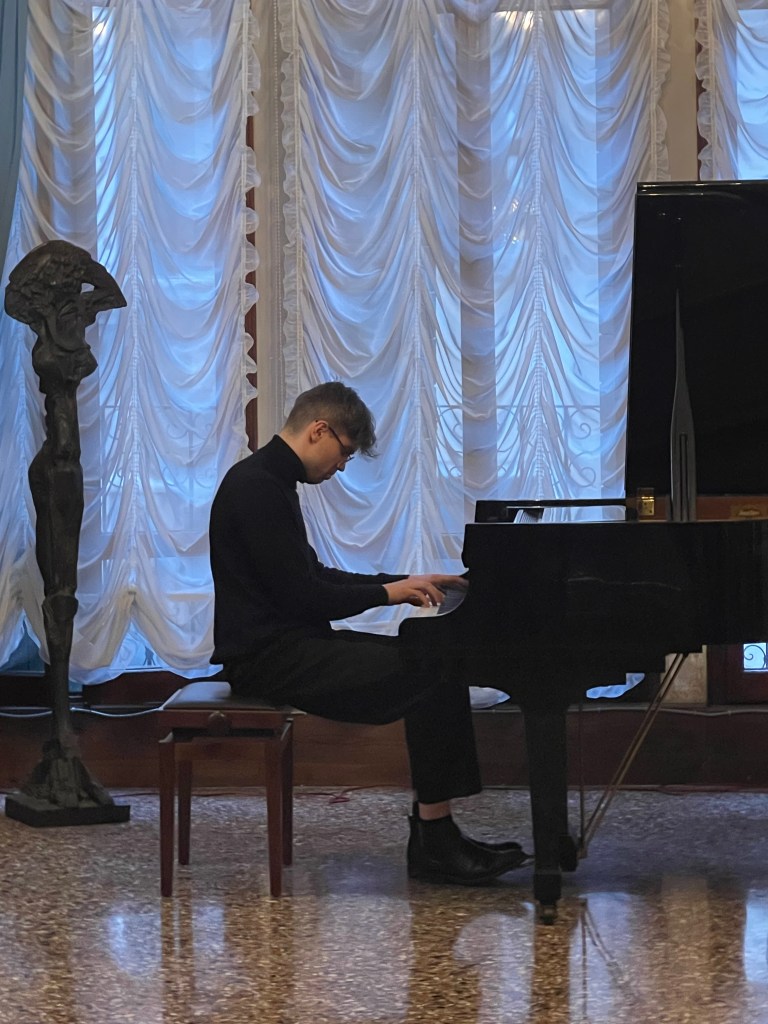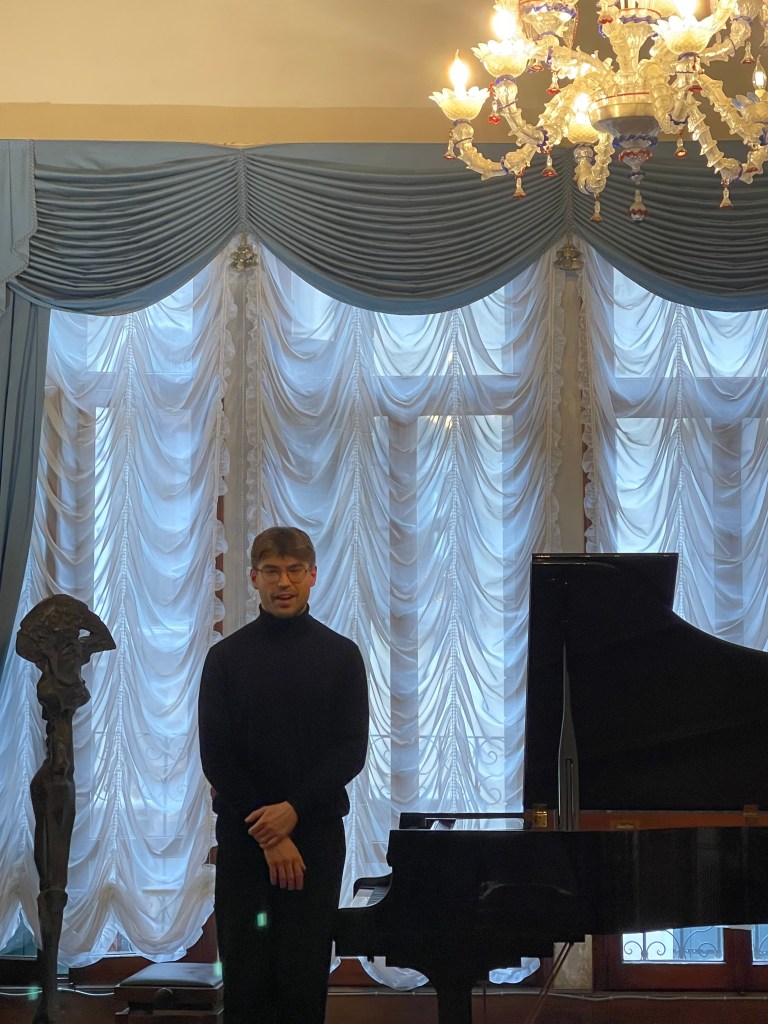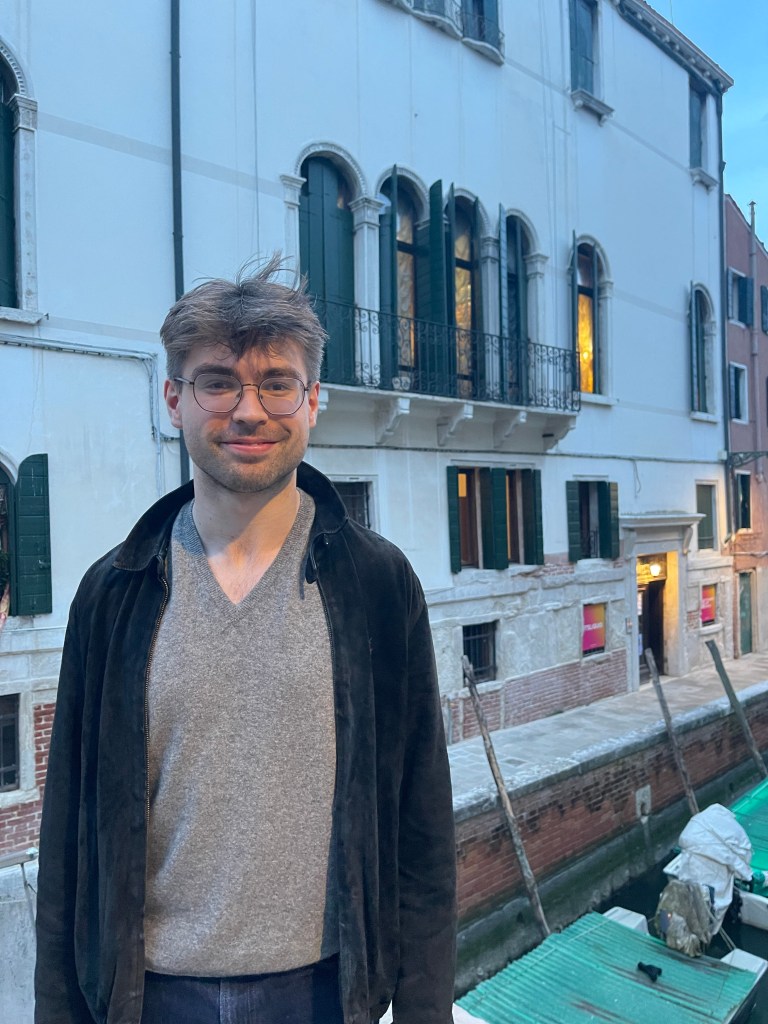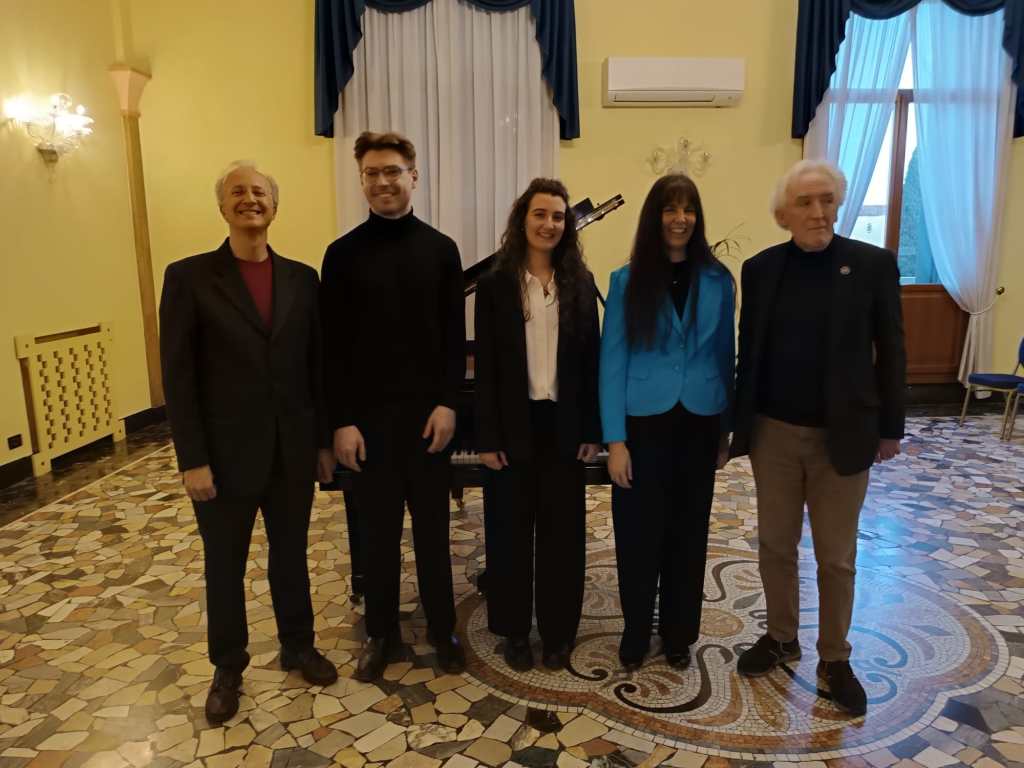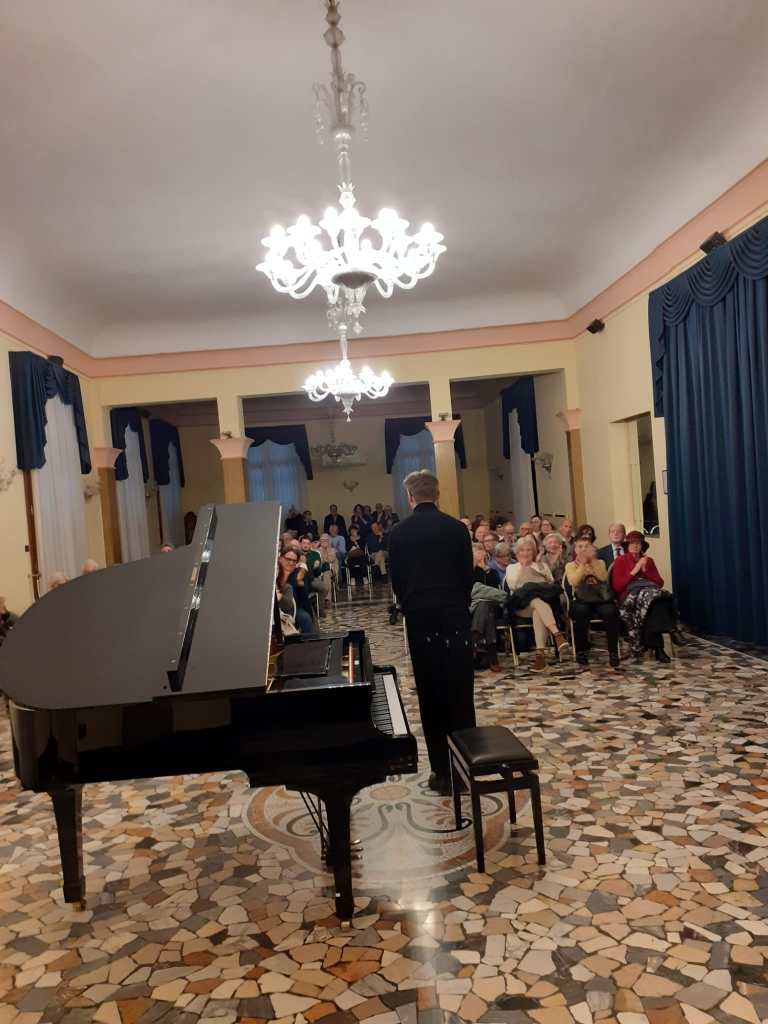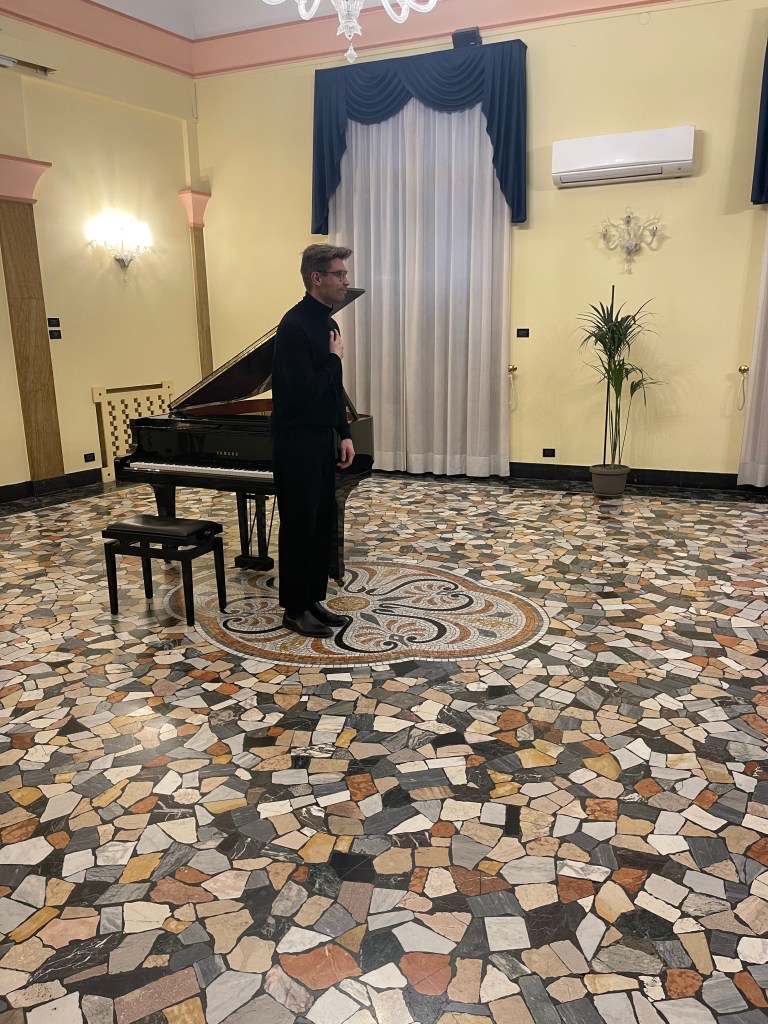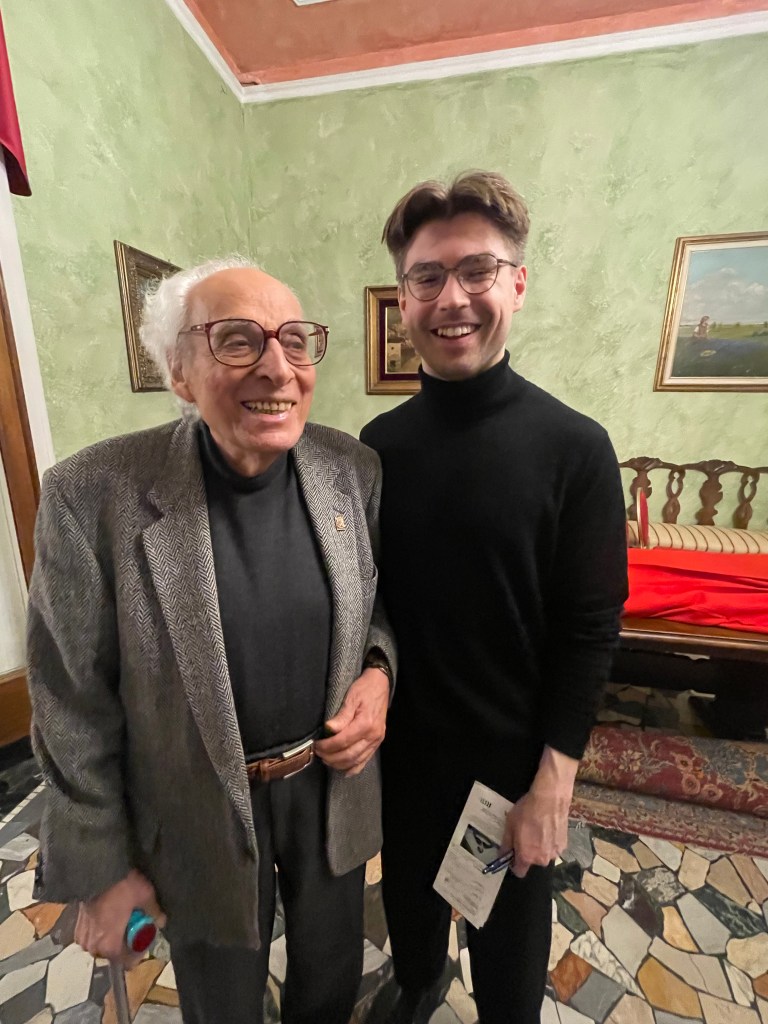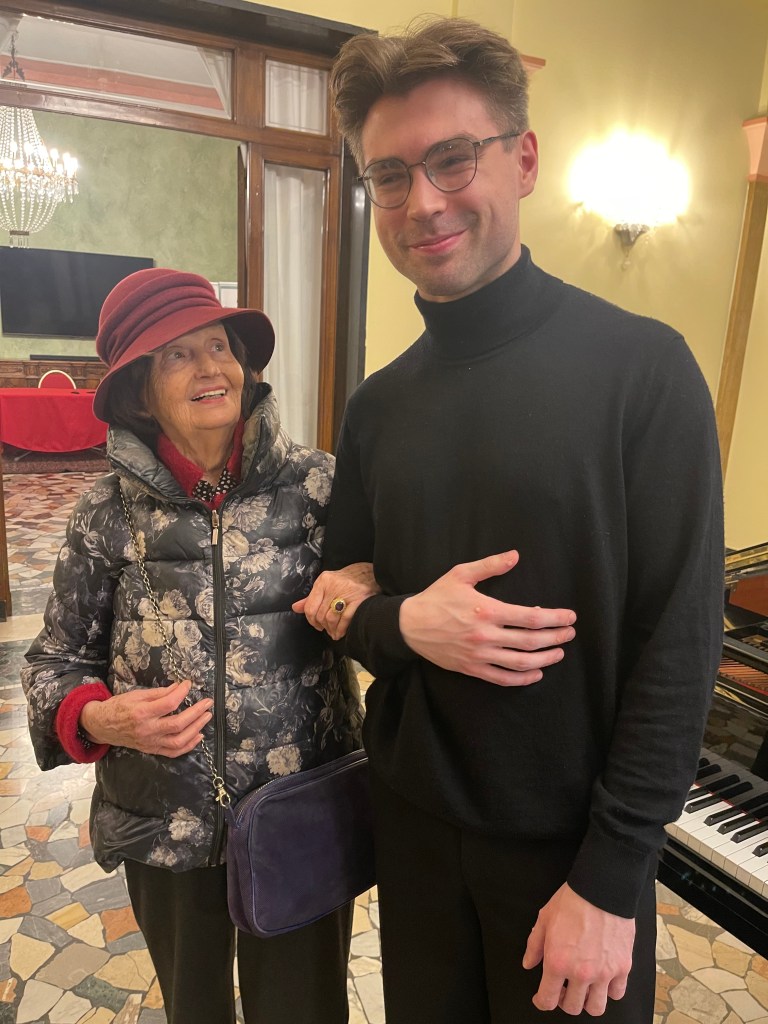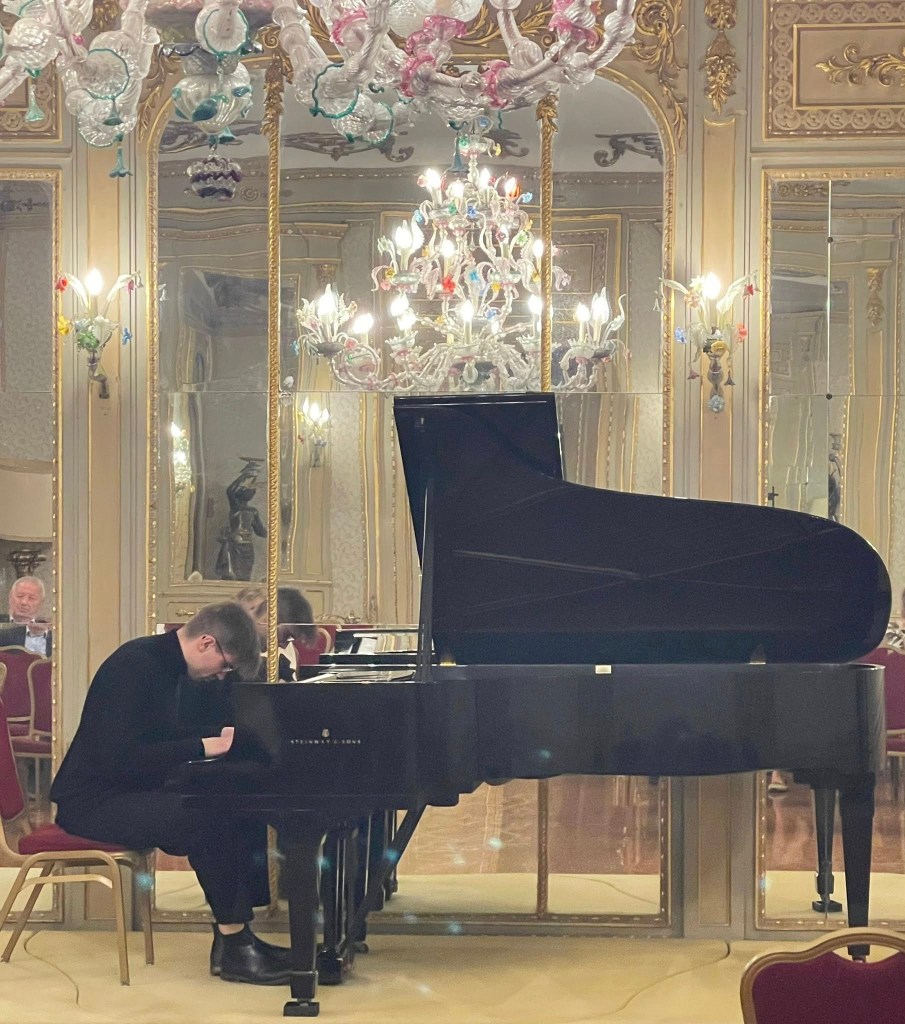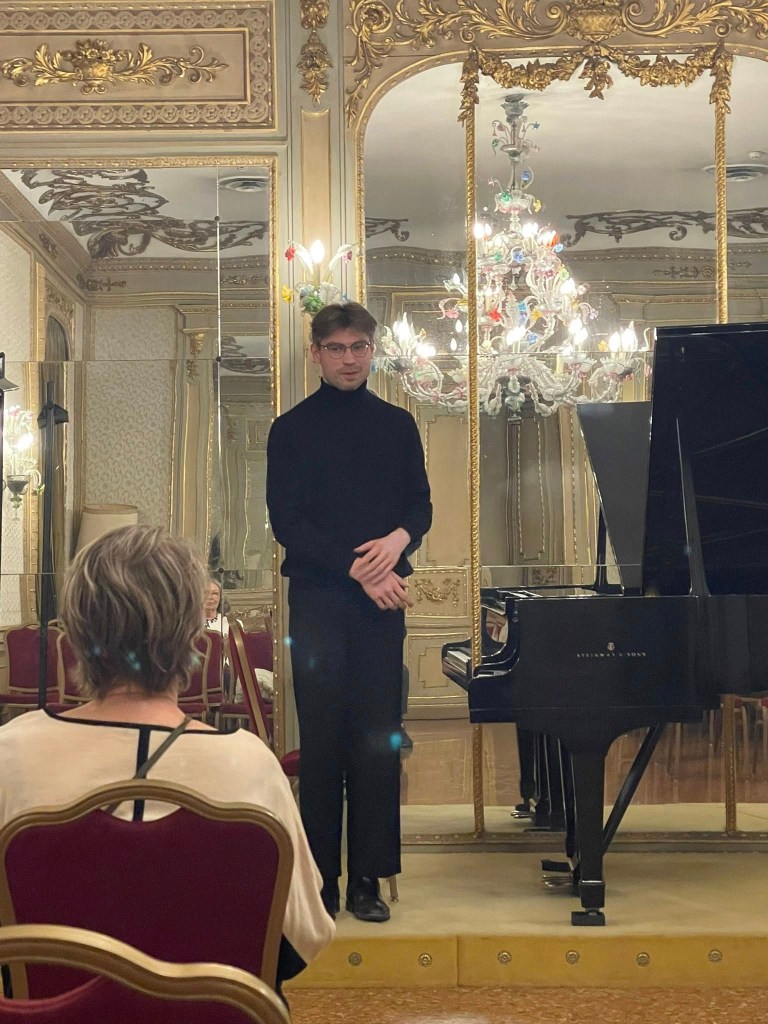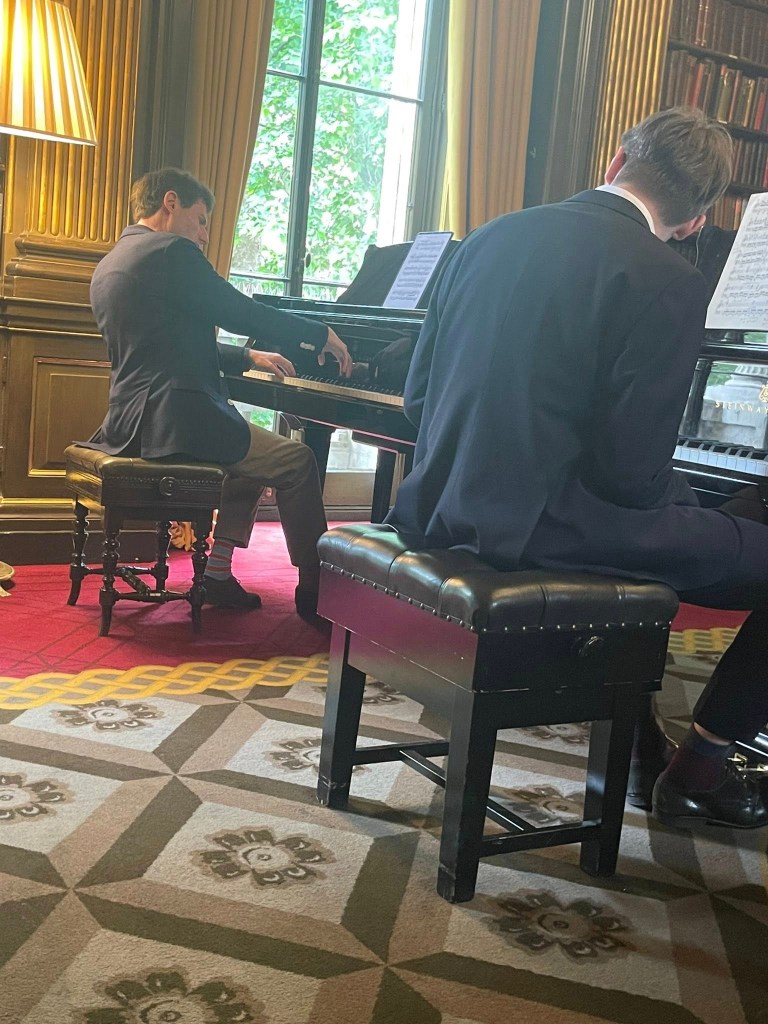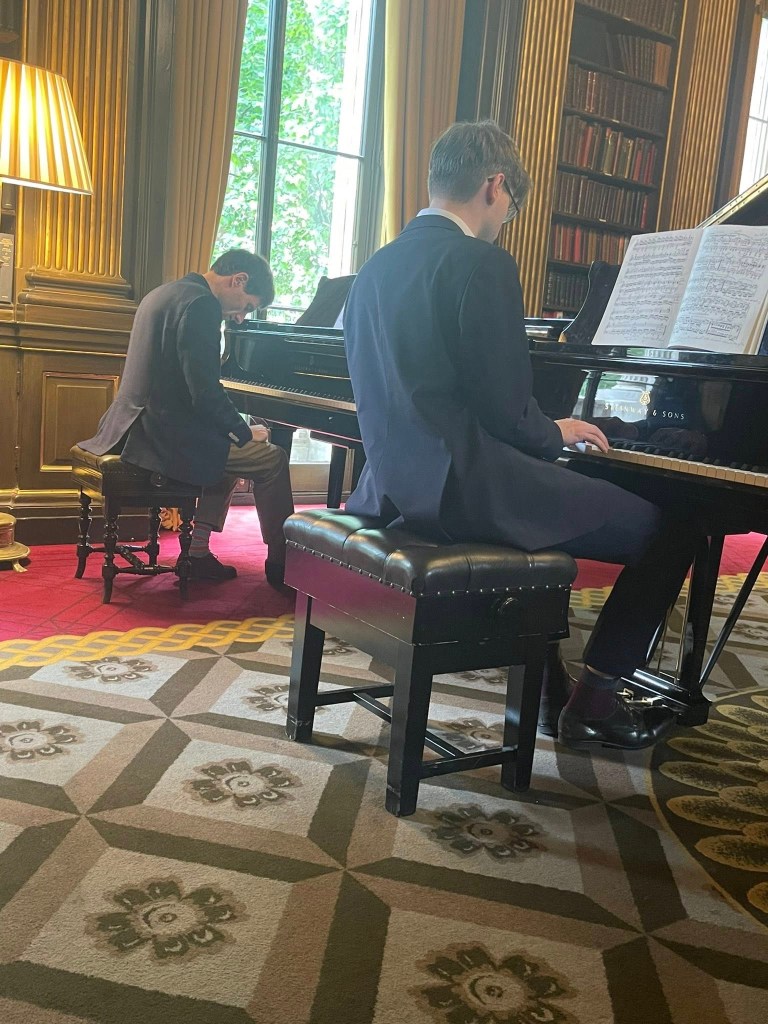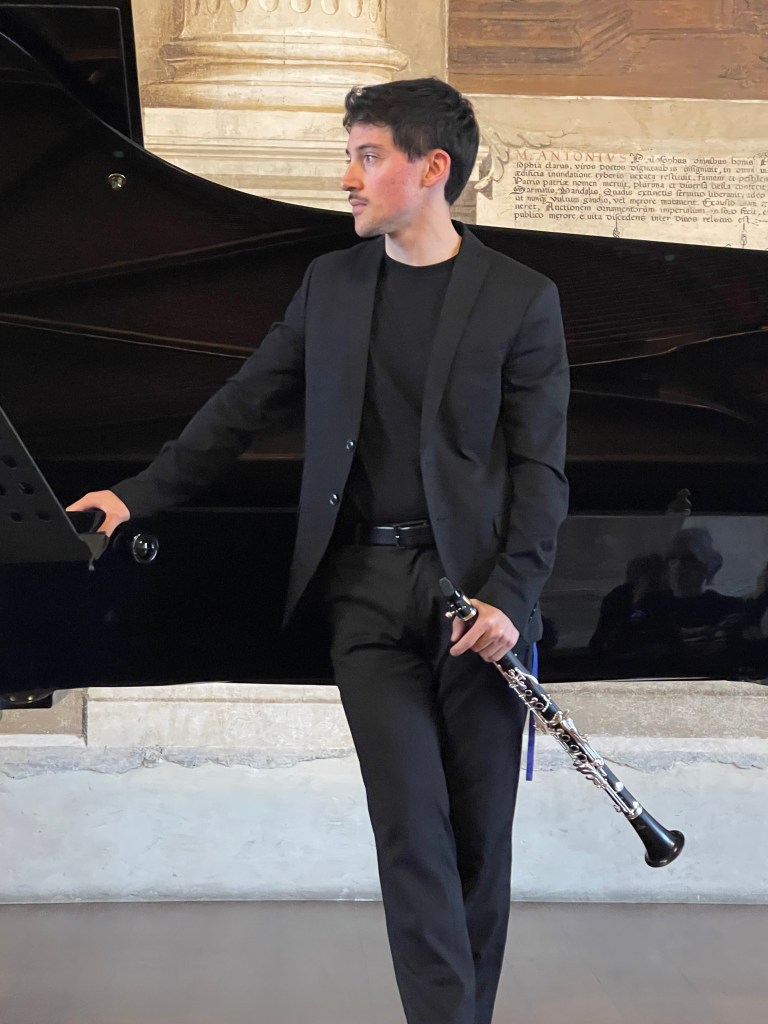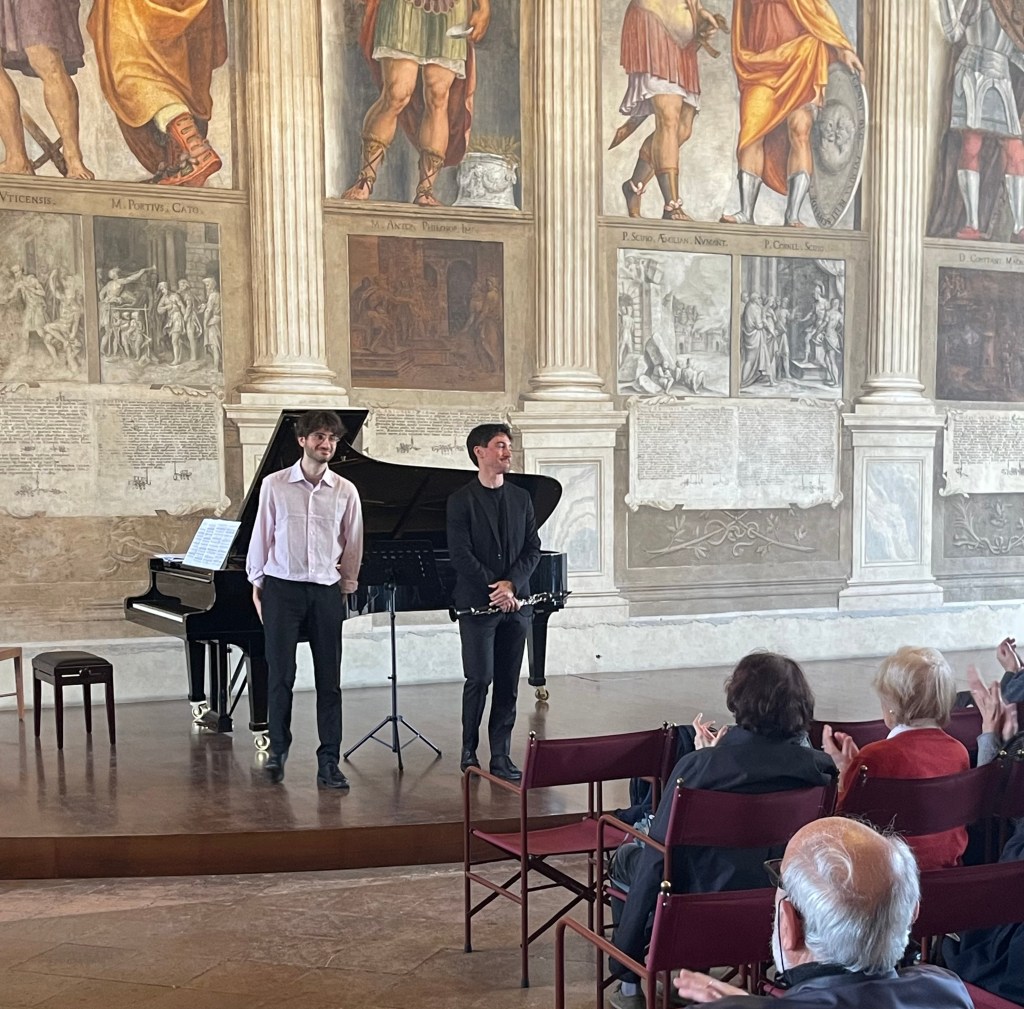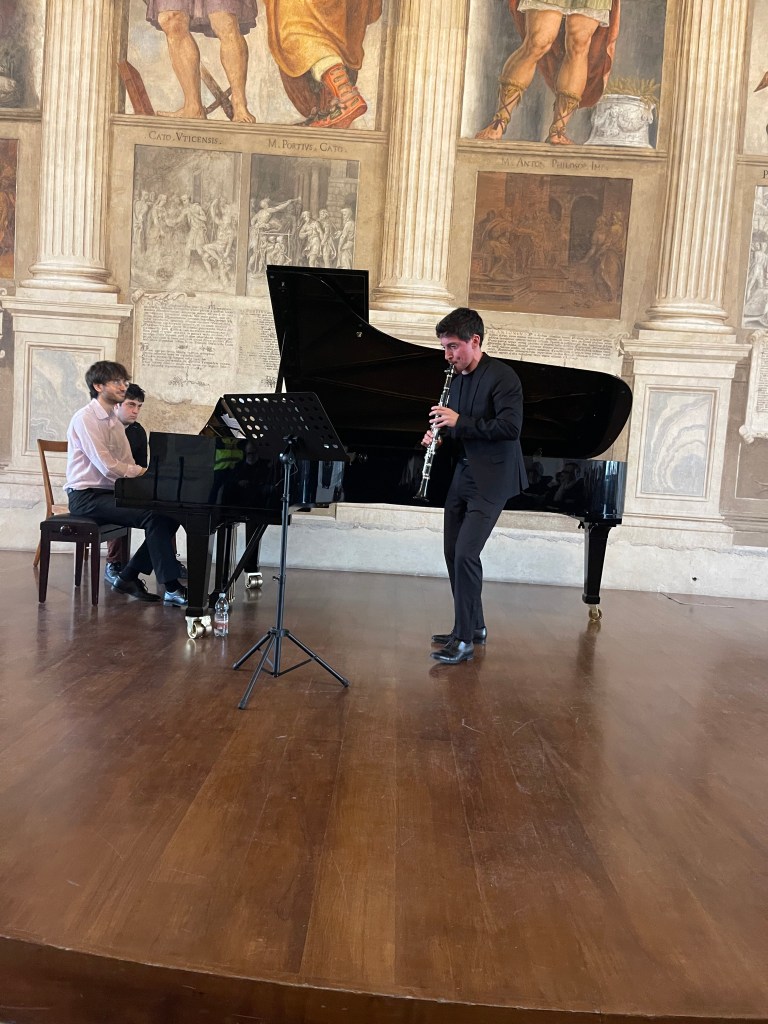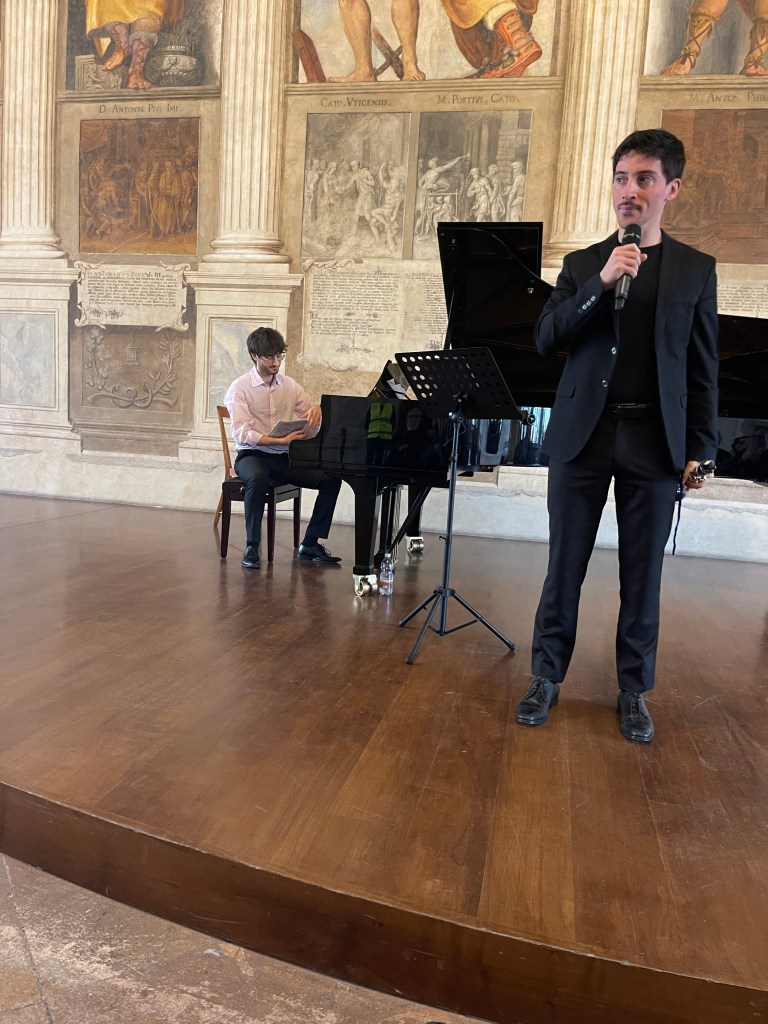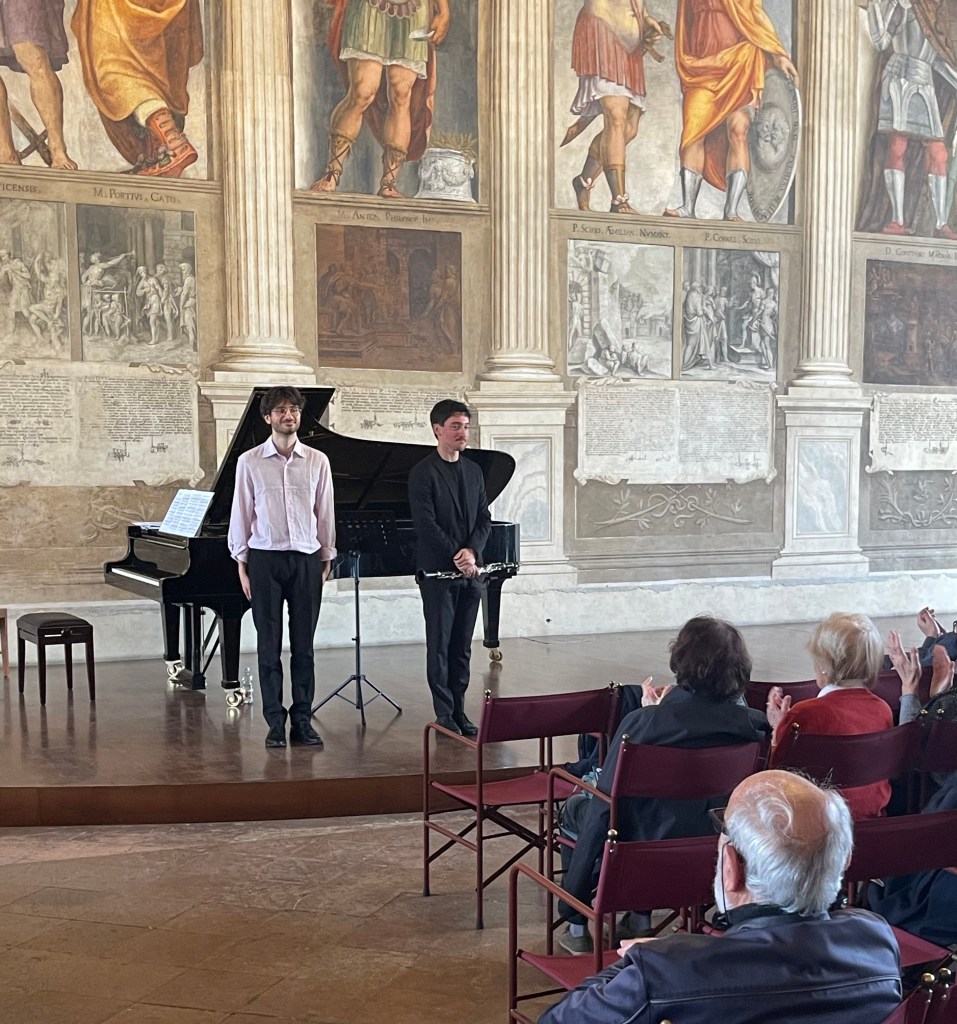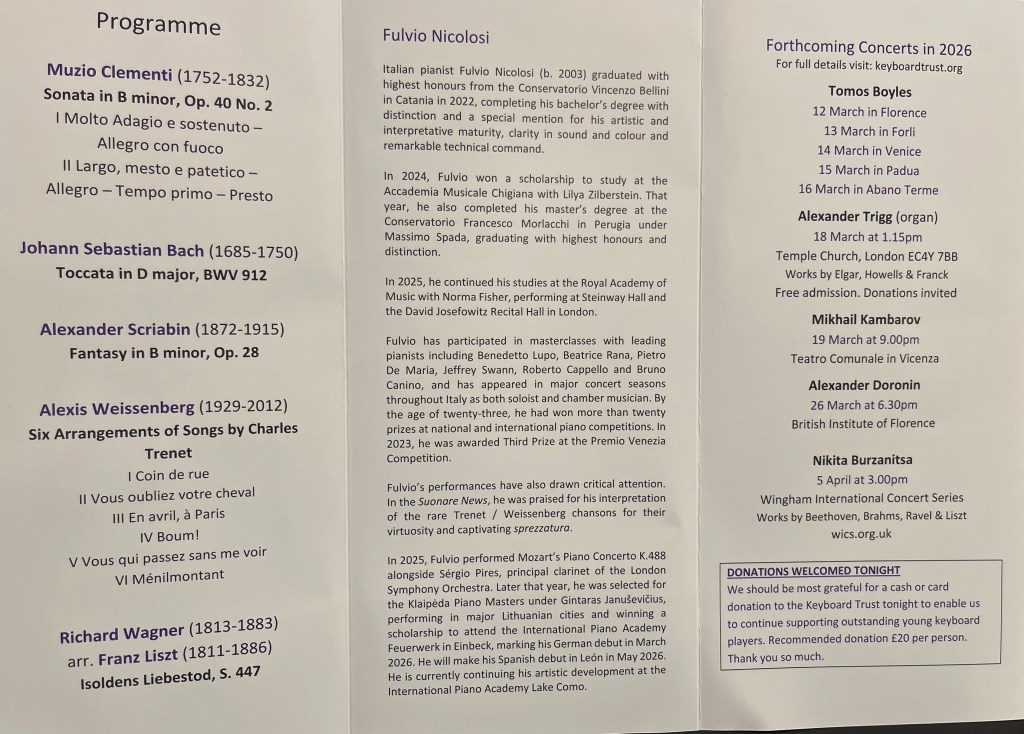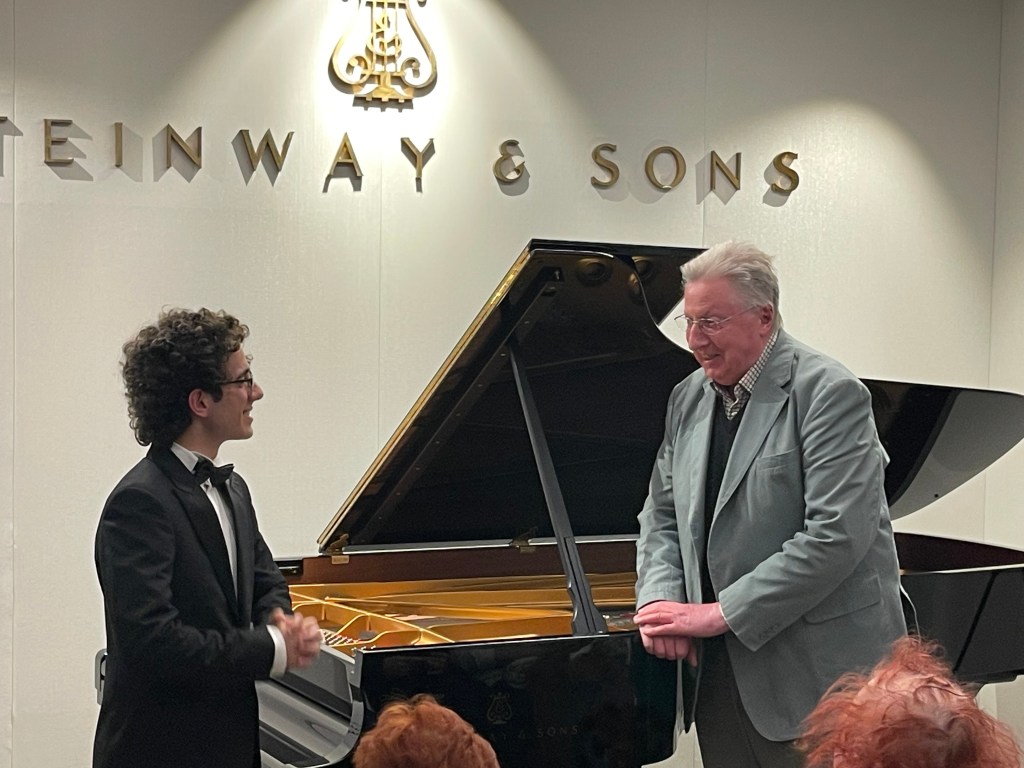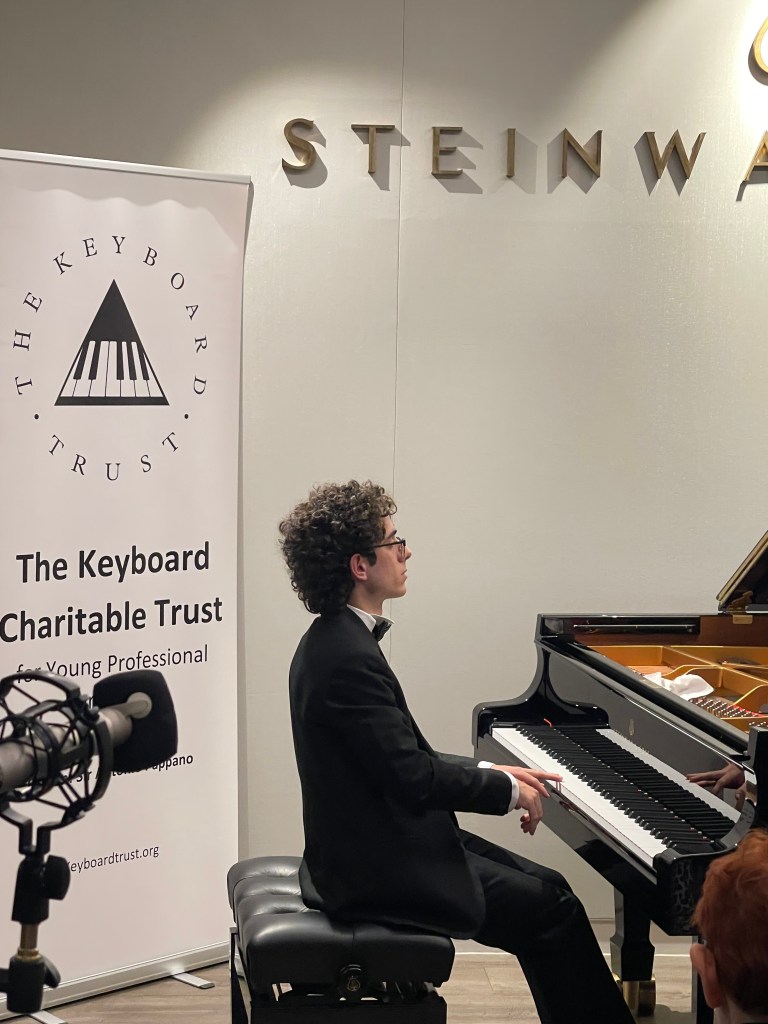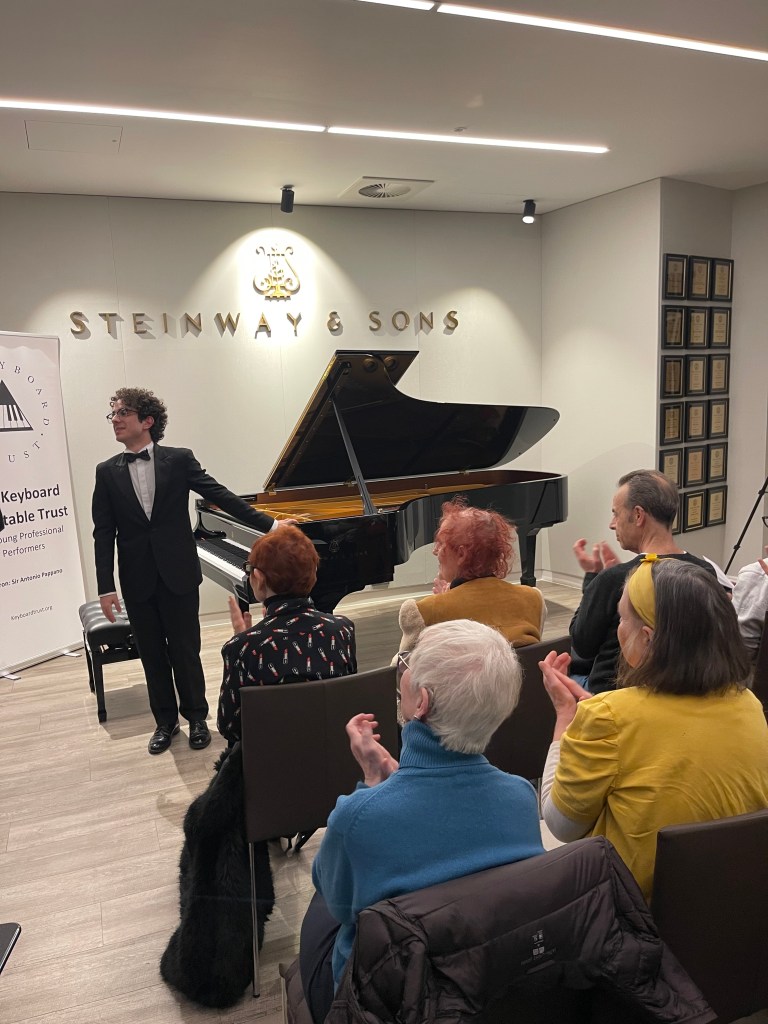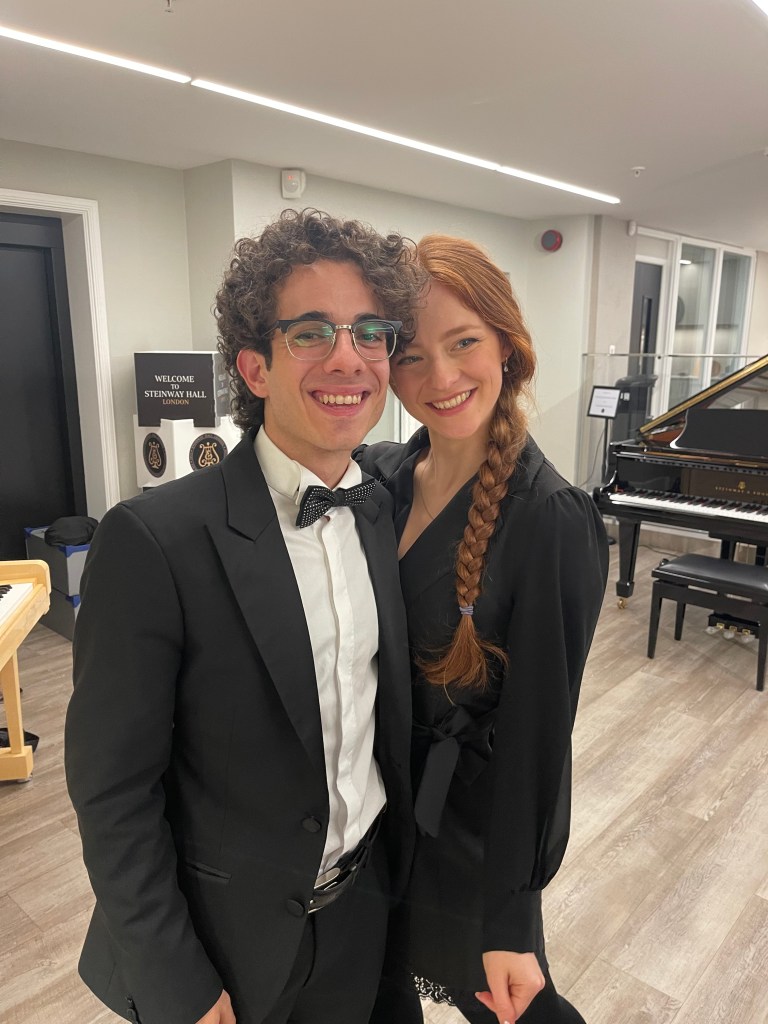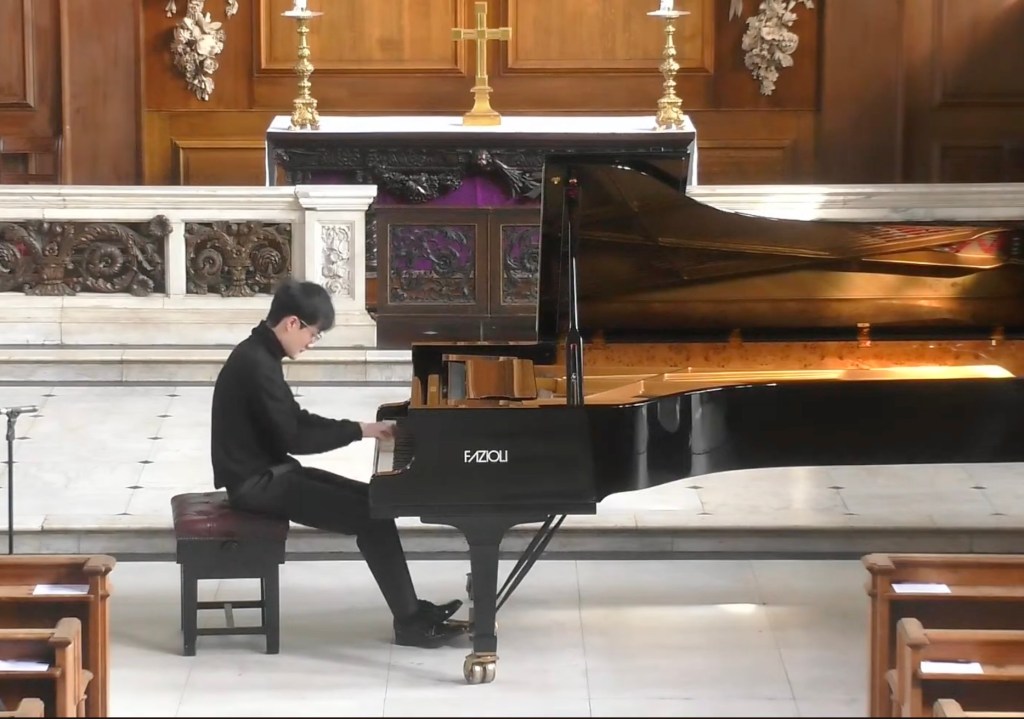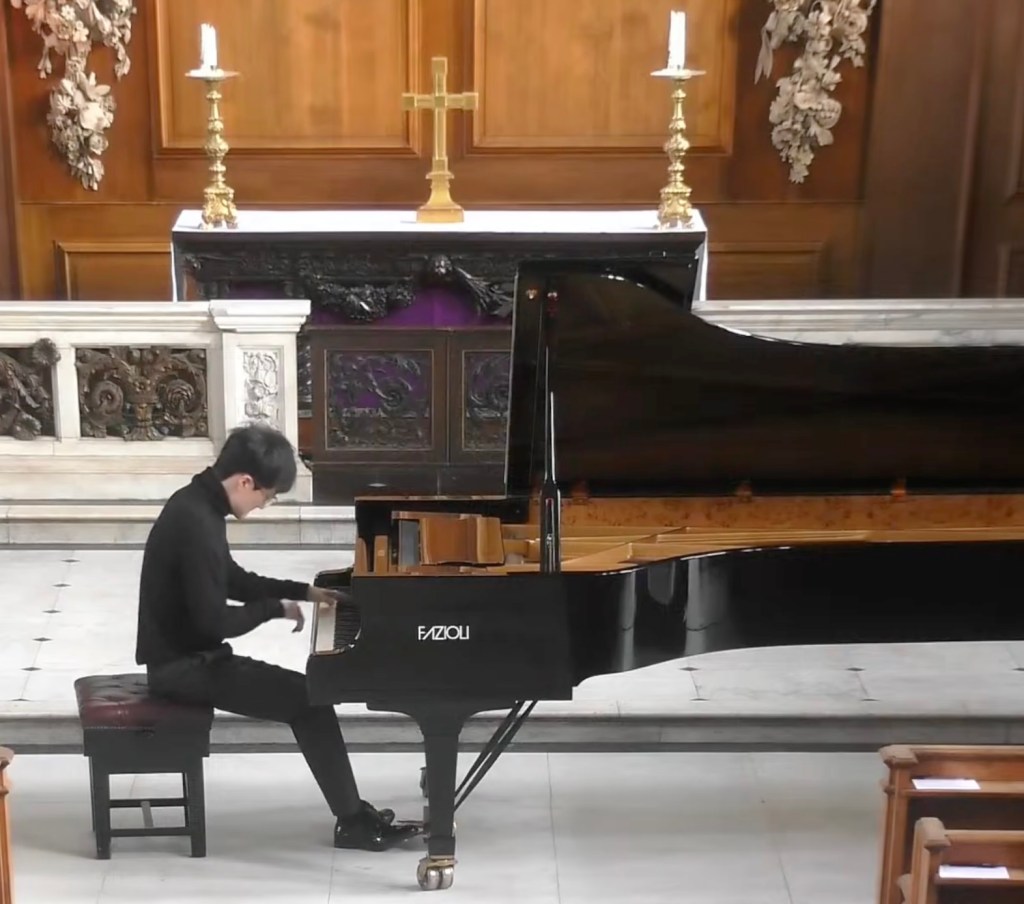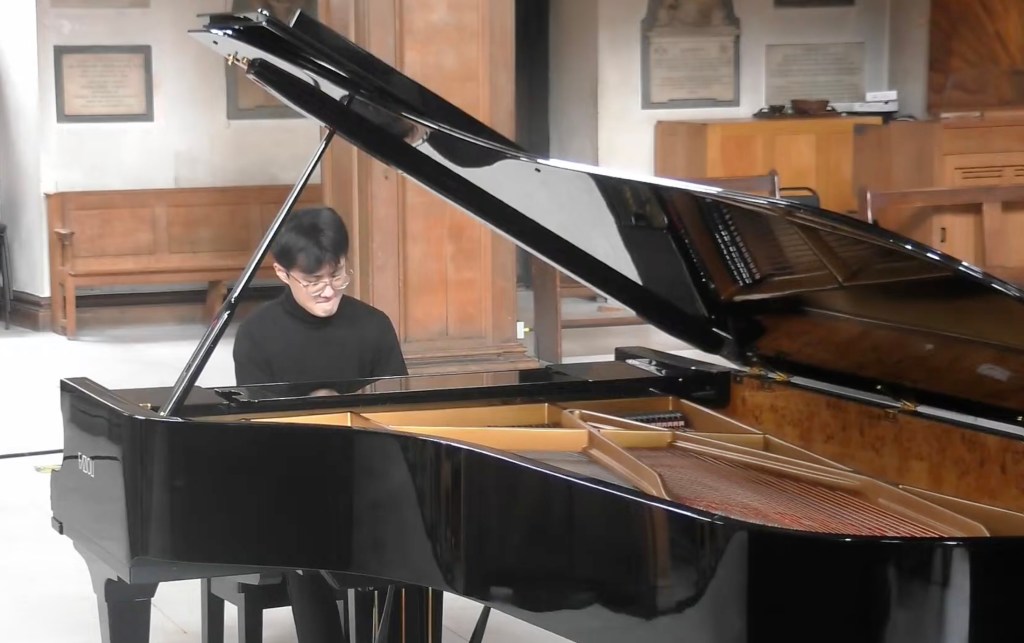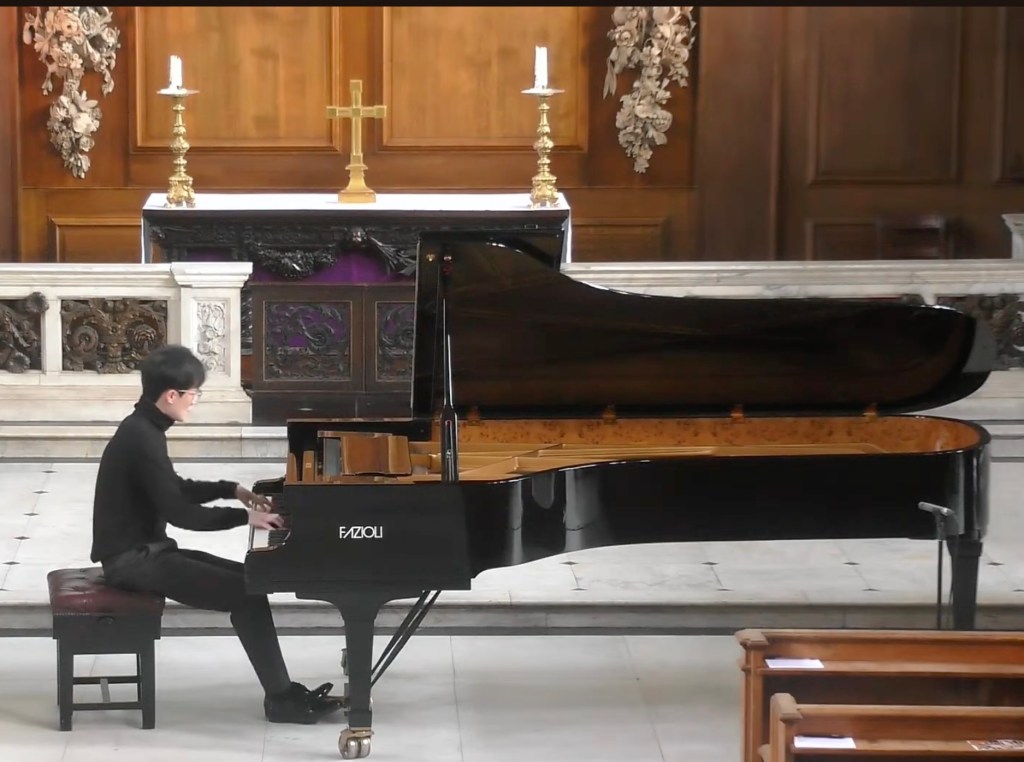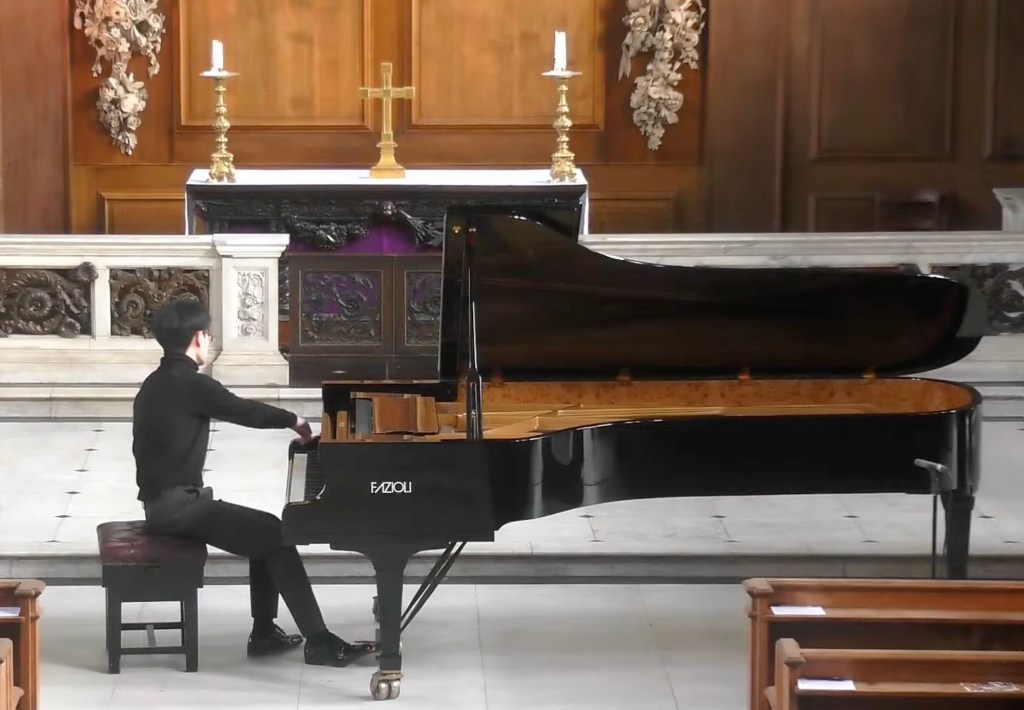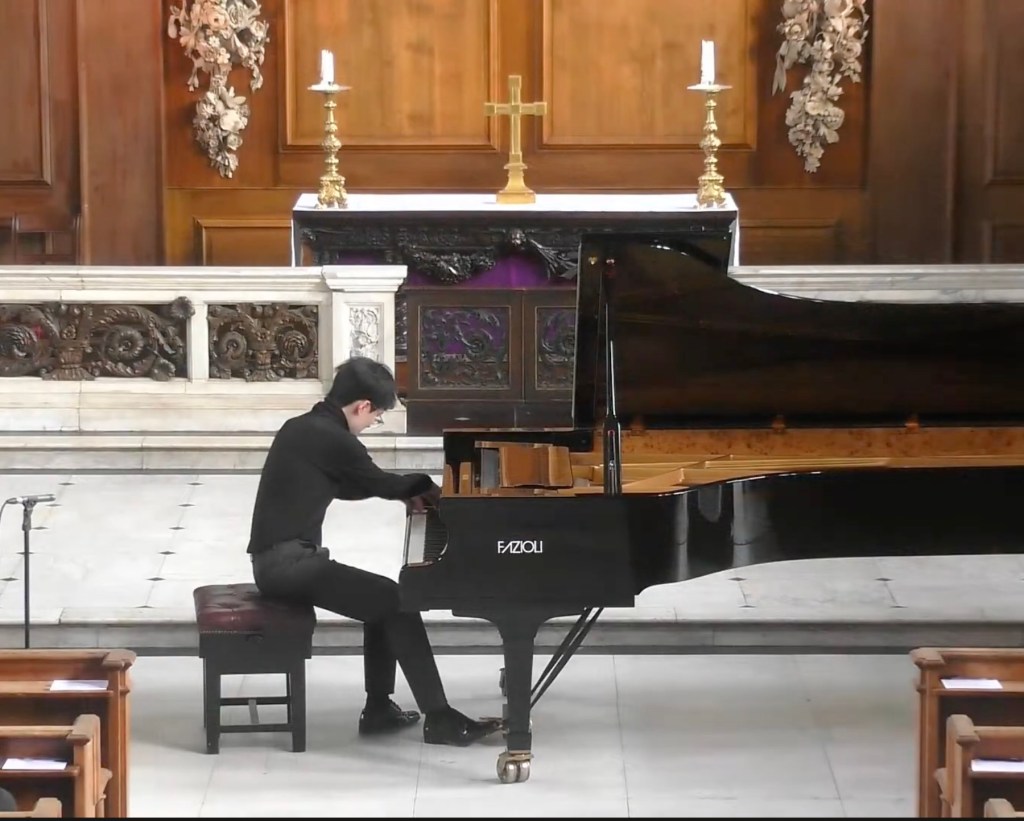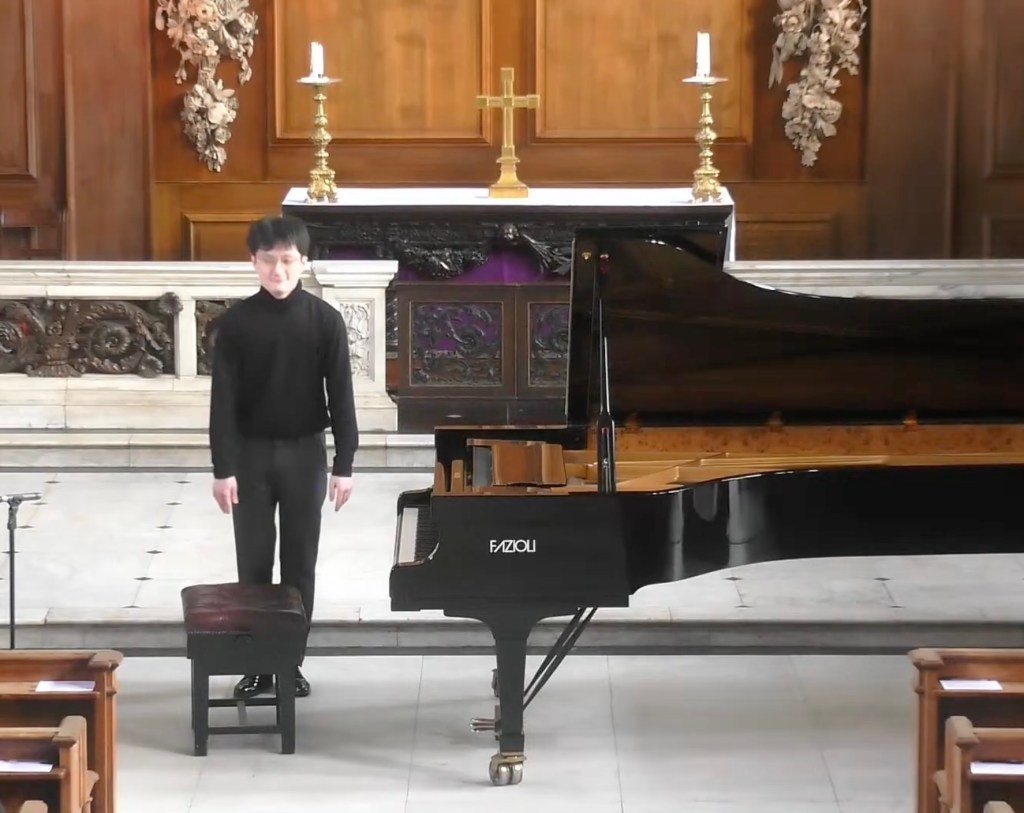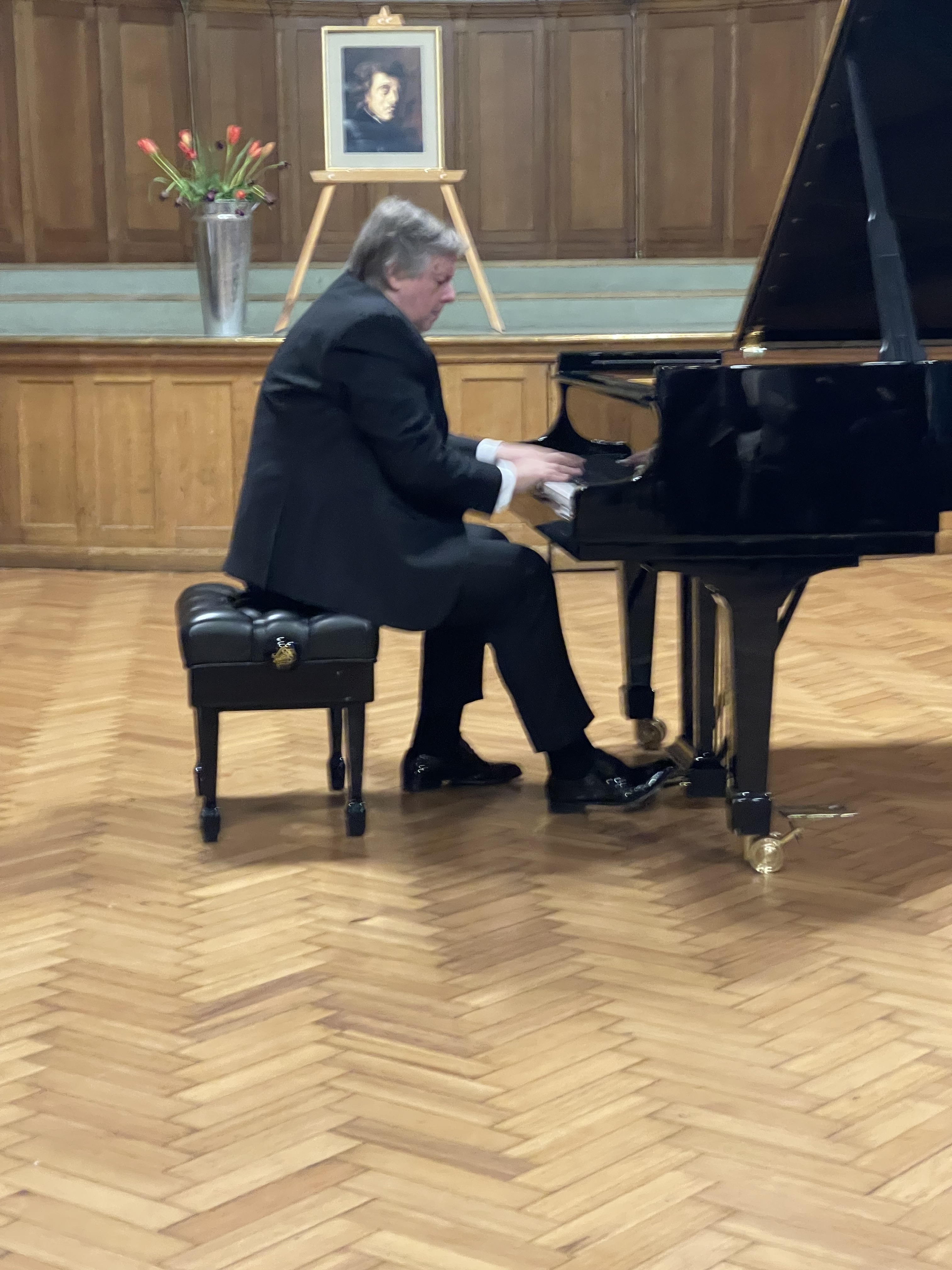
Jeremy Chan in Perivale Playing of authority and searing conviction

https://www.youtube.com/live/YkNUVbJLnvk?si=zRGYIIiai1BY0sBP

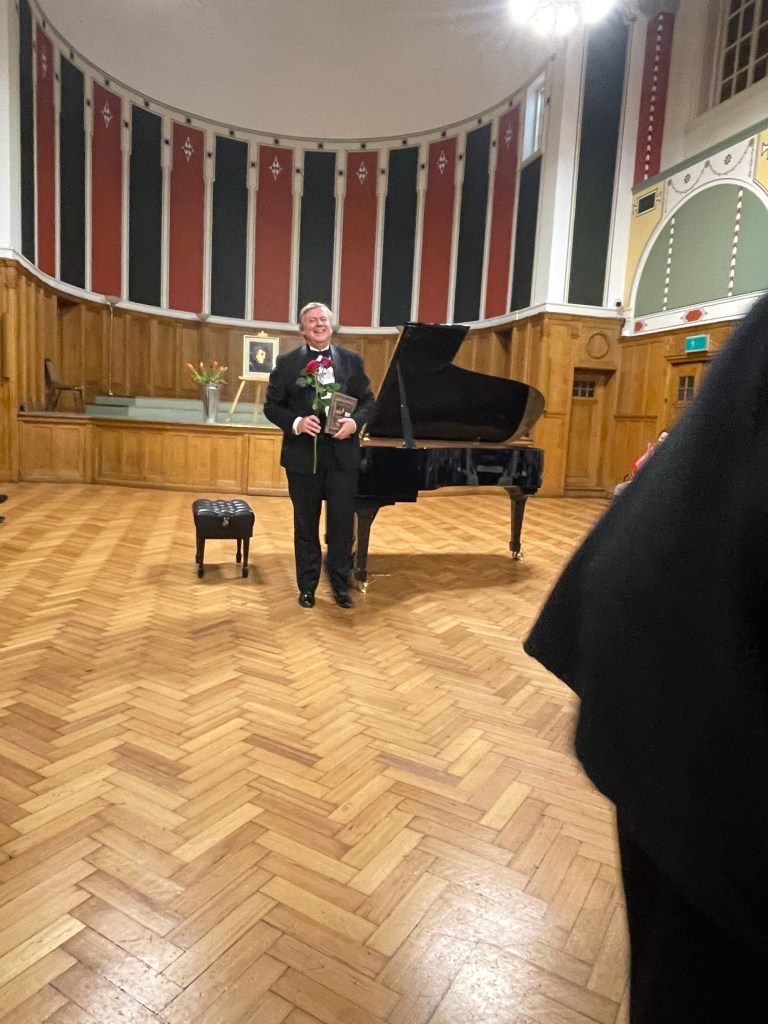
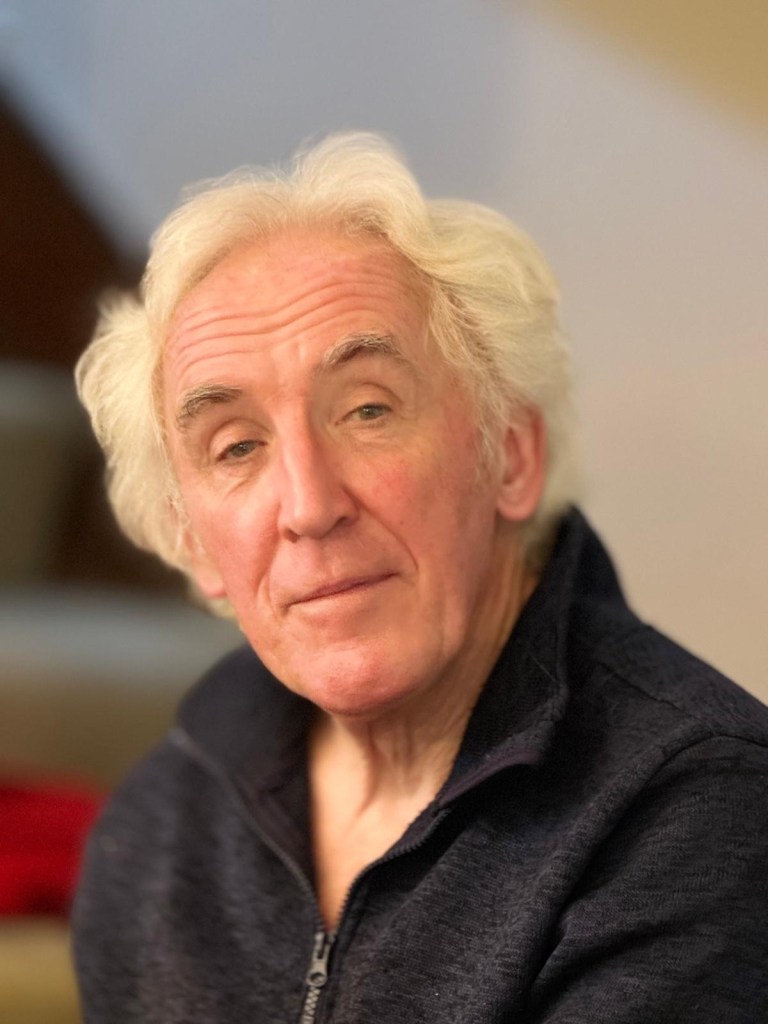
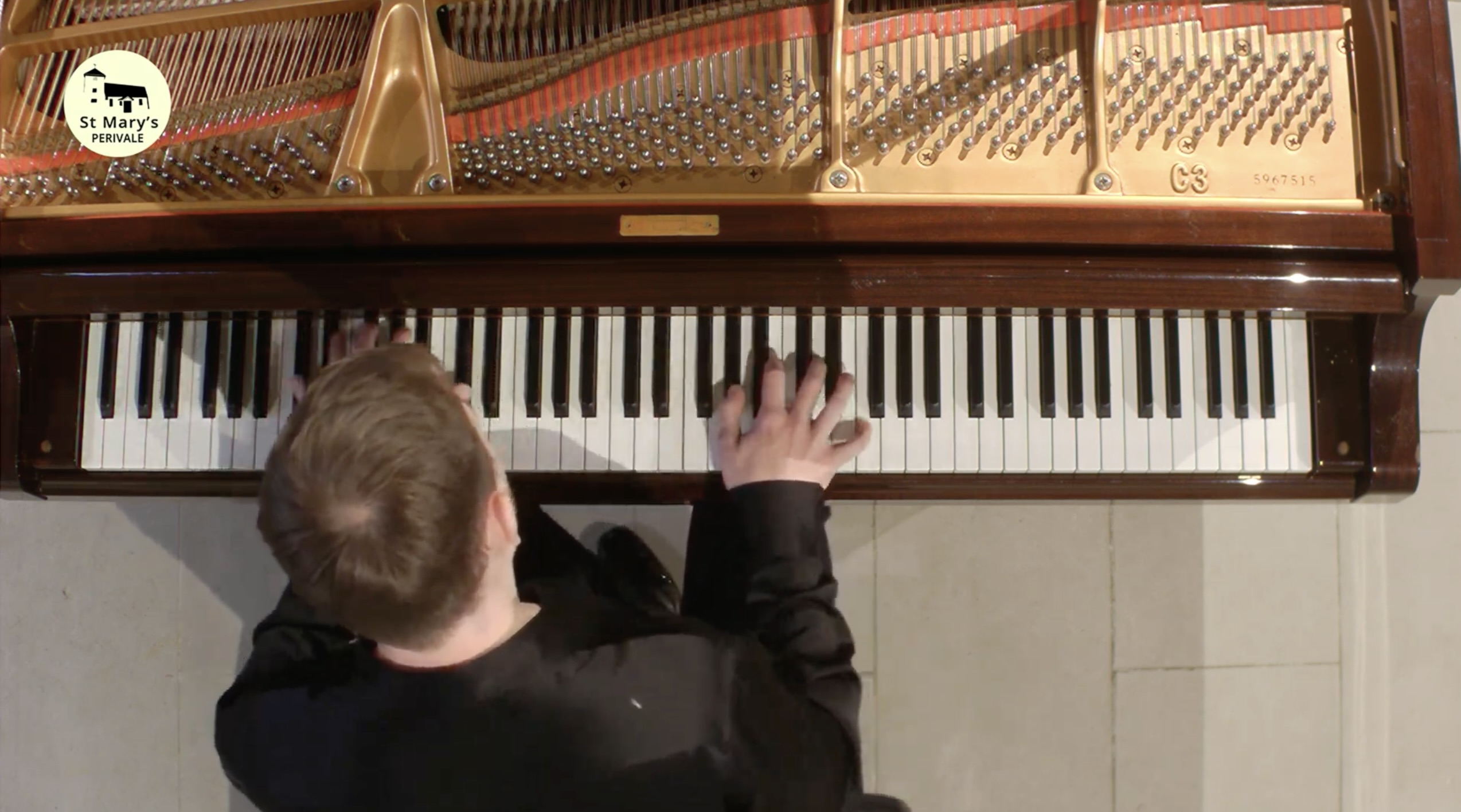
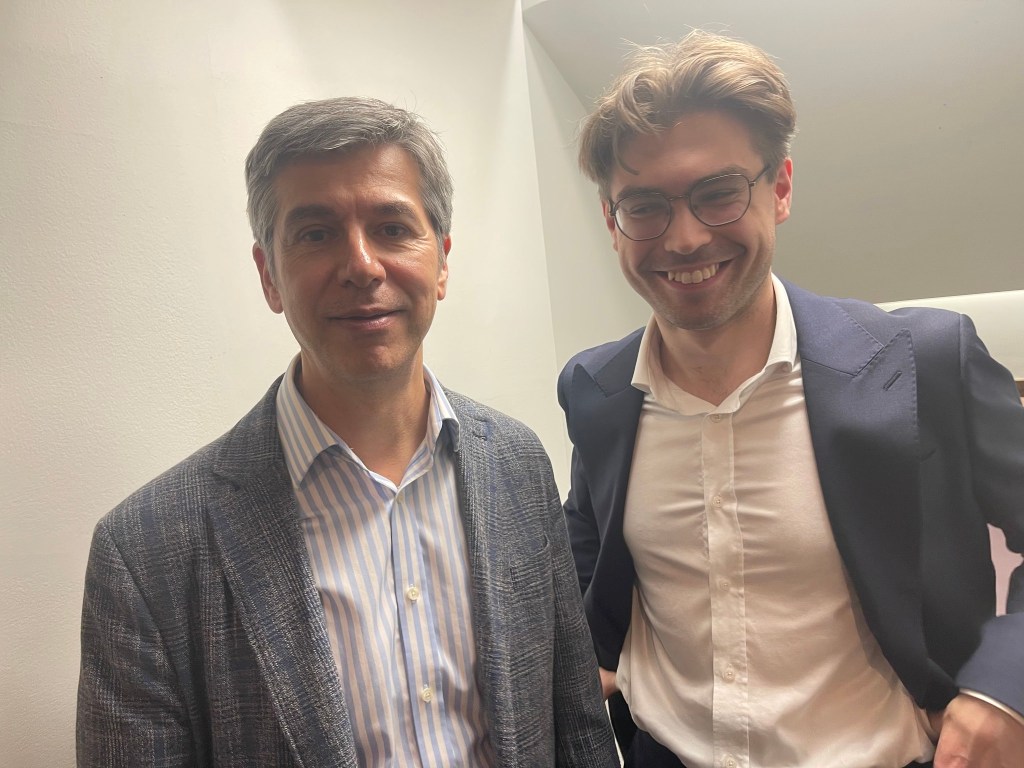
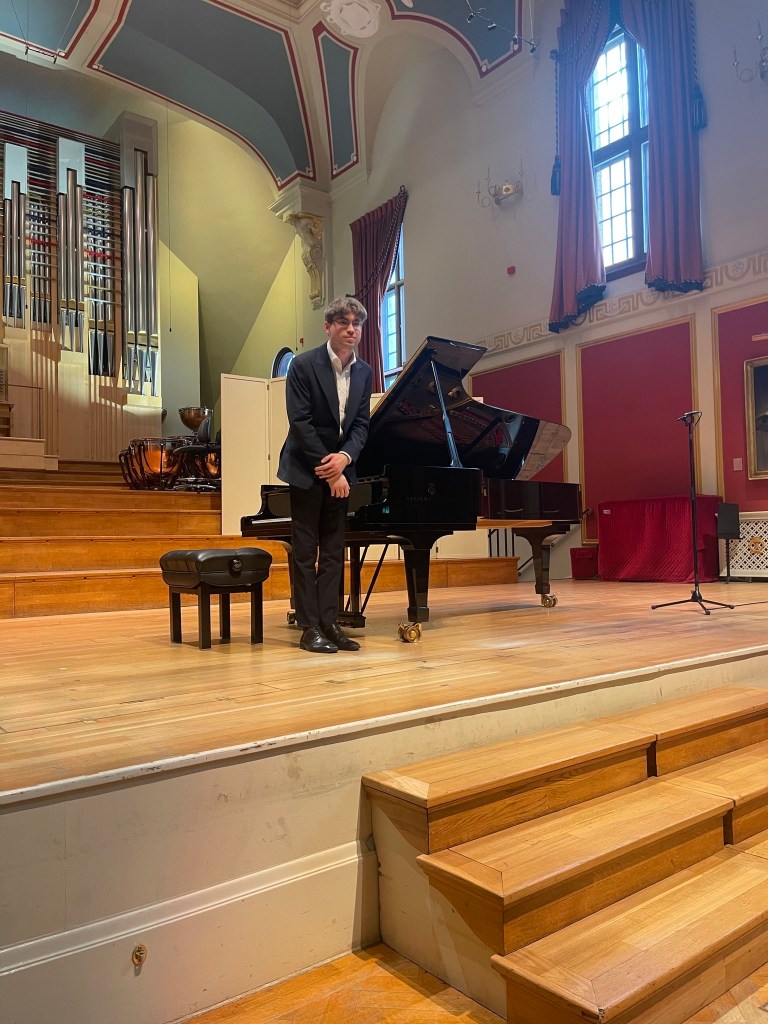
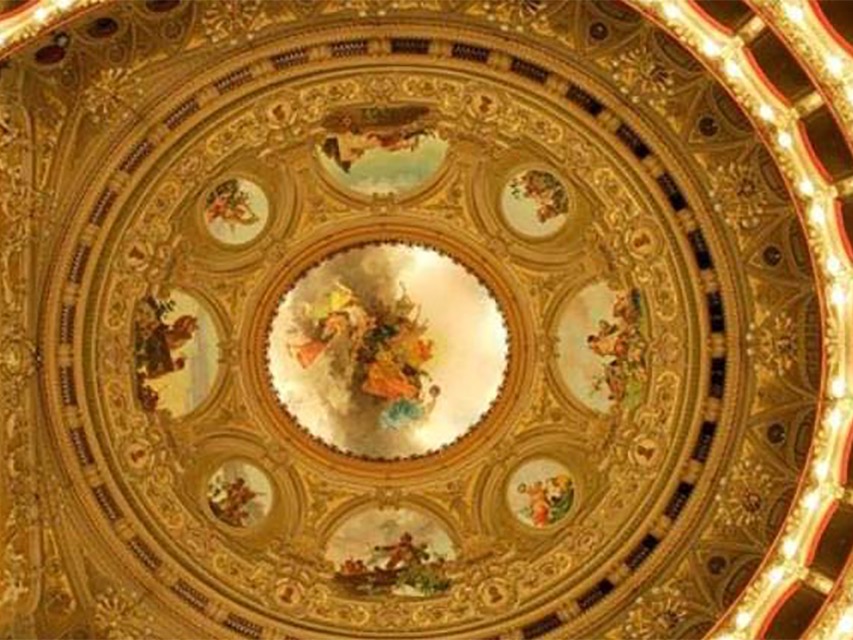
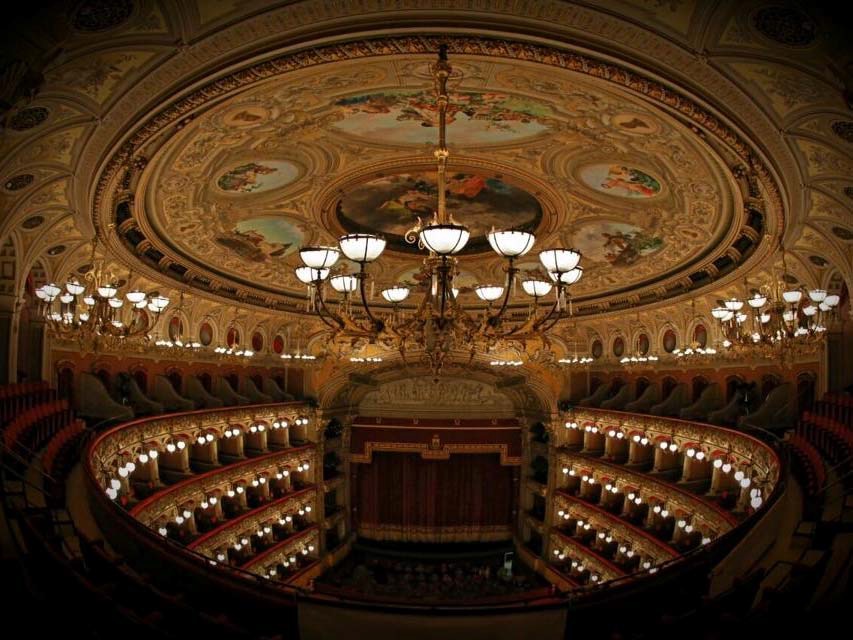
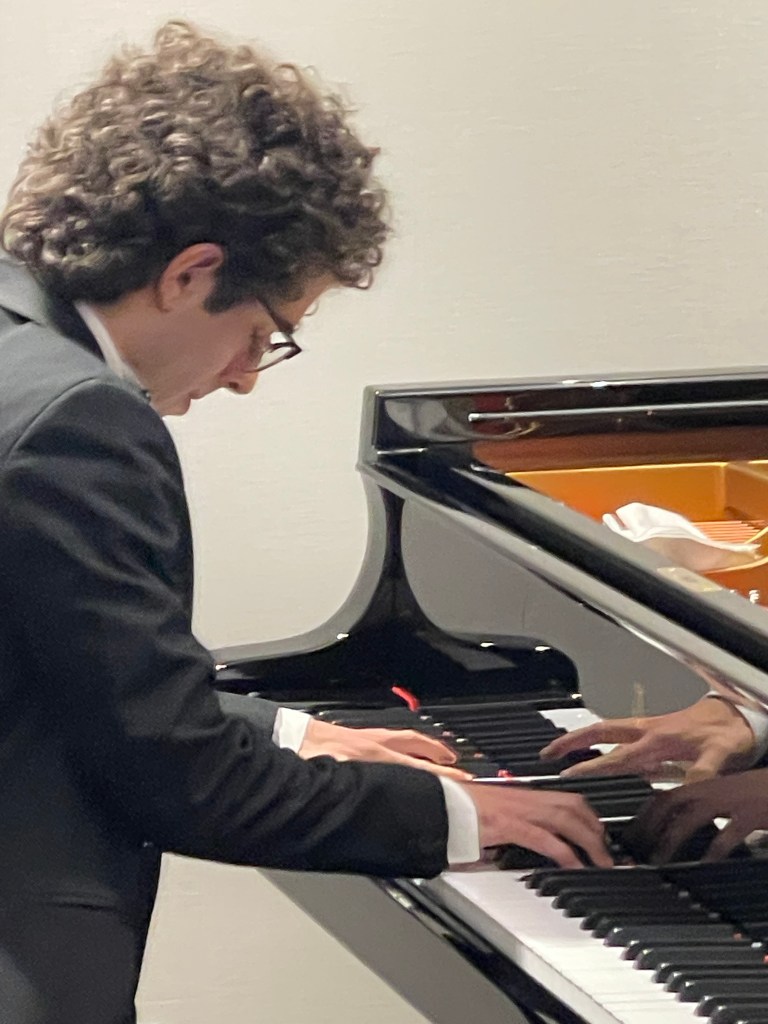
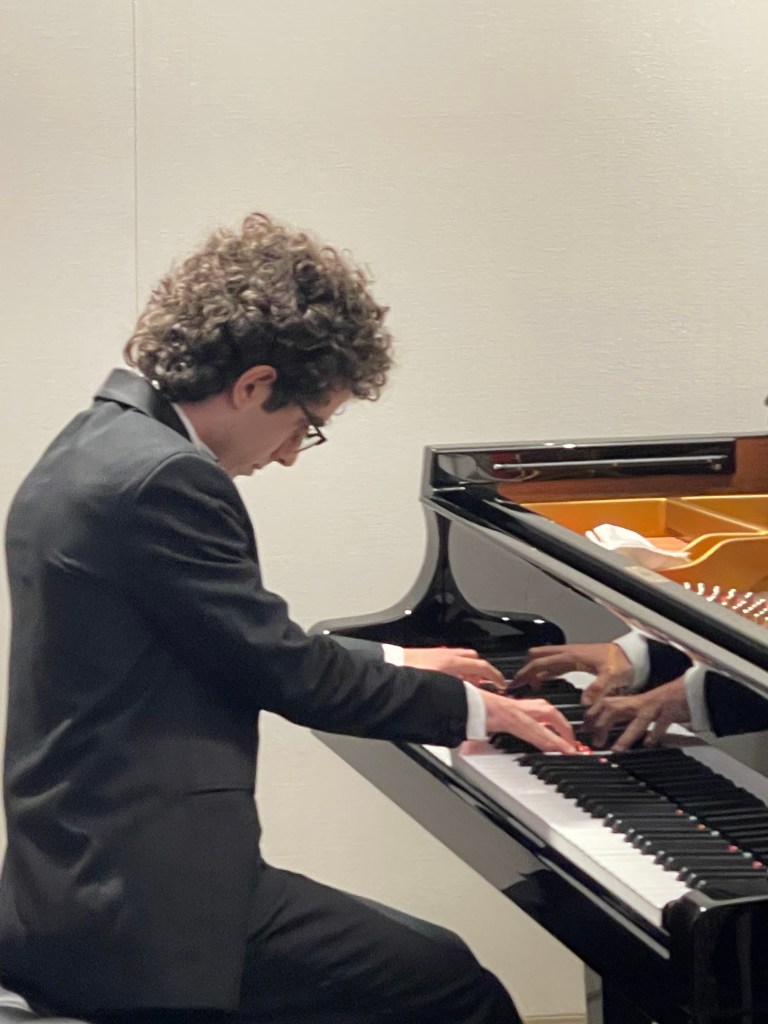
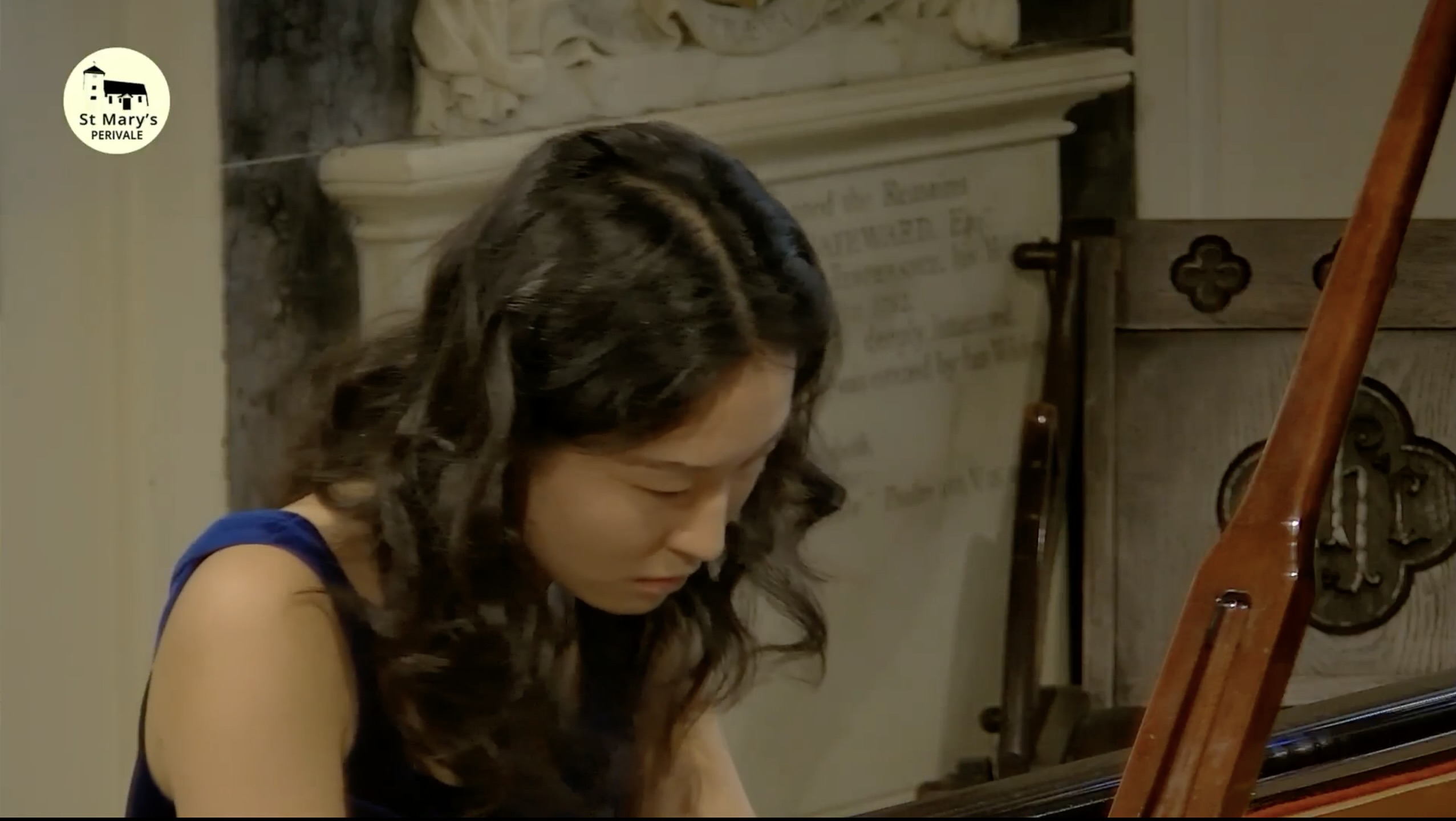
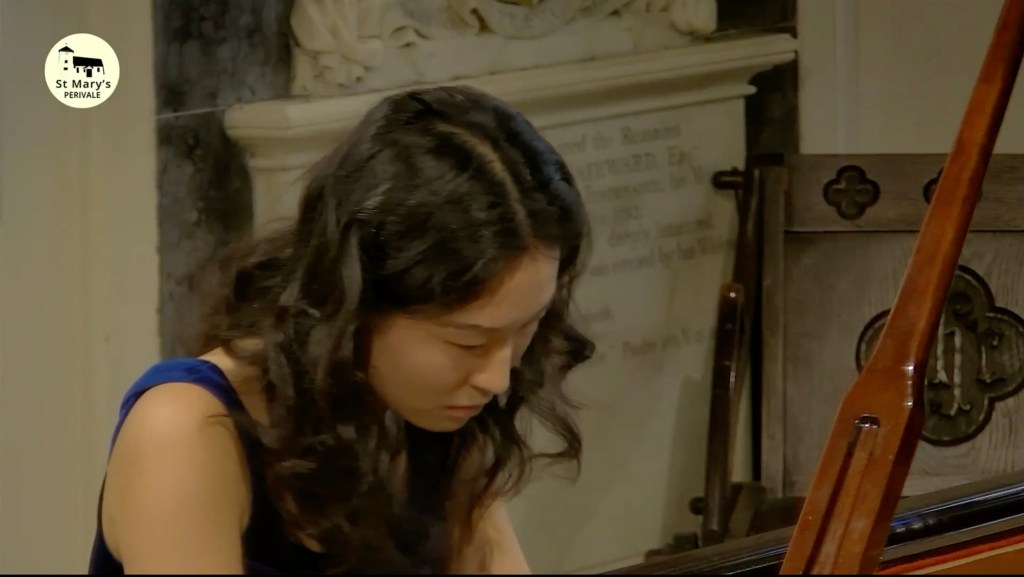
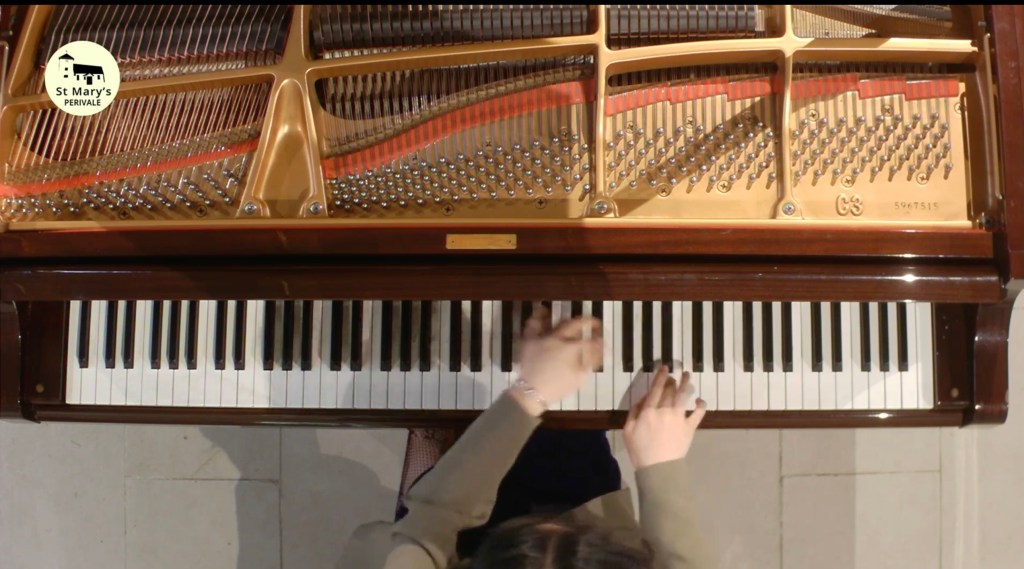
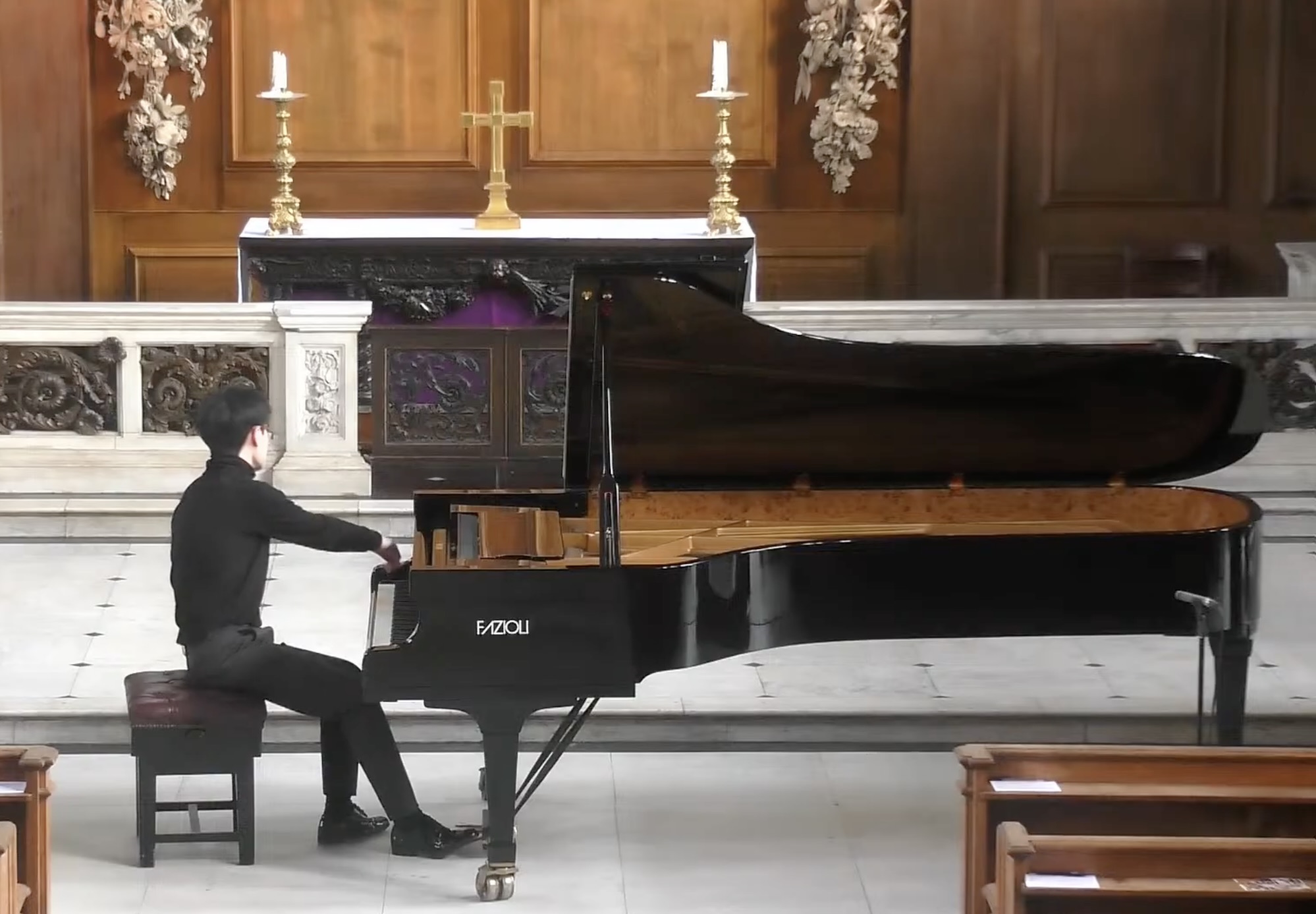
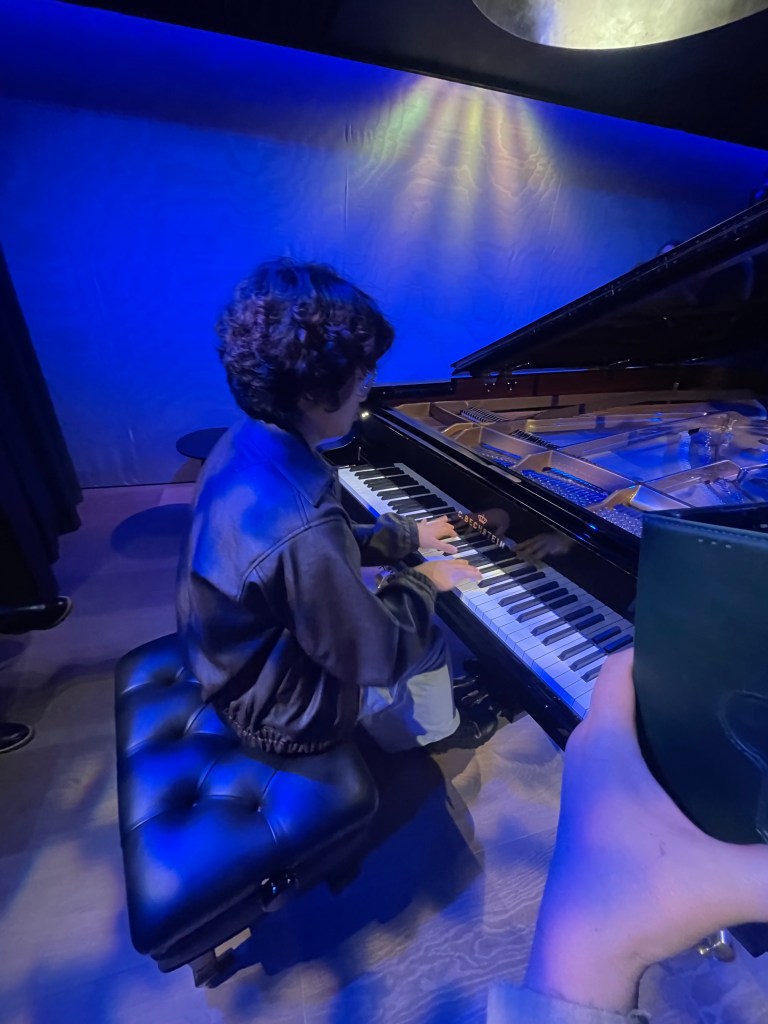
Some superb playing from Jeremy Chan in that oasis of beauty and peace that is St Mary’s Perivale

The beauty of the surrounding countryside was enhanced by the beauty of Mozart, Bach Shostakovich and Franck . If music be the food of love play on………..!

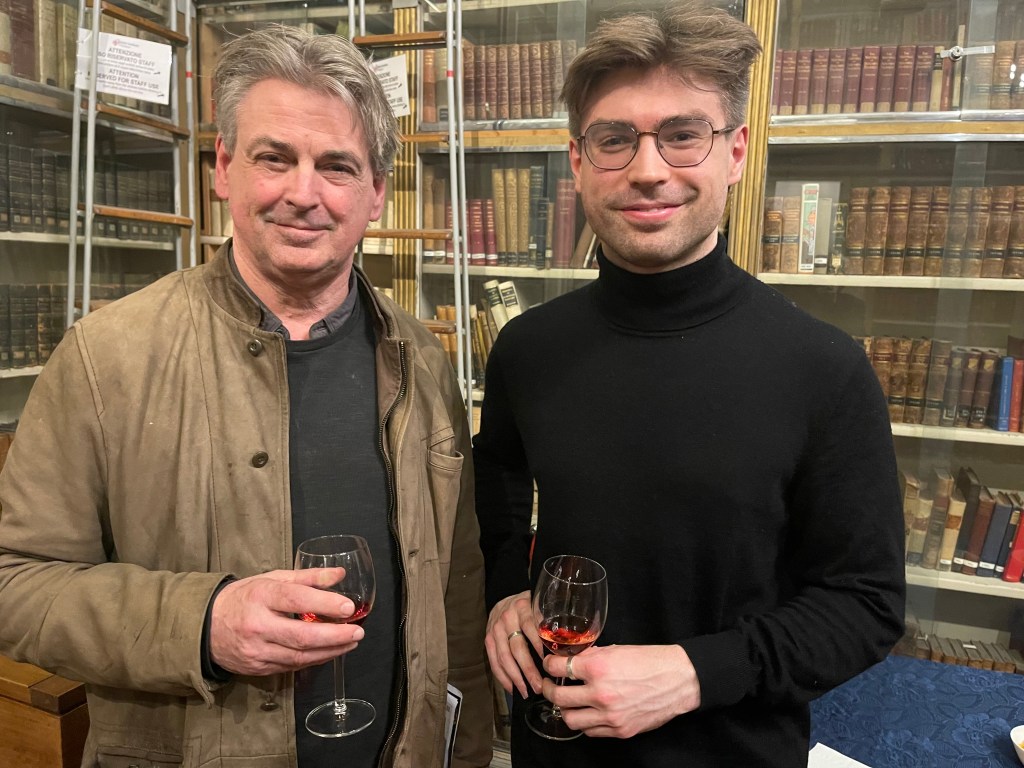
I have heard Jeremy play on many occasions, the first in Angela Hewitt’s masterclasses in Perugia when he had just obtained his degree in English Literature at Durham University. He has since gone on to dedicate himself, without distraction, to music, obtaining his Artist’s Diploma last summer from the Guildhall in London. His playing has now grown quite considerably in stature since that very first time in Italy https://christopheraxworthymusiccommentary.com/2023/08/24/angelas-generosity-and-infectious-song-and-dance-inspires-her-illustrious-students/

He ended the concert in Perivale with the ‘Prelude Chorale and Fugue’ by César Franck, which is a work that I have heard him play in concerts previously. It was played with great authority as the improvised ‘Prelude’ was sustained from the bass that gave an architectural shape to a movement that in lesser hands can seem very fragmented. The ‘Chorale’ unwound with great beauty the chords finding a glistening radiance with the top notes shining brightly. There was an ease and naturalness to his playing that allowed the climax and glorious exultation of the ‘Chorale’ to grow from the deep bass notes that were the anchor on which this work is based. The ‘Fugue’ was played with simplicity and clarity as it built up ever more intensely with passionate conviction and sumptuous full sounds. Out of this climax emerges the magic cloud of sounds with which the ‘Prelude’ had opened and which Jeremy played with such unforced simplicity . Never underlining the melodic line but allowing it to magically emerge as gradually Franck combines all three melodic strands together in a tumultuous climax of strength and exhilaration. But above all from Jeremy’s hands a sense of exultation and revelation.

You can read a more detailed review in the articles below.

The ‘little’ D major Sonata by Mozart I have not heard Jeremy play before and it was a surprise that he could play with such simplicity but also bringing such operatic character to the first and last movements A brilliance as one phrase answered another in a beguiling musical conversation of spirited energy and eloquence. Whilst the ‘Allegro con spirito’ was all brilliance and extraordinary musical invention,not least the quiet calming final bars of refined elegance after such scintillating ebullience.There was a charm and grace to the Rondó, which is by far the longest of the three movements, because Mozart could not contain his inventive genius. Jeremy brought to it a sense of discovery every time the Rondó theme reappeared and there was a real operatic feel to the scene that was being played out with such enjoyment before our very eyes. The ‘Andante con expressione’ central movement is one of those sublime moments that marks Mozart out as a Genius. It was played with a refined beauty of poignant meaning with a subtle palette of colours which enhanced this extraordinary movement.

It is rare to see just one Prelude and Fugue on a concert programme but Jeremy had cleverly combined it with two by Shostakovich that were directly inspired by Bach. Shostakovich was on the jury of the Bach Competition in Leipzig when he was inspired by Tatyana Nikolaeva’s playing to write his own which he dedicated to her. The Bach in E flat Book 1 was played with radiance as Jeremy used freely the pedal to add to the mellifluous beauty of the prelude almost as an improvisation before the great character he brought to the fugue.

Its was the same improvised freedom that he brought to Shostakovich op 87 n. 3. It’s great opening declamation played in unison between the hands with it’s majestic opening of reverberating sounds. It was in startling contrast with the Fugue that was a frenzy of knotty twine played with scintillating clarity and rhythmic energy. The sonorous bass of op 87 n. 12 was contrasted with the bold contours of the fugue that was played with dynamic drive and searing conviction.

Jeremy Chan is an award-winning concert pianist based in London. He holds an Artist Diploma as well as a Masters degree with Concert Recital Diploma from the Guildhall School of Music and Drama. He also obtained a bachelor’s degree in English Literature from Durham University. In 2023 and 2024, Jeremy won both the Guildhall Beethoven Prize and the Guildhall Romantic Prize. He also won second prize at the Tunbridge Wells International Music Competition. In July 2023, he made his concerto debut at St John’s Smith Square with the London City Orchestra playing Rachmaninov’s Second Piano Concerto. In the summer of 2023, he was invited to work with pianist Angela Hewitt for a week in Italy. He has made appearances in festivals such as the London Piano Festival and Un Piano Sous Les Arbes in France. 

Jeremy has performed in different venues including Kings Place, Steinway Hall London, St John’s Smith Square, Silk Street Concert Hall, Milton Court Concert Hall, Salle Gilles Lefebvre, Durham University Concert Hall and City Lit Recital Room. Jeremy has worked with and received great insight from world-renowned musicians such as Angela Hewitt, Dame Imogen Cooper, Sir Stephen Hough, Jonathan Biss, André Laplante, Jean Saulnier, Dmitri Alexeev, Ilya Poletaev, Graham Scott and Katya Apekisheva. Jeremy is also an avid chamber musician and is currently a member of the Wayfarer Trio with cellist William Lui and clarinettist Kosuke Shirai. In 2025, Jeremy completed his Artist Diploma at the Guildhall School of Music and Drama with Noriko Ogawa, Charles Owen and Ronan O’ Hora.

Alongside his performing career, Jeremy is an active writer on classical music. He publishes regularly on his Substack newsletter On Music & Making   featuring concert reviews, essays, and conversations with leading musical figures. 

photo credit Dinara Klinton https://christopheraxworthymusiccommentary.com/2024/03/20/christopher-axworthy-dip-ram-aram/

Anna Bonitatibus gets to the heart of Rossini

Anna Bonitatibus and Adele D’Aronzo with courage bringing Rossini to the Wigmore Hall. Bringing many unusual and even unpublished works including a world première of a work discovered at an auction at Christie’s in 2023 . ‘L’esule’ was just one of the rarities of the genial outpouring of Rossini. He may have retired from writing opera in return for the good life , but he could never stop his musical invention . Péchés de Vieillesse and many miniatures, album leaves and even solo piano slipped from his pen with ease .

Of course his genius was in creating a completely new genre of Opera.

Anna singing with a sumptuous radiance from the whispered beauty of his very first composition of the ‘Mill girl’s wishes’ passing through the ravishing beauty of Metastasio’s ‘Lament in silence’ to the grandiosity of Rossini’s Farewell (Vienna was genially changed to Paris!) as he was Honoured in Paris with the Legion of Honour just after the première of ‘William Tell’. The artists from the Paris Opéra serenaded him beneath his window when he was at the height of his fame .

Three salon pieces for solo piano were performed by Adele whilst Anna got her breath back!

One of them was dedicated to a pupil of Chopin and daughter of the banker de Rothschild . Adele playing with great style as you might expect from the school of Sergio Perticaroli in Rome

What a week at the Wigmore ‘Academy’ with Nelson Goerner bringing the sunshine of Spain with Albeniz’s complete Iberia

And Graham Johnson with Christopher Maltman with a Schubert Lieder recital

Now this great Italian diva bringing the glories of the world of Rossini.

The Wiggies may flock to hear their favourites but the eclectic choice of programmes these days at the Wigmore Hall is unique and is a continual voyage of discovery.

Imogen Cooper on Sunday with her farewell tour of the complete Schubert Impromptus too .

‘This is the week that is ’ indeed !

Welcome to the web-site of Anna Bonitatibus: news, events, and projects of one of the most acclaimed artists on the international operatic and concert landscape!

https://annabonitatibus.com

The Anti-Diva, as she likes to describe herself, is renowned for the noble passion with which she interprets titles between the most famous of ‘teatro musicale’, as well as the tireless commitment with which she promotes the divulgation of a rarer repertoire.

Premio Abbiati del Disco 2024:  Monologues;  Halle Handel Preize 2023; Bärenreiter Ambassador; winner of the International Opera Awards 2015 for Semiramide — La Signora regale; Best Female Voice nomination, International Opera Awards 2016. Latest recording: MONOLOGUES, Prospero, 2023. and the rare and precious Péchés de Vieillesse  by the ‘pesarese’.

Anna Bonitatibus is renowned for the noble passion with which she interprets titles between the most famous of ‘teatro musicale’, as well as the tireless commitment with which she promotes a rarer repertoire. More than seventy operas performed, from Claudio Monteverdi’s masterpieces to titles back to proscenium by Francesco Cavalli (Didone, Ercole amante, Calisto) crossing Händel’s operatic production (AgrippinaDeidamiaGiulio CesareOrlandoTamerlanoTolomeoOttone, Il Trionfo del Tempo e del Disinganno) as well as composers from the Neapolitan school, from Pergolesi to Cimarosa, and her beloved Gioachino Rossini: La CenerentolaIl Barbiere di Siviglia, L’Italiana in Algeri, Il Viaggio a Reims, Tancredi, and furthermore Cantate, Masses and the rare and precious Péchés de Vieillesse  by the ‘pesarese’.

As the embodiment of Cherubino from the Daponteian Le Nozze di Figaro, she has become one of the most acclaimed performers of Mozart. Then follows Don GiovanniCosì fan tutteMitridate Re di Ponto, La Clemenza di Tito, as well as sacred and profane repertoire by the Salzburgian composer. The Mezzo-soprano’s wide repertoire includes Messa da Requiem, Giuseppe Verdi, Ginevra di Scozia, Simon Mayr, Enrico di Borgogna by Donizetti interpreted with great success at the Donizetti Opera, Bergamo (2018). The French repertoire includes Carmen, a role brilliantly debuted in Madrid (2018) and L’Enfant et les sortilèges by Ravel, Roméo et Juliette by Berlioz and Gounod as well as Les contes dHoffmann by Offenbach, Werther and Don Quichotte by Massenet.

From first steps at the Teatro alla Scala, to Bayerische Staatsoper in Munich, to the Théâtre des Champs-Elysées and Opéra comique in Parigi, to the Teatro Real in Madrid, La Monnaie in Bruxelles, Staatsoper in Vienna, to Royal Opera House in London, Festivals (Salzburg, Florence, Munich, Bologna, Grange) and to the most renowned international concert halls (from Russia to United States), Anna Bonitatibus collaborated with the most acclaimed conductors, directors and artists such as: Charles Mackerras, Riccardo Muti, Antonio Pappano, René Jacobs, William Christie, Ivor Bolton, Myung Whun Chung, Alan Curtis, Roberto Abbado, Ottavio Dantone, Marc Minkowski, Raphael Pichon, Stefano Montanari, Angela Hewitt, Andrea Lucchesini and Luca Ronconi, Pier Luigi Pizzi, Dario Fo, David McVicar, Laurent Pelly, David Alden, Jonathan Miller, Kasper Holten, Emilio Sagi, Irina Brook, Ivo van Hove, David Bösch, Mariame Clément, Tobias Kratzer, Sven-Eric Bechtolf, Valérie Lesort; among the many colleagues on stage: Michele Pertusi, Christian Gerhaher, Rockwell Blake, Barbara Frittoli, Juan Diego Florez, Cecilia Bartoli, Simon Keenlyside, Sabine Devieilhe, Franco Fagioli, Angela Georghiu, Patrizia Ciofi, Michael Spyres, Thomas Allen, Roberto Alagna, Vivica Genaux, Lisette Oropesa, Magdalena Kožená, Philippe Jarrousky, Aleksandra Kurzac.

Interpreter of numerous Recitals of which she personally curates the programs, the most recent includes: “Beethoven and Rossini”, “Beyond the Borders: Music and Musicians of the New Europe” (Wigmore Hall);  “Prime Donne – from Margherita Durastanti to Adelaide Malanotte” (Händel Festival, Karlsruhe); “Tanti affetti: Rossini e le sue Muse” (Rossini Opera Festival); “Cantori e Maestri” (I Festival Toscanini, Parma).

In 2021 she debuted at the Hamburg’s Staatsoper with Händel’s Agrippina (Barry Kosky’s production), with the same title and production she returned at the Bayerische Staastoper in May 2022 greeted with enormous success. A double debut took place during Summer 2022, at the Aix en Provence Festival in Mozart’s Idomeneo;  during the Autumn of the same year she sung in Verdi’s Messa di Requiem on tour with the Orchestra Sinfonica di Milano (Italy, Netherlands, Spain). 2023 opens in the name of Händel: debut in Alcina – Ruggiero – on tour with Marc Minkowski and his Les Musiciens du Louvre (Paris, Bordeaux, Hamburg, Barcelona, Madrid, Valencia) and which will be concluded in February 2024 at the Teatro alla Scala; inauguration of the Händel Halle Festival with her first Serse : at the end of the performance she has been awarded of the Händel Preis 2023. In the same year, for the First Respighi Festival (Bologna), she performed the lyric poem Il Tramonto.

Alongside her artistic activity, Anna Bonitatibus is engaged in the research and promotion of Lirica italiana da camera through the Publishing House “Consonarte – Vox in Musica”, that she founded in London.

In February 2024 Alcina, with Marc Minkowski and LMDL, will be published (Pentatone); her recent album Monologues, (Prospero, 2023) is dedicated to monologues set to music of characters from mythology, history & literature, recorded with Adele D’Aronzo. Among her most successful recordings: Semiramide – La Signora regale (DHM), International Opera Awards 2015; en travesti (BR Klassik); La Tempesta, Marianna Martines (DHM); «Canti italiani», Beethoven (Consonarte). In DVD: Il Barbiere di Siviglia (Hardy-RaiTrade), La Didone & Ercole amante (OpusArte), Così fan tutte (Arthaus), L’incoronazione di Poppea (Virgin Classic). Available in streaming: La Clemenza di Tito & Lucio Silla (La Monnaie, Bruxelles), L’Italiana in Algeri (Staatsoper, Vienna).

Anna Bonitatibus – Bio EN | January 2024


photo credit Davide Sagliocca
https://christopheraxworthymusiccommentary.com/2024/03/20/christopher-axworthy-dip-ram-aram/

Evelina Antemisari at St 0lave’s Playing of delicacy and beauty

Evelina Antemisari piano

Chopin – Ballade No.3 in A flat major, Op.47
Debussy – Images (Book I) 
Khachaturian – Masquerade Suite

It was nice to hear Evelina Antemisari at St Olave’s today A beautiful church dedicated to helping and following the progress of young musicians studying in London. A church that has a piano of German pedigree still with a noble voice to resound around this historic church surrounded by modern monsters of Guerkins and Diamond shaped high rise office blocks.

A student of Kostantinos Destonis in Greece who I well remember playing here when he was studying for his PHD.

And now his student filling this same space with Chopin, Debussy and Khachaturian as she too pursues a musical pedigree at the Royal College under the guidance of the distinguished pianist Dina Parakhina.

Early days yet but playing of great musicianship and style . Despite her small hand she allowed Chopin’s third Ballade to flow with luminosity with a flowing tempo and playing of great delicacy and timeless beauty.

Debussy’s first book of Images where her reflections in water were of great sensitivity and a kaleidoscope of colour. Streams of notes out of which emerged the melodic line with passionate conviction before dying away to a mere whisper. Her ‘Homage a Rameau’ was played with aristocratic nobility and control with a very atmospheric ending . A remarkable sense of line allowed her to steer her way with authority through the continuous outpouring of notes that cover the entire keyboard in the final ‘ Mouvement ‘

Ending with Khachaturians ever popular Masquerade Suite she brought each of the five pieces vividly to life with verve and style.

An encore from an enthusiastic public was her way of thanking a very full church for battling with the elements for a moment of peace and beauty next to the Tower of London in the heart of the city

Evelina Antemisari (Athens, August 30th, 2005). At the age of 6 she started studying Piano with her mother-piano teacher Chrissa Diagourta. Her piano professors: Katerina Papadakou(2014-16), Dimitris Toufexis(2016-22), Konstantinos Destounis(2022-present). At the age of 14 she was awarded a Professor’s and Performer’s Piano Diploma with «Excellent, a 1st prize and the Gold Medal of the Philharmonic Conservatory». She also plays the Violin and the Alto Saxophone at a high level. Other music Diplomas: Diploma of Harmony with a grade of «Excellent» (Philharmonic Conservatory, T.Broutzakis, 2020) Grade 6 Music Theory Diploma (T.Broutzakis,ABRSM,2021) Grade 8 Violin Diploma (G.Mandylas,ABRSM,2021). She studied at Pierce -The American College of Greece with a Music Scholarship (2017-23) She has been a member of Pierce’s Orchestra and of the award winning Rosarte Choir. She is currently studying piano performance at the Royal College of Music with Prof Dina Parakhina

Sofia Sacco at the Wigmore Hall A sea of sounds of radiance and fluidity

Sofia Sacco swimming in sounds of radiance and questioning beauty. From the fluidity of Couperin through the improvisations of Bach to the magical world of Kurtág and surprisingly Shostakovich.

There was a beautiful fluidity to the first of the pieces by Couperin with the whispered sounds that she brought to ‘Les barricades’ before the Scarlattian clarity and brilliance of ‘L’anguille’. Brilliance too with ‘Le tic -toc-choc’ but also a beguiling rhythmic energy. Finishing this group with the refined delicacy and beauty of the whispered asides of ecstatic radiance of ‘Les ombres errantes’.

An opening that immediately showed the beauty of sound and refined musicianship that she was to bring to the entire recital. Her loose flowing gown allowed her to swim in musical waters with florid horizontal movements that could caress the keys with great sensitivity giving access to a kaleidoscopic sound world of chameleonic beauty.

A timeless improvisatory world opened up with Bach’s E minor Toccata. An opening declaration was followed by a whispered fugato of radiant beauty and a moment of silence before a searching recitativo of extraordinary sensitivity. Another long pause and silence before the complete change of character with the Toccata that at first seemed at breakneck speed but which she keep under complete control and also sotto voce with an exhilarating rhythmic impetus as it built up into joyous almost outrageous Busonian glory. A very original interpretation of sensitivity, imagination and scholarship showing the technical command that were the very raison d’être of Bach’s seven Toccatas.

It was now that Sofia’s fantasy world of colour and imagination could be revealed with a beguiling mix of Kurtág and Shostakovich. An extraordinary multitude of sounds with Kurtág’s ‘Eine Blume’ barely whispered but then bursting into burning intensity with notes ‘pummelled’ with fists, not with violence but with reverberations of vibrating urgency. Shostakovich was to enter sharing the same sound world so naturally with the fugue n. 14, full of mystery and pastoral calm. Little did we suspect that Kurtág’s ‘Perpetuum mobile’ would be streams of glissandi played with varying intensity and great fantasy but finishing like Beethoven with a final definitive ‘clout’ ! Waves of sound were continued with Shostakovich n. 7 as Kurtág’s ‘Quiet talk with the Devil’ entered with whispered bass notes full of mystery and questioning energy only to finish with an astonishing moment of silence. Shostakovich was now ready to make his presence felt with the magisterial outpouring of n. 19 with his dynamic almost punched out fugue. Kurtág playing with infinity as a left hand scale crawled from the top to the bottom of the keyboard with strange reverberations imposed on its infinite journey. This was transformed into the waltz that was Kurtág’s ‘Hommage à Shostakovich’ with fists full of notes bouncing like a ‘kitten on the keys’ in vague waltz time. No one can doubt the impish sense of humour of a musician who could terrify his colleagues with his burgeoning insistence. Now Shostakovich had the field with his spiky almost Prokofiev style fugue. A brilliant mix that made me want to hear more and explore the sound world of Shostakovich and Kurtág.

Nikolaeva to whom the Shostakovich Preludes and Fugues were dedicated, gave me her original box set of recordings but I have never had the courage to listen as I am not an admirer of the post revolution Russian violence towards the piano. Sofya today showed me a side of Shostakovich of fantasy and beauty that touched me deeply.

Having broken the spell Sofya was persuaded with two bouquets of flowers and much applause to share with us Kabalevsky’s Prelude and Fugue in C op 61 ‘Becoming a Younger Pioneer’ which she played with remarkable technical ease and conviction. But she was now preaching to the converted!

Kurtág in 2014 by Lenke Szilágyi. 19 February 1926 Lugoj,Romania


Játékok (Hungarian: Games) is an ongoing collection of “pedagogical performance pieces .He has been writing them since 1973. Ten volumes had been published as of 2021 (by Editio Musica Budapest). Volumes I, II, III, V, VI, VII, IX and X are for piano solo. Volumes IV and VIII are for piano 4-hands or two pianos.
Volume I was essentially completed in 1973 but not published until 1979, by which time Volumes II, III and IV had also been composed. Volumes V and VI were published in 1997, Volume VII in 2003, Volume VIII in 2010, Volume IX in 2017, and Volume X in 2021.
Several pieces from the collection have started to be regularly performed, including a Prelude and Chorale, an Antiphon in F♯, and one called 3 in memoriam.

Kurtág began the composition of Játékok to try to recapture something of the spirit of a child’s play He started with a few ideas set out in the foreword to the first four volumes:

The idea of composing Játékok was suggested by children playing spontaneously, children for whom the piano still means a toy. They experiment with it, caress it, attack it and run their fingers over it. They pile up seemingly disconnected sounds, and if this happens to arouse their musical instinct they look consciously for some of the harmonies found by chance and keep repeating them.

Thus, this series does not provide a tutor, nor does it simply stand as a collection of pieces. It is possibly for experimenting and not for learning “to play the piano”. Pleasure in playing, the joy of movement – daring and if need be fast movement over the entire keyboard right from the first lessons instead of the clumsy groping for keys and the counting of rhythms – all these rather vague ideas lay at the outset of the creation of this collection.

Playing is just playing. It requires a great deal of freedom and initiative from the performer. On no account should the written image be taken seriously but the written image must be taken extremely seriously as regards the musical process, the quality of sound and silence. We should trust the picture of the printed notes and let it exert its influence upon us. The graphic picture conveys an idea about the arrangement in time of the even the most free pieces. We should make use of all that we know and remember of free declamation, folk-music, parlando-rubato, of Gregorian chant, and of all that improvisational musical practice has ever brought forth. Let us tackle bravely even the most difficult task without being afraid of making mistakes: we should try to create valid proportions, unity and continuity out of the long and short values – just for our own pleasure!

photo credit Davide Sagliocca https://christopheraxworthymusiccommentary.com/2024/03/20/christopher-axworthy-dip-ram-aram/

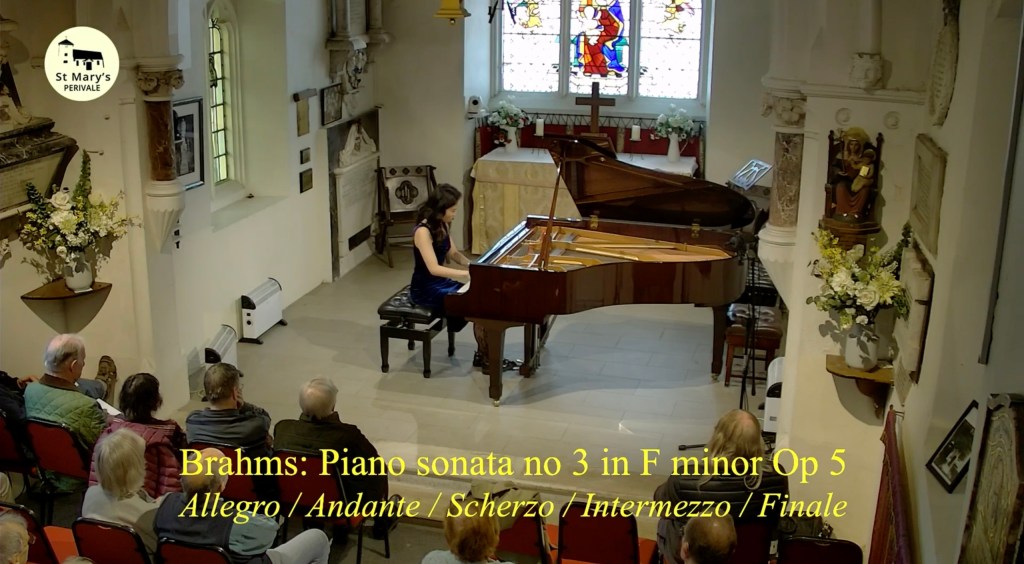
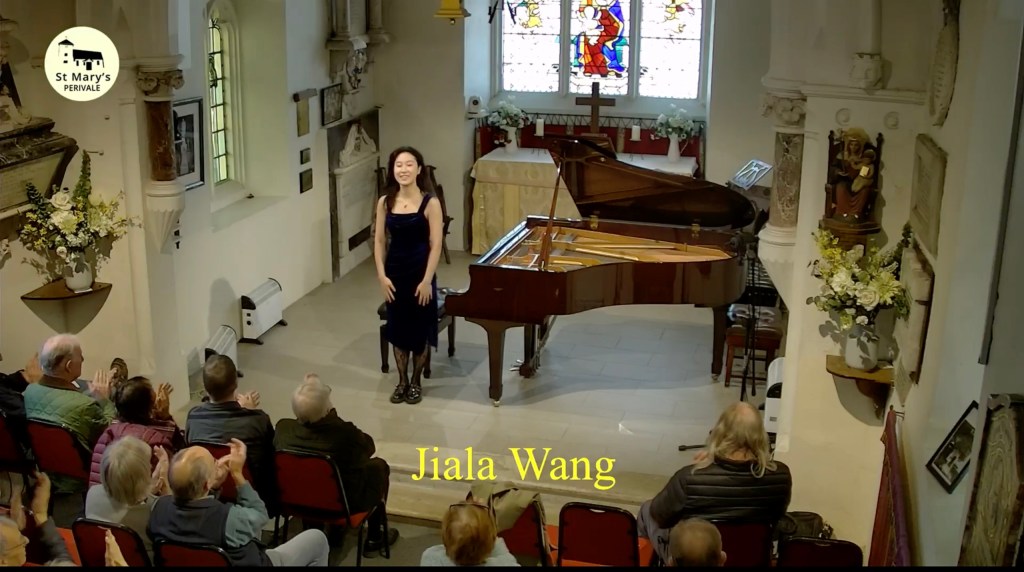
Edward Leung at St Mary’s Perivale Monumental Brahms of mastery and searing intensity

https://www.youtube.com/live/tjnp18Do0-4?si=OXlr1Ooe1nzc1N3i

Some extraordinary playing of great authority and mastery. Sumptuous sounds of a musician who digs deep into the keys with a limpet type touch and finds golden sounds of ravishing beauty and monumental importance. A fascinating programme too with four short works by lady composers before the F minor Sonata by Brahms that Robert Schumann was to call ‘veiled symphonies’. Such is the monumental importance of all three of his piano sonatas written long before he would dare write his four actual symphonies. Mark Viner has long been an advocate of Cécile Chaminade who wrote an enormous amount of piano music rarely heard in the concert hall these days as it has for too long been considered rather lightweight and dated. Edward chose two of her piano pieces that are full of charm, a ravishing sense of balance and scintillating jeux perlé pianism.

‘Automne’ is one of her best known works and would be on the piano stand of most houses, before the advent of the television. Together with Salut d’Amour, Rustle of Spring and of course Spring Song,little did the amateur pianists realise that there was more to ‘Automne’ than just a beguiling nostalgic melody. Edward showed us today the beauty of the melodic line played with real artistry and a rubato that had us hanging on to every note right to the very last one, at the top of the piano with the left hand coming to the rescue with a teasing last word! But this was also one of six studies and the central episode ( like the second and third movements of the ‘Moonlight Sonata ‘ ) were certainly not for music loving amateur pianists. These outburst of brilliance and passionate abandon were played with authority and clarity of sound as Edward swept across the keyboard with a rotation of his whole body that gave weight to all he played. The return of the poignant opening melody was played with ever more tenderness after such torrents of notes, ending with whispers of ravishing subtle beauty.

Nadia Boulanger was certainly not a salon pianist but one of the most important musicians of her time and a catalyst for so many musicians who passed through her studio in Paris. Woe betide anyone that came to her studio who was not 100% awake and ready to sing fugue subjects or transpose works at the drop of a hat. Composers would flock to her for precious advice given with absolute integrity and honesty. Gershwin asked to join her class and she refused to teach someone whose natural talent might be ruined by a tight jacket of rules and regulations. So it was fascinating to hear a piano work of hers today. Dinu Lipatti was a prodigy of hers and there are recordings of them playing together but mainly Mademoiselle spoke more of her sister ,Lilly, who had died tragically at a very early age leaving many compositions that showed the promise denied her by the cruel destiny that was to await her and also Lipatti https://youtu.be/IdiBa9HhjZ0 This was a fascinating discovery with the thick chords of imposing authority that like Busoni are searching for a new musical language. Giving way to bell like sounds spread over the entire keyboard with a chordal chorale in its midst floating into oblivion.

Edward after this rather serious digression turned to the simple charm and almost nursery rhyme simplicity of Chaminade’s Thème varié. Variations spread over the entire keyboard with Mendelssohnian jeux perlé brilliance always with the charm of the theme ever present until the triumphant final outpouring of mellifluous glory.

Clara Schumann’s Romance ,on the other hand, is a charming outpouring of song with its beautiful legato melody and simple accompaniment and poignant ending of great delicacy. Obviously a work that she would have included in her recitals as the first important lady concert pianist much in demand, even though she bore her husband Robert eight children and was seriously courted by Brahms after her husbands early death in a mental asylum!

The Brahms F minor sonata is a monumental work in five movements, the last of the three that Schumann was to call ‘veiled symphonies’. The difficulty is not so much technical as musical in the first movement. Keeping the tension through taught rhythmic precision whilst allowing for an almost improvised fantasy to unwind is only for masterly musicians. The clarity and rhythmic precision that Edward brought to the sonata allowed him to show us the full architectural shape of this master work. The ‘Andante’ was allowed to unfold with ravishing beauty bursting into passionate outpourings of noble sentiment. The coda is one of those magic moments where the whispered almost religious outpouring gradually builds in intensity to a most passionately exhilarating climax. Dying away to an intense whispered ‘Adagio’ with chords that gradually extinguish themselves with fervent simplicity. The ‘Scherzo’ just shot from Edwards masterly hands with dynamic drive and uplifting excitement. A purely orchestral Trio was soothing balm before the return of the Scherzo. The Intermezzo that follows is really a link between the third and fourth movements but it contains music of searing passion and powerful emotions with the throbbing of the bass like a heart beating ever more intensely. The Allegro moderato finale was played with an extraordinary range of colour and emotion. A technical mastery that allowed Edward to abandon himself to the passionate outpouring of nobility and scintillating excitement that Brahms was to bring to the ever more exciting last pages of this monumental work.

Hailed for his “taut succinctness with emotional expansiveness and a striking capacity for invention” ( BBC Music Magazine) , American pianist Edward Leung is a sought-after recitalist and chamber musician. Edward is a 2025-2027 Making Music Recommended Artist and a Bösendorfer-Amadeus Young Artist. His debut album with violinist Usha Kapoor Beach • John Corigliano: Violin Sonatas [Resonus Classics] was longlisted for Preis der deutschen Schallplattenkritik, critically acclaimed by BBC Music Magazine, Gramophone, Fono Forum, and Classical Explorer, and was featured on ABC Classic’s Festival of Female Composers and SWR2 Treffpunkt Klassik. This current season features solo and chamber music recitals at Wigmore Hall, Bridgewater Hall, Milton Court, and venues in The Hague, Edinburgh, and Antwerp.

After studies at Princeton University and the Royal Birmingham Conservatoire with Francine Kay and Pascal Nemirovski, Edward is currently the Staff Pianist at The Yehudi Menuhin School. He frequently gives masterclasses internationally and has previously taught at the Junior Royal Welsh College of Music and Drama and the Westminster School.

photos credit Davide Sagliocca
https://christopheraxworthymusiccommentary.com/2024/03/20/christopher-axworthy-dip-ram-aram/

Herman Med Cerisha with playing of overwhelming authority and poetic beauty ‘A unique pianist who stands out for his originality and sincerity’

https://www.youtube.com/live/wtDuxa9Zzbg?si=ASmOeXt-ZZH5apDG

Some extraordinary playing of great authority from this young Italo Romanian pianist Herman Med Cerisha studying at the Royal Academy with Florian Mitrea. https://christopheraxworthymusiccommentary.com/2021/03/02/florian-mitrea-born-free-at-st-marys/

A distinguished colleague had heard him in a prize she was judging and told me he was good. In fact he won the Beethoven Prize at the RAM .

‘I think he will be one of these unique pianists! He stands out in my mind for the originality and sincerity of his playing.’ Deniz Gelenbe

She did not tell me how good, until I heard him today playing Brahms op 119 , Schubert ‘ little ‘ A minor Sonata and Prokofiev 7th Sonata. Playing of overwhelming authority and poetic beauty but also of passionate intensity and fearless brilliance.

Brahms of sumptuous beauty but also of refined elegance and aristocratic authority. The Intermezzo in B minor was played with crystalline clarity and touching beauty. A radiance that comes from delving deep into each note and extracting a multitude of sounds from each one. The E minor entered with a whisper as it gradually grew in intensity only to be resolved with an ‘Andantino grazioso’ of pastoral beauty. The C major could almost be called a capriccio such was the beguiling elegance and teasing mastery of art that conceals art and which I have only heard similarly from Clifford Curzon and Myra Hess. Sumptuous sonorities in the final E flat ‘Rhapsodie’ were played with driving aristocratic energy with streams of notes just thrown off as they accompanied the noble outpouring of the chorale. Passionate pulsating rhythms were played with remarkable architectural shape and led so beautifully into the simple beauty of the ‘grazioso’ central episode. A complete change of timbre where Herman produced a liquid fluidity of sounds contrasting so well with the glorious nobility of its surrounds.

Schubert that reminded me of Gilels where the golden sounds and rare monumental beauty had moments of heart rending delicacy without ever loosing sight of the great architectural outline. Gilels had arrived in London to find a poorly attended concert in the Festival Hall! A programme of Schubert and Shostakovich which obviously was not box office but which I will remember for the rest of my life!

I was reminded of his playing of this A minor Sonata D 784 as I listened to Herman today. Playing of beauty but also of solidity and never dwelling on detail but letting the music speak for itself without any unwanted assistance from interpreters eager to point out or underline the beauty that is already there. After the etherial opening, Beethovenian declamations and following dotted rhythmic chords were played with a limpet type touch never vertical but always horizontal and deep into each key. The touching vibrancy of the second subject must be one of the most beautiful things that Schubert ever wrote. Herman played it with whispered glowing delicacy but never altering the rhythmic undercurrent that holds the structure together. The ‘Andante ‘ sang with simple beauty and the rhythmic comments that could interrupt the flow were played with extraordinary rhythmic precision so the melody was allowed to flow on one level whilst being comment on from afar. The radiance and beauty of the shadowing of the melodic line when it appears in the tenor register was one of those magic moments of ravishing monumental beauty, never sugar sweet or sentimental, but deeply moving. It showed a remarkable technical control of a pianist who actually listens to himself and can find the beauty that is hidden within every piano for those that care to seek. The ‘Allegro vivace’ was streams of sounds chattering away to each other with delicacy and brilliance. Bursting into dynamic outbursts with sumptuous fullness of sound never hard but rich in sonority. And it was noticeable that Herman rarely played vertically but his fingers clued to each key and arms wading like in water with horizontal strokes of natural elegance. There was a crystalline beauty to the lyrical episodes of grace with insinuating undulations.The final notorious double octaves were played with the same horizontal attack with the four final chords phrased by a musician who is also a poet of sound.

A savage demonic attack in Prokofiev ‘s most bombastic of the three war sonatas was breathtaking in its audacity and daring. The pulsating rhythm of the last movement was maintained heroically to the very last terrifying note. But it was the ‘Allegro inquieto’ that was quite remarkable for the intensity where his fearless abandon and fiery temperament was matched by his extraordinary technical mastery. Again never hard or ungrateful sounds but even if the attack was often vertical it was a blow given from a musician listening and feeling the music with searing conviction. The ‘Andantino espressivo e dolente’ was a magical moment of calm before going to the front again with even more ferocity. The ‘Andante caloroso’ was of Hollywoodian beauty and simplicity before bursting into flames of imploring beauty dissolving into glowing whispers of bewitching bewilderment. The ‘Precipitato’ began as a murmur and finished with all the guns ablaze. A control of tempo and sound that was remarkable and his total abandon at the end was a tour de force of daring of breathtaking excitement.

This is a young man to watch and nice to know he comes from a land kissed by the Gods. Puglia is where many great musician were born from Muti to Rana , Rota to Lupu, De Barberiis to De Vita ,Libetta to Grassi. Lecce the capital of Puglia ( the heel of Italy ) is quite rightly known as the Florence of the south. Putignano, Herman’s hometown, is renowned for its famous Carnaval procession forty days before Easter.

Thanks to the tireless promotion of Canan Maxton’s Talent Unlimited I was able to hear this great talent for myself at last. It was streamed live and the recording is in the link under the poster above.

Herman Med Cerisha, a 20-year-old pianist from Putignano, Italy, began studying piano at age 6. At 8, he was accepted into the top piano class at the George Enescu National College of Music in Bucharest after achieving full marks in the entrance exam. There, he trained under Elisa Barzescu, receiving a strong foundation rooted in the Eastern European musical tradition.

In 2020, Herman won a scholarship to study at The Purcell School and, in 2021, was named Bechstein Scholar Student of the Year. In 2024 he received multiple offers from leading UK conservatories and accepted a full scholarship to study at the Royal Academy of Music under Professor Florian Mitrea.

Herman has claimed over 40 international competition titles, including distinctions in the Chopin Junior Competition, Berman Competition, and Orbetello Competition. His 2019 win at the Pianisti i Ri competition in Kosovo led to a solo performance with the Philharmonic of Priština, where he performed Grieg’s piano concerto.

He has participated in masterclasses with renowned pianists such as Boris Petrushansky, Dmitri Alexeev, and Noriko Ogawa. He has also worked with Leonid Margarius and Franco Scala at the Imola Piano Academy.

He has performed in prestigious venues such as Wigmore Hall, Cadogan Hall playing Beethoven’s 3rd piano concerto, the Romanian Athenaeum, and Moscow’s Svetlanov Concert Hall. Between 2018 and 2022, he collaborated annually with the Arad Philharmonic Orchestra in Romania as a soloist. In 2025, Herman became a Talent Unlimited Artist, where they kindly support his musical journey.

www.hermancerisha.com

Interview

1- Aged 8 you began training under Elisa Barzescu, receiving a strong foundation rooted in the Eastern European musical tradition. How do you recall your time under this master?

Training with Elisa Barzescu was a huge part of how I understand music today. It was a really solid and sometimes quite strict education, but it taught me discipline and how to really approach new pieces with depth.

2- Is your family musical?

My dad and brother are both violinists — that’s actually why I started with violin before switching to piano.

3- You have recently embarked on a full scholarship studying at the Royal Academy of Music under Professor Florian Mitrea. How is this progressing?

It’s going really well! The Academy offers so many opportunities to learn new things, especially with such incredible teachers around. I’m learning a lot from my wonderful teacher, Professor Florian Mitrea.

4- You have won an impressive number of competitions and have held Young Musician titles. Does any one of these particularly stand out for you?

Every competition has been special in its own way, but the Chopin Competition for children and youth stands out — that’s when I first thought, “maybe I want to do this for real.”

5- Between 2018 and 2022, he collaborated annually with the Arad Philharmonic Orchestra in Romania as a soloist. How enriching was this experience?

Playing with the Arad Philharmonic Orchestra was unbelievable. You learn so much from working with conductors and other musicians — it’s a completely different kind of listening. Since pianists often play solo, those collaborations really feel like a celebration.

6- What are your fondest musical memories, privately or performing?

My favourite musical memories include performing with orchestra for the first time, and moments in practice when something finally clicks or a piece suddenly makes sense.

7- How often do your practice?

I try to practice every day, aiming for about 5 hours on average — but it really depends on the week!

8- Would you consider teaching in the future?

Yes, absolutely. I think teaching and sharing what we’ve learned to the next generations is one of the most meaningful things a musician can do.

9- How do you balance your time and commitments. What are the biggest sacrifices?

There are definitely many sacrifices — being away from family, lots of travelling, and spending endless hours in a four-wall room with your instrument. Finding balance is really important. I don’t think it’s healthy to only practise or think about music all the time, so taking breaks and stepping away every now and then is essential.

10- What advice would you give to young musicians at the start of their journey?

Believe in yourself and in what you’re doing. And always play because you love music — never because you feel you have to.

Rubinstein. had something to say about that too :

https://youtu.be/gex0sOR7XZ0

photo credit Davide Sagliocca
https://christopheraxworthymusiccommentary.com/2024/03/20/christopher-axworthy-dip-ram-aram/

Kit Armstrong Mozart speaks louder than words at the Wigmore Hall

Kit Armstrong with playing of Mozart of luminosity and scrupulous attention to detail . Playing a Bechstein piano which gave a radiance and clarity to all he did .

It was in the last Mozart Sonata in D K 540 that he really could show his architectural sense of shape and a musicianship mentored by his close relationship from a very early age with Alfred Brendel.

Beginning with the Adagio in B minor grouped with the Minuet in D and the little Gigue penned late in life, which showed remarkable musicianship and mastery but missed the sense of improvised discovery that he was to find later in the two sonatas. A crystalline clarity and scrupulous attention to detail but seemed a little too earthbound missing the etherial mystery in the Adagio. The Gigue was a ‘tour de force’ of dynamic playing that reminded me of Serkin but it sounded a little too well oiled and breathless at this tempo. However remarkable playing of extraordinary intelligence and sensibility but on this occasion just missed the magical improvised invention and simplicity that Mozart had distilled in the last years of his life.

An eclectic musician of extraordinary mastery and authority. A kaleidoscope of colour of refined good taste and knowing scholarship which he brought in particular to the two main works on the programme: the Sonata in D K 576 and that in F K 533/494.

He brought a fluidity to the D major Sonata giving a beautiful shape to the teasing brilliance that Mozart imbues with such subtle meaning and charm. A sense of phrasing the allowed the music to breathe without interrupting the continual forward flow. There was an absolute clarity that allowed us to appreciate the intricate genius of Mozart as the voices converse with each other before dissolving into a whisper, where the final notes are indeed the two rests in the final bar. A beautifully expressive ‘Adagio’ where Mozart’s Bel Canto was shaped with radiance and teasing beauty. I could almost imagine Brendel listening with a twinkle in his eye as Kit played the last two bars with such a subtle jeux perlé touch. The ‘Allegretto’ was played at a courtly pace that allowed the brilliant passages that followed to be shaped with radiance and style. Mozart is enjoying himself playing with this innocent theme, juggling with it in many different and enticing ways. Kit seemed to relish and understand that this was Mozart at play and was pure opera.

The F major Sonata he played with child like innocence. The intricate counterpoints played with a clarity and brilliance but it was more an intellectual journey than freely inspired . The ending of the first movement was a tour de force of brilliance but owed more to Rachmaninov than Mozart. I found it suddenly became rather overpowering and pianistic rather than charming and operatic. More Serkin than Kempff but nevertheless always remarkable totally committed playing. The ‘Andante’ was played with simplicity and beauty and the extraordinary development almost Beethovenian in the majestic contrasts, making the return so much more beautiful and radiant. The very intricate Rondò was played with beguiling simplicity as it was allowed to flow with charm and grace in two. A tour de force of style and understanding that made this for me the absolute highlight of a very remarkable recital.

The Fantasia in F minor K 608 could almost have been written by Beethoven such was the imposing majesty of the opening. This was a true discovery from a pianist who is above all a musician of scholarship and refined good taste.

In this week when only last Monday we celebrated Alfred Brendel’s 95th at the Barbican, it was refreshing to hear this thirty year old artist continuing the message that Brendel had bequeathed to him of humility, simplicity and dedication to the composers wishes with a selfless technical mastery that rightly passes unnoticed.

https://christopheraxworthymusiccommentary.com/2026/01/09/the-age-of-embrendelment-a-celebration-and-thanksgiving-on-alfred-brendels-95th-birthday/

Kit Armstrong writes and performs : ‘Wolfgang Amadeus Mozart’s work for mechanical organ, faithfully reproduced as a piano piece. The limited compass of the original instrument notwithstanding, I find that the original score is much to be preferred to the various transcriptions generally played (of Clementi, Busoni, et al.). It sets “some amusing problems of digitation”*

.https://youtu.be/YsOY7WXM6g4?si=wuGmxwa8FPnT-cee

And after Mozart this eclectic young musicians chose Liszt’s Eight Variations on an original theme op 1 as an encore which had us all guessing as to who the composer might be.

The very first Liszt work published along with his variation on Diabelli’s theme, composed in 1824. This really sounds more like Mendelssohn , and one could never have imagined that a thirteen-year-old Liszt composed such an extraordinary work written no doubt for his own use and dedicated to Sébastien Erard As Leslie Howard points out the work is also of interest because the theme turns up in the so-called Third Concerto.

Born in 1992 in Los Angeles, Armstrong has been described by Alfred Brendel as ‘the greatest talent’ he has ever encountered, not only demonstrating extraordinary aptitude at the piano but also at the organ and as a conductor, as well as being a composer in great demand.
https://youtu.be/JLu9jt4p7jU?si=-i01SqnFu9PaZUfH

Kit Armstrong collaborates with many of the world’s most sought-after conductors and has been a guest at some of the world’s finest orchestras. In summer 2018, he was Artist in Residence at Festspiele Mecklenburg-Vorpommern and he is ‘Artist in Resonance’ at the Musikkollegium Winterthur. In the same year, he received the Beethoven-Ring by the German society, Bürger für Beethoven.

Recent and upcoming highlights include concerts with the Deutsche Kammerphilharmonie Bremen, Lucerne Symphony Orchestra, Münchener Kammerorchester, Stuttgart Kammerorchester and the Orchestre National du Capitole de Toulouse, and piano recitals at Wiener Konzerthaus, Lincoln Center, Rheingau Musik Festival, Munich’s Prinzregententheater, Ruhr Piano Festival and Schubertiade Hohenems, among others. He has appeared as organist with the Luxembourg Philharmonic Orchestra and Wiener Konzerthaus, and is scheduled to appear at the Bruckner Festival Linz. He gave his acclaimed debut as conductor at Festspiele Mecklenburg-Vorpommern in 2018 and recently was guest conductor with the Bochumer Symphoniker.

Armstrong’s debut recording with works by Bach, Ligeti and Armstrong was released in 2013 by Sony Classical, followed two years later by his second album, Liszt: Symphonic Scenes. His own compositions are published by Edition Peters.

Armstrong studied music at the Curtis Institute of Music and continued the Royal Academy of Music. Aged seven, he started studying composition at Chapman University and physics at California State University, followed by chemistry and mathematics at the University of Pennsylvania and mathematics at Imperial College London. He earned a Master’s degree in pure mathematics at the University of Paris VI. At the age of 13, Armstrong met Alfred Brendel, who has guided him as a teacher and mentor ever since. Their unique relationship was captured in the film, Set the Piano Stool on Fire, by Mark Kidel.Ever since Kit Armstrong entered the global music stage twenty years ago, his activities have exerted an enduring fascination upon music lovers. He performs recitals in major series, appears with the world’s finest orchestras, and has developed close artistic partnerships with leading instrumentalists and vocalists. He has held artist-in-residence appointments incorporating a wide spectrum of musical formats, combining his roles as composer, pianist, conductor, and organist. His project Expedition Mozart, traversing Mozart’s music in various genres with an international group of distinguished chamber musicians and soloists, is a main feature at prestigious festivals and venues.

Armstrong came to classical music through composition at the age of five. He has since created a broad oeuvre of vocal, instrumental, chamber, and symphonic works, many of which have been commissioned by notable European cultural institutions. His compositions are published by Edition Peters. 

Armstrong’s piano recordings include the albums Bach, Ligeti, Armstrong (2013) and Liszt: Symphonic Scenes (2016) on Sony Classical, various live recitals on DVD, such as Bach’s Goldberg Variations and its Predecessors at the Concertgebouw Amsterdam (Unitel, 2017), Wagner – Liszt – Mozart at the Bayreuth Margravial Opera House (C-Major, 2019), and 1520-2020: A Musical Odyssey (Damis Films, 2023), a double CD dedicated to a panorama of works by William Byrd and John Bull: The Visionaries of Piano Music (2021) on Deutsche Grammophon, and Mozart’s violin sonatas with Renaud Capuçon (2023).

Born in 1992 in California, USA, Armstrong pursued undergraduate studies in physics at California State University, chemistry and mathematics at the University of Pennsylvania and mathematics at Imperial College London. Alfred Brendel has guided Armstrong as a musical mentor since 2005. In 2008, he earned a bachelor’s degree in music at the Royal Academy of Music, London, and in 2012 a master’s degree in pure mathematics at the University of Paris VI.

In 2012, Kit Armstrong purchased the Church of Sainte-Thérèse in Hirson, France, and transformed it into a hall for concerts and exhibitions, and outreach. This cultural centre has become home to interdisciplinary projects, including the yearly Semaine de la Voix, reaching a regional as well as cosmopolitan public.

photo credit Davide Sagliocca
https://christopheraxworthymusiccommentary.com/2024/03/20/christopher-axworthy-dip-ram-aram/

Nelson Goerner at the Wigmore Hall The magic world of Albeniz revealed in all its glory

Albeniz a bit too vulgar for the refined taste of the Wiggies. Nelson Goerner looking ever more like Shura Cherkassky and more importantly playing like him . A sense of style and kaleidoscope of colour bringing a timeless beauty and radiance, in between clicking his heels and stamping his feet.

By coincidence it was Shura who introduced him to me when they shared the same agent Christa Phelps almost thirty years ago. He has since astounded the public and his colleagues ever since. No less than Martha Argerich regularly shares the platform with him and today he held us spellbound with the perfection of his playing.

A vibrant and ravishing sense of discovery . Not stale perfection but the remarkable beauty of recreation.

As Davide Sagliocca rightly points out : ‘ To call Albéniz’s sophisticated piano landscapes, vulgar , so admired by Debussy, who was famously particularly fond of ‘El Albaicin’, as were many others at the turn of 20th Century, is such a misnomer. It is like saying that Vaughan Williams symphonies or Elgar’s Pomp and Circumstance marches are vulgar!’

But the last and only world must go to the mastery of Nelson Goerner who delved into this magic world which was obviously deeply ingrained into his being. No sign of any ‘aide memoire’ which could have been easily forgiven with a programme that is of such rarity. To present it without the score is a homage indeed to the genius of Albeniz.

There was a languid timeless beauty to ‘Evocación’ bathed in a mist of pedal out of which emerged the most haunting tenor melody accompanied by whispered asides like raindrops or the patter of footsteps in the distance. A barely audible ending drew us in, to overhear such wonders, only to be greeted with glee by two impish pizzicato final notes. Almost Beethovenian in showing us that the final notes are indeed the most unimportant and merely an ending to the wondrous sounds that have been witnessed within. The sun was shining brightly for ‘El Puerto’ with a kaleidoscope of colours and chameleonic moods and with the same impish no nonsense ending to this radiant temperature. There was real stamping of feet as the ‘Fête- Dieu à Séville’ gradually was streaked across the keyboard with athletic virtuosity as the passionate outpouring of the Corpus Christi procession was upon us with pride and exhilaration.

A tour de force of virtuosity and knowing use of the pedals with music that needed another stave in order to fit on the page.

The winner of the 1966 Leeds International Piano Competition, Spanish pianist Rafael Orozco (1946-1996) was born into a musical family and enrolled at the Conservatorio Superior de Música de Córdoba at the age of 7. He later studied at the Madrid Royal Conservatory, from which he graduated with the first prize. His teachers included José Cubiles, Maria Curcio and Alexis Weissenberg. Upon his victory in Leeds at the age of 20, he embarked on an international career and gave concerts worldwide, while the recognition from masters such as Herbert von Karajan and Carlo Maria Giulini has further brought him concert engagements with some of the most famous orchestras and festivals.
Despite all these and his apparent musical talent, he did not really become a household name. Having moved from London to Paris and subsequently to Rome, he later confessed his departure from London was perhaps too early, which may explain his quieter concert life in the 1980s.

Who could ever forget that dashing young Spanish pianist (to use Annie Fischer’s words) Rafael Orozco who ran off with the Leeds Gold Medal with many performances of burning passionate intensity especially memorable of ‘Fête- Dieu’. He lived in Rome and would come to Alicia de Larrocha’s performances and would sail off in the car with her to his sumptuous apartment overlooking the Trevi Fountains. Alas a tragic ending of Romeo and Juliet proportions cut his life short much too soon.

‘Rondeña’ saw a pulsating melody amidst a driving dance of rhythmic insistence with another whispered ending and impish farewell.Played with an extraordinary sense of character each one of these twelve tone poems was treated with delicacy and poetic fantasy apart from quite considerable technical mastery. ‘Triana’ was a great way to close the first half of the complete Iberia. A flamenco with strumming guitars and snapping castanets and a hypnotic sense of dance. After the interval ‘El Albaicin’ was played with a whispered almost inaudible pitter patter bursting into flames of passionate decadence, interrupted only by its calming quasi religious recitativi. He brought a languid beauty to ‘El polo’ with an outpouring of extraordinary almost vulgar familiarity! Bursting into song and excitement with ‘Lavapiés’ with its impish good humour played with enticing exhilaration – how Shura would have loved these devilish leaps as he did in Copland’s El Salon Mexico! ‘Málaga’ was played with deep brooding of intense intimate meaning. ‘Jerez’, perhaps the most extraordinary and original of all Iberia, obviously a great influence on Debussy , with its fervent outpouring of simplicity and great burning intensity. Finally the extraordinary energy of ‘Eritaña’ depicting an inn on the outskirts of Seville. The ‘Venta Eritaña’ where ‘sherry is drunk, jamón crudo consumed , flamenco danced, castanets clicked as a rollercoaster ride of deliciously modern ,ever nostalgic Spain reaches its close’ .

An extraordinary ‘tour de force’ from Nelson Goerner who presents year after year interesting programmes prepared with scrupulous intelligence and mastery. We were thinking what could he play as an encore after this ninety minute marathon of poetic gymnastics. Nelson, a consummate artist knows when to stop, as he sent us away happily stamping our feet and clicking our heels with a soul full of sumptuous insinuating sounds ringing in our ears.


Isaac Manuel Francisco Albéniz y Pascual.
29 May 1860 Camprodon,Catalonia,Spain 18 May 1909 (aged 48) Cambo-le-Bains, France In 1867, at age 7, after apparently taking lessons from Antoine Francois Marmontel , Albéniz passed the entrance examination for piano at the Paris Conservatoire but he was refused admission because he was believed to be too young.The apex of Albéniz’s concert career is considered to be 1889 to 1892 when he had concert tours throughout Europe. During the 1890s Albéniz lived in London and Paris. For London he wrote some musical comedies which brought him to the attention of the wealthy Francis Money-Coutts,5th Baron Latymer Money-Coutts commissioned and provided him with librettos for the opera Henry Clifford and for a projected trilogy of Arthurian operas. The first of these, Merlin (1898–1902), was thought to have been lost but has recently been reconstructed and performed.[8] Albéniz never completed Lancelot (only the first act is finished, as a vocal and piano score), and he never began Guinevere, the final part.
In 1900, Albéniz started to suffer from Bright’s disease and returned to writing piano music.
Between 1905 and 1908, Albéniz composed his final masterpiece, Iberia (1908), a suite of twelve piano “impressions”.
On 18 May 1909 (116 years ago), at age 48, Albéniz died from his kidney disease in Cambo-les- Bains in Labourd, south-western France. Only a few weeks before his death, the French Government had bestowed upon Albéniz the Legion of Honour, its highest honour. He is buried at the Montjuïc Cemetery,Barcelona .

Albeniz’s Iberia  was  composed between 1905 and 1909 and is composed of four books of three pieces each; a complete performance lasts about

It is Albéniz’s best-known work and considered his masterpiece. It was highly praised by Debussy and Messiaen, who said: “Iberia is the wonder for the piano; it is perhaps on the highest place among the more brilliant pieces for the king of instruments”. Stylistically, this suite falls squarely in the school of Impressionism , especially in its musical evocations of Spain.It is considered one of the most challenging works for the piano: “There is really nothing in Isaac Albeniz’s Iberia that a good three-handed pianist could not master, given unlimited years of practice and permission to play at half tempo. But there are few pianists thus endowed.”The twelve pieces were first performed by the French pianist Blanche Selva , but each book was premiered in a different place and on a different date. Three of the performances were in Paris, the other being in a small town in the south of France.

Book IV: February 9, 1909, Société Nationale de Musique, Paris.

Book I: May 9, 1906, Salle Pleyel, Paris

Book II: September 11, 1907, Saint – Jean – de- Luz

Book III: January 2, 1908, Palace of Princess de Polignac, Paris

Marie Blanche Selva (Catalan Blanca Selva i Henry, 29 January 1884 – 3 December 1942) was a French pianist, music educator, writer and composer of Spanish  origin.Blanche Selva was the only French pianist of her time to specialise in Czech music, and she was consequently very popular in Czechoslovakia. She continued to tour and work as a concert pianist in  Europe .  By the age of 20 she had performed all of J.S. Bach’s keyboard works in 17 recitals.Between 1906 and 1909 she premiered all four books of Isaac Albéniz‘s piano suite Iberia.
In January 1925 Selva moved to Barcelona from Paris where she founded her own music school and performed in a duo with violinist Joan Massià. In 1930 she developed a paralysis that ended her performing career, but she continued teaching, writing and composing.Blanche Selva was active as a translator and transcriber. But her main work is a monumental 7-volumes work on piano technique:
L’Enseignement musical de la Technique du Piano, Paris from 1916 to 1925
This book propose a radically new approach to piano playing. Her predilection for big arm gestures and her detailed descriptions of the most unusual types of attack, combined with the constant attention to the resulting tone-color, make his book a unique contribution to the history of the piano and its literature https://youtu.be/IdlM-nK8ppM?si=Nx8cyt8PRDaUSetl
photo credit Dinara Klinton https://christopheraxworthymusiccommentary.com/2024/03/20/christopher-axworthy-dip-ram-aram/

Imogen Cooper a Shubertiade of radiance and beauty at the National Liberal Club

A sublime timeless Schubertiade from Dame Imogen Cooper. An outpouring in which a whole world was described in music from ethereal to dramatic from poignant to heart rending. Aristocratic playing of poise and great humanity where there was no note that was not of significance and meaning in these tone poems that were to be the last ‘miniatures’ to pour from a genius in his final year on this earth.

I am reminded of that other great Dame, Myra Hess, whose musicianship distilled over a lifetime as a dedicated and loyal servant to the composer, was where the piano was merely the medium to communicate the message behind the notes. The place where secrets are hidden from all but those who have found the magic key to Pandora’s box of jewels and the very heart of the composer. It was Nadia Boulanger who used to quote Shakespeare to aspiring young musicians who flocked to her studio in Paris :’Words without thought no more to heaven go’. The thought behind Imogen’s notes are surely guaranteed a place in heaven.

The two books of Impromptus D 899 and D 935 were written in the same period but are two collections of four Impromptu’s that are quite different in length and depth. Poetry and drama live together in sublime harmony in the first Impromptu with Imogen’s scrupulous attention to Schubert’s very precise instructions that she has distilled from a lifetime digging ever deeper into the mysterious vision of Schubert’s last days on earth. The opening ominous single G reappears so poignantly in the coda of this impromptu. It is the same G that beckons us in the last sonata D 960 , with this single note lurking always in the wings. Imogen found a veiled beauty to the single note of a melody that is heard from within the very vibration of this note ,seemingly coming from afar and answered by dry staccato chordal comments. Of course eventually bursting into song but with refined reticence.The ominous vibrating G becomes more apparent as the music becomes more agitated and dramatic, only to be calmed by one of Schubert’s most persuasive melodic outpourings of Viennese charm. The second Impromptu was made of streams of undulating gold and silver sounds where Imogen’s control and perfect finger legato created a sense of harmonic contentment. It lead so naturally into the robust almost military outbursts that Imogen played with passionate abandon and a remarkable sense of balance. Schubert’s swirling counterpoints were never clouded but suggestively revealed from within.The coda was played with dynamic drive and vehemence and the final two chords had the same finality of Beethoven’s no nonsence endings.

The G flat Impromptu was played with sublime timeless wonder with a sense of balance that allowed the melodic line to sing with a ravishing voice but also the harmonies on which it floated creating a sumptuous bed on which to lie. Drama built up from the bass with a beseeching duet between two worlds conversing so eloquently together. A powerful climax where Schubert writes ‘sforzando’ in the bass and gradually it leads to a deeply felt sigh, out of which the sublime opening is allowed to return. This time as if in a dream of whispered wonder ‘avec un sentiment de regret’. Imogen timed this moment to perfection and the silence and concentration from a full hall was one of those magic moments of collective emotion that only live performance can sometimes offer.

The last Impromptu could almost be called Schubert’s ‘Jeux d’eau’ such was the luminosity and fluidity that Imogen brought to the trickle of watery sounds that she conjured with transcendental mastery from the keys. A perfection of detail but above all an architectural understanding that could give such an overall shape to this extraordinary tone poem. Her wonderful sense of balance where the melodic line emerged from its surroundings but was part of a harmonic whole. Nowhere more was this apparent than in the Trio section where the ever more passionate pulsating of the heart beating chords sustained a melody of passionate vehemence.This cloud soon passes in Schubert ( not so quiescent Beethoven though) and we return to the mellifluous beauty and radiance that were ultimately to fill Schubert’s short life with joy and on occasion grief.

The second set of Impromptus are much longer than the previous ones and were only published many years after Schubert’s death in 1839, with a dedication by the publisher to Liszt. The first Impromptu opens with passion and dynamism dissolving into the etherial. Dramatic flourishes and octave declamations give way to a duet between the hands of haunting beauty. Imogen played the opening flourish with real weight but as she showed us, it is only ‘fp’ and the dotted scale that follows was played like mere rhythmic pulsations.The question and answer of the sublime central duet was played out on an undulating flow of perfectly balanced sounds. Imogen’s remarkable sense of architectural shape allowed her to show us this extraordinary Impromptu as the tone poem of haunting beauty that it truly is. The final three chords were placed with aristocratic perfection where the rests were revealed to be as poignant as the chords.The second Impromptu opened a completely different world. From the orchestrally conceived first we were now in the whispered opening of a ‘lied’ with a solo voice and accompaniment. Playing of great delicacy and beauty of poignant whispered simplicity.There was a flowing beauty to the central episode that was of freedom and plasticity with waves of sound , the bass holding the reins but the notes above allowed to flow and breathe so naturally.
The theme of the variations of the third impromptu was allowed to flow in two with beauty and refined charm. The variations emerged, each out of the previous one, which allowed for a continuous flow where the sense of character that Imogen brought to each variation was so enticing. The drama of the third variation was soon forgotten as the pastoral charm of the left hand melody of the fourth took us to the streams of jeux perlé of the fifth. Notes of such simple fluidity of undulating shapes of whispered beauty. The almost too serious coda was played out with nostalgic poignancy. The fourth Impromptu was played with remarkable control with the excitement very much within the notes. The perfect rhythmic stability that Imogen brought was quite exhilarating and equally as exciting as Serkin’s hysterical dynamism. All through the recital there was a sense of control that in no way restrained the music but gave it a nobility and inevitability of refined maturity. The character she brought to the central episode of this Impromptu was quite exhilarating and even charming and darkly dramatic. It was a kaleidoscope of emotions and a demonstration of Imogen’s mastery of allowing the music to speak with apparent simplicity and directness as it always was with that other Dame ,Myra Hess. Uncle Tobb’s ( Tobias Matthay, Myra Hess’s mentor) used to say that within every note there are hundreds of possibilities and inflections that can illuminate and reveal things where words are just not enough. Imogen has been mentored for a lifetime by Alfred Brendel one of the greatest musicians of our time.

It was only a few days ago that she and her illustrious colleagues celebrated what would have been his 95 th birthday. It was with gratitude and joy, a celebratory gala concert at the Barbican to create funds for the Alfred Brendel trust that will help young musicians of the next generation.

https://christopheraxworthymusiccommentary.com/2026/01/09/the-age-of-embrendelment-a-celebration-and-thanksgiving-on-alfred-brendels-95th-birthday/

Imogen’s recital tonight was a memorable evening of music making and alarmingly we note that it is part of Imogen’s farewell tour!

Schubert’s Allegretto in C minor played with luminosity and simplicity was indeed a sad farewell.

photo credit Annabelle Weidenfeld https://christopheraxworthymusiccommentary.com/2024/03/20/christopher-axworthy-dip-ram-aram/

Thomas Kelly Here there and everywhere with staggering playing : St James’s Piccadilly,St Pancras Euston, St Mary’s Perivale. All saints in paradise with the day of judgement nigh!

Thomas Kelly ,a musical genius flying high as he spreads his wings this week starting at St James’s in Piccadilly to St Pancras in Euston and finishing at St Mary’s with quite staggering playing all streamed live ……. no words from me necessary or could do justice to such performances that can be enjoyed here

St Mary’s https://www.youtube.com/live/5i8auTZdAp0?si=hZZZdHk2oTK039vq

St James’s https://www.youtube.com/live/-YfHfnXR6CY?si=dnTuqRW903jhHFcp

St Pancras https://www.youtube.com/live/YGTxLevRpnM?si=kqnjei1uGtG7qUhR

https://www.youtube.com/live/YGTxLevRpnM?si=UuHoLP5LGDyotUM4

Anyone who can play the Liszt Sonata with the intelligence mastery and showmanship that we heard today belongs in the same category as the great interpretations of Curzon, Gilels or Arrau. Hats off Tom you have made it and the sky is the limit now

https://www.youtube.com/live/-YfHfnXR6CY?si=9hMrhiTKc4Q28mni
https://www.youtube.com/live/5i8auTZdAp0?si=cAg8hUJ3v1yaMP9s

Thomas Kelly started playing the piano aged 3 and aged 9 performed Mozart’s 24th Concerto with Orchestra. Thomas studied at the Purcell School for Young Musicians and is currently the Benjamin Britten Fellow at the Royal College of Music, (the highest award for any pianist at the RCM) where he is guided by Professors Dmitri Alexeev and Vanessa Latarche. 
Thomas was a prizewinner at the 2021 Leeds International Piano Competition, enjoying critical recognition and in 2022 won 2nd Prize and the semi-final concerto prize at Hastings International Piano Concerto Competition. He has won numerous international competitions including 1st prizes at the Pianale International Piano Competition (2017), Kharkiv Assemblies (2018), Lucca Virtuoso e Bel Canto Festival (2018), Theodor Leschetizky Competition (2020), and Intercollegiate Sheepdrove Piano Competition (2022). In 2024 Thomas was awarded the Queen Elizabeth, the Queen Mother Rose Bowl upon graduating the RCM, and most recently became a finalist of the International Liszt Competition in Utrecht which will take place in January 2026. 

Past performances include Wigmore Hall, Cadogan Hall, St John’s Smith Square, Steinway Hall, Leighton House, St James’ Piccadilly, Stoller Hall (Manchester), West Road Concert Hall (Cambridge), Leeds Town Hall, Kammermusiksaal Berlin Philharmonie, Paris Conservatoire, the TivoliVredenburg in Utrecht, the Lunel-Viel festival near Montpellier, StreingreaberHaus in Bayreuth, Teatro Del Sale and the British Institute in Florence. Thomas was also recently featured on the BBC Arts In Motion documentary series in a masterclass with Yuja Wang. 

He regularly collaborates with fellow musicians, including stepping in for Nikolai Demidenko alongside Dmitri Alexeev in his transcription of Stravinsky’s Firebird Suite for 2 pianos in 2021, and performing Messiaen’s Turangalila-Symphonie with Jac van Steen conducting the RCM Symphony Orchestra at the Royal Festival Hall.

Thomas has also been a C. Bechstein Scholar supported by the Kendall-Taylor award, generously supported by the Keyboard Charitable Trust, and is grateful for the generous support of Talent Unlimited  . Thomas is currently looking forward to a solo Wigmore appearance and regular concerto appearances among other upcoming performances.

photo credit Dinara Klinton https://christopheraxworthymusiccommentary.com/2024/03/20/christopher-axworthy-dip-ram-aram/