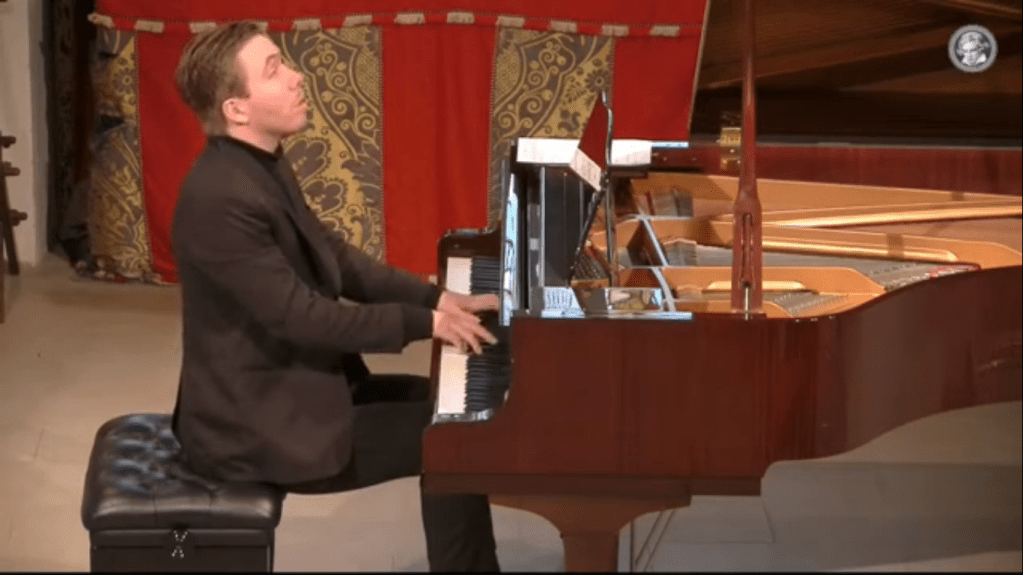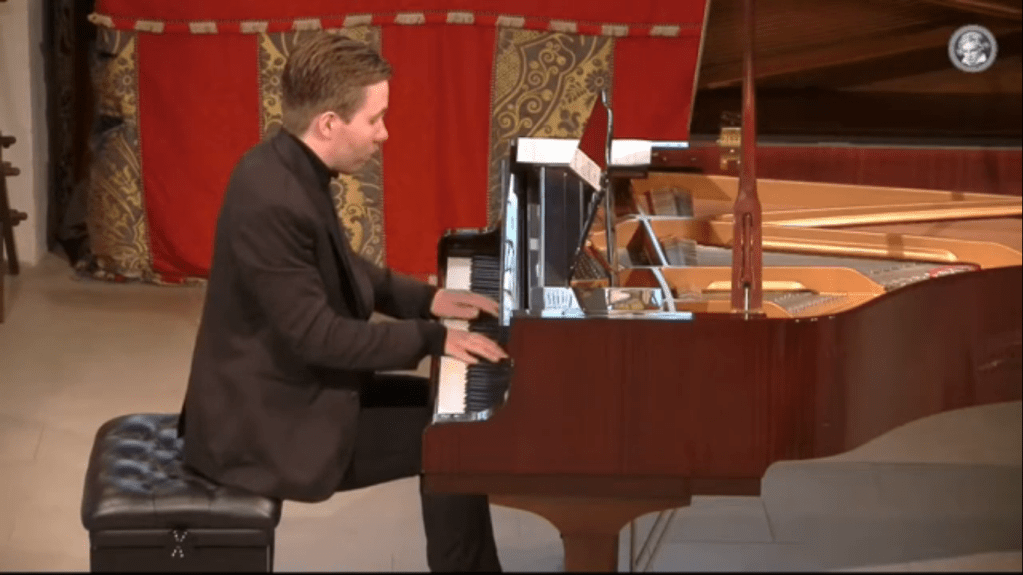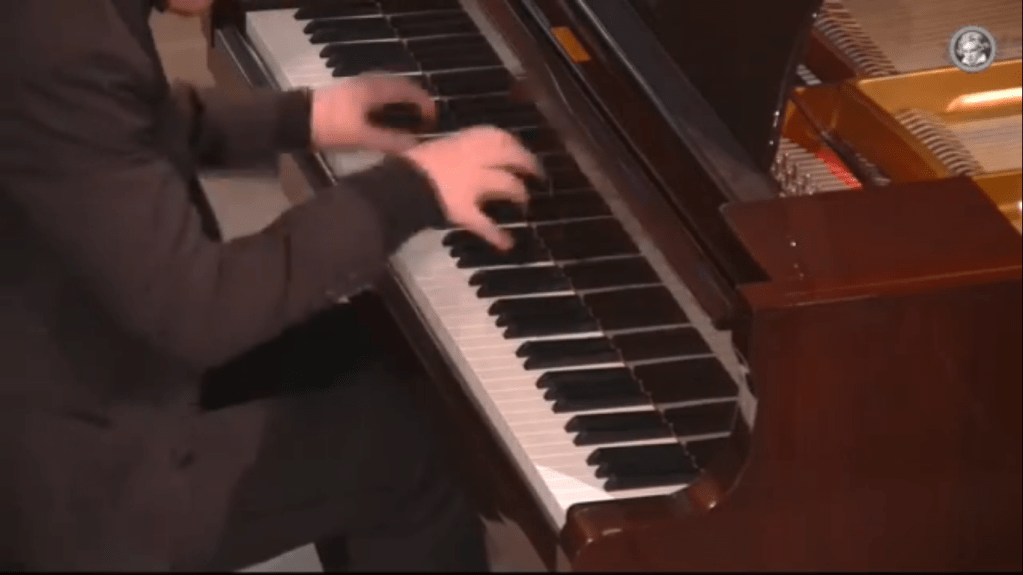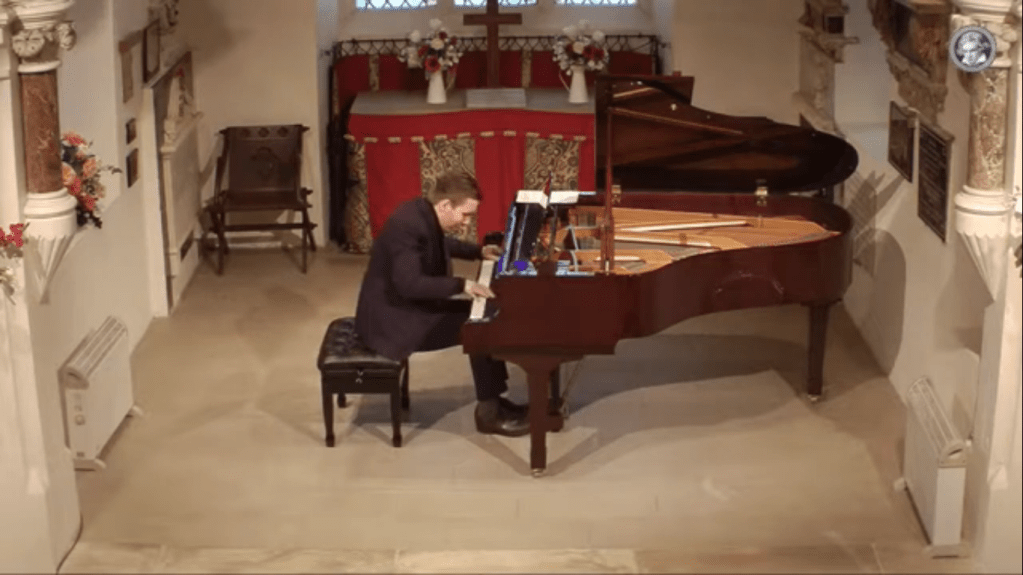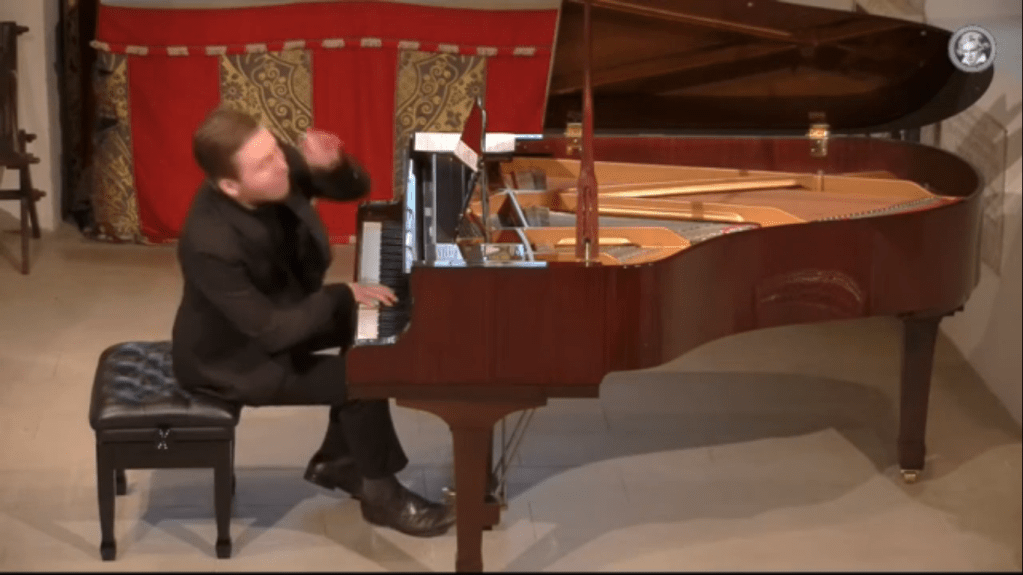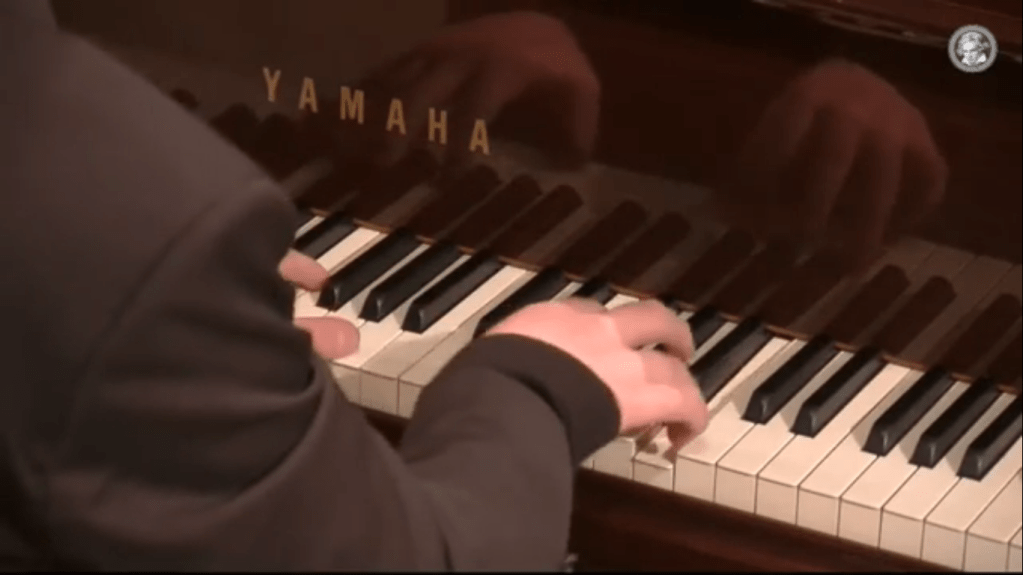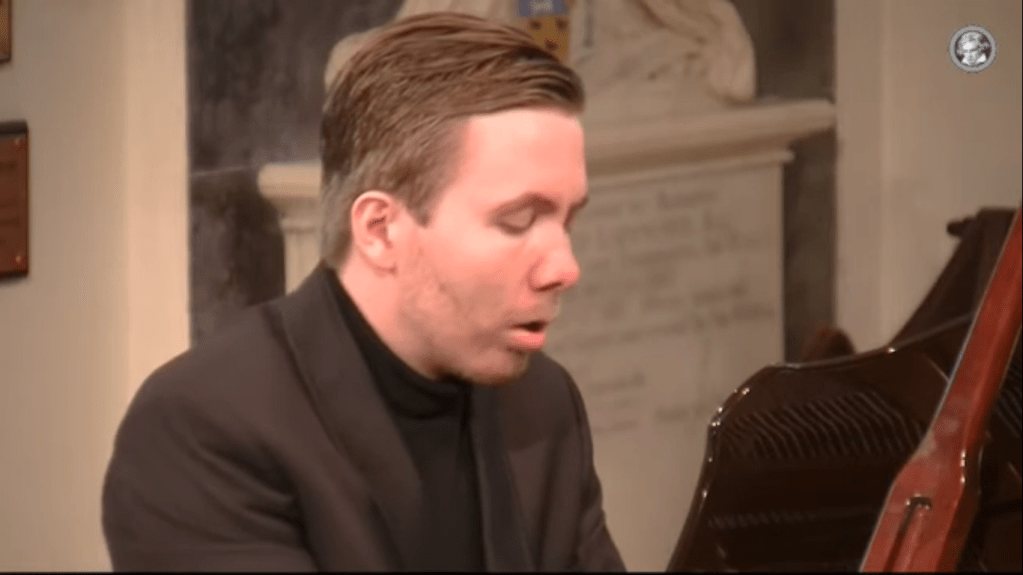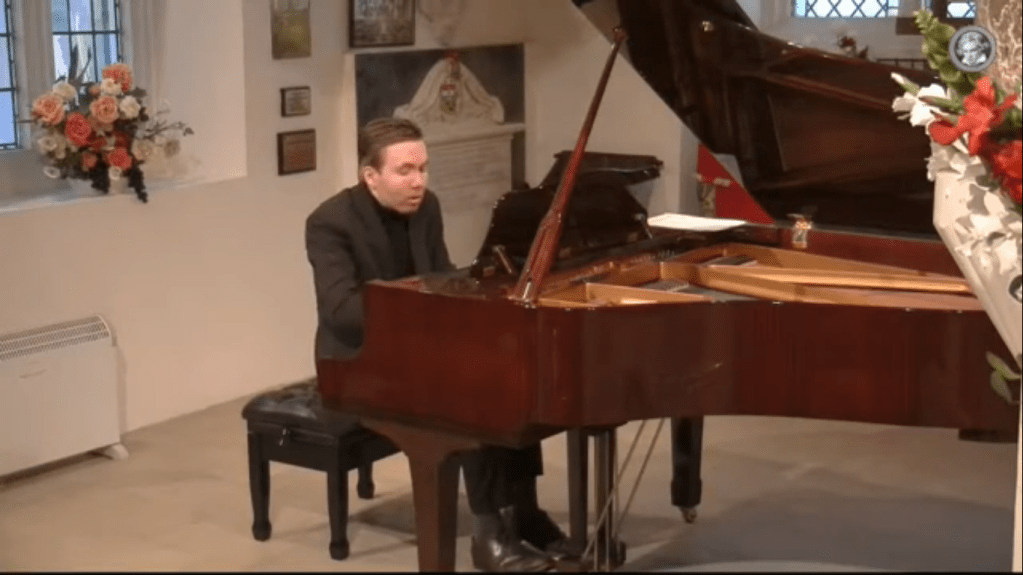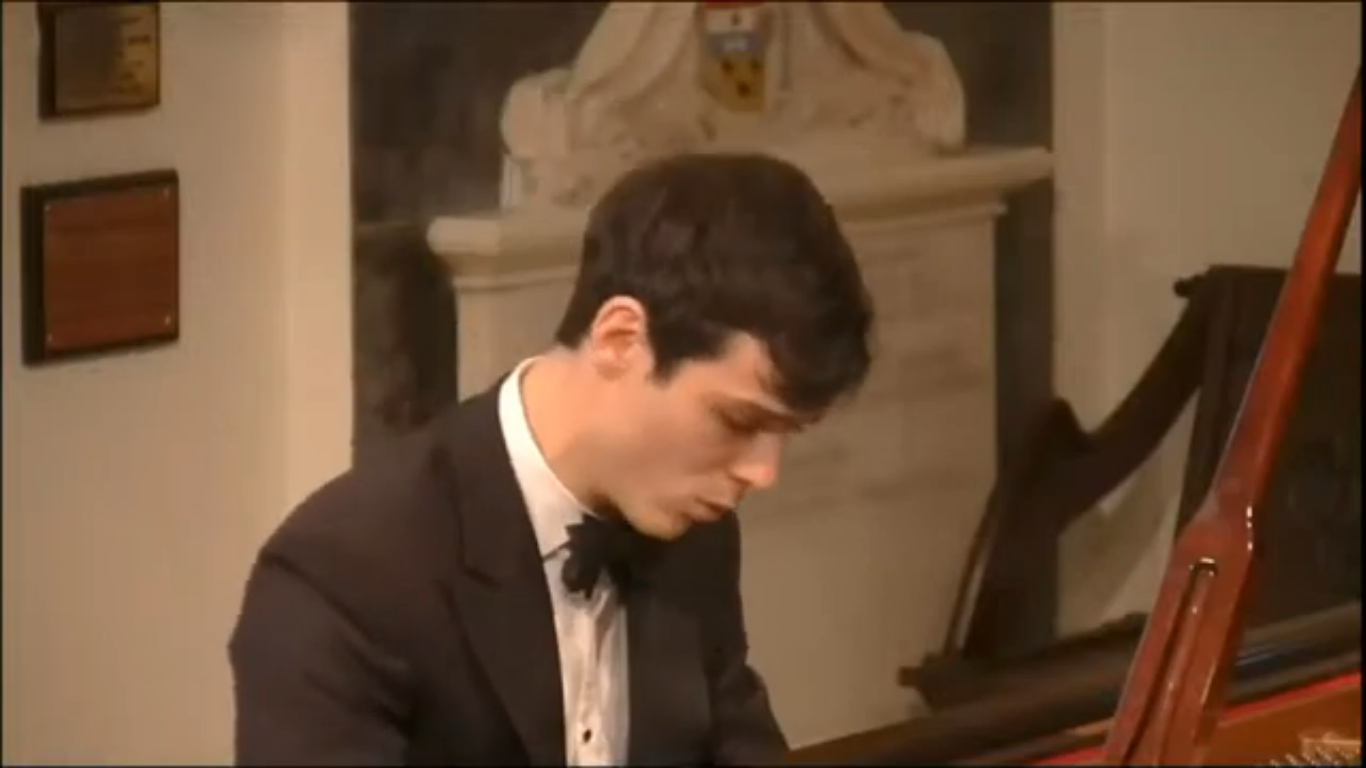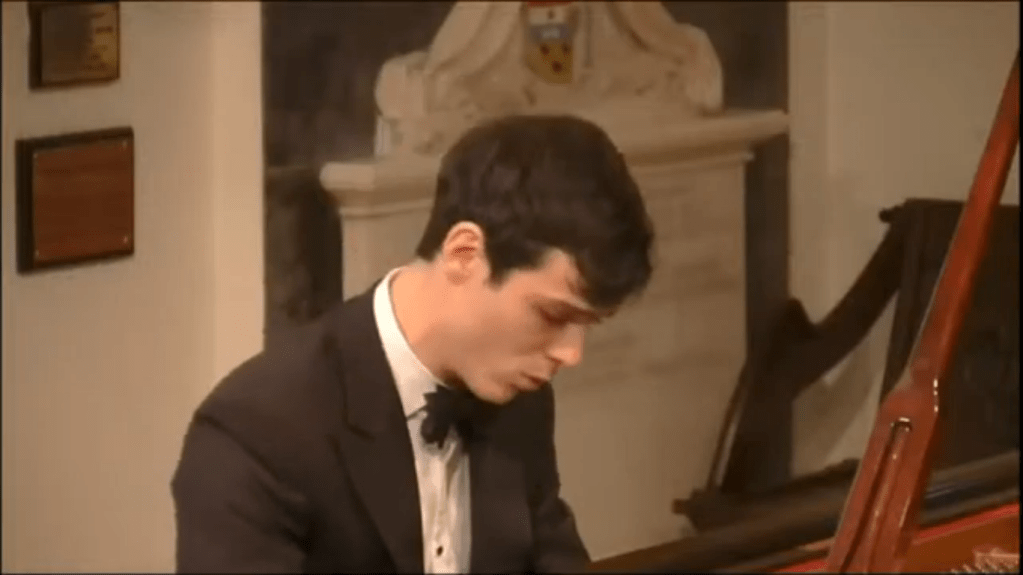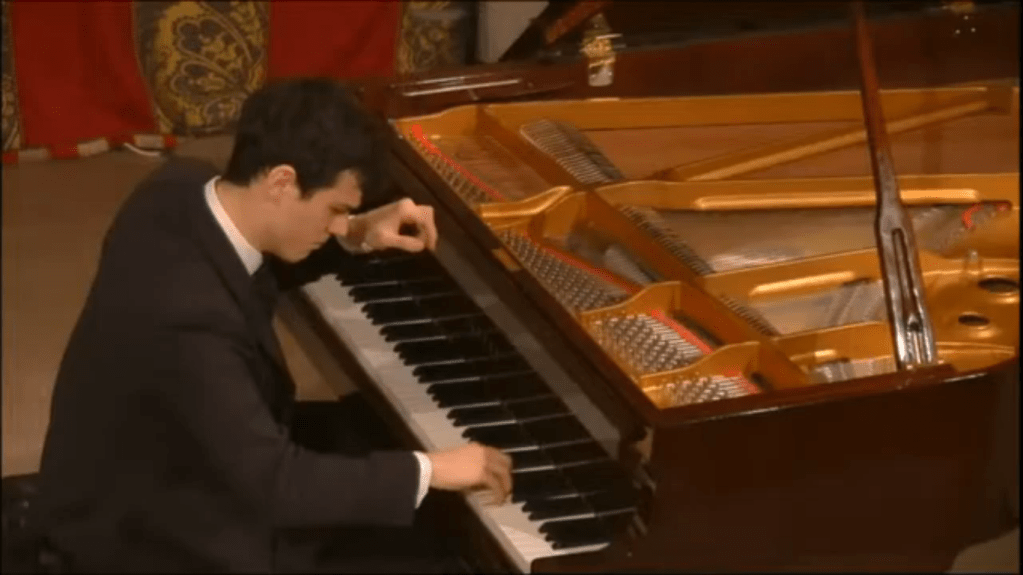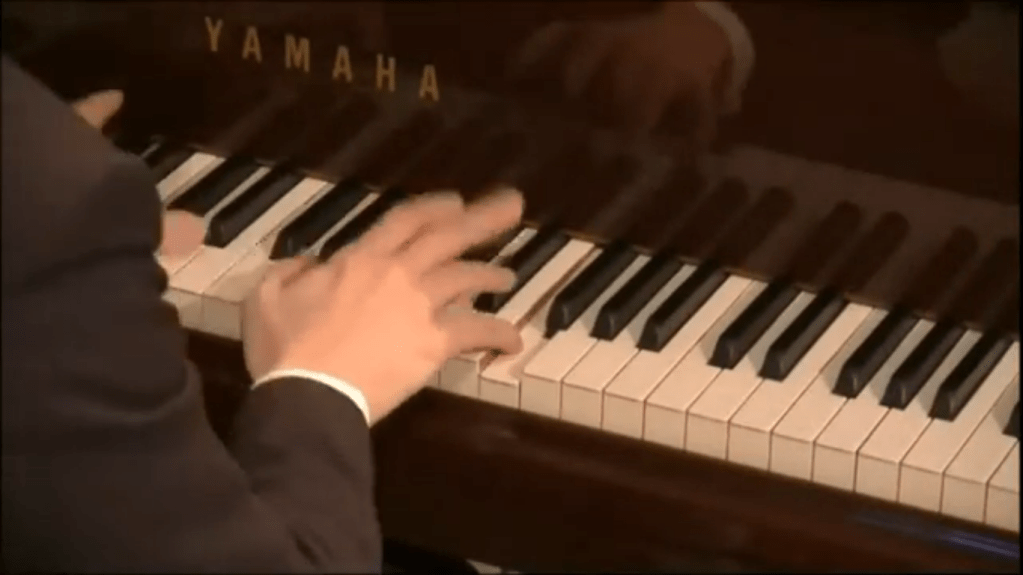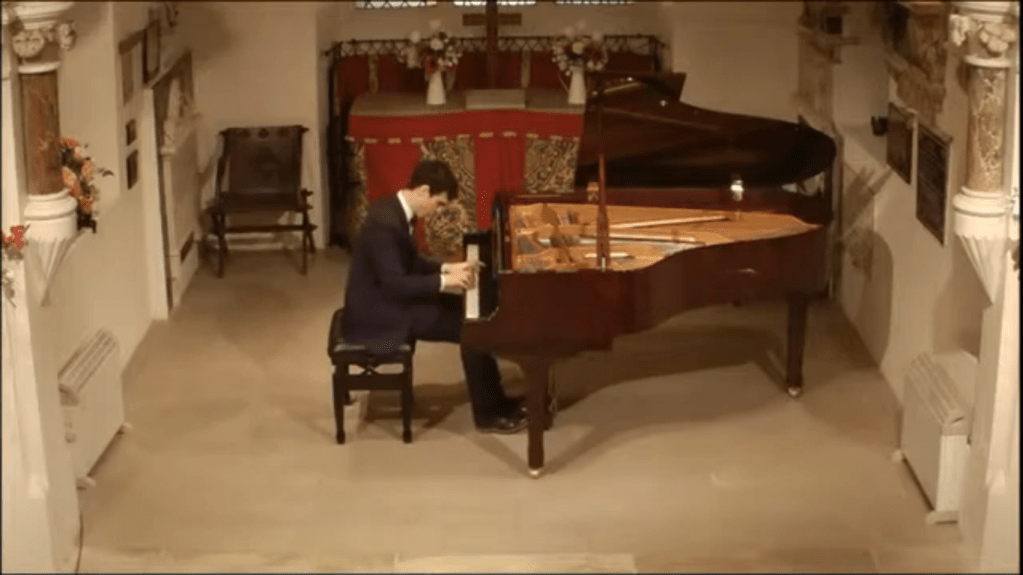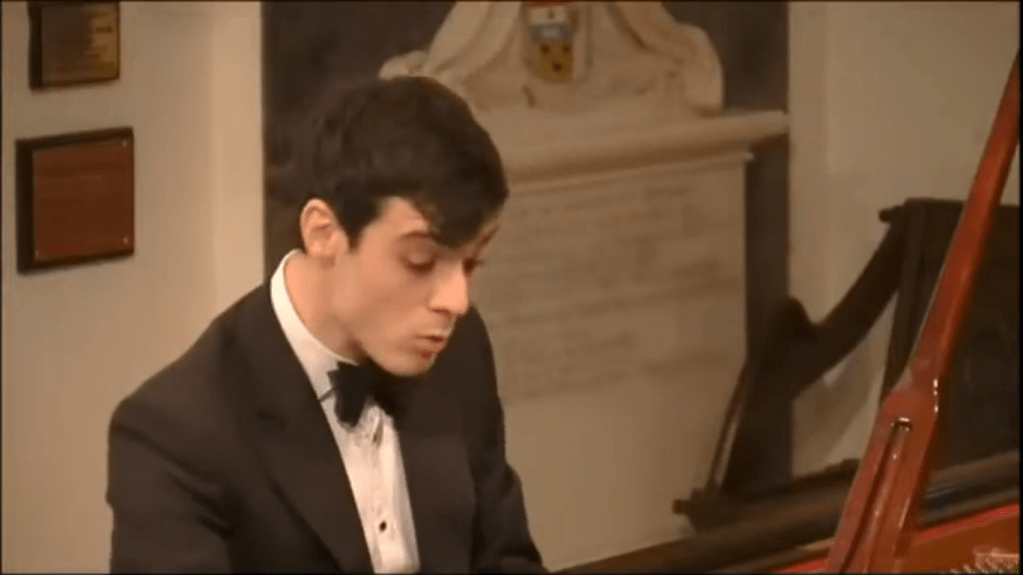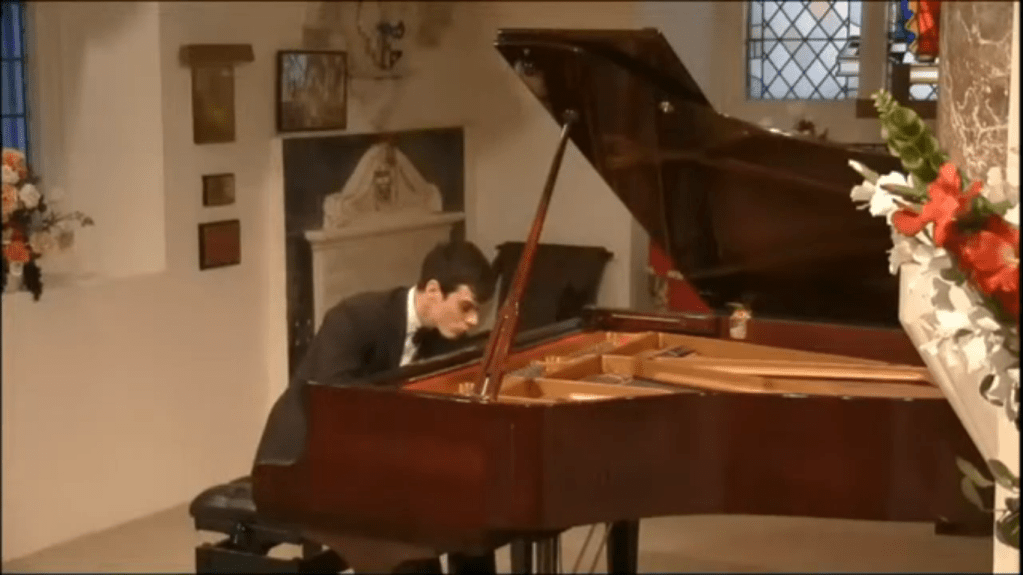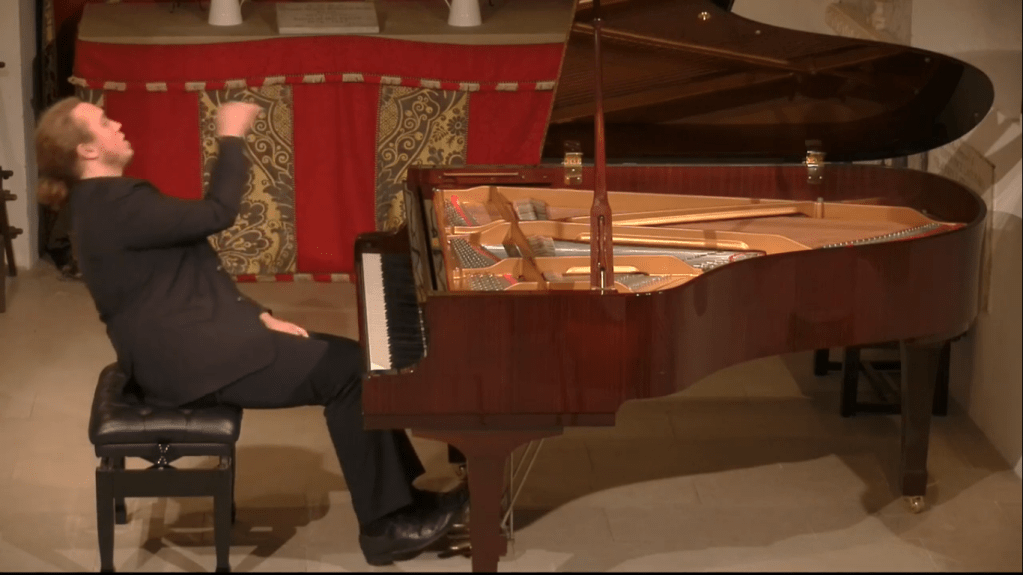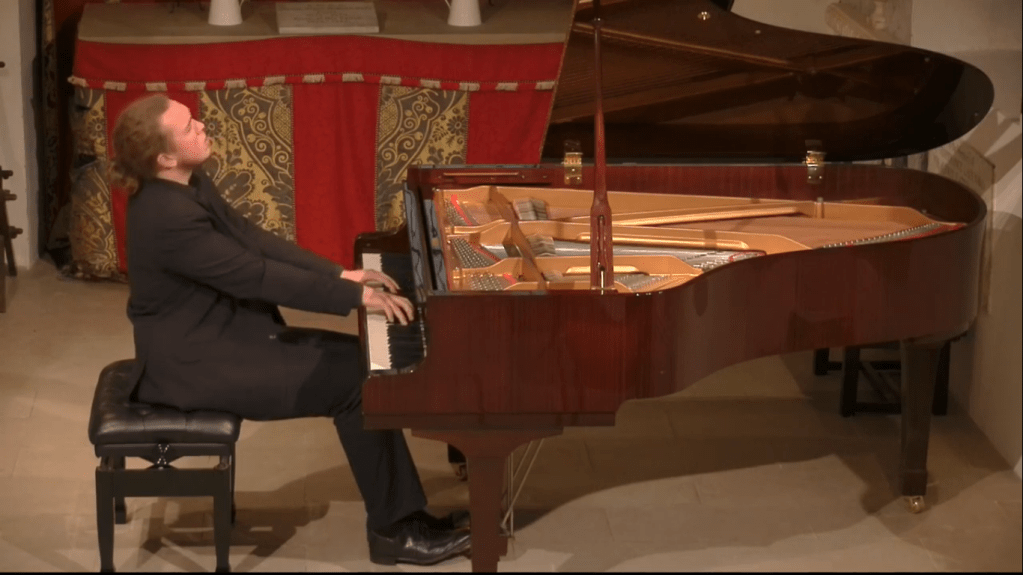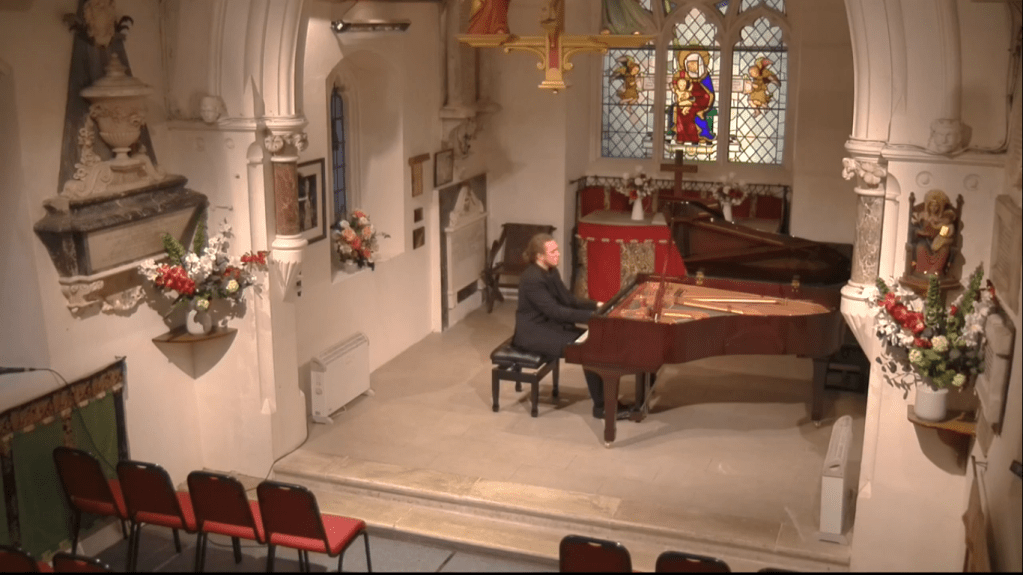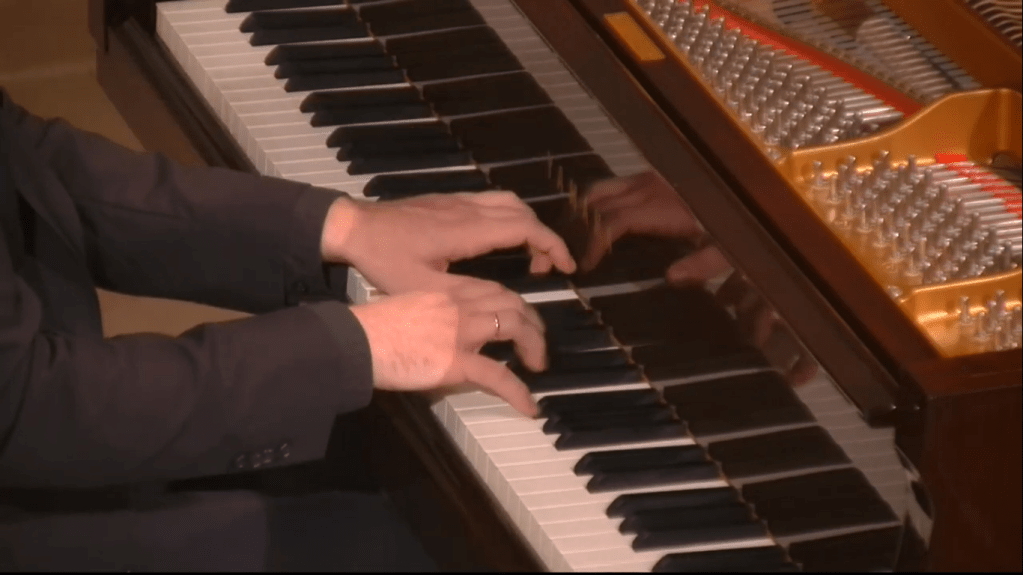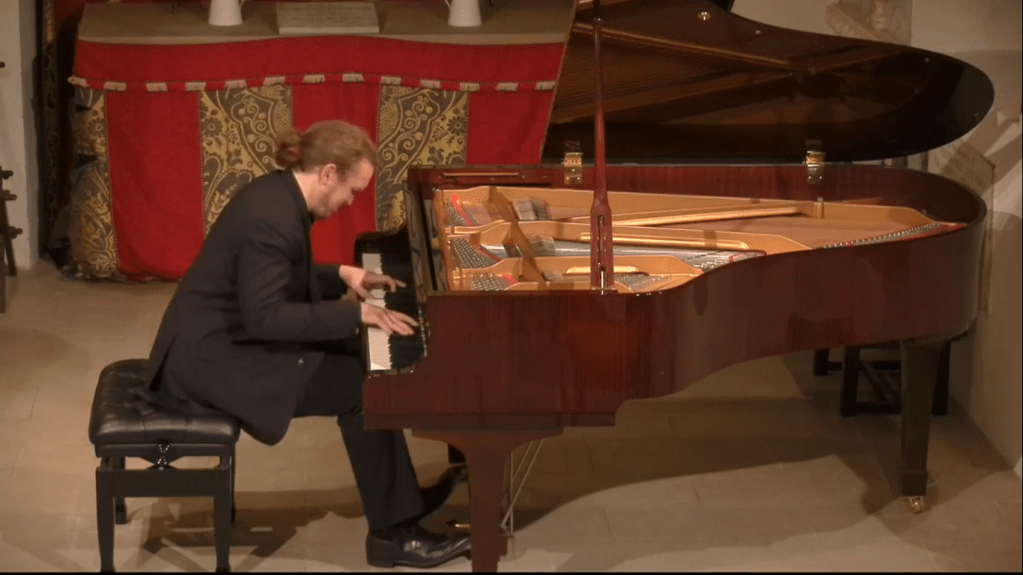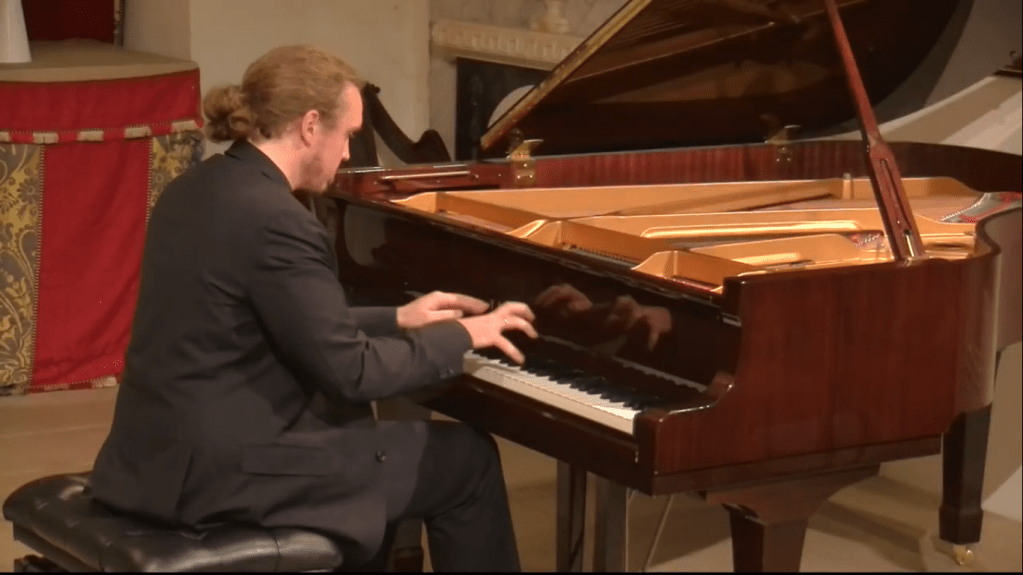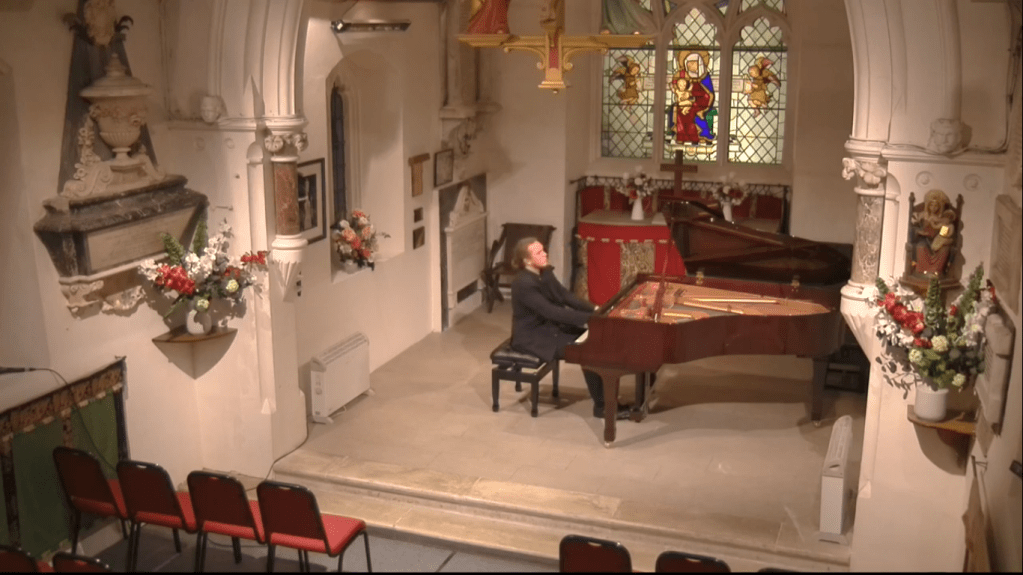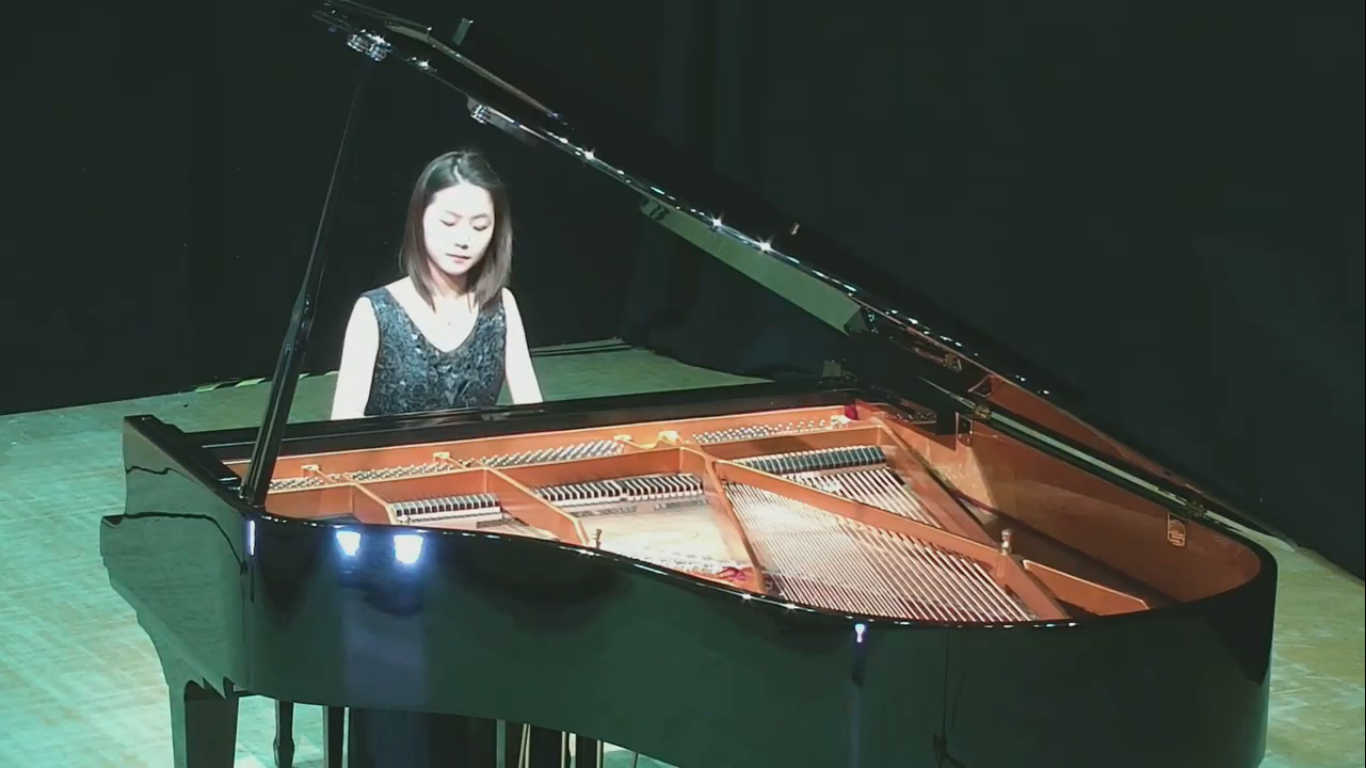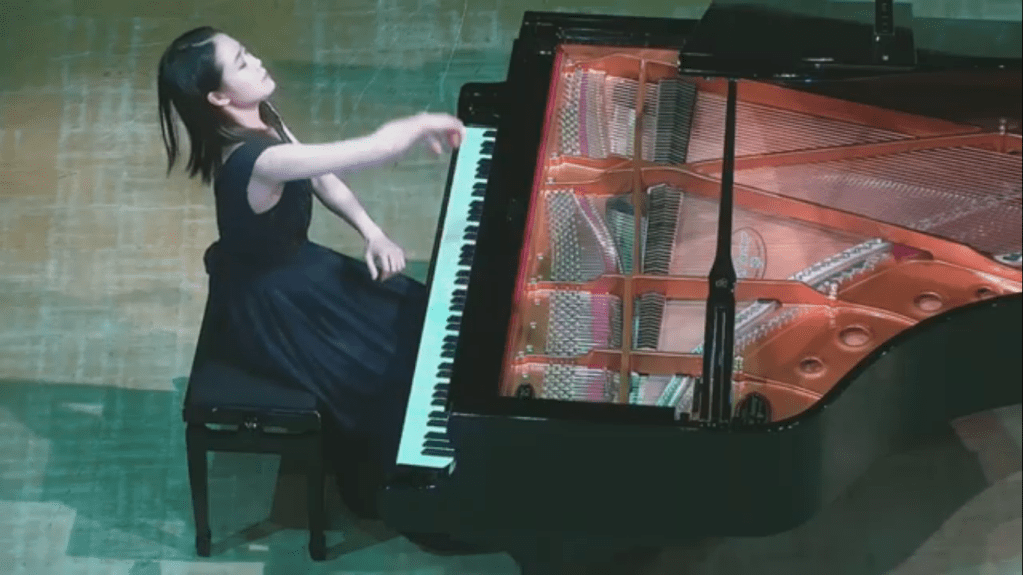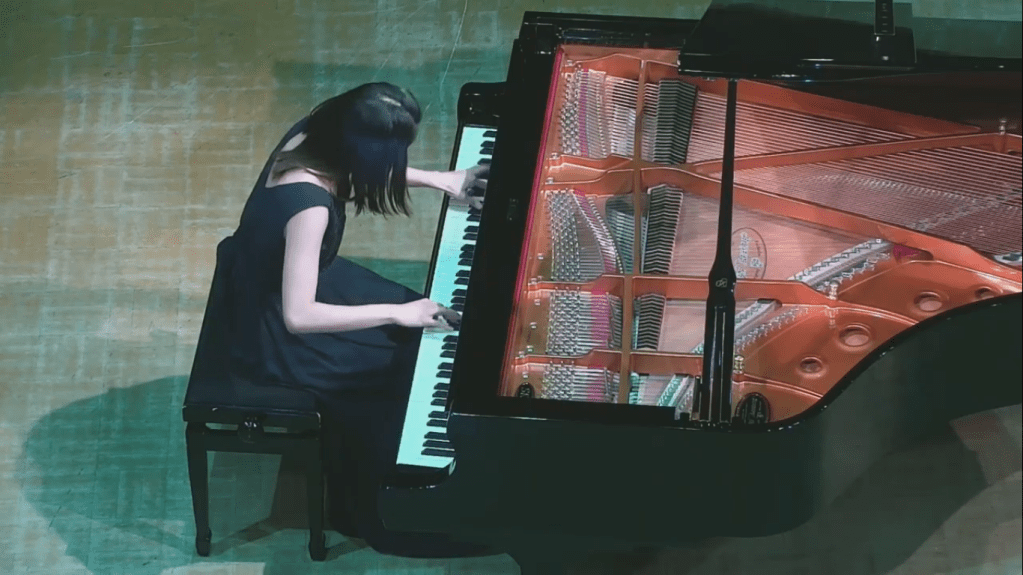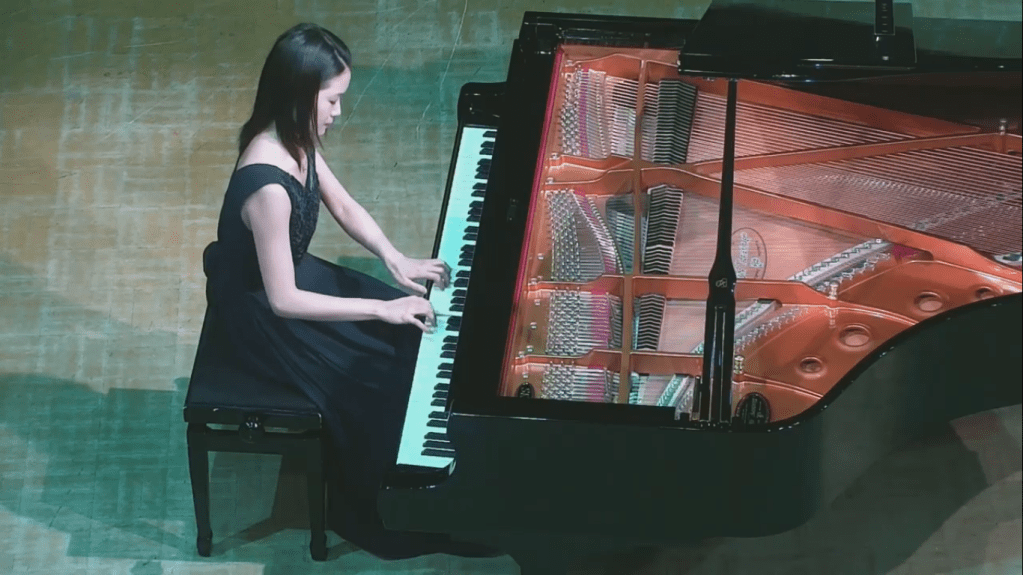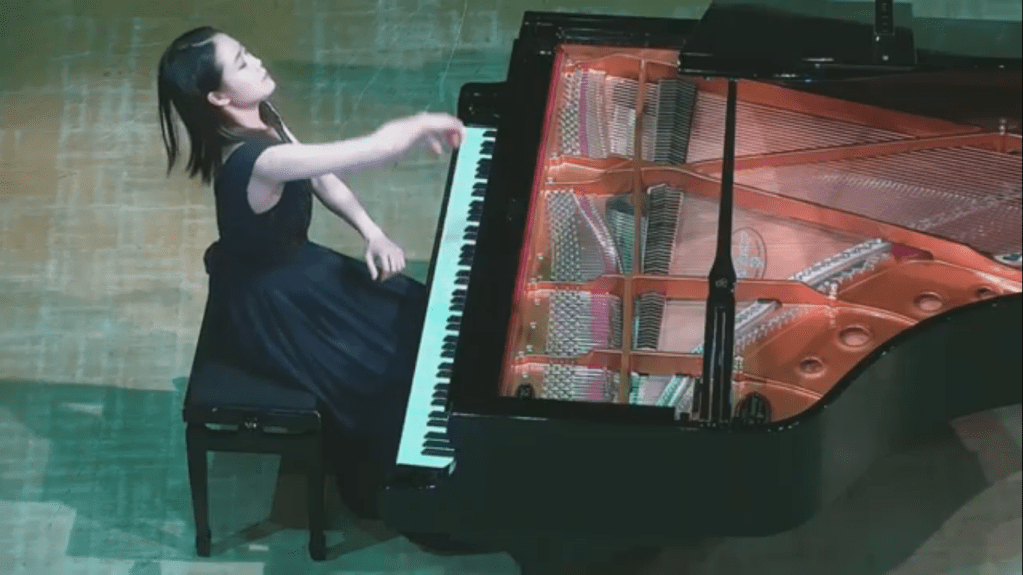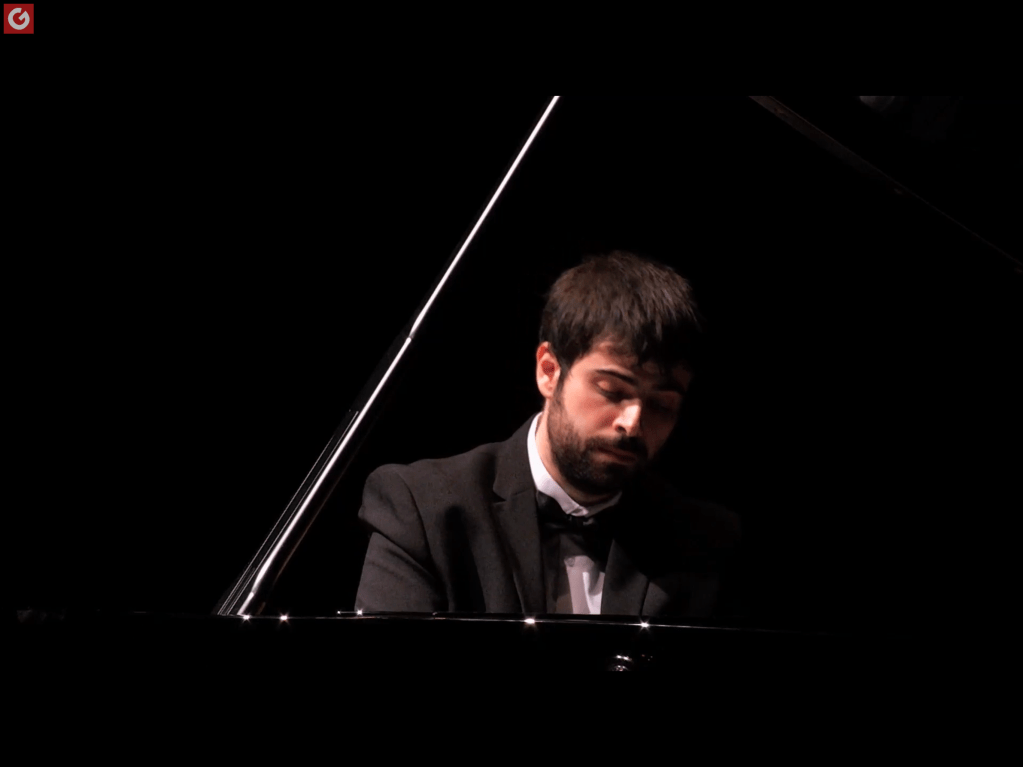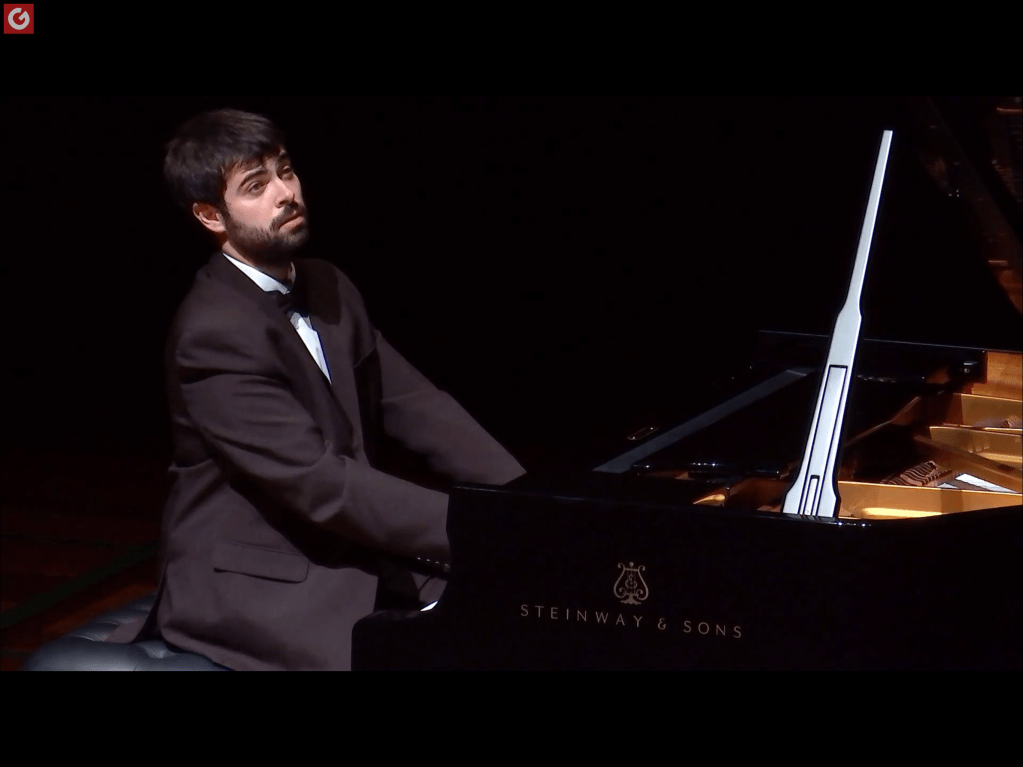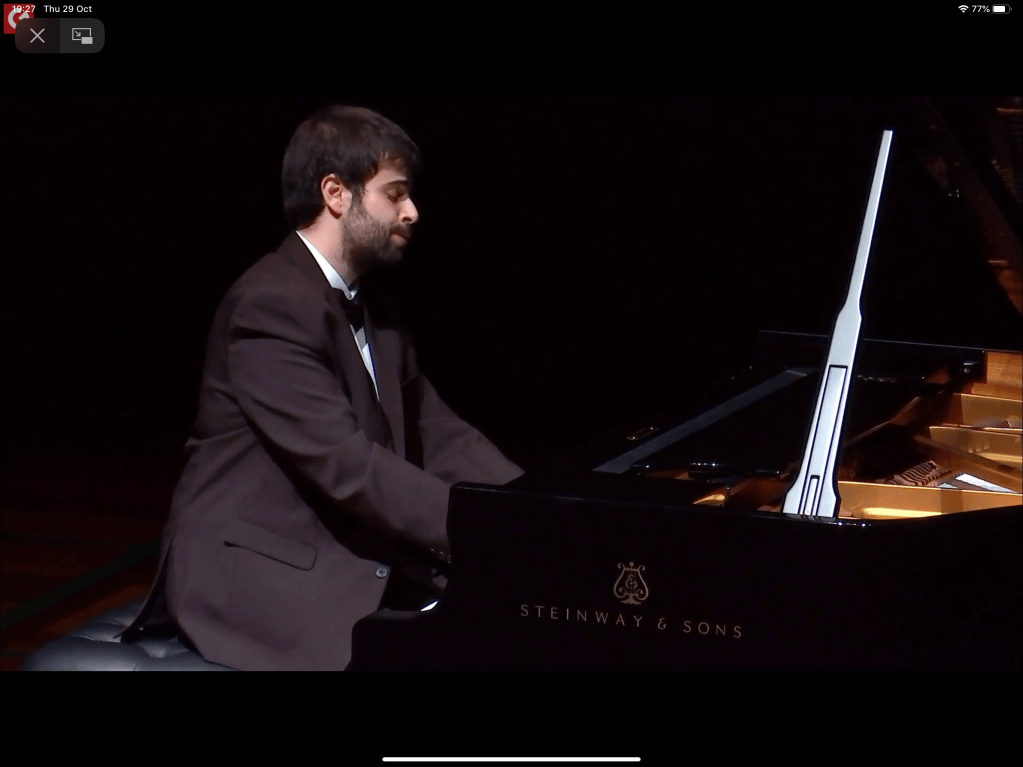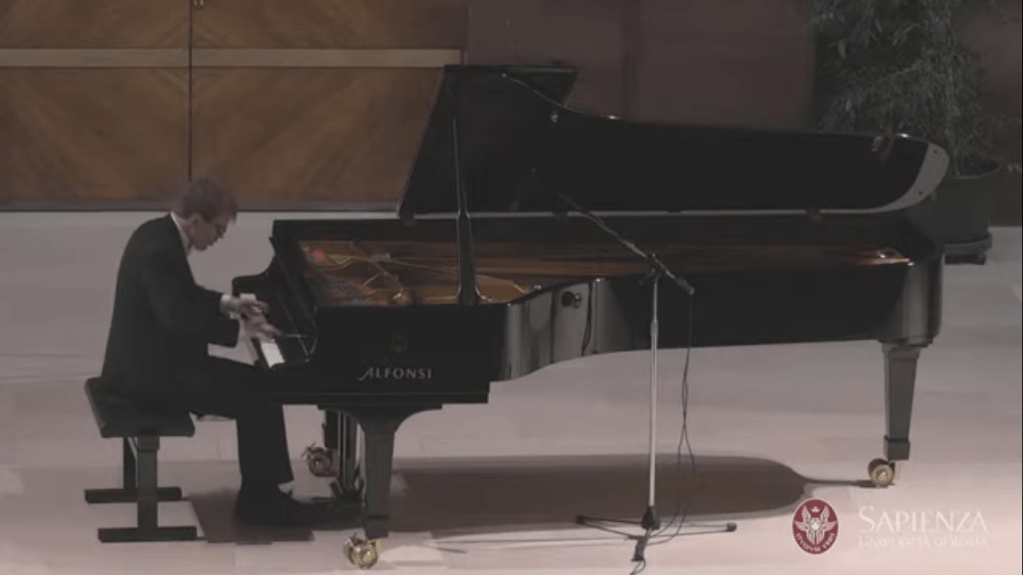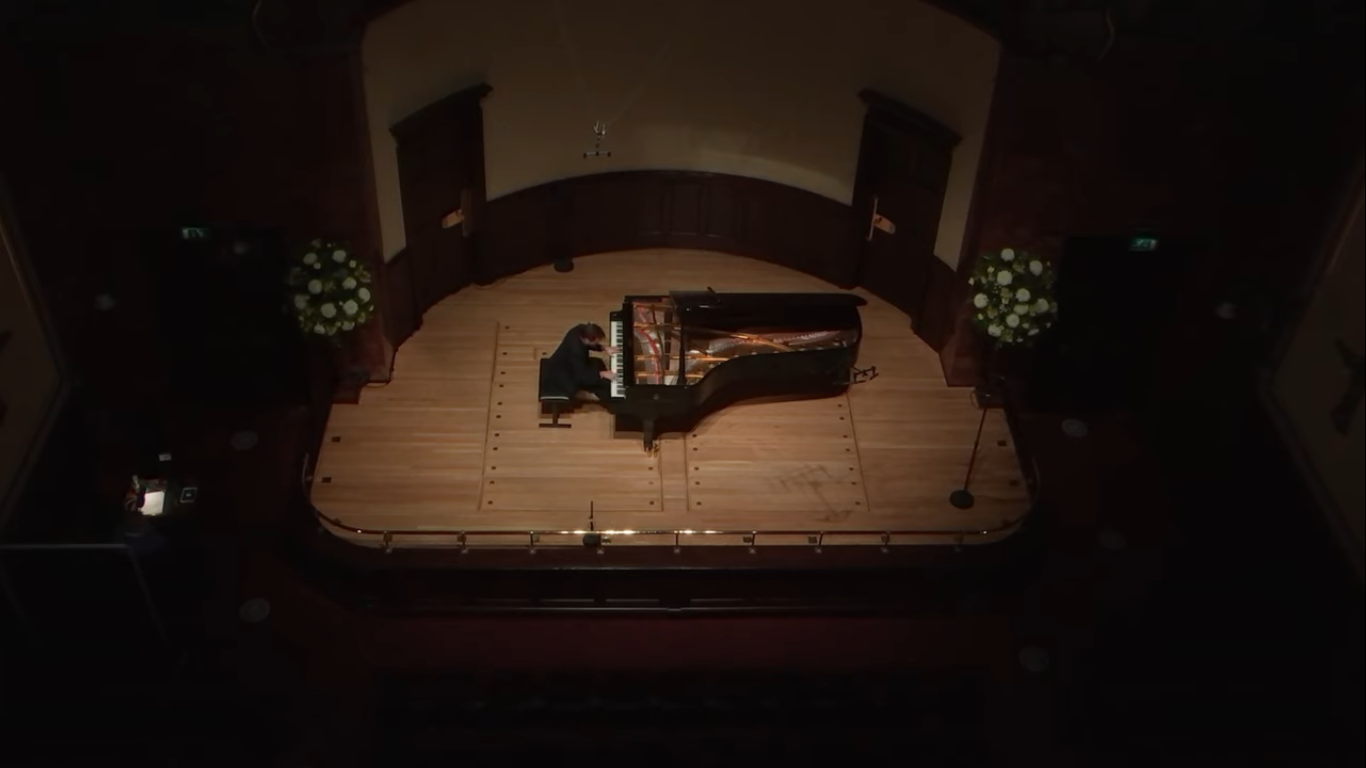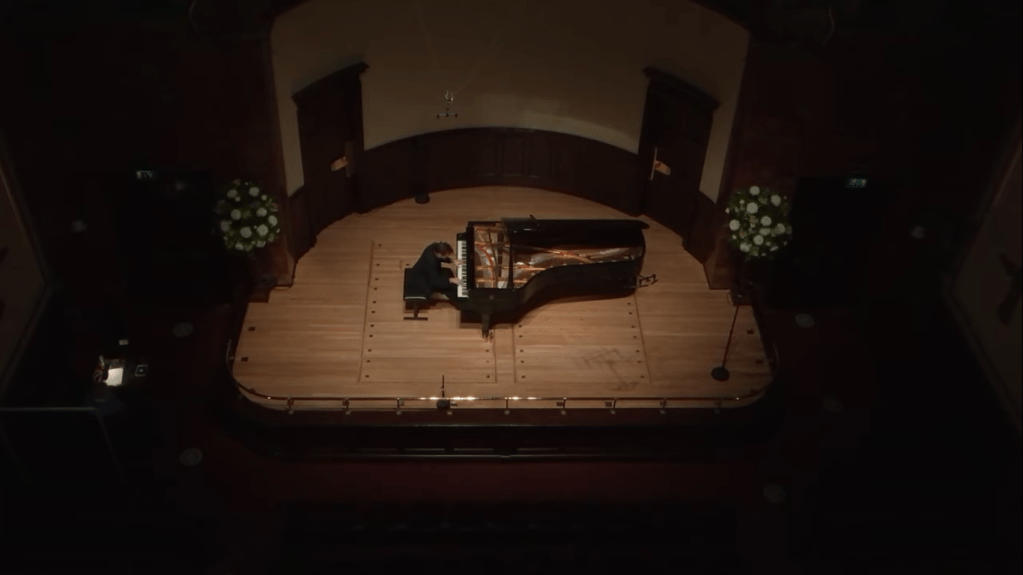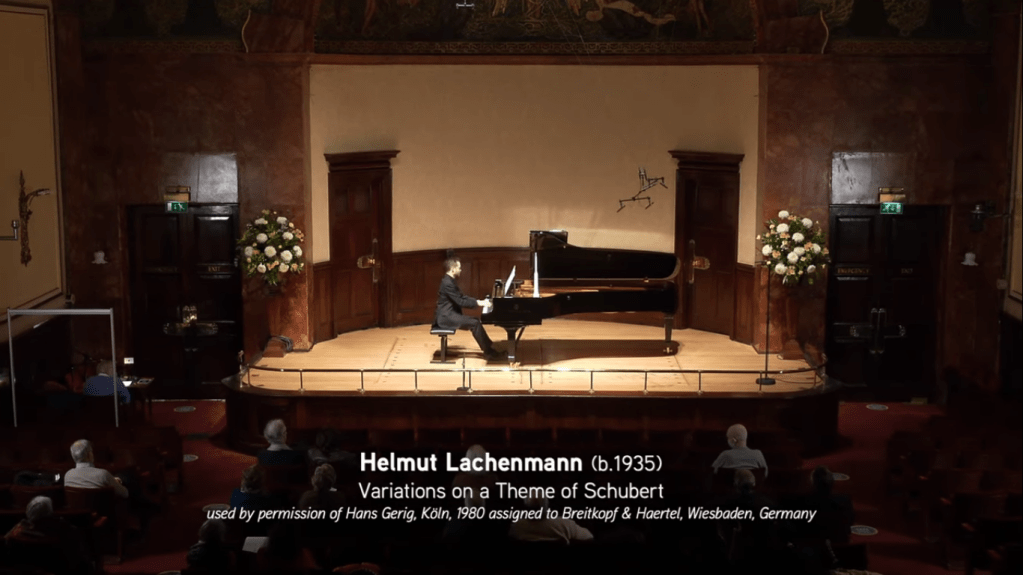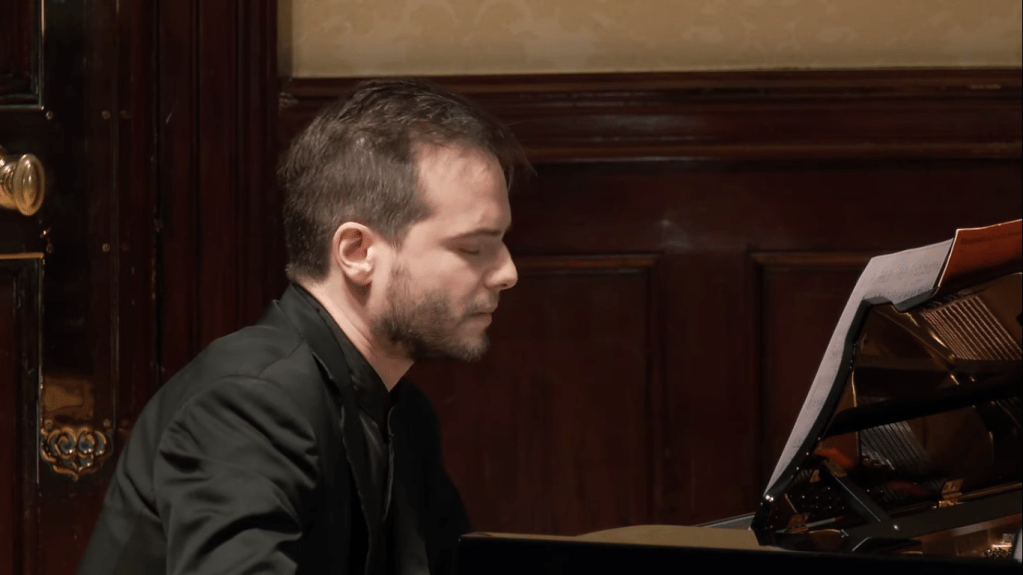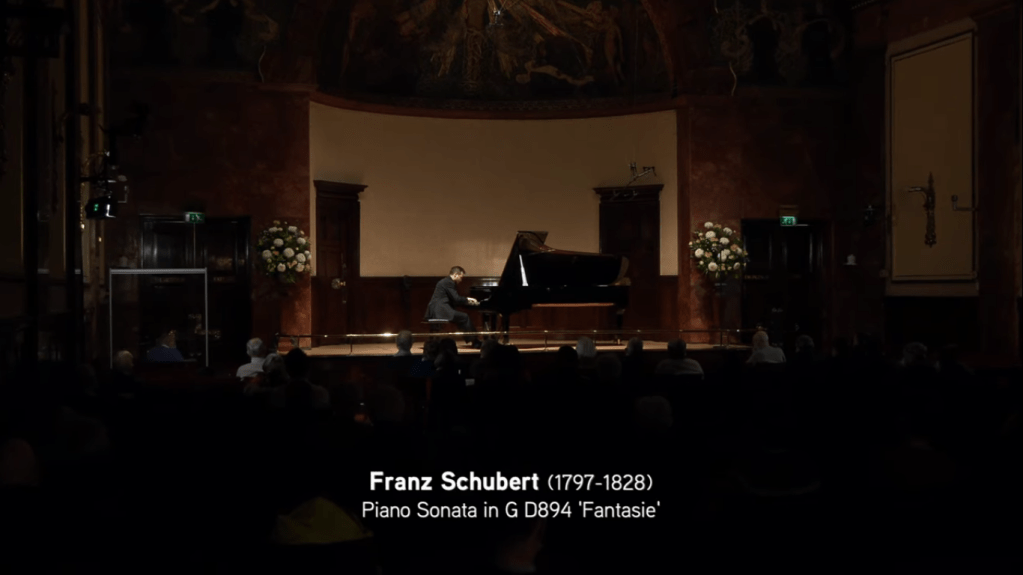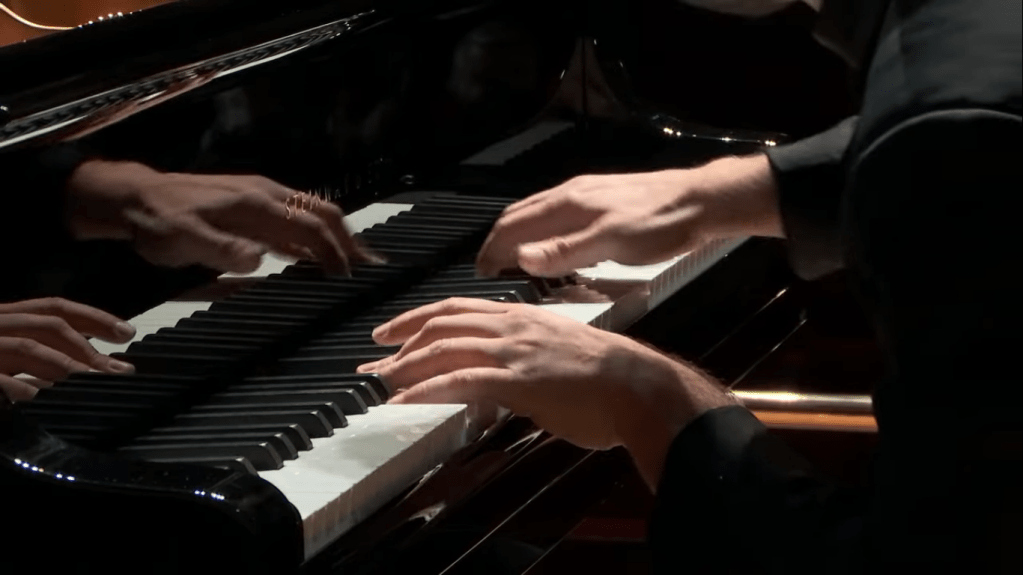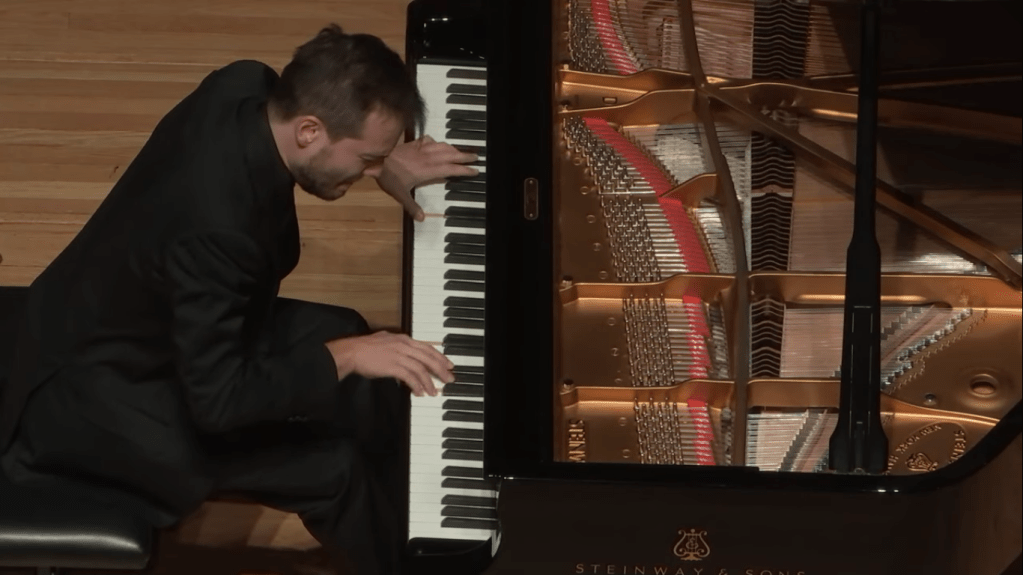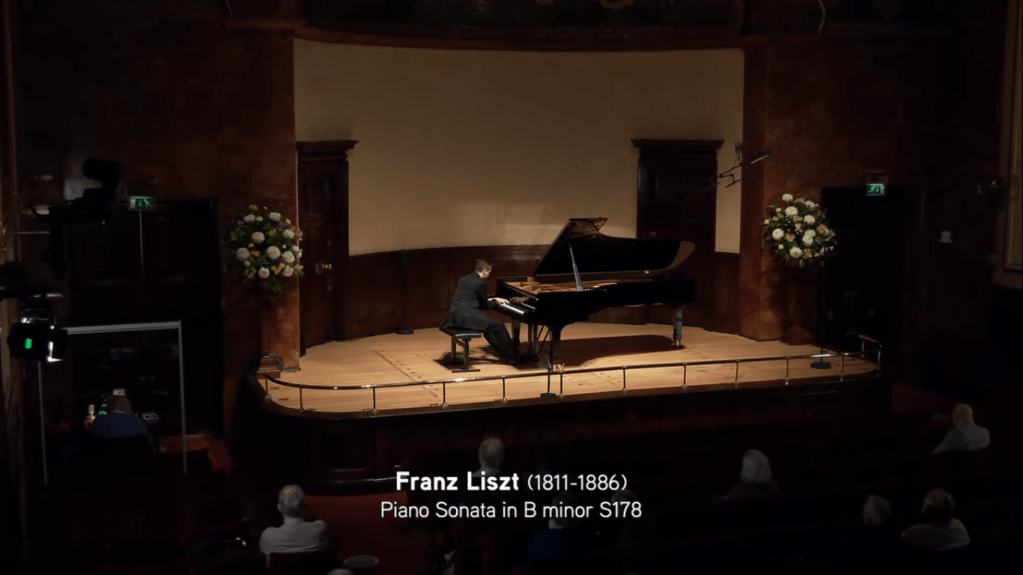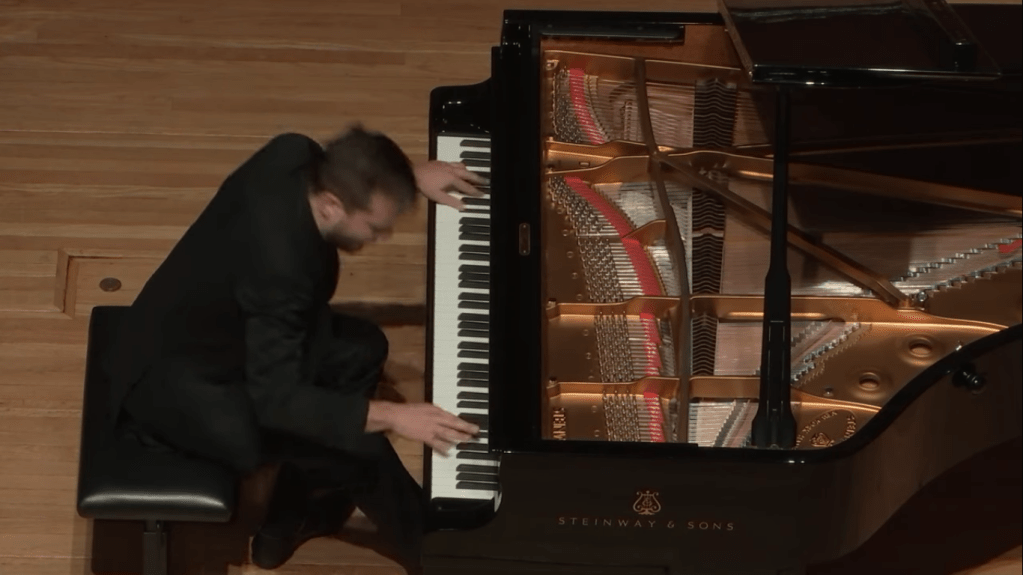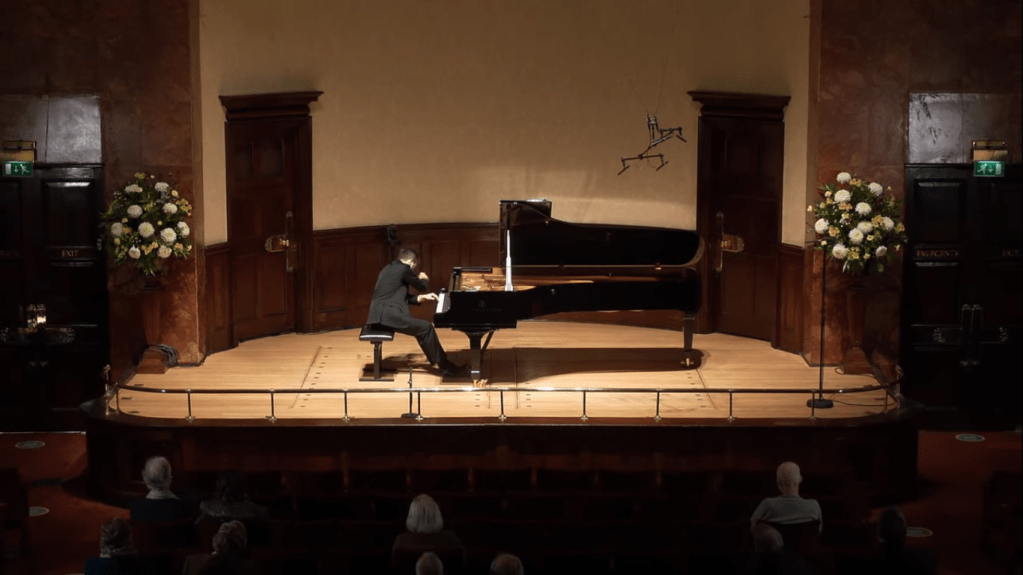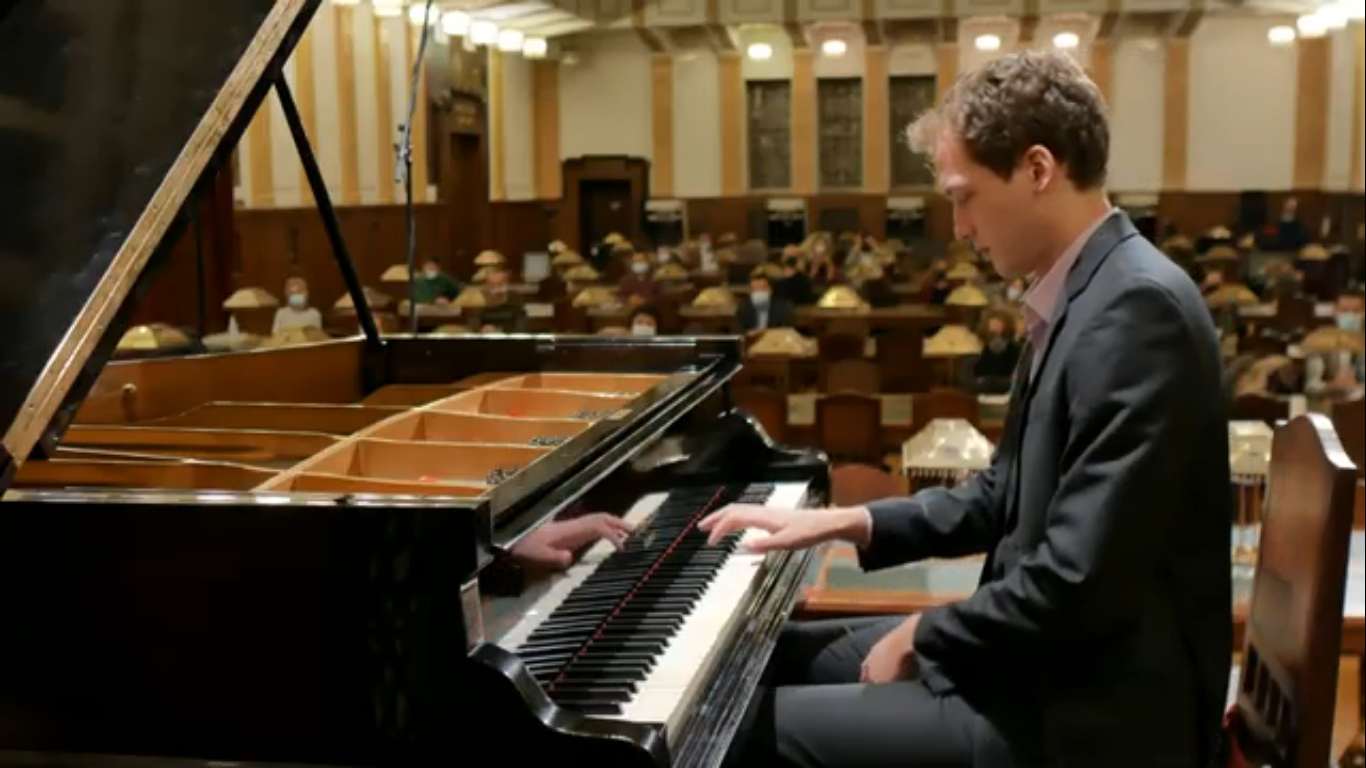
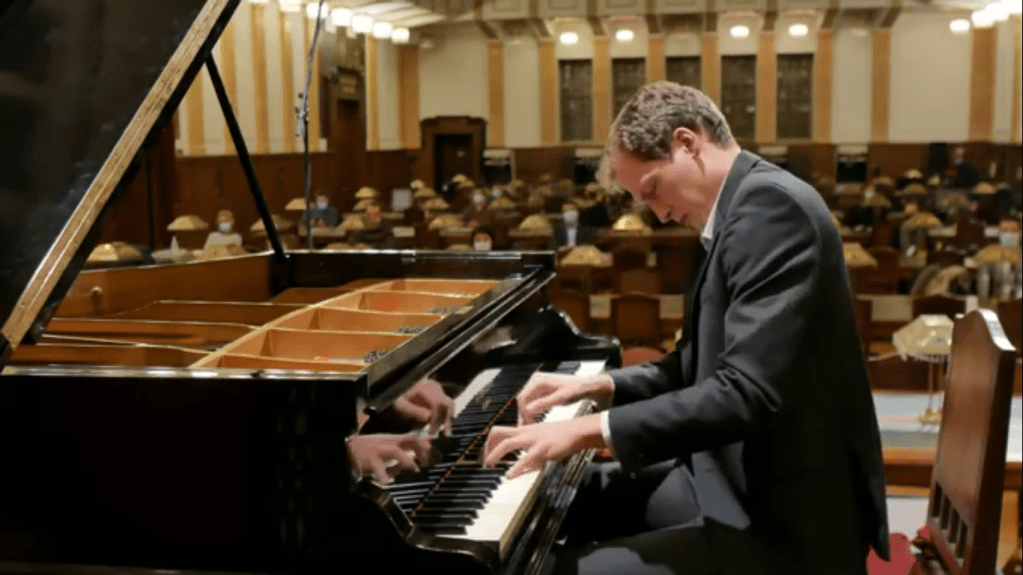
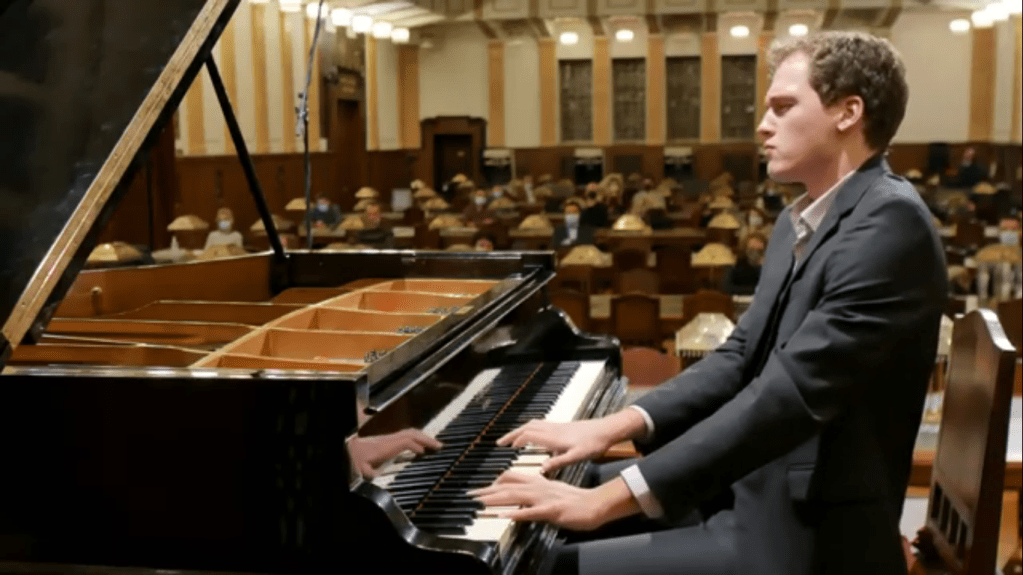
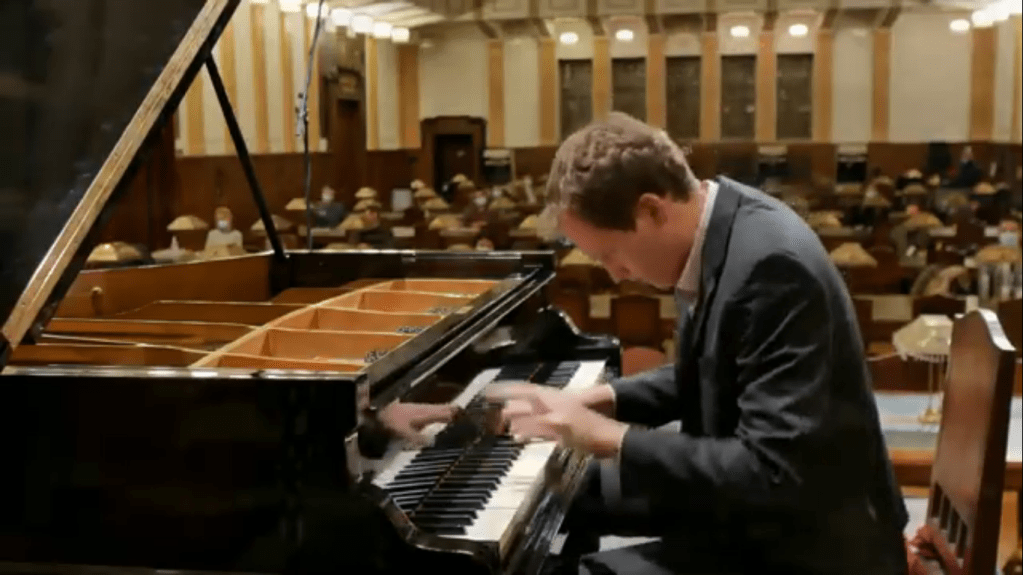
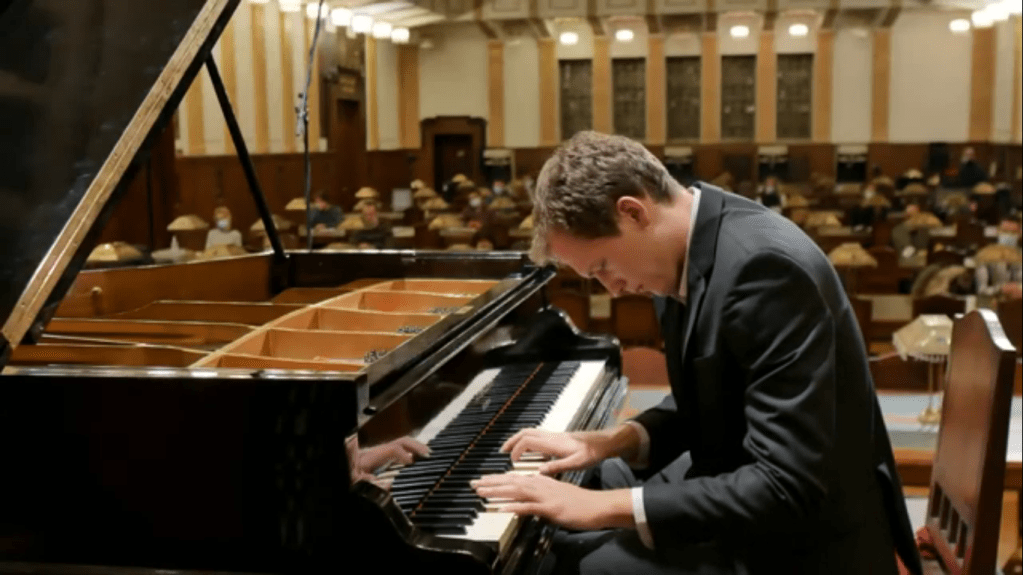
Ivan Krpan in Zagreb Croatian National Archive Hall Pride,Passion and Joy

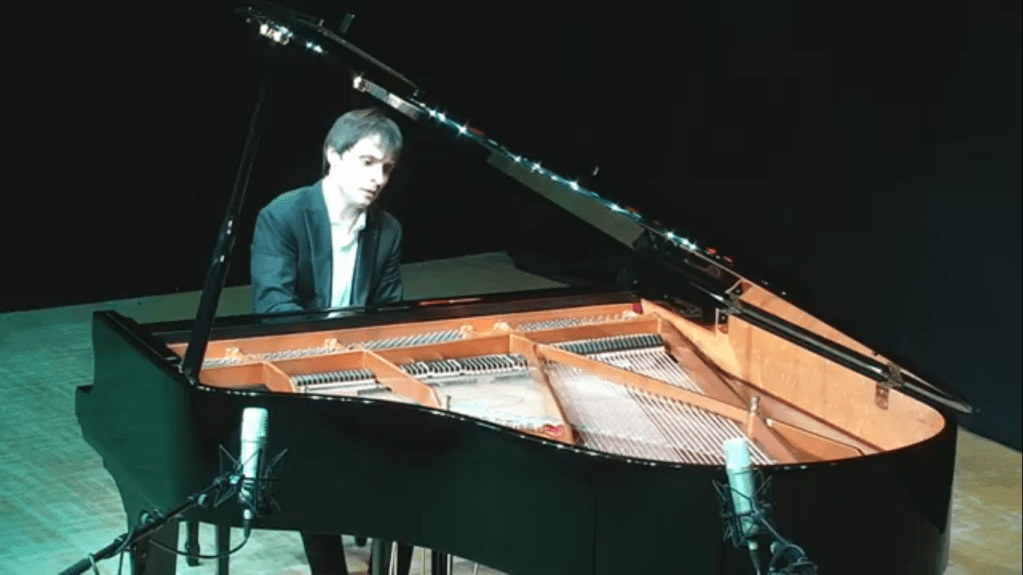
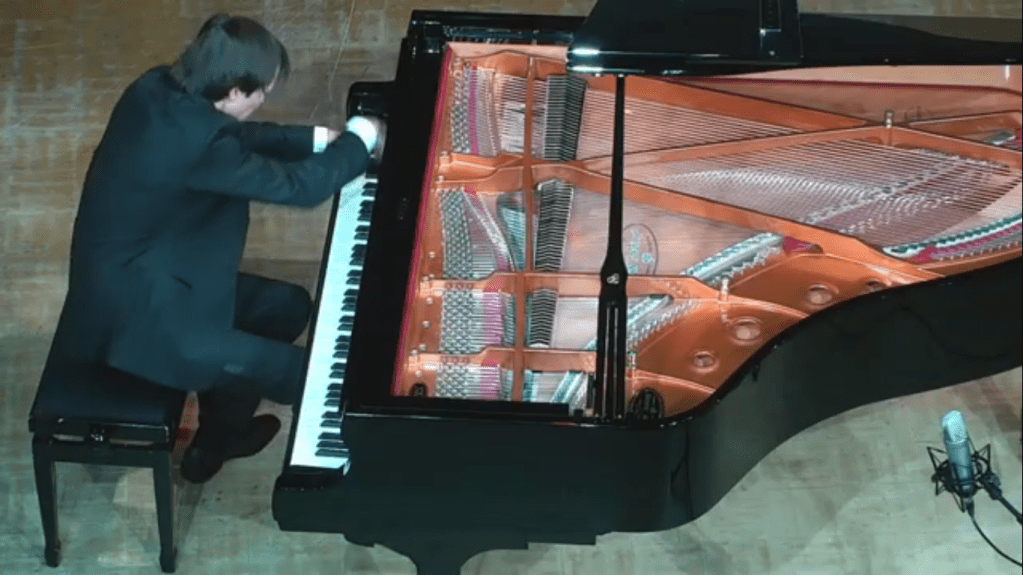
Streamed live from Zagreb on the 13th November from the Croatian National Archive Hall.Playing a Pleyel of 1911 that Svetislav Stancic acquired in 1924. Stancic ,1895-1970 was pupil of Barth,Ansorge and Busoni in Berlin and became a leggendary Professor at the Zagreb Academy .The International Piano Competition held every 4 years since 1999 is named after him .One of his pupils is Vladmir Krpan,no relation to Ivan , who used to play regularly in Rome in Teatro Ghione.

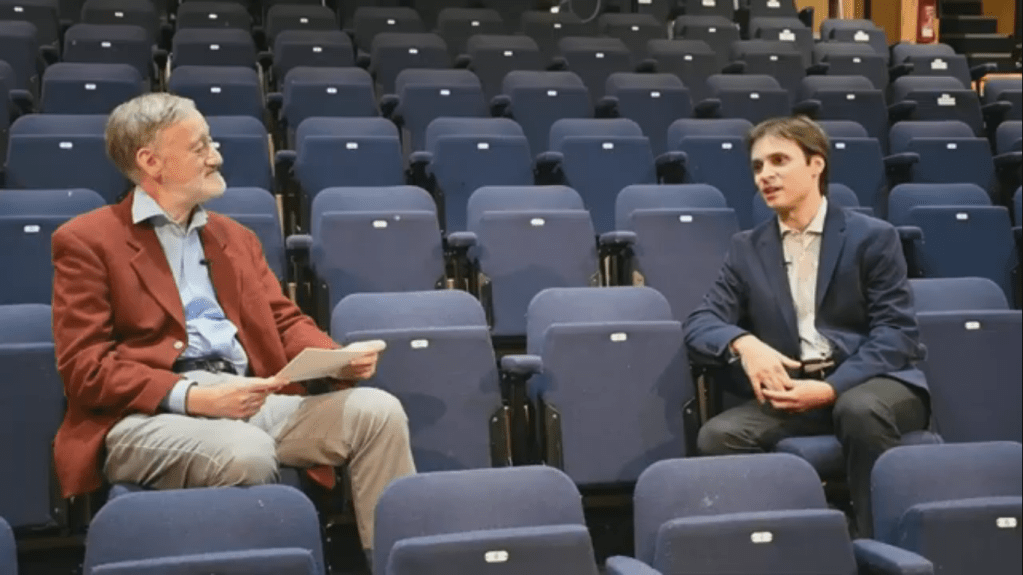
I have heard Ivan quite a few times since his run away victory in the Busoni Competition at the age of 20 .He has since come under the wing of the Keyboard Trust who offer a career development prize to the Busoni winner and was invited by them to make his London debut in 2018.In 2019 he made his debut in Rome at the Sapienza University and only last January represented his native Croatia in a special concert in the Symphony Hall in Rome to celebrate their Presidency of the European Union.Still only 23 I was very pleased when he told me that his next performance in Zagreb was being streamed live.

He tells me that concerts with social distancing are still taking place and that he had heard a magnificent Maria Jose Pires substitutiong an indisposed Martha Argerich recently in a season that includes two recitals by Ivo Pogrelich who is something of a national hero in Croatia.(www.lisinski.hr/en/) Here are some things that I have written about him over the past three years :

https://christopheraxworthymusiccommentary.wordpress.com/2017/09/02/the-busoni-competition-all-the-fun-of-the-circus/

https://christopheraxworthymusiccommentary.wordpress.com/2018/12/01/ivan-krpan-in-london/

https://christopheraxworthymusiccommentary.wordpress.com/2019/02/13/ivan-the-conqueror-rome-debut-of-ivan-krpan/

https://christopheraxworthymusiccommentary.wordpress.com/2020/01/26/ivan-krpan-and-yuanfan-yang-in-rome/

A real thinking musician from a family of musicians.His programmes reflect his thoughts and intellect and had me running to the history books to find out more about the composer Blagoje Bersa and some of these lesser known works of Liszt.

Ivan writes as I knew he would :My idea was to unify the programme with Bach.I started with his original music and finished with Liszt’s interpretation of his music – the variations.Also,the idea of spirituality which is always part of Bach’s music was reflected in Liszt’s pieces Ave Maria and Miserere from his Harmonies.Apart from that ,I think that the Bach variations are very modern and futuristic music which is reflected in Lugubre gondola,the piece inspired by Wagner and Venice.And then it was interesting to me how the same inspiration of Venice for Bersa and Liszt can have have a totally different outcome in their music.Finally,The Schubert song also has the same barcarolle like atmosphere so that was also a link between Bersa and Schubert/Liszt.The opening of both are strikingly similar”

J.S.Bach Partita n.2 BWV 826 Sinfonia-Allemande-Courante-Sarabande-Rondeaux-Capriccio- B .Bersa Venetian Barcarolle op 58-Schubert/Liszt Der Muller und der Bach S 565-F.Liszt Ave Maria S 173/2 from Harmonies Poétiques e Religieuses- F.Liszt La lugubre gondola S.200/1-F.Liszt Miserere d’après Palestrina S.173/8- F.Liszt Variations on a theme of Bach Weinen,Klagen,Sorgen,Zagen S.180 and encores of Chopin Prelude op 28 n.13,Schumann Arabesque op 18 Bach/Busoni Ich ruf zu dir

The six partitas for keyboard form the last set of suites that Bach composed, and are the most technically demanding of the three sets that include the French and English suites.They were composed between 1725 and 1731.Although each of the Partitas was published separately under the name  Clavier-Ubung (Keyboard Practice), they were subsequently collected into a single volume in 1731 with the same name, which Bach himself chose to label his Opus 1.
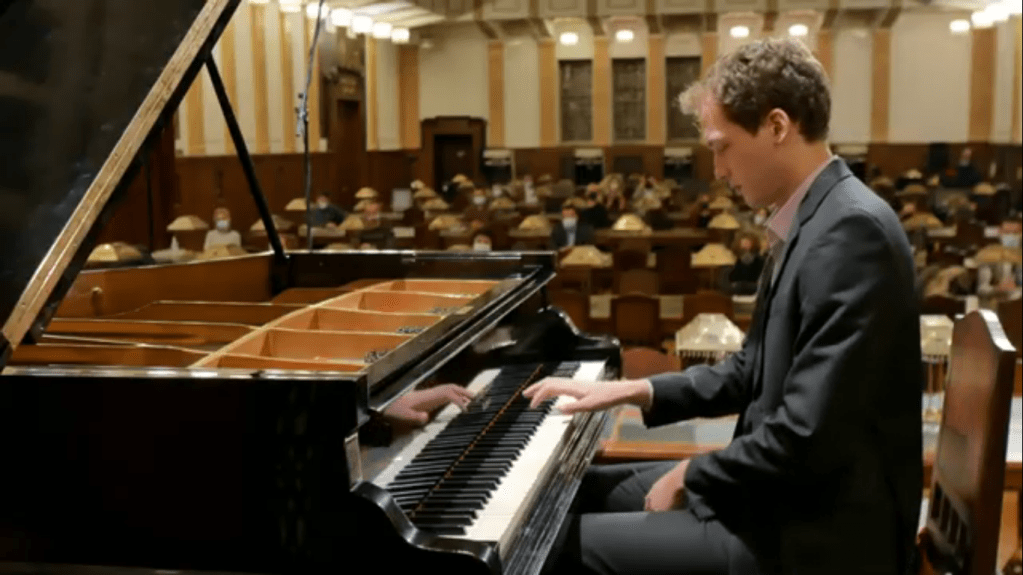
Some very fine playing in which Ivan chose to give us Bach’s notes with a simplicity and purity of tone.There was no attempt at imitating the change of register as is so often the case.Here Bach’s ‘knotty twine’ was allowed to speak for itself with noble phrasing and a rhythmic impetus that carried us from the opening noble Grave of the sinfonia through the mellifluous Andante to the buoyancy and clarity of voicing in the Allegro.The Allemande seemed to flow so naturally out of this seemless stream of sounds and was played with a deeply moving simplicity.Art that conceals art indeed.Respect,simplicity,integrity and a transcendental technical command are what Bach demands.

Bach’s music is universal and Bach on the piano is and must be completely different from the harpsichord ,organ or human voice.No superficial imitation is needed to allow Bach’s mathematical jigsaw puzzle to ring out with the same nobility and belief for which it was written.The forward movement in 3/2 of the Courante was the perfect foil for the very subtle voicing of the Sarabande.The clarity and buoyancy of the Rondeaux was joined to the gentle nobility of the final Capriccio.The rhythmic energy transmitted from the very first to the very last note was exhilarating and at the same time purifying.The scene was now set for the great Romantic sounds that this young man could conjure out of this old but still very vibrant Pleyel piano.
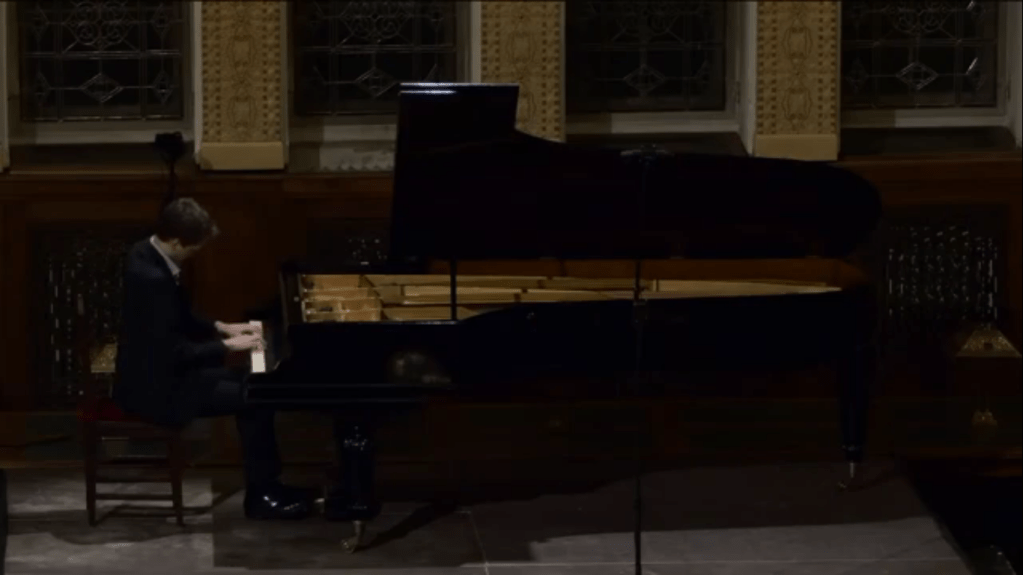
The programme continued with Blagoje Bersa’s Venetian Barcarolle op 58.A work that had me rushing to the history books to find out more about this completely unknown composer to me:

BLAGOJE BERSA  (1873 – 1934) was a composer of symphonic music, operas and songs, as well as chamber and piano works, He was undoubtedly one of the central figures of Croatian musical life at the turn of the 20th century. Born in Dubrovnik into a family of passionate amateur musicians, Bersa learned to play the piano by participating in performances with members of his family. He received his primary education in Zadar, Vienna and Trieste, and from 1893 to 1896 he studied music in Zagreb with Ivan Zajc, the renowned Croatian opera composer. From 1896 to 1899 he studied piano in Vienna with Julius Epstein and composition with Robert Fuchs (who also taught Gustav Mahler and Jean Sibelius). In 1902, he was appointed conductor at the theatre of Graz, and from 1911 to 1918 he worked as artistic counsellor and arranger at the publishing house L. Doblinger. After the end of the First World War, Bersa returned permanently to Croatia and from 1922 he taught composition and instrumentation at the Music Academy in Zagreb—a position he held until his death in 1934.

Ivan writes :”Bersa was a Croatian composer who wrote a lot of piano miniatures like the one I played.My Professor Ruben Dalibaltayan recorded all of them a few years ago and you will find them on line” youtu.be/KbgHONiebLY

A beautifully lyrical piece with a nationalistic flavour full of tradition and nostalgia.Almost conjuring the equivalent feel of the Mazuka of Poland transferred to Croatia.A miniature tone poem of song,dance and passionate outbursts.It was played with mouthwatering colours and real romantic fervour .The final farewell played with heartrending feeling and barely whispered sounds of great fluidity.Dare I say a piece of great effect which had me wanting to hear more to understand if it was real or superficial sentiment.
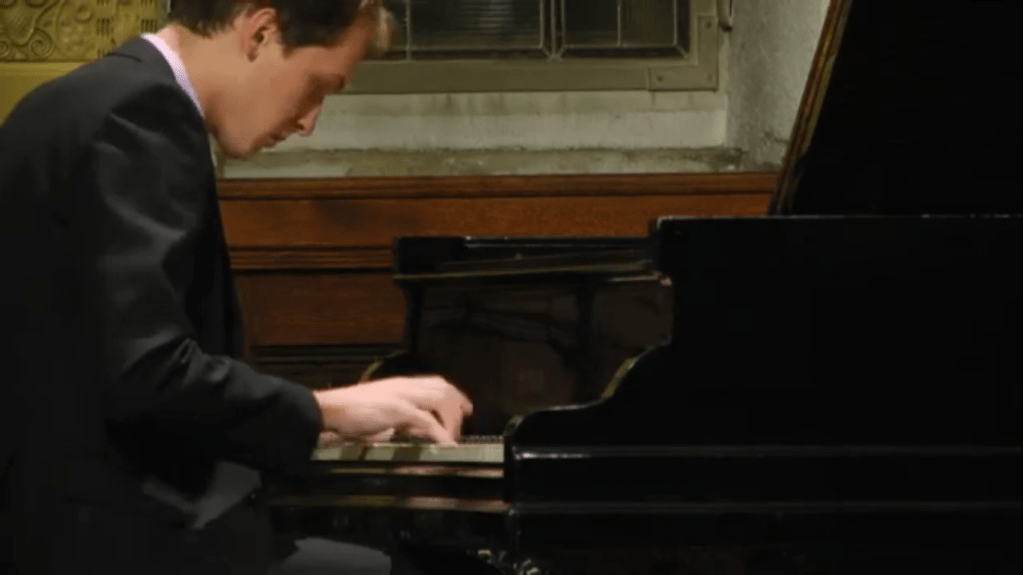
“Der Müller und der Bach” -“The Miller and the Brook”: “Oh dear little brook, you mean so well – but do you know what love does to you?” The hopeless Miller turns to the Brook in his heartbreak. The Brook answers with comforting and poetic words of love conquering pain. Resigned and exhausted, the Miller submits himself to the Brook’s ‘cool rest’. From “Die Schone Mullerin” song cycle by Schubert .Liszt transcribed six of the twenty songs for piano and it was the 19th of the original cycle that Ivan played today.Following straight on without a break from the Bersa Barcarolle the magic continued.A beautiful melodic line in the tenor register transferring to the soprano with such sumptuous sounds and a magical sense of colour.You could see the involvement on Ivan’s face and certainly hear from his totally commited performance finding some extraordinary romantic sounds from within this old Pleyel.
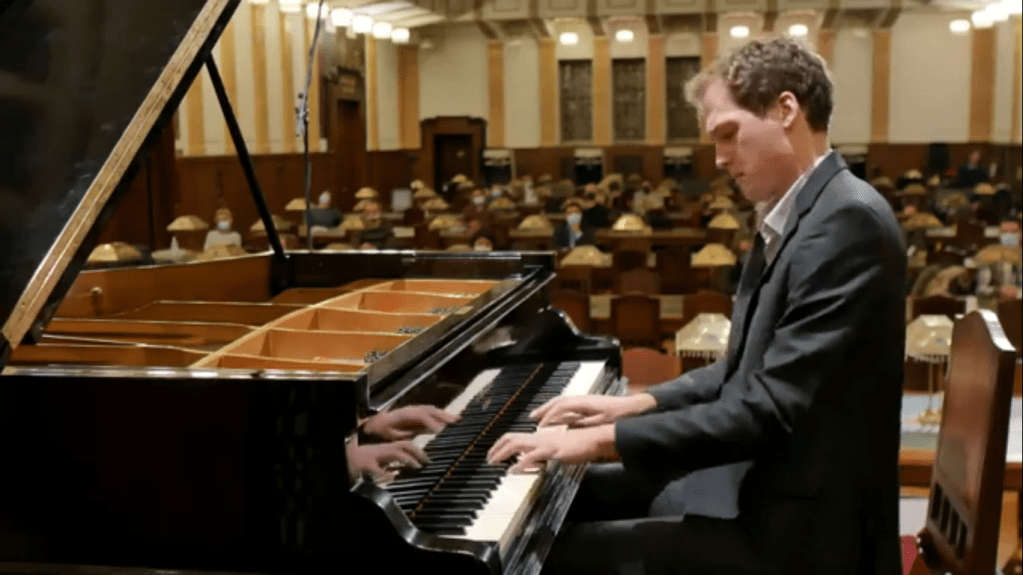
The Ave Maria and Miserere d’après Palestrina are the 2nd and 8th works in Liszt’s cycle of ten pieces under the title ‘Harmonies Poétiques et Religieuses’.I quote from Ivan’s own learned words:Ave Maria is the second movement of Liszt’s cycle Harmonies Poétiques et Religieuses. It is his piano arrangement of an earlier work for choir and organ. In this music you can hear how deep Liszt understood every word of this Christian prayer and reflected that in his music. It is very interesting to observe how in this overall simplicity of the piece, piano is used to invoke the meaning and character of every word of the prayer which Liszt, in the manner of vocal music writing, puts in the piano score. All the different nuances of text’s meaning are present in the music. The sound and emotional quality of this piece is not only used to give an effect and atmosphere but also to convey deeper spiritual messages. I can give one example here regarding the use of una corda pedal. Through the piece Liszt insists on using una corda often writing sempre una corda. In fact, almost the whole piece is played using una corda pedal. There are only three instances where he writes tre corde and when you look at those you’ll see that it all has a deeper meaning: the first place is on the text Dominus tecum (The Lord is with thee), second on the text Jesus, and the third on the text Mater Dei (Mother of God). It is as if Liszt is highlighting the three most important places in the prayer using the full sound of the instrument only there. As you can see, those three places are the only ones where God’s name is invoked. It is truly fascinating to observe details like that and to come closer to the ideas Liszt had in mind while composing this music.” And Ivan brought all this and more with playing of extreme delicacy and almost obsessive pleading with the same notes even resounding isolated in the final moving moments.A totally convinced and convincing interpreter that make one reassess the generally held view of Liszt the showman of the sparkling brilliance of his earlier works.
Never more so than with the ‘ lugubre Gondola’ S 200/1 which followed the ‘Ave Maria’ without a break.Liszt was  Richard Wagner’s guest in the  Palazzo Vendramin on the  Grand Canal in Venice  in late 1882. Liszt may have had a premonition there of Wagner’s death which inspired the first version of the work.Wagner died in Venice on February 13, 1883, and the long funeral procession to Bayreuth began with the funeral gondola to Venice’s Santa Lucia railway station. Liszt was by now almost certainly considering the piece to be a Wagner memorial,The sheer desolation over a rumbling bass of a single motif – as in Scriabin later – building to a tumultuous passionate outpouring and insistence of almost unbearable tension that just evaporated into thin air .The contemplative ‘Miserere d’après Palestrina’ was noted down by Liszt as a work of Palestrina which he heard performed in the Sistine Chapel. However, Palestrina has absolutely nothing to do with the odd melody of the motet which Liszt has collected and elaborated with tremolo and arpeggio variations.After the solemn contemplation there is a sudden burst of effusive sounds over the whole keyboard played with total conviction.From here he plunged straight into the mighty ‘Weinen Klagen’ variations with which he ended the concert.
“This massive set of variations was written by Franz Liszt in 1862, a very difficult time in his life. Two of Liszt’s three children had died within three years of each other;this was written after the death of his daughter Blandine when he had resigned his position of Kapellmeister to the court of Weimar due to continued opposition to his music These variations, whose title roughly translates as ‘weeping, plaints, sorrows, fears,’ are based on a theme from a Bach cantata of the same name, and display throughout radically chromatic harmonies suggesting anguish and despair. A fierce introduction leads to the theme and 43 variations, followed by a chromatic development in the shape of a recitative, and then a group of freer, faster variations, culminating with the choral ‘Was Gott tut, das ist wohlgetan’ (which also ends Bach’s cantata) and a brief coda in which the two themes are juxtaposed.It was one of the last pieces that the ninety year old Perlemuter had on his music stand and it is indeed an extraordinary work.Played by Ivan with great control and a fearless technical prowess as he embarked on the left hand octaves and then the enormous waves of sound across the entire keyboard.To be greeted by the simplicity of the final choral played with a luminous sound that led to the final ecstatic declaration of faith with which it ends.
The simplicity of the Chopin prelude op 28 n.13 in F sharp major offered as an encore was played with the same luminosity of sound and an exquisite sense of balance leading to the mellifluous flowing Arabesque of Schumann.It was played with an aristocratic sense of line where the wondrous sounds that he found in the coda were a reminder of the magical ending that Schumann often gives to the piano at the end of his songs.Music can and does reach where words are just not enough.Insistent applause was rewarded with an parting declaration of faith with the Choral Prelude by Bach in Busoni’s transcription :”Ich ruf zu dir ” I call on You my Lord-Please I beg You hear my crying

A truly humbling experience .An intelligence and maturity way above his 23 years he is an artist destined to thrill and move a waiting world for many years to come.
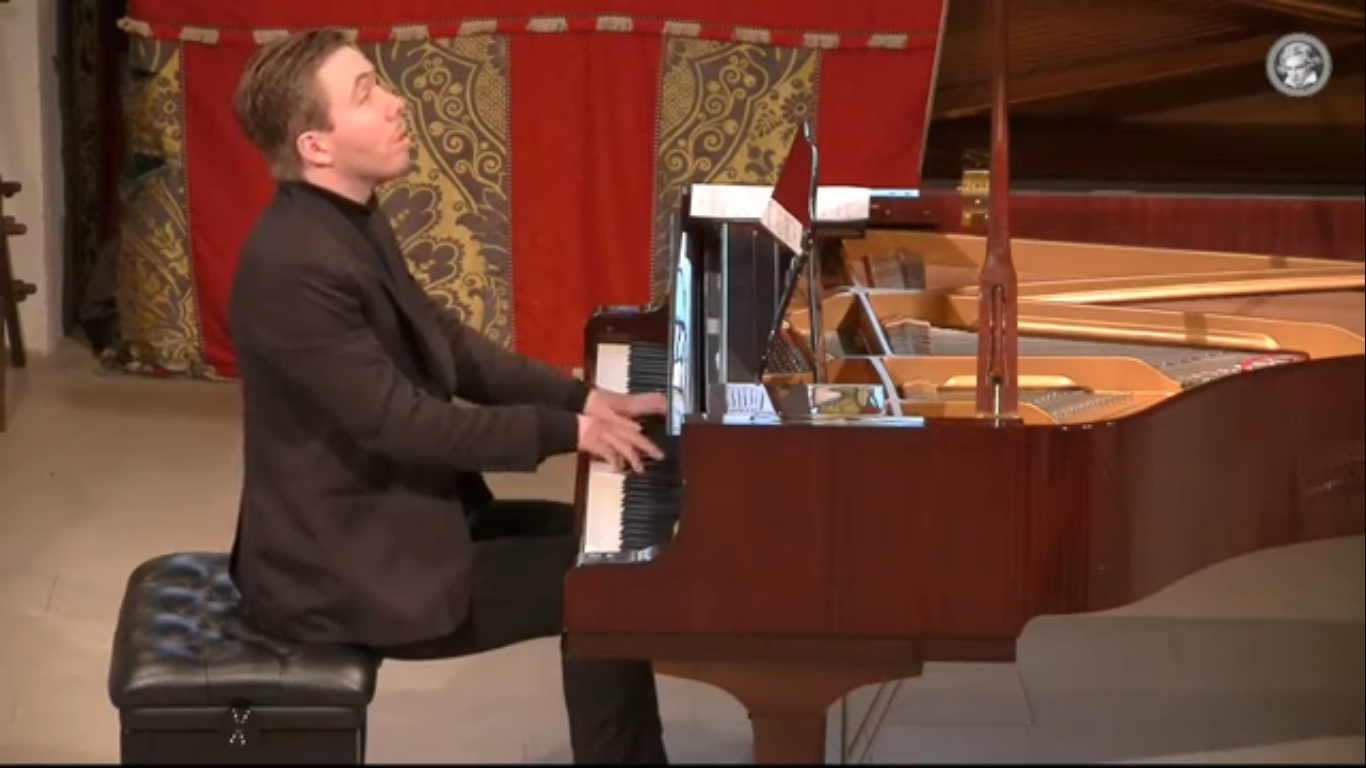
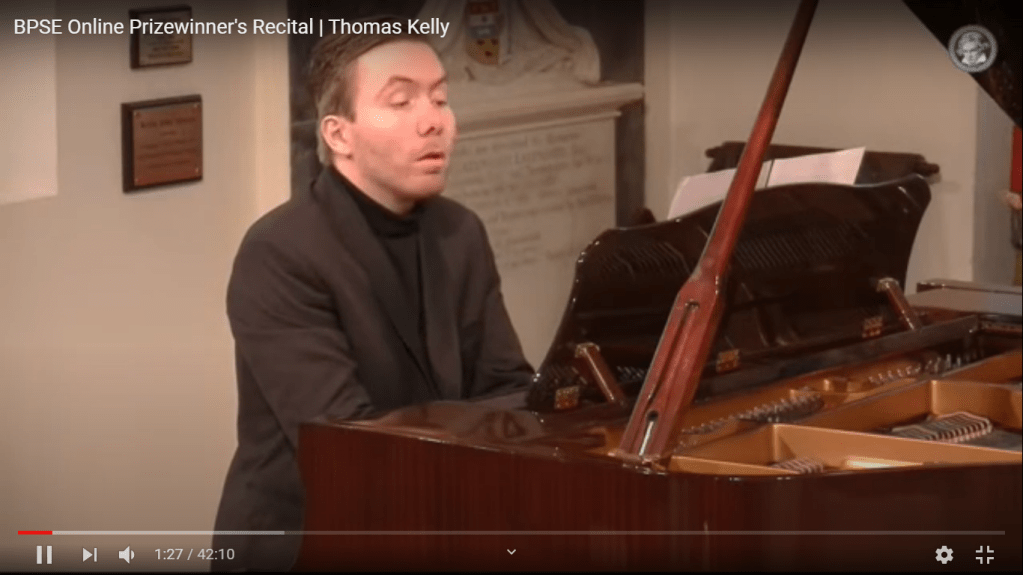
Thomas Kelly at St Mary’s for the Beethoven Piano Society of Europe Prizewinners recital

Thomas Kelly was born on 5 November 1998. He passed Grade 8 with distinction in 2006, andperformed Mozart Concerto No.24
in the Marlowe Theater two years later. After moving to Cheshire, he
regularly played in festivals,including the Birmingham Festival.
He won 3rd prize in Young Pianist of The North 2012 and 1st prize in WACIDOM 2014.Since 2015, Thomas has been studying with
Andrew Ball, initially at the Purcell School of Music and now at Royal College of Music where he is in third-year undergraduate.
Thomas has won first prizes including Pianale International Piano Competition 2017, Kharkiv Assemblies 2018, at Lucca Virtuoso e Bel Canto
festival 2018, RCM Joan Chissell Schumann competition 2019, Kendall Taylor Beethoven competition 2019 and BPSE Intercollegiate
Beethoven competition 2019.In addition, he has performed in a variety of
venues, including the Wigmore Hall, Cadogan Hall, Holy Trinity Sloane Square, St James’ Piccadilly, Oxford Town Hall, St Mary’s Perivale,
St Paul’s Bedford, the Poole Lighthouse ArtsCentre, the Stoller Hall, at Paris Conservatoire,the StreingreaberHaus in Bayreuth, the Teatro
Del Sale in Florence, and in Vilnius and Palanga.Thomas’ studies at RCM are generously supported by Ms Daunt and Ms Stevenson, Pat
Kendall Taylor and C. Bechstein pianos.

I have heard Thomas Kelly on many occasions since listening to him quite by chance at the Schumann Competition at the RCM.I was not surprised that he won first prize with a very persuasive performance of Carnaval – the work with which he chose to finish this short recital for the BPSE at St Mary’s Perivale.

https://christopheraxworthymusiccommentary.wordpress.com/2019/11/13/thomas-kelly-takes-st-marys-by-storm/

It was a programme made up by a rarely performed work by Beethoven together with a reworking of the very well known ‘Moonlight ‘Sonata finishing with Schumann’s Carnaval op.9

Jonathan Östlund: Mondspiegel – Fantasia on Beethoven’s ‘Moonlight Sonata’ (mvt.1) (World Premiere)

A fascinating piece offered in World Première by the distinguished composer Jonathan Ostlund.As he himself says it is an elaboration of the first movement trying to evoke the atmosphere that the title ,which was not Beethoven’s but his publishers,evokes.It follows almost faithfully the original adding magical sounds and embellishments that give even more colour and atmosphere.It was played by Thomas with the ravishing liquid sounds and colours that had immediately caught my attention in his Schumann op.9 at the RCM.Rather self indulgent but short enough not to become too schmalzy especially when played with such serious and sensitive intent as at it’s world première today.

The composer himself has written:”By writing ‘Mondspiegel’, I expressed a homage and created a ‘meeting’, a little time travel exercise… Although Beethoven didn’t name it Moonlight Sonata himself, but rather his publisher did, it is easy to imagine this moonlit inspiration with Beethoven sitting by his piano,looking out over the skyline. I wanted to play with the elements of the moonlit scene, and its introvert qualities, while turning it into a fantasiawith an elegiac character, yet hopeful; with an air of springtime, and a meditation on the flow of inspiration, and of time.” — Jonathan Östlund

Jonathan Ostlund received his BA and MA in Composition at LTU, Sweden, and has so far completed more than 100 works, including
several orchestral works, and two concertos. His achievements include CD-releases, publications and performances with the LSP in the U.K.,
France and Romania throughout 2010 and 2011.In 2012 he won the Public Choice Award for the Cello Sonata, premiered by A. Zagorinsky and E.
Steen-Nokleberg, and was awarded 1st Prize in the LSO’s Composers’ Composition with his ‘Celebration Fanfare’, which was premiered
during the Orchestra’s 90th Season Gala. In 2013 followed various premieres in the U.K. andFrance.

Beethoven Fantasia Op.77

As Thomas himself has penned :”Beethoven Fantasia Op.77 a highlight of his piano output which is simultaneously a seed from which more famous conceptions grew, and an insight into Beethoven’s capabilities as an improviser.John C Sutton wrote that Beethoven extemporised it during his famous concert on 22 December 1808 (performed alongside works
such as the 4th Concerto, 5th Symphony and Choral Fantasy), later writing down the Fantasia as Op.77.”

After ending an improvisation of this kind Beethoven would burst into loud laughter and mock his listeners for the emotion he had caused in them. ‘You are fools!’, he would say.’

It was just this sense of character that was so much part of Thomas’s interpretation.As Thomas himself says:’The opening scales are like a call to attention, which is followed by a D flat major episode hinting at the sublime.’In fact it was just this difference between the scale interruptions that obviously gave the improviser time to decide what direction he would take next.It is nice to think of Beethoven seated at the piano changing from one mood to another.From the hauntingly beautiful first episode played with a beauty of sound and a feeling that the music was being created in that very minute.This infact is one of the first things I noted about Thomas’s playing .The spontaneity and obvious delight at finding the most ravishing tonal varieties due to his very natural technical agility allied to a very sensitive ear.There followed a cordial B flat major theme, a vicious passage of broken octaves played with a wonderful rhythmic impetus and forward drive. Impatient somewhat violent interruptions – obviously Beethoven having fun at the keyboard.The main theme in an unexpected B major has overtones of the choral themes in the Fantasy op 80 and 9th Symphony, on which Beethoven proceeds to write a set of his best variations.The final delicate collision of scales brings the work to a peaceful conclusion.A fascinating journey and a thanks to Thomas and the BPSE for including this rarely heard work in this 250th anniversary year

Schumann Carnaval Op.9 with which he ended this short recital needs no introduction.This is what I wrote exactly a year ago:

‘But it was a performance of op 9 Carnaval that caught my attention for the liquid sound and natural pianism almost of Nelson Freire dimension.Some things cannot be taught and the God given gift to communicate has been given only to a chosen few.They may exceed in rubato or excess of bravura but there is a quality of sound that goes straight to the heart in a direct musical conversation.Thomas Kelly ran away with the prize and I can just see Joan Chissell with a smile of recognition on her face.She was a critic who could in just a few well chosen words illuminate her articles in the Times and her books on Schumann have become a reference for us all’

And it was all here today but with a maturity and assurance that a year of discovery can make to a real young artist.There was all the sense of characterisation allied to a charm and above all a sense of colour that could bring these well know pieces vividly to life.A strange quaver instead of semiquaver right at the opening fanfare I put down to the exhuberance of the minute but the delicate charm in the più moto and animato was irresistible as was the relentless forward movement that took us to Pierrot’s door.Ravishing change of colour on the melodic notes but why play the ‘f’ staccato!Artistic licence and Thomas is certainly a remarkable artist!

Arlequin was thrown of with consummate ease and the great bass notes in Valse noble made the contrasting middle section even more magical.The same thumb melody was allowed to sing out in the left hand repeat the same as I have never forgotten from the hands of Cortot. Eusebius,Schumann’s tranquil companion was played with a simplicity but such wondrous colouring from within as Florestan just crept in with some wonderful jeux perlé playing.Coquette was played with just the right amount of charm and colour which led to the lovely question and answer of Réplique.The strange Sphinxes I have only ever heard from Rachmaninov and like Thomas today are not usually incorporated into performance being only a floor plan that Schumann places in the middle of this work.As Thomas says:”it is possible to think of the Sphinxes as casting a shadow over the Carnaval without being literally played”Papillons fluttered over the keyboard in masterly fashion with a lightness and playfulness that took us straight to the Dancing Letters that could have been even more ‘leggierissimo’ to contrast with the passionate outpouring of Chiarina.Chopin enters the scene with a mellifluous outpouring of Bel Canto which was played with baited breath on it’s magical repeat .The ease with which he played the repeated notes in Reconnaissance was masterly especially as they were imbued with such shape and colour too.The contrast with the almost hammered arguing of Pantalon et Colombine was remarkable as even here there was no harshness of sound but wonderful shape and colour.The gentle lilt to the Valse allemande was indeed the calm before the storm.Paganini entered the scene with amazing virtuosity and precision the reverberating final chord perfectly judged.Aveu was played with a simplicity that led to the Promenade and grandiose March of the Davidsbundler against the Philistines.Played with great technical prowess but also with a sense of style that cannot be taught but is in the very bones of the true artist.

George Todica at St Mary’s-Duality and Transformation

George Todica a concert in collaboration with the Keyboard Charitable Trust

Tuesday 10 November 4.00 pm

Streamed LIVE concert in an empty church

George Todica (piano)

Chopin: Rondo à la Mazur op 5

Chopin: Mazurka in C# minor Op 41 no 4

Enescu: ‘Choral’ and ‘Carillon Nocturne’ from Suite no 3 Op 18

Rachmaninov: Variations on a theme by Corelli Op 42

very assured and deeply felt introductions mirrored by equally moving playing

Born in Iasi in 1993, he started his musical training when he was six, under the guidance of Silvia Panzariu. He went on attending the Octav Bancila School of Arts, later joining the classes of Raluca Panzariu and then Andrei Enoiu-Panzariu, and having lessons outside of school with pianist Iulian Arcadi Trofin. George came to the United Kingdom in 2010, after winning the ‘Constantin Silvestri’ Scholarship which allowed him study for one year at the Stewart’s Melville College in Edinburgh. A year later he entered the Royal Conservatoire of Scotland where he would study for the next six years, under the guidance of Graeme McNaught, Norman Beedie and Jonathan Plowright. He finished his Bachelor Degree in 2015 with First-Class Honours and his Masters Degree in 2017. His training was supported by two scholarships from the RCS, scholarships from The Tillet Trust and The Colin Keer Trust and a ‘Britton Award’ from Help Musicians UK. After a recent successful audition, he has been chosen for the Tillett Young Artist Platform scheme for 2017.George had his Wigmore Hall debut in October 2018 as a Tillett Trust Young Artist, and his competition success includes first prizes at the Norah Sande Award in England, the Llangollen International Eisteddfod in Wales, ‘Stefano Marizza’ Piano Competition in Italy, the Moray Piano Competition in Scotland, 2nd prize at the International Piano Campus Competition in France, as well as the Ligeti prize and the prize for the best performance the contemporary work for piano and orchestra and 3rd Prize at the International Piano Competition Istanbul.

He completed his studies in 2019 with his Artist’s Diploma at the Royal College of Music in London under the guidance of Norma Fisher

As a concert pianist, he has travelled to various venues in Italy, Austria, Croatia and the USA and has performed in prestigious halls such as the Teatro San Giuseppe in Torino, the Philharmonic Hall in Trento, the Mozarteum Concert Hall in Salzburg, the Fazioli Factory in Sacile, the Conservatoiro Tartini di Trieste and the Dôme de Pontoise in France. In the past few years, George has also been playing in the UK at the Glasgow Royal Concert Hall, the Edinburgh Society of Musicians, the Brunton Theatre in Edinburgh, the Erin Arts Centre on the Isle of Man, the Hall at Yamaha Music London, Inverness Town Hall, the Ardkinglas Castle in Argyll, and various other venues. He has performed with the Royal Scottish National Orchestra playing Saint-Saëns’s Carnival of the Animals and in the All About Piano Festival in London at the Institut Français du Royaume-Uni and at St. Martin-in-the-Fields.

A fascinating recital by this young Romanian pianist for the past ten years living in the UK – first on a special scholarship to a boarding school in Edinburgh and from there to the Glasgow conservatory and finally to London.His fiancée is the singer Charlotte Hoather – two attempts at marriage have been ruined by the Covid crisis but in the meantime they intend to share their music and unite their comunity

Image may contain: 2 people

 ‘This Friday marked our fourth balcony concert, and it has been a real joy to sing to my neighbours and friends online alongside George. Despite being limited to our own home for a few weeks now, it has been a breath of fresh air to feel close to the lovely people who live near me. I feel connected to a bigger community, a neighbourly relationship that I reminded me of my childhood.’ Obviously a match made in heaven!

A programme of Chopin, Enescu and Rachmaninov so eloquently introduced by this young artist.

These first two works by Chopin are inspired by the Mazurka.The Rondo à la Mazur op 5 written when only 16 and for his own purpose to play in the salons of the day.This is an early work of brilliance and lyricism ,naive and immature but full of youthful energy and enthusiasm. Chopin would have astonished his audiences in Poland before moving to Paris at the age of 20 from where he was never to return.His heart though was returned after his death to his native Poland from where it had never really left.His bodily remains were buried in Père Lachaise Cemetery in Paris.

And it was the mature mazurka op 41 n.1 in C sharp minor where his youthful enthusiasm was replaced with majesty and solemnity,pride and wisdom.As George so wisely stated it was a mazurka that’ thinks before it talks!’ What a wonderful turn of phrase indeed.

There was a great sense of style as he threw off the continuous chain of jeux perlé notes with an ease and sense of shape that was charming as it was brilliant.An irresistible sense of belcanto too in the beautiful lyrical sections.Some truly magical moments with trills that gleamed like jewels in the web of sound that he so magically conjured with such nonchalance.Every note became so fibrantly alive as he brought this somewhat shallow work to life with the same yearning nostalgia that was to pervade Chopin’s later works.There was though a youthful exhuberance that was nowhere to be seen in his later years long from his homeland and the concert hall.

There were some wonderful changes of colour in the Mazuka op 41.The same yearning nostalgia played with a more masculine delicacy.A truly heartbreaking duet between the hands leading so gently back to the original dance rhythms and an exquisite coda dying away into the distance.

The middle part of the recital was dedicated to two movements from George Enescu’s 3rd Suite op 18 for piano.Enescu is not only George’s compatriot but also he confided his idol.He is not the only one either:Pablo Casals described Enescu as “the greatest musical phenomenon since Mozart” and “one of the greatest geniuses of modern music.  Yehudi Menuhin, Enescu’s most famous pupil, once said about his teacher: “He will remain for me the absoluteness through which I judge others,he gave me the light that has guided my entire existence.” He considered Enescu “the most extraordinary human being, the greatest musician and the most formative influence” he had ever experienced.
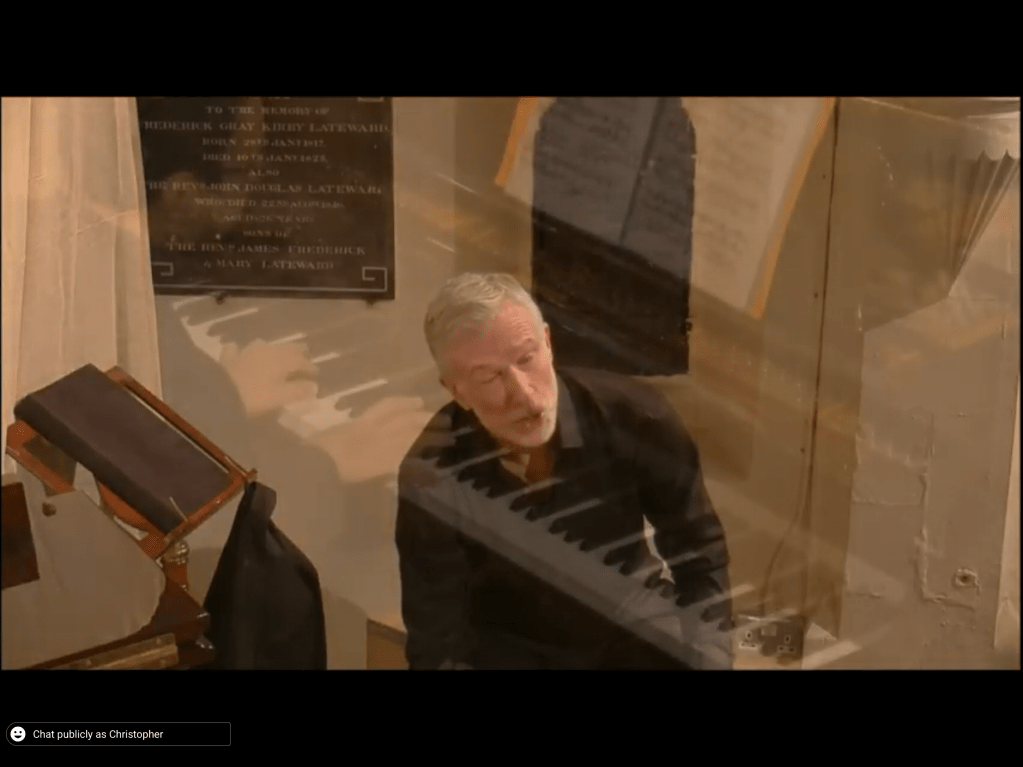
Choral was inspired by the orthodox liturgy- almost a prayer as George described it .A confession of sin ,redemption and forgiveness.It was played with some wondrous sounds from every part of the keyboard.A musical language that fits no specific category but is strangely hypnotic and obviously for George at the very roots of his being.An ending of pure magic barely whispered as it disappeared into the very heights of the piano.

To be awoken by the bells of Carillon resonating and almost Messiaenic in its moving dissonance.Whispered responses from the faithful answered by the bells.A wonderful use of the sustaining pedal gave great resonance to the ever vibrating bells.Ringing out a final 12 times – each time slightly different with whispered responses arriving on the final major chord – transformed and redeemed!A very moving performance that I would love to hear more often in the concert hall.

The final work was the Rachmaninov Corelli Variations.Written in 1931 and based on a mediaeval melody La Folia that Corelli had used for a set of variations in 1700. Rachmaninov injects the very essence of Russian romanticism into it as he extracts as much substance as he can creating a real metamorphosis in the course of his 20 variations.

Rachmaninoff dedicated the work to his friend the violinist Fritz Kreisler. He wrote to another friend, the composer Nikolai Medtner on 21 December 1931:I’ve played the Variations about fifteen times, but of these fifteen performances only one was good. The others were sloppy. I can’t play my own compositions! And it’s so boring! Not once have I played these all in continuity. I was guided by the coughing of the audience. Whenever the coughing would increase, I would skip the next variation. Whenever there was no coughing, I would play them in proper order. In one concert, I don’t remember where – some small town – the coughing was so violent that I played only ten variations (out of 20). My best record was set in New York, where I played 18 variations. However, I hope that you will play all of them, and won’t “cough”.

The theme La Folia was played with great delicacy and sense of colour.A great sense of balance in the first variation allowed the melody to emerge amongst the embellishments with gentle comments from the bass.Legato and staccato were perfectly matched in the second and there was already magic in the air in the fourth with a wonderful sense of line.Scintillating virtuosity in the following variations leading to the booming bass of the 7th with cascades on notes above.Typical haunting harmonies of the ninth led to the extreme rhythmic precision of the tenth.A great sense of architectural shape in the eleventh that is usually just hammered home by lesser mortals.

Deep staccato notes alternated with meltingly pleading fragments and the Intermezzo had some startling cadenza like passages thrown of with a brilliance and lightness leading to the theme in the major key.It drifted so naturally into the most hauntingly mellifluous of the variations very similar to one of his preludes from op 32.The gradual reawakening to the final triumphant appearance of the sun had with some transcendental playing of great assurance in the final three variations.A small blemish was immediately and expertly covered as we approached the final piu mosso explosion of sounds.Left only with the reverberating bass ‘D’ and ‘the ashes’ as we are left in complete desolation and wonderment not least at the remarkable performance that we were offered by this young Romanian pianist.

:

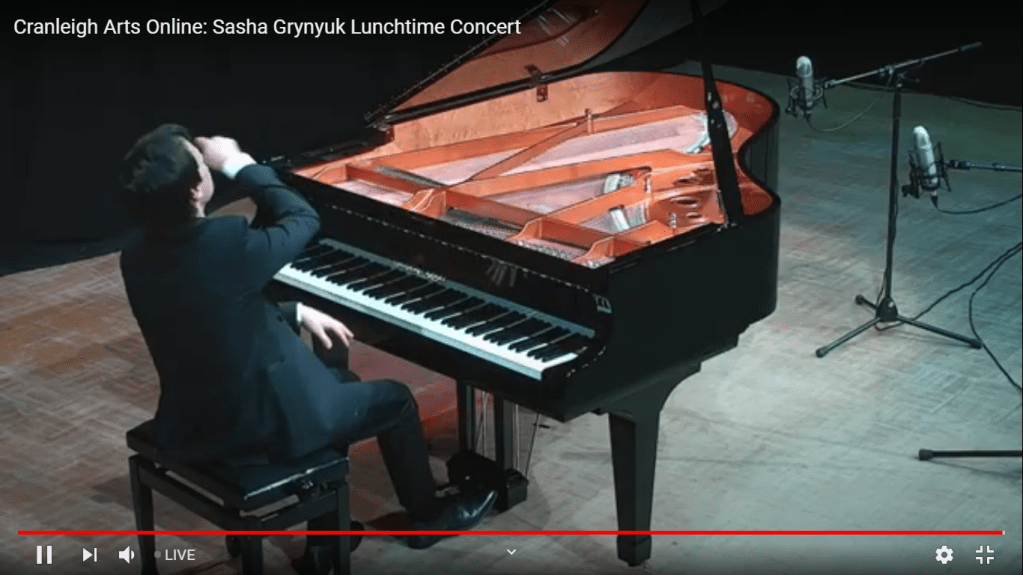
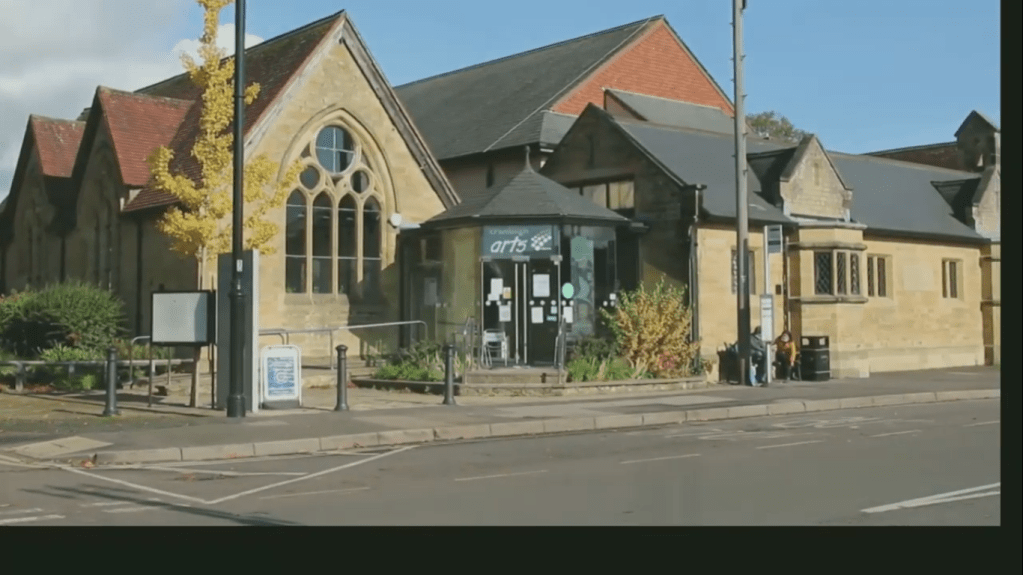
SASHA GRYNYUK for Cranleigh Arts Online-Passion and Persuasion

Sasha Grynyuk playing in collaboration with the Keyboard Charitable Trust founded by Noretta Conci Leech and her husband John

Join pianist Sasha Grynyuk for his lunchtime performance as part of the Cranleigh Online performance! It will be available to watch live on Cranleigh Arts’ YouTube channel at https://www.youtube.com/watch?v=80mnhPw4ADg.

Born in Kyiv, Ukraine, Sasha Grynyuk studied at the National Music Academy of Ukraine and later at the Guildhall School of Music and Drama in London with Ronan O’Hora. After graduation he benefited from the artistic guidance of such great musicians as Alfred Brendel and Murray Perahia. Sasha was described by legendary Charles Rosen as “an impressive artist with remarkable, unfailing musicality always moving with the most natural, electrifying, and satisfying interpretations”.

Winner of over ten International competitions, prizes and awards, Sasha was chosen as a ‘Rising Star’ for BBC Music Magazine and International Piano Magazine. His successes also include First Prizes in the Grieg International Piano Competition and the BNDES International Piano Competition, in addition to winning the Guildhall School of Music’s most prestigious award – the Gold Medal – previously won by such artists as Jacqueline Du Pré and Bryn Terfel.

a fascinating preconcert talk with the artist

Programme:
L Beethoven Sonata No 18 in E flat
Major Op 31 No 3(22’)

Allegro;
Scherzo; Minuet; Presto con Fuoco

R Schumann “Faschingsschwank aus Wien” Op 26 (21’)

Allegro;
Romanze; Scherzo; Intermezzo

O Messiaen “Regard de l’esprit de
joie (from Messiaen – Vingt Regards Sur L’Enfant-Jesus) (9’)

As you can see from the articles below I have heard Sasha on many occasions, also recently at St Dunstan in the West in Fleet Steet in a recital of not only the Beethoven Sonata op 31 n.3 but also in duo with Beethoven’s mellifluous ‘Spring’ Sonata for violin and piano.Indeed it was an inspiring combination of two of Beethoven’s most pastoral of works full of sunshine and love of the rustic countryside.It is true that Beethoven’s Sonata op 28 written only a few months earlier is known as his Pastoral Sonata but this one too has a country flavour and is known as the Hunt because of the sound of the chase and horn calls in the galloping finale.

You can read about his performance of the Beethoven below but it should be noted that an artist like Sasha does not just reproduce a blue print performance but he lives and breaths the moment.Today he was in more sedate mood and played with all the aristocratic simplicity that Rubinstein brought to this work that was at the opening of the last recital of his life in 1976 in the Wigmore Hall.

This splendid new Shegaru Kwai piano at Cranleigh obviously allowed him to take a little more time so all the subtle pastoral phrasing of the duplets were allowed to speak for themselves like water bubbling over a brook.Every detail was perfectly in its place as he brought the score amazingly to life.

Michelangeli’s particular characteristic was his sparse use of the pedal only using it to add colour and not to hide one’s sins!It allowed Sasha to make the real difference between legato and staccato often within the same phrase.The final two chords of the first movement Sasha chooses again to play’ piano’ instead of the marked ‘forte’.It fits perfectly into the style of his performance but does Sasha know something we do not or is it just his very rare poetic licence? The Menuetto was played with rare aristocratic elegance with a timelessness that was truly Rubinstein’s .The Scherzo and Presto con fuoco bubbled over with rhythmic energy,precision and delicacy but as I said this was Sasha in pastoral mood and I missed some of the rustic,animal urgency and participation that he was obviously saving for the Schumann and Messiaen!

https://christopheraxworthymusiccommentary.wordpress.com/2020/09/30/happy-days-at-st-dunstan-in-the-west-with-sasha-grynyuk-and-jaga-klimaszewska/

I was very pleased to be able to hear him play the Schumann Carnaval Jest from Vienna which was one of Michelangeli’s specialities in his later years.It was especially interesting because as Sasha said in his all too brief pre- concert discussion he has been working with Noretta Conci-Leech who was for mamy years Michelangeli’s assistant.

The Faschingsschwank Aus Wien as Sasha said in his talk had inspired him as a child in Kiev from the video performances of Sviatoslav Richter that he used to listen to over and over again.I too remember very well the two recitals that Richter gave in London in the 60’s as his visiting card broadcast by the BBC on Christmas Day ( He also played the Dvorak Piano Concerto and Andante Spianato and Grande Polonaise of Chopin with Kleiber at the Royal Albert Hall).Everything that Gilels had said, on his earlier visit to the west,was true.’If you think I am good wait until you hear who follows me!’

The opening Allegro molto was played with great forward movement and energy and it was the same continual forward movement that carried us on the wings of song that follow in the intervening episodes.Even the brief entry of the Marseillaise was played with the same exhilarating sense of Carnaval.This was infact the last of a long stream of masterpieces that flowed from Schumann’s pen.Beginning with The Abegg Variation op 1 ( that incidentally was the first work of Schumann that Richter played in those two historic first London recitals)taking in all his great works for piano.There was to be after this work a break until the final works from op 68 onwards with the Album for the young finishing with the rarely played Gesange der Fruhe- Songs of dawn op 133(A work that that other great italian musician Guido Agosti adored) .There was a supreme simplicity to the very short Romanze played with extraordinary attention to detail and it contrasted so well with the gaiety of the Scherzino.The Intermezzo was played with controlled passion that allowed this almost Mendelssohnian movement to sing like a song without words.The gentle answering of one voice by another always with this passionate undercurrent was very touching as it died away to a whisper.It was rudely interrupted by the exuberance of the Finale.Again a wonderful sense of forward movement that only relaxed slightly as one of Schumann’s most poignant melodies floated above(A melody very reminiscent of Fauré’s Dolly suite!-Listen with mother and all that- for anyone that might still remember the good old days!)Sasha threw himself into the final few pages with a passionate involvement that was indeed the ideal preparation for the Messiaen that followed.

But the real interest for me was to hear him talk so eloquently and with obvious passion about Messiaen’s Regard de l’esprit de Joie.Together with Le baiser de l’Enfant Jésus these are two masterpieces from his collection of Vingt Regards sur l’Enfant Jésus. As Sasha pointed out they could hardly be categorised as contemporary music as they were written in 1944!Apart from the savage rhythms and strikingly original harmonies there are very poignant melodic outpourings ,declarations of the composer’s absolute belief.

Tredding sometimes on what seems broken glass but entering into Messiaen’s mystic world of a true believer it can be very moving indeed.As it obviously was for Sasha.Transcendentally difficult the very first performance I ever heard was in the first Leeds International Piano Competition .A young french pianist,who had recently given a recital at my old school : Chiswick Boys Grammar – gave an astounding performance of a work hardly yet known to a vast public.Jean Rodolphe Kars won fourth prize in 1966 to Rafael Orozco’s first and Victoria Postnikova’s 2nd.

He later became a trappist monk!Yes Messiaen can indeed have this effect as was shown today in Sasha’s totally committed performance.Absolute clarity as in the other works in his programme and always a beautiful sound but not so beautiful that the passionate outbursts were deeply felt and driven home.One could see on his face but above all hear from his playing the same passion with which he had spoken earlier.Tredding on broken glass with glee it was so moving as the great hymn like declarations were played with almost heartbreaking sincerity.Quite spectacular too the final savage race to the end and the oh so final note played as a final triumphant score as his threw his whole body into the fray.

https://www.facebook.com/notes/christopher-axworthy/sasha-grynyuk-an-unexpected-visit-from-a-master-pianist/10156957474887309/

Enoch Arden at St Mary’s

Sunday 8 November 4.00 pm

Streamed LIVE concert in an empty church

Christopher Kent (actor) and Gamal Khamis (piano)

Enoch Arden for voice and piano by Richard Strauss Op 38

based on the poem by Alfred, Lord Tennyson

Following previous acclaimed performances at St Mary’s of their narrative recitals Never Such Innocence ( 2018) and Odyssey (2019), Christopher Kent and Gamal Khamis return with a rare opportunity to hear a hidden gem of the romantic repertoire. Enoch Arden is a deeply touching narrative poem originally written by Tennyson in 1864 and set by Richard Strauss for speaker and piano in 1897. Although Strauss performed it widely himself with the actor Ernst Possart at the time, it has been heard infrequently since, despite advocacy from such notable figures as Glenn Gould, Dietrich Fischer-Dieskau and Patrick Stewart.

Enoch Arden tells the story of three childhood friends who grow up in a remote fishing village. Enoch becomes a sailor, marries his sweetheart Annie Lee and then sets off on a long voyage from which he never returns. After many years, assuming he is lost forever, Annie reluctantly marries the third friend, the miller Philip Ray, who has offered to bring up her children. But then Odysseus-like, Enoch does return only to find, unlike Odysseus, that his wife has not waited for him. What happens next is both stirringly dramatic and agonisingly tender. With words and music of haunting beauty, Enoch Arden is a masterwork of the now almost lost genre of musical melodrama.

Wonderful performance of Enoch Arden by Tennyson and Strauss………it still holds its magic as a melalogue as was obvious to the record of views at St Mary’s Perivale today with a magnificent performance from Christopher Kent with the very difficult piano part played by Gamal Khamis.I thought Claude Rains with Glenn Gould was good but this is up there with them.

I performed it all over Italy with my wife Ileana Ghione and after her death with her best friend and illustrious colleague Milena Vukotic but rarely have I been so moved.Now I understand why our performances too had the same effect as today because I have never sat through a live performance except from the driving seat ! Unfortunately it is the only melalogue that really works in this modern age.Liszt and Schumann wrote some too but Strauss knew better!

Christopher Kent has appeared on stage, screen and radio in a wide range of roles from Shakespeare to contemporary drama. London theatre appearances have included Cyrano de Bergerac with Robert Lindsay at the Theatre Royal Haymarket and The Government Inspector with Timothy Spall at Greenwich Theatre. He is also one of the UK’s best-known voiceover actors and his voice is regularly heard on commercials, documentaries, film trailers and literary recordings. Recent concert work includes collaborations with the Bridge String Quartet, West London Sinfonia and the Voice of God in Britten’s Noye’s Fludde.

Gamal Khamis gained a degree in Mathematics at Imperial College London and completed his formal musical education at the Royal College of Music. He first performed at the Wigmore Hall at the age of 10 and has since appeared at most of the major U.K. concert halls, across Europe, North America and Australasia, and on BBC television and radio. Gamal has won major awards for both solo and collaborative piano playing, including at the Royal Over-Seas League and the Ferrier Awards. He is an Artist with the Concordia Foundation, Royal Over-Seas League, Park Lane Group and Samling, and is a member of the Lipatti Piano Quartet.

https://www.facebook.com/notes/christopher-axworthy/the-evergreen-fascino-of-enoch-arden-stefano-greco-and-tommaso-ragno-at-scecilia/10155210177252309/

Roman Kosyakov – Mastery at St Mary’s

Tuesday 3 November 4.00 pm

Streamed LIVE concert in an empty church


Roman Kosyakov (piano)

Schumann: Humoreske Op 20

Mussorgsky: Pictures at an Exhibition

Roman Kosyakov was born in a musical family and made his debut with an orchestra at the age of 12 with the Mozart Concerto No 23 in A Major.  In 2012, he graduated from the Central Music School in Moscow where he studied with F.I. Nurizade and then in 2017 from the Tchaikovsky Moscow Conservatory with V. Ovchinnikov.  Since September 2017, he has studied at the Royal Birmingham Conservatoire on a full scholarship with P avel Nemirovski.He is a laureate and a winner of many national and international competitions, among them “Young Talents of Russia” (Russia, Moscow 2006), the 1st International competition “Sforzando” (1 st Prize, Berlin, 2007), the International Alexander Scriabin Piano Competition (1 st Prize, Paris 2011), the 8 th Open Competition of Musicians Performers N. Savita (1 st Prize, Russia, Ufa, 2012), the International Piano Competition “Minsk-2014” (2 nd Prize, Republic of Belarus, Minsk, 2014), the 4 th International Piano Competition “ Russian season in Ekaterinburg “ (1 st Prize, Russia, Ekaterinburg, 2015), the 4 th International Piano Competition “Vera Lotar-Shevchenko” (2 nd Prize, Russia, Ekaterinburg, 2016), the 4 th Prize of the 1 st Saint-Priest International Piano Competition Saint-Priest (Lyon-France, 2017), the Gold award for the 3rd Manhattan International Music Competition ( 2018 ) and 1 st Prize and the Audience prize for 10th Sheepdrove Piano Competition ( 2018, UK). He is regularly invited to give concerts in France, Italy, Germany, Republic of Belarus, Russia, UK, USA, and was guest soloist from 2014 to 2017 at the Kemerovsky State Symphony Orchestra. Roman has also participated in Berginos Music Festival as a guest pianist in Bergamo (2018, Italy). He has performed with the Hastings Philharmonic Orchestra and English Symphony Orchestra in 2018 in UK.Most recently Roman won the prestigious 1st Prize and the Royal Philharmonia Orchestra Prize of the 14th Hastings International Piano Concerto Competition (2018, UK).

It is rare indeed to hear these two works played with such mastery .A sense of colour and sound that brought the magic sound world of Florestan and Eusebius to life in Schumann’s Humoreske.

It brought too an entire orchestra and pealing bells into this charming rendundant church with Mussorgsky’s Pictures at an Exhibition..Redundant no longer as it has resounded for quite some years now to the sounds of so many magnificent young musicians given the opportunity of a professional and recorded performances by Dr Hugh Mather .A retired physician and active musician, who with his dedicated team offer three concerts a week to their vast virtual public.Public performances have been the norm in pre Covid times but it is one of the only venues in this difficult lockdown period that offers valuable engagements to young musicians being plunged into disarray at the beginning of their careers.

Humoreske in B-flat major, op. 20 was composed in 1839  Schumann cited Romantic writer Jean Paul’s style of humour as source of inspiration, although there are no direct links to his works to be found in the piece.It  consists of seven sections (not originally indicated as such by the composer except for the last one, “Zum Beschluss“), to be played without a break one  after each other.It is less popular with audiences than with pianists and some think it as an ill-judged attempt by Schumann to take his formula in Kreisleriana op 16 a step further. However, it has been championed by some who consider it  among Schumann’s greatest pieces and one of his most astonishing, and most overlooked, piano works.Certainly from op 1- The Abegg variations through all the much loved masterpieces in the intervening period the Humoreske is still one of the least heard works of this early period of Schumann before illness took over his sanity and his output became more varied.

The Humoreske needs not only a great virtuoso but above all a great musician with a meticulous sense of balance and colour in order to bring it to life.It has to be treated with loving care ,passion and dexterity but above all an extra sensitive palette and sense of balance.I have heard artists such as Radu Lupu and most recently Sokolov give superlative performances but neither having all the chameleon type qualities that Schumann demands. Horowitz and Richter of course paved the way for lesser mortals- but genius can turns even baubles into gems!

It was today a refreshing surprise to hear this young Russian pianist with all the qualities needed to show us just what a masterpiece it is.From the very first notes of the sublime Einfach(simple) one could immediately appreciate his delicate hand movements that seemed to caress the keys with a swimming movement that followed the rise and fall of this beautiful opening.It is somewhat reminiscent of the Blumenstuck-Flowerpiece op 19 that immediately preceeds it.The Sehr rasch und leicht (Very fast and light)  flowed so well with such well marked contrasts and Noch rascher (Even faster)  was beautifully judged and shaped with some beautifully pointed harmonies due to his superb use of the sustaining pedal.Erstes Tempo, Wie im Anfang (First tempo, as in the beginning) with the return of the opening theme that seemed to glow with even more luminous sounds due to his perfect sense of balance between the hands.

The second section with Florestan at play Hastig (Hastily) showed a great sense of control and passionate involvement Nach und nach immer lebhafter und stärker” (Gradually more lively and stronger) was all played with sumptuous rich sonorities with never any harshness. The magical entry of Eusebius as he takes control with tender caressing harmonies Wie vorher” (As previously)  led to the very poignant coda, Adagio, where the poet truly speaks.

Einfach und zart (Simple and delicate) was played with a delicious sense of nostalgia – a great song of remembrance and the amazingly busy intermezzo entered so lightly and at great speed like a swarm of bees around the honey pot!The difficulty of course, for most mortals, is that these busy bees multiply into ferocious octaves that often require the breaks to be put on!This was no worry for today’s pianist who threw them off with the same panache as the previous single notes!An amazing tour de force of technical prowess and above all relaxed wrists!

Innig (Heartfelt) was played like a glorious expansive song interrupted in Schneller” (Quicker) by Florestan in impish mood.Before the return of the main melody with a subtle use of the bass notes to give an even richer sonority as it opened up the sound palette above. Sehr lebhaft (Very lively)-Immer lebhafter” (Increasingly lively  was played with great elan and a quite extraordinary sense of shape and colour – has Florestan ever been in such playful mood?

It led quite ‘helter skelter’ to the Mit einigem Pomp (With some pomp) with its pompous almost too serious chords and which in most pianist’s hands is always too loud and bombastic(Sokolov fell down here)and does not allow the hints of melody to be overheard in the distance.Roman today played this like a true master – hats off indeed!

Zum Beschluss (To the resolution)  was played with almost heartbreaking yearning with a disarming innocence and freshness.It is so difficult to interpret this seemingly simple melodic line in octaves and requires, like the second piece in Kreisleriana,a refined sense of balance and a perfect finger legato.

I have rarely heard it so beautifully played as today .A true poet of the piano as befits this most complex work that marks the end of Schumann’s extraordinarily productive years before insanity finally overtook him and took him to a world that he can only hint at as he shares it with us in his music.The beautifully sonorous Allegro of the coda brought this magnificent performance to a truly joyous conclusion.

As with most of Mussorgsky’s works, Pictures at an Exhibition has a complicated publication history. Although composed very rapidly, during June 1874, the work did not appear in print until 1886, five years after the composer’s death, when an edition by the composer’s friend and colleague Nikolai Rimsky- Korsakov was published The composition is based on pictures by the artist, architect, and designer  Viktor Hartmann. It was probably in 1868 that Mussorgsky first met Hartmann, not long after the latter’s return to Russia from abroad. Both men were devoted to the cause of an intrinsically Russian art and quickly became friends.Hartmann’s sudden death on 4 August 1873 from an  aneurysm shook Mussorgsky along with others in Russia’s art world. The loss of the artist, aged only 39, plunged the composer into deep despair. A memorial exhibition of over 400 of Hartmann works was organised in the Imperial Academy of Arts in St Petersburg in February and March 1874. Mussorgsky lent the exhibition the two pictures Hartmann had given him, and viewed the show in person. Later in June he was inspired to compose Pictures at an Exhibition, quickly completing the score in three weeks (2–22 June 1874) 

Usually a piece taken up by rather bombastic virtuosi but today it was a refreshing surprise to hear the beautiful mellifluous opening with a string orchestra rather than the usual barnstorming trumpets!

The demonic Gnome sprang like a spring out of his fingers and the different colours he found in the first repeated passage gave hope for a rebirth of this masterpiece in my mind!The final velocissimi scales thrown off more lightly than the ‘con tutta forza’ indicated when usually more than hammered home!A beautiful delicate promenade brought us to the Old Castle like a dream as it floated on the left hand heart beat with a variety of sounds that was breathtaking.

Have the children ever sounded more petulant and fun in theTuileries or the cattle cart more laiden and ponderous as it struggled on its way.Disappearing into the distance with some magical whispered sounds and a barely audible promenade before the Ballet of Unhatched Chicks that was played with immaculate precision and lightness and a sense of humour as they almost bumped into each other in a very effective ( but unmarked in my score) accelerando.

Have Samuel Goldberg and Schmuyle ever sounded so serious and unctious .No ammount of pleading would satisfy them even from Roman’s very sensitive hands.A wonderful string orchestra promenade before the amazing pyrotechnics of the Market Place in Limoges that burst in on the final vibrating B flat of the promenade.The sonorous eruption of the Catacombs had some wonderfully suggestive sounds with the almost unbearable beautiful resolution of stillness and peace in ‘Con mortuis in lingua mortua’.Rudely interrupted with no promenade as BabaYaga – The Hut on Hen’s legs took us by storm.With such virtuosity that contrasted with the orchestral calm of the central, Andante mosso, superbly controlled whilst the most extraordinary sounds appeared above and below.

An enormous crescendo of octaves of all shapes and sizes prepared us for the vision of the Great Gate of Kiev.Played with true majesty and grandeur with the sounds of bells pealing again around this beautiful ancient church.Not much pealing these days as St Mary’s bells were used to call the audience back from the concert interval in the pre Covid days when one could take a stroll in the beautiful historic graveyard that surrounds this oasis only a stone’s throw from the M40!).There was an almost religious peace in the plain chant interludes before the ever more insistent bells led to the overwhelming climax of what I now consider to be a masterwork.

Thanks to this extraordinary young musician who could bring this work once again so vividly to life for me.Richter was the first person I heard play this on a rare recording from Prague Festival long before he came to the west.Horowitz’s devil like performance was the second .Roman for his musicianship and superb technical control today will not be forgotten for a long time either.

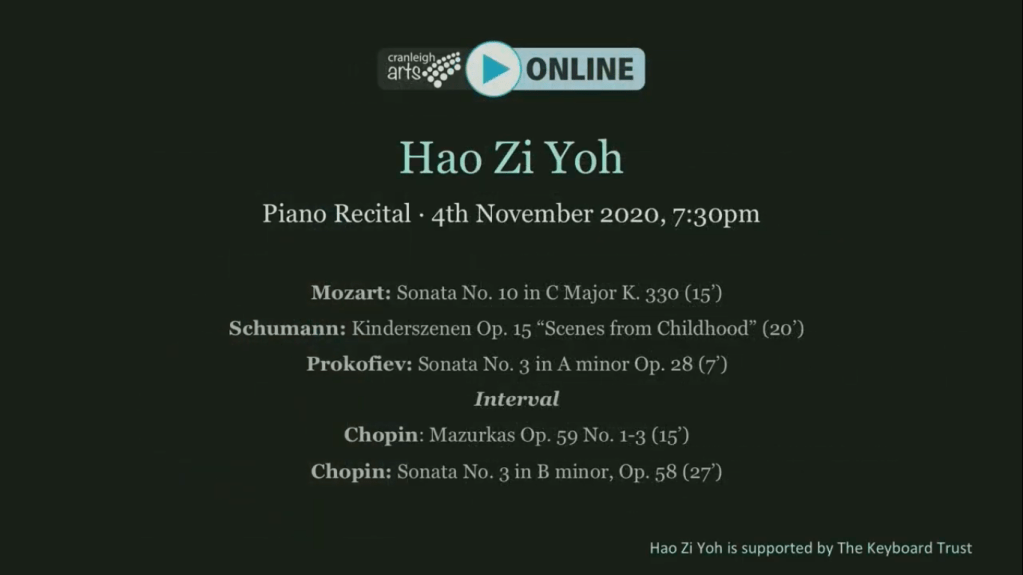
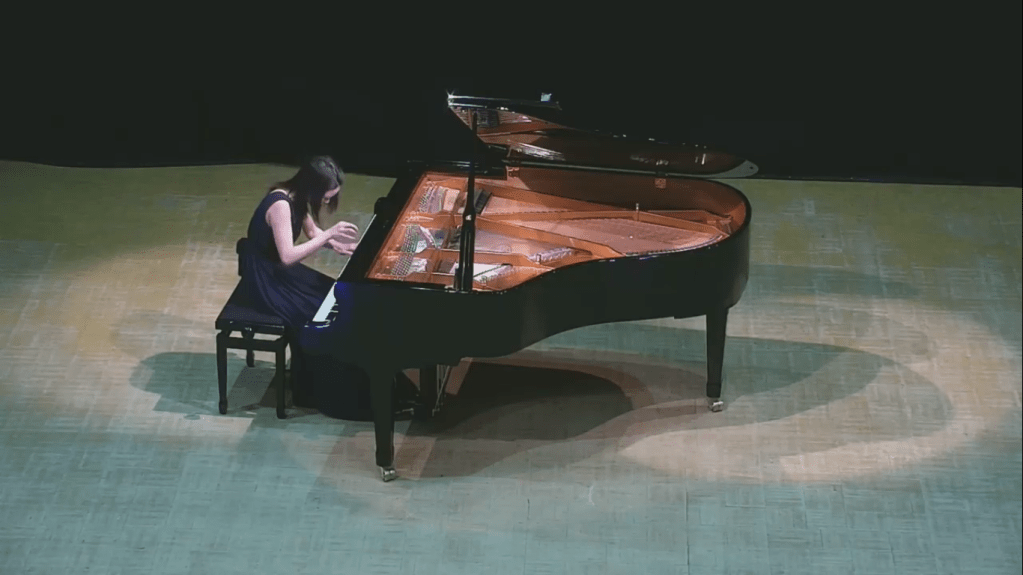
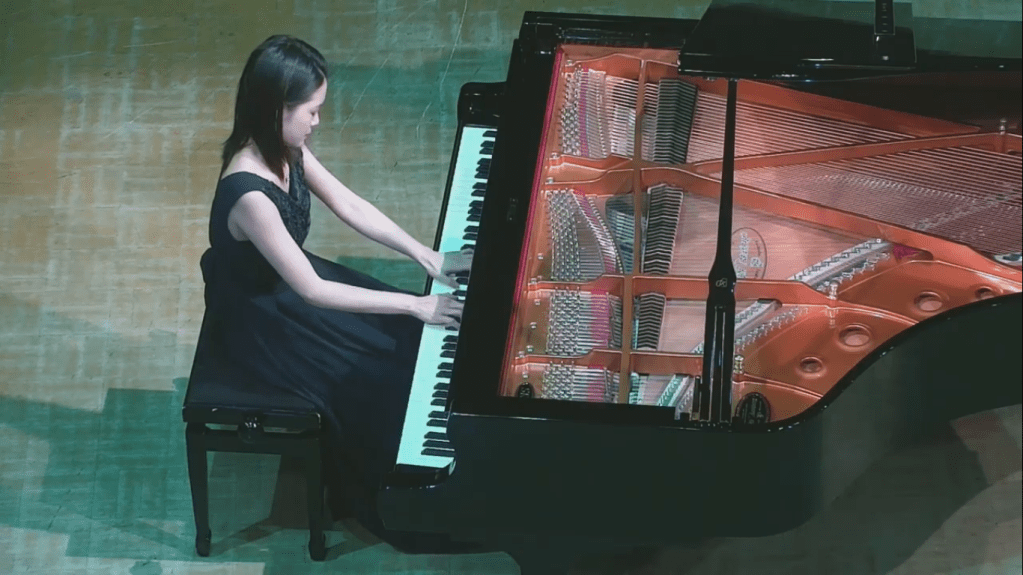
Hao Zi Yoh for Cranleigh Arts Online

Hao Zi Yoh at Cranleigh Arts Centre in collaboration with the Keyboard Charitable Trust

I have heard Hao Zi on many occasions as you can see below.Her playing of the Chopin Preludes at Regent Hall a few years ago left Bryce Morrison speechless with admiration.Now in that transitional period between finishing her studies and embarking on a professional career she has come under the wing of the Keyboard Charitable Trust.We are very happy to be able to share in the honours of their very first online concert.The second concert too next week will be Sasha Grynyuk who was selected a few years ago to give the KCT Prizewinners concert at the Wigmore Hall.https://www.facebook.com/notes/christopher-axworthy/sasha-grynyuk-an-unexpected-visit-from-a-master-pianist/10156957474887309/

Two quite remarkable artists both earning a special place in the music profession.

https://www.facebook.com/notes/christopher-axworthy/hao-zi-yoh-at-st-martin-in-the-fields/10156215461122309/

https://www.facebook.com/notes/christopher-axworthy/hao-zi-yoh-at-regent-hall/10155929756752309/

https://www.facebook.com/notes/christopher-axworthy/hao-zi-yoh-at-st-jamess/10153454898747309/

Malaysian pianist Hao Zi Yoh was born in 1995 and began her music studies at the age of 3. By the age of 12, she already performed at Carnegie Hall as a gold medallist of the Bradshaw and Buono International Piano Competition. Most recently, Hao Zi is selected as participant in the Preliminary Round of Chopin Piano Competition in Warsaw 2021.In Malaysia, Hao Zi studied under Chong Lim Ng, who showed her the path into the classical music world. She explored composing and her composition “Bustling City and Peaceful Suburb” was selected to represent Malaysia at the Yamaha APJOC concert 2007. At the age of 14, she moved to Germany to study with Prof. Elza Kolodin at the Hochschule für Musik Freiburg. It was then she won top prizes in many international competitions including EPTA Belgium, Enschede, RNCM James Mottram (Manchester, 2012) and Concurso internacional de piano Rotary Club Palma Ramon LLull, Mallorca (Spain 2013). This led her to performing as soloist in festivals around Europe, USA, China, Japan and Malaysia. Besides, she also performed with the Royal Liverpool Philharmonic, Nova Amadeus and Baleares Symphony Orchestra.In 2014, she came under the tutelage of Prof. Christopher Elton at the Royal Academy of Music, London, generously supported by Lynn Foundation, Leverhulme Trust, Countess of Munster and Craxton Memorial Trust. She received 3rdPrize at Roma International Piano Competition, the Phillip Crawshaw Memorial Prize for an Outstanding Musician from Overseas at the Royal Overseas League Competition. She was also recipient of prestigious Martin Musical Scholarship Trust Philharmonia Piano Fellowships on the Emerging Artists Programme 2017/18. During her studies, she explored her relationship with music and her interest in creating sound colours: her MMus Project 2016 involved collaborating with percussionist Daniel Gonzalez to create a version of Ravel’s Gaspard de la nuit for Piano and Percussion. In her interpretation of “A Distant Voice of the Rainforest” by Chong Lim Ng, she included improvised extended piano techniques as well as improvised singing to draw the audience into the soundworld of a rainforest.Apart from this, Hao Zi also participated in creative outreach projects led by the Open Academy for children and elderly with Dementia, where she performed in Music for Moment Concerts at the Wigmore Hall. She collaborated with author-illustrator David Litchfield and improvised to his storytelling of award-winning book “The Bear and the Piano”. Hao Zi remains in close contact with the music scene in Malaysia. She has given talks, performances and masterclasses to the students of University of Malaya, Bentley Music and Persatuan Chopin in hope to share her experiences and help the younger generation. During the Covid-19 lockdown, Hao Zi held online livestream and fundraiser for St. Nicholas’ Home for the Blind, Penang, Malaysia. A Young Steinway Artist, Hao Zi is currently based in London and has performed in venues such as Wigmore Hall, Southbank Royal Festival Hall, Salle Cortot, Steinway Hall London, St. Martin-in-the-Fields, Dewan Filharmonik Petronas (Malaysia) and Teatro Quirino (Italy). She is further developing her performing career being part of the Keyboard Trust London, Talent Unlimited. Hao Zi is also a piano tutor at King’s College London and gives masterclasses at Imperial College London.

The Mozart Sonata was played with a delicate precision almost without pedal that gave a clarity and simplicity that is rare indeed.Artur Schnabel said, ”Mozart piano sonatas are too easy for children and too difficult for adults. … ” ”No one ever said so much with so little as Mozart did in his keyboard works. ”And it was this purity that Hao Zi was able to show us with her scrupulous attention to detail of phrasing and touch.It was quite exemplary playing but I just wondered if she knew the operas of Mozart and the different characters that appear.Whilst admiring enormously her playing I just felt that she was a little afraid of stepping out of style and bringing the notes of Mozart more vividly to life.It was the same with the Allegretto last movement one just longed for a more luminous sound with more colour and character. The Andante Cantabile on the other hand showed some beautiful playing and her sense of colour and delicate phrasing here was memorable.

Her playing of Schumann as with Chopin later in the programme revealed an artist with a quite remarkable sensitivity to sound and a real natural feeling of flexible phrasing – rubato- that allowed the music to speak in a very simple and direct way.She was convinced and convincing where in Mozart she obviously felt constrained.

Schumann wrote 30 movements for Kinderszenen- Scenes from childhood but chose 13 for the final version. The unused movements were later published in Bunte Blatter- coloured leaves op 99, and Albumblatter Op. 124.  Schumann told his wife  Clara that the “thirty small, droll things”, most of them less than a page in length, were inspired by her comment that he sometimes seemed “like a child”. He described them in 1840 as “more cheerful, gentler, more melodic” than his earlier works.

It was just this sense of character that came across so vividly with the same inflections and slight pauses that Curzon and Cortot brought to these seemingly simple pieces.The beautiful fluid sounds ‘Of foreign lands and people’with the melodic line shaped so eloquently with a magical sense of balance.The playful rhythmic lilt she gave ‘A curious story’ led so well to the hell for leather fun of ‘Blind man’s bluff’ .Could one ever resist such a ‘Pleading child ‘that made him ‘Happy enough’to sing such a joyous song on his way to a truly ‘Important event’.Played with such grandeur and precision never allowing the tone of this beautiful new Shegaru Kwai to harden.’Dreaming’ with such magical sounds and subtle phrasing shaped with infinite love and care.Ready for the duet between the voices ‘At the fireside’ before jumping onto a ‘Hobby horse’ of such rhythmic energy.It was ‘Almost too serious’ for her delicate projection of the melodic line helped by the rich bass notes of this magnificent piano.Shegaru Kwai was infact the preferred piano of many pianists who were given a vast choice of instruments at the last Warsaw Chopin Competition. Hao Zi would have found out as she had been selected for this year’s competition had it not been postponed.Her delicacy and precision was beautiful as it was ‘Frightening’ and the ‘Child falling asleep’ must have been an angel indeed as it shone out like a diamond amongst these jewels.The final chords of ‘A poet speaks’ was a lesson in how to persuade us that the piano was not a percussive instrument.

The Prokofiev one movement 3rd Sonata was played with pungent rhythmic energy and with a clarity and precision of great technical prowess.There were also some beautiful moments of peace shielded by clouds of pedal in the central section moderato before the reawakening of Allegro tempestoso con elevazione.Poco più mosso was an exhilarating race to the final tumultuous chords.

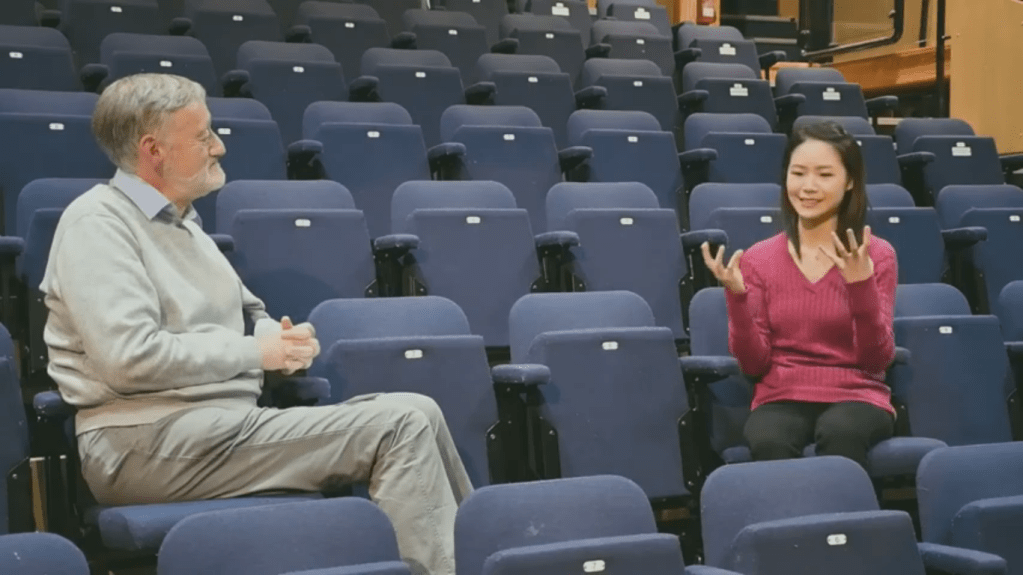
Hao Zi in conversation with Clive Wouters

One of the benefits of on line concertising ,like the relays from the Met, is the interesting and informative intervals.Gone is the bun fight for a glass of sherry or queue for the bathroom and instead, like today, an interesting voyage of discovery into the world of the concert artist who is sharing her music making with us.

It was Bryce Morrison,one of the world’s most renowned pianofiles,who admired Hao Zi’s Chopin Preludes a few years ago and listening again today to her Chopin one could immediately see why.

From the very first notes of the three Mazukas op 59 there was a feeling that she had arrived home.This was a world of fantasy,ravishing sounds and a flexibility of rhythm that is instinctive and can never just be taught. Chopin likened it to a tree with the roots in the ground but the branches free to sway in the wind.

Such melancholy in the opening bare notes of the first mazurka were followed by notes weaving their magic spell with such freshness and spontaneity.The second slightly more serious mazuka with a haunting central left hand melody and that dissolved so magically into the stratosphere with just a very gentle full stop on the final pair of barely whispered chords.I remember so well Smeterlin playing this in the Festival Hall years ago and it has haunted me ever since, as Hao Zi’s performance will today.A real sense of dance in the final Mazurka that was so natural for her and seemingly inborn.

It was Fou Ts’ong who much to everyone’s surprise won the prize for the Mazukas in one of the very first Chopin Competitions in Warsaw.He gave many masterclasses in my theatre in Rome and I was always intrigued and inspired by how he would relate the feeling in Chinese poetry to the same feeling in the music of Chopin.Small world- music is a universal language and the heart beats the same in China as it does in Poland ! Ca va sans dire!

The Sonata in B minor op 58 was given a memorable performance as were her Preludes op 28 a few years ago.A great sense of architecture that did not preclude a complete poetic freedom.Bold contours mixed with ravishingly beautiful detail .The gentle voicing at the beginning of the development was so clearly played and the gradual build up to the recapitulation was played with fiery passion.The return of the second subject was played with such masculine authority and simple heartfelt sense of line that owed more to the school of Rubinstein than Paderewski.The Scherzo was played with a scintillating jeux perlé that seemed to move like a living thing feeling its way.Full of shape and ravishing colour.The Trio too was played with great feeling and sense of direction .The Largo showed her supreme sense of balance where there was such a glow to the long cantabile melodic line.The sostenuto middle section barely murmured as the melodic line was gently hinted at.The coda was pure magic.We were awakened by the Presto non tanto chords that gradually took us to the relentless agitato.Her sense of control and changes of colour were quite mesmerising as the agitato built up relentlessly to the final triumphant explosion.The fanfare at the end rang out as never before but always with a beauty of sound that in all the animal excitement was never allowed to become harsh.

The simplicity and purity of Erik Satie’s Gymnopédie n-1 The work’s unusual title comes from the French form of  gimnopaedia, the ancient Greek word for an annual festival where young men danced naked! It was offered as a thank you to Cranleigh Arts Centre and just summed up in a few simple bars the complete artistry of this brilliant young pianist.

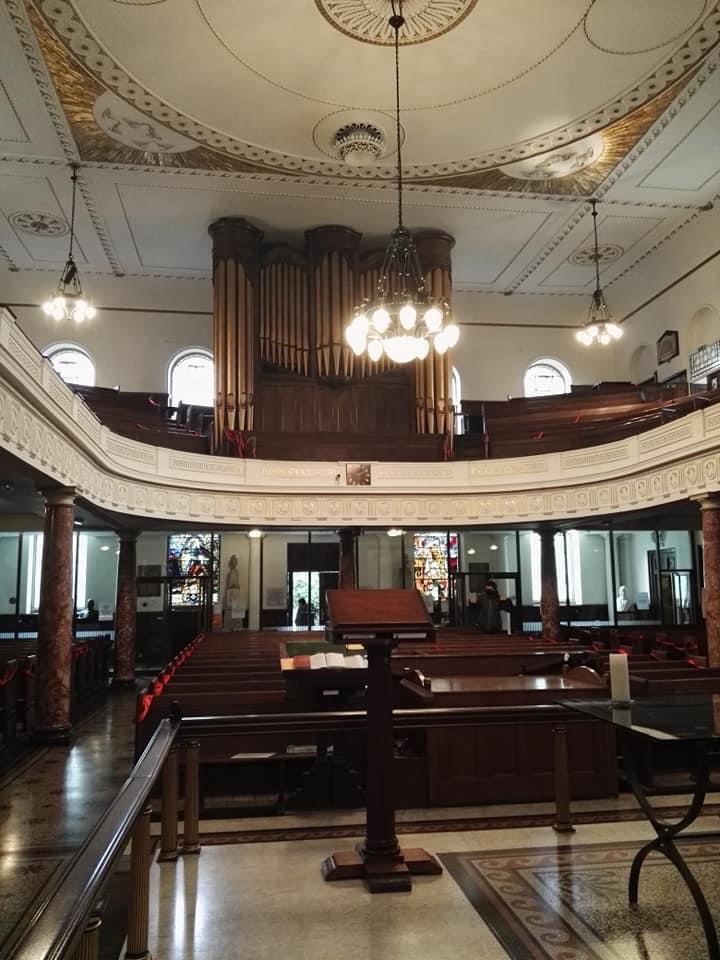
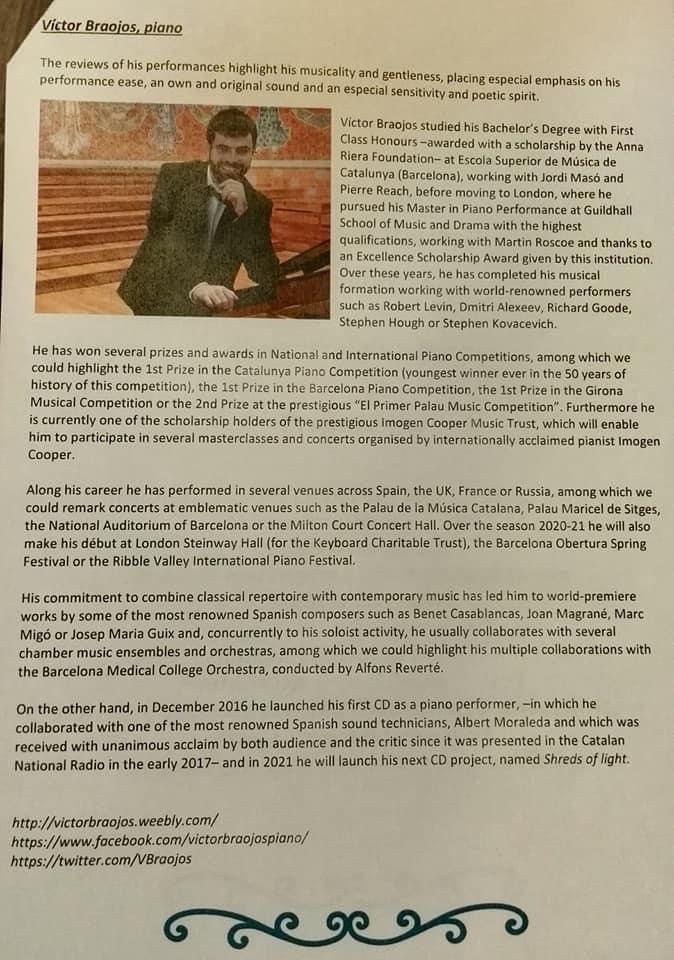
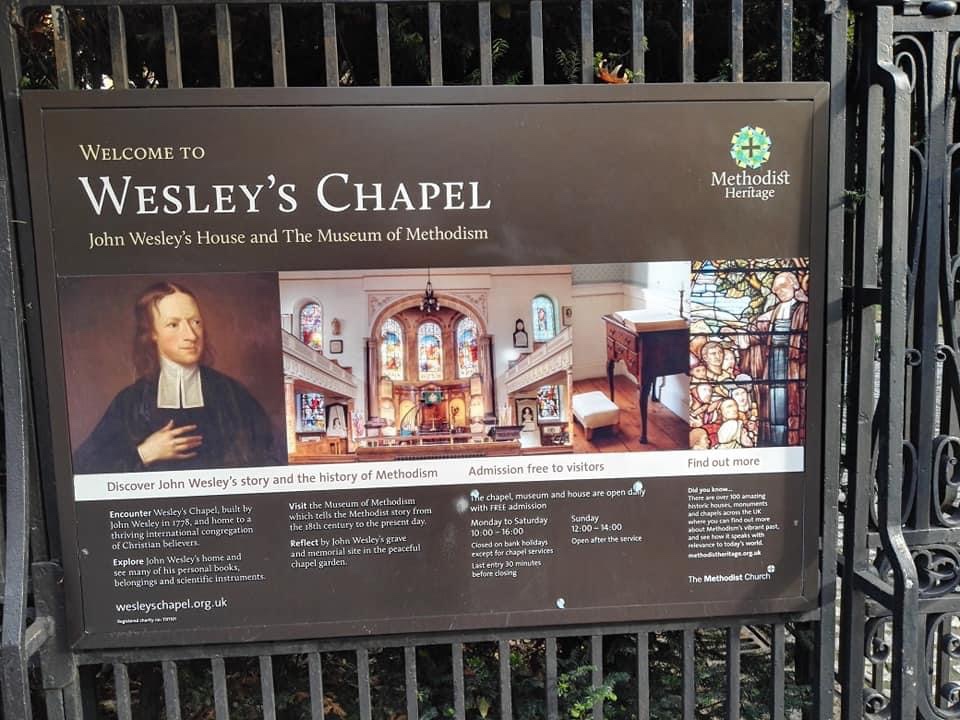
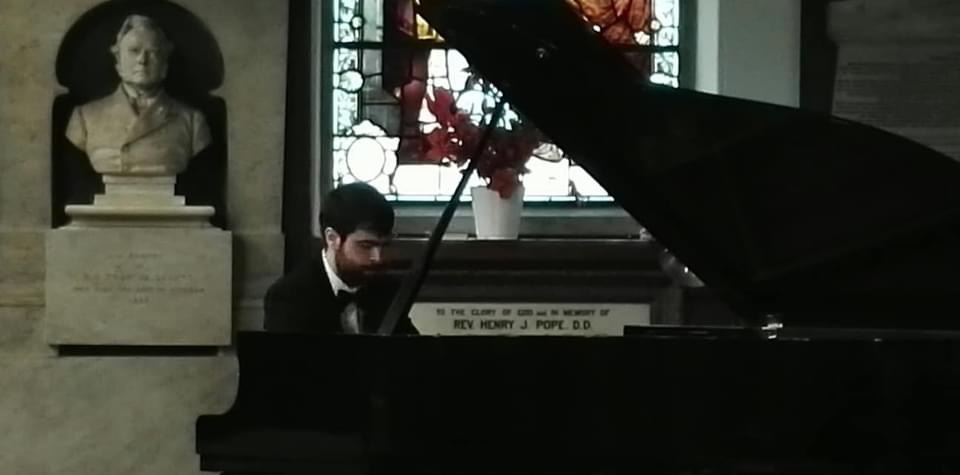
Victor Braojos at Wesley’s Chapel – Passion and Poetry united

An very interesting visit to Wesley’s Chapel to hear the young Spanish pianist Victor Braojos in a exceptionally beautiful programme of Brahms op 117 and Schumann Fantasie op 17.Two of the most poetic works of the Romantic repertoire played together by a true musician.

And what does a true artist do to add a cherry on such a cake :the ósublime Bagatelle op 126 n.3 by Beethoven.Victor did not let us down.His musical credentials were obvious from the programme he presented.

I had already heard Victor, streamed from the Guildhall , with a very fine performance and an unusually stimulating masterclass with Stephen Hough on Beethoven’s Appassionata Sonata.I was not surprised to learn that he is preparing for his master’s degree in performance with Martin Roscoe.Martin and I were at Dartington together playing in the class of Stephen Bishop-Kovacevich and I well remember his Brahms D minor concerto that showed all the musicianly qualities that were to come to the fore in a long and illustrious career.He of me ,when prompted, only remembered the pints we used to down together in the White Hart!

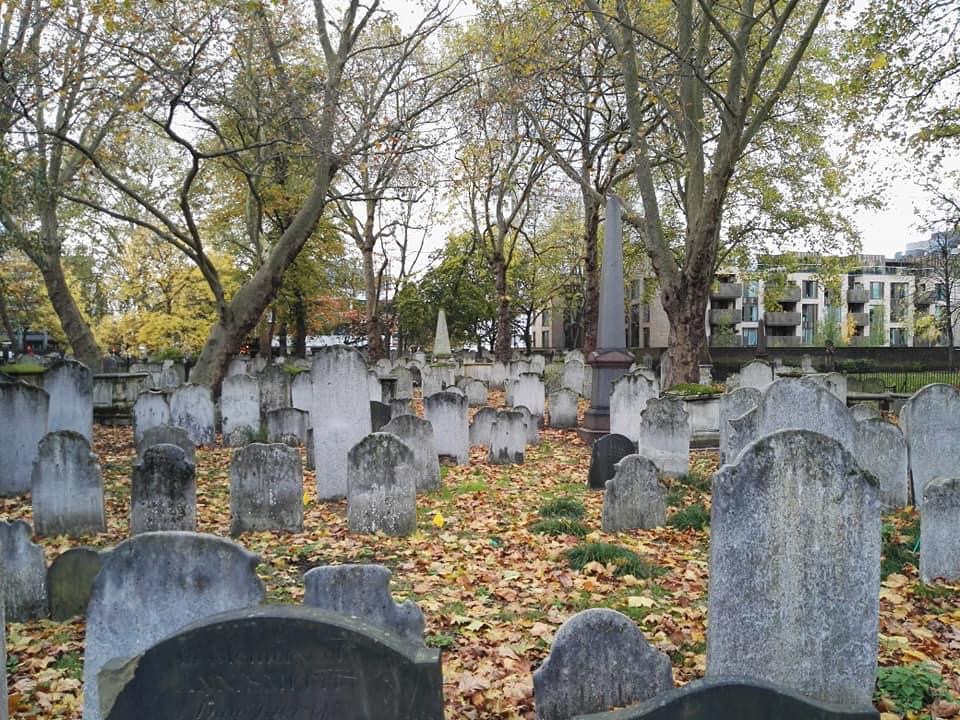
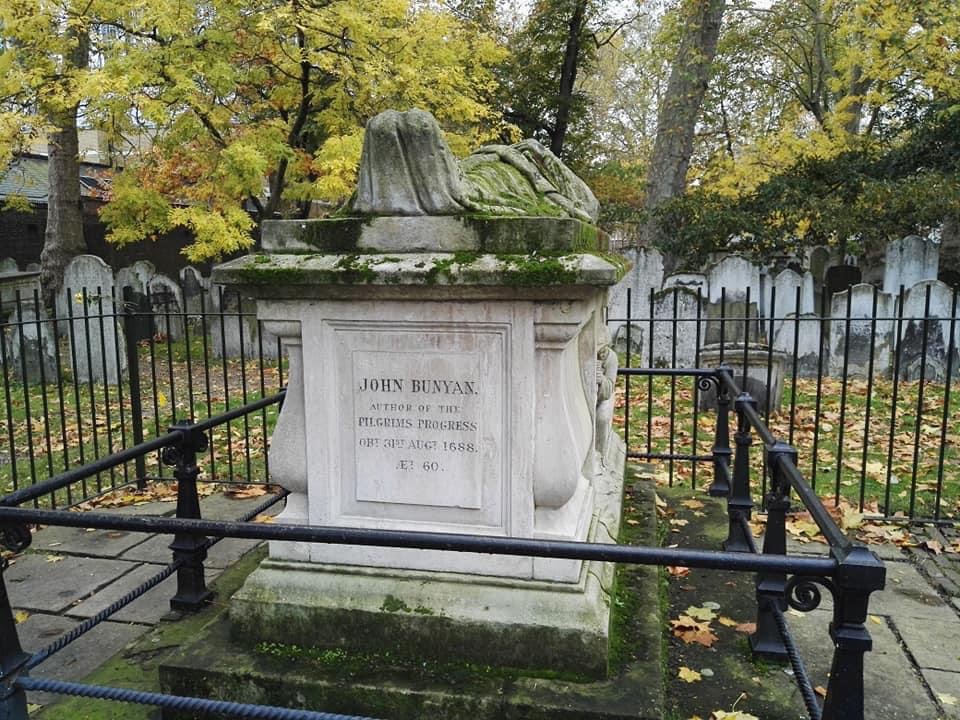
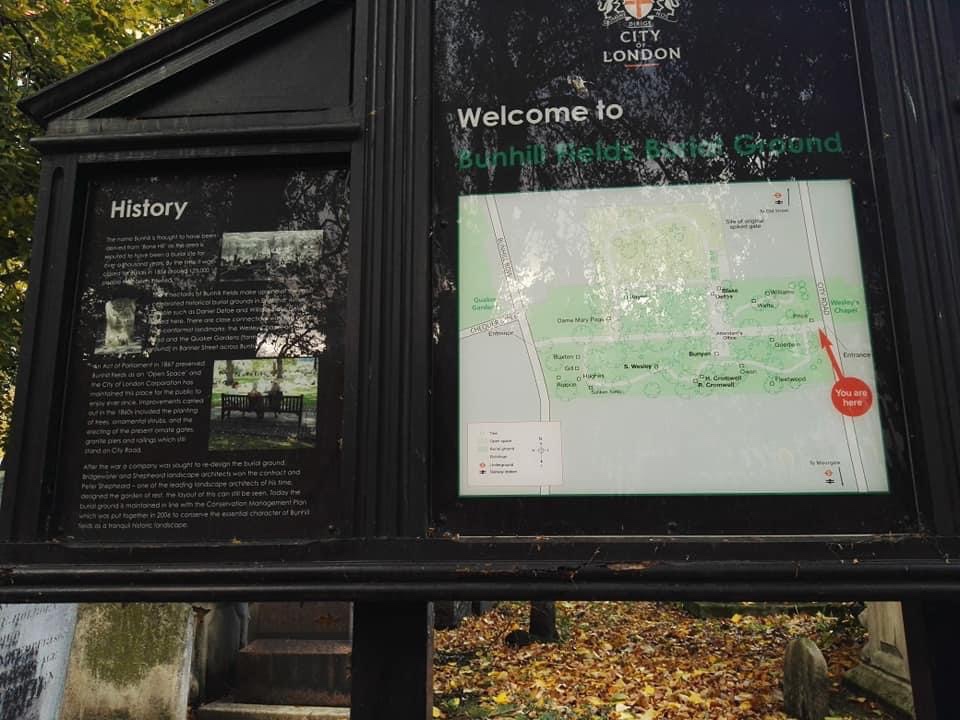
It was fascinating to have time before the concert to visit the cemetary opposite where Bunyan and Defoe are buried in an oasis in the very center of the city next to Old Street.

I was not expecting to find the Chapel so easily or quickly and so had time before the recital to explore this magical and to me unknown part of London.

It was nothing though compared to what awaited at the appointed hour with 50 minutes of some of the most beautiful music ever written for the piano and more importantly played with such musicianly care and intelligence.The passion too of a young man. The same that had ignited Schumann’s pen when he wrote this outpouring of love for Clara his beloved but still distanced future wife by an unapproving father!

The Three Intermezzi for piano, Op. 117 by Brahms,  were described by the critic Eduard Hanslick as “monologues”… pieces of a “thoroughly personal and subjective character” striking a “pensive, graceful, dreamy, resigned, and elegiac note.”They were written in 1892 and the first intermezzo, in E♭ major, is prefaced in the score by two lines from an old Scottish ballad, Lady Anne Bothwell’s Lament:’Balow,my babe,lie still and sleep!It grieves me sore to see thee weep’.Victor opened with beautiful singing tone and a flowing tempo with bass notes that gave great depth to the sound and allowed some very delicate shading.The second in B flat minor flowed so mellifluously and the deeply languid middle section portraying,according to Walter Niemann,Brahms’ biographer, ‘a man as he stands with the bleak,gusty autumn wind eddying round him’.The opening theme returns building to a sumptuous climax that dies away to a sorrowful,nostalgic farewell with a ravishing final chord stretched over the entire keyboard.The final intermezzo in C sharp minor has an autumnal quality with the melodic line shadowed in unison by the bass and of a searing melancholy.The florid middle section was played with a great sense of line and colour before the gradual magic return of the opening theme.
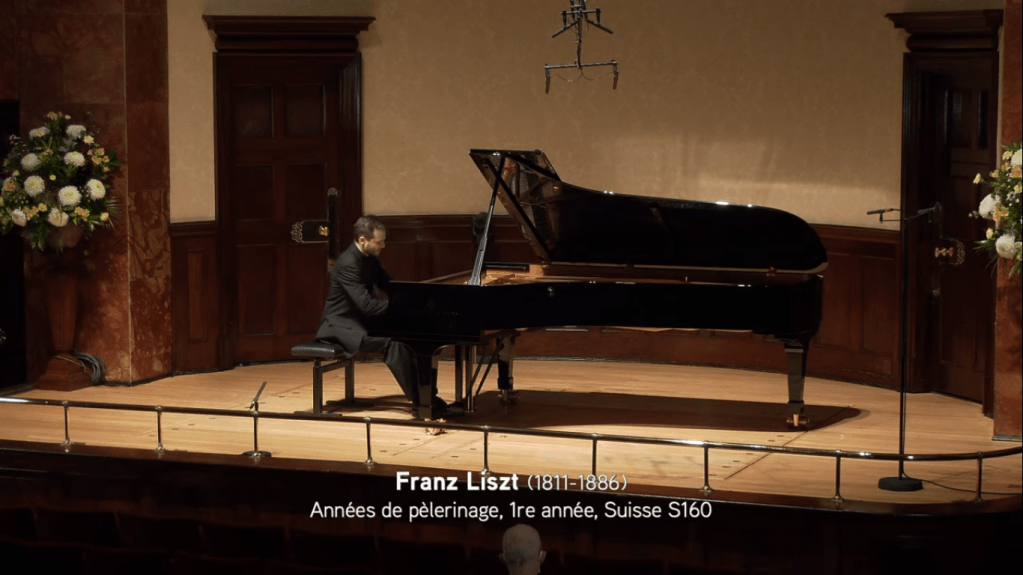
What better preparation could there be for the Fantasie op 17 by Schumann which he described as “an outpouring of love for his beloved Clara”

It has its origin in early 1836, when Schumann composed a piece entitled Ruines expressing his distress at being parted from his beloved Cara Wieck (later to become his wife). It became the first movement of the Fantasie. Later that year, he wrote two more movements to create a work intended as a contribution to the appeal by Liszt for funds to erect a monument to Beethoven in his birthplace of Bonn. Other contributions to the Beethoven monument fund included Mendelssohn’s Variations sérieuses.The original title of Schumann’s work was “Obolen auf Beethovens Monument: Ruinen, Trophaen, Palmen, Grosse Sonate f.d. Piano f. Für Beethovens Denkmal”-Ruins, Trophies, Palms became Ruins, Triumphal Arch, and Constellation, and were abandoned when in 1839 it was printed with a dedication to Franz Liszt.
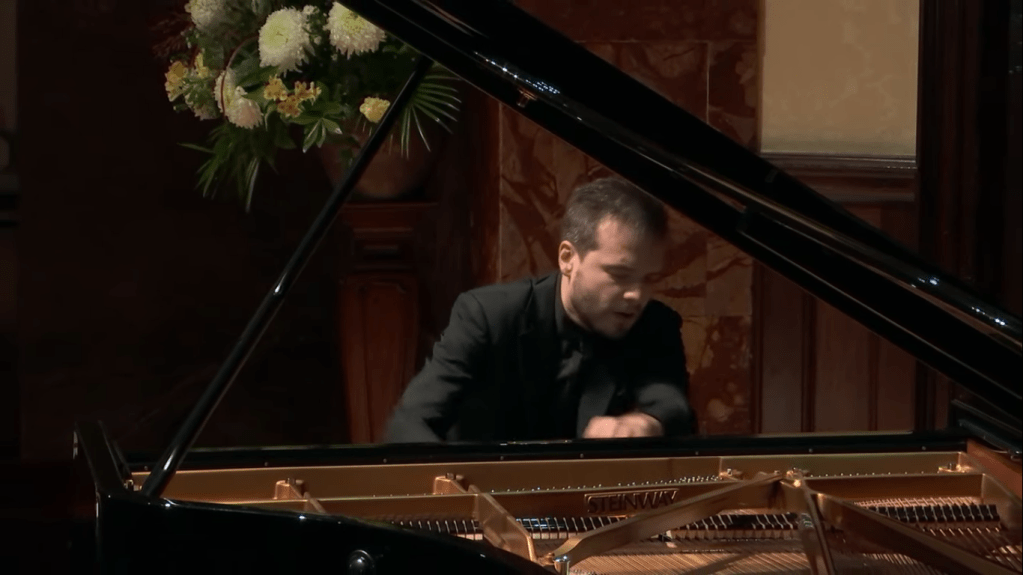
The Beethoven monument was eventually completed, due mainly to the efforts of Liszt, who paid 2,666 thaler,the largest single contribution. It was unveiled in grand style in 1845, the attendees including Queen Victoria and Prince Albert, and many other dignitaries and composers, but not Schumann, who was already ill.

Liszt in turn in 1853 dedicated his Sonata in B minor to Schumann.

A passionate performance from this young Spanish virtuoso played with an unusually clear sense of line . The very first left hand ‘G’ played strangely with the right which was made to resonate ‘appassionato e fantastico’ as it then played the opening declamatory melody. It was played with great forward movement with the passion of a young man but also with the intelligence and control of a fine musician.A very direct simplicity that seemed to arrive so naturally to the quote from Beethoven’s ‘to the distant beloved’.Schumann had infact prefaced the work with a quote from the poet Friedrich Schlegel :”Resounding through all the notes in the earth’s colourful dream, there sounds a faint long-drawn note for the one who listens in secret.”

In fact the melodic line was made to float so well on the throbbing undercurrent of sounds and the numerous indications of ritardando and changes of tempo never distracted this young man from projecting the overall melodic line or architectural shape.The chords that seem to gradually disintigrate before the passages marked Adagio I have never heard played so clearly or make such magical sense.The same pedal effect that Schumann asks for in Papillons op 2?

The second movement – or Triumphal Arch made a great contrast even if the mezzo forte opening was played with a bit too much vehemence to be able to contrast with the ‘triumphal ‘ restatement later. Trecherous bass notes held no terror for him as they were played with a wonderful natural arch of the arm.A middle section of sumptuous beauty and fleeting lightness that gradually led to the return of the opening march leading to the ‘gallows!’-The coda is one of the most notoriously difficult passages in Schumann and Victor took it bravely on his first outing with this monumental work.(He had been asked to substitute for a colleague who had to cancel at the last minute and Victor bravely offered to play a work that is new to his repertoire).

The last movement – Constellation- again was allowed to flow so naturally with some truly sumptuous sounds.It had a beautiful melodic line mirrored by the tenor and bass sonorities that gave the depth and strength of a full string orchestra. The shadowing of the thumb in the great build up to the declamatory chordal interruptions was very interesting and gave great depth without hardness.The final melodic outpouring passing from the treble to the bass was magically played and the gradual final build up, as Schumann obviously intended, was played with the passion of a young man.His heartbeat finally coming to rest on the final three quiet chords with which he finds solace.

The Bagatelle op 126 n.3 by Beethoven, offered as a thank you to his appreciative audience, not only showed his poetic sensibility but also the scrupulous attention to detail with Beethoven’s very precise pedal indications brought so naturally to life

Filippo Gorini at Rome University La Sapienza

https://www.facebook.com/notes/christopher-axworthy/filippo-gorini-at-teatro-argentina-rome-for-the-filarmonica-romana/10157004554932309/

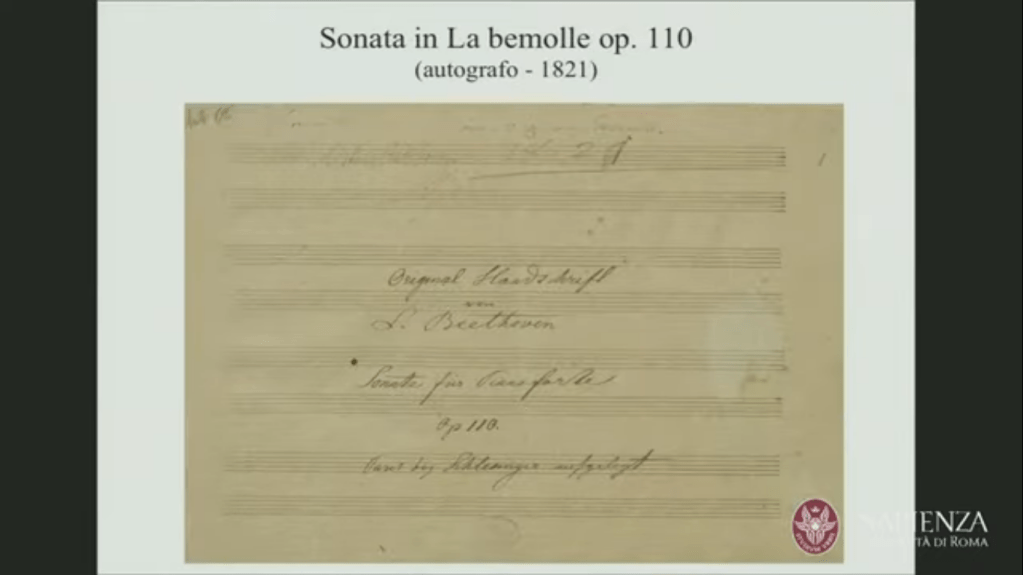
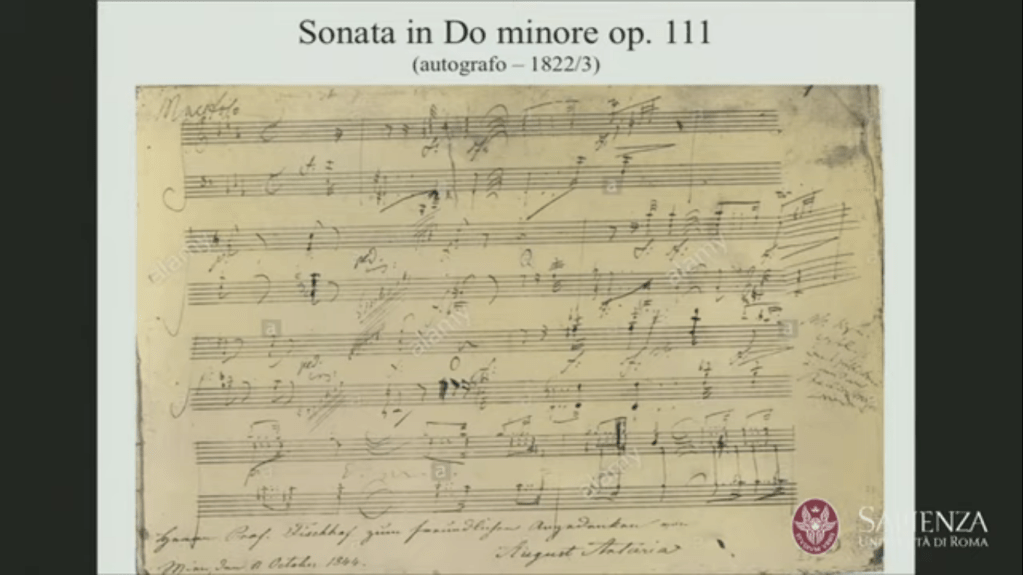
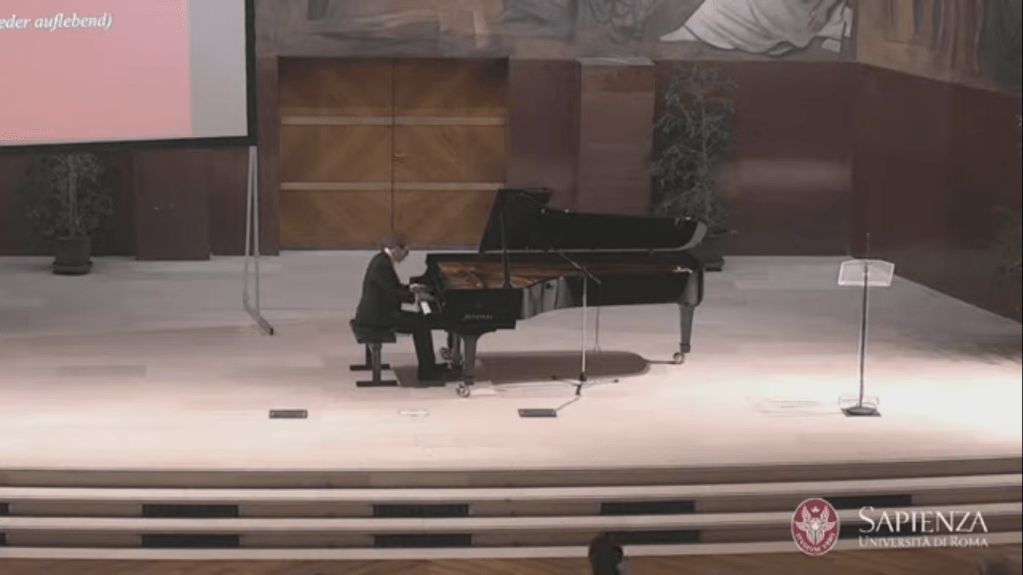
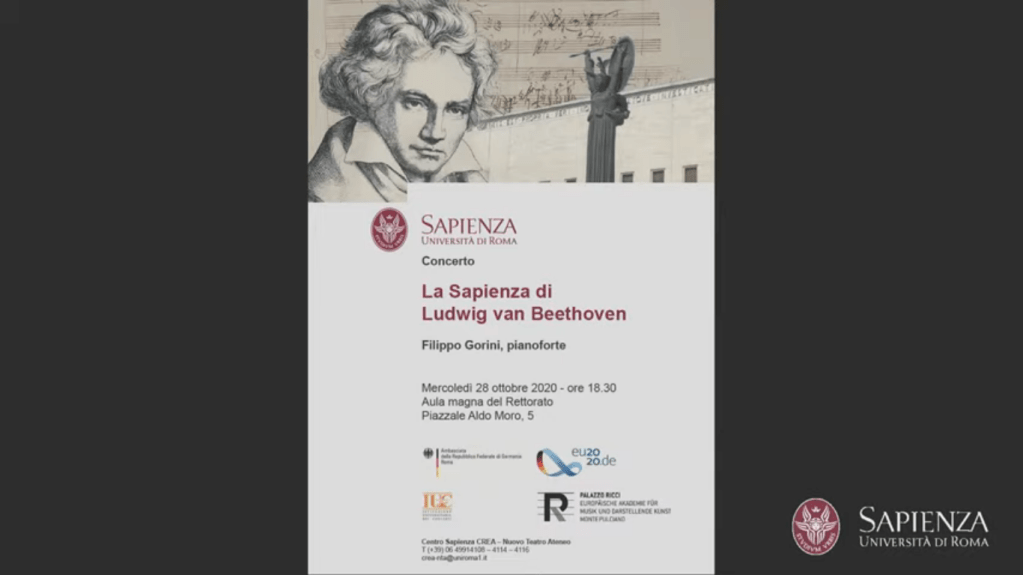
A very interesting programme of Beethoven’s last two Sonatas:op 110 and op 111 in the last of a series of three concerts dedicated to the composer in his 250th anniversary year.The concert was presented by Rome University in collaboration with the German Embassy.It was fitting that the young Italian pianist Filippo Gorini should be invited to play both Sonatas as he had won the Beethoven Competition in Bonn at the age of 20 and has since been taken under the wing of Alfred Brendel.His first two CD’s of Beethoven op 106 (Hammerklavier) op 111 and the Diabelli Variations have been rapturously received by the critics.

Still in his early twenties he has been preparing , during the long lockdown, the Art of Fugue ,one of Bach’s infinitely complex works that even the composer left unfinished…infact it dissolves into the infinite after 14 fugues and 4 canons………a riddle that is still left unsolved to this day.

Filippo Gorini is very serious young musician with something important to say with a transcendental technique and an intellect way beyond his 24 years.I enclose two articles about recent performances one of which was the op 111 that was on the programme today with it’s twin op 110.

It was in 1983 that I managed to persuade my friend and teacher Guido Agosti to give a lecture recital on op 110 and 111.He too prefaced his masterly performances with an introduction much as Professor Rostagno did today.

The recording of op 110 from the Teatro Ghione is one of the very few recordings by this leggendary figure who had been befriended in his youth by Busoni.Far too reserved to have a major public career the world used to flock to his studio in Siena each summer to be informed,enlightened and invigorated by his playing and total dedication to music.For him music was the Bible – Beethoven his God.

An unexpected on line concert without an audience due to the restrictions reintroduced for public performances in Italy.Some interesting references to Adorno,Bekker,Rosen and Mann in Professor Rostagno’s brief but informed introductions as he attempted to explain what he thought was the message that lay in these two works.The catastrophy and return to life of op 110.The coming to terms with contrasts in life and the acquisition of simplicity in op.111.

Agosti had attempted something similar too.Interesting concepts and mercifully short as the true answer lies in the music itself .Music takes over where words are just not enough and nothing could be clearer than the music in the hands of a true musician of the calbre of Filippo Gorini.

Op 110 was full of subtle detail almost orchestral in conception and for that was full of beauty without any sentimentality.The opening more like a string quartet than a melody and accompaniment.The trill beautifully prolonged as it dissoved into the sublime simplicity of Beethoven’s melodic line.Sustained by the left hand that gave great weight and an inner strength to this seemingly simple opening statement.The fleeting passage work up and down the keyboard was played with a clarity and lightness as Beethoven himself has indicated.The half bowed left hand chords again just added depth and weight without for a moment allowing any heavyness in the etherial right hand figurations.There was a controlled passion in the robust syncopated passage that follows dissolving to a whisper as the meanderings of the development gradually enter.The precise crescendo and diminuendo markings of Beethoven unobtrusively realised in the left hand as the opening theme appears in many different guises above. The contrasting vigour of the Allegro molto second movement with its bursts of syncopated energy dissolved so magically as it prepared the scene for the very heart of the Sonata : Adagio ma non troppo and above all the miraculous arioso dolente.

There was no break between the movements and Beethovens pedal indications in the recitativo were beautifully translated into magic sounds The vibrations of the ‘bebung’- repeated notes- created exactly the atmosphere in which Beethoven could float miraculously one of his most beautiful melodies.Again following the very precise pedal indications of the composer the fugue that follows seemed to grow out of the arioso so naturally.A mellifluous fugue with a forward movement that swept us along on a continuous wave breaking only momentarily the pastoral feel with the entry of the great bass octaves.The arioso seemed to reappear like a wondrous vision even more tender than before.The inversion of the fugue slipping in almost unnoticed as it gradually became more alive. Transformed into passionate declamations and a glorious outpouring of sounds-a true reaffirmation of life to quote Charles Rosen.

https://christopheraxworthymusiccommentary.wordpress.com/2020/07/03/filippo-gorini-at-ravenna-festival-live-2nd-july-2020/

I have written about op 111 this summer at the Ravenna Festival and it was played with the same gripping rhythmic energy.It alternated with moments of reflection before dissolving into the major key for the Arietta. Played simply in three so that the variations that follow,grow naturally out of the previous one.Plunging into the third tumultuous variation in 12/32 time that in turn dissolves leaving the fragmented theme searching for it’s way forward.The absolute clarity of Filippo’s playing here was quite remarkable with a control and maturity way beyond his years.The leggiermente, un poco legato writes Schnabel, was perfectly judged leading gradually to it’s climax via even more fragmented trills and a question and answer between the hands.Gradually the way forward is found with a simple passionate outpouring of the theme that ascends into the stratosphere amongst magic trills sustained by a barely whispered left hand.A final disintigration of the falling interval of the theme leads to the gentle whispered farewell in the major key.Peace at last .Simple and lasting.This was Beethovens last word on the Sonata.

Francesco Piemontesi at the Wigmore Hall – A poet speaks

Francesco Piemontesi piano

The Swiss pianist presents three major piano works including Schubert’s 1826 sonata, the last published during his lifetime, and Liszt’s 1853 sonata dedicated to Robert Schumann.

Helmut Lachenmann (b.1935)

5 Variations on a Theme of Schubert

Franz Schubert (1797-1828)

Fantasy Sonata in G D894

Molto moderato and cantabile-Andante-Menuetto Allegro moderato- Allegretto

Franz Liszt (1811-1886)

Piano Sonata in B minor S178

“Francesco Piemontesi combines stunning technique with an intellectual capacity that few can match” Spectator

Francesco Piemontesi is a pianist of exceptional refinement of expression, which is allied to a consummate technical skill. Widely renowned for his interpretation of Mozart and the early Romantic repertoire, Piemontesi’s pianism and sensibility has a close affinity too with the later 19th century and 20th century repertoire of Brahms, Liszt, Dvořák, Ravel, Debussy, Bartók and beyond. Of one of his great teachers and mentors, Alfred Brendel, Piemontesi says that Brendel taught him “to love the detail of things.”He was born in 1983 in Locarno and studied at the Hochschule für Musik und Theater Hannover with Arie Vardi before closely collaborating with Alfred Brendel. He rose to international prominence with prizes at several major competitions, including the 2007 Queen Elisabeth Competition in Brussels. In 2009 he was awarded the fellowship of the Borletti-Buitoni Trust. Between 2009-2011 he was chosen as a BBC New Generation Artist.In 2012he was announced as Artistic Director of the ‘Settimane Musicali’ music festival in Ascona,and received the BBC Music Magazine Newcomer Award for his ‘Recital’ disc with works by Haendel, Brahms, Bach and Liszt.Since 2012 he records exclusively for the French label Naïve Classique. He currently lives in Berlin.

I first heard Francesco Piemontesi when he appeared at a Prom concert a few years ago playing the Strauss Burlesque and a concert Rondo by Mozart.His musicianship together, in that period, with another young musician, Martin Helmschen, immediately struck me as a quite exceptional light.He has gone on since then to establish himself as the real musician he is who can shed new light on the works he plays with a refreshing simplicity without any rhetoric.And so it was today in a programme with the magical G major Sonata by Schubert and the monumental Sonata by Liszt prefaced by Variations on the Waltz in C sharp minor of Schubert by the contemporary composer Helmut Lachenmann

Lachenmann was born in Stuttgart and after the end of the Second World War (when he was 11) started singing in his local church choir. Showing an early aptitude for music, he was already composing in his teens. He studied piano with Jürgen Uhde and composition and theory with Johann Nepomuk David at the Musikhochschule Stuttgart from 1955 to 1958[1] and was the first private student of the Italian composer Luigi Nono in Venice from 1958 to 1960. The Five Variations on a theme by Schubert – the waltz in C sharp minor D643 was written in 1956

Immediately taking us into his own very particular sound world of clarity and delicacy with the jewel like precision of sounds barely rising above piano.The first variation was played with a rhythmic energy, the ending thrown off with nonchalant charm.It was followed by a deeply melancholic second variation that sang so beautifully thanks to an extraordinary sense of balance that allowed for such a kaleidoscope of multicoloured effects.Sounds sweeping up and down the keyboard in the third with glissandi where even faster motion was needed all thrown off with such subtle ease and virtuosity.A barely whispered fourth variation followed in which the extreme legato of the right hand was mirrored by the delicate almost plucked staccato of the left.

It made for the ideal preparation to the serene masterpiece of Schubert’s fantasy sonata which Schumann described a the most perfect in form and spirit .David Owen Norris described it as uninterrupted sunshine but that was before the performance of Francesco Piemontesi that was truly Beethovenian and anything but a sunny romp.This was not just an outpouring of Schubert’s sublime melodic invention but a full blooded account where Schubert’s seeming innocence had also an undercurrent of menace and foreboding that every so often would erupt with quite openly drammatic contrasts.

A barely whispered opening to the magic chords of an intimate confession that Richter loved so much he made them last as long as possible and added a good ten minutes to the normal performance time.Francesco Piemontesi played with a simplicity barely caressing the notes with a wondrous flexibility.It made every note talk with a tenderness and yearning that made the sudden outburst of the development in the minor and the gradual build up of tension even more surprising.These brief interruptions were juxtaposed with some of Schubert’s most sublime melodic inventions seemingly of joy but with an undercurrent of melancholic nostalgia .The return of the opening chords after these outburts was even more sublime because Schubert had shared this panorama of emotions with us.

The excellent streaming allowed us to appreciate not only the extreme beauty of sound but the beauty of the pianist’s hands as he caressed the keys with a simplicity and sincerity that belied any rhetoric or showmanship.

The Andante was played with the purity of a creamy rich sound that was very moving as nothing was added to the emotion within the notes that Schubert himself had penned. The turbulance of a passing cloud was soon forgotten with the sublime melodic invention that flows continuously from Schubert’s pen in the final years of his short life.Francesco Piemontesi showed a remarkable sense of balance and of self identification with the emotional world of Schubert.He is only a few years older than the composer when he wrote this remarkable work.

The Menuetto was played with a subdued lilt and sense of lyriciam that precluded any percussive hardening of sound.Infact there had been created, from the very first note to the last of this Sonata, a sonorous bubble within which all these marvels were revealed by this true poet of the piano.The Trio, a landler, seemed to grow so naturally out of the Menuetto with a simple uplifting charm and delicate sound that was indeed mesmerising.

The last movement burst in too, quite naturally, with a joyously refreshing lilt as if a window had been opened on the simple folk enjoying the wonders of country life.A beguiling sense of rubato was really quite hypnotic as we were led around this rural scene until the miracle occurs. A barely prepared interruption with one of Schubert’s most sublime melodies.It is as though a cloud has lifted and we are all reduced to silence as we marvel at this heavenly apparition.The delicate ritardando towards the final meanderings was a truly magic ending to a dream.One is reminded of a report of Schubert’s only performance in public where it was noted much to his approval that ‘the keys in his hands became singing voices?

The Liszt Sonata is a monument and together with the Fantasie of Schumann constitutes the peak of the Romantic repertoire (together of course with the Fourth Ballade of Chopin).The Sonata by Liszt is dedicated to Schumann as the Fantasie is dedicated to Liszt – birds of a feather indeed .The Sonata was dedicated to Schumann in return for the dedication of the Fantasie op 17 (published 1839) to Liszt.It was Schumann’s contribution to the Beethoven monument that Liszt had taken in hand (as Mendelssohn’s Variations Serieuses was too) A copy of the work arrived at Schumann’s house in May 1854, after he had entered Endenlich sanatorium. Schumann’s wife Clara, an accomplished concert pianist and composer in her own right, did not perform the Sonata; apparently she found it “merely a blind noise!”.

I remember André Tchaikowsky persuading his friend Radu Lupu to spend time learning the sonata.Richter played it in London that for us mortals was an absolute eye opener and marvel.Richter was so disgusted by his performance that he would not see anyone after the concert!Gilels and Curzon have shown us that this work although seemingly a showpiece is a work of startling originality.It created a completely new direction of perfect form from the classical style sonata of yore. Liszt, the revolutionary original thinker, was to foresee the direction that music was to take fifty years hence.

I was expecting from Francesco Piemontesi a performance of the introspection of Lupu or the absolute originality of Richter but instead we got a youthful make or break performance that nevertheless kept us riveted from the opening whispered G’s to the all too final submerged murmur of B – played with the right hand deep in the bass!

From the opening notes his supreme musicianship shone through .The contrast between the opening notes that will be trasformed during the percourse of the following thirty minutes was captivating from the very first sounds.This after all is the leit motif idea that was to inspire Liszt’s son in law Wagner in his operas.The first agitato semiquavers were played like rays of light (as Agosti played them) leading to the first triumphant octave declaration.A masterly sense of colour and shape led to the passionate outpouring of the ‘grandioso’.It immediatley dissolved into the mellifluous ‘dolce con grazia’.

It was ,in fact, the total identification with the demonic Florestan and and the ever more tender and magical Eusebius that was remarkable.From the passionate virtuosistic outbursts to the most intimate comuning it was all played with an overall sense of architectutral shape..There was always a sense of balance and colour that never once evolved into the barnstorming of lesser musicians that has been the rule amongst so called virtuosi that plunder this masterpiece!

The Andante sostenuto was of a wondrous beauty coming as it did after such sould searching virtuosity.Managing to keep the pulse flowing even in the’ quasi Adagio’ (where Richter almost came to a stop) leading so naturally and gradually to the passionate central outburst of romantic fervour. It was indeed a ‘scorching’ performance as David Owen Norris aptly described it .But judging from the moments of absolute silence that greeted the final note it was also a deeply touching comuning of the soul.This indeed was a performance to treasure .

The beautiful ‘Au Lac de Wallenstadt’ offered as a thank you to the audience, both real and virtual, seemed to flow from his fingers with such freshness and simplicity and belied the fighting off of the demons that we had witnessed only a few moments before.