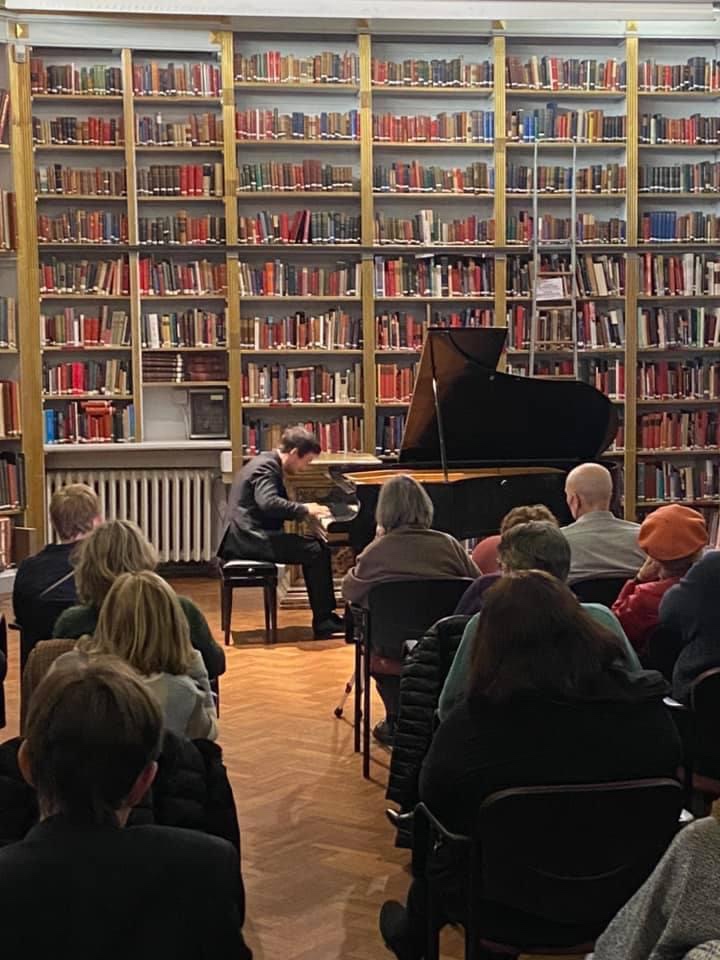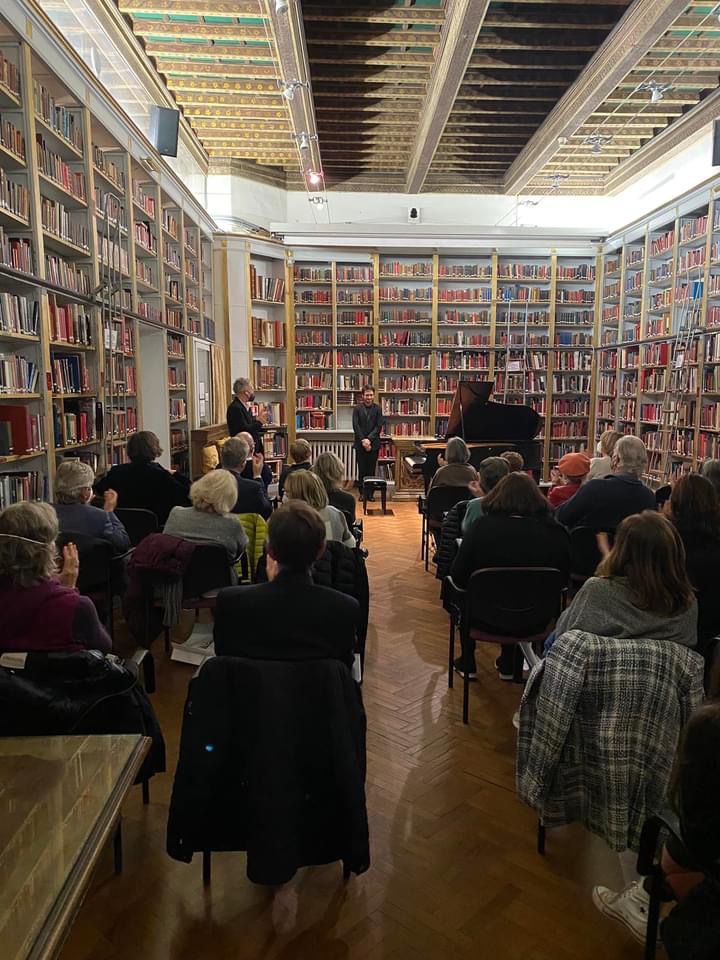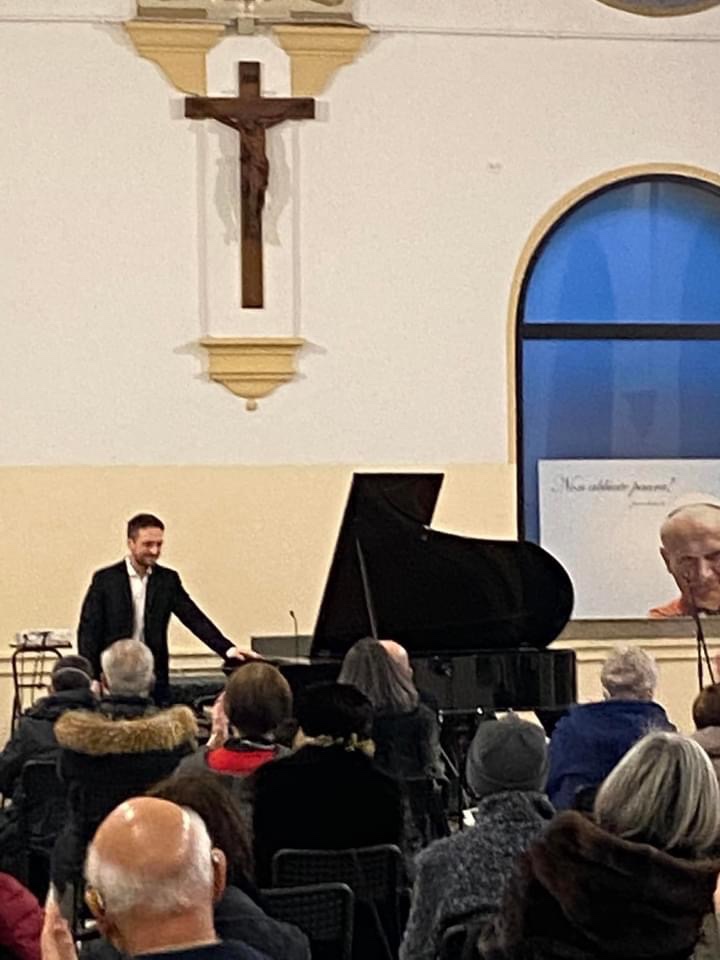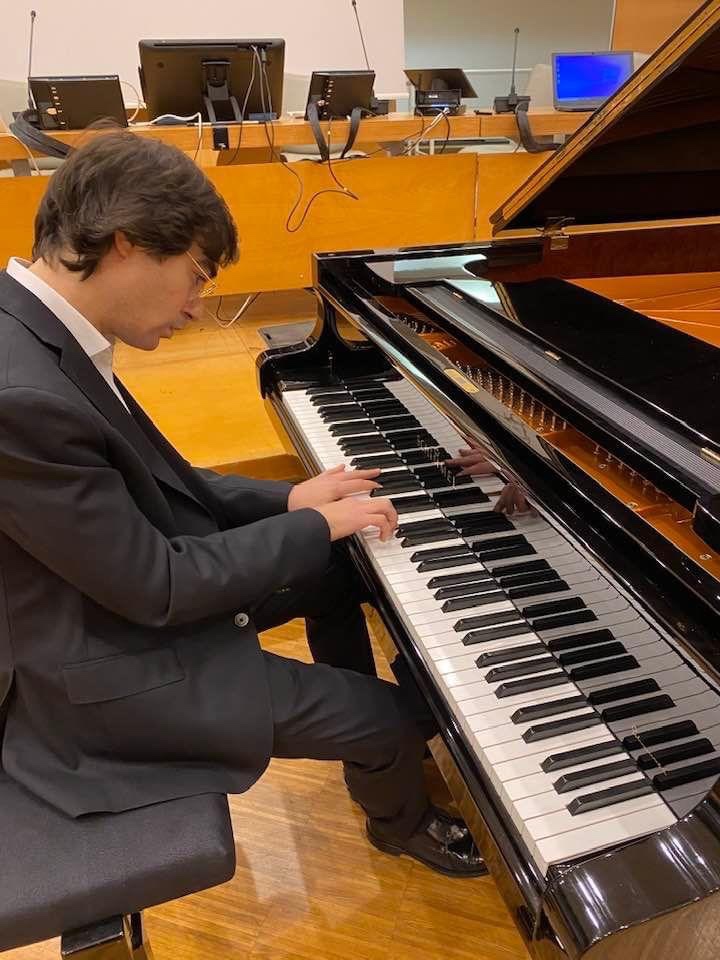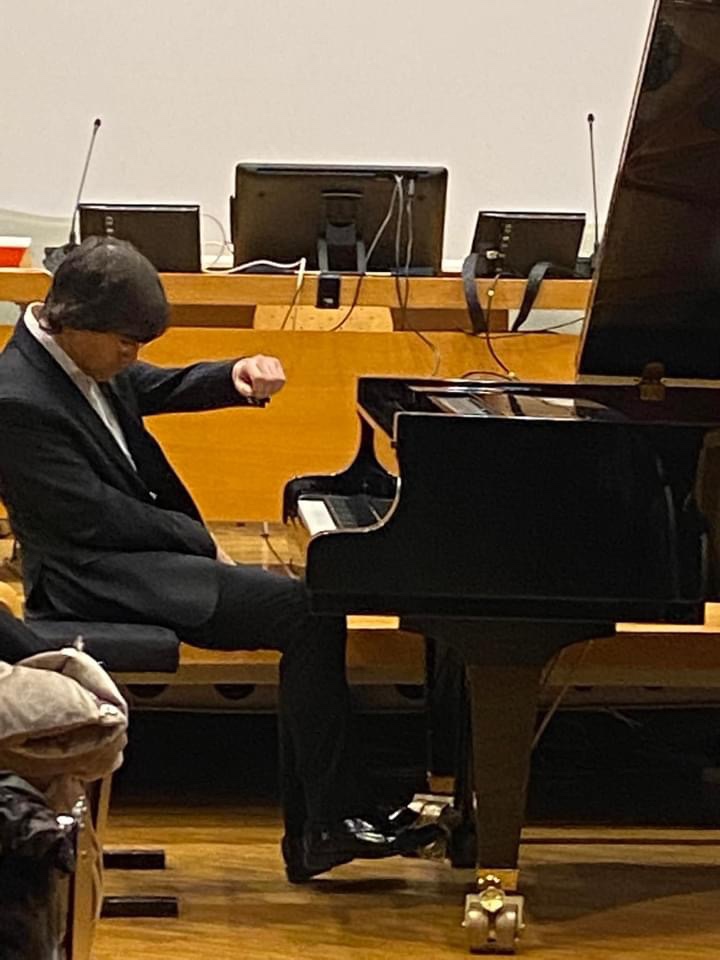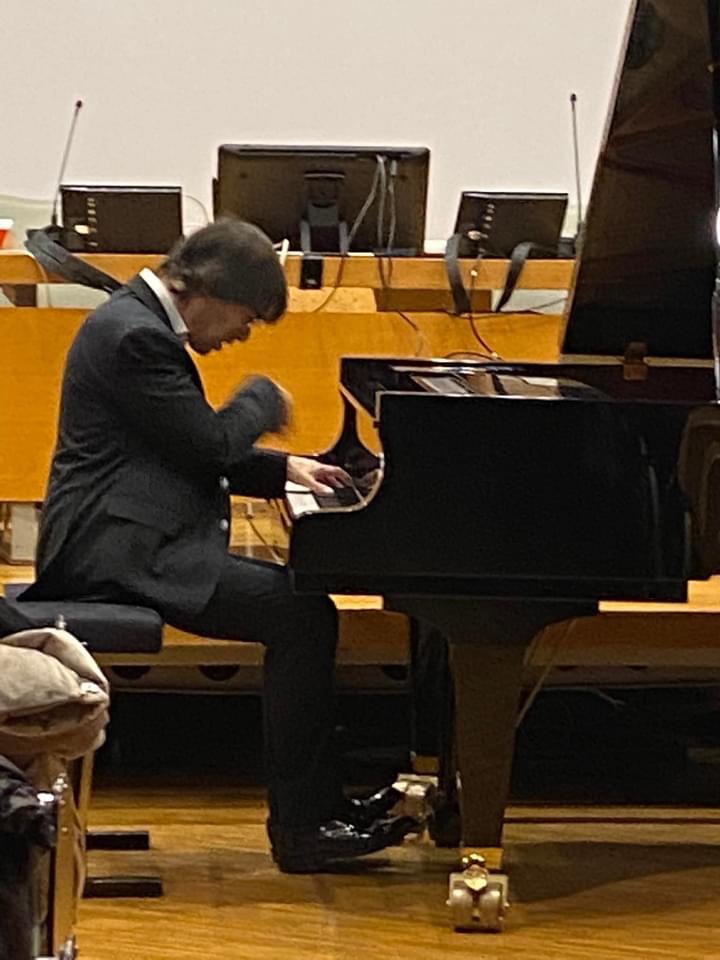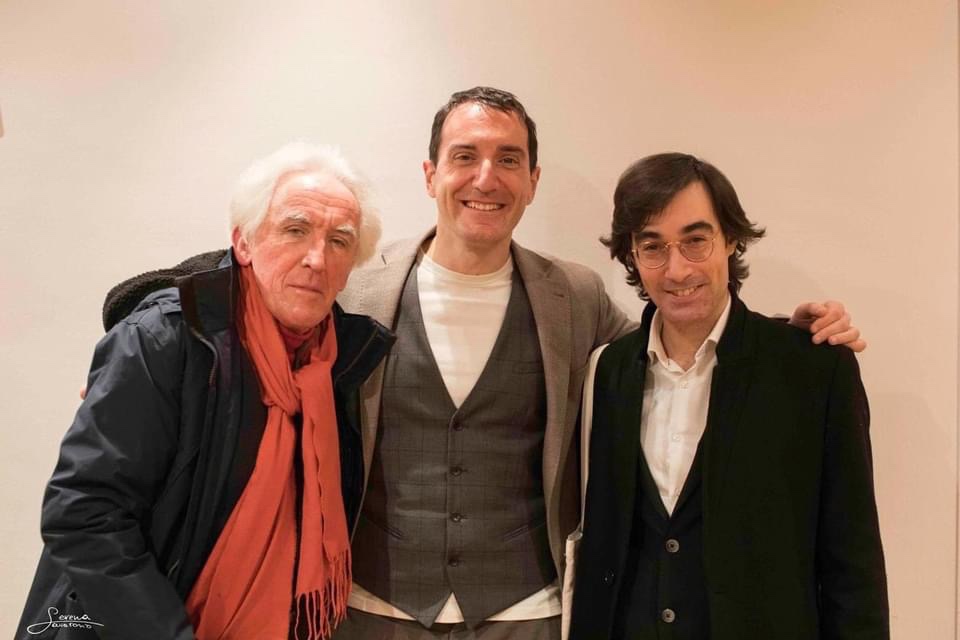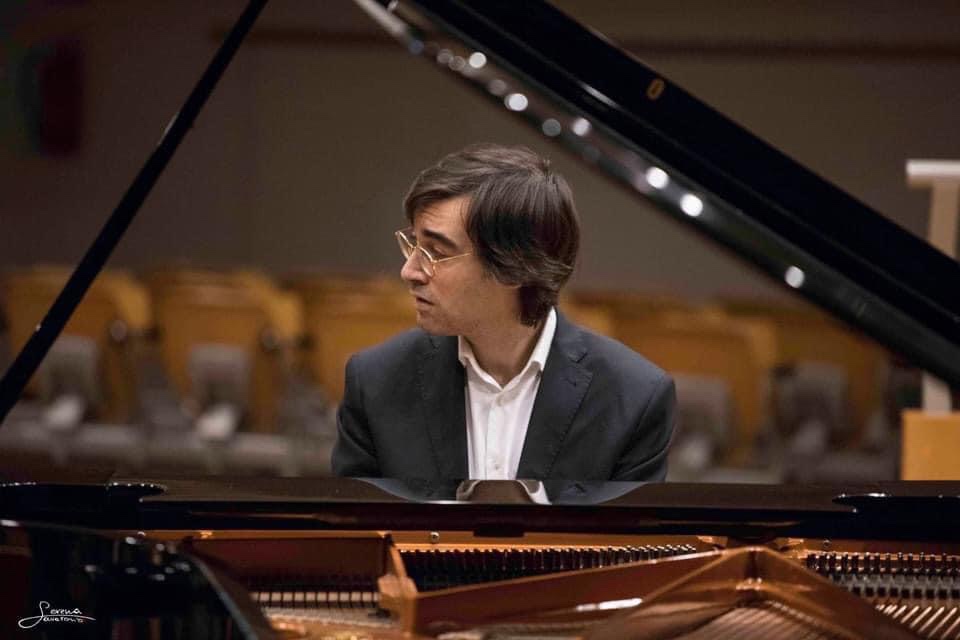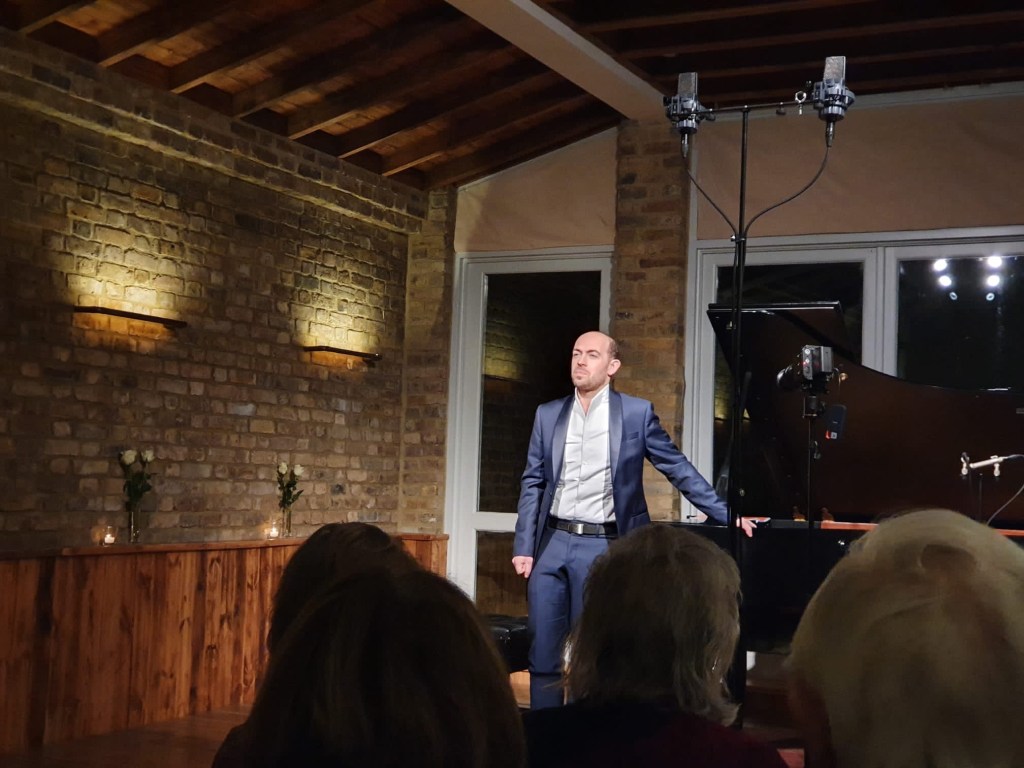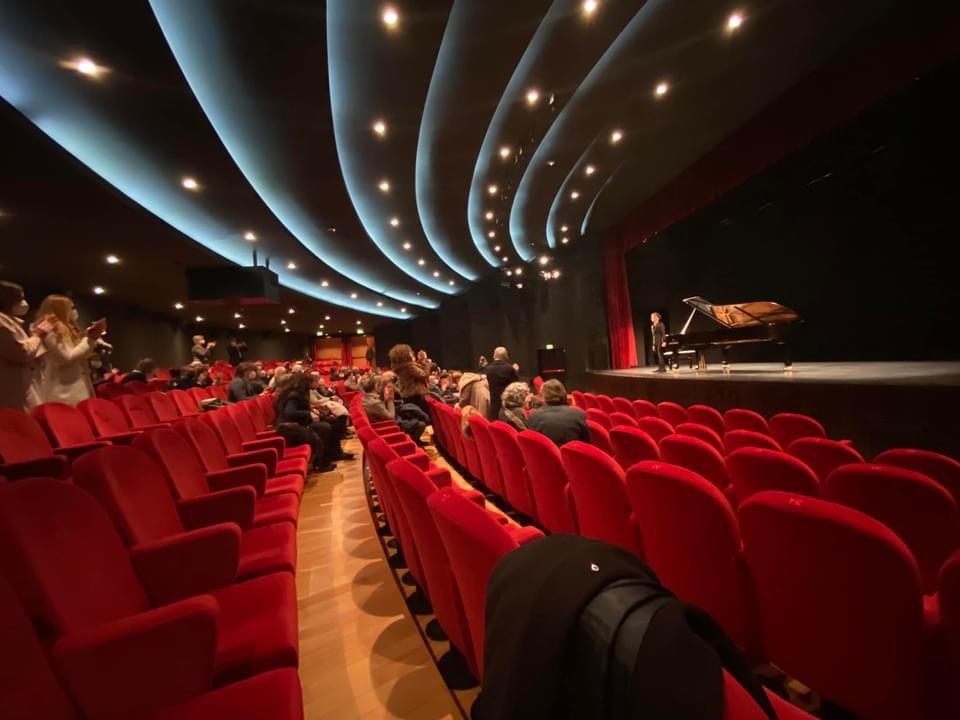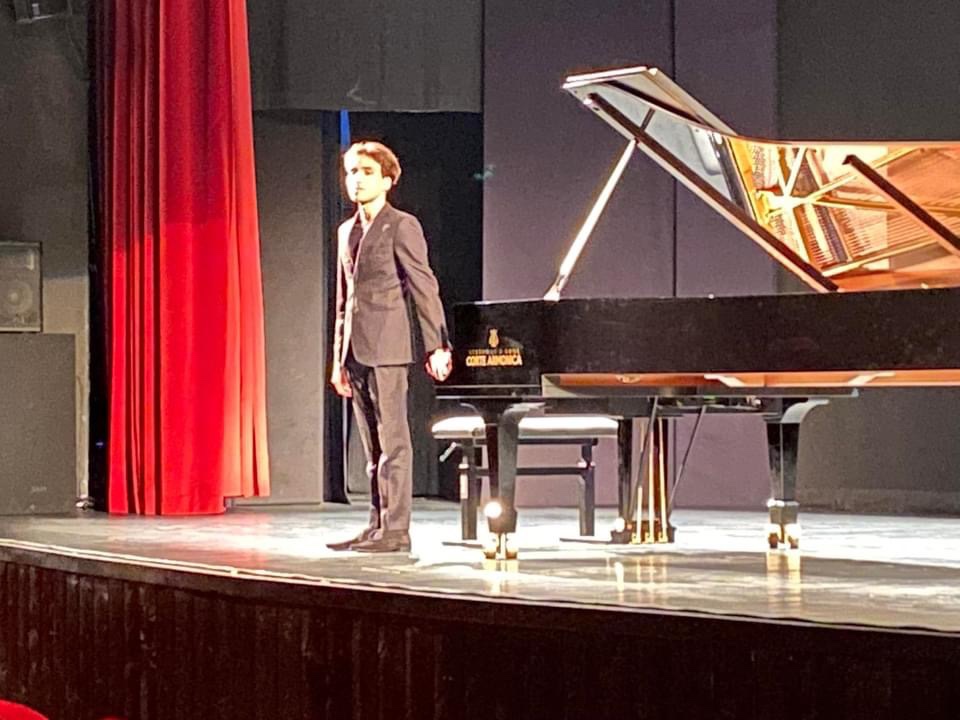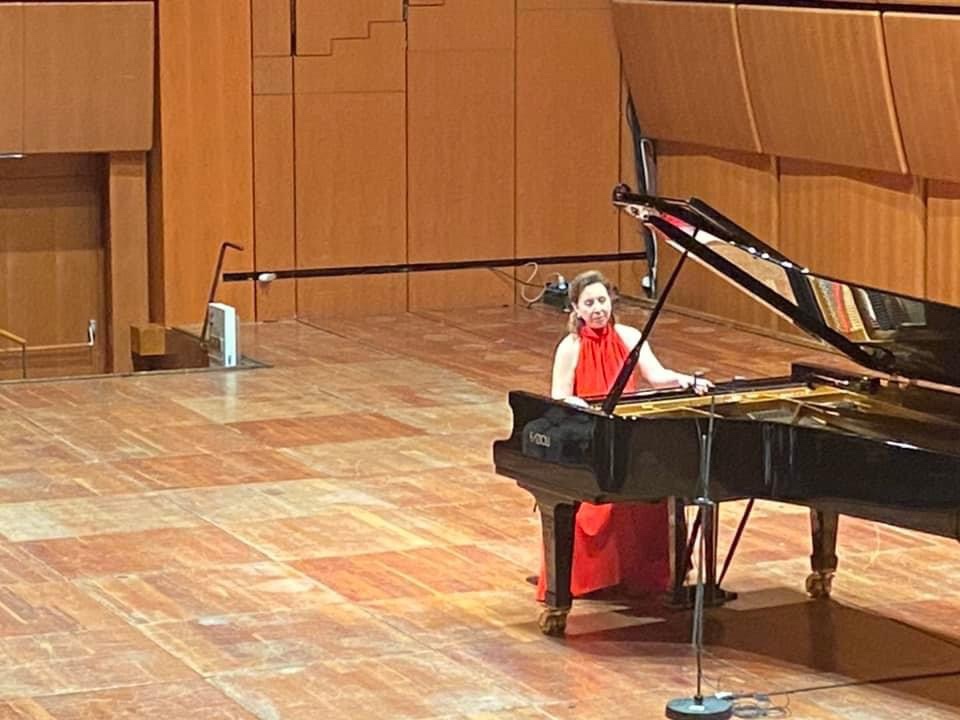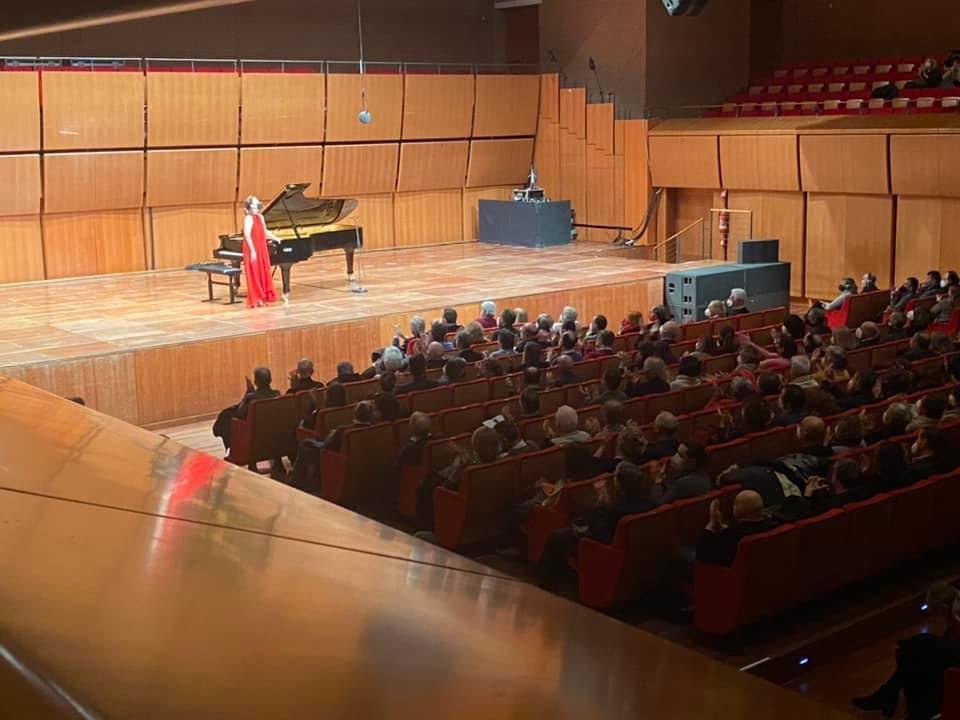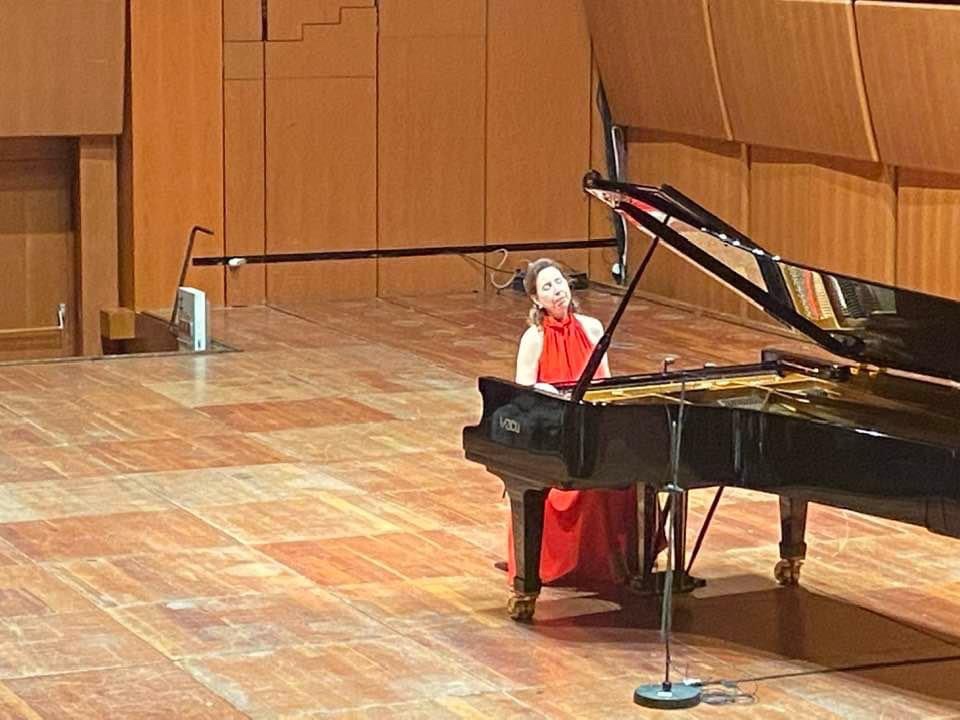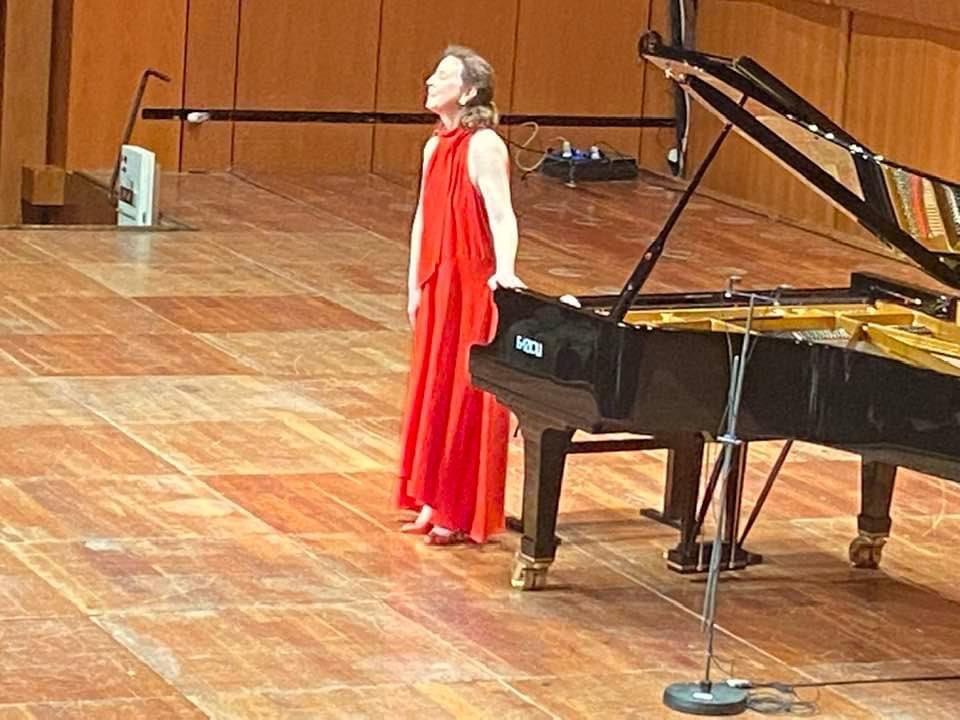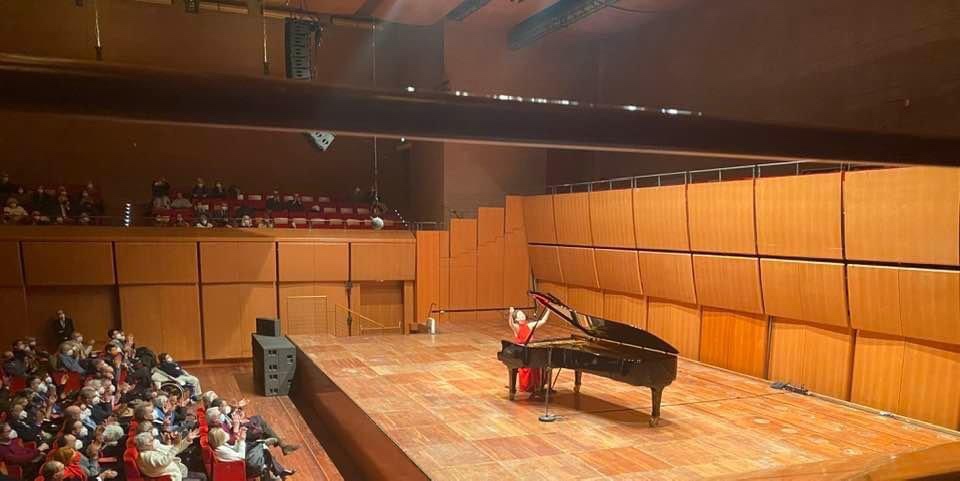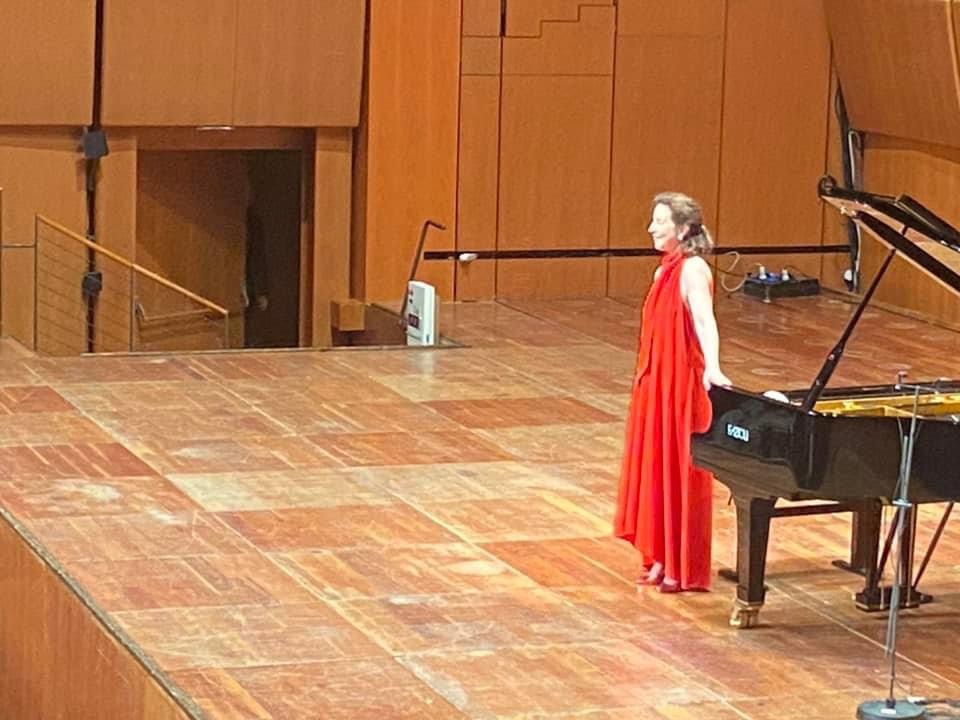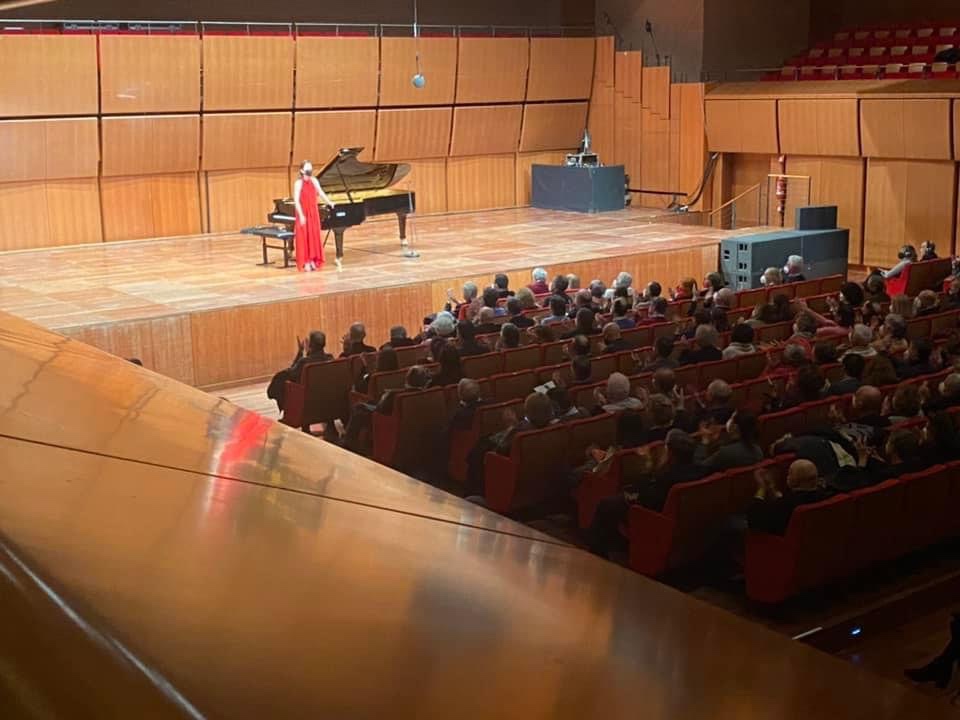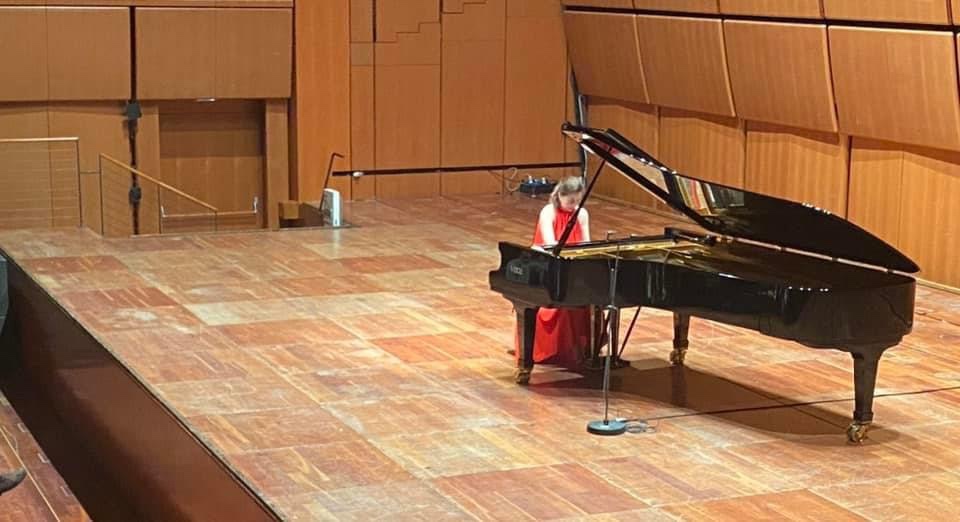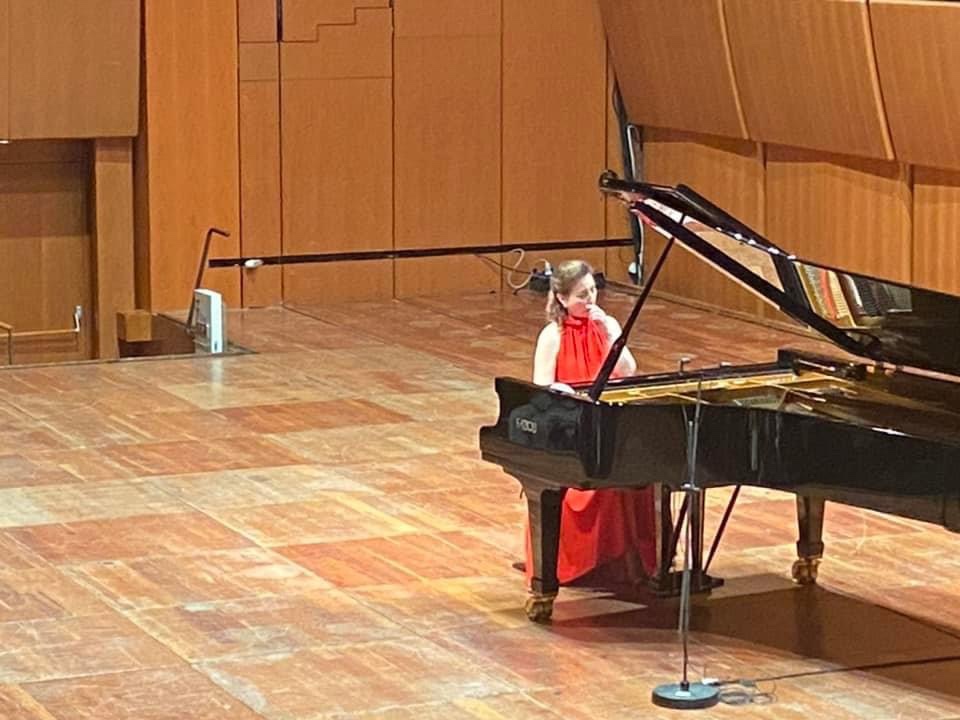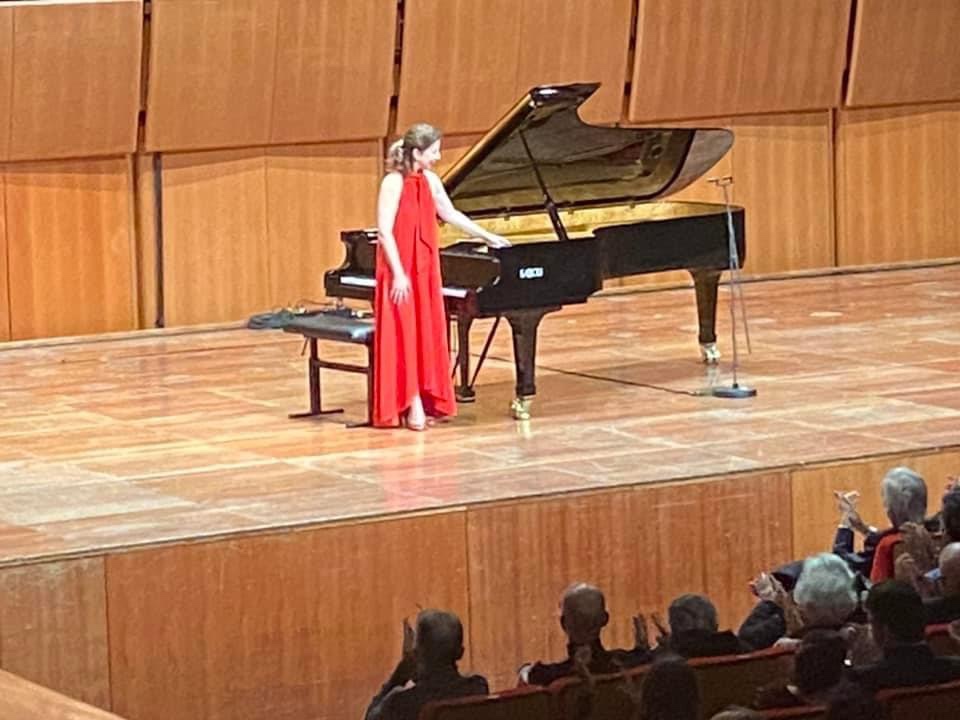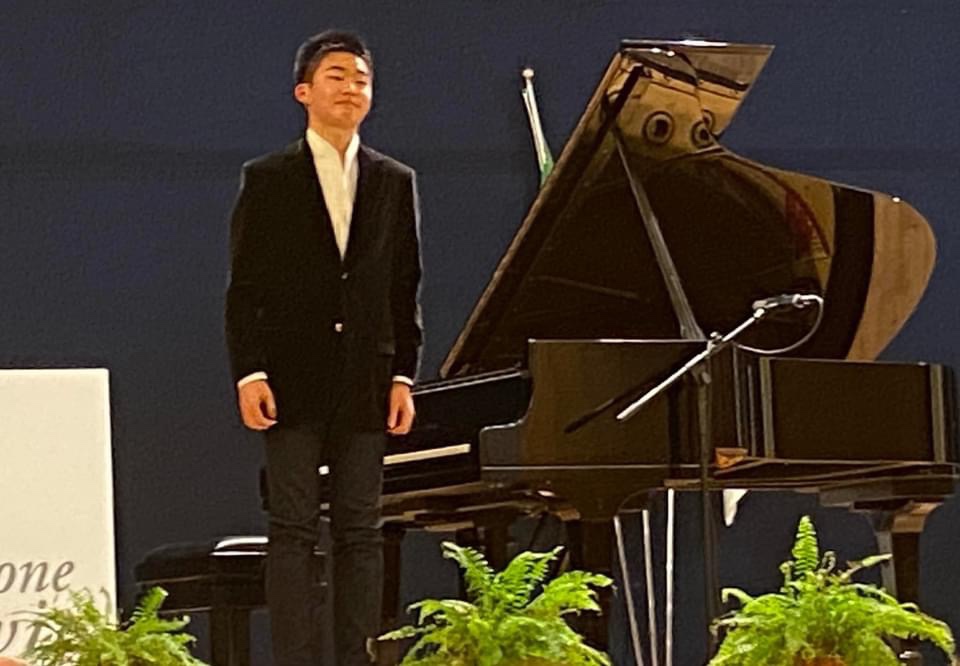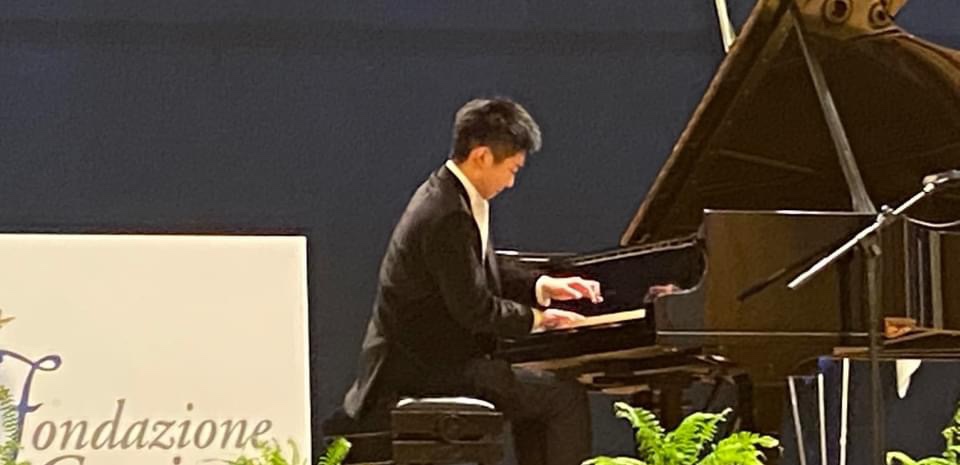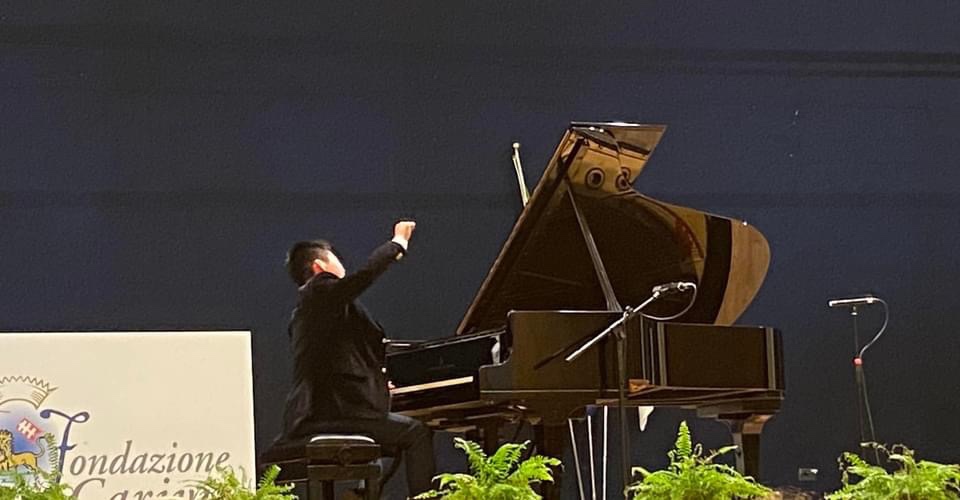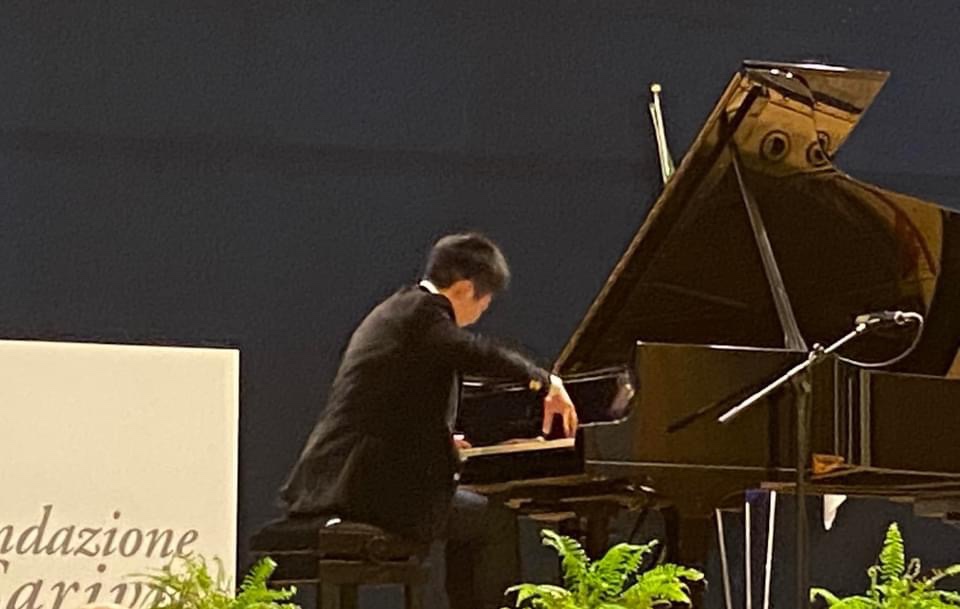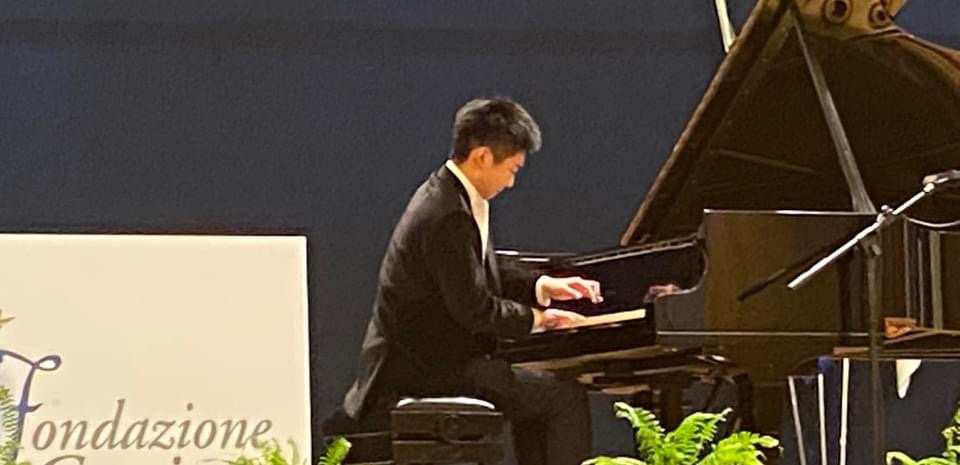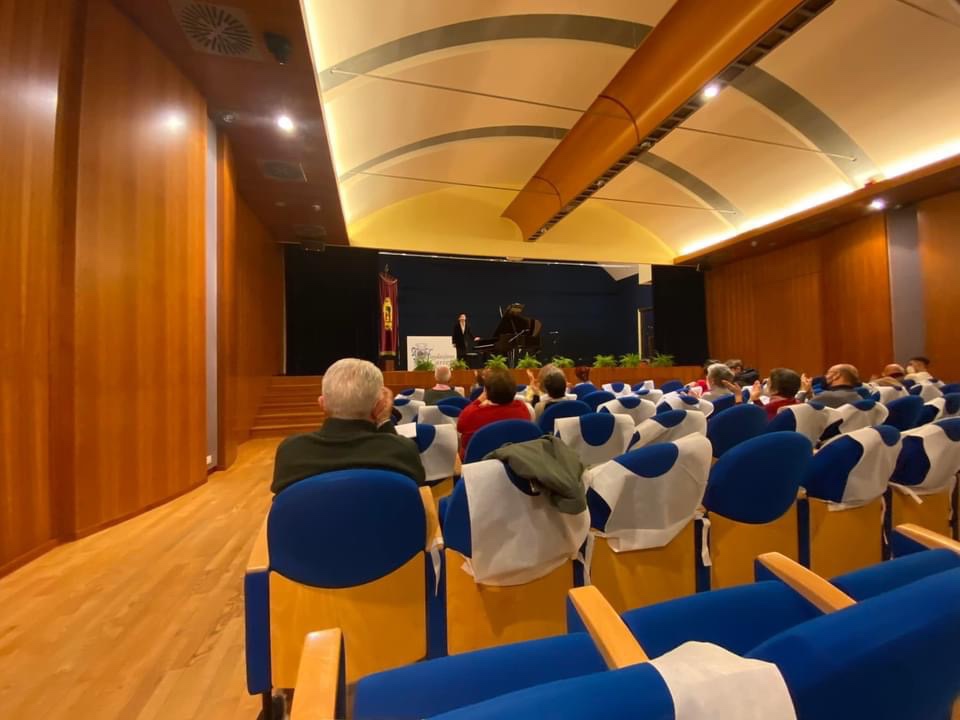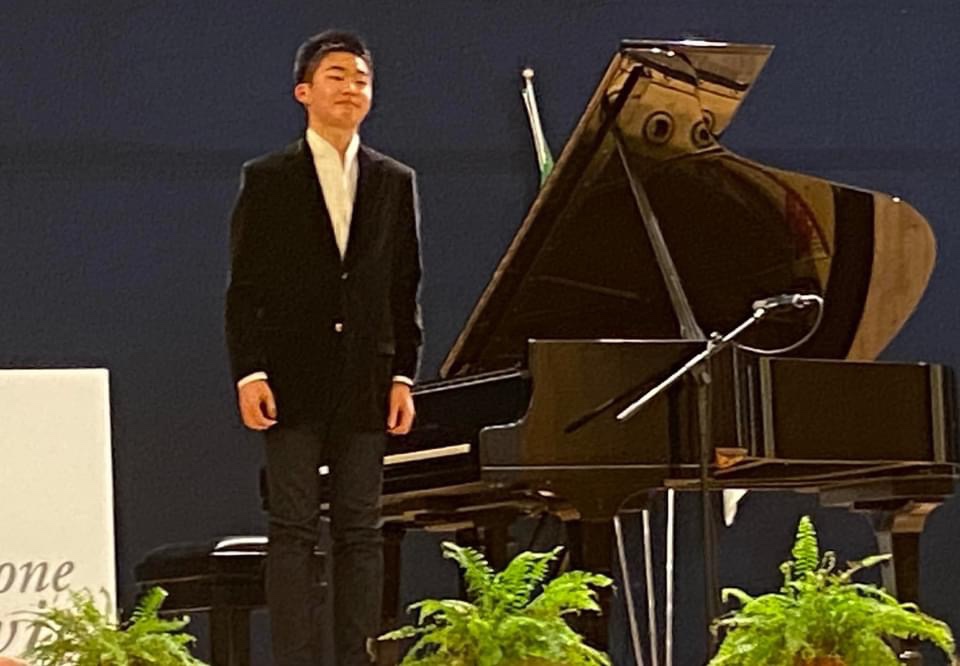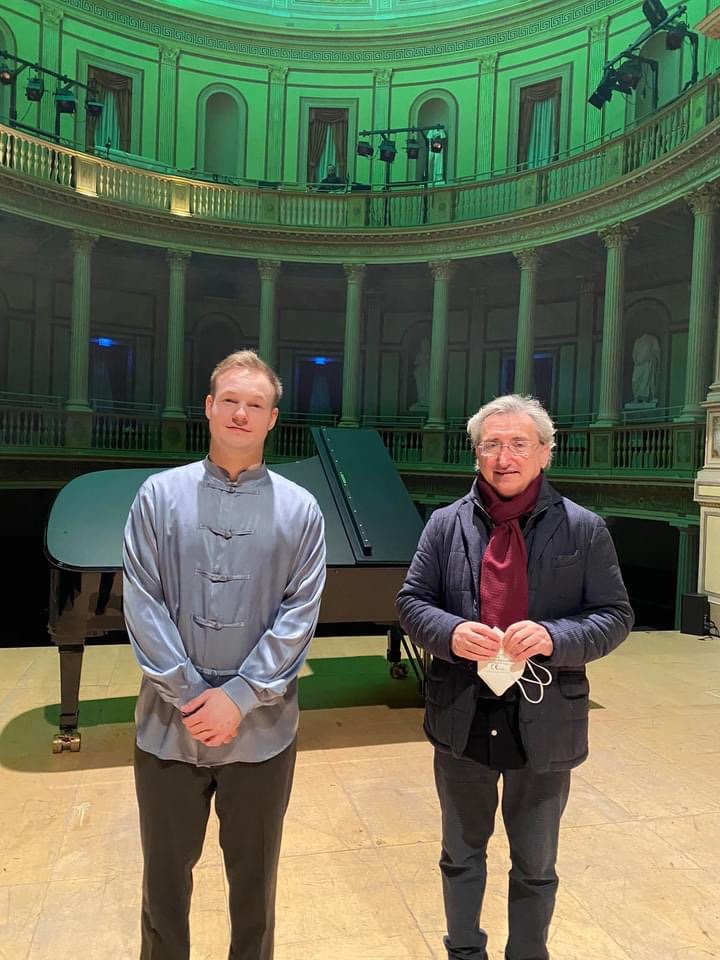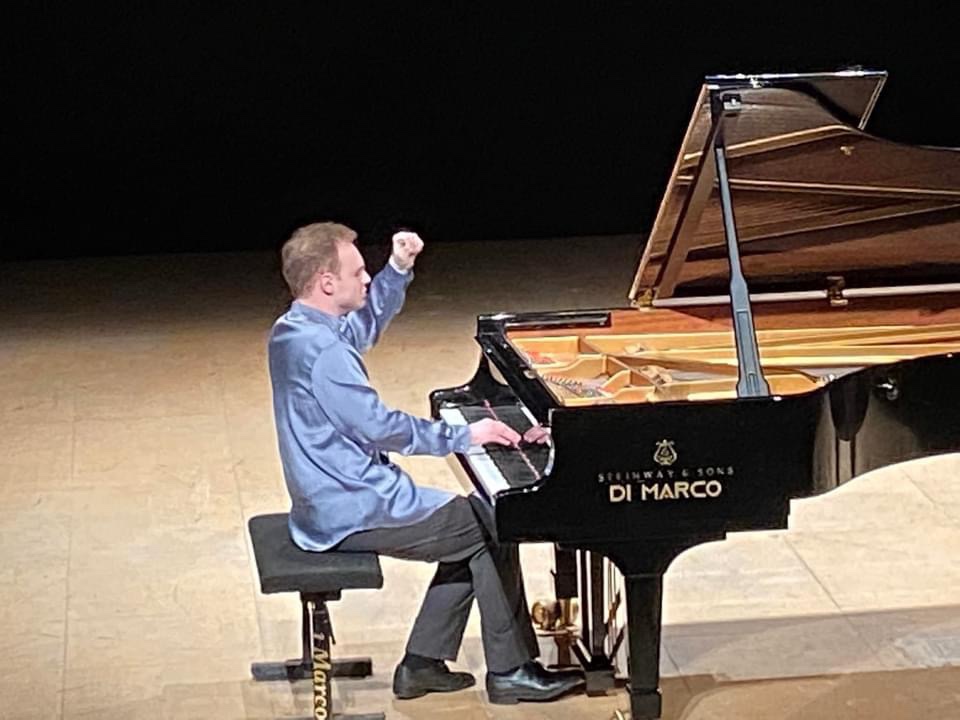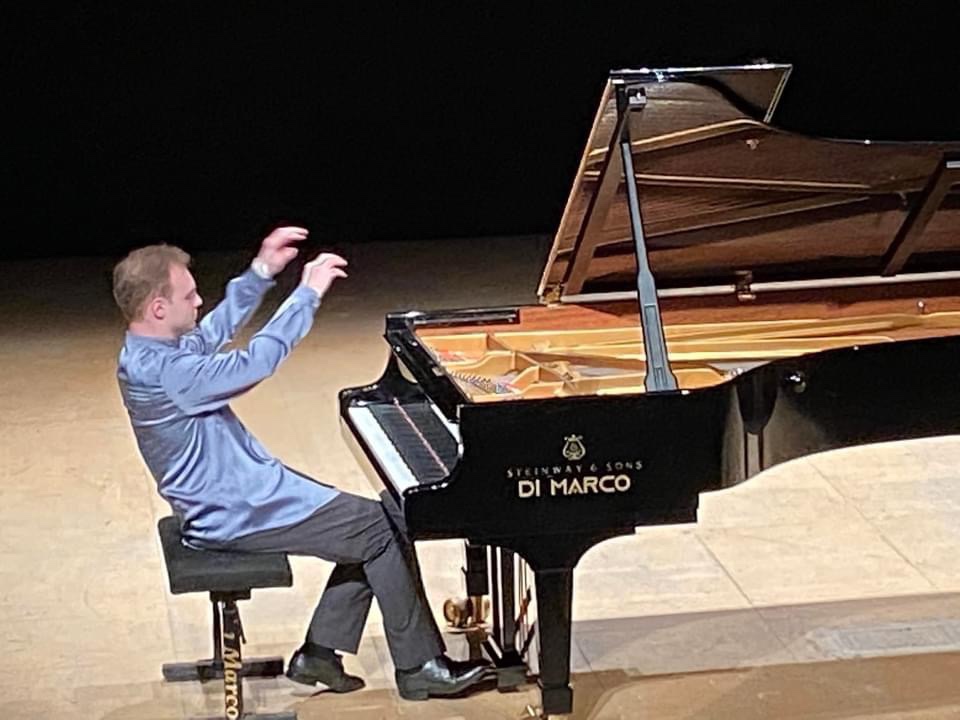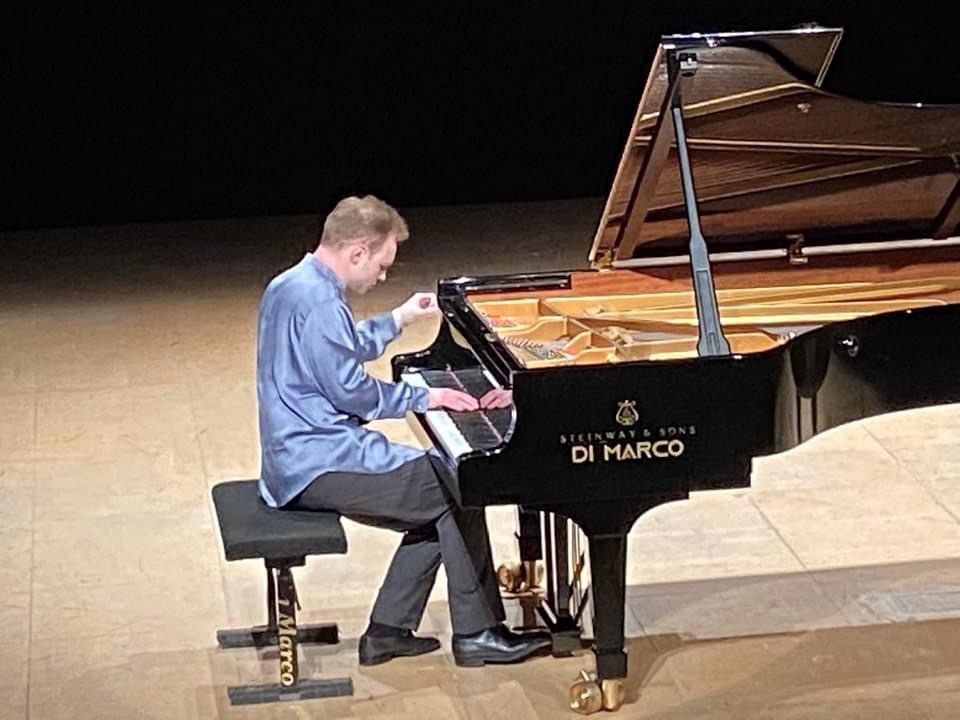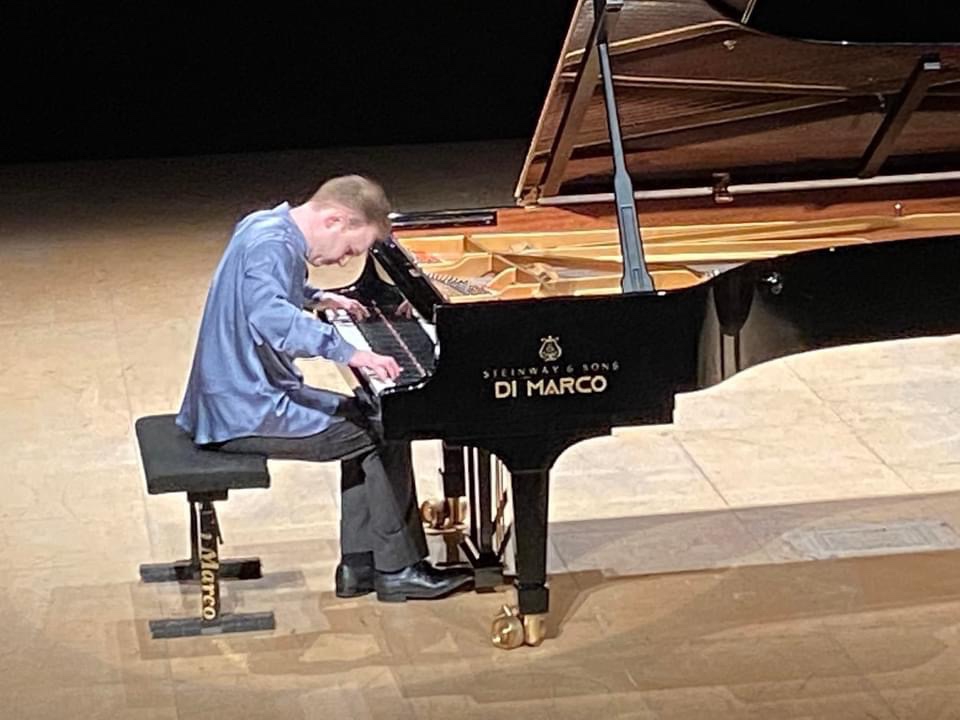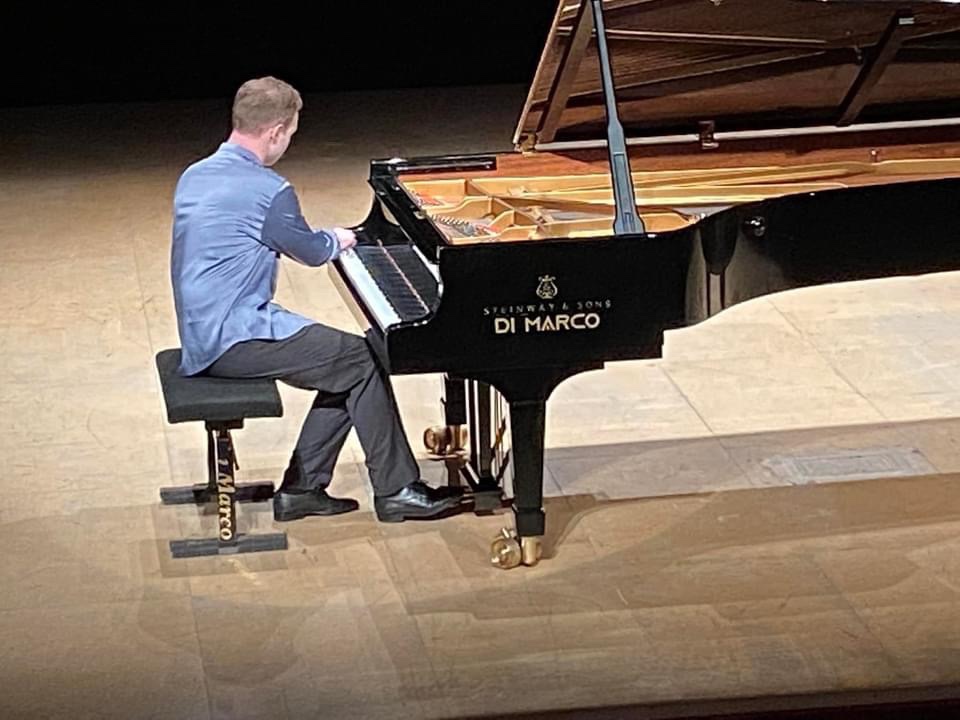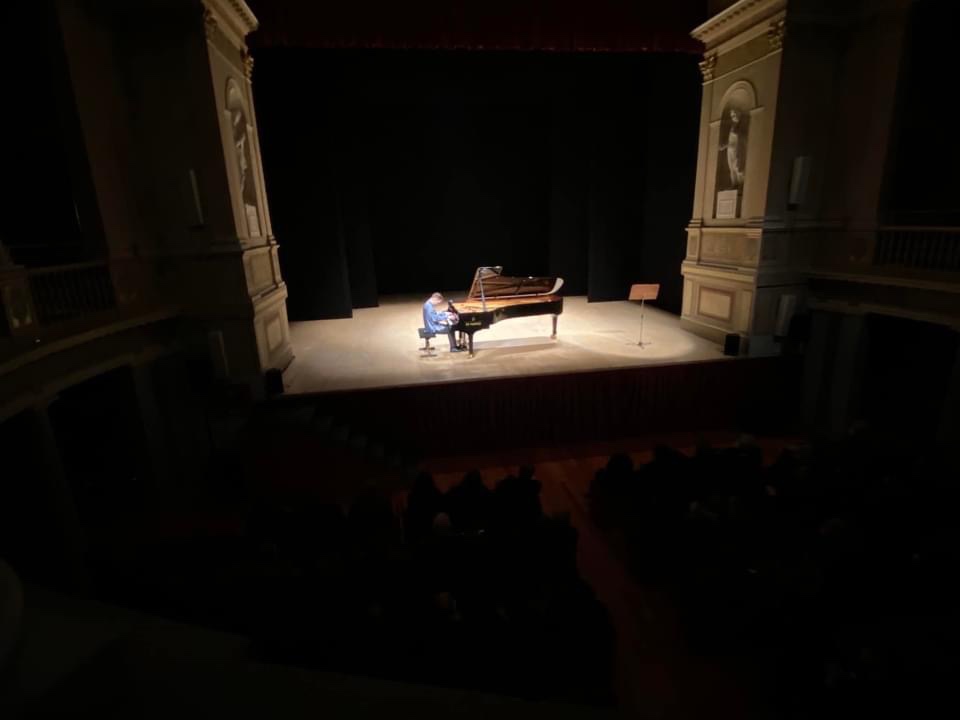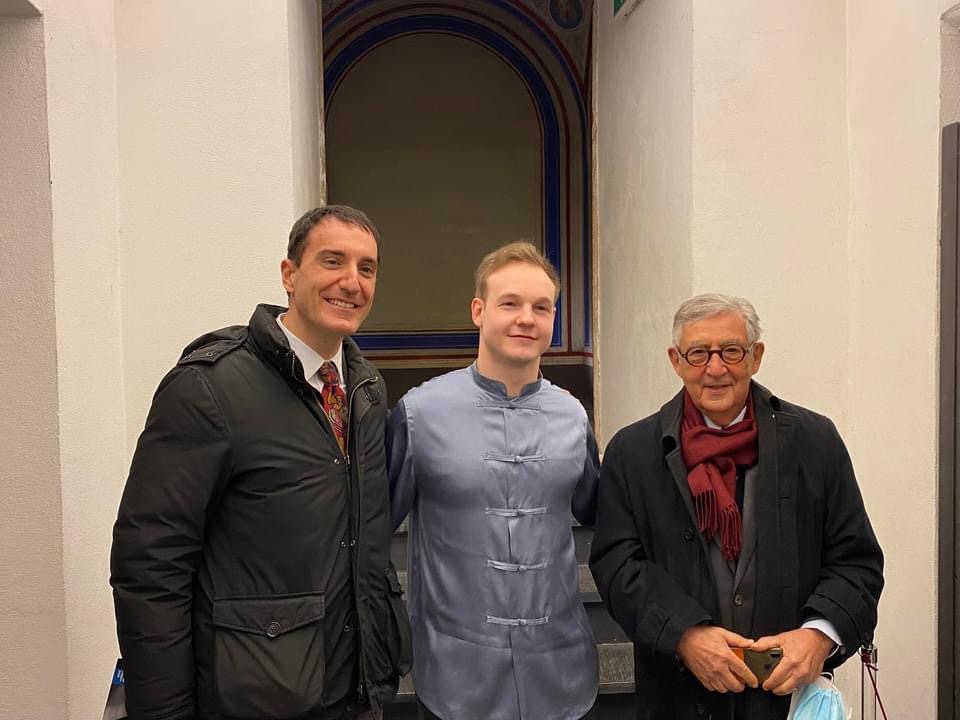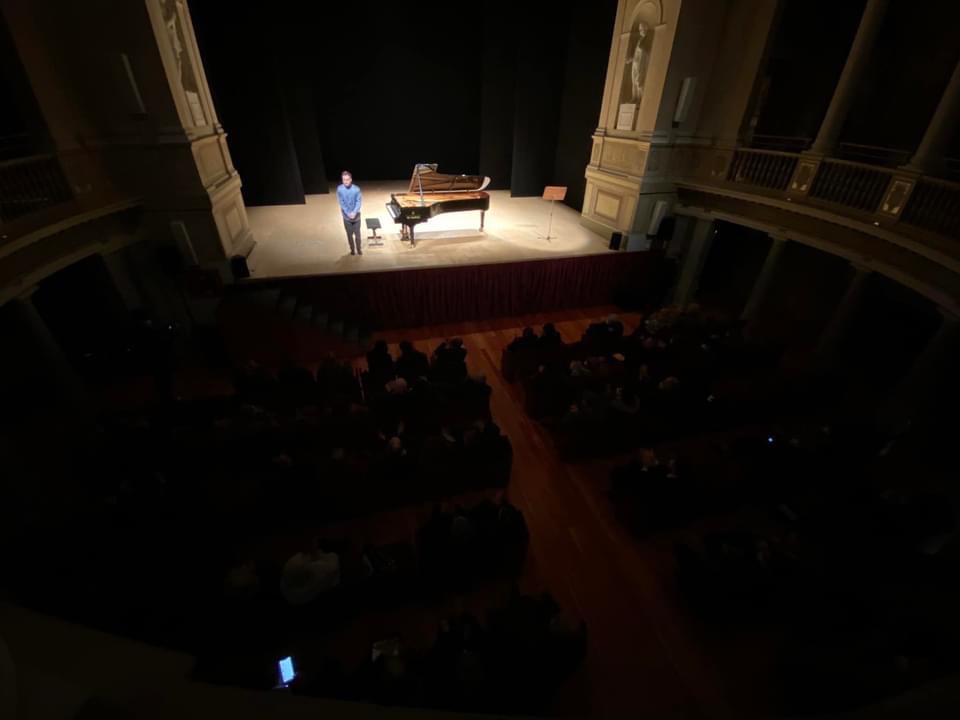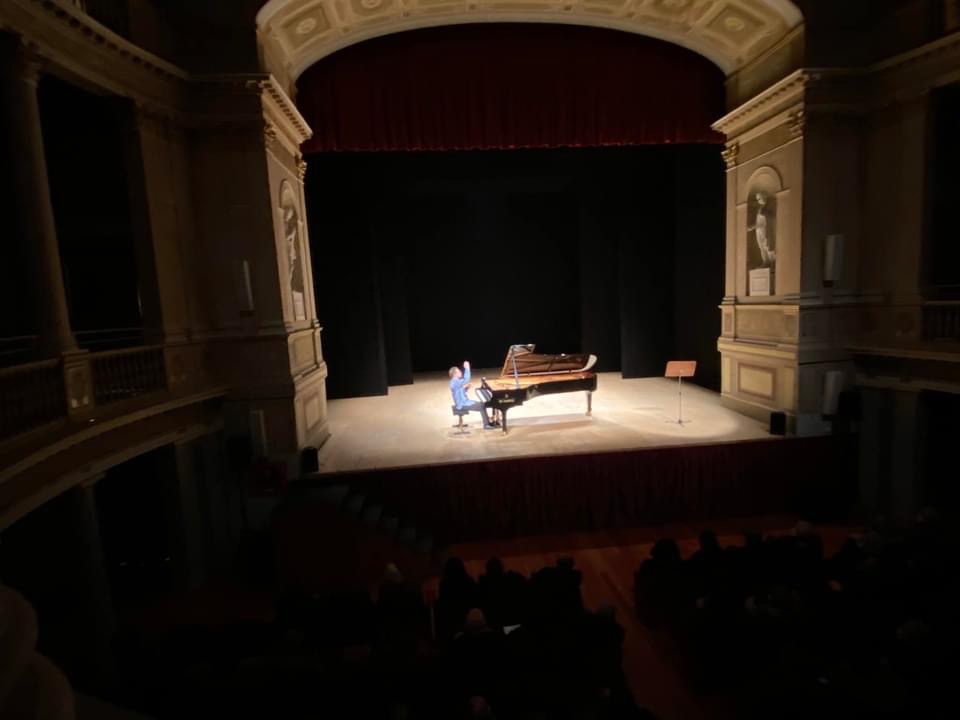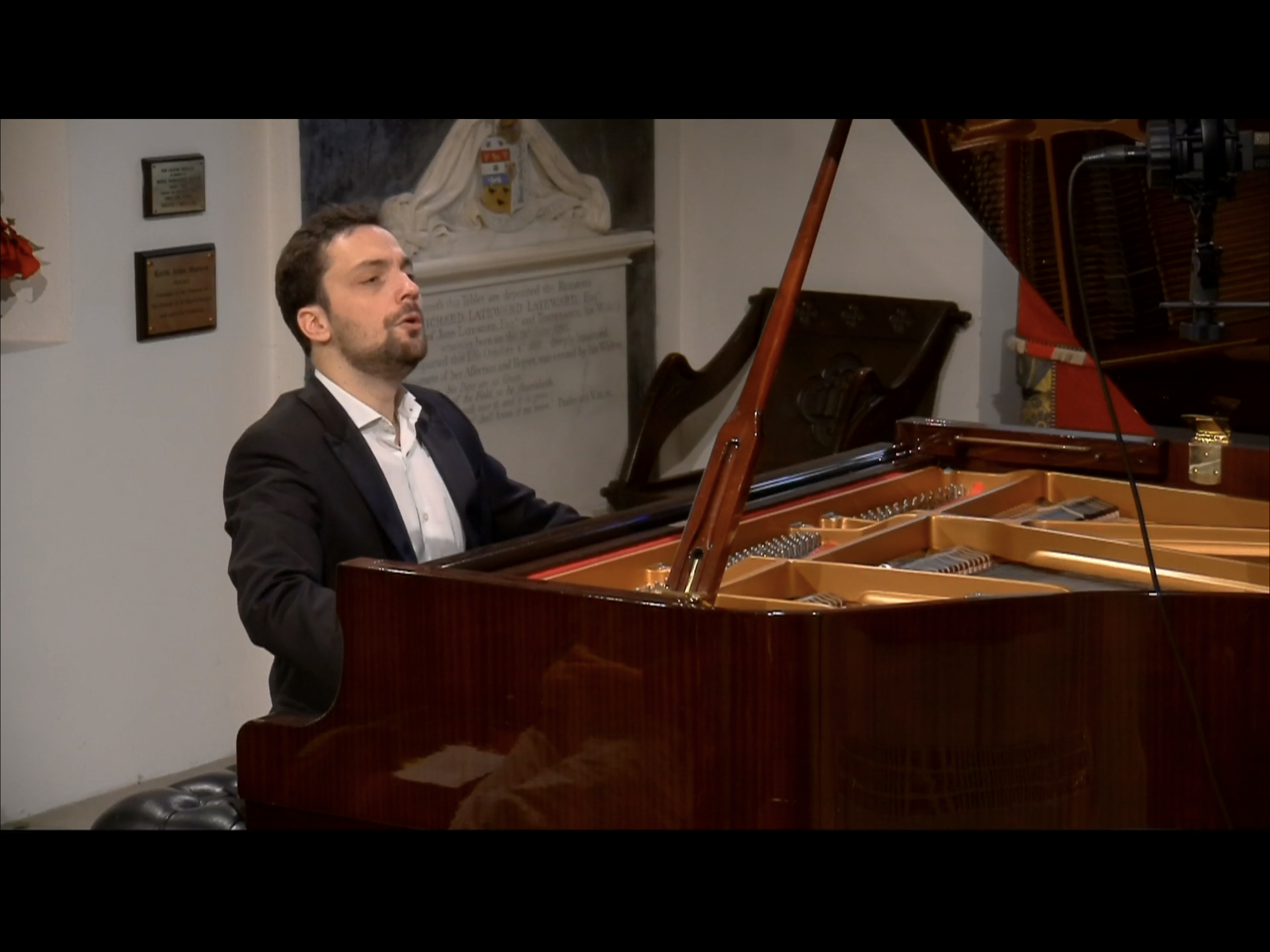
Cristian Sandrin the Beethoven Trilogy the birth of a great artist

Thursday 10 February 3.00 pm


Sonata in E major Op 109
Vivace / Prestissimo / Andante with variations

The New Testament of the piano literature.Some notes and thoughts stimulated by the performance today.

Op.109 There was a chiselled beauty to the sound that flowed so naturally as it was allowed to sing due to an extraordinary sense of balance and above all a scrupulous attention to Beethoven’s very precise indications in the score.Beethoven’s own pedal mark that links the first and second movement without a break- so often overlooked as the meaning of Beethoven’s pedal markings are dismissed by lesser mortals!.There was a string quartet texture to the last movement and a striking clarity to the turn so often thrown off as an aside but here every note given real meaning.There was a strikingly beautiful luminosity to the first variation where the deep bass notes were the very anchor of a variation that can often slip into waltz time!There was absolute control of texture in the second variation with no accommodating ritardando so there was no loss of rhythmic energy even in the teneramente contrasting episodes .The Allegro vivace third variation was like a volcano unleashed with superlative precision and a rhythmic drive I have only ever heard from Serkin .The fourth variation was like a ray of sunlight suddenly appearing on the horizon only slightly missing the off beat sforzandi and Beethoven’s own pedal indication in the long tremolando.It was at the end of this variation that I felt ended rather too abruptly to contrast with the authoritarian fugato that follows.The end of the fugato too could anticipate the tempo prima of the final extraordinary sixth variation,The same for the return of the theme where the etherial trills should dissolve more naturally into the opening theme almost like the opening of a magic door where an imperceptible gasp of astonishment could recreate this magic moment.Beethoven had marked after all one long pedal from the beautifully placed bass E that becomes the anchor for the first note of the return of the theme.


Sonata in A flat major Op 110
Moderato / Allegro / Adagio / Allegro
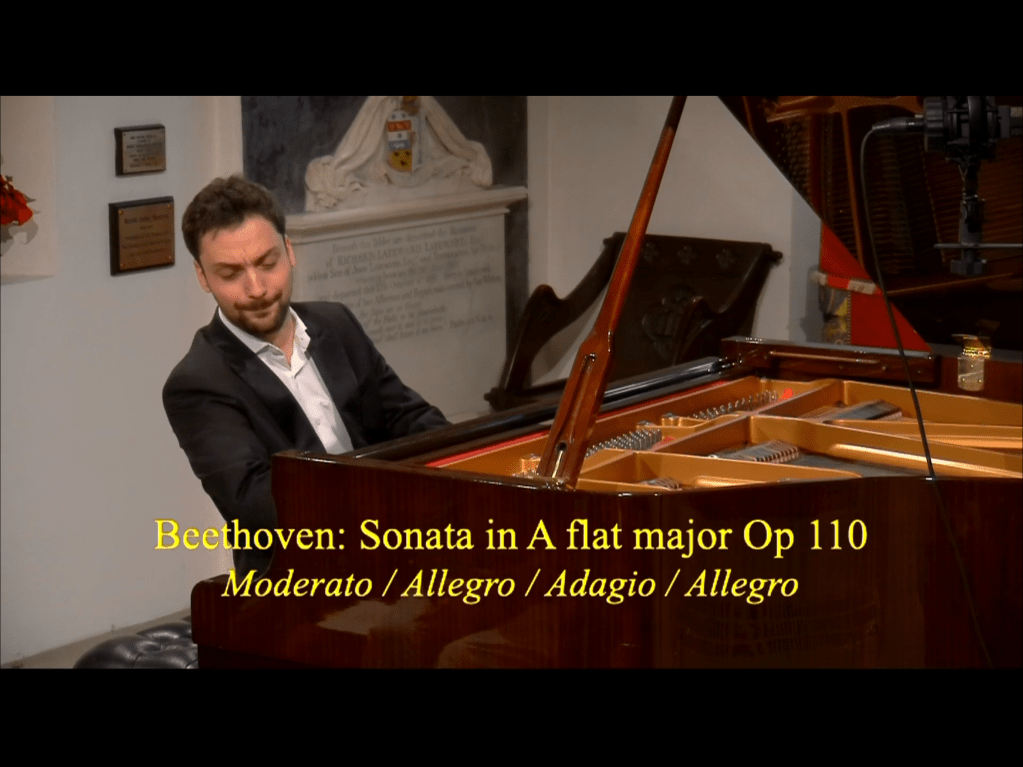
There was a luminosity of sound from the very first notes of op 110 with the fermata on the trill unravelling so naturally as the ravishing beauty of this movement is revealed .The magical change from E natural to D sharp was played with a simplicity that was very moving without any artificial slowing or underlining,The two short chords at the end played like two final gasps.The Trio section of the Allegro molto was given a kick start from the two bass notes of each phrase that made the syncopations even more startling and gave great authority to what can be very treacherous waters for some!There was great weight and significance in every note of the Adagio that reminded me of certain passages in the Bach B minor mass such was the burning intensity of simple expression and depth of meaning.The complicated pedal indications in the bebung ( notes made to vibrate ) were so magical that the throbbing intensity of Beethoven’s heartbeat became almost unbearably intense before the disarming simplicity of the Arioso dolente.There was a great forward movement to the fugue that interrupts the aria before it’s return and I would have avoided all accents on the two chords before the magical modulation that heralds the ever more poignant reappearance of the aria where Beethoven asks ‘ perdendo le forze,dolente.’There was magic in the air with the final long pedal held chords beautifully judged as they disintegrate into the reappearance of the fugue in inversion.Here too was one of those magical moments where more sense of astonishment and wonder would have added to this remarkable moment.The final great build up led to the release of tension on the A flat chord where a total control of tempo would have given even more impact to this ending in glory.Even Schnabel notorious for his impetuosity writes here ‘non accelerando’…….easy to write but hard to do when the adrenaline is flowing so passionately!

Sonata in C minor Op 111
Maestoso – Allegro / Adagio

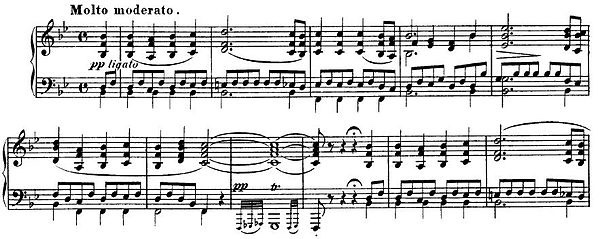
Op 111 opened with enviable authority and importance – Maestoso as Beethoven writes.Beethoven wrote for the bass trill at the end of the introduction to be played without pedal which Cristian played so perfectly in pianissimo (the same technical feat that Schubert asks in his final sonata).The Allegro con brio was played with superb technical control and chiselled sounds boiling over at 100 degrees .There was a great sense of exaltation and release of tension in the two short recitativi and Cristian’s scrupulous attention to detail was quite remarkable.Even the final three chords were played in diminuendo to pianissimo but without any relaxing of the rhythmic tension created.This meant of course that the simplicity of the Arietta was even more poignant.There was unrelenting virtuosity and almost brutal accents with the sforzandi in the third variation before the gradual disintegration of the theme over a murmured bass all played with startling clarity .There was aristocratic control in the long build up to the final release to a magical world of trills where the theme was allowed to be heard so clearly in this wondrous landscape.I would have placed the final chords in the last two bars with more weight.Not with a ritardando but an inner feeling that we had come to the end of a long journey and with exhaustion and relief we arrive home to the final C major chord .
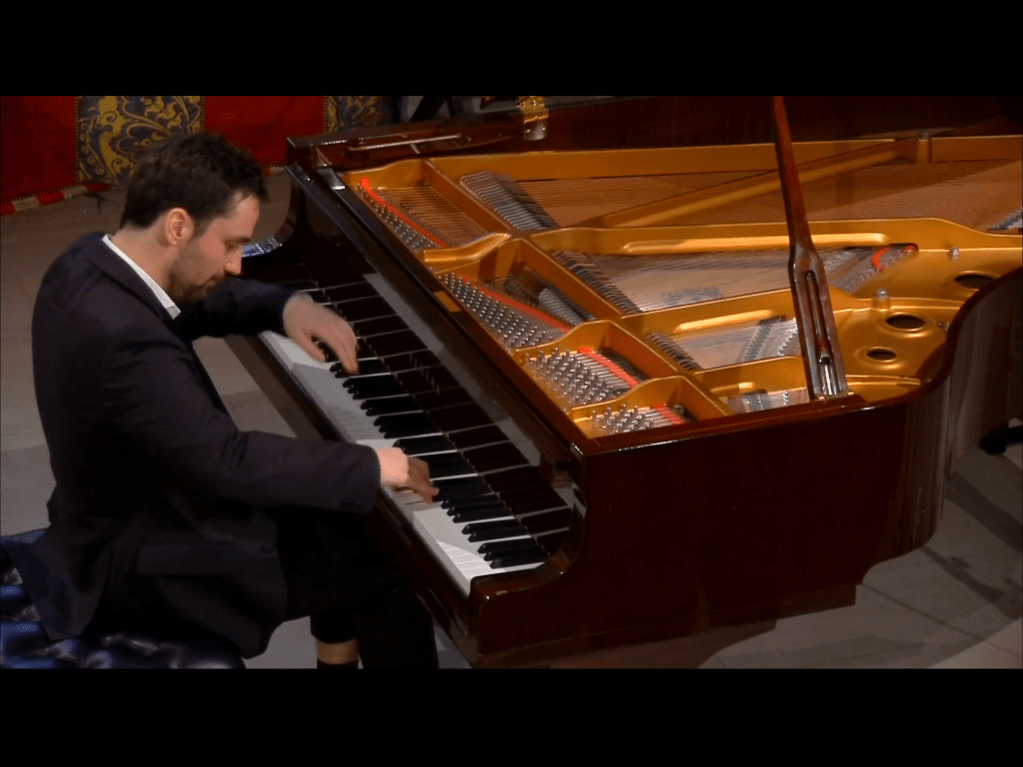
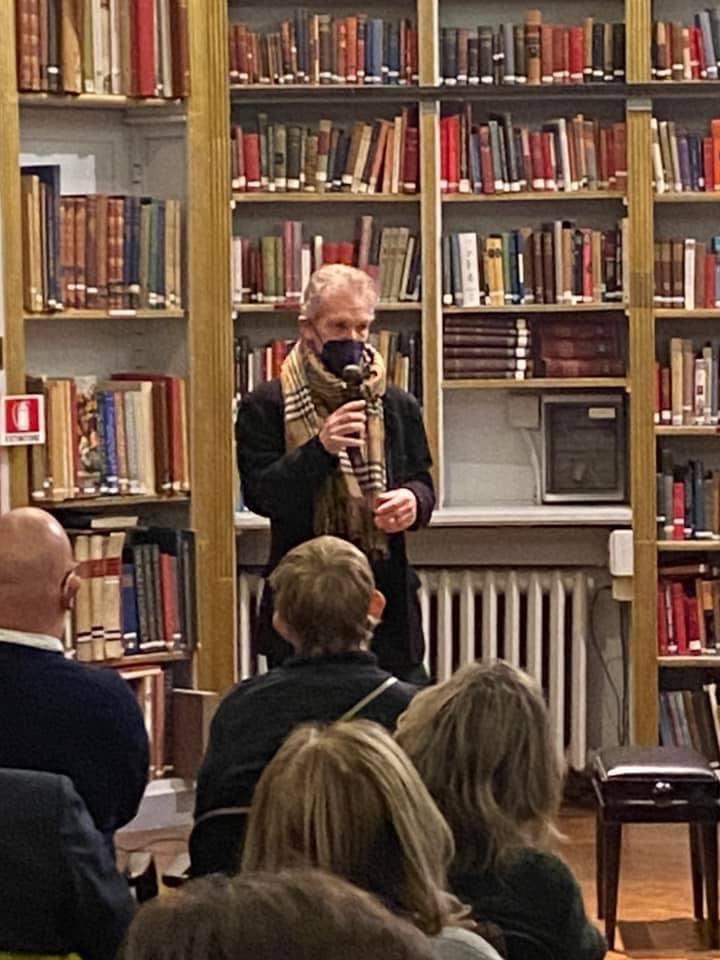
Some truly remarkable playing from a Cristian Sandrin reborn.As Hugh Mather said at the end ‘he played the trilogy as Beethoven would have imagined it in his secret ear that he was forced to inhabit towards the end of his life.’
Easy to say but so difficult to transmit unless you follow Beethoven’s incredibly precise indications that he was able miraculously to notate better than any computer could possibly do today.
Because there are seemingly impossible juxtapositions of forte and piano,of legato and non legato,of never adding a polite rallentando at the end of a phrase unless Beethoven specifically indicates it.Not to mention the meaning of his pedal markings like the end of the first movement of op 109 linked so clearly to the Prestissimo that follows and the sinister bass vibration in op 111 before the Allegro con brio.
These are lessons that all those that were privileged to hear Brendel and Serkin in their greatest moments would understand.
Serkin was still kicking and trembling way after the last chord of the Hammerklavier had been struck.
Brendel too brought to the Diabelli variations a final chord that was the release of mounting tension .An unforgettable experience that I was privileged to experience in my student days in London.
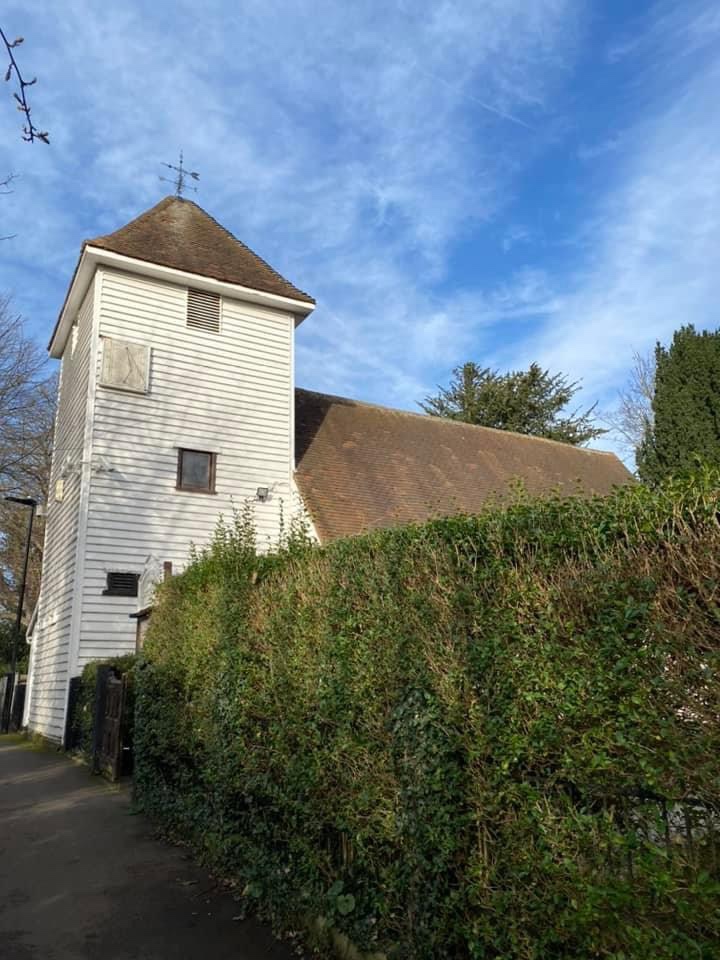
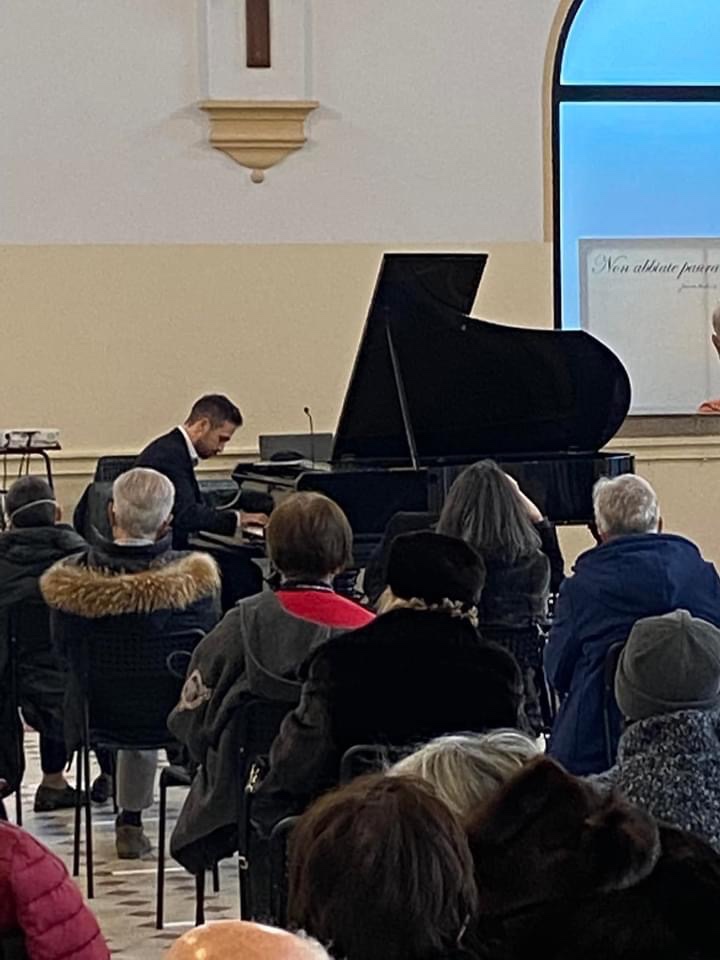
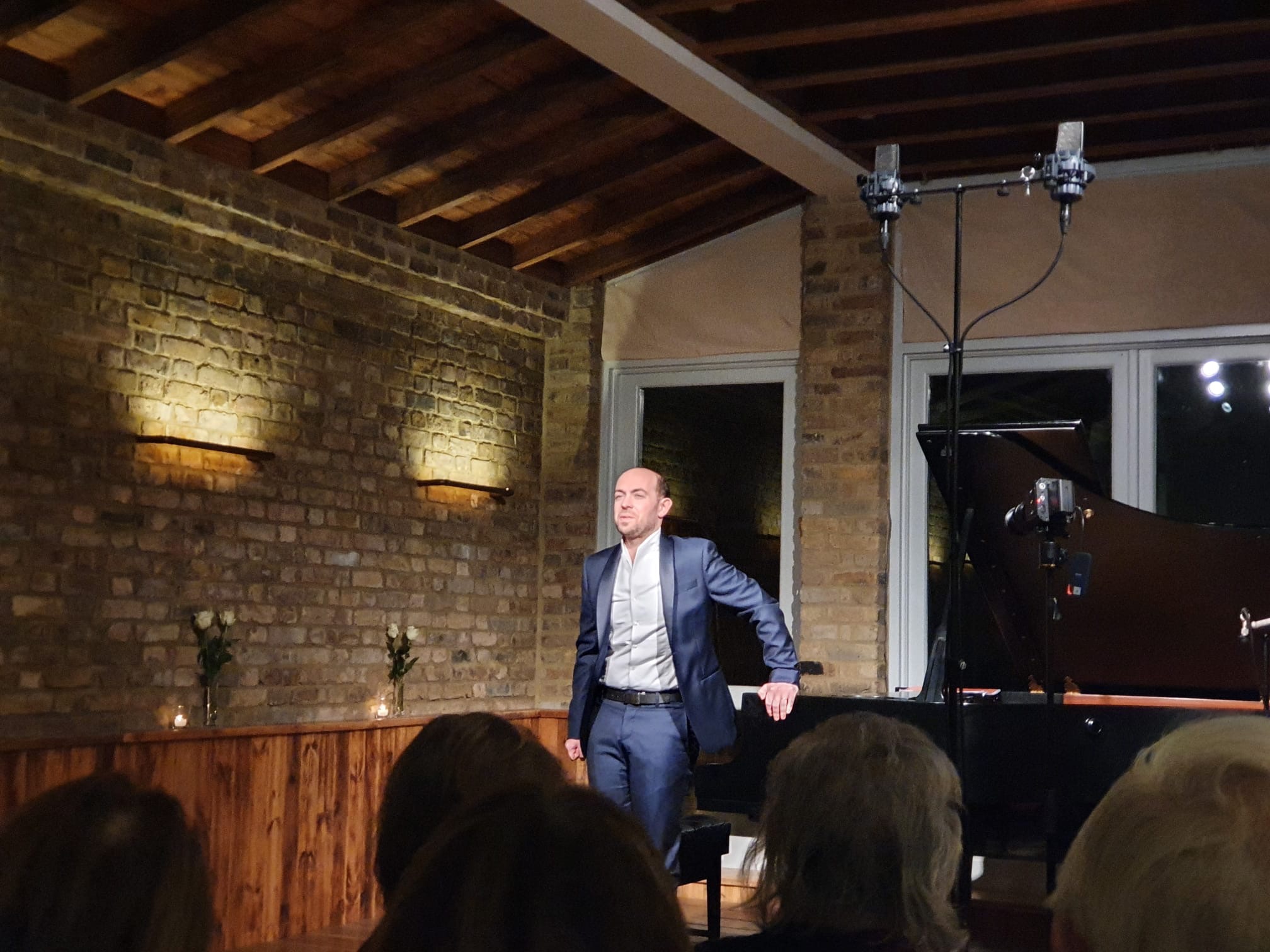
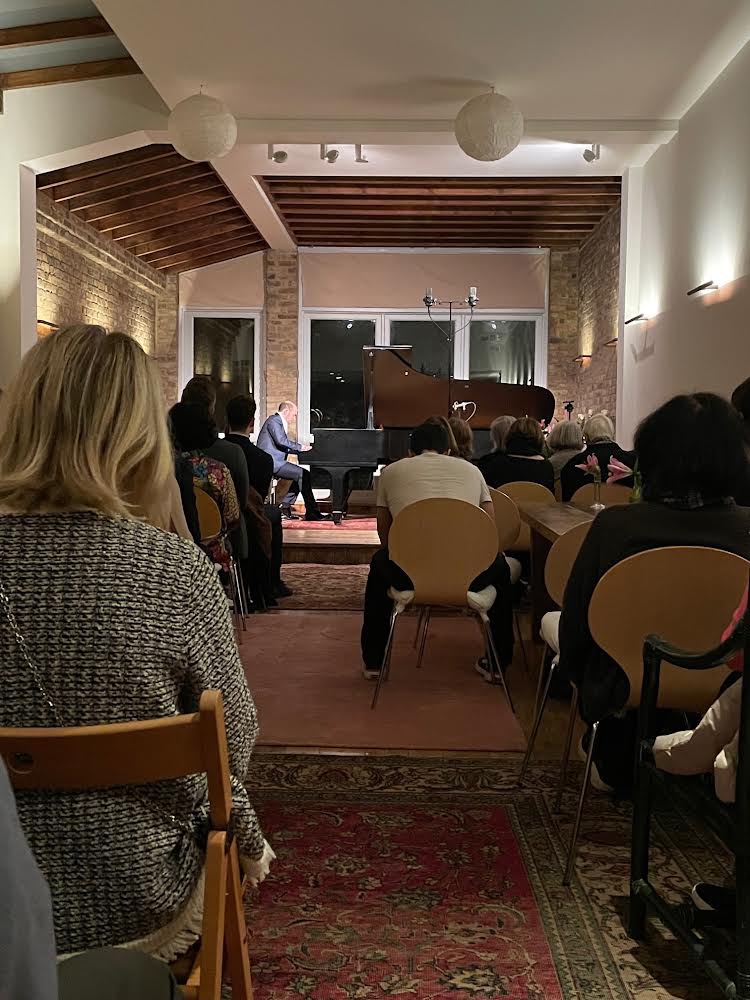
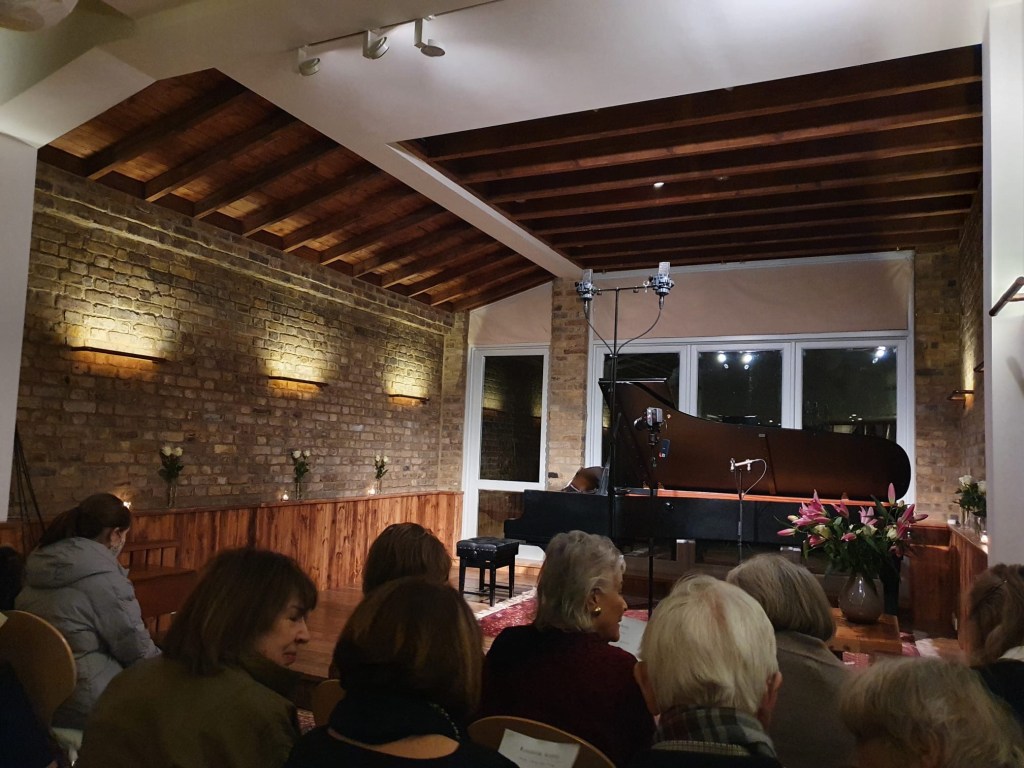
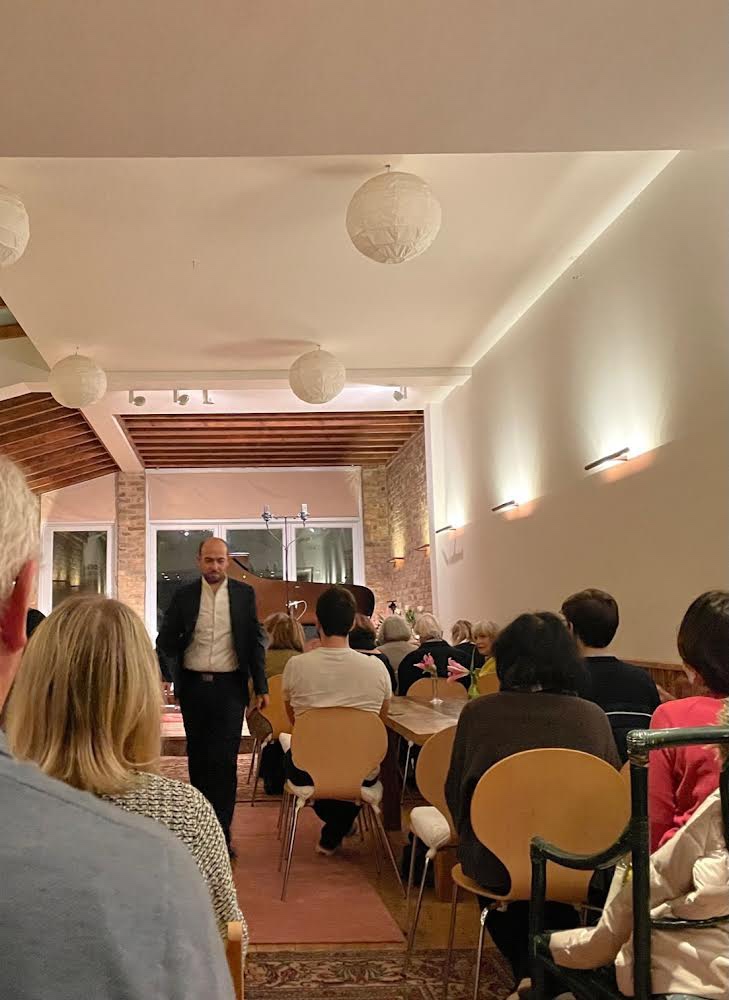
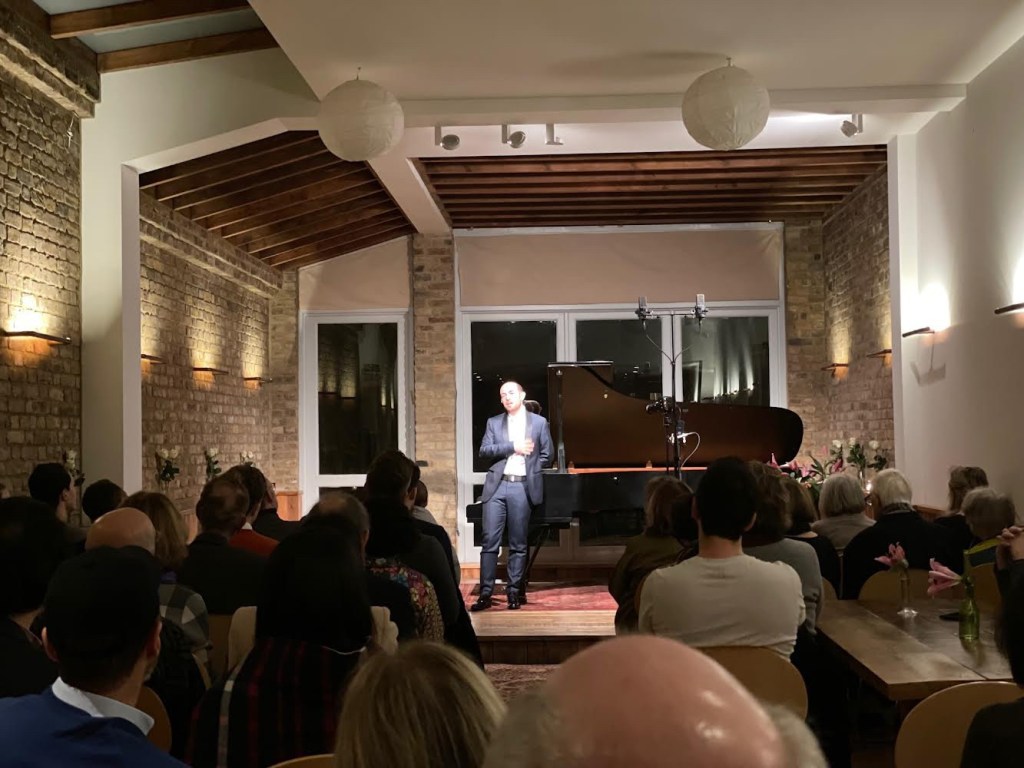
St Mary’s Perivale


Today in this little church in the beautiful surroundings of Perivale golf course ,this Mecca for pianists that is Dr Mathers dream come true,we were privileged to witness the birth of another supreme interpreter of Beethoven.
As unexpected as it was overwhelming.
I have known Cristians playing from when he was one of the most talented students at the Royal Academy.A very fine musician often to be heard conducting or playing from the keyboard.
Today there was a total understanding of the very complex character of Beethoven that lies hidden in the scores for those few that have the total dedication and of course technical skill and supreme musicianship to unravel the secrets that Beethoven was so miraculously able to notate.
All I can add is an appreciation ,maybe point at one or two places where a release of tension might have added even more magic.


Lucky Florence where Cristian will be playing this trilogy on the 24th in the library of that aesthete Harold Acton who I am sure will be looking on with admiration.
Playing in a series organised by The Keyboard Charitable Trust I think the founders Noretta Conci-Leech and her husband John Leech can be justly proud as Dr Mather was today.
Simple,Great Beethoven ……..easier said than done!
Q.E.D https://www.youtube.com/watch?v=1N1oJc0lnCc

https://www.youtube.com/watch?v=1N1oJc0lnCc
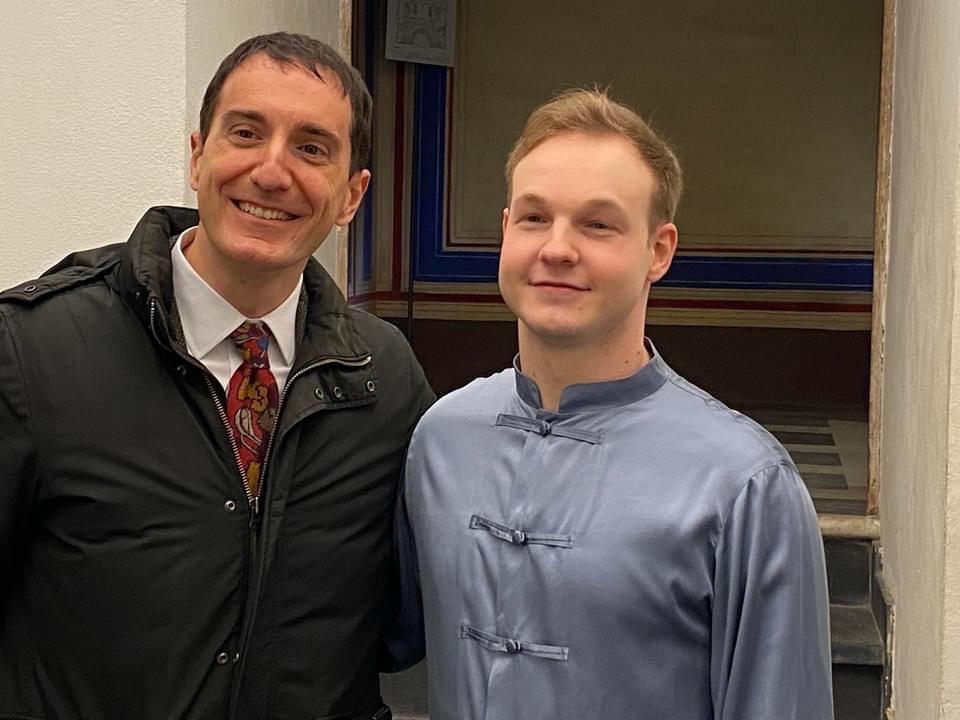
What better after such a performance than a good cup of tea as he talks to his father the distinguished pianist,Sandu Sandrin,who had listened in Romania.Another call too from William Naboré his actual mentor of the International Piano Academy Lake Como who had listened in Rome.

There is also an amusing and revealing story relating to having a ‘cuppa’ after such a monumental chore as the Beethoven Trilogy.I had been intrigued one day to see the final concert in a complete Beethoven Sonata Cycle completely sold out at one of the major concert halls in London.Intrigued to see that the final trilogy would be performed twice by the same pianist on the same day with only time for a quick cup of tea between performances.I listened to the first performance that was relayed on the radio and was able to follow the score with a glass of wine in hand and an easily accessible on/off button on the radio.I was bowled over by a performance where every detail of the score was played to perfection.Needless to say neither the radio or the wine were even contemplated in an hour of extraordinary music making.A renowned critic who had found a ticket for the second performance was equally bowled over but his reaction was surprising as it was revealing .’Well,Chris,it was a quite extraordinary performance.I remember though hearing Claudio Arrau playing the trilogy in the Festival Hall.At the end of the performance not only he was exhausted but the audience was too.There was no way that he could have had a quick cup of tea and done it all over again!’Make of it what you will but I will never forget Serkin too literally shaking at the end of the Hammerklavier or the Diabelli Variations.It is a spiritual journey that carries on long after the last note has sounded.I remember Mitsuko Uchida too pointing out to an audience member that she did not want to be photographed or recorded because a concert should remain in the memory as a wonderful experience and not just a thing printed on a sterile page.I think all those present yesterday too were exhilarated and exhausted judging by the moments of moving collective silence that we shared together at the end of op.111.

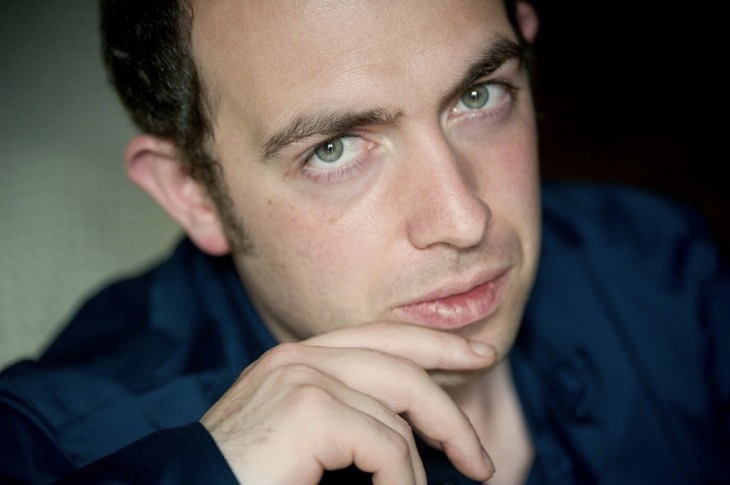
Born to a family of musicians from Bucharest, Romania, Cristian Sandrin made his solo debut at prestigious Romanian Atheneum Hall at the age of 13. After graduating the “Dinu Lipatti” Art College in Bucharest, Cristian moved to London where he studied at the Royal Academy of Music. Having graduated with First Class Honours in 2016, he is currently pursuing a postgraduate degree at the same institution. He is currently a receiver of the Piano Fellowship of the Philharmonia Orchestra’s Martin Musical Scholarship Fund 2017/2018, benefiting also from a scholarship of the Imogen Cooper Music Trust. Cristian Sandrin won numerous prizes and awards at international and national competitions. A Second Prize Winner of the Windsor International Piano Competition (2018) and Third Prize Winner of the Sheepdrove Intercollegiate Piano Competition (2018). He had his solo debut recital at the Wigmore Hall in London in September 2017. In Romania, Cristian Sandrin is a regular guest artist of the Filarmonica “Mihail Jora” Bacau, the Sibiu Sibiu Philharmonic, Ramnicu-Valcea National Philharmonic and Bucharest Symphony Orchestra. Other international engagements include performances at “La Fenice” Theatre in Venice, Theatre de la Montjoie, Salla Manuel de Falla in Madrid, Palazzo Ricci in Montepulciano, the Romanian Atheneum in Bucharest, and “Bulgaria Philharmonic Hall” in Sophia. .

https://www.youtube.com/watch?v=1N1oJc0lnCc
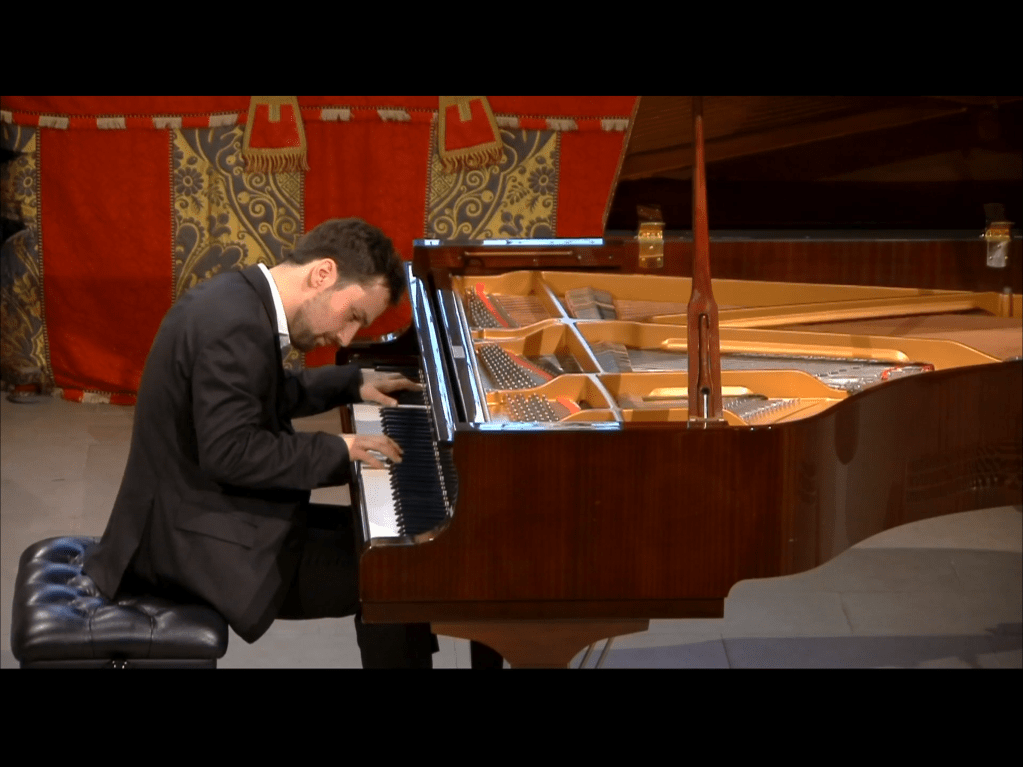
https://christopheraxworthymusiccommentary.wordpress.com/2021/12/14/cristian-sandrin-in-hampstead-simple-great-beethoven/

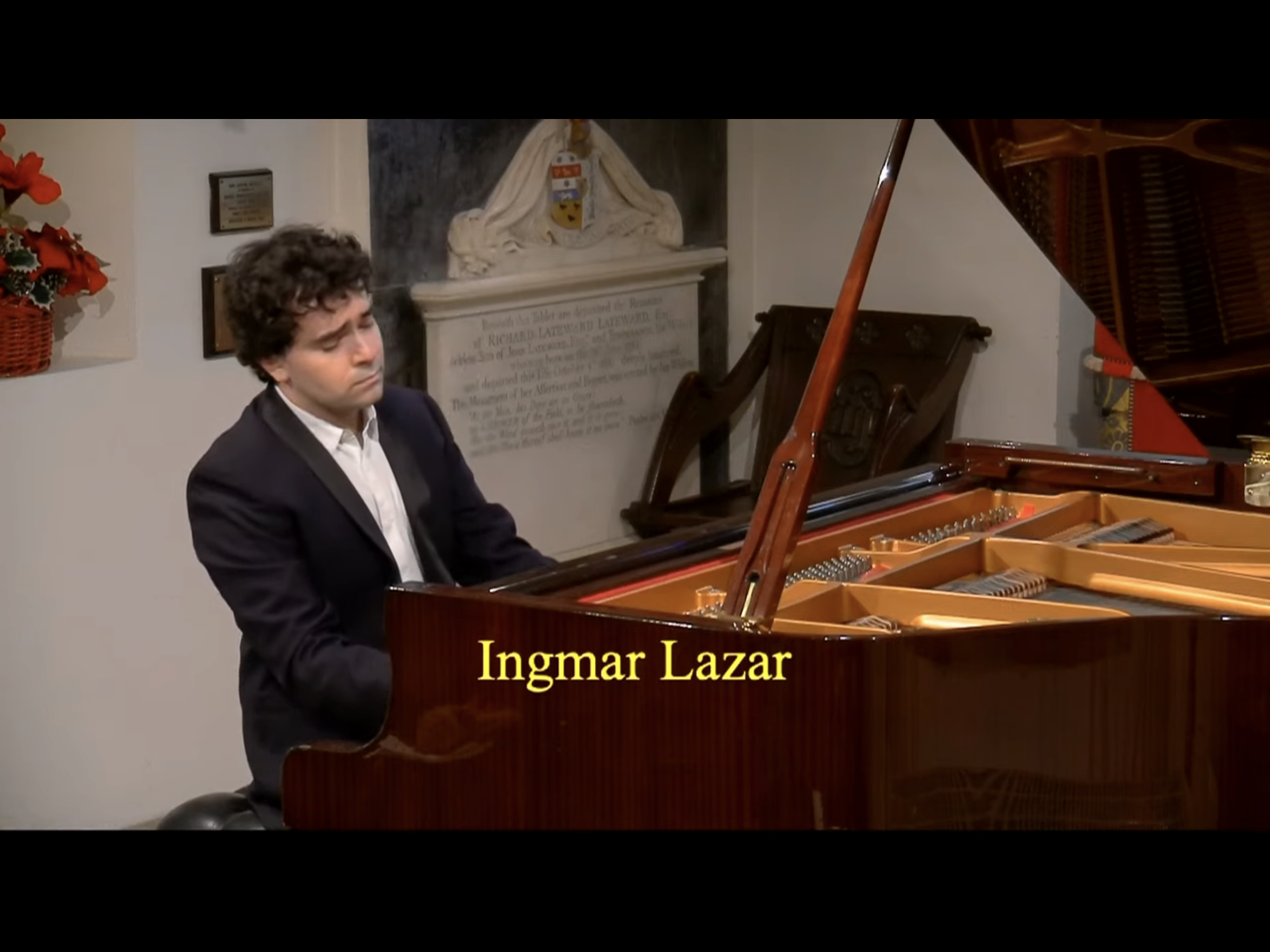
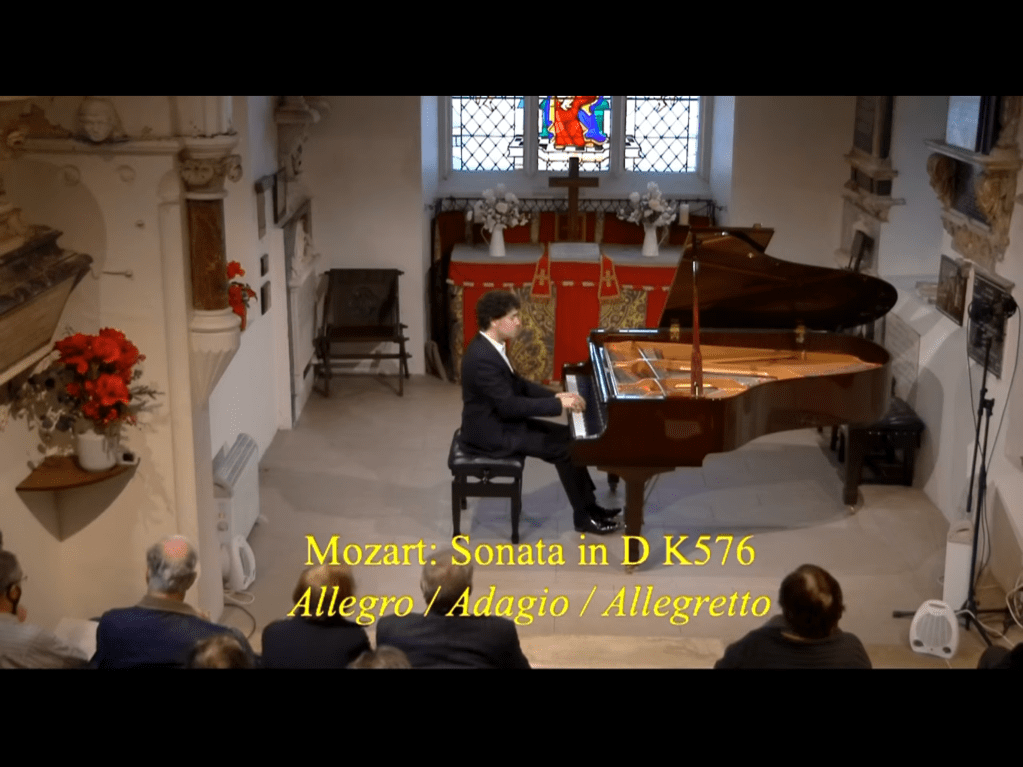
Ingmar Lazar Mastery,Simplicity and Beauty comes to St Marys

Tuesday 1 February 3.00 pm

Mozart: Sonata in D Major K 576
Allegro / Adagio / Allegretto

Beethoven: Sonata in E flat Op 81a ‘Les Adieux’
Adagio-Allegro / Andante / Vivacissimamente

Brahms: 4 Klavierstücke Op 119
I. Intermezzo in B minor
II. Intermezzo in E minor
III. Intermezzo in C Major
IV. Rhapsody in E-flat Minor

Liszt: La Campanella S 141 no 3

Some masterly playing from Ingmar Lazar.With simplicity and remarkable musicianship he allowed the music to speak for itself with a luminosity of sound and technical mastery that was never allowed to intrude on the architectural music line.I was reminded of the same sound of Gelber many years ago when he too played Beethoven with the same natural simplicity as today.One was never aware of his superb technique which was totally at the service of the music.
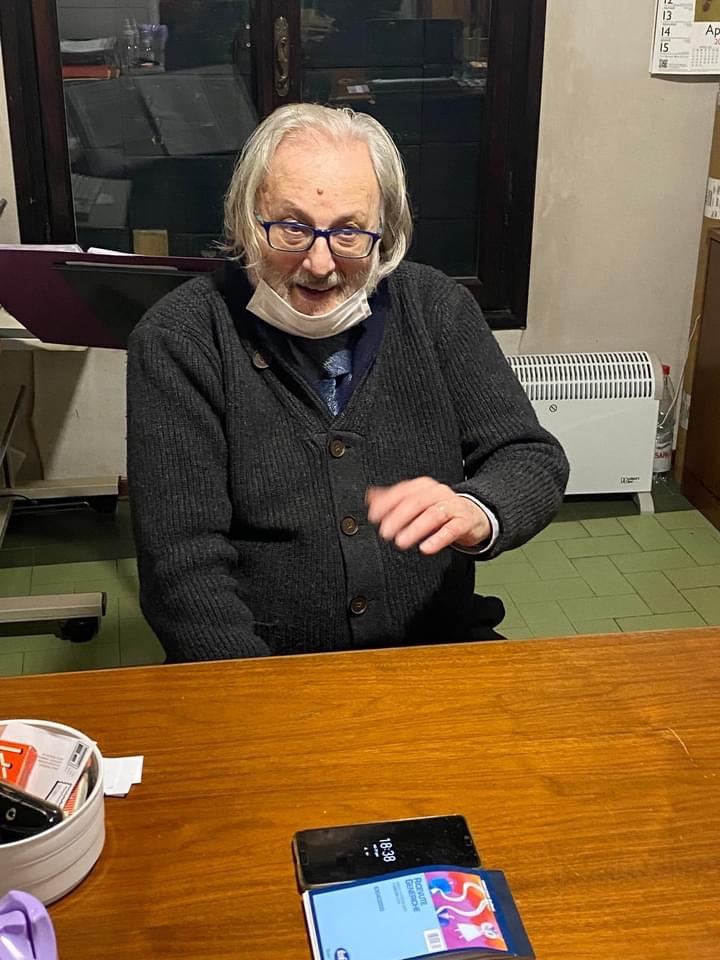
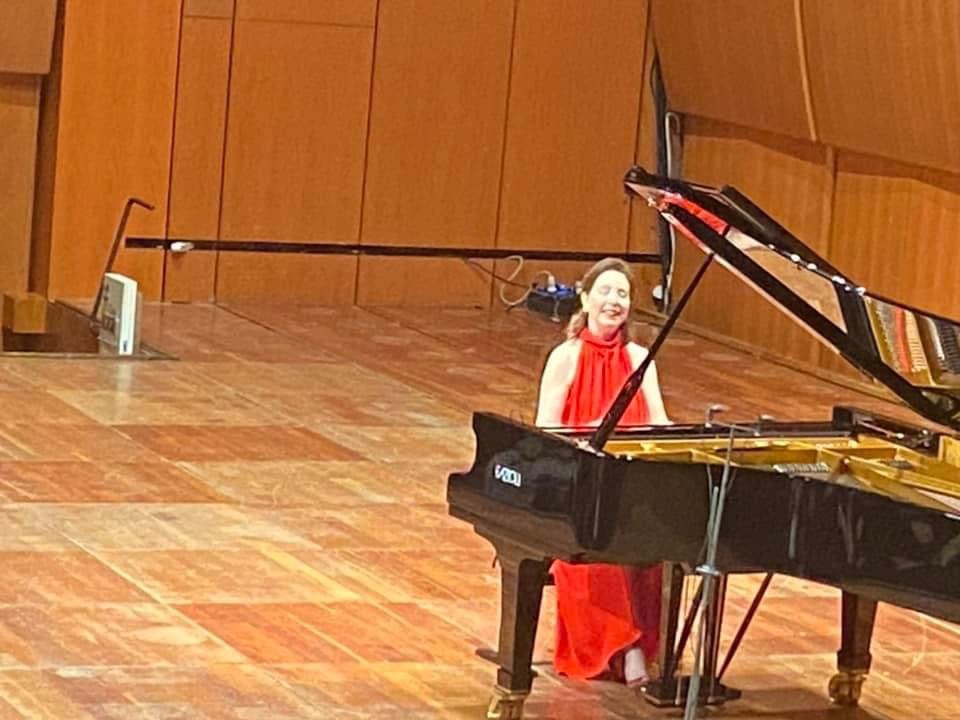
From the very first notes of Mozart’s last piano sonata there was a simplicity and clarity that held us spell bound.A beautiful liquid sound of great refinement and a kaleidoscopic sense of colour in the development before the delicate energy of the recapitulation.Pires has shown us the same art that conceals art that is one of the most difficult feats to achieve.
The famous saying of Schnabel that ‘ Mozart is too easy for children but too difficult for adults’ was evident today as in the simplicity there were so many subtle inflections of sound and also considerable temperament when needed that brought this work vividly to life.
An Adagio slow movement of ravishing beauty with a rich cantabile and a sumptuous sense of balance.It could have flowed more but it was played with a simplicity and sensitivity and an aristocratic sense of style.The final allegretto was also of a disarming simplicity,played with a sense of line of remarkable clarity and rhythmic energy.


The opening Adagio of the Beethoven ‘Les Adieux’ Sonata where a world was expressed in the introduction with such sublime sounds but above all scrupulous attention to the score.
The Allegro -Das Lebewohl – The Farewell -was played with great energy but also a clarity where every note was allowed to speak without any thought of the treacherous technical challenges that Beethoven demands.
An andante espressivo- ‘Abwesenheit – The Absence’ that was allowed to flow so naturally with a ravishing sense of balance and a truly magical ending before the explosion of the Vivacissimamente ‘Das Wiedersehen-The return’ thrown off with technical brilliance and notable clarity.


The four Brahms Klavierstucke op 119 were played with ravishing beauty and disarming simplicity.The opening Intermezzo in B minor I have never heard played with such clarity where every voice and strand spoke so eloquently.His continual natural body rotation gave such a natural fluidity to all he does. The gentle flow of the Intermezzo in E minor where the middle episode spoke with such a sumptuous golden sound.The C major Intermezzo was thrown off with the seeming simplicity and fantasy that only Curzon could conjure up before the majesty and excitement of the final Rhapsody.


A true musicians view of La Campanella where all the flashy showmanship so often displayed in this showpiece was put to one side with some very interesting fingerings though.But Liszt’s magnificent miniature tone poem was allowed to ravish and seduce with all the subtlety of another age.
A simple eloquent Prelude by Lyadov was this young musicians way of thanking a justly enthusiastic audience

Hailed by the Classica Magazine as a “pianist of magnetic presence”, Ingmar Lazar has established himself as one of the leading French musicians of his generation.He performs in the world’s prestigious halls such as the Great Hall of the Tchaikovsky Conservatory in Moscow, Concertgebouw in Amsterdam, Herkulessaal in Munich, Mozarteum Foundation in Salzburg, Rudolfinum in Prague, Romanian Athenaeum in Bucharest, and the Charles Bronfman Auditorium in Tel Aviv to name a few.He collaborates with conductors Vladimir Spivakov, Jean-Jacques Kantorow, Mathieu Herzog, Peter Vizard among many others, and performs with the National Philharmonic of Russia, the Moscow Virtuosi, the Orchestre Lamoureux, the Romanian Radio Chamber Orchestra, and the Lviv Philharmonic Academic Symphony Orchestra. His critically acclaimed discography includes a Schubert recital (2017), and a Beethoven recital (2019), both issued on the Lyrinx label.Born in 1993, Ingmar Lazar made his debut at the age of 6 at the Salle Gaveau in Paris. He is the recipient of the Tabor Foundation Piano Award at the Verbier Festival (2013), and was named laureate of the Safran Foundation for Music (2016). A former student of Valery Sigalevitch and Alexis Golovin, he continued his studies with Vladimir Krainev and Bernd Goetzke at the Hannover Musikhochschule. Thereafter he attended the International Piano Academy Lake Como. He received his Master’s and Postgraduate degree from the Universitat Mozarteum Salzburg in the class of Pavel Gililov. Currently, he is mentored by Elisso Virsaladze at the Scuola di Musica di Fiesole. Since 2016, Ingmar Lazar is founder and artistic director of the Festival du Bruit qui Pense, located in Louveciennes (France). He was named starting from 2021 artistic director of the piano festival Escapades Pianistiques taking place at the Chateau de Commarin, near Dijon.

https://youtube.com/watch?v=0ws6gIwmutM&feature=share

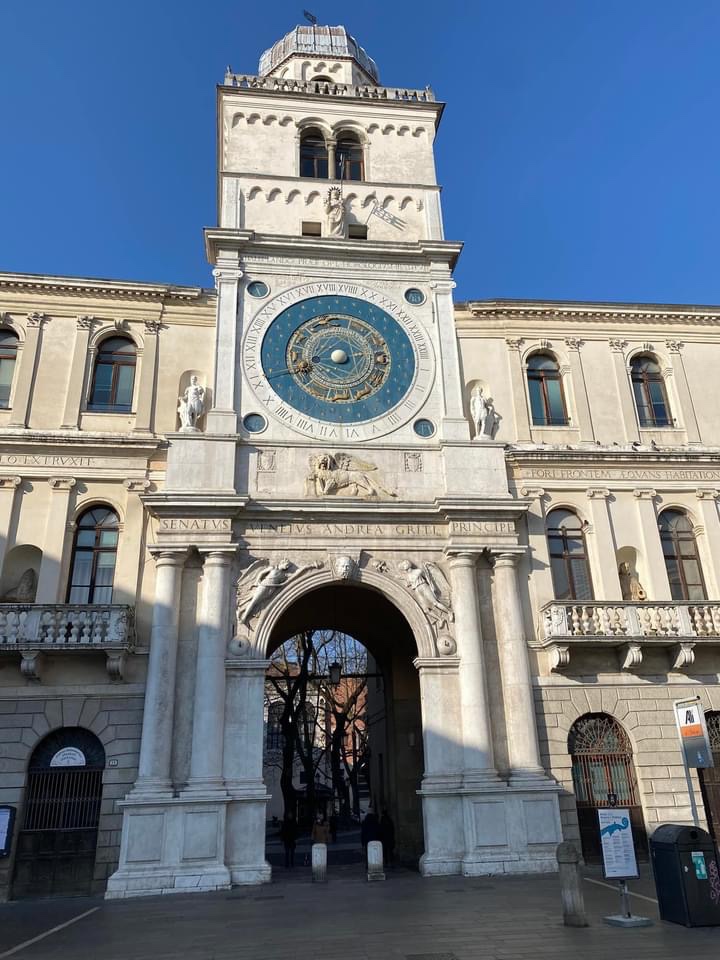
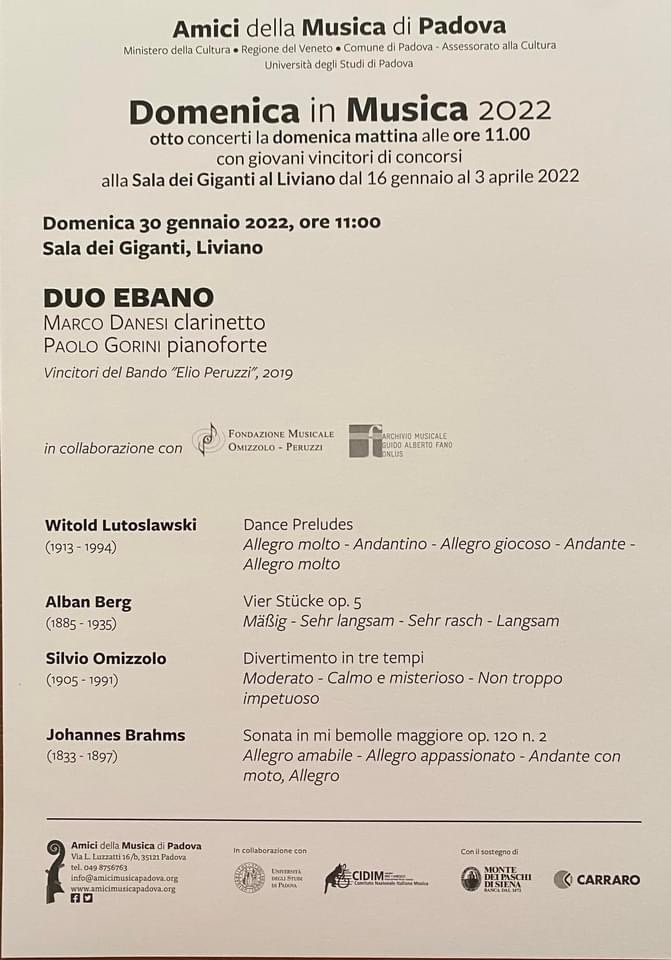
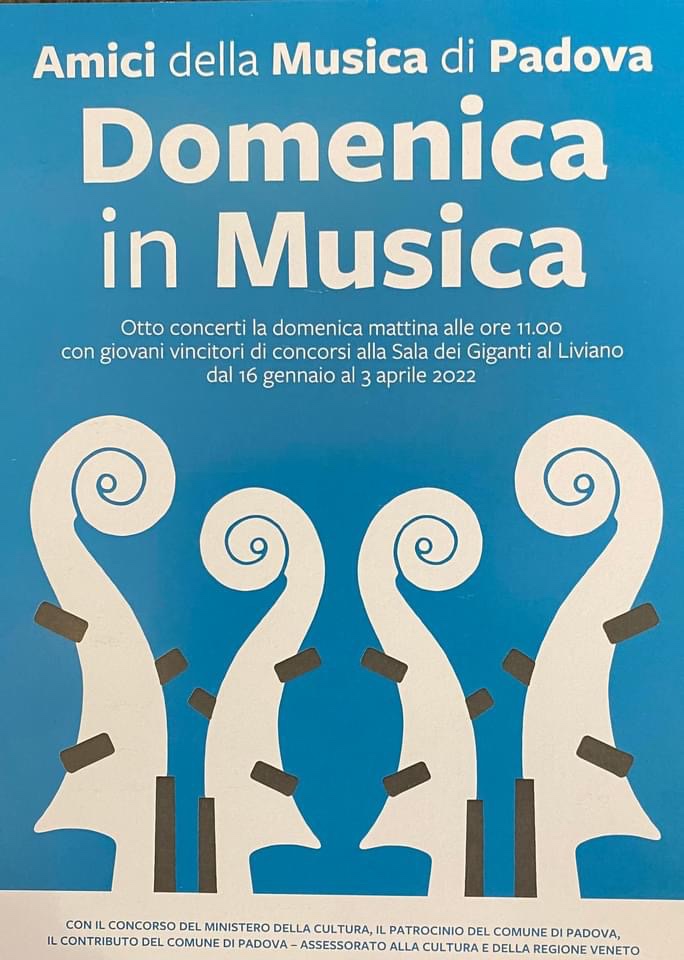
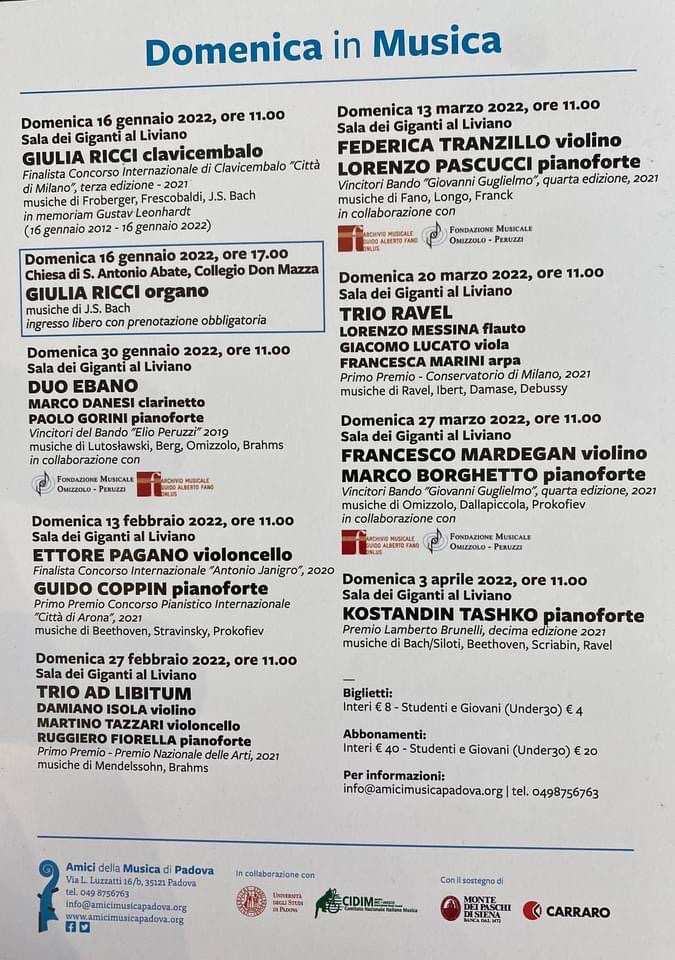
Duo Ebano: Marco Danesi & Paolo Gorini refined musicianship in the Sala dei Giganti

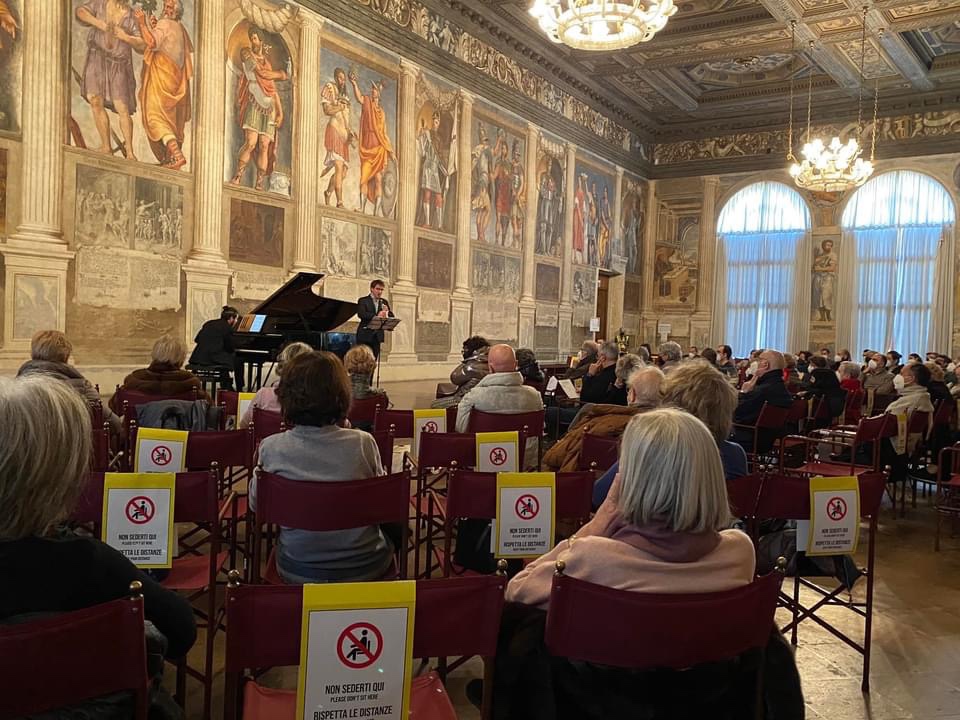
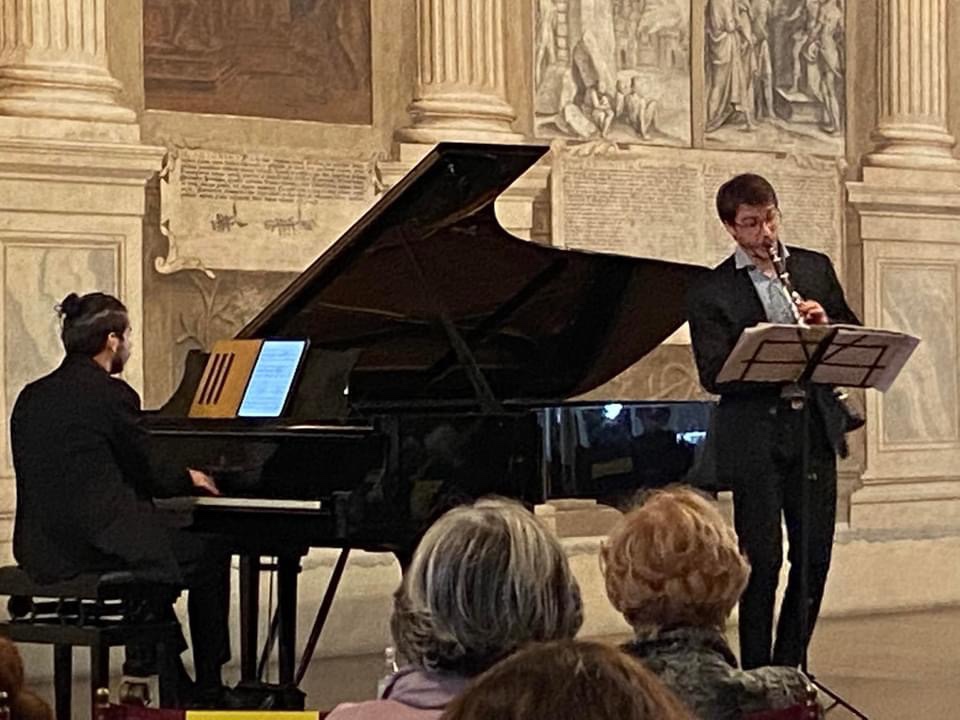
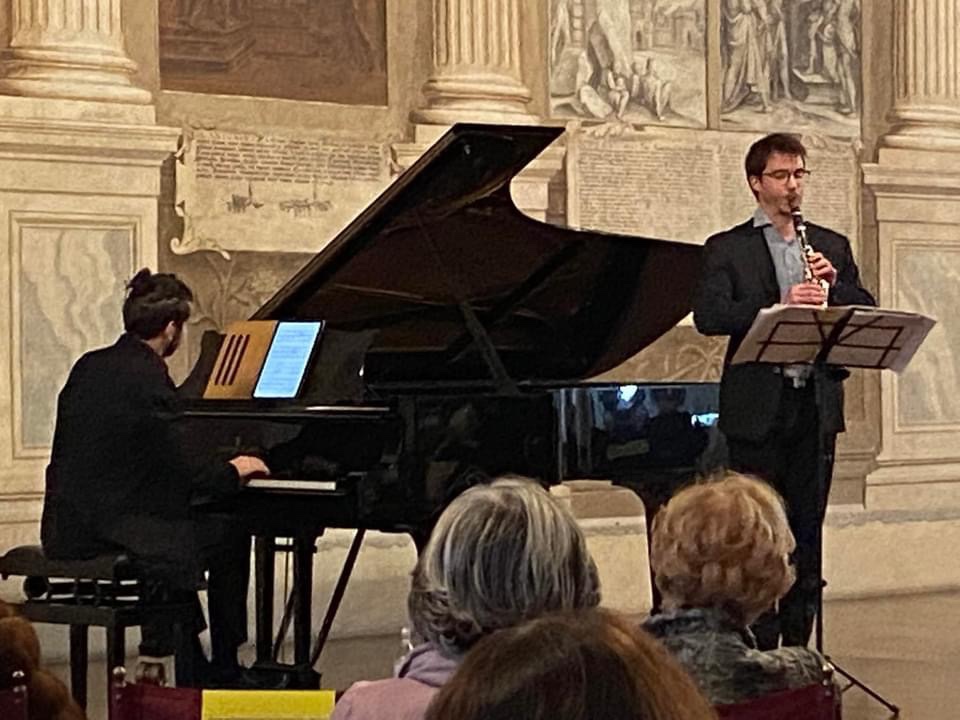
Duo Ebano -Marco Danesi ,clarinet Paolo Gorini,pianoforte.
For the young Italian musicians Sunday morning series the Amici della Musica have decided to dedicate the first half this year to chamber music rather than the prevalence of solo piano recitals.

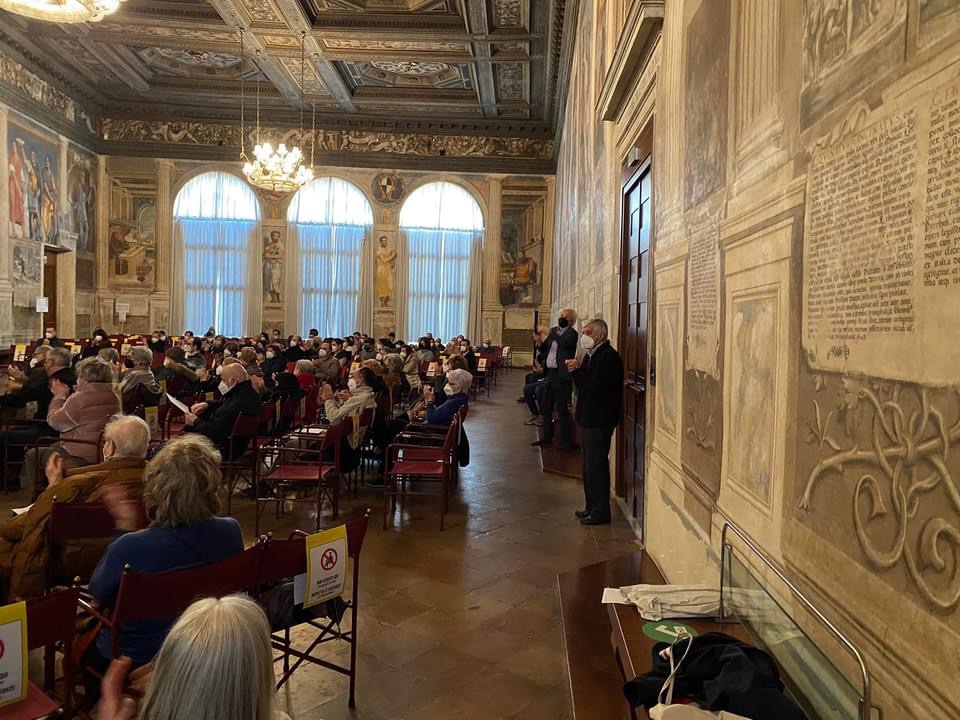
Of course the Steinway D,the preferred instrument,of Richter sits heroically in front of the magnificent frescos of this historic hall of the ‘Giants’
Today there was a very fine pianist too in company of a superb young clarinettist.Their playing of miniatures by Lutoslawski,Berg and Omizzolo was a lesson in real chamber music playing.Listening to each other as their kaleidoscopic sense of colour and range of sounds was perfectly matched to create the atmosphere and character that brought these works vividly to life.

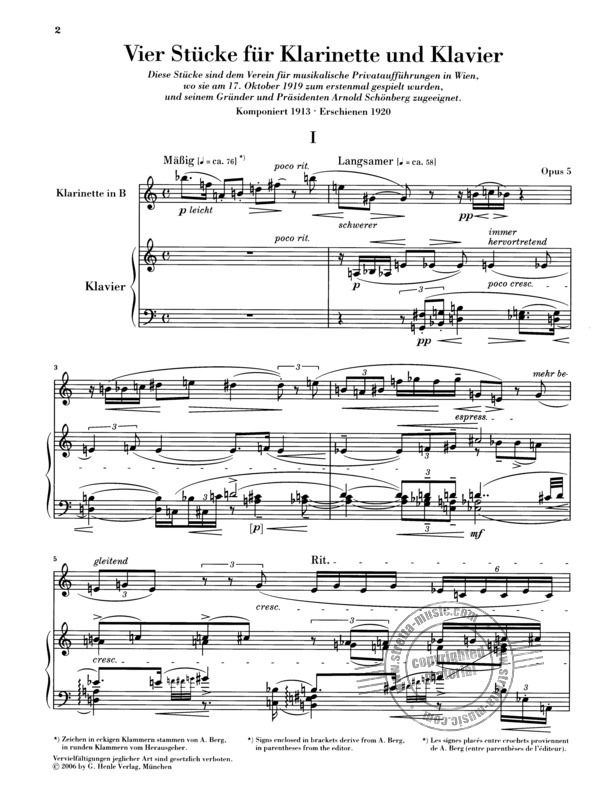
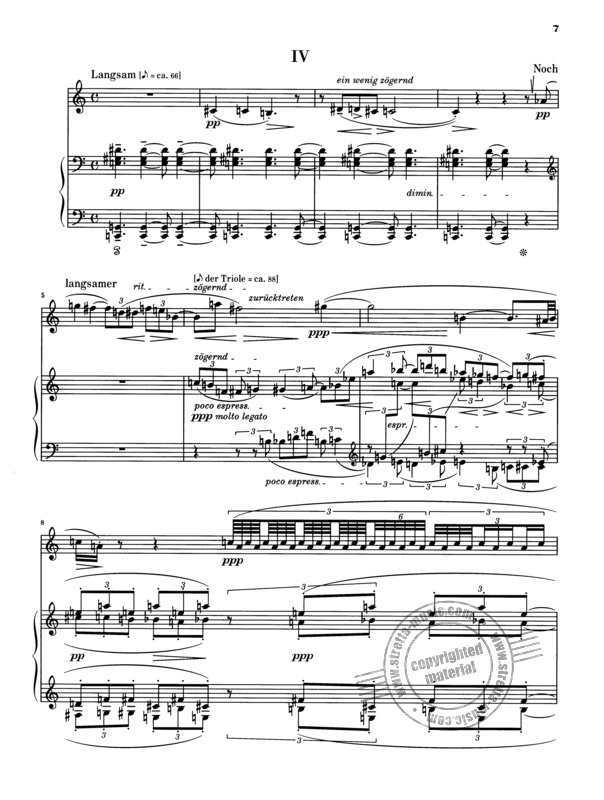
The colour and sensitivity they brought to the Vier Stucke op 5 by Berg was truly to marvel at,as to how so little can mean so much.Even their silences became pregnant with meaning.
Paolo Gorini a specialist in modern repertory played with a precision and exemplary musicianship as this was a real duo between equals.

Schoenberg, perhaps feeling threatened by the talented pupil now composing outside his guidance, gave Berg, who was visiting him in Berlin, a blistering criticism of the ‘insignificance and worthlessness of his recent compositions’.
One of the most remarkable moments in this very atmospheric work where so little can express so much

‘But I must thank you for your censure just as much as for everything you ever gave me, in the full knowledge that it is meant well—and for my own good. I need not tell you, my dear Mr. Schoenberg, that the great pain it has caused me is a guarantee that I have taken your criticism to heart.’Alban Berg, to Arnold Schoenberg

Silvio Omizzolo 1905-1991 was a Padua born pianist and composer.He graduated in Milan in 1927under the guidance of master Renzo Lorenzoni. He obtained the classical high school diploma at the Liceo Tito Livio in Padua and then graduated in Law at the University of Ferrara. His first piano works date back to 1928. Numerous works followed both for piano and for different vocal and instrumental formations. In 1943 he obtained the first prize in the competition of the “Union of Italian Musicians” and later received other important awards. Amongst which , the third prize at the “Queen Elizabeth” International Competition in Brussels in 1969 with the concerto for piano and orchestra, it still remains memorable for being the only Italian opera chosen from among two hundred competitors.From 1933 to 1974 he was a teacher at Pollini Conservatory in Padua where he was director from 1966 to 1971.His Divertimento in tre tempi showed a strong affinity to Hindemith.The ‘calmo e misterioso’ with its opening fanfare on the piano of deep bass notes answered by treble murmurs before the entry of the clarinet had a very atmospheric ending.A very busy continuous dialogue between piano and clarinet in the ‘non troppo impetuoso’ led to a cadenza for clarinet solo and the superb ensemble ending.


It was though in the Brahms Sonata op 120 n.2 where a more symphonic approach was needed -the Philadelphia sound to quote Rachmaninov-that the sweep and sumptuous sounds were missing.Notable precision and subtle musicianship but the lack of weight robbed the music of its power to seduce and ravish and hold the audiences attention with a big architectural design of symphonic proportions.
The Pièce en forme de Habanera by Ravel played as an encore,returned to their world of refined musicianship and subtle intoxicating colours.

A full hall with Filippo Juvarra artistic director of the Amici della Music for the past half a century looking on very satisfied that his young musicians series is having such a success in these difficult times.

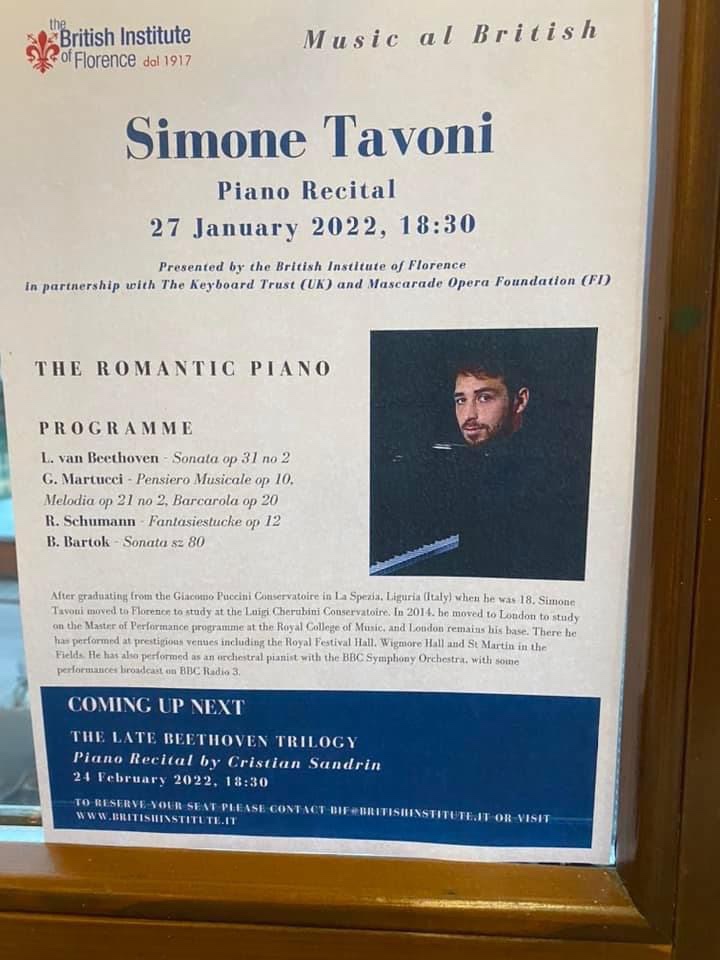
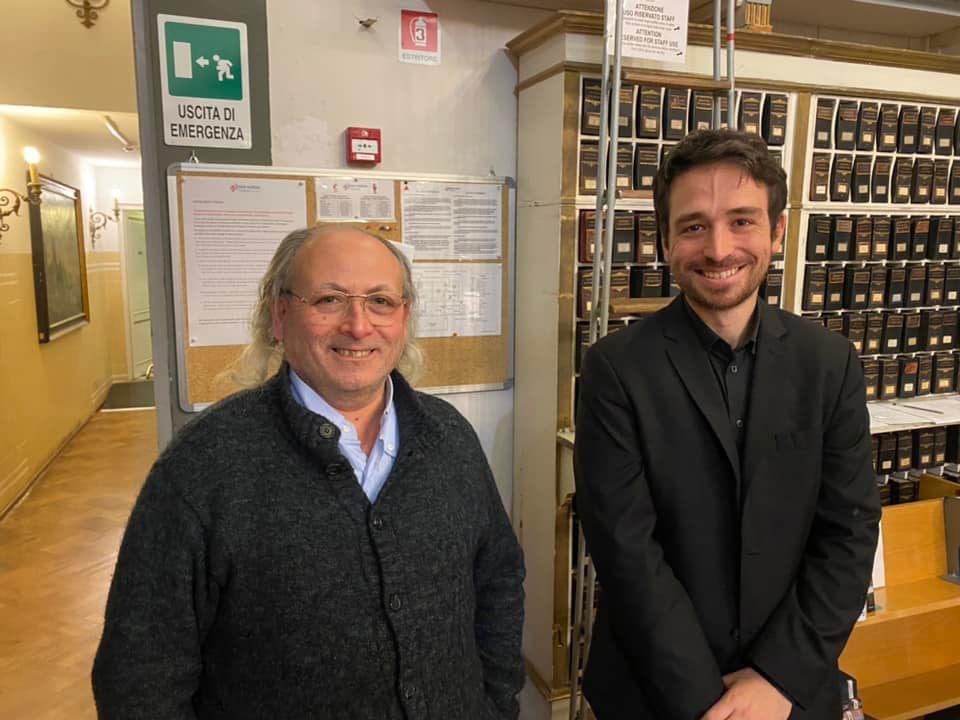
Simone Tavoni triumphs on the Italian tour for the Keyboard Trust – part 1 Florence – part 2 Venice and Padua

https://christopheraxworthymusiccommentary.wordpress.com/2021/02/12/simone-tavoni-a-poet-speaks-at-the-1901arts-club/

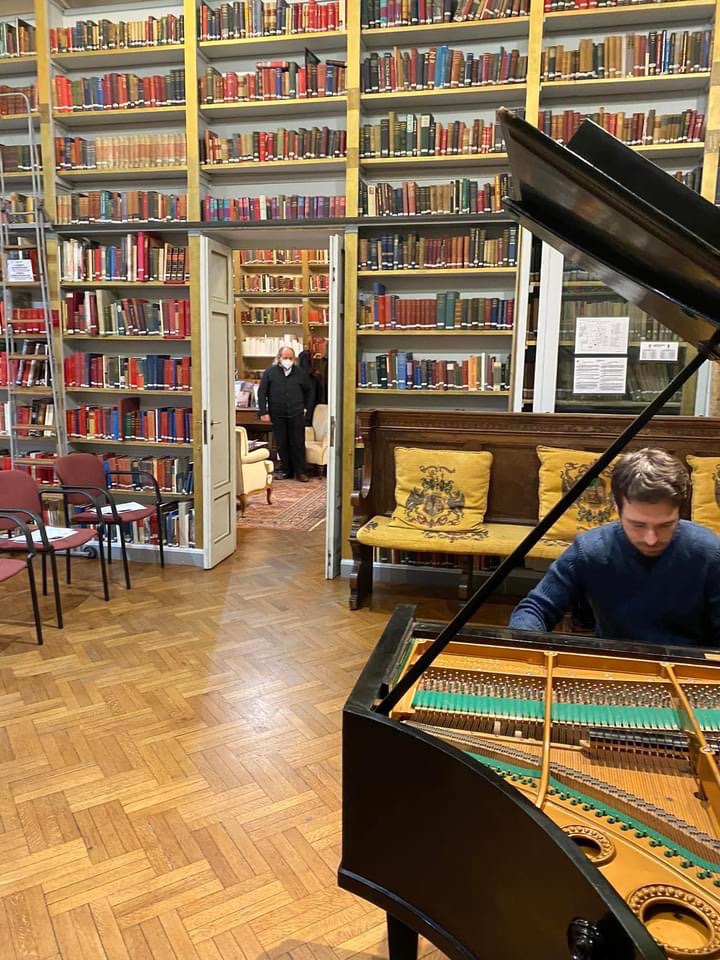
Simone Tavoni in Florence in the second of a series of concerts in the Harold Acton Library. After Jonathan Ferrucci’s superb Goldberg Variations that inaugurated this series .Simone offered a varied programme of Beethoven,Martucci,Schumann and Bartok. https://christopheraxworthymusiccommentary.wordpress.com/2021/10/27/jonathan-ferrucci-the-return-of-a-warrior-the-goldberg-variations-in-florence/

Michele Padovano master piano technician/magician and composer


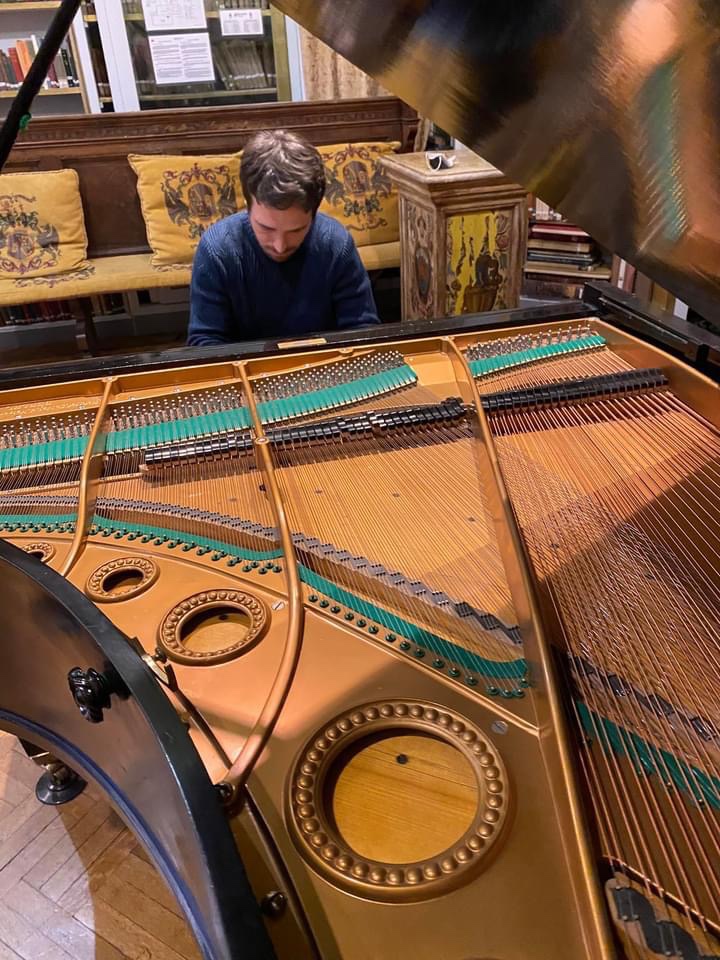
With the resident tuner Michele Padovano working miracles on an old but still serviceable Bechstein,Simone was able to cast a spell on the audience that despite strict Covid restrictions felt the need to share the experience of music together.
The ovation that they gave Simone at the end of Bartok’s tempestuous Sonata was evidence enough that they had been more that repaid that risk.
A surprise encore of a charming piece by Clementi – Monferrina op.39 n.12 – that Simone had found hidden in the archives was just the calm after the storm that was needed to send his audience home replenished and satisfied.
Even if without the usual glass of wine that in happier times would have followed the concert .
It did not stop many of the audience wanting to thank their fellow Toscano for the message of hope and beauty that he had shared with them tonight.

Simone in rehearsal


Beethoven’s Tempest Sonata opened with barely whispered sounds making it’s rhythmic explosion even more powerful.Courageously following Beethoven’s long pedal markings he managed on a difficult piano to create the atmosphere that Beethoven asks for.
The slow movement was made to glow as the embellishments were so carefully embroidered around the melodic line.
The rondo finale just jumped from his fingers with an infectious agility that was full of buoyancy and ‘joie de vivre’.

Ever watchful Michele Padovano during an acoustic rehearsal


Three little pieces by Martucci were played with the charm and grace for which they were written on Martucci’s own youthful concert tours in Europe at the turn of the century.
Schumann’s eight miniature tone poems that make up his Fantasiestucke op 12 showed off Simone’s sensitivity and technical prowess.From the sublime stillness of Des Abends he plunged straight in to the whirlwind of Aufschwung.
Warum was played with a disarming simplicity and a sense of balance that allowed the melodic strands to comune with each other in a very touching way.
Has Grillen ever sounded more pompous as in Simone’s hands tonight or In der Nacht so demonic?Receiving spontaneous silenced by Simone’s superb story telling of Schumann’s Fabel
Traumes Wirren was played with a jeux perlé of fleeting lightness before the grandiose End of the Story.Simone allowing this magic world of Schumann to disintegrate before our very eyes with extreme delicacy of ever more whispered sounds.

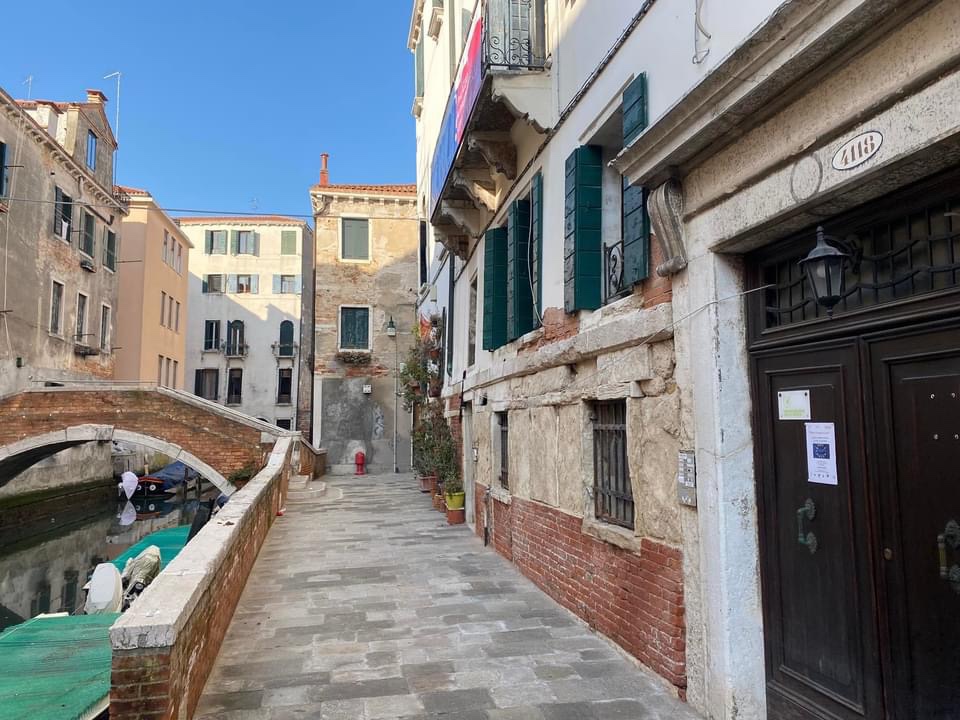
Venice and Padua now await.
Cristian Sandrin next month on the 24th February with Beethoven’s mighty trilogy should seal the success of this new musical adventure for the British Institute with or without the glorious sound of the popping of corks! https://christopheraxworthymusiccommentary.wordpress.com/2021/12/14/cristian-sandrin-in-hampstead-simple-great-beethoven/

Nikita Lukinov,Thomas Kelly – following his recent triumph in Leeds,Milda Daunoraite and Salvatore Sanchez will complete this seasons collaboration with the Keyboard Trust.

https://christopheraxworthymusiccommentary.wordpress.com/2021/10/06/brazil-200-celebrations-with-the-keyboard-charitable-trust-on-wings-of-song/

Simon Gammell OBE

Simon Gammel OBE, the enthusiastic and enlightened director of the British Institute is delighted that the magnificent library bequeathed by Harold Acton can now be filled with the sound of music.


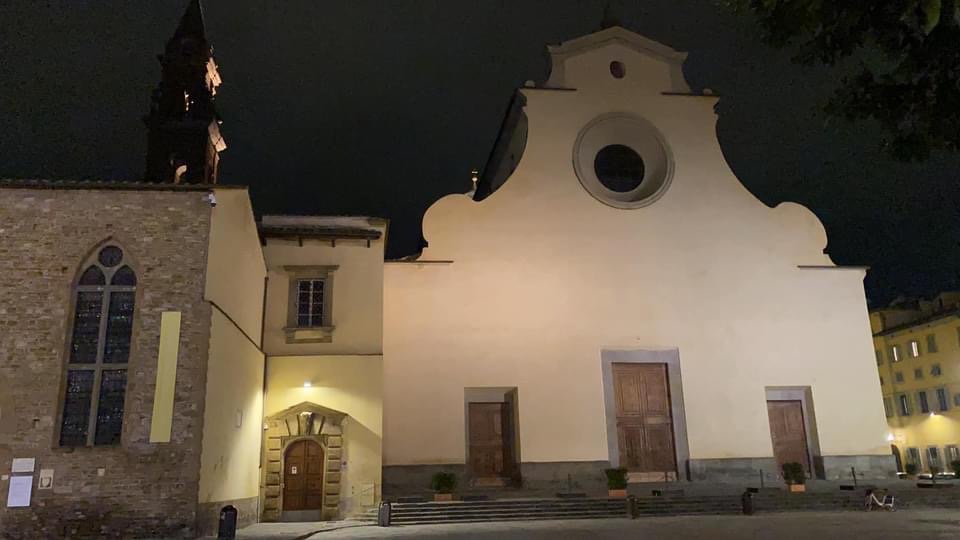
What a treat it is to relive the concert in the surrounds of the most beautiful square in Florence that of S.Spirito.

S.Spirito directly behind the Harold Acton Library

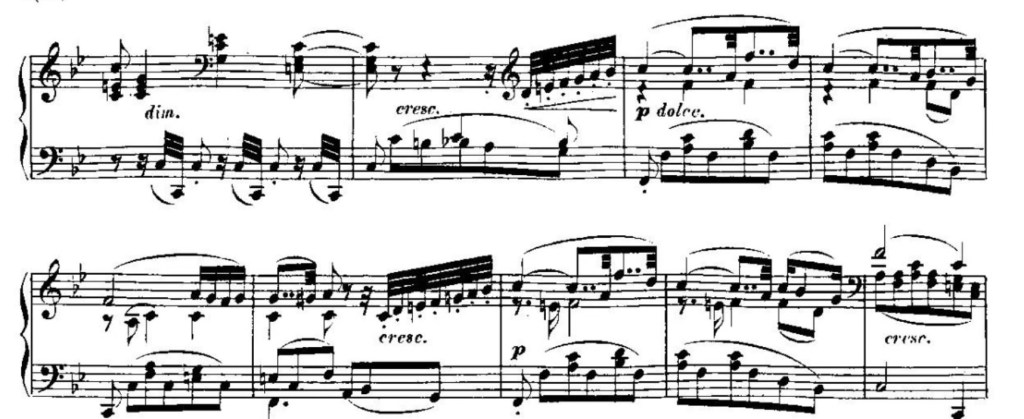
The Piano Sonata No. 17 in D minor, Op. 31, No. 2, was composed in 1801–02by Beethoven.It is usually referred to as The Tempest (or Der Sturm in his native German), but the sonata was not given this title by Beethoven, or indeed referred to as such during his lifetime. The name comes from a reference to a personal conversation with Beethoven by his associate Anton Schindler in which he reports that Beethoven suggested, in passing response to his question about interpreting it and Op. 57, the Appassionata Sonata that he should read Shakespeare’s Tempest.Some however have suggested that Beethoven may have been referring to the works of C.C.Sturm , the preacher and author best known for his Reflections on the Works of God in Nature, a copy of which he owned and, indeed, had heavily annotated.The British music scholar Donald Francis Tovey says in A Companion to Beethoven’s Pianoforte Sonatas:”With all the tragic power of its first movement the D minor Sonata is, like Prospero,almost as far beyond tragedy as it is beyond mere foul weather.

Slow movement bars 31 -38

It will do you no harm to think of Miranda at bars 31–38 of the slow movement… but people who want to identify Ariel and Caliban and the castaways, good and villainous, may as well confine their attention to the exploits of Scarlet Pimpernel when the Eroica or the C minor Symphony is being played.”The sonata is in three movements Largo/Allegro- Adagio-Allegretto

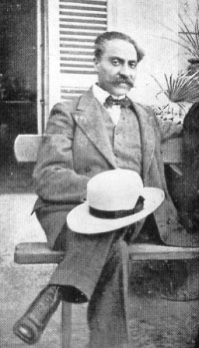
Giuseppe Martucci

Giuseppe Martucci 1856 – 1909, Sometimes called “the Italian Brahms Martucci was notable among Italian composers of the era in that he wrote no operas. As a composer and teacher he was influential in reviving Italian interest in non-operatic music. As a conductor he helped to introduce Wagner’s operas to Italy and also gave important early concerts of English music there.Martucci’s career as an international pianist commenced with a tour through Germany, France and England in 1875, at the age of 19.He was appointed piano professor at the Naples Conservatory in 1880,and moved to Bologna in 1886, .In 1902 he returned for the last time to Naples, as director of the Royal Conservatory of Music.Martucci began as a composer at the age of 16, with short piano works.He was championed by Toscanini during much of the latter’s career.His NBC Orchestra performed a number of Martucci’s orchestral works in from 1938 to 53.NBC musical director Samuel Chotzinoff, in his 1956 book “Toscanini—An Intimate Portrait”, said that every time the Maestro proposed scheduling Martucci’s works, certain orchestra members and NBC authorities objected, but the conductor was not to be deterred.The works that Simone is playjng today are from 1873/74 for his own concert tours as a travelling virtuoso.

The Piano Sonata, BB 88, Sz. 80, by Bartok was composed in June 1926. A year that is known to musicologists as Bartók’s “piano year”, when he underwent a creative shift in part from Beethovenian intensity to a more Bachian craftsmanship.

The work is in three movements: Allegro moderato- Sostenuto e pesante – Allegro molto

It is tonal but highly dissonant (and has no key signature), using the piano in a percussive fashion with erratic time signatures Underneath clusters of repeated notes, the melody is folklike. Each movement has a classical structure overall, in character with Bartók’s frequent use of classical forms as vehicles for his most advanced thinking.Bartok wrote this piece with an Imperial Bosendorfer in mind, which has extra keys in the bass (97 keys in total). The second movement calls for these keys to be used (to play G sharp and F ).

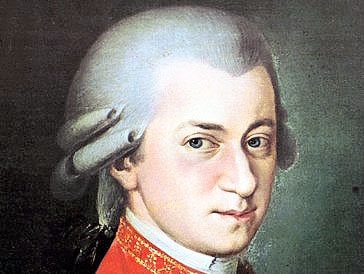
Bartok was also a masterly pianist and as there was an absence of Mozart in the programme today of all days I add Bartok’s historic performance with his wife of the Sonata for two pianos K.448 to celebrate the genius of Mozart on his 255th birthday

“Oggi è nato Wolfgang Amadé Mozart! Quel giorno gli dei furono benevoli con l’uomo. E non chiamiamolo Amadeus, nome che non fu mai il suo. In latino Theophilus (battesimo). In tedesco Gottlieb. E lui si firmava Amadé, con il nome in francese”.Dino Villatico

Fantasiestücke, op 12, is a set of eight pieces written in 1837. The title was inspired by the 1814–15 collection of novellas, essays, treatises, letters, and writings about music, Fantasiestücke in Callots Manier (which also included the complete Kreisleriana, another source of inspiration for Schumann) by one of his favourite authors, E.T.A Hoffmann.

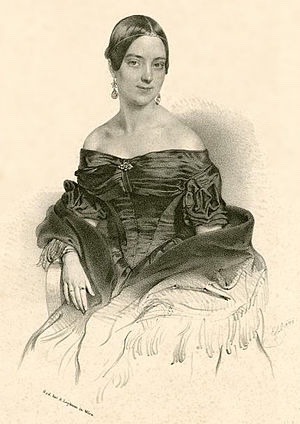
Anna Robina Laidlaw

Schumann dedicated the pieces to Fräulein Anna Robina Laidlaw, an accomplished and attractive 18-year-old Scottish pianist with whom Schumann had become good friends.

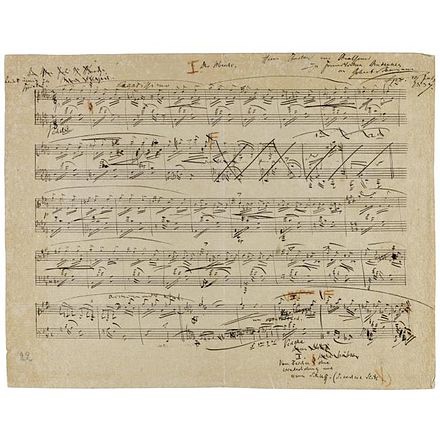
Autograph of Des Abends

Des Abends” (“In the Evening”) in D flat major/ Sehr innig zu spielen (Play very intimately)

Aufschwung” (“Soaring”, literally “Upswing”) in F minor/ Sehr rasch (Very rapidly)

Warum?” (“Why?”) in D♭ major / Langsam und zart (Slowly and tenderly)

Grillen” (“Whims”) in D♭ major / Mit Humor (With humor)

In der Nacht” (“In the Night”) in F minor / Mit Leidenschaft (With passion)

Fabel” (“Fable”) in C major / Langsam (Slowly)

Traumes Wirren” (“Dream’s Confusions”) in F major / Äußerst lebhaft (Extremely lively)

Ende vom Lied” (“End of the Song”) in F major / Mit gutem Humor (With good humor)Schumann described this piece as a combination of wedding bells and funeral bells. In a letter to his fiancée Clara Wieck, who would become his wife,three years later, he wrote about this last piece: “At the time, I thought: well in the end it all resolves itself into a jolly wedding. But at the close, my painful anxiety about you returned.”

https://christopheraxworthymusiccommentary.wordpress.com/2020/12/02/simone-tavoni-at-st-marys/

More to follow from Venice and Padua in collaboration with AGIMUS Padua of Elia Modenese …………….Part 2 Venice and Padua

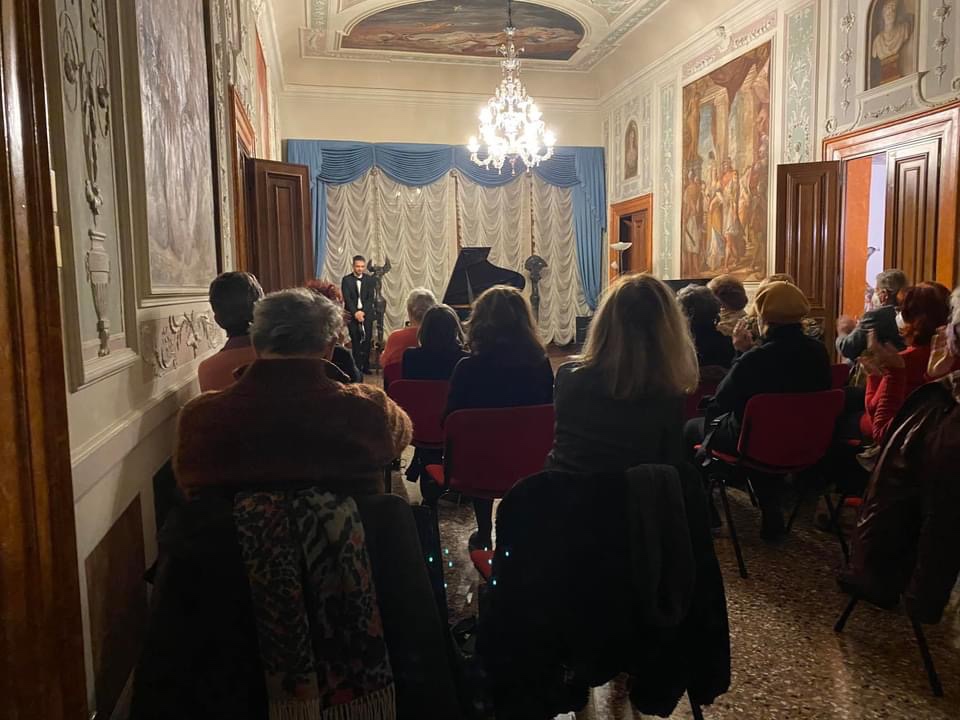
In the beautiful hall in Venice an unexpected full house for a very enthusiastic audience.A fine Kwai piano allowed Simone to give the best of himself even the very subtle pedal effects in Beethoven were totally convincing.The charming salon pieces by Martucci were projected with great beauty,the Melodia op 21 sounding even more like Mendelssohn with its waves of arabesques weaving it’s way around a ‘heart on sleeve ‘melodic line.A surprise encore of an improvisation in the style of Mozart was Simone’s way of celebrating the 255th birthday of the genius from Saltzburg.

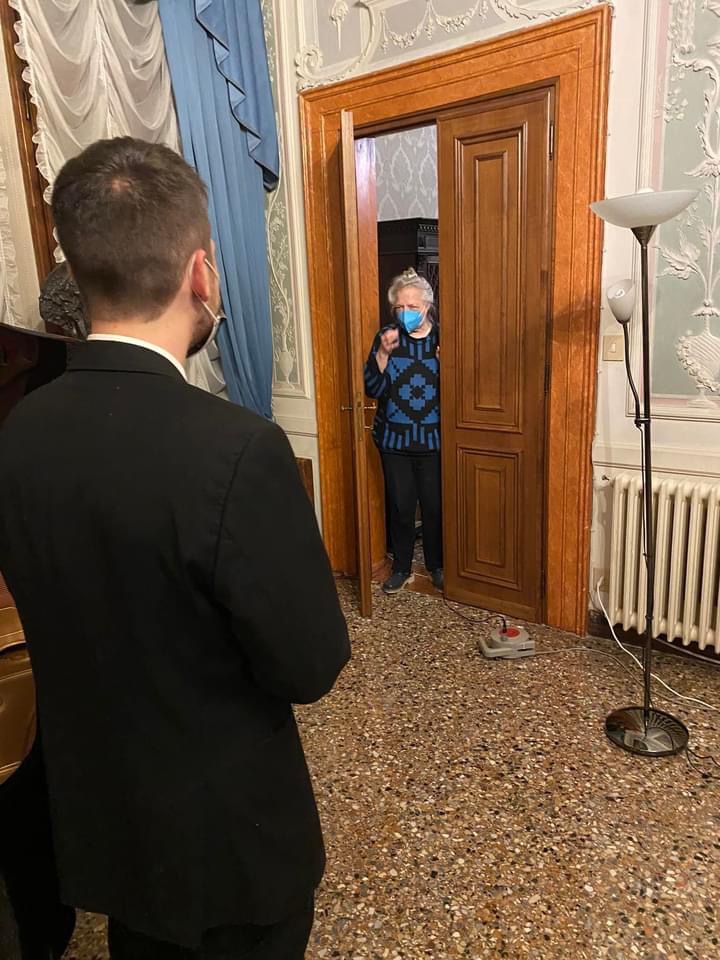
Enthusiastic Nevia Pizzul Capello and husband Prof.Capello,the distinguished couple who have run the Institute and concert season for the past 50 years
Palazzo Albrizzi Capello

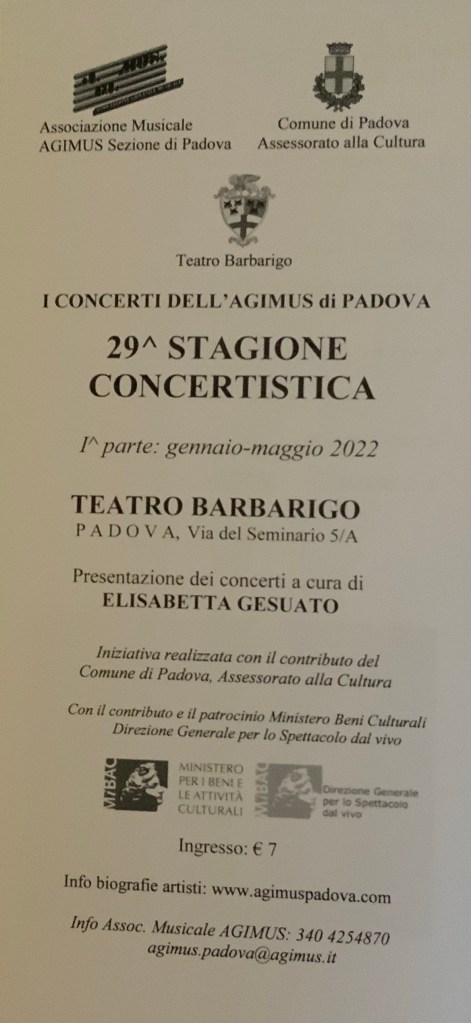
Another full house for Elia Modenese and his wife Elisabetta Gesuato who for 29 years have been organising concerts for young artists via Agimus Padua.In Palazzo Barbarigo in Padua,a very resonant hall that in the Bartok sonata could be rather overpowering.In the Schumann and Martucci however it helped the melodic line to sing out with a glowing sound that judging from the ovation he received certainly was much appreciated by another unexpectedly full hall.Even the little encore of Clementi shone with grace and charm as the sounds wafted around this very lofty historic hall.

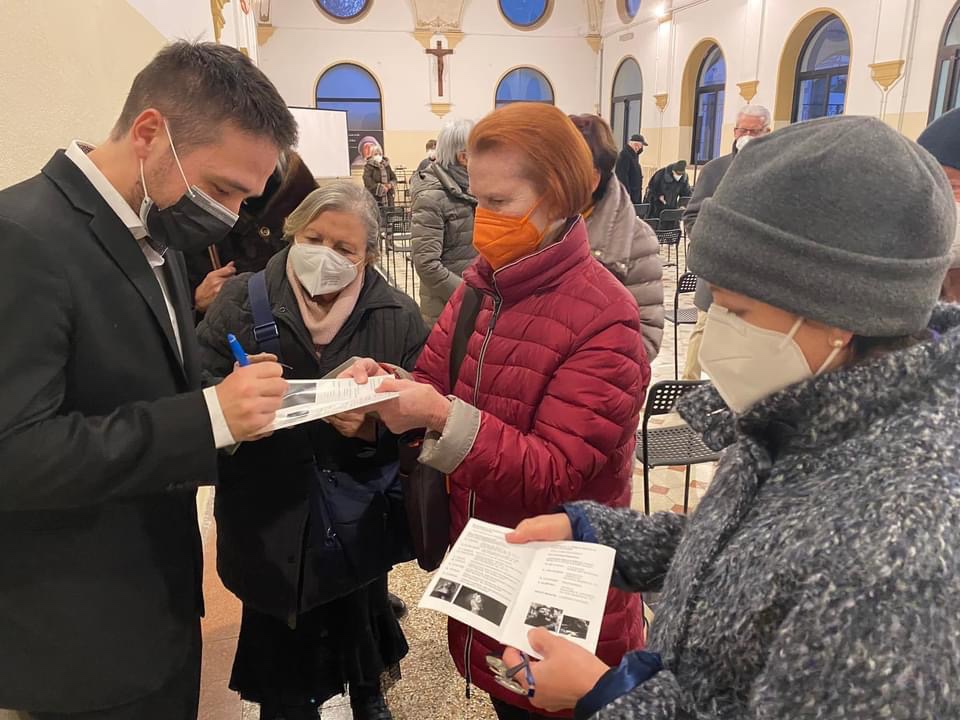
Admirers rigorously masked here,wanting an autograph
Palazzo Barbarigo
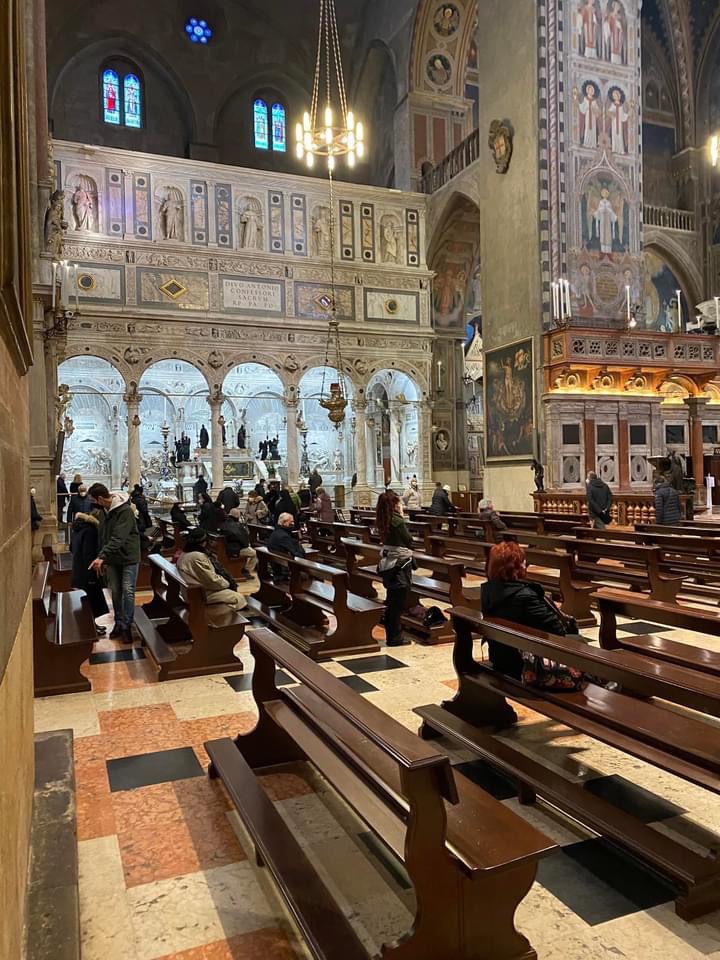
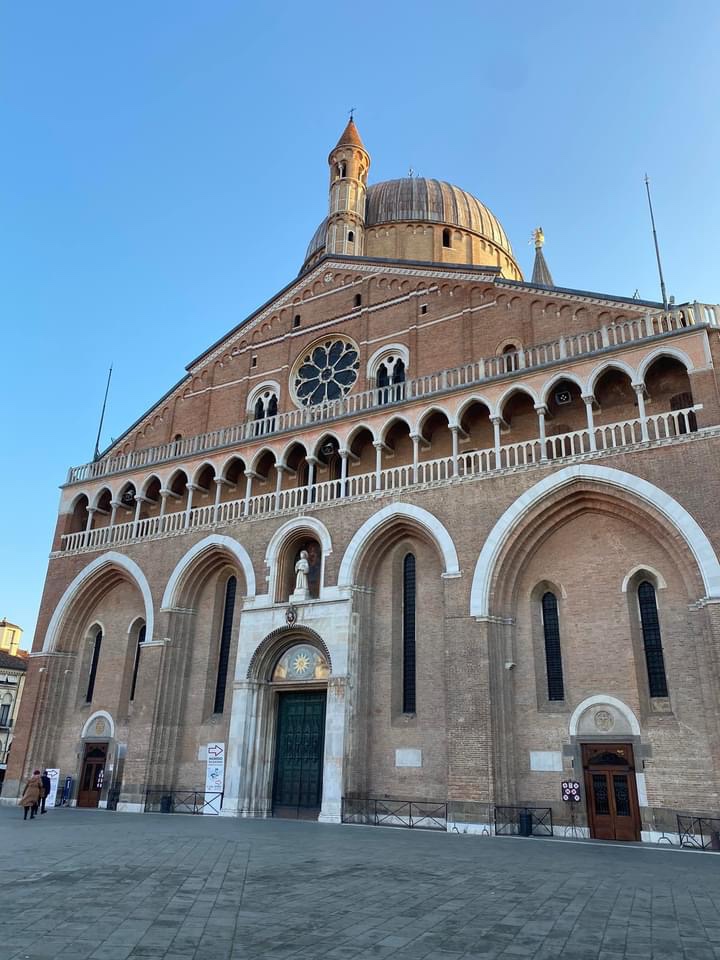
The tomb of S.Antonio di Padova

S.Anthonio di Padova

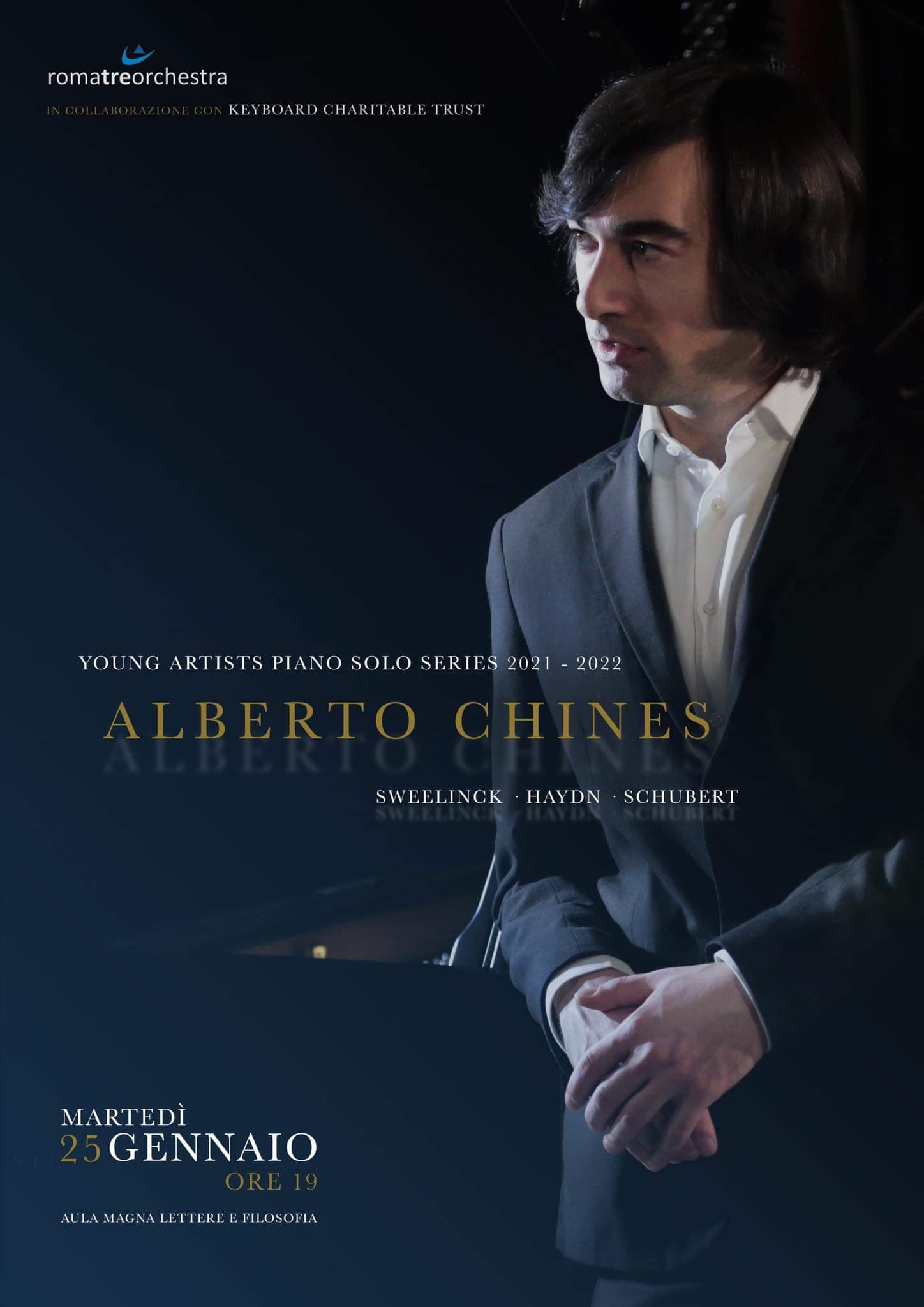
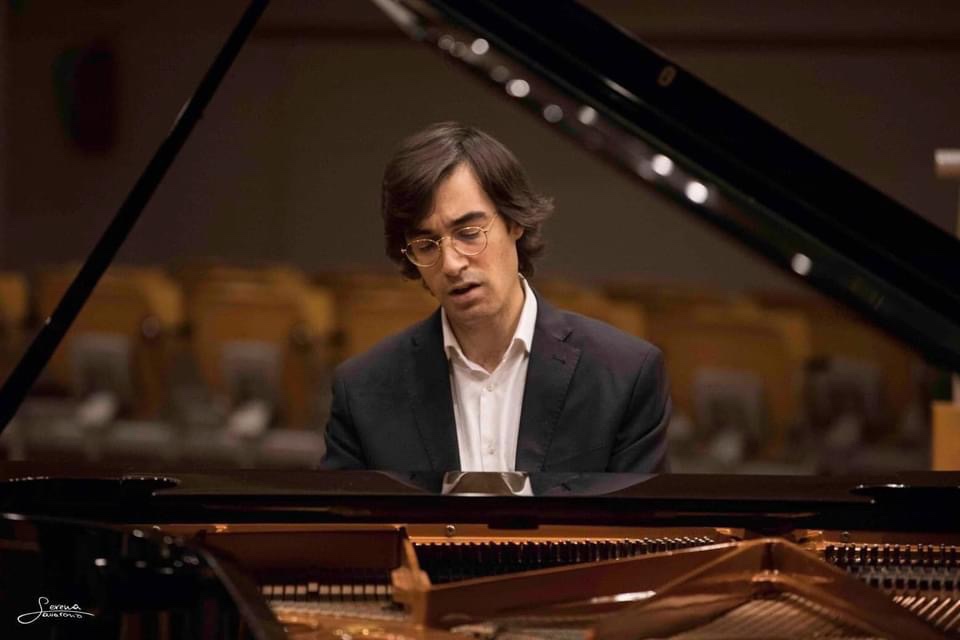
Alberto Chines Artistry and scholarship in Rome

Alberto Chines at Roma 3
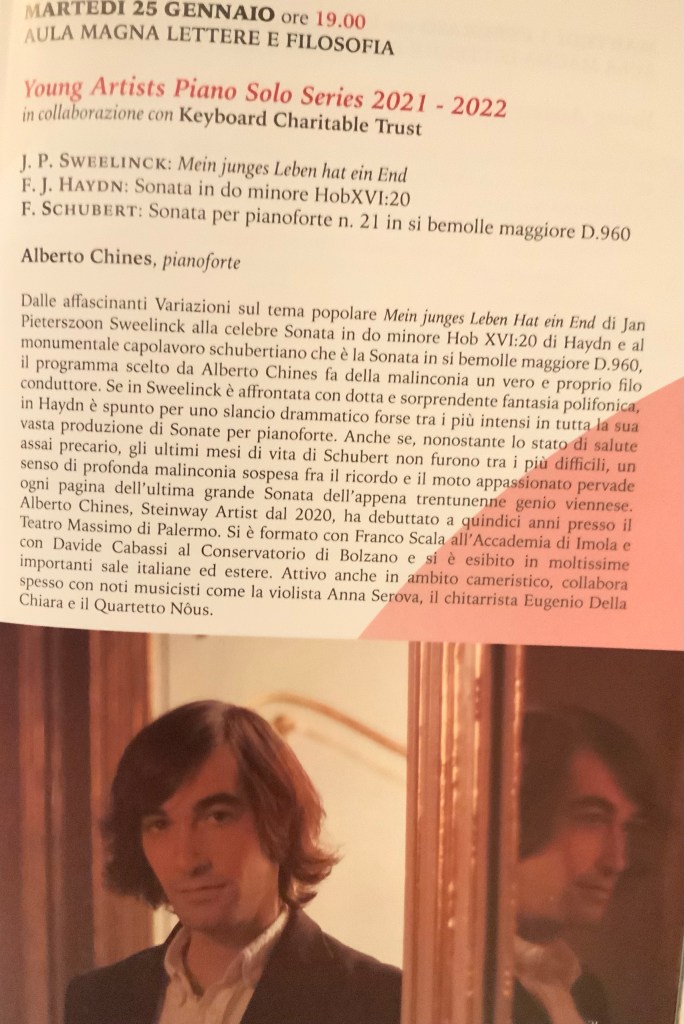
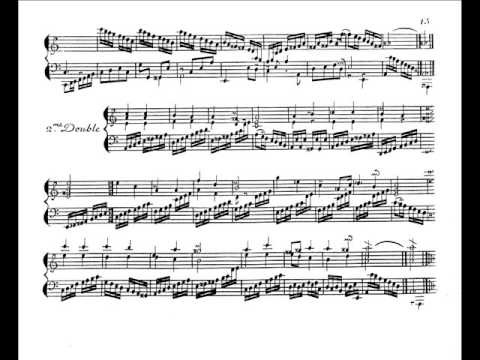
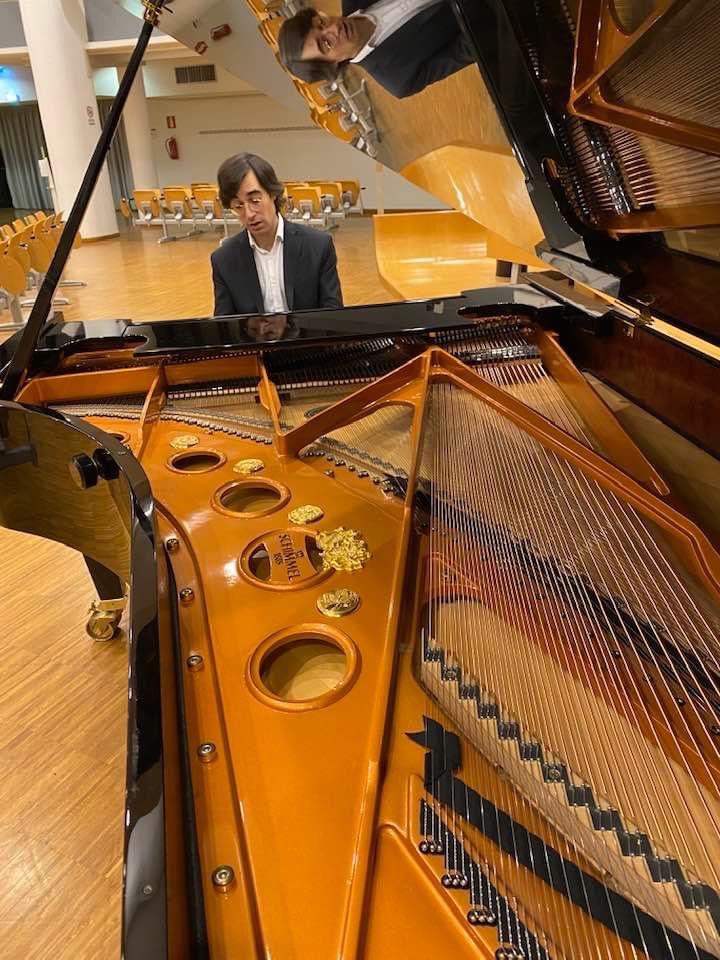
Sweelinck’s Mein junges Leben was the first work in this highly original concert.Finishing with a scintillating performance of Rameau’s Gavotte and 6 doubles from his suite in A minor.An understanding of the Baroque style with a transcendental technique that allowed him to add ornamentation that brought them vividly to life and made them the highlight of a programme that included Haydn C minor sonata and Schubert’s last Sonata in B flat. It was the same refreshing originality that he brought to these two masterpieces that with his intelligence and musicality allowed the music to speak so simply and directly.with his strong temperament,sensibility and sense of style.The ornamentation in the aria of the double was something to marvel at on this cold winters’ evening in the Aula Magna of Roma 3 orchestra .Especially on a Schimell concert grand that he turned into a magic box of gleaming jewels.Thanks too to Mauro Buccitti turning together with Alberto Chines’s superb artistry a bauble into a gem.Thanks to Valerio Vicari,artistic director for yet another important debut after Giovanni Bertolazzi’s superb recital at Villa Torlonia earlier this week in this collaboration with The Keyboard Charitable Trust

https://christopheraxworthymusiccommentary.wordpress.com/2021/01/15/alberto-chines-a-musician-in-viterbo-for-the-keyboard-trust/

https://christopheraxworthymusiccommentary.wordpress.com/2020/01/13/puttin-on-the-ritz-chines-shines-in-padua-for-the-keyboard-trust/

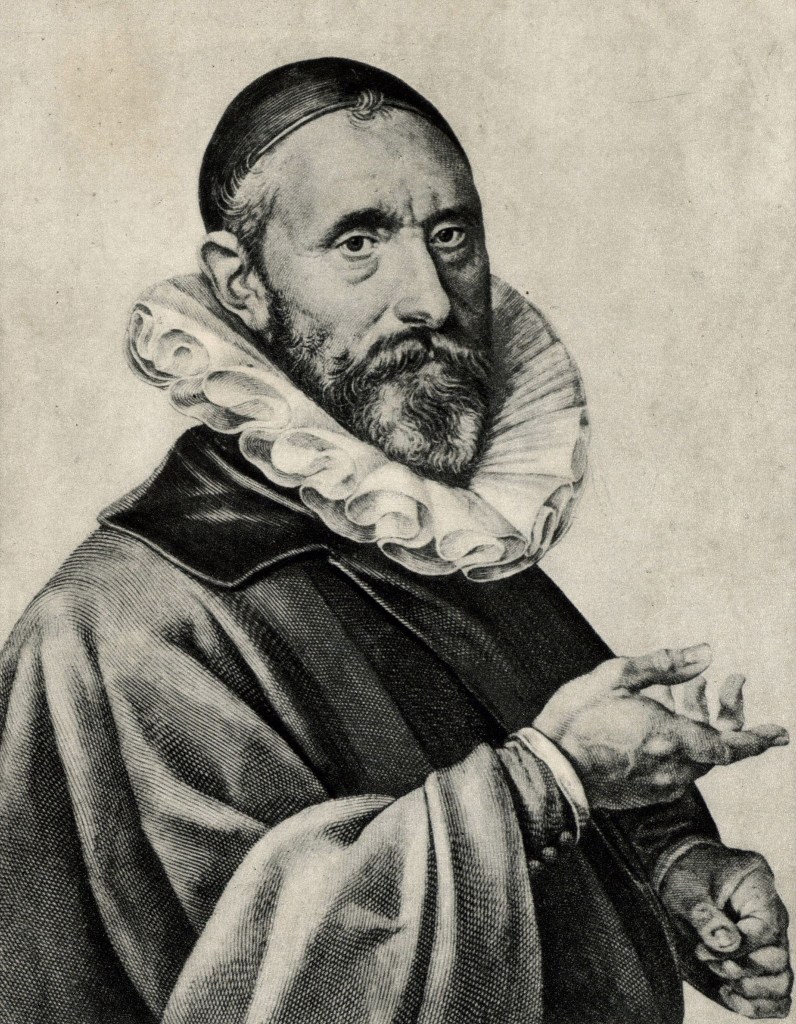
Jan Pieterszoon Sweelinck (1562 – 1621) was among the first major keyboard composers of Europe, and his work as a teacher helped establish the north German organ tradition .He represents the highest development of the Dutch keyboard school, and indeed represented a pinnacle in keyboard contrapuntal complexity and refinement before J.S.Bach.

Mein junges Leben hat ein End’ is rightly regarded as Sweelinck’s masterpiece—it was the first of his works to be published, in 1894. The sense of reprise brought about by the return to the mood of the opening in the final variation, even though the harmony and part-writing are quite different, is surely a masterstroke.Variations on Mein junges Leben hat ein End (My young life has ended) was originally composed for organ. The specific date of composition is unknown and the melody is likely of German origin, as it first appears in several printed collections by German composers in the early 1600s. Following a simple presentation of the theme, six variations follow that explore the motivic and harmonic possibilities of the original material.Alberto played the variations with absolute clarity and a rhythmic drive with great finger articulation and an overall architectural shape and complete understanding of the style.Originally for organ he convinced us that it works well on the piano too and should be heard more often.

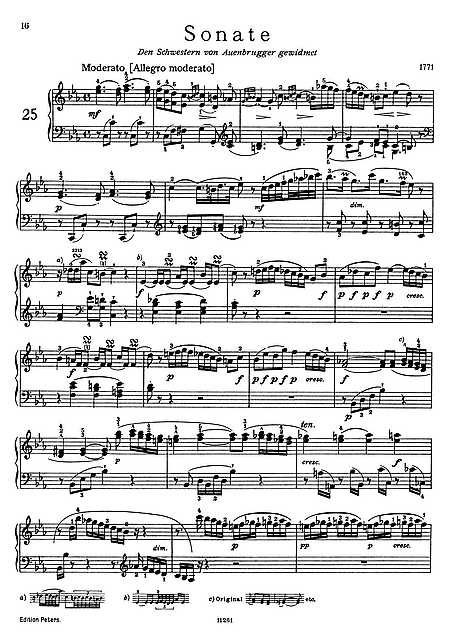
The Sonata in C minor Hob.XV1/20 is a keyboard sonata composed in 1771 was the first of Haydn’s that he titled Sonata. He had called his earlier multi-movement works for solo keyboard “divertimentos” or “partitas”.It was not until later that these works also assumed the title of Sonata and stands out among Haydn’s early keyboard works for its difficulty, dynamic contrasts and dramatic intensity.It is generally regarded as one of Haydn’s best and perhaps also the first great sonata for the piano by anybody.There was a very rhythmic opening with a great sense of almost operatic character.The development reached heights of ravishing beauty before the recapitulation where Alberto added some subtle ornamentation of great effect before the rather dramatic ending.The Andante con moto was played with weight and depth of sound and beautifully embellished.The Allegro was played with great rhythmic drive but maybe was a little to serious and Alberto could have had more fun here!

Schubert’s last three piano sonatas D. 958, 959 and 960, are his last major compositions for solo piano. They were written during the last months of his life, between the spring and autumn of 1828, but were not published until about ten years after his death, in 1838–39.Like the rest of Schubert’s piano sonatas, they were mostly neglected in the 19th century.The last year of Schubert’s life was marked by growing public acclaim for the composer’s works, but also by the gradual deterioration of his health. Schubert had been struggling with syphilis since 1822–23, and suffered from weakness, headaches and dizziness. However, he seems to have led a relatively normal life until September 1828, when new symptoms appeared.However, up until the last weeks of his life in November 1828, he continued to compose an extraordinary amount of music, including such masterpieces as the three last sonatas.

Schubert D 960 opening bars

The opening in Alberto’s hands was very robust with a great architectural line but it missed the magic sense of colour and luminosity which he kept for the development with great effect.It was the same contrast that he had found in the Andante sostenuto with the beauty of the opening contrasted with the rather robust chorale central section.The return of the opening melody was played with even more sensitivity barely whispering the final page.The scherzo entered so delicately with great charm and the menacing Trio with its syncopated accompaniment made for a great contrast.The Allegro ma non troppo was played with great buoyancy and rhythmic drive as it wove its way to the brilliant Presto finale.A very fine musicianly performance but not always capturing the magic atmosphere of Schubert’s last great masterpiece for the piano but showing us the great architectural shape without lingering over pianistic niceties.It was a very refreshing survey by a master musician.

Jean Philippe Rameau (1683-1764) Gavotte e 6 doubles

A truly scintillating account of Rameau’s famous Gavotte was played with astonishing agility and a clarity of articulation.On the modern piano it requires a transcendental technique because of the depth of touch.The ornaments that he improvised in the Aria were an example of the extraordinary detached emotion style of the Baroque period

An unfortunate photo taken after the concert with CA Valerio Vicari and AC

Francois Dumont remembering the genius of Fou Ts’ong at the Razumovsky Academy

Monday 17 January 2022, 7.30 pm

Fou Ts’ong Remembered concert

François Dumont piano

BACH-LISZT  Prelude and fugue in a minor BWV 543

BENJAMIN    Piano figures (2004)

DEBUSSY    Estampes:

Pagodes – La soirée dans Grenade – Jardins sous la pluie

Interval

CHOPIN

Ballade n.1 op23 – Ballade n.2 op38 – Ballade n.3 op47 – Ballade n.4 op52

www.razumovsky.co.uk

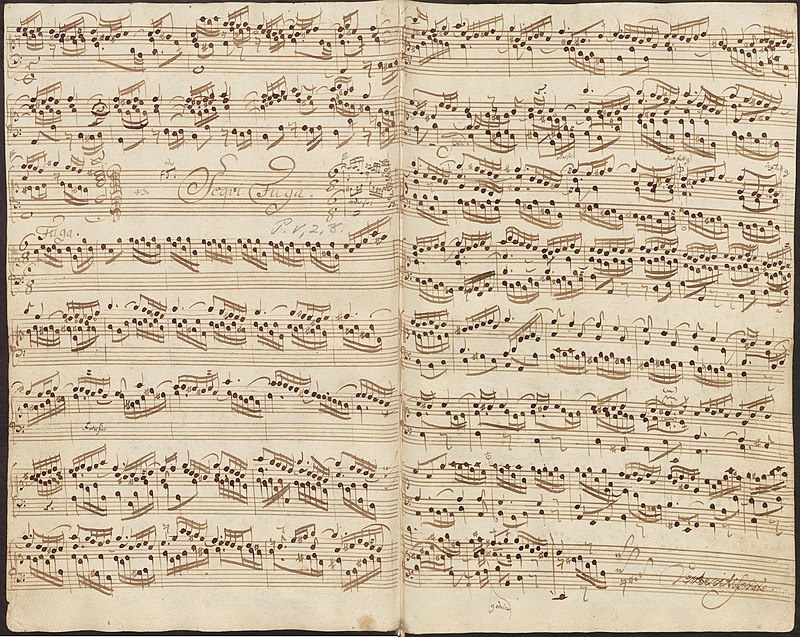
Bach’s original autograph

Prelude and Fugue in A minor,BWV 543 was written originally for organ by Bach sometime around his years as court organist to the Duke of Saxe-Weimar(1708–1713).In August 1844, Liszt whilst staying in Montpellier on a concert tour met up with his friend Jean-Joseph Bonaventure Laurens,an organist, artist and writer. His friendship with the Schumanns and Mendelssohn and the Bach library he had assembled with them enabled Laurens to become one of the main experts on Bach organ works in France. Forty years later, Laurens’ brother recalls their lunchtime conversation. In semi-serious banter, Liszt demonstrated three ways of playing the A minor fugue, a work that Laurens said was so hard that Liszt might be the only one capable of tackling it. Liszt first gave a straight rendition, which was a perfect classical way of playing; then he gave a second more colourful but still nuanced rendition, which was equally appreciated;

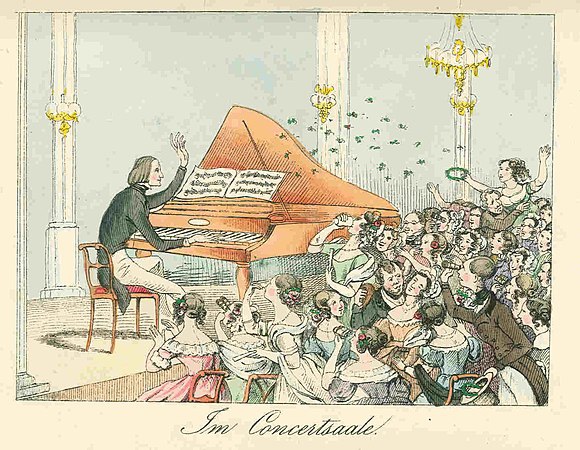
finally he provided a third rendition, “as I would play it for the public … to astonish, as a charlatan!” Laurens then writes that, “lighting a cigar that passed at moments from between his lips to his fingers, executing with his ten fingers the part written for the pedals, whilst indulging in other amazing technical feats, he was prodigious, incredible, fabulous, and received gratefully with enthusiasm.” This kind of gimmickry was not uncommon at that time: “Indeed, Liszt is reported to have accompanied Joachim in the last movement of Mendelssohn’s Violin Concerto with a lighted cigar in his right hand the entire time!”In 1847, exhausted by his years on the concert circuit, Liszt retired to the Weimar ,where in 1848 he was appointed to be Kappelmeister at the Grand Duchy, the same role once filled by Bach. He initially was there for 13 years. Later he also divided his time between Budapest and Rome, teaching masterclasses.His new mistress was Princess Carolyne von Sayn-Wittgenstein who lived in a country estate at Woronińce in Ukraine ;their companionship continued until Liszt’s death. After three months in Woronińce, Liszt set to work on preparing the transcriptions of BWV 543–548. He chose the Haslinger edition as a starting point, although probably also consulted the 1844 Peters edition. He was aided by the copyist Joachim Raff at various stages. The A minor prelude of BWV 543 is the main example for how the process works, with particular attention given to how the pedal part can be filled in from the right hand. In the published version of Peters, over thirty years later Liszt commented to his piano class that it would have been “sinful” of him to add dynamic markings to the score of the A-minor fugue, since “the great Bach” had written none himself.” Even in his later years, Liszt’s A minor fugue remained one of his favourites: Liszt’s first choice was the fugue and in his letter of thanks disclosed that Clara Schumann now as matter of course played his transcription rather than her own. In the 1880s, American pupils of Liszt,were witness to his pleasure in hearing or speaking about the fugue, be it at a Weimar dinner party in his honour, where students sang it together, or in a masterclass discussing its performance. Francois gave a remarkably luminous performance where the beauty and clarity of the piano were added to his precision and intelligence with sumptuous sounds and almost improvised brilliance in the Prelude.The entry of the fugue subject so simply gave no idea of the accumulation of sound that was to appear as the voices built up to the might bass entry .Superbly played with a control and fullness of sound that was rich and never hard with gentle calm before the remarkable Romantic fervour of the final entry.The great bass stop and the scintillating spiralling cadenza of breathtaking grandeur.The remarkable thing about the performance was the cleanliness of line never smudged or blurred by the pedal but of a clarity and rhythmic urgency that was as breathtaking as it was beautiful.We used to hear the famous Busoni arrangements of the Chaconne in the hands of Michelangeli or the organ Prelude and Fugue in D from Gilels but this performance of Liszt’s transcription of Bach was just as memorable tonight.I am not sure if Ts’ong would have approved of transcriptions.I cannot recall ever hearing them from him or his students but he certainly would have approved of Francois masterly playing and on his own piano!

Piano Figures (2004) is vintage Benjamin.The set of ten piano miniatures lasts barely 13 minutes, but what a wealth of invention it contains. Benjamin tells us that the pieces were ‘conceived for the hands of young pianists,’ but it would take unusually agile young hands, and a sharp musical intelligence, to tackle them.Each one instantly conjures a particular expressive landscape, often linked to a particular technical challenge such as hand-crossing or rapid pedal-work. There’s ‘Knots’, reminiscent of a close-knit Debussy Etude, ‘Interruption’, which has some fascinating third-pedal effects, and ‘Mosaic’ which surrounds a long-breathed melody with decorative flurries.Despite the apparently artless titles – No 9 is “Around the Corner” – the music can explode into some quite startling juxtapositions without losing its basic thread. In Francois hands there was a kaleidoscopic range of sounds from the luminous,jeux perlé or martellato always with a juxtaposition of rhythmic energy and magical sounds in which the silences between these ten brief pieces became ever more pregnant with meaning.It reminds me of the Visions fugitives of Prokofiev – of course a different language-but their ability to express so much in so little time is quite masterly.Francois held us spell bound with his characterisation of each piece and the fluidity of sound due to his subtle use of the sustaining pedal.A few heartfelt words before the performance directed also at Fou Ts’ong wife who was present in the hall.It was on this piano that he had played many times in their home in London where he came frequently for many years.He explained about Fou Ts’ongs modernity and originality that kept his performances ever fresh and his teaching so inspirational,.

Estampes (“Prints”), was finished in 1903 by Debussy There are three-movements and as Francois said in his introduction he had as a boy growing up in France always preferred Ravel to Debussy .It took Fou Ts’ong to make him discover Debussy and it was a revelation.Ts’ong included many of his works in his recitals in Rome including the Preludes and the Studies.Peter Frankl said that his performance of the studies that he had heard on the BBC radio was one of the most remarkable performances of this extraordinarily complex late work.Ts’ong was as passionate about Debussy as he was about Chopin.There was the mistaken tradition that many famous pianists adopted of not following the very precise indications left on the page by Debussy himself (Debussy had edited all the works of Chopin so knew the importance of the composers indications).In fact in Francois hands it was indeed a revelation with the luminosity and liquid sounds and subtle use of the pedals that just added colour and atmosphere.Trills that were mere vibrations of sound.Deep gently sonorous bass notes made to vibrate as magic harp like vibrations appeared above them.The diminuendo at the end of Pagodes was pure magic.Such sultry,insinuating sounds at the opening of La soirée and even the ecstatic climax was bathed in a golden haze of sound.There was a subtle rubato too as the sounds drifted off into the distance.Jardins was played with a gentler rhythmic energy than most hammered out performances and there was a gentle luminosity to the French folk melodies as they appeared on the horizon.The sun began to shine intermittently through the clouds and there was radiance with the final glowing notes.This was one of the finest and certainly most poetic performances that I have heard since Richter’s magical account many years ago.I am sure Ts’ong must have played it too but not in Rome.

Pagodes Pagodes evokes Indonesian gamelan music which Debussy first heard in the Paris World Conference Exhibition of 1889 and makes extensive use of pentatonic scales ,mimicking traditional Indonesian melodies.There is an emphasis on the wash of color presented by the texture of the work. Debussy marks in the text that “Pagodes” should be played “presque sans nuance“, or “almost without nuance.” This rigidity of rhythm helps to reduce the natural inclination of pianists to add rubato and excessive expression!

La soirée dans Grenade uses the Arabic scale and mimics the strumming of the guitar to evoke images of Granada in Spain.At the time of its writing, Debussy’s only personal experience with the country was a few hours spent near Madrid .Despite this, the Spanish composer de Falla exclaimed : “There is not even one measure of this music borrowed from the Spanish folklore ,and yet the entire composition in its most minute details, conveys admirably Spain.

“Jardins sous la pluie describes a garden in the Orbetello in Normandy during an extremely violent rainstorm. Throughout the piece, there are sections that evoke the sounds of the wind blowing, a thunderstorm raging, and raindrops dropping. It makes use of the French folk melodies “Nous n’irons plus aux bois” and “Dodo, l’enfant do.

Here are some words from Yvonne Lefebure about performing Debussy that I am not sure if Ts’ong would have admired.Ts’ong together with his lifelong friend Martha Argerich were responsible of bringing before the public another legendary pianist Youra Guller :https://youtube.com/watch?v=TGIUXx5elYA&feature=share

Chopin’s four ballades were composed between 1831 and 1842 and are considered to be some of the most important and challenging pieces in the piano repertoire.The term ballade was used by Chopin in the sense of a balletic interlude or dance-piece, equivalent to the old Italian ballata, but the term may also have connotations of the medieval heroic ballad, a narrative minstrel-song, often of a fantastical character. There are dramatic and dance-like elements in Chopin’s use of the genre, and he may be said to be a pioneer of the ballade as an abstract musical form. The four ballades are said to have been inspired by poet Adam Mickiewicz.The exact inspiration for each individual ballade, however, is unclear and disputed.

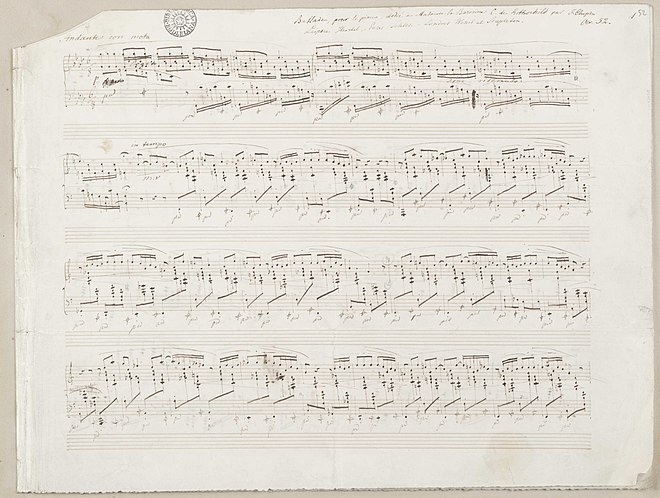
Chopin Fourth Ballade op 52 autograph

I am lost for words to describe the wondrous beauty of the performance today .It was such poetic playing where every note spoke so eloquently in a seemingly timeless way.Ravishing sounds of great sensitivity holding us spell bound as Francois unravelled these four great stories before our very eyes.Reminiscent of Fou Ts’ong who imbued so much meaning into everything he touched.If sometimes he held the first note of a phrase a fraction too long and lost for a moment his disarming simplicity it was because he loves it so much.Rubinstein in his old age would play with such simplicity and any personal feelings were in the note itself as I am sure Francois will do as he matures with this music for a lifetime.Ts’ong often used to say to me that I preferred his early recordings from the Chopin competition to the way he played now.My reaction was always the same that he played with such overwhelming conviction and passionate involvement exactly as he lived his life and I loved it .Today’s performance might have been a reincarnation of Ts’ong with wondrous playing of great sensitivity.There was simplicity in the opening of the first ballade where the second subject just seemed to evolve out of the magic streams of arabesques that Chopin entwines.Played as if in a trance recollecting past times as it built to a climax of aristocratic grandeur where there seemed to be so much time to express so much instead of the usual barnstorming outpouring from lesser hands.The coda too was played with beauty and control but also with passion and startling virtuosity.The second sang so beautifully thanks to Francois’ superb sense of balance.There was subtle rubato and tonal inflections just as in human speech and the six repeated A’s before the Presto con fuoco were like the pulsating of his heart.If in the coda he tended to over emphasise the first note of every phrase it was because this young man has a passionate heart too like Chopin himself.The opening of the third ballade was someone about to tell a story.And what a story of grace and subtle charm .Embellishments unwound like streams of gold leading to the mystery and even a little menace in the build up to the final sumptuous outpouring and the final four chords in crescendo – even here each chord had a sound of its own.Ravishing beauty of the opening of the fourth ballade leading to the theme played seemingly freely and with such poignant meaning but never loosing its forward flow.The first variation was simply cascades of sounds accompanying the melody.The return of the opening was played with a subtle inflection from the thumb to give such a golden colour to what Cortot described as being ‘avec un sentiment de regret’.The long build up to the final climax, there were streams golden sounds in the left hand on which rose the theme in all its passionate glory.A momentary respite of calming chords before the tempestuous coda of transcendental difficulty .It was played with the understanding and passion of a poet and musician with an explosion of romantic ardour.The final four chords were played with the same excitement and passion almost a race to the tumultuous end that Rubinstein would suddenly inject into the music even in his 90th year!

Three encores by Chopin were played with the artistry and sumptuous sounds that reminded me of his master Fou Ts’ong.Two waltzes – the Minute waltz op 64 and the beguiling Waltz op 18 .This was playing of another age – the Golden age of playing – an art that is being too often overlooked in our fast moving age. A period when time stood still and we found time to look and wonder at the marvels that surround us.Marvels such as the Berceuse with which Francois enchanted and seduced us tonight as a final tribute to his Master.

Francois Dumont

French pianist François Dumont’s international career has been launched by his success in major international piano competitions winning prizes in the Chopin Competition, the Queen Elisabeth Competition, the Clara Haskil Competition, the Montecarlo Piano Masters. He has been nominated for the Victoires de la Musique, a major French classical music event, and received the Prix de la Révélation from the Syndicate of Music Critics in France. François has been chosen by Leonard Slatkin to play and record both Ravel concerti with the Orchestre National de Lyon. The CD was issued for Naxos during the 2019 season.At the age of fourteen François Dumont entered the Paris Conservatoire National Supérieur de Musique in Bruno Rigutto’s class. He later studied at the Lieven Piano Foundation and the Lake Como International Piano Academy with artists such as Dmitri Bashkirov, Leon Fleisher, Murray Perahia, William Grant Naboré, Menahem Pressler, Andreas Staier and Fou Ts’ong.He appears as a soloist with orchestras such as the Cleveland Orchestra, the Mariinsky Theater Orchestra, the Montecarlo Philharmonic, the Warsaw National Philharmonic, the Orchestre national de Lorraine, the Orchestre National de Lille, the Orchestre National d’Ile-de-France, the Orquesta Nacional de Colombia, the Orchestre de Chambre de Lausanne, the Tokyo Symphony with conductors such as Jesùs Lopez-Cobos, Antoni Wit, Arie van Beek, Philippe Bender, Rani Calderon, David Reiland, Stefan Sanderling, Alexander Sladkovsky.As recitalist François Dumont often performs at the Festival International de la Roque d’Anthéron, the Piano aux Jacobins Festival à Toulouse, Chopin Festival in Nohant, Radio-France Montpellier Festival, Chopin à Paris Bagatelle Festival, Chopin and his Europe Festival in Warsaw, Nuits du Suquet in Cannes, Journées Ravel in Montfort l’Amaury, Ljubljana Festival, Kennedy Center in Washington, and regularly tours Japan, South Korea and China.His chambers music partners are Tabea Zimmerman, Augustin Dumay, Henri Demarquette , Xavier Philipps, the Prazak, Sine Nomine, Talich, Zemlinsky, Voce and Debussy Quartets. With Virginie Constant and Philippe Aïche, his is part of the Trio Élégiaque, which whom he recorded the complete Beethoven and Schubert Trios.His first solo recordings, the Complete Mozart Sonatas (Anima Records) and a Chopin album (Artalinna) both received the “Maestro” award of the “Pianiste” magazine. Other solo recordings include a Wagner/Liszt programme (Piano Classics) as well as a double CD live that includes all his performances at the Chopin Competition, published by the National Chopin Institute in Warsaw. His recording of the complete piano music of Maurice Ravel (Piano Classics) has received both critic (FFF Telerama, 5 Diapason) and public acclaim. Two B.A.C.H. project have been released by Artalinna, of which the famous critic Jacques Drillon wrote : « coherence, dignity, richness of affects. One thinks of Edwin Fisher ».His recent recording of Mozart Concerti K.271 and K.466 with the Orchestre Symphonique de Bretagne have been praised for their “clarity of elocution”, their “ideal sense of equilibrium” and “delightful classicism”. Further collaboration with the OSB continues with Mozart Concerti K.453 and K.488 which he has recorded live, conducting from the keyboard. The project was taken to Salle Gaveau, Paris, where it met public and critic acclaim. His 2018 allbum featuring the complete Chopin Nocturnes was praised by the BBC magazine for his « singing tone » and the International Piano Magazine considers that it is « a stunning new version that sets him apart », while the American magazine Fanfare writes : «There are few recent recordings to compare with this one. »

In the Summer 2021 The Razumovsky Trust purchased a marvellous Steinway D Concert Grand Piano for the Razumovsky Academy.

The Trustees are very grateful to the many Friends of the Razumovsky Trust who contributed generously to our Steinway D Piano FundThis fabulous instrument belonged for many years to the legendary Chinese pianist Fou Ts’ong and his wife Patsy Toh. The distinguished French pianist François-Frédéric Guy said Fou had been his “mentor and a musical father”. “His Debussy, Chopin and Mozart remain legendary.”The renowned Chinese pianist Lang Lang described Fou Ts’ong as “a truly great pianist, and our spiritual beacon”. “Master Fou was a great artist…His understanding of music was unique.”We are immensely grateful to Nigel Polmear who introduced us to this instrument. Pictured left, Nigel suggested we invite Ulrich Gerhartz to advise on the best ways to preserve its beautiful qualities whilst at the same time ensuring that it is ready to serve Razumovsky Academy as a hardworking stage piano.

Francois Dumont

Ulrich Gerhartz, following initial examination of the instrument, suggested a comprehensive programme of servicing, both at Steinway Hall London’s workshop, and on-site at the Razumovsky Academy. Following completion of works by Ulrich, the rehearsals and recordings have resumed. “Ulrich’s work on the instrument was magical.” (Oleg Kogan).Our Chairman Sir Bernard Rix came to the Razumovsky Academy to meet Ulrich Gerhartz during the works (pictured here together in the Academy garden).Our dear friend Julius Drake, who came to rehearse here with singers Alice Coote and Ian Bostridge, commented on the piano: “Absolutely marvellous!

https://christopheraxworthymusiccommentary.wordpress.com/2021/10/07/ronan-ohora-at-razumovsky-academy-simple-grand-beethoven/

August 2021

https://christopheraxworthymusiccommentary.wordpress.com/2021/12/02/dame-fanny-waterman-a-tribute-by-master-pianist-and-pupil-benjamin-frith/

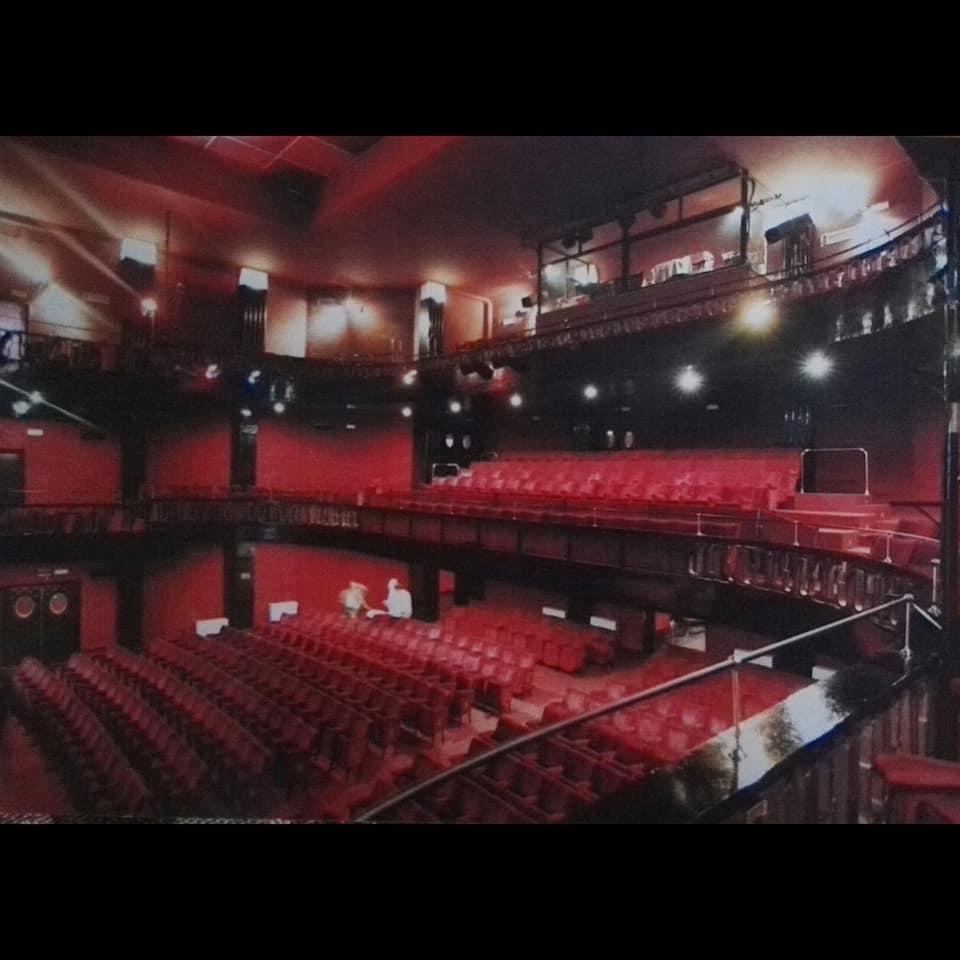
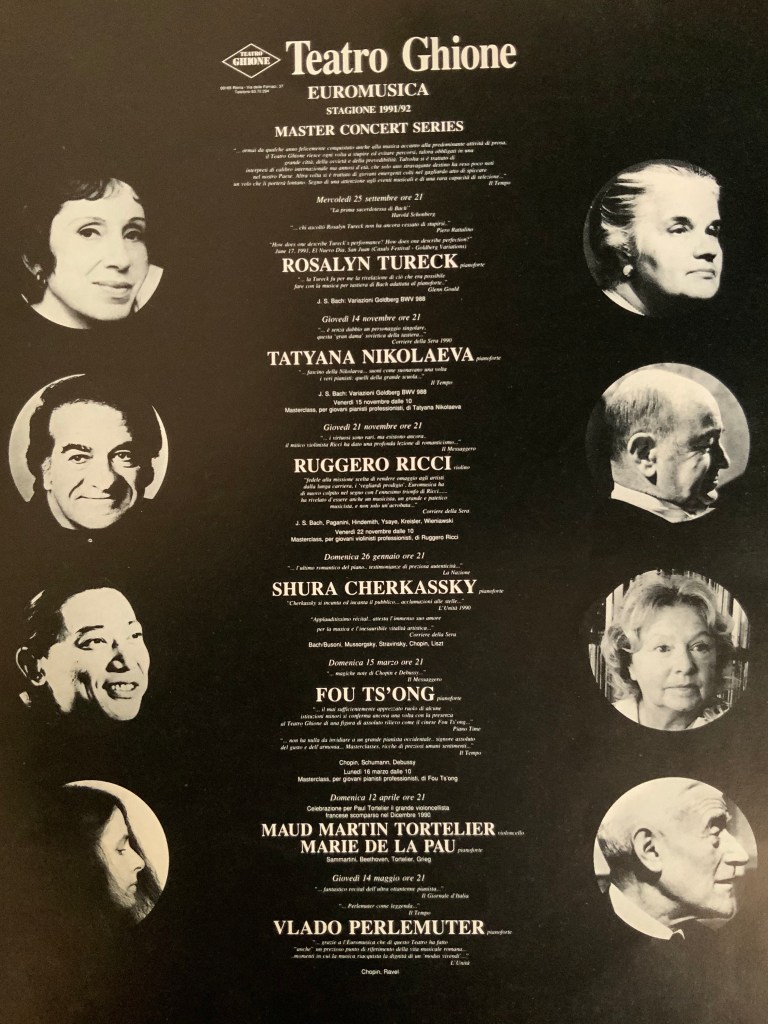
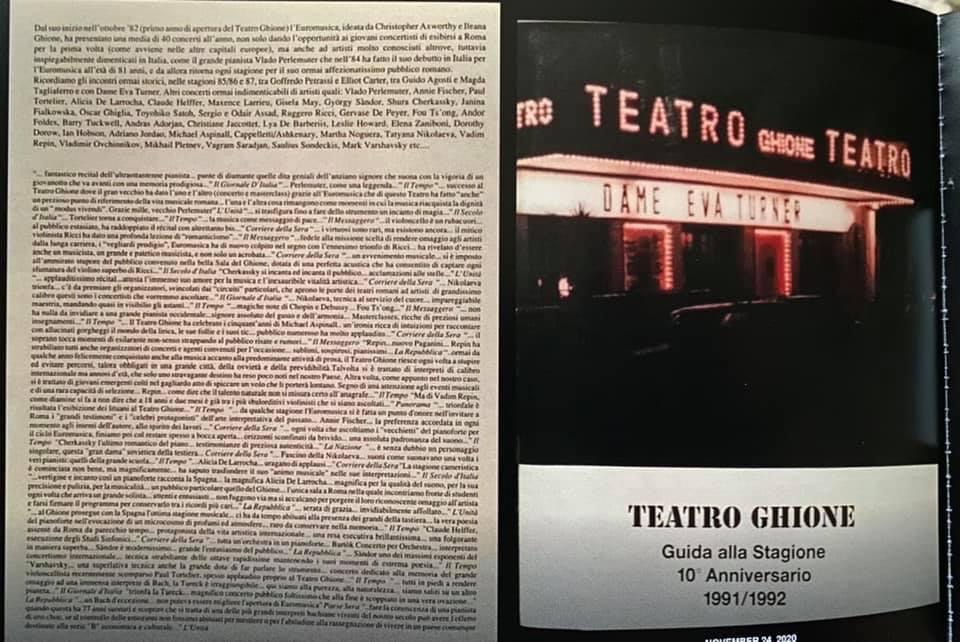
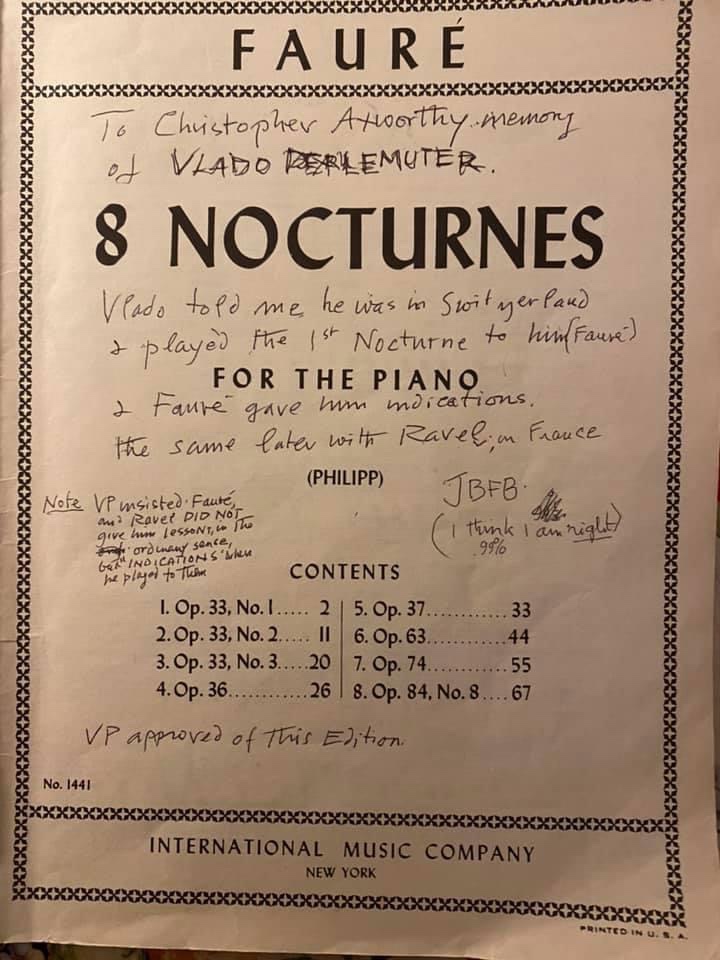
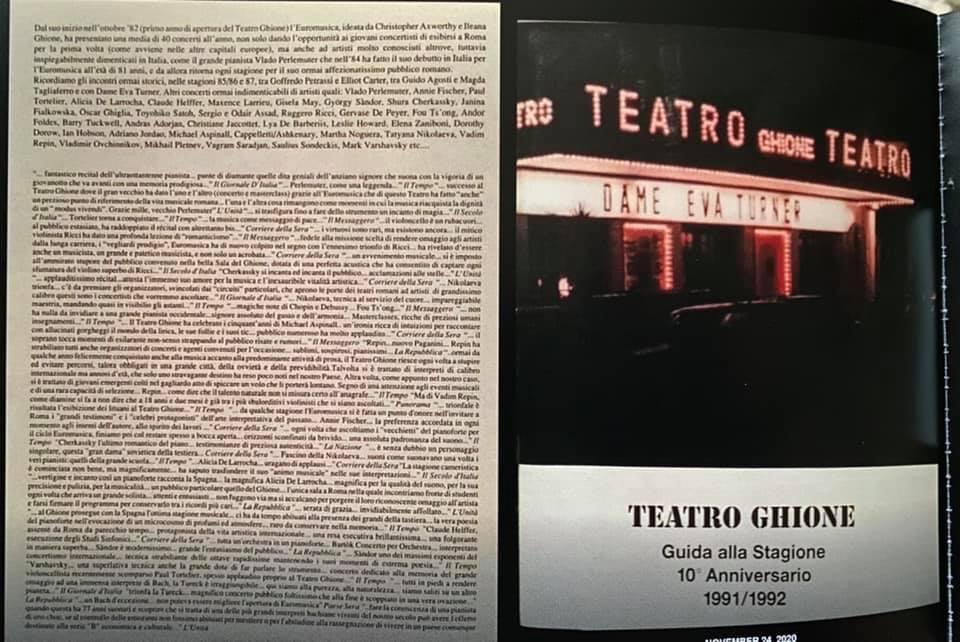
Fou Ts’ong was one of our regular visitors to the Ghione Theatre and came year after year to play and give masterclasses.The theatre had opened in 1982 initially to provide a space for my wife ,the distinguished actress Ileana Ghione ,to produce the plays that she particularly wanted to perform with directors and set designers of great quality.She did not see the point in touring poorer productions and so set up home in an old derelict theatre next to S.Peters Square.Together we transformed it into one of the most intimate and beautiful theatres in Europe.It did not take long for musicians to ask if they could perform there too.My two teachers Guido Agosti and Vlado Perlemuter were the first and then followed a long line of distinguished musicians that through some strange twist of fate had never or rarely been invited to Rome.One of our favourite artists was Fou Ts’ong who would come year after year ,so much so that his wife ,the distinguished pianist Patsy Toh,thanked me for being so faithful.Well it is we that should thank him judging by the number of students who came under his spell and have gone on to distinguished careers.

https://christopheraxworthymusiccommentary.wordpress.com/2021/01/13/roberto-prosseda-pays-tribute-to-the-genius-of-chopin-and-the-inspirational-figure-of-fou-tsong/

One of these in particular is Roberto Prosedda who a week after Ts’ong’s death dedicated a Chopin recital in Pisa to him (included in an attachment here) and is now producing a book about Ts’ong’s remarkable genius.Paradoxically the book is being financed by the Chinese government for a PHD student of Roberto .Fou Ts’ong’s parents had committed suicide rather than compromise their principles in the cultural revolution.Fou Ts’ong many years later was persuaded to return to China was reverred as a God and it is why now there is need for a book about his life,background and musical ideals.William Grant Naboré a disciple of Carlo Zecchi in Rome was given the possibility to start his International Piano Academy in Lake Como in 1993 and he asked me if some of our distinguished musicians would like to spend a week together with super talented young musicians to share their experiences and musical ideas in masterclasses.Fou Ts’ong was one of the first to accept the invitation and it was a love affaire that lasted over 20 years .Francois Dumont was one of the lucky students to come under the influence of Fou Ts’ong in Como.

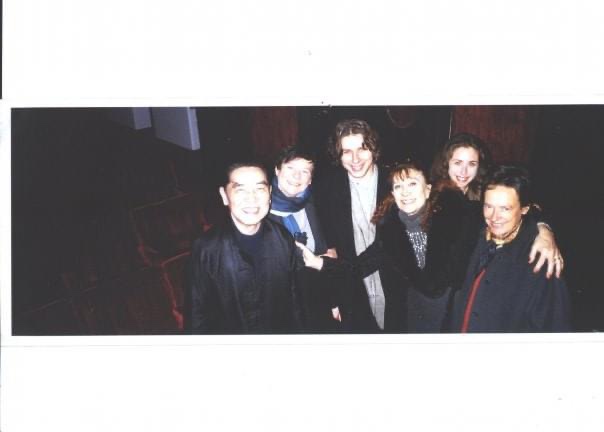
Fou Ts’ong after his masterclass in Rome with Danuta Aloisi(Duda),Ileana Ghione and Linda Alberti
The Ghione Theatre – S.Pietro Rome

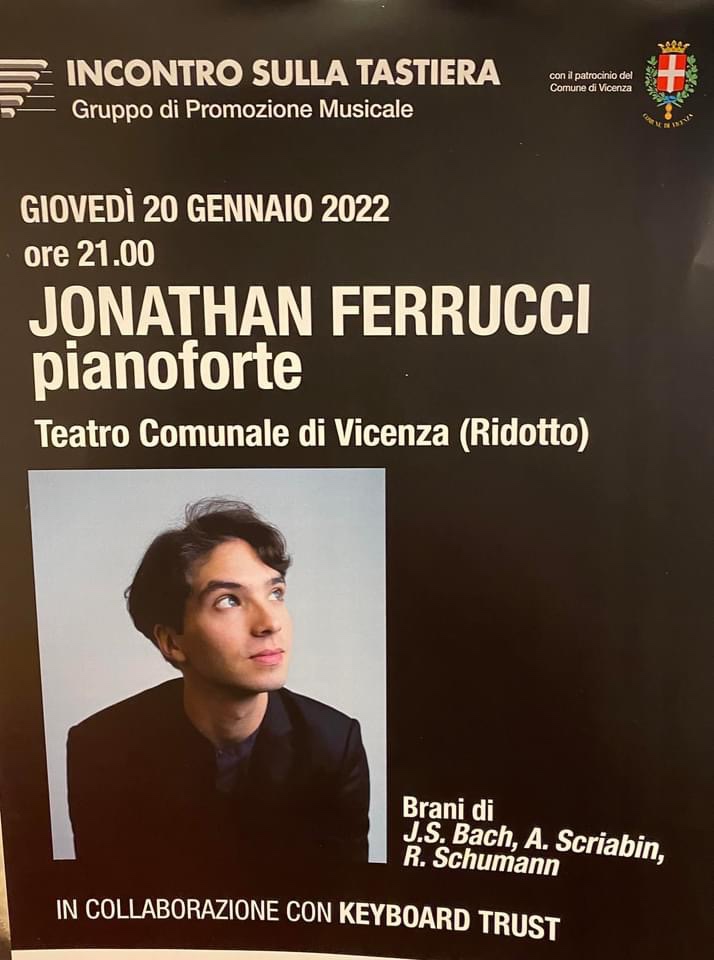
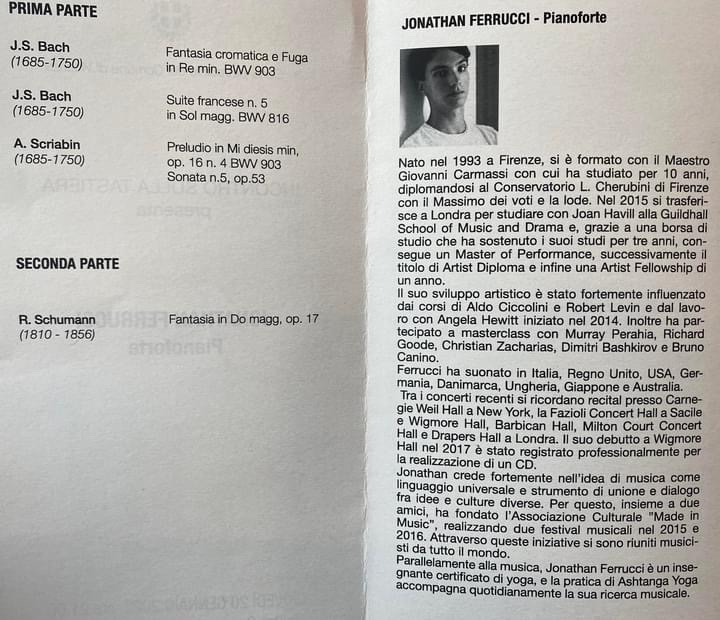
Jonathan Ferrucci -in Vicenza Je joue,je sens je transmets A timeless search in music

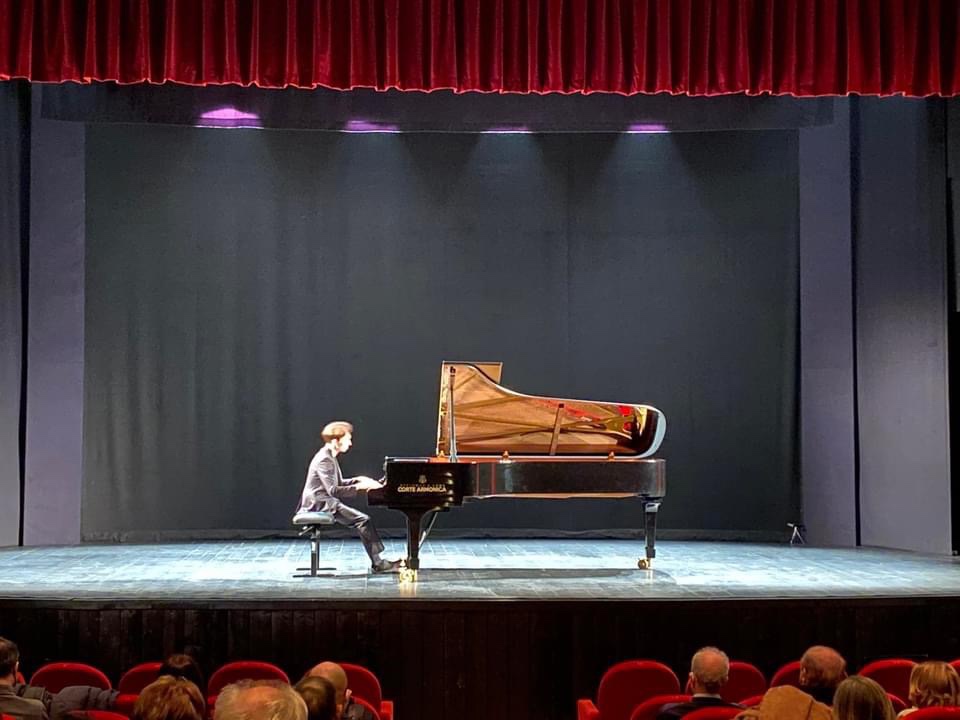
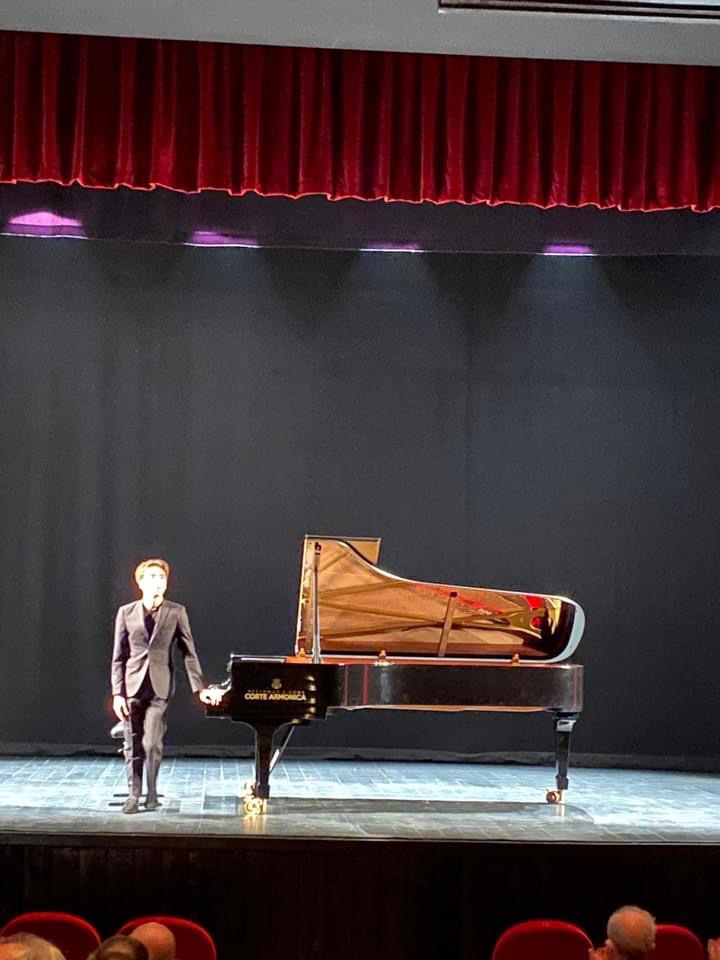
Jonathan Ferrucci for theThe Keyboard Charitable Trust in their annual collaboration with Maria Antonietta Sgueglia at the Teatro Comunale in Vicenza.

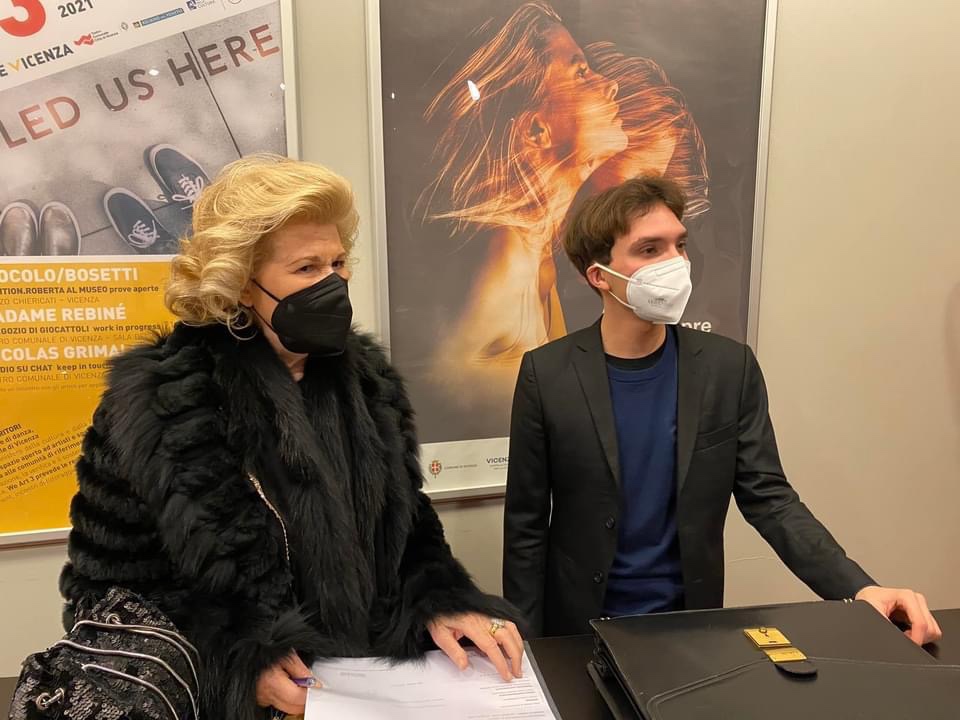
Maria Antonietta Sgueglia untiring promoter of young talent


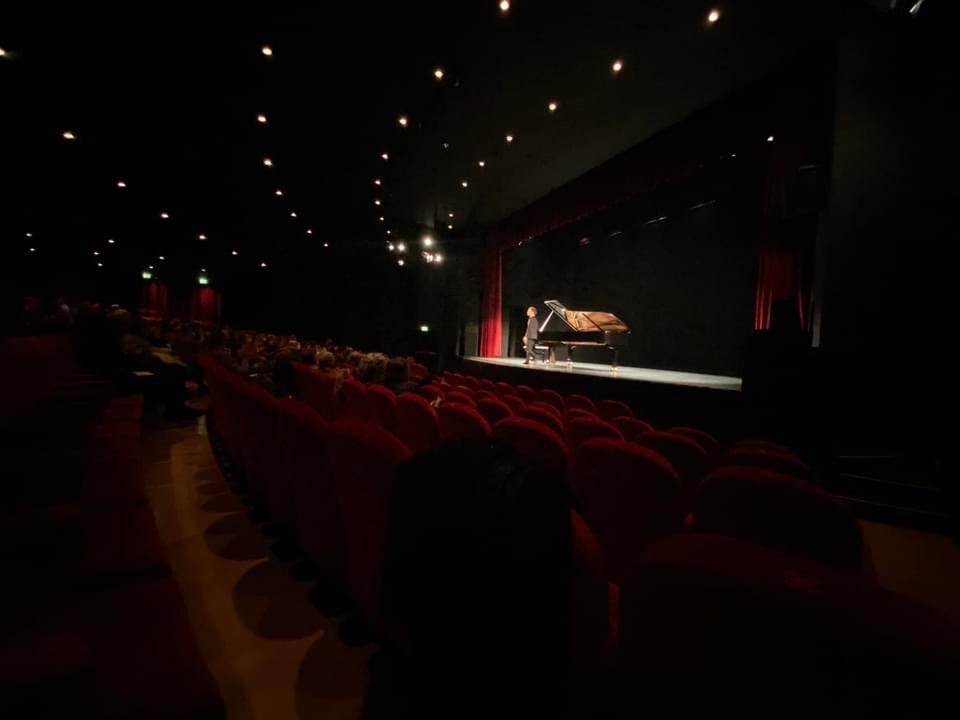
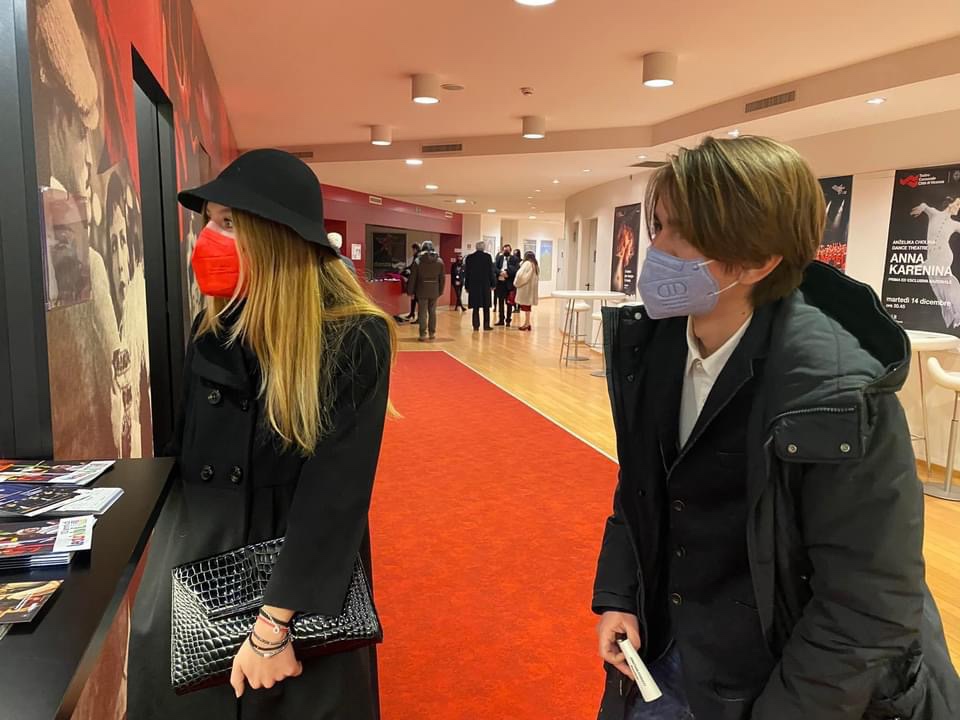
Nice to be back after last year’s absence as we learn to live with Covid and to find the same warmth and appreciation from a public that is gradually venturing out to hear music live in this splendid theatre complex in the beautiful city of Palladio.

Nice to see my late wife is still on the cover – Ileana Ghione in brown – La Dama di Boba


A mixed programme after a year dedicated to a profound study with performances of the Goldberg Variations.https://christopheraxworthymusiccommentary.wordpress.com/2021/10/27/jonathan-ferrucci-the-return-of-a-warrior-the-goldberg-variations-in-florence/
Like his mentor Angela Hewitt the day before in Rome he too chose the Goldberg aria to finish and it decreed the same triumph that she had experienced in Rome.https://christopheraxworthymusiccommentary.wordpress.com/2021/06/30/goldberg-in-the-land-of-perugino-jonathan-ferrucci-in-citta-della-pieve/


Bach was ,of course,on the menu.With his superb musicianship and refined sense of colour it brought vividly to life the demonic meanderings of the chromatic fantasy dissolving to a mere whisper as the fugue gently showed its head.
How startlingly similar it is to Beethoven’s inversion in op 110 that it took the uncontaminated purity of Jonathan’s musicianship to point that way for me.
Much as Murray Perahia had me newly searching in the scores after his recitals too.


The fifth French suite floated in on a wave of pastoral innocence played with a disarming simplicity and ravishing sounds.
A truly masterly touch though was the little prelude in E flat minor by Scriabin inserted as a bridge between the triumphant close of Bach and the demonic appearance of the fifth sonata.
Barely a minute of subdued sounds was enough to take us from the triumph of God in Bach to the devilish anxiety of reaching Scriabin’s star.
An astonishing performance that swept in and out like a hurricane. But such sudden changes of light as Scriabin’s kaleidoscopic prism turned full circle.Schumann’s dual personality of Floristan and Eusebius seemed like Laurel and Hardy compared to this .
Sumptuous naked emotions exposed with ravishingly subtle liquid sounds contrasting with demonic virtuosity of breathtaking audacity.
And so it was to Schumann’s great masterpiece that Jonathan dedicated the second half of his eclectic programme.

The beautiful ridotto of Teatro Comunale


The C major Fantasy was Schumann’s gift to Liszt’s project of erecting a statue to his master Beethoven in Bonn.
It is an outpouring of love for his secretly betrothed future wife and mother of his family destined to be of almost Bachian proportions.
It was just this outpouring of sumptuous sounds that Jonathan shared with us from the opening bass G just igniting the radiance of sound (similar to the opening C sharp bass note of Chopin’s Barcarolle – thanks again Jonathan).
It was a radiance of sound that made this fine Steinway absolutely glow with a much needed warmth on this misty Venetian night- nebbia is a word tinged with fear in these parts!
It was like a halo that shone brightly over the piano as Jonathan extracted all the subtle intimate secrets that Schumann shared with his Clara.But also the passionate outpourings of longing so beautifully described in the poem that Schumann prefaces this work with.
Agosti even wrote the word Cla……ra over the first melodic notes of the last movement.Ravishingly delicate sounds where the melodic line glowed like gold on a stream of endless silver.Great power too in the gradual build up to the passionate vehement declarations but innocence as it dissolved to a whisper as Jonathan placed the final three chords with such loving care.
One could mention the march like second movement with its treacherous final leaps where I would have thrown caution to the wind more than Jonathan dared last night.
But even here the movement was encorporated in an overall cocoon of sound with an outpouring of romantic effusions that together with the Liszt Sonata are the pinnacles of the Romantic repertoire.
It is obviously more than a coincidence that Liszt and Schumann dedicated their supreme masterpieces to each other.


And it took Jonathan to illuminate this work and stimulate new ideas and discoveries in works that I have lived with for a lifetime.
Jonathan afterwards confided that he had not felt comfortable with his performances – but what great artist ever is!A timeless lifetime search for meaning in the scores – the composers secret thoughts that lie hidden just waiting to be discovered and that he shares with his public in performance.Schnabel said the truth is not in the note but behind and beside it.Liszt too said that the score is only half of the story that must be completed by the artist.Je joue,je sens ,je transmets.Blemishes and personal feelings are not relevant in a search of such searing dedication.As Gilels famously stated ‘live and recorded performance is like the difference between fresh and canned food!

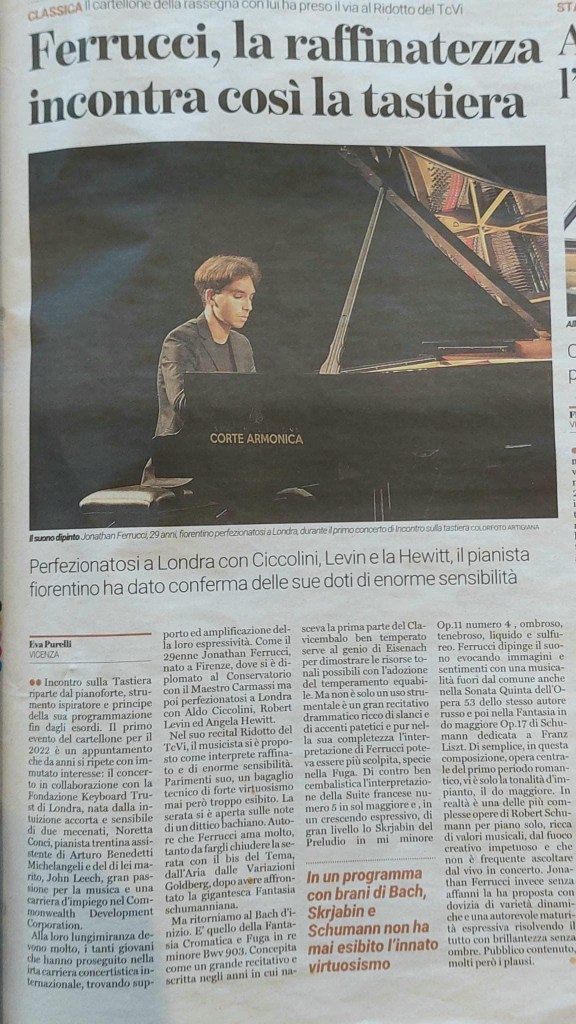
‘Perfecting his studies in London with Ciccolini,Levin and Hewitt,the Florentine pianist demonstrated his gifts of enormous sensibility.Incontro sulla Tastiera began their season inspired by the piano ,the Prince of it’s programmes from it’s very beginnings.The first event of the 2022 calendar is an appointment that is repeated with the same success every year : the concert with the Keyboard Trust of London that was created with the shrewd refined intuition of two sponsors ,Noretta Conci, pianist from Trento and assistant to Arturo Benedetti Michelangeli ,and her husband ,John Leech with his great passion for music but whose career was in the Commonwealth Development Corporation.There are many young pianists that owe them thanks that through their support and help have been able to start an International career.Like the 29 year old Jonathan Ferrucci,born in Florence where he graduated from the Conservatory under Maestro Carmassi,before perfecting his studies in London with Aldo Ciccolini ,Robert Levin and Angela Hewitt.In his recital ,at the Teatro Comunale in Vicenza ,he showed himself to be a refined and enormously sensitive musician.Equally possessing a technical skill of great virtuosity which was never placed in evidence .The evening opened with two familiar works of Bach .A composer that Ferrucci loves so much that he even chose to close the evening with an encore of the Aria from the Goldberg Variations after having performed the enormous Schumann Fantasy.Coming back to the opening Bach ,that of the Chromatic Fantasy and Fugue in D minor BWV 903.Conceived as a great recitativo in the same period that he wrote the first book of the Well Tempered Clavier that the genius of Eisenach used to demonstrate the tonal possibilities of equal temperament.But it is not only an instrumental work but a dramatic grandiose recitativo full of expression and feeling and not withstanding his full understanding Ferrucci’s interpretation could have been more clearly defined especially in the Fugue.On the other hand the interpretation of the 5th French Suite was much more expressive.Of great style was the Prelude in E flat minor by Scriabin op11 n 4 shadowy,dark,liquid and sulphurous depicting pictures and sounds with an exceptional musicality also in the fifth Sonata op 53 by the same Russian composer and also in the Fantasy in C major op 17 by Schumann that is dedicated to Franz Liszt . Seemingly simple this work of the early Romantic period .But in truth it is one of the most complex works that Schumann wrote for the piano.Rich in musical values ,passionately impetuous and is not all that often heard in concerts.Jonathan Ferrucci on the other hand played with simplicity ,a variety of dynamic range and a commanding expressive maturity and brilliance.An attentive audience gave him an ovation at the end

Maria Antonietta’s affectionate students taking her home.This was her first outing after a long illness.
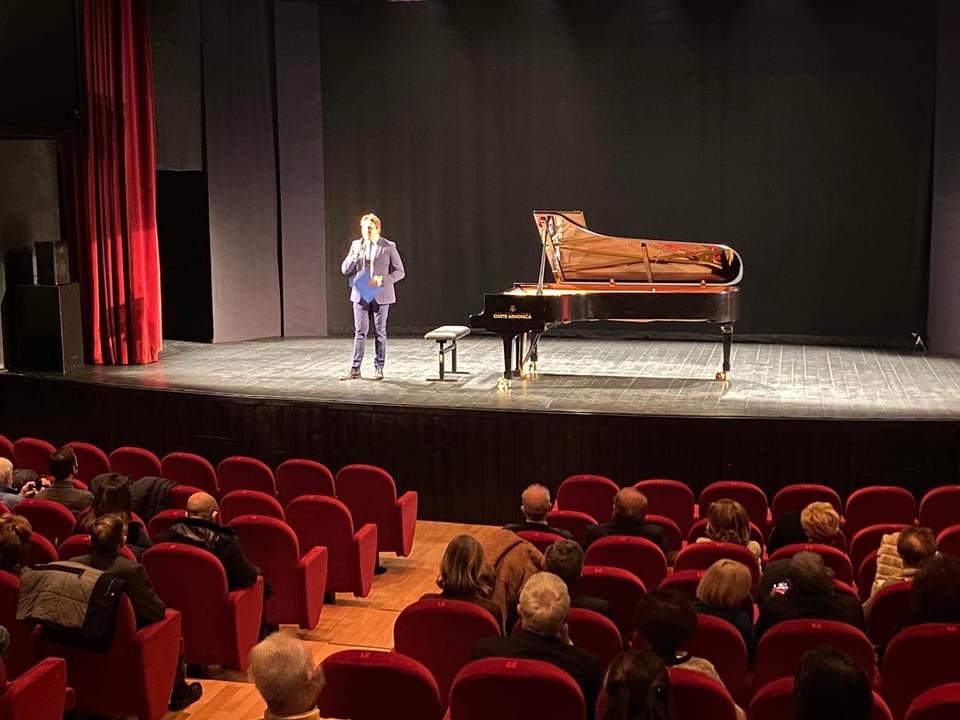
The presentation of the concert
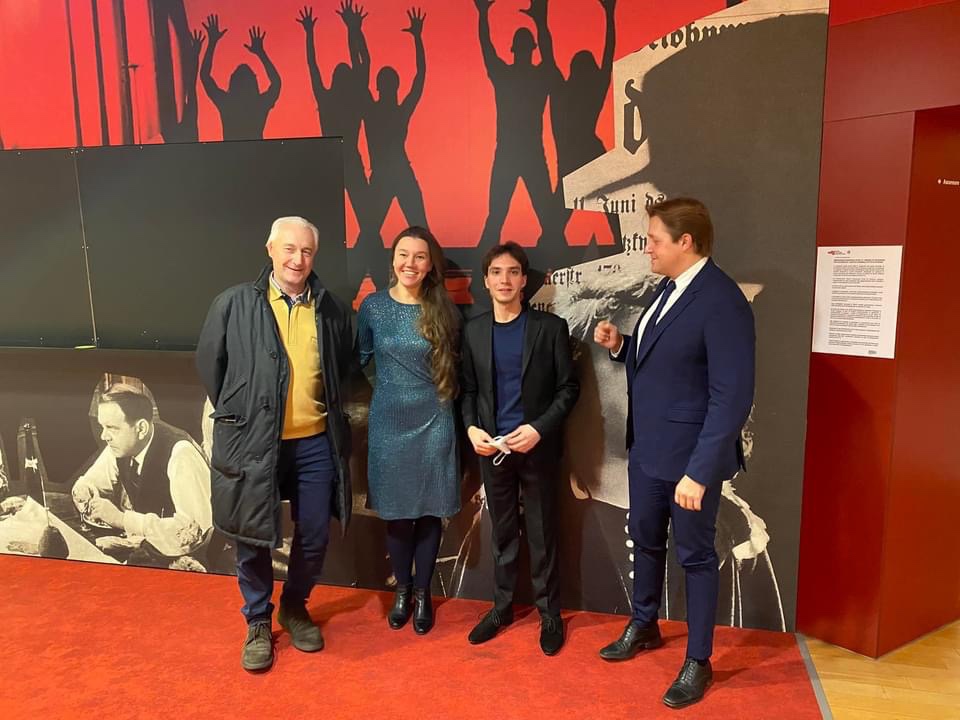
Admirers wishing to capture this occasion with Jonathan
A standing ovation for Jonathan from a small but courageous audience venturing out in the dense fog – nebbia a word to fear in these parts

https://christopheraxworthymusiccommentary.wordpress.com/2021/10/30/mozart-triumphs-at-torlonia-with-jonathan-ferrucci-pietro-fresa-sieva-borzak/

https://christopheraxworthymusiccommentary.wordpress.com/2022/01/17/angela-hewitt-casts-her-spell-over-rome/

https://christopheraxworthymusiccommentary.wordpress.com/2021/03/18/goldberg-ferrucci-to-be-or-not-to-be/

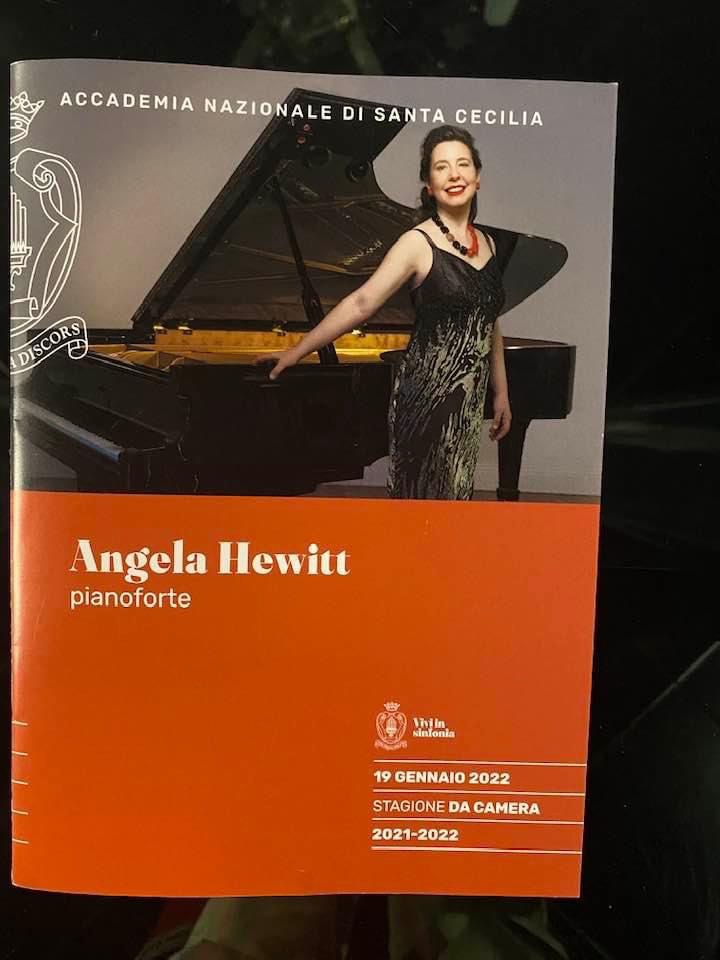
Angela Hewitt casts her spell over Rome

Finally after years of playing for Rome University Angela Hewitt made her much awaited debut at S.Cecilia.
It was the minutes of aching silence that greeted her magical performance of the Aria from the Goldberg Variations that decreed her long overdue triumph.
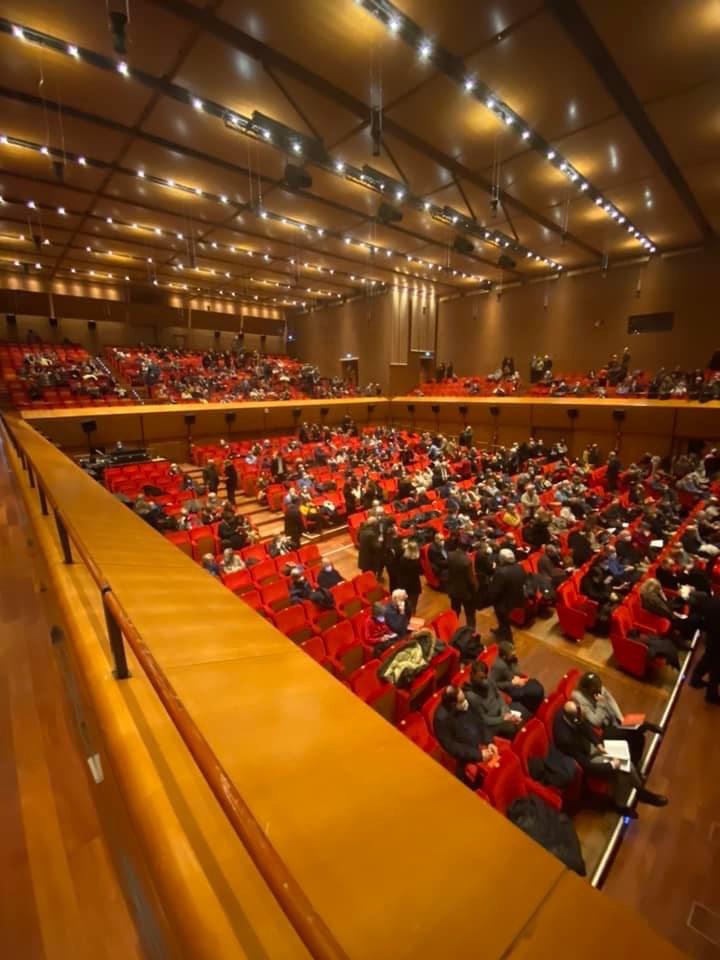
Almost two hours of playing to a very full hall with the usually reticent Romans braving COVID restrictions and the coldest weather I can remember in forty years in the eternal city.
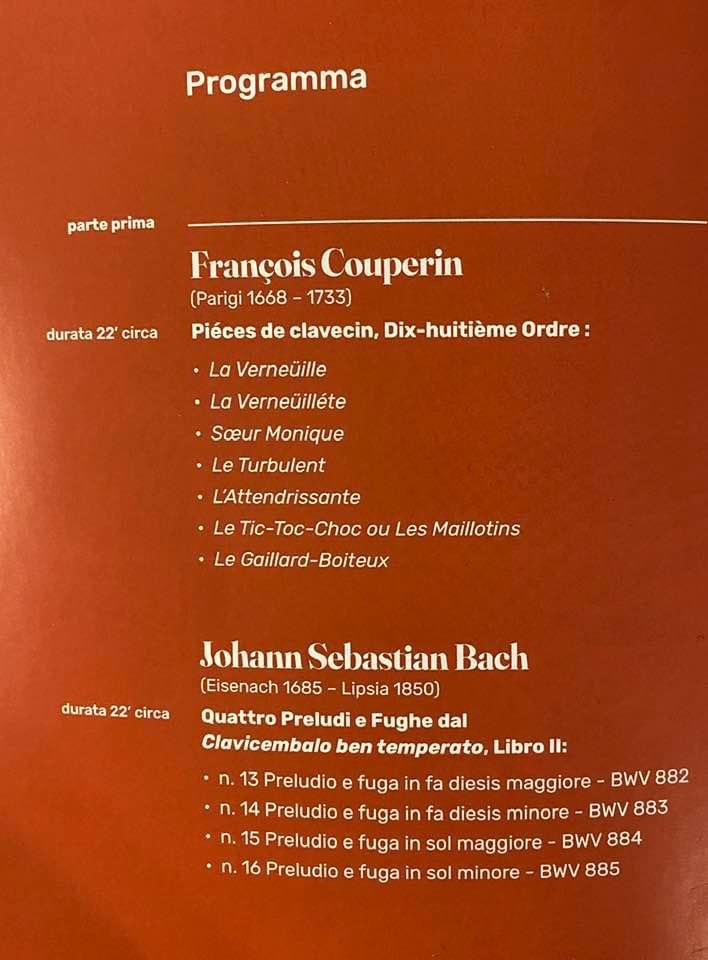
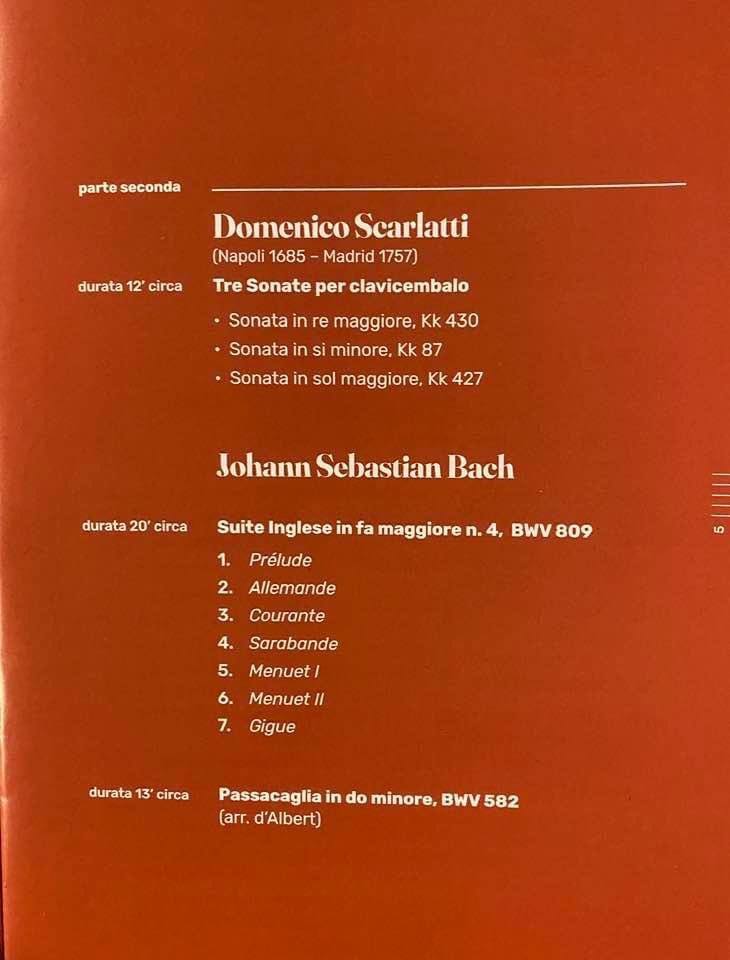
A magnificent Fazioli concert grand just waiting for the slender figure of Angela in a flaming red dress to bring it alive with crystal clear sounds of such delicacy and rhythmic drive that the audience sat spellbound through a difficult programme of Couperin,Scarlatti Bach and even d’Albert.
An eclectic programme of rarely heard works in Rome that kept the audience breathless and even coughless in admiration for the simple supreme musicianship of this remarkable performer or should I say re-creator.
Having played three Bach concerti in Aquila last night she faced the microphones of a live radio broadcast tonight with the joie de vivre and freshness of someone discovering the music for the first time and having such fun too.
It was just this exhilaration that was shared with a cheering audience wanting this moment of joy to last just a while longer.

https://www.raiplaysound.it/audio/2022/01/Radio3-Suite—Il-Cartellone-del-19012022-d98335cf-339d-4b30-a694-92a77e2934f4.html

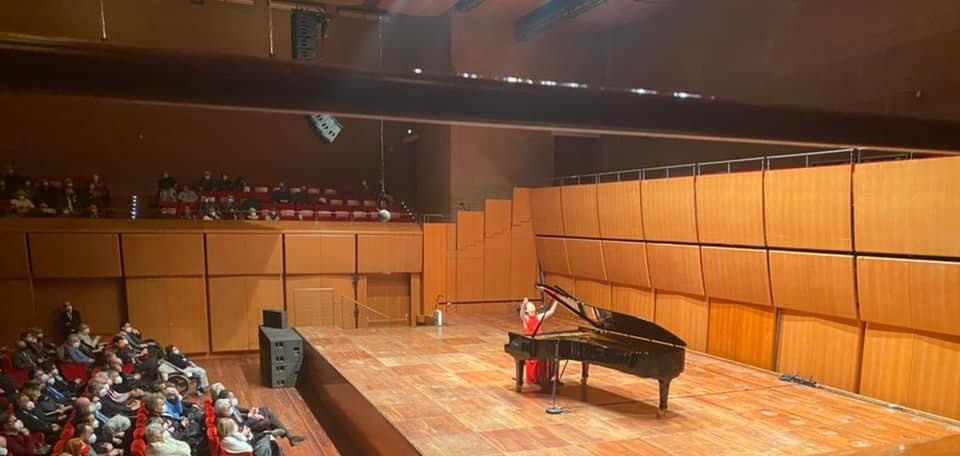
Angela playing in the Sala Sinopoli recital hall in the magnificent complex designed by Renzo Piano.Three magnificent halls under three roofs that look like three great mushrooms amongst the greenery that used to be the abandoned Olympic Village in the Parioli region of Rome.

Sala Sinopoli recital Hall

This was Angela’s debut at S.Cecilia,the historic institution that goes back hundreds of years ,but it was far from being the first time she had played in Rome.She has been a regular visitor in the last ten years at the University series in their Aula Magna with the historic frescos of Manzu.She made her debut in Rome though in the 80’s at the Ghione theatre promoted by the Canadian Cultural Embassy under the watchful eye of Elena Solari.It was the same period that Janina Fialkowska,her colleague and great friend,also was promoted in the Ghione theatre by the Canadian government as top prize winner in the first Artur Rubinstein Competition in Tel Aviv.Angela too had recently been the winner of what is generally known as the one and only Glenn Gould Bach Competition in Toronto in 1985.Gould was famously anti competitions so the actual title was the Toronto Bach Piano Competition dedicated to Glenn Gould.There was an exhibition in Rome too about the eccentric Canadian musical genius .In that period there were very few recital halls where artists could play in Rome and the Ghione theatre filled that gap in the 80’s and 90’s ( becoming like the Wigmore Hall in London today) until the magnificent concert halls of Renzo Piano were opened in the early 2000’s.Angela played too at the Teatro Olimpico-the Goldberg Variations in the 80’s on a Sunday morning.Her father the distinguished Canadian organist and her mother came over especially.Angela since then has made many rapturously received recordings for Hyperion and has a worldwide career.She also lives in Italy -when she is not touring the world- and holds her annual festival in Trasimeno.Often in the big cities if you are invited by one important organisation you are never invited to another -politics ugh! It was nice to see that Angela’s worldwide reputation had overcome local politics and judging from the triumph last night so were the public that gave her a standing ovation!

S.Cecilia had added 100 years to J.S.B good job his music is eternal!

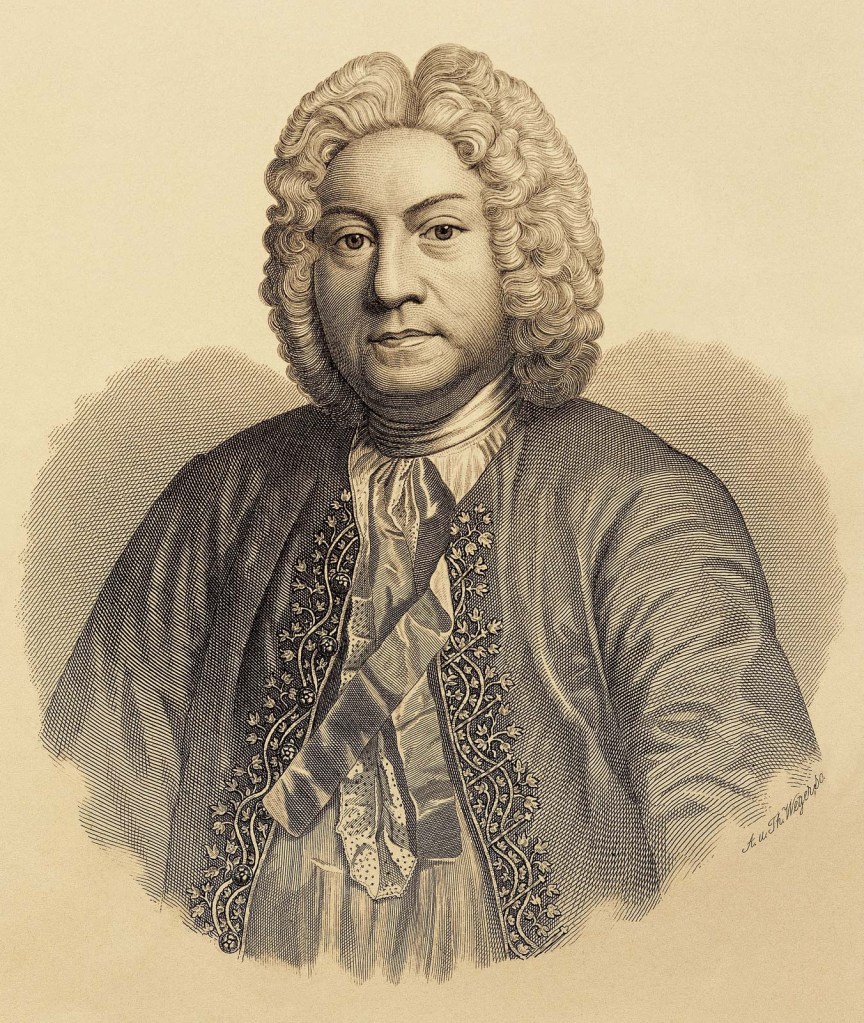
The French keyboard music of the early 18th century typically followed a general form in which suites of ten or more traditional dance movements are arranged in a fairly predictable order. The harpsichord pieces of Francois Couperin, however, are often unique, and alter this traditional form in a variety of ways. Rather than sets of dance movements these works are character pieces with evocative and picturesque titles.They paint captivating portraits of his time, depicting friends, enemies, court personalities and famous actors/actresses in veiled or enigmatic ways. Still other works illustrate natural phenomena, historical events and philosophical ideas, with the result being that works like Pièces de clavecin take on the character of a personal diary or sketchbook.

Francois Couperin – Paris 1668–1733

Couperin says in the preface to the Premier Livre, “Ceci n’est pas une Suite, encore qu’il y ait bien les dances obligatoires. Vous vouliez del’ordre? Voici un Ordre… On l’appellerait Désordre tout aussi bien.” (“This is not a suite, although it includes the obligatory dances. Would you like an order? Here is an Order … But it could be also called a Disorder.”)

Angela brought just this sense of character and sense of freedom with her crystal clear ornamentation that brought these seven miniature tone poems vividly to life.From the very delicate ravishing ornaments of the Verneuille and the lively rhythm of the Verneuillete.The sad song of the Soeur Monique with its great contrasts and very sensitive sounds and its final whispered echo.Great rhythmic energy of Le Turbulent was followed by the almost too serious L’Attendrissante before the magic music box of Le Tic -Toc-Choc of such brilliance.Ending with the strident energy of Le Gaillard -Boiteux.

Her Bach playing has been celebrated worldwide and is a true celebration of the song and the dance not the monumental rock that we have respected from many great interpreters of the past.This was a more human Bach played with great respect and scholarship but with sounds and colours that are more of the people than the Gods.

J.S.Bach

The four prelude and fugues from Book 2 flowed so naturally from her hands.The mellifluous beauty and clarity of F sharp major BWV 882 and the minor too of great beauty with such a delicate fugue that built up to a final climax .There was jeux perlé of seemless sounds in the G major BWV 884 contrasting with the majesty and rhythmic urgency of its minor partner BWV 885.

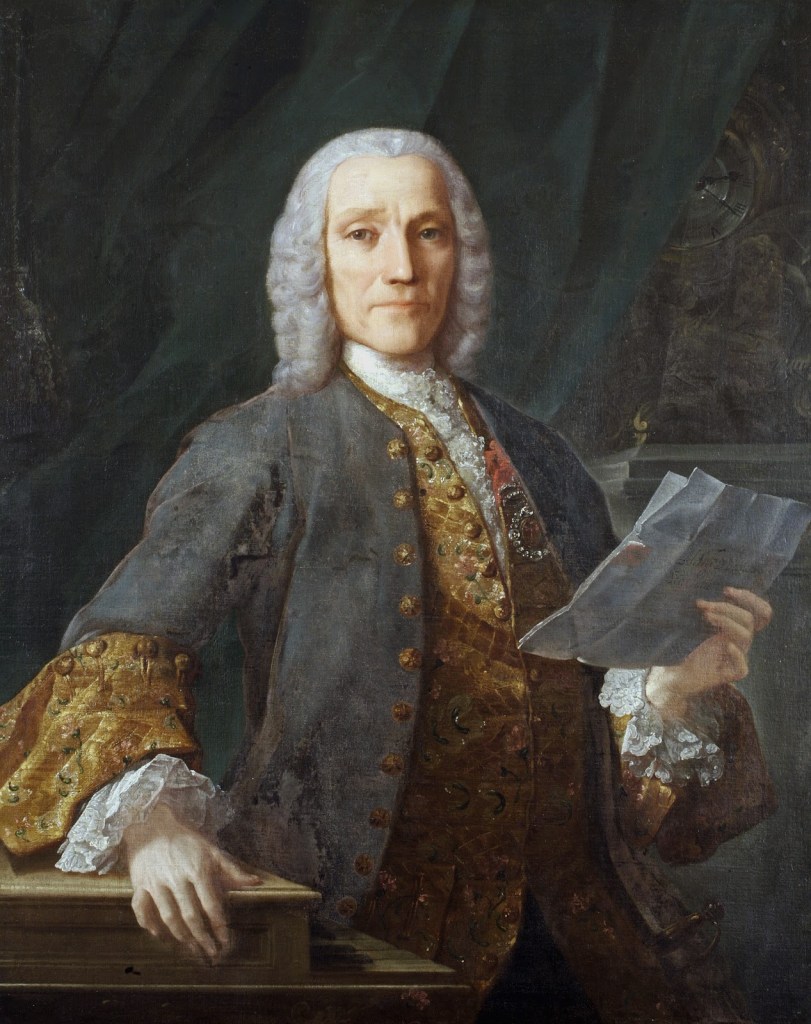
Domenico Scarlatti was born 1685 in the Kingdom of Naples,belonging to the Spanish Crown,the same year as Bach and Handel He was the sixth of ten children of the composer and teacher Alessandro Scarlatti.

Domenico Scarlatti

He died in Madrid in 1757 at the age of 71 and was buried at a convent there, but his grave no longer exists.He wrote 555 keyboard sonatas which are single movements and are mostly for harpsichord or the earliest pianos. (There are four for organ, and a few for small instrumental group). Angela chose three of contrasting character and colour.D major K 430 had the elegance and grace of the dance with great rhythmic energy whereas the B minor K.87 was played with a beautiful legato allowed to sing so expressively.The final G major K 427 bubbled over with a sparkling jeux perlé interrupted by strident chords .

Bach’s six English suites are thought to be the earliest set that Bach composed aside from several miscellaneous suites written when he was much younger. Bach’s English Suites display less affinity with Baroque English keyboard style than do the French Suites to French Baroque keyboard style. It has also been suggested that the name is a tribute to Charles Dieupart whose fame was greatest in England, and on whose Six Suittes de clavessin Bach’s English Suites were in part based.The English Suites strongly resemble those of Bach’s French Suites and Partitas, particularly in the sequential dance-movement structural organization and treatment of ornamentation.There was such clarity of voices in the opening Prélude and a mellifluous flow of sounds in the Allemande and Courante.But it was the sublime beauty and simplicity of the Sarabande that will linger longest in the memory for its heartfelt outpouring of deep meaning.There was charm in the two Menuets and a joyously buoyant Gigue that brought this rarely heard work to a triumphant conclusion.

Passacaglia and Fugue in C minor BWV 582 is an organ work here transcribed by a pupil of Liszt: Eugene d Albert .Presumably composed early in Bach’s career, it is one of his most important and well-known works, and an important influence on 19th and 20th century passacaglias .Schumann described the variations of the passacaglia as “intertwined so ingeniously that one can never cease to be amazed.”Angela gave a performance of unexpected delicacy but gradually building to a tumultuous climax grandeur and transcendental difficulty as one would expect from the great Glaswegian virtuoso from the school of Franz Liszt

Two encores from a very enthusiastic public of a Bach organ prelude and the sublime aria from the Goldberg variations.Let’s just hope that we will get to hear the whole of the variations on her next visit to Rome.

https://christopheraxworthymusiccommentary.wordpress.com/2020/06/25/angela-hewitt-the-glory-of-god-to-refresh-our-spirits-live-stream-from-the-wigmore-hall/

https://christopheraxworthymusiccommentary.wordpress.com/2020/11/18/angela-hewitt-for-the-glory-of-bach-the-pinnacle-of-pianistic-perfection/

https://christopheraxworthymusiccommentary.wordpress.com/2020/09/20/angela-hewitt-the-long-awaited-return-to-the-wigmore-hall/

https://christopheraxworthymusiccommentary.wordpress.com/2021/06/30/goldberg-in-the-land-of-perugino-jonathan-ferrucci-in-citta-della-pieve/

Shunta Morimoto in Viterbo Refined sensibility and artistry of a true virtuoso

https://christopheraxworthymusiccommentary.wordpress.com/2021/11/23/shunta-morimoto-takes-rome-by-storm/

Shunta Morimoto in Viterbo
https://youtu.be/axiKIk9RwtY


The artistry and beguiling sense of style in the Chopin Waltz op 34 played as an encore summed up a recital in which intelligence sensibility and artistry had gone hand in hand.Hands that etched out golden sounds with a sense of balance that allowed the great architectural shape of each piece to be so clearly defined.
Beethoven’s Sonata op 27 n.1 was given a performance of great drive and forward propulsion.The first movement was played with the same gentle cantabile as the Pastoral Sonata op 28 which was shortly to follow from Beethoven’s pen after the so called Moonlight Sonata op 27 n.2 .There was great beauty from the very first notes as the left hand melody was answered by the gentle throbbing of the right hand chords.The beautiful melody of the middle section was played with great weight that added sumptuous richness to the rich harmonic accompaniment before the return of the opening theme.Like a distant memory,the gentle beautifully timed conclusion with a final chord placed so carefully as was the solo bass note with which it concluded.The busy urgent meanderings of the Allegro molto were rudely interrupted by furious outbursts of rhythmic strength followed by a middle section of syncopated chords of great clarity and precision.It was though the Adagio that was particularly beautifully played with such simplicity and maturity with it’s sumptuous accompaniment that just added to it’s searing beauty in this young man’s sensitive hands .The Allego vivace bubbled over with bucolic energy with some transcendental playing of remarkable rhythmic drive.Some truly scintillating playing of transcendental control and dexterity but played with such buoyancy and ‘joie de vivre’ as it was driven to it’s frenzied impatient conclusion.This was the real Beethoven character slamming the door unrelentingly in our face.


The highlight of the concert,though, was the discovery of Faure’s 6th nocturne played with the same maturity that I remember from the 80 year old Perlemuter.

https://christopheraxworthymusiccommentary.wordpress.com/2017/12/19/in-praise-of-joan-2/

Perlemuter lived as a student in Faure’s house being a child prodigy student of Alfred Cortot at the Paris Conservatoire and he loved telling me that Faure’,who was director of the conservatory ,would ask him to try out his music while the ink was still wet on the page.Perlemuter could not abide the rather romantic way that many play these nocturnes.They have more to do with Chopin’s Ballades that his Nocturnes as there is a strength and rhythmic drive to these miniature tone poems that excludes any sentimentality.Shunta understood immediately and entered this world of sentiment without sentimentality.There was a luminosity to his sound that allowed the melodic line to shine with such ravishing beauty as it built up to a climax of astonishing passion.There were whispered sounds like the flight of birds in the middle episode,on which floated one of Fauré’s most hauntingly mellifluous melodies.Streams of notes of seemless gold played with extraordinary jeux perlé of such whispered purity and control.Great passion too as the opening melody is triumphantly given deep down to bass octaves before dissolving into the final murmured chords with Shunta barely caressing the keys.In Shunta’s hands there was a whole world ,a tone poem that covered a complete emotional experience thanks to the kaleidoscopic range of sounds that this young man was able to seduce us with.I think that Perlemuter would have been the first to offer’chapeau’ for the refined emotional performance that we were treated to today.

It was the late Aquiles delle Vigne who who arrived at the Ghione theatre on one of his numerous annual visits with the Urtext of the Fantasia Baetica. https://christopheraxworthymusiccommentary.wordpress.com/2020/11/28/aquiles-delle-vigne/. A fascinating work rarely heard in public these days because it needs an interpreter of the calbre of Alicia de Larrocha or Artur Rubinstein (to whom it is dedicated) to bring it to life.It was this seventeen year old Japanese boy who today showed us how to bring this work vividly to life with astonishing technical prowess.Above all,though, with a fiery latin temperament that ranged from sultry despondency through cries of yearning to the savage excitement of the native Spanish soul.

Chiselled sounds and astonishing washes of colour where the flexibility of his arms -like rubber-was something to marvel at as he dug deep into the very soul of the piano to carve out such frenzied sounds.Cries of yearning hammered out almost like Messiaen’s devotional exclamations of faith but here answered by the gentle strumming of the guitar.There was real savagery in his hypnotic dance rhythms and a finale that both startled and astonished.A remarkable performance full of youthful passion and total commitment.De Larrocha’s performance may be the most perfect I have heard but Shunta’s today will be the one that remains in my memory for its astonishing immediacy and youthful audacity.

There was serenity and passion in his performance of the Prelude,Chorale and Fugue by César Franck.An astonishing range of colours.From the magic opening melody floating on etherial vibrations of sound to the passionate declarations of emotion as the music weaves its way towards the ravishing beauty of the chorale.The arpeggiandi chords were spread over the entire keyboard with a luminosity of golden sounds and his aristocratic control of the great climax was of such searing intensity as he dug deep into the bass as he spread the sounds over the entire keyboard with such musicianly audacity.Gradually dying away to absolute silence as the fugue subject appeared building in driving intensity and grandeur before the magical reappearance of the opening theme and the triumphant march to the heroic ending.

Shunta busy studying his scores before the performance
The University hall with covid distancing sheets in view on the seats

Giovanni Bertolazzi in Rome Liszt is alive and well at Teatro di Villa Torlonia

Reincarnation of Liszt at Villa Torlonia tonight with the extraordinary Giovanni Bertolazzi playing the two sonatas by Liszt prefaced by the Liebestod.
A concert for Roma 3 and the Keyboard trust in which a dear friend of the trust and an eminent broadcaster and musicologist Guido Barbieri presented the concert with all his intelligence and charm with carefully chosen letters from Liszt’s own times.

Giovanni Bertolazzi with Guido Barbieri


And charm there was from Giovanni with his encore of La valse by Vecsay/Cziffra in a performance that I doubt even Cziffra could have matched.
Playing of another age -the Golden age when the great pianists like the Master himself could hold their audience in the palm of their hands.Enacting the great dramas that were being brought to life with astonishing virtuosity and ravishing beauty reducing their seemingly refined audiences to a screaming mob of adoring fans.


There was true re enactment as he brought vividly to life all that he played.From the opening chords of Tristan played with such overwhelming conviction that immediately held our attention.He proceeded to ravish and seduce us with playing from a refined palate of magical sounds that intertwined as they build up to a tumultuous climax.Massive tremolandi and sumptuous notes deep in the bass just calculated to open up even more sonorities in this magic box of hammers and strings.This was all part of the magic that Giovanni could conjure up before our very eyes.Even attacking the keys with his fist and pointed fingers at moments of great abandon just as Richter used to overwhelm us on his first visits to the west.

But sonorities always of sumptuous beauty never hard or ungrateful because Giovanni is not only a master pianist but even more importantly a master musician who listens to every strand of sound.The final placing of the notes at the end of Tristan whispered into the rarified air in the magnificence of Villa Torlonia where Giovanni’s ravishing sense of timing had us all holding our breath waiting for the gates of heaven to open.A glimpse of paradise indeed before being plunged into’ inferno’.


It was the same with the Dante Sonata .Have the opening few bars ever sounded so dramatic and full of menace?After the dramatic opening a sinister gust of wind deep in the bass before the ravishing hint of the paradise that awaits.A melodic line of glowing fluidity as it gradually gained in strength and power.The silences too were so pregnant with meaning as Giovanni with aristocratic authority barely placed his hands on the keys as we strained to overhear such jewels that glistened and shone like magic prisms of radiance.When we were almost ready to surrender to this seduction there was an eruption of excited sounds of transcendental audacity and technical prowess that was doubly breathtaking because of the surprise.

It was just these contrast and sense of a living drama that held us spell bound in what Valerio Vicari said afterwards was the greatest performance of the Dante Sonata that he could ever remember hearing!

Valerio Vicari with Giovanni Bertolazzi

Valerio is the artistic director of Roma 3 who promotes a vast number of young musicians each year.I am proud to say that he listened to many of the greatest artists in his student days in the Ghione theatre in Rome.

Teatro Ghione home to many pianists young and old for over twenty years

The treacherous final pages where many pianists come to grief was bathed in bass harmonies from which the melodic line was allowed to float.Any technical feats were subordinated to their musical values.The grandiose and tumultuous final few bars will live in my memory as the savagery and abandonment was the same that I remember of Richter almost 50 years ago.

The B minor Sonata too with the opening three motifs played with overwhelming indulgence as he was reliving the very experience that Liszt had put on the page himself.It was ,after all,the master himself who said that to follow the score is only half of the story the other half has to come from the artist himself!
He certainly did that today as we were caught up in the drama that was being unveiled before us with such authority and poetry.The audience with baited breath was drawn into the fray and lay as exhausted as Giovanni at the end of this monumental B minor sonata.
The minutes of aching silence after the final three chords had ascended so magically on high was only broken as Giovanni gently withdrew his hands from they keys and placed them on his lap.

This was not just a transcendental performance but above all a musicianly performance where none of Liszt’s very precise indication had been overlooked but rather interpreted and reborn.There was a conviction and sense of communication that is so rare in a work where the so called ‘tradition’ has shut the eyes of so many virtuosi to the real intentions minutely indicated by Liszt in this revolutionary masterpiece.There were moments where there was great attention to the bass acting like an anchor opening up the sonorities within the piano.This was especially noticeable in the transition to the slow movement with barely whispered sounds vibrating on a harmonic cloud created by a subtle use of the pedals.The passionate build up of this middle episode was beautifully judged with rich expressive sounds never allowed to become hard or ungrateful even at the massive final climax .The left hand arpeggios were punched home with passionate meaning as it dissolved to the return of the ever more sinister opening motif.The magnificence of the fugato was breathtaking as it built up with its surge of unrelenting energy and the full orchestra suddenly appears in the bass.A moment that indeed belonged to Gilels that today I was reminded of in the hands of this remarkable young musician.The treacherous double octaves,first in the right hand and then the left were played as only a great musician could contemplate them and the eruption of the final chord was devastating as it dissolved to the final remarkable page of sublime invention.

Rarely have I heard this page played today with the sense of relief,thanksgiving but above all devotion as the final three chords were played as Liszt indicates so carefully in his score :a crescendo to a sudden pianissimo that is like a beacon shining brightly on high.

I do not remember ever experiencing the same moments of absolute silence at the end of today’s memorable journey.It was the same silence that had greeted the return of the aria in the Goldberg Variations the other day at S Cecilia with Angela Hewitt.A magical experience of collective silence that will linger in my memory for many a year.

Valerio Vicari,artistic director with Roberto Pujia,President of Roma 3

No recording or streaming tonight but as Mitsuko Uchida says a great performance should be a joy for ever,cherished in the memory and not just a stale image instantly bounced around the world.

Cherished indeed and thankful that we could have been present at the return of the true Franz Liszt to the eternal city where he had lived for so many years as he received holy orders,resigned and repentant from his previous very public life.

https://christopheraxworthymusiccommentary.wordpress.com/2020/02/22/giovanni-bertolazzi-a-giant-amongst-the-giants/

https://christopheraxworthymusiccommentary.wordpress.com/2020/10/25/giovanni-bertolazzi-a-star-shining-brightly-at-the-presidents-palace-rome/

https://christopheraxworthymusiccommentary.wordpress.com/2020/11/30/giovanni-bertolazzi-pays-homage-to-barone-agnello/

A recording from Budapest of the Liszt Sonata with Giovanni Bertolazzi

https://youtube.com/watch?v=IiQUTQEqv20&feature=share