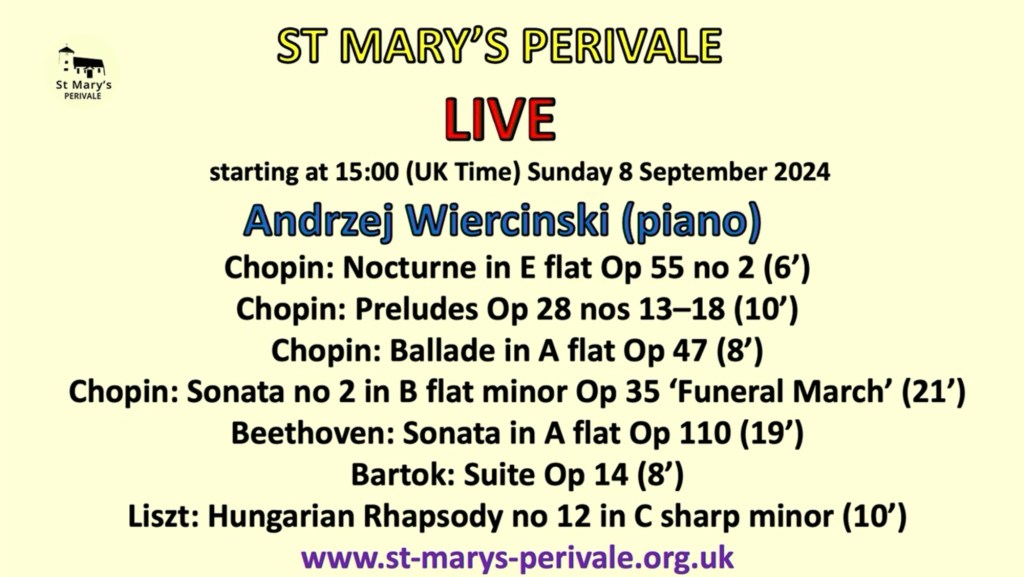
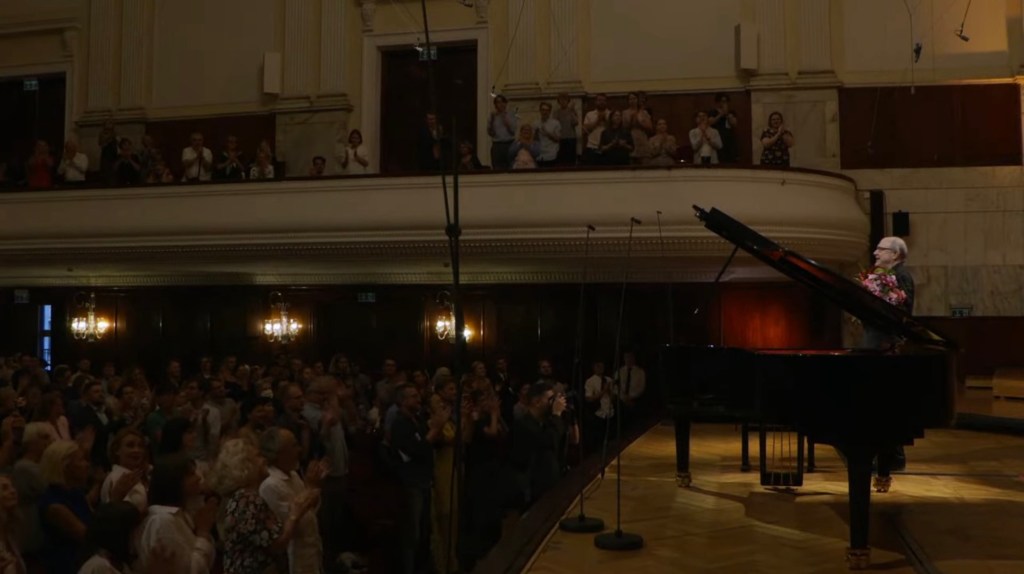
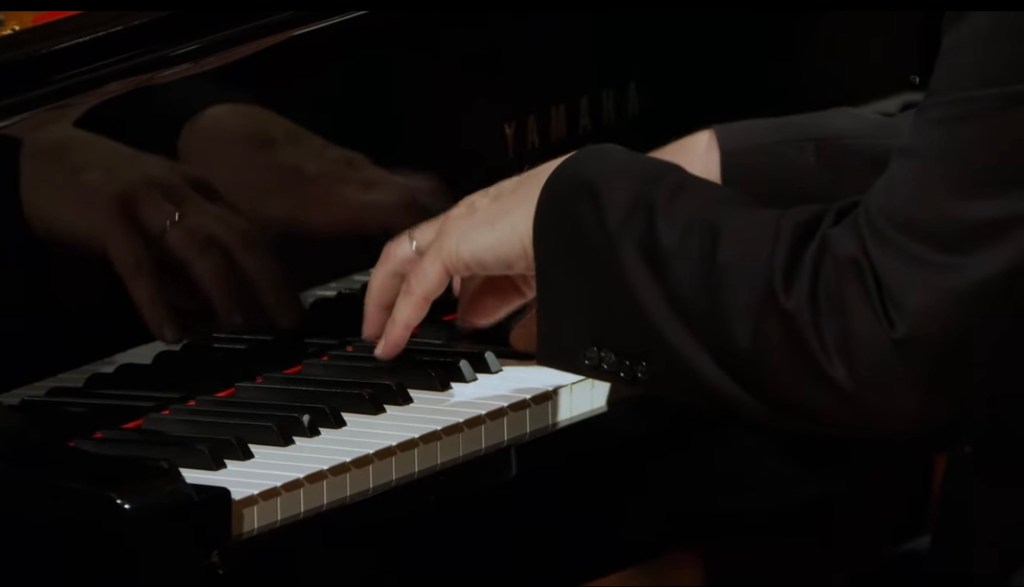
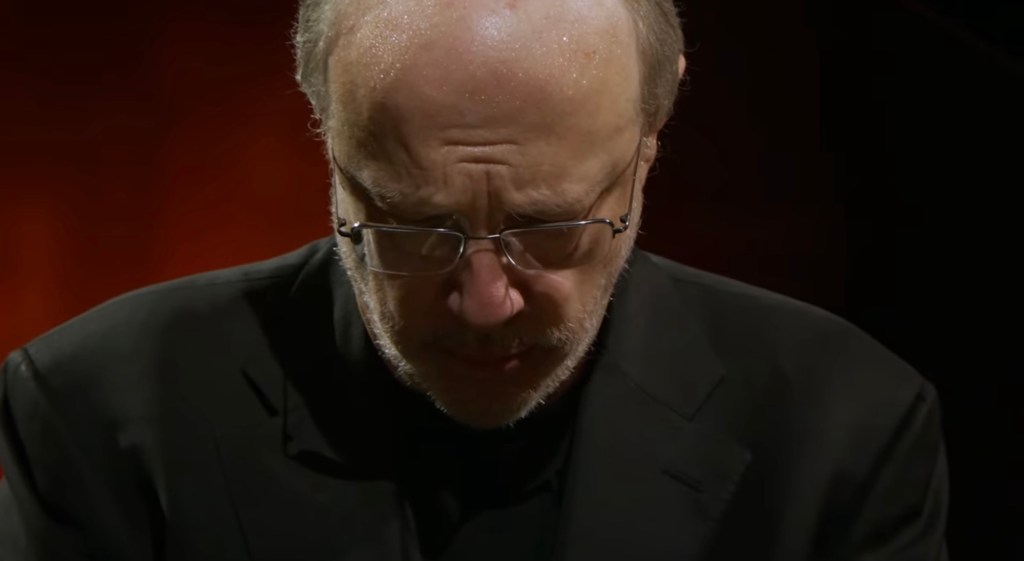
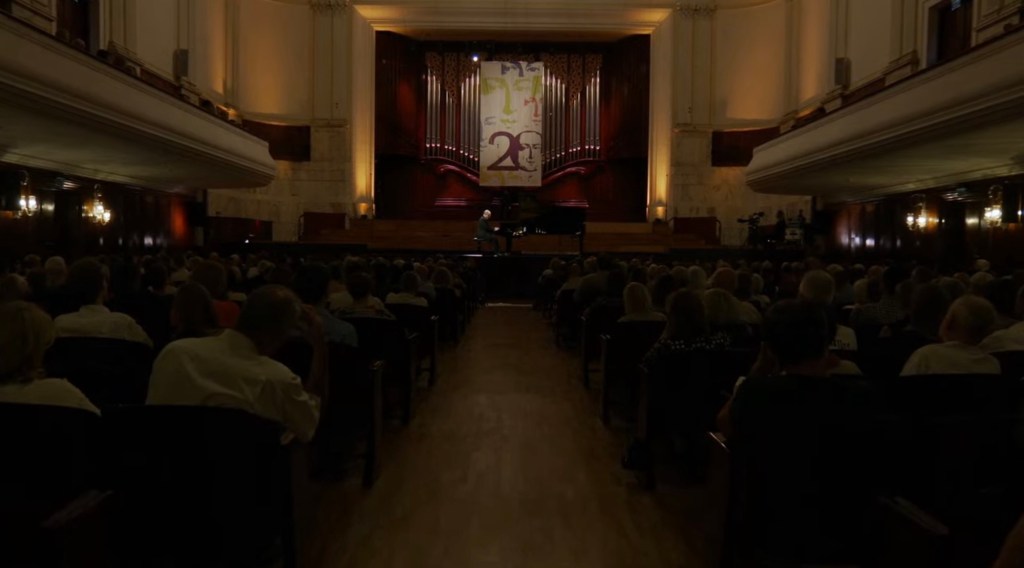
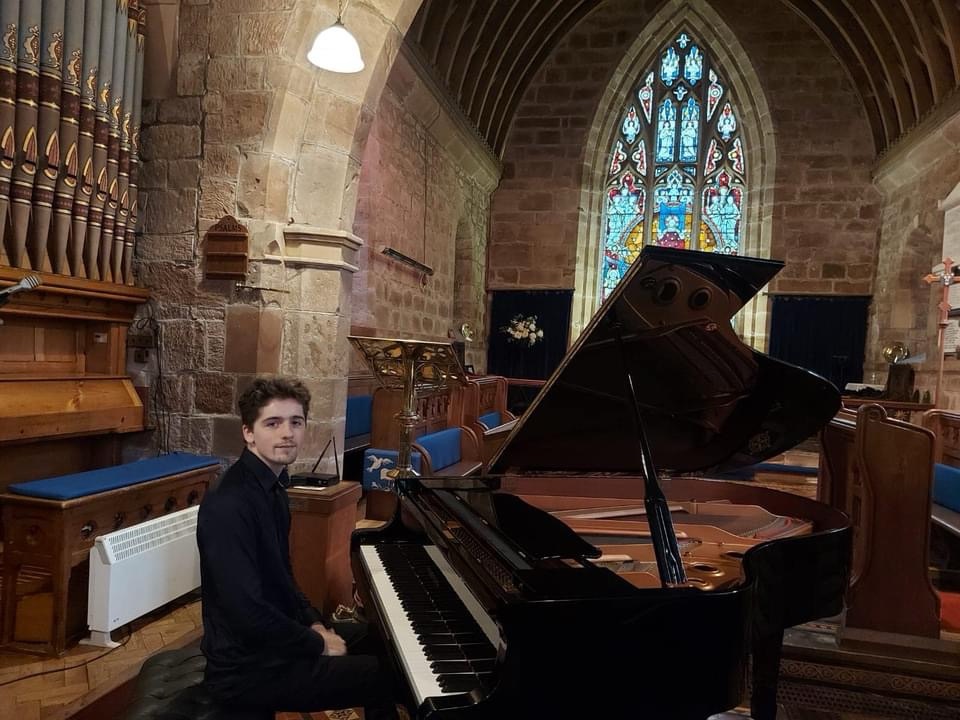
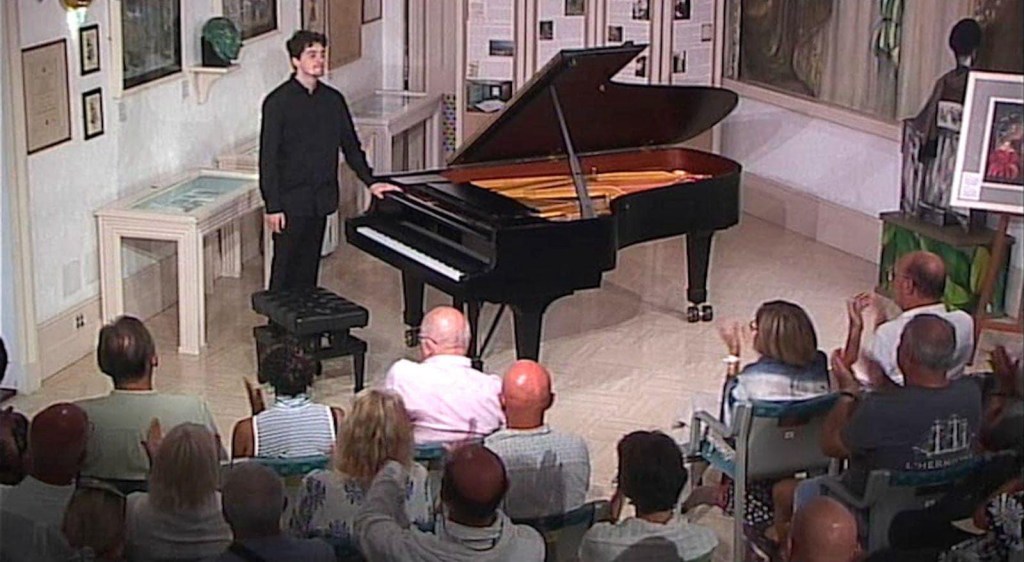
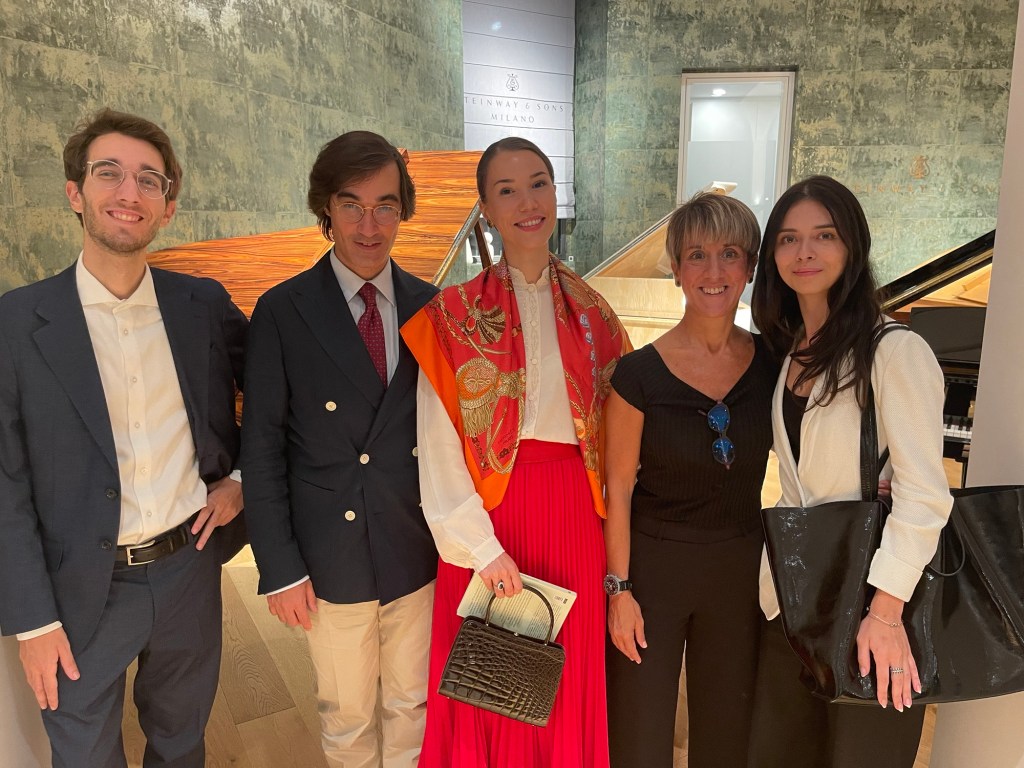
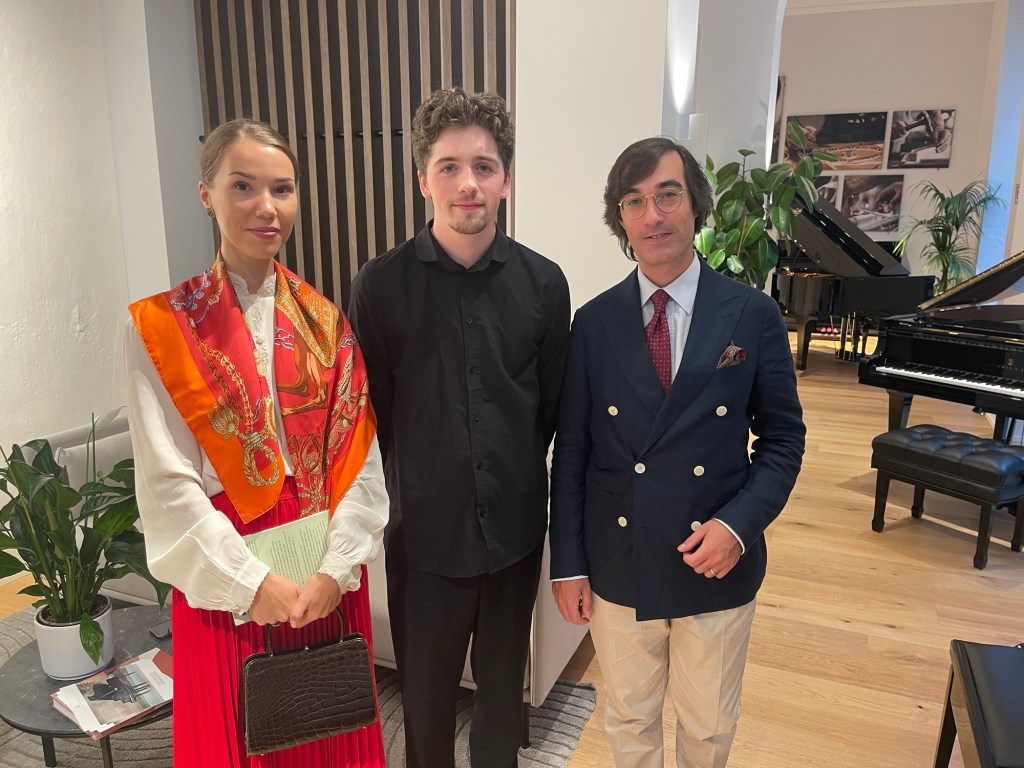
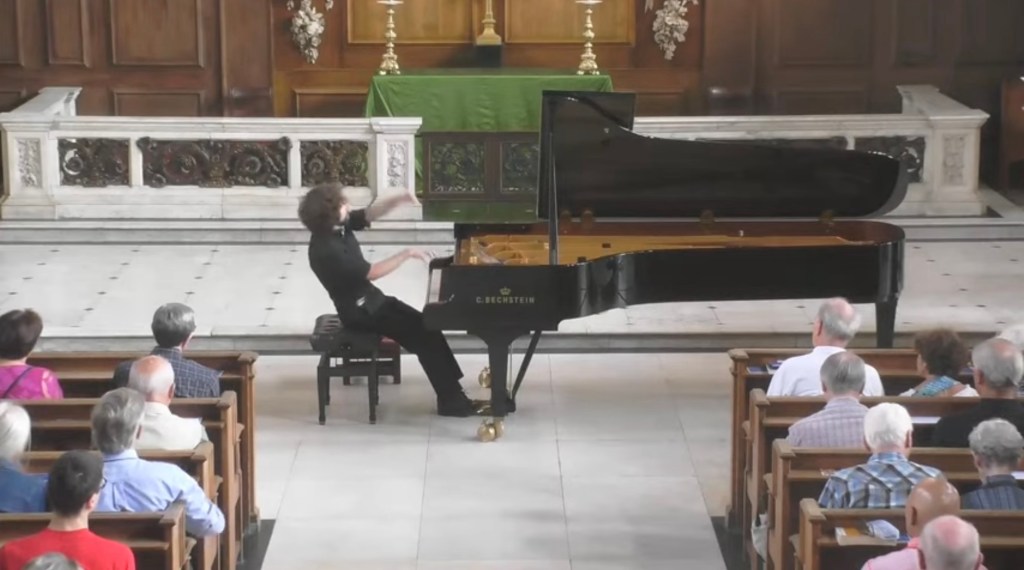
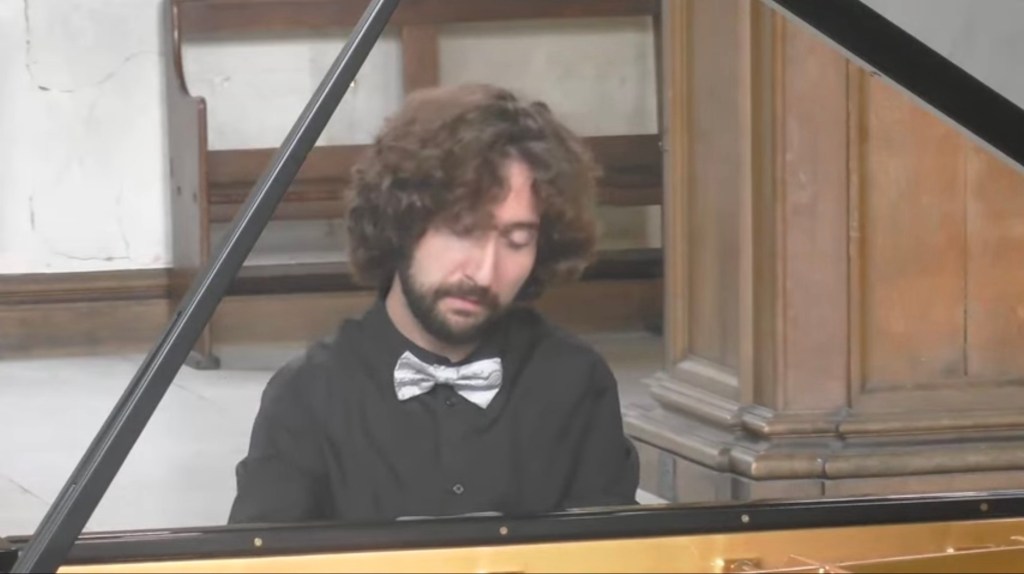
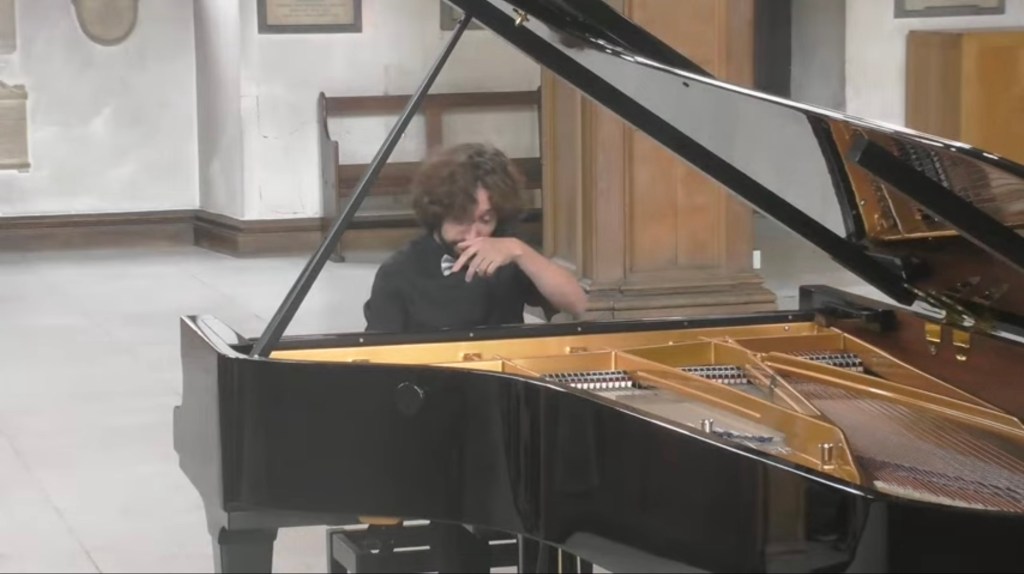
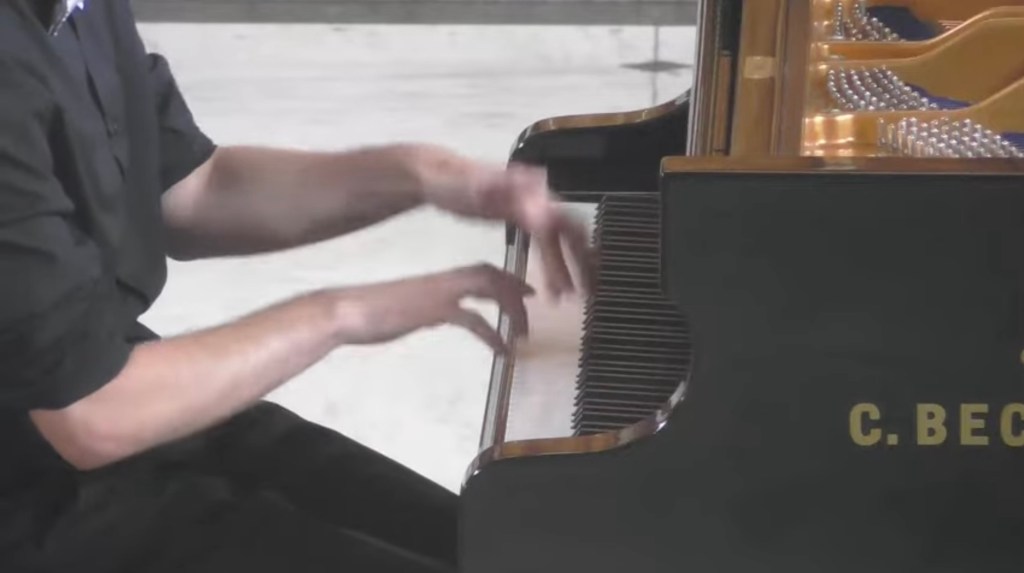
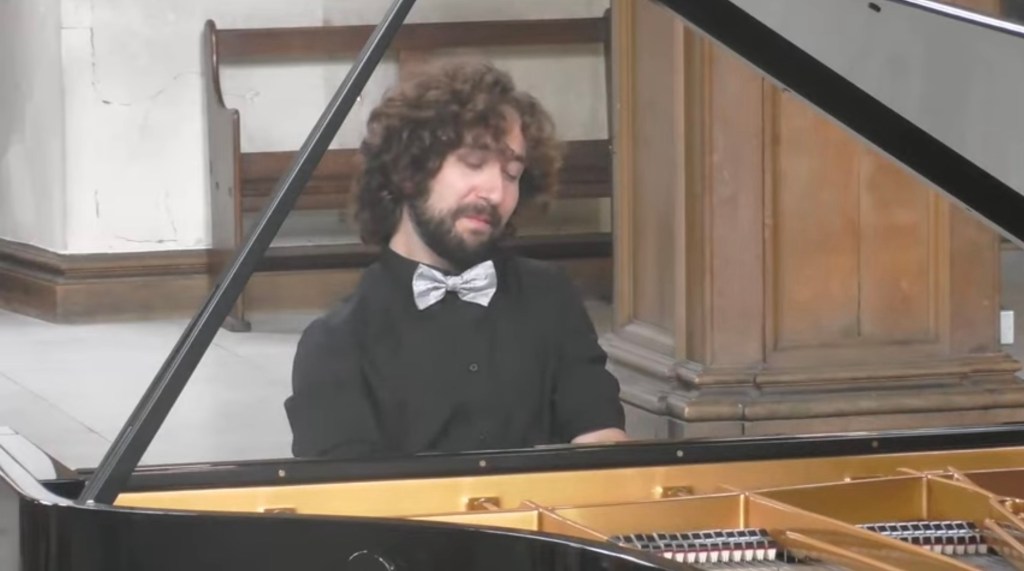
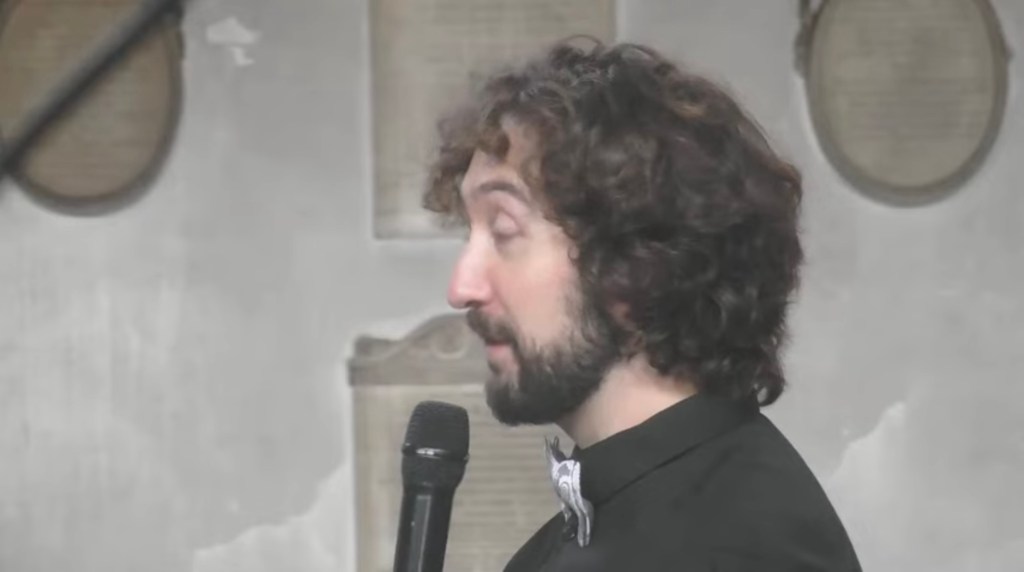
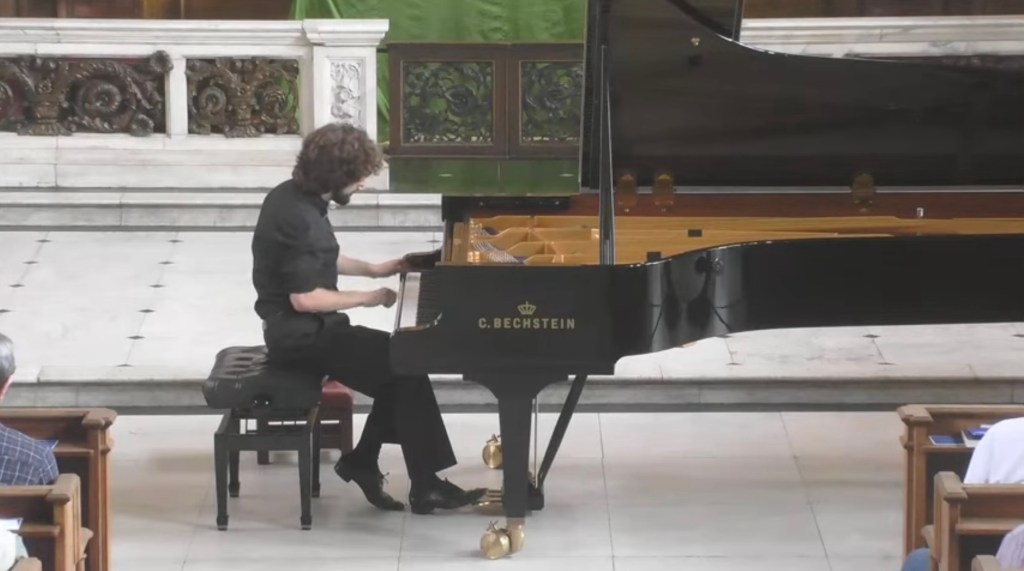
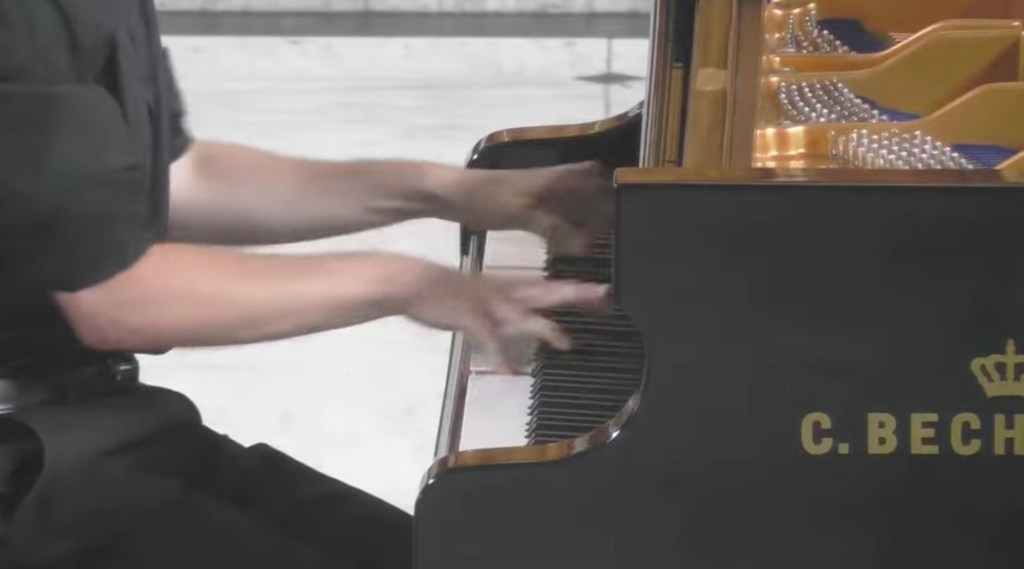
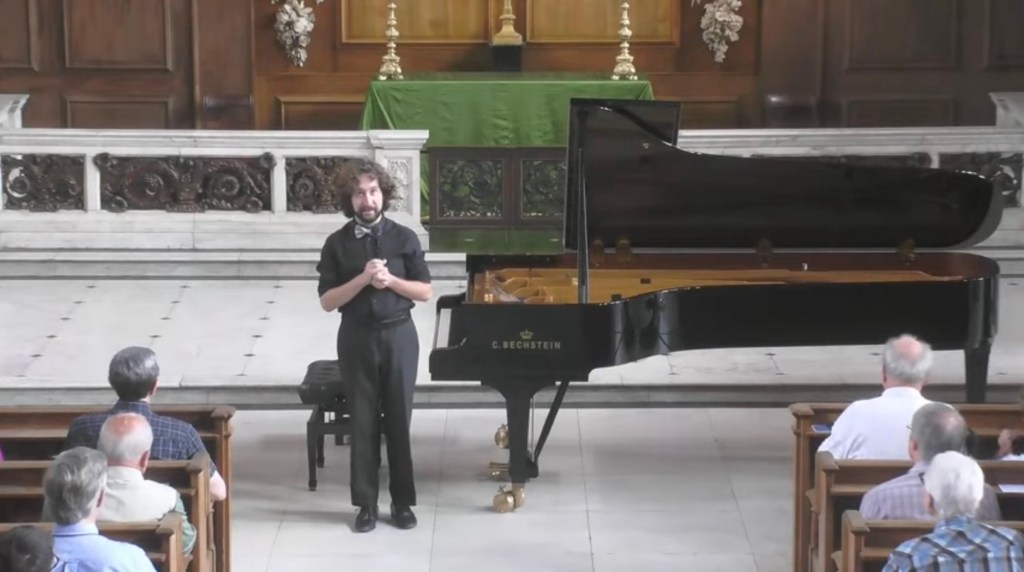
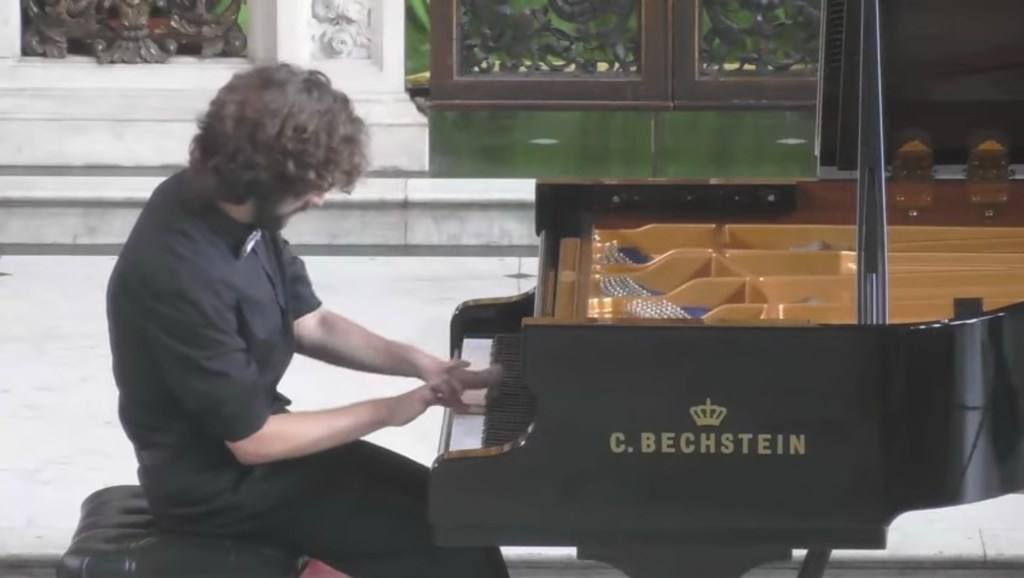
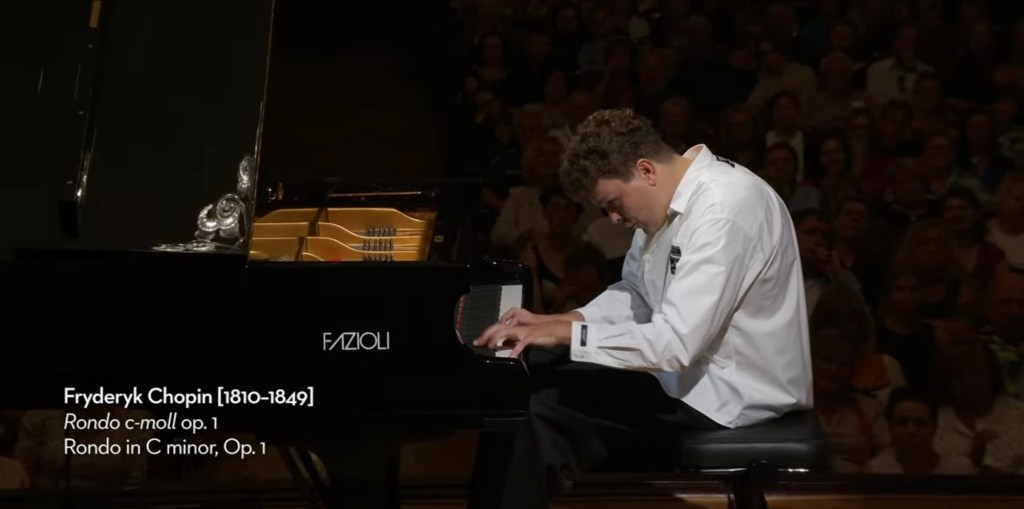
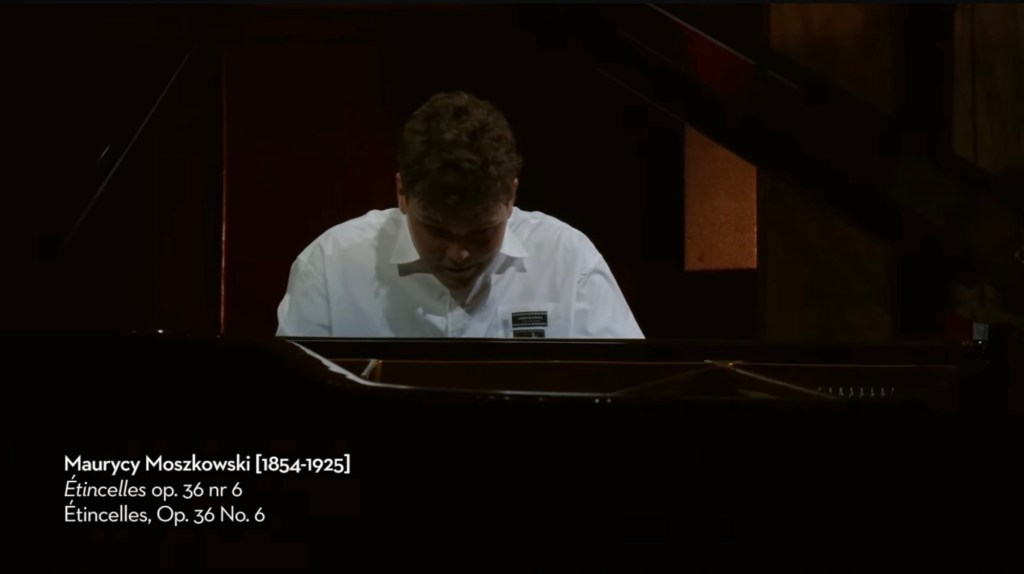
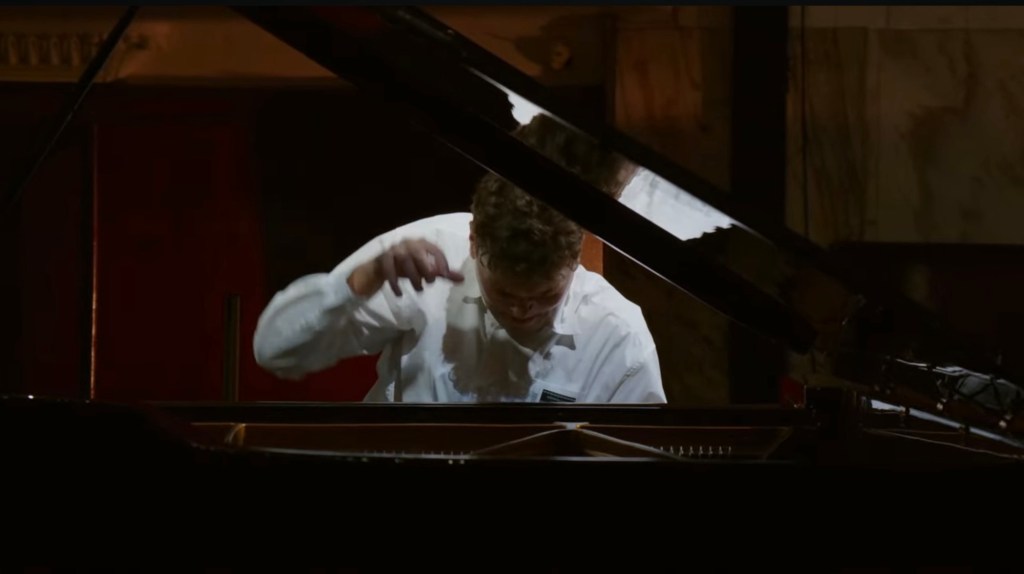
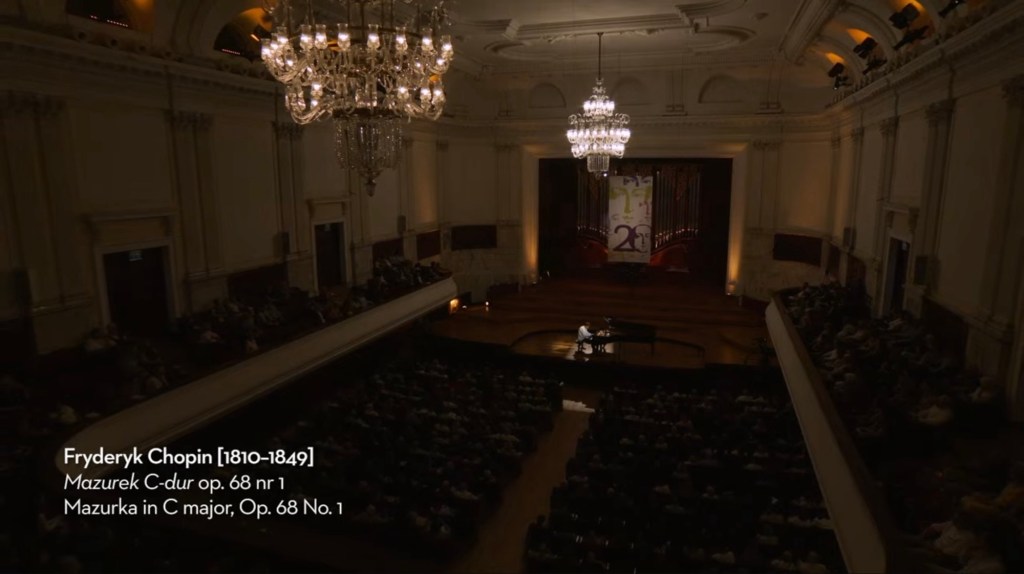
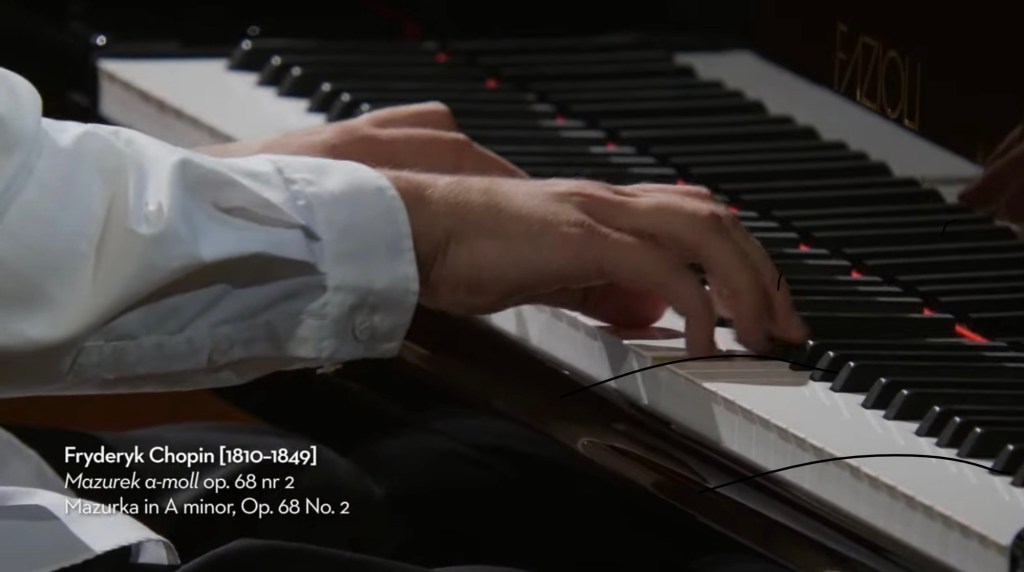
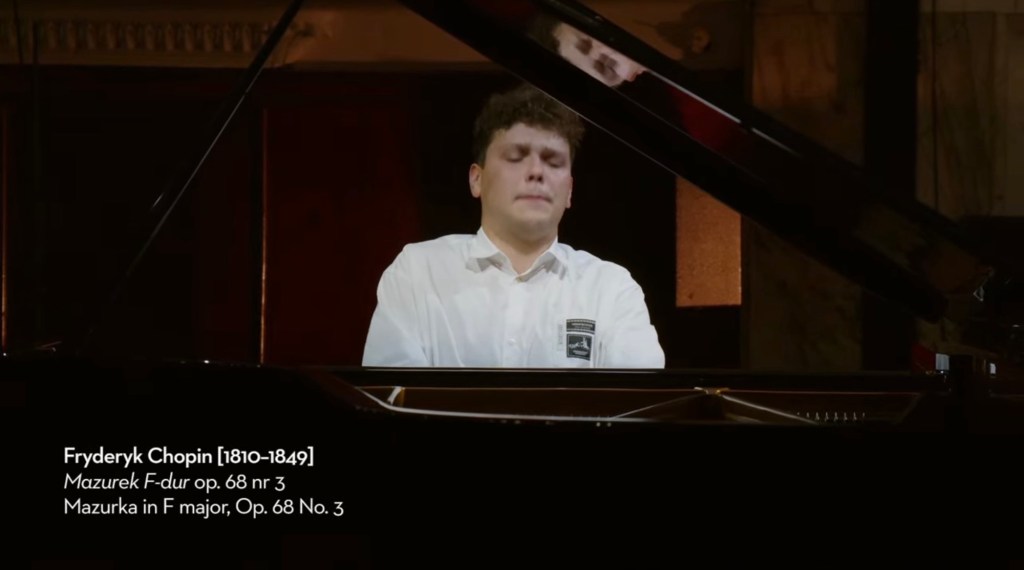
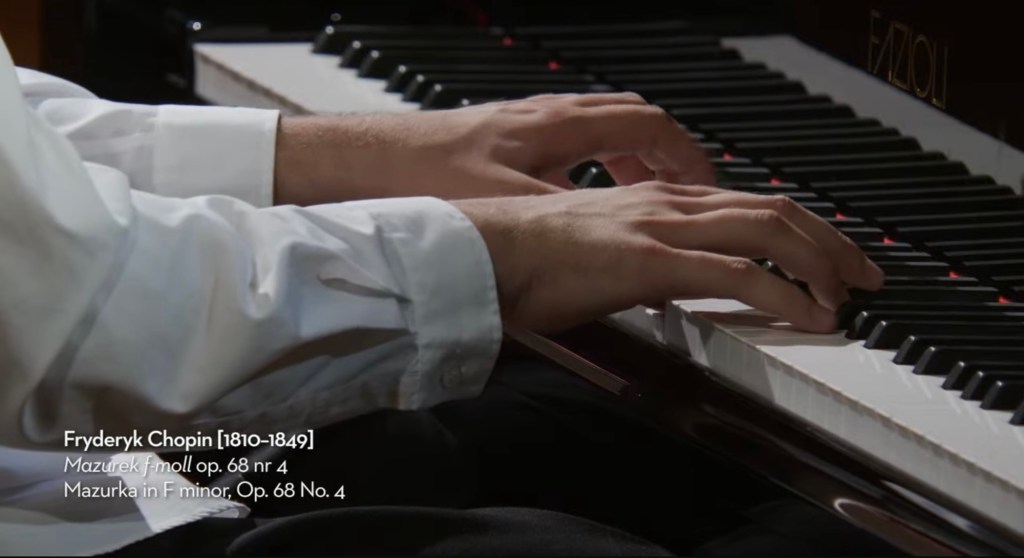
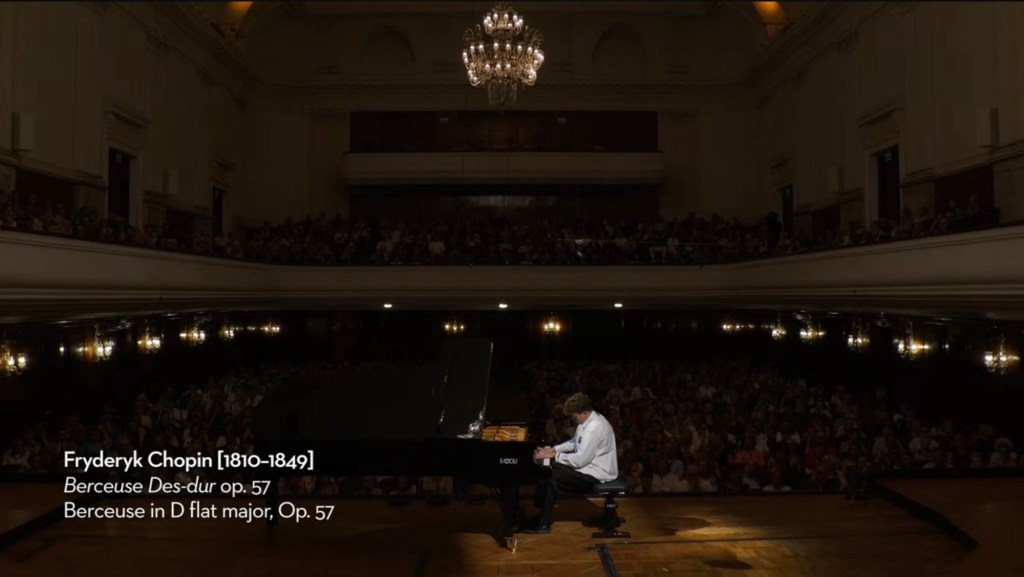
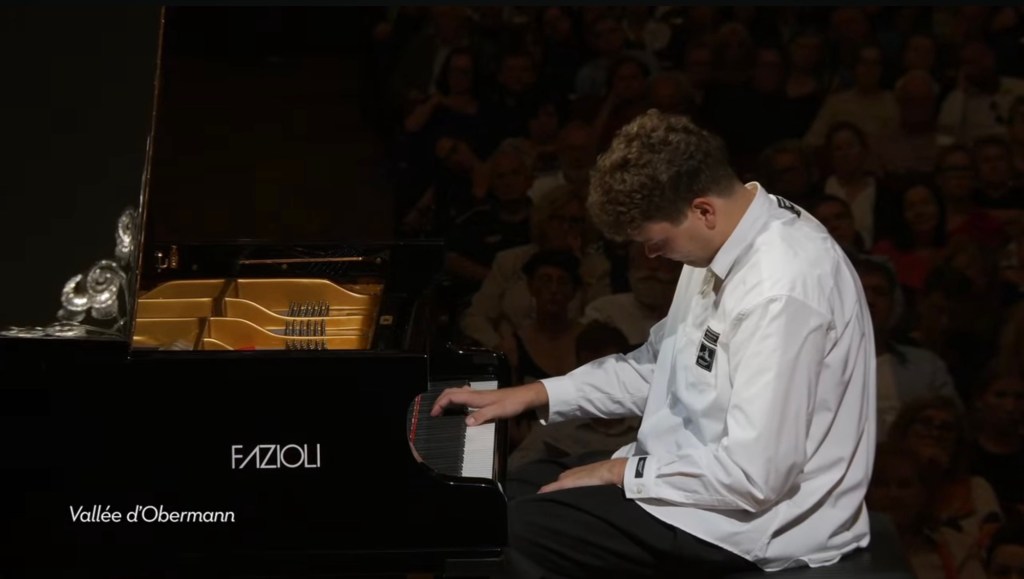
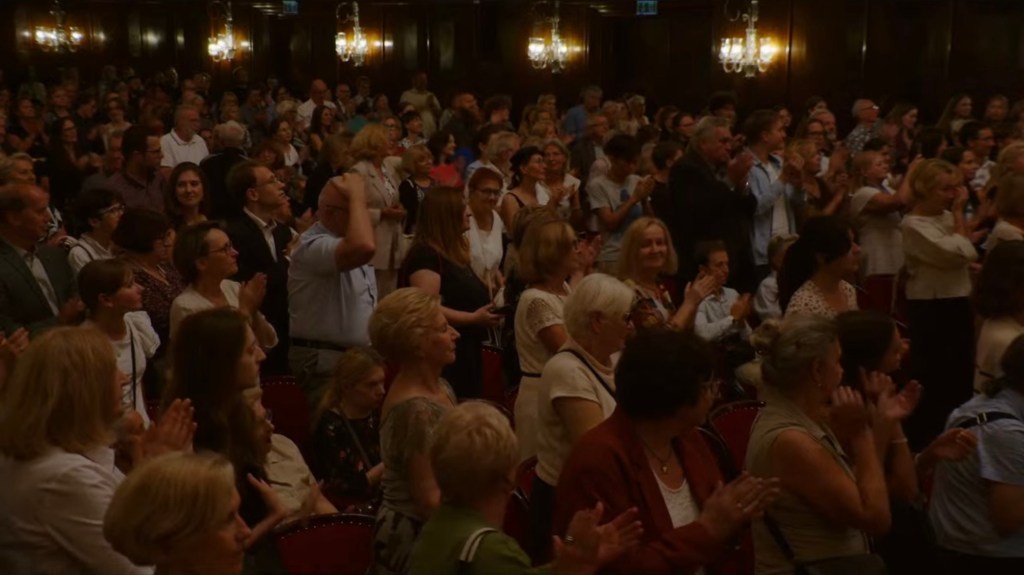
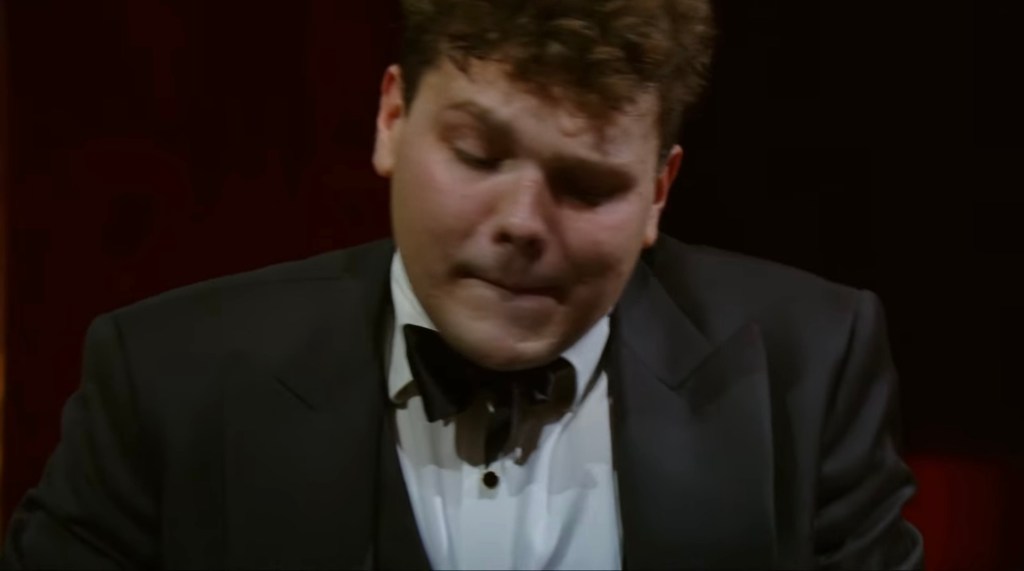
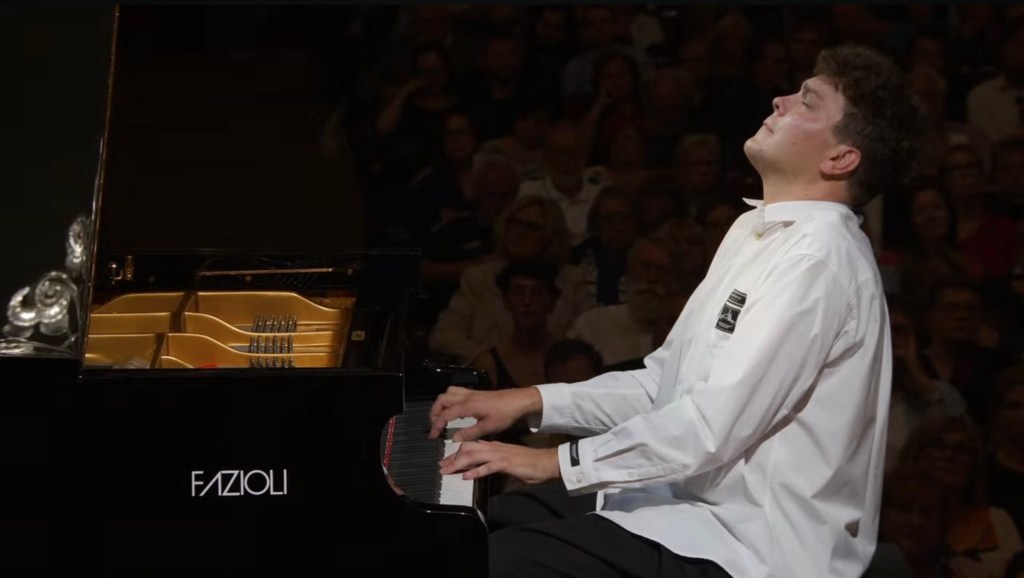
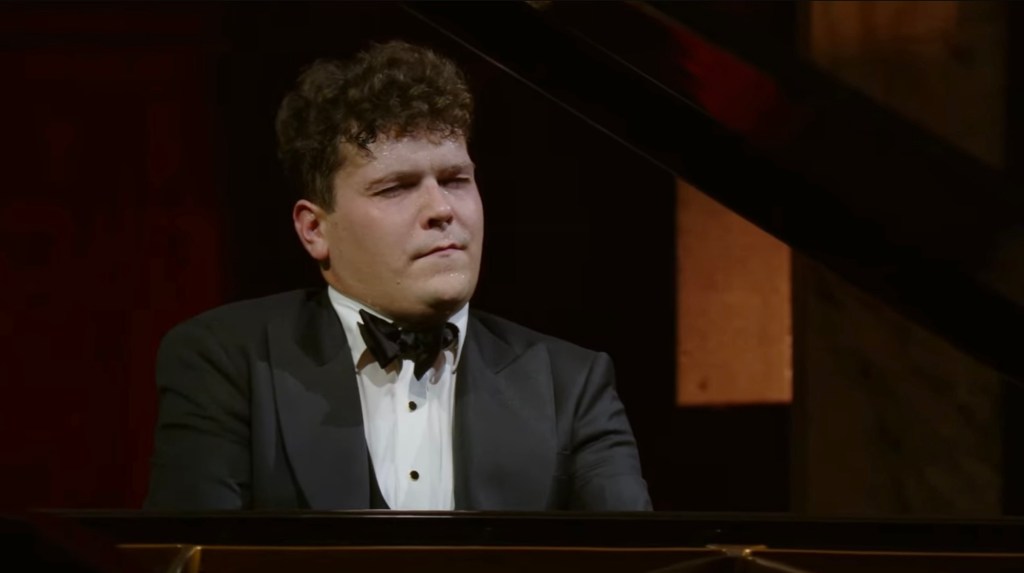
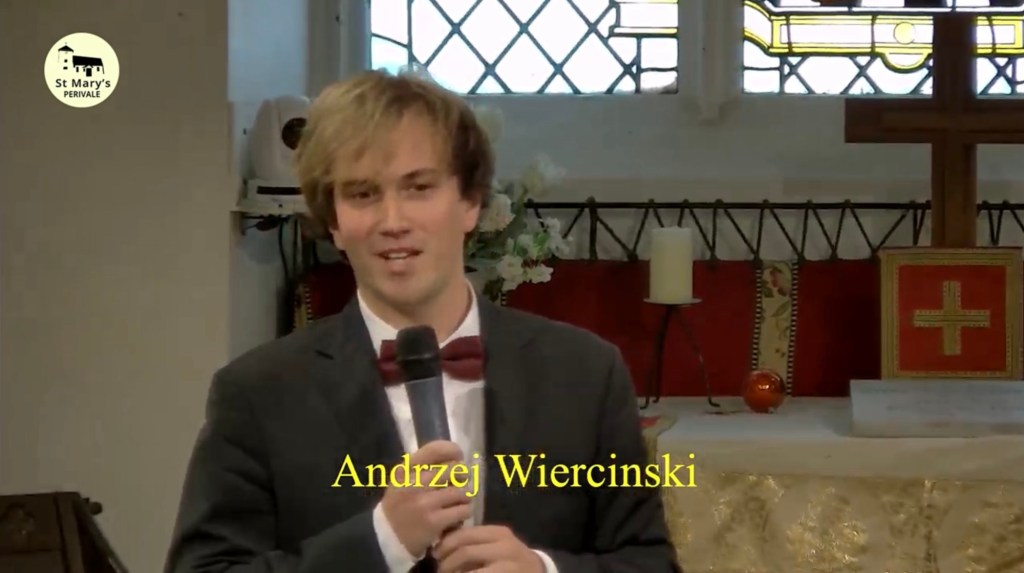
Andrzej Wiercinski at St Mary’s Perivale Beauty and style combine with aristocratic poise and poetry

Sunday 8 September 3.00 pm 
https://www.youtube.com/live/JVybslWCxzA?feature=shared

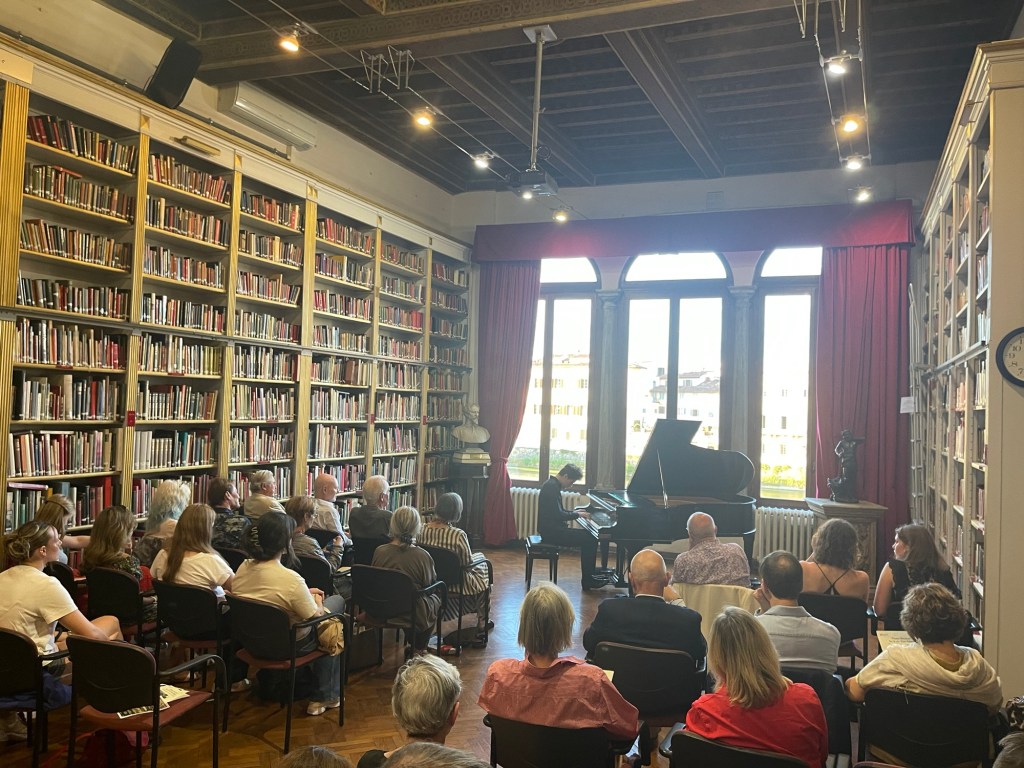
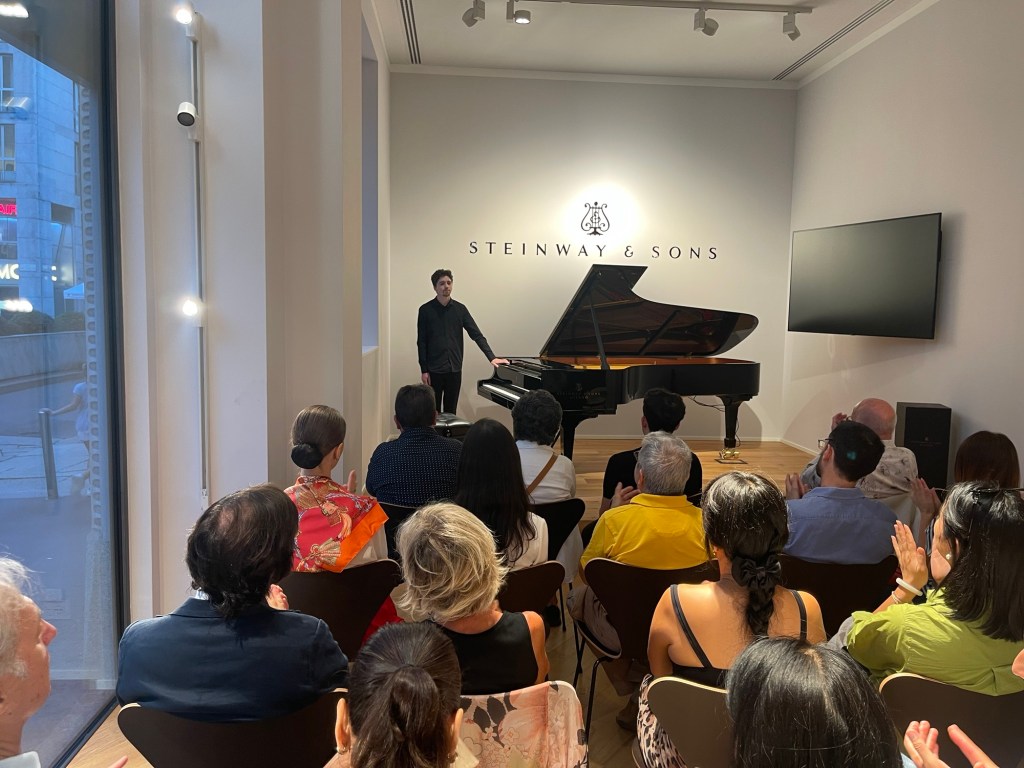
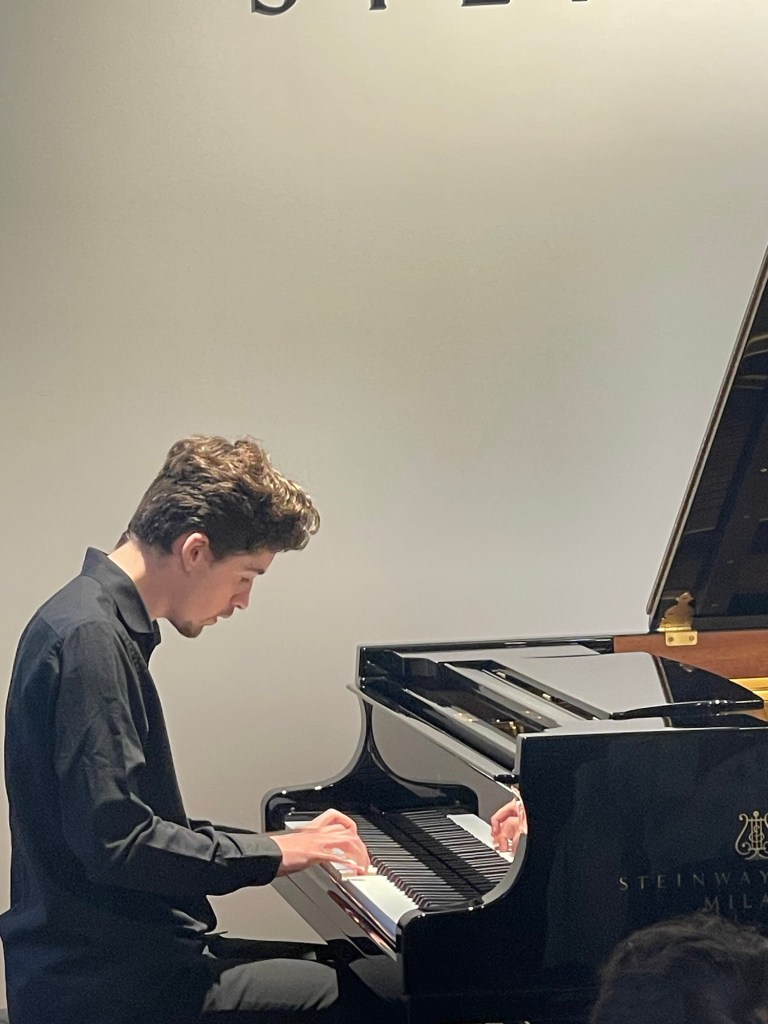
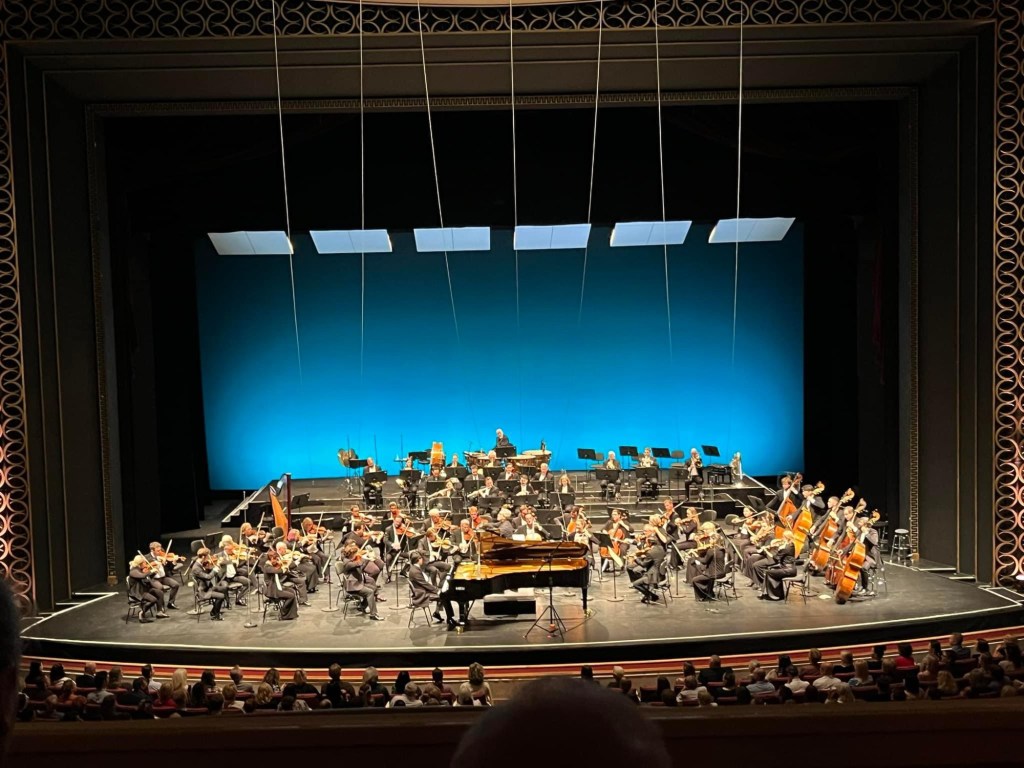
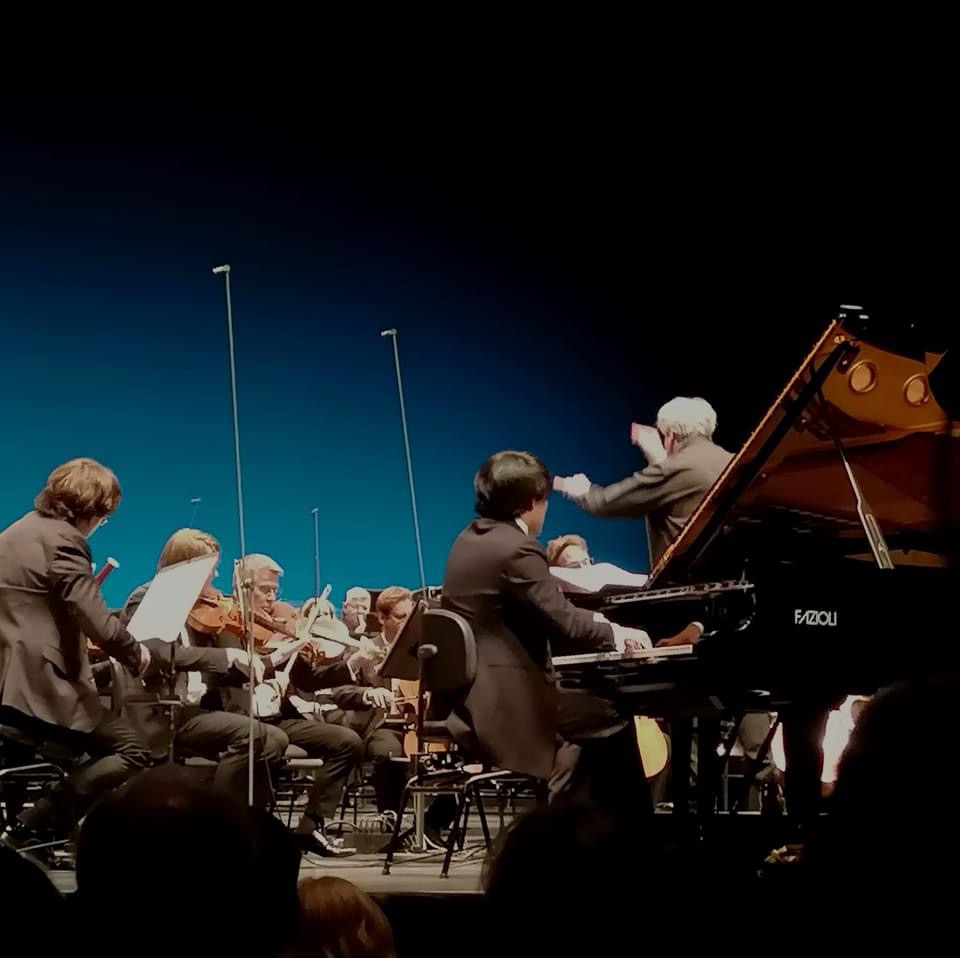
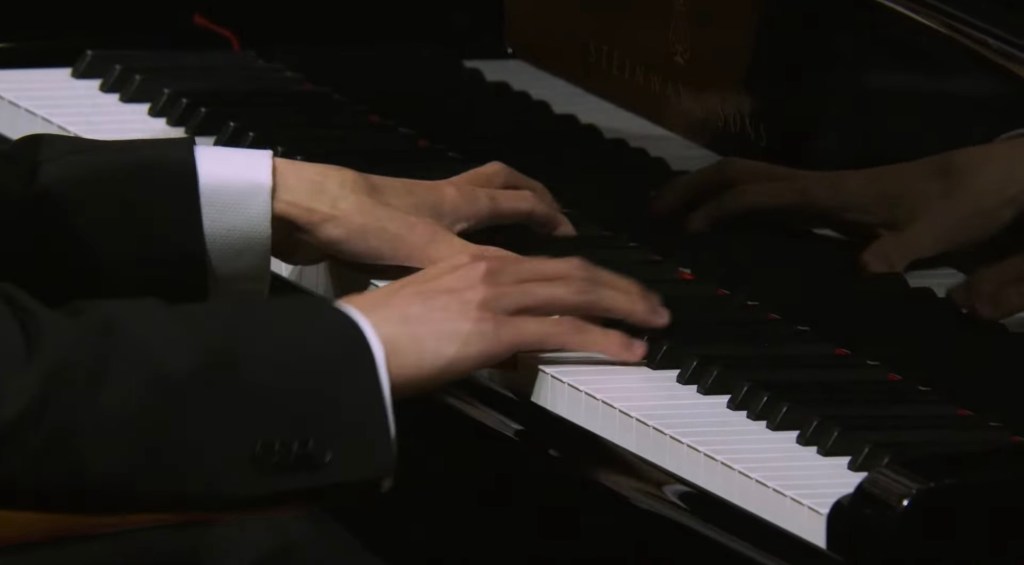
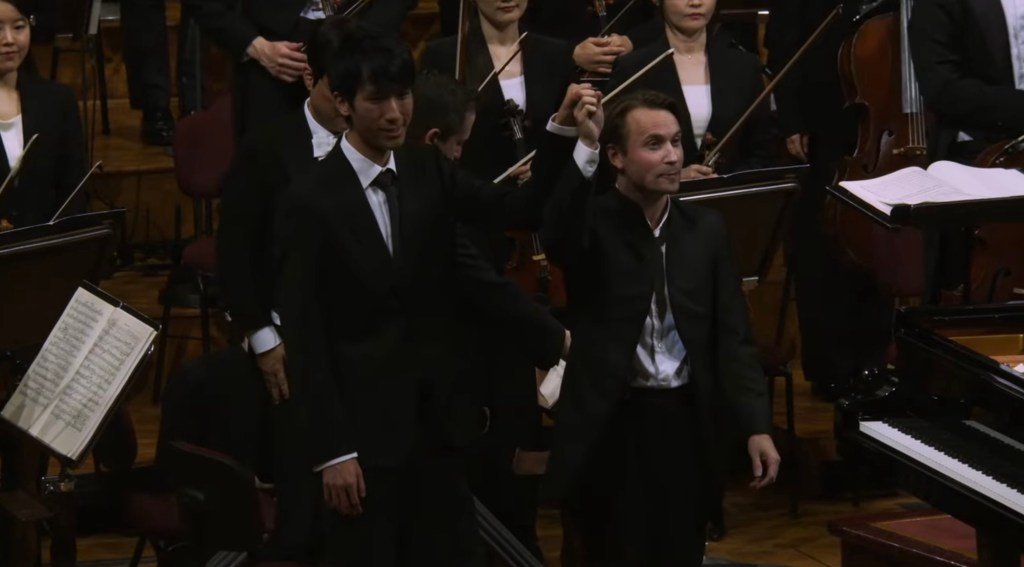
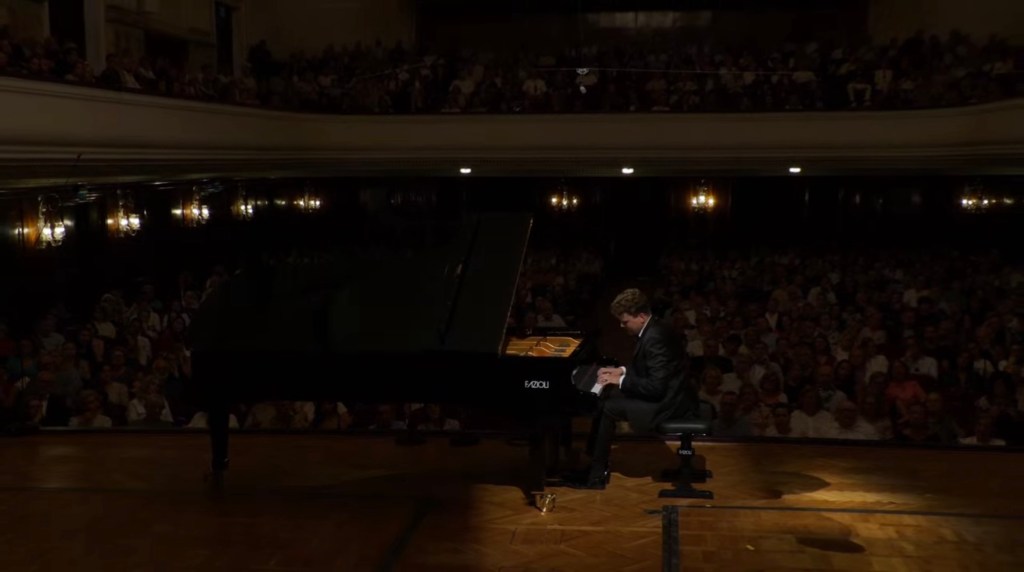
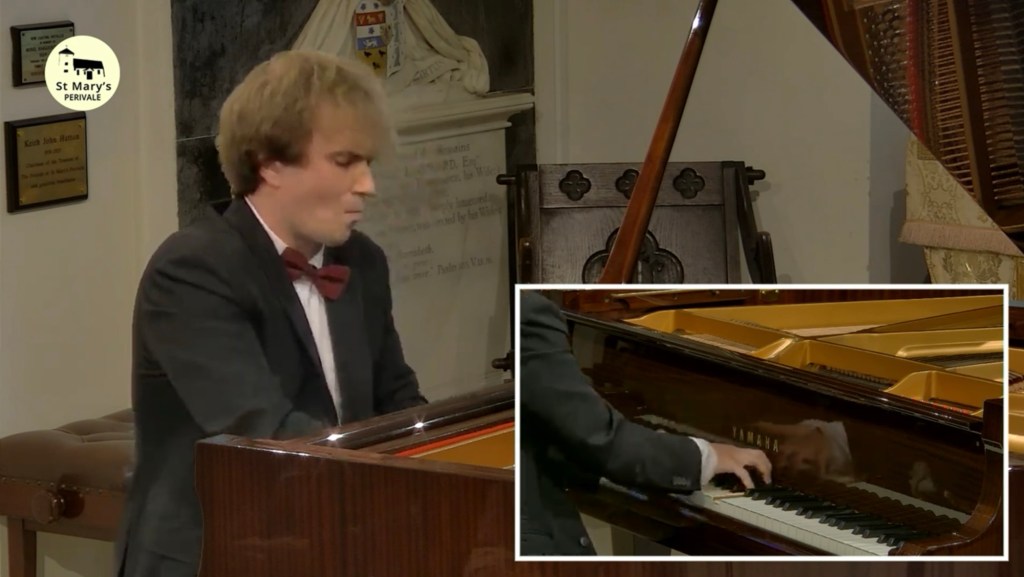
The opening of the season in Perivale with the first of 42 concerts before Christmas . Andrzej Wiercinski gave a long concert containing two major Sonatas by Beethoven and Chopin plus many shorter works of Chopin and Bartok, §culminating in Liszt’s 12th Hungarian Rhapsody. During the summer break the piano that has seen some 1500 concerts was given a major servicing which included replacing all the bass strings.
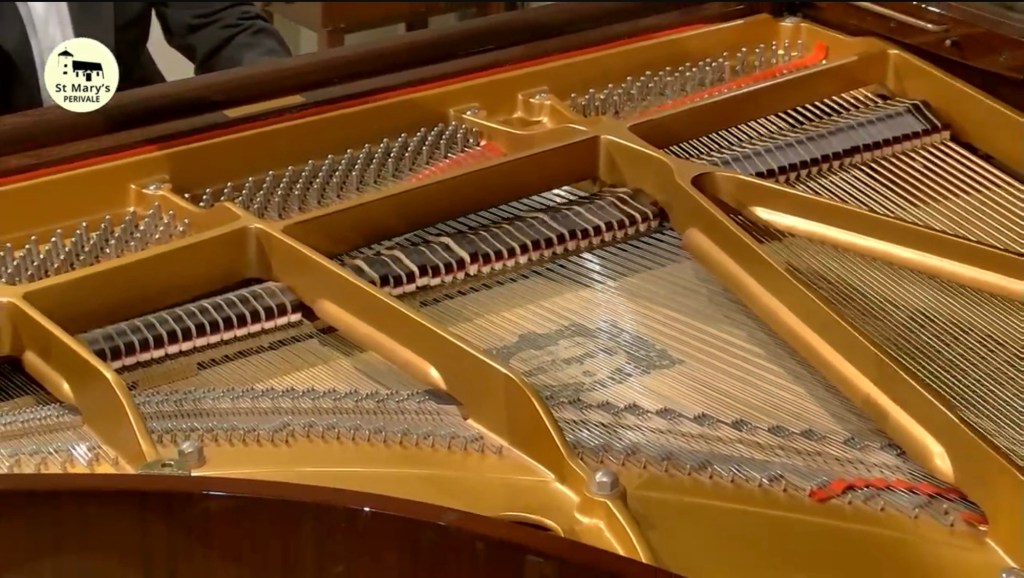
Andrzej has been busy too playing all over Poland and in Texas and had just flown in last night to play what is the tenth anniversary of his concerts at Perivale. A wide ranging programme on a newly reconditioned piano is certainly not an easy thing as a piano like a car needs to be run in before embarking on a long and hazardous journey! Hats off to A.W. For more than rising to the challenge with such charm and style.
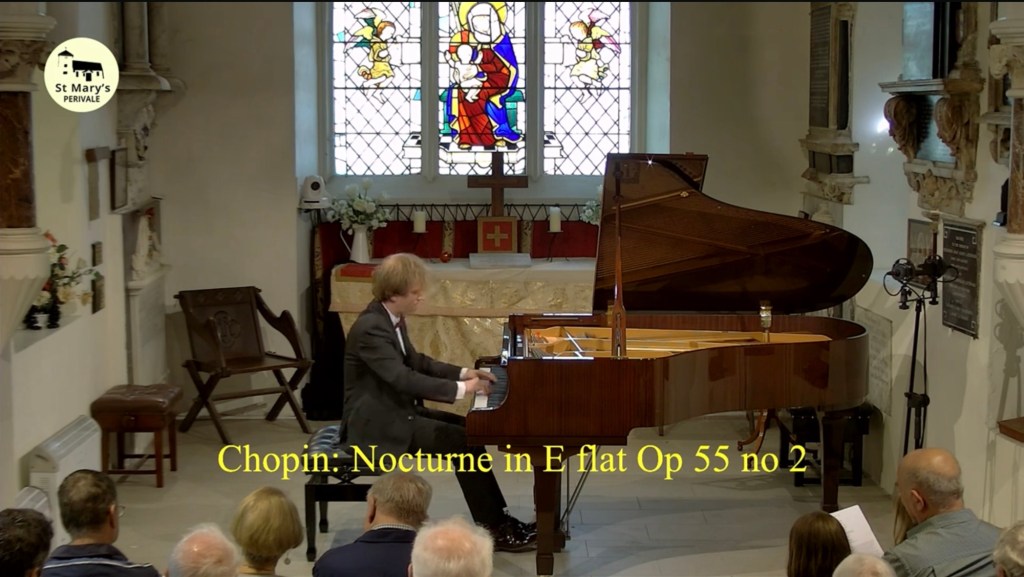
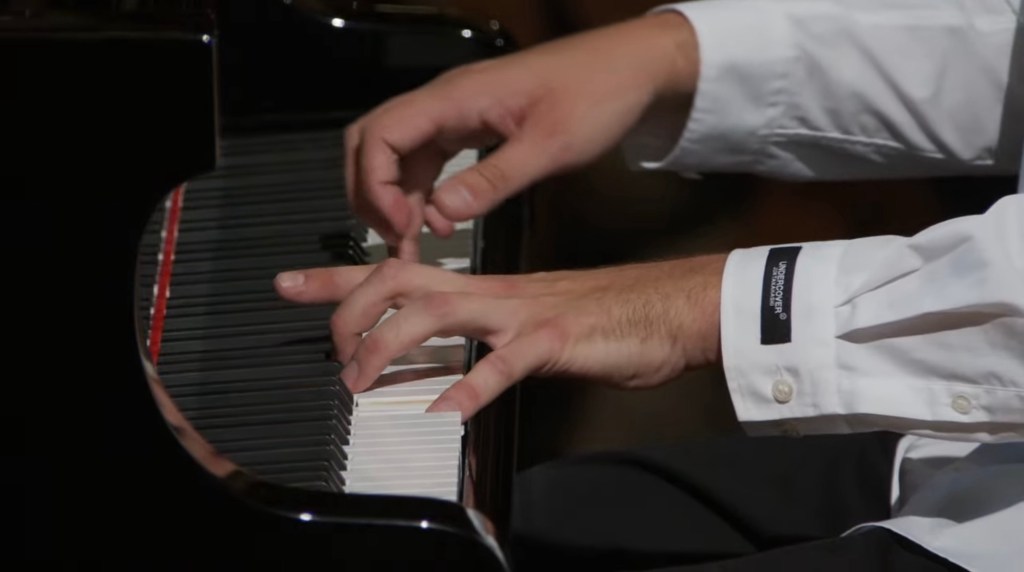
The first half was dedicated to Chopin, of which Andrzej is a master, with playing of aristocratic authority and deeply felt emotions that only Chopin’s fellow natives can fully appreciate. There was the passionate outpouring of the Nocturne op 55 n. 2 where Andrzej caressed the keys with delicacy and poise and it was followed by the 13th Prelude op 28 which is of a similar nocturnal beauty with its flowing gentle accompaniment.

This was the first of six preludes from the set of op 28.The 14th Prelude was played with the same agitation as the last movement of the sonata which was to follow at the end of this Chopin group.There was an exemplary clarity but with subtle shading created by his fleetingly sensitive fingers.The famous ‘Raindrop’ prelude was played with a glowing fluidity and beauty and the sombre central episode came to a touching almost chorale type ending before the innocent opening returned with ever more simplicity and whispered beauty.The 16th Prelude is the one that strikes terror even into the most consummate of pianists. Andrzej rose to the challenge and threw himself into the swirling spiral of continuous notes with passionate drive and fearless scintillating virtuosity.The heartbeat that resounds throughout the 17th Prelude was played with flowing beauty and a melodic line that rose and fell with exquisite simplicity even as the final deep A flats ,one of the 28 bass strings that had been replaced,chimed as in many works of Schumann. A melodic line that was just floated so magically on this cloud of a pedal note. The 18th just crept in with its desperate cries and passionate outbursts bringing this selection of Preludes to a very satisfying end. We live in an ‘Urtext’ age where we are so used to hearing complete collections of pieces that it is sometimes refreshing just to hear a few of the components on their own as Chopin himself always did in his few public performances!
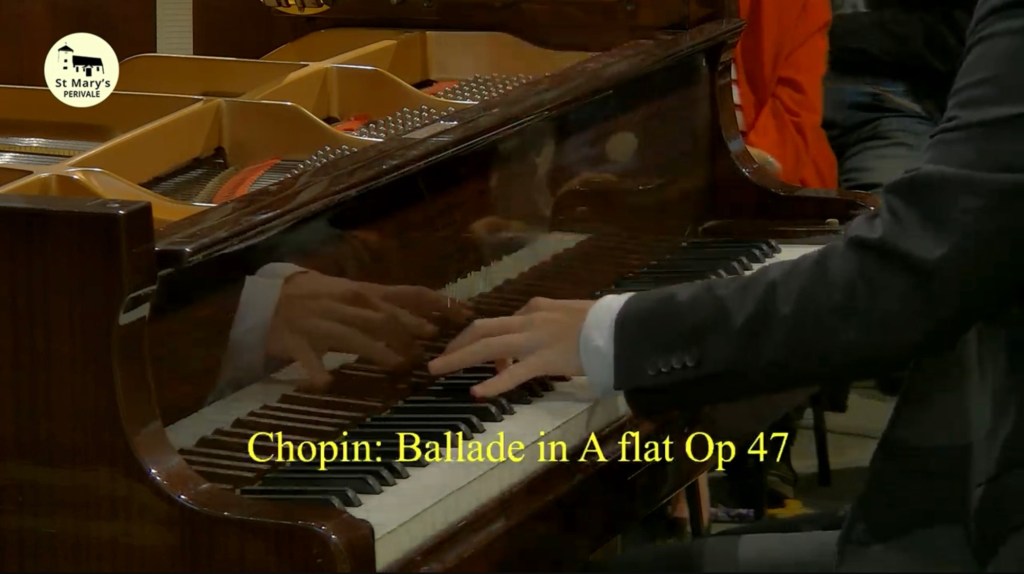
The 3rd Ballade is the most pastoral of all four and it was played with aristocratic charm .There were fleeting arabesques and passionate outbursts as the music moved inexorably forward to the final glorious climax and a cascade of notes that goes from one end of the keyboard to the other. A masterly performance that was played with an exemplary simplicity and ravishing sense of colour.
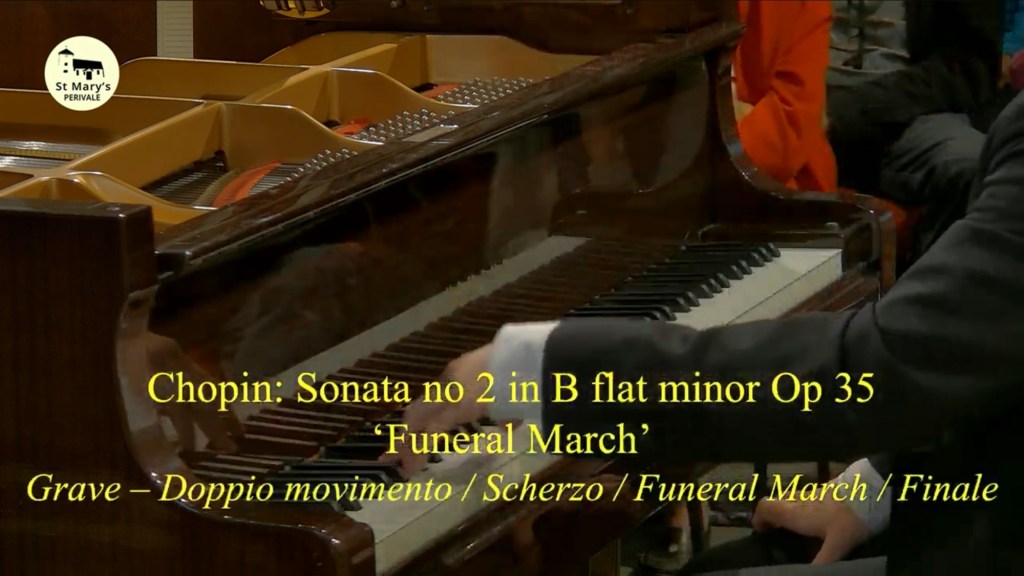
The opening of the B flat minor Sonata was played with passionate drive and masculine strength that denied any ‘Chopinesque excentricities’ and gave such inner strength to this monumental masterpiece.Chopin is often criticised for not understanding bigger forms but with this Sonata he shows just what a master of structure and architecture he was. Andrzej played with just the right architectural shape that gave real weight to the second subject that became in his noble hands part of a bigger whole. There was no repeat ,something which is often hotly debated by some,but is best left out . Chopin plays with the motifs of the ‘doppio movimento’ and opening ‘grave’ introduction that become the left hand pivot of a sumptuous development.There was a rhythmic drive to the Scherzo that was played very clearly and powerfully with a Trio of aristocratic good taste and full ravishing sound. The ‘Funeral March’ was played with simplicity and the Trio grew so naturally out of it filling the air with a rarified glowing cantabile. The last movement was played like the 14th Prelude with almost no pedal but with sensitive fingers that could shape the notes of a movement that Schumann described as ‘the craziest of children’. Others since have had a vision of the wind passing over the graves. A brilliant performance not without a blemish or two, because the piano had not been run in. That is a detail when one is privileged to be in the company of an artist who can play with such authority and conviction.
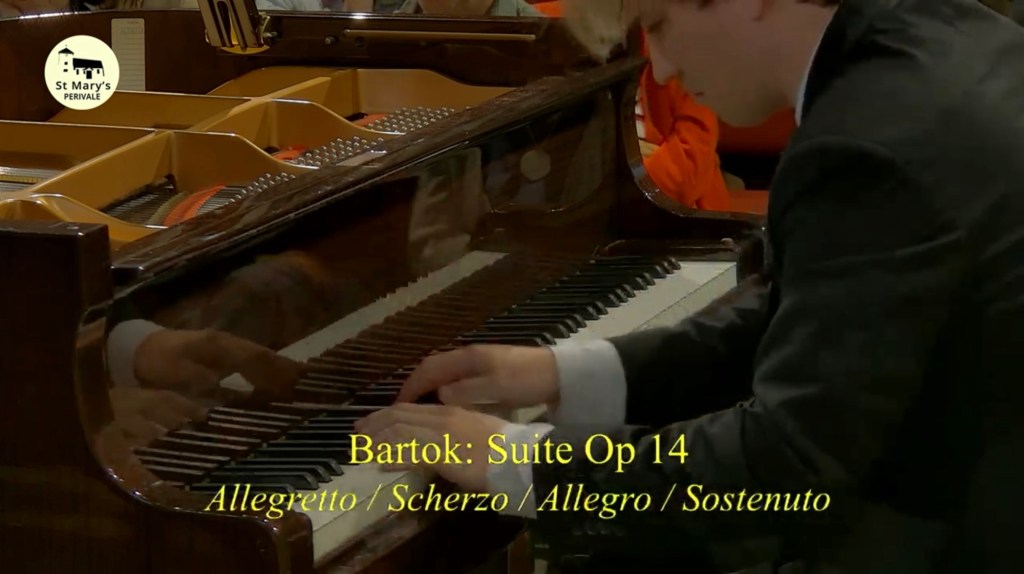
The second half of this opening recital of the season included a superb performance of Bartok’s Suite op.14 played with rhythmic precision and clarity and there was the mysterious unmistakable voice of poignant beauty of Bartok in the final ‘sostenuto’.

Beethoven’s op 110 was played with beauty and supreme style that admitted both poise and poetry. One or two slips were of no importance as this was a performance of great integrity and architectural authority. The opening of the Adagio was so beautiful and the long whispered vibrating notes (bebung) were superbly played before dissolving into the sublime ‘arioso’. There was a great climb to the climax after the knotty twine of a fugue that also appeared in whispered inversion.the final grandiose flourish was played with a grandiloquence worthy of an artist who could see way beyond the notes and into a far better future that awaited Beethoven just a few years on.
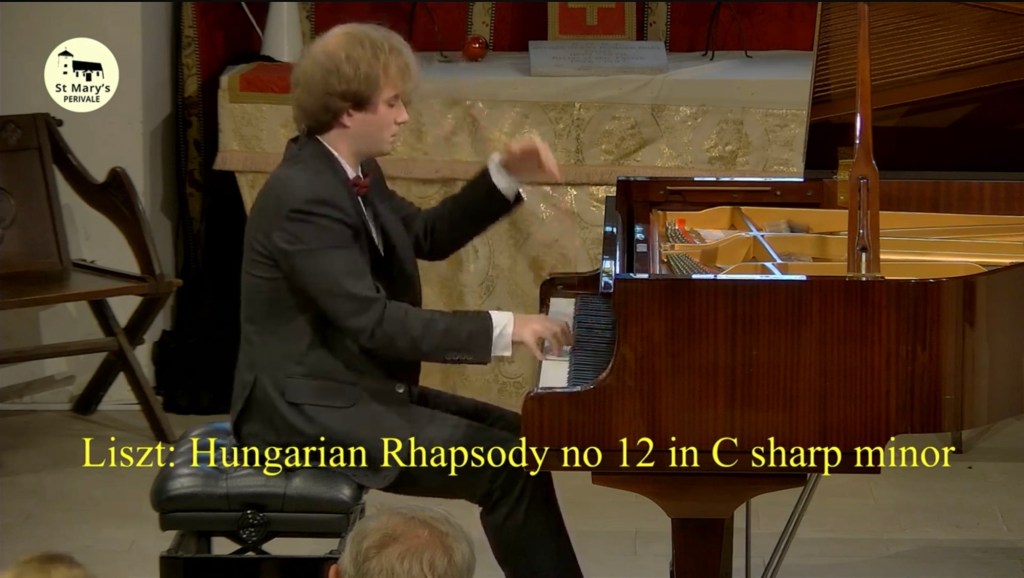
The 12th Hungarian Rhapsody was the last piece on the programme and it was played with Lisztian grandeur and heart on sleeve beauty before erupting into spectacular fireworks and a whirlwind of notes. It brought this extraordinary opening recital by a much loved veteran of Perivale to a brilliant conclusion.
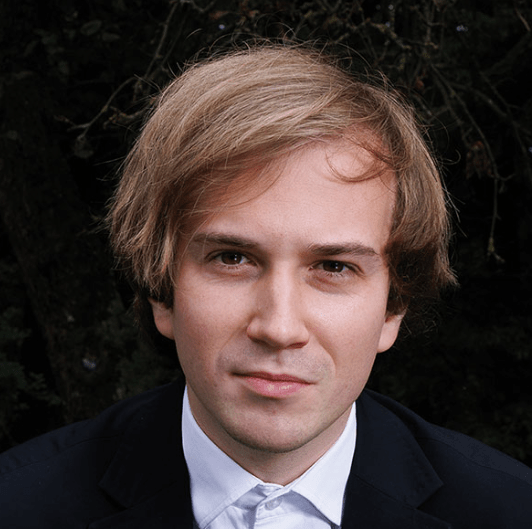
 

Andrzej Wiercinski was born in Warsaw in 1995 and graduated with distinction from the Karol Szymanowski Academy of Music in Katowice (2014-2019) and in 2020 received a postgraduate diploma from the Mozarteum University in Salzburg. From September 2023 he will be pursuing an Artist Diploma at the Royal College of Music in London, with Professor Norma Fisher. Andrzej has won 1st Prize in numerous piano competitions, including: Saint-Priest International Piano Competition (2019); First International Music Competition in Vienna (2019); Masters Neapolitan Piano Competition (Naples, 2018); International Chopin Competition “Golden Ring” in Slovenia (2014); International Chopin Competition in Budapest (2014); and the Polish National Chopin Competition (2015). He was a semi-finalist in the 18th International Fryderyk Chopin Piano Competition in Warsaw (2021), He is the recipient of several international Scholarships.In recent years he has given recitals in most European countries as well as in Canada, Indonesia and Japan. This year he performed Chopin’s F-minor Piano Concerto in Darmstadt with the Deutsche Philharmonie Merck Orchestra and in 2022 Beethoven’s Third Piano Concerto in the Warsaw National Philharmonic Hall with the Sinfonia Iuventus Orchestra. Andrzej released his first CD in 2015, playing solo piano works by Scarlatti, Schumann and Chopin. 

Andrzej Wiercinski at La Mortella Ischia The William Walton Foundation – Refined artistry and musical intelligence in Paradise

Andrzej Wiercinski at Hatchlands – The Cobbe Collection Trust.A great pianist on a wondrous voyage of discovery

Andrzej Wiercinski in Ruislip A great artist free to conquer the world
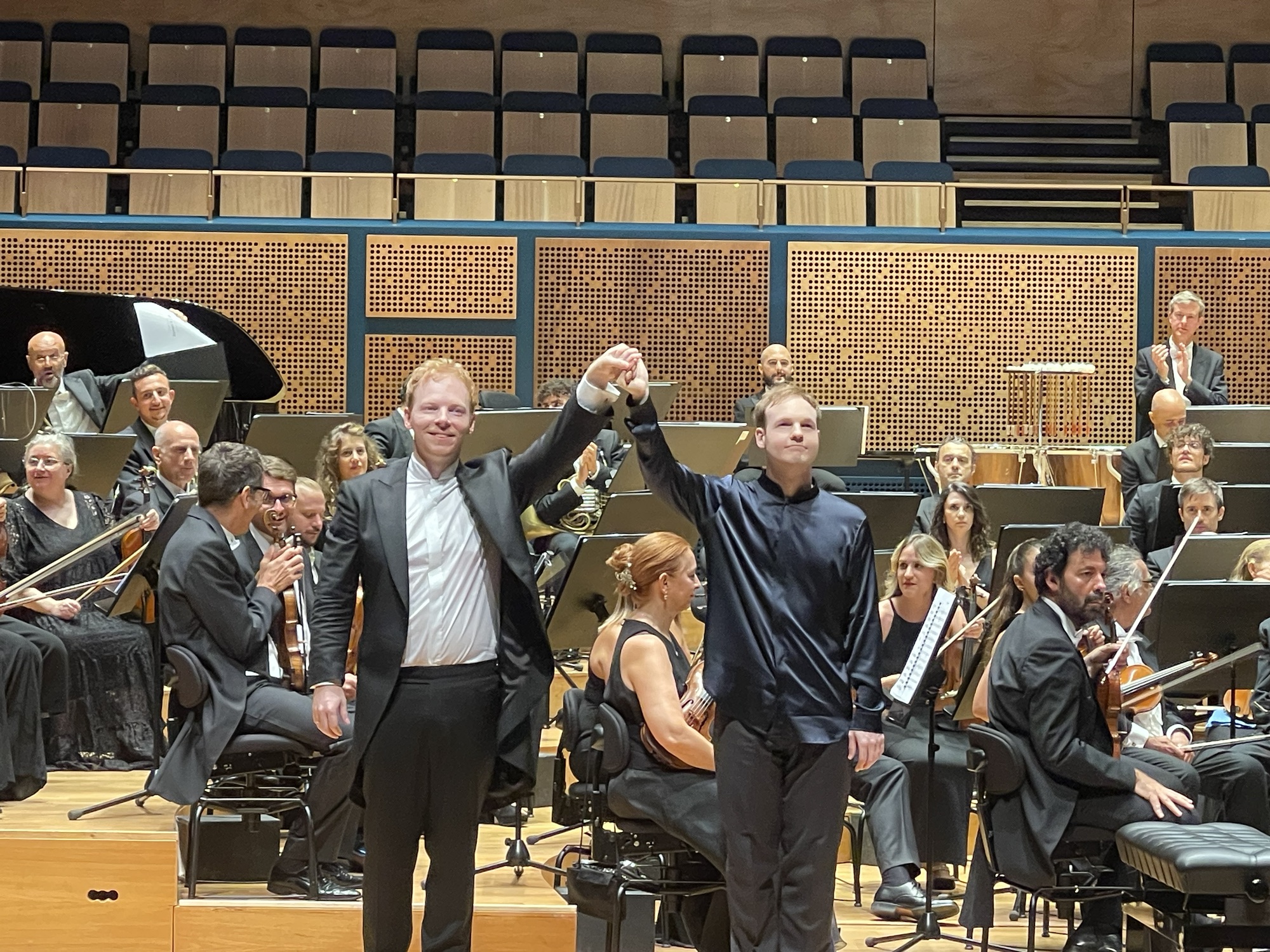
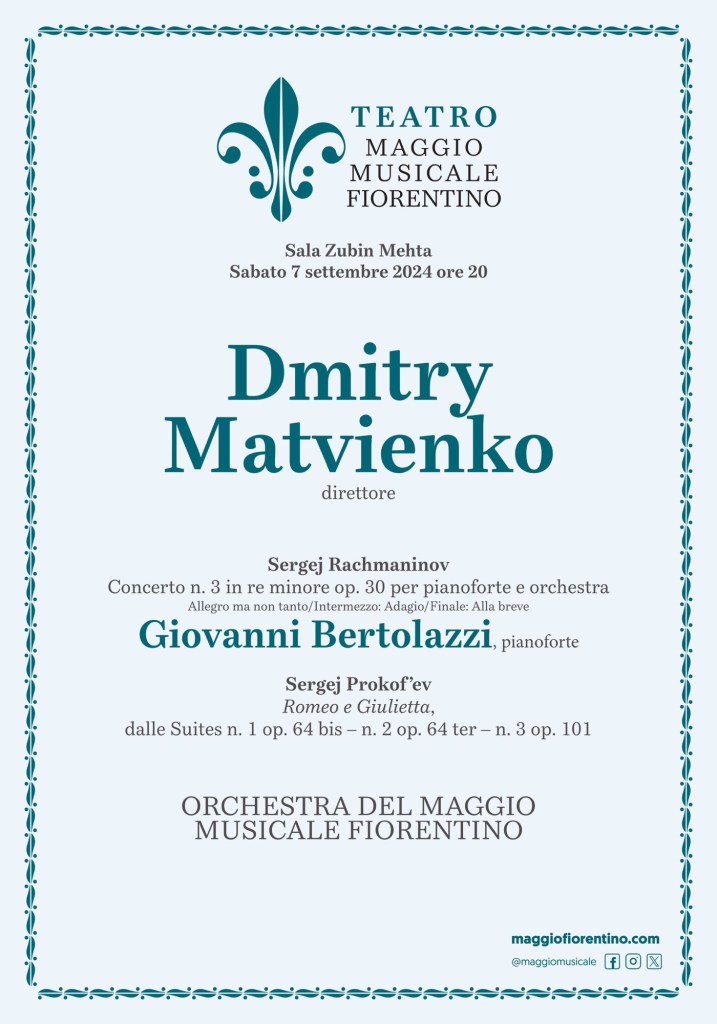
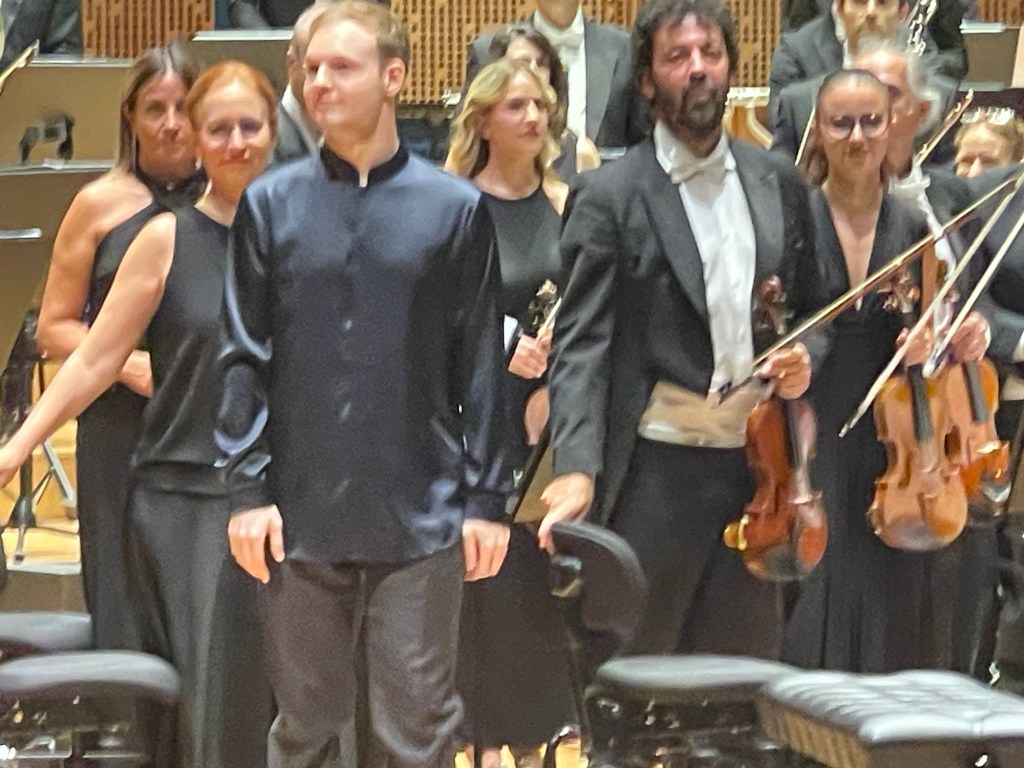
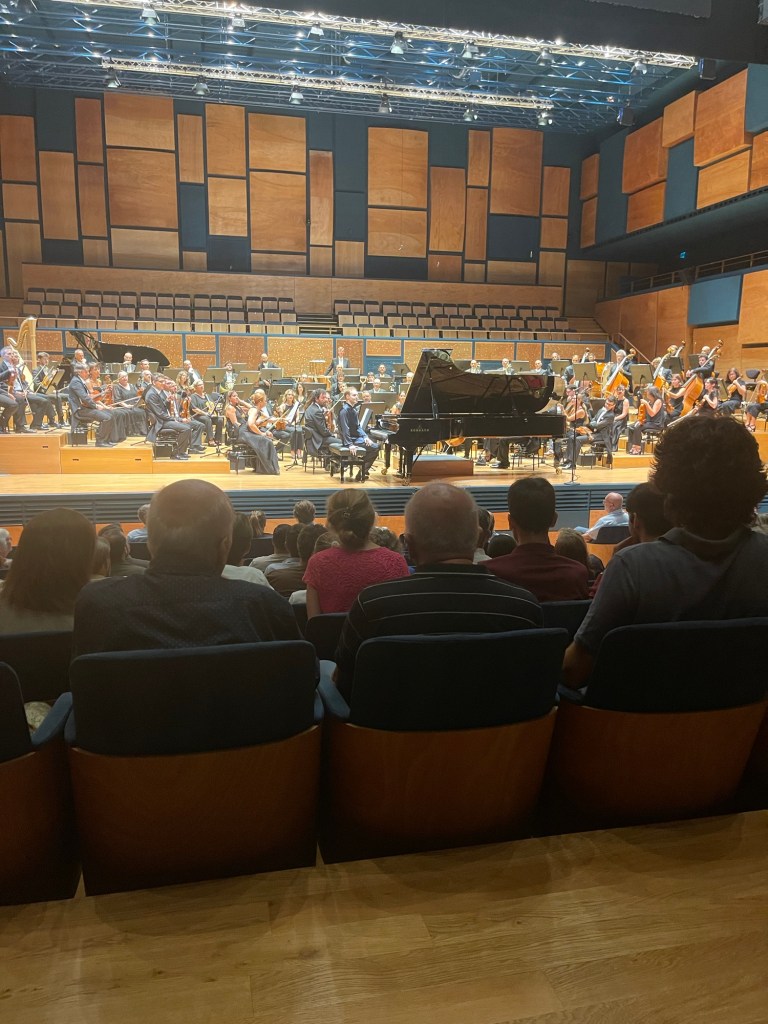
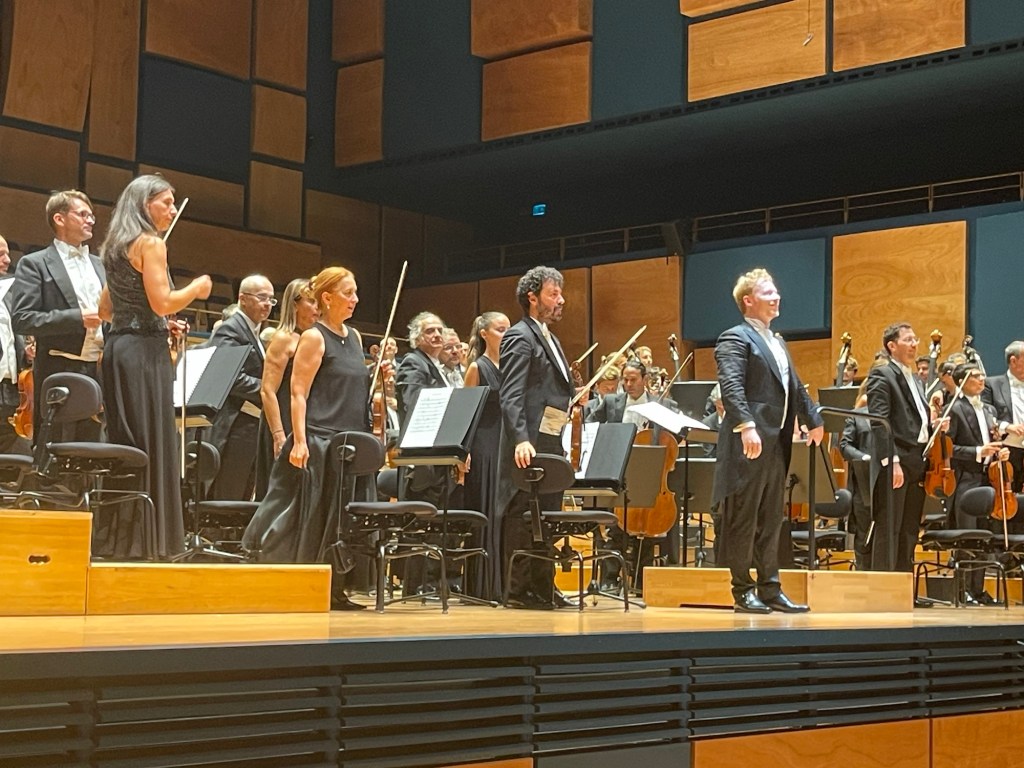
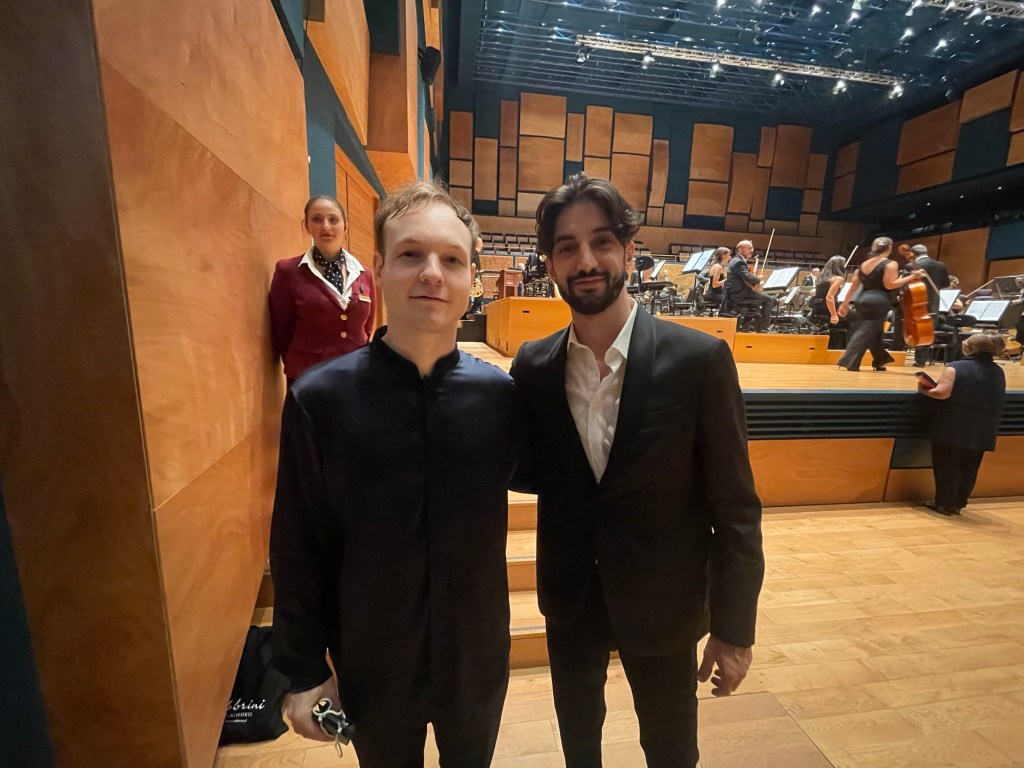
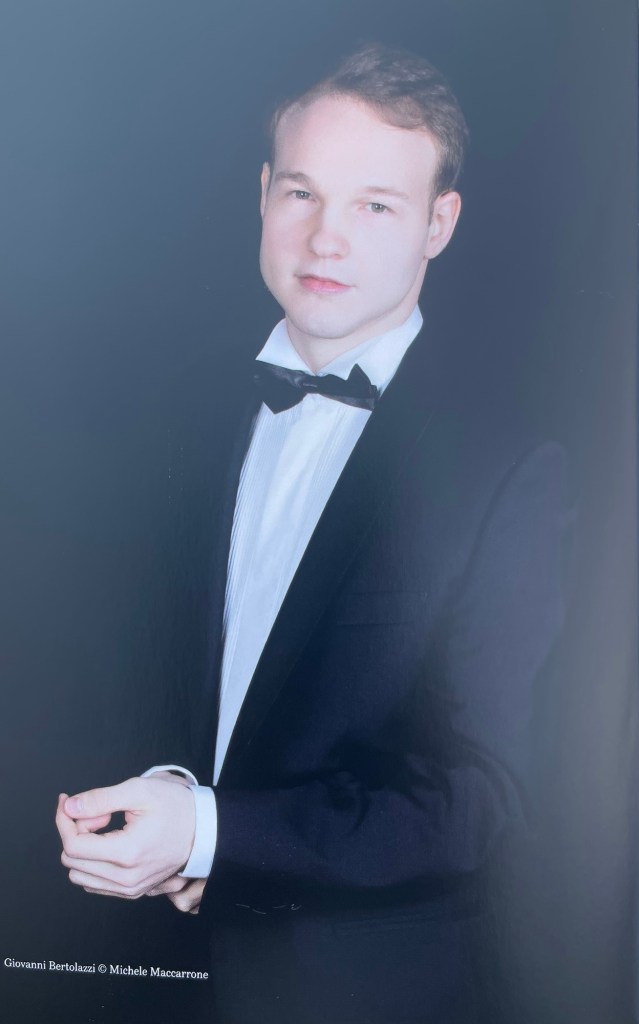
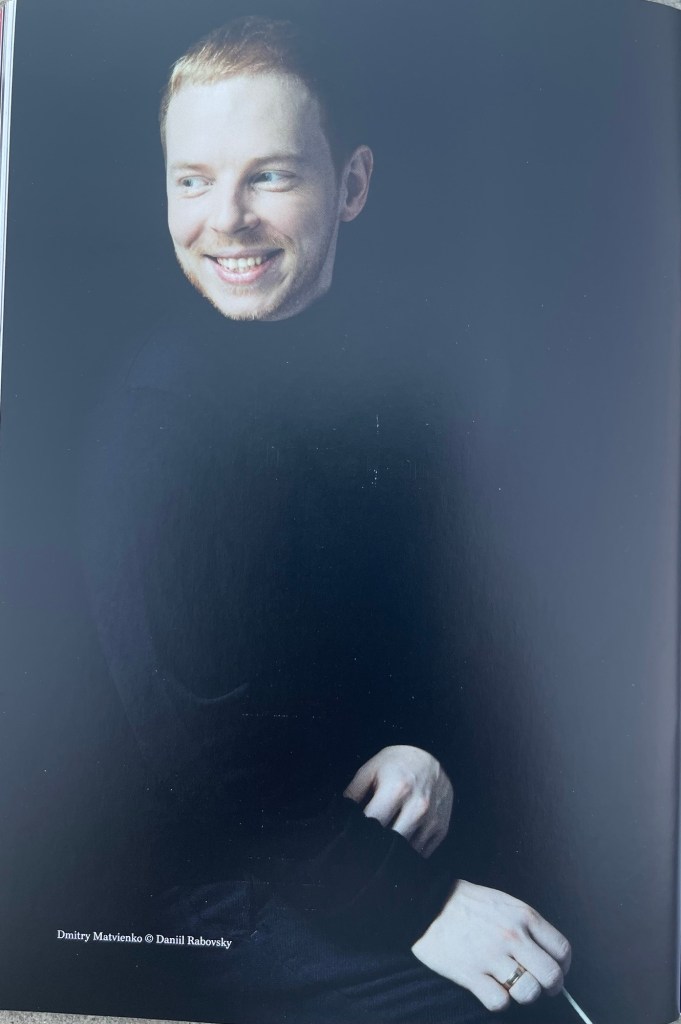
Matvienko -Bertolazzi – Borgato in Florence and the season opens with a triumph

https://www.rivistamusica.com/la-poesia-di-bertolazzi-per-il-rach-3-al-maggio/

A triumph announced for Giovanni Bertolazzi but also for the longest piano in the world made by Borgato .

An orchestra that was drawn into intimate chamber music playing with Giovanni as they stretched Rachmaninov’s wondrous melodies with extraordinary elasticity .Thanks to the conductor Dmitry Matvienko following Giovanni’s every move and creating a sumptuous opening to the Adagio that created a scene of Philadelphian richness.


Giovanni from the very opening notes playing with simple artistry the beguiling melody that is to pervade the entire movement with ever more passion and dynamism .Buf it was above all the chamber music quality that Giovanni and Dmitry were seeking and they were lucky to have an orchestra listening to themselves with an unusually intimate give and take that I have only been aware of with Pappano and Rattle.

Giovanni ringing out the magnificent bass notes of his 3.33 meter instrument that stood so proudly before him with it’s five pedals all ready for expert drivers. Bass notes that he struck with relish at key points of burning passion .The lead into the cadenza I have never heard those isolated chords played with a poignant emptiness that struck terror rather than the usual casual hand over to the soloist and his showpiece cadenza.


Giovanni playing the theme in the cadenza with capricious breakneck glee but building up to a glorious triumphant declaration just dissolving into arabesques that the flute could float on in a duet of refined music making. If the treacherous woodwind chattering was not as precise as Giovanni it was with the brass and woodwind that he was later to dialogue together with consummate timeless beauty .In fact it was a performance of dynamic driven virtuosity alternating with oases of poetic beauty.The last movement played ‘alla breve’ indeed but when the glorious melody rang out there was all the time in the world to shape it with sumptuous ease and glowing purity.
Miraculously held together at the hollywoodian climax a concerto that struck fear even into Hoffman and Graffman was dispatched with dynamic brilliance


But it was the encore that showed the supreme artistry of Giovanni’s poetic playing and also allowed the piano to reveal secrets that until this ‘Valse Triste’ by Vecsey had lain hidden .Could it be Cziffra the magician or Giovanni the poet or both that could open up this great black limousine and show us the jewels hidden within .


I had come to hear Giovanni’s first Rach 3 but was mesmerised too by Matvienko’s wonderfully theatrical conducting of Prokofiev’s Romeo and Juliet Suite .I have heard this orchestra many times but never as tonight with players listening to each other and a conductor who could illuminate their path with such authority and clarity.
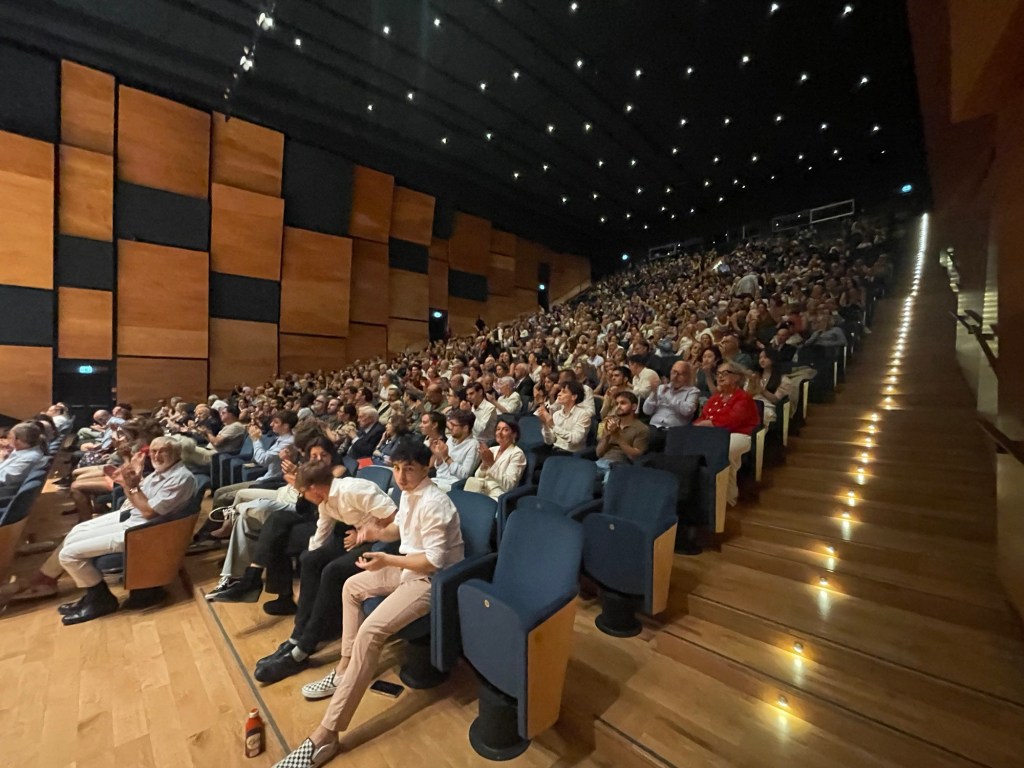
The opening concert of the season dedicated to two enormously talented young artists and a full house cheering them to the rafters in the hall named after one of the greatest conductors of our time -Zubin Mehta

Giovanni with fellow pianist Massimiliano Grotto who will be recording for Borgato too – Hats off to a piano manufacturer who is promoting great young talent
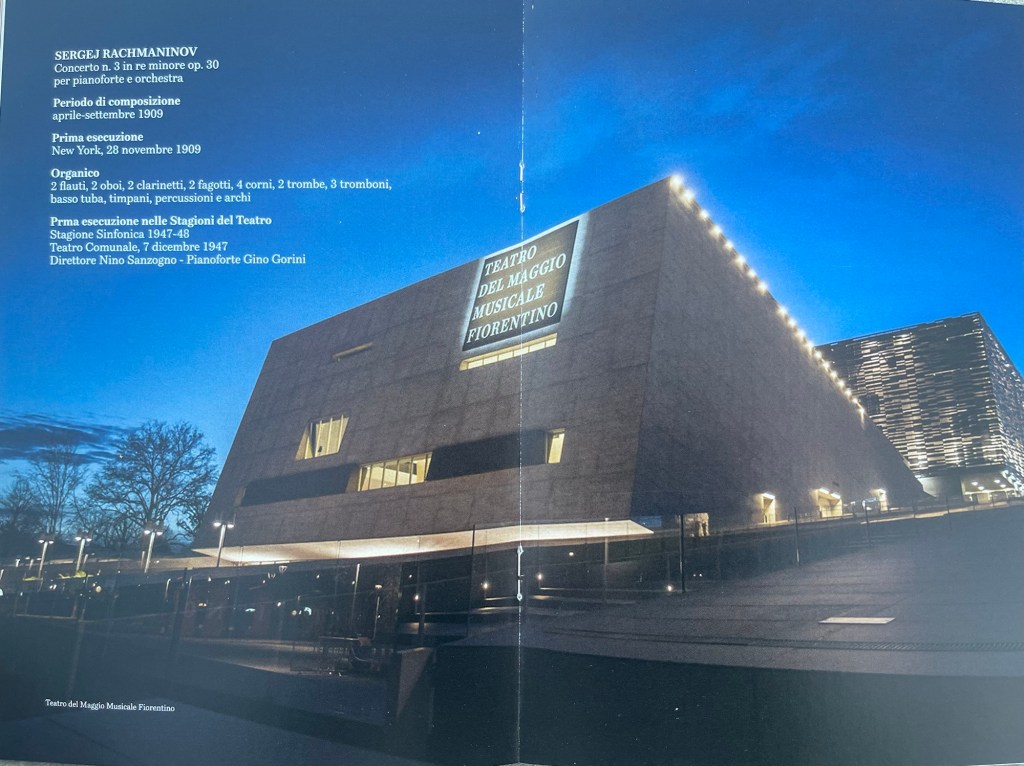
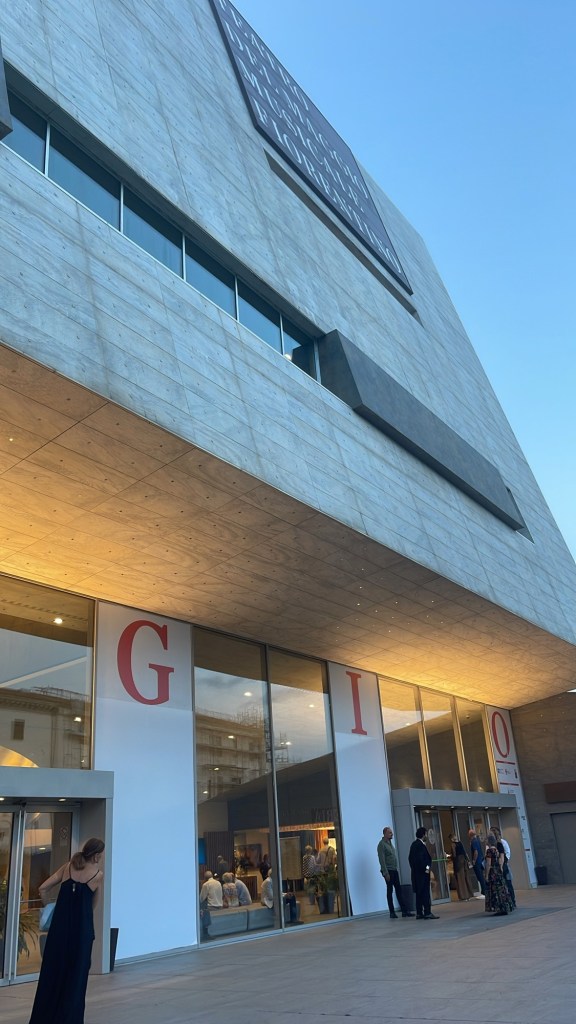
The magnificent Maggio Musicale Theatre in Florence
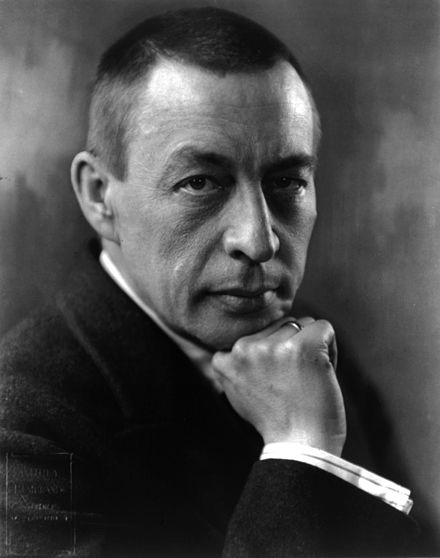
Sergei Vasilyevich Rachmaninov
1 April 1873 Semyonovo, Russian Empire
28 March 1943 (aged 69) Beverly Hills California, U.S.

Rachmaninov’s Piano Concerto No. 3. in D minor op.30, was composed in the summer of 1909 and was premiered on November 28 of that year in New York City with the composer as soloist, accompanied by the New York Symphony Society under Walter Damrosch.Owing to its difficulty, the concerto is respected, even feared, by many pianists. Josef Hoffmann the pianist to whom the work is dedicated, never publicly performed it, saying that it “wasn’t for” him. Gary Graffman lamented he had not learned this concerto as a student, when he was “still too young to know fear”.

The work received a second performance under Gustav Mahler  on January 16, 1910, an “experience Rachmaninoff treasured”.Rachmaninoff later described the rehearsal to Riesemann:

‘At that time Mahler was the only conductor whom I considered worthy to be classed with Nikisch. He devoted himself to the concerto until the accompaniment, which is rather complicated, had been practiced to perfection, although he had already gone through another long rehearsal. According to Mahler, every detail of the score was important – an attitude too rare amongst conductors. … Though the rehearsal was scheduled to end at 12:30, we played and played, far beyond this hour, and when Mahler announced that the first movement would be rehearsed again, I expected some protest or scene from the musicians, but I did not notice a single sign of annoyance. The orchestra played the first movement with a keen or perhaps even closer appreciation than the previous time.Vladimir Horowitz’s 1930 studio recording of the concerto brought immense popularity to the piece around the world. In 1927, Horowitz met with Rachmaninoff in New York, where he performed the piece for him. By receiving feedback from the composer, Horowitz’s interpretation of the concerto “most closely resembled Rachmaninoff’s performance in its finely chiseled, almost steely delivery.” Ruby Cheng writes, “With these expansions of musical expression and pianism, Horowitz brought the Third Concerto into a prominence that broke through any listener resistance.”Horowitz later said “Without false modesty, I brought this concerto to light. I brought it to life, and everywhere!”

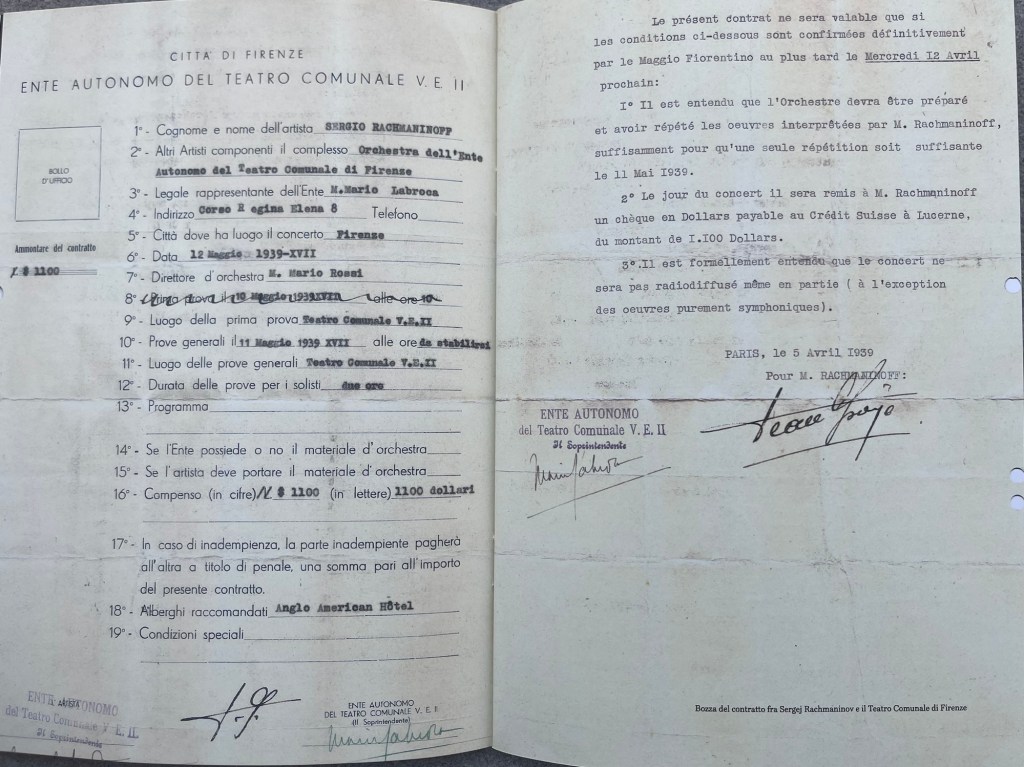
Contract for a concert that never actually took place in Florence just months prior to the outbreak of the Second World War but in full regime of Fascism
Rachmaninov proof reading copies of the concerto in 1910

Giovanni Bertolazzi is the winner of the 2nd Prize and 5 special prizes at the “Franz Liszt” International Piano Competition in Budapest (2021).This important achievement came after more than 40 prizes in international piano competitions, including the “F. Busoni” in Bolzano, the “S. Thalberg” in Naples, the “Alkan Award for Piano Virtuosity” in Milan.He has been awarded the “Tabor Foundation Award” from Verbier Festival Academy during the Verbier Festival (2022).

Two young giants cross swords in Verbier Giovanni Bertolazzi and Nikita Lukinov

He received the International Piano Award “Guglielmina Durini Litta” in 2023. Highlights of his career include appearances with the Hungarian Philharmonic Orchestra, Kodaly Philharmonic Orchestra, Orchestra del Teatro La Fenice, Orchestra del Teatro Bellini and Orchestra Sinfonica Siciliana. Giovanni has performed at major venues including Teatro La Fenice in Venice, Teatro Ponchielli in Cremona, Teatro Politeama Garibaldi in Palermo, Sala Verdi in Milan Conservatory, Palazzo del Quirinale in Rome, “Franz Liszt” Academy of Music in Budapest, Liszt Ferenc Memorial Museum in Budapest, National Liberal Club in London, Église de Verbier, Castleton Theatre House (Virginia, USA).He has been a guest of prestigious musical organizations such as the Accademia Filarmonica of Verona, Amici della Musica of Padua, Bologna Festival, Società del Quartetto di Milano, Serate Musicali di Milano, Amici della Musica of Florence, Verbier Festival, Zoltan Kocsis Festival in Debrecen, Cziffra Festival in Budapest, Castleton Festival in Virginia (USA).He officially performed on the World longest Concert-Grand Piano at his first public presentation, the BORGATO GRAND-PRIX 333 (3,33 metres long).He has recorded two Albums entirely dedicated to Franz Liszt, published by BORGATO COLLECTION. The CDs have been recorded on a piano BORGATO GRAND-PRIX 333 and have received awards such as the “Supersonic Pizzicato Award” (PIZZICATO Magazine, Luxembourg), 5 Stars from Rivista MUSICA (Italy), Nominations at “International Classical Music Awards” (ICMA).His concerts and recordings has been featured by Radio France Musique, Bartók Rádió, Rai Radio3, Radio Romania Muzical.

https://www.greatmusicians.co.uk/index.php/reviews-bryce-morrison/liszt-a-three-disc-album-giovanni-bertolazzi-borgato-by-bryce-morrison

Giovanni Bertolazzi -Homage to Zoltan Kocsis A giant returns to celebrate a genius

Giovanni Bertolazzi triumphs on the Keyboard Trust tour of USA October 2023 Virginia-Washington-Philadelphia- Delaware – New York

Giovanni Bertolazzi Liberal Club ‘En Blanc et Noir’ 5th June 2023 ‘A star is born!’

Dmitry Matvienko won the 2021 edition of the prestigious «Malko Competition for Young Conductors» where he received both First and Audience prizes. Prior to this achievement, he was awarded with the Critics and the «Made in Italy» prizes at the International Conducting Competition «Guido Cantelli».The 24/25 season marks the beginning of his tenure as Chief Conductor of the Aarhus Symphony Orchestra.

He received his first music lessons at the age of six, followed by formal training as a chorister and chorus master. He studied choral conducting at the St. Petersburg Conservatory and he was a member of the MusicAeterna Choir at the Perm Opera and Ballet Theatre under the artistic direction of Teodor Currentzis from 2012 to 2013. He furthered his conducting studies at the Moscow Conservatory and participated in master classes with Gennady Rozhdestvensky, Vladimir Jurowski, Teodor Currentzis, and Vasily Petrenko.In 2017, he joined the conductor internship program of the National Philharmonic Orchestra of Russia, led by chief conductor Vladimir Spivakov. Dmitry assisted and prepared various programs for conductors such as Vladimir Jurowski, Vasily Petrenko, and Michail Jurowski with Svetlanov Symphony Orchestra.While conducting for the Svetlanov Symphony, the National Philharmonic of Russia, the New Russian State Symphony Orchestra (chief conductor Yuri Bashmet), and the Moscow Chamber Orchestra “Musica Viva”, Dmitry led revivals of operas including Prince Igor, Faust, Iolanta, La Traviata, The Tsar’s Bride, The Firebird, and Verdi’s Requiem at the National Academic Opera and Ballet Theatre of Belarus.He also served as musical assistant to Vladimir Jurowski in new productions of The Nose (directed by Kirill Serebrennikov) and War and Peace (directed by Dimitri Tcherniakov) at the Bayerische Staatsoper.In recent seasons, Dmitry has conducted prestigious orchestras, including the Orchestra del Teatro Carlo Felice Genova, Orchestre Philarmonique de Monte-Carlo, Orchestra Teatro Comunale Bologna, Orchestra Teatro Regio Torino, National Orchestra of Russia, Bergen Philharmonic, Adelaide Symphony Orchestra, Sønderjyllands Symfoniorkester, Danish National Symphony Orchestra, Helsingborgs Symfoniorkester, the Orquesta de la Comunidad de Madrid, Orchestra del Teatro La Fenice of Venice, Aarhus Symfoniorkester, Iceland Symphony Orchestra, Orchestra del Teatro Lirico di Cagliari, Orchestre national de Lille, Arktisk Filharmoni, Dallas Symphony, Orchestra Sinfonica Nazionale RAI Torino, Orquestra Gulbenkian, Tonkünstler Wien, Atlanta Symphony, Orchestra del Teatro San Carlo di Napoli and Tokyo Symphony.In the 24/25 season he returns on the podium of Adelaide Symphony, Arctic Philharmonic, Aarhus Symfoniorkester, Helsingborgs Symfoniorkester, while also making his debut with West Australian Symphony Orchestra, Göteborgs Symfoniker, Orchestra del Maggio Musicale Fiorentino, Filarmonica Arturo Toscanini, Rotterdams Philharmonisch Orkest, L’Orchestre de Chambre de Lausanne and Oslo Philharmonic.After a successful operatic debut in Rome, where he conducted the Italian premiere of Warlikowski’s production of From the house of the Dead, he is set to make his German and Austrian operatic debut this season. He will lead Eugene Onegin at the Deutsche Oper am Rhein and a new production of Betrothal in a Monastery at the Theater an der Wien.

Very happy to share this review of my recordings by the authoritative music critic 𝐁𝐫𝐲𝐜𝐞 𝐌𝐨𝐫𝐫𝐢𝐬𝐨𝐧, published in “The Art of Pianists” !!! 💿🇬🇧

“𝑩𝒆𝒓𝒕𝒐𝒍𝒂𝒛𝒛𝒊, 𝒕𝒉𝒐𝒖𝒈𝒉 𝒊𝒏 𝒕𝒉𝒆 𝒆𝒂𝒓𝒍𝒚 𝒔𝒕𝒂𝒈𝒆𝒔 𝒐𝒇 𝒉𝒊𝒔 𝒄𝒂𝒓𝒆𝒆𝒓, 𝒊𝒔 𝒂 𝒄𝒍𝒆𝒂𝒓 𝒑𝒐𝒔𝒔𝒆𝒔𝒔𝒐𝒓 𝒐𝒇 𝒕𝒂𝒍𝒆𝒏𝒕, 𝒔𝒐𝒎𝒆𝒕𝒉𝒊𝒏𝒈 𝒕𝒉𝒂𝒕 𝒃𝒍𝒂𝒛𝒆𝒔 𝒐𝒖𝒕 𝒘𝒊𝒕𝒉 𝒂 𝒄𝒐𝒎𝒎𝒖𝒏𝒊𝒄𝒂𝒕𝒊𝒗𝒆 𝒇𝒐𝒓𝒄𝒆 (𝒕𝒉𝒐𝒖𝒈𝒉 𝒂𝒍𝒔𝒐 𝒘𝒊𝒕𝒉 𝒑𝒐𝒆𝒕𝒊𝒄 𝒅𝒆𝒍𝒊𝒄𝒂𝒄𝒚) 𝒕𝒉𝒂𝒕 𝒓𝒊𝒗𝒆𝒕𝒔 𝒚𝒐𝒖𝒓 𝒂𝒕𝒕𝒆𝒏𝒕𝒊𝒐𝒏.”

http://www.greatmusicians.co.uk/index.php/reviews-bryce-morrison/liszt-a-three-disc-album-giovanni-bertolazzi-borgato-by-bryce-morrison

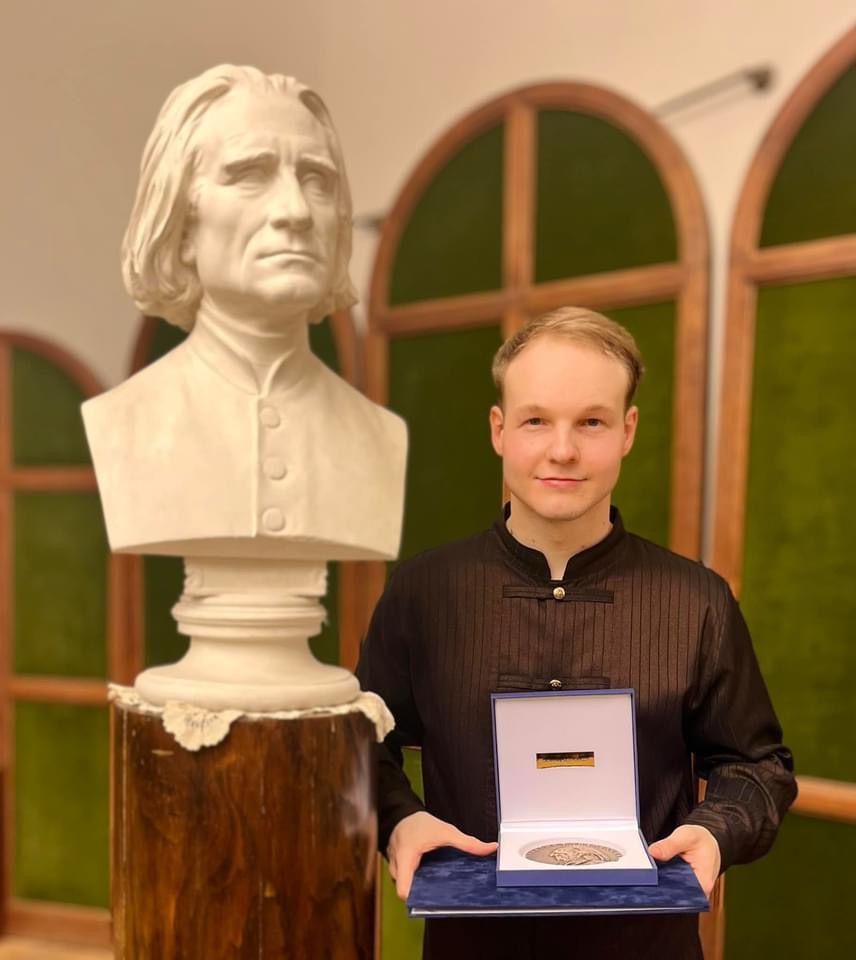
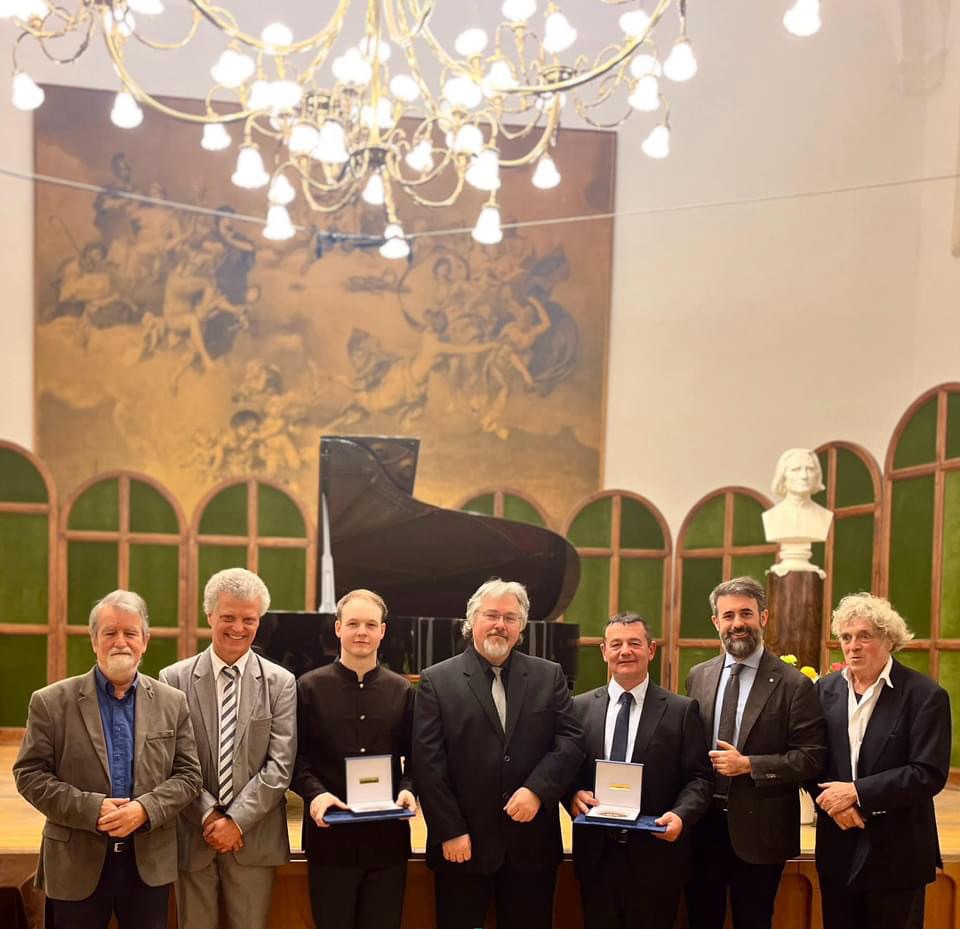
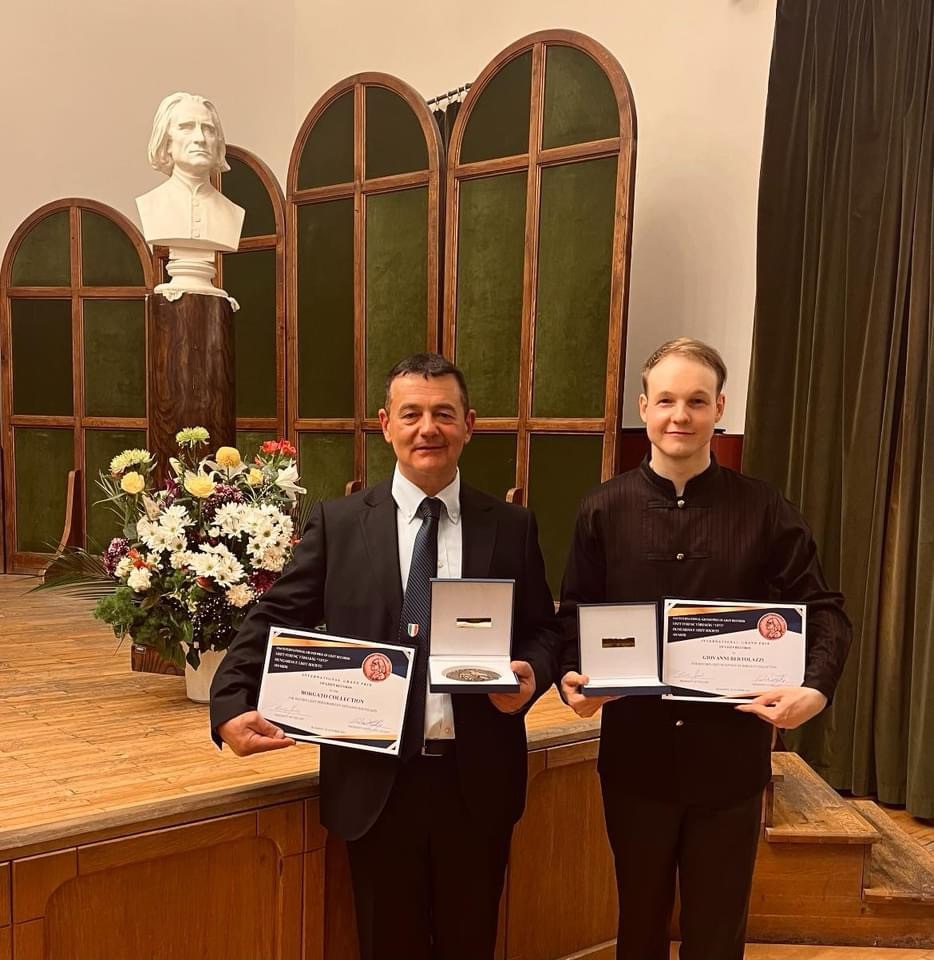
I have the great pleasure to share with you that I have been awarded the 𝟒𝟑𝐫𝐝 “𝐋𝐈𝐒𝐙𝐓 𝐅𝐄𝐑𝐄𝐍𝐂 𝐈𝐧𝐭𝐞𝐫𝐧𝐚𝐭𝐢𝐨𝐧𝐚𝐥 𝐆𝐫𝐚𝐧𝐝 𝐏𝐫𝐢𝐱 𝐝𝐮 𝐃𝐢𝐬𝐪𝐮𝐞” by the Liszt Society Budapest, for my Liszt recordings! 🇭🇺🏅

I am immensely honoured and moved to receive this prestigious award that in the past has been given to such great artists as Karajan, Muti, Solti, Bernstein, Brendel, Horowitz, Arrau, Zimerman, Berman, Cziffra, Kocsis, Pollini, Watts, Bolet, Howard… 🙏🏻

Borgato pianos

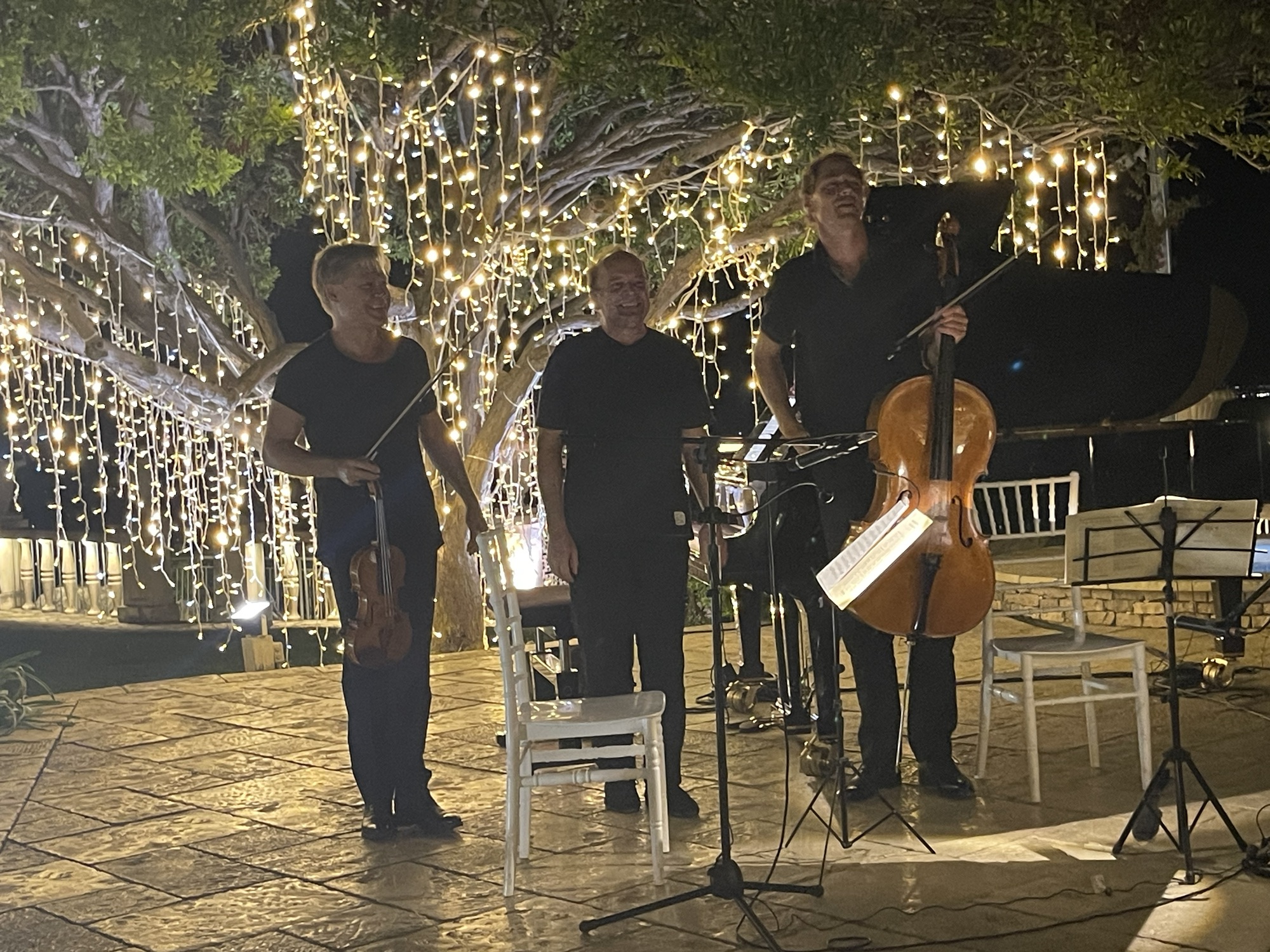
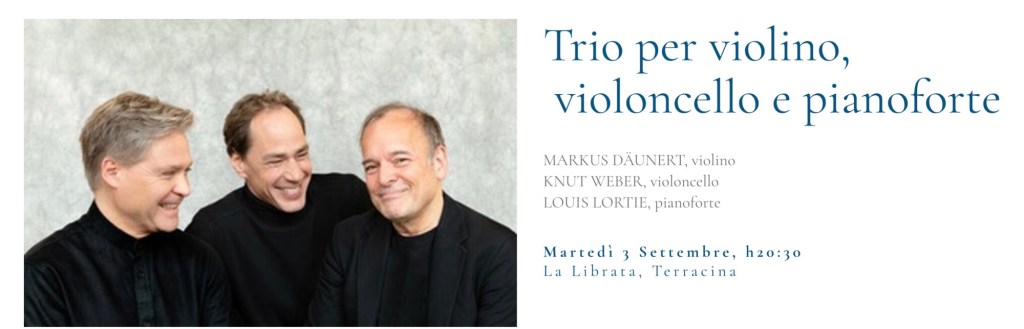
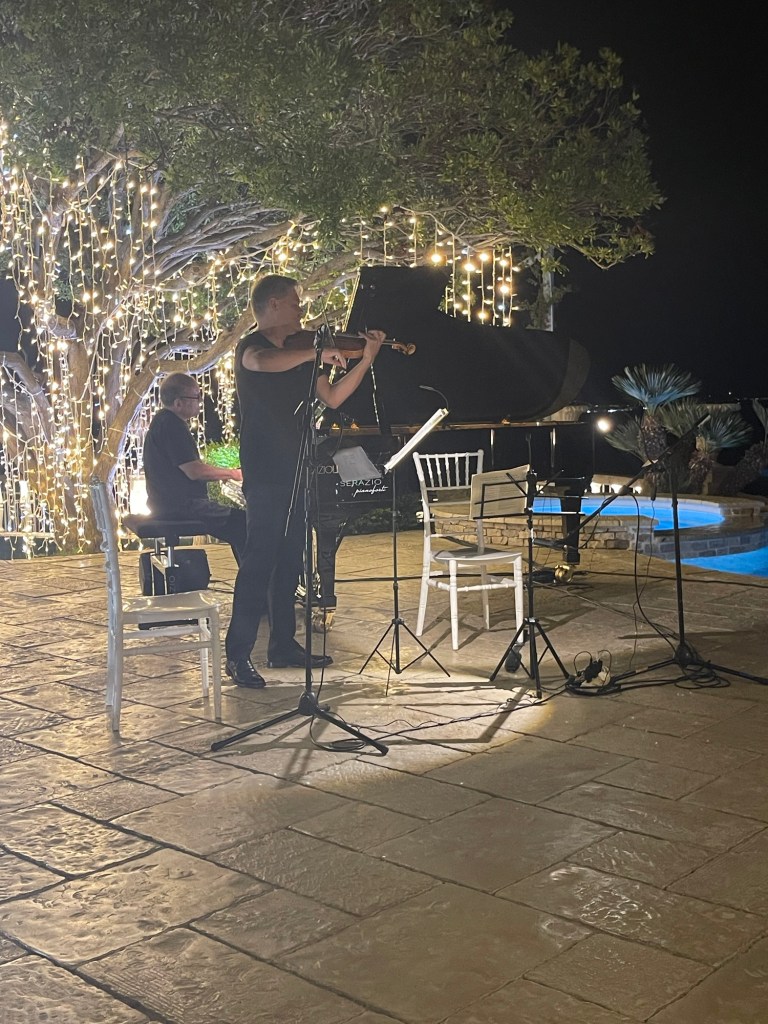
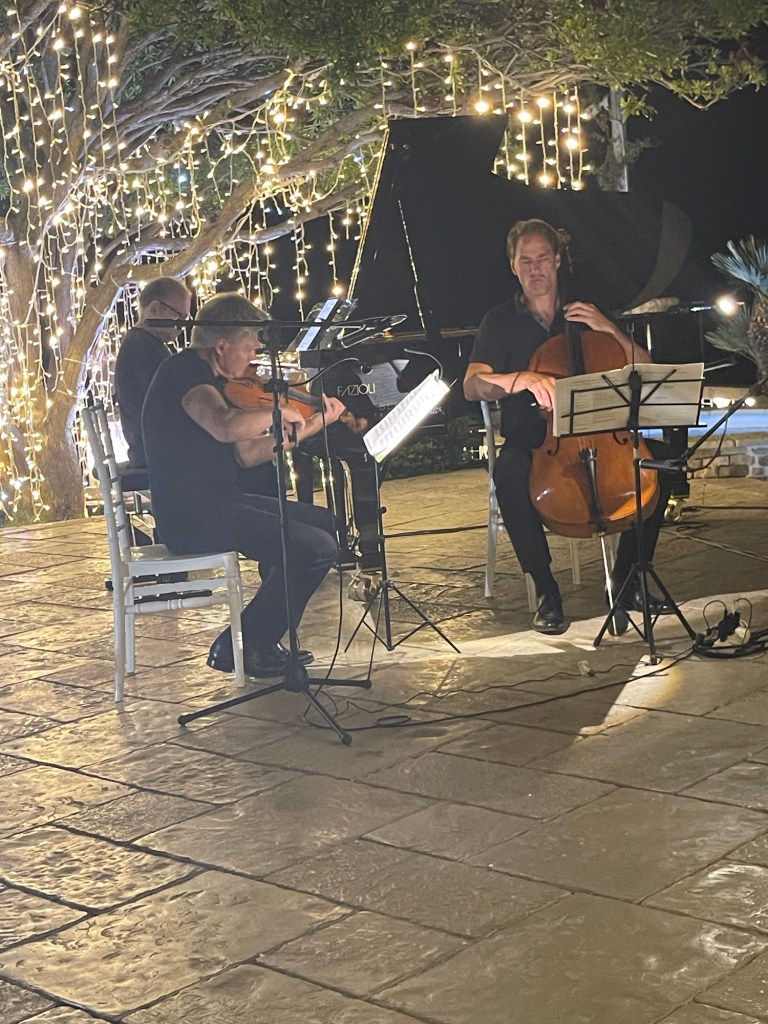
‘On wings of song’ The Daunert- Weber- Lortie Trio in Paradise at ‘La Librata’ for the Riviera di Ulisse Festival in Terracina

Wolfgang Amadeus MOZART   Trio per violino, violoncello e pianoforte K 502 Allegro- Larghetto – Allegretto

Reynaldo HAHN                       Notturno per violino e pianoforte

Robert SCHUMANN. Adagio e Allegro per violoncello e pianoforte, op. 70 

Felix MENDELSSOHN      Trio per violino, violoncello e pianoforte op. 49 Molto Allegro agitato – Andante con moto tranquillo – Scherzo Leggiero e vivace – finale Allegro assai appassionato

On wings of song in Paradise
The Daunert -Weber -Lortie Trio at La Librata overlooking Terracina for the Riviera di Ulisse Festival.
Superb music making in a unique setting and what better for an eclectic audience than Mendelssohn’s D minor Trio when played with sumptuous passionate sounds and glittering virtuosity.The beautiful Andante that is a true song without words opens with a solo piano of radiance and subtle shading and commented on with such beauty by the violin and cello. What better music could there be in this quite magical setting. A truly scintillating Scherzo of lightness and sweeping beauty and is true ‘tour de force’ for the pianist! It was followed by a finale which was a passionate outpouring of brilliance and dynamic drive.Three wonderful players playing with subtle beauty and passionate involvement, each one listening to the other in a musical conversation amongst superb musicians.

Mozart’s Trio in B flat was played with the charm and grace of it’s time with the violin and piano in a question and answer of simplicity and style.There was exquisite beauty from the piano in the ‘Larghetto’ with the weight of the piano answered by the ravishing beauty of the violin.The cello was a wonderful support always following and sustaining his much busier partners.Coming into his own,though, in Schumann Knut Weber bonded with Louis Lortie in a performance of enticing beauty and passionate sweep.The piano matching the sumptuous richness of the glorious romantic cello sounds.Hahn completed the circle before sitting down to an wonderful culinary feast. Hahn had actually opened the concert with the sounds of almost Hollywoodian fervour from Markus Daunert’s beautiful Gotting violin.Louis providing the suitable cascades of arpeggios on which the meltingly beautiful melodies of Hahn could truly float and fill the rarified air with delicate sentiments of a past age.It is all the idea of a ‘local boy’ :Luigi Carroccia who with his wife are determined to bring great music to this most beautiful part of Italy .

Louis Lortie with Luigi Carroccia


Luigi mentored by Louise Lortie had the idea to invite him to play and now the seed is set and word is spreading that miracles are being performed in these parts. No stopping them now on wings of song they have found Paradise .
https://christopheraxworthymusiccommentary.com/2024/09/02/luigi-piovano-luigi-caroccia-mastery-and-miracles-in-fondi/

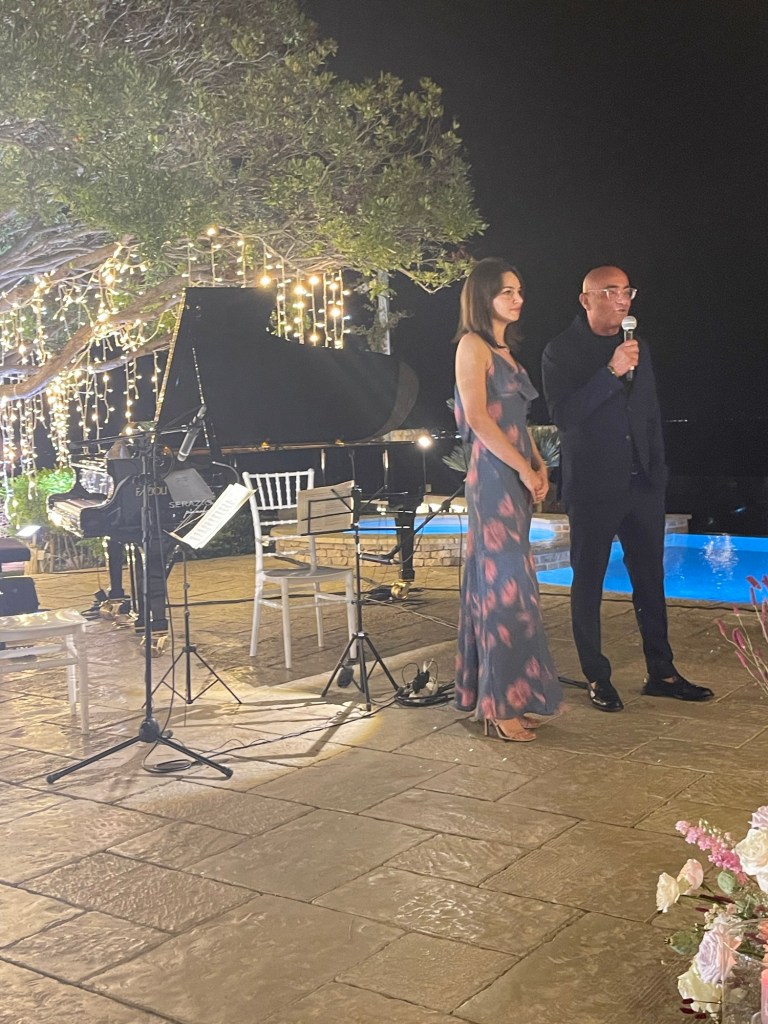
Luigi’s wife presenting the concert
A magnificent Fazioli piano brought in especially from Turin.
Our host welcoming the first collaboration with the Riviera di Ulisse bringing culture to Terracina and surrounds.
A full house ready to enjoy what Paradise has to offer !

LOUIS LORTIE

Louis being greeted by Mrs Carroccia in the green room after the concert

Per più di tre decenni il pianista franco-canadese Louis Lortie sì è esibito in tutto il mondo, ottenendo la fama di essere uno degli artisti più versatili del panorama internazionale. Riesce infatti ad estendere la sua voce interpretativa ad un vasto repertorio e le sue esibizioni, così come le sue pluripremiate registrazioni, testimoniano la sua notevole poliedricità musicale.Louis Lortie ha instaurato collaborazioni di lungo corso con orchestre quali la BBC Symphony Orchestra, la BBC Philharmonic, l’Orchestre National de France e la Filarmonica di Dresda, la Philadelphia Orchestra, la Dallas Symphony Orchestra, la San Diego Symphony, la St Louis Symphony e la New Jersey Symphony Orchestra. Fra i direttori d’orchestra con cui collabora regolarmente figurano Yannick Nézet-Séguin, Edward Gardner, Sir Andrew Davis, Jaap van Zweden, Simone Young, Antoni Wit e Thierry Fischer.

Nel campo dei recital e della musica da camera, Louis Lortie appare in tutte le sale da concerto e festival più prestigiosi, fra cui la Wigmore Hall di Londra, la Philharmonie de Paris, la Carnegie Hall, la Chicago Symphony Hall, il Beethovenfest di Bonn e il Liszt Festival di Raiding.Artista prolifico dal punto di vista delle registrazioni, la sua trentennale collaborazione con Chandos Records ha dato luogo a un catalogo di più di 45 incisioni, spaziando in un ampio repertorio che va da Mozart a Stravinskij.Durante gli anni della sua formazione ha studiato con Yvonne Hubert, alunna del leggendario Alfred Cortot, con Dieter Weber e Leon Fleisher, discepolo di Schnabel. Nel 1984 ha vinto il primo premio al Concorso Busoni e, nello stesso anno, si è contraddistinto nel Concorso di Leeds.

Louis Lortie pays ‘Hommage à Fauré’ ‘À la recherche du temps perdu’

Louis Lortie plays Ravel in London with the RPO under Jean- Luc Tingaud – A Magic Garden in Chelsea!

In the green room after the concert Markus in the distance with Knut

MARKUS DÄUNERT 

Molto apprezzato come direttore, primo violino ospite, solista e camerista, Markus Däunert ha studiato con Walter Carl Zeller, Jost Witter e Norbert Brainin. Dal 1997 al 2005 è stato co-direttore della Mahler Chamber Orchestra, formazione con la quale si è esibito anche come solista, sotto la guida di Abbado, Harding, Fischer, Masur, Pinnock e Philippe Herreweghe. Come primo violino ospite si è esibito, fra le altre, con la Scottish Chamber Orchestra, la Gewandhaus di Lipsia e la BBC Philharmonic. Il violinista berlinese collabora spesso anche con i Berliner Philharmoniker. Nel corso della sua intensa attività artistica ha contribuito a fondare numerose orchestre e complessi da camera (Mahler Chamber Orchestra, Lucerne Festival Orchestra, Archi De Sono, Aldeburgh Strings e Mahler Soloists). Degno di nota il suo impegno con l’Orchestra Sinfonica Simón Bolívar ed il modello didattico “El Sistema” ideato da José Antonio Abreu. In ambito cameristico, oltre agli impegni con i Mahler Soloists e l’Ensemble Messiaen, Däunert ha collaborato con molti protagonisti del panorama concertistico internazionale partecipando ai più importanti Festival. Suona un violino realizzato dal liutaio tedesco Christoph Götting di Wiesbaden.

Luigi with Knut Weber

KNUT WEBER

Knut Weber, vincitore di numerosi concorsi, è stato borsista e primo violoncello della Gustav Mahler Youth Orchestra e successivamente membro fondatore della Mahler Chamber Orchestra prima di unirsi ai Berliner Philharmoniker all’età di 23 anni. Oltre alla sua attività orchestrale, il violoncellista si esibisce anche come solista, con orchestra quali la Kammerorchester Wien-Berlin, la Dallas Symphony Orchestra e la Istanbul State Symphony Orchestra. Anche la musica da camera è un punto focale della sua attività musicale. Ha collaborato con Nelson Freire, Mitsuko Uchida e molti dei solisti della sua orchestra come Daishin Kashimoto, Noah Bendix-Balgley, Emmanuel Pahud e Andreas Ottensammer. Come membro dei 12 violoncellisti della Berliner Philharmoniker, dei Solisti Stradivari e del Philharmonic Piano Quartet Berlin, Knut Weber si esibisce regolarmente in Europa,  Asia e negli Stati Uniti. Si diverte anche a collaborare con orchestre giovanili in qualità di docente e solista. Dal 2015 al 2022 Knut Weber è stato attivo anche come orchestra e membro del consiglio di fondazione dei Berliner Philharmoniker. È cofondatore del “Bronislaw Huberman Forum” e membro del comitato consultivo artistico dell’Istanbul Music Festival.Knut Weber suona su un violoncello di David Tecchler del 1730.

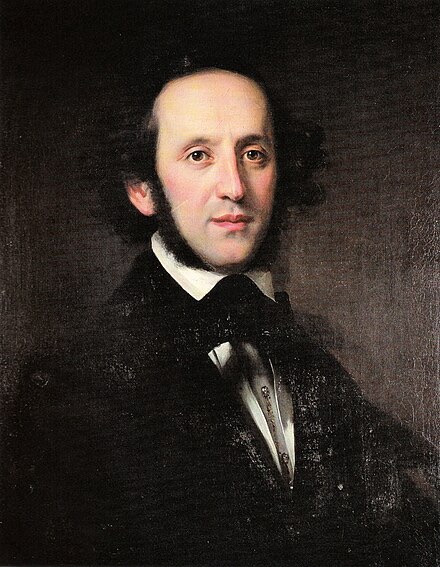
Felix Mendelssohn

3 February 1809 Hamburg 4 November 1847 (aged 38)

On January 21, 1832, while Mendelssohn was in Paris, he wrote a letter to his sister, Fanny Mendelssohn, about writing a work in which the piano takes a more active role in relation to the violin and cello.The trio was premiered on February 1, 1840, at the Leipzig Gewandhaus by violinist Ferdinand David, cellist Franz Karl Witmann, and Mendelssohn at the piano. Robert Schumann praised the trio as “the master-trio of our time, even as Beethoven’s B-flat and D and Schubert’s E-flat at their time, this will delight to the future generation.”Mendelssohn took the advice of fellow composer Ferdinand Hiller  to revise the piano part. Hiller wrote, “with his usual conscientious earnestness when once he had made up his mind, he undertook the length and rewrite the whole pianoforte part.”The revised version was in a more romantic Schumannesque  style with the piano given a more important role in the trio. Indeed, the revised piece was reviewed by Schumann, who declared Mendelssohn to be “the Mozart of the nineteenth century, the brightest musician, who most clearly understands the contradictions of the age and is the first to reconcile them.”


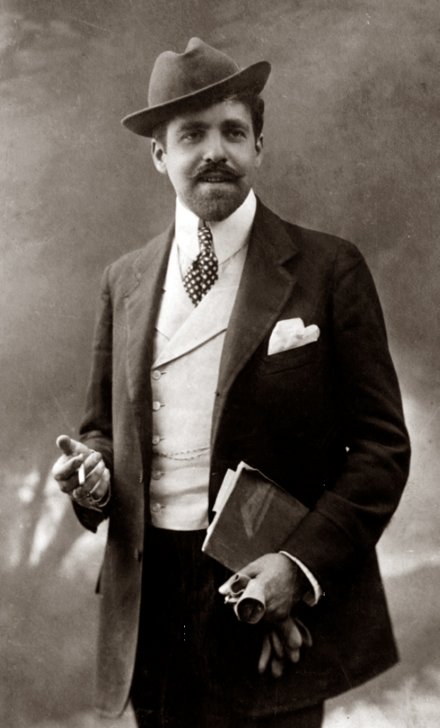
Reynaldo Hahn de Echenagucia  (9 August 1874 – 28 January 1947) was a Venezuelan-born French composer, conductor, music critic, and singer. He is best known for his songs – méodies – of which he wrote more than 100.
Louis fresh from Canada and en route for Sardinia He had also been present for Luigi’s concert in Rome a few months ago when he played the two Chopin Concertos conducted by Piovano
https://christopheraxworthymusiccommentary.com/2024/05/04/luigi-carroccia-the-poet-of-the-piano-chopin-concerti-op-11-and-21-in-rome-orchestra-delle-cento-citta-directed-by-luigi-piovano/

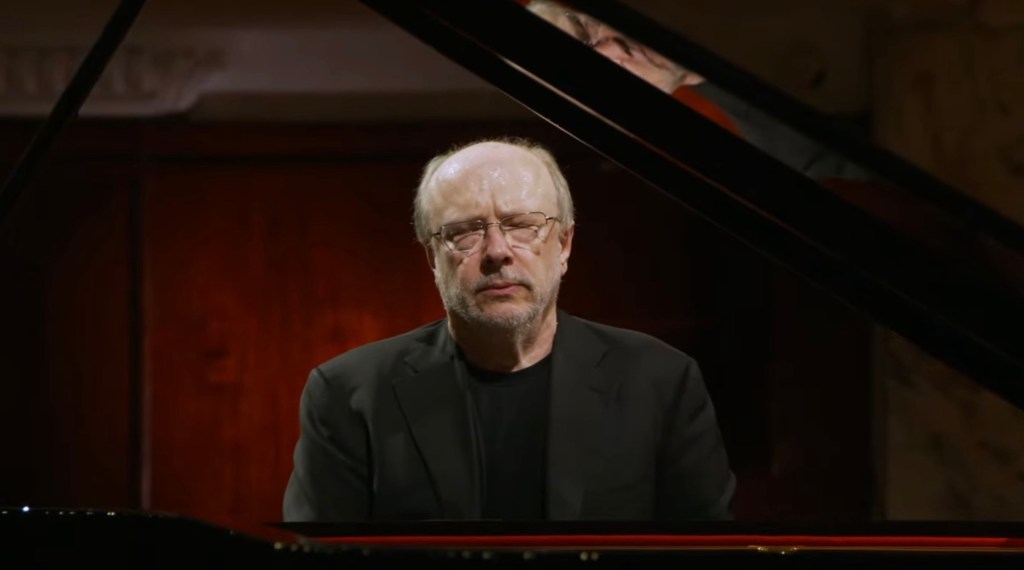
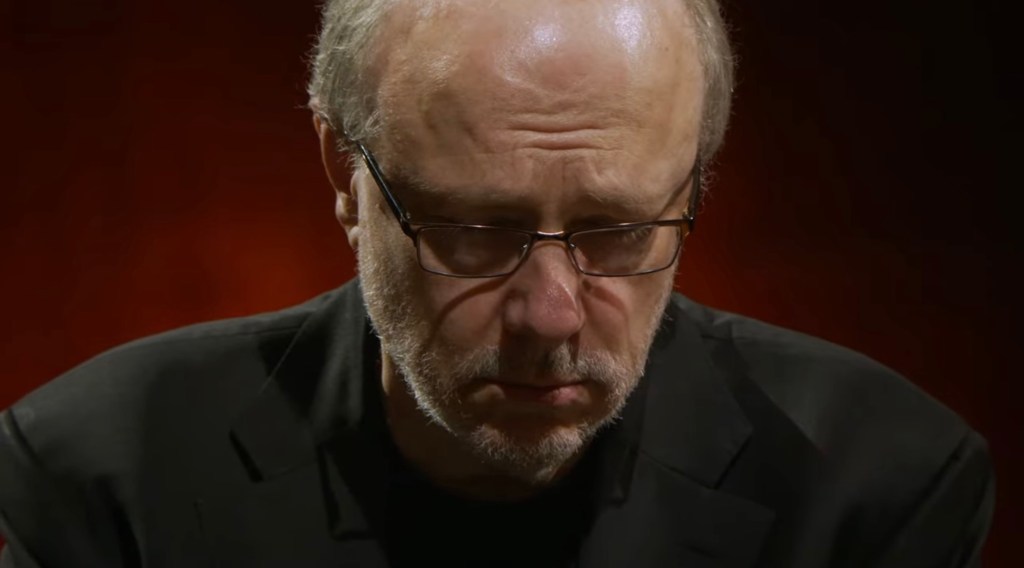
Marc – André Hamelin – A pied piper and Prince of Pianists.

https://www.youtube.com/live/FEOkhG0O63o?feature=shared

I have long admired Hamelin as one of the most phenomenally fearless pianists who can play seemingly with such ease works which we have only read about in history books. A technical mastery that has no boundaries with playing of a clarity and mastery that are quite unique. In fact he is one of the leaders of a great Canadian School of piano playing where Glenn Gould is followed by Louis Lortie,Janina Fialkowska,Angela Hewitt,Jon Kimura Parker and more recently Bruce Liu and Kevin Chen to name just a few. I had not heard Hamelin for quite some time until today and the last time I heard him in London was with the Kachaturian Piano Concerto. I remember after a momentous performance of the concerto he offered an encore of the innocuous minute waltz.But this was no ordinary Chopin waltz as this had been transcribed by Hamelin himself and it was the most phenomenal feat of piano playing that I can remember hearing live in the concert hall.I remember too in London a Norma Fantasy that was truly remarkable but like the Kachaturian seemed to lack the sumptuous warmth and grandeur that this music commands.Today ,though,I heard a different pianist as there was still the clarity and phenomenal technical command but there was a range of sounds and subtle inflections and an overall architectural authority that were truly of a great artist.

This was the first time I have heard the Dukas Sonata although I had known of its existence as being one of the longest and most complex of works that has never found it’s way into the standard pianistic repertoire.I was astounded ,listening mesmerised to a work of such coherence and subtlety allied to a unique technical brilliance.A kaleidoscope of sounds from the opening rhapsodic deep lament that like Rachmaninov’s first Sonata needs a great musician to show us the architectural line through such muddy waters. Hamelin although hardly seeming to move a muscle, his facial expressions showed with what anguish he was listening to every sound that his fingers could conjure out of this magic box.The second movement was played with a simplicity of etched sounds of glowing purity.The third movement was a breathtaking toccata played with scintillating brilliance and clarity but with a central episode of quasi religious piety that contrasted so well with all that surrounded it.The last movement was truly monumental and played with searing intensity where the last note like the Liszt B minor Sonata just drew a close to such noble sentiments.A quite extraordinary performance from a quite extraordinary artist where his concentration was such that every note had a place in a Gothic Cathedral of noble proportions. And let us not forget what courage to programme a virtually unknown masterpiece as the entire first half of such an important recital.This is an artist of rare Busonian integrity who risks all to share his total commitment to his musical discoveries with his audience.

After the interval Schumann’s beautiful Waldszenen found an interpreter who could make every note speak .There were subtle inflections and rubato more of a singer than an instrumentalist.An intensity and deeply felt as Marc André created nine miniature tone poems of sumptuous colour and beauty.

From the simplicity and improvised freedom of the ‘Entry’ leading to the inimitable characterisation of the ‘Hunter’. Glowing cantabile of ‘lonely flowers ‘ played with a beguiling rubato and teasing insinuation.His playing sent shivers down the spine in the ‘Haunted Place’ with an amazing sense of colour and touch creating an atmosphere that was simply eliminated with a flick of the fingers.A beautiful fluidity filled a ‘friendly landscape’ with welcoming warmth as the ‘Wayside Inn’ appeared in a hymn of nobility and subtle grace and what fun Marc- André had catching us all out at the end! A ‘prophet bird’ of such lethargic nostalgia as it flitted from branch to branch and a ‘Hunting Song’ of rhythmic energy and sumptuous full sounds.It was,though,the languid beauty of the ‘farewell’ that will remain in my memory for long to come with its full sumptuous bass that just opened up the ravishing sounds hidden inside the piano that were played with exquisite tenderness and nostalgia.

The sounds that Marc- André conjured out of this Yamaha piano in Ravel I have never heard before .There was a palette of sounds that were truly remarkable where Marc- André was commanding each finger to play each key with just the right weight and colour hardly ever lifting his hands off the key.His fingers were like limpets sucking the very sounds out of each note .This was a horizontal approach to the keys hardly ever hitting them vertically but always being able to weigh up the sounds before producing them.This can seem from outside a very cerebral approach but the intensity and meaning that Marc -André exerts does not need any extrovert showmanship or party pleasing tricks of the trade.Listening today especially to ‘Gaspard de la Nuit’ I was aware that a seemingly infallible artist such as Hamelin has matured and acquired a soul and depth allied of course to his always impeccable musicianship.

There was a languid beauty to ‘Ondine’ with a sumptuous sense of balance that allowed us to enjoy the splashing waters without ever getting any water in our eyes!.It was played with an ease and fluidity and a chameleonic sense of colour with a beautifully placed cadence of jewel like sounds that were just hinted at as ‘Ondine’ rested before dashing off again.An accent too with such sinister overtones on the G sharp when Ondine is all alone before flitting off on a wave of sounds .

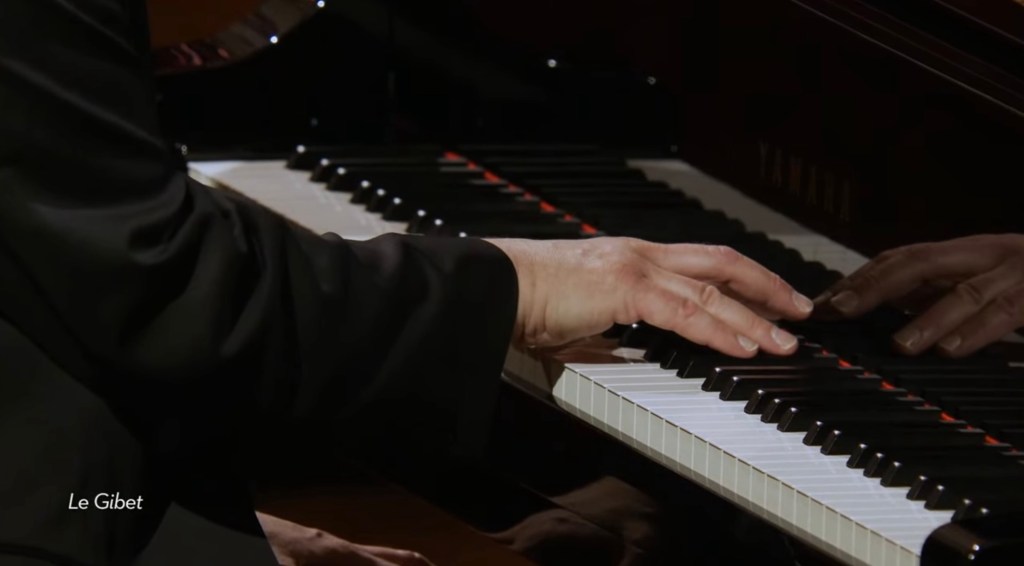
‘Le Gibet’ played ‘Très lent’ was in fact much slower than I have ever heard it before but with wondrous sounds where the tolling B flat was ever present. Ravel marks the score ‘ un peu en dehors ,mais sans expression ‘. and which Marc – André played with a glowing purity of poignant desolation.In fact a movement that can so often seem like a rest between two showpieces became today a work of such searing beauty and the true pinnacle of Ravel’s genius even if he was trying to out do Liszt and Balakirev for pure virtuosity!

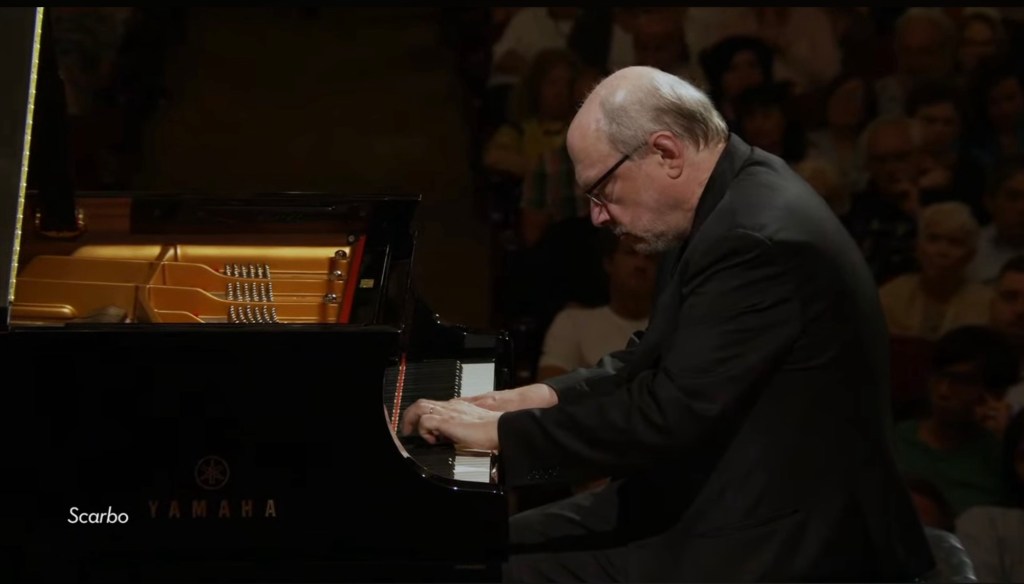
It was very interesting to hear Marc-André play the last of the opening three notes very short in ‘Scarbo’ and it immediately gave sinister overtones to all that was to follow.There were of course breathtaking exhilarating bursts of dynamism that were played with driving rhythmic energy and clarity .Climaxes of Lisztian proportions were bathed in pedal and grandeur but always with a wonderful sense of orchestral colour.This was truly a masterly performance created with such originality and searing intensity.

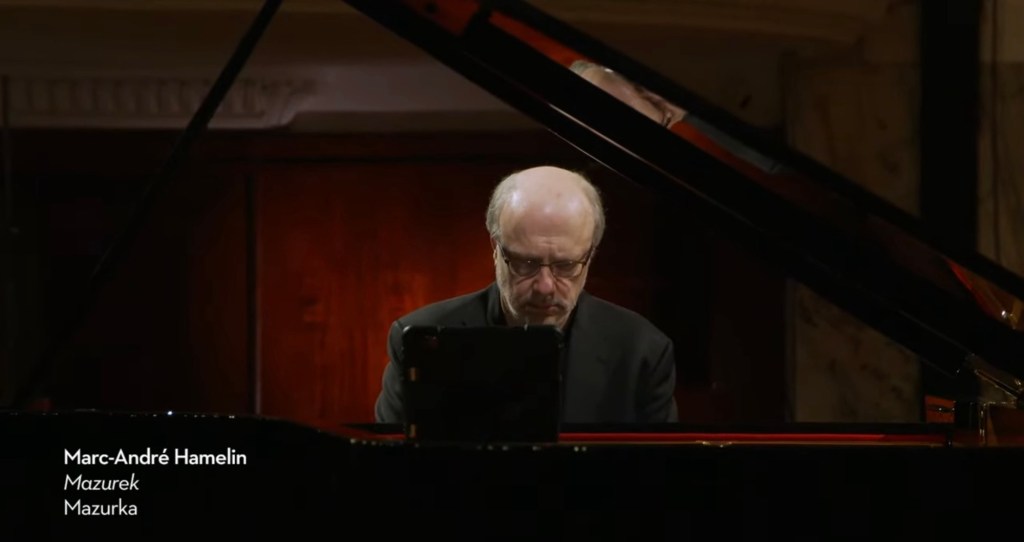
A standing ovation even if Marc-André had excluded Chopin from his programme.But he did include a Mazurka of his own and dedicated it to an American friend of Polish extraction who had passed away this year. A work lasting about five minutes of ravishing colours and subtle rhythms.

One more encore from an audience on their feet again treated to a virtuoso showpiece by Prokofiev which brought this remarkable recital to a dynamic end.

 Piano Sonata in E-flat minor was composed by Paul Dukas between 1899 and 1900, and published in 1901.

  1. Modérément vif (expressif et marqué)
  2. Calme – un peu lent – très soutenu
  3. Vivement – avec légèreté
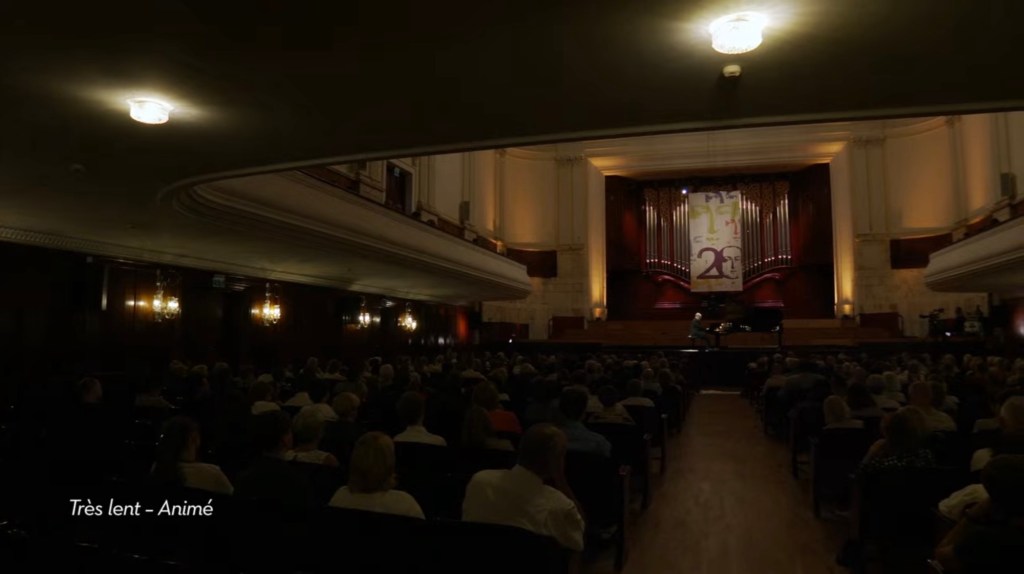
  4. Très lent

‘The Sonata is classical in structure and in four movements, connected more by mutual formal perfection and nobility of thought than by cyclic procedures. The first movement … is built on two sharply contrasted themes, developed according to the sonata-form. The Andante is in the direct line of the great slow movements of Beethoven, and a supreme example of the grandeur attainable by modern technique working in this inspired form. The agitated Scherzo, with its unexpected fugal conclusion, is followed by the heroic Finale, comparable in breadth and majesty to the Stairway of Honour of the Palace of Versailles . By the vastness of its proportions, the quality of its writing, the power of its developments, and by its luminous lyricism, the Sonata in E flat minor is unrivalled by any other composition of this type. It transcends the piano, the factor that has retarded comprehension of it being its own magnitude.

In the first decade of the 20th century, following the immense success of his orchestral work The Sorcerer’s Apprentice Dukas completed two complex and technically demanding large-scale works for solo piano: the Piano Sonata, dedicated to Saint -Saens , and Variations,Interlude and Finale on a Theme by Rameau (1902). In Dukas’s piano works critics have discerned the influence of Beethoven, or, “Beethoven as he was interpreted to the French mind by César Franck”.Both works were premiered by Edouard Risler a celebrated pianist of the era.

In an analysis in 1928 by the critic Irving Schwerké wrote:

Born in 1865, Dukas could have (and probably did) compose a good deal literally and stylistically in the 19th century, but his fastidious craftsmanship and self-criticism saw him burn far more music than he allowed to survive. All of a sudden, on the turn of the new century, he wrote two large-scale works which bring together a reverence for the recent and long-gone past with bold new thinking of how to write for the piano. Begun in 1899, the Variations take an innocent dance theme by Rameau and subject it to a dazzling sequence of treatments coloured by strict counterpoint, dreamy rhapsody and a Lisztian scale of piano writing.
Even more ambitious and contrapuntal in its workings is the 40-minute Piano Sonata which has long been regarded as a summit of fin-de-siècle piano writing. The Sonata has often been compared to Beethoven’s Hammerklavier Sonata for its colossal dimensions, its structural complexities and its tightrope virtuoso writing. Dukas himself later discussed its journey in terms of a symbolic victory over ‘the beast within’, and ‘the triumph of Apollo over the Pythian serpent’.


Paul Abraham Dukas 1 October 1865 – 17 May 1935 Paris

Paul Dukas (1865-1935) was born in Paris, France. He was a student at the Paris Conservatory where he studied piano, harmony, and composition. He won the Prix de Rome for a counterpoint and fugue in 1886 and again in 1888 with the cantata, Velleda. He was the music critic for the Revue Hebdomadaire and Gazette des Beaux-Arts and at the same time, he was a professor of orchestration at the Conservatoire. His strong critical sense led him to destroy a number of his compositions and only allow a relatively small number of works to be published. He remained influential and respected as a teacher.
– Dukas’ output for the piano includes just five works: the Piano Sonata and the Variations, each of them a homage to a past master, to Beethoven and (more explicitly) to Rameau. The Sonata can be considered as a sort of French Hammerklavier Sonata, for its colossal dimensions, its structural and harmonic complexities and its virtuoso writing. It is a masterwork of immense scope, one of the greatest French piano sonatas ever written.

Waldszenen (Forest Scenes), Op.82, is a set of nine short solo piano pieces composed by Robert Schumann  in 1848–1849, first published in 1850–1851 in Leipzig .

On the set, Schumann wrote: “The titles for pieces of music, since they again have come into favor in our day, have been censured here and there, and it has been said that ‘good music needs no sign-post.’ Certainly not, but neither does a title rob it of its value; and the composer, by adding one, at least prevents a complete misunderstanding of the character of his music. What is important is that such a verbal heading should be significant and apt. It may be considered the test of the general level of the composer’s education”

Schumann’s draft of No. 3, “Einsame Blumen”

Eintritt (Entry)
Nicht zu schnell – Not too fast

Jäger auf der Lauer (Hunters on the Lookout)
Höchst lebhaft – Very lively

Einsame Blumen (Lonely Flowers)
Einfach – Simple

Verrufene Stelle (Haunted Place)
Ziemlich langsam – Pretty slow3:07D

Freudlich Landschaft (Friendly Landscape)
Schnell – Fast major

Herberge (Wayside Inn)
Mäßig – Moderate

Vogel als Prophet (Bird as Prophet)
Langsam. Sehr zart – Slowly. Very tender

Jagdlied (Hunting Song)
Rasch, kräftig – Fast, strong

Abschied (Farewell)
Nicht schnell – Not fast

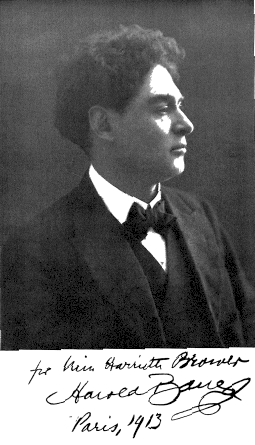
Gaspard de la nuit (subtitled Trois poèmes pour piano d’après Aloysius Bertrand),by Maurice Ravel , written in 1908. It has three movements, each based on a poem or fantaisie from the collection Gaspard de la Nuit – Fantaises à la manière de Rembrandt et de Callot completed in 1836 by Aloysius Bertrand. It was premiered in Paris, on January 9, 1909, by Ricardo Vines and dedicated to Harold Bauer .

Famous for its difficulty, partly because Ravel intended the Scarbo movement to be more difficult than Balakirev’s Islamey . Because of its technical challenges and profound musical structure, Scarbo is considered one of the most difficult solo piano pieces in the standard repertoire.Ravel himself said: “Gaspard has been a devil in coming, but that is only logical since it was he who is the author of the poems. My ambition is to say with notes what a poet expresses with words.”

Ondine is a tale of the water nymph  singing to seduce the observer into visiting her kingdom deep at the bottom of a lake.

Le Gibet presents the observer with a view of the desert, where the lone corpse of a hanged man on a gibbet stands out against the horizon, reddened by the setting sun. Meanwhile, a bell tolls from inside the walls of a far-off city, creating the deathly atmosphere that surrounds the observer.

Scarbo depicts the nighttime mischief of a small fiend or goblin making pirouettes,flitting in and out of the darkness, disappearing and suddenly reappearing. Its uneven flight, hitting and scratching against the walls and bed curtains, casting a growing shadow in the moonlight creates a nightmarish scene for the observer lying in his bed.

Hamelin at the Wigmore Hall The Pied Piper calls the tune

Andsnes and Hamelin at the Wigmore

Marc- Andre Hamelin at the Wigmore Hall

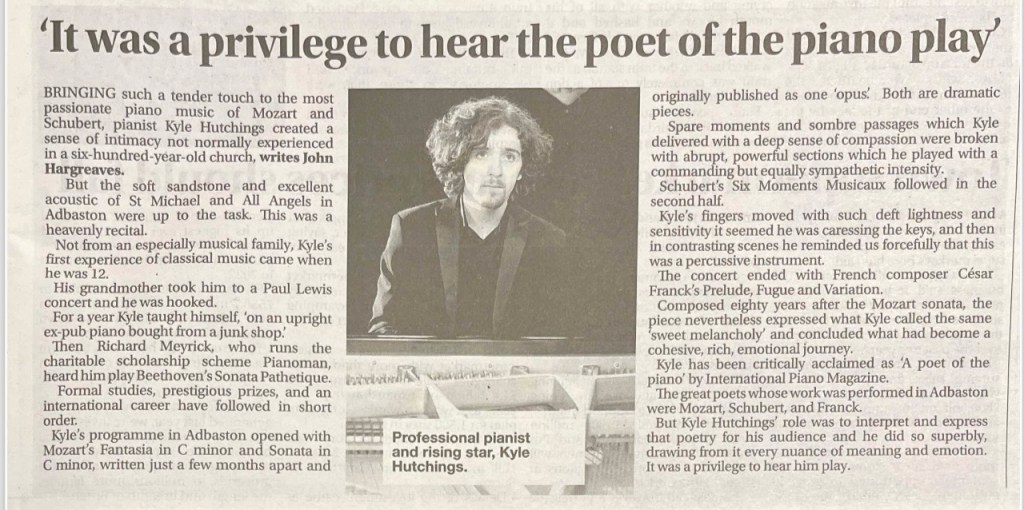
Kyle Hutchings in Adbaston A poetic troubadour of the piano reveals the heart of Mozart,Schubert and Franck (including a review by the distinguished musician John Hargreaves) and the Keyboard Trust Concert Tour of Ischia,Florence and Milan

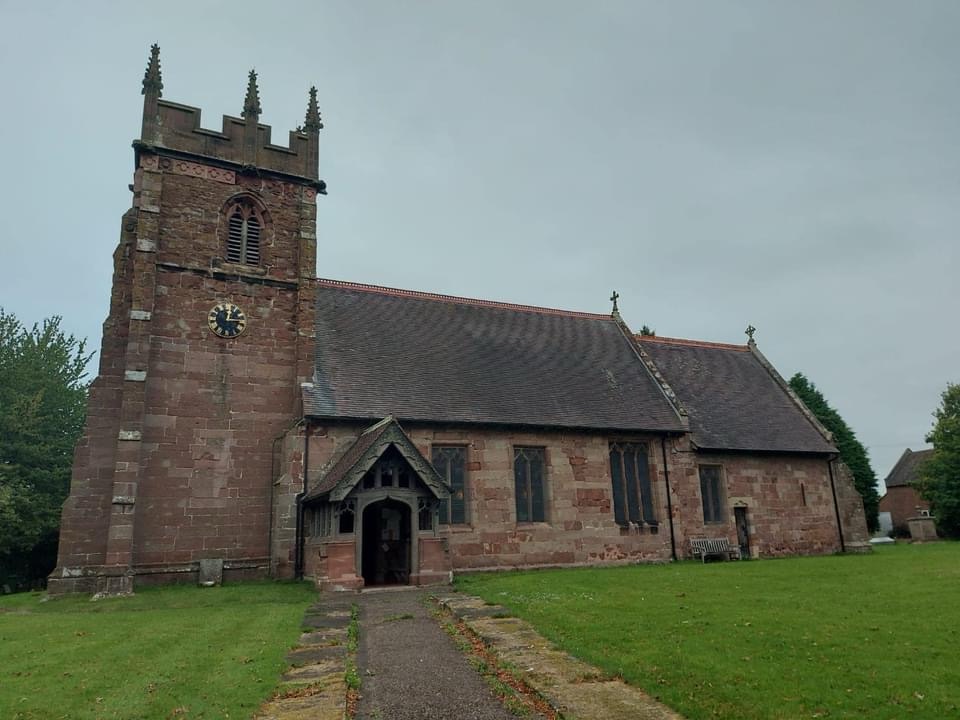
St Michael and All Angels

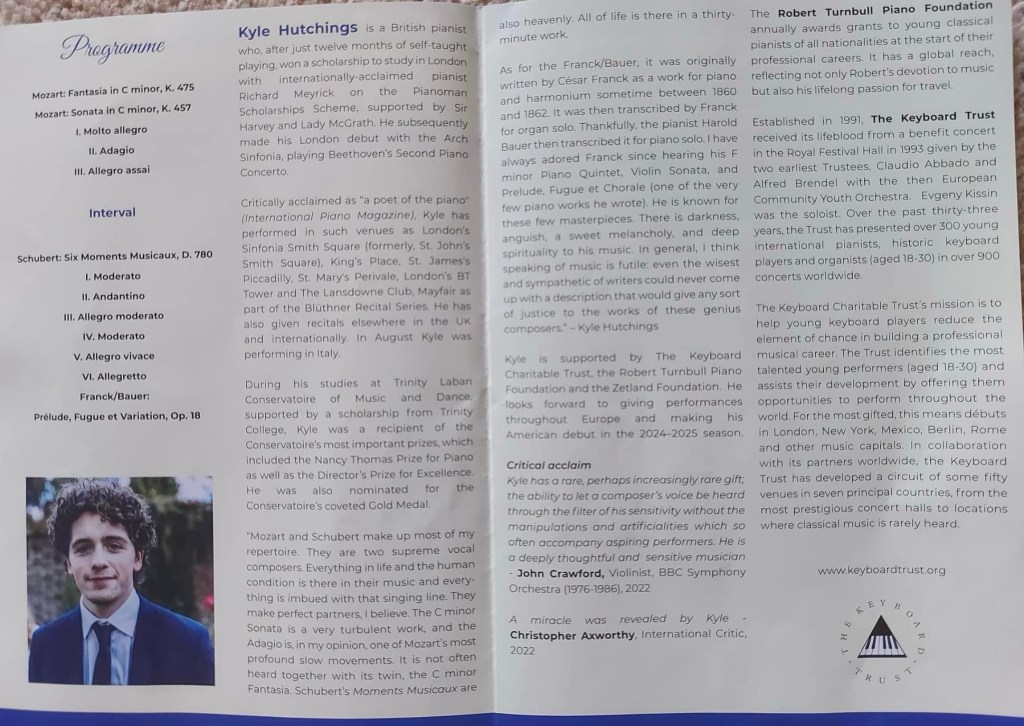
“Mozart and Schubert make up most of my repertoire . They are two supreme vocal composers. Everything in life and the human condition is there in their music and everything is imbued with that singing line. They make perfect partners, I believe. The C minor Sonata is a very turbulent work, and the Adagio is, in my opinion, one of Mozart’s most profound slow movements. It is not often heard together with its twin, the C minor Fantasia . Schubert’s Moments Musicaux are also heavenly. All of life is there in a thirty-minute work . As for the Franck/Bauer, there is darkness, anguish, a sweet melancholy, and deep spirituality to his music” – Kyle Hutchings

REVIEW BY THE DISTINGUISHED MUSICIAN JOHN HARGREAVES https://johnhargreaves.com/index.php/kyle-hutchings/

It was indeed the simplicity that he brought to all he did that allowed the music to speak with a voice that reveals “ life and the human condition “. There was dynamic drive in the Mozart where operatic brilliance is tinged with a deeply felt poignancy.The searing drama of the opening of the C minor Sonata was followed by an Adagio which is one of Mozart’s most poignant compositions and even leaves a dark shadow looming over the seemingly capricious Allegro assai.The dramatic contrasts and delicate recitativi of the Fantasia opened a world that was pure opera and showed us the turbulence that was deep within the genial soul of Mozart. It was played with an unadorned simplicity of music that Schnabel is quoted as exclaiming is “too difficult for adults and too easy for children”. An astonishing simplicity and delicacy with a palette of sounds that like the human voice can reveal so much with so little.

The six little Moments Musicaux by Schubert seem deceptively simple but in the hands of a true poet they become six miniature tone poems showing every facet of the human character. Beguiling ,quixotic,hypnotic or commanding the beautiful final Allegretto reveals the world that awaited Schubert just a few months later. They were played with insinuating character and charm but above all delicacy and ravishing beauty.
It was the same haunting beauty that Franck was to imbue his Prelude,Fugue and Variation with , in the transcription for piano from the organ by Harold Bauer. It was played with an architectural shape and sense of line that made the reappearance of the haunting opening even more touching when played with great sentiment but never sentimentality.There was an aristocratic musicianship to all Kyle did that gave real strength to his playing and brought us to the heart of the composer.

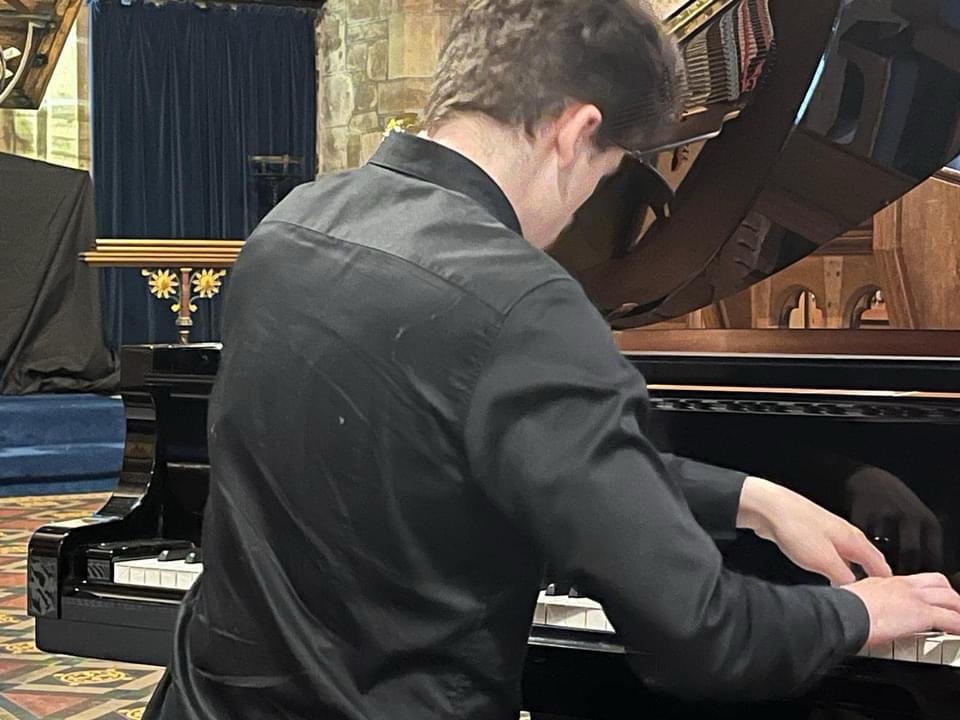
Kyle Hutchings the poetic troubadour of the piano ravishes and seduces at St Johns

Kyle Hutchings the poetic troubadour of the piano ravishes and seduces at St Johns

A concert tour of Italy from the 7th to the 11th September follow this concert in Adbaston .It will include The Walton Foundation on Ischia 7/8 th ; Florence British at the Harold Acton Library 10th and Steinway Flagship Milan on the 11th. Organised by the Keyboard Trust in collaboration with the Robert Turnbull Piano Foundation

Sir William Walton whose ashes overlook this paradise in Ischia
Lady Susana Walton who dedicated her life to realising the wish of Sir William of helping young musicians find a platform
And Lady Susana who keeps an eye on things nearby
Kyle on one of the two superb Steinway ‘C’ pianos of the Walton Foundation
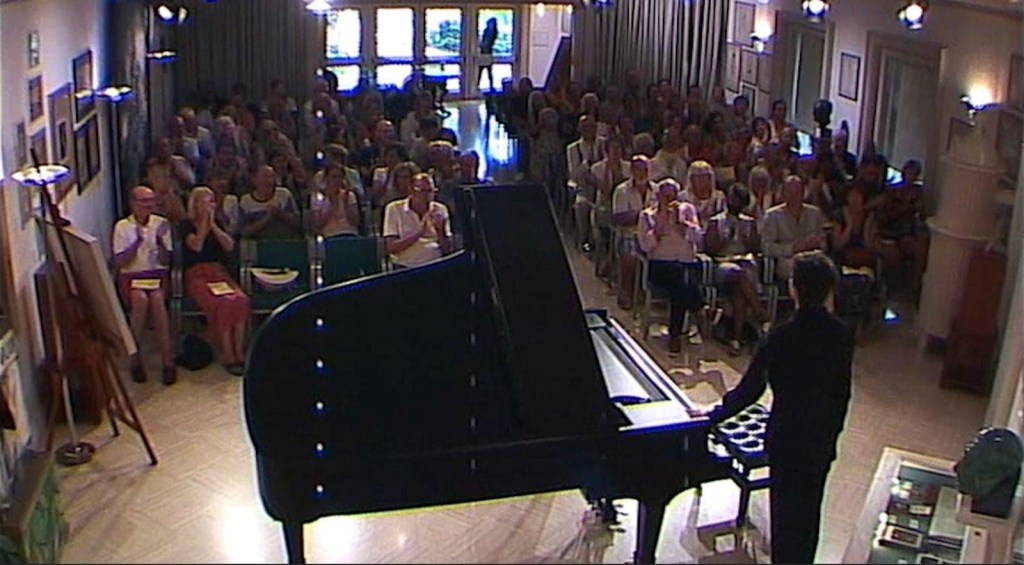
Full houses always for these remarkable young musicians invited to perform at La Mortella on Ischia where the concerts are organised by Prof Lina Tufano and the Foundation director Alessandra Vinciguerra
https://m.youtube.com/watch?v=PJal0zQG4Jw&feature=youtu.be
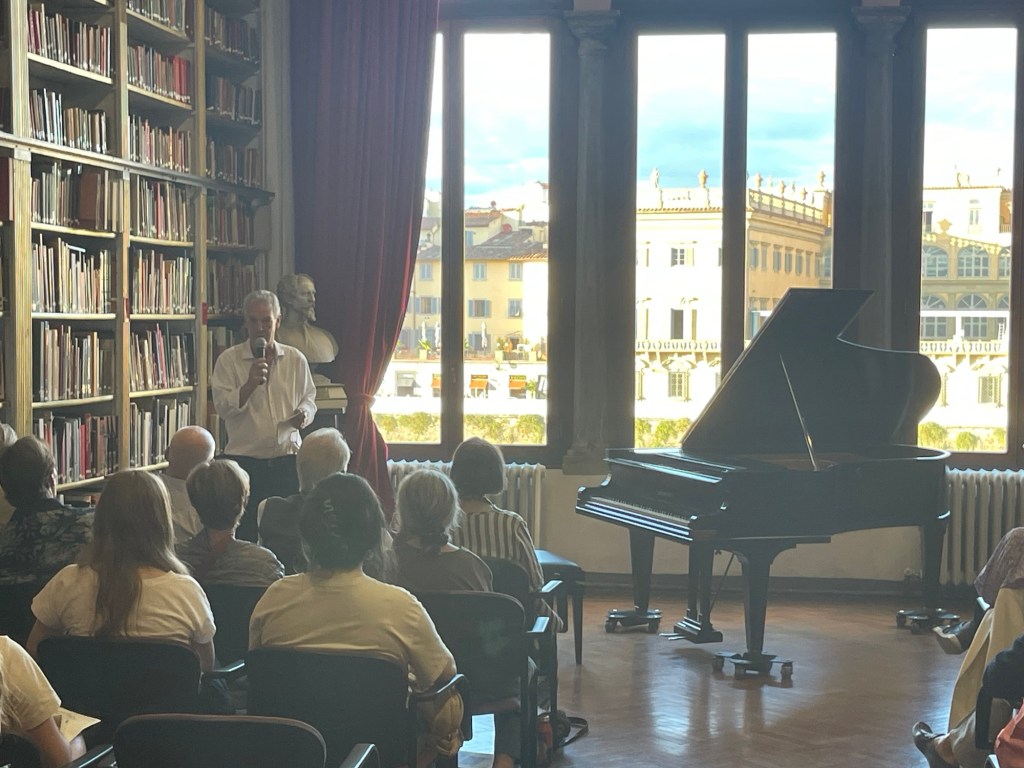
Simon Gammell ,OBE,presenting the first of a series of concerts at the British Institute

We are thrilled to inaugurate our new season of events in the Library with this piano recital by the brilliant British pianist Kyle Hutchings.
 
After just twelve months of self-taught playing, Kyle won a scholarship to study in London. He has gone on to perform in prestigious London venues such as  Kings Place, St John’s Smith Square, and St James’s Piccadilly.
 
For his concert in the Library he will play Mozart and Schubert. 
 
Here is a sneak preview of Kyle playing in London recently: Lunchtime Recital by Kyle Hutchings (piano)
 
This concert is promoted by the Keyboard Trustwith support from the Robert Turnbull Piano Foundation.

A room with a view ……not only …..as the refined sounds of a troubadour of the piano held the select audience in the Harold Acton Library spellbound.

Michael Griffiths with Sir David

As Sir David Scholey moved by such music making declared :’every note has such a poignant significance.’
Whispered refined finesse of a young man inspired as a 12 year old schoolboy by Paul Lewis.
He had been bewitched by sounds that could comunicate from soul to soul a message that for a timid schoolboy could open up a magic world of beauty and imagination.
His dream that inspired his late start at the piano was to be able to bring to life the profound utterings of Mozart and Schubert as he had experienced from Paul Lewis .
Florence is a place where dreams become reality and this was never more true than listening on a piano that Perlemuter would have called a ‘casserole’ but which was capable in Kyles magic hands of speaking with a voice that reached deeply to all those present.


The penultimate Mozart Sonata that anyone who has studied the piano knows too well was given new life with a restrained brilliance , refine delicacy and good taste.Exquisite finesse that denied the ‘sturm und drang’ that was to come but had an innocence of whispered confessions and the restrained brilliance of its age.
Schubert’s Six Moments Musicaux written in the last year of the composers all too short life on this earth were played as exquisite tone poems of poignancy contrasted with charm and veiled beauty. Exhilaration too but only a glimpse as this was a world of mystery and revelation .


Franck’s Prelude Fugue and Variation in the Bauer transcription, was played with an ethereal beauty ,the opening melody pervading the score with breathtaking hypnotic beauty. A Fugue that was played almost without pedal as it brought a ray of clarity and reason to a magic world that Franck would have improvised on the organ at St Clotilde in Paris. Harold Bauer, a pianist originally from near to where Kyle was born in the Home counties was equally inspired to become a pianist on meeting with Paderewski when as a violinist he arrived in Paris. He was to give the first performance in America of Brahms First Concerto and Debussy even dedicated his ‘Children’s Corner Suite’ to him .It was he who made this magical transcription of one of six improvisations that Franck had dedicated to Saint Saens.

Sir David Scholey with Kyle in discussion after the concert


An encore of Schumann’s ‘Warum’ had Sir David wishing we could have had at least a glimpse of Florestan too after being bewitched all evening by Eusebius.
But this is a poet of the piano a real aesthete like Harold Acton whose books surrounded us and whose presence could surely be felt by all those present tonight.

https://en.wikipedia.org/wiki/Harold_Acton

With Giancarlo Rizzi ,General Manager of the Hotel Savoy
After concert dinner hosted by Sir David
Kyle with Maura Romano director of the new Steinway Flagship in Milan
More superb playing in Milan and an encore of the slow movements of Chopin’s cello Sonata op 65 transcribed by Cortot.
Alessandro Livi on the right and Peter Flewitt on the left of Kyle
far right Milana Megina photographer with Alessandro Livi and Ioanna and Alberto Chines
Ioanna and Alberto Chines with Kyle

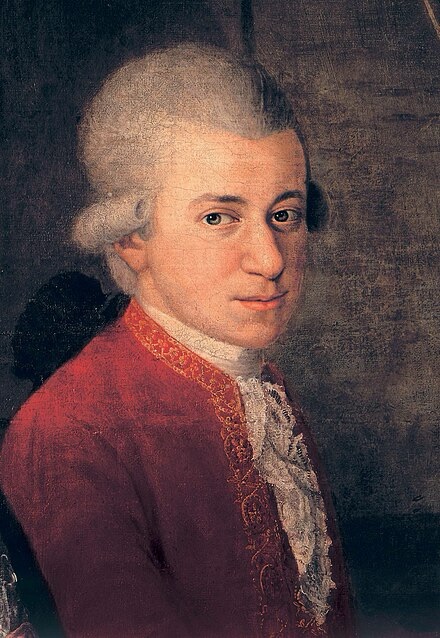
Wolfgang Amadeus Mozart
27 January 1756 Salzburg 5 December 1791 (aged 35) Vienna

The Piano Sonata No. 14 K 457,  was composed and completed in 1784, with the official date of completion recorded as 14 October 1784 in Mozart’s own catalogue of works.

1. Molto Allegro

2. Adagio

3.Allegro assai

It was published in December 1785 together with the Fantasy K.475 as op 11 by the publishing firm Artaria. Mozart’s main Viennese publisher.C minor is traditionally the key of drama, passion, pathos, and pain, which also applies here in Mozart’s famous C minor sonata K. 457. He wrote it in October 1784, though what might have triggered this incredible outpouring of a “romantic” world of feeling is unknown. Half a year later, Mozart composed his C minor fantasy K. 475, an extraordinary work in every regard. Both of these C minor works were published together in one edition in 1785, meaning that they were intentionally linked together by their author, counter to convention.

In 1785 Mozart’s Sonata in C minor was published together with the composer’s Fantasia in C minor as a single opus, with the Fantasia forming a kind of introductory ‘prelude’ to the sonata. Scholars are divided as to whether or not this was Mozart’s intention. Certainly, the common key of C minor and a shared fondness for heightened musical drama link the two works. Not to mention how the practice of combining an improvisatory movement with a more formally rigorous one has traditional roots in the Baroque pairing of fantasy and fugue.

And yet this three-movement sonata is entirely capable of standing on its own. It is a small sonata with big ideas: operatic in its wide range of emotions, orchestral in many of its effects (especially its imitation of alternating orchestral ‘choirs’ of instruments), and pianistic in its unabashed display of quasi-virtuosic keyboard techniques, all of which have been cited as possible influences on – and perhaps even models for – some of the early sonatas of Beethoven in a minor key.

Piano Sonata No. 17 in B flat , K. 570, dated February 1789,The penultimate sonata of 18 written two years before his death.

  1. Allegro
  2. Adagio
  3. Allegretto

Franz Schubert
31 January 1797 Vienna 19 November 1828 (aged 31)
Vienna

Six moments musicaux, D.780 ( op. 94) is a collection of six short pieces for piano It has been said that Schubert was deeply influenced in writing these pieces by the Impromptus, Op. 7, of Jan Vaclav Vorisek (1791 1825) .These pieces have been described as “akin to Beethovens Bagatelles in their brevity and quixotic character.”

They were published by Leidesdorf in Vienna in 1828, under the title “Six Momens musicals “ The sixth number was published in 1824 in a Christmas album under the title Les plaintes d’un troubadour.

  1. Moderato
  2. Andantino
  3. Allegro moderato
  4. Moderato
  5. Allegro vivace
  6. Allegretto in A♭ major (ends on an open octave in an A♭minor context)


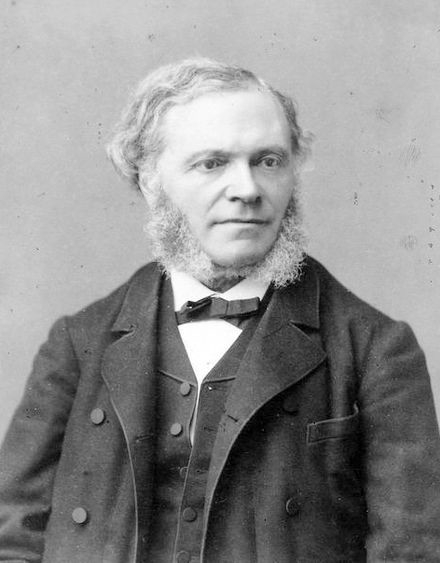
César-Auguste-Jean-Guillaume-Hubert Franck
10 December 1822 Liège. 8 November 1890 (aged 67) Paris, France

Prelude ,Fugue and Variation op 18 Franck/Bauer

Franck was the organist at several churches with early Cavaillé-Coll organs, served the company as an artistic representative, and in 1858 was appointed organist at the new basilica of St. Clotilde in Paris, where he inaugurated one of Cavaillé-Coll’s best instruments. Franck’s improvisations after church services were major public attractions, and he set some of them down in the Six Pieces he completed between 1859 and 1862. These exploited the power and colors of the Cavaillé-Coll organs to the fullest and did much to establish the distinctively French school of symphonic organ music.The Prelude, Fugue, and Variation, Op. 18, which was dedicated to Camille Saint-Saëns, himself an organist of considerable skill. Franck’s dedications do not imply portraits, but the balance and clarity of the Prelude, Fugue, and Variation do suggest the classical orientation of Saint-Saëns. The flowing B-minor Prelude has a gentle melancholy, opening almost like Bach’s “Liebster Jesu” prelude with three repetitions of an asymmetrical five-bar phrase. The Fugue has its own little prelude and clean textures, the polyphony by no means hard to follow. Rounding the three-part work is the Variation, basically a repeat of the Prelude with a more active accompaniment, fading to the light of B major.

Harold Victor Bauer (28 April 1873 – 12 March 1951) was an English-born pianist of Jewish heritage who began his musical career as a violinist .Born in Kingston upon Thames ; his father was a German violinist and his mother was English. He made his debut as a violinist in London in 1883, and for nine years toured England. In 1892, however, he went to Paris and studied the piano under Paderewski  for a year, though still maintaining his interest in the violin.In 1900, Harold Bauer made his debut in America with the Boston Symphony Orchestra, performing the U.S. premiere of  Brahms’ Piano Concerto No.1 in D minor. On 18 December 1908, he gave the world premiere performance of Debussy’s piano suite Children’s Corner  in Paris.

https://christopheraxworthymusiccommentary.com/2023/06/02/the-gift-of-music-the-keyboard-trust-at-30/

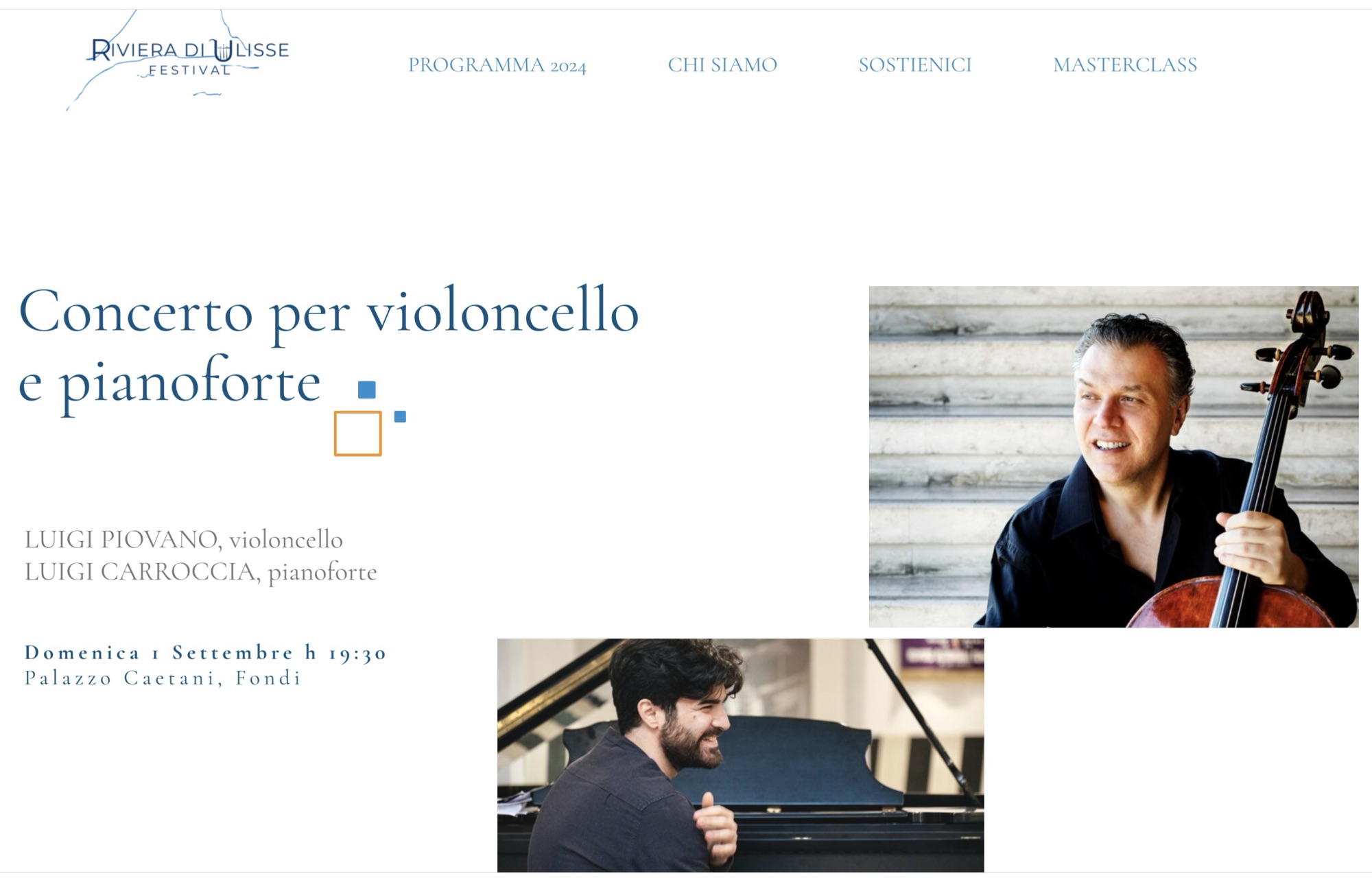
Luigi Piovano – Luigi Caroccia ‘Mastery and Miracles in Fondi’

F. MENDELSSOHN      Romanza in Re maggiore op 109

S. RACHMANINOV    Vocalise op 34 n.1

R. SCHUMANN           3 Fantasiestücke op. 73

L. V. BEETHOVEN       Sonata n. 3 in La maggiore op.69

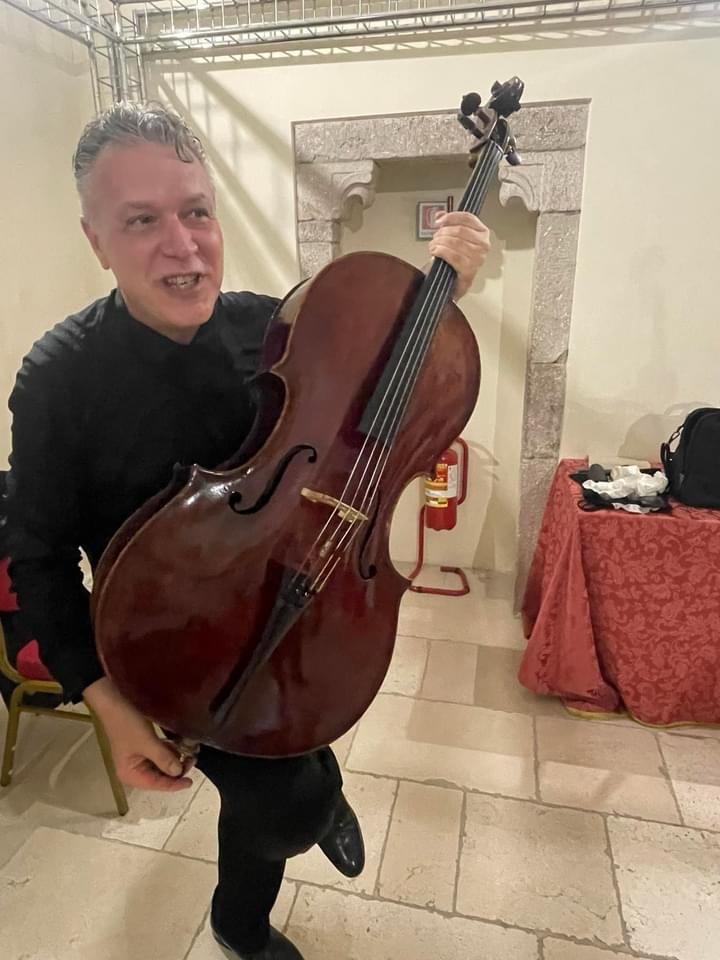
Miracles in Fondi -a wonderful Alessandro Gagliano of 1710 in the hands of a master.
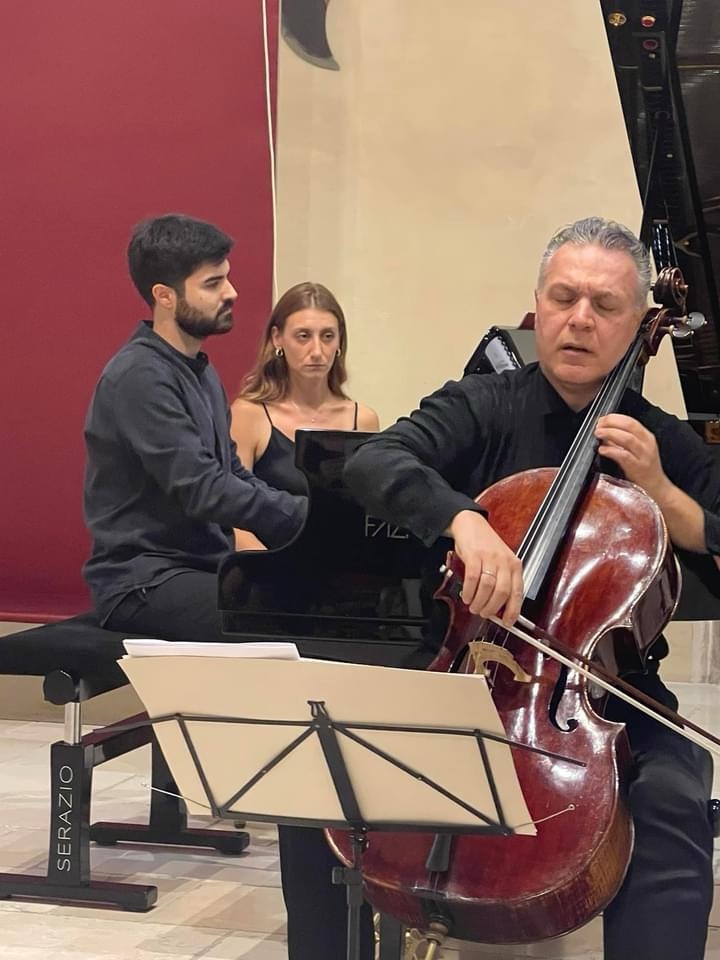
Luigi Piovano and Luigi Carroccia united as one in a recital of refined musicianship end exquisite artistry .


Allied to passion and mastery it was an intoxicating mix .Both playing with the weight which Tortelier once described to me as the fingers like limpets sucking the very lifeblood out of every note .


The barely audible whispers of Piovano were breathtaking after such nobility and authority. Just as the streams of scales from Carroccia were of pure gold, illuminating the trail in Beethoven taking us on a voyage of sublime inspiration .


A Mendelssohn song without words that was truly a bel canto of rarified artistry where the daringly placed notes held us riveted from the very first sounds.Here was the same breathing and inflections of a Caballé and the whispered return of the melody was of heartrending beauty.Wonderfully supported by the piano with sumptuous rich sounds only illuminating the magic that was unfolding before our very eyes. A sumptuous duo with two great artists intertwined in their search for poetic beauty.

Carroccia an expert driver of a well powered Fazioli that with refined ears could tune up to fit so perfectly into a performance of Rachmaninov’s Vocalise that was nothing short of miraculous for the generous sensitivity of these two great artists .Here was refined passion and subtle rubato of a real duo where the penetrating glow from the piano was allowed to shine through a cloud of rich intensity as a light shone upon each artist in turn like a halo glowing on high.
Sublime inspiration in Schumann with the impetuous passion of Piovano but with Carroccia like a hawk always ready to swoop in to match the dynamism of his partner


The solo opening of Beethoven”s A major Sonata I have only heard the like from Tortelier and the architectural shape and generous give and take was of two great artists on the crest of a wave .Aristocratic authority from Piovano’s magnificent Gagliano with refined artistry of intelligence and beauty.There was a beautiful fluidity from the piano that I have not heard since Zecchi with Mainardi and with the theme that returns in octaves on the piano that are four separate voices.A real duo of two artists united as one to the glory of Beethoven.The positive statement of the Scherzo by Carroccia was followed by the whispered answer of Piovano.Ravishing beauty from this Fazioli piano in the hands of an artist who really listens to himself as the Adagio shone like stars in paradise only to be answered by the nobility of Piovano’s Gagliano.Bursting into a ‘joie de vivre’ of intoxicating brilliance where the streams of notes on the piano were merely the layers of gold on which Piovano could place his jeux perlé of astonishing finesse and beguiling quixotic character.


The Flight of the Bumble Bee as an encore was nothing short of miraculous as the Saint-Saens Swan that followed was sublime.


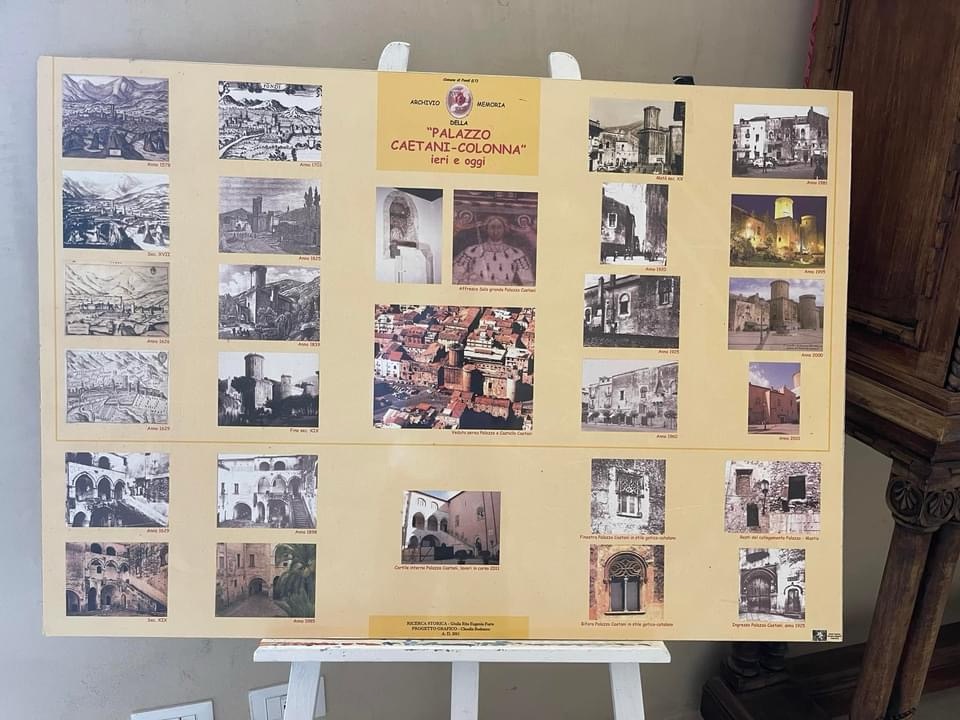
Fondi was in party mood outside the Caetani Palace that stands in its centre and I just wonder if the happy revellers realised what miracles were being performed tonight in their midst?

A standing ovation greeted miracles in Palazzo Caetani

LUIGI PIOVANO 

Da oltre vent’anni è primo violoncello solista dell’Orchestra dell’Accademia Nazionale di Santa Cecilia. Oltre a molti concerti nel doppio ruolo di solista e direttore, dal 2002 si dedica sempre più alla direzione d’orchestra. Ha collaborato con solisti come Avi Avital, Luis Bacalov, Stefano Bollani, Mario Brunello, Pietro De Maria, Benedetto Lupo, Sara Mingardo, Dmitry Sitkovetsky, Valeriy Sokolov e ha registrato per la Naxos tre Concerti per pianoforte di Paisiello (solista Francesco Nicolosi) e per la Eloquentia le Quattro Stagioni di Vivaldi (solista Grazia Raimondi), il Concerto per violino di Britten (solista Livia Sohn) e un CD con Sara Mingardo in cui dirige i Kindertotenlieder e i Lieder eines fahrenden Gesellen di Mahler, premiato in Francia nel 2012 come miglior CD di Lieder dell’anno. 
Dal 2012 al 2022 è stato direttore musicale dell’Orchestra ICO della Magna Grecia di Taranto. Dopo il grande successo ottenuto a Roma nel 2013 dirigendo gli Archi dell’Orchestra di Santa Cecilia in un concerto di musiche di Schubert e la registrazione del medesimo programma per un CD Eloquentia, Piovano ha avviato una collaborazione stabile alla testa degli Archi di Santa Cecilia con i quali si è esibito nelle più importanti stagioni e Festival italiani e ha registrato già 6 CD.

Fra i suoi impegni come direttore in questi ultimi anni, concerti sul podio di molte delle principali orchestre italiane e, all’estero, il debutto con la New Japan Philharmonic Orchestra e, nel 2022, con l’Orchestra del Mozarteum di Salisburgo che lo ha immediatamente reinvitato per il marzo 2023 e il febbraio 2024. 

Molto attivo nella musica da camera a fianco di artisti del calibro di Maurizio Pollini, Wolfgang Sawallisch, Myung-Whun Chung, Alexander Lonquich, Dmitry Sitkovetsky, Leonidas Kava- kos, Veronika Eberle, Katia e Marielle Labeque, Nikolay Lugansky, Malcolm Bilson, dal 2005 suona regolarmente in duo con Antonio Pappano e dal 2009 al 2019 ha fatto parte del Trio Latitude 41. Ha suonato come solista con prestigiose orchestre – Tokyo Philharmonic, New Japan Philharmonic, Accademia di Santa Cecilia, Seoul Philharmonic, Orchestre Symphonique de Montréal – sotto la direzione di direttori come Chung, Menuhin, Nagano, Pappano, Pletnev.

LUIGI CARROCCIA

Luigi Carroccia ha vinto prestigiosi premi tra i quali il “Premio Abbado” indetto dal MIUR in memoria di Claudio Abbado e il “Virtuoso Prize” del Vendome Piano Prize svolto nel Festival di Verbier 2019. Ha ricevuto a Kjustendil una medaglia per le sue esecuzioni di A. Scriabin e negli scorsi anni ha riscosso grande successo nei Concorsi “Van Cliburn” di Fort Worth, “Ferruccio Busoni” di Bolzano e “Fryderyk Chopin” di Varsavia.

La sua attività concertistica lo ha visto regolarmente impegnato in Italia e all’estero per Festival come il Duszniki International Chopin Piano Festival, il Miami International Piano Festival, il Dresdner Musikfestspiele, e in sale come l’Ishibashi Memorial Hall dell’Università di Tokyo, Flagey di Bruxelles, la Symphony Hall e la Town Hall di Birmingham, le sale Apollinee del Teatro La Fenice di Venezia, il Museo Teatrale alla Scala di Milano, il Teatro Casa d’Italia a Istanbul e  la Salle Bourgie di Montreal.

Luigi ha intrapreso i suoi studi musicali sotto la guida del padre e del nonno. La sua maturazione artistica è poi proseguita presso il Conservatorio “C. Monteverdi” di Bolzano, dove ha ottenuto il Diploma Vecchio ordinamento con massimo dei voti e lode e il Diploma Accademico di II livello con massimo dei voti lode e menzione d’onore. 

Successivamente ha ricevuto una Junior Fellowship dal Royal Birmingham Conservatoire (UK) e dal 2018 al 2022 è stato Artist in Residence presso la Queen Elisabeth Music Chapel di Waterloo in Belgio. 

Luigi Carroccia ‘The poet of the piano’ Chopin Concerti op 11 and 21 in Rome Orchestra delle Cento Città directed by Luigi Piovano

Beethoven with the Manuscript of the Missa Solemnis
Bonn 17 December 1770 Vienna 26 March 1827 (aged 56)

Over the course of his life, Beethoven composed five cello sonatas two of them early as his op 5 .These two sonatas, composed when Beethoven was age 25, were highly virtuoso concert pieces showing off the pianist, with a cello part of less weight. Beethoven performed them with cellist Jean- Pierre Duport  in Berlin in 1796, and dedicated them to Frederick William 11 of Prussia  who was an amateur cellist himself.

Beethoven composed his third cello sonata in A major  in Vienna during his middle period , a productive time[when he also composed works such as the Piano Trios op 70, the Choral Fantasy, as well as his Fifth and Sixth Symphonies It was a time when Beethoven faced increasing deafness. He had to end his career as a pianist with the concert on 22 December 1808 in which he premiered the two symphonies, the Choral Fantasy and other vocal and choral music, as well as his Fourth PianoConcerto .First sketches for the sonata appeared alongside those for the Fifth Symphony and the Violin Concerto  in a sketchbook dated September 1807 to early in 1808.Beethoven’s sketches show that he continuously revised passages, and further altered his first autograph manuscript while the finished composition sounds like the result of spontaneous inspiration. He completed the composition in 1808.

Beethoven dedicated the sonata to Freherr Ignaz von Gleichenstein his friend and an amateur cellist, who also assisted the composer in financial matters.The previous year he had arranged an annuity  for Beethoven from a group of sponsors which included Archduke Rudolf of Austria, a pupil of Beethoven.The composer had planned to dedicate his Fourth Piano Concerto to Gleichenstein, but felt that he had to honour the Archduke with the dedication instead, because he had shown particular interest in the Concerto. Beethoven explained to Gleichenstein his regret but announced: “… another work is appearing in which you will be given what is due to your – and our friendship”.

The sonata was first performed on 5 March 1809 as part of a benefit concert for the cellist Nikolaus Kraft , who performed it with pianist Dorothea von Ermanno ,a student of Beethoven.Kraft, known for “technical mastery” and a “clear, rich tone”,was the cellist for whom Beethoven had written his Triple concerto published in 1804, and Beethoven’s first work to use advanced cello techniques.A performance of the cello sonata in 1816 was played by Joseph Linke , the cellist in the Razumovsky Quartet and Carl Czerny . The pianist wrote in metronome  markings, regarded as approved by the composer, and noted that a slight rubato  playing would increase interest and expressiveness.

  1. Allegro ma non tanto
  2. Scherzo . Allegro molto
  3. Adagio  cantabile – Allegro vivace
With the distinguished pianist Fausto Di Cesare before the concert
And after ………..a triumph of artistry,passion and musicianship

https://christopheraxworthymusiccommentary.com/2024/03/20/christopher-axworthy-dip-ram-aram/

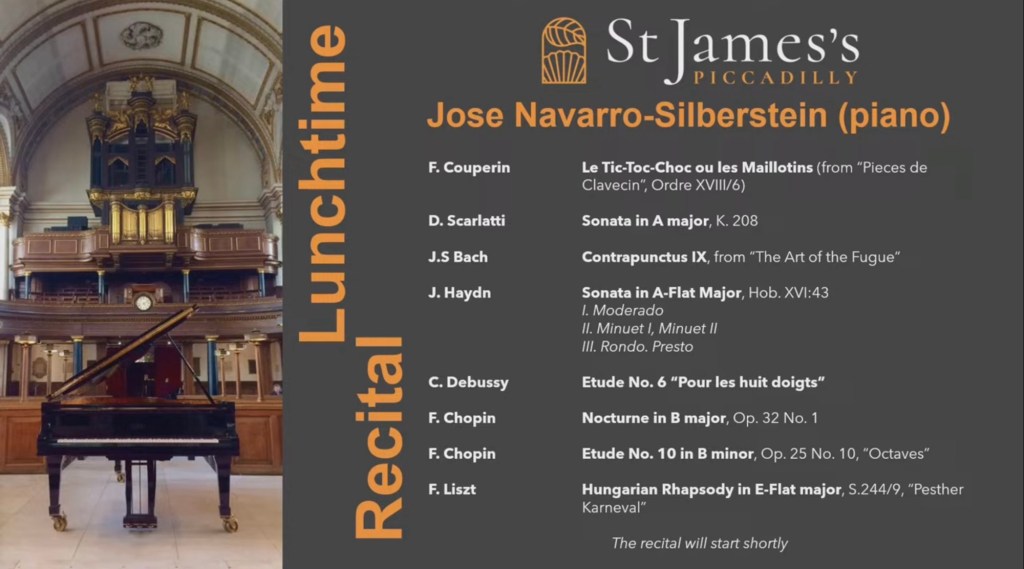
José Navarro- Silberstein at St James’s Masterly performances of authority and style

https://www.youtube.com/live/AU12vLRhXWY?si=C6VPbj9uL8qJyo8D

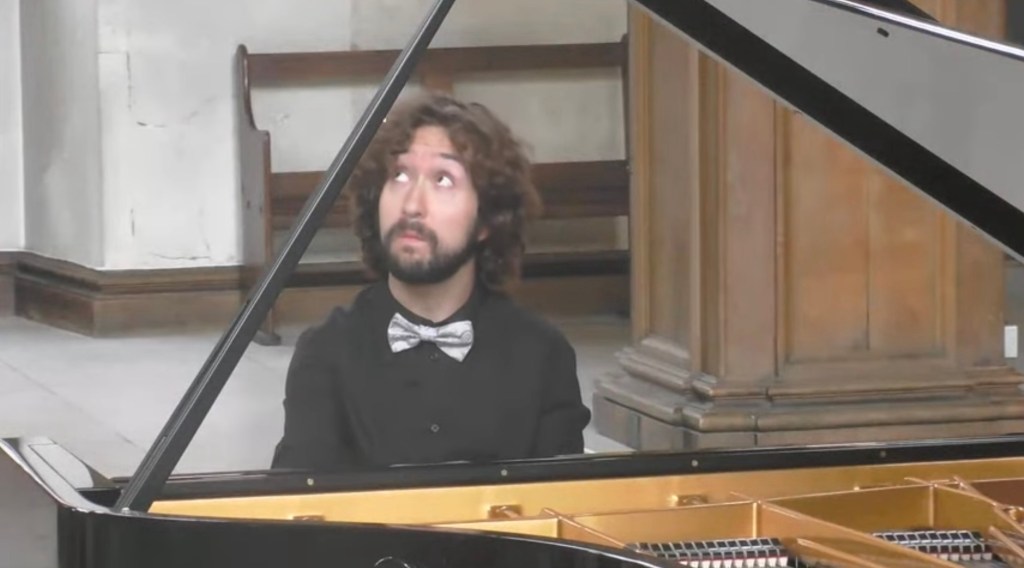
I have heard José play many times during his studies in London but today I heard a master playing with authority and style and an obvious enjoyment that was infectious.

I had first met this young Bolivian when a trustee of the Keyboard Trust, Dr Moritz von Bredow had introduced him to me.He had discovered a very young pianist in Bolivia whilst on a tour with his choir. He was so impressed that he advised him to come to Europe to study and today we hear the result of that intensive study with some of the finest teachers who include: Paul Badura Skoda,Balasz Szokolay,Claudio Martinez Mehtner,Norma Fisher,Frank Bralay,Ian Jones etc. He has been given many performance opportunities in London too by the intrepid Canan Maxton and her Talent Unlimited organisation.I was surprised to see today not the Fazioli piano,that had been chosen many years ago by Alberto Portugheis for St James’s but a magnificent Bechstein Concert Grand.Of course the great German pianos have colours and a depth of sound that are immediately recognisable but as demonstrated today they do not always keep in tune as well as the other more modern makes.

José is such a wonderful musician though that we were immediately immersed in a musical discourse where technical details are of secondary importance.It was immediately apparent from the opening Couperin Tic Toc ,that is so often played as a toccata type study , but today was played like the miniature tone poem it truly can be in the poetic hands of an artist.The resonant acoustic and rich sound of the piano helped shape this little jewel and fill it with coherence, character and wit.There followed the haunting beauty of Scarlatti’s beautiful Sonata K.208.A long drawn out melodic line of poignant beauty with ornaments added in the repeat that just added to the rarified beauty of what is a true Bel canto.The Contrapunctus IX from Bach’s Art of Fugue was a genial way of ending this first group of baroque pieces.A knotty twine of great clarity with a Busonian rhythmic energy played at breakneck speed that almost unsurprisingly came unstuck and it was only José’s musical understanding and mastery that kept it on the straight and narrow. It reminds me of ‘Nun Freud each lieben,Christen gmein’ Bach Busoni Chorale Prelude and it was a genial idea to play just this Contrapunctus and allow us to marvel at Bach’s genius without having to sit through the 90 minutes of the complete unfinished masterpiece.

What a marvel Haydn is when played like today.The Sonata Hob XVI :43 not often heard in the concert hall was played with beguiling elegance and charm with crystal clear ornaments like tightly wound springs sparkling in this scintillating atmosphere.A wonderfully rhythmic Minuet 1 that contrasted so well with the delicate mellifluous Minuet 11.The last movement was full of Haydenesque wit and delicious playful charm that José played with a sense of improvised discovery that brought it vividly to life with a jeux perlé of ravishing simplicity.

There were mists of sound in the Debussy study that was nevertheless played with a clarity and transparency of quite astonishing mastery with a charming capricious ending just thrown off with nonchalance and style. The beauty of the Bel Canto that he brought to Chopin Nocturne op 32 n. 1 was quite memorable as he played with aristocratic good taste and a refined timeless beauty.Attacking the study op 25 n. 10 that just seemed to grow out of the final chord of the Nocturne.Octaves shaped into dynamic sounds of fiery passion and a beautiful central episode that was played with great freedom but also with architectural strength that made it truly belong to the whole study.

The dramatic theatrical opening to the Liszt ‘Pesther Karneval’ revealed a magic box of sumptuous seductive beauty and piano playing of another age.A mastery of style and a command of the keyboard that was truly breathtaking and brought this lunchtime recital to a triumphant end.

A young aspiring pianist has become a great artist ready to take the world by storm.A name to watch indeed.
The young Bolivian pianist has performed in different countries in venues and festivals in Germany, United Kingdom, USA, France, Spain, Austria, Italy, Belgium, the Netherlands, Switzerland, Slovenia, Croatia, Georgia, Lithuania, Chile and Bolivia. Venues include the Teatro Municipal “Alberto Saavedra Pérez” in his hometown La Paz and the Musikverein in Vienna. He is supported by Talent Unlimited in London. He was one of the last pupils of Paul Badura-Skoda, from whom he gained a particular interest in period instruments.As a soloist, he has performed with the Jena Philharmonic Orchestra, Norddeutsche Philharmonie Rostock, Georgian Philarmonic Orchestra, La Paz Symphony Orchestra, Orquesta de Jóvenes Musicos Bolivianos and Orquesta Sinfónica Juvenil de Santa Cruz de la Sierra under the baton of Timothy Redmond, Markus L. Frank, Wojciech Rajski and Andreas Penninger.

His debut CD “Vibrant Rhythms” recently released by GENUIN Classics garnered international acclaim from important musical publications such as the BBC Music Magazine, Pizzicato, PianoNews and Interlude among many others. He awarded the Supersonic Award by Pizzicato and was nominated for the ICMA 2024.Jose is a prize winner at the Anton Rubinstein Piano Competition in Düsseldorf, Tbilisi International Piano Competition in Georgia, International Competition Young Academy Award in Rome, Claudio Arrau International Piano Competition in Chile among many others. He was a finalist at the Eppan Piano Academy and at the 63rd Ferruccio Busoni International Piano Competition.”Navarro-Silberstein is the master of all Latin American moods, playing with both feeling and real flair”. BBC MUSIC MAGAZINE.

He is a co-founder and the Artistic Director of Mazurka Concerts, a new concert platform in Cologne, Germany. The platform aims to connect young performers with a younger audience through a unique concert experience.As a pedagogue he has given masterclasses in La Paz Conservatory, Sucre Conservatory Santa Cruz Fine Arts College and Laredo School in Cochabamba and in the framework of the Eppan Piano Academy 2021. He served as a jury member at national music competitions.

He studied with Balasz Szokolay at the Franz Liszt University in Weimar and with Claudio Martínez Mehner at the University of Music and Dance in Cologne. In 2017-18 he had an Erasmus Year at the University of Arts in Graz and the Music Academy in Zagreb with Milana Chernyavska and Ruben Dalibaltayan. He just concluded his Artist Diploma programme at the Royal College of Music in London under the guidance of Norma Fisher and Ian Jones. Since September 2023 he is an Artist in Residence at the Queen Elisabeth Music Chapel under the guidance of Frank Braley and Avo Kouyoumdjian.He has scholarships from The Robert Turnbull Piano Foundation, Herrmann Foundaiton Liechtenstein- Bolivia, Theo and Petra Lieven Foundation of Hamburg, Clavarte Foundation in Bern and Elfrun Gabriel Foundation for Young Pianists.

https://www.navarrosilberstein.com/

Jose Navarro Silberstein – masterly performances of red hot intensity

José Navarro-Silberstein in Perivale with playing of authority and haunting beauty

José Navarro-Silberstein in Perivale with playing of authority and haunting beauty

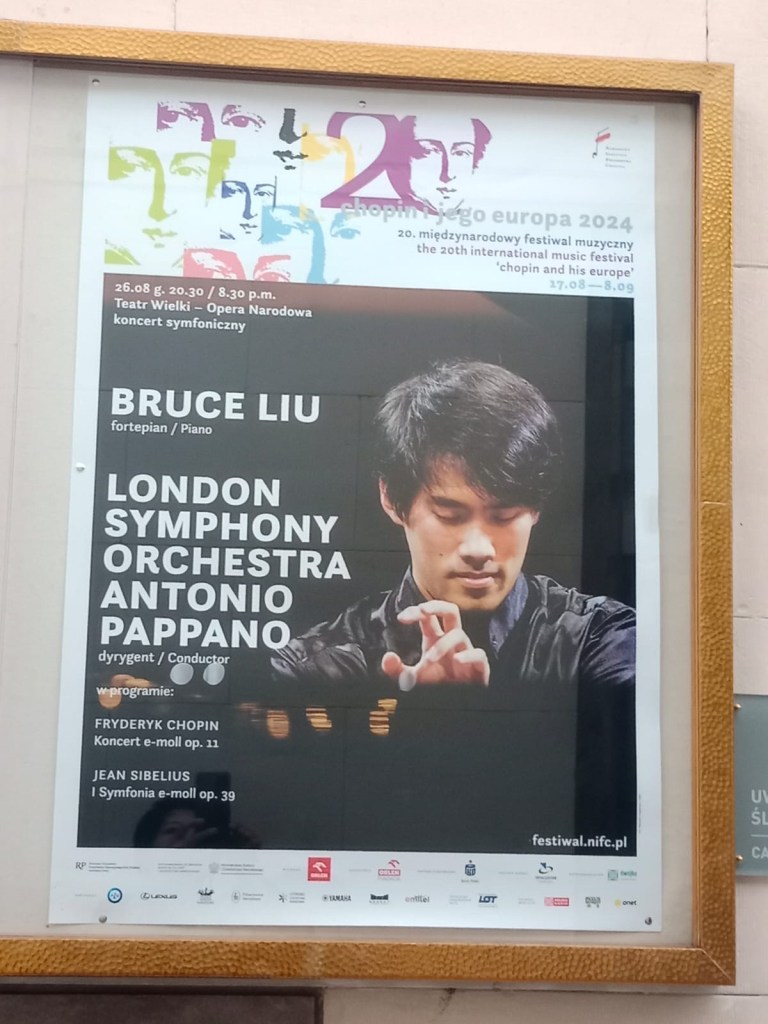
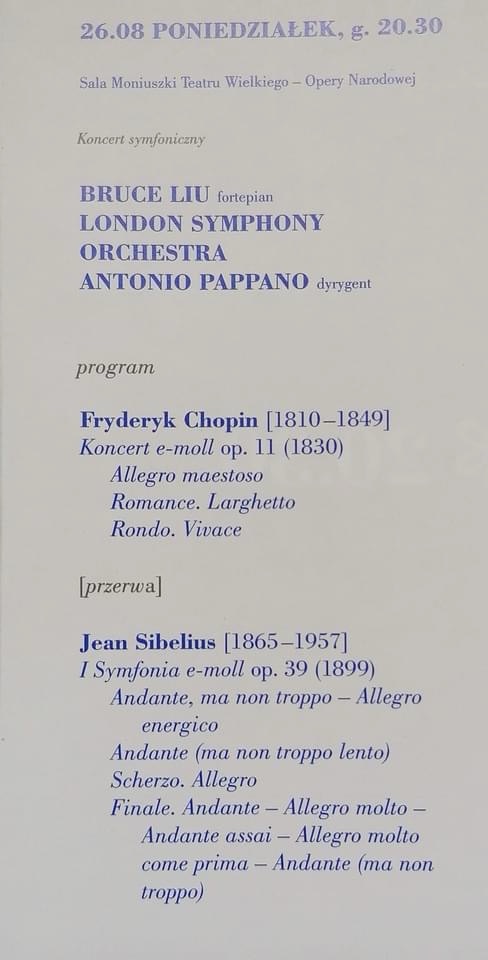
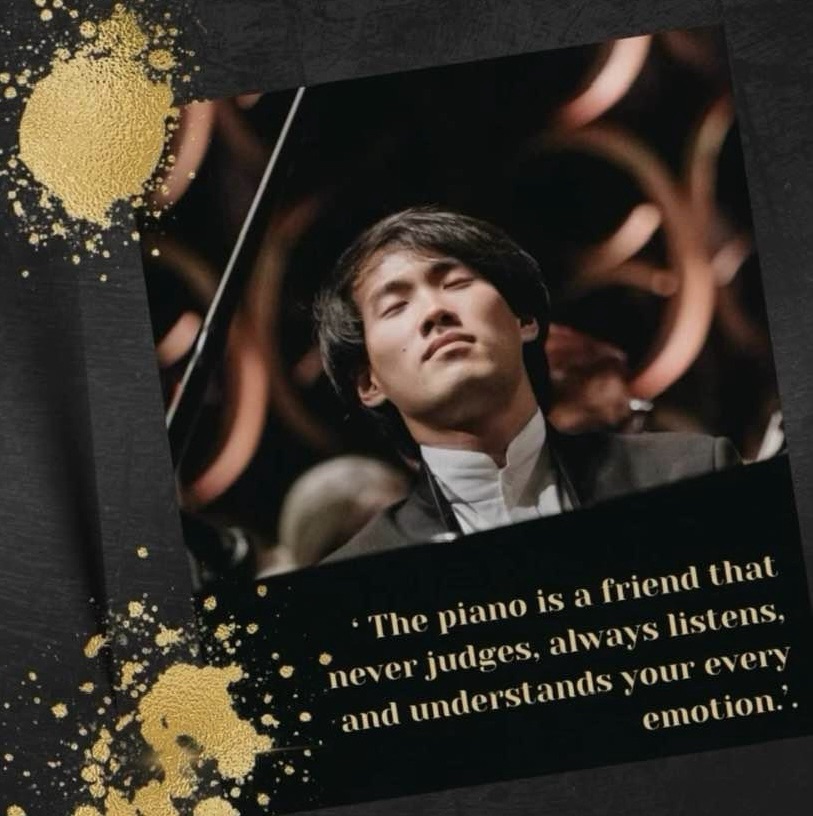
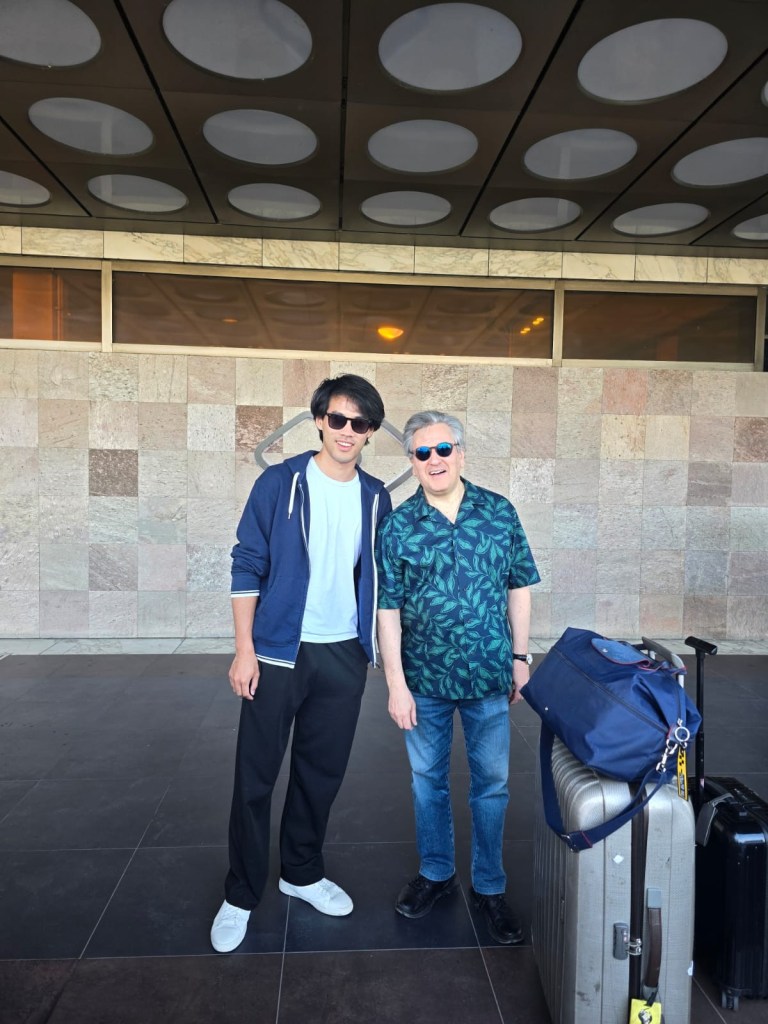
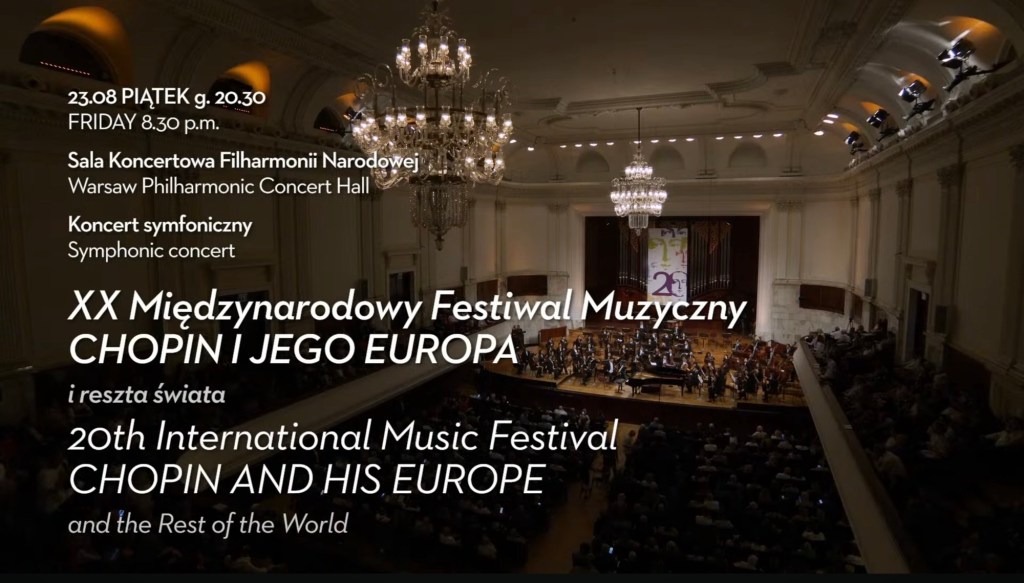
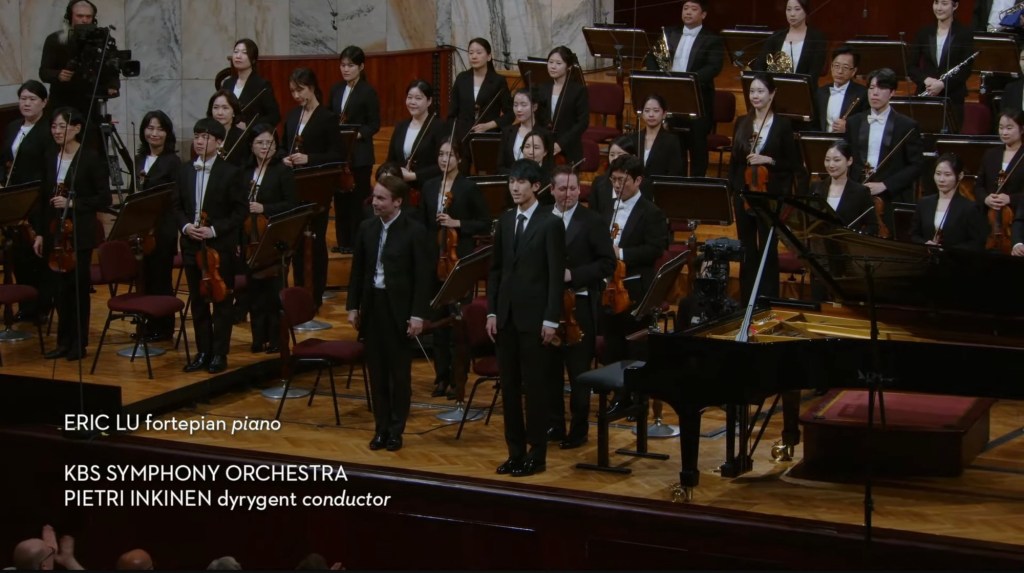
Bruce Liu and Sir Antonio Pappano take Warsaw by storm

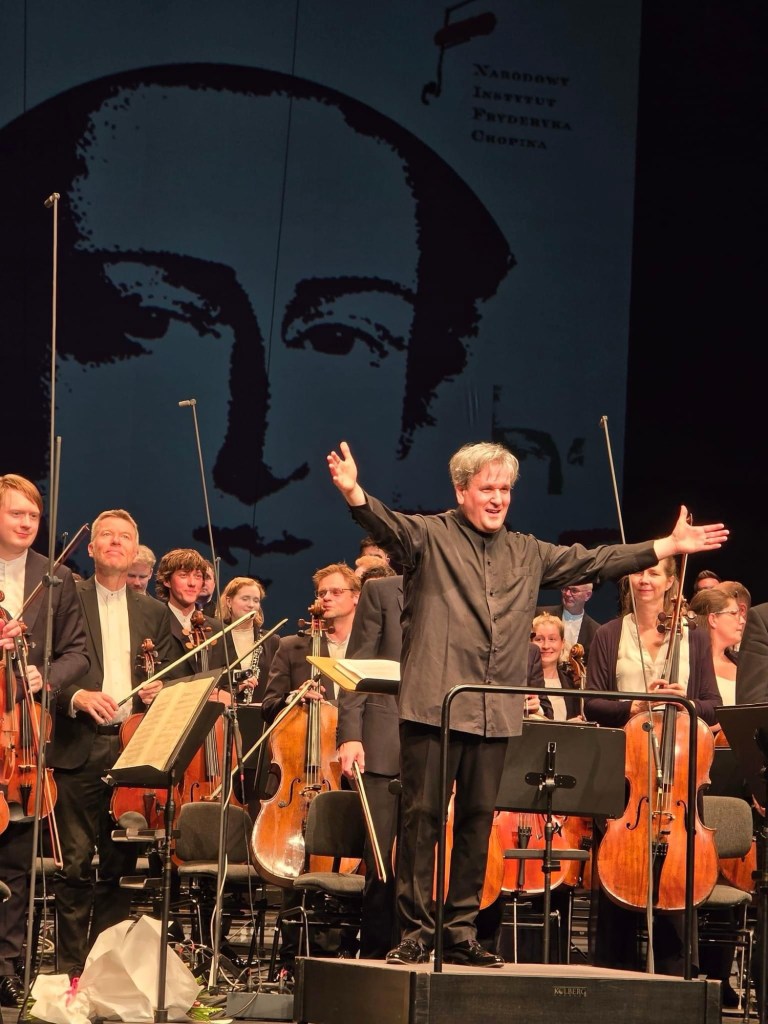
Sir Antonio Pappano with his London Symphony Orchestra

Quite extraordinary performances from the London Symphony Orchestra under their conductor Sir Antonio Pappano .As a very discerning friend of mine present in the hall said: “You can use superlatives – we don’t get music making like this often .Bruce’s playing was very spontaneous,sensitive and musical.The orchestra sounded like a small orchestra .Extraordinary control.”

“Sibelius is incredibly difficult music but very rewarding .Made evident last night by the personality of the players and their joy of playing”

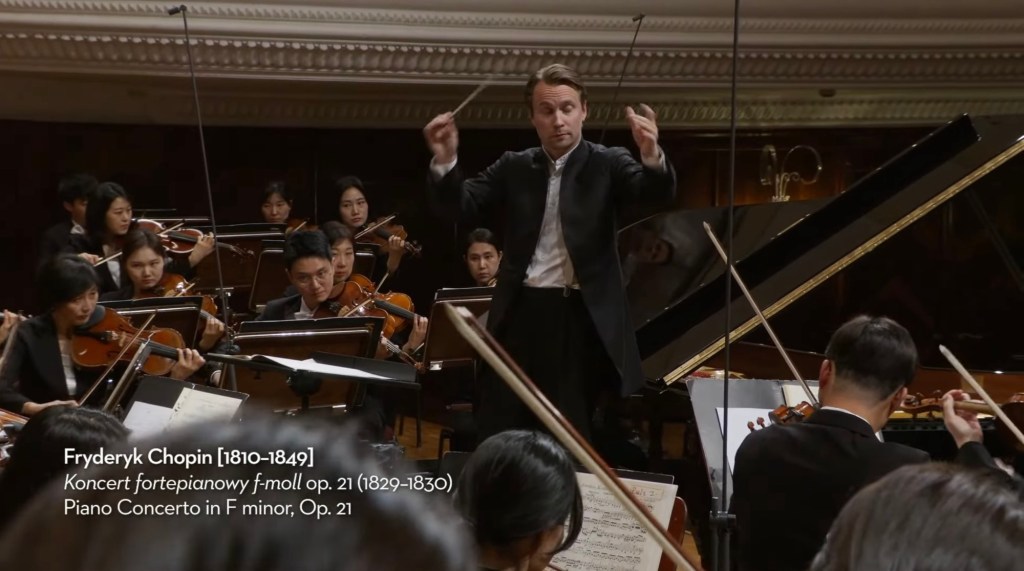
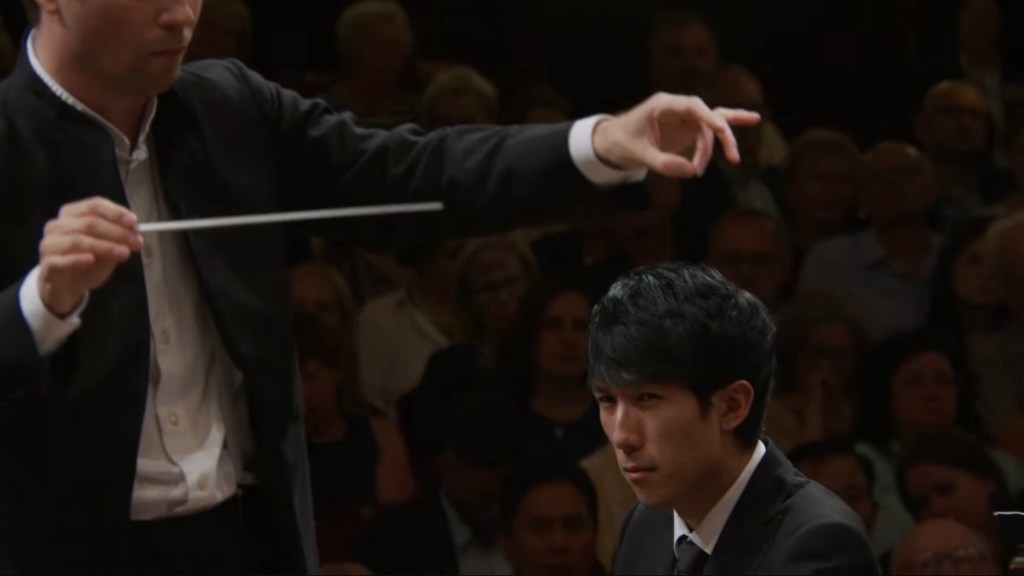
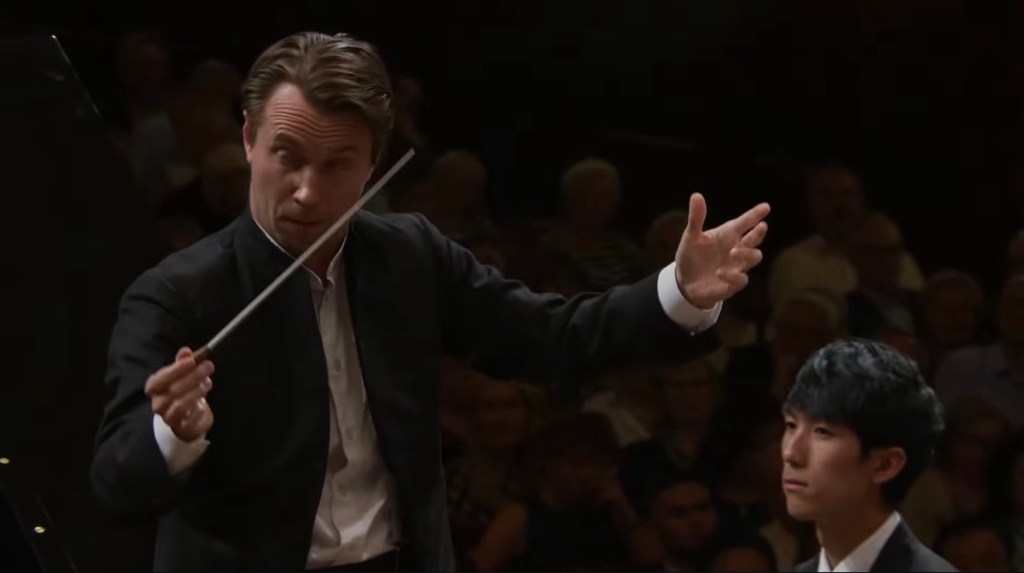
Many of the concerts are streamed live but this year there are a lot fewer but they are broadcast on the Polish Radio Channel 2 and I was able to hear most of the concert on the excellent live broadcast .A Bruce Liu in wonderful form who from a brilliant competition winner has developed into a mature artist who can find colours and bring to life an old warhorse like Chopin 1.From the very opening the orchestra under Pappano played with the same full rich sound that I remember from the Philadelphia under Ormandy with Gilels.Bruce found some exquisite colouring and in particular used the bass notes to sustain the ravishing beauty of his cantabile playing .Here was the true Bel Canto where the melodic line is held in one long breath with a beguiling rubato that belongs to another age.Such exquite phrasing and delicacy but also intelligence and spontaneity.Pappano following his every move as they truly wove a magic web together.

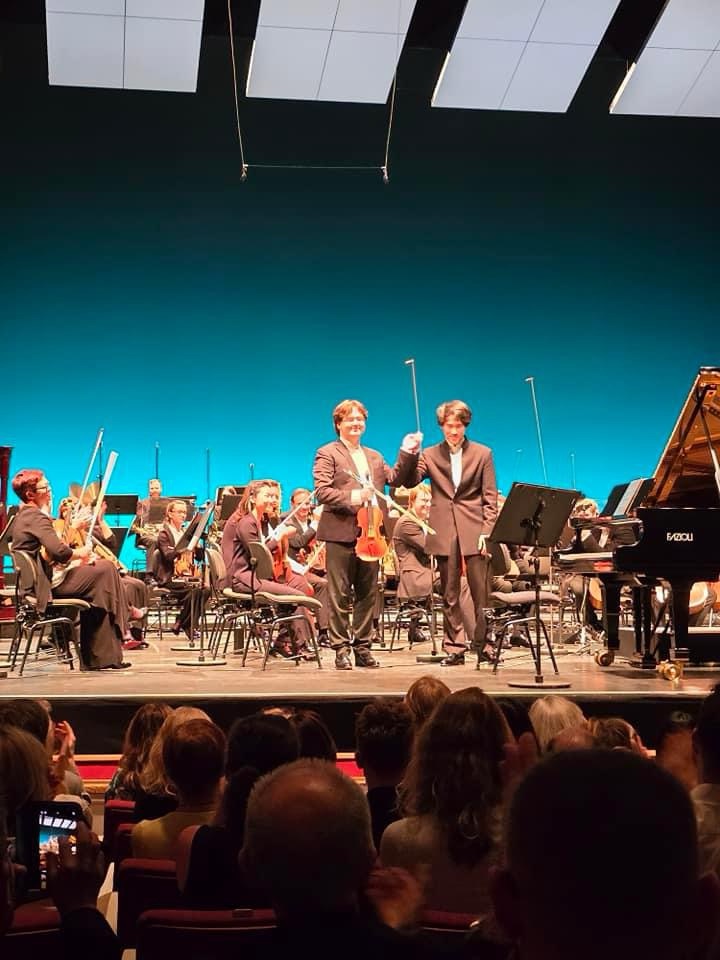
Bruce Liu with the concert master Benjamin Marquise Gilmore after their performance together of a transcription for violin and piano of Chopin /Sarasate :Nocturne op 9 n. 2 .I have not heard that since Ruggiero Ricci played them all in various transcriptions in Rome some years ago .
https://www.youtube.com/watch?v=EaIu0imP8y8
https://www.prestomusic.com/classical/products/8017038–chopin-nocturnes-arr-for-violin-and-piano?srsltid=AfmBOopFiwH_gfyZz3GyRH_orHkiXqjj1oL0Vgk3xtYT0yhRrK7BzzAz
https://christopheraxworthymusiccommentary.com/2024/03/20/christopher-axworthy-dip-ram-aram/

What a surprise to find Bruce handing over the reigns to his first violin colleague who played with the same aristocratic mastery and old world style that had seduced a full hall during the Concerto.A black key study played with radiance and sparkling clarity as well as magical unexpected shadings had the audience on their feet to salute a master.I hope the broadcast might become available to listen to again as I missed most of the Sibelius which they tell me was the stuff that legends are made of .
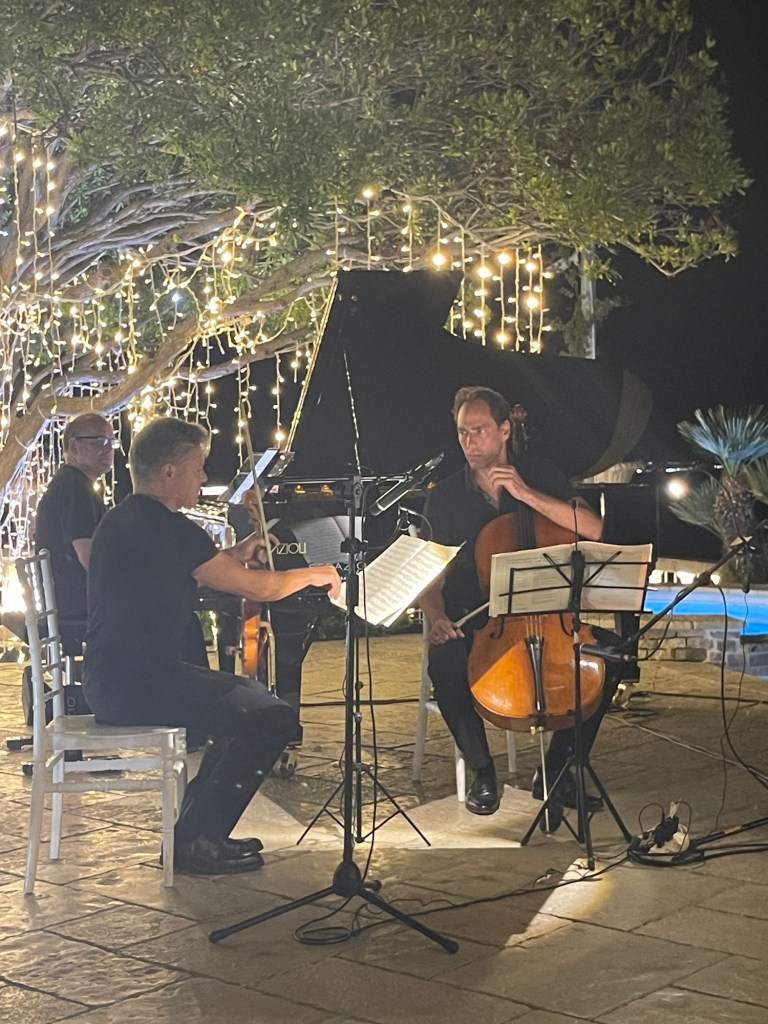
Pre concert tea in the Hotel Bristol built by Paderewski after his first American tour.Centre is Richard Berkeley Dennis whose great great grandfather had built the original hall where the concert was taking place tonight.The facade is still his as the interior was rebuilt after the war.Michael Moran and Yisha Xue on the left .Roger Pillai,Tomasz Lis the Polish pianist living in London and Iko Bylicki founder of the Chopin Society in Vancouver where Bruce has performed,also cousin of Richard B.D.

Bruce Liu at the Wigmore Hall London A supreme stylist creating a new Golden Age of piano playing of mastery and refined good taste

Stars shine brightly in Warsaw with Dang Thai Son,Bruce Liu and Lukas Geniusas

Bruce Liu’s triumphant debut at the Edinburgh Festival

Bruce Liu takes London by storm

Bruce Liu with the autobiography of Janina Fialkowska

Bruce Xiaoyu Liu showing the way to Eutopia for Chopin’s 212th birthday

Bruce Liu besieged by press and public after his triumphant return to Warsaw
The distinguished critic Michael Moran with Aleksandar Laskowski of the Narodowy Institut Fryderyka Chopina
Yisha Xue with Sir Antonio Pappano
Yisha with Bruce
Backstage Bruce and Toni
Arrivederci and thank you

Dear Christopher, reading your review of Bruce’s concert in Warsaw, I wanted you to listen to his performance from Ljubljana last night… which was even more free, more elegant, more inspired… like a carpet of beauty, light on the way and faith in life and people . Bruce and Sir Pappano’s chemistry is magical. I am still deeply moved by what I experienced yesterday, please feel some of this beauty, I know you will appreciate it. I enjoy your reviews, it seems that this war horse “has a lot of energy and hidden life left in him”

https://drive.google.com/file/d/122PI4EItqY1Yp5oFDIOEXQtwpPVAH_HQ/view?usp=share_link

Superb Chopin with Eric Lu in Warsaw .’To be or not to be with life in the fast lane’

https://www.youtube.com/live/-5c9d_DqALU?feature=shared

A beautiful performance of Chopin’s Second concerto played with superb musicianship and sensitivity. Gone was the so called tradition where personal inflections and flirtations have distorted Chopin’s thoughts. It was Artur Rubinstein who was the first to break with tradition ,even if he had been mentored by Paderewski who had an extraordinarily strong and unique personality. Of course he was followed by Pollini and then Zimerman ( who in turn had been mentored by Rubinstein) . Eric Lu showed us a Chopin of elegance and strength looking deep into the score with a quite extraordinary sensitivity to sound.The slow movement in particular was of a chiselled timeless beauty and the Rondo just slipped in with a delicacy and elegance of great luminosity with the same poetic brilliance of the scintillating scales and arabesques that the young Chopin would have demonstrated in his own very few concerts as a young man who was the revolutionary poet of the piano.

What was a true revelation with Eric Lu was his ability to recreate even the most well known of pieces and make them sound refreshingly new.Not by adding his own personality and distortions but by looking deeply into the score and with a delicacy and ultra sensitivity to sound recreate a score that we have taken for granted for too long . I remember hearing him for the first time in London playing Mozart’s B minor Adagio and A minor Rondo and being totally seduced by scores that in lesser hands did not reveal the same magic as this young man could show us.

Elisabeth Glendenning with Chloe Mun ,winner of Busoni and Geneva .on tour with the Keyboard Trust in Philadelphia.

I had heard about this young man when he was a student in Philadelphia and Elisabeth Glendenning had told me about him.Beth had been assistant to Eugene Ormandy and although retired she was very much part of Curtis Institute and organised concerts for young musicians in her retirement home.

And so it was with the first encore.What could be better known that the waltz in C sharp minor op 64 n. 2 ? But today it was as if we were hearing it for the first time! I had never been aware of the sighing opening of one chord dissolving into another or the ravishing beauty of the jeux perlé where every note had the same inflections that Caballé could enflame her audiences with.

One must mention the Finnish conductor Pietri Inkinen who from the very opening of the Chopin set tempi that immediately showed us the strength of Chopin’s often criticised orchestration.The opening was a true ‘Maestoso’ and gave Eric Lu the possibility to enter with the same authority as the more dramatic E minor concerto.The entry though is at the top of the piano but was given great strength played like an opening recitativo with the final nobility in the bass .A much lamented Nelson Freire used to play a discreet bass chord before entering to open up the harmonics of the piano.

Nelson Freire RIP……the legacy of a great artist

The superb bassoon (Chopin’s favourite wind instrument) duetting with Eric Lu in the Larghetto

There was a beautiful tempo to the ‘Larghetto’ and the ‘Allegro vivace’ just seemed to grow out of the golden glow of the final A flat cadence. Chopin’s fellow composers and Prof. Elsner’s former students, Ignacy Felixstowe Dobrzynski ( 1807-1867) and Tomasz Nidecki  (1807-1852), are believed to have helped Chopin orchestrate his piano concertos. This gave an excuse for other musicians to make slight alterations in the score .Alfred Cortot created his own orchestration of the F minor concerto and recorded it with the London Philharmonic Orchestra  under John Barbirolli  in 1935. Ingolf Wunder  recorded Alfred Cortot’s orchestration with minor changes done by himself in 2015. More recently (in 2017), Mikhail Pletnev  recorded his arrangements of both of Chopin’s piano concertos, conducting the Mahler Chamber Orchestra , with pianist Daniil Trifonov

There were some reflections though that I was glad to share with the distinguished critic ,Michael Moran ,based in Warsaw, while he was travelling home on the metro after having been overwhelmed by a magnificent performance of Sibelius’s Second Symphony.

I had just heard a remarkable recital in the same hall by Szymon Nehring another Gold medal winner like Eric Lu. The Rubinstein and Leeds respectively.

Szymon Nehring in Warsaw Classicism and visionary romantic – the revelations of a master

M.M ‘Hello Chris …. I listened to Szymon and agree with everything you say in your review. So many concerts I simply cannot keep up and listen and eat and sleep and write ….. so thank you !! On the Metro after an incredible Sibelius 2nd Symphony with the magnificent South Korean KBS Symphony Orchestra under the brilliant Finnish conductor ….. Pietari Inkinen …..’

C.A. ‘And me this morning .I am listening now. I like Eric Lu but he has no real aristocratic authority yet just a very sensitive musician with a technical mastery from Curtis ….like Nehring from Yale …..we used to call it rather enviously the transatlantic sound ….Rubinstein could never play with that cleanliness or correctness but he could tell such wondrous stories that will never be forgotten.

M.M ‘Agree completely about Rubinstein more and more …. the narrative, interpretative element is so often missing in too many young pianists. We could talk long into the night concerning training of the young !’

C.A.’It is not the training as Ruggiero Ricci said to me.When he was young it took days to cross the Atlantic that was time filled with contemplation,practice and relaxation. Now you can be playing in London today ,Tokyo tomorrow and New York the day after .Life in the fast lane is good for the bank balance but not for the soul’

M.M. ‘The literary inspiration for all nineteenth century composers is scarcely ever mentioned yet is vital …. Well, reading ….. do conservatoires insist on it ? How many young musical artists read the poetry that inspired Schumann and Liszt ?Many have never even heard of Byron …. that profound influence on creative life in all the arts in Europe.’

Fascinating food for thought especially now that there is such an extraordinary preparation for pianists. I doubt there has ever been a time when so many pianists could play with such mastery.When I was a student in London we used to look in awe at anyone who could play Rachmaninov 3 or Prokofiev 2.Ashkenazy made his London orchestral debut with both in the same programme! There was also the palette of sounds that although Matthay was expounding his theory that in each note there was an infinite variety of sounds , it took the arrival of Richter to show us that there was a level of sound from pianissimo to mezzo forte that we never knew existed! We were told to project the sound ( as Richter spoke about with enormous admiration Rubinstein’s old style concert cantabile ) .

https://christopheraxworthymusiccommentary.com/2024/03/20/christopher-axworthy-dip-ram-aram/

I remember Richter playing Beethoven’s op 22 Sonata in the vast space of the Royal Festival Hall and not understanding a critic who said that the slow movement had been non existent.He meant ,of course,that the sound was not projected out but we the audience were drawn in, to a magic world that was completely new to us in the west.


 “Act of Touch in All Its Diversity ” is a guide to playing the piano or pianoforte by English pianist Tobias Matthay. It aims to provide the reader with a full understanding of the foundations of playing the instrument, explaining each step with simple instructions and expert tips. This classic guide is recommended for novices and new players, as well as those with an interest in early pianos and their operation. Contents include: “Preamble”, “The Problem of Pianoforte Training”, “The Problem of Education in the Art of Tone-Production”, “The Problem of Muscular Education”, “The Final Problem: The Union of Execution with Conception”, and “Conclusion, and Summary”. Tobias Augustus Matthay (1858 – 1945) was an English pianist, composer, and teacher. He was taught composition while at the Royal Academy of Music by Arthur Sullivan and Sir William Sterndale Bennett, and he was instructed in the piano by William Dorrell and Walter Macfarren. Many vintage books such as this are increasingly scarce and expensive. It is with this in mind that we are republishing this volume now in an affordable, modern, high-quality edition complete with a specially-commissioned new biography of the author

There is also the question of weight that seems to be missing in young pianists.I remember Tortelier asking me if I understood what he meant by playing with weight.He explained that it was playing into the keys , deeply like a limpet sucking out the juice from within, not on the surface but within the very body. Perlemuter of course ,a protégée of Cortot was to show me how never to leave the keys.Like an organist even changing fingers while holding one key down so as to make a perfect finger legato and never to strike the key percussively like a sledge hammer!

Clifford Curzon Mozart K 466

To see the scores with Perlemuters fingers is to see the scores of Curzon where the actual notes are almost obliterated by colours and fingerings – as Nadia Boulanger quoted often to her students :”Words without thought no more to heaven go”

Richter with Rubinstein in Paris on the famous occasion when Sol Hurok left them to talk together .The next morning they both needed the doctor after drinking much Champagne together .

For me Rubinstein was and still is the example of playing with real aristocratic weight and the sounds that he made in the concert hall I have rarely if ever heard since.I think it comes too with experience and the real love of what you are doing and of course a mature mastery that comes only with age. This is how Rubinstein described it :

And Cortot is still such a poetic inspiration :

https://youtu.be/UroWVTDb8Oo?feature=shared

Leeds winner Eric Lu showed an astonishing command of keyboard tone and color.. the sign he is already a true artist. It was a spellbinding experience.” – The Guardian

“Lu’s playing is in a rare class – sensitive and emotionally intuitive.” – BBC Music Magazine

Eric Lu won First Prize at The Leeds International Piano Competition in 2018 at the age of 20. The following year, he signed an exclusive contract with Warner Classics, and has since collaborated with some of the world’s most prestigious orchestras, and presented in major recital venues.

Recent and forthcoming orchestral collaborations include the Chicago Symphony Orchestra, London Symphony Orchestra, Boston Symphony Orchestra, Los Angeles Philharmonic, Oslo Philharmonic, Orchestre Philharmonique du Luxembourg, Royal Stockholm Philharmonic, Orchestre National de Lille, Finnish Radio Symphony, Yomiuri Nippon Symphony, Seattle Symphony, Helsinki Philharmonic, Royal Philharmonic, Tokyo Symphony, Shanghai Symphony at the BBC Proms, amongst others. Conductors he collaborates with include Riccardo Muti, Mirga Gražinytė-Tyla, Ryan Bancroft, Marin Alsop, Duncan Ward, Vasily Petrenko, Edward Gardner, Sir Mark Elder, Thomas Dausgaard, Ruth Reinhardt, Earl Lee, Kerem Hasan, Nuno Coehlo, Dinis Sousa, and Martin Frӧst.

Active as a recitalist, he is presented on stages including the Köln Philharmonie, Concertgebouw Amsterdam, Queen Elizabeth Hall London, Elbphilharmonie Hamburg, Leipzig Gewandhaus, San Francisco Davies Hall, BOZAR Brussels, Fondation Louis Vuitton Paris, 92nd St Y, Aspen Music Festival, Seoul Arts Centre, Warsaw Philharmonic Hall, and Sala São Paulo. In 2025, he is appearing for the 7th consecutive year in recital at Wigmore Hall London. He has also been invited for the 7th time to Warsaw’s ‘Chopin and his Europe Festival’ and will debut at La Roque-d’Anthéron Festival.

Eric’s third album on Warner Classics was released in December 2022, featuring Schubert Sonatas D. 959 and 784. It was met with worldwide critical acclaim, receiving BBC Music Magazine’s Instrumental Choice, writing, “Lu’s place among today’s Schubertians is confirmed”. His previous album of the Chopin 24 Preludes, and Schumann’s Geistervariationen was hailed ‘truly magical’ by International Piano.

Born in Massachusetts in 1997, Eric Lu first came to international attention as a Laureate of the 2015 Chopin International Competition in Warsaw aged just 17. He was also awarded the International German Piano Award in 2017, and Avery Fisher Career Grant in 2021. Eric was a BBC New Generation Artist from 2019-22. Eric Lu was born on December 15, 1997 to a father from Kaohsiung ,Taiwan , and a mother from Shanghai ,China . He grew up in Bedford Massachusetts , and started piano studies at age six with Dorothy Shi (杨镜钏) in the Boston area. Later on, he enrolled at the New England Conservatory Preparatory School , where he studied with Alexander Korsantia and A. Ramon Rivera. In 2013, he was admitted into the Curtis Institute of Music  in Philadelphia, where he studied with Jonathan Biss and Robert McDonald. He is also a pupil of Dang Thai Son.

Szymon Nehring in Warsaw Classicism and visionary romantic – the revelations of a master

https://www.youtube.com/live/D_rrfTym0YI?feature=shared

Ludwig van Beethoven [1770 –1827]
Piano Sonata in F minor, Op. 2 No. 1
Piano Sonata in E flat major, Op. 31 No. 3

Fryderyk Chopin [1810 –1849]
Rondo in C minor, Op. 1
Berceuse in D flat major, Op. 57

Ferenc Liszt [1811 –1886]
Années de pèlerinage. Première année. Suisse, S. 160

An extraordinary recital from a pianist whose debut recital I had heard some years ago at the Wigmore Hall in London as winner of the Rubinstein Competition.I remember the discussions between Menahem Pressler and Peter Frankl during the interval talking about his phenomenal performance of ‘Petrushka’. We were all astonished and amazed until Pressler gently pointed out that it is a dance and it would have been impossible to dance to his performance without breaking a leg!

Scrupulous attention to Beethoven’s markings but maybe even too literal with staccatos very short and sharp but with an enviable driving energy .An Adagio etched in pure sculptured sounds with a beautifully drawn out ending (even though not marked in the score) and with two short pianissimi chords of poignant beauty. There was an elegance and simplicity ln the Menuetto and Trio and an astonishing dynamic drive to the Prestissimo that I have only heard similar from Serkin
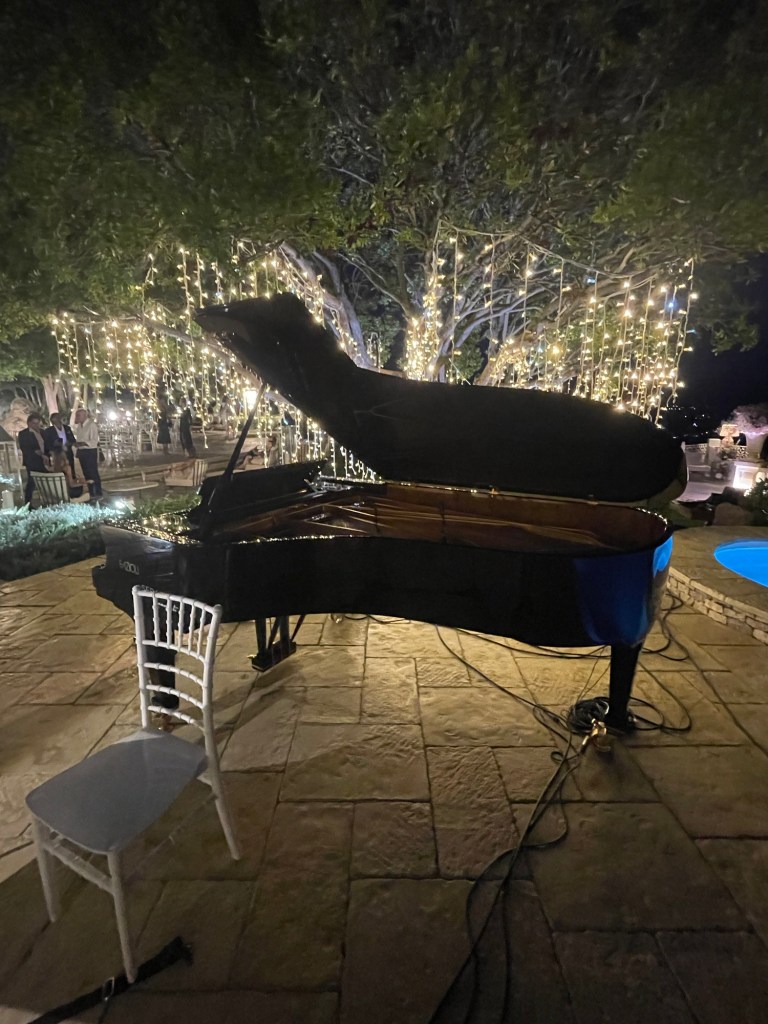
Tonight we heard two Beethoven Sonatas played with enviable technical assurance and scrupulous attention to the composers wishes.Trills that were like springs,staccatos that were scrupulously played as such and above all a clarity and fingerfertigkeit that was truly phenomenal.But one felt that this was such a classical performance that any personal feelings or participation were swept away by an exemplary exposition of the notes on the printed page.But it was rather black and white and by choice lacking in colour or any personal fantasy.

A dramatic opening of precision and rhythmic energy as this was the start of an epic journey of pastoral freshness.A driving rhythm to the Scherzo of clockwork precision and drive and strange being so scrupulous that he should have added a ritardando on the final pianissimo chords.There was a full beautiful tone to the Menuetto and a Trio of elegance almost like a music box but again why the unmarked ritardando at the end . The Presto con fuoco was played with an exhilarating ‘joie de vivre’ with a relentless forward movement of dynamic drive
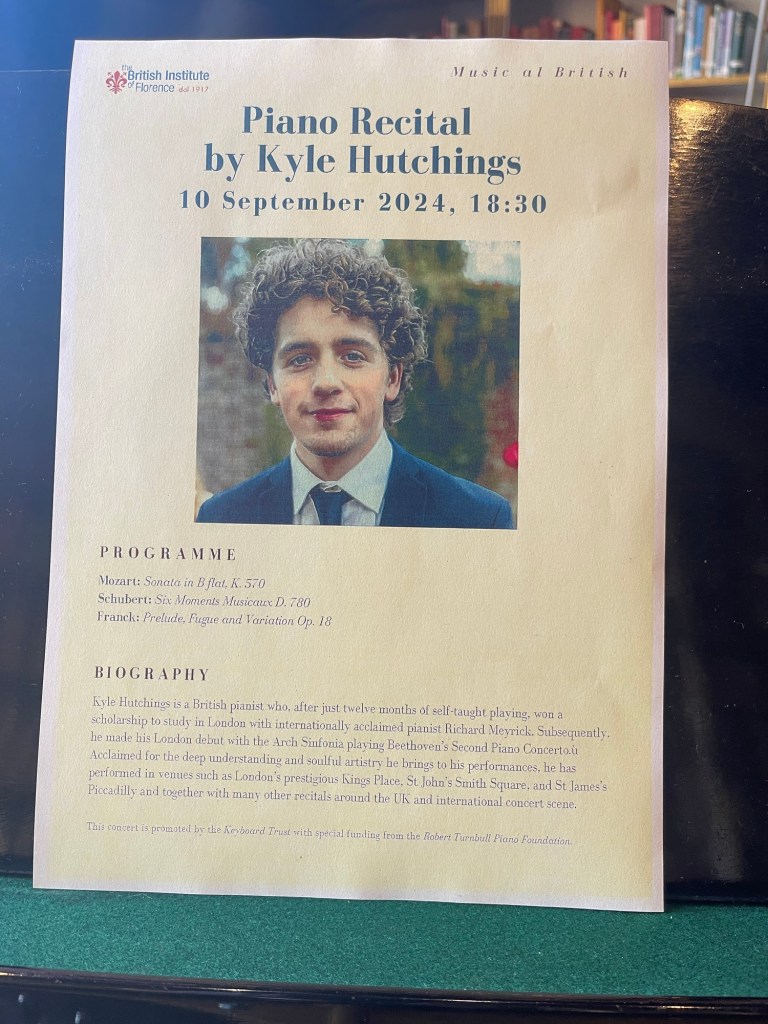
After the interval Maestro Nehring appeared without the rather formal jacket that he had worn for Beethoven appearing in a painter’s ample tunic and he was suddenly freed of all the formal restraints that he had imposed on himself in the first half and now played with a freedom and ravishing sense of colour that were breathtaking .

This early Rondo was played with such precision but also with the beauty of the ‘Più lento’ of chiselled elegance .Cascades of notes were played with delicacy and brilliance as it unwound with great style with barely whispered left hand scales accompanying the melody with extraordinary beauty.

A rubato of such beguiling beauty in the Mazurkas and the true vision of a great artist .If the Berceuse was a little fast and one feared that his precision and clarity might again obscure his artistic soul ,that was completely forgotten when the end of the Berceuse magically became the start of Liszt’s ‘Au Lac de Wallenstadt.’

Here the doors to heaven truly opened as this young man gave some of the most personal and beautiful performances of Liszt that I have ever heard.The ravishing beauty of ‘Au Lac ‘ where the waves were barely audible as the melodic line glowed and glistened as it was shaped with extraordinary sensibility.A rubato that was barely noticeable but drew you in to his magic spell which is where we remained for these four pieces from ‘Années de Pèlerinage’.

Obviously he had chosen the most poetic pieces as we passed from the ‘Lac’ to a ‘Pastorale’ bathed in pedal and of a luminosity of sparkling purity. ‘Les Cloches de Genèvre’ was revealed to be the miniature masterpiece that it truly is and the ‘Vallée d’Obermann’ was quite breathtaking and simply the greatest performance I have ever heard.A poetic understanding of a truly great tone poem where he passed from breathtaking passion to barely whispered confessions of heartrending poignancy.

The entire second half had been played without a break ,from the early Rondo op 1 played with a real sense of character and style and Chopin’s heartrending last piece for piano the Mazurka op 68 n. 4 through the Berceuse to a Liszt of remarkable poetic freedom even adding some embellishments that added even more poignancy and potency to such overwhelming;y convincing interpretations.

Two encores showed off the phenomenal technical mastery of this young musician with a minute waltz that I have never heard played with such clarity and precision but allied to a beguiling rubato and infectious sense of style.’Etincelles’ a famous encore of Horowitz was played with breathtaking charm and virtuosity with some additions that sounded as though they could have been by Volodos and an ending that was even more ‘tongue in cheek’ than Horowitz himself.

An artist who is really the incarnation of Florestan and Eusebius where the duel personality of severely classical on one hand and visionary mastery on the other could exist in the same person with only an interval and a change of clothes to separate them! Astonishing ! I know which one I prefer and am sure as he matures as artist he will combine the two worlds into the one glorious whole of his choice.

Queue of admirers after the concert

Considered to be the most gifted and promising pianist of his generation in Poland, Szymon Nehring is the only Pole to have won first prize at the Arthur Rubinstein International Piano Competition in Tel Aviv (2017). He was also a finalist at the Chopin Competition in Warsaw at only 19 .

Szymon performs with orchestras such as Sinfonia Varsovia, Warsaw Philharmonic Orchestra, Polish National Radio Symphony Orchestra in Katowice, NFM Wroclaw Philharmonic, Israel Symphony Orchestra, Bamberger Symphoniker, Hamburger Symphoniker, Orchester philharmonique de Marseille and Orchestre Paseloup in France and the Orchestra of the Eighteenth Century, collaborating with conductors such as John Axelrod, Lukas Borowicz, Sylvain Cambreling, Karina Canellakis, Pablo Heras-Casado, Marzena Diakun, Lawrence Foster, Giancarlo Guerrero, Jacek Kaspszyk, Grzegorz Nowak, Pawel Przytocki, George Tchitchinadze, David Zinman and Omer Meir Wellber. He also performed and recorded with the late Krzysztof Penderecki, among other works his piano concerto.

Szymon Nehring has performed in venues such as Carnegie Hall, Tonhalle Zürich, the Elbphilharmonie in Hamburg, the Palau de la Música Catalana in Barcelona, the Auditorio Nacional in Madrid, the Konzerthaus in Berlin, the DR Koncerthuset in Copenhagen, the Musikverein in Vienna, as well as the Herkulessaal and the Prinzregententheater in Munich.

Many recordings have already been released, in recital and with orchestra, including Chopin’s two piano concertos under the baton of K. Penderecki. During the 2024/25 season, a new minimalistic recording will be released, as well as the first Volume of a Chopin Solo Works Cycle for the Chopin Institute in Warsaw, a project meant to last several seasons. Amongst halls he will perform in this season are Bozar in Brussels, Laeiszhalle in Hamburg and La Seine Musicale in Paris. He will also perform Szymanowski´s 4th Symphony at home and on tour with the Polish National Radio Symphony Orchestra and Marin Alsop.

He started his education as a student of the M. Karłowicz’s Primary School and then the F. Chopin’s Secondary Music School in Cracow (2008–2014), which he graduated with distinction, being in the piano class of Olga Łazarska. Then he graduated from the Academy of Music in Bydgoszcz under the guidance of prof. Stefan Wojtas and in the period of 2017–2019 he has completed the Artist Diploma program at the Yale University in New Haven in the class of prof. Boris Berman. Since 2020, he has been a PHD student at the Doctoral School of the Academy of Music in Bydgoszcz in the class of prof. Katarzyna Popowa-Zydroń.

In 2015, he was awarded the Krystian Zimerman scholarship.