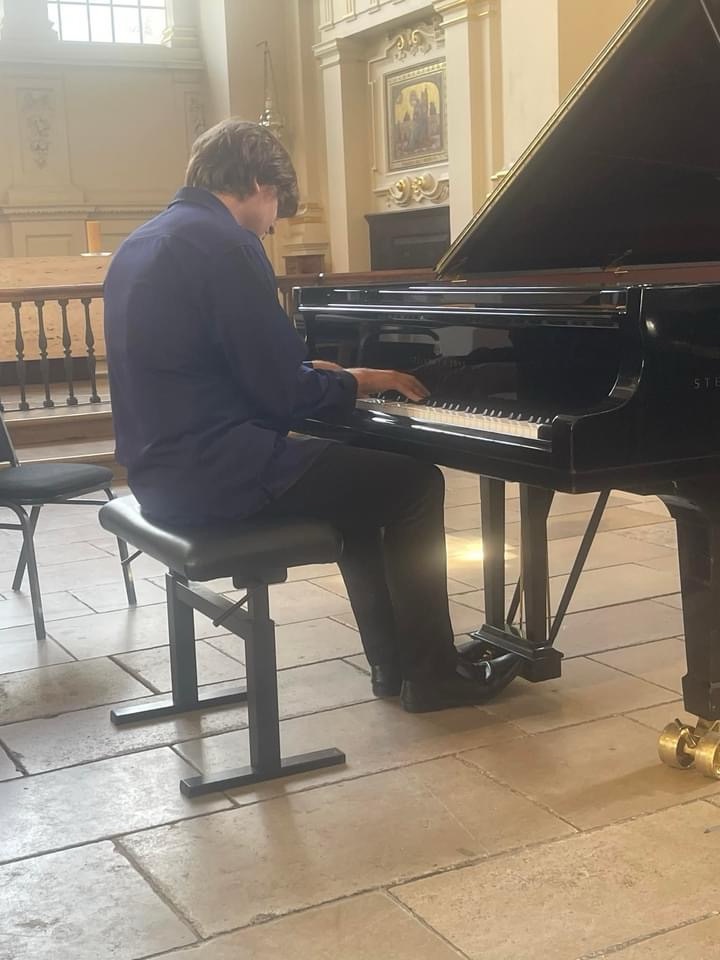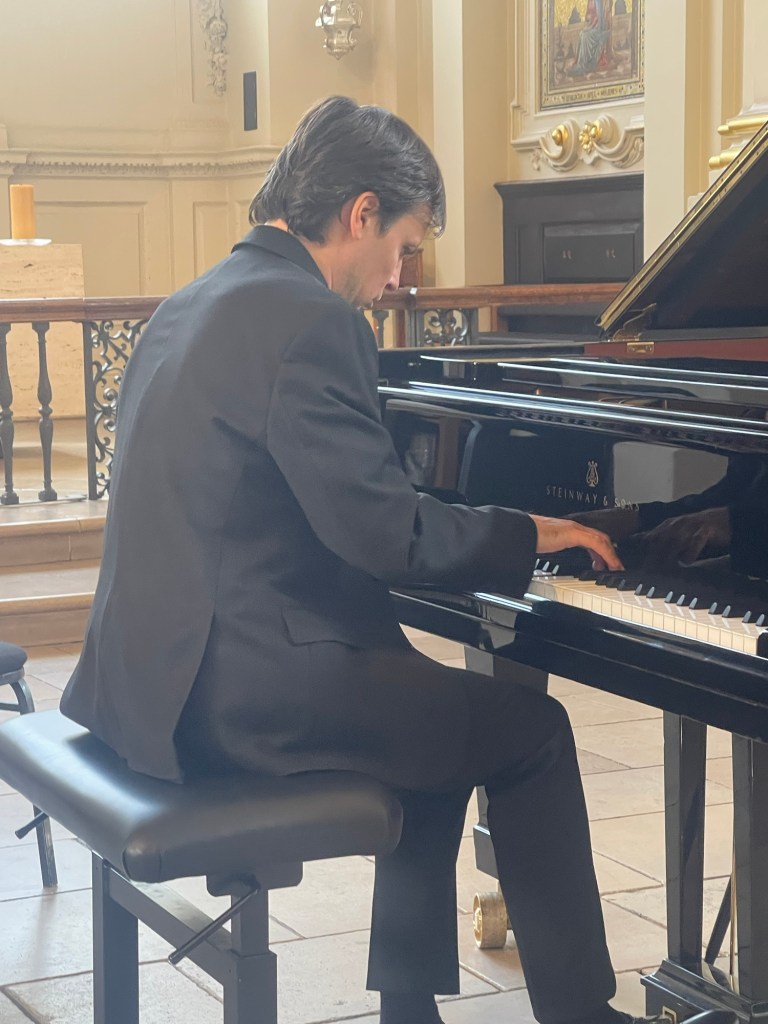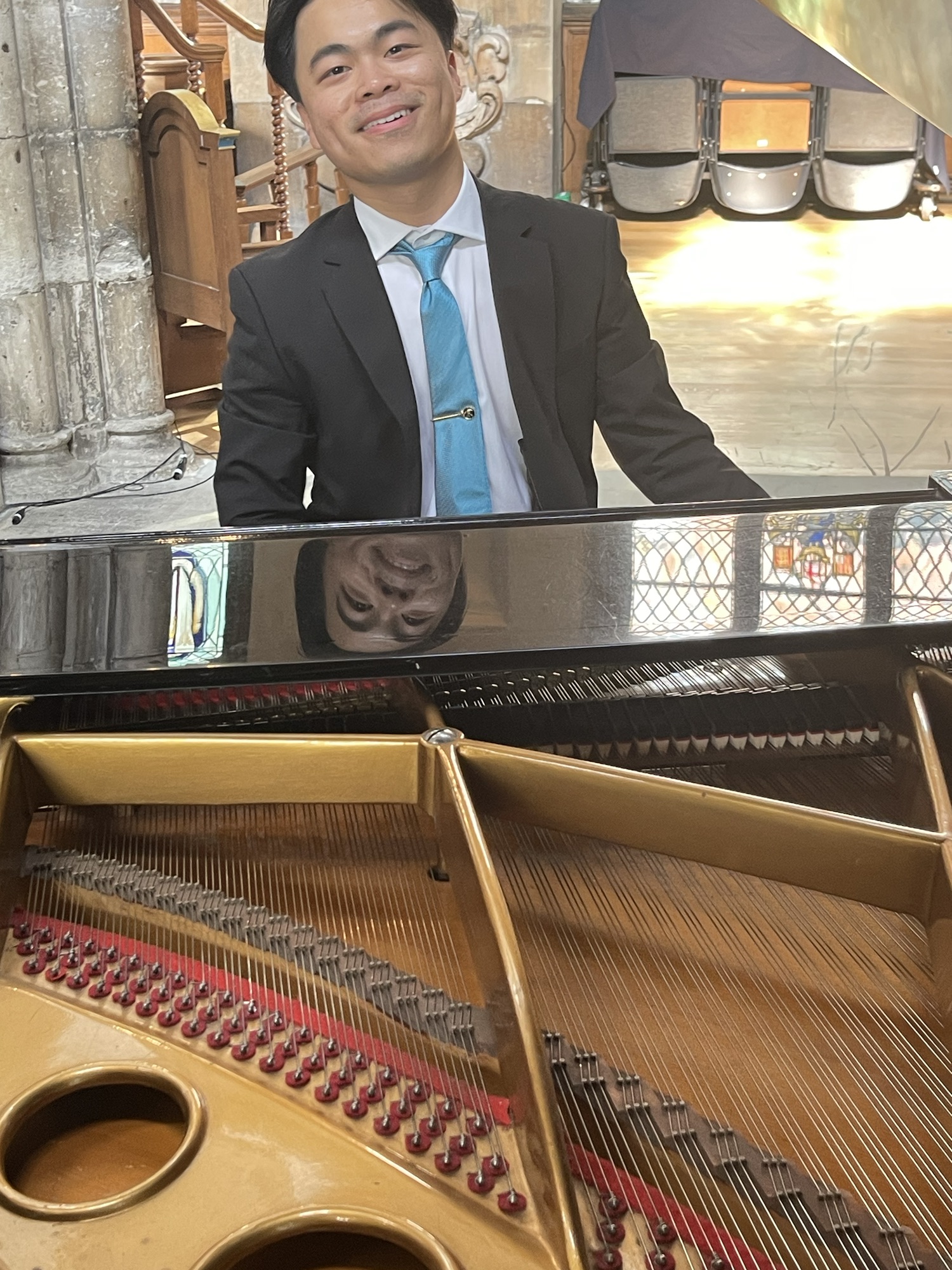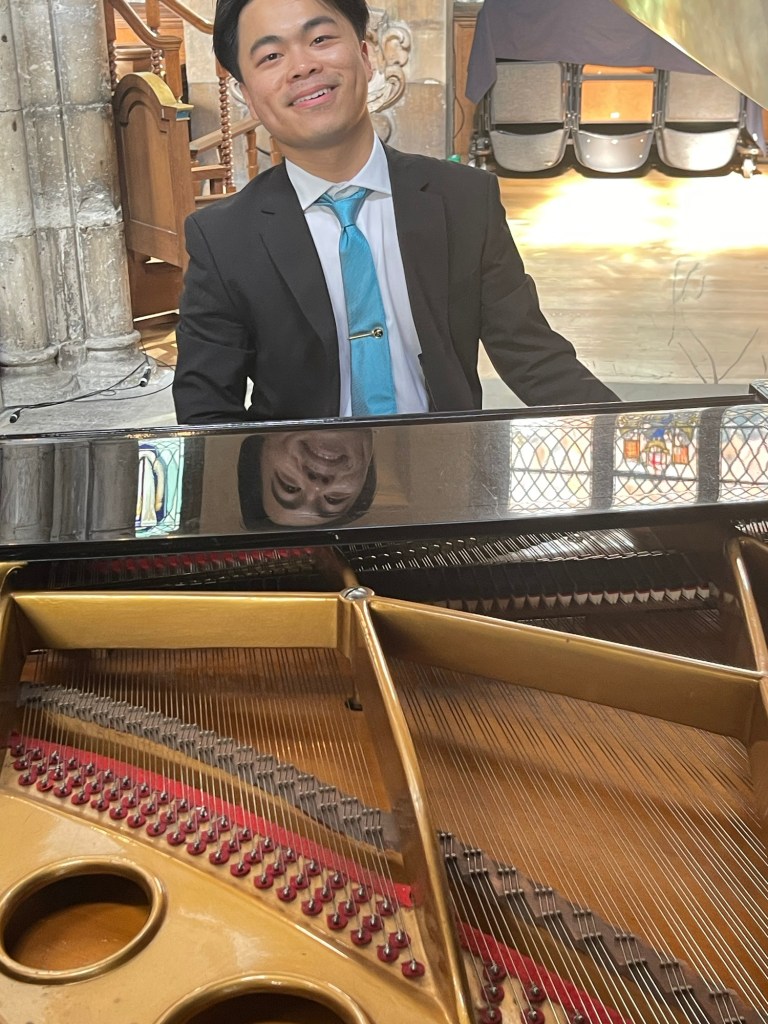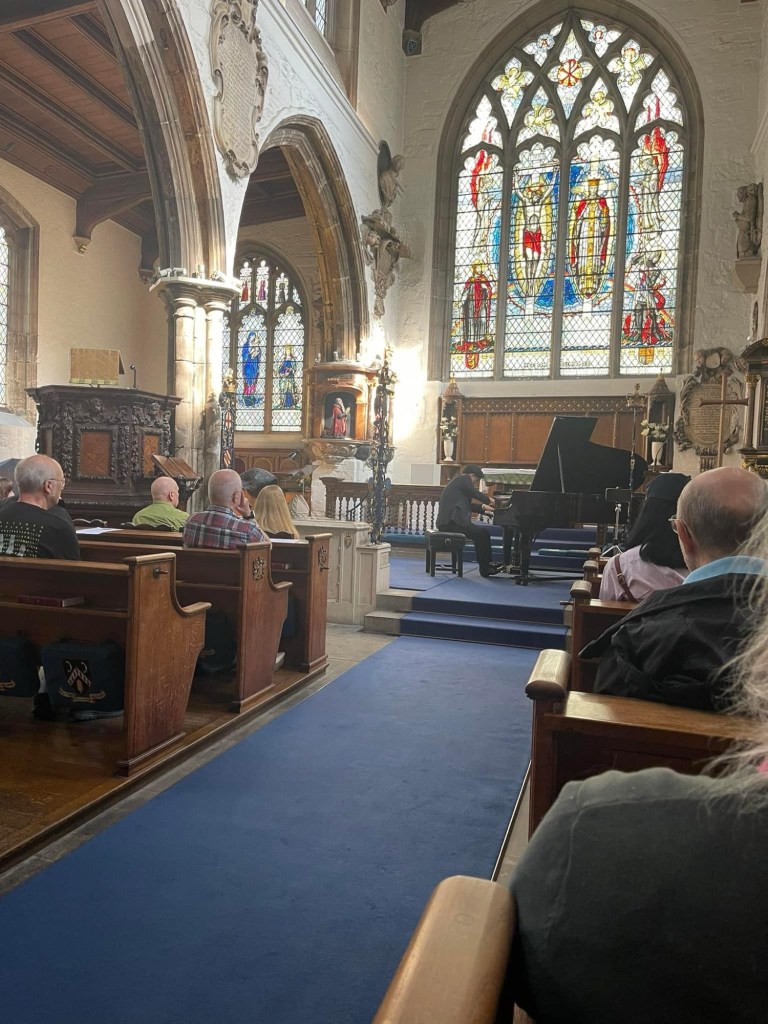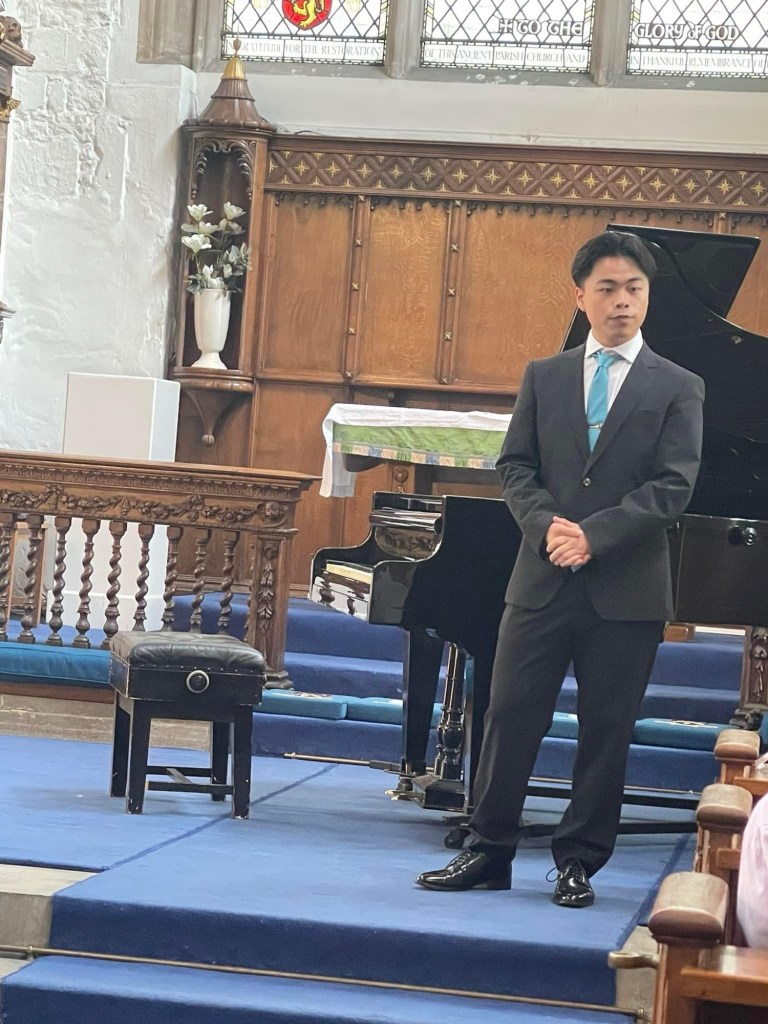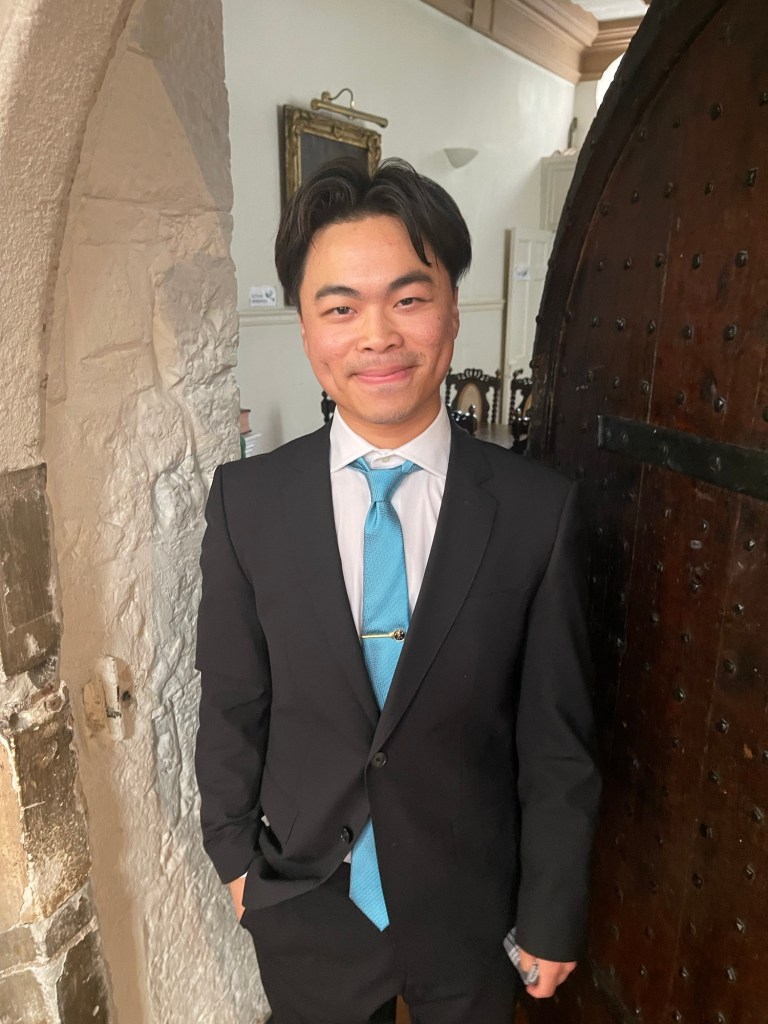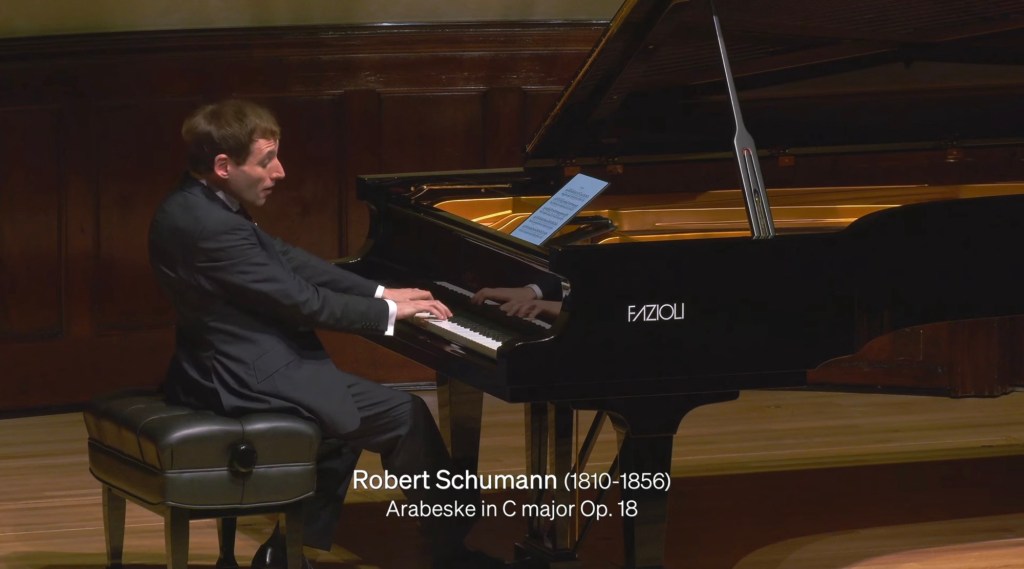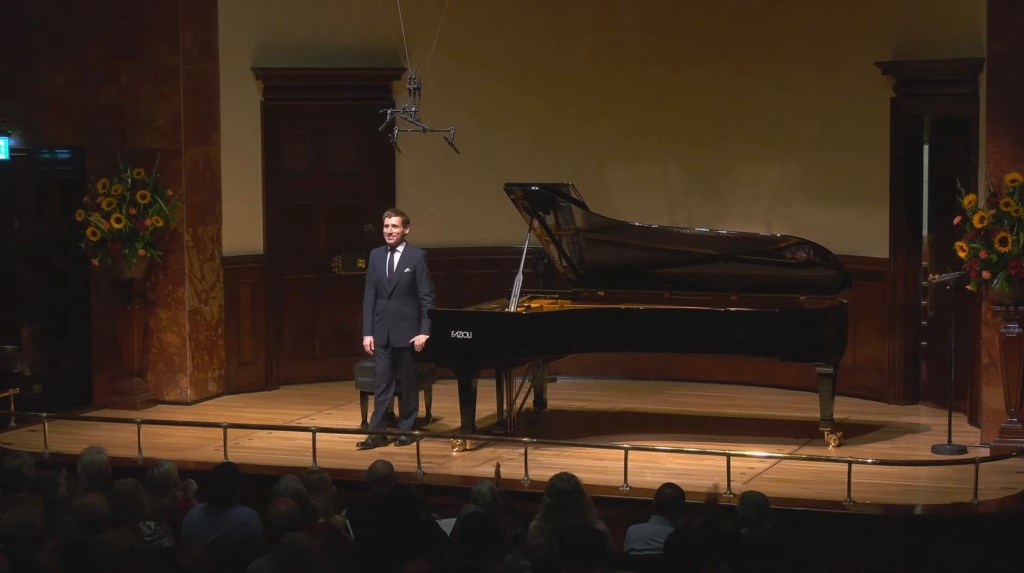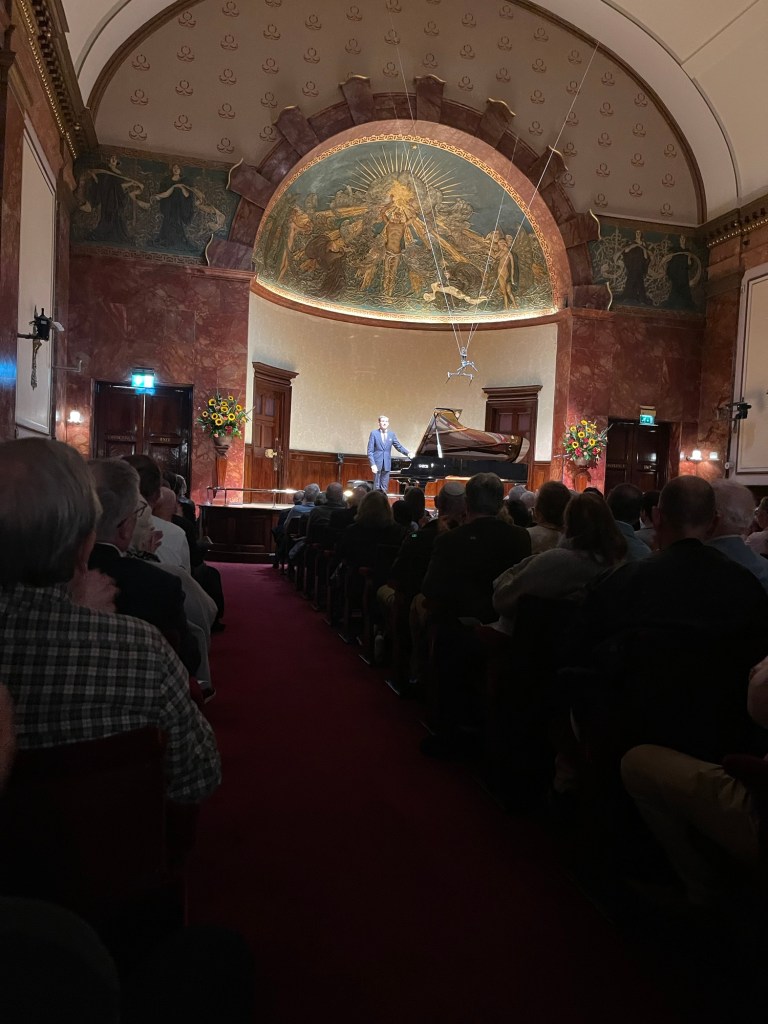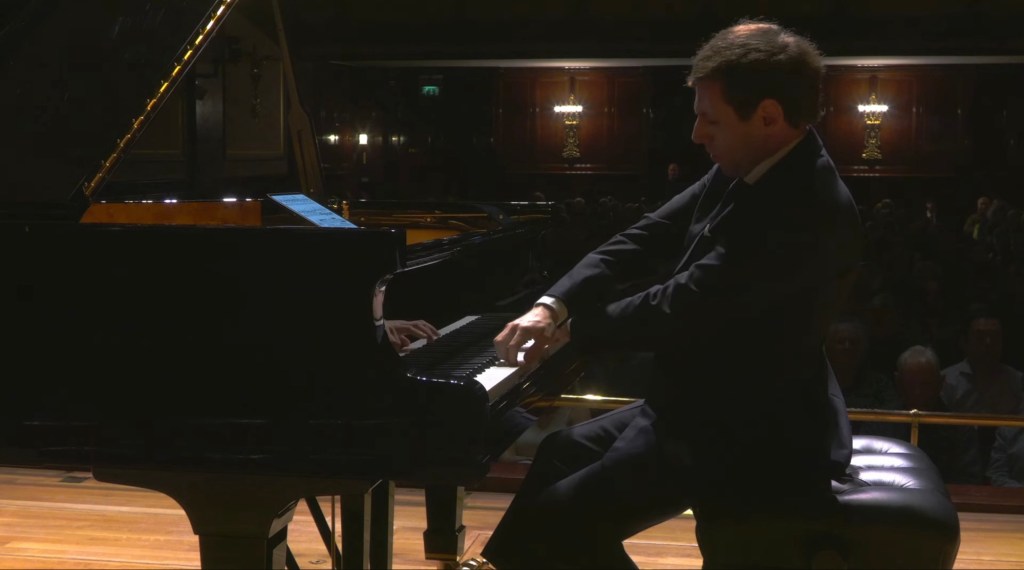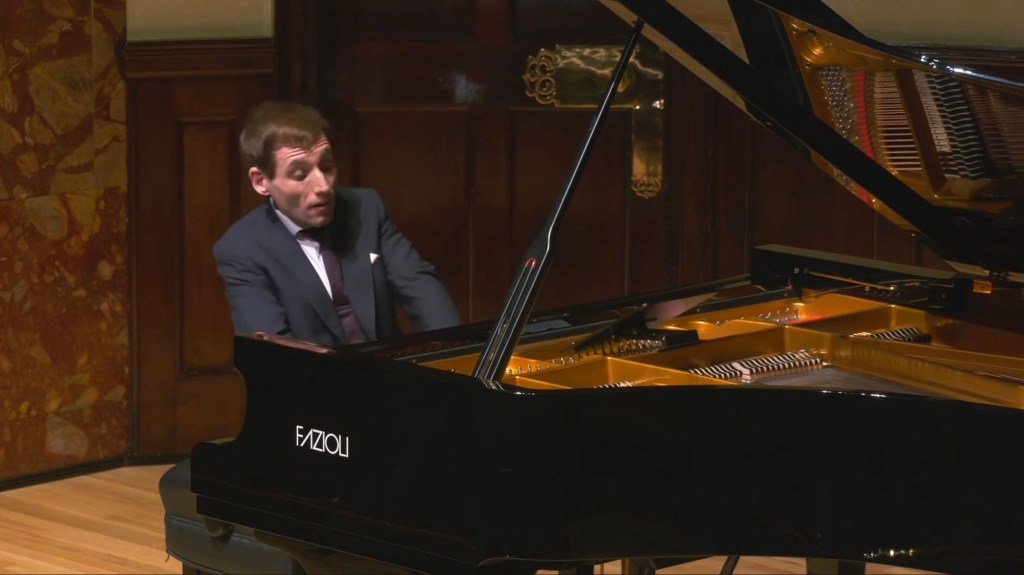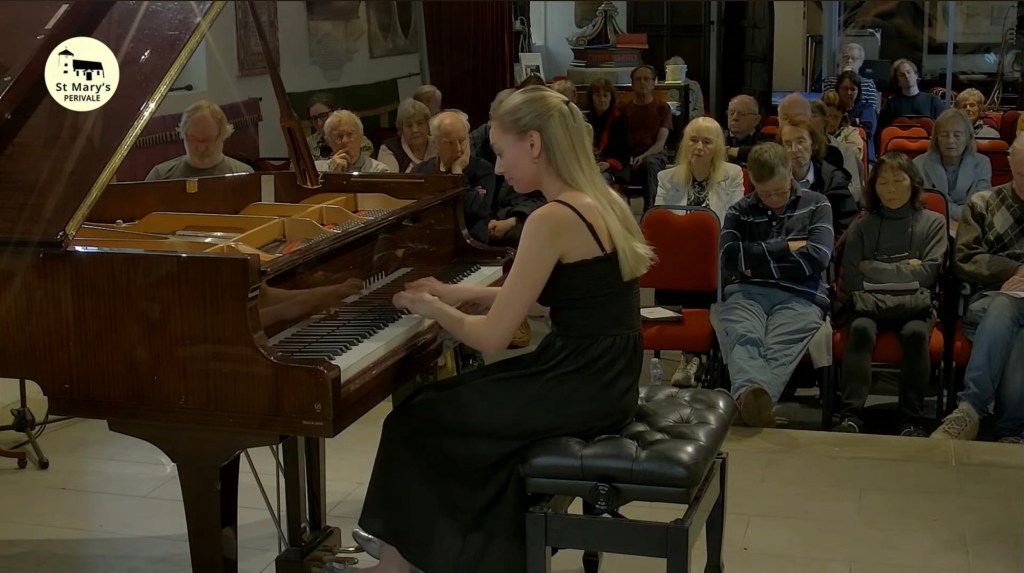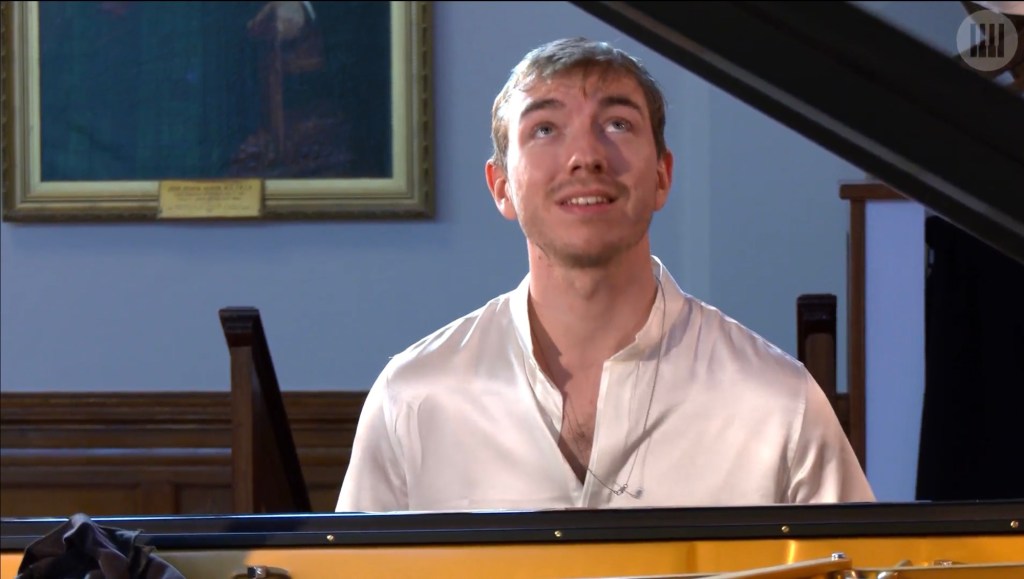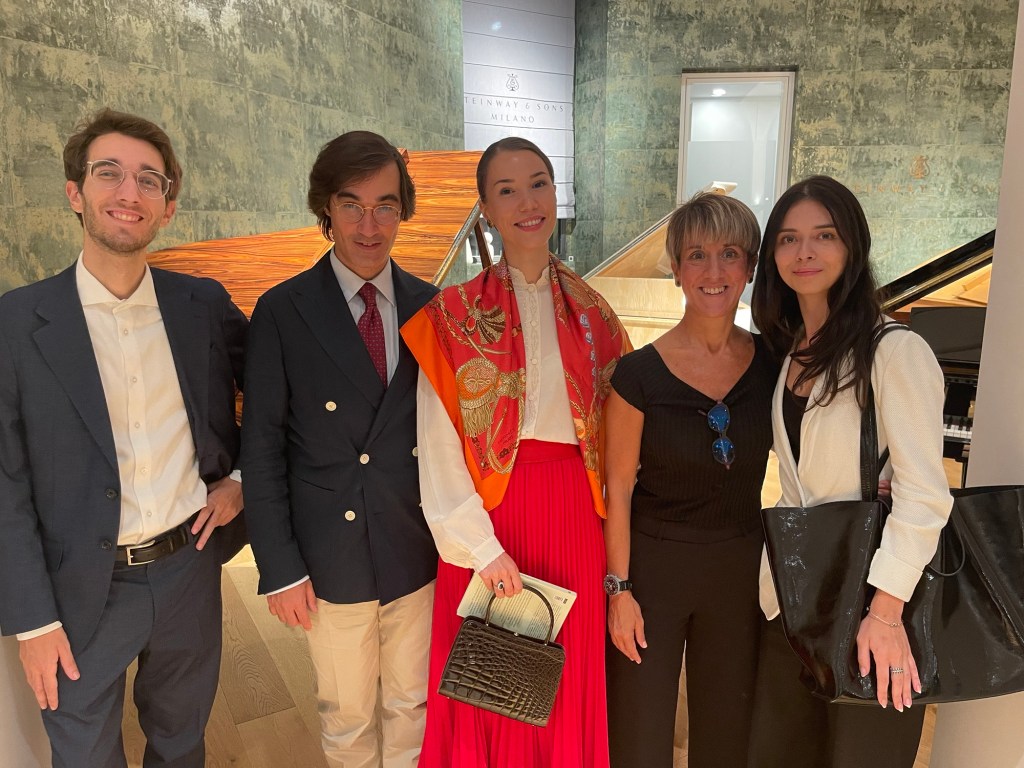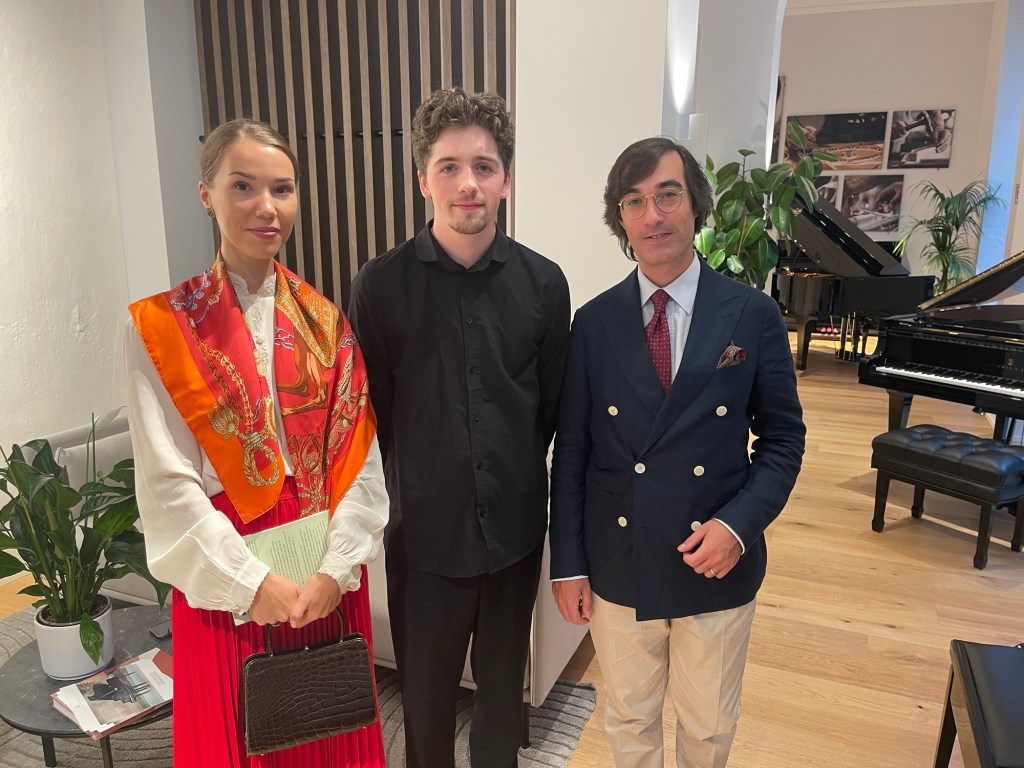
Ryan Wang takes Windsor Castle by storm

WINDSOR AND ETON CHORAL SOCIETY WITH RYAN WANG

7.30PM Saturday, 21st September 2024

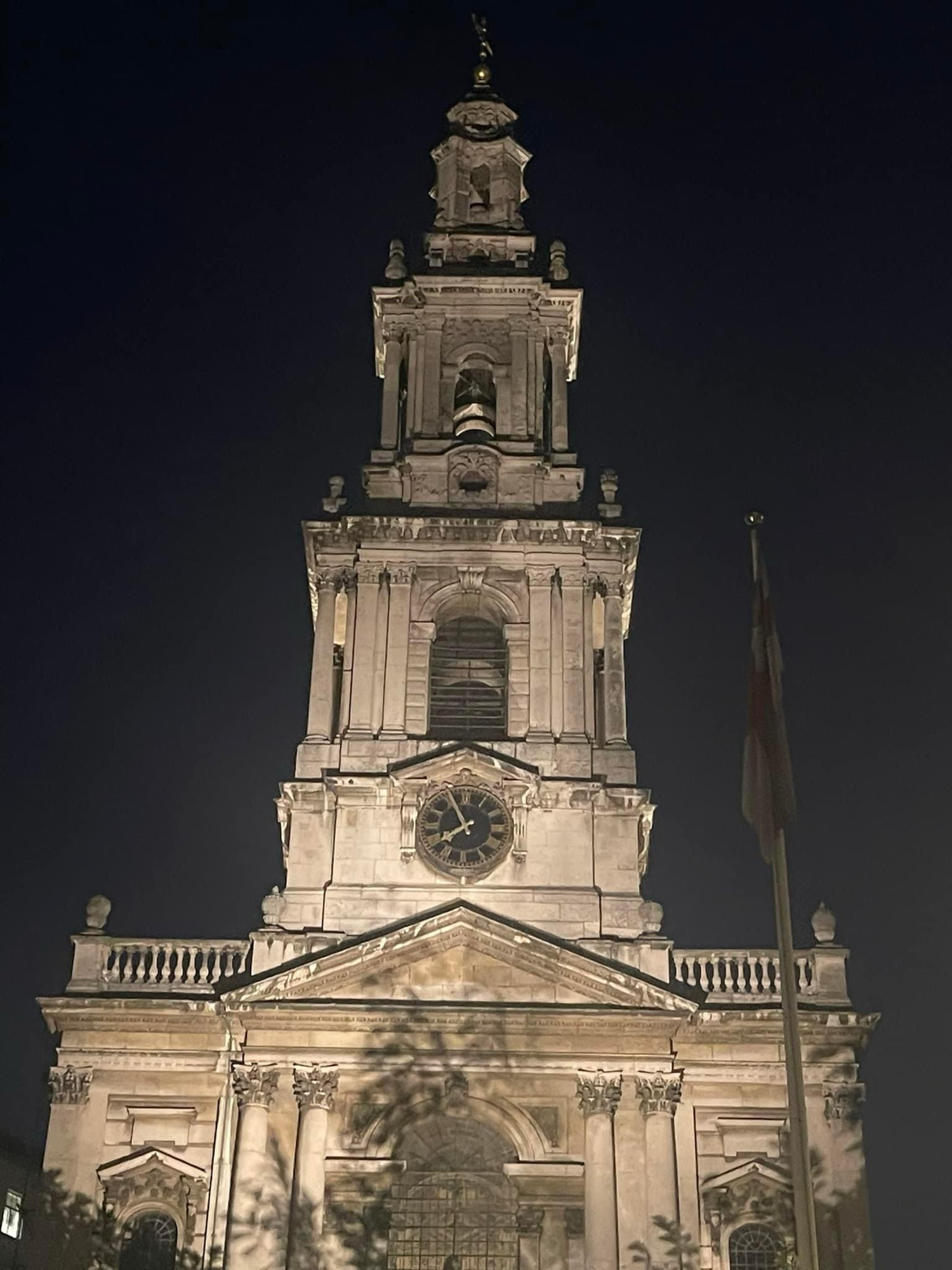
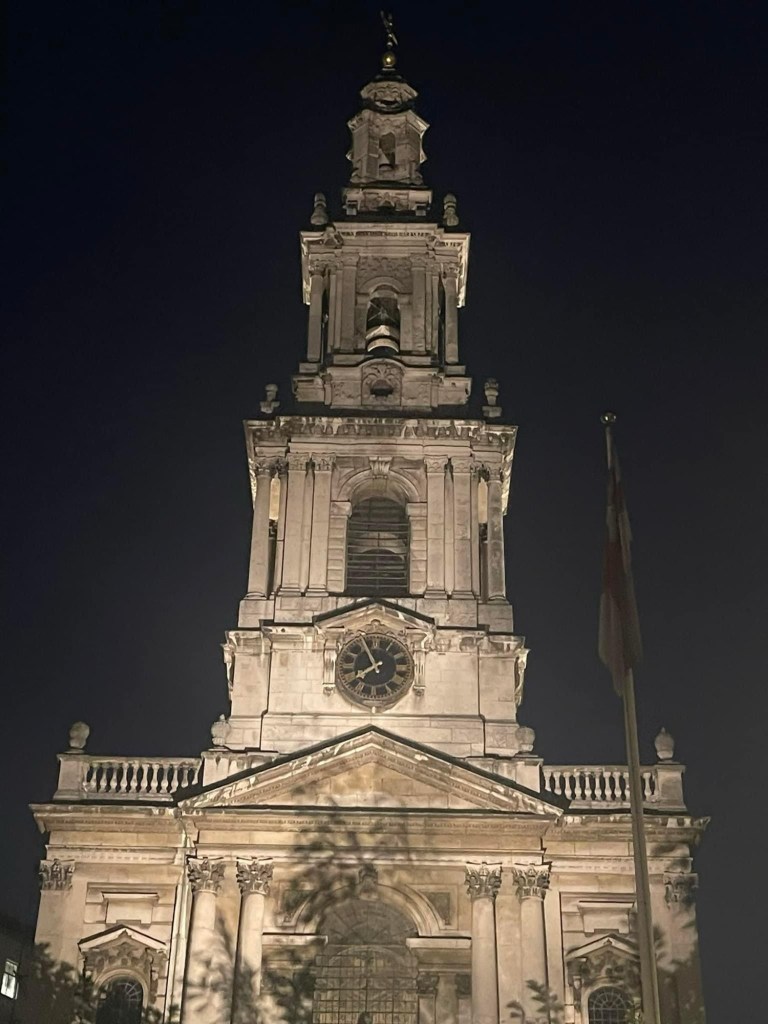
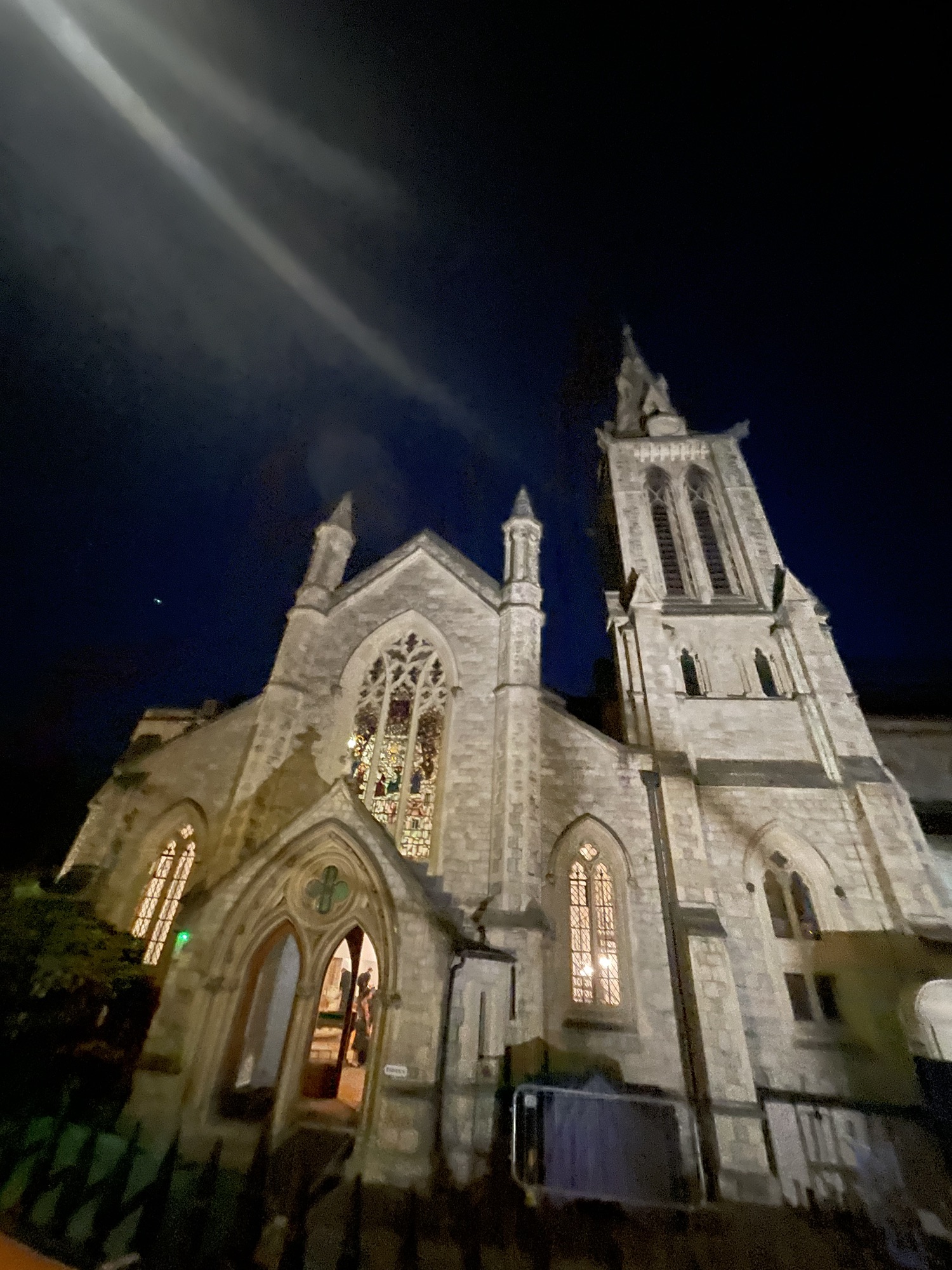
St George’s Chapel Windsor Castle

Windsor and Eton Choral Society with Ryan Wang

Windsor and Eton Choral Society
Brandenburg Sinfonia
Ryan Wang      Piano
Tim Johnson  
Conductor

Accompanied by the excellent Brandenburg Sinfonia and with professional soloists, Windsor and Eton Choral Society bring Brahms’ moving and dramatic German Requiem to Windsor Festival this September.

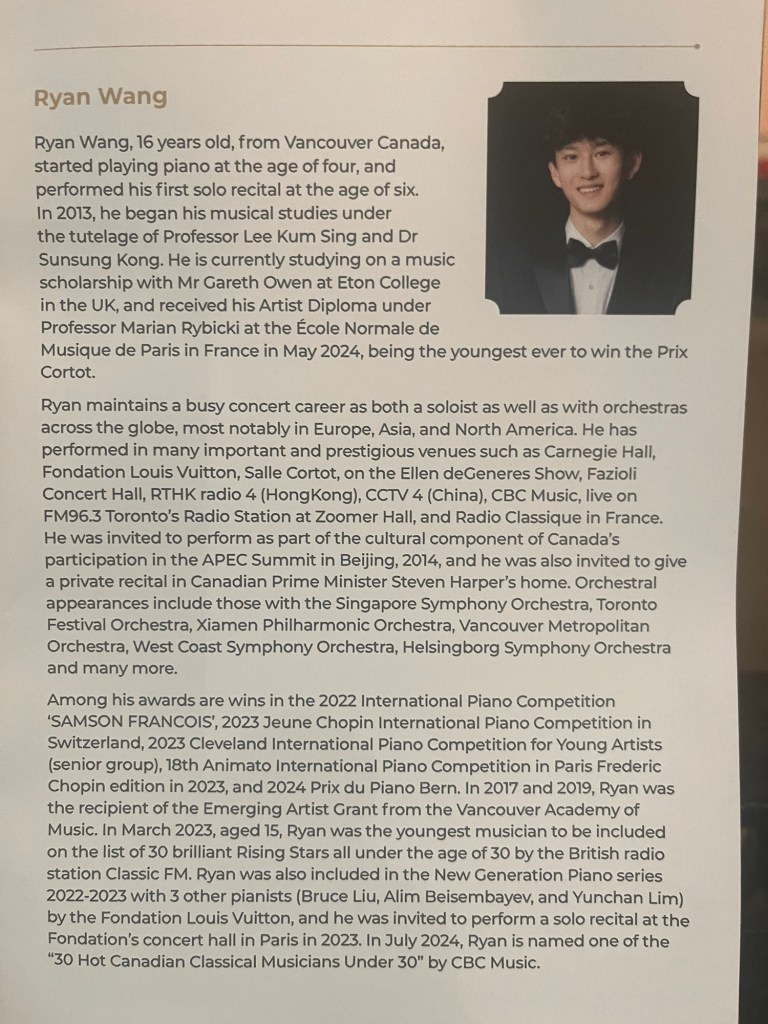
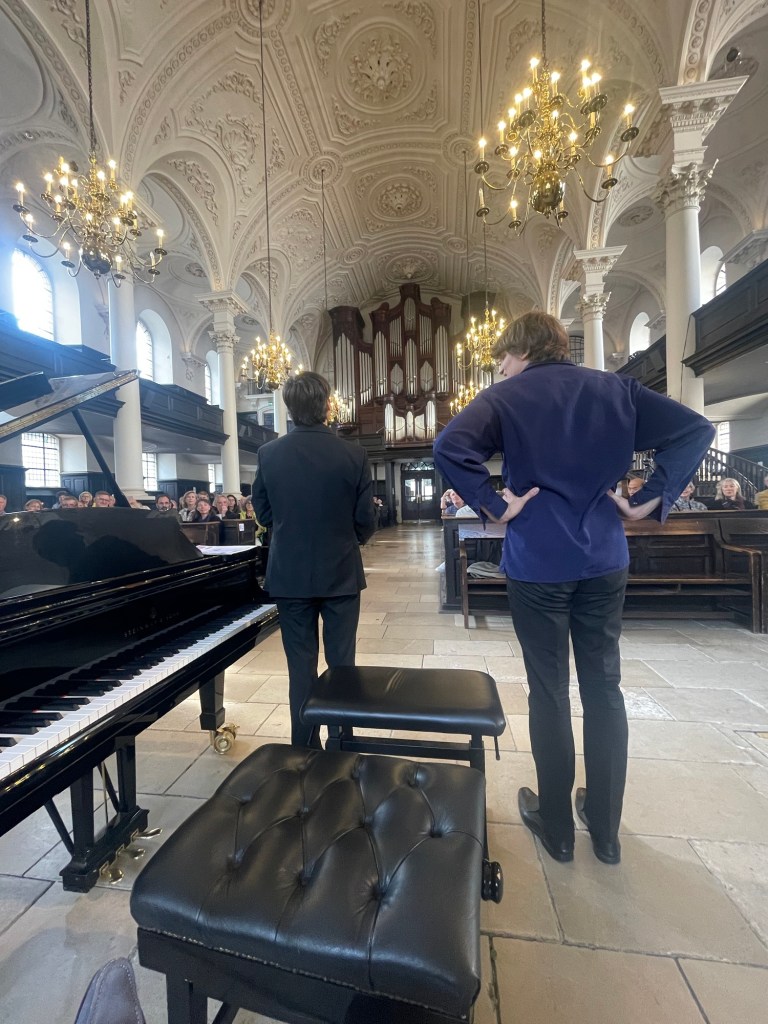
This special concert in St George’s Chapel, Windsor Castle will open with exceptional young pianist Ryan Wang performing Rachmaninov’s Piano Concerto No. 2. The 16 year old Etonian began learning the piano at the age of four, playing at Carnegie Hall by the time he was five, and is the recipient of numerous distinguished international awards and prizes, recently becoming the youngest ever winner of the Prix Cortot from the École Normale de Musique de Paris.

Programme:
Rachmaninov   Piano Concerto No. 2
Brahms              German Requiem
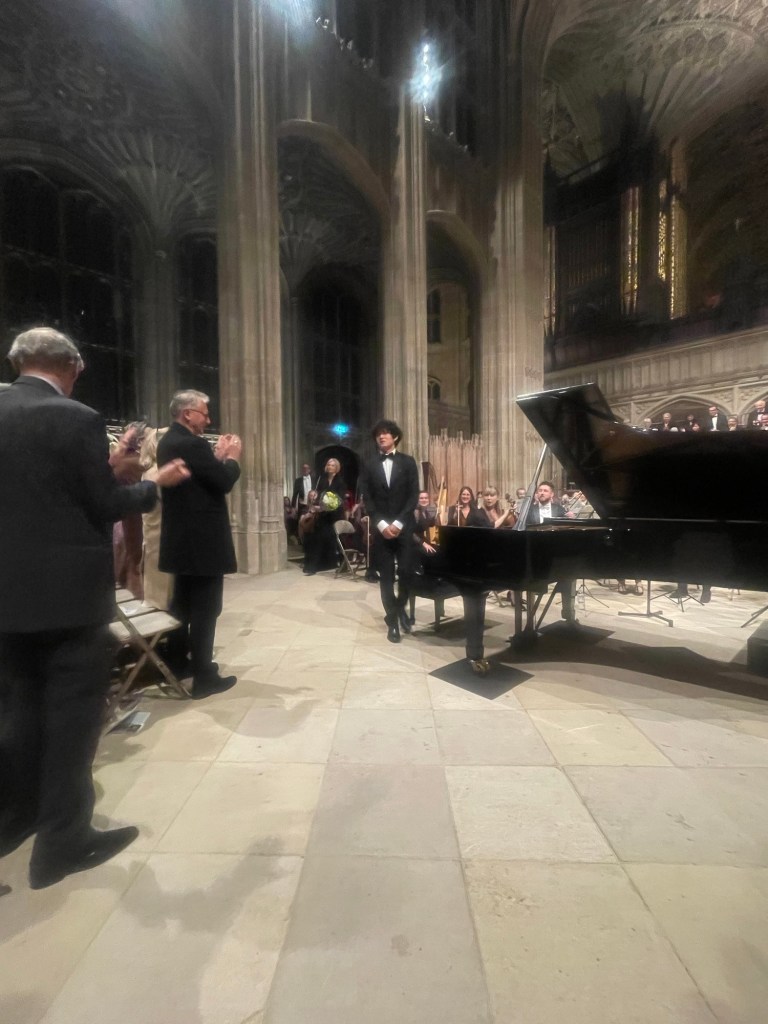
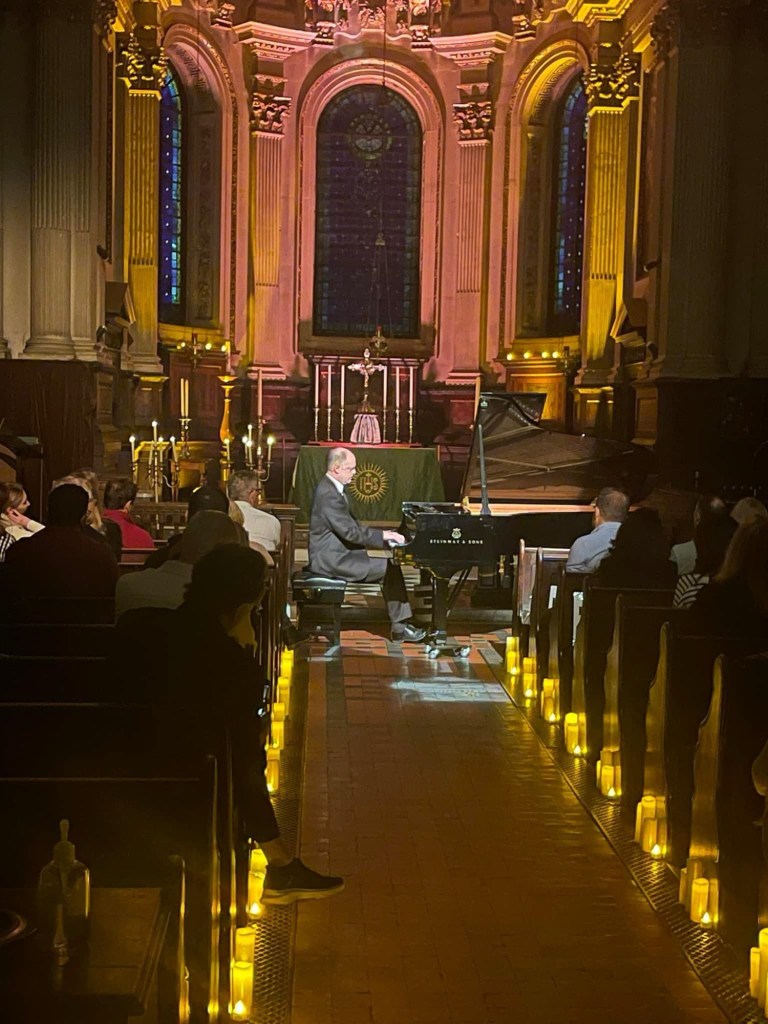
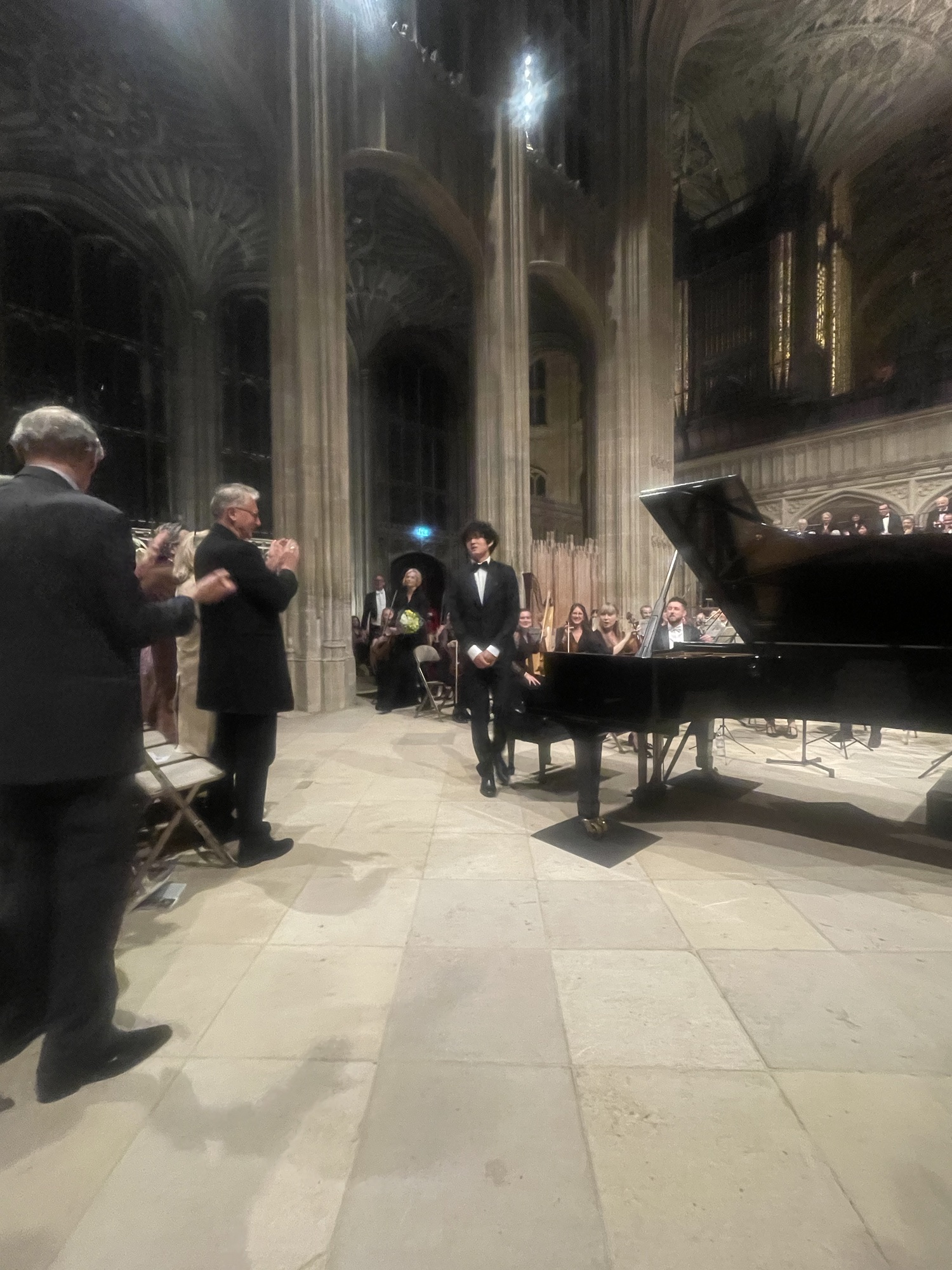
A masterly performance from the 16 year old Ryan Wang today in St George’s Chapel in Windsor Castle. Another Canadian pianist taking the world by storm just as Jaeden Dzurko did today in Leeds and Bruce Xiao Liu did in Warsaw a year ago.Lets not forget Kevin Chen ,mentored by Marilyn Engle ,running off with Budapest at 16,Geneva at 17 and Rubinstein at 18 in a carousel that not even Martha Argerich has equalled!
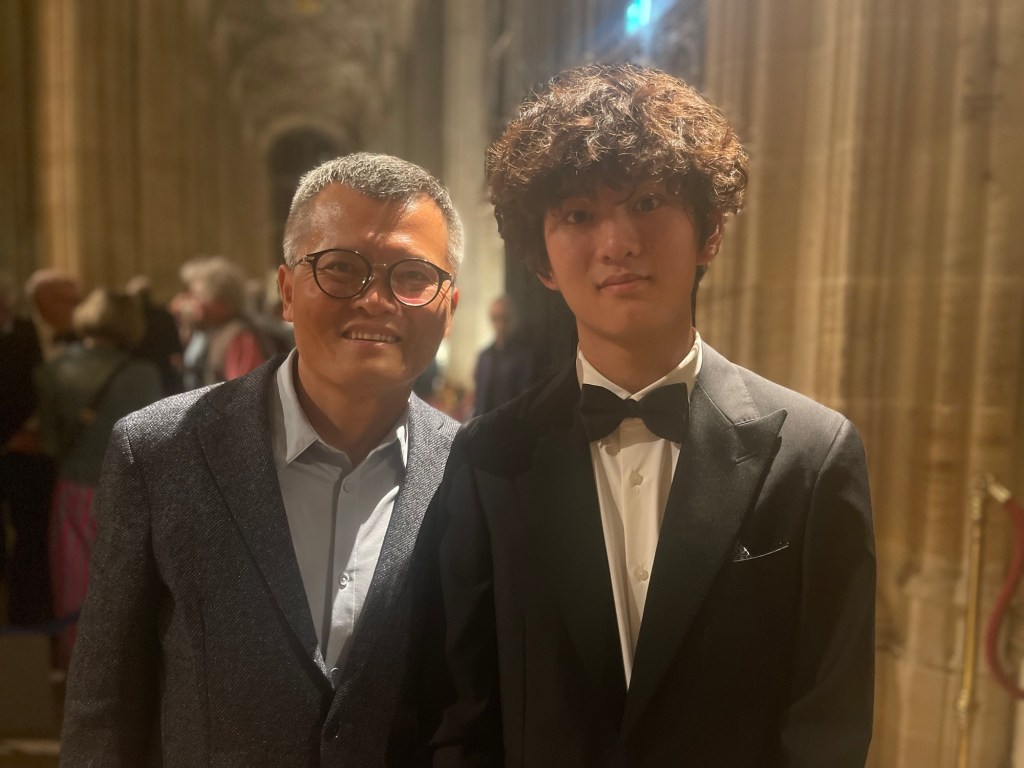
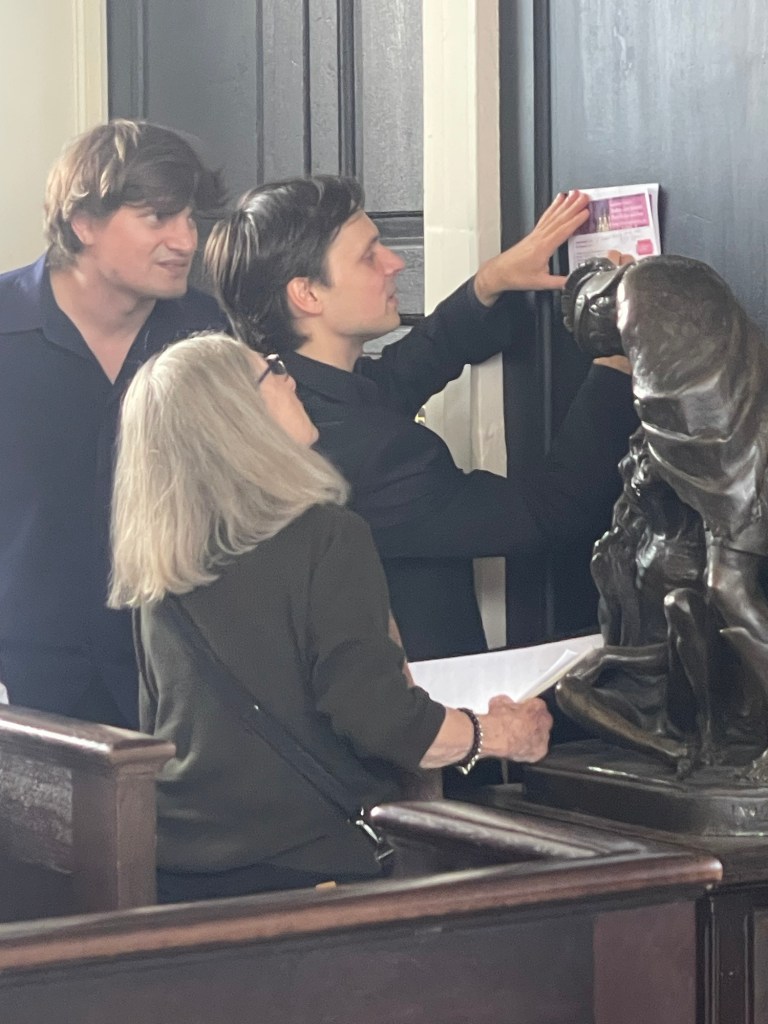
Ryan with his father


From the very first notes Ryan showed an authority and breathtaking command of Rachmaninov’s 2nd Piano Concerto.
In his last year as a scholar at Eton,Ryan gave a performance of passionate abandon but with a mature musical intelligence way above his 16 years.
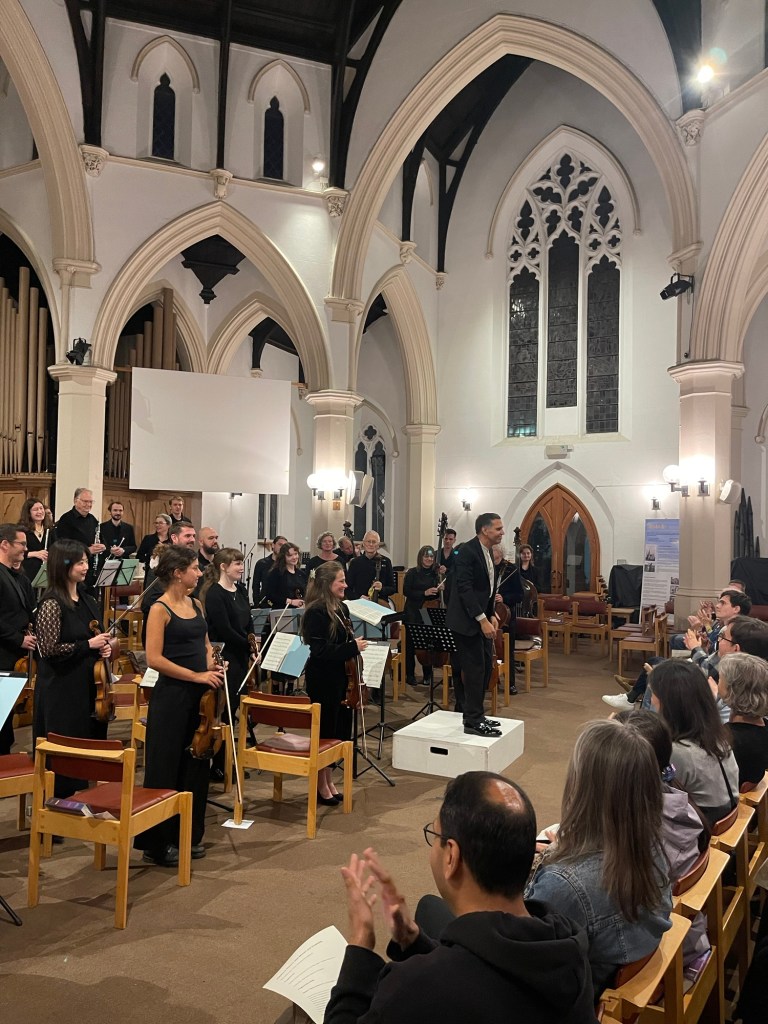
After the passionate excitement of the first movement it was the way he could dialogue with the orchestra in the slow movement that was so astonishing as he could blend in and out with the orchestra allowing his glowing tone to emerge as he duetted first with the clarinet and finally with the strings with heart rending beauty.The last movement just shot from his fingers with astonishing ease and scintillating bravura.Watching the conductor like a hawk as he brought such animal passion to the hollywoodian climax .A spontaneous standing ovation from a very distinguished audience brought an encore of Jesu joy of man’s desiring played with quite extraordinary poignancy and aristocratic timeless beauty.
Ryan will be performing the concerto in Bristol next week which I believe will be broadcast and televised as the final round of the BBC Young Musician of the Year.
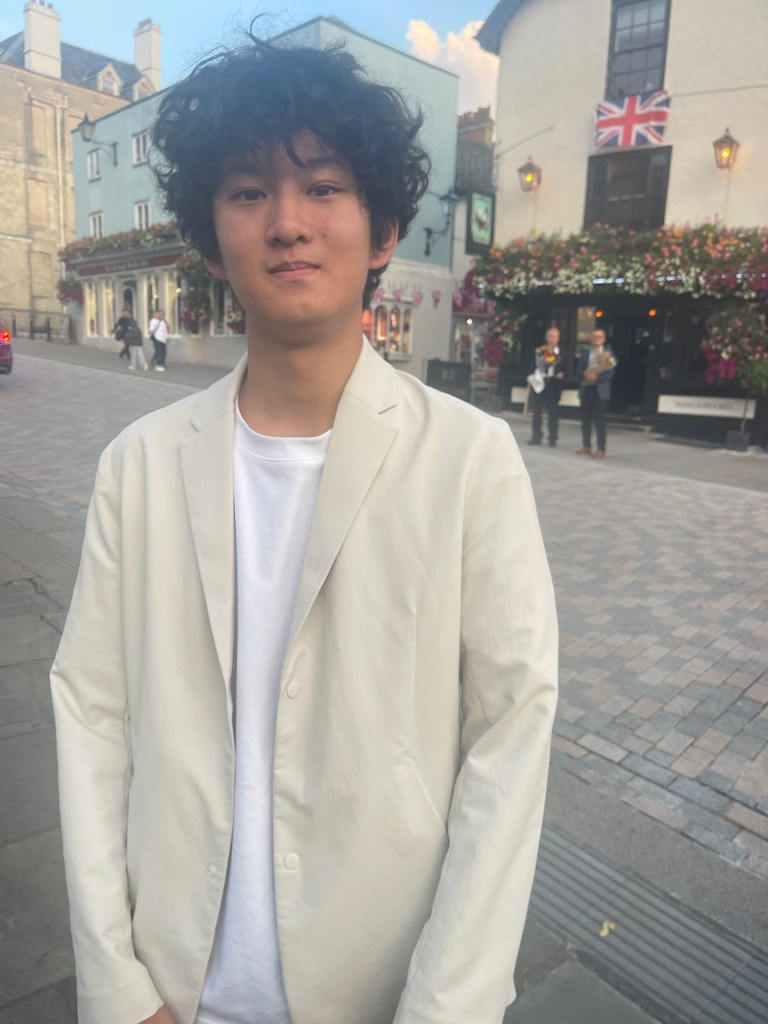
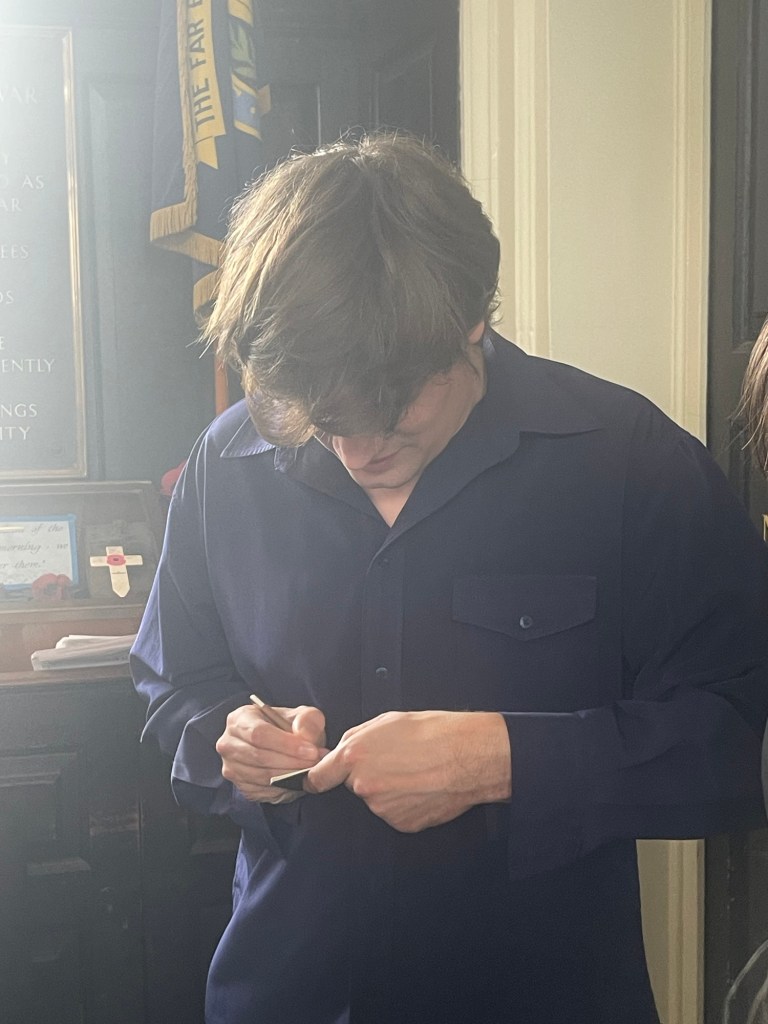
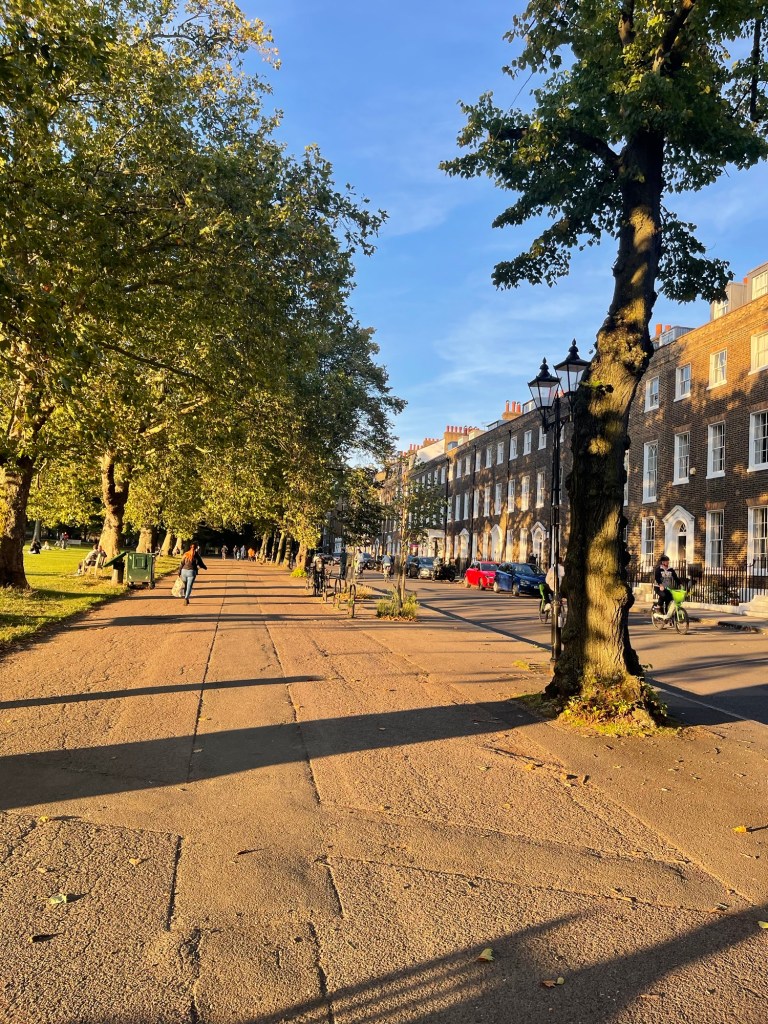
Ryan on his way to the Castle

The very first whispered chords Ryan played with extraordinary chameleonic colouring as they grew so naturally in size and weight before the final explosion with the four final bass notes played with overwhelming authority and power.The orchestra entering with their wonderfully romantic effusions of sumptuous golden string sound. It was this power from the bass that was to pervade the piano accompaniment with the same searing intensity that Tim Johnson distilled from his excellent players of the Brandenburg Sinfonia.
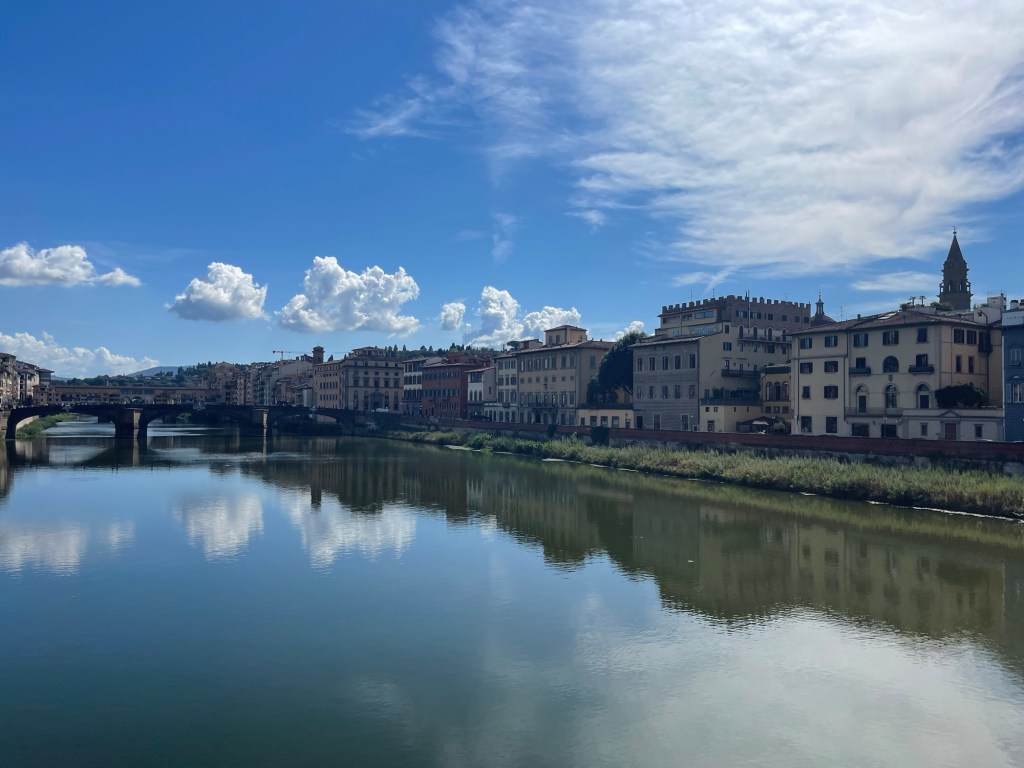
Queen Victoria keeping an eye on things in Windsor

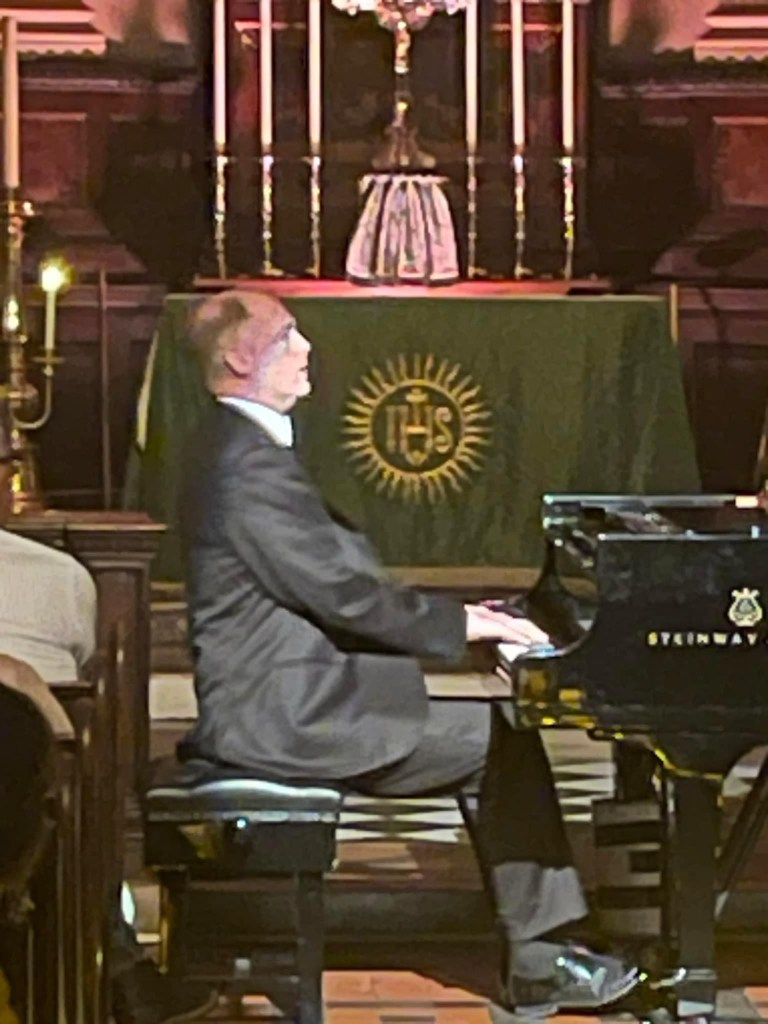
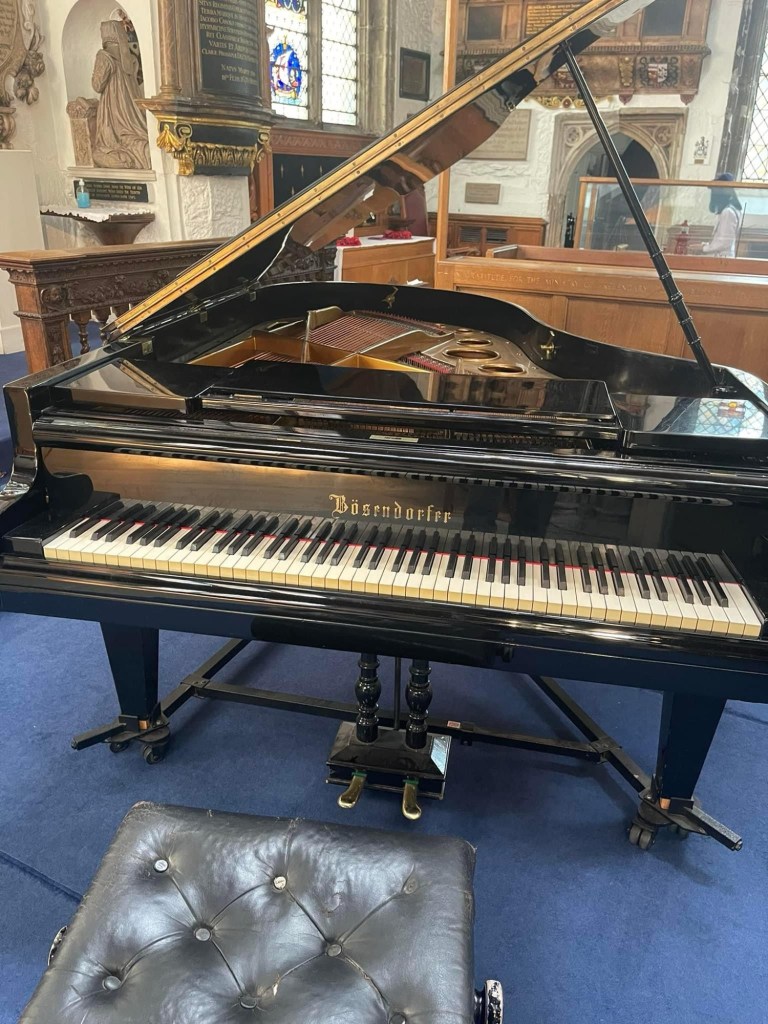
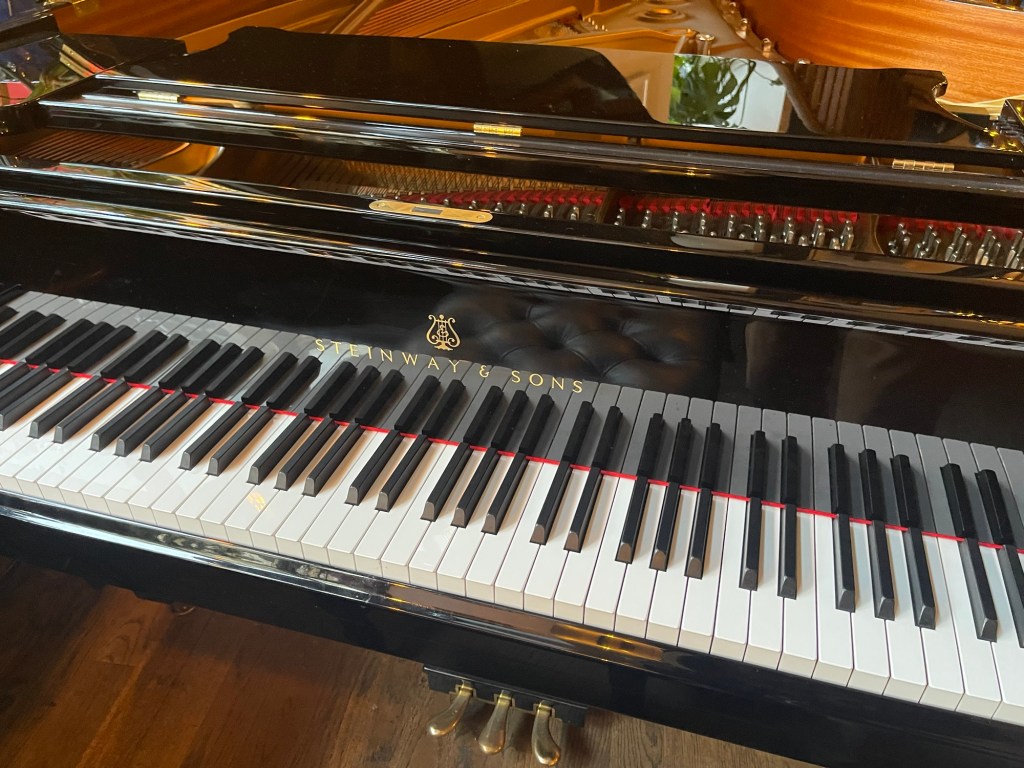
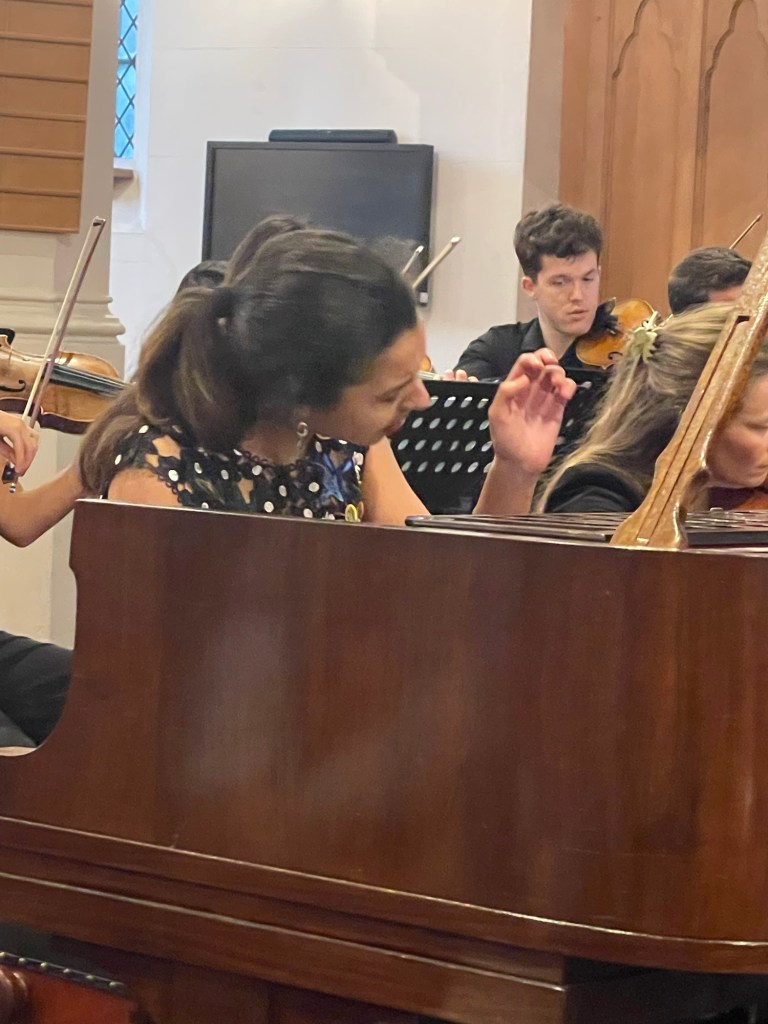
Ryan playing with the weight of a veteran where every note was given its place and meaning.Listening ,as he was to do even more noticeably in the Adagio sostenuto ,here in this famous opening he played as Rachmaninov himself exhorts ‘con passione’ but also with intelligence ,sensibility and masterly control.The ‘poco piu mosso’ that follows was of an enviable clarity where his crystalline fingers dug deep into every one of the keys on this magnificent Steinway Concert Grand that lay before him.The beautiful second subject was played with controlled freedom with a feeling of improvised discovery as his rubato was enticing but so natural and never sentimental.
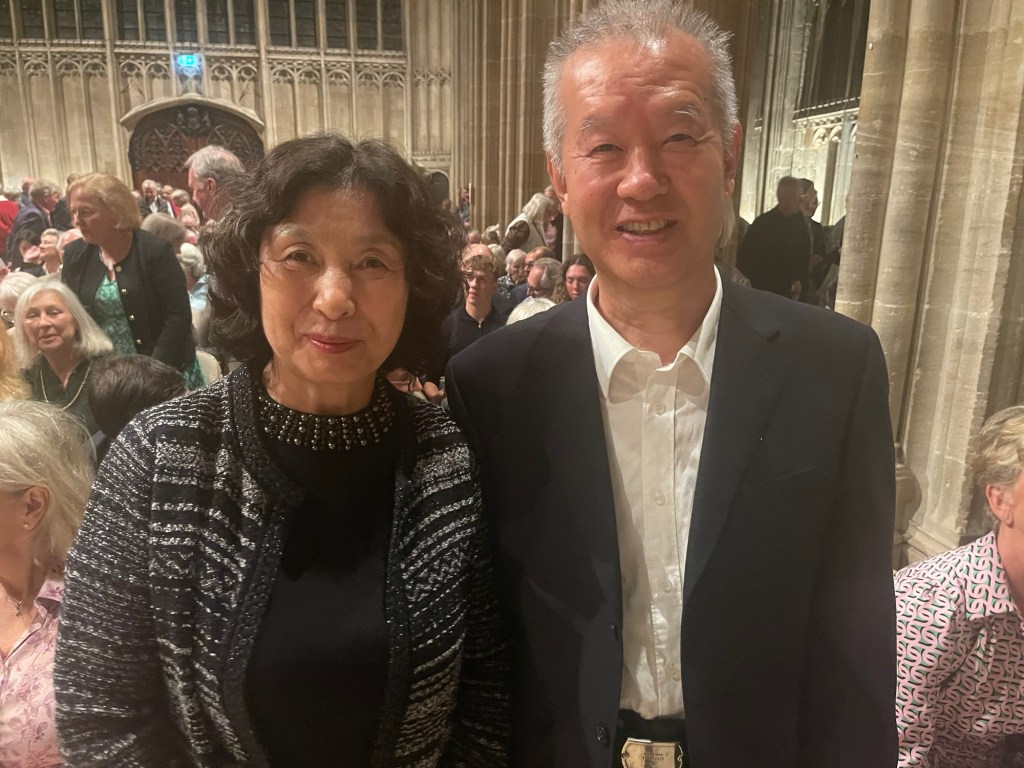
Ryan’s grandparents flown in especially from Canada

This was the mature aristocratic cantabile that Rubinstein was such a master of and whom I had heard in the nearby Eton college many years ago.Rubinstein appearing on stage in Eton Chapel as part of this same Windsor Festival when it was directed by Yehudi Menuhin . Appearing in tails dressed as all the boys were in the audience who had flocked to hear this legendary figure.There were such piercing sounds that shone above the swirling passionate cauldron first with two repeated notes and then with three before Ryan too was caught up in this passionate build up before bursting into unashamed passionate repeated chords like a rock star in full flight! But it was the control of the ‘Alla marcia Maestoso’ after such passionate effusions that was so remarkable and breathtaking .
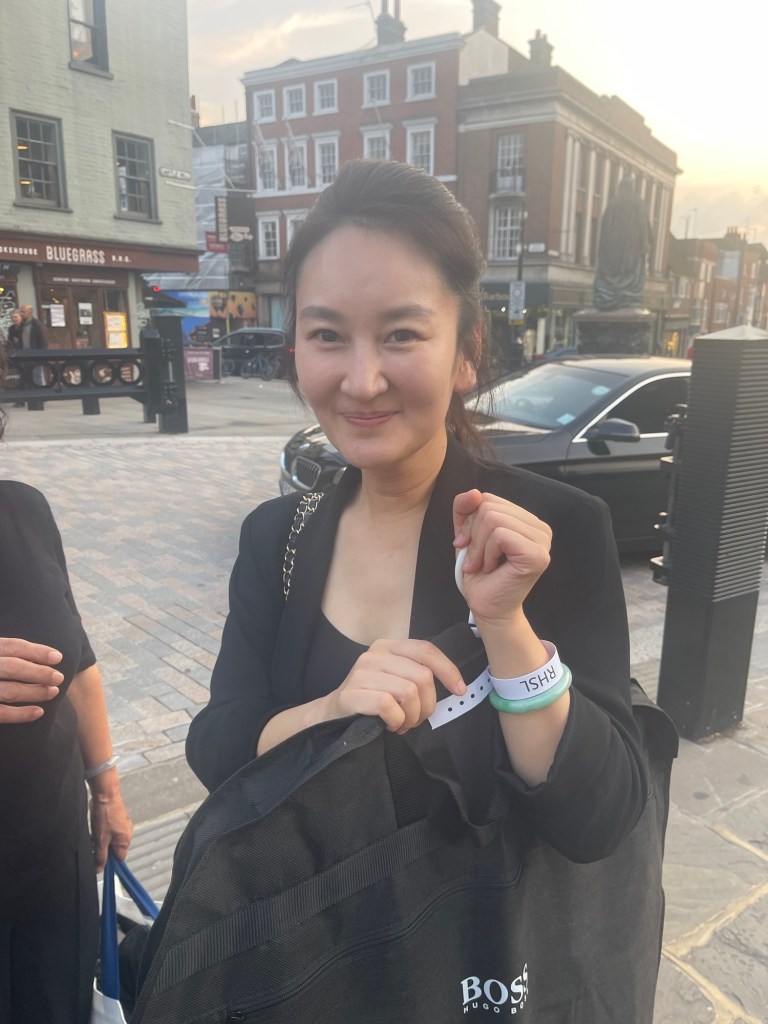
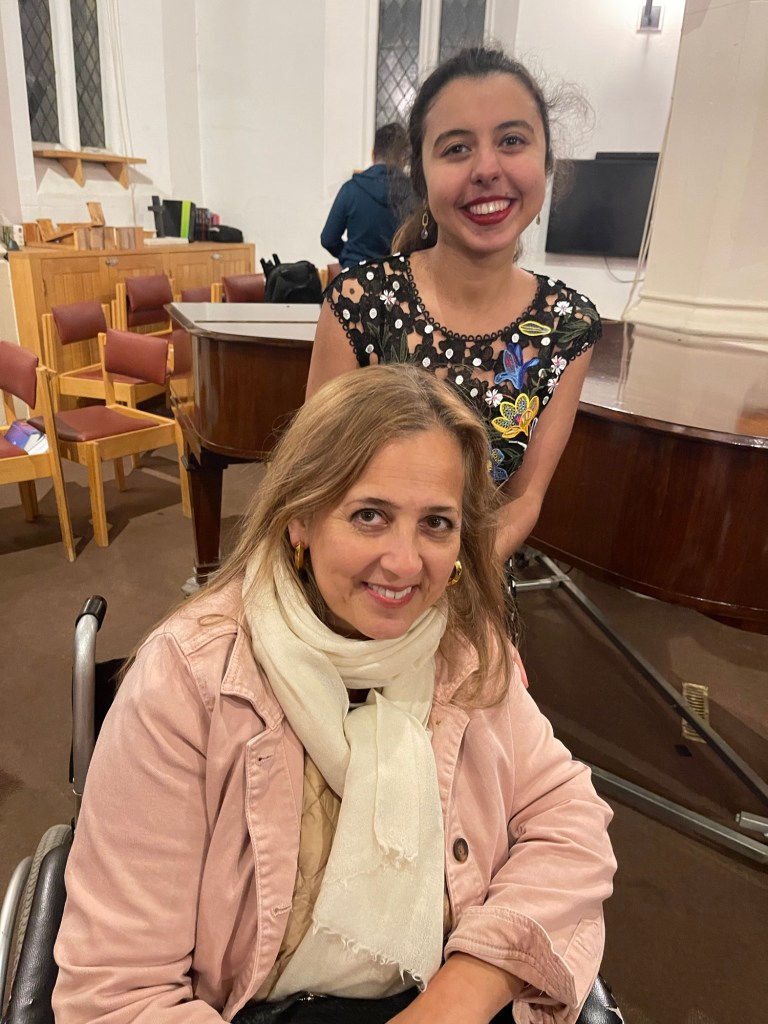
Ryan’s mother on her way to the hall

The clarity he brought to the gentle beating heart of the ending was just as remarkable as it floated above the orchestra with magical arabesques bringing a glow to such heavenly sounds as it shot on its way unimpeded to the final three imperious chords that Ryan played with a finality of no nonsense mastery.
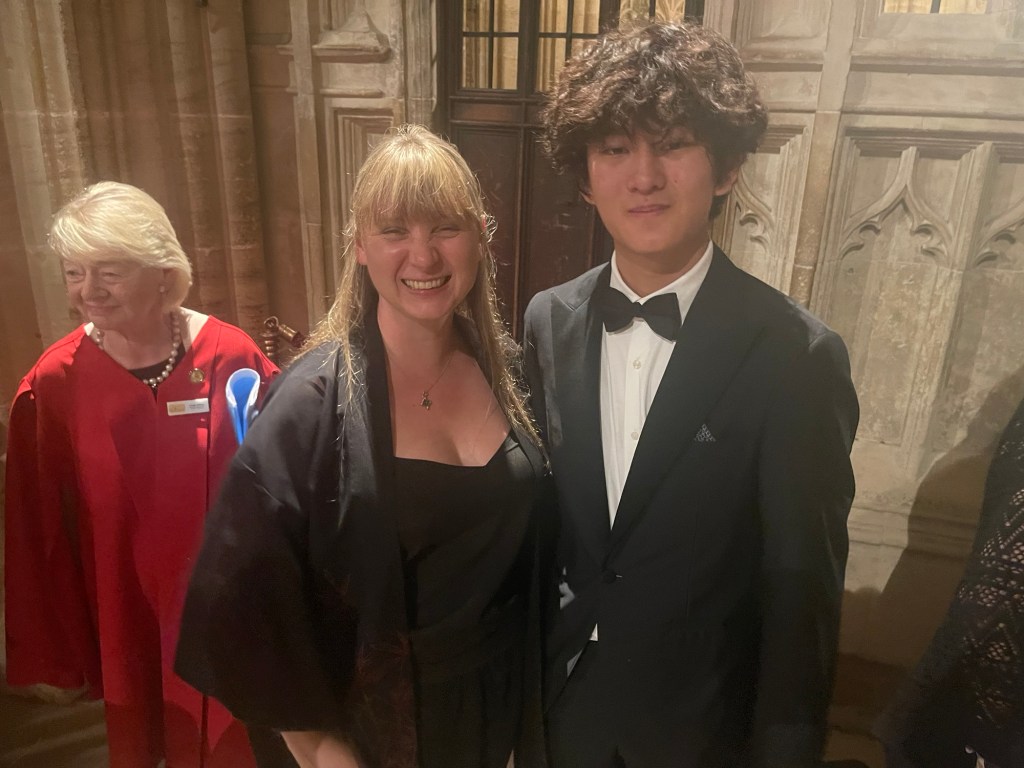
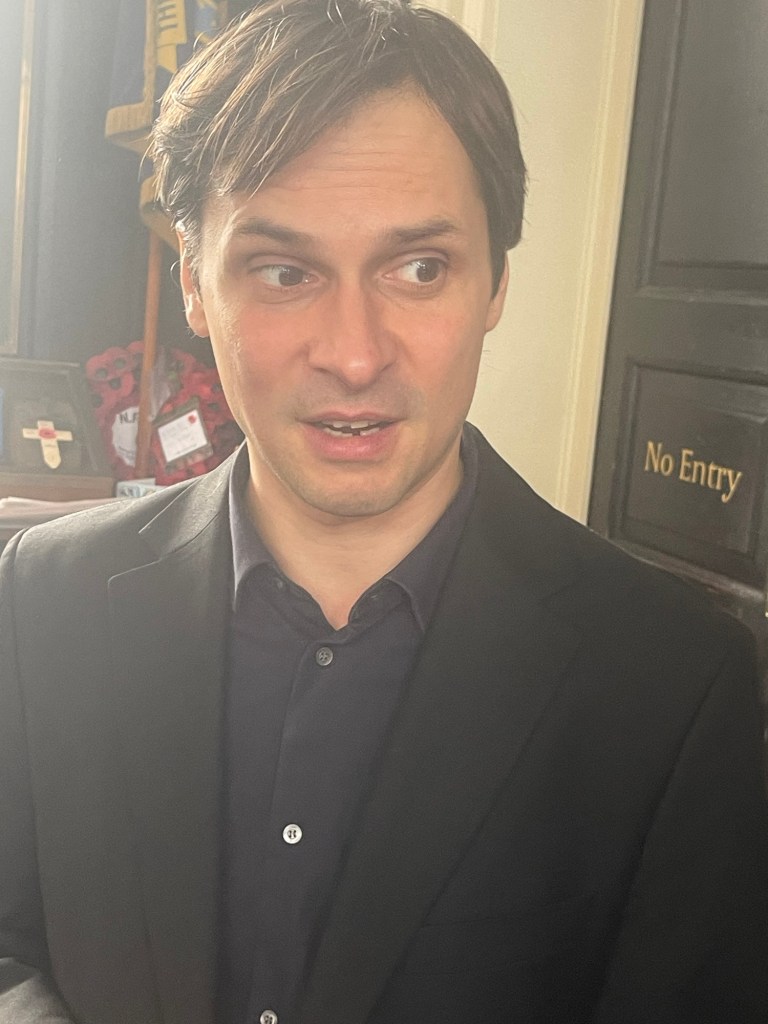
Ryan with the leader of the orchestra

Rachmaninov’s ‘Moonlight ‘ opening for the piano of his Adagio sostenuto was played where every note was not just an accompaniment, as it should be in Beethoven, but Rachmaninov weaves a magical web that every so often comes to the surface in a duo with the orchestra.It takes a great musician to be able to listen and weave in and out in real chamber music style whilst sitting in the limelight. Poignant beauty as with single notes the piano intones this magical melody inviting the left hand to double to make it twice as bewitching. Ryan played like a consummate artist who could improvise such beauty in the moment adding hesitations or inflections as a singer might do.The gradual build up with trails of undulating scaling passage work was played with a clarity that shone above the orchestra but never obscuring the architectural line that was being shared .
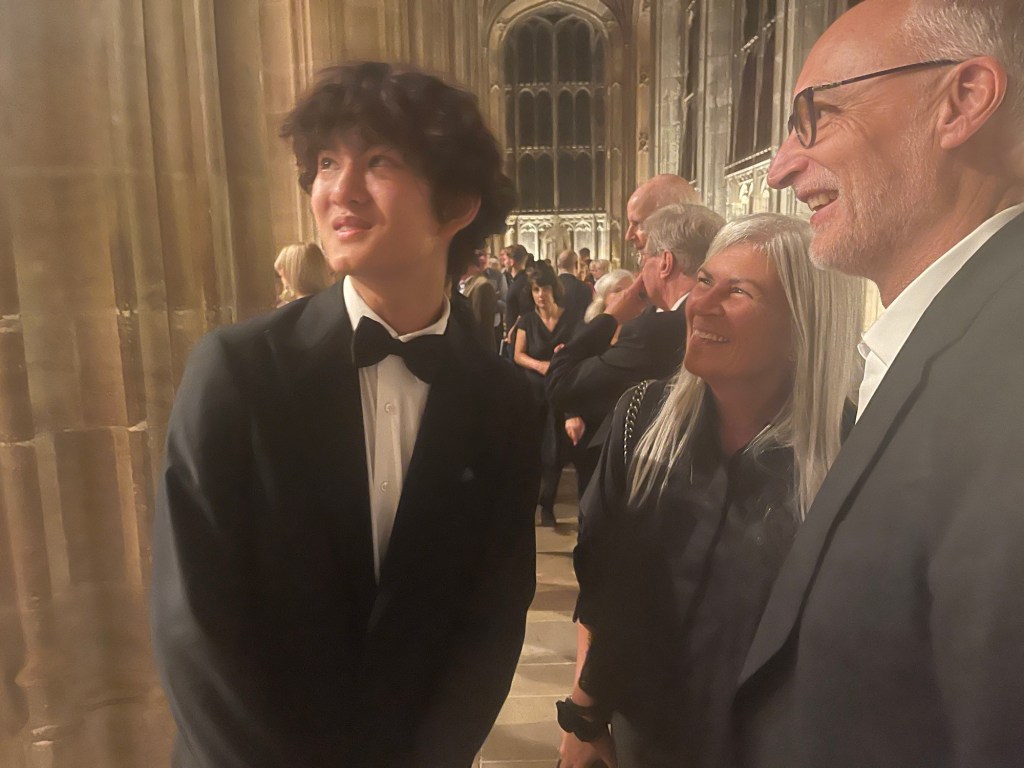
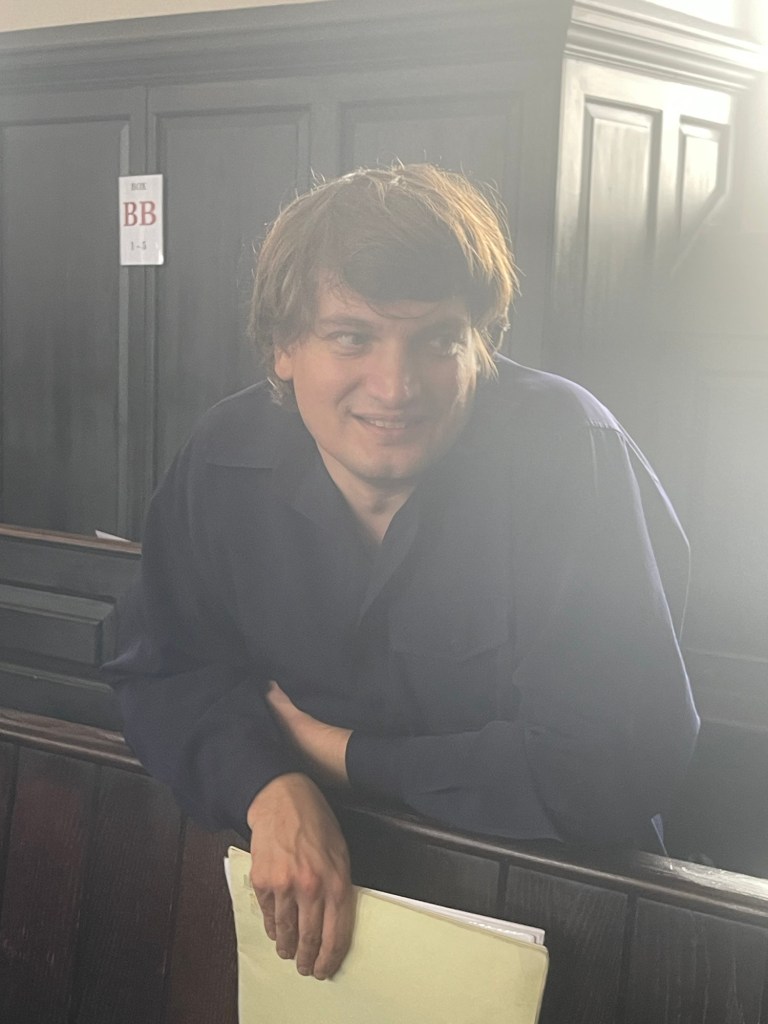
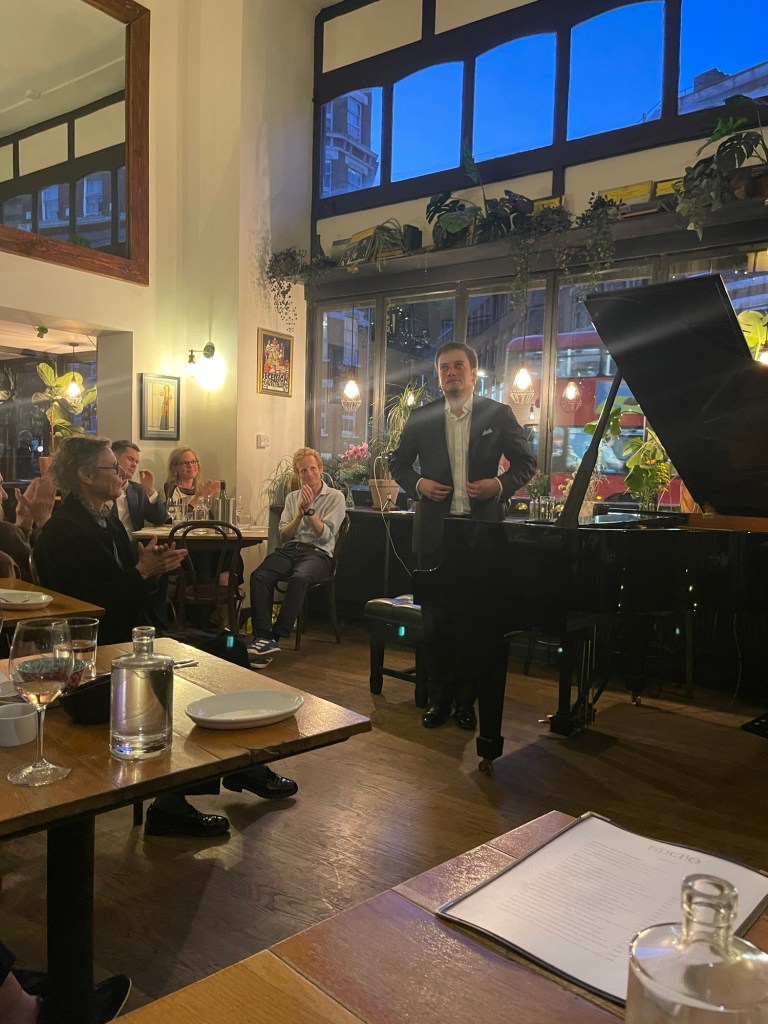
Ryan being congratulated after the concert

Exploding into a passionate climax of intensity and an aristocratic ‘allargando ‘ as the music worked itself up into a whirl of notes culminating in another passionate outburst of even more vehemence before the filigree notes that lead to the eventual cadenza.Notes that remarkably were of a crystalline clarity penetrating the orchestral sounds with a refined projected leggiero of considerable mastery. Culminating in a rhetorical cadenza starting deep in the bass and reaching into the heights with exhilaration.It was here that Ryan’s great artistry shone through with a silence that seemed eternal until he completely changed gear with four voluptuous arabesques that were eventually to lead back to the opening motif.Beautiful undulating chords accompanying the melodic line from the orchestra in the coda were played like a breath of fresh air in such a torrid atmosphere and again the magisterially placed final cadence on the piano was of a true master.
Tim Johnson like a cat about to pounce as soon as the final E major chord had died away and we were off into the ‘Allegro scherzando’ where Ryan was now ready to shoot off a pyrotechnic rocket from one end of the keyboard to the other where dynamic drive and scintillating virtuosity were rampant.But suddenly there was calm and the ravishing beauty of the ‘Moderato’ where the orchestra are given one of those sumptuous Rachmaninovian melodies that in turn is passed over to the piano. Ryan in his turn playing with a controlled freedom of ravishing subtle beauty .Suddenly interrupted by a ‘Meno Mosso’ where the piano just muses on C flat meanderings of complete opaque calm before the fireworks really begin.Astonishing virtuosity and passionate conviction from this young artist inspiring the orchestra into a breathtaking climax of sumptuous romantic fervour.
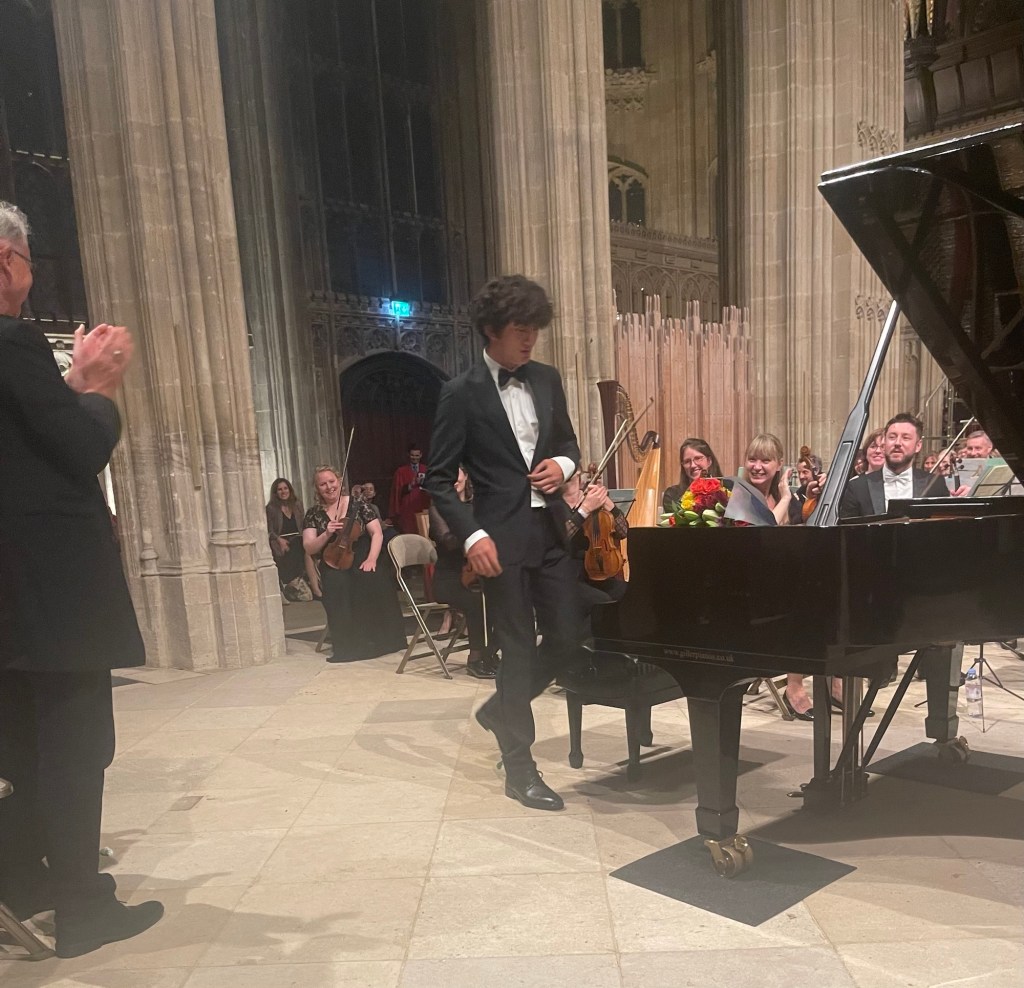
Covered in flowers from friends and family he played ‘Jesu Joy of Man’s Desiring’ as a thank you for the standing ovation he together with the conductor and orchestra had truly earned.I doubt Myra Hess herself could have played her transcription more beautifully and Ryan even allowed himself some old style split hands and sumptuous inner colourings more in line with Nelson Freire than the great Dame herself https://youtu.be/2GoEx9_dUko?feature=shared
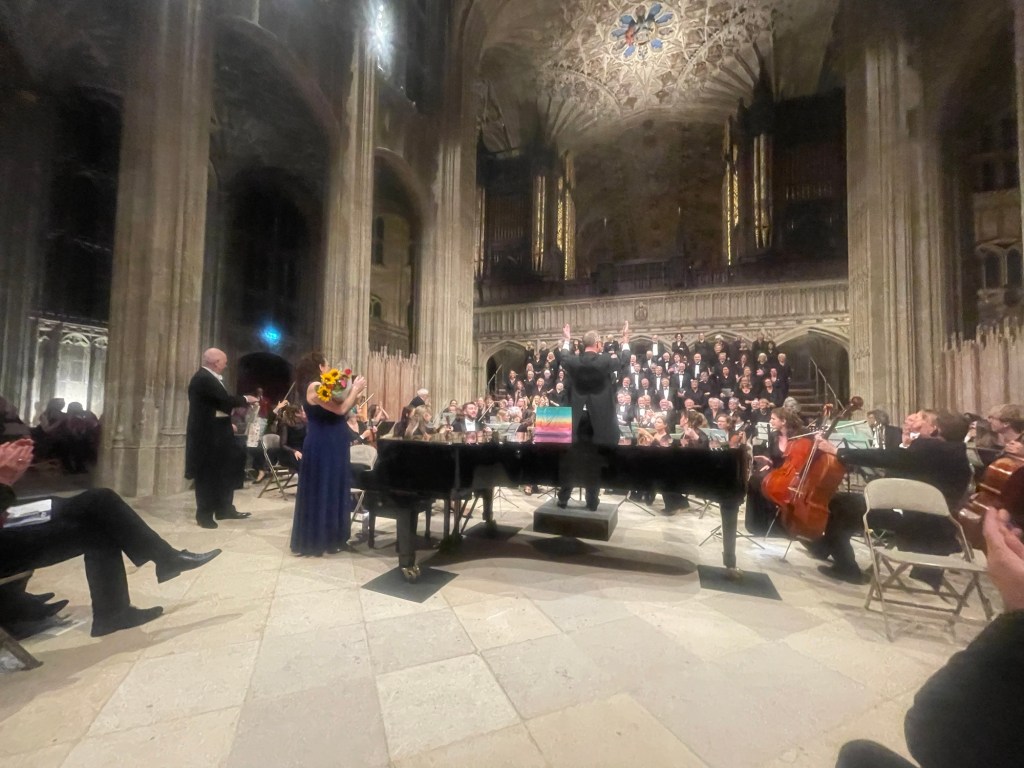
It was wonderful to hear the glorious voices in Brahms Requiem from the Windsor and Eton Choral Society that had made it’s first appearance in Windsor in 1837. A glorious performance with the voices resounding throughout this Historic Chapel superbly directed by Tim Johnson with beautiful solo voices of Susanna Fairbairn and Andrew Mayor resounding above the glorious singing of this dedicated choir and orchestra.
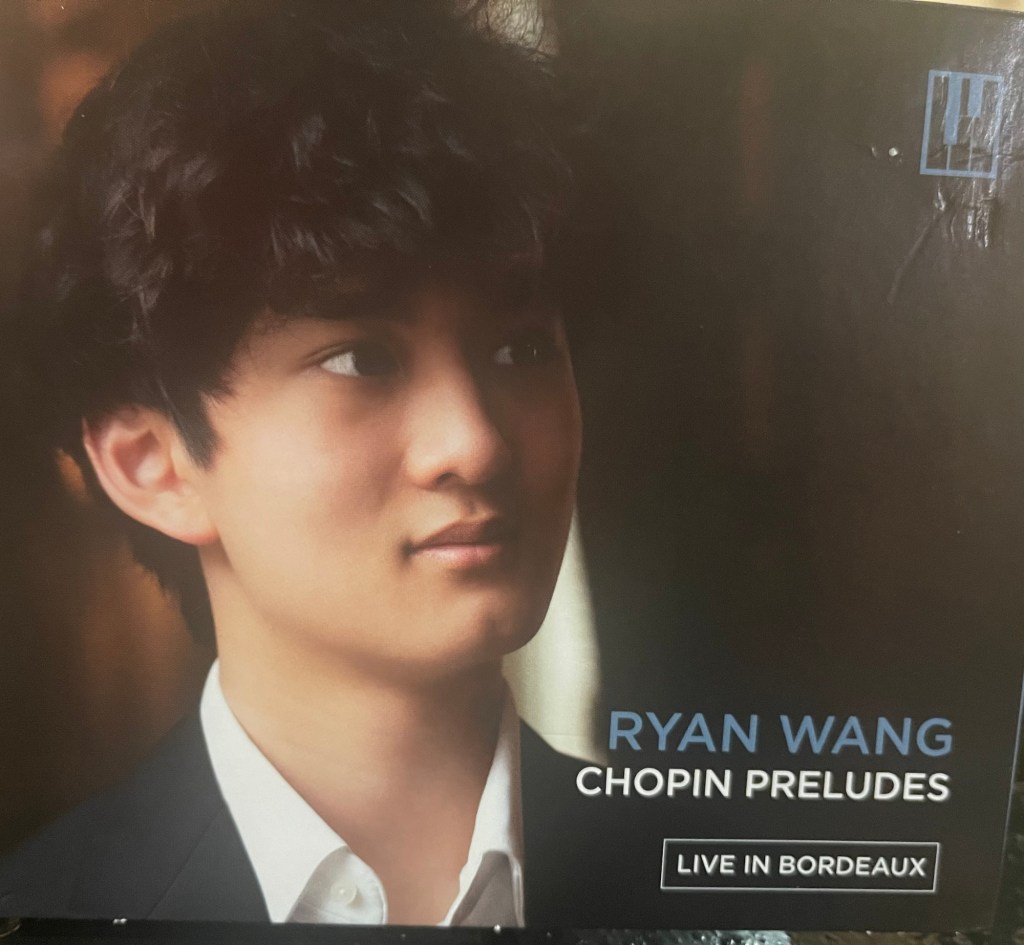
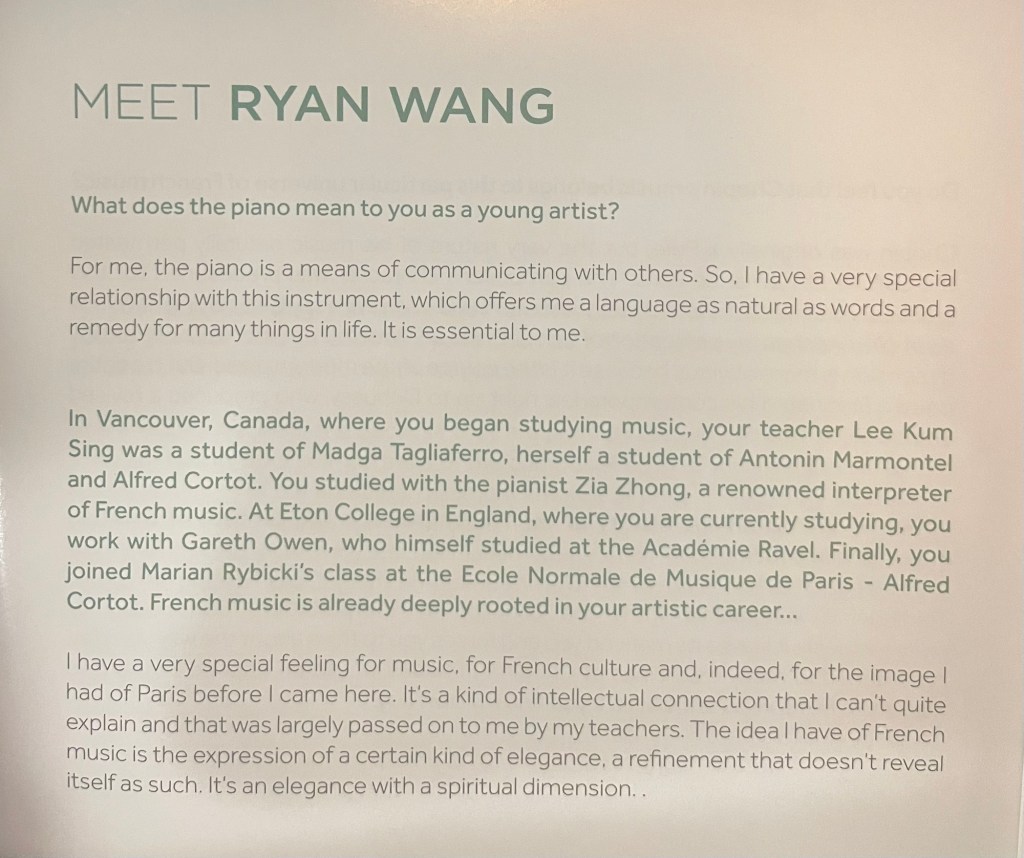
This recording was made of a live performance in Bordeaux that was so extraordinary that the organisers produced this CD .It was last year in Florence that I had heard this young 15 year old as he took part in the final of the Montecatini competition created by Aisa Ijiri.I was invited as a commentator and as soon as Ryan played a Chopin Prelude I sent a message to Sofya Gulyak who was the chairwoman of the jury :’finally and artist!’ .There were other very fine contestants but there is a magic and mastery that is so immediately apparent that you begin to realise that communication is a God given gift of the very few.God has been very generous with Ryan !

Montecatini International Piano Competition Final in the historic Teatro Niccolini in Florence.
Ryan Wang ‘A star is born on the Wings of the Dragon’ at the National Liberal Club
Warren Mailley- Smith A man for all seasons A love of music illuminated by candlelight

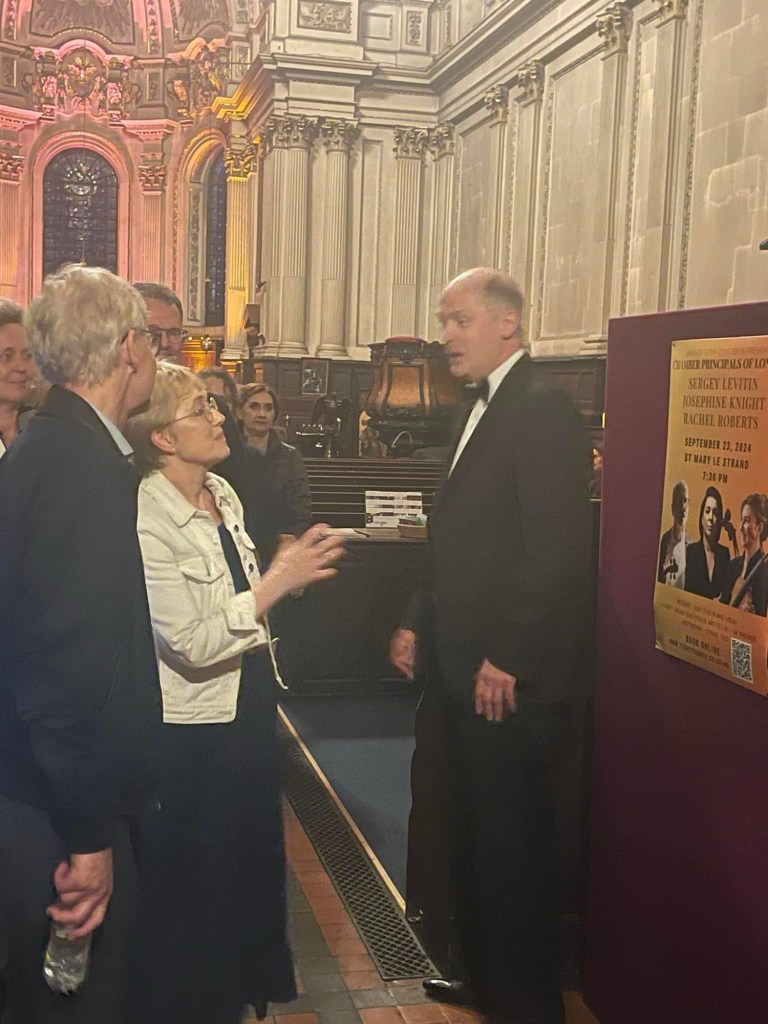
St Mary Le Strand

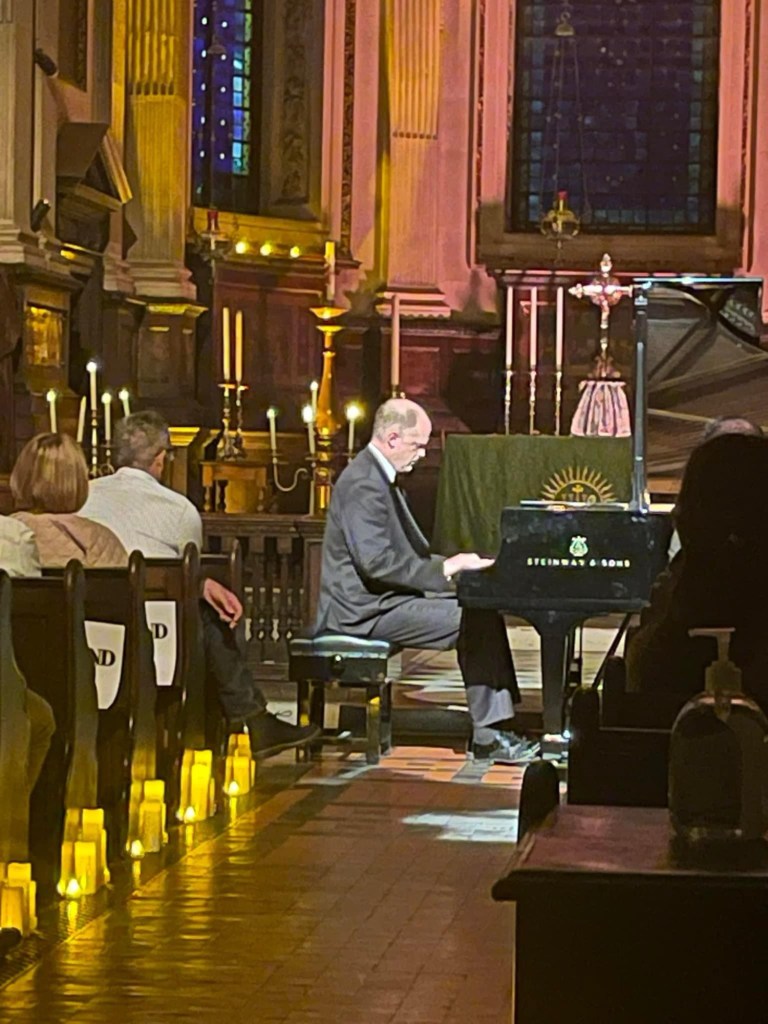
A standing ovation for the remarkable Warren Mailley-Smith with his ‘Moonlight by Candlelight’ in St Mary Le Strand .
Remarkable not only for the beautiful playing of an artist who truly loves music but for an artist who has time and the passion to promote over 300 concerts a year sharing a platform with numerous of his colleagues not only in London but also in Manchester and Edinburgh

https://citymusicpromotions.co.uk/buy-tickets/
One of whom is Julian Trevelyan who is playing in the Leeds final that is being broadcast live tonight and whom we wish all the success he deserves

Julian Trevelyan at St Mary’s – Liszt restored to the pinnacle of the Romantic repertoire


Warren played not only Beethoven’s Moonlight but also a deeply felt mellifluous Pathetique.
Chopin too with a ravishing Nocturne in C sharp minor op posth and a Fantasie-Impromptu of searing intensity. A ‘Raindrop’ prelude of rare beauty as was his beguiling account of a whispered ‘Clair de lune’. ‘Un sospiro’ by Liszt soaring the heights of romantic seduction before the wedding bells rang out with such joy in Troldhaugen thanks to Grieg op 65 n.6
A public happy to have spent the evening surrounded by candlelit beauty and ravishing sounds from Warren’s magical fingers on his own beautiful Steinway housed in this church in an oasis of peace just a stone’s throw from the burning hot intensity of Covent Garden.


Leaving the church exhilarated and uplifted in a city outside ready to celebrate ‘Friday night fever.’,

Nicolas Ventura at St Mary Le Strand Elegance and Beauty combine with intelligence and mastery

Magdalene Ho illuminates and exults the candlelit beauty of St Mary Le Strand

https://christopheraxworthymusiccommentary.com/2023/06/02/the-gift-of-music-the-keyboard-trust-at-30/

https://www.ticketsource.co.uk/whats-on/strand/st-mary-le-strand-church/the-strand-rising-stars-series-sherri-lun/e-zleplk

https://www.ticketsource.co.uk/whats-on/strand/st-mary-le-strand-church/the-strand-rising-stars-series-kyle-hutchings/e-rlyprr

https://www.ticketsource.co.uk/whats-on/strand/st-mary-le-strand-church/the-strand-rising-stars-series-magdalene-ho/e-obglea

https://www.ticketsource.co.uk/cm/the-strand-rising-stars-series-misha-kaploukhii/e-lbejkp

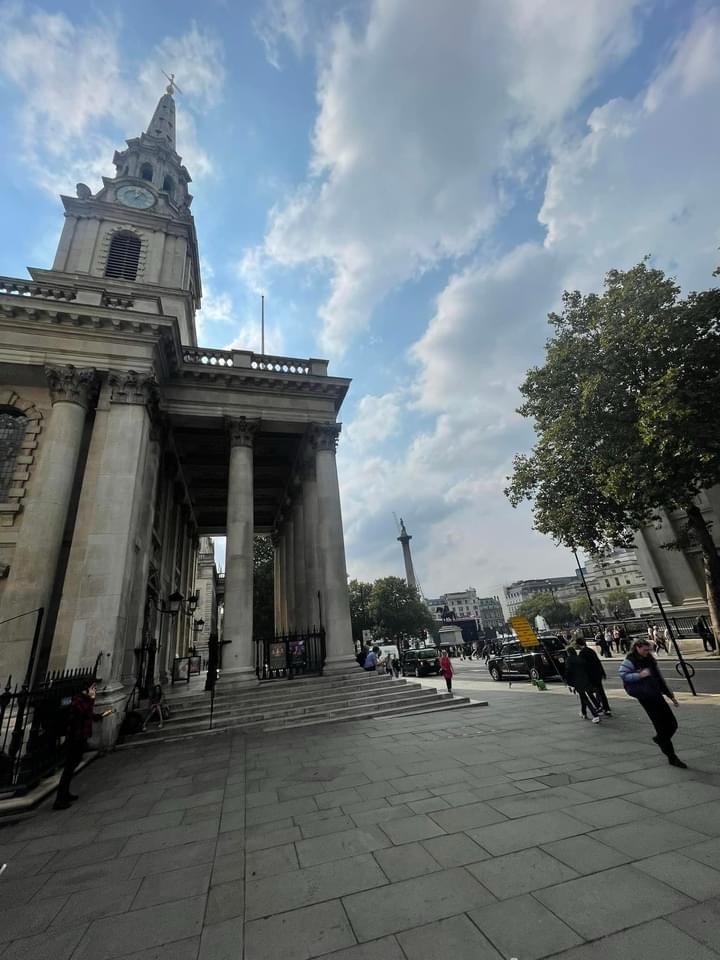
Mastery and supreme artistry at St Martin’s Grynyuk and Limonov ‘Notre amitiè est invariable’

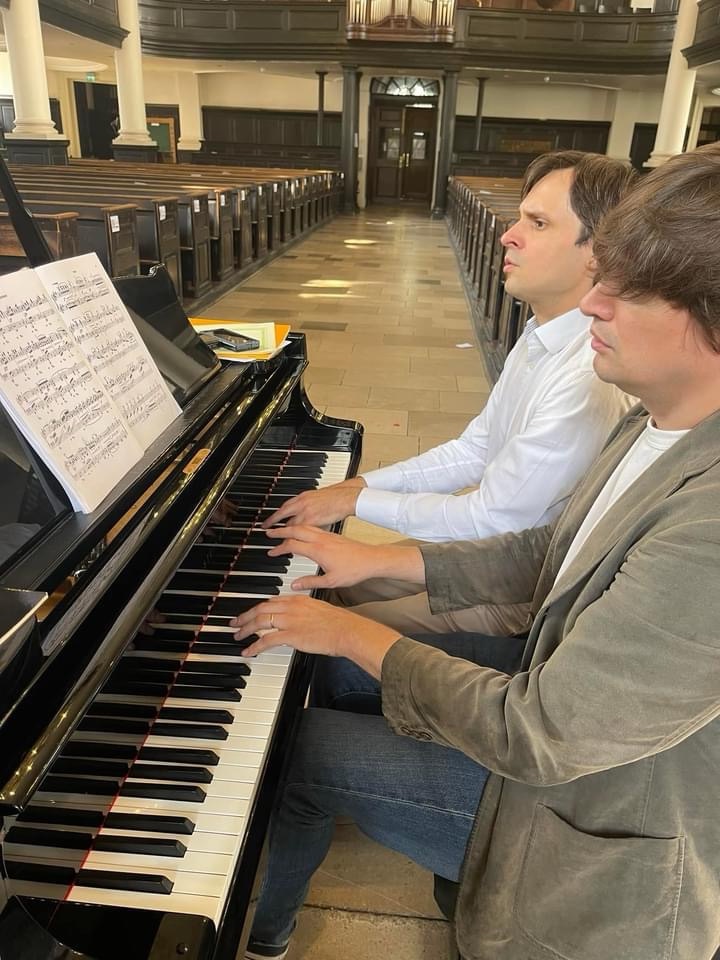
A page turner’s view of a great concert .
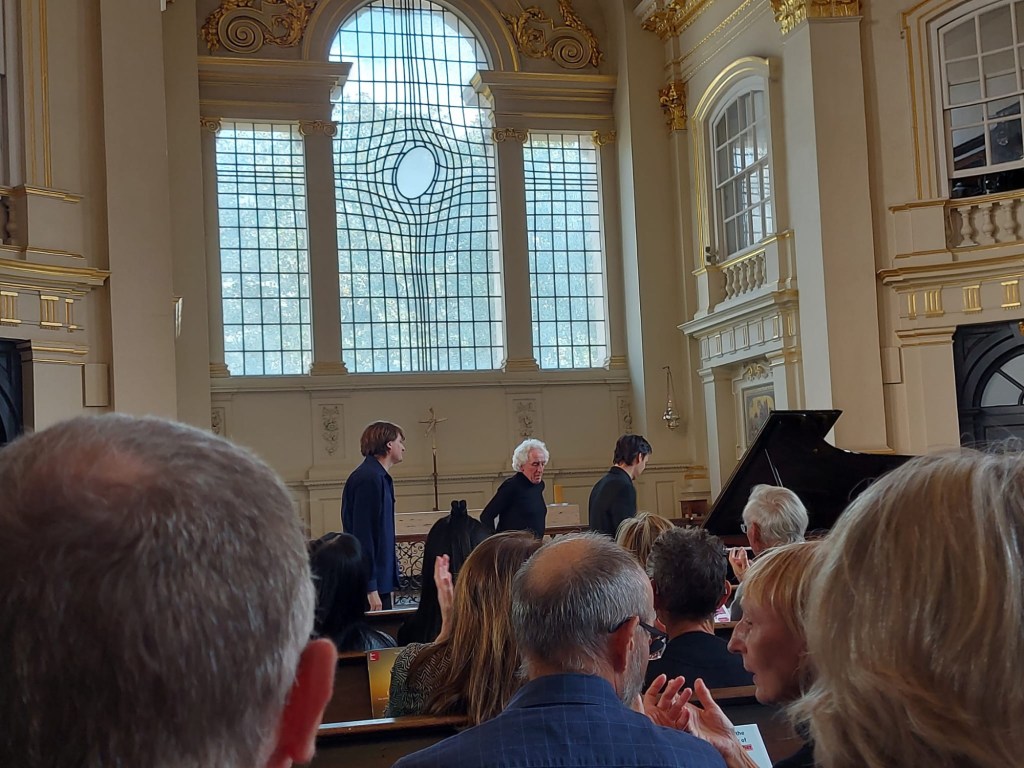
Sasha Grynyuk and Petr Limonov – solo and in duo but united in their supreme musical mastery.

Three is a crowd but a good view for the page turner
https://christopheraxworthymusiccommentary.com/2016/12/13/a-birds-eye-view-of-a-very-happy-occasion-martha-argerich-and-alberto-portugheis-wigmore-hall-75th-birthday-celebration/


Lifelong friends with Petr who was glad to help out an old friend whose brother ,Alexei, had sprained his shoulder at the last minute and could not play in this long awaited joint recital.
A Schubert Fantasy that seemed too slow but gradually enveloped us all with its crystalline beauty and magisterial architectural understanding .


To say that Petr’s solo of Schubert op 90 n 3 and 4 was sublime would be the understatement of the year! Old style playing where a pianist becomes a magician as Schubert’s sublime music floated into this beautiful edifice with timeless beauty reminding me of the much missed Nelson Freire.
https://christopheraxworthymusiccommentary.com/2021/11/02/nelson-freire-rip/


Sasha’s Brahms Rhapsody op 79 n 1 was not less as he had a whole orchestra in his hands .Not just any old orchestra but the Berlin Philharmonic to say the least .
Precision with scrupulous attention to detail ,especially the pedal as you would expect from his mentor the veteran Noretta Conci-Leech a disciple of Michelangeli and co founder of the Keyboard Trust.

In rehearsal before the concert


Two Dvorak dances united these two great artists with a decadent rubato of insinuating whispered secrets
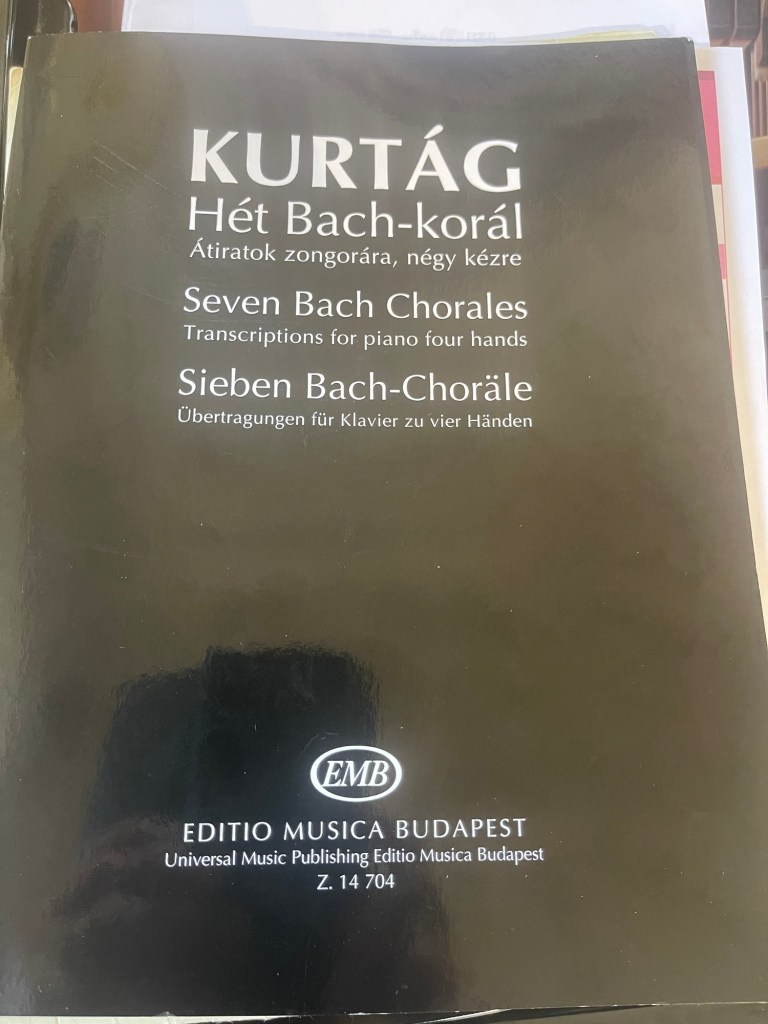
A Bach chorale that Kurtag had transcribed for himself and his wife to play was their way of cleansing the air and thanking the numerous public after such sumptuous excesses .


Luckily Maestro Kurtag had left his own vocabulary on the shelf bowing to the superior timeless genius of J.S.B.

Sasha Grynyuk
Petr Limonov
And so off to prepare for Sunday where Sasha’s wife will take my place and Petr again will take Alexei’s

Petr Limonov’s masterly final recital in St Mary’s summer lockdown series

Sasha Grynyuk in Milan and Florence Mastery and musicianship combine with poetic sensibility and intelligence

.

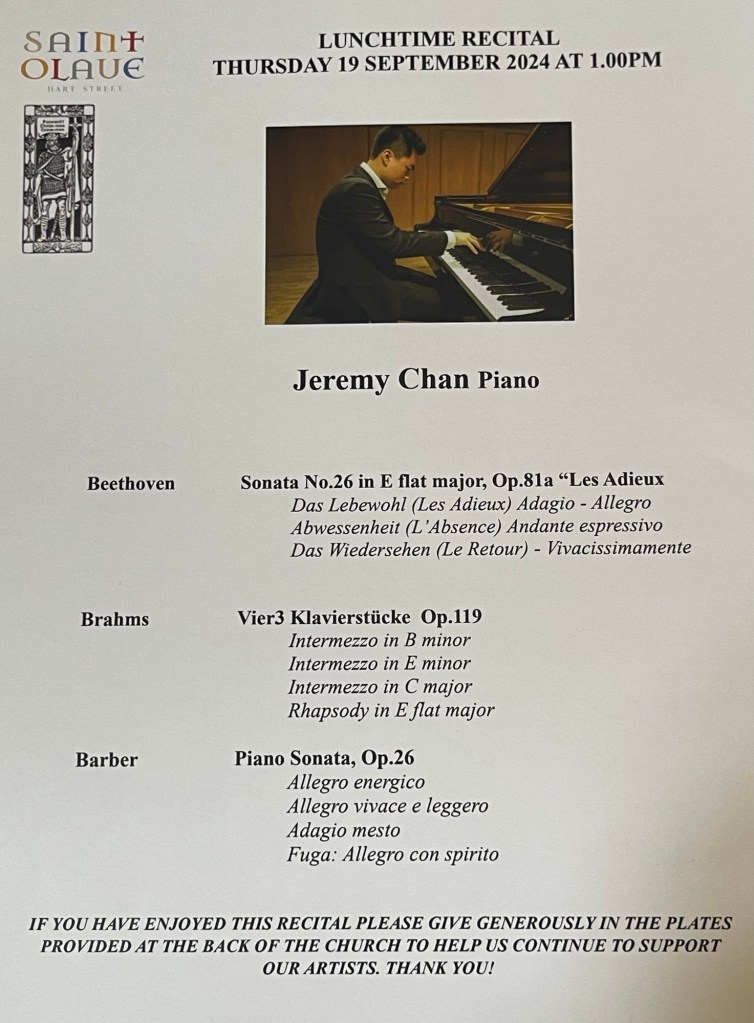
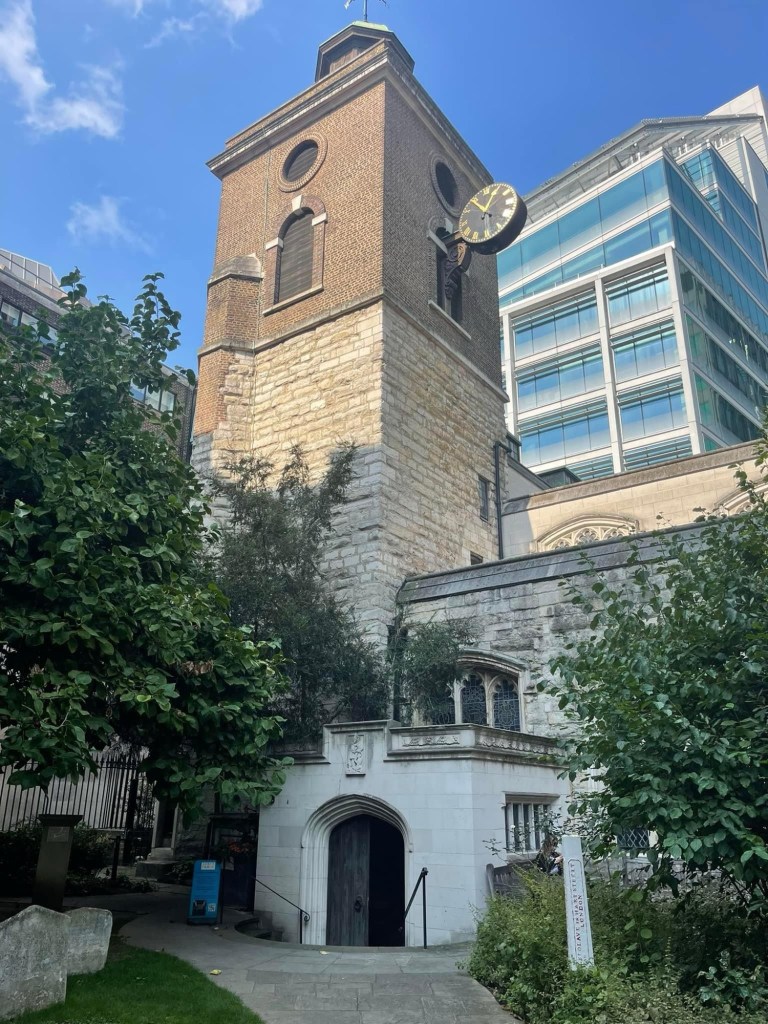
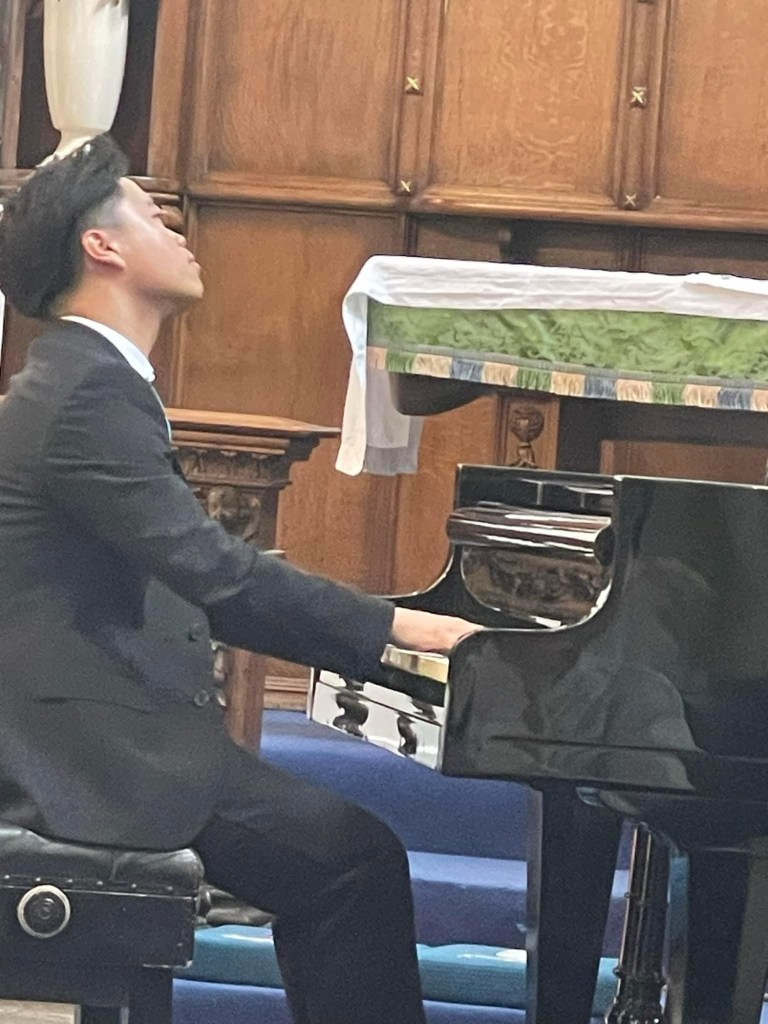
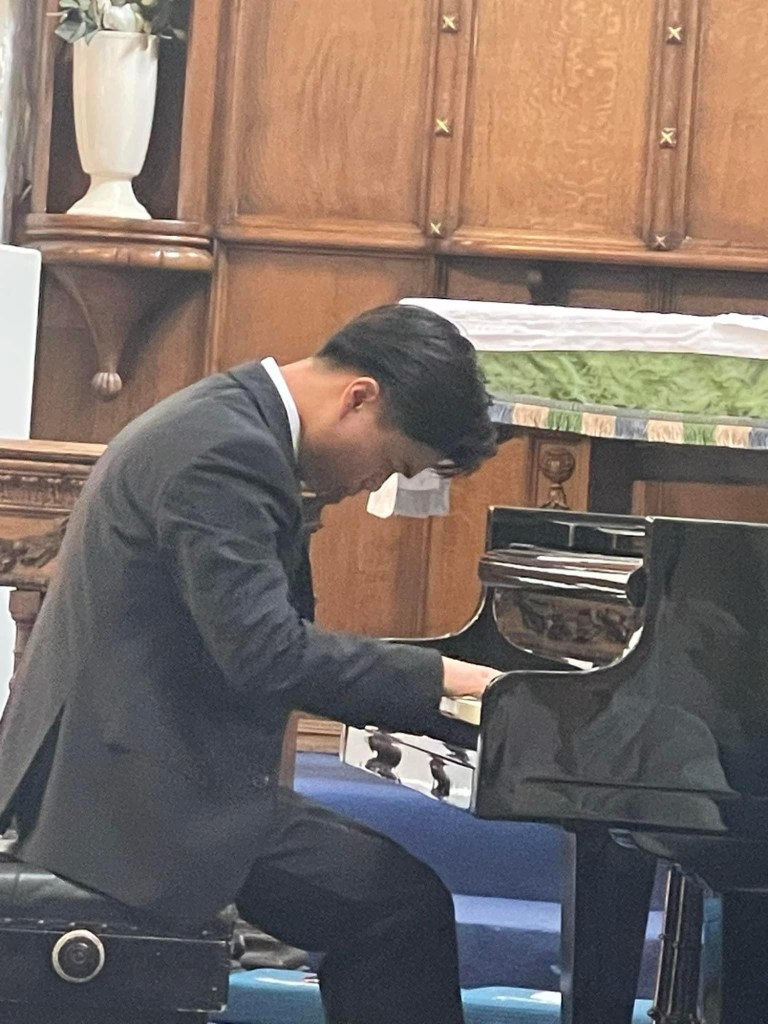
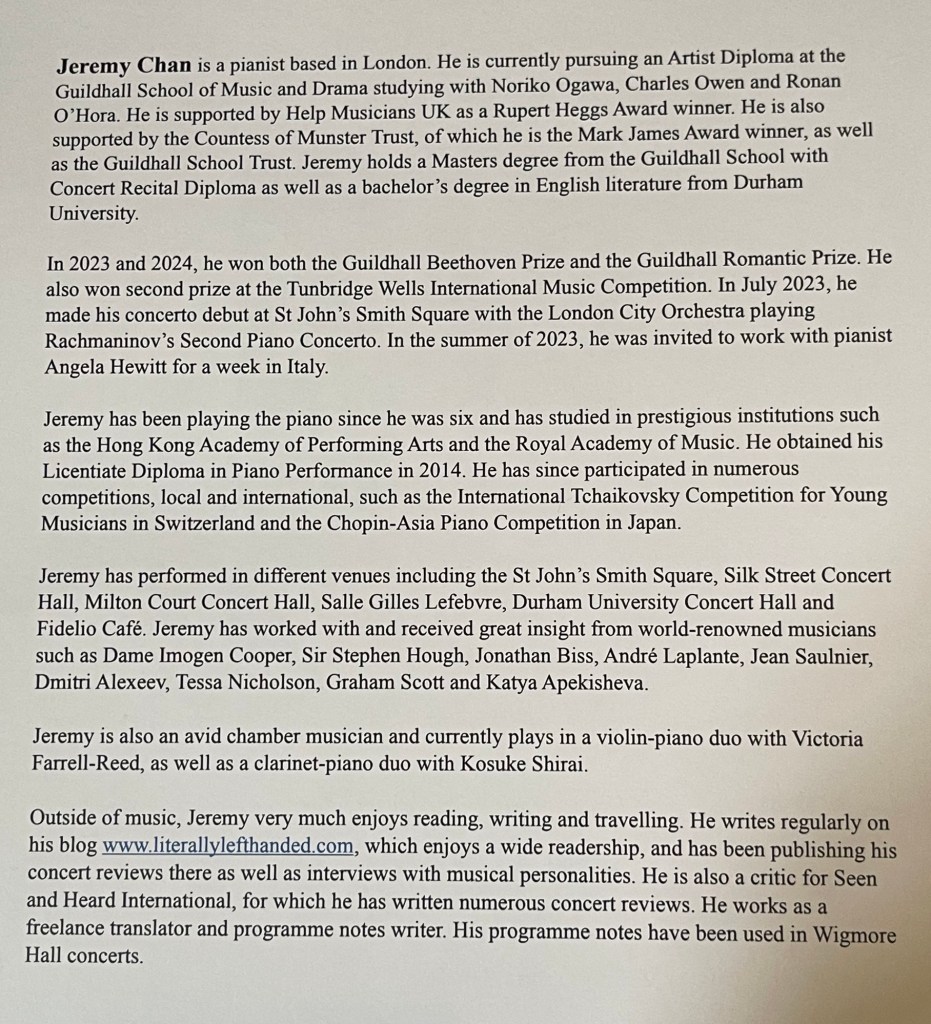
Jeremy Chan at St Olave’s Tower Hill with playing of commanding authority and towering musicianship

Playing of real authority on a not easy piano but nevertheless a Bosendorfer of pedigree that in the hands of a true musician can still reveal many secrets .A programme of the three B’s : Beethoven ,Brahms ……..and Barber eloquently introduced but even more eloquently played !

Beethoven’s ‘Les Adieux’ Sonata the only Sonata that Beethoven actually gave titles to opened with the luminosity and simplicity of a beautifully shaped ‘Adagio’ before exploding into the ‘Allegro’ that was played with great buoyancy and drive. Impeccable technical control as he played with scrupulous attention to Beethoven’s detailed indications with musicianship and poetic beauty.There was a beautiful sense of balance in the ‘Andante espressivo’ that allowed the melodic line to glow with poignant simplicity. An oasis of calm before the explosion of the ‘Vivacissimamente’ and an exhilarating pastoral ‘joie de vivre’ that was played with dynamic drive and scintillating exuberance.

The four pieces that make up Brahms op 119 opened with the Intermezzo in B minor played with purity and poignant beauty as the music was allowed to unfold with heartrending beauty as Brahms said farewell to the piano with these last solo offerings. The Intermezzo in E minor was played with a whimsical whispered flight of beauty with playing of great fantasy and architectural line.In fact all through these four short pieces there was an overall sense of line and shape that united them into a whole which I have rarely heard played with such intelligent musicianship and sense of forward movement.Never allowing himself to wallow in these very intimate pieces but letting the music to speak for itself with a kaleidoscope of sounds of rare beauty.A beguilingly capricious Intermezzo in C major was thrown off with the same ease and charm that I still remember from the hands of Curzon.The final Rhapsody in E flat was full of majestic orchestral sounds with a central episode that was like a breath of fresh air of innocent purity before the final sumptuous finale played played with grandiose aristocratic control.

A performance of the Barber Sonata that was written for Horowitz and is indeed a ‘tour de force’ of intricate counterpoints and moving harmonies of relentless forward movement.The ‘Allegro energico’ was played with a kaleidoscope of colours it’s melancholic theme emerging through a mist of sounds.The ‘Allegro vivace e leggero’ was a mellifluous outpouring of continuous sounds and led to the languid beauty of mystery and haunting nostalgia of the ‘Adagio mesto’ that was played with passionate commitment and commanding authority. But it was the Fugal last movement notorious for its intricate knotty twine that Jeremy played with breathtaking ,fearless virtuosity but also with the sense of line and architectural shape of a remarkable musician.

Jeremy introducing the programme
An old Bosendorfer with a voice still of great pedigree in the right hands

Angela’s generosity and infectious Song and dance inspires her illustrious students.

Jeremy Chan at St Olaves Tower Hill ‘Masterworks played with intelligence and sensitive artistry’

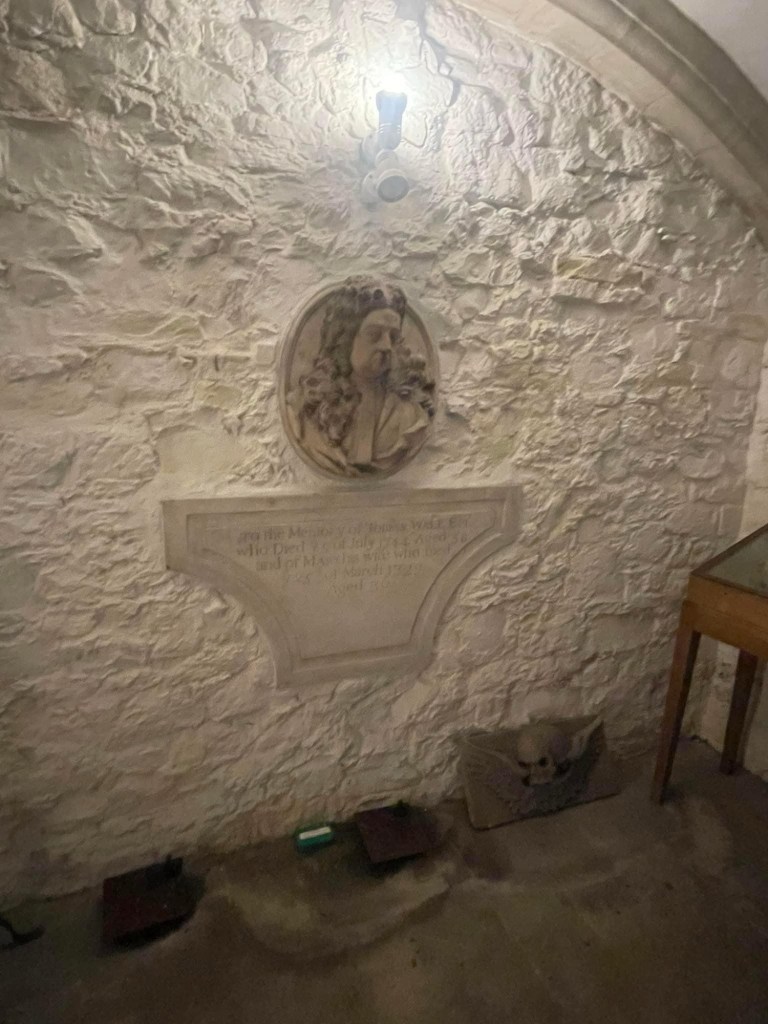
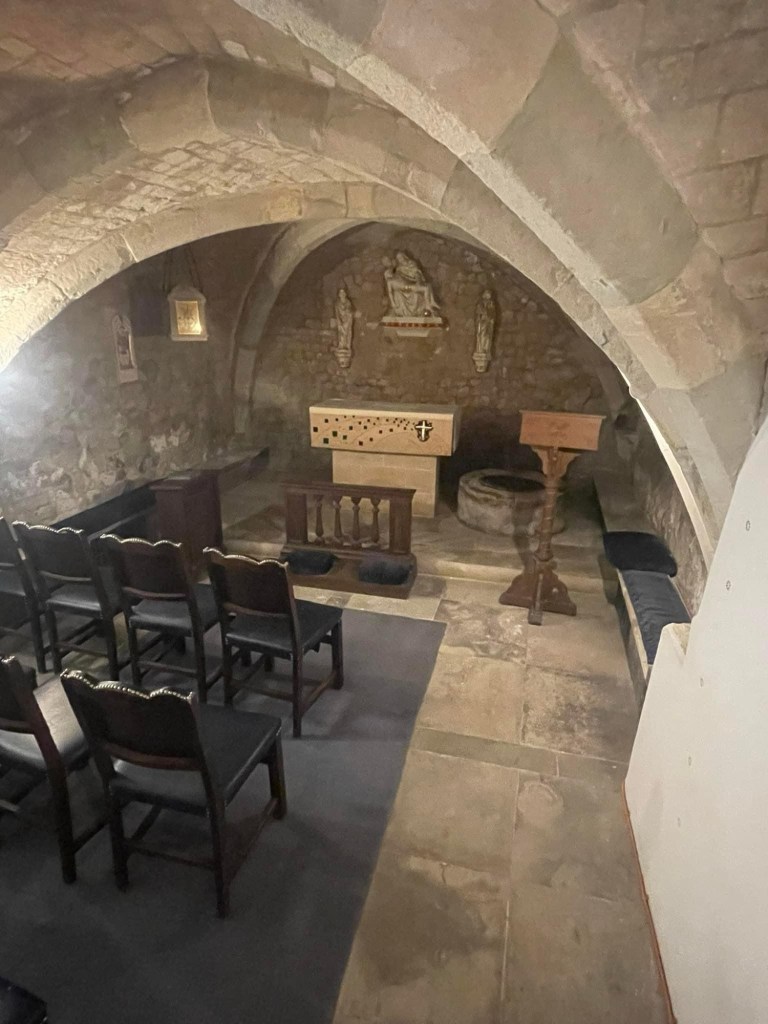
An inspiring visit to the crypt in this remarkable church so brutally abused during the war.


Samuel Osmond Barber II
March 9, 1910 West Chester Pennsylvania
January 23, 1981 Manhattan NY

The Piano Sonata in E-flat minor, op .26, was commissioned for the twenty-fifth anniversary of the League of Composers by American songwriters Irving Berlin  and Richard Rodgers .It was written between 1947 to 1949, and was first performed by Vladimir Horowitz in December 1949 in Havana, Cuba, followed by performances in Washington D.C and New York City  in January 1950. The sonata is regarded as a cornerstone of American piano literature and one of Barber’s most significant achievements. Critics hailed it as a defining moment in mid-20th-century music, with The New York Times  describing it as the “first sonata truly to come of age by an American composer of this period.”

Upon completing the first two movements, Barber initially planned a concluding slow movement,and played the completed movements for Horowitz , who would later premiere the work, at Horowitz’s house.Horowitz then suggested Barber write a four-movement work with a “very flashy last movement, but with content”, a movement which would become a fugue.

The composer finished the sonata in June 1949, and Vladimir Horowitz began to prepare it for performance, spending five hours a day practicing it. Barber later commented that Horowitz had been playing it “with a surprising emotional rapprochement which I had not expected”.Horowitz premiered the Sonata in Havana, Cuba, on December 9, 1949. This was followed by a private performance in New York at the former G.Shirmer  headquarters on January 4, 1950. Gian Carlo Menotti ,Virgil Thomson,William Schumann,Thomas Schippers,Aaron Copland,Lukas Foss Myra Hess and Samuel Chotzinoff all attended.The official U.S. premiere was in Washington, DC,on January 11, 1950, at Constitution Hall ; Horowitz then publicly played the work in New York on January 23, 1950 at Carnegie Hall to ubiquitous praise from music critics.By April 1950, plans were in place for Horowitz to record the sonata for a Christmas release that year; Horowitz made the recording in May, for RCA Victor . This recording remained Barber’s preferred version for at least a decade.

The sonata is in four movements:

  1. Allegro  energico
  2. Allegro vivace  e leggero
  3. Adagio  mesto
  4. Fuga : Allegro con spirito

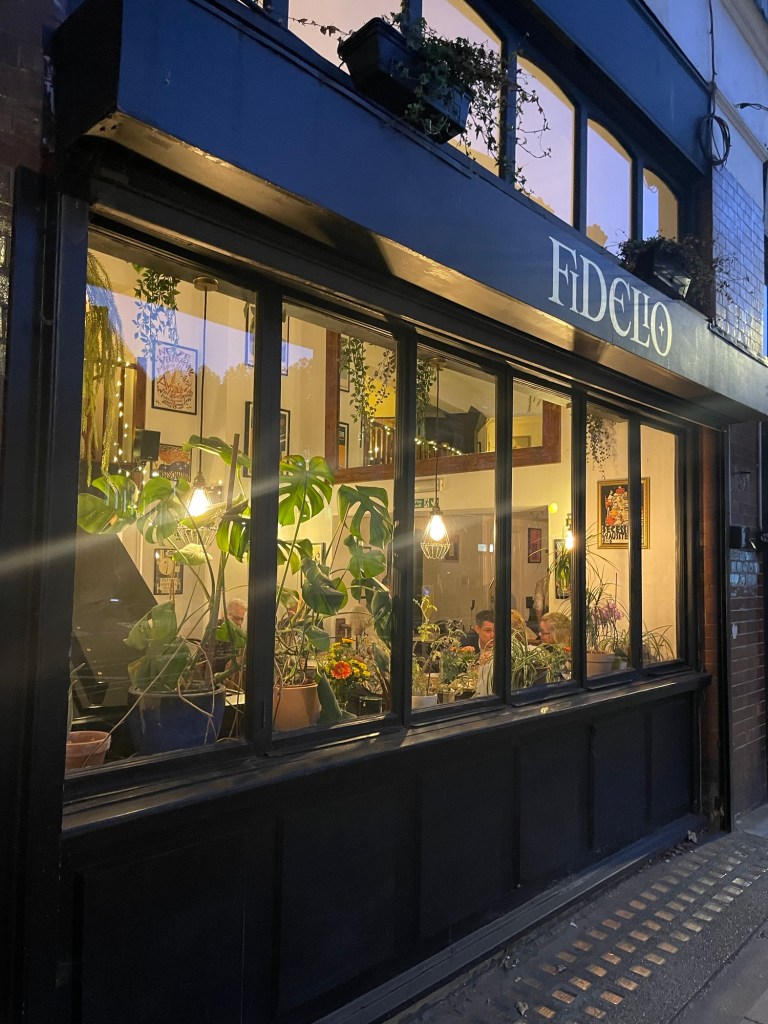
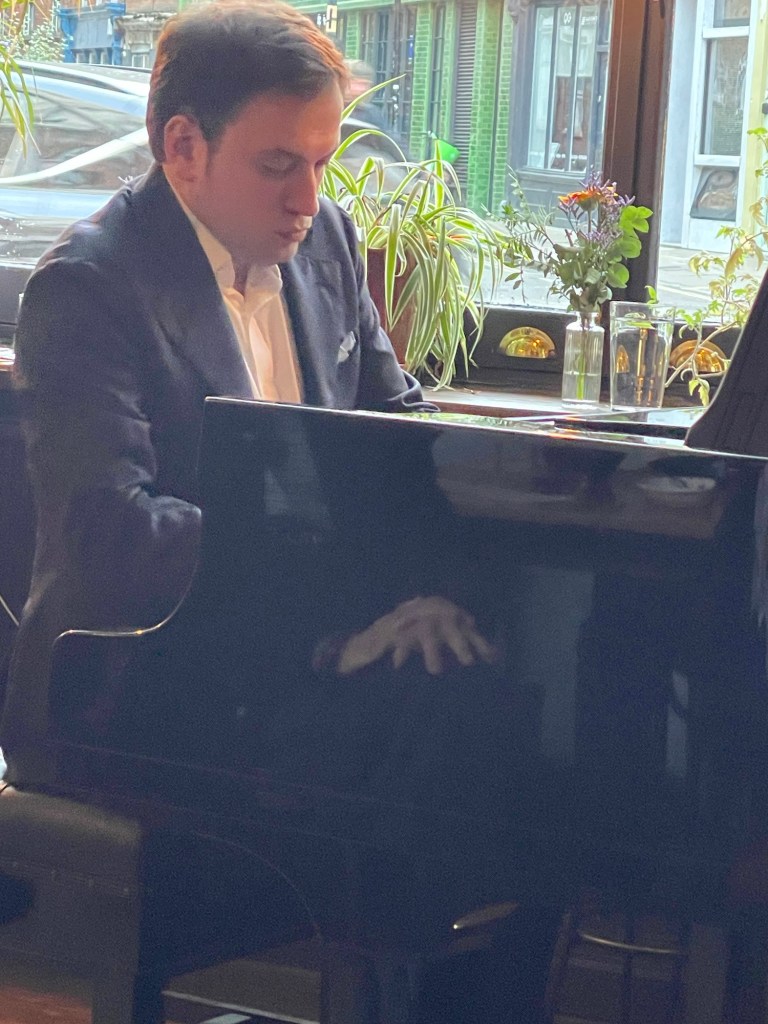
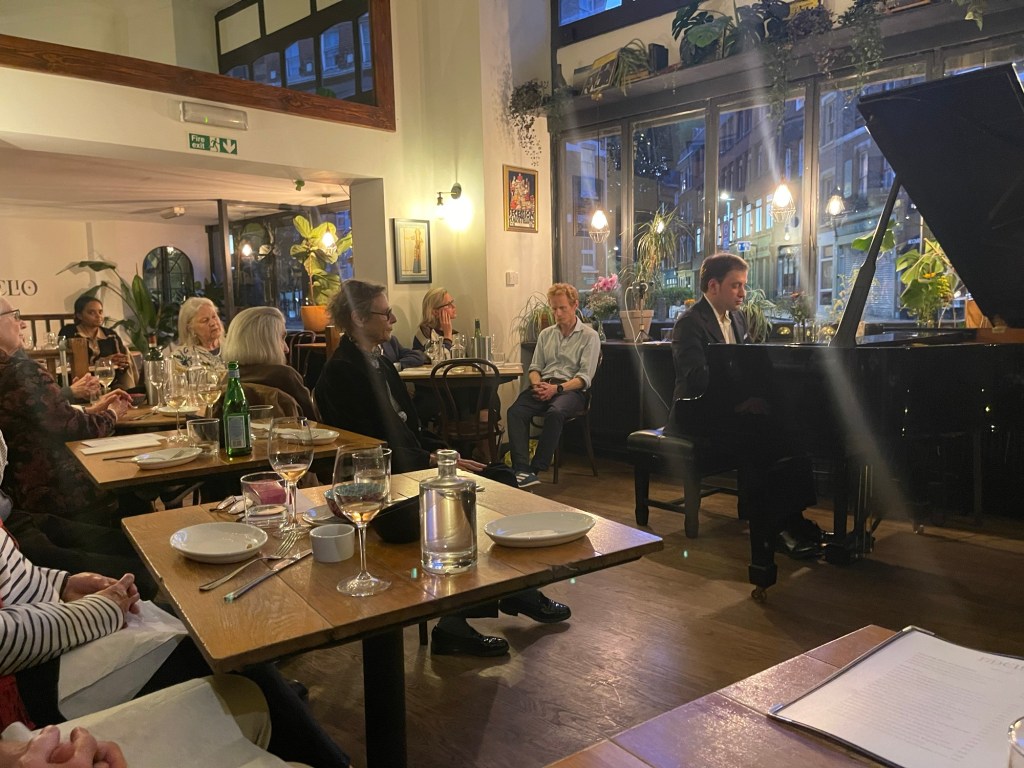
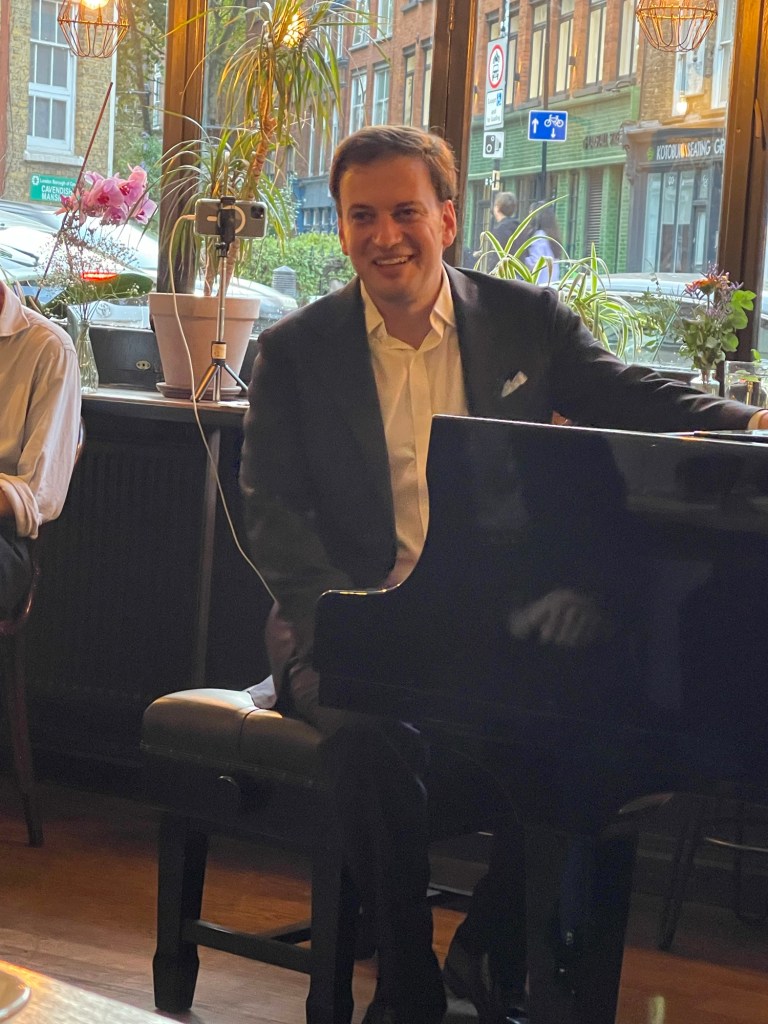
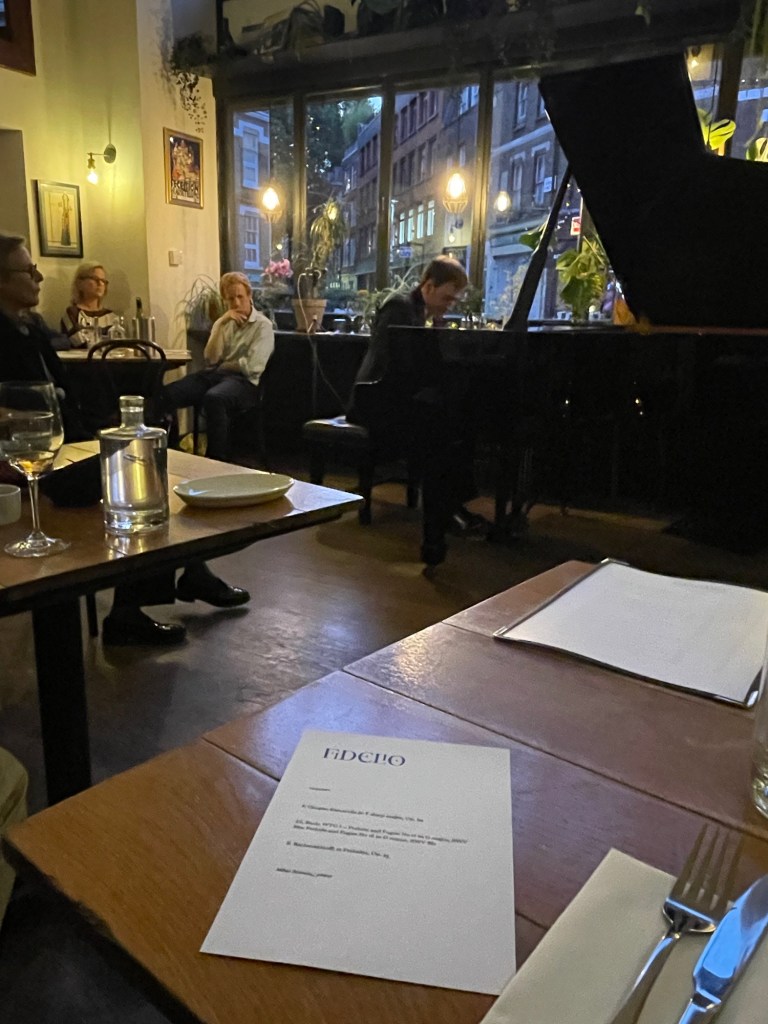
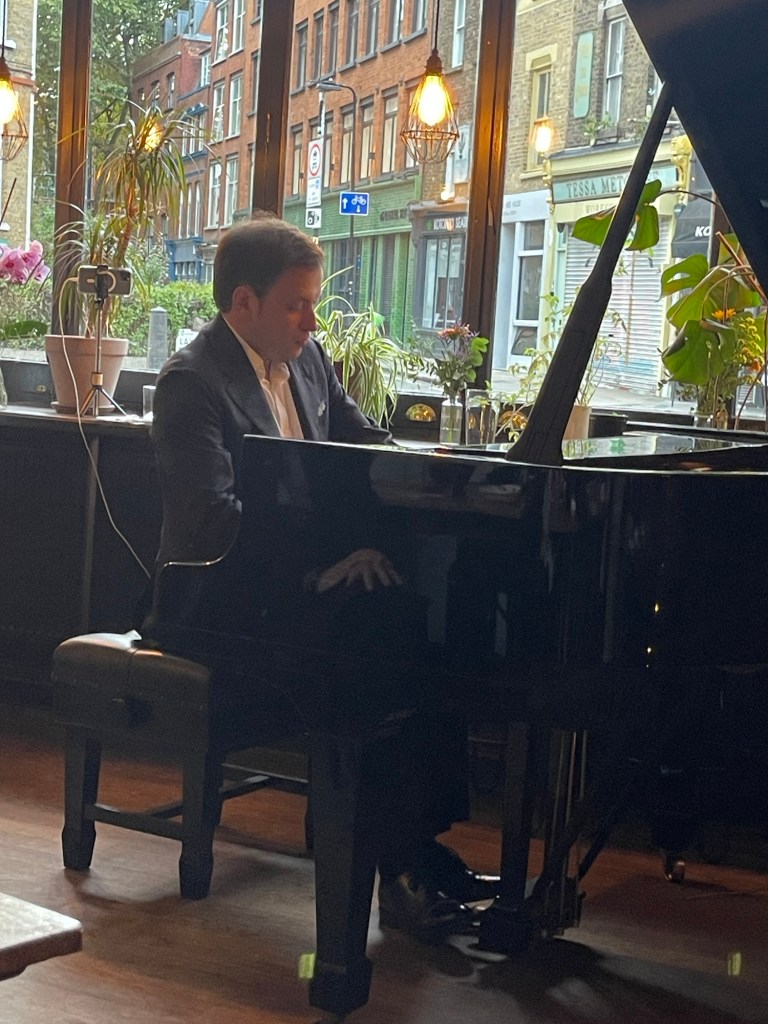
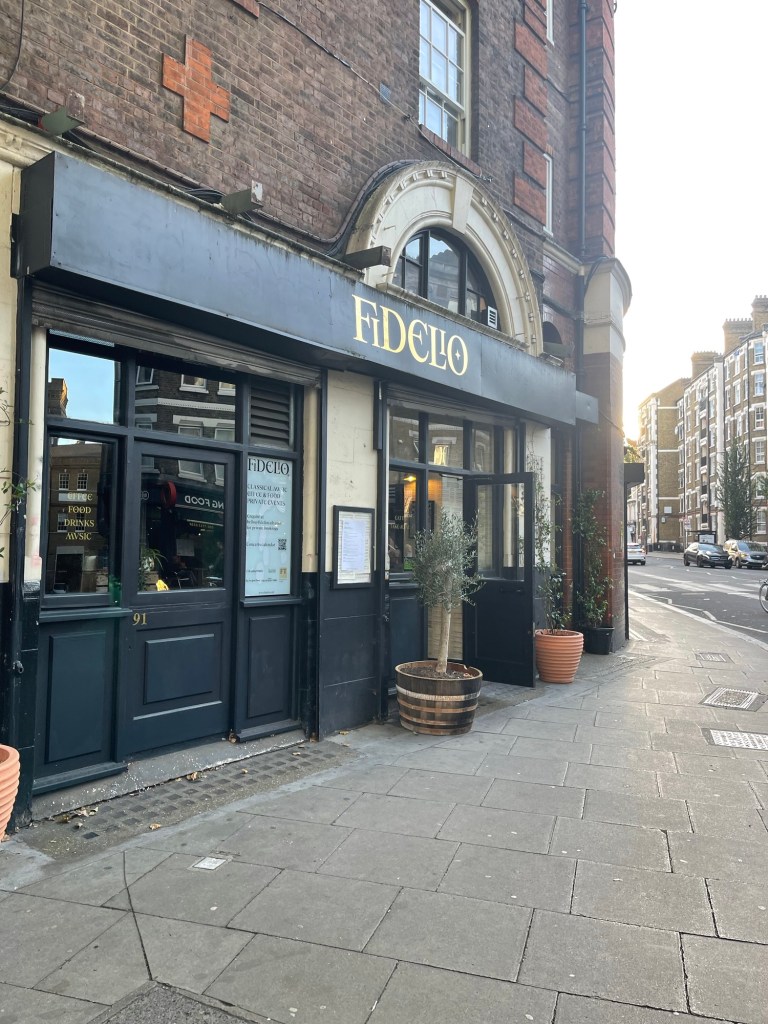
Mihai Ritivoiu at Fidelio The Poet speaks in an oasis of elegance and eloquence.

Programme:

F. Chopin: Barcarolle in F sharp major, Op. 60

J.S.Bach WTC Book 1 : Prelude and Fugue No 16 in G minor, BWV 861;

Prelude and Fugue No 15 in G major, BWV 860;

S. Rachmaninoff: 10 Preludes, Op. 23

Mihai Ritivoiu, piano.

Mihai Ritivoiu at Fidelio with a sumptuous feast on wings of song .
There can be no greater song that Chopin’s Barcarolle , a continuous outpouring of mellifluous beauty .Played with the refined good taste that I can still remember from ten years ago when Mihai as a student of Joan Havill at the Guildhall played another of the last works of Chopin :the Polonaise Fantasie in Richard Goode’s Masterclass. Timeless beauty and aristocratic elegance as the music was allowed to unfold so simply in the Barcarolle today . A kaleidoscope of colours with a masterly control of sound and a true paradise found before the final build up to the glorious exultation of beauty that Chopin was to pen with searing intensity and sublime ecstasy.The coda was played with the ravishing beauty and simplicity that made it one of Ravel’s most cherished passages in all of Chopin.


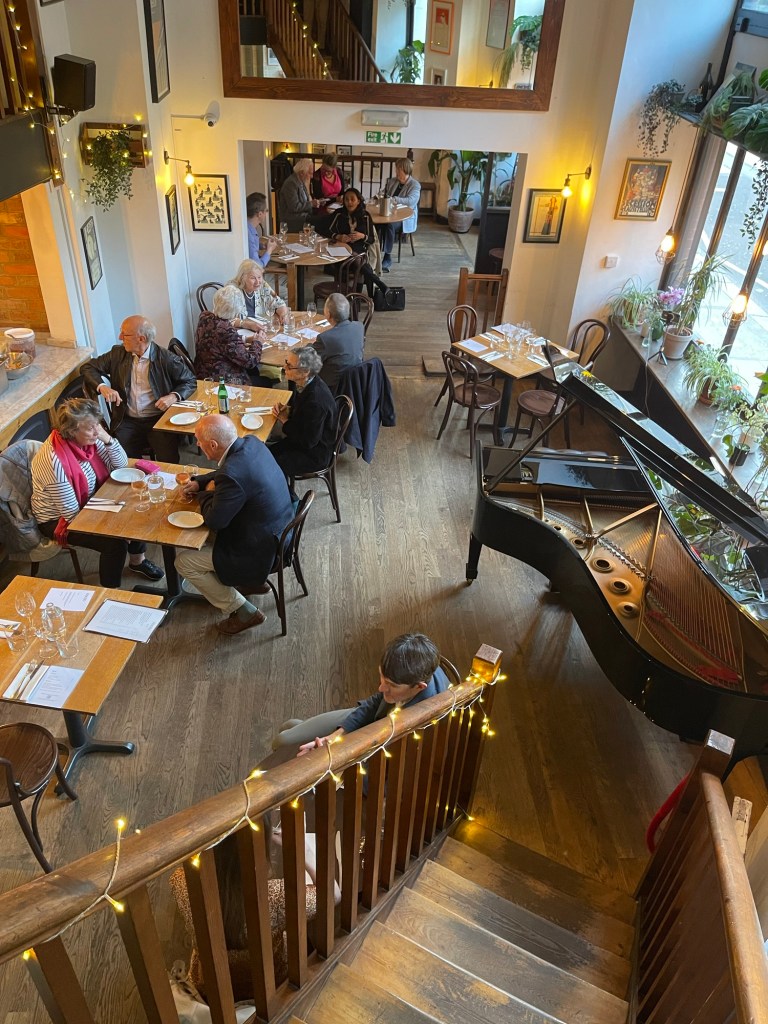
Today Mihai is a distinguished pianist of aristocratic authority who held us in his spell in this very atmospheric oasis that the conductor Raffaello Morales has given to a great city that like many is too often bereft of refined cultural dining venues where an ever diminishing minority can escape and allow their senses to be enriched and replenished.https://christopheraxworthymusiccommentary.com/2024/07/18/31232/

Angela Hewitt plays Bach and Brahms with the Fidelio Orchestra of Raffaello Morales


Wonderful to hear Bach Preludes and Fugues in a recital especially when played as today with the G minor and G major book one inserted into a pre dinner concert.
It reminded me of Casals who would always start the day with a Bach Prelude and Fugue on the piano that just cleansed the system before life took over.There was such joy in Mihai’s playing of the jeux perlé of the G major before the knotty twine of intricate counterpoints of the three part fugue . Following on from the refined beauty of the G minor that was played with wondrous poignant beauty as it was allowed to unfold so simply from such sensitive hands.The massive four part fugue was built up masterfully and was the exultation of a true believer .


Wonderful to hear the fugues played with such architectural shape and noble character , the words of Ebenezer Prout coming to mind after all these years. I asked Angela Hewitt during the interval of a recital in Florence whether she knew about Ebenezer and she spent the entire interval singing them at top voice much to the dismay of her Italian agent. I had sneaked backstage in the interval as I had to rush to catch my last train back home to Rome at the end of the afternoon concert at La Pergola. I did mention how much I was enjoying her recital especially having heard Lang Lang the day before .She made a desperate sign to me not to continue about Lang Lang as his agent was the same who was in the Green Room with us !
It was on this occasion that Angela asked if I had read the paper that day because the whole of Florence was talking about that ring!
https://christopheraxworthymusiccommentary.com/2024/03/21/lo-specchio-17th-december-2005-the-ring-ileana-has-shown-us-how-to-leave-the-stage/

Bach Preludes were followed by the sumptuous Ten Preludes that make up Rachmaninov’s op 23.
Sumptuous sounds and breathtaking virtuosity went hand in hand with poetic beauty and even Hollywoodian glamour – after all let’s not forget that this morose Russian who looked as though he had swallowed a knife had a heart full of passion and romantic effusions and died in Beverley Hills !


And what similarity there was between the opening Bach in G minor and the opening Rachmaninov , just a semitone between them but worlds apart ! The same improvised refined beauty but of a different more decadent world played with ravishing beauty and languid intensity. The B flat Prelude exploding like the second concerto with sumptuous cascades of notes and after the opening call to arms falling into the loving arms of unmistakeable Rachmaninovian decadence and nostalgia.The central episode was played with breathtaking beauty as it built to a transcendental climax with a Guinness book of records of notes spun so masterfully before the return of the call to arms.

D minor of the Tempo di Minuetto was played with the same capriciousness as the concerto in the same key. A busy juxtaposition of flights of notes with the pivot note of D allowing etherial dream like wafts of sounds to float so magically in the air before being reminded like in the Paganini Rhapsody that it was all a dream – so there!

The D major Prelude I have never forgotten the recording my grandmother had of Richter which I used to play over and over again together with the second concerto when I was a school boy who had fallen in love for the first time. I mean love in the true sense as Tortelier was to teach me and in this case with sounds that could explain what a shy young boy could not yet express in words. Mihai found just the same magic today with a rich and generous cantabile and a flowing bass , like in the Barcarolle, on which such beauty could flourish.The fifth and seventh were on the Richter record too so this was a real nostalgic voyage for me today as Mihai struck up the ‘Alla marcia’ with the same dynamic drive and authority.Transcendental technical command where the octaves were phrased always horizontally with passionate musical meaning as they dissolved into the world of Rawicz and Landauer – my Grandmothers recording too !
https://www.youtube.com/watch?v=2ADFcbhJOEo Mihai knew, like the recording, how to dissolve into a paradise of sumptuous sounds.

On the Richter record too was the ‘busy bee’ of the 7th Prelude that Mihai played with the same sense of balance and masterly control that allowed the melodic line to float as if there were two pianist at the keyboard not one.The secret of Thalberg was taken up by Rachmaninov,of course , who like Thalberg was one of the greatest virtuosi of all time. ‘Thalberg is the greatest’, declared the Princess Belgioso ‘but Liszt is unique’. So honour was saved in the famous duel between two giants of their time, probably of all time !

The sumptuous ‘Green’Room where Mihai and his fiancée are thinking about approaching Raffaello for a permanent residency

The E flat n. 6 is one of the most unashamedly romantic of all the preludes and was played with beguiling half lights and insinuating rubato. The 8th is the longest with its meandering weaving harmonies that finally run out of steam . Ending with a dozen straight chords ,just like the Schumann Toccata, where the composer puts the break on just in time! The ninth is Rachmaninov’s ‘Feux Follets’ on the black keys in E flat minor and is a ‘tour de force’ that strikes terror in all but the finest pianists. Mihai was not only unafraid but added a musical shape that like ‘Feux Follets’ in masterly hands can turn what has become a technical bauble into a ravishing gem.The final Largo in G flat was played with a masterly sense of balance that allowed the left hand to sing as in Chopin’s study op 25 n. 7 .The hands duetting with each other with poignant deeply felt meaning .

A poet speaks spring to mind and what better way to describe Mihai’s playing than that of a Poet of the Keyboard.

Born in Bucharest, the London-based Romanian pianist Mihai Ritivoiu is a top prize-winner of several national and international competitions, including the George
Enescu International Competition, where he was also distinguished with the special prize for the best interpretation of a piano sonata by George Enescu. He leads an international career performing solo and chamber music recitals in Europe and Asia, and has played concertos with the George Enescu Philharmonic Orchestra, Lausanne Chamber Orchestra, the English Chamber Orchestra and MDR Leipzig, and with conductors such as Joshua Weilerstein, Robert Trevino, Michael Collins, Jonathan Bloxham, Cristian Mandeal, Christian Badea and Horia Andreescu. He has been invited to play at prestigious festivals, including Young Euro Classic in Berlin and the Enescu Festival in Bucharest, and has performed in halls such as the Barbican Centre, Wigmore Hall, Cadogan Hall, Konzerthaus Berlin, Studio Ernest Ansermet Geneva, the Radio Hall and the Romanian Athenaeum in Bucharest.

Mihai Ritivoiu’s triumphant recital signals a musical renaissance at the National Liberal Club
Mihai Ritivoiu at St Martin in the Fields Simple great Beethoven from a musician who thinks more of the music than himself

Mihai Ritivoiu at St Mary’s A poet of the piano of great authority and aristocratic bearing

Ebenezer Prout ‘s 48

Book I

  1. He went to town in a hat that made all the people stare.
  2. John Sebastian Bach sat upon a tack, but he soon got up again with a howl!
  3. O what a very jolly thing it is to kiss a pretty girl!
  4. Broad beans and bacon…(1st countersubject)…make an excellent good dinner for a man who hasn’t anything to eat.(2nd countersubject)…with half a pint of stout.
  5. (Subject) Gin a body meet a body Comin’ through the rye,
    (Answer) Gin a body kiss a body, Need a body cry?
  6. He trod upon my corns with heavy boots—I yelled!
  7. When I get aboard a Channel steamer I begin to feel sick.
  8. You dirty boy! Just look at your face! Ain’t you ashamed?
  9. Hallo! Why, what the devil is the matter with the thing?
  10. Half a dozen dirty little beggar boys are playing with a puppy at the bottom of the street.
  11. The Bishop of Exeter was a most energetic man.
  12. The slimy worm was writhing on the footpath.
  13. Old Abram Brown was plagued with fleas, which caused him great alarm.
  14. As I sat at the organ, the wretched blower went and let the wind out.
  15. O Isabella Jane! Isabella Jane! Hold your jaw! Don’t make such a fuss! Shut up! Here’s a pretty row! What’s it all about?
  16. He spent his money, like a stupid ass.
  17. Put me in my little bed.
  18. How sad our state by nature is! What beastly fools we be!
  19. There! I have given too much to the cabman!
  20. On a bank of mud in the river Nile, upon a summer morning, a little hippopotamus was eating bread and jam.
  21. A little three-part fugue, which a gentleman named Bach composed, there’s a lot of triple counterpoint about it, and it isn’t very difficult to play.
  22. Brethren, the time is short!
  23. He went and slept under a bathing-machine at Margate.
  24. The man was very drunk, as to and fro, from left to right, across the road he staggered. 

Book II

  1. Sir Augustus Harris tried to mix a pound of treacle with a pint of castor oil.
  2. Old Balaam’s donkey spoke like an ass.
  3. O, here’s a lark!
  4. Hey diddle diddle, the cat and the fiddle! The cow jumped over the moon!
  5. To play these fugues through is real jam.
  6. ‘Ark to the sound of the ‘oofs of the galloping ‘orse! I ‘ear ‘im comin’ up Regent Street at night. (Countersubject:) ‘Is ‘oofs go ‘ammer, ‘ammer, ‘ammer, ‘ammer, ‘ammer, ‘ammer, on the ‘ard ‘ighway.
  7. Mary, my dear, bring the whiskey and water in—bring the whiskey and water in.
  8. I went to church last night, and slept all the sermon through.
  9. I’d like to punch his head…(countersubject:) …if he gives me any more of his bally cheek.
  10. As I rode in a penny bus, going to the Mansion House, off came the wheel—down came the bus—all of the passengers fell in a heap on the floor of the rickety thing.
  11. Needles and pins! Needles and pins! When a man’s married his trouble begins.
  12. I told you you’d have the stomach-ache if you put such a lot of pepper in your tea.
  13. Great Scott! What a trouble it is to have to find the words for all these subjects!
  14. She cut her throat with a paper-knife that had got no handle. (Subject, bar 20:) The wound was broad and deep. (Bar 36:) They called the village doctor in: he put a bit of blotting-paper on her neck.
  15. The pretty little dickybirds are hopping to and fro upon the gravel walk before the house, and picking up the crumbs.
  16. Oh, my eye! Oh, my eye! What a precious mess I’m getting into today.
  17. I passed the night at a wayside inn, and could scarcely sleep a moment for the fleas.
  18. Two little boys were at play, and the one gave the other a cuff on the head, and the other hit back. (Countersubject:) Their mother sent them both to bed without their tea.
  19. In the middle of the Hackney Road today I saw a donkey in a fit.
  20. He that would thrive must rise at five.
  21. The noble Duke of York, he had ten thousand men, he marched them up the hill, and marched them down again.
  22. O, dear! What shall I do? It’s utterly impossible for me to learn this horrid fugue! I give it up! (Countersubject:) It ain’t no use! It ain’t a bit of good! Not a bit! No, not a bit!, No, not a bit!
  23. See what ample strides he takes.
  24. The wretched old street-singer has his clothes all in tatters, and toes showing through his boots.

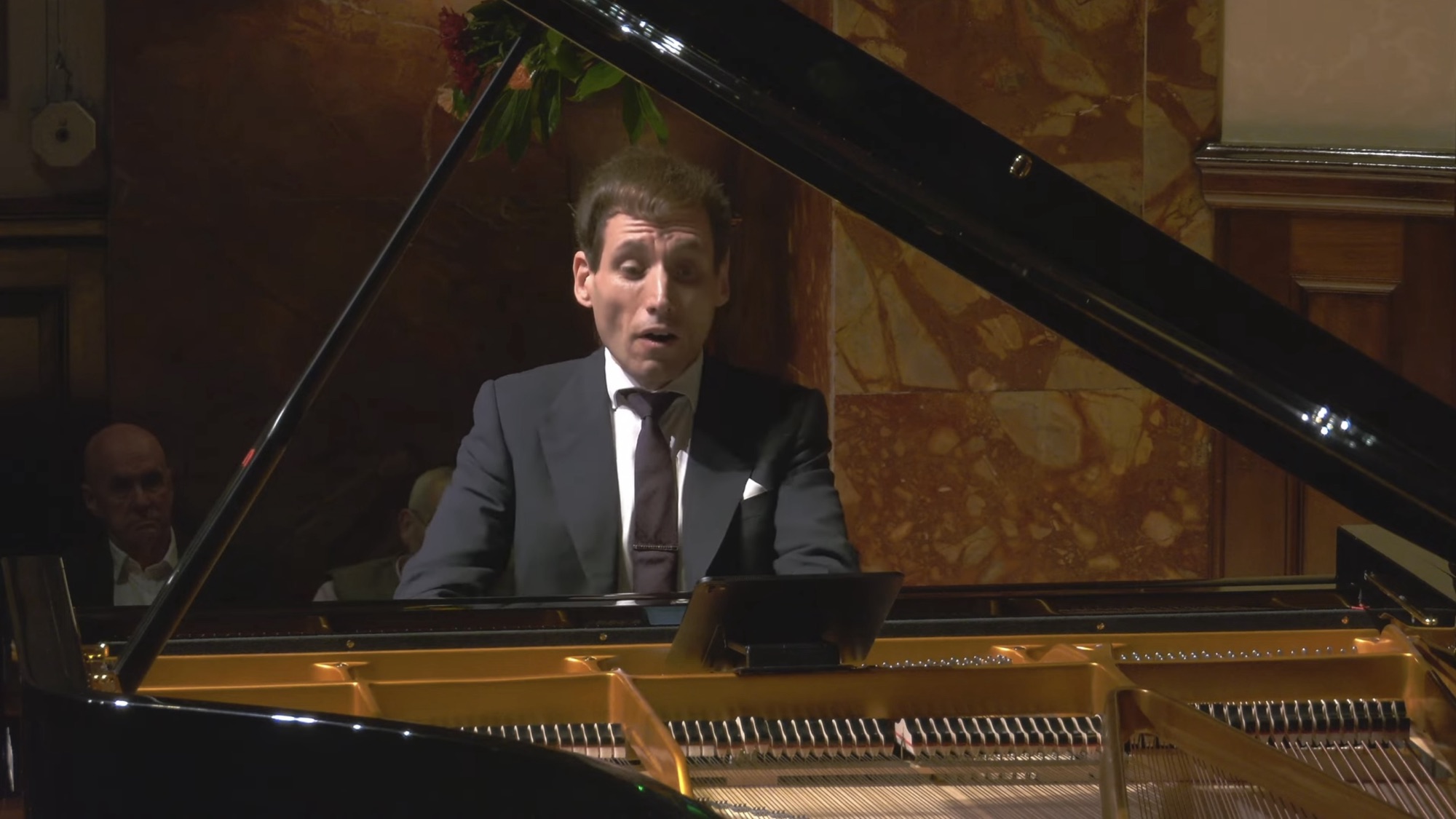
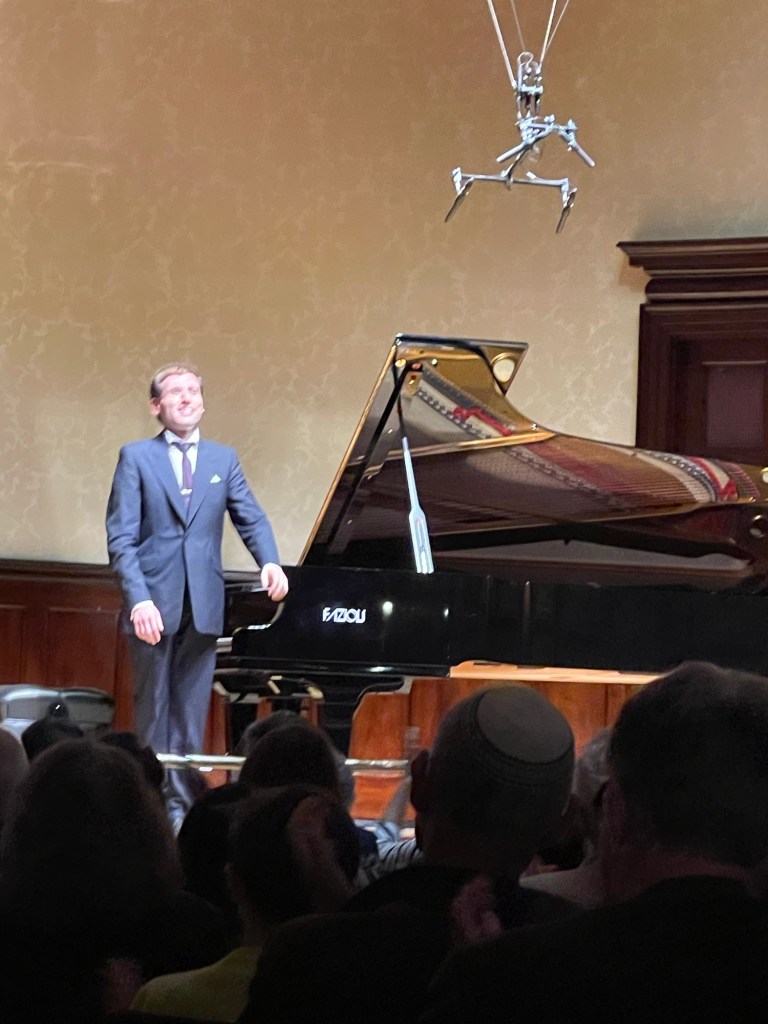
Boris Giltburg a supreme stylist uncovering from afar the genius of Beethoven in 32 steps.

https://www.youtube.com/live/EBiBFnz_yJM?feature=shared

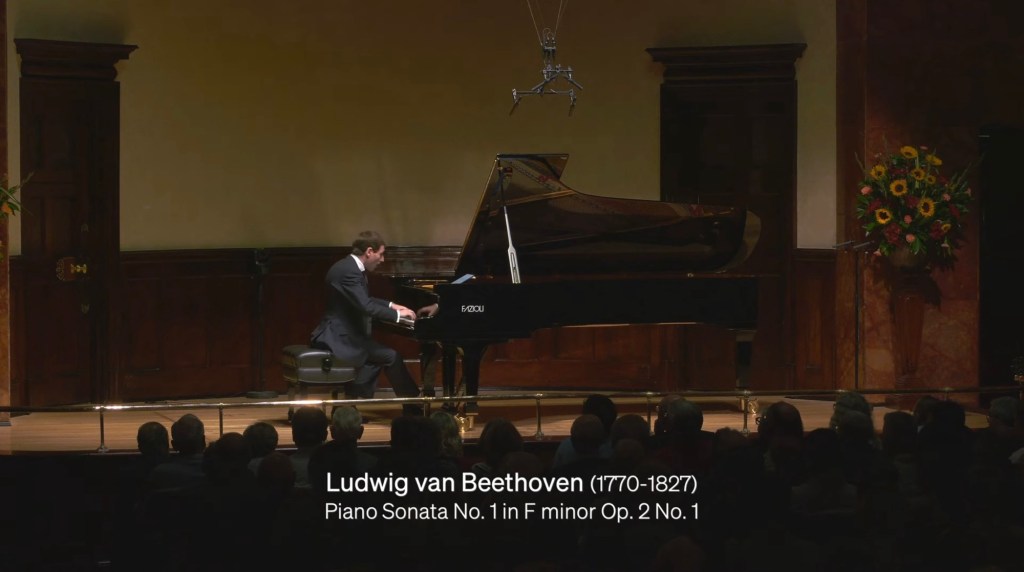
Boris Giltburg with the first of his complete Beethoven cycle. Some extraordinarily beautiful playing with Beethoven’s first sonata op 2 n 1 almost Mendelssohnian in the way Giltburg smoothed over Beethoven’s rough patches with dynamic drive and meltingly beautiful pedal effects. A Prestissimo that was truly of scintillating streams of notes that reminded me more of Saint-Saens than the Beethoven I had heard from Serkin half a century ago.


This was a different vision of Beethoven more pianistic than orchestral and whilst he illuminated many things he lost much of the weight and the very backbone of Beethoven.
An attempt to reinvent Beethoven and find colours and whispered sounds of elegance and grace rather than the rough edges and impatient exclamations of Beethoven’s true character.

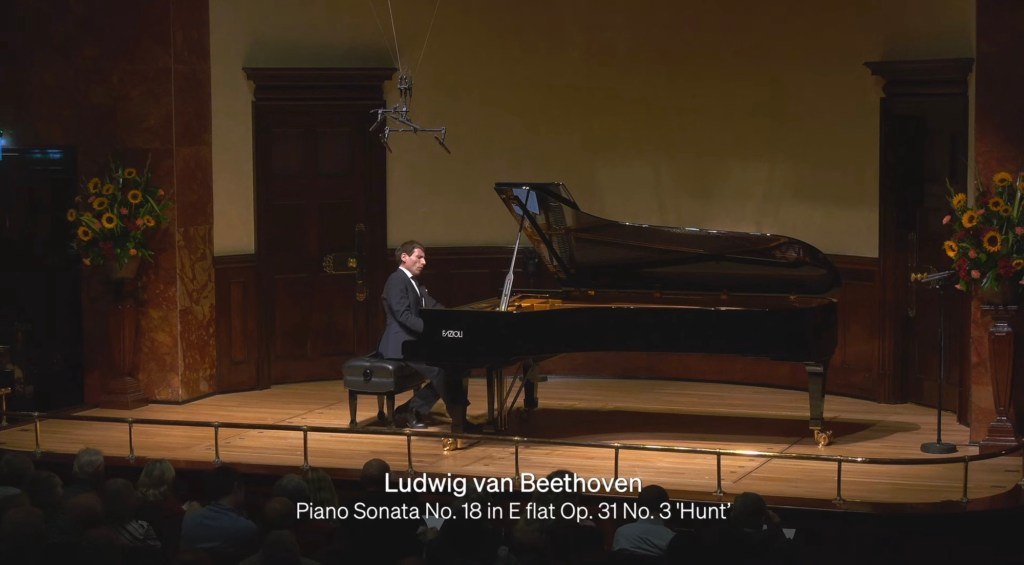
It suited the Sonata op 31 n. 3 known as The Hunt and here Giltburg knew how to chase all over the keyboard with exhilaration and character a work that Rubinstein had made very much his own and I had heard on this very stage in his last public performance in 1976.


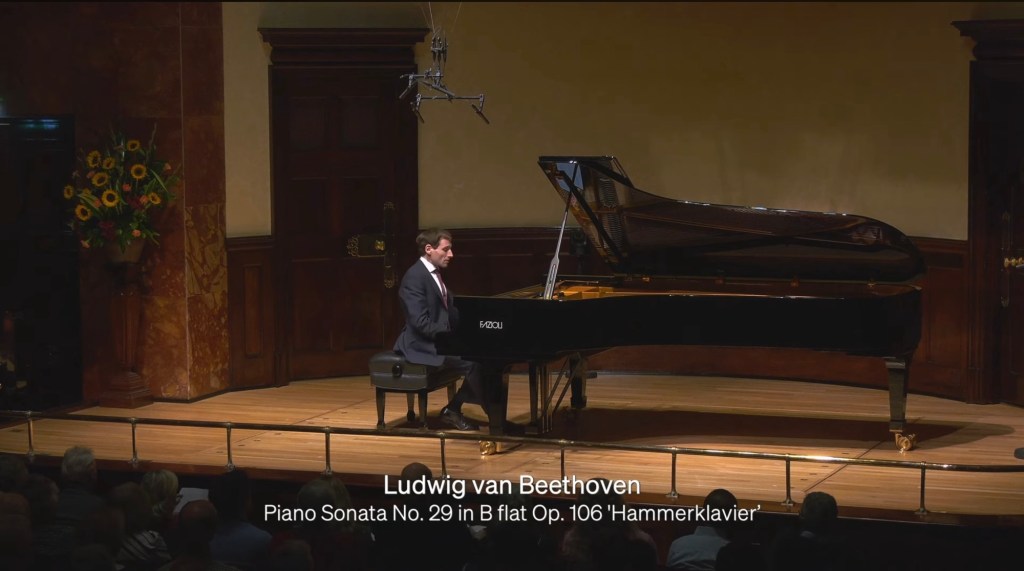
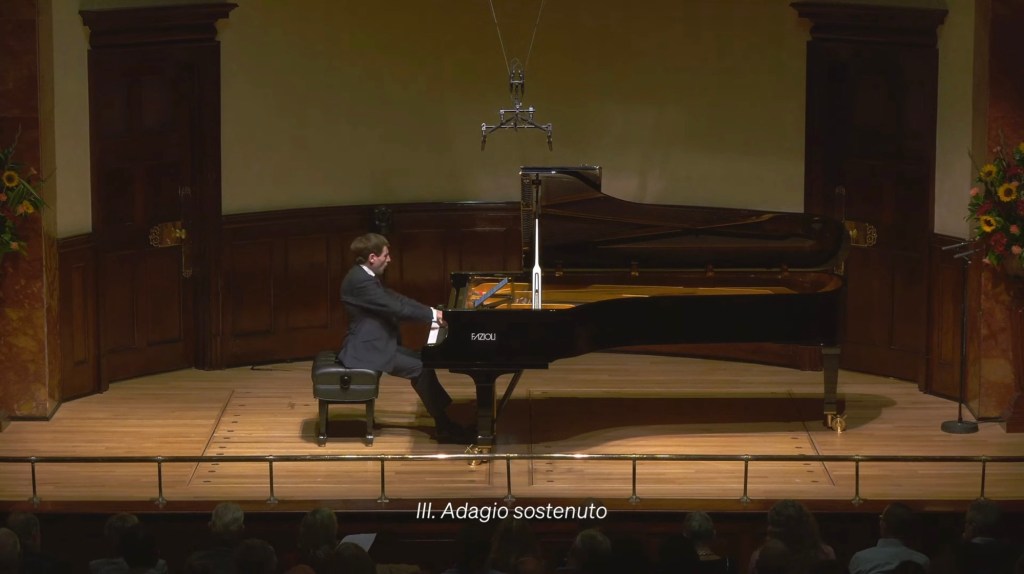
Nowhere was it more noticeable than in the monumental ‘Adagio sostenuto’ of op.106 where Giltburg’s extraordinary sensibility to sound lost sight of the overall architectural shape of a movement of earth shattering passion and fervant conviction.I remember Serkin sweating tears and passionate cries in this movement that is after all marked ‘Appassionato e con molto sentimento’


The fugue was a ‘tour de force’ of piano playing but sounded more like the Danse Macabre than the knotty twine of monstrous proportions miraculously penned by a totally deaf and irate genius.

It was Richter ,not satisfied with his performance in the Festival Hall who repeated the fugue without a break knowing that it was being recorded for broadcast. Annie Fischer famously played it as an encore after the Beethoven Trilogy where she had miraculously substituted at the last minute for an indisposed colleague. Serkin of course holding onto the last chord ,shaking and in a state of complete shock as we all were will never be forgotten.


Some remarkable playing from a great artist but fear more in the style of the sound world of a Richter than a Gilels.


Schumann’s Arabesque op.18 was like a breath of fresh air after such extraordinary profusions .It was here that his ultra sensitivity and artistry could illuminate this most popular work and turn it into a glowing gem of subtle charm and beauty.


A fascinating voyage of discovery uncovering in 32 steps the Genius of Beethoven as seen from afar.

Boris Giltburg at the Wigmore hall Chopin Plus from an illustrious artist in residence

Boris Giltburg an avalanche of Diabolic suggestions take the Wigmore by storm

Boris Giltburg a supreme stylist uncovering from afar the genius of Beethoven in 32 steps.

https://www.youtube.com/live/EBiBFnz_yJM?feature=shared

Boris Giltburg with the first of his complete Beethoven Cycle.Some extraordinarily beautiful playing with Beethoven’s first sonata op 2 n 1 almost Mendelssohnian in the way Giltburg smoothed over Beethoven’s rough patches with dynamic drive and meltingly beautiful pedal effects. A Prestissimo that was truly of scintillating streams of notes that reminded me more of Saint-Saens than the Beethoven I had heard from Serkin half a century ago.


This was a different vision of Beethoven more pianistic than orchestral and whilst he illuminated many things he lost much of the weight and the very backbone of Beethoven.
An attempt to reinvent Beethoven and find colours and whispered sounds of elegance and grace rather than the rough edges and impatient exclamations of Beethoven’s true character.

It suited the Sonata op 32 n. 3 known as The Hunt and here Giltburg knew how to chase all over the keyboard with exhilaration and character a work that Rubinstein had made very much his own and I had heard on this very stage in his last public performance in 1976.


Nowhere was it more noticeable than in the monumental ‘Adagio sostenuto’ of op.106 where Giltburg’s extraordinary sensibility to sound lost sight of the overall architectural shape of a movement of earth shattering passion and fervant conviction.I remember Serkin sweating tears and passionate cries in this movement that is after all marked ‘Appassionato e con molto sentimento’


The fugue was a ‘tour de force’ of piano playing but sounded more like the Danse Macabre than the knotty twine of monstrous proportions miraculously penned by a totally deaf and irate genius.

It was Richter ,not satisfied with his performance in the Festival Hall repeated the fugue without a break knowing that it was being recorded for broadcast. Annie Fischer famously played it as an encore after the Beethoven Trilogy that she had miraculously played substituting at the last minute for an indisposed colleague. Serkin of course holding onto the last chord ,shaking and in a state of complete shock as we all were will never be forgotten.


Some remarkable playing from a great artist but fear more in the style of the sound world of a Richter than a Gilels.


Schumann’s Arabesque op.18 was like a breath of fresh air after such extraordinary profusions .It was here that his ultra sensitivity and artistry could illuminate this most popular work and turn it into a glowing gem of subtle charm and beauty.


A fascinating voyage of discovery uncovering in 32 steps the Genius of Beethoven as seen from afar.

Boris Giltburg at the Wigmore hall Chopin Plus from an illustrious artist in residence

Boris Giltburg an avalanche of Diabolic suggestions take the Wigmore by storm

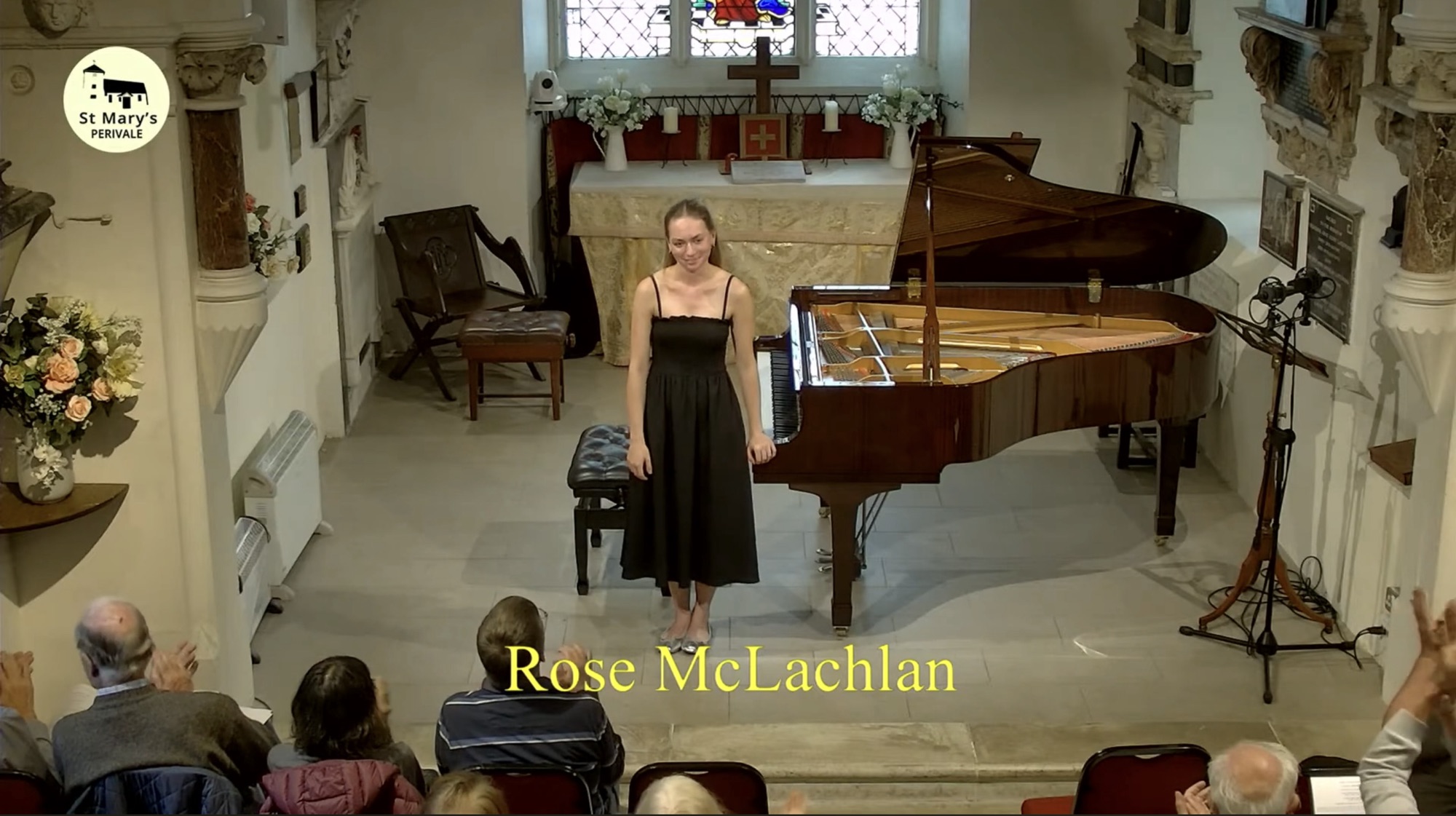
Rose McLachlan at St Mary’s another jewel in the crown of a remarkable family

https://www.youtube.com/live/-n3_yIPdo6I?feature=shared

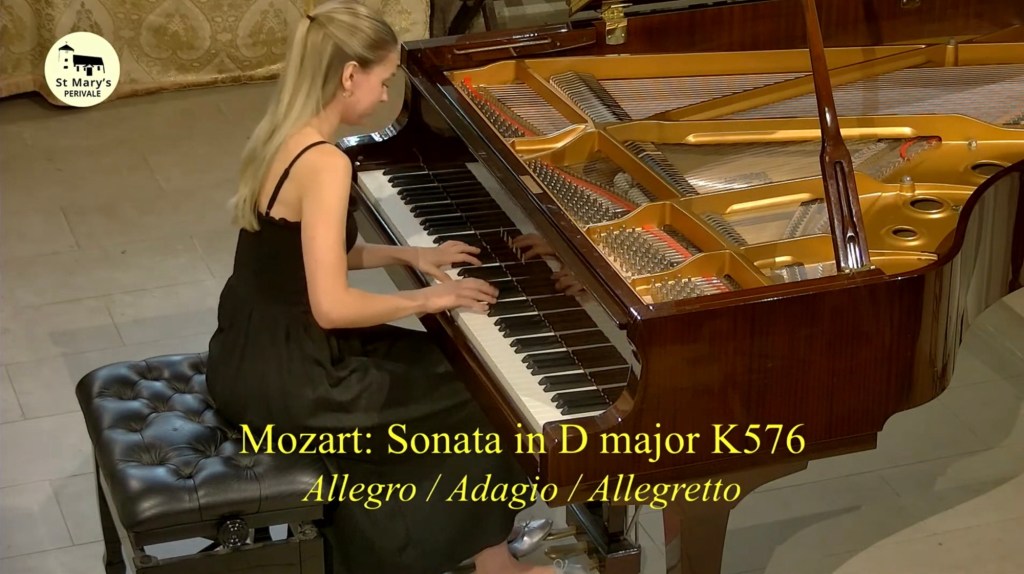
A beautifully whispered opening to the Mozart Fantasy which she miraculously repeated at the end of the ‘Allegretto’ instead of the more mundane chords that had been added to Mozart’s unfinished score.This of course would have been improvised by Mozart and it was this improvised freshness that brought Rose’s Mozart vividly to life with refined elegance and style.The ‘Adagio’ was played with a chiselled restraint of luminosity with some interesting inner counterpoints to the imperious ‘pesante’ before the beseeching agitation of the ‘leggiero’. Cadenza’s that shot from her agile fingers with the dynamism of a true musician before the sparkling charm of the ‘Allegretto’.Delicate embellishments that brought a smile for the unexpected charm that she delicately added to a piece we have all played in our own early piano lessons.It was just this ability to bring fresh light and simplicity to a well known score that showed her untainted musicianship.

It was the same simplicity that she brought to the last of Mozart’s 18 Sonatas but there was also a masterly control and brilliance of crystalline clarity that brought exhilaration and character to the opening ‘Allegro’. The ‘Bel Canto’ of the ‘Adagio’ was allowed to flow so naturally and with the same inflections of subtlety as the human voice. An architectural shape and forward motion that gave great strength to a work of deeply felt sentiment.Refined elegance and dynamic drive to the ‘Allegretto’ was combined with a masterly brilliance and ‘joie de vivre’ of its time.

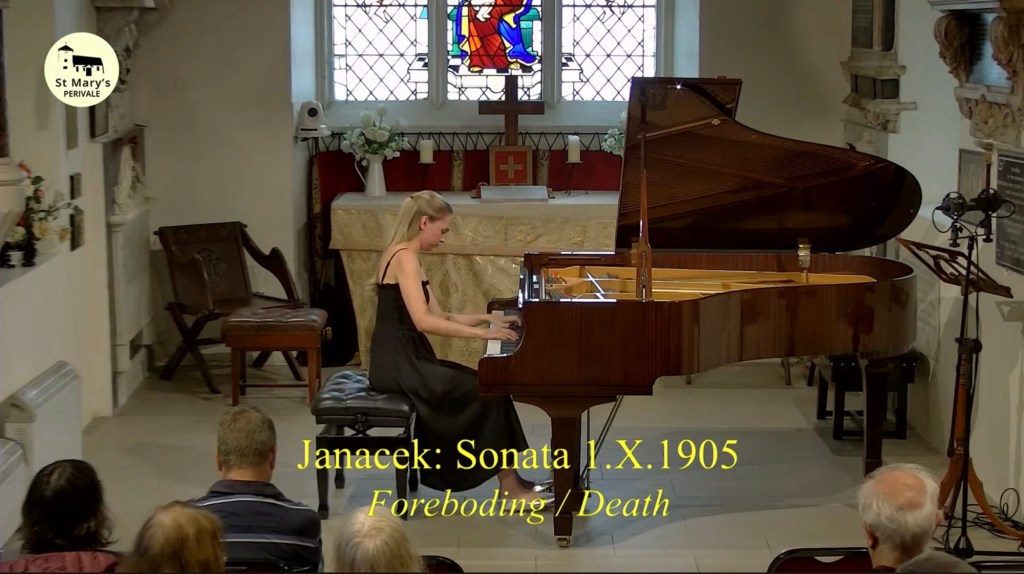
There was a haunting beauty to the Janacek sonata with is strange brooding and kaleidoscope of magical sounds.Here Rose, like in her Debussy that I had heard in a previous recital, opened up a whole world of magical sounds and fantasy combined with passionate intensity and masterly control.

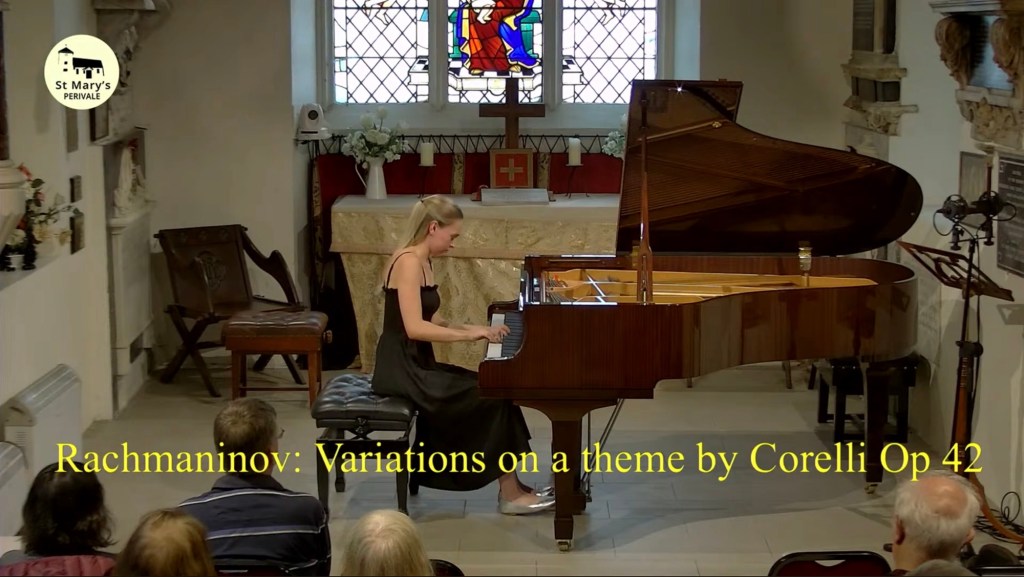
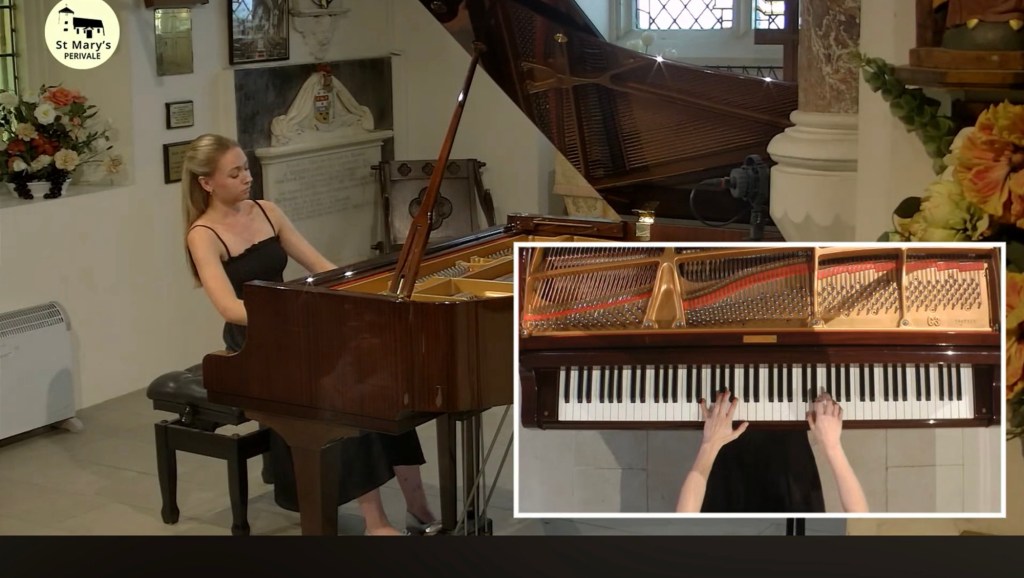
The highlight of the recital ,for me, was Rose’s masterly performance of the Corelli Variations.There was a fluidity and glowing beauty to the first two variations that just grew so naturally out of the simplicity of the haunting melody ‘La Folia ‘ with a continual flow of refined delicacy. A continual sense of forward movement that gave great architectural shape to the whole series of twenty variations. The capricious character she brought to the ‘Tempo di Menuetto’ led so naturally into the beguiling haunting beauty of the ‘Andante’ of variation 4. There was dynamic drive and subtle virtuosity in the next three variations where the 7th was played with sumptuous full sound and a remarkable sense of balance showing a masterly use of the pedal. Nonchalant charm of the ‘Adagio misterioso’ was followed by the gasping beauty of ‘un poco più mosso ‘ of the 9th variation.There was extraordinary brilliance and drive to the ‘Allegro scherzando’ and the following three variations before the intermezzo cadenza played with astonishing freedom and remarkable technical mastery.The return of the theme in the major is a master stroke and was played with poetic beauty as were the variations that just grew out of this magical moment. The final three variations were played with astonishing control and mastery and were quite breathtaking for their dynamic drive and fearless abandon. The final pedal of D allowed Rachmaninov to float ‘La Folia’ on a cloud of subtle unmistakably Rachmaninov tinged harmonies of extraordinary poetic beauty before coming to rest ( like the Goldberg Variations) having made peace with a world that we had experienced together twenty times over. A quite extraordinary performance of a work that had ignited Rose’s imagination and technical prowess and demonstrated the quite extraordinary artistry of yet another of the Mc Lachlan clan.

https://christopheraxworthymusiccommentary.com/2024/01/03/forli-pays-homage-to-guido-agosti/

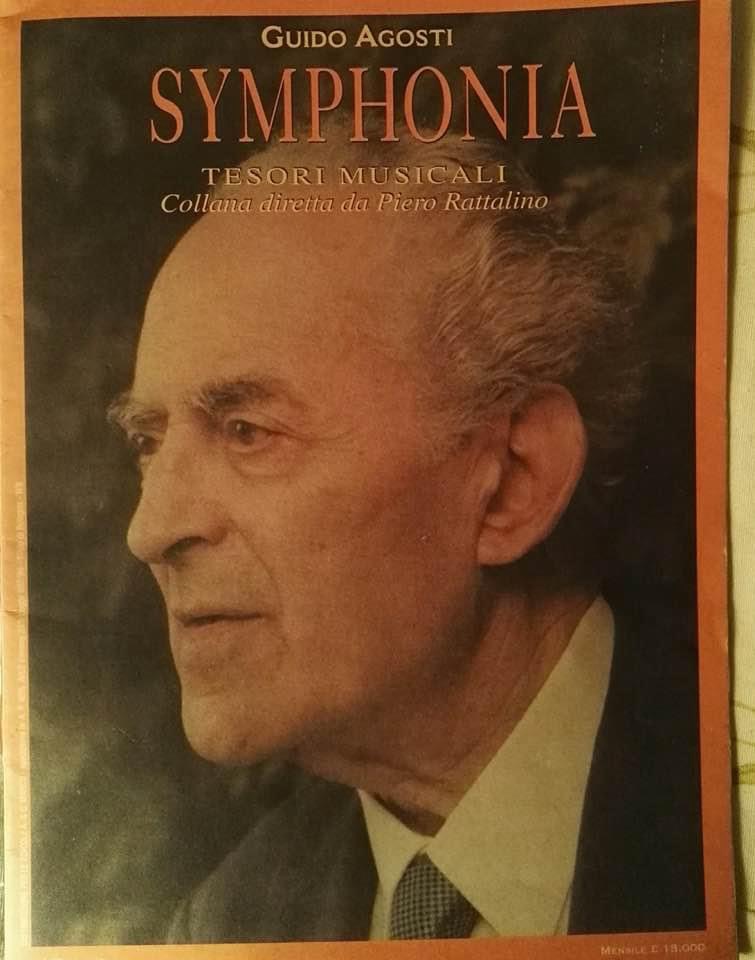
The first time I ever heard this work was when two fresher students from the Royal Academy had secretly visited Siena during the summer break to find the legendary figure that we had only heard about. Guido Agosti held court in his studio at the Chigiana Academy during the summer months and all those that visited him in this private world have never forgotten the sounds that he produced so miraculously at the piano. The great Maestro had interrupted the class to watch the first man walk on the moon and it was Peter Bithell who played these Corelli Variations immediately afterwards .We were all astounded at the superlatives that he bestowed on this first year student from the RAM. Agosti was a real task master and a tyrant in many ways whose only concern was for the absolute respect for the score ,any other human considerations did not apply for himself or for anyone who dared play for him. He took Peter under his wing who was to go on to be a top prize winner at the Busoni and Casella International Piano Competitions and now distinguished Professor at the Guildhall where Rose is now studying with Charles Owen ,Martin Roscoe and Ronan O’Hora.

Rose McLachlan comes from a family of musicians and began piano lessons with her father aged 7. Shortly after she joined Chetham’s School of Music where she studied with Helen Krizos. In 2020, she entered the Royal Northern College of Music, and now is at the Guildhall School of Music and Drama under the tutelage of Charles Owen, Martin Roscoe and Ronan O’Hora.  

Rose appears frequently with orchestra, making her debut aged 13 in the Edinburgh Fringe Festival. She has performed with the BBC Concert Orchestra, conducted by Barry Wordsworth and was broadcasted twice on Radio 3. As a result of winning the PianoTexas Festival concerto competition, she performed with the Fort Worth Symphony. In 2023, she performed Saint Saens ‘Carnival of the Animals’ in the Bridgewater Hall with the Hallé orchestra. She performs frequently around the UK with appearances in the Stoller Hall, Steinway Hall, St Martin in the Fields, and also abroad in Switzerland and Germany with violinist Esther Abrami.  She is extremely grateful to receive support from The Caird Trust, The James Gibb award, Michael McLean and she is a Talent Unlimited artist. 

Rose McLachlan inspires and performs 22 Nocturnes for Chopin by women composers

Rose McLachlan at St James Piccadilly -Je sens,je joue ,je trasmets -Artistry and Poetic imagination of a musician

Rose Mc Lachlan The birth of an artist at St Mary’s

Rose McLachlan and the amazing clan at St Mary’s

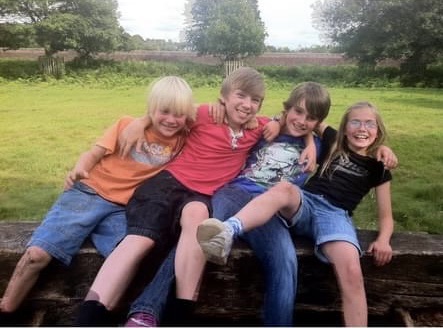
The remarkable McLachlans .On the left Alec ,star footballer at University in America ; Callum (semi finalist at the Leeds); Matthew ( winner of the Chappell Gold Medal in only his second year at the RCM ) and Rose (graduate of the RNCM and now perfecting her studies at the Guildhall).Murray McLachlan and Katherine Page McLachlan are both very distinguished musicians and parents to this extraordinary clan.
https://christopheraxworthymusiccommentary.com/2023/05/20/murray-mclachlan-the-recital-that-never-was-at-the-chopin-society-uk/

Mention should be made of the remarkable performance of Rose’s brother Callum at the Leeds International Piano competition where his studies in Salzburg and Cologne have given his playing an extraordinary breadth and beauty.

https://christopheraxworthymusiccommentary.com/2024/02/06/callum-mclachlan-a-poet-descends-on-st-marys-with-style-and-great-artistry/

https://leedspiano.medici.tv/en/replays/second-round-callum-mclachlan/

Rose is always a Rose !

Aida Lahlou’s Mozart enriches the souls of the Saturday evening revellers of Islington

Christchurch Highbury

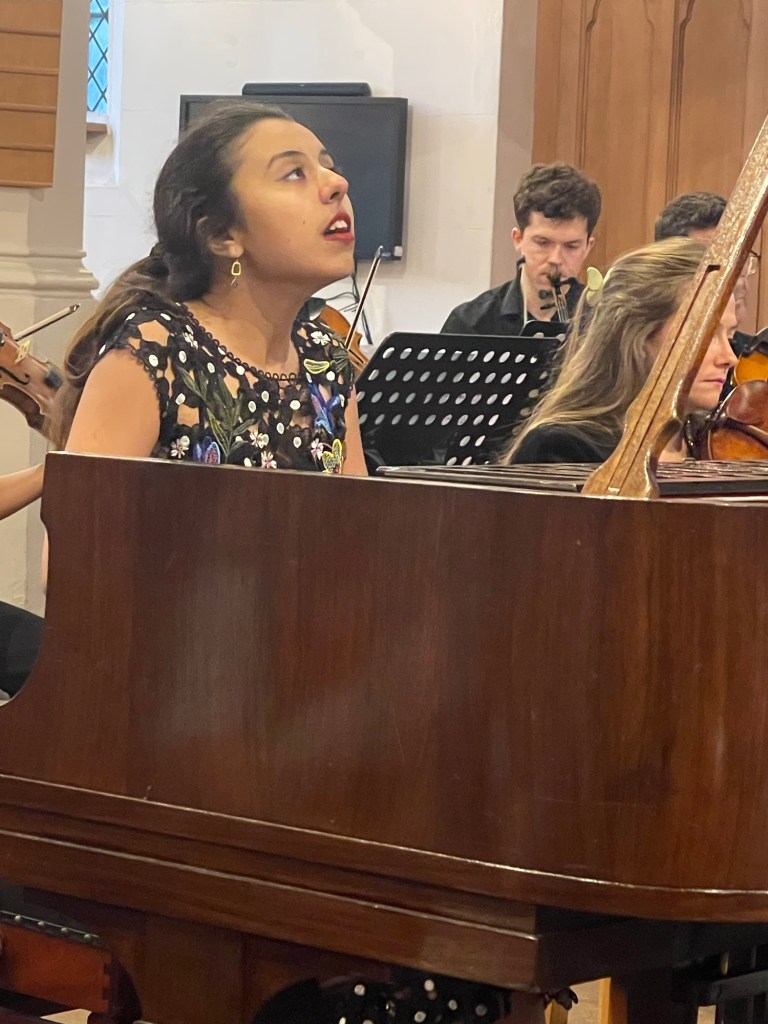
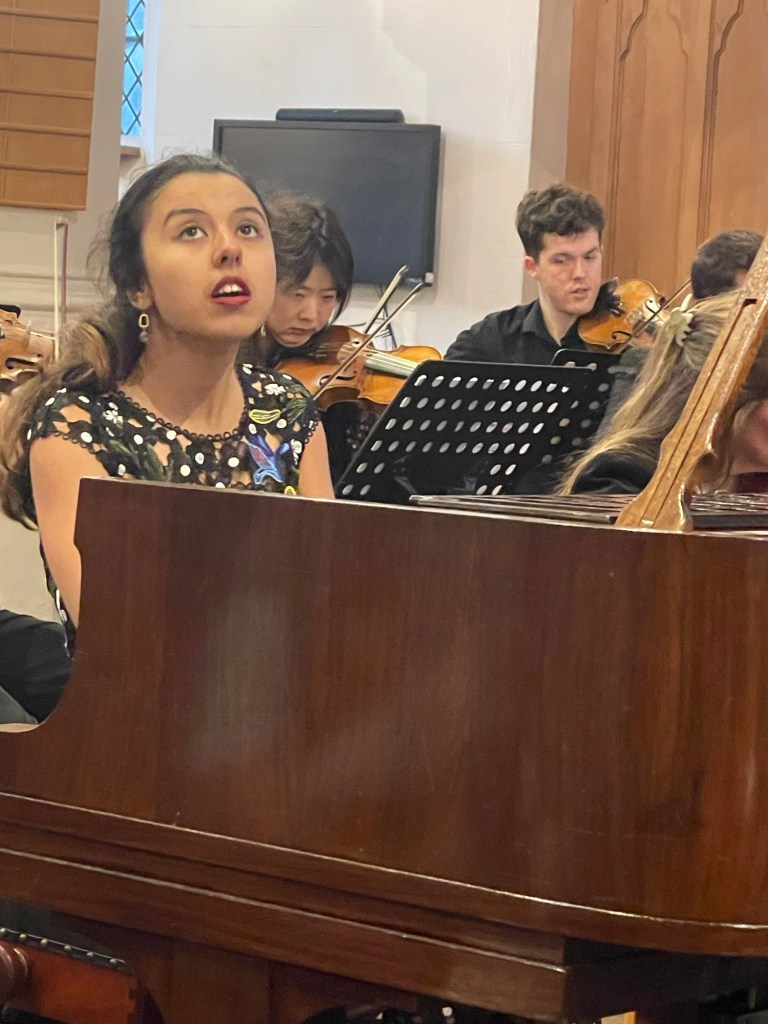
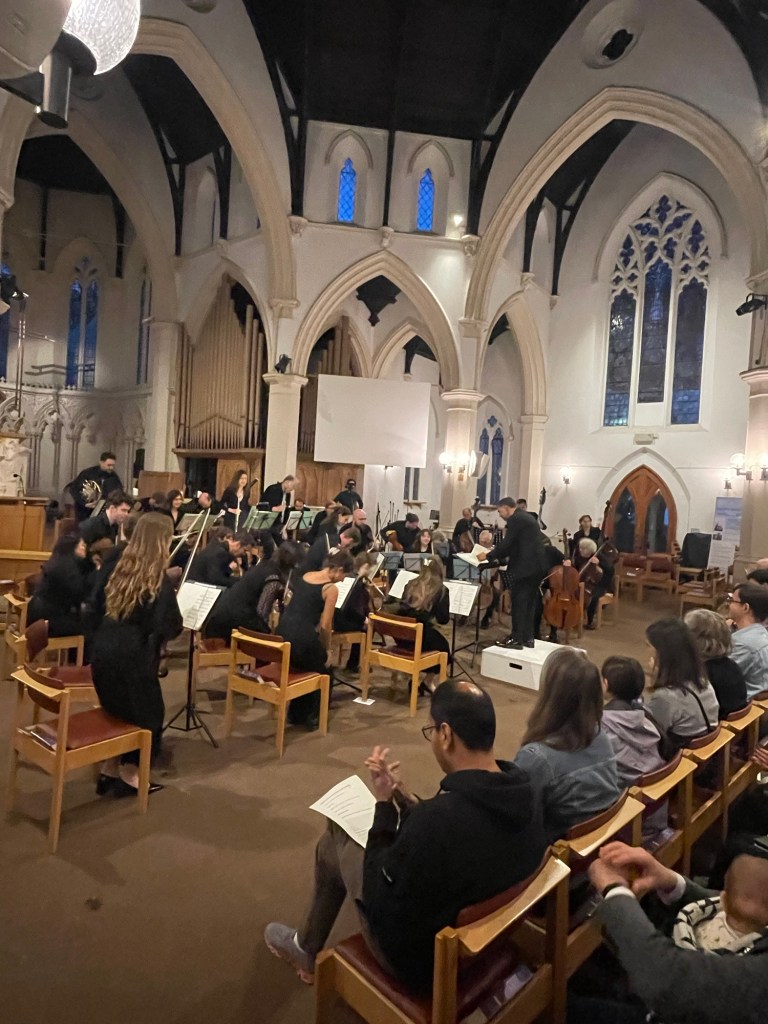
The crystalline beauty of Aïda Lahlou’s playing of Mozart’s last concerto resounded around this beautiful church accompanied by the valiant Highbury Players under their conductor Mark Prescott.

Aida from the class of Marcel Baudet at the Menuhin School.
(http://www.marcelbaudet.com/bio.html) played with a poetic sensibility of refined beauty and a sense of style and musical intelligence of aristocratic authority.Exquisite ornamentation of great taste enhanced the sublime beauty of one of Mozart’s most poignant slow movements. Her beautiful leasurely tempo for the last movement added a pastoral beauty of ease and charm to his 27th concerto written just months before his untimely death.
Stravinsky’s popular Pulcinella Suite gave the Highbury Players a chance to shine under their attentive conductor and was a charming way to close an hour of music in this very beautiful part of London.

Elegant Georgian Houses on Highbury Grove overlooking Highbury Fields


An oasis of Georgian elegance and open spaces where the genius of Mozart could act as an hors d’oevres to Saturday night’s revelry where refined dining go hand in hand with oft rumbustuous pub culture.
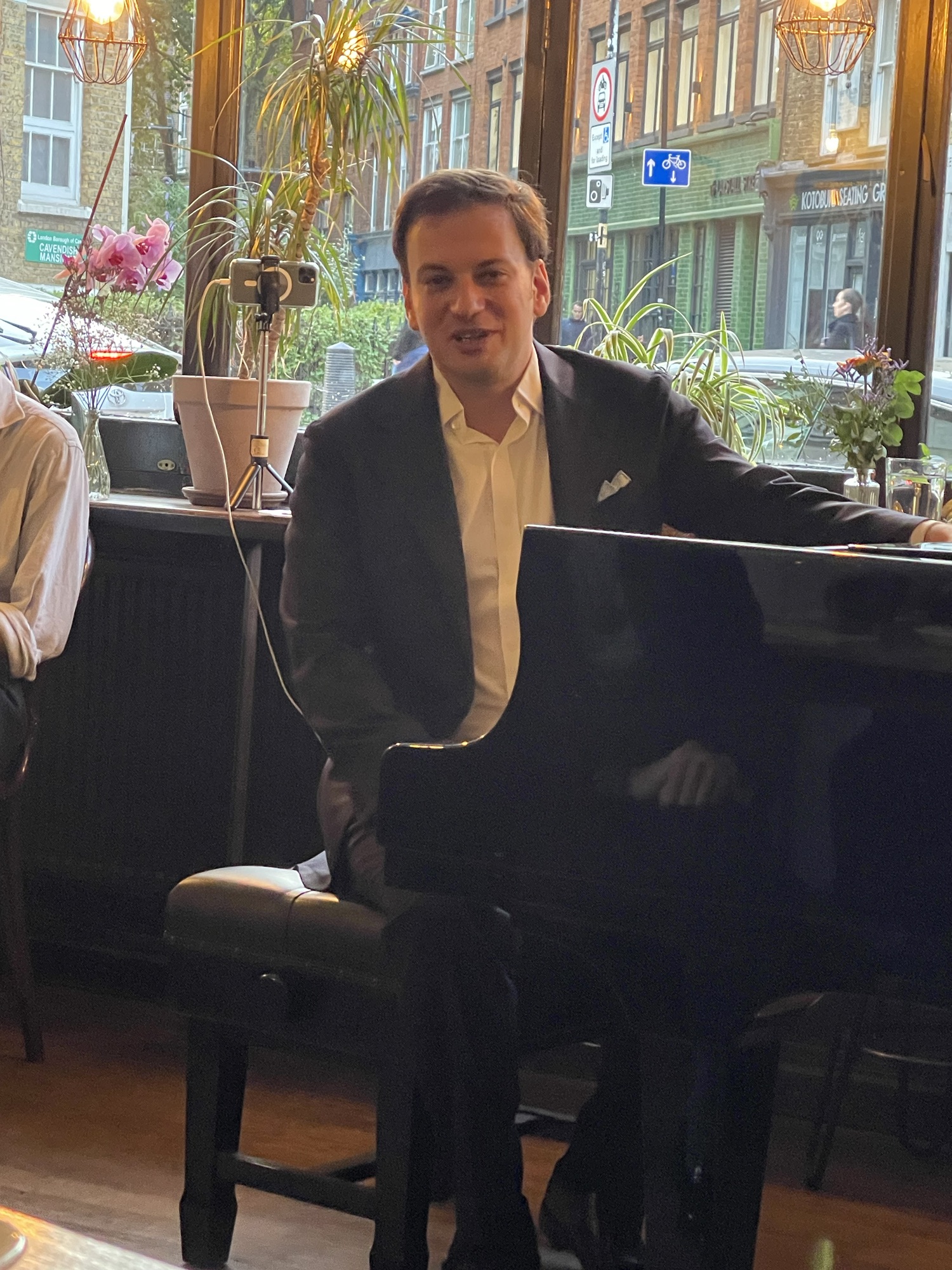

I am sure Mozart would have loved it as genius needs the nutriment of the people. ‘All the world is a stage and men and women merely players’. And as Aida showed us the operatic genius of Mozart is far reaching and eternal.


Probably the last work that Mozart was to perform in public before his untimely death at the age of only 35 it is full of beauty tinged with poignant beauty and eternal strength . Genius cannot be measured but can enrich and enlighten all those that are touched by it’s rays as we were last night.

Aida Lahlou with conductor Mark Prescott
Joelle Partner who together with her husband Davide Sagliocca are to be seen at all the most interesting musical events in London ……..and Ibiza!
https://concursopianoibiza.com/?lang=en

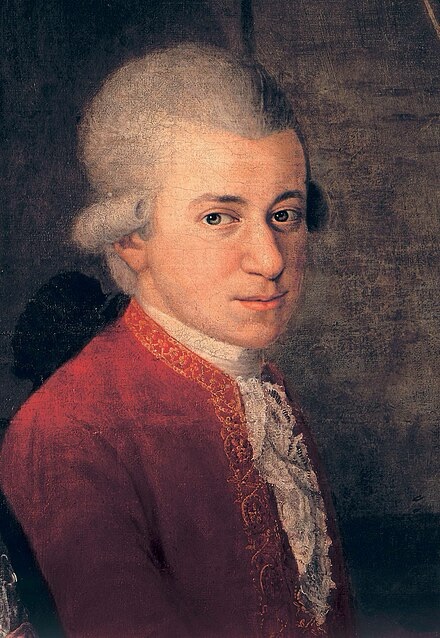
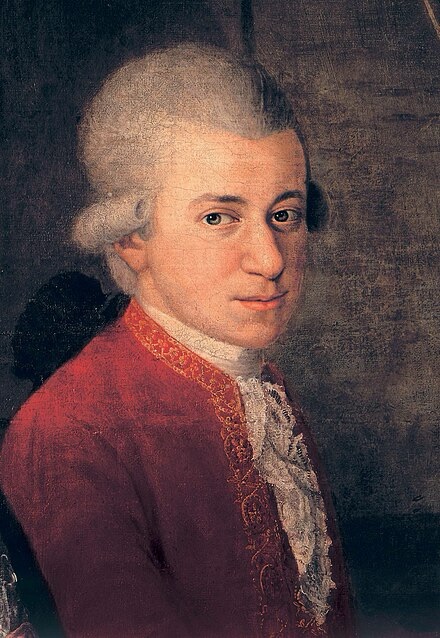
Wolfgang Amadeus Mozart
27 January 1756 Salzburg 5 December 1791 (aged 35) Vienna
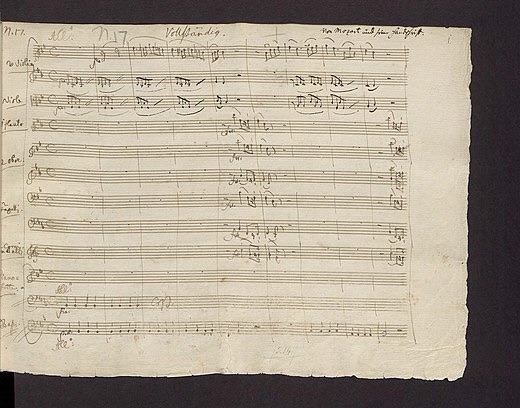
Opening page of the autograph manuscript

The concerto may have been first performed at a concert on 4 March 1791 in Jahn’s Hall by Mozart and if so, this was Mozart’s last appearance in a public concert,as he fell ill in September 1791 and died on 5 December 1791. Another possibility is that it was premiered by Mozart’s pupil Barbara Ployer  on the occasion of a public concert at the Palais Auersperg  in January 1791.

It has three movements :

  1. Allegro
  2. Larghetto
  3. Allegro

Although all three movements are in a major , minor keys are suggested, as is evident from the second theme  of the first movement (in the dominant minor), as well as the presence of a remote minor key in the early development  of that movement and of the tonic minor in the middle of the Larghetto.

Another interesting characteristic of the work is its rather strong thematic integration of the movements, which would become ever more important in the nineteenth century.The principal theme of the Larghetto, for instance, is revived as the second theme of the final movement (in measure 65).The principal theme for the finale was also used in Mozart’s song “Sehnsucht nach dem Frühling” (also called “Komm, lieber Mai”), K. 596, which immediately follows this concerto K.595 in the Kochel catalogue .Mozart wrote down his cadenzas  for the first and third movements.

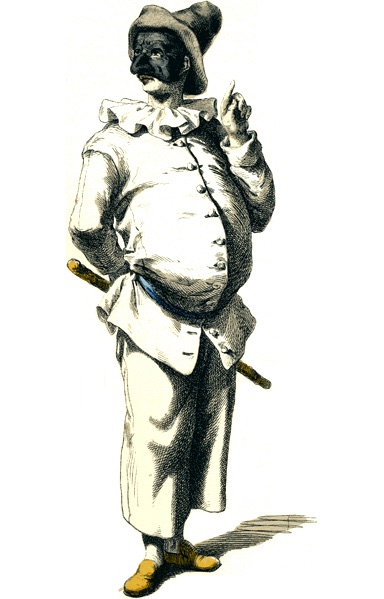
Pulcinella Suite

Stravinsky extracted a purely instrumental suite from his ballet which was premiered by the Boston Symphony Orchestra conducted by Pierre Monteux on 22 December 1922. It has these eight movements:

  1. Sinfonia
  2. Serenata
  3. Scherzino – Allegretto – Andantino
  4. Tarantella
  5. Toccata
  6. Gavotta (con due variazioni)
  7. Vivo (Duetto prior to revision)
  8. Minuetto – Finale

Pulcinella is taken from a manuscript from Naples, dating from 1700, containing a number of comedies portraying the traditional character of the popular Neapolitan stage. This libretto was derived from Quatre Polichinelles semblables (“Four similar Pulcinellas”).

Conductor Ernest Ansermet  wrote to Stravinsky in 1919 about the project. The composer initially did not like the idea of music by Pergolesi, but once he studied the scores, which Diaghilev had found in libraries in Naples and London , he changed his mind. Stravinsky adapted the older music to a more modern style by borrowing specific themes and textures, but interjecting his modern rhythms, cadences, and harmonies.Pulcinella marked the beginning of Stravinsky’s second phase as a composer, his neoclassical  period. He wrote: 

‘Pulcinella was my discovery of the past, the epiphany through which the whole of my late work became possible. It was a backward look, of course—the first of many love affairs in that direction—but it was a look in the mirror, too.

The Joy of Music -Adam Heron and friends at St Mary at Hill

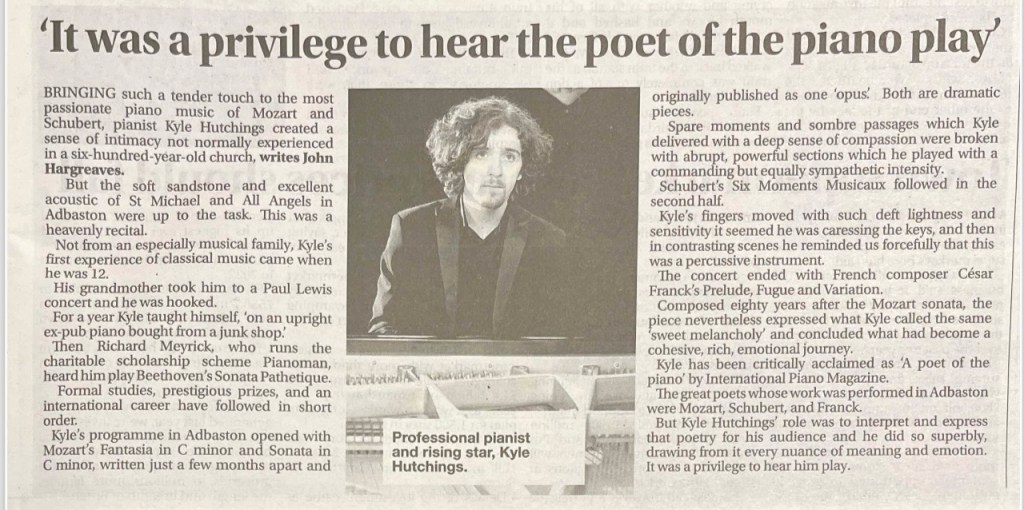
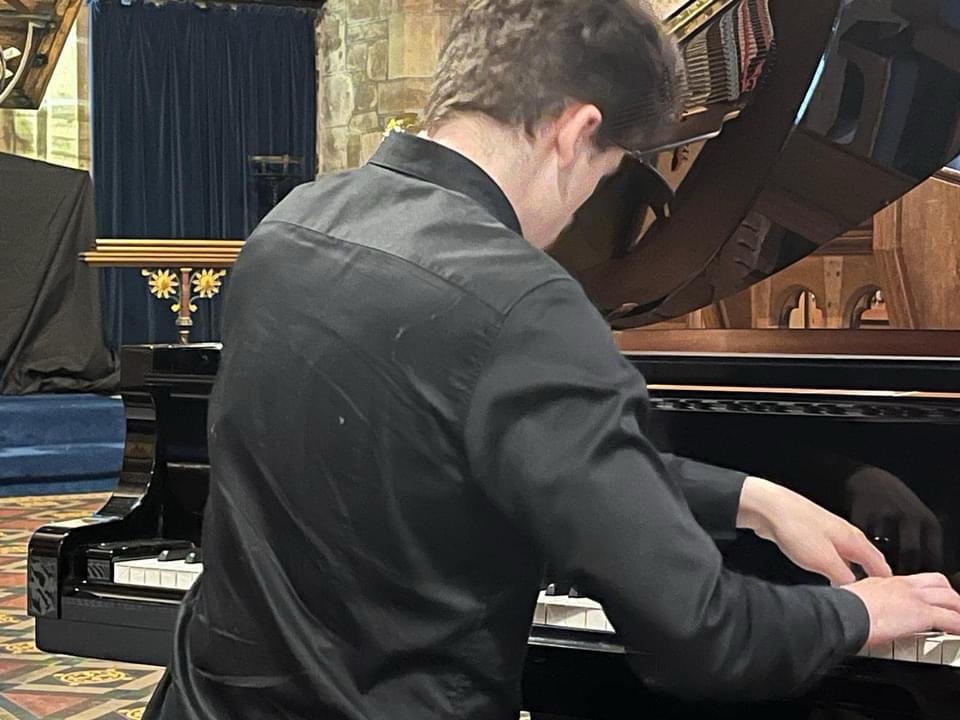
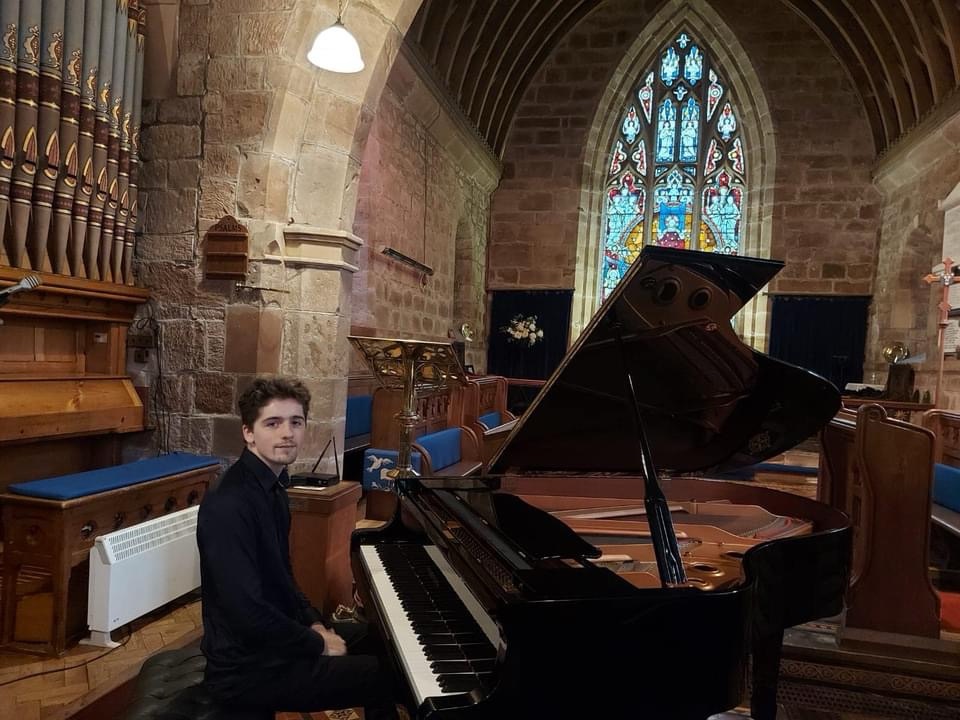
Kyle Hutchings A poetic troubadour of the piano reveals the heart of Mozart,Schubert and Franck the Keyboard Trust Concert Tour of Adbaston ,Ischia,Florence and Milan

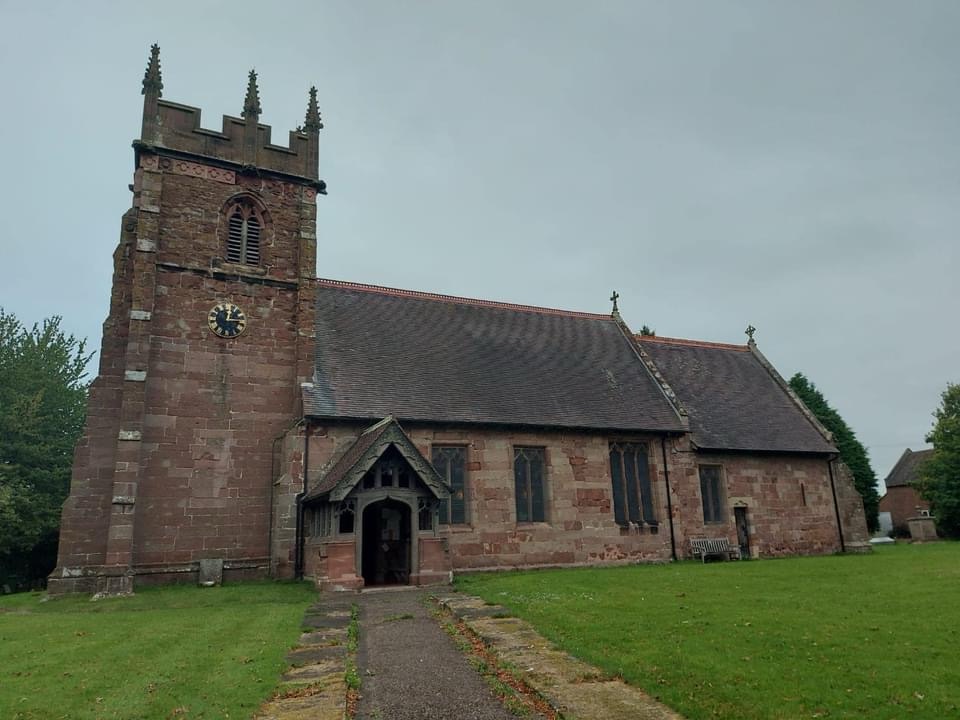
St Michael and All Angels

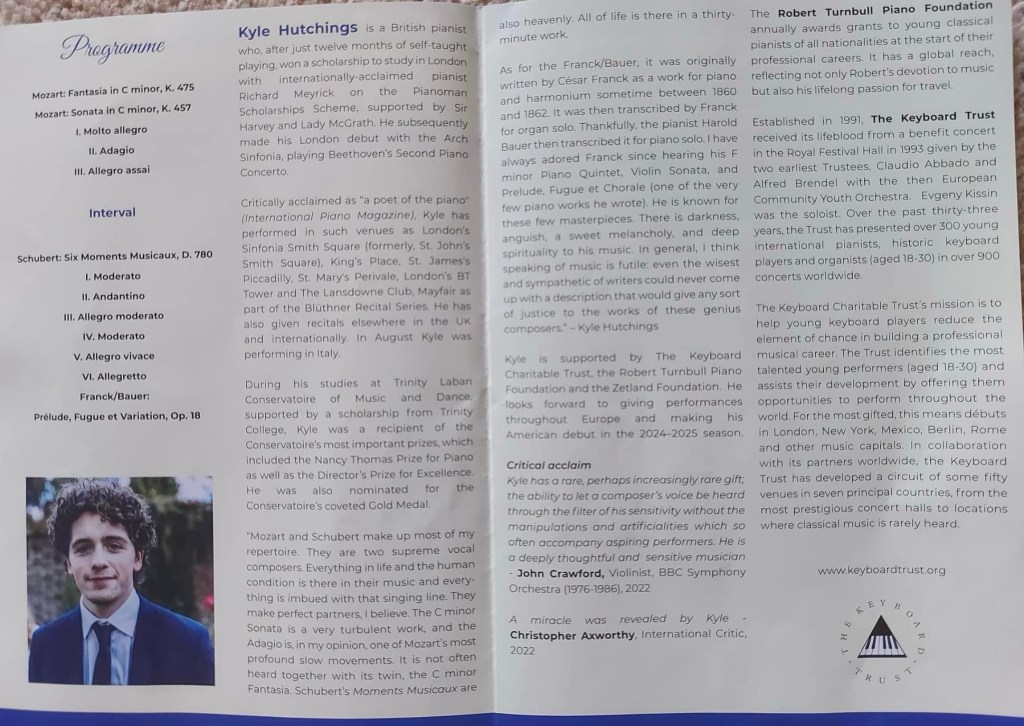
“Mozart and Schubert make up most of my repertoire . They are two supreme vocal composers. Everything in life and the human condition is there in their music and everything is imbued with that singing line. They make perfect partners, I believe. The C minor Sonata is a very turbulent work, and the Adagio is, in my opinion, one of Mozart’s most profound slow movements. It is not often heard together with its twin, the C minor Fantasia . Schubert’s Moments Musicaux are also heavenly. All of life is there in a thirty-minute work . As for the Franck/Bauer, there is darkness, anguish, a sweet melancholy, and deep spirituality to his music” – Kyle Hutchings

REVIEW BY THE DISTINGUISHED MUSICIAN JOHN HARGREAVES https://johnhargreaves.com/index.php/kyle-hutchings/

It was indeed the simplicity that he brought to all he did that allowed the music to speak with a voice that reveals “ life and the human condition “. There was dynamic drive in the Mozart where operatic brilliance is tinged with a deeply felt poignancy.The searing drama of the opening of the C minor Sonata was followed by an Adagio which is one of Mozart’s most poignant compositions and even leaves a dark shadow looming over the seemingly capricious Allegro assai.The dramatic contrasts and delicate recitativi of the Fantasia opened a world that was pure opera and showed us the turbulence that was deep within the genial soul of Mozart. It was played with an unadorned simplicity of music that Schnabel is quoted as exclaiming is “too difficult for adults and too easy for children”. An astonishing simplicity and delicacy with a palette of sounds that like the human voice can reveal so much with so little.

The six little Moments Musicaux by Schubert seem deceptively simple but in the hands of a true poet they become six miniature tone poems showing every facet of the human character. Beguiling ,quixotic,hypnotic or commanding the beautiful final Allegretto reveals the world that awaited Schubert just a few months later. They were played with insinuating character and charm but above all delicacy and ravishing beauty.

It was the same haunting beauty that Franck was to imbue his Prelude,Fugue and Variation with , in the transcription for piano from the organ by Harold Bauer. It was played with an architectural shape and sense of line that made the reappearance of the haunting opening even more touching when played with great sentiment but never sentimentality.There was an aristocratic musicianship to all Kyle did that gave real strength to his playing and brought us to the heart of the composer.

Kyle Hutchings the poetic troubadour of the piano ravishes and seduces at St Johns

Kyle Hutchings the poetic troubadour of the piano ravishes and seduces at St Johns

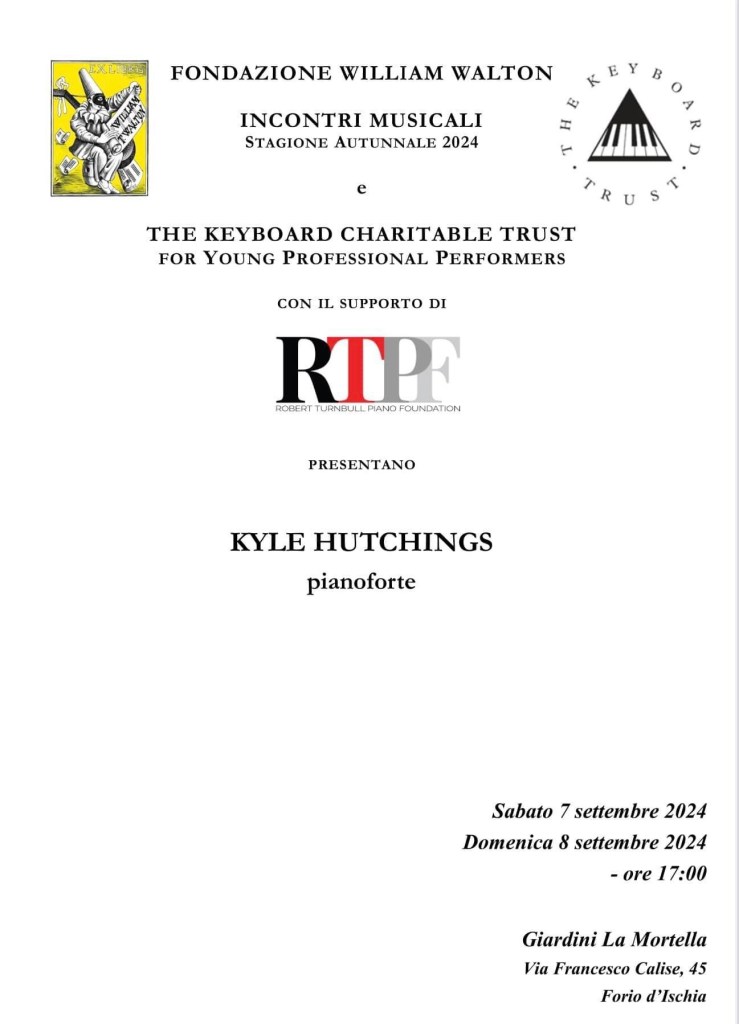
A concert tour of Italy from the 7th to the 11th September follow this concert in Adbaston .It will include The Walton Foundation on Ischia 7/8 th ; Florence British at the Harold Acton Library 10th and Steinway Flagship Milan on the 11th. Organised by the Keyboard Trust in collaboration with the Robert Turnbull Piano Foundation

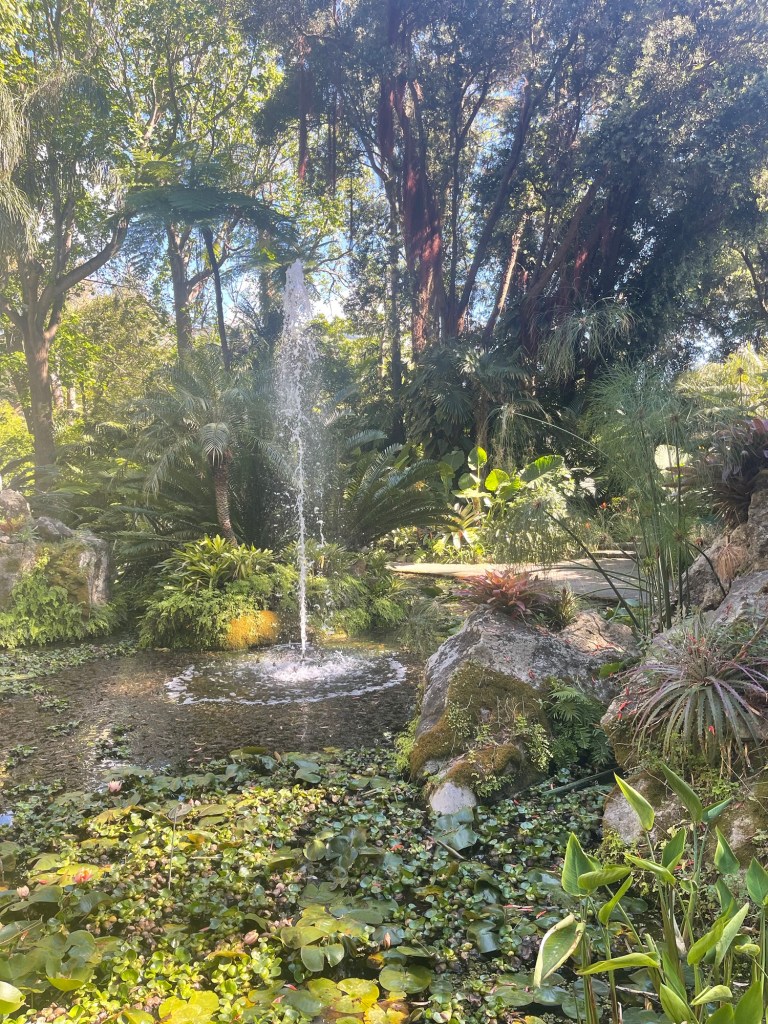
Sir William Walton whose ashes overlook this paradise in Ischia
Lady Susana Walton who dedicated her life to realising the wish of Sir William of helping young musicians find a platform
And Lady Susana who keeps an eye on things nearby
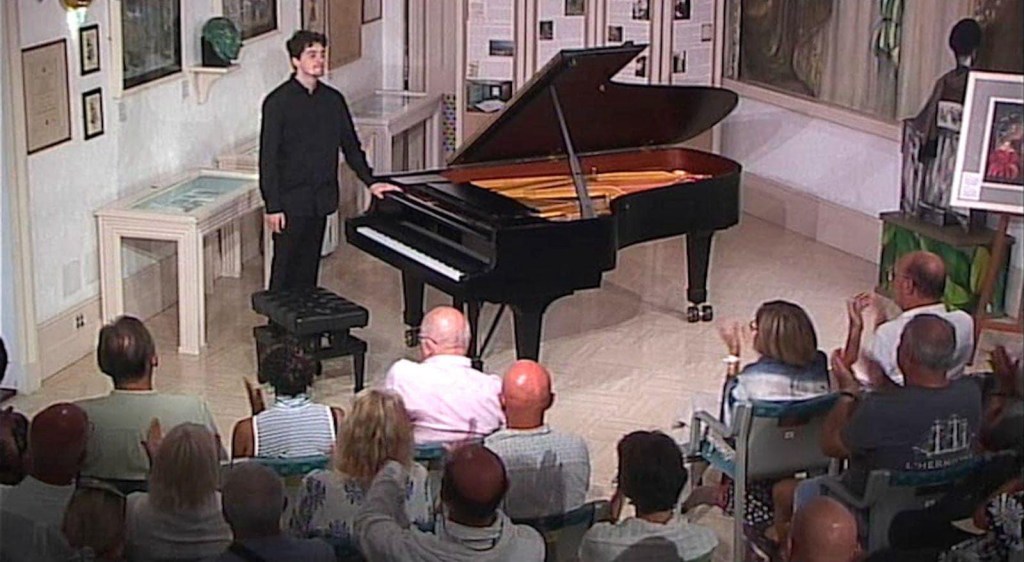
Kyle on one of the two superb Steinway ‘C’ pianos of the Walton Foundation
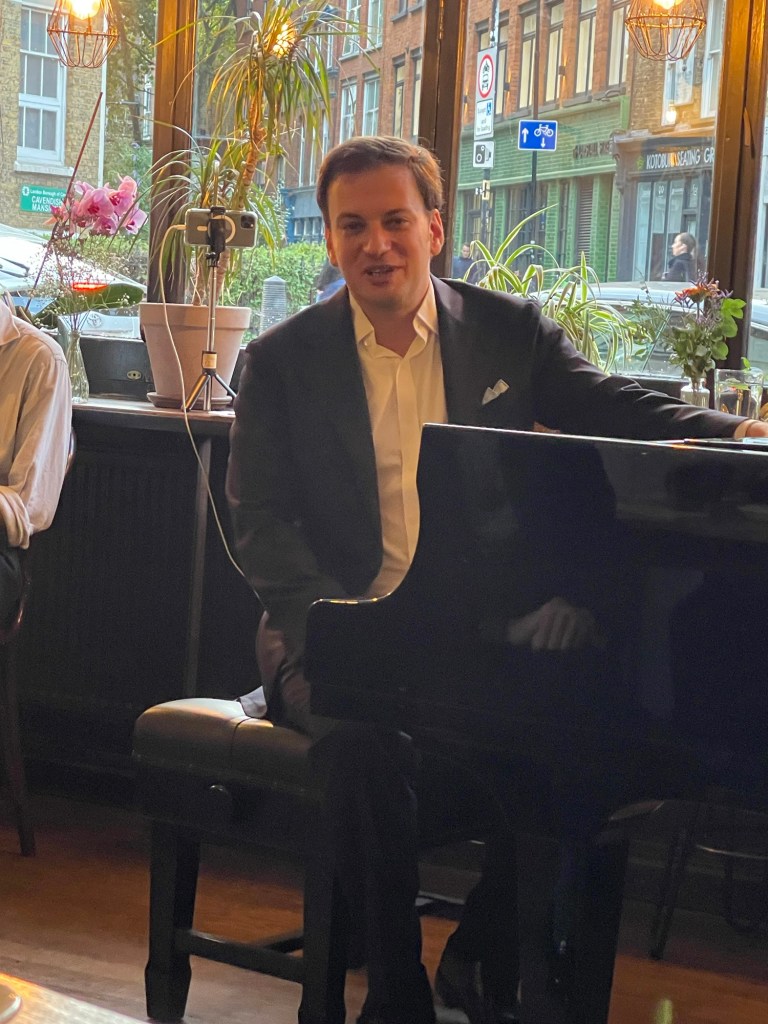
Full houses always for these remarkable young musicians invited to perform at La Mortella on Ischia where the concerts are organised by Prof Lina Tufano and the Foundation director Alessandra Vinciguerra
https://m.youtube.com/watch?v=PJal0zQG4Jw&feature=youtu.be
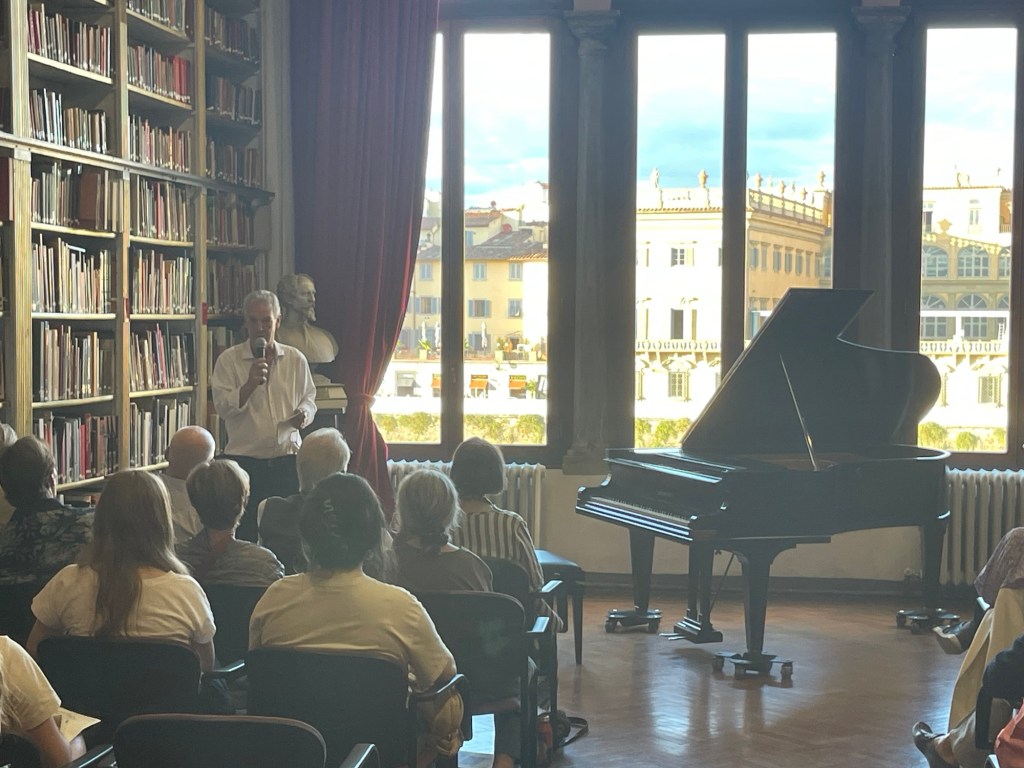
Simon Gammell ,OBE,presenting the first of a series of concerts at the British Institute

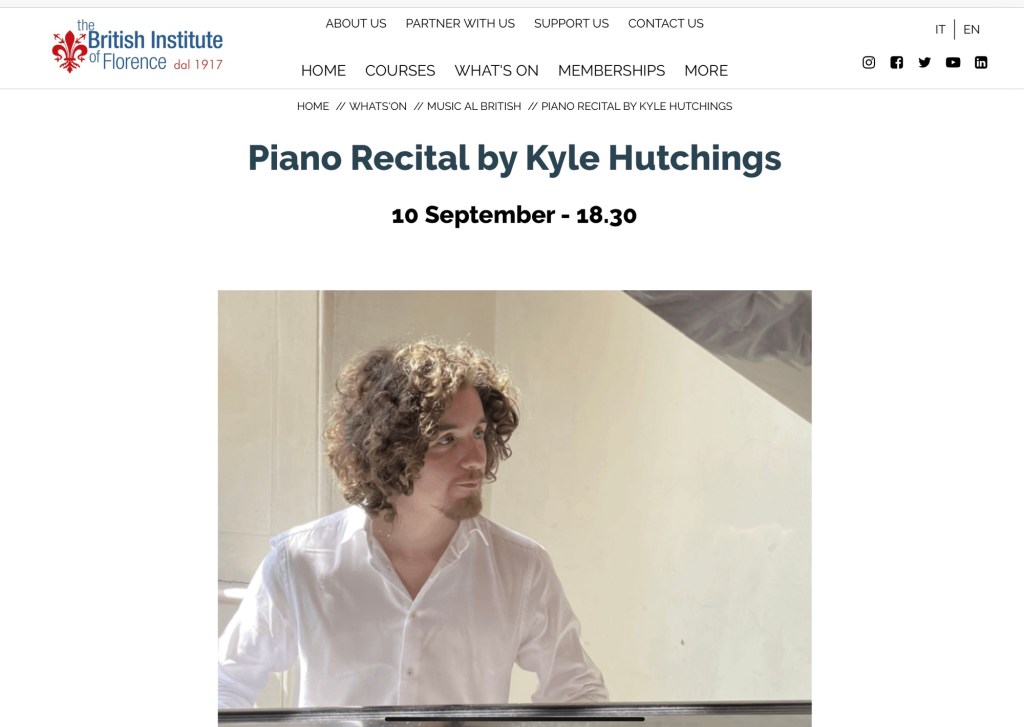
We are thrilled to inaugurate our new season of events in the Library with this piano recital by the brilliant British pianist Kyle Hutchings.
 
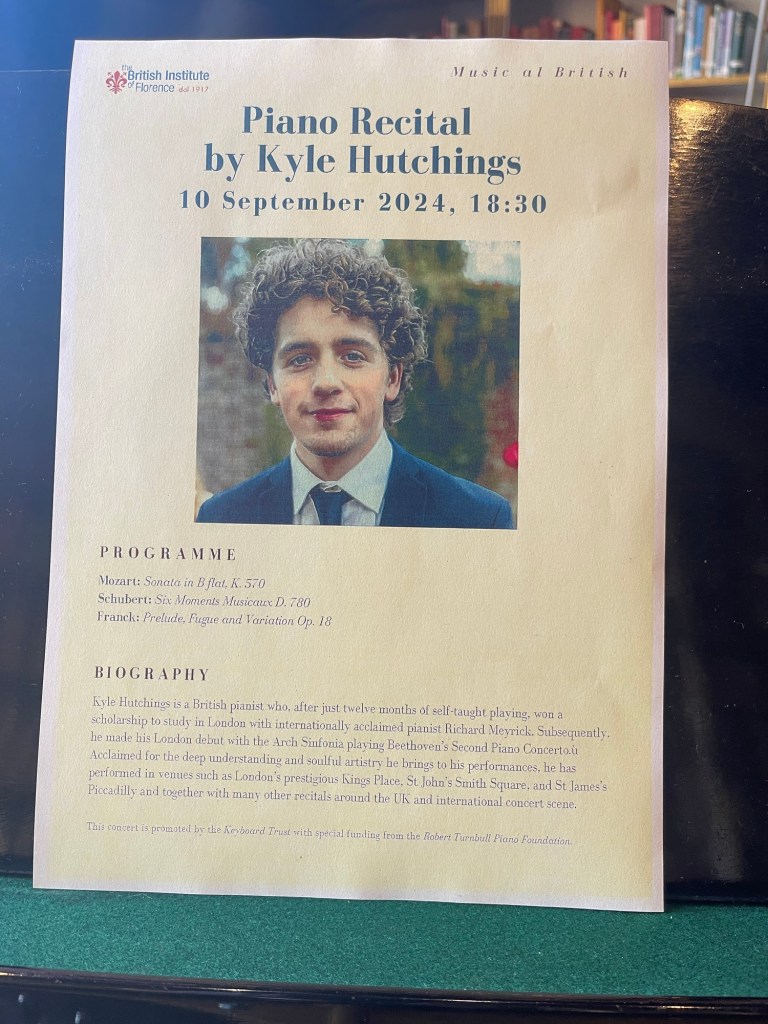
After just twelve months of self-taught playing, Kyle won a scholarship to study in London. He has gone on to perform in prestigious London venues such as  Kings Place, St John’s Smith Square, and St James’s Piccadilly.
 
For his concert in the Library he will play Mozart and Schubert. 
 
Here is a sneak preview of Kyle playing in London recently: Lunchtime Recital by Kyle Hutchings (piano)
 
This concert is promoted by the Keyboard Trustwith support from the Robert Turnbull Piano Foundation.

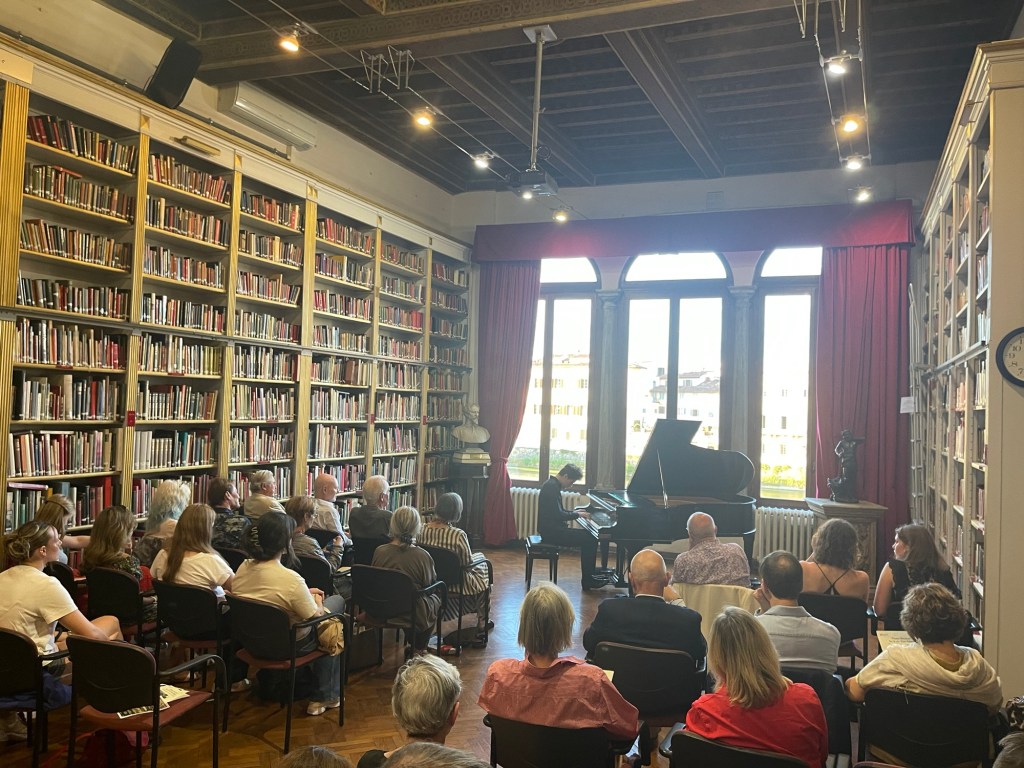
A room with a view ……not only …..as the refined sounds of a troubadour of the piano held the select audience in the Harold Acton Library spellbound.

Michael Griffiths with Sir David

As Sir David Scholey moved by such music making declared :’every note has such a poignant significance.’
Whispered refined finesse of a young man inspired as a 12 year old schoolboy by Paul Lewis.
He had been bewitched by sounds that could comunicate from soul to soul a message that for a timid schoolboy could open up a magic world of beauty and imagination.
His dream that inspired his late start at the piano was to be able to bring to life the profound utterings of Mozart and Schubert as he had experienced from Paul Lewis .
Florence is a place where dreams become reality and this was never more true than listening on a piano that Perlemuter would have called a ‘casserole’ but which was capable in Kyles magic hands of speaking with a voice that reached deeply to all those present.


The penultimate Mozart Sonata that anyone who has studied the piano knows too well was given new life with a restrained brilliance , refine delicacy and good taste.Exquisite finesse that denied the ‘sturm und drang’ that was to come but had an innocence of whispered confessions and the restrained brilliance of its age.
Schubert’s Six Moments Musicaux written in the last year of the composers all too short life on this earth were played as exquisite tone poems of poignancy contrasted with charm and veiled beauty. Exhilaration too but only a glimpse as this was a world of mystery and revelation .


Franck’s Prelude Fugue and Variation in the Bauer transcription, was played with an ethereal beauty ,the opening melody pervading the score with breathtaking hypnotic beauty. A Fugue that was played almost without pedal as it brought a ray of clarity and reason to a magic world that Franck would have improvised on the organ at St Clotilde in Paris. Harold Bauer, a pianist originally from near to where Kyle was born in the Home counties was equally inspired to become a pianist on meeting with Paderewski when as a violinist he arrived in Paris. He was to give the first performance in America of Brahms First Concerto and Debussy even dedicated his ‘Children’s Corner Suite’ to him .It was he who made this magical transcription of one of six improvisations that Franck had dedicated to Saint Saens.

Sir David Scholey with Kyle in discussion after the concert


An encore of Schumann’s ‘Warum’ had Sir David wishing we could have had at least a glimpse of Florestan too after being bewitched all evening by Eusebius.
But this is a poet of the piano a real aesthete like Harold Acton whose books surrounded us and whose presence could surely be felt by all those present tonight.

https://en.wikipedia.org/wiki/Harold_Acton

With Giancarlo Rizzi ,General Manager of the Hotel Savoy
After concert dinner hosted by Sir David
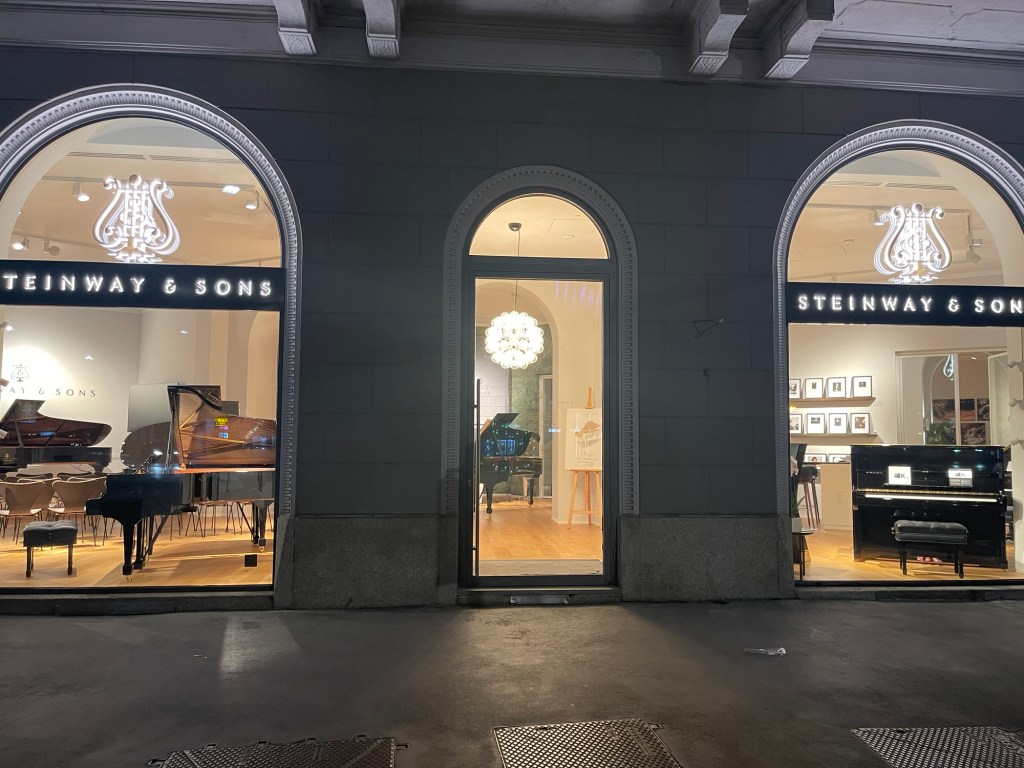
Kyle with Maura Romano director of the new Steinway Flagship in Milan
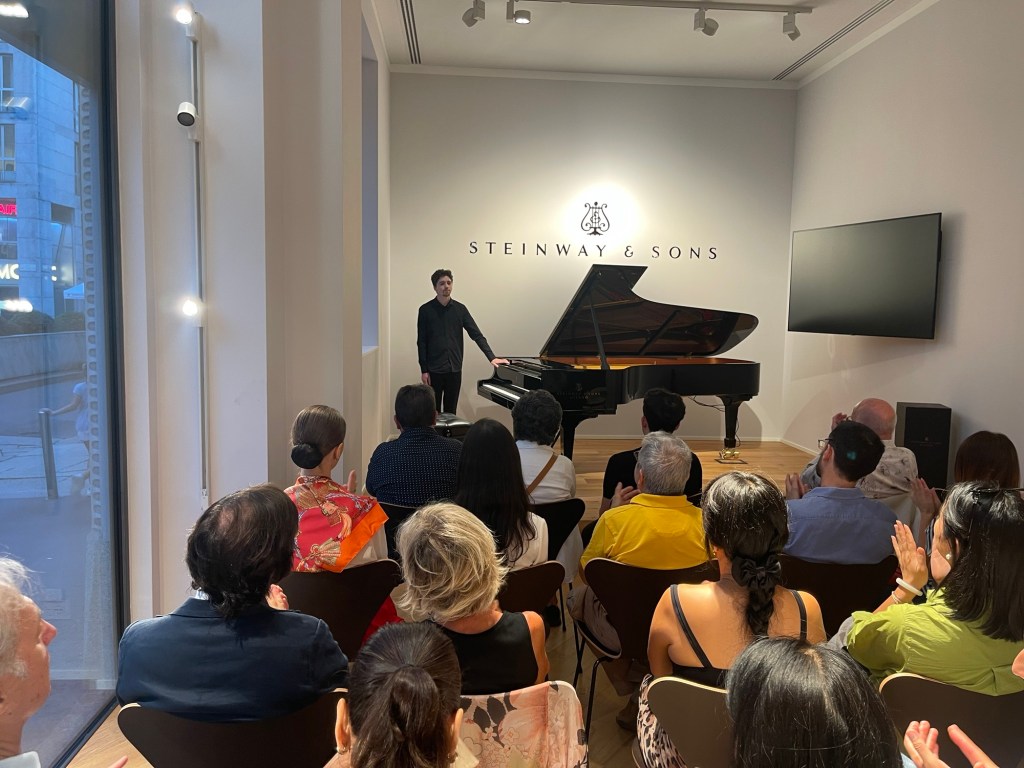
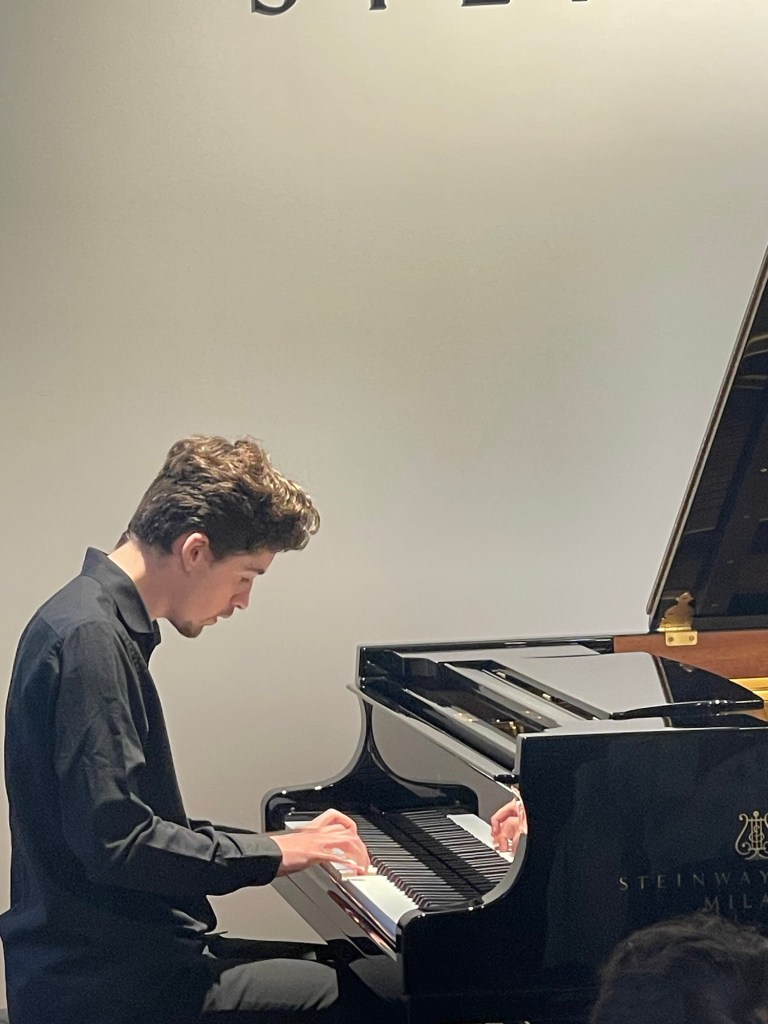
More superb playing in Milan and an encore of the slow movements of Chopin’s cello Sonata op 65 transcribed by Cortot.
Alessandro Livi on the right and Peter Flewitt on the left of Kyle
far right Milana Megina photographer with Monica Guida – far left Alessandro Livi and centre Ioanna and Alberto Chines
Ioanna and Alberto Chines with Kyle

Wolfgang Amadeus Mozart
27 January 1756 Salzburg 5 December 1791 (aged 35) Vienna

The Piano Sonata No. 14 K 457,  was composed and completed in 1784, with the official date of completion recorded as 14 October 1784 in Mozart’s own catalogue of works.

1. Molto Allegro

2. Adagio

3.Allegro assai

It was published in December 1785 together with the Fantasy K.475 as op 11 by the publishing firm Artaria. Mozart’s main Viennese publisher.C minor is traditionally the key of drama, passion, pathos, and pain, which also applies here in Mozart’s famous C minor sonata K. 457. He wrote it in October 1784, though what might have triggered this incredible outpouring of a “romantic” world of feeling is unknown. Half a year later, Mozart composed his C minor fantasy K. 475, an extraordinary work in every regard. Both of these C minor works were published together in one edition in 1785, meaning that they were intentionally linked together by their author, counter to convention.

In 1785 Mozart’s Sonata in C minor was published together with the composer’s Fantasia in C minor as a single opus, with the Fantasia forming a kind of introductory ‘prelude’ to the sonata. Scholars are divided as to whether or not this was Mozart’s intention. Certainly, the common key of C minor and a shared fondness for heightened musical drama link the two works. Not to mention how the practice of combining an improvisatory movement with a more formally rigorous one has traditional roots in the Baroque pairing of fantasy and fugue.

And yet this three-movement sonata is entirely capable of standing on its own. It is a small sonata with big ideas: operatic in its wide range of emotions, orchestral in many of its effects (especially its imitation of alternating orchestral ‘choirs’ of instruments), and pianistic in its unabashed display of quasi-virtuosic keyboard techniques, all of which have been cited as possible influences on – and perhaps even models for – some of the early sonatas of Beethoven in a minor key.

Piano Sonata No. 17 in B flat , K. 570, dated February 1789,The penultimate sonata of 18 written two years before his death.

  1. Allegro
  2. Adagio
  3. Allegretto

Franz Schubert
31 January 1797 Vienna 19 November 1828 (aged 31)
Vienna

Six moments musicaux, D.780 ( op. 94) is a collection of six short pieces for piano It has been said that Schubert was deeply influenced in writing these pieces by the Impromptus, Op. 7, of Jan Vaclav Vorisek (1791 1825) .These pieces have been described as “akin to Beethovens Bagatelles in their brevity and quixotic character.”

They were published by Leidesdorf in Vienna in 1828, under the title “Six Momens musicals “ The sixth number was published in 1824 in a Christmas album under the title Les plaintes d’un troubadour.

  1. Moderato
  2. Andantino
  3. Allegro moderato
  4. Moderato
  5. Allegro vivace
  6. Allegretto in A♭ major (ends on an open octave in an A♭minor context)


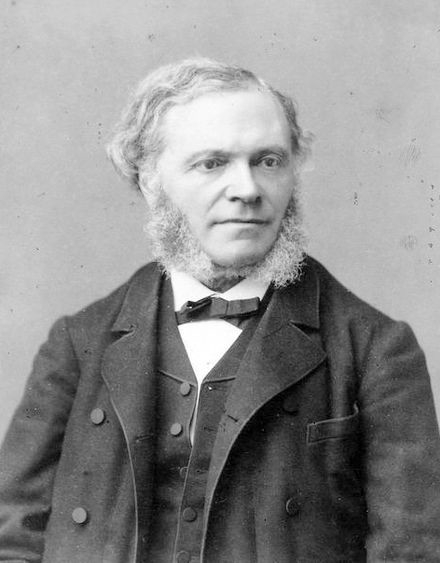
César-Auguste-Jean-Guillaume-Hubert Franck
10 December 1822 Liège. 8 November 1890 (aged 67) Paris, France

Prelude ,Fugue and Variation op 18 Franck/Bauer

Franck was the organist at several churches with early Cavaillé-Coll organs, served the company as an artistic representative, and in 1858 was appointed organist at the new basilica of St. Clotilde in Paris, where he inaugurated one of Cavaillé-Coll’s best instruments. Franck’s improvisations after church services were major public attractions, and he set some of them down in the Six Pieces he completed between 1859 and 1862. These exploited the power and colors of the Cavaillé-Coll organs to the fullest and did much to establish the distinctively French school of symphonic organ music.The Prelude, Fugue, and Variation, Op. 18, which was dedicated to Camille Saint-Saëns, himself an organist of considerable skill. Franck’s dedications do not imply portraits, but the balance and clarity of the Prelude, Fugue, and Variation do suggest the classical orientation of Saint-Saëns. The flowing B-minor Prelude has a gentle melancholy, opening almost like Bach’s “Liebster Jesu” prelude with three repetitions of an asymmetrical five-bar phrase. The Fugue has its own little prelude and clean textures, the polyphony by no means hard to follow. Rounding the three-part work is the Variation, basically a repeat of the Prelude with a more active accompaniment, fading to the light of B major.

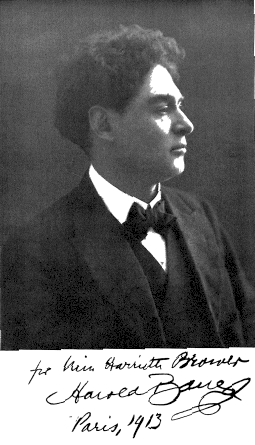
Harold Victor Bauer (28 April 1873 – 12 March 1951) was an English-born pianist of Jewish heritage who began his musical career as a violinist .Born in Kingston upon Thames ; his father was a German violinist and his mother was English. He made his debut as a violinist in London in 1883, and for nine years toured England. In 1892, however, he went to Paris and studied the piano under Paderewski  for a year, though still maintaining his interest in the violin.In 1900, Harold Bauer made his debut in America with the Boston Symphony Orchestra, performing the U.S. premiere of  Brahms’ Piano Concerto No.1 in D minor. On 18 December 1908, he gave the world premiere performance of Debussy’s piano suite Children’s Corner  in Paris.

https://christopheraxworthymusiccommentary.com/2023/06/02/the-gift-of-music-the-keyboard-trust-at-30/