An eagerly awaited annual event to find the young pianists of tomorrow and it is thanks to Artur Haftman and Jenny Lee who have created this showcase where young musicians can be heard by many of the most distinguished musicians of our day.
Some superb piano playing of untainted natural talent and a distinguished jury ready to encourage and nurture young musicians who already show signs of artistry that will blossom, as they mature and gain experience on their journey in music
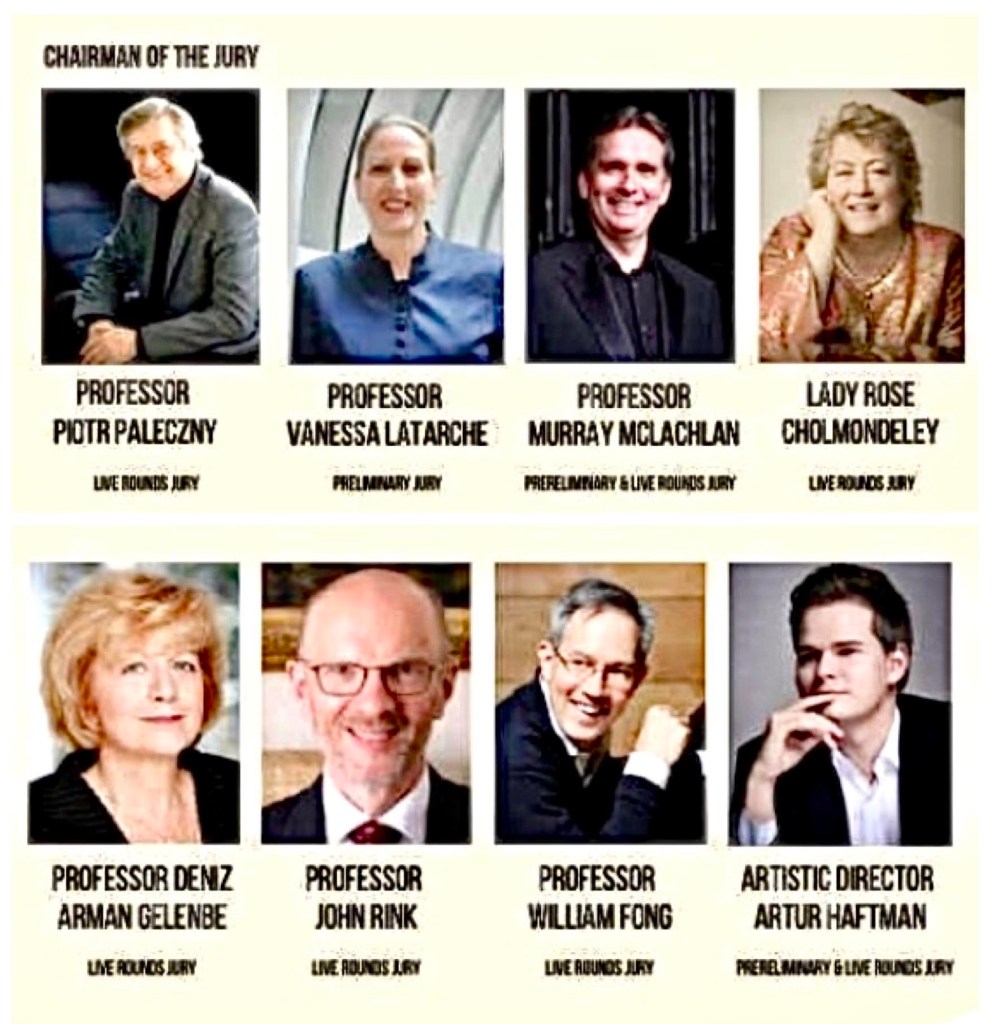
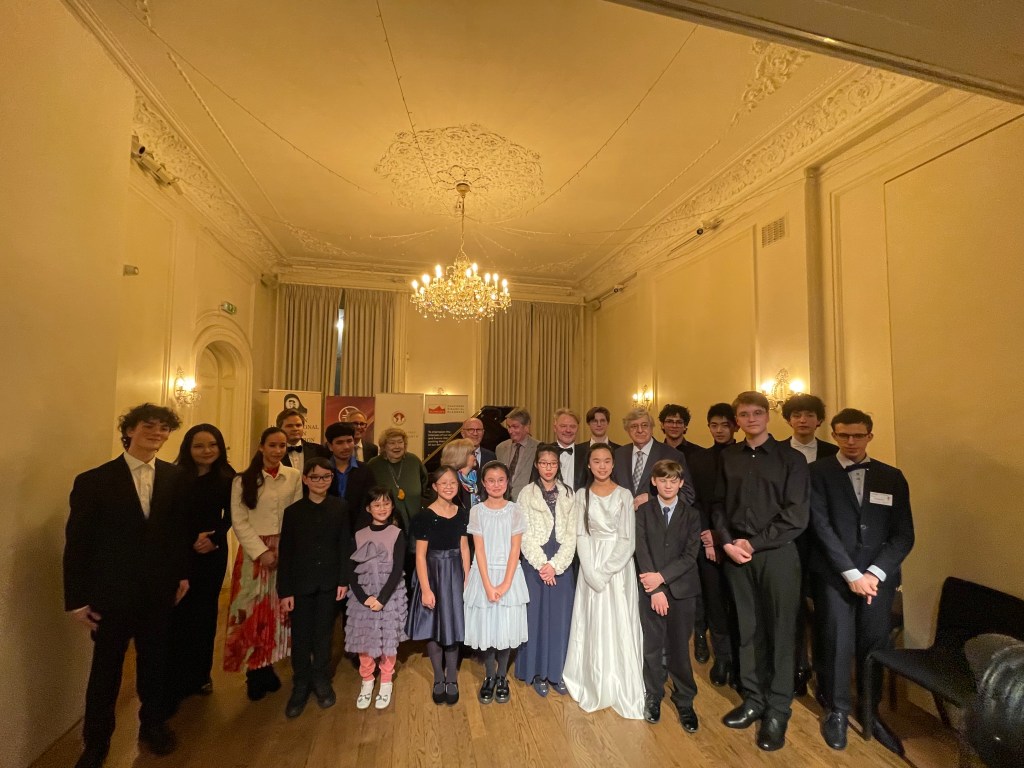
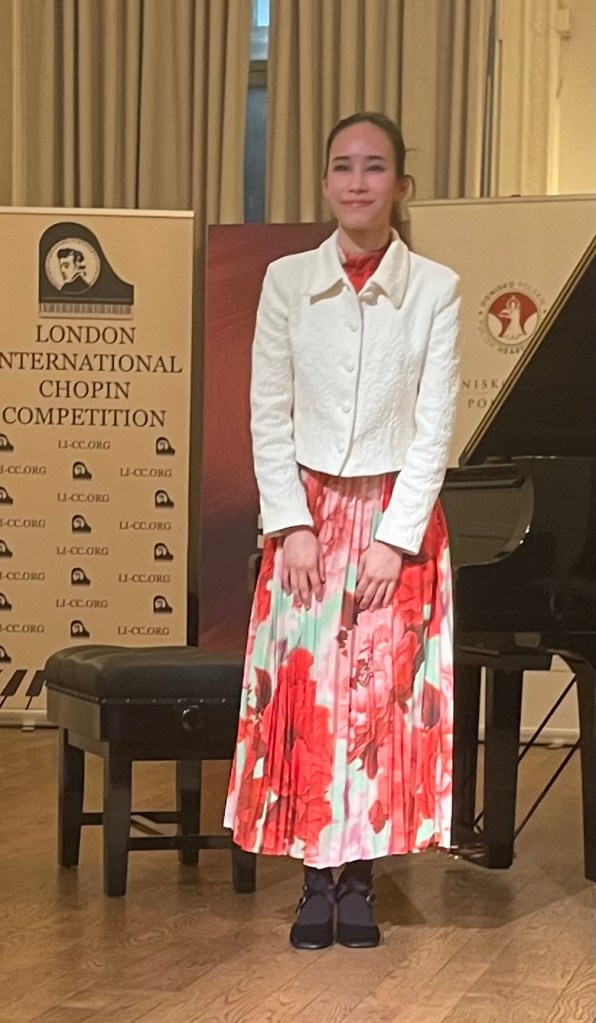
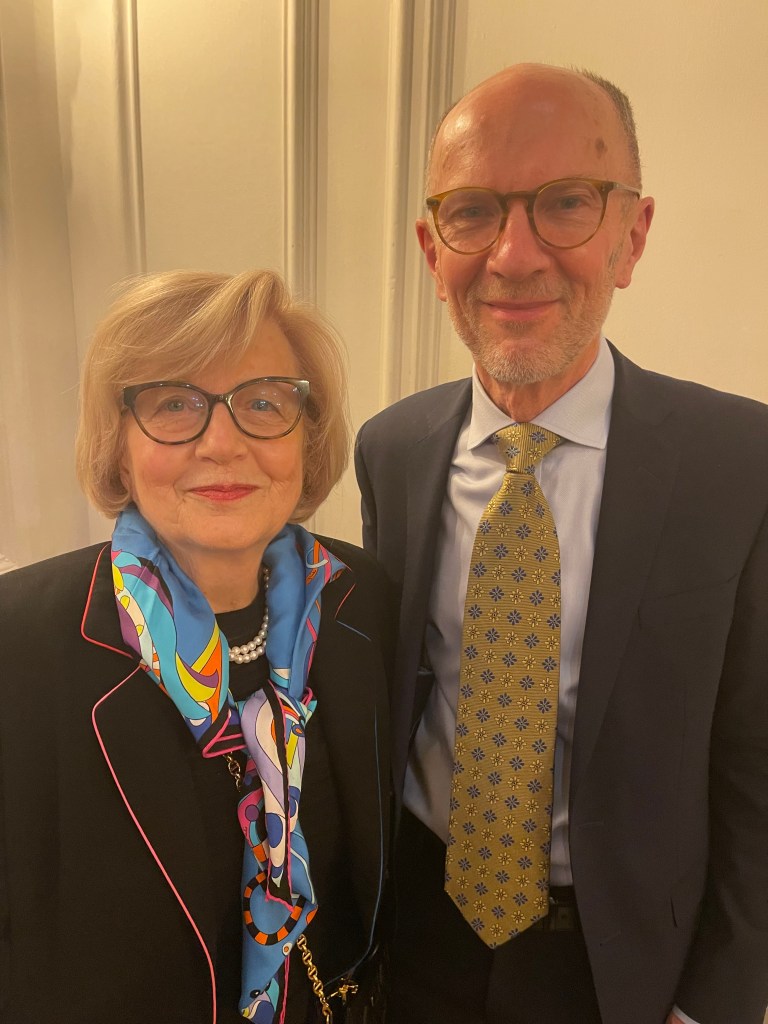
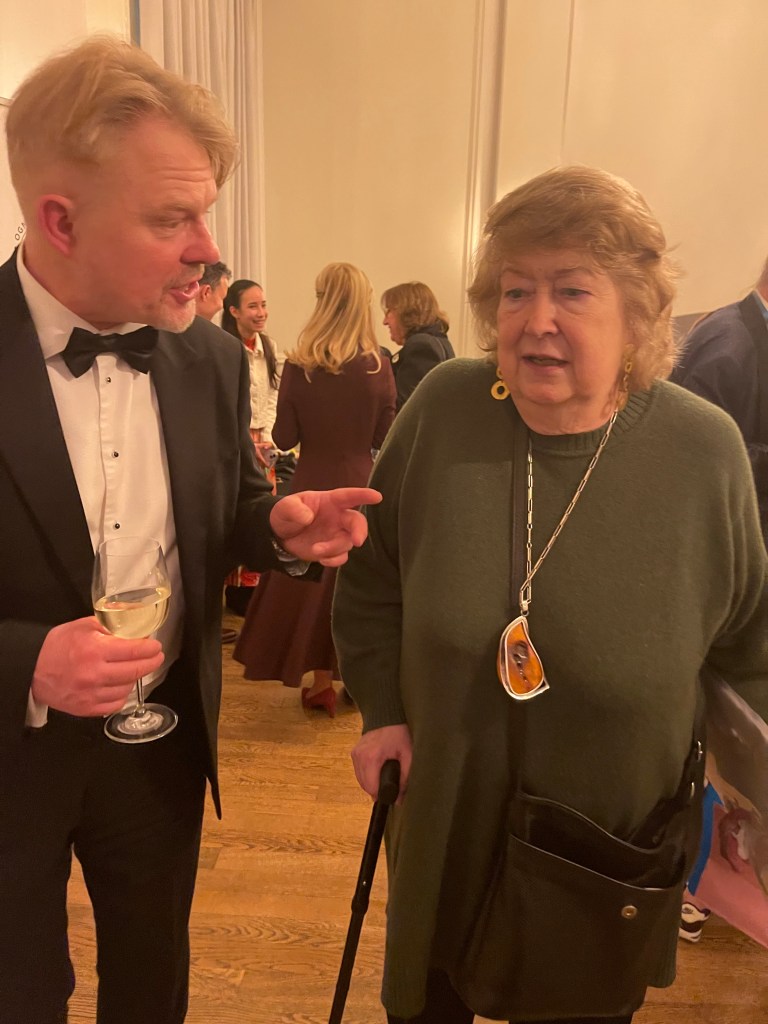
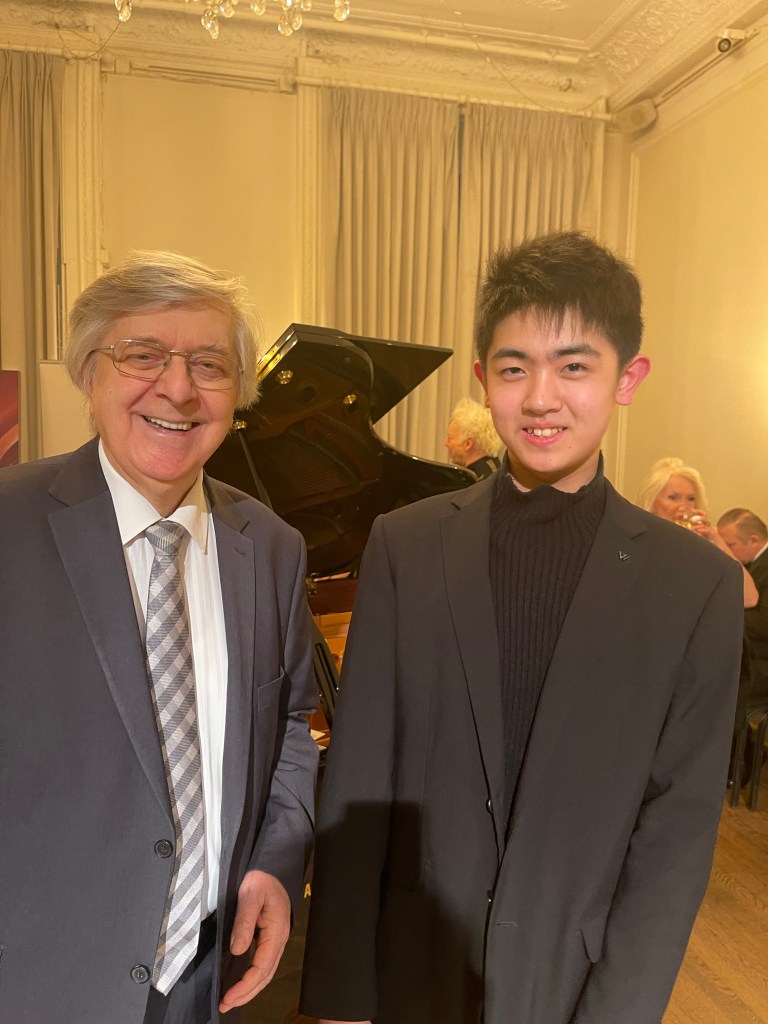
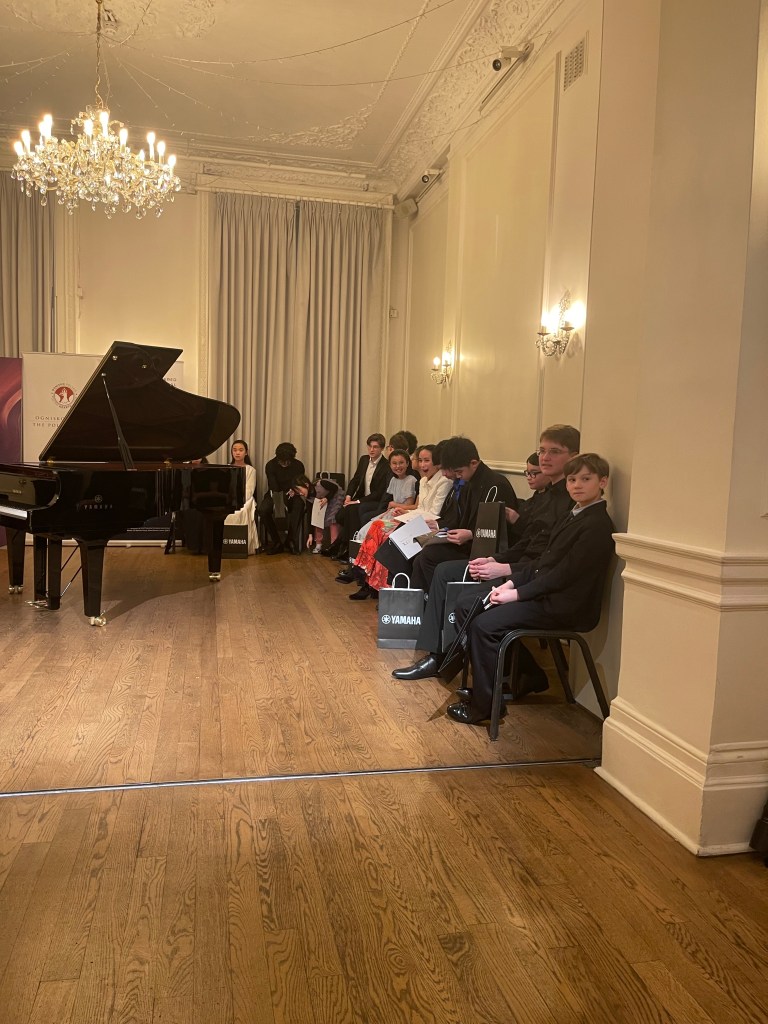
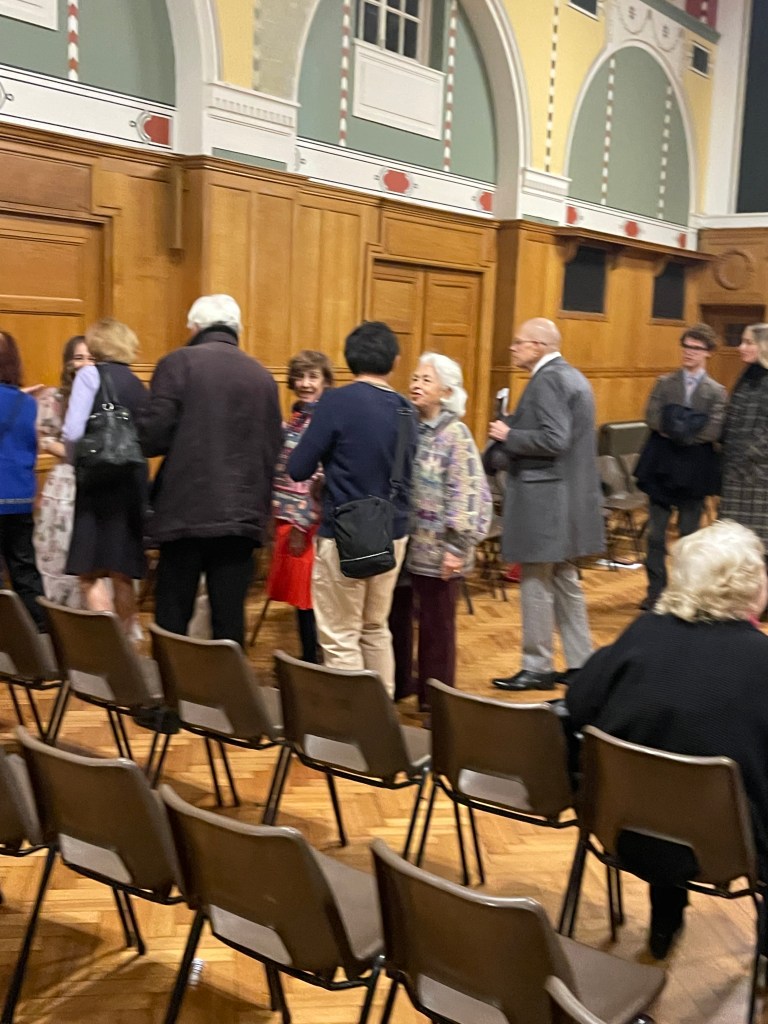
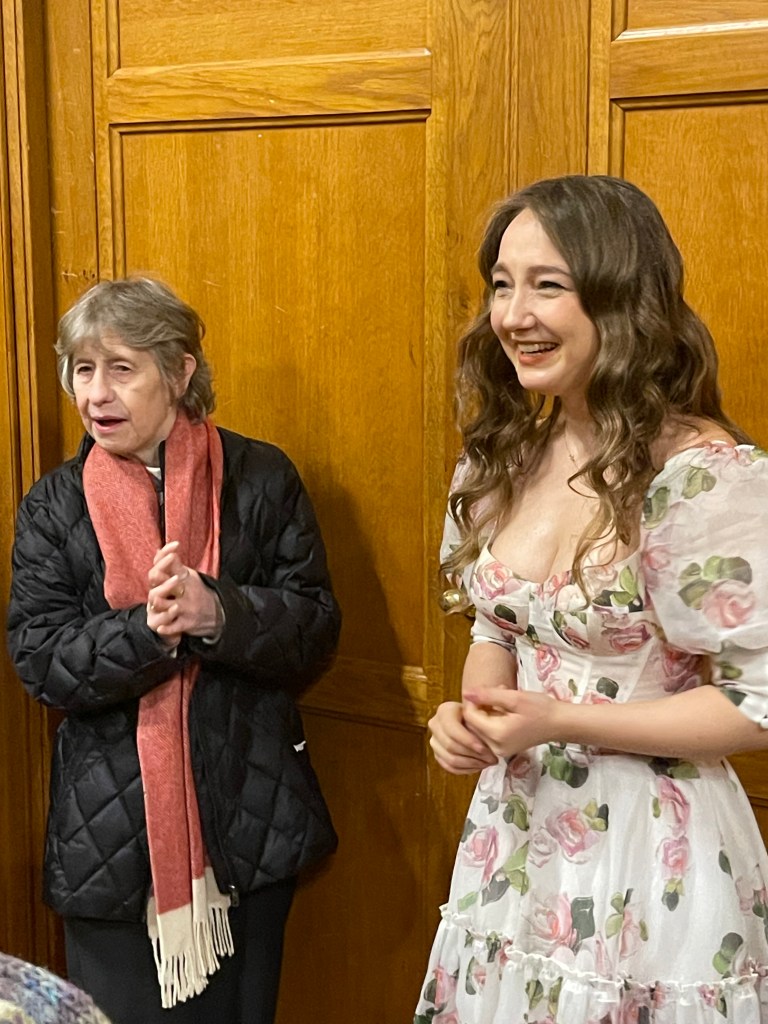
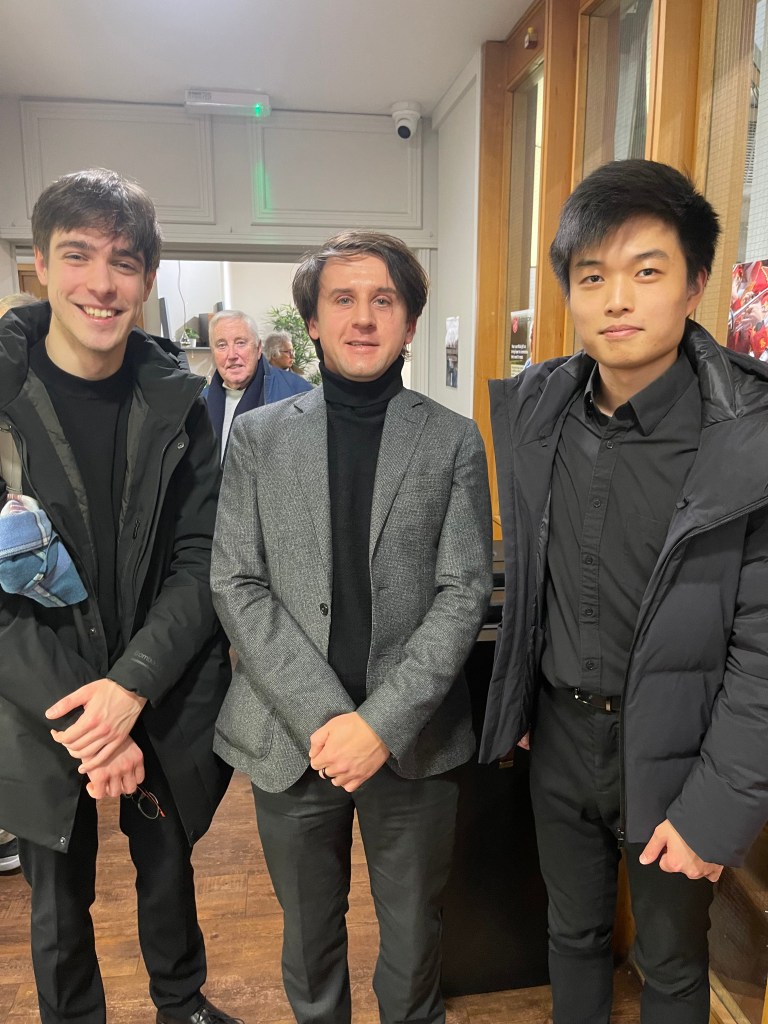
Jury members and competitors
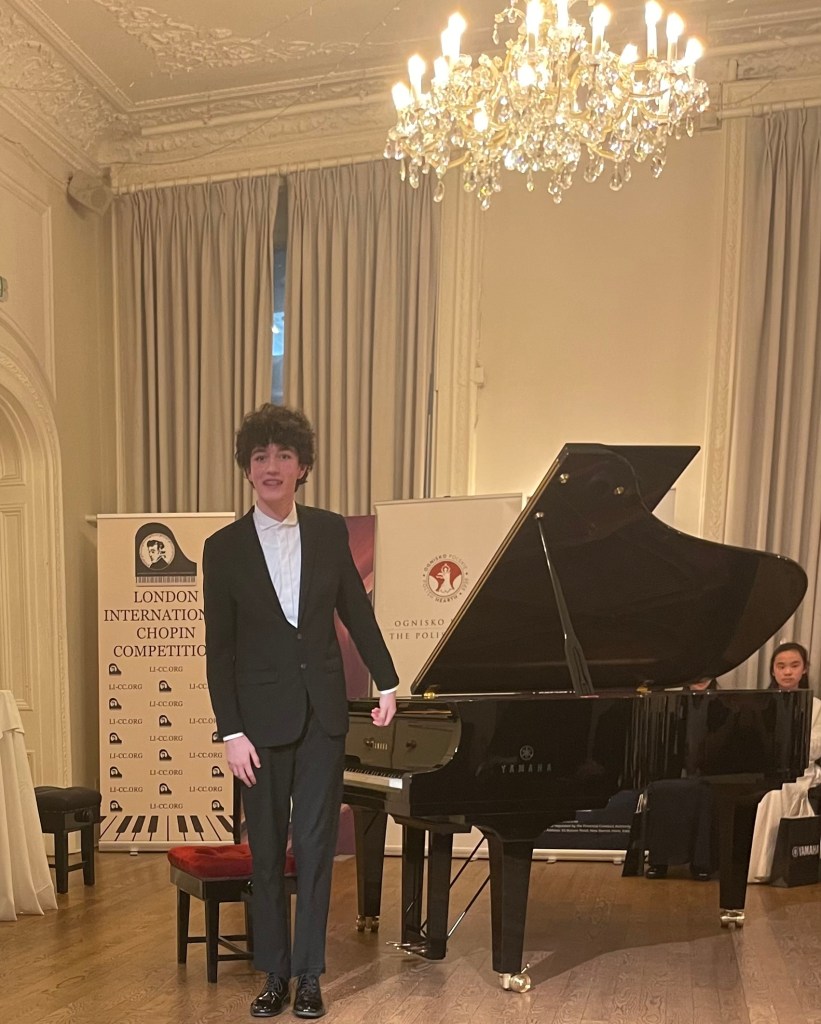
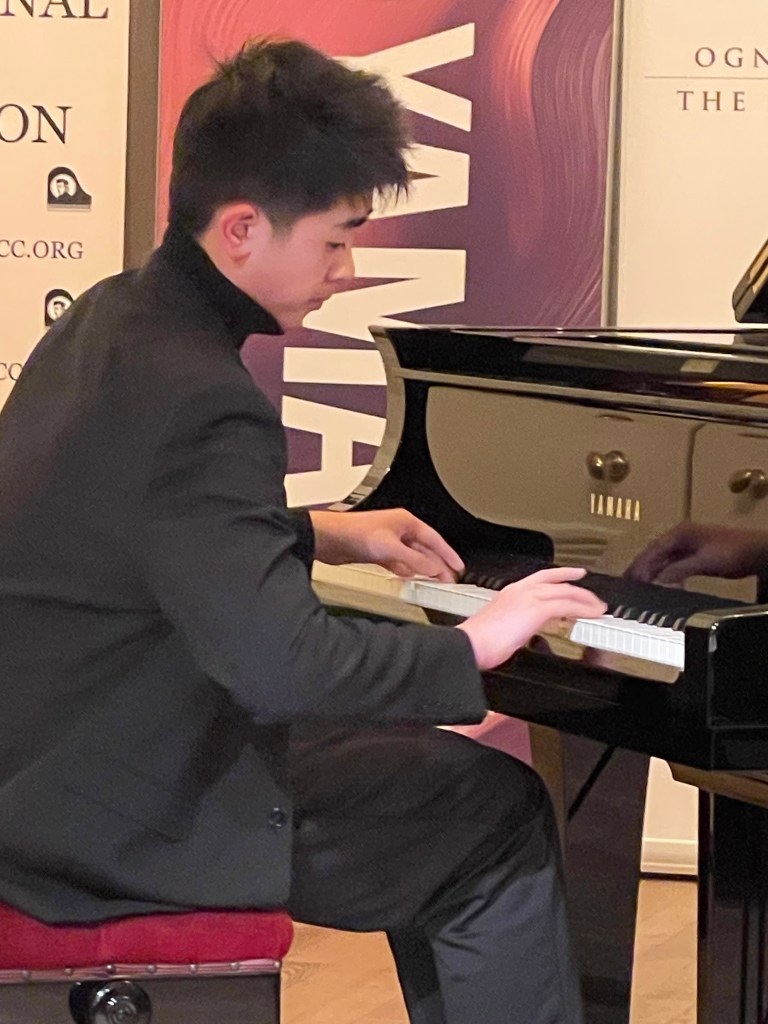
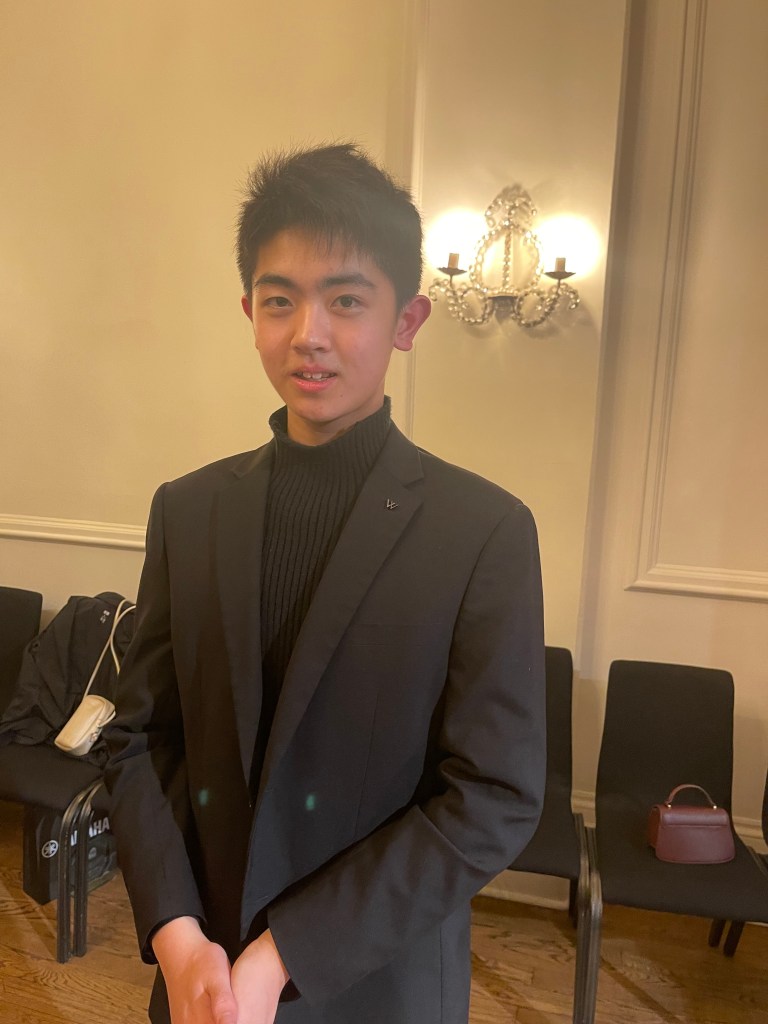
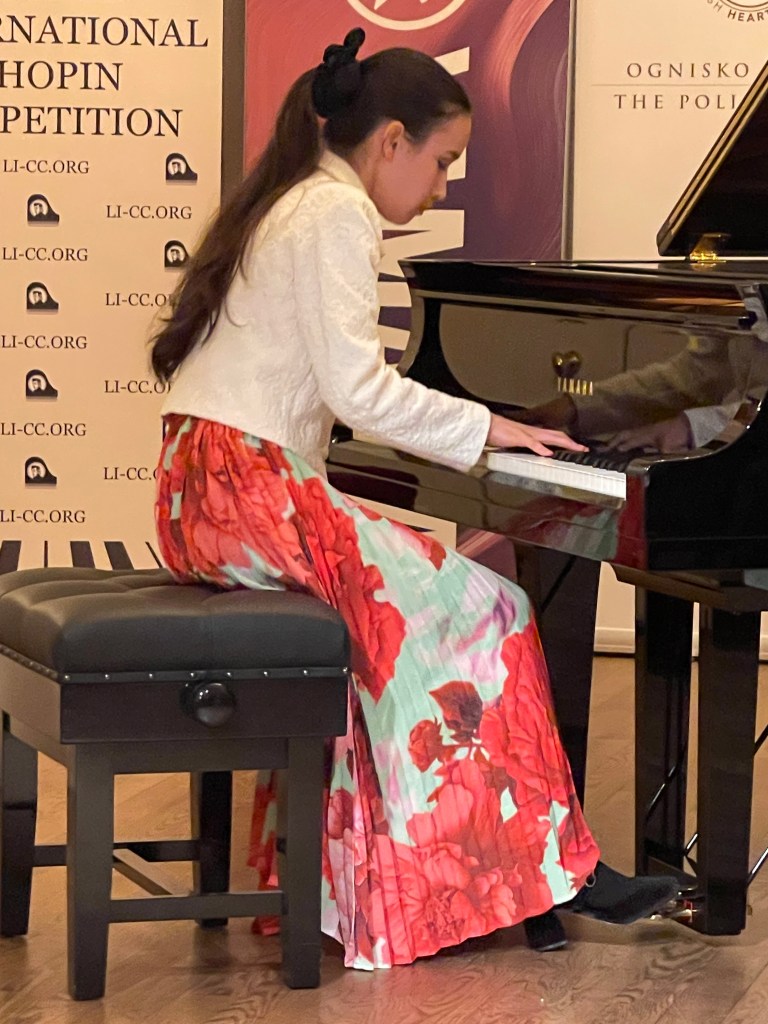
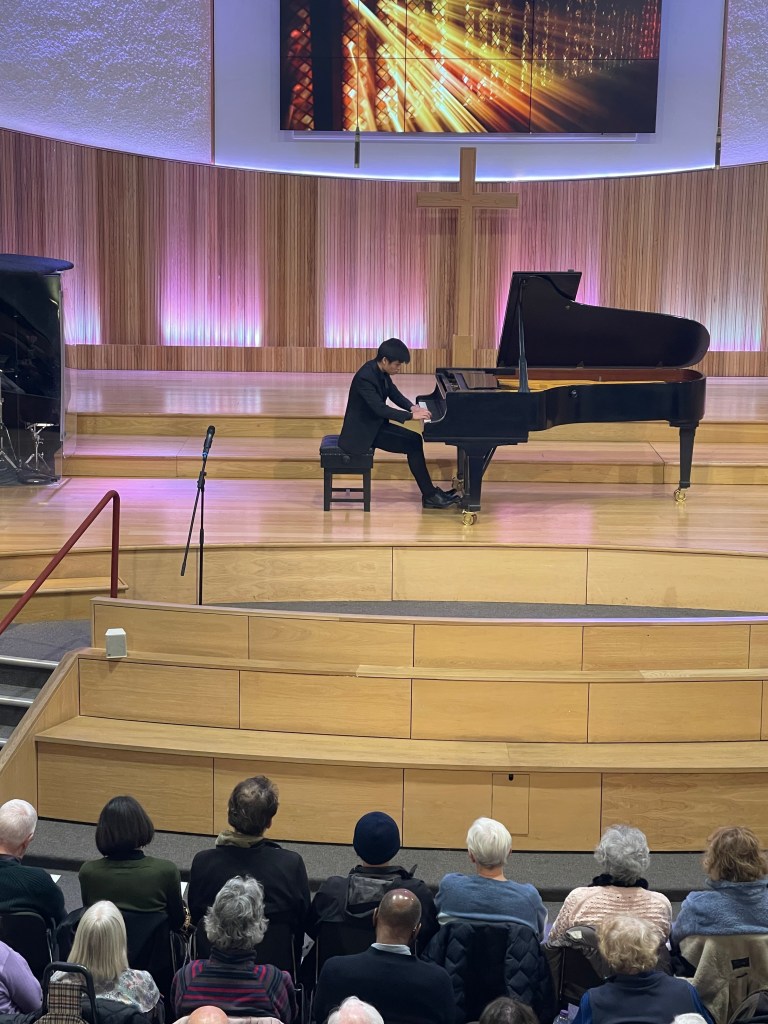
Four categories according to age : I have added my own personal comments on the impression they made to me and am sure the distinguished jury will have come to their own expert conclusions.
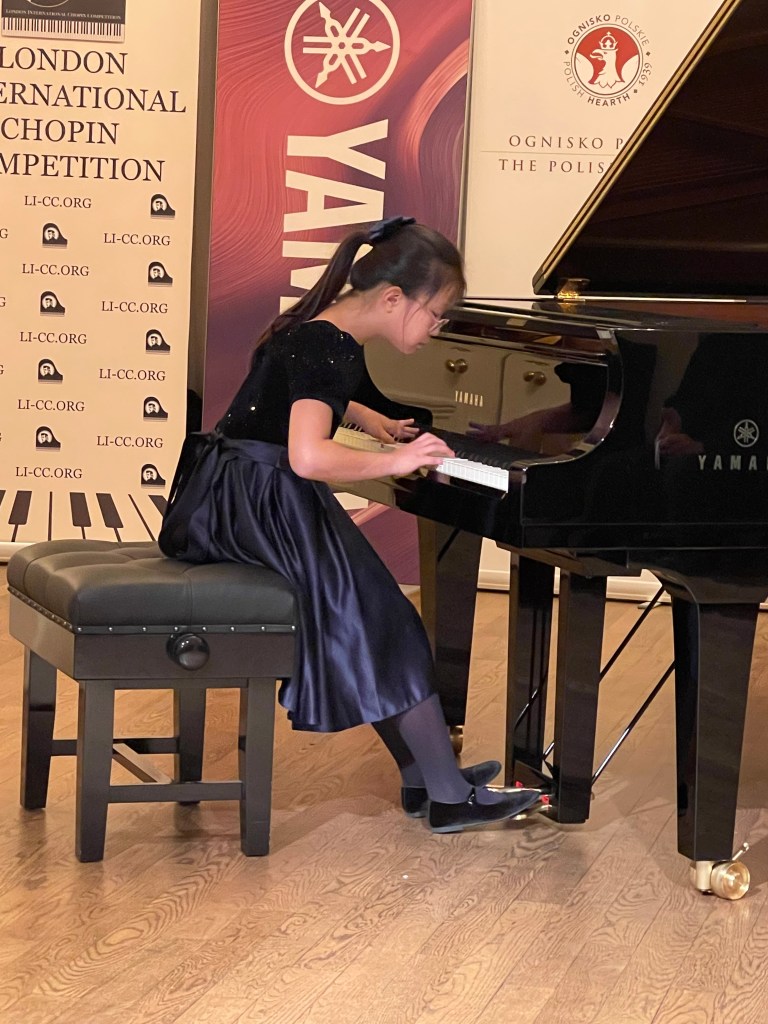
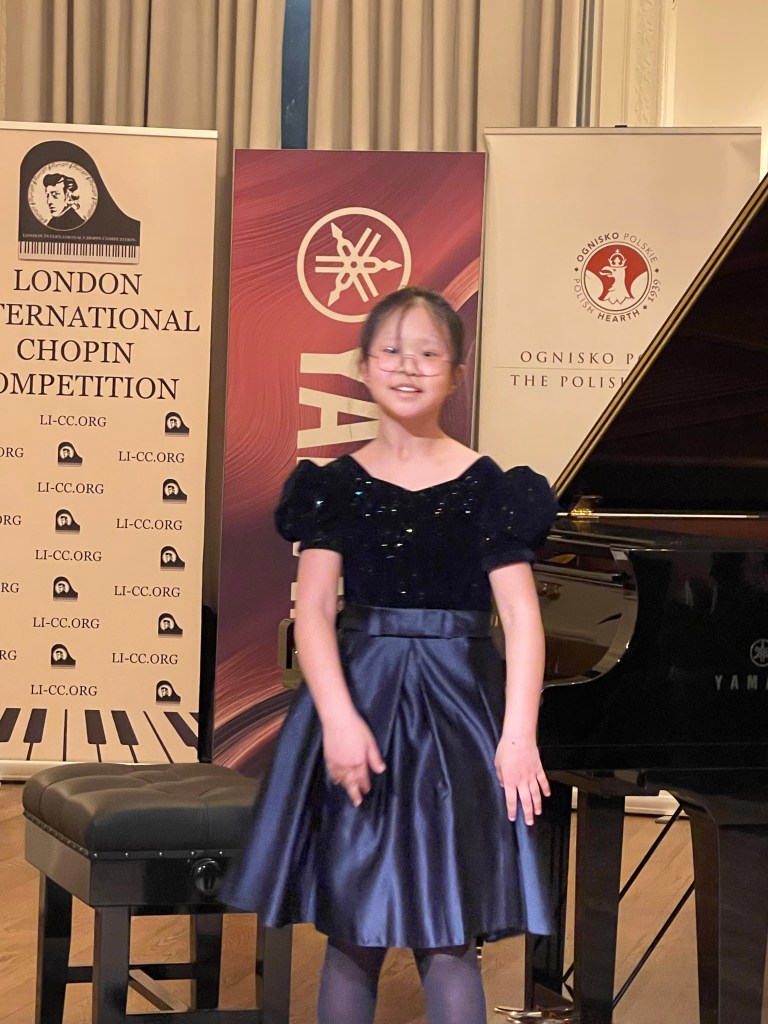
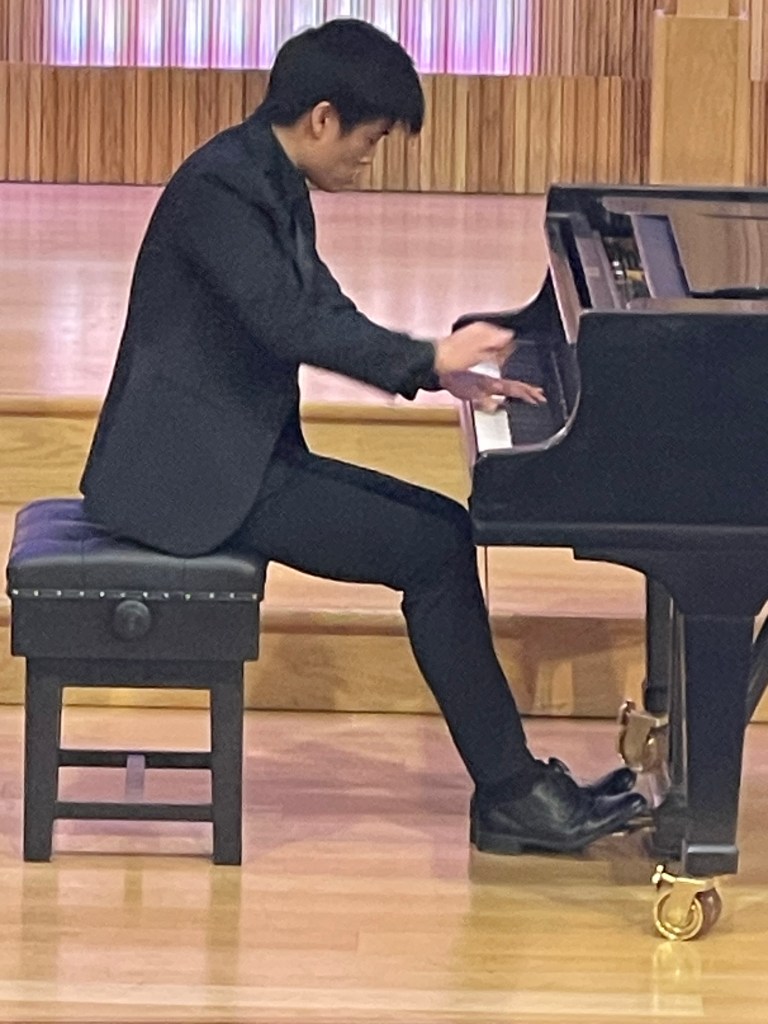
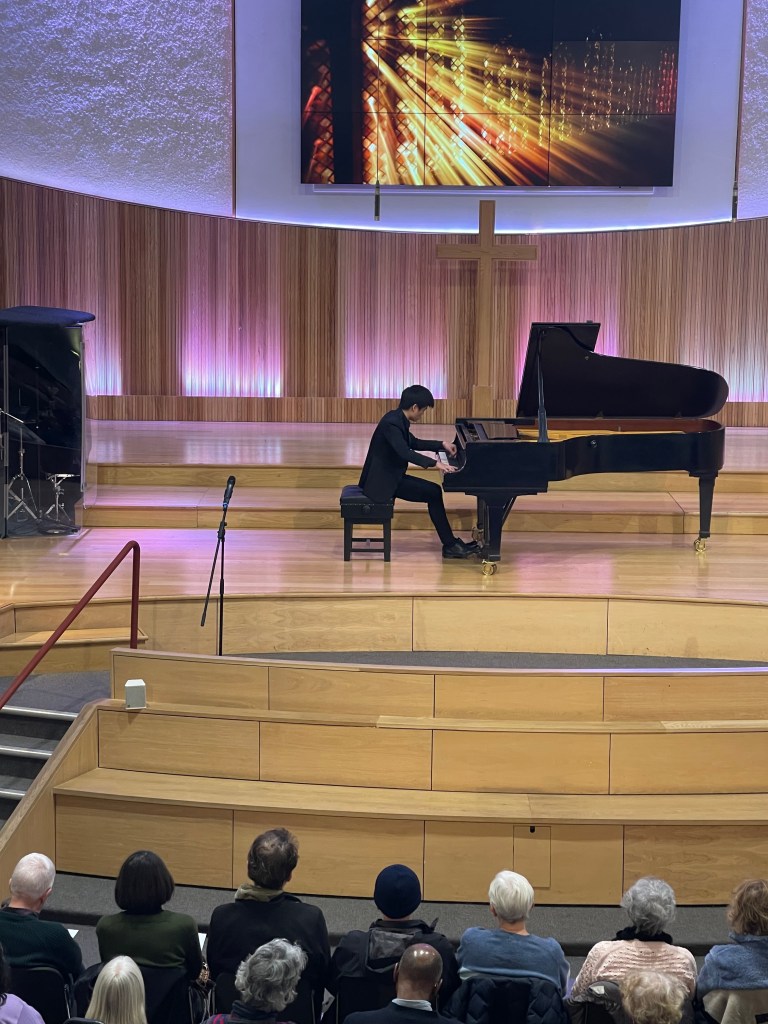
Category A, was won by Eileen Zhang who showed a remarkable natural talent of fluidity and quite considerable weight in the central melodic episode. She seemed to enjoy allowing her fingers to fly over the keys like swimming in sounds with horizontal movements allowing her agile fingers to shape the music with extraordinary facility . If she got impatient with the long expansive bel canto it was because she is a live wire who could not wait to allow her fingers full reign again.
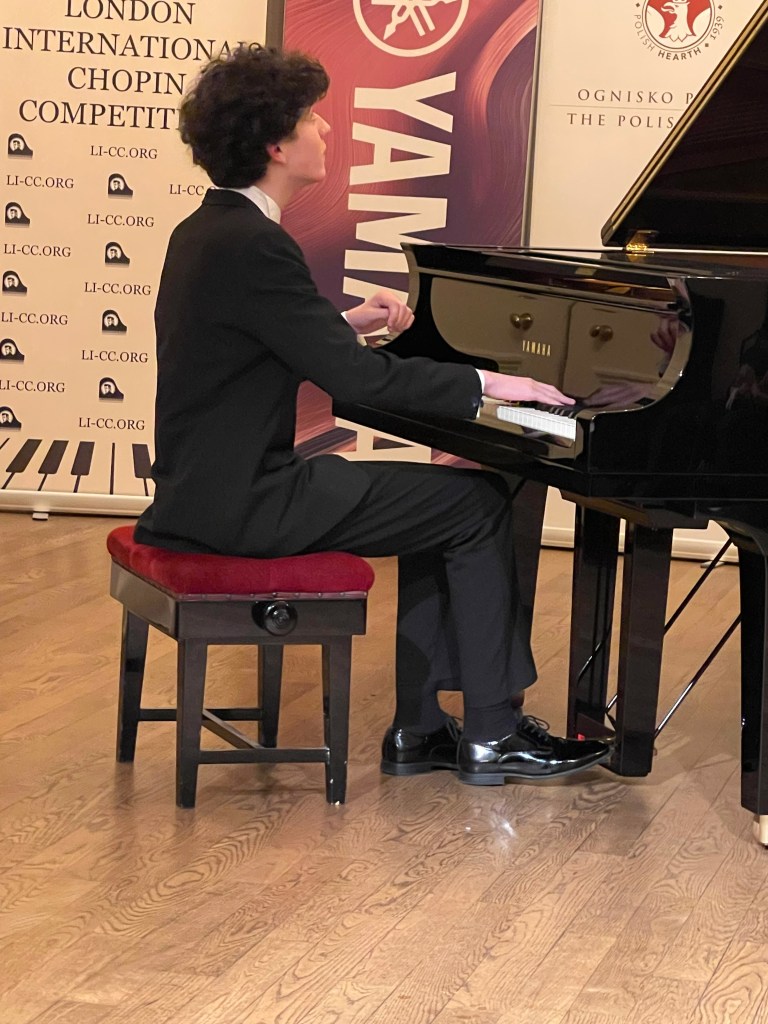
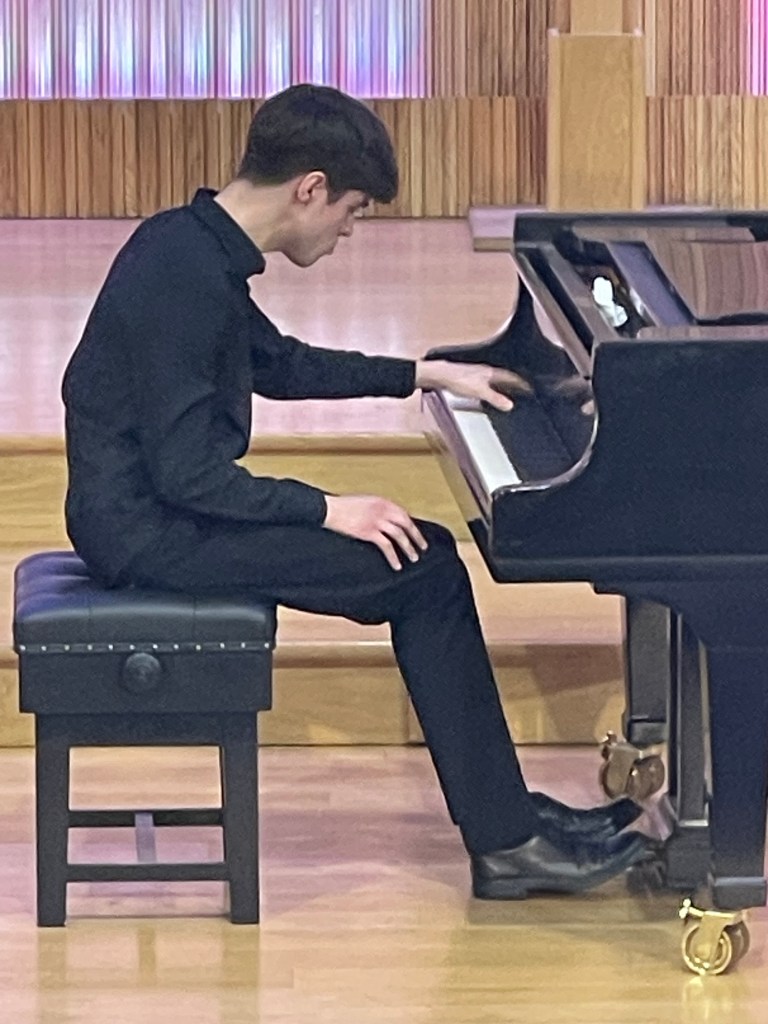
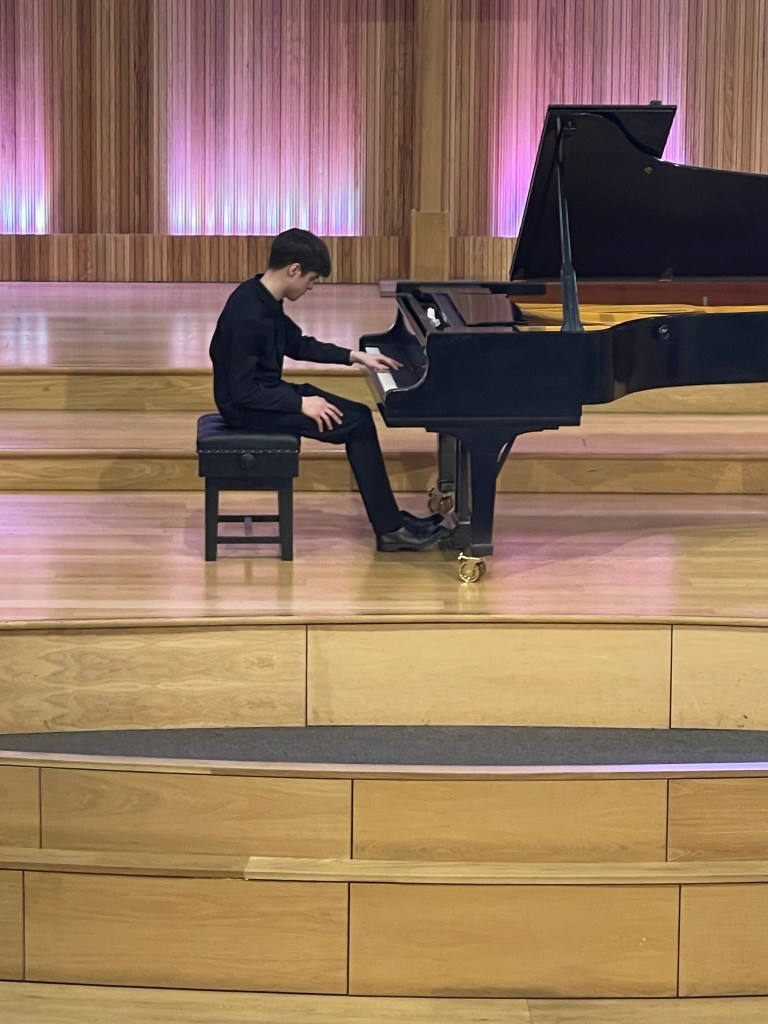
Category B , was won by Gustaw Mazur who played the glorious Nocturne op 55 n. 2 . He showed great independence of voices in the knotty counterpoints that he shaped with a sense of style and intricately played detail .Of course he did not understand at his age the pure outpouring of ecstasy that this nocturne is, and consequently his rather slow tempo did not allow for an expansive improvised freedom but rather a considered and detailed contemplation.
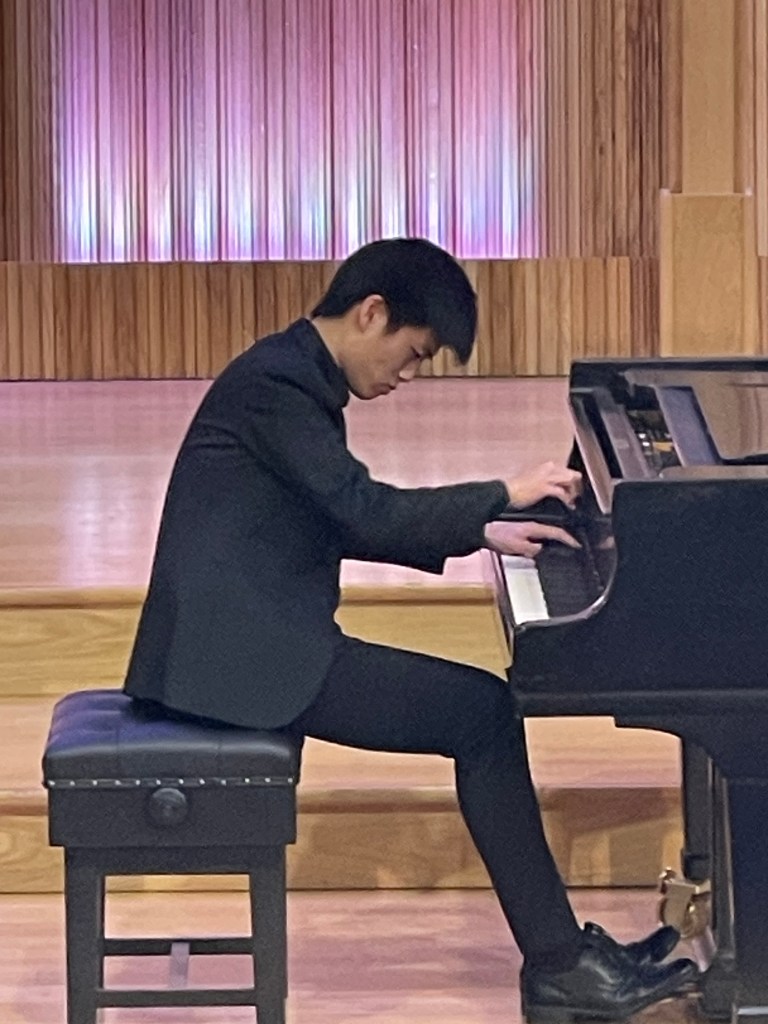
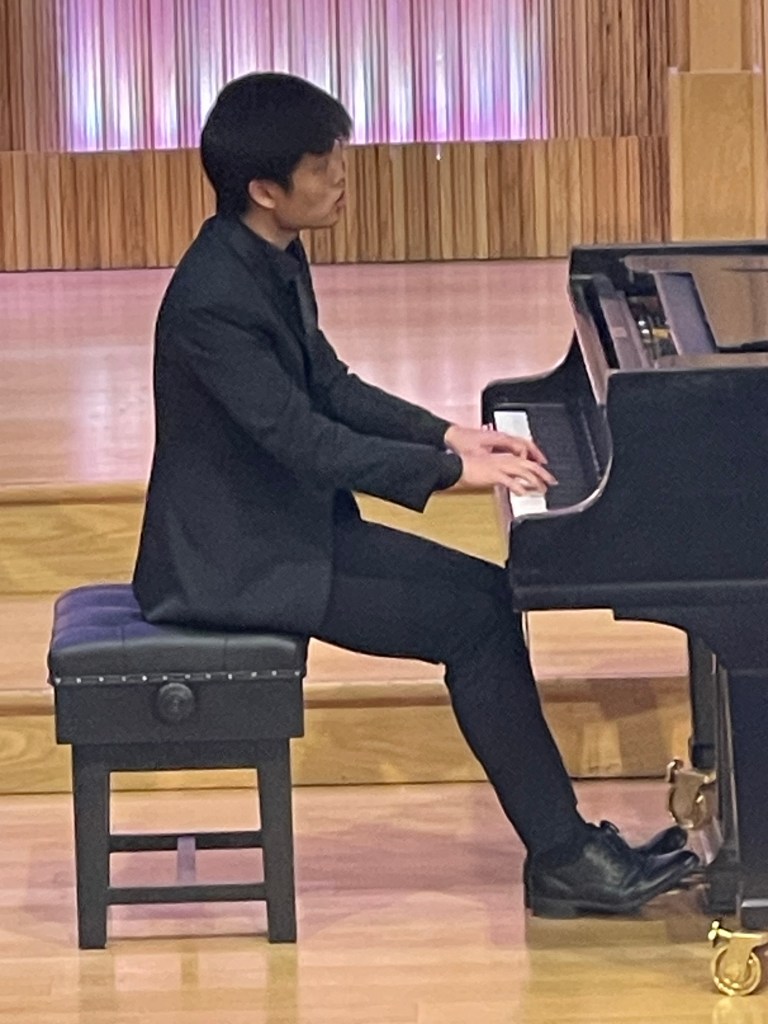
Category C , the winner was Julian Zhu , a revelation, as this young English born Chinese student at Chethams, revealed a natural talent that cannot be taught. Breaking all the rules, but creating his own as he had the gift of listening to himself and creating music with quite considerable artistry. The Andante Spianato immediately revealed a wonderful arch to his left hand as flat fingers chiselled out Chopin’s youthful bel canto with the freedom that Chopin himself described to his pupils of a tree firmly planted in the ground but with the branches free to move naturally above. A Grande Polonaise that was truly ‘Grand’. Note picking accuracy is not for him, as he needed to communicate what he found within the notes, the external details which were pretty good, will be easy to perfect as he matures and his playing gains in weight.
I was not surprised that he won not only the category prize, but also the Jury special prize and shared the Audience prize with Ameli- Sakai -Ivanova winner of Category D.
Category D, was won by Ameli Sakai-Ivanova who also shared the Audience prize with Julian Zhu. A distinguished performance of fluidity and natural musicality.Playing of real weight and a mature style of sumptuous rich sounds and beguiling flexibility. The infamous octaves of the advancing cavalry in the Polonaise Héroique were played at an incredible pace which she was able to maintain with masterly control .Her sense of balance even allowed the advancing cries to be heard with extraordinary clarity over this wind of advancing octaves! An ending of exhilaration and excitement to which as she matures she will add aristocratic nobility and timeless wonder.
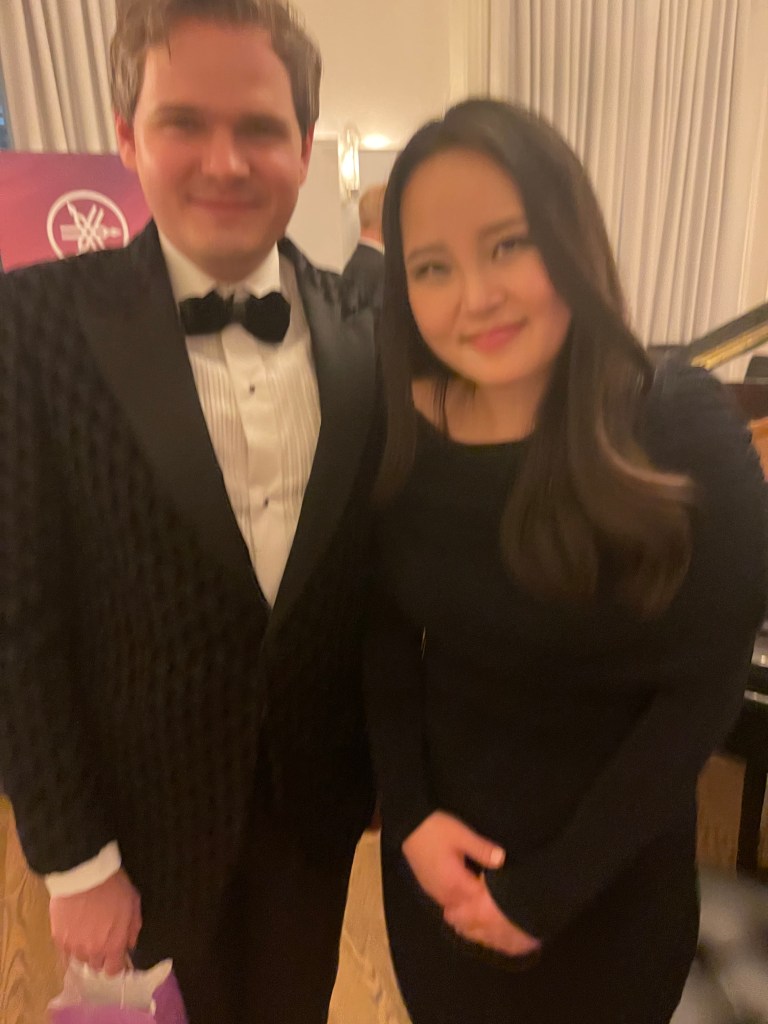
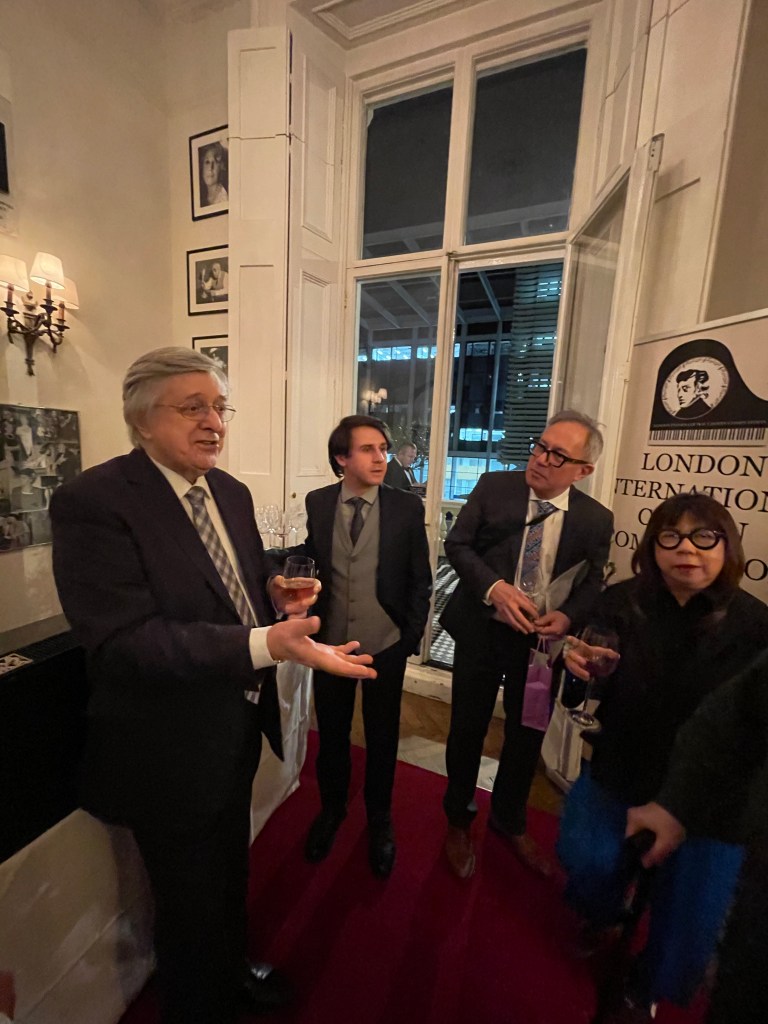
Deniz Arman Gelenbe – Prof John Rink Lady Rose Cholmondeley with Piotr Michalik ,director of Ognisko PolskieProf Piotr Paleczny with Julian Zhu Prof William Fong and Prof Vitaly Pisarenko together with Marina Chan of the Chopin Society UK and Prof Paleczny
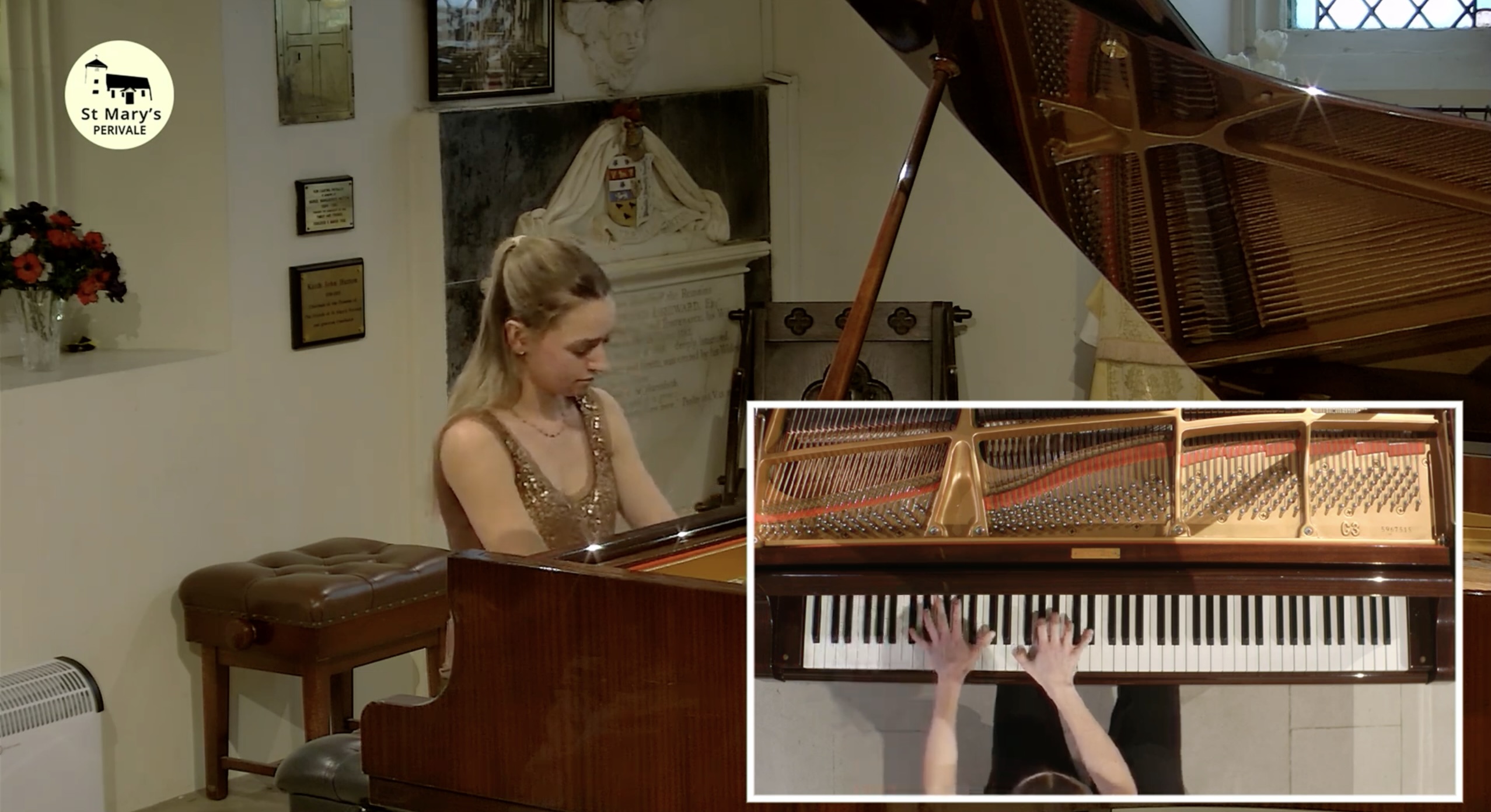
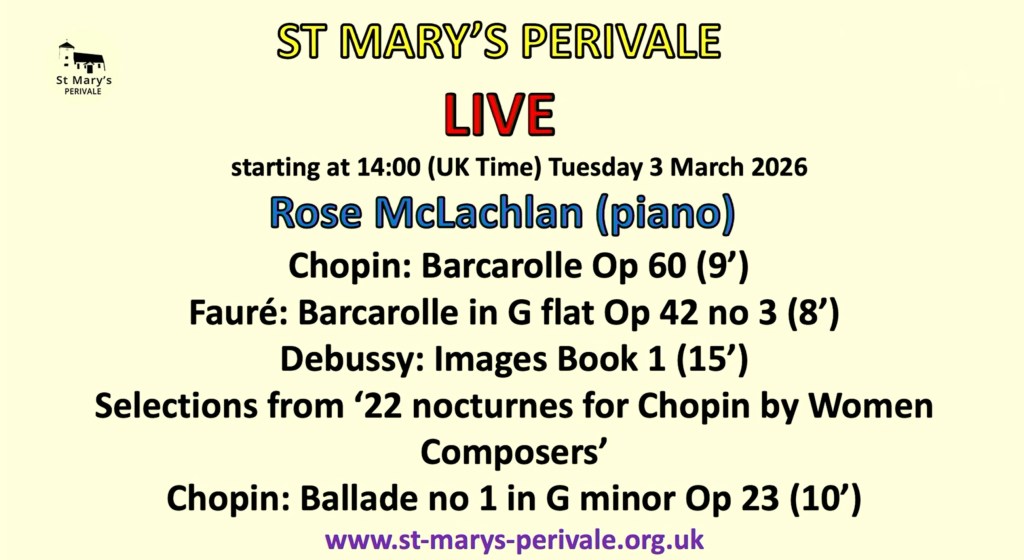
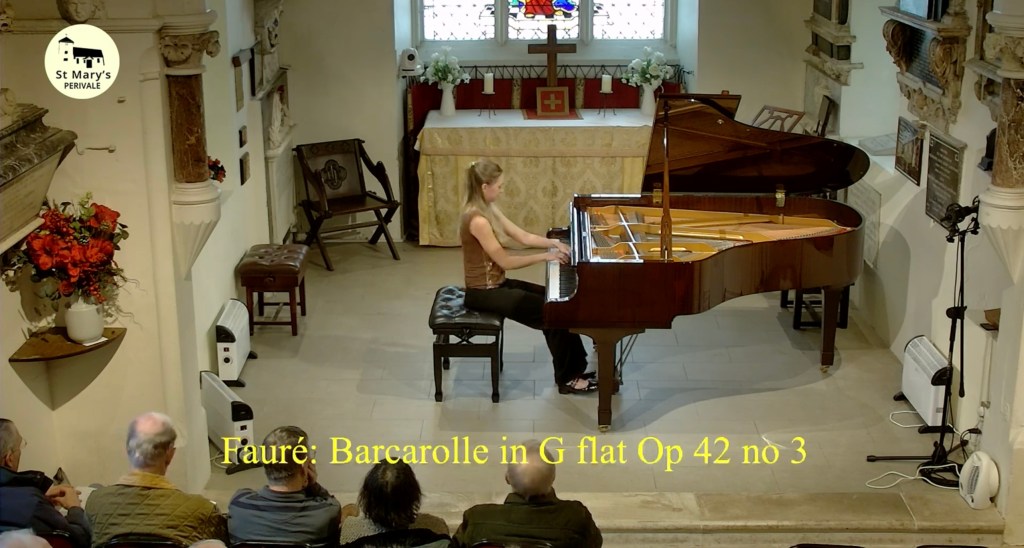
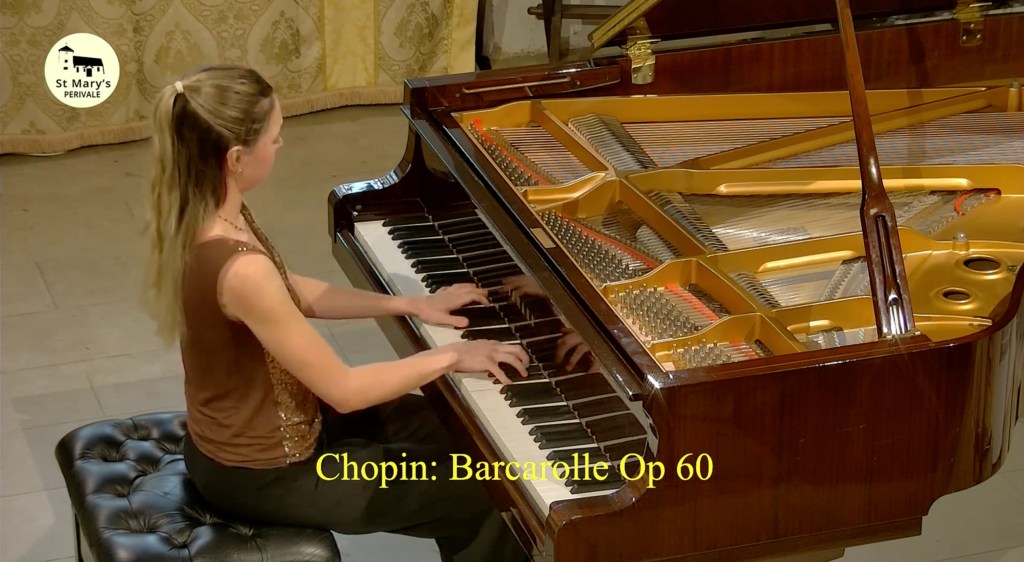
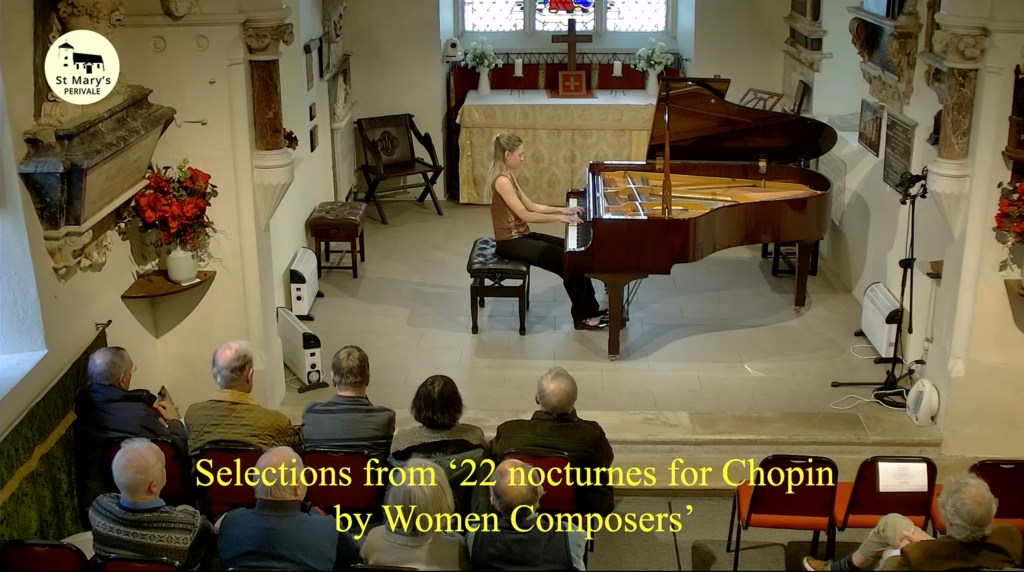
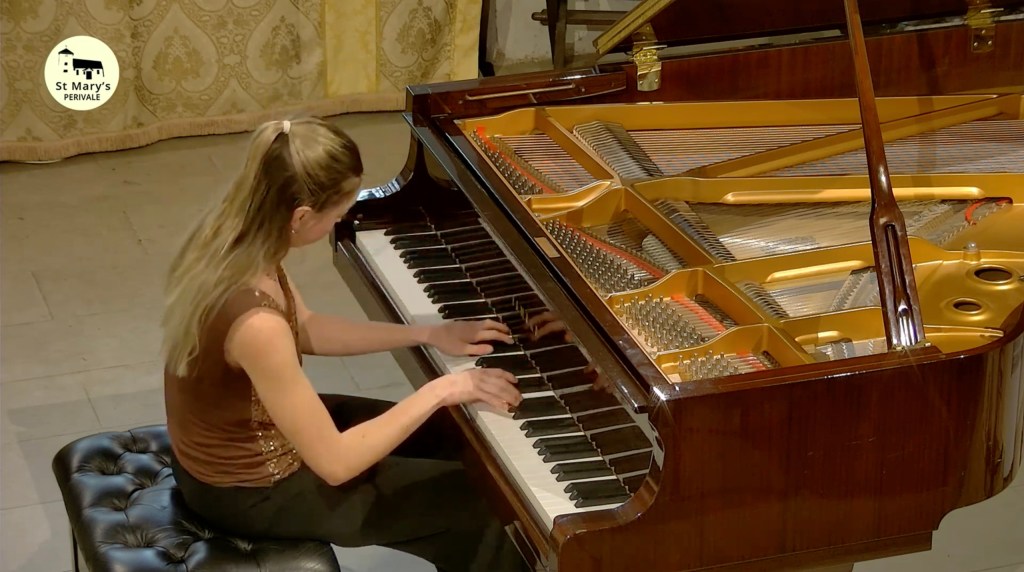
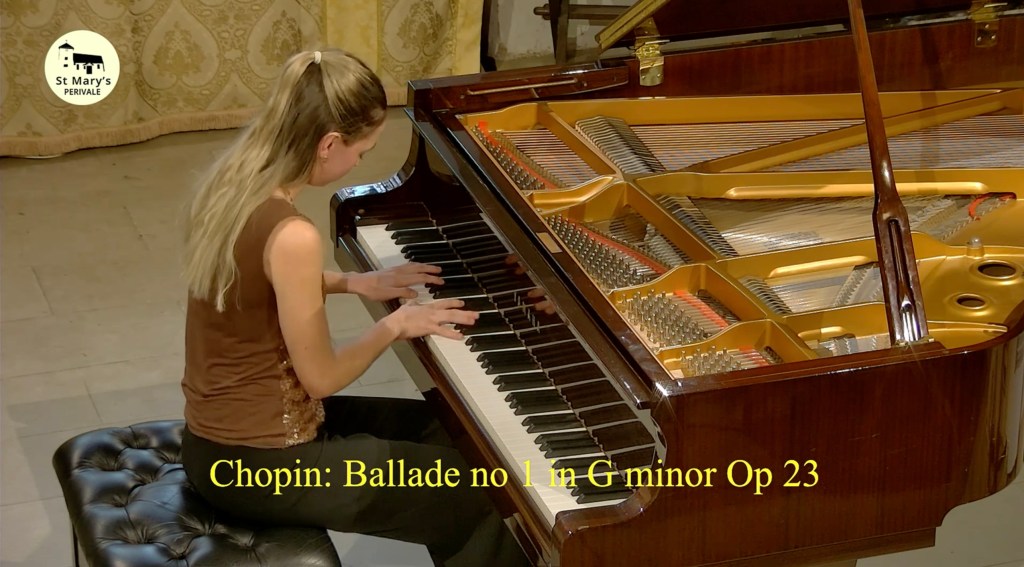
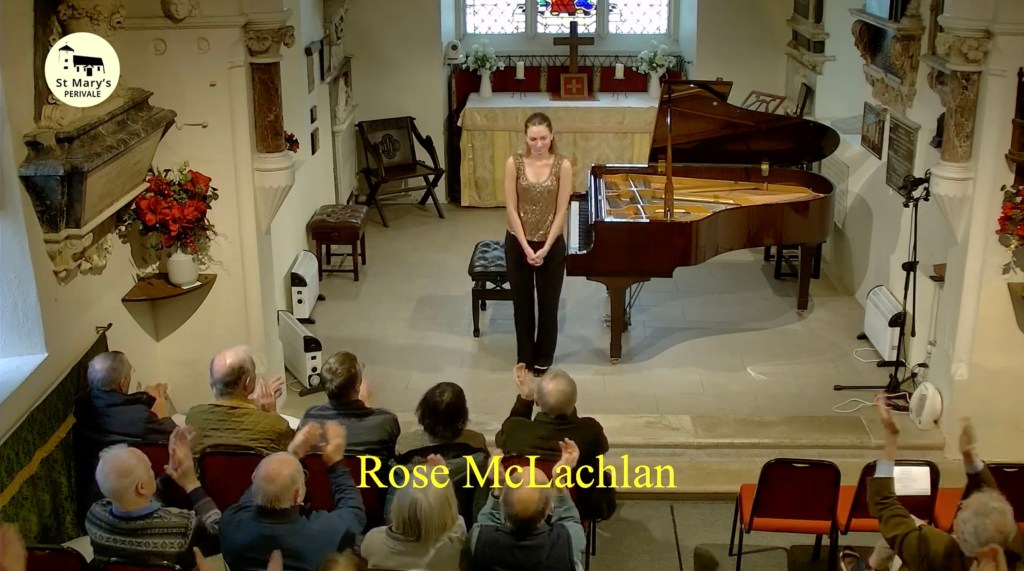
Debussy: Images Book 1, Faure: Barcarolle in G flat Op 42 no 3, Chopin: Barcarolle Op 60, Debussy : Etude ‘pour les agrements’ Selections from ‘22 nocturnes for Chopin by Women Composers’,Katie Jenkins-Nicole Di Paolo-Zoe Rahman , Chopin: Ballade no 1 in G minor Op 23
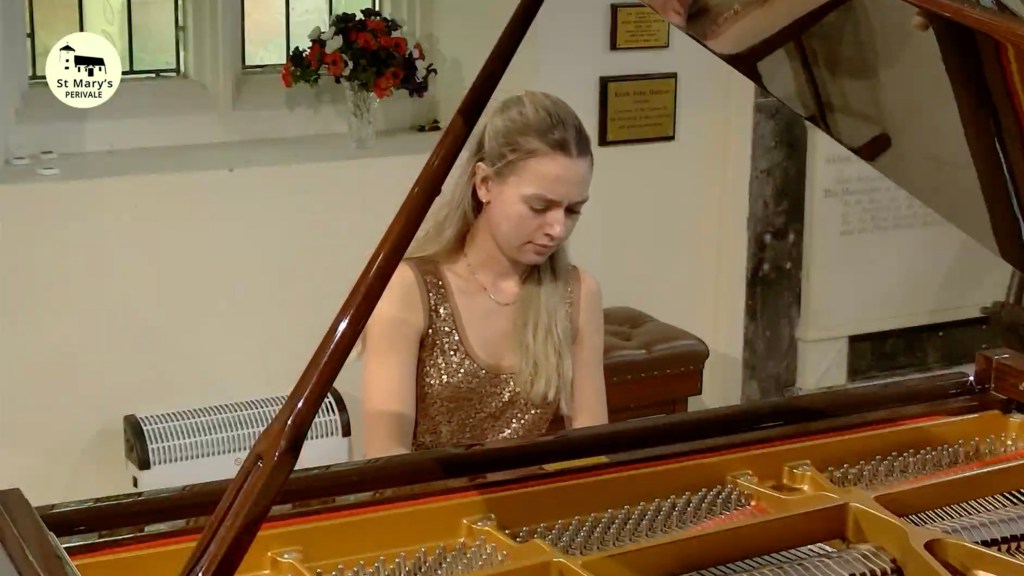
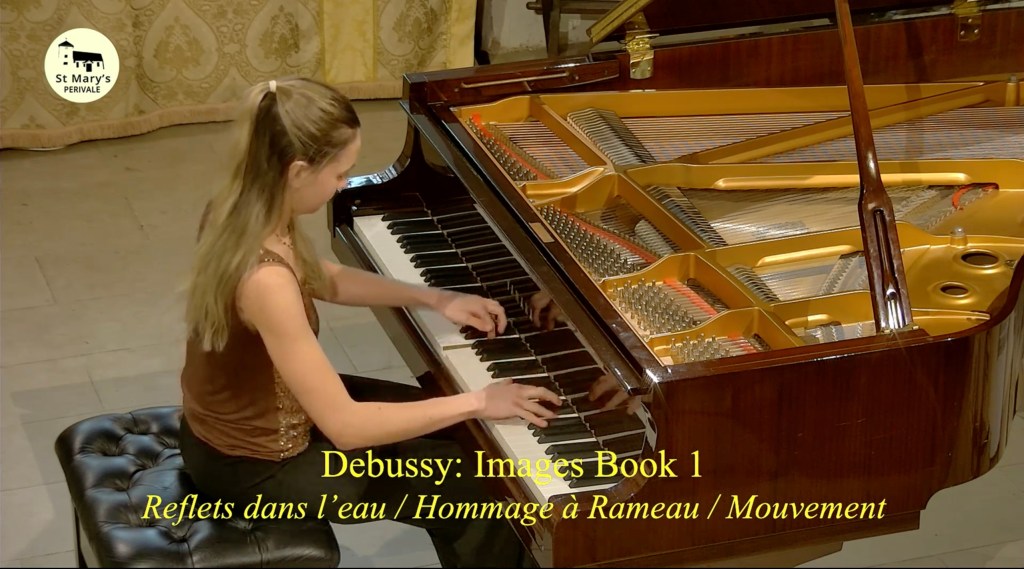
Of course the French repertoire has long been Rose’s great love and it was with Debussy Images that she opened her programme. The three tone poems from the first book opened with a magical account of ‘Reflets dans l’ eau’ which she played with luminosity and fluidity. Notes became streams of wondrous sounds on which Debussy floats a melody of glistening beauty. The final bars in particular were played with delicacy and strength where Rose could combine the musical meaning with an architectural line of refined poetic beauty. ‘Hommage à Rameau’ was played with aristocratic authority and a refined sensibility where even the climax was of controlled elegance. A very sedate tempo for Mouvement allowed Rose to maintain the same tempo throughout with control and relentless forward movement. Never loosing sight of the musical line no matter how many hurdles Debussy adds to this spellbinding journey.
Two Barcarolle’s were next on this wondrous journey that Rose had organised for us today.
Fauré’s Barcarolle in G flat , a work all too rarely heard in the concert hall, but that Rose imbued with a melancholic beauty of timeless mellifluous outpourings in which her ravishing jeux perlé added to the sumptuous rich harmonic sounds creating a tone poem of great delicacy and style.
Chopin’s Barcarolle op 60 is one of the composer’s greatest works, written towards the end of his life, it is one long song from the first to the last note. Rose played it with glowing beauty where the melodic line was allowed to sing thanks to her wondrous sense of balance. Never disturbing the poetic beauty that Chopin is carving out but finding within the accompaniment, sounds that appeared like lights shining on a prism creating moments of wondrous beauty. An aristocratic control that gave nobility to the climax that she played with sumptuous rich sounds that were always covered in velvet never hard or ungrateful but ever more intense.
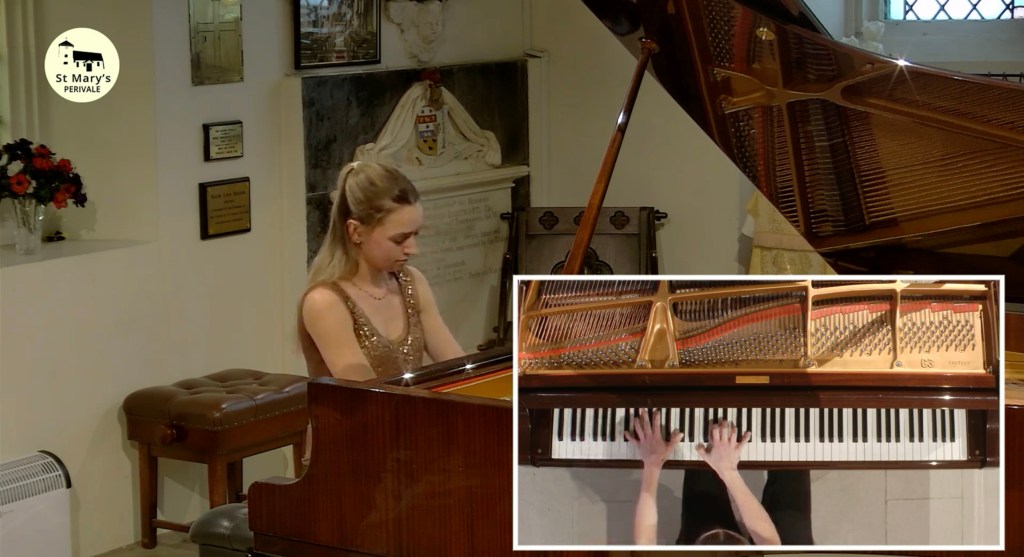
Prefacing three nocturnes for Chopin with one of Debussy’s Études, that were written late in life after he had been editing the works of Chopin to whom they are dedicated. They are considered to be late masterpieces and his finest most original works for piano. Debussy like Chopin hides the quite considerable technical difficulties as he creates a magic world of subtle sounds of great poetic significance just as Chopin had done with his second set of studies written a century earlier. Rose had chosen two, playing ‘pour les Agréments’ which prefaced a group of three ‘Nocturnes’ for Chopin by Katie Jenkins,Nicole DiPaolo and Zoe Rahman. She played ‘pour les Notes répétées’ as an encore after playing another great work of Chopin ,the Ballade in G minor op 23.
Screenshot
This first étude, the longest, was the last to be completed and is also the most elaborate; originally placed at the end of the set, Debussy said: “itborrows the form ofbarcarolle on asomewhat Italian sea”. Debussy was also a sensitive pianist, enriching the tradition of Chopin and advancing the integral soul of the sustaining pedal; he apparently played with penetrating softness and a flexible, caressing depth of touch, creating extraordinary expressive power. Rose brought just such sensitivity to this étude that she played with mysterious sounds of subtle glistening beauty, a mastery of the pedal that could create a ravishing atmosphere without ever loosing the clarity despite the most intricate stream of notes. A technical mastery that could allow her to play with scrupulous attention to the minute details that litter the score in which Debussy incorporates fantasy with transcendental difficulties, creating a sound world of extraordinary poetic imagination. The ‘Notes répétées’ that she played as an encore immediately follows this étude in Debussy’s own set of twelve Études following in the footsteps of Chopin. This is a capricious play with repeated notes that requires great agility, as Debussy creates a perpetuum mobile of knotty repetitions of every conceivable combination. Rose played with crystalline clarity with very little pedal, where her extraordinary sensitive dexterity could bring this work to life with impish delight. Even the tongue in cheek ending was with the final three chords of dry sarcastic humour that Rose played with playful glee. Debussy obviously had a great sense of humour despite the enormous difficulties he encountered throughout his life, and he had added at the top of the score a witty introduction to his fingering-free etudes: “Absence of fingering is an excellentexercise, negating musicians’perverse desire to completelydismiss the composer’s (and editor’s),and thereby vindicating words ofeternal wisdom: ‘If you wantsomething done well, do it yourself’.Let us devise our own fingering!”
Debussy and Chopin were combined with Nocturnes commissioned in 2022 for new piano works by women composers inspired by Chopin’s Nocturnes .Each nocturne speaks with its own authentic voice as it stirs emotions and reveals the composers own cultural influence. The first ‘Cerddorieth i Bronwyn’ was by Katie Jenkins and was a work of whispered beauty that Rose played with subtle colour, creating a magical world of suggestive sounds.The second by Nicole DiPaolo was a beautiful bel canto with a flowing bass on which was etched a melody of chiselled beauty that Rose played with a poetic weight of beguiling sensitivity. The final Nocturne by Zoe Rahman was an elusive mazurka of great chromaticism and sombre beauty in which a subtle jazz influence pervaded as it reached for the sky with whispered beauty.
Rose restored Chopin’s First Ballade to its rightful place as a masterpiece of poetic beauty and passionate romantic fervour. Paying scrupulous attention to Chopin’s indications she managed to recreate a work, much tainted by the so called Chopin tradition, and restore it to the genius that the composer had bequeathed with his very precise indications written in the score. The opening I have rarely heard played with such simple beauty as she allowed the melodic line to flower with delicacy and poignant beauty. Cascades of notes were played with aristocratic authority where every note had a significance and meaning and was never an empty display of virtuosity. It was interesting how Rose gave such significance to the bass, especially the left hand thumb which acted as an anchor to the exhilarating outpouring of romantic effusions that poured so naturally from her well oiled fingers.The climax was played with aristocratic control and sumptuous full sounds always from the bass upwards.A coda that was shaped with controlled excitement where even the most transcendentally difficult passages were given and architectural shape and burning significance.
Rose McLachlan comes from a family of musicians and began piano lessons with her father at the age of seven. She studied at Chetham’s School of Music with Helen Krizos before entering the Royal Northern College of Music in 2020, and now continues her studies at the Guildhall School of Music and Drama with Charles Owen, Martin Roscoe and Ronan O’Hora.
Rose performs regularly as a soloist with orchestra. She made her debut aged 13 at the Edinburgh Fringe Festival and has since appeared with the BBC Concert Orchestra under Barry Wordsworth, broadcast twice on BBC Radio 3, and with the Fort Worth Symphony Orchestra as winner of the PianoTexas Festival concerto competition. Recent highlights include Saint-Saëns’ Carnival of the Animals with the Hallé at the Bridgewater Hall, and a 2024 performance of Mozart’s Triple Concerto alongside Jean-Efflam Bavouzet and Andrea Nemecz, broadcast on BBC Radio 3 and to be released on the Chandos label.
A prizewinner at numerous national and international competitions, Rose has received major awards including the Scottish International Youth Prize, the Yamaha Prize (EPTA UK), the RNCM Chopin Prize and the Musicians’ Company Silver Medal. Her recordings appear on Divine Art and Naxos, and she is supported by The Caird Trust, the Leverhulme Trust and Talent Unlimited.
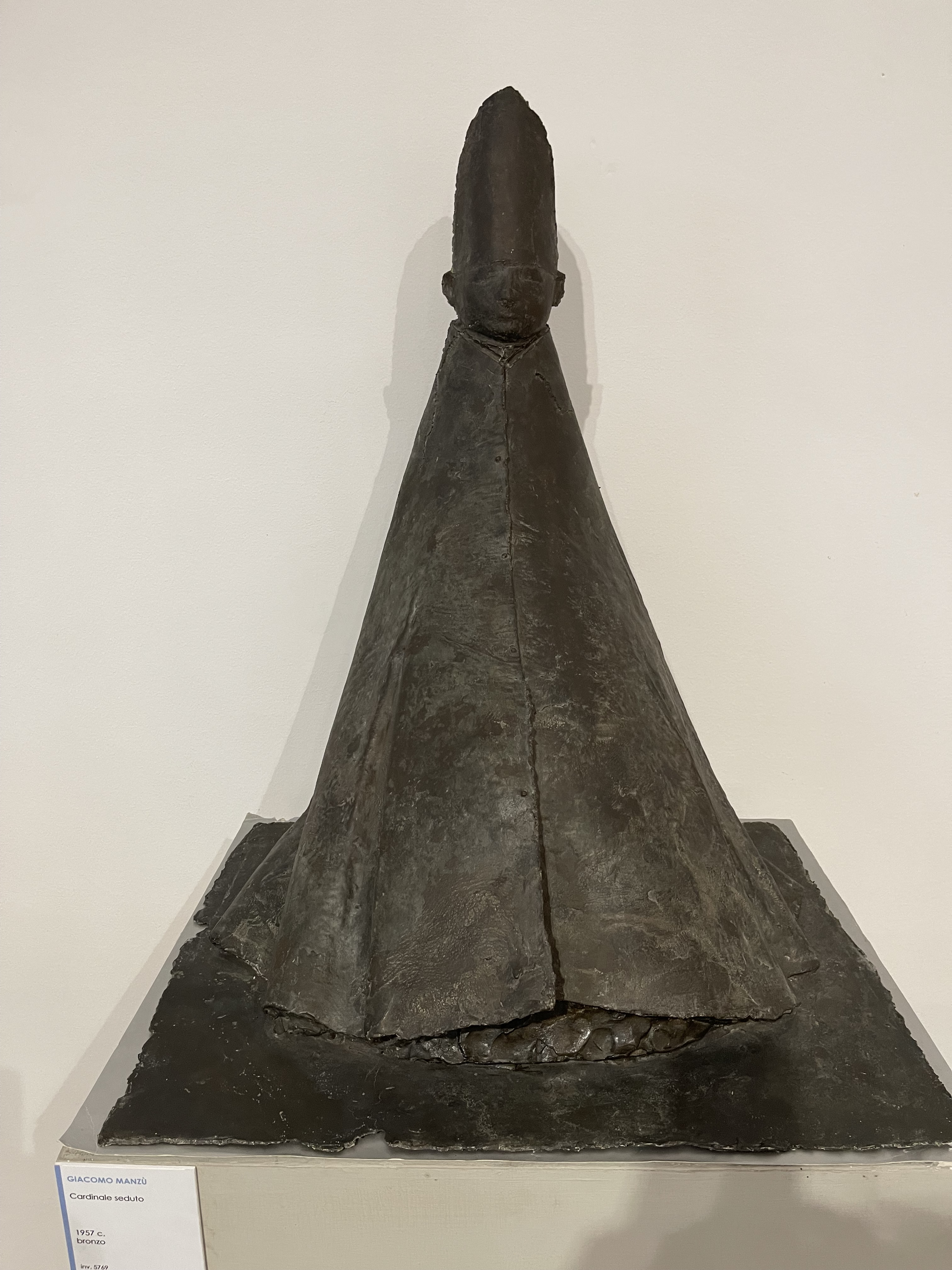
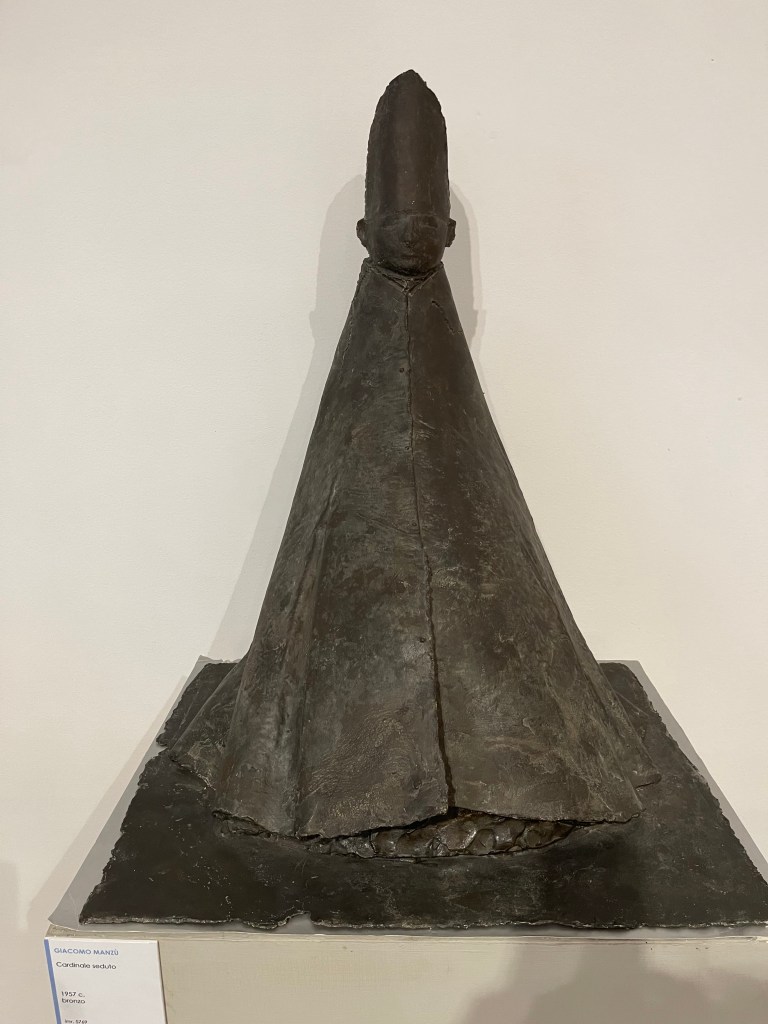
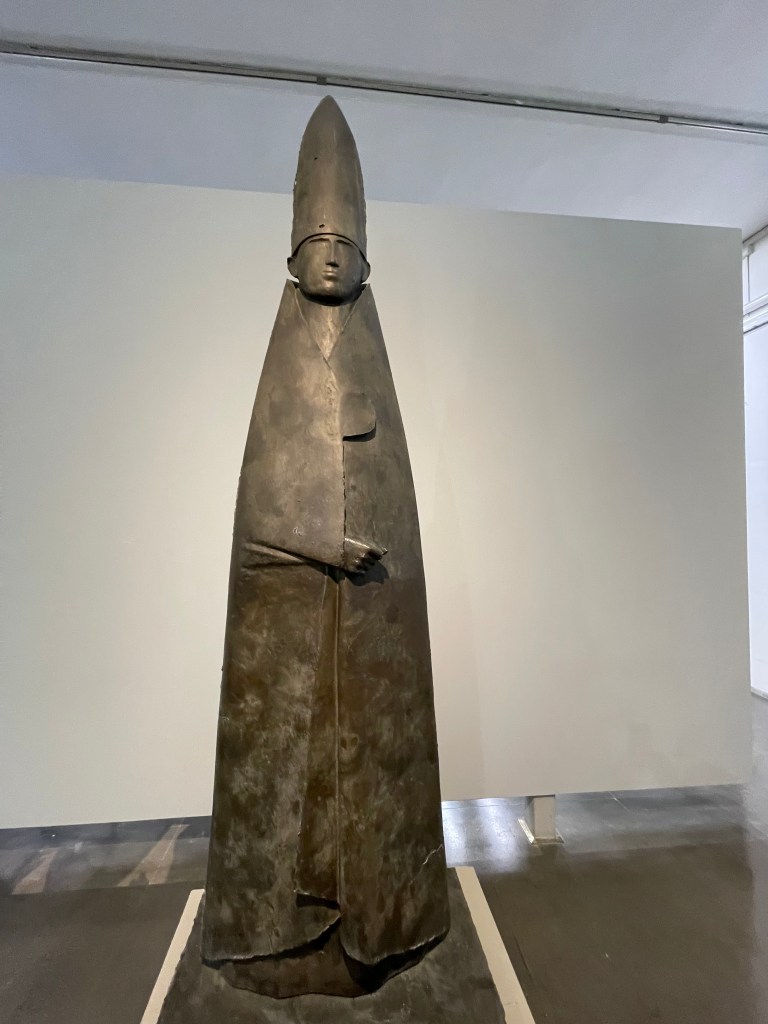
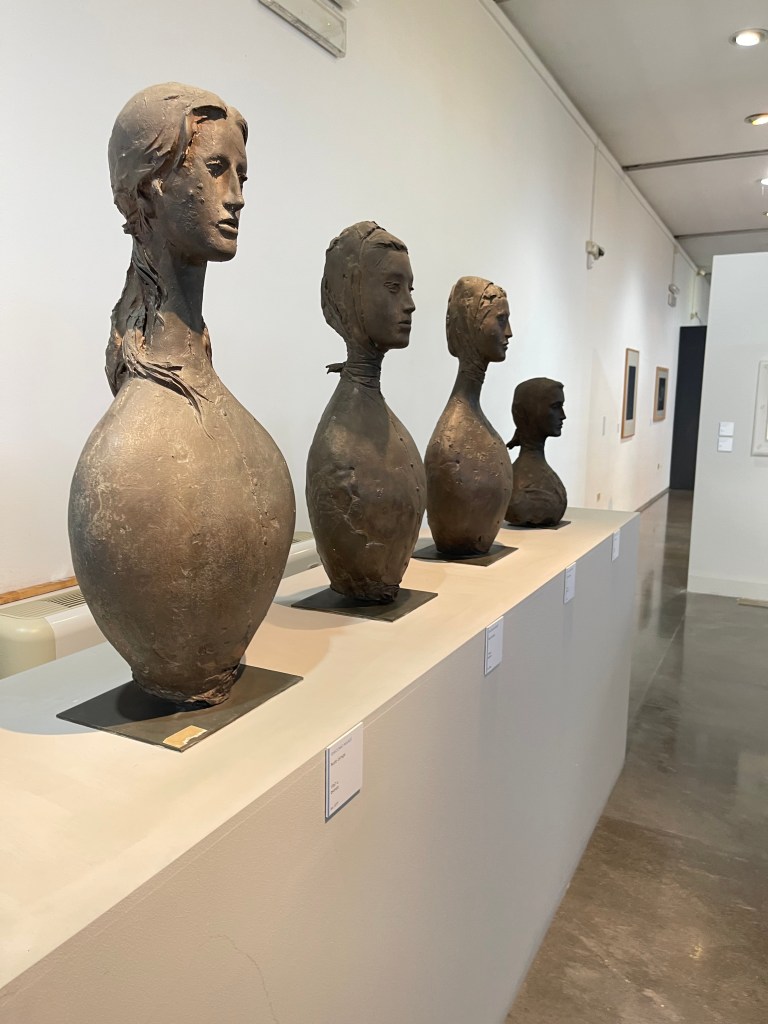
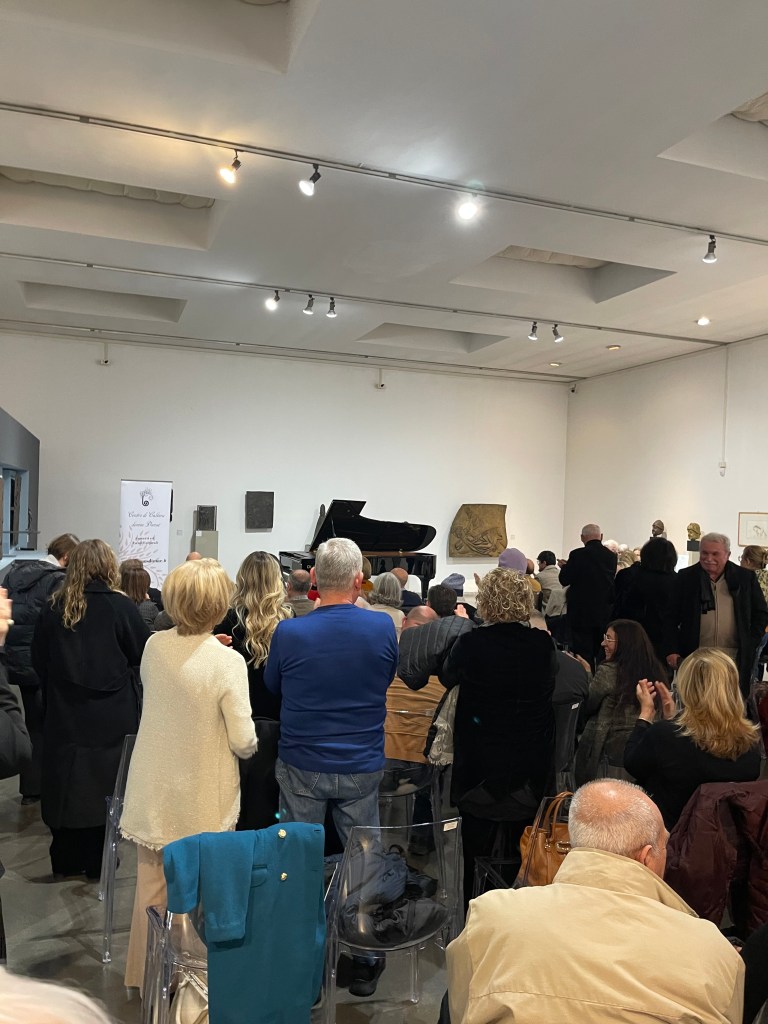
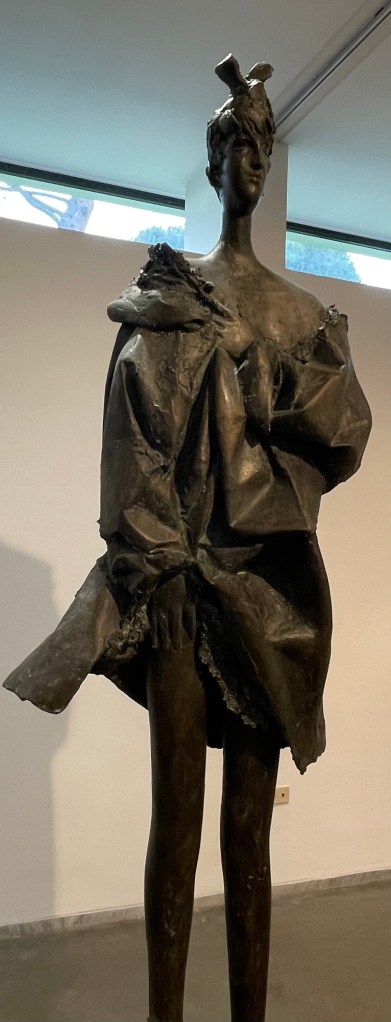
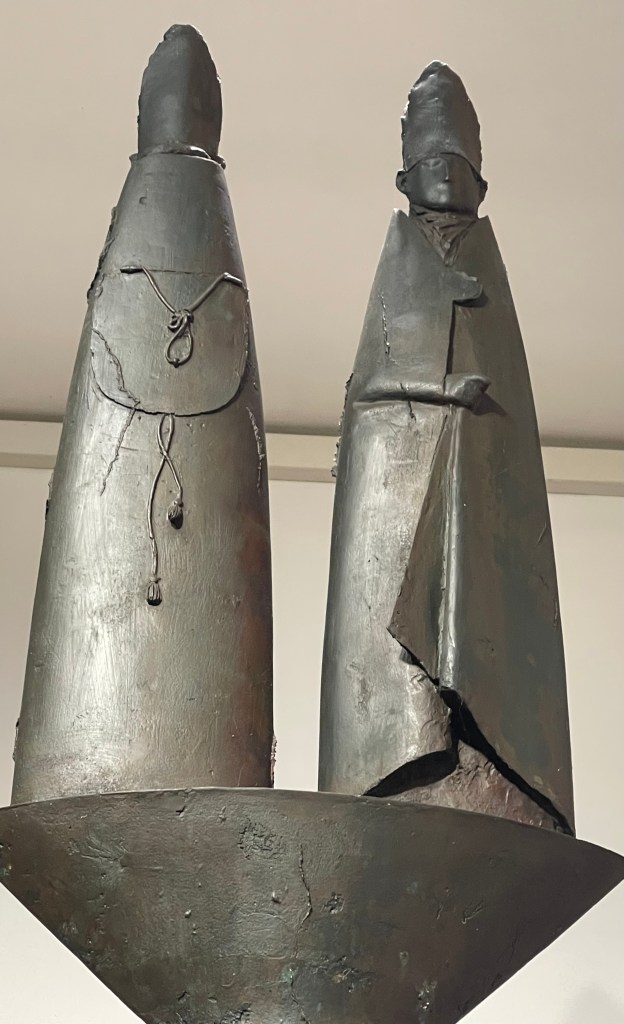
There was magic in the air as Manzù’s imposing sculptures suddenly came to life with the sound of music .
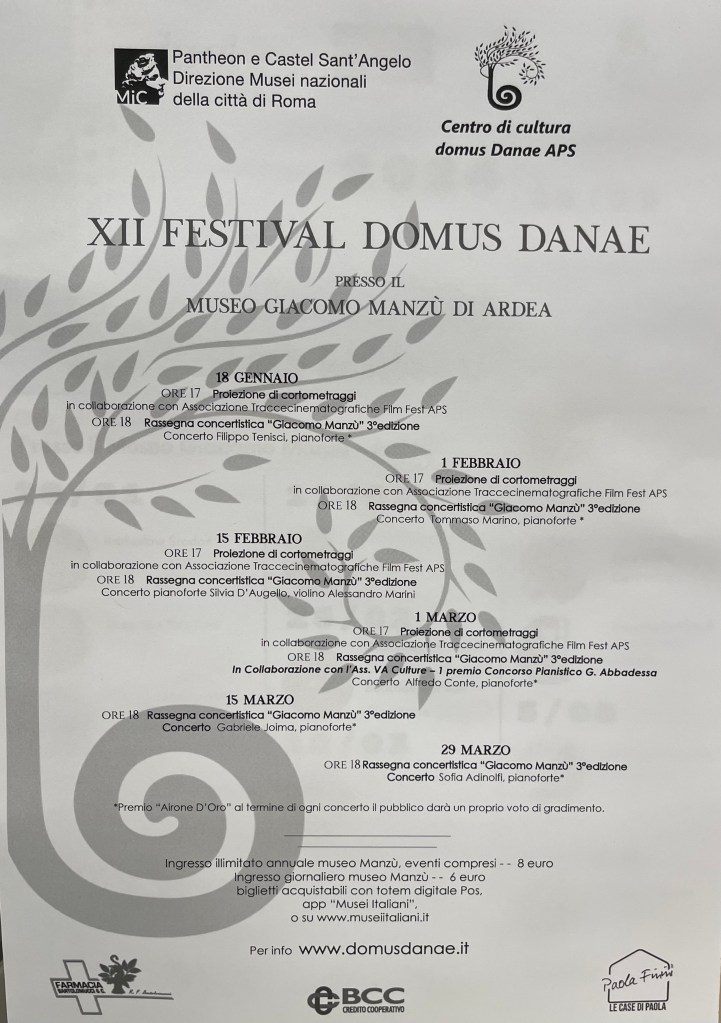
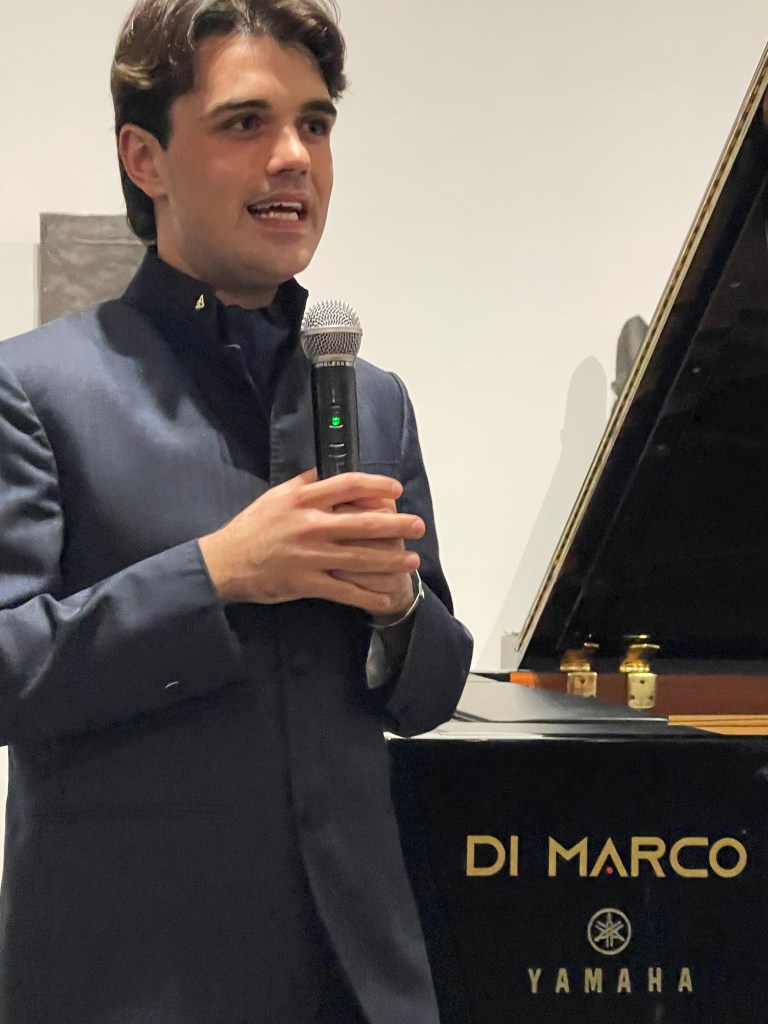
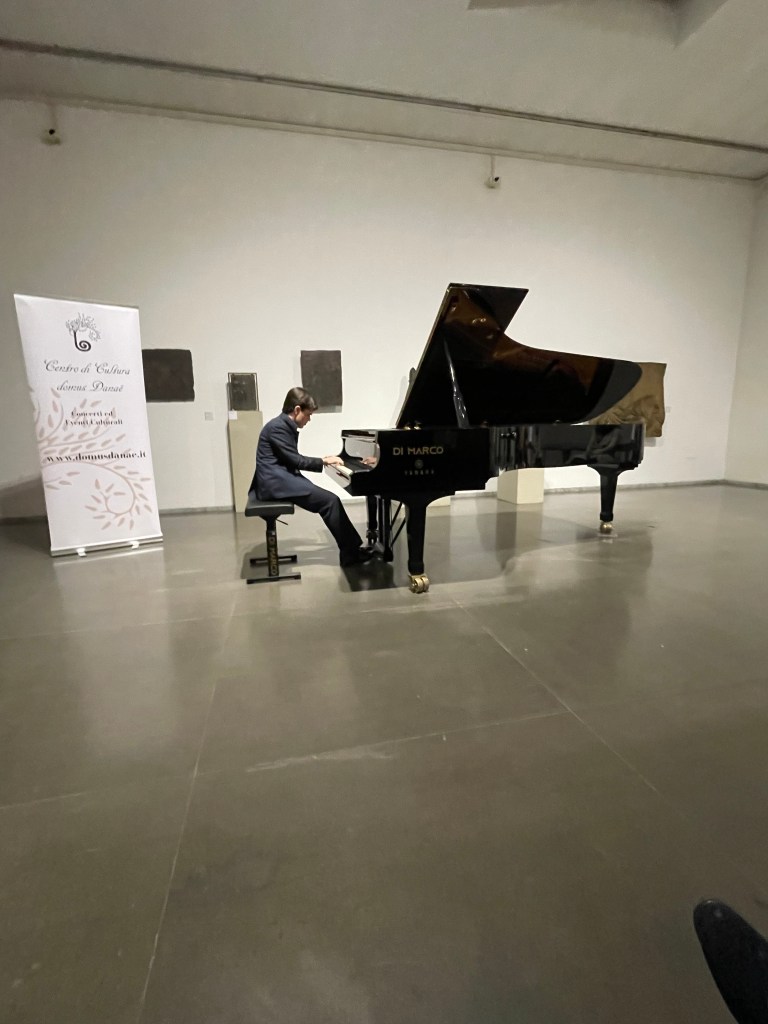
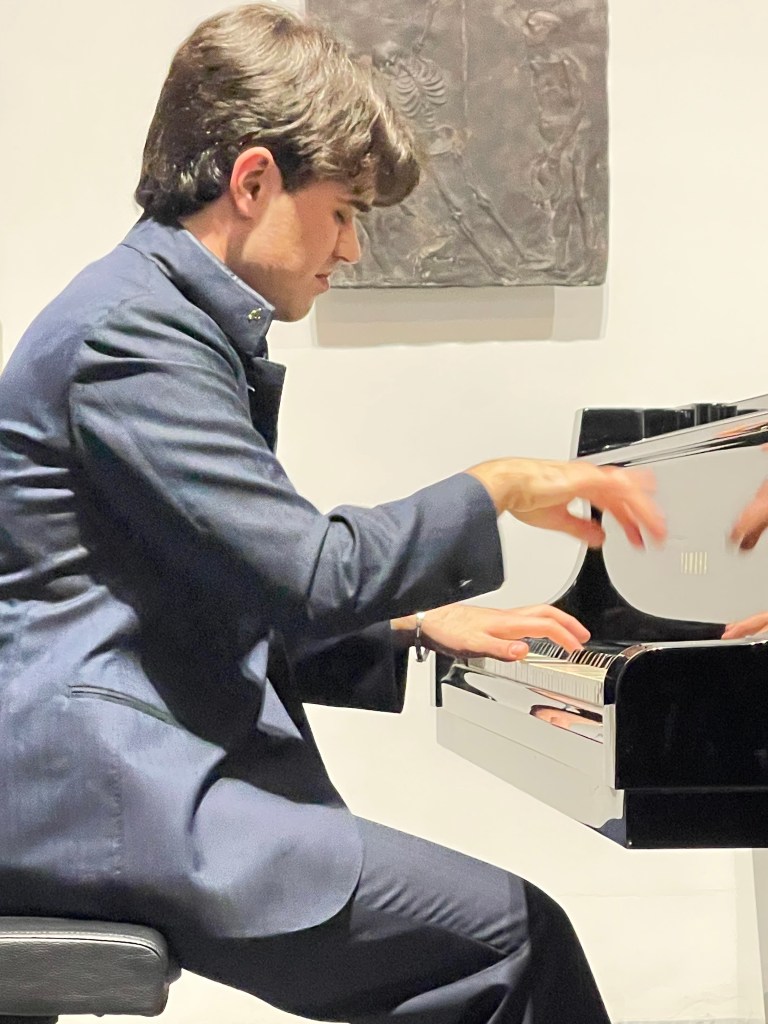
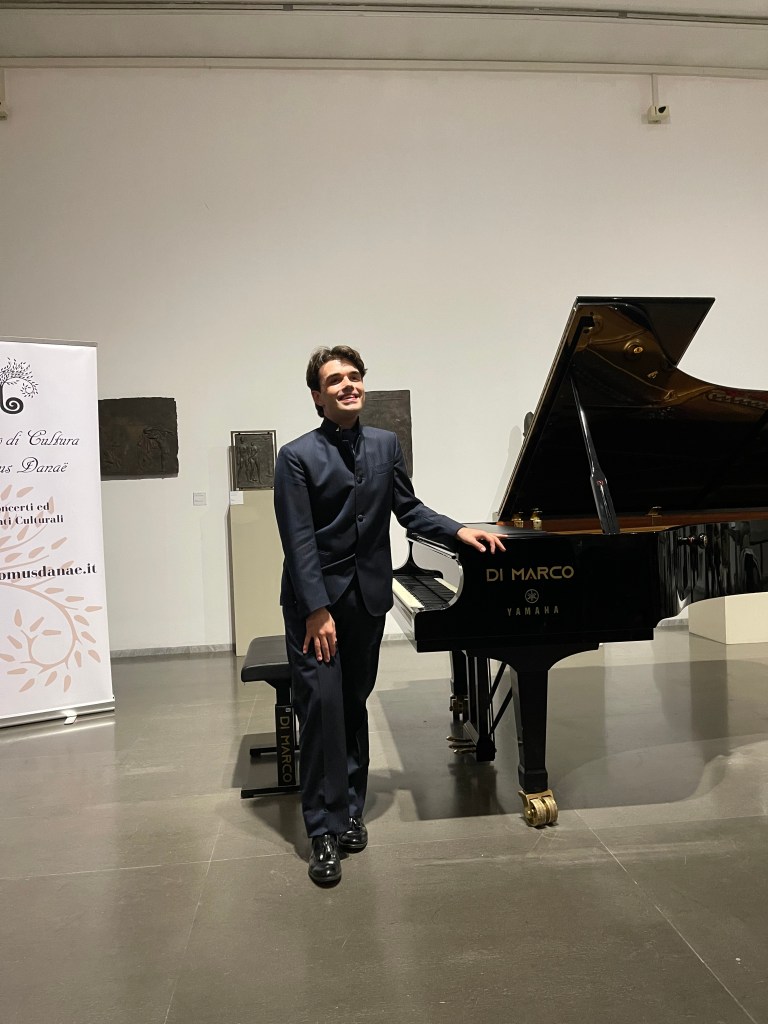
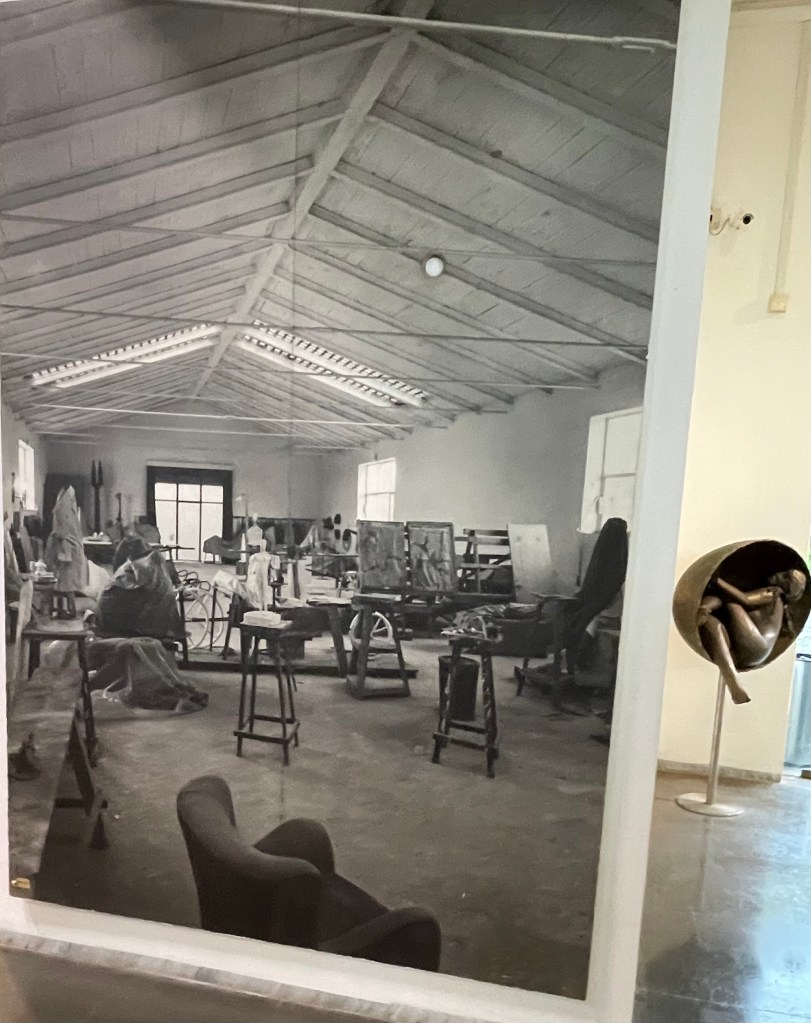
Thanks to the Domus Danae festival, Alfredo Conte, an aspiring young multi celebrated pianist, could fill this ex studio of Manzù with works by Bach, Schumann, Scriabin and Rota.
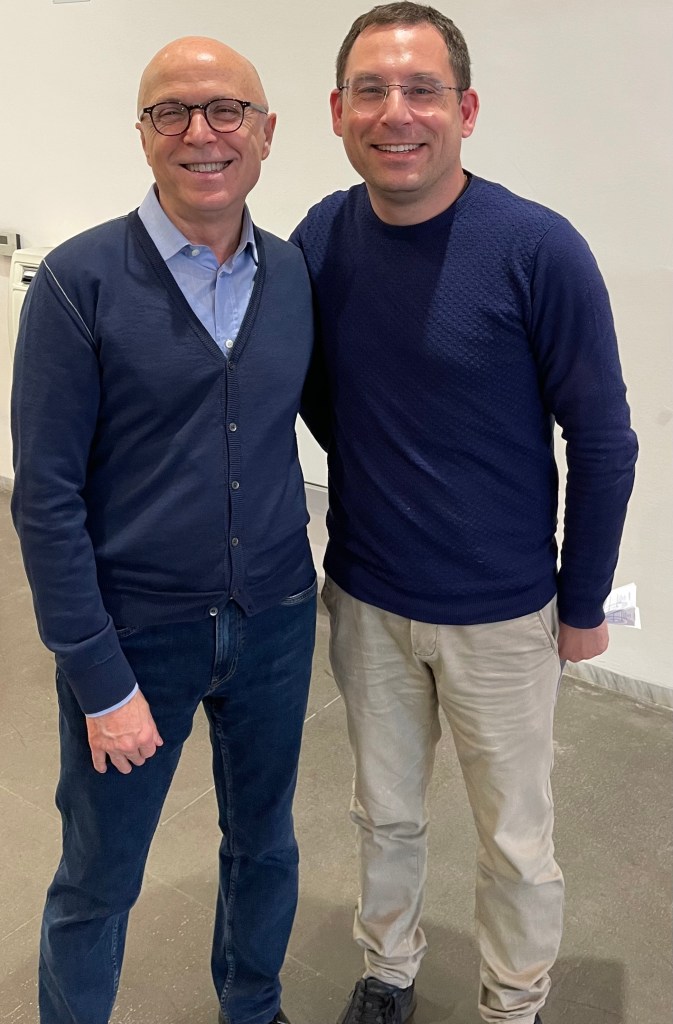
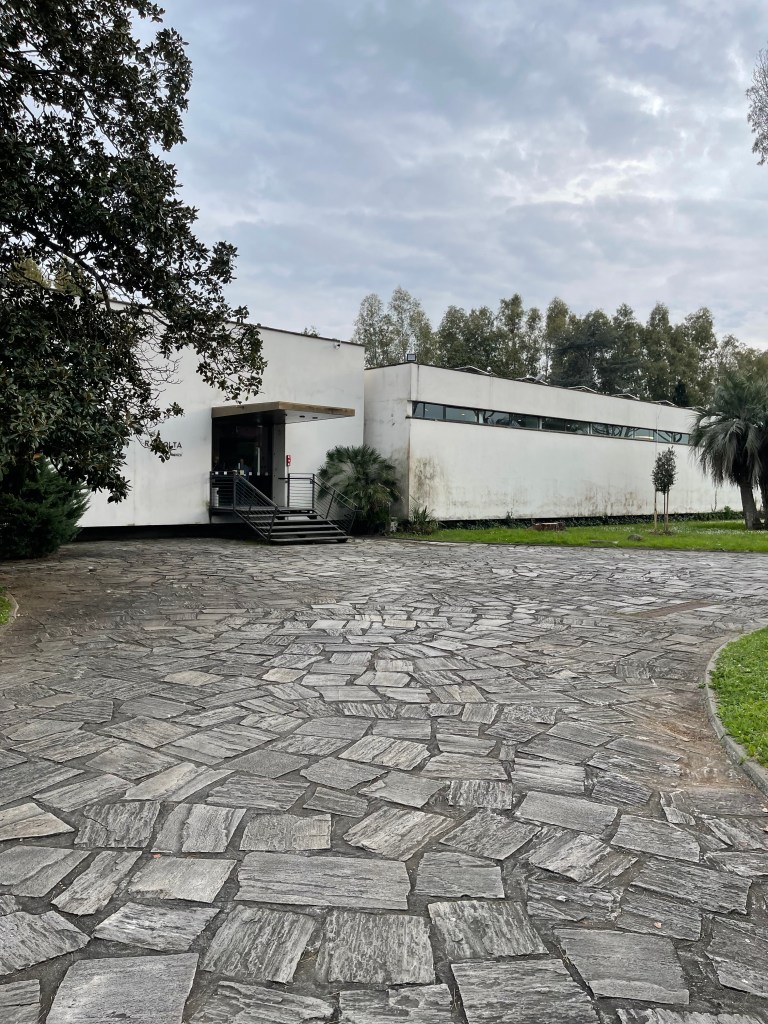
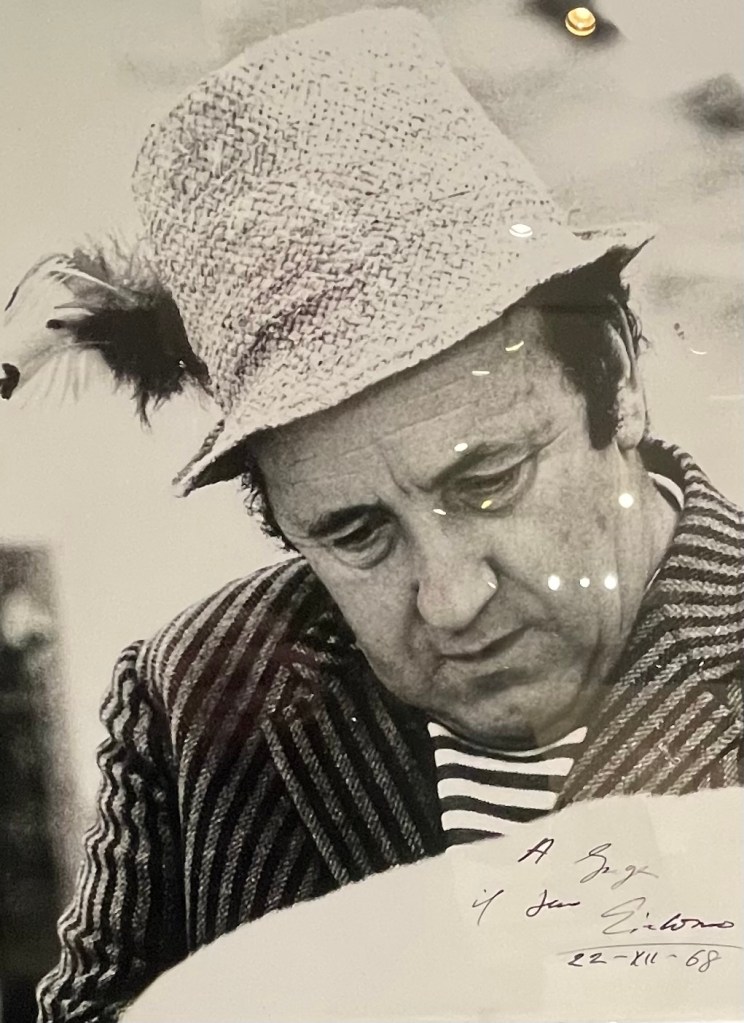
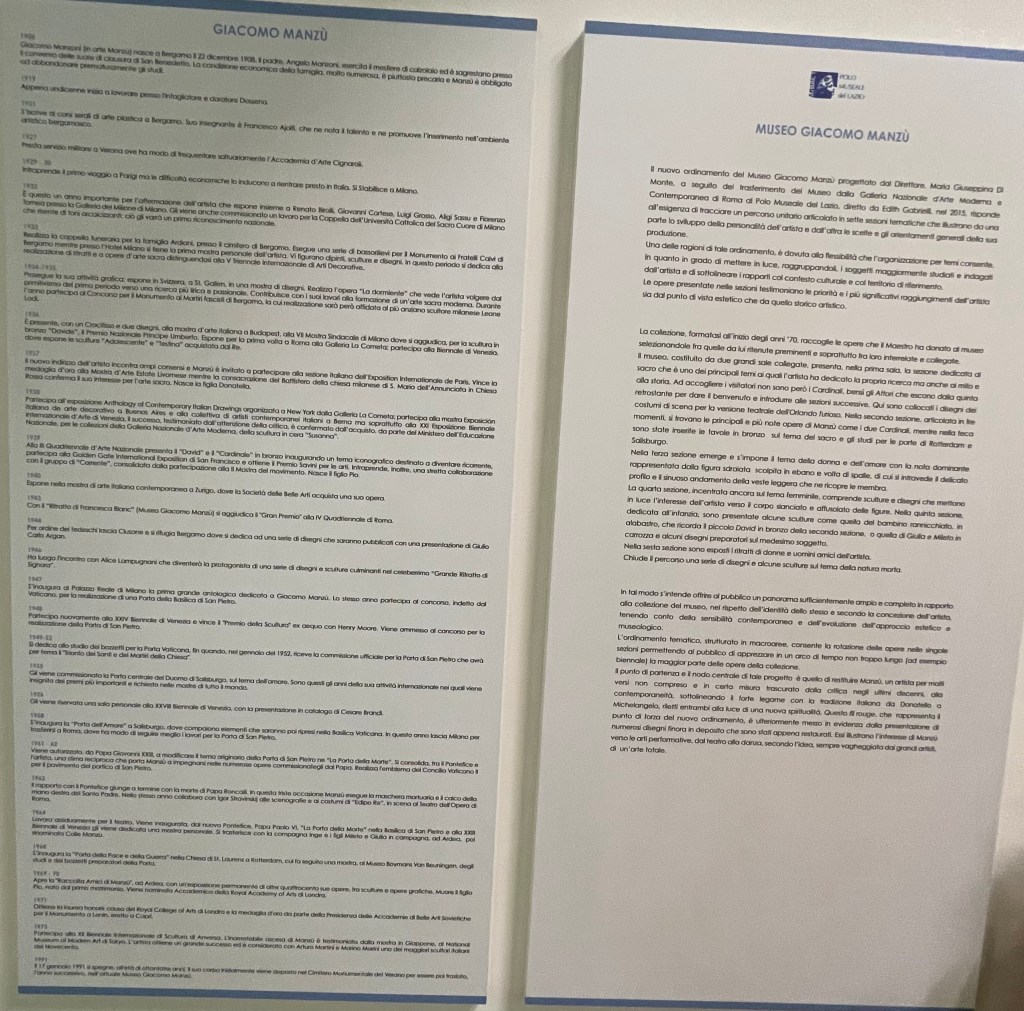
composer Fausto Sebastiani with artistic director of Domus Danae, Dario Volante The Studio of Giacomo Manzù that is now a Museum and Mausoleum
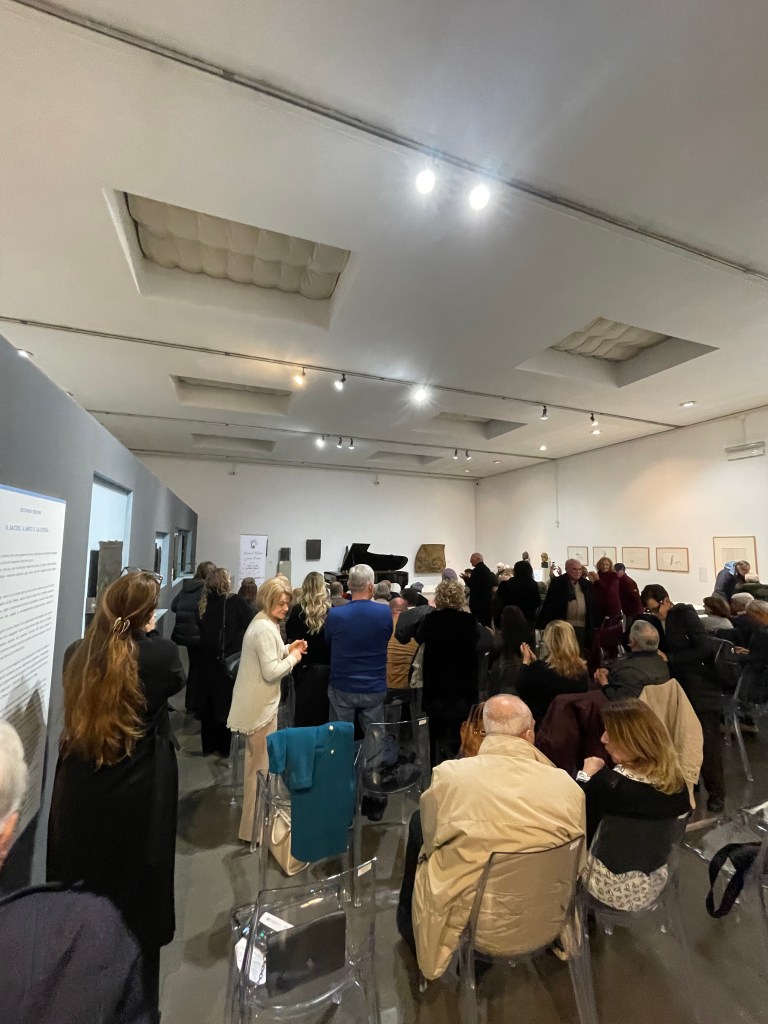
Beginning and ending with a fantasy as the world of Manzù, now transformed into a museum, was filled with noble sounds that much suited the genial sculptures that fill this vast space in Ardea, just thirty kilometres south of the eternal city .
His final recital in her absence is being mentored by Prof. Pesce, who was present today to hear their young prodigy give his first performance of Scriabin’s Fantasy Sonata. A performance full of ‘viola’ coloured sounds, which was the colour that the composer had chosen for G sharp minor from his palette of colours that each key inspired in his own fantasmagorical sound world .
Prof Pesce with Alfredo and his father (left) with his sisterAlfredo with his mother
A work much inspired by the music of Chopin whose 216th birthday it would have been today.
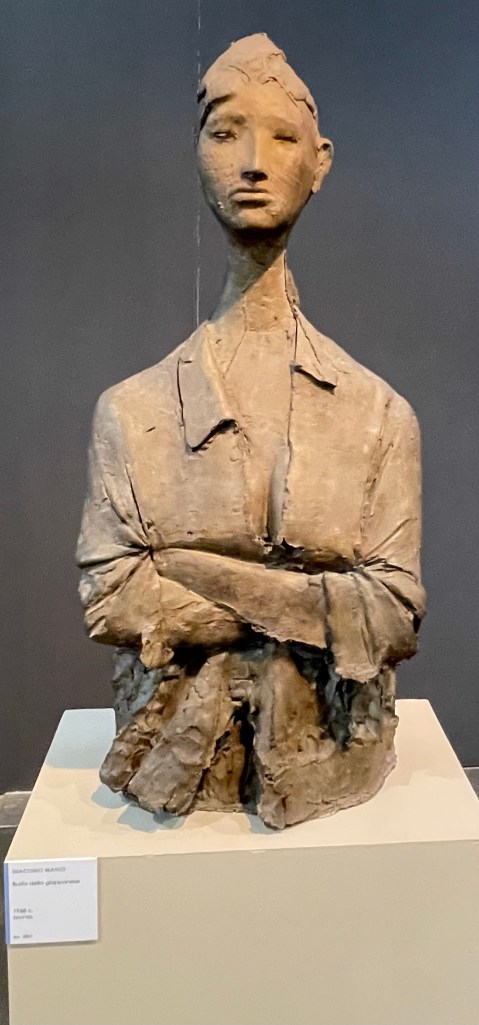
A programme that had begun with the Chromatic Fantasy and Fugue by Bach, that Alfredo played with the improvised Fantasy realised by Busoni. Alfredo played with aristocratic authority, as like the statues that surrounded us, there was an inner strength to the disarming simplicity of the architectural line. This was Busoni not the composer of transcriptions of the great organ works or the Chaconne for solo violin for which Bach/Busoni signifies almost shared responsibility. This was Busoni who with great respect for the genius of Bach could realise the improvised chordal progressions that Bach would have expected from the kappellmeisters of his day. An elaboration that Guido Agosti, whose total respect for the composers wishes was much respected and revered, also admired this edition as being a faithful realisation of Bach’s figured bass. Alfredo played it with fluidity and clarity as the shifting harmonies were interrupted by imposing recitativi before the simple lone voice of the Fugue emerged. Bach’s knotty twine was allowed to unwind with a dynamic drive as the voices entered one by one leading to the final imposing climax and simple majestic ending.
The eighteen scenes that make up Schumann’s ‘Davidsbündlertänze’ were played with great strength, as Alfredo showed us the architectural line of this early pre-nuptual work op 6 .It was to lead to a continuous outpouring of masterpieces as Schumann found the marital bliss with Clara Wieck that had been denied them by her father, who did not want his child prodigy daughter to be distracted. She bore her husband,Robert, eight children but also became the first woman virtuoso of her age. Her husband who was also a pupil of her father, Friedrich Wieck, had to abandon a performing career having damaged his fingers trying to strengthen them with a mechanical aid! They were a formidable team until Robert’s duel artistic personality of Florestan and Eusebius was to lead to an asylum and death at only 46 , having tried to commit suicide by throwing himself into the Rhine . Alfredo played this difficult work with great understanding and considerable technical mastery but more of Florestan than Eusebius. A more horizontal approach would have allowed the slower episodes to be inbued with more fluidity and natural freedom. However his architectural understanding of a work made up of eighteen fragments showed his intelligence and musicianship as he managed to unite them into one unified whole, from the capricious, fleetingly elusive opening, to the striking of midnight as the final dance turns into a dream. The fourteenth dance is one of the most beautiful melodic outpourings that Schumann, the poet, was to write and pointed to the Lieder that he was to pen immediately after he found marital bliss. Alfredo played it with a glowing radiance and poetic understanding allowing an oasis of Eusebian beauty to beguile us in-between the impish antics and passionate outbursts of Florestan.
The Scriabin Fantasy Sonata is a new addition to Alfredo’s repertoire, and it was here that he caressed the keys and found a fluidity and kaleidoscope of colours that had eluded him in Schumann. A beautiful opening played with great sensitivity where a web of glistening sounds was born, as the melodic line was allowed to shine in its midst with radiance and glowing beauty. A dynamic drive to the second movement was played with passionate intensity as it burst into a flame of melodic outpouring of unashamed romantic ardour which Alfredo played with masterly control and exhilarating brilliance.
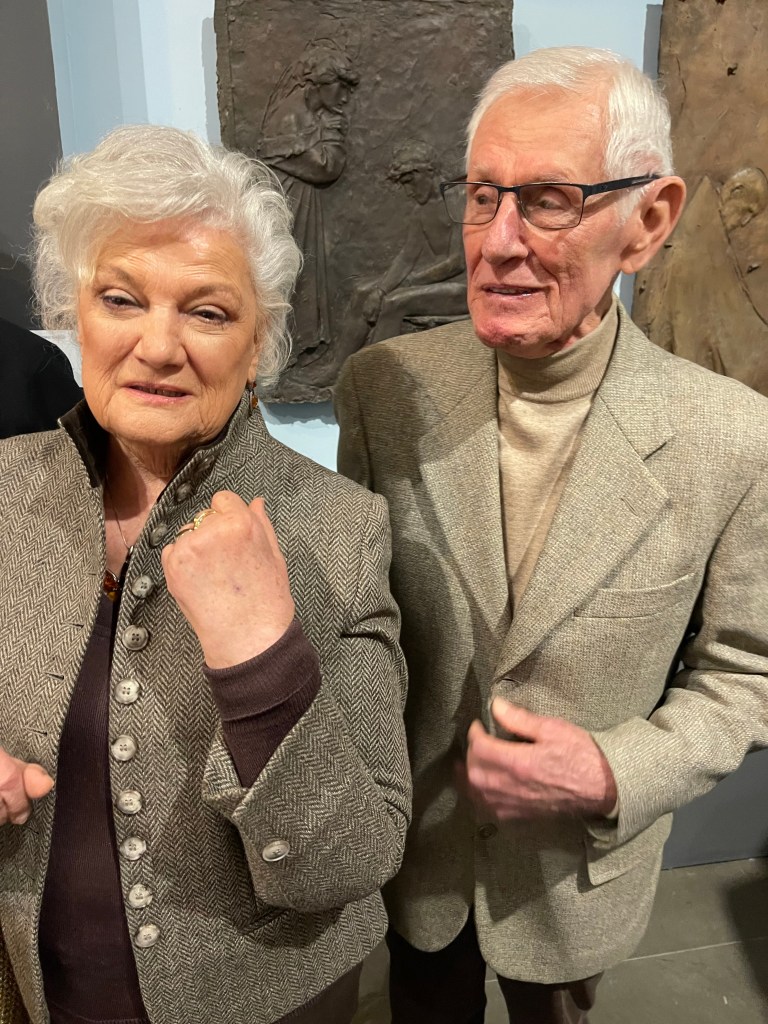
grandparents of Alfredo happy to celebrate his success
An ovation from an audience that filled every corner of this magnificent space allowed Alfredo a moment of peace and calm to share with us a final delicate Prelude by Nino Rota
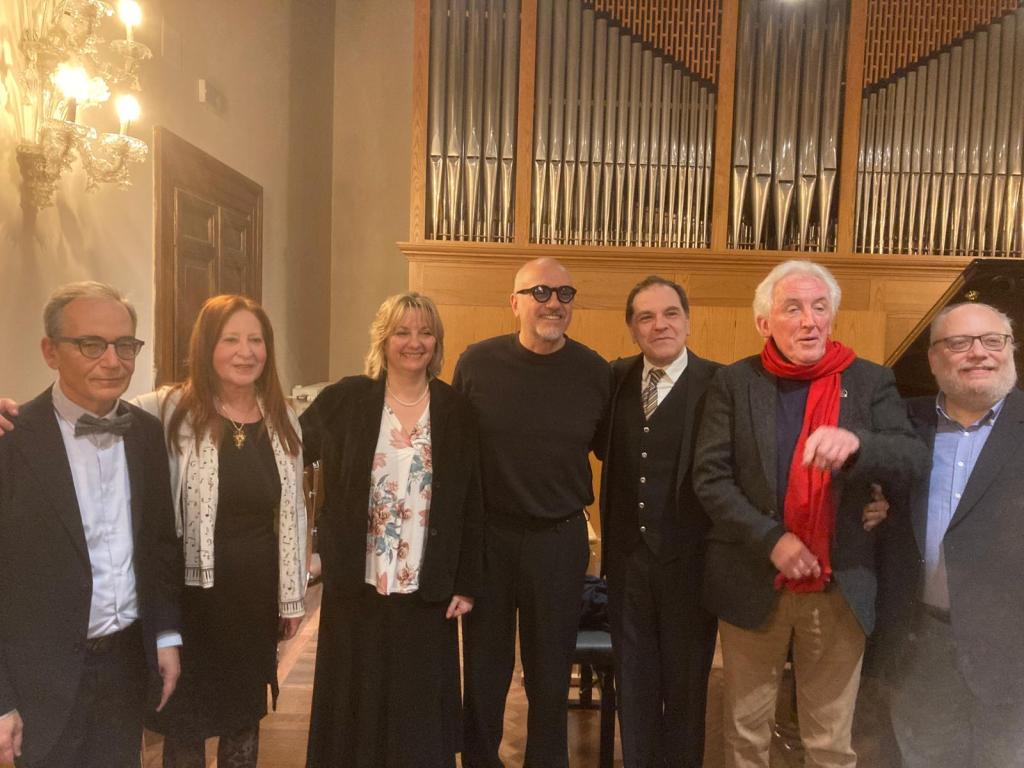
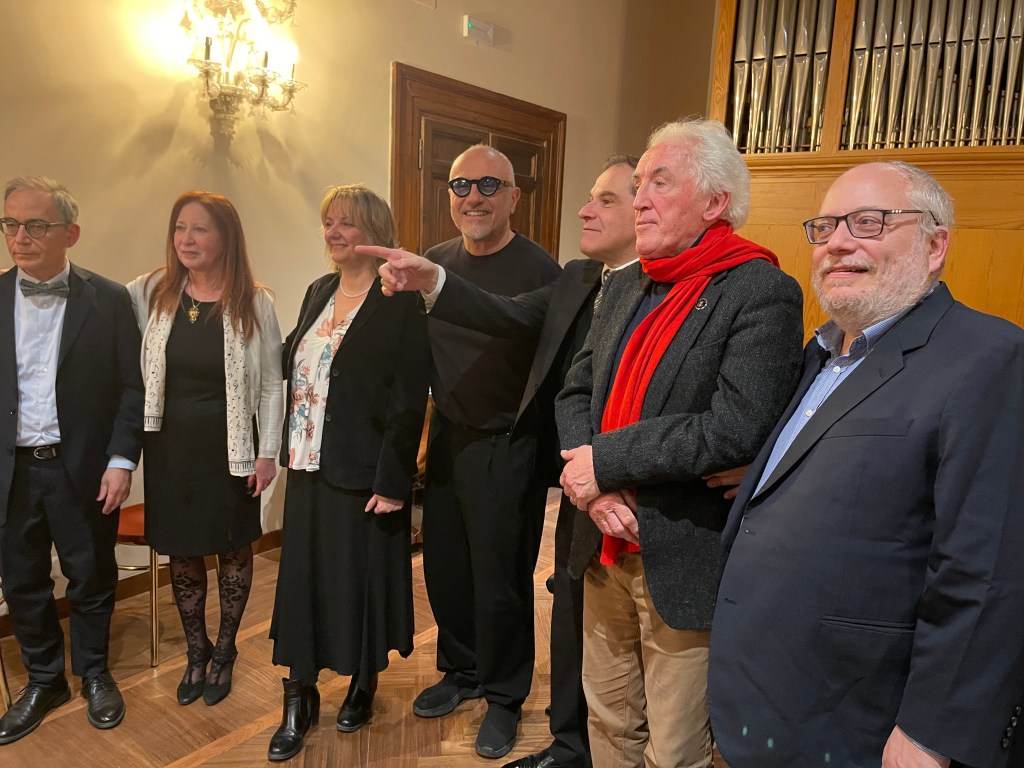
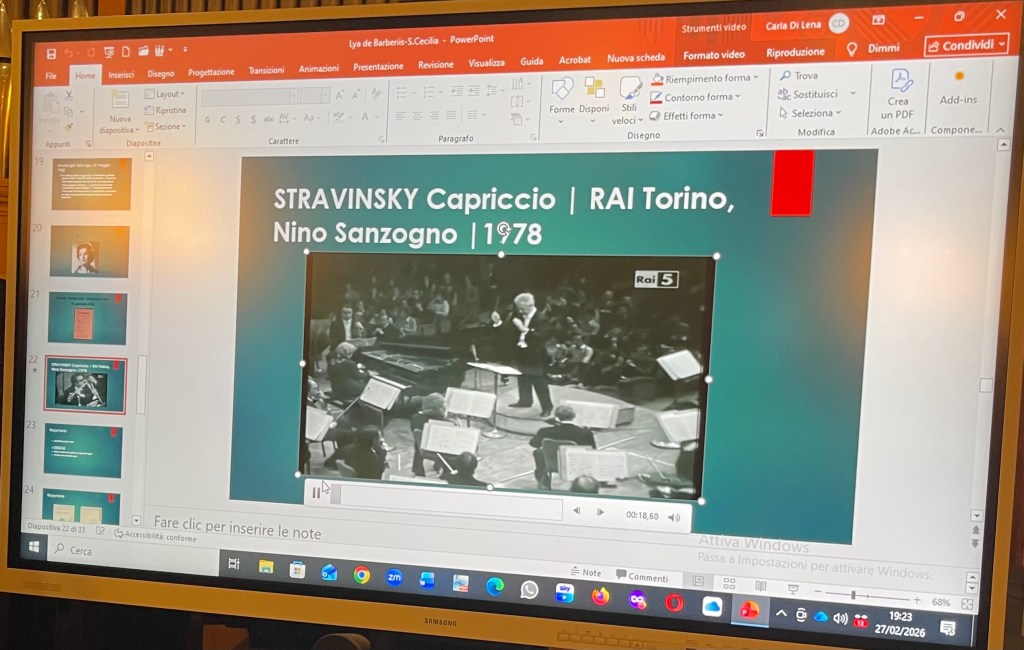
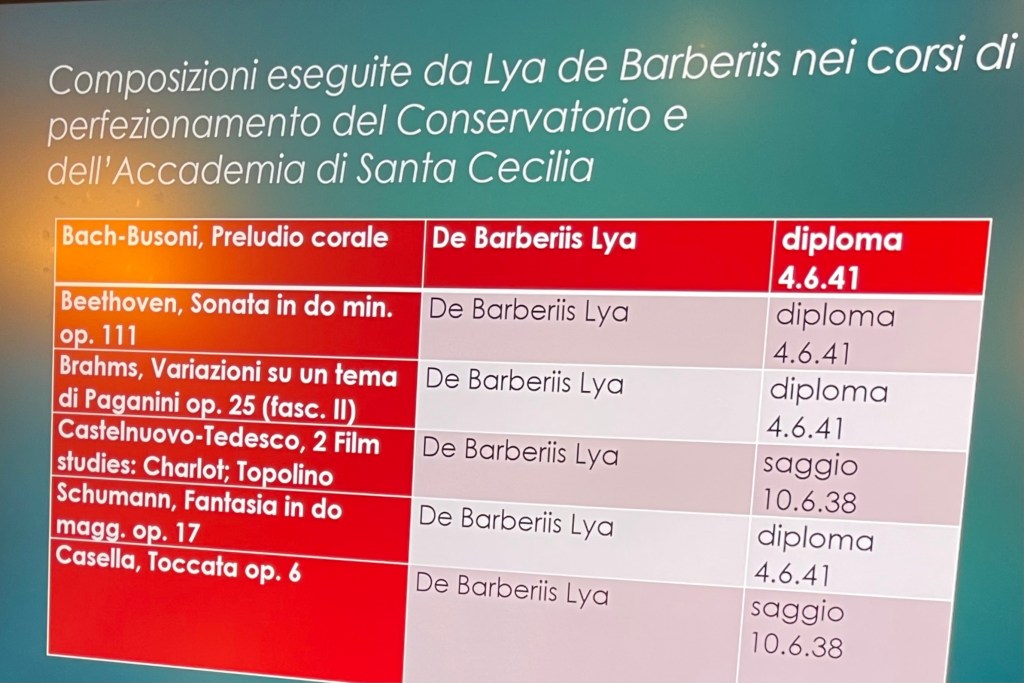
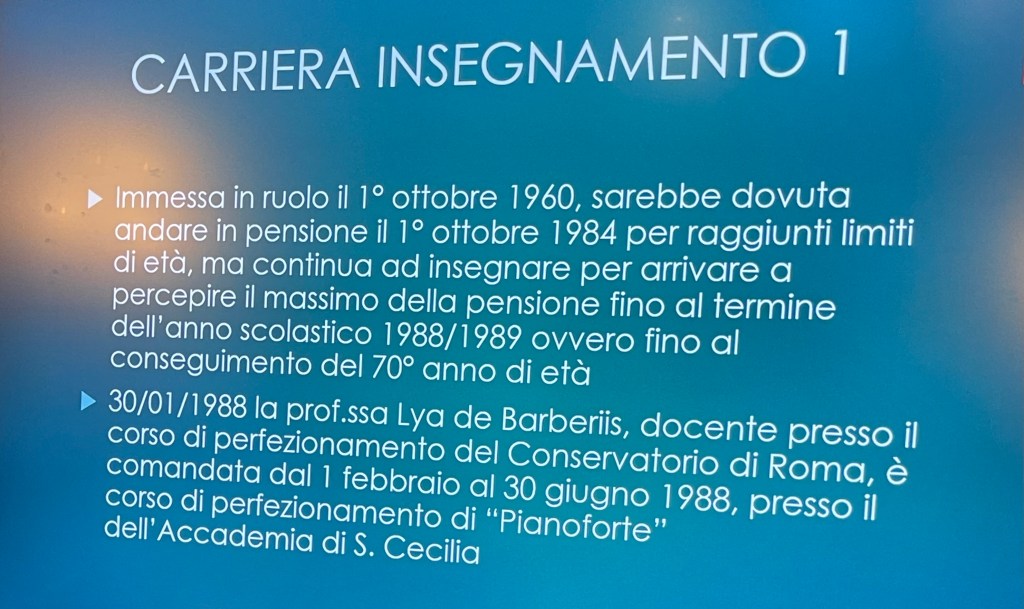
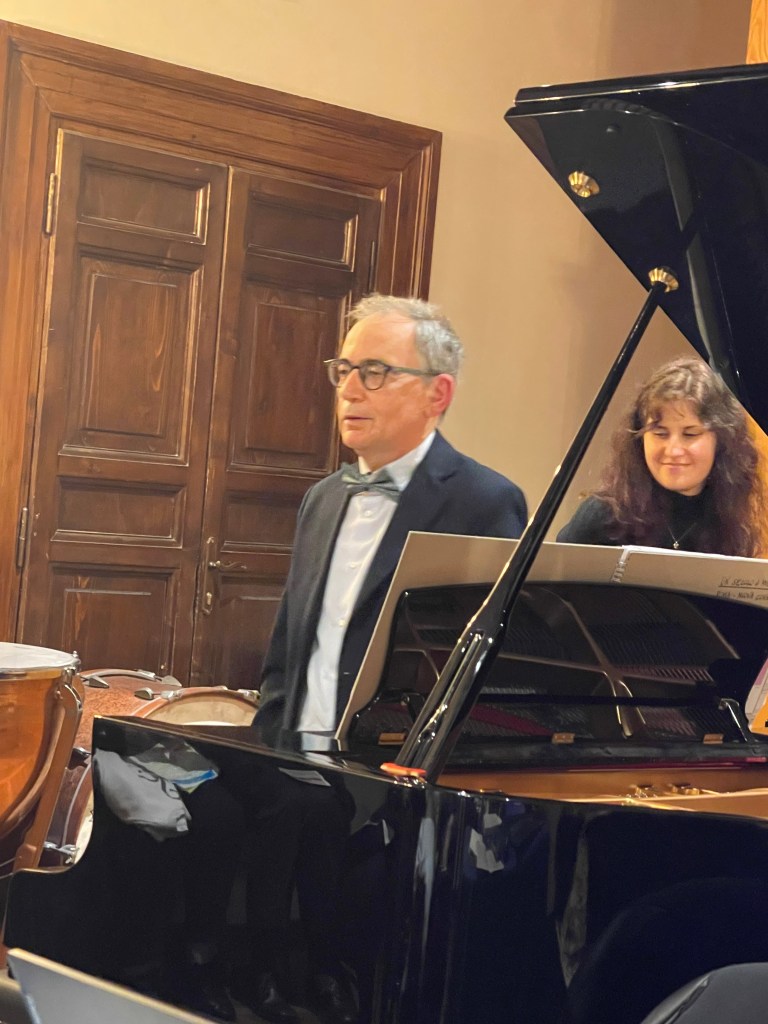
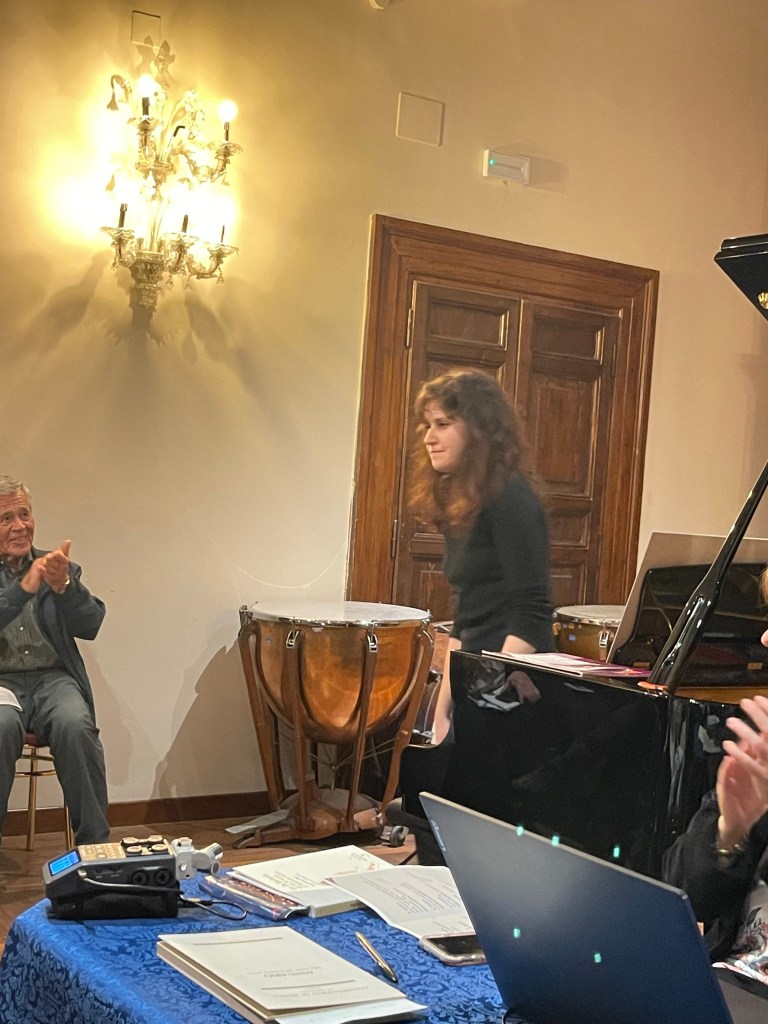
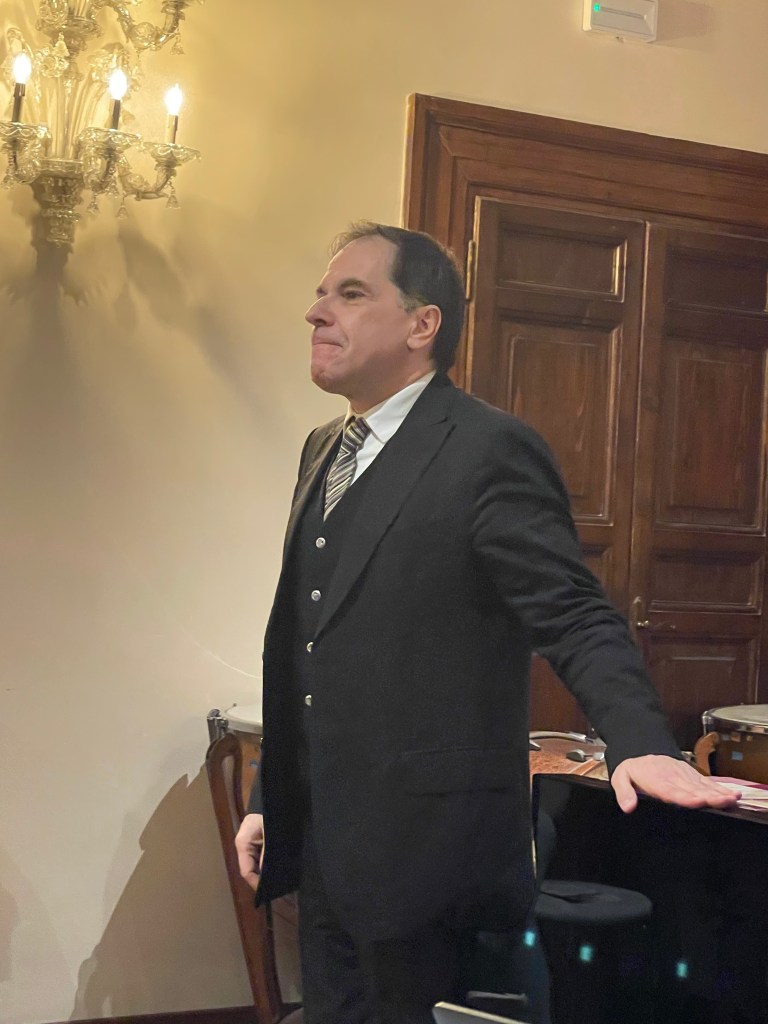
Carla Di Lena the superb presenter and researcher with some of the speakers and performers all former students of Lya De Barberiis
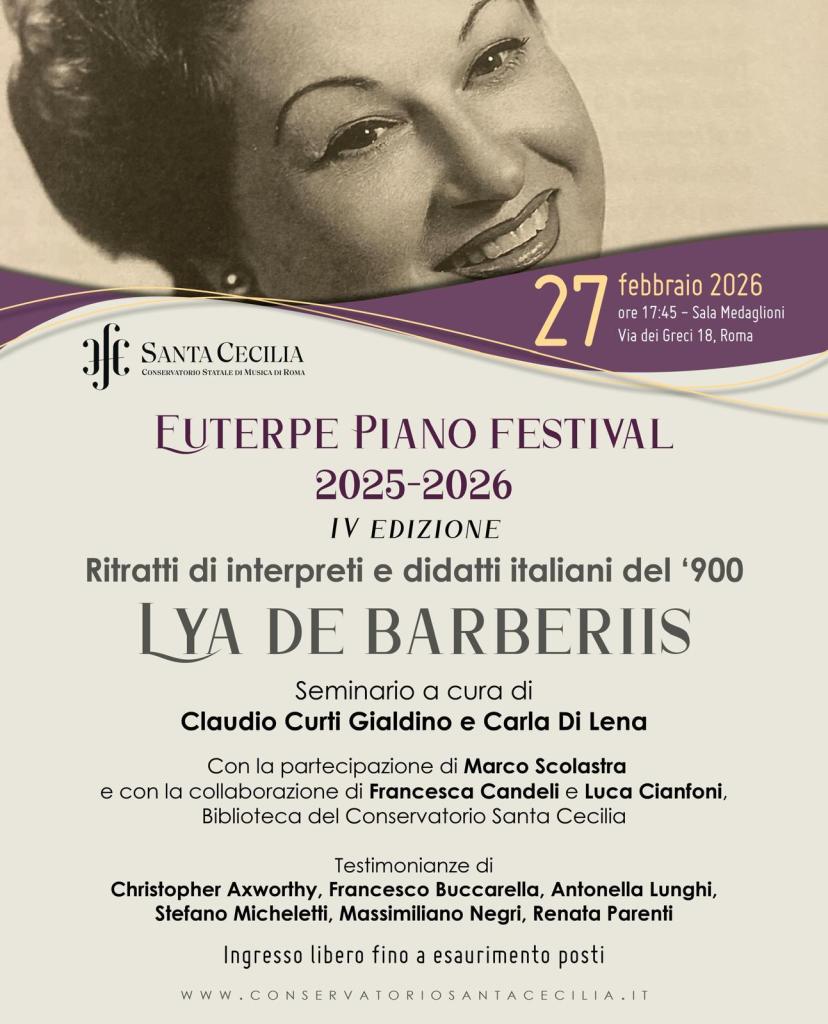
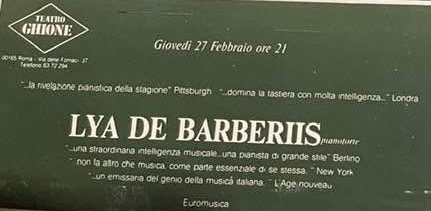
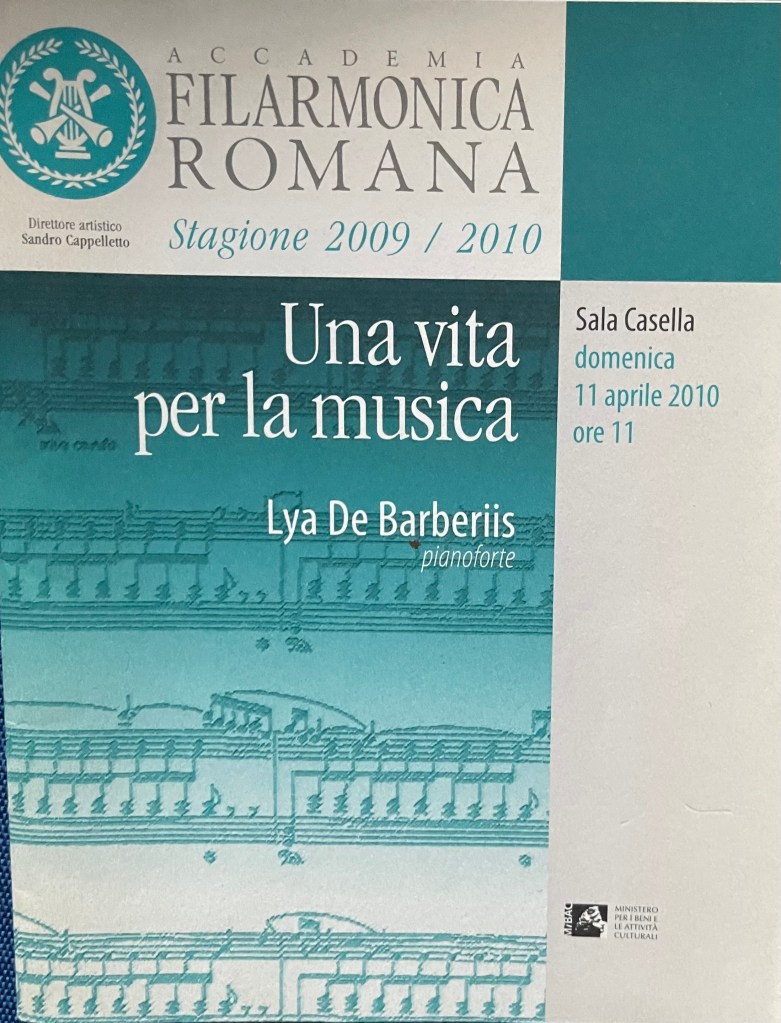
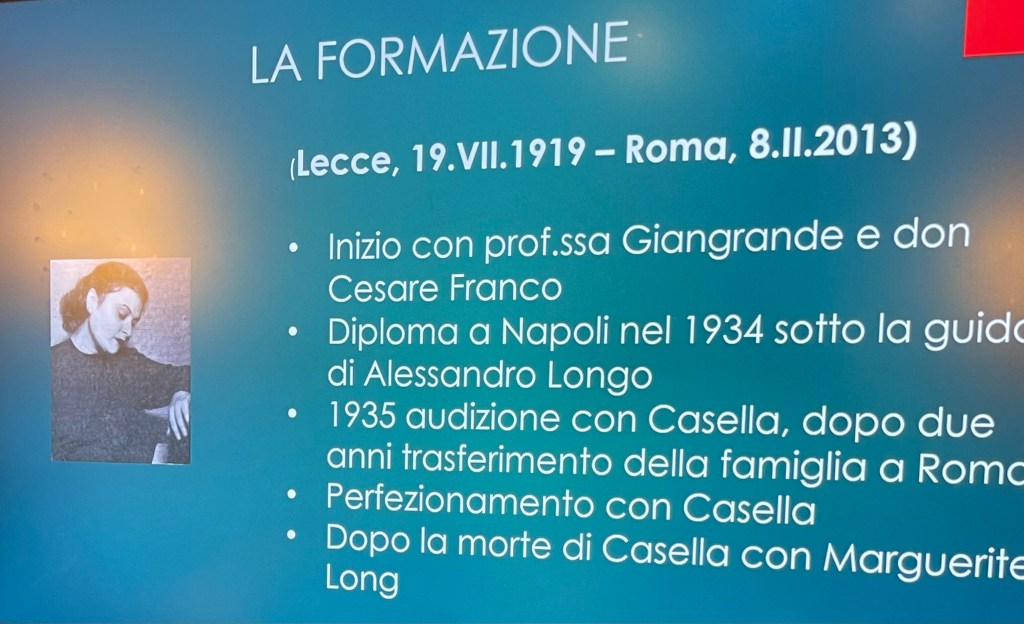
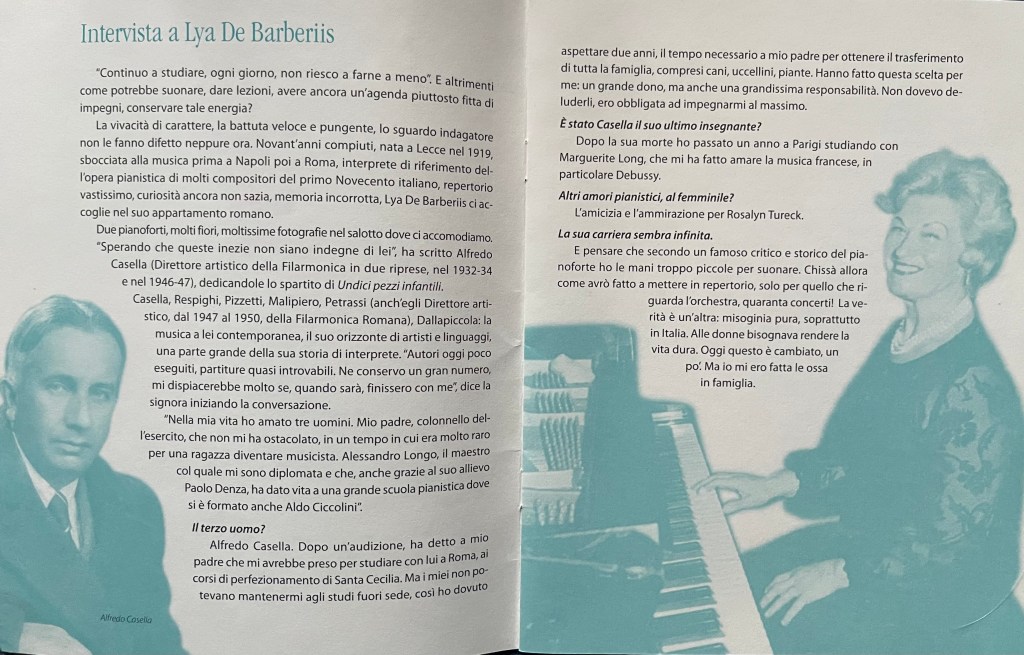
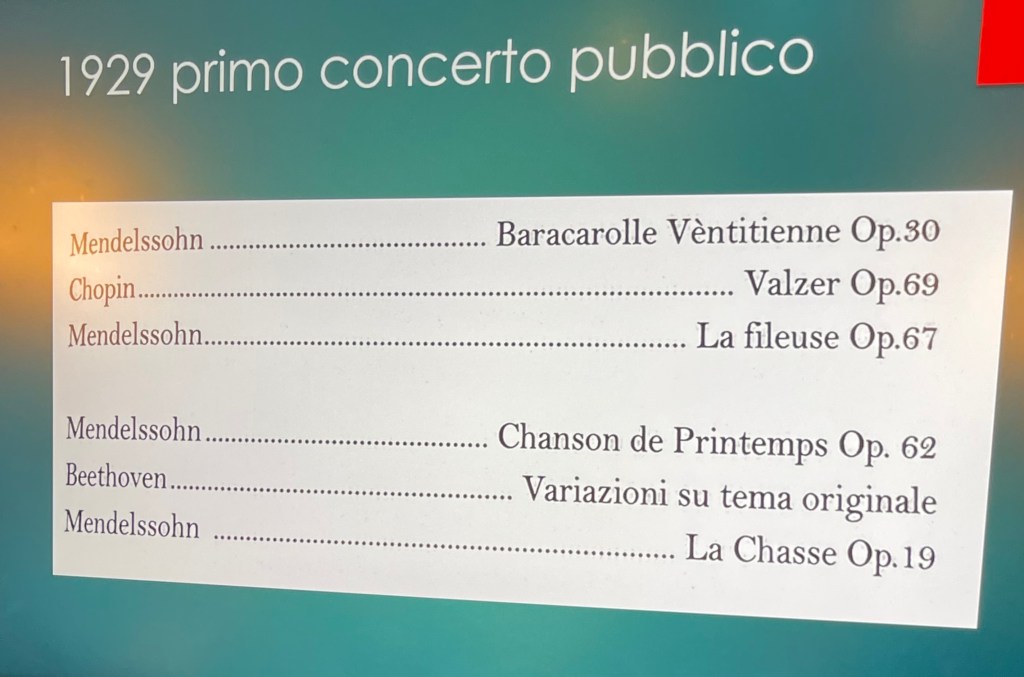
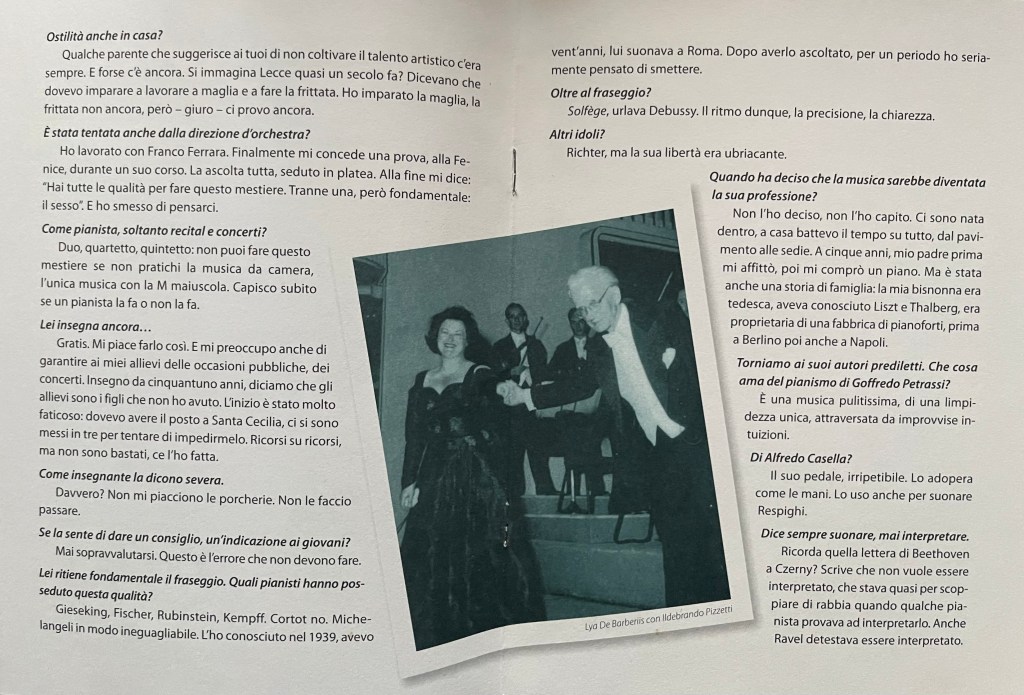
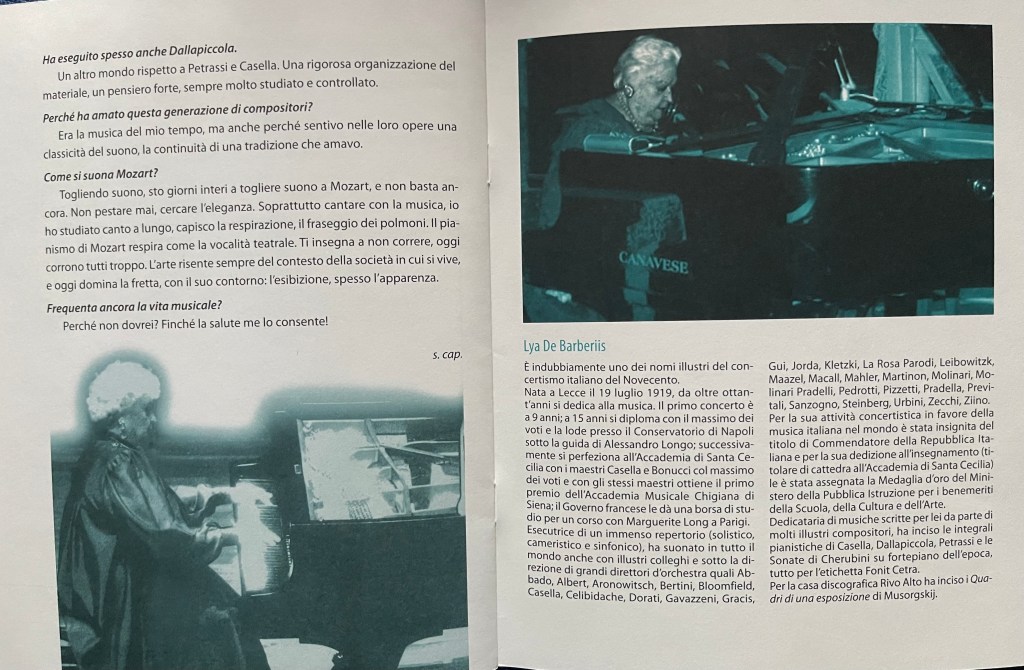
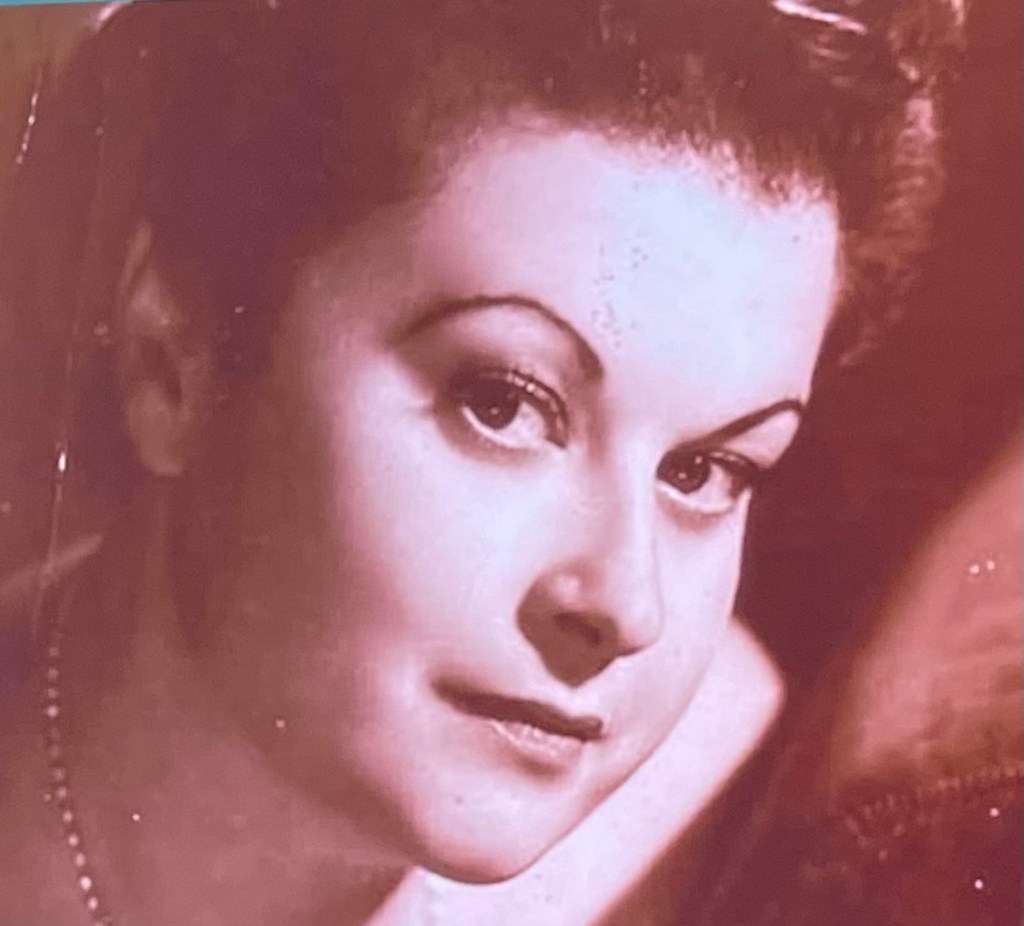
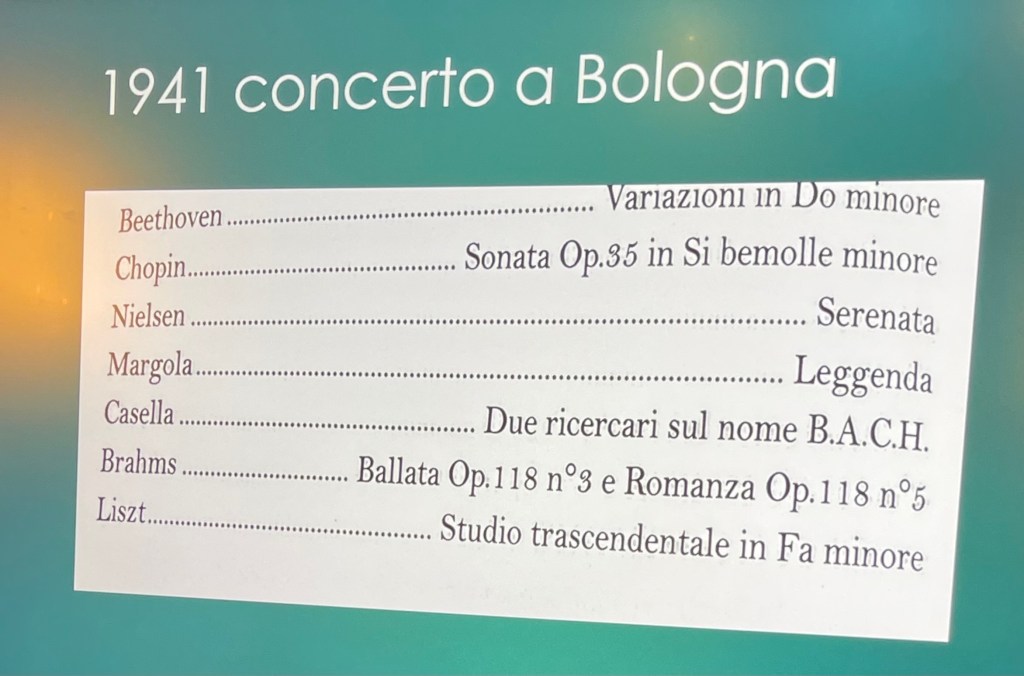
Lya De Barberiis, a celebration of a great, much loved pianist who above all was a musician, a humble servant always at the service of the composer . An important figure for so many people for her warmth and humanity but above all for her strong personality which helped to shape and inform so many lives as we were reminded today. Everyone came armed with a story to tell about this remarkable woman who was such a dominant force in our lives. Her integrity, honesty and total dedication to music was an example to us all. A warmth from a woman who never ceased to learn, as she would come often with her students to worship at the feet of Guido Agosti as she would Rosalyn Tureck who she discovered in 1991 in ‘our’ theatre. ‘Ours’ because Lya so admired this Cultural Centre of Excellence that my wife and I had created in the 80’s and 90’s that she frequented not only to discover many great musicians who had been neglected in Rome but that she would join playing in duo with Ruggiero Ricci or giving many important solo recitals ( including the Beethoven Trilogy). Agosti would often be in the audience as would Arrigo Tassinari (Toscanini’s first flute ) who lived next door.
Finally when she heard me play with my wife she decided that we should play together which we did for nearly twenty years. The last time in 2012 a year before her death, when she invited Gianni Letta to the theatre to listen to us as he became honorary President of the Lya De Barberiis Association that was founded by her student Massimiliano Negri. Letta was very surprised to see the man who had moved the piano, worked the lights, show people to their seats ( including Valeria Valeri in the front row) and then sit next to Lya as they made music together ! Lya and I played all over Italy for many years, as she had so many contacts and admirers, but she preferred later in life not to be always alone on stage. I remember in Racconigi, a very imposing castle with Herons that slept on the chimney pots, and an entrance hall that was transformed into a concert hall for Lya. A Sunday morning concert and my wife when she was free would love to come with us too. After Lya and I had played and were much applauded, the Mayor appeared with a special prize which he proceeded to award to Ileana the much loved Piemontese actress. Lya and I looked on amused that we who had performed got nothing !!!!! Lya was part of our family and was very much part of our theatre,which was our life blood and it became hers too.She would arrive every year in her car, armed with three bottles of Tignanello because she knew it was my favourite wine. She even appeared one year with a cover for our Fabbrini Steinway,which she had ordered from Hamburg, because she did not consider our improvised cover to be sufficiently up to scratch for all that we were offering Rome!
Lya was like that, she was of a warmth and intelligence and a guiding light for us all.
Carlo Guaitoli Danilo Rea next to Marco and Carla Brahms op 35 of course!
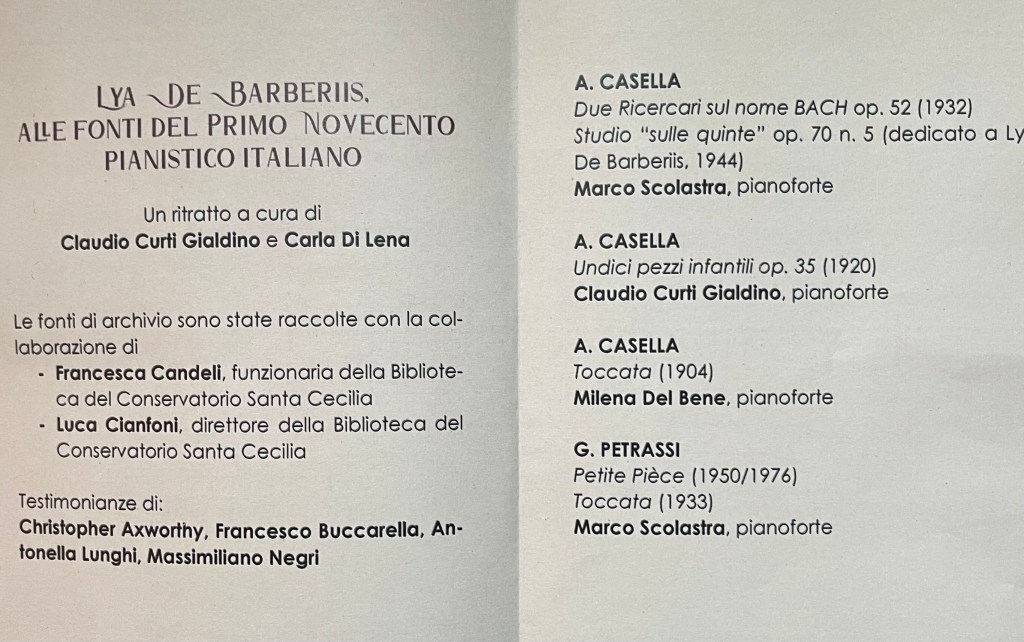
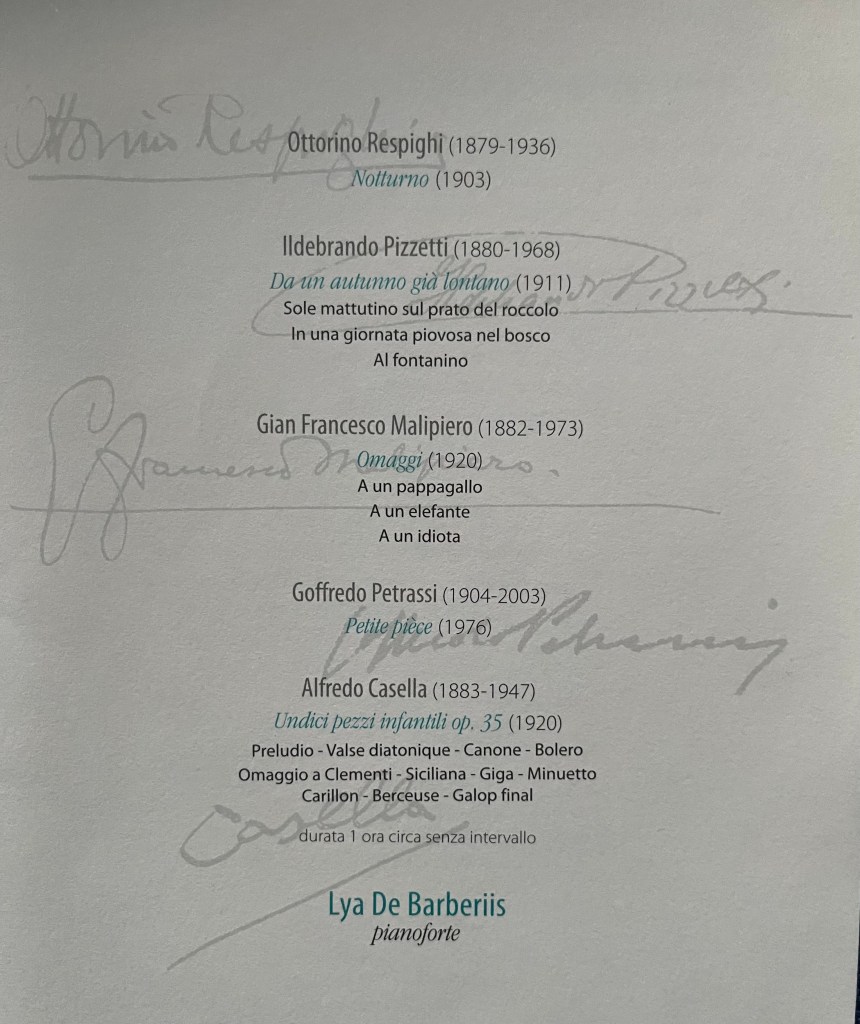
It was good today to hear her students play works by Petrassi and Casella who had been friends and admirers of Lya, as had so many other illustrious composers who she tireless championed all her long life. Marco Scolastra who had studied with Lya in Masterclasses but whose main teacher was Aldo Ciccolini, played with the same clarity and precision of a ‘healthy musician’ who could carve out an architectural line with beauty and weight and above all total respect for the composer’s wishes. Lya took me to hear Aldo Ciccolini when he played Rachmaninov Second Piano Concerto in an open air concert at the Campidoglio. After the wonderful performance Lya and he embraced each other and with a tear in his eye Aldo exclaimed :”But you are so faithful always Lya”.
Claudio Curti GialdinoMilena De BeneMarco Scolastra
Claudio Curti Gialdini had studied with Lya since his early teens and is now a Professor at the S. Cecilia Conservatory and he too played with chiselled beauty and authority the Eleven Children’s pieces op 35 by Casella. His student Milena Del Bene played the Casella Toccata and one could appreciate the same discipline handed down to her from her teacher and the school of De Barberiis
Franco Buccarella Antonella Lunghi Massimiliano Negri and Carla Di Lena Lya with Ileana and I after a duo concert in our theatre Carla with Danilo Rea The niece of Lya with Franco Buzzanca organiser of many concerts with Lya in duo with me in Zagarolo,Palestrina etc .He was the director of Scenografia Oggi who made the scenery for all the major theatre companies in Italy photo credit Dinara Klinton https://christopheraxworthymusiccommentary.com/2024/03/20/christopher-axworthy-dip-ram-aram/
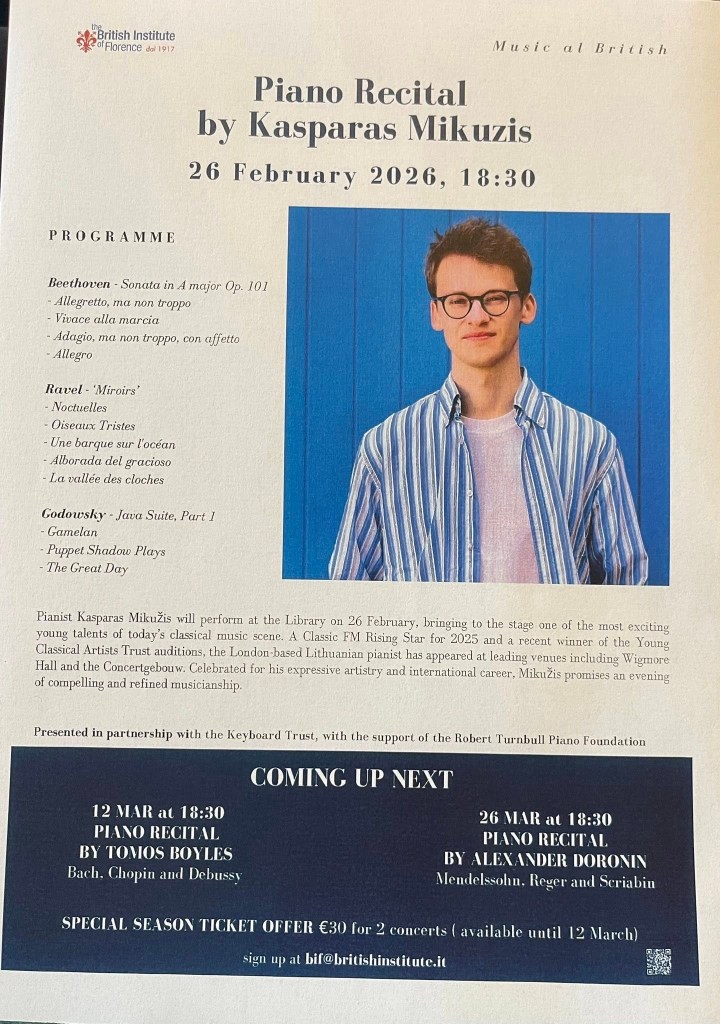
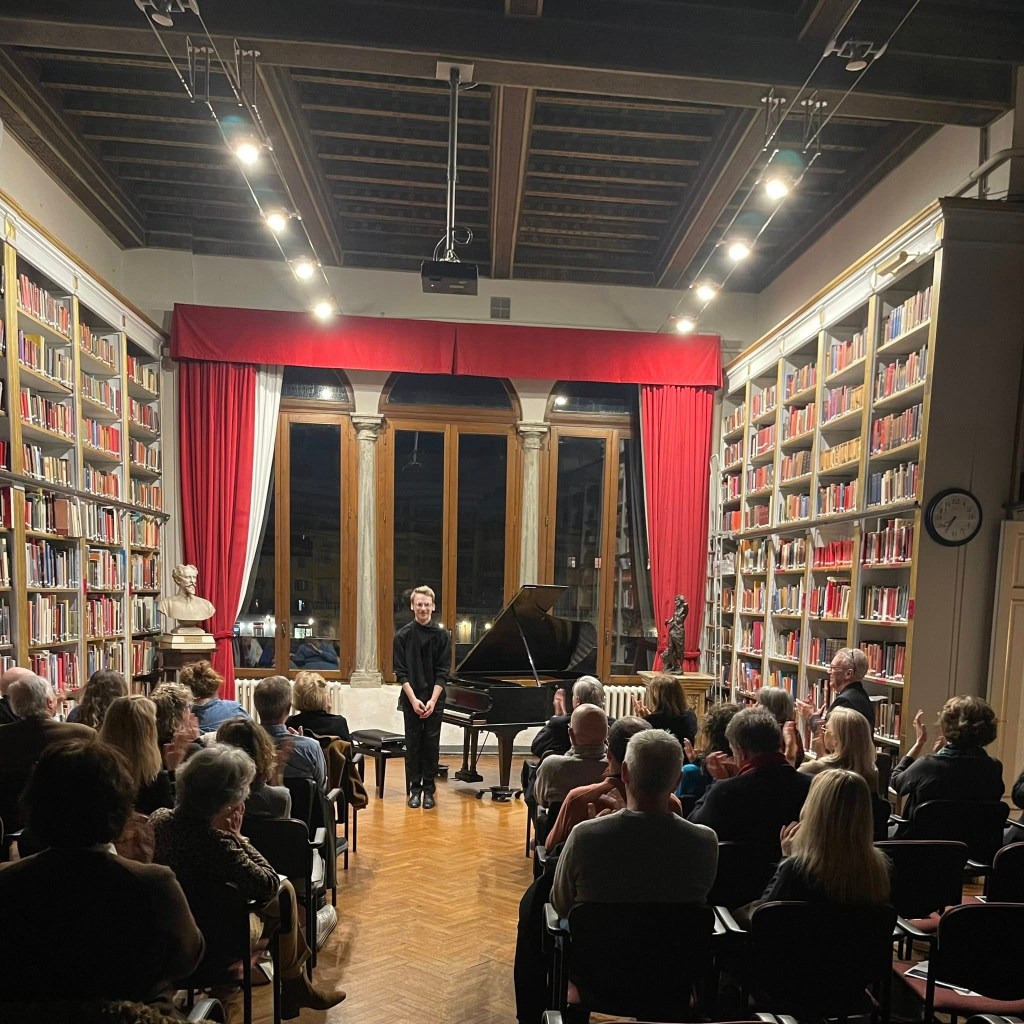
A room with a view and a standing ovation for Kasparas Mikužis with a recital of Beethoven Ravel and fellow Lithuanian Leopold Godowsky
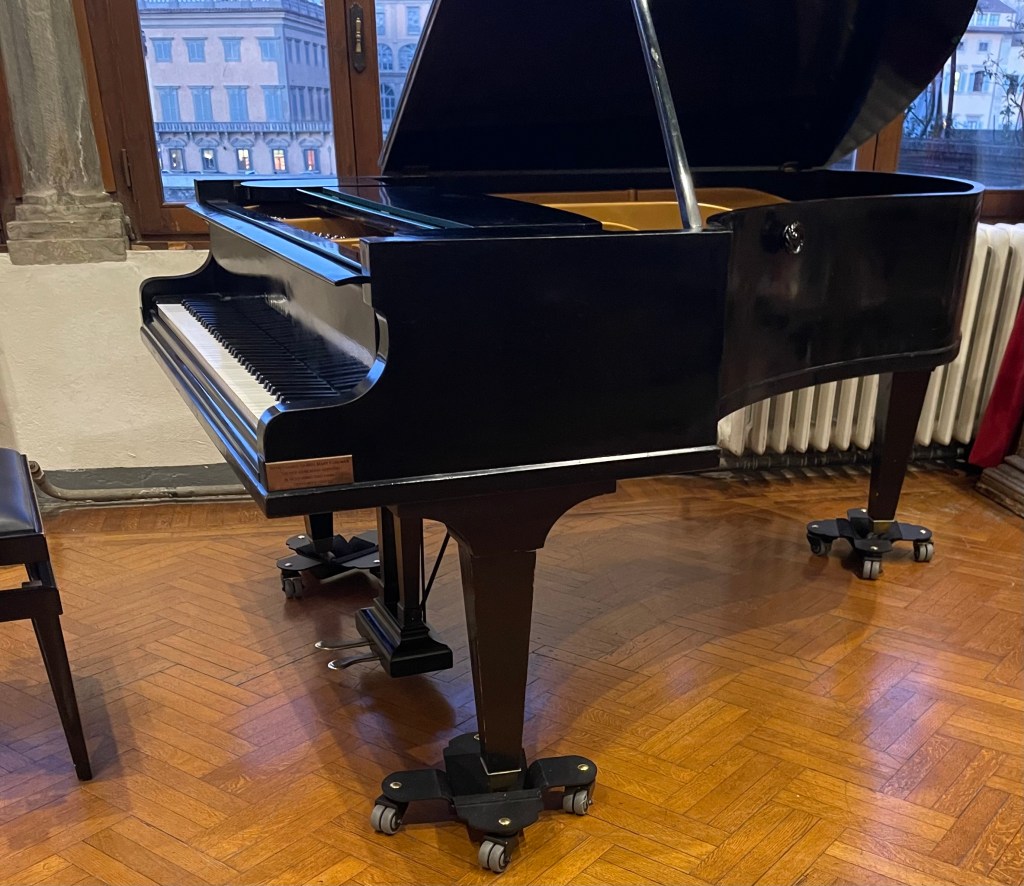
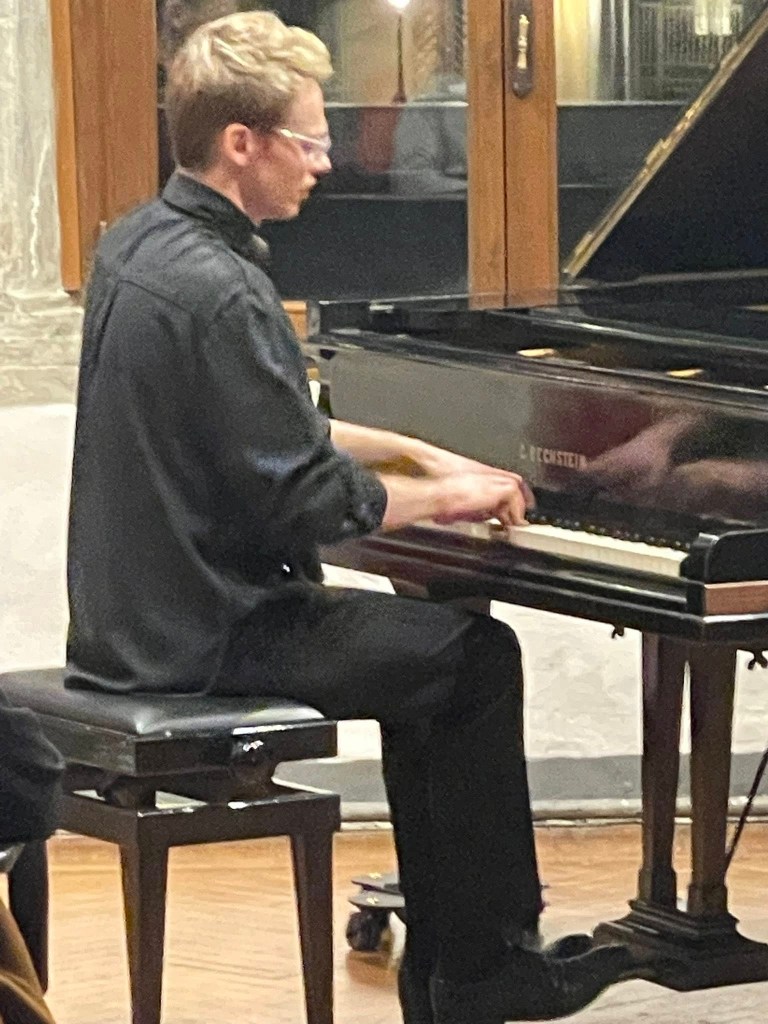
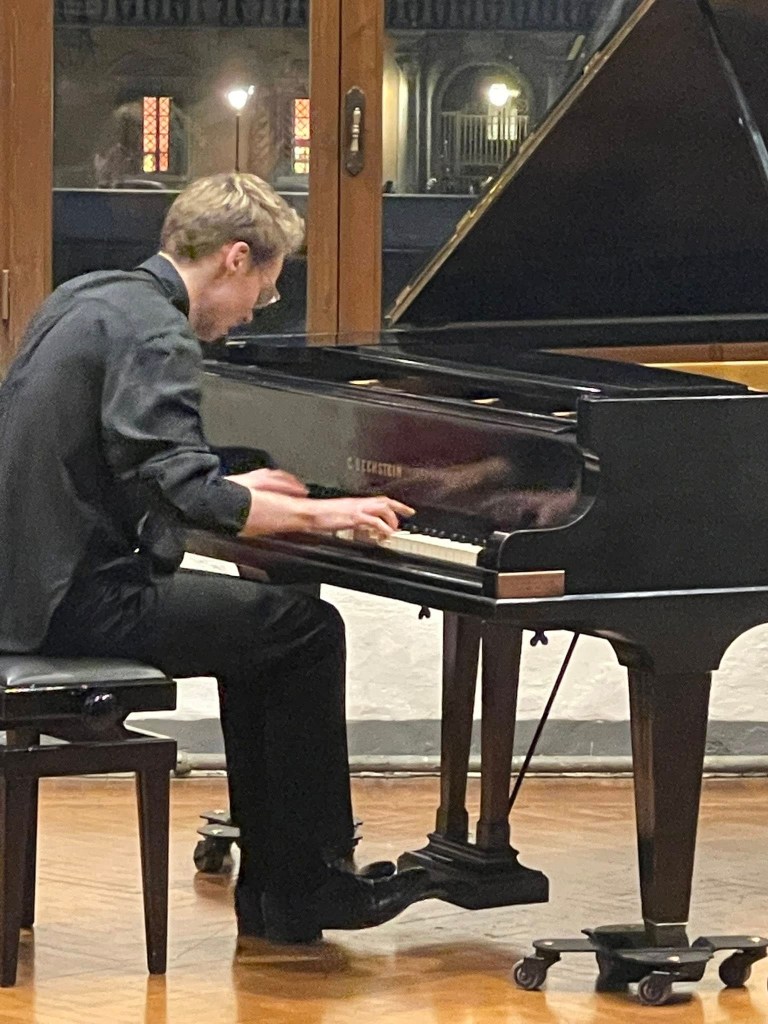
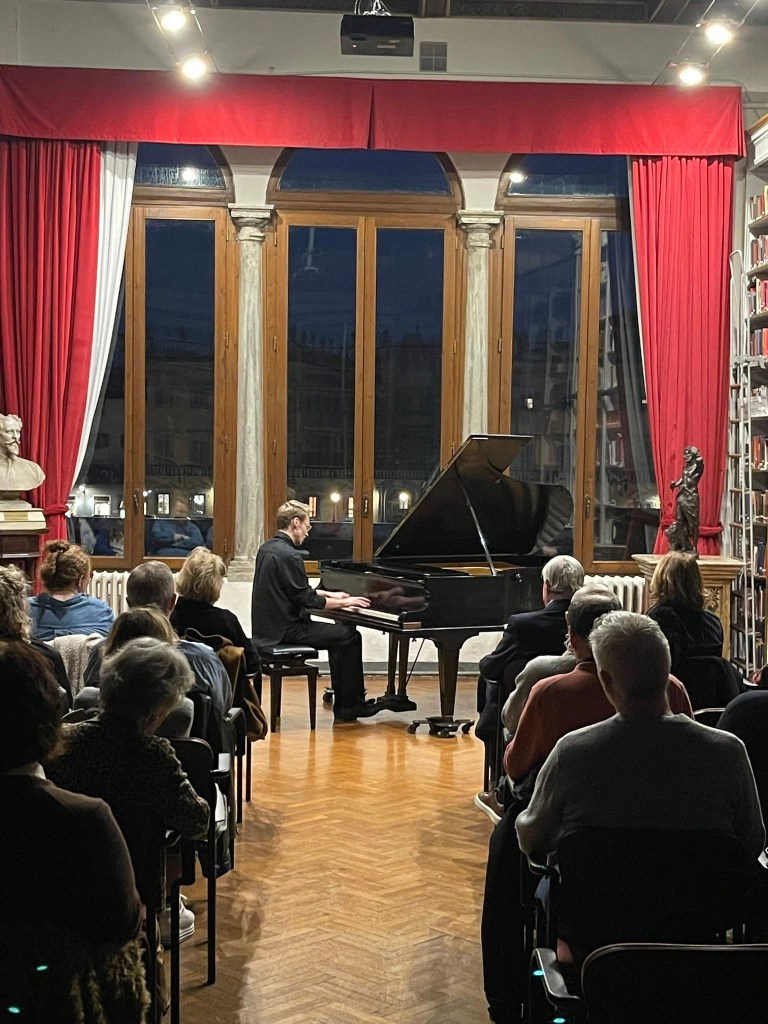
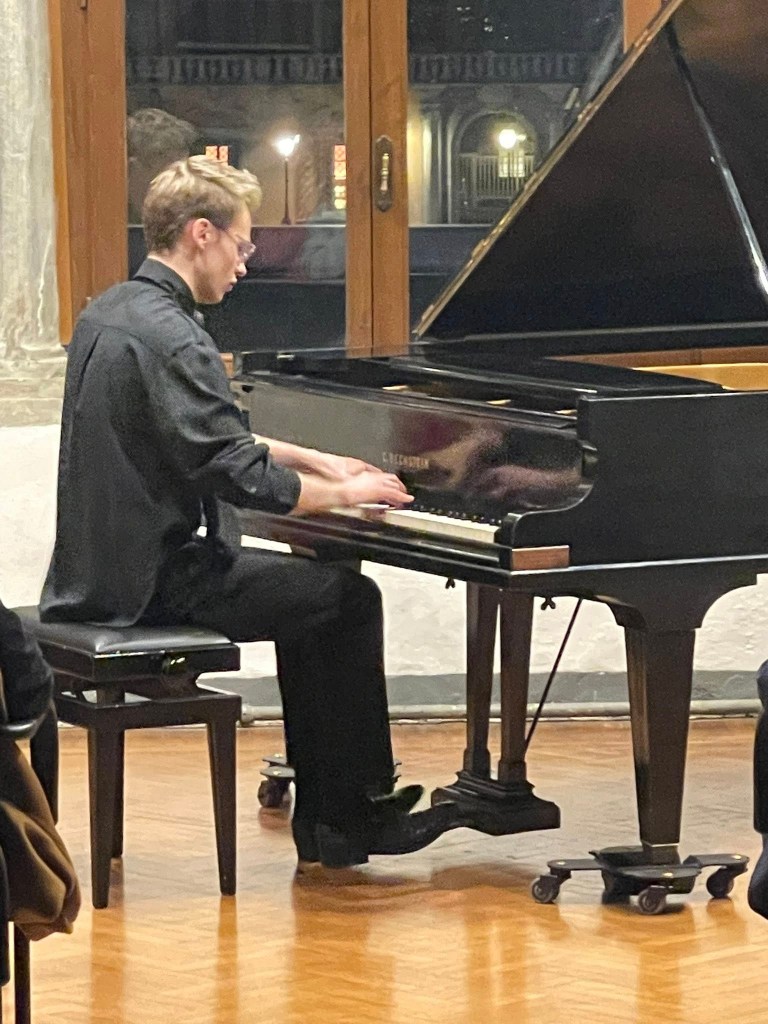
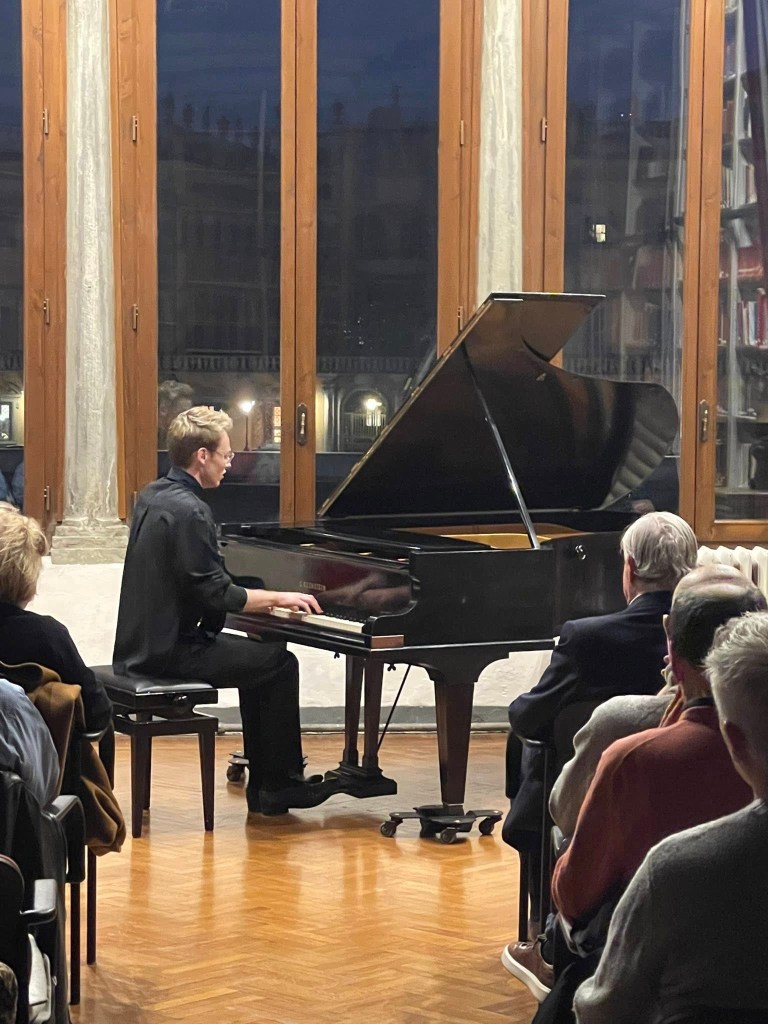
In the beautiful Harold Acton Library and with the mellow tones of an 1890 Bechstein Kasparas carved out Beethoven’s late ‘Pastoral’ sonata where poetry and dynamic drive were united with a scrupulous attention to Beethoven’s very intricate detail.
It was in the Ravel Miroirs that sumptuous refined sounds and technical mastery united to create the images of these five miniature tone poems with a magical palette of sounds.
Godowsky’s rarely played Java suite was the ideal partner to Ravel not only for it’s transcendental difficulty, but because Kasparas imbued it with the same fantasy and kaleidoscope of sounds which were of poetic beauty and scintillating brilliance.
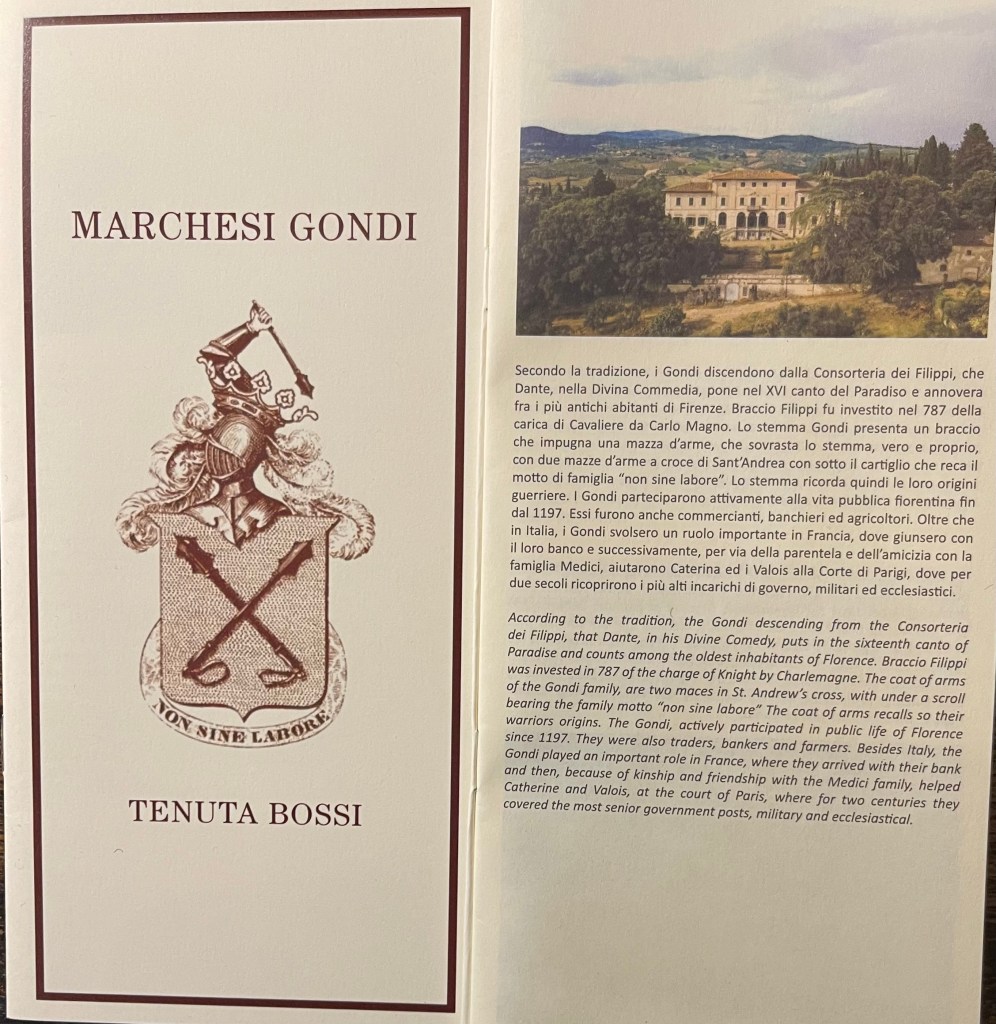
Greeted by an ovation and cries for more ,Kasparas was happy to thank them with a beautiful gentle work by a fellow Lithuanian composer before we were all invited to taste the sumptuous wines of the Tenuta Bossi Marchesi Gondi.
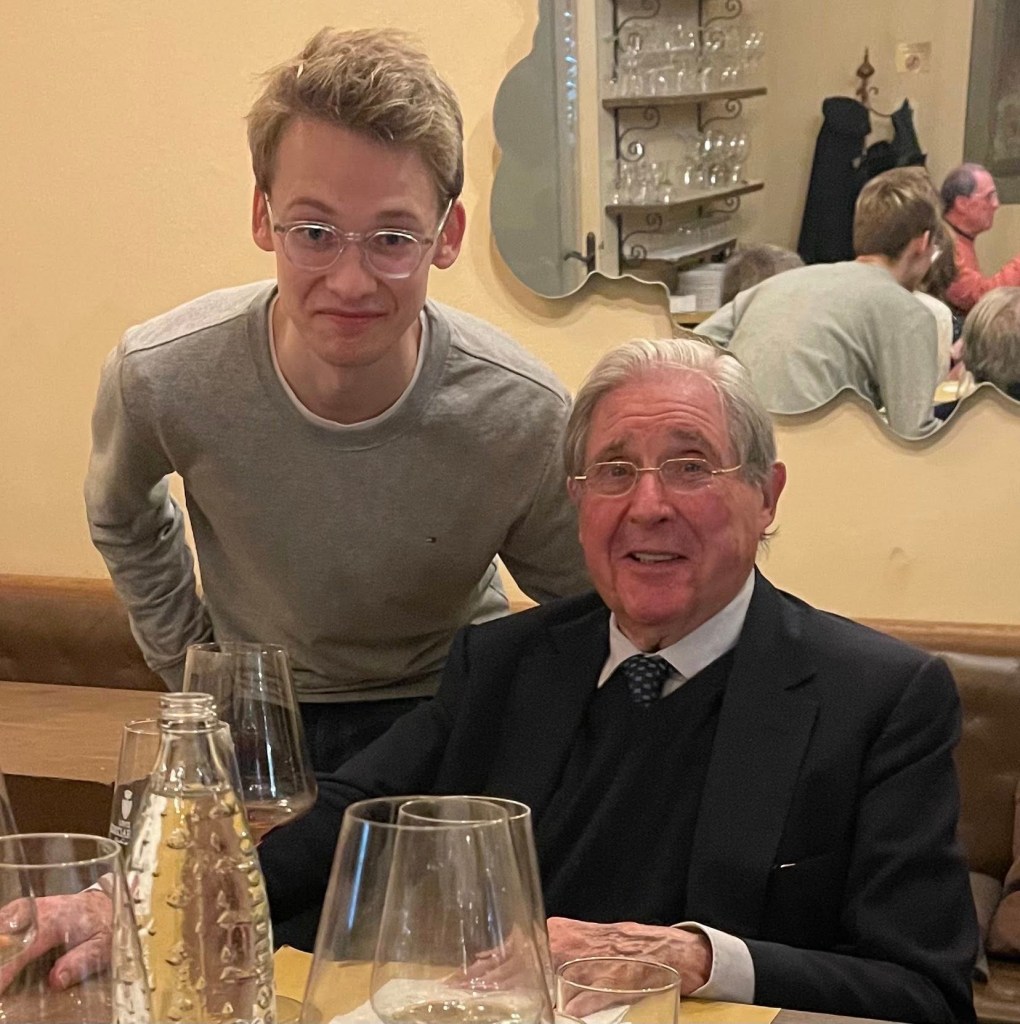
Kasparas with the ever generous Sir David Scholey at his sumptuous post concert dinner party
The recital opened with Beethoven’s most Pastoral of his last sonatas full of fantasy and ‘joie de vivre’. Coming after the Schubertian op 90 but before the cataclysmic ‘Hammerklavier’ this is a breath of fresh air as Beethoven comes to terms with his deafness and taking the piano to task for its limitations, looking upwards to the glimpse of paradise that awaits.
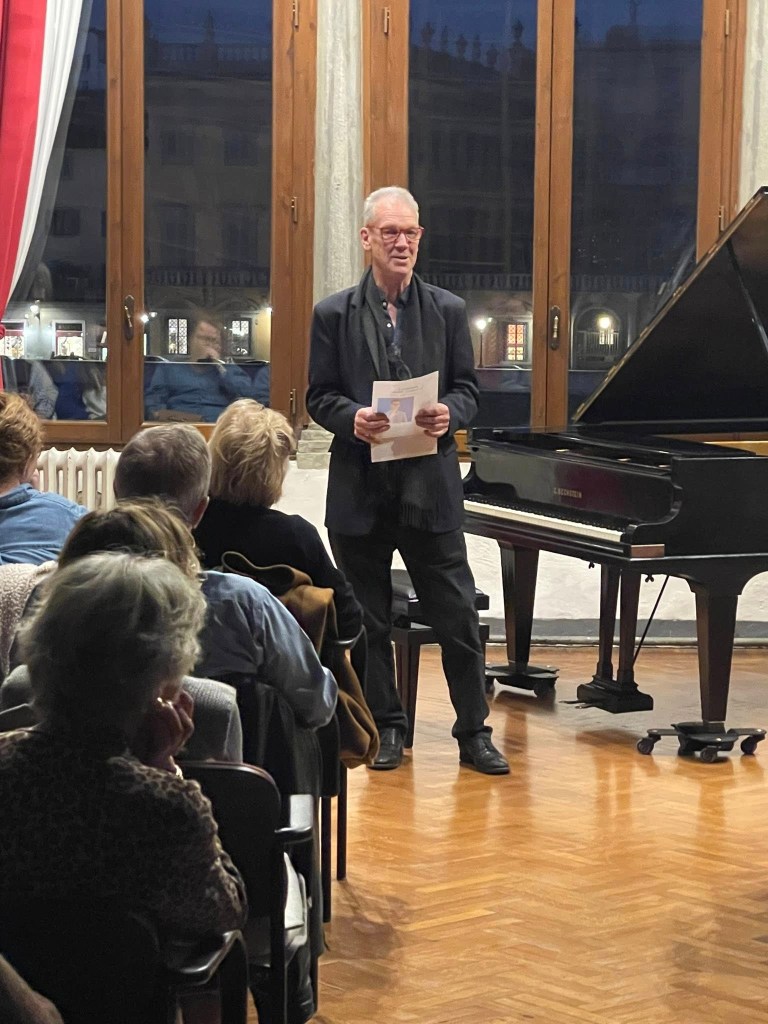
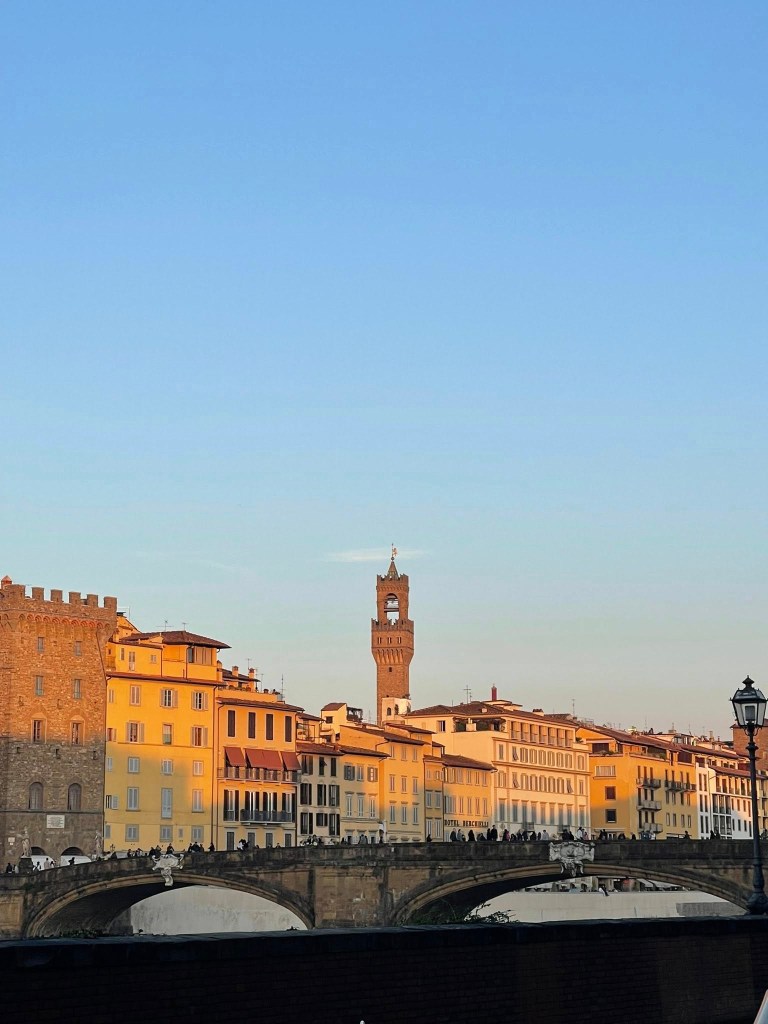
Simon Gammell OBE director of the British Institute presenting the concert View from the window
The extraordinary thing of his Genius is that he could write down exactly the sounds he had in his ears with a precision far more than in his earlier sonatas which he would often play himself. I have noticed with the Lithuanian school of playing that there is a fluidity and purity to the sound they make, similar in many ways to the Hungarian school. Most probably not a school at all but growing up in a homeland where they pick up certain sounds which comes across in their playing and that is enviable for its relaxed fluidity and naturalness.
The opening of op 101 was played with beautiful glowing sounds of luminosity and pastoral beauty. Long languid lines allowed to unwind with commanding authority combined with great sensitivity always with aristocratic good taste of simplicity and sincerity. The ‘Vivace’ had a knife edge precision to its rhythmic impulsiveness and was also given an architectural shape with its continuous question and answer that Kasparas played with masterly control. Beethoven’s long held pedal was beautiful incorporated into this seemingly tight framework and was the same music box effect of Papà Haydn’s sonata n. 50, an effect that was to be used in Beethoven’s last works for piano op 126. Beethoven living in his own world with a sense of fantasy between the percussive, abrasive piano and the seemingly perfect legato that the pedal could now offer. Kasparas managed to combine the rhythmic impulse of Beethoven with the poetic fantasy that was always hidden deep within the composer’s inner soul. Even the ‘Trio’ was played with the fluidity of Beethoven at his most pastoral, but not one to linger or wonder, always very direct emotions on a wave of inner energy. Kasparas caressed the keys with beautiful natural movements never hitting the keys but always feeling the weight he had in his sensitive fingers .He brought sombre respectful beauty to the ‘Adagio’ that he played with poignant significance as he dug deeply into the keys with emotional weight finding great nobility and a refined beauty of marble like solidity. There was an etherial question and answer between the hands where a magical cadenza ignited the beauty of the opening phrases that miraculously reappeared in this wondrous landscape. Of course with Beethoven this is short lived as his impatience is manifested with short sharp chords before the bucolic bubbling energy of the last movement. This is not the tempestuous knotty twine of the ‘Hammerklavier’ but a pastoral vision of a bubbling brook that Kasparas played with poetic mastery as he allowed the music to speak in a relaxed conversation of exhilarating brilliance. Again Beethoven puts a stop to such frivolity with two fortissimo chords out of which evolves a fugato of truly knotty twine with unresolved trills that are incisive ornaments that Kasparas played with remarkable authority only occasionally missing a step on a slippery rock but never letting the tension wane . This is Beethoven in bucolic mood and where Kasparas gave great character to his tongue in cheek fugato of one hand chasing the other, until the composer’s patience runs out as he slams the door shut with three very final bars.
A completely different world was opened up by Kasparas with Ravel’s evocative ‘Miroirs.’ Kasparas’s glowing fluidity of fleeting sounds were full of a prismatic sense of colour glowing with wondrous jeux perlé brilliance as the moths fluttered over the keys with lightweight precision. A languid melody opens to reveal a desolate landscape of infinite space with the moths trying to invade this humid atmosphere with a battle between the sensual and an invasion of fleetingly impish goings on. The moths flying off into the distance with masterly ease as Kasparas barely brushed the keys and then with one stroke, the genius of Ravel who could reinstall such atmosphere with just one simple chord , of course played with poetic understanding by the performer.
It was beautiful to see the caressing movement of Kasparas’s fingers as the lone song of the bird sang out with glowing resonant purity. Kasparas once again creating this lonesome atmosphere with poetic imagination and masterly use of the pedals. Streams of notes but always the song of the bird with piercing penetration of desolation and ravishment.
Beautiful fluidity again to depict the ocean in which a tenor melody is heard in its midst amongst the sound of the waves. The atmosphere created by Ravel with an insistent melodic accompaniment of quite complicated rhythmic precision that pushes the sounds forward. Gradually a storm is brewing and Kasparas with extraordinary technical brilliance could portray this scene with excitement and mastery as notes covered the entire keyboard. Playing of scintillating brilliance and poetic fantasy in which the pedal could add a sumptuous range of colours.Suddenly the storm passes and the waves are calmed as they are played with relentless whispered precision by the right hand, the left intoning a hymn of thanksgiving as calm is restored and this masterly tone poem finishes with wistful washes of sound.
A complete contrast with the spiky brilliance and clarity of precision in ‘Alborada.’ Enticing dance rhythms end explosions of passionate cries as the music builds in excitement with washes of sound and vibrations that are in fact transcendentally difficult repeated notes and double glissandi that only the most flexible of hands can manage. They were played with seemingly poetic ease as Kasparas always delved deep into the music rather than seeing only the superficial tinsel . There was a great outcry of passionate intensity played with sumptuous eroticism but always with the menacing undercurrent of frenzy that brought us to the brilliant ending of the burning Spanish temperament.And spontaneous applause of great admiration for such an exhilarating ending.
Glowing bells were heard as the magic atmosphere of this valley is revealed with a kaleidoscope of colours enriched by poetic fantasy and masterly use of the pedals. A melodic line of disarming delicacy and simplicity with bells tolling, adding pure magic to this beautiful creation, played with ravishing beauty by this young Lithuanian poet of the keyboard .
I must confess that I have known of the existence of the Java Suite for some time but have never had the opportunity of hearing it until today. Of course it is the complete opposite of the refined genius of the piano who so entranced me when I heard a historic piano role of his at the Brentford Piano Museum. A performance of Liszt’s ‘La leggerezza’ that I had never heard such sounds of whispered perfection before. Rubinstein simply declared that even if he lived five hundred years he would never be able to play with the same technical perfection as Godowsky. I hunted out his 53 studies based on Chopin’s , where he combines the two G flat studies together ,one in the right hand and the other in the left ,at the same time, with the title ‘Badinage’ ! I found them eventually in the archive of London University Library but they have now been published and are readily available for all those fearless enough to try to play them! Cherkassky played the study for the left hand alone of Godowsky’s magical transcription of op 10 n. 6 where the simple melodic outline is embellished with a web of magical sounds played with featherlight jeux perlé of another age.
So it was a surprise to research a little about this suite and Godowsky and it became apparent why Kasparas had chosen to play it, because Godowsky was of Lithuanian origin too! Debussy had been much influenced by Oriental sounds and the Gamelan in particular when Indonesia came to the Paris Exhibition of 1900. Godowsky, on the other hand, went to Indonesia to see for himself.
‘Gamelan’ a work of oriental sounds of great luminosity and much use of the pedals adding extraordinary colour but not the refinement that I was expecting of Godowsky the greatest pianist the world has ever known . Kasparas gave a dynamic drive and burning conviction to this piece with a kaleidoscope of magic sounds.The ‘Puppet Shadow Plays’ had a melodic line that flowed with simplicity and meandering insistence. The ‘Great Day’ was celebrated with rousing brilliance and the joyous outpouring of insistent bell like sounds .Indian dance rhythms abound reaching a passionate climax of brilliance and technical mastery.
After concert wine tasting to meet and talk to the artist
Kasparas Mikužis is a Lithuanian-born pianist based in London. Named as one of Classic FM’s ‘Rising Stars’ for 2025, he has taken the stages of various highly respected venues such as the Concertgebouw in Amsterdam and the Lithuanian National Philharmonic. In May 2025, Kasparas was one of the winners of the Young Classical Artists Trust (YCAT) international auditions. Highlights include recitals at the Bridgewater Hall in Manchester, UK, the Krzysztof Penderecki Centre in Luslawice, Poland and his debut at Wigmore Hall in London. Kasparas has also performed at the United Nations Headquarters in Geneva on multiple occasions. Other notable appearances include performances the season-opening concert of the Kharkiv Philharmonic Hall with the Kharkiv Philharmonic Symphony Orchestra under conductor Yuri Yanko. He also performed as a solo artist at the Eudon Choi show during London Fashion Week 2023.
In 2023, he made his debut with the Lithuanian National Symphony Orchestra at the Lithuanian Philharmonic in Vilnius. Later that year, he was invited to perform for the Lithuanian and Polish presidents on Lithuanian Statehood Day at the Presidential Palace. In recognition of his representation of Lithuania on the international stage, Kasparas was honoured with a letter of gratitude from the President of the Republic of Lithuania. The 25/26 season sees Kasparas perform Gershwin’s Concerto in F with the Basingstoke Symphony Orchestra, as well as working on a new CD with the Royal Academy of Music. He will collaborate with fellow YCAT artist Nathan Amaral for a series of concerts in early 2026, as well as performing solo recitals across the UK and at the Norsjø Chamber Music Festival in Norway.
Kasparas completed his undergraduate studies at the Royal Academy of Music with Diana Ketler, and his postgraduate studies under Professor Christopher Elton. Since 2023, he has also worked closely with Gabriela Montero through ‘O’ Academy.
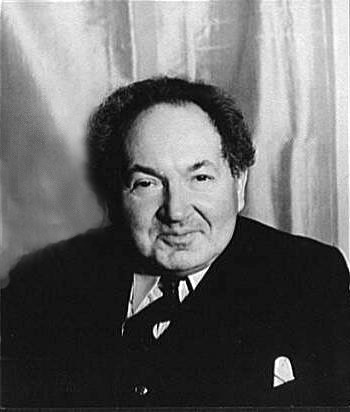
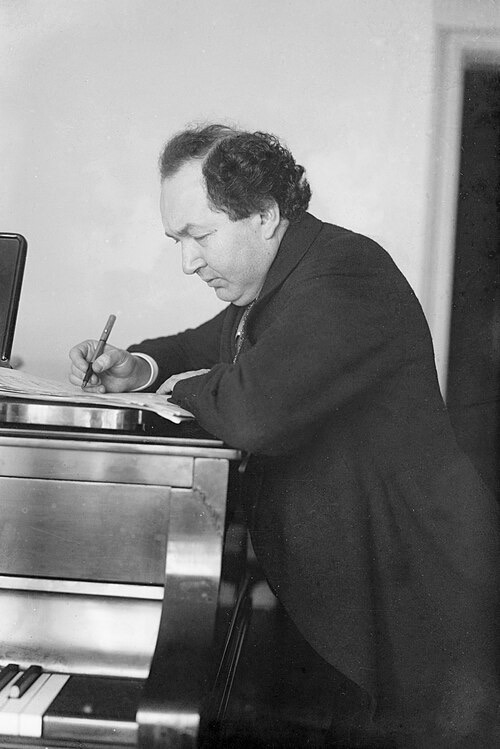
Leopold Mordkhelovich Godowsky Sr. 13 February 1870 – 21 November 1938) was a virtuoso pianist, composer and teacher born in what is now Lithuania to Jewish parents, who became an American citizen in 1891. He was one of the most highly regarded performers of his time, and was heralded among musical giants as the “Buddha of the Piano”. Ferruccio Busoni claimed that he and Godowsky were “the only composers to have added anything of significance to keyboard writing since Franz Liszt “.As a composer, he is best known for his Java Suite,Triakontameron,Passacaglia and Walzermasken, alongside his transcriptions of works by other composers; the best-known of these works are the 53 Studies on Chopin’s Études (1894–1914).
The Java Suite (originally published as Phonoramas. Tonal journeys for the pianoforte) is a suite for solo piano by Leopold Godowsky composed between 1924 and 1925. It consists of twelve movements and is influenced by the gamelan music of Java ,Indonesia extensively utilizing pentatonic harmonies throughout.
Godowsky remarked in the work’s preface:
“Having travelled extensively in many lands, some near and familiar, others remote and strange, it occurred to me that a musical portrayal of some of the interesting things I had been privileged to see, a tonal description of the impressions and emotions they had awakened, would interest those who are attracted by adventure and picturesqueness and inspired by their poetic reactions.
Who is not at heart a globe-trotter? Are we not all fascinated by distant countries and strange people? And so the thought gradually matured in me to recreate my roaming experiences. This cycle of musical travelogues-tonal journeys-which i have name collectively “Phonoramas”, begins with a series of twelve descriptive scenes in java.”
The suite consists of twelve movements, divided into four parts. Godowsky composed the work under the influence of gamelan music after a visit to java
Although the Java suite is published as a whole, it wasn’t meant to be performed in its entirety. The suite is divided into four equal parts, each containing three pieces whose tonal schemes correlate, creating a unified whole. Furthermore, each book is structured in the same manner: each book starts with a character piece, followed by a slow movement and ending with a brilliant showstopper.
The first book starts in A minor. The second piece too, continues in A minor, though it ends on an E major-chord, creating an imperfect cadence which resolves into the third and final piece.
Godowsky added detailed descriptions of each of the scenes, elaborately describing what each of them is inspired by.
Part One
1. Gamelan (A minor )
Native music, played by the Javanese on their indigenous instruments, is called Gamelan. The Javanese ensemble is a kind of exotic orchestra, con- sisting mainly of diversely shaped and constructed percussive instruments of metal, wood and bamboo, comprising various kinds and sizes of bells, chimes, gongs, sounding boards, bowls, pans, drums. (some barrel-like), tom – toms, native xylophones, sonorous alang-alang (zephyr-like, aeolian harp- like) and other unique music implements. The only stringed instrument I could discern was the ancient, guitar-shaped reéaé, which is held by the leader in a position similar to that of the lute.
Both rulers of the two Sultanates of central Java: the Sushunan of Solo and the Sultan of Djokja, and the two independent princes, Manku Negoro of Solo and Paku Alam of Djokja have the best, largest and most complete native orchestras (Gumelan). They own old instruments of inestimable value, the enchanting sonority of which is attributable to the mellowing process of time.
The sonority of the Gamelan is so weird, spectral, fantastic and bewitching, the native music so elusive, vague, shimmering and singular, that on listening to this new world of sound I lost my sense of reality, imagining myself in a realm of enchantment. Nothing seen or experienced in Java conveyed so strongly the mysterious and strange character of the island and its inhabitants.
The Gamelan produces most ethereal pianissimos, particularly entrancing when heard from a distance. It is like a perfume of sound, like a musical breeze. Usually the music, beginning very softly and languidly, becomes faster and louder as the movement progresses, rising, at last, to a barbaric climax.
In this, the first of the descriptive scenes, I have endeavored to recreate a Gamelan sonority~ a typically Javanese atmosphere. Except for the one chromatic variation(pages 9-10),which is intentionally Occidental,the movement is almost exclusively diatonic and decidedly Oriental (Far Eastern).
2. Wayang – Purwa , Puppet Shadow Plays (A minor)
‘This ancient, characteristically Javanese quasi -histrionic entertainment, produced on festive occasions, is very popular in Java. It symbolises to the Javanese their past historical greatness; their hopes, aspirations and national solidarity. To the subdued accompaniment of the Gamelan, the Dalang, manager, actor, musician, singer, reciter and improvisator, all in one,-recites classic Hindu epics, or modernized and localized versions of them, or other mythical or historical tales and East Indian legends, while grotesque, flat leather puppets throw shadows on a white screen to interpret and illustrate the reciter’s stories. These puppets the Dalang manipulates by means of bamboo rods. Wayang-Purwa is somewhat of a combination of Punch and Judy and Chinese shadows.[1]
3. Hari Besaar, The Great Day (A minor → C major)
The Kermess – the Country Fair – is here.
From plantations and hamlets natives flock to the town that is the center of the bright, joyous celebrations, naive, harmless amusements. They throw themselves. eagerly into the whirl ‘of festivities, enjoying the excitement and animation.
Actors, musicians, dancers and fakirs contribute to the pleasures of the people and to the picturesqueness of the scene.
The Great Day – Hari Besaar!
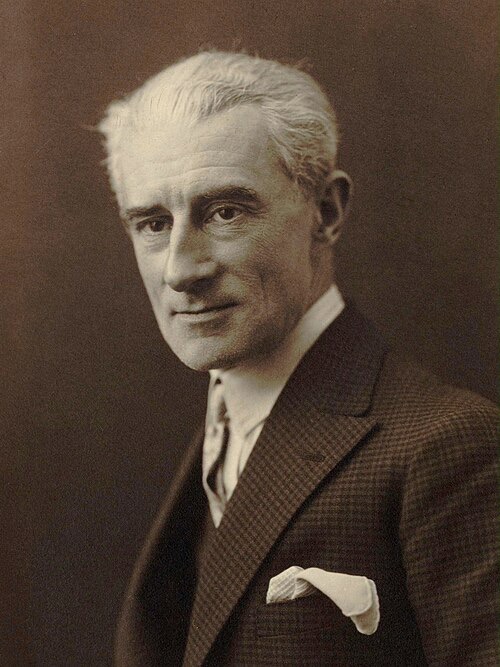
Maurice Ravel 7 March 1875 – 28 December 1937
Miroirs is a five-movement suite for solo piano written by Ravel between 1904 and 1905. First performed by Ricardo Viñes in 1906, Miroirs contains five movements, each dedicated to a fellow member of the French avant-garde artist group Les Apaches.
Around 1900, Maurice Ravel joined a group of innovative young artists, poets, critics, and musicians referred to as Les Apaches or “hooligans”, a term coined by Ricardo Viñes to refer to his band of “artistic outcasts”. To pay tribute to his fellow artists, Ravel began composing Miroirs in 1904 and finished it the following year. It was first published by Eugène Demets in 1906. The third and fourth movements were subsequently orchestrated by Ravel, while the fifth was orchestrated by Percy Grainger among others.
“Noctuelles” (“Night Moths”). D♭ major. Dedicated to Léon-Paul Farque, french poet and essayist
“Oiseaux tristes” (“Sad Birds”). E♭ minor. Dedicated to Ricardo Viñes
“Une barque sur l’océan” (“A Boat on the Ocean”). F♯ minor.Dedicated to Paul Sordes,painter and set designer
“Alborada del gracioso” (Spanish: “The Jester’s Aubade / Morning Song of the Jester”). D minor — D major. Dedicated to Michel-Dimitri Calvocoressi, critic and musicologist .
“La vallée des cloches” (“The Valley of Bells”). C♯ minor. Dedicated to Maurice Delage ,composer and pianist
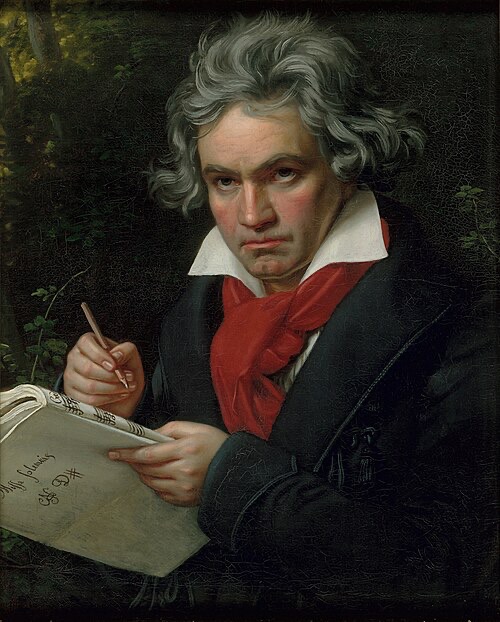
Ludwig van Beethoven 17 December 1770 baptised Bonn – 26 March 1827 Vienna
The Piano Sonata No. 28 in A major,op 101, by Beethoven was composed in 1816 and published in 1817 and dedicated to the pianist Baroness Dorothea Ertmann,née Graumen , it is considered the first of the composer’s late piano sonatasl and marks the beginning of what is generally regarded as Beethoven’s final period, where the forms are more complex, ideas more wide-ranging, textures more polyphonic, and the treatment of the themes and motifs even more sophisticated than before. Op. 101 well exemplified this new style, and Beethoven exploits the newly expanded keyboard compass of the day.
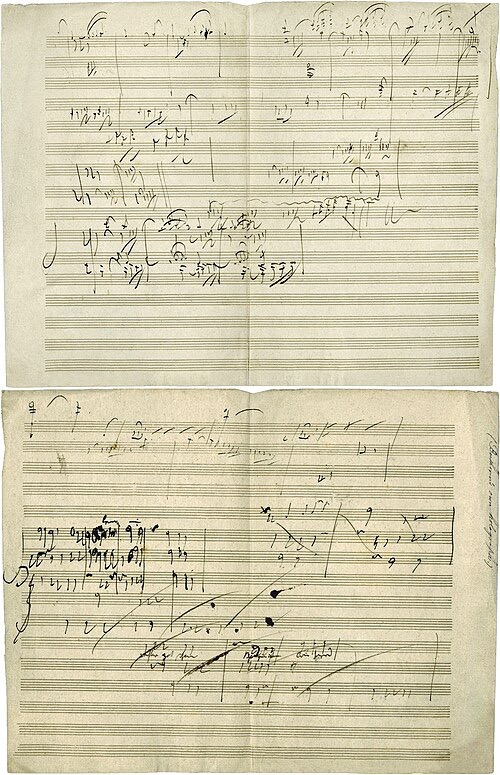
manuscript of the last movement
As with the previous sonata, it is unclear why Beethoven wrote Op. 101. The earliest known sketches are on leaves that once formed the parts of the Scheide Sketchbook of 1815–16. It shows the first movement already well developed and notated as an extended draft in score, and there are also a few preliminary ideas for the final Allegro. Beethoven himself described this sonata, composed in the town of Baden , just south of Vienna , during the summer of 1816, as “a series of impressions and reveries.” The more intimate nature of the late sonatas probably has some connection with his deafness, which by this stage was almost total, isolating him from society so completely that his only means of communicating with friends and visitors was via notebooks.It is the only one of his 32 sonatas that Beethoven ever saw played publicly; this was in 1816, and the performer was a bank official and musical dilettante.
The sonata is in four movements :
Etwas lebhaft, und mit der innigsten Empfindung(Somewhat lively, and with innermost sensibility). Allegretto, ma non troppo
Lebhaft, marschmäßig (Lively, march-like). Vivace alla marcia
Langsam und sehnsuchtsvoll (Slow and longingly). Adagio, ma non troppo, con affetto
Geschwind, doch nicht zu sehr, und mit Entschlossenheit (Swiftly, but not overly, and with determination). Allegro
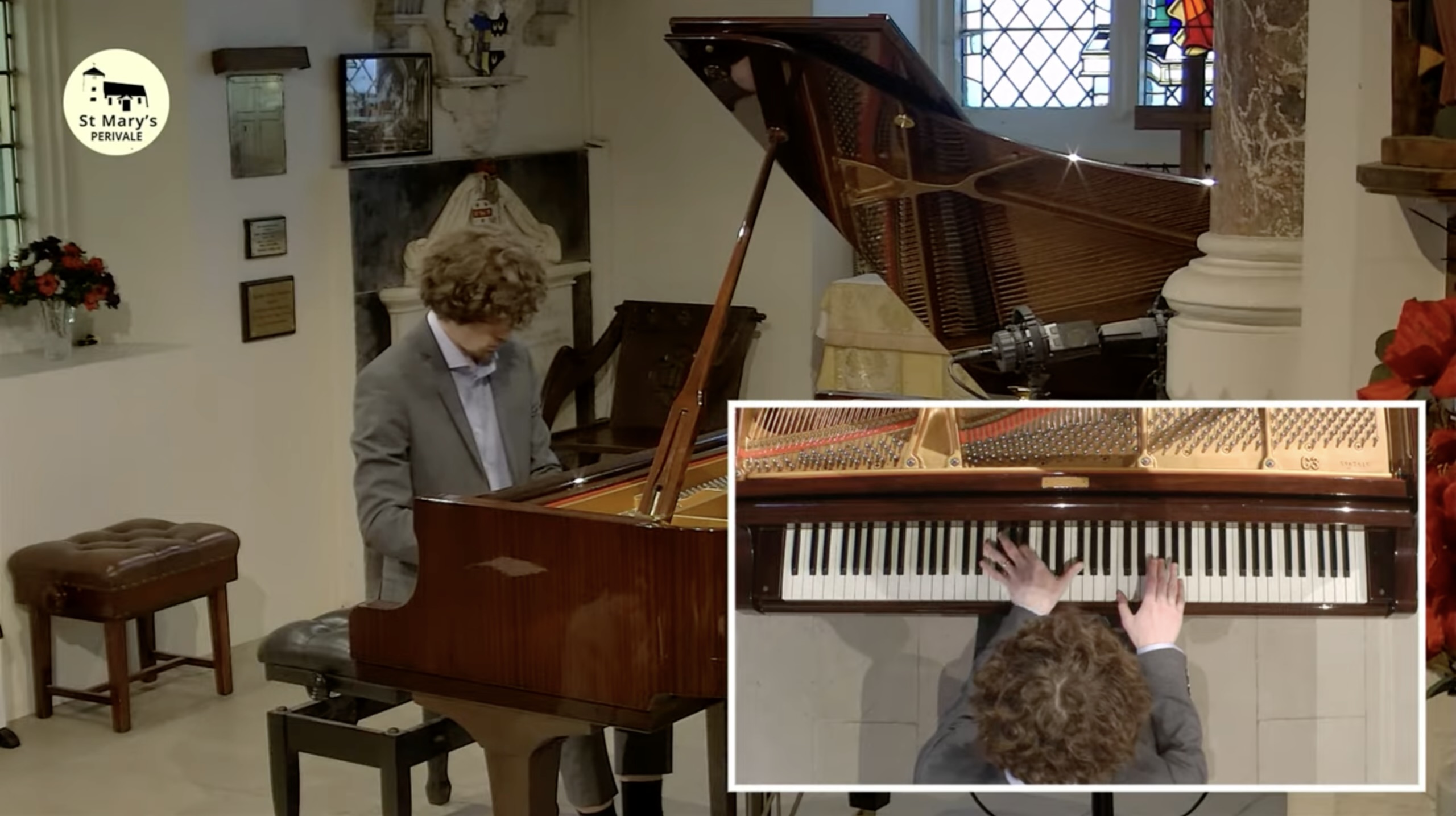
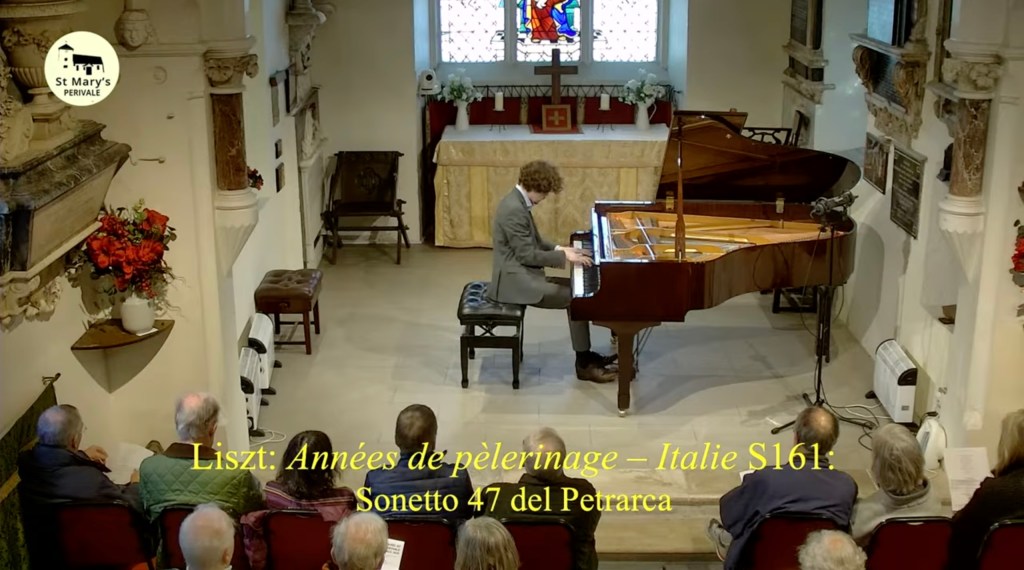
Quite a coincidence that two of the most introverted players of dedicated humility and a wondrous gift for communication should both be playing in the same city at the same time Kyle is a great admirer of Christian Blackshaw that Sir David Scholey has been trying to introduce to one another.
Kyle had played for the Keyboard Trust in the Harold Acton Series and Sir David was so moved by his playing he wanted to introduce him to a kindred spirit. It is playing that may on first acquaintance seem introverted but it is of exquisite making. The music does not roar as a Lion but has a much greater strength that is undemonstratively within the very notes themselves. Artists that delve deeply into the notes and find sounds that can speak louder than words . It is concentrated playing that requires the same concentration from the listener, with the pianist who does not project out but draws us in to the very heart of the creation. The centre of their repertoire lays with the Viennese Classics of Schubert, Beethoven, Haydn and Mozart. The Russian militaristic or heart on sleeve showy repertoire is not for them. Liszt, of course, but more the later works or the poetical rather than the ‘sturm und drang’ of the passionate showpieces inspired by Paganini.
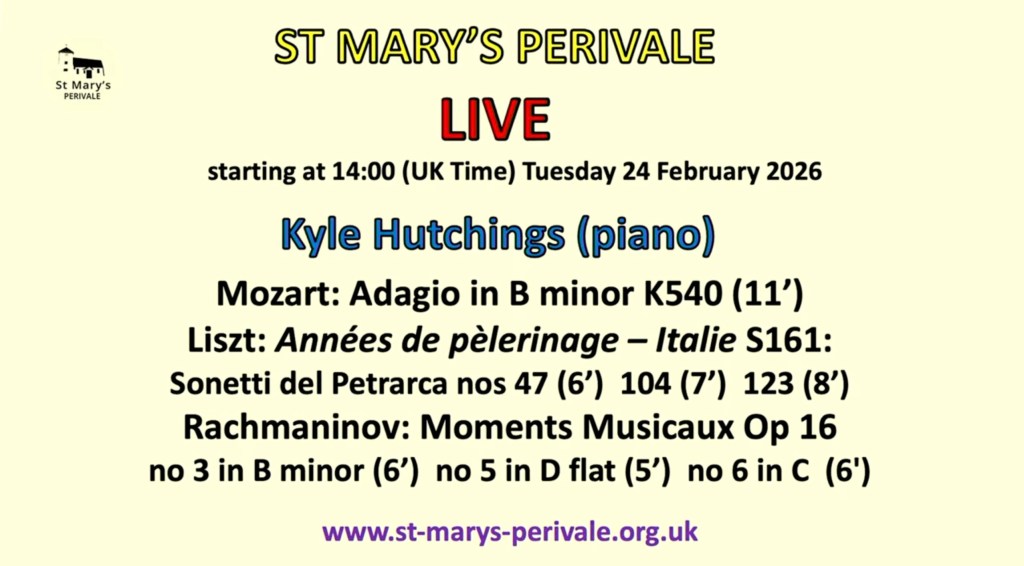
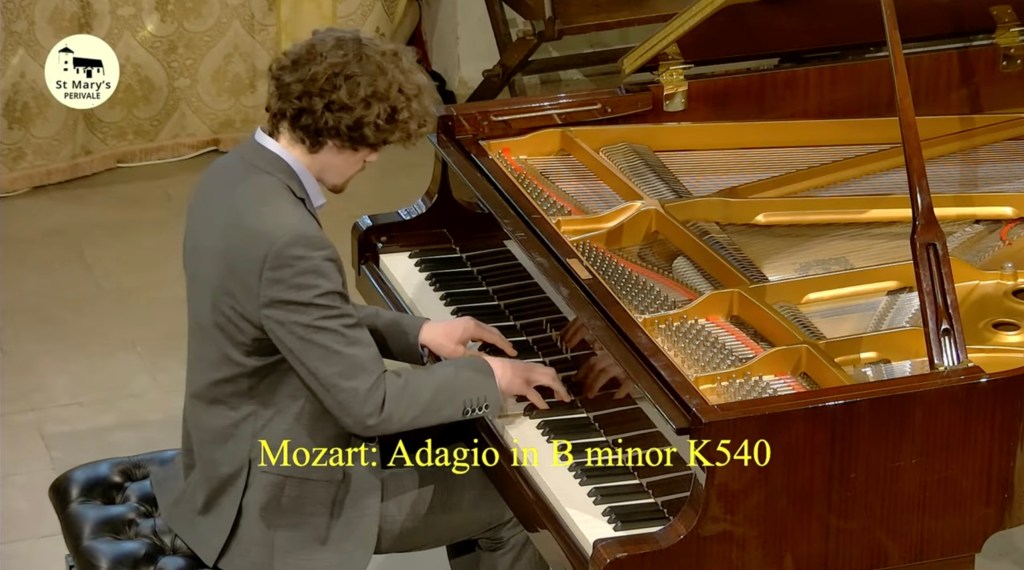
The Adagio by Mozart is a late work of a composer who could say so much with so little. Kyle played with a timeless beauty of refined good taste with exquisite phrasing where notes spoke louder than words. There was an aristocratic nobility of simplicity and poignant chiselled beauty to his playing . Always looking at the keys with extreme concentration as he directed the sounds with masterly assurance and extraordinary control of sound. There was no wasted energy or outward signs of struggle, because the energy was in the notes themselves and was revealed in the deep meaning he could find in Mozart’s few but essential notes. Heartrendingly essential, going right to the centre of the message hidden in the notes by this Universal Genius. There was exquisite phrasing but never denying the power behind the notes which he played with an inner searching intensity.
Three Petrarch Sonnets were poetic outpourings of delicacy and nobility. N. 47 was beautifully sung with a flowing sense of freedom and a balance that allowed the melodic line to glow with radiance and beauty. There was passion too, but dissolving almost immediately into moments of deep introspection and poetic intensity as magical sounds of improvised beauty hovered over the keyboard.
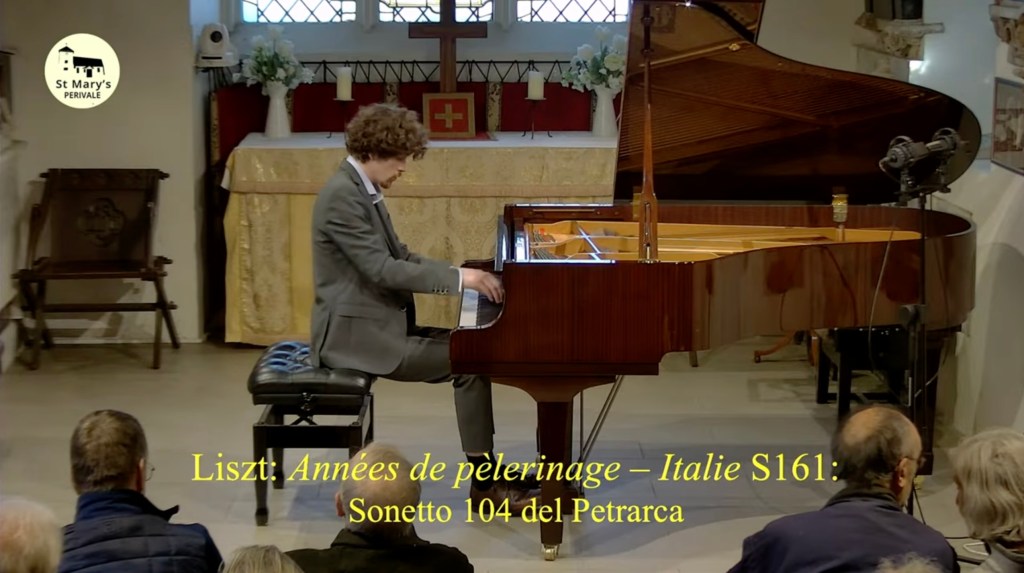
An impetuous opening to 104 dissolving into an outpouring of a single melody accompanied by imposing chords of gentle persuasion. There was a purity to the long melodic line accompanied by florid harmonies leading to a passionate outpouring of scintillating playing of searing intensity, always played with remarkable control and elegance.
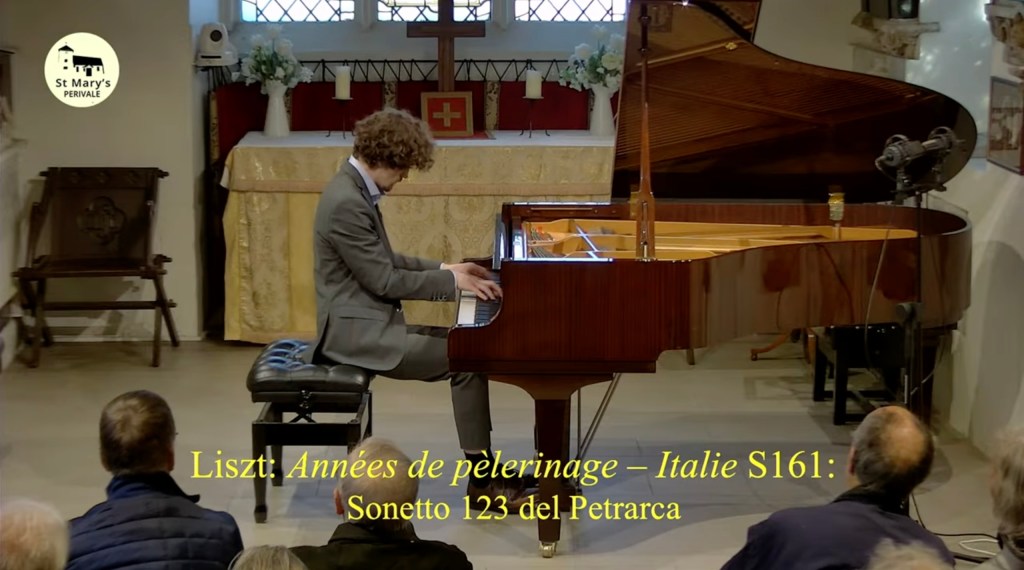
N. 123 had a luminosity of sound building in intensity, with a poetic outpouring as a trill was unravelled to reveal a cascade of notes of ravishing beauty. This is the world that Kyle inhabits, that of whispered beauty where every note is given a weight and meaning that is rare to encounter when played with such control and aristocratic refined good taste.
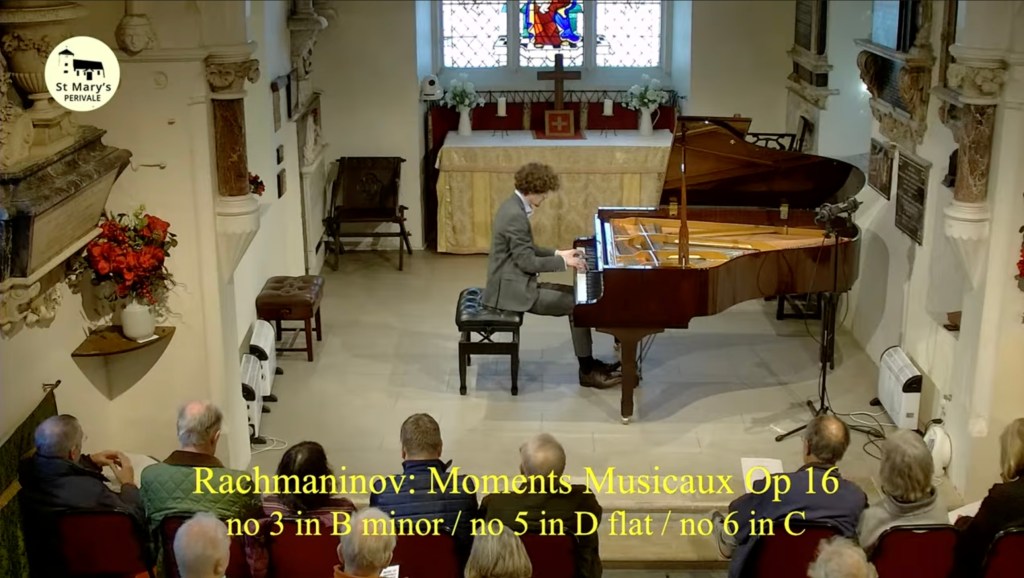
I thought that Rachmaninov might show us another side to Kyle’s personality but he had chosen two of the most intensely beautiful in n. 3 and 5. Rachmaninov’s deep brooding nostalgia and nobility were ever present and played with restrained passion, but with the composers unmistakeable sumptuous Romantic sounds. Tone poems of searing intensity. N. 5 was rather slow and could have had more sweep and be less measured but this is the choice that Kyle’s poetic soul always searches for. There were moments of wondrous colour as the melodic line is accompanied by magical comments, bathed in pedal but always with a clarity and strong highly personal poetic personality. And last but not least N 6 was a passionate outpouring where Kyle’s quite considerable technical command allowed him to play with fearless passion and dynamic drive. Always beautiful sounds even in this sumptuous passionate outpouring of changing harmonies that Kyle played with searing intensity.
Kyle Hutchings is a British pianist who, after just twelve months of self-taught playing, won a scholarship to study in London with internationally acclaimed pianist Richard Meyrick on the Pianoman Scholarships Scheme, supported by Sir and Lady Harvey McGrath. Subsequently, he made his London debut with the Arch Sinfonia, playing Beethoven’s Second Piano Concerto.
Critically acclaimed by International Piano Magazine as “a poet of the piano”, he has performed in venues such as London’s prestigious St. John’s Smith Square, Kings Place, St. James’s Piccadilly, St. Mary’s Perivale, London’s BT Tower, The Lansdowne Club in Mayfair, as part of the Blüthner Recital Series, and many others up and down the country. In addition to this, he is in high demand internationally, having received accolades throughout Europe.
During his studies at Trinity Laban, supported by a scholarship from Trinity College London, he was a recipient of the Conservatoire’s most important prizes, including the Nancy Thomas Prize for Piano as well as the Director’s Prize for Excellence; he was also nominated for the Conservatoire’s coveted Gold Medal.
Kyle is supported by The Keyboard Charitable Trust and has received support from the Robert Turnbull Piano Foundation as well as the Zetland Foundation.
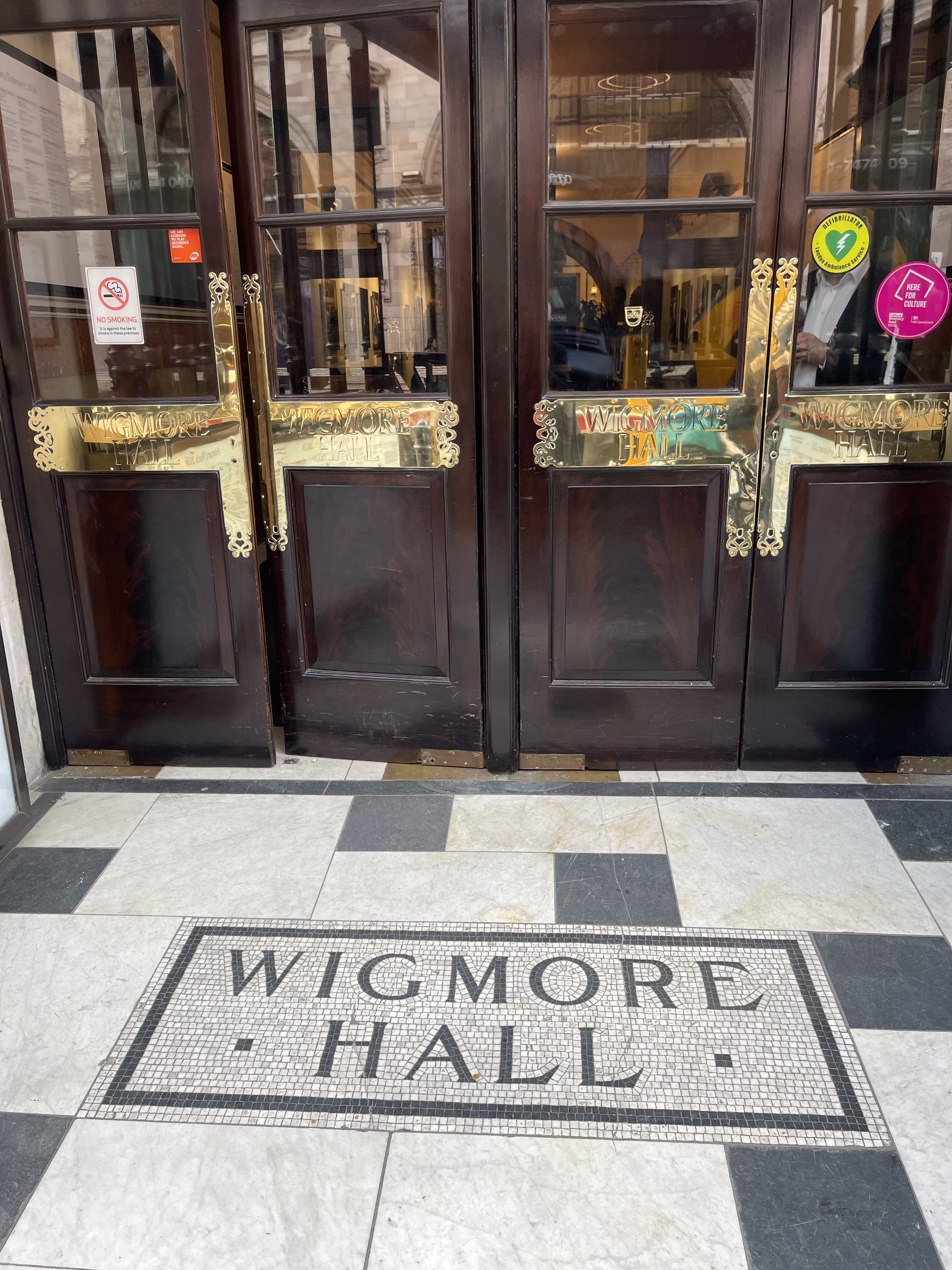
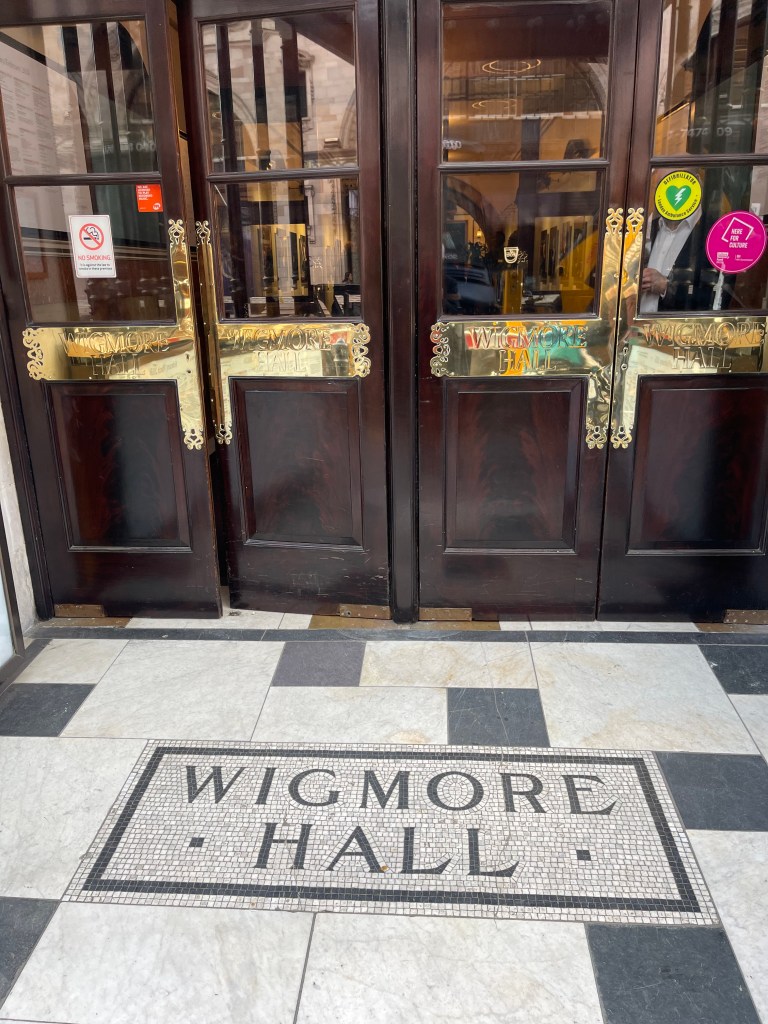
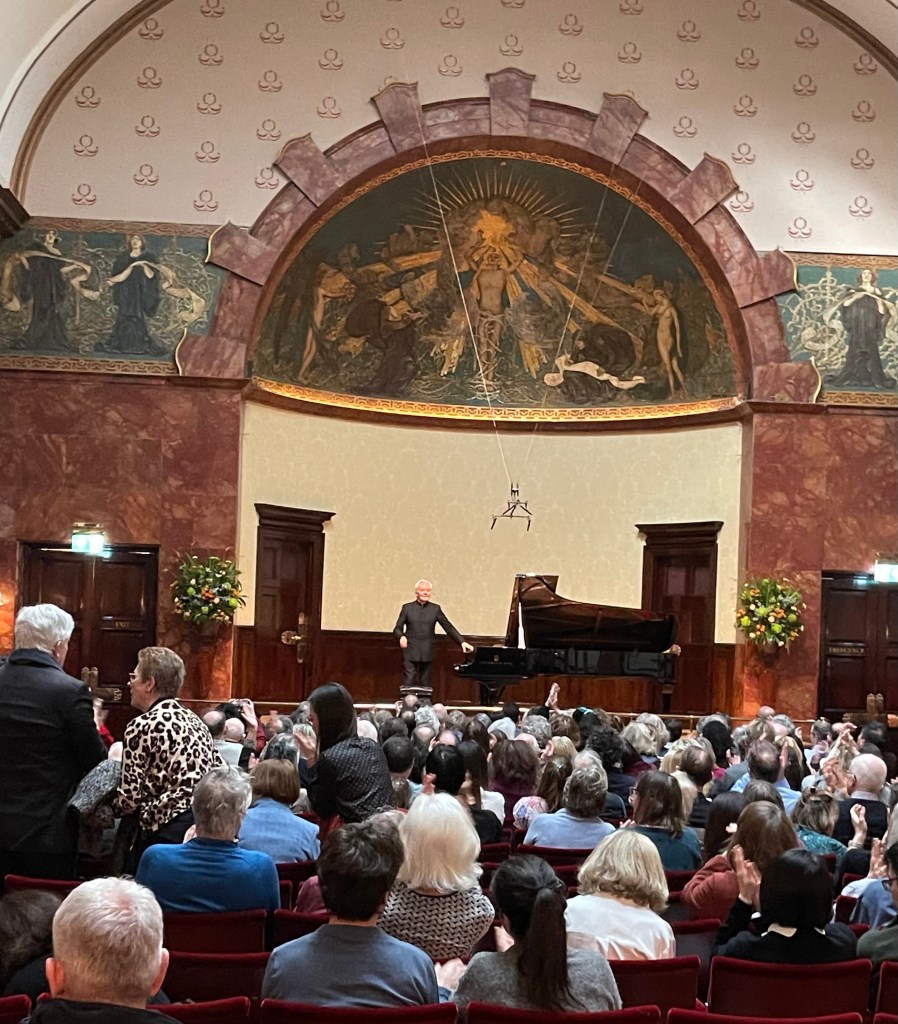
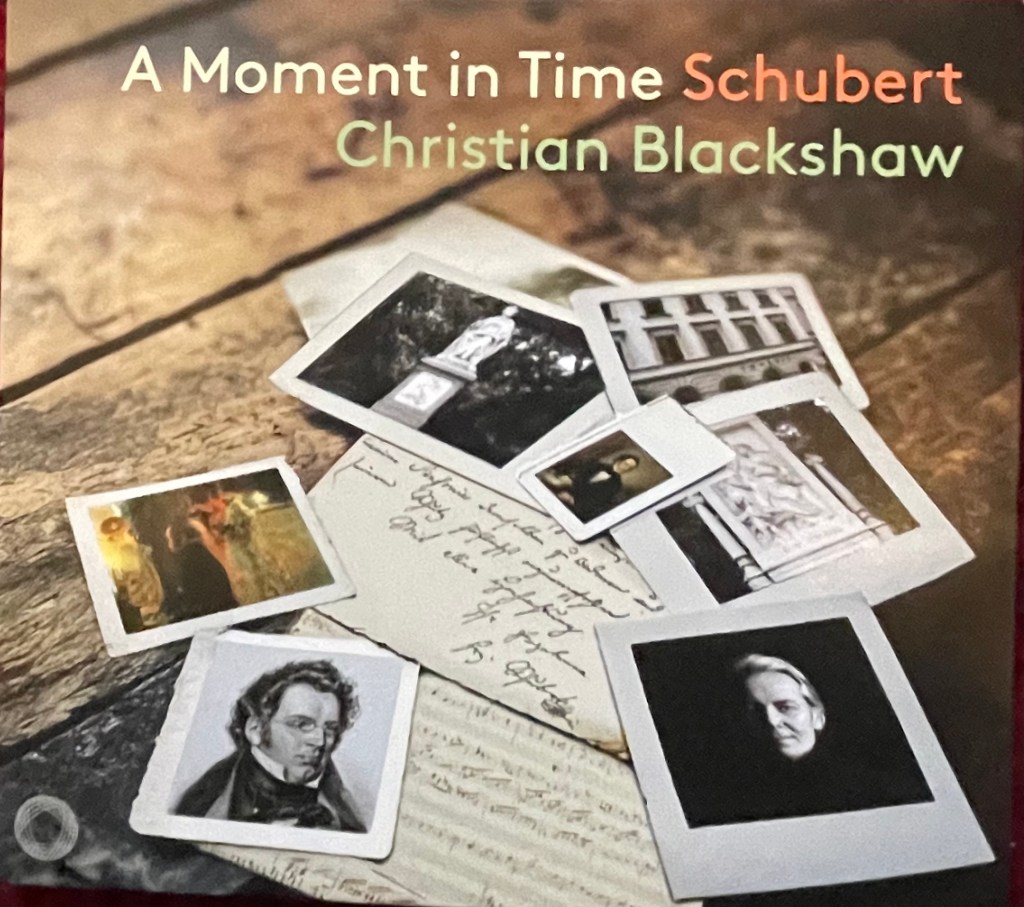
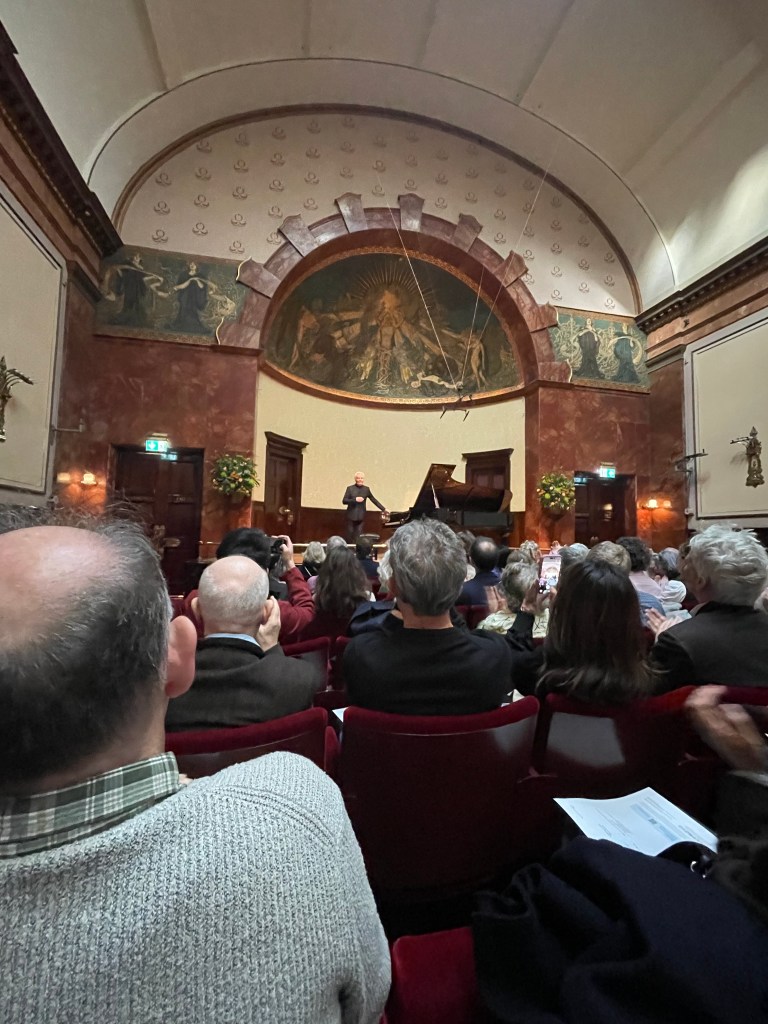
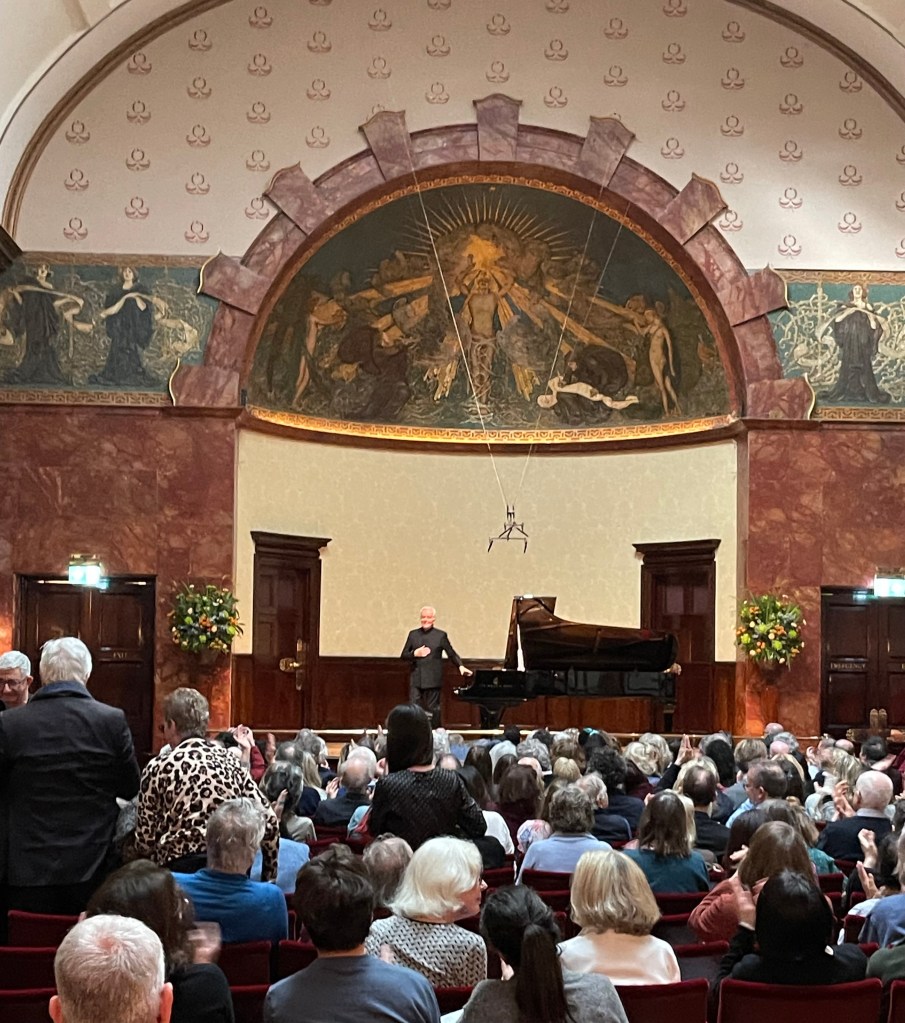
Miracles at the Wigmore Hall as Christian Blackshaw returned to hold us in Schubert’s spell , as I remember only his mentor Clifford Curzon could have done.
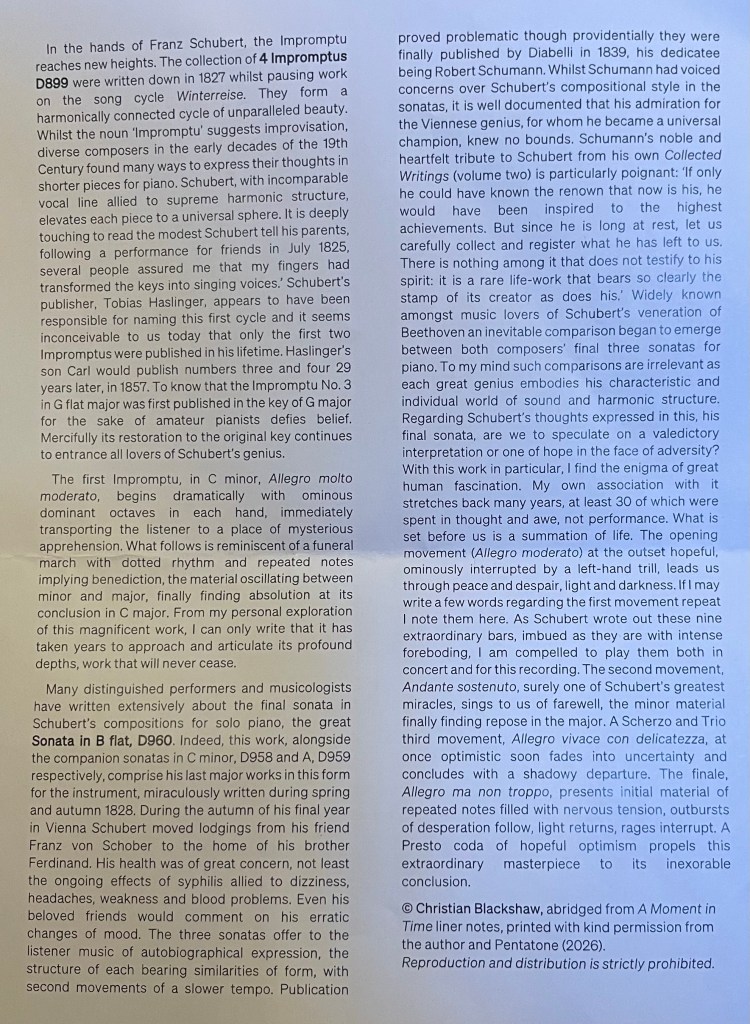
A harrowing story of Schubert’s last sonata told with ravishing beauty and poignant desolation.
As if this was not enough Christian totally seduced us with the G flat Impromptu played with sublime beauty and drama as a wondrous tone poem was allowed to unfold from the miraculous hands of the supreme poet of the keyboard .
It was all through the recital that the note G was heard in so many different guises from the arresting opening of the C minor Impromptu D 899 with it’s almost menacing note of G ringing out in the coda as we finish on a note of hope in C major. It is the same G that Christian played in so many different ways in the last movement of the B flat Sonata .Playing on this occasion, hitting the octave note but then replacing the hand on the key so it reverberated even more, and the second time it came he played it so unassumingly quietly that it became like a reminder that all was not right with the world. Christian has a palette of sounds of quite extraordinary kaleidoscopic inflections and although this was playing of deep introspection and soul searching , a distinguished colleague said ‘when his sounds were full they were ‘Royal”.
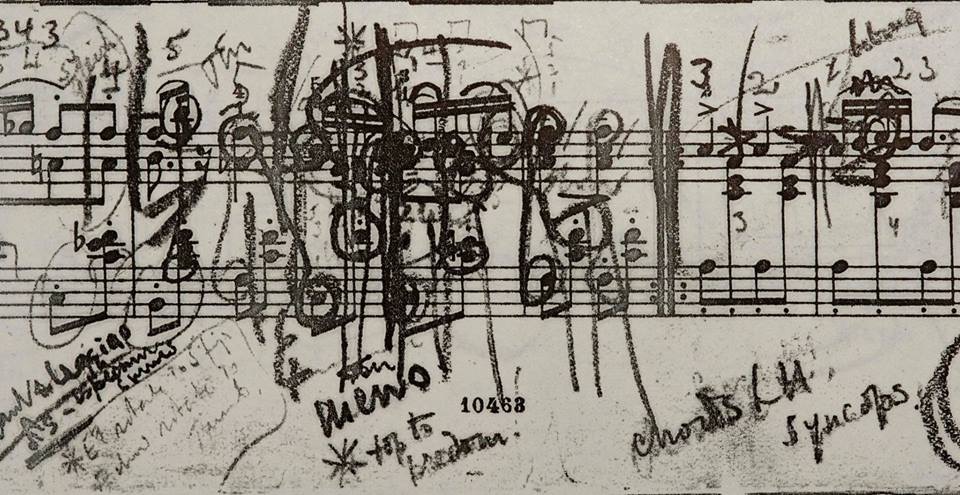
Curzon’s score of the F minor Moment Musicaux
The point is that this was playing of extraordinary depth and imagination where every note had been pondered over and thought and rethought. It is the same dedication that can be seen in the scores of Curzon ,with notes outlined in many different colours and with scribblings like Beethoven in his notebooks. It is an attention to detail, with a search to find the real meaning behind the notes that Schubert could so miraculously envisage as he was about to face death at the age of only 31. The risk, of course, is that this attention to detail can kill the spontaneity of a work, weighing down notes with too much meaning of preconceived ideas, that the spontaneity of creation, whether as a composer or performer, is lost. This often happens in the recording studio and is the reason why I personally prefer recordings of live performances instead of those sweated out in the studio.Take after take and splice after splice until a perfect corpse is left for posterity! I rarely listen to CD’s a second time as it is like a conversation that lives only in that moment. It was Mitsuko Uchida who very wisely said a recording is like a photograph that with age turns brown at the edges, whereas it is the memory of a performance that grows in beauty as one recalls the moment when it was born on ‘wings of song’.
And so it was that I came to the Wigmore Hall to hear a recreation from a deeply introspective artist who has known great difficulty and suffering in his own life and it is the same deep understanding that he can bring to the sounds that Schubert was to find in a moment of great suffering as he faced death.
The first Impromptu D.899 is one of the most difficult of all Schubert’s works, where the composer marks almost every note with precise indications. It was the intense concentration that Christian demands of us listeners, too, that was so rewarding and emotionally exhausting. He managed to bring a spontaneity to a work that I have never heard played with such a range of chameleonic emotions and sounds , but with an architectural shape that made us aware of the opening G allowed to reverberate freely as Schuberts asks, and was now transformed, after passing through a world of emotions , into a whispered warning within the coda. He brought an amazing clarity of voices of very subtle beauty, with an independence of the left hand from the right, both united in creating a beautiful whole. Phrases where one was answered by the other in a conversation of vivid emotional impact .The left hand was the anchor on which the right could float so glowingly.The left hand often non legato, and the right legatissimo ,demonstrating a transcendental technical mastery of art that conceals art in the name of recreation and communication. There was drama too, with glorious ‘Royal’ sounds of symphonic richness gradually dissolving into magical outpourings of glowing luminosity. A teasingly Viennese duet between the voices was played with subtle echoing beauty whilst the left accompanied with playing of a pianissimo non legato that demonstrated a control of sound that was of whispered perfection.
The audience at this point had realised that this spell was to be continued without any banal applause, as Christian allowed Schubert’s last sonata to reveal a lonely voice of desolation, interrupted only by menacing rumourings deep in the bass.(It is the same transcendental control that is required for the opening of Beethoven’s ‘Appassionata’.) The same rumbling sounds in the bass that are unsettling and disturbing before taking wing with a melodic outpouring of glowing luminosity with a mastery of texture of liederistic perfection. The ‘da capo’ bars were made even more ominous as these clouds were replied to with innocent purity. The final great rumble in the bass was even more prominent this time before the repeat , which made the return of the innocent desolate voice of the opening even more poignant. He brought a new rich sound to the melodic outpouring of the development where the seemingly innocent cascades of notes became beseeching cries in the dark. After such a tumultuous journey the chords of the coda were of such a piercing poignancy that they seemed like a stab to the heart , as we bid farewell with the four final chords placed with unearthly delicacy.
The ‘Andante sostenuto’ was bathed in pedal which gave a glowing resonance to the melodic line accompanied by its delicate embellishments The Brahmsian central episode was played with sumptuous rich Philadelphian velvet sounds out of which a melodic line of glowing radiance was revealed as we were led to it by subtle whispered non legato notes in the bass. A refined sense of touch and colour that I have only ever heard from Curzon or Pressler in his glorious Indian summer, where every notes spoke with perfect simple eloquence. Gradually gaining imperceptibly in strength and nobility as we experienced the whispered purity of the return of the opening melody as it resolves to C sharp major with breathtaking audacity and we, the audience, held our breath, witness to such sublime beauty .
The “Scherzo’ entered with whispered tones, never with any hard edges or ungrateful sounds. Schubert, even here marks the score with pianissimi, piano and at most forte piano. Christian brought a beguiling charm of Curzon manufacture to this movement as there was a question and answer played out with charm and simplicity. The ‘Trio’ was beautifully shaped with the sudden pianissimo at the end of the phrase that I had never noticed before, Christian not allowing the melodic line to be interrupted by the strange noises that Schubert asks for in the bass.
What character Christian gave to the last movement ‘Allegro,ma non troppo’ where as I have already said the ‘G’ becomes such an omen of mystery and intimidation. A wonderful sense of dance, but this was indeed with the shadow of a ‘dance macabre ‘ as Schubert’s irrepressible melodic invention takes over leading us to tumultuous climaxes and dramatic interruptions. The hysterical, nervous energy of a Serkin is not part of Christian’s make up ,but there was a nobility and richness that was indeed ‘Royal’ as he brought this extraordinary testimony to us with masterly understanding and supreme poetic beauty.
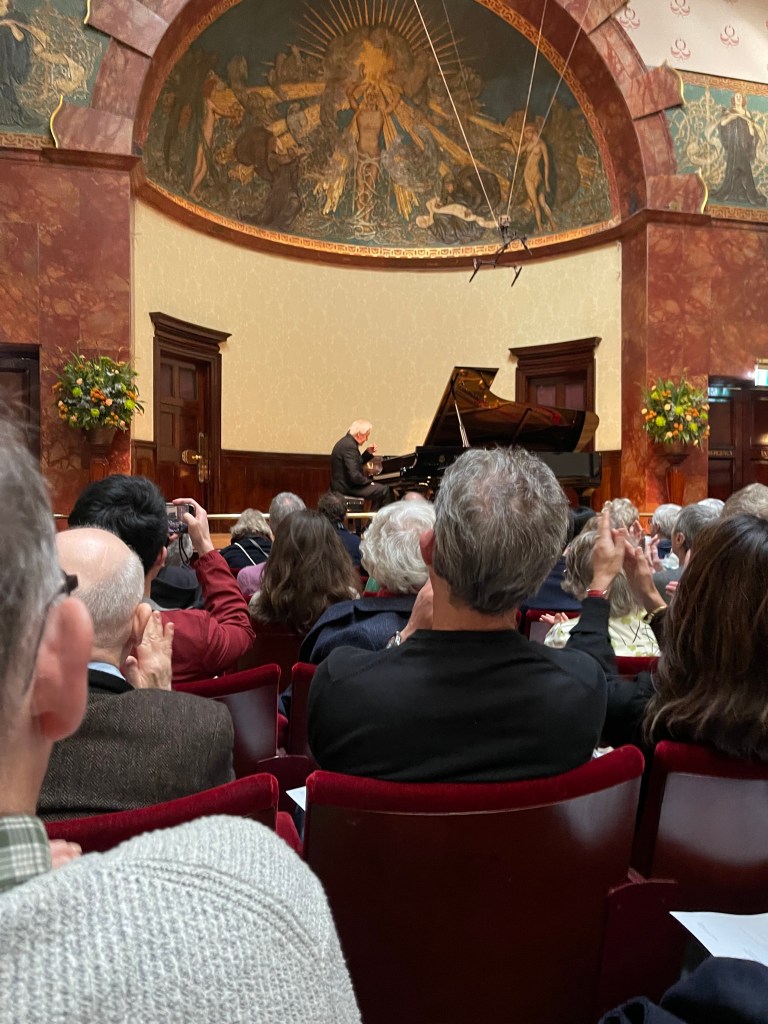
I had assumed that after such concentrated performances, silence would be the only solution, after showing our appreciation with a sincere and prolonged ovation. Christian had decided differently, as he sat at the piano once more and allowed Schubert’s G flat Impromptu to flow from his fingers with the beauty of sublime perfection. It left us all, even more overcome at what had befallen us this Wednesday lunchtime. A feast indeed that will linger in our memory, as Mitsuko Uchida says, and will become more and more beautiful as we think about what beauty we had been witness to today.
photo credit Herbie Knott
A deeply passionate and sensitive pianist, Christian Blackshaw is celebrated for the incomparable musicianship of his performances. His playing combines tremendous emotional depth with great understanding. Born in Cheshire, England, he studied with Gordon Green at the Royal College Manchester and Royal Academy London, winning the gold medals at each. He then became the first British pianist to study at the Leningrad Conservatoire with Moisei Halfin and later worked closely with Sir Clifford Curzon in London.
He has performed worldwide and in festivals as recitalist and soloist with many renowned conductors, including Sir Simon Rattle, Gianandrea Noseda, Sir Donald Runnicles, Herbert Blomstedt, Trevor Pinnock, Neeme Järvi and Yannick Nézet-Séguin and is the founder director of the Hellensmusic Festival which was established in 2013.
His hugely acclaimed Wigmore Hall complete Mozart Piano Sonatas series was recorded for Wigmore Hall Live and released in four volumes. Critics have been unanimous in their praise, describing these “landmark” recordings as “captivating”, “magical” and “masterful”. Volume 4 was named as one of the Best Classical Recordings in the New York Times in addition to Gramophone Magazine’s Top 50 Greatest Mozart Recordings.
Recent notable performances include the Mozart cycle in Tokyo, Beijing, Shanghai, Montreal and Snape, his debut with the Philadelphia Orchestra, in addition to performances in the Schwetzingen, Schubertiada Vilabertran, Lerici, Oxford, Aldeburgh and Edinburgh International Festivals. He was awarded an MBE for services to Music in the New Year 2019 Honours List.
Further appearances are Wigmore Hall London, Toradze Festival Tbilisi, Salle Bourgie Montreal, Palau de la Musica Barcelona, Théâtre des Champs-Élysées Paris, an extensive tour in China and Artist in Residence with Orchestre Métropolitain and Yannick Nézet-Seguin.photo credit Moritz von Bredow https://christopheraxworthymusiccommentary.com/2024/03/20/christopher-axworthy-dip-ram-aram/
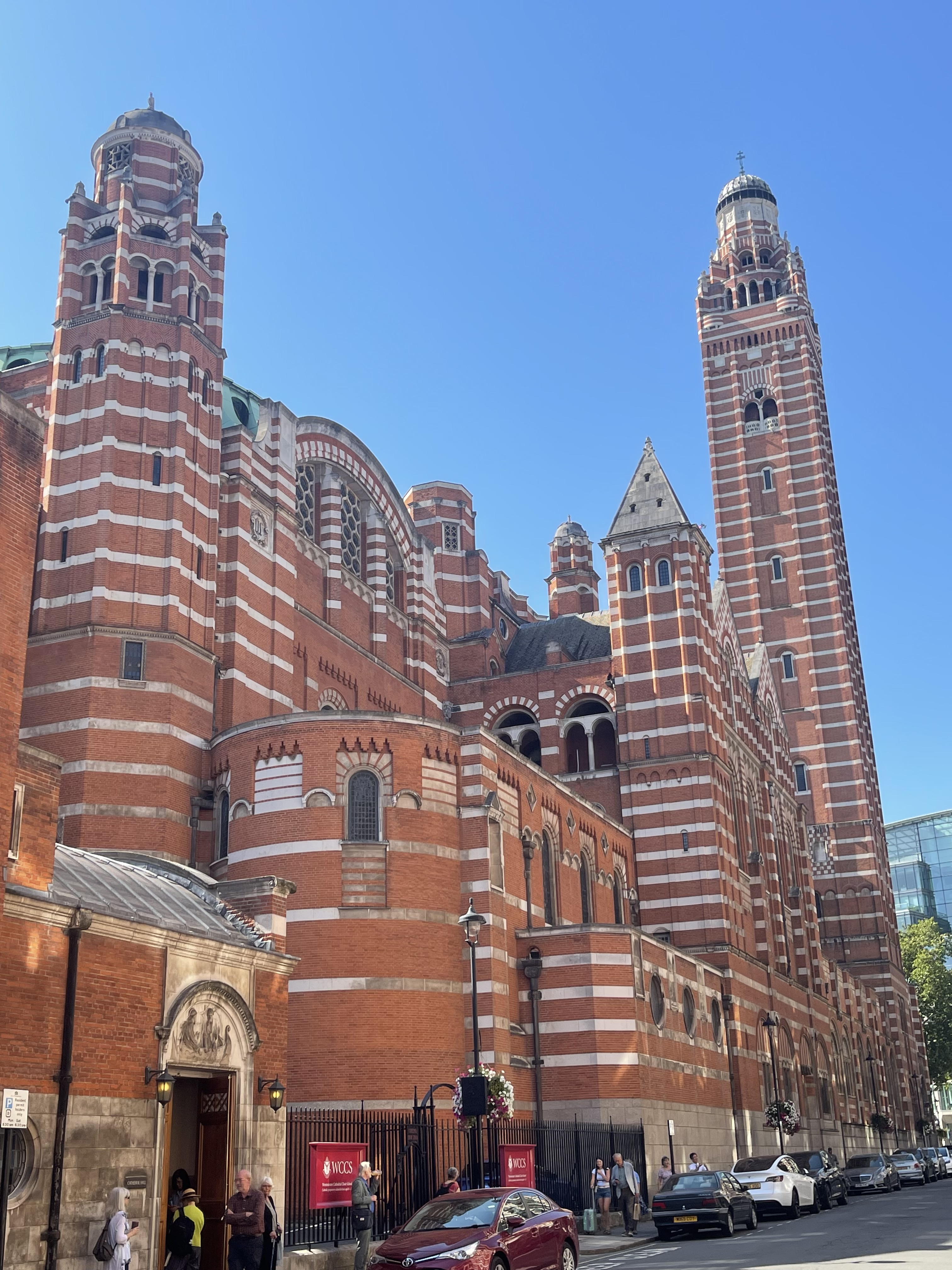
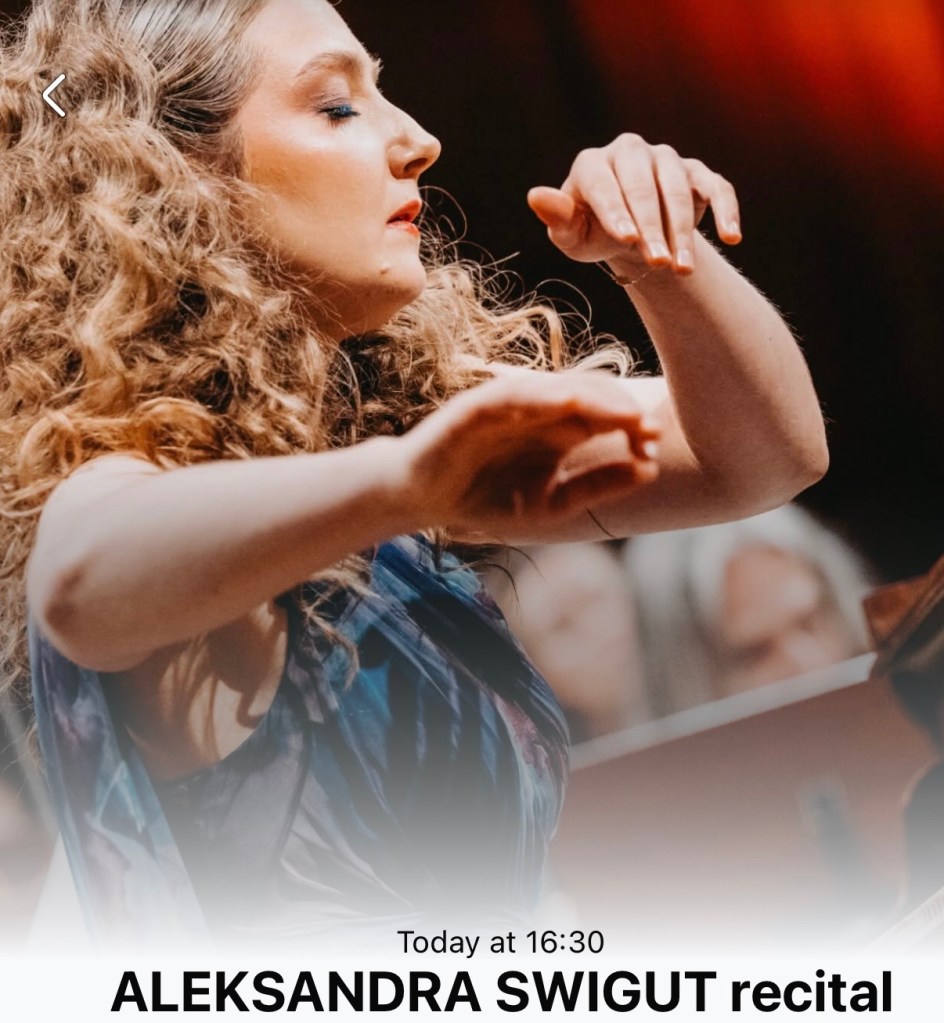
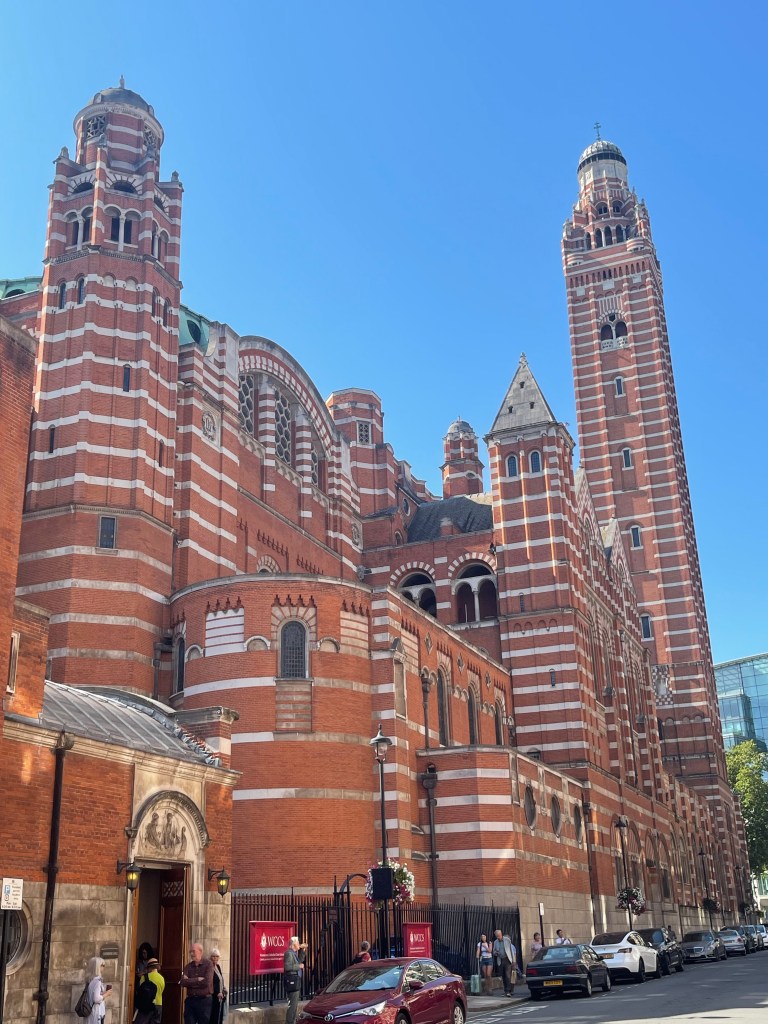
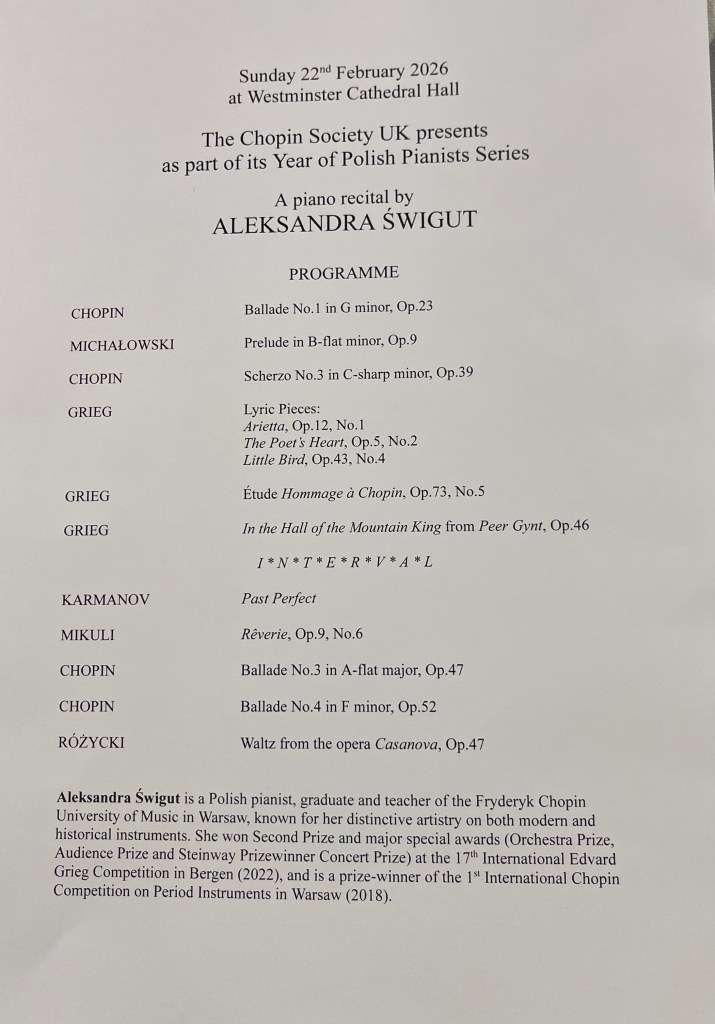
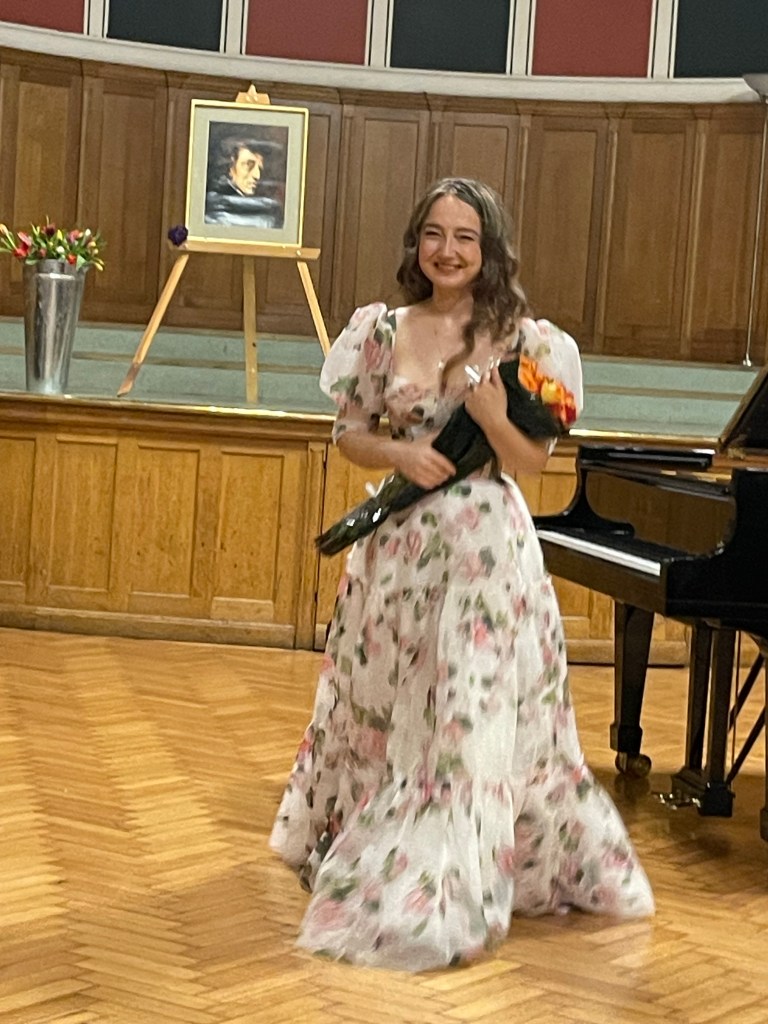
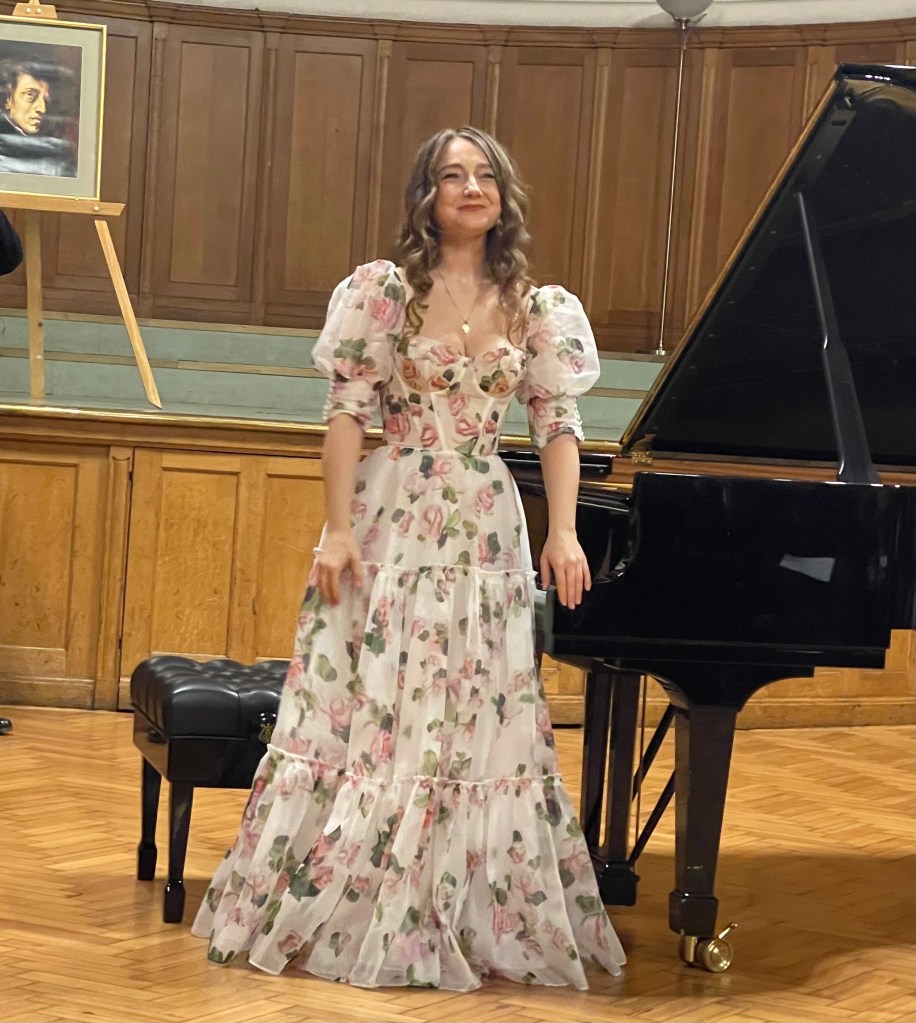
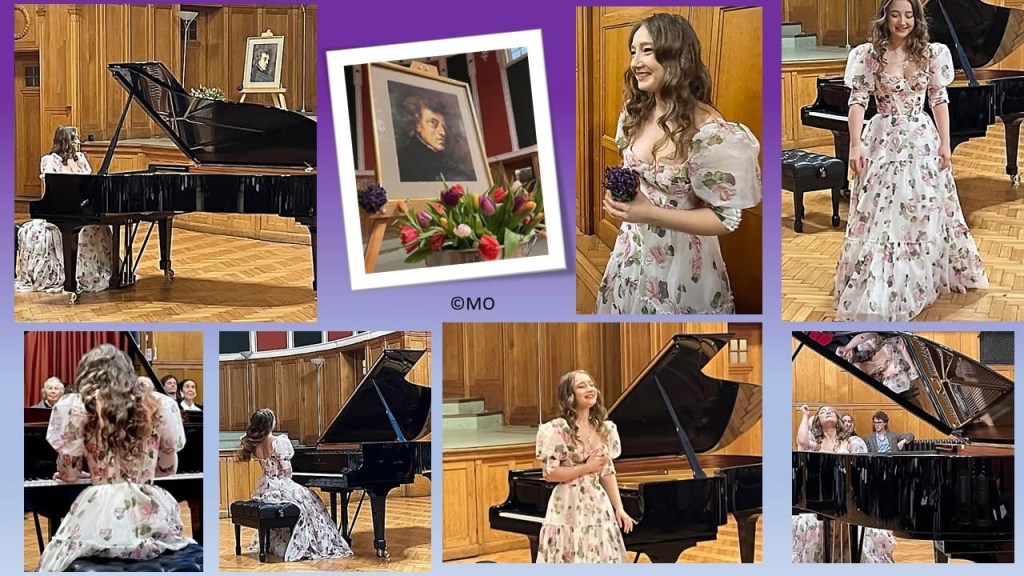
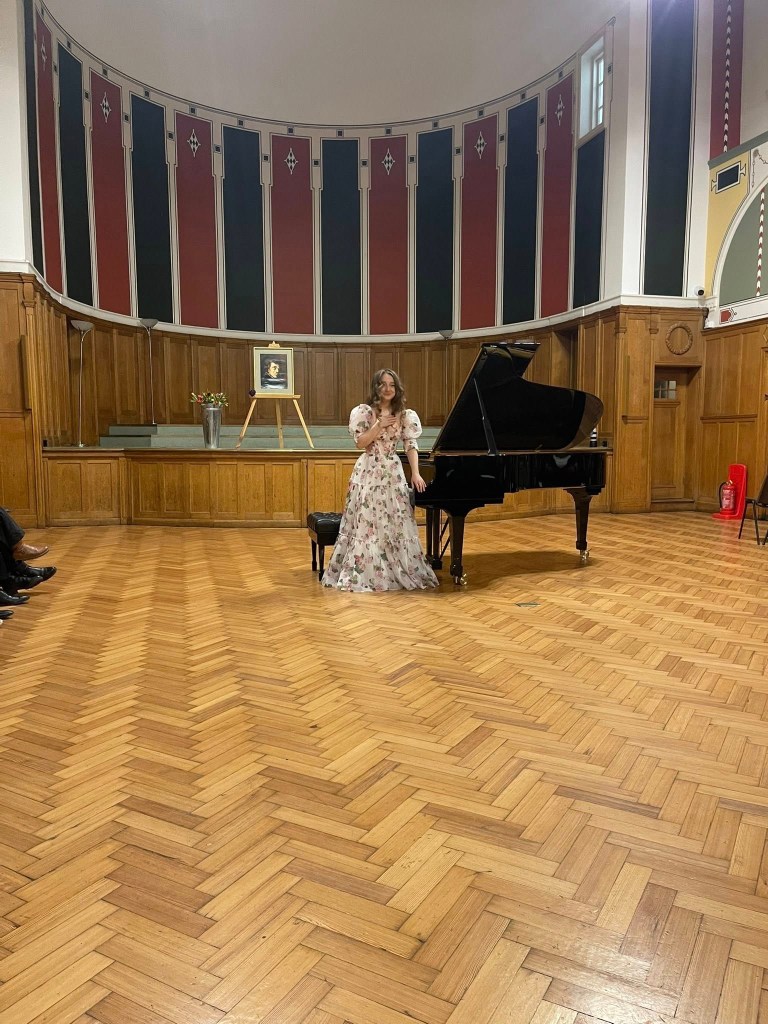
Aleksandra Świgut’s exquisite appearance was matched by equally exquisite sounds that she found in the black and white keys of the Chopin Society’s superb Steinway in Westminster Hall this afternoon. There was nothing black and white about the kaleidoscope of colours that she could conjure from this box of hammers and strings.
Lingering on sounds as she was transported by the magic that her hands could find in each key. An improvised freedom that suited more the miniatures on her programme, especially by Grieg , where I doubt his ‘Arietta’ has ever been played with such whispered radiance. If the larger works consisting of four of Chopin’s greatest works suffered from a lack of architectural shape it was because Aleksandra was delving deeply on a more personal voyage of discovery. Lingering in wonder on certain passages or adding passionate rubati forgetting that Chopin expected his tree to be firmly planted in the ground and only then were the branches allowed their natural freedom.
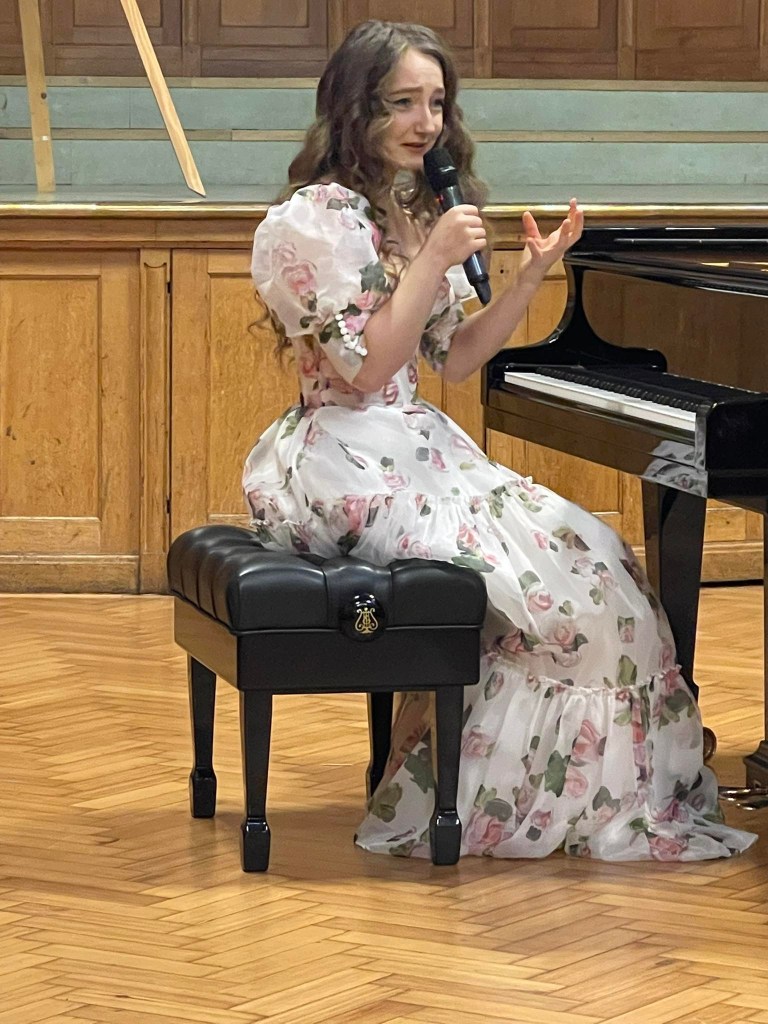
Aleksandra had chosen not only masterworks by Chopin for her London recital, but had included some miniatures by Michalowski, Mikuli, Różycki and Karmanov. Small pieces that Aleksandra introduced to the audience, unfortunately not always audibly, due to the poor amplification system in most concert halls and this is certainly better than most!
However it was her playing that spoke louder than any words and in particular the whispered delicacy of Mikuli’s ‘Rêverie’ or the vibrating sounds of Karmanov’s ‘Past Perfect’ with their Reich type insistence of moving harmonies and undulating sounds of glowing repetition. Michalowski’s ‘Prelude in B minor’ was played with exquisite sounds of ravishing beauty.
Four little pieces by Grieg closed the first half of the programme and are real gems, much overlooked in the concert hall but that Aleksandra’s exquisite playing could bring to life with vibrant beauty. The ‘Arietta’ of radiance and whispered beauty; ‘The Poet’s Heart’ of flowing passionate intensity; the radiance of ‘The Little Bird ‘ or the wistful beauty of ‘Hommage à Chopin.’ The final work by Grieg was the passionate outcry of ‘The Hall of the Mountain King’ and it was here that my Queen Bodicea returned armed with passionate drive and burning intensity, playing with glissandi up and down the keys of fearless abandon . This is the Aleksandra that had so surprised me a few years ago with one of the finest performances of Grieg’s piano concerto that I have ever heard. On that occasion too she had also shown us her ‘Mountain King’ as an encore , where her intimate self effacing innocence and sweetness turned into a demon ready for battle.
photo credit Marek Ostas Chopin Society
The Waltz from Różycki’s opera ‘Casanova’ was really the encore that she had added to the programme after the two final Chopin Ballades. It was played with the beguiling charm and scintillating brilliance and jeux perlé of pianists of a past age. It was an exquisite way for Alexandra to finish a recital that had seduced the audience with her delicacy, charm and chameleonic range of beautiful sounds.
photo credit Marek Ostas Chopin Society
Her Chopin playing whilst of exquisite playing contrasting with a passion of almost frightening audacity, it belongs to a tradition where the strength and nobility of Chopin are confused with the improvised charm and intimate beauty of a frail sickly aristocratic pianist of refined good manners. It is a tradition that was challenged by Rubinstein and Lipatti who brought aristocratic beauty but also strength to Chopin who is often overlooked as a master of form. His B flat minor sonata may have been described by Robert Schumann ‘as four of Chopin’s maddest children under the same roof’ or his wife Clara describing Liszt’s B minor Sonata as ‘merely a blind noise’. These supreme masterpieces have since been recognised as works of innovative genius .
Alexandra played Three Ballades n.1/3/4 and the Third Scherzo with exquisite beauty and at times fearless passion but her constant rubati and changes of tempi disturbed the architectural shape and reduced these works to a series of beautiful unrelated episodes. I have never seen the final scale in the A flat Ballade played with such alternating hands or additions to a scale that is simply a noble descent from the top to the bottom of the keys with one arm movement as Chopin so clearly marks in the score. The opening of the Fourth ballade was breathtakingly beautiful but then the theme was varied before she got to the variations. The opening of the First Ballade was also ravishingly beautiful but then she got distracted by searching out beauty and secret phrasing where we lost the vision of Chopin’s early mastery, lost in a wood where Aleksandra could dwell and enjoy every angle but could never really find her way out except by chance.The Third Scherzo opened with great poetic fantasy but then the passionate vehemence that followed was overpowering and unrelated to the beauty of the chorale that followed . Exquisite streams of notes accompanied the chorale that I have rarely heard played with such glistening beauty but the coda seemed strangely out of place and totally unrelated to the majesty and nobility of this Scherzo. More in tune with a Mountain King than the aristocratic Prince of the Keyboard .
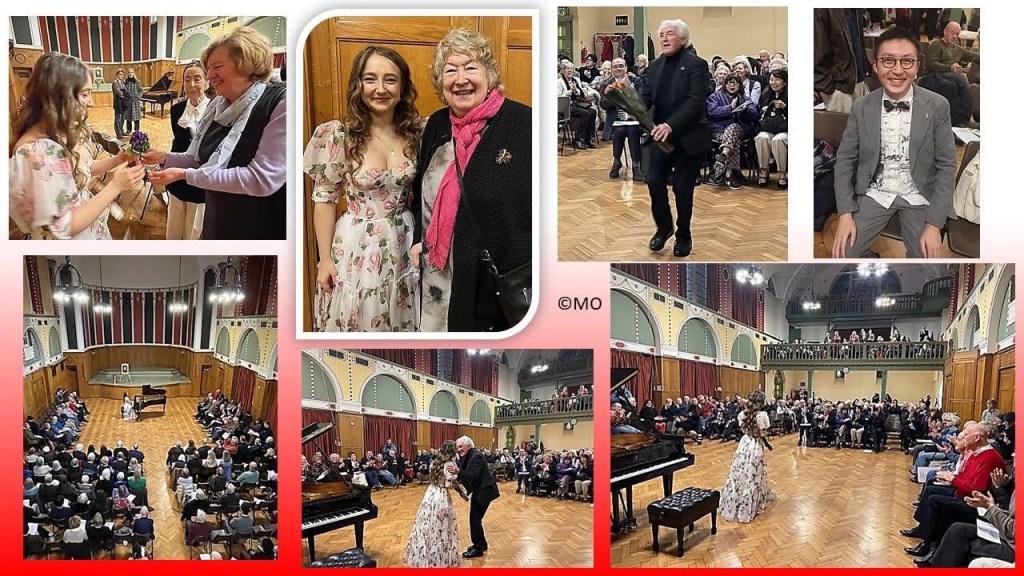
Surrounded by admirers, including myself armed with Roses , who enjoyed the ravishingly beautiful playing from a charming young artists who obviously is in love with the piano.
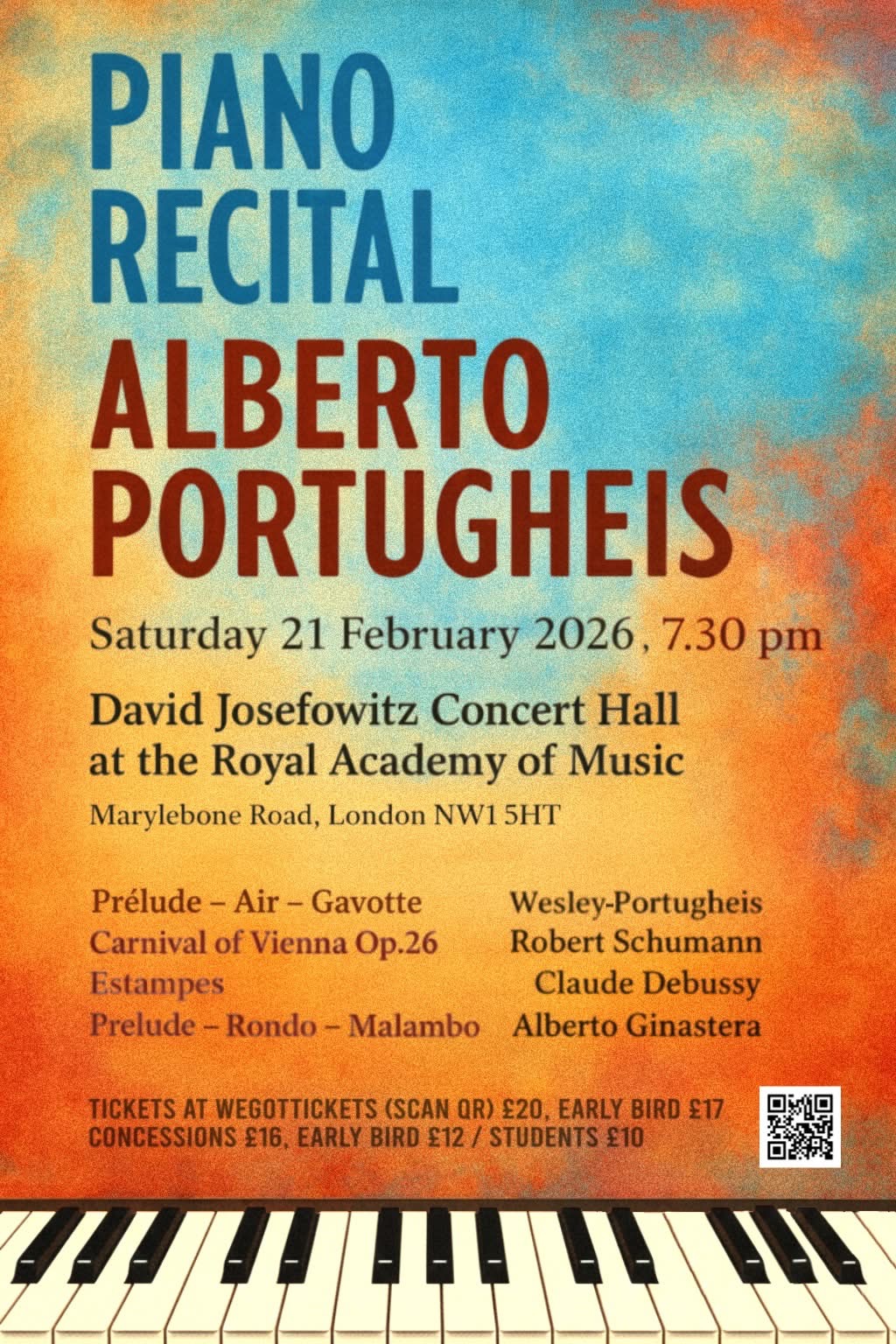
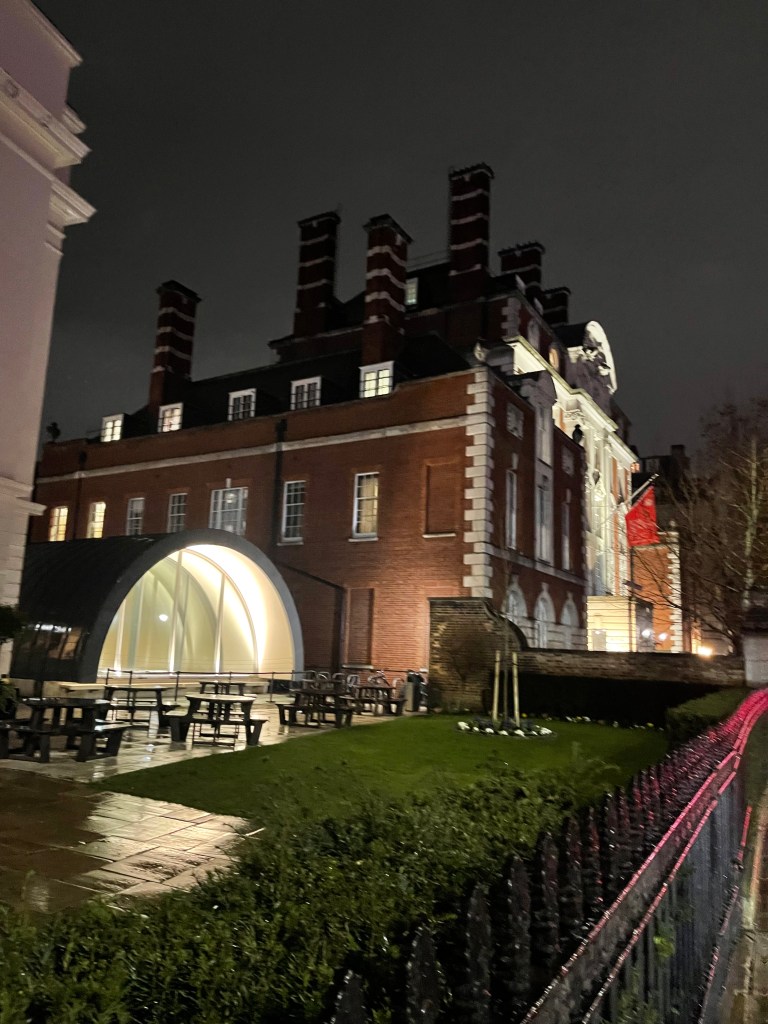
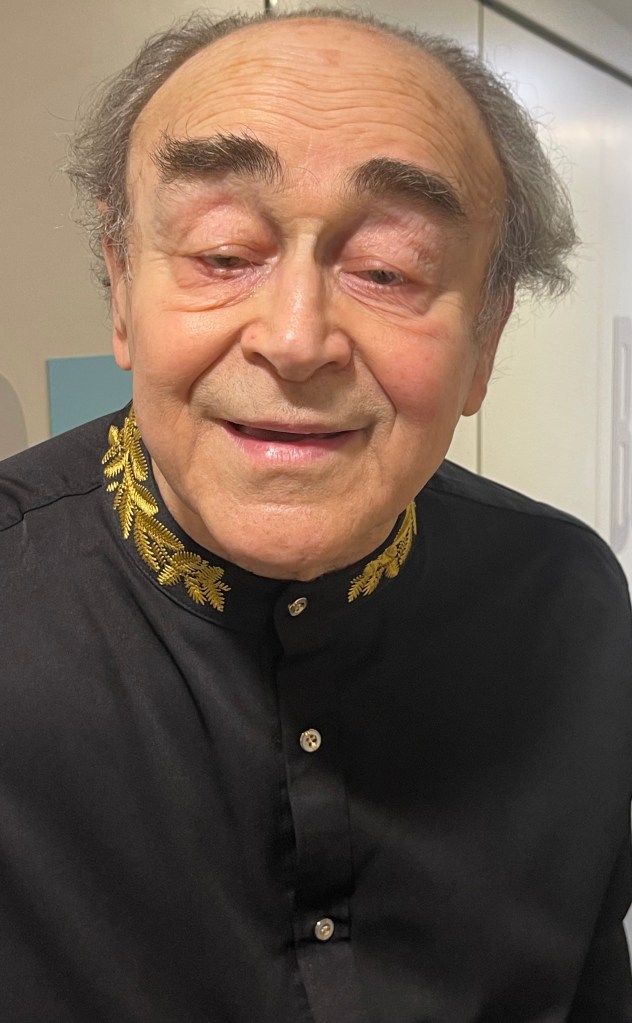
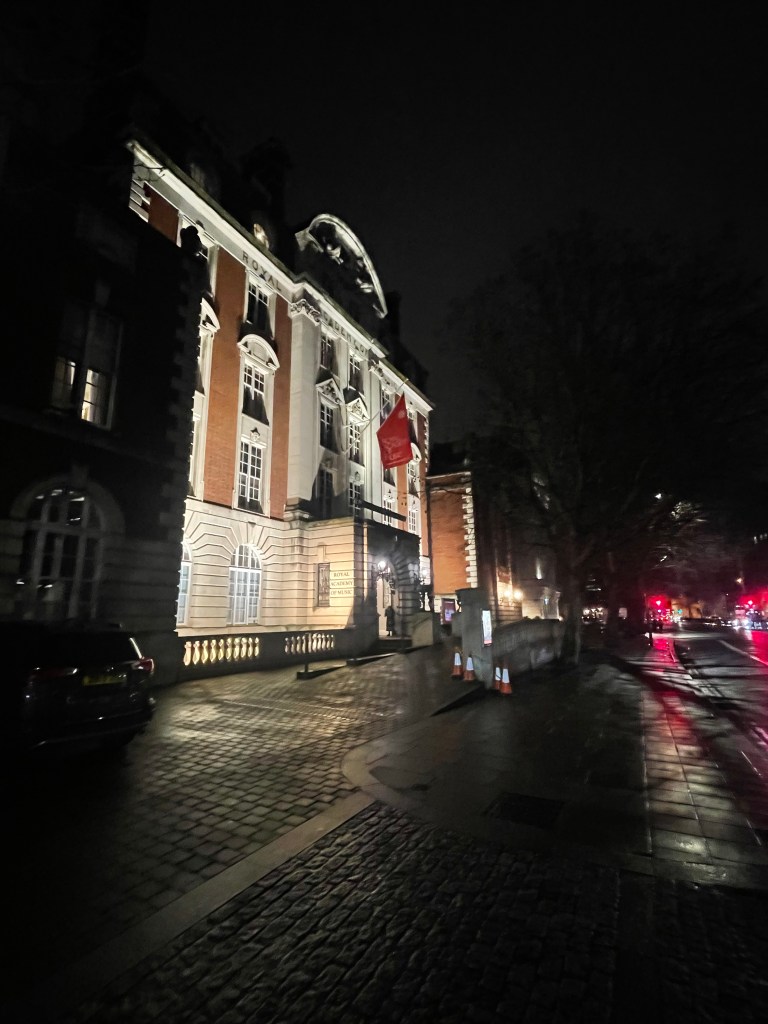
The amazing 85 year old Alberto Portugheis astonishes and amazes at the Royal Academy of Music in London.
An eclectic Renaissance man dedicated to the discovery of beauty, with a life of trying to convincing the world powers to put aside their arms and embrace a world of beauty and wonder.
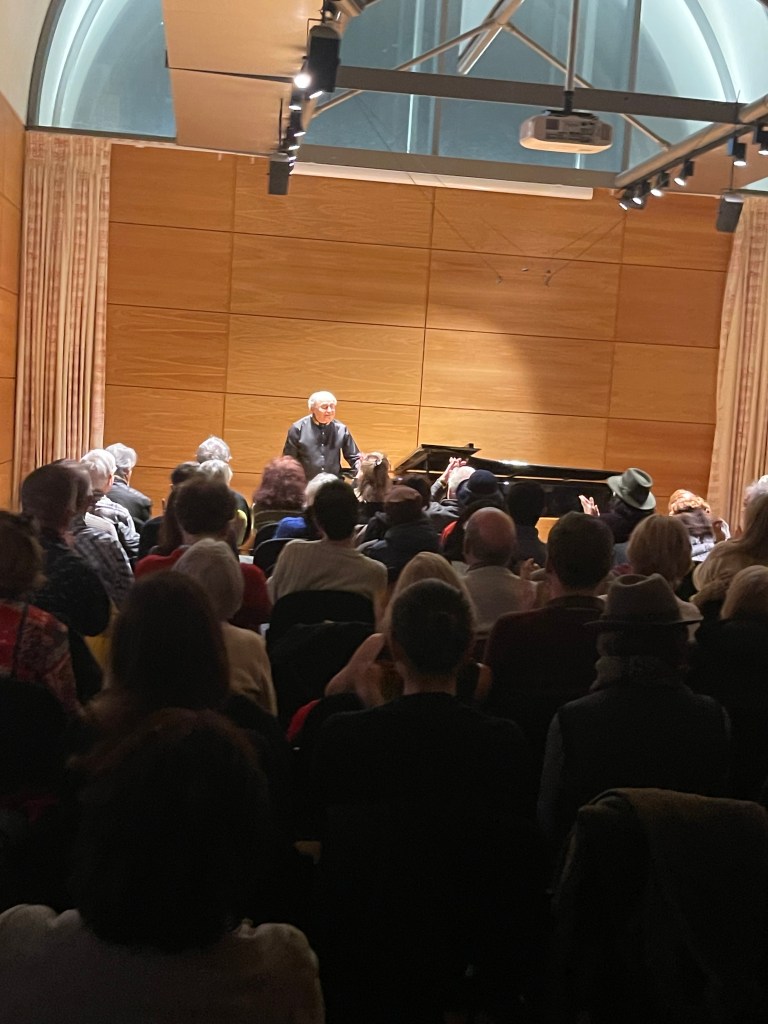
Defying time with a long and difficult programme played by memory to a capacity audience who had battled with the elements to applaud this remarkable man.
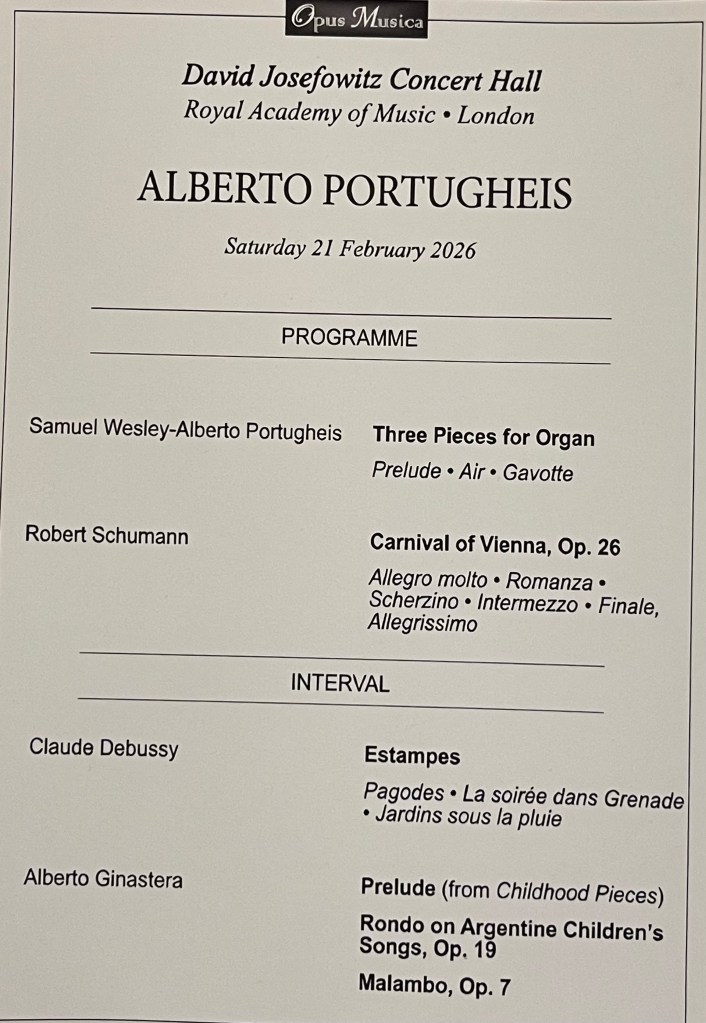
The programme began with Alberto’s own arrangement of three pieces for Organ by Samuel Wesley. “Prelude – Air – Gavotte’. A Prelude of chiselled beauty of nobility and grandeur with deep bass resonance adding such depth to the sound. An ‘Aria’ of simple purity and poignant beauty where Alberto was visibly moved by such beauty as he delved deeply into the very core of creation. It was followed by a ‘Gavotte’ that was imbued with all the charm and grace of a noble age. It was not specified if this work was by the father or the organist composer son Samuel Sebastian, but I happily assume it was by the father, who in his day was known as the ‘English Mozart’.
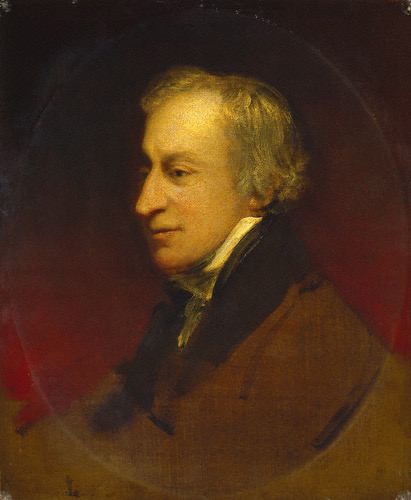
Samuel Wesley 24 February 1766 , Bristol – 11 October 1837 Marylebone, London (aged 71) He had 7 Children including the organist Samuel Sebastian Wesley .He was known as the ‘English Mozart’ and was buried in St Marylebone Parish Church that sits opposite this Royal Academy of Music.
In 1784, Wesley privately converted to Roman Catholicism , to the dismay of his uncle John Wesley. His hymnodist father expressed his opinion in the following words:
While ready and resolved is he to plunge into the dark abyss And cast his soul away That poison of the Romish sect O let not his soul infect
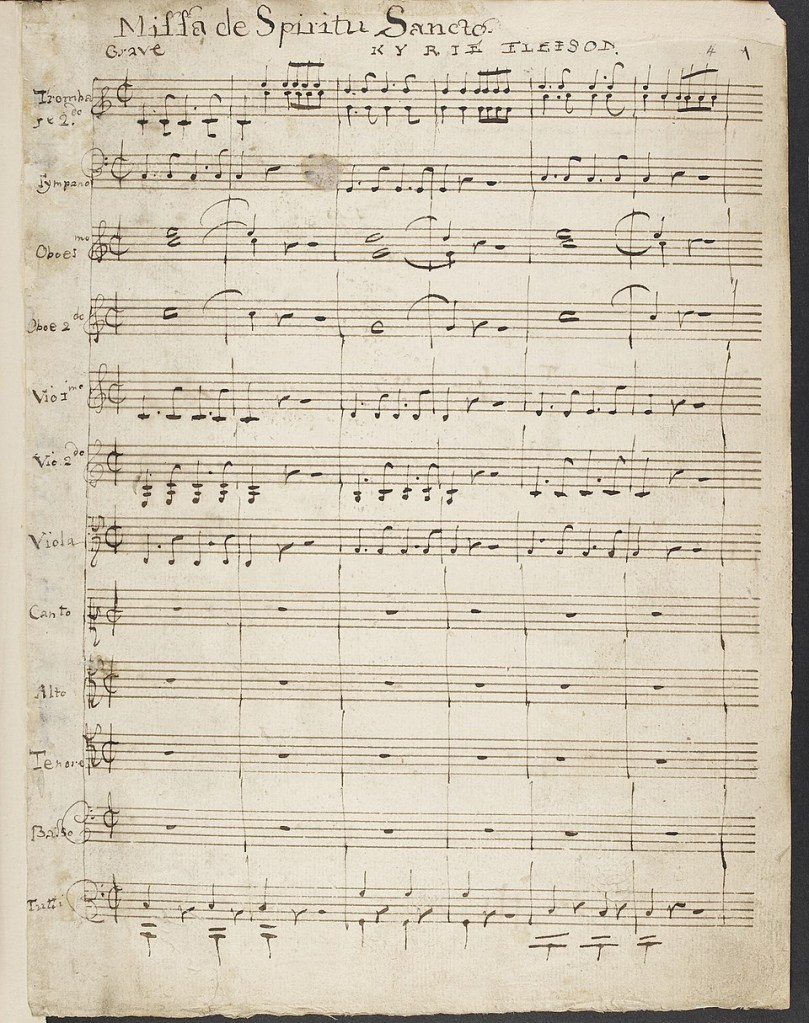
To celebrate his conversion, Samuel composed an elaborate Mass , the Missa de Spiritu Sancto, dedicating it to Pope Pius VI , but according to his obituary, he may subsequently have denied any conversion. Samuel had informed his mother of his philosophical conviction that his marriage had been constituted by sexual intercourse, precluding any civil or religious ceremony, but after a scandalous delay he married Charlotte Louise Martin in 1793, and they had three children. This marriage broke up with Charlotte’s discovery of Samuel’s affair with the teenage domestic servant ,Sarah Suter. Samuel and Sarah never married but had four children amongst whom, Samuel Sebastian Wesley (1810–1876) who was a cathedral organist and notable composer. However, much of father Sebastian’s work was published at the time of composition and then forgotten, and so copies of these works are rare and mostly unavailable in modern performing editions. A considerable body of work exists in manuscript only.
Missa de Spiritu Sancto, in Wesley’s hand
Wesley’s compositional style was eclectic, with influences from the late Baroque era, Classicism and, later, early Romanticism.
An eclectic choice and noble opening to a programme that continued with the ‘Jest’ that was to be found in Schumann’s ‘Carnaval of Vienna’ ! It was played with great conviction and aristocratic forward movement.The long ‘Allegro molto’ interrupted with such eloquence by episodes of beguiling beauty and even with questioning chords where Schumann quotes ‘La Marseillaise’, that Alberto played with fervent conviction! He brought a poignant cry of simplicity to the ‘Romanza’ that he played with an improvised freedom, before embarking on the sparkling ebullience of the ‘Scherzo’ , played with a teasingly rhythmic drive. The ‘Intermezzo’,the very heart of this work, was played with searing passion and great emotional participation and the ‘Finale’ was where Alberto could finally let his hair down and play with even more character and driving intensity.
He brought a radiance and oriental beauty to ‘Pagodes’, the first piece of Debussy’s ‘Estampes’ .A great resonance with long held pedals, as gongs were heard within the midst of this etherial web of sounds. Building to a passionate declamation where notes were revealed cascading out of this outcry as they spread over the entire keyboard with atmospheric strands of melody intertwined with a fantasy that Alberto imbued with poetic atmospheric meaning.. He brought a nostalgia and languid beauty to the haunting ‘Soirée dans Grenade’ and a jeux perlé of brilliance to ‘Jardins sous la pluie’. It was here that he could combine two folk melodies, the lullaby “Dodo,l’enfant do” and “Nous n’irons plus au bois parce qu’il fait un temps insupportable” (We will no longer go to the woods because the weather is unbearable). Playing of simple innocence as the incessant rain reminded us of what was awaiting for us outside, after this delectable feast of music that had drawn us in, out of the ‘woods’ today.
Three works by Ginastera were of course played to the manner born . A very early ‘Prelude’ and a Rondo op 19 all reminders of Alberto’s own youth when he actually studied these pieces with the composer. Finishing this delectable feast of music with the Latin frenzy and drive of Malambo op 7.
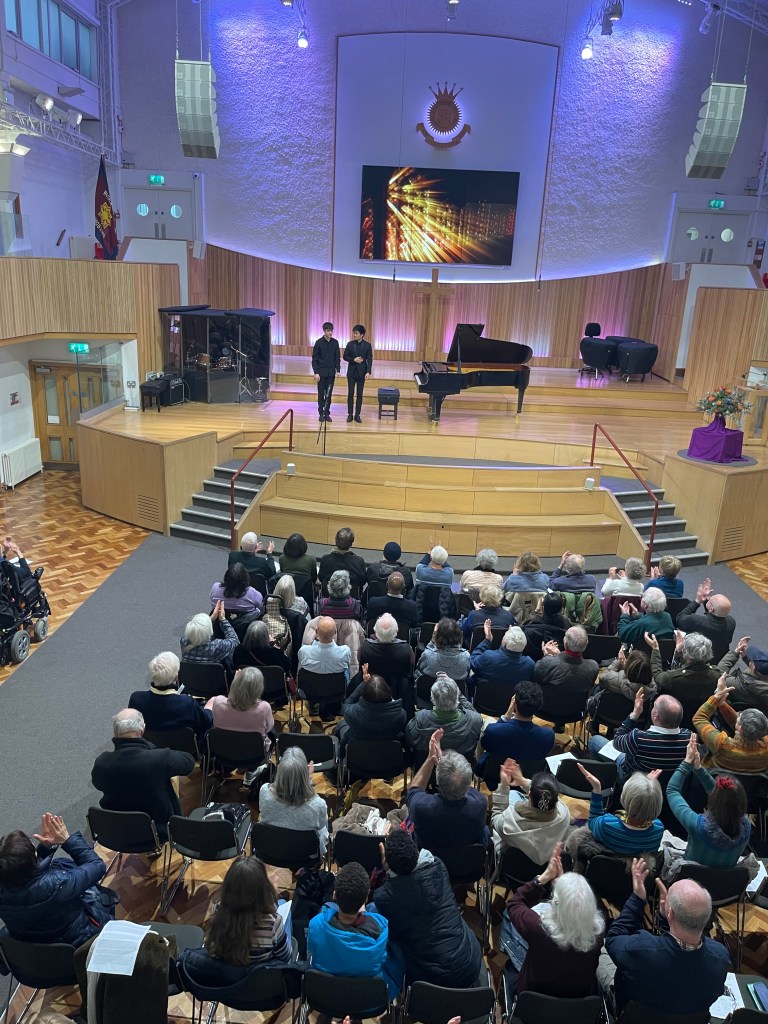
A heartfelt standing ovation from an audience who had come to thank a friend who has dedicated his life to others with such generosity and warmth.
As Alberto said, he would finish with a piece from the other side of the world with a ‘canon’ covered in flowers by the greatest poet of the piano, Frédéric Chopin. A simple Mazurka played with fervent meaning from the hands of a great man of integrity, humanity and above all peace!
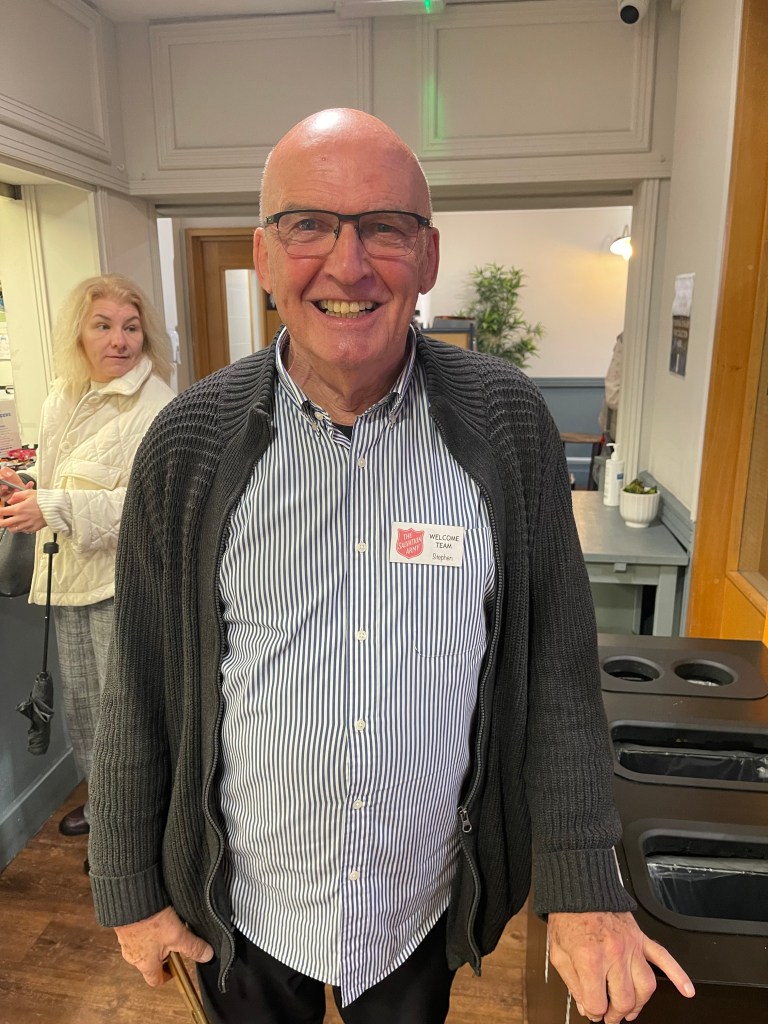
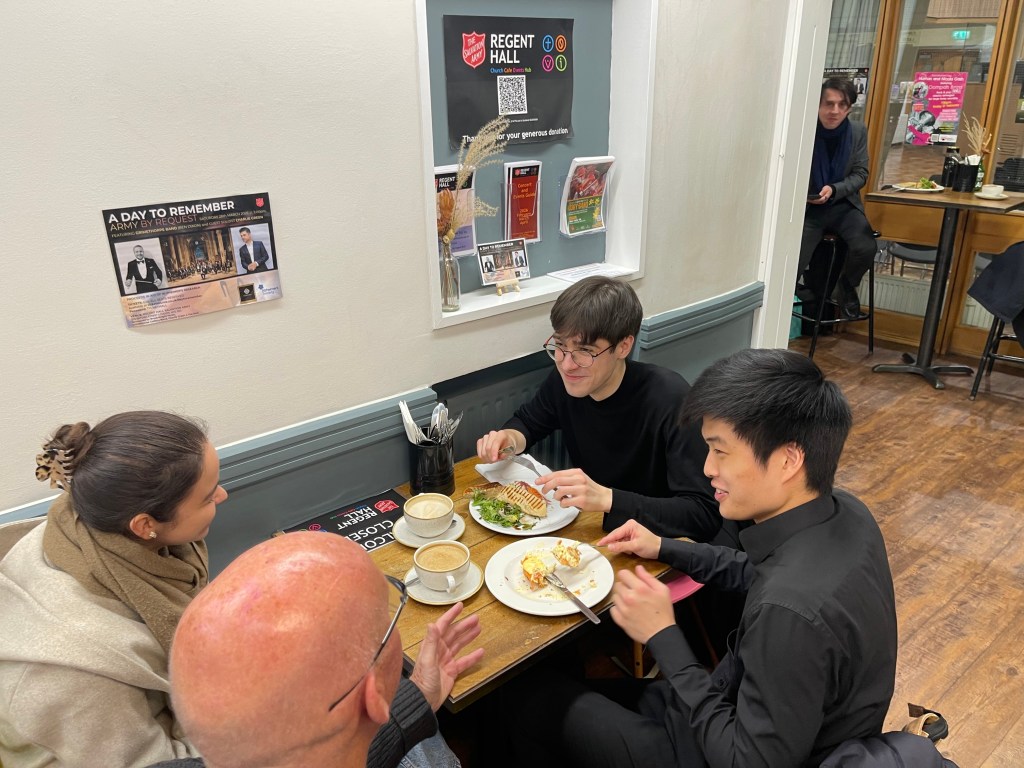
Vitaly Pisarenko in discussion with Stephen Maw Stephen Maw ex concert bassoonist and now indefatigable concert organiser at Regent Hall and Charlton House
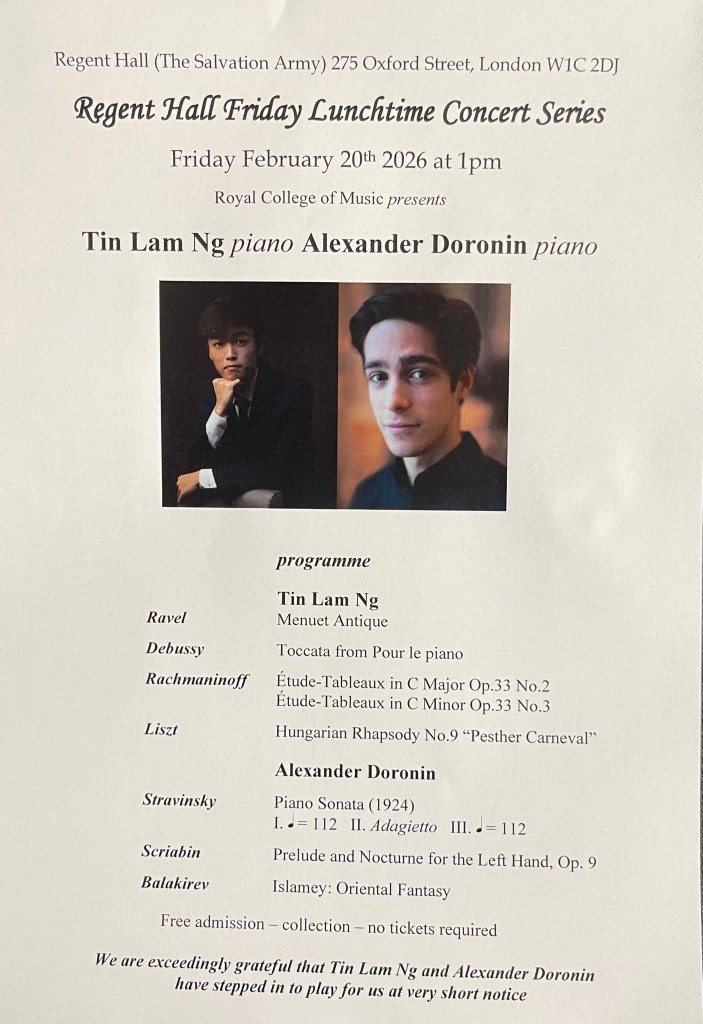
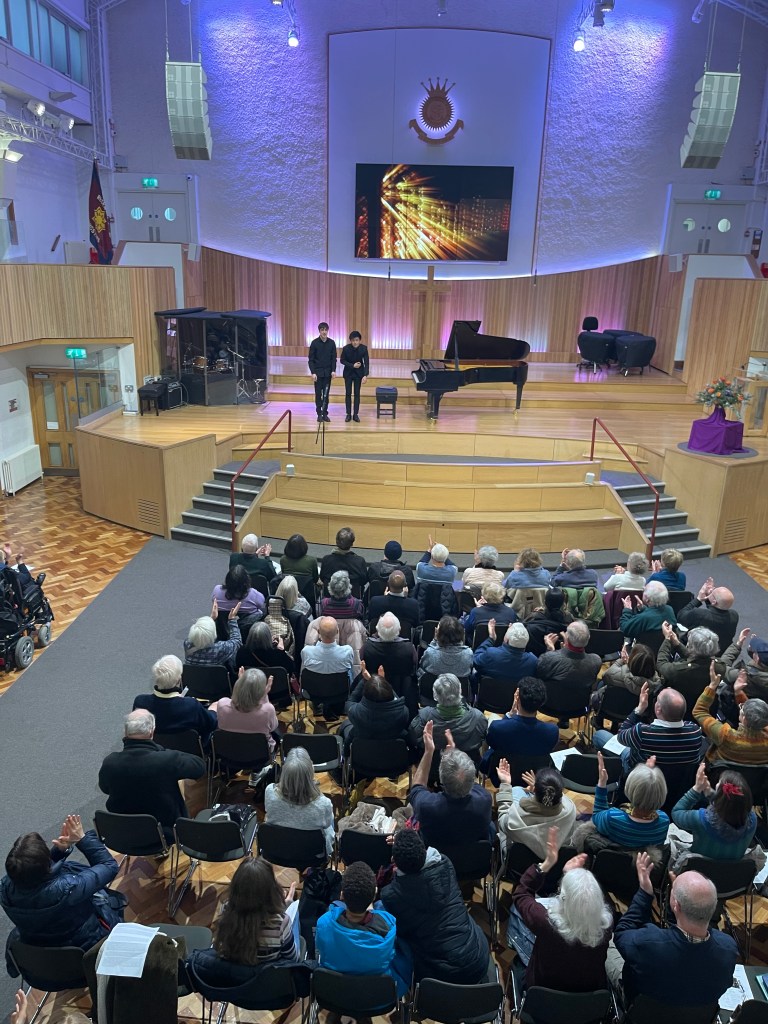
A last minute substitution brought two stars to Regent Hall .
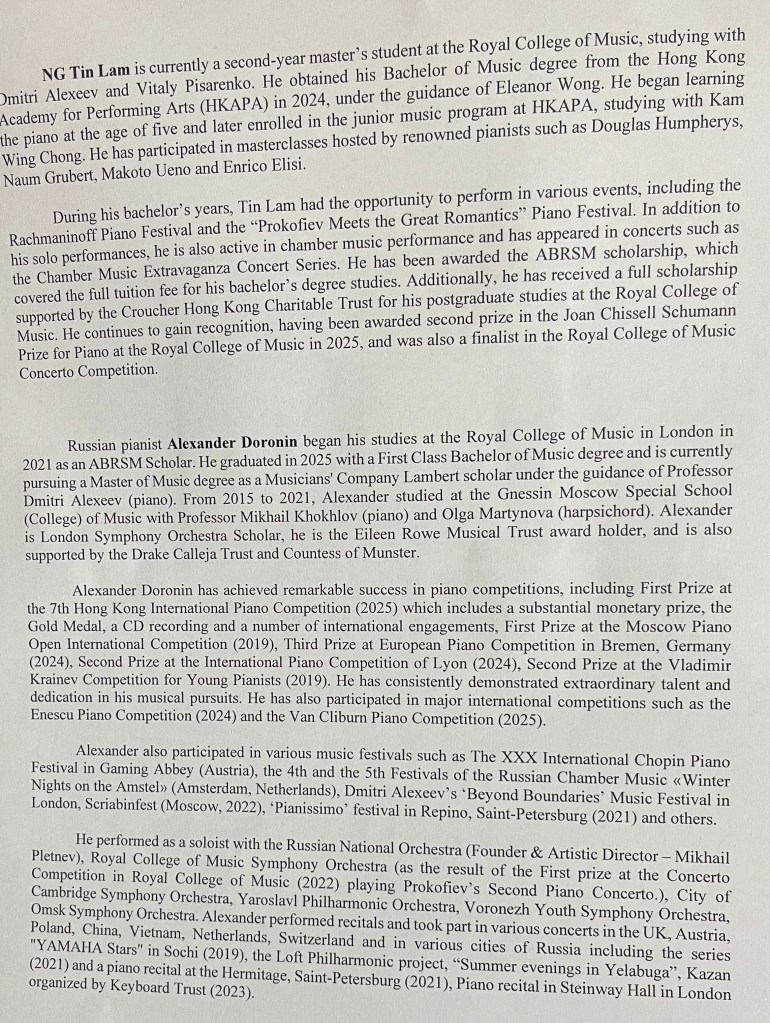
One from the class of Eleanor Wong in Hong Kong and the other the winner of her International Piano Competition.
Both now perfecting their studies at the Royal College of Music. Alexander Doronin under the guidance of Dmitri Alexeev and Tin Lam Ng with Alexeev together with Vitaly Pisarenko.
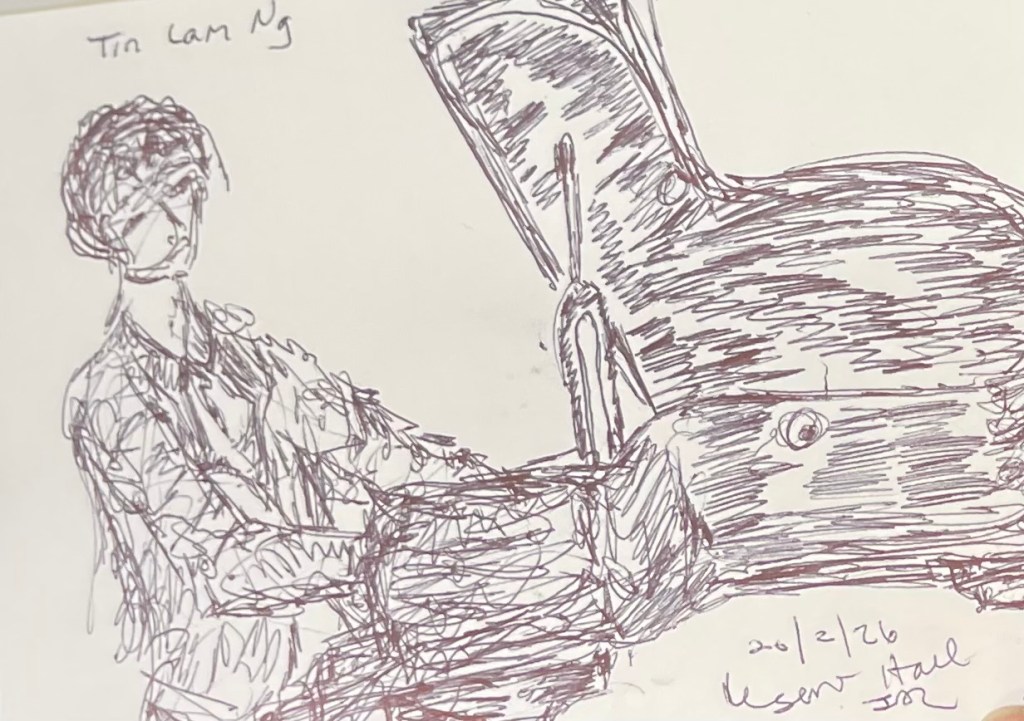
Tin Lam Ng a superb natural pianist where movement and sound were joined in performances of glowing fluidity and mastery. He brought an extraordinary sense of style to Liszt’s ‘Pesther Carneval’ with playing of breathtaking brilliance of seduction and exhilaration. Ravel’s ‘Minuet Antique’ was of languid beauty with a flowing sense of dance , full of delicacy and colour, with a Trio of simplicity and whispered radiance.
Debussy’s Toccata from ‘Pour Le Piano’ was played with astonishing freshness and drive. A crystalline clarity where he could carve out, with subtle beauty, the radiant tenor melodic line that was to bring an explosion of passionate playing of natural mastery and exhilaration, from a young man who has fire in his veins. The long lines of Rachmaninov’s nostalgically beautiful Étude -Tableaux op 33 n. 2 were played with glowing radiance on a sumptuous cushion of velvet sounds. The Étude op 33 n. 3 allowed this young man’s poetic fantasy to transform this study into a tone poem of remarkable imagery and character.
Alexander Doronin, already winner of the Hong Kong International Piano Competition last year, brought a mastery of texture and intellect to Stravinsky’s knotty 1924 Sonata, with transcendental playing that brought this sonata to life in a way I would not have thought possible. I had studied this sonata with Nadia Boulanger friend and mentor of the composer, but today this young man demonstrated an extraordinary ‘tour de force’ of incredible subtle mastery. Stravinsky’s neo – classical style of a weaving toccata like texture was played with extraordinary weight whilst living with the abrasive caustic sounds that could soar above this seemingly impenetrable perpetuum mobile with piercing intensity.
More evident to the vast public was the masterly performance of the scintillating playing of breathtaking seductive audacity of Balakirev’s notorious ‘Islamey.’ It has long been a work feared for its technical difficulty and a show piece only for the most fearless of virtuosi. In fact it was so revered by Ravel who aimed to out bid him with his ‘Scarbo’ from ‘Gaspard de la Nuit’, that he purposely made even more technically challenging. Between these two opposite worlds was the sheer radiance and beauty of Scriabin’s Chopiniesque ‘Prelude and Nocturne ‘op 9 for the left hand alone. Playing of extraordinary control of balance with robust chordal playing on which a glowingly radiant melody could sing with such beauty that if one had not seen this young man’s beautiful arm movements one might have thought this was a three handed pianist .. A cheeky ending playing the final two notes with his right hand just showed that a great musician can also be a great showman and is what makes a complete artist which he most certainly is.
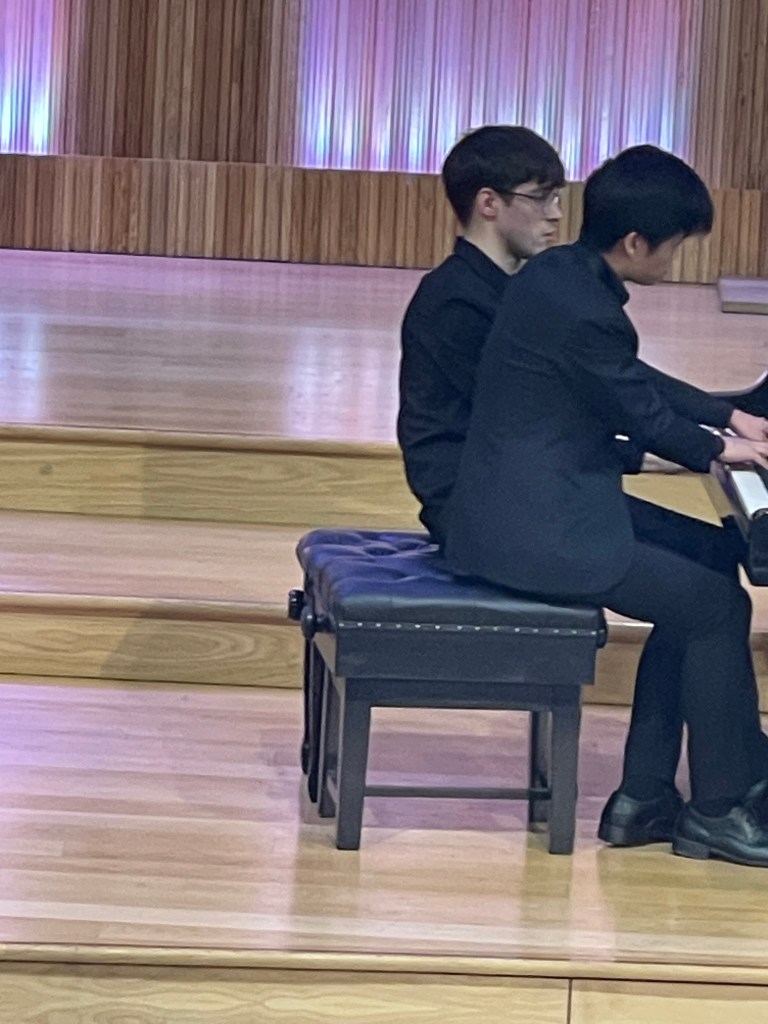
After such magnificent playing these two young pianists sat side by side as they played the ‘Pas de deux’ from the ‘Souvenirs’ Ballet Suite by Samuel Barber.
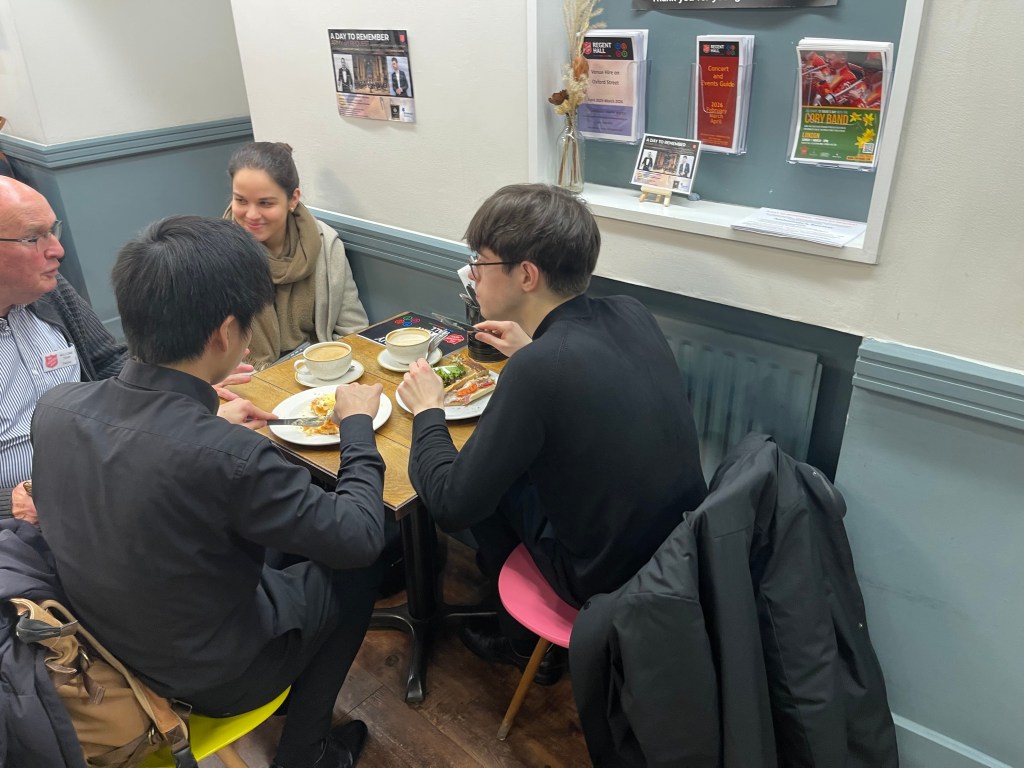
A sumptuous lunch awaited and was offered by the indefatigable Stephen Maw having ‘sung for their supper’ with such distinction!
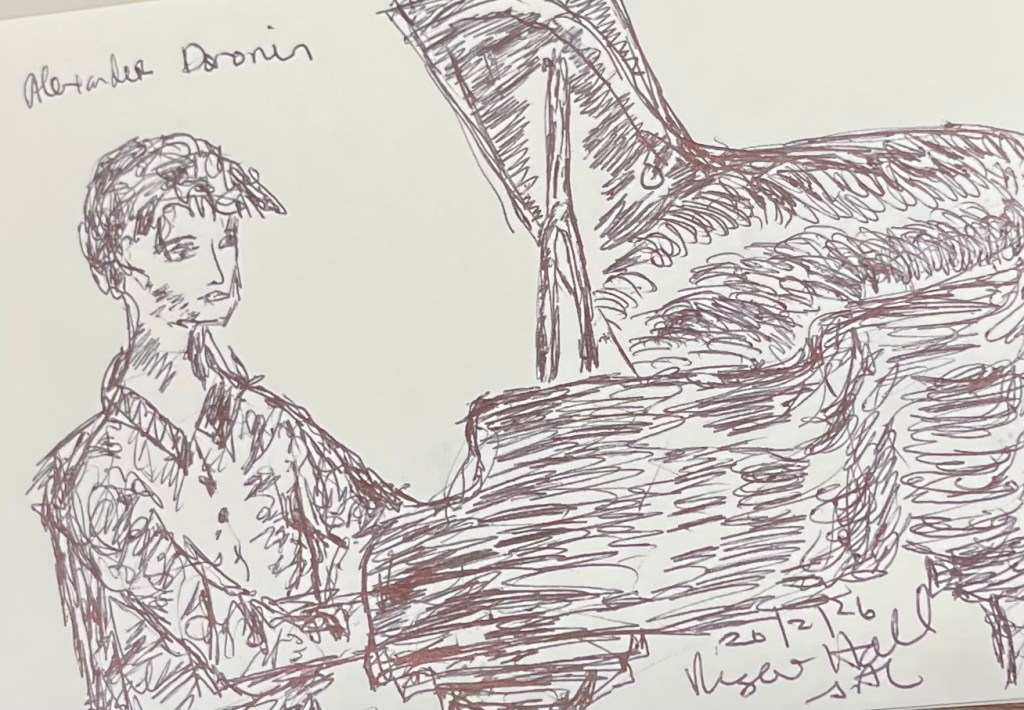
An admirer in an audience of over 100 people who is also poetess so inspired by the music as to sketch the artists whilst they are performing.



 ChristopherAxworthy-MusicCommentary