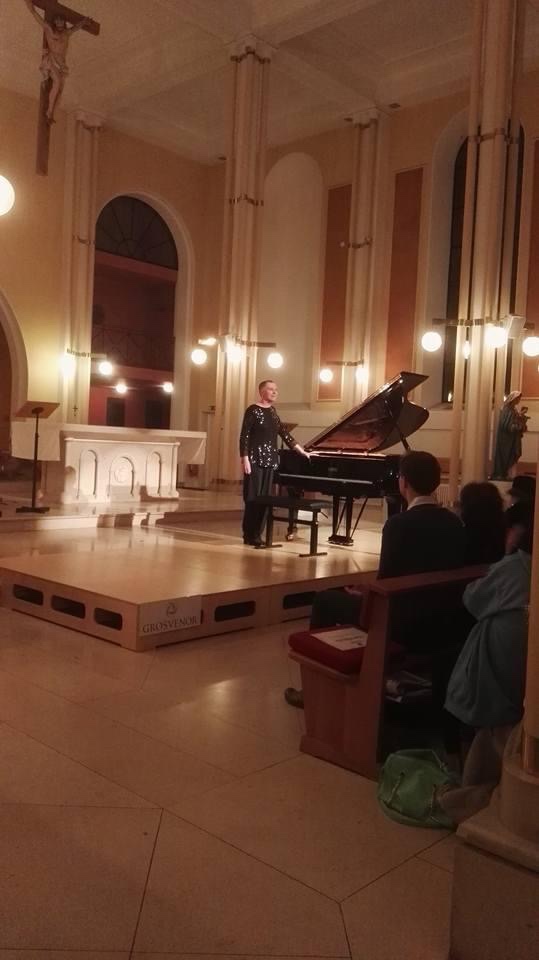
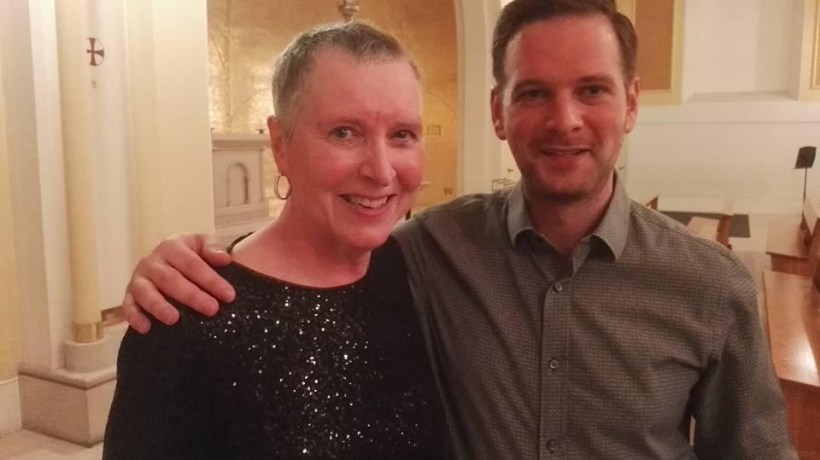
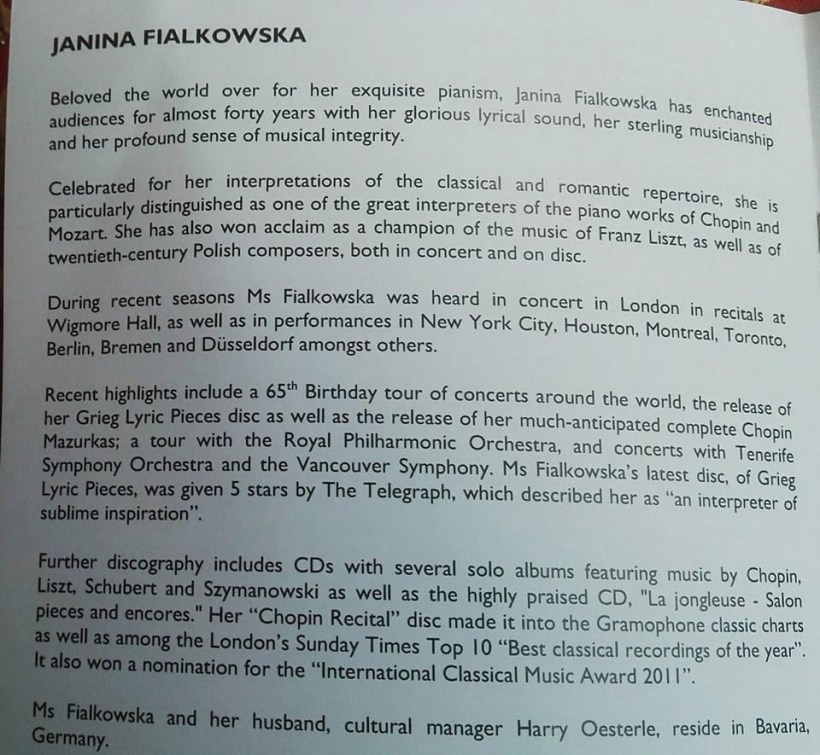
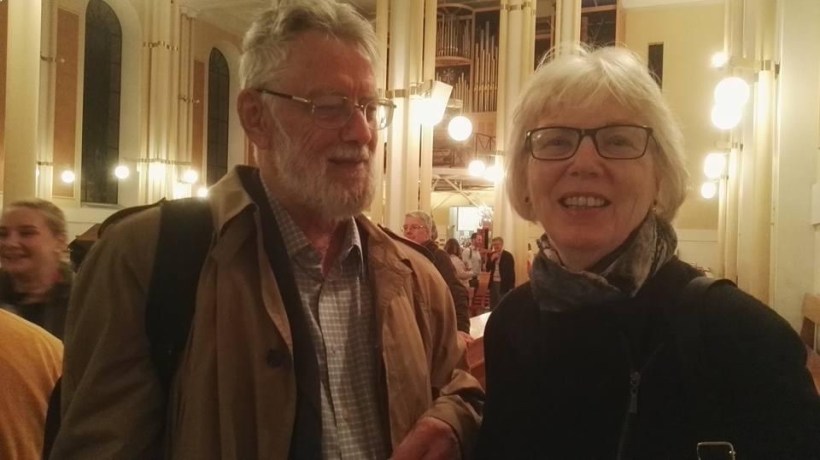
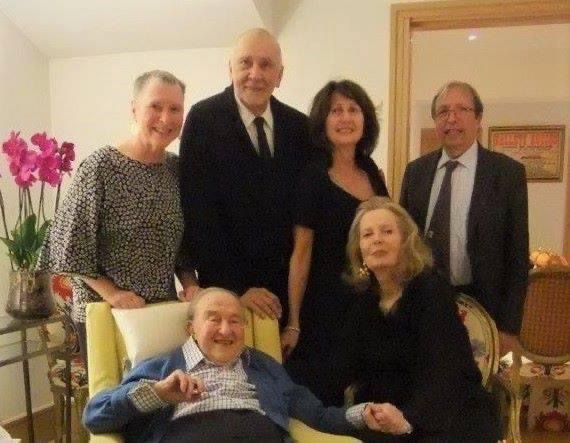
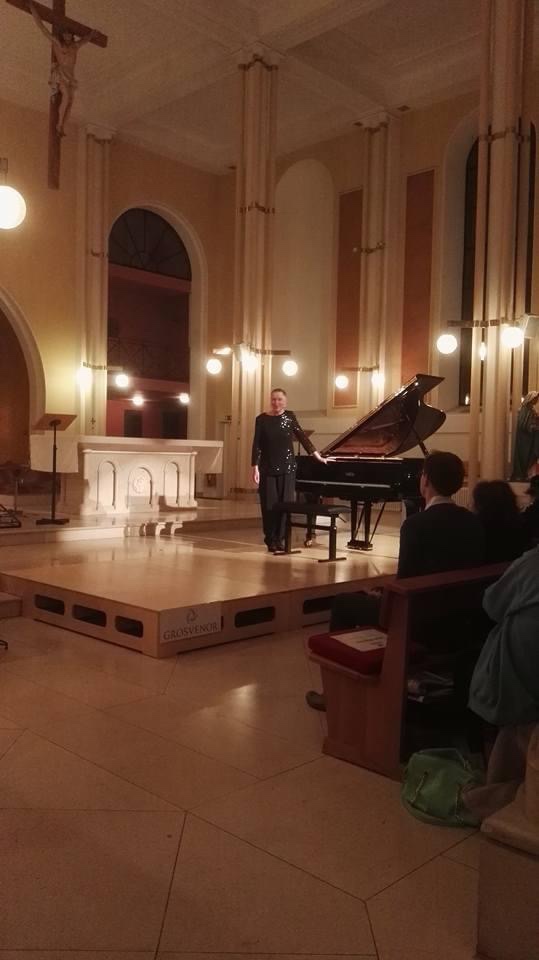
It was wonderful to have Janina Fialkowska back with us again after a second miraculous recovery from a life threatening illness.
To have her back and playing so wonderfully well.
Listening to the magical sounds that she conjured up from a Fazioli piano we could fully understand why Rubinstein had been in tears with her moving performances at the very first Rubinstein Competition.
Infact although Emanuel Ax won first prize she got Rubinstein’s very special prize of concerts worldwide following in his shadow.
Both she and her good friend Emanuel Ax have since been feted by music lovers worldwide.
She even came to Rome to play in the theatre that my wife,Ileana Ghione and I had just opened.
She was promoted by the Canadian Embassy and Guido Agosti who had been on that first Rubinstein jury came to applaud her too.
She became a great friend and came back as many times as her worldwide career would allow.
She even brought Harry her future husband to meet us.
She gave a concert in 2006 in memory of my wife who had died on stage a few months earlier in December 2005..
Playing the Chopin Barcarolle she whispered to me in the wings afterwards that,that was
Ileana.
Very special people for me indeed both Janina and Ileana.
Ileana Ghione with Janina on top of Rome
But already some years ago she was told by her doctors that she would never play the piano again due to a growth in her left arm.
Miraculously she proved them all wrong.
Infact she made her come back just a year after this dramatic prediction , in a little town in Bavaria to which her friends flocked.
She played the Chopin B minor Sonata just to prove her point that her seriously weakened left arm was ready to go again.
It is exactly the left hand in the Finale of the Sonata which is feared by every pianist.
She has been playing even better since.
The critics noting that the great virtuoso pianist had now acquired an even more profound voice.
And now years later another illness has struck but also another miracle and she is with us again playing so beautifully.
” Des Abends” was even more beautiful than her mentor Artur Rubinstein.
Jeux d’eau was a miracle of sound and one could almost see “ The river god who laughs at the water as it caresses him “to quote De Regnier.
Janina in concert
The Mazuka op 50 n.3 was like a miniature painting in sound.
I have never heard it played with such layers of colour and such character.
A real tone poem with a heartrending story to tell.
The second Ballade and the F minor Fantasie were given passionate performances but always with that nobility and simplicity that was so much the mark of Rubinstein’s then revolutionary break with tradition.
The final beseeching notes of the Fantasie before being enveloped by a wave of sound in many ways made me think of Ravel’s Ondine.
Only the final noble chords reminding me that we were at the end of a marvellous journey with Chopin.
The second Ballade too from the tender almost Schumannesque (it is in fact dedicated to Schumann) melody being so violently interrupted by Chopin’s storm.
A real virtuoso performance that lead so beautifully into the magical mazukas that make up op 50.
A candle shining brightly for Ileana as Janina ravished us with sublime sounds
The Mozart Sonata was a real lesson of how one can keep the classical style but make the phrasing so much clearer by a subtle change of colour and shape.
I found the first movement a little too fast to allow the Maestoso marking to take effect But it was so beautifully shaped and the development section so dramatic with the trills glowing so beautifully.The chromatic scale that leads back to the recapitulation was quite miraculous.
The opening of the slow Andante cantabile was sung with such a beautifully pure expressive voice and the phrases shaped to absolute perfection .The tempestuous middle section took us aback as a storm that gradually awakens as the clouds thicken
The Presto was taken as Mozart had indicated but played with a clarity and sotto voce that made the appearance in the left hand almost whispered so much more dramatic instead of the usual rather jagged performances that this work is usually treated to.
I thought the magical change of key could have had a slightly more relaxed tempo but such was Janina’s vision that we were swept away by the whispered urgency of Mozart’s message .
Magic in the air in Eaton Square
The Fantasiestucke op 12 by Schumann were played much as I remember Rubinstein in his last performances in London.
Every movement had a marvellous story to tell and was a little tone poem in its own right.
From the magical sounds of Des Abends to the dramatic outburst in Aufschwung.
The beautiful lines woven so movingly in Warum to be answered by the whimsical chords of Grillen.
In der Nacht and Traumes Wirren showed us that here was still the great virtuoso that we had always known but with a voice that made every note speak so tellingly.
The story she had to tell in Fabel truly reminded me of Rubinstein who could make the simplest of pieces talk as never before.
The grandiosity of Ende vom Lied was followed by a disintigration that was depicted so clearly we could almost imagine the end of a story beautifully told and so back to sleep.
Janina with Amit Yahav
Just one short encore …infact the minute waltz played with the clarity and charm of a true Chopin player who has polish blood in her veins.
The spirit of Rubinstein was obviously hovering over Eaton Square last night.
Linn Rothstein,Janina’s best friend and fellow Canadian with Geoff Cox
It was very fitting that a favourite such as Mengyang Pan should be celebrating the 100th Tuesday afternoon concert in Hugh Mather’s prestigious series of piano recitals at St Mary’s in Perivale.
And the novelty that it should be live streamed to China too.
I understand there is a move to live stream all the recitals from Perivale in the near future.
I first met Mengyang in Monza in Italy where I had been invited to be on the jury of the Rina Sala Gallo International Competition.
I was asked by one of my dearest friends Constance Channon-Douglass who was too ill to be able to be part of the jury.
I do not normally accept these invitations as the Circus aspect of these events does not appeal to me .
I am not totally convinced that they are helpful except perhaps to the one who comes in first.
It is for the artistic damage to the other artists that I am concerned.
However I well remember two of the contestants: Julien Brocal for his performance of Schumann Carnaval and Mengyang Pan for her performance in the final of the Emperor Concerto.
I also remember the wonderful encore only of the eventual first prize winner Sangiovanni Scipione after a rather poor performance of Liszt Concerto n.2 hampered by an orchestra that had obviously not rehearsed enough a work they had not played before.
Such is the Circus aspect but it is nice to know that all three are forging ahead with notable careers .
Mengyang Pan
What I did not know at the time was that Mengyang Pan was a student of two of my esteemed colleagues in London.
Tessa Nicholson at the Purcell School where Mengyang received her early training from the age of fourteen leaving the Central School of Music in Beijing where she had studied since the age of nine.
Tessa is fast building a reputation for training brilliant young musicians both at the Purcell School and the Royal Academy.
Mengyang Pan went on to study with another much esteemed colleague, Vanessa Latarche ,head of Keyboard Studies at the Royal College and former star pupil of the much missed Eileen Rowe in Ealing.
Mengyang’s performance of the Emperor I have long remembered and have on DVD from the competition.
I remember it for it’s clarity,precision but mainly for her complete understanding of Beethoven’s world that can go from the imperious to the most touching without any warning.
Such was Beethoven’s complex character .But always in Beethoven there is an underlying forward current that gives a terrific sense of architecture even in his simplest works.
It was just this that made her performance of what can sometimes seem much overplayed “Appassionata” Sonata op 57,so refreshing and in many ways original.
Her Grandiose approach to the opening Allegro was of great effect.That slight wait before an important bass note sometimes even adding an octave very subtly was of aristocratic nobility.
The accentution of the downward scale on the first of the groups of five was a bold decision that was totally convincing.
The playing of the great arpeggiandi with one hand towards the end of the movement would have had the approval of Arrau and all the great Beethoven interpreters.
The struggle to play such passages without splitting the hands in a more pianistic way is exactly the struggle that Beethoven infused into the very core of his music.
Anyone who had seen Serkin at work would realise just what it means to struggle and suffer as Beethoven obviously did to the bitter end.
Dramatic contrasts and taught rhythms were all here but together with a flexibility when the time came to reveal the heart and soul that was also very much part of Beethoven’s character.
The Andante con moto played with the weight of a true string quartet where every part gave such substance to this long cortege.The impetus and subtle shaping of the variations was a lesson to behold and the sudden interruption even more astonishing because of it.
The Allegro was played with great precision and energy.
I found the occasional jeux perle and clipped chord of arrival not quite in keeping with her overall majestic conception of this masterpiece.
But masterpiece it is.
Restored so brilliantly to its rightful place and sent with much love all the way to China.
The second half of the programme was dedicated to Spain.
All brilliant rays of light and heartrending nostalgia.
Mengyang loves teaching and comunicating as was shown by her delightfully informed introductions.
She does infact hold important posts at Imperial College,Blyth Centre for Music and the Visual Arts and St Paul’s School.
Lucky them is all I can say as she introduced us to a relatively unknown work by Albeniz.
Introducing the works to her sold out audience in Perivale
His Cantos de Espana op 22.
But sugaring the pill with an old warhorse of the great virtuosi of the past :Moszkowski’s Caprice Espanol op 37.
(I had studied with Perlemuter whose first teacher was Moszkowski and I have never been able to reconcile that fact with this illustrious interpreter of Chopin and Ravel)
Many of the Cantos are well known from the guitar transcriptions.
The Prelude in particular with its repeated notes and urgent interruptions so typical of the Spanish folk idiom.
Superbly managed and contrasted with the long languid melody in the tenor register of the Orientale.Allowed to sing so touchingly and commented on by a coquettish right hand.
The Scot Joplin ease of Sous le palmier was greeted by the sombre drum roll of Cordoba where the question and answer between the hands was a pure delight.
Seguidillas was full of sun and light alternating between the subtle and delicate only to be enveloped by the infectious dance rhythms that are so much part Spain.
Embracing Hugh Mather and thanking us all for the fun that she had had, and hope that we had too
Caprice Espanol was given a performance in the style of the Golden age of piano playing as we have heard in recordings of Levitski,Godowsky,Rosenthal and Cherkassky.
The magic world of jeux perle and subtle hinted melodies that appear and disappear like gems in the brilliant sun.
Such sounds conjured out of her magic hands just thirty minutes on from such an exemplary Beethoven.
It took us all by surprise and her charming thank you to the audience in Perivale and China ,in which she exclaimed what fun she had had and hoped that we had too.
Her encore of Gershwin’s first prelude brought the house down and a wish to hear much more of this charming young lady with a bag so full of remarkable jewels
Love,Betrayal ,Death and pure fun at the Chelsea Arts Club
I like to think that it was not just a coincidence that Umberto Jacopo Laureti and Adrian Brendle were performing in two different venues on two different nights in the centre of London over the weekend.
Both are ex students of my old Alma Mater the Royal Academy and more importantly coached by the only British pianist to have won first prize at the Artur Rubinstein Competition in Tel Aviv.
I am talking ,of course ,about Ian Fountain.
It is a well known fact that many illustrious musicians who live in London are very rarely invited to perform in the capital.
Infact Ian Fountain was on a plane to a concert tour in China whilst leaving us with two of his prize students in London.
It is obvious listening to the extreme intelligence and musicianship of these two young artists that the coaching they have received over the past years has helped shape their artistry and will be a solid base for future growth in their up and coming careers.
Umberto Laureti
Umberto’s was a cameo performance as an introduction to an operatic evening which included a mini Italian wine tasting.
St Giles Cripplegate
Whilst these fine young singers were invoking Love ,Betrayal and Death ,Umberto was ravishing their audience with a beautifully shaped performance of Liszt’s paraphrase on the quartet from Verdi’s Rigoletto.
Some virtuoso playing on a beautiful sounding Steinway in St Giles Cripplegate just the other side of the lake to the Barbican Centre.
Beautiful sounding but quite problematic mechanically Umberto was to tell me later.
But such was his artistry and professionalism we were not at all aware of the battle he was waging in a performance of quite breathtaking sweep and colour.
It was just last June that Adrian Brendle had played in the same church but on a specially imported Bechstein for a concert dedicated to the famous lunchtime National Gallery concerts that Myra Hess instigated during the war.
All the pictures had been placed in a safe haven whilst the Londoners including the Queen decided to stay with Churchill and battle it out with the enemy.
This too had been given a general title of “Swords and Ploughshares “
Now the day after Umberto’s concert Adrian had been invited to play in the beautifully intimate Arts Club in Chelsea.
Introduced by the soprano and satirist Melinda Hughes ,here wearing so beautifully her hat as artistic director of the Sunday Night Concerts.
Melinda Hughes introducing the artist in her inimitable way
A beautiful new Steinway awaited tonight and little did I know that it had been chosen Alexander Ullman one of our stars from the Keyboard Charitable Trust.
In fact what Melinda did not know either is what a closely knit family we are as Adrian and Umberto too have been selected just recently to play for the Keyboard Chartiable Trust .
Adrian Brendle totally involved with a piece written for him by his colleague Elias Corrinth
As with his recent Steinway Hall concert for the KCT he performed a piece written for him in 2015 by Elias Corrinth.
The opening Invocation is an echo to the opening poem of Scriabin’s 5th Sonata:”Je vous appelle a’lavie,o forces mysterieuses!”
A wonderful sense of colour and commitment kept this distinguished audience spellbound.
The Arts Club audience
This was followed by a remarkable performance of the 13 Preludes op 32 by Rachmaninov .
Here are my thoughts from his performance of the same works just a few months ago at Steinway Hall in London,
No Rachmaninov Celebration could be complete without one of his famous transcriptions.
Adrian Brendle introducing the concert
The concert opened with a virtuoso performance of the Suite from the Partita in E for violin by J.S.Bach.
It is a long time since I listened to a recording of Rachmaninov himself playing this together with his more well known transcriptions of works by Kreisler and Mendelssohn.
Even though transcriptions there is the unmistakable voice of Rachmaninov throughout.
Adrian Brendle gave a superbly rhythmic,virtuoso performance of the Prelude Gavotte and Gigue holding the audience’s complete attention right from the very first notes.
A short one hour concert followed by a sumptuous supper in the beautiful old world dining rooms of the Arts Club.
Hosted by Melinda Hughes who tells me that she too will be giving performances in London this week as an International Satirist with her “deliciously wicked political and social satire””so clever…every pun hit the mark”The Times.
She certainly has a lot of ammunition this week!
Melinda Hughes hosting the post concert supper
Adrian Brendle being congratulated for his performance
It is always a sign that something special is in the air when one sees Lisa Peacock the renowned concert manager on the threshold.
From the very first notes of Beethoven’s 7 Bagatelles op 33 one could immediately see why she had come.
Here was a pianist,musician but above all interpreter if we have to give a label to someone who can shed new light and insight on works that we have heard so many times in lesser hands.
One is immediately reminded of Murray Perahia with that same self effacing modesty and total dedication and simplicty that is of a great artist at work.
I am pleased to quote Hugh Mather ,the most appreciative and informed impresario.
A friend and selfless helper of young musicians in a private message he sent to me after the concert:
”Fabulous pianist- makes it all worthwhile!One of the very best”
I had heard him once before as you can see above.
A concert at Steinways in honour of the Trustees of the Max Grunebaum Foundation in Cottbus.
He then was invited to the Gala concert in Cottbus just a week or so ago.
I remember so vividly his performance of Beethoven ‘s Sonata op 27 n.1, the relatively unknown companion to the so called “Moonlight “ Sonata .
St Mary’s Perivale
It is in particular his Beethoven op 110 and 33 today that will long be remembered by those fortunate enough to find a seat in the oasis that Hugh Mather has created in this 12th century redundant church in a most beautiful pastoral setting only 20 minutes by tube from the confusion that reigns these days in Marble Arch.
Sasha Grynyuk was born and trained in the Ukraine before completing his studies under Ronan O’ Hora in London at the Guildhall.
He won the prestigious Gold Medal being in the past illustrious company of Jacqueline Du Pre,Bryn Terfel and my old teacher Sidney Harrison (1927).
He has since gone on to win first prize in the Grieg International Competition in Norway and the BNDES in Brazil.
It was the original piano score by Shostakovich for the 1929 silent film The New Babylon that he gave the premier performance of in St Luke’s in London last year that had the critics searching for superlatives.
He has been working recently with Noretta Conci-Leech,founder with her husband John Leech of the Keyboard Charitable Trust and assistant for 15 years to Arturo Benedetti Michelangeli.
A new Beethoven every week and then on to the Bagatelles.
All the traits of a great school were there.
The scrupulous attention to detail and to the composers indications.
Clarity and the utmost attention to the use of pedals and above all attention to rests and their silence in the context of an overall music line.
The details found in the Adagio of op 110 had me dashing home to consult the score and to wonder why I, together with most others, had overlooked the composers most precise instructions.
The throbbing “bebung” was the same throbbing accompaniment to the sublime arioso dolente that reappeared with an even more intense cantabile after the fugal interruption.
A full house on a beautiful sunday afternoon …the inauguration of a new carpet too after almost 700 concerts!
The etherial apparition of the fuge in inversion lead so naturally to the final growth into the most passionate climax that in Sasha’s ever more intense hands had even the piano running away from this red hot culmination of a long and complex journey in Beethoven’s penultimate sonata.
The sublime opening had been so magically phrased and like the fourth piano concerto the scene had been set from the very first few notes.
The trill lead so naturally and clearly into the melody, yet with the left hand accompaniment played so clearly with a sense of balance that added a very special sheen to what is surely one of Beethoven’s most beautiful creations.
His orchestral sense of balance gave great weight and independence to the various sudden changes of character.
Even the finest of cellists would have had a hard job to shape the bass scales as well as Sasha never detracting from the original melodic line that it was commenting.
The magical change of key took us by surprise as if hearing it for the first time.
This is what real interpretation means .Translating into sound not only the composers indications , with all the fantasy and technical reserves that the interpreter has in his baggage.It is to recreate the same moment of discovery that Beethoven must have imagined in his secret world of silence.
The Allegro molto was played with an enviable precision and rhythmic drive.
The trecherous middle section played with the absolute command of the true virtuoso it was obviously written for.
It dissolved so magically into the Adagio with a poco ritardando that I had never been aware of before.
The last note held back like a great singer before the deep sigh of the opening of the Adagio ma non troppo.
The Bagatelles op 33 too had seen seven completely different scenes depicted.
Each one with a character of its own.
From the opening operatic flourishes and charm of the first to the great rhythmic drive of the second.
The beautiful liquid cantabile of the third with such a telling change of dynamics like someone recounting a fairy story with simplicity and innocence.Rarely can the acciacaturas have been so humorously depicted.
The fourth too was a different story told so simply with trills that seemed like diamonds gleaming in the light.
Great virtuoso flourishes in the fifth played with charm and clarity.
The pedal at the end of the sixth was pure magic and the symphonic effect at the end of the seventh was quite overwhelming.
A complete change of colour for the Mozart with great clarity and purity of sound.
The opening of the Andante though was played as if Adagio and I found it unnatural and a little stilted.
Strangely enough it seemed to find its own just tempo with its own noble cantabile whilst on its own true way with amazingly chamelion type subtle and continual changing colours .
The Rondo was played with all the character that he had found in the Bagatelles.
The five Rachmaninov Preludes were played with a superb sense of colour and a balance that allowed the most romantic of melodies to sing so naturally and unforced.
The most romantic of them all op 23 n.6 was played with a nobility that kept Hollywood well at bay!
The double notes of op 23 n.9 showed off all his quite considerable technical command but with the musical line always to the fore .
Infact like Chopin’s famous double third study it was the teasing left hand that was so telling.
The great “return “ of op 32 n.10 found just such a story teller as Moisewitch who had made this piece such a nostalic longing for his great friend Rachmaninov’s homeland.
The nobilest of all Preludes in D flat op 32 n.13 brought the concert to a tumultuous end.
A standing ovation brought forth the most pastoral of Prokofiev’s Vision Fugitives op.22 .
What more could one wish from a true poet of the piano sharing an afternoon of pure magic.
Chloe Jiyeong Mun at Steinway Hall New York Debut of her KCT tour at the new Steinway Hall in New York.
After Bach 6th Partita BWV 830 and Schumann Sonata op 11 played by a master musician sparks started to fly in a superb account of Schumann`s Widmung played with the delicacy and passion that is of the young and beautiful.
What a coincidence .I like to think that it was on my request that Martha Argerich performed the same magical piece as an encore for the first time in public at the RFH last year.
An unexpected, scintillating jazz study op.40 n.6 “Pastorale” by N.Kapustin reminded me of the impish double personality of Friedrich Gulda whose only student was in fact Martha Argerich……
Chloe too,like Martha, was the only other beautiful young lady to win both Geneva and Busoni whilst still in their teens………..
Hats off and happy birthday to me ….even if Dan Danielli got most of the cake!
Chloe Jiyeong Mun in Delaware was even better and received a standing ovation for her magnificent Bach and Schumann.
Wonderful hospitality as always at Cokesbury Village from our hosts Nan and Parry Norling.
Mark Viner and Andre Gallo,our previous artists here,are already posting me their warmest best wishes to our hosts and friends.
Cokesbury Village,Delaware, recital
An audience attentive to every nuance in a performance where every note spoke so eloquently.
Amazing concentration from pianist and audience.
A very individual Bach with almost improvisatory freedom
It brought Bach’s monumental score to life in a refreshingly personal performance as is rarely the case in these days of ridgid adherance to the score without any real understanding of the times in which it was written or as was more often the case improvised.
the auditorium at Cokesbury
In fact the improvisatory nature of the toccata was only interrupted by the rock solid voicing of the fugato alla Tureck with a clarity and vehemance that is so much part of the assertive character of this masterpiece.
The crowning work of the set of 6 Partitas and the last in the Clavier Ubung which was the first keyboard music to be published by Bach in his lifetime.
Recital at Cokesbury
The pure charm and lilt that she brought to the Tempo di gavotta was balanced by the sheer scintillating almost shimmering virtuosity of the Corrente .The Gigue was played with an aristocratic inevitability and with a rhythmic pulse that never wavered for a second.
Being congratulated after the performance.Nan in centre and Parry to the right
It brought this score to life as rarely it is heard. It was in fact a freedom that came from a a real understanding of the style and the life and times for which the music was written.
The Schumann Sonata op 11 dedicated to the 15 year old Clara from a 25 year old Schumann was written by Florestan and Eusebius according to Schumann.
In conversation after the concert
It is the most unconventional and the most intriguing of Schumann’s three sonatas due to its unusual structure.
It is the work that sealed Chloe Jiyeong Mun’s victory at the Busoni Competition in 2015.
Senza passione ma espressivo was what Schumann had indicated in the opening of the beautiful aria taken from his early lied “An Anna.”
Elsewhere this was a performance of great passion and energy from a young undemonstrative young lady.
The feeling and passion was concealed in her kaleidoscopic sense of colour and a sense of phrasing that one is used to hearing only from a Schwarzkopf.
From the beautiful opening- un poco adagio- that leads into the questioning- Allegro vivace- with always the great conflict between the dreamy poet Eusebius and the rumbustuous almost militaristic Floristan.
The impish dotted rhythm held right until the last note when the movement disappears into the distance preparing the stage for one of Schumann’s most beautiful songs.
A standing ovation after a magical performance of Schumann op 11
Played so simply as the composer asks but with such sumptuous sounds and magical sense of balance .The melodic line as if on the cello ,accompanied by the most delicate of strings, was simply sublime.
Enchanted and enchanting on a first visit to Times Square after her New York debut
The continual changing character in the Scherzo and Intermezzo was superbly controlled and Schumann’s sometimes problematic use of dotted rhythms given a shape and sense of unity that is rare indeed .
The Finale -Allegro un poco maestoso- was just that.The chords shaped with a wonderful sense of colour that allowed the music to speak so naturally without resorting to the usual virtuosistic bombastics that this world can encourage in less poetic hands.
And so to Virginia the Castleton Festival chez Maazel and Philadelphia with lovely Beth- Elizabeth Glendinning and that birthday again……………
PART 2
It was wonderful to be back on the beautiful estate of Lorin Maazel. Even the Alpaca Fanny seemed pleased to see us back again.
Fanny so pleased to see us back again
It was nice to meet at last Dietlinde Turban Maazel Wood and to meet her new husband Tony Wood.
After the passing a few years ago of her beloved Lorin it was wonderful to see her looking so radiant and happy again.What wonderful fotos they were so happy to share of their wedding last July.
Mariam Batsashvili who had played during the season at Castleton was the gift of the KCT to their wedding celebrations asked for by Dietlinde who had been particularly entranced by her earlier performances.
And what a team.
Tony a” lad” from the North – Leeds to be precise – with interests in Australia and America was the perfect host.
Dietlinde providing the most wonderful meals in no time at all and discussing her activity in the theatre world.
A wonderful warm and welcoming family atmosphere with a dream team on hand to help with this artistic oasis in the middle of the beautiful Virginian countryside in Castleton.
Tony and Dietlinde with Chloe Mun and Orson Maazel in the kitchen of the Manor House
A new programme for Chloe Jiyeong Mun which included the Bach 6th Partita but was prefaced by the little sonata in C major by Galuppi that Michelangeli was so fond of playing .
The second half was dedicated to her beloved Schumann.(her first CD for Deutsche Grammophon is of Schumann Fantasie op 17 and Sonata n.1 op 11 and was received to great critical acclaim).
In Castleton the programme included Blumenstuck op 19 and in place of the Sonata op 11 the Symphonic Studies op 13 with the inclusion of the 5 posthumous studies magically inserted into the whole alla Alfred Cortot.
A sunday afternoon of sheer magic in the theatre that the Maazels had created on their estate in Virginia
The Manor House
When the Maazels purchased the original section of Castleton Farms in 1988, the 1857 Manor House stood across from a massive chicken coop that once housed 15,000 chickens. As soon as it became clear that this would be an ideal location for music-making, they set about rebuilding the structure to house a sort of “Globe Theatre” in the existing footprint. Completed in 1997, the first concert there was held on June 21, featuring the extremely impressive trio of Maestro Maazel, Yefim Bronfman, and Mstislav Rostropovich. The 138-seat air-conditioned proscenium theatre has an orchestra pit that can accommodate 20 musicians and seating on the orchestra level and in the balcony. This intimate venue is the home of Castleton in Performance, the year-round branch of the Castleton Festival, and has also played host to numerous Festival productions, including chamber music, chamber operas, theatre, and recitals.
Chloe Jiyeong Mun at Castleton
It was the Sonata n.5 in C by Baldassare Galuppi that opened this afternoon recital on a fine Bosendorfer piano.
A contemporary of Bach and known as Il Buranello as he was born in Burano in Venice.
He wrote over a hundred operas and many sonatas for keyboard.
He was himself a fine harpsichordist and worked as such at the Teatro della Pergola in Florence between 1726 and 1728 .
He was invited to supervise Italian opera at the Kings Theatre in London and later invited as composer and conductor to the court of Catherine the Great in St Petersburg.Time spent in Vienna too but it was with Goldoni librettist that he became famous for the new dramma giocoso style.
Chloe in concert
The opening Andante was played with a beautifully liquid cantabile with a perfect sense of balance between the hands that allowed the melodic line to sing with such purity like jewels gleaming in the sun.The ornaments too were beautifully integrated into the melodic line.
The Allegro and Vivace that followed in this miniature masterpiece were played with great rythmic energy and forward propulsion with a clockwork precision like a finely tuned watch.
Just as beautiful as Scarlatti or Clementi but strangely neglected and many still only in manuscript.
A treasure trove waiting to be disovered by artists such as Chloe Jiyeong Mun.
The Bach I have spoken about above and it revealed even more of its secrets in Chloe’s hands on hearing it for the third time on this short tour.
Schumann’s beautiful but rarely heard Blumenstuck op 19 sang so beautifully in her hands and made one wonder why it is not heard as often as it’s twin fellow the Arabesque op 18.
It has almost the same form and in Chloe’s hands tonight was the ideal companion for the mighty Symphonic Studies op 13 that followed.
Castleton programme
It was a performance of the complete Symphonic studies including the 5 posthumous ones that she integrated into the whole as Alfred Cortot used to do.
Some pianists leave them out and select the 4th or 5th as encores .Others play them all together as an interuption to the published op 13 set.Cortot’s way of integrating them and playing only a few of the repeats in the original set made one realise what an extraordinarily homogenious work this can be in the right hands.
The beautiful programme prepared so lovingly by Dietlinde and printed by Tony.
The opening theme was played in such a simple way with a very subtle sense of colour and shape.The first variation with the underlying Schumannesque dotted rhythms came to a climax that lead the way so beautifully for the swirling arpeggios of the first of the posthumous variatons.The second variation played with a very subtle lack of syncronisation between the hands that allowed the melody to sing in such an unforced way as the pianists of the past – Cherkassky and Cortot in particular- would have done .A true conjuring trick that can persuade us in the hands of a true poet that this intrument of hammers and strings can sing as well as any lieder singer .
The 3rd variation where the melodic line is in the middle register of the piano accompanied by a fleeting right hand that can sound in the right hands as tonight like a butterfly drifting over the most richly perfumed flowers.Technically ,of course it was a tour de force of subtle pianism with the melodic trill like ornament played with such an artistic precision one was not aware of the transcendental difficulty involved.
These are ,after all studies ,but one is reminded of the phrase that Schumann himself used to describe the polonaises of Chopin- canons covered in flowers.
Dietlinde with Tony in the interval
The 4th and 5th variations were played with great rhythmic impetus very clean and clearly articulated.Leading to the magical cantabile of the second of the posth studies.Again a wonderful liquid sound as in the Galuppi with a very subtle use of the sustaining pedal.
The passionate outbust afterwards of the 6th variation created an even greater contrast than usual in the style ,of course ,of Schumann’s dual personalities of Floristan and Eusebius .Technically there was a wonderful sense of style and a forward movement of great passionate involvement.And after an equally rumbustuous 7th variation the insertion of the 3rd posth study in all its simple innocence sounded so perfect .The question and answer between the hands leading to an agitato middle section where the melody appears seemingly from a distance over a mist of sound.
This opens the way for the most magical of the posth studies which was here played with that crystalline clear cantabile that Chloe had shown us so wonderfully in the Andante of the Galuppi sonata.
Rehearsing in this beautiful wooden hall that seems to glow like gold and adds such warmth and intimacy to the performances
The majestic 8th variation that Agosti likened to the great structure of a Gothic cathedral was played with the same vehemence that she had brought to the Gigue in the Bach Partita .
Throwing off the scherzo like 9th with an ease that belied the actual transcendental technical difficulty involved.Ending in a puff of smoke which opened the path so rightly for the last of the posth variations.
The great forward movement of the 10th variation led to the final almost chopinesque variation of a Bellinian bel canto duet over a shimmering almost inaudible left hand accompaniment.
The finale was played with great passion and a volume of sound that she had held at bay until unleashing it with the same overwhelming effect of the great pianist of the past .The re insertion of the small variants from the first edition allowed Schumann’s relentless dotted rhythms much more contrast too.
This was a real musician speaking with a very simple but individual voice.
Burnett Thompson congratulating our pianist on stage
A standing ovation brought forth two encores.
Another magical Schumann in Liszt’s arrangement of his song Widmung and at last letting her hair down with her scintillating performance of Kapustin’s Jazz study Pastorale op 40 n.6.
It was much appreciated by the Jazz pianist Burnett Thompson who had come especially to hear her before his own concert tour in china in a few days time.
beautiful after concer dinner prepared by their own hands by our ever generous hosts
A beautiful celebration party appeared seemingly out of nowhere from our hosts’ hands .It was of course no real surprise in this magic place where everything has been created with such loving human warmth
And so on to Cathedral Village in Philadelphia for the final two concerts in this all too short tour.
Beth Glendinning presenting her 10th artist from the KCT
It is always a joy to play for Elizabeth Glendinning,Beth as she likes affectionately to be called .
A season she has been running for the past 15 years and has included 10 pianists from the KCT stable .
They are all sending greetings to Beth and her friends for the unforgettable warmth they have received from this very discerning audience.
Beth was the PR assistant for years for Eugene Ormandy the leggendary conductor of the Philadelphia Orchestra.The Ormandy sound was the unrivaled envy of most and not easy to create and sustain for so many years following as he did in the footsteps of Leopold Stokowski .
After Ormandy,of course was Riccardo Muti and now Beth tells me the orchestra is in good hands again with the Canadian French conductor Yannick Nezet Seguin whom the musicians and public alike all adore .
She also has great links, of course, with Curtis and one of her oldest friends is Gary Graffman the renowned teacher of both Lang Lang ,Yuja Wang and many more besides He is the purvayor of the lost style of the Golden age of piano playing.
So a great musical pedigree that makes one very proud when she praises so highly and sincerely these young musicians that she generously gives a platform to.
Chloe with Beth after the concert
I have spoken at length about the performances in the previous venues but the spontaneous standing ovation from a capacity audience took even Beth by surprise.
It was rewarded of course by the Jazz Study that was the talking point of the evening.
How could such a simple charming girl play Jazz like that ?
Well you could say the same about her Galuppi,Bach and Schumann too of course!
A capacity audience in Cathedral Village Hall
Beth was anxious to get us to a surprise party afterwards.
Surprise it was indeed .Especially after a spontaneous “Happy Birthday to you” sung by the audience before the concert began.It was ,of course, conducted by our adorable hostess.
Just one more concert in a private house of a friend of Beth on her wonderful new Steinway D that is just waiting to be christened by the magic hands of our Chloe .
And the final word has to be from Beth:
“ Just in from a post-concert reception. Chloe’s concert here was beyond words sublime. A large audience hardly moved during her playing; they were spellbound. I’ve heard plenty of piano recitals in my day, and this one was perfect in every way. Thank you and the Trust so very much for sending her (and Chris, of course!) our way. Warm regards, Beth=”
What more can one say Q.E.D.
Chloe and Beth with our party host
Lucky that Danny was not around tonight!
The beautiful surprise cake for my 70th!But then Beth is the most surprising woman!
Thank you Beth from us all
Part 3
What better way to finish this magical tour than in the home of Dr Anna Christine Huber on her magnificent Steinway “D”.
Chloe Mun with Dr Chris Huber
Hostess on this occasion for the Young Musicians Musicales .An organisation similar to the Keyboard Trust that has been giving a platform to young artists for the past 80 years.
It was the pianist and artistic director Marja Kaisla who had invited Chloe to play in this beautiful private home to a very discerning audience.
Marja Kaisla presenting the programme
A short programme of Bach BWV 830 and Schumann op 13 was greeted by a standing ovation and cries for more.
What could have been better as the last piece on the tour than the Jazz Study by Kapustin.
The beautiful home of Dr Huber
Dr Huber welcoming her guests
Chloe trying the piano with Beth looking on
Caroline von Reitzenstein and Chloe Jiyeong Mun in New York
Chloe Jiyeong Mun at Steinway Hall New York Debut of her KCT tour at the new Steinway Hall in New York.
After Bach 6th Partita BWV 830 and Schumann Sonata op 11 played by a master musician sparks started to fly in a superb account of Schumann`s Widmung played with the delicacy and passion that is of the young and beautiful.
What a coincidence .I like to think that it was on my request that Martha Argerich performed the same magical piece as an encore for the first time in public at the RFH last year.
An unexpected, scintillating jazz study op.40 n.6 “Pastorale” by N.Kapustin reminded me of the impish double personality of Friedrich Gulda whose only student was in fact Martha Argerich……
Chloe too,like Martha, was the only other beautiful young lady to win both Geneva and Busoni whilst still in their teens………..
Hats off and happy birthday to me ….even if Dan Danielli got most of the cake!
Chloe Jiyeong Mun in Delaware was even better and received a standing ovation for her magnificent Bach and Schumann.
Wonderful hospitality as always at Cokesbury Village from our hosts Nan and Parry Norling.
Mark Viner and Andre Gallo,our previous artists here,are already posting me their warmest best wishes to our hosts and friends.
Cokesbury Village,Delaware, recital
An audience attentive to every nuance in a performance where every note spoke so eloquently.
Amazing concentration from pianist and audience.
A very individual Bach with almost improvisatory freedom.
It brought Bach’s monumental score to life in a refreshingly personal performance as is rarely the case in these days of ridgid adherance to the score without any real understanding of the times in which it was written or as was more often the case improvised.
the auditorium at Cokesbury
In fact the improvisatory nature of the toccata was only interrupted by the rock solid voicing of the fugato alla Tureck with a clarity and vehemance that is so much part of the assertive character of this masterpiece.
The crowning work of the set of 6 Partitas and the last in the Clavier Ubung which was the first keyboard music to be published by Bach in his lifetime.
Recital at Cokesbury
The pure charm and lilt that she brought to the Tempo di gavotta was balanced by the sheer scintillating almost shimmering virtuosity of the Corrente .
The Gigue was played with an aristocratic inevitability and with a rhythmic pulse that never wavered for a second.
Being congratulated after the performance.Nan in centre and Parry to the right
It brought this score to life as rarely it is heard.
It was in fact a freedom that came from a a real understanding of the style and the life and times for which the music was written.
The Schumann Sonata op 11 dedicated to the 15 year old Clara from a 25 year old Schumann was written by Florestan and Eusebius according to Schumann.
In conversation after the concert
It is the most unconventional and the most intriguing of Schumann’s three sonatas due to its unusual structure.
It is the work that sealed Chloe Jiyeong Mun’s victory at the Busoni Competition in 2015.
Senza passione ma espressivo was what Schumann had indicated in the opening of the beautiful aria taken from his early lied “An Anna.”
Elsewhere this was a performance of great passion and energy from an undemonstrative young lady.
The feeling and passion was concealed in her kaleidoscopic sense of colour and a sense of phrasing that one is used to hearing only from a Schwarzkopf.
From the beautiful opening- un poco adagio- that leads into the questioning- Allegro vivace- with always the great conflict between the dreamy poet Eusebius and the rumbustuous almost militaristic Floristan.
The impish dotted rhythm held right until the last note when the movement disappears into the distance preparing the stage for one of Schumann’s most beautiful lied.
a standing ovation after a magical performance of Schumann op 11
Played so simply as the composer asks but with such sumptuous sounds and magical sense of balance .The melodic line as if on the cello ,accompanied by the most delicate of strings, was simply sublime.
Enchanted and enchanting on a first visit to Times Square after her New York debut
The continual changing character in the Scherzo and Intermezzo was superbly controlled and Schumann’s sometimes problematic use of dotted rhythms given a shape and sense of unity that is rare indeed.
The Finale -Allegro un poco maestoso- was just that.The chords shaped with a wonderful sense of colour that allowed the music to speak so naturally without resorting to the usual virtuosistic bombastics that this world can encourage in less poetic hands.
And so to Virginia the Castleton Festival chez Maazel and Philadelphia with lovely Beth- Elizabeth Glendinning and that birthday again……………
PART 2
It was wonderful to be back on the beautiful estate of Lorin Maazel.
Even the Alpaca Fanny seemed pleased to see us back again.
Fanny so pleased to see us back again
It was nice to meet at last Dietlinde Turban Maazel Wood and to meet her new husband Tony Wood.
After the passing a few years ago of her beloved Lorin it was wonderful to see her looking so radiant and happy again.
What wonderful fotos they were so happy to share of their wedding last July.
Mariam Batsashvili who had played during the season at Castleton was the gift of the KCT to their wedding celebrations asked for by Dietlinde who had been particularly entranced by her earlier performances.
And what a team.
Tony a” lad” from the North – Leeds to be precise – with interests in Australia and America was the perfect host with Dietlinde providing the most wonderful meals in no time at all and discussing her activity in the theatre world.
A wonderful warm and welcoming family atmosphere with a dream team on hand to help with this artistic oasis in the middle of the beautiful Virginian countryside in Castleton.
Tony and Dietlinde with Chloe Mun and Orson Maazel in the kitchen of the Manor House
A new programme for Chloe Jiyeong Mun which included the Bach 6th Partita but was prefaced by the little sonata in C major by Galuppi that Michelangeli was so fond of playing.
The second half was dedicated to her beloved Schumann.(her first CD for Deutsche Grammophon is of Schumann Fantasie op 17 and Sonata n.1 op 11 and was received to great critical acclaim).
In Castleton the programme included Blumenstuck op 19 and in place of the Sonata op 11 the Symphonic Studies op 13 with the inclusion of the 5 posthumous studies magically inserted into the whole alla Alfred Cortot.
A sunday afternoon of sheer magic in the theatre that the Maazels had created on their estate in Virginia
The Manor House
When the Maazels purchased the original section of Castleton Farms in 1988, the 1857 Manor House stood across from a massive chicken coop that once housed 15,000 chickens. As soon as it became clear that this would be an ideal location for music-making, they set about rebuilding the structure to house a sort of “Globe Theatre” in the existing footprint. Completed in 1997, the first concert there was held on June 21, featuring the extremely impressive trio of Maestro Maazel, Yefim Bronfman, and Mstislav Rostropovich. The 138-seat air-conditioned proscenium theatre has an orchestra pit that can accommodate 20 musicians and seating on the orchestra level and in the balcony. This intimate venue is the home of Castleton in Performance, the year-round branch of the Castleton Festival, and has also played host to numerous Festival productions, including chamber music, chamber operas, theatre, and recitals.
Chloe Jiyeong Mun at Castleton
It was the Sonata n.5 in C by Baldassare Galuppi that opened this afternoon recital on a fine Bosendorfer piano.
A contemporary of Bach and known as Il Buranello as he was born in Burano in Venice.
He wrote over a hundred operas and many sonatas for keyboard.
He was himself a fine harpsichordist and worked as such at the Teatro della Pergola in Florence between 1726 and 1728.
He was invited to supervise Italian opera at the Kings Theatre in London and later invited as composer and conductor to the court of Catherine the Great in St Petersburg.
Time spent in Vienna too but it was with Goldoni librettist that he became famous for the new dramma giocoso style.
Chloe in concert
The opening Andante was played with a beautifully liquid cantabile with a perfect sense of balance between the hands that allowed the melodic line to sing with such purity like jewels gleaming in the sun.The ornaments too were beautifully integrated into the melodic line.
The Allegro and Vivace that followed in this miniature masterpiece were played with great rythmic energy and forward propulsion with a clockwork precision like a finely tuned watch.
Just as beautiful as Scarlatti or Clementi but strangely neglected and many still only in manuscript.
A treasure trove waiting to be disovered by artists such as Chloe Jiyeong Mun.
The Bach I have spoken about above and it revealed even more of its secrets in Chloe’s hands on hearing it for the third time on this short tour.
Schumann’s beautiful but rarely heard Blumenstuck op 19 sang so beautifully in her hands and made one wonder why it is not heard as often as it’s twin fellow the Arabesque op 18.
It has almost the same form and in Chloe’s hands tonight was the ideal companion for the mighty Symphonic Studies op 13 that followed.
Castleton programme
It was a performance of the complete Symphonic studies including the 5 posthumous ones that she integrated into the whole as Alfred Cortot used to do.
Some pianists leave them out and select the 4th or 5th as encores .Others play them all together as an interuption to the published op 13 set.
Cortot’s way of integrating them and playing only a few of the repeats in the original set made one realise what an extraordinarily homogenious work this can be in the right hands.
The beautiful programme prepared so lovingly by Dietlinde and printed by Tony.
The opening theme was played in such a simple way with a very subtle sense of colour and shape.
The first variation with the underlying Schumannesque dotted rhythms came to a climax that lead the way so beautifully for the swirling arpeggios of the first of the posthumous variatons.
The second variation played with a very subtle lack of syncronisation between the hands that allowed the melody to sing in such an unforced way as the pianists of the past – Cherkassky and Cortot in particular- would have done.
A true conjuring trick that can persuade us in the hands of a true poet that this intrument of hammers and strings can sing as well as any lieder singer.
The 3rd variation where the melodic line is in the middle register of the piano accompanied by a fleeting right hand that can sound in the right hands as tonight like a butterfly drifting over the most richly perfumed flowers.
Technically ,of course it was a tour de force of subtle pianism with the melodic trill like ornament played with such artistic precision one was not aware of the transcendental difficulty involved.
These are ,after all studies ,but one is reminded of the phrase that Schumann himself used to describe the polonaises of Chopin- canons covered in flowers.
Dietlinde with Tony in the interval
The 4th and 5th variations were played with great rhythmic impetus very clean and clearly articulated.
Leading to the magical cantabile of the second of the posth studies.
Again a wonderful liquid sound as in the Galuppi with a very subtle use of the sustaining pedal.
The passionate outbust afterwards of the 6th variation created an even greater contrast than usual in the style ,of course ,of Schumann’s dual personalities of Floristan and Eusebius.
Technically there was a wonderful sense of style and a forward movement of great passionate involvement.And after an equally rumbustuous 7th variation the insertion of the 3rd posth study in all its simple innocence sounded so perfect.
The question and answer between the hands leading to an agitato middle section where the melody appears seemingly from a distance over a mist of sound.
This opens the way for the most magical of the posth studies which was here played with that crystalline clear cantabile that Chloe had shown us so wonderfully in the Andante of the Galuppi sonata.
Rehearsing in this beautiful wooden hall that seems to glow like gold and adds such warmth and intimacy to the performances
The majestic 8th variation that Agosti likened to the great structure of a Gothic cathedral was played with the same vehemence that she had brought to the Gigue in the Bach Partita.
Throwing off the scherzo like 9th with an ease that belied the actual transcendental technical difficulty involved.
Ending in a puff of smoke which opened the path so rightly for the last of the posth variations.
The great forward movement of the 10th variation lead to the final almost chopinesque variation of a Bellinian bel canto duet over a shimmering almost inaudible left hand accompaniment.
The finale was played with great passion and a volume of sound that she had held at bay until unleashing it with the same overwhelming effect of the great pianist of the past. The re insertion of the small variants from the first edition allowed Schumann’s relentless dotted rhythms much more contrast too.
This was a real musician speaking with a very simple but individual voice.
Burnett Thompson congratulating our pianist on stage
A standing ovation brought forth two encores.
Another magical Schumann in Liszt’s arrangement of his song Widmung and at last letting her hair down with her scintillating performance of Kapustin’s Jazz study Pastorale op 40 n.6.
It was much appreciated by the Jazz pianist Burnett Thompson who had come especially to hear her before his own concert tour in china in a few days time.
beautiful after concer dinner prepared by their own hands by our ever generous hosts
A beautiful celebration party appeared seemingly out of nowhere from our hosts’ hands It was of course no real surprise in this magic place where everything has been created with such loving human warmth
And so on to Cathedral Village in Philadelphia for the final two concerts in this all too short tour.
Beth Glendinning presenting her 10th artist from the KCT
It is always a joy to play for Elizabeth Glendinning,Beth as she likes affectionately to be called.
A season she has been running for the past 15 years and has included 10 pianists from the KCT stable .
Quite a line up with some of the very best from the KCT.
They are all sending greetings to Beth and her friends for the unforgettable warmth they have received from this very discerning audience.
Beth was the PR assistant for years for Eugene Ormandy the leggendary conductor of the Philadelphia Orchestra.The Ormandy sound was the unrivaled envy of most and not easy to create and sustain for so many years following as he did in the footsteps of Leopold Stokowski .
After Ormandy,of course was Riccardo Muti and now Beth tells me the orchestra is in good hands again with the Canadian French conductor Yannick Nezet Seguin whom the musicians and public alike all adore.
She also has great links, of course, with Curtis and one of her oldest friends is Gary Graffman the renowned teacher of both Lang Lang ,Yuja Wang and many more besides He is the purvayor of the lost style of the Golden age of piano playing.
So a great musical pedigree that makes one very proud when she praises so highly and sincerely these young musicians that she so generously gives a platform to.
Chloe with Beth after the concert
I have spoken at length about the performances in the previous venues but the spontaneous standing ovation from a capacity audience took even Beth by surprise.
It was rewarded of course by the Jazz Study that was the talking point of the evening.
How could such a simple charming girl play Jazz like that ?
Well you could say the same about her Galuppi,Bach and Schumann too of course!
A capacity audience in Cathedral Village Hall
Beth was anxious to get us to a surprise party afterwards.
Surprise it was indeed.Especially after a spontaneous “Happy Birthday to you” sung by the audience before the concert began.
It was ,of course, conducted by our adorable hostess.
Just one more concert in a private house of a friend of Beth on her wonderful new Steinway D that is just waiting to be christened by the magic hands of our Chloe.
And the final word has to be from Beth:
“ Just in from a post-concert reception. Chloe’s concert here was beyond words sublime. A large audience hardly moved during her playing; they were spellbound. I’ve heard plenty of piano recitals in my day, and this one was perfect in every way. Thank you and the Trust so very much for sending her (and Chris, of course!) our way. Warm regards, Beth=”
What more can one say
Q.E.D.
Chloe and Beth with our party host
Lucky that Danny was not around tonight!
The beautiful surprise cake for my 70th!But then Beth is the most surprising woman!
Thank you Beth from us all
Caroline von Reitzenstein and Chloe Jiyeong Mun in New York
It was Noretta Conci-Leech,founder of the Keyboard Charitable Trust who on hearing Mihai strike up the first few notes of Beethoven’s Appassionata Sonata leant over to me and said this is the one.
It was the Beethoven Piano Society of Europe Intercollegiate Competition that we had been asked to judge together with Piers Lane.
I had already heard Mihai a few years earlier in a masterclass with Richard Goode and from then on had been following his progress with Joan Havill at the Guildhall with much interest.
Mihai Ritivoiu at St Mary’s
He ,of course, was awarded the Gold Medal and later graduated with honours from the Guildhall and was accepted by the Keyboard Charitable Trust where he was invited to give a special concert in the Reform Club in the presence of Sir Antonio Pappano.
He has since been selected by the City Music Foundation who presented him at Cadogan Hall with the English Chamber Orchestra under Michael Collins.
They also have produced a CD of piano works by Liszt,Franck and Enescu that has been highly acclaimed by the critics.
He has appeared many times in Romania and as a laureate of the George Enescu International Piano competition his performance of Shostakovich n.1 last autumn with the Lausanne Chamber Orchestra was broadcast live on Romanian television.
This is his second appearance that I have heard for Hugh Mather and on this occasion he was standing in at very short notice for an indisposed Mishka Rushdie Momen.
In fact it was such last minute we thought as the clock struck two that we might have to send out a search party for him.
We need not have worried for Mihai is a great professional and having had some difficulty in arriving on time just two minutes late he arrived and sat at the piano and took us immediately into his own special magic world.
It was my teacher Sidney Harrison who first said he did not teach children but when I auditioned for him he immediately saw that the piano and I were made for each other and thankfully changed his mind !
And so it was the first time I saw Mihai in masterclasses of Richard Goode and it was this that Noretta Conci immediately noticed.
Once again today it was obvious that Mihai and the piano are just made for each other.
From the very first notes there was a luminosity of sound that made one realise what Busoni meant when he said the pedal was the soul of the piano.
The Sonata in A major K24 that can so often sound like an exercise was here shaped with very subtle use of the sustaining pedal and a touch of a thousand gradations that gave a living shape and form to Scarlatti’s magic weave.
In the beautifully contrasting sonata in C sharp minor K247 the luminosity of sound was even more apparent.
I have heard many recitals on this piano but rarely have I been aware of the glow and subtle sheen of sound that was hidden within.
It is easy for a professional pianist to make a magnificent instrument sing but it is only a pianist who really listens to himself that can do the same on a piano which has seen better days.
In fact it was Richter who was quite happy to have the challenge of searching for the secrets in an unknown instrument.
The impeccable musicianship of Mihai he has inherited from his mentor at the Guildhall Joan Havill.
It was apparent yet again in an engaging performance of Beethoven’s Les Adieux Sonata A great sense of style and telling use of the bass notes at just the crucial moment.
The great fanfare in the last movement played quite fearlessly and with great rhythmic impetus.
The opening of the Farewell was even more moving for the total respect he had for the score without a trace of sentimentality but with great inner feeling.
A performance that one can put side by side with his remarkable Appassionata that won him the Gold Medal of the Beethoven Society a few years ago.
The fleeting moods of Chopin’s 3 Mazukas op 59 were magically portrayed.The second in particular dissolving into the air.And the more assertive third mazurka played with all the vigour of a native .
The sheen that he gave to the sound of the piano especially in the Liszt was quite remarkable.
The Fminor trancendental study was shaped and given a Ballade type form and any trace of rhetoric or showmanship was subordinate to the passionate sense of urgency and forward movement that swept us along to the exciting finish.
The genial “Au bord d’une source” was given a glistening performance in which we could almost see the stream bubbling along with such nostalgia of charm and peace.
This is an absolute gem and all too rarely heard these days in concert.
Throwing himself fearlessly into the Rigoletto Paraphrase this was the world of Liszt the showman.
Mihai was well aware of this and gave a truly virtuoso performance .
The sumptuousness of the melody and the delicate accompaniment were followed by great gusts of octaves that swept us along to a tumultuous end that was greeted by a true ovation from a discerning public that had been totally captivated by the great musicianship of this young artist.
Little were we expecting an encore of such subtle colouring as we were offered with Claire de lune by Debussy.
Such a wonderful delicate sense of balance that colours appeared like jewels in a magic box gleaming like a kaleidoscope with a thousand different shades.
There was pure magic in this fantasy world of Mihai Ritivoiu to which we were admitted so unexpectedly today.
Konstantinos Destounis and Petar Dimov at St James’s Piccadilly
The very enterprising Canan Maxton came up with a suprise concert of not one pianist but two at the lunchtime concert for Talent Unlimited.
Both have won numerous prizes and recognition in International Competitions and both are doing their final postgraduate studies at the Royal College of Music .
Petar Dimov with Canan Maxton
Konstantinos has been studying with Dmitri Alexeev and Ian Jones and is fast making a name for himself as a promoter of the complete piano works of his compatriot Theodore Antoniou His recording of the complete works has been issued by Naxos in their series “Grand Piano”.
Petar on the other hand is also an accomplished composer with many works to his name .He is completing his piano studies with Norma Fisher.
An interesting programme that showed off the diversity of the two pianists.
Konstantinos all light and brightness and Petar all dense and intense.
It is strange how the same piano in different hands can take on the character of who is at the reigns.
It is in fact as Rubinstein described to the contestants at his very first competition.
He likened the difference in character to honey.
That no two honeys are the same because the bees go from one flower to another and choose which they will pollinate.
A pianist should should learn from that and listen to as many performances as possible and take what he likes from each to add to his own ideas and form what is known as good taste !
His own good taste .
It was very interesting for me to be able to notice how similar Petar’s Schumann was to Norma Fisher’s playing that I remember from when Sidney Harrison ,my very first teacher,took me to the Wigmore Hall to hear his star pupil.
Here was this very solid playing constructed from the bass upwards that gives a fullness of sound without any hardness .In fact almost orchestral in its density.
I well remember Norma Fisher’s Brahms Handel Variations and was reminded of that today as Petar started the Allegro molto from Schumann’s Carnaval Jest from Vienna.
(A series of recordings from the BBC archives of Norma Fisher are being released on CD to great acclaim )
Petar Dimov
The rhythms were never allowed to sag or get sentimental.
Schumann writes so many times tempo come prima or tempo come sopra so this first very long movement does not loose its sense of direction and nobility.
.The Marseillaise quote almost becomes an invitable consequence of this continual forward movement.
Interesting to note that in the choice of three Debussy Preludes by Destounis it is Feux D’Artifice where the Marseillaise is heard too but in the far distance this time.
The short Romanze makes a beautiful contrast especially in the sentitive hands of Petar.
The Scherzino that followed was played with all the lightness that contrasted well with the rather pompous interruptions and the inevitable Schumann dotted figures that finishes this short movement and takes us directly into the passionate Intermezzo.
The Intermezzo played with a fullness of sound but a great sense of balance that never lost sight of the melodic line so similar to one of Schumann’s own Novelettes op 21.The eight Novelettes after all were written only shortly before this work which is op 26.
Even there op 21 n.8 is in the obscure key of F sharp minor as here it is in E flat minor as though this is music that sorts the men from the boys!
Konstantinos Destounis
The Finale was thrown off with all the rhythmic energy and virtuosity that Schumann demands.
There could have been slightly more contrast between the lyrical song like passages, maybe a lighter orchestration and slightly more time to breathe.
However this is a small price to pay for a performance that drew us in and kept our attention from the first to last note.
The three Debussy Preludes with which Konstantinos Destounis opened the concert were played with all the light and shade that allowed them to speak so eloquently.
Les collines d’Anacapri had all the subtle colours that are so apparant to anyone who has caught the funivia to this magic spot in the bay of Naples.
Some very refined playing wherethe ending for the first time seemed to make such sense without hitting out the last rays of sunshine which is so often the case in lesser hands.
The Girl with the flaxen hair was played simply with beautiful tone as Debussy obviously intended for this simple lass.
Feux d’artifice showed of all Konstantinos’s quite considerable technical baggage.The final glissando leaving exactly the air smelling of fireworks on which floated in the distance the french anthem.
This led the way for a virtuoso account of that old war horse that is Liszt’s Mephisto Waltz n.1.
Here is was given a very clear account played with great taste and never allowing the great virtuoso feats to outway Liszt’s musical intentions.
The occasional added bass notes only opened up the piano sound even more just as Rubinstein used to do in public.
Margherite was given all the time to sing and seduce in a beautiful interlude before the partying took over with quite overwhelming sweeps of sound.
The trecherous octaves were very clearly played and the double octaves at the end took our breath away as Liszt obviously intended.
Victor Maslov Tolga Atalay Un Aleksandar Pavlovic some of the remarkable young musicians taking time off to support their friends and colleagues
Hats off to Canan Maxton and her Talent Unlimited that aims to give a stage to young artists on their long and difficult jouney in music.
Young artists who are dedicating their youth to perfecting their art ……..not enough is ever said about that.
It is refreshing to be reminded though.
Canan Maxton with Aleksandar Pavlovic
Candles for our loved ones in my wife’s favourite church
St James’s Piccadilly
This beautiful church next to Piccadilly Circus dedicated to helping others
It was nice to be able to hear this fine Australian pianist again at St Mary’s in Hugh Mather’s series.
Having heard this remarkable pianist a year ago we were both alarmed to hear that he had been invited to leave the country where he had perfected his studies and would have to apply for a visa if he wished to return.
Here are my thoughts on his previous recital that had so impressed.
Whilst delighted to see him back having resolved this problem , one that not all musicians can so easily, one could reflect that with Brexit now very much on everyone’s lips the visa problem may indeed be even more complicated from April 2019 .
It seems strange to me and to Dr Mather, who has many dealings with truly exceptional young international musicians ,that a young artist who has been supported by trust funds and government scholarships because of their unique talent should after having studied in this country and brought honour on themselves and the institutions that have provided them with the recognised exceptional training, that has enabled their extraordinary talent to mature and grow in stature, are then invited to leave the country.
A country that has given them so much and that they now in turn could repay as well as propogate worldwide.
These extraordinary young artists are treated like builders or general workers that are trying to take advantage of all the UK has to offer without participating or repaying that debt .
I remember a story that used to go around of Segovia arriving at the frontier and the officer in control shouted to his mate :”There is an old bloke here who says he plays the banjo”.
Sokolov will not come to this country because he refuses to give his fingerprints as it reminds him of the regime that he had escaped .
No problem for him as the world goes to Europe to hear him ,he has no need to cross the channel !
It is a pity ,and something that I must say I am ashamed of, that artists of this stature after years of struggle and dedication are treated almost like criminals .
There are ways around this of course but so unsettlingly complicated and time consuming that it can take away from the time needed to dedicate themselves to their art.
In fact I was not surprised when Dr Mather told me that there had been a change of programme.I expect that John had spent more time with bureaucracy than with his art in the past months.
The first half of Chopin and Liszt for this reason sounded a bit tired with accomodating rubatos that are no part of this artists usual baggage.
It was in the study op 25 n.12 that suddenly we saw signs of the great pianist that I remembered from before.
There were of course some beautiful things in the Polonaise Fantasie that obviously was old repertoire that had been professionally prepared to honour his engagment with Dr Mather .
The Tarantella by Liszt I remember much more scintillating and less accomodating from his last appearance.
Dr Mather’s call to arms
Then after an interval during which we were invited to wander around the graveyard that is looking so beautiful at this time of the year!
Dr Mather rang the church bells or in this case call to arms?
Suddenly after the interval the clouds had passed and we were in the presence of the great artist that we remembered so vividly.
The second sonata by Rachmaninov played with such sense of colour and sense of direction.Added to a superhuman technical ability not only to play the millions of notes but to project them and keep this rather rhapsodic sonata under strict control .
The little G minor Prelude was also played with great style.
The beautiful inner melodies of the middle section as in the Bflat Prelude that finished the programme could have had a more sumptuous sound and more subtle sense of balance.
But that will surely come when Dr Mather reinvites him back to St Barnabas to play on his magnificent Bosendorfer.
We await with joy .
So pleased that this gifted artist ,having resolved his bureaucratic problems can share with us his great artistry.
Not only in his homeland Australia where he is already well known but also in the country that has given him so much.
Now into battle with a young exceptional Serbian pianist.
(Serbia/Australia are not part of the EU as we shortly shall not be too!)
For months he has not touched the piano whilst he battles with the bureaucracy for an exceptional talent visa.
He won an International Competition in Italy at the age of 14 and decided to study with one of the great teachers that now reside and are proud to teach in UK institutions such as the RCM,RAM in London.
Thanks to the encouragement of Dr Mather and other institutions such as the Keyboard Charitable Trust and Talent Unlimited of Canan Maxton with the collaboration ,of course, of the extraordinary teachers that are prepared to enter the fray to help these young musicians resolve their dreams and put them on track in the very difficult start to a professional career in music.
Up Close:The Next Generation Andre Gallo and Gala Chistiakova in Carnival Mood
Greeted on the way to the train by this publicity for Manchester.
Could not be more spot on.
Sharpish indeed as the pianists from Keyboard Charitable Trust have been experiencing over the past few years in an enlightened collaboration with the Manchester Camera– Britains most exciting chamber orchestra.
The brain child of Geoffrey Shindler who wanted the young musicians from the Keyboard Trust to experience making music with “his” orchestra in his beloved Manchester.
And what an vibrant place Manchester is with exciting new venues opening all over the city to share music with audiences that until now had not known what they were missing.
In fact bringing them “Up Close”
It was only fitting that Alexander Ullman, a star shining brightly thanks also to the KCT , should open the series in the award winning Whitworth Art Gallery.
And now an Aquatic Carnival in the magnificent new Stoller Hall that is part of Chethams School of Music just opposite the Cathedral.
Two stars shining brightly here too.
André Gallo from the south of Italy where he astonished audiences at the age of nine in S.Carlo Opera House in Naples performing the 24 Chopin Studies .
Lazar Berman took him under his wing and had a lasting concern for him in the Piano Academy in Imola where after his death Franco Scala took over his musical education .
Andre Gallo Gala Chistiakova Vitaly Pisarenko
Now at 29 he is astonishing audiences with his supremely natural musical gifts.
No less remarkable Gala Chistiakova performing both the Chopin Concertos in Moscow when only 12.
Now established in Grossetto where she has a music festival with her husband Diego Benocci that is bringing remarkable young talents from specialist schools in Russia including the renowned Gnessin School to Italy in an exchange programme that allows hundreds of children to feast on the culture that is Italy, “The Museum of the World” ,to use Rostpropovich’s own words.
Gala is also mother to fourteen month old Leonardo,of whom Vitaly Pisarenko is the godfather.
She had taken time off to perform in this remarkable series but had to get a very early flight back to her family the next day.
Vitaly had come up especially from London after a month long concert tour of South Africa.
Carnival of the Animals the final work on the programme with the complete ensemble
A real party atmosphere was created with ten members of the Camerata together with the two pianists enjoying every minute of the work that Saint Saens had momentarily put aside his third symphony for .
He had such fun writing this Aquatic Carnival for Shrove Tuesday in 1886 but did not allow it to be published in his lifetime as he thought it would detract from his image as a “serious composer”!
The second performance in the same year was in the presence of Franz Liszt at the house of Pauline Viardot.
It was in fact published only after the composers death in December 1921 except for the beautiful Swan for cello that Saint Saens allowed to be published in 1887.
The video especially created by a special programme for children, called Carnage of the Animals
It certainly gives every player a chance to shine and in the hands of the Camerata it also gave the chance to autistic children to create a video especially for the rousing final.
Bringing music to the people and people to the music indeed.
Up Close indeed giving children with difficulties a chance to participate and express themselves artistically.
Each of the artists was allowed to shine in their own particular way as explained in the very amusing introduction by Janet Fulton,our amazing and unexpected percussionist.
Janet Fulton with Andre Gallo
What fun everyone had .
Not only the performers but also the audience that were captivated by the menagerie that was paraded before them.
From the Lions roaring,the Hens and Roosters crowing even the Tortoises dancing the Can Can.
But what virtuosity from these superb players only a few days from returning from an exhausting five concert tour of China.
The elephant of Daniel Storer on the double bass .
The beautiful playing of Amina Cunningham creating a magical aquarium on her incredible flute.
The magic flute of Amina Cunningham
Of course the characters with long ears were so hilariously depicted by the violin director Adi Brett with Katie Stillman.
Daniel Bayley’s cuckoo in the depth of the woods with his C and A flat call on the clarinet .Our two virtuosi pianists fooling around with scales and exercises .
Janet Fulton’s Fossils evoking images of skeletons playing card games on her xylophone
Janet Fulton introducing their Carnival
One could not forget the magical swan of Hannah Roberts with the etherial accompaniment from Andre and Gala.
Leading to the finale in which everyone could make their own inimitable comment
.Ending with the “Hee Haws” of the donkeys as if to say the donkey has the last laugh
The concert had begun with just two pianos .
Two wonderful Steinway “D” ‘s .
One at home and the other on loan from the Halle’s Bridgewater Hall ,yet another wonderful venue that this extraordinary city can proudly boast.
Andre Gallo and Gala Chistiakova in Mozart Sonata K448 that opened the concert
As Geoffrey Shindler proudly exclaimed a sublime Mozart played with such finesse and purity of sound .
Perfect ensemble from our two pianists,who truly played as one.
The beauty of sound in the slow movement where time seemed to stand still.
The last movement bubbling over with that innocent charm that is so much part of Mozart’s genius.
The opening Allegro con spirito that grew in spirito as they warmed to the sheer joy of playing this masterpiece to such an attentive audience.
The sense of balance and give and take between the two pianists was infact remarkable
They played as one .No greater compliment is possible.
A rarity too was included in the programme.
That of Schumann’s Andante and Variations in B flat in the original version WoO10 for two pianos,two cellos and horn.
Written in 1843 but on Mendelssohn’s suggestion he published it as op 46 for just two pianos.Omitting two variations as well as the introduction and interlude.
Emma Wigley,the magician behind the scenes with the Camerata
Brahms ,on the other hand recognised the value of the original and premiered it with Clara Schumann in 1868.
Playing of great delicacy but also of great virtuosity from our two pianists with the cello of Hannah Roberts together with that of Chris Murray from the Heath Quartet and with the horn of Naomi Atherton adding that sheen to the most romantic of works
After a tiring tour of China what better way to celebrate than the opening of a celebratory bottle or two by Bob Riley the manager of the Camerata and James Thomas head of artistic development and programming.
Bob Riley letting his hair down with his orchestra
I am sure that there are many more surprises in store for these young musicians with the Manchester Camerata – “the supreme experimental orchestra “.
Gala Chistiakova with James Thomas
A celebratory “selfie” of the “gang” from the Keyboard Trust after such an exhilarating evening
Andre Gallo in rehearsal
Gala Chistiakova enjoying every minute of the rehearsal

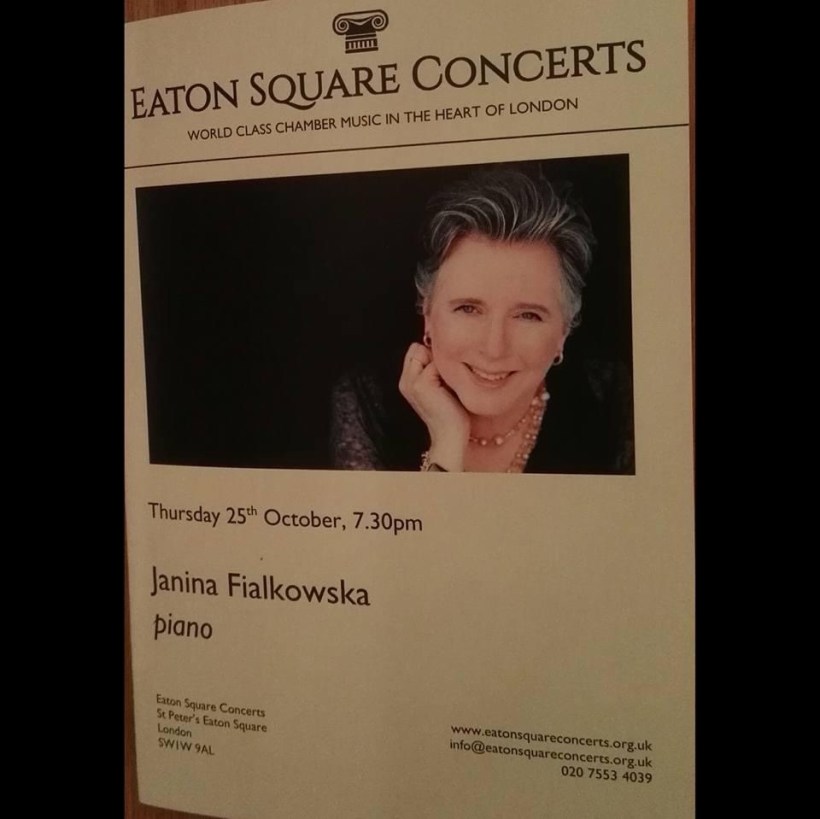
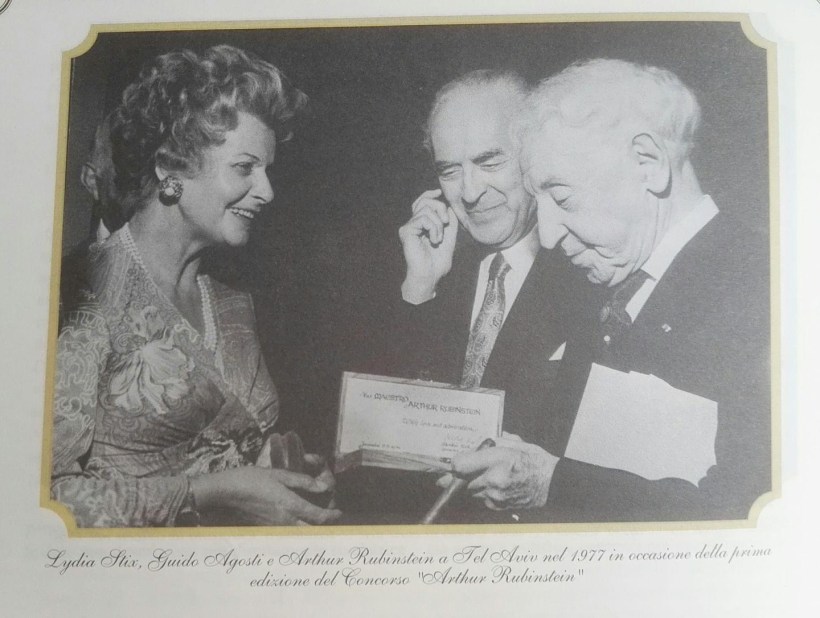
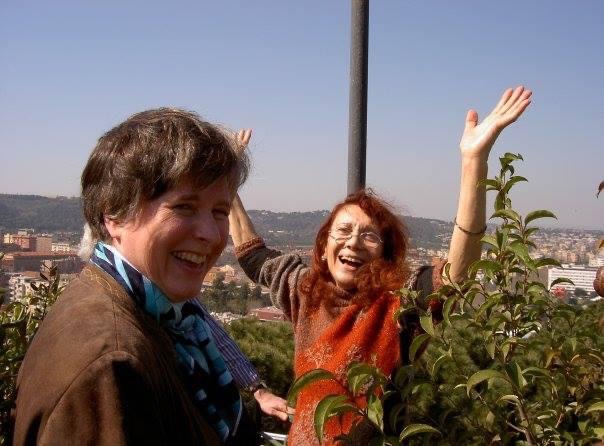
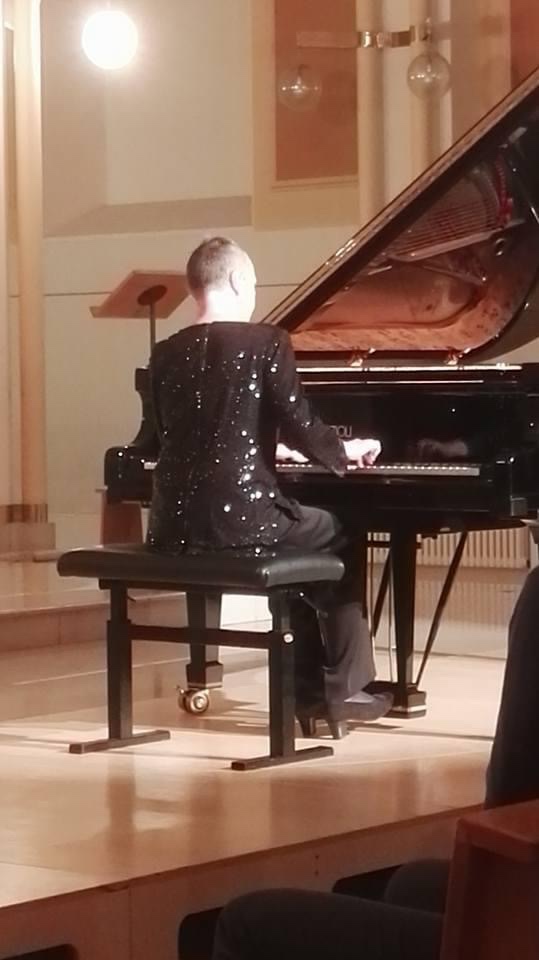
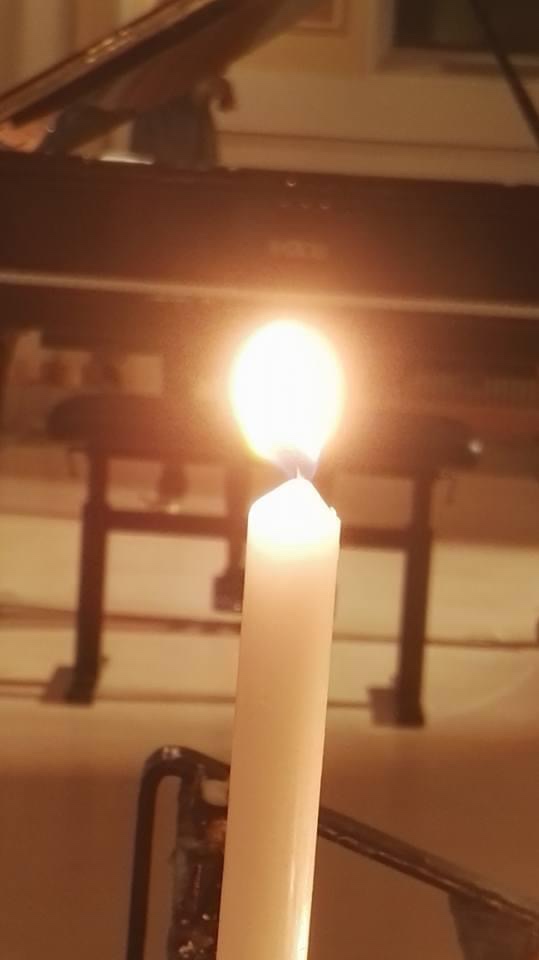 A candle shining brightly for Ileana as Janina ravished us with sublime sounds