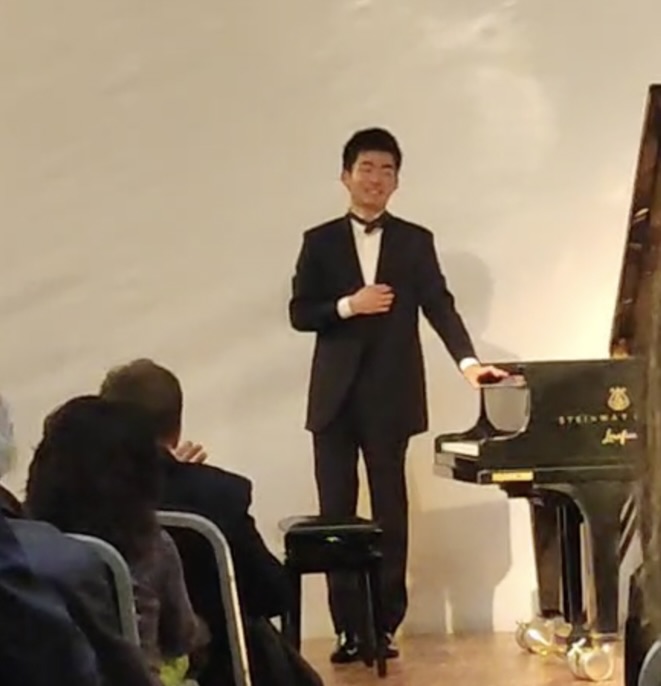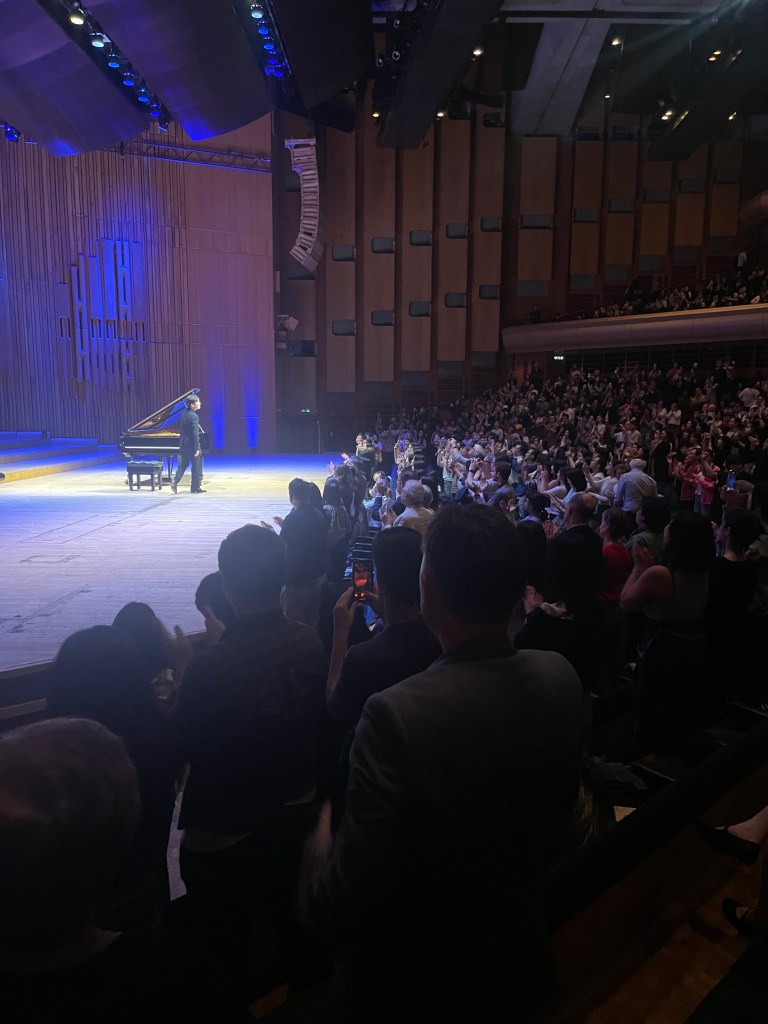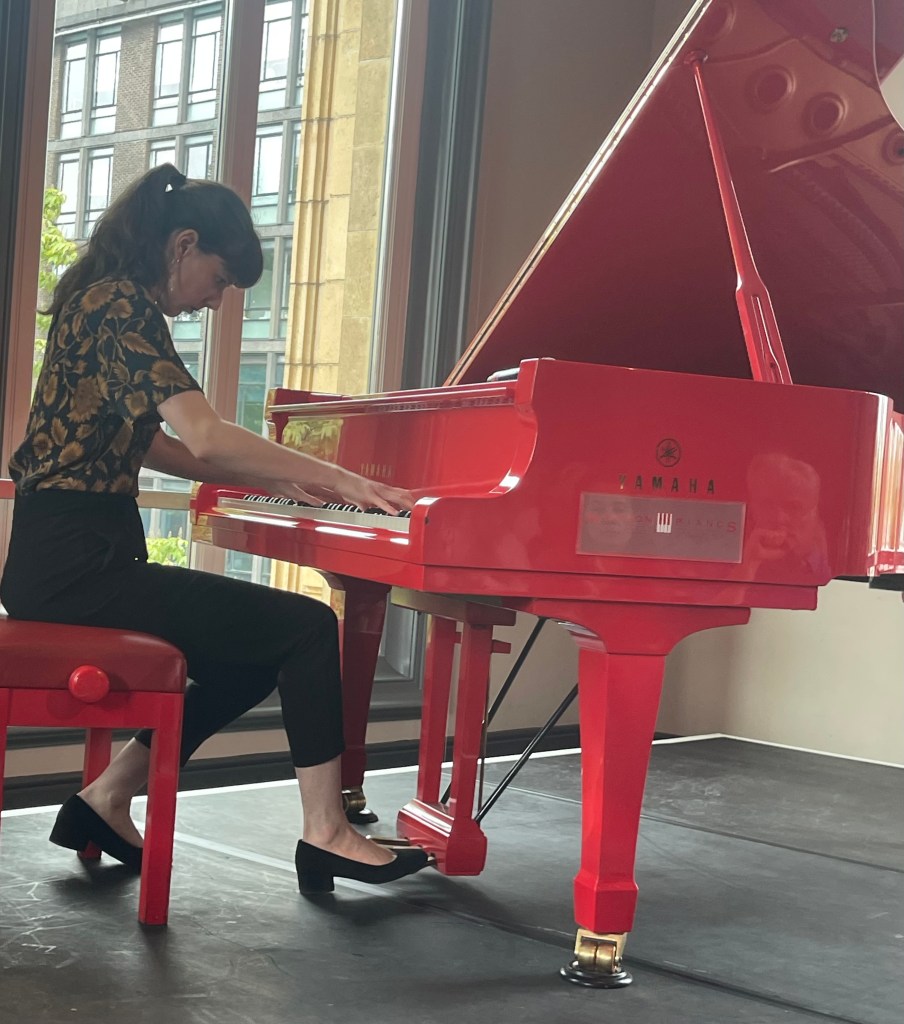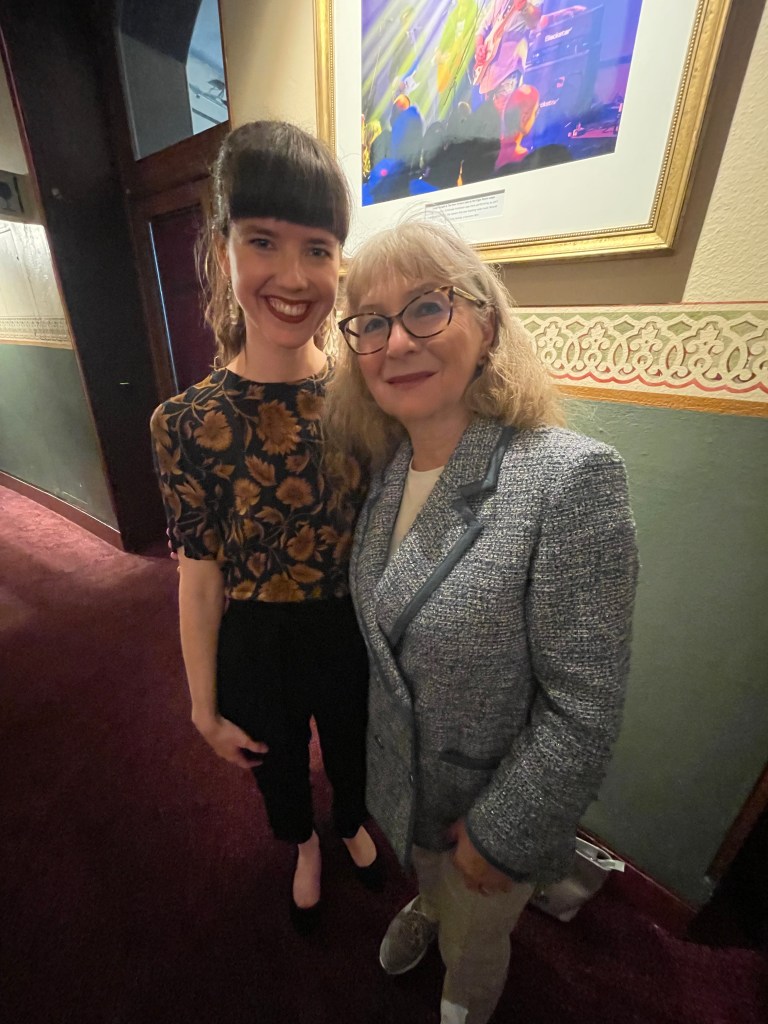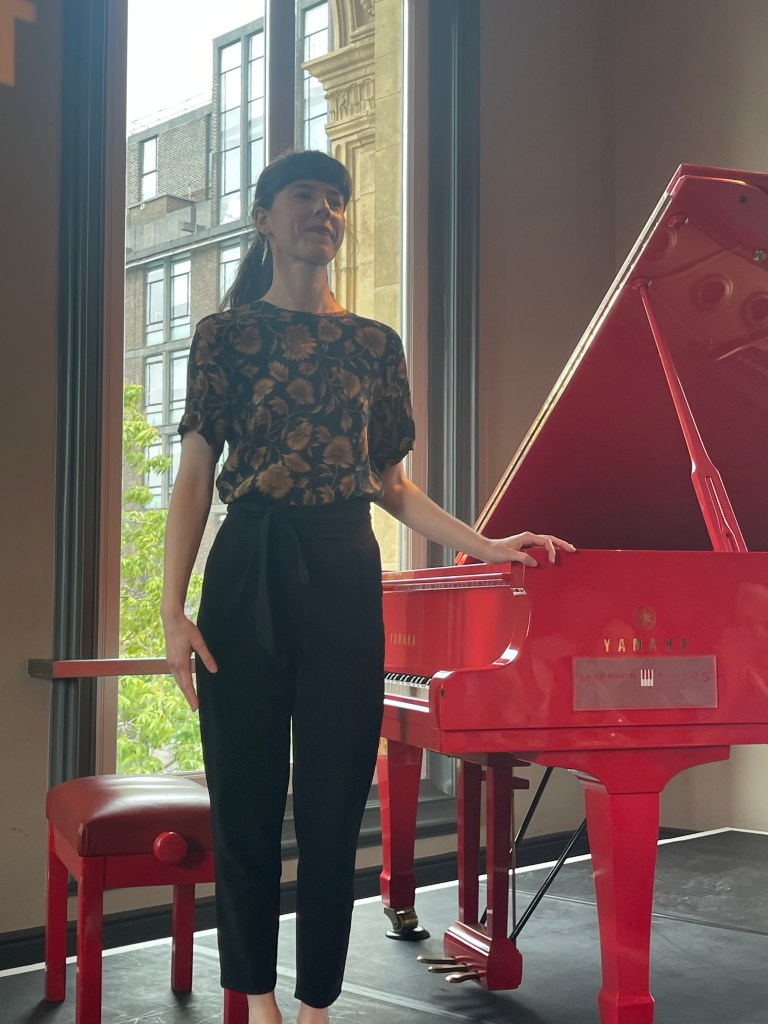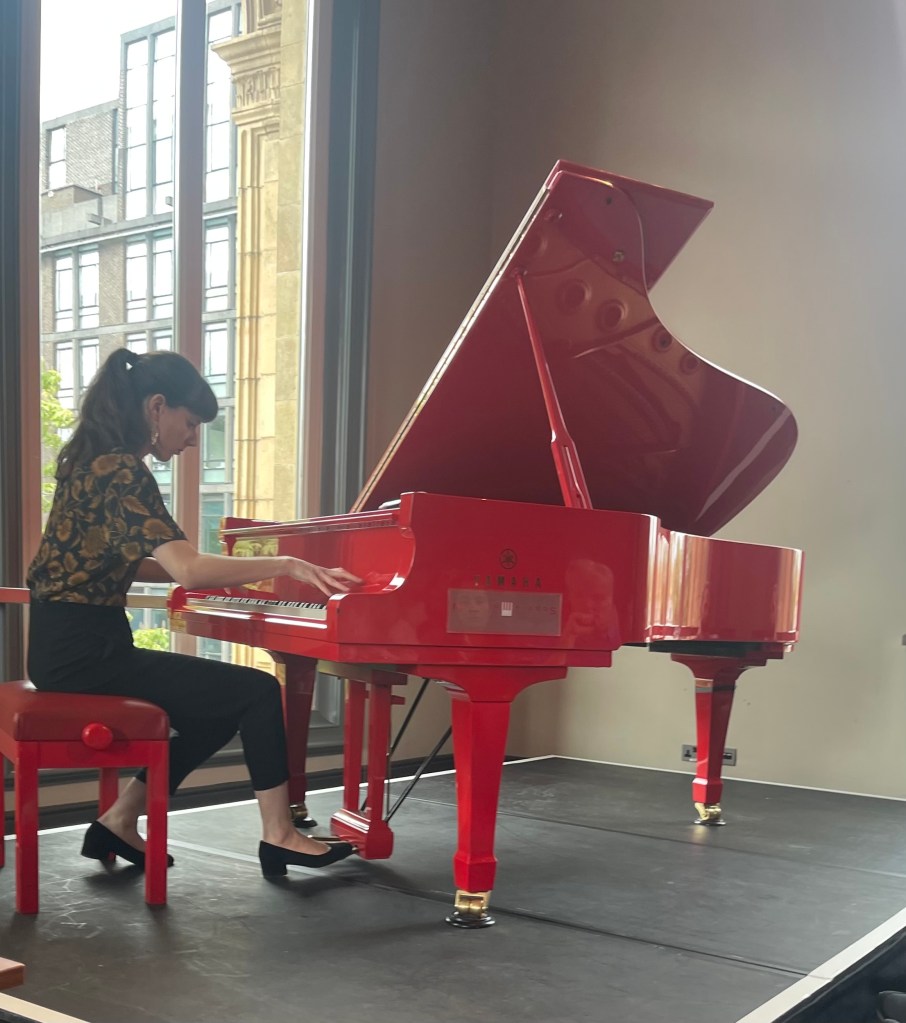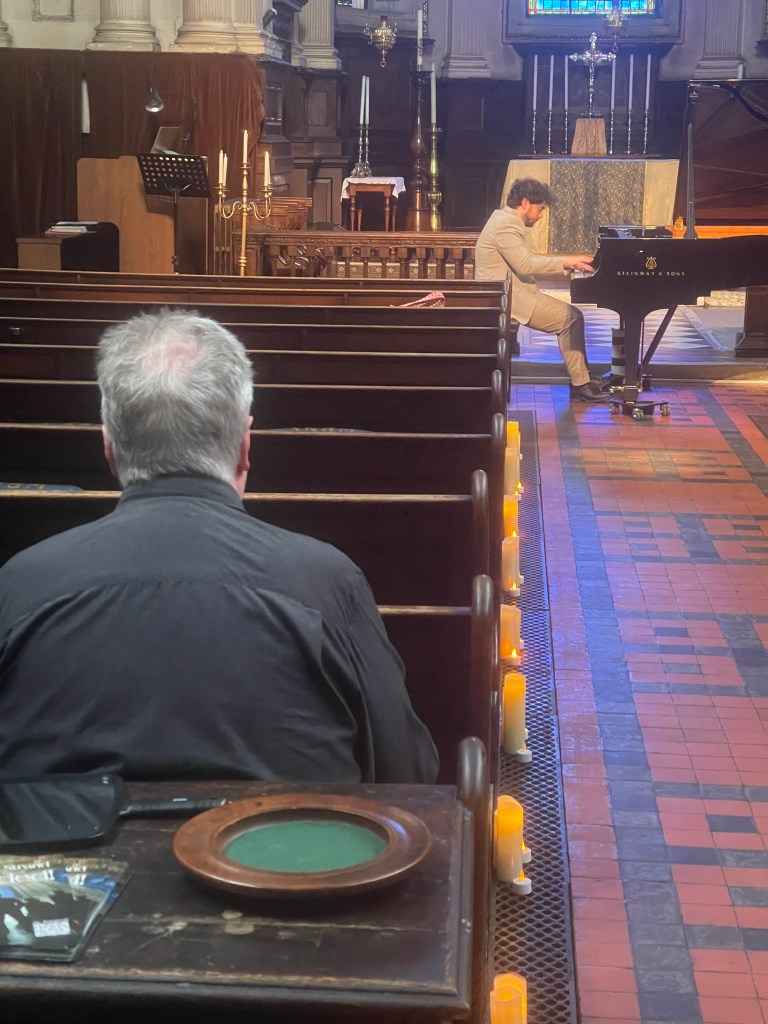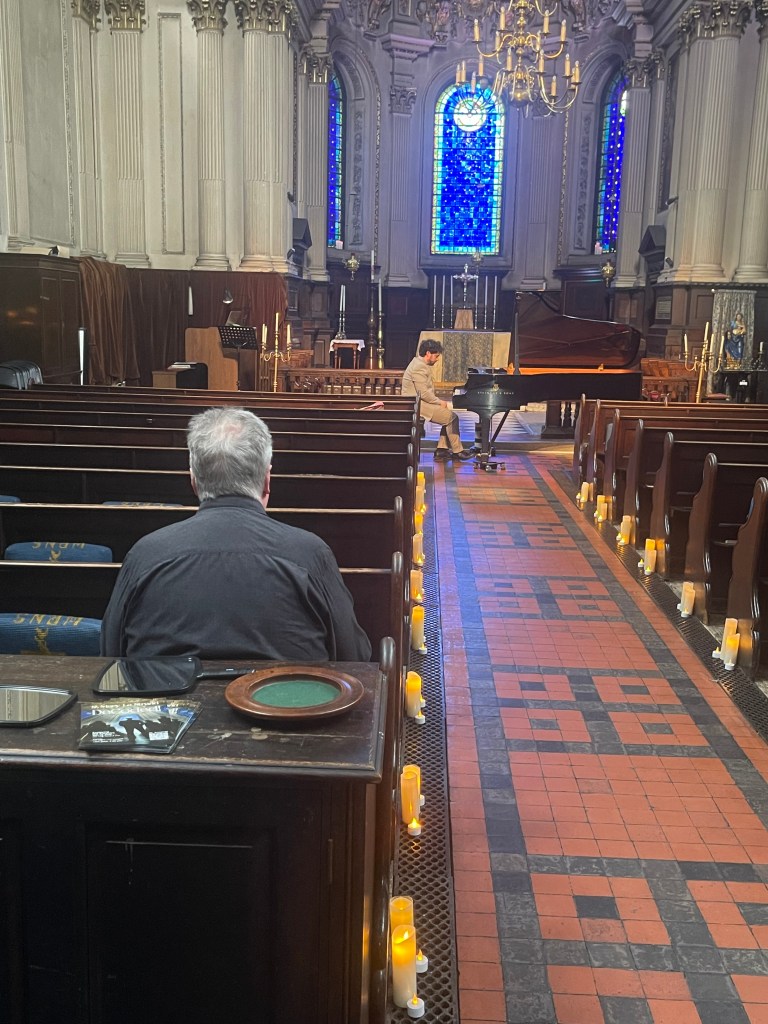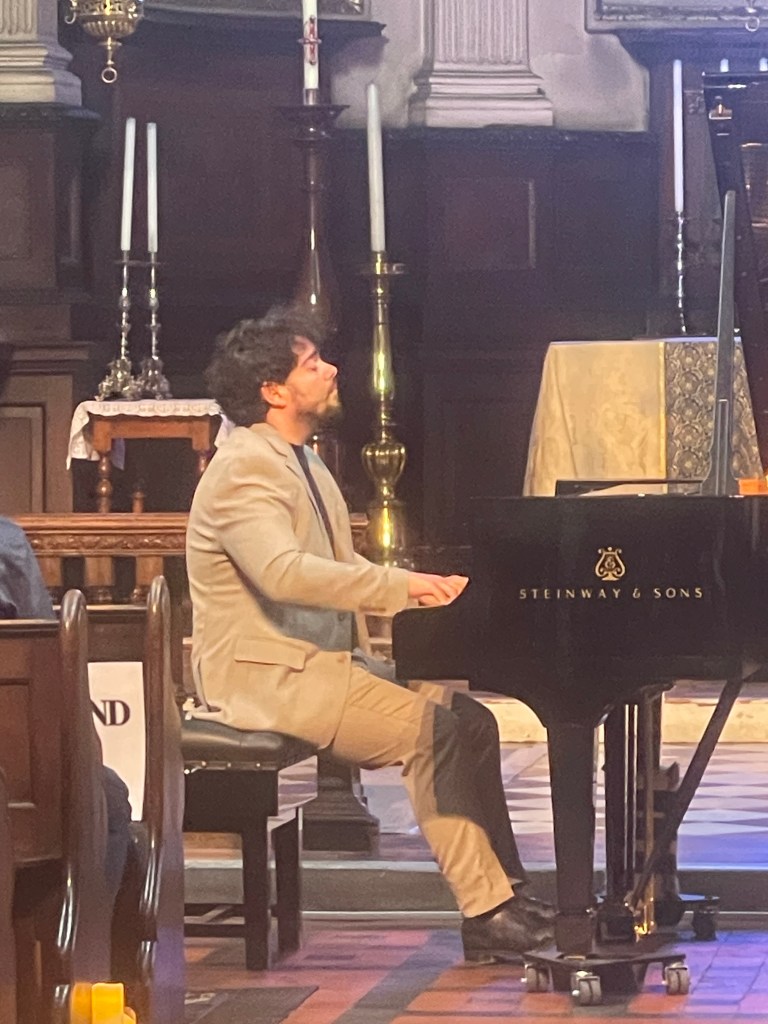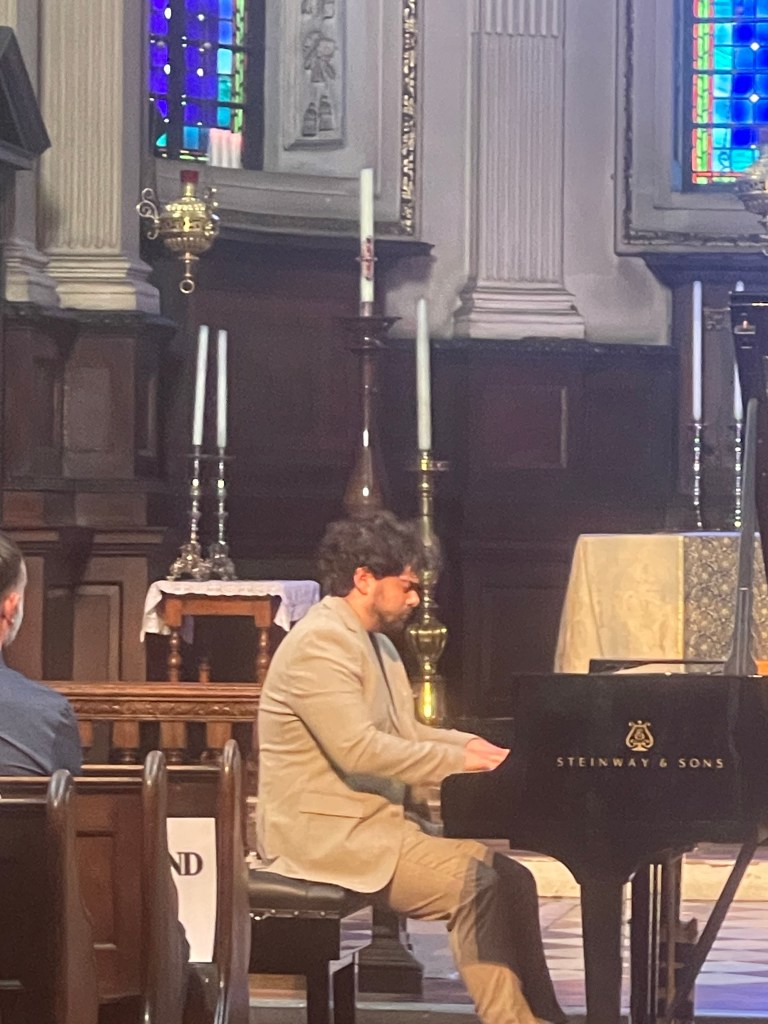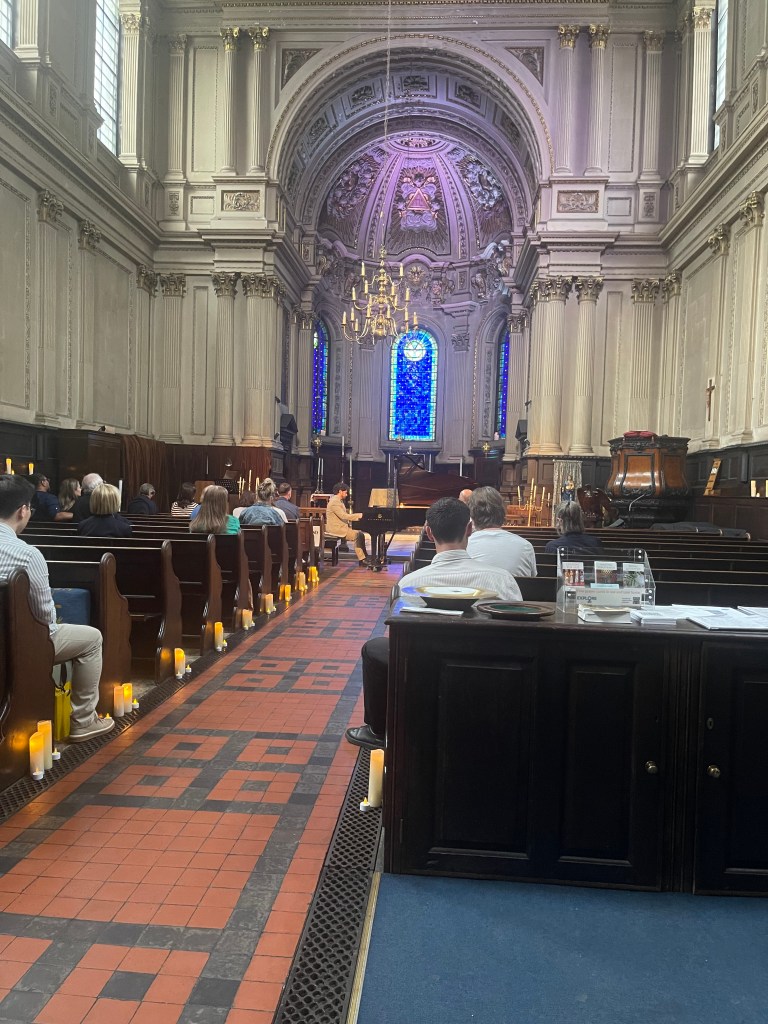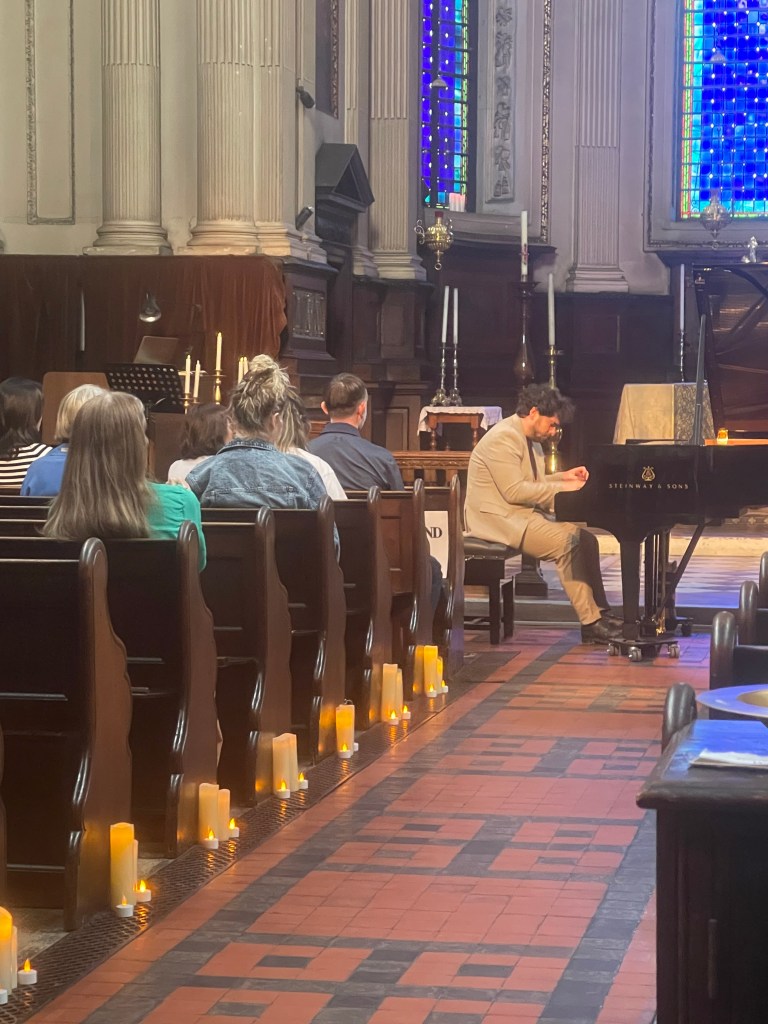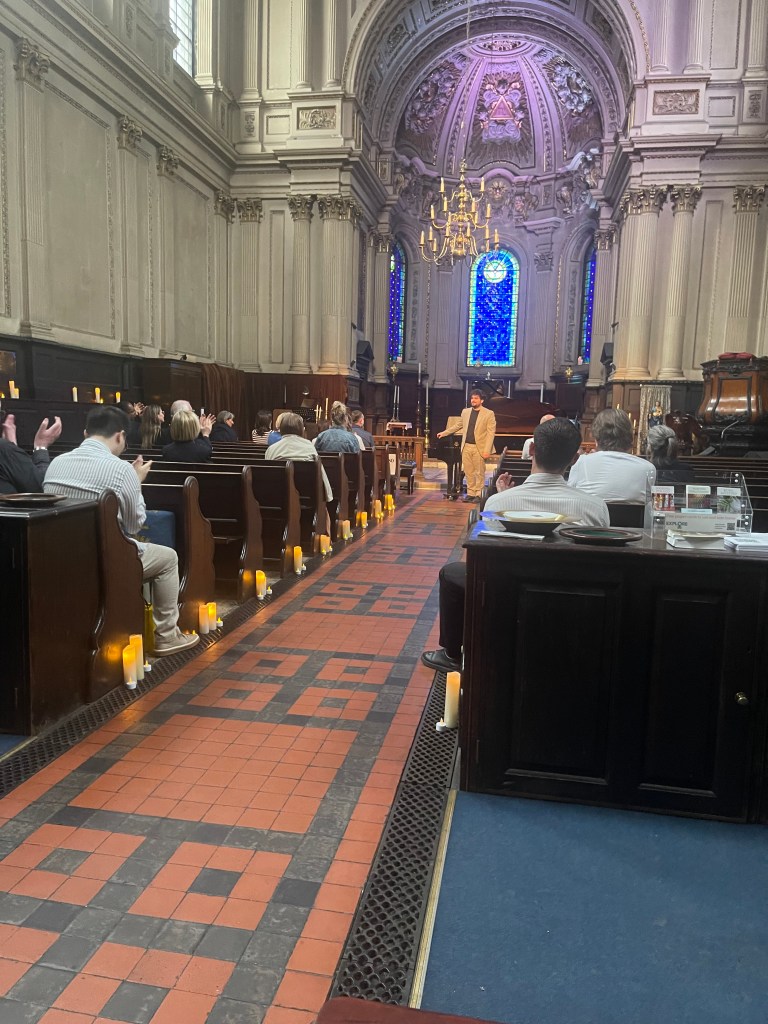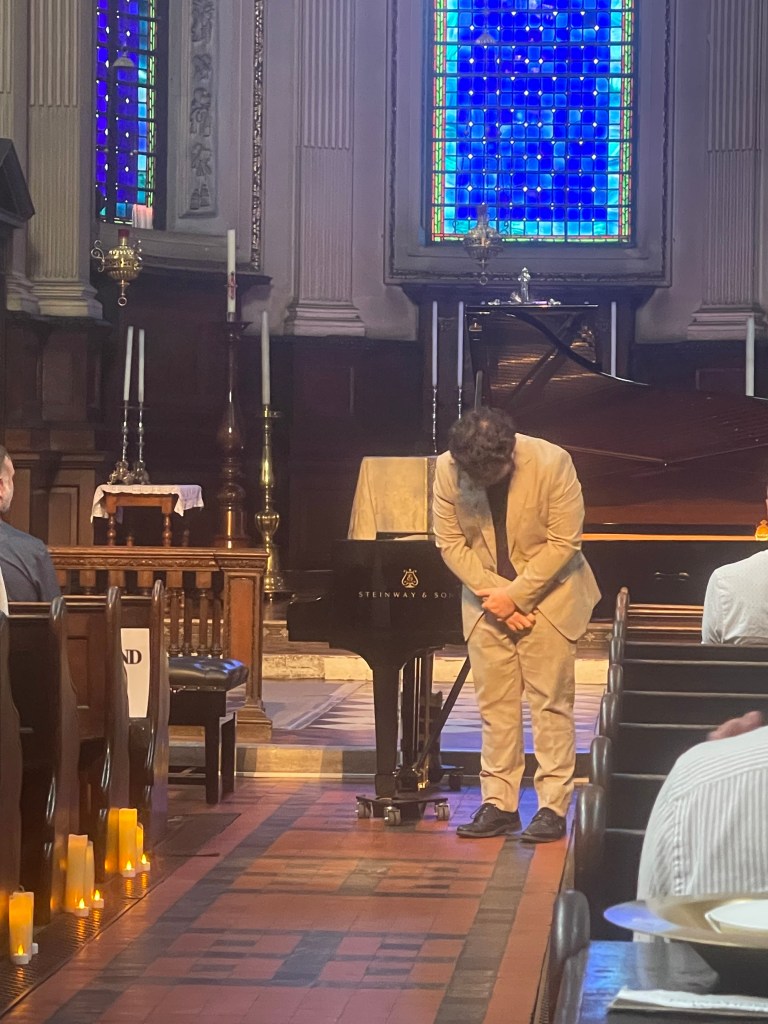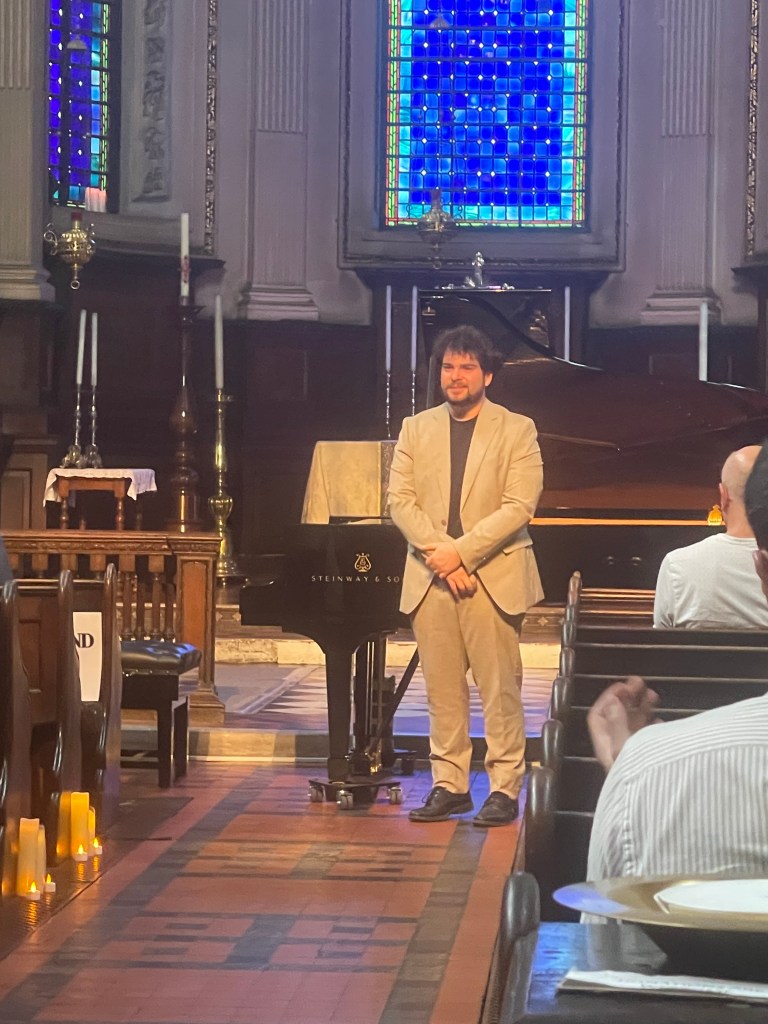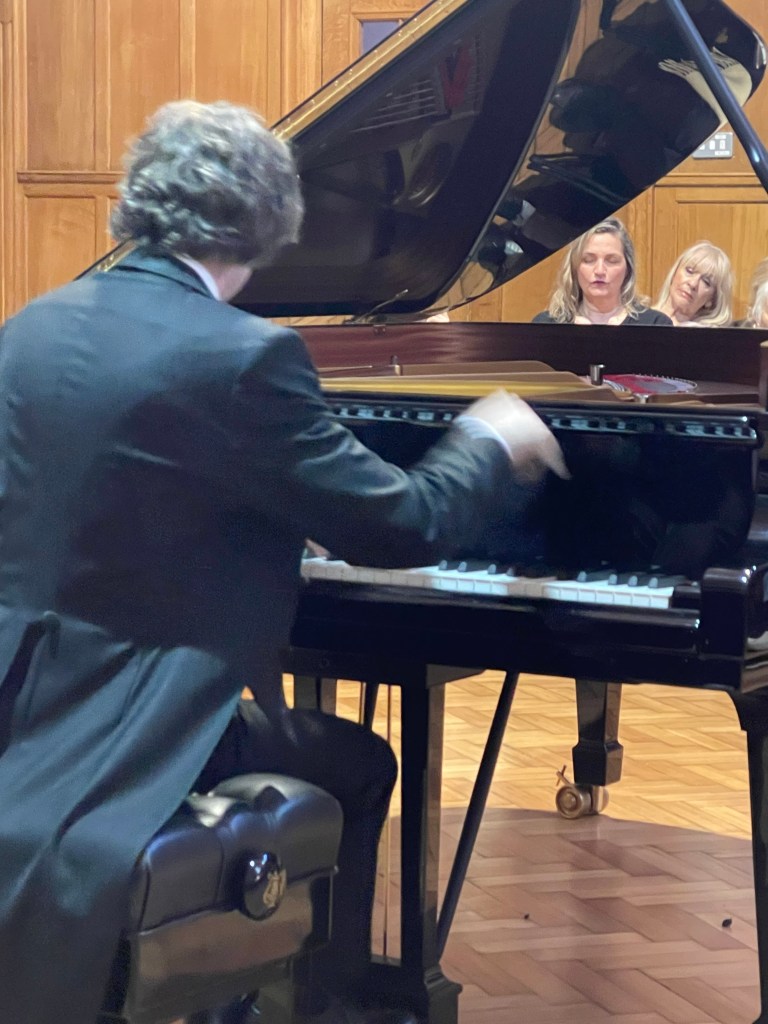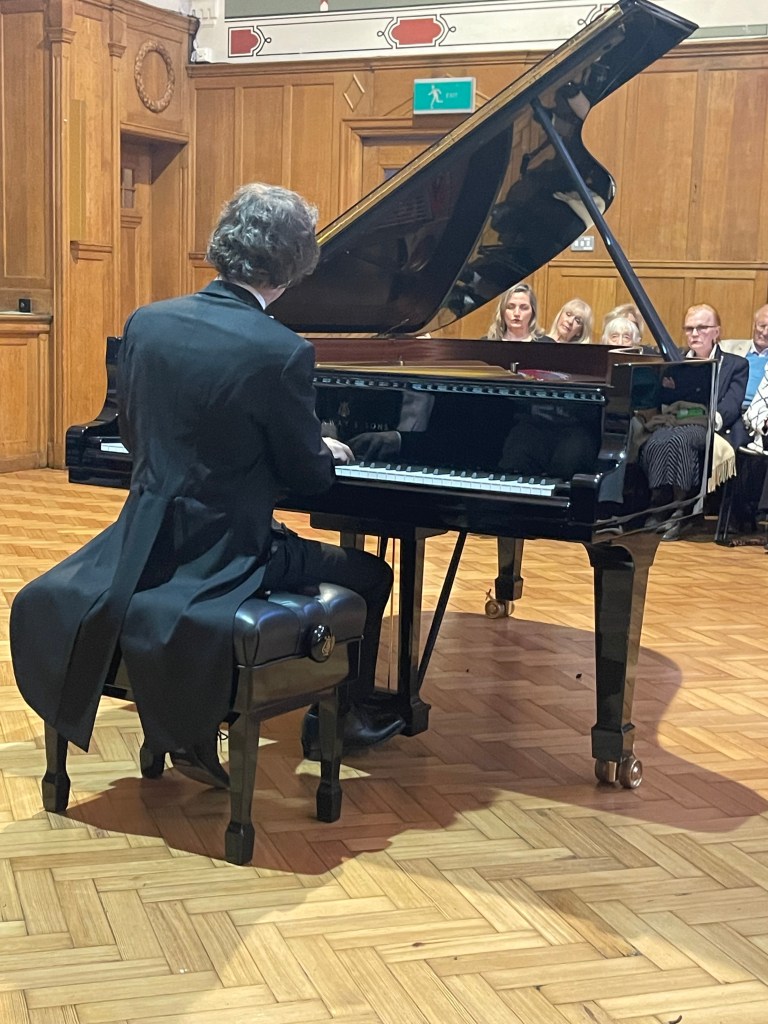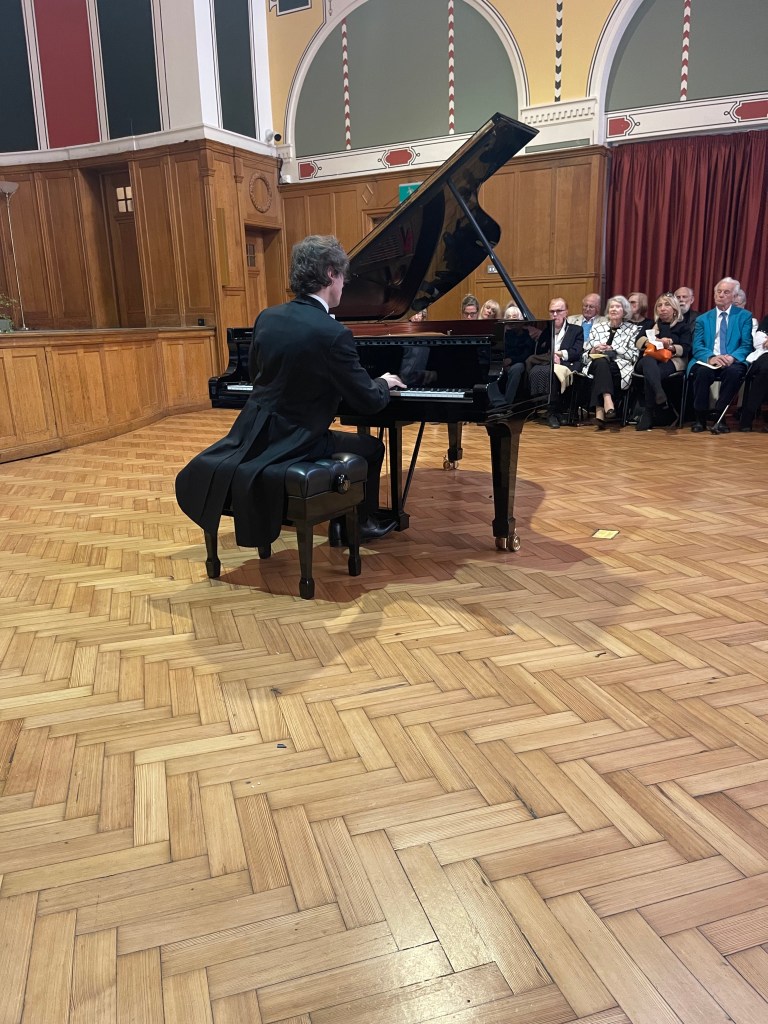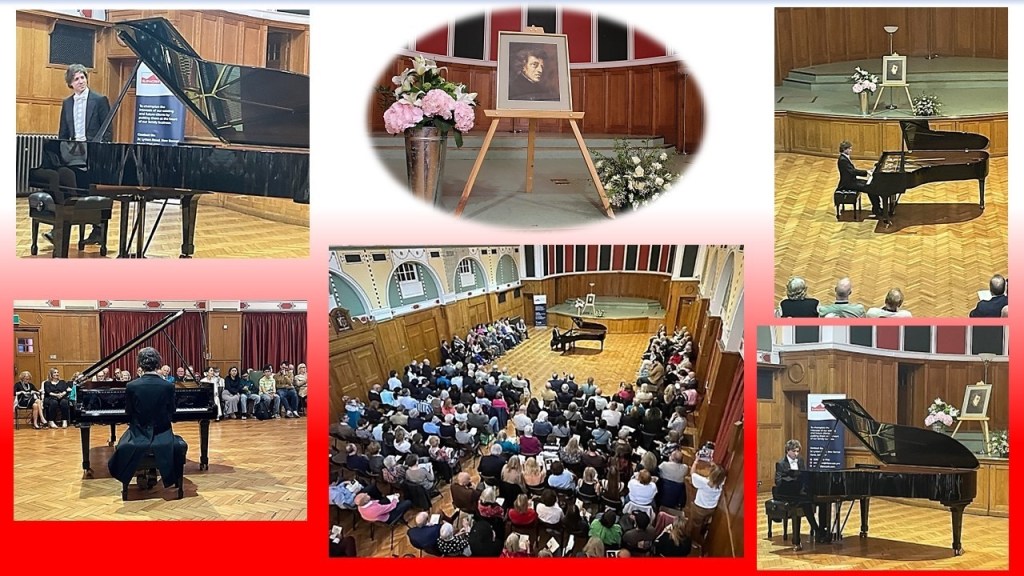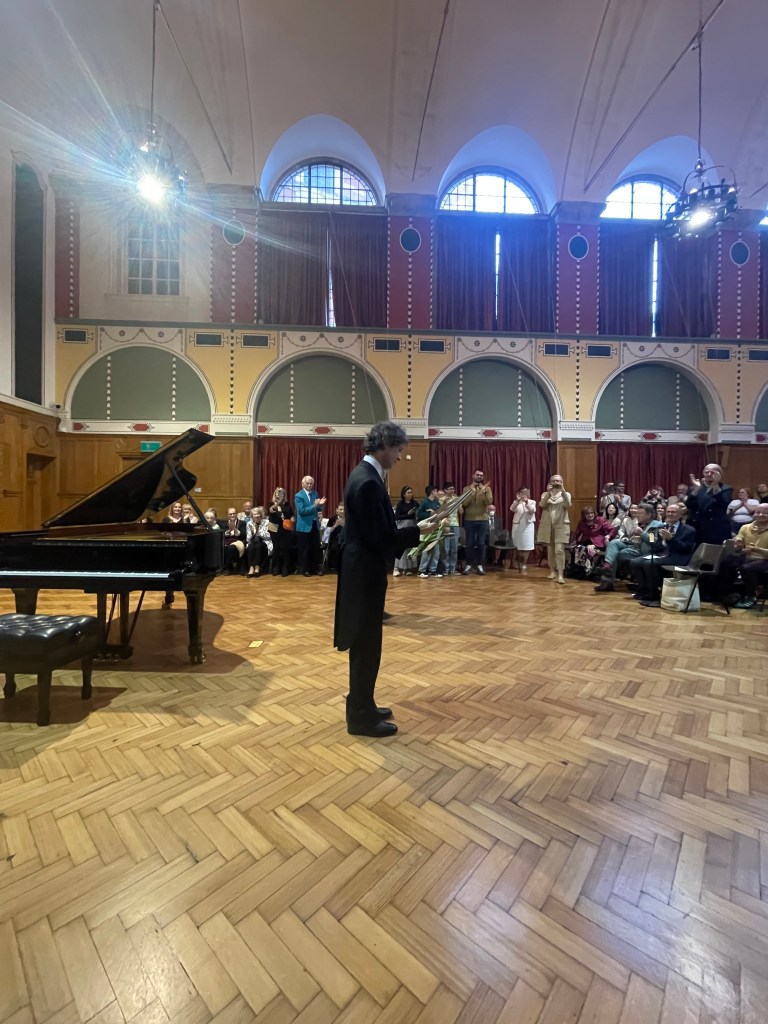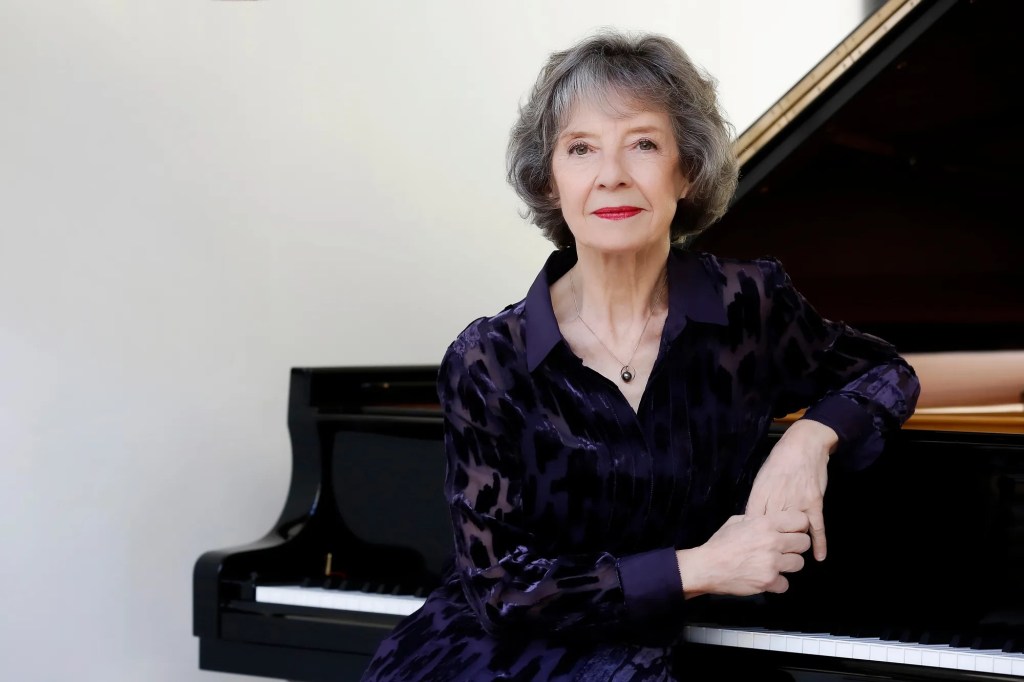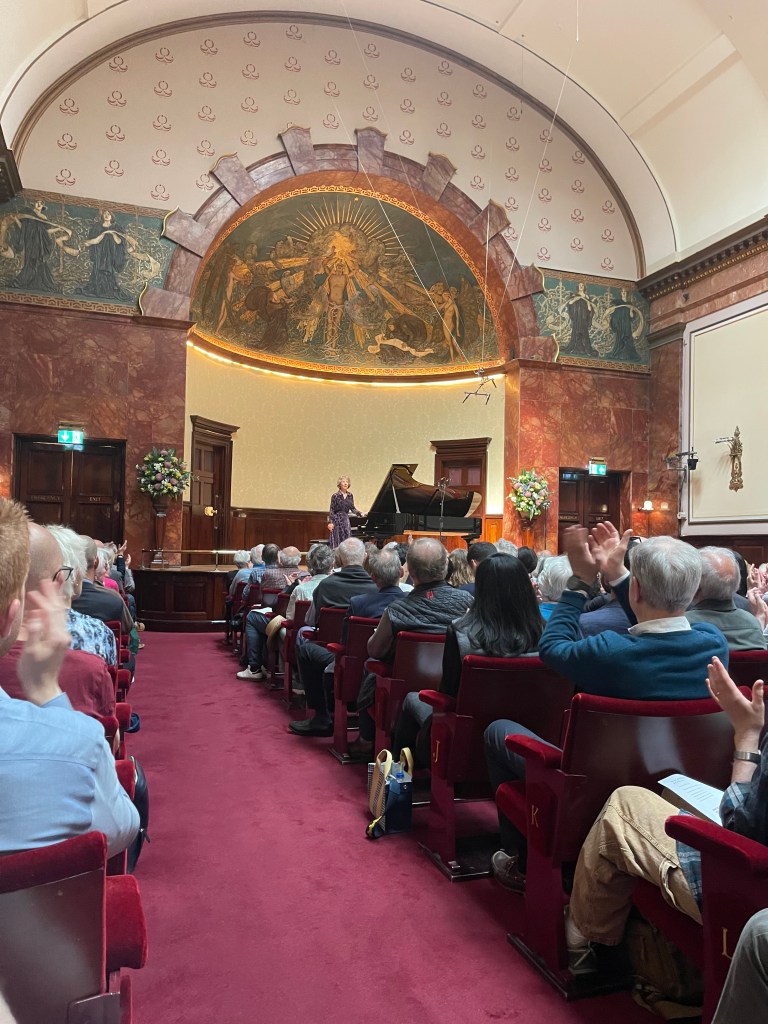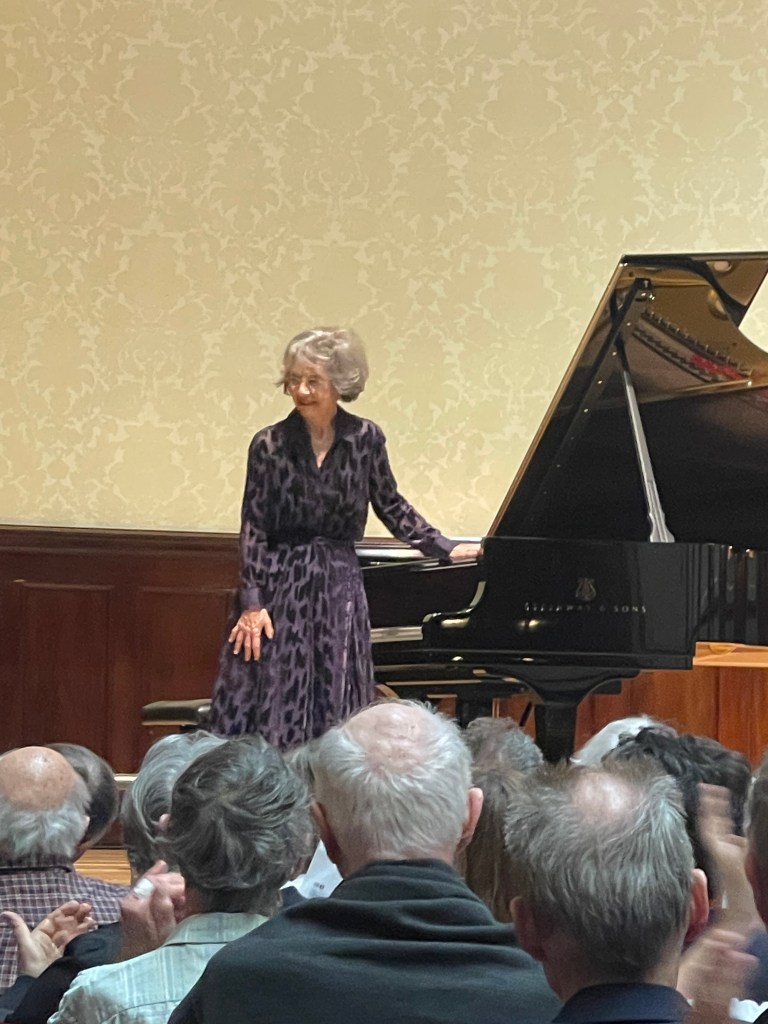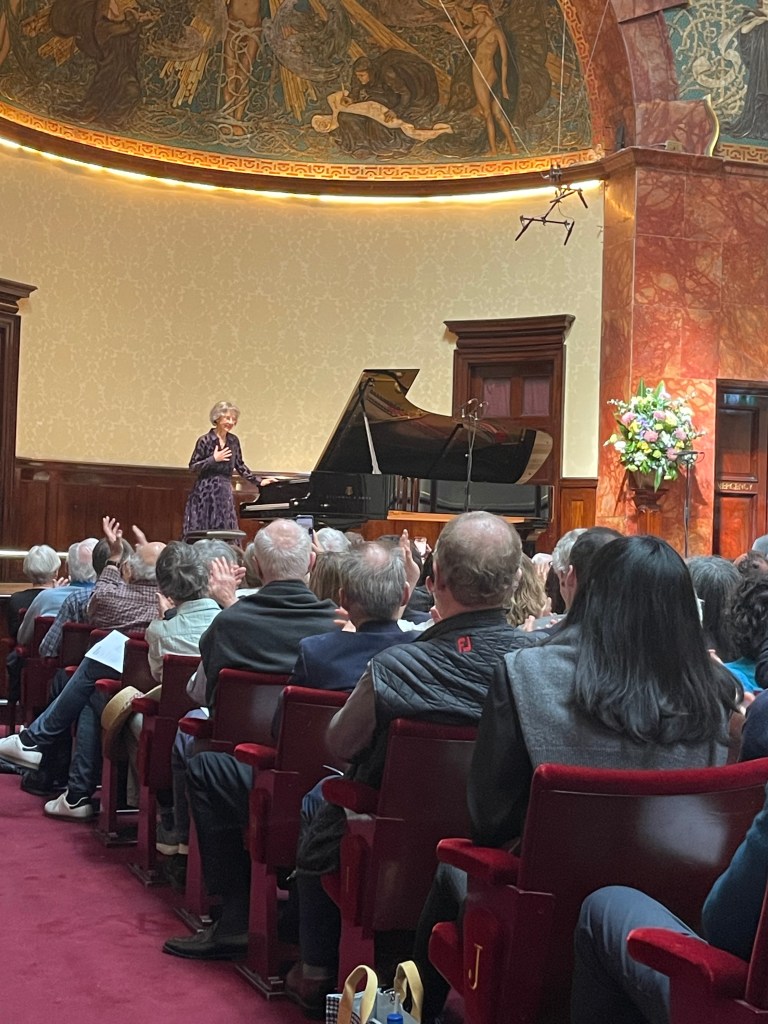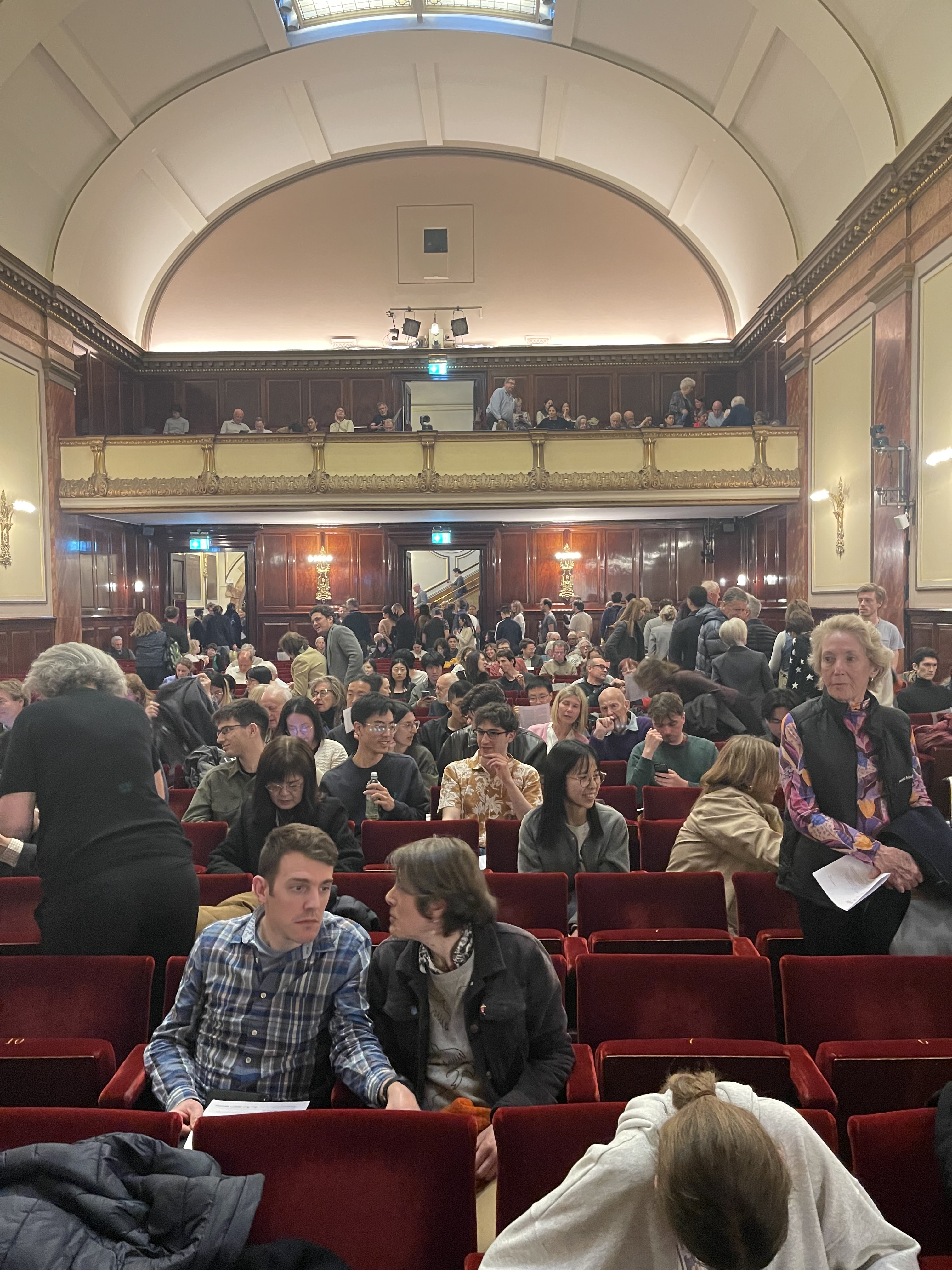
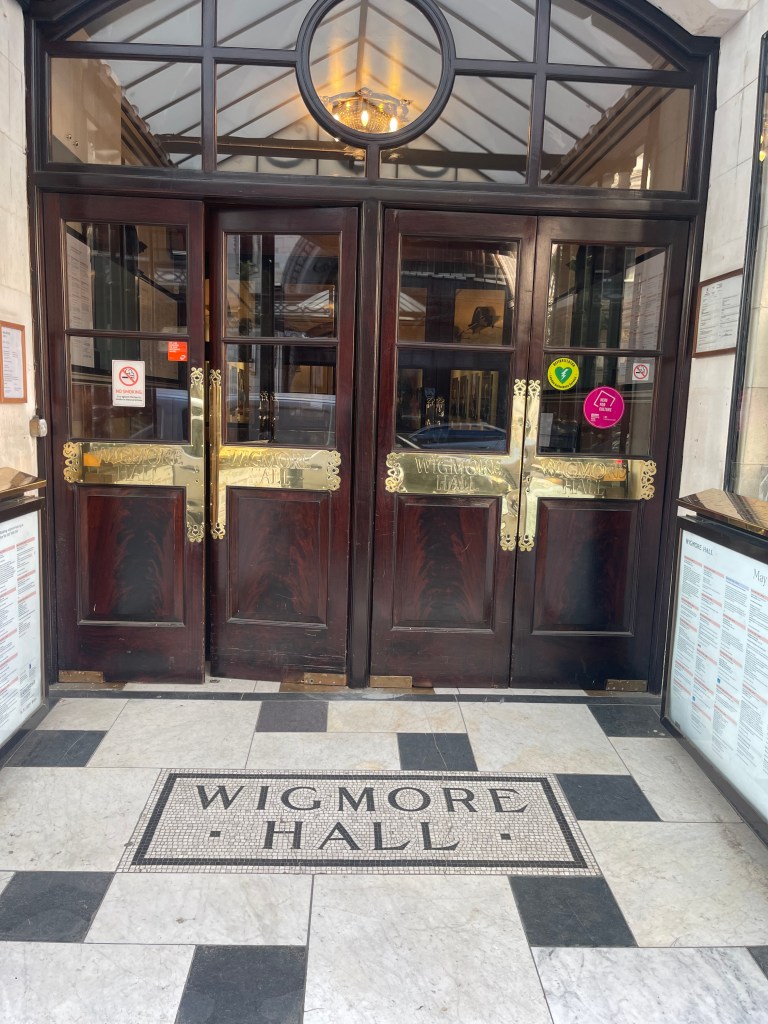
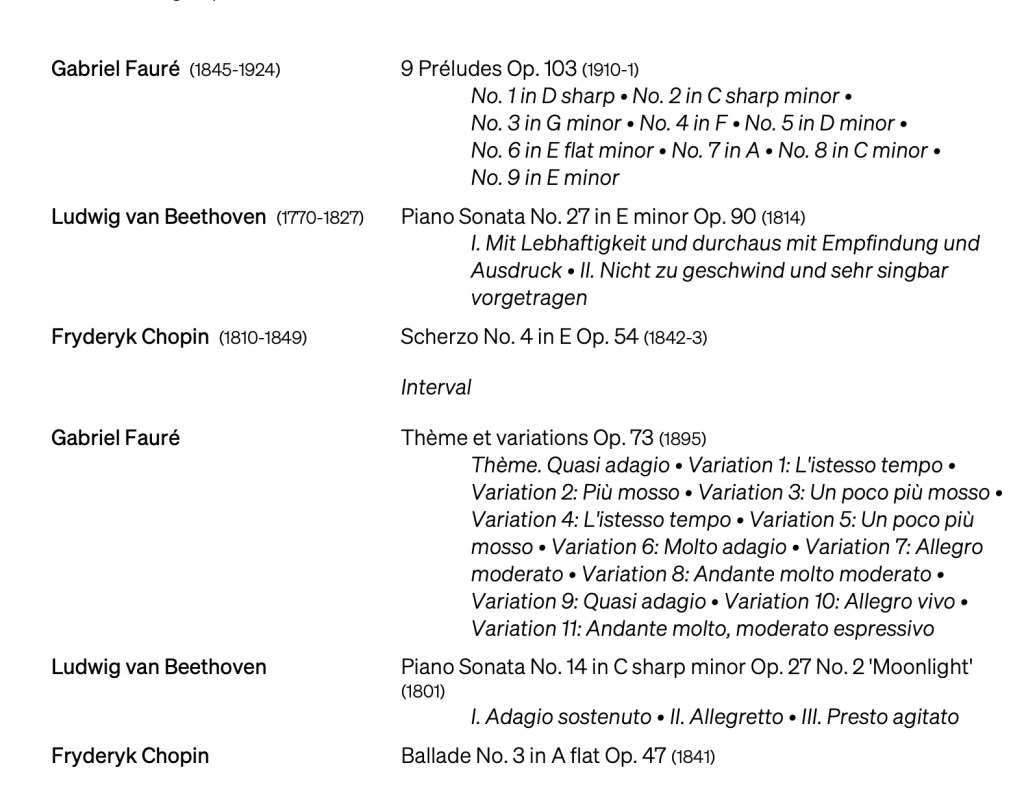
Lucas Debargue at the Wigmore Hall ‘To be or not to be’.

Interesting to hear the Fauré preludes played with such conviction and musicianly understanding. Able to unravel Fauré’s very individual voice and make sense with an architectural understanding and a sense of line of sumptuous beautiful sounds . It was the same intelligence and aristocratic nobility he brought to the Theme and variations. I remember Perlemuter telling me that Fauré, director of the Paris conservatoire where he was studying at the age 14 with Alfred Cortot, Fauré would send the music down for him to try out with the ink still wet on the page. With sentiment but never sentimental playing with clarity and simplicity. If Debargue allowed himself a little freedom or enjoyed his technical prowess it was because of youthful exuberance and did not interfere with the architectural shape or grandeur of Fauré’s unique musical voice.

There were disquieting signs, though, that showmanship could take the upper hand from his musicianship.This became more apparent and quite disconcerting in the Beethoven and Chopin that filled the first and second half of the programme. Some beautiful things in the first movement of Beethoven’s two movement op 90 sonata where the dynamic contrasts in the first movement and the sense of improvised finding his way overcame his rather harsh exaggerated exclamatory chords. But the second movement that Beethoven specifically asks to be played not too fast and in a singing style was played at breakneck speed with a coda that sounded more like a Moszkowski study ( who incidentally Perlemuter had also studied with ) and jumping up at the end in a crowd pleasing way was surprisingly disconcerting.

It was the same with Chopin’s Fourth scherzo with a middle section that he allowed to sing so naturally with sumptuous sound.The outer episodes , on the other hand, where Chopin’s wonderfully delicate embellishments flower so magically into wondrous bel canto were played like Liszt transcendental studies and loud chords were played with sledgehammer vehemence that had me jump in my seat.

Bryce Morrison a world authority on anything to do with pianists past or present had recently given a lecture on this very stage about many of the illustrious pianist that had blessed this hallowed hall with their presence .

It was the same in the second half where Beethoven’s ‘Moonlighting’ became so prolonged as Lucas chose to ignore Beethoven’s indication to play in two, and played in twelve – Moonlighting indeed ! The charm and simplicity of the minuet and trio were followed by a Presto agitato that the only thing we could hear were the two top sledgehammered chords at the end of a non existent run. I was surprised at the freedom he gave himself with the chordal passages and even more surprised by the misreading in the cadenza! The ending owed more to Tchaikovsky’s 1812 than to Beethoven’s Moonlighting!

Chopin’s 3rd Ballade was so grotesque and exaggerated with a crowd pleasing flourish at the end that it belied the remarkable scholarly musicianship of his Fauré.

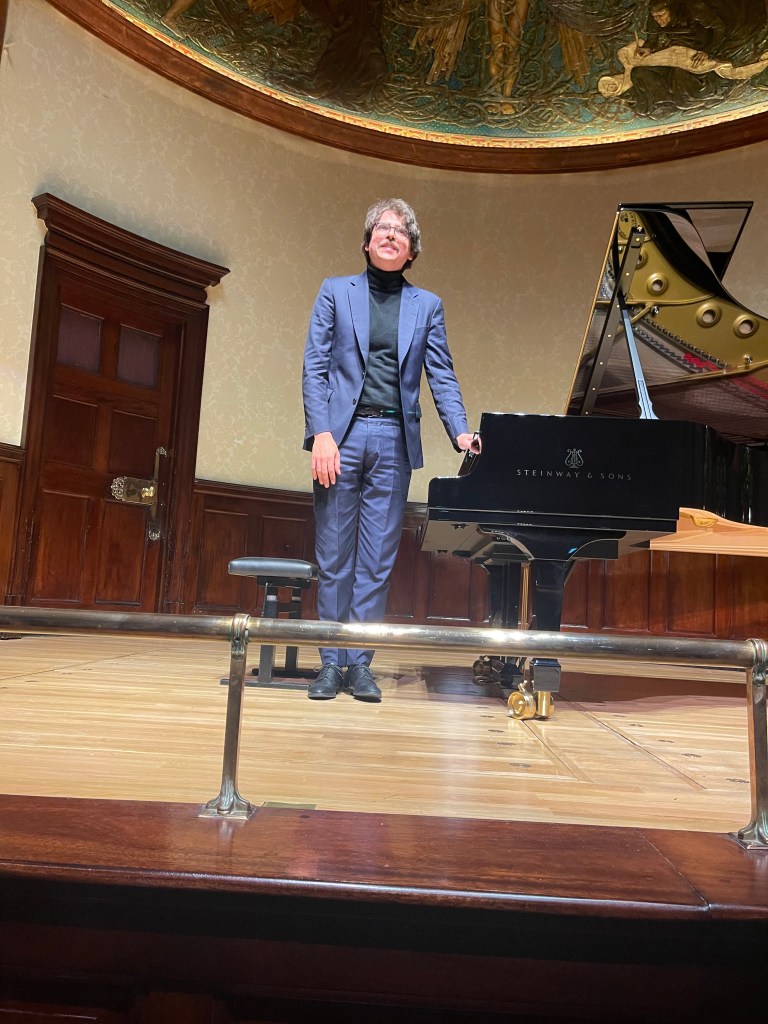
Of course the audience rose to the bait and there were cries for more which Debargue very eloquently and charmingly offered with three encores.The first his own transcription of Fauré ‘Après un rève’ which owed more to piano bar than the refined finesse of one of Fauré ‘s most hauntingly touching songs .Another two paraphrases one of an early work again by Fauré and by great request a third encore, a paraphrase of Spanish idiom. Ravishing sounds and the jeux perlé we had been denied all evening were played with an improvised freedom and beauty that made one wonder why he had so distorted the works of others.

An ovation from the ‘Wiggies’ but I could not help feeling sad that a musician of his standing could become an entertainer, instead of the interpreter and master he obviously could be, as he demonstrated with his Fauré today and in his recent complete recordings .Fauré shunned virtuosity in favour of the classical lucidity often associated with the French. He was unimpressed by purely virtuoso pianists, saying, “the greater they are, the worse they play me.” Q.E.D Beware the temptation Monsieur Debargue!
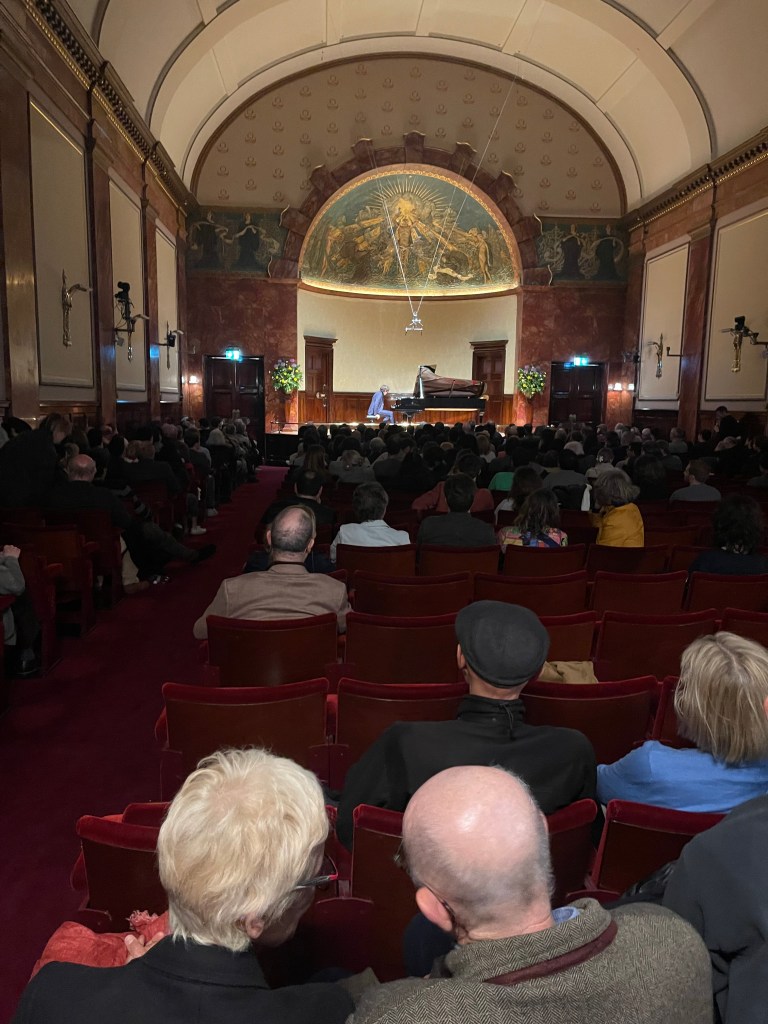
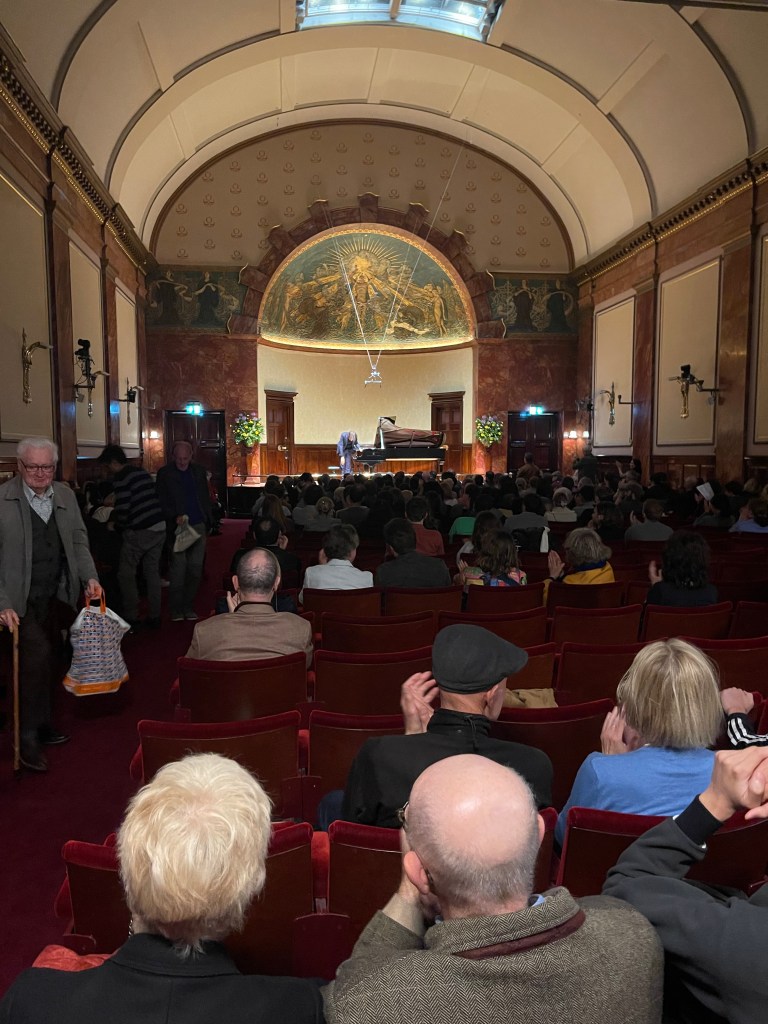
“Since Glenn Gould’s visit to Moscow and Van Cliburn’s victory at the Tchaikovsky Competition in the heat of the Cold War, never has a foreign pianist provoked such frenzy.”

Olivier Bellamy, THE HUFFINGTON POST

incredible gift, artistic vision and creative freedom” of Lucas Debargue was revealed by his performances at the Tchaikovsky International Competition in Moscow in 2015 and distinguished with the coveted Prize of the Moscow Music Critics’ Association.

Today, Lucas is invited to play solo and with leading orchestras in the most prestigious venues of the world including Berlin Philharmonie, Concertgebouw Amsterdam, Konzerthaus Vienna, Théâtre des Champs Elysées and Philharmonie Paris, London’s Wigmore Hall and Royal Festival Hall, Alte Oper Frankfurt, Cologne Philharmonie, Suntory Hall Tokyo, the concert halls of Beijing, Shanghai, Taipei, Seoul, and of course the legendary Grand Hall of Tchaikovsky Conservatory in Moscow, the Mariinsky Concert Hall in St. Petersburg and Carnegie Hall in New York. He also appeared several times at the summer meetings of La Roque d’Anthéron and Verbier.

Lucas Debargue regularly collaborates with Valery Gergiev, Mikhail Pletnev, Vladimir Jurowski, Andrey Boreyko, Tugan Sokhiev, Vladimir Spivakov and Bertrand de Billy. His chamber music partners include Gidon Kremer, Janine Jansen, and Martin Fröst.

Born in 1990, Lucas forged a highly unconventional path to success. Having discovered classical music at the age of 10, the future musician began to feed his passion and curiosity with diverse artistic and intellectual experiences, which included advanced studies of literature and philosophy. The encounter with the celebrated piano teacher Rena Shereshevskaya proved a turning point: her vision and guidance inspired Lucas to make a life-long professional commitment to music.

A performer of fierce integrity and dazzling communicative power, Lucas Debargue draws inspiration for his playing from literature, painting, cinema, jazz, and develops very personal interpretation of a carefully selected repertoire. Though the core piano repertoire is central to his career, he is keen to present works by lesser-known composers like Karol Szymanowski, Nikolai Medtner, or Milosz Magin.

Lucas devotes a large portion of his time to composition and has already created over twenty works for piano solo and chamber ensembles. These include Orpheo di camera concertino for piano, drums and string orchestra, premiered by Kremerata Baltica, and a Piano Trio was created under the auspices of the Louis Vuitton Foundation in Paris.  As a permanent guest Artist of Kremerata Baltica, Lucas has been commissioned to write a chamber opera.

Sony Classical has released five of his albums with music of Scarlatti, Bach, Beethoven, Schubert, Chopin, Liszt, Ravel, Medtner and Szymanowski. His monumental four-volume tribute to Scarlatti, which came out at the end of 2019, has been praised by The New York Times and selected by NPR among “the ten classical albums to usher in the next decade”. August 2021 sees the release of an album devoted to the Polish composer Miłosz Magin. A true discovery of a fascinating yet unknown composer recorded with Kremerata Baltica and Gidon Kremer.

Lucas’s breakthrough at the Tchaikovsky Competition is the subject of the documentary To Music. Directed by Martin Mirabel and produced by Bel Air Media, it was shown at the International Film Festival in Biarritz in 2018.

Olivier Bellamy, Le HUFFINGTON POST

Gabriel Urbain Fauré 12 May 1845 – 4 November 1924 was a French composer, organist, pianist and teacher. He was one of the foremost French composers of his generation, and his musical style influenced many 20th-century composers. Among his best-known works are his Pavane ,Requiejm,.Sicilienne,nocturnes PavaneRequiemSiciliennenocturnes for piano and the songs ‘Après un rêve’ and “Clair de lune’. Although his best-known and most accessible compositions are generally his earlier ones, Fauré composed many of his most highly regarded works in his later years, in a more harmonically  and melodically complex style. the rigid official musical establishment of Paris in the second half of the 19th century Gabriel Fauré won acceptance with difficulty. He was a pupil of Camille Saint-Saëns at the École Niedermeyer and served as organist at various Paris churches, including finally the Madeleine, but had no teaching position until 1897, at the Conservatoire, where his pupils included Ravel and Enescu. In 1905 he became director of the Conservatoire in the aftermath of the scandal of the Prix de Rome being refused to Ravel, and he introduced a number of necessary reforms. He retired in 1920, after which he was able to devote himself more fully again to composition, producing notably two final chamber works: a Piano Trio and a String Quartet. He died in Paris in 1924.Fauré made a significant addition to piano repertoire, particularly in a series of 13 barcarolles and a similar number of nocturnes, as well as five impromptus and a single Ballade. The piano duet suite Dolly was written in the 1890s for the daughter of Emma Bardac, later wife of Debussy, after divorce from her banker husband, a singer for whom Fauré wrote La Bonne Chanson. In 1905 a scandal erupted in French musical circles over the country’s top musical prize, the Prix de Rome . Fauré’s pupil Ravel had been eliminated prematurely in his sixth attempt for this award, and many believed that reactionary elements within the Conservatoire had played a part in it.Dubois, who became the subject of much censure, brought forward his retirement and stepped down at once.Appointed in his place, and with the support of the French government, Fauré radically changed the administration and curriculum. He appointed independent external judges to decide on admissions, examinations and competitions, a move which enraged faculty members who had given preferential treatment to their private pupils; feeling themselves deprived of a considerable extra income, many of them resigned.Fauré was dubbed ‘Robespierre’by disaffected members of the old guard as he modernised and broadened the range of music taught at the Conservatoire.

 The pianist Alfred Cortot  said, “There are few pages in all music comparable to these.” The critic Bryce Morrison has noted that pianists frequently prefer to play the charming earlier piano works, such as the Impromptu No. 2, rather than the later piano works, which express “such private passion and isolation, such alternating anger and resignation” that listeners are left uneasy.In his piano music, as in most of his works, Fauré shunned virtuosity in favour of the classical lucidity often associated with the French. He was unimpressed by purely virtuoso pianists, saying, “the greater they are, the worse they play me.” Fauré’s stature as a composer is undiminished by the passage of time. He developed a musical idiom all his own; by subtle application of old modes, he evoked the aura of eternally fresh art; by using unresolved mild discords and special coloristic effects, he anticipated procedures of Impressionism; in his piano works, he shunned virtuosity in favor of the Classical lucidity of the French masters of the clavecin ; the precisely articulated melodic line of his songs is in the finest tradition of French vocal music. .Fauré’s stylistic evolution can be observed in his works for piano. The elegant and captivating first pieces, which made the composer famous, show the influence of Chopin, Saint-Saëns, and Liszt. The lyricism and complexity of his style in the 1890s are evident in the Nocturnes nos. 6 and 7, the Barcarolle no. 5 and the Thème et variations. Finally, the stripped-down style of the final period informs the last nocturnes (nos.10–13), the series of great barcarolles (nos. 8–11) and the astonishing Impromptu no. 5.
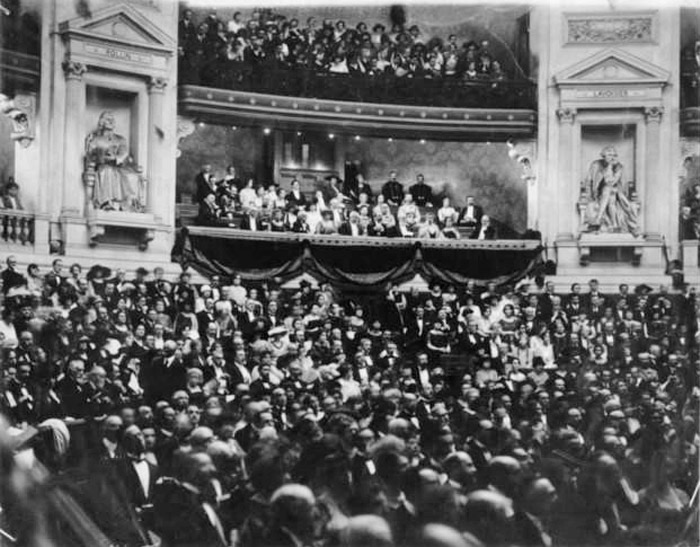
National hommage to Fauré, 1922. Fauré and President Millerand are in the box between the statues

9 Préludes, Op. 103

elderly man leaning against grand piano
Fauré, next to the piano in his flat in the boulevard Malesherbes, Paris, 1905

The nine préludes are among the least-known of Fauré’s major piano compositions. They were written while the composer was struggling to come to terms with the onset of deafness in his mid-sixties. By Fauré’s standards this was a time of unusually prolific output. The préludes were composed in 1909 and 1910, in the middle of the period in which he wrote the opera Pénélope, barcarolles Nos. 8–11 and nocturnes Nos. 9–11.

In Koechlin’s view, “Apart from the Préludes of Chopin, it is hard to think of a collection of similar pieces that are so important”. The critic Michael Oliver wrote, “Fauré’s Préludes are among the subtlest and most elusive piano pieces in existence; they express deep but mingled emotions, sometimes with intense directness … more often with the utmost economy and restraint and with mysteriously complex simplicity.” Jessica Duchen calls them “unusual slivers of magical inventiveness.” The complete set takes between 20 and 25 minutes to play. The shortest of the set, No. 8, lasts barely more than a minute; the longest, No. 3, takes between four and five minutes.

Prélude No. 1 in D♭ major

Andante molto moderato. The first prélude is in the manner of a nocturne.Morrison refers to the cool serenity with which it opens, contrasted with the “slow and painful climbing” of the middle section.

Prélude No. 2 in C♯ minor

Allegro. The moto perpetuo of the second prélude is technically difficult for the pianist; even the most celebrated Fauré interpreter can be stretched by it. Koechlin calls it “a feverish whirling of dervishes, concluding in a sort of ecstasy, with the evocation of some fairy palace.Prélude No. 3 in G minor

Andante. Copland considered this prélude the most immediately accessible of the set. “At first, what will most attract you, will be the third in G-minor, a strange mixture of the romantic and classic ,it might be a barcarolle strangely interrupting a theme of very modern stylistic contour”.

Prélude No. 4 in F major

Allegretto moderato. The fourth prélude is among the gentlest of the set. The critic Alain Cochard writes that it “casts a spell on the ear through the subtlety of a harmony tinged with the modal and its melodic freshness.” Koechlin calls it “a guileless pastorale, flexible, with succinct and refined modulations”.

Prélude No. 5 in D minor

Allegro. Cochard quotes the earlier writer Louis Aquettant’s description of this prélude as “This fine outburst of anger (Ce bel accès de colère)”. The mood is turbulent and anxious; the piece ends in quiet resignation reminiscent of the “Libera me” of the Requiem.

Prélude No. 6 in E♭ minor

Andante. Fauré is at his most classical in this prélude, which is in the form of a canon . Copland wrote that it “can be placed side by side with the most wonderful of the Preludes of the Well-Tempered Clavichord.”Prélude No. 7 in A major

Andante moderato. Morrison writes that this prélude, with its “stammering and halting progress” conveys an inconsolable grief. After the opening andante moderato, it becomes gradually more assertive, and subsides to conclude in the subdued mood of the opening.The rhythm of one of Fauré’s best-known songs, “N’est-ce-pas?” from La bonne chanson , runs through the piece.

Prélude No. 8 in C minor

Allegro. In Copland’s view this is, with the third, the most approachable of the Préludes, “with its dry, acrid brilliance (so rarely found in Faure).”Morrison describes it as “a repeated-note scherzo” going “from nowhere to nowhere.”

Prélude No. 9 in E minor

Adagio. Copland described this prélude as “so simple – so absolutely simple that we can never hope to understand how it can contain such great emotional power.” The prélude is withdrawn in mood; Jankélévitch wrote that it “belongs from beginning to end to another world.” Koechlin notes echoes of the “Offertoire” of the Requiem throughout the piece.

Thème et variations in C♯ minor, Op. 73

Written in 1895, when he was 50, this is among Fauré’s most extended compositions for piano Copland wrote of the work:

‘Certainly it is one of Faure’s most approachable works. Even at first hearing it leaves an indelible impression. The “Theme” itself has the same fateful, march-like tread, the same atmosphere of tragedy and heroism, that we find in the introduction of Brahms’s First Symphony. And the variety and spontaneity of the eleven variations which follow bring to mind nothing less than the Symphonic Studies . How many pianists, I wonder, have not regretted that the composer disdained the easy triumph of closing on the brilliant, dashing tenth variation. No, poor souls, they must turn the page and play that last, enigmatic (and most beautiful) one, which seems to leave the audience with so little desire to applaud.’

POINT AND COUNTERPPOINT

Pianist Lucas Debargue is the real deal – Jessica Duchen writes :

Pianist Lucas Debargue is the real deal
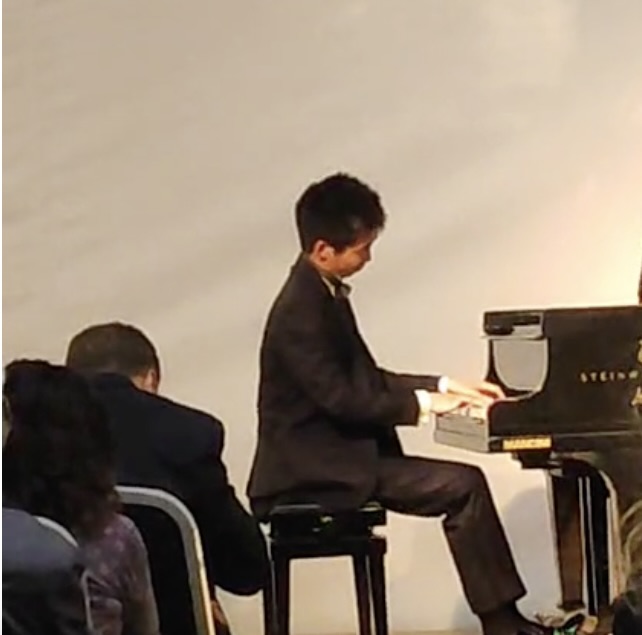
Louis Victor Bak in Wingham

Review of Louis-Victor Bak at St Mary the Virgin, Wingham, East Kent
May 4th 2025

A shimmering kaleidoscope of sound filled the ancient church in Wingham East Kent where Louis-Victor Bak performed a sophisticated selection of French music from the mid 19th to 21st Centuries. He started with Debussy: Images Book 1 and Book 2 – the musical equivalent of an expressionist painting. The fluidity of his playing and delicate arpeggios were extraordinary as the image of rippling water was impossible not to imagine. Hearing the last part of this work, Poissons d’or (Goldfish) I felt was the musical equivalent of Matisse and his Goldfish series.

The second piece by Cecile Chaminade – Piano Sonata in C minor presented a rarely heard dramatic and romantic work played with emotional depth. Bak played this with expression and tenderness, despite the technical challenge, as was the next piece by Maurice Ravel – Vaises noble et sentimentales. This elegant and charming work was played with both wit and sentimentality – the pieces are based on Viennese waltzes.

The final piano sonata by Henri Dutilleux brought a real energy to the programme and combined robust mid 20th Century harmonies with delicate songlike melodies. Bak played the sharp rhythms with flawless precision throughout.
The audience was delighted when Bak kindly gave us an encore of a Schumann Sonata which was a sumptuous end to a sophisticated programme. The delicacy of his playing was spellbinding, that and a blend of perfect precision coupled with lightness , which made this performance a memorable one. The audience at the Wingham International Concert Series felt lucky to have been there.
Laura Plumptre

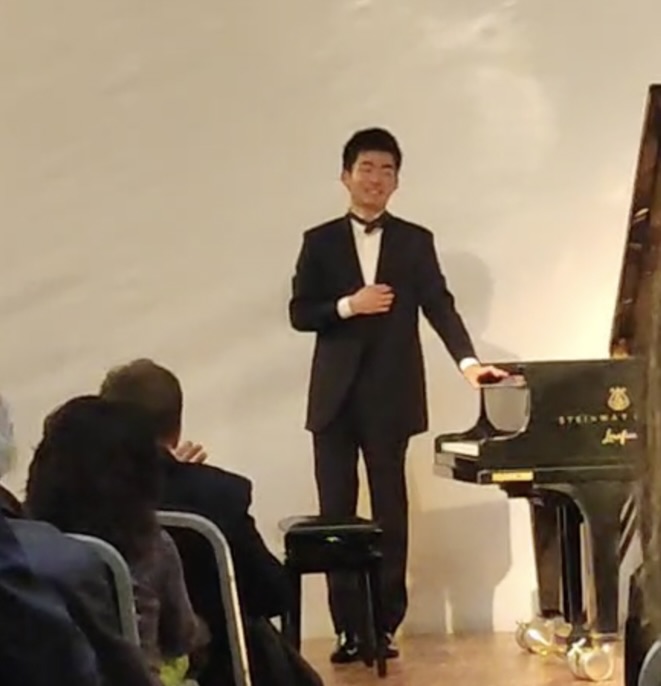
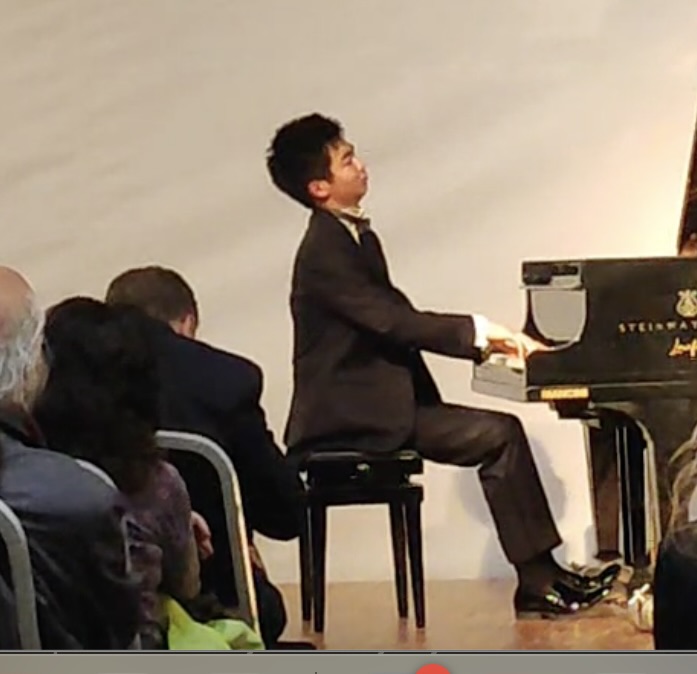
Shunta Morimoto takes Frascati by storm with poetic mastery and intelligence

Marylene Mouquet, Artistic director writes : ‘Sono certa che continui a suonare splendidamente e mi rallegro di sentirlo nuovamente da noi in quel programma!
OP.101 di BEETHOVEN
Préludes op 28 CHOPIN’

Shunta Morimoto playing Brahms 2nd Piano Concerto in Los Angeles last January :

‘I received the video of the Brahms 2nd concerto I play in January.’
‘He’s fantastic !!!! ‘ Jed Distler

‘Grazie mille Chris per questi video…
Come hai fatto per averli??
Shunta è stato davvero grande! Una 101 di Beethoven tra il sublime e il titanesco …..
Preludi di Chopin commoventi di sensibilità poetica e ricchi di contrasti dinamici, oltre che di Potenza e tumultuosità dell’animo, nello spirito chopiniano….
Enorme successo di pubblico, In bis Debussy, l’île joyeuse,
Sala colma!
Sono felice per lui….
Grazie a te di avercelo fatto conoscere!
Torna presto,
Un abbraccio grande.’ Marylene Mouquet

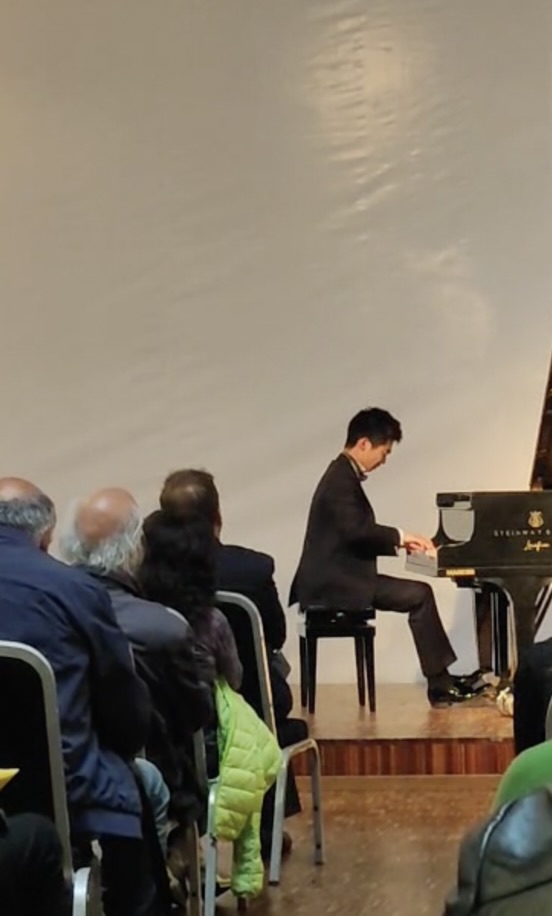
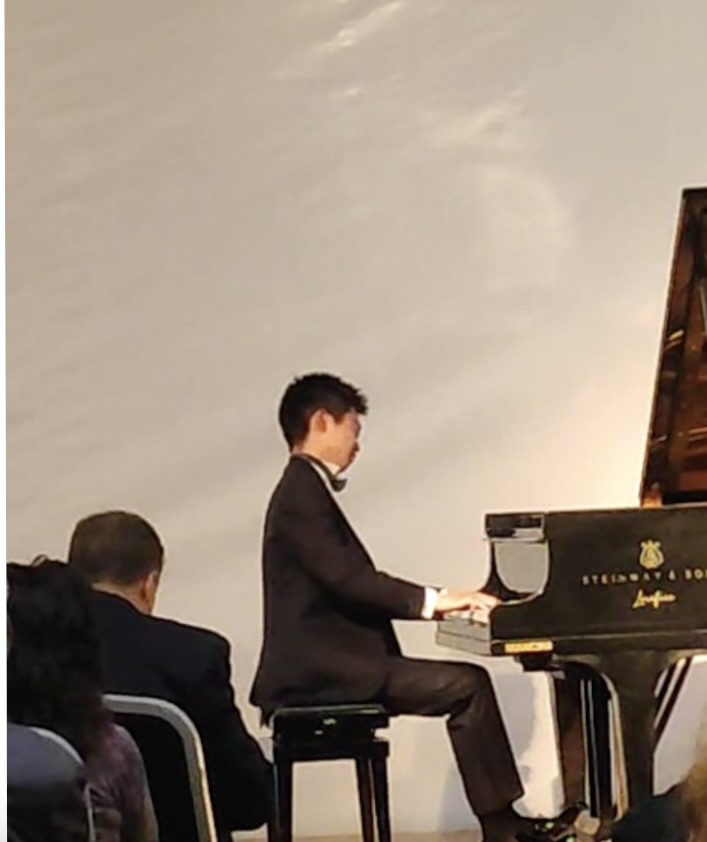
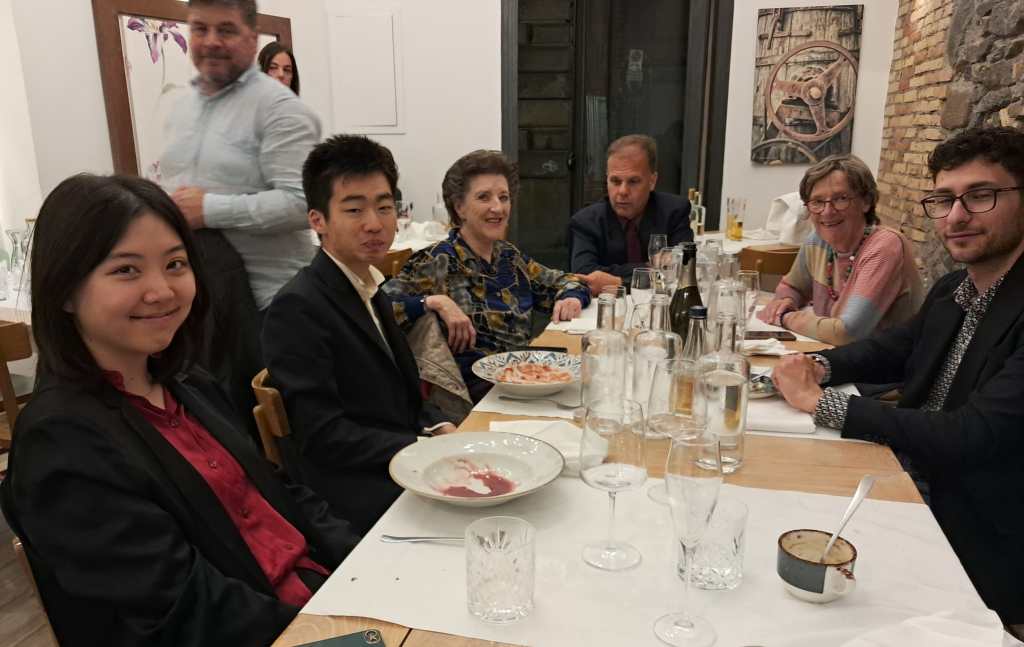
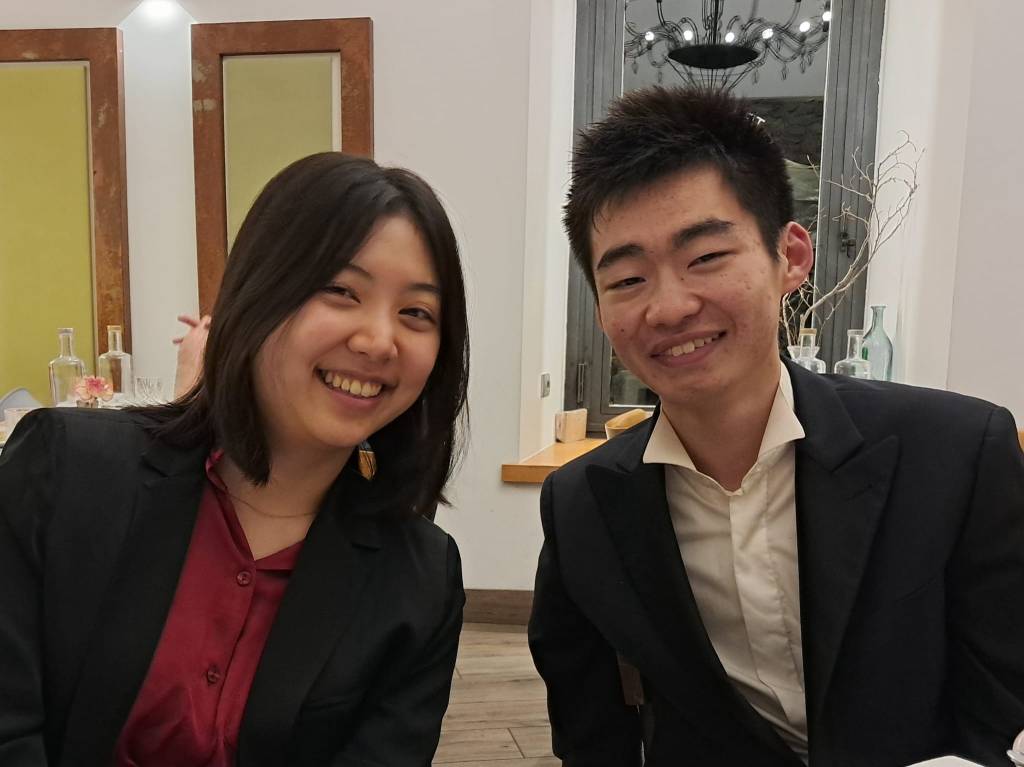
Après un merveilleux concert, une tablée fort sympathique pour remercier shunta de nous avoir enchantés.

Grande Shunta avanti sempre con la testa alta

Screenshot

Seong-Jin Cho Ravelathon Pianistic perfection of transcendental radiance and ravishing beauty

Homage to Ravel with a 150th Anniversary Tribute by Seong-Jin Cho of the complete works for solo piano. Many of the smaller lesser known works added in between the five recognised masterworks of a composer who wrote with a clockwork precision seen through a multicoloured prism. A pianistic perfection from an artist who with humility and mastery acts as a medium between the composer and the public.This youthful looking young man plays with such effortless mastery but also a musicianly intelligence where every note has an important part to play like the bricks of a great Gothic cathedral. A full hall listened in complete silence to over two hours of music and greeted this young man with an ovation and whistle calls more often seen in the sports stadium than in the concert hall !

There comes a very rare moment when in the face of pure genius ,criticism or commentating become superfluous .As Maude Tortelier said to me they are Angels lent to us for a short period on earth to light the way for us mortals.

Seong-Jin Cho and Yunchan Lim are two such beings and we can only bow to them as we do to Michelangelo or Da Vinci and thank them for sharing their genius with us mortals

photo Davide Sagliocca candid camera reporter ‘Master reviewer at work’ https://christopheraxworthymusiccommentary.com/2024/03/20/christopher-axworthy-dip-ram-aram/

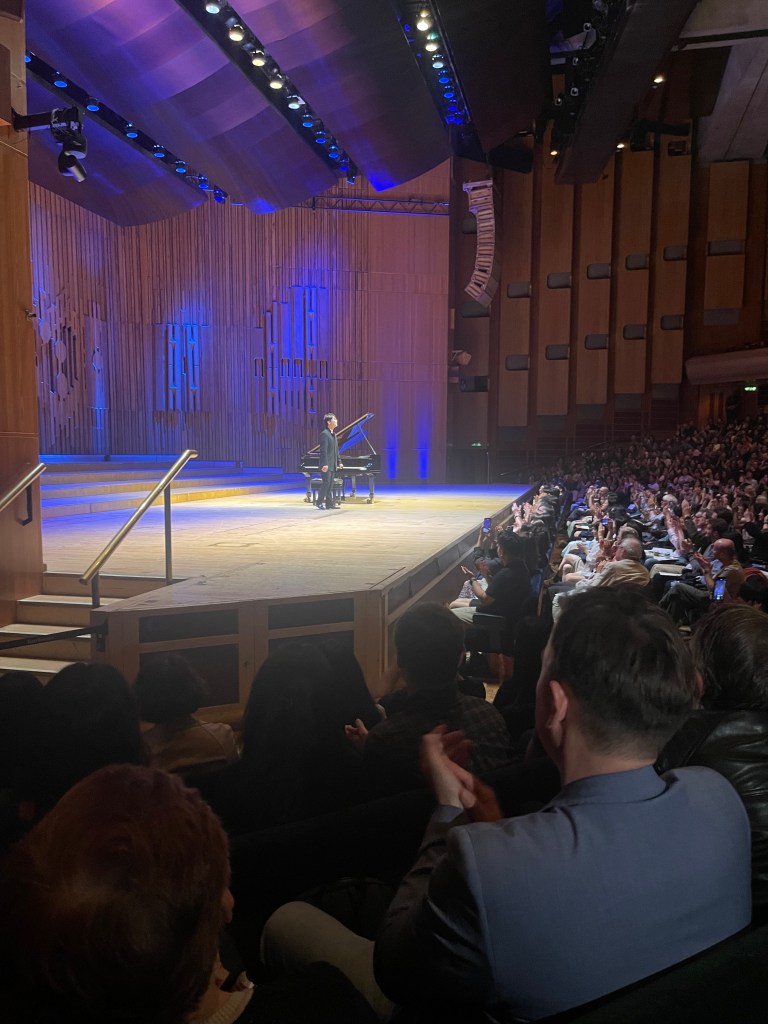
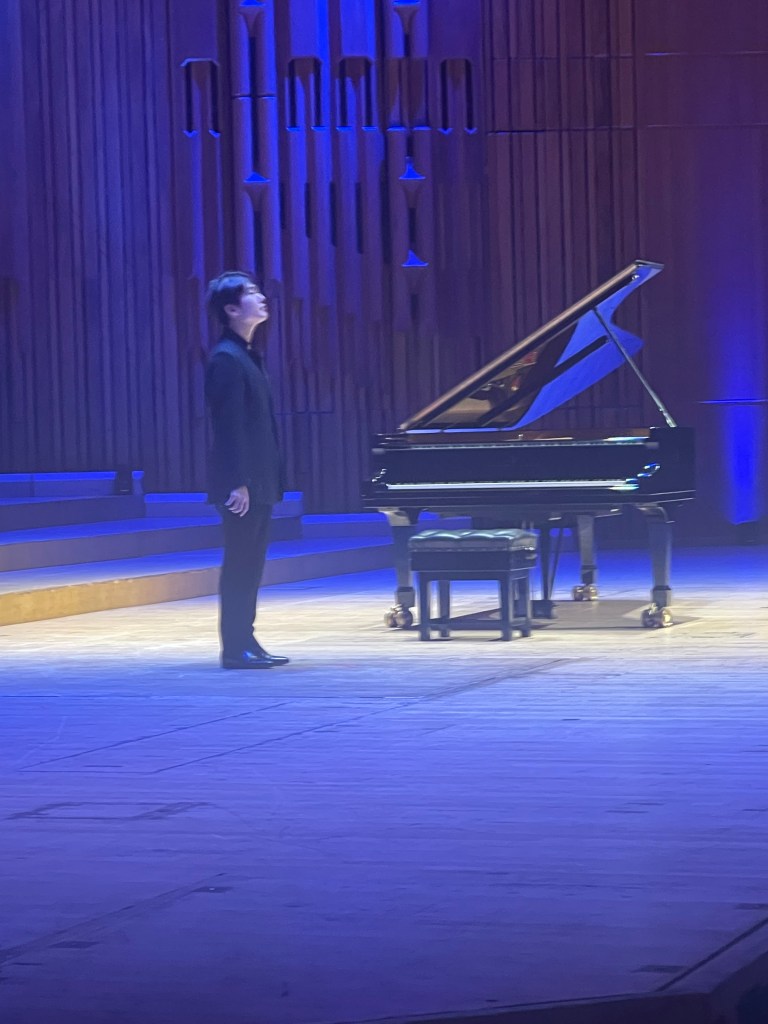
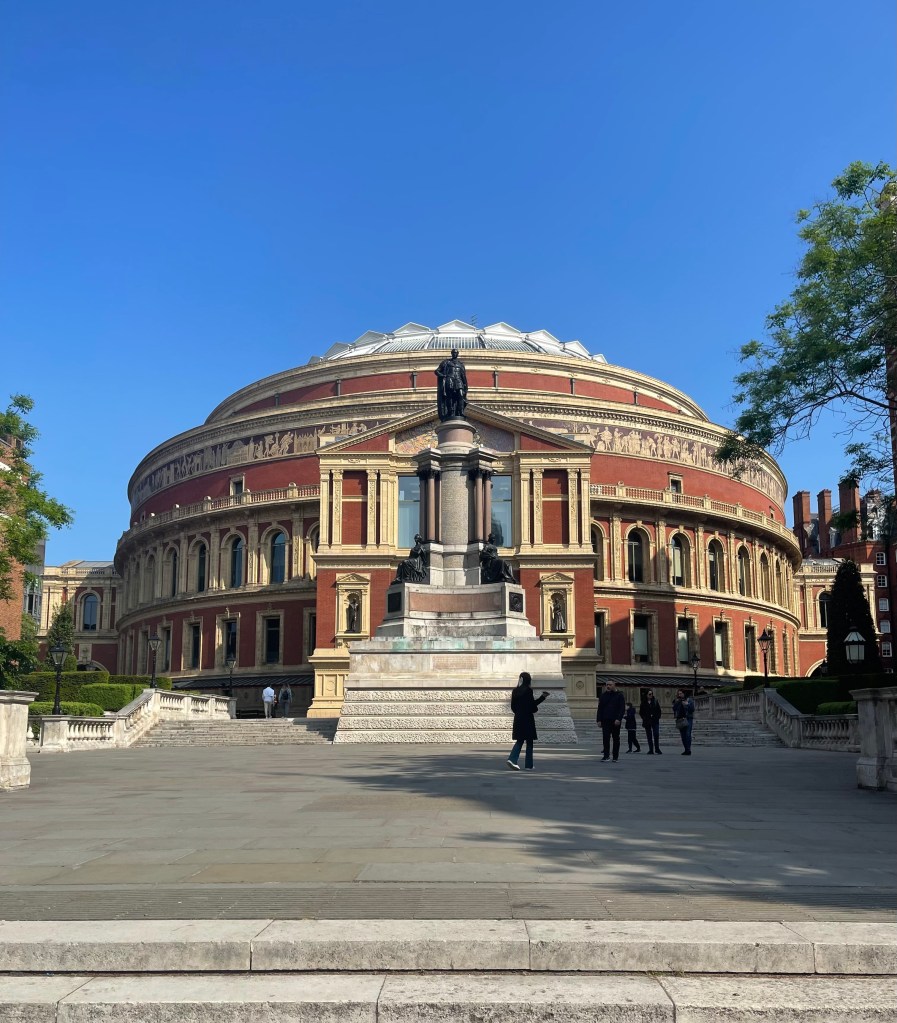
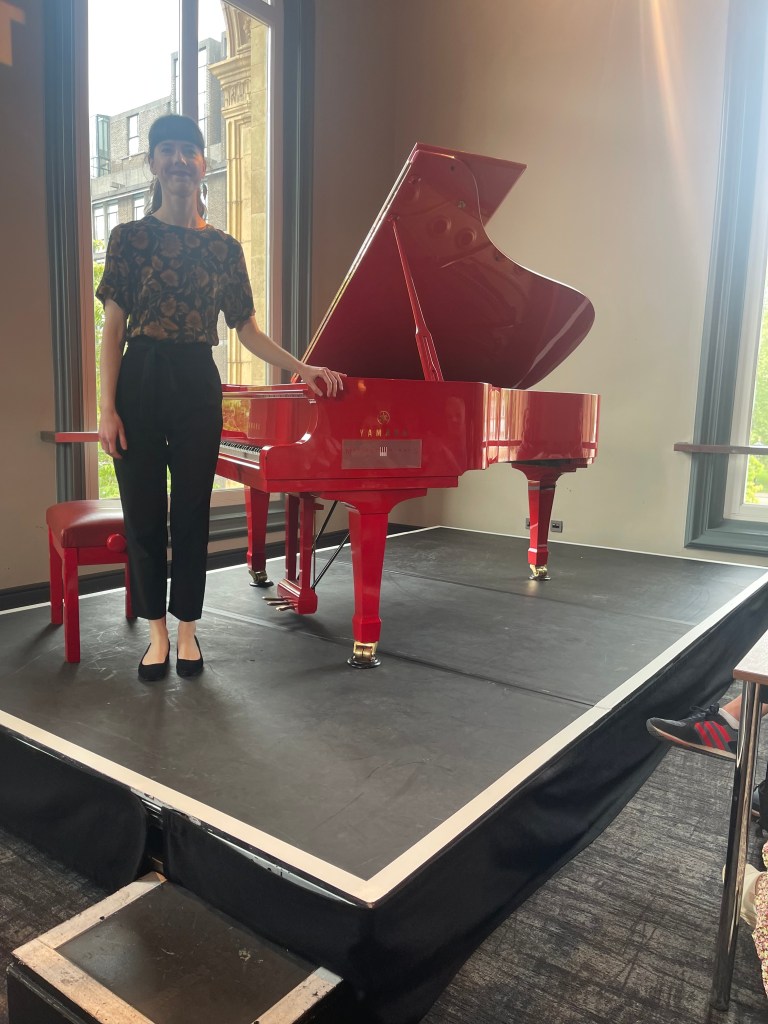
Irena Radić at the Royal Albert Hall with Intelligence and musicianship at the service of music

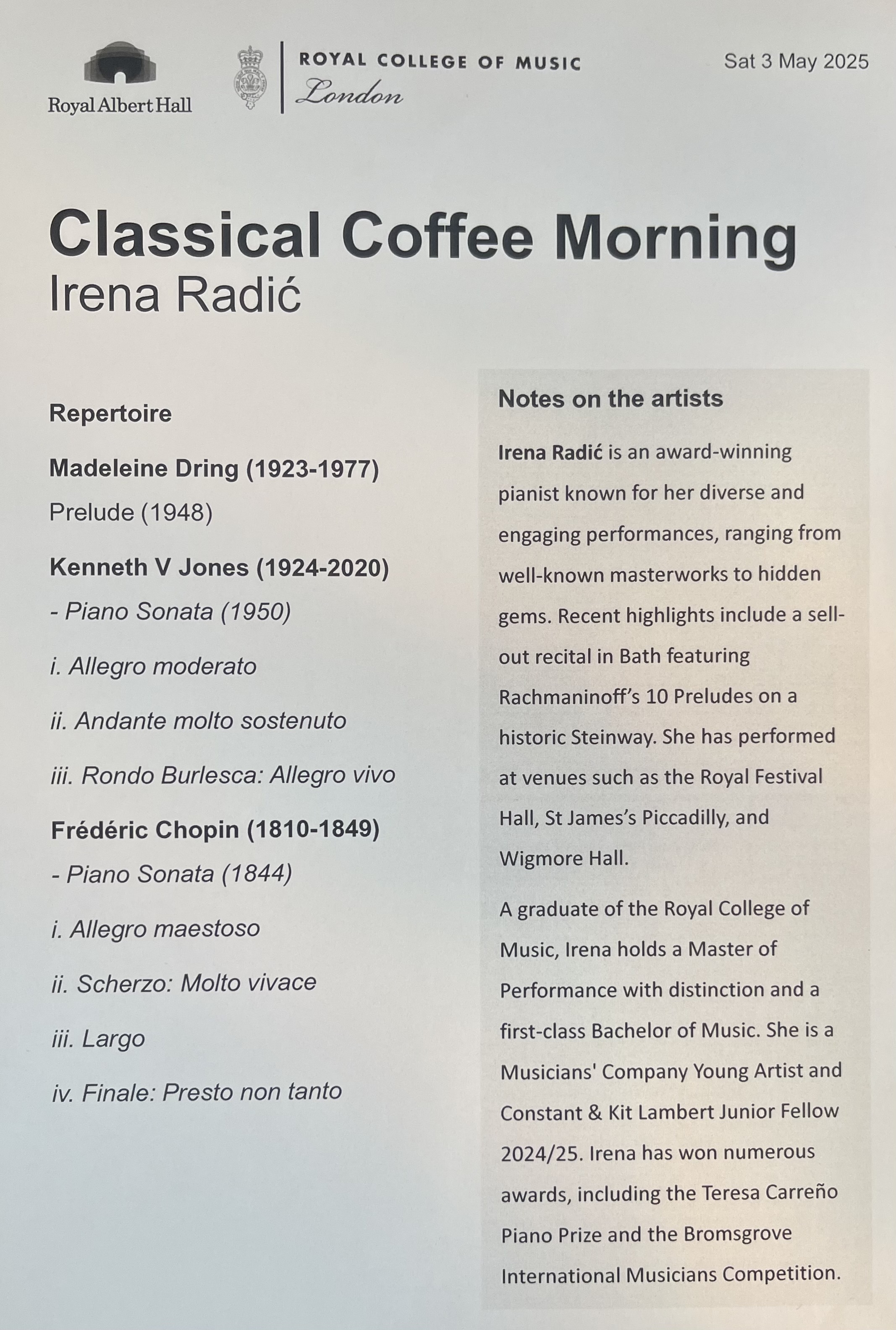
Some very interesting music making from the British Croatian pianist Irena Radić at the Royal Albert Hall . A classical coffee morning given by musicians from their next door neighbours of the Royal College of Music .

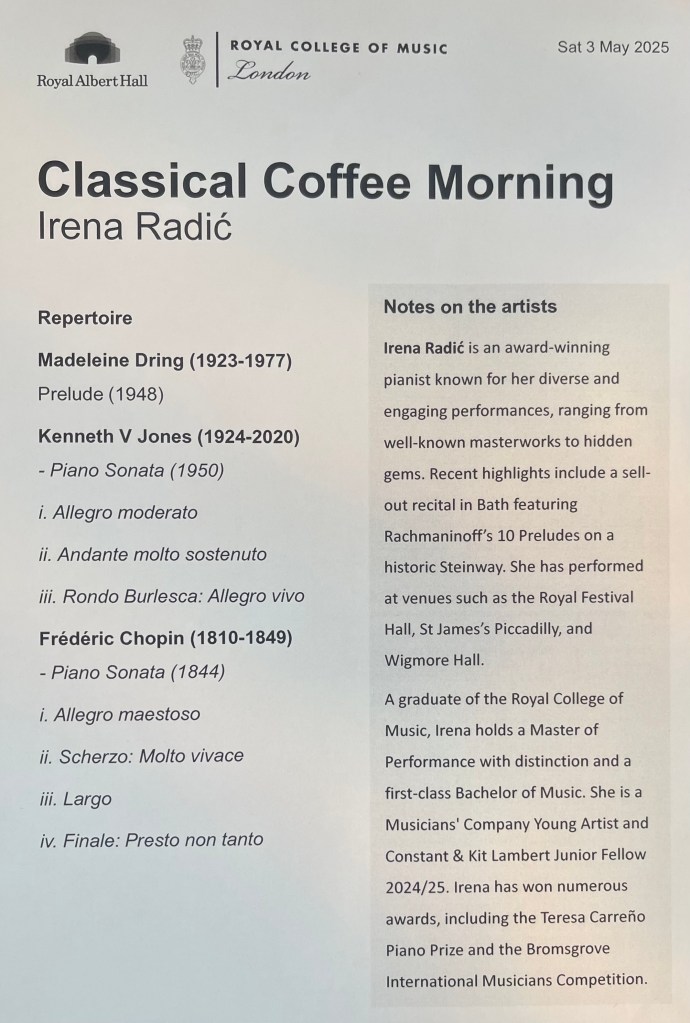
Irena playing a work by her great uncle that she found in the archives of the RCM and had learnt especially. Kenneth Jones’s very spiky sonata of 1950 Irena played with great authority and rhythmic drive .The knotty fugato of the Rondo Burlesca was unravelled with clarity and a forward insistence

The Prelude of 1948 by another ex RCM student ,Madeleine Dring owed more to Rachmaninov than Herbert Howells or Ralph Vaughan Williams with whom she had studied. A Reichian insistence of almost improvised repetition revealed a palette of sounds of clarity and beauty.

Chopin’s B minor Sonata op 58 was played with grandeur end eloquence. Solid,musicianly playing as you might expect from the class of Dina Parakhina with the repeat in the first movement unusually respected, and the second subject ringing out with noble radiance. A Scherzo that just flew from her fingers, but it was the Trio where she found a sense of line as the music was kept continually flowing. The Largo opened with imperious authority and was an introduction to cantabile playing of beauty and robust sound that was played with great sentiment but never sentimental. The flowing middle episode was shaped with musical authority where Irena gave the musical line great strength and direction. She also found poignant beauty and subtle colouring with the return of the opening melody. The finale : Presto non tanto was played with musicianly control as she added more weight to the Rondò each time it returned, until the final explosion of exhilaration and transcendental excitement brought this very enjoyable recital to a brilliant conclusion.

Irena Radić is an award-winning pianist known for her diverse and engaging performances, ranging from well-known masterworks to hidden gems. Recent highlights include a sell-out recital in Bath featuring Rachmaninoff’s 10 Preludes on a historic Steinway. She has performed at venues such as the Royal Festival Hall, St James’s Piccadilly, and Wigmore Hall, with upcoming performances of piano sonatas by Chopin and Kenneth V Jones. As a founding member of Duo Ravellion, Irena collaborates with Swedish guitarist Jonatan Bougt, and she has also worked with various musicians across a wide range of chamber music projects.

A graduate of the Royal College of Music, Irena holds a Master of Performance with distinction and a first-class Bachelor of Music. She is a Musicians’ Company Young Artist and Constant & Kit Lambert Junior Fellow 2024/25. Irena has won numerous awards, including the Teresa Carreño Piano Prize and the Bromsgrove International Musicians Competition. In addition to her concert career, she is a passionate teacher, drawing from her Suzuki method training, and is a Visiting Music Teacher at St Catherine’s School. Irena also has extensive experience in orchestral piano and celeste, performing with prominent conductors such as Vladimir Ashkenazy and Bernard Haitink.

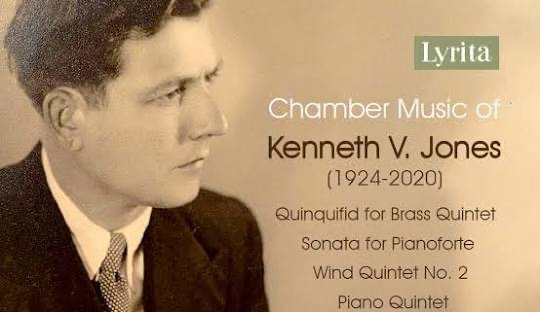
Kenneth Victor Jones FRCM (14 May 1924 – 2 December 2020) was a British composer of film scores and concert works, and a conductor

After the war he enrolled at the Royal College of Music (1947-50), where his teachers included R.O.Morris ,Bernard Stevens and Gordon Jacob . He became a professor at the RCM in 1958.

Jones was appointed as conductor to the London Metropolis Symphony Orchestra in 1957, and was the founder and original conductor of The Wimbledon Symphony Orchestra in 1961, where he stayed for ten years. He made his Royal Festival Hall  conducting debut that year. He was also principal conductor at the Sinfonia of London (from 1966), the Hill Singers (1954-60), and the Reigate and Redhill Choral Society (1956-1964).

Jones married a teacher, Anne Marie Heine, in 1945 and there were two children, Frances (born 1949) and Anthony (born 1953). In 1966 he acted as one of the Governors of Rokeby School, helping to raise the £50,000 that was needed to save it from closure in 1966. In the late 1960s their address was 121, Church Road in Wimbledon. By the early 1970s the family had moved away from London and settled in Bishopstone, East Sussex. His wife died in 2009. He died in December 2020 at the age of 96, survived by his daughter and son.

Jones composed many film scores (mostly at Shepperton  and Ealing  studios and for British Transport Films). Among his best known scores are How to Murder a Rich Uncle  (1957), Oscar Wilde  (1961) and The Projected Man  (1966). He also composed incidental music for television and theatre and many concert works, including four sonatas, 44 piano works and six song cycles.Lyrita  released recordings of some of his chamber music for the first time in 2024.

His concert compositions include :

Hesperides, song cycle Piano Sonata, Op.4 (1950) String Quartet No.1, Op.6 (1950) Wind Quintet No.2, Op.2 (1952) Concerto for string orchestra (1956) Concerto for oboe and strings (1963) The Pollock,) orchestral prelude (1963 O Light Invisible, cantata for soloists, chorus and orchestra (1963) Sequences, chamber ensemble (1964) Concert Overture (rev. 1966) Quintet for piano and string quartet, Op.26 (1967) Violin Sonata (1967) Two Contrasts for solo cello (1971) Dialysis, for violin and harpsichord (1973) A Gay Psaltery, harpsichord (1975) Quaquaverse, for saxophone quartet (1979) Quinquifid for brass quintet (1980) Paean for organ (1983) Organ Sonata (1985) Three Sinfonias for orchestra Symphony Violin Concerto song cycles church music

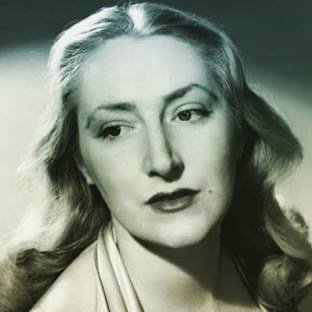
Madeleine Winefride Isabelle Dring (7 September 1923 – 26 March 1977) was an English composer,pianist,singer and actress. Showing talent at an early age and was accepted into the junior department of the Royal College of Music  where she began on her tenth birthday. She was offered scholarships for violin  and piano and chose violin. She studied piano as a secondary instrument, with RCM students guiding her studies for the first several years.She continued at the Royal College for senior-level studies where her composition teacher was Herbert Howells . She had occasional lessons with Ralph Vaughan Williams  (an official substitute for Howells). She dropped the violin study after the death of her instructor, W.H.Reed, at the end of the first year. She focused on piano and composition and studied mime, drama and singing. Dring’s love of theatre and music co-mingled; many of her earliest professional creations were for the stage, radio , and television .

In 1947, she married Roger Lord who was Principal Oboist  with London Symphony Orchestra  for over thirty years. She composed several works for Roger, including Dances for solo oboe. Soon after her marriage, her first pieces were published with Lengnick and with Oxford (1948). The Lords had one son in 1950.Dring’s favourite composer in her youth was Rachmaninov  and she owned much piano and vocal sheet music by Rachmaninov, which is now in the possession of Ro Hancock-Child. Dring studied with Herbert Howells  but her own work shows no debt to his musical style. Occasionally she was taught by Ralph Vaughan Williams  but again there is little obvious influence, and her music does not reflect the English folk song  tradition, although she studied this genre as a singer. She sometimes set a text she had encountered in a solo or choral work, leaving her mark on it. She looked further afield.

In 2018 three volumes of songs were engraved and published as well as four volumes of cabaret and musical revue numbers. Duets and ensembles were also published.

Instrumental

  • Italian Dance  (1960) Oboe and Piano
  • Fantasy Sonata in one Movement (1938, published 1948), solo piano
  • Three Fantastic Variations on Lilliburlero for Two Pianos (1948), two pianos
  • Jig (1948), piano
  • Prelude and Toccata (1948), piano
  • Tarantelle (1948), piano duet
  • Festival Scherzo: Nights in the Garden of Battersea (1951), piano and string orchestra;
  • Sonata for two pianos (1951)
  • March: for the New Year (1954), piano
  • Caribbean Dance (Tempo Tobago) (1959), piano duet or solo
  • Dance Suite (1961), piano
  • Polka (1962), oboe and piano
  • Colour Suite (1963), piano
  • Danza Gaya (1965), two pianos or oboe and piano (original score housed at Royal College of Music, London)
  • Three Dances (1968; Josef Weinberger), piano
  • Trio for Flute, Oboe, and Piano (1968)
  • Valse française (1980), solo or duo piano * (original scores housed at Royal College of Music, London)
  • Three Pieces: WIB Waltz, Sarabande, Tango (1983), flute and piano*
  • Waltz (1983), oboe and piano*
  • Suite (1984), harmonica and piano (later arranged by Roger Lord for oboe)*
  • Trio for oboe, bassoon, and harpsichord (1986)* (original score housed at Royal College of Music, London)
  • Idyll for oboe (viola) and piano (The composer’s husband Roger Lord, disappointed that the piece remained unplayed and unpublished for many years, perhaps because of its chromaticism , decided to transcribe the solo part for oboe, his own instrument, to which it is well suited. Idyll was first recorded in 2007 by Thierry Cammaert , oboist of the Quartz Ensemble, a Belgian winds ensemble. The ensemble has also performed the work as a trio for flute, oboe and piano.)

Vocal

  • Three Shakespeare Songs (original score housed at Royal College of Music, London), (1949) (Published by Legnick 1949, republished with 4 additional Shakespeare songs, Thames 1992, published as Dring Volume 1)* First performance 10 May 1944 with Ifor Evans, Baritone, Madeleine Dring, Accompanist, performed at the RCM
  • Thank you, Lord (1953), vocal, text L. Kyme (not published as composed – Dring did not approve of this edition)
  • An additional four songs with texts by L. Kyme were written in 1953. They have now been published.
  • The Pigtail (1963) vocal duet, text A. von Chamisso.
  • Dedications: Five poems by R. Herrick (1967), vocal suite (published 1992 by Thames as Dring Volume 2)* (original score housed at Royal College of Music, London)
  • Love and time: Four Songs (1970s) (published in 1994 by Thames as Dring Volume 5)*
  • Four Night Songs: texts of Michael Armstrong (1976), (published 1985 Cambria (US) 1992 Thames as Dring Volume 3)*
  • Five Betjeman Songs (1976) (published in 1980 by Weinberger)* (original score housed at Royal College of Music, London)
  • Seven Songs for Medium Voice (various compositional dates, compiled and published by Thames in 1993 as Dring Volume 4)*
  • Six Songs for High Voice (various compositional dates, compiled and published by Thames in 1999 as Dring Volume 6)* Includes: My true-love hath my heart, Echoes, The Cherry Blooming, The Parting, The Enchantment, Love is a Sickness
  • Previously Unpublished Vocal Works Volume 1: Art Songs and Arrangements: Lyrics of Shakespeare, Herrick, Rossetti, Ellison, Anon, and Arrangements of Horn, Pinsuti, Kjerulf, and Pattison. Classical Vocal Reprints, Fayetteville, AR. Published 2018 Copyright Simon Lord.
  • Previously Unpublished Vocal Works Volume 2: Cabaret Songs: All Music and Lyrics of Madeleine Dring. Classical Vocal Reprints, Fayetteville, AR. Published 2018 Copyright Simon Lord.
  • Previously Unpublished Vocal Works Volume 3: More Art Songs: Lyrics of Cibber, Marlowe, Goldsmith, Blake, Dring, Longfellow, and Tynan. Classical Vocal Reprints, Fayetteville, AR. Published 2018 Copyright Simon Lord.
  • Previously Unpublished Vocal Works Volume 4: More Cabaret Songs: Lyrics of Madeleine Dring and Charlotte Mitchell. Classical Vocal Reprints, Fayetteville, AR. Published 2018 Copyright Simon Lord.
  • Previously Unpublished Vocal Works Volume 5: Still More Art Songs, Arrangements, and Love Songs: Lyrics of Herrick, Campbell, Lord, Dring, and Kyme. Classical Vocal Reprints, Fayetteville, AR. Published 2018 Copyright Simon Lord.
  • Previously Unpublished Vocal Works Volume 6: Still More Cabaret and Theatre Songs: Lyrics of Dring, Mitchell, Vanbrugh, and Bridie. Classical Vocal Reprints, Fayetteville, AR. Published 2018 Copyright Simon Lord.
  • Previously Unpublished Vocal Works Volume 7: Cabaret Duets: Lyrics of Aitken, Breton, Dring, Howitt, Lear, Mitchell, and Rafferty. Classical Vocal Reprints, Fayetteville, AR. Published 2018 Copyright Simon Lord.
  • Previously Unpublished Vocal Works Volume 8: Cabaret Ensembles of 3 or More Voices: Lyrics of Dring, Mitchell, and Aitken. Classical Vocal Reprints, Fayetteville, AR. Published 2018 Copyright Simon Lord.
  • Previously Unpublished Vocal Works Volume 9: Songs from West End Revues: Lyrics of Dring, Mitchell, and Rafferty. Classical Vocal Reprints, Fayetteville, AR. Published 2018 Copyright Simon Lord.

Theatre, drama, and television

Incidental music

  • The Emperor and the Nightingale (1941) Performed at the RCM 20 December 1941. No score is available at this time.
  • Tobias and the Angel (1946) Incidental music and two songs published 2018
  • Somebody’s Murdered Uncle (1947) for BBC radio; Duets: “I should have trusted you darling” and “There’s nothing to stop us now” There are also two quartets: “There’s no such thing as a perfect crime” and “Bloggins, Birch, and Frome,” as well as a solo entitled, “J. Allington Slade.” Songs published 2018
  • The Buskers (1959), for which she provided music for the Wedding Song, not located at this time.
  • Little Laura Cartoons (1960–61), Dring provided and played music for six episodes. Four episodes were broadcast in New Zealand in 1976.
  • The Jackpot Question (1961), for Associated TV, repeated in 1962 with another cast.
  • The Whisperers (1961), for ITV Season 7, Episode 7.
  • The Provok’d Wife (1963), texts by Vanbrugh: Four pieces typeset by Alistair Fisher. Published in 2018
  • The Lady and the Clerk (1964), for Associated TV
  • I Can Walk Where I Like, Can’t I? (1964), for Associated TV
  • When the Wind Blows (1965), for Associated TV
  • Helen and Edward and Henry (1966), for Associated TV
  • Variation on a Theme (1966), for Associated TV

Musical revues

  • Airs on a Shoestring  (1953) Songs: “Model Models,” “Films on the Cheap Side at Cheapside” “Strained Relations,” and “Snowman” (all lyrics by Charlotte Mitchell), “Sing High, Sing Low” (Lyrics by Madeleine Dring). Songs published 2018
  • Pay the Piper (1954) “Pay the Piper” (Lyrics at BL) Location of song scores unknown at this time).
  • From Here and There (1955) “Resolutions” and “Life Sentence” (Lyrics Charlotte Mitchell) (Lyrics at BL) (Location of song scores unknown at this time)
  • Fresh Airs (1955) “Mother knows,” Sketch “Witchery,” and “Miss Spenser,” (Lyricist Madeleine Dring) (Lyrics at BL, but location of song score for Miss Spenser unknown at this time). Mother knows published 2018
  • Child’s Play (1958) Overture, “High in the Pines,” “Love Song,” and “Hearts and Arrows” have been recovered. (Location of scores for four other songs missing this time)) (Lyricist Sean Rafferty) These are not at the BL because Players’ Theatre is a private club and was not censored.
  • Four to the Bar (1961) “Diedre” was included in this, also known as “Mother knows” from “Fresh Airs”(Lyricist Madeleine Dring.) An LP was produced by Philips of this music. Published 2018.

Ballet

  • Waiting for ITMA (1947), for BBC TV
  • The Real Princess (1971), scored for 2 pianos
Opera

  • Cupboard Love (performed posthumously 19 December 1983, at St John’s Smith Square by Intimate Opera Company). Published in 2017 by Classical Vocal Reprints, Fayetteville, AR, American staged Premiere in April 2018, Florida State University. European staged premiere Byre Opera, St Andrews University scheduled for June 2019. London staged premiere by The Operatists, Tête à Tête Opera Festival 6 September 2023.
Other compositions

The Scarlet Crabapple, Cygnet Company

The Wild Swans (1950), children’s play, Cygnet Company

The Fair Queen of Wu (1951), dance-drama for BBC TV, Score at RCM

The Marsh Kings’s Daughter (1951), children’s play, Cygnet Company

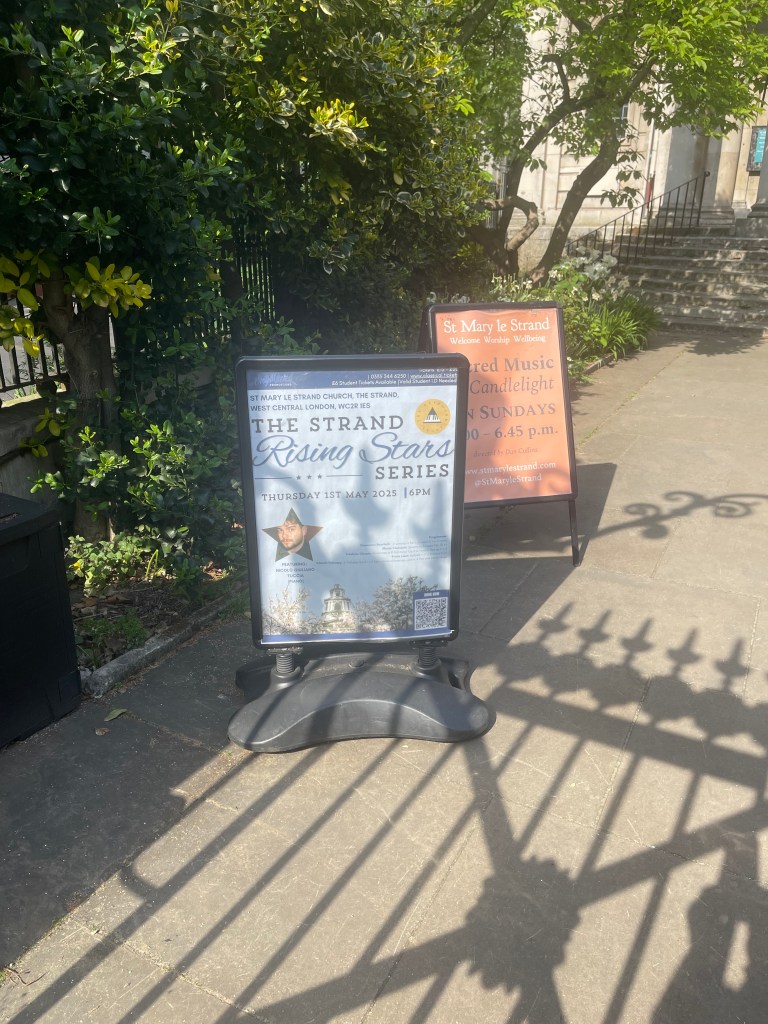
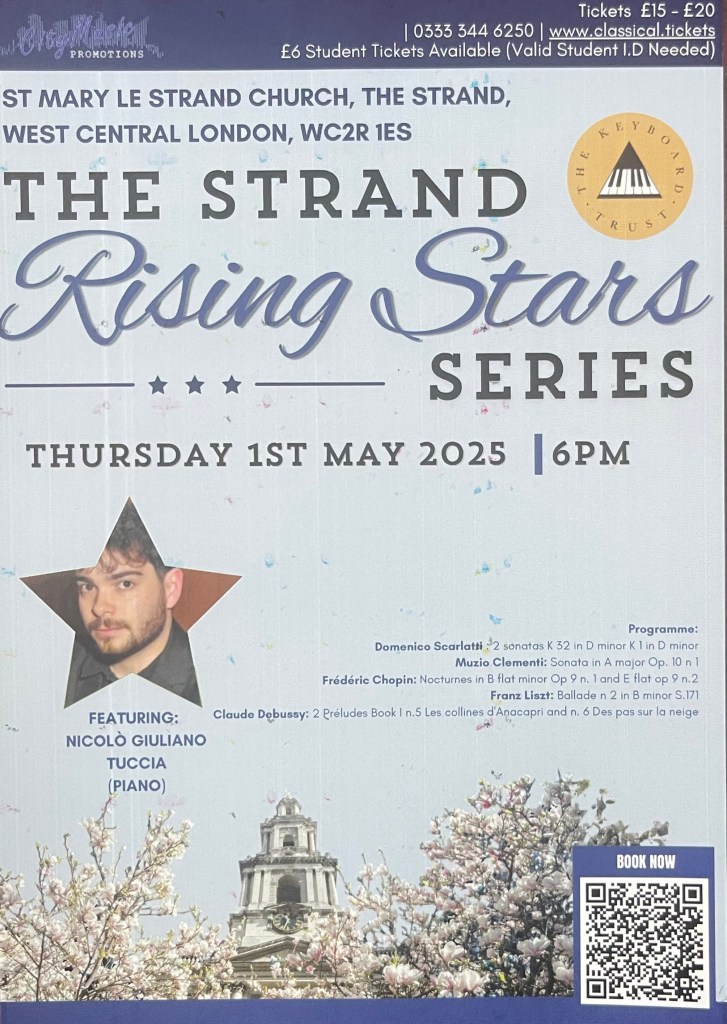
Nicolò Giuliano Tuccia -A star in ascent in the shadow of Guido Agosti

Arise Nicoló Giuliano Tuccia with ‘La Bénédiction de Leslie Howard dans La Solitude!’

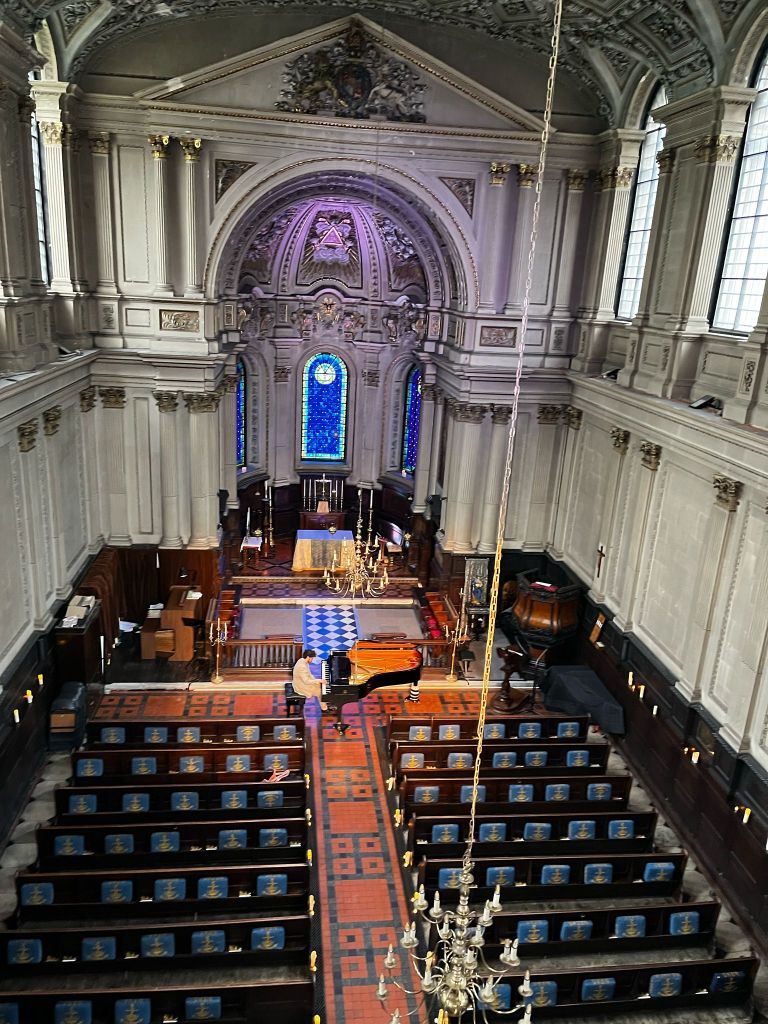
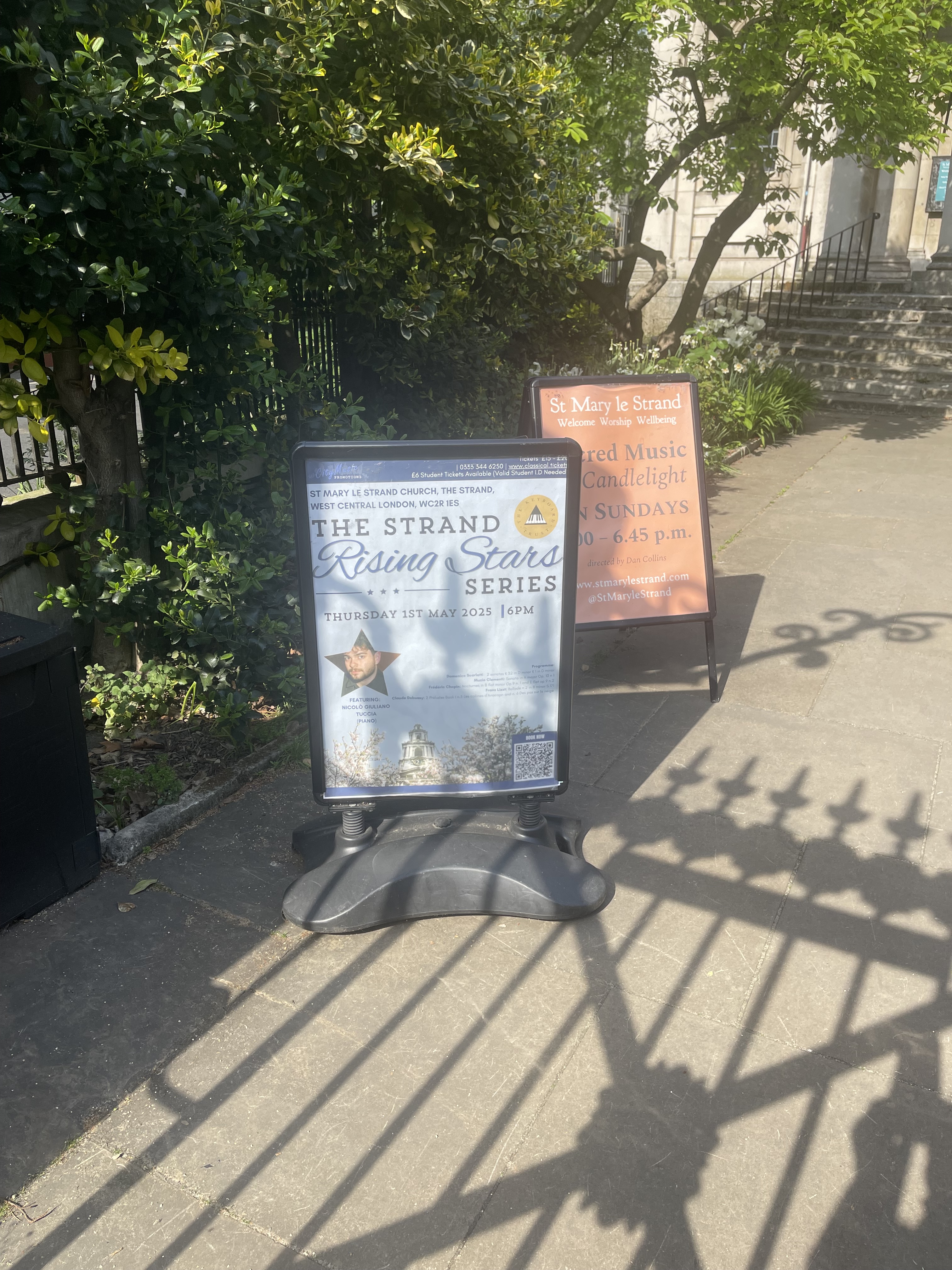
Beauty everywhere in St Mary Le Strand, embraced by a tropical warmth outside but even more intense inside this imposing Church.

Now sitting so proudly in the Strand with cars having been directed elsewhere after years of being just the centre of a Neapolitan traffic scheme.

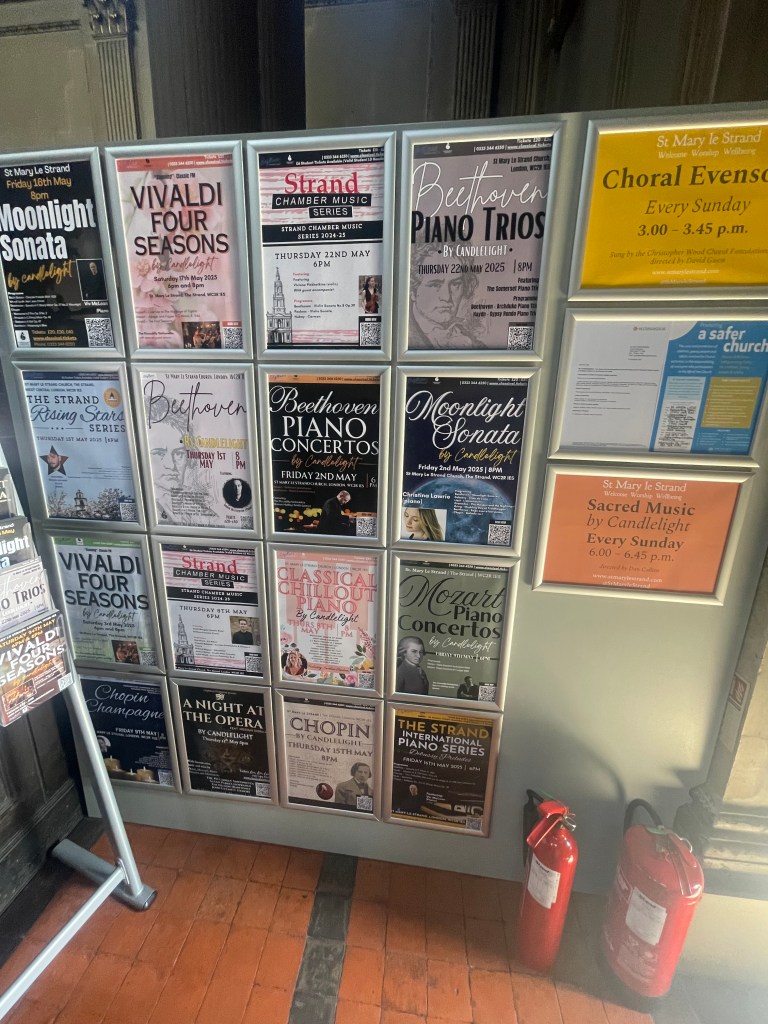
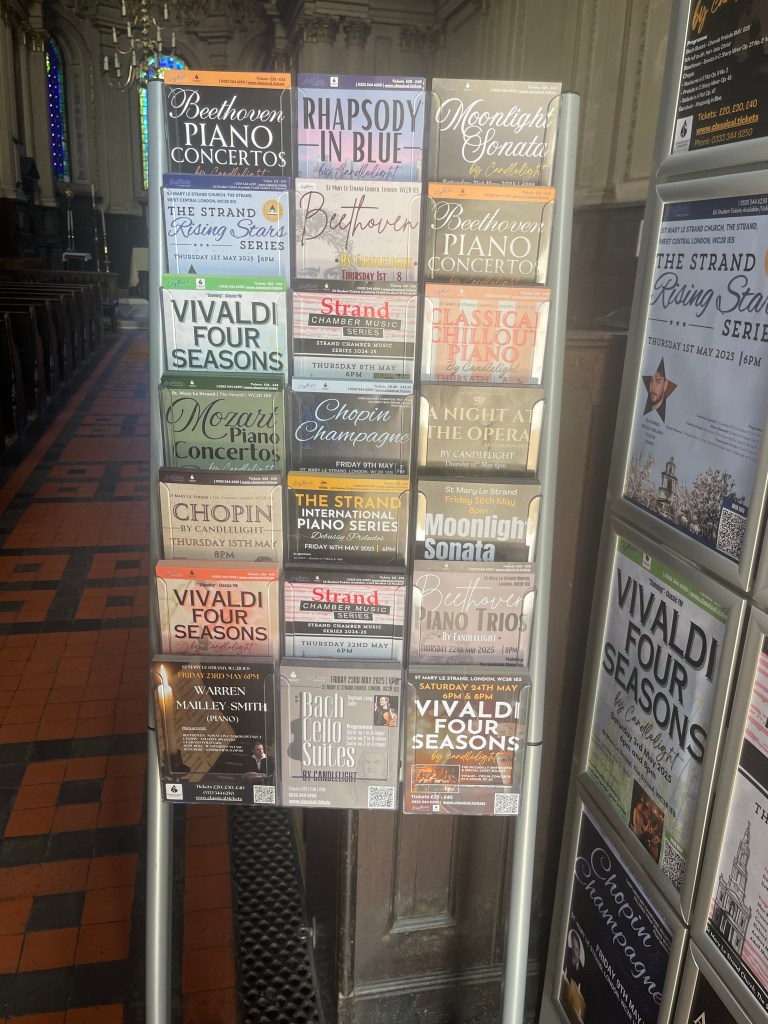
Peace reigns as caos has been averted and inside this grandiose edifice Warren Mailley -Smith has thoughtfully provided a superb Steinway, and a series one hour concerts for his City Music Productions, that fill the radiant air with sublime music as ‘Le sons e les perfums tournent dans l’air du soir’

A young man from Forlì has appeared, thoughtfully provided by the Keyboard Trust who have been asked to provide some of their Rising Stars to stand side by side with the ever generous City Music. https://christopheraxworthymusiccommentary.com/2024/09/21/warren-mailley-smith-a-man-for-all-seasons-a-love-of-music-illuminated-by-candlelight/

Empoli in Italy has been put on the map because it can claim the privilege to have given birth to Ferruccio Busoni. His family soon left for Bologna and Berlin where the child prodigy was taken under the wing of Franz Liszt and in turn continued the futuristic vision of music with which his master had pointed the way with genial inspiration in his later years in Weimar.

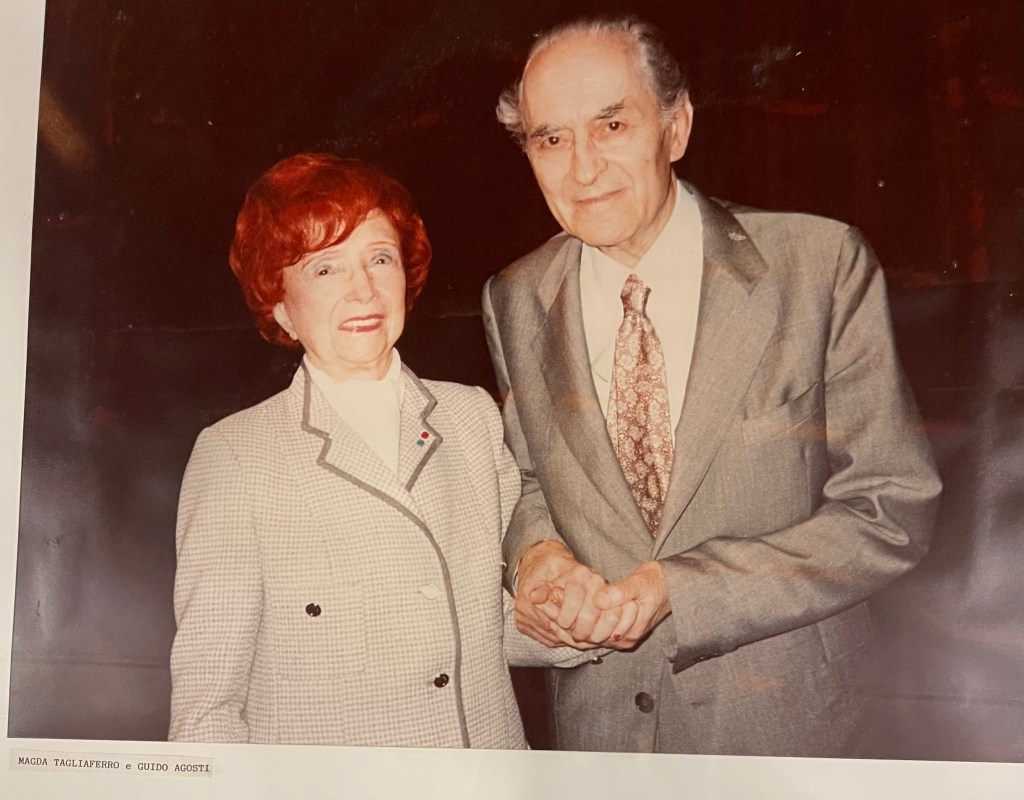
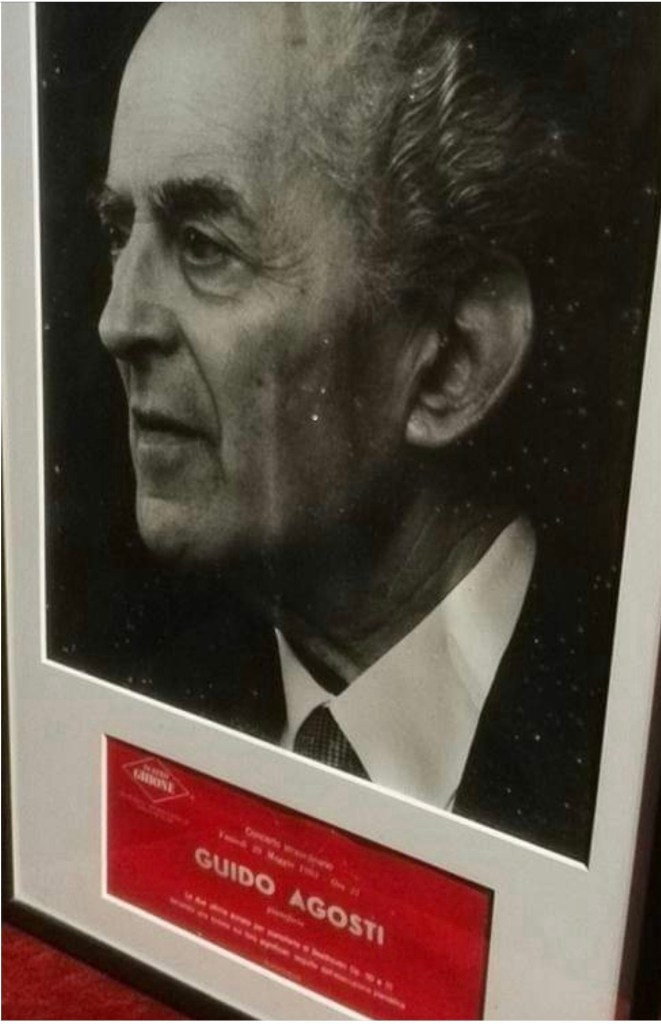
Forlì was unaware until recently that they too had given birth to a great musical figure and protégé of Busoni, Guido Agosti. He like Busoni soon left his birth place to seek guidance in the great musical centres of nearby Bologna and later in Berlin.

Musicians used to flock to the Chigiana Academy in Siena to be inspired by sounds they would never forget, as Agosti was a very private man and showmanship was substituted for mastery with the humility and dedication to the composers he was serving.

Nicoló Giuliano Tuccia has sought to reinstate Agosti in his home town and has for the past three years been at the helm of a series of concerts in the great master’s name https://christopheraxworthymusiccommentary.com/2025/04/14/homage-to-guido-agosti-gala-piano-series-in-forli-2025/

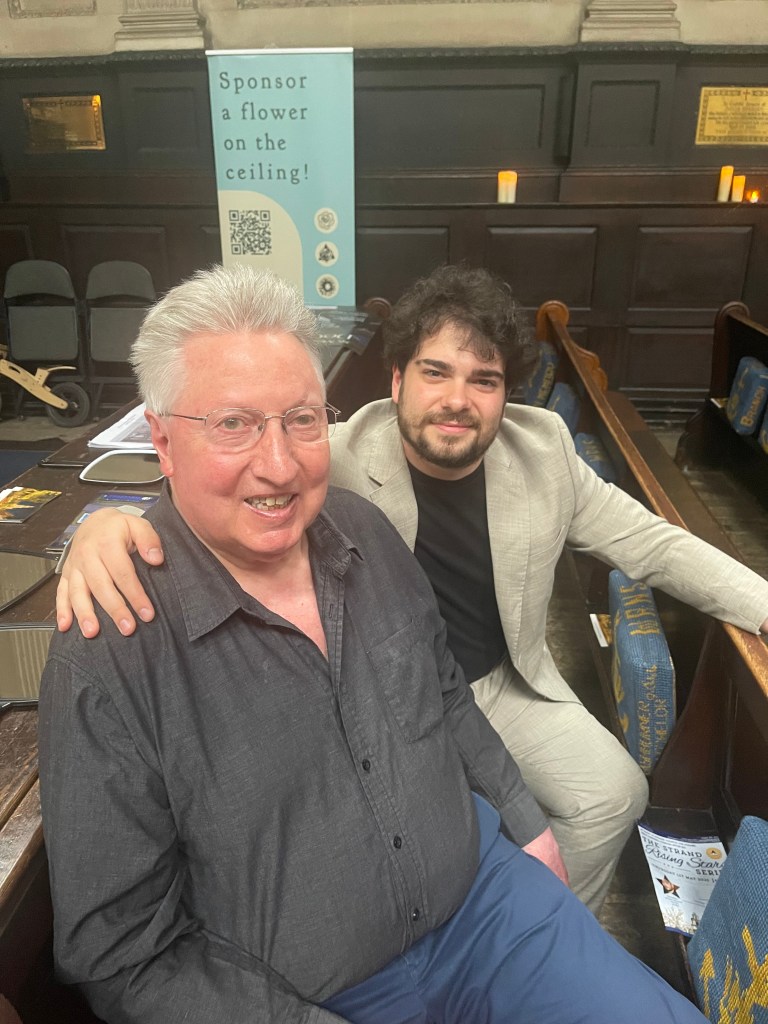
Prof. Leslie Howard with Giuliano Tuccia

It was no coincidence that the renowned Liszt scholar, Leslie Howard should wish to be present today, as he had been the star student of Agosti. Leslie has gone on since to an illustrious career which includes recording all of Liszt’s piano works on over 100 cd’s. Today was also Leslie’s birthday and we should salute a man who has given so selflessly to helping and informing young musicians trying like his master Agosti to point them in the right direction – that of absolute faithfulness to the composers of whom they are but intermediaries .His recording feat for Liszt has earned him a place in the Guinness Book of Records. https://christopheraxworthymusiccommentary.com/2025/04/12/leslie-howard-bringing-the-concealed-mastery-of-pianistic-genius-to-trapani/

Tuccia is a very modest young man who works ceaselessly at creating musical opportunities for himself and his colleagues and like Warren Mailley- Smith offers many important occasions to musicians who can get lost in a profession where quantity often takes precedence over quality.

Giuliano Tuccia is not aware of his own talent, but as Leslie and I and the public present,including the ticket attendants, can attest we have rarely heard a piano sound so radiant with a sumptuous glowing beauty of pure natural musicianship.

Two sonatas by Scarlatti opened the programme. Both in D minor with K.32, an outpouring of leisurely beauty with ornaments part of a musical line of improvised flowing grace.K.1 on the other hand was of scintillating brilliance with ornaments like tightly wound springs adding a gleaming sparkle to gems that were played with the nonchalant ease of a master craftsman.

There was charm and brilliance to Clementi’s Sonata in A op 10 n.1, one of over a hundred from a much neglected master known to be the ‘Father of the Piano’. The Allegro con spirito first movement was played with brilliance ,delicacy and charm with a kaleidoscopic palette of colour which contrasted so well with the radiance of the Menuetto – Allegretto con moto.There was a jeux perlé of scintillating brilliance and dynamic drive to the prestissimo finale.

Two Nocturnes by Chopin were played with a beguiling sense of style and a knowing sense of balance that allowed Chopin’s Bel Canto to rise so naturally over the sumptuous accompaniment.There was nostalgia and subtle beauty but above all a natural flexibility that cannot be taught but is in born to all really dedicated artists. GiulianoTuccia obviously loves the piano and this shone through every note that flowed from his sensitive hands.

Preparing the way for Liszt’s great tone poem, that recounts the story of  the Greek myth of ‘Hero and Leander’ ,as the Second Ballade unfolds with the chromatic ostinati representing the sea: “You really can perceive how the journey turns more and more difficult each time. In the fourth night he drowns. Next, the last pages are a transfiguration”. A melodic line that just emerged from the depths with a mastery of control and balance blossoming into questioning phrases of ravishing beauty. A military outcry of dynamic drive and nobility opening up a scene of poetic improvisations of radiant beauty, Exhilarating climax of washes of sound over the entire keyboard played with knowing poetic meaning as the music died away to the whispered final confessions.

Followed by the same whispered sounds that Debussy describes in ‘Des pas sur la neige’ , played with a glowing fluidity and delicate phrasing. A sudden ray of sunlight announces the radiance and bustling, busy meanderings of ‘Les collines d’Anacapri’.Played with controlled brilliance as the final ray of sunshine was allowed to ring out around this vast space with piercing insistence.

Rachmaninov’s Moment Musicaux op. 16 n. 4 was a monumental way to thank an audience who had not expected such radiance from within as well as without on what must be the hottest day of the year.Played with passion, control and with the sumptuous sounds that we had been treated to throughout the recital by this young man from Forlì.

A well earned drink at the Wellington Arms just across the square that houses St Mary’s and also the Courtauld Gallery in the midst of London’s theatre land.

And of course the pizza could not ‘Manca’ either.

Passing by the opera house as the public left ecstatic from Wagner’s ‘Die Walküre’. Barry Millington extolling the musicianship of Sir Antonio Pappano who just happens to be Honorary Patron of the Keyboard Trust.

Small world !

St Mary Le Strand Church, The Strand, West Central London WC2R 1ES

Programme

Domenico Scarlatti : 2 sonatas K 32 in D minor K 1 in D minor

Muzio Clementi: Sonata in A major Op. 10 n 1

Frédéric .Chopin: Nocturnes in B flat minor Op 9 n.1 and E flat op 9 n 2

Franz Liszt: Ballade n 2 in B minor S.171

Claude .Debussy: 2 Préludes Book I n.5 Les collines d’Anacapri and n. 6 Des pas sur la neige

Nicolò Giuliano Tuccia is considered by Leslie Howard as one of the most sensitive and interesting musicians of his generation. Born in 1999, he began studying piano at a young age under the guidance of Maestro Giancarlo Peroni. He graduated with honors from the “B. Maderna” Conservatory in Cesena in 2022, winning a scholarship offered by the Rotary Club. He is currently attending the “Incontri col Maestro” Piano Academy in Imola, studying with maestros André Gallo, Alessandro Taverna, and Igor Roma, and pursuing a second-level Master’s at the “Francesco Venezze” Conservatory in Rovigo with maestros Federico Nicoletta and Roberto Prosseda.

He has also refined his studies at summer festivals, masterclasses, seminars, and conferences with internationally renowned maestros such as Edith Fischer, Avedis Kouyoumdjian, Riccardo Risaliti, and Sergio Tiempo.

https://christopheraxworthymusiccommentary.com/2023/06/02/the-gift-of-music-the-keyboard-trust-at-30/

Muzio Clementi 23 January 1752 Rome.- 10 March 1832 (aged 80) Evesham , United Kingdom

Muzio Filippo Vincenzo Francesco Saverio Clementi (23 January 1752 – 10 March 1832) was an Italian-British composer , virtuoso pianist,pedagogue,conductor , music publisher, editor, and piano manufacturer, who was mostly active in England.

Encouraged to study music by his father, he was sponsored as a young composer by Sir Peter Beckford  who took him to England to advance his studies. Later, he toured Europe numerous times from his long-standing base in London. It was on one of these occasions, in 1781, that he engaged in a piano competition with Mozart.

Influenced by Domenico Scarlatti’s harpsichord school and Joseph Haydn’s classical school and by the stile Galante  of J.C. Bach and Ignazio Cirri , Clementi developed a fluent and technical legato  style, which he passed on to a generation of pianists, including John Field ,Johann Baptist Cramer, Ignaz Moscheles ,Giacomo Meyebeer,Friedrich Kalkbrenner,Johann Nepomuk Hummel and Carl Czerny. He was a notable influence on Beethoven and Chopin.

Clementi also produced and promoted his own brand of pianos and was a notable music publisher . Because of this activity, many compositions by Clementi’s contemporaries and earlier artists have stayed in the repertoire. Though the reputation of Clementi was exceeded only by Haydn, Mozart, Beethoven, and Rossini  in his day, his popularity languished for much of the 19th and 20th centuries.In 1798, Clementi took over the firm Longman and Broderip at 26 Cheapside (then the most prestigious shopping street in London), initially with James Longman, who left in 1801.Clementi also had offices at 195 Tottenham Court Road  from 1806. The publication line, “Clementi & Co, & Clementi, Cheapside” appears on a lithograph, “Music” by William Sharp after John Wood (1801–1870), circa 1830s.[8]

Clementi also began manufacturing pianos, but on 20 March 1807, a fire destroyed the firm’s warehouses in Rotten Road, resulting in a loss of about £40,000. That same year, Clementi made an agreement with Beethoven   (one of his greatest admirers), which gave him full publishing rights to all of Beethoven’s music in England. He edited  and interpreted Beethoven’s music but has received criticism for editorial work such as making harmonic “corrections” to some of Beethoven’s scores.

In 1810, Clementi stopped performing in order to devote his time to composition and to piano making. On 24 January 1813, together with a group of prominent professional musicians in England, he founded the “Philharmonic Society of London”, which became the Royal Philharmonic Society in 1912. In 1813 Clementi was appointed a member of the Royal Swedish Academy of Music.

Meanwhile, his piano business had flourished, affording him an increasingly elegant lifestyle. As an inventor and skilled mechanic, he made important improvements in the construction of the piano, some of which have become standard.

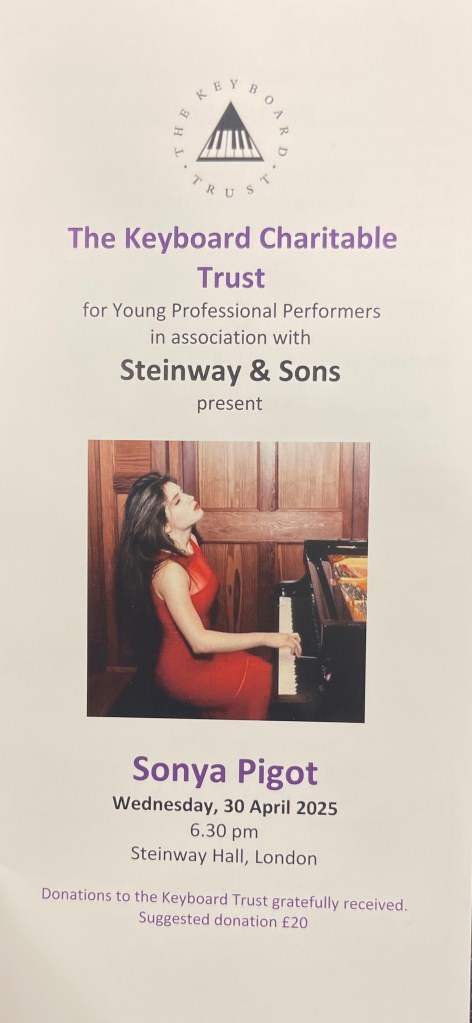
Sonya Pigot ‘Passion and Persuasion’ at Steinway Hall

Semi-finalist in the Liszt Utrecht International piano competition 2025

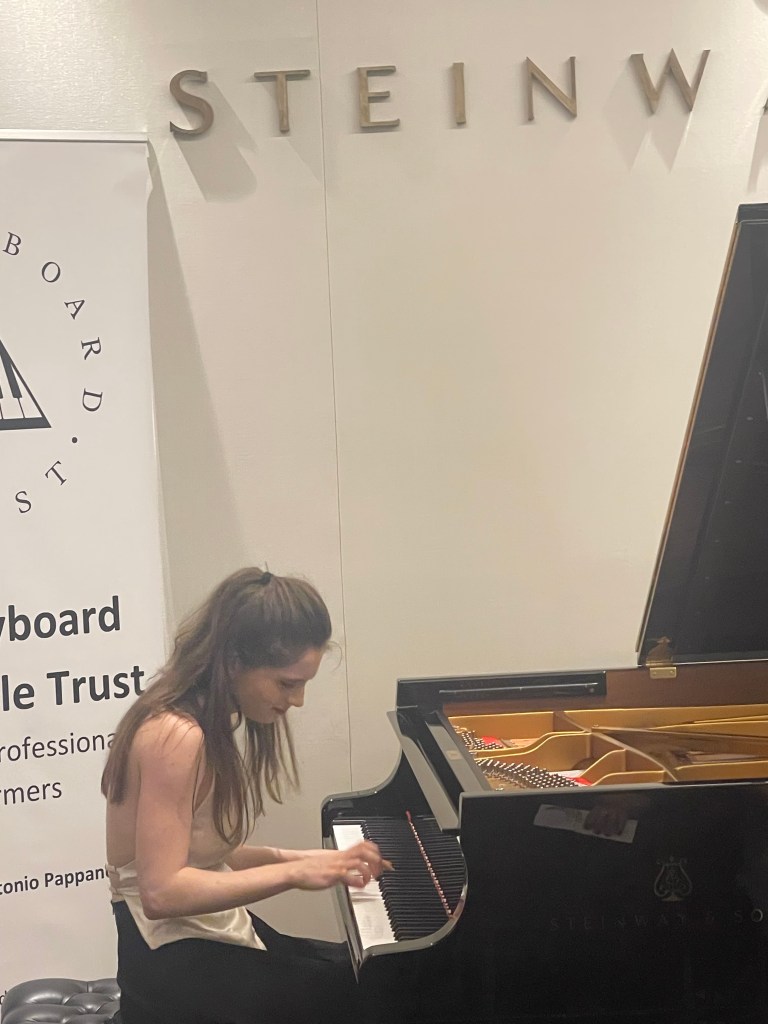
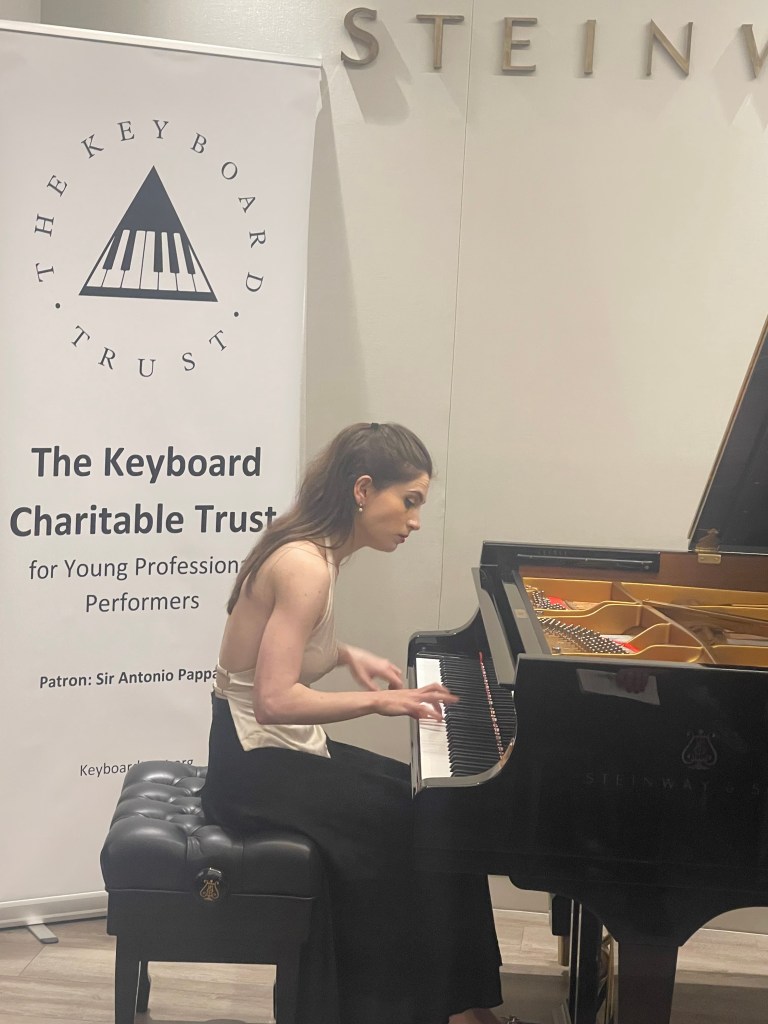
Passion and persuasion from Sonya Tulea Pigot at Steinway Hall for the Keyboard Trust.

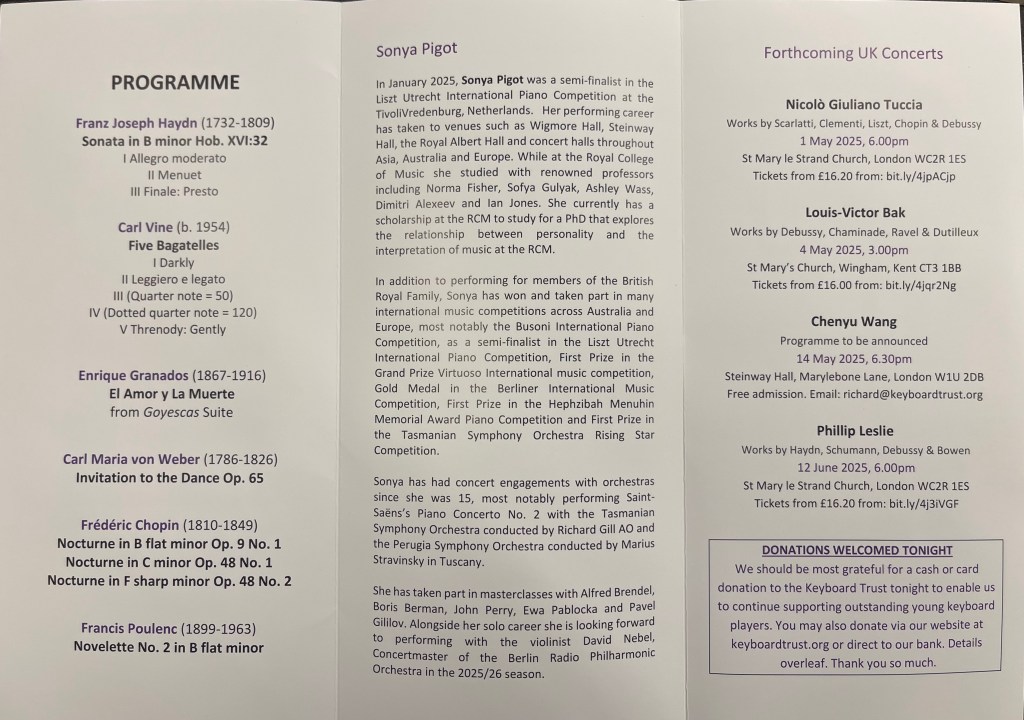
From the dynamic drive of her Beethovenian Haydn to the capricious exhilaration of Poulenc , there was always a passionate commitment of burning intensity. Finding only a moments peace with the Five Bagatelles by her co- national Carl Vine, and in the sultry improvised beauty of Granados ‘El Amor y La Muerte’ as she burst into the joyous exhilaration of Weber’s ‘Invitation to the Dance’. Almost catching the audience out with Weber’s trick ending, she played three Chopin Nocturnes with robust sentiments of a composer whose heart was yearning to return to his homeland that he could envisage with ever more desperate yearning.

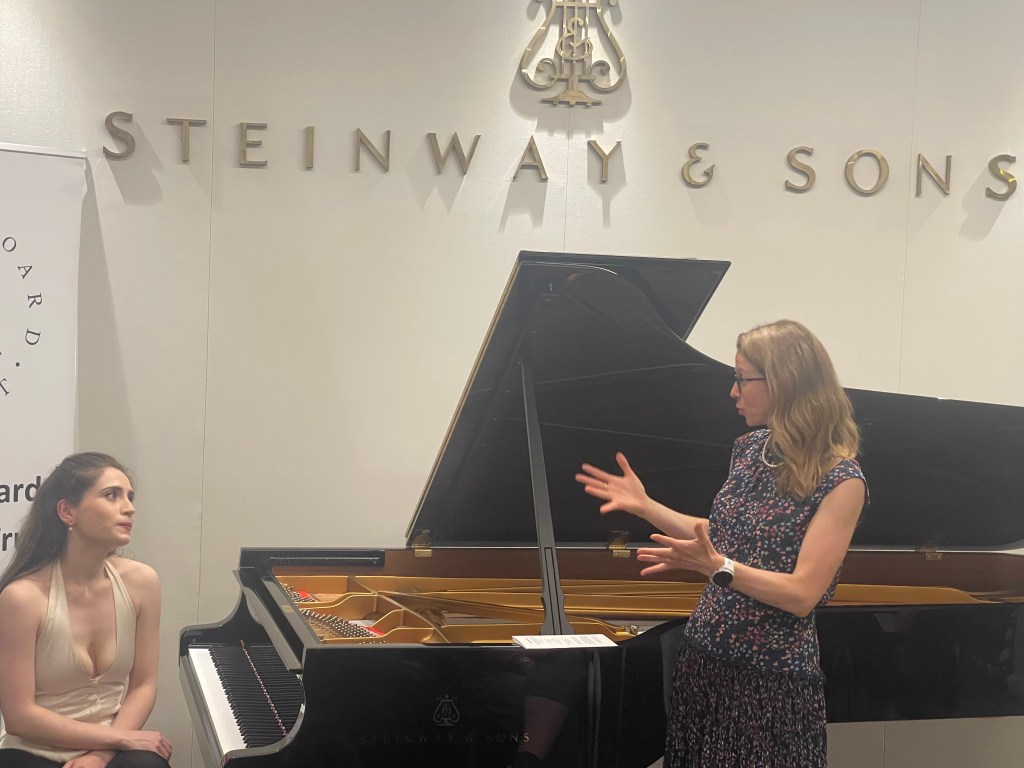
In a short after concert discussion with co Artistic Director and master chef Elena Vorotko where Sonya described her childhood burning passion for music in the Australian outback.

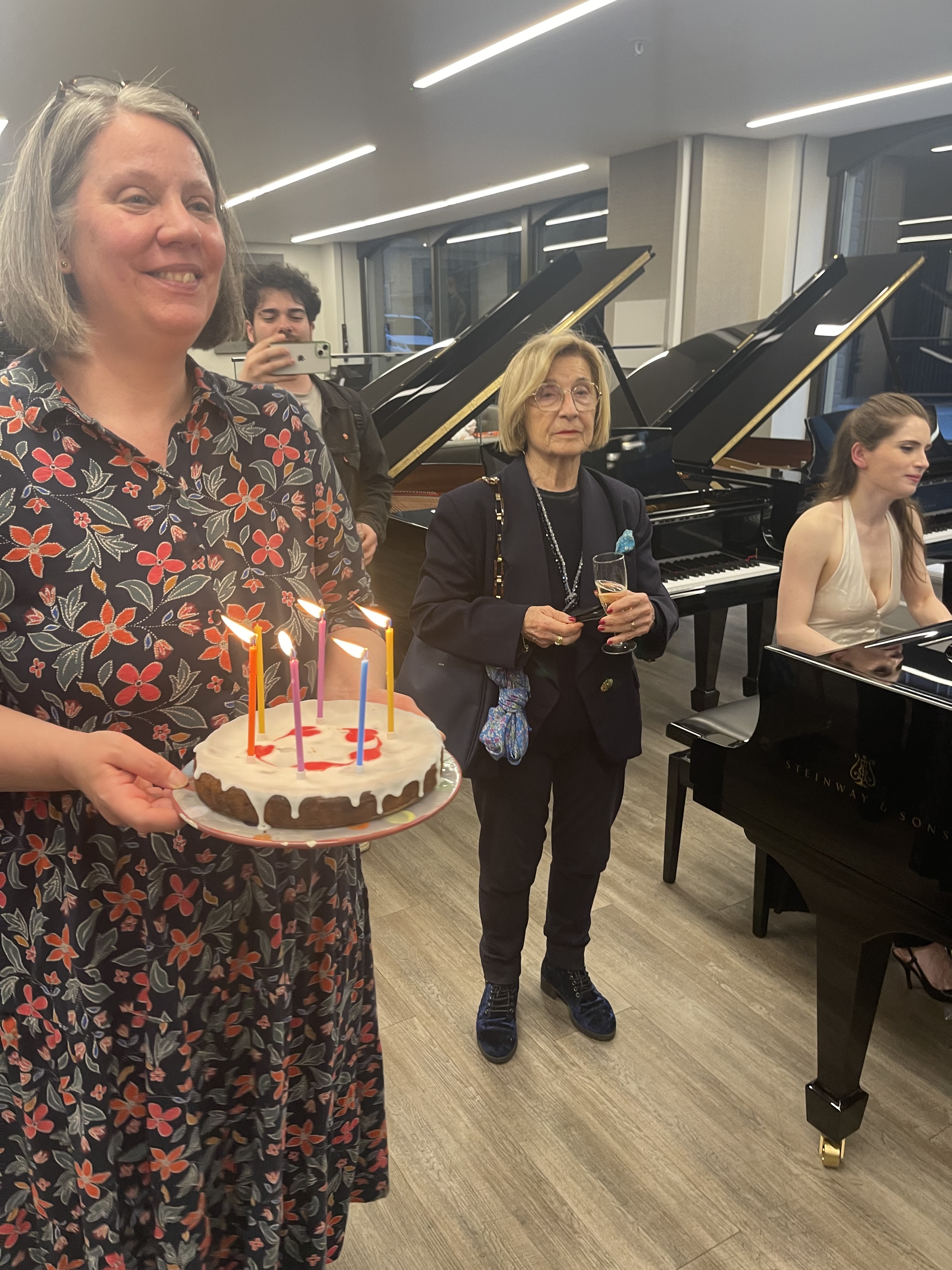
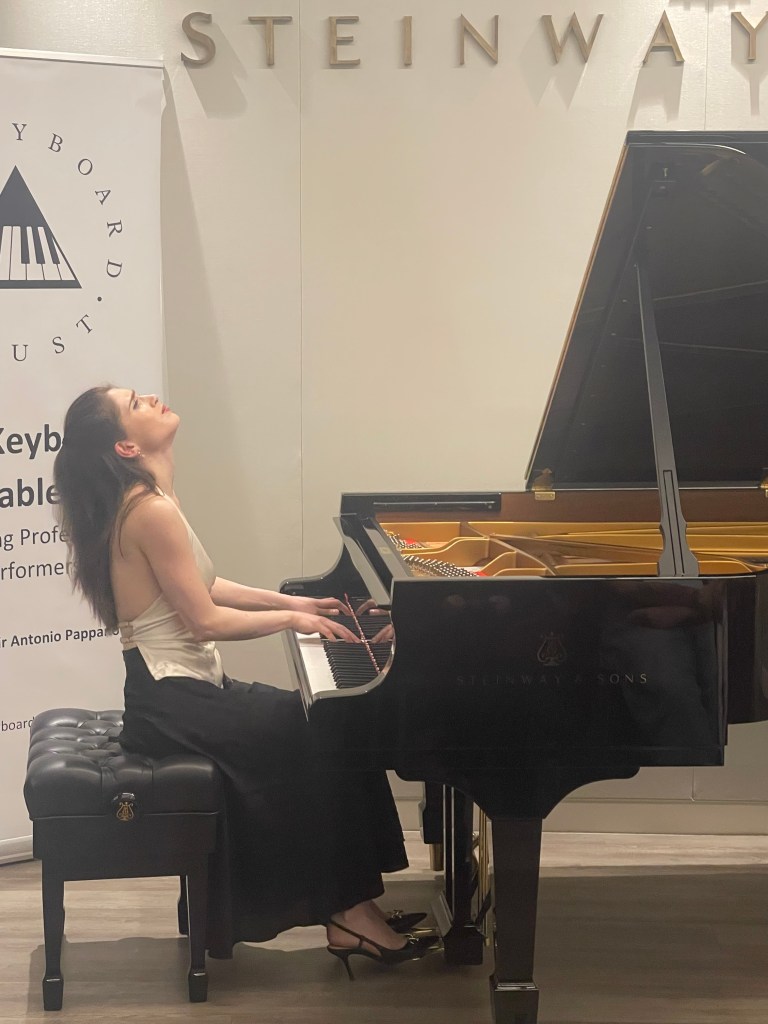
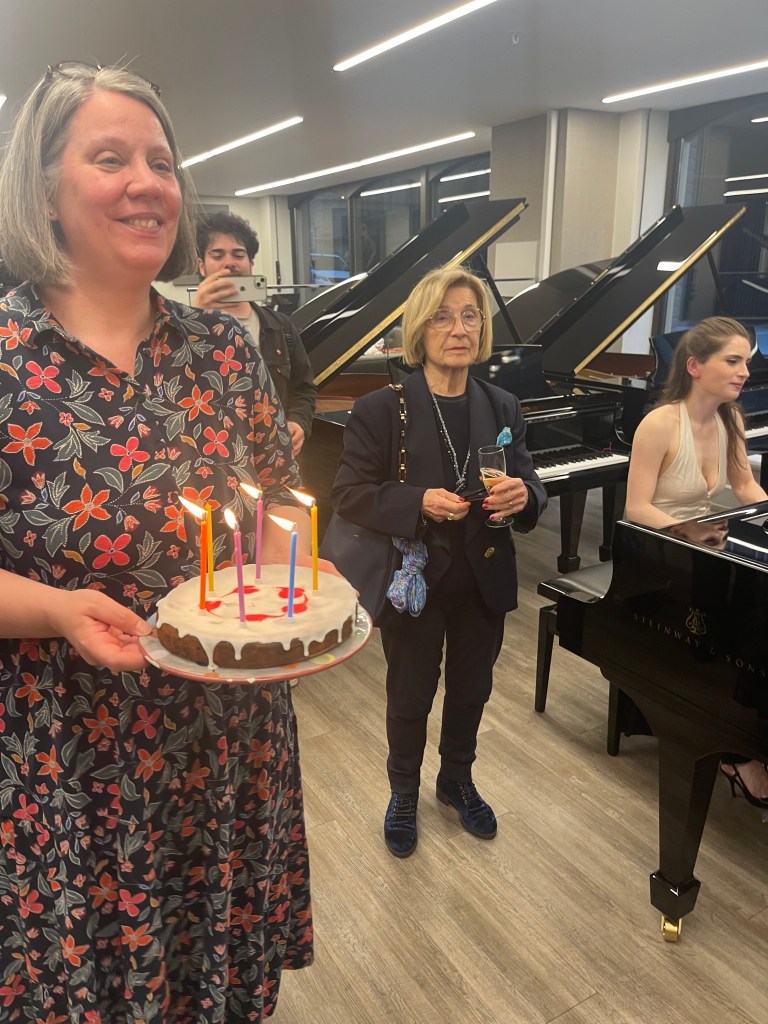
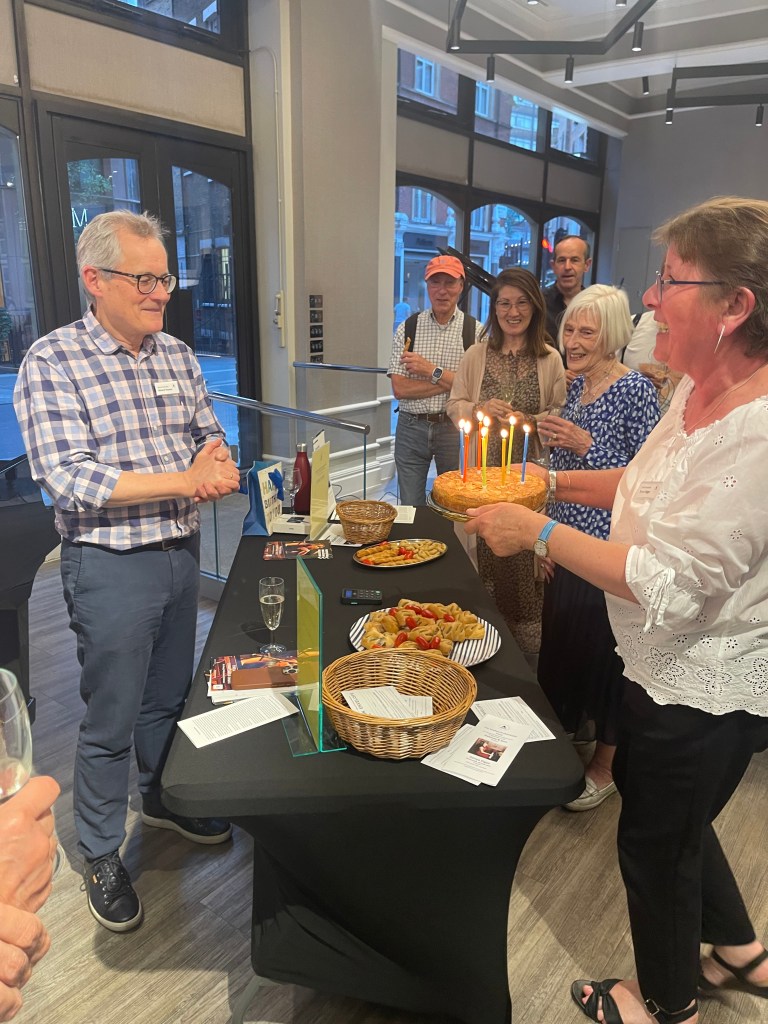
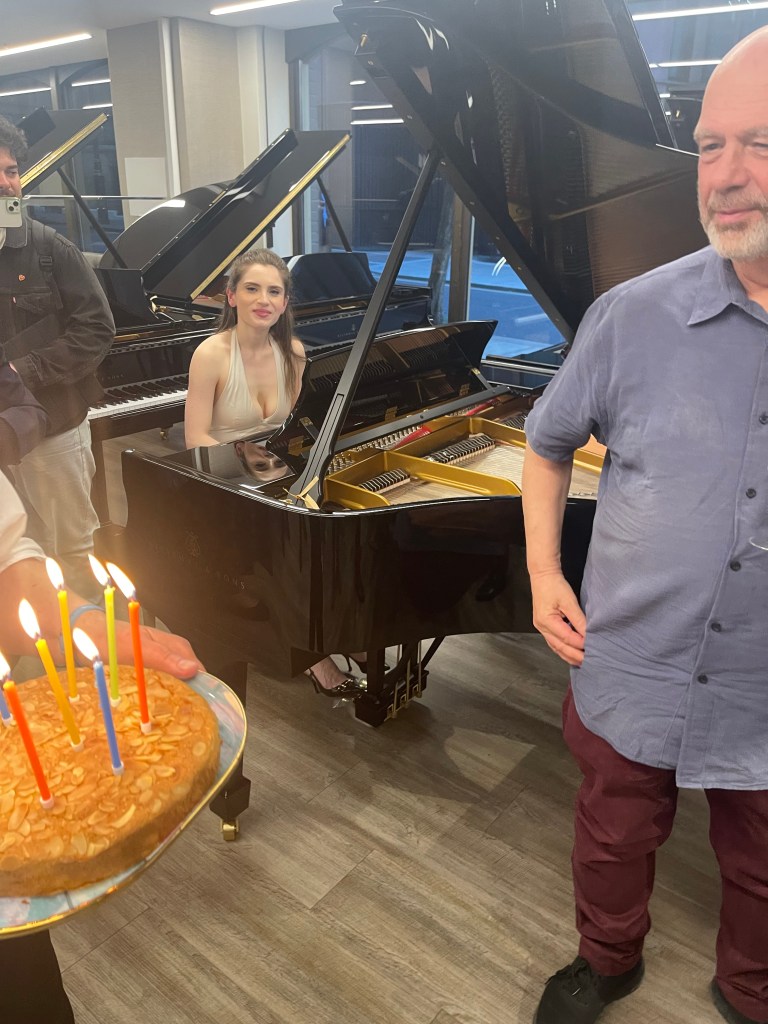
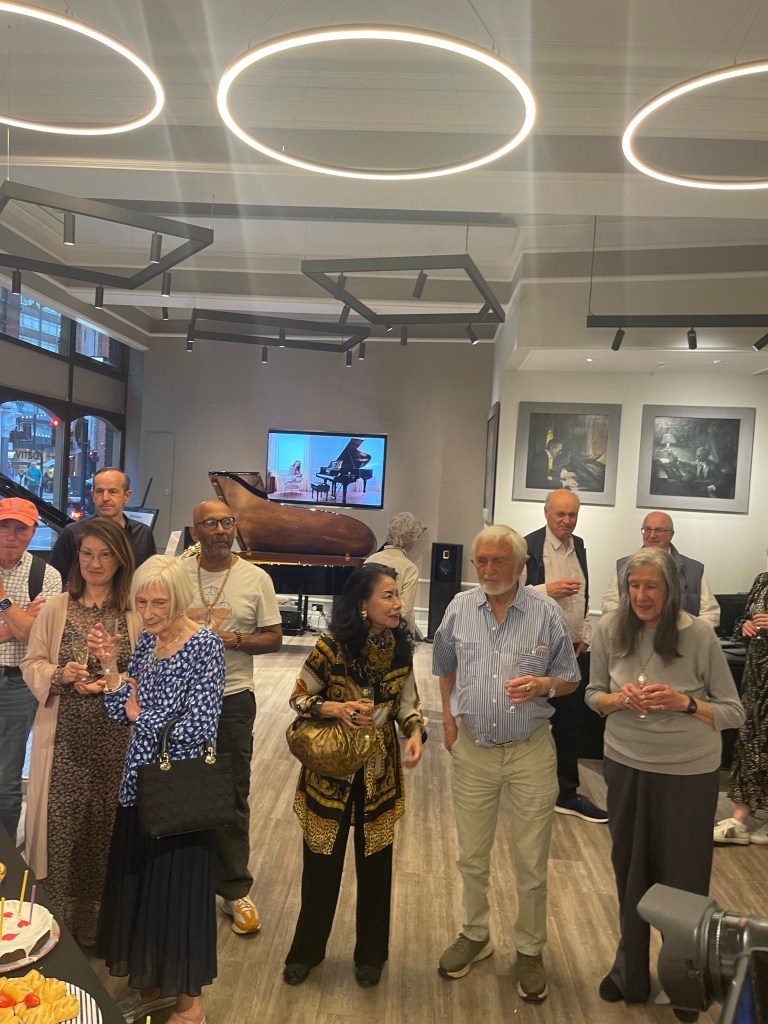
After such boiling intensity Sonya was happy to play the familiar Happy Birthday at a reception afterwards to celebrate three birthdays.

That of Richard Thomas ( administrator of the KT ) ,Leslie Howard ( co Artistic Director and founder trustee of the KT ) and what would have been John Leech’s 100th ( founder of the KT )

A joyous occasion surrounded by friends where Sonya could let her hair down and unwind after such intense music making

Mention should be made of the two cakes that co artistic director Elena Vorotko had made following the secret recipe bequeathed to her by co founder of the Keyboard Trust, Noretta Conci Leech .

Our ever generous hostess Wiebke Greinus Concert & Artists Manager Steinway & Sons

 Sonya Pigot was a semi-finalist in the Liszt Utrecht International Piano Competition at the TivoliVredenburg, Netherlands.   Her performing career has taken to prestigious venues such as Wigmore Hall, Steinway Hall, the Royal Albert Hall and concert halls throughout Asia, Australia and Europe. While studying at the Royal College of Music she worked with renowned professors including Norma Fisher, Sofya Gulyak, Ashley Wass, Dimitri Alexeev and Ian Jones. She is currently on a scholarship studying for a PhD that explores the relationship between personality and the interpretation of music at the RCM.
In addition to performing for members of the British Royal Family, Sonya has won and taken part in many international music competitions across Australia and Europe, most notably the Busoni International Piano Competition, as a semi-finalist in the Liszt Utrecht International Piano Competition, First Prize in the Grand Prize Virtuoso International music competition, Gold Medal in the Berliner International Music Competition, First Prize in the Hephzibah Menuhin Memorial Award Piano Competition and First Prize in the Tasmanian Symphony Orchestra Rising Star Competition.
Sonya has had concert engagements with orchestras since she was 15, most notably performing Saint-Saëns’s Piano Concerto No. 2 with the Tasmanian Symphony Orchestra conducted by Richard Gill AO and the Perugia Symphony Orchestra conducted by Marius Stravinsky in Tuscany.
She has taken part in masterclasses with Alfred Brendel, Boris Berman, John Perry, Ewa Pablocka and Pavel Gililov. Alongside her solo career she is looking forward to performing with the violinist David Nebel, Concertmaster of the Berlin Radio Philharmonic Orchestra in the 2025/26 season.

Sonya with her duo partner Parvis Hejazi both from the class of Norma Fisher at the RCM https://christopheraxworthymusiccommentary.com/2025/03/09/parvis-hejazi-at-st-marys-perivale-mastery-and-courage-of-a-young-artist/
https://christopheraxworthymusiccommentary.com/2023/06/02/the-gift-of-music-the-keyboard-trust-at-30/

Paradise awaits in Highgate with the Morabito- Casillagh duo and much more besides

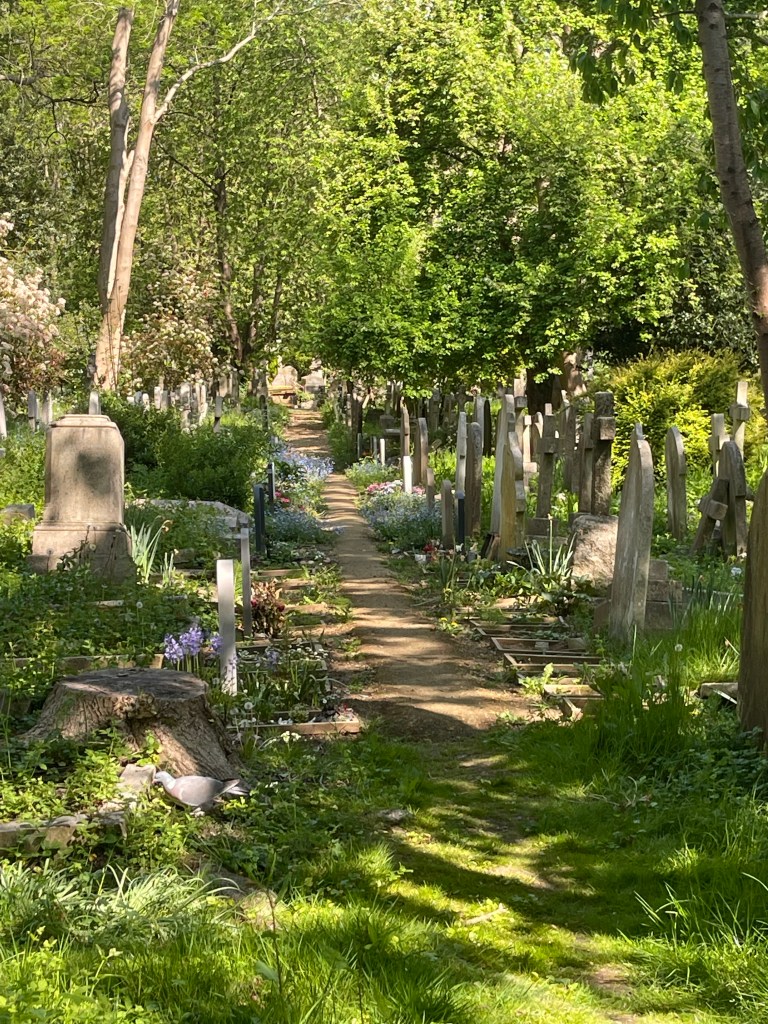
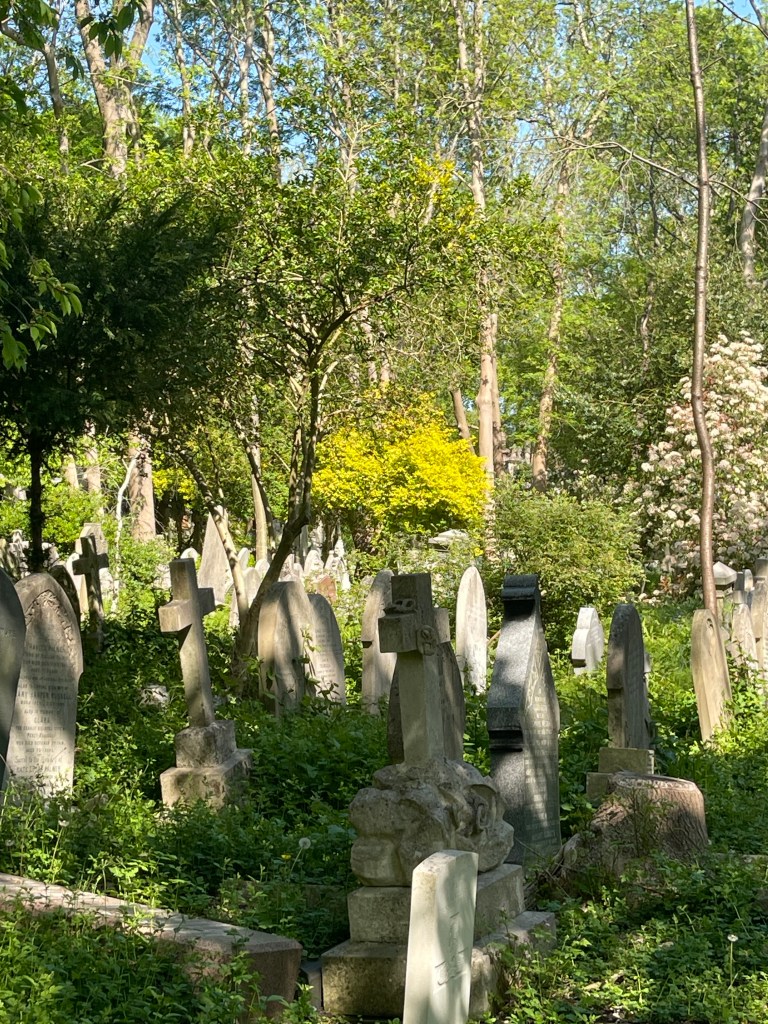
Surrounded by beauty in this most beautiful part of London that is Highgate, especially on the hottest day of the year.

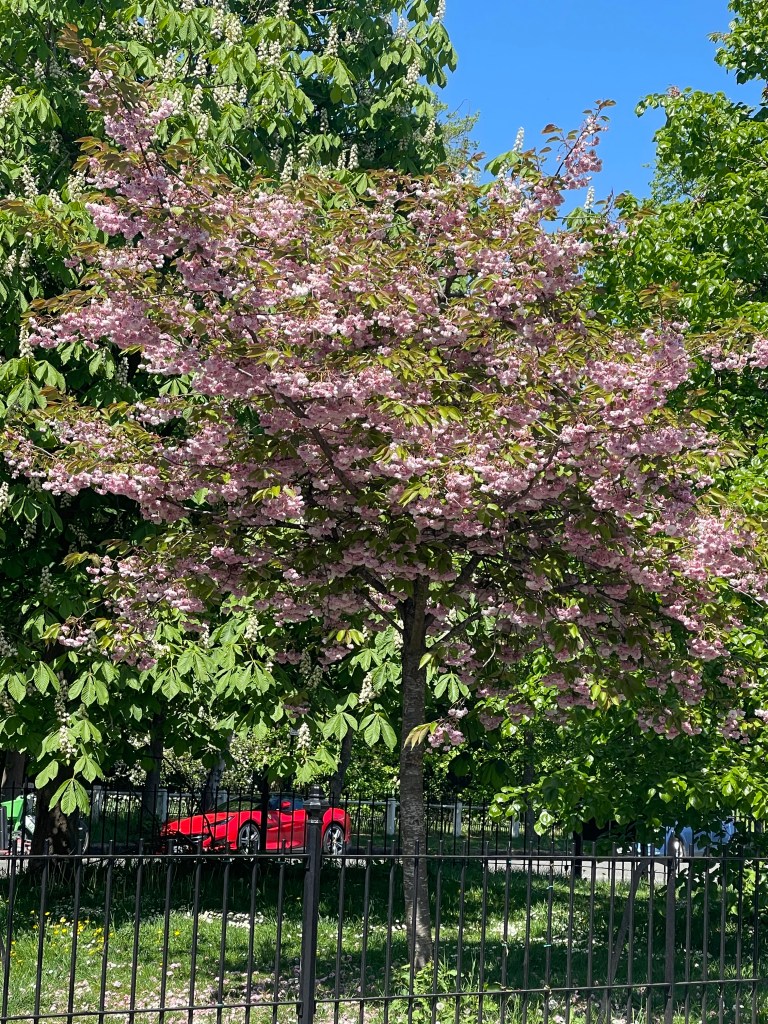
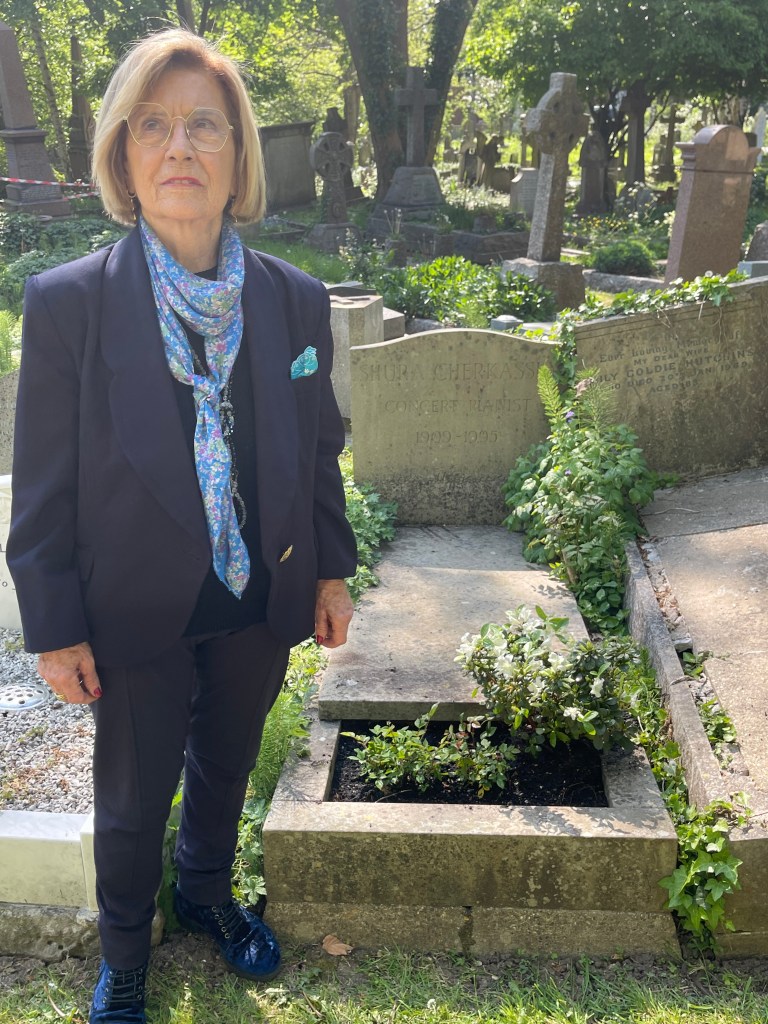
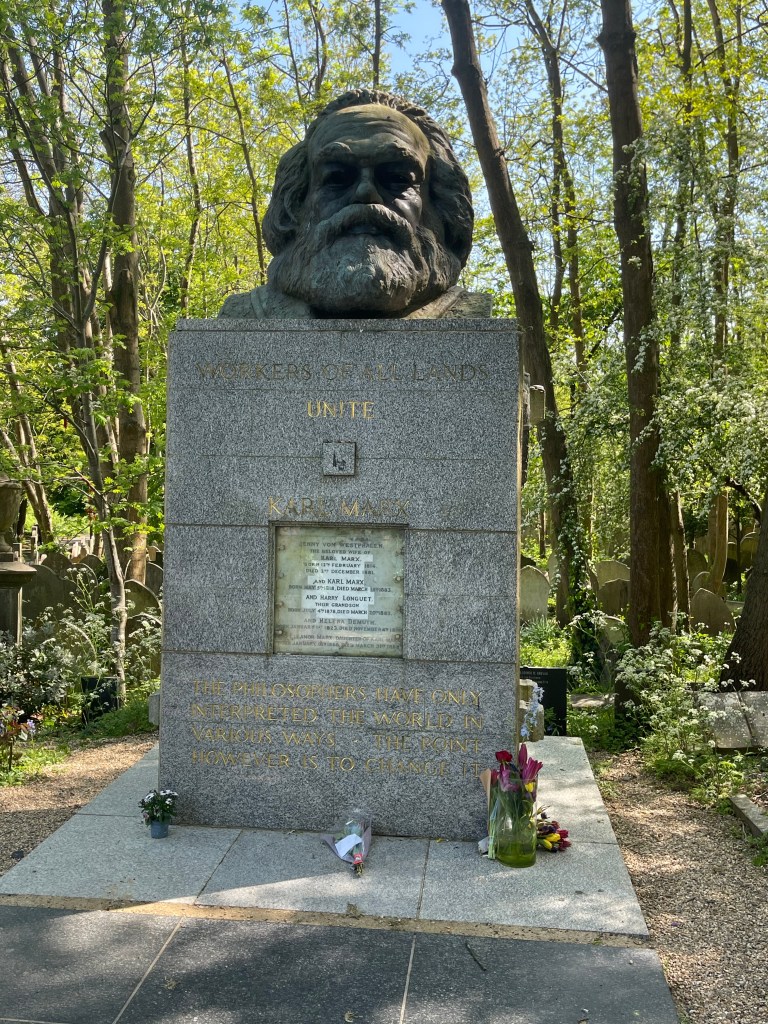
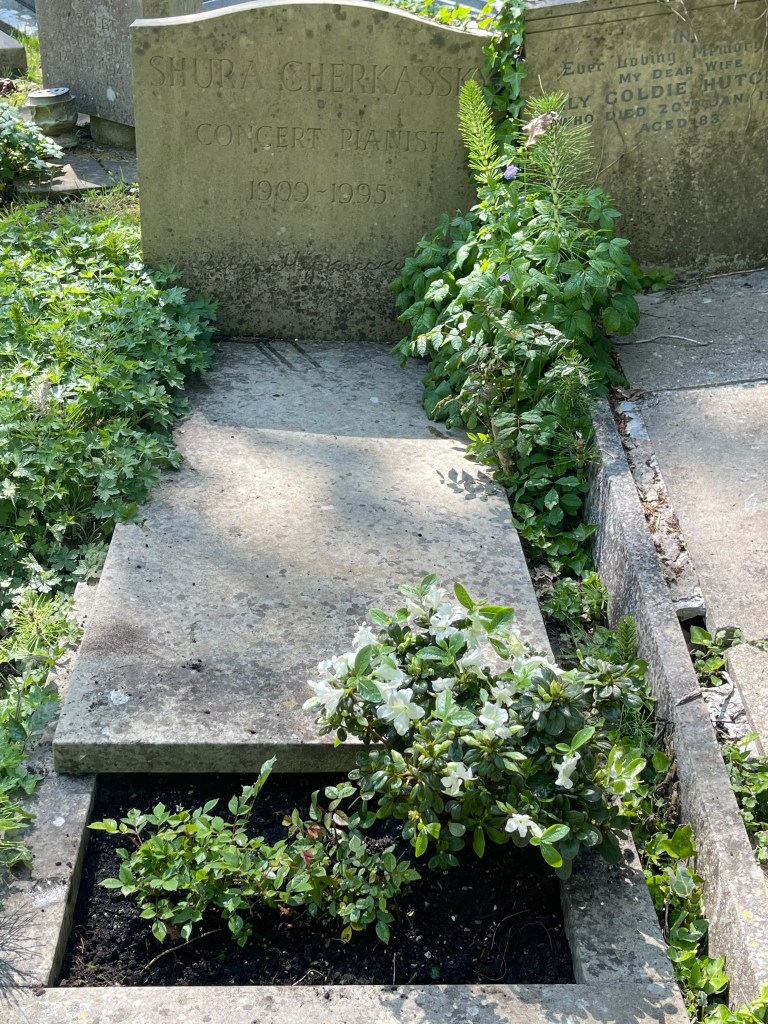
The magnificent trees busting into flower and even Cherkassky, just a stones throw away down the hill, happy to sunbathe next to Karl Marx basking hand in hand in this continental sunshine .

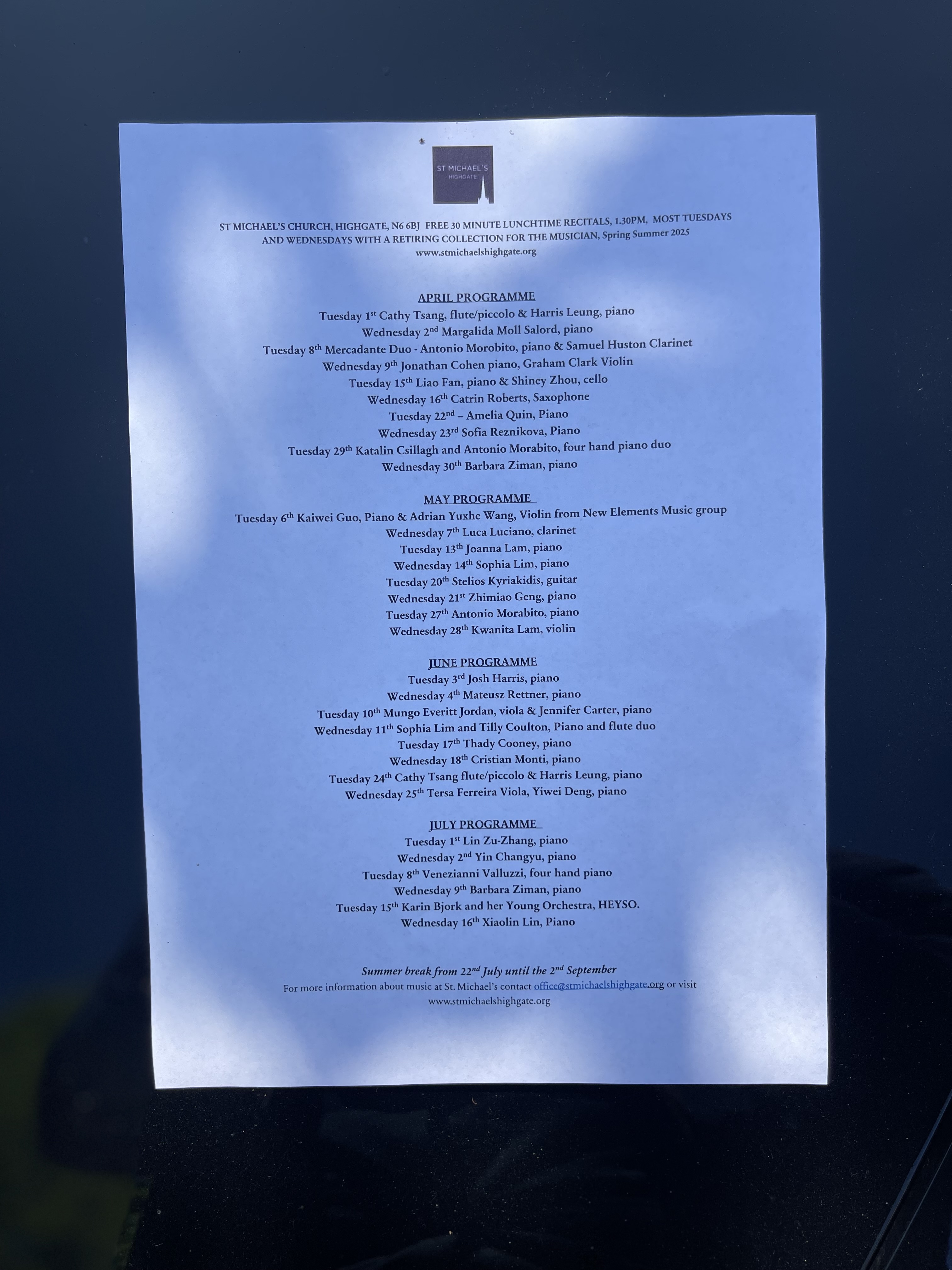
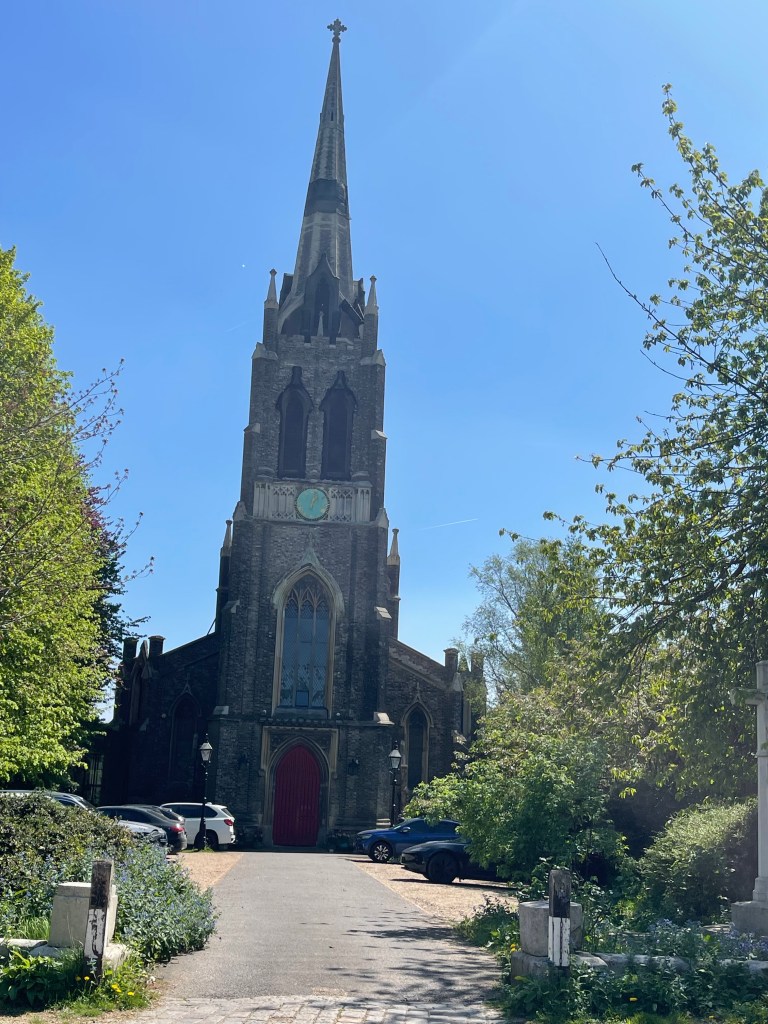
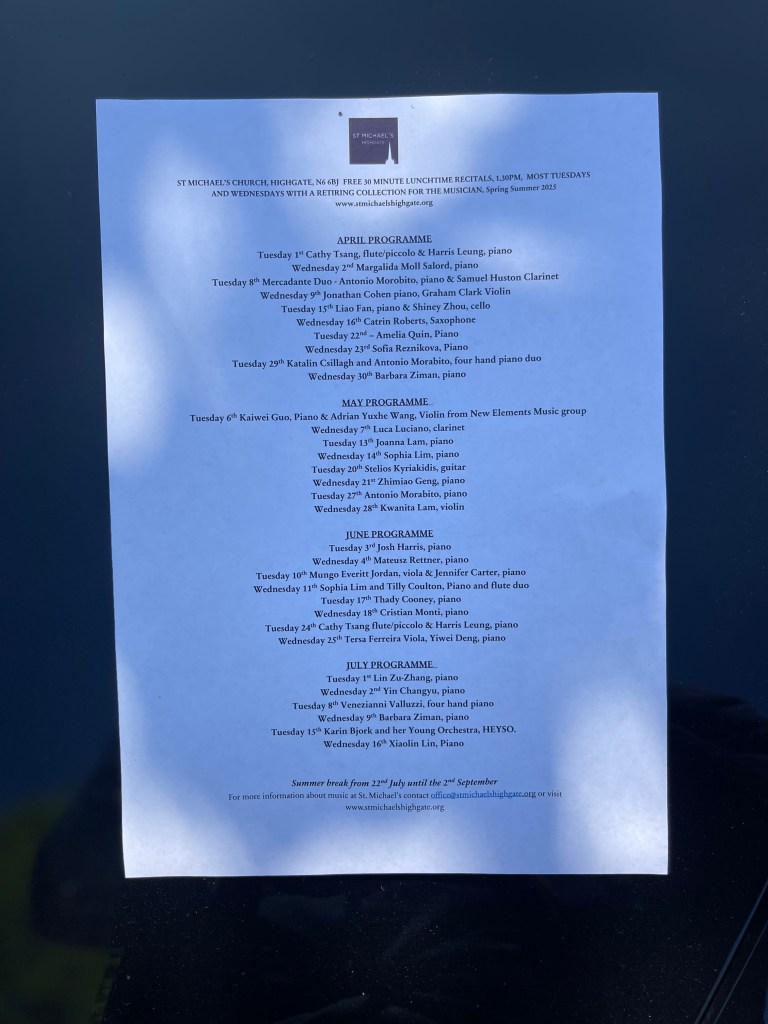
One of the best kept secrets in these parts is the music making, on Tuesday and Wednesday lunchtime, in the beautiful St Michael’s Church seated on top of the hill surveilling all this beauty from on high.

But deep in the heart of this church’s soul today can be found the ravishingly beautiful music of Schubert

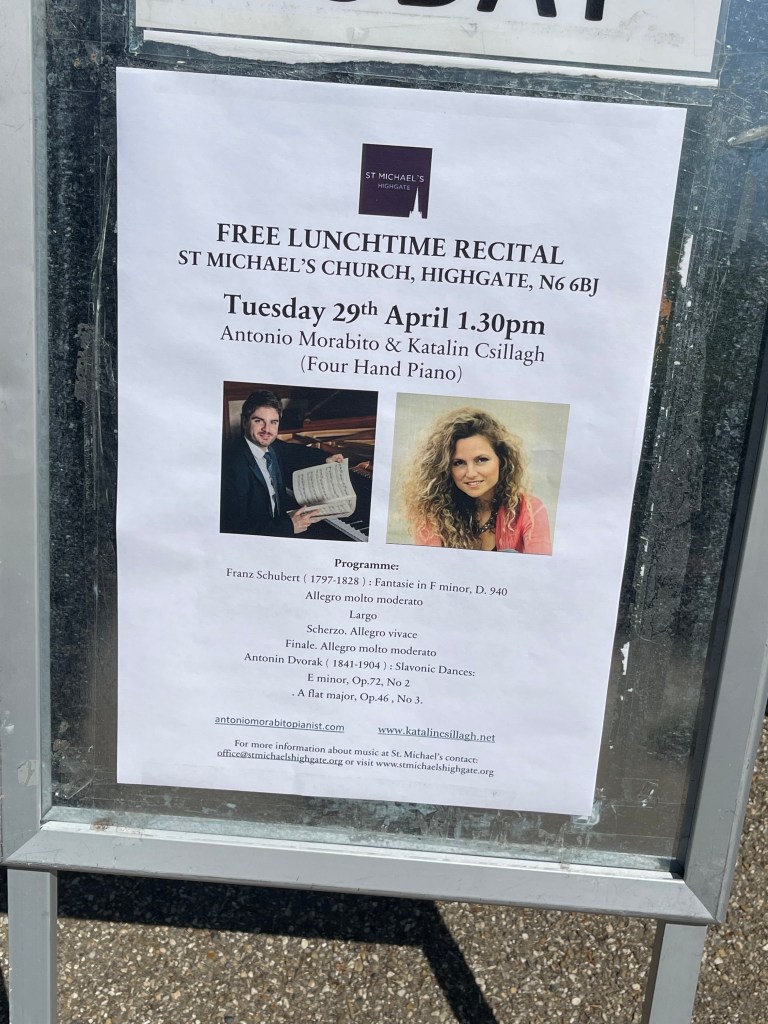
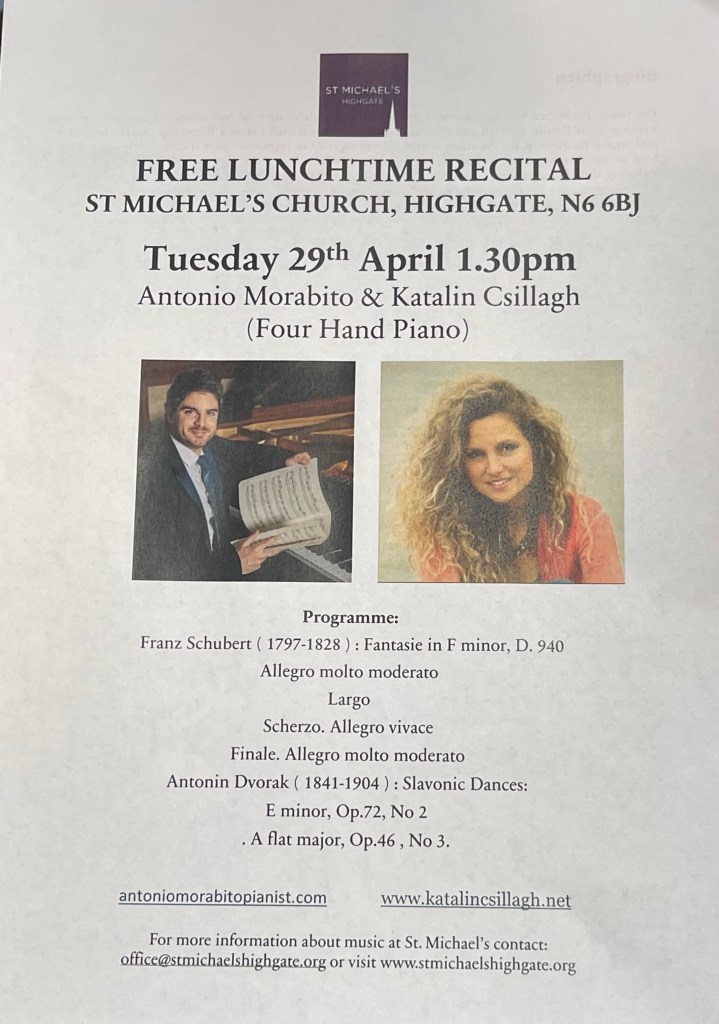
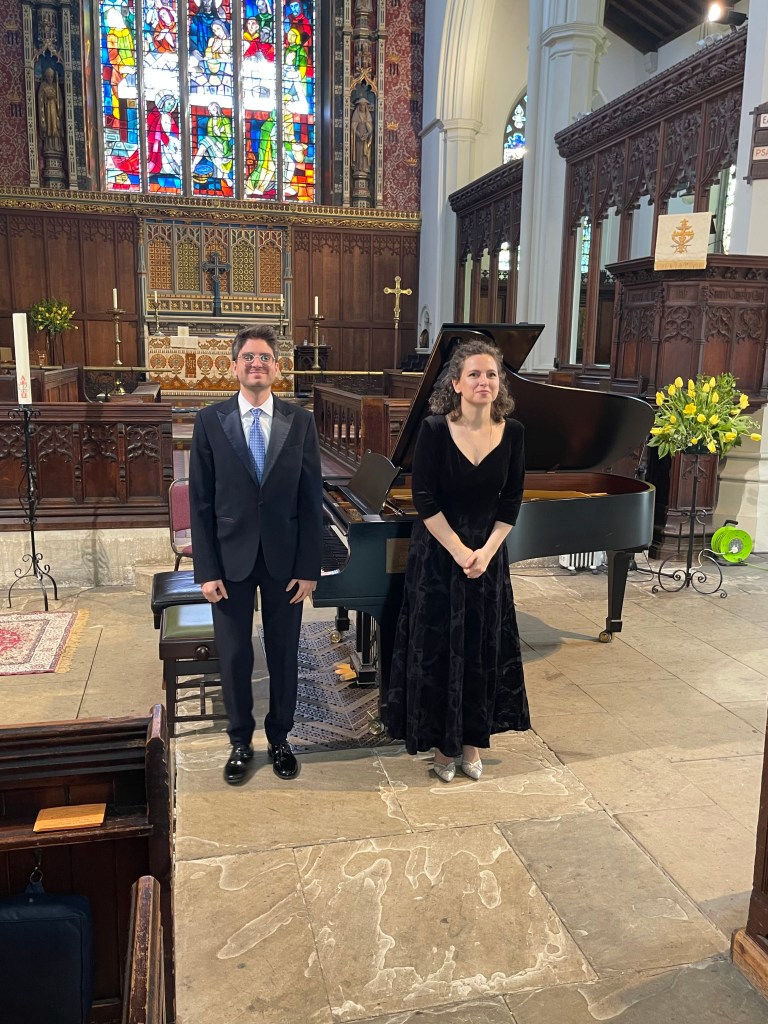
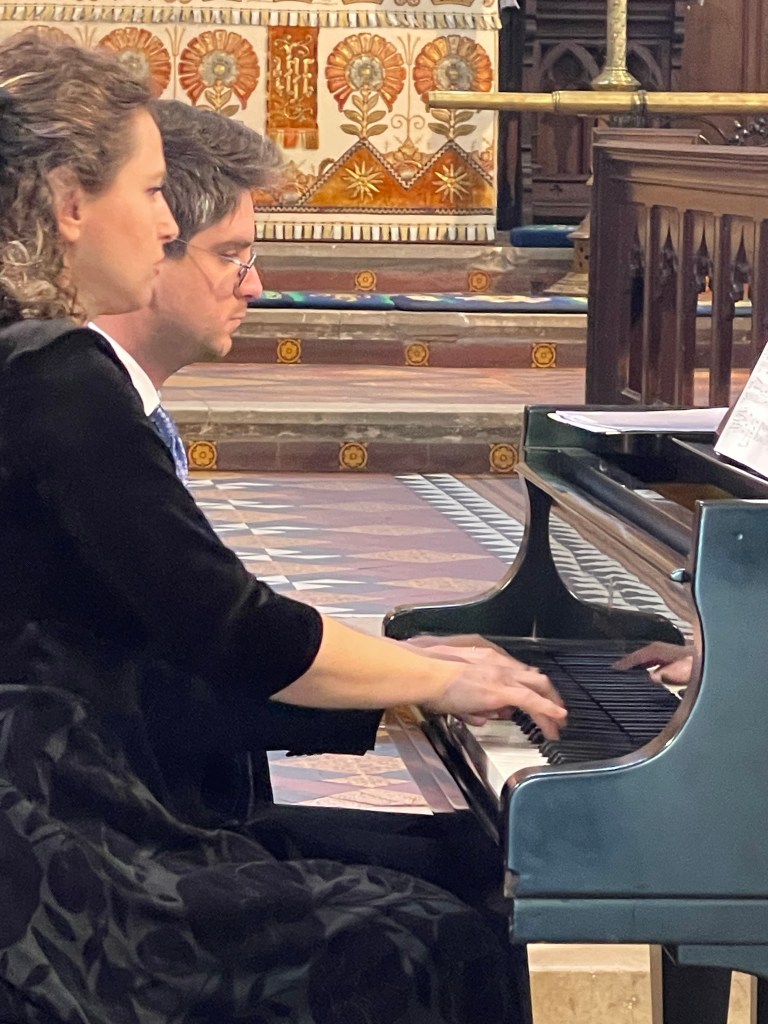
From the hands of Antonio Morabito and Katalin Csillagh the opening of the F minor Fantasy filled this vast edifice with one of the most sublime creations from a composer who was shortly to take his rightful place in heaven.

A very fine Steinway piano has even been provided ,allowing the superb musicianship of this duo to bring us a masterpiece in all its glory.

A quite extraordinary sense of balance , Antonio in the bass and with ‘noblesse oblige’ able to sustain ,but never overpower, the delicacy and ravishing beauty of one of Schubert’s most haunting melodies from Katalin’s delicate hands.

A dynamic drive and continuous flow allowed the music to unravel with simplicity and nobility. If the Scherzo was rather Beethovenian ,and one would get their legs in a twist if they tried to dance to that ,it was because it had grown out of a Largo of aristocratic nobility.

A monumental declaration of poignant nobility where,every so often , a ray of sunlight would appear allowing Schubert’s unending melodic invention to beguile and haunt us before bursting into the Scherzo. The final ‘fugato’ was played with remarkable control and a sense of line where these two artists played as one. The return of the opening theme after such tempestuous knotty twine is one of those moments of pure genius ( similar to the return of the the Aria in Bach’s Goldberg Variations). A magic that these two pianist were able to share with us, making this trip to Highgate one of the most memorable moments in a London where spring has taken on another meaning.

Dvorak’s Slavonic Dance in E minor was another of those haunting melodies that really reach the heart strings. Especially when the insinuating beguiling melody is imbued with a kaleidoscope of subtle shading from the hands of a Hungarian pianist where hot blooded gypsy emotions are part of their culture.

The A flat dance is new to me and was played with subtle sounds with a ‘joie de vivre’ of whispered well being, before taking flight with an insinuating charm and drive. Almost rearing out of control as Dvorak shows us what exuberance and exhilaration he can bring to music from his homeland.

Just half an hour of music where these two fine musicians had managed to captivate a small but very enthusiastic audience with music making of rare intelligence and sensitivity.

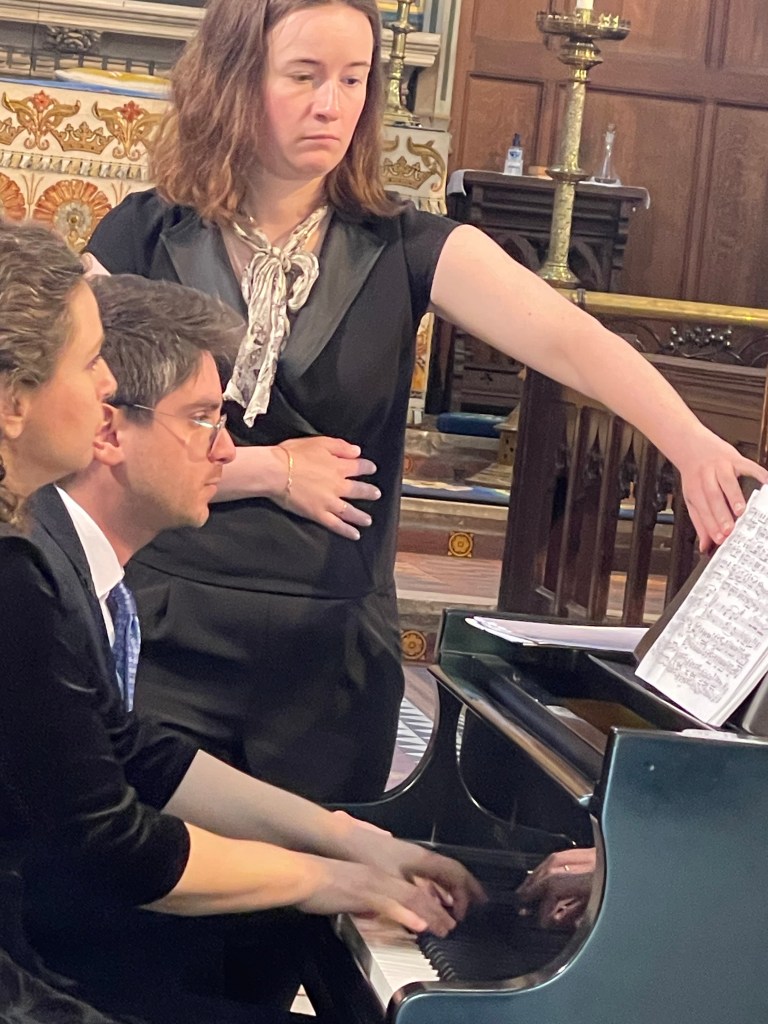
A quick swop over for a thank you to such an attentive audience allowed Antonio to be at the helm for a delicious ‘bon bon’ by Rachmaninov. A ‘Polka’ written for four hands which the composer had probably played with his friend Vladimir Horowitz!

The superb country pub next to the church at the top of Highgate Hill in South Grove

And wizardry there was too,allowing us an exhilarating return to the world outside ,uplifted and ready for the beauty spring and of course the wonderful country pub that sits next to all Churches of any importance.

office@stmichaelshighgate.org

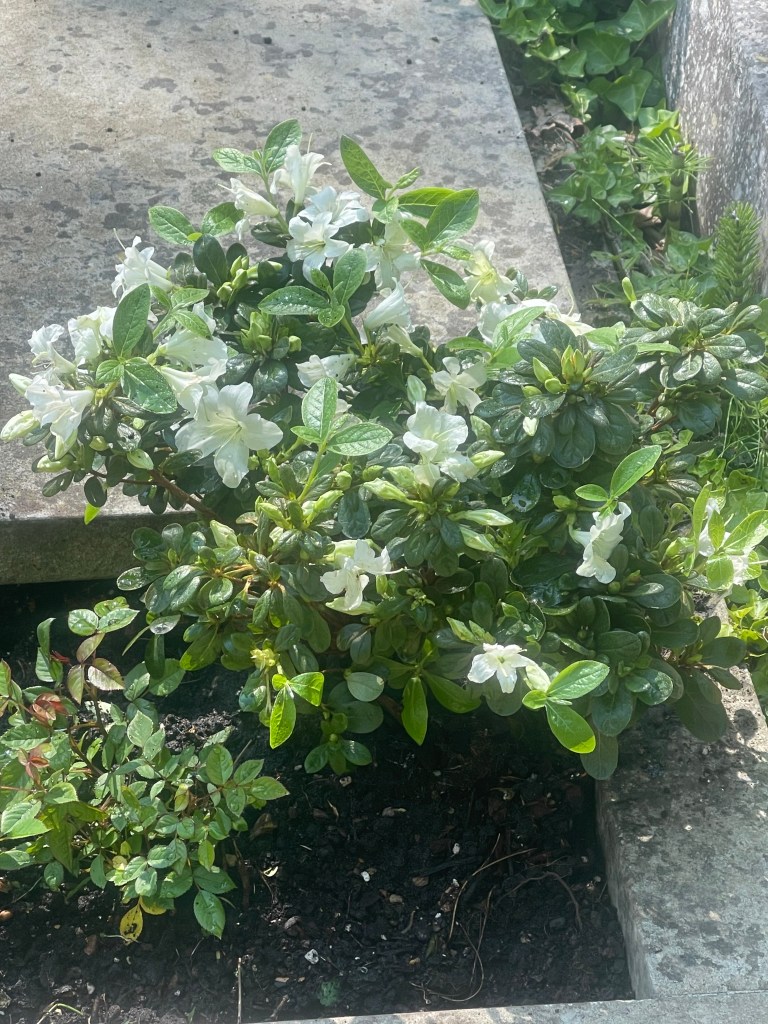
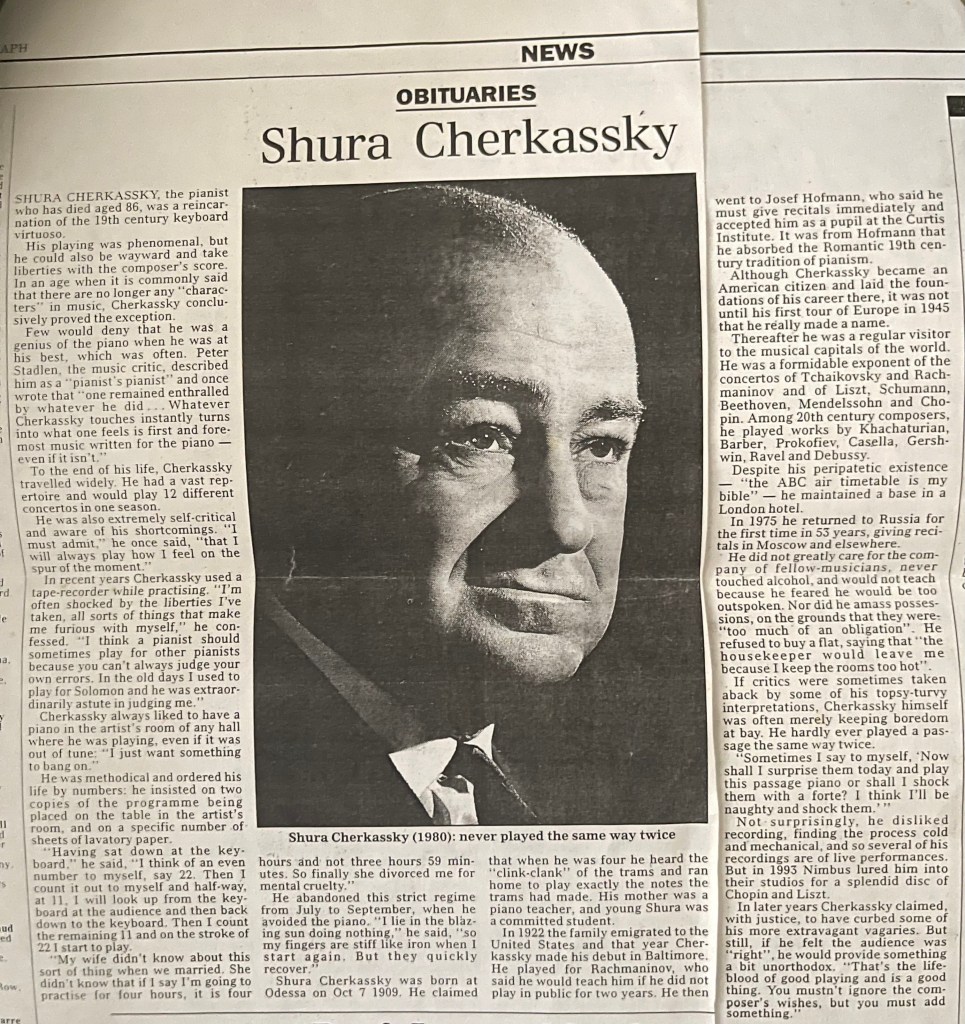
And now down the hill to tend Shura’s resting place that I promised his long term companion,Doreen Davis that I would continue to look after when the time would come that she too would join him ,together with with Schubert iand of course Marx, a place even more beautiful than the paradise that is Highgate today.

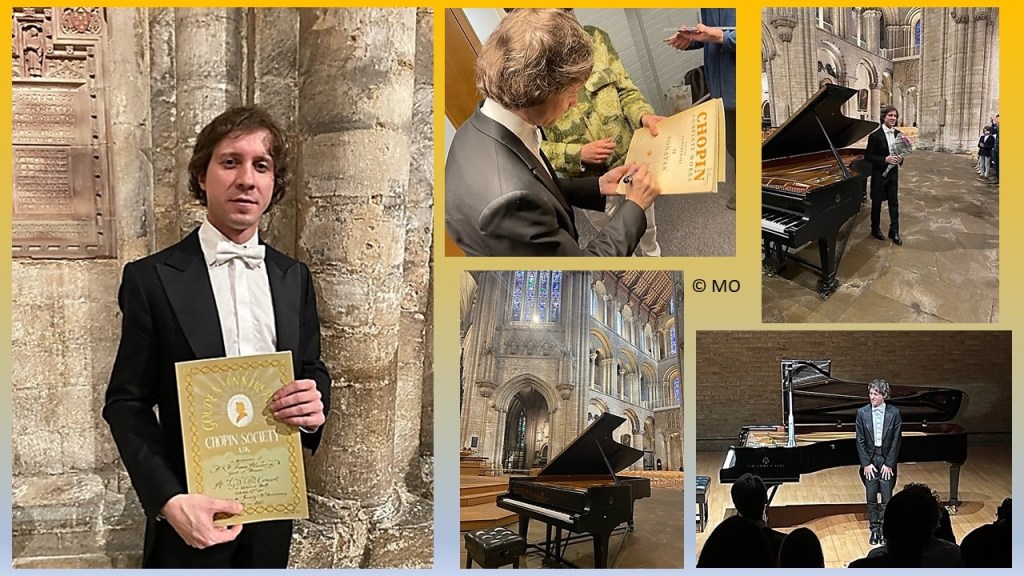
Rafal Blechacz at the Chopin Society UK Mastery and Nobility of Chopin with the pinnacle of pianistic perfection

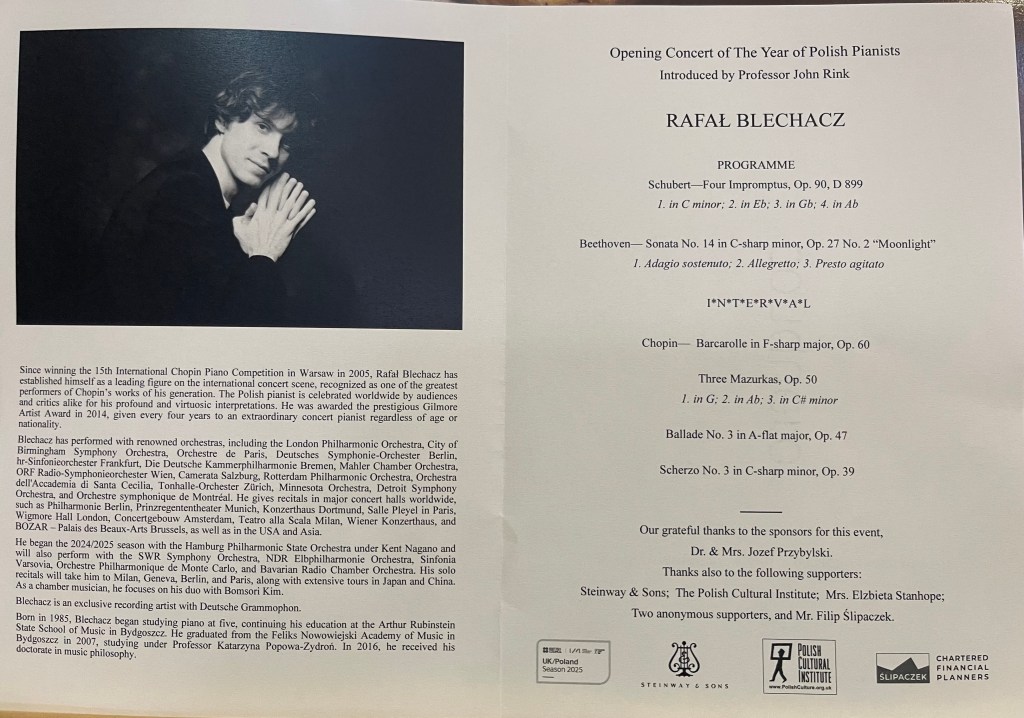
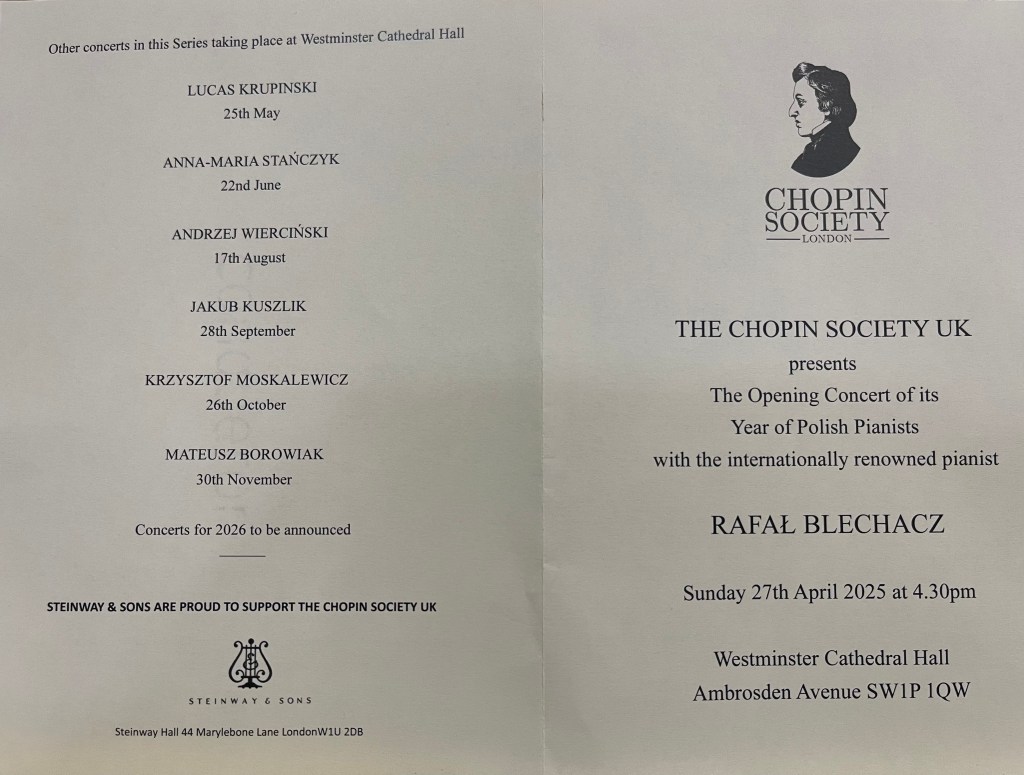
The Chopin Society UK proudly present as the Opening Concert of their “Year of Polish Pianists” Series

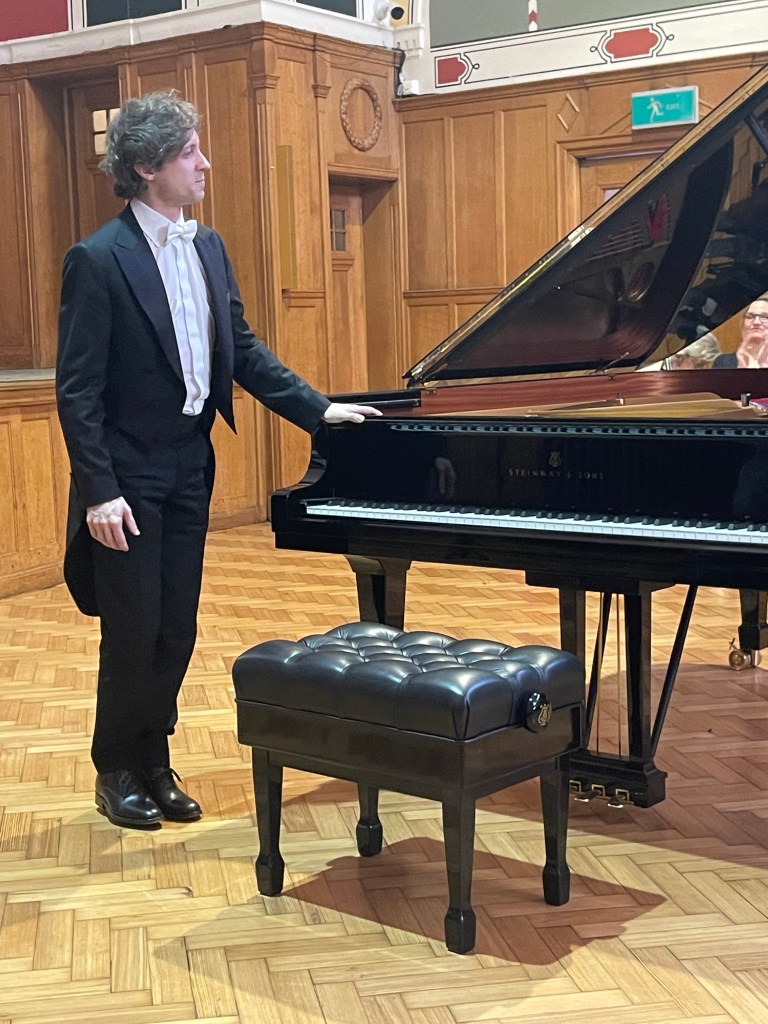
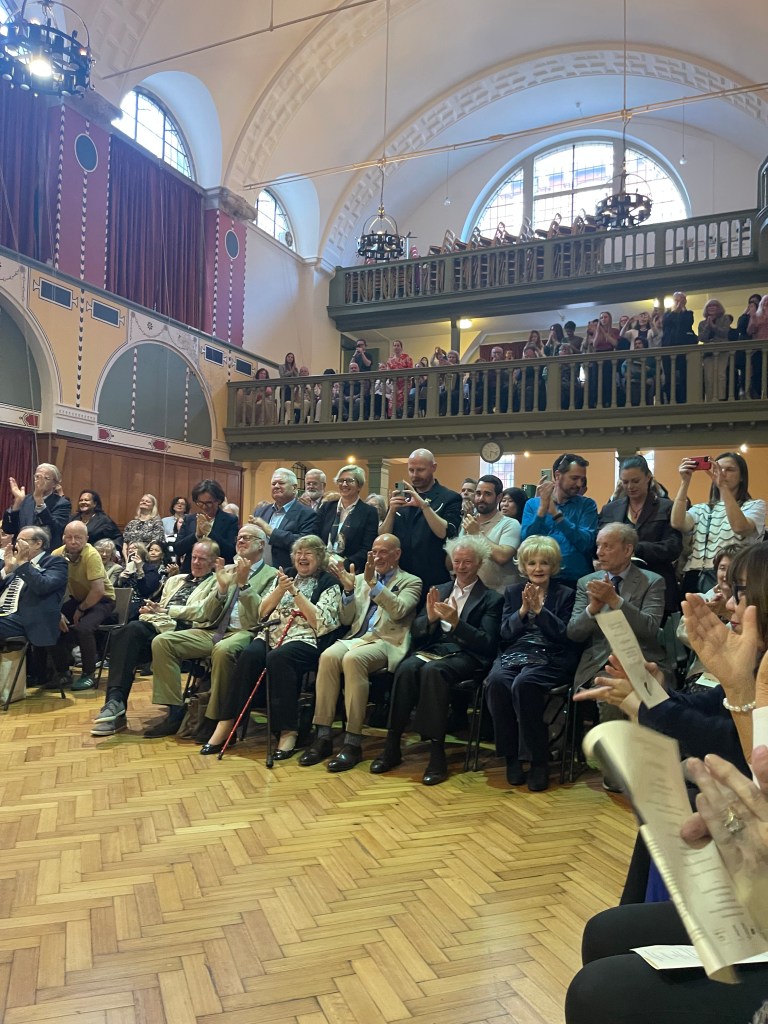
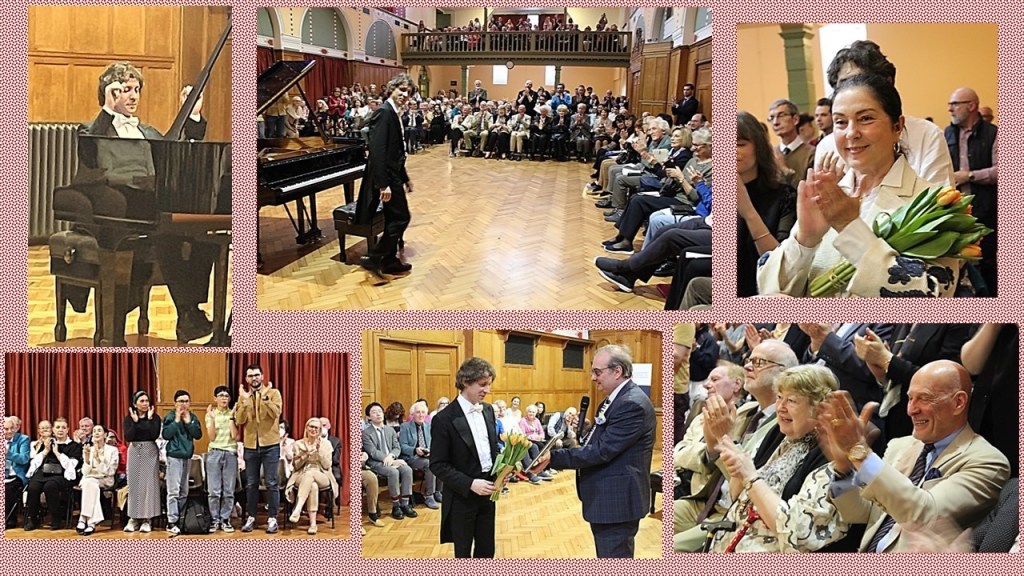
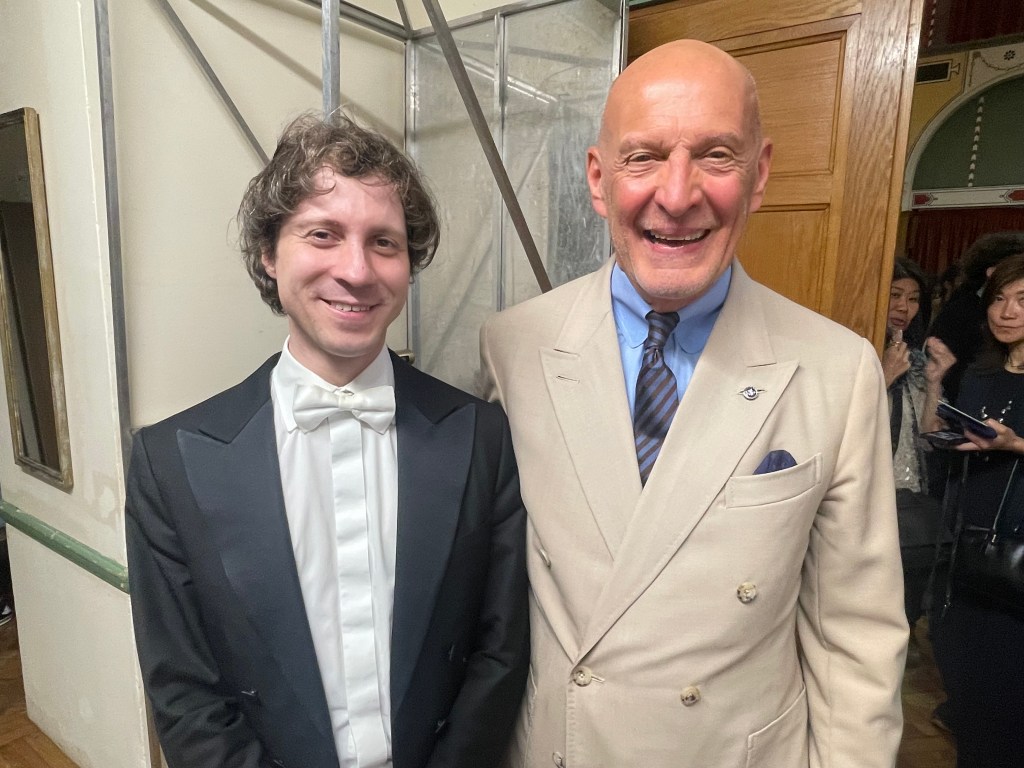
A standing ovation for Rafal Blechacz the 2005 winner of the Chopin Competition in Warsaw and now invited to open The Chopin Society UK “Year of Polish pianists.’ Playing of rare beauty and most notably of sumptuous rich harmonies. His masterly use of the piano transformed this good Steinway B into a magnificent ‘D’ as his whole body moved in continuous circular movements allowing him to play with a glowing luminosity of fluid sounds. Movements that reminded me of Stefan Askenase, another great Polish pianist and Deutsche Grammophon artist like Blechacz, who used to regularly fill the Royal Festival Hall with his Chopin playing of noble simplicity.

It was this same aristocratic nobility that we heard today with a musician who could transform Schubert’s four early Impromptus into ravishing tone poems, each one illuminated by his magic palette of colours based on a rich harmonic awareness of golden sounds.

The radiant opening call of the first Impromptu with his beautiful radiant cantabile of glowing fluidity .Dynamic contrast of full robust chords of orchestral weight leading to a beautiful mellifluous outpouring over a rich full harmonic accompaniment and some delicate staccato bass notes. It just demonstrated Rafal’s absolute mastery of sound and above all of the pedal which for him is indeed the very soul of the piano.The second Impromptu with notes that were merely rising and falling streams of golden sounds leading so naturally to the passionate outpouring of the central episode ,richly harmonic with dramatic changes of key. Poignant ,languid beauty to the third Impromptu with a wonderful sense of balance as the accompaniment was whispered but giving a sonorous backing from which the melody just seemed to emerge. It was like the sculptures by Michelangelo just emerging as if by magic from the Carrara marble.The genius of creation indeed! There was radiance and harmonic sumptuousness to the cascades of notes of the fourth that were greeted by a melodic line of freedom and beauty. A remarkable performance in which four perfect movements were woven into one complete whole by a master musician of extraordinary sensibility.

The ‘Moonlight’ Sonata, too, was played with masterly musicianship and a mellowness of sound in the opening movement that brought a poignant significance to one of Beethoven’s most maligned and misunderstood works. Some very interesting highlighting of inner counterpoints in the repeat of the Allegretto second movement and again in the Presto agitato last movement. The Trio of the second movement played with full rich organ sounds but combining grace,charm and delicacy.The last movement with dynamic drive and a superb sense of balance with beauty of sound even in the most strenuous passages. It must be mentioned that Rafal sometimes rearranges the hands as he did in the final cadenza where to watch his swopping over of hands belied the magnificent sounds they were producing.The opening movement too where the left hand gave a helping hand to the right in order not to split the chord. It was a habit that he used also in the Barcarolle and the Third Ballade and it was only his complete understanding of the music that could allow him to break the physical shape on the page with the convenience he made of execution .

But it was to Chopin that Blechacz turned after the interval giving masterly performances of some of Chopin’s best loved works.

The Barcarolle that was played with a luminosity of sound and breathtaking power as he dug deeply into the soul of the music and found a heart that could beat with refined insistence but also reveal a hidden passion of breathtaking potency.

A third Ballade played with great freedom as an almost improvised pastoral landscape was unraveled with glowing beauty. Even Blechacz was inspired as his passionate temperament was allowed full reign in the glorious flowering of one of Chopin’s most gently un dramatic of his Four Ballades.

The Third Scherzo , usually played with mechanical precision, was here endowed with rich orchestral sounds. Octaves that were transformed into a demonic outpouring of drama and dynamic drive before dissolving into a Chorale of timeless nobility and sumptuous beauty. Chopin’s cascading comments never interrupting this majestic flow but simply illuminating the wonders that were unfolding from Blechacz’s magic hands.

These were hands that had illuminated Schubert and Beethoven ,too, with a palette of colours and kaleidoscope of sounds that could give new life to works reproduced so many times but never recreated as today, respecting the composers intentions on and within the page.

Three mazurkas op 50 were played with a ‘ joie de vivre ‘, with robust dance mingled with subtle whispered confessions, that could reveal his Polish soul in his 50 mazurkas, more than in any other works. Penned far from home and where these ‘ canons’ were covered with flowers and the inner nostalgia that a poet felt far from his homeland that he was destined never to see again .

Blechacz brought a subtle poetic poignancy to these miniature gems but also found the robust fearless intensity hidden within.

Photo Marek Ostas

It was the same refined beauty mixed with robust rhythmic drive that he brought to the Waltz in C sharp minor, offered as a thank you to an audience that had been mesmerised but such fearless mastery.

A public wanting more, even knowing that Champagne was being uncorked at the back of the hall to celebrate, most generously, this opening concert of a series of Polish pianists.

Blechacz happy to close with Beethoven , coming full circle after his opening ‘Moonlight’. This time with the ‘ scherzo’ from his early sonata op 2 n 2 . Played with teasing characterisation contrasted with mellifluous outpourings of Schubertian beauty, with the final bars thrown off with the knowing nonchalance of the great artist we had heard all afternoon.

The ‘Girls’ without whom this concert would not have been the same!
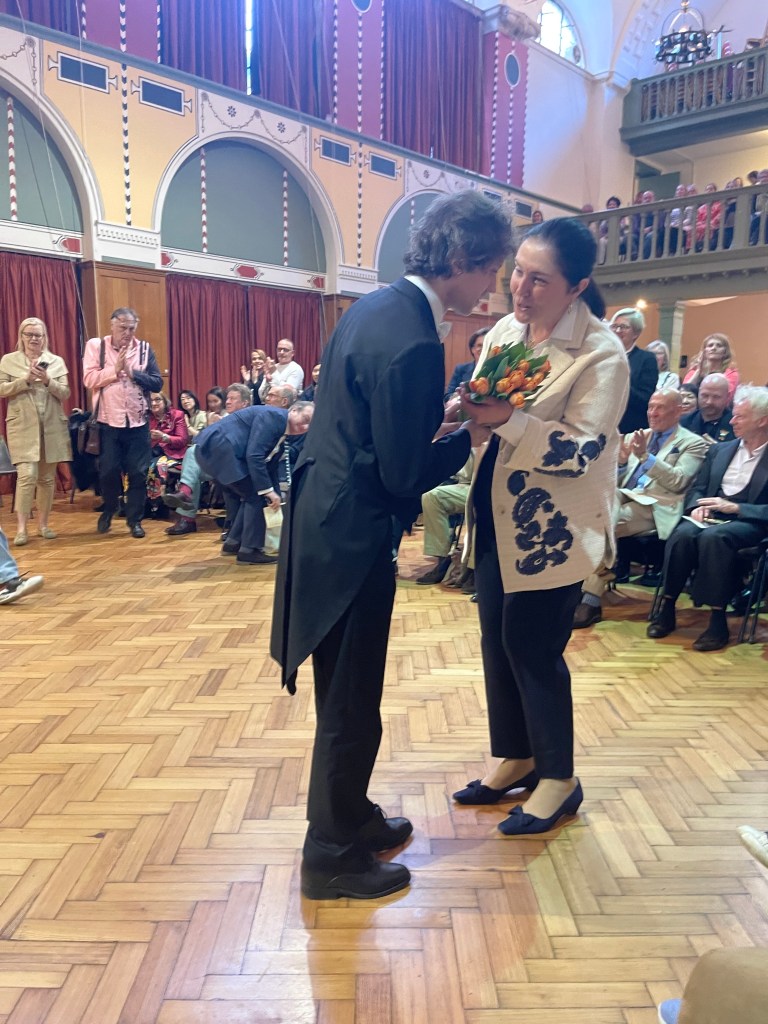
Lady Rose Cholmondeley with Rafal Blechacz – A triumphant collaboration photo Marina Chan

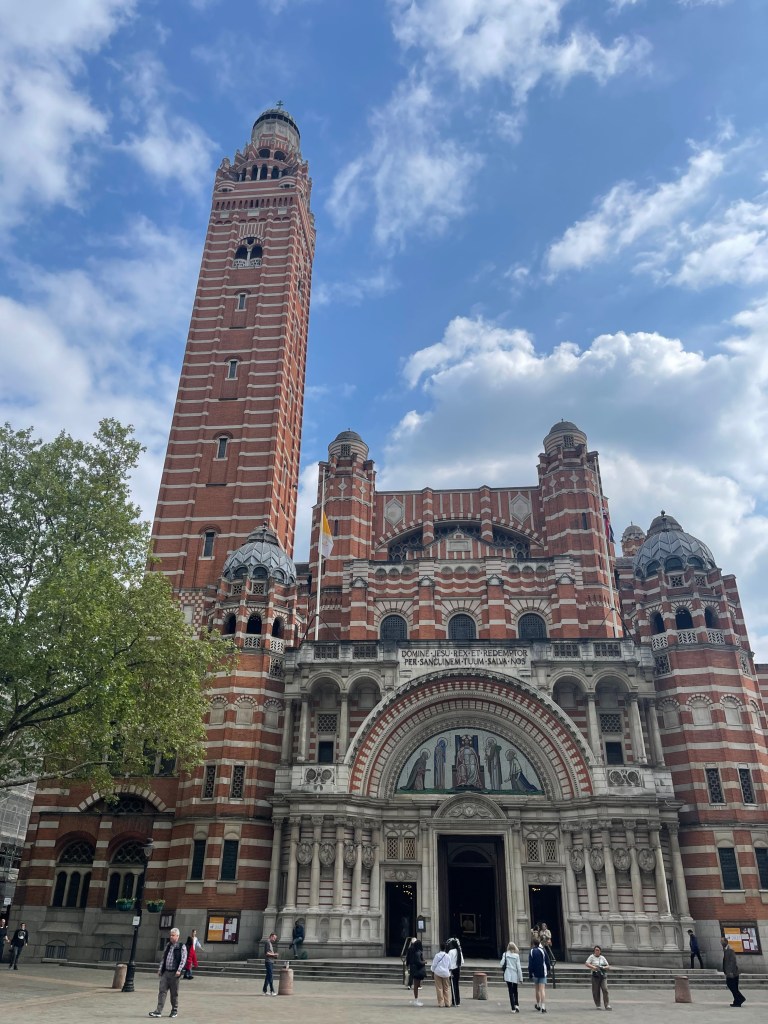
RAFAL BLECHACZ winning the Chopin International Piano Competition in Warsaw in 2005 at the age of 20, his recitals fill the biggest concert halls in the world. Rafal Blechacz’s appearance in the intimacy of Westminster Cathedral Hall will therefore be a rare privilege and unique experience. More so as he limits his concerts to no more than only 45 per season -” This help me to keep the right balance and to be fresh when going on stage” – as he said in a recent interview.

Considered today as a foremost exponent of the music of Chopin, the Polish pianist is often ranked along his idol and compatriot, Krystian Zimerman. Both have been praised for capturing the “Chopin idiom” with poetry and sensitive articulation.-“The most important is to be true to what the composer left in the notes. It is a key I use to open my each interpretation” – explains Blechacz. Biographical information is certainly crucial but they must be enriched with the elements that reach beyond the biography, so in case of Chopin, letters of his students who wrote about his playing. Thanks to these texts we can tangibly experience Chopin’s performance (…) The musicological knowledge is also of a great importance as is musical intuition”.

When asked last month in Germany by Zsolt Bognar, where he feels most creative, Rafal Blechacz responded that “most definitely on stage”. When I’m in a practice room or my studio at home, I have some ideas but the moments with the public; that special atmosphere gives me freedom. I cannot imagine life without playing public concerts” – concludes our Star Pianist, who – as you can see from the enclosed photo – is already impressed by the Chopin Society UK activities. I have no doubt that he’ll find the same with our audience this Sunday.

Bobby Chen with friends
https://christopheraxworthymusiccommentary.com/2025/03/25/bobby-chen-at-the-chopin-society-uk-masterly-musicianship-of-humility-and-poetic-sensibility/


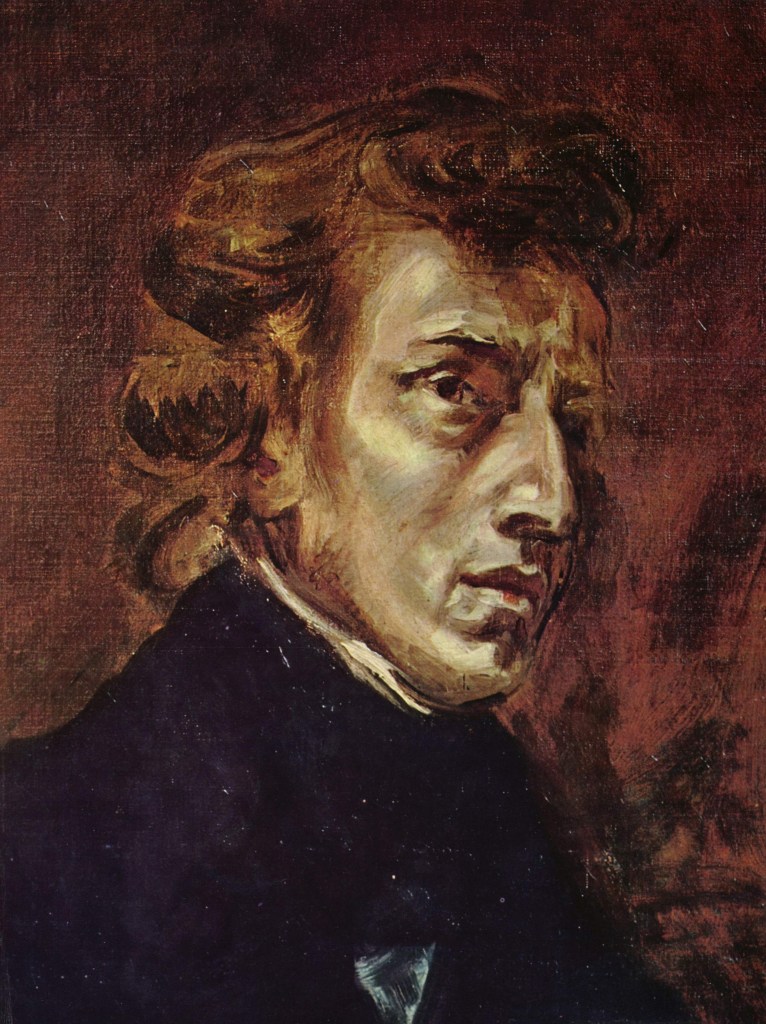
Fryderyk Franciszek Chopin. 1 March 1810 Żelazowa Wola 17 October 1849 Paris
painting by Eugène Delacroix

Anne Quéffélec at the Wigmore Hall Refined playing and the Art of conversation

https://www.bbc.co.uk/sounds/play/m002b7dv

Wolfgang Amadeus Mozart (1756-1791) 

Piano Sonata in B flat K333 (1783-4)

I. Allegro • II. Andante cantabile •

III. Allegretto grazioso

Claude Debussy (1862-1918) 

Reflets dans l’eau from Images, Series 1 (1901-5)

Clair de lune from Suite bergamasque (c.1890, rev. 1905)

Gabriel Dupont (1878-1914) 

Après-midi de dimanche from Les heures dolentes (1905)

(1905) From Le rossignol é perdu (1902-10)

Reynaldo Hahn (1874-1947)  fron Le rossignol é perdu (1902-10)

Hivernale • Le banc songeur

Charles Koechlin (1867-1950) 

Chant de pêcheurs from Paysages et marines Op. 63

(1915-6)

Florent Schmitt (1870-1958) 

Glas from Musiques intimes, Book 2 Op. 29 (1989-1904)

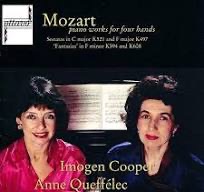
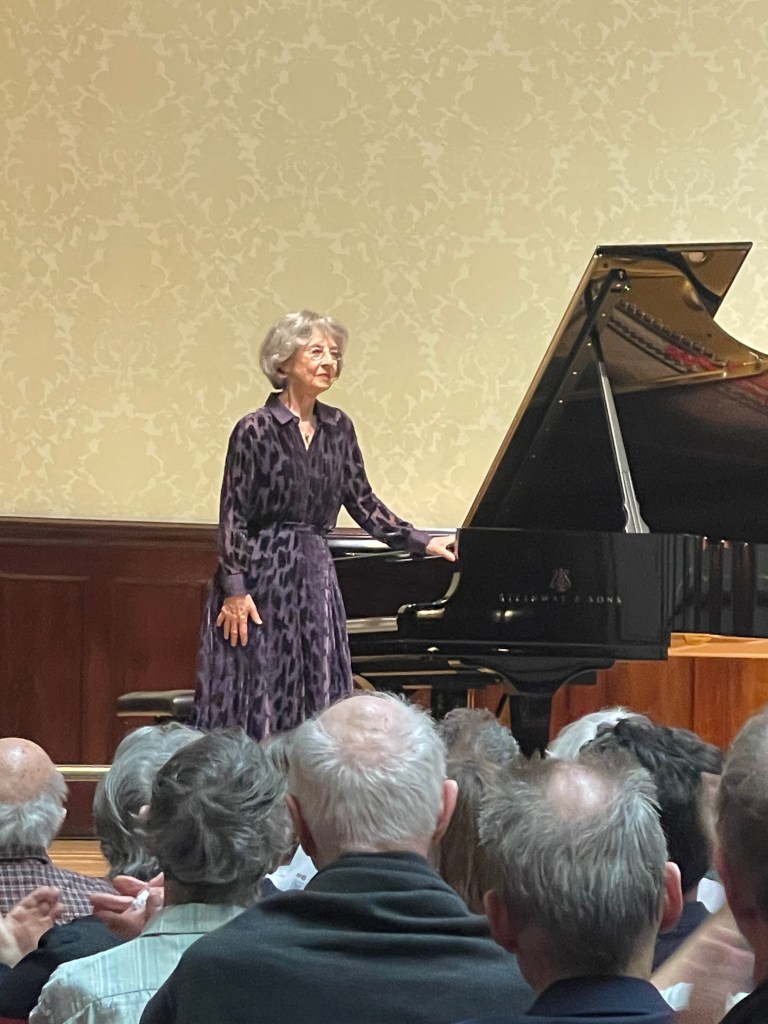
A return to the Wigmore Hall for Anne Quéffélec who I remember from the first Leeds competition, who together with Imogen Cooper were two remarkable musicians amongst a world of virtuosi seeking fame and fortune with the multitude of notes that they could spin in record time .Two remarkable French trained musicians ( with a much criticised Martin Cooper for sending his daughter abroad to study)

But later both coming under the spell of the musical genius of Alfred Brendel .

Never compromising their art they have created a following of a discerning public too often deprived of the humility and dedication of servants to their creator. Deprived and not depraved they flock to their concerts to have their souls uplifted and their spirits enriched.

Not for them the note spinning brilliance of the Russian School but a search for truth ,where quality is more important than quantity.

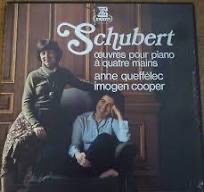
Imogen and Anne formed a piano duo together with many refined performances of Schubert,Schumann and Mozart.

The years have flown by and fifty years on the note spinners are long gone, and it is now they that can bring us the message of a lifetime’s search for the hidden meaning in the scores of the great masters.

It was just this that came across today as Anne’s playing rarely rose above mezzo forte but her sense of architectural balance and ravishing palette of sounds brought us a whole world with refined good taste, and where the art of conversation is still alive, as she allows the music to speak better than words ever could.

Mozart Sonata K.333 was played with a luminosity and beauty of sound ,one phrase answering the other, in a civilised conversation of the age of enlightenment. A ‘Sturm und Drang’ of its time with a perfect sense of equilibrium and balance, of an age when feelings were contained in a restrained courtly manner ,but within the notes, there was just as much passion and excitement as was to be shortly demonstrated, as Beethoven took over the reigns from his teacher Haydn. Exquisite playing, but not like a porcelain doll, but of the operatic characters that Mozart could so vividly describe on stage.This was a stage as the curtain opened and Anne allowed Mozart’s characters to relive in her ten sensitive fingers.

After barely whispered and ravishing playing of French music from the well known ‘Reflets dans l’eau’ and ‘Claire de lune’ by Debussy to the more eclectic names such as Dupont,Hayn,Koechlin,Schmitt she gave the final word to God.

The Siciliano from the Flute Sonata n. 2 BWV 1031 by Bach in the transcription of Wilhelm Kempff. Peace and beauty returned to a world in turmoil in a magical seance where Anne just closed the piano lid at the end of the Bach – In the beginning is our end – Q.E.D.

Anne Quéffélec, one of the most remarkable pianists of our time, enjoys international fame as well as an exceptional influence over musical life.
Widely acclaimed in Europe, Japan, Hong-Kong, Canada, the United States… she has been invited by the most prestigious orchestras – the London Symphony, London Philharmonic, Philharmonia Orchestra, BBC Symphony, Academy of St. Martin in the Fields, Zurich Tonhalle, Orchestre de chambre de Lausanne, Tokyo NHK Orchestra, Ensemble Kanazawa, Hong-Kong Philharmonic, Orchestre National de France, Orchestre Philharmonique de Radio France, Strasbourg, Lille, Prague Philharmonia, Kremerata Baltica, Sinfonia Varsovia… – and performed under the batons of illustrious conductors such as Boulez, Gardiner, Jordan, Zinman, Eschenbach, Conlon, Langrée, Belohlavek, Skrowacewsky, Casadesus, Lombard, Guschlbauer, Zecchi, Foster, Holliger, Janowski, etc.

Named “Best performer of the year” at the 1990 French Classical Music Awards (Victoires de la Musique), Anne Queffélec has played repeatedly at the Proms in London, at the Bath, Swansea, King’s Lynn, Cheltenham festivals and Händel-Festspiele Göttingen; she also regularly appears in French festivals such as La Chaise-Dieu, Radio France Montpellier, Besançon, Bordeaux, Dijon, La Grange de Meslay, La Folle Journée de Nantes, La Roque d’Anthéron where she performed, among others, the complete piano sonatas by Mozart over six recitals broadcasted live by France Musique, confirming her deep affinity for the Mozartian world. In the 1980s, Anne Queffélec has participated in the recording of the soundtrack for the film of Amadeus, under the baton of Sir Neville Marriner. On stage and in recordings as well, Anne Queffélec displays an eclectic repertoire. This is reflected by a variegated discography: she has more than forty records to her credit, dedicated to Scarlatti, Schubert, Liszt, Chopin, Bach, Debussy, Fauré, Mendelssohn, Satie, including the complete works by Ravel, Dutilleux, Mozart, Beethoven, Haendel and Haydn. Those recordings were released by Erato, Virgin Classics and Mirare respectively.

Among her more recent releases features the album « Satie & Compagnie » (Mirare – 2013) which was awarded the “Diapason d’Or” of the year. Next come a double CD entitled “Ravel, Debussy, Fauré” (Erato – 2014), “Ombre et Lumière” (“Light and Shade”) dedicated to Domenico Scarlatti (Mirare – 2015), both receiving the “Diapason d’Or” award, including “Entrez dans la danse” (“Join in the dance”) (Mirare – 2017). In 2016 the BBC Magazine celebrated Anne Queffélec by releasing several live recordings and the Diapason magazine picked her version of Ravel’s Concerto in g major to feature it in the section “Les Indispensables”. In January 2019, Warner/Erato released a 21-CDs series dedicated to works recorded by Anne Queffélec for this label.
“Anne Queffélec: the discovery of a true self” Münchener Zeitung

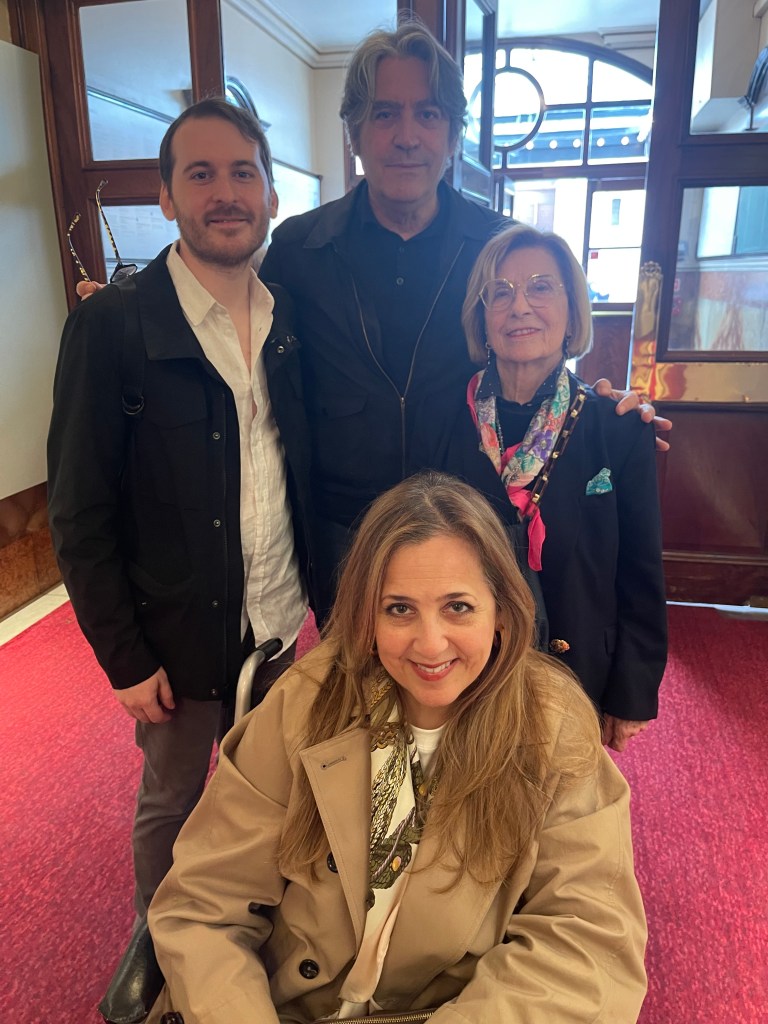
Daniel Colalillo. Davide Sagliocca Joelle Partner Graziella Cicognani discerning public for today’s BBC recital relayed live on Radio 3
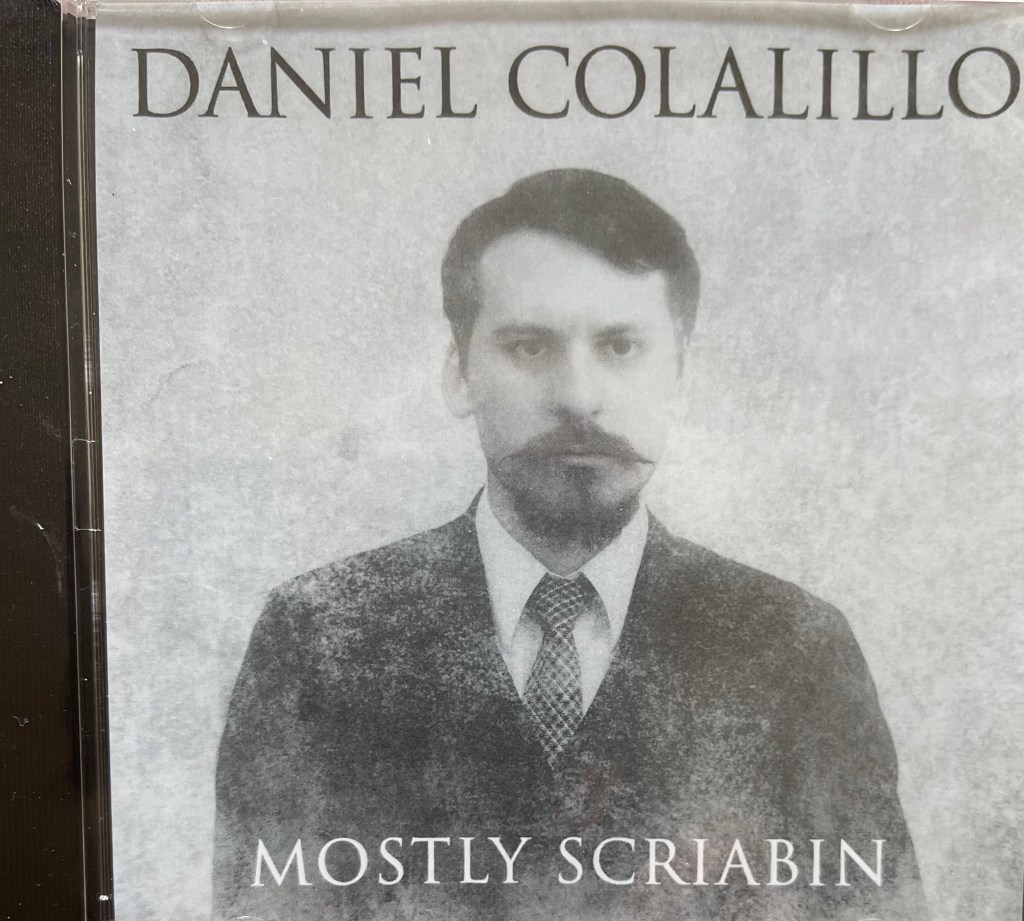
Daniel Colalillo