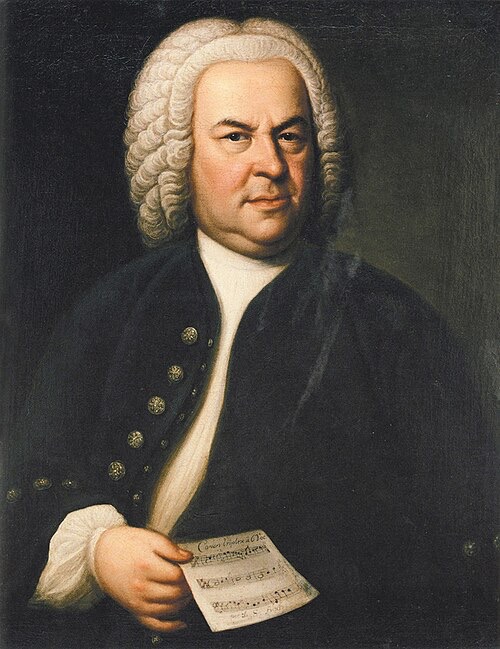
21 March 1685 Eisenach 28 July 1750 (aged 65)
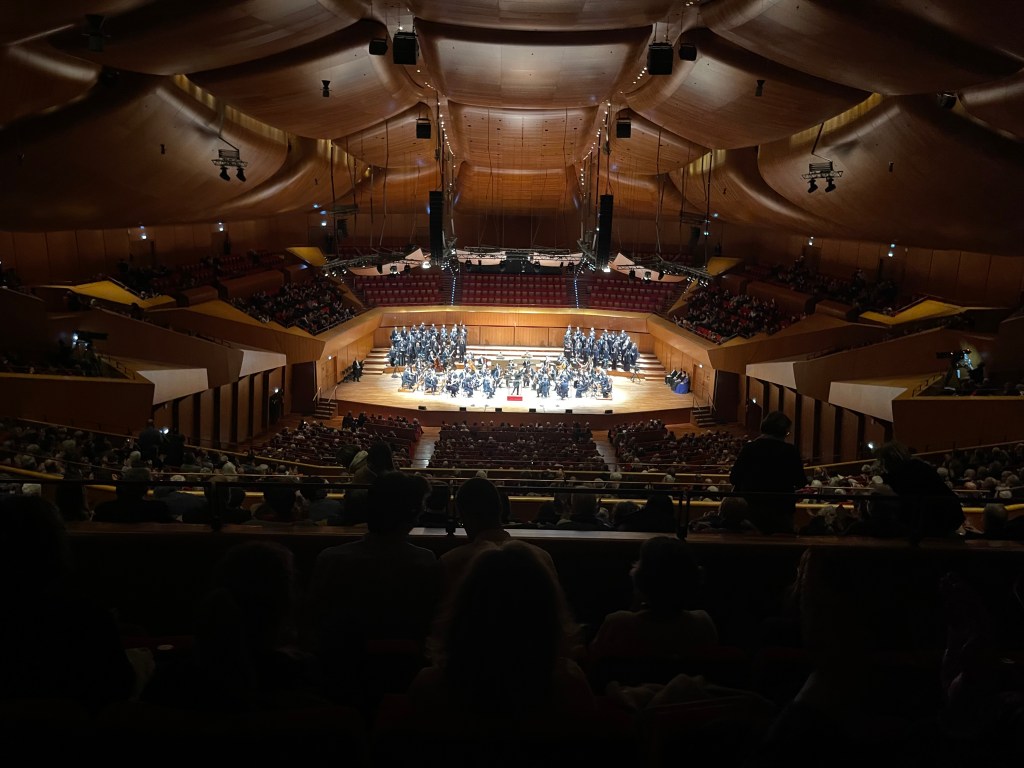
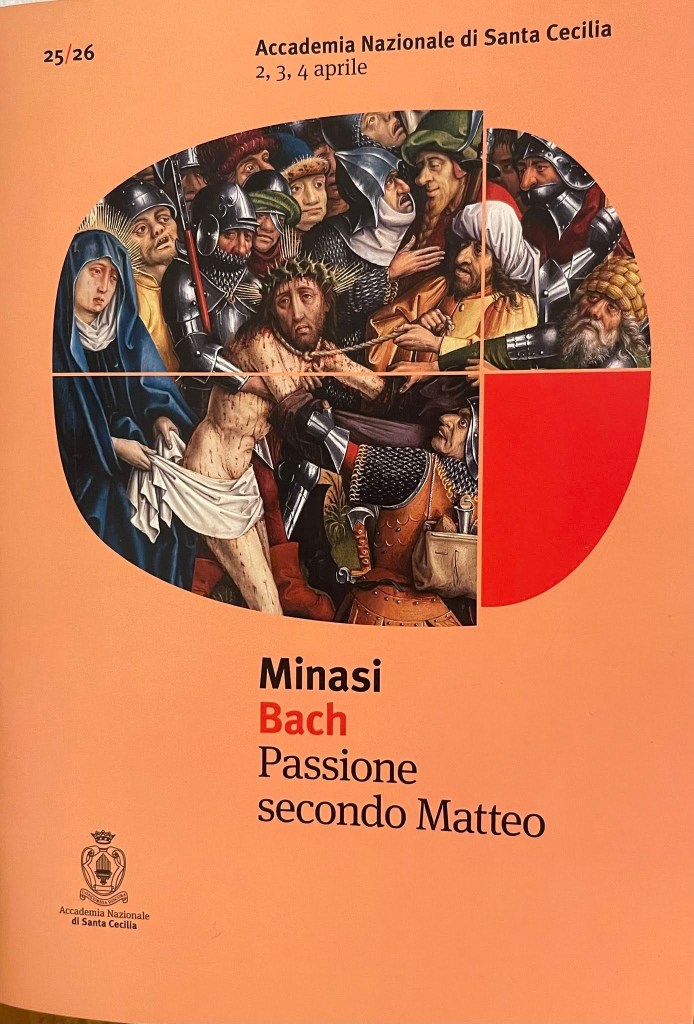
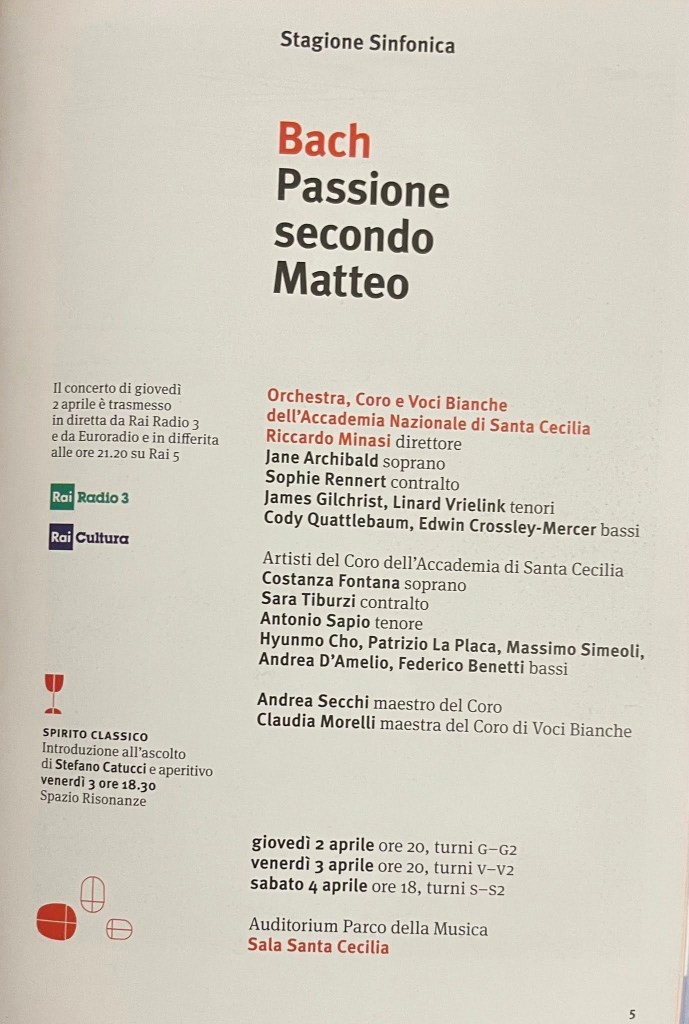
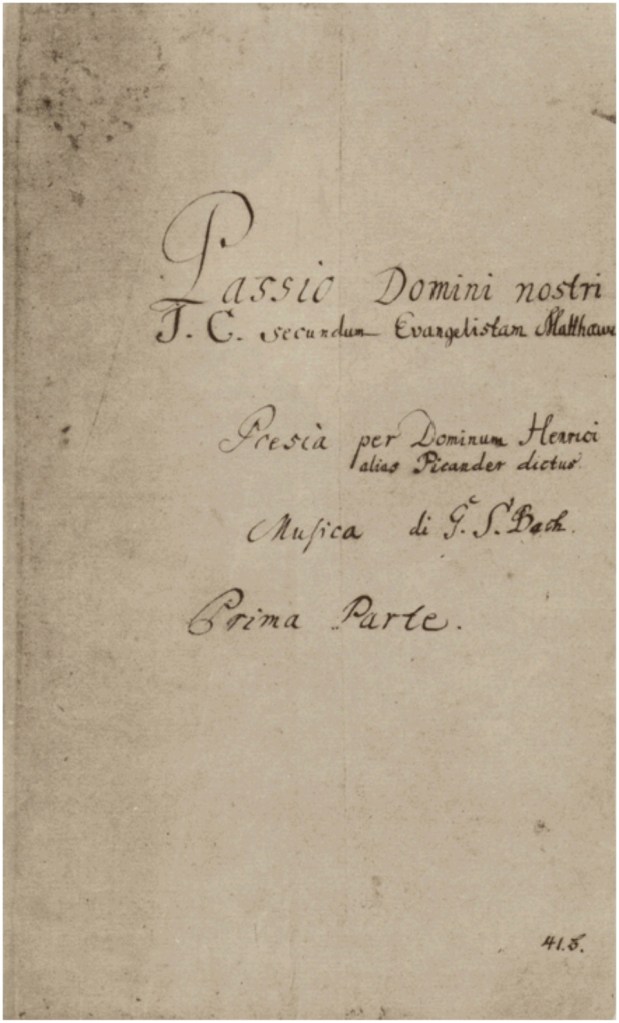
The St Matthew Passion BWV 244 is a sacred oratorio written in 1727 for solo voices, double choir and double orchestra, with libretto by Picander . It sets the 26th and 27th chapters of the Gospel of Matthew (in the Luther Bible) to music, with interspersed chorales and arias . It is widely regarded as one of the masterpieces of Baroque sacred music . The original Latin title Passio Domini nostri J.C. secundum Evangelistam Matthæum translates to “The Passion of our Lord Jesus Christ according to the Evangelist Matthew
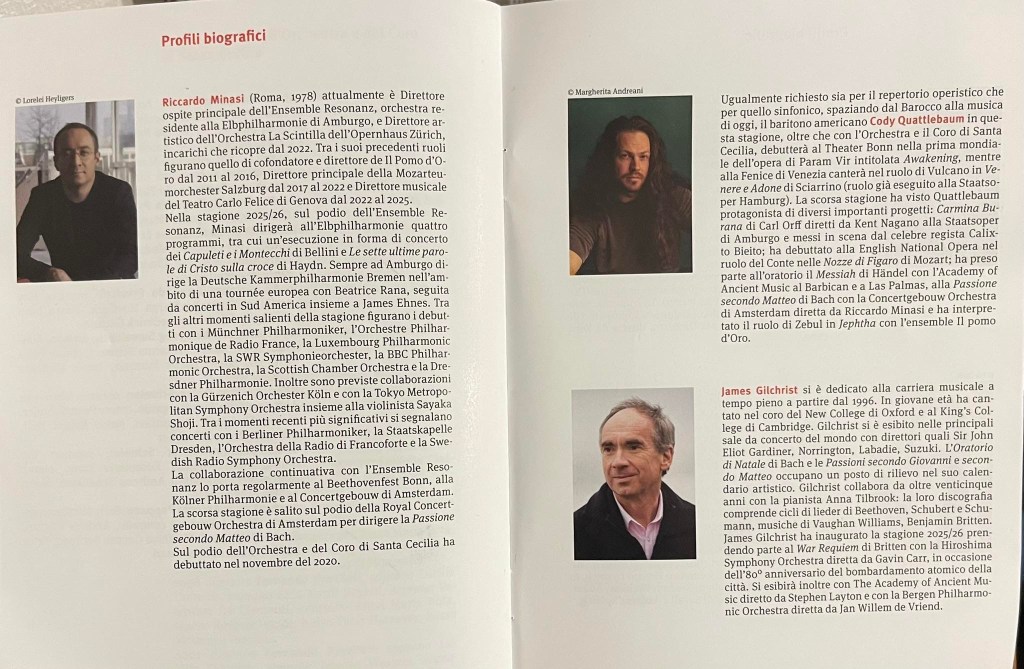
The St Matthew Passion is the second of two Passion settings by Bach that have survived in their entirety, the first being the St John Passion first performed in 1724.
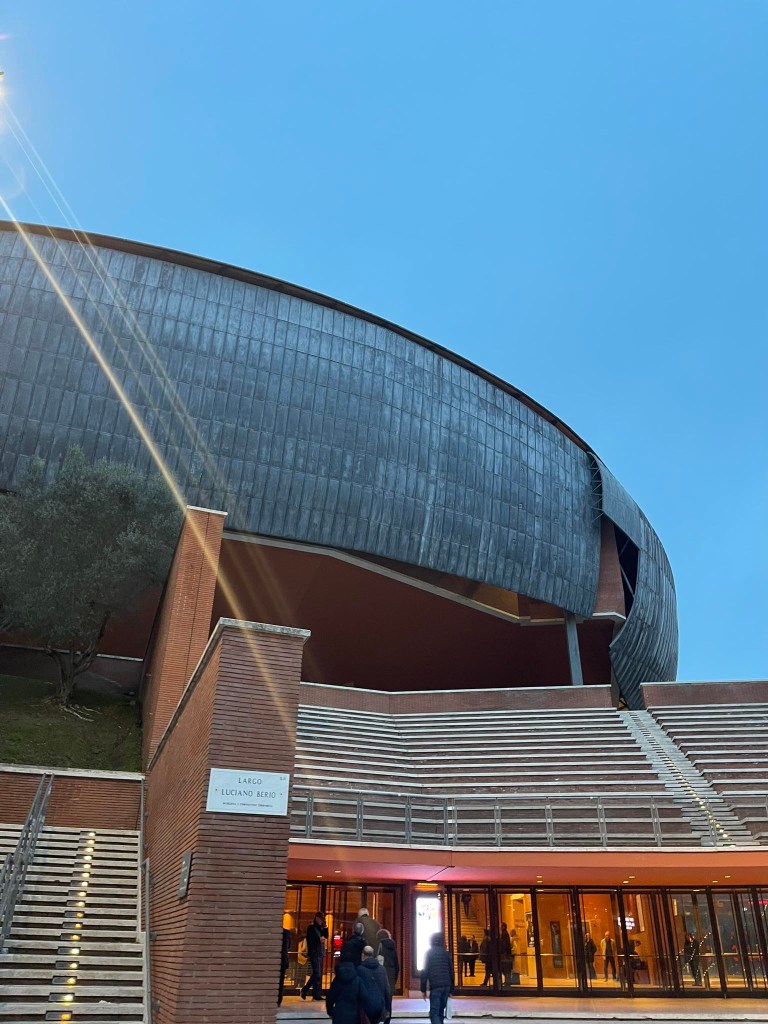
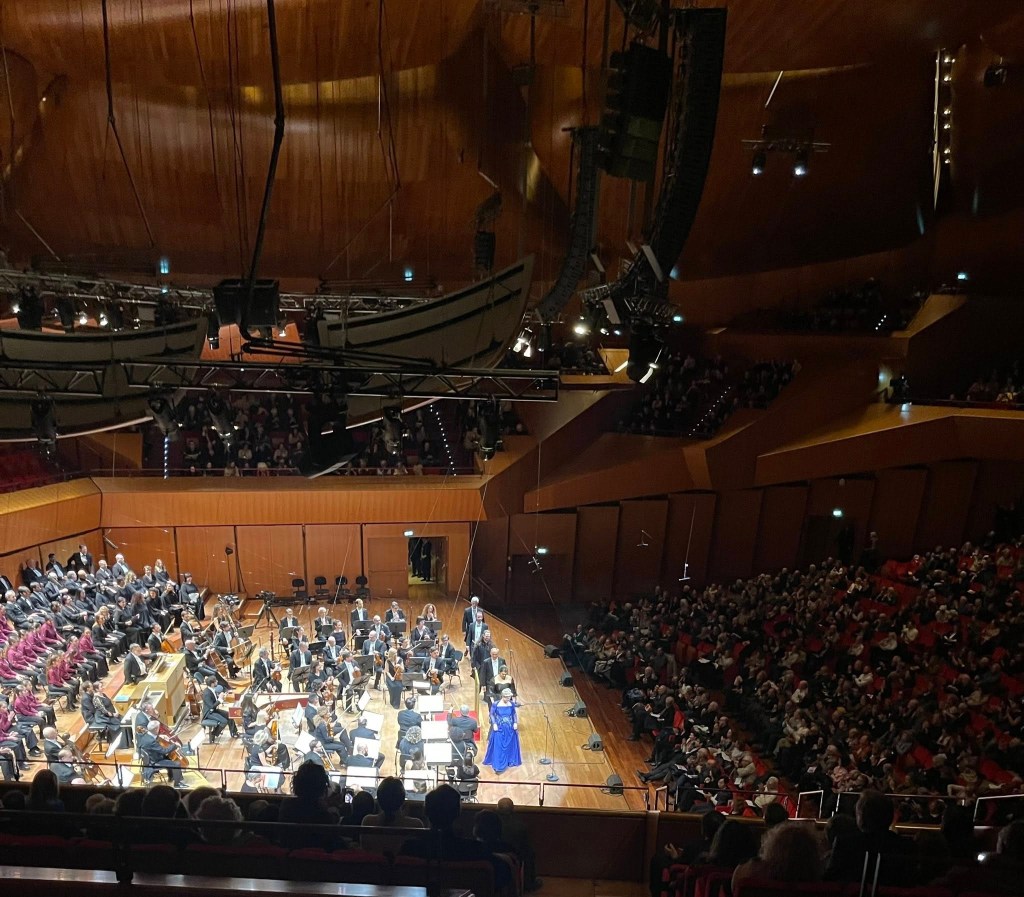
Little is known with certainty about the creation process of the St Matthew Passion. The available information derives from extant early manuscripts, contemporary publications of the libretto, and circumstantial data, for instance in documents archived by the Town Council of Leipzig.
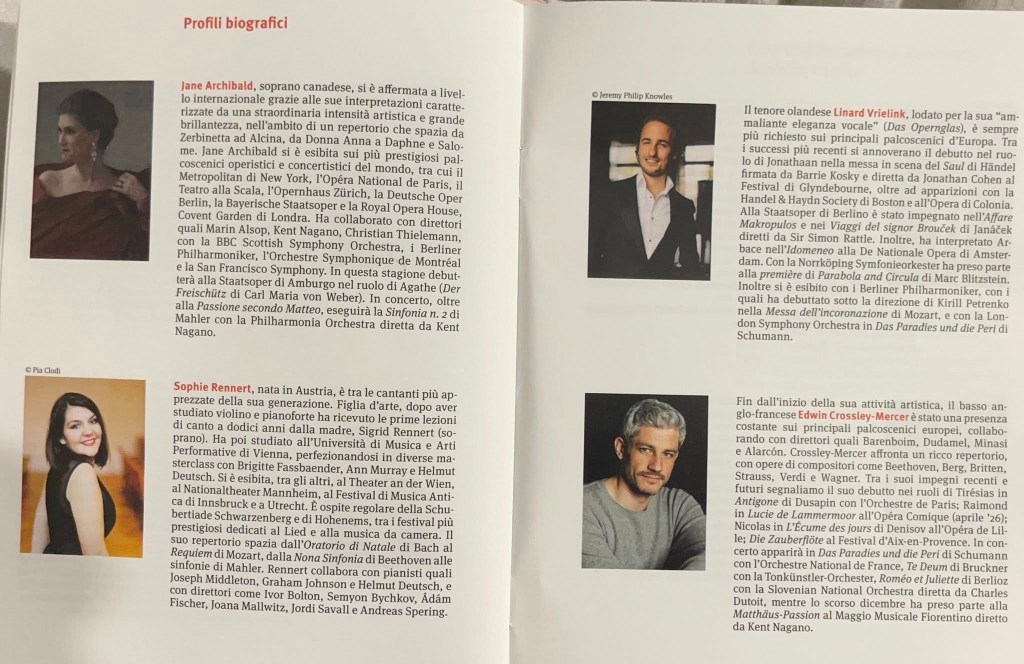
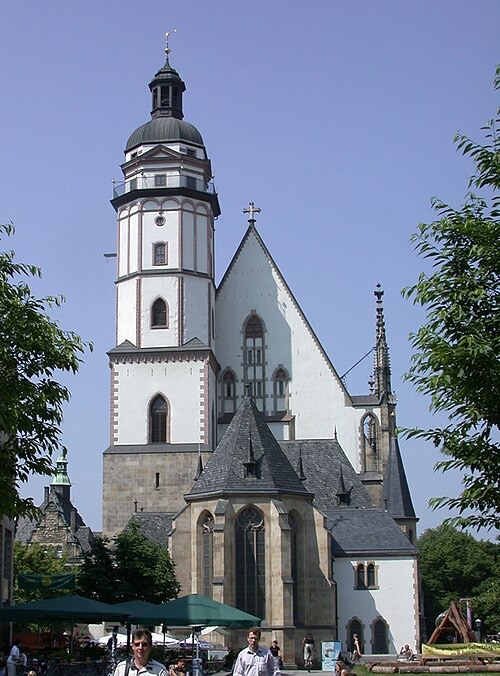
The St Matthew Passion was probably first performed on 11 April (Good Friday) 1727 in the St Thomas Church, and again on 15 April 1729, 30 March 1736, and 23 March 1742. Bach then revised it again between 1743 and 1746.
First version (BWV 244.1, previously 244b)
In Leipzig it was not allowed to paraphrase the words of the Gospel in a Passion presentation on Good Friday A setting of the then-popular Brockes Passion libretto, largely consisting of such paraphrasing, could not be done without replacing the paraphrases by actual Gospel text. That was the option chosen by Bach for his 1724 St John Passion. In 1725 Christian Friedrich Henrici, a Leipzig poet who used Picander as his pen name, had published Erbauliche Gedanken auf den Grünen Donnerstag und Charfreytag (“Edifying Thoughts on Maundy Thursday and Good Friday”), containing free verse suitable for a Passion presentation in addition to the Gospel text. Bach seems to have stimulated the poet to write more of such verse in order to come to a full-fledged libretto for a Passion presentation combined with the Passion text chapters 26 and 27 in the Gospel of St Matthew.
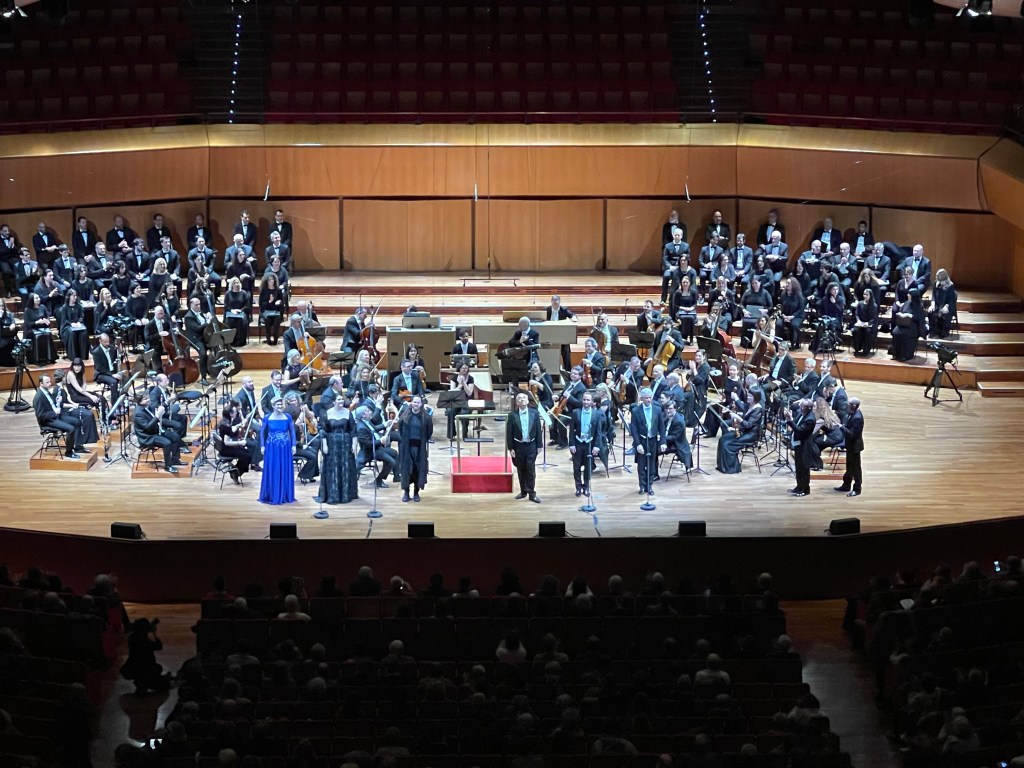
Since 1975, it has usually been assumed that Bach’s St Matthew Passion was first performed on Good Friday 11 April 1727, although its first performance may have been as late as Good Friday 1729, as older sources assert.The performance took place in the St,Thomas Church (Thomaskirche) in Leipzig. Bach had been Thomaskantor (i.e., Cantor, and responsible for the music in the church) since 1723. In this version the Passion was written for two choruses and orchestras. Choir I consists of a soprano in ripieno voice, a soprano solo, an alto solo, a tenor solo, SATB chorus, two traversost, two oboes, two oboes d’amoreo, two oboes da cacciatore , lute, strings (two violin sections, violas and cellos), and continuo (at least organ). Choir II consists of SATB voices, violin I, violin II, viola, viola da gamba cello, two traversos, two oboes (d’amore) and possibly continuo.
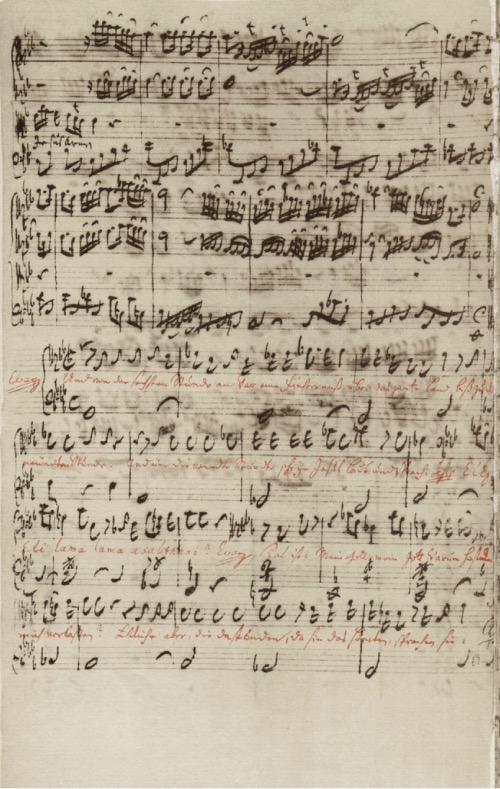
At the time only men sang in church: high pitch vocal parts were usually performed by treble choristers. In 1730, Bach informed the Leipzig Town Council as to what he saw as the number of singers that should be available for the churches under his responsibility, including those for the St. Thomas Church: a choir of twelve singers, plus eight singers that would serve both St. Thomas and the Peterskirche. The request was only partially granted by the Town Council, so possibly at least some of the Passion presentations in St. Thomas were with fewer than twenty singers, even for the large scale works, like the St Matthew Passion, that were written for double choir.
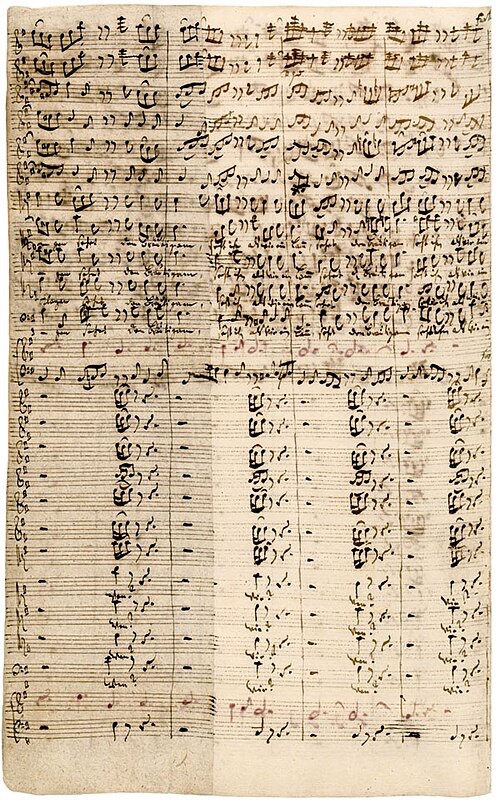
In Bach’s time, St. Thomas Church had two organ lofts: the large organ loft that was used throughout the year for musicians performing in Sunday services, vespers, etc., and the small organ loft, situated at the opposite side of the former, that was used additionally in the grand services for Christmas and Easter. The St Matthew Passion was composed as to perform a single work from both organ lofts at the same time: Chorus and orchestra I would occupy the large organ loft, and Chorus and orchestra II performed from the small organ loft. The size of the organ lofts limited the number of performers for each Choir. Large choruses, in addition to the instrumentists indicated for Choir I and II, would have been impossible, so also here there is an indication that each part (including those of strings and singers) would have a limited number of performers, where, for the choruses, the numbers indicated by Bach in his 1730 request would appear to be (more than?) a maximum of what could be fitted in the organ lofts.
The St Matthew Passion was not heard in more or less its entirety outside Leipzig until 1829, when the twenty-year-old Felix Mendelssohn performed a version in Berlin, with the Berlin Singakademie, to great acclaim. Though most remained the same, Mendelssohn did edit parts of the passion to satisfy the taste of the time. Due to the changes in addition with other circumstances the reception was a success. Mendelssohn’s revival brought the music of Bach, particularly the large-scale works, to public and scholarly attention (although the St John Passion had been rehearsed by the Singakademie in 1822).
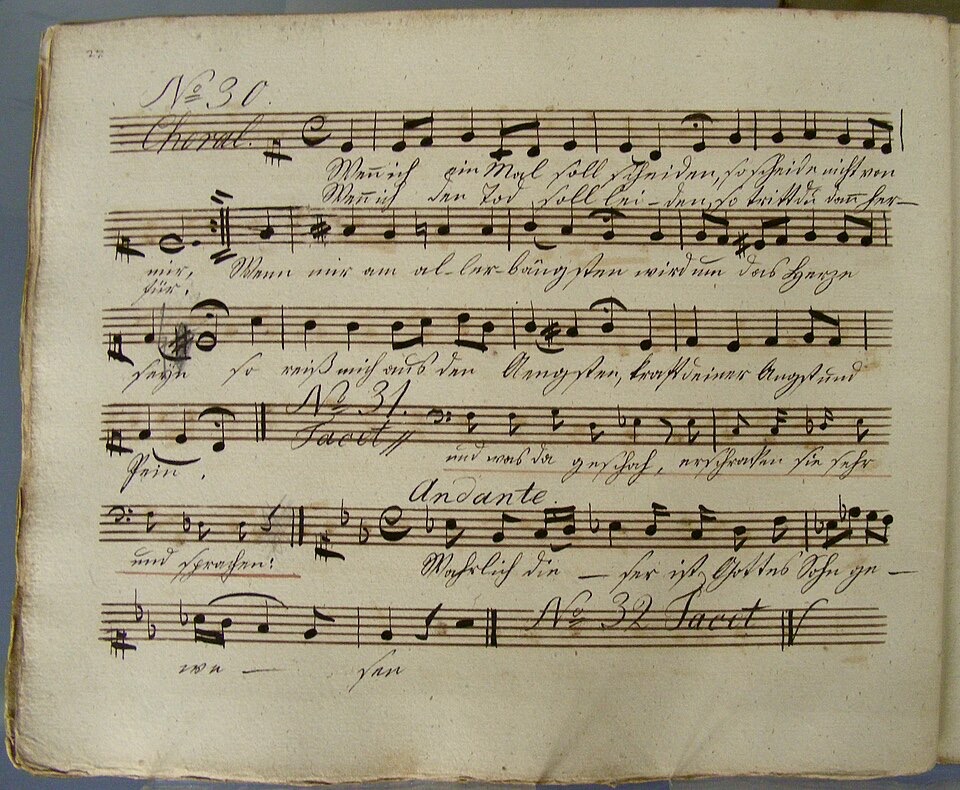
Sterndale Bennett 1845 edition of the Passion was to be the first of many (as Adolph Bernhard Marxand Adolf Martin Schlesinger’sone in 1830), the latest being by Neil Jenkins (1997) and Nicholas Fisher and John Russell (2008). Appreciation, performance and study of Bach’s composition have persisted into the present era.
In 1824, Felix Mendelssohn’s maternal grandmother Bella Salomon had given him a copy of the score of the Passion. Carl Friedrich Zelter had been head of the Sing-Akademie since 1800. He had been hired to teach music theory to both Felix Mendelssohn and his sister Fanny. Zelter had a supply of J. S. Bach scores and was an admirer of Bach’s music but he was reluctant to undertake public performances.
When Felix Mendelssohn was preparing his revival performance of the Passion in 1829 in Berlin (the first performance outside Leipzig), he cut out “ten arias (about a third of them), seven choruses (about half), [but] only a few of the chorales,” which “emphasized the drama of the Passion story … at the expense of the reflective and Italianate solo singing.”
In 1827, Felix and a few friends began weekly sessions to rehearse the Passion.One of the group was Eduard Devrient, a baritone and since 1820 one of the principal singers at the Berlin Royal Opera.[ Around December 1828 – January 1829 Devrient persuaded Felix that the two of them should approach Zelter to get the Sing-Akademie to support their project. Devrient was especially enthusiastic, hoping to sing the part of Jesus as he eventually did. Zelter was reluctant but eventually gave his approval; that of the Singakademie board followed.
Once the fuller group of singers and the orchestra were brought in, Devrient recalled, participants were amazed at “the abundance of melodies, the rich expression of emotion, the passion, the singular style of declamation, and the force of the dramatic action.”The 20-year-old Felix himself conducted the rehearsals and first two performances by the Singakademie.
Their first performance was effectively publicized in six consecutive issues of the Berliner Allgemeine Musikalische Zeitung, founded and edited by Adolf Bernhard Marx. It took place on 11 March 1829 and was sold out quickly. There was a second performance on 21 March, also sold out. In a third, on 18 April, Zelter conducted, and soon there were performances in Frankfurt (where a previously projected performance of the Passion had been upstaged by those in Berlin) and in Breslau and Stettin.
William Sterndale Bennett became a founder of the Bach Society of London in 1849 with the intention of introducing Bach’s works to the English public. Helen Johnston (a student at Queen’s College ,London ) translated the libretto of the Passion, and Bennett conducted the first English performance at the Hanover Square Rooms London on 6 April 1854 (the same year that it appeared in print by the Old Bach Society (Alte Bach-Gesellschaft). The soloists included Charlotte Helen Sainton-Dolby.
In the early 1820s, the director of the Berlin Singakademie, Carl Zelter, got hold of a copy of Bach’s St Matthew Passion and rehearsed some of the choral movements in private. By great good fortune, two of his singers were Fanny and Felix Mendelssohn . In April 1829, despite strong opposition from some quarters, the twenty-year-old Mendelssohn, with the help of Zelter and his friend the actor Eduard Devrient, mounted the work’s first modern performance, albeit in an abbreviated form, given to mark what was then thought to be the centenary of its first performance. This Easter-time Berlin presentation was a stunning success and was followed by others. These led directly to a complete reassessment and revival of interest in all of Bach’s music for, baffling as it seems nowadays, Johann Sebastian Bach had fallen into near obscurity since his death nearly 80 years earlier.
There had already been a long history of Passion music – that is musical settings telling the story of the final, short period in the life of Jesus. (‘Passion’ is derived from the Latin verb ‘patior’ meaning ‘to suffer’ or ‘endure’, from which we also get ‘patience’ and ‘patient’.) Every year for Good Friday Vespers, a Passion would be performed in one of Leipzig’s two principal (Lutheran) churches, St. Thomas and St. Nicholas. These performances would mark the high point of the church’s year.
Features two orchestras and two choruses
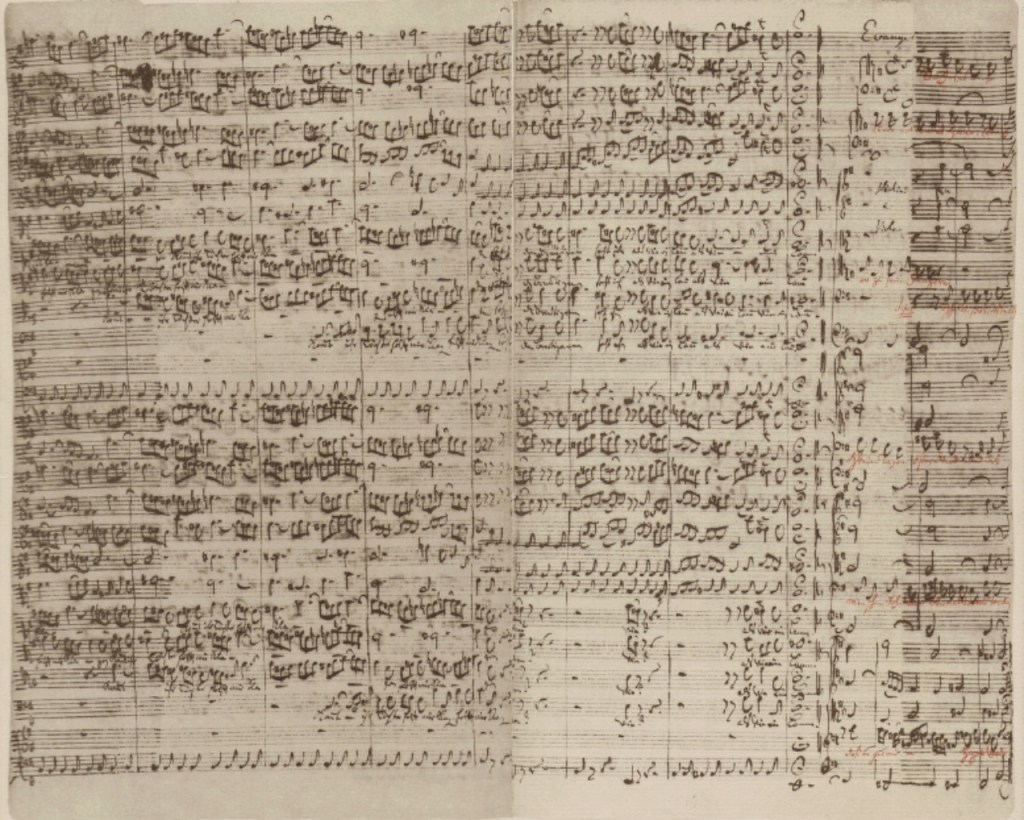
We know Bach wrote an earlier setting when he was the ducal concertmeister in Weimar (1714-1717) though this has not survived. In 1725, two years after he took up his appointment of cantor at St. Thomas’s, he wrote the Passion According To St. John. What followed two years later was an altogether grander, more magnificent setting. For instance, whereas the St John Passion had a mere continuo accompaniment (harpsichord or organ), its successor had an orchestra with Christ’s words accompanied by strings (an effect that has been compared to a halo around the Saviour’s head). And not just one orchestra – but two. In Bach’s time, St Thomas’s had two organ lofts – the larger of the two accommodating the musicians for Sunday services throughout the year, the smaller loft used for the additional numbers needed for the music at Christmas and Easter. Bach wrote his Passion to use both these performance spaces. Thus, the score is laid out for Chorus 1 and Orchestra 1, Chorus 2 and Orchestra 2.
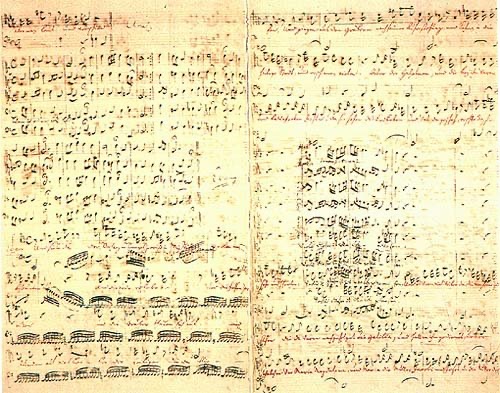
Bach did not act as his own librettist for the St Matthew Passion. The story was arranged by Christian Friedrich Henrici, a postal official in the city who wrote verses using the pseudonym of Picander. A local Lutheran preacher, Salomon Deyling, supervised the writing of the text, using the 26th and 27th chapters of St Matthew’s Gospel (in his manuscript, Bach underlined the words of the Scripture with red ink). The speeches of various characters – Commentator (soprano), Evangelist (tenor), Christ (bass), Peter (bass), Judas (bass), and so forth – are represented by various solo singers.
In addition to the Bible story and Picander’s texts for the recitatives, arias, and other sections, Bach interspersed the work with his own harmonizations of old chorale melodies and texts. These would have been well-known to the congregation of St Thomas’s, the oldest dating back to the early 16th century. The best known of these, often referred to as the Passion Chorale, is ‘O Haupt Voll Blut Und Wunden’, usually sung in English to the words ‘O Sacred Head Sore Wounded’. It’s a melody originally written by one Hans Leo Hassler (1562-1612). Bach uses it no less than five times in the course of the St Matthew Passion, each time presenting it in a new way, with different words, keys, and harmonizations (he also used it – twice – in the Christmas Oratorio and in several cantatas)
It is a theatrical concept, a drama
Thus, the whole work is structured as a repeated pattern of Biblical narrative, comment, and prayer. It is a theatrical concept, a drama. It is even written in two Parts (or two ‘Acts’) with an interval (indeed, for the work’s first performance a sermon was preached between the two Parts) – and that is one reason why its first performance in Leipzig met with decidedly mixed reactions. This was an unorthodox way of presenting religious history and not the kind of thing that the more devout members of the congregation / audience felt was appropriate for a church, the feeling being that the work was too ‘operatic’.
Highlights to look out for are the alto aria ‘Buss Und Reu’ (‘Penance And Remorse’), one for soprano, ‘Blute Nur, Du Liebes Herz! (‘Bleed Now, Loving Heart!’); the sublime alto aria with violin obligato ‘Erbame, Dich’ (‘Have Mercy’), a second soprano aria ‘Aus Liebe Will Mein Heiland Sterben’ (‘Out Of Love My Saviour Is Willing To Die’); the blood-curdling moment when the mob calls for Barrabas to be freed and Christ to be crucified; and the final number in the Passion, the double chorus ‘Wir Setzen Uns Mit Tränen Nieder’ (usually translated as ‘In Tears Of Grief’).
Until 1975, it was held that the first performance of Bach’s St Matthew Passion was on Good Friday 1729. Scholars now agree that an early version was first heard two years earlier, a second version in 1729, a further revised version in 1736 and a final one – the one we hear today – in 1742.
One of his most complex and profound creations of Western music
It is almost miraculous that the complete renaissance of Bach’s music which took place after 1829 was due to the performance of a work that had been quite forgotten yet is regarded today as one of his most complex and profound creations of Western music. It is also, as Mendelssohn himself noted wryly, somewhat ironic that “it took an actor and the son of Jew to revive the greatest Christian music for the world!”
 ChristopherAxworthy-MusicCommentary