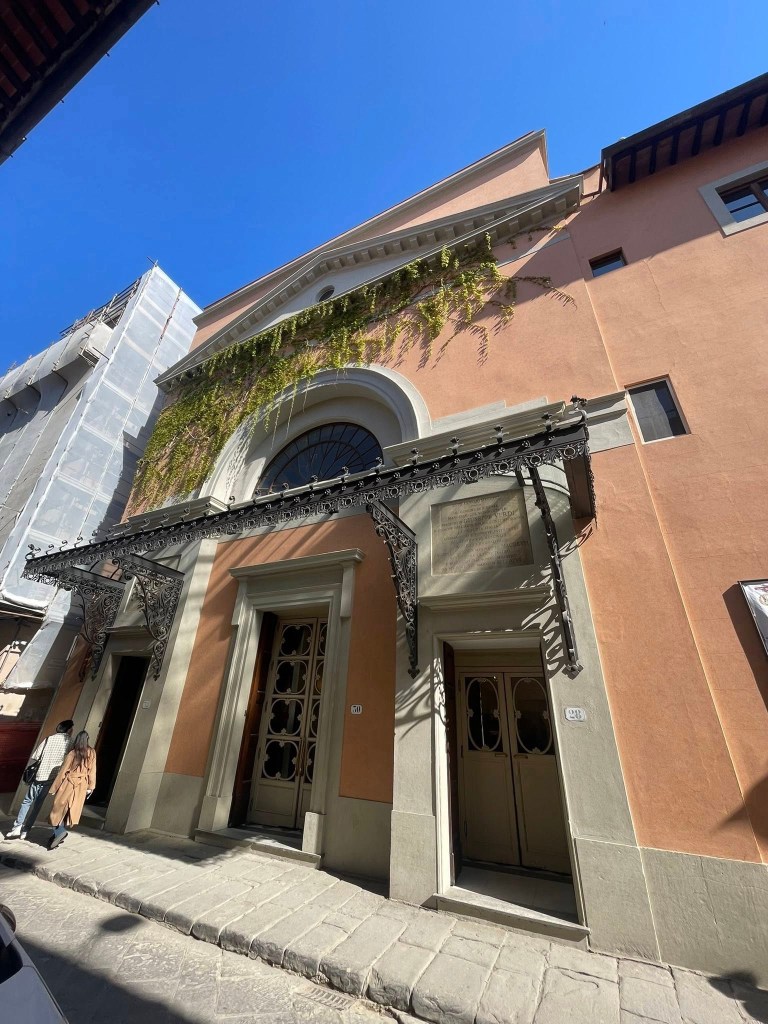
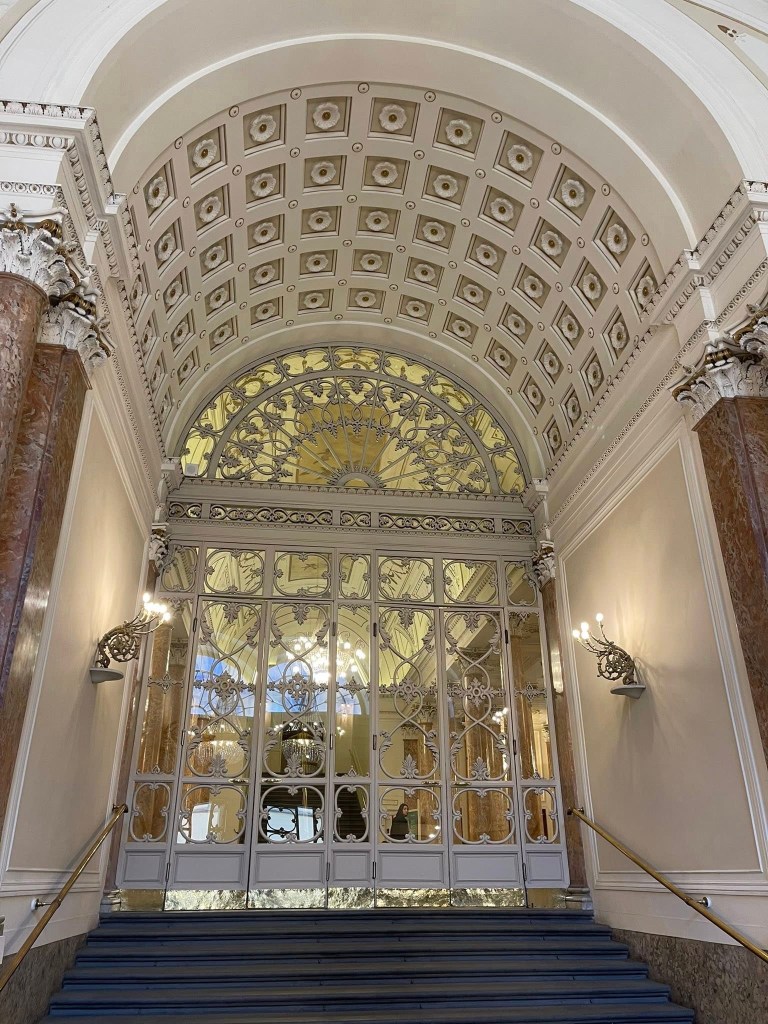
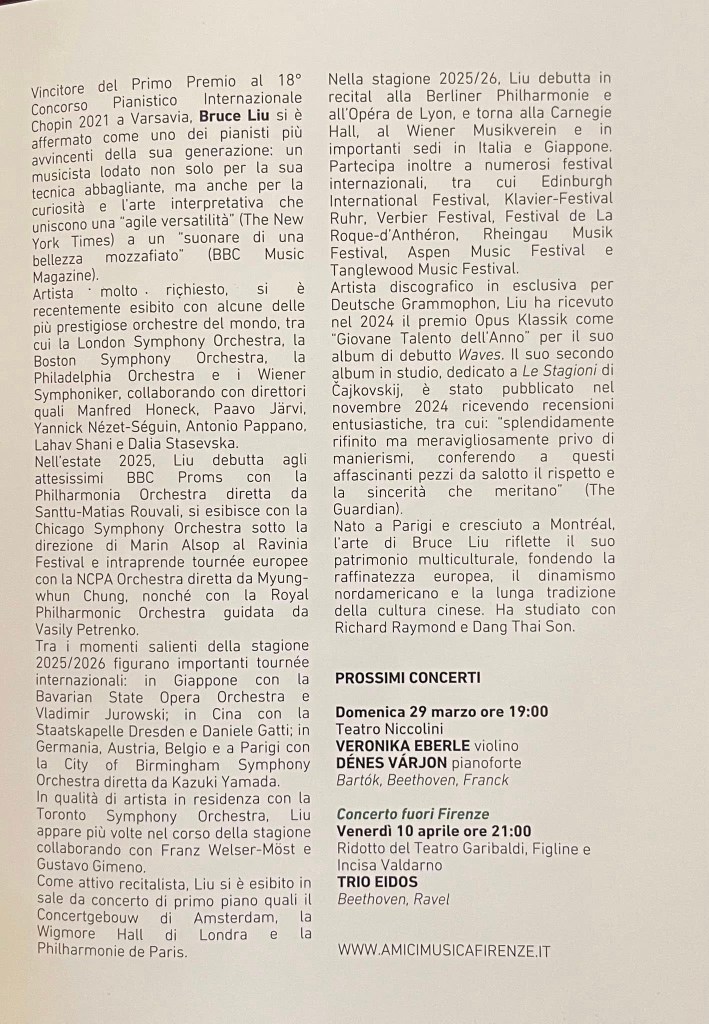
Bruce Liu in Florence with playing of refined brilliance and poetic beauty . A programme that is the stuff that dreams are made of. Bruce was sharing his dream with us as he drew the audience into his world, rather than projecting it out to ours.
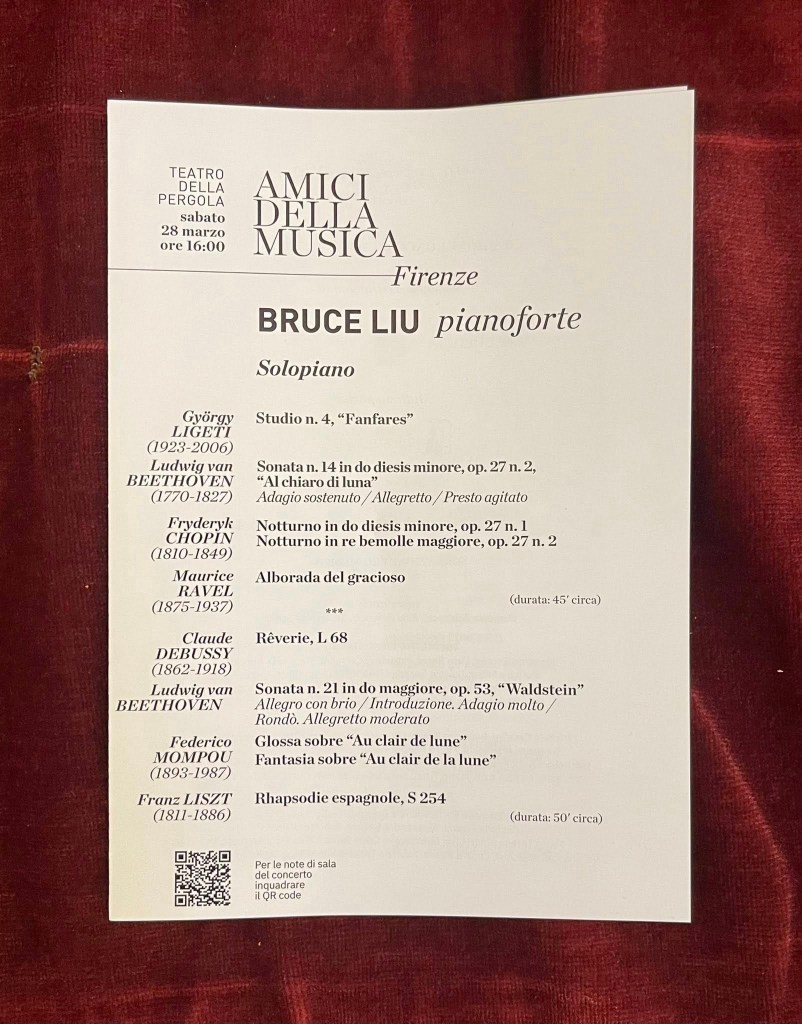
The extraordinary whispered ‘moto perpetuo’ was anything but the fanfare of Ligeti’s title. A fairytale played with velvet gloves on a quite extraordinary jeux perlé of astonishing whispered clarity. Leading without a break into Beethoven’s ‘Moonlit ‘ sonata . A whispered undulation of notes on which a melodic line emerged in a movement that never rose above mezzo forte. But for those that listened carefully Bruce shared a multitude of emotions with slight inflections or rhythmic interruptions of subtlety, as everything was understated and never underlined . Even the melody in the bass as the movement draws to a close was simply revealed in golden hues . Very similar to the end of the Fantaisie Impromptu that Bruce played as an encore. An ‘Allegretto’ all grace and lightness adding more weight to the thumb notes on the repeats like jewels sparkling from deep within . A trio with very dark bass notes delayed to give it even more of a demonic character, before this cloud passed and grace and lightness were allowed to reign once again. A ‘Presto agitato’ of volcanic energy as seen from afar, with a crystalline clarity and even elegance, rather than the more usual invasive intrusion into this ‘moonlit’ landscape.
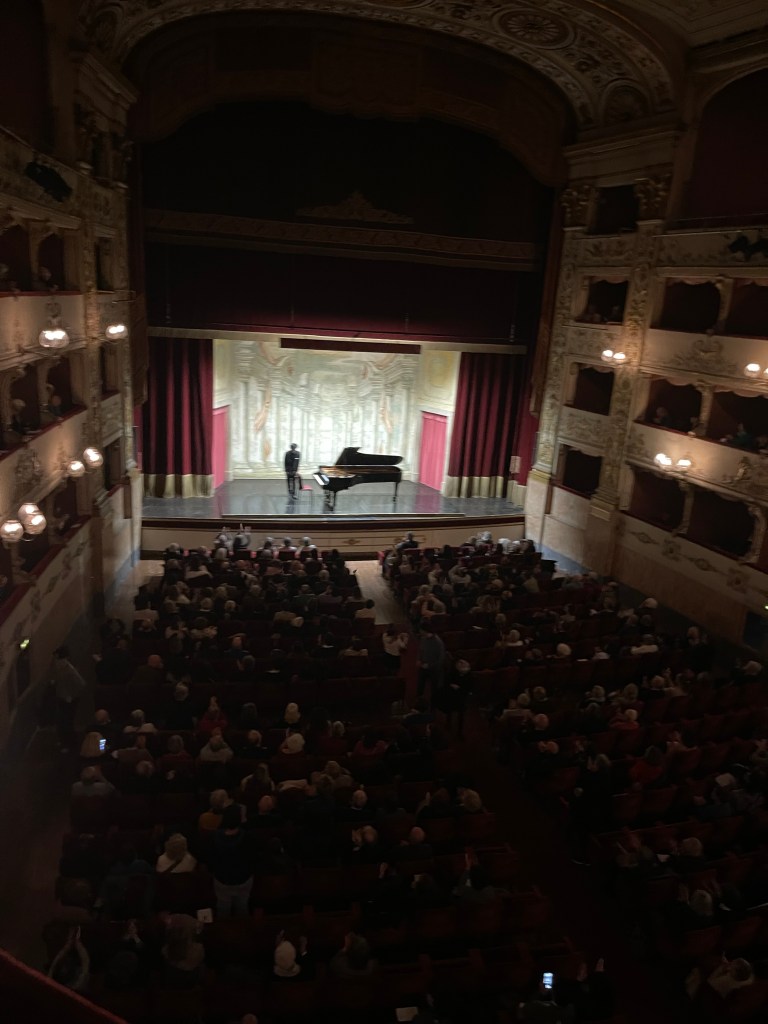
Many of the works that Bruce shared with us today pivoted around the calm and purity of the key of C. Thus after a Beethoven in C sharp minor, the first of Chopin’s two nocturnes op 27 in the same key.
It is one of Chopin’s most mysterious, but also most disturbing of Nocturnes. A real tone poem in just a few pages with its delicate and poetical opening which Bruce played with refined delicacy and aristocratic rubato . A gradual turbulence that Bruce did not allow to disturb this magic ‘ engloutie’ landscape, but was dispatched in an instant with an octave cadenza of declarative insistence. Dissolving almost immediately into Bruce’s magic world once again. It was in this world that the D flat nocturne was overheard with the glistening beauty of one of Chopin’s most perfect belcanto melodies. Bruce shaped it with exquisite finesse and refined phrasing allowing the music to speak with a voice of sublime beauty. Cascades of notes were like jewels overspilling from an outpouring of passionate intensity before retreating to a coda of intimacy and timeless beauty. One could almost hear the audience gasp as Bruce, the poet of the keyboard, shared such whispered intimacy with us.
A spell that was immediately dispelled as Ravel’s ‘Jesters song at sunrise’ was recounted with crystalline clarity and astonishing spiky brilliance, as the lovers separated at dawn with passionate, palpitating intensity. Ravel combines the flavour of Andalusian folk music with Lisztian pianistic acrobatics, such as double glissandi and extremely fast repeated notes. They may look simple on the page, but making sure each semiquaver note triplet is heard is the mark of a true virtuoso (and the sign of a well-functioning piano action). The four bar fragment marked “Plus lent” is jarring in its palpitating simplicity after such spiky agitation. Ravel alternates the slow and dreamy fragments with sections that grow more and more agitated until the original mood returns. Equally capricious is the close with its dissonant harmonies and with Ravel’s rich palette of sounds. It was here that Bruce could let us savour his extraordinary pianistic mastery, as the Jester’s mask slipped to reveal the passion and fire that Bruce had kept hidden for too long.
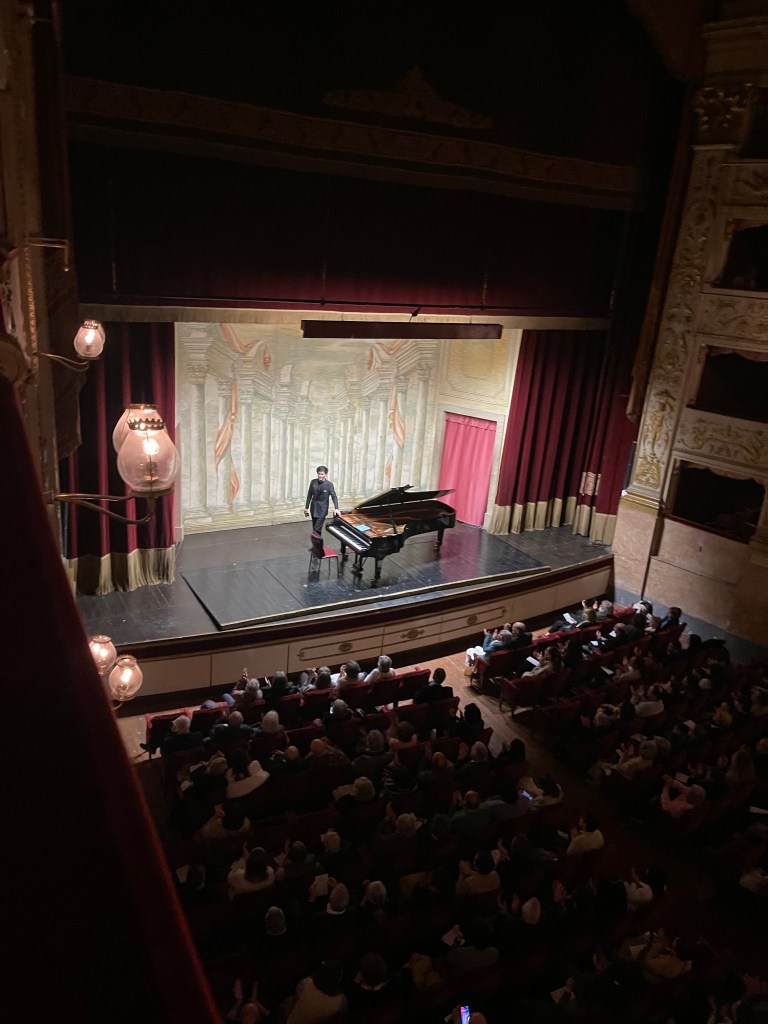
After the interval Bruce chose Debussy’s Rêverie to bring us back into the world that he had chosen to share with the public in this magic city that is the ‘museum of the world.’ A work that Debussy wrote when he was 28 for a magazine run by his friend and although he did not think much of it a critic of the day described it as ‘a very pleasant sounding piece with a somewhat simple but certain melodic charm’. Debussy himself was more self critical when fifteen years later he was to say :’ Vous avez tort de faire paraître la “Rêverie”… C’était une chose sans importance faite très vite pour rendre service à Hartmann ; en deux mots : c’est mauvais ‘. Bruce played it with shimmering beauty, streams of golden sounds of flowing simplicity which suited the mood of the recital where Debussy ‘s Rêverie and Mompou’s ‘Au Clair de la lune’ were to be the framework surrounding one of Beethoven’s most dynamic Sonatas.
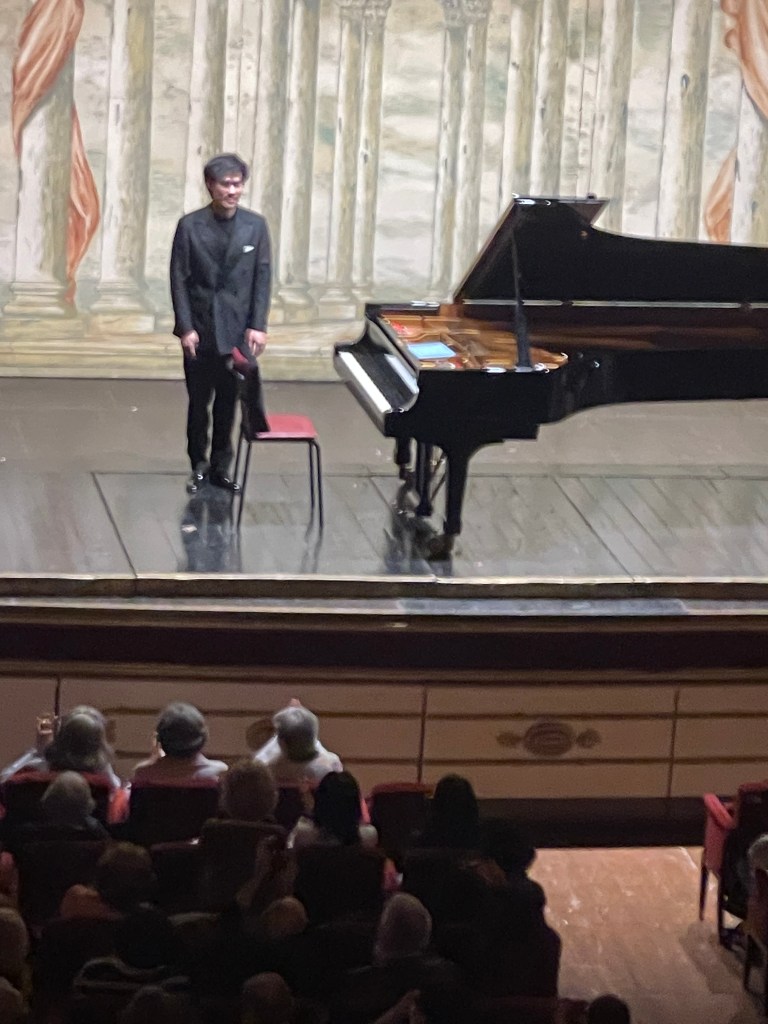
The ‘Waldstein’ Sonata fits Delius’s description of Beethoven as being ‘all scales and arpeggios’. It is a ‘tour de force ‘ for any pianist and is really in two dynamically driven movements, the second being a ‘Rondò’ prefaced by an Adagio molto introduction. The slow movement that Beethoven had intended was published as the ‘Andante favori’, a separate work that could stand on its own and had no place in the framework of his op 53 Sonata. Suddenly Bruce was awoken from his poetic dream world as he imbued the opening with quicksilver energy. Careful not to disturb the architectural shape of this ‘Allegro con brio’ where the second subject was allowed to flow on this wave of energy that had been unleashed. Bruce playing with the electric stimulus of a Rudolf Serkin there was always a glowing sheen to all he did, only rarely allowing himself to play with the vehemence of an irascible and impatient composer. The ‘Adagio molto’ was again part of Bruce’s dream world with an exquisite palette of sounds, that although not orchestral were the ideal preparation for the music box opening of the Rondò. The alternating episodes of ever more dynamic drive and Beethovenian energy in this movement that was unleashed with masterly playing of driving intensity, that is suddenly uncorked by a coda at breakneck speed of music box perfection. Bruce rising to the challenge with intensity rather than volume as the octave glissandi he was able to play without licking his fingers as Serkin used to do, but allowing them to glide over the keys with masterly ease. The final few bars was where Bruce let his passion and dynamism take over from his poetical dream world, as his masterly virtuosity was shamelessly revealed.
There was a subtle beauty to Mompou’s magic sound world of ‘Au Clair de la lune’ that was rudely interrupted by Liszt’s declamation of Spanish Intent. The Rhapsodie espagnole has long been a show piece for virtuosi of the Golden Age of the piano, Busoni even transcribed it for piano and string orchestra. Bruce played it with the astonishing mastery of extraordinary jeux perlé playing of the exquisite finesse of a Levine or Levitski, There was also lurking in the wings the breathtaking virtuosity of Horowitzian wizardry that brought this magic hour or so to an end.
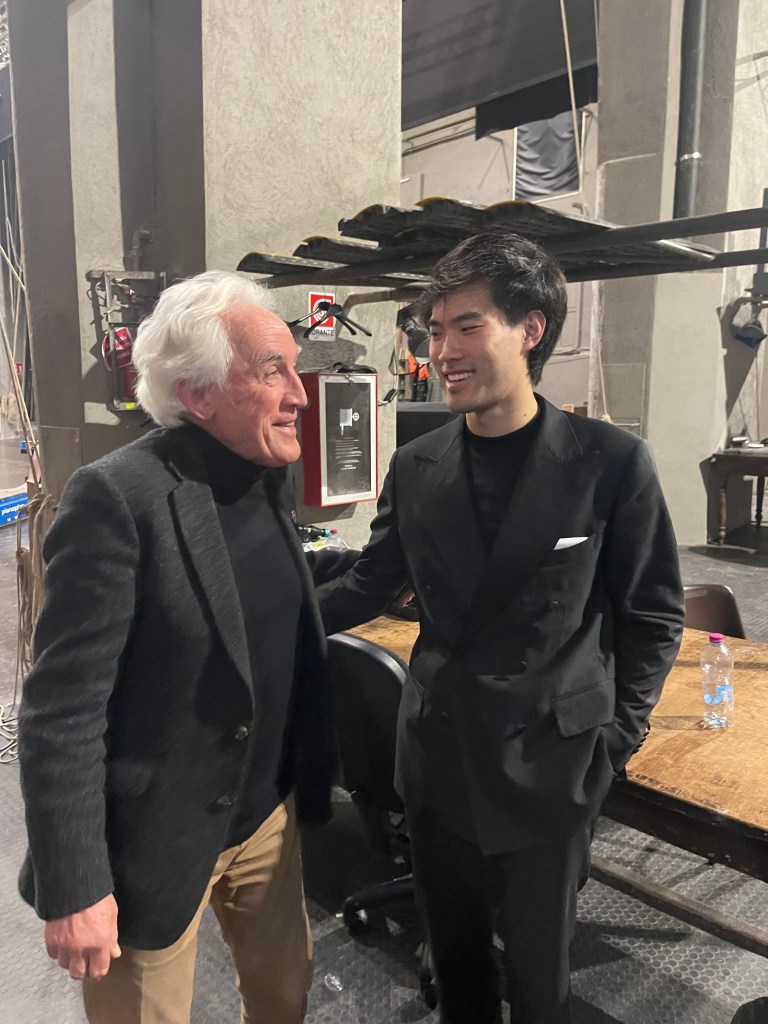
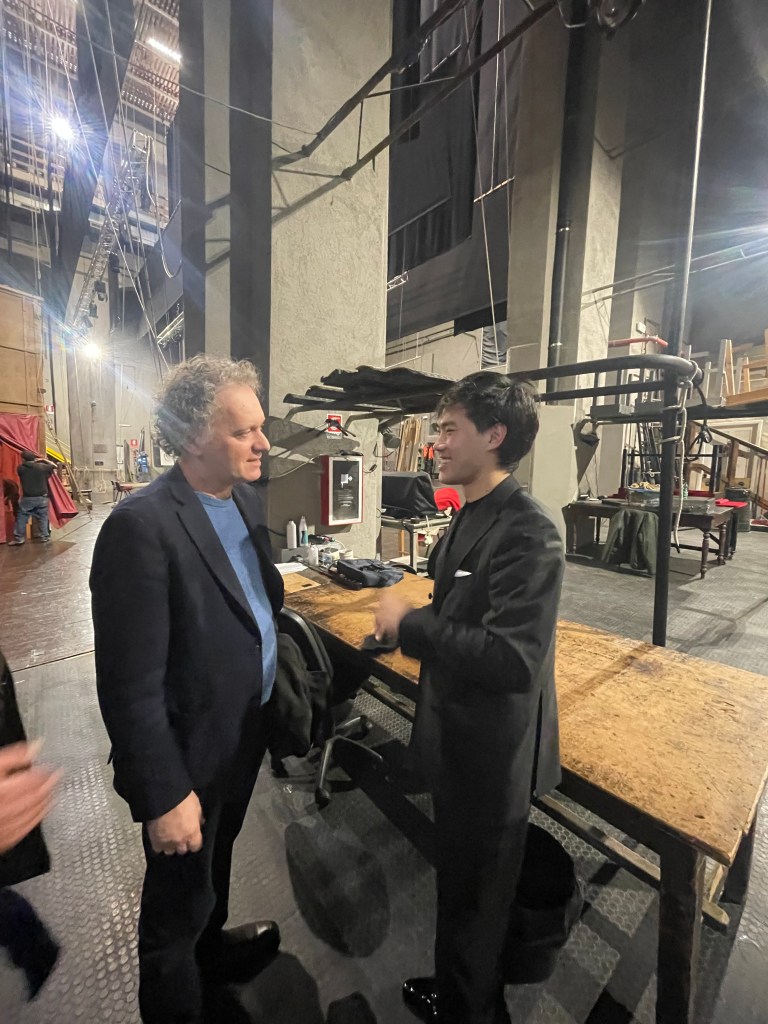
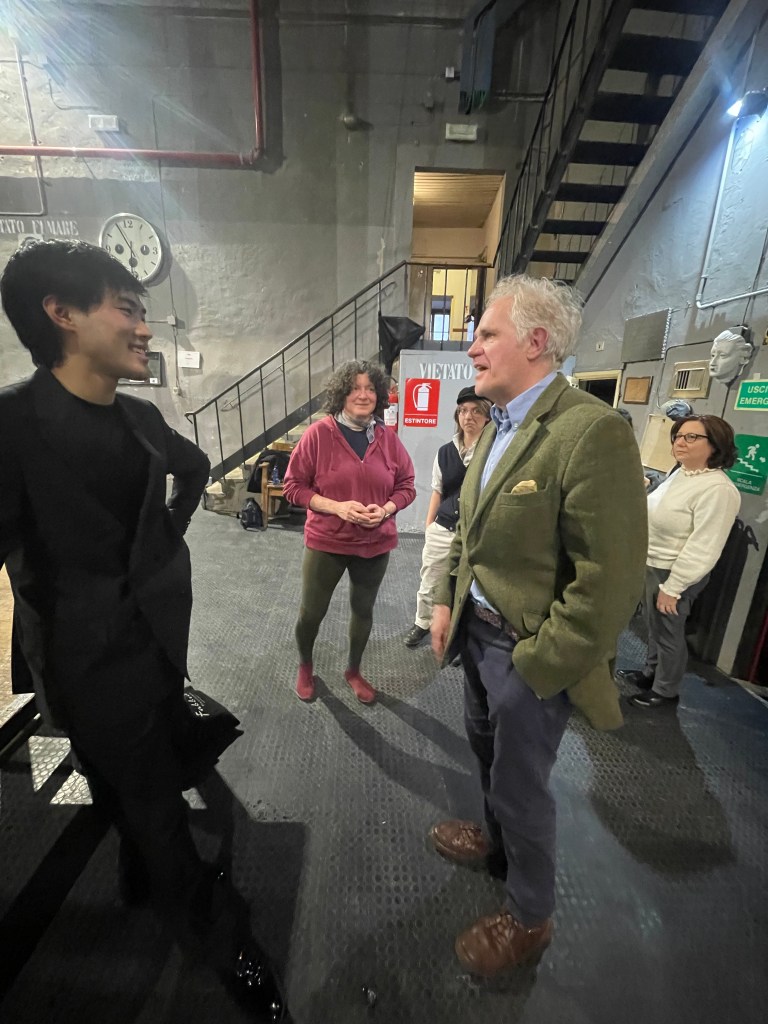
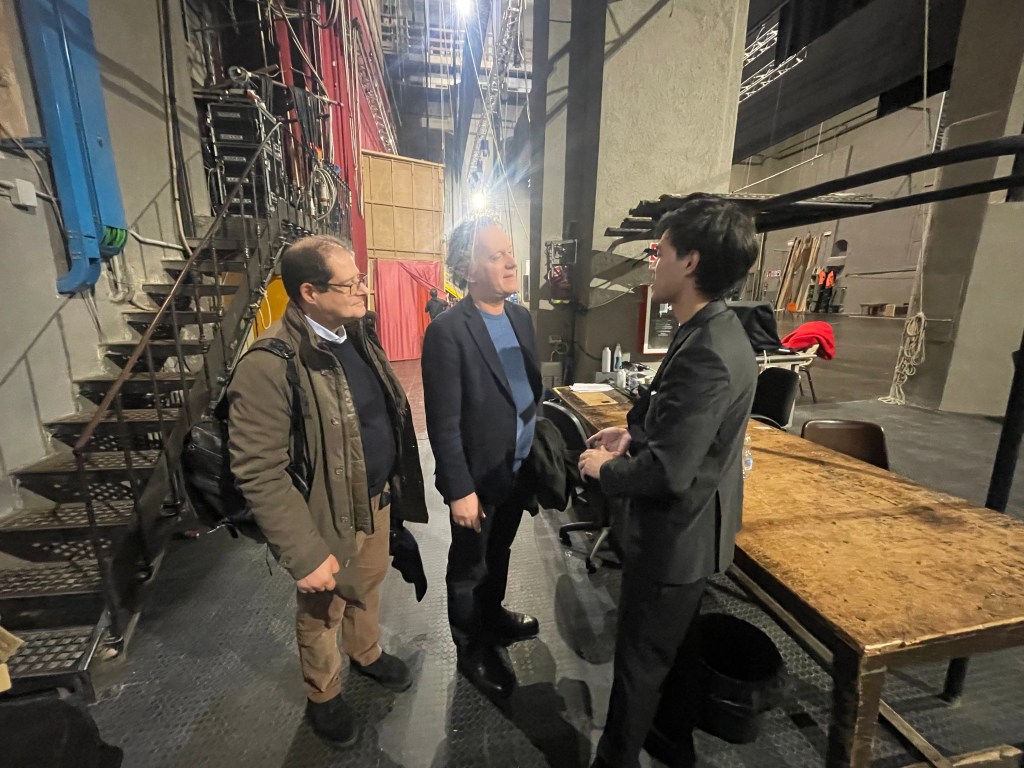
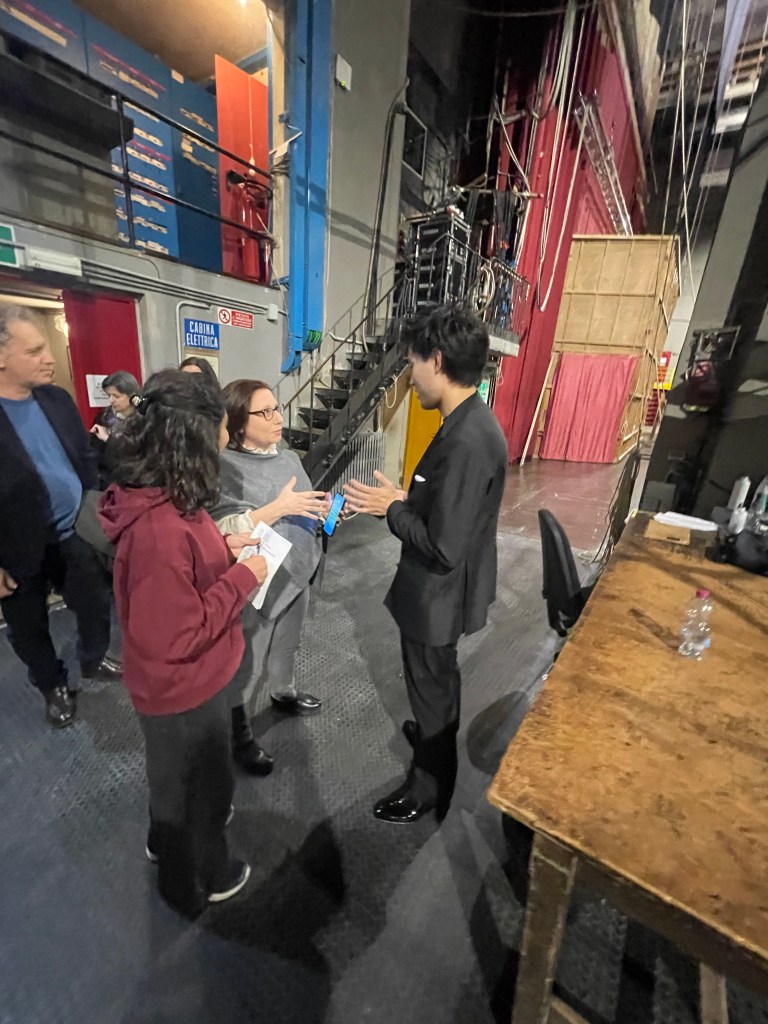
Ever generous Bruce ,who admitted backstage that he was a bit tired, having had to battle to come to terms with a theatre of rather dry acoustic for the piano. It was a battle that he had won though, as the audience could testify not wanting to not let this Poet of the Keyboard escape just yet.
Siloti’s magical Prelude in B minor was a wonderful piece after the circus like acrobatics of Liszt. Bach’s wondrous melody appearing in the midst of perfectly placed washes of sound made the audience want to enjoy this world just one more time. Chopin’s Fantaisie Impromptu was an ideal choice , where Bruce’s undulating jeux perlé was imbued with passionate radiance. A central belcanto of refined beauty and good taste and the gentle re entry of Chopin’s seamless strands of golden sounds brought this memorable concert to a fittingly poetic conclusion.
‘I have a dream’ one that Bruce so generously shared with us today.
 ChristopherAxworthy-MusicCommentary