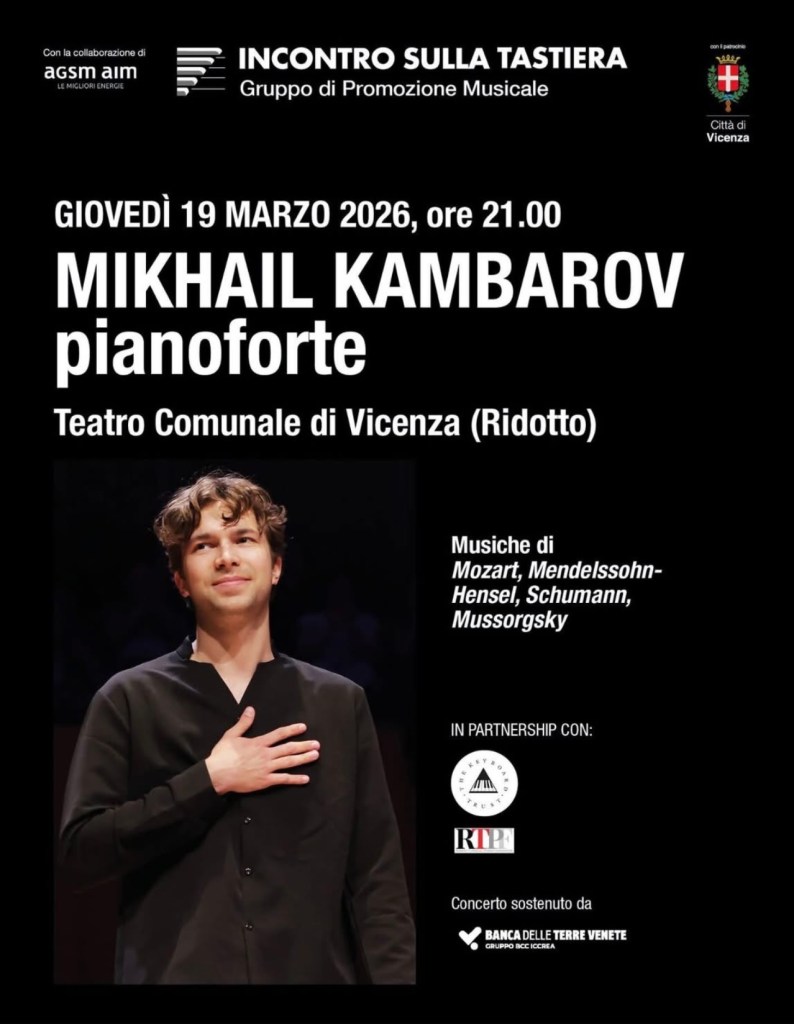
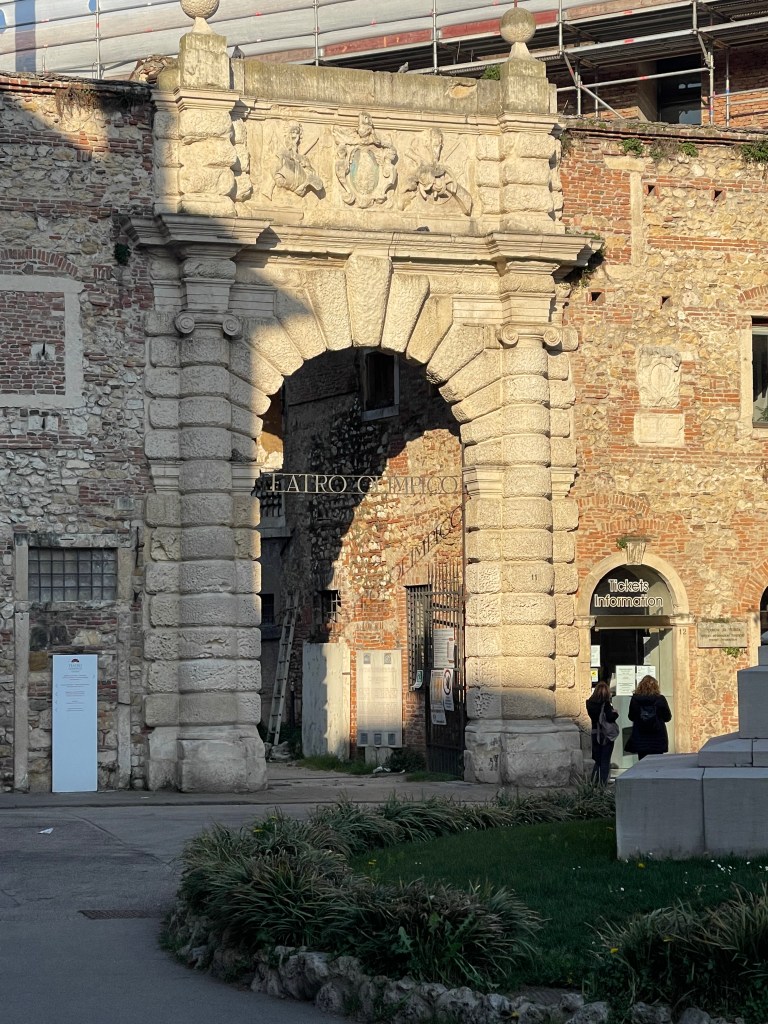
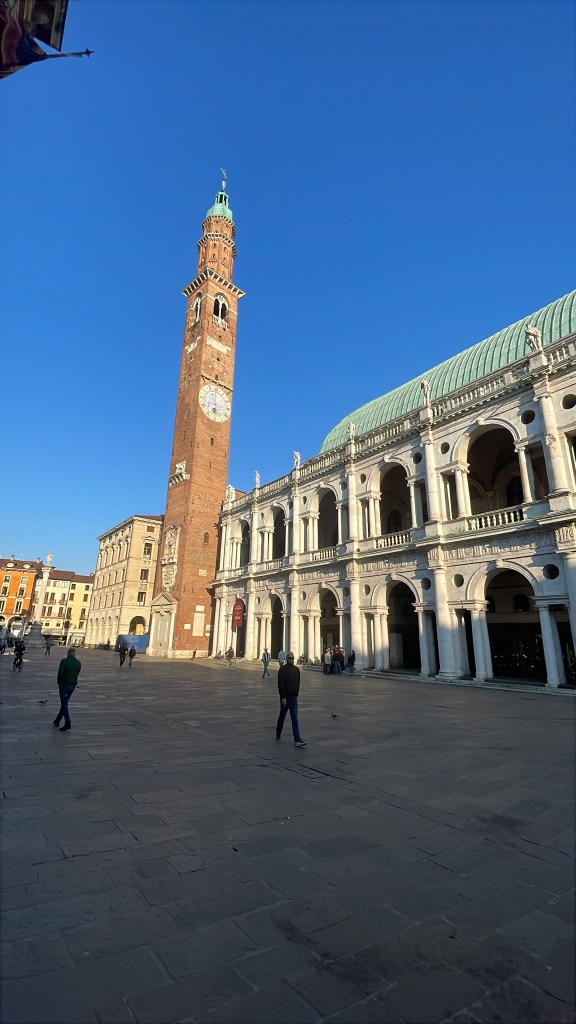
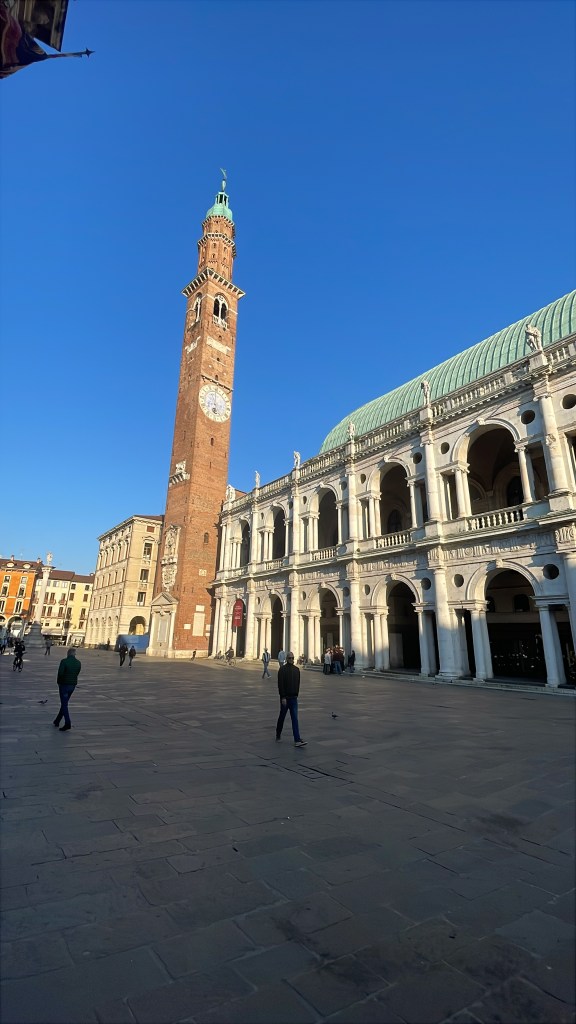
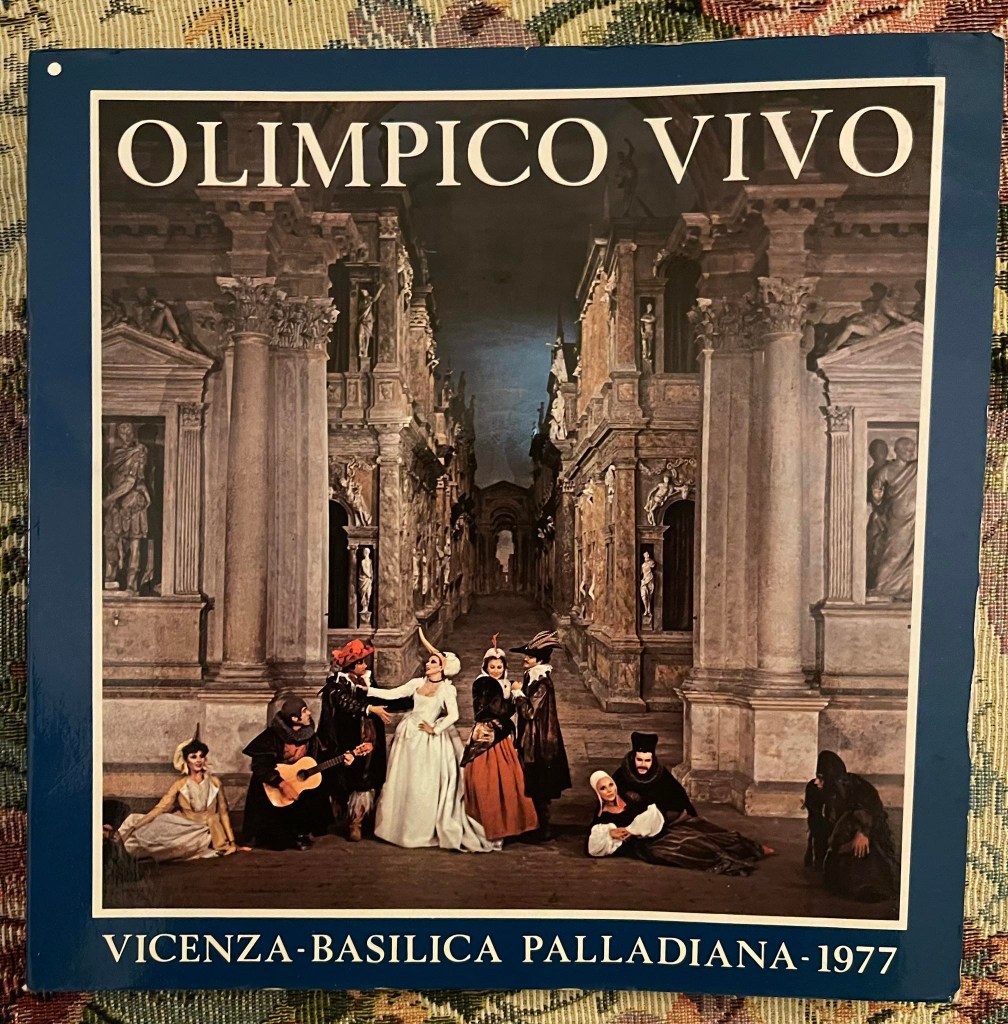
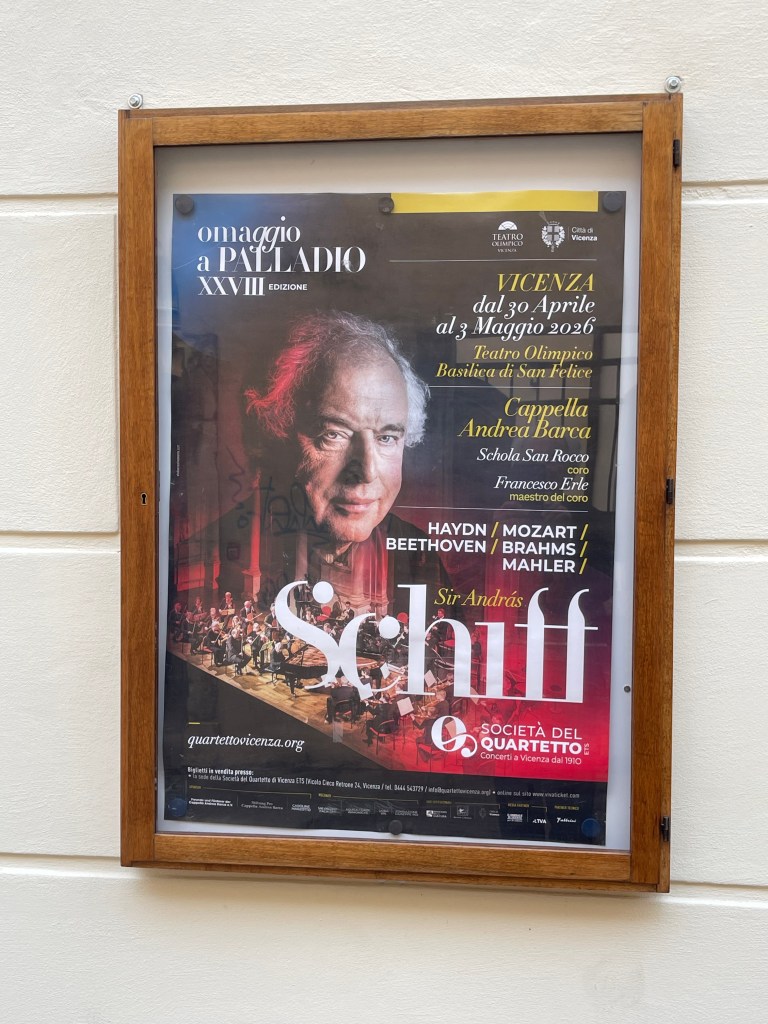
This was the annual recital of the Keyboard Trust in an over twenty year collaboration between Mariantonietta Squeglia with Noretta Conci and John Leech, the founders, thirty five years ago, of the KT ( the 60th birthday present from John to his adored Noretta) . Next year ‘Incontro con la tastiera’ will celebrate its 50 years of filling the rarified air of Vicenza with music. The refined perfection of Palladio is everywhere to be seen with the Teatro Olimpico the jewel in his crown .
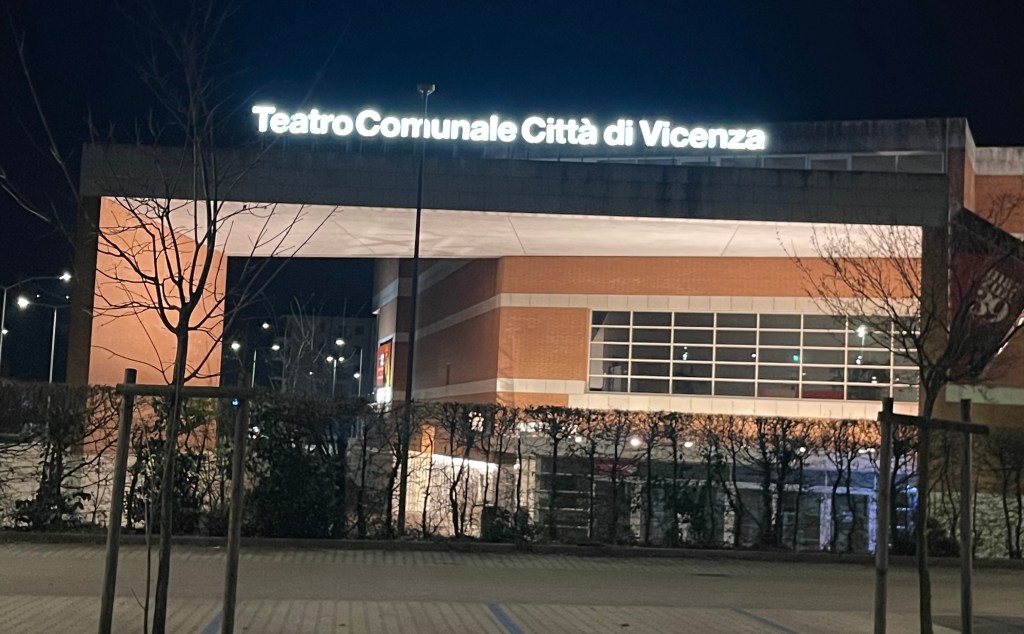
The new Teatro Comunale is a magnificent complex of two theatres and stands proudly just outside the city walls.
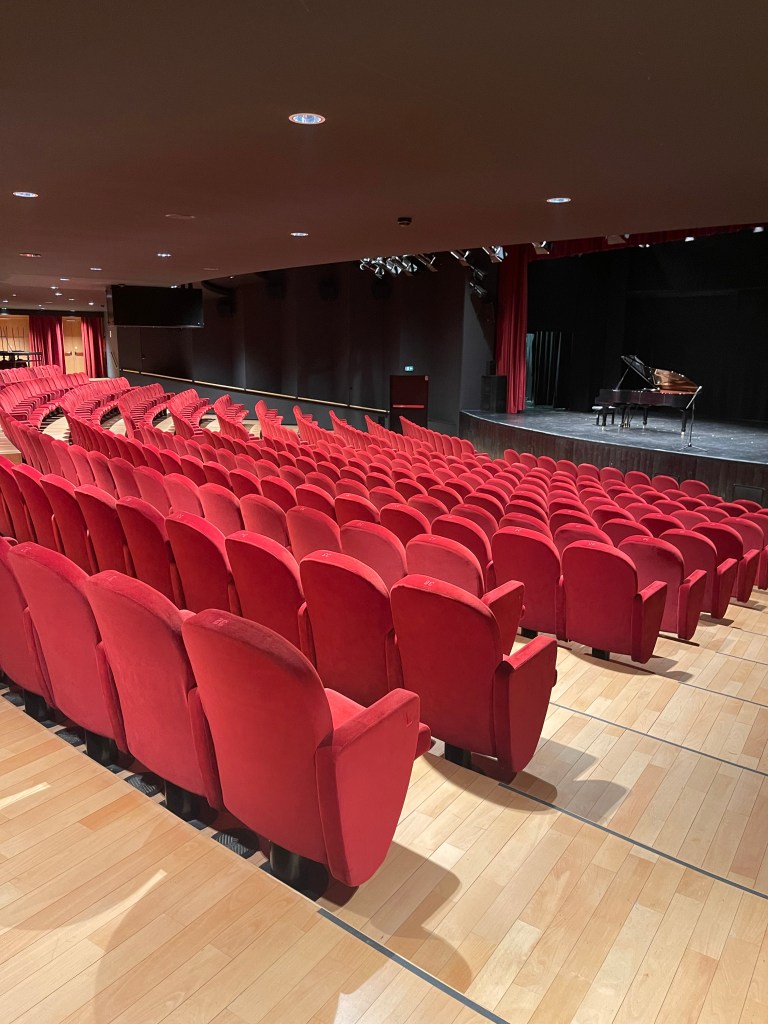
It was in the smaller 400 seater hall that Mikhail Kambarov revealed himself to be a true poet of the keyboard with performances that ranged from Mozart to Mussorgsky, including also the refined beauty of two rarities by Schumann and Mendelssohn. Not Felix but his sister Fanny, that Mikhail played with refined poetic beauty and a palette of sounds of glowing radiance . Schumann ‘s much neglected ‘Blumenstück’ op.19 was revealed to be a miniature masterpiece every bit as beautiful as its companion the Arabesque op 18 .
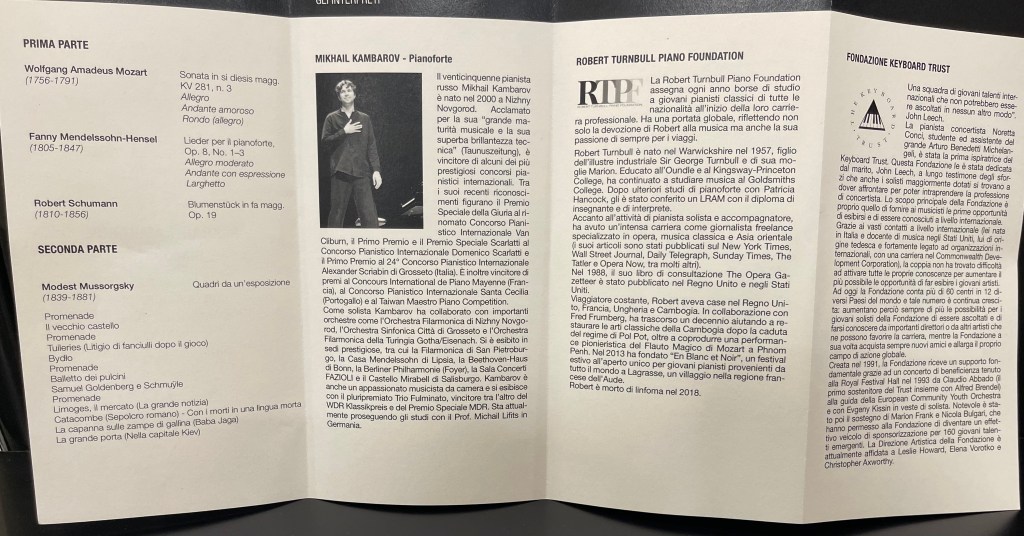
The recital had opened with the early Sonata K 281 by Mozart where Mikhail’s refined brilliance and multicoloured playing gave an operatic life to the charm and grace of the first movement. But it was the tongue in cheek ebullience that he brought to the ‘Rondo’ that revealed the masterly musicianship of this young musician being mentored in Weimar by an Emeritus KT artist Michail Lifits, past winner of the Busoni Competition.
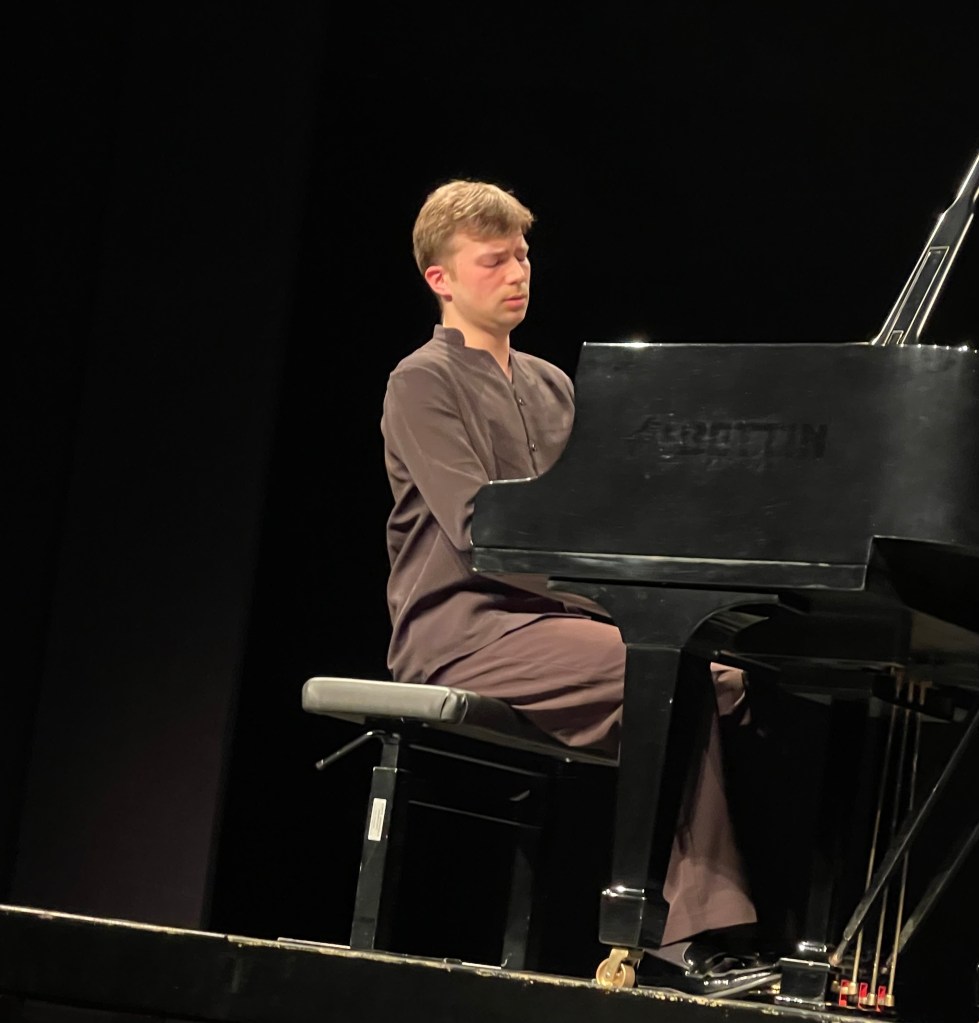
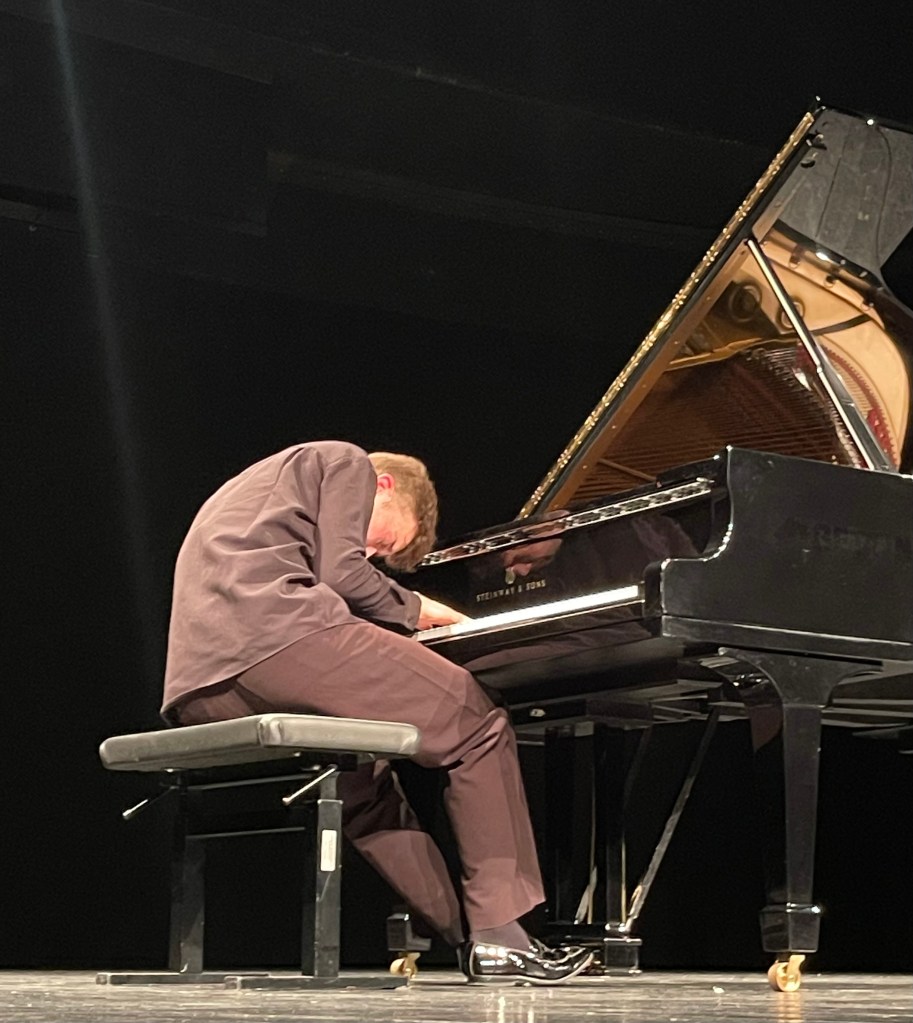
A first movement ‘Allegro’ was played with delicacy and brilliance that did not deny charm and grace. A jewel like precision of beauty and clarity of remarkable fluidity. An ‘Andante amoroso’ of disarming simplicity with a palette of subtle shading that illuminated the sedate seriousness of the constant poetic dialogue. A ‘Rondò’ – Allegro of beguiling good humour as the music unwound with impish rhythmic drive of scintillating charm.
The three ‘Songs without words’ not by Felix but by Fanny Mendelssohn, were a revelation in Mikhail’s hands as he shaped the ‘Allegro moderato’ with a knowing freedom of searing beauty. It makes one wonder why we always hear of the genius of the brother but never the sister! Mikhail improvising between pieces to create a beautiful three movement whole with the ‘Andante con espressione’, a poignant outpouring of weight and glowing beauty with a truly inspired coda of breathtaking subtlety, played with exquisite sensibility. A gently flowing melody to the final ‘Larghetto’ of radiance as it duetted with the bass.
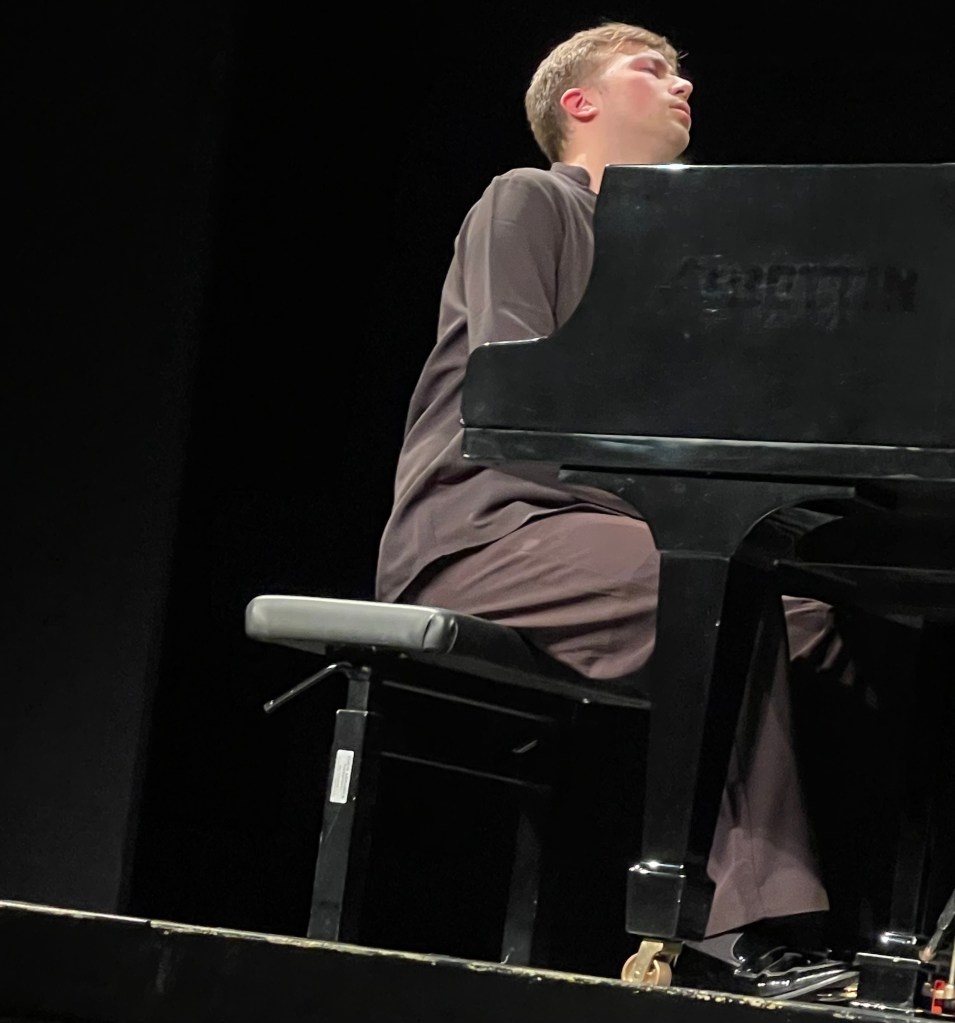
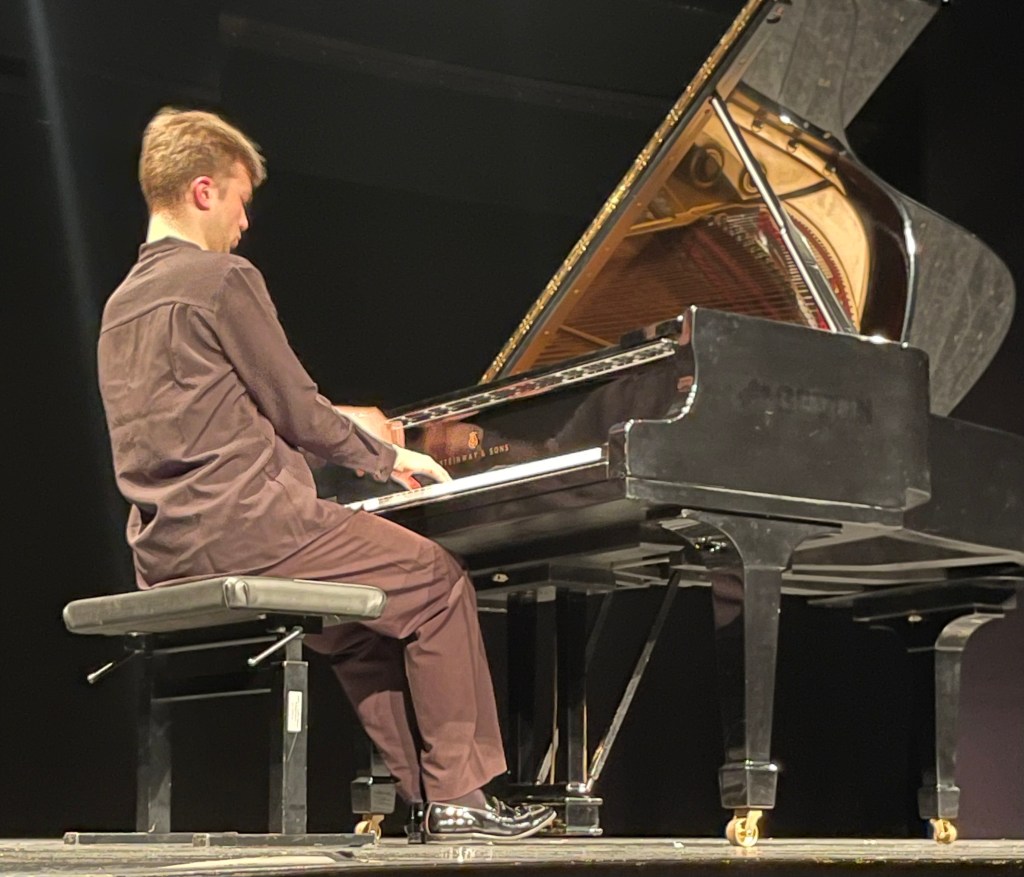
Another discovery in this poet’s hands was Schumann’s ‘Flower Piece’. A flower that opened up to reveal a miniature tone poem played with a rare sense of fantasy and beguiling flexibility. If Eusebius was admiring the petals , it was Florestan that commented too on the flowers with authority and a sense of line that gave great shape to this unjustly neglected masterpiece. Mikhail revealed every bloom of this beautiful flower, ending with a whisper as Eusebius was astonished too at the beauty that Schumann could reveal with so few notes.
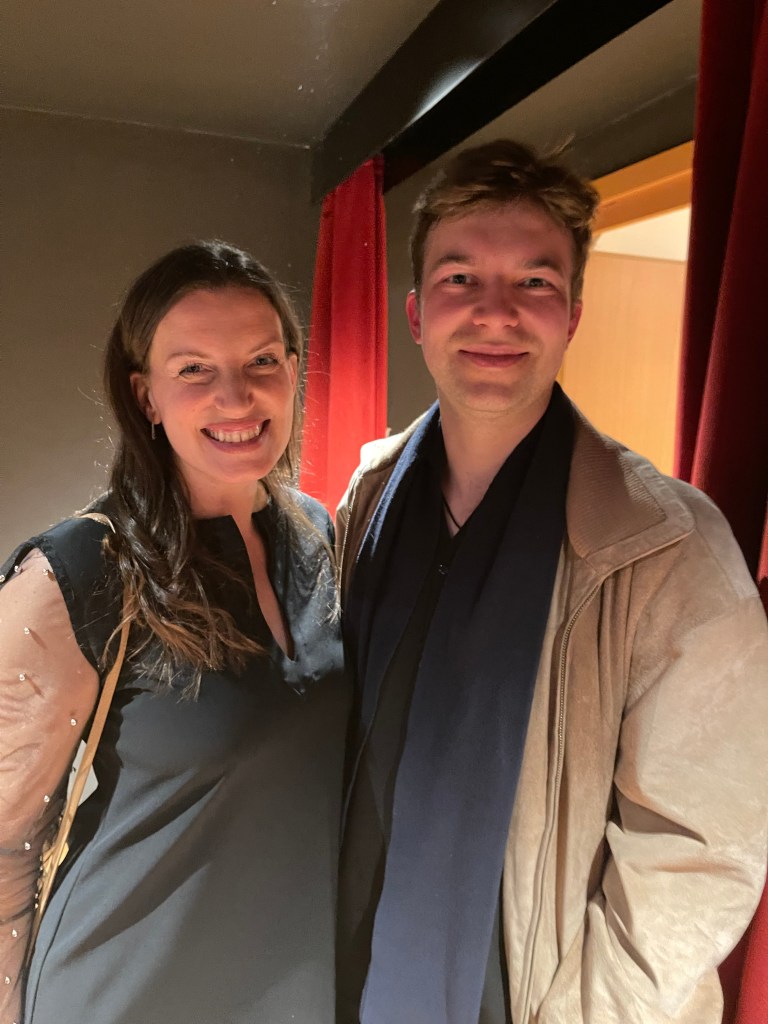
It was as winner in 2024 of the International Piano Competition Domenico Scarlatti in Trapani, that Mikhail first came into the limelight, praised by Oxana Yablonskaya for his mature musicianship and technical mastery. https://christopheraxworthymusiccommentary.com/2024/04/11/trapani-the-jewel-of-sicily-where-dreams-can-become-reality-the-international-piano-competition-domenico-scarlatti/
Nowhere more was this apparent than in his poetic performance of Mussorgsky’s ‘Pictures’.
From the very first notes usually played with brutal indifference, in Mikhail’s hands they became a promenade of leisurely serenity and beauty. Each of the ‘pictures’ that Mussorgsky had composed in just three weeks, were inspired by a memorial exhibition for his friend, artist Viktor Hartmann, both sharing a common artistic goal: to imbue their work with a distinctly Russian character.
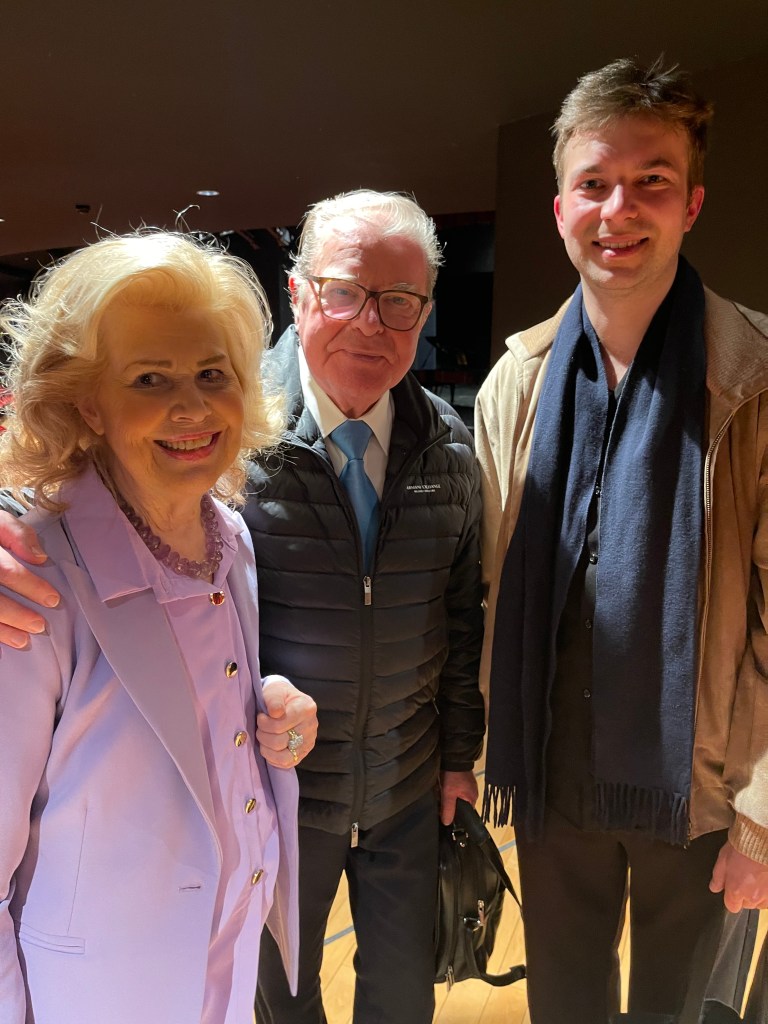
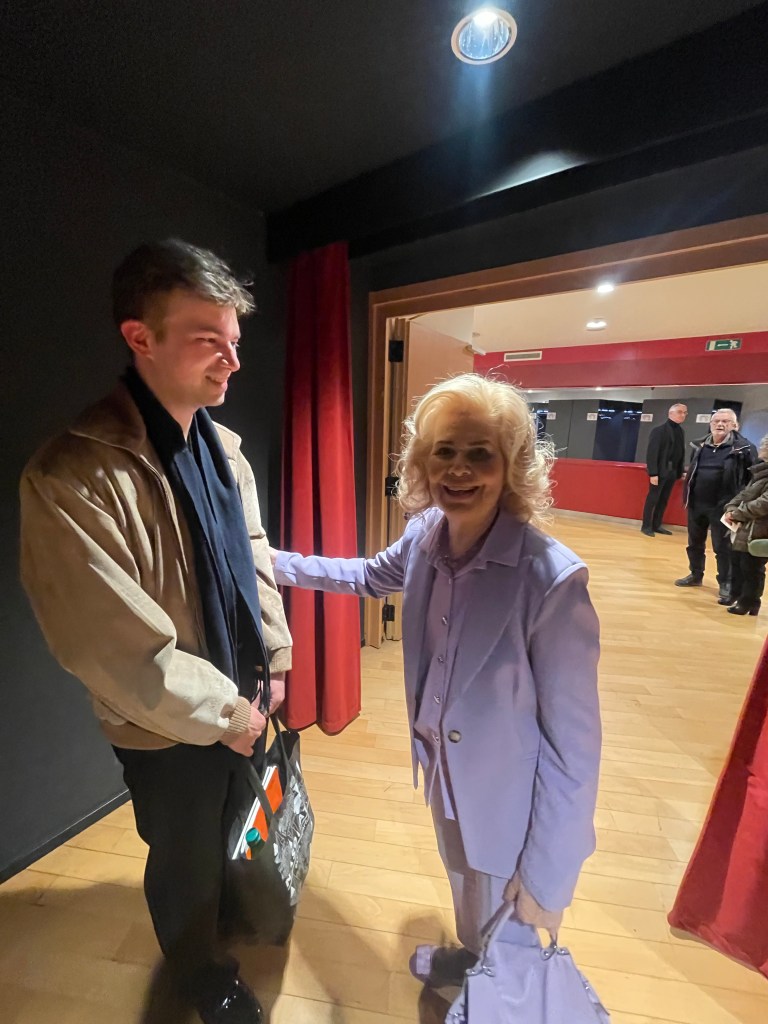
What greater declamation of peace and joy could there be than the imagined ‘Great Gate of Kiev’ in these years of painful conflict. Mikhail who cannot return home and has not been able to see his family for many years, imbued it with a resonance and richness where the tolling bells rang out in searing defiance .
Eleven pictures that Mikhail imbued with knowing beauty as each one was a miniature tone poem with a kaleidoscope of characters and emotions, revealing even more intensely a true Poet of the Keyboard. The first picture ‘Gnomus ‘ was played with mystery with a mastery of pedal that could create a vision of a terrifying landscape of violent contrasts with trills that were like the screams of Munch. A walk on tip toe to the ‘engloutie’ of the ‘Old castle’ that was seen through a poetic mist of subtle delicacy with a ravishing palette of colours as it disappeared from sight completely submerged in magic. The Venetians know something of that! What fun the ‘kids’ had in the Tuileries with Misha’s agile fingers of featherlight ‘fingerfertigkeit’. Contrasting with the lumbering ‘Bydlo’ where Mikhail’s mastery of balance as the music became full but never hard and Bydlo was allowed to wend his way into the invisible distance. Elated by such poetic depictions an etherial gait of barely heard footsteps were awakened by the vision of the brilliantly busy ‘chicks’ hatched by Mikhail with extraordinary good humour. Goldberg burst onto the scene with great authority which Mikhail enriched with the silences between notes of burning significance. Schmuyle became a whimpering servant that Mikhail played with the knowing resonance of a master of the pedal. Listening to the blistering reverberations in the Catacombe leading into the heavenly sounds of paradise. Rudely interrupted now by the strident sounds of a quickened pace as Baba Yaga grappled with fate adding enormous sonorities and dynamic drive . What a marvel was the central episode where Mikhail gave great character to the distant vision of the witch until it burst onto the scene again with incumbent violence . And now the crowning glory was the vision an oasis of peace:The Great Gate of Kiev. An extraordinary explosion of luminosity and fervent prayer. Mikhail revealing the people on their knees by taking away the glowing radiance of the Gateway , revealing a moment of poignant intimacy by masterly use of the pedal and touch. Gradually the bells start to cry out with luminous bass notes of great reverberation creating a mist on which pealing bells are heard before the final triumphant declaration played with sounds of reverberating beauty, never hard or brittle, but with the luminosity of looking upwards into the stars .
A masterly performance of a poet rather than a warrior , one that could show us the real significance behind the notes and not just the steely sheen of confrontation.
Musorgsky Sculpted with Iron Technique – Kambarov Enchants
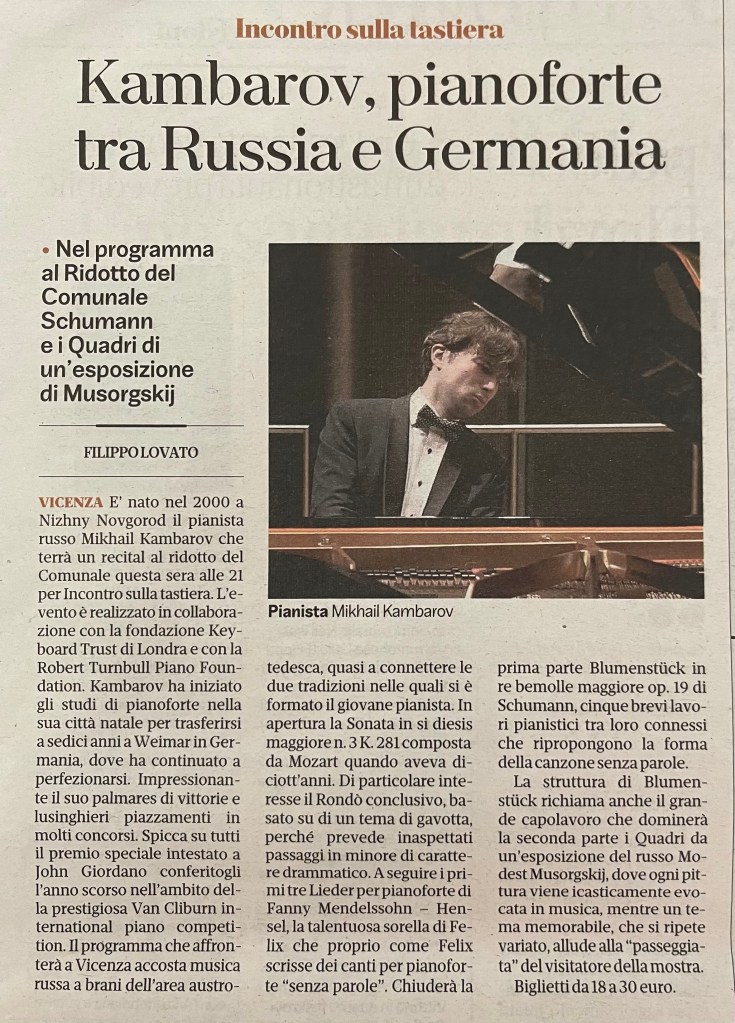
The young Russian pianist performed at the Ridotto of the Teatro Comunale, opening with a “light” Mozart but a more defined Mendelssohn.
By Filippo Lovato
31st March 2026 Il Giornale di Vicenza
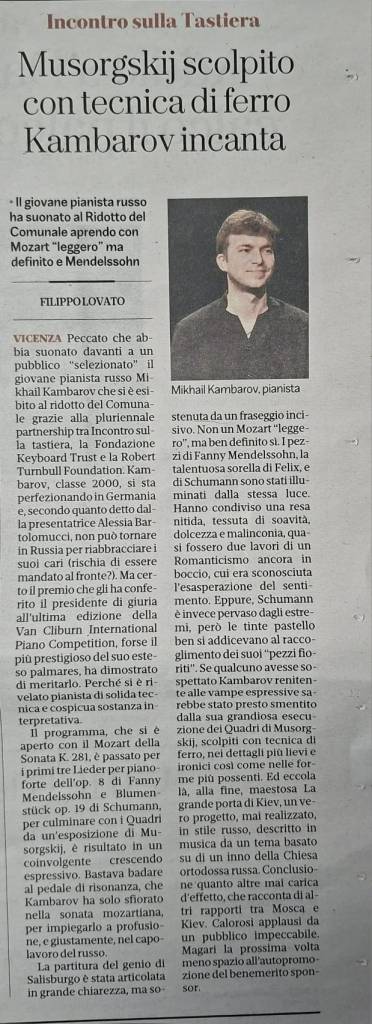
VICENZA — It’s a pity that the young Russian pianist Mikhail Kambarov performed before only a small “select” audience at the Ridotto of the Teatro Comunale, thanks to the long-standing partnership between Incontro sulla tastiera, the Keyboard Trust Foundation, and the Robert Turnbull Foundation.
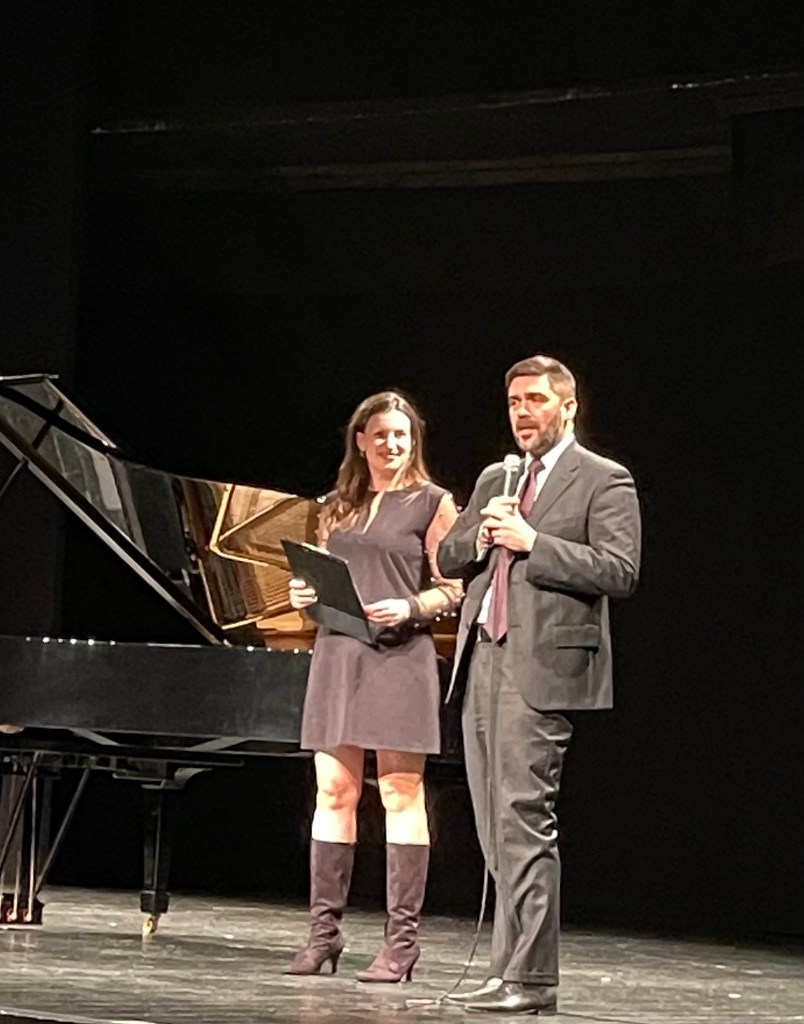
Kambarov, born in 2000, is currently refining his craft in Germany and—according to presenter Alessia Bartolomucci—cannot return to Russia to embrace his loved ones (he risks being sent to the front). But the prize awarded to him by the jury president at the latest edition of the Van Cliburn International Piano Competition—perhaps the most prestigious accolade in his already impressive résumé—demonstrated that he deserves it. He revealed himself to be a pianist of solid technique and considerable interpretative depth.
The program, which opened with Mozart’s Sonata K. 281, continued with the first three Lieder for piano Op. 8 by Fanny Mendelssohn and Schumann’s Blumenstück Op. 19, culminating in Mussorgsky’s Pictures at an Exhibition. The result was an engaging expressive crescendo. One only had to observe his use of the sustaining pedal—barely touched in the Mozart piece, then employed more generously, and rightly so, in the Russian masterpiece.
The score by the Salzburg genius was articulated with great clarity, yet supported by incisive phrasing. Not a “light” Mozart, but certainly a well-defined one. The works of Fanny Mendelssohn—Felix’s talented sister—and Schumann were illuminated by the same clarity. They shared a clean execution, woven with softness, sweetness, and melancholic nuance, as if they were two pieces from an early Romanticism still in bud, where emotional excess was unknown.
And yet, Schumann is actually permeated with restlessness—but the pastel tones suited well the introspective nature of his “flower pieces.” If anyone had expected Kambarov to hold back expressive intensity, they were quickly proven wrong by his grand performance of Mussorgsky’s Pictures at an Exhibition, sculpted with an iron technique, in its lighter, more ironic details as well as in its most powerful passages.
And there it was at the end: the majestic Great Gate of Kiev, a project never realized, in Russian style, described musically through a theme based on a hymn of the Russian Orthodox Church. A conclusion more emotionally charged than ever, which also evokes the present-day relationship between Moscow and Kiev.
Warm applause from an appreciative audience. Perhaps next time, less space for sponsor self-promotion.

https://christopheraxworthymusiccommentary.com/2024/03/20/christopher-axworthy-dip-ram-aram/
 ChristopherAxworthy-MusicCommentary