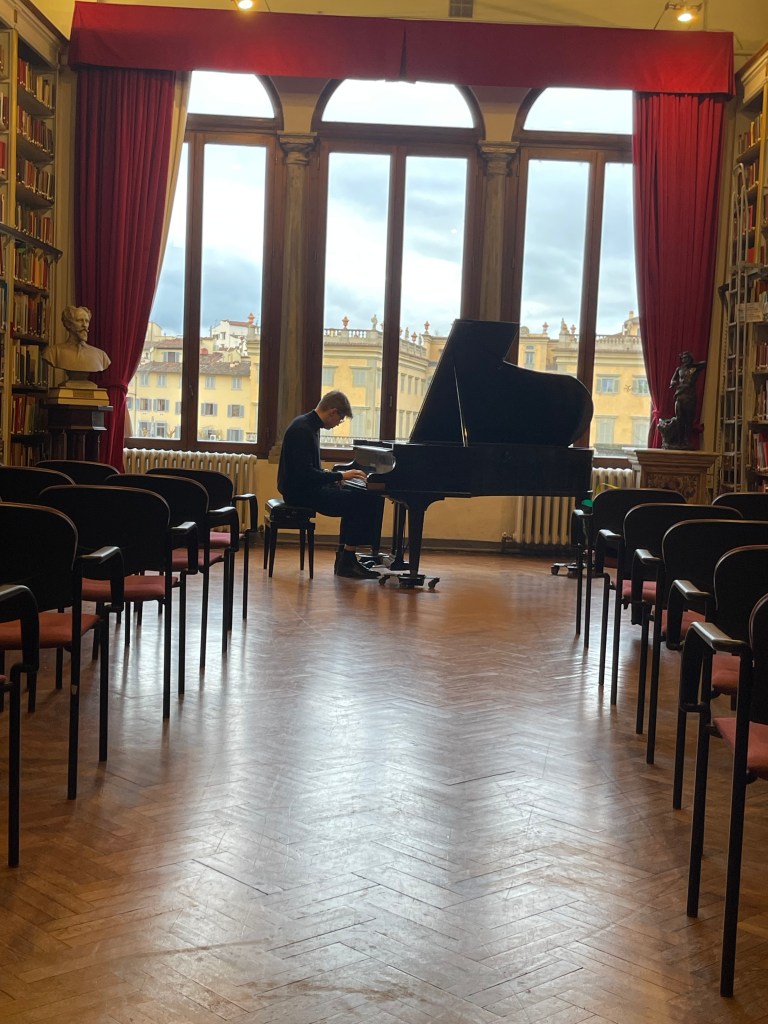
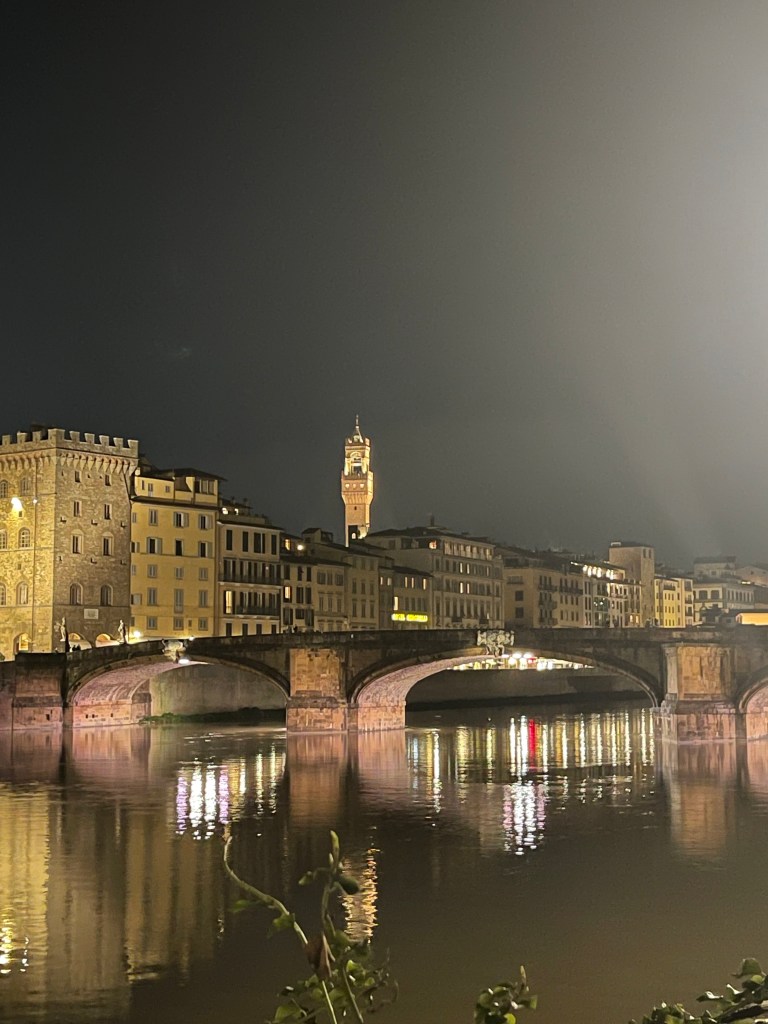
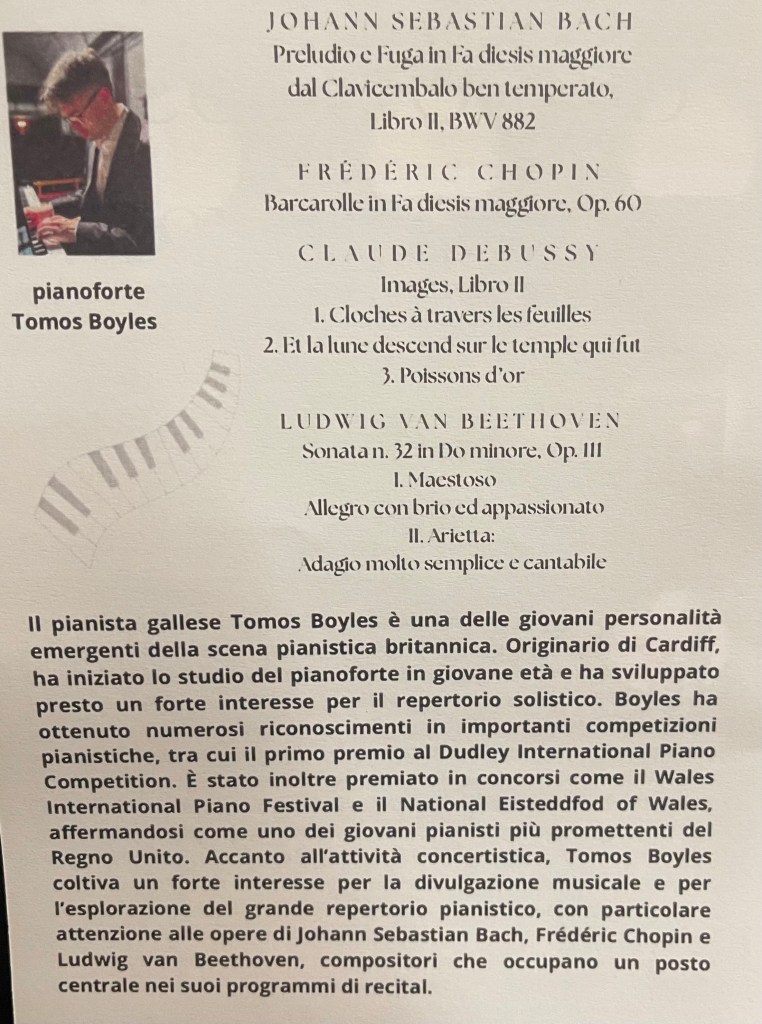
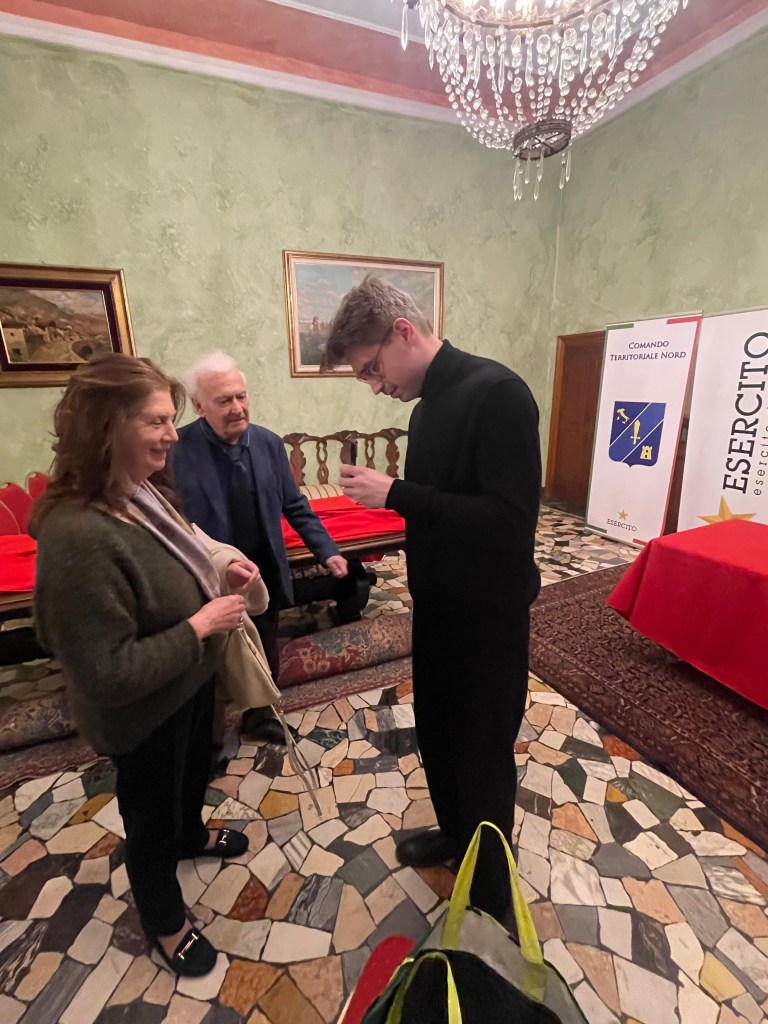
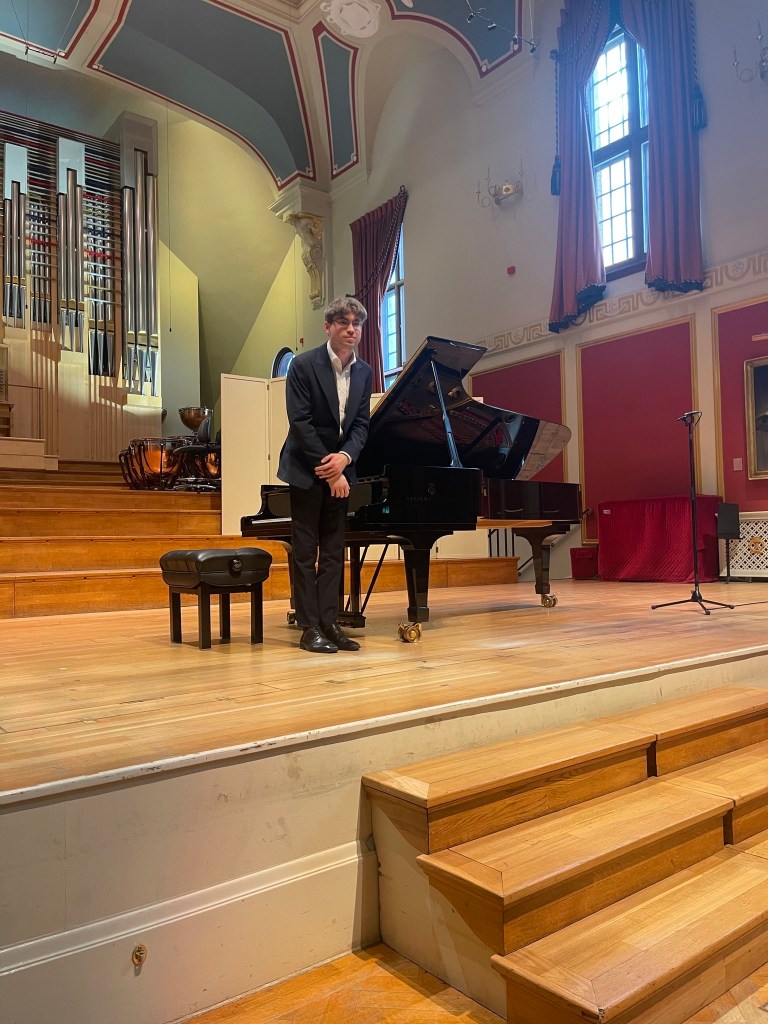
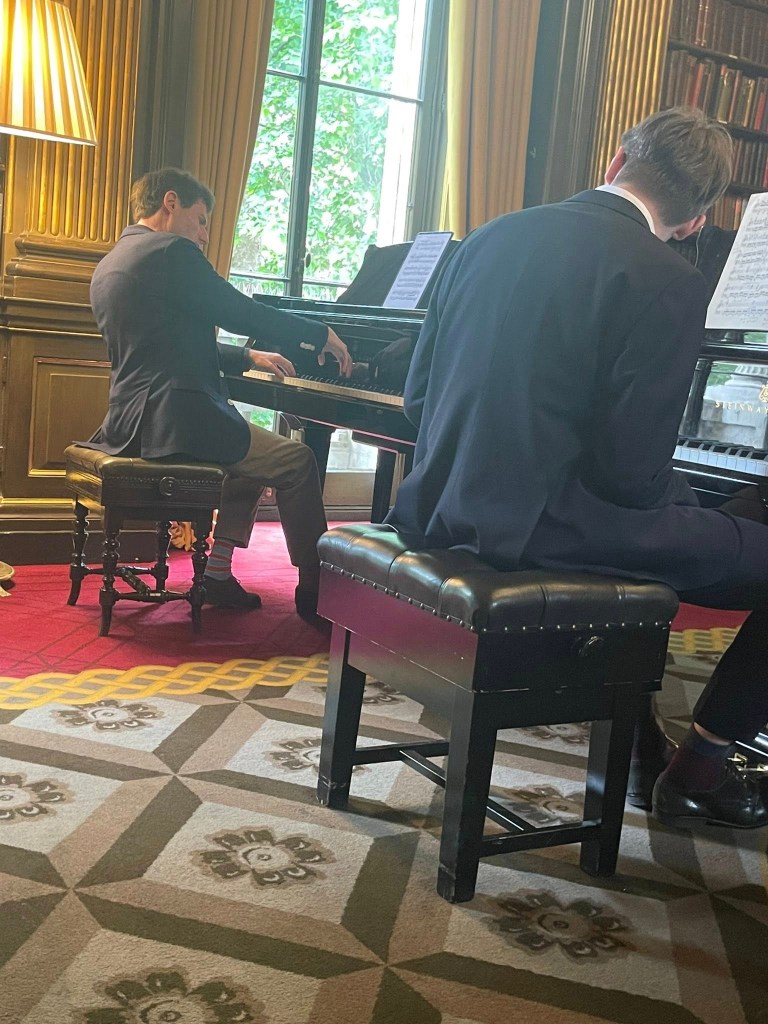
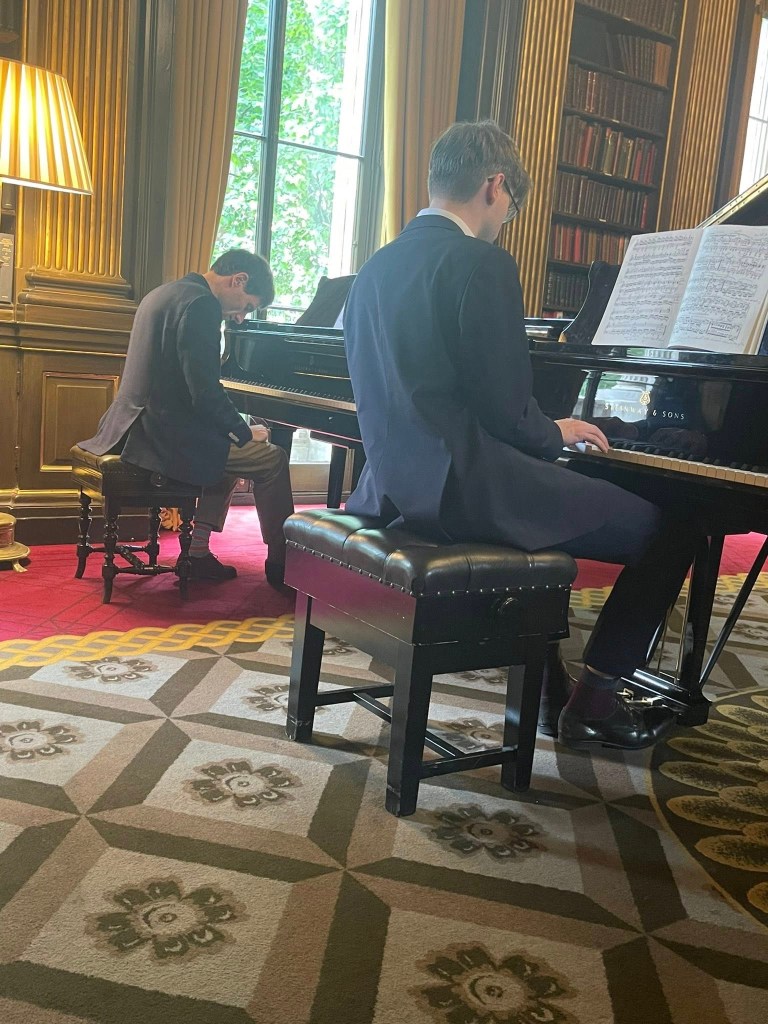
Tomos Boyles in a room with a view in Florence with an imposing programme that showed the musical pedigree of a first class honours graduate of Christ Church Oxford . Now perfecting his pianistic skills at the Royal Academy, that have just been recognised with a prestigious award from the Kirckman concert society in London. Playing that has been praised for its romantic flair and passion.
Tomos comes from a Welsh speaking family in a country where music and rugby go hand in hand with passionate participation.
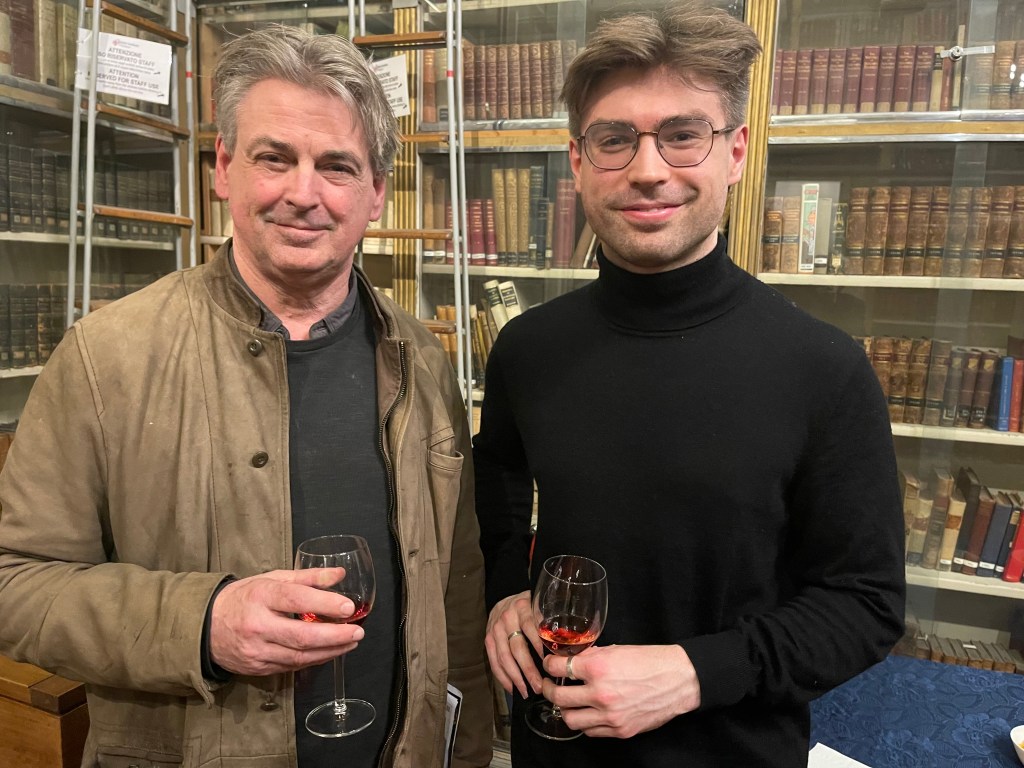
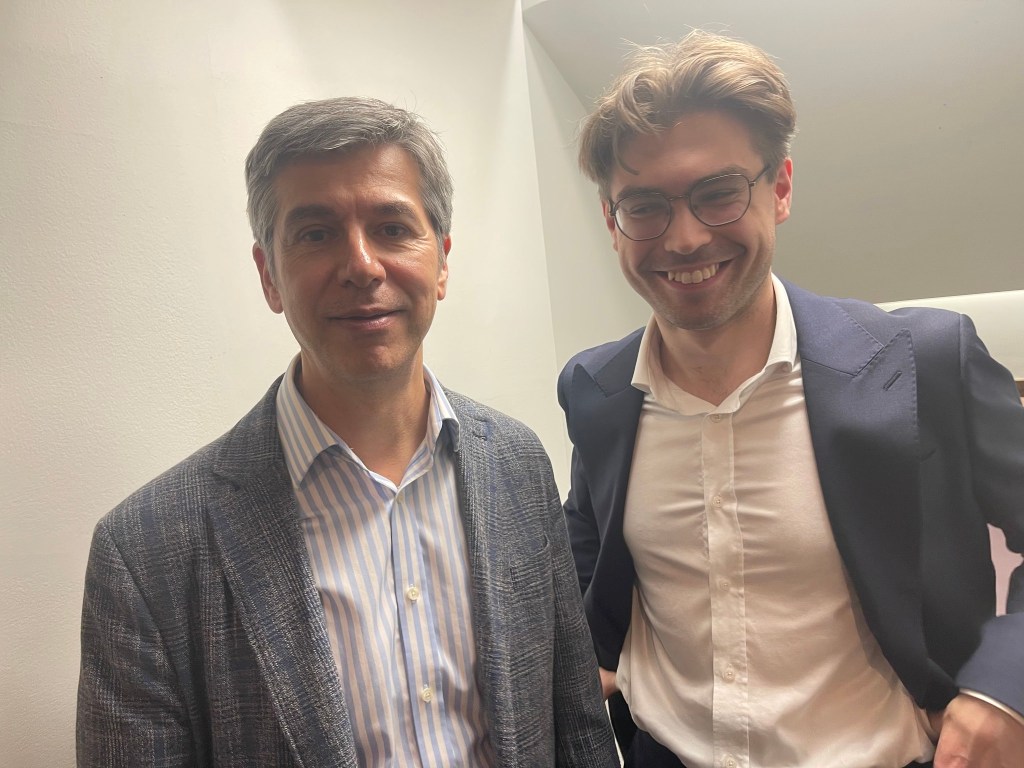
Talking to Tomos and his father after the concert we touched on subjects that ranged from the excitement of a much awaited battle on the rugby pitch between Italy and Wales to the Eisteddfod that saw the birth of a very young Pavarotti and his father in this land of song where the male voice choirs of the mining community are legendary.
I remember two very distinguished Welsh Dames, Gwyneth Jones and Margaret Price awaiting, whilst they were both singing in my concert series in Rome, about news of creating a singing academy of excellence in Craig y Nos, the castle where Adelina Patti (the Callas of her day) reigned with her noble Welsh husband. Alas the Arts Council was fickle and this wonderful opportunity came to nothing !
So innate musicality is hardly surprising, listening to Tomos’s Bach played with refined mellifluous beauty rather than the more usual brick laying insensitivity that passes for Bach’s monumentality.
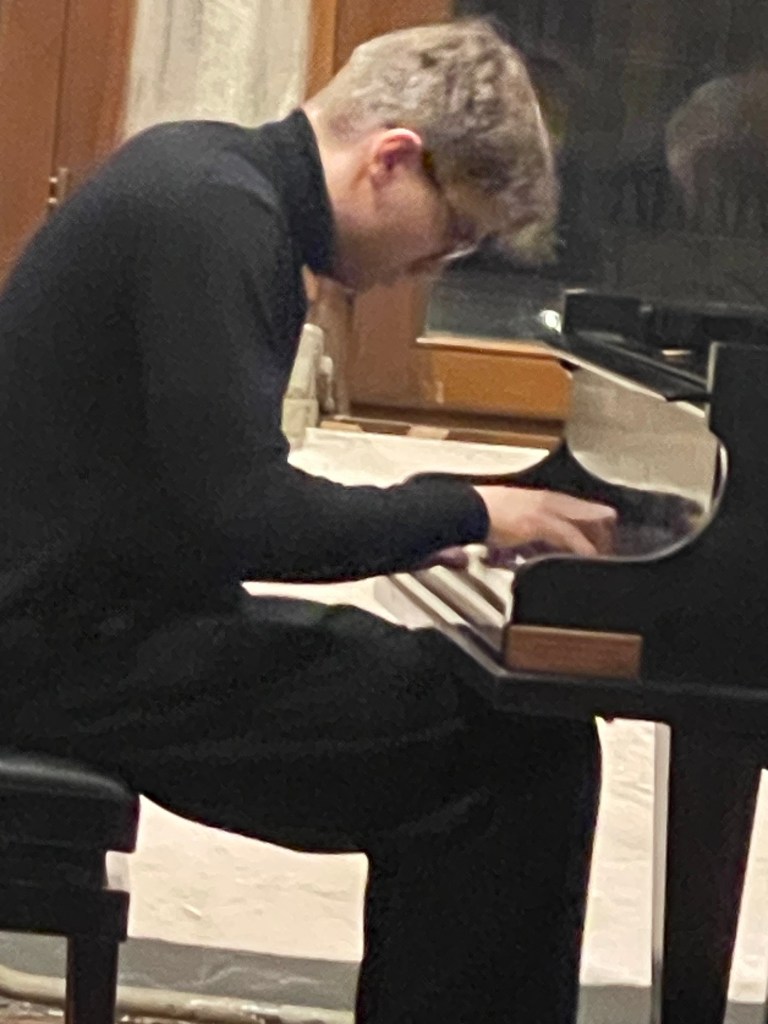
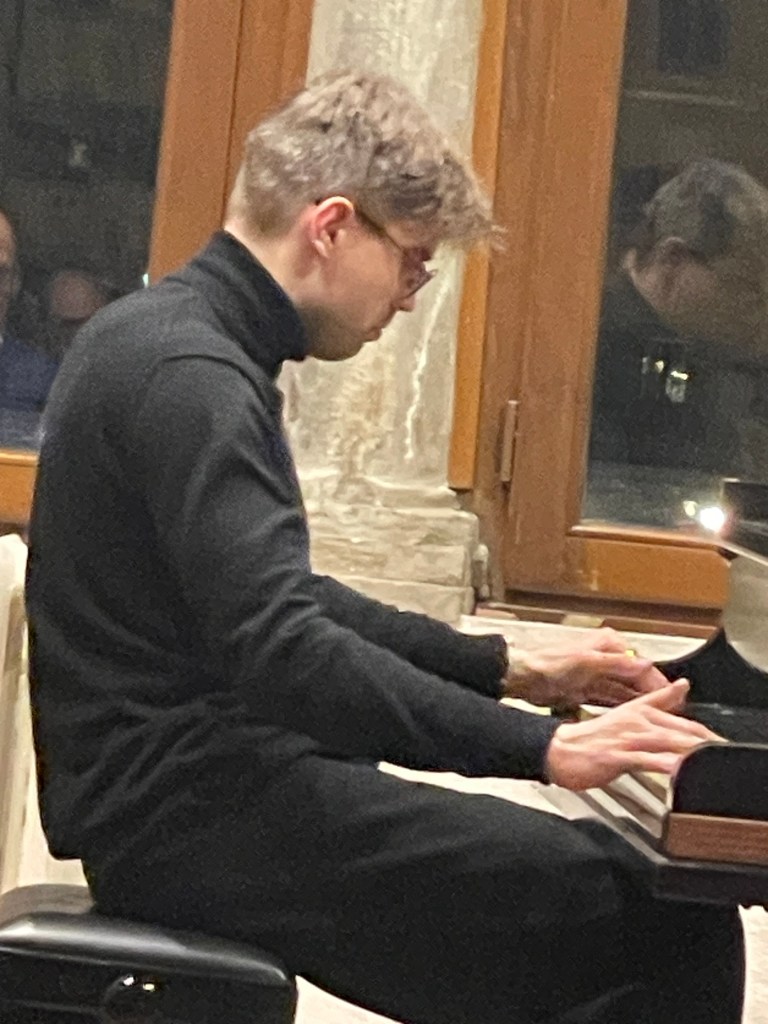
Just one Prelude and Fugue, not the more usual 24 or 48 played in concerts these days , but like Friedrich Gulda, just one, played with such jewel like fantasy of disarming beauty and poetic invention, that it makes one wonder why just a single one of these genial inventions is not seen more often on concert programmes.
The Prelude and Fugue in F sharp from Book 2 opened with a pastoral fluidity of playing with a refined tonal palette of great beauty as the music was allowed to unfold with a natural flowing freedom. Poetically played with delicacy but also with an internal strength. It was this almost spiritual fervour that imbued the fugue, where Bach’s knotty twine was allowed to unfold with glowing simplicity.
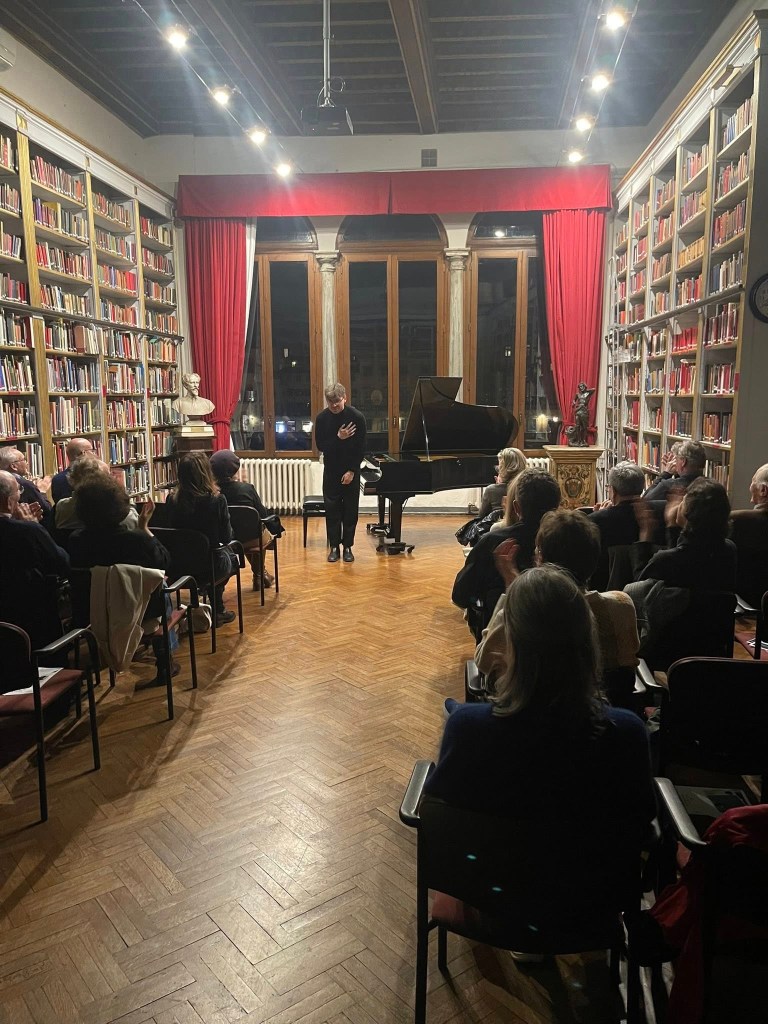
On this short tour organised by the Keyboard Trust, Tomos will be playing in Venice , the land of dreams that was to inspire Chopin to write, late in his short life, his greatest masterpiece, the Barcarolle.
Chopin had never been to Venice, as Ravel had never been to Spain, but they were inspired by the idealistic images that ignited their imagination more than composers like Liszt or Wagner who had taken a leisurely pelegrinage to foreign parts.
The Barcarolle, that Tomos presented, is a long outpouring of song from the first to the last note, floating on the gently lapping waves of the imagined lagoon. Tomos produced very delicate playing of great sensitivity as Chopin’s imaginary landscape unfolded with mystery and subtle beauty. Some beautiful underlining of texture with thumb notes just shadowing the continuous melodic line as it reached moments of passionate intensity that contrasted with the sublime whispered bel canto, where Chopin shows us the paradise that was to await him in the not too distant future. If Tomos sometimes got into choppy waters it was obviously a modern day vaporetto disturbing the ‘berceuse’ constancy of Chopin’s secret lagoon, but it did not disturb, too much, the subtle refined beauty of Chopin’s most beautiful song.
The highlight of the recital was a quite ravishing performance of Debussy’s Images book 2 . We held our breath as Tomos revealed the secret sounds in this 1890 Bechstein that have lain hidden for too long .There was magic in the air as sounds of extraordinary poetic imagination were recreated with Debussy’s bells gradually revealed, as they grew in intensity with ravishing glowing beauty, in a mist of radiance and subtle colouring .
One could almost imagine Debussy’s moon shining down on the antique remains of a once monumental temple. The poetic imagination of Debussy found an ideal interpreter in Tomos, where with transcendental control of sound and with masterly use of the pedals we could envisage the Valley of Temples in Agrigento without the outrageous skyscrapers that have been allowed to grow like mushrooms in their midst.
As Mitsuko Uchida so wisely said, a memory is stronger than fact!
Tomos shared this memory with us, only breaking the spell as the image of a lacquered Gold Fish was allowed to dart amongst the keys with Michelangelian mastery, awaking us from a dream .
The ‘main’ work on the programme was Beethoven’s last piano sonata . Thirty two sonatas written over a turbulent life time, charting the tempestuous journey of a Universal Genius. Arriving at this last stop, where a totally deaf composer could envisage the paradise that awaited him only a few years hence . It was here that Tomos’s mature musicianship could etch out this monumental work with an architectural understanding allied to dynamic contrasts of turbulent energy. Ending with a simple poetic declaration of beauty, trills that became rays of glowing sounds on which Beethoven could float his melody as it is gently absorbed into the stratosphere.
Tomos brought dynamic energy to the monumental opening and the consequent turbulent boiling waters that are generated were played always with a sense of proportion under a cloud of a sound world that was so amalgamated . No matter what dynamic drive or transcendental virtuosity Tomos exerted it was always part of a sound world with never a trombone or horn out of place . This was playing of a true kapellmeister, more like Bochum or Kleiber than Kondrashin or Svetlanov !
The gauntlet that Beethoven throws down at the beginning, with treacherous leaps in the left hand , as in his earlier ‘Hammerklavier’ , where Beethoven makes it quite clear that this is not ‘play safe’ music, but only for the most intrepid and fearless. Tomos rose to the challenge with mastery and technical perfection.
It lead into the ‘Arietta’ played with great poise and concentrated contemplation, as the variations were allowed to unfold without ever changing the tempo that the composer does for himself with his very precise notation . The explosion of the third variation was played with masterly conviction before dissolving with poetic sensibility into a world where Beethoven could show us the paradise that he could see so clearly.
After such a monumental work only silence is left according to Andras Schiff .
Tomos with youthful ‘joie de vivre’ in his veins had a better idea. as he treated us to Rachmaninov’s searingly nobile and nostalgic Étude Tableaux in E flat minor which brought him a well deserved ovation from a very full hall .
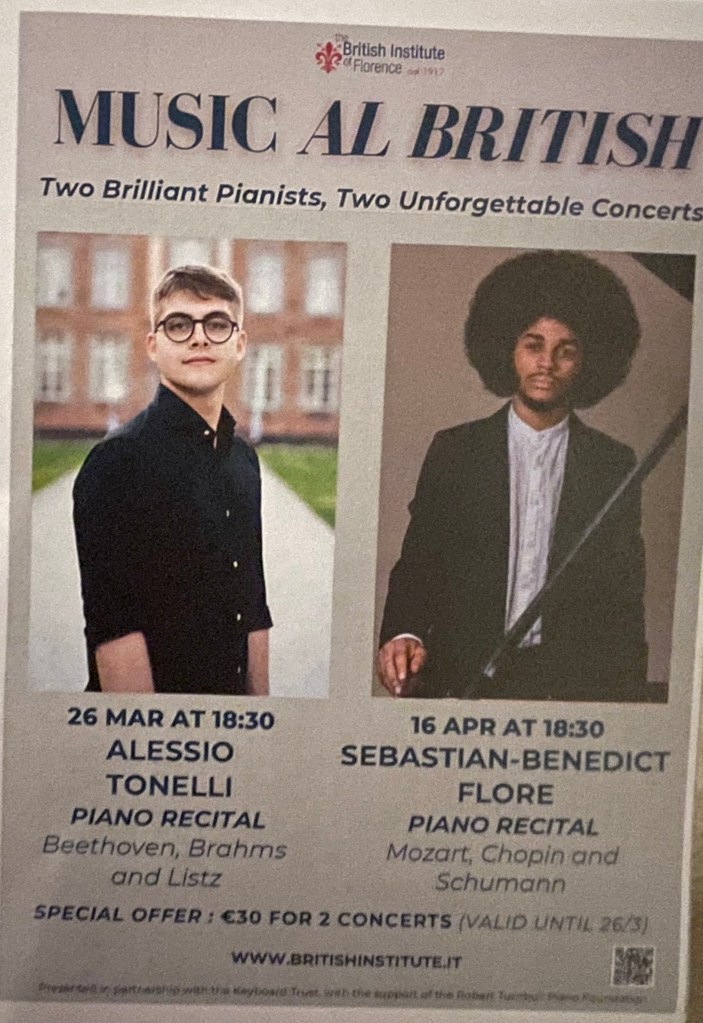
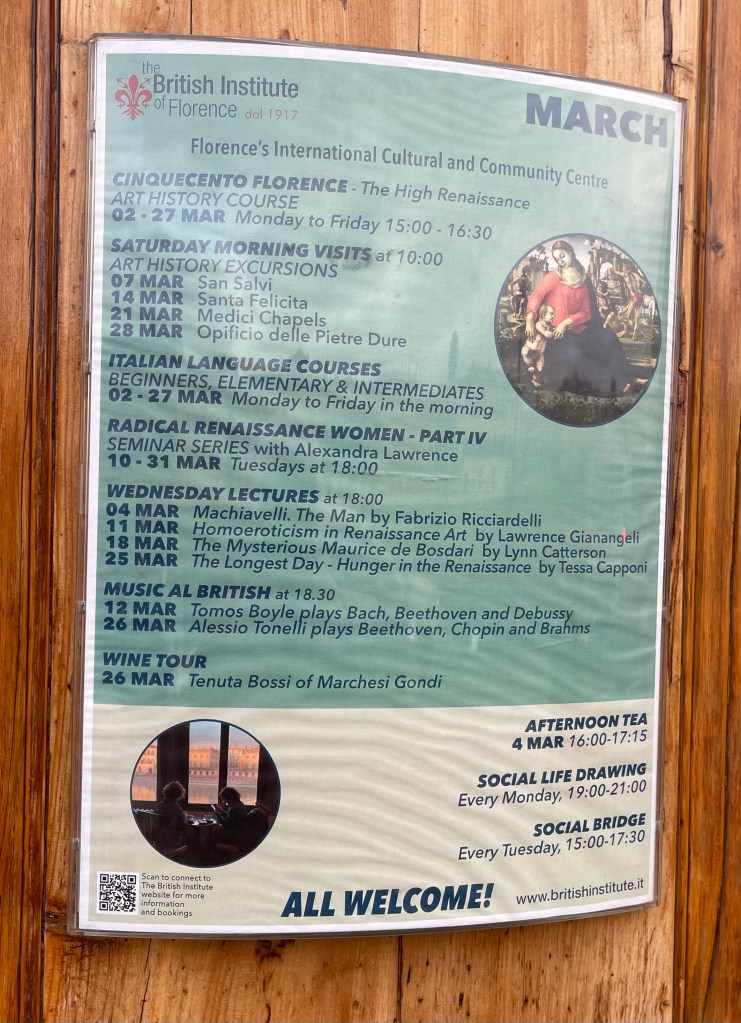
Another three pianists still to come before summer, from the stable of the pedigree pianists of the Keyboard Trust .
Young musicians in need of an audience and with whom Simon Gammell at the British Institute has found a happy collaboration, inviting these young artists to the Museum of the World , to quote the legendary cellist Rostropovich.
The Keyboard Trust tour of Italy continues with Tomos Boyles moving from Florence to Forlì on his way to Venice and Padua.
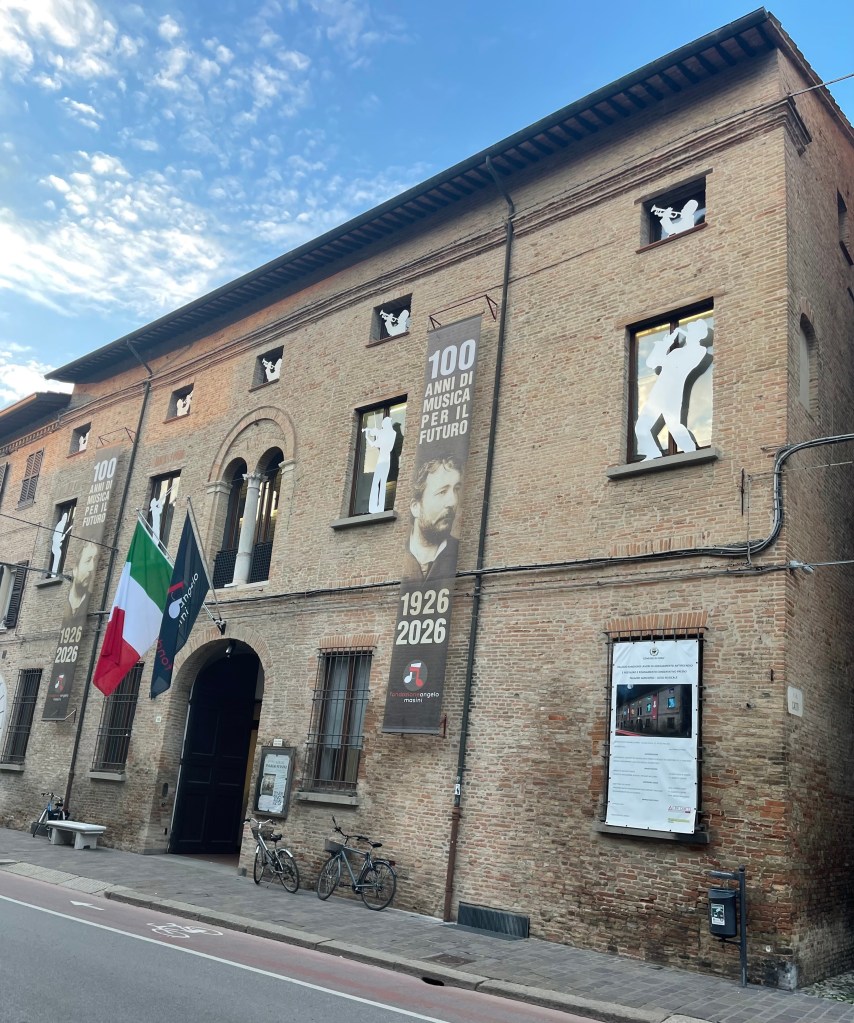
Florence is the museum of the world but Forlì can certainly boast to being a city of vast culture.
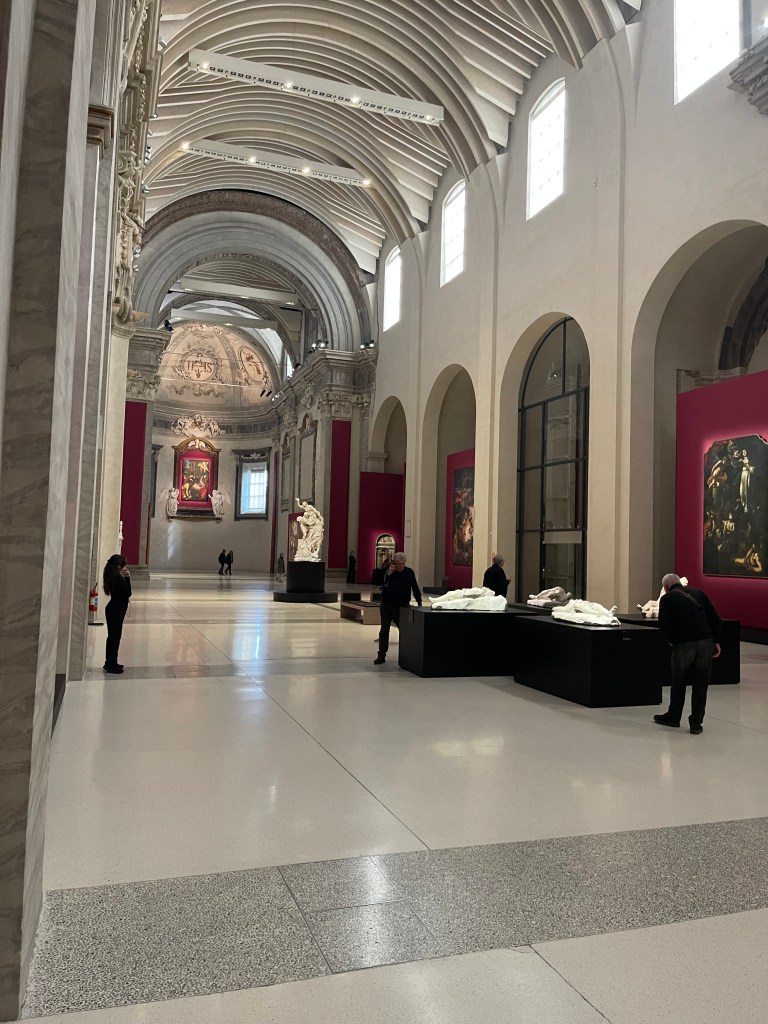
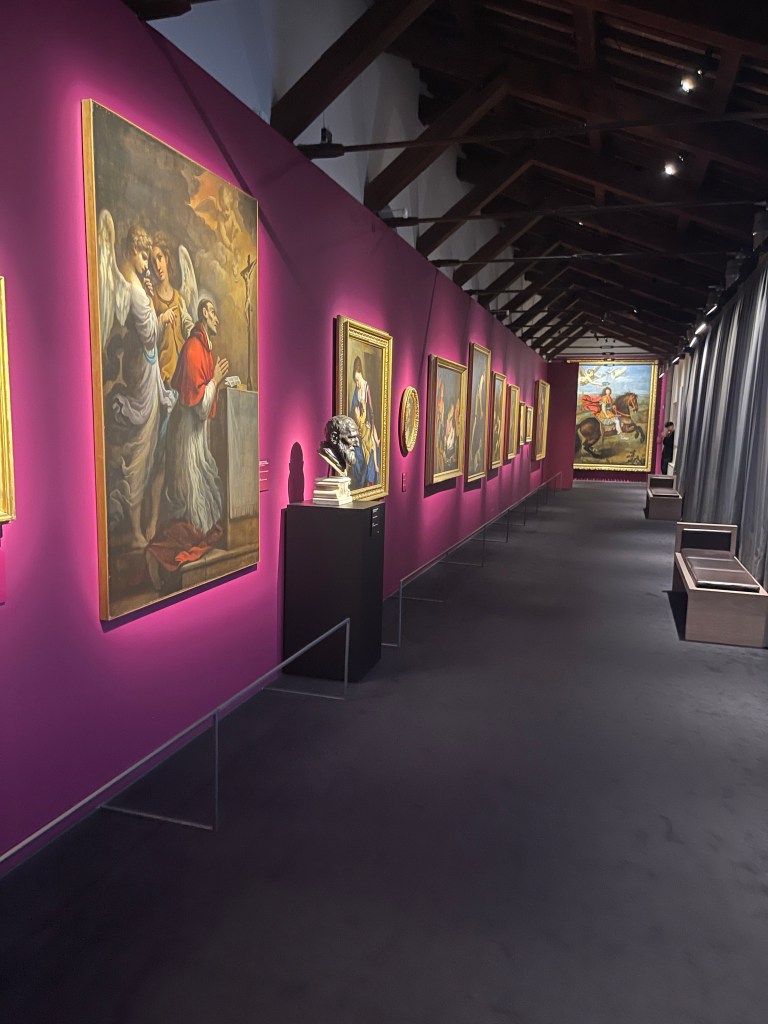
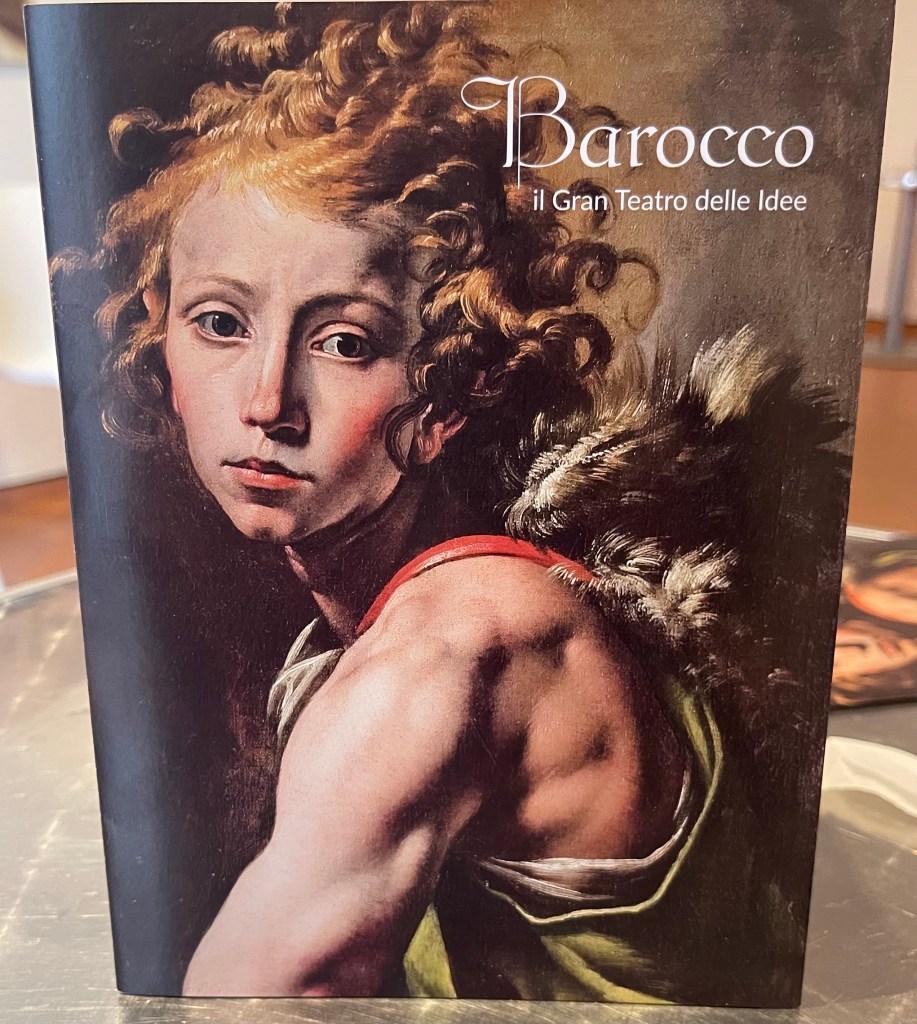
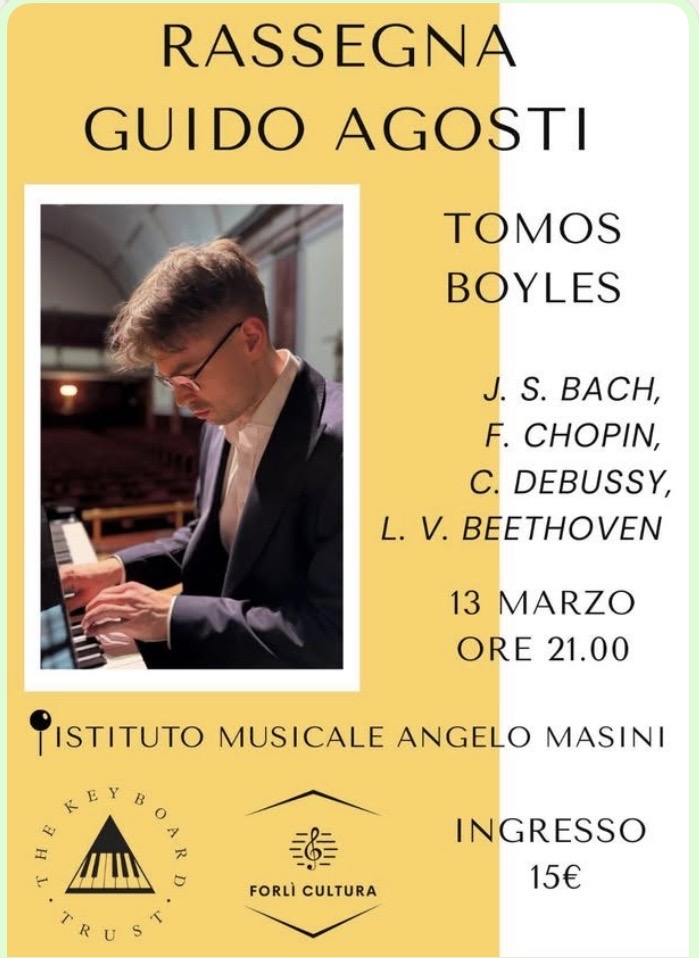
A Baroque exhibition in their magnificent San Domenico Art Gallery where I was astonished to see so many famous paintings and sculptures so beautifully displayed with such intelligence and loving care. Forlì can also boast of being the birthplace and the final resting place of one of the greatest musicians of our age …Guido Agosti.
The musical world used to flock to his studio in the Accademia Chigiana in Siena every summer, where the sounds they heard from this pupil of Busoni have never been forgotten. It has taken another young Forlivese to celebrate Agosti in his home town and bring him the recognition that he has long been denied from his fellow citizens. https://fb.watch/FR4HMcAA24/
Nicolò Giuliano Tuccia , a young aspiring pianist, decided it was time that Forlì celebrated the musician that has been long feted by the world. Coming into contact with Leslie Howard and Christopher Axworthy via the Keyboard Trust, both students and close friends of the Agosti’s. Nicolò Giuliano Tuccia together with his inseparable companion Chiara Bolognesi have created a concert series that is now in its fourth season and going from strength to strength. It gives space to many remarkable young pianists as well as distinguished more established ones, who are being invited to play in Forlì to honour the memory of Guido Agosti.
Martha Noguera ,the 85 year old veteran colleague and childhood companion of Martha Argerich is flying in from Argentina to close the season on the 29th May.
A magnificent Steinway piano that Tomos chose from the two on stage in the Angelo Masini Music Academy, allowed him to show us his quite considerable artistry interpreting works that were particularly close to Guido Agosti himself.
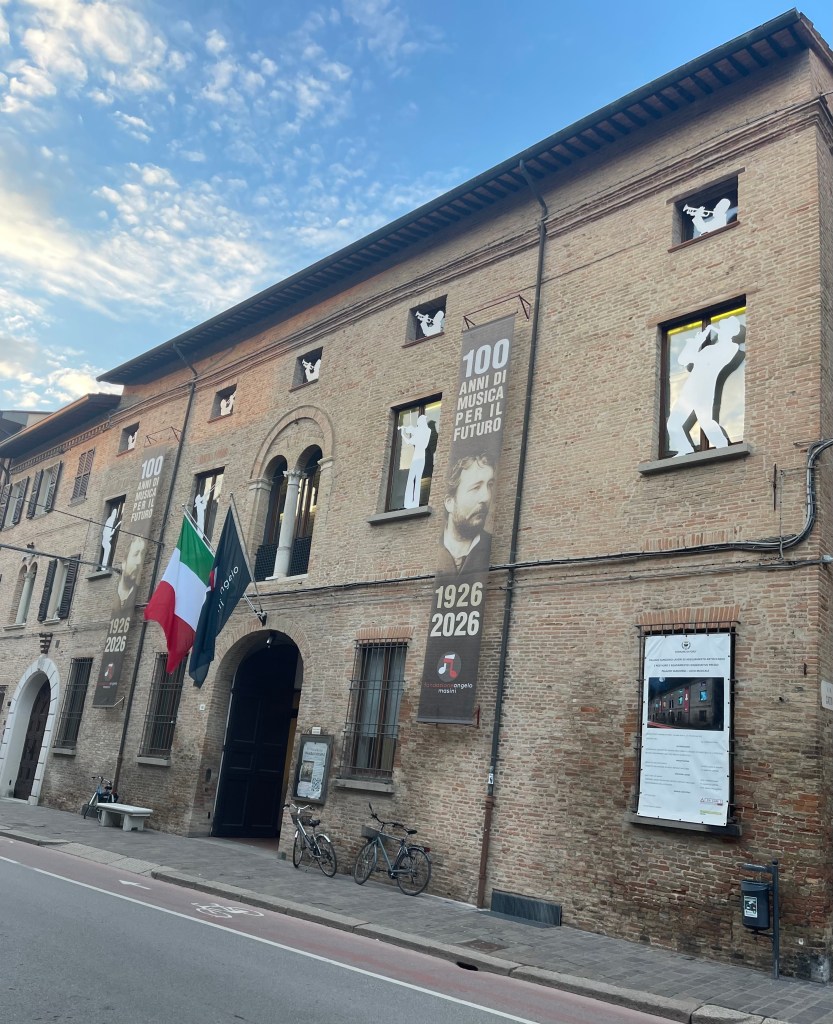
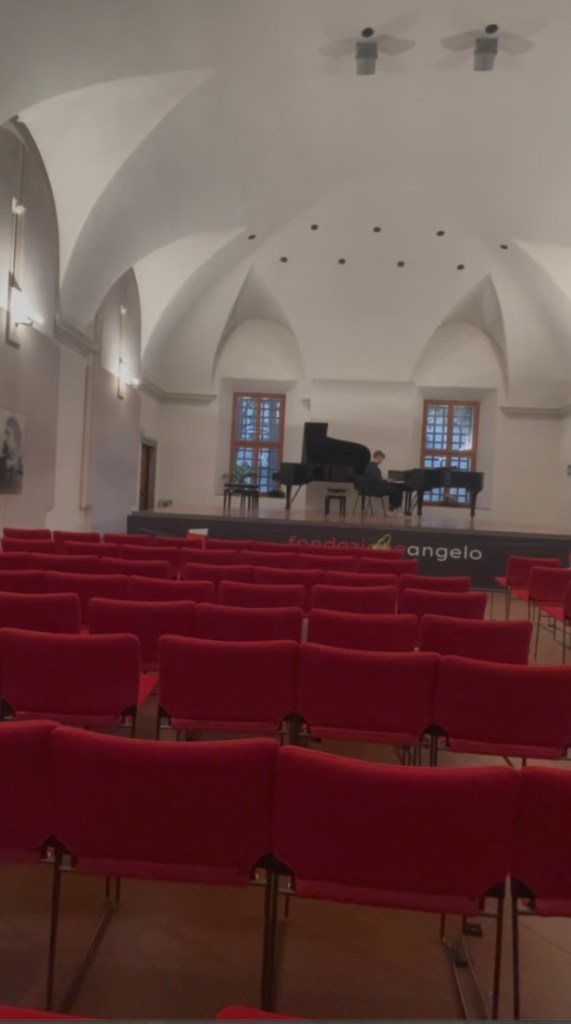
Bach that flowed with mellifluous beauty and the intelligence of a pianist who also is a graduate of Oxford University. It was today that the Chopin Barcarolle had a particular poetic authority of radiance and beauty. Maybe it was the idea that tomorrow he would be playing in the city of dreams that had so inspired Chopin to create his greatest masterpiece. It obviously gave a special meaning to notes that just seemed to pour from his soul with poignant significance, but also with such technical mastery. He played with the weight of a musician who can dig deep into the notes and extract the very life blood from each one with the limpet tenacity of Agosti or Gilels.
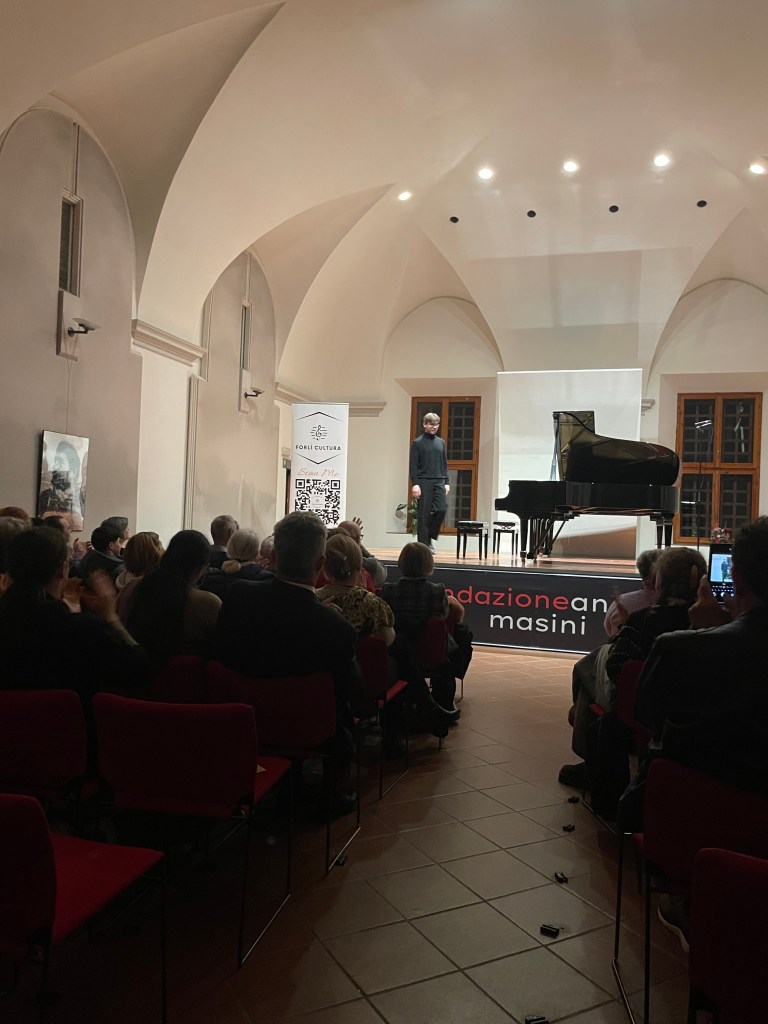
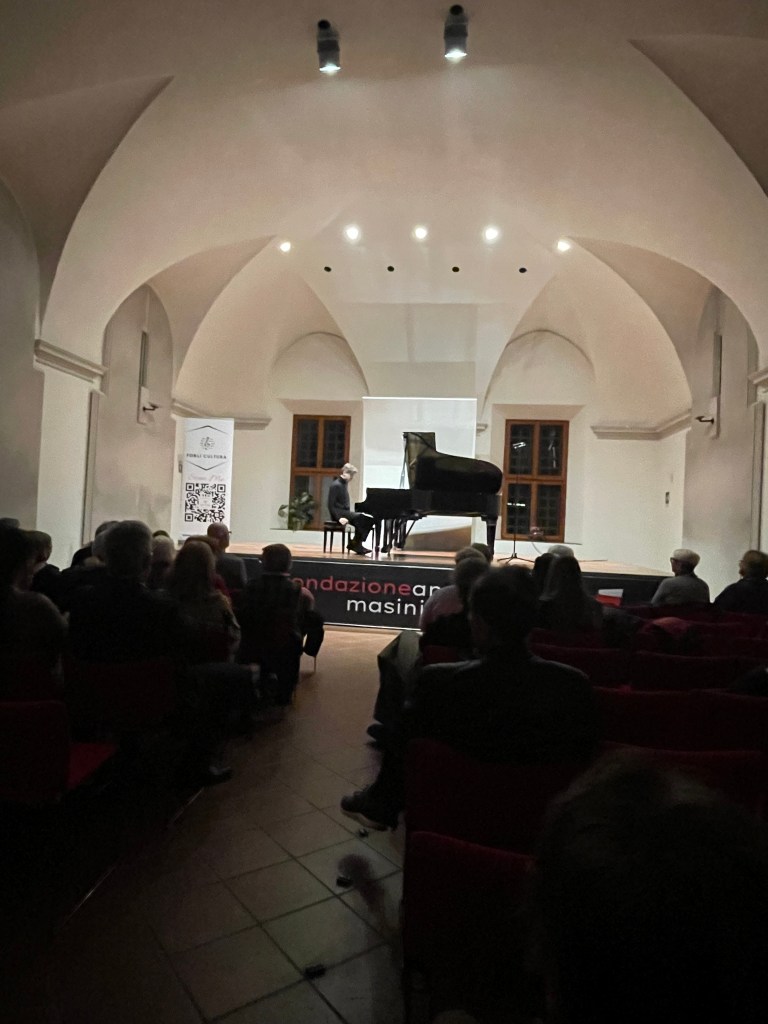
Magical sounds again for Debussy, a composer who Agosti particularly revered, and even dedicated his 80th birthday concert to in Siena. Agosti describing each one of the Preludes with such poetic insights that the concert finished way after midnight and the surprise celebration amongst his family and close friends in 1981 went on into the small hours.
https://youtu.be/yvouQes0h1U?si=nE5fScKMMsKaETzZ
Tomos finished this recital dedicated to Agosti with one of the works that were particularly associated with him.The final trilogy op 109,110,and 111 were indeed works that Agosti had pondered over for a lifetime and op 110 and op 111, I had managed to convince him to play in my series in Rome, thanks to the persuasion of his wife Lydia Stix Agosti and mine, Ileana Ghione. It is also one of the very few recording ever captured of this very private musical genius.Tomos gave a monumental performance where the final trills after Beethoven’s supreme exultation created a magic silence at the end, where the entire audience were united as one, in a moment of sublime communal creation.
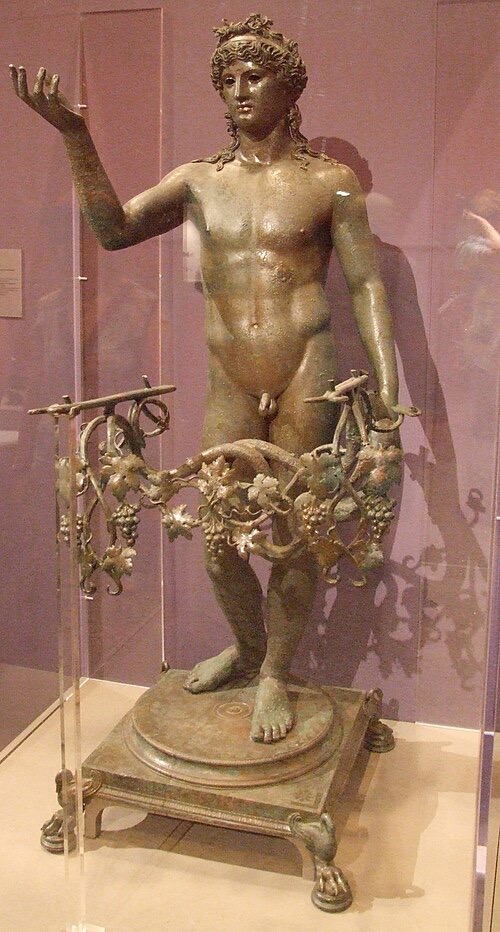
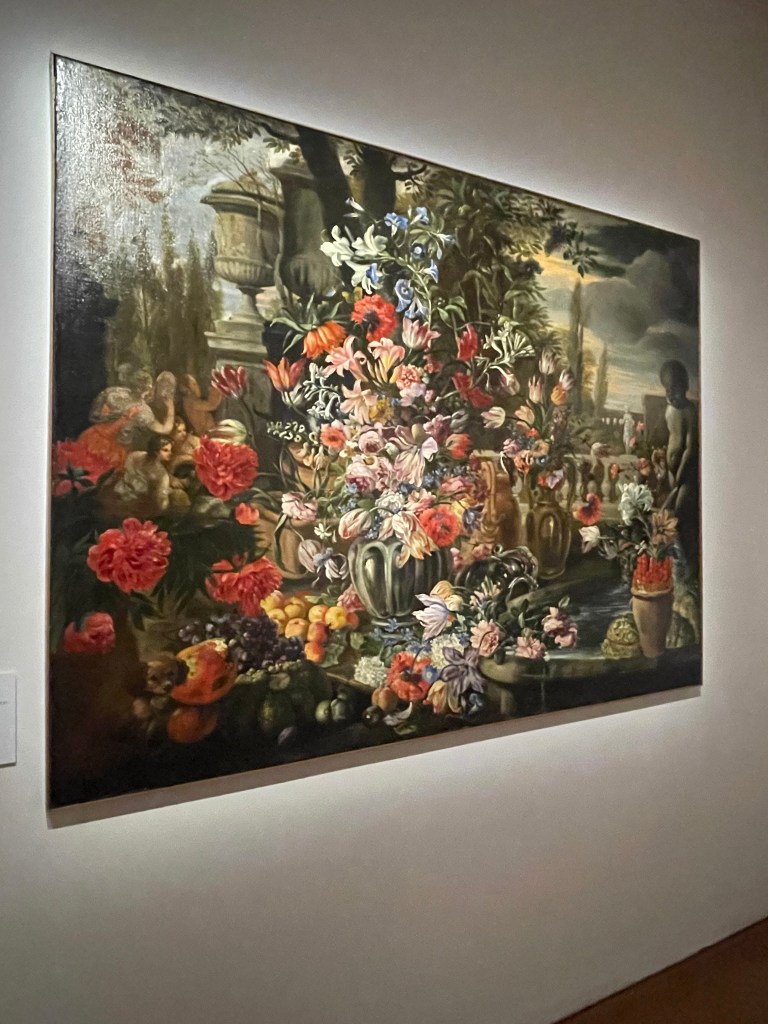
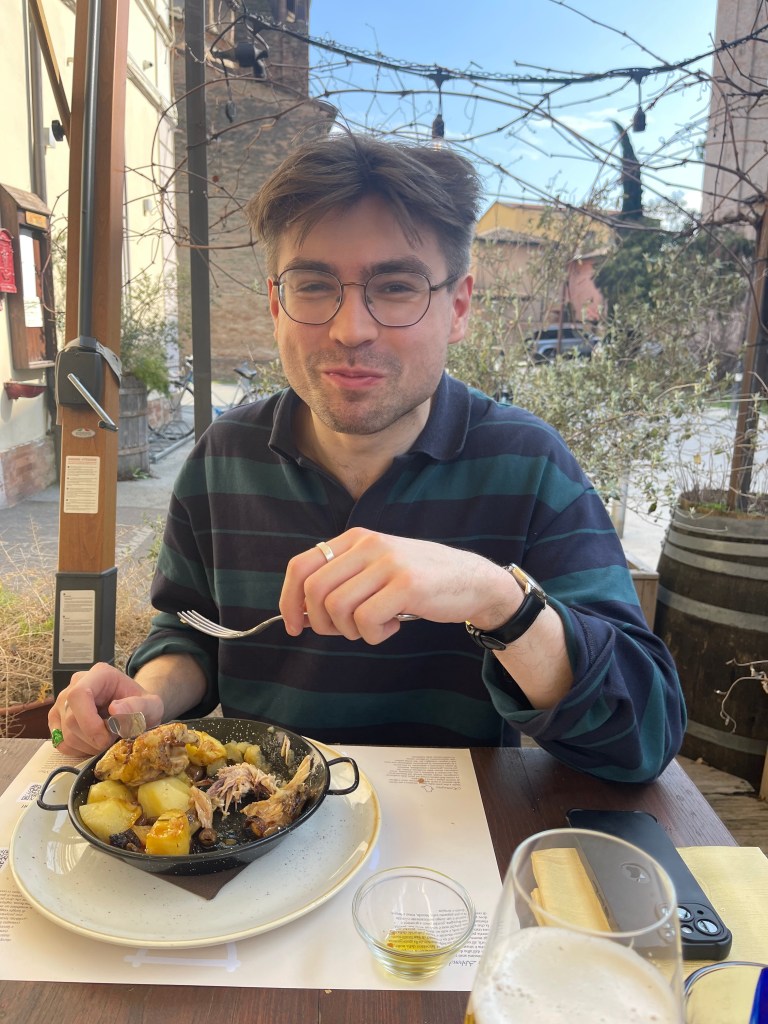
Tomos had no intention of playing an encore after that, but Nicolò implored him to play just one more work.The Étude Tableaux in E flat minor on this superb Steinway, with a pianist and audience now elated by such music making, was played with transcendental mastery, where passion and nostalgia were united with fearless bravura ………..Schiff may have said after music there is only silence ……but he obviously had not contemplated the God , Bacchus , who has the power to calm and console after such poetic exhilaration.
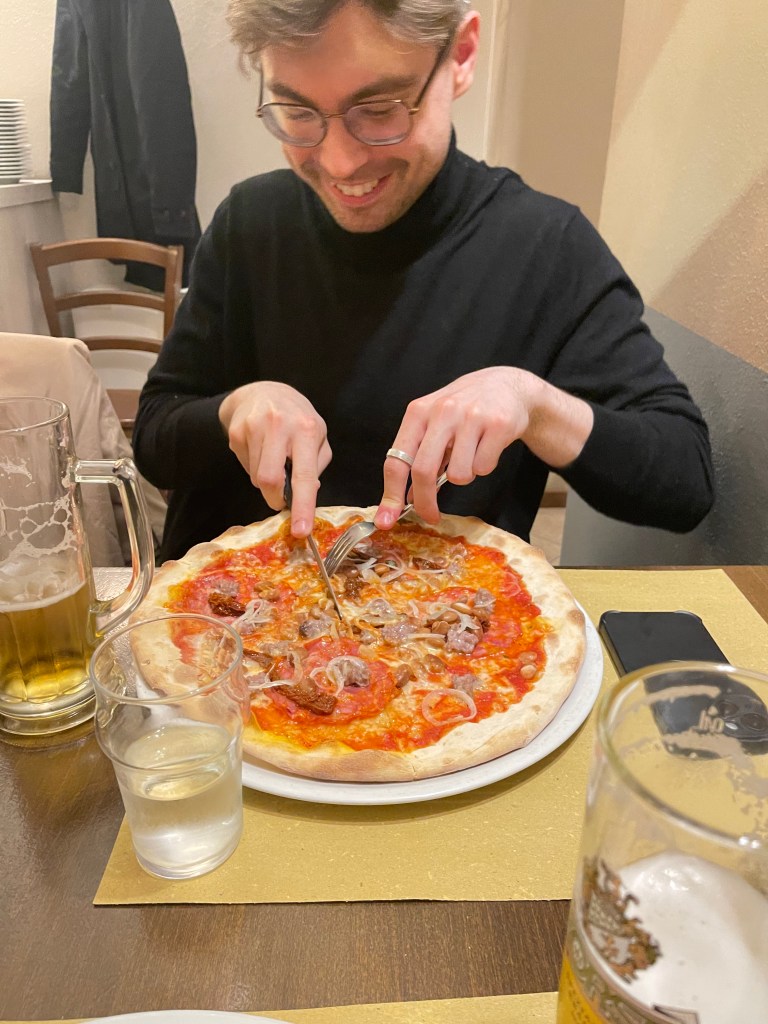
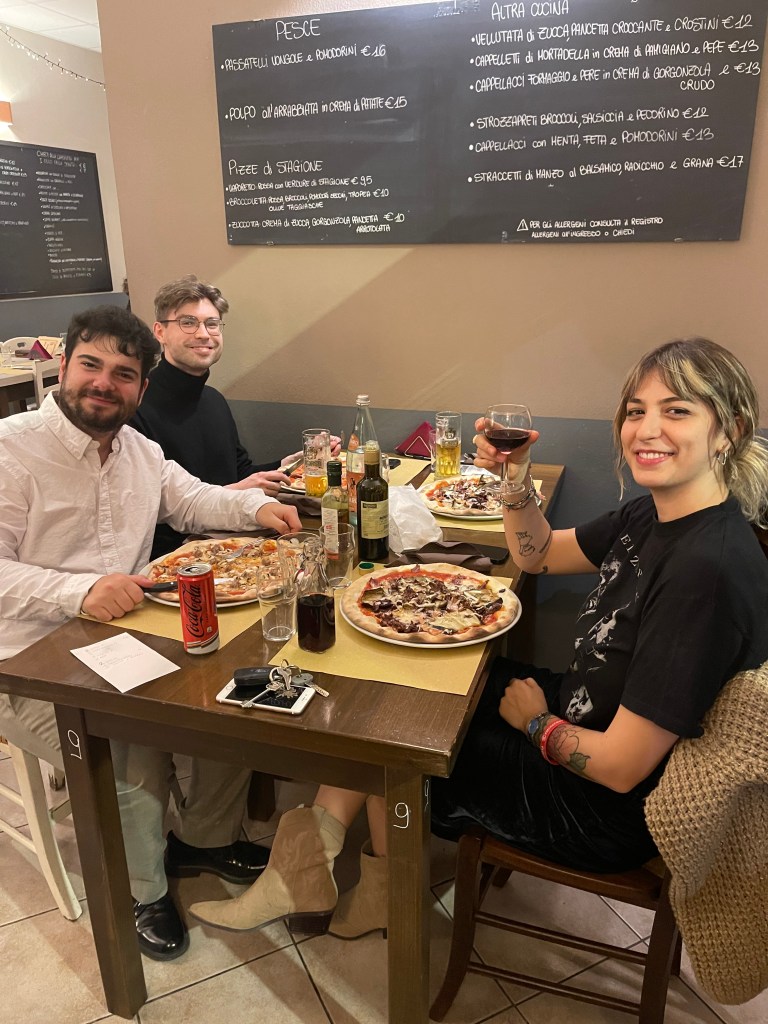
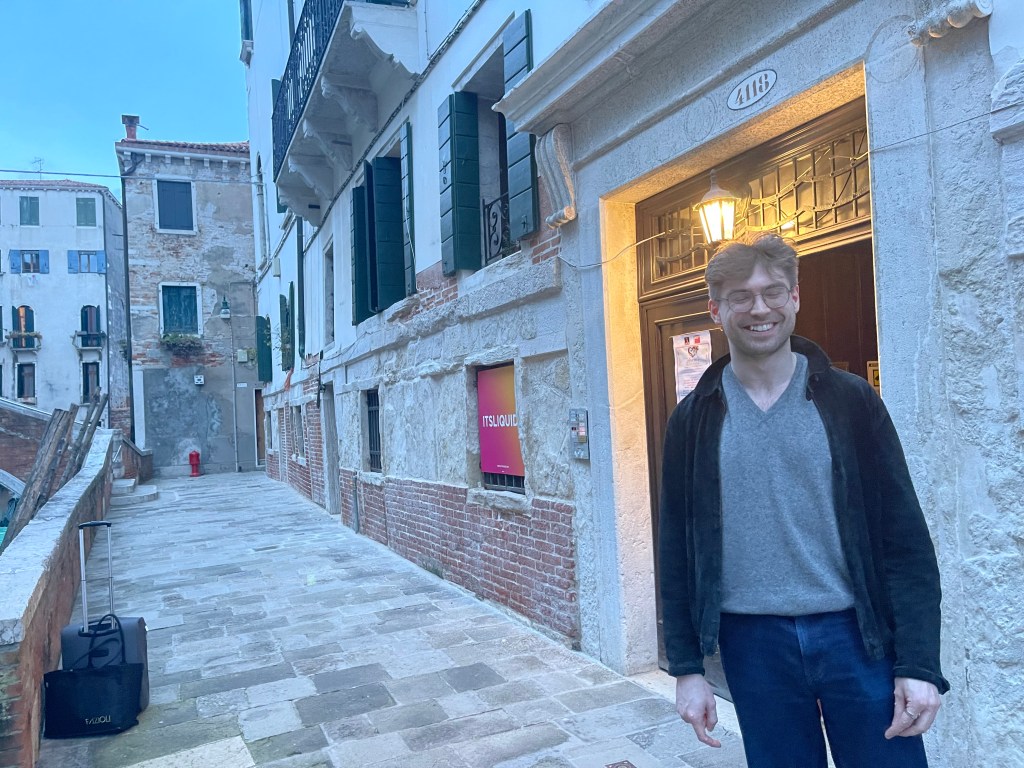
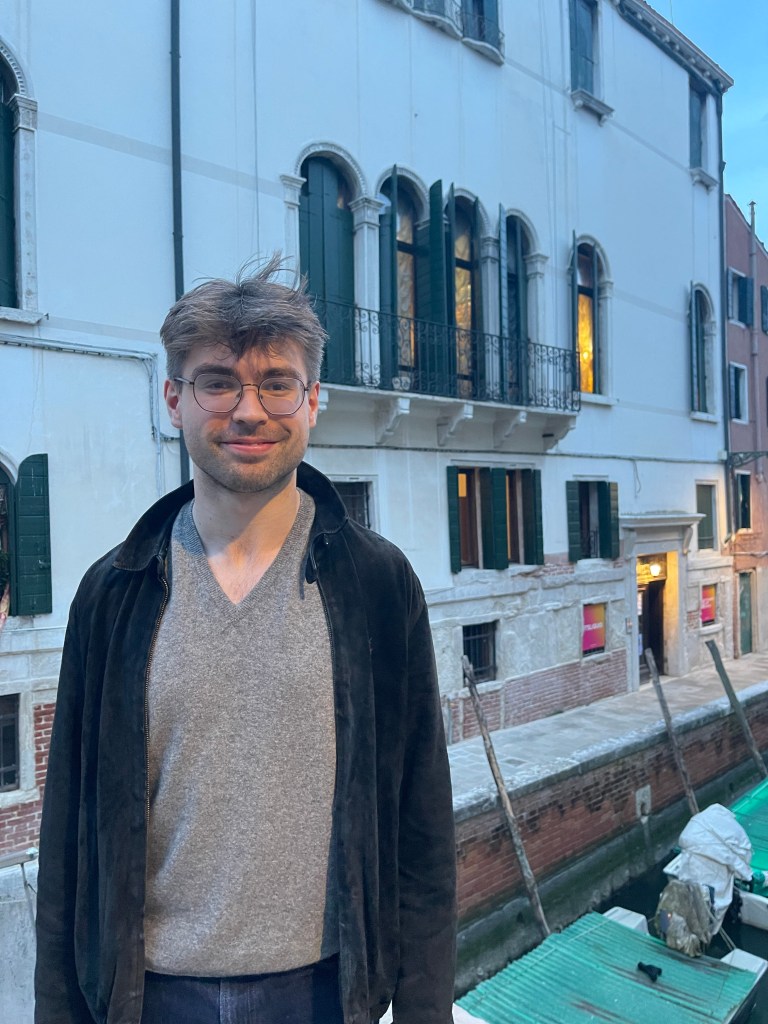
After a much needed Pizza celebration, Venice now awaits.The third concert in this Keyboard Trust tour of north Italy arriving in Venice in the sumptuous salon of the Palazzo Albrizzi Capello with Prof Albrizzi welcoming Tomos to his family home.
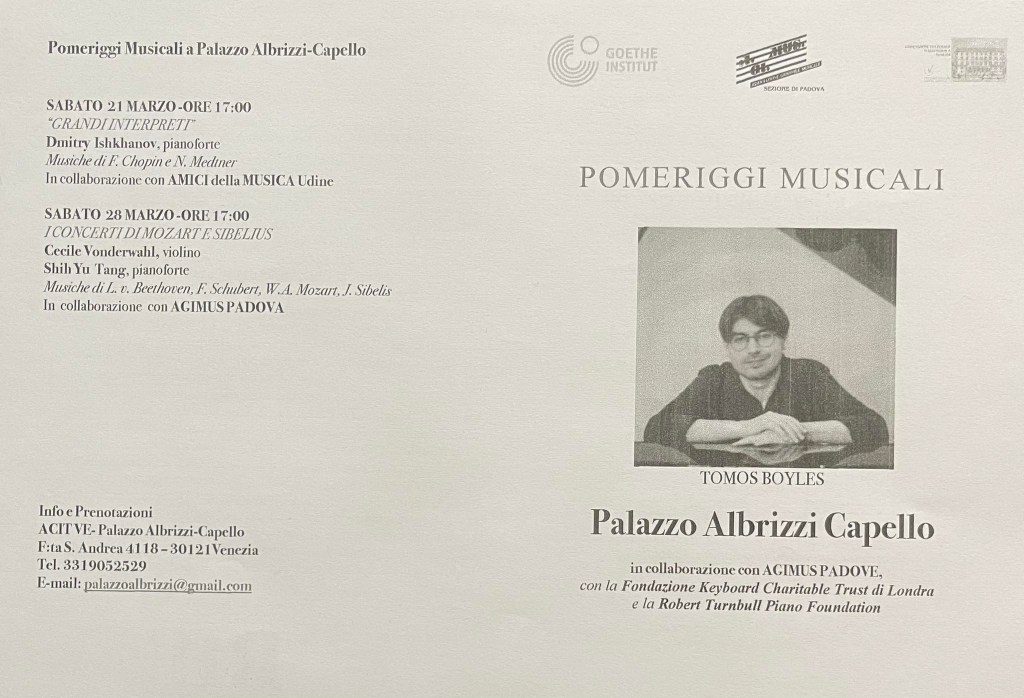
A fine Kwai piano, donated to the hall by a patron from a Villa in Liguria, had made the journey a few years ago, by road and boat and miraculously arrived intact ready to give the opportunity to many young musicians to play in the city of dreams.
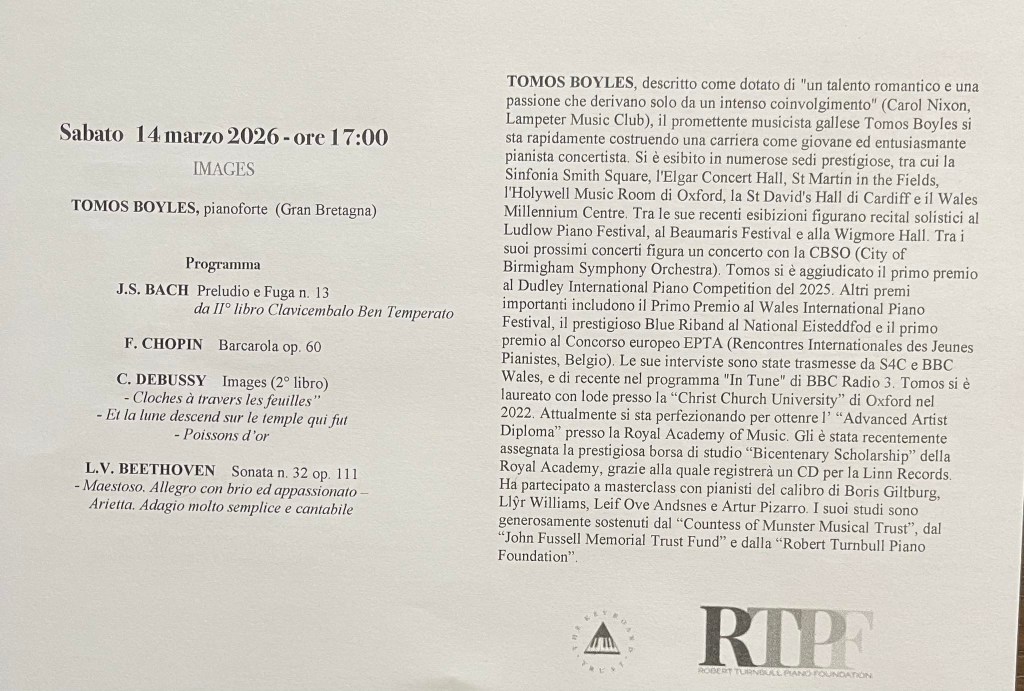
Part of the training for young musicians is to play a programme three or four times in a row and to cope with travel and constant changes, but still allow the music to sound fresh and perfectly minted .
Today Tomos rose to the occasion with experience gained from his student days in Oxford, when he had to cope with finding time to continue his piano studies with Rusten Hayroudinoff in London whilst completing his degree in Christ Church Oxford . Sacrifice and hard work resulted in a first class honours degree. With time now to dedicate himself totally to the piano, his talent has been already recognised at the Royal Academy with numerous special awards and enviable recognition from the much vaunted Kirckman Concert Society.
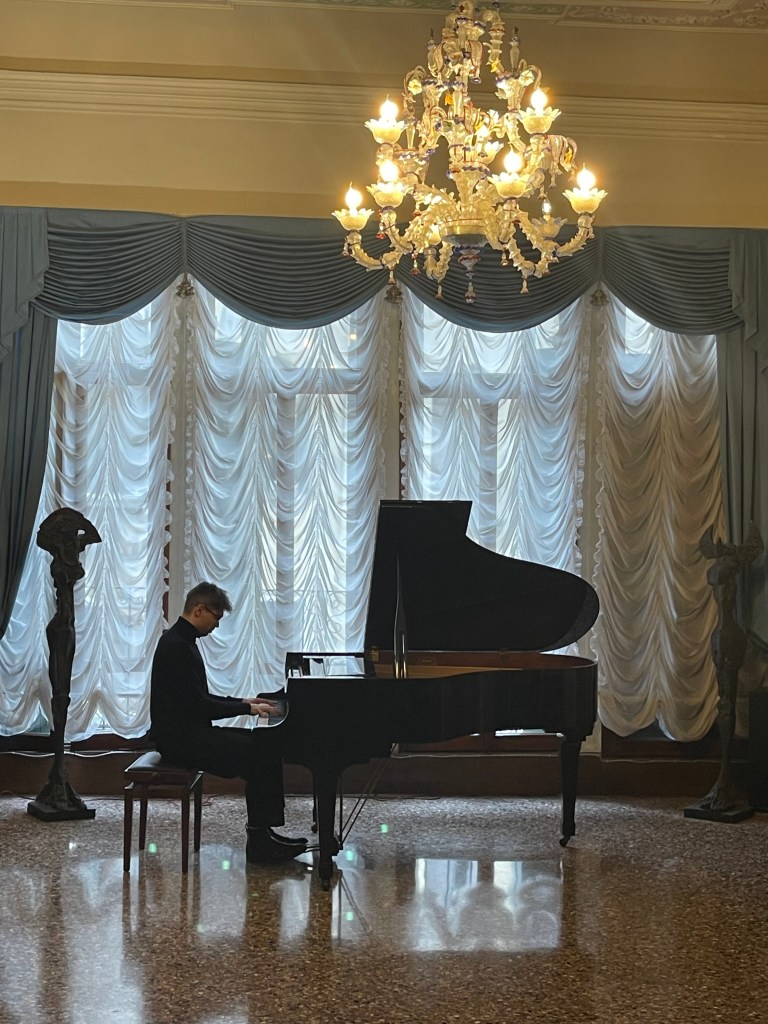
Playing today to a small but very appreciative Saturday afternoon audience Tomos demonstrated his professional qualifications, giving the finest performances so far of his tour programme .
A slight change of programme where he decided on the spur of the moment to play a Bach Chorale Prelude in the sublime arrangement of Busoni, instead of the Prelude and Fugue in F sharp,
This was the fresh air he needed that allowed him to reach even greater heights.
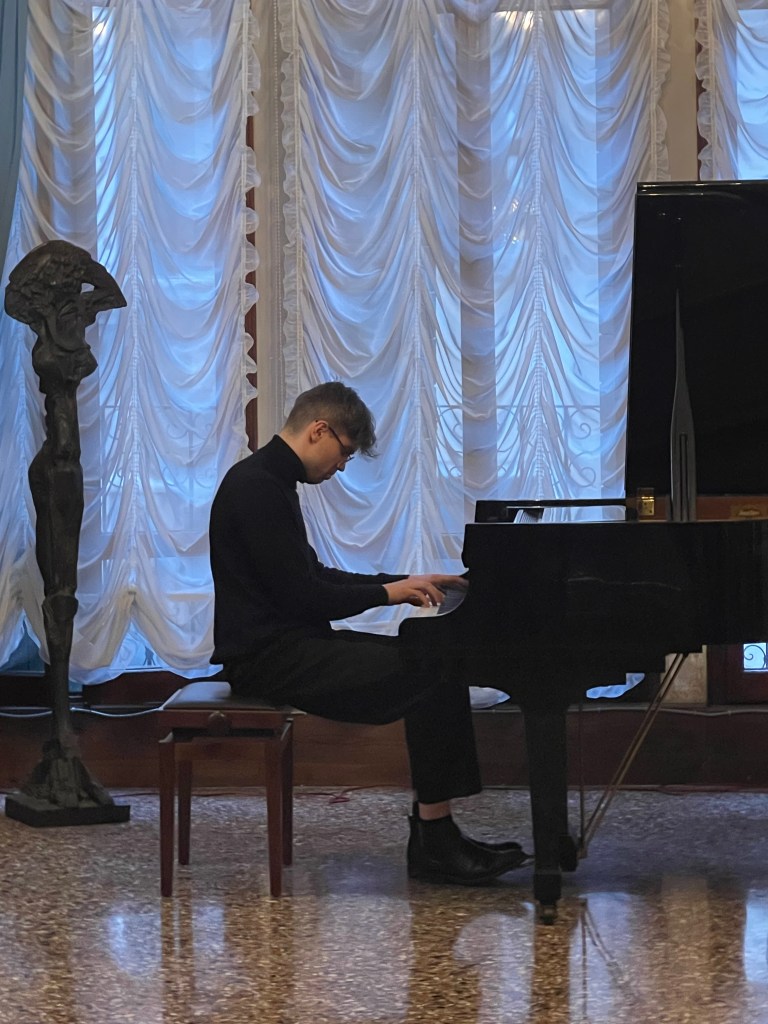
Chopin’s ‘Barcarolle ‘ was inspired by this magic city that the composer had never visited but could envisage with his supreme poetic invention. A genius who could reveal secrets hidden within the piano as no other before or after.
This Kwai gave great solidity to a work that can suffer from too much improvised fluidity in lesser hands. Tomos brought delicacy and strength to Chopin’s masterpiece with moments of ravishing seduction contrasted with passionate strength and a sumptuous rich palette of sounds.
Debussy too had an architectural line that did not deny the subtle delicate figurations of a composer inspired by the poetic mastery of Chopin. A composer of original genius but with the tone palette inspired by Chopin, who with the advent of the sustaining pedal could continue the search for poetic meaning and atmosphere, which Tomos understood so well.
The strident very positive sounds of this Kwai allowed Tomos to give a fearlessly monumental performance of the ‘Allegro con brio’ of Beethoven’s last piano sonata. Moments of reflection contrasted with Beethoven’s irascible impatience as Tomos could insert these oases of peace into a tempest of unrelenting insistence . The long echo of C major with final whispered vibrations were imbued with the same breathless energy as a world was opened up for one of Beethoven’s most poignant statements
The ‘Arietta’ came as a blessed relief as Beethoven comes to terms with life and over a series of variations can bring this opening contemplation to glistening ethereal radiance . Tomos played with poetic understanding allied to a technical mastery that allowed the music to move forward with commanding authority. The authority of a poet not that of a mere technician.
There was a wind of change today at this half way mark of the tour as we had to get Tomos back from the Green room to play an encore for an audience who had no intention of breaking the magic spell he had created.
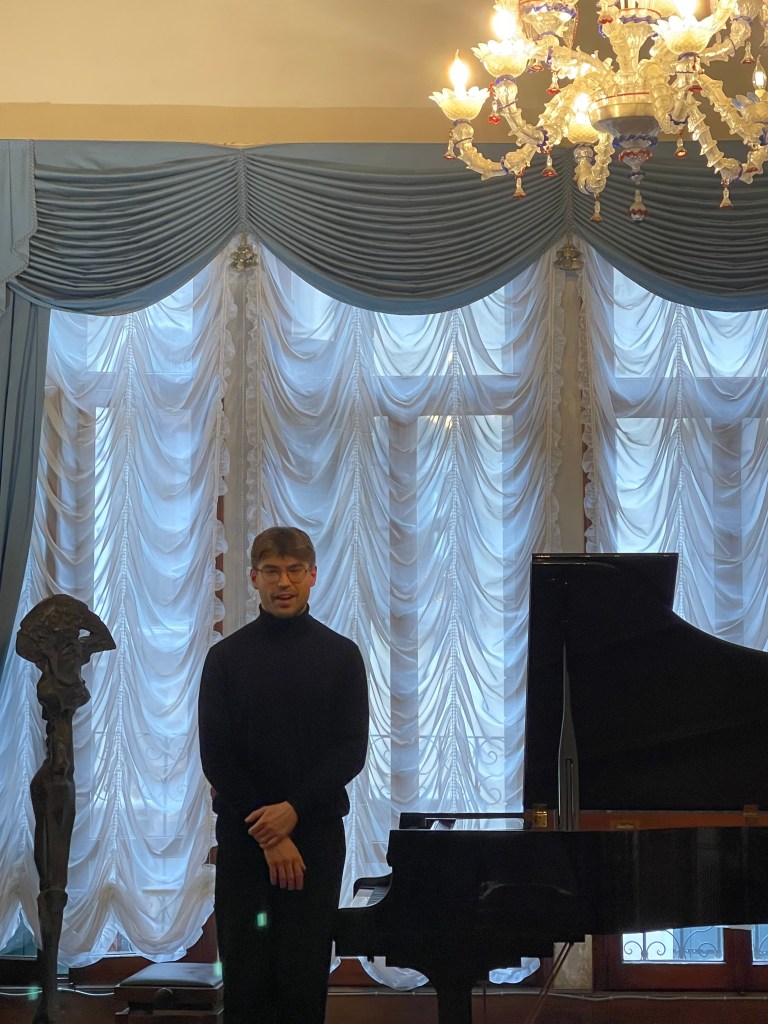
Tomos returned and chose another Étude Tableaux by Rachmaninov, the last op 38 n 9 , which he played with commanding authority and a brilliance that finally brought us back to earth and ready to cross the lagoon on the way to the next stop, Padua……….and torrential rain !!
The fourth stop for Tomos Boyles with his Italian tour touches Padua. An historic university city of art where music, art and cuisine combine adding to the noble beauty of Padua.
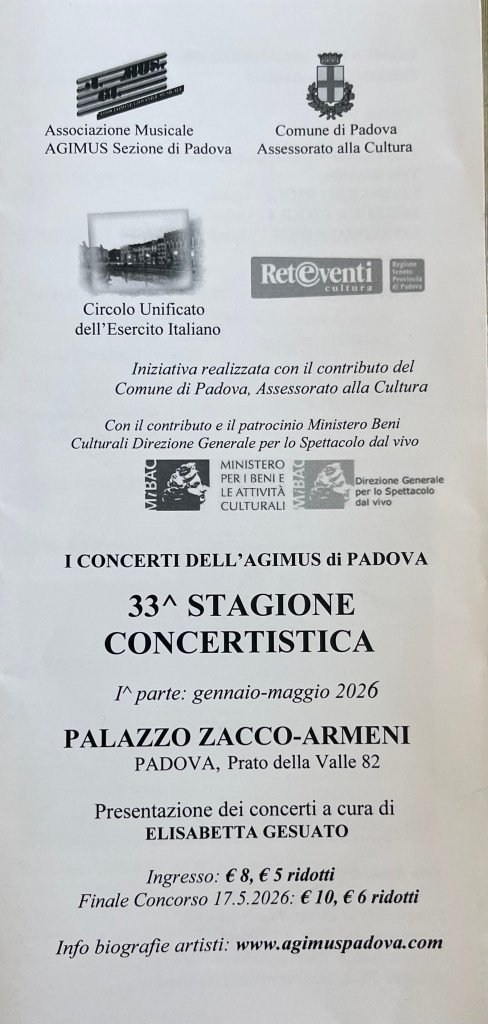
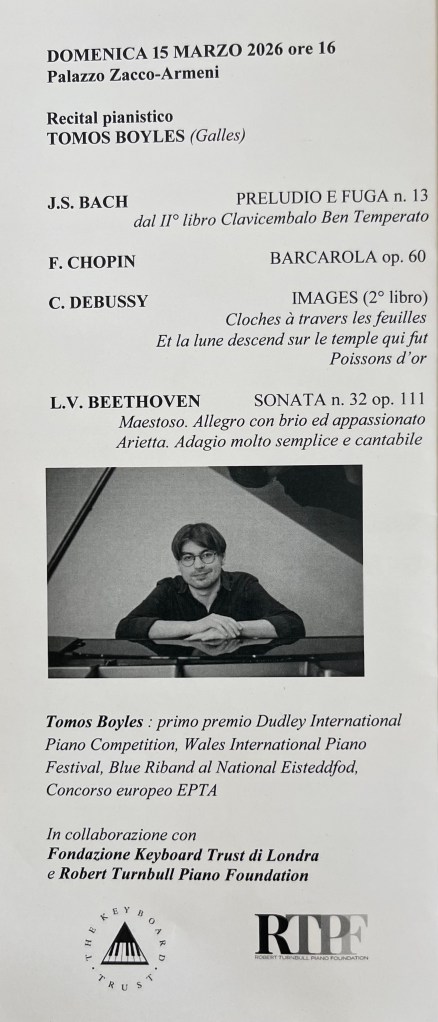
A city that has not seen an invasion of tourism and is frequented by Padovani who love their city and flock to the open air cafés and restaurants. They also flock to concerts as we saw on Sunday with the historic Sala dei Giganti full, at eleven in the morning, for the final concert in the Young Italian Artists series of Filippo Juvarra’s Amici della Musica. https://christopheraxworthymusiccommentary.com/2026/03/15/padua-ringing-to-the-sound-of-music-with-giona-pasquetto-and-kristofer-gjoni/
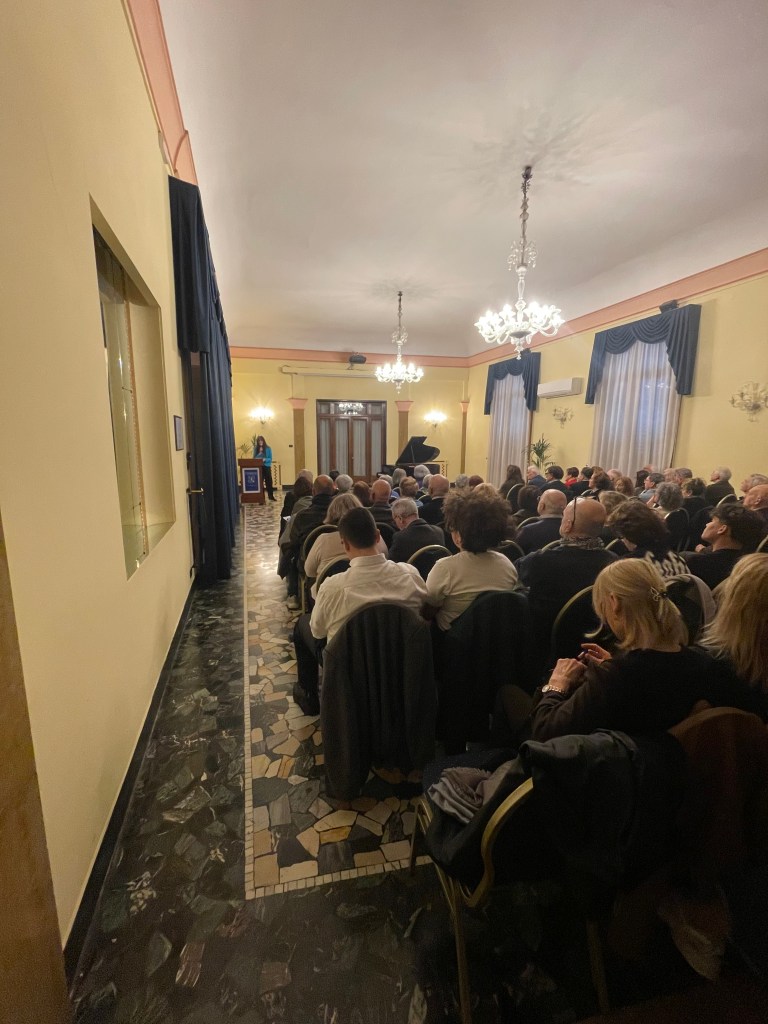
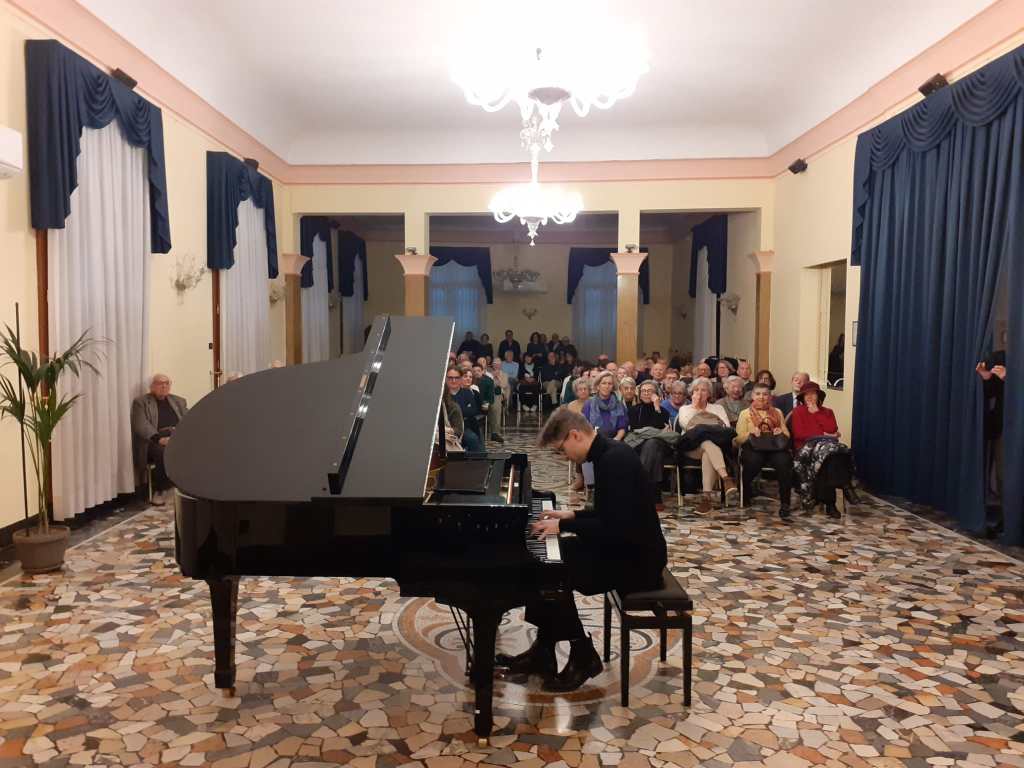
And in the afternoon a full house for this year’s much awaited Keyboard Trust artist , a partnership with AGIMUS that John Leech and Noretta Conci had sealed many years ago.
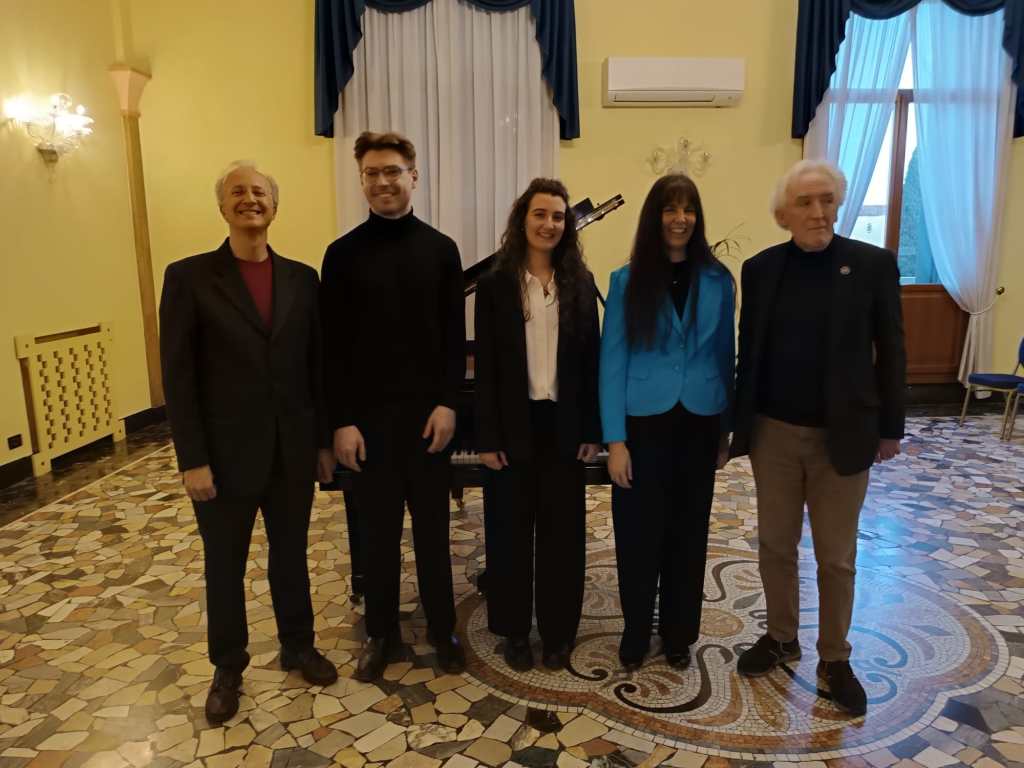
Elia Modenese and Elisabetta Gesuato have been heroically promoting young artists in Padua for the past thirty three years. Both professors in conservatories, but also a husband and wife piano duo team with many CD’s to their name. And now their 19 year old daughter about to graduate with her father at the piano as a violinist of quite considerable potential.
Tomos presenting his programme on a very fine Yamaha with a slightly changed order to the programme to ensure the interval began with a ‘bang’ . So Debussy’s Gold Fish was moved to second place and Chopin’s Barcarolle was the masterly performance that we took with us to the all important interval.
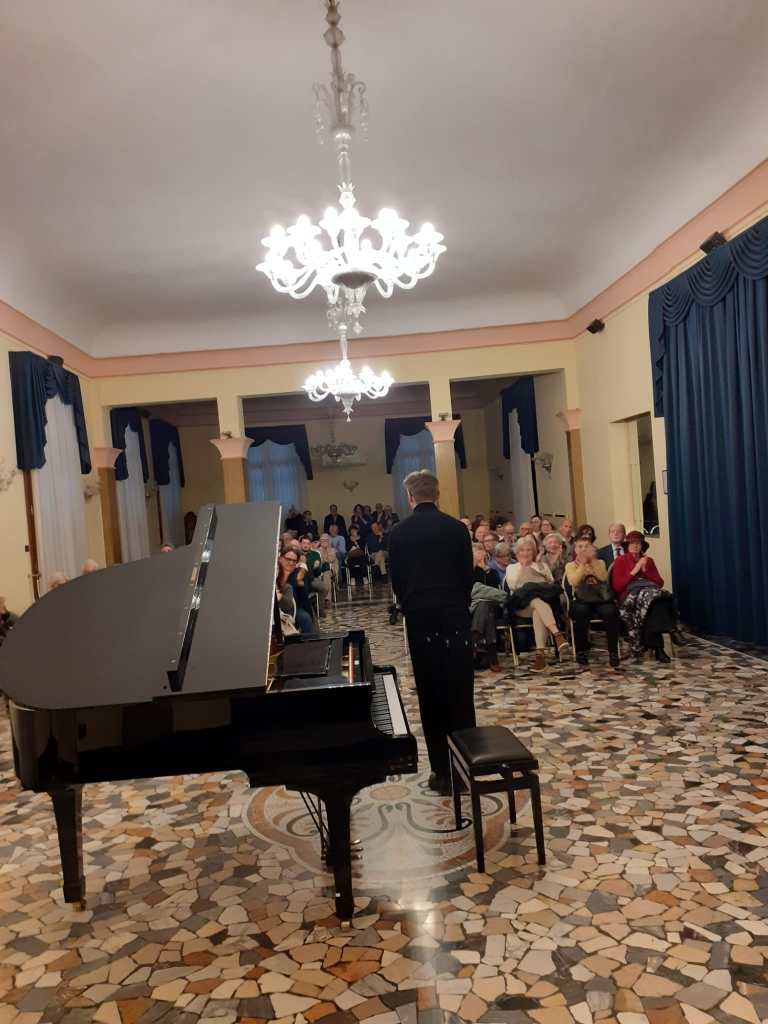
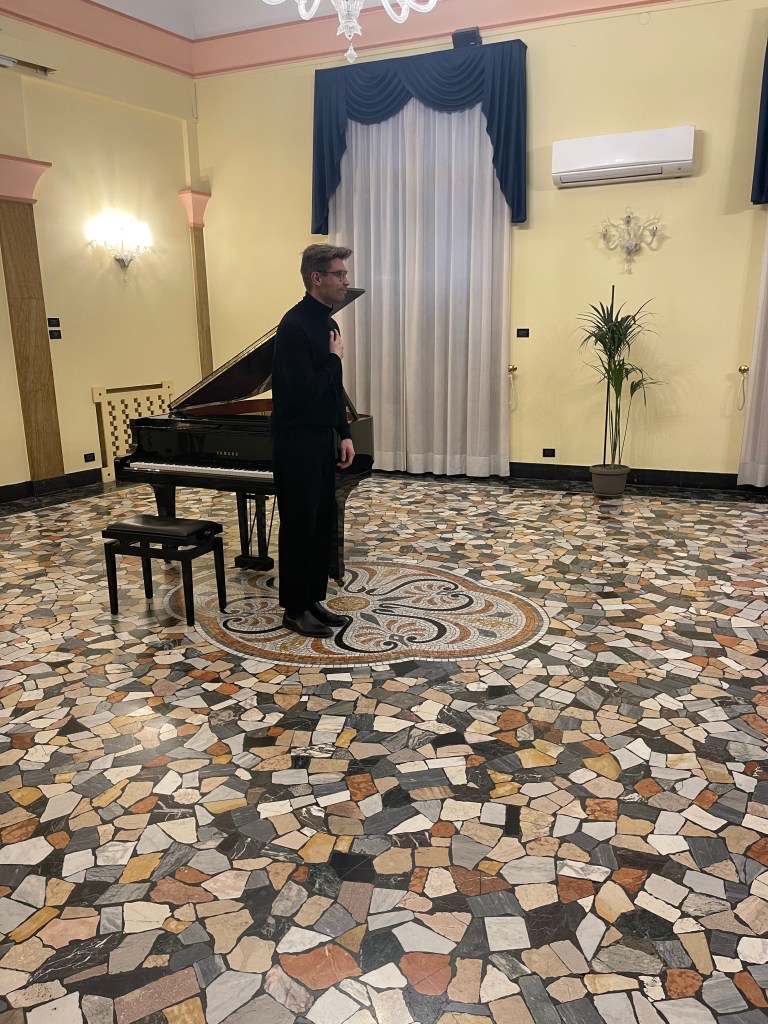
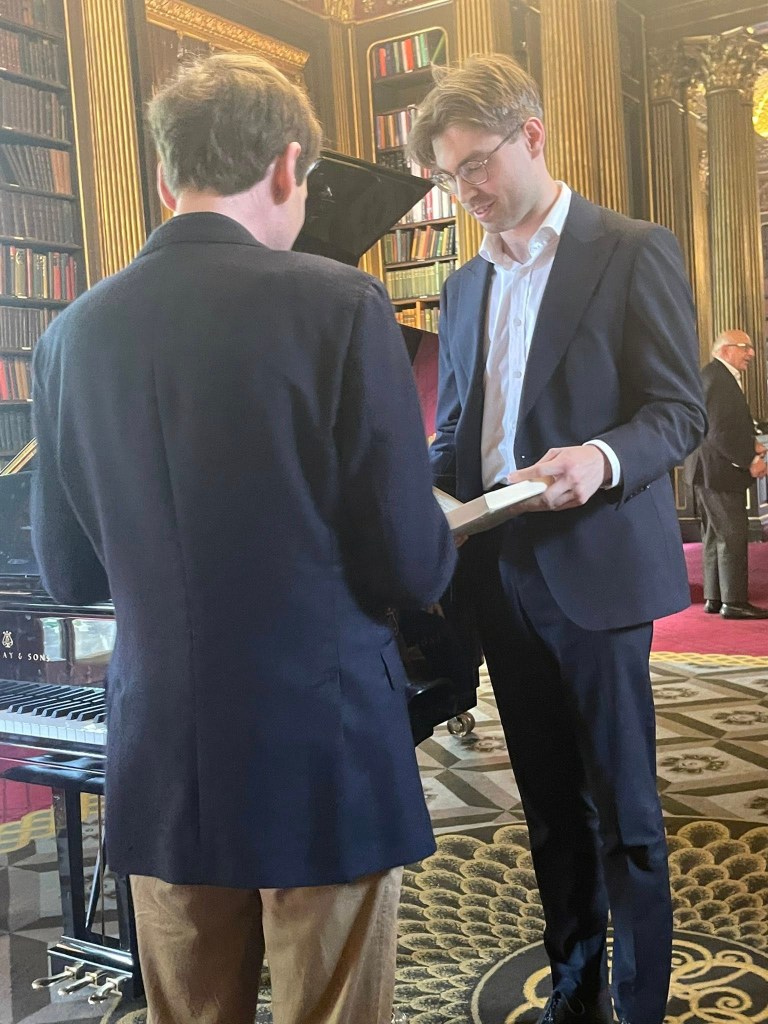
A time for the refined Paduan’s to talk to each other and discuss the performances that were unfolding. It is this warmth and wish to communicate that was demonstrated to Tomas by the queue at the end of the concert of people who wanted his autograph on their programme , but above all wanted to tell him personally how much they had been moved by his beautiful performances.
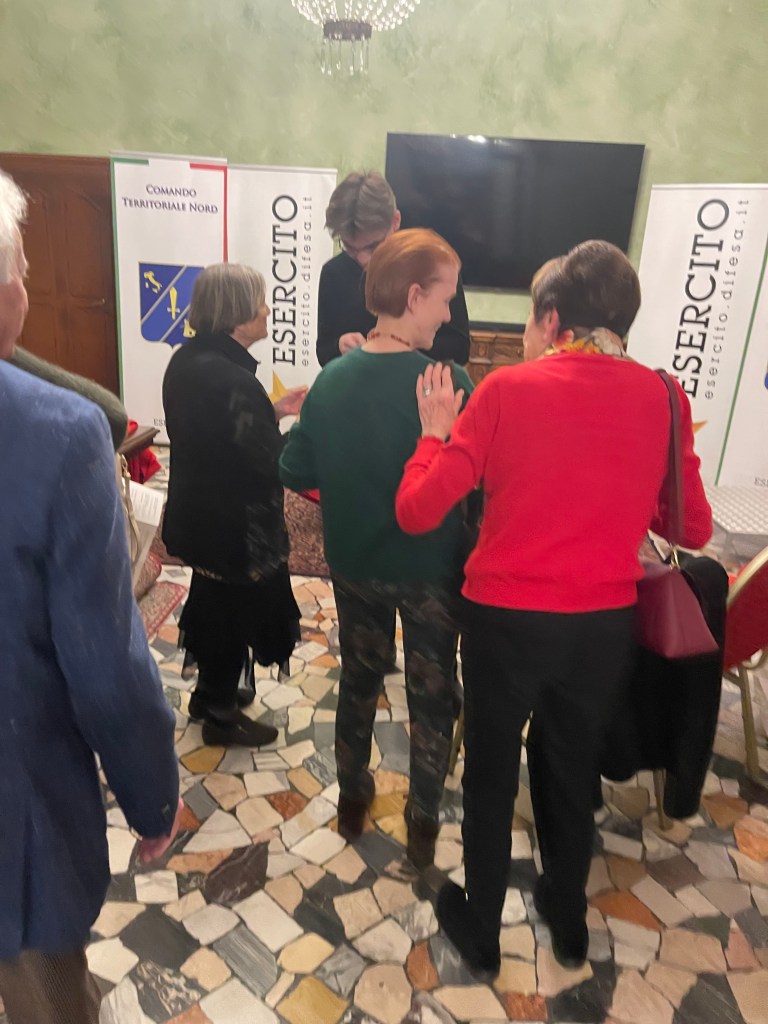
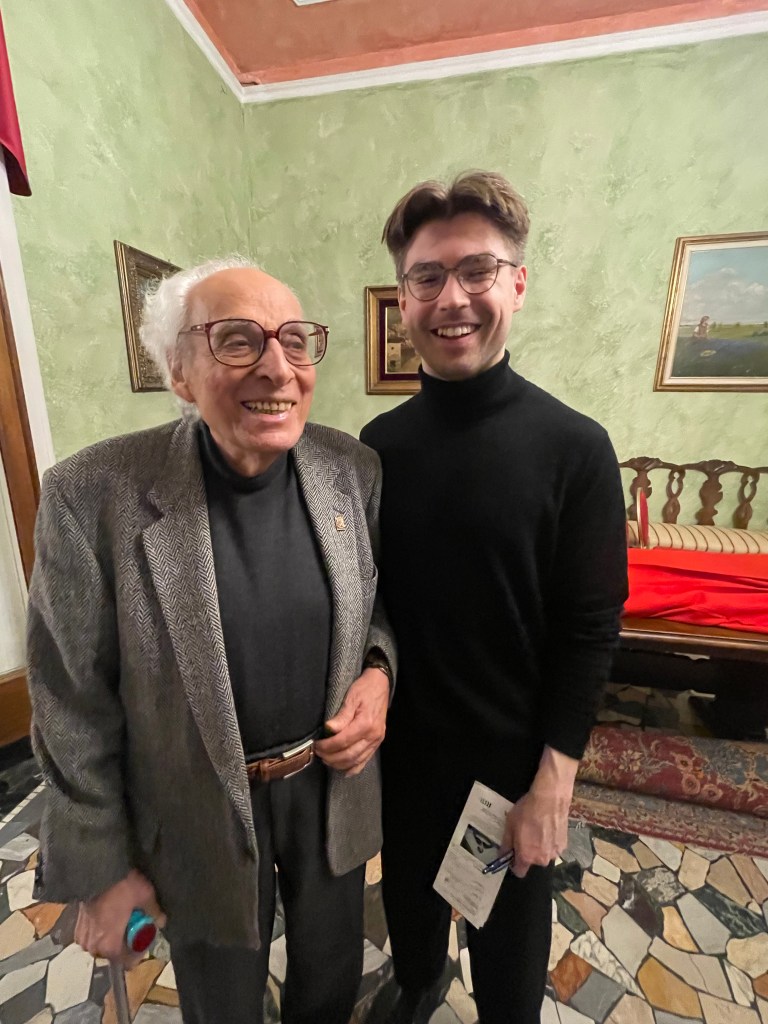
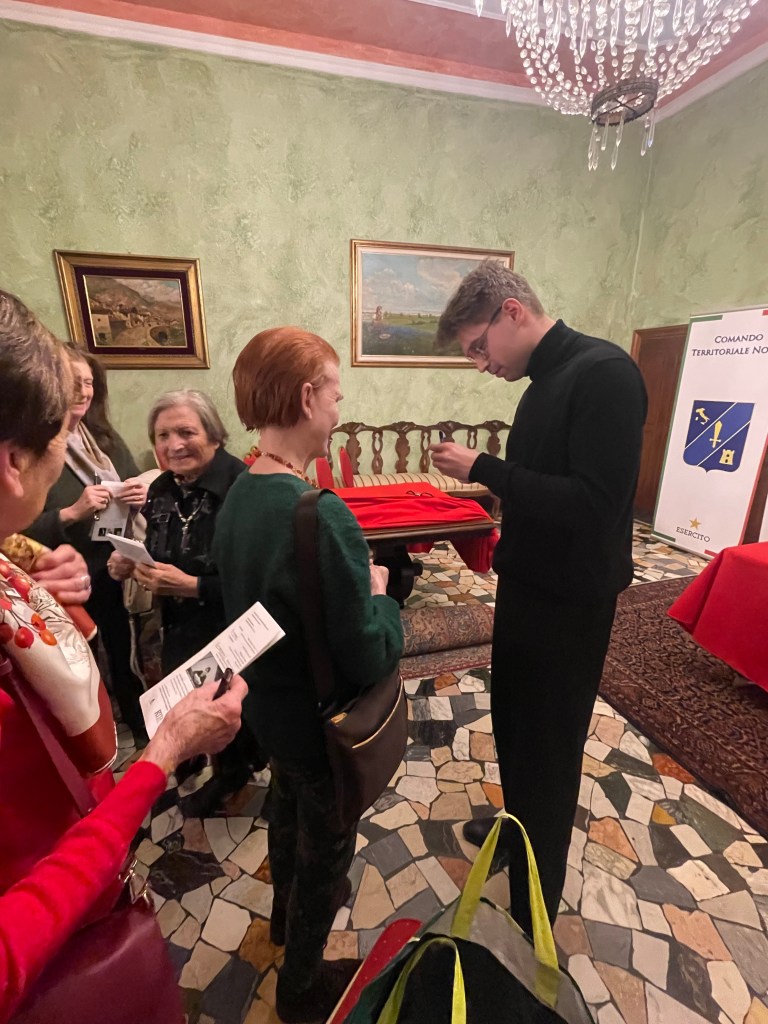
In fact after an even more authoritative performance of Beethoven, Tomos played the Etude Tableaux op 39 n 9 which again finished a magnificent recital on a high, after the deep concentrated farewell of Beethoven.
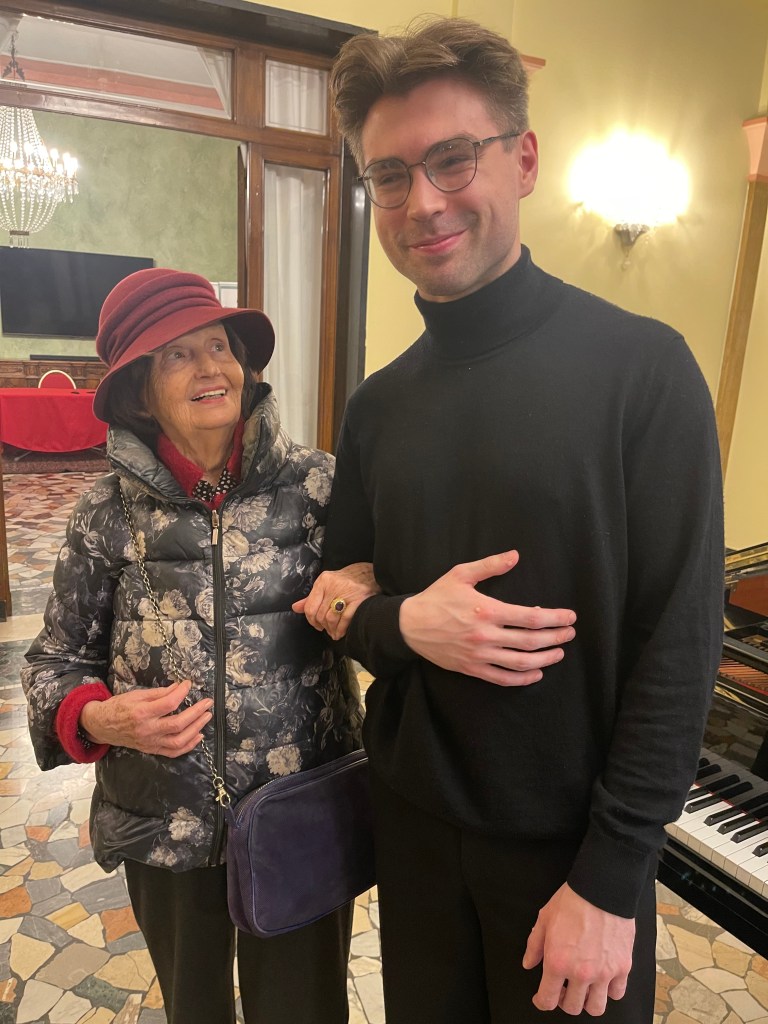
Another success secured and luckily we managed to get into the restaurant next door in this beautiful square of Prato della Valle for a sumptuous feast that only the Paduans know how to provide.
Their simple ‘cordon bleu’ mastery demonstrated by the fact that without a booking you will be very hard put to find a seat in any of the restaurants in this beautiful, vibrantly alive city. A city ,where the sound of Music but above all Culture and warmth of Communication, are priorities in life.
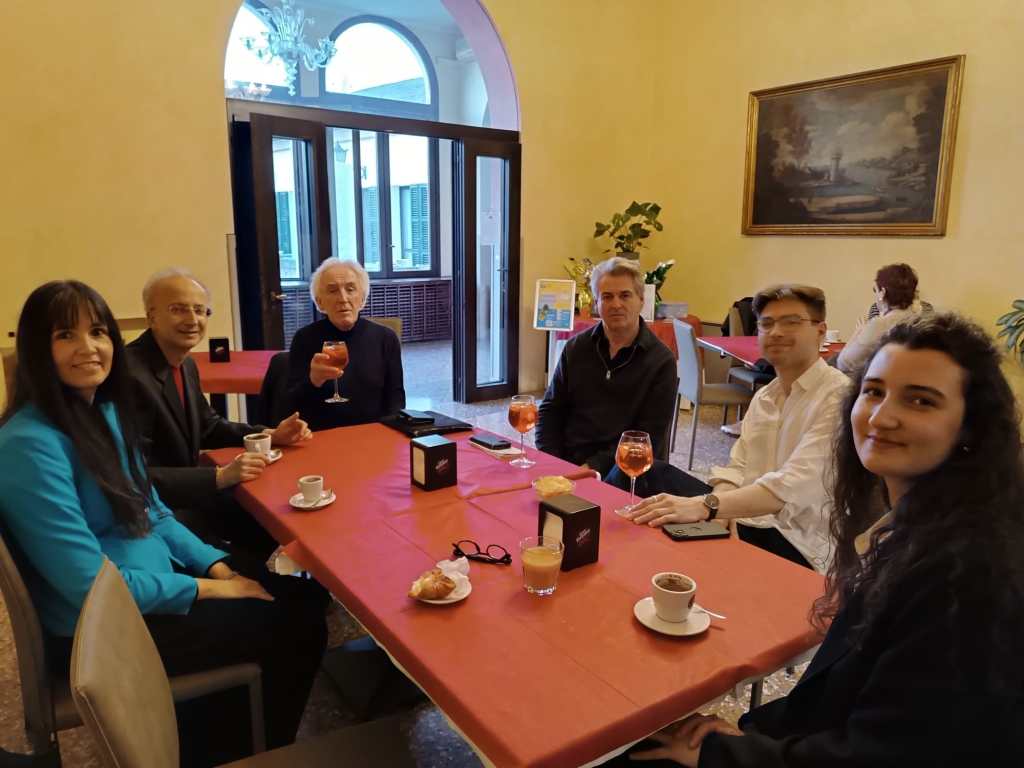
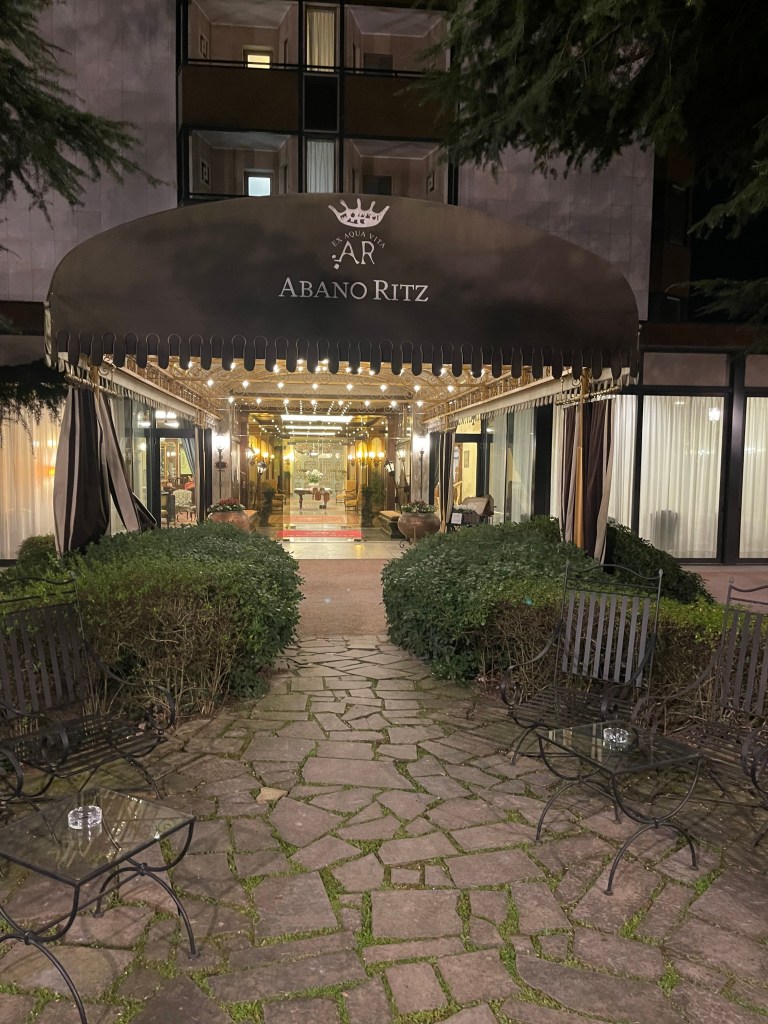
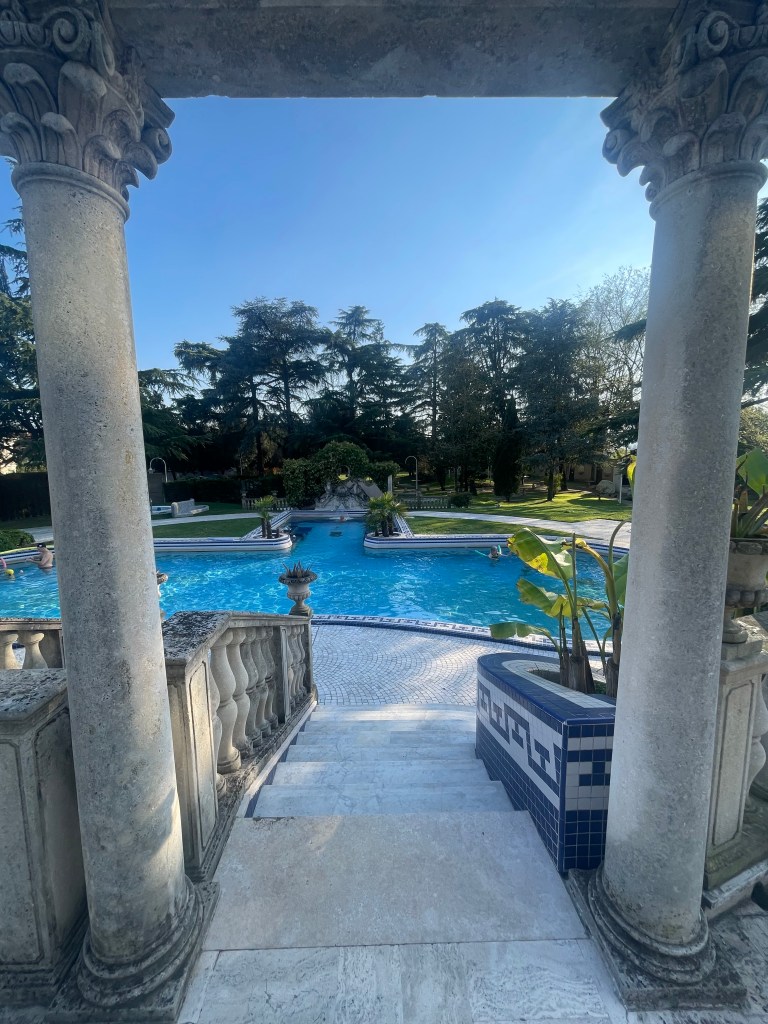
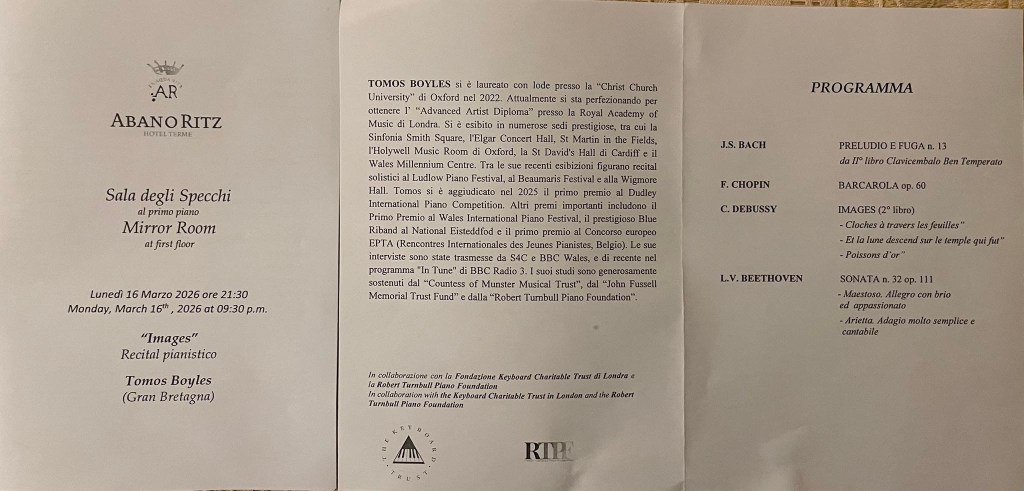
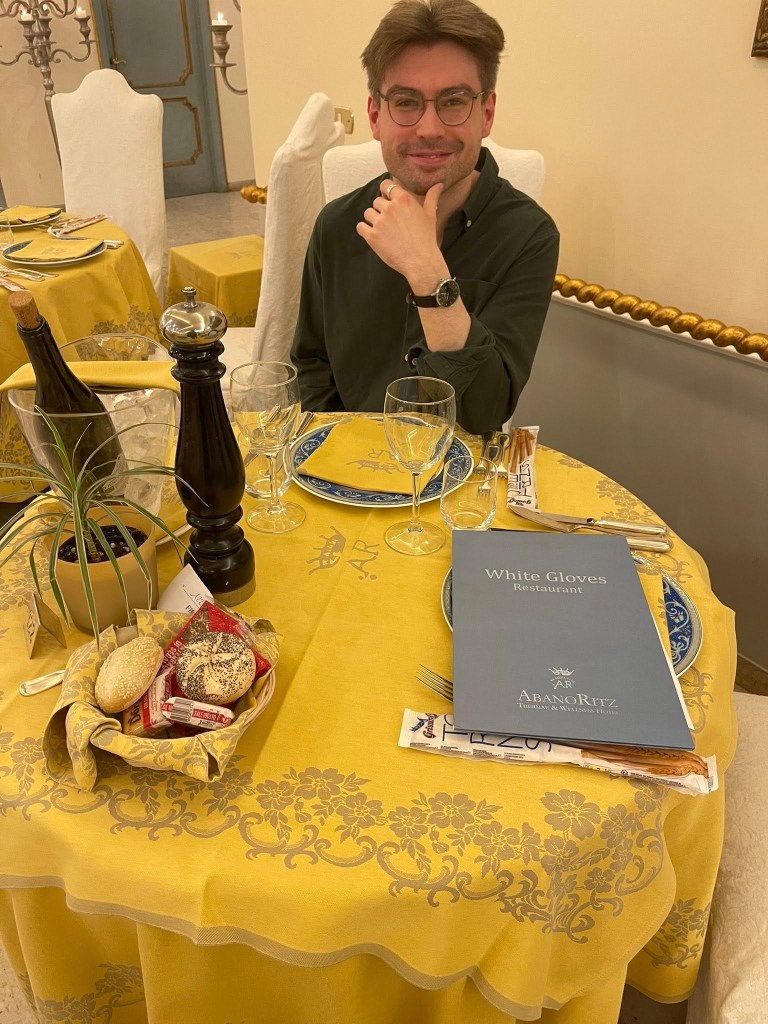
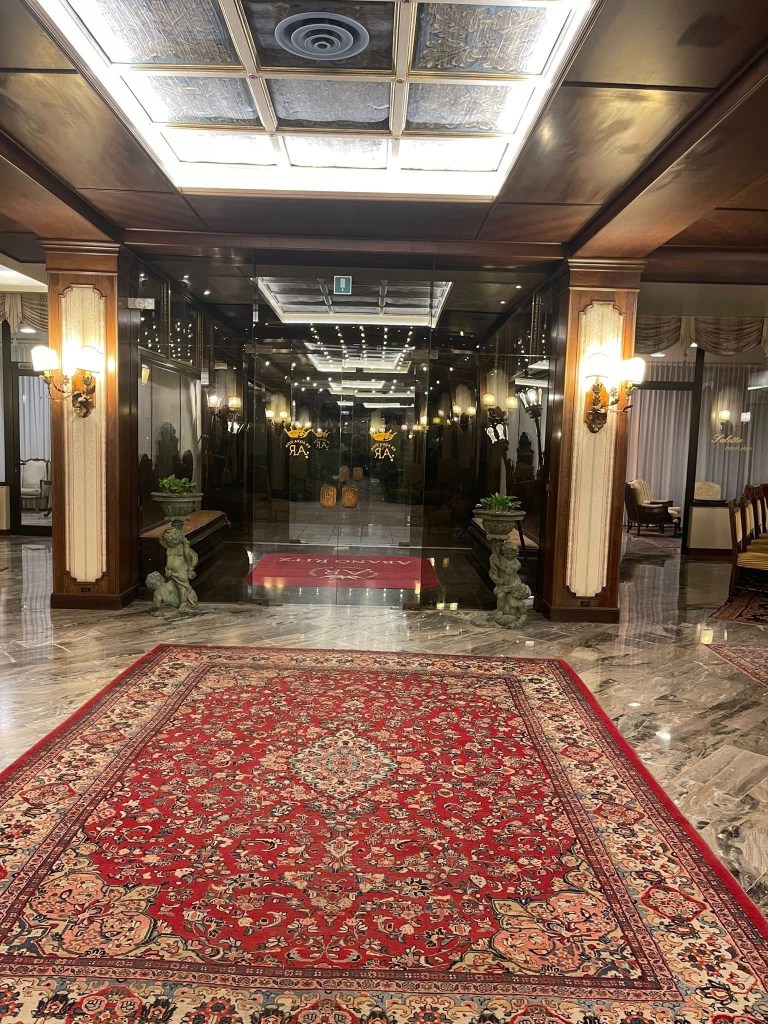
Last stop of the Keyboard Trust tour and the fifth recital of Tomos Boyles in the ‘Room of Mirrors’ at the Ritz in Abano Terme. A spa town that has sprung up around the hot water springs that abound in this area, at the foot of the Euganean Hills.
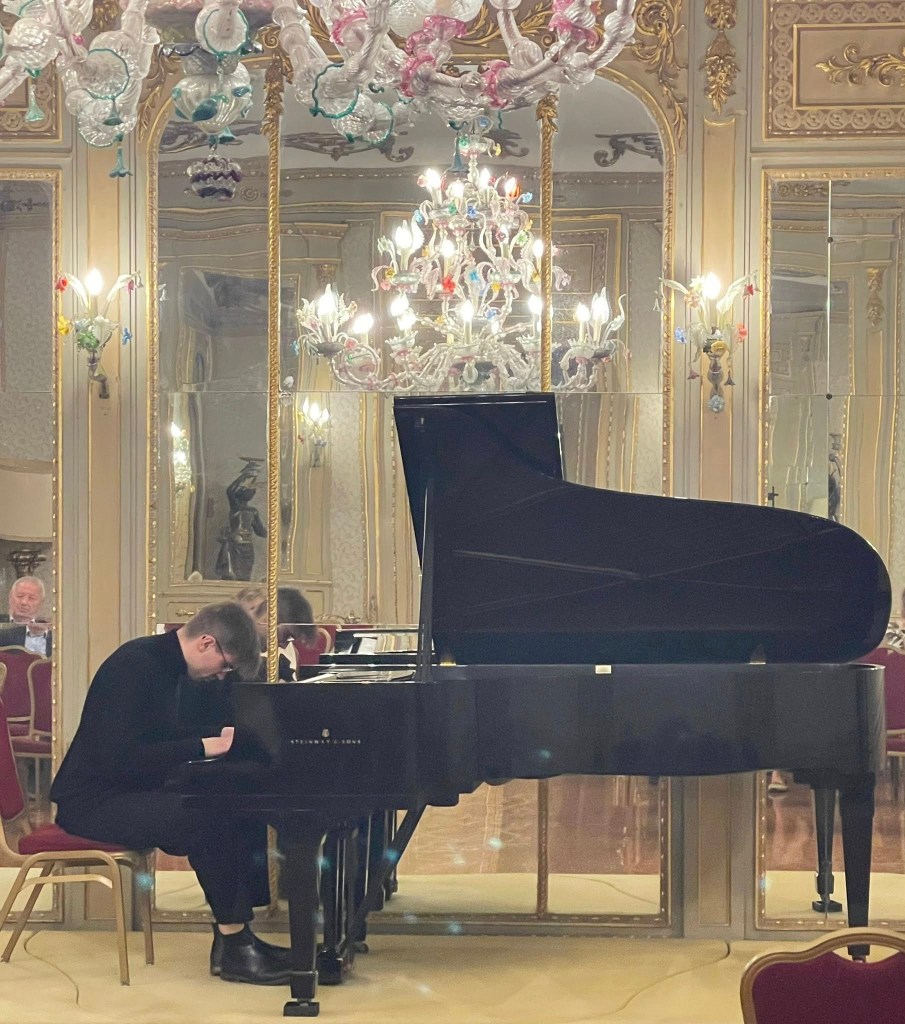
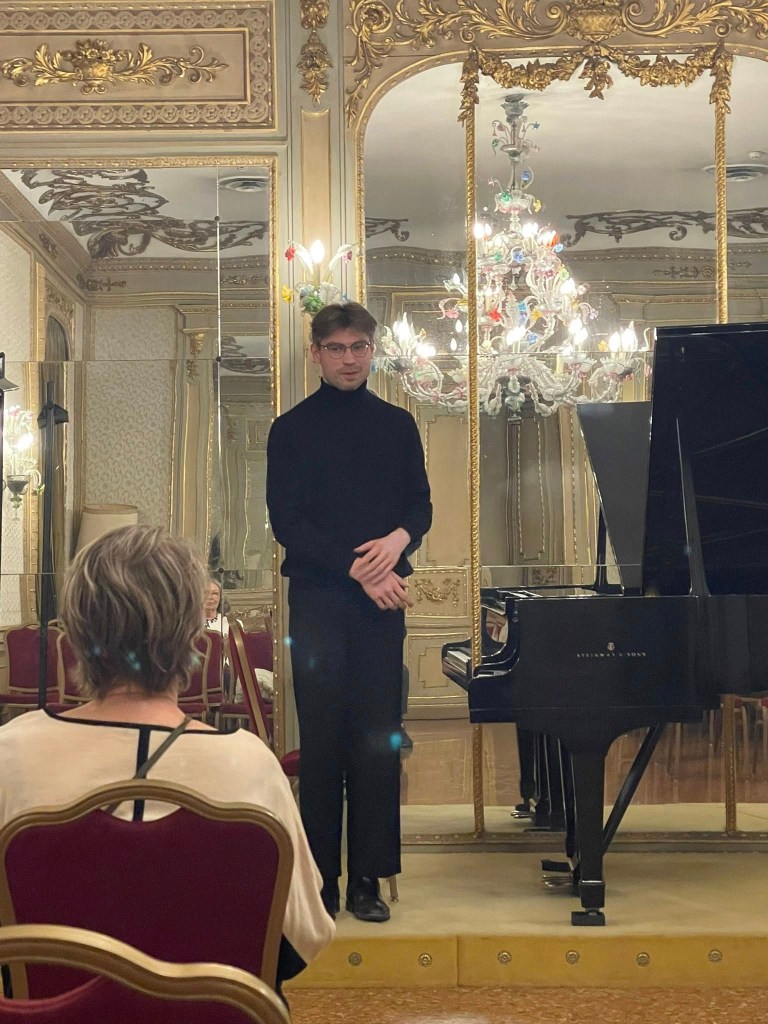
Tomos playing with ever more authority and beauty was inspired by such ‘burning’ fluidity to add Schubert’s beautiful song ‘Der Müller und der Bach’ to his established tour programme. A Bach Chorale prelude in the beautiful flowing transcription by Busoni began the recital on this Steinway of mature pedigree. Sumptuous playing ‘mirrored’ in such luxurious and luxuriant surrounds was the only way to finish this trial by fire that had ignited in Tomos ever more intense concentrated performances. The noble people wallowing in the mud and thermal waters this morning will have memories of the beauty they had enjoyed last night in the Sala dei Specchi , that they will remember and reflect on for long to come.
Thanks again are due to Elia Modenese and Elisabetta Gesuato for filling these magic hills with the sound of music from the hands of masterly young musicians.
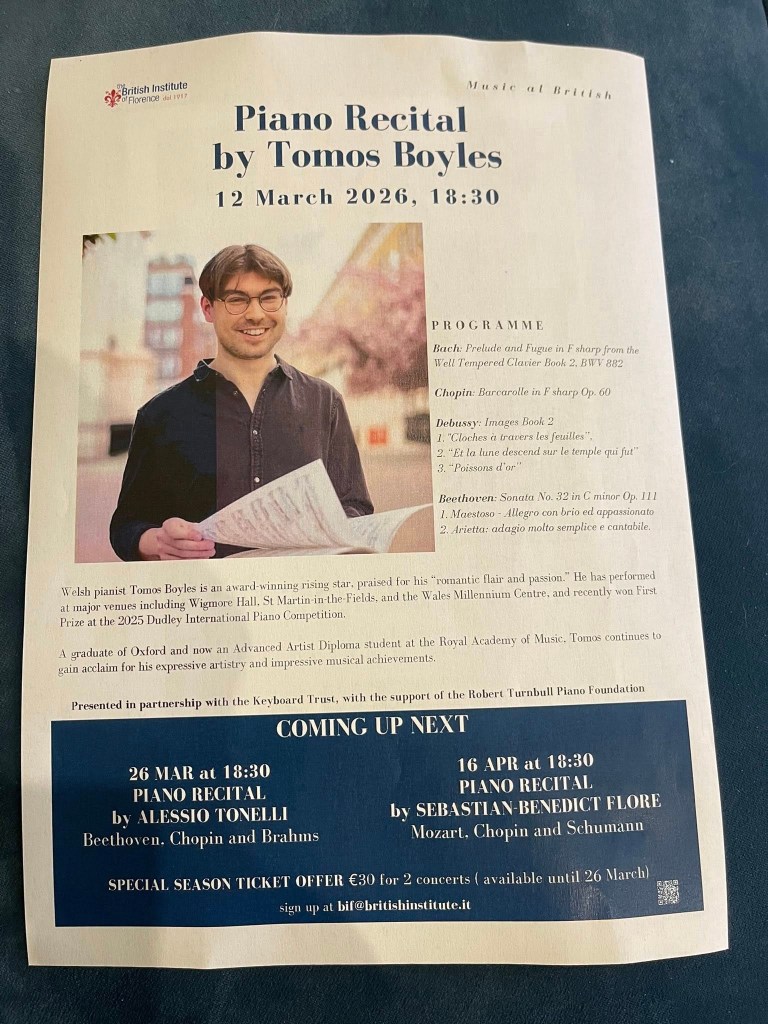
Tomos Boyles an award-winning rising star, praised for his “romantic flair and passion.” He has performed at major venues including Wigmore Hall, St Martin-in-the-Fields, and the Wales Millennium Centre, and recently won First Prize at the 2025 Dudley International Piano Competition.
A graduate of Oxford and now an Advanced Artist Diploma student at the Royal Academy of Music, Tomos continues to gain acclaim for his expressive artistry and impressive musical achievements.
Programme:
Bach: Prelude and Fugue in F sharp from the Well Tempered Clavier Book 2, BWV 882
Chopin: Barcarolle in F sharp Op. 60
Debussy: Images Book 2
1. “Cloches à travers les feuilles”,
2. “Et la lune descend sur le temple qui fut”
3. “Poissons d’or”
Beethoven: Sonata No. 32 in C minor Op. 111
1. Maestoso – Allegro con brio ed appassionato
2. Arietta: adagio molto semplice e cantabile.

A special thanks is due to the Robert Turnbull Piano Foundation in the person of Rupert Christiansen for making this tour possible
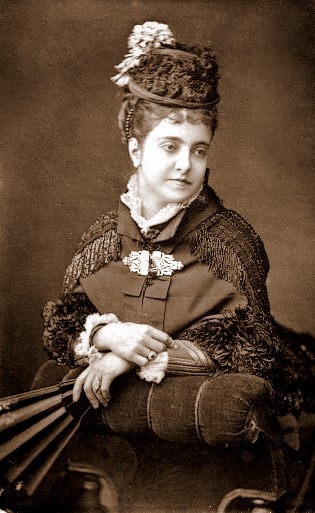
Giuseppe Verdi , writing in 1877, described her as being perhaps the finest singer who had ever lived and a “stupendous artist”.Verdi’s admiration for Patti’s talent was shared by numerous music critics and social commentators of her era.

 ChristopherAxworthy-MusicCommentary