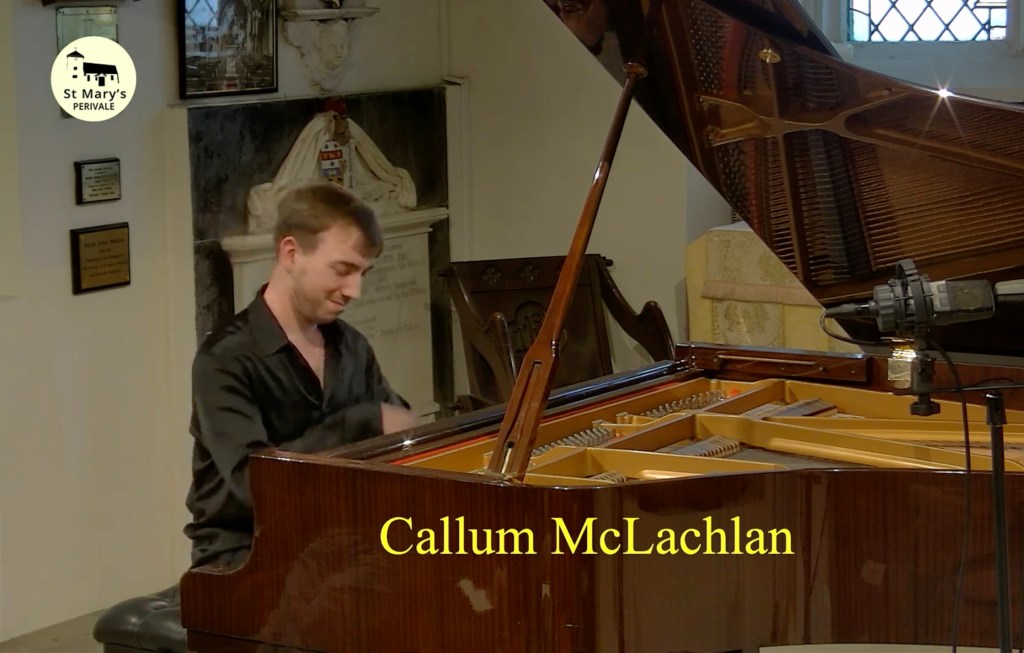
I have heard Callum play many times over the past few years as he left his early studies at Chethams to continue studying abroad, first in Salzburg then Cologne. He is now perfecting his studies in Berlin with Kirill Gerstein.
I remember a recital at St James’s Piccadilly where, after Callum had played the theme of Schumann’s Symphonic Studies, I turned to Murray McLachlan and said you must be so proud. It was a performance of overwhelming beauty and sensitivity with an extraordinary sense of colour and refined elegance. His playing has now become even more refined as Callum’s search for sound has shown him that the way to find the secrets in the piano is to caress the keys. Like a painter before his canvas to use natural strokes where the shape of the hand and arm are the very shapes that he is describing in sound. He has gone through the necessary apprenticeship of acquiring a ‘fingerfertigkeit’ which has given him fingers of steel. He has now combined these ten independent orchestral instruments with wrists and body movements of rubber. As Curzon famously said, piano playing is 90% hard work and only 10% talent. Volodos is the supreme example to us all of how to create beauty with beauty, where everything is played with natural movements and the sound and the visual element are one and the same thing. It is a search for the sounds and colours that are hidden in this black box of hammers and strings that reveal their secrets only to the greatest of artists who are prepared to delve deeply into a world that Matthay could describe perhaps too well! It was Casals who created the so called cello technique that would allow him to play the works of Bach on an instrument that was very much in evolution. Segovia too created a way of making music on the guitar that would allow him to play the masterworks on his instrument. To watch both Casals and Segovia was to watch artists painting in sound. There were no rules or regulations because they had to make up their own with the music showing them the way. Richter broke all the so called rules that have been built up by various methods over the past two centuries, but my God he made up his own because Genius knows no rules. One cannot put music into a straight jacket …..It is quite simply as Rubinstein said : ‘you cannot teach talent’. https://youtu.be/gex0sOR7XZ0
But you can kill it by imposing rules and regulations. Throw a baby in the water and she will swim automatically but throw a grown up in and he would be sure to drown because of the self awareness that life imposes. Callum is now being guided by one of the great musicians of our time. Anyone who has heard Kirill Gerstein play and also talk about music will realise what a privilege it must be to be in his presence. https://christopheraxworthymusiccommentary.com/2026/01/09/kirill-gerstein-at-the-wigmore-hall-extraordinary-playing-of-mastery-and-poetic-beauty/
Today Callum showed us what it means to be an artist as he brought the music to life with quite extraordinary character. I have not heard Beethoven played with such ‘joie de vivre’ since Curzon or Ravel since Perlemuter. Today I heard a great artist born on wings of song!
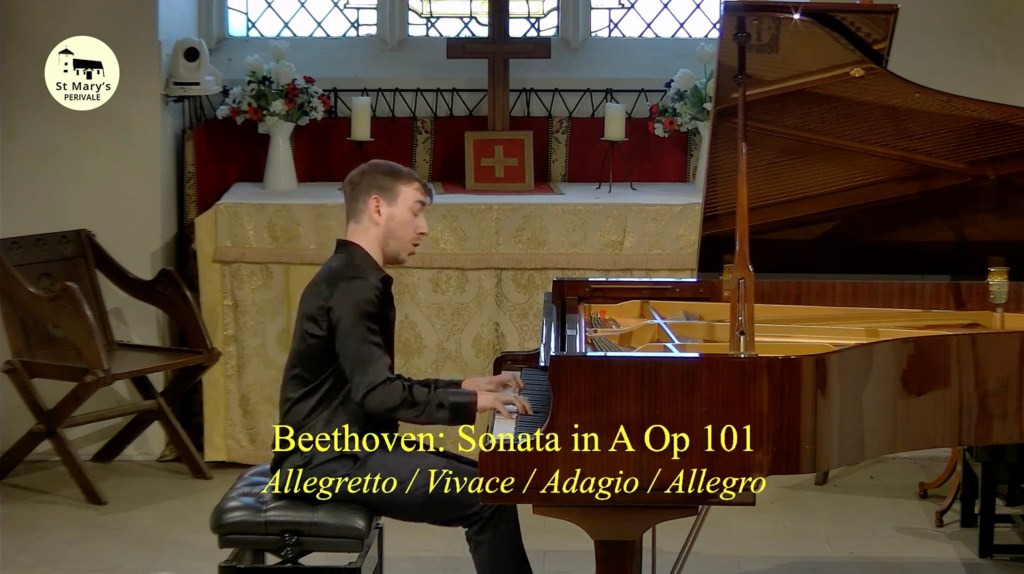
There was a luminosity to the Beethoven that he had described as Beethoven searching for beauty. It was a pastoral outpouring, poetically phrased and played with a horizontal timeless innocence.The ‘Vivace’ in lesser hands breaks this magic spell but with Callum instead of military precision there was the rhythmic drive of the song and the dance . It was given an unusually musical shape, where dotted rhythms can lead to such a black and white sense of phrasing ( for example the second movement of the Schumann Fantasy). Callum shaped everything with poetic beauty whilst scrupulously following Beethoven’s very precise instructions. His long pedal effects were understood and created a music box delicacy with great sensitivity to which he also added an impish sense of good humour. The ‘Adagio’ was a deep meditation of extraordinary depth and emotional weight. Immediately interrupted by the return of the opening pastoral vision of beauty before with Beethovenian impatience an ‘Allegro’ burst onto the scene with extraordinary operatic character. There was a ‘joie de vivre’ as the characters entered and exited from the stage like characters from a Mozart opera. Technical mastery too with the busy meandering counterpoints on which a glowing legato melody was placed, just brought a smile to my face, as this young man could make the music talk in a quite extraordinary way. This was without doubt one of the finest and most poetic performances that I have heard.
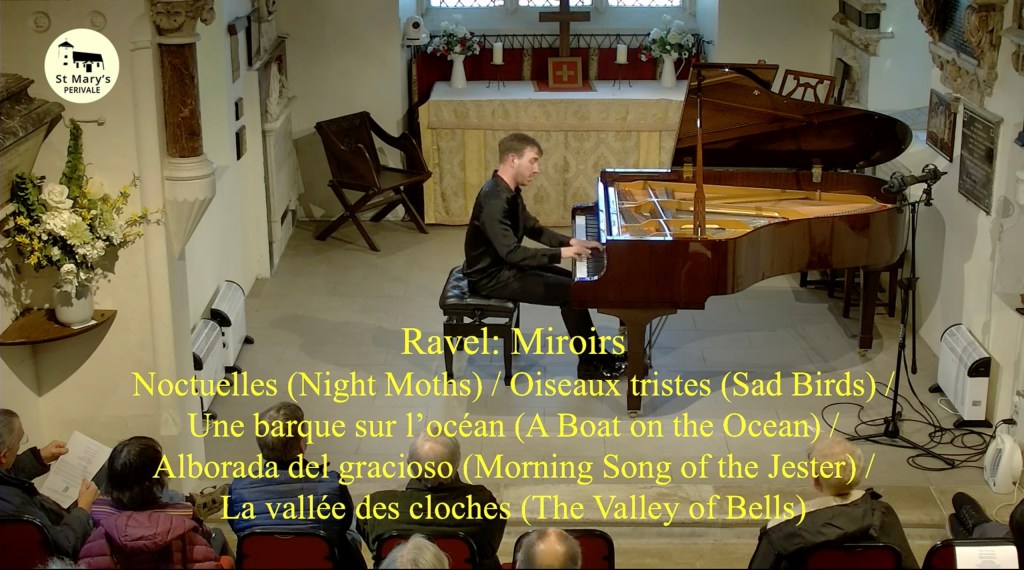
Ravel too was full of surprises as Callum looked closely into the score and found so many wonderful things that I have rarely been aware of before. An unusually melodic opening to the moths flitting around the keyboard, where there was an inner legato that I have never heard of before. This was while there was a lightness and glowing jeux perlé thrown off with extraordinary flexibility and freedom. A deep lament is suddenly heard with playing of sumptuous weight and a sense of balance full of glistening colours.
There was a wonderful resonance to the Saddest of Birds and a kaleidoscope of colours with they screeched as they were violently disturbed.
There was a sense of calm to Callum’s ocean until a deep bass note announced the tempest that is to strike with masterly playing of glissandi, that Callum played with the palm of the hand, just dusting the keys as they became washes of sound. Streams of notes were strewn over the entire keyboard until peace is gradually restored and a hymn of thanksgiving is heard in the midst of an ocean that is now calm. Here there was a masterly clockwork precision to the waves in the right hand. Wafts of sounds were thrown off with mastery and poetic ease as Callum shaped this movement into a tone poem of quite extraordinary effect.
Brittle sounds of ‘Alborada’ were a complete contrast to the previous movements as the sun shone with piercing brilliance. Passionate intensity to the seductive recitativi as Callum played with an almost indecent vibrancy of X certificate expectancy.
Ravel’s bells have never been heard in such a magical mist of sounds as today with a nostalgic lament pouring its soul out in this dream world of poetic beauty.
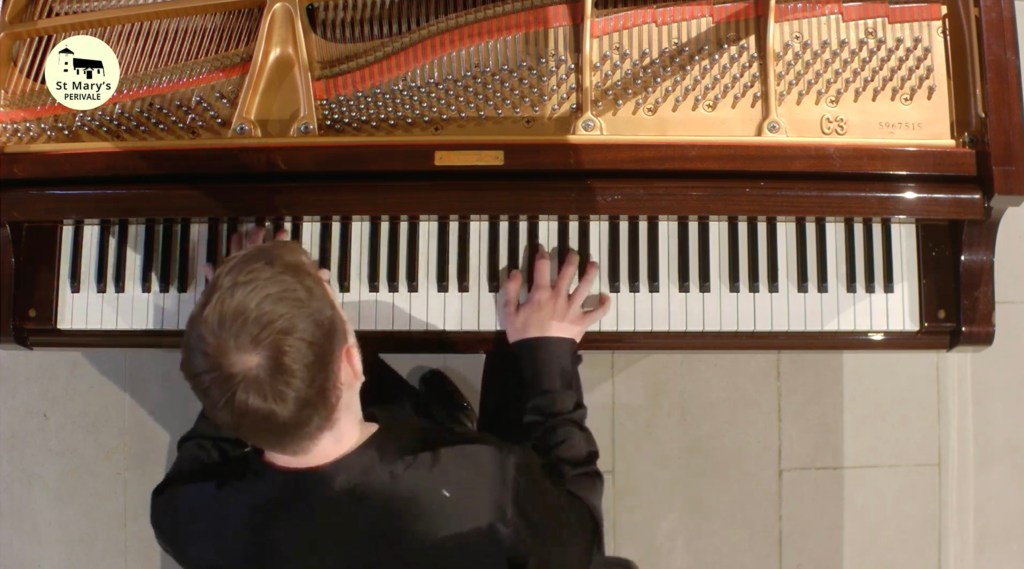
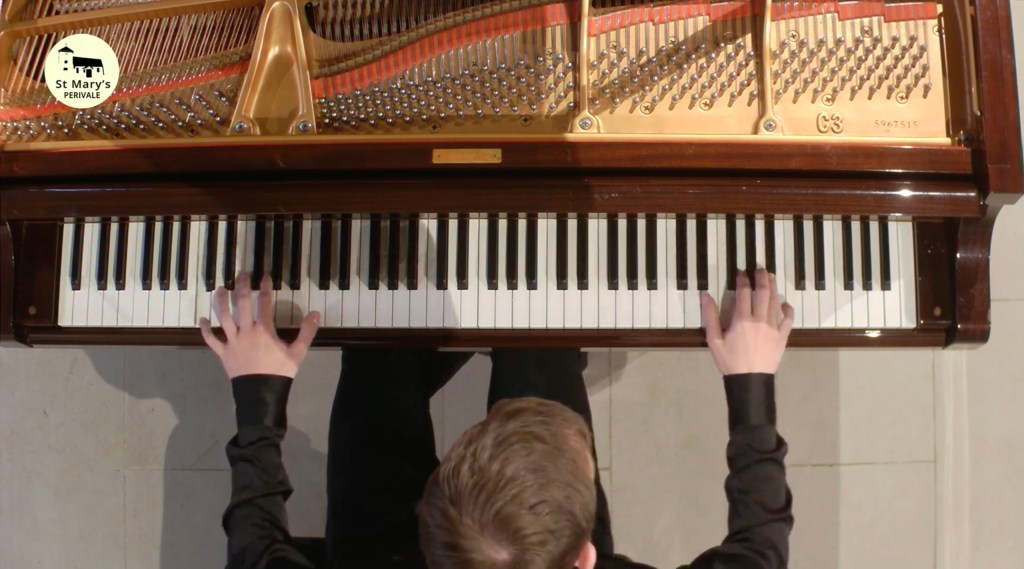
A Brahms Intermezzo op 118 n.2 was the encore that Callum offered to a very enthusiastic and numerous audience. It was played with the same timeless beauty and poetic phrasing of radiance and simplicity that had bewitched us throughout his recital today
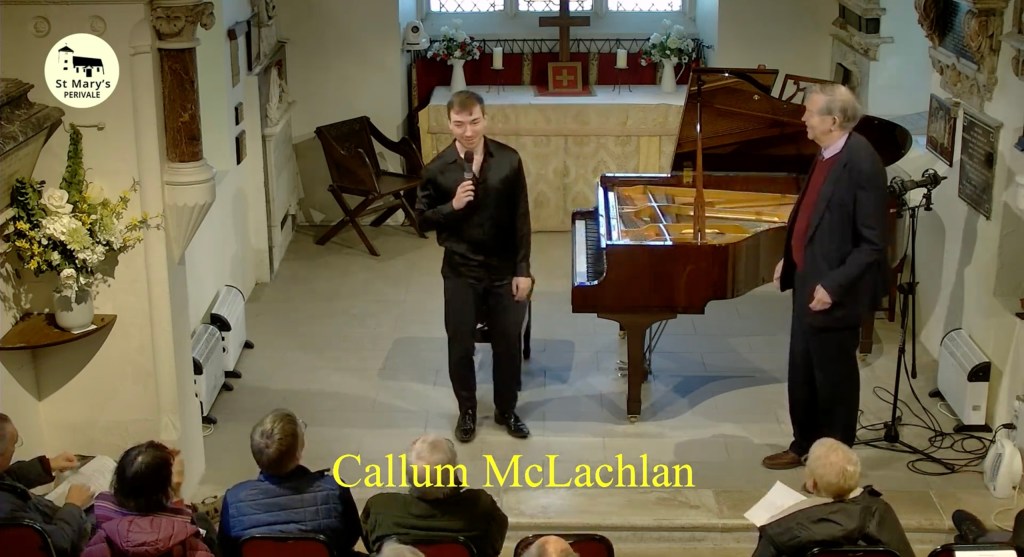
Callum was born into a family of musicians and began piano lessons with his father at age 7. He entered Chetham’s School of Music at age 11, studying with Dina Parakhina, and was later awarded the highest diploma from Trinity College London (FTCL). He completed his Bachelor’s degree with Professor Claudius Tanski at the Universität Mozarteum Salzburg, then pursued further studies in Salzburg and Cologne with Jacques Rouvier and Claudio Martínez Mehner.He currently studies with Professor Kirill Gerstein at the Hochschule für Musik Hanns Eisler Berlin.
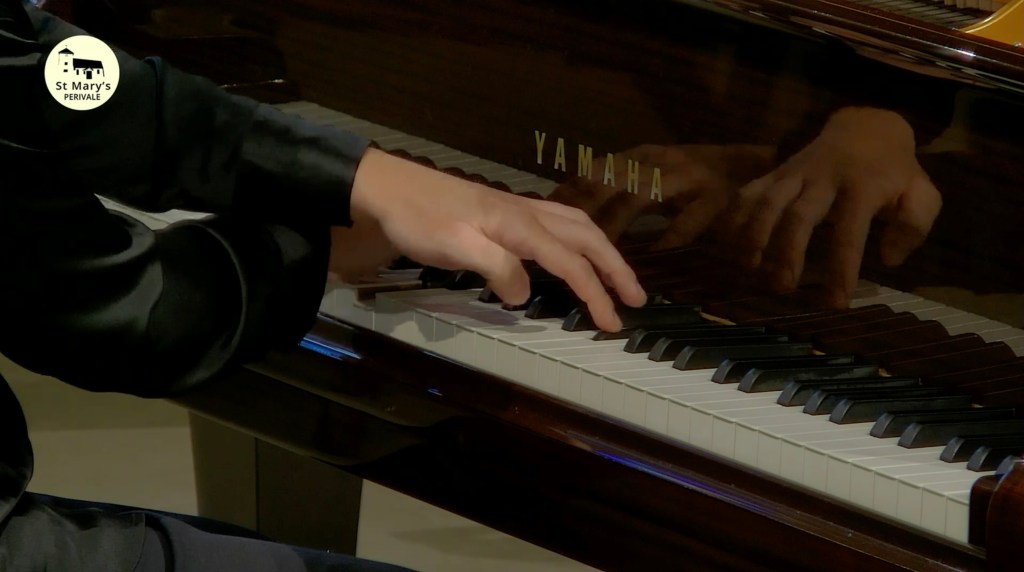
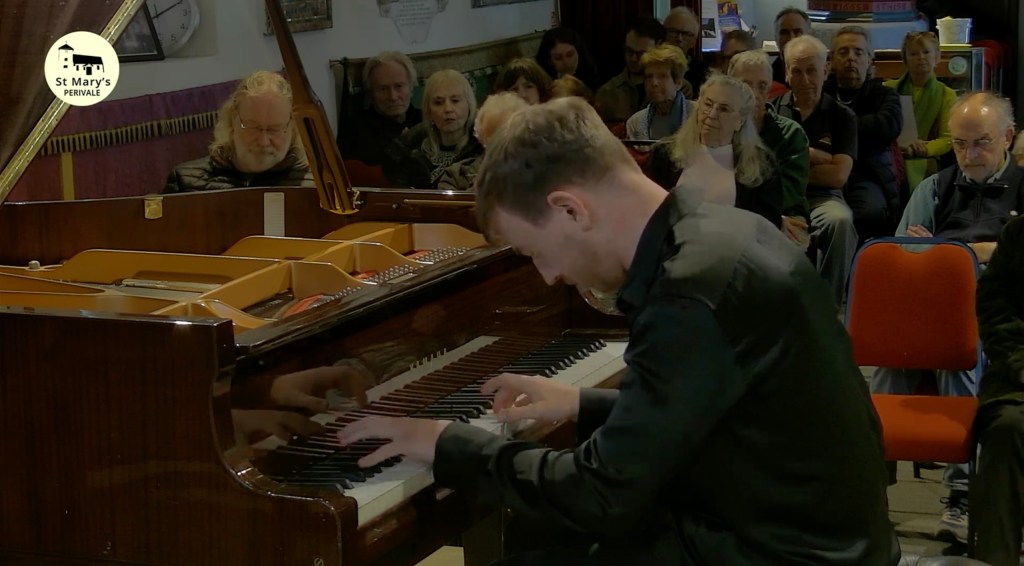
He was a finalist of the 18th Schumann Competition Zwickau and semi-finalist at both the Leeds and Santander International Piano Competitions, has been described as “a born Schumann player” with “a magical sense of colour and extraordinary technical prowess.” His performances at the Leeds were broadcast live on BBC Radio 3 and Medici.tv, viewed by thousands worldwide. The Leeds described him as “continuing to captivate audiences with his profound musicality and virtuosic performances.”
Following his success there, he was the only British pianist selected for the 17th Van Cliburn International Piano Competition. Gramophone magazine praised him for “the warmth and body of his gorgeous sonority,” with his first-round described as “luminescent, clear, virtuosic, and balanced.”
He has recently made major debuts at Yamaha Hall (Tokyo), Klavier-Festival Ruhr, Menton International Music Festival, Mallorca Piano Festival, Lake District Summer Music, Wasserburg Klavier Sommer, Allerheiligen Hofkirche Munich and Van Cliburn Concert Hall (Fort Worth). Last season he made his debut with Staatsphilharmonie Nürnberg and John Fiore, performed the Swiss premiere of Eric Tanguys Piano Quartet for Classeek, and was invited for Solo Recitlas at Verdi Hall Milan and Bechstein Hall London.
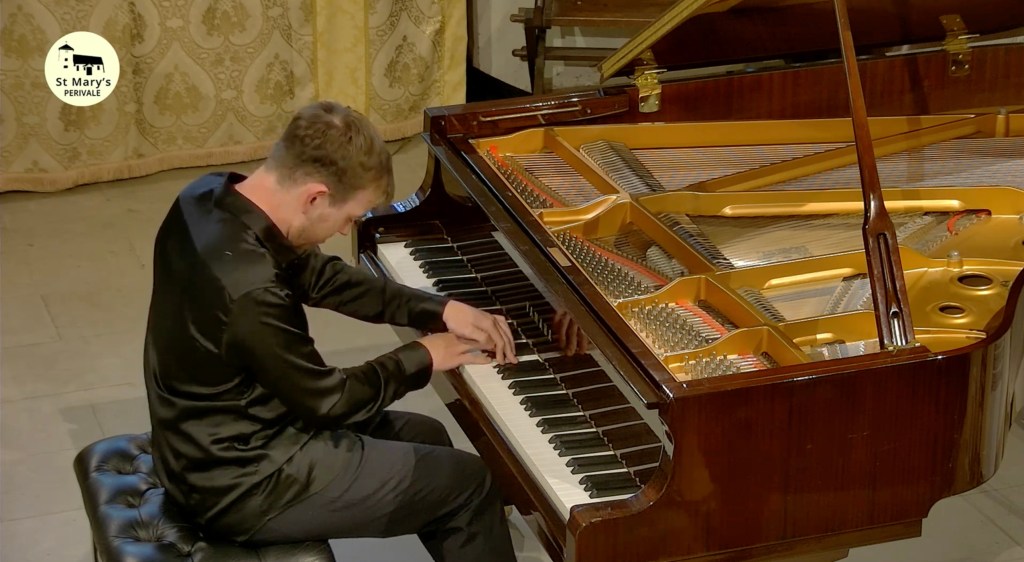
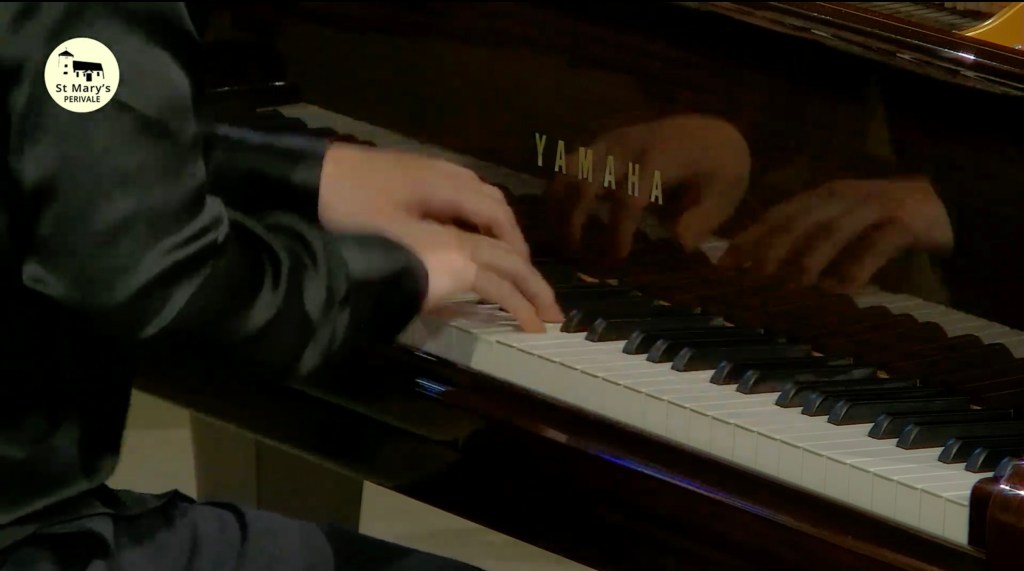
He has performed at many of the most important concert venues throughout the UK, Europe, and USA, including Laeiszhalle Hamburg, Wien Konzerthaus, Pereda Hall Santander, London’s Steinway Hall and Manchester’s Bridgewater and Stoller Hall. An active chamber musician, he has performed with the renowned ensemble Casals Quartet, Kaleidoscope Ensemble and maintains a regular duo with Queen Elisabeth laureate cellist Jeremias Fliedl.
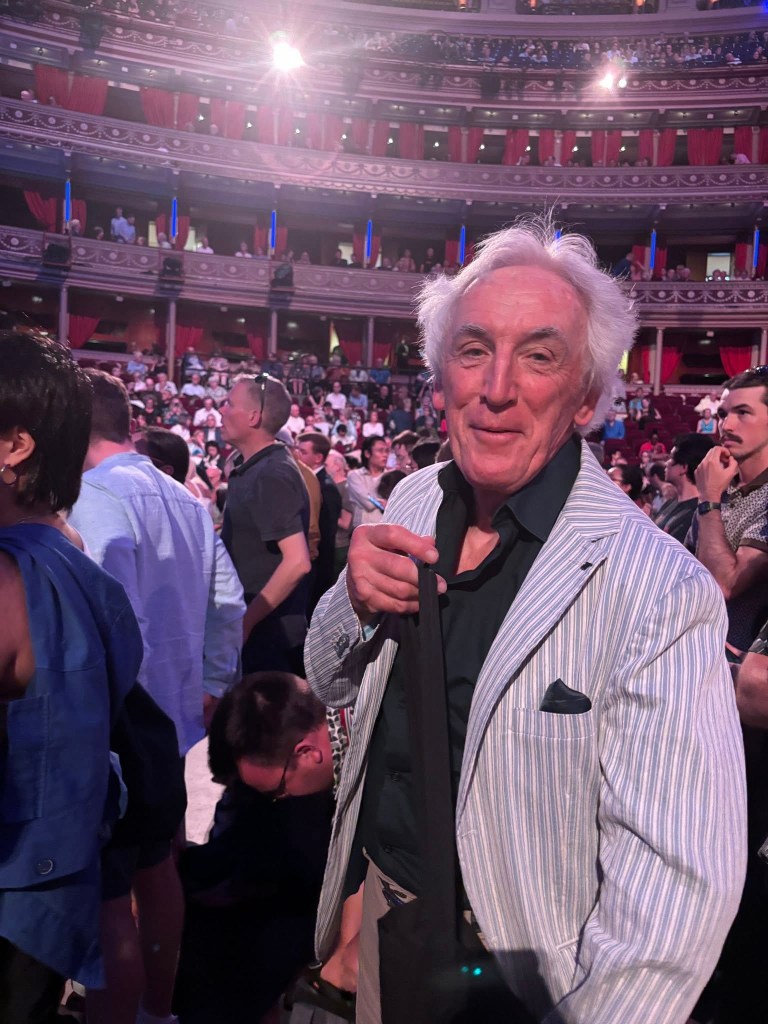
 ChristopherAxworthy-MusicCommentary