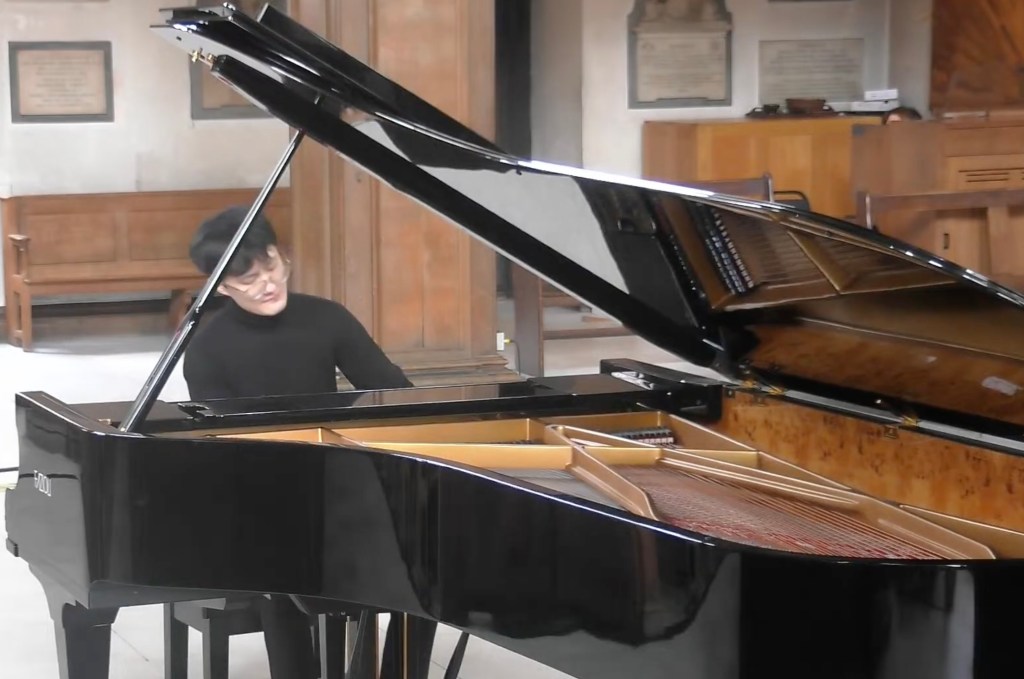
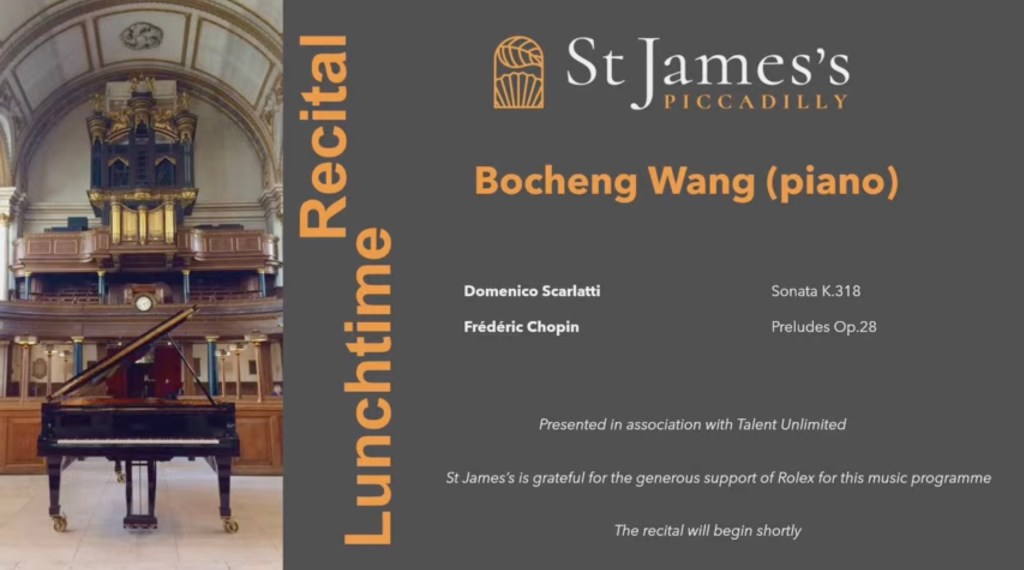
A last minute substitution at St James’s gave me a chance to listen to Bocheng’s artistry after some time. His playing has grown in stature and authority, as was evident with his choice of Scarlatti’s enigmatic F sharp major Sonata that opened the programme. A long bel canto that was well suited as an opening work to Chopin’s 24 Preludes op 28. A work I had remember hearing from Bocheng some time ago when he was still a student mentored by Christopher Elton and Ian Fountain at the Royal Academy.
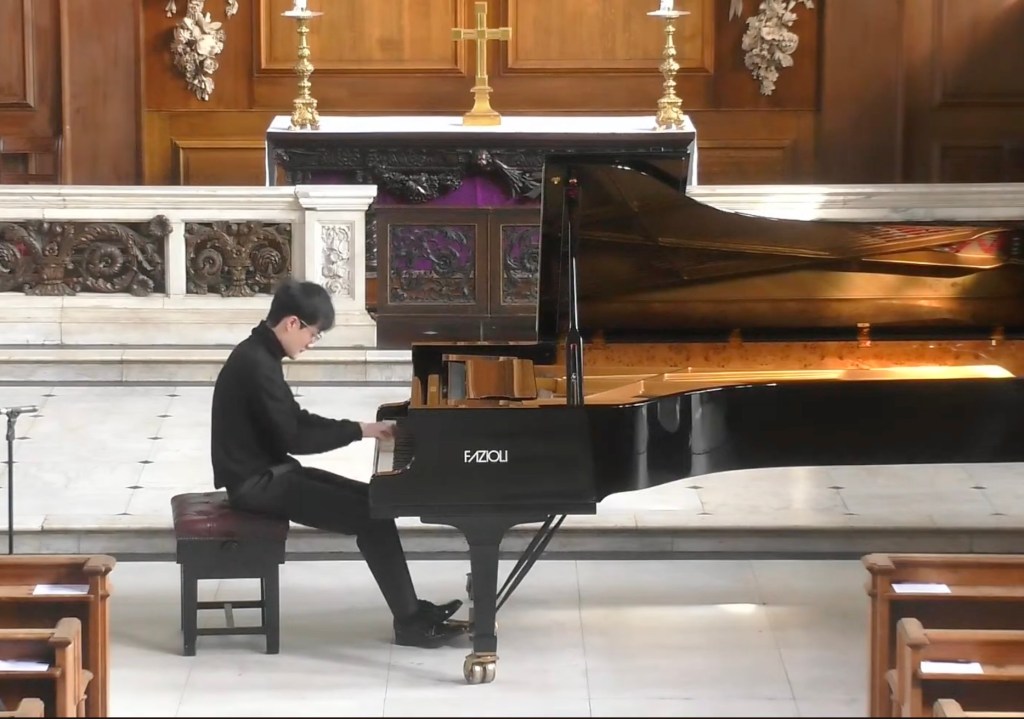
A beautiful opening to K.318 , a long bel canto of strength and beauty – delicacy and nobility. A whole world was opened up with refined playing of great authority, where ornaments were like highly wounds springs just adding a ray of light to such a poignant outpouring. A sudden change of key to D flat added a momentary short lived breath of fresh air but returned secretly to the home key where Bocheng found even more intensity with delicacy of chiselled beauty.
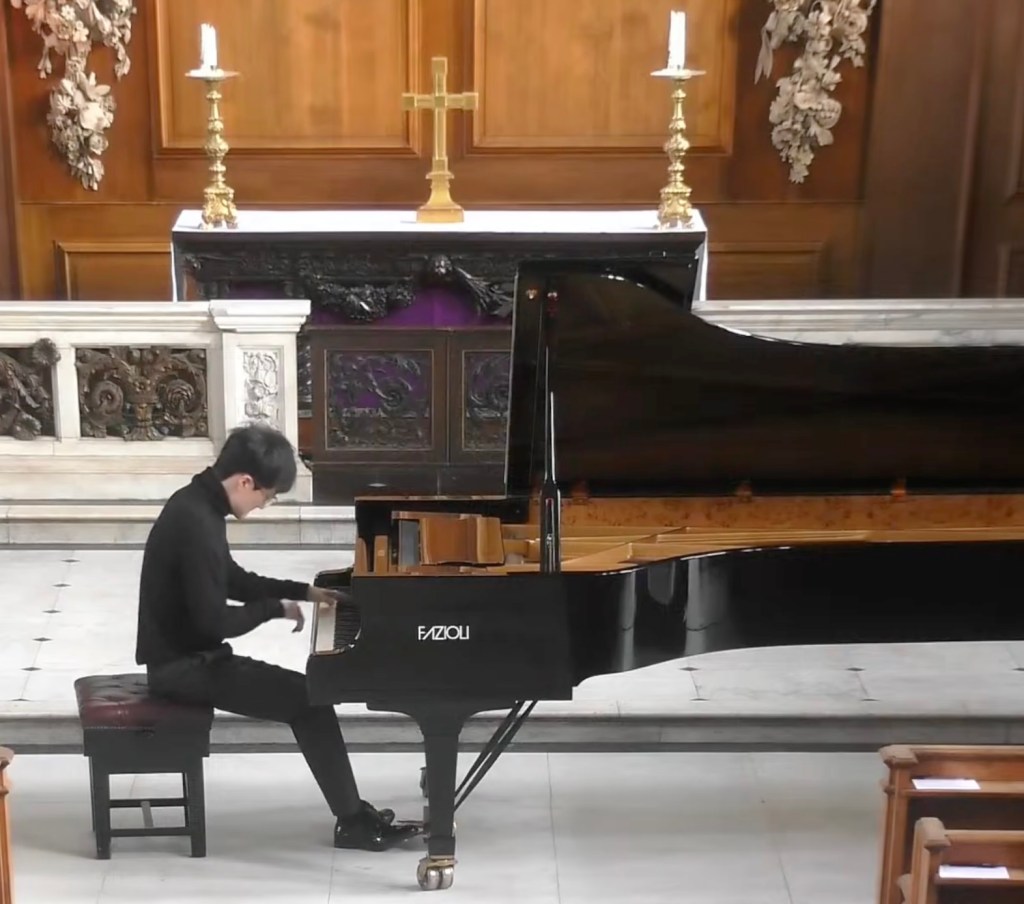
Chopin’s 24 Preludes op 28 were rarely played together as they are now, as Chopin had conceived them to be played in groups. But played together by a musician such as Bocheng they reveal themselves as a unified whole with the 16th being the turning point that takes us to the final conclusion. Chopin always had a copy of Bach’s 48 on his piano so can it be a coincidence that the 16th variation of Bach’s Goldberg is just such an important turning point. Fou Ts’ong described them as 24 problems because each prelude is quite unique and explores a range of emotions and technical problems. There is however an architectural shape that can give strength and unity to one of Chopin’s greatest works. Bocheng has a technical mastery which allows him to delve deeply into the poetic meaning of each prelude whilst always vigilant that one grows out of the other , creating a unified whole. From the improvised freedom of the first to the technical brilliance of the sixteenth and the triumphant exhilaration and exoneration of the twenty fourth with its final three great ‘D’s’ deep in the depths of the piano, which Bocheng played with his fist! Not the fist of a butcher but that of a poet, I hasten to add!
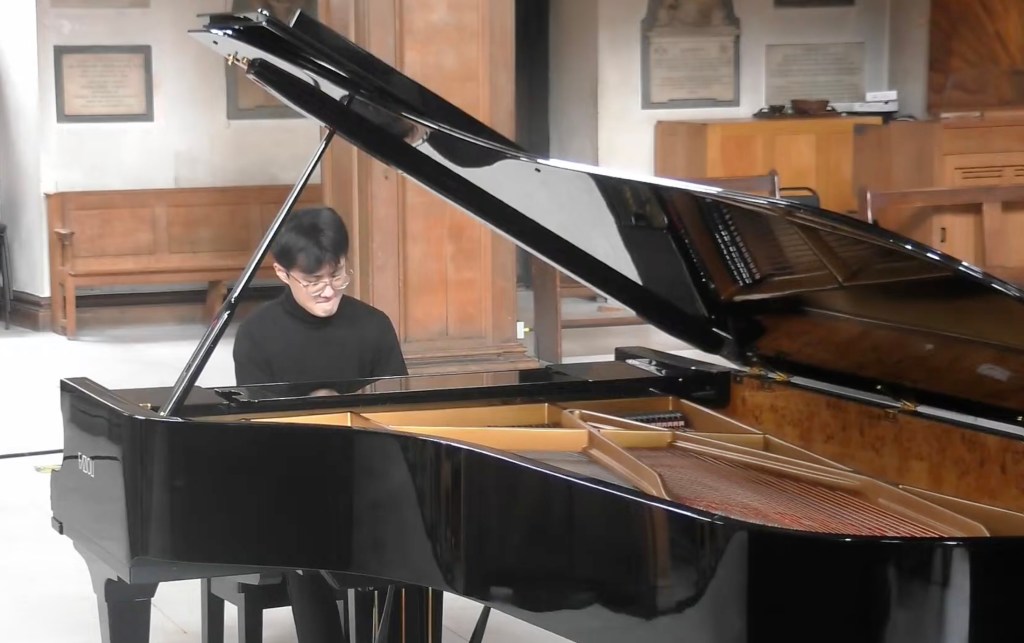
The first was like someone swimming in sounds with Bocheng’s beautiful fluid horizontal movements just caressing the keys so naturally. The second was a real tone poem carved out with great character and poignant beauty with the ever present pulsating bass, a heartbeat adding elegiac beauty to such a harrowing tale. The third, like a breath air with the fluidity of the left hand that was to be mirrored in the penultimate prelude, that are both like water flowing on which Chopin adds a melodic line of disarming simplicity. This was followed by the intense poignancy of the ‘Largo’ where so few notes can mean so much, and the fifth just entering with its whispered Mazurka type knotty twine. The ‘Lento assai’ that follows showed Bocheng’s transcendental command of the keyboard where the gasps of the right hand could be played with intensity whilst the left carved out a beautiful cello elegy. The seventh is the shortest of the preludes, barely fifteen bars in length, but was played with simple elegance and refined sensibility. The ‘Molto agitato’ that follows just glided in as it built into a passionate outpouring of emotional turbulence, played with extraordinary mastery and dynamic control. A ‘Largo’ of nobility that was played with an aristocratic voice and almost religious fervour, followed by a cascade of jeux perlé of glistening fluidity. This was followed by a beautiful bel canto of flowing radiance played with a legato of perfect breath control. The ‘Presto’ was played with great solidity of almost militaristic authority with a rhythmic insistence of masterly control dissolving into a coda of impish good humour before the stomp of two very authoritarian footsteps. The thirteenth is for me one of the most beautiful of the preludes, and is a nocturne of bel canto freedom, similar to the Nocturne op 27 n. 2, where the flowing bass are the roots firmly embedded in the soil leaving the branches free to flow in the wind above. The ‘più lento’ is one of those magic moments of breathtaking beauty that Chopin can seduce us with and which Bocheng played with ravishing delicacy. Mystery and menace, thankfully short lived, as one of Chopin’s ‘craziest children’ is let loose with Bocheng failing to find a melodic line as it ends too quickly in a puff of smoke. The ‘Raindrop’ prelude was played with simplicity and disarming innocence before the deep brooding and tumultuous climax that is calmed by the even more innocent return of our ‘Raindrop’ .
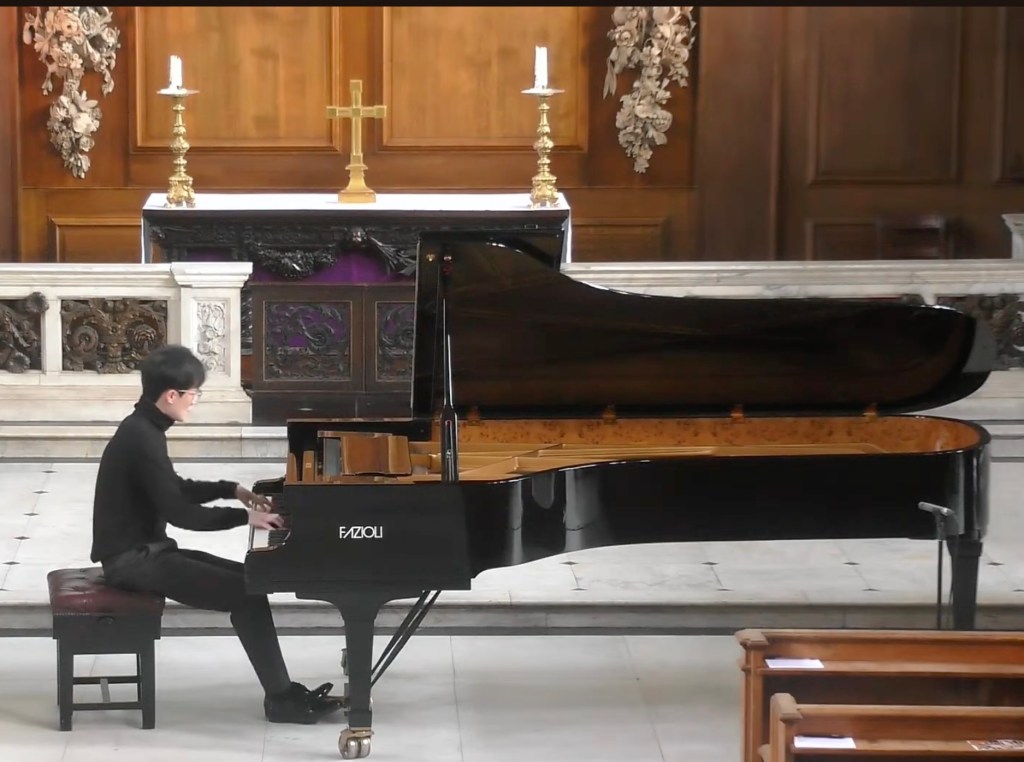
‘Presto con fuoco’ that Bocheng played with fearless abandon and masterly control with a real ‘tour de force’ of a perpetuum mobile of unyielding brilliance. The ‘Allegretto’ that follows was like a breath of fresh air on which long melodic lines are allowed to flow with great emotional strength and poetic beauty. The deep A flat’s of the coda knowingly understated by Bocheng creating a poetic beauty of timeless wonder.The ‘Allegro molto’ – cadenza was played very sedately as it built in intensity with Chopin adding more and more notes as Liszt himself might have done. The nineteenth is one of the technical most difficult with an Aeolian Harp of awkward leaps but a melodic line that takes no heed of that, as Bocheng allowed it to it float so magically, rising above such difficulties.Two final chords played with the same authority that Bocheng gave to the C minor ‘Largo’ that followed A simple progression that has been used by many composers as the inspiration for variations. Bocheng played it with great authority gradually giving way to deeply felt emotions.Chopin marks the next prelude simply ‘Cantabile’ or singing which Bocheng played with great flexibility and resonance underlining its quite magical changes of harmony. There was a controlled passion of aristocratic nobility of exhilaration and excitement to the ‘Molto agitato’ ‘octave’ prelude and it contrasted with the disarming flowing radiance of glistening fluidity of the penultimate ‘au bord d’une source ‘ . The final twenty fourth prelude of nobility and aristocratic control was played with a wondrous sense of colour and with a sumptuous fullness in the climax. Playing of such intensity that the final three notes deep in the bass were played by Bocheng’s poetic fist.
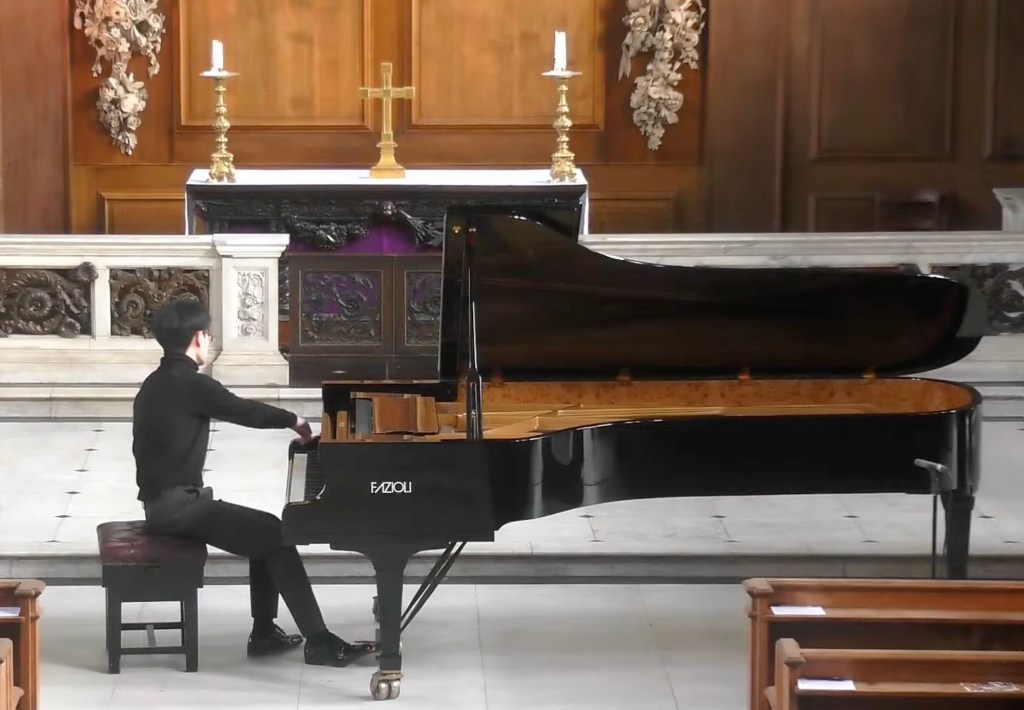
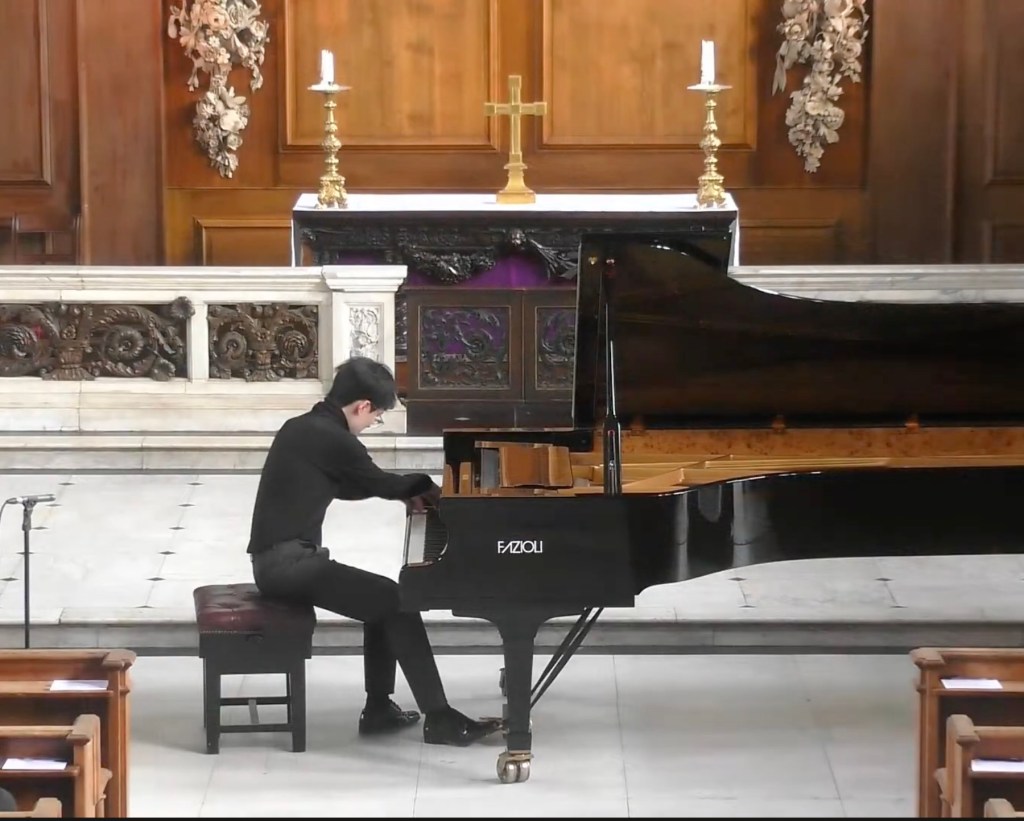
A remarkably satisfying performance showing Bocheng’s artistry that has flowered over the past years into a maturity of commanding authority
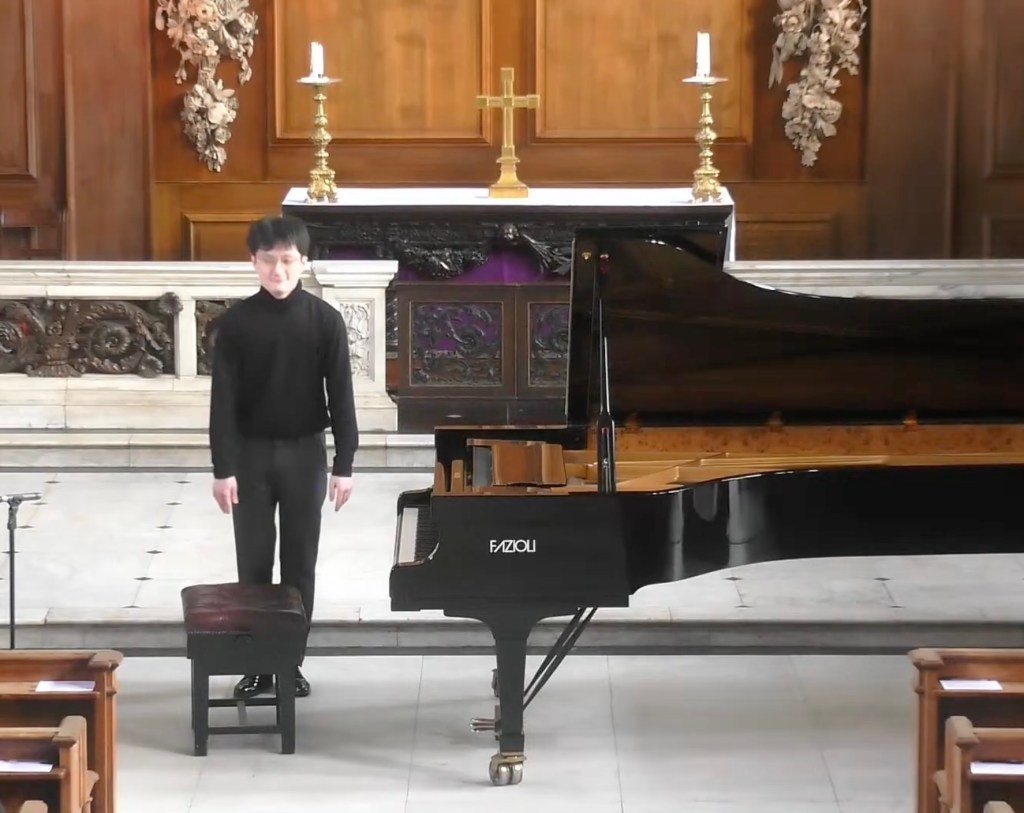
Bocheng Wang has performed as a soloist with the Royal Academy of Music Symphony Orchestra, the Dulwich Symphony Orchestra and the London Mozart Players. He has toured across Europe including in the UK, Germany, Poland, Denmark, France and Spain. Following his debut recital at Wigmore Hall in 2023, Bocheng was described by The Arts Desk as ‘a force to be reckoned with’, playing passages ‘with mastery and drama’.
An artist with Kirckman Concert Society, Making Music UK, Keyboard Charitable Trust and Talent Unlimited, Bocheng has performed at festivals including PianoTexas International Festival & Academy, Ferrara Summer Festival, Dartington Music Summer School and Festival and The International Musical Artistry Goslar. He has taken masterclasses with the likes of Richard Goode, Stephen Kovacevich, Pavel Gililov, Arie Vardi, Imogen Cooper, Pascal Rogé and Steven Osborne. His important competition successes include First Prize at the Royal Overseas-League Piano Competition (2023), Second Prize at the Windsor International Piano Competition (2022), Semi-finalist Prize at the Santander International Piano Competition (2018), and the First & Grand Prize at the Croydon Performing Arts Festival Concerto Competition (2015).
Bocheng reached the highest level of achievement during his studies at the Royal Academy of Music, culminating in full marks from the Academy’s Advanced Diploma in Performance programme under Professor Ian Fountain. He also previously achieved a Master’s Degree with the highest performance award DipRAM and a Bachelor’s Degree with First Class Honours under Professor Ian Fountain and Professor Christopher Elton. Bocheng’s studies were supported by Sir Elton John.
 ChristopherAxworthy-MusicCommentary