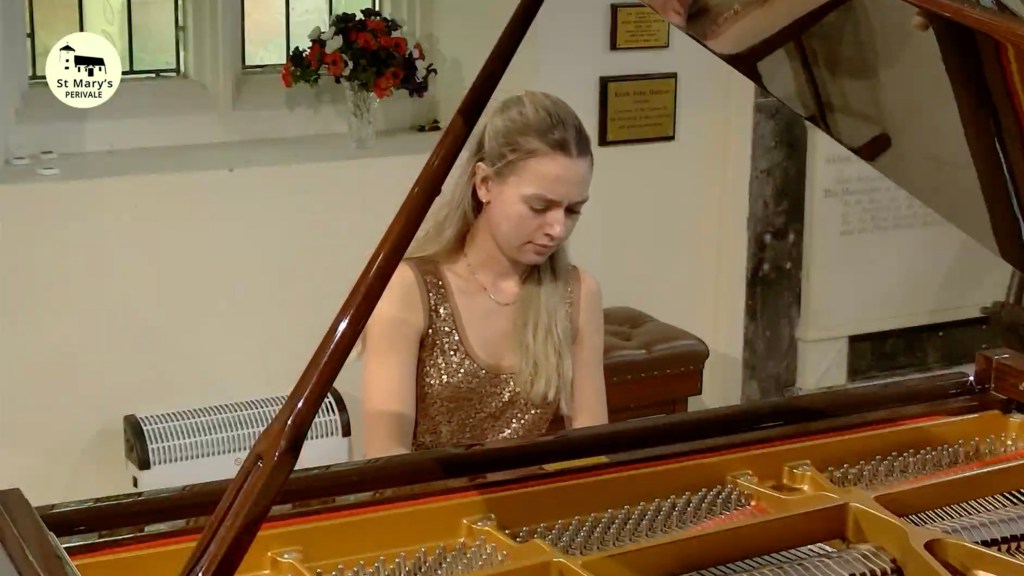
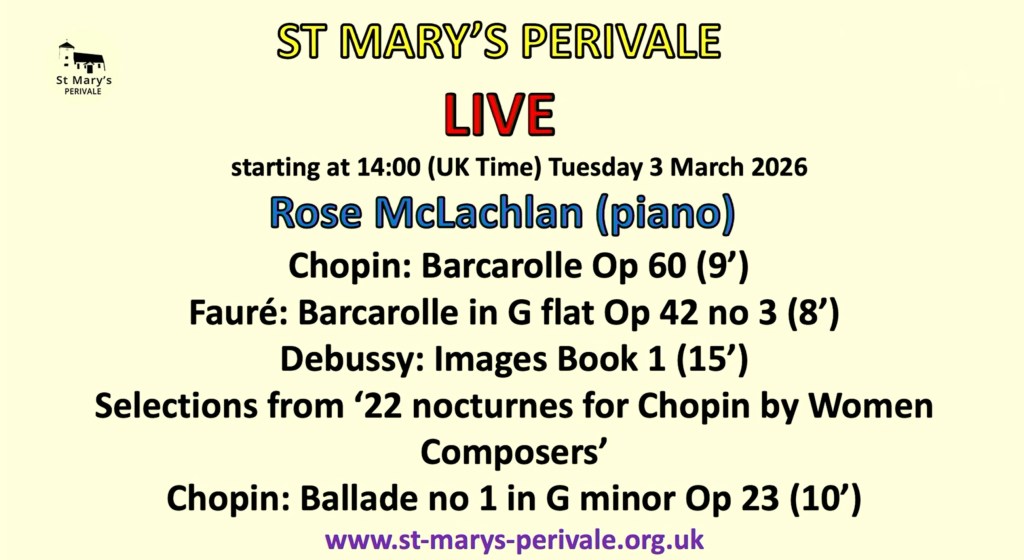
Debussy: Images Book 1, Faure: Barcarolle in G flat Op 42 no 3, Chopin: Barcarolle Op 60, Debussy : Etude ‘pour les agrements’ Selections from ‘22 nocturnes for Chopin by Women Composers’,Katie Jenkins-Nicole Di Paolo-Zoe Rahman , Chopin: Ballade no 1 in G minor Op 23
A slightly different order to the programme that showed the poetic path that Rose wanted to share with us today. A musical intelligence where her kaleidoscopic palette of sounds were used to illuminate the poetic vision that pervades all that she plays. Including three Nocturnes inspired by Chopin and commissioned by Rose in 2022 from 22 women composers. https://christopheraxworthymusiccommentary.com/2023/09/18/rose-mclachlan-inspires-and-performs-22-nocturnes-for-chopin-by-women-composers/
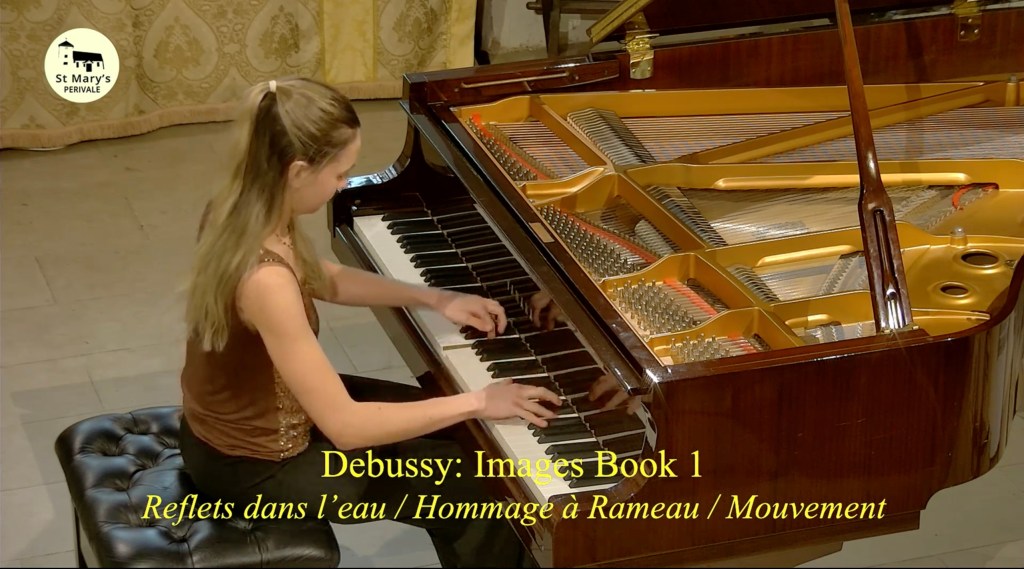
Of course the French repertoire has long been Rose’s great love and it was with Debussy Images that she opened her programme. The three tone poems from the first book opened with a magical account of ‘Reflets dans l’ eau’ which she played with luminosity and fluidity. Notes became streams of wondrous sounds on which Debussy floats a melody of glistening beauty. The final bars in particular were played with delicacy and strength where Rose could combine the musical meaning with an architectural line of refined poetic beauty. ‘Hommage à Rameau’ was played with aristocratic authority and a refined sensibility where even the climax was of controlled elegance. A very sedate tempo for Mouvement allowed Rose to maintain the same tempo throughout with control and relentless forward movement. Never loosing sight of the musical line no matter how many hurdles Debussy adds to this spellbinding journey.
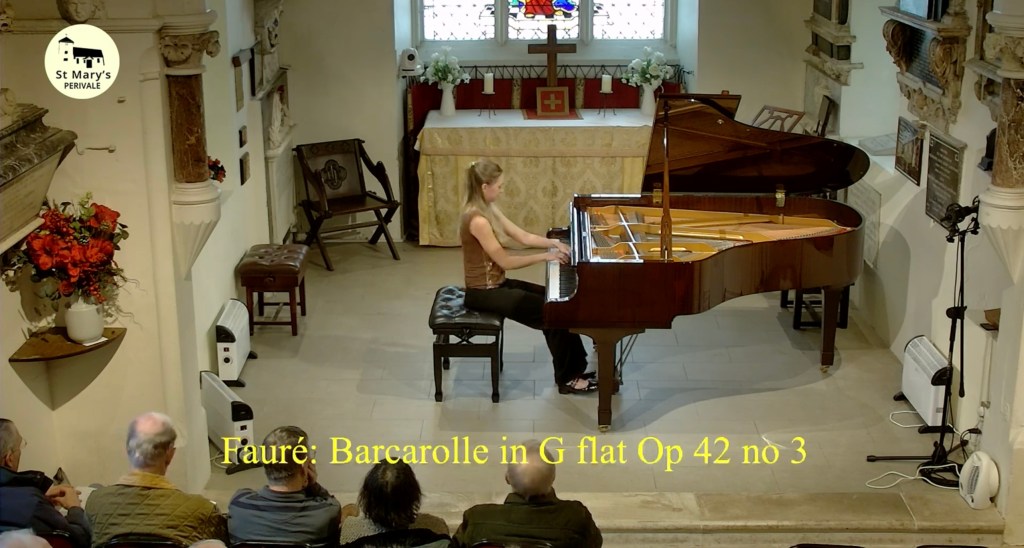
Two Barcarolle’s were next on this wondrous journey that Rose had organised for us today.
Fauré’s Barcarolle in G flat , a work all too rarely heard in the concert hall, but that Rose imbued with a melancholic beauty of timeless mellifluous outpourings in which her ravishing jeux perlé added to the sumptuous rich harmonic sounds creating a tone poem of great delicacy and style.
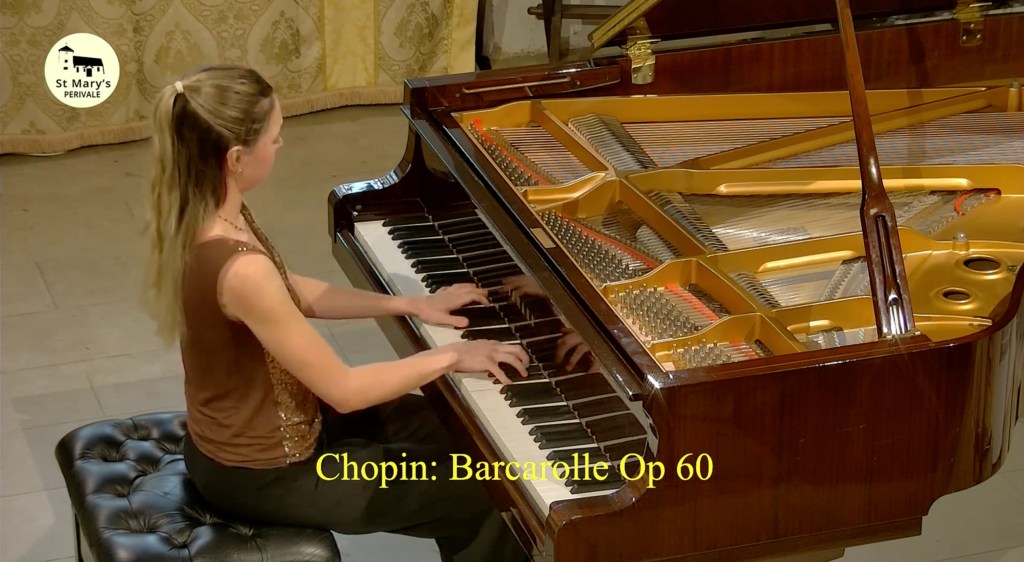
Chopin’s Barcarolle op 60 is one of the composer’s greatest works, written towards the end of his life, it is one long song from the first to the last note. Rose played it with glowing beauty where the melodic line was allowed to sing thanks to her wondrous sense of balance. Never disturbing the poetic beauty that Chopin is carving out but finding within the accompaniment, sounds that appeared like lights shining on a prism creating moments of wondrous beauty. An aristocratic control that gave nobility to the climax that she played with sumptuous rich sounds that were always covered in velvet never hard or ungrateful but ever more intense.
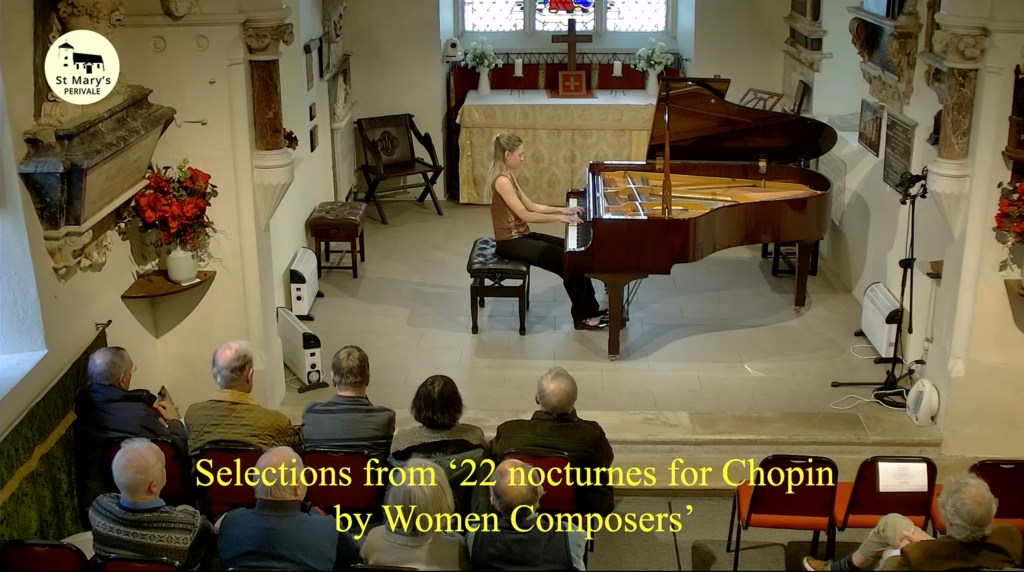
Prefacing three nocturnes for Chopin with one of Debussy’s Études, that were written late in life after he had been editing the works of Chopin to whom they are dedicated. They are considered to be late masterpieces and his finest most original works for piano. Debussy like Chopin hides the quite considerable technical difficulties as he creates a magic world of subtle sounds of great poetic significance just as Chopin had done with his second set of studies written a century earlier. Rose had chosen two, playing ‘pour les Agréments’ which prefaced a group of three ‘Nocturnes’ for Chopin by Katie Jenkins,Nicole DiPaolo and Zoe Rahman. She played ‘pour les Notes répétées’ as an encore after playing another great work of Chopin ,the Ballade in G minor op 23.
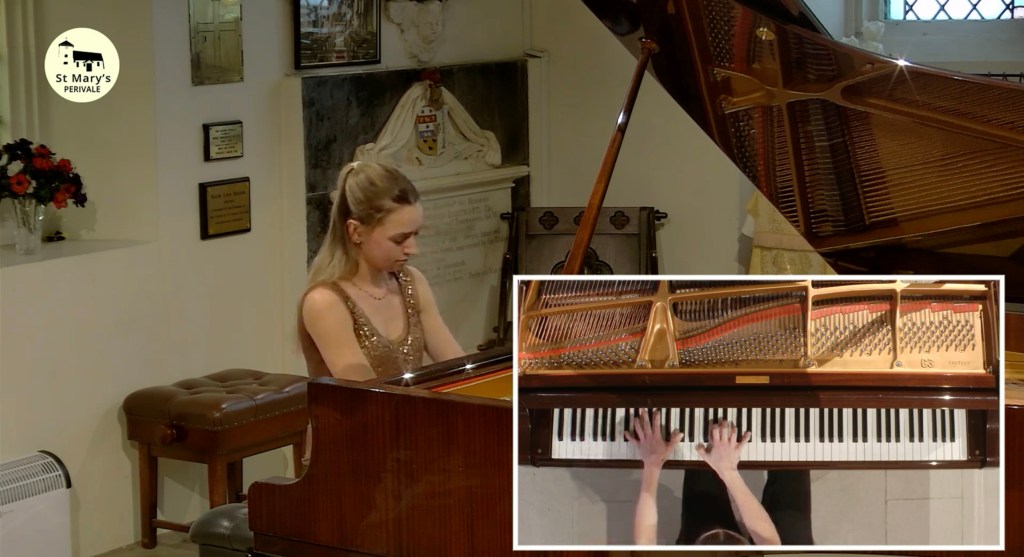
This first étude, the longest, was the last to be completed and is also the most elaborate; originally placed at the end of the set, Debussy said: “it borrows the form of barcarolle on a somewhat Italian sea”. Debussy was also a sensitive pianist, enriching the tradition of Chopin and advancing the integral soul of the sustaining pedal; he apparently played with penetrating softness and a flexible, caressing depth of touch, creating extraordinary expressive power. Rose brought just such sensitivity to this étude that she played with mysterious sounds of subtle glistening beauty, a mastery of the pedal that could create a ravishing atmosphere without ever loosing the clarity despite the most intricate stream of notes. A technical mastery that could allow her to play with scrupulous attention to the minute details that litter the score in which Debussy incorporates fantasy with transcendental difficulties, creating a sound world of extraordinary poetic imagination. The ‘Notes répétées’ that she played as an encore immediately follows this étude in Debussy’s own set of twelve Études following in the footsteps of Chopin. This is a capricious play with repeated notes that requires great agility, as Debussy creates a perpetuum mobile of knotty repetitions of every conceivable combination. Rose played with crystalline clarity with very little pedal, where her extraordinary sensitive dexterity could bring this work to life with impish delight. Even the tongue in cheek ending was with the final three chords of dry sarcastic humour that Rose played with playful glee. Debussy obviously had a great sense of humour despite the enormous difficulties he encountered throughout his life, and he had added at the top of the score a witty introduction to his fingering-free etudes: “Absence of fingering is an excellent exercise, negating musicians’ perverse desire to completely dismiss the composer’s (and editor’s), and thereby vindicating words of eternal wisdom: ‘If you want something done well, do it yourself’. Let us devise our own fingering!”
Debussy and Chopin were combined with Nocturnes commissioned in 2022 for new piano works by women composers inspired by Chopin’s Nocturnes .Each nocturne speaks with its own authentic voice as it stirs emotions and reveals the composers own cultural influence. The first ‘Cerddorieth i Bronwyn’ was by Katie Jenkins and was a work of whispered beauty that Rose played with subtle colour, creating a magical world of suggestive sounds.The second by Nicole DiPaolo was a beautiful bel canto with a flowing bass on which was etched a melody of chiselled beauty that Rose played with a poetic weight of beguiling sensitivity. The final Nocturne by Zoe Rahman was an elusive mazurka of great chromaticism and sombre beauty in which a subtle jazz influence pervaded as it reached for the sky with whispered beauty.
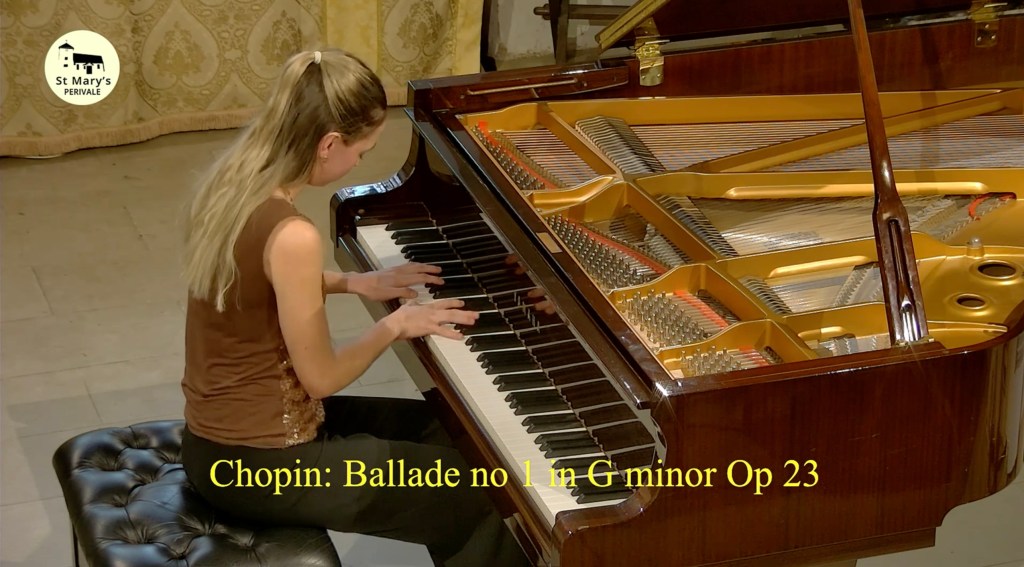
Rose restored Chopin’s First Ballade to its rightful place as a masterpiece of poetic beauty and passionate romantic fervour. Paying scrupulous attention to Chopin’s indications she managed to recreate a work, much tainted by the so called Chopin tradition, and restore it to the genius that the composer had bequeathed with his very precise indications written in the score. The opening I have rarely heard played with such simple beauty as she allowed the melodic line to flower with delicacy and poignant beauty. Cascades of notes were played with aristocratic authority where every note had a significance and meaning and was never an empty display of virtuosity. It was interesting how Rose gave such significance to the bass, especially the left hand thumb which acted as an anchor to the exhilarating outpouring of romantic effusions that poured so naturally from her well oiled fingers.The climax was played with aristocratic control and sumptuous full sounds always from the bass upwards.A coda that was shaped with controlled excitement where even the most transcendentally difficult passages were given and architectural shape and burning significance.
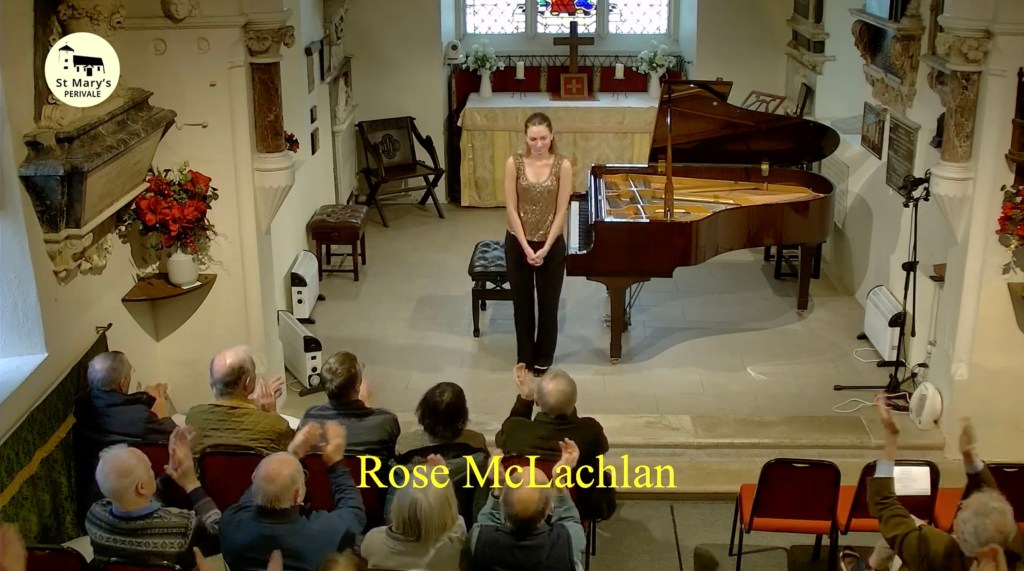
Rose McLachlan comes from a family of musicians and began piano lessons with her father at the age of seven. She studied at Chetham’s School of Music with Helen Krizos before entering the Royal Northern College of Music in 2020, and now continues her studies at the Guildhall School of Music and Drama with Charles Owen, Martin Roscoe and Ronan O’Hora.
Rose performs regularly as a soloist with orchestra. She made her debut aged 13 at the Edinburgh Fringe Festival and has since appeared with the BBC Concert Orchestra under Barry Wordsworth, broadcast twice on BBC Radio 3, and with the Fort Worth Symphony Orchestra as winner of the PianoTexas Festival concerto competition. Recent highlights include Saint-Saëns’ Carnival of the Animals with the Hallé at the Bridgewater Hall, and a 2024 performance of Mozart’s Triple Concerto alongside Jean-Efflam Bavouzet and Andrea Nemecz, broadcast on BBC Radio 3 and to be released on the Chandos label.
A prizewinner at numerous national and international competitions, Rose has received major awards including the Scottish International Youth Prize, the Yamaha Prize (EPTA UK), the RNCM Chopin Prize and the Musicians’ Company Silver Medal. Her recordings appear on Divine Art and Naxos, and she is supported by The Caird Trust, the Leverhulme Trust and Talent Unlimited.
 ChristopherAxworthy-MusicCommentary