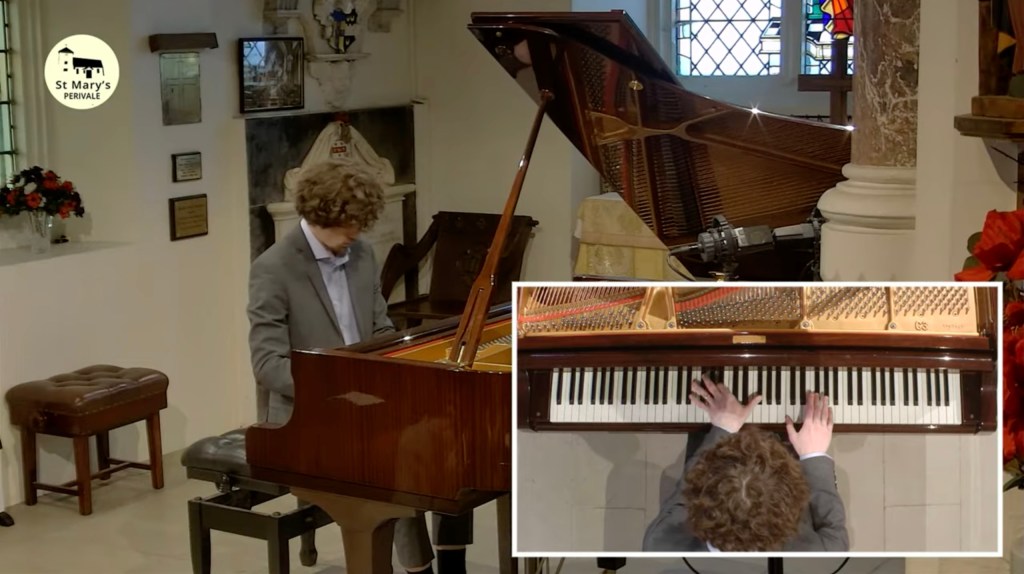
Quite a coincidence that two of the most introverted players of dedicated humility and a wondrous gift for communication should both be playing in the same city at the same time Kyle is a great admirer of Christian Blackshaw that Sir David Scholey has been trying to introduce to one another.
Kyle had played for the Keyboard Trust in the Harold Acton Series and Sir David was so moved by his playing he wanted to introduce him to a kindred spirit. It is playing that may on first acquaintance seem introverted but it is of exquisite making. The music does not roar as a Lion but has a much greater strength that is undemonstratively within the very notes themselves. Artists that delve deeply into the notes and find sounds that can speak louder than words . It is concentrated playing that requires the same concentration from the listener, with the pianist who does not project out but draws us in to the very heart of the creation.
The centre of their repertoire lays with the Viennese Classics of Schubert, Beethoven, Haydn and Mozart. The Russian militaristic or heart on sleeve showy repertoire is not for them. Liszt, of course, but more the later works or the poetical rather than the ‘sturm und drang’ of the passionate showpieces inspired by Paganini.
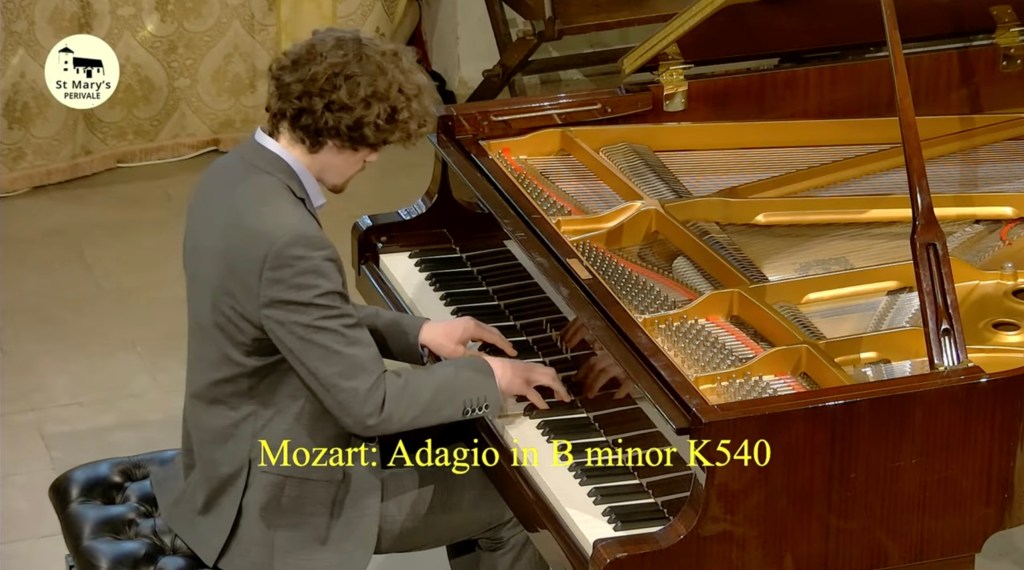
The Adagio by Mozart is a late work of a composer who could say so much with so little. Kyle played with a timeless beauty of refined good taste with exquisite phrasing where notes spoke louder than words. There was an aristocratic nobility of simplicity and poignant chiselled beauty to his playing . Always looking at the keys with extreme concentration as he directed the sounds with masterly assurance and extraordinary control of sound. There was no wasted energy or outward signs of struggle, because the energy was in the notes themselves and was revealed in the deep meaning he could find in Mozart’s few but essential notes. Heartrendingly essential, going right to the centre of the message hidden in the notes by this Universal Genius. There was exquisite phrasing but never denying the power behind the notes which he played with an inner searching intensity.
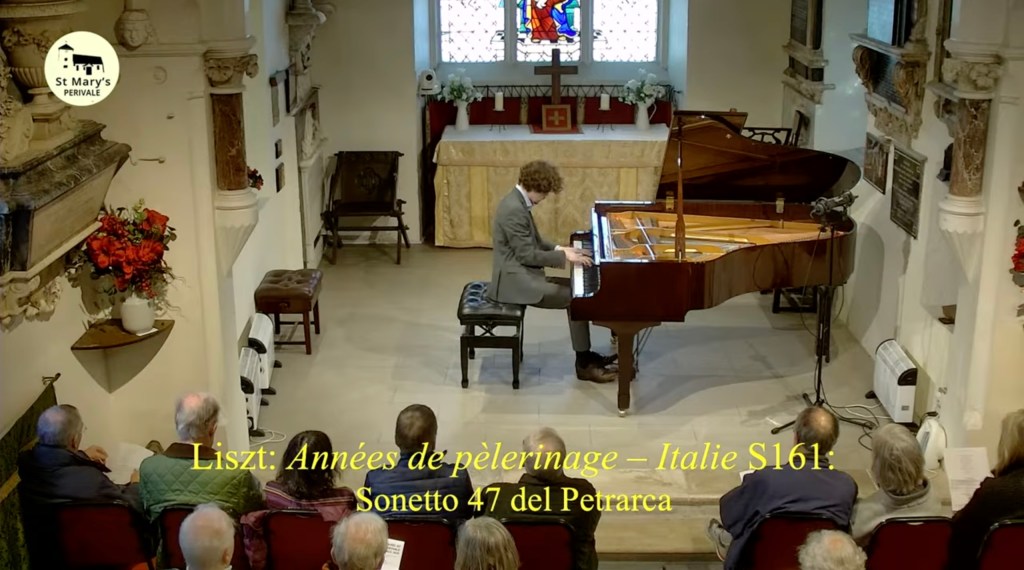
Three Petrarch Sonnets were poetic outpourings of delicacy and nobility. N. 47 was beautifully sung with a flowing sense of freedom and a balance that allowed the melodic line to glow with radiance and beauty. There was passion too, but dissolving almost immediately into moments of deep introspection and poetic intensity as magical sounds of improvised beauty hovered over the keyboard.
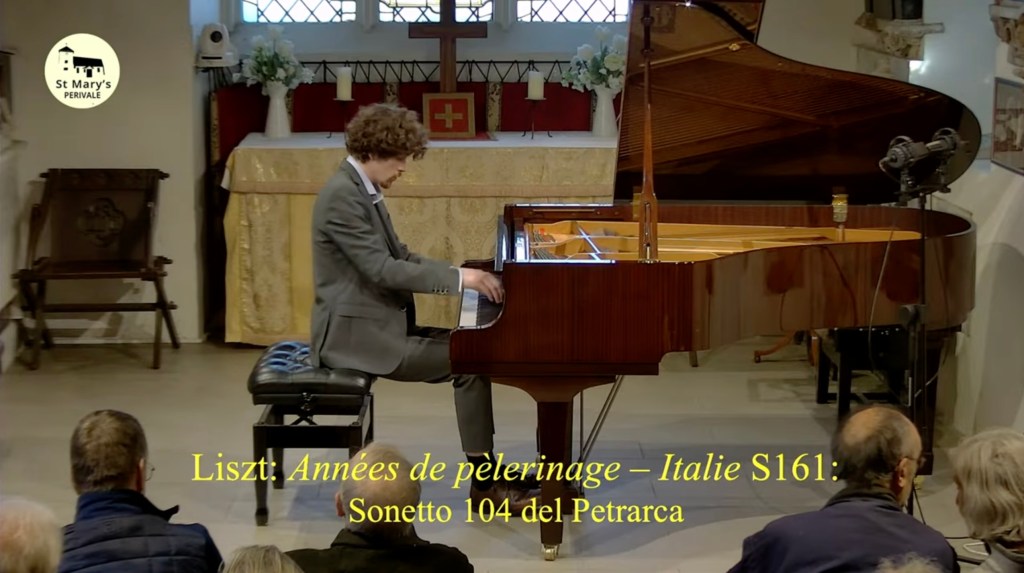
An impetuous opening to 104 dissolving into an outpouring of a single melody accompanied by imposing chords of gentle persuasion. There was a purity to the long melodic line accompanied by florid harmonies leading to a passionate outpouring of scintillating playing of searing intensity, always played with remarkable control and elegance.
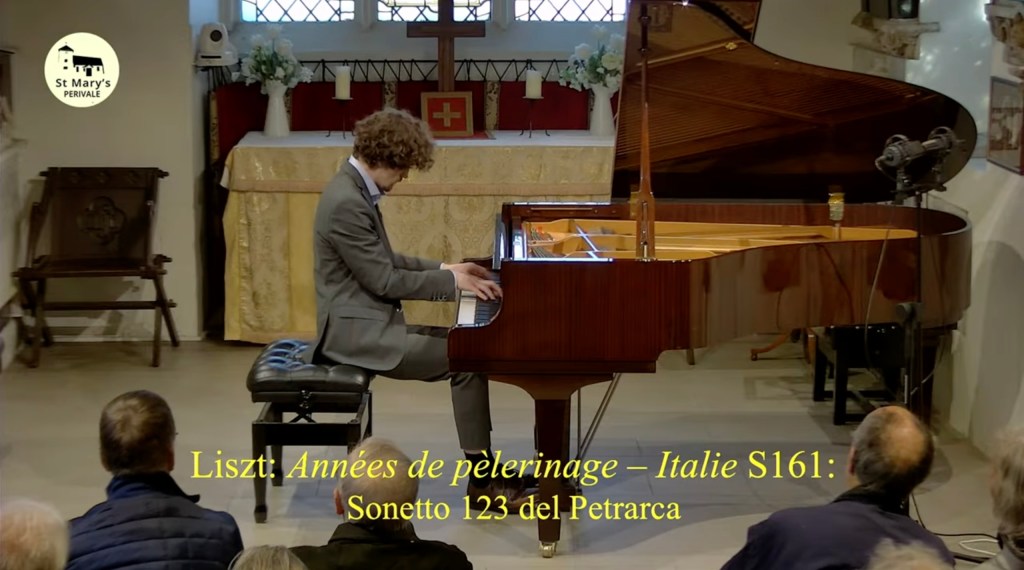
N. 123 had a luminosity of sound building in intensity, with a poetic outpouring as a trill was unravelled to reveal a cascade of notes of ravishing beauty. This is the world that Kyle inhabits, that of whispered beauty where every note is given a weight and meaning that is rare to encounter when played with such control and aristocratic refined good taste.
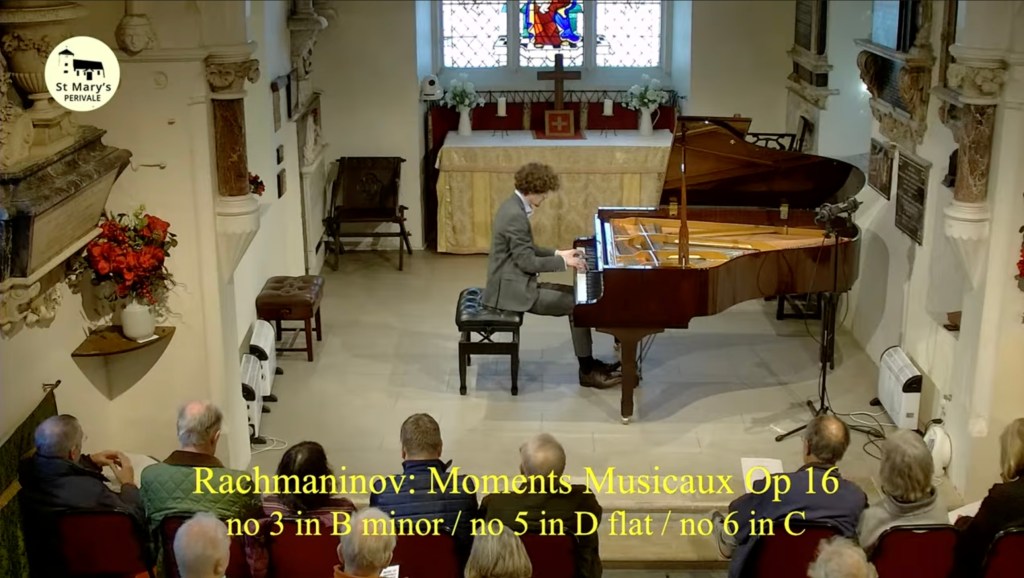
I thought that Rachmaninov might show us another side to Kyle’s personality but he had chosen two of the most intensely beautiful in n. 3 and 5. Rachmaninov’s deep brooding nostalgia and nobility were ever present and played with restrained passion, but with the composers unmistakeable sumptuous Romantic sounds. Tone poems of searing intensity. N. 5 was rather slow and could have had more sweep and be less measured but this is the choice that Kyle’s poetic soul always searches for. There were moments of wondrous colour as the melodic line is accompanied by magical comments, bathed in pedal but always with a clarity and strong highly personal poetic personality. And last but not least N 6 was a passionate outpouring where Kyle’s quite considerable technical command allowed him to play with fearless passion and dynamic drive. Always beautiful sounds even in this sumptuous passionate outpouring of changing harmonies that Kyle played with searing intensity.
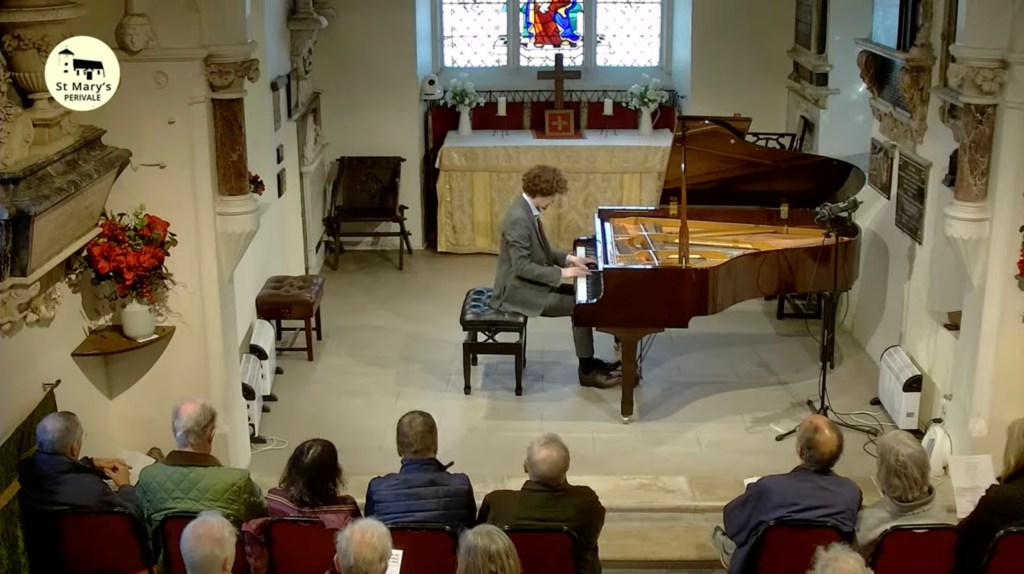
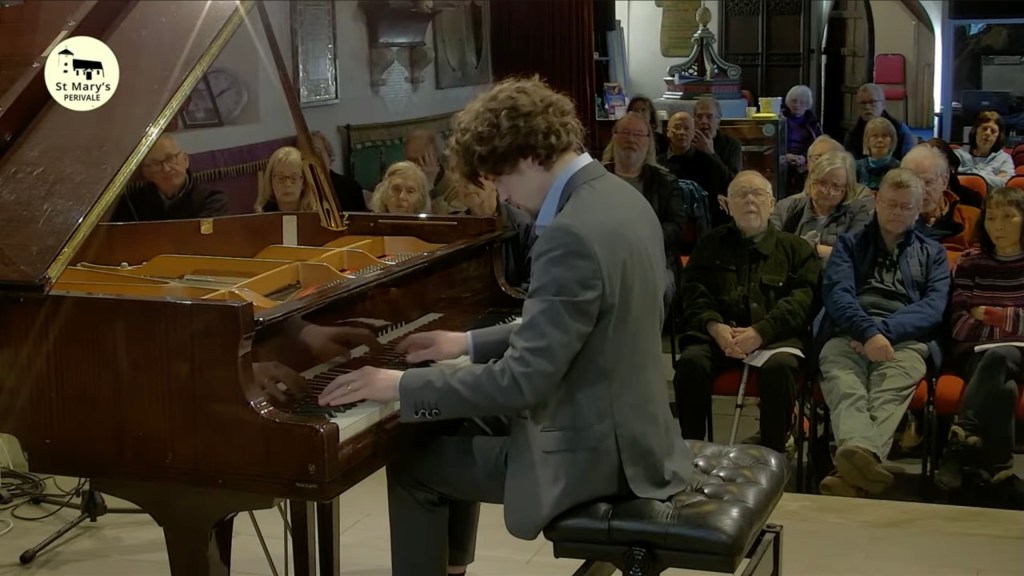
Kyle Hutchings is a British pianist who, after just twelve months of self-taught playing, won a scholarship to study in London with internationally acclaimed pianist Richard Meyrick on the Pianoman Scholarships Scheme, supported by Sir and Lady Harvey McGrath. Subsequently, he made his London debut with the Arch Sinfonia, playing Beethoven’s Second Piano Concerto.
Critically acclaimed by International Piano Magazine as “a poet of the piano”, he has performed in venues such as London’s prestigious St. John’s Smith Square, Kings Place, St. James’s Piccadilly, St. Mary’s Perivale, London’s BT Tower, The Lansdowne Club in Mayfair, as part of the Blüthner Recital Series, and many others up and down the country. In addition to this, he is in high demand internationally, having received accolades throughout Europe.
During his studies at Trinity Laban, supported by a scholarship from Trinity College London, he was a recipient of the Conservatoire’s most important prizes, including the Nancy Thomas Prize for Piano as well as the Director’s Prize for Excellence; he was also nominated for the Conservatoire’s coveted Gold Medal.
Kyle is supported by The Keyboard Charitable Trust and has received support from the Robert Turnbull Piano Foundation as well as the Zetland Foundation.
 ChristopherAxworthy-MusicCommentary