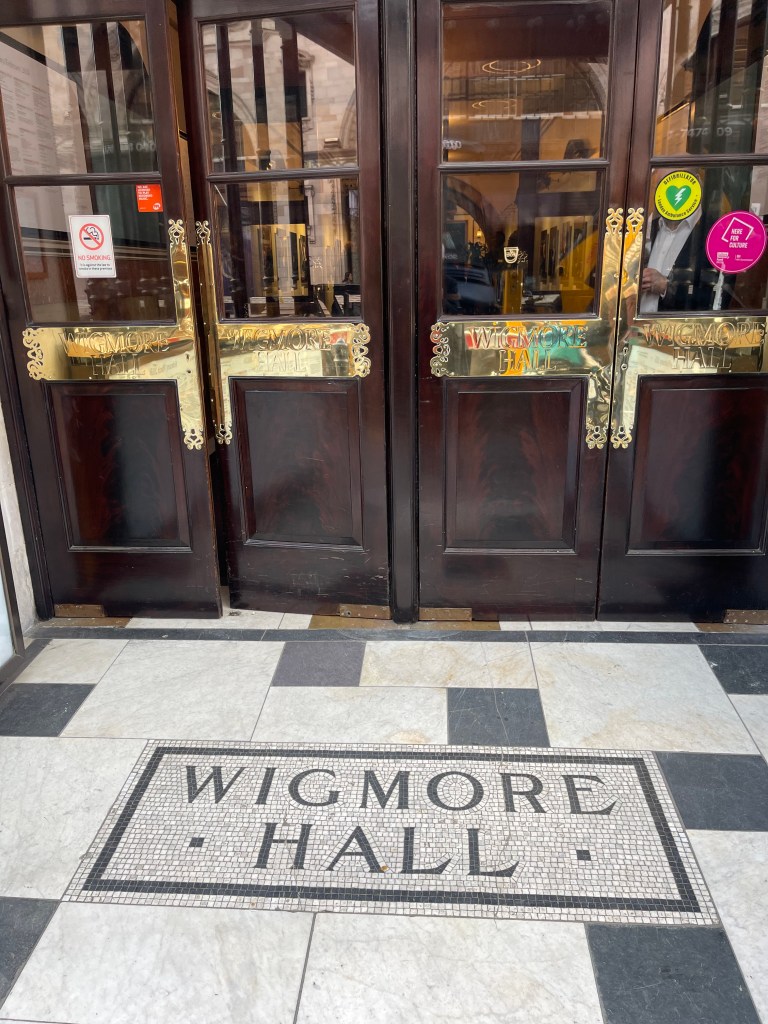
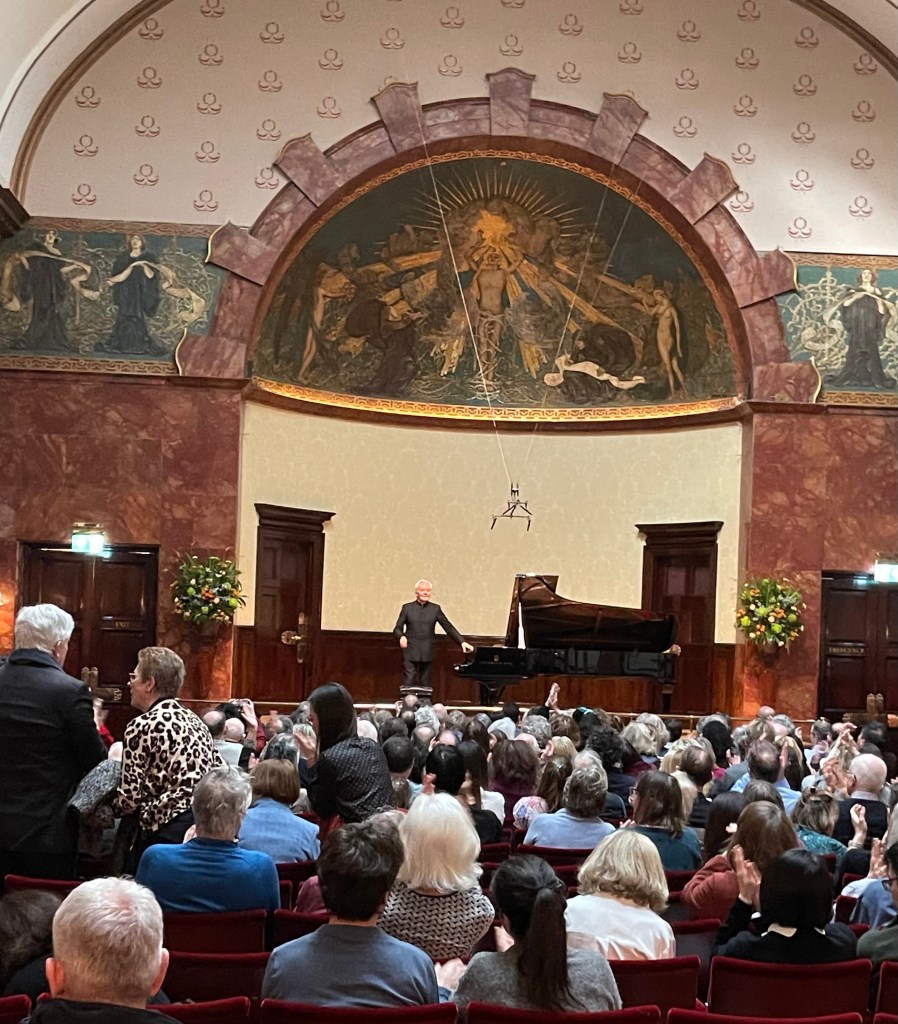
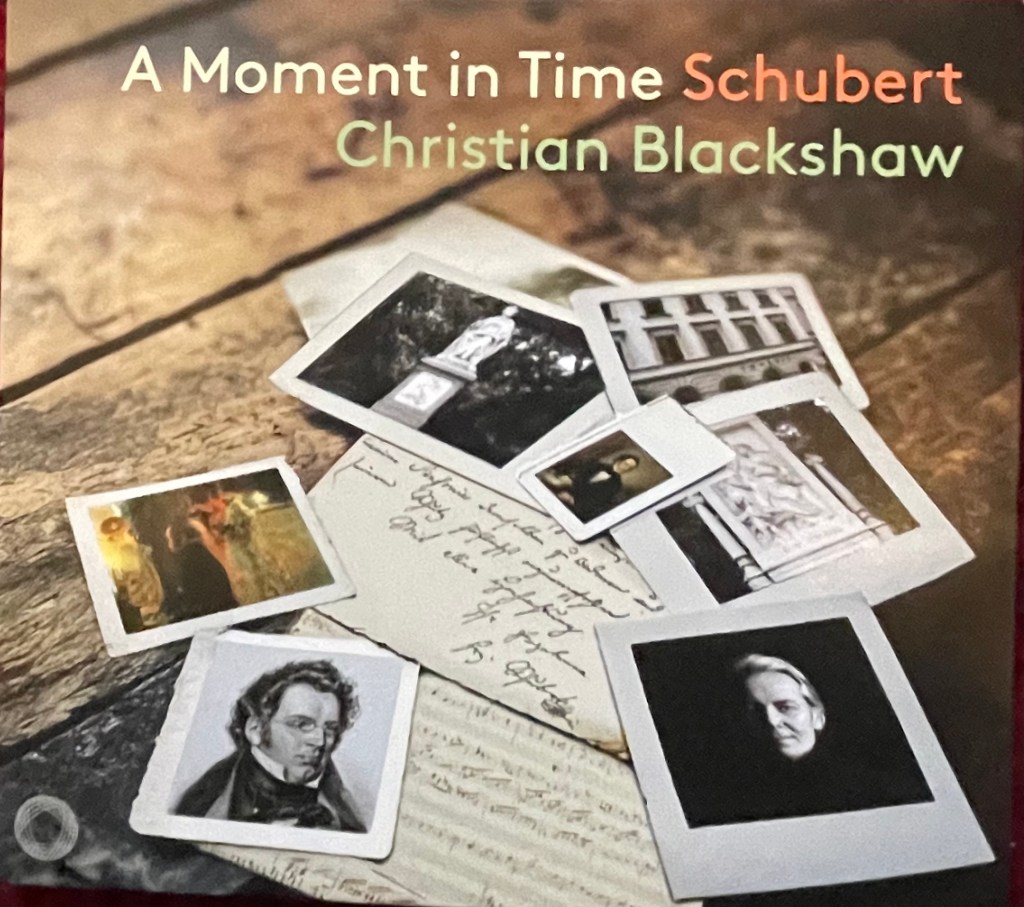
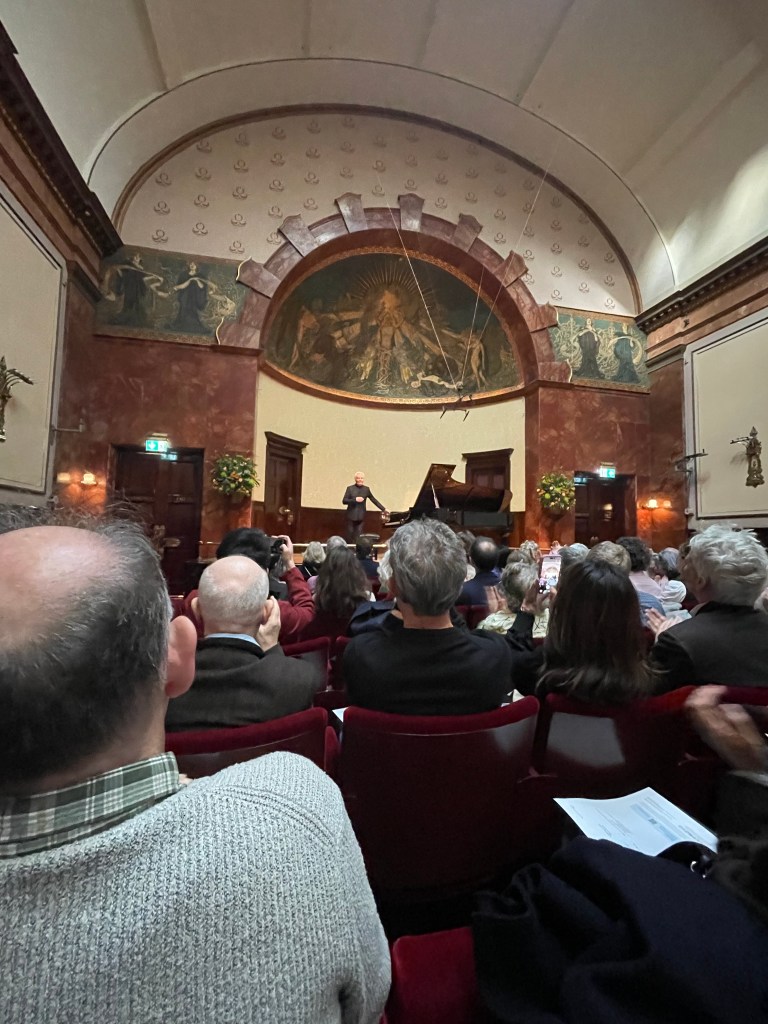
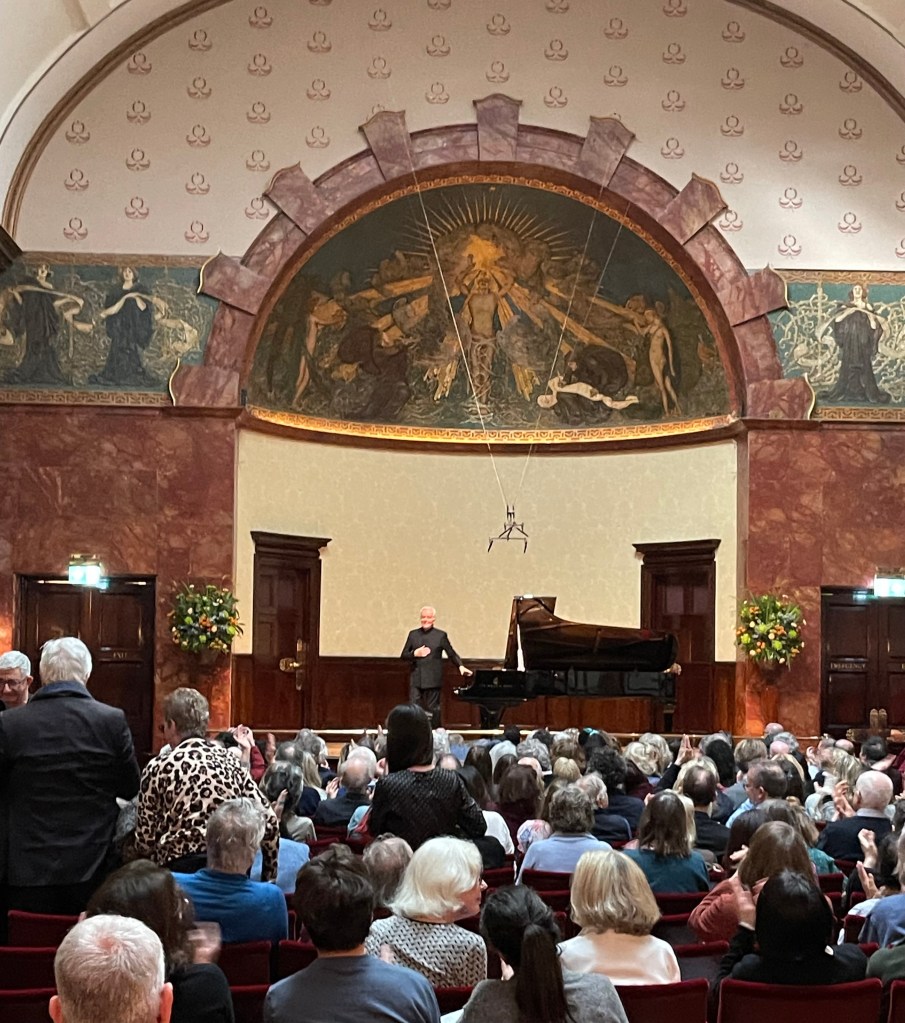
Miracles at the Wigmore Hall as Christian Blackshaw returned to hold us in Schubert’s spell , as I remember only his mentor Clifford Curzon could have done.
A harrowing story of Schubert’s last sonata told with ravishing beauty and poignant desolation.
As if this was not enough Christian totally seduced us with the G flat Impromptu played with sublime beauty and drama as a wondrous tone poem was allowed to unfold from the miraculous hands of the supreme poet of the keyboard .
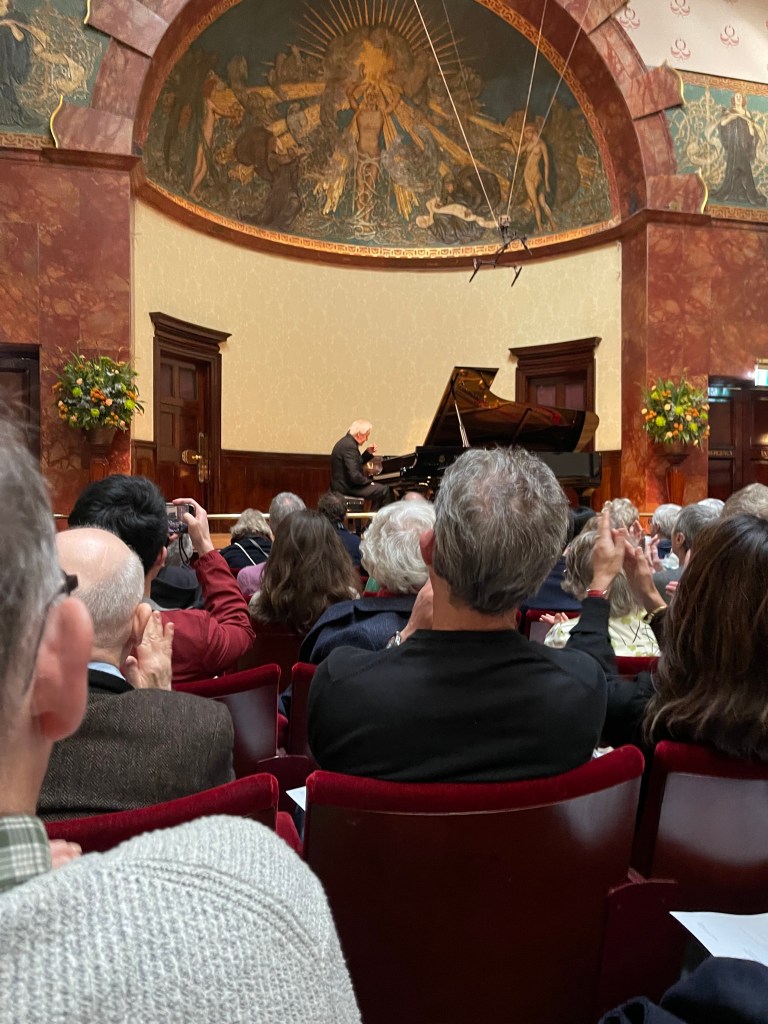
It was all through the recital that the note G was heard in so many different guises from the arresting opening of the C minor Impromptu D 899 with it’s almost menacing note of G ringing out in the coda as we finish on a note of hope in C major. It is the same G that Christian played in so many different ways in the last movement of the B flat Sonata .Playing on this occasion, hitting the octave note but then replacing the hand on the key so it reverberated even more, and the second time it came he played it so unassumingly quietly that it became like a reminder that all was not right with the world. Christian has a palette of sounds of quite extraordinary kaleidoscopic inflections and although this was playing of deep introspection and soul searching , a distinguished colleague said ‘when his sounds were full they were ‘Royal”.
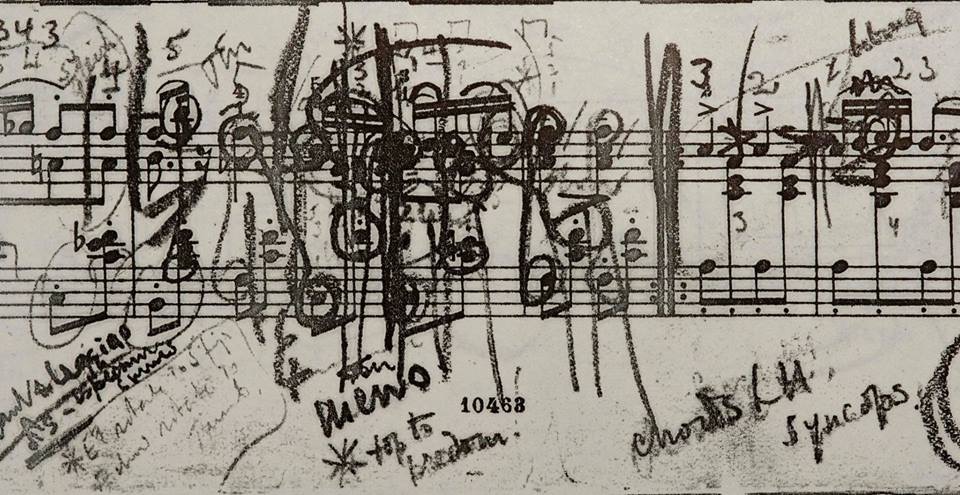
The point is that this was playing of extraordinary depth and imagination where every note had been pondered over and thought and rethought. It is the same dedication that can be seen in the scores of Curzon ,with notes outlined in many different colours and with scribblings like Beethoven in his notebooks. It is an attention to detail, with a search to find the real meaning behind the notes that Schubert could so miraculously envisage as he was about to face death at the age of only 31. The risk, of course, is that this attention to detail can kill the spontaneity of a work, weighing down notes with too much meaning of preconceived ideas, that the spontaneity of creation, whether as a composer or performer, is lost. This often happens in the recording studio and is the reason why I personally prefer recordings of live performances instead of those sweated out in the studio.Take after take and splice after splice until a perfect corpse is left for posterity! I rarely listen to CD’s a second time as it is like a conversation that lives only in that moment. It was Mitsuko Uchida who very wisely said a recording is like a photograph that with age turns brown at the edges, whereas it is the memory of a performance that grows in beauty as one recalls the moment when it was born on ‘wings of song’.
And so it was that I came to the Wigmore Hall to hear a recreation from a deeply introspective artist who has known great difficulty and suffering in his own life and it is the same deep understanding that he can bring to the sounds that Schubert was to find in a moment of great suffering as he faced death.
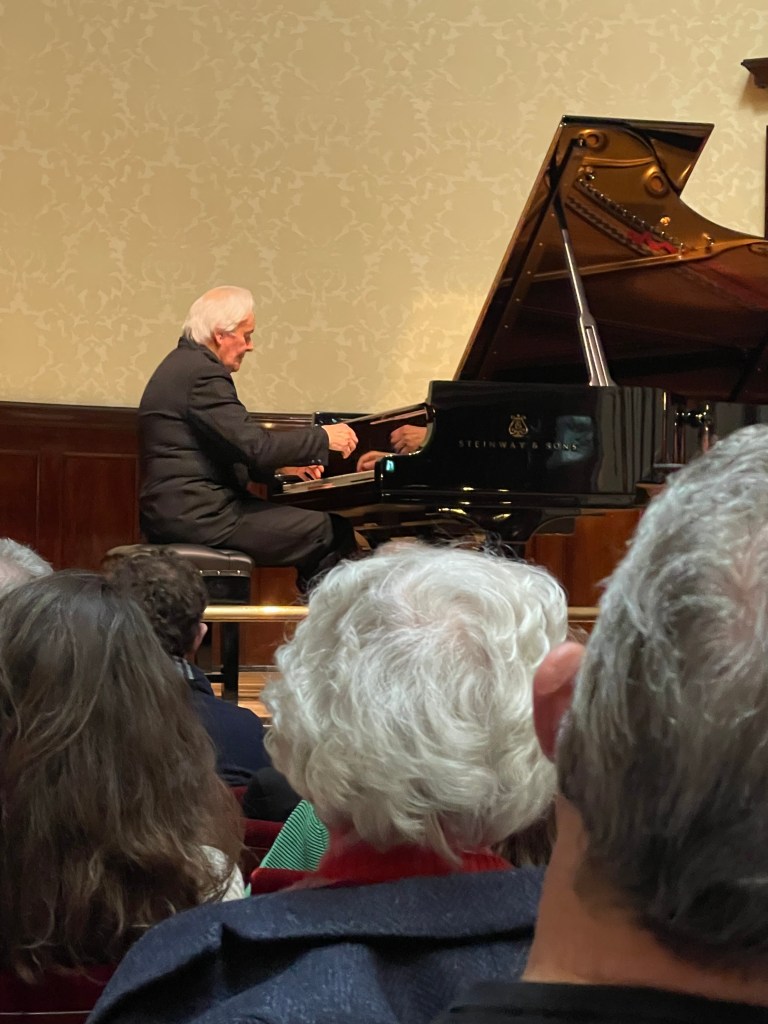
The first Impromptu D.899 is one of the most difficult of all Schubert’s works, where the composer marks almost every note with precise indications. It was the intense concentration that Christian demands of us listeners, too, that was so rewarding and emotionally exhausting. He managed to bring a spontaneity to a work that I have never heard played with such a range of chameleonic emotions and sounds , but with an architectural shape that made us aware of the opening G allowed to reverberate freely as Schuberts asks, and was now transformed, after passing through a world of emotions , into a whispered warning within the coda. He brought an amazing clarity of voices of very subtle beauty, with an independence of the left hand from the right, both united in creating a beautiful whole. Phrases where one was answered by the other in a conversation of vivid emotional impact .The left hand was the anchor on which the right could float so glowingly.The left hand often non legato, and the right legatissimo ,demonstrating a transcendental technical mastery of art that conceals art in the name of recreation and communication. There was drama too, with glorious ‘Royal’ sounds of symphonic richness gradually dissolving into magical outpourings of glowing luminosity. A teasingly Viennese duet between the voices was played with subtle echoing beauty whilst the left accompanied with playing of a pianissimo non legato that demonstrated a control of sound that was of whispered perfection.
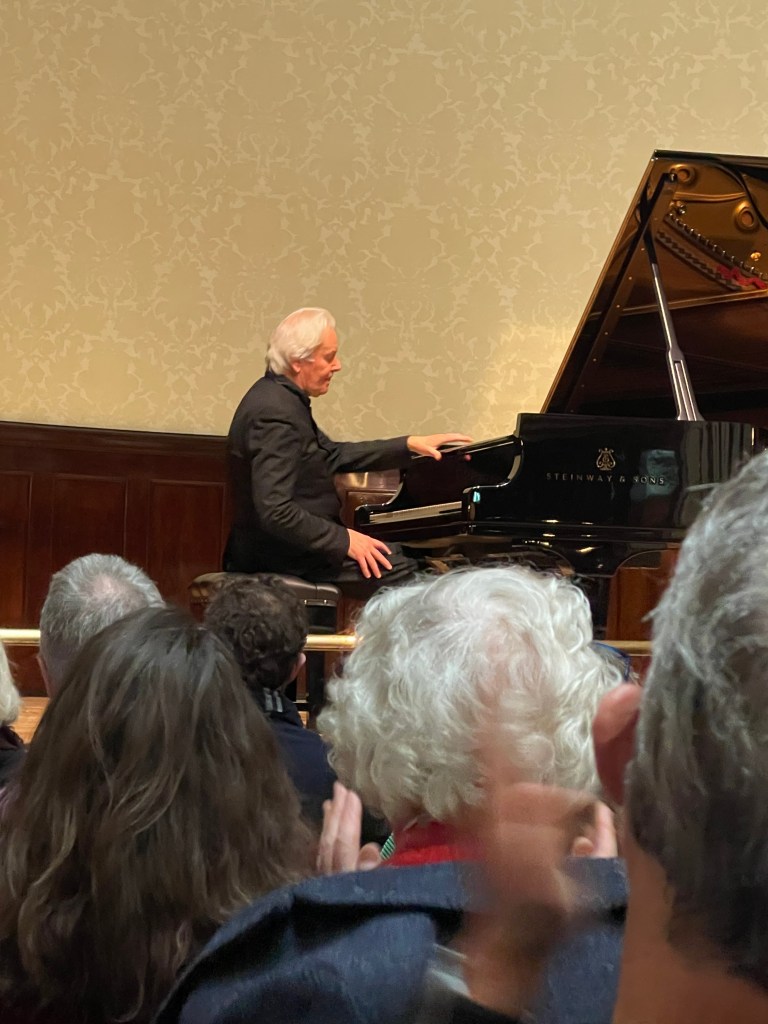
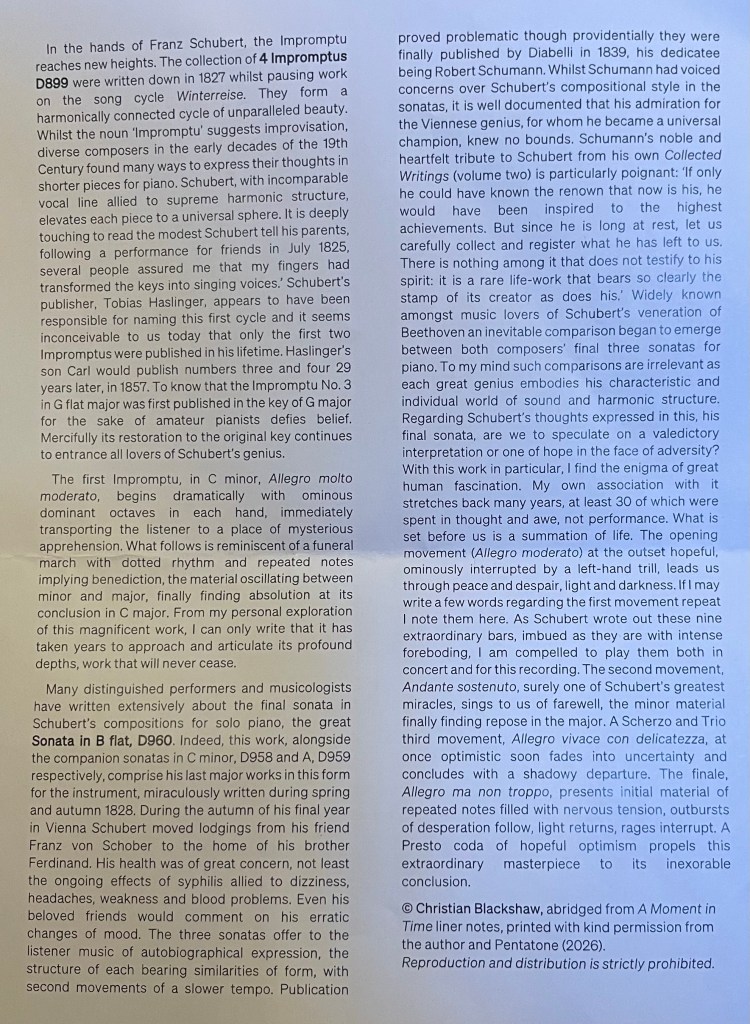
The audience at this point had realised that this spell was to be continued without any banal applause, as Christian allowed Schubert’s last sonata to reveal a lonely voice of desolation, interrupted only by menacing rumourings deep in the bass.(It is the same transcendental control that is required for the opening of Beethoven’s ‘Appassionata’.) The same rumbling sounds in the bass that are unsettling and disturbing before taking wing with a melodic outpouring of glowing luminosity with a mastery of texture of liederistic perfection. The ‘da capo’ bars were made even more ominous as these clouds were replied to with innocent purity. The final great rumble in the bass was even more prominent this time before the repeat , which made the return of the innocent desolate voice of the opening even more poignant. He brought a new rich sound to the melodic outpouring of the development where the seemingly innocent cascades of notes became beseeching cries in the dark. After such a tumultuous journey the chords of the coda were of such a piercing poignancy that they seemed like a stab to the heart , as we bid farewell with the four final chords placed with unearthly delicacy.
The ‘Andante sostenuto’ was bathed in pedal which gave a glowing resonance to the melodic line accompanied by its delicate embellishments The Brahmsian central episode was played with sumptuous rich Philadelphian velvet sounds out of which a melodic line of glowing radiance was revealed as we were led to it by subtle whispered non legato notes in the bass. A refined sense of touch and colour that I have only ever heard from Curzon or Pressler in his glorious Indian summer, where every notes spoke with perfect simple eloquence. Gradually gaining imperceptibly in strength and nobility as we experienced the whispered purity of the return of the opening melody as it resolves to C sharp major with breathtaking audacity and we, the audience, held our breath, witness to such sublime beauty .
The “Scherzo’ entered with whispered tones, never with any hard edges or ungrateful sounds. Schubert, even here marks the score with pianissimi, piano and at most forte piano. Christian brought a beguiling charm of Curzon manufacture to this movement as there was a question and answer played out with charm and simplicity. The ‘Trio’ was beautifully shaped with the sudden pianissimo at the end of the phrase that I had never noticed before, Christian not allowing the melodic line to be interrupted by the strange noises that Schubert asks for in the bass.
What character Christian gave to the last movement ‘Allegro,ma non troppo’ where as I have already said the ‘G’ becomes such an omen of mystery and intimidation. A wonderful sense of dance, but this was indeed with the shadow of a ‘dance macabre ‘ as Schubert’s irrepressible melodic invention takes over leading us to tumultuous climaxes and dramatic interruptions. The hysterical, nervous energy of a Serkin is not part of Christian’s make up ,but there was a nobility and richness that was indeed ‘Royal’ as he brought this extraordinary testimony to us with masterly understanding and supreme poetic beauty.
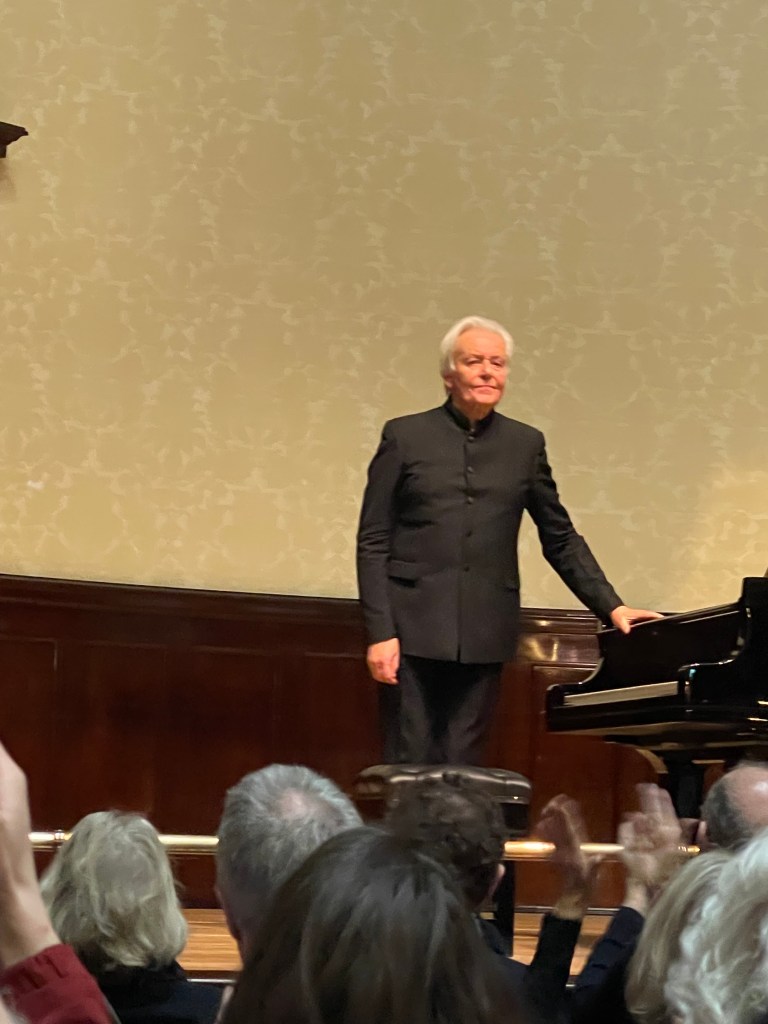
I had assumed that after such concentrated performances, silence would be the only solution, after showing our appreciation with a sincere and prolonged ovation. Christian had decided differently, as he sat at the piano once more and allowed Schubert’s G flat Impromptu to flow from his fingers with the beauty of sublime perfection. It left us all, even more overcome at what had befallen us this Wednesday lunchtime. A feast indeed that will linger in our memory, as Mitsuko Uchida says, and will become more and more beautiful as we think about what beauty we had been witness to today.
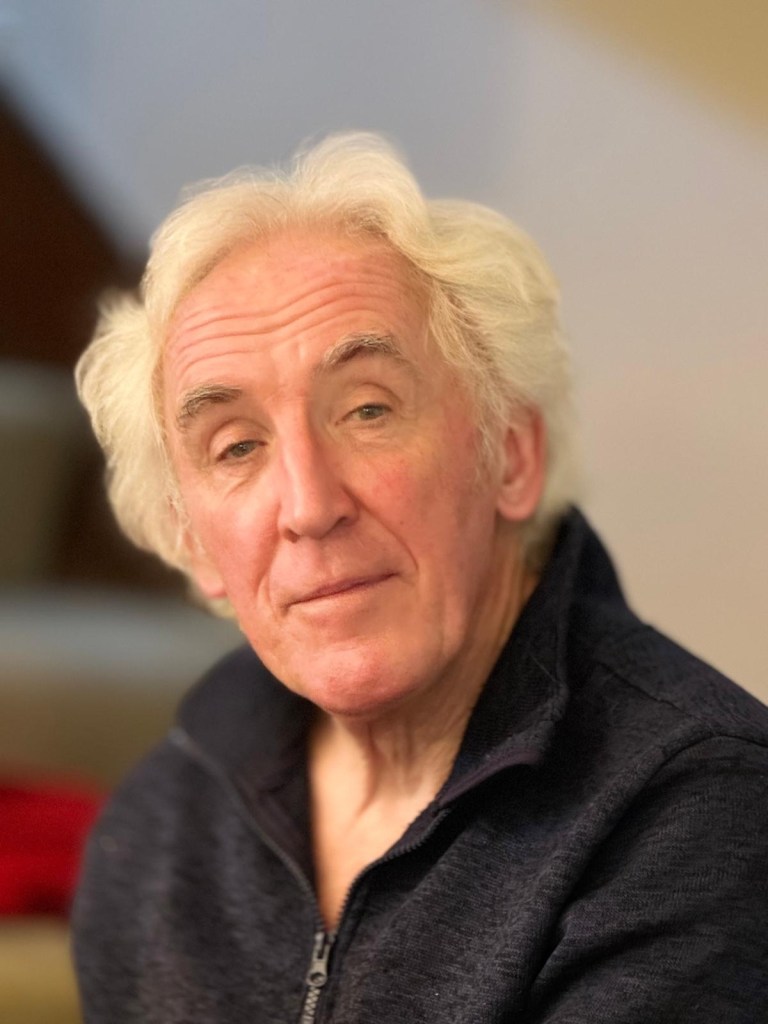
A deeply passionate and sensitive pianist, Christian Blackshaw is celebrated for the incomparable musicianship of his performances. His playing combines tremendous emotional depth with great understanding. Born in Cheshire, England, he studied with Gordon Green at the Royal College Manchester and Royal Academy London, winning the gold medals at each. He then became the first British pianist to study at the Leningrad Conservatoire with Moisei Halfin and later worked closely with Sir Clifford Curzon in London.
He has performed worldwide and in festivals as recitalist and soloist with many renowned conductors, including Sir Simon Rattle, Gianandrea Noseda, Sir Donald Runnicles, Herbert Blomstedt, Trevor Pinnock, Neeme Järvi and Yannick Nézet-Séguin and is the founder director of the Hellensmusic Festival which was established in 2013.
His hugely acclaimed Wigmore Hall complete Mozart Piano Sonatas series was recorded for Wigmore Hall Live and released in four volumes. Critics have been unanimous in their praise, describing these “landmark” recordings as “captivating”, “magical” and “masterful”. Volume 4 was named as one of the Best Classical Recordings in the New York Times in addition to Gramophone Magazine’s Top 50 Greatest Mozart Recordings.
Recent notable performances include the Mozart cycle in Tokyo, Beijing, Shanghai, Montreal and Snape, his debut with the Philadelphia Orchestra, in addition to performances in the Schwetzingen, Schubertiada Vilabertran, Lerici, Oxford, Aldeburgh and Edinburgh International Festivals. He was awarded an MBE for services to Music in the New Year 2019 Honours List.
Further appearances are Wigmore Hall London, Toradze Festival Tbilisi, Salle Bourgie Montreal, Palau de la Musica Barcelona, Théâtre des Champs-Élysées Paris, an extensive tour in China and Artist in Residence with Orchestre Métropolitain and Yannick Nézet-Seguin.
 ChristopherAxworthy-MusicCommentary