Beethoven – Sonata Op.111 (25 mins)
Brahms – Paganini Variations Book 1 (14 mins)
Interval
Ravel – Gaspard de la nuit (25 mins)
Liszt – Mephisto Waltz No. 1 (13 mins)
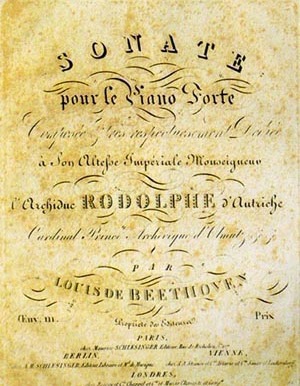
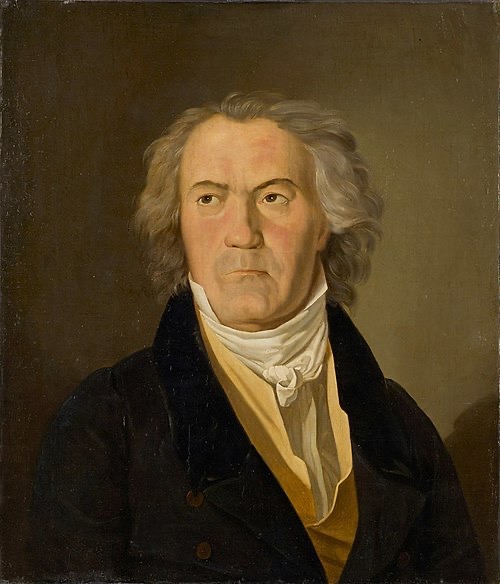
- Maestoso – Allegro con brio ed appassionato
- Arietta: Adagio molto semplice e cantabile
The Piano Sonata No. 32 in C minor op 111 is the last of Beethoven’s 32 Sonatas which span almost his entire compositional life . The work was written between 1821 and 1822. is dedicated to his friend, pupil, and patron, Archduke Rudolf.
‘A work of unmatched drama and transcendence … the triumph of order over chaos, of optimism over anguish.’ with a struggle that permeates the first movement as physically challenging pianists performing this work; even in the opening of the sonata, for instance, there is a downward leap of a seventh in the left hand – Beethoven is making his pianists physically struggle to reach the notes. Alfred Brendel commented of the second movement that what is to be expressed here is distilled experience” and “perhaps nowhere else in piano literature does mystical experience feel so immediately close at hand.Beethoven conceived of the plan for his final three piano sonatas (op 109,110 and op 111) during the summer of 1820, while he worked on his Missa solemnis Although the work was only seriously outlined by 1819, the famous first theme of the allegro ed appassionato was found in a draft book dating from 1801 to 1802, contemporary to his Second Symphony Moreover, the study of these draft books implies that Beethoven initially had plans for a sonata in three movements, quite different from that which we know: it is only thereafter that the initial theme of the first movement became that of the String Quartet n. 13 , and that what should have been used as the theme with the adagio—a slow melody in A flat —was abandoned. Only the motif planned for the third movement, the famous theme mentioned above, was preserved to become that of the first movement. The Arietta, too, offers a considerable amount of research on its themes; the drafts found for this movement seem to indicate that as the second movement took form, Beethoven gave up the idea of a third movement, the sonata finally appearing to him as ideal.
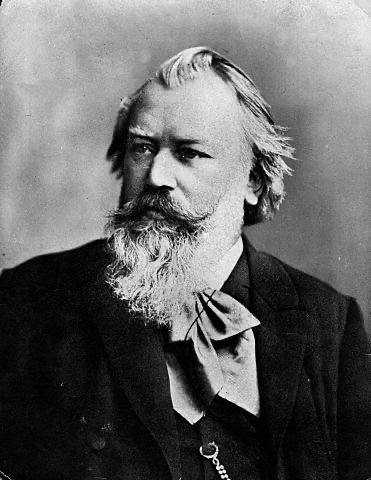
7 May 1833. 3 April 1897
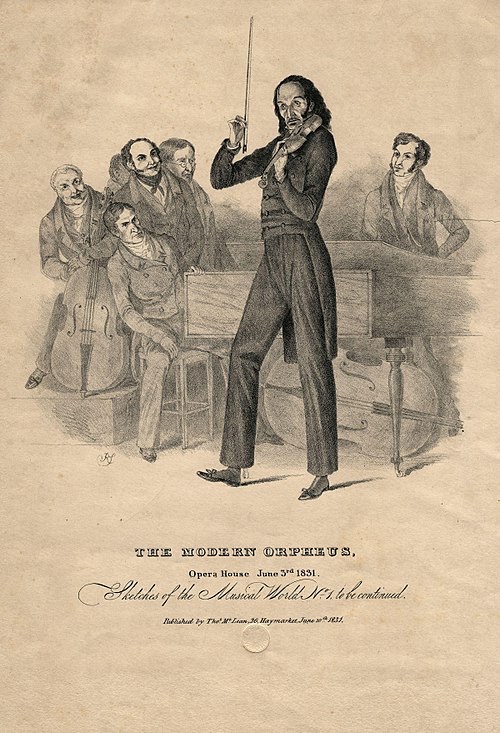
27 October 1782 – 27 May 1840
Variations on a Theme of Paganini,op. 35, was composed in 1863 and based on the Caprice n. 24 in A minor by Paganini ( The same one used by Rachmaninov, Liszt and Lutoslawski ) The work consists of two books. Each book opens with the theme, Paganini’s Caprice No. 24 in A minor, followed by fourteen variations. The final variation in each section is virtuosic and climactic.
Brahms intended the work to be more than simply a set of theme and variations ; each variation also has the characteristic of a study . He published it as Studies for Pianoforte: Variations on a Theme of Paganini and dedicated to the piano virtuoso Carl Tausig It is well known for its harmonic depth and extreme physical difficulty with particular emphasis of the technical challenges lie on hand independence, with the left hand often mirroring the right hand throughout the piece or having its own set of obstacles.
It has been described as “a legend in the piano literature,fiendish, and one of the most subtly difficult works in the literature.” Clara Schumann Clara Schumann called it Hexenvariationen(Witch’s Variations) because of its difficulty.The critic James Huneker wrote :
‘Brahms and Paganini! Was ever so strange a couple in harness? Caliban and Ariel,Jove and Puck. The stolid German, the vibratile Italian! Yet fantasy wins, even if brewed in a homely Teutonic kettle … These diabolical variations, the last word in the technical literature of the piano, are also vast spiritual problems. To play them requires fingers of steel, a heart of burning lava and the courage of a lion ‘
The first of the two books is the Theme and fourteen variations .
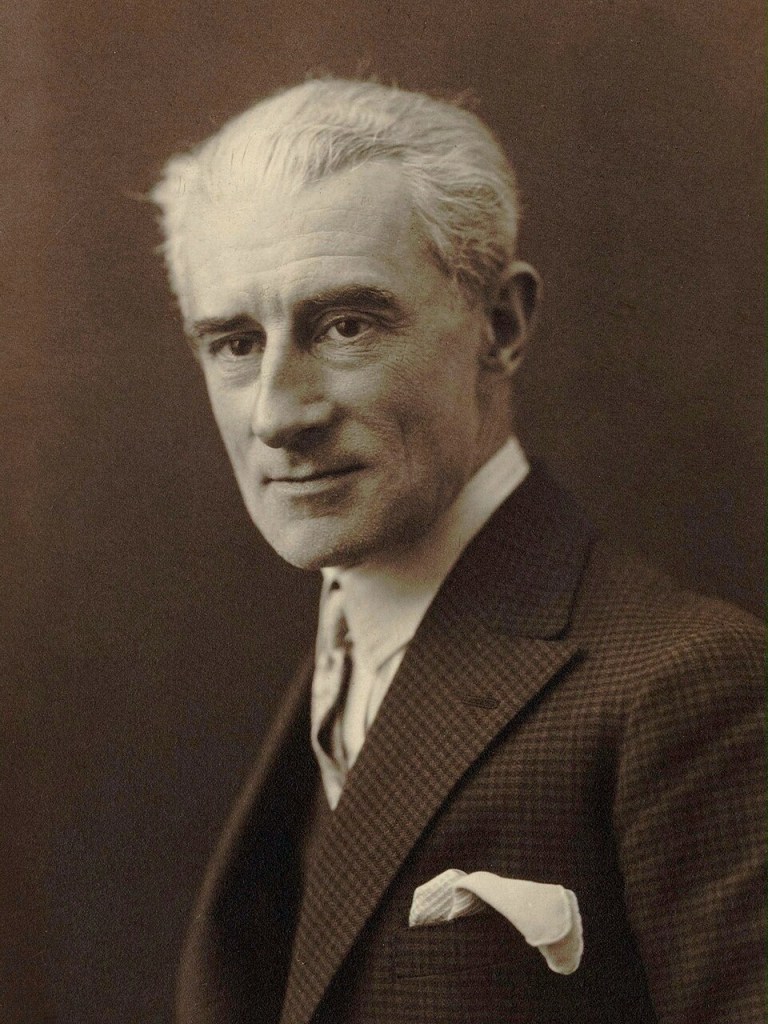
Gaspard de la nuit (subtitled Trois poèmes pour piano d’après Aloysius Bertrand), M. 55 is a suite of three piano pieces by Maurice Ravel written in 1908. Each of the three movements is based on a poem or fantaisie from the collection Gaspard de la Nuit – Fantasies à la manière de Rembrandt et de Callot completed in 1836 by Aloysius Bertrand. The work was premiered in Paris, on January 9, 1909, by Ricardo Viñes but dedicated to pianists Harold Bauer , Jean Marnold and Rudolph Ganz.
The piece is famous for its difficulty, partly because Ravel intended the Scarbo movement to be more difficult than Balakirev’s Islamey. Because of its technical challenges and profound musical structure, Scarbo is considered one of the most difficult solo piano pieces in the standard repertoire.
Ondine an oneiric tale of the water nymph Undine singing to seduce the observer into visiting her kingdom deep at the bottom of a lake. It is reminiscent of Ravel’s early piano piece, the Jeux d’eau (1901), with the sounds of water falling and flowing, woven with cascades. The work is in sonata form “by stealth”
. . . . . . . . I thought I heard
A faint harmony that enchants my sleep.
And close to me radiates an identical murmur
Of songs interrupted by a sad and tender voice.
Ch. Brugnot – The Two Spirits
Le Gibet represents the observer with a view of the desert, where the lone corpse of a hanged man on a gibbet stands out against the horizon, reddened by the setting sun. Meanwhile, a bell tolls from inside the walls of a far-off city, creating the deathly atmosphere that surrounds the observer.
‘What do I see stirring around that gibbet?’
– Faust.
Scarbo depicts the night time mischief of a small fiend or goblin , making pirouettes flitting in and out of the darkness, disappearing and suddenly reappearing. Its uneven flight, hitting and scratching against the walls and bed curtains, casting a growing shadow in the moonlight creates a nightmarish scene for the observer lying in his bed.As Ravel said : ‘I wanted to make a caricature of romanticism. Perhaps it got the better of me.’
‘He looked under the bed, in the chimney,
in the cupboard; – nobody. He could not
understand how he got in, or how he escaped.’
Hoffmann. – Nocturnal Tales
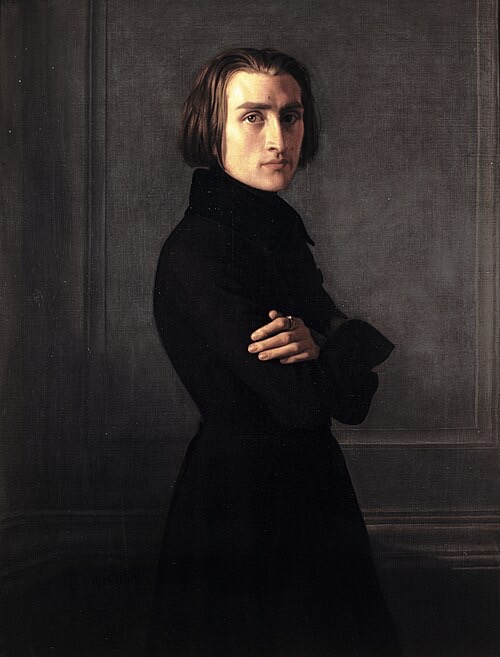
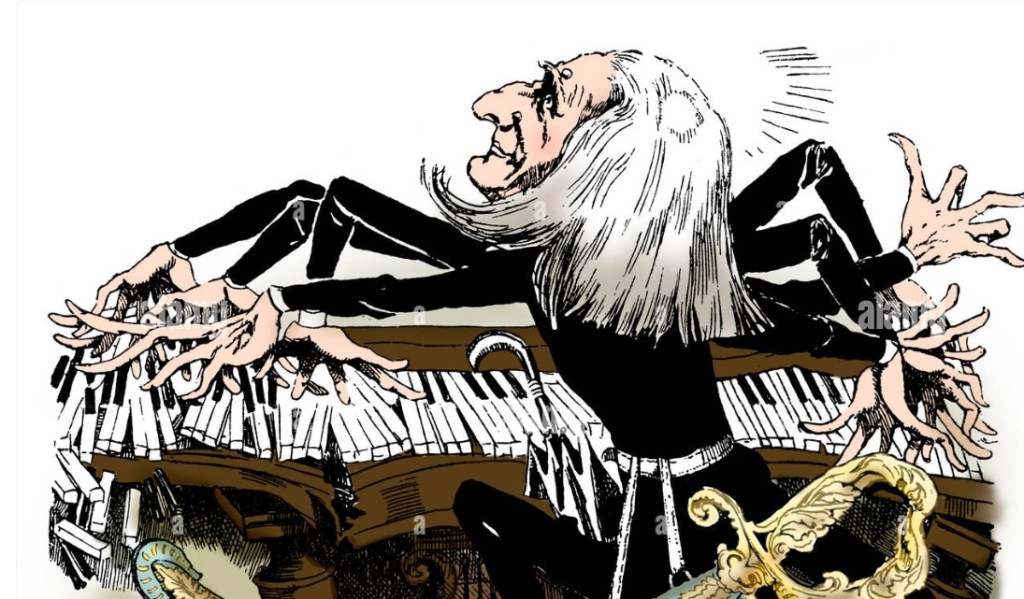
The Mephisto Waltzes (German: Mephisto-Walzer) are four waltzes composed by Franz Liszt from 1859 to 1862, from 1880 to 1881, and in 1883 and 1885. Nos. 1 and 2 were composed for orchestra, and later arranged for piano, piano duet and two pianos, whereas nos. 3 and 4 were written for piano only. Of the four, the first is the most popular.The first Mephisto Waltz is a typical example of programme music taking for its program an episode from Nikolaus Lenau’s 1836 verse drama Faust (not from Goethe’s Faust. The following program note, which Liszt took from Lenau, appears in the printed score:
There is a wedding feast in progress in the village inn, with music, dancing, carousing. Mephistopheles and Faust pass by, and Mephistopheles induces Faust to enter and take part in the festivities. Mephistopheles snatches the fiddle from the hands of a lethargic fiddler and draws from it indescribably seductive and intoxicating strains. The amorous Faust whirls about with a full-blooded village beauty in a wild dance; they waltz in mad, abandon out of the room, into the open, away into the woods. The sounds of the fiddle grow softer and softer, and the nightingale warbles his love-laden song.
Liszt dedicated the piece to Karl Tausig his favourite pupil

 ChristopherAxworthy-MusicCommentary