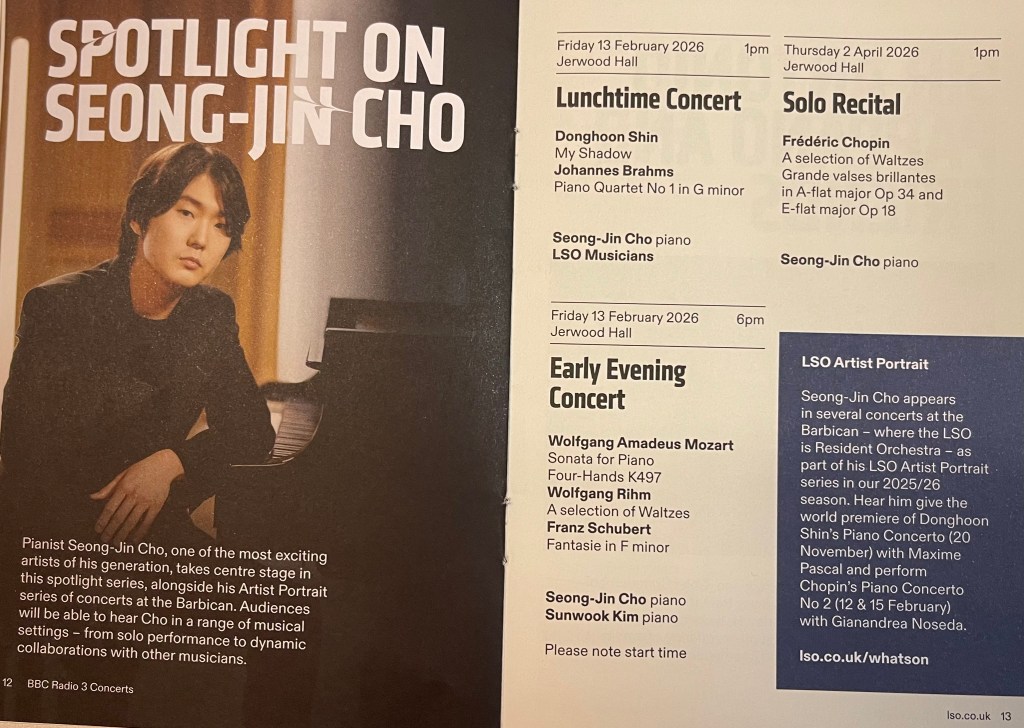
Miracles at the Barbican in these days with the whispered glowing power of music from Seong-Jin Cho together with the passionate refined musicianship of Gianandrea Noseda.
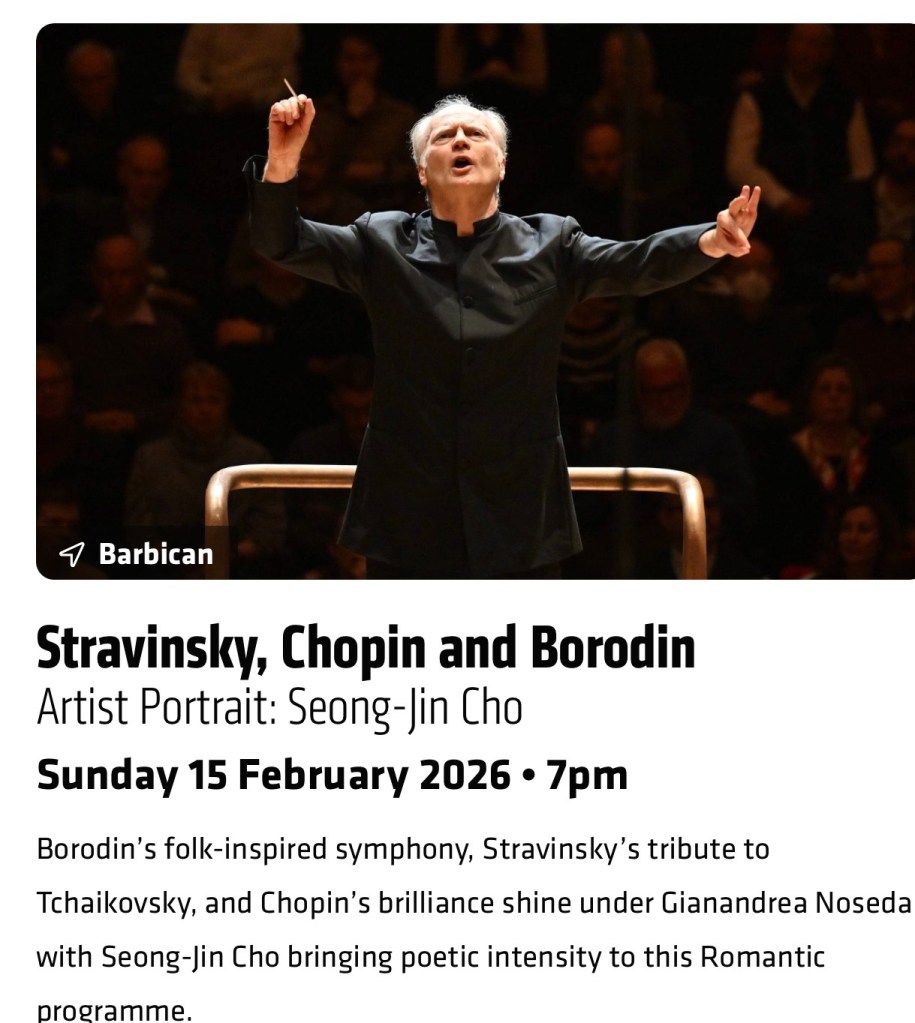
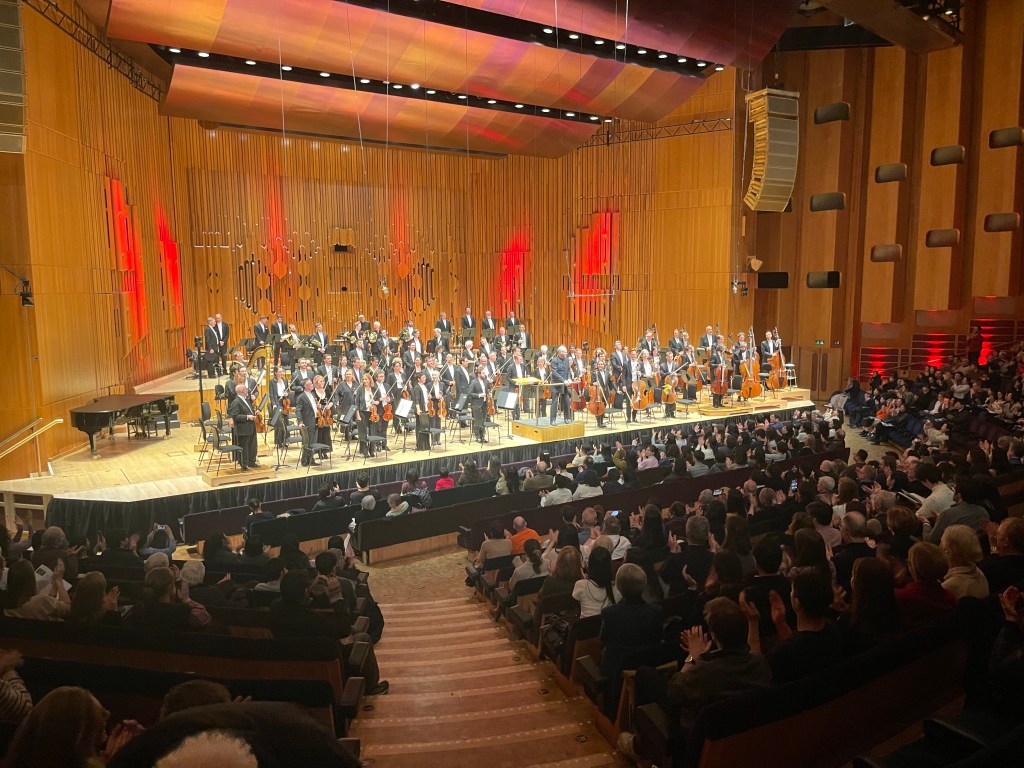
The wonderful players of the LSO encouraged to play with the same freedom and inner intensity as Cho. Has the horn call that heralds the coda of the ‘Allegro Vivace’ ever sounded more like a mountain call? Resounding throughout the hall with an improvised freedom before being gently brought to heel as Cho played with crystalline clarity and delicacy Chopin’s beguiling web of intricate weaving sounds. Nosseda encouraging the players to join in the fun with the waltz like lilt and ‘joie de vivre’ that we sometimes experience in Schumann, but what a wonder to hear Chopin restored to it’s Polish roots with such beguiling insinuation and refinement.
This was after the fearless opening ‘Maestoso’ where Chopin’s oft criticised orchestral writing was given a new lease of life. Sumptuous rich sounds all congregating around the ravishing poetic beauty that was pouring from Cho’s hands. Sounds at times like streams of gold just illuminating the aristocratic elegance of this movement whilst both were capable of passionate abandon and glorious exhilaration.
There were moments of timeless beauty as Cho allowed the Bel Canto embellishments to unwind with the sublime sounds of a Monserrat Caballé as we all waited with baited breath for the orchestra to continue its miraculous journey together.
A Larghetto of such perfection, as one of Chopin’s most beautiful melodic creations was played with an exquisite palette of sounds, Nosseda just waiting to encourage his players to listen and caress such wonders together that were filling the hall.
This was beauty not for beauty’s sake but of a great musician who could see and shape these sounds and give them an architectural shape and rhythmic anchor that never slipped into sentimentality but was of the same simple beauty as a Michelangelo sculpture.
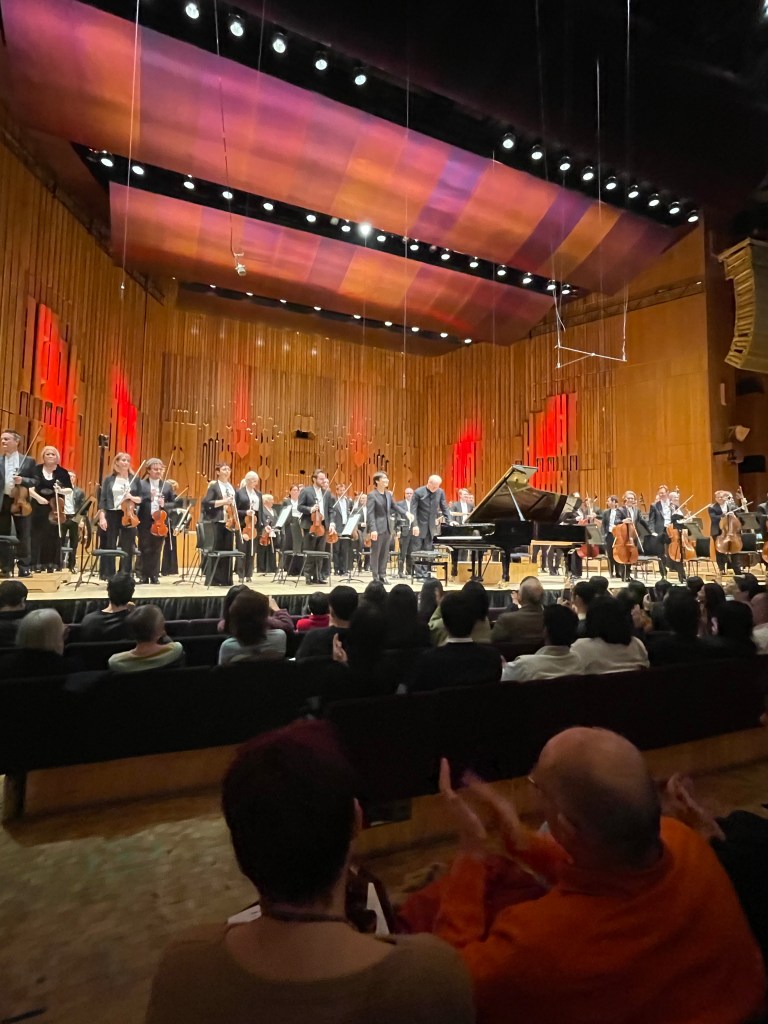
A monumental simplicity in which so little could mean so much.
I hope that his encore of the valse de l’adieu does not signify that the spotlight on such an artist will ever fade.
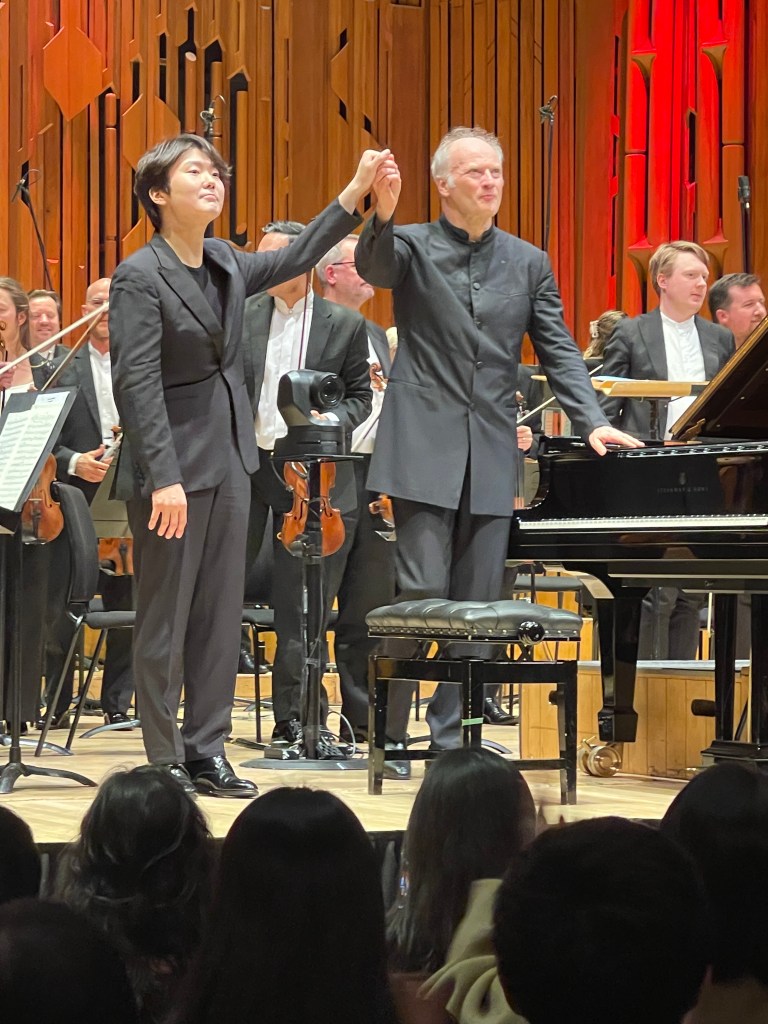
The saga continues …..after a most poetic Chopin Second Concerto with the LSO at the Barbican last night, Seong-Jin Cho shows us once again the whispered power of music.
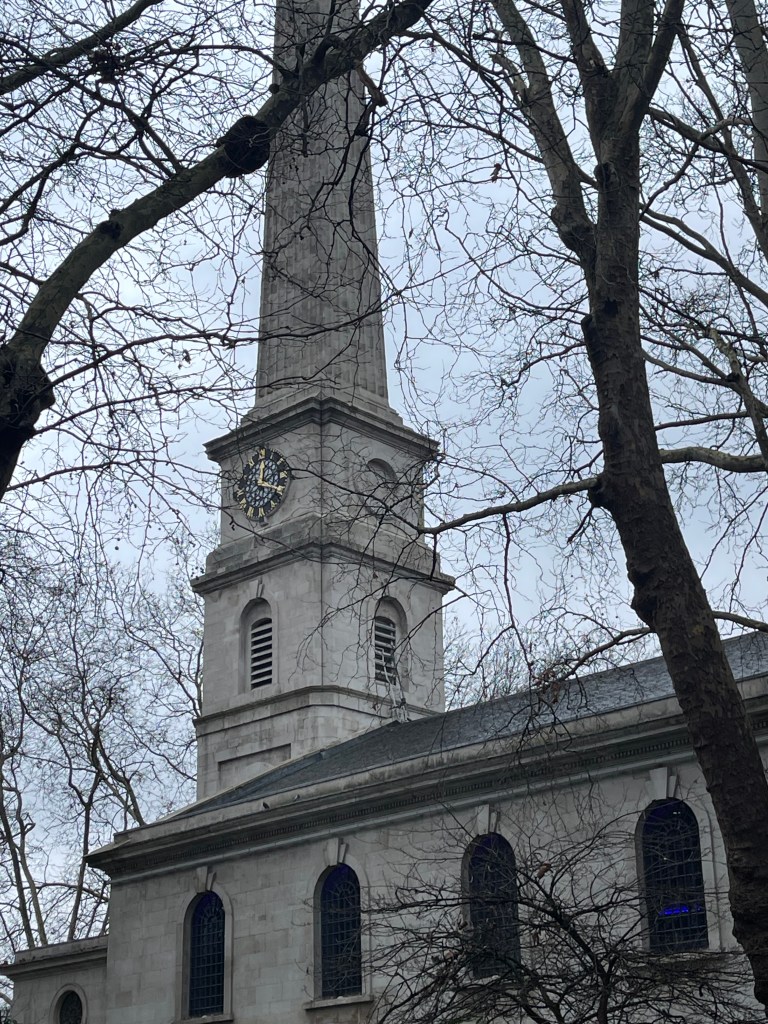
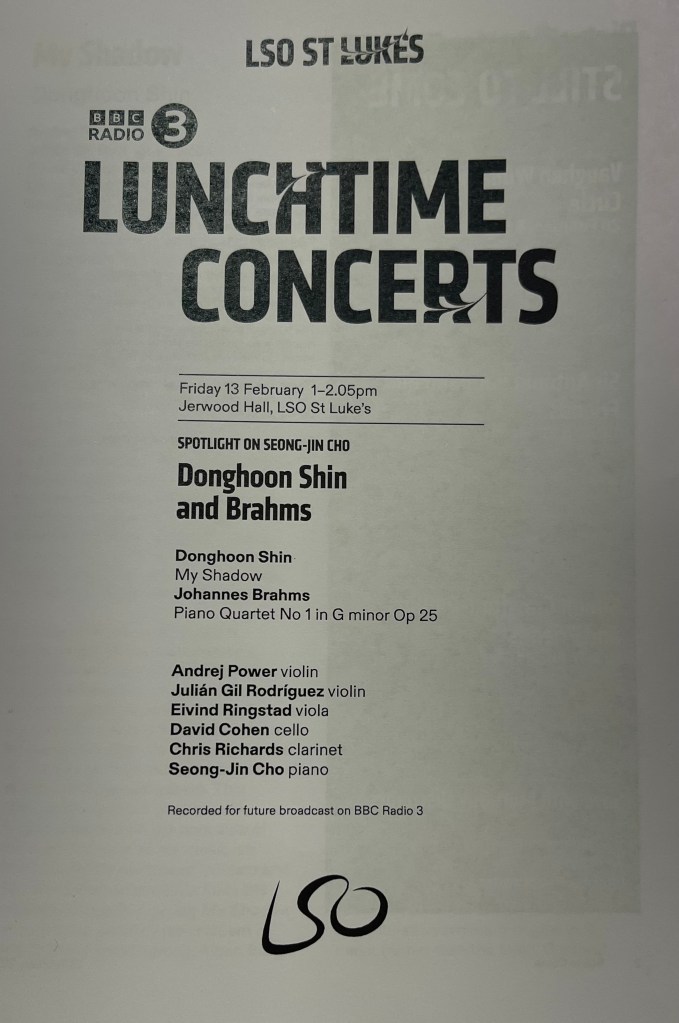
The magical sounds of Donghoon Shin with only four of the players from last night sharing the intimate stage of St Luke’s. A performance where notes shone like jewels in the dark as Cho played the part of Stevenson’s shadow :”For he sometimes shoots up taller like an India- rubber ball , And he sometimes gets so little that there’s none of him at all.
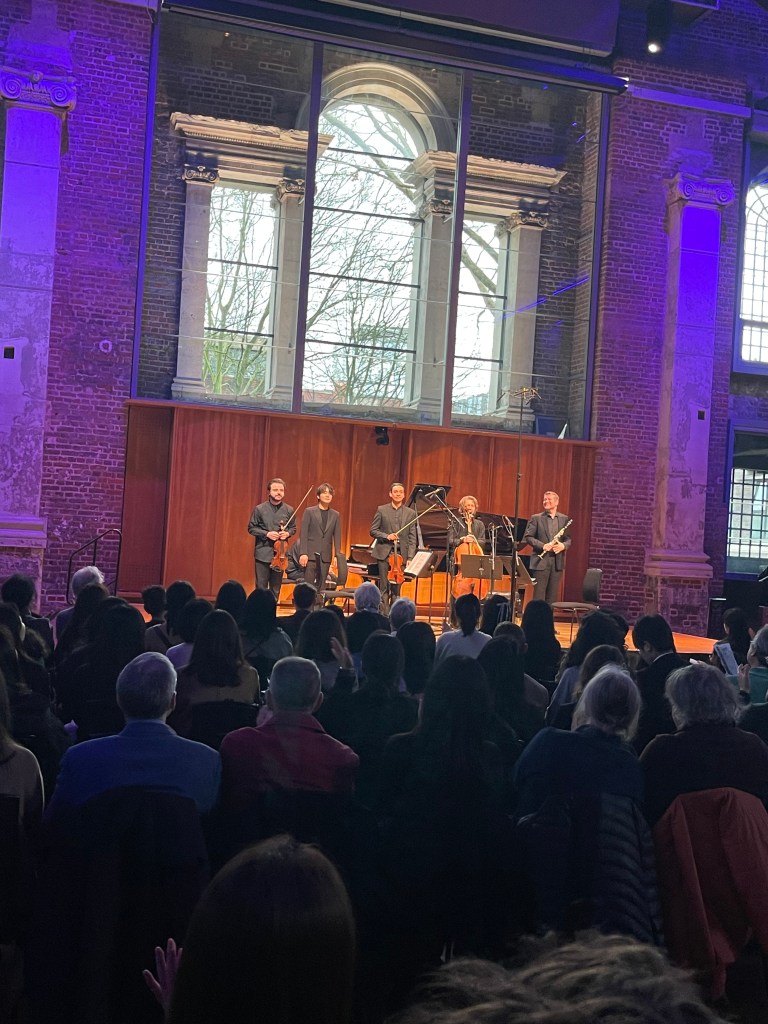
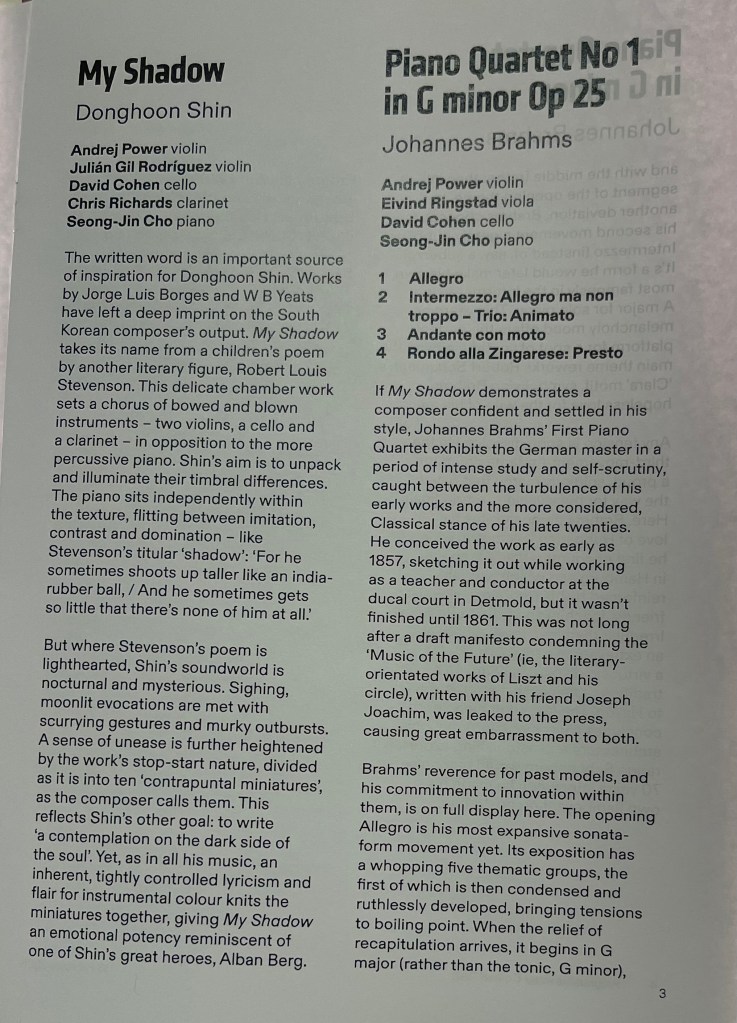
It was the same chameleonic presence of Cho with the four principal string players in Brahms G minor Quartet. He was able to amalgamate the sound of the piano so it became part of the strings with no thought of hammers striking strings.A sound that miraculously just filled the stage, the hall and hopefully microphones with sumptuous sounds. David Cohen, who I had noticed yesterday in Stravinsky, playing with such joy as he looked us in the eye to make sure we were enjoying it just as much as he. This was chamber music to cherish as this group of players could unite as one stimulating each other to delve ever deeper into the sublime secrets hidden within the all too inadequate black and white indications on the page.
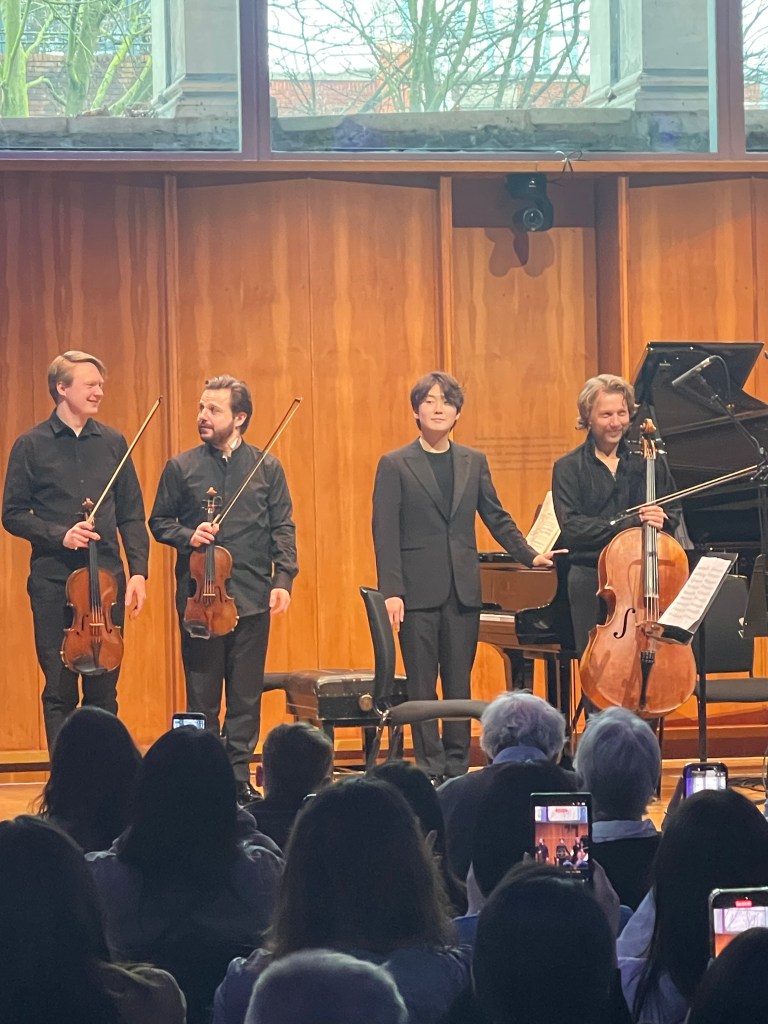
The third time to hear Seong-Jin Cho within twenty four hours thanks to the LSO Spotlight falling on a true star.
The Barbican and surrounds taken by siege with Korean fans ,the sort of enthusiasm we only experience in the west with football. The dial has moved from west to east as the wonderful Korean training and love of music is showing the west the way to Parnassus .
Having heard his Chopin 2 which has gained in timeless strength since I last heard it at the Proms. This morning chamber music where the piano became part of a musical line that these fabulous players could create together with obvious passionate joy at being part of the recreation of such sublime outpourings. https://christopheraxworthymusiccommentary.com/2018/08/21/chopin-galore-bryce-morrison-and-seong-jin-cho-on-sunday-in-london/
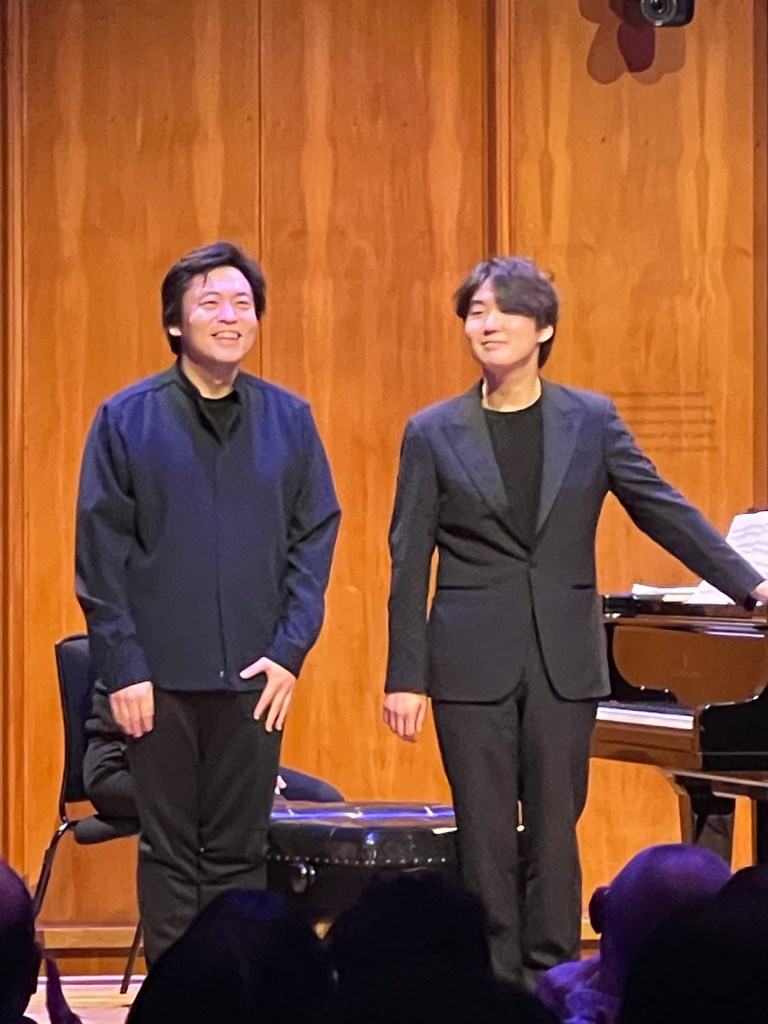
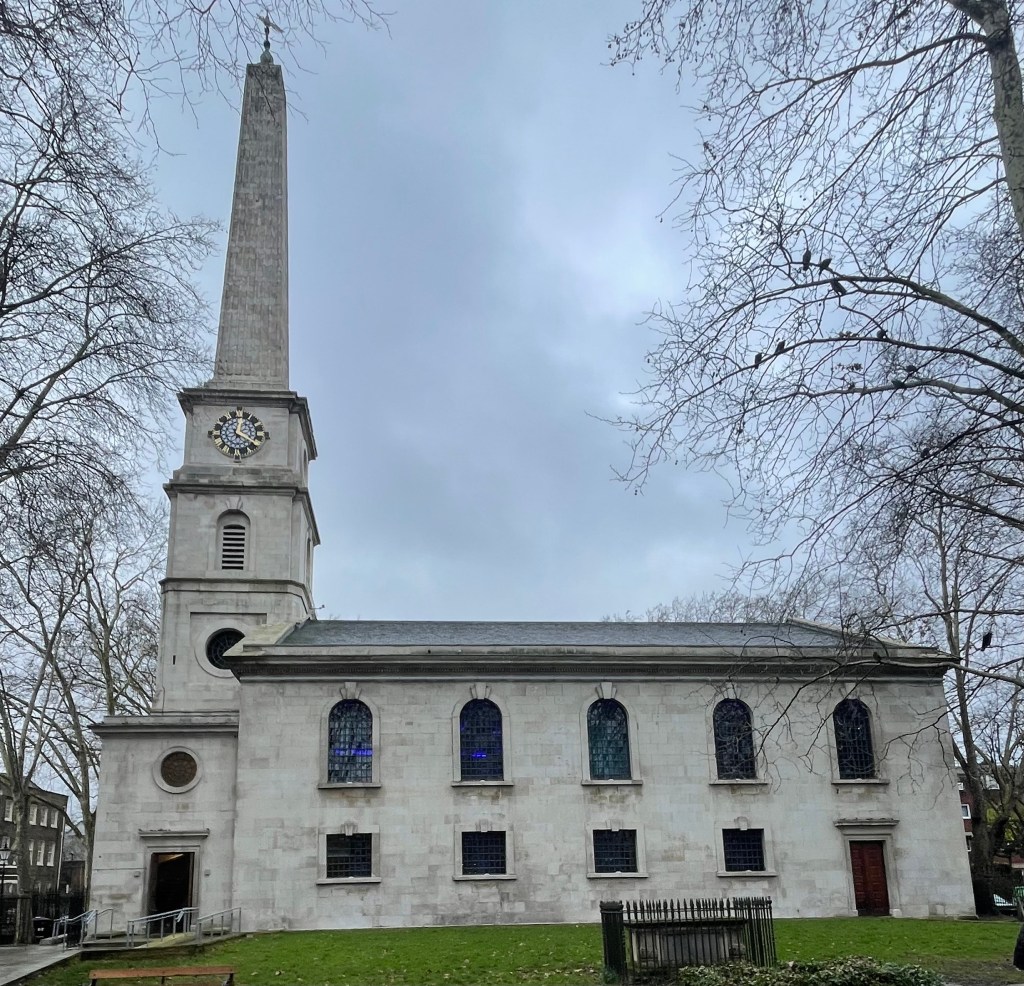
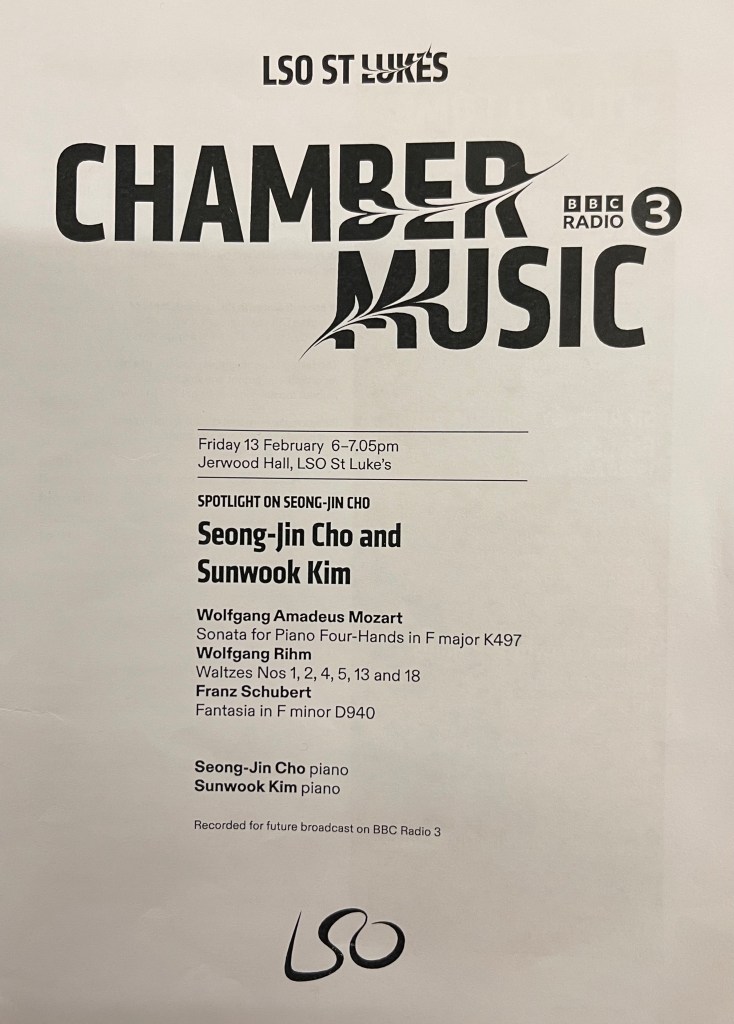
The last concert was with a friend and colleague Sunwook Kim , a few years older than Cho , who had taken the Leeds by siege in 2006 being the youngest, at 18, to win the Gold medal. Both from the remarkable class of Daejin Kim at Korea National University of the Arts . His music making took him to London’s RAM to perfect his conducting skills.
It was exactly this sense of architectural shape that gave such strength to Mozart’s F major Sonata K 497.
A work long neglected by amateur pianists where Mozart at the height of his powers could structure such a complex work for Franziska von Jacquin who was obviously far from being an amateur pianist. Kim at the helm and Cho a super anchor they revealed the genius of Mozart with poetic weight and an extraordinary palette of sounds. These two friends and master musicians could dialogue together with a great sense of balance as they listened to the overall whole and recreated a work that I have rarely heard before at home or on stage!
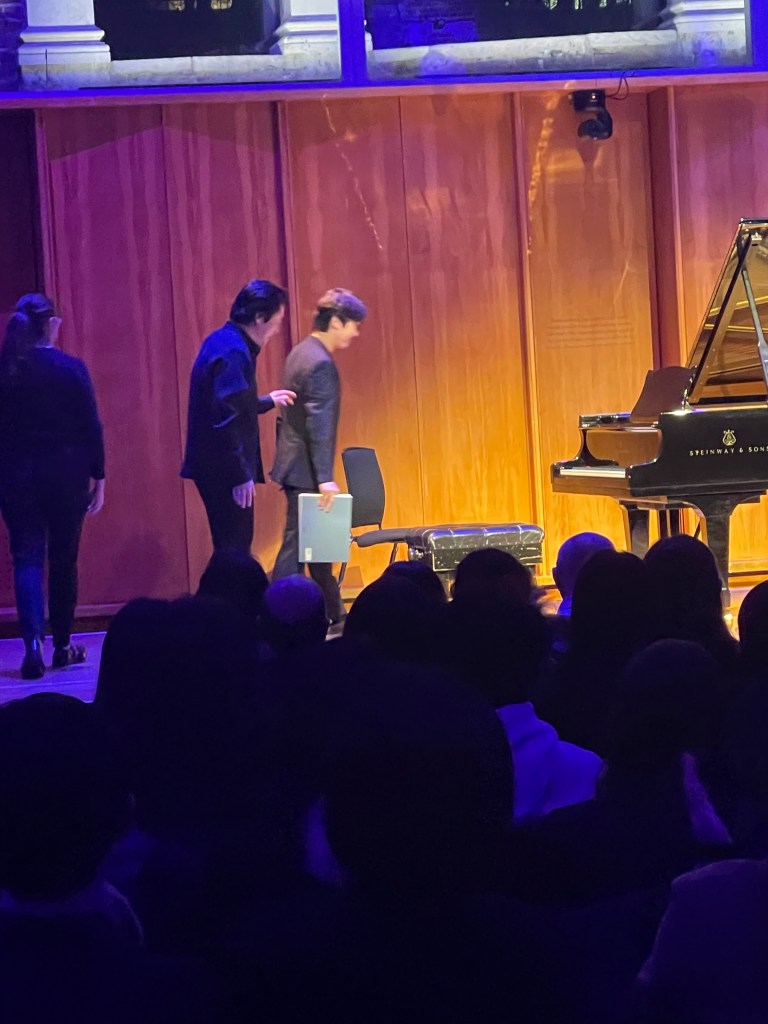
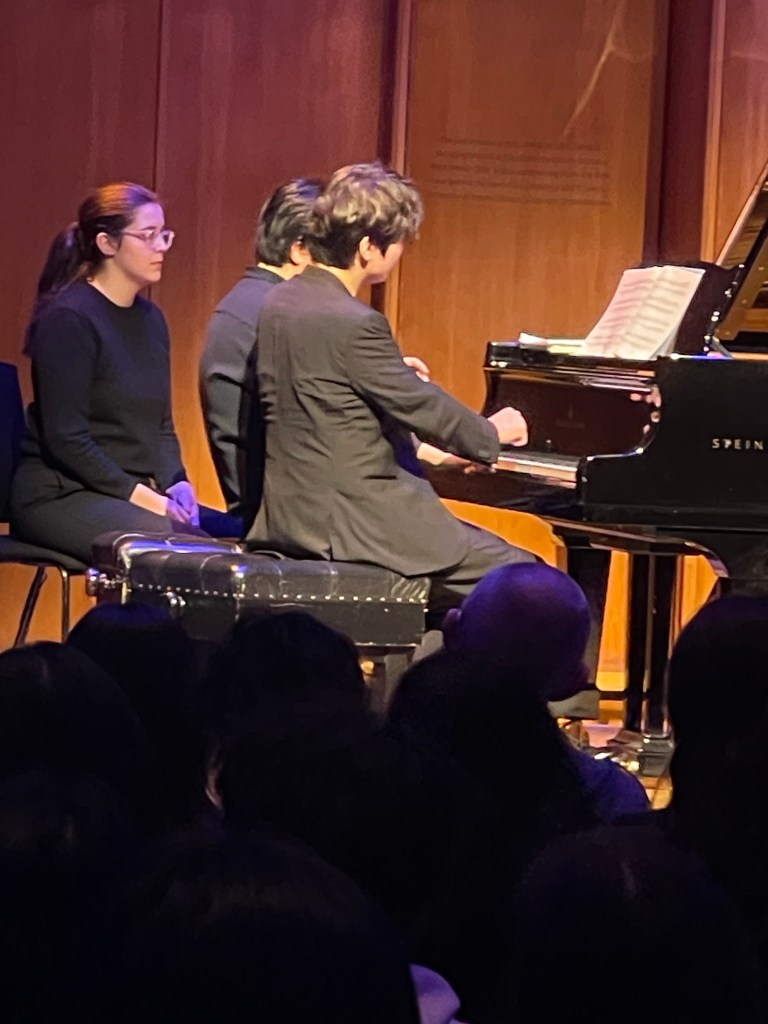
After such magnificence they refreshed the air, with Cho now at the helm, seducing us with the charm and cheek of six of Wolfgang Rihm’s satirical Viennese Waltzes. A beguiling insinuating sense of colour and at times even sleazy night club charm that was of such enticing style we could have happily danced the night away to Valentine’s Day.
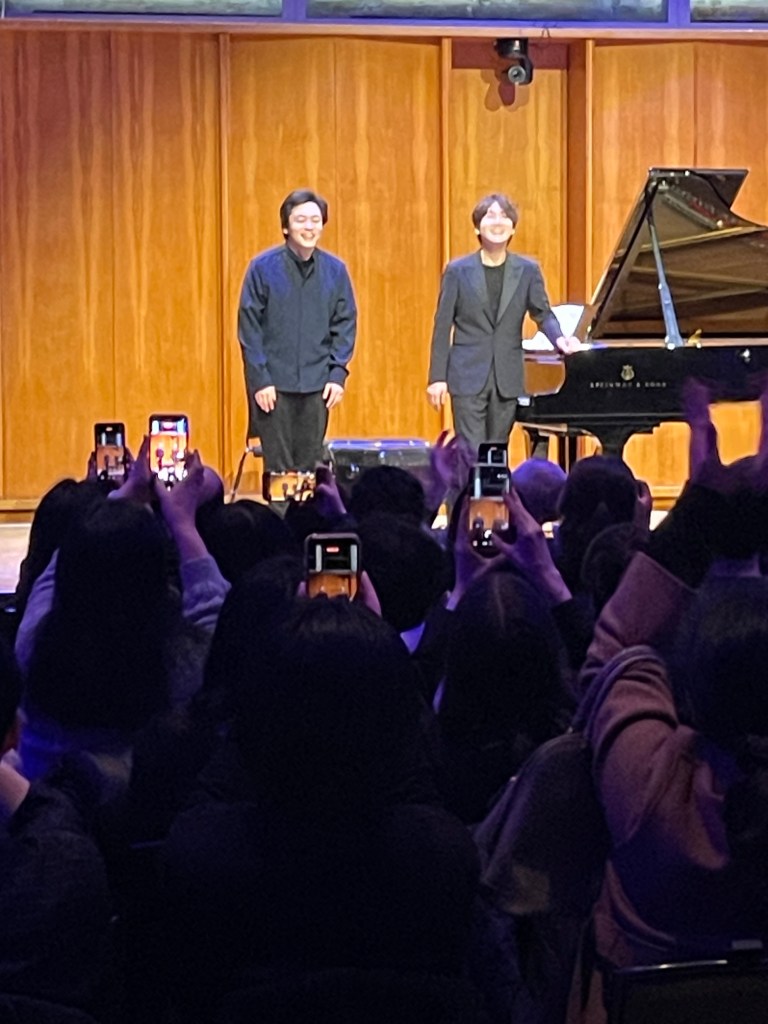
We were secretly hoping we might get another one or two as an encore after the Schubert .
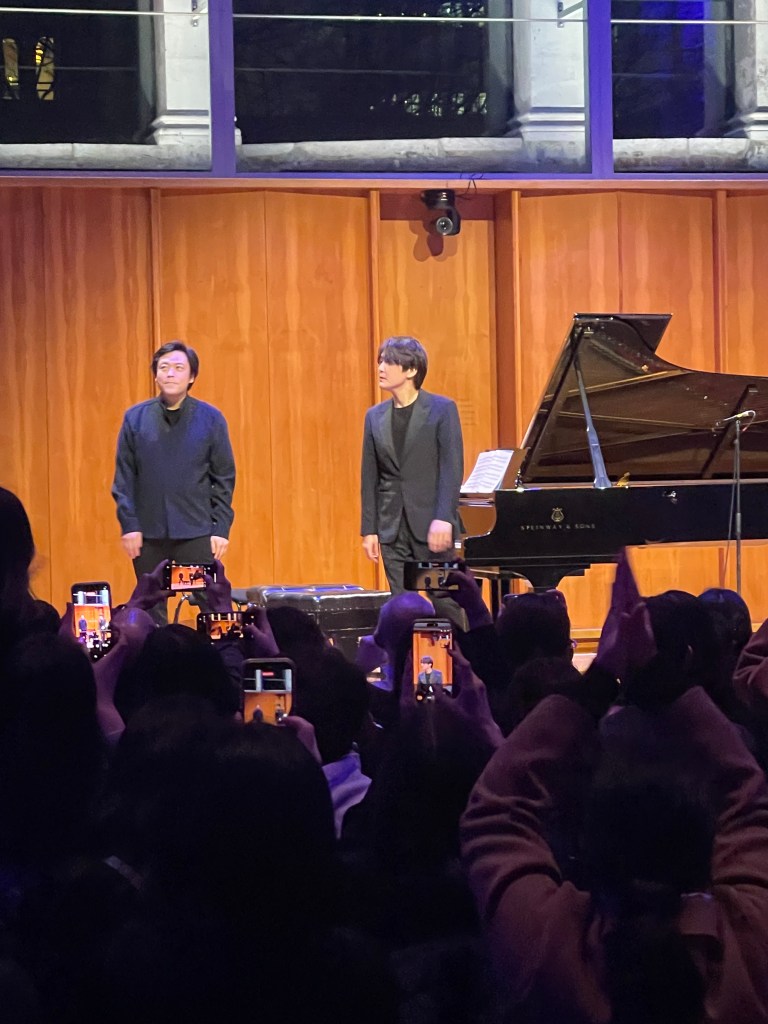
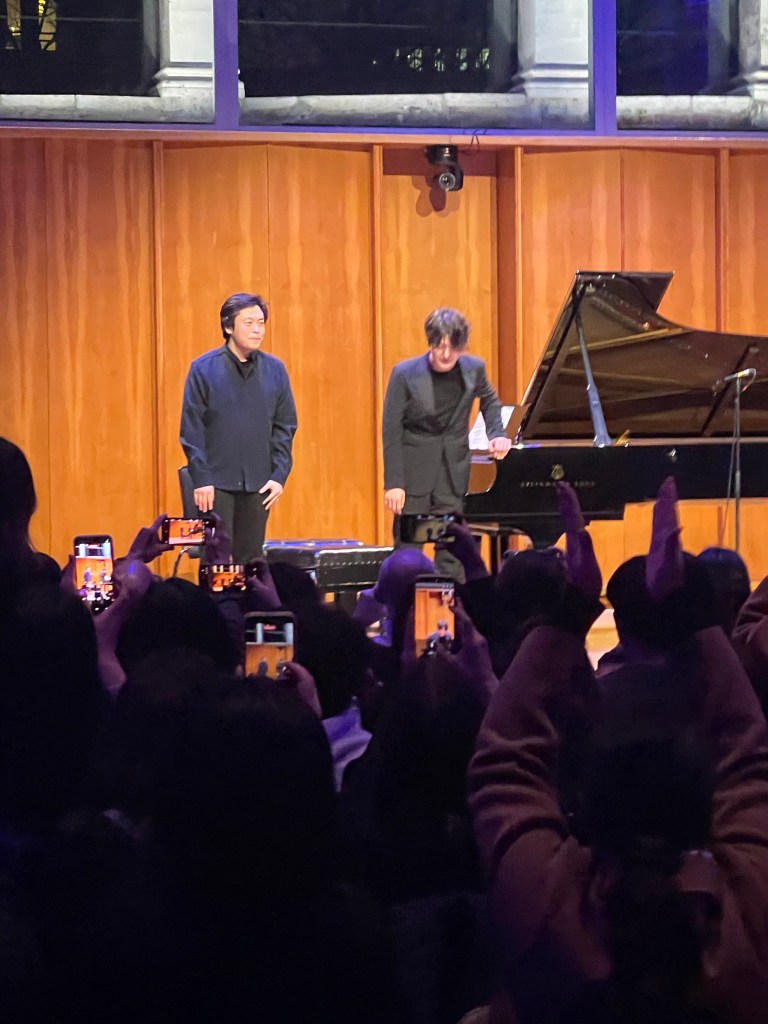
However after such a monumental performance of the F minor Fantasy, Cho wisely shut the piano lid as we silently left this beautiful hall heading off in the rain perchance to dream of the wonders we had experienced from these two refined master musicians.
If they tried a little too hard to exult the beauty of Schubert with the whispered ethereal palette of pointillist sounds that only they seem to possess, it was because they love it as obviously Schubert did .
Schubert who in his last year could open the gate to the paradise that was waiting at only 31.
Schubert marks very clearly piano and pianissimo which became tainted with the same exquisite brush and moments of breathtaking beauty strangely lost their sublime shock . This was such a monumental performance ,though, that it was a small price to pay for such charm and drive of the Scherzo. Rarely played with such perfection where colour and rhythmic drive could live together with such transcendental mastery.
Unforgettable were the ghostly trills spread over the piano in the Largo sending a shiver of Scriabinesque vibrations of etherial wonderment.
Masterly playing of the fugato leading to searing excitement of exhilaration and passionate involvement and then suddenly silence. Desolate and distressing .
They say silence is golden and this certainly was, as Kim waiting what seemed like a eternity before barely caressing the keys as Cho intoned the magical melody that he imbued with even more tenderness and nostalgia .The death rattle of the final chords and the simple gasp to end , left us with silence in one of those magic moments where the entire audience were united with the players in what might even be described as ‘religious’ .
There was certainly magic in the air and a spotlight that had fallen on an all too often forgotten paradise.
Proving that MUSIC is most certainly the food of love and the cure for all the evils that are inflicting such suffering and pain on so many in these ‘modern’ times!
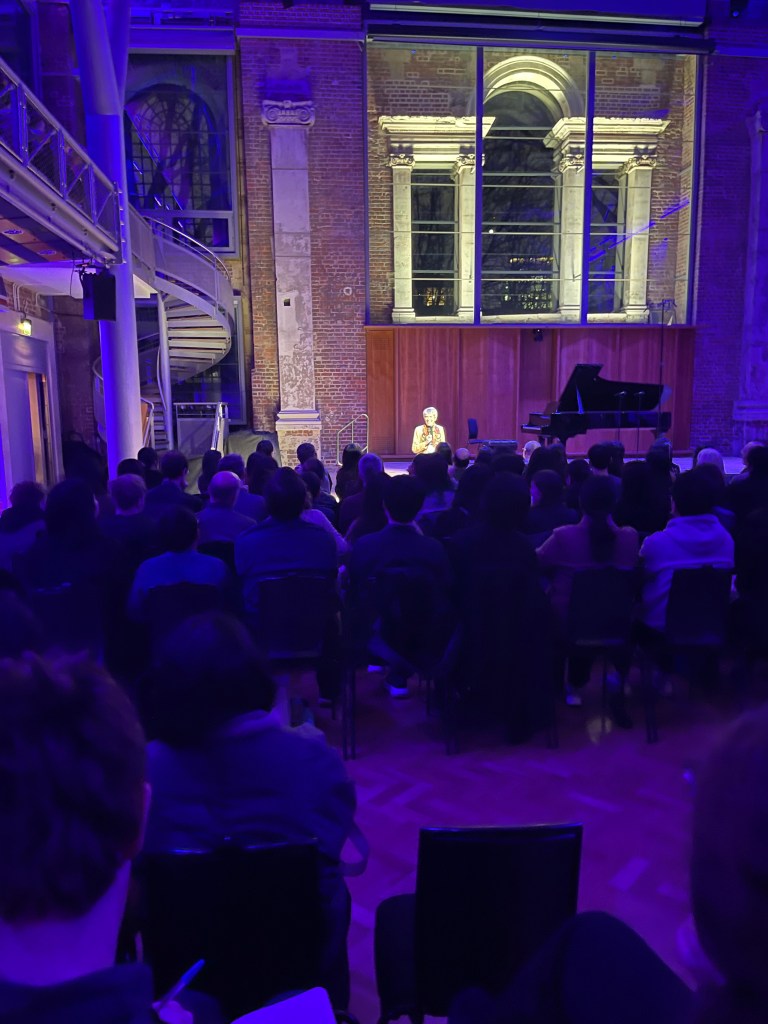
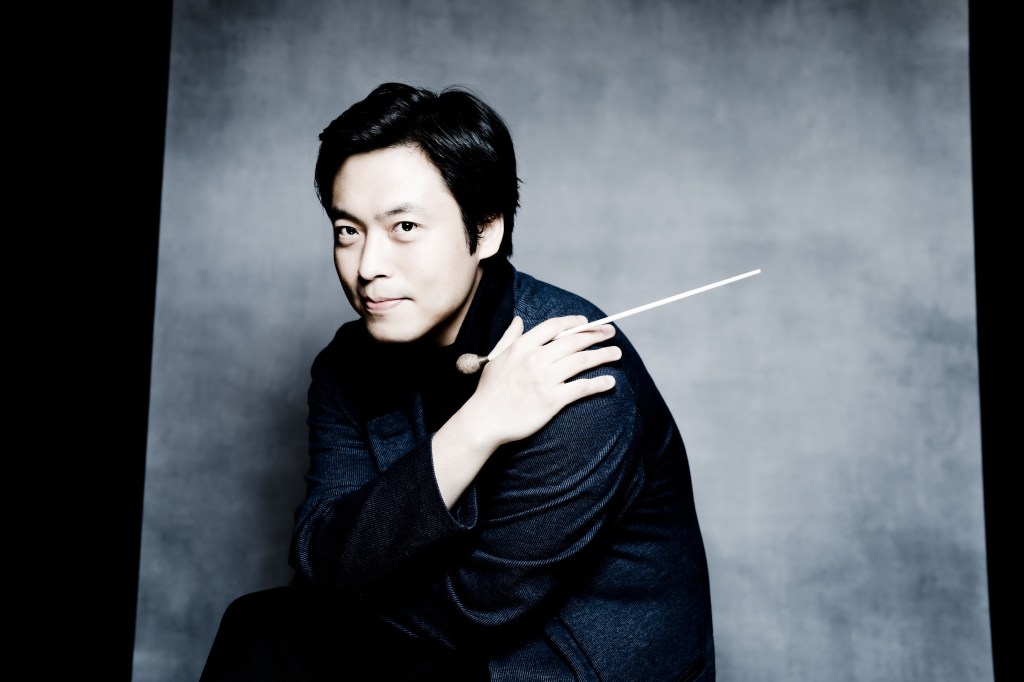
Sunwook Kim was born in Seol, South Korea on 22 April 1988. He began studying the piano at the age of three. He gave his debut recital aged ten and this was followed by his concerto debut two years later. He won the Leeds International Piano Competition aged just 18, becoming the competition’s youngest winner for 40 years, as well as its first Asian winner. Kim’s performance of Brahms Piano Concerto in D minor with The Hallé and Sir Mark Elder in the competition’s final won unanimous praise from the press, and led to concerto engagements with UK’s finest orchestras as well as various recitals around Europe.
At the time of the competition, Kim was a student at the Korea National University of Arts under Daejin Kim . He had also previously won the IX Ettlingen Competition and the XVIII Concours Clara Haskil. He was awarded the Artist of the Year prizes from the Daewon Cultural Foundation (2005) and Kumho Asiana Group (2007).
He has received MA degree for conducting from Royal Academy of Music in 2013.
In the 2023/24 season, Sunwook will make his debut with Atlanta Symphony, Netherlands Radio Philharmonic, Royal Northern Sinfonia and Gävle Symfoniorkester as well as his conducting debuts with the Franz Liszt Chamber Orchestra (Budapest), Georges Enescu Philharmonic and Filharmonia Śląska (Poland). Sunwook will also return to conduct the Seoul Philharmonic and Bournemouth Symphony and as soloist with BBC Philharmonic. In September 2023, Sunwook Kim was announced as the next Music Director of the Gyeonggi Philharmonic Orchestra for an initial term until December 2025, leading the orchestra in a minimum of ten performances per year, starting with Gyeonggi Arts Center’s New Year’s concert in January 2024.ecital highlights to date include regular appearances at the Wigmore Hall, London’s International Piano Series (Queen Elizabeth Hall), Stockholm Konserthuset, Teatro Colón Buenos Aires, La Roque d’Antheron International Piano Festival in France, Kioi Hall in Tokyo, Seoul Arts Centree, Symphony Hall Osaka, Brussels Klara Festival, Beethoven-Haus Bonn, Klavier-Festival Ruhr and Mecklenburg-Vorpommern Festspiele.
Sunwook Kim’s debut recital disc was released on the Accentus label in October 2015, featuring Beethoven’s Waldstein and Hammerklaviersonatas, this was followed by a recording of Franck’s Prelude, choral et fugue paired with Brahms Sonata No.3. He has released further recordings of Beethoven’s Piano Sonatas: Sonata No.8 (Pathétique), No.14 (Moonlight) and No. 23 (Appassionata) as well as Sonatas Nos. 30-32. His most recent chamber music release features the Violin Sonatas of Beethoven in collaboration with Clara-Jumi Kang. His discography also includes multiple concerto recordings; on Accentus Music with the Staatskapelle Dresden conducted by Myung-Whun Chung featuring Brahms’ Piano Concerto No.1 and Six Piano Pieces (2020) in addition to recordings on Deutsche Grammophon with the Seoul Philharmonic conducted by Myung-Whun Chung, a CD featuring Unsuk Chin’s Piano Concerto (2014) and a CD featuring Beethoven’s Concerto No.5 (2013).
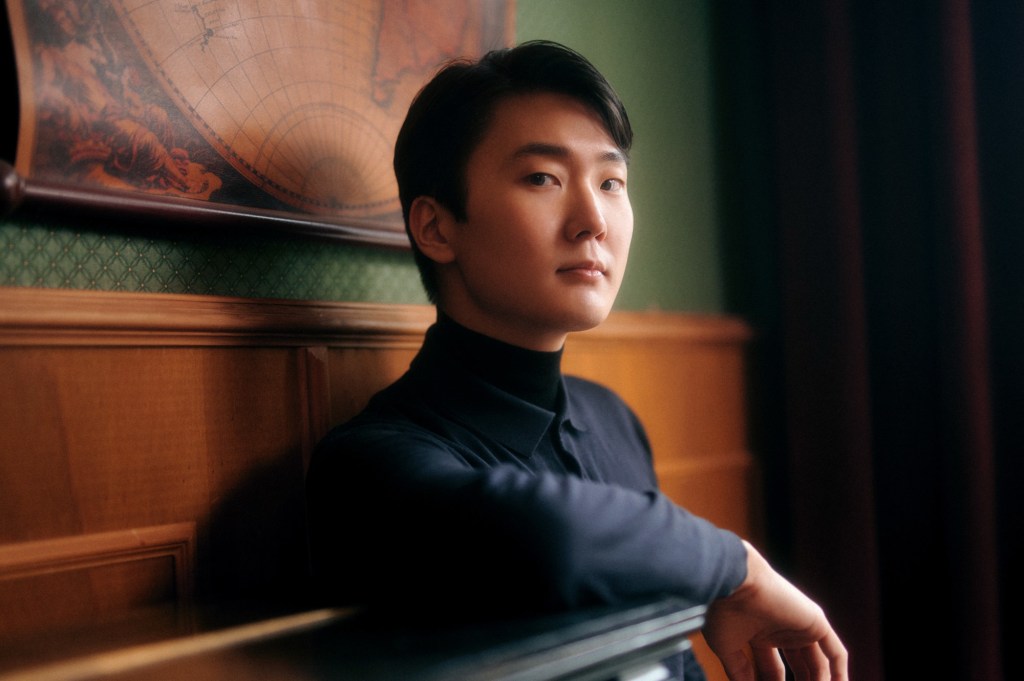
Seong- Jin Cho was born in Seol, South Korea, the only child of non-musical parents; his father was an engineer. At six years old, he began studying both the piano and the violin Though he appeared to have more natural facility on the latter, he developed a stronger liking for the piano, and gave his first public piano recital at age eleven. After being identified through a musical prodigy development program at the Seoul Arts Centre , he began studying under Sook-Ryeon Park at Sunchon National University and Soo-Jung Shin at Seol National University
He attended the Yewon School, a private middle school for art education, during which he won First Prize at both the Moscow International Fryderyk Chopin Competition for Young Pianists (2008) and the Hamamatsu International Piano Competition (2009). Cho then attended Seol Arts High Shool for two years, during which he placed third at the 2011 International Tchaikowsky Competition and began performing regularly with Myung-whun Chung and the Seol Philharmonic Orchestra .
Cho moved to Paris in 2012 to study at the Conservatoire de Paris with Michel Béroff . While there, Cho placed third at the 2014 Arthur Rubinstein International Master Competition and first prize at the 2015 International Chopin Competition , becoming the first Korean to receive that distinction.
In the 2025/26 season, Seong-Jin Cho is the London Symphony Orchestra’s Artist Portrait. The position sees him work with the orchestra on multiple projects across the season, with concerto performances including the world premiere of a new Piano Concerto by Donghoon Shin, written especially for him. The position also features touring performances across Europe, as well as chamber music concerts and in recital at LSO St Luke’s. Elsewhere, he notably returns to Pittsburgh Symphony Orchestra under Manfred Honeck with performances in Pittsburgh and Carnegie Hall, to Boston Symphony Orchestra with Andris Nelsons, and to Los Angeles Philharmonic under Gustavo Dudamel. Cho embarks on several international tours, including his notable return to Czech Philharmonic with Semyon Bychkov in Taiwan and Japan, and Münchner Philharmoniker with Lahav Shani in Korea, Japan, and Taiwan. He also performs with Gewandhausorchester Leipzig with Andris Nelsons throughout Europe in Autumn 2025.
 ChristopherAxworthy-MusicCommentary