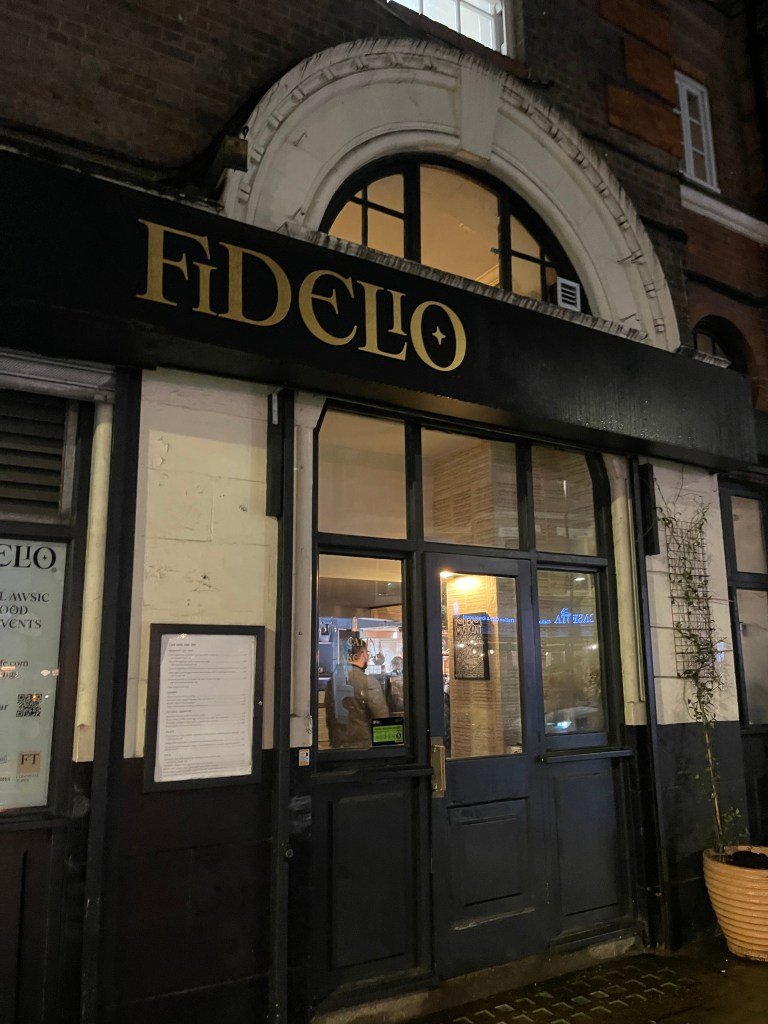
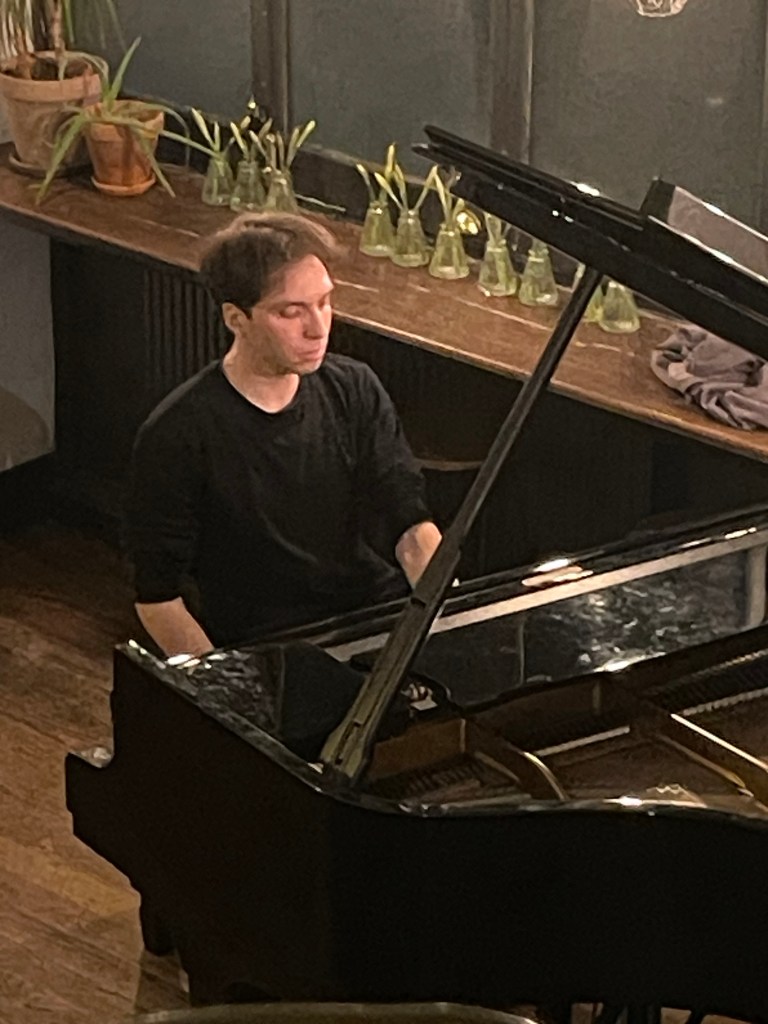
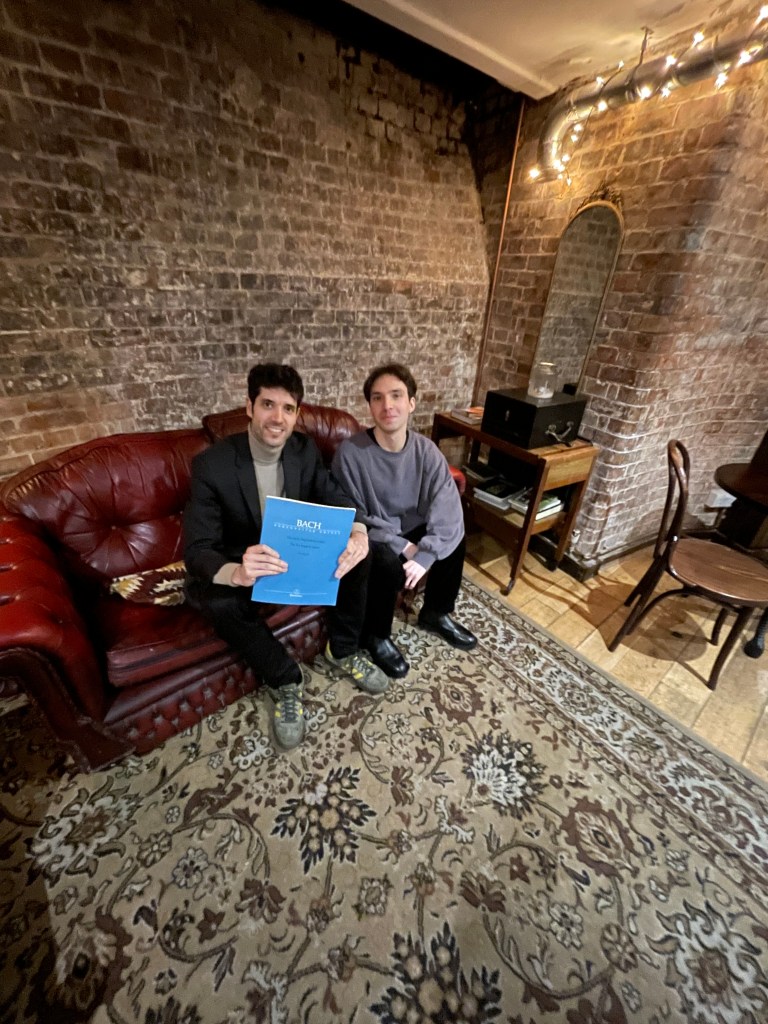
Jonathan Ferrucci playing three English Suites at Raffaello Morales’s Fidelio. A ‘tour de force’ of mastery and mystery as he unravelled suites 3,4 and 6 in a dense spiral of knotty twine played with dynamic energy and at times searing intensity. Beginning with the familiar chords of the G minor Prelude and finishing with the obscure density of the D minor gigue it was hardly surprising that it was in the Sarabandes that Jonathan’s deep understanding of Bach was tinged with the profound aristocratic intensity of universal commitment that touch us so deeply.
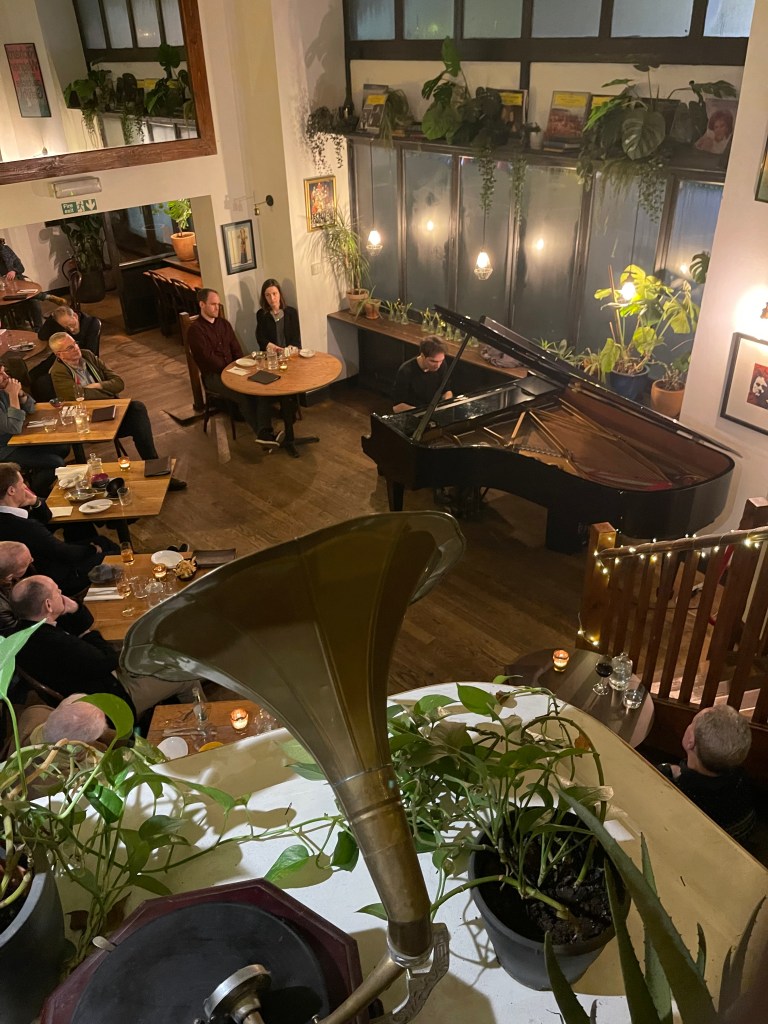
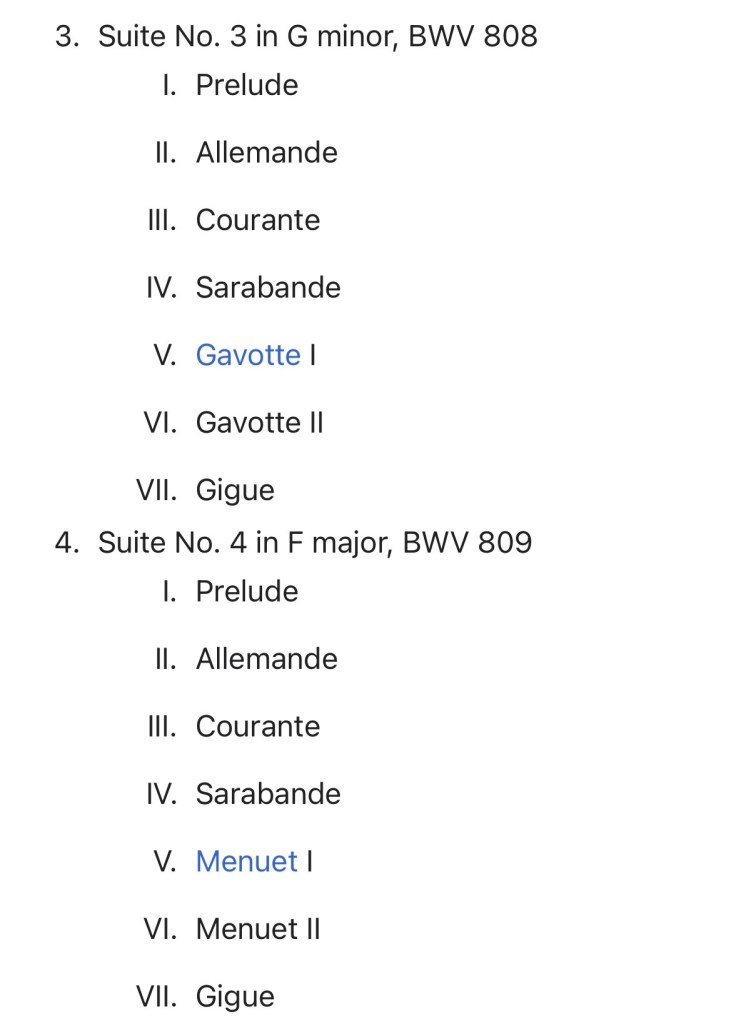
The G minor suite opened with clarity and rhythmic drive followed by the long lines of mellifluous outpouring of the Allemande and Courante . The grandiose Sarabande with its poignant noble sentiments with the magical ritornello just whispered with streams of golden sounds spread over the keys. Charm and crystalline clarity of the ‘Gavotte I’ was followed by the disarming simplicity of reflection of the ‘Gavotte II’ and the insistent drive of the Gigue. I have heard this particular suite many times and above all I will never forget Wilhelm Kempff playing with the same simplicity as Jonathan. Both in life seemingly so small in stature in Jonathan’s case, and frail in Kempff’s but at the keyboard personalities of gigantic authority.
The Fourth suite is a rarity in the concert hall and it was played with a pastoral Allemande and a Sarabande of exquisite beauty. Ending with a truly monumental Gigue.
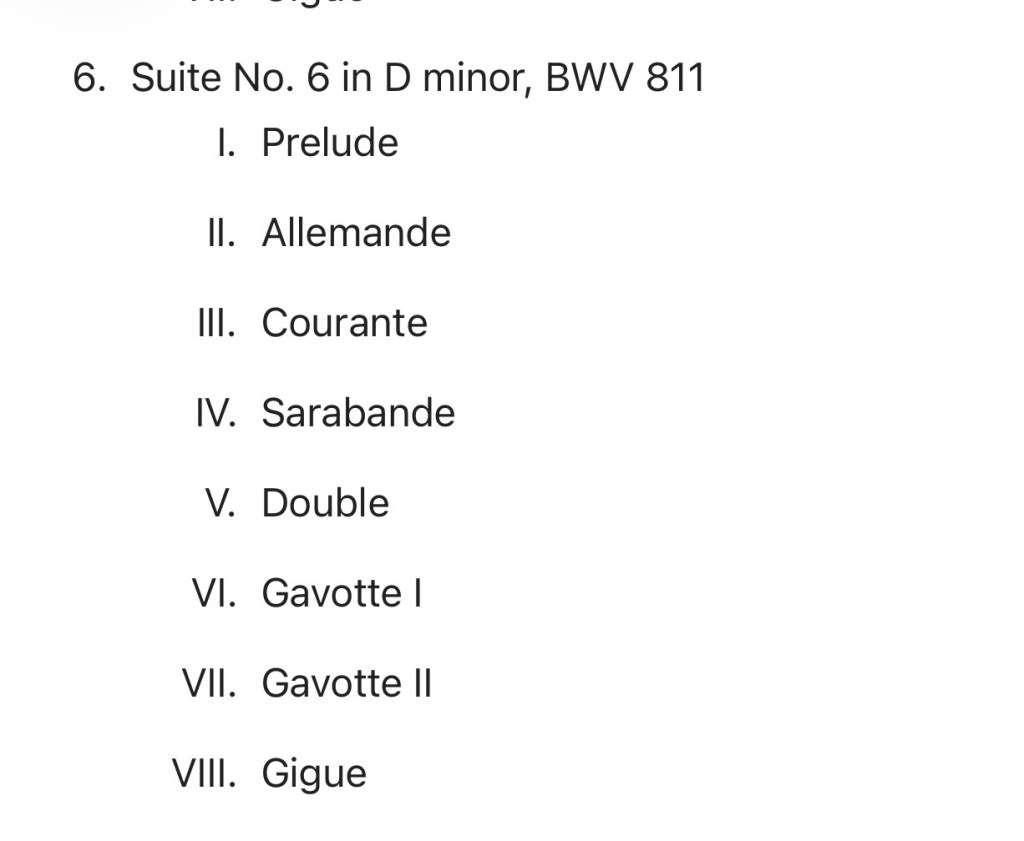
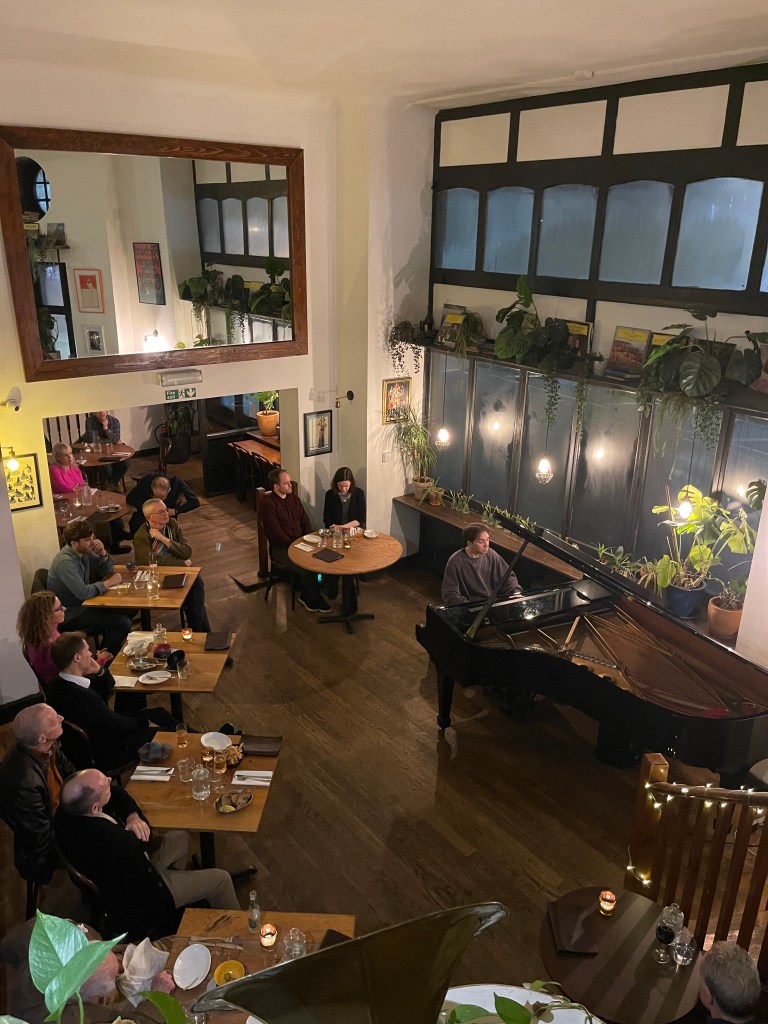
The final Suite in D minor from the very first imperious notes was Bach making a great statement and as Jonathan had said he even signed his name at the end of the score. After the monumental opening there was a disarming simplicity and a Sarabande of poise and eloquence. The Gavotte II even played at a higher register with a music box sound of glistening beauty. This was before the dynamic drive and overwhelming outpouring of notes like a Dam opening and the flood gates opened for this one last monumental struggle. A friend of mine on hearing Jonathan play asked me how big he was as this was a movement played with such burning muscular intensity and mastery that Jonathan suddenly became a Giant ready to climb Everest for the Glory of Bach .
The imminent release of his recording of the English Suites will stand side by side with his Toccatas that has been receiving rave reviews from the few discerning music critics that still inhabit the barren landscape of ‘Classical’ music.
https://christopheraxworthymusiccommentary.com/2025/12/13/fidelio-mahler-2-the-resurrection-of-a-renaissance-man/ https://christopheraxworthymusiccommentary.com/2024/10/30/diabelli-is-box-office-at-fidelio-where-genius-meets-genius-filippo-gorini-and-raffaello-morales-breaking-barriers/
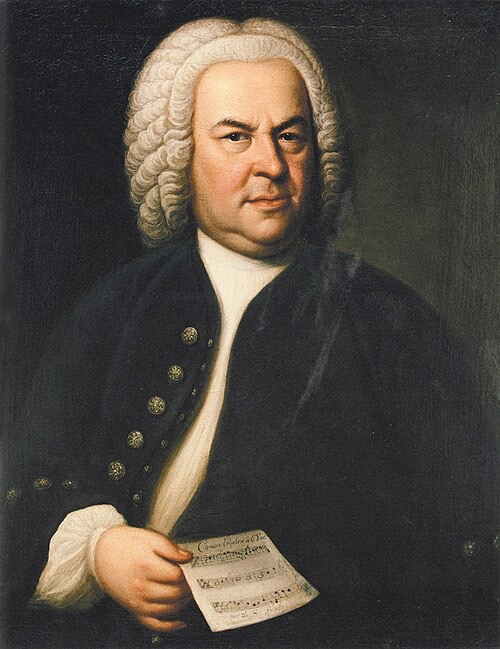
J.S. Bach 21 March 1685 Eisenach 28 July 1750 (aged 6) Leipzig
The English Suites, BWV 806-811 are a set of six suites written for harpsichord or clavichord and generally thought to be the earliest of his 19 suites for keyboard (discounting several less well-known earlier suites), the others being the six French suites (BWV 812–817), the six Partitas (BWV 825-830) and the Overture in the French style (BWV 831). They probably date from around 1713 or 1714 until 1720
These six suites for keyboard are thought to be the earliest set that Bach composed aside from several miscellaneous suites written when he was much younger. Bach’s English Suites display less affinity with Baroque English keyboard style than do the French Suites to French Baroque keyboard style. It has also been suggested that the name is a tribute to Charles Dieupart , whose fame was greatest in England, and on whose Six Suittes de clavessin Bach’s English Suites were in part based.
Surface characteristics of the English Suites strongly resemble those of Bach’s French Suites and Partitas, particularly in the sequential dance-movement structural organization and treatment of ornamentation. These suites also resemble the Baroque French keyboard suite typified by the generation of composers including Jean-Henri d’Anglebert , and the dance-suite tradition of French lutenists that preceded it.
In the English Suites especially, Bach’s affinity with French lute music is demonstrated by his inclusion of a prelude for each suite, departing from an earlier tradition of German derivations of French suite (those of Johann- Jakob Froberger and Georg Boehm are examples), which saw a relatively strict progression of the dance movements (Allemande,Courante,Sarabande and Gigue ) and which did not typically feature a Prelude. Unlike the unmeasured preludes of French lute or keyboard style, however, Bach’s preludes in the English Suites are composed in strict meter.
 ChristopherAxworthy-MusicCommentary